AB 2107: Clinical laboratory technology: remote review.
- Session Year: 2023-2024
- House: Assembly
- Latest Version Date: 2024-09-27
Current Status:
Passed
(2024-09-27: Chaptered by Secretary of State - Chapter 699, Statutes of 2024.)
Introduced
In Committee
First Chamber
In Committee
Second Chamber
Enacted
Existing law requires the State Department of Public Health to license, inspect, and regulate clinical laboratories and specified clinical laboratory personnel. Existing law requires a clinical laboratory, as defined, performing clinical laboratory tests or examinations classified as of moderate or of high complexity under the federal Clinical Laboratory Improvement Amendments (CLIA) to obtain a clinical laboratory license, as specified. Existing law requires a separate license or registration to be obtained for each laboratory location, except for, among other things, laboratories that are not at a fixed location, as specified.
This bill would authorize, upon determination by the department that the authorization conforms to federal law, practice by a pathologist who is performing pathology services at a primary laboratory site licensed by the state to review digital materials, as defined, at a remote location under a primary sites CLIA certificate. The bill would require the department, on or before June 30, 2025, to consult with the federal Centers for Medicare and Medicaid Services and would require the department to make a determination on or before January 1, 2026, for those purposes. This bill would require the department, if it determines that the authorization conforms to federal law, to communicate its determination to the Legislature and the Legislative Counsel Bureau. The bill would classify a location where digital materials are accessed by pathologists through virtual private networks, or other secure method, to be an extension of a primary sites CLIA certificate and would prohibit that remote location from requiring a separate license or registration, consistent with the interpretation of CLIA regulations by the federal Centers for Medicare and Medicaid Services guidelines, as specified.
Existing law requires the State Department of Public Health to license, inspect, and regulate clinical laboratories and specified clinical laboratory personnel. Existing law requires a clinical laboratory, as defined, performing clinical laboratory tests or examinations classified as of moderate or of high complexity under the federal Clinical Laboratory Improvement Amendments (CLIA) to obtain a clinical laboratory license, as specified. Existing law requires a separate license or registration to be obtained for each laboratory location, except for, among other things, laboratories that are not at a fixed location, as specified.
This bill would authorize practice, authorize, upon determination by the department that the authorization conforms to federal law, practice by a pathologist who is performing pathology services at a primary laboratory site licensed by the state to review digital materials, as defined, at a remote location under a primary sites CLIA certificate. The bill would require the department, on or before June 30, 2025, to consult with the federal Centers for Medicare and Medicaid Services and would require the department to make a determination on or before January 1, 2026, for those purposes. This bill would require the department, if it determines that the authorization conforms to federal law, to communicate its determination to the Legislature and the Legislative Counsel Bureau. The bill would classify a location where digital materials are accessed by pathologists through virtual private networks, or other secure method, to be an extension of a primary sites CLIA certificate and would prohibit that remote location from requiring a separate license or registration, consistent with the interpretation of CLIA regulations by the federal Centers for Medicare and Medicaid Services guidelines, as specified.
Existing law requires the State Department of Public Health to license, inspect, and regulate clinical laboratories and specified clinical laboratory personnel. Existing law requires a clinical laboratory, as defined, performing clinical laboratory tests or examinations classified as of moderate or of high complexity under the federal Clinical Laboratory Improvement Amendments (CLIA) to obtain a clinical laboratory license, as specified. Existing law requires a separate license or registration to be obtained for each laboratory location, except for, among other things, laboratories that are not at a fixed location, as specified.
This bill would authorize pathologists acting within their scope of practice practice, a pathologist who is performing pathology services at a primary laboratory site licensed by the state to review digital materials, as defined, at a remote location under a primary sites CLIA certificate. The bill would require classify a location where digital materials are accessed by pathologists through virtual private networks, or other secure method, to be an extension of a primary sites CLIA certificate and would prohibit that remote location from requiring a separate license or registration, consistent with the interpretation of CLIA regulations by the federal Centers for Medicare and Medicaid Services guidelines, as specified.
Existing law requires the State Department of Public Health to license, inspect, and regulate clinical laboratories and specified clinical laboratory personnel. Existing law requires a clinical laboratory, as defined, performing clinical laboratory tests or examinations classified as of moderate or of high complexity under the federal Clinical Laboratory Improvement Amendments (CLIA) to obtain a clinical laboratory license, as specified. Existing law requires a separate license or registration to be obtained for each laboratory location, except for, among other things, laboratories that are not at a fixed location, as specified.
This bill would authorize pathologists and licensed laboratory personnel acting within their scope of practice to review digital materials, as defined, at a remote location under a primary sites CLIA certificate if CLIA requirements are met. The bill would authorize a clinical laboratory to utilize a temporary or intermittent site for remote review and for reporting of digital materials if the designated primary site or home base is certified under CLIA and the work being performed in the temporary or intermittent site falls within the parameters of the primary sites CLIA certificate. The bill would authorize pathologists and licensed laboratory personnel to remotely review digital materials if the digital materials are related to their ordinary course of onsite work. certificate. The bill would require a location where digital materials are accessed by pathologists through virtual private networks, or other secure method, to be an extension of a primary sites CLIA certificate and prohibit that remote location from requiring a separate license or registration, consistent with the interpretation of CLIA regulations by the federal Centers for Medicare and Medicaid Services guidelines, as specified.
Existing law requires the State Department of Public Health to license, inspect, and regulate clinical laboratories and specified clinical laboratory personnel. Existing law requires a clinical laboratory, as defined, performing clinical laboratory tests or examinations classified as of moderate or of high complexity under the federal Clinical Laboratory Improvement Amendments (CLIA) to obtain a clinical laboratory license license, as specified. Existing law requires a separate license or registration to be obtained for each laboratory location, except for, among other things, laboratories that are not at a fixed location location, as specified.
This bill would authorize pathologists and licensed laboratory personnel acting within their scope of practice to review digital clinical laboratory data, digital results, and digital images materials, as defined, at a remote location under a primary sites CLIA certificate if CLIA requirements are met. The bill would authorize a clinical laboratory to utilize a temporary or intermittent site for remote review and for reporting of digital clinical laboratory data, digital results, and digital images materials if the designated primary site or home base is certified under CLIA and the work being performed in the temporary or intermittent site falls within the parameters of the primary sites CLIA certificate. The bill would authorize pathologists and licensed laboratory personnel to remotely review digital materials if the digital materials are related to their ordinary course of onsite work.
Existing law requires the State Department of Public Health to license, inspect, and regulate clinical laboratories and specified clinical laboratory personnel. Existing law requires a clinical laboratory, as defined, performing clinical laboratory tests or examinations classified as of moderate or of high complexity under the federal Clinical Laboratory Improvement Amendments (CLIA) to obtain a clinical laboratory license as specified. Existing law requires a separate license or registration to be obtained for each laboratory location, except for, among other things, laboratories that are not at a fixed location as specified.
This bill would authorize pathologists and laboratory personnel acting within their scope of practice to review digital clinical laboratory data, digital results, and digital images at a remote location under a primary sites CLIA certificate if CLIA requirements are met. The bill would authorize a clinical laboratory to utilize a temporary site for remote review and for reporting of digital slides clinical laboratory data, digital results, and digital images if the designated primary site or home base is certified under CLIA and the work being performed in the temporary site falls within the parameters of the primary sites CLIA certificate.
Existing law requires the State Department of Public Health to license, inspect, and regulate clinical laboratories and specified clinical laboratory personnel. Existing law requires a clinical laboratory, as defined, performing clinical laboratory tests or examinations classified as of moderate or of high complexity under the federal Clinical Laboratory Improvement Amendments (CLIA) to obtain a clinical laboratory license as specified. Existing law requires a separate license or registration to be obtained for each laboratory location, except for, among other things, laboratories that are not at a fixed location as specified.
This bill would authorize pathologists and laboratory personnel to review digital clinical laboratory data, digital results, and digital images at a remote location under a primary sites CLIA certificate if CLIA requirements are met. The bill would authorize a clinical laboratory to utilize a temporary site for remote review and for reporting of digital slides if the designated primary site or home base is certified under CLIA and the work being performed in the temporary site falls within the parameters of the primary sites CLIA certificate.
The Legislature finds and declares all of the following:
(a)The Legislature recognizes that the federal Centers for Medicare and Medicaid Services has taken steps to allow for remote review of pathology digital slides and other digital images or data in order to respond to recent public health emergencies.
(b)The Legislature is committed to ensuring that Californias clinical laboratories can respond to the threat of a growing number of respiratory illness and other illnesses to ensure patient health and safety.
(c)In order to expand laboratory capacity and improve health care delivery, the Legislature finds it necessary to allow for remote review of pathology digital data, results, and images in accordance with guidelines established by the federal Centers for Medicare and Medicaid Services.
SEC. 2.Section 1265 of the Business and Professions Code is amended to read:1265.(a)(1)A clinical laboratory performing clinical laboratory tests or examinations classified as of moderate or of high complexity under CLIA shall obtain a clinical laboratory license pursuant to this chapter. The department shall issue a clinical laboratory license to any person who has applied for the license on forms provided by the department and who is found to be in compliance with this chapter and the regulations pertaining thereto. No clinical laboratory license shall be issued by the department unless the clinical laboratory and its personnel meet the CLIA requirements for laboratories performing tests or examinations classified as of moderate or high complexity, or both.
(2)A clinical laboratory performing clinical laboratory tests or examinations subject to a certificate of waiver or a certificate of provider-performed microscopy under CLIA, shall register with the department. The department shall issue a clinical laboratory registration to any person who has applied for the registration on forms provided by the department and is found to be in compliance with this chapter, the regulations pertaining thereto, and the CLIA requirements for either a certificate of waiver or a certificate of provider-performed microscopy.
(b)An application for a clinical laboratory license or registration shall include the name or names of the owner or the owners, the name or names of the laboratory director or directors, the name and location of the laboratory, a list of the clinical laboratory tests or examinations performed by the laboratory by name and total number of test procedures and examinations performed annually (excluding tests the laboratory may run for quality control, quality assurance, or proficiency testing purposes). The application shall also include a list of the tests and the test kits, methodologies, and laboratory equipment used, and the qualifications (educational background, training, and experience) of the personnel directing and supervising the laboratory and performing the laboratory examinations and test procedures, and any other relevant information as may be required by the department. If the laboratory is performing tests subject to a provider-performed microscopy certificate, the name of the provider or providers performing those tests shall be included on the application. Application shall be made by the owners of the laboratory and the laboratory directors prior to its opening. A license or registration to conduct a clinical laboratory if the owners are not the laboratory directors shall be issued jointly to the owners and the laboratory directors and the license or registration shall include any information as may be required by the department. The owners and laboratory directors shall be severally and jointly responsible to the department for the maintenance and conduct thereof or for any violations of this chapter and regulations pertaining thereto.
(c)The department shall not issue a license or registration until it is satisfied that the clinical laboratory will be operated within the spirit and intent of this chapter, that the owners and laboratory directors are each of good moral character, and that the granting of the license will not be in conflict with the interests of public health.
(d)A separate license or registration shall be obtained for each laboratory location, with the following exceptions:
(1)Laboratories that are not at a fixed location, that is, laboratories that move from one testing site to another, such as mobile units providing laboratory testing, health screening fairs, or other temporary testing locations, may apply for and obtain one license or registration for the designated primary site or home base, using the address of that primary site.
(2)Not-for-profit, or federal, state, or local government laboratories that engage in limited (not more than a combination of 15 moderately complex or waived tests, as defined under CLIA, per license) public health testing may apply for and obtain a single license or registration.
(3)Laboratories within a hospital that are located at contiguous buildings on the same campus and under common direction, may file a single application or multiple applications for a license or registration of laboratory locations within the same campus or street address.
(4)Locations within a single street and city address that are under common ownership may apply for and obtain a single license or registration or multiple licenses or registrations, at the discretion of the owner or owners.
(e)(1)A license or registration shall be valid for one year unless revoked or suspended. A clinical laboratory license or registration shall be automatically revoked 30 days from a major change of laboratory directorship or ownership. The clinical laboratory shall be required to submit a completed application for a new clinical laboratory license or registration within those 30 days or cease engaging in clinical laboratory practice.
(2)If a clinical laboratory intends to continue to engage in clinical laboratory practice during the 30 days after a major change in directorship occurs and before the laboratory license or registration is automatically revoked, the laboratory owner may appoint an interim director who meets the requirements of this chapter and CLIA. The interim director shall be appointed within five business days of the major change of the directorship. Written notice shall be provided to the department of the appointment of the laboratory director pursuant to this paragraph within five business days of the appointment.
(f)If the department does not within 60 days after the date of receipt of the application issue a license or registration, it shall state the grounds and reasons for its refusal in writing, serving a copy upon the applicant by certified mail addressed to the applicant at their last known address.
(g)The department shall be notified in writing by the laboratory owners or delegated representatives of the owners and the laboratory directors of any change in ownership, directorship, name, or location, including the addition or deletion of laboratory owners or laboratory directors within 30 days. However, notice of change in ownership shall be the responsibility of both the current and new owners. Laboratory owners and directors to whom the current license or registration is issued shall remain jointly and severally responsible to the department for the operation, maintenance, and conduct of the clinical laboratory and for any violations of this chapter or the regulations adopted thereunder, including any failure to provide the notifications required by this subdivision, until proper notice is received by the department. In addition, failure of the laboratory owners and directors to notify the department within 30 days of any change in laboratory directors, including any additions or deletions, shall result in the automatic revocation of the clinical laboratorys license or registration.
(h)The withdrawal of an application for a license or registration or for a renewal of a license, or registration, issuable under this chapter, shall not, after the application has been filed with the department, deprive the department of its authority to institute or continue a proceeding against the applicant for denial of the license, registration, or renewal upon any ground provided by law or to enter an order denying the license, registration, or renewal upon any such ground, unless the department consents in writing to the withdrawal.
(i)The suspension, expiration, or forfeiture by operation of law of a license or registration issued under this chapter, or its suspension, forfeiture, or cancellation by order of the department or by order of a court of law, or its surrender without the written consent of the department, shall not deprive the department of its authority to institute or continue an action against a license or registration issued under this chapter or against the laboratory owner or laboratory director upon any ground provided by law or to enter an order suspending or revoking the license or registration issued under this chapter.
(j)(1)Whenever a clinical laboratory ceases operations, the laboratory owners, or delegated representatives of the owners, and the laboratory directors shall notify the department of this fact, in writing, within 30 calendar days from the date a clinical laboratory ceases operation. For purposes of this subdivision, a laboratory ceases operations when it suspends the performance of all clinical laboratory tests or examinations for 30 calendar days at the location for which the clinical laboratory is licensed or registered.
(2)(A)Notwithstanding any other provision of law, owners and laboratory directors of all clinical laboratories, including those laboratories that cease operations, shall preserve medical records and laboratory records, as defined in this section, for three years from the date of testing, examination, or purchase, unless a longer retention period is required pursuant to any other provision of law, and shall maintain an ability to provide those records when requested by the department or any duly authorized representative of the department.
(B)For purposes of this subdivision, medical records means the test requisition or test authorization, or the patients chart or medical record, if used as the test requisition, the final and preliminary test or examination result, and the name of the person contacted if the laboratory test or examination result indicated an imminent life-threatening result or was of panic value.
(C)For purposes of this subdivision, laboratory records means records showing compliance with CLIA and this chapter during a laboratorys operation that are actual or true copies, either photocopies or electronically reproducible copies, of records for patient test management, quality control, quality assurance, and all invoices documenting the purchase or lease of laboratory equipment and test kits, reagents, or media.
(D)Information contained in medical records and laboratory records shall be confidential, and shall be disclosed only to authorized persons in accordance with federal, state, and local laws.
(3)The department or any person injured as a result of a laboratorys abandonment or failure to retain records pursuant to this section may bring an action in a court of proper jurisdiction for any reasonable amount of damages suffered as a result thereof.
(k)For purposes of this section, in the case of a pharmacy that applies for a registration pursuant to Section 1206.6, laboratory director means the pharmacist-in-charge identified pursuant to subdivision (a) of Section 1206.6.
(l)For the purposes of this section, a location where digital materials, as defined in Section 1265.2, are accessed by pathologists through virtual private networks, or other secure method, and for which no additional laboratory equipment is required, shall be interpreted as an extension of a primary sites CLIA certificate and that remote location shall not require a separate license or registration, consistent with the interpretation of CLIA regulations by the federal Centers for Medicare and Medicaid Services guidelines, and as may be amended or updated from time to time.
SEC. 3.Section 1265.2 is added to the Business and Professions Code, to read:1265.2.(a)For purposes of this section, digital materials means digital laboratory data, digital results, and digital images that do not require a microscope or other equipment essential to a separate laboratory.
(b)A pathologist who is performing pathology services at a primary laboratory site licensed by the state may review digital materials at a remote location under a primary sites CLIA certificate pursuant to subdivision (l) of Section 1265.
(c)This section shall become operative if the department determines, pursuant to Section 1265.3, that this section conforms to the federal Clinical Laboratory Improvement Amendments of 1988 as amended by Section 353 of the federal Public Health Service Act.
SEC. 4.Section 1265.3 is added to the Business and Professions Code, to read:1265.3.(a)On or before June 30, 2025, the department shall consult with the federal Centers for Medicare and Medicaid Services for the purpose described in subdivision (b).
(b)(1)On or before January 1, 2026, the department, in consultation with the federal Centers for Medicare and Medicaid Services, shall make a determination whether Section 1265.2 conforms to the federal Clinical Laboratory Improvement Amendments of 1988 as amended by Section 353 of the federal Public Health Service Act.
(2)If the department determines Section 1265.2 conforms to the federal Clinical Laboratory Improvement Amendments of 1988 as amended by Section 353 of the federal Public Health Service Act, it shall communicate this finding in a letter to the Legislature and to the Legislative Counsel Bureau.
(c)This section shall remain in effect only until January 1, 2027, and as of that date is repealed.
The Legislature finds and declares all of the following:
(a)The Legislature recognizes that the federal Centers for Medicare and Medicaid Services has taken steps to allow for remote review of pathology digital slides and other digital images or data in order to respond to recent public health emergencies.
(b)The Legislature is committed to ensuring that Californias clinical laboratories can respond to the threat of a growing number of respiratory illness and other illnesses to ensure patient health and safety.
(c)In order to expand laboratory capacity and improve health care delivery, the Legislature finds it necessary to allow for remote review of pathology digital data, results, and images in accordance with guidelines established by the federal Centers for Medicare and Medicaid Services.
SEC. 2.Section 1265 of the Business and Professions Code is amended to read:1265.(a)(1)A clinical laboratory performing clinical laboratory tests or examinations classified as of moderate or of high complexity under CLIA shall obtain a clinical laboratory license pursuant to this chapter. The department shall issue a clinical laboratory license to any person who has applied for the license on forms provided by the department and who is found to be in compliance with this chapter and the regulations pertaining thereto. No clinical laboratory license shall be issued by the department unless the clinical laboratory and its personnel meet the CLIA requirements for laboratories performing tests or examinations classified as of moderate or high complexity, or both.
(2)A clinical laboratory performing clinical laboratory tests or examinations subject to a certificate of waiver or a certificate of provider-performed microscopy under CLIA, shall register with the department. The department shall issue a clinical laboratory registration to any person who has applied for the registration on forms provided by the department and is found to be in compliance with this chapter, the regulations pertaining thereto, and the CLIA requirements for either a certificate of waiver or a certificate of provider-performed microscopy.
(b)An application for a clinical laboratory license or registration shall include the name or names of the owner or the owners, the name or names of the laboratory director or directors, the name and location of the laboratory, a list of the clinical laboratory tests or examinations performed by the laboratory by name and total number of test procedures and examinations performed annually (excluding tests the laboratory may run for quality control, quality assurance, or proficiency testing purposes). The application shall also include a list of the tests and the test kits, methodologies, and laboratory equipment used, and the qualifications (educational background, training, and experience) of the personnel directing and supervising the laboratory and performing the laboratory examinations and test procedures, and any other relevant information as may be required by the department. If the laboratory is performing tests subject to a provider-performed microscopy certificate, the name of the provider or providers performing those tests shall be included on the application. Application shall be made by the owners of the laboratory and the laboratory directors prior to its opening. A license or registration to conduct a clinical laboratory if the owners are not the laboratory directors shall be issued jointly to the owners and the laboratory directors and the license or registration shall include any information as may be required by the department. The owners and laboratory directors shall be severally and jointly responsible to the department for the maintenance and conduct thereof or for any violations of this chapter and regulations pertaining thereto.
(c)The department shall not issue a license or registration until it is satisfied that the clinical laboratory will be operated within the spirit and intent of this chapter, that the owners and laboratory directors are each of good moral character, and that the granting of the license will not be in conflict with the interests of public health.
(d)A separate license or registration shall be obtained for each laboratory location, with the following exceptions:
(1)Laboratories that are not at a fixed location, that is, laboratories that move from one testing site to another, such as mobile units providing laboratory testing, health screening fairs, or other temporary testing locations, may apply for and obtain one license or registration for the designated primary site or home base, using the address of that primary site.
(2)Not-for-profit, or federal, state, or local government laboratories that engage in limited (not more than a combination of 15 moderately complex or waived tests, as defined under CLIA, per license) public health testing may apply for and obtain a single license or registration.
(3)Laboratories within a hospital that are located at contiguous buildings on the same campus and under common direction, may file a single application or multiple applications for a license or registration of laboratory locations within the same campus or street address.
(4)Locations within a single street and city address that are under common ownership may apply for and obtain a single license or registration or multiple licenses or registrations, at the discretion of the owner or owners.
(e)(1)A license or registration shall be valid for one year unless revoked or suspended. A clinical laboratory license or registration shall be automatically revoked 30 days from a major change of laboratory directorship or ownership. The clinical laboratory shall be required to submit a completed application for a new clinical laboratory license or registration within those 30 days or cease engaging in clinical laboratory practice.
(2)If a clinical laboratory intends to continue to engage in clinical laboratory practice during the 30 days after a major change in directorship occurs and before the laboratory license or registration is automatically revoked, the laboratory owner may appoint an interim director who meets the requirements of this chapter and CLIA. The interim director shall be appointed within five business days of the major change of the directorship. Written notice shall be provided to the department of the appointment of the laboratory director pursuant to this paragraph within five business days of the appointment.
(f)If the department does not within 60 days after the date of receipt of the application issue a license or registration, it shall state the grounds and reasons for its refusal in writing, serving a copy upon the applicant by certified mail addressed to the applicant at their last known address.
(g)The department shall be notified in writing by the laboratory owners or delegated representatives of the owners and the laboratory directors of any change in ownership, directorship, name, or location, including the addition or deletion of laboratory owners or laboratory directors within 30 days. However, notice of change in ownership shall be the responsibility of both the current and new owners. Laboratory owners and directors to whom the current license or registration is issued shall remain jointly and severally responsible to the department for the operation, maintenance, and conduct of the clinical laboratory and for any violations of this chapter or the regulations adopted thereunder, including any failure to provide the notifications required by this subdivision, until proper notice is received by the department. In addition, failure of the laboratory owners and directors to notify the department within 30 days of any change in laboratory directors, including any additions or deletions, shall result in the automatic revocation of the clinical laboratorys license or registration.
(h)The withdrawal of an application for a license or registration or for a renewal of a license, or registration, issuable under this chapter, shall not, after the application has been filed with the department, deprive the department of its authority to institute or continue a proceeding against the applicant for denial of the license, registration, or renewal upon any ground provided by law or to enter an order denying the license, registration, or renewal upon any such ground, unless the department consents in writing to the withdrawal.
(i)The suspension, expiration, or forfeiture by operation of law of a license or registration issued under this chapter, or its suspension, forfeiture, or cancellation by order of the department or by order of a court of law, or its surrender without the written consent of the department, shall not deprive the department of its authority to institute or continue an action against a license or registration issued under this chapter or against the laboratory owner or laboratory director upon any ground provided by law or to enter an order suspending or revoking the license or registration issued under this chapter.
(j)(1)Whenever a clinical laboratory ceases operations, the laboratory owners, or delegated representatives of the owners, and the laboratory directors shall notify the department of this fact, in writing, within 30 calendar days from the date a clinical laboratory ceases operation. For purposes of this subdivision, a laboratory ceases operations when it suspends the performance of all clinical laboratory tests or examinations for 30 calendar days at the location for which the clinical laboratory is licensed or registered.
(2)(A)Notwithstanding any other provision of law, owners and laboratory directors of all clinical laboratories, including those laboratories that cease operations, shall preserve medical records and laboratory records, as defined in this section, for three years from the date of testing, examination, or purchase, unless a longer retention period is required pursuant to any other provision of law, and shall maintain an ability to provide those records when requested by the department or any duly authorized representative of the department.
(B)For purposes of this subdivision, medical records means the test requisition or test authorization, or the patients chart or medical record, if used as the test requisition, the final and preliminary test or examination result, and the name of the person contacted if the laboratory test or examination result indicated an imminent life-threatening result or was of panic value.
(C)For purposes of this subdivision, laboratory records means records showing compliance with CLIA and this chapter during a laboratorys operation that are actual or true copies, either photocopies or electronically reproducible copies, of records for patient test management, quality control, quality assurance, and all invoices documenting the purchase or lease of laboratory equipment and test kits, reagents, or media.
(D)Information contained in medical records and laboratory records shall be confidential, and shall be disclosed only to authorized persons in accordance with federal, state, and local laws.
(3)The department or any person injured as a result of a laboratorys abandonment or failure to retain records pursuant to this section may bring an action in a court of proper jurisdiction for any reasonable amount of damages suffered as a result thereof.
(k)For purposes of this section, in the case of a pharmacy that applies for a registration pursuant to Section 1206.6, laboratory director means the pharmacist-in-charge identified pursuant to subdivision (a) of Section 1206.6.
(l)For the purposes of this section, a location where digital materials, as defined in Section 1265.2, are accessed by pathologists through virtual private networks, or other secure method, and for which no additional laboratory equipment is required, shall be interpreted as an extension of a primary sites CLIA certificate and that remote location shall not require a separate license or registration, consistent with the interpretation of CLIA regulations by the federal Centers for Medicare and Medicaid Services guidelines, and as may be amended or updated from time to time.
SEC. 3.Section 1265.2 is added to the Business and Professions Code, to read:1265.2.(a)For purposes of this section, digital materials means digital laboratory data, digital results, and digital images that do not require a microscope or other equipment essential to a separate laboratory.
(b)Pathologists acting within their scope of practice A pathologist who is performing pathology services at a primary laboratory site licensed by the state may review digital materials at a remote location under a primary sites CLIA certificate pursuant to subdivision (l) of Section 1265.
The Legislature finds and declares all of the following:
(a)The Legislature recognizes that the federal Centers for Medicare and Medicaid Services has taken steps to allow for remote review of pathology digital slides and other digital images or data in order to respond to recent public health emergencies.
(b)The Legislature is committed to ensuring that Californias clinical laboratories can respond to the threat of a growing number of respiratory illness and other illnesses to ensure patient health and safety.
(c)In order to expand laboratory capacity and improve health care delivery, the Legislature finds it necessary to allow for remote review of pathology digital data, results, and images in accordance with guidelines established by the federal Centers for Medicare and Medicaid Services.
SEC. 2.Section 1265 of the Business and Professions Code is amended to read:1265.(a)(1)A clinical laboratory performing clinical laboratory tests or examinations classified as of moderate or of high complexity under CLIA shall obtain a clinical laboratory license pursuant to this chapter. The department shall issue a clinical laboratory license to any person who has applied for the license on forms provided by the department and who is found to be in compliance with this chapter and the regulations pertaining thereto. No clinical laboratory license shall be issued by the department unless the clinical laboratory and its personnel meet the CLIA requirements for laboratories performing tests or examinations classified as of moderate or high complexity, or both.
(2)A clinical laboratory performing clinical laboratory tests or examinations subject to a certificate of waiver or a certificate of provider-performed microscopy under CLIA, shall register with the department. The department shall issue a clinical laboratory registration to any person who has applied for the registration on forms provided by the department and is found to be in compliance with this chapter, the regulations pertaining thereto, and the CLIA requirements for either a certificate of waiver or a certificate of provider-performed microscopy.
(b)An application for a clinical laboratory license or registration shall include the name or names of the owner or the owners, the name or names of the laboratory director or directors, the name and location of the laboratory, a list of the clinical laboratory tests or examinations performed by the laboratory by name and total number of test procedures and examinations performed annually (excluding tests the laboratory may run for quality control, quality assurance, or proficiency testing purposes). The application shall also include a list of the tests and the test kits, methodologies, and laboratory equipment used, and the qualifications (educational background, training, and experience) of the personnel directing and supervising the laboratory and performing the laboratory examinations and test procedures, and any other relevant information as may be required by the department. If the laboratory is performing tests subject to a provider-performed microscopy certificate, the name of the provider or providers performing those tests shall be included on the application. Application shall be made by the owners of the laboratory and the laboratory directors prior to its opening. A license or registration to conduct a clinical laboratory if the owners are not the laboratory directors shall be issued jointly to the owners and the laboratory directors and the license or registration shall include any information as may be required by the department. The owners and laboratory directors shall be severally and jointly responsible to the department for the maintenance and conduct thereof or for any violations of this chapter and regulations pertaining thereto.
(c)The department shall not issue a license or registration until it is satisfied that the clinical laboratory will be operated within the spirit and intent of this chapter, that the owners and laboratory directors are each of good moral character, and that the granting of the license will not be in conflict with the interests of public health.
(d)A separate license or registration shall be obtained for each laboratory location, with the following exceptions:
(1)Laboratories that are not at a fixed location, that is, laboratories that move from one testing site to another, such as mobile units providing laboratory testing, health screening fairs, or other temporary testing locations, may apply for and obtain one license or registration for the designated primary site or home base, using the address of that primary site.
(2)Not-for-profit, or federal, state, or local government laboratories that engage in limited (not more than a combination of 15 moderately complex or waived tests, as defined under CLIA, per license) public health testing may apply for and obtain a single license or registration.
(3)Laboratories within a hospital that are located at contiguous buildings on the same campus and under common direction, may file a single application or multiple applications for a license or registration of laboratory locations within the same campus or street address.
(4)Locations within a single street and city address that are under common ownership may apply for and obtain a single license or registration or multiple licenses or registrations, at the discretion of the owner or owners.
(e)(1)A license or registration shall be valid for one year unless revoked or suspended. A clinical laboratory license or registration shall be automatically revoked 30 days from a major change of laboratory directorship or ownership. The clinical laboratory shall be required to submit a completed application for a new clinical laboratory license or registration within those 30 days or cease engaging in clinical laboratory practice.
(2)If a clinical laboratory intends to continue to engage in clinical laboratory practice during the 30 days after a major change in directorship occurs and before the laboratory license or registration is automatically revoked, the laboratory owner may appoint an interim director who meets the requirements of this chapter and CLIA. The interim director shall be appointed within five business days of the major change of the directorship. Written notice shall be provided to the department of the appointment of the laboratory director pursuant to this paragraph within five business days of the appointment.
(f)If the department does not within 60 days after the date of receipt of the application issue a license or registration, it shall state the grounds and reasons for its refusal in writing, serving a copy upon the applicant by certified mail addressed to the applicant at his or her their last known address.
(g)The department shall be notified in writing by the laboratory owners or delegated representatives of the owners and the laboratory directors of any change in ownership, directorship, name, or location, including the addition or deletion of laboratory owners or laboratory directors within 30 days. However, notice of change in ownership shall be the responsibility of both the current and new owners. Laboratory owners and directors to whom the current license or registration is issued shall remain jointly and severally responsible to the department for the operation, maintenance, and conduct of the clinical laboratory and for any violations of this chapter or the regulations adopted thereunder, including any failure to provide the notifications required by this subdivision, until proper notice is received by the department. In addition, failure of the laboratory owners and directors to notify the department within 30 days of any change in laboratory directors, including any additions or deletions, shall result in the automatic revocation of the clinical laboratorys license or registration.
(h)The withdrawal of an application for a license or registration or for a renewal of a license, or registration, issuable under this chapter, shall not, after the application has been filed with the department, deprive the department of its authority to institute or continue a proceeding against the applicant for denial of the license, registration, or renewal upon any ground provided by law or to enter an order denying the license, registration, or renewal upon any such ground, unless the department consents in writing to the withdrawal.
(i)The suspension, expiration, or forfeiture by operation of law of a license or registration issued under this chapter, or its suspension, forfeiture, or cancellation by order of the department or by order of a court of law, or its surrender without the written consent of the department, shall not deprive the department of its authority to institute or continue an action against a license or registration issued under this chapter or against the laboratory owner or laboratory director upon any ground provided by law or to enter an order suspending or revoking the license or registration issued under this chapter.
(j)(1)Whenever a clinical laboratory ceases operations, the laboratory owners, or delegated representatives of the owners, and the laboratory directors shall notify the department of this fact, in writing, within 30 calendar days from the date a clinical laboratory ceases operation. For purposes of this subdivision, a laboratory ceases operations when it suspends the performance of all clinical laboratory tests or examinations for 30 calendar days at the location for which the clinical laboratory is licensed or registered.
(2)(A)Notwithstanding any other provision of law, owners and laboratory directors of all clinical laboratories, including those laboratories that cease operations, shall preserve medical records and laboratory records, as defined in this section, for three years from the date of testing, examination, or purchase, unless a longer retention period is required pursuant to any other provision of law, and shall maintain an ability to provide those records when requested by the department or any duly authorized representative of the department.
(B)For purposes of this subdivision, medical records means the test requisition or test authorization, or the patients chart or medical record, if used as the test requisition, the final and preliminary test or examination result, and the name of the person contacted if the laboratory test or examination result indicated an imminent life-threatening result or was of panic value.
(C)For purposes of this subdivision, laboratory records means records showing compliance with CLIA and this chapter during a laboratorys operation that are actual or true copies, either photocopies or electronically reproducible copies, of records for patient test management, quality control, quality assurance, and all invoices documenting the purchase or lease of laboratory equipment and test kits, reagents, or media.
(D)Information contained in medical records and laboratory records shall be confidential, and shall be disclosed only to authorized persons in accordance with federal, state, and local laws.
(3)The department or any person injured as a result of a laboratorys abandonment or failure to retain records pursuant to this section may bring an action in a court of proper jurisdiction for any reasonable amount of damages suffered as a result thereof.
(k)For purposes of this section, in the case of a pharmacy that applies for a registration pursuant to Section 1206.6, laboratory director means the pharmacist-in-charge identified pursuant to subdivision (a) of Section 1206.6.
(l)For the purposes of this section, a location where digital materials, as defined in Section 1265.2, are accessed by pathologists through virtual private networks, or other secure method, and for which no additional laboratory equipment is required, shall be interpreted as an extension of a primary sites CLIA certificate and that remote location shall not require a separate license or registration, consistent with the interpretation of CLIA regulations by the federal Centers for Medicare and Medicaid Services guidelines, and as may be amended or updated from time to time.
SEC. 2.SEC. 3.Section 1265.2 is added to the Business and Professions Code, to read:1265.2.(a)For purposes of this section, digital materials means digital laboratory data, digital results, and digital images that do not require a microscope or other equipment essential to a separate laboratory.
(b)Pathologists and licensed laboratory personnel acting within their scope of practice may review digital materials at a remote location on a temporary or intermittent basis under a primary sites CLIA certificate if CLIA requirements are met. under a primary sites CLIA certificate pursuant to subdivision (l) of Section 1265.
(c)A clinical laboratory may utilize a temporary or intermittent site for remote review and for reporting of digital materials if the designated primary site or home base is certified under CLIA and the work being performed in the temporary or intermittent site falls within the parameters of the primary sites CLIA certificate.(d)Pathologists and licensed laboratory personnel may only remotely review digital materials under this section if the digital materials are related to their ordinary course of onsite work.The Legislature finds and declares all of the following:
(a)The Legislature recognizes that the federal Centers for Medicare and Medicaid Services has taken steps to allow for remote review of pathology digital slides and other digital images or data in order to respond to recent public health emergencies.
(b)The Legislature is committed to ensuring that Californias clinical laboratories can respond to the threat of a growing number of respiratory illness and other illnesses to ensure patient health and safety.
(c)In order to expand laboratory capacity and improve health care delivery, the Legislature finds it necessary to allow for remote review of pathology digital data, results, and images in accordance with guidelines established by the federal Centers for Medicare and Medicaid Services.
SEC. 2.Section 1265.2 is added to the Business and Professions Code, to read:1265.2.(a)Pathologists For purposes of this section, digital materials means digital laboratory data, digital results, and digital images that do not require a microscope or other equipment essential to a separate laboratory.
(b)Pathologists and licensed laboratory personnel acting within their scope of practice may review digital clinical laboratory data, digital results, and digital images materials at a remote location on a temporary or intermittent basis under a primary sites CLIA certificate if CLIA requirements are met.
(b)(c)A clinical laboratory may utilize a temporary or intermittent site for remote review and for reporting of digital clinical laboratory data, digital results, and digital images materials if the designated primary site or home base is certified under CLIA and the work being performed in the temporary or intermittent site falls within the parameters of the primary sites CLIA certificate.
(d)Pathologists and licensed laboratory personnel may only remotely review digital materials under this section if the digital materials are related to their ordinary course of onsite work.
The Legislature finds and declares all of the following:
(a)The Legislature recognizes that the federal Centers for Medicare and Medicaid Services has taken steps to allow for remote review of pathology slides digital slides and other digital images or data in order to respond to recent public health emergencies.
(b)The Legislature is committed to ensuring that Californias clinical laboratories can respond to the threat of a growing number of respiratory illness and other illnesses to ensure patient health and safety.
(c)In order to expand laboratory capacity and improve health care delivery, the Legislature finds it necessary to allow for remote review of pathology slides digital data, results, and images in accordance with guidelines established by the federal Centers for Medicare and Medicaid Services.
SEC. 2.Section 1265.2 is added to the Business and Professions Code, to read:1265.2.(a)Pathologists and laboratory personnel acting within their scope of practice may review digital clinical laboratory data, digital results, and digital images at a remote location under a primary sites CLIA certificate if CLIA requirements are met.
(b)A clinical laboratory may utilize a temporary site for remote review and for reporting of digital slides clinical laboratory data, digital results, and digital images if the designated primary site or home base is certified under CLIA and the work being performed in the temporary site falls within the parameters of the primary sites CLIA certificate.
The Legislature finds and declares all of the following:
(a)The Legislature recognizes that the federal Centers for Medicare and Medicaid Services has taken steps to allow for remote review of pathology slides in order to respond to recent public health emergencies.
(b)The Legislature is committed to ensuring that Californias clinical laboratories can respond to the threat of a growing number of respiratory illness and other illnesses to ensure patient health and safety.
(c)In order to expand laboratory capacity and improve health care delivery, the Legislature finds it necessary to allow for remote review of pathology slides in accordance with guidelines established by the federal Centers for Medicare and Medicaid Services.
SEC. 2.Section 1265.2 is added to the Business and Professions Code, to read:1265.2.(a)Pathologists and laboratory personnel may review digital clinical laboratory data, digital results, and digital images at a remote location under a primary sites CLIA certificate if CLIA requirements are met.
(b)A clinical laboratory may utilize a temporary site for remote review and for reporting of digital slides if the designated primary site or home base is certified under CLIA and the work being performed in the temporary site falls within the parameters of the primary sites CLIA certificate.
|
Date
|
Status
|
|---|---|
| Sep 27, 2024 | Chaptered by Secretary of State - Chapter 699, Statutes of 2024. |
| Sep 27, 2024 | Approved by the Governor. |
| Sep 12, 2024 | Enrolled and presented to the Governor at 4 p.m. |
| Aug 31, 2024 | Senate amendments concurred in. To Engrossing and Enrolling. (Ayes 73. Noes 0.). |
| Aug 31, 2024 | In Assembly. Concurrence in Senate amendments pending. |
| Aug 31, 2024 | Read third time. Passed. Ordered to the Assembly. (Ayes 40. Noes 0.). |
| Aug 21, 2024 | Read second time. Ordered to third reading. |
| Aug 20, 2024 | Read third time and amended. Ordered to second reading. |
| Aug 7, 2024 | Read second time. Ordered to third reading. |
| Aug 6, 2024 | From committee: Do pass. (Ayes 7. Noes 0.) (August 5). |
| Jun 24, 2024 | From committee: Do pass and re-refer to Com. on APPR with recommendation: To Consent Calendar. (Ayes 12. Noes 0.) (June 24). Re-referred to Com. on APPR. |
| Jun 5, 2024 | Referred to Com. on B., P. & E. D. |
| May 24, 2024 | In Senate. Read first time. To Com. on RLS. for assignment. |
| May 23, 2024 | Read third time. Passed. Ordered to the Senate. (Ayes 69. Noes 0. Page 5646.) |
| May 21, 2024 | Assembly Rule 69(d) suspended. (Page 5352.) |
| May 20, 2024 | Read third time and amended. Ordered to third reading. (Page 5290.) |
| May 2, 2024 | Read third time and amended. Ordered to third reading. (Page 5083.) |
| Apr 29, 2024 | Ordered to third reading. |
| Apr 29, 2024 | From Consent Calendar. |
| Apr 25, 2024 | Read second time. Ordered to Consent Calendar. |
| Apr 24, 2024 | From committee: Do pass. To Consent Calendar. (Ayes 14. Noes 0.) (April 24). |
| Apr 4, 2024 | Re-referred to Com. on APPR. |
| Apr 3, 2024 | Read second time and amended. |
| Apr 2, 2024 | From committee: Amend, and do pass as amended and re-refer to Com. on APPR. (Ayes 16. Noes 0.) (April 2). |
| Apr 1, 2024 | Re-referred to Com. on B. & P. |
| Mar 21, 2024 | From committee chair, with author's amendments: Amend, and re-refer to Com. on B. & P. Read second time and amended. |
| Feb 20, 2024 | Referred to Com. on B. & P. |
| Feb 6, 2024 | From printer. May be heard in committee March 7. |
| Feb 5, 2024 | Read first time. To print. |
|
Date
|
Description
|
Location
|
Votes
|
|
|---|---|---|---|---|
| Aug 31, 2024 | AB 2107 Chen Concurrence in Senate Amendments | Assembly Floor |
Passed |
|
| Aug 31, 2024 | Assembly 3rd Reading AB2107 Chen By Wilk | Senate Floor |
Passed |
|
| Aug 5, 2024 | Do pass | Senate Standing Committee on Appropriations |
Passed |
|
| Jun 24, 2024 | Do pass, but first be re-referred to the Committee on [Appropriations] with the recommendation: To Consent Calendar | Senate Standing Committee on Business, Professions and Economic Development |
Passed |
|
| May 23, 2024 | AB 2107 Chen Assembly Third Reading | Assembly Floor |
Passed |
|
| Apr 24, 2024 | Do pass. To Consent Calendar. | Assembly Standing Committee on Appropriations |
Passed |
|
| Apr 2, 2024 | Do pass as amended and be re-referred to the Committee on [Appropriations] | Assembly Standing Committee on Business and Professions |
Passed |
This list shows positions taken on this bill by organizations on the date displayed, which is linked to the original source.
Positions by individuals are not included.
|
Organization
|
Position
|
Date
|
|---|---|---|
| Affiliated Pathologists Medical Group | ** Support | |
| American Society for Clinical Pathology | ** Support | |
| Analytic Pathology Medical Group | ** Support | |
| Association for Pathology Informatics | ** Support | |
| California Clinical Laboratory Association | * Support | Apr 2, 2024 |
| California Labor Federation | * Against | Apr 2, 2024 |
| California Life Sciences | ** Support | |
| California Medical Association | * Support | Apr 2, 2024 |
| California Society Of Pathologists | ** Support | |
| College of American Pathologists | ** Support | |
| Kaiser Permanente | ** Support | |
| Quest Diagnostics | * Support | Apr 2, 2024 |
| Service Employees International Union, California State Council | ** Against | |
| Stanford Health Care | ** Support | |
| UCSF | * Support | Apr 2, 2024 |
| United Food & Commercial Workers (UFCW) Western States Council | * Against Unless Amend | Apr 2, 2024 |
| University of California | ** Support | |
| University of California, San Francisco, Department of Laboratory Medicine | ** Support |
CONCURRENCE IN SENATE AMENDMENTS
CSA1 Bill Id:AB 2107
Author:(Chen)
As Amended Ver:August 20, 2024
Majority vote
SUMMARY
Authorizes pathologists who review and report digital materials to do so from a remote location.
Senate Amendments
Make the authority contingent upon a determination by the Department of Public Health that the provisions of this bill comply with federal law.
COMMENTS
Background. At both the federal and state level, a facility or location where people perform laboratory tests on human specimens for diagnostic or assessment purposes must be certified under the federal Clinical Laboratory Improvement Amendments of 1988 (CLIA). While CLIA establishes the minimum standards under federal law, it allows states to establish more stringent requirements. The purpose of CLIA and the state requirements is to minimize the risk of incorrect or unreliable results, patient harm during testing, and improper diagnoses, among other things. Laboratories are licensed and regulated by the California Department of Public Health.
Both CLIA and state law require ordinarily require the performance of laboratory tests, which includes the review and reporting of the test results, to be done in a licensed clinical laboratory. The purpose of the requirement is to ensure that the proper equipment and protocols needed to ensure accuracy and quality are in place.
This bill would authorize California laboratories to allow remote reviewing and reporting of digital materials if federal CLIA requirements are met. CLIA, pursuant to Centers for Medicare and Medicaid Services (CMS) guidance, allows remote reviewing and reporting by pathologists and other laboratory personnel of digital materials, defined as digital laboratory data, digital results, and digital images.
Specifically, CMS allows laboratories to allow staff to remotely review digital materials if the following criteria are met:
- The primary, home site, laboratory has a current, unrevoked or unsuspended certificate of waiver, registration certificate, certificate of compliance, certificate for provider-performed microscopy procedures, or certificate of accreditation issued by the federal Department Health and Human Services applicable to the category of examinations or procedures performed by the laboratory.
- The primary laboratory complies with other applicable federal laws, including the Health Insurance Portability and accountability Act (HIPPA).
- The laboratory director of the primary site CLIA number is responsible for all testing performed under its CLIA certificate, including testing and reporting performed remotely.
- Survey findings are cited under the primary laboratory's CLIA certificate and enforcement actions, if taken, will affect the primary laboratory's CLIA certificate.
- The primary laboratory's test reports indicate the remote site location where the testing is performed.
- The primary laboratory is certified in the specialties or subspecialties of the work performed at the remote site.
- The primary laboratory provides CMS a list of all staff working remotely, upon request.
- The primary location is responsible for retaining all documentation, including testing performed by staff working remotely.
- The individual performing remote review must be on the primary laboratory's Form CMS-209, Laboratory Personnel Report under CLIA.
According to the Author
"Unfortunately, California law does not allow remote review of digital slides or data despite [authorization from the Centers for Medicare & Medicaid Services (CMS)]. [This bill] will bring California into conformity with federal law, and 49 other states, by allowing Pathologists and licensed lab personnel, to review digital clinical laboratory data, digital results and digital images at a remote location under a primary location's Clinical Laboratory Improvement Amendments (CLIA) certificate as long as CLIA requirements under the Code of Federal Regulations are met."
Arguments in Support
The California Society of Pathologists (sponsor) writes in support:
Without [the authorization under this bill], pathologists and other laboratory personnel will be limited to viewing digital data, results, and images inside a licensed laboratory, even though no actual laboratory equipment is utilized or needed. For example, a pathologist can walk into their laboratory, open their laptop, and review any digital image on their computer. However, if that same pathologist went home with that same laptop and wanted to review those same images, current law does not allow it. Such limitations impede timely access to health care, most notably test results and diagnosis.
By allowing remote digital data review and interpretation, [this bill] will benefit a wide range of health care practices and services, including anatomic pathology (digital slides), hematology (digital slides, urinalysis, HPLC), immunology (SPEP/UPEP, flow cytometry), microbiology (NGS, PCR, LC-MS), blood bank (immunotyping), histocompatibility, molecular analysis, cytogenetic analysis (karyotype and FISH), etc. As an example, much of the COVID PCR results early in the pandemic required pathologist interpretation; this interpretation could have occurred remotely.
[This bill] can expedite diagnosis of critical conditions. For example, diagnosing a specific subtype of acute leukemia in order to emergently initiate therapy must be done within hours, lest the patient have a 20% mortality risk; this can only reliably be done during non-business hours for all patients, regardless of hospital location, using digital image review. The same applies to the use of remote interpretation of flow cytometry data in the diagnosis of acute leukemia which also requires same day diagnosis in order to initiate critically important chemotherapy.
Additionally, allowing digital data review/interpretation will also address workforce shortages. For example, licensed cytogenetics are in extremely short supply at present and most jobs across the country offer 100% remote work options. Without being able to offer a similar option, California labs will not be competitive in hiring/retaining necessary clinical staff.
In medically underserved rural and urban areas, a lack of primary care practitioners, specialty providers, clinical laboratory personnel and other medical professionals continues to pose significant barriers to access to health care services. Digital pathology and remote review by pathologists will become increasingly vital for the efficient delivery of health care in these and other communities.
Arguments in Opposition
No opposition on file.
FISCAL COMMENTS
According to the Senate Appropriations Committee, the California Department of Public Health reports limited term costs of approximately $91,000 annually over a three-year period beginning in Fiscal Year 2024-25 (Clinical Laboratory Improvement Fund).
VOTES:
ASM BUSINESS AND PROFESSIONS: 16-0-2
YES: Berman, Flora, Alanis, Bains, Juan Carrillo, Chen, Dixon, Grayson, Irwin, Low, Lowenthal, McKinnor, Stephanie Nguyen, Pellerin, Sanchez, Soria
ABS, ABST OR NV: Jackson, Zbur
ASM APPROPRIATIONS: 14-0-1
YES: Wicks, Sanchez, Arambula, Bryan, Calderon, Wendy Carrillo, Dixon, Mike Fong, Grayson, Haney, Hart, Jim Patterson, Pellerin, Ta
ABS, ABST OR NV: Villapudua
ASSEMBLY FLOOR: 69-0-11
YES: Addis, Aguiar-Curry, Alanis, Alvarez, Arambula, Bains, Bauer-Kahan, Berman, Boerner, Bonta, Bryan, Calderon, Juan Carrillo, Wendy Carrillo, Chen, Connolly, Davies, Dixon, Flora, Mike Fong, Vince Fong, Friedman, Gabriel, Gallagher, Garcia, Gipson, Grayson, Haney, Hart, Hoover, Irwin, Jackson, Jones-Sawyer, Kalra, Lackey, Lee, Low, Lowenthal, Maienschein, McCarty, Muratsuchi, Stephanie Nguyen, Ortega, Pacheco, Papan, Jim Patterson, Joe Patterson, Pellerin, Petrie-Norris, Quirk-Silva, Ramos, Rendon, Reyes, Rodriguez, Sanchez, Santiago, Schiavo, Soria, Ta, Ting, Valencia, Villapudua, Waldron, Wallis, Ward, Weber, Wilson, Wood, Robert Rivas
ABS, ABST OR NV: Bennett, Cervantes, Megan Dahle, Essayli, Holden, Mathis, McKinnor, Luz Rivas, Blanca Rubio, Wicks, Zbur
UPDATED
VERSION: August 20, 2024
CONSULTANT: Vincent Chee / B. & P. / (916) 319-3301 FN: 0002838
SENATE RULES COMMITTEE Office of Senate Floor Analyses (916) 651-1520 Fax: (916) 327-4478 | AB 2107 |
THIRD READING
Bill No: AB 2107
Author: Chen (R)
Amended: 8/20/24 in Senate
Vote: 21
SENATE BUS., PROF. & ECON. DEV. COMMITTEE: 12-0, 6/24/24
AYES: Ashby, Nguyen, Alvarado-Gil, Archuleta, Becker, Dodd, Eggman, Glazer, Menjivar, Niello, Smallwood-Cuevas, Wilk
NO VOTE RECORDED: Roth
SENATE APPROPRIATIONS COMMITTEE: 7-0, 8/5/24
AYES: Caballero, Jones, Ashby, Becker, Bradford, Seyarto, Wahab
ASSEMBLY FLOOR: 69-0, 5/23/24 - See last page for vote
SUBJECT: Clinical laboratory technology: remote review
SOURCE: California Society of Pathologists
DIGEST:
This bill authorizes pathologists who primarily perform pathology services at a licensed laboratory, are acting within their scope of practice, and review digital data, results, and images, to do so from a temporary remote site with access to a private network or other secured method so long as no laboratory equipment is needed.
Senate Floor Amendments of 8/20/24 make conforming changes to provide the California Department of Public Health (CDPH) approval authority for the remote pathologist service upon the finding that there is no conflict with CLIA.
ANALYSIS:
Existing law:
- Defines “CLIA” as the federal Clinical Laboratory Improvement Amendments of 1988 and the relevant regulations adopted by the federal Health Care Financing Administration that are also adopted by the CDPH. (Business and Professions Code (BPC) § 1202.5(a))
- Regulates clinical laboratories and the performance of clinical laboratory tests through the licensing of clinical laboratories and laboratory directors, scientists, and other laboratory personnel under the CDPH and CLIA. (BPC §§ 1200-1327)
- Defines “clinical laboratory test or examination” means the detection, identification, measurement, evaluation, correlation, monitoring, and reporting of any particular analyte, entity, or substance within a biological specimen for the purpose of obtaining scientific data that may be used as an aid to ascertain the presence, progress, and source of a disease or physiological condition in a human being, or used as an aid in the prevention, prognosis, monitoring, or treatment of a physiological or pathological condition in a human being, or for the performance of nondiagnostic tests for assessing the health of an individual. (BPC § 1206(a)(5))
- Defines “clinical laboratory” as a place or organization used for the performance of clinical laboratory tests or examinations or the practical application of the clinical laboratory sciences. (BPC § 1206(a)(8))
- Requires every clinical laboratory to have a laboratory director who is responsible for the overall operation and administration of the clinical laboratory, including (1) administering the technical and scientific operation of a clinical laboratory, the selection and supervision of procedures, the reporting of results, and active participation in its operations to the extent necessary to ensure compliance with state clinical laboratory laws and CLIA, (2) the proper performance of all laboratory work of all subordinates, and (3) employing a sufficient number of laboratory personnel with the appropriate education and either experience or training to provide appropriate consultation, properly supervise and accurately perform tests, and report test results in accordance with the personnel qualifications, duties, and responsibilities described in CLIA and state clinical laboratory laws. (BPC § 1209(d)(1))
This bill:
- Authorizes pathologists who primarily perform pathology services at a licensed laboratory and who are acting within their scope of practice to review digital clinical laboratory data, digital results, and digital images at a remote location under a primary site’s CLIA certificate if CLIA requirements are met.
- Defines “digital materials” as digital laboratory data, digital results, and digital images that do not require a microscope or other equipment essential to a separate laboratory
- Requires remote review of digital materials to be conducted on virtual private networks or other secure method
- Limits remote review to digital materials for which no other laboratory equipment is required.
Background
During the COVID-19 public health emergency, the federal Department of Health & Human Services, Centers for Medicare & Medicaid Services (CMS) announced a policy authorizing pathologists to review pathology slides and digital data, results, and images remotely. Upon conclusion of the public health emergency, CMS removed authorization for the remote review of physical slides, but continued to permit remote review of digital data, results, and images, including that of slides.
At both the federal and state level, a facility or location where people perform laboratory tests on human specimens for diagnostic or assessment purposes must be certified under CLIA. While CLIA establishes the minimum standards under federal law, it allows states to establish more stringent requirements. The purpose of CLIA and the state requirements is to minimize the risk of incorrect or unreliable results, patient harm during testing, and improper diagnoses, among other things. Laboratories are licensed and regulated by the California Department of Public Health.
Requiring laboratory tests reviews that do not need specialized laboratory equipment and only encompass digital review, which would be conducted on a computer inside a lab requires personnel to be available at all hours or to delay making diagnoses. By allowing remote review of digital results, this bill would reduce the time needed for diagnoses and allow pathologists to make determinations after hours or on weekends in emergency cases or provide diagnosis services to patients from remote locations where access to care is limited. The author states this bill “can expedite diagnosis of critical conditions. For example, diagnosing a specific subtype of acute leukemia in order to emergently initiate therapy must be done within hours, lest the patient have a 20% mortality risk; this can only reliably be done during non-business hours for all patients, regardless of hospital location, using digital image review. The same applies to the use of remote interpretation of flow cytometry data in the diagnosis of acute leukemia which also requires same day diagnosis in order to initiate critically important chemotherapy.”
Both CLIA and state law require the performance of laboratory tests, which includes the review and reporting of the test results, to be done in a licensed clinical laboratory. The purpose of the requirement is to ensure that the proper equipment and protocols needed to ensure accuracy and quality are in place.
This bill authorizes California pathologists to allow remote reviewing and reporting of digital materials if federal CLIA requirements are met. CLIA, pursuant to Centers for Medicare and Medicaid Services (CMS) guidance, allows remote reviewing and reporting by pathologists and other laboratory personnel of digital materials, defined as digital laboratory data, digital results, and digital images.
Specifically, CMS allows laboratories to allow staff to remotely review digital materials if specified criteria are met.
FISCAL EFFECT: Appropriation: No Fiscal Com.: Yes Local: No
According to the Senate Appropriations Committee the CDPH reports limited term costs of approximately $91,000 annually over a three-year period beginning in Fiscal Year 2024-25.
California Society of Pathologists (source)
California Life Sciences
Kaiser Permanente
University of California
OPPOSITION: (Verified 8/20/24)
None received
ARGUMENTS IN SUPPORT: California Life Sciences writes in support, “The federal Center for Medicare and Medicaid Services (CMMS) has recently taken steps to allow for remote review of pathology slides in order to respond to recent public health emergencies. However, existing state law prevents California’s clinical laboratories from taking advantage of these updated federal guidelines – which compromises our clinical labs’ ability to respond to threats from a growing number of respiratory illness and other pathogens. In order to increase capacity and decrease response time, our clinical lab pathologists and technicians must be allowed to follow CMMS guidance and remotely review certain digital laboratory data.”
The California Society of Pathologists writes, “In medically underserved rural and urban areas, a lack of primary care practitioners, specialty providers, and other medical professionals continues to pose significant barriers to access to health care services. Digital pathology and remote review by pathologists will become increasingly vital for the efficient delivery of health care in these and other Communities.”
Kaiser Permanente supports this bill and notes, “Clinical laboratory services continue to be in high demand in California and patients may experience delays or have difficulty accessing services. AB 2107 will help address a multitude of challenges, such as workforce shortages in medically underserved rural and urban areas while improving access to timely and potentially expedited clinical lab results that can help improve patient care.”
The University of California states, “Without this authorization, pathologists will be limited to viewing digital slides, images, and clinical data inside a licensed laboratory, even though no actual laboratory equipment is utilized or needed. By allowing remote digital review, the on-call pathologist will be able to contact a UC pathologist with more specialized training and/or expertise, for a second opinion, if needed. Without remote digital data review, important test results can be delayed by several hours or to the next day when the patient presents after hours, on the weekend, or during holidays. This amount of delay can be very significant in certain clinical situations and could impede UC’s ability to provide advanced patient care in a timely manner.”
ASSEMBLY FLOOR: 69-0, 5/23/24
AYES: Addis, Aguiar-Curry, Alanis, Alvarez, Arambula, Bains, Bauer-Kahan, Berman, Boerner, Bonta, Bryan, Calderon, Juan Carrillo, Wendy Carrillo, Chen, Connolly, Davies, Dixon, Flora, Mike Fong, Vince Fong, Friedman, Gabriel, Gallagher, Garcia, Gipson, Grayson, Haney, Hart, Hoover, Irwin, Jackson, Jones-Sawyer, Kalra, Lackey, Lee, Low, Lowenthal, Maienschein, McCarty, Muratsuchi, Stephanie Nguyen, Ortega, Pacheco, Papan, Jim Patterson, Joe Patterson, Pellerin, Petrie-Norris, Quirk-Silva, Ramos, Rendon, Reyes, Rodriguez, Sanchez, Santiago, Schiavo, Soria, Ta, Ting, Valencia, Villapudua, Waldron, Wallis, Ward, Weber, Wilson, Wood, Robert Rivas
NO VOTE RECORDED: Bennett, Cervantes, Megan Dahle, Essayli, Holden, Mathis, McKinnor, Luz Rivas, Blanca Rubio, Wicks, Zbur
Prepared by: Yeaphana La Marr / B., P. & E.D. /
8/21/24 16:12:27
**** END ****
SENATE RULES COMMITTEE Office of Senate Floor Analyses (916) 651-1520 Fax: (916) 327-4478 | AB 2107 |
THIRD READING
Bill No: AB 2107
Author: Chen (R)
Amended: 5/20/24 in Assembly
Vote: 21
SENATE BUS., PROF. & ECON. DEV. COMMITTEE: 12-0, 6/24/24
AYES: Ashby, Nguyen, Alvarado-Gil, Archuleta, Becker, Dodd, Eggman, Glazer, Menjivar, Niello, Smallwood-Cuevas, Wilk
NO VOTE RECORDED: Roth
SENATE APPROPRIATIONS COMMITTEE: 7-0, 8/5/24
AYES: Caballero, Jones, Ashby, Becker, Bradford, Seyarto, Wahab
ASSEMBLY FLOOR: 69-0, 5/23/24 - See last page for vote
SUBJECT: Clinical laboratory technology: remote review
SOURCE: California Society of Pathologists
DIGEST:
This bill authorizes pathologists who primarily perform pathology services at a licensed laboratory, are acting within their scope of practice, and review digital data, results, and images, to do so from a temporary remote site with access to a private network or other secured method so long as no laboratory equipment is needed.
ANALYSIS:
Existing law:
- Defines “CLIA” as the federal Clinical Laboratory Improvement Amendments of 1988 and the relevant regulations adopted by the federal Health Care Financing Administration that are also adopted by the California Department of Public Health (CDPH). (BPC Business and Professions Code (BPC) § 1202.5(a))
- Regulates clinical laboratories and the performance of clinical laboratory tests through the licensing of clinical laboratories and laboratory directors, scientists, and other laboratory personnel under the CDPH and CLIA. (BPC §§ 1200-1327)
- Defines “clinical laboratory test or examination” means the detection, identification, measurement, evaluation, correlation, monitoring, and reporting of any particular analyte, entity, or substance within a biological specimen for the purpose of obtaining scientific data that may be used as an aid to ascertain the presence, progress, and source of a disease or physiological condition in a human being, or used as an aid in the prevention, prognosis, monitoring, or treatment of a physiological or pathological condition in a human being, or for the performance of nondiagnostic tests for assessing the health of an individual. (BPC § 1206(a)(5))
- Defines “clinical laboratory” as a place or organization used for the performance of clinical laboratory tests or examinations or the practical application of the clinical laboratory sciences. (BPC § 1206(a)(8))
- Requires every clinical laboratory to have a laboratory director who is responsible for the overall operation and administration of the clinical laboratory, including (1) administering the technical and scientific operation of a clinical laboratory, the selection and supervision of procedures, the reporting of results, and active participation in its operations to the extent necessary to ensure compliance with state clinical laboratory laws and CLIA, (2) the proper performance of all laboratory work of all subordinates, and (3) employing a sufficient number of laboratory personnel with the appropriate education and either experience or training to provide appropriate consultation, properly supervise and accurately perform tests, and report test results in accordance with the personnel qualifications, duties, and responsibilities described in CLIA and state clinical laboratory laws. (BPC § 1209(d)(1))
This bill authorizes pathologists who primarily perform pathology services at a licensed laboratory and who are acting within their scope of practice to review digital clinical laboratory data, digital results, and digital images at a remote location under a primary site’s CLIA certificate if CLIA requirements are met.
This bill also: (a) defines, “digital materials” as digital laboratory data, digital results, and digital images that do not require a microscope or other equipment essential to a separate laboratory; (b) requires remote review of digital materials to be conducted on virtual private networks or other secure method; and (c) limits remote review to digital materials for which no other laboratory equipment is required.
Background
During the COVID-19 public health emergency, the federal Department of Health & Human Services, Centers for Medicare & Medicaid Services (CMS) announced a policy authorizing pathologists to review pathology slides and digital data, results, and images remotely. Upon conclusion of the public health emergency, CMS removed authorization for the remote review of physical slides, but continued to permit remote review of digital data, results, and images, including that of slides.
At both the federal and state level, a facility or location where people perform laboratory tests on human specimens for diagnostic or assessment purposes must be certified under CLIA. While CLIA establishes the minimum standards under federal law, it allows states to establish more stringent requirements. The purpose of CLIA and the state requirements is to minimize the risk of incorrect or unreliable results, patient harm during testing, and improper diagnoses, among other things. Laboratories are licensed and regulated by the California Department of Public Health.
Requiring laboratory tests reviews that do not need specialized laboratory equipment and only encompass digital review, which would be conducted on a computer inside a lab requires personnel to be available at all hours or to delay making diagnoses. By allowing remote review of digital results, this bill would reduce the time needed for diagnoses and allow pathologists to make determinations after hours or on weekends in emergency cases or provide diagnosis services to patients from remote locations where access to care is limited. The author states this bill “can expedite diagnosis of critical conditions. For example, diagnosing a specific subtype of acute leukemia in order to emergently initiate therapy must be done within hours, lest the patient have a 20% mortality risk; this can only reliably be done during non-business hours for all patients, regardless of hospital location, using digital image review. The same applies to the use of remote interpretation of flow cytometry data in the diagnosis of acute leukemia which also requires same day diagnosis in order to initiate critically important chemotherapy.”
Both CLIA and state law require ordinarily require the performance of laboratory tests, which includes the review and reporting of the test results, to be done in a licensed clinical laboratory. The purpose of the requirement is to ensure that the proper equipment and protocols needed to ensure accuracy and quality are in place.
This bill authorizes California pathologists to allow remote reviewing and reporting of digital materials if federal CLIA requirements are met. CLIA, pursuant to Centers for Medicare and Medicaid Services (CMS) guidance, allows remote reviewing and reporting by pathologists and other laboratory personnel of digital materials, defined as digital laboratory data, digital results, and digital images.
Specifically, CMS allows laboratories to allow staff to remotely review digital materials if the following criteria are met:
• The primary, home site, laboratory has a current, unrevoked or unsuspended certificate of waiver, registration certificate, certificate of compliance, certificate for provider-performed microscopy procedures, or certificate of accreditation issued by the federal Department Health and Human Services applicable to the category of examinations or procedures performed by the laboratory.
• The primary laboratory complies with other applicable federal laws, including the Health Insurance Portability and accountability Act (HIPPA).
• The laboratory director of the primary site CLIA number is responsible for all testing performed under its CLIA certificate, including testing and reporting performed remotely.
• Survey findings are cited under the primary laboratory's CLIA certificate and enforcement actions, if taken, will affect the primary laboratory's CLIA certificate.
• The primary laboratory's test reports indicate the remote site location where the testing is performed.
• The primary laboratory is certified in the specialties or subspecialties of the work performed at the remote site.
• The primary laboratory provides CMS a list of all staff working remotely, upon request.
• The primary location is responsible for retaining all documentation, including testing performed by staff working remotely.
• The individual performing remote review must be on the primary laboratory's Form CMS-209, Laboratory Personnel Report under CLIA.
This bill was amended in the Assembly Committee on Business and Professions to: reduce the use of serial lists and conform the bill to CMS terminology; (1) clarify that materials needing laboratory equipment for interpretation may not be reviewed remotely; (2) further limit temporary remote sites to intermittent use; and (3) clarify that remote review and reporting may only be performed if related to onsite work. This bill was also amended to address concerns that authorizing all licensed laboratory staff to review laboratory results from a remote location could impose expectations of laboratory staff to be available at all times and remote review could lead to outsourcing. This bill limits availability of remote review to pathologists who primarily perform pathology services at a licensed laboratory and who are acting within their scope of practice.
FISCAL EFFECT: Appropriation: No Fiscal Com.: Yes Local: No
The Senate Committee on Appropriations analysis provides, “The California Department of Public Health reports limited term costs of approximately $91,000 annually over a three-year period beginning in Fiscal Year 2024-25 (Clinical Laboratory Improvement Fund).”
SUPPORT: (Verified 8/6/24)
California Society of Pathologists (source)
California Life Sciences
Kaiser Permanente
University of California
OPPOSITION: (Verified 8/6/24)
None received
ARGUMENTS IN SUPPORT: California Life Sciences writes in support, “The federal Center for Medicare and Medicaid Services (CMMS) has recently taken steps to allow for remote review of pathology slides in order to respond to recent public health emergencies. However, existing state law prevents California’s clinical laboratories from taking advantage of these updated federal guidelines – which compromises our clinical labs’ ability to respond to threats from a growing number of respiratory illness and other pathogens. In order to increase capacity and decrease response time, our clinical lab pathologists and technicians must be allowed to follow CMMS guidance and remotely review certain digital laboratory data.”
The California Society of Pathologists writes, “In medically underserved rural and urban areas, a lack of primary care practitioners, specialty providers, and other medical professionals continues to pose significant barriers to access to health care services. Digital pathology and remote review by pathologists will become increasingly vital for the efficient delivery of health care in these and other Communities.”
Kaiser Permanente supports this bill and notes, “Clinical laboratory services continue to be in high demand in California and patients may experience delays or have difficulty accessing services. AB 2107 will help address a multitude of challenges, such as workforce shortages in medically underserved rural and urban areas while improving access to timely and potentially expedited clinical lab results that can help improve patient care.”
The University of California states, “Without this authorization, pathologists will be limited to viewing digital slides, images, and clinical data inside a licensed laboratory, even though no actual laboratory equipment is utilized or needed. By allowing remote digital review, the on-call pathologist will be able to contact a UC pathologist with more specialized training and/or expertise, for a second opinion, if needed. Without remote digital data review, important test results can be delayed by several hours or to the next day when the patient presents after hours, on the weekend, or during holidays. This amount of delay can be very significant in certain clinical situations and could impede UC’s ability to provide advanced patient care in a timely manner.”
ASSEMBLY FLOOR: 69-0, 5/23/24
AYES: Addis, Aguiar-Curry, Alanis, Alvarez, Arambula, Bains, Bauer-Kahan, Berman, Boerner, Bonta, Bryan, Calderon, Juan Carrillo, Wendy Carrillo, Chen, Connolly, Davies, Dixon, Flora, Mike Fong, Vince Fong, Friedman, Gabriel, Gallagher, Garcia, Gipson, Grayson, Haney, Hart, Hoover, Irwin, Jackson, Jones-Sawyer, Kalra, Lackey, Lee, Low, Lowenthal, Maienschein, McCarty, Muratsuchi, Stephanie Nguyen, Ortega, Pacheco, Papan, Jim Patterson, Joe Patterson, Pellerin, Petrie-Norris, Quirk-Silva, Ramos, Rendon, Reyes, Rodriguez, Sanchez, Santiago, Schiavo, Soria, Ta, Ting, Valencia, Villapudua, Waldron, Wallis, Ward, Weber, Wilson, Wood, Robert Rivas
NO VOTE RECORDED: Bennett, Cervantes, Megan Dahle, Essayli, Holden, Mathis, McKinnor, Luz Rivas, Blanca Rubio, Wicks, Zbur
Prepared by: Yeaphana La Marr / B., P. & E.D. /
8/7/24 14:34:38
SENATE COMMITTEE ON APPROPRIATIONS
Senator Anna Caballero, Chair
2023 - 2024 Regular Session
AB 2107 (Chen) - Clinical laboratory technology: remote review
Version: May 20, 2024 | Policy Vote: B., P. & E.D. 12 - 0 |
Urgency: No | Mandate: No |
Hearing Date: August 5, 2024 | Consultant: Janelle Miyashiro |
Bill Summary:
AB 2107 authorizes a pathologist to review digital material, as defined, at a remote location, as specified.
Fiscal Impact:
The California Department of Public Health reports limited term costs of approximately $91,000 annually over a three-year period beginning in Fiscal Year 2024-25 (Clinical Laboratory Improvement Fund).
Background:
Both the Clinical Laboratory Improvement Amendments (CLIA) and state law ordinarily require the performance of laboratory tests, which includes the review and reporting of the test results, to be done in a licensed clinical laboratory. The purpose of the requirement is to ensure that the proper equipment and protocols needed to ensure accuracy and quality are in place.
This bill would authorize California pathologists to allow remote reviewing and reporting of digital materials if federal CLIA requirements are met. CLIA, pursuant to Centers for Medicare and Medicaid Services (CMS) guidance, allows remote reviewing and reporting by pathologists and other laboratory personnel of digital materials, defined as digital laboratory data, digital results, and digital images.
Specifically, CMS allows laboratories to allow staff to remotely review digital materials if the following criteria are met:
- The primary, home site, laboratory has a current, unrevoked or unsuspended certificate of waiver, registration certificate, certificate of compliance, certificate for provider-performed microscopy procedures, or certificate of accreditation issued by the federal Department Health and Human Services applicable to the category of examinations or procedures performed by the laboratory.
- The primary laboratory complies with other applicable federal laws, including the Health Insurance Portability and accountability Act (HIPPA).
- The laboratory director of the primary site CLIA number is responsible for all testing performed under its CLIA certificate, including testing and reporting performed remotely.
- Survey findings are cited under the primary laboratory's CLIA certificate and enforcement actions, if taken, will affect the primary laboratory's CLIA certificate.
- The primary laboratory's test reports indicate the remote site location where the testing is performed.
- The primary laboratory is certified in the specialties or subspecialties of the work performed at the remote site.
- The primary laboratory provides CMS a list of all staff working remotely, upon request.
- The primary location is responsible for retaining all documentation, including testing performed by staff working remotely.
- The individual performing remote review must be on the primary laboratory's Form CMS-209, Laboratory Personnel Report under CLIA.
Proposed Law:
- Provides that a remote location where digital materials are accessed by pathologists through virtual private networks or other secure method and for which no additional lab equipment is required, shall be an extension of a primary site’s CLIA certificate and shall not require a separate CLIA license or registration.
- Authorizes a pathologist performing pathology services at a licensed primary lab site to review digital materials at a remote location under a primary site’s CLIA certificate.
- Defines “digital materials” as digital laboratory data, digital results, and digital images that do not require a microscope of other equipment essential to a separate lab.
- States legislative findings and declarations.
-- END --
SENATE COMMITTEE ON
BUSINESS, PROFESSIONS AND ECONOMIC DEVELOPMENT
Senator Angelique Ashby, Chair
2023 - 2024 Regular
Bill No: Hearing Date: June 24, 2024
Author: | |||
Version: | May 20, 2024 | ||
Urgency: | No | Fiscal: | Yes |
Consultant: | Yeaphana La Marr | ||
Subject:
SUMMARY:
Authorizes pathologists who primarily perform pathology services at a licensed laboratory, are acting within their scope of practice, and review digital data, results, and images, to do so from a temporary remote site with access to a private network or other secured method so long as no laboratory equipment is needed.
Existing law:
- Defines “CLIA” as the federal Clinical Laboratory Improvement Amendments of 1988 and the relevant regulations adopted by the federal Health Care Financing Administration that are also adopted by the California Department of Public Health (CDPH). (BPC Business and Professions Code (BPC) § 1202.5(a))
- Regulates clinical laboratories and the performance of clinical laboratory tests through the licensing of clinical laboratories and laboratory directors, scientists, and other laboratory personnel under the CDPH and CLIA. (BPC §§ 1200-1327)
- Defines “clinical laboratory test or examination” means the detection, identification, measurement, evaluation, correlation, monitoring, and reporting of any particular analyte, entity, or substance within a biological specimen for the purpose of obtaining scientific data that may be used as an aid to ascertain the presence, progress, and source of a disease or physiological condition in a human being, or used as an aid in the prevention, prognosis, monitoring, or treatment of a physiological or pathological condition in a human being, or for the performance of nondiagnostic tests for assessing the health of an individual. (BPC § 1206(a)(5))
- Defines “clinical laboratory” as a place or organization used for the performance of clinical laboratory tests or examinations or the practical application of the clinical laboratory sciences. (BPC § 1206(a)(8))
- Requires every clinical laboratory to have a laboratory director who is responsible for the overall operation and administration of the clinical laboratory, including (1) administering the technical and scientific operation of a clinical laboratory, the selection and supervision of procedures, the reporting of results, and active participation in its operations to the extent necessary to ensure compliance with state clinical laboratory laws and CLIA, (2) the proper performance of all laboratory work of all subordinates, and (3) employing a sufficient number of laboratory personnel with the appropriate education and either experience or training to provide appropriate consultation, properly supervise and accurately perform tests, and report test results in accordance with the personnel qualifications, duties, and responsibilities described in CLIA and state clinical laboratory laws. (BPC § 1209(d)(1))
This bill:
- Authorizes pathologists who primarily perform pathology services at a licensed laboratory and who are acting within their scope of practice to review digital clinical laboratory data, digital results, and digital images at a remote location under a primary site’s CLIA certificate if CLIA requirements are met.
- Defines, “digital materials” as digital laboratory data, digital results, and digital images that do not require a microscope or other equipment essential to a separate laboratory.
- Requires remote review of digital materials to be conducted on virtual private networks or other secure method.
- Limits remote review to digital materials for which no other laboratory equipment is required.
FISCAL EFFECT:
This bill is keyed fiscal by Legislative Counsel. According to the Assembly Committee on Appropriations, the California Department of Public Health (CDPH) estimates limited-term costs of approximately $275,000 over three fiscal years, starting FY 2024-25 to cover clarifying regulations. CDPH notes the remote sites from which pathologists and licensed laboratory personnel would review digital materials are still subject to licensing requirements under federal and state statutes, and the bill introduces vague and confusing language that would require clarifying regulations.
COMMENTS:
- Purpose. This bill is sponsored by the California Society of Pathologists. The author states, “The bill will make California consistent with federal CMS guidance by allowing pathologists to review digital materials at a remote location under a primary location’s Clinical Laboratory Improvement Amendments (CLIA) certificate if CMS guidance and CLIA requirements under the Code of Federal Regulations are met.”
- Background. During the COVID-19 public health emergency, the federal Department of Health & Human Services, Centers for Medicare & Medicaid Services (CMS) announced a policy authorizing pathologists to review pathology slides and digital data, results, and images remotely. Upon conclusion of the public health emergency, CMS removed authorization for the remote review of physical slides, but continued to permit remote review of digital data, results, and images, including that of slides.
At both the federal and state level, a facility or location where people perform laboratory tests on human specimens for diagnostic or assessment purposes must be certified under CLIA. While CLIA establishes the minimum standards under federal law, it allows states to establish more stringent requirements. The purpose of CLIA and the state requirements is to minimize the risk of incorrect or unreliable results, patient harm during testing, and improper diagnoses, among other things. Laboratories are licensed and regulated by the California Department of Public Health.
Requiring laboratory tests reviews that do not need specialized laboratory equipment and only encompass digital review, which would be conducted on a computer inside a lab requires personnel to be available at all hours or to delay making diagnoses. By allowing remote review of digital results, this bill would reduce the time needed for diagnoses and allow pathologists to make determinations after hours or on weekends in emergency cases or provide diagnosis services to patients from remote locations where access to care is limited. The author states this bill “can expedite diagnosis of critical conditions. For example, diagnosing a specific subtype of acute leukemia in order to emergently initiate therapy must be done within hours, lest the patient have a 20% mortality risk; this can only reliably be done during non-business hours for all patients, regardless of hospital location, using digital image review. The same applies to the use of remote interpretation of flow cytometry data in the diagnosis of acute leukemia which also requires same day diagnosis in order to initiate critically important chemotherapy.”
Both CLIA and state law require ordinarily require the performance of laboratory tests, which includes the review and reporting of the test results, to be done in a licensed clinical laboratory. The purpose of the requirement is to ensure that the proper equipment and protocols needed to ensure accuracy and quality are in place.
This bill would authorize California pathologists to allow remote reviewing and reporting of digital materials if federal CLIA requirements are met. CLIA, pursuant to Centers for Medicare and Medicaid Services (CMS) guidance, allows remote reviewing and reporting by pathologists and other laboratory personnel of digital materials, defined as digital laboratory data, digital results, and digital images.
Specifically, CMS allows laboratories to allow staff to remotely review digital materials if the following criteria are met:
- The primary, home site, laboratory has a current, unrevoked or unsuspended certificate of waiver, registration certificate, certificate of compliance, certificate for provider-performed microscopy procedures, or certificate of accreditation issued by the federal Department Health and Human Services applicable to the category of examinations or procedures performed by the laboratory.
- The primary laboratory complies with other applicable federal laws, including the Health Insurance Portability and accountability Act (HIPPA).
- The laboratory director of the primary site CLIA number is responsible for all testing performed under its CLIA certificate, including testing and reporting performed remotely.
- Survey findings are cited under the primary laboratory's CLIA certificate and enforcement actions, if taken, will affect the primary laboratory's CLIA certificate.
- The primary laboratory's test reports indicate the remote site location where the testing is performed.
- The primary laboratory is certified in the specialties or subspecialties of the work performed at the remote site.
- The primary laboratory provides CMS a list of all staff working remotely, upon request.
- The primary location is responsible for retaining all documentation, including testing performed by staff working remotely.
- The individual performing remote review must be on the primary laboratory's Form CMS-209, Laboratory Personnel Report under CLIA.
This bill was amended in the Assembly Committee on Business and Professions to: reduce the use of serial lists and conform the bill to CMS terminology, (2) clarify that materials needing laboratory equipment for interpretation may not be reviewed remotely, (3) further limit temporary remote sites to intermittent use, and (4) clarify that remote review and reporting may only be performed if related to onsite work. This bill was also amended to address concerns that authorizing all licensed laboratory staff to review laboratory results from a remote location could impose expectations of laboratory staff to be available at all times and remote review could lead to outsourcing. This bill limits availability of remote review to pathologists who primarily perform pathology services at a licensed laboratory and who are acting within their scope of practice.
- Arguments in Support. California Life Sciences writes in support, “The federal Center for Medicare and Medicaid Services (CMMS) has recently taken steps to allow for remote review of pathology slides in order to respond to recent public health emergencies. However, existing state law prevents California’s clinical laboratories from taking advantage of these updated federal guidelines – which compromises our clinical labs’ ability to respond to threats from a growing number of respiratory illness and other pathogens. In order to increase capacity and decrease response time, our clinical lab pathologists and technicians must be allowed to follow CMMS guidance and remotely review certain digital laboratory data.”
The California Society of Pathologists writes, “In medically underserved rural and urban areas, a lack of primary care practitioners, specialty providers, and other medical professionals continues to pose significant barriers to access to health care services. Digital pathology and remote review by pathologists will become increasingly vital for the efficient delivery of health care in these and other
Communities.”
Kaiser Permanente supports this bill and notes, “Clinical laboratory services continue to be in high demand in California and patients may experience delays or have difficulty accessing services. AB 2107 will help address a multitude of challenges, such as workforce shortages in medically underserved rural and urban areas while improving access to timely and potentially expedited clinical lab results that can help improve patient care.”
The University of California states, “Without this authorization, pathologists will be limited to viewing digital slides, images, and clinical data inside a licensed laboratory, even though no actual laboratory equipment is utilized or needed. By allowing remote digital review, the on-call pathologist will be able to contact a UC pathologist with more specialized training and/or expertise, for a second opinion, if needed. Without remote digital data review, important test results can be delayed by several hours or to the next day when the patient presents after hours, on the weekend, or during holidays. This amount of delay can be very significant in certain clinical situations and could impede UC’s ability to provide advanced patient care in a timely manner.”
SUPPORT AND OPPOSITION:
Support:
California Life Sciences
California Society of Pathologists
Kaiser Permanente
University of California
Opposition:
None received
-- END --
ASSEMBLY THIRD READING
ATR Bill Id:AB 2107
Author:(Chen)
As Amended Ver:May 20, 2024
Majority vote
SUMMARY
Authorizes pathologists who review and report digital materials to do so from a remote location.
Major Provisions
- Defines "digital materials" as digital laboratory data, digital results, and digital images that do not require a microscope or other equipment essential to a separate laboratory.
- Authorizes pathologists to review digital materials at a remote location under a primary site's federal Clinical Laboratory Improvement Amendments of 1988 (CLIA) certificate.
- Specifies that a location where digital materials are accessed by pathologists is an extension of a primary site's CLIA certificate and does not require a separate license or registration, except as specified in the federal Centers for Medicare and Medicaid Services CLIA guidelines.
COMMENTS
Background. At both the federal and state level, a facility or location where people perform laboratory tests on human specimens for diagnostic or assessment purposes must be certified under CLIA. While CLIA establishes the minimum standards under federal law, it allows states to establish more stringent requirements. The purpose of CLIA and the state requirements is to minimize the risk of incorrect or unreliable results, patient harm during testing, and improper diagnoses, among other things. Laboratories are licensed and regulated by the California Department of Public Health.
Both CLIA and state law require ordinarily require the performance of laboratory tests, which includes the review and reporting of the test results, to be done in a licensed clinical laboratory. The purpose of the requirement is to ensure that the proper equipment and protocols needed to ensure accuracy and quality are in place.
This bill would authorize California laboratories to allow remote reviewing and reporting of digital materials if federal CLIA requirements are met. CLIA, pursuant to Centers for Medicare and Medicaid Services (CMS) guidance, allows remote reviewing and reporting by pathologists and other laboratory personnel of digital materials, defined as digital laboratory data, digital results, and digital images.
Specifically, CMS allows laboratories to allow staff to remotely review digital materials if the following criteria are met:
- The primary, home site, laboratory has a current, unrevoked or unsuspended certificate of waiver, registration certificate, certificate of compliance, certificate for provider-performed microscopy procedures, or certificate of accreditation issued by the federal Department Health and Human Services applicable to the category of examinations or procedures performed by the laboratory.
- The primary laboratory complies with other applicable federal laws, including the Health Insurance Portability and accountability Act (HIPPA).
- The laboratory director of the primary site CLIA number is responsible for all testing performed under its CLIA certificate, including testing and reporting performed remotely.
- Survey findings are cited under the primary laboratory's CLIA certificate and enforcement actions, if taken, will affect the primary laboratory's CLIA certificate.
- The primary laboratory's test reports indicate the remote site location where the testing is performed.
- The primary laboratory is certified in the specialties or subspecialties of the work performed at the remote site.
- The primary laboratory provides CMS a list of all staff working remotely, upon request.
- The primary location is responsible for retaining all documentation, including testing performed by staff working remotely.
- The individual performing remote review must be on the primary laboratory's Form CMS-209, Laboratory Personnel Report under CLIA.
According to the Author
"Unfortunately, California law does not allow remote review of digital slides or data despite [authorization from the Centers for Medicare & Medicaid Services (CMS)]. [This bill] will bring California into conformity with federal law, and 49 other states, by allowing Pathologists and licensed lab personnel, to review digital clinical laboratory data, digital results and digital images at a remote location under a primary location's Clinical Laboratory Improvement Amendments (CLIA) certificate as long as CLIA requirements under the Code of Federal Regulations are met."
Arguments in Support
The California Society of Pathologists (sponsor) writes in support:
Without [the authorization under this bill], pathologists and other laboratory personnel will be limited to viewing digital data, results, and images inside a licensed laboratory, even though no actual laboratory equipment is utilized or needed. For example, a pathologist can walk into their laboratory, open their laptop, and review any digital image on their computer. However, if that same pathologist went home with that same laptop and wanted to review those same images, current law does not allow it. Such limitations impede timely access to health care, most notably test results and diagnosis.
By allowing remote digital data review and interpretation, [this bill] will benefit a wide range of health care practices and services, including anatomic pathology (digital slides), hematology (digital slides, urinalysis, HPLC), immunology (SPEP/UPEP, flow cytometry), microbiology (NGS, PCR, LC-MS), blood bank (immunotyping), histocompatibility, molecular analysis, cytogenetic analysis (karyotype and FISH), etc. As an example, much of the COVID PCR results early in the pandemic required pathologist interpretation; this interpretation could have occurred remotely.
[This bill] can expedite diagnosis of critical conditions. For example, diagnosing a specific subtype of acute leukemia in order to emergently initiate therapy must be done within hours, lest the patient have a 20% mortality risk; this can only reliably be done during non-business hours for all patients, regardless of hospital location, using digital image review. The same applies to the use of remote interpretation of flow cytometry data in the diagnosis of acute leukemia which also requires same day diagnosis in order to initiate critically important chemotherapy.
Additionally, allowing digital data review/interpretation will also address workforce shortages. For example, licensed cytogenetics are in extremely short supply at present and most jobs across the country offer 100% remote work options. Without being able to offer a similar option, California labs will not be competitive in hiring/retaining necessary clinical staff.
In medically underserved rural and urban areas, a lack of primary care practitioners, specialty providers, clinical laboratory personnel and other medical professionals continues to pose significant barriers to access to health care services. Digital pathology and remote review by pathologists will become increasingly vital for the efficient delivery of health care in these and other communities.
Arguments in Opposition
The California Labor Federation, Service Employees International Union, California State Council, and United Food and Commercial Workers, Western States Council, write in opposition to the March 21, 2024, version of this bill:
During the COVID-19 Public Health Emergency, the US Department of Health and Human Services temporarily allowed for pathologists to review slides and laboratory data from a remote location to reduce the exposure and transmission of COVID-19 within our labs and allowed for off-site review of slides for speciality practices, like gastrointestinal and dermatology practices, without violating the Stark Law on-site requirements. Since the ending of the public health emergency, off-site pathology interpretations expired but the Centers for Medicare and Medicaid services temporarily extended the Clinical Laboratory Improvements Amendments (CLIA) certificate flexibilities to allow for remote review of digital data. The same risks that clinical laboratory workers faced at the height of the pandemic are not present today, prompting the question why remote review of digital laboratory data is still needed?
The waivers issued through the pandemic applied in scope to pathologists, but [this bill] seeks to make these waivers permanent and significantly expand the laboratory personnel that would be able to conduct remote review, including unlicensed personnel. Additionally, [this bill] lacks safeguards to protect and secure sensitive patient information from being accessed in an individual's home, requirements on the workspace where digital laboratory tests will be analyzed, recordkeeping, and lacks enforcement mechanisms to promote compliance with CLIA and other requirements set forth by the primary site before tests can be remotely analyzed. Sensitive patient data could fall into the hands of bad actors, significantly compromising the privacy of patients and the integrity of our health care system. Lastly, if there are challenges with interpreting or reading digital laboratory data, there are no other laboratory personnel in the individual's home to assist with the interpretation or the ability for that laboratory personnel to rerun a test for a patient, potentially leading to delayed results or inaccurate test results.
Furthermore, the push to a fully remote at-home model will impact employment of clinical laboratory workers. There are no protections in the bill that prevent outsourcing of jobs in California out of state or out of country. We are deeply concerned with the potential job loss that could occur within our clinical laboratories if this bill is passed. Furthermore, there are no protections in this proposal to ensure that already overworked laboratory personnel are not expected to continue to work after they have left the primary job site, which could impact the analysis of digital tests.
We understand that clinical laboratories in California can experience surges or waves of tests that need to be analyzed in an urgent and timely manner, which is why we understand the need for transfer of tests between licensed facilities to assist with these workload challenges. Licensed facilities offer additional security and safety of patient information, allow access to other personnel and equipment needed to analyze clinical tests, and give peace of mind to the laboratory personnel performing work that their license isn't in jeopardy if something goes wrong at home.
While we agree that timely access to lab results are vital, we must oppose the bill in its current form. This bill would put patients' lives at risk with insufficient guardrails for patient safety, includes no protocols for reviewing sensitive information at home, and lacks protections from outsourcing jobs.
FISCAL COMMENTS
According to the Assembly Appropriations Committee analysis of the April 3, 2024, version of this bill, the "California Department of Public Health (CDPH) estimates limited-term costs of approximately $275,000 over three fiscal years, starting FY 2024-25 to cover clarifying regulations (Clinical Laboratory Improvement Fund). CDPH notes the remote sites from which pathologists and licensed laboratory personnel would review digital materials are still subject to licensing requirements under federal and state statutes, and the bill introduces vague and confusing language that would require clarifying regulations."
VOTES
ASM BUSINESS AND PROFESSIONS: 16-0-2
YES: Berman, Flora, Alanis, Bains, Juan Carrillo, Chen, Dixon, Grayson, Irwin, Low, Lowenthal, McKinnor, Stephanie Nguyen, Pellerin, Sanchez, Soria
ABS, ABST OR NV: Jackson, Zbur
ASM APPROPRIATIONS: 14-0-1
YES: Wicks, Sanchez, Arambula, Bryan, Calderon, Wendy Carrillo, Dixon, Mike Fong, Grayson, Haney, Hart, Jim Patterson, Pellerin, Ta
ABS, ABST OR NV: Villapudua
UPDATED
VERSION: May 20, 2024
CONSULTANT: Vincent Chee / B. & P. / (916) 319-3301 FN: 0002838
ASSEMBLY THIRD READING
ATR Bill Id:AB 2107
Author:(Chen)
As Amended Ver:April 3, 2024
Majority vote
SUMMARY
Authorizes pathologists who review and report digital materials to do so from a remote location.
Major Provisions
- Defines "digital materials" as digital laboratory data, digital results, and digital images that do not require a microscope or other equipment essential to a separate laboratory.
- Authorizes pathologists to review digital materials at a remote location under a primary site's federal Clinical Laboratory Improvement Amendments of 1988 (CLIA) certificate.
- Specifies that a location where digital materials are accessed by pathologists is an extension of a primary site's CLIA certificate and does not require a separate license or registration, except as specified in the federal Centers for Medicare and Medicaid Services CLIA guidelines.
COMMENTS
Background. At both the federal and state level, a facility or location where people perform laboratory tests on human specimens for diagnostic or assessment purposes must be certified under CLIA. While CLIA establishes the minimum standards under federal law, it allows states to establish more stringent requirements. The purpose of CLIA and the state requirements is to minimize the risk of incorrect or unreliable results, patient harm during testing, and improper diagnoses, among other things. Laboratories are licensed and regulated by the California Department of Public Health.
Both CLIA and state law require ordinarily require the performance of laboratory tests, which includes the review and reporting of the test results, to be done in a licensed clinical laboratory. The purpose of the requirement is to ensure that the proper equipment and protocols needed to ensure accuracy and quality are in place.
This bill would authorize California laboratories to allow remote reviewing and reporting of digital materials if federal CLIA requirements are met. CLIA, pursuant to Centers for Medicare and Medicaid Services (CMS) guidance, allows remote reviewing and reporting by pathologists and other laboratory personnel of digital materials, defined as digital laboratory data, digital results, and digital images.
Specifically, CMS allows laboratories to allow staff to remotely review digital materials if the following criteria are met:
- The primary, home site, laboratory has a current, unrevoked or unsuspended certificate of waiver, registration certificate, certificate of compliance, certificate for provider-performed microscopy procedures, or certificate of accreditation issued by the federal Department Health and Human Services applicable to the category of examinations or procedures performed by the laboratory.
- The primary laboratory complies with other applicable federal laws, including the Health Insurance Portability and Accountability Act (HIPPA).
- The laboratory director of the primary site CLIA number is responsible for all testing performed under its CLIA certificate, including testing and reporting performed remotely.
- Survey findings are cited under the primary laboratory's CLIA certificate and enforcement actions, if taken, will affect the primary laboratory's CLIA certificate.
- The primary laboratory's test reports indicate the remote site location where the testing is performed.
- The primary laboratory is certified in the specialties or subspecialties of the work performed at the remote site.
- The primary laboratory provides CMS a list of all staff working remotely, upon request.
- The primary location is responsible for retaining all documentation, including testing performed by staff working remotely.
- The individual performing remote review must be on the primary laboratory's Form CMS-209, Laboratory Personnel Report under CLIA.
According to the Author
"Unfortunately, California law does not allow remote review of digital slides or data despite [authorization from the Centers for Medicare & Medicaid Services (CMS)]. [This bill] will bring California into conformity with federal law, and 49 other states, by allowing Pathologists and licensed lab personnel, to review digital clinical laboratory data, digital results and digital images at a remote location under a primary location's Clinical Laboratory Improvement Amendments (CLIA) certificate as long as CLIA requirements under the Code of Federal Regulations are met."
Arguments in Support
The California Society of Pathologists (sponsor) writes in support:
Without [the authorization under this bill], pathologists and other laboratory personnel will be limited to viewing digital data, results, and images inside a licensed laboratory, even though no actual laboratory equipment is utilized or needed. For example, a pathologist can walk into their laboratory, open their laptop, and review any digital image on their computer. However, if that same pathologist went home with that same laptop and wanted to review those same images, current law does not allow it. Such limitations impede timely access to health care, most notably test results and diagnosis.
By allowing remote digital data review and interpretation, [this bill] will benefit a wide range of health care practices and services, including anatomic pathology (digital slides), hematology (digital slides, urinalysis, HPLC), immunology (SPEP/UPEP, flow cytometry), microbiology (NGS, PCR, LC-MS), blood bank (immunotyping), histocompatibility, molecular analysis, cytogenetic analysis (karyotype and FISH), etc. As an example, much of the COVID PCR results early in the pandemic required pathologist interpretation; this interpretation could have occurred remotely.
[This bill] can expedite diagnosis of critical conditions. For example, diagnosing a specific subtype of acute leukemia in order to emergently initiate therapy must be done within hours, lest the patient have a 20% mortality risk; this can only reliably be done during non-business hours for all patients, regardless of hospital location, using digital image review. The same applies to the use of remote interpretation of flow cytometry data in the diagnosis of acute leukemia which also requires same day diagnosis in order to initiate critically important chemotherapy.
Additionally, allowing digital data review/interpretation will also address workforce shortages. For example, licensed cytogenetics are in extremely short supply at present and most jobs across the country offer 100% remote work options. Without being able to offer a similar option, California labs will not be competitive in hiring/retaining necessary clinical staff.
In medically underserved rural and urban areas, a lack of primary care practitioners, specialty providers, clinical laboratory personnel and other medical professionals continues to pose significant barriers to access to health care services. Digital pathology and remote review by pathologists will become increasingly vital for the efficient delivery of health care in these and other communities.
Arguments in Opposition
The California Labor Federation, Service Employees International Union, California State Council, and United Food and Commercial Workers, Western States Council, write in opposition to the March 21, 2024, version of this bill:
During the COVID-19 Public Health Emergency, the US Department of Health and Human Services temporarily allowed for pathologists to review slides and laboratory data from a remote location to reduce the exposure and transmission of COVID-19 within our labs and allowed for off-site review of slides for [specialty] practices, like gastrointestinal and dermatology practices, without violating the Stark Law on-site requirements. Since the ending of the public health emergency, off-site pathology interpretations expired but the Centers for Medicare and Medicaid services temporarily extended the Clinical Laboratory Improvements Amendments (CLIA) certificate flexibilities to allow for remote review of digital data. The same risks that clinical laboratory workers faced at the height of the pandemic are not present today, prompting the question why remote review of digital laboratory data is still needed?
The waivers issued through the pandemic applied in scope to pathologists, but [this bill] seeks to make these waivers permanent and significantly expand the laboratory personnel that would be able to conduct remote review, including unlicensed personnel. Additionally, [this bill] lacks safeguards to protect and secure sensitive patient information from being accessed in an individual's home, requirements on the workspace where digital laboratory tests will be analyzed, recordkeeping, and lacks enforcement mechanisms to promote compliance with CLIA and other requirements set forth by the primary site before tests can be remotely analyzed. Sensitive patient data could fall into the hands of bad actors, significantly compromising the privacy of patients and the integrity of our health care system. Lastly, if there are challenges with interpreting or reading digital laboratory data, there are no other laboratory personnel in the individual's home to assist with the interpretation or the ability for that laboratory personnel to rerun a test for a patient, potentially leading to delayed results or inaccurate test results.
Furthermore, the push to a fully remote at-home model will impact employment of clinical laboratory workers. There are no protections in the bill that prevent outsourcing of jobs in California out of state or out of country. We are deeply concerned with the potential job loss that could occur within our clinical laboratories if this bill is passed. Furthermore, there are no protections in this proposal to ensure that already overworked laboratory personnel are not expected to continue to work after they have left the primary job site, which could impact the analysis of digital tests.
We understand that clinical laboratories in California can experience surges or waves of tests that need to be analyzed in an urgent and timely manner, which is why we understand the need for transfer of tests between licensed facilities to assist with these workload challenges. Licensed facilities offer additional security and safety of patient information, allow access to other personnel and equipment needed to analyze clinical tests, and give peace of mind to the laboratory personnel performing work that their license isn't in jeopardy if something goes wrong at home.
While we agree that timely access to lab results are vital, we must oppose the bill in its current form. This bill would put patients' lives at risk with insufficient guardrails for patient safety, includes no protocols for reviewing sensitive information at home, and lacks protections from outsourcing jobs.
FISCAL COMMENTS
According to the Assembly Appropriations Committee analysis of the April 3, 2024, version of this bill, the "California Department of Public Health (CDPH) estimates limited-term costs of approximately $275,000 over three fiscal years, starting FY 2024-25 to cover clarifying regulations (Clinical Laboratory Improvement Fund). CDPH notes the remote sites from which pathologists and licensed laboratory personnel would review digital materials are still subject to licensing requirements under federal and state statutes, and the bill introduces vague and confusing language that would require clarifying regulations."
VOTES
ASM BUSINESS AND PROFESSIONS: 16-0-2
YES: Berman, Flora, Alanis, Bains, Juan Carrillo, Chen, Dixon, Grayson, Irwin, Low, Lowenthal, McKinnor, Stephanie Nguyen, Pellerin, Sanchez, Soria
ABS, ABST OR NV: Jackson, Zbur
ASM APPROPRIATIONS: 14-0-1
YES: Wicks, Sanchez, Arambula, Bryan, Calderon, Wendy Carrillo, Dixon, Mike Fong, Grayson, Haney, Hart, Jim Patterson, Pellerin, Ta
ABS, ABST OR NV: Villapudua
UPDATED
VERSION: April 3, 2024
CONSULTANT: Vincent Chee / B. & P. / (916) 319-3301 FN: 0002838
ASSEMBLY THIRD READING
ATR Bill Id:AB 2107
Author:(Chen)
As Amended Ver:April 3, 2024
Majority vote
SUMMARY
Authorizes pathologists and laboratory personnel who review digital data, results, and images to do so from a temporary remote site.
Major Provisions
- Defines "digital materials" as digital laboratory data, digital results, and digital images that do not require a microscope or other equipment essential to a separate laboratory.
- Authorizes pathologists and laboratory personnel acting within their scope of practice to review digital materials at a remote location on a temporary or intermittent basis under a primary site's federal Clinical Laboratory Improvement Amendments of 1988 (CLIA) certificate if CLIA requirements are met.
- Authorizes a clinical laboratory to utilize a temporary site or intermittent for remote review and reporting of digital materials if the designated primary site or home base is certified under CLIA and the work being performed in the temporary or intermittent site falls within the parameters of the primary site's CLIA certificate.
- Specifies that pathologists and licensed laboratory personnel may only remotely review digital materials if the digital materials are related to their ordinary course of onsite work.
COMMENTS
Background. At both the federal and state level, a facility or location where people perform laboratory tests on human specimens for diagnostic or assessment purposes must be certified under CLIA. While CLIA establishes the minimum standards under federal law, it allows states to establish more stringent requirements. The purpose of CLIA and the state requirements is to minimize the risk of incorrect or unreliable results, patient harm during testing, and improper diagnoses, among other things. Laboratories are licensed and regulated by the California Department of Public Health.
Both CLIA and state law require ordinarily require the performance of laboratory tests, which includes the review and reporting of the test results, to be done in a licensed clinical laboratory. The purpose of the requirement is to ensure that the proper equipment and protocols needed to ensure accuracy and quality are in place.
This bill would authorize California laboratories to allow remote reviewing and reporting of digital materials if federal CLIA requirements are met. CLIA, pursuant to Centers for Medicare and Medicaid Services (CMS) guidance, allows remote reviewing and reporting by pathologists and other laboratory personnel of digital materials, defined as digital laboratory data, digital results, and digital images.
Specifically, CMS allows laboratories to allow staff to remotely review digital materials if the following criteria are met:
- The primary, home site, laboratory has a current, unrevoked or unsuspended certificate of waiver, registration certificate, certificate of compliance, certificate for provider-performed microscopy procedures, or certificate of accreditation issued by the federal Department Health and Human Services applicable to the category of examinations or procedures performed by the laboratory.
- The primary laboratory complies with other applicable federal laws, including the Health Insurance Portability and accountability Act (HIPPA).
- The laboratory director of the primary site CLIA number is responsible for all testing performed under its CLIA certificate, including testing and reporting performed remotely.
- Survey findings are cited under the primary laboratory's CLIA certificate and enforcement actions, if taken, will affect the primary laboratory's CLIA certificate.
- The primary laboratory's test reports indicate the remote site location where the testing is performed.
- The primary laboratory is certified in the specialties or subspecialties of the work performed at the remote site.
- The primary laboratory provides CMS a list of all staff working remotely, upon request.
- The primary location is responsible for retaining all documentation, including testing performed by staff working remotely.
- The individual performing remote review must be on the primary laboratory's Form CMS-209, Laboratory Personnel Report under CLIA.
According to the Author
"Unfortunately, California law does not allow remote review of digital slides or data despite [authorization from the Centers for Medicare & Medicaid Services (CMS)]. [This bill] will bring California into conformity with federal law, and 49 other states, by allowing Pathologists and licensed lab personnel, to review digital clinical laboratory data, digital results and digital images at a remote location under a primary location's Clinical Laboratory Improvement Amendments (CLIA) certificate as long as CLIA requirements under the Code of Federal Regulations are met."
Arguments in Support
The California Society of Pathologists (sponsor) writes in support:
Without [the authorization under this bill], pathologists and other laboratory personnel will be limited to viewing digital data, results, and images inside a licensed laboratory, even though no actual laboratory equipment is utilized or needed. For example, a pathologist can walk into their laboratory, open their laptop, and review any digital image on their computer. However, if that same pathologist went home with that same laptop and wanted to review those same images, current law does not allow it. Such limitations impede timely access to health care, most notably test results and diagnosis.
By allowing remote digital data review and interpretation, [this bill] will benefit a wide range of health care practices and services, including anatomic pathology (digital slides), hematology (digital slides, urinalysis, HPLC), immunology (SPEP/UPEP, flow cytometry), microbiology (NGS, PCR, LC-MS), blood bank (immunotyping), histocompatibility, molecular analysis, cytogenetic analysis (karyotype and FISH), etc. As an example, much of the COVID PCR results early in the pandemic required pathologist interpretation; this interpretation could have occurred remotely.
[This bill] can expedite diagnosis of critical conditions. For example, diagnosing a specific subtype of acute leukemia in order to emergently initiate therapy must be done within hours, lest the patient have a 20% mortality risk; this can only reliably be done during non-business hours for all patients, regardless of hospital location, using digital image review. The same applies to the use of remote interpretation of flow cytometry data in the diagnosis of acute leukemia which also requires same day diagnosis in order to initiate critically important chemotherapy.
Additionally, allowing digital data review/interpretation will also address workforce shortages. For example, licensed cytogenetics are in extremely short supply at present and most jobs across the country offer 100% remote work options. Without being able to offer a similar option, California labs will not be competitive in hiring/retaining necessary clinical staff.
In medically underserved rural and urban areas, a lack of primary care practitioners, specialty providers, clinical laboratory personnel and other medical professionals continues to pose significant barriers to access to health care services. Digital pathology and remote review by pathologists will become increasingly vital for the efficient delivery of health care in these and other communities.
Arguments in Opposition
The California Labor Federation, Service Employees International Union, California State Council, and United Food and Commercial Workers, Western States Council, write in opposition to the March 21, 2024, version of this bill:
During the COVID-19 Public Health Emergency, the US Department of Health and Human Services temporarily allowed for pathologists to review slides and laboratory data from a remote location to reduce the exposure and transmission of COVID-19 within our labs and allowed for off-site review of slides for speciality practices, like gastrointestinal and dermatology practices, without violating the Stark Law on-site requirements. Since the ending of the public health emergency, off-site pathology interpretations expired but the Centers for Medicare and Medicaid services temporarily extended the Clinical Laboratory Improvements Amendments (CLIA) certificate flexibilities to allow for remote review of digital data. The same risks that clinical laboratory workers faced at the height of the pandemic are not present today, prompting the question why remote review of digital laboratory data is still needed?
The waivers issued through the pandemic applied in scope to pathologists, but [this bill] seeks to make these waivers permanent and significantly expand the laboratory personnel that would be able to conduct remote review, including unlicensed personnel. Additionally, [this bill] lacks safeguards to protect and secure sensitive patient information from being accessed in an individual's home, requirements on the workspace where digital laboratory tests will be analyzed, recordkeeping, and lacks enforcement mechanisms to promote compliance with CLIA and other requirements set forth by the primary site before tests can be remotely analyzed. Sensitive patient data could fall into the hands of bad actors, significantly compromising the privacy of patients and the integrity of our health care system. Lastly, if there are challenges with interpreting or reading digital laboratory data, there are no other laboratory personnel in the individual's home to assist with the interpretation or the ability for that laboratory personnel to rerun a test for a patient, potentially leading to delayed results or inaccurate test results.
Furthermore, the push to a fully remote at-home model will impact employment of clinical laboratory workers. There are no protections in the bill that prevent outsourcing of jobs in California out of state or out of country. We are deeply concerned with the potential job loss that could occur within our clinical laboratories if this bill is passed. Furthermore, there are no protections in this proposal to ensure that already overworked laboratory personnel are not expected to continue to work after they have left the primary job site, which could impact the analysis of digital tests.
We understand that clinical laboratories in California can experience surges or waves of tests that need to be analyzed in an urgent and timely manner, which is why we understand the need for transfer of tests between licensed facilities to assist with these workload challenges. Licensed facilities offer additional security and safety of patient information, allow access to other personnel and equipment needed to analyze clinical tests, and give peace of mind to the laboratory personnel performing work that their license isn’t in jeopardy if something goes wrong at home.
While we agree that timely access to lab results are vital, we must oppose the bill in its current form. This bill would put patients' lives at risk with insufficient guardrails for patient safety, includes no protocols for reviewing sensitive information at home, and lacks protections from outsourcing jobs.
FISCAL COMMENTS
According to the Assembly Appropriations Committee, the California Department of Public Health (CDPH) estimates limited-term costs of approximately $275,000 over three fiscal years, starting FY 2024-25 to cover clarifying regulations (Clinical Laboratory Improvement Fund). CDPH notes the remote sites from which pathologists and licensed laboratory personnel would review digital materials are still subject to licensing requirements under federal and state statutes, and the bill introduces vague and confusing language that would require clarifying regulations.
VOTES
ASM BUSINESS AND PROFESSIONS: 16-0-2
YES: Berman, Flora, Alanis, Bains, Juan Carrillo, Chen, Dixon, Grayson, Irwin, Low, Lowenthal, McKinnor, Stephanie Nguyen, Pellerin, Sanchez, Soria
ABS, ABST OR NV: Jackson, Zbur
ASM APPROPRIATIONS: 14-0-1
YES: Wicks, Sanchez, Arambula, Bryan, Calderon, Wendy Carrillo, Dixon, Mike Fong, Grayson, Haney, Hart, Jim Patterson, Pellerin, Ta
ABS, ABST OR NV: Villapudua
UPDATED
VERSION: April 3, 2024
CONSULTANT: Vincent Chee / B. & P. / (916) 319-3301 FN: 0002780
Date of Hearing: April 24, 2024
ASSEMBLY COMMITTEE ON APPROPRIATIONS
Buffy Wicks, Chair
ABPCA Bill Id:AB 2107
Author:(Chen) – As Amended Ver:April 3, 2024
Policy Committee: | Business and Professions | Vote: | 16 - 0 |
|
| ||
|
|
Urgency: No State Mandated Local Program: No Reimbursable: No
SUMMARY:
This bill authorizes pathologists and licensed laboratory personnel to review digital materials at a remote location on a temporary or intermittent basis under a primary site’s Clinical Laboratory Improvement Amendments (CLIA) certificate.
FISCAL EFFECT:
The California Department of Public Health (CDPH) estimates limited-term costs of approximately $275,000 over three fiscal years, starting FY 2024-25 to cover clarifying regulations (Clinical Laboratory Improvement Fund). CDPH notes the remote sites from which pathologists and licensed laboratory personnel would review digital materials are still subject to licensing requirements under federal and state statutes, and the bill introduces vague and confusing language that would require clarifying regulations.
COMMENTS:
- Purpose. This bill is sponsored by the California Society of Pathologists. According to the author:
Unfortunately, California law does not allow remote review of digital slides or data despite [authorization from the federal Centers for Medicare & Medicaid Services (CMS)]. [This bill] will bring California into conformity with federal law, and 49 other states, by allowing Pathologists and licensed lab personnel, to review digital clinical laboratory data, digital results and digital images at a remote location under a primary location’s [CLIA] certificate as long as CLIA requirements under the Code of Federal Regulations are met.
- Background. A facility or location where laboratory tests on human specimens for diagnostic or assessment purposes are performed must be certified under CLIA. The purpose of CLIA is to minimize the risk of incorrect or unreliable results, patient harm during testing, and improper diagnoses, among other things. While CLIA establishes the minimum standards under federal law, it allows states to establish more stringent requirements.
Both CLIA and state laws ordinarily require the performance of laboratory tests, including the review and reporting of the test results, to be done in a licensed clinical laboratory to ensure the use of proper equipment and protocols needed to ensure accuracy and quality.
CLIA allows remote reviewing and reporting by pathologists and other laboratory personnel of digital materials, defined as digital laboratory data, digital results, and digital images.
CMS allows laboratories to allow staff to remotely review digital materials under certain conditions, which include, among others:
- The primary site laboratory has a current, unrevoked or unsuspended certificate of waiver, registration certificate, certificate of compliance, certificate for provider-performed microscopy procedures, or certificate of accreditation applicable to the category of examinations or procedures performed by the laboratory.
- The laboratory director of the primary site is responsible for all testing performed under its CLIA certificate, including testing and reporting performed remotely.
- The primary laboratory’s test reports indicate the remote site location where the testing is performed.
- The primary laboratory provides CMS a list of all staff working remotely, upon request.
- Opposition. The California Labor Federation, Service Employees International Union, California State Council, and United Food and Commercial Workers, Western States Council, oppose this bill, citing the following concerns:
- Since the ending of the COVID-19 public health emergency, the risks that clinical laboratory workers faced at the height of the pandemic are not present today, prompting the question of why remote review of digital laboratory data is still needed.
- This bill lacks safeguards to protect and secure sensitive patient information from being accessed in an individual's home, requirements on the workspace where digital laboratory tests will be analyzed, and recordkeeping.
- This bill lacks enforcement mechanisms to promote compliance with CLIA and other requirements set forth by the primary site before tests can be remotely analyzed.
- If there are challenges with interpreting or reading digital laboratory data, there are no other laboratory personnel in the individual's home to assist with interpretation, nor is there the ability to rerun a test for a patient, potentially leading to delayed or inaccurate test results.
- This bill may lead to outsourcing of California jobs out of state.
- This bill lacks protections to ensure that already overworked laboratory personnel are not expected to continue to work after they have left the primary job site.
- Since the ending of the COVID-19 public health emergency, the risks that clinical laboratory workers faced at the height of the pandemic are not present today, prompting the question of why remote review of digital laboratory data is still needed.
Analysis Prepared by: Allegra Kim / APPR. / (916) 319-2081
Date of Hearing: April 2, 2024
ASSEMBLY COMMITTEE ON BUSINESS AND PROFESSIONS
Marc Berman, Chair
ABPCA Bill Id:AB 2107
Author:(Chen) – As Amended Ver:March 21, 2024
SUBJECT: Clinical laboratory technology: remote review.
SUMMARY: Authorizes pathologists and laboratory personnel who review digital data, results, and images to do so from a temporary remote site.
EXISTING LAW:
- Defines “CLIA” as the federal Clinical Laboratory Improvement Amendments of 1988 and the relevant regulations adopted by the federal Health Care Financing Administration that are also adopted by the California Department of Public Health (CDPH). (BPC Business and Professions Code (BPC) § 1202.5(a))
- Regulates clinical laboratories and the performance of clinical laboratory tests through the licensing of clinical laboratories and laboratory directors, scientists, and other laboratory personnel under the CDPH and CLIA. (BPC §§ 1200-1327)
- Defines “clinical laboratory test or examination” means the detection, identification, measurement, evaluation, correlation, monitoring, and reporting of any particular analyte, entity, or substance within a biological specimen for the purpose of obtaining scientific data that may be used as an aid to ascertain the presence, progress, and source of a disease or physiological condition in a human being, or used as an aid in the prevention, prognosis, monitoring, or treatment of a physiological or pathological condition in a human being, or for the performance of nondiagnostic tests for assessing the health of an individual. (BPC § 1206(a)(5))
- Defines “clinical laboratory” as a place or organization used for the performance of clinical laboratory tests or examinations or the practical application of the clinical laboratory sciences. (BPC § 1206(a)(8))
- Requires every clinical laboratory to have a laboratory director who is responsible for the overall operation and administration of the clinical laboratory, including (1) administering the technical and scientific operation of a clinical laboratory, the selection and supervision of procedures, the reporting of results, and active participation in its operations to the extent necessary to ensure compliance with state clinical laboratory laws and CLIA, (2) the proper performance of all laboratory work of all subordinates, and (3) employing a sufficient number of laboratory personnel with the appropriate education and either experience or training to provide appropriate consultation, properly supervise and accurately perform tests, and report test results in accordance with the personnel qualifications, duties, and responsibilities described in CLIA and state clinical laboratory laws. (BPC § 1209(d)(1))
THIS BILL:
- Authorizes pathologists and laboratory personnel acting within their scope of practice to review digital clinical laboratory data, digital results, and digital images at a remote location under a primary site’s CLIA certificate if CLIA requirements are met.
- Authorizes a clinical laboratory to utilize a temporary site for remote review and reporting of digital clinical laboratory data, digital results, and digital images if the designated primary site or home base is certified under CLIA and the work being performed in the temporary site falls within the parameters of the primary site’s CLIA certificate.
FISCAL EFFECT: Unknown. This bill is keyed fiscal by the Legislative Counsel.
COMMENTS:
Purpose. This bill is sponsored by the California Society of Pathologists. According to the author, “Unfortunately, California law does not allow remote review of digital slides or data despite [authorization from the Centers for Medicare & Medicaid Services (CMS)]. [This bill] will bring California into conformity with federal law, and 49 other states, by allowing Pathologists and licensed lab personnel, to review digital clinical laboratory data, digital results and digital images at a remote location under a primary location’s Clinical Laboratory Improvement Amendments (CLIA) certificate as long as CLIA requirements under the Code of Federal Regulations are met.”
Background. At both the federal and state level, a facility or location where people perform laboratory tests on human specimens for diagnostic or assessment purposes must be certified under CLIA. While CLIA establishes the minimum standards under federal law, it allows states to establish more stringent requirements. The purpose of CLIA and the state requirements is to minimize the risk of incorrect or unreliable results, patient harm during testing, and improper diagnoses, among other things. Laboratories are licensed and regulated by the California Department of Public Health.
Both CLIA and state law require ordinarily require the performance of laboratory tests, which includes the review and reporting of the test results, to be done in a licensed clinical laboratory. The purpose of the requirement is to ensure that the proper equipment and protocols needed to ensure accuracy and quality are in place.
This bill would authorize California laboratories to allow remote reviewing and reporting of digital materials if federal CLIA requirements are met. CLIA, pursuant to CMS guidance, allows remote reviewing and reporting by pathologists and other laboratory personnel of digital materials, defined as digital laboratory data, digital results, and digital images.
Specifically, CMS allows laboratories to allow staff to remotely review digital materials if the following criteria are met:
- The primary, home site, laboratory has a current, unrevoked or unsuspended certificate of waiver, registration certificate, certificate of compliance, certificate for provider-performed microscopy procedures, or certificate of accreditation issued by the federal Department Health and Human Services applicable to the category of examinations or procedures performed by the laboratory.
- The primary laboratory complies with other applicable federal laws, including the Health Insurance Portability and accountability Act (HIPPA).
- The laboratory director of the primary site CLIA number is responsible for all testing performed under its CLIA certificate, including testing and reporting performed remotely.
- Survey findings are cited under the primary laboratory’s CLIA certificate and enforcement actions, if taken, will affect the primary laboratory’s CLIA certificate.
- The primary laboratory’s test reports indicate the remote site location where the testing is performed.
- The primary laboratory is certified in the specialties or subspecialties of the work performed at the remote site.
- The primary laboratory provides CMS a list of all staff working remotely, upon request.
- The primary location is responsible for retaining all documentation, including testing performed by staff working remotely.
- The individual performing remote review must be on the primary laboratory’s Form CMS-209, Laboratory Personnel Report (CLIA).
ARGUMENTS IN SUPPORT:
The California Society of Pathologists (sponsor) writes in support:
Without [the authorization under this bill], pathologists and other laboratory personnel will be limited to viewing digital data, results, and images inside a licensed laboratory, even though no actual laboratory equipment is utilized or needed. For example, a pathologist can walk into their laboratory, open their laptop, and review any digital image on their computer. However, if that same pathologist went home with that same laptop and wanted to review those same images, current law does not allow it. Such limitations impede timely access to health care, most notably test results and diagnosis.
By allowing remote digital data review and interpretation, [this bill] will benefit a wide range of health care practices and services, including anatomic pathology (digital slides), hematology (digital slides, urinalysis, HPLC), immunology (SPEP/UPEP, flow cytometry), microbiology (NGS, PCR, LC-MS), blood bank (immunotyping), histocompatibility, molecular analysis, cytogenetic analysis (karyotype and FISH), etc. As an example, much of the COVID PCR results early in the pandemic required pathologist interpretation; this interpretation could have occurred remotely.
[This bill] can expedite diagnosis of critical conditions. For example, diagnosing a specific subtype of acute leukemia in order to emergently initiate therapy must be done within hours, lest the patient have a 20% mortality risk; this can only reliably be done during non-business hours for all patients, regardless of hospital location, using digital image review. The same applies to the use of remote interpretation of flow cytometry data in the diagnosis of acute leukemia which also requires same day diagnosis in order to initiate critically important chemotherapy.
Additionally, allowing digital data review/interpretation will also address workforce shortages. For example, licensed cytogenetics are in extremely short supply at present and most jobs across the country offer 100% remote work options. Without being able to offer a similar option, California labs will not be competitive in hiring/retaining necessary clinical staff.
In medically underserved rural and urban areas, a lack of primary care practitioners, specialty providers, clinical laboratory personnel and other medical professionals continues to pose significant barriers to access to health care services. Digital pathology and remote review by pathologists will become increasingly vital for the efficient delivery of health care in these and other communities.
ARGUMENTS IN OPPOSITION:
The California Labor Federation, Service Employees International Union, California State Council, and United Food and Commercial Workers, Western States Council, write in opposition:
During the COVID-19 Public Health Emergency, the US Department of Health and Human Services temporarily allowed for pathologists to review slides and laboratory data from a remote location to reduce the exposure and transmission of COVID-19 within our labs and allowed for off-site review of slides for speciality practices, like gastrointestinal and dermatology practices, without violating the Stark Law on-site requirements. Since the ending of the public health emergency, off-site pathology interpretations expired but the Centers for Medicare and Medicaid services temporarily extended the Clinical Laboratory Improvements Amendments (CLIA) certificate flexibilities to allow for remote review of digital data. The same risks that clinical laboratory workers faced at the height of the pandemic are not present today, prompting the question why remote review of digital laboratory data is still needed?
The waivers issued through the pandemic applied in scope to pathologists, but [this bill] seeks to make these waivers permanent and significantly expand the laboratory personnel that would be able to conduct remote review, including unlicensed personnel. Additionally, [this bill] lacks safeguards to protect and secure sensitive patient information from being accessed in an individual's home, requirements on the workspace where digital laboratory tests will be analyzed, recordkeeping, and lacks enforcement mechanisms to promote compliance with CLIA and other requirements set forth by the primary site before tests can be remotely analyzed. Sensitive patient data could fall into the hands of bad actors, significantly compromising the privacy of patients and the integrity of our health care system. Lastly, if there are challenges with interpreting or reading digital laboratory data, there are no other laboratory personnel in the individual's home to assist with the interpretation or the ability for that laboratory personnel to rerun a test for a patient, potentially leading to delayed results or inaccurate test results.
Furthermore, the push to a fully remote at-home model will impact employment of clinical laboratory workers. There are no protections in the bill that prevent outsourcing of jobs in California out of state or out of country. We are deeply concerned with the potential job loss that could occur within our clinical laboratories if this bill is passed. Furthermore, there are no protections in this proposal to ensure that already overworked laboratory personnel are not expected to continue to work after they have left the primary job site, which could impact the analysis of digital tests.
We understand that clinical laboratories in California can experience surges or waves of tests that need to be analyzed in an urgent and timely manner, which is why we understand the need for transfer of tests between licensed facilities to assist with these workload challenges. Licensed facilities offer additional security and safety of patient information, allow access to other personnel and equipment needed to analyze clinical tests, and give peace of mind to the laboratory personnel performing work that their license isn’t in jeopardy if something goes wrong at home.
While we agree that timely access to lab results are vital, we must oppose the bill in its current form. This bill would put patients’ lives at risk with insufficient guardrails for patient safety, includes no protocols for reviewing sensitive information at home, and lacks protections from outsourcing jobs.
AMENDMENTS:
To (1) reduce the use of serial lists and conform the bill to CMS terminology, (2) clarify that materials needing laboratory equipment for interpretation may not be reviewed remotely, (3) further limit temporary remote sites to intermittent use, and (4) clarify that remote review and reporting may only be performed if related to onsite work, amend the bill as follows:
(a) For purposes of this section, “digital materials” means digital laboratory data, digital results, and digital images that do not require a microscope or other equipment essential to a separate laboratory.
(b) Pathologists and licensed laboratory personnel acting within their scope of practice may review digital clinical laboratory data, digital results, and digital images materials at a remote location on a temporary or intermittent basis under a primary site’s CLIA certificate if CLIA requirements are met.
(b) (c) A clinical laboratory may utilize a temporary or intermittent site for remote review and for reporting of digital clinical laboratory data, digital results, and digital images materials if the designated primary site or home base is certified under CLIA and the work being performed in the temporary or intermittent site falls within the parameters of the primary site’s CLIA certificate.
(d) Pathologists and licensed laboratory personnel may only remotely review digital materials under this Section if the digital materials are related to their ordinary course of onsite work.
REGISTERED SUPPORT:
California Society of Pathologists (sponsor)
Affiliated Pathologists Medical Group
American Society for Clinical Pathology
Analytic Pathology Medical Group
Association for Pathology Informatics
California Clinical Laboratory Association
California Life Sciences
College of American Pathologists
Stanford Health Care
University of California
University of California, San Francisco, Department of Laboratory Medicine
1 Individual
REGISTERED OPPOSITION:
California Labor Federation, AFL-CIO
Service Employees International Union, California State Council
United Food and Commercial Workers, Western States Council
Analysis Prepared by: Vincent Chee / B. & P. / (916) 319-3301
Discussed in Hearing
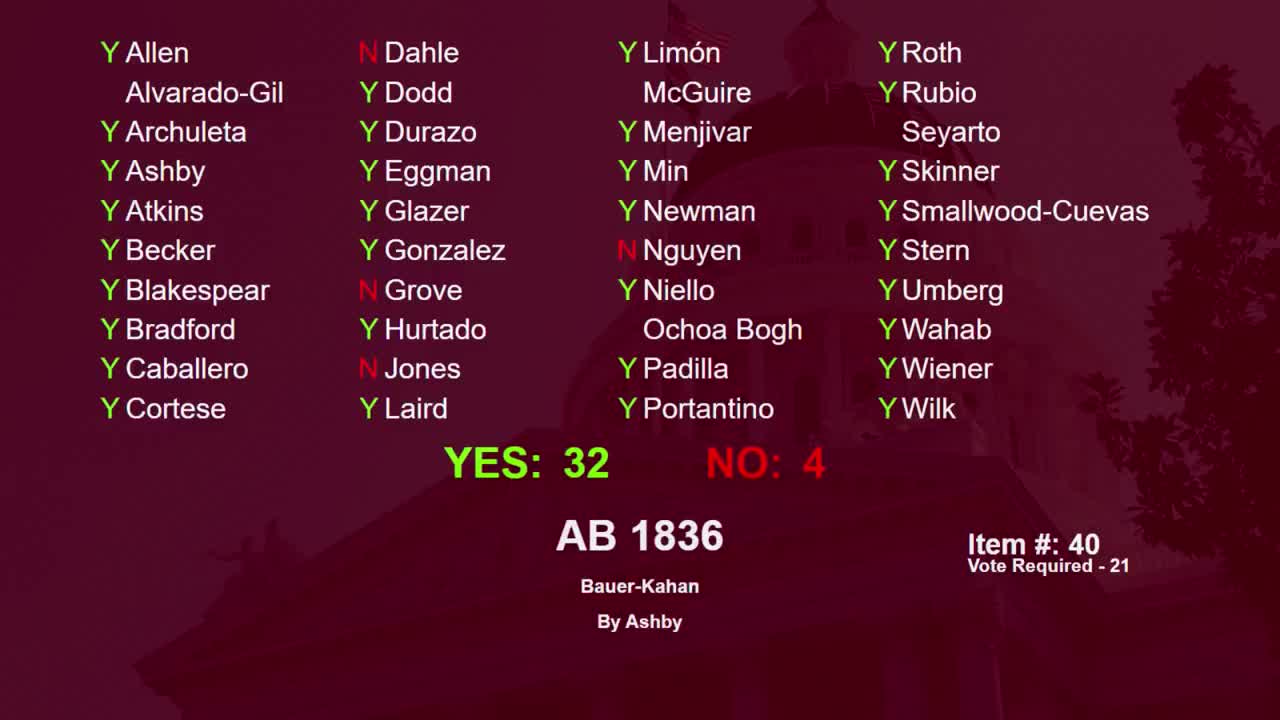 2MIN
Senate Floor
 40SEC
Assembly Floor
 3MIN
Senate Standing Committee on Appropriations
 33SEC
Assembly Floor
 38SEC
Assembly Floor
 10MIN
Assembly Standing Committee on Business and Professions
Bill Author

Bill Co-Author(s):