AB 2133: Veterinary medicine: registered veterinary technicians.
- Session Year: 2023-2024
- House: Assembly
- Latest Version Date: 2024-04-10
Current Status:
Failed
(2024-05-16: In committee: Held under submission.)
Introduced
In Committee
First Chamber
In Committee
Second Chamber
Enacted
Existing law, the Veterinary Medicine Practice Act, provides for the licensure and registration of veterinarians and registered veterinary technicians and the regulation of the practice of veterinary medicine by the Veterinary Medical Board. Existing law permits registered veterinary technicians and veterinary assistants to carry out specified acts in the veterinary care and treatment of animals, and authorizes the board to regulate the veterinary care activities of registered veterinary technicians and veterinary assistants, including prohibiting registered veterinary technicians and veterinary assistants from performing surgery.
This bill would authorize a registered veterinarian technician to perform neuter surgery on a male domestic cat under the direct supervision of a California-licensed veterinarian, as specified. The bill would require a registered veterinary technician authorized to perform neuter surgery under the requirements of this act to obtain training, as specified, in cat neuter surgery procedures before receiving board approval.
Existing law, the Veterinary Medicine Practice Act, provides for the licensure and registration of veterinarians and registered veterinary technicians and the regulation of the practice of veterinary medicine by the Veterinary Medical Board. Existing law permits registered veterinary technicians and veterinary assistants to carry out specified acts in the veterinary care and treatment of animals, and authorizes the board to regulate the veterinary care activities of registered veterinary technicians and veterinary assistants, including prohibiting registered veterinary technicians and veterinary assistants from performing surgery.
This bill would authorize a registered veterinarian technician to perform neuter surgery on a male domestic cat under the direct supervision of a California-licensed veterinarian, as specified.
Registered veterinary technicians and veterinary assistants shall not perform the following health care services:
(a)Surgery, except as provided in Section 4840.3.
(b)Diagnosis and prognosis of animal diseases.
(c)Prescribing of drugs, medicine, and appliances.
SEC. 2.Section 4840.3 is added to the Business and Professions Code, to read:4840.3.(a)For purposes of this section, veterinarian means a California-licensed veterinarian.
(b)Notwithstanding any other law, a registered veterinary technician may perform neuter surgery on a male domestic cat under the direct supervision of a veterinarian only if both all of the following conditions are met:
(1)The registered veterinary technician is approved by the board to perform cat neuter surgery.
(1)(2)The registered veterinary technician reviews the animal patients history in order to reasonably ensure that the neuter surgery is appropriate.
(2)(3)The registered veterinary technician performs the neuter surgery in accordance with written protocols and procedures established by the veterinarian.
(c)(1)A registered veterinary technician authorized to perform neuter surgery under this section shall obtain training in cat neuter surgery procedures before receiving board approval.
(2)For purposes of this subdivision, training means completion of a board-approved curriculum in techniques and procedures related to cat neuter surgery.
Registered veterinary technicians and veterinary assistants shall not perform the following health care services:
(a)Surgery. Surgery, except as provided in Section 4840.3.
(b)Diagnosis and prognosis of animal diseases.
(c)Prescribing of drugs, medicine, and appliances.
SEC. 2.Section 4840.3 is added to the Business and Professions Code, to read:4840.3.(a)For purposes of this section, veterinarian means a California-licensed veterinarian.
(b)Notwithstanding any other law, a registered veterinary technician may perform neuter surgery on a male domestic cat under the direct supervision of a veterinarian only if both of the following conditions are met:
(1)The registered veterinary technician reviews the animal patients history in order to reasonably ensure that the neuter surgery is appropriate.
(2)The registered veterinary technician performs the neuter surgery in accordance with written protocols and procedures established by the veterinarian.
|
Date
|
Status
|
|---|---|
| May 16, 2024 | In committee: Held under submission. |
| Apr 24, 2024 | In committee: Set, first hearing. Referred to APPR. suspense file. |
| Apr 11, 2024 | Re-referred to Com. on APPR. |
| Apr 10, 2024 | Read second time and amended. |
| Apr 9, 2024 | From committee: Amend, and do pass as amended and re-refer to Com. on APPR. (Ayes 13. Noes 3.) (April 9). |
| Feb 20, 2024 | Referred to Com. on B. & P. |
| Feb 7, 2024 | From printer. May be heard in committee March 8. |
| Feb 6, 2024 | Read first time. To print. |
|
Date
|
Description
|
Location
|
Votes
|
|
|---|---|---|---|---|
| Apr 9, 2024 | Do pass as amended and be re-referred to the Committee on [Appropriations] | Assembly Standing Committee on Business and Professions |
Passed |
This list shows positions taken on this bill by organizations on the date displayed, which is linked to the original source.
Positions by individuals are not included.
|
Organization
|
Position
|
Date
|
|---|---|---|
| A Passion for Paws - Akita Rescue | ** Support | |
| All God's Creatures Teaching Hospital and Surgery Center | ** Support | |
| American Veterinary Medical Association | ** Against | |
| Animal Solutions | ** Support | |
| ANIMAL WELLNESS ACTION | ** Support | |
| Barks of Love Animal Rescue | ** Support | |
| Better Together Forever | ** Support | |
| Buddy's Angels | ** Support | |
| California Registered Veterinary Technicians Association | * Support | Apr 9, 2024 |
| California Registered Veterinary Technicians Association | ** Support | |
| California Veterinary Medical Association | * Against | Apr 9, 2024 |
| Catmosphere Laguna Foundation | ** Support | |
| Cultivate Empathy for All | ** Support | |
| Foods by Jude | ** Support | |
| Gurrs and Purrs Rescue | ** Support | |
| Hanaeleh | ** Support | |
| Humboldt Humane | ** Support | |
| Kesar and Cardi LLC | ** Support | |
| Kindred Spirits Care Farm | ** Support | |
| Latino Alliance for Animal Care Foundation | ** Support | |
| Little Hill Sanctuary | ** Support | |
| Los Angeles Democrats for the Protection of Animals | ** Support | |
| Love Leo Rescue | ** Support | |
| Motherlode Feral Cat Alliance | ** Support | |
| NY 4 Whales | ** Support | |
| Outta the Cage | ** Support | |
| Paaw- People Advocating for Animal Welfare | ** Support | |
| Poison Free Malibu | ** Support | |
| Preetirang Sanctuary | ** Support | |
| Saving Imperial Rescue | ** Support | |
| Small Animal Orthopedic Surgery Service | * Against | Apr 9, 2024 |
| Social Compassion In Legislation | * Support | Apr 9, 2024 |
| START Rescue | ** Support | |
| Take Me Home | ** Support | |
| Terra Advocati | ** Support | |
| The Animal Coalition Group | ** Support | |
| The Canine Condition | ** Support | |
| The German Shepherd Rescue of Orange County | ** Support | |
| Tippedears | ** Support | |
| UnchainedTV | ** Support | |
| Vet Tech Nursing Academy | * Support | Apr 9, 2024 |
| Westside German Shepherd Rescue | ** Support | |
| Women United for Animal Welfare | ** Support |
Date of Hearing: April 24, 2024
ASSEMBLY COMMITTEE ON APPROPRIATIONS
Buffy Wicks, Chair
ABPCA Bill Id:AB 2133
Author:(Kalra) – As Amended Ver:April 10, 2024
Policy Committee: | Business and Professions | Vote: | 13 - 3 |
|
| ||
|
|
Urgency: No State Mandated Local Program: No Reimbursable: No
SUMMARY:
This bill allows a registered veterinary technician (RVT), under the direct supervision of a veterinarian, to perform neuter surgery on a male domestic cat.
Specifically, the bill requires the RVT performing cat neuter surgery to:
(1) Be approved by the Veterinary Medical Board (VMB) to perform the surgery.
(2) Review the cat’s history to ensure the neuter surgery is appropriate.
(3) Perform the surgery in accordance with protocols and procedures established by the veterinarian.
This bill also requires the RVT to have obtained training, as defined, in cat neuter surgery before receiving approval from the VMB.
FISCAL EFFECT:
Ongoing annual costs to the VMB of $168,000 (Veterinary Medical Board Contingent Fund). The VMB anticipates an ongoing annual enforcement workload based on a doubling in the number of complaints against RVTs, to 80 cases per year. Because the RVTs would be under the direct supervision of veterinarians, the supervising veterinarians would also be investigated. The VMB indicates such cases go through the enforcement process of intake, analyst investigation, consultant review, subject matter expert review, and manager review. VMB estimates roughly 15% would warrant enforcement action, requiring executive office review; and half of those would warrant discipline at the attorney general’s office. The VMB indicates these costs are absorbable.
Additional one-time, absorbable costs of $9,200 to the Department of Consumer Affairs’ electronic licensing and enforcement system.
COMMENTS:
- Purpose. This bill is sponsored by Social Compassion in Legislation. According to the author:
California’s animal shelters struggle under a constant influx of unwanted animals, an influx that could be almost entirely prevented by robust spay and neuter practices. However, there are currently not enough veterinarians to meet the growing demand for accessible and affordable pet sterilization surgeries. AB 2133 tackles this issue by allowing registered veterinary technicians to perform cat neuters under the direct supervision of a veterinarian, thereby safely expanding the pool of professionals who can carry out this standard, low-risk procedure.
- Background.
Cat neuter procedures. A cat neuter surgery is a sterilization procedure performed on a male cat that involves removing the testicles via a small incision through the cat’s scrotum. Due to cats’ anatomy, the incision must be specific to not accidentally cut into the cat’s urethra or otherwise disturb the urinary tract, or cause internal bleeding. If the incision is done correctly, sutures or staples are not needed and the incision will heal on its own. Typically, a cat neuter can be performed in minutes, but is an invasive surgical procedure.
RVTs. Veterinarians are the only licensed professionals authorized to perform sterilization surgery on animals. An RVT is typically responsible, under the direct supervision of a veterinarian, for preparing an animal for sterilization surgery, checking vital signs, ensuring the animal is properly sedated, monitoring fluids during the procedure, and most of the post-procedure care following sterilization, including monitoring the patient for potential adverse reactions or bleeding. An RVT may also perform dental extractions, suture cutaneous and subcutaneous tissues, and more. The VMB’s regulations also allow an RVT to perform, under indirect supervision of a licensed veterinarian, a variety of procedures, including administering controlled substances and performing certain routine animal health care tasks. - Opposition. The California Veterinary Medical Association (CVMA) and the American Veterinary Medical Association oppose this bill, arguing: RVTs are not trained to perform surgery, veterinary surgery is taught only in veterinary school, RVT workforce challenges make this bill unrealistic to implement and unlikely to improve access to care (there are fewer RVTs than veterinarians), cat neutering is far riskier than other permitted RVT procedures, delegating neutering surgeries to RVTs will not lower costs, liability is significant, the consumer would not know if a non-surgeon is performing the surgery, and veterinarians are not having difficulty meeting the demand for cat neuters.
- Related Legislation.
- ACR 86 (Kalra) encourages the state and local municipalities to develop and fund high-volume spay and neuter clinics across the state to provide sterilization services, and urges other actions such as controlling animal breeding and encourage spaying and neutering. ACR 86 is pending concurrence in Senate amendments on the Assembly floor.
- SB 1233 (Wilk) requires the Regents of the University of California and Western University of Health Sciences to develop high-quality, high-volume spay and neuter certification programs to be offered to students enrolled in the respective veterinary schools and veterinarians, and to make low-cost cat and dog spaying and neutering available to the public. SB 1233 is pending in Senate Rules Committee.
Analysis Prepared by: Allegra Kim / APPR. / (916) 319-2081
Date of Hearing:
ASSEMBLY COMMITTEE ON BUSINESS AND PROFESSIONS
Marc Berman, Chair
ABPCA Bill Id:AB 2133
Author:(Kalra) – As Introduced Ver:February 6, 2024
SUBJECT: Veterinary medicine: registered veterinary technicians.
SUMMARY: This bill would authorize a registered veterinary technician (RVT) to perform cat neuter surgery, subject to certain conditions.
EXISTING LAW:
- Provides for the regulation of veterinary medicine under the Veterinary Medicine Practice Act (Act) and prohibits the practice unlicensed of veterinary medicine. (Business and Professions Code (BPC) §§ 4800-4917)
- Establishes the Veterinary Medical Board (VMB) within the Department of Consumer Affairs (DCA) to license and regulate the veterinary medicine profession. (BPC § 4800)
- Declares it is unlawful to practice veterinary medicine in California unless the individual holds a valid, unexpired, and unrevoked license issued by the VMB. (BPC § 4825)
- Provides that an individual practices veterinary medicine, surgery, and dentistry, and the various branches thereof, when the practitioner does any one of the following:
- Represents oneself as engaged in the practice of veterinary medicine, veterinary surgery, or veterinary dentistry in any of its branches.
- Diagnoses or prescribes a drug, medicine, appliance, application, or treatment of whatever nature for the prevention, cure, or relief of a wound, fracture, bodily injury, or disease of animals.
- Administers a drug, medicine, appliance, application, or treatment of whatever nature for the prevention, cure, or relief of a wound, fracture, bodily injury, or disease of animals, as specified.
- Performs a surgical or dental operation upon an animal.
- Performs any manual procedure for the diagnosis of pregnancy, sterility, or infertility upon livestock or Equidae.
- Collects blood from an animal for the purpose of transferring or selling that blood and blood component products to a licensed veterinarian at a registered premise, as specified.
- Uses any words, letters, or titles in such connection or under such circumstances as to induce the belief that the person using them is engaged in the practice of veterinary medicine, veterinary surgery, or veterinary dentistry, as specified.
(BPC § 4826)
- Permits a veterinarian to authorize an RVT to act as an agent of the veterinarian for the purpose of establishing the veterinarian-client-patient relationship to administer preventive or prophylactic vaccines or medications for the control or eradication of apparent or anticipated internal or external parasites, subject to certain conditions, including:
- Vaccines must be administered in a registered veterinary premises at which the veterinarian is physically present.
- If working at a location other than a registered veterinary premises, the veterinarian is in the general vicinity or available by telephone and is quickly and easily available. The RVT shall have necessary equipment and drugs to provide immediate emergency care.
- The RVT examines the animal patient and administers vaccines in accordance with written protocols and procedures established by the veterinarian.
- The veterinarian and RVT sign and date a statement containing an assumption of risk by the veterinarian for all acts of the RVT related to patient examination and administration of vaccines, short of willful acts of animal cruelty, gross negligence, or gross unprofessional conduct on behalf of the RVT.
- The veterinarian and RVT sign and date a statement containing authorization for the RVT to act as an agent of the veterinarian until such date as the veterinarian terminates authorization.
- Before the RVT examines or administers vaccines to the animal patient, the RVT informs the client orally or in writing that they are acting as an agent of the veterinarian.
- Signed statements between the veterinarian and RVT must be retained by the veterinarian for the duration of the RVT’s work as an authorized agent and until three years from the date of termination of their relationship with the veterinarian.
(BPC § 4826.7(b))
- Requires all veterinarians engaged and employed as veterinarians by the state, or a county, city, corporation, firm, or individual to secure a license issued by the VMB. (BPC § 4828)
- Requires the VMB to adopt regulations delineating animal health care tasks and an appropriate degree of supervision required for those tasks that may be performed solely by an RVT or licensed veterinarian. (BPC § 4836(a))
- Permits the VMB to additionally adopt regulations establishing animal health care tasks that may be performed by a veterinary assistant, an RVT or a licensed veterinarian. (BPC § 4836(b))
- Requires the VMB to establish an appropriate degree of supervision by an RVT or a licensed veterinarian over a veterinary assistant for any authorized tasks and provides that the degree of supervision for any of those tasks shall be higher than, or equal to, the degree of supervision required when an RVT performs the task. (BPC § 4836(b))
- Authorizes the VMB to revoke or suspend the certificate of registration of an RVT, as specified. (BPC § 4837)
- Prohibits an individual from using the title “RVT,” “veterinary technician,” or using the initials “RVT” without meeting the requirements of an RVT. (BPC § 4839.5)
- Defines “direct supervision” as the supervisor physically present at the location where animal healthcare professionals provide care and tasks which are expected to be conducted quickly and are easily available. (California Code of Regulations (CCR), tit. 16, § 2034(e))
- Defines “indirect supervision” as the supervisor not being physically present at the location where animal healthcare tasks, treatments, procedures, etc. are to be performed, but has given either written or oral instructions (“direct orders”) for treatment of the animal and the animal has been examined by a veterinarian in a manner consistent with appropriate delegated animal health care task and that the animal is not anesthetized, as defined. (CCR, tit. 16, § 2034(f))
- Authorizes RVTs and veterinary assistants to perform those animal health care services prescribed by law under the supervision of a veterinarian licensed or authorized to practice. (BPC § 4840(a))
- Specifies that an RVT may perform animal health care services on impounded animals by a state, county, city, or city and county agency pursuant to the direct order, written order, or telephonic order of a veterinarian licensed or authorized to practice in California. (BPC § 4840(b))
- Permits an RVT to apply for registration from the federal Drug Enforcement Administration to allow the direct purchase of sodium pentobarbital for the performance of euthanasia, without the supervision or authorization of a licensed veterinarian. (BPC § 4840(c))
- Prohibits an RVT from performing the following functions or activities that represent the practice of veterinary medicine, requires the knowledge, skill, and training of a licensed veterinarian:
- Surgery,
- Diagnosis and prognosis of animal diseases, and
- Prescribing drugs, medications, or appliances.
(BPC § 4840.2)
- Allows an RVT to perform the following procedures under the direct supervision of a licensed veterinarian:
- Induce anesthesia,
- Perform dental extractions,
- Suture cutaneous and subcutaneous tissues, gingiva, and oral mucous membranes,
- Create a relief hole in the skin to facilitate placement of an intravascular catheter, and
- Drug compounding from bulk substances.
(CCR, tit. 16 § 2036(b))
- Authorizes an RVT to perform the following procedures under indirect supervision of a licensed veterinarian:
- Administer controlled substances,
- Apply casts and splints,
- Provide drug compounding from non-bulk substances.
(CCR, tit. 16 § 2036(b))
THIS BILL:
- Authorizes a registered veterinary technician (RVT) to perform cat neuter surgery under the direct supervision of a veterinarian so long as:
- The RVT reviews the animal patient’s history in order to reasonably ensure that the neuter surgery is appropriate.
- The RVT performs the neuter surgery in accordance with written protocols and procedures established by the veterinarian.
FISCAL EFFECT: Unknown; this bill is keyed fiscal by the Legislative Counsel.
COMMENTS:
Purpose.
This bill is sponsored by Social Compassion in Legislation. According to the author:
“California’s animal shelters struggle under a constant influx of unwanted animals, an influx that could be almost entirely prevented by robust spay and neuter practices. However, there are currently not enough veterinarians to meet the growing demand for accessible and affordable pet sterilization surgeries. AB 2133 tackles this issue by allowing registered veterinary technicians to perform cat neuters under the direct supervision of a veterinarian, thereby safely expanding the pool of professionals who can carry out this standard, low-risk procedure.”
Background.
Efforts to Encourage Pet Sterilization. Over the past several years, California has made efforts to humanely reduce animal overpopulation and encourage the spay and neuter of dogs and cats across the state. In 1998, the Legislature enacted Senate Bill 1785 by Senator Tom Hayden, which formally established that the State of California’s policy is “that no adoptable animal should be euthanized if it can be adopted into a suitable home” and “that no treatable animal should be euthanized.” As part of these goals, and overall effort to reduce pet overpopulation that leads to euthanasia, this bill and subsequent legislation established a mandate that no public or private animal shelter, humane society, rescue group or other nonprofit shall adopt out any dog or cat that has not been sterilized, subject to very limited exceptions.
More recent, after a successful campaign by the sponsor of this bill and the VMB, a Pet Lover’s License Plate program was established in 2012, and in 2014, SB 1323 (Lieu) was enacted to allocate the proceeds from purchases of this specialty license plate to fund a grant program to eligible veterinary facilities that offer low-cost or no-cost animal sterilization services under the VMB. The most recent distribution of grand funding in 2023 allocated approximately $488,000. This consisted of an estimated amount of $25,000 – $50,000 per award.
The Legislature enacted AB 485 (Williams) in 2015 to create a voluntary tax return checkoff to provide revenue to a Prevention of Animal Homelessness and Cruelty Fund. This checkoff allocates money to local animal control agencies and shelters to support spay and neuter activities and to prevent and eliminate dog and cat homelessness. In 2022, a total of $308,449 was contributed through the checkoff, and approximately $250,000 was awarded that year to eligible agencies, with an estimated amount of $7,500 – $22,500 per award.
In February of 2022, the California for All Animals program was launched to advance marketing and outreach efforts designed to engage shelters in every region of the state that met the goals outlined in the Animal Shelter Assistance Act. $15.5 million in grant awards has since been awarded, along with $12.5 million for in-person visits, trainings, outreach, and program expenses. Grant funding is prioritized for programs to increase low-cost and free spay/neuter services, access to low cost and free veterinary care to prevent owner relinquishment to animal shelters, and programs that reunite lost pets with their owners and incentivize making adoption accessible for all communities.
Finally, last year the Assembly and Senate passed ACR 86, also authored by Assemblymember Kalra and sponsored by SCIL, which is currently pending final concurrence in the Assembly. This resolution puts a spotlight on the national and statewide pet overpopulation crisis, noting the increase in pet adoptions and purchases throughout the COVID-19 pandemic which exacerbated these issues. This resolution also notes the lack of low-cost and free spay and neuter options, as well as disparities in access to veterinary care. This resolution made a commitment to pursue policies that increase the availability of low-cost, high volume spay and neuter and encourage more out-of-state veterinarians and RVTs to perform and assist with sterilization. In the spirit of this resolution, the author and sponsors have put forward this bill as a first step toward achieving its stated goals.
Cat neuter procedures. A cat neuter surgery is a sterilization procedure performed on a male domestic cat that involves the removal of their testicles via a small incision through the cat’s scrotum. Due to the anatomy of cats, the incision must be specific as to not accidentally cut into the cat’s urethra or otherwise disturb the urinary tract. The veterinarian then removes the cat’s testicles, and uses a method called “autoligation” to tie off the cat’s blood vessel, rather than using sutures. This removal is delicate, as a cut too far down the vessel can cause internal bleeding. If the incision is done in the right method on the exterior of the scrotum, sutures or staples are not needed and the incision will heal on its own. Typically, cat neuters can be performed in a matter of minutes, but are nonetheless an involved and invasive surgical procedure.
Currently, veterinarians are the only licensed professional with the ability to perform sterilization surgery on animals. However, RVTs are deeply involved in the overall process, as well. They are typically responsible for preparing an animal for sterilization surgery, checking vitals and ensuring the animal is properly sedated. RVTs monitor fluids and vitals during the procedure, and are responsible for most of the post-procedure care following the sterilization, including monitoring the patient for potential adverse reactions or bleeding. Often, the RVT will be responsible for a bulk of the overall intake of the cat, with the veterinarian stepping in to perform the actual surgery itself.
Veterinarians and RVTs. Veterinarians (Doctors of Veterinary Medicine, or “DVM”s) and registered veterinary technicians (RVTs) each play a distinct, vital role in an animal hospital or veterinary clinic, one not dissimilar to the relationship between a Doctor of Medicine (MD) and a registered nurse (RN) in an emergency room or medical clinic. In order to practice veterinary medicine and provide healthcare to a variety of animals, veterinarians must secure a license through the VMB. A licensed California veterinarian is authorized to engage in the practice of veterinary medicine, surgery, veterinary dentistry, and related health procedures for the benefit of an animal’s general health and wellbeing. Veterinarians are trained and licensed to diagnose, prescribe medication and provide treatment for the animal’s health and improvement to the animal’s quality of life. Veterinarians are extensively trained, satisfied academic requirements, and provide health care for various animals. Veterinarians receive specific healthcare training as it applies to animals and understanding the nature for the prevention, cure, or relief of a wound, fracture, bodily injury, or disease of animals. In order to practice veterinary medicine in California, an applicant must graduate from a degree program offered by an accredited postsecondary institution or institutions approved by the VMB, pass a national veterinarian examination, and pass an examination provided by the VMB to test the knowledge of the laws and regulations related to the practice of veterinary medicine in California.
RVTs serve a crucial role in the veterinary workforce by providing vital supportive health-related tasks. These health tasks involve drawing blood and conducting laboratory tests, operating radiographic equipment, administering medication, as well as countless other health related procedures. In the surgical process, the RVT is typically responsible for pre- and post-operation tasks under the direct supervision of a veterinarian, such as the induction of anesthesia, creation a relief hole in the skin to facilitate placement of an intravascular catheter, application casts and splints, performance of dental extractions, suturing of cutaneous and subcutaneous tissues, and more. The VMB’s regulations have also stipulated that an RVT may perform a variety of procedures under indirect supervision of a licensed veterinarian. These procedures include the act of administering controlled substances and performing certain routine animal health care tasks.
In recent years, there have been efforts to expand the role that RVTs play in the veterinary field, not only to address disparities in veterinary care but to offer further career advancement for experienced RVTs that may not have the desire or ability to pursue a full DVM career. Last year the Legislature permitted veterinarians to authorize RVTs to act as an agent of the veterinarian for purposes of establishing a client relationship or administering certain vaccines with the passage of Senator Cortese’s SB 669. The State of Florida is currently considering legislation to recognize a midlevel “veterinary professional associate”, and an initiative will be in front of Colorado voters this fall seeking to establish a similar role. Additionally, the EU’s European School for Advanced Veterinary Studies recognizes a midlevel “Certificate of Advanced Studies” in veterinary medicine, which among other tasks, offer certification in soft tissue surgery. Sponsors and supporters note that this bill will serve to retain experienced RVTs by providing a career advancement opportunity for RVTs while also driving toward California’s goals around animal overpopulation.
Current Related Legislation.
AB 1988 (Muratsuchi) would authorize that any puppy or kitten relinquished to a public or private animal shelter by the purported owner can be made immediately available for release to a nonprofit organization, animal rescue organization, or adoption organization. This bill is pending in this committee.
AB 2012 (Lee) would require the CDPH to collect specified data from public animal shelters as part of their annual rabies control activities reporting, and authorizes the CDPH to contract out this requirement to a California accredited veterinary school. This bill was unanimously supported in this committee.
AB 2265 (McCarty) would, among other things, require that all animal shelters provide public notice at least 24 hours before a dog or cat is scheduled to be euthanized, to be posted daily on their internet website or Facebook page, and that the notice be physically affixed on the kennel of a dog to cat scheduled to be euthanized, as well as mandates time certain that a dog or cat must be spayed or neutered by an animal shelter upon being given to a foster. This bill is pending in this committee.
AB 2425 (Essayli) would, among other things, require an animal shelter to provide public notice regarding the adoption availability of any animal, and require the Department of Food and Agriculture (CDFA) to conduct a study on certain topics, including overcrowding of state animal shelters. The bill would also make changes and additions to state law pertaining to dog breeders. This bill is pending in this committee.
AB 2954 (Wendy Carrillo) would prohibit a person from performing a surgical claw removal, declawing, or a tendonectomy on any cat, or otherwise altering the cat’s paws to impair functionality, except for therapeutic purposes. This bill is pending in this committee.
ACR 86 (Kalra) encourages the state and local municipalities to develop and fund high-volume spay and neuter clinics across the state to provide sterilization services, and also urges other actions relating to pets, including actions to control animal breeding and encourage spaying and neutering. This resolution is pending concurrence in Senate amendments on the Assembly floor.
SB 1233 (Wilk) would require the Regents of the University of California and the governing body of Western University of Health Sciences to develop high-quality, high-volume spay and neuter certification programs to be offered as elective coursework to students enrolled in the respective veterinary schools, among other things. This bill is pending in the Senate Education Committee.
SB 1358 (Nguyen) is substantially similar to this bill, and would require the CDPH to collect and report specified data from public animal shelters as part of their annual rabies control activities reporting. This bill is pending in the Senate Health Committee.
SB 1459 (Nguyen) would, among other things, require public animal control agencies and shelters in counties with a population greater than 400,000 to publish and update specified data on their internet website, and exempt a veterinarian or registered veterinary technician from prosecution if they willfully release a cat as part of a trap, neuter, and release activity. This bill is pending in the Senate Business, Professions, and Economic Development Committee.
SB 1478 (Nguyen) would require the inclusion of specified information in any order issued by a veterinarian that authorizes a registered veterinary technician to perform animal health care services on animals impounded by a public shelter. This bill is pending in the Senate Business, Professions, and Economic Development Committee.
Prior Related Legislation.
AB 595 (Essayli) from 2023 would have required that all animal shelters provide public notice at least 72 hours before euthanizing any animal with information that includes the scheduled euthanasia date and required the California Department of Food and Agriculture to conduct a study on animal shelter overcrowding and the feasibility of a statewide database for animals scheduled to be euthanized. This bill was held in the Senate Appropriations Committee.
SB 669 (Cortese) Chapter 882, Statutes of 2023 authorized a veterinarian to allow an RVT to act as an agent of the veterinarian for the purpose of establishing the veterinarian-client-patient relationship to administer preventive or prophylactic vaccines or medications for the control or eradication of apparent or anticipated internal or external parasites by satisfying specified criteria.
AB 1535 (Committee on Business and Professions) Chapter 631, Statutes of 2021, enacted various changes to the regulation of veterinarians, RVTs, Veterinary Assistant Controlled Substances Permit (VACSP) holders, veterinary schools, and veterinary premises, stemming from the joint sunset review oversight of the Veterinary Medical Board (Board) by the Assembly Committee on Business and Professions and the Senate Committee on Business, Professions, and Economic Development.
SB 1347 (Galgiani) from 2020 would have expanded exemptions to the practice of veterinary medicine to include specified functions performed at a shelter, as defined, by an employee or volunteer who has obtained specified training. At the request of the author, this bill’s hearing in Assembly Appropriations Committee was canceled and the bill did not move.
AB 485 (Williams) Chapter 557, Statutes of 2015, created a voluntary tax return checkoff to provide revenue to a Prevention of Animal Homelessness and Cruelty Fund, which allocates money to local animal shelters to support spay and neuter activities and eliminate dog and cat homelessness.
SB 1323 (Lieu) Chapter 375, Statutes of 2014 appropriated money collected from the Pet Lover’s License Plate Program to the Veterinary Medical Board for the sole and exclusive purpose of funding grants to providers of no-cost or low-cost animal sterilization services.
SB 1785 (Hayden) Chapter 752, Statutes of 1998 established, among other things, that the State of California’s policy is that no adoptable animal should be euthanized if it can be adopted into a suitable home, and policies promoting the spay and neuter of dogs and cats in the state.
ARGUMENTS IN SUPPORT:
This bill is sponsored by Social Compassion in Legislation (SCIL). According to SCIL: “A 2021 national survey shows that 14 California counties ranked in the bottom 25% on the Veterinary Care Accessibility Score, which means there is extremely limited or no ability to see a veterinarian... This modest proposal will not singlehandedly fix the pet overpopulation crisis, but it will give another tool to help alleviate the problem, particularly in shelter settings or high volume spay and neuter clinics.”
This bill is supported by the California Registered Veterinary Technicians Association (CaRVTA). According to CaRVTA: “We are optimistic that [this bill] will help the veterinary profession by freeing veterinarians to use their time more productively and by giving RVTs the opportunity to advance their careers. Both of these will ultimately lead to better retention of veterinary personnel.”
ARGUMENTS IN OPPOSITION:
This bill is opposed by the California Veterinary Medical Association (CVMA), representing “over 7,800 veterinary medical professionals in the state”. According to CVMA: “Surgery is an advanced skill that requires extensive education beyond the procedure itself for it to be performed safely. To perform it safely, one must have significant education in subjects including anatomy and physiology, neurology, pharmacology, anesthesia, emergency and critical care, hematology, not to mention the surgical procedure itself. These topics and others needed to perform surgery in a safe and competent manner are not taught as part of the RVT licensing curriculum to an extent needed for them to be able to perform surgery.”
This bill is opposed by the American Veterinary Medical Association (AVMA), representing “more than 105,000 veterinarians” nationwide. According to AVMA: “While an important member of the veterinary team, a registered veterinary technician is not trained in the same way a veterinarian is trained. The veterinary technician’s training focuses on technical skills, while the veterinarian is trained as a medical decision maker…Feline neuters, and surgeries for animals in general, should continue to be carried out by a licensed veterinarian, the only health professional uniquely educated, trained, qualified, and licensed for veterinary surgery.”
POLICY ISSUE(S) FOR CONSIDERATION:
Scope of Practice. As written, this bill significantly expands the scope of practice for registered veterinary technicians in the state. While the author and sponsors note that current law already authorizes certain expanded responsibilities for RVTs, such as anesthesia administration and dental extractions, this bill would mark the first time RVTs are specifically allowed to perform an animal surgery as defined under state law, a role which is currently expressly prohibited (BPC § 4840.2). Veterinarians licensed by the VMB are required to receive several years of education from a recognized veterinary college, which covers a wide array of medical topics, surgical procedures, diseases, and conditions, including creating appropriate care and treatment plans. Specific to surgery, licensed veterinarians are trained to quickly respond to issues or complications that may arise during medical procedures, such as excessive bleeding or adverse reaction to anesthesia.
Comparatively, RVTs registered under the VMB are required to pass a board-approved examination, and provide proof of either completion of a two-year curriculum specializing in veterinary technology, or equivalent experience as approved by the American Association of Veterinary State Boards. While this education and equivalent experience requirements are rigorous, including training in diagnostic procedures, monitoring of vitals, and other critical tasks involved in animal care, they are not specifically trained in animal surgery nor the relevant steps necessary should surgery go wrong.
As such, there is valid concern that this bill in its current form erodes the responsibility of the state and the VMB to protect the public from inadequate or unprofessional practices of veterinary medicine, and ensure that certain specialized roles are only carried out by licensed professionals who are certifiably educated to fulfill their responsibilities.
Liability Concerns. According to data provided in an opposition letter by the American Veterinary Medical Association (AVMA), which sponsors the AVMA Professional Liability Insurance Trust, sterilization surgeries rank among the top drivers of veterinary insurance claims, including incidents of neuters. In context of this bill, there is a lack of clarity regarding how liability would apply in cases of a neuter surgery performed by an RVT that results in a claim, or whether existing insurers will extend liability coverage to this expanded scope. Considering that veterinarians are liable for actions of employees under their direction, this would be likely to increase claims and costs against veterinary practices and animal hospitals.
As a result, there is question as to the efficacy of this bill in increasing the availability of low-cost neuter surgeries, as many practices are likely to not permit this expanded responsibility to their RVTs due to liability concerns, and for those who do, concern that neuter costs will potentially be driven up due to the increased liability costs.
Veterinarian vs. RVT Disparity. The author and sponsors argue that this bill is intended to drive at the ongoing deficit of veterinarians, an issue highlighted in the author’s resolution passed by the Legislature last year. However, California is facing an even greater disparity of RVTs in the state than veterinarians. According to statistics provided by the VMB and public licensing data on the DCA’s website, there are approximately 13,500 licensed veterinarians in California, but only 8,600 RVTs. Considering the many responsibilities under the purview of RVTs already, including routine animal exams, pre- and post-procedure patient care and monitoring, administration of medicine and more, it is unclear what the provisions of this bill will do to meaningfully increase the availability of cat neuters in veterinary clinics.
Direct vs indirect supervision. This bill mandates that any cat neuter performed by an RVT must be performed “under the direct supervision of a veterinarian”. This is intended to ensure a veterinarian is available to address any complications that may arise during, or as a result of, the procedure. Notably, though, “direct supervision” under law merely means the veterinarian is on the same premises as the procedure being performed, and has a prior established relationship with the client. This means, in practice, a veterinarian can be in another room of a clinic and performing another task when the RVT is performing a neuter surgery, and the standard of direct supervision would still be met.
As such, the author may wish to consider further provisions specifically clarifying that a supervising veterinarian must be readily available to address complications that arise during a neuter surgery performed by an RVT, or otherwise ensure that greater veterinary oversight is provided for in the procedure.
AMENDMENTS:
To provide for greater assurance that RVTs are adequately qualified to perform cat neuter surgery, and ensure that the VMB has insight into, and authority over, cat neuter procedures performed by RVTs, amend the bill as follows:
On page 2, after line 13:
(b) Notwithstanding any other law, a registered veterinary technician may perform neuter surgery on a male domestic cat under the direct supervision of a veterinarian only if both all of the following conditions are met:
(1) The registered veterinary technician is approved by the board to perform cat neuter surgery.
(1) (2) The registered veterinary technician reviews the animal patient’s history in order to reasonably ensure that the neuter surgery is appropriate.
(2) (3) The registered veterinary technician performs the neuter surgery in accordance with written protocols and procedures established by the veterinarian.
(c)(1) A registered veterinary technician authorized to perform neuter surgery under this section shall obtain training in cat neuter surgery procedures before receiving board approval.
(2) “Training” means completion of a board-approved curriculum in techniques and procedures related to cat neuter surgery.
REGISTERED SUPPORT:
Social Compassion in Legislation (sponsor)
A Passion for Paws - Akita Rescue
All God's Creatures Teaching Hospital and Surgery Center
Animal Solutions
Animal Wellness Action
Barks of Love Animal Rescue
Better Together Forever
Buddy's Angels
California Registered Veterinary Technicians Association
Catmosphere Laguna Foundation
Cultivate Empathy for All
Foods by Jude
Gurrs and Purrs Rescue
Hanaeleh
Humboldt Humane
Kesar and Cardi LLC
Kindred Spirits Care Farm
Latino Alliance for Animal Care Foundation
Little Hill Sanctuary
Los Angeles Democrats for The Protection of Animals
Love Leo Rescue
Motherlode Feral Cat Alliance
NY 4 Whales
Outta the Cage
Paaw- People Advocating for Animal Welfare
Poison Free Malibu
Preetirang Sanctuary
Saving Imperial Rescue
Start Rescue
Take Me Home
Terra Advocati
The Animal Coalition Group
The Canine Condition
The German Shepherd Rescue of Orange County
TippedEars
UnchainedTV
Westside German Shepherd Rescue
Women United for Animal Welfare (WUFAW)
1,237 individuals
REGISTERED OPPOSITION:
American Veterinary Medical Association
California Veterinary Medical Association
2 individuals
Analysis Prepared by: Edward Franco / B. & P. / (916) 319-3301
Discussed in Hearing
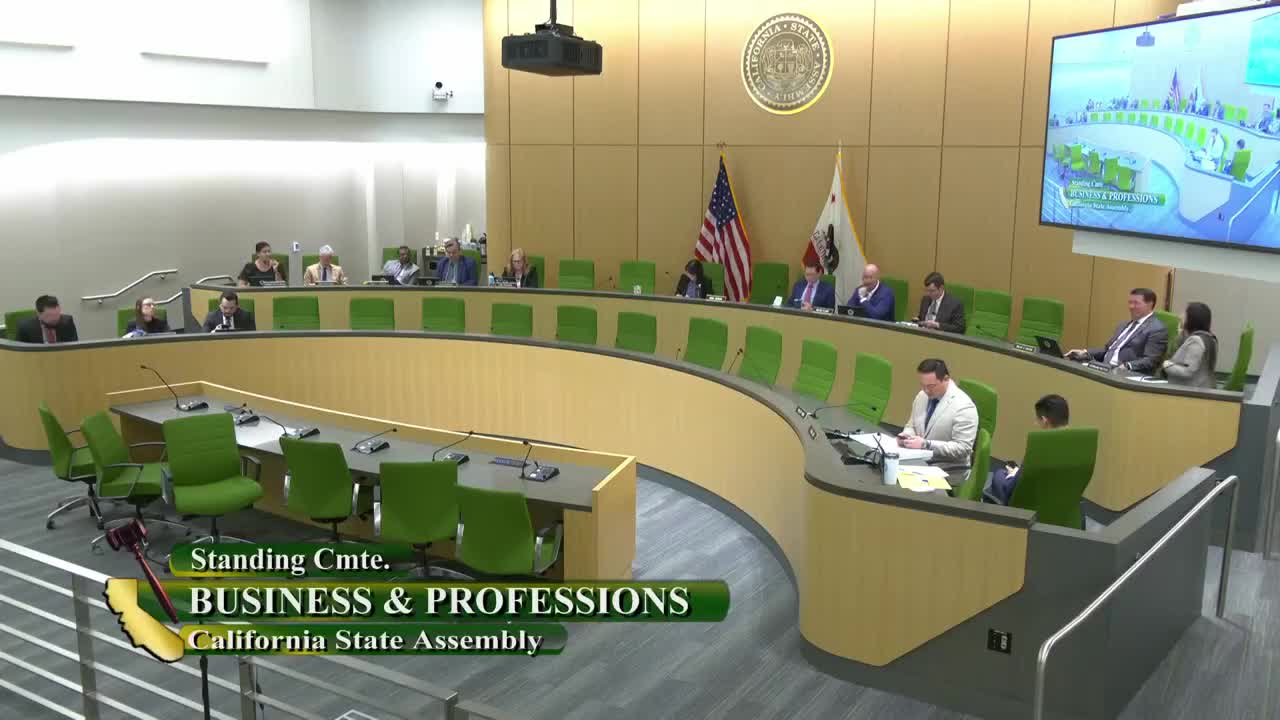 11MIN
Assembly Standing Committee on Business and Professions
Bill Author

Bill Co-Author(s):