AB 2138: Peace officers: tribal police pilot project.
- Session Year: 2023-2024
- House: Assembly
- Latest Version Date: 2024-09-03
Current Status:
Failed
(2024-09-28: Vetoed by Governor.)
Introduced
In Committee
First Chamber
In Committee
Second Chamber
Enacted
What does this bill do?
This bill creates a time‑limited pilot program allowing selected tribal police officers to be designated as California peace officers for law enforcement on tribal lands and, in certain situations, elsewhere in the state. Participating tribes must meet state training and certification rules, adopt public‑records and claims procedures including a limited waiver of tribal sovereign immunity (allowing some lawsuits and judgments), provide data and cooperate with Department of Justice oversight, and may receive funding help for law‑enforcement information technology.
The summary is provided by generative AI which can make mistakes. For original language, please view the details in the table below.
Existing law defines those persons who are peace officers in the state, grants certain authority to those individuals and their employing entities, and places certain requirements on those individuals and their employing entities. Existing law also grants specified limited arrest authority to certain other persons, including federal criminal investigators and park rangers and peace officers from adjoining jurisdictions.
Existing federal law authorizes tribal governments to employ tribal police for the enforcement of tribal law on tribal lands. Existing federal law requires the State of California to exercise criminal jurisdiction on Indian lands. Existing state law deems a tribal police officer who has been deputized or appointed by a county sheriff as a reserve or auxiliary deputy to be a peace officer in the State of California.
This bill would, from July 1, 2025, until July 1, 2028, establish a pilot program under the Department of Justice and the Commission on Peace Officer Standards and Training granting peace officer authority to certain tribal police officers on Indian lands and elsewhere in the state under specified circumstances. The bill would authorize the department to select 3 tribal entities to participate, would set certain minimum qualifications and certification and training requirements for a tribal officer to act pursuant to this authority, and would place certain requirements on the employing tribe, including a limited waiver of sovereign immunity, and the adoption of a tribal law or resolution authorizing that exercise of authority and providing for public access to certain records. The bill would require the Department of Justice to provide ongoing monitoring and evaluation and to prepare and submit reports to the Legislature, as specified.
Existing law authorizes a county to establish an interagency domestic violence death review team to assist local agencies in identifying and reviewing domestic violence deaths, including homicides and suicides, and facilitating communication among various agencies involved in domestic violence cases. Under existing law, an oral or written communication or a document provided by a third party to a domestic violence review team is confidential and not subject to disclosure or discovery.
This bill would authorize a tribe participating in this pilot program to establish a domestic violence death review team subject to the applicable provisions of this law.
This bill would create the Tribal Police Pilot Fund in the State Treasury to, upon appropriation by the Legislature, assist program participants with the cost of information technology necessary for complying with reporting requirements for law enforcement agencies.
This bill would provide for implementation of all of these provisions only upon an appropriation by the Legislature for these purposes.
Existing law defines those persons who are peace officers in the state, grants certain authority to those individuals and their employing entities, and places certain requirements on those individuals and their employing entities. Existing law also grants specified limited arrest authority to certain other persons, including federal criminal investigators and park rangers and peace officers from adjoining jurisdictions.
Existing federal law authorizes tribal governments to employ tribal police for the enforcement of tribal law on tribal lands. Existing federal law requires the State of California to exercise criminal jurisdiction on Indian lands. Existing state law deems a tribal police officer who has been deputized or appointed by a county sheriff as a reserve or auxiliary deputy to be a peace officer in the State of California.
This bill would, from July 1, 2025, until July 1, 2028, establish a pilot program under the Department of Justice and the Commission on Peace Officer Standards and Training granting peace officer authority to certain tribal police officers on Indian lands and elsewhere in the state under specified circumstances. The bill would designate authorize the department to select 3 tribal entities authorized to participate, would set certain minimum qualifications and certification and training requirements for a tribal officer to act pursuant to this authority, and would place certain requirements on the employing tribe, including a limited waiver of sovereign immunity, and the adoption of a tribal law or resolution authorizing that exercise of authority and providing for public access to certain records. The bill would require the Department of Justice to provide ongoing monitoring and evaluation and to prepare and submit reports to the Legislature, as specified.
Existing law authorizes a county to establish an interagency domestic violence death review team to assist local agencies in identifying and reviewing domestic violence deaths, including homicides and suicides, and facilitating communication among various agencies involved in domestic violence cases. Under existing law, an oral or written communication or a document provided by a third party to a domestic violence review team is confidential and not subject to disclosure or discovery.
This bill would authorize a tribe participating in this pilot program to establish a domestic violence death review team subject to the applicable provisions of this law.
This bill would create the Tribal Police Pilot Fund in the State Treasury to, upon appropriation by the Legislature, assist program participants with the cost of information technology necessary for complying with reporting requirements for law enforcement agencies.
This bill would provide for implementation of all of these provisions only upon an appropriation by the Legislature for these purposes.
Existing law defines those persons who are peace officers in the state, grants certain authority to those individuals and their employing entities, and places certain requirements on those individuals and their employing entities. Existing law also grants specified limited arrest authority to certain other persons, including federal criminal investigators and park rangers and peace officers from adjoining jurisdictions.
Existing federal law authorizes tribal governments to employ tribal police for the enforcement of tribal law on tribal lands. Existing federal law requires the State of California to exercise criminal jurisdiction on Indian lands. Existing state law deems a tribal police officer who has been deputized or appointed by a county sheriff as a reserve or auxiliary deputy to be a peace officer in the State of California.
This bill would, from January July 1, 2025, until January July 1, 2028, establish a pilot program under the Department of Justice and the Commission on Peace Officer Standards and Training granting peace officer authority to certain tribal police officers on Indian lands and elsewhere in the state under specified circumstances. The bill would designate 3 tribal entities authorized to participate, would set certain minimum qualifications and certification and training requirements for a tribal officer to act pursuant to this authority, and would place certain requirements on the employing tribe, including a limited waiver of sovereign immunity, and the adoption of a tribal law or resolution authorizing that exercise of authority and providing for public access to certain records. The bill would require the Department of Justice to provide ongoing monitoring and evaluation and to prepare and submit reports to the Legislature, as specified.
Existing law authorizes a county to establish an interagency domestic violence death review team to assist local agencies in identifying and reviewing domestic violence deaths, including homicides and suicides, and facilitating communication among various agencies involved in domestic violence cases. Under existing law, an oral or written communication or a document provided by a third party to a domestic violence review team is confidential and not subject to disclosure or discovery.
This bill would authorize a tribe participating in this pilot program to establish a domestic violence death review team subject to the applicable provisions of this law.
This bill would create the Tribal Police Pilot Fund in the State Treasury to, upon appropriation by the Legislature, assist program participants with the cost of information technology necessary for complying with reporting requirements for law enforcement agencies.
This bill would provide for implementation of all of these provisions only upon an appropriation by the Legislature for these purposes.
Existing law defines those persons who are peace officers in the state, grants certain authority to those individuals and their employing entities, and places certain requirements on those individuals and their employing entities. Existing law also grants specified limited arrest authority to certain other persons, including federal criminal investigators and park rangers and peace officers from adjoining jurisdictions.
Existing federal law authorizes tribal governments to employ tribal police for the enforcement of tribal law on tribal lands. Existing federal law requires the State of California to exercise criminal jurisdiction on Indian lands. Existing state law deems a tribal police officer who has been deputized or appointed by a county sheriff as a reserve or auxiliary deputy to be a peace officer in the State of California.
This bill would, from January 1, 2025, until January 1, 2028, establish a pilot program under the Department of Justice granting peace officer authority to certain tribal police officers on Indian lands and elsewhere in the state under specified circumstances. The bill would designate 3 tribal entities authorized to participate, would set certain minimum qualifications and training requirements for a tribal officer to act pursuant to this authority, and would place certain requirements on the employing tribe, including a limited waiver of sovereign immunity, and the adoption of a tribal law or resolution authorizing that exercise of authority and providing for public access to certain records. The bill would require the Department of Justice to provide ongoing monitoring and evaluation and to prepare and submit reports to the Legislature, as specified.
Existing law defines those persons who are peace officers in the state, grants certain authority to those individuals and their employing entities, and places certain requirements on those individuals and their employing entities. Existing law also grants specified limited arrest authority to certain other persons, including federal criminal investigators and park rangers and peace officers from adjoining jurisdictions.
Existing federal law authorizes tribal governments to employ tribal police for the enforcement of tribal law on tribal lands. Existing federal law requires the State of California to exercise criminal jurisdiction on Indian lands. Existing state law deems a tribal police officer who has been deputized or appointed by a county sheriff as a reserve or auxiliary deputy to be a peace officer in the State of California.
This bill would deem would, from January 1, 2025, until January 1, 2028, establish a pilot program under the Department of Justice granting peace officer authority to certain tribal police officers to be peace officers on Indian lands and elsewhere in the state under specified circumstances. The bill would designate 3 tribal entities authorized to participate, would set certain minimum qualifications and training requirements for a tribal officer to act pursuant to this authority authority, and would place certain requirements on the employing tribe, including certain financial responsibility requirements, a limited waiver of sovereign immunity, and the adoption of a tribal law or resolution authorizing that exercise of authority and providing for public access to certain records. The bill would require the Department of Justice to provide ongoing monitoring and evaluation and to prepare and submit reports to the Legislature, as specified.
(2)Under existing law, federal criminal investigators and law enforcement officers are not California peace officers, but may exercise certain powers of a peace officer under specified circumstances.This bill would extend this limited authority to tribal peace officers who possess a Special Law Enforcement Commission from the Bureau of Indian Affairs.(3)Existing law establishes the Commission on Peace Officer Standards and Training to, among other things, set minimum standards for the selection and training of peace officers. Existing law requires any person described as a peace officer to complete a course of training prescribed by the commission. Existing law requires any person who completes the course and who does not become employed as a peace officer within 3 years, or has a break in service of more than 3 years, to retake the course or requalify, unless the person is returning to a management position, has maintained proficiency as an instructor, or has been continuously employed as a custodial officer, a federal law enforcement officer, or a peace officer in another state, as specified.This bill would additionally exempt from the requirement to retake or requalify for the basic course a person who has been continuously employed as a tribal police officer, as specified.(4)Existing law authorizes the Commission on Peace Officer Standards and Training to certify peace officers who have completed certain minimum training and field experience requirements and to suspend or revoke the certification of an officer in case of misconduct, as specified.Existing law creates the Peace Officer Standards Accountability Division within the commission to review investigations conducted by law enforcement agencies and to conduct additional investigations into serious misconduct that may provide grounds for suspension or revocation of a peace officers certification, as specified. Existing law additionally creates the Peace Officer Standards Accountability Advisory Board with 9 members who are appointed, as specified, to review the findings after an investigation made by the division and to make a recommendation to the commission regarding any action to be taken against an officers certification.This bill would add 2 additional members from California Indian tribes to the board to participate in cases involving tribal police, as specified.(1)Existing law defines those persons who are peace officers in the state, grants certain authority to those individuals and their employing entities, and places certain requirements on those individuals and their employing entities. Existing law also grants specified limited arrest authority to certain other persons, including federal criminal investigators and park rangers and peace officers from adjoining jurisdictions.
Existing federal law authorizes tribal governments to employ tribal police for the enforcement of tribal law on tribal lands. Existing federal law requires the State of California to exercise criminal jurisdiction on Indian lands. Existing state law deems a tribal police officer who has been deputized or appointed by a county sheriff as a reserve or auxiliary deputy to be a peace officer in the State of California.
This bill would deem certain tribal police officers to be peace officers on Indian lands and elsewhere in the state under specified circumstances. The bill would set certain minimum qualifications and training requirements for a tribal officer to act pursuant to this authority and would place certain requirements on the employing tribe, including certain financial responsibility requirements, a limited waiver of sovereign immunity, and the adoption of a tribal law or resolution authorizing that exercise of authority and providing for public access to certain records.
(2)Under existing law, federal criminal investigators and law enforcement officers are not California peace officers, but may exercise certain powers of a peace officer under specified circumstances.
This bill would extend this limited authority to tribal peace officers who possess a Special Law Enforcement Commission from the Bureau of Indian Affairs.
(3)Existing law establishes the Commission on Peace Officer Standards and Training to, among other things, set minimum standards for the selection and training of peace officers. Existing law requires any person described as a peace officer to complete a course of training prescribed by the commission. Existing law requires any person who completes the course and who does not become employed as a peace officer within 3 years, or has a break in service of more than 3 years, to retake the course or requalify, unless the person is returning to a management position, has maintained proficiency as an instructor, or has been continuously employed as a custodial officer, a federal law enforcement officer, or a peace officer in another state, as specified.
This bill would additionally exempt from the requirement to retake or requalify for the basic course a person who has been continuously employed as a tribal police officer, as specified.
(4)Existing law authorizes the Commission on Peace Officer Standards and Training to certify peace officers who have completed certain minimum training and field experience requirements and to suspend or revoke the certification of an officer in case of misconduct, as specified.
Existing law creates the Peace Officer Standards Accountability Division within the commission to review investigations conducted by law enforcement agencies and to conduct additional investigations into serious misconduct that may provide grounds for suspension or revocation of a peace officers certification, as specified. Existing law additionally creates the Peace Officer Standards Accountability Advisory Board with 9 members who are appointed, as specified, to review the findings after an investigation made by the division and to make a recommendation to the commission regarding any action to be taken against an officers certification.
This bill would add 2 additional members from California Indian tribes to the board to participate in cases involving tribal police, as specified.
The Legislature finds and declares all of the following:
(a)California is home to more Native American and Alaska Native people than any other state in the country. There are approximately 109 federally recognized tribes in California. Federally recognized tribes have a unique government-to-government relationship with local, state, and federal entities, and are recognized as sovereign nations. Tribes can create their own laws, governmental structure, and enrollment or membership rules for the land and citizens of their nation.
(b)California has the fifth largest caseload of missing and murdered Indigenous women and people. Nationwide, more than four in five Native American and Alaska Native women have experienced violence in their lifetime, and more than one in three have in the last year. One in 130 Native American children are likely to go missing each year. Indigenous women go missing and are murdered at rates higher than any other ethnic group in the United States. Nearly one-half of all indigenous women have been raped, beaten, or stalked by an intimate partner. LGBTQ+ Native Americans and people who identify as two-spirit people within tribal communities are also often the targets of violence.
(c)California Indian tribes retain the inherent authority to self-govern, including the authority to enact laws that govern their lands.
(d)Approximately 27 tribal governments in the state have exercised their inherent authority by establishing law enforcement agencies to maintain public safety on Indian lands. Additionally, tribes have exercised their inherent authority by establishing 22 tribal courts statewide, serving approximately 40 tribes.
(e)Federal law requires certain states, including the State of California, to enforce state criminal laws on Indian lands in those states, but does not provide funding to those states or the tribes within those states for public safety.
(f)Thirteen states and the federal government provide tribal law enforcement authority to enforce state or federal law if tribal officers meet qualifications delineated in the state and federal authorizing legislation and regulations. Twenty-one of the 27 tribal governments in California that have law enforcement departments have deputation agreements with the Bureau of Indian Affairs, Office of Justice Services, which allows qualified tribal officers to become special commissioned federal officers authorized to enforce federal law on Indian lands in their jurisdiction.
(g)A large number of persons are designated as peace officers under state law, including, without limitation, the members of the University of California and California State University Police Departments and certain employees of the Department of Fish and Wildlife, the Department of Parks and Recreation, and the Department of Alcoholic Beverage Control. Others have limited designation as peace officers under state law, including, without limitation, museum safety and security employees of the California Science Center, police appointed by the California Exposition and State Fair, certain employees of the California Department of Tax and Fee Administration, and persons designated by a local agency as a park ranger. Tribal law enforcement officers are not designated peace officers under state law.
(h)While there are avenues for tribal officers to enforce state law on Indian lands, these options are limited, discretionary, and inconsistently applied across counties. While state law authorizes a county sheriff to deputize a tribal officer as a reserve or auxiliary deputy, those agreements are often limited by the sheriffs term in office and subject to termination at any time.
(i)Where state and county law enforcement departments have developed close working and cooperative relationships with the tribal law enforcement agencies, these relationships have resulted in greater public safety for both the Indian and non-Indian communities.
(j)Tribal governments employing police designated as California peace officers should be subject to the same requirements and responsibilities as other local and state agencies, including transparency and the right of the public to seek redress for grievances, while also recognizing that tribal governments are sovereign nations that govern themselves in accordance with their own laws and are not subject to liability in the same manner as state and local governmental entities.
(k)Federal law, Public Law 280 (18 U.S.C. Sec. 1162), governs the criminal jurisdiction of the State of California in Indian country within the state. It is the intent of the Legislature that this act complies with and furthers the purpose of that federal law.
(l)As a constitutional officer of the State of California and the chief law enforcement officer for the state, the Attorney General has inherent authority over the peace officers and law enforcement agencies of the state. The authority over tribal police officers and their employing tribes granted to the Attorney General by this act is not intended to supersede or infringe upon the authority of sovereign tribal governments.
SEC. 2.Section 830.83 is added to the Penal Code, immediately following Section 830.8, to read:830.83.(a)Commencing on July 1, 2025, until July 1, 2028, a chief of police appointed by a qualified entity and meeting the requirements of a qualified member, or a police officer, public safety officer, or investigator employed in that capacity by a qualified entity and meeting the requirements of a qualified member, is a peace officer. As used in this section, qualified entity and qualified member have the meanings set forth in Section 11073.
(b)The authority of a peace officer designated pursuant to this section extends to any place within the territorial boundaries of the Indian country of the employing tribe, in accordance with and subject to any limitations of Public Law 280 (18 U.S.C. Sec. 1162). The authority of a peace officer designated pursuant to this section may also extend to any place in the state, under any of the following circumstances:
(1)At the request of a state or local law enforcement agency.
(2)Under exigent circumstances involving an immediate danger to persons or property, or of the escape of a perpetrator.
(3)For the purpose of making an arrest consistent with Section 836, when a public offense has occurred, or there is probable cause to believe a public offense has occurred, within the Indian country of the tribe that employs the peace officer, and with the prior consent of the chief of police or chief, director, or chief executive officer of a consolidated municipal public safety agency, or person authorized by that chief, director, or officer to give consent, if the place is within a city, or of the sheriff, or person authorized by the sheriff to give consent, if the place is within an unincorporated area of a county.
(4)Notwithstanding paragraph (3), when the peace officer is in hot pursuit or close pursuit of an individual that the officer has reasonable suspicion has violated or attempted to violate state law and the violation occurred within the Indian country of the tribe that employs the peace officer.
(5)When delivering an apprehended person to the custody of a law enforcement authority or magistrate in the city or county in which the offense occurred.
(c)This section shall become operative only upon an appropriation of funds by the Legislature for the purposes of this section.
(d)This section shall remain in effect only until July 1, 2031, and as of that date is repealed.
SEC. 3.Section 832.55 is added to the Penal Code, immediately following Section 832.5, to read:832.55.(a)Notwithstanding subdivision (a) of Section 13510.1, peace officers described in Section 830.83 shall be eligible to participate in, and subject to the applicable requirements of, the certification program for peace officers described in Section 13510.1.
(b)(1)Every police officer described in Section 830.83 shall obtain the basic certificate issued by the Commission on Peace Officer Standards and Training upon completion of a 12-month probationary period, but in no case later than 24 months after the commencement of their employment, in order to continue to exercise the powers of a peace officer.
(2)If the probationary period established by the employing agency is 24 months, a peace officer described in this subdivision may continue to exercise the powers of a peace officer for an additional 3-month period to allow for the processing of the certification application.
(c)Each police chief, or any other person in charge of a qualified entity, as defined in Section 11073, as a condition of continued employment, shall obtain the basic certificate issued by the Commission on Peace Officer Standards and Training within two years of appointment.
(d)Subdivisions (b) and (c) shall not apply to a police officer, public safety officer, or investigator described in Section 830.83 who currently possesses a valid and active basic certificate.
(e)This section shall become operative only upon an appropriation of funds by the Legislature for the purposes of this section.
(f)This section shall remain in effect only until January 1, 2031, and as of that date is repealed.
SEC. 4.Article 2.45 (commencing with Section 11073) is added to Chapter 1 of Title 1 of Part 4 of the Penal Code, to read:2.45.Tribal Police Pilot Program11073.(a)The Tribal Police Pilot Program is hereby established to operate from July 1, 2025, until July 1, 2028, under the direction of the Department of Justice and the Commission on Peace Officer Standards and Training.
(b)Notwithstanding any contrary provision of law, any qualified entity may notify the department that they wish to enroll in the pilot program and, upon verification by the commission that the entity has complied with the requirements prescribed in subdivision (d), any qualified member of that entity shall be deemed a peace officer as provided in Section 830.83.
(c)(1)A person shall not be a qualified member unless the person completes and maintains all applicable requirements for the appointment, training, education, hiring, eligibility, and certification required for peace officers under state law, including, without limitation, those described in Sections 832 and 830.83 and any regulations adopted thereto.
(2)A qualified member is subject to the requirements of Sections 13500 to 13519.15, inclusive, of this code, Sections 1029, 1031, and 1031.4 of the Government Code, and any regulations adopted thereto.
(3)A qualified entity designating a person as a peace officer pursuant to this program shall document that persons compliance with this subdivision and Section 832.55 and submit that documentation to the Commission on Peace Officer Standards and Training.
(d)A qualified entity enrolled in this pilot program shall do all of the following:
(1)Enact and maintain in continuous force a law or resolution expressing their intent that tribal officers be California peace officers and adopting any requirements prescribed by this section and Sections 830.83 and 832.55.
(2)Adopt and maintain in continuous force for a period of no less than two years after the conclusion of the pilot program, an ordinance or other enforceable policy that provides procedures and remedies comparable to the California Public Records Act (Division 10 (commencing with Section 7920.000) of Title 1 of the Government Code).
(3)Maintain and make available for public inspection pursuant to the ordinance or policy described in paragraph (2) any record related to conduct specified in Section 832.7 by a person designated as a peace officer pursuant to this program, including any administrative record of the tribe specifically related to such conduct, for a period of no less than two years after the conclusion of the pilot program.
(4)(A)Adopt and maintain in continuous force an ordinance or other enforceable policy that provides procedures and remedies comparable to the Government Claims Act (Division 3.6 (commencing with Section 810) of Title 1 of the Government Code) for any claim arising from any actions or omissions of a tribal police officer acting as a California peace officer pursuant to this program.
(B)The ordinance or policy described in this paragraph shall include all of the following:
(i)A limited waiver of tribal sovereign immunity against suit, liability, and judgment, including the full enforcement of judgments and collections for a peace officer designated pursuant to this program, while exercising the authority granted by Section 830.83, and while acting within the scope of their employment or duties, for negligent or wrongful acts or omissions that cause undue harm to a person within the personal and subject matter jurisdictions of the tribe.
(ii)An express agreement that the substantive and procedural laws of the State of California may govern any claim, suit, or regulatory or administration action, that the obligations, rights, and remedies shall be determined in accordance with those laws, and that the courts of the State of California or of the federal government, as applicable. This clause does not limit the jurisdiction of the court of a tribe.
(iii)A requirement that the qualified entity shall cooperate with any inspections, audits, and investigations by the Department of Justice and the Commission on Peace Officer Standards and Training for improper acts or omissions by tribal officers, including any sanction or discipline imposed by the department or commission, up to and including removal of the qualified entity from the pilot program described in this section.
(iv)(I)A requirement for the qualified entity to carry sufficient insurance coverage for the liability of the tribe arising from acts or omissions of tribal officers.
(II)The department shall determine, in consultation with the qualified entity, the amount of coverage that is sufficient for the requirement in subclause (I).
(5)Comply with all applicable provisions of Section 832.5 and Chapter 1 (commencing with Section 13500) of Title 4, including all applicable remedies.
(6)Submit all required documentation of compliance with this subdivision to the Commission on Peace Officer Standards and Training, in a manner and form prescribed by the commission.
(7)Submit any data, statistics, reports, or other information requested by the Department of Justice for the monitoring and evaluation of the pilot program to the department in a manner and form prescribed by the department.
(8)Comply with all applicable provisions of Sections 13012, 13020, and 13519.4 of this code, Section 12525.5 of the Government Code, and any implementing regulations thereof, and all applicable remedies.
(e)A qualified entity enrolled in this pilot program may establish a domestic violence death review team as described in, and subject to the applicable provisions of, Sections 11163.3 to 11163.5, inclusive.
(f)When a peace officer authorized under this program issues a citation for a violation of state law, the citation shall require the person cited to appear in the superior court of the county in which the offense was committed, and shall be submitted to the district attorney of that county.
(g)Any criminal charge resulting from a custodial arrest made by, or citation issued by, a peace officer designated pursuant to this program, while exercising the authority granted by Section 830.83, shall be within the jurisdiction of the courts of the State of California.
(h)Any official action taken by a peace officer designated pursuant to this program, while exercising the authority granted by Section 830.83, including, without limitation, any detention, arrest, use of force, citation, release, search, or application for, or service of, any warrant, shall be taken in accordance with all applicable state and federal laws.
(i)The peace officer authority granted to any person pursuant to this program shall be automatically revoked on July 1, 2028.
(j)(1)The Attorney General, in coordination with the Commission on Peace Officer Standards and Training, shall provide ongoing monitoring, evaluation, and support for the pilot program. This subdivision does not require the Attorney General to provide legal representation, advice, or counsel to any program participant.
(2)A qualified entity may terminate their participation in the pilot program at will, however, the requirements of paragraphs (2), (3), and (4) of subdivision (d) shall remain in effect.
(3)The Department of Justice, in coordination with the Commission on Peace Officer Standards and Training, may suspend or terminate a qualified entitys participation in the program for gross misconduct or for willful or persistent failure to comply with the requirements of this article.
(4)(A)(i)By no later than July 1, 2027, the department shall prepare and submit an interim report to the Legislature, the Assembly Select Committee on Native American Affairs, and the Assembly and Senate Public Safety Committees.
(ii)By no later than January 1, 2029, the department shall prepare and submit a final report to the Legislature, the Assembly Select Committee on Native American Affairs, and the Assembly and Senate Public Safety Committees.
(B)The reports required by this section shall include, without limitation, the impacts of the pilot program on case clearance rates, including, without limitation, homicide and missing persons cases, the impact of the pilot program on crime rates on Indian lands and surrounding communities, the impact of the pilot program on recruitment and retention of tribal police, a discussion of feasibility and implementation difficulties, and recommendations to the Legislature.
(C)The reports required by this paragraph shall be submitted in compliance with Section 9795 of the Government Code.
(k)The Tribal Police Pilot Fund is hereby created in the State Treasury. All moneys in the fund, upon appropriation by the Legislature, shall be used to assist Tribal Police Pilot Program participants with fiscal needs associated with the development of information technology, such as the establishment of databases and recordkeeping, necessary for the purposes of complying with any state-mandated reporting required of California law enforcement agencies and employers of peace officers.
(l)This section shall not be construed to infringe upon the sovereignty of any Indian tribe nor their inherent authority to self-govern, including the authority to enact laws that govern their lands.
(m)As used in this section, the following terms are defined as follows:
(1)Department means the Department of Justice or any subdivision thereof to whom the Attorney General has delegated responsibility for the provisions of this section.
(2)Indian country has the same meaning as provided in Section 1151 of Title 18 of the United States Code.
(3)Qualified entity means any of the three federally recognized tribes to be selected by the department, provided that those tribes elect to participate. In selecting the tribes, the department shall consider selecting tribes of different sizes from different parts of the state, as well as a tribes access to public safety resources.
(4)Qualified member means a chief of police who is appointed by, or a person who is regularly employed as a law enforcement, police, or public safety officer or investigator by, a qualified entity, and who meets all of the requirements and qualifications in subdivision (c), and who has been designated by the qualified entity to be a peace officer pursuant to this program.
11073.5.This article shall remain in effect only until January 1, 2031, and as of that date is repealed.
11073.6.This article shall become operative only upon an appropriation of funds by the Legislature for the purposes of this article.
The Legislature finds and declares all of the following:
(a)California is home to more Native American and Alaska Native people than any other state in the country. There are approximately 109 federally recognized tribes in California. Federally recognized tribes have a unique government-to-government relationship with local, state, and federal entities, and are recognized as sovereign nations. Tribes can create their own laws, governmental structure, and enrollment or membership rules for the land and citizens of their nation.
(b)California has the fifth largest caseload of missing and murdered Indigenous women and people. Nationwide, more than four in five Native American and Alaska Native women have experienced violence in their lifetime, and more than one in three have in the last year. One in 130 Native American children are likely to go missing each year. Indigenous women go missing and are murdered at rates higher than any other ethnic group in the United States. Nearly one-half of all indigenous women have been raped, beaten, or stalked by an intimate partner. LGBTQ+ Native Americans and people who identify as two-spirit people within tribal communities are also often the targets of violence.
(c)California Indian tribes retain the inherent authority to self-govern, including the authority to enact laws that govern their lands.
(d)Approximately 27 tribal governments in the state have exercised their inherent authority by establishing law enforcement agencies to maintain public safety on Indian lands. Additionally, tribes have exercised their inherent authority by establishing 22 tribal courts statewide, serving approximately 40 tribes.
(e)Federal law requires certain states, including the State of California, to enforce state criminal laws on Indian lands in those states, but does not provide funding to those states or the tribes within those states for public safety.
(f)Thirteen states and the federal government provide tribal law enforcement authority to enforce state or federal law if tribal officers meet qualifications delineated in the state and federal authorizing legislation and regulations. Twenty-one of the 27 tribal governments in California that have law enforcement departments have deputation agreements with the Bureau of Indian Affairs, Office of Justice Services, which allows qualified tribal officers to become special commissioned federal officers authorized to enforce federal law on Indian lands in their jurisdiction.
(g)A large number of persons are designated as peace officers under state law, including, without limitation, the members of the University of California and California State University Police Departments and certain employees of the Department of Fish and Wildlife, the Department of Parks and Recreation, and the Department of Alcoholic Beverage Control. Others have limited designation as peace officers under state law law, including, without limitation, museum safety and security employees of the California Science Center, police appointed by the California Exposition and State Fair, certain employees of the California Department of Tax and Fee Administration, and persons designated by a local agency as a park ranger. Tribal law enforcement officers are not designated peace officers under state law.
(h)While there are avenues for tribal officers to enforce state law on Indian lands, these options are limited, discretionary, and inconsistently applied across counties. While state law authorizes a county sheriff to deputize a tribal officer as a reserve or auxiliary deputy, those agreements are often limited by the sheriffs term in office and subject to termination at any time.
(i)Where state and county law enforcement departments have developed close working and cooperative relationships with the tribal law enforcement agencies, these relationships have resulted in greater public safety for both the Indian and non-Indian communities.
(j)Tribal governments employing police designated as California peace officers should be subject to the same requirements and responsibilities as other local and state agencies, including transparency and the right of the public to seek redress for grievances, while also recognizing that tribal governments are sovereign nations that govern themselves in accordance with their own laws and are not subject to liability in the same manner as state and local governmental entities.
(k)Federal law, Public Law 280 (18 U.S.C. Sec. 1162), governs the criminal jurisdiction of the State of California in Indian country within the state. It is the intent of the Legislature that this act complies with and furthers the purpose of that federal law.
(l)As a constitutional officer of the State of California and the chief law enforcement officer for the state, the Attorney General has inherent authority over the peace officers and law enforcement agencies of the state. The authority over tribal police officers and their employing tribes granted to the Attorney General by this act is not intended to supersede or infringe upon the authority of sovereign tribal governments.
SEC. 2.Section 830.83 is added to the Penal Code, immediately following Section 830.8, to read:830.83.(a)Commencing on July 1, 2025, until July 1, 2028, a chief of police appointed by a qualified entity and meeting the requirements of a qualified member, or a police officer, public safety officer, or investigator employed in that capacity by a qualified entity and meeting the requirements of a qualified member, is a peace officer. As used in this section, qualified entity and qualified member have the meanings set forth in Section 11073.
(b)The authority of a peace officer designated pursuant to this section extends to any place within the territorial boundaries of the Indian country of the employing tribe, in accordance with and subject to any limitations of Public Law 280 (18 U.S.C. Sec. 1162). The authority of a peace officer designated pursuant to this section may also extend to any place in the state, under any of the following circumstances:
(1)At the request of a state or local law enforcement agency.
(2)Under exigent circumstances involving an immediate danger to persons or property, or of the escape of a perpetrator.
(3)For the purpose of making an arrest, arrest consistent with Section 836, when a public offense has occurred, or there is probable cause to believe a public offense has occurred, within the Indian country of the tribe that employs the peace officer, and with the prior consent of the chief of police or chief, director, or chief executive officer of a consolidated municipal public safety agency, or person authorized by that chief, director, or officer to give consent, if the place is within a city, or of the sheriff, or person authorized by the sheriff to give consent, if the place is within an unincorporated area of a county.
(4)Notwithstanding paragraph (3), when the peace officer is in hot pursuit or close pursuit of an individual that the officer has reasonable suspicion has violated or attempted to violate state law and the violation occurred within the Indian country of the tribe that employs the peace officer.
(5)When delivering an apprehended person to the custody of a law enforcement authority or magistrate in the city or county in which the offense occurred.
(c)This section shall become operative only upon an appropriation of funds by the Legislature for the purposes of this section.
(d)This section shall remain in effect only until July 1, 2031, and as of that date is repealed.
SEC. 3.Section 832.55 is added to the Penal Code, immediately following Section 832.5, to read:832.55.(a)Notwithstanding subdivision (a) of Section 13510.1, peace officers described in Section 830.83 shall be eligible to participate in, and subject to the applicable requirements of, the certification program for peace officers described in Section 13510.1.
(b)Any police officer, public safety officer, or investigator (1)Every police officer described in Section 830.83 shall obtain the basic certificate issued by the Commission on Peace Officer Standards and Training within 6 months after the operative date of this section or 18 months after their date of employment, whichever is later, upon completion of a 12-month probationary period, but in no case later than 24 months after the commencement of their employment, in order to continue to exercise the powers of a peace officer.
(2)If the probationary period established by the employing agency is 24 months, a peace officer described in this subdivision may continue to exercise the powers of a peace officer for an additional 3-month period to allow for the processing of the certification application.
(c)Any chief of police described in subdivision (a) of Section 830.83, Each police chief, or any other person in charge of a qualified entity, as defined in Section 11073, as a condition of continued employment, shall obtain the basic certificate issued by the Commission on Peace Officer Standards and Training within six months after the operative date of this section or two years after appointment, whichever is later. two years of appointment.
(d)Subdivisions (b) and (c) shall not apply to a police officer, public safety officer, or investigator described in Section 830.83 who currently possesses a valid and active basic certificate.
(d)(e)This section shall become operative only upon an appropriation of funds by the Legislature for the purposes of this section.
(e)(f)This section shall remain in effect only until January 1, 2031, and as of that date is repealed.
SEC. 4.Article 2.45 (commencing with Section 11073) is added to Chapter 1 of Title 1 of Part 4 of the Penal Code, to read:2.45.Tribal Police Pilot Program11073.(a)The Tribal Police Pilot Program is hereby established to operate from July 1, 2025, until July 1, 2028, under the direction of the Department of Justice and the Commission on Peace Officer Standards and Training.
(b)Notwithstanding any contrary provision of law, any qualified entity may notify the department that they wish to enroll in the pilot program and, upon verification by the commission that the entity has complied with the requirements prescribed in subdivision (d), any qualified member of that entity shall be deemed a peace officer as provided in Section 830.83.
(c)(1)A person shall not be a qualified member unless the person completes and maintains all applicable requirements for the appointment, training, education, hiring, eligibility, and certification required for peace officers under state law, including, without limitation, those described in Sections 832 and 830.83 and any regulations adopted thereto.
(2)A qualified member is subject to the requirements of Sections 13500 to 13519.15, inclusive, of this code, Sections 1029, 1031, and 1031.4 of the Government Code, and any regulations adopted thereto.
(3)A qualified entity designating a person as a peace officer pursuant to this program shall document that persons compliance with this subdivision and Section 832.55 and submit that documentation to the Commission on Peace Officer Standards and Training.
(d)A qualified entity enrolled in this pilot program shall do all of the following:
(1)Enact and maintain in continuous force a law or resolution expressing their intent that tribal officers be California peace officers and adopting any requirements prescribed by this section and Sections 830.83 and 832.55.
(2)Adopt and maintain in continuous force for a period of no less than two years after the conclusion of the pilot program, an ordinance or other enforceable policy that provides procedures and remedies comparable to the California Public Records Act (Division 10 (commencing with Section 7920.000) of Title 1 of the Government Code).
(3)Maintain and make available for public inspection pursuant to the ordinance or policy described in paragraph (2) any record related to conduct specified in Section 832.7 by a person designated as a peace officer pursuant to this program, including any administrative record of the tribe specifically related to such conduct, for a period of no less than two years after the conclusion of the pilot program.
(4)(A)Adopt and maintain in continuous force an ordinance or other enforceable policy that provides procedures and remedies comparable to the Government Claims Act (Division 3.6 (commencing with Section 810) of Title 1 of the Government Code) for any claim arising from any actions or omissions of a tribal police officer acting as a California peace officer pursuant to this program.
(B)The ordinance or policy described in this paragraph shall include all of the following:
(i)A limited waiver of tribal sovereign immunity against suit, liability, and judgment, including the full enforcement of judgments and collections for a peace officer designated pursuant to this program, while exercising the authority granted by Section 830.83 830.83, and while acting within the scope of their employment or duties, for negligent or wrongful acts or omissions that cause undue harm to a person within the personal and subject matter jurisdictions of the tribe.
(ii)An express agreement that the substantive and procedural laws of the State of California may govern any claim, suit, or regulatory or administration action, that the obligations, rights, and remedies shall be determined in accordance with those laws, and that the courts of the State of California or of the federal government, as applicable. This clause does not limit the jurisdiction of the court of a tribe.
(iii)A requirement that the qualified entity shall cooperate with any inspections, audits, and investigations by the Department of Justice and the Commission on Peace Officer Standards and Training for improper acts or omissions by tribal officers, including any sanction or discipline imposed by the department or commission, up to and including removal of the qualified entity from the pilot program described in this section.
(iv)(I)A requirement for the qualified entity to carry sufficient insurance coverage for the liability of the tribe arising from acts or omissions of tribal officers.
(II)The department shall determine, in consultation with the qualified entity, the amount of coverage that is sufficient for the requirement in subclause (I).
(5)Comply with all applicable provisions of Section 832.5 and Chapter 1 (commencing with Section 13500) of Title 4, including all applicable remedies.
(6)Submit all required documentation of compliance with this subdivision to the Commission on Peace Officer Standards and Training Training, in a manner and form prescribed by the commission.
(7)Submit any data, statistics, reports, or other information requested by the Department of Justice for the monitoring and evaluation of the pilot program to the department in a manner and form prescribed by the department.
(8)Comply with all applicable provisions of Sections 13012, 13020, and 13519.4 of this code, Section 12525.5 of the Government Code, and any implementing regulations thereof, and all applicable remedies.
(e)A qualified entity enrolled in this pilot program may establish a domestic violence death review team as described in, and subject to the applicable provisions of, Sections 11163.3 to 11163.5, inclusive.
(f)When a peace officer authorized under this program issues a citation for a violation of state law, the citation shall require the person cited to appear in the superior court of the county in which the offense was committed, and shall be submitted to the district attorney of that county.
(g)Any criminal charge resulting from a custodial arrest made by, or citation issued by, a peace officer designated pursuant to this program, while exercising the authority granted by Section 830.83, shall be within the jurisdiction of the courts of the State of California.
(h)Any official action taken by a peace officer designated pursuant to this program program, while exercising the authority granted by Section 830.83, including, without limitation, any detention, arrest, use of force, citation, release, search, or application for, or service of, any warrant, shall be taken in accordance with all applicable state and federal laws.
(i)The peace officer authority granted to any person pursuant to this program shall be automatically revoked on July 1, 2028.
(j)(1)The Attorney General, in coordination with the Commission on Peace Officer Standards and Training, shall provide ongoing monitoring, evaluation, and support for the pilot program. This subdivision does not require the Attorney General to provide legal representation, advice, or counsel to any program participant.
(2)A qualified entity may terminate their participation in the pilot program at will, however however, the requirements of paragraphs (2), (3), and (4) of subdivision (d) shall remain in effect.
(3)The Department of Justice, in coordination with the Commission on Peace Officer Standards and Training, may suspend or terminate a qualified entitys participation in the program for gross misconduct or for willful or persistent failure to comply with requirements. the requirements of this article.
(4)(A)(i)By no later than July 1, 2027, the department shall prepare and submit an interim report to the Legislature, the Assembly Select Committee on Native American Affairs, and the Assembly and Senate Public Safety Committees.
(ii)By no later than January 1, 2029, the department shall prepare and submit a final report to the Legislature, the Assembly Select Committee on Native American Affairs, and the Assembly and Senate Public Safety Committees.
(B)The reports required by this section shall include, without limitation, the impacts of the pilot program on case clearance rates, including, without limitation, homicide and missing persons cases, the impact of the pilot program on crime rates on Indian lands and surrounding communities, the impact of the pilot program on recruitment and retention of tribal police, a discussion of feasibility and implementation difficulties, and recommendations to the Legislature.
(C)The reports required by this paragraph shall be submitted in compliance with Section 9795 of the Government Code.
(k)The Tribal Police Pilot Fund is hereby created in the State Treasury. All moneys in the fund, upon appropriation by the Legislature, shall be used to assist Tribal Police Pilot Program participants with fiscal needs associated with the development of information technology, such as the establishment of databases and recordkeeping, necessary for the purposes of complying with any state-mandated reporting required of California law enforcement agencies and employers of peace officers.
(l)This section shall not be construed to infringe upon the sovereignty of any Indian tribe nor their inherent authority to self-govern, including the authority to enact laws that govern their lands.
(m)As used in this section, the following terms are defined as follows:
(1)Department means the Department of Justice or any subdivision thereof to whom the Attorney General has delegated responsibility for the provisions of this section.
(2)Indian country has the same meaning as provided in Section 1151 of Title 18 of the United States Code.
(3)Qualified entity means the Blue Lake Rancheria, the Coyote Valley Band of Pomo Indians, and the Yurok Tribe of the Yurok Reservation. any of the three federally recognized tribes to be selected by the department, provided that those tribes elect to participate. In selecting the tribes, the department shall consider selecting tribes of different sizes from different parts of the state, as well as a tribes access to public safety resources.
(4)Qualified member means a chief of police who is appointed by, or a person who is regularly employed as a law enforcement, police, or public safety officer or investigator by, a qualified entity, and who meets all of the requirements and qualifications in subdivision (c), and who has been designated by the qualified entity to be a peace officer pursuant to this program.
11073.5.This article shall remain in effect only until January 1, 2031, and as of that date is repealed.
11073.6.This article shall become operative only upon an appropriation of funds by the Legislature for the purposes of this article.
The Legislature finds and declares all of the following:
(a)California is home to more Native American and Alaska Native people than any other state in the country. There are approximately 109 federally recognized tribes in California. Federally recognized tribes have a unique government-to-government relationship with local, state, and federal entities, and are recognized as sovereign nations. Tribes can create their own laws, governmental structure, and enrollment or membership rules for the land and citizens of their nation.
(b)California has the fifth largest caseload of missing and murdered Indigenous women and people. Nationwide, more than four in five Native American and Alaska Native women have experienced violence in their lifetime, and more than one in three have in the last year. One in 130 Native American children are likely to go missing each year. Indigenous women go missing and are murdered at rates higher than any other ethnic group in the United States. Nearly one-half of all indigenous women have been raped, beaten, or stalked by an intimate partner. LGBTQ+ Native Americans and people who identify as two-spirit people within tribal communities are also often the targets of violence.
(c)California Indian tribes retain the inherent authority to self-govern, including the authority to enact laws that govern their lands.
(d)Approximately 27 tribal governments in the state have exercised their inherent authority by establishing law enforcement agencies to maintain public safety on Indian lands. Additionally, tribes have exercised their inherent authority by establishing 22 tribal courts statewide, serving approximately 40 tribes.
(e)Federal law requires certain states, including the State of California, to enforce state criminal laws on Indian lands in those states, but does not provide funding to those states or the tribes within those states for public safety.
(f)Thirteen states and the federal government provide tribal law enforcement authority to enforce state or federal law if tribal officers meet qualifications delineated in the state and federal authorizing legislation and regulations. Twenty-one of the 27 tribal governments in California that have law enforcement departments have deputation agreements with the Bureau of Indian Affairs, Office of Justice Services, which allows qualified tribal officers to become special commissioned federal officers authorized to enforce federal law on Indian lands in their jurisdiction.
(g)A large number of persons are designated as peace officers under state law, including, without limitation, the members of the University of California and California State University Police Departments and certain employees of the Department of Fish and Wildlife, the Department of Parks and Recreation, and the Department of Alcoholic Beverage Control. Others have limited designation as peace officers under state law including, without limitation, museum safety and security employees of the California Science Center, police appointed by the California Exposition and State Fair, certain employees of the California Department of Tax and Fee Administration, and persons designated by a local agency as a park ranger. Tribal law enforcement officers are not designated peace officers under state law.
(h)While there are avenues for tribal officers to enforce state law on Indian lands, these options are limited, discretionary, and inconsistently applied across counties. While state law authorizes a county sheriff to deputize a tribal officer as a reserve or auxiliary deputy, those agreements are often limited by the sheriffs term in office and subject to termination at any time.
(i)Where state and county law enforcement departments have developed close working and cooperative relationships with the tribal law enforcement agencies, these relationships have resulted in greater public safety for both the Indian and non-Indian communities.
(j)Tribal governments employing police designated as California peace officers should be subject to the same requirements and responsibilities as other local and state agencies, including transparency and the right of the public to seek redress for grievances, while also recognizing that tribal governments are sovereign nations that govern themselves in accordance with their own laws and are not subject to liability in the same manner as state and local governmental entities.
(k)Federal law, Public Law 280 (18 U.S.C. Sec. 1162), governs the criminal jurisdiction of the State of California in Indian country within the state. It is the intent of the Legislature that this act complies with and furthers the purpose of that federal law.
(l)As a constitutional officer of the State of California and the chief law enforcement officer for the state, the Attorney General has inherent authority over the peace officers and law enforcement agencies of the state. The authority over tribal police officers and their employing tribes granted to the Attorney General by this act is not intended to supersede or infringe upon the authority of sovereign tribal governments.
SEC. 2.Section 830.83 is added to the Penal Code, immediately following Section 830.8, to read:830.83.(a)Commencing on July 1, 2025, until July 1, 2028, a chief of police appointed by a qualified entity and meeting the requirements of a qualified member, or a police officer, public safety officer, or investigator employed in that capacity by a qualified entity and meeting the requirements of a qualified member, is a peace officer. As used in this section, qualified entity and qualified member have the meanings set forth in Section 11073.
(b)The authority of a peace officer designated pursuant to this section extends to any place within the territorial boundaries of the Indian country of the employing tribe, in accordance with and subject to any limitations of Public Law 280 (18 U.S.C. Sec. 1162). The authority of a peace officer designated pursuant to this section may also extend to any place in the state, under any of the following circumstances:
(1)At the request of a state or local law enforcement agency.
(2)Under exigent circumstances involving an immediate danger to persons or property, or of the escape of a perpetrator.
(3)For the purpose of making an arrest, when a public offense has occurred, or there is probable cause to believe a public offense has occurred, within the Indian country of the tribe that employs the peace officer, and with the prior consent of the chief of police or chief, director, or chief executive officer of a consolidated municipal public safety agency, or person authorized by that chief, director, or officer to give consent, if the place is within a city, or of the sheriff, or person authorized by the sheriff to give consent, if the place is within an unincorporated area of a county.
(4)Notwithstanding paragraph (3), when the peace officer is in hot pursuit or close pursuit of an individual that the officer has reasonable suspicion has violated or attempted to violate state law and the violation occurred within the Indian country of the tribe that employs the peace officer.
(5)When delivering an apprehended person to the custody of a law enforcement authority or magistrate in the city or county in which the offense occurred.
(c)This section shall become operative only upon an appropriation of funds by the Legislature for the purposes of this section.
(d)This section shall remain in effect only until July 1, 2031, and as of that date is repealed.
SEC. 3.Section 832.55 is added to the Penal Code, immediately following Section 832.5, to read:832.55.(a)Notwithstanding Section 13510.1, peace officers described in Section 830.83 shall be eligible to participate in, and subject to the applicable requirements of, the certification program for peace officers described in Section 13510.1.
(b)Any police officer, public safety officer, or investigator described in Section 830.83 shall obtain the basic certificate issued by the Commission on Peace Officer Standards and Training within 6 months after the operative date of this section or 18 months after their date of employment, whichever is later, in order to continue to exercise the powers of a peace officer.
(c)Any chief of police described in subdivision (a) of Section 830.83, as a condition of continued employment, shall obtain the basic certificate issued by the Commission on Peace Officer Standards and Training within six months after the operative date of this section or two years after appointment, whichever is later.
(d)This section shall become operative only upon an appropriation of funds by the Legislature for the purposes of this section.
(e)This section shall remain in effect only until January 1, 2031, and as of that date is repealed.
SEC. 2.SEC. 4.Article 2.45 (commencing with Section 11073) is added to Chapter 1 of Title 1 of Part 4 of the Penal Code, to read:2.45.Tribal Police Pilot Program11073.(a)The Tribal Police Pilot Program is hereby established to operate from January July 1, 2025, until January July 1, 2028, under the direction of the Department of Justice. Justice and the Commission on Peace Officer Standards and Training.
(b)Notwithstanding any contrary provision of law, any qualified entity may notify the department that they wish to enroll in the pilot program and, upon verification by the department commission that the entity has complied with the requirements prescribed in subdivision (e), (d), any qualifying qualified member of that entity shall be deemed a peace officer as provided in this section. Section 830.83.
(c)(1)The authority of a peace officer designated pursuant to this section extends to any place within the territorial boundaries of the Indian country of the employing tribe.(2)The authority of a peace officer designated pursuant to this section may extend to any place in the state, under any of the following circumstances:(A)At the request of a state or local law enforcement agency.(B)Under exigent circumstances involving an immediate danger to persons or property, or of the escape of a perpetrator.(C)For the purpose of making an arrest, when a public offense has occurred, or there is probable cause to believe a public offense has occurred, within the Indian country of the tribe that employs the peace officer, and with the prior consent of the chief of police or chief, director, or chief executive officer of a consolidated municipal public safety agency, or person authorized by that chief, director, or officer to give consent, if the place is within a city, or of the sheriff, or person authorized by the sheriff to give consent, if the place is within an unincorporated area of a county.(D)Notwithstanding subparagraph (C), when the peace officer is in hot pursuit or close pursuit of an individual that the officer has reasonable suspicion has violated or attempted to violate state law and the violation occurred within the Indian country of the tribe that employs the peace officer.(E)When delivering an apprehended person to the custody of a law enforcement authority or magistrate in the city or county in which the offense occurred.(d)(c)(1)A person shall not be designated as a peace officer pursuant to this section a qualified member unless the person completes and maintains all applicable requirements for the appointment, training, education, hiring, eligibility, and certification required for peace officers under state law, including, without limitation, those described in Sections 832 and 834, and 830.83 and any regulations adopted thereto.
(2)A person designated as a peace officer pursuant to this section qualified member is subject to the requirements of Sections 13500 to 13519.15, inclusive, of this code, Sections 1029, 1031, and 1031.4 of the Government Code, and any regulations adopted thereto.
(3)A tribe qualified entity designating a person as a peace officer pursuant to this section program shall document that persons compliance with this subdivision and Section 832.55 and submit that documentation to the Department of Justice. Commission on Peace Officer Standards and Training.
(e)(d)A qualified entity enrolled in this pilot program shall do all of the following:
(1)Enact and maintain in continuous force a law or resolution expressing their intent that tribal officers be California peace officers and adopting any requirements prescribed by this section. section and Sections 830.83 and 832.55.
(2)Adopt and maintain in continuous force for a period of no less than two years after the conclusion of the pilot program, an ordinance or other enforceable policy that provides procedures and remedies comparable to the California Public Records Act (Division 10 (commencing with Section 7920.000) of Title 1 of the Government Code).
(3)Maintain and make available for public inspection pursuant to the ordinance or policy described in paragraph (2) any record related to conduct specified in Section 832.7 by a person designated as a peace officer pursuant to this section, program, including any administrative record of the tribe specifically related to such conduct, for a period of no less than two years after the conclusion of the pilot program.
(4)(A)Adopt and maintain in continuous force an ordinance or other enforceable policy that provides procedures and remedies comparable to the Government Claims Act (Division 3.6 (commencing with Section 810) of Title 1 of the Government Code) for any claim arising from any actions or omissions of a tribal police officer acting as a California peace officer pursuant to this section. program.
(B)The ordinance or policy described in this paragraph shall include all of the following:
(i)A limited waiver of tribal sovereign immunity against suit, liability, and judgment, including the full enforcement of judgments and collections for a peace officer designated pursuant to this section, program, while exercising the authority granted by the section, Section 830.83 and while acting within the scope of their employment or duties, for negligent or wrongful acts or omissions that cause undue harm to a person within the personal and subject matter jurisdictions of the tribe.
(ii)An express agreement that the substantive and procedural laws of the State of California may govern any claim, suit, or regulatory or administration action, that the obligations, rights, and remedies shall be determined in accordance with those laws, and that the courts of the State of California or of the federal government, as applicable. This clause does not limit the jurisdiction of the court of a tribe.
(iii)A requirement that the tribe qualified entity shall cooperate with any inspections, audits, and investigations by the Department of Justice and the Commission on Peace Officer Standards and Training for improper acts or omissions by tribal officers, including any sanction or discipline imposed by the department, department or commission, up to and including removal of the tribe qualified entity from the pilot program described in this section.
(iv)(I)A requirement for the tribe qualified entity to carry sufficient insurance coverage for the liability of the tribe arising from acts or omissions of tribal officers.
(II)The department shall determine, in consultation with the tribe, qualified entity, the amount of coverage that is sufficient for the requirement in subclause (I).
(5)Comply with all applicable provisions of Sections 13510, 13510.1, 13510.8, and 13510.9. Section 832.5 and Chapter 1 (commencing with Section 13500) of Title 4, including all applicable remedies.
(6)Submit all required documentation of compliance with this subdivision to the department, Commission on Peace Officer Standards and Training in a manner and form prescribed by the department. commission.
(7)Submit any data, statistics, reports, or other information requested by the department Department of Justice for the monitoring and evaluation of the pilot program to the department in a manner and form prescribed by the department.
(8)Comply with all applicable provisions of Sections 13012, 13020, and 13519.4 of this code, Section 12525.5 of the Government Code, and any implementing regulations thereof, and all applicable remedies.
(e)A qualified entity enrolled in this pilot program may establish a domestic violence death review team as described in, and subject to the applicable provisions of, Sections 11163.3 to 11163.5, inclusive.
(f)When a peace officer authorized under this section program issues a citation for a violation of state law, the citation shall require the person cited to appear in the superior court of the county in which the offense was committed, and shall be submitted to the district attorney of that county.
(g)Any criminal charge resulting from a custodial arrest made by, or citation issued by, a peace officer designated pursuant to this section, program, while exercising the authority granted by this section, Section 830.83, shall be within the jurisdiction of the courts of the State of California.
(h)Any official action taken by a peace officer designated pursuant to this section, program while exercising the authority granted by this section, Section 830.83, including, without limitation, any detention, arrest, use of force, citation, release, search, or application for, or service of, any warrant, shall be taken in accordance with all applicable state and federal laws.
(i)The peace officer authority granted to any person pursuant to this section program shall be automatically revoked on January 1, 2029, unless extended by a later enacted statute. July 1, 2028.
(j)(1)The department Attorney General, in coordination with the Commission on Peace Officer Standards and Training, shall provide ongoing monitoring, evaluation, and support for the pilot program. This subdivision does not require the Attorney General to provide legal representation, advice, or counsel to any program participant.
(2)A qualified entity may terminate their participation in the pilot program at will, however the requirements of paragraphs (2), (3), and (4) of subdivision (e) (d) shall remain in effect.
(3)The department Department of Justice, in coordination with the Commission on Peace Officer Standards and Training, may suspend or terminate a qualified entitys participation in the program for gross misconduct or for willful or persistent failure to comply with requirements.
(4)(A)(i)By no later than January July 1, 2027, the department shall prepare and submit an interim report to the Legislature, the Assembly Select Committee on Native American Affairs, and the Assembly and Senate Public Safety Committees.
(ii)By no later than June 1, 2028, January 1, 2029, the department shall prepare and submit a final report to the Legislature, the Assembly Select Committee on Native American Affairs, and the Assembly and Senate Public Safety Committees.
(B)The reports required by this section shall include, without limitation, the impacts of the pilot program on case clearance rates, including, without limitation, homicide and missing persons cases, the impact of the pilot program on crime rates on Indian lands and surrounding communities, the impact of the pilot program on recruitment and retention of tribal police, a discussion of feasibility and implementation difficulties, and recommendations to the Legislature.
(C)The reports required by this paragraph shall be submitted in compliance with Section 9795 of the Government Code.
(k)The Tribal Police Pilot Fund is hereby created in the State Treasury. All moneys in the fund, upon appropriation by the Legislature, shall be used to assist Tribal Police Pilot Program participants with fiscal needs associated with the development of information technology, such as the establishment of databases and recordkeeping, necessary for the purposes of complying with any state-mandated reporting required of California law enforcement agencies and employers of peace officers.
(k)(l)This section shall not be construed to infringe upon the sovereignty of any Indian tribe nor their inherent authority to self-govern, including the authority to enact laws that govern their lands.
(l)(m)As used in this section, the following terms are defined as follows:
(1)Department means the Department of Justice or any subdivision thereof to whom the Attorney General has delegated responsibility for the provisions of this section.
(2)Indian country has the same meaning as provided in Section 1151 of Title 18 of the United States Code.
(3)Qualified entity means the Blue Lake Rancheria, the Coyote Valley Band of Pomo Indians, and the Yurok Tribe of the Yurok Reservation.
(4)Qualified member means a chief of police who is appointed by, or a person who is regularly employed by a qualified entity as a law enforcement, police, or public safety officer or investigator, investigator by, a qualified entity, and who meets all of the requirements and qualifications in subdivision (d), (c), and who has been designated by the qualified entity to be a peace officer pursuant to this section. program.
11073.5.This article shall remain in effect only until January 1, 2030, 2031, and as of that date is repealed.
11073.6.This article shall become operative only upon an appropriation of funds by the Legislature for the purposes of this article.
The Legislature finds and declares all of the following:
(a)California is home to more Native American and Alaska Native people than any other state in the country. There are approximately 109 federally recognized tribes in California. Federally recognized tribes have a unique government-to-government relationship with local, state, and federal entities, and are recognized as sovereign nations. Tribes can create their own laws, governmental structure, and enrollment or membership rules for the land and citizens of their nation.
(b)California has the fifth largest caseload of missing and murdered Indigenous women and people. Nationwide, more than four in five Native American and Alaska Native women have experienced violence in their lifetime, and more than one in three have in the last year. One in 130 Native American children are likely to go missing each year. Indigenous women go missing and are murdered at rates higher than any other ethnic group in the United States. Nearly one-half of all indigenous women have been raped, beaten, or stalked by an intimate partner. LGBTQ+ Native Americans and people who identify as two-spirit people within tribal communities are also often the targets of violence.
(c)California Indian tribes retain the inherent authority to self-govern, including the authority to enact laws that govern their lands.
(d)Approximately 27 tribal governments in the state have exercised their inherent authority by establishing law enforcement agencies to maintain public safety on Indian lands. Additionally, tribes have exercised their inherent authority by establishing 22 tribal courts statewide, serving approximately 40 tribes.
(e)Federal law requires certain states, including the State of California, to enforce state criminal laws on Indian lands in those states, but does not provide funding to those states or the tribes within those states for public safety.
(f)Thirteen states and the federal government provide tribal law enforcement authority to enforce state or federal law if tribal officers meet qualifications delineated in the state and federal authorizing legislation and regulations. Twenty-one of the 27 tribal governments in California that have law enforcement departments have deputation agreements with the Bureau of Indian Affairs, Office of Justice Services, which allows qualified tribal officers to become special commissioned federal officers authorized to enforce federal law on Indian lands in their jurisdiction.
(g)A large number of persons are designated as peace officers under state law, including, without limitation, the members of the University of California and California State University Police Department Departments and certain employees of the Department of Fish and Wildlife, the Department of Parks and Recreation, and the Department of Alcoholic Beverage Control. Others have limited designation as peace officers under state law including, without limitation, museum safety and security employees of the California Science Center, police appointed by the California Exposition and State Fair, certain employees of the California Department of Tax and Fee Administration, and persons designated by a local agency as a park ranger. Tribal law enforcement officers are not designated peace officers under state law.
(h)While there are avenues for tribal officers to enforce state law on Indian lands, these options are limited, discretionary, and inconsistently applied across counties. While state law authorizes a county sheriff to deputize a tribal officer as a reserve or auxiliary deputy, those agreements are often limited by the sheriffs term in office and subject to termination at any time.
(i)Where state and county law enforcement departments have developed close working and cooperative relationships with the tribal law enforcement agencies, these relationships have resulted in greater public safety for both the Indian and non-Indian communities.
(j)Tribal governments employing police designated as California peace officers should be subject to the same requirements and responsibilities as other local and state agencies, including transparency and the right of the public to seek redress for grievances, while also recognizing that tribal governments are sovereign nations that govern themselves in accordance with their own laws and are not subject to liability in the same manner as state and local governmental entities.
SEC. 2.Article 2.45 (commencing with Section 11073) is added to Chapter 1 of Title 1 of Part 4 of the Penal Code, to read:2.45.Tribal Police Pilot Program11073.(a)The Tribal Police Pilot Program is hereby established to operate from January 1, 2025, until January 1, 2028, under the direction of the Department of Justice.
(b)Notwithstanding any contrary provision of law, any qualified entity may notify the department that they wish to enroll in the pilot program and, upon verification by the department that the entity has complied with the requirements prescribed in subdivision (e), any qualifying member of that entity shall be deemed a peace officer as provided in this section.
(c)(1)The authority of a peace officer designated pursuant to this section extends to any place within the territorial boundaries of the Indian country of the employing tribe.
(2)The authority of a peace officer designated pursuant to this section may extend to any place in the state, under any of the following circumstances:
(A)At the request of a state or local law enforcement agency.
(B)Under exigent circumstances involving an immediate danger to persons or property, or of the escape of a perpetrator.
(C)For the purpose of making an arrest, when a public offense has occurred, or there is probable cause to believe a public offense has occurred, within the Indian country of the tribe that employs the peace officer, and with the prior consent of the chief of police or chief, director, or chief executive officer of a consolidated municipal public safety agency, or person authorized by that chief, director, or officer to give consent, if the place is within a city, or of the sheriff, or person authorized by the sheriff to give consent, if the place is within an unincorporated area of a county.
(D)Notwithstanding subparagraph (C), when the peace officer is in hot pursuit or close pursuit of an individual that the officer has reasonable suspicion has violated or attempted to violate state law and the violation occurred within the Indian country of the tribe that employs the peace officer.
(E)When delivering an apprehended person to the custody of a law enforcement authority or magistrate in the city or county in which the offense occurred.
(d)(1)A person shall not be designated as a peace officer pursuant to this section unless the person completes and maintains all requirements for the appointment, training, education, hiring, eligibility, and certification required for peace officers under state law, including, without limitation, those described in Sections 832 and 834, and any regulations adopted thereto.
(2)A person designated as a peace officer pursuant to this section is subject to the requirements of Sections 1029, 1031, and 1031.4 of the Government Code, and any regulations adopted thereto.
(3)A tribe designating a person as a peace officer pursuant to this section shall document that persons compliance with this subdivision and submit that documentation to the Department of Justice.
(e)A qualified entity enrolled in this pilot program shall do all of the following:
(1)Enact and maintain in continuous force a law or resolution expressing their intent that tribal officers be California peace officers and adopting any requirements prescribed by this section.
(2)Adopt and maintain in continuous force for a period of no less than two years after the conclusion of the pilot program, an ordinance or other enforceable policy that provides procedures comparable to the California Public Records Act (Division 10 (commencing with Section 7920.000) of Title 1 of the Government Code).
(3)Maintain and make available for public inspection pursuant to the ordinance or policy described in paragraph (2) any record related to conduct specified in Section 832.7 by a person designated as a peace officer pursuant to this section, including any administrative record of the tribe specifically related to such conduct, for a period of no less than two years after the conclusion of the pilot program.
(4)(A)Adopt and maintain in continuous force an ordinance or other enforceable policy that provides procedures comparable to the Government Claims Act (Division 3.6 (commencing with Section 810) of Title 1 of the Government Code) for any claim arising from any actions or omissions of a tribal police officer acting as a California peace officer pursuant to this section.
(B)The ordinance or policy described in this paragraph shall include all of the following:
(i)A limited waiver of tribal sovereign immunity against suit, liability, and judgment, including the full enforcement of judgments and collections for a peace officer designated pursuant to this section, while exercising the authority granted by the section, and while acting within the scope of their employment or duties, for negligent or wrongful acts or omissions that cause undue harm to a person within the personal and subject matter jurisdictions of the tribe.
(ii)An express agreement that the substantive and procedural laws of the State of California may govern any claim, suit, or regulatory or administration action, that the obligations, rights, and remedies shall be determined in accordance with those laws, and that the courts of the State of California or of the federal government, as applicable. This clause does not limit the jurisdiction of the court of a tribe.
(iii)A requirement that the tribe shall cooperate with any inspections, audits, and investigations by the Department of Justice for improper acts or omissions by tribal officers, including any sanction or discipline imposed by the department, up to and including removal of the tribe from the pilot program described in this section.
(iv)(I)A requirement for the tribe to carry sufficient insurance coverage for the liability of the tribe arising from acts or omissions of tribal officers.
(II)The department shall determine, in consultation with the tribe, the amount of coverage that is sufficient for the requirement in subclause (I).
(5)Comply with all applicable provisions of Sections 13510, 13510.1, 13510.8, and 13510.9.
(6)Submit all required documentation of compliance with this subdivision to the department, in a manner and form prescribed by the department.
(7)Submit any data, statistics, reports, or other information requested by the department for the monitoring and evaluation of the pilot program to the department in a manner and form prescribed by the department.
(f)When a peace officer authorized under this section issues a citation for a violation of state law, the citation shall require the person cited to appear in the superior court of the county in which the offense was committed, and shall be submitted to the district attorney of that county.
(g)Any criminal charge resulting from a custodial arrest made by, or citation issued by, a peace officer designated pursuant to this section, while exercising the authority granted by this section, shall be within the jurisdiction of the courts of the State of California.
(h)Any official action taken by a peace officer designated pursuant to this section, while exercising the authority granted by this section, including, without limitation, any detention, arrest, use of force, citation, release, search, or application for, or service of, any warrant, shall be taken in accordance with all applicable state laws.
(i)The peace officer authority granted to any person pursuant to this section shall be automatically revoked on January 1, 2028, 2029, unless extended by a later enacted statute.
(j)(1)The department shall provide ongoing monitoring, evaluation, and support for the pilot program.
(2)A qualified entity may terminate their participation in the pilot program at will, however the requirements of paragraphs (2), (3), and (4) of subdivision (e) shall remain in effect.
(3)The department may suspend or terminate a qualified entitys participation in the program for gross misconduct or for willful or persistent failure to comply with requirements.
(4)(A)(i)By no later than January 1, 2027, the department shall prepare and submit an interim report to the Legislature, the Assembly Select Committee on Native American Affairs, and the Assembly and Senate Public Safety Committees.
(ii)By no later than June 1, 2028, the department shall prepare and submit a final report to the Legislature, the Assembly Select Committee on Native American Affairs, and the Assembly and Senate Public Safety Committees.
(B)The reports required by this section shall include, without limitation, the impacts of the pilot program on case clearance rates, including, without limitation, homicide and missing persons cases, the impact of the pilot program on crime rates on Indian lands and surrounding communities, the impact of the pilot program on recruitment and retention of tribal police, a discussion of feasibility and implementation difficulties, and recommendations to the Legislature.
(C)The reports required by this paragraph shall be submitted in compliance with Section 9795 of the Government Code.
(k)This section shall not be construed to infringe upon the sovereignty of any Indian tribe nor their inherent authority to self-govern, including the authority to enact laws that govern their lands.
(l)As used in this section, the following terms are defined as follows:
(1)Department means the Department of Justice or any subdivision thereof to whom the Attorney General has delegated responsibility for the provisions of this section.
(2)Indian country has the same meaning as provided in Section 1151 of Title 18 of the United States Code.
(3)Qualified entity means the Blue Lake Rancheria, the Coyote Valley Band of Pomo Indians, and the Yurok Tribe of the Yurok Reservation.
(4)Qualified member means a person who is regularly employed by a qualified entity as a law enforcement, police, or public safety officer or investigator, who meets all of the requirements and qualifications in subdivision (d), and who has been designated by the qualified entity to be a peace officer pursuant to this section.
11073.5.This article shall remain in effect only until January 1, 2030, and as of that date is repealed.
The Legislature finds and declares all of the following:
(a)California is home to more Native American and Alaska Native people than any other state in the country. There are approximately 109 federally recognized tribes in California and 67 nonfederally recognized tribes listed on the contact list maintained by the Native American Heritage Commission. California.Federally recognized tribes have a unique government-to-government relationship with local, state, and federal entities, and are recognized as sovereign nations. Tribes can create their own laws, governmental structure, and enrollment or membership rules for the land and citizens of their nation.
(b)California has the fifth largest caseload of missing and murdered Indigenous women and people. Nationwide, more than four in five Native American and Alaska Native women have experienced violence in their lifetime, and more than one in three have in the last year. One in 130 Native American children are likely to go missing each year. Indigenous women go missing and are murdered at rates higher than any other ethnic group in the United States. Nearly one-half of all indigenous women have been raped, beaten, or stalked by an intimate partner. LGBTQ+ Native Americans and people who identify as two-spirit people within tribal communities are also often the targets of violence.
(c)California Indian tribes retain the inherent authority to self-govern, including the authority to enact laws that govern their lands.
(d)Approximately 27 tribal governments in the state have exercised their inherent authority by establishing law enforcement agencies to maintain public safety on Indian lands. Additionally, tribes have exercised their inherent authority by establishing 22 tribal courts statewide, serving approximately 40 tribes.
(e)Federal law requires certain states, including the State of California, to enforce state criminal laws on Indian lands in those states, but does not provide adequate resources to the selected does not provide funding to those states or the tribes within those states for public safety.
(f)Thirteen states and the federal government provide tribal law enforcement authority to enforce state or federal law if tribal officers meet qualifications delineated in the state and federal authorizing legislation and regulations. Twenty-one of the 27 tribal governments in California that have law enforcement departments have deputation agreements with the Bureau of Indian Affairs, Office of Justice Services, which allows qualified tribal officers to become special commissioned federal officers authorized to enforce federal law on Indian lands in their jurisdiction.
(g)Legal status as a peace officer in California has been granted to a A large number of persons are designated as peace officers under state law, including, without limitation, the members of the University of California and California State University Police Department and certain employees of the Department of Fish and Wildlife, the Department of Parks and Recreation, and the Department of Alcoholic Beverage Control. Limited peace officer status has been granted to others, Others have limited designation as peace officers under state law including, without limitation, museum safety and security employees of the California Science Center, police appointed by the California Exposition and State Fair, certain employees of the California Department of Tax and Fee Administration, and persons designated by a local agency as a park ranger. Tribes have been excluded from that designation. Tribal law enforcement officers are not designated peace officers under state law.
(h)State law grants the authority to exercise state peace officer arrest authority to certain federal law enforcement officers, and while some county sheriffs recognize tribal officers with a special commission as federal officer for purposes of that law, other sheriffs do not, or will not allow these officers to arrest offenders for violations of state law.(i)(h)While there are avenues for tribal officers to enforce state law on Indian lands, these options are limited, discretionary, and inconsistently applied across counties. While state law authorizes a county sheriff to deputize a tribal officer as a reserve or auxiliary deputy, those agreements are often limited by the sheriffs term in office and subject to termination at any time.
(j)(i)Where state and county law enforcement departments have developed close working and cooperative relationships with the tribal law enforcement agencies, these relationships have resulted in greater public safety for both the Indian and non-Indian communities.
(j)Tribal governments employing police designated as California peace officers should be subject to the same requirements and responsibilities as other local and state agencies, including transparency and the right of the public to seek redress for grievances, while also recognizing that tribal governments are sovereign nations that govern themselves in accordance with their own laws and are not subject to liability in the same manner as state and local governmental entities.
SEC. 2.Section 830.8 of the Penal Code is amended to read:830.8.(a)Federal criminal investigators and law enforcement officers, and tribal police officers possessing a Special Law Enforcement Commission from the federal Bureau of Indian Affairs are not California peace officers, but may exercise the powers of arrest of a peace officer in any of the following circumstances:(1)Any circumstances specified in Section 836 of this code or Section 5150 of the Welfare and Institutions Code for violations of state or local laws.(2)When these investigators and law enforcement officers are engaged in the enforcement of federal criminal laws and exercise the arrest powers only incidental to the performance of these duties.(3)When requested by a California law enforcement agency to be involved in a joint task force or criminal investigation.(4)When probable cause exists to believe that a public offense that involves immediate danger to persons or property has just occurred or is being committed.In all of these instances, the provisions of Section 847 shall apply. These investigators and law enforcement officers, prior to the exercise of these arrest powers, shall have been certified by their agency heads as having satisfied the training requirements of Section 832, or the equivalent thereof.This subdivision does not apply to federal officers of the Bureau of Land Management or the United States Forest Service. These officers have no authority to enforce California statutes without the written consent of the sheriff or the chief of police in whose jurisdiction they are assigned.(b)Duly authorized federal employees who comply with the training requirements set forth in Section 832 are peace officers when they are engaged in enforcing applicable state or local laws on property owned or possessed by the United States government, or on any street, sidewalk, or property adjacent thereto, and with the written consent of the sheriff or the chief of police, respectively, in whose jurisdiction the property is situated.(c)National park rangers are not California peace officers but may exercise the powers of arrest of a peace officer as specified in Section 836 and the powers of a peace officer specified in Section 5150 of the Welfare and Institutions Code for violations of state or local laws provided these rangers are exercising the arrest powers incidental to the performance of their federal duties or providing or attempting to provide law enforcement services in response to a request initiated by California state park rangers to assist in preserving the peace and protecting state parks and other property for which California state park rangers are responsible. National park rangers, prior to the exercise of these arrest powers, shall have been certified by their agency heads as having satisfactorily completed the training requirements of Section 832.3, or the equivalent thereof.(d)Notwithstanding any other provision of law, during a state of war emergency or a state of emergency, as defined in Section 8558 of the Government Code, federal criminal investigators and law enforcement officers who are assisting California law enforcement officers in carrying out emergency operations are not deemed California peace officers, but may exercise the powers of arrest of a peace officer as specified in Section 836 and the powers of a peace officer specified in Section 5150 of the Welfare and Institutions Code for violations of state or local laws. In these instances, the provisions of Section 847 of this code and of Section 8655 of the Government Code shall apply.(e)(1)Any qualified person who is appointed as a Washoe tribal law enforcement officer is not a California peace officer, but may exercise the powers of a Washoe tribal peace officer when engaged in the enforcement of Washoe tribal criminal laws against any person who is an Indian, as defined in subsection (d) of Section 450b of Title 25 of the United States Code, on Washoe tribal land. The respective prosecuting authorities, in consultation with law enforcement agencies, may agree on who shall have initial responsibility for prosecution of specified infractions. This subdivision is not meant to confer cross-deputized status as California peace officers, nor to confer California peace officer status upon Washoe tribal law enforcement officers when enforcing state or local laws in the State of California. Nothing in this section shall be construed to impose liability upon or to require indemnification by the County of Alpine or the State of California for any act performed by an officer of the Washoe Tribe. Washoe tribal law enforcement officers shall have the right to travel to and from Washoe tribal lands within California in order to carry out tribal duties.(2)Washoe tribal law enforcement officers are exempted from the provisions of subdivision (a) of Section 25400 and subdivision (a) and subdivisions (c) to (h), inclusive, of Section 25850 while performing their official duties on their tribal lands or while proceeding by a direct route to or from the tribal lands. Tribal law enforcement vehicles are deemed to be emergency vehicles within the meaning of Section 30 of the Vehicle Code while performing official police services.(3)As used in this subdivision, the term Washoe tribal lands includes the following:(A)All lands located in the County of Alpine within the limits of the reservation created for the Washoe Tribe of Nevada and California, notwithstanding the issuance of any patent and including rights-of-way running through the reservation and all tribal trust lands.(B)All Indian allotments, the Indian titles to which have not been extinguished, including rights-of-way running through the same.(4)As used in this subdivision, the term Washoe tribal law refers to the laws codified in the Law and Order Code of the Washoe Tribe of Nevada and California, as adopted by the Tribal Council of the Washoe Tribe of Nevada and California.SEC. 3.Section 830.16 is added to the Penal Code, to read:830.16.(a)As provided in this section, a person designated by a federally recognized Indian tribe in California who is regularly employed by the tribe as a law enforcement, police, or public safety officer or investigator is a peace officer.(b)(1)A person shall not be designated as a peace officer pursuant to this section unless the person meets the training standards for peace officers as described in Section 832 and any regulations adopted thereto.(2)A person acting as a peace officer pursuant to this section is subject to the requirements of Sections 1029, 1031, and 1031.4 of the Government Code.(3)A tribe designating a person as a peace officer pursuant to this section shall document that persons compliance with paragraphs (1) and (2) and submit that documentation to the Commission on Peace Officer Standards and Training in a form and manner prescribed by the commission for the purposes of certification pursuant to Section 832.(c)(1)The authority of a peace officer designated pursuant to this section extends to any place within the territorial boundaries of the Indian country of the employing tribe.(2)The authority of a peace officer designated pursuant to this section may extend to any place in the state, under any of the following circumstances:(A)At the request of a state or local law enforcement agency.(B)Under exigent circumstances involving an immediate danger to persons or property, or of the escape of a perpetrator.(C)For the purpose of making an arrest, when a public offense has occurred, or there is probable cause to believe a public offense has occurred, within the Indian country of the tribe that employs the peace officer, and with the prior consent of the chief of police or chief, director, or chief executive officer of a consolidated municipal public safety agency, or person authorized by that chief, director, or officer to give consent, if the place is within a city, or of the sheriff, or person authorized by the sheriff to give consent, if the place is within an unincorporated area of a county.(D)Notwithstanding subparagraph (C), when the peace officer is in hot pursuit or close pursuit of an individual that the officer has reasonable suspicion has violated or attempted to violate state law and the violation occurred within the Indian country of the tribe that employs the peace officer.(E)When delivering an apprehended person to the custody of a law enforcement authority in the city or county in which the offense occurred.(d)Subdivision (a) only applies to a person employed by a tribe that meets all of the following requirements:(1)The tribal government has enacted a law or resolution expressing their intent that tribal officers be California peace officers and adopting any requirements prescribed by this section.(2)(A)The tribal government has adopted an ordinance or other enforceable policy that provides public access to tribal records relating to any exercise of authority granted to the tribe by this section, in a manner equivalent to the California Public Records Act (Division 10 (commencing with Section 7920.000) of Title 1 of the Government Code).(B)Any record related to conduct specified in Section 832.7 by a person designated as a California peace officer by the tribe, including any administrative record of the tribe specifically related to such conduct, shall be maintained and made available for public inspection pursuant to the ordinance or policy described in subparagraph (A).(3)The tribal government has adopted a limited waiver of tribal sovereign immunity for any claim against a tribal officer arising from any actions or omission of a tribal police officer acting as a California peace officer pursuant to this section in an amount not exceeding the limitations of the insurance coverage described in paragraph (4).(4)The tribal government maintains, either through self-insurance or through a policy of liability and property damage insurance, coverage in an amount of no less than two million dollars ($2,000,000) per incident for all vehicles operated by police personnel, and, either through self-insurance or through a policy of professional liability insurance, coverage in an amount no less than two million dollars ($2,000,000) per incident for the negligent or wrongful acts or omissions of its police officers.(5)The tribal government has submitted all required documentation of compliance with this subdivision to the Department of Justice, in a manner and form prescribed by the department.(e)A tribe employing any peace officer pursuant to this section shall comply with Sections 13510.8 and 13510.9.(f)When a peace officer authorized under this section issues a citation for a violation of state law, the citation shall require the person cited to appear in the superior court of the county in which the offense was committed, and shall be submitted to the district attorney of that county.(g)Any criminal charge resulting from a custodial arrest made by, or citation issued by, a peace officer designated pursuant to this section, while exercising the authority granted by the section, shall be within the jurisdiction of the courts of the State of California.(h)Any official action taken by a peace officer designated pursuant to this section, while exercising the authority granted by this section, including, without limitation, any detention, arrest, use of force, citation, release, search, or application for, or service of, any warrant, shall be taken in accordance with all applicable state laws.(i)As used in this section, the term Indian country has the same meaning as provided in Section 1151 of Title 18 of the United States Code.SEC. 4.Section 832 of the Penal Code is amended to read:832.(a)Every person described in this chapter as a peace officer shall satisfactorily complete an introductory training course prescribed by the Commission on Peace Officer Standards and Training. On or after July 1, 1989, satisfactory completion of the course shall be demonstrated by passage of an appropriate examination developed or approved by the commission. Training in the carrying and use of firearms shall not be required of a peace officer whose employing agency prohibits the use of firearms.(b)(1)Every peace officer described in this chapter, prior to the exercise of the powers of a peace officer, shall have satisfactorily completed the training course described in subdivision (a).(2)Every peace officer described in Section 13510 or in subdivision (a) of Section 830.2 may satisfactorily complete the training required by this section as part of the training prescribed pursuant to Section 13510.(c)Persons described in this chapter as peace officers who have not satisfactorily completed the course described in subdivision (a), as specified in subdivision (b), shall not have the powers of a peace officer until they satisfactorily complete the course.(d)A peace officer who, on March 4, 1972, possesses or is qualified to possess the basic certificate as awarded by the Commission on Peace Officer Standards and Training is exempted from this section.(e)(1)A person completing the training described in subdivision (a) who does not become employed as a peace officer within three years from the date of passing the examination described in subdivision (a), or who has a three-year or longer break in service as a peace officer, shall pass the examination described in subdivision (a) prior to the exercise of the powers of a peace officer, except for a person described in paragraph (2).(2)The requirement in paragraph (1) does not apply to a person who meets any of the following requirements:(A)Is returning to a management position that is at the second level of supervision or higher.(B)Has successfully requalified for a basic course through the Commission on Peace Officer Standards and Training.(C)Has maintained proficiency through teaching the course described in subdivision (a).(D)During the break in California service, was continuously employed as a peace officer in another state or at the federal level.(E)Was continuously employed as a police officer by a federally recognized Indian tribe and was deputized or commissioned to enforce state or federal law.(F)Has previously met the requirements of subdivision (a), has been appointed as a peace officer under subdivision (c) of Section 830.1, and has been continuously employed as a custodial officer as defined in Section 831 or 831.5 by the agency making the peace officer appointment since completing the training prescribed in subdivision (a).(f)The commission may charge appropriate fees for the examination required by subdivision (e), not to exceed actual costs.(g)Notwithstanding any other law, the commission may charge appropriate fees for the examination required by subdivision (a) to each applicant who is not sponsored by a local or other law enforcement agency, or is not a peace officer employed by, or under consideration for employment by, a state or local agency, department, or district, or is not a custodial officer as defined in Sections 831 and 831.5. The fees shall not exceed actual costs.(h)(1)When evaluating a certification request from a probation department for a training course described in this section, the commission shall deem there to be an identifiable and unmet need for the training course.(2)A probation department that is a certified provider of the training course described in this section shall not be required to offer the course to the general public.SEC. 5.Section 13509.6 of the Penal Code is amended to read:13509.6.(a)No later than January 1, 2023, the Governor shall establish the Peace Officer Standards Accountability Advisory Board, hereafter referred to in this chapter as the board.(b)The purpose of the board shall be to make recommendations on the decertification of peace officers to the commission.(c)The protection of the public and all constitutional and statutory rights shall be the highest priority for the board as it upholds the standards for peace officers in California.(d)The board shall consist of nine members, as follows:(1)One member shall be a peace officer or former peace officer with substantial experience at a command rank, appointed by the Governor.(2)One member shall be a peace officer or former peace officer with substantial experience at a management rank in internal investigations or disciplinary proceedings of peace officers, appointed by the Governor.(3)Two members shall be members of the public, who shall not be former peace officers, who have substantial experience working at nonprofit or academic institutions on issues related to police accountability. One of these members shall be appointed by the Governor and one by the Speaker of the Assembly.(4)Two members shall be members of the public, who shall not be former peace officers, who have substantial experience working at community-based organizations on issues related to police accountability. One of these members shall be appointed by the Governor and one by the Senate Rules Committee.(5)Two members shall be members of the public, who shall not be former peace officers, with strong consideration given to individuals who have been subject to wrongful use of force likely to cause death or serious bodily injury by a peace officer, or who are surviving family members of a person killed by the wrongful use of deadly force by a peace officer, appointed by the Governor.(6)One member shall be an attorney, who shall not be a former peace officer, with substantial professional experience involving oversight of peace officers, appointed by the Governor.(e)(1)Commencing on January 1, 2025, the board shall, as provided in this subdivision, consist of 11 members, including those appointed pursuant to subdivision (d), and additionally, two members from California Indian tribes, appointed by the Governor, who have substantial experience living in a tribal community that has tribal law enforcement, and who have substantial experience with tribal officer accountability.(2)The two members appointed pursuant to this subdivision shall participate only in cases in which the conduct under review involves a tribal police officer acting as a peace officer pursuant to Section 830.16.(3)Of the two members initially appointed pursuant to this subdivision, one member shall be appointed for a term of three years and one shall be appointed for a term of two years. Thereafter, each member shall be appointed for a term of three years and shall hold office until the appointment of the members successor or until one year has elapsed since the expiration of the term for which the member was appointed, whichever occurs first. Any vacancy from these two positions shall be filled by appointment for the unexpired term. No person shall serve more than two terms consecutively. The Governor may, after hearing, remove any such member from the board for neglect of duty or for other just cause.(4)A member appointed pursuant to this subdivision shall not serve as the chair.(5)The members appointed pursuant to this subdivision shall receive compensation pursuant to subdivision (i).(6)The members appointed pursuant to this subdivision shall complete the training course described in subdivision (j).(f)Except as otherwise provided in subdivision (g), each member shall be appointed for a term of three years and shall hold office until the appointment of the members successor or until one year has elapsed since the expiration of the term for which the member was appointed, whichever occurs first. Vacancies occurring shall be filled by appointment for the unexpired term of a person with the same qualification for appointment as the person being replaced. No person shall serve more than two terms consecutively. The Governor shall remove from the board any peace officer member whose certification as a peace officer has been revoked. The Governor may, after hearing, remove any member of the board for neglect of duty or other just cause.(g)Of the members initially appointed to the board, three shall be appointed for a term of one year, three for a term of two years, and three for a term of three years. Successor appointments shall be made pursuant to subdivision (f).(h)The Governor shall designate the chair of the board from among the members of the board. The person designated as the chair shall serve as chair of the board at the pleasure of the Governor. The board shall annually select a vice chair from among its members. A majority of the members of the board shall constitute a quorum.(i)Each member of the board shall receive a per diem of three hundred fifty dollars ($350) for each day actually spent in the discharge of official duties, including any required training and reasonable time spent in preparation for public hearings, and shall be reimbursed for travel and other expenses necessarily incurred in the performance of official duties. Upon request of a member based on financial necessity, the commission shall arrange and make direct payment for travel or other necessities rather than providing reimbursement.(j)All members of the board shall complete a 40-hour decertification training course, as developed by the commission, which shall include, but not be limited to, subjects regarding the decertification process, internal investigations, evidentiary standards, use of force standards and training, and local disciplinary processes.SEC. 2.Article 2.45 (commencing with Section 11073) is added to Chapter 1 of Title 1 of Part 4 of the Penal Code, to read:2.45.Tribal Police Pilot Program11073.(a)The Tribal Police Pilot Program is hereby established to operate from January 1, 2025, until January 1, 2028, under the direction of the Department of Justice.
(b)Notwithstanding any contrary provision of law, any qualified entity may notify the department that they wish to enroll in the pilot program and, upon verification by the department that the entity has complied with the requirements prescribed in subdivision (e), any qualifying member of that entity shall be deemed a peace officer as provided in this section.
(c)(1)The authority of a peace officer designated pursuant to this section extends to any place within the territorial boundaries of the Indian country of the employing tribe.
(2)The authority of a peace officer designated pursuant to this section may extend to any place in the state, under any of the following circumstances:
(A)At the request of a state or local law enforcement agency.
(B)Under exigent circumstances involving an immediate danger to persons or property, or of the escape of a perpetrator.
(C)For the purpose of making an arrest, when a public offense has occurred, or there is probable cause to believe a public offense has occurred, within the Indian country of the tribe that employs the peace officer, and with the prior consent of the chief of police or chief, director, or chief executive officer of a consolidated municipal public safety agency, or person authorized by that chief, director, or officer to give consent, if the place is within a city, or of the sheriff, or person authorized by the sheriff to give consent, if the place is within an unincorporated area of a county.
(D)Notwithstanding subparagraph (C), when the peace officer is in hot pursuit or close pursuit of an individual that the officer has reasonable suspicion has violated or attempted to violate state law and the violation occurred within the Indian country of the tribe that employs the peace officer.
(E)When delivering an apprehended person to the custody of a law enforcement authority or magistrate in the city or county in which the offense occurred.
(d)(1)A person shall not be designated as a peace officer pursuant to this section unless the person completes and maintains all requirements for the appointment, training, education, hiring, eligibility, and certification required for peace officers under state law, including, without limitation, those described in Sections 832 and 834, and any regulations adopted thereto.
(2)A person designated as a peace officer pursuant to this section is subject to the requirements of Sections 1029, 1031, and 1031.4 of the Government Code, and any regulations adopted thereto.
(3)A tribe designating a person as a peace officer pursuant to this section shall document that persons compliance with this subdivision and submit that documentation to the Department of Justice.
(e)A qualified entity enrolled in this pilot program shall do all of the following:
(1)Enact and maintain in continuous force a law or resolution expressing their intent that tribal officers be California peace officers and adopting any requirements prescribed by this section.
(2)Adopt and maintain in continuous force for a period of no less than two years after the conclusion of the pilot program, an ordinance or other enforceable policy that provides procedures comparable to the California Public Records Act (Division 10 (commencing with Section 7920.000) of Title 1 of the Government Code).
(3)Maintain and make available for public inspection pursuant to the ordinance or policy described in paragraph (2) any record related to conduct specified in Section 832.7 by a person designated as a peace officer pursuant to this section, including any administrative record of the tribe specifically related to such conduct, for a period of no less than two years after the conclusion of the pilot program.
(4)(A)Adopt and maintain in continuous force an ordinance or other enforceable policy that provides procedures comparable to the Government Claims Act (Division 3.6 (commencing with Section 810) of Title 1 of the Government Code) for any claim arising from any actions or omissions of a tribal police officer acting as a California peace officer pursuant to this section.
(B)The ordinance or policy described in this paragraph shall include all of the following:
(i)A limited waiver of tribal sovereign immunity against suit, liability, and judgment, including the full enforcement of judgments and collections for a peace officer designated pursuant to this section, while exercising the authority granted by the section, and while acting within the scope of their employment or duties, for negligent or wrongful acts or omissions that cause undue harm to a person within the personal and subject matter jurisdictions of the tribe.
(ii)An express agreement that the substantive and procedural laws of the State of California may govern any claim, suit, or regulatory or administration action, that the obligations, rights, and remedies shall be determined in accordance with those laws, and that the courts of the State of California or of the federal government, as applicable. This clause does not limit the jurisdiction of the court of a tribe.
(iii)A requirement that the tribe shall cooperate with any inspections, audits, and investigations by the Department of Justice for improper acts or omissions by tribal officers, including any sanction or discipline imposed by the department, up to and including removal of the tribe from the pilot program described in this section.
(iv)(I)A requirement for the tribe to carry sufficient insurance coverage for the liability of the tribe arising from acts or omissions of tribal officers.
(II)The department shall determine, in consultation with the tribe, the amount of coverage that is sufficient for the requirement in subclause (I).
(5)Comply with all applicable provisions of Sections 13510, 13510.1, 13510.8, and 13510.9.
(6)Submit all required documentation of compliance with this subdivision to the department, in a manner and form prescribed by the department.
(7)Submit any data, statistics, reports, or other information requested by the department for the monitoring and evaluation of the pilot program to the department in a manner and form prescribed by the department.
(f)When a peace officer authorized under this section issues a citation for a violation of state law, the citation shall require the person cited to appear in the superior court of the county in which the offense was committed, and shall be submitted to the district attorney of that county.
(g)Any criminal charge resulting from a custodial arrest made by, or citation issued by, a peace officer designated pursuant to this section, while exercising the authority granted by this section, shall be within the jurisdiction of the courts of the State of California.
(h)Any official action taken by a peace officer designated pursuant to this section, while exercising the authority granted by this section, including, without limitation, any detention, arrest, use of force, citation, release, search, or application for, or service of, any warrant, shall be taken in accordance with all applicable state laws.
(i)The peace officer authority granted to any person pursuant to this section shall be automatically revoked on January 1, 2028, unless extended by a later enacted statute.
(j)(1)The department shall provide ongoing monitoring, evaluation, and support for the pilot program.
(2)A qualified entity may terminate their participation in the pilot program at will, however the requirements of paragraphs (2), (3), and (4) of subdivision (e) shall remain in effect.
(3)The department may suspend or terminate a qualified entitys participation in the program for gross misconduct or for willful or persistent failure to comply with requirements.
(4)(A)(i)By no later than January 1, 2027, the department shall prepare and submit an interim report to the Legislature, the Assembly Select Committee on Native American Affairs, and the Assembly and Senate Public Safety Committees.
(ii)By no later than June 1, 2028, the department shall prepare and submit a final report to the Legislature, the Assembly Select Committee on Native American Affairs, and the Assembly and Senate Public Safety Committees.
(B)The reports required by this section shall include, without limitation, the impacts of the pilot program on case clearance rates, including, without limitation, homicide and missing persons cases, the impact of the pilot program on crime rates on Indian lands and surrounding communities, the impact of the pilot program on recruitment and retention of tribal police, a discussion of feasibility and implementation difficulties, and recommendations to the Legislature.
(C)The reports required by this paragraph shall be submitted in compliance with Section 9795 of the Government Code.
(k)This section shall not be construed to infringe upon the sovereignty of any Indian tribe nor their inherent authority to self-govern, including the authority to enact laws that govern their lands.
(l)As used in this section, the following terms are defined as follows:
(1)Department means the Department of Justice or any subdivision thereof to whom the Attorney General has delegated responsibility for the provisions of this section.
(2)Indian country has the same meaning as provided in Section 1151 of Title 18 of the United States Code.
(3)Qualified entity means the Blue Lake Rancheria, the Coyote Valley Band of Pomo Indians, and the Yurok Tribe of the Yurok Reservation.
(4)Qualified member means a person who is regularly employed by a qualified entity as a law enforcement, police, or public safety officer or investigator, who meets all of the requirements and qualifications in subdivision (d), and who has been designated by the qualified entity to be a peace officer pursuant to this section.
11073.5.This article shall remain in effect only until January 1, 2030, and as of that date is repealed.
The Legislature finds and declares all of the following:
(a)California is home to more Native American and Alaska Native people than any other state in the country. There are approximately 109 federally recognized tribes in California and 67 nonfederally recognized tribes listed on the contact list maintained by the Native American Heritage Commission. Federally recognized tribes have a unique government-to-government relationship with local, state, and federal entities, and are recognized as sovereign nations. Tribes can create their own laws, governmental structure, and enrollment or membership rules for the land and citizens of their nation.
(b)California has the fifth largest caseload of missing and murdered Indigenous women and people. Nationwide, more than four in five Native American and Alaska Native women have experienced violence in their lifetime, and more than one in three have in the last year. One in 130 Native American children are likely to go missing each year. Indigenous women go missing and are murdered at rates higher than any other ethnic group in the United States. Nearly one-half of all indigenous women have been raped, beaten, or stalked by an intimate partner. LGBTQ+ Native Americans and people who identify as two-spirit people within tribal communities are also often the targets of violence.
(c)California Indian tribes retain the inherent authority to self-govern, including the authority to enact laws that govern their lands.
(d)Approximately 27 tribal governments in the state have exercised their inherent authority by establishing law enforcement agencies to maintain public safety on Indian lands. Additionally, tribes have exercised their inherent authority by establishing 22 tribal courts statewide, serving approximately 40 tribes.
(e)Federal law requires certain states, including the State of California, to enforce state criminal laws on Indian lands in those states, but does not provide adequate resources to the selected states or the tribes within those states for public safety.
(f)Thirteen states and the federal government provide tribal law enforcement authority to enforce state or federal law if tribal officers meet qualifications delineated in the state and federal authorizing legislation and regulations. Twenty-one of the 27 tribal governments in California that have law enforcement departments have deputation agreements with the Bureau of Indian Affairs, Office of Justice Services, which allows qualified tribal officers to become special commissioned federal officers authorized to enforce federal law on Indian lands in their jurisdiction.
(g)Legal status as a peace officer in California has been granted to a large number of persons under state law, including, without limitation, the members of the University of California and California State University Police Department and certain employees of the Department of Fish and Wildlife, the Department of Parks and Recreation, and the Department of Alcoholic Beverage Control. Limited peace officer status has been granted to others, including, without limitation, museum safety and security employees of the California Science Center, police appointed by the California Exposition and State Fair, certain employees of the California Department of Tax and Fee Administration, and persons designated by a local agency as a park ranger. Tribes have been excluded from that designation.
(h)State law grants the authority to exercise state peace officer arrest authority to certain federal law enforcement officers, and while some county sheriffs recognize tribal officers with a special commission as federal officer for purposes of that law, other sheriffs do not, or will not allow these officers to arrest offenders for violations of state law.
(i)While there are avenues for tribal officers to enforce state law on Indian lands, these options are limited, discretionary, and inconsistently applied across counties. While state law authorizes a county sheriff to deputize a tribal officer as a reserve or auxiliary deputy, those agreements are often limited by the sheriffs term in office and subject to termination at any time.
(j)Where state and county law enforcement departments have developed close working and cooperative relationships with the tribal law enforcement agencies, these relationships have resulted in greater public safety for both the Indian and non-Indian communities.
SEC. 2.Section 830.8 of the Penal Code is amended to read:830.8.(a)Federal criminal investigators and law enforcement officers officers, and tribal police officers possessing a Special Law Enforcement Commission from the federal Bureau of Indian Affairs are not California peace officers, but may exercise the powers of arrest of a peace officer in any of the following circumstances:
(1)Any circumstances specified in Section 836 of this code or Section 5150 of the Welfare and Institutions Code for violations of state or local laws.
(2)When these investigators and law enforcement officers are engaged in the enforcement of federal criminal laws and exercise the arrest powers only incidental to the performance of these duties.
(3)When requested by a California law enforcement agency to be involved in a joint task force or criminal investigation.
(4)When probable cause exists to believe that a public offense that involves immediate danger to persons or property has just occurred or is being committed.
In all of these instances, the provisions of Section 847 shall apply. These investigators and law enforcement officers, prior to the exercise of these arrest powers, shall have been certified by their agency heads as having satisfied the training requirements of Section 832, or the equivalent thereof.
This subdivision does not apply to federal officers of the Bureau of Land Management or the United States Forest Service. These officers have no authority to enforce California statutes without the written consent of the sheriff or the chief of police in whose jurisdiction they are assigned.
(b)Duly authorized federal employees who comply with the training requirements set forth in Section 832 are peace officers when they are engaged in enforcing applicable state or local laws on property owned or possessed by the United States government, or on any street, sidewalk, or property adjacent thereto, and with the written consent of the sheriff or the chief of police, respectively, in whose jurisdiction the property is situated.
(c)National park rangers are not California peace officers but may exercise the powers of arrest of a peace officer as specified in Section 836 and the powers of a peace officer specified in Section 5150 of the Welfare and Institutions Code for violations of state or local laws provided these rangers are exercising the arrest powers incidental to the performance of their federal duties or providing or attempting to provide law enforcement services in response to a request initiated by California state park rangers to assist in preserving the peace and protecting state parks and other property for which California state park rangers are responsible. National park rangers, prior to the exercise of these arrest powers, shall have been certified by their agency heads as having satisfactorily completed the training requirements of Section 832.3, or the equivalent thereof.
(d)Notwithstanding any other provision of law, during a state of war emergency or a state of emergency, as defined in Section 8558 of the Government Code, federal criminal investigators and law enforcement officers who are assisting California law enforcement officers in carrying out emergency operations are not deemed California peace officers, but may exercise the powers of arrest of a peace officer as specified in Section 836 and the powers of a peace officer specified in Section 5150 of the Welfare and Institutions Code for violations of state or local laws. In these instances, the provisions of Section 847 of this code and of Section 8655 of the Government Code shall apply.
(e)(1)Any qualified person who is appointed as a Washoe tribal law enforcement officer is not a California peace officer, but may exercise the powers of a Washoe tribal peace officer when engaged in the enforcement of Washoe tribal criminal laws against any person who is an Indian, as defined in subsection (d) of Section 450b of Title 25 of the United States Code, on Washoe tribal land. The respective prosecuting authorities, in consultation with law enforcement agencies, may agree on who shall have initial responsibility for prosecution of specified infractions. This subdivision is not meant to confer cross-deputized status as California peace officers, nor to confer California peace officer status upon Washoe tribal law enforcement officers when enforcing state or local laws in the State of California. Nothing in this section shall be construed to impose liability upon or to require indemnification by the County of Alpine or the State of California for any act performed by an officer of the Washoe Tribe. Washoe tribal law enforcement officers shall have the right to travel to and from Washoe tribal lands within California in order to carry out tribal duties.
(2)Washoe tribal law enforcement officers are exempted from the provisions of subdivision (a) of Section 25400 and subdivision (a) and subdivisions (c) to (h), inclusive, of Section 25850 while performing their official duties on their tribal lands or while proceeding by a direct route to or from the tribal lands. Tribal law enforcement vehicles are deemed to be emergency vehicles within the meaning of Section 30 of the Vehicle Code while performing official police services.
(3)As used in this subdivision, the term Washoe tribal lands includes the following:
(A)All lands located in the County of Alpine within the limits of the reservation created for the Washoe Tribe of Nevada and California, notwithstanding the issuance of any patent and including rights-of-way running through the reservation and all tribal trust lands.
(B)All Indian allotments, the Indian titles to which have not been extinguished, including rights-of-way running through the same.
(4)As used in this subdivision, the term Washoe tribal law refers to the laws codified in the Law and Order Code of the Washoe Tribe of Nevada and California, as adopted by the Tribal Council of the Washoe Tribe of Nevada and California.
SEC. 3.Section 830.16 is added to the Penal Code, to read:830.16.(a)As provided in this section, a person designated by a federally recognized Indian tribe in California who is regularly employed by the tribe as a law enforcement, police, or public safety officer or investigator is a peace officer.
(b)(1)A person shall not be designated as a peace officer pursuant to this section unless the person meets the training standards for peace officers as described in Section 832 and any regulations adopted thereto.
(2)A person acting as a peace officer pursuant to this section is subject to the requirements of Sections 1029, 1031, and 1031.4 of the Government Code.
(3)A tribe designating a person as a peace officer pursuant to this section shall document that persons compliance with paragraphs (1) and (2) and submit that documentation to the Commission on Peace Officer Standards and Training in a form and manner prescribed by the commission for the purposes of certification pursuant to Section 832.
(c)(1)The authority of a peace officer designated pursuant to this section extends to any place within the territorial boundaries of the Indian country of the employing tribe.
(2)The authority of a peace officer designated pursuant to this section may extend to any place in the state, under any of the following circumstances:
(A)At the request of a state or local law enforcement agency.
(B)Under exigent circumstances involving an immediate danger to persons or property, or of the escape of a perpetrator.
(C)For the purpose of making an arrest, when a public offense has occurred, or there is probable cause to believe a public offense has occurred, within the Indian country of the tribe that employs the peace officer, and with the prior consent of the chief of police or chief, director, or chief executive officer of a consolidated municipal public safety agency, or person authorized by that chief, director, or officer to give consent, if the place is within a city, or of the sheriff, or person authorized by the sheriff to give consent, if the place is within an unincorporated area of a county.
(D)Notwithstanding subparagraph (C), when the peace officer is in hot pursuit or close pursuit of an individual that the officer has reasonable suspicion has violated or attempted to violate state law and the violation occurred within the Indian country of the tribe that employs the peace officer.
(E)When delivering an apprehended person to the custody of a law enforcement authority in the city or county in which the offense occurred.
(d)Subdivision (a) only applies to a person employed by a tribe that meets all of the following requirements:
(1)The tribal government has enacted a law or resolution expressing their intent that tribal officers be California peace officers and adopting any requirements prescribed by this section.
(2)(A)The tribal government has adopted an ordinance or other enforceable policy that provides public access to tribal records relating to any exercise of authority granted to the tribe by this section, in a manner equivalent to the California Public Records Act (Division 10 (commencing with Section 7920.000) of Title 1 of the Government Code).
(B)Any record related to conduct specified in Section 832.7 by a person designated as a California peace officer by the tribe, including any administrative record of the tribe specifically related to such conduct, shall be maintained and made available for public inspection pursuant to the ordinance or policy described in subparagraph (A).
(3)The tribal government has adopted a limited waiver of tribal sovereign immunity for any claim against a tribal officer arising from any actions or omission of a tribal police officer acting as a California peace officer pursuant to this section in an amount not exceeding the limitations of the insurance coverage described in paragraph (4).
(4)The tribal government maintains, either through self-insurance or through a policy of liability and property damage insurance, coverage in an amount of no less than two million dollars ($2,000,000) per incident for all vehicles operated by police personnel, and, either through self-insurance or through a policy of professional liability insurance, coverage in an amount no less than two million dollars ($2,000,000) per incident for the negligent or wrongful acts or omissions of its police officers.
(5)The tribal government has submitted all required documentation of compliance with this subdivision to the Department of Justice, in a manner and form prescribed by the department.
(e)A tribe employing any peace officer pursuant to this section shall comply with Sections 13510.8 and 13510.9.
(f)When a peace officer authorized under this section issues a citation for a violation of state law, the citation shall require the person cited to appear in the superior court of the county in which the offense was committed, and shall be submitted to the district attorney of that county.
(g)Any criminal charge resulting from a custodial arrest made by, or citation issued by, a peace officer designated pursuant to this section, while exercising the authority granted by the section, shall be within the jurisdiction of the courts of the State of California.
(h)Any official action taken by a peace officer designated pursuant to this section, while exercising the authority granted by this section, including, without limitation, any detention, arrest, use of force, citation, release, search, or application for, or service of, any warrant, shall be taken in accordance with all applicable state laws.
(i)As used in this section, the term Indian country has the same meaning as provided in Section 1151 of Title 18 of the United States Code.
SEC. 4.Section 832 of the Penal Code is amended to read:832.(a)Every person described in this chapter as a peace officer shall satisfactorily complete an introductory training course prescribed by the Commission on Peace Officer Standards and Training. On or after July 1, 1989, satisfactory completion of the course shall be demonstrated by passage of an appropriate examination developed or approved by the commission. Training in the carrying and use of firearms shall not be required of a peace officer whose employing agency prohibits the use of firearms.
(b)(1)Every peace officer described in this chapter, prior to the exercise of the powers of a peace officer, shall have satisfactorily completed the training course described in subdivision (a).
(2)Every peace officer described in Section 13510 or in subdivision (a) of Section 830.2 may satisfactorily complete the training required by this section as part of the training prescribed pursuant to Section 13510.
(c)Persons described in this chapter as peace officers who have not satisfactorily completed the course described in subdivision (a), as specified in subdivision (b), shall not have the powers of a peace officer until they satisfactorily complete the course.
(d)A peace officer who, on March 4, 1972, possesses or is qualified to possess the basic certificate as awarded by the Commission on Peace Officer Standards and Training is exempted from this section.
(e)(1)A person completing the training described in subdivision (a) who does not become employed as a peace officer within three years from the date of passing the examination described in subdivision (a), or who has a three-year or longer break in service as a peace officer, shall pass the examination described in subdivision (a) prior to the exercise of the powers of a peace officer, except for a person described in paragraph (2).
(2)The requirement in paragraph (1) does not apply to a person who meets any of the following requirements:
(A)Is returning to a management position that is at the second level of supervision or higher.
(B)Has successfully requalified for a basic course through the Commission on Peace Officer Standards and Training.
(C)Has maintained proficiency through teaching the course described in subdivision (a).
(D)During the break in California service, was continuously employed as a peace officer in another state or at the federal level.
(E)Was continuously employed as a police officer by a federally recognized Indian tribe and was deputized or commissioned to enforce state or federal law.
(E)(F)Has previously met the requirements of subdivision (a), has been appointed as a peace officer under subdivision (c) of Section 830.1, and has been continuously employed as a custodial officer as defined in Section 831 or 831.5 by the agency making the peace officer appointment since completing the training prescribed in subdivision (a).
(f)The commission may charge appropriate fees for the examination required by subdivision (e), not to exceed actual costs.
(g)Notwithstanding any other law, the commission may charge appropriate fees for the examination required by subdivision (a) to each applicant who is not sponsored by a local or other law enforcement agency, or is not a peace officer employed by, or under consideration for employment by, a state or local agency, department, or district, or is not a custodial officer as defined in Sections 831 and 831.5. The fees shall not exceed actual costs.
(h)(1)When evaluating a certification request from a probation department for a training course described in this section, the commission shall deem there to be an identifiable and unmet need for the training course.
(2)A probation department that is a certified provider of the training course described in this section shall not be required to offer the course to the general public.
SEC. 5.Section 13509.6 of the Penal Code is amended to read:13509.6.(a)No later than January 1, 2023, the Governor shall establish the Peace Officer Standards Accountability Advisory Board, hereafter referred to in this chapter as the board.
(b)The purpose of the board shall be to make recommendations on the decertification of peace officers to the commission.
(c)The protection of the public and all constitutional and statutory rights shall be the highest priority for the board as it upholds the standards for peace officers in California.
(d)The board shall consist of nine members, as follows:
(1)One member shall be a peace officer or former peace officer with substantial experience at a command rank, appointed by the Governor.
(2)One member shall be a peace officer or former peace officer with substantial experience at a management rank in internal investigations or disciplinary proceedings of peace officers, appointed by the Governor.
(3)Two members shall be members of the public, who shall not be former peace officers, who have substantial experience working at nonprofit or academic institutions on issues related to police accountability. One of these members shall be appointed by the Governor and one by the Speaker of the Assembly.
(4)Two members shall be members of the public, who shall not be former peace officers, who have substantial experience working at community-based organizations on issues related to police accountability. One of these members shall be appointed by the Governor and one by the Senate Rules Committee.
(5)Two members shall be members of the public, who shall not be former peace officers, with strong consideration given to individuals who have been subject to wrongful use of force likely to cause death or serious bodily injury by a peace officer, or who are surviving family members of a person killed by the wrongful use of deadly force by a peace officer, appointed by the Governor.
(6)One member shall be an attorney, who shall not be a former peace officer, with substantial professional experience involving oversight of peace officers, appointed by the Governor.
(e)(1)Commencing on January 1, 2025, the board shall, as provided in this subdivision, consist of 11 members, including those appointed pursuant to subdivision (d), and additionally, two members from California Indian tribes, appointed by the Governor, who have substantial experience living in a tribal community that has tribal law enforcement, and who have substantial experience with tribal officer accountability.
(2)The two members appointed pursuant to this subdivision shall participate only in cases in which the conduct under review involves a tribal police officer acting as a peace officer pursuant to Section 830.16.
(3)Of the two members initially appointed pursuant to this subdivision, one member shall be appointed for a term of three years and one shall be appointed for a term of two years. Thereafter, each member shall be appointed for a term of three years and shall hold office until the appointment of the members successor or until one year has elapsed since the expiration of the term for which the member was appointed, whichever occurs first. Any vacancy from these two positions shall be filled by appointment for the unexpired term. No person shall serve more than two terms consecutively. The Governor may, after hearing, remove any such member from the board for neglect of duty or for other just cause.
(4)A member appointed pursuant to this subdivision shall not serve as the chair.
(5)The members appointed pursuant to this subdivision shall receive compensation pursuant to subdivision (i).
(6)The members appointed pursuant to this subdivision shall complete the training course described in subdivision (j).
(e)(f)Except as otherwise provided in subdivision (f), (g), each member shall be appointed for a term of three years and shall hold office until the appointment of the members successor or until one year has elapsed since the expiration of the term for which the member was appointed, whichever occurs first. Vacancies occurring shall be filled by appointment for the unexpired term of a person with the same qualification for appointment as the person being replaced. No person shall serve more than two terms consecutively. The Governor shall remove from the board any peace officer member whose certification as a peace officer has been revoked. The Governor may, after hearing, remove any member of the board for neglect of duty or other just cause.
(f)(g)Of the members initially appointed to the board, three shall be appointed for a term of one year, three for a term of two years, and three for a term of three years. Successor appointments shall be made pursuant to subdivision (e). (f).
(g)(h)The Governor shall designate the chair of the board from among the members of the board. The person designated as the chair shall serve as chair of the board at the pleasure of the Governor. The board shall annually select a vice chair from among its members. A majority of the members of the board shall constitute a quorum.
(h)(i)Each member of the board shall receive a per diem of three hundred fifty dollars ($350) for each day actually spent in the discharge of official duties, including any required training and reasonable time spent in preparation for public hearings, and shall be reimbursed for travel and other expenses necessarily incurred in the performance of official duties. Upon request of a member based on financial necessity, the commission shall arrange and make direct payment for travel or other necessities rather than providing reimbursement.
(i)(j)All members of the board shall complete a 40-hour decertification training course, as developed by the commission, which shall include, but not be limited to, subjects regarding the decertification process, internal investigations, evidentiary standards, use of force standards and training, and local disciplinary processes.
|
Date
|
Status
|
|---|---|
| Sep 28, 2024 | Vetoed by Governor. |
| Sep 11, 2024 | Enrolled and presented to the Governor at 4 p.m. |
| Aug 29, 2024 | Senate amendments concurred in. To Engrossing and Enrolling. (Ayes 76. Noes 0.). |
| Aug 29, 2024 | Assembly Rule 77 suspended. |
| Aug 28, 2024 | In Assembly. Concurrence in Senate amendments pending. May be considered on or after August 30 pursuant to Assembly Rule 77. |
| Aug 28, 2024 | Read third time. Passed. Ordered to the Assembly. (Ayes 39. Noes 0.). |
| Aug 23, 2024 | Ordered to special consent calendar. |
| Aug 19, 2024 | Read second time. Ordered to third reading. |
| Aug 15, 2024 | From committee: Do pass. (Ayes 7. Noes 0.) (August 15). |
| Aug 5, 2024 | In committee: Referred to APPR suspense file. |
| Jun 26, 2024 | Read second time and amended. Re-referred to Com. on APPR. |
| Jun 25, 2024 | From committee: Amend, and do pass as amended and re-refer to Com. on APPR with recommendation: To Consent Calendar. (Ayes 5. Noes 0.) (June 25). |
| Jun 13, 2024 | From committee chair, with author's amendments: Amend, and re-refer to committee. Read second time, amended, and re-referred to Com. on PUB S. |
| Jun 5, 2024 | In committee: Set, first hearing. Hearing canceled at the request of author. |
| May 29, 2024 | Referred to Com. on PUB S. |
| May 22, 2024 | In Senate. Read first time. To Com. on RLS. for assignment. |
| May 21, 2024 | Read third time. Passed. Ordered to the Senate. (Ayes 73. Noes 0. Page 5423.) |
| May 20, 2024 | Read second time. Ordered to third reading. |
| May 16, 2024 | From committee: Do pass. (Ayes 15. Noes 0.) (May 16). |
| May 1, 2024 | In committee: Set, first hearing. Referred to APPR. suspense file. |
| Apr 22, 2024 | Re-referred to Com. on APPR. |
| Apr 18, 2024 | Read second time and amended. |
| Apr 17, 2024 | From committee: Amend, and do pass as amended and re-refer to Com. on APPR. with recommendation: To Consent Calendar. (Ayes 8. Noes 0.) (April 16). |
| Apr 11, 2024 | Re-referred to Com. on PUB. S. |
| Apr 10, 2024 | From committee chair, with author's amendments: Amend, and re-refer to Com. on PUB. S. Read second time and amended. |
| Apr 2, 2024 | In committee: Set, second hearing. Hearing canceled at the request of author. |
| Mar 13, 2024 | In committee: Set, first hearing. Hearing canceled at the request of author. |
| Feb 29, 2024 | In committee: Hearing postponed by committee. |
| Feb 20, 2024 | Referred to Com. on PUB. S. |
| Feb 7, 2024 | From printer. May be heard in committee March 8. |
| Feb 6, 2024 | Read first time. To print. |
|
Date
|
Description
|
Location
|
Votes
|
|
|---|---|---|---|---|
| Aug 29, 2024 | AB 2138 Ramos Concurrence in Senate Amendments | Assembly Floor |
Passed |
|
| Aug 28, 2024 | Special Consent AB2138 Ramos By Laird | Senate Floor |
Passed |
|
| Aug 15, 2024 | Do pass | Senate Standing Committee on Appropriations |
Passed |
|
| Aug 5, 2024 | Placed on suspense file | Senate Standing Committee on Appropriations |
Passed |
|
| Jun 25, 2024 | Do pass as amended, but first amend, and re-refer to the Committee on [Appropriations] with the recommendation: To Consent Calendar | Senate Standing Committee on Public Safety |
Passed |
|
| May 21, 2024 | AB 2138 Ramos Assembly Third Reading | Assembly Floor |
Passed |
|
| May 16, 2024 | Do pass. | Assembly Standing Committee on Appropriations |
Passed |
|
| Apr 16, 2024 | Do pass as amended, and be re-referred to the Committee on [Appropriations] with recommendation: To Consent Calendar | Assembly Standing Committee on Public Safety |
Passed |
This list shows positions taken on this bill by organizations on the date displayed, which is linked to the original source.
Positions by individuals are not included.
|
Organization
|
Position
|
Date
|
|---|---|---|
| California Department of Justice | ** Support | |
| California Faculty Association | ** Support | |
| California Tribal Business Alliance | ** Support | |
| cleanearth4kids.org | ** Support | |
| Habematolel Pomo Of Upper Lake | ** Support | |
| Initiate Justice | ** Support | |
| Morongo Band Of Mission Indians | * Support | Jun 26, 2024 |
| Picayune Rancheria of the Chukchansi Indians | ** Support | |
| strong hearted native women's coalition, inc. | ** Support | |
| Sycuan Band Of The Kumeyaay Nation | ** Support | |
| Tejon Indian Tribe | ** Support | |
| Tule River Tribe | ** Support | |
| Yurok Tribe | ** Support |
GOVERNOR'S VETO
GV Bill Id:AB 2138
Author:(Ramos)
As Enrolled Ver:September 3, 2024
2/3 vote
SUMMARY
Establishes a pilot program within the Department of Justice (DOJ) and the Commission on Peace Officer Standards and Training (POST) that would grant tribal law enforcement officers of specified tribes state peace officer authority on Indian land and elsewhere in the state under specified circumstances.
Senate Amendments
- Provide, for the purposes of this bill, that a chief of police appointed by a qualified entity and meeting the requirements of a qualified member, or a police officer, public safety officer, or investigator employed in that capacity by a qualified entity and meeting the requirements of a qualified member, is a peace officer.
- Specify that the authority of such a peace officer extends to any place within the territorial boundaries of the Indian country of the employing tribe, in accordance with and subject to any limitations of federal law, as specified.
- Provide that specified peace officers that are qualified members, as defined, shall be eligible to participate in, and subject to the applicable requirements of the certification program for peace officers run by POST.
- Require specified police officers to obtain the basic certificate issued by POST upon completion of a 12-month probationary period, but in no case later than 24 months after the commencement of their employment, in order to continue to exercise the powers of a peace officer.
- Authorize peace officers, if the probationary period established by the employing agency is 24 months, to continue to exercise the powers of a peace officer for an additional three-month period to allow for the processing of the certification application.
- Provide that each police chief, or any other person in charge of a qualified entity, as defined, as a condition of continued employment, shall obtain the basic certificate issued by POST within two years of appointment.
- Provide that the above three paragraphs do not apply to a police officer, public safety officer, or investigator, as defined, who currently possesses a valid and active basic certificate.
- Change the period of operation for the Tribal Police Pilot Program from January 1, 2025 until January 1, 2028, to July 1, 2025 until July 1, 2028.
- Expand POST oversight over the Tribal Police Pilot Program, by specifying that:
- The Tribal Police Pilot Program must not only operate under the direction of the DOJ, but also under POST.
- Any qualified entity may notify the DOJ that they wish to enroll in the pilot program upon verification by POST, as specified.
- All specified documentation of compliance from qualified entities must be submitted to POST, rather than DOJ.
- Qualified entities must cooperate with any inspections, audits, and investigations by both DOJ and POST for improper acts or omissions by tribal officers, including specified sanction or discipline imposed by DOJ or POST, including the removal of a qualified entity from the pilot program.
- DOJ, in coordination with POST, shall provide ongoing monitoring, evaluation, and support for the pilot program, although this does not require DOJ to provide legal representation, advice or counsel to any program participant; and
- DOJ, in coordination with POST, may suspend or terminate a qualified entity's participation in the program for gross misconduct or willful or persistent failure to comply with the requirements of the program.
- Provide that qualified entities enrolled in the pilot program must comply with provisions of law requiring specified reporting and disclosure, racial, identity, and cultural diversity training, procedures for investigating complaints by the public against law enforcement personnel, and specified peace officer conduct and training requirements, including all applicable remedies.
- Specify that the requirements that qualified entities adopt an ordinance or policy that provides comparable procedures to the California Public Records Act and the Government Claims Act, also include a requirement to provide comparable remedies.
- Authorize a qualified entity enrolled in the pilot program to establish a domestic violence death review team, as specified.
- Extend the date by which the DOJ must submit an interim report to the Legislature, the Assembly Select Committee on Native American Affairs, and the Assembly and Senate Public Safety Committees, to July 1, 2027, and to January 1, 2029 for the final report.
- Create the Tribal Police Pilot Fund in the State Treasury, and require all moneys in the fund, upon appropriation by the Legislature, to be used to assist Tribal Police Pilot Program participants with fiscal needs associated with the development of information technology, such as the establishment of databases and recordkeeping, necessary for the purposes of complying with any state-mandated reporting required of California law enforcement agencies and employers of peace officers.
- Provide that the extension of peace officer authority provided in this bill shall sunset on July 1, 2031, that the Tribal Police Pilot Program and peace officer eligibility to participate in POST's certification program shall sunset on January 1, 2031, and that the provisions of this bill shall become operative only upon an appropriation of funds by the Legislature.
- Specify that "qualified entity" means any of the three federally recognized tribes to be selected by the DOJ, provided that those tribes elect to participate, and provides that in selecting the tribes, the DOJ shall consider selecting tribes of different sizes from different parts of the state, as well as a tribe's access to public safety resources.
- Expand the definition of a "qualified member" to include a chief of police or investigator who is appointed by qualified program.
- Make technical and conforming changes.
- Add additional legislative findings and declarations.
Governor's Veto Message
This bill would establish a three-year pilot program to grant participating tribal law enforcement officers California peace officer status.
I appreciate the author's steadfast commitment to addressing the ongoing Missing and Murdered Indigenous People (MMIP) crisis, and my administration continues to prioritize policies that increase collaboration between law enforcement and tribal communities to bring justice to those impacted. In partnership with the Legislature, we increased funding in this year's budget for the MMIP Grant Program, which has awarded millions of dollars in grants to support tribes' efforts to identify, publicize, investigate, and solve MMIP cases.
Unfortunately, while well-intentioned, this bill creates a significant legal disparity between California peace officers and tribal police officers. There are a range of important obligations, as well as powers, that accompany peace officer status. These obligations must be maintained should the powers of peace officer status be shared with tribal police officers.
COMMENTS
As Passed by The Assembly, this bill:
- Established the Tribal Police Pilot Program to operate from January 1, 2025, until January 1, 2028, under the direction of the DOJ.
- Provided that, any "qualified entity" may notify DOJ that they wish to enroll in the program, and upon verification by the DOJ that the qualified entity has complied with specified requirements, any "qualifying member" of that qualified entity shall be deemed a peace officer, as specified.
- Defined "qualified entity" as the Blue Lake Rancheria, the Coyote Valley Band of Pomo Indians, and the Yurok Tribe of the Yurok Reservation.
- Defined "qualified member" as a person who is regularly employed by a qualified entity as a law enforcement, police, or public safety officer or investigator, who meets all of the specified requirements and qualifications, and who has been designated by the qualified entity to be a peace officer pursuant to the program.
- Required DOJ to provide ongoing monitoring, evaluation, and support for the program and provides that the DOJ may suspend or terminate a qualified entity's participation in the program for gross misconduct or for willful or persistent failure to comply with requirements.
- Stated that the provisions in this bill shall not be construed to infringe upon the sovereignty of any Indian tribe nor their inherent authority to self-govern, including the authority to enact laws that govern their lands and provides that a qualified entity may terminate their participating in the program at will, as specified.
- Provided that the authority of a tribal officer designated as a peace officer pursuant to the program extends to any place within the territorial boundaries of the Indian country of the officer's employing tribe.
- Provided that the authority of a tribal officer designated as a peace officer pursuant to this program also extends to any place in the state, under any of the following circumstances:
- At the request of a state or local law enforcement agency;
- Under exigent circumstances involving an immediate danger to persons or property, or of the escape of a perpetrator;
- For the purposes of making an arrest when there is probable cause to believe a public offense has occurred within the Indian country of the tribe and with the prior consent of the chief of police or the sheriff, as specified;
- When the officer is in hot pursuit or close pursuit of an individual that the officer has reasonable suspicion has violated or attempted to violate state law and the violation occurred within the Indian country of the tribe that employs the officer; and,
- When delivering an apprehended person to the custody of a law enforcement authority or magistrate in the city or county in which the offense occurred.
- Provided that, when a tribal officer designated as a peace officer pursuant to the program issues a citation for a violation of state law, the citation shall require the person cited to appear in the superior court of the county in which the offense was committed, and shall be submitted to the district attorney of that county.
- Provided that any criminal charge resulting from a custodial arrest or citation issued by a person designated as peace officer designated pursuant to the program, while exercising the authority as a peace officer, shall be within the jurisdiction of the courts of the State of California.
- Required any official action taken by a person designated as a peace officer pursuant to this program, while exercising the authority as a peace officer, including, without limitation, any detention, arrest, use of force, citation, release, search, or application for, or service of, any warrant, shall be taken in accordance with all applicable state laws.
- Stated that a person shall not be designated as a peace officer unless the person completes and maintains all requirements for the appointment, training, education, hiring, eligibility, and certification required for peace officers under state law. The tribe employing the peace officer must document the officer's compliance with this provision and submit documentation to the DOJ.
- Required a qualified entity enrolled in the program to do all of the following:
- Enact and maintain in continuous force a law or resolution expressing their intent that their tribal officers be California peace officers and adopting any requirements prescribed by this bill;
- Adopt and maintain in continuous force for a period of no less than two years after the conclusion of the program, an ordinance or other enforceable policy that provides procedures comparable to the California Public Records Act (CPRA);
- Maintain and make available for public inspection, pursuant to ordinance or policy, any record related to misconduct by a person designated as a peace officer pursuant to the program, as specified, including any administrative record of the tribe specifically related to such conduct, for a period of no less than two years after the conclusion of the program;
- Adopt and maintain in continuous force an ordinance or other enforceable policy that provides procedures comparable to the Government Claims Act for any claim arising from any actions or omissions of a tribal police officer acting as a California peace officer pursuant to the program;
- Adopt a limited waiver of sovereign immunity against suit, liability, and judgment, as specified;
- Adopt an ordinance or policy with a requirement that the tribe shall cooperate with any inspections, audits, and investigations by the DOJ for improper acts or omissions by tribal officers, including any sanction or discipline imposed by the department, up to and including removal of the tribe from the program;
- Comply with specified state laws relating to peace officer decertification;
- Carry sufficient insurance coverage for the liability of the tribe arising from acts or omissions of tribal officers, which shall be determined by the DOJ in consultation with the tribe;
- Submit all required documentation of compliance with these provisions to the DOJ; and,
- Submit any data, statistics, reports, or other information requested by the DOJ for the monitoring and evaluation of the pilot program to the DOJ.
- Required, no later than January 1, 2027, DOJ to prepare and submit an interim report to the Legislature, the Assembly Select Committee on Native American Affairs, and the Assembly and Senate Public Safety Committees.
- Required, no later than June 1, 2028, DOJ to prepare and submit a final report to the Legislature, the Assembly Select Committee on Native American Affairs, and the Assembly and Senate Public Safety Committees.
- Stated that these reports shall include, without limitation, the program's impact on case clearance rates, including, without limitation, homicide and missing persons cases, crime rates on Indian lands and surrounding communities, recruitment and retention of tribal police, a discussion of feasibility and implementation difficulties, and recommendations to the Legislature.
- Included a sunset date January 1, 2030, and provides that as of that date, the above-described provisions are repealed.
- Provided that the peace officer authority granted to any person pursuant to the program shall be automatically revoked on January 1, 2029, unless extended by a later enacted statute.
- Made legislative findings and declarations.
According to the Author
"The devastating issue of MMIP has caused untold tragedy that often becomes long lingering ripples of grief and further tragedy. We can reduce the number of cases through greater collaboration by law enforcement, tribal communities, mental health and other service providers to ensure that victims and their loved ones receive the support and attention they need to overcome these acts of violence. Providing California Peace officer status to Tribal police will strengthen public safety in our communities, and allow us to start making progress to finding our missing loved ones and preventing tragedy."
Arguments in Support
According to the California Department of Justice, "[t]his bill will grant peace officer authority to eligible tribal police officers from three tribes selected for the pilot program. It will also require the DOJ to provide ongoing monitoring, evaluation, and support to these program participants, and submit interim and final reports to the Legislature on the impact of the program on crime rates and case clearance rates on tribal lands. In 1953, the United States government passed Public Law 280 ("PL 280"), which shifted jurisdiction over some crimes occurring on tribal lands from the federal government to certain states, including California. However, PL 280 did not provide funding to the states or the tribes who took responsibility for public safety on tribal lands. Additionally, PL 280 has resulted in significant confusion over who has jurisdiction over certain crimes – the federal government, the state government, or the tribes. This jurisdictional confusion, together with the alarming rise in Missing and Murdered Indigenous Persons (MMIP) cases in California, has eroded the trust of many tribal communities in our state's criminal justice system.
"AB 2138 is a significant step toward ameliorating these problems. With the passage of AB 2138, eligible tribal police officers will be able to enforce California criminal law on tribal lands, for all crimes involving tribal members and non-tribal members alike. This bill empowers tribal governments with the tools they need to protect and serve their communities.
"The Attorney General is committed to ensuring the health, safety, and well-being of all Californians, including our state's tribal citizens. The establishment of the Tribal Police Pilot Project is an important step in addressing this crisis affecting our state's tribal communities. Thank you for your leadership on this important issue."
Arguments in Opposition
None Submitted.
FISCAL COMMENTS
According to the Senate Appropriations Committee, "The DOJ indicates ongoing state costs (General Fund) of approximately $2 million through 2028 to provide monitoring and evaluation and to prepare and submit reports to the Legislature.
"Specifically, the Division of Law Enforcement (DLE) within the DOJ indicates that in order to implement the mandates of this bill, the DLE will require 10 new limited-term resources, beginning July 1, 2025 through June 30, 2028 to document procedures related to the pilot program, collect information from qualified entities requesting to enroll in the pilot program and communicate with entities throughout the enrollment process, gather all documentation, data, statistics, etc. required for compliance with program and legislation, and for reporting purpose, provide ongoing administrative support to the Special Investigators (SI) and the Special Agent in Charge (SAC) throughout the life of the program, including the preparation of meetings and meeting materials, and to communicate with tribal entities to ensure all information requested/required by the Department of Justice (DOJ) is received in a timely manner. Additionally, the DLE will need SIs to conduct inspections of tribal entities to ensure all policies and procedures are continuously met throughout the term of the pilot program. The SIs will document findings though written reports, audits, and investigations. The SIs will ensure all entities and designated tribal officers remain qualified throughout the duration of the pilot program according to POST standards and through the audit process, or are otherwise removed from the program. The SIs will contribute to the interim and final report to the legislature, prepared by the AGPAs. DLE will also require a new SAC to be a subject matter expert charged with day-to-day management of the DLE pilot team and the high level liaison between the tribal entities, POST, and DOJ with regards to law enforcement education, policing, and criminal investigations. The SAC will provide guidance related to effective criminal procedures and investigative techniques, and facilitate improved communications between local law enforcement agencies and tribal governments. The SAC will connect tribal entities with supportive resources and educate these agencies on the usage of these resources. The SAC will have oversight/finalize the interim and final report to the legislature. Lastly, DLE will require funding in FY 2025-26 through FY 2027-28 for vehicle procurements and maintenance for the SI resources.
"In addition, the Directorate Division within the DOJ indicates that the Office of Native American Affairs will require a new permanent Associate Governmental Program Analyst beginning July 1, 2025, to prepare the interim and final report to the Legislature, the Assembly Select Committee on Native American Affairs, and the Assembly and Senate Public Safety Committees.
"The California Justice Information Services Division within the DOJ also indicates that it would require resource to meet the bill's requirements. This includes one Research Data Analyst II to act as the subject matter expert to the stakeholders on collecting and reporting statistics by pilot Tribal agencies; perform implementation and ongoing maintenance activities regarding the data collection forms, formats, and inclusion in the CJSC repository; develop and perform data quality-related tasks to ensure the data collected from identified pilot Tribal agencies; establish and maintain relationships with contributing agencies; and provide training and respond to requests for assistance from pilot Tribal agencies in preparing and submitting the data submissions. Participate in meetings with stakeholders; and to extract and prepare data files. CJIS would also need one require overtime from existing Crime Analyst (CA) II to provide these statistics required by this bill."
VOTES
ASM PUBLIC SAFETY: 8-0-0
YES: McCarty, Alanis, Lackey, Stephanie Nguyen, Reyes, Ting, Wilson, Zbur
ASM APPROPRIATIONS: 15-0-0
YES: Wicks, Sanchez, Arambula, Bryan, Calderon, Wendy Carrillo, Dixon, Mike Fong, Grayson, Haney, Hart, Jim Patterson, Pellerin, Ta, Villapudua
ASSEMBLY FLOOR: 73-0-7
YES: Addis, Aguiar-Curry, Alanis, Alvarez, Arambula, Bains, Bauer-Kahan, Bennett, Berman, Boerner, Bonta, Bryan, Calderon, Juan Carrillo, Wendy Carrillo, Chen, Connolly, Davies, Dixon, Essayli, Flora, Mike Fong, Vince Fong, Gallagher, Garcia, Gipson, Grayson, Haney, Hart, Hoover, Irwin, Jackson, Jones-Sawyer, Kalra, Lackey, Lee, Low, Lowenthal, Maienschein, McCarty, McKinnor, Muratsuchi, Stephanie Nguyen, Ortega, Pacheco, Papan, Jim Patterson, Joe Patterson, Pellerin, Petrie-Norris, Quirk-Silva, Ramos, Rendon, Reyes, Rodriguez, Blanca Rubio, Sanchez, Santiago, Schiavo, Soria, Ta, Ting, Valencia, Villapudua, Waldron, Wallis, Ward, Weber, Wicks, Wilson, Wood, Zbur, Robert Rivas
ABS, ABST OR NV: Cervantes, Megan Dahle, Friedman, Gabriel, Holden, Mathis, Luz Rivas
SENATE FLOOR: 39-0-1
YES: Allen, Archuleta, Ashby, Atkins, Becker, Blakespear, Bradford, Caballero, Cortese, Dahle, Dodd, Durazo, Eggman, Glazer, Gonzalez, Grove, Hurtado, Jones, Laird, Limón, McGuire, Menjivar, Min, Newman, Nguyen, Niello, Ochoa Bogh, Padilla, Portantino, Roth, Rubio, Seyarto, Skinner, Smallwood-Cuevas, Stern, Umberg, Wahab, Wiener, Wilk
ABS, ABST OR NV: Alvarado-Gil
ASSEMBLY FLOOR: 76-0-3
YES: Addis, Aguiar-Curry, Alanis, Alvarez, Arambula, Bains, Bauer-Kahan, Bennett, Berman, Boerner, Bonta, Bryan, Calderon, Juan Carrillo, Wendy Carrillo, Chen, Connolly, Megan Dahle, Davies, Dixon, Essayli, Flora, Mike Fong, Friedman, Gabriel, Gallagher, Garcia, Gipson, Grayson, Haney, Hart, Holden, Hoover, Irwin, Jackson, Jones-Sawyer, Kalra, Lackey, Lee, Low, Lowenthal, Maienschein, Mathis, McCarty, McKinnor, Muratsuchi, Stephanie Nguyen, Pacheco, Papan, Jim Patterson, Joe Patterson, Pellerin, Petrie-Norris, Quirk-Silva, Ramos, Rendon, Reyes, Luz Rivas, Rodriguez, Blanca Rubio, Sanchez, Santiago, Schiavo, Soria, Ta, Ting, Valencia, Villapudua, Waldron, Wallis, Ward, Weber, Wicks, Wilson, Wood, Robert Rivas
ABS, ABST OR NV: Cervantes, Ortega, Zbur
UPDATED
VERSION: September 3, 2024
CONSULTANT: Ilan Zur / PUB. S. / (916) 319-3744 FN: 0005180
CONCURRENCE IN SENATE AMENDMENTS
CSA1 Bill Id:AB 2138
Author:(Ramos)
As Amended Ver:June 26, 2024
Majority vote
SUMMARY
Establishes a pilot program within the Department of Justice (DOJ) and the Commission on Peace Officer Standards and Training (POST) that would grant tribal law enforcement officers of specified tribes state peace officer authority on Indian land and elsewhere in the state under specified circumstances.
Senate Amendments
- Provide, for the purposes of this bill, that a chief of police appointed by a qualified entity and meeting the requirements of a qualified member, or a police officer, public safety officer, or investigator employed in that capacity by a qualified entity and meeting the requirements of a qualified member, is a peace officer.
- Specify that the authority of such a peace officer extends to any place within the territorial boundaries of the Indian country of the employing tribe, in accordance with and subject to any limitations of federal law, as specified.
- Provide that specified peace officers that are qualified members, as defined, shall be eligible to participate in, and subject to the applicable requirements of the certification program for peace officers run by POST.
- Require specified police officers to obtain the basic certificate issued by POST upon completion of a 12-month probationary period, but in no case later than 24 months after the commencement of their employment, in order to continue to exercise the powers of a peace officer.
- Authorize peace officers, if the probationary period established by the employing agency is 24 months, to continue to exercise the powers of a peace officer for an additional three-month period to allow for the processing of the certification application.
- Provide that each police chief, or any other person in charge of a qualified entity, as defined, as a condition of continued employment, shall obtain the basic certificate issued by POST within two years of appointment.
- Provide that the above three paragraphs do not apply to a police officer, public safety officer, or investigator, as defined, who currently possesses a valid and active basic certificate.
- Change the period of operation for the Tribal Police Pilot Program from January 1, 2025 until January 1, 2028, to July 1, 2025 until July 1, 2028.
- Expand POST oversight over the Tribal Police Pilot Program, by specifying that:
- The Tribal Police Pilot Program must not only operate under the direction of the DOJ, but also under POST.
- Any qualified entity may notify the DOJ that they wish to enroll in the pilot program upon verification by POST, as specified.
- All specified documentation of compliance from qualified entities must be submitted to POST, rather than DOJ.
- Qualified entities must cooperate with any inspections, audits, and investigations by both DOJ and POST for improper acts or omissions by tribal officers, including specified sanction or discipline imposed by DOJ or POST, including the removal of a qualified entity from the pilot program.
- DOJ, in coordination with POST, shall provide ongoing monitoring, evaluation, and support for the pilot program, although this does not require DOJ to provide legal representation, advice or counsel to any program participant; and
- DOJ, in coordination with POST, may suspend or terminate a qualified entity's participation in the program for gross misconduct or willful or persistent failure to comply with the requirements of the program.
- Provide that qualified entities enrolled in the pilot program must comply with provisions of law requiring specified reporting and disclosure, racial, identity, and cultural diversity training, procedures for investigating complaints by the public against law enforcement personnel, and specified peace officer conduct and training requirements, including all applicable remedies.
- Specify that the requirements that qualified entities adopt an ordinance or policy that provides comparable procedures to the California Public Records Act and the Government Claims Act, also include a requirement to provide comparable remedies.
- Authorize a qualified entity enrolled in the pilot program to establish a domestic violence death review team, as specified.
- Extend the date by which the DOJ must submit an interim report to the Legislature, the Assembly Select Committee on Native American Affairs, and the Assembly and Senate Public Safety Committees, to July 1, 2027, and to January 1, 2029 for the final report.
- Create the Tribal Police Pilot Fund in the State Treasury, and require all moneys in the fund, upon appropriation by the Legislature, to be used to assist Tribal Police Pilot Program participants with fiscal needs associated with the development of information technology, such as the establishment of databases and recordkeeping, necessary for the purposes of complying with any state-mandated reporting required of California law enforcement agencies and employers of peace officers.
- Provide that the extension of peace officer authority provided in this bill shall sunset on July 1, 2031, that the Tribal Police Pilot Program and peace officer eligibility to participate in POST's certification program shall sunset on January 1, 2031, and that the provisions of this bill shall become operative only upon an appropriation of funds by the Legislature.
- Specify that "qualified entity" means any of the three federally recognized tribes to be selected by the DOJ, provided that those tribes elect to participate, and provides that in selecting the tribes, the DOJ shall consider selecting tribes of different sizes from different parts of the state, as well as a tribe's access to public safety resources.
- Expand the definition of a "qualified member" to include a chief of police or investigator who is appointed by qualified program.
- Make technical and conforming changes.
- Add additional legislative findings and declarations.
COMMENTS
As Passed by The Assembly, this bill:
- Established the Tribal Police Pilot Program to operate from January 1, 2025, until January 1, 2028, under the direction of the DOJ.
- Provided that, any "qualified entity" may notify DOJ that they wish to enroll in the program, and upon verification by the DOJ that the qualified entity has complied with specified requirements, any "qualifying member" of that qualified entity shall be deemed a peace officer, as specified.
- Defined "qualified entity" as the Blue Lake Rancheria, the Coyote Valley Band of Pomo Indians, and the Yurok Tribe of the Yurok Reservation.
- Defined "qualified member" as a person who is regularly employed by a qualified entity as a law enforcement, police, or public safety officer or investigator, who meets all of the specified requirements and qualifications, and who has been designated by the qualified entity to be a peace officer pursuant to the program.
- Required DOJ to provide ongoing monitoring, evaluation, and support for the program and provides that the DOJ may suspend or terminate a qualified entity's participation in the program for gross misconduct or for willful or persistent failure to comply with requirements.
- Stated that the provisions in this bill shall not be construed to infringe upon the sovereignty of any Indian tribe nor their inherent authority to self-govern, including the authority to enact laws that govern their lands and provides that a qualified entity may terminate their participating in the program at will, as specified.
- Provided that the authority of a tribal officer designated as a peace officer pursuant to the program extends to any place within the territorial boundaries of the Indian country of the officer's employing tribe.
- Provided that the authority of a tribal officer designated as a peace officer pursuant to this program also extends to any place in the state, under any of the following circumstances:
- At the request of a state or local law enforcement agency;
- Under exigent circumstances involving an immediate danger to persons or property, or of the escape of a perpetrator;
- For the purposes of making an arrest when there is probable cause to believe a public offense has occurred within the Indian country of the tribe and with the prior consent of the chief of police or the sheriff, as specified;
- When the officer is in hot pursuit or close pursuit of an individual that the officer has reasonable suspicion has violated or attempted to violate state law and the violation occurred within the Indian country of the tribe that employs the officer; and,
- When delivering an apprehended person to the custody of a law enforcement authority or magistrate in the city or county in which the offense occurred.
- Provided that, when a tribal officer designated as a peace officer pursuant to the program issues a citation for a violation of state law, the citation shall require the person cited to appear in the superior court of the county in which the offense was committed, and shall be submitted to the district attorney of that county.
- Provided that any criminal charge resulting from a custodial arrest or citation issued by a person designated as peace officer designated pursuant to the program, while exercising the authority as a peace officer, shall be within the jurisdiction of the courts of the State of California.
- Required any official action taken by a person designated as a peace officer pursuant to this program, while exercising the authority as a peace officer, including, without limitation, any detention, arrest, use of force, citation, release, search, or application for, or service of, any warrant, shall be taken in accordance with all applicable state laws.
- Stated that a person shall not be designated as a peace officer unless the person completes and maintains all requirements for the appointment, training, education, hiring, eligibility, and certification required for peace officers under state law. The tribe employing the peace officer must document the officer's compliance with this provision and submit documentation to the DOJ.
- Required a qualified entity enrolled in the program to do all of the following:
- Enact and maintain in continuous force a law or resolution expressing their intent that their tribal officers be California peace officers and adopting any requirements prescribed by this bill;
- Adopt and maintain in continuous force for a period of no less than two years after the conclusion of the program, an ordinance or other enforceable policy that provides procedures comparable to the California Public Records Act (CPRA);
- Maintain and make available for public inspection, pursuant to ordinance or policy, any record related to misconduct by a person designated as a peace officer pursuant to the program, as specified, including any administrative record of the tribe specifically related to such conduct, for a period of no less than two years after the conclusion of the program;
- Adopt and maintain in continuous force an ordinance or other enforceable policy that provides procedures comparable to the Government Claims Act for any claim arising from any actions or omissions of a tribal police officer acting as a California peace officer pursuant to the program;
- Adopt a limited waiver of sovereign immunity against suit, liability, and judgment, as specified;
- Adopt an ordinance or policy with a requirement that the tribe shall cooperate with any inspections, audits, and investigations by the DOJ for improper acts or omissions by tribal officers, including any sanction or discipline imposed by the department, up to and including removal of the tribe from the program;
- Comply with specified state laws relating to peace officer decertification;
- Carry sufficient insurance coverage for the liability of the tribe arising from acts or omissions of tribal officers, which shall be determined by the DOJ in consultation with the tribe;
- Submit all required documentation of compliance with these provisions to the DOJ; and,
- Submit any data, statistics, reports, or other information requested by the DOJ for the monitoring and evaluation of the pilot program to the DOJ.
- Required, no later than January 1, 2027, DOJ to prepare and submit an interim report to the Legislature, the Assembly Select Committee on Native American Affairs, and the Assembly and Senate Public Safety Committees.
- Required, no later than June 1, 2028, DOJ to prepare and submit a final report to the Legislature, the Assembly Select Committee on Native American Affairs, and the Assembly and Senate Public Safety Committees.
- Stated that these reports shall include, without limitation, the program's impact on case clearance rates, including, without limitation, homicide and missing persons cases, crime rates on Indian lands and surrounding communities, recruitment and retention of tribal police, a discussion of feasibility and implementation difficulties, and recommendations to the Legislature.
- Included a sunset date January 1, 2030, and provides that as of that date, the above-described provisions are repealed.
- Provided that the peace officer authority granted to any person pursuant to the program shall be automatically revoked on January 1, 2029, unless extended by a later enacted statute.
- Made legislative findings and declarations.
According to the Author
"The devastating issue of MMIP has caused untold tragedy that often becomes long lingering ripples of grief and further tragedy. We can reduce the number of cases through greater collaboration by law enforcement, tribal communities, mental health and other service providers to ensure that victims and their loved ones receive the support and attention they need to overcome these acts of violence. Providing California Peace officer status to Tribal police will strengthen public safety in our communities, and allow us to start making progress to finding our missing loved ones and preventing tragedy."
Arguments in Support
According to the California Department of Justice, "[t]his bill will grant peace officer authority to eligible tribal police officers from three tribes selected for the pilot program. It will also require the DOJ to provide ongoing monitoring, evaluation, and support to these program participants, and submit interim and final reports to the Legislature on the impact of the program on crime rates and case clearance rates on tribal lands. In 1953, the United States government passed Public Law 280 ("PL 280"), which shifted jurisdiction over some crimes occurring on tribal lands from the federal government to certain states, including California. However, PL 280 did not provide funding to the states or the tribes who took responsibility for public safety on tribal lands. Additionally, PL 280 has resulted in significant confusion over who has jurisdiction over certain crimes – the federal government, the state government, or the tribes. This jurisdictional confusion, together with the alarming rise in Missing and Murdered Indigenous Persons (MMIP) cases in California, has eroded the trust of many tribal communities in our state's criminal justice system.
"AB 2138 is a significant step toward ameliorating these problems. With the passage of AB 2138, eligible tribal police officers will be able to enforce California criminal law on tribal lands, for all crimes involving tribal members and non-tribal members alike. This bill empowers tribal governments with the tools they need to protect and serve their communities.
"The Attorney General is committed to ensuring the health, safety, and well-being of all Californians, including our state's tribal citizens. The establishment of the Tribal Police Pilot Project is an important step in addressing this crisis affecting our state's tribal communities. Thank you for your leadership on this important issue."
Arguments in Opposition
None Submitted.
FISCAL COMMENTS
VOTES:
ASM PUBLIC SAFETY: 8-0-0
YES: McCarty, Alanis, Lackey, Stephanie Nguyen, Reyes, Ting, Wilson, Zbur
ASM APPROPRIATIONS: 15-0-0
YES: Wicks, Sanchez, Arambula, Bryan, Calderon, Wendy Carrillo, Dixon, Mike Fong, Grayson, Haney, Hart, Jim Patterson, Pellerin, Ta, Villapudua
ASSEMBLY FLOOR: 73-0-7
YES: Addis, Aguiar-Curry, Alanis, Alvarez, Arambula, Bains, Bauer-Kahan, Bennett, Berman, Boerner, Bonta, Bryan, Calderon, Juan Carrillo, Wendy Carrillo, Chen, Connolly, Davies, Dixon, Essayli, Flora, Mike Fong, Vince Fong, Gallagher, Garcia, Gipson, Grayson, Haney, Hart, Hoover, Irwin, Jackson, Jones-Sawyer, Kalra, Lackey, Lee, Low, Lowenthal, Maienschein, McCarty, McKinnor, Muratsuchi, Stephanie Nguyen, Ortega, Pacheco, Papan, Jim Patterson, Joe Patterson, Pellerin, Petrie-Norris, Quirk-Silva, Ramos, Rendon, Reyes, Rodriguez, Blanca Rubio, Sanchez, Santiago, Schiavo, Soria, Ta, Ting, Valencia, Villapudua, Waldron, Wallis, Ward, Weber, Wicks, Wilson, Wood, Zbur, Robert Rivas
ABS, ABST OR NV: Cervantes, Megan Dahle, Friedman, Gabriel, Holden, Mathis, Luz Rivas
SENATE FLOOR: 39-0-1
YES: Allen, Archuleta, Ashby, Atkins, Becker, Blakespear, Bradford, Caballero, Cortese, Dahle, Dodd, Durazo, Eggman, Glazer, Gonzalez, Grove, Hurtado, Jones, Laird, Limón, McGuire, Menjivar, Min, Newman, Nguyen, Niello, Ochoa Bogh, Padilla, Portantino, Roth, Rubio, Seyarto, Skinner, Smallwood-Cuevas, Stern, Umberg, Wahab, Wiener, Wilk
ABS, ABST OR NV: Alvarado-Gil
UPDATED
VERSION: June 26, 2024
CONSULTANT: Ilan Zur / PUB. S. / (916) 319-3744 FN: 0004662
SENATE RULES COMMITTEE Office of Senate Floor Analyses (916) 651-1520 Fax: (916) 327-4478 | AB 2138 |
THIRD READING
Bill No: AB 2138
Author: Ramos (D)
Amended: 6/26/24 in Senate
Vote: 21
SENATE PUBLIC SAFETY COMMITTEE: 5-0, 6/25/24
AYES: Wahab, Seyarto, Bradford, Skinner, Wiener
ASSEMBLY FLOOR: 73-0, 5/21/24 - See last page for vote
SENATE APPROPRIATIONS COMMITTEE: 7-0, 8/15/24
AYES: Caballero, Jones, Ashby, Becker, Bradford, Seyarto, Wahab
SUBJECT: Peace officers: tribal police pilot project
SOURCE: Author
DIGEST:
This bill establishes a pilot program, to be managed by the Department of Justice and Commission on Peace Officer Standards and Training, which would confer upon certain tribal law enforcement officers the authority of a California peace officer on Indian land and elsewhere in the state under certain circumstances, as specified.
ANALYSIS:
Existing law:
- States that California has jurisdiction over offenses committed by or against Indians in Indian Country to the same extent that the State has jurisdiction over offenses committed elsewhere in the State. (18 United States Code (U.S.C.) § 1162.)
- Provides that the criminal laws of California shall have the same force and effect within Indian country as they have elsewhere within the State. (18 U.S.C. § 1162.)
- Defines “Indian country” as all land within the limits of any Indian reservation under the jurisdiction of the United States Government. (18 U.S.C. § 1151.)
- Authorizes tribal courts to exercise special tribal criminal jurisdiction over all people, concurrent with the criminal jurisdiction of the federal government and the state, for specified crimes, including, assault of tribal justice personnel, child violence, dating violence, domestic violence, obstruction of justice, sexual violence, sex trafficking, stalking, and a violation of a protective order. A Tribe may not exercise this special jurisdiction if neither the defendant nor the victim is Indian. (25 U.S.C § 1304.)
- Provides that the Attorney General (AG) is the chief law enforcement officer of the State. The AG shall have direct supervision over every law enforcement officers as may be designated by law. (Cal. Const. art. V, § 13.)
- Establishes the “Feather Alert,” which is a notification system designed to issue and coordinate alerts with respect to endangered indigenous people, specifically indigenous women or indigenous people, who are reported missing under unexplained or suspicious circumstances. (Gov. Code § 8594.13.)
- Authorizes cities and counties to enter into a contract with an Indian tribe to provide police or sheriff protection services for the Indian tribe either solely on Indian lands, or on the Indian lands and territory adjacent to those Indian lands. (Gov. Code, § 54981.7)
- Establishes the Tribal Assistance Program, requiring the Department of Justice (DOJ) to provide technical assistance to local law enforcement agencies that have Indian lands within or abutting their jurisdictions and to tribal governments with Indian lands, including those with and without tribal law enforcement agencies, as specified. (Pen. Code § 11070, subd. (a).)
- Requires the DOJ, subject to an appropriations by the Legislature, to conduct a study to determine how to increase state criminal justice protective and investigative resources for reporting and identifying missing Native Americans in California, particularly women and girls. (Pen. Code § 11070, subd. (b).)
- Authorizes a law enforcement agency or a court of a tribe to apply to the Attorney General for access to the California Law Enforcement Telecommunications System (CLETS), as specified, and provides that CLETS may connect and exchange traffic with the compatible systems of a tribal government, as provided. (Gov. Code, §15168.)
- Provides that any person or persons desiring peace officer status under existing law who, on January 1, 1990 were not entitled to be designated peace officers shall request the Commission on Peace Officer Standards and Training (POST) to undertake a feasibility study, as specified. (Pen. Code §§ 13540 – 13542.)
- Requires POST to establish a certification program for peace officers including several levels of certificate for the purpose of fostering professionalization, education, and experience necessary to adequately accomplish the general police service duties performed by peace officers. (Pen. Code § 13510.1, subds. (a), (b).)
- Provides that any person who meets specified requirements in existing law and who otherwise meets all standards imposed by law on a peace officer is a peace officer. (Pen. Code §§ 830 – 832.18.)
- Provides that the authority of peace officers, as specified, extends to any place in the state as follows:
- As to a public offense committed or for which there is probable cause to believe has been committed within the political subdivision that employs the peace officer or in which the peace officer serves;
- If the peace officer has the prior consent of the chief of police or chief, director, or chief executive officer of a consolidated municipal public safety agency, or person authorized by that chief, director, or officer to give consent, if the place is within a city, or of the sheriff, or person authorized by the sheriff to give consent, if the place is within a county;
- As to a public offense committed or for which there is probable cause to believe has been committed in the peace officer’s presence, and with respect to which there is immediate danger to person or property, or of the escape of the perpetrator of the offense. (Pen. Code § 830.1.)
- Provides that whenever any person designated by a tribe recognized by the United States Secretary of the Interior is deputized or appointed by the country sheriff as a reserve or auxiliary sheriff or a reserve deputy sheriff, and is assigned to the prevention and detection of crime and the general enforcement of the laws of this state by the county sheriff, the person is a peace officer if they have completed the basic POST course. (Pen. Code, §§830.6, subd. (b), 832.6 subd. (a)(1).)
This bill:
- Sets forth various definitions used throughout its provisions:
- “Qualified entity” means any of the three recognized tribes to be sleeved by the DOJ, provided that the tribes elect to participate. In selecting the tribes, the department shall consider selecting tribes of different sizes from different parts of the state, as well as a tribe’s access to public safety resources.
- “Qualified member” means a chief of police who is appointed by, or a person who is regularly employed as a law enforcement, police, or public safety officer or investigator, by a qualified entity and who meets specified requirements and qualifications, and who has been designated by the qualified entity as a peace officer pursuant to the Tribal Assistance Program.
- “Indian Country” has the same meaning as in federal law.
- Establishes the Tribal Police Pilot Program to operate from July 1, 2025 until July 1, 2028, under the direction of the Department of Justice and the Commission on Peace Officer Standards and Training.
- Provides that, any qualified entity may notify DOJ that they wish to enroll in the program, and upon verification by POST that the qualified entity has complied with specified requirements, any qualified member of that qualified entity shall be deemed a peace officer, as specified.
- States that a person shall not be a qualified member unless the person completes and maintains all requirements for the appointment, training, education, hiring, eligibility, and certification required for peace officers under state law. The tribe employing the peace officer must document the officer’s compliance with this provision and submit documentation to POST.
- Requires a qualified entity enrolled in this pilot program to do all of the following:
- Enact and maintain in continuous force a law or resolution expressing their intent that their tribal officers be California peace officers and adopting any requirements prescribed by this bill.
- Adopt and maintain in continuous force for a period of no less than two years after the conclusion of the program, an ordinance or other enforceable policy that provides procedures comparable to the California Public Records Act (CPRA).
- Maintain and make available for public inspection, pursuant to ordinance or policy, any record related to misconduct by a person designated as a peace officer pursuant to the program, as specified, including any administrative record of the tribe specifically related to such conduct, for a period of no less than two years after the conclusion of the program.
- Adopt and maintain in continuous force an ordinance or other enforceable policy that provides procedures and remedies comparable to the Government Claims Act for any claim arising from any actions or omissions of a tribal police officer acting as a California peace officer pursuant to the program.
- Provides that the ordinance described above must include several specified provisions.
- Requires qualified entities to do all of the following:
- Comply with requirements in existing law regarding the investigation of complaints by members of the public and other specified requirements related to POST.
- Submit all required documentation of compliance with these provisions to POST, as specified.
- Submit any data, statistics, reports, or other information requested by the DOJ for the monitoring and evaluation of the pilot program to the DOJ.
- Comply with other specified provisions of existing law related to submission of specified data to the DOJ and administration of local law enforcement agencies by DOJ.
- Authorizes a qualified entity to establish a domestic violence death review team, as specified and defined in existing law.
- Provides that, when a tribal officer designated as a peace officer pursuant to the program issues a citation for a violation of state law, the citation shall require the person cited to appear in the superior court of the county in which the offense was committed, and shall be submitted to the district attorney of that county.
- Provides that any criminal charge resulting from a custodial arrest or citation issued by a person designated as peace officer designated pursuant to the program, while exercising the authority as a peace officer, shall be within the jurisdiction of the courts of the State of California.
- Requires any official action taken by a person designated as a peace officer pursuant to this program, while exercising the authority as a peace officer, including, without limitation, any detention, arrest, use of force, citation, release, search, or application for, or service of, any warrant, shall be taken in accordance with all applicable state and federal laws.
- Provides that peace officer authority granted to any person pursuant to this program shall be automatically revoked on July 1, 2028.
- Provides that the Attorney General, in coordination with POST, shall provide ongoing monitoring, evaluation, and support for the pilot program, as specified.
- Authorizes a qualified entity to terminate their participation in the program, as specified, and authorizes the DOJ in coordination with POST to suspend or terminate the participation of a qualified entity for gross misconduct or for willful or persistent failure to comply with requirements.
- By no later than July 1, 2027, requires the DOJ to prepare and submit an interim report to the Legislature, and by no later than January 1, 2029, requires the DOJ to submit a final report to the Legislature, both of which must include the impacts of the pilot program on case clearance rates, including homicide and missing persons cases, the impact of the pilot program on crime rates on Indian lands and surrounding communities, the impact of the pilot program on recruitment and retention of tribal police, a discussion of feasibility and implementation difficulties, and recommendations to the Legislature.
- Creates the Tribal Police Pilot Fund in the State Treasury, any monies deposited into which shall be used to assist program participants, as specified.
- Provides that its provisions shall not be construed to infringe upon the sovereignty of any Indian tribe nor their inherent authority to self-govern, including the authority to enact laws that govern their lands.
- Provides that commencing on July 1, 2025, until July 1, 2028, a chief of police appointed by a qualified entity and meeting the requirements of a qualified member or a police officer, public safety officer, or investigator employed in that capacity by a qualified entity and meeting the requirements of a qualified member, is a peace officer.
- Specifies that the authority of a peace officer designated pursuant to its provisions extends to any place within the territorial boundaries of Indian country of the employing tribe, in accordance with and subject to any limitations of Public Law 280.
- Provides that the authority of a peace officer designated pursuant to its provisions may also extend to any place in the state, under any of the following circumstances:
- At the request of a state or local law enforcement agency.
- Under exigent circumstances involving an immediate danger to persons or property, or of the escape of a perpetrator.
- For the purpose of making an arrest, when a public offense has occurred, or there is probable cause to believe a public offense has occurred, within the Indian country of the tribe that employs the peace officer, and with the prior consent of the chief of police or chief, director, or chief executive officer of a consolidated municipal public safety agency, or person authorized by that chief, director, or officer to give consent, if the place is within a city, or of the sheriff, or person authorized by the sheriff to give consent, if the place is within an unincorporated area of a county.
- Notwithstanding the bullet above, when the peace officer is in hot pursuit or close pursuit of an individual that the officer has reasonable suspicion has violated or attempted to violate state law and the violation occurred within the Indian country of the tribe that employs the peace officer.
- When delivering an apprehended person to the custody of a law enforcement authority or magistrate in the city or county in which the offense occurred.
- Provides that the above provisions shall only become operative upon an appropriation of funds by the Legislature to fulfill its purposes, and in any case shall remain in effect until July 1, 2031 and as of that date is repealed.
- States that peace officers described above shall be eligible to participate in, and subject to the applicable requirements of, the certification program for peace officers run by POST.
- Provides that any police officer, public safety officer, or investigator who serves as a peace officer under this bill’s pilot program shall obtain the basic certificate issued by POST within 6 months after the bill goes into effect or 18 months after their date of employment, whichever is later, in order to continue to exercise the powers of a peace officer.
- Provides that any chief of police participating in the pilot program, as a condition of continued employment, shall obtain POST’s basic certificate, as specified.
- Provides that the above provisions shall only become operative upon an appropriation of funds by the Legislature to fulfill its purposes, and in any case shall remain in effect until July 1, 2031 and as of that date is repealed.
- Sets forth various legislative findings and declarations.
Comments
According to the Author, “The devastating issue of MMIP has caused untold tragedy that often becomes long lingering ripples of grief and further tragedy. We can reduce the number of cases through greater collaboration by law enforcement, tribal communities, mental health and other service providers to ensure that victims and their loved ones receive the support and attention they need to overcome these acts of violence. Providing California Peace officer status to Tribal police will strengthen public safety in our communities, and allow us to start making progress to finding our missing loved ones and preventing tragedy.”
FISCAL EFFECT: Appropriation: No Fiscal Com.: Yes Local: No
According to the Senate Appropriations Committee, “The DOJ indicates ongoing state costs (General Fund) of approximately $2 million through 2028 to provide monitoring and evaluation and to prepare and submit reports to the Legislature.”
SUPPORT: (Verified 8/15/24)
California Department of Justice
California Faculty Association
Cleanearth4kids.org
Habematolel Pomo of Upper Lake
Picayune Rancheria of the Chukchansi Indians
Sycuan Band of the Kumeyaay Nation
Tule River Tribe
Yurok Tribe
OPPOSITION: (Verified 8/15/24)
None received
ASSEMBLY FLOOR: 73-0, 5/21/24
AYES: Addis, Aguiar-Curry, Alanis, Alvarez, Arambula, Bains, Bauer-Kahan, Bennett, Berman, Boerner, Bonta, Bryan, Calderon, Juan Carrillo, Wendy Carrillo, Chen, Connolly, Davies, Dixon, Essayli, Flora, Mike Fong, Vince Fong, Gallagher, Garcia, Gipson, Grayson, Haney, Hart, Hoover, Irwin, Jackson, Jones-Sawyer, Kalra, Lackey, Lee, Low, Lowenthal, Maienschein, McCarty, McKinnor, Muratsuchi, Stephanie Nguyen, Ortega, Pacheco, Papan, Jim Patterson, Joe Patterson, Pellerin, Petrie-Norris, Quirk-Silva, Ramos, Rendon, Reyes, Rodriguez, Blanca Rubio, Sanchez, Santiago, Schiavo, Soria, Ta, Ting, Valencia, Villapudua, Waldron, Wallis, Ward, Weber, Wicks, Wilson, Wood, Zbur, Robert Rivas
NO VOTE RECORDED: Cervantes, Megan Dahle, Friedman, Gabriel, Holden, Mathis, Luz Rivas
Prepared by: Alex Barnett / PUB. S. /
8/18/24 9:07:24
**** END ****
SENATE COMMITTEE ON APPROPRIATIONS
Senator Anna Caballero, Chair
2023 - 2024 Regular Session
AB 2138 (Ramos) - Peace officers: tribal police pilot project
Version: June 26, 2024 | Policy Vote: PUB. S. 5 - 0 |
Urgency: No | Mandate: No |
Hearing Date: August 5, 2024 | Consultant: Liah Burnley |
Bill Summary:
AB 2183 would establish a pilot program, to be managed by the Department of Justice (DOJ) and Commission on Peace Officer Standards and Training (POST), which would confer upon certain tribal law enforcement officers the authority of a California peace officer on Indian land and elsewhere in the state under certain circumstances, as specified.
Fiscal Impact:
The DOJ indicates ongoing state costs (General Fund) of approximately $2 million through 2028 to provide monitoring and evaluation and to prepare and submit reports to the Legislature.
Specifically, the Division of Law Enforcement (DLE) within the DOJ indicates that in order to implement the mandates of this bill, the DLE will require 10 new limited-term resources, beginning July 1, 2025 through June 30, 2028 to document procedures related to the pilot program, collect information from qualified entities requesting to enroll in the pilot program and communicate with entities throughout the enrollment process, gather all documentation, data, statistics, etc. required for compliance with program and legislation, and for reporting purpose, provide ongoing administrative support to the Special Investigators (SI) and the Special Agent in Charge (SAC) throughout the life of the program, including the preparation of meetings and meeting materials, and to communicate with tribal entities to ensure all information requested/required by the Department of Justice (DOJ) is received in a timely manner. Additionally, the DLE will need SIs to conduct inspections of tribal entities to ensure all policies and procedures are continuously met throughout the term of the pilot program. The SIs will document findings though written reports, audits, and investigations. The SIs will ensure all entities and designated tribal officers remain qualified throughout the duration of the pilot program according to POST standards and through the audit process, or are otherwise removed from the program. The SIs will contribute to the interim and final report to the legislature, prepared by the AGPAs. DLE will also require a new SAC to be a subject matter expert charged with day-to-day management of the DLE pilot team and the high level liaison between the tribal entities, POST, and DOJ with regards to law enforcement education, policing, and criminal investigations. The SAC will provide guidance related to effective criminal procedures and investigative techniques, and facilitate improved communications between local law enforcement agencies and tribal governments. The SAC will connect tribal entities with supportive resources and educate these agencies on the usage of these resources. The SAC will have oversight/finalize the interim and final report to the legislature. Lastly, DLE will require funding in FY 2025-26 through FY 2027-28 for vehicle procurements and maintenance for the SI resources.
In addition, the Directorate Division within the DOJ indicates that the Office of Native American Affairs will require a new permanent Associate Governmental Program Analyst beginning July 1, 2025, to prepare the interim and final report to the Legislature, the Assembly Select Committee on Native American Affairs, and the Assembly and Senate Public Safety Committees.
The California Justice Information Services Division within the DOJ also indicates that it would require resource to meet the bill’s requirements. This includes one Research Data Analyst II to act as the subject matter expert to the stakeholders on collecting and reporting statistics by pilot Tribal agencies; perform implementation and ongoing maintenance activities regarding the data collection forms, formats, and inclusion in the CJSC repository; develop and perform data quality-related tasks to ensure the data collected from identified pilot Tribal agencies; establish and maintain relationships with contributing agencies; and provide training and respond to requests for assistance from pilot Tribal agencies in preparing and submitting the data submissions. Participate in meetings with stakeholders; and to extract and prepare data files. CJIS would also need one require overtime from existing Crime Analyst (CA) II to provide these statistics required by this bill.
Background:
The State of California and California tribal governments have concurrent jurisdiction over criminal offenses committed by or against Indians in the areas that comprise Indian Country. Understanding which entity (tribal or State) has jurisdiction over a specific crime under federal law is complex. The Assembly Public Safety Committee and Senate Public Safety Committee analyses of this bill explain the jurisdictional web of tribal, state, and federal law enforcement in greater detail.
In 2001, the Legislature considered SB 911 (Alarcon), also known as the California Tribal Justice Act, which would have given tribal police officers the same status as California peace officers in specified circumstances, but was never voted upon after being referred the Senate Public Safety Committee. According to the Author of this bill, providing California Peace officer status to Tribal police will strengthen public safety in our communities, and allow us to start making progress to finding our missing loved ones and preventing tragedy.
The Author has carried several measures aimed at improving law enforcement capabilities on tribal lands, primarily by facilitating cooperation between tribal and California law enforcement agencies. In 2020, the Governor signed AB 3099 (Ramos, Ch. 170, Stats. of 2020), which required the DOJ to provide technical assistance to local law enforcement agencies that have Indian lands within or abutting their jurisdictions, and to tribal governments with Indian lands, including those with and without law enforcement agencies. AB 3099 also required the DOJ to conduct a study to determine how to increase state criminal justice protective and investigative resources for reporting and identifying missing Native Americans in California, particularly women and girls. In 2022, AB 1314 (Ramos, Ch. 476, Stats. of 2022) established the “Feather Alert,” an emergency alert system similar to the “Amber Alert” but designed specifically to help locate missing Indigenous people. Last year, the Author of this measure authored AB 44 (Ramos, 638, Stats. of 2023), which granted tribal courts and law enforcement agencies access to the California Law Enforcement Telecommunications System (CLETS).
Proposed Law:
This bill renews the effort to grant tribal police officers the authority of California peace officers, and from July 1, 2025 until July 1, 2028, creates a pilot program to that effect under the Department of Justice and POST. This bill, by no later than July 1, 2027, requires the DOJ to prepare and submit an interim report to the Legislature, and by no later than January 1, 2029, requires the DOJ to submit a final report to the Legislature, both of which must include the impacts of the pilot program on case clearance rates, including homicide and missing persons cases, the impact of the pilot program on crime rates on Indian lands and surrounding communities, the impact of the pilot program on recruitment and retention of tribal police, a discussion of feasibility and implementation difficulties, and recommendations to the Legislature.
-- END --
SENATE COMMITTEE ON PUBLIC SAFETY
Senator Aisha Wahab, Chair
2023 - 2024 Regular
Bill No: AB 2138 Hearing Date: June 25, 2024
Author: | Ramos | ||
Version: | June 13, 2024 | ||
Urgency: | No | Fiscal: | Yes |
Consultant: | AB | ||
Subject: Peace officers: tribal police pilot project
HISTORY
Source: Yurok Tribe; California Indian Legal Services
Prior Legislation: AB 44 (Ramos, Ch. 638, Stats. of 2023)
AB 1314 (Ramos, Ch. 476, Stats. of 2022)
AB 3099 (Ramos, Ch. 170, Stats of 2020)
AB 1507 (Hernandez, 2015), failed in the Senate
SB 911 (Alarcon, 2002), not voted upon in Senate Public Safety
Support: California Faculty Association; Sycuan Band of the Kumeyaay Nation; Tule River Tribe
Opposition: None known
Assembly Floor Vote: 73 - 0
PURPOSE
The purpose of this bill is to establish a pilot program, to be managed by the Department of Justice and Commission on Peace Officer Standards and Training, which would confer upon certain tribal law enforcement officers the authority of a California peace officer on Indian land and elsewhere in the state under certain circumstances, as specified.
Existing federal law establishes that Indian tribes are domestic dependent nations that exercise inherent sovereign authority, and are subject to plenary control by Congress, yet remain separate sovereigns pre-existing the Constitution. (Michigan v. Bay Mills Indian Community (2014) 572 U.S. 782, 788-789.)
Existing federal law provides that any Indian tribe shall have the right to organize for its common welfare. (25 U.S.C. § 476.)
Existing federal law states that California has jurisdiction over offenses committed by or against Indians in Indian Country to the same extent that the State has jurisdiction over offenses committed elsewhere in the State. (18 U.S.C. § 1162.)
Existing federal law provides that the criminal laws of California shall have the same force and effect within Indian country as they have elsewhere within the State. (18 U.S.C. § 1162.)
Existing federal law defines “Indian country” as all land within the limits of any Indian reservation under the jurisdiction of the United States Government. (18 U.S.C. § 1151.)
Existing federal law establishes the Bureau of Indian Affairs (BIA), which is responsible management of all Indian affairs and of all matters arising out of Indian relations. (25 U.S.C. §§ 1 through 68.)
Existing federal law states that the BIA is responsible for assisting in the provision of federal law enforcement services in Indian County and authorizes the BIA to issue Special Law Enforcement Commissions (SLEC)s to tribal law enforcement officers. (25 U.S.C. §§ 2802 & 2803.)
Existing federal law limits the penalty that a tribal court may impose on a criminal defendant for a conviction to a term of imprisonment not to exceed 1 year or a fine of $5,000. A tribal court may impose a term of imprisonment of 3 years or a fine not to exceed $15,000 or both, as specified, if the person has previously been convicted of the same or comparable offense by any jurisdiction in the United States. Under no circumstance can the term of the sentence exceed 9 years. (25 U.S.C. § 1302.)
Existing federal law authorizes tribal courts to exercise special tribal criminal jurisdiction over all people, concurrent with the criminal jurisdiction of the federal government and the state, for specified crimes, including, assault of tribal justice personnel, child violence, dating violence, domestic violence, obstruction of justice, sexual violence, sex trafficking, stalking, and a violation of a protective order. A Tribe may not exercise this special jurisdiction if neither the defendant nor the victim is Indian. (25 U.S.C § 1304.)
Existing federal law guarantees that the writ of habeas corpus shall be available to any person, in a court of the United States, to test the legality of his detention by order of an Indian tribe. (25 U.S.C. § 1303.)
Existing California law provides that the Attorney General (AG) is the chief law enforcement officer of the State. The AG shall have direct supervision over every law enforcement officers as may be designated by law. (Cal. Const. art. V, § 13.)
Existing law provides that a county or city may make and enforce within its limits all local, police, sanitary, and other ordinances and regulations not in conflict with general laws. (Cal. Const. art. XI, § 7.)
Existing law establishes the “Feather Alert,” which is a notification system designed to issue and coordinate alerts with respect to endangered indigenous people, specifically indigenous women or indigenous people, who are reported missing under unexplained or suspicious circumstances. (Gov. Code § 8594.13.)
Existing law authorizes cities and counties to enter into a contract with an Indian tribe to provide police or sheriff protection services for the Indian tribe either solely on Indian lands, or on the Indian lands and territory adjacent to those Indian lands. (Gov. Code, § 54981.7)
Existing law establishes the Tribal Assistance Program, requiring the DOJ to provide technical assistance to local law enforcement agencies that have Indian lands within or abutting their jurisdictions and to tribal governments with Indian lands, including those with and without tribal law enforcement agencies, as specified. (Pen. Code § 11070, subd. (a).)
Existing law requires the DOJ, subject to an appropriations by the Legislature, to conduct a study to determine how to increase state criminal justice protective and investigative resources for reporting and identifying missing Native Americans in California, particularly women and girls. (Pen. Code § 11070, subd. (b).)
Existing law authorizes a law enforcement agency or a court of a tribe to apply to the Attorney General for access to the California Law Enforcement Telecommunications System (CLETS), as specified, and provides that CLETS may connect and exchange traffic with the compatible systems of a tribal government, as provided. (Gov. Code, §15168.)
Existing law provides that any person or persons desiring peace officer status under existing law who, on January 1, 1990 were not entitled to be designated peace officers shall request the Commission on Peace Officer Standards and Training (POST) to undertake a feasibility study, as specified. (Pen. Code §§ 13540 – 13542.)
Existing law requires POST to establish a certification program for peace officers including several levels of certificate for the purpose of fostering professionalization, education, and experience necessary to adequately accomplish the general police service duties performed by peace officers (Pen. Code § 13510.1, subds. (a), (b).)
Existing law provides that any person who meets specified requirements in existing law and who otherwise meets all standards imposed by law on a peace officer is a peace officer. (Pen. Code §§ 830 – 832.18.)
Existing law provides that the authority of peace officers, as specified, extends to any place in the state as follows:
- As to a public offense committed or for which there is probable cause to believe has been committed within the political subdivision that employs the peace officer or in which the peace officer serves;
- If the peace officer has the prior consent of the chief of police or chief, director, or chief executive officer of a consolidated municipal public safety agency, or person authorized by that chief, director, or officer to give consent, if the place is within a city, or of the sheriff, or person authorized by the sheriff to give consent, if the place is within a county;
- As to a public offense committed or for which there is probable cause to believe has been committed in the peace officer’s presence, and with respect to which there is immediate danger to person or property, or of the escape of the perpetrator of the offense. (Pen. Code § 830.1.)
Existing law provides that whenever any person designated by a tribe recognized by the United States Secretary of the Interior is deputized or appointed by the country sheriff as a reserve or auxiliary sheriff or a reserve deputy sheriff, and is assigned to the prevention and detection of crime and the general enforcement of the laws of this state by the county sheriff, the person is a peace officer if they have completed the basic POST course. (Pen. Code, §§830.6, subd. (b), 832.6 subd. (a)(1).)
This bill sets forth various definitions used throughout its provisions:
- “Qualified entity” means the Blue Lake Rancheria, the Coyote Valley Band of Pomo Indians, and the Yurok Tribe of the Yurok Reservation.
- “Qualified member” means a chief of police who is appointed by, or a person who is regularly employed as a law enforcement, police, or public safety officer or investigator, by a qualified entity and who meets specified requirements and qualifications, and who has been designated by the qualified entity as a peace officer pursuant to the Tribal Assistance Program.
- “Indian Country” has the same meaning as in federal law.
This bill establishes the Tribal Police Pilot Program to operate from July 1, 2025 until July 1, 2028, under the direction of the Department of Justice and the Commission on Peace Officer Standards and Training.
This bill provides that, any qualified entity may notify DOJ that they wish to enroll in the program, and upon verification by POST that the qualified entity has complied with specified requirements, any qualified member of that qualified entity shall be deemed a peace officer, as specified.
This bill states that a person shall not be a qualified member unless the person completes and maintains all requirements for the appointment, training, education, hiring, eligibility, and certification required for peace officers under state law. The tribe employing the peace officer must document the officer’s compliance with this provision and submit documentation to POST.
This bill requires a qualified entity enrolled in this pilot program to do all of the following:
- Enact and maintain in continuous force a law or resolution expressing their intent that their tribal officers be California peace officers and adopting any requirements prescribed by this bill;
- Adopt and maintain in continuous force for a period of no less than two years after the conclusion of the program, an ordinance or other enforceable policy that provides procedures comparable to the California Public Records Act (CPRA);
- Maintain and make available for public inspection, pursuant to ordinance or policy, any record related to misconduct by a person designated as a peace officer pursuant to the program, as specified, including any administrative record of the tribe specifically related to such conduct, for a period of no less than two years after the conclusion of the program;
- Adopt and maintain in continuous force an ordinance or other enforceable policy that provides procedures and remedies comparable to the Government Claims Act for any claim arising from any actions or omissions of a tribal police officer acting as a California peace officer pursuant to the program;
- Enact and maintain in continuous force a law or resolution expressing their intent that their tribal officers be California peace officers and adopting any requirements prescribed by this bill;
This bill provides that the ordinance described above must include all of the following:
- A limited waiver of sovereign immunity against suit, liability, and judgment, as specified.
- An express agreement that the substantive and procedural laws of the State of California may govern any claim, suit, or regulatory or administration action, as specified.
- A requirement that the qualified entity shall cooperate with any inspections, audits, and investigations by the DOJ and POST for improper acts or omissions by tribal officers, including any sanction or discipline imposed by the department or POST, up to and including removal of the qualified entity from the program.
- A requirement that the qualified entity carry sufficient insurance coverage for the liability of the tribe arising from acts or omissions of tribal officers, which shall be determined by the DOJ in consultation with the tribe.
This bill additionally requires the qualified entity to do the following:
- Comply with requirements in existing law regarding the investigation of complaints by members of the public and other specified requirements related to POST.
- Submit all required documentation of compliance with these provisions to POST, as specified.
- Submit any data, statistics, reports, or other information requested by the DOJ for the monitoring and evaluation of the pilot program to the DOJ.
- Comply with other specified provisions of existing law related to submission of specified data to the DOJ and administration of local law enforcement agencies by DOJ.
This bill authorizes a qualified entity to establish a domestic violence death review team, as specified and defined in existing law.
This bill provides that, when a tribal officer designated as a peace officer pursuant to the program issues a citation for a violation of state law, the citation shall require the person cited to appear in the superior court of the county in which the offense was committed, and shall be submitted to the district attorney of that county.
This bill provides that any criminal charge resulting from a custodial arrest or citation issued by a person designated as peace officer designated pursuant to the program, while exercising the authority as a peace officer, shall be within the jurisdiction of the courts of the State of California.
This bill requires any official action taken by a person designated as a peace officer pursuant to this program, while exercising the authority as a peace officer, including, without limitation, any detention, arrest, use of force, citation, release, search, or application for, or service of, any warrant, shall be taken in accordance with all applicable state and federal laws.
This bill provides that peace officer authority granted to any person pursuant to this program shall be automatically revoked on July 1, 2028.
This bill provides that the Attorney General, in coordination with POST, shall provide ongoing monitoring, evaluation, and support for the pilot program, as specified.
This bill authorizes a qualified entity to terminate their participation in the program, as specified, and authorizes the DOJ in coordination with POST to suspend or terminate the participation of a qualified entity for gross misconduct or for willful or persistent failure to comply with requirements.
This bill, by no later than July 1, 2027, requires the DOJ to prepare and submit an interim report to the Legislature, and by no later than January 1, 2029, requires the DOJ to submit a final report to the Legislature, both of which must include the impacts of the pilot program on case clearance rates, including homicide and missing persons cases, the impact of the pilot program on crime rates on Indian lands and surrounding communities, the impact of the pilot program on recruitment and retention of tribal police, a discussion of feasibility and implementation difficulties, and recommendations to the Legislature.
This bill creates the Tribal Police Pilot Fund in the State Treasury, any monies deposited into which shall be used to assist program participants, as specified.
This bill provides that its provisions shall not be construed to infringe upon the sovereignty of any Indian tribe nor their inherent authority to self-govern, including the authority to enact laws that govern their lands.
This bill provides that commencing on July 1, 2025, until July 1, 2028, a chief of police appointed by a qualified entity and meeting the requirements of a qualified member or a police officer, public safety officer, or investigator employed in that capacity by a qualified entity and meeting the requirements of a qualified member, is a peace officer.
This bill specifies that the authority of a peace officer designated pursuant to its provisions extends to any place within the territorial boundaries of Indian country of the employing tribe, in accordance with and subject to any limitations of Public Law 280. (see Comment 2.)
This bill provides that the authority of a peace officer designated pursuant to its provisions may also extend to any place in the state, under any of the following circumstances:
- At the request of a state or local law enforcement agency.
- Under exigent circumstances involving an immediate danger to persons or property, or of the escape of a perpetrator.
- For the purpose of making an arrest, when a public offense has occurred, or there is probable cause to believe a public offense has occurred, within the Indian country of the tribe that employs the peace officer, and with the prior consent of the chief of police or chief, director, or chief executive officer of a consolidated municipal public safety agency, or person authorized by that chief, director, or officer to give consent, if the place is within a city, or of the sheriff, or person authorized by the sheriff to give consent, if the place is within an unincorporated area of a county.
- Notwithstanding the bullet above, when the peace officer is in hot pursuit or close pursuit of an individual that the officer has reasonable suspicion has violated or attempted to violate state law and the violation occurred within the Indian country of the tribe that employs the peace officer.
- When delivering an apprehended person to the custody of a law enforcement authority or magistrate in the city or county in which the offense occurred.
This bill provides that the above provisions shall only become operative upon an appropriation of funds by the Legislature to fulfill its purposes, and in any case shall remain in effect until July 1, 2031 and as of that date is repealed.
This bill states that peace officers described above shall be eligible to participate in, and subject to the applicable requirements of, the certification program for peace officers run by POST.
This bill provides that any police officer, public safety officer, or investigator who serves as a peace officer under this bill’s pilot program shall obtain the basic certificate issued by POST within 6 months after the bill goes into effect or 18 months after their date of employment, whichever is later, in order to continue to exercise the powers of a peace officer.
This bill provides that any chief of police participating in the pilot program, as a condition of continued employment, shall obtain POST’s basic certificate within 6 months after the bill goes into effect or two years after appointment, whichever is later.
This bill provides that the above provisions shall only become operative upon an appropriation of funds by the Legislature to fulfill its purposes, and in any case shall remain in effect until July 1, 2031 and as of that date is repealed.
This bill sets forth various legislative findings and declarations regarding California tribes, tribal sovereignty, and murdered and missing indigenous women and people, including a legislative declaration that the authority over tribal police officers and their employing tribes granted to the Attorney General by this bill is not intended to supersede or infringe upon the authority of sovereign tribal governments.
COMMENTS
- Need for This Bill
According to the Author:
The devastating issue of MMIP has caused untold tragedy that often becomes long lingering ripples of grief and further tragedy. We can reduce the number of cases through greater collaboration by law enforcement, tribal communities, mental health and other service providers to ensure that victims and their loved ones receive the support and attention they need to overcome these acts of violence. Providing California Peace officer status to Tribal police will strengthen public safety in our communities, and allow us to start making progress to finding our missing loved ones and preventing tragedy.
- California Tribes, Tribal Sovereignty and Public Law 280
California has 109 federally recognized tribes including nearly 100 separate reservations and Rancherias spread out across the state, as well as several non-federally recognized tribes. California’s tribes are as small as five members and as large as 5,000 members, and according to the 2010 U.S. Census, California represents 12 percent of the total Native American population (approximately 720,000 individuals), and over one-half of the state’s Native American population is composed of individuals (and their descendants) who were relocated to large urban areas as part of the federal government’s termination policy.[1]
Tribes are sovereign entities and have exclusive inherent jurisdiction over their territory and members, but not necessarily over non-tribal members even within tribal territory. However, all tribes are under the exclusive and plenary jurisdiction of the United States Congress, which has authority to restrict tribal jurisdiction and sovereignty in a number of ways. A long history of United States Supreme Court cases has established several guiding principles regarding Congress’ exercise of its jurisdiction over tribal affairs:
First, Congress has plenary power in the exercise of its Indian affairs duties. Second, the United States owes a duty of protection to Indian nations and tribal members akin to a common law trust. Third, Indian nations retain inherent sovereign powers, subject to divestiture only by agreement or by Congress. Fourth, state law does not apply in Indian country absent authorization by Congress. Finally, Congress must clearly state its intention to divest tribal sovereignty.[2]
The federal government has exercised this plenary power a number of times to limit tribal jurisdiction: Congress has granted limited jurisdictional authority to the federal government and to the States in certain areas and has imposed limits on tribal courts through the Indian Civil Rights Act.[3]
In 1953, Congress passed Public Law 280, which altered this general jurisdictional framework and the relationship between tribal lands and six states, including California. Specifically, PL 280 transferred federal criminal jurisdiction and conferred some civil jurisdiction on states and state courts in these states, and gave several other states the option to adopt this jurisdictional framework. Thus, PL-280 authorized California to prosecute most crimes that occurred on tribal land, subject to various exceptions, but crucially, the measure did not divest tribes of jurisdiction, criminal or otherwise.[4] That is to say, the State of California and California tribal governments have concurrent jurisdiction over criminal offenses committed by or against Indians in the areas that comprise Indian Country.[5] Understanding which entity (tribal or State) has jurisdiction over a specific crime under the PL-280 framework can be complicated, but the following table serves as a general reference[6]:
Offender | Victim | Jurisdiction (jx) |
Non-Indian | Non-Indian | State jx is exclusive of federal and tribal jurisdiction unless certain specific federal laws apply. |
Non-Indian | Indian | Generally, state has jx exclusive of federal and tribal jx. However, under Violence Against Women Act there can be concurrent tribal jx, and possibly Federal jx if interstate provisions apply. Federal jx for certain offenses including interstate domestic violence. |
Indian | Non-Indian | State has jx exclusive of federal government (unless federal government has reassumed jx under the Tribal Law and Order Act[7]) but tribe may exercise concurrent jx. Federal jx for certain federal offences including interstate DV. |
Indian | Indian | Generally, state has jx exclusive of federal government (unless federal government has reassumed jx under Tribal Law and Order Act, or unless specific federal crimes are involved) but tribe may exercise concurrent jx. |
Non-Indian | Victimless | State jx is exclusive unless federal jx has been reassumed under Tribal Law and Order Act. |
Indian | Victimless | There may be concurrent state, tribal, and federal jx if reassumption under Tribal Law and Order Act. There is no state regulatory jx. |
According to the findings and declarations set forth in this bill, approximately 27 tribal governments in California have exercised their inherent authority and established law enforcement agencies, and there are 22 tribal courts statewide serving 40 tribes. Since its enactment, the PL-280 framework has drawn sharp criticism and has been a source of jurisdictional confusion in many cases, which may help explain why state law enforcement responses to criminal activity on Indian land have been inconsistent and at times, inadequate.
- Tribal Deputation Agreements
Under both federal and state law, tribes are authorized to enter into “deputation agreements” with state and local governments and law enforcement agencies. In the federal context, the BIA, which is charged with the enforcement of federal law in Indian Country, can delegate that responsibility to tribal police through a written contract, which, once in place, can imbue tribal
officers with federal authority through “special law enforcement commissions,” or SLECs.[8] SLEC officers can be authorized to act as state and local peace officers pursuant to written deputation agreements between individual tribes and specific law enforcement agencies, which set forth the scope of the tribal police officers’ authority and the conditions they must adhere to. Under California law, these agreements can generally take one of two forms: cities and counties may enter into contracts with tribes to provide police or sheriff protection services for the Indian tribe either solely on Indian lands, or on the Indian lands and territory adjacent to those Indian lands (Gov. Code, § 54981.7), or local law enforcement agency chiefs may deputize or appoint a SLEC officer as a California peace officer who may exercise specified powers including submit police reports to district attorneys, make arrests on non-tribal land, and testify in federal and state courts, among other things, provided the officer completes specified training requirements through POST.[9]
Generally, deputation agreements include provisions related to the roles and responsibilities of the respective agencies in regards to matters such as search warrants, booking and dispatch, detention and jailing, citizen complaints, emergency vehicles, field training, ongoing and continued POST training, cultural and diversity training, police reporting, police records, lines of communications, insurance and indemnification clauses, provisions for access to criminal information systems, waivers to sovereign immunity, dispute resolution and more.[10]
According to the Author, deputation agreements are inadequate to meet the law enforcement needs of many tribes:
While some tribal police agencies have developed agreements with county law enforcement agencies to allow for cooperation in enforcement of California laws on tribal lands, these agreements are subject to the discretion of individual officer holders, are not guaranteed in statute, and can change at any time. Many Tribes do not have positive relationships with county law enforcement, given historical trauma and even recent events Development of an MOU with local law enforcement is not an option for many Tribes.[11]
- Recent Legislation – Tribal Assistance Program and Tribal CLETS Access
Recognizing the severity of the murdered and missing indigenous person (MMIP) crisis in California, the Author has carried several measures aimed at improving law enforcement capabilities on tribal lands, primarily by facilitating cooperation between tribal and California law enforcement agencies. In 2020, the Governor signed AB 3099 (Ramos, Ch. 170, Stats. of 2020), which required the DOJ to provide technical assistance to local law enforcement agencies that have Indian lands within or abutting their jurisdictions, and to tribal governments with Indian lands, including those with and without law enforcement agencies. AB 3099 also required
the DOJ to conduct a study to determine how to increase state criminal justice protective and investigative resources for reporting and identifying missing Native Americans in California, particularly women and girls. In 2022, AB 1314 (Ramos, Ch. 476, Stats. of 2022) established the “Feather Alert,” an emergency alert system similar to the “Amber Alert” but designed specifically to help locate missing Indigenous people. And last year, The Author of this measure authored AB 44 (Ramos, 638, Stats. of 2023), which granted tribal courts and law enforcement agencies access to the California Law Enforcement Telecommunications System (CLETS).
- Effect of This Bill
In 2001, the Legislature considered SB 911 (Alarcon), also known as the California Tribal Justice Act, which would have given tribal police officers the same status as California peace officers in specified circumstances, but was never voted upon after being referred to this committee.[12] This bill renews the effort to grant tribal police officers the authority of California peace officers, and from July 1, 2025 until July 1, 2028, creates a pilot program to that effect under the Department of Justice and POST, as provided in detail below.
Program Requirements – Tribes
Under the bill, only 3 specified tribes are deemed “qualified entities” that may participate in the pilot program: The Blue Lake Rancheria, the Coyote Valley Band of Pomo Indians, and the Yurok Tribe of the Yurok Reservation. In order to participate in the program, these tribes must adopt and maintain three distinct ordinances: first, an ordinance expressing their intent that tribal officers be California peace officers within the pilot program, second, an ordinance, maintained for no less than two years after the conclusion of the pilot program, that provides procedures and remedies comparable to the California Public Records Act; and third, an ordinance that provides procedures and remedies comparable to the Government Claims Act for any claim arising from any actions or omissions of a tribal police officer acting as a California peace officer, with specified contents. Related to the second ordinance above, the bill requires the tribe to make specified peace officer records available for public inspection for no less than 2 years after the conclusion of the program, consistent with what would be available under existing law for California peace officers. In addition, the bill requires the tribes to comply with existing law related to civilian complaints, submit all required documentation to POST, submit data, statistics, and reports requested by the DOJ for pilot program monitoring purposes, and comply with other existing recordkeeping requirements.
In addition, the bill authorizes participating tribes to establish domestic violence death review teams, which California law enforcement agencies are authorized to establish to assist local agencies in identifying and reviewing domestic violence deaths, and often include experts in DV-related topics.[13] Another provision of the bill permits a participating tribe to terminate their participation in the program at will, though specified public records and government claims provisions would remain in place. The bill also establishes a process whereby the DOJ and POST may suspend or terminate a tribe’s participation in the program.
Under existing law, effective July 7, 2000, any person or persons desiring California peace officer status who, on January 1, 1990, were not entitled to be designated as peace officers are
required to request POST to conduct a feasibility study regarding designating those persons as peace officers.[14] Though this may be an antiquated prerequisite to peace officer status and may not have been intended to apply tribal entities seeking peace officer status, it is nevertheless existing law, and it is unclear whether the “qualified entities” authorized to participate in the pilot program under the bill have satisfied this requirement.
Program Requirements – Officers
POST was established by the Legislature in 1959 to develop minimum recruitment and training standards for California peace officers. As of 1989, all peace officers in California are required to complete an introductory course of training prescribed by POST, and demonstrate completion of that course by passing an examination. According to the POST Web site, the Regular Basic Course Training includes 43 separate topics, ranging from juvenile law and procedure to search and seizure, taught over the course of a minimum of 664 hours of training.[15] In 2021, the Legislature passed sweeping legislation requiring POST to create a new, mandatory certification process for peace officers (Senate Bill 2, Bradford, Ch. 409, Stats. of 2021.) SB 2 directed POST to create a certification program for peace officers, who must receive a proof of eligibility and a basic certificate in order to serve in that capacity.[16] Additionally, SB 2 provided a new mechanism by which POST may investigate and review allegations of “serious misconduct” against an officer.
This bill mandates that in order to participate in the pilot program, tribal officers must obtain POST’s basic certificate within 6 months after the operative date of the bill or within 18 months after their date of employment, and are otherwise subject to the requirements of the certification program. Further, the bill contains a blanket provision stating that an officer is not eligible to participate unless they complete an maintain all applicable requirements for the appointment, training, education, hiring, eligibility, and certification required for peace officers under state law, including passing the course of basic training provided by POST. This also subjects participating officers to the decertification processes enacted by SB 2. Moreover, under the bill, any official action taken by a peace officer operating under the program (including detention, arrest, use of force, search, etc.) shall be taken in accordance with all applicable state and federal laws.
Powers Conferred Upon Participating Officers (aka “qualified members”)
If a participating tribe and an eligible officer meet all of the requirements set forth above, the bill deems the tribe a “qualified entity,” and deems the officer a “qualified member.” The authority of a peace officer designated pursuant to the bill extends to any place within the territorial boundaries of the Indian country of the employing tribe, and as such, a qualified member has full authority to enforce state law against both Indians and non-Indians within the geographic boundaries of the tribe’s lands. Additionally, the bill grants qualified members full authority to enforce state law against both Indians and non-Indians anywhere in the state, but only under the following circumstances:
- At the request of a state or local law enforcement agency
- Under exigent circumstances involving an immediate danger to persons or property, or the escape of a perpetrator.
- For the purpose of making an arrest when there exists probable cause to believe an offense has occurred within Indian country of the employing tribe; or, with the permission of a chief of police or county sheriff, within a city or an unincorporated area of a county, respectively.
- When the peace officer is in hot pursuit or close pursuit of an individual that the officer has reasonable suspicion has violated or attempted to violate the law within Indian country.
- When delivering an apprehended person to the custody of another law enforcement agency, as specified.
With regard to bullet 3 above, the analysis prepared by the Assembly Committee on Public Safety suggest that the language of the bill would qualified members broader arrest authority than all other California peace officers, as existing law requires that to make a warrantless non-felony arrest, the offense must occur within the officer’s presence, whereas the bill is devoid of this presence requirement.[17] As the Assembly Public Safety analysis points out, authorizing a tribal officer to effectuate an arrest they did not observe anywhere in the state would have serious constitutional implications.[18] While it is unlikely, given other language in the bill requiring qualified members to act in accordance with all applicable state and federal laws, amending the bill to include a cross-reference to the presence requirement in Penal Code §836 would likely remove any ambiguity.
- Related Legislation
AB 2695 (Ramos) requires specified data collected by law enforcement and report to the DOJ to be disaggregated by whether an incident occurred in Indian Country, as defined. AB 2695 is set to be heard along with this bill on June 25.
AB 2279 (Cervantes) establishes the Missing and Murdered Indigenous Persons Justice Program within the Department of Justice, and sets forth the program’s responsibilities, which include publishing data on the number of and facts about cases involving murdered and missing indigenous persons. At the time this analysis was finalized, that bill was set to be heard in this committee on June 18.
- Amendments to Be Taken in Committee
The Author is taking amendments in committee to modify the timeline related to the certificate requirement, mandating that officers complete at 12-month probationary period prior to obtaining the basic certificate, but that in no case may the officer obtain the certificate later than 24 months after his or her employment. This appears to be consistent with existing POST regulations that apply to California law enforcement agencies.[19]
Additionally, the author has agreed to take a clarifying amendment addressing the issue raised in Comment 5 above regarding the arrest authority of qualified members. The amendment will include a cross reference to existing law defining the scope of arrest authority possessed by California peace officers.
- Argument in Support
According to the Yurok Tribe, which would be authorized to participate in the bill’s pilot program:
California has the largest population of Native Americans of any state in the United States and the state is facing increasing public safety challenges and the crisis of Missing and Murdered Indigenous Persons (MMIP). Indigenous Persons, especially Indigenous Women and Girls, are disproportionately affected by violence, human trafficking, and murder, and become “missing” at much higher rates than people of other racial groups.) California has the fifth largest caseload of MMIP. More than 4 in 5 American Indian and Alaska Native women have experienced violence in their lifetime and more than 1 in 3 in the last year. Additionally, 1 in 130 Native American children likely go missing each year. AB 2138 will reform California law, which currently denies California tribal police officers the recognition of peace officer status if certain requirements are met. Thirteen states and the federal government provide a mechanism for tribal police to have peace officer status, as long as certain requirements are met. However, California does not, which leaves Tribal Police officers, especially those in rural areas, unable to pursue many issues on and off the reservation. As a result, Tribal communities, families, and victims also go unprotected, contributing to the MMIP crisis. State recognition would bring parity and equity to Tribal police, communities, families, and victims of crime. It would also strengthen Tribal Police, who are trusted members of the community who utilize a “community policing” model. And studies have shown that public safety improves when Tribal Nations have the resources to enforce their own laws and to protect their people. The Yurok Tribe encourages your support AB 2138 (Ramos) because this bill will combat the crisis of MMIP by improving public safety in tribal communities.
-- END –
“California Tribal Communities – FAQs.” California Courts. California Tribal Communities – tribal projects ↑
“A Short History of Indian Law in the Supreme Court.” American Bar Association. 1 October 2014. A Short History of Indian Law in the Supreme Court (americanbar.org) ↑
Major grants of authority to the federal government were accomplished under the General Crimes Act of 1817, (18 U.S.C. § 1153) and the Major Crimes Act of 1885 (18 U.S.C. § 1152), and the states were granted authority under Public Law 280; the Indian Civil Rights Act is codified at 25 U.S.C. §1301 – 1303. ↑
For additional information, see Jurisdiction in California Indian Country; Understanding Public Law 83-280 (PL 280) | State of California - Department of Justice - Office of the Attorney General ↑
This bill adopts federal law’s definition of “Indian Country,” which is “all land within the limits of any Indian reservation under the jurisdiction of the United States Government.” ↑
This table was adapted from the following source: Jurisdiction in California Indian Country ↑
Under the Tribal Law and Order Act (TOLA, signed by President Obama in 2010), tribal governments were authorized to request that the U.S. Department of Justice resume federal criminal jurisdiction over that tribe’s land, effectively establishing concurrent prosecutorial jurisdiction between the states and federal government. ↑
25 U.S.C §§2801 et. seq; United States v. Fowler (9th Cir. 2022) 48 F.4th 1022, 1026 ↑
See Penal Code §§ 830.6 (b), 830.8. ↑
For examples of deputation agreements, see Tribal-HoplandMendocinoCrossDepAgreement.pdf (ca.gov) and Dep Agr Table Mountain.pdf (standupca.org) ↑
For instance, in Humboldt County in 2015, the county sheriff unilaterally suspended a twenty-year-old cooperative agreement with the Hoopa Valley Tribe, revoking the peace-officer powers of the Hoopa Valley Tribal Police Department. Since the failure of the cooperative agreement, the county increased its presence on the reservation and the degraded trust between the parties made a renewed agreement unlikely. Developments in the Law –Indian Law: Chapter Two: Fresh Pursuit from Indian Country: Tribal Authority to Pursue Suspects onto State Land (April 2016) 129 Harv. L. Rev. 1685. Fresh Pursuit from Indian Country: Tribal Authority to Pursue Suspects onto State Land - Harvard Law Review ↑
SB 911 was ultimately shelved due to disagreements over liability insurance requirements for the tribes. ↑
See Penal Code §§ 11163.3 to 11163.5, inclusive. ↑
Penal Code §13540 ↑
http://post.ca.gov/regular-basic-course-training-specifications.aspx ; for additional info ↑
Penal Code § 13510.1; for more information on certification, see https://post.ca.gov/Certification ↑
See Penal Code §836 ↑
Such authority would clearly run afoul the Fourth Amendment’s protection against unreasonable searches and seizures, the constitutional source of the probable cause requirement. ↑
Cal. Code of Regulations, Title 11, Div. 2, Art. 4, §1202. ↑
ASSEMBLY THIRD READING
ATR Bill Id:AB 2138
Author:(Ramos)
As Amended Ver:April 18, 2024
Majority vote
SUMMARY
Establishes a pilot program within the Department of Justice (DOJ) that would grant certain tribal law enforcement officers of the Blue Lake Rancheria, the Coyote Valley Band of Pomo Indians, and the Yurok Tribe of the Yurok Reservation state peace officer authority on Indian land and elsewhere in the state under specified circumstances.
Major Provisions
- Establishes the Tribal Police Pilot Program to operate from January 1, 2025, until January 1, 2028, under the direction of the DOJ.
- Provides that, any "qualified entity" may notify DOJ that they wish to enroll in the program, and upon verification by the DOJ that the qualified entity has complied with specified requirements, any "qualifying member" of that qualified entity shall be deemed a peace officer, as specified.
- Defines "qualified entity" as the Blue Lake Rancheria, the Coyote Valley Band of Pomo Indians, and the Yurok Tribe of the Yurok Reservation.
- Defines "qualified member" as a person who is regularly employed by a qualified entity as a law enforcement, police, or public safety officer or investigator, who meets all of the specified requirements and qualifications, and who has been designated by the qualified entity to be a peace officer pursuant to the program.
- Requires DOJ to provide ongoing monitoring, evaluation, and support for the program and provides that the DOJ may suspend or terminate a qualified entity's participation in the program for gross misconduct or for willful or persistent failure to comply with requirements.
- States that the provisions in this bill shall not be construed to infringe upon the sovereignty of any Indian tribe nor their inherent authority to self-govern, including the authority to enact laws that govern their lands and provides that a qualified entity may terminate their participating in the program at will, as specified.
- Provides that the authority of a tribal officer designated as a peace officer pursuant to the program extends to any place within the territorial boundaries of the Indian country of the officer's employing tribe.
- Provides that the authority of a tribal officer designated as a peace officer pursuant to this program also extends to any place in the state, under any of the following circumstances
- At the request of a state or local law enforcement agency;
- Under exigent circumstances involving an immediate danger to persons or property, or of the escape of a perpetrator;
- For the purposes of making an arrest when there is probable cause to believe a public offense has occurred within the Indian country of the tribe and with the prior consent of the chief of police or the sheriff, as specified;
- When the officer is in hot pursuit or close pursuit of an individual that the officer has reasonable suspicion has violated or attempted to violate state law and the violation occurred within the Indian country of the tribe that employs the officer; and,
- When delivering an apprehended person to the custody of a law enforcement authority or magistrate in the city or county in which the offense occurred.
- Provides that, when a tribal officer designated as a peace officer pursuant to the program issues a citation for a violation of state law, the citation shall require the person cited to appear in the superior court of the county in which the offense was committed, and shall be submitted to the district attorney of that county.
- Provides that any criminal charge resulting from a custodial arrest or citation issued by a person designated as peace officer designated pursuant to the program, while exercising the authority as a peace officer, shall be within the jurisdiction of the courts of the State of California.
- Requires any official action taken by a person designated as a peace officer pursuant to this program, while exercising the authority as a peace officer, including, without limitation, any detention, arrest, use of force, citation, release, search, or application for, or service of, any warrant, shall be taken in accordance with all applicable state laws.
- States that a person shall not be designated as a peace officer unless the person completes and maintains all requirements for the appointment, training, education, hiring, eligibility, and certification required for peace officers under state law. The tribe employing the peace officer must document the officer's compliance with this provision and submit documentation to the DOJ.
- Requires a qualified entity enrolled in the program to do all of the following:
- Enact and maintain in continuous force a law or resolution expressing their intent that their tribal officers be California peace officers and adopting any requirements prescribed by this bill;
- Adopt and maintain in continuous force for a period of no less than two years after the conclusion of the program, an ordinance or other enforceable policy that provides procedures comparable to the California Public Records Act (CPRA);
- Maintain and make available for public inspection, pursuant to ordinance or policy, any record related to misconduct by a person designated as a peace officer pursuant to the program, as specified, including any administrative record of the tribe specifically related to such conduct, for a period of no less than two years after the conclusion of the program;
- Adopt and maintain in continuous force an ordinance or other enforceable policy that provides procedures comparable to the Government Claims Act for any claim arising from any actions or omissions of a tribal police officer acting as a California peace officer pursuant to the program;
- Adopt a limited waiver of sovereign immunity against suit, liability, and judgment, as specified.
- Adopt an ordinance or policy with a requirement that the tribe shall cooperate with any inspections, audits, and investigations by the DOJ for improper acts or omissions by tribal officers, including any sanction or discipline imposed by the department, up to and including removal of the tribe from the program;
- Comply with specified state laws relating to peace officer decertification;
- Carry sufficient insurance coverage for the liability of the tribe arising from acts or omissions of tribal officers, which shall be determined by the DOJ in consultation with the tribe;
- Submit all required documentation of compliance with these provisions to the DOJ; and,
- Submit any data, statistics, reports, or other information requested by the DOJ for the monitoring and evaluation of the pilot program to the DOJ.
- Requires, no later than January 1, 2027, DOJ to prepare and submit an interim report to the Legislature, the Assembly Select Committee on Native American Affairs, and the Assembly and Senate Public Safety Committees.
- Requires, no later than June 1, 2028, DOJ to prepare and submit a final report to the Legislature, the Assembly Select Committee on Native American Affairs, and the Assembly and Senate Public Safety Committees.
- States that these reports shall include, without limitation, the program's impact on case clearance rates, including, without limitation, homicide and missing persons cases, crime rates on Indian lands and surrounding communities, recruitment and retention of tribal police, a discussion of feasibility and implementation difficulties, and recommendations to the Legislature.
- Includes a sunset date January 1, 2030, and provides that as of that date, the above-described provisions are repealed.
- Provides that the peace officer authority granted to any person pursuant to the program shall be automatically revoked on January 1, 2029, unless extended by a later enacted statute.
- Makes legislative findings and declarations.
COMMENTS
According to the Author
"The devastating issue of MMIP has caused untold tragedy that often becomes long lingering ripples of grief and further tragedy. We can reduce the number of cases through greater collaboration by law enforcement, tribal communities, mental health and other service providers to ensure that victims and their loved ones receive the support and attention they need to overcome these acts of violence. Providing California Peace officer status to Tribal police will strengthen public safety in our communities, and allow us to start making progress to finding our missing loved ones and preventing tragedy."
Arguments in Support
According to the Yurok Tribe, a sponsor of this bill, "AB 2138 will reform California law, which currently denies California tribal police officers the recognition of peace officer status if certain requirements are met. Thirteen states and the federal government provide a mechanism for tribal police to have peace officer status, as long as certain requirements are met. However, California does not, which leaves Tribal Police officers, especially those in rural areas, unable to pursue many issues on and off the reservation. As a result, Tribal communities, families, and victims also go unprotected, contributing to the MMIP crisis. State recognition would bring parity and equity to Tribal police, communities, families, and victims of crime. It would also strengthen Tribal Police, who are trusted members of the community who utilize a "community policing" model. And studies have shown that public safety improves when Tribal Nations have the resources to enforce their own laws and to protect their people."
Arguments in Opposition
None Submitted.
FISCAL COMMENTS
According to the Assembly Appropriations Committee, "Costs (General Fund) to DOJ of an unknown but possibly significant amount to operate the pilot program. If DOJ must hire additional personnel to administer the pilot program, costs will likely exceed this committee's suspense threshold. According to the Legislative Analyst's Office, the General Fund faces a structural deficit in the tens of billions of dollars over the next several fiscal years.
Regardless of cost, consistent with Appropriations Committee rules and practice, this bill is eligible for placement on the suspense file because it has the primary purpose of creating a pilot program."
VOTES
ASM PUBLIC SAFETY: 8-0-0
YES: McCarty, Alanis, Lackey, Stephanie Nguyen, Reyes, Ting, Wilson, Zbur
ASM APPROPRIATIONS: 15-0-0
YES: Wicks, Sanchez, Arambula, Bryan, Calderon, Wendy Carrillo, Dixon, Mike Fong, Grayson, Haney, Hart, Jim Patterson, Pellerin, Ta, Villapudua
UPDATED
VERSION: April 18, 2024
CONSULTANT: Liah Burnley / PUB. S. / (916) 319-3744 FN: 0003073
Date of Hearing: May 1, 2024
ASSEMBLY COMMITTEE ON APPROPRIATIONS
Buffy Wicks, Chair
ABPCA Bill Id:AB 2138
Author:(Ramos) – As Amended Ver:April 18, 2024
Policy Committee: | Public Safety | Vote: | 8 - 0 |
|
| ||
|
|
Urgency: No State Mandated Local Program: No Reimbursable: No
SUMMARY:
This bill establishes a pilot program, operated by the Department of Justice (DOJ), to provide expanded peace officer authority to qualifying tribal officers.
FISCAL EFFECT:
Costs (General Fund) to DOJ of an unknown but possibly significant amount to operate the pilot program. If DOJ must hire additional personnel to administer the pilot program, costs will likely exceed this committee’s suspense threshold. According to the Legislative Analyst’s Office, the General Fund faces a structural deficit in the tens of billions of dollars over the next several fiscal years.
Regardless of cost, consistent with Appropriations Committee rules and practice, this bill is eligible for placement on the suspense file because it has the primary purpose of creating a pilot program.
COMMENTS:
- Purpose. According to the author:
The devastating issue of MMIP has caused untold tragedy that often becomes long lingering ripples of grief and further tragedy. We can reduce the number of cases through greater collaboration by law enforcement, tribal communities, mental health and other service providers to ensure that victims and their loved ones receive the support and attention they need to overcome these acts of violence. Providing California Peace officer status to Tribal police will strengthen public safety in our communities, and allow us to start making progress to finding our missing loved ones and preventing tragedy.
- Background. Indian tribes are under the exclusive and plenary jurisdiction of Congress. Under existing federal law, California and tribes in California have concurrent jurisdiction over criminal offenses committed by or against Indians within Indian country. Federal law authorizes tribes to enter into cross-deputization agreements with state and local governments. Likewise, state law allows cities and counties to enter into contracts with Indian tribes to provide police or sheriff protection services for the Indian tribe either solely on Indian lands, or on the Indian lands and territory adjacent to those Indian lands. State law also allows local law enforcement agency heads to deputize or appoint a tribal law enforcement officer as peace officer, if the officer has completed specified training.
According to the Yurok Tribe, writing in support of this measure:
AB 2138 will reform California law, which currently denies California tribal police officers the recognition of peace officer status if certain requirements are met. Thirteen states and the federal government provide a mechanism for tribal police to have peace officer status, as long as certain requirements are met. However, California does not, which leaves Tribal Police officers, especially those in rural areas, unable to pursue many issues on and off the reservation. As a result, Tribal communities, families, and victims also go unprotected, contributing to the MMIP crisis. State recognition would bring parity and equity to Tribal police, communities, families, and victims of crime. It would also strengthen Tribal Police, who are trusted members of the community who utilize a “community policing” model. And studies have shown that public safety improves when Tribal Nations have the resources to enforce their own laws and to protect their people.
This bill establishes a pilot program to provide expanded peace officer authority to qualifying tribal officers. The bill authorizes three tribes – the Blue Lake Rancheria, the Coyote Band of Pomo Indians, and the Yurok Tribe of the Yurok Reservation – to enroll in the pilot program. Once a tribe is enrolled, a tribal law enforcement officer who meets all existing requirements for a California peace officer may be allowed to exercise full authority as a peace officer within the tribe’s Indian country and in specified circumstances elsewhere in the state. The bill requires a participating tribe to meet specified requirements, including disclosure of records pertaining to police misconduct and use of force, participating in officer disqualification processes, maintaining liability and property damage insurance, and adopting a limited waiver of tribal sovereign immunity for specified claims against a tribal officer.
Analysis Prepared by: Annika Carlson / APPR. / (916) 319-2081
Date of Hearing: April 16, 2024
Counsel: Liah Burnley
ASSEMBLY COMMITTEE ON
Kevin McCarty, Chair
ABPCA Bill Id:
Author:() – As Ver:
As Proposed To Be Amended In Committee
SUMMARY:
Establishes a pilot program within the Department of Justice (DOJ) that would grant certain tribal law enforcement officers of the Blue Lake Rancheria, the Coyote Valley Band of Pomo Indians, and the Yurok Tribe of the Yurok Reservation state peace officer authority on Indian land and elsewhere in the state under specified circumstances. Specifically, this bill:
- Establishes the Tribal Police Pilot Program to operate from January 1, 2025, until January 1, 2028, under the direction of the DOJ.
- Provides that, any “qualified entity” may notify DOJ that they wish to enroll in the program, and upon verification by the DOJ that the qualified entity has complied with specified requirements, any “qualifying member” of that qualified entity shall be deemed a peace officer, as specified.
- Defines “qualified entity” as the Blue Lake Rancheria, the Coyote Valley Band of Pomo Indians, and the Yurok Tribe of the Yurok Reservation.
- Defines “qualified member” as a person who is regularly employed by a qualified entity as a law enforcement, police, or public safety officer or investigator, who meets all of the specified requirements and qualifications, and who has been designated by the qualified entity to be a peace officer pursuant to the program.
- Requires DOJ to provide ongoing monitoring, evaluation, and support for the program and provides that the DOJ may suspend or terminate a qualified entity’s participation in the program for gross misconduct or for willful or persistent failure to comply with requirements.
- States that the provisions in this bill shall not be construed to infringe upon the sovereignty of any Indian tribe nor their inherent authority to self-govern, including the authority to enact laws that govern their lands and provides that a qualified entity may terminate their participating in the program at will, as specified.
- Provides that the authority of a tribal officer designated as a peace officer pursuant to the program extends to any place within the territorial boundaries of the Indian country of the officer’s employing tribe.
- Provides that the authority of a tribal officer designated as a peace officer pursuant to this program also extends to any place in the state, under any of the following circumstances:
- At the request of a state or local law enforcement agency;
- Under exigent circumstances involving an immediate danger to persons or property, or of the escape of a perpetrator;
- For the purposes of making an arrest when there is probable cause to believe a public offense has occurred within the Indian country of the tribe and with the prior consent of the chief of police or the sheriff, as specified;
- When the officer is in hot pursuit or close pursuit of an individual that the officer has reasonable suspicion has violated or attempted to violate state law and the violation occurred within the Indian country of the tribe that employs the officer; and,
- When delivering an apprehended person to the custody of a law enforcement authority or magistrate in the city or county in which the offense occurred.
- At the request of a state or local law enforcement agency;
- Provides that, when a tribal officer designated as a peace officer pursuant to the program issues a citation for a violation of state law, the citation shall require the person cited to appear in the superior court of the county in which the offense was committed, and shall be submitted to the district attorney of that county.
- Provides that any criminal charge resulting from a custodial arrest or citation issued by a person designated as peace officer designated pursuant to the program, while exercising the authority as a peace officer, shall be within the jurisdiction of the courts of the State of California.
- Requires any official action taken by a person designated as a peace officer pursuant to this program, while exercising the authority as a peace officer, including, without limitation, any detention, arrest, use of force, citation, release, search, or application for, or service of, any warrant, shall be taken in accordance with all applicable state laws.
- States that a person shall not be designated as a peace officer unless the person completes and maintains all requirements for the appointment, training, education, hiring, eligibility, and certification required for peace officers under state law. The tribe employing the peace officer must document the officer’s compliance with this provision and submit documentation to the DOJ.
- Requires a qualified entity enrolled in the program to do all of the following:
- Enact and maintain in continuous force a law or resolution expressing their intent that their tribal officers be California peace officers and adopting any requirements prescribed by this bill;
- Adopt and maintain in continuous force for a period of no less than two years after the conclusion of the program, an ordinance or other enforceable policy that provides procedures comparable to the California Public Records Act (CPRA);
- Maintain and make available for public inspection, pursuant to ordinance or policy, any record related to misconduct by a person designated as a peace officer pursuant to the program, as specified, including any administrative record of the tribe specifically related to such conduct, for a period of no less than two years after the conclusion of the program;
- Adopt and maintain in continuous force an ordinance or other enforceable policy that provides procedures comparable to the Government Claims Act for any claim arising from any actions or omissions of a tribal police officer acting as a California peace officer pursuant to the program;
- Adopt a limited waiver of sovereign immunity against suit, liability, and judgment, as specified.
- Adopt an ordinance or policy with a requirement that the tribe shall cooperate with any inspections, audits, and investigations by the DOJ for improper acts or omissions by tribal officers, including any sanction or discipline imposed by the department, up to and including removal of the tribe from the program;
- Comply with specified state laws relating to peace officer decertification;
- Carry sufficient insurance coverage for the liability of the tribe arising from acts or omissions of tribal officers, which shall be determined by the DOJ in consultation with the tribe;
- Submit all required documentation of compliance with these provisions to the DOJ; and,
- Submit any data, statistics, reports, or other information requested by the DOJ for the monitoring and evaluation of the pilot program to the DOJ.
- Enact and maintain in continuous force a law or resolution expressing their intent that their tribal officers be California peace officers and adopting any requirements prescribed by this bill;
- Requires, no later than January 1, 2027, DOJ to prepare and submit an interim report to the Legislature, the Assembly Select Committee on Native American Affairs, and the Assembly and Senate Public Safety Committees.
- Requires, no later than June 1, 2028, DOJ to prepare and submit a final report to the Legislature, the Assembly Select Committee on Native American Affairs, and the Assembly and Senate Public Safety Committees.
- States that these reports shall include, without limitation, the program’s impact on case clearance rates, including, without limitation, homicide and missing persons cases, crime rates on Indian lands and surrounding communities, recruitment and retention of tribal police, a discussion of feasibility and implementation difficulties, and recommendations to the Legislature.
- Includes a sunset date January 1, 2030, and provides that as of that date, the above-described provisions are repealed.
- Provides that the peace officer authority granted to any person pursuant to the program shall be automatically revoked on January 1, 2029, unless extended by a later enacted statute.
- Makes legislative findings and declarations.
EXISTING FEDERAL LAW:
- Provides that Indian tribes are domestic independent nations that exercise inherent sovereign authority which can be modified only through Congressional action. (E.g., Michigan v. Bay Mills Indian Community (2014) 572 U.S. 782, 788-789.)
- States that any Indian tribe shall have the right to organize for its common welfare. (25 U.S.C. § 476.)
- States that California has jurisdiction over offenses committed by or against Indians in Indian Country to the same extent that the State has jurisdiction over offenses committed elsewhere in the State. (18 U.S.C. § 1162.)
- Provides that the criminal laws of California shall have the same force and effect within Indian country as they have elsewhere within the State. (18 U.S.C. § 1162.)
- Defines “Indian country” as all land within the limits of any Indian reservation under the jurisdiction of the United States Government. (18 U.S.C. § 1151.)
- Establishes the BIA, which is responsible management of all Indian affairs and of all matters arising out of Indian relations. (25 U.S.C. §§ 1 through 68.)
- States that the BIA is responsible for assisting in the provision of federal law enforcement services in Indian County and authorizes the BIA to issue SLECs to tribal law enforcement officers. (25 U.S.C. §§ 2802 & 2803.)
- Limits the penalty that a tribal court may impose on a criminal defendant for a conviction to a term of imprisonment not to exceed 1 year or a fine of $5,000. A tribal court may impose a term of imprisonment of 3 years or a fine not to exceed $15,000 or both, as specified, if the person has previously been convicted of the same or comparable offense by any jurisdiction in the United States. Under no circumstance can the term of the sentence exceed 9 years. (25 U.S.C. § 1302.)
- Authorizes tribal courts to exercise special tribal criminal jurisdiction over all people, concurrent with the criminal jurisdiction of the federal government and the state, for specified crimes, including, assault of tribal justice personnel, child violence, dating violence, domestic violence, obstruction of justice, sexual violence, sex trafficking, stalking, and a violation of a protective order. A Tribe may not exercise this special jurisdiction if neither the defendant nor the victim is Indian. (25 U.S.C § 1304.)
- Guarantees that the writ of habeas corpus shall be available to any person, in a court of the United States, to test the legality of his detention by order of an Indian tribe. (25 U.S.C. § 1303.)
EXISTING STATE LAW:
- Provides that the Attorney General (AG) is the chief law enforcement officer of the State. The AG shall have direct supervision over every law enforcement officers as may be designated by law. (Cal. Const. art. V, § 13.)
- States that a county or city may make and enforce within its limits all local, police, sanitary, and other ordinances and regulations not in conflict with general laws. (Cal. Const. art. XI, § 7.)
- Establishes the “Feather Alert,” which is a notification system designed to issue and coordinate alerts with respect to endangered indigenous people, specifically indigenous women or indigenous people, who are reported missing under unexplained or suspicious circumstances. (Gov. Code § 8594.13.)
- Provides that, to improve upon the implementation of concurrent criminal jurisdiction on California Indian lands, the DOJ shall provide technical assistance to local law enforcement agencies that have Indian lands within or abutting their jurisdictions, and to tribal governments with Indian lands, including those with and without tribal law enforcement agencies, as specified. (Pen. Code, § 110151.)
- Authorizes law enforcement agency or court of a tribe may apply to the Attorney General for access to the California Law Enforcement Telecommunications System (CLETS). (Pen. Code, § 15168.)
- Allows cities and counties to enter into a contract with an Indian tribe to provide police or sheriff protection services for the Indian tribe either solely on Indian lands, or on the Indian lands and territory adjacent to those Indian lands. (Gov. Code, § 54981.7)
- Designates specified persons who meet all standards imposed by law on a peace officer, as a peace officer. (Pen. Code, § 830-832.18.)
- Provides that the authority of peace officers, as specified, extends to any place in the state as follows:
- As to a public offense committed or for which there is probable cause to believe has been committed within the political subdivision that employs the peace officer or in which the peace officer serves;
- If the peace officer has the prior consent of the chief of police or chief, director, or chief executive officer of a consolidated municipal public safety agency, or person authorized by that chief, director, or officer to give consent, if the place is within a city, or of the sheriff, or person authorized by the sheriff to give consent, if the place is within a county; and,
- As to a public offense committed or for which there is probable cause to believe has been committed in the peace officer’s presence, and with respect to which there is immediate danger to person or property, or of the escape of the perpetrator of the offense.
- As to a public offense committed or for which there is probable cause to believe has been committed within the political subdivision that employs the peace officer or in which the peace officer serves;
- States that any person designated by a tribe, who is deputized or appointed by the county sheriff, is a peace officer, if the person and the person has completed the basic Commission on Peace Officer Standards and Training (POST) course. The authority of a peace officer pursuant to this subdivision includes the full powers and duties of a peace officer, as follows:
- As to a public offense committed or for which there is probable cause to believe has been committed within the political subdivision that employs the peace officer or in which the peace officer serves;
- If the peace officer has the prior consent of the chief of police, if the place is within a city, or of the sheriff, if the place is within a county; and,
- As to a public offense committed or for which there is probable cause to believe has been committed in the peace officer’s presence, and with respect to which there is immediate danger to person or property, or of the escape of the perpetrator of the offense. (Pen. Code, § 830.6, subd. (b).)
- As to a public offense committed or for which there is probable cause to believe has been committed within the political subdivision that employs the peace officer or in which the peace officer serves;
FISCAL EFFECT:
Unknown
COMMENTS:
- Author's Statement: According to the author, “The devastating issue of MMIP has caused untold tragedy that often becomes long lingering ripples of grief and further tragedy. We can reduce the number of cases through greater collaboration by law enforcement, tribal communities, mental health and other service providers to ensure that victims and their loved ones receive the support and attention they need to overcome these acts of violence. Providing California Peace officer status to Tribal police will strengthen public safety in our communities, and allow us to start making progress to finding our missing loved ones and preventing tragedy.”
- Effect of this Bill: This bill would establish the Tribal Police Pilot Program pilot program within the DOJ that would allow select Indian tribes to elect to participate in the program. The program requires the DOJ to submit a report to the legislature detailing the status of the program. The program also places significant requirements on both the participating tribe and the law enforcement officer to be designated by the tribe as a California peace officer. The pilot program would last for three years, commencing January 1, 2025. As currently drafted, this bill provides that any peace officer status designated pursuant to the program will be revoked on June 1, 2028 and that the pilot program will sunset on January 1, 2030.
The proposed committee amendments would extend the date that peace officer authority would be revoked to January 1, 2029 closer to the sunset date in this bill. In so doing, the Legislature would have sufficient time to review the reports required by this bill and enact legislation extending the sunset before the date peace officer authority would be revoked. - Requirements That Must Be Met By the Tribe: This bill provides that, to designate a tribal law enforcement officer as peace officer, the tribe participating in the program meet certain requirements. The tribe must enact a law or resolution expressing their intent that tribal officers be California peace officers; providing public access to tribal records relating to any exercise of authority granted by this bill, in a manner equivalent to the CPRA and personnel records related to misconduct by a person designated as a California peace officer by the tribe; compliance with specified provisions of state law regarding peace officers, including officer decertification; and, maintain liability and property damage insurance in an amount to be determined by the DOJ. The tribe must also adopt a limited waiver of tribal sovereign immunity for claims against a tribal officer arising from any actions or omission of a tribal police officer acting as a California peace officer.
- Requirements that the Tribal Officer Must Meet This bill would require a tribal law enforcement officer participating in the program to meet the same requirements required of any other person under state law to be designated as a California peace officer. Notably, the officer must meet POST training standards for peace officers pursuant to specified provisions of state law. POST was created by the legislature in 1959 to set minimum selection and training standards for California law enforcement. Their mandate includes establishing minimum standards for training of peace officers in California. (Pen. Code § 13510, subd. (a).) As of 1989, all peace officers in California are required to complete an introductory course of training prescribed by POST, and demonstrate completion of that course by passing an examination. (Pen. Code, § 832, subd. (a).)
- The Powers Granted to Tribal Law Enforcement Officers by This Bill: This bill would allow a tribal law enforcement officer designated as a California peace officer to exercise full authority as a peace officer both within the Indian country of the tribe and anywhere in the state.
- Within Indian Country of the Tribe: A person designated as a peace officer pursuant to this bill would have the full authority of a California peace officer to enforce state law against both Indians and non-Indians within Indian county of their employing Tribe.
- Anywhere in this State: A person designated as a peace officer pursuant to this bill would have the full authority of a California peace officer to enforce state law, against Indians and non-Indians anywhere in this state, under the following circumstances:
- At the request of a state or local law enforcement agency;
- Under exigent circumstances, as specified;
- To make an arrest where there is probable cause to believe a public offense occurred within Indian county of the tribe and with prior consent of the sheriff or police, as specified;
- When the officer is in hot pursuit, as specified; and,
- When delivering an apprehended person to the custody of a local law enforcement official.
- At the request of a state or local law enforcement agency;
- Within Indian Country of the Tribe: A person designated as a peace officer pursuant to this bill would have the full authority of a California peace officer to enforce state law against both Indians and non-Indians within Indian county of their employing Tribe.
There are serious concerns with regard to (iii). This would give tribal law enforcement officers participating in the program broader arrest authority than all other California peace officers. Under existing law, Penal Code section 836 authorizes an officer to make an arrest if they have “probable cause that the person has committed a public offense in the officer’s presence.”
This bill would not require the person to have committed the offense in the tribal law enforcement officer’s presence in order to make an arrest anywhere within this state. For example, an officer could have cause to believe a person no longer located with Indian country of the tribe committed an offense while within Indian country. The officer could search and arrest that person anywhere in this state, without a warrant, even if that offense was not committed in their presence. This raises serious Fourth Amendment concerns. (U.S. Cont., 4th Amend [guarantees the right against unreasonable searches and seizures without a warrant].)
Also, as drafted a local police officer or circumvent existing state law by requesting a tribal law enforcement officer effectuate an arrest that they did not observe—an arrest that would otherwise be impermissible. Accordingly, author of this bill should consider an amendment to that would require the offense be committed in the presence of the tribal officer, consistent with existing law.
- Criminal Jurisdiction in Indian Country under Public Law 280: Tribes are under the exclusive and plenary jurisdiction of the federal Congress, which may restrict or abolish jurisdiction and sovereignty. The federal government has exercised this power a number of times to limit tribal jurisdiction, assume federal jurisdiction over a number of areas: Congress has granted limited jurisdictional authority to the federal government [under the General Crimes Act, 18 U.S.C. § 1153 and the Major Crimes Act, 18 U.S.C. § 1152] and to the States [under PL 280] and has imposed limits on tribal courts through the Indian Civil Rights Act [ICRA, 25 U.S.C. § 1301–1303).
Further, in 1953 the United States Congress passed Public Law 280, which significantly altered the criminal jurisdictional framework governing tribal lands. Specifically, it provided six states, including California, with civil and criminal jurisdiction over crimes occurring on tribal land, and gave other states the option to adopt such jurisdiction. As a result, California and Tribes have concurrent jurisdiction over criminal offenses committed by or against Indians in the areas of Indian country.
For example, if the offender is non-Indian, and the victim is non-Indian or Indian or it is a victimless crime the state generally has exclusive jurisdiction. (Draper v. United States (1896) 164 U.S. 240). Alternatively, if the offender is Indian, and the victim is Indian or non-Indian, there is concurrent state and tribal jurisdiction, exclusive of the federal government. (Indian Civil Rights Act, 25 U.S.C. § 1301.) Lastly, if the offender is Indian, and there is a victimless crime, there is concurrent state and tribal jurisdiction, exclusive of the federal government. (Ibid.)
Most crimes committed in California Indian Country are criminally prosecuted in state court, although Tribes can also prosecute the same crime in tribal court under tribal law, if the defendant is Indian. Notably, tribal courts may exercise special tribal criminal jurisdiction over all people, concurrent with the criminal jurisdiction of the federal government and the state, for the crime of assault of tribal justice personnel, even if neither the defendant nor the alleged victim is an Indian. (25 U.S.C § 1304, subds. (a)(1), (a)(5)(A), & (b)(4)(A).) This means that both state and tribal courts may prosecute persons who assault or attempt to murder tribal judges, even where the defendant is not Indian.
The history of law enforcement action under PL 280 has been heavily criticized. PL 280 has created a number of legal complexities which may help explain why state law enforcement responses to criminal activity on Indian land have been inconsistent and at times, inadequate.[1]
- Cross-Deputization Agreements: Federal law authorizes tribes to enter into cross-deputization agreements with state and local governments. (United States v. Fowler (9th Cir. 2022) 48 F.4th 1022, 1026.) Likewise, state law allows cities and counties to enter into contracts with Indian tribes to provide police or sheriff protection services for the Indian tribe either solely on Indian lands, or on the Indian lands and territory adjacent to those Indian lands. (Gov. Code, § 54981.7) State law also allows local law enforcement agency heads to deputized or appoint a tribal law enforcement officer as peace officer, if the officer has completed the basic POST course. (Pen. Code, § 830.6.)
Generally, these agreements include provisions related to the roles and responsibilities of the respective agencies in regards to matters such as search warrants, booking and dispatch, detention and jailing, citizen complaints, emergency vehicles, field training, ongoing and continued POST training, cultural and diversity training, police reporting, police records, lines of communications, insurance and indemnification clauses, provisions for access to criminal information systems, waivers to sovereign immunity, dispute resolution and more.[2]
These agreements “can do a great deal of good in Indian country.”[3] However, some observers criticize cooperative agreements as “too dependent on political goodwill, too likely to increase state jurisdictional encroachments, and too temporary to provide long-term clarity in Indian country.”[4] For example, the Humboldt County Sheriff unilaterally suspended a cooperative agreement with the Hoopa Valley Tribal Police and the “degraded trust between the parties makes a [renewed] agreement unlikely.”[5]
As stated in background material provided by the author, “While some tribal police agencies have developed agreements with county law enforcement agencies to allow for cooperation in enforcement of California laws on tribal lands, these agreements are subject to the discretion of individual officer holders, are not guaranteed in statute, and can change at any time. Many Tribes do not have positive relationships with county law enforcement, given historical trauma and even recent events Development of an MOU with local law enforcement is not an option for many Tribes. State recognition would bring parity and equity to Tribal police, communities, families, and victims of crime. It would also strengthen Tribal Police, who are trusted members of the community who utilize a “community policing” model.”[6]
- MMIP Crisis: For Native Americans and Alaska Natives, rates of murder, rape, and violent crime are all higher than the national averages. When looking at missing and murdered cases, data shows that Native American and Alaska Native women make up a significant portion of missing and murdered individuals.[7] According to advocates of this bill, “These statics are a result of existing ‘policies and actions’ that ‘create or exacerbate barriers to full and equal participation’ by Tribes and Rancherias in public safety efforts. Without the power to enforce California criminal laws, tribal police and tribal communities are exposed to consequences of relying on local law enforcement to respond to exigent emergencies or violent crime.”
- Potential for Longer Sentences: Pursuant to the Indian Civil Rights Act, federal law imposes sentencing limits. Subject to some exceptions, generally tribes cannot impose for conviction of an offense any penalty or punishment greater than imprisonment for a term of one year or a fine of $5,000, and cannot impose a total punishment greater than nine years imprisonment. (25 U.S.C. § 1302.)
Under this bill, tribal officers who are designated by tribes that participate in the program would be able police violations of state law by both Indians and non-Indians, without reliance on state or local law enforcement. Practically, this means that more individuals will be charged with offenses in state court under state statutes that call for increased penalties, and longer terms of imprisonment under state law and will serve such terms imprisonment in local and state correctional facilities. - Argument in Support: According to the Yurok Tribe, a sponsor of this bill, “AB 2138 will reform California law, which currently denies California tribal police officers the recognition of peace officer status if certain requirements are met. Thirteen states and the federal government provide a mechanism for tribal police to have peace officer status, as long as certain requirements are met. However, California does not, which leaves Tribal Police officers, especially those in rural areas, unable to pursue many issues on and off the reservation. As a result, Tribal communities, families, and victims also go unprotected, contributing to the MMIP crisis. State recognition would bring parity and equity to Tribal police, communities, families, and victims of crime. It would also strengthen Tribal Police, who are trusted members of the community who utilize a “community policing” model. And studies have shown that public safety improves when Tribal Nations have the resources to enforce their own laws and to protect their people.”
- Argument in Opposition: None Submitted.
- Related Legislation:
- ACR 133 (Ramos) would designate the month of May 2024 as Missing and Murdered Indigenous People Awareness Month in California. ACR 133 is pending in Assembly Rules Committee.
- AB 1863 (Ramos) would revise the conditions under which a law enforcement agency may request the California Highway Patrol to activate a Feather Alert. AB 1863 is pending in this Committee.
- AB 2265 (Ramos) would require law enforcement to disaggregate data reported to the DOJ based on whether domestic violence incidents took place in Indian country, as defined, and would require a domestic violence incident report form to include a notation of whether the incident took place in Indian country. AB 2265 is pending in this Committee.
- AB 2279 (Cervantes) would express the intent of the Legislature to enact legislation to create a Bureau of Missing and Murdered Indigenous Women within the Department of Justice. AB 2279 is pending in this Committee.
- AB 2281 (Soria) would make it a crime for a person to assault a judge or former judge of a Tribal court in retaliation for or to prevent the performance of their official duties. AB 2281 is pending in Assembly Transportation Committee.
- AB 2944 (Waldron) would authorize the Governor to appoint a Red Ribbon Panel to address the murdered or missing indigenous persons crisis. AB 2944 is pending in Assembly Appropriations Committee.
- AB 2974 (Dahle) would include a deputy sheriff employed by the County of Modoc within that definition of peace officer. AB 2974 is pending on the Assembly floor.
- ACR 133 (Ramos) would designate the month of May 2024 as Missing and Murdered Indigenous People Awareness Month in California. ACR 133 is pending in Assembly Rules Committee.
- Prior Legislation:
- AB 44 (Ramos), Chapter 638, Statues of 2023, requires the DOJ to grant tribal courts and tribal law enforcement access to CLETS.
- AB 1314 (Ramos), Chapter 476, Statutes of 2022, authorizes law enforcement agencies to request CHP to activate a Feather Alert if specified criteria are satisfied with respect to an indigenous person who has been reported missing.
- AB 3099 (Ramos), Chapter 170, Statutes of 2020, requires the DOJ to provide technical assistance to local law enforcement agencies and tribal governments relating to guidance for law enforcement education and training on policing and criminal investigations on Indian lands, providing guidance on improving crime reporting, crime statistics, criminal procedures, and investigative tools, and facilitating and supporting improved communication between local law enforcement agencies and tribal governments.
- AB 1854 (Frazier), of the 2019-2020 Legislative Session, would have created the Missing or Murdered Native American Women Task Force in the DOJ. AB 1854 was never heard in this Committee.
- AB 1507 (Hernández), of the 2015-2016 Legislative Session, would have required each police chief and county sheriff to assess their jurisdiction to determine if any Indian tribal lands lie within the jurisdiction, and to ensure that those peace officers employed by the agency who work in, or adjacent to, Indian tribal lands, or who may be responsible for responding to calls for service on, or adjacent to, Indian tribal lands, complete a course that includes, but is not limited to, a review of Public Law 280. AB 1507 failed passage by the Senate.
- SB 911 (Alarcon), of the 2001-2002 Legislative Session, would have among other things, authorized Tribal officers to exercise the powers of California peace officers and to enforce California law. SB 911 was heard for testimony only in Senate Public Safety Committee.
REGISTERED SUPPORT / OPPOSITION:
Support
California Tribal Business Alliance
Habematolel Pomo of Upper Lake
Initiate Justice
Picayune Rancheria of The Chukchansi Indians
Strong Hearted Native Women's Coalition, INC.
Tejon Indian Tribe
Yurok Tribe
1 Private Individual
Opposition
None submitted.
Analysis Prepared by:
(Judicial Council, PUBLIC LAW 280 JURISDICTION. Available at: <https://www.courts.ca.gov/documents/PL280-jurisdiction.pdf>. ↑
See, e.g., Resolution of the Yurok Tribal Council (March 13, 2006). Available at: <https://www.courts.ca.gov/documents/Tribal-Resources-YurokResolution.pdf>. ↑
Developments in the Law –Indian Law: Chapter Two: Fresh Pursuit from Indian Country: Tribal Authority to Pursue Suspects onto State Land (April 2016) 129 Harv. L. Rev. 1685. ↑
Ibid. ↑
Ibid. ↑
Ibid. ↑
U.S. Department of the Interior, Indian Affairs, Missing and Murdered Indigenous People Crisis <https://www.bia.gov/service/mmu/missing-and-murdered-indigenous-people-crisis>. ↑
Discussed in Hearing
 48SEC
Assembly Floor
 56SEC
Senate Standing Committee on Appropriations
 9MIN
Senate Standing Committee on Public Safety
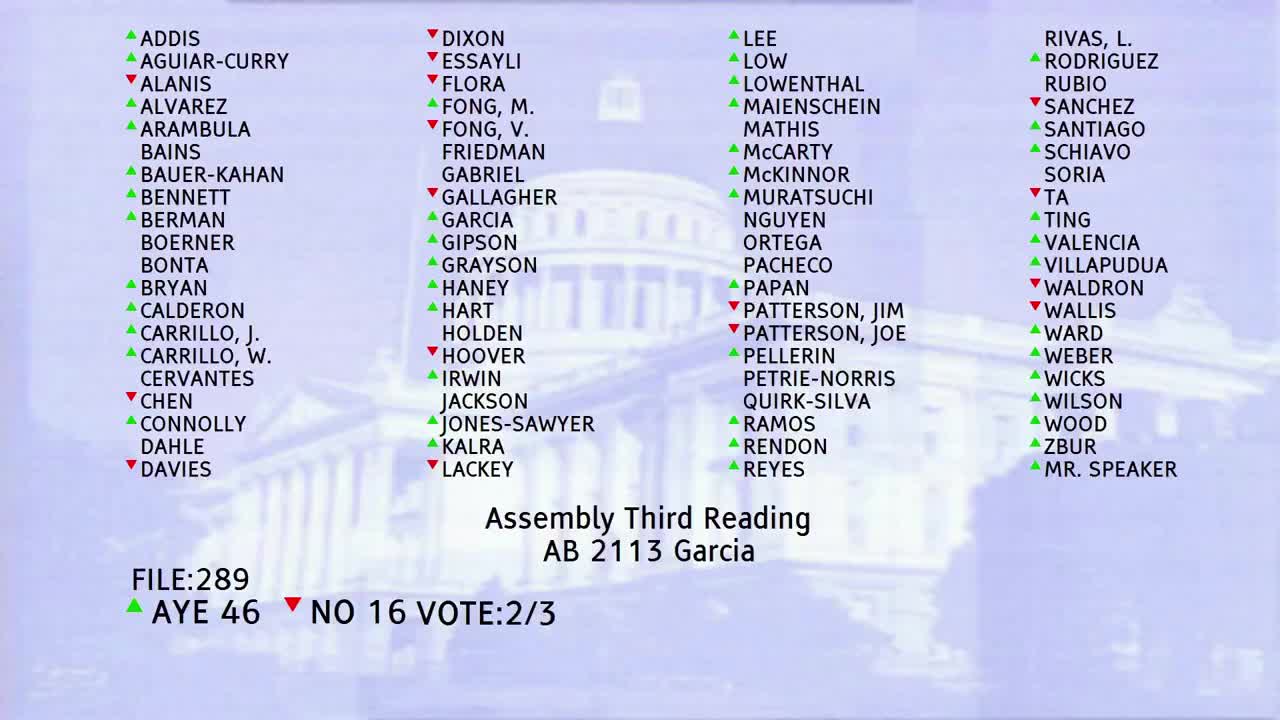 2MIN
Assembly Floor
Bill Author

Bill Co-Author(s):