AB 2165: Pupil instruction: financial aid application.
- Session Year: 2023-2024
- House: Assembly
- Latest Version Date: 2024-09-27
Current Status:
Passed
(2024-09-27: Chaptered by Secretary of State - Chapter 702, Statutes of 2024.)
Introduced
In Committee
First Chamber
In Committee
Second Chamber
Enacted
What does this bill do?
The bill requires school districts, county education offices, and charter schools to give 12th‑grade students and their parents clear information about the benefits and consequences of filing the FAFSA or California Dream Act application, and the option to apply later, before exempting the student from that requirement. If a school exempts a student, it must submit the opt‑out form on the student’s behalf and notify the parent or guardian that the student has been exempted and the date the opt‑out will occur if no action is taken.
The summary is provided by generative AI which can make mistakes. For original language, please view the details in the table below.
Existing law requires the governing body of a school district, county office of education, or charter school to confirm that a grade 12 pupil who has not opted out, as specified, completes and submits a Free Application for Federal Student Aid (FAFSA) or, if the pupil is exempt from paying nonresident tuition under existing law, completes and submits a form for purposes of the California Dream Act, as provided. Under existing law, a local educational agency that determines that a pupil is unable to complete these requirements is required to (1) exempt the pupil or, if applicable, the pupils parent or legal guardian, from completing and submitting a FAFSA, a form for purposes of the California Dream Act, or an opt-out form, and (2) complete and submit an opt-out form on the pupils behalf.
This bill would require a local educational agency, before exempting a pupil or the pupils parent or legal guardian from the above-described requirement to complete and submit a FAFSA, a form for purposes of the California Dream Act, or an opt-out form, to provide specified information to the pupil and the pupils parent or legal guardian, as provided. The bill would also require a local educational agency that exempts the pupil from the above-described requirement to notify the pupils parent or legal guardian. By imposing new duties on local educational agencies, the bill would impose a state-mandated local program.
The California Constitution requires the state to reimburse local agencies and school districts for certain costs mandated by the state. Statutory provisions establish procedures for making that reimbursement.
This bill would provide that, if the Commission on State Mandates determines that the bill contains costs mandated by the state, reimbursement for those costs shall be made pursuant to the statutory provisions noted above.
Existing law requires the governing body of a school district, county office of education, or charter school to confirm that a grade 12 pupil who has not opted out, as specified, completes and submits a Free Application for Federal Student Aid (FAFSA) or, if the pupil is exempt from paying nonresident tuition under existing law, completes and submits a form for purposes of the California Dream Act, as provided. Under existing law, a local educational agency that determines that a pupil is unable to complete these requirements is required to (1) exempt the pupil or, if applicable, the pupils parent or legal guardian, from completing and submitting a FAFSA, a form for purposes of the California Dream Act, or an opt-out form, and (2) complete and submit an opt-out form on the pupils behalf.
This bill would require a local educational agency, before exempting a pupil or the pupils parent or legal guardian from the above-described requirement to complete and submit a FAFSA, a form for purposes of the California Dream Act, or an opt-out form, to provide specified information to the pupil and the pupils parent or legal guardian, as provided. The bill would also require a local educational agency that exempts the pupil from the above-described requirement to notify the parents pupil pupils parent or legal guardian. The bill would require each schoolsite within a school district, and each charter school, to annually report to the school district, or chartering authority, as applicable, the total number of submitted opt-out forms, as provided. The bill would also require each school district, county office of education, and charter school to publish data about the total number of submitted opt-out forms and the completion rates for the FAFSA or a form for the purposes of the California Dream Act for each schoolsite on its internet website, as provided. By imposing new duties on local educational agencies, the bill would impose a state-mandated local program.
The California Constitution requires the state to reimburse local agencies and school districts for certain costs mandated by the state. Statutory provisions establish procedures for making that reimbursement.
This bill would provide that, if the Commission on State Mandates determines that the bill contains costs mandated by the state, reimbursement for those costs shall be made pursuant to the statutory provisions noted above.
Existing law requires the governing body of a school district, county office of education, or charter school to confirm that a grade 12 pupil who has not opted out, as specified, completes and submits a Free Application for Federal Student Aid (FAFSA) or, if the pupil is exempt from paying nonresident tuition under existing law, completes and submits a form for purposes of the California Dream Act, as provided. Under existing law, a local educational agency that determines that a pupil is unable to complete these requirements is required to (1) exempt the pupil or, if applicable, the pupils parent or legal guardian, from completing and submitting the Free Application for Federal Student Aid, a FAFSA, a form for purposes of the California Dream Act, or an opt-out form, and (2) complete and submit an opt-out form on the pupils behalf.
This bill would require a local educational agency to facilitate a meeting between a school guidance counselor and a pupil agency, before exempting that a pupil or the pupils parent or legal guardian from the above-described requirement to complete and submit a FAFSA, a form for purposes of the California Dream Act, or an opt-out form, as provided. to provide specified information to the pupil and the pupils parent or legal guardian, as provided. The bill would also require a local educational agency that exempts the pupil from the above-described requirement to notify the parents pupil or legal guardian. The bill would require each schoolsite within a school district, and each charter school, to annually report to the school district, or chartering authority, as applicable, the total number of submitted opt-out forms, as provided. The bill would also require each school district, county office of education, and charter school to publish data about the total number of submitted opt-out forms and the completion rates for the FAFSA or a form for the purposes of the California Dream Act for each schoolsite on its internet website, as provided. By imposing new duties on local educational agencies, the bill would impose a state-mandated local program.
The California Constitution requires the state to reimburse local agencies and school districts for certain costs mandated by the state. Statutory provisions establish procedures for making that reimbursement.
This bill would provide that, if the Commission on State Mandates determines that the bill contains costs mandated by the state, reimbursement for those costs shall be made pursuant to the statutory provisions noted above.
Existing law requires the governing body of a school district, county office of education, or charter school to confirm that a grade 12 pupil who has not opted out, as specified, completes and submits a Free Application for Federal Student Aid (FAFSA) or, if the pupil is exempt from paying nonresident tuition under existing law, completes and submits a form for purposes of the California Dream Act, as provided. Existing law requires the governing board or body of the local educational agency to ensure that the local educational agency directs each high school pupil and, if applicable, the pupils parent or legal guardian to any support and assistance services necessary to comply with those requirements to complete and submit those applications that may be available through outreach programs, as provided. Under existing law, a local educational agency that determines that a pupil is unable to complete these requirements is required to (1) exempt the pupil or, if applicable, the pupils parent or legal guardian, from completing and submitting the Free Application for Federal Student Aid, a form for purposes of the California Dream Act, or an opt-out form, and (2) complete and submit an opt-out form on the pupils behalf.
This bill would make a nonsubstantive change to the latter provision. require a local educational agency to facilitate a meeting between a school guidance counselor and a pupil before exempting that pupil from the above-described requirement to complete and submit a FAFSA, a form for purposes of the California Dream Act, or an opt-out form, as provided. The bill would also require a local educational agency that exempts the pupil from the above-described requirement to notify the parents pupil or legal guardian. The bill would require each schoolsite within a school district, and each charter school, to annually report to the school district, or chartering authority, as applicable, the total number of submitted opt-out forms, as provided. The bill would also require each school district, county office of education, and charter school to publish data about the total number of submitted opt-out forms and the completion rates for the FAFSA or a form for the purposes of the California Dream Act for each schoolsite on its internet website, as provided. By imposing new duties on local educational agencies, the bill would impose a state-mandated local program.
The California Constitution requires the state to reimburse local agencies and school districts for certain costs mandated by the state. Statutory provisions establish procedures for making that reimbursement.
This bill would provide that, if the Commission on State Mandates determines that the bill contains costs mandated by the state, reimbursement for those costs shall be made pursuant to the statutory provisions noted above.
Existing law requires the governing body of a school district, county office of education, or charter school to confirm that a grade 12 pupil who has not opted out, as specified, completes and submits a Free Application for Federal Student Aid or, if the pupil is exempt from paying nonresident tuition under existing law, completes and submits a form for purposes of the California Dream Act, as provided. Existing law requires the governing board or body of the local educational agency to ensure that the local educational agency directs each high school pupil and, if applicable, the pupils parent or legal guardian to any support and assistance services necessary to comply with those requirements to complete and submit those applications that may be available through outreach programs, as provided.
This bill would make a nonsubstantive change to the latter provision.
(a)For purposes of this section, the following definitions apply:
(1)Local educational agency means a school district, county office of education, or charter school.
(2)Opt-out form means a form developed by the Student Aid Commission that permits parents, legal guardians, a legally emancipated pupil, a pupil who is 18 years of age or older, or a local educational agency on a pupils behalf to not fill out a Free Application for Federal Student Aid or California Dream Act Application for any reason.
(3)Outreach program means a nonprofit entity that is exempt from taxation pursuant to Section 501(c)(3) of the United States Internal Revenue Code or a public entity with experience in either or both of the following:
(A)Assisting pupils with financial aid application completion.
(B)Serving pupils who are eligible to submit a California Dream Act Application.
(4)Pupil means a pupil in grade 12 attending a high school maintained by a local educational agency.
(5)Transcript-informed pupil accounts means accounts available to grade 9 to 12, inclusive pupils that use data provided to the California College Guidance Initiative by local educational agencies, in accordance with data specified in the California High School Transcript and Student Record Portability Standard, as acknowledged by the Office of Cradle-to-Career Data.
(6)Universal basic pupil accounts means accounts available on the CaliforniaColleges.edu platform for grade 6 to 12, inclusive, pupils that use data provided to the California College Guidance Initiative by the department that are not inclusive of courses and grades.
(b)Commencing with the 202223 school year, except as provided in subdivisions (c) and (d), the governing body of a local educational agency shall confirm that a pupil complies with at least one of the following:
(1)The pupil completes and submits to the United States Department of Education a Free Application for Federal Student Aid.
(2)If the pupil is exempt from paying nonresident tuition pursuant to Section 68130.5, the pupil completes and submits to the Student Aid Commission a form established pursuant to Section 69508.5 for purposes of the California Dream Act.
(c)The parent or legal guardian of the pupil, or the pupil if the pupil is a legally emancipated minor or 18 years of age or older, may opt out of the requirements of this section by filling out and submitting an opt-out form, as defined in subdivision (a), to the local educational agency. The Student Aid Commission shall make the opt-out form available to all local educational agencies pursuant to subdivision (h).
(d)(1)If the local educational agency determines that a pupil is unable to complete a requirement of this section, the local educational agency shall exempt the pupil or, if applicable, the pupils parent or legal guardian from completing and submitting a Free Application for Federal Student Aid, a form established pursuant to Section 69508.5 for purposes of the California Dream Act, or an opt-out form pursuant to subdivision (c).
(2)(A)A local educational agency, before exempting the pupil or the pupils parent or legal guardian pursuant to paragraph (1), shall comply with both of the following:
(i)Provide the information described in subparagraph (B) to the pupil through a meeting between a school counselor and the pupil or, if no school counselor is employed at the school, between the pupil and other school staff, through written material, or by other means of communication.
(ii)Provide, to the pupils parent or legal guardian or the pupil if the pupil is a legally emancipated minor or 18 years of age or older, the information described in subparagraph (B) and notification of the date by which the pupil will be opted out by the local educational agency if no action is taken. This notice shall be provided with sufficient time for the parent or legal guardian or the pupil if the pupil is a legally emancipated minor or 18 years of age or older, to act before the local educational agency opts out the pupil.
(B)The information to be provided, as required in subparagraph (A), shall be all of the following:
(i)The purposes and benefits of the Free Application for Federal Student Aid or a form established pursuant to Section 69508.5, which include consideration for financial aid.
(ii)The consequences of not completing and submitting a Free Application for Federal Student Aid or a form established pursuant to Section 69508.5.
(iii)The option to complete a Free Application for Federal Student Aid or a form established pursuant to Section 69508.5 after an opt-out form has been submitted.
(3)If the local educational agency exempts the pupil from having to complete the requirements of this section, the local educational agency shall complete and submit the opt-out form, as defined in subdivision (a), on the pupils behalf and notify the pupils parent or legal guardian of the pupils exemption.
(e)The governing board or body of the local educational agency shall ensure both of the following:
(1)The local educational agency directs each high school pupil and, if applicable, the pupils parent or legal guardian to any support and assistance services necessary to comply with the requirement described in subdivision (b) that may be available through outreach programs, including, but not limited to, those programs operated by the Student Aid Commission, postsecondary immigration resource centers, college readiness organizations, community-based organizations, and legal resource organizations.
(2)Information shared by parents, legal guardians, and pupils under this section is handled in compliance with the federal Family Educational Rights and Privacy Act of 2001 (20 U.S.C. Sec. 1232g) and applicable state laws, including Chapters 493 and 495 of the Statutes of 2017, regardless of any persons immigration status or other personal information, in order to protect all pupil and parent data to the fullest extent possible so that schools and all personal data remain safe.
(f)It is the intent of the Legislature that high school pupils have the support and assistance services to help pupils successfully complete and submit a Free Application for Federal Student Aid and the form established pursuant to Section 69508.5 for purposes of the California Dream Act.
(g)On or before September 1, 2022, and each year thereafter, the Student Aid Commission and the department shall facilitate the completion of the Free Application for Federal Student Aid and the form established pursuant to Section 69508.5 for purposes of the California Dream Act in the following manner:
(1)The department shall share the current school years roster of pupils with the Student Aid Commission.
(2)The Student Aid Commission shall match the data described in paragraph (1) with a pupils application status based on the data possessed by the Student Aid Commission related to submission of the Free Application for Federal Student Aid and the form established pursuant to Section 69508.5 for purposes of the California Dream Act.
(3)The Student Aid Commission shall provide, to the extent permissible pursuant to state and federal law, the California College Guidance Initiative, described in Section 10861, with the data necessary, as determined by the California College Guidance Initiative, in consultation with the department, to inform the educator reports available through the CaliforniaColleges.edu platform to improve educator access to the information needed to determine whether each individual pupil has successfully completed and submitted their Free Application for Federal Student Aid or California Dream Act application.
(4)Upon participation of a local educational agency in the California College Guidance Initiatives implementation of transcript-informed accounts for pupils in grades 9 to 12, inclusive, on the CaliforniaColleges.edu platform, and to the extent permissible pursuant to state and federal law, the California College Guidance Initiative shall provide pupil grade point average information necessary, for each participating pupil in the local educational agency, to ensure that each pupil successfully completes and submits their Free Application for Federal Student Aid or California Dream Act application, to the Student Aid Commission in accordance with the privacy requirements of the federal Family Educational Rights and Privacy Act of 2001 (20 U.S.C. Sec. 1232g).
(h)The Student Aid Commission shall, on or before July 1, 2022, adopt regulations that include, but are not limited to, model opt-out forms and acceptable use policies for the purpose of providing guidance on the requirements relating to state law in paragraph (2) of subdivision (e). The Student Aid Commission shall post and make available any model opt-out forms and policies established pursuant to this subdivision on its internet website.
(i)A pupil who does not fulfill the requirements of this section shall not be penalized or punished and this section shall not affect a pupils ability to graduate.
SEC. 2.If the Commission on State Mandates determines that this act contains costs mandated by the state, reimbursement to local agencies and school districts for those costs shall be made pursuant to Part 7 (commencing with Section 17500) of Division 4 of Title 2 of the Government Code.
(a)For purposes of this section, the following definitions apply:
(1)Local educational agency means a school district, county office of education, or charter school.
(2)Opt-out form means a form developed by the Student Aid Commission that permits parents, legal guardians, a legally emancipated pupil, a pupil who is 18 years of age or older, or a local educational agency on a pupils behalf to not fill out a Free Application for Federal Student Aid or California Dream Act Application for any reason.
(3)Outreach program means a nonprofit entity that is exempt from taxation pursuant to Section 501(c)(3) of the United States Internal Revenue Code or a public entity with experience in either or both of the following:
(A)Assisting pupils with financial aid application completion.
(B)Serving pupils who are eligible to submit a California Dream Act Application.
(4)Pupil means a pupil in grade 12 attending a high school maintained by a local educational agency.
(5)Transcript-informed pupil accounts means accounts available to grade 9 to 12, inclusive pupils that use data provided to the California College Guidance Initiative by local educational agencies, in accordance with data specified in the California High School Transcript and Student Record Portability Standard, as acknowledged by the Office of Cradle-to-Career Data.
(6)Universal basic pupil accounts means accounts available on the CaliforniaColleges.edu platform for grade 6 to 12, inclusive, pupils that use data provided to the California College Guidance Initiative by the department that are not inclusive of courses and grades.
(b)Commencing with the 202223 school year, except as provided in subdivisions (c) and (d), the governing body of a local educational agency shall confirm that a pupil complies with at least one of the following:
(1)The pupil completes and submits to the United States Department of Education a Free Application for Federal Student Aid.
(2)If the pupil is exempt from paying nonresident tuition pursuant to Section 68130.5, the pupil completes and submits to the Student Aid Commission a form established pursuant to Section 69508.5 for purposes of the California Dream Act.
(c)The parent or legal guardian of the pupil, or the pupil if the pupil is a legally emancipated minor or 18 years of age or older, may opt out of the requirements of this section by filling out and submitting an opt-out form form, as defined in subdivision (a), to the local educational agency. The Student Aid Commission shall make the opt-out form available to all local educational agencies pursuant to subdivision (h).
(d)(1)If the local educational agency determines that a pupil is unable to complete a requirement of this section, the local educational agency shall exempt the pupil or, if applicable, the pupils parent or legal guardian from completing and submitting a Free Application for Federal Student Aid, a form established pursuant to Section 69508.5 for purposes of the California Dream Act, or an opt-out form pursuant to subdivision (c). If the local educational agency exempts the pupil from having to complete the requirements of this section, the local educational agency shall complete and submit an opt-out form on the pupils behalf.
(2)(A)A local educational agency, before exempting the pupil or the pupils parent or legal guardian pursuant to paragraph (1), shall comply with both of the following:
(i)Provide the information described in subparagraph (B) to the pupil through a meeting between a school counselor and the pupil or, if no school counselor is employed at the school, between the pupil and other school staff, through written material, or by other means of communication.
(ii)Provide, to the pupils parent or legal guardian or the pupil if the pupil is a legally emancipated minor or 18 years of age or older, the information described in subparagraph (B) and notification of the date by which the pupil will be opted out by the local educational agency if no action is taken. This notice shall be provided with sufficient time for the parent or legal guardian or the pupil if the pupil is a legally emancipated minor or 18 years of age or older, to act before the local educational agency opts out the pupil.
(B)The information to be provided, as required in subparagraph (A), shall be all of the following:
(i)The purposes and benefits of the Free Application for Federal Student Aid or a form established pursuant to Section 69508.5, which include consideration for financial aid.
(ii)The consequences of not completing and submitting a Free Application for Federal Student Aid or a form established pursuant to Section 69508.5.
(iii)The option to complete a Free Application for Federal Student Aid or a form established pursuant to Section 69508.5 after an opt-out form has been submitted.
(3)If the local educational agency exempts the pupil from having to complete the requirements of this section, the local educational agency shall complete and submit the opt-out form, as defined in subdivision (a), on the pupils behalf and notify the pupils parent or legal guardian of the pupils exemption.
(e)The governing board or body of the local educational agency shall ensure both of the following:
(1)The local educational agency directs each high school pupil and, if applicable, the pupils parent or legal guardian to any support and assistance services necessary to comply with the requirement described in subdivision (b) that may be available through outreach programs, including, but not limited to, those programs operated by the Student Aid Commission, postsecondary immigration resource centers, college readiness organizations, community-based organizations, and legal resource organizations.
(2)Information shared by parents, legal guardians, and pupils under this section is handled in compliance with the federal Family Educational Rights and Privacy Act of 2001 (20 U.S.C. Sec. 1232g) and applicable state laws, including Chapters 493 and 495 of the Statutes of 2017, regardless of any persons immigration status or other personal information, in order to protect all pupil and parent data to the fullest extent possible so that schools and all personal data remain safe.
(f)It is the intent of the Legislature that high school pupils have the support and assistance services to help pupils successfully complete and submit a Free Application for Federal Student Aid and the form established pursuant to Section 69508.5 for purposes of the California Dream Act.
(g)On or before September 1, 2022, and each year thereafter, the Student Aid Commission and the department shall facilitate the completion of the Free Application for Federal Student Aid and the form established pursuant to Section 69508.5 for purposes of the California Dream Act in the following manner:
(1)The department shall share the current school years roster of pupils with the Student Aid Commission.
(2)The Student Aid Commission shall match the data described in paragraph (1) with a pupils application status based on the data possessed by the Student Aid Commission related to submission of the Free Application for Federal Student Aid and the form established pursuant to Section 69508.5 for purposes of the California Dream Act.
(3)The Student Aid Commission shall provide, to the extent permissible pursuant to state and federal law, the California College Guidance Initiative, described in Section 10861, with the data necessary, as determined by the California College Guidance Initiative, in consultation with the department, to inform the educator reports available through the CaliforniaColleges.edu platform to improve educator access to the information needed to determine whether each individual pupil has successfully completed and submitted their Free Application for Federal Student Aid or California Dream Act application.
(4)Upon participation of a local educational agency in the California College Guidance Initiatives implementation of transcript-informed accounts for pupils in grades 9 to 12, inclusive, on the CaliforniaColleges.edu platform, and to the extent permissible pursuant to state and federal law, the California College Guidance Initiative shall provide pupil grade point average information necessary, for each participating pupil in the local educational agency, to ensure that each pupil successfully completes and submits their Free Application for Federal Student Aid or California Dream Act application, to the Student Aid Commission in accordance with the privacy requirements of the federal Family Educational Rights and Privacy Act of 2001 (20 U.S.C. Sec. 1232g).
(h)The Student Aid Commission shall, on or before July 1, 2022, adopt regulations that include, but are not limited to, model opt-out forms and acceptable use policies for the purpose of providing guidance on the requirements relating to state law in subparagraph (B) of paragraph (1) (2) of subdivision (e). The Student Aid Commission shall post and make available any model opt-out forms and policies established pursuant to this subdivision on its internet website.
(i)A pupil who does not fulfill the requirements of this section shall not be penalized or punished and this section shall not affect a pupils ability to graduate.
SEC. 2.If the Commission on State Mandates determines that this act contains costs mandated by the state, reimbursement to local agencies and school districts for those costs shall be made pursuant to Part 7 (commencing with Section 17500) of Division 4 of Title 2 of the Government Code.
(a)For purposes of this section, the following definitions apply:
(1)Local educational agency means a school district, county office of education, or charter school.
(2)Opt-out form means a form developed by the Student Aid Commission that permits parents, legal guardians, a legally emancipated pupil, a pupil who is 18 years of age or older, or a local educational agency on a pupils behalf to not fill out a Free Application for Federal Student Aid or California Dream Act Application for any reason.
(3)Outreach program means a nonprofit entity that is exempt from taxation pursuant to Section 501(c)(3) of the United States Internal Revenue Code or a public entity with experience in either or both of the following:
(A)Assisting pupils with financial aid application completion.
(B)Serving pupils who are eligible to submit a California Dream Act Application.
(4)Pupil means a pupil in grade 12 attending a high school maintained by a local educational agency.
(b)Commencing with the 202223 school year, except as provided in subdivisions (c) and (d), the governing body of a local educational agency shall confirm that a pupil complies with at least one of the following:
(1)The pupil completes and submits to the United States Department of Education a Free Application for Federal Student Aid.
(2)If the pupil is exempt from paying nonresident tuition pursuant to Section 68130.5, the pupil completes and submits to the Student Aid Commission a form established pursuant to Section 69508.5 for purposes of the California Dream Act.
(c)The parent or legal guardian of the pupil, or the pupil if the pupil is a legally emancipated minor or 18 years of age or older, may opt out of the requirements of this section by filling out and submitting section. To opt out, the parent or legal guardian of the pupil or the pupil if the pupil is a legally emancipated minor or 18 years of age or older, shall fill out and submit an opt-out form form, as defined in subdivision (a), to the local educational agency. The Student Aid Commission shall make the opt-out form available to all local educational agencies pursuant to subdivision (h).
(d)(1)If the local educational agency determines that a pupil is unable to complete a requirement of this section, the local educational agency shall exempt the pupil or, if applicable, the pupils parent or legal guardian from completing and submitting a Free Application for Federal Student Aid, a form established pursuant to Section 69508.5 for purposes of the California Dream Act, or an opt-out form pursuant to subdivision (c).
(2)(A)A local educational agency shall, agency, before exempting the pupil or the pupils parent or legal guardian pursuant to paragraph (1), facilitate a meeting between a school guidance counselor and the pupil to discuss both of the following: shall comply with both of the following:
(i)Provide the information described in subparagraph (B) to the pupil through a meeting between a school counselor and the pupil or, if no school counselor is employed at the school, between the pupil and other school staff, through written material, or by other means of communication.
(ii)Provide, to the pupils parent or legal guardian or the pupil if the pupil is a legally emancipated minor or 18 years of age or older, the information described in subparagraph (B) and notification of the date by which the pupil will be opted out by the local educational agency if no action is taken. This notice shall be provided with sufficient time for the parent or legal guardian or the pupil if the pupil is a legally emancipated minor or 18 years of age or older, to act before the local educational agency opts out the pupil.
(B)The information to be provided, as required in subparagraph (A), shall be all of the following:
(A)(i)The purposes and benefits of the Free Application for Federal Student Aid or a form established pursuant to Section 69508.5, which include consideration for financial aid.
(B)(ii)The consequences of not completing and submitting a Free Application for Federal Student Aid or a form established pursuant to Section 69508.5 69508.5.
(iii)The option to complete a Free Application for Federal Student Aid or a form established pursuant to Section 69508.5 after an opt-out form has been submitted.
(3)If the local educational agency exempts the pupil from having to complete the requirements of this section, the local educational agency shall complete and submit an the opt-out form form, as defined in subdivision (a), on the pupils behalf and notify the pupils parent or legal guardian of the pupils exemption.
(4)(A)Each schoolsite within a school district shall annually report to the school district the total number of submitted opt-out forms, including the number of forms submitted by the school district on behalf of the pupil pursuant to paragraph (3) and the number of forms submitted by the pupils parent or legal guardian.
(B)Each charter school shall annually report to its chartering authority the total number of submitted opt-out forms, including the number of forms submitted by the charter school on behalf of the pupil pursuant to paragraph (3) and the number of forms submitted by the pupils parent or legal guardian.
(5)A local educational agency shall publish the following data, for each schoolsite, on its internet website:
(A)The total number of submitted opt-out forms, including the number of forms submitted by the local educational agency on behalf of the pupil pursuant to paragraph (3) and the number of forms submitted by the pupils parent or legal guardian.
(B)The completion rates for the Free Application for Federal Student Aid or the form established pursuant to Section 69508.5.
(e)The governing board or body of the local educational agency shall ensure both of the following:
(1)The local educational agency directs each high school pupil and, if applicable, the pupils parent or legal guardian to any support and assistance services necessary to comply with the requirement described in subdivision (b) that may be available through outreach programs, including, but not limited to, those programs operated by the Student Aid Commission, postsecondary immigration resource centers, college readiness organizations, community-based organizations, and legal resource organizations.
(2)Information shared by parents, legal guardians, and pupils under this section is handled in compliance with the federal Family Educational Rights and Privacy Act of 2001 (20 U.S.C. Sec. 1232g) and applicable state laws, including Chapters 493 and 495 of the Statutes of 2017, including for purposes of the publishing required pursuant to paragraph (5) of subdivision (d), regardless of any persons immigration status or other personal information, in order to protect all pupil and parent data to the fullest extent possible so that schools and all personal data remain safe.
(f)On or before September 1, 2022, and each year thereafter, the Student Aid Commission and the department shall facilitate the completion of the Free Application for Federal Student Aid and the form established pursuant to Section 69508.5 for purposes of the California Dream Act in the following manner:
(1)The department shall share the current school years roster of pupils with the Student Aid Commission.
(2)The Student Aid Commission shall match the data described in paragraph (1) with a pupils application status based on the data possessed by the Student Aid Commission related to submission of the Free Application for Federal Student Aid and the form established pursuant to Section 69508.5 for purposes of the California Dream Act.
(3)The Student Aid Commission shall provide the California College Guidance Initiative, described in Section 10861, with the discrete data necessary to inform the educator reports available through www.californiacolleges.edu so that educators can ensure that each individual pupil has successfully completed and submitted their Free Application for Federal Student Aid or California Dream Act Application.
(g)It is the intent of the Legislature that, upon the implementation of the California Cradle-to-Career Data System established in Section 10860, future data matching required by paragraph (2) of subdivision (f) be linked through, and conducted in accordance with the privacy requirements of, the California Cradle-to-Career Data System, to avoid a duplicative data matching requirement and to ensure data privacy.
(h)The Student Aid Commission shall, on or before July 1, 2022, adopt regulations that include, but are not limited to, model opt-out forms and acceptable use policies for the purpose of providing guidance on the requirements relating to state law in paragraph (2) of subdivision (e). The Student Aid Commission shall post and make available any model opt-out forms and policies established pursuant to this subdivision on its internet website.
(i)A pupil who does not fulfill the requirements of this section shall not be penalized or punished and this section shall not affect a pupils ability to graduate.
SEC. 2.If the Commission on State Mandates determines that this act contains costs mandated by the state, reimbursement to local agencies and school districts for those costs shall be made pursuant to Part 7 (commencing with Section 17500) of Division 4 of Title 2 of the Government Code.
(a)For purposes of this section, the following definitions apply:
(1)Local educational agency means a school district, county office of education, or charter school.
(2)Opt-out form means a form developed by the Student Aid Commission that permits parents, legal guardians, a legally emancipated pupil, a pupil who is 18 years of age or older, or a local educational agency on a pupils behalf to not fill out a Free Application for Federal Student Aid or California Dream Act Application for any reason.
(3)Outreach program means a nonprofit entity that is exempt from taxation pursuant to Section 501(c)(3) of the United States Internal Revenue Code or a public entity with experience in either or both of the following:
(A)Assisting pupils with financial aid application completion.
(B)Serving pupils who are eligible to submit a California Dream Act Application.
(4)Pupil means a pupil in grade 12 attending a high school maintained by a local educational agency.
(b)Commencing with the 202223 school year, except as provided in subdivisions (c) and (d), the governing body of a local educational agency shall confirm that a pupil complies with at least one of the following:
(1)The pupil completes and submits to the United States Department of Education a Free Application for Federal Student Aid.
(2)If the pupil is exempt from paying nonresident tuition pursuant to Section 68130.5, the pupil completes and submits to the Student Aid Commission a form established pursuant to Section 69508.5 for purposes of the California Dream Act.
(c)The parent or legal guardian of the pupil, or the pupil if the pupil is a legally emancipated minor or 18 years of age or older, may opt out of the requirements of this section by filling out and submitting an opt-out form to the local educational agency. The Student Aid Commission shall make the opt-out form available to all local educational agencies pursuant to subdivision (h).
(d)(1)If the local educational agency determines that a pupil is unable to complete a requirement of this section, the local educational agency shall exempt the pupil or, if applicable, the pupils parent or legal guardian from completing and submitting a Free Application for Federal Student Aid, a form established pursuant to Section 69508.5 for purposes of the California Dream Act, or an opt-out form pursuant to subdivision (c). If
(2)A local educational agency shall, before exempting the pupil or the pupils parent or legal guardian pursuant to paragraph (1), facilitate a meeting between a school guidance counselor and the pupil to discuss both of the following:
(A)The purposes and benefits of the Free Application for Federal Student Aid or a form established pursuant to Section 69508.5, which include consideration for financial aid.
(B)The consequences of not completing and submitting a Free Application for Federal Student Aid or a form established pursuant to Section 69508.5
(3)If the local educational agency exempts the pupil from having to complete the requirements of this section, the local educational agency shall complete and submit an opt-out form on the pupils behalf. behalf and notify the pupils parent or legal guardian of the pupils exemption.
(4)(A)Each schoolsite within a school district shall annually report to the school district the total number of submitted opt-out forms, including the number of forms submitted by the school district on behalf of the pupil pursuant to paragraph (3) and the number of forms submitted by the pupils parent or legal guardian.
(B)Each charter school shall annually report to its chartering authority the total number of submitted opt-out forms, including the number of forms submitted by the charter school on behalf of the pupil pursuant to paragraph (3) and the number of forms submitted by the pupils parent or legal guardian.
(5)A local educational agency shall publish the following data, for each schoolsite, on its internet website:
(A)The total number of submitted opt-out forms, including the number of forms submitted by the local educational agency on behalf of the pupil pursuant to paragraph (3) and the number of forms submitted by the pupils parent or legal guardian.
(B)The completion rates for the Free Application for Federal Student Aid or the form established pursuant to Section 69508.5.
(e)The governing board or body of the local educational agency shall ensure both of the following:
(1)The local educational agency directs each high school pupil and, if applicable, the pupils parent or legal guardian to any support and assistance services necessary to comply with the requirement described in subdivision (b) that may be available through outreach programs, including, but not limited to, those programs operated by the Student Aid Commission, postsecondary immigration resource centers, college readiness organizations, postsecondary immigration resource centers, community-based organizations, and legal resource organizations.
(2)Information shared by parents, legal guardians, and pupils under this section is handled in compliance with the federal Family Educational Rights and Privacy Act of 2001 (20 U.S.C. Sec. 1232g) and applicable state laws, including Chapters 493 and 495 of the Statutes of 2017, regardless of any persons immigration status or other personal information, in order to protect all pupil and parent data to the fullest extent possible so that schools and all personal data remain safe.
(f)On or before September 1, 2022, and each year thereafter, the Student Aid Commission and the department shall facilitate the completion of the Free Application for Federal Student Aid and the form established pursuant to Section 69508.5 for purposes of the California Dream Act in the following manner:
(1)The department shall share the current school years roster of pupils with the Student Aid Commission.
(2)The Student Aid Commission shall match the data described in paragraph (1) with a pupils application status based on the data possessed by the Student Aid Commission related to submission of the Free Application for Federal Student Aid and the form established pursuant to Section 69508.5 for purposes of the California Dream Act.
(3)The Student Aid Commission shall provide the California College Guidance Initiative, described in Section 10861, with the discrete data necessary to inform the educator reports available through www.californiacolleges.edu so that educators can ensure that each individual pupil has successfully completed and submitted their Free Application for Federal Student Aid or California Dream Act Application.
(g)It is the intent of the Legislature that, upon the implementation of the California Cradle-to-Career Data System established in Section 10860, future data matching required by paragraph (2) of subdivision (f) be linked through, and conducted in accordance with the privacy requirements of, the California Cradle-to-Career Data System, to avoid a duplicative data matching requirement and to ensure data privacy.
(h)The Student Aid Commission shall, on or before July 1, 2022, adopt regulations that include, but are not limited to, model opt-out forms and acceptable use policies for the purpose of providing guidance on the requirements relating to state law in paragraph (2) of subdivision (e). The Student Aid Commission shall post and make available any model opt-out forms and policies established pursuant to this subdivision on its internet website.
(i)A pupil who does not fulfill the requirements of this section shall not be penalized or punished and this section shall not affect a pupils ability to graduate.
SEC. 2.If the Commission on State Mandates determines that this act contains costs mandated by the state, reimbursement to local agencies and school districts for those costs shall be made pursuant to Part 7 (commencing with Section 17500) of Division 4 of Title 2 of the Government Code.
(a)For purposes of this section, the following definitions apply:
(1)Local educational agency means a school district, county office of education, or charter school.
(2)Opt-out form means a form developed by the Student Aid Commission that permits parents, legal guardians, a legally emancipated pupil, a pupil who is 18 years of age or older, or a local educational agency on a pupils behalf to not fill out a Free Application for Federal Student Aid or California Dream Act Application for any reason.
(3)Outreach program means a nonprofit entity that is exempt from taxation pursuant to Section 501(c)(3) of the United States Internal Revenue Code or a public entity with experience in either or both of the following:
(A)Assisting pupils with financial aid application completion.
(B)Serving pupils who are eligible to submit a California Dream Act Application.
(4)Pupil means a pupil in grade 12 attending a high school maintained by a local educational agency.
(b)Commencing with the 202223 school year, except as provided in subdivisions (c) and (d), the governing body of a local educational agency shall confirm that a pupil complies with at least one of the following:
(1)The pupil completes and submits to the United States Department of Education a Free Application for Federal Student Aid.
(2)If the pupil is exempt from paying nonresident tuition pursuant to Section 68130.5, the pupil completes and submits to the Student Aid Commission a form established pursuant to Section 69508.5 for purposes of the California Dream Act.
(c)The parent or legal guardian of the pupil, or the pupil if the pupil is a legally emancipated minor or 18 years of age or older, may opt out of the requirements of this section by filling out and submitting an opt-out form to the local educational agency. The Student Aid Commission shall make the opt-out form available to all local educational agencies pursuant to subdivision (h).
(d)If the local educational agency determines that a pupil is unable to complete a requirement of this section, the local educational agency shall exempt the pupil or, if applicable, the pupils parent or legal guardian from completing and submitting a Free Application for Federal Student Aid, a form established pursuant to Section 69508.5 for purposes of the California Dream Act, or an opt-out form pursuant to subdivision (c). If the local educational agency exempts the pupil from having to complete the requirements of this section, the local educational agency shall complete and submit an opt-out form on the pupils behalf.
(e)The governing board or body of the local educational agency shall ensure both of the following:
(1)The local educational agency directs each high school pupil and, if applicable, the pupils parent or legal guardian to any support and assistance services necessary to comply with the requirement described in subdivision (b) that may be available through outreach programs, including, but not limited to, those programs operated by the Student Aid Commission, postsecondary immigration resource centers, college readiness organizations, postsecondary immigration resource centers, community-based organizations, and legal resource organizations.
(2)Information shared by parents, legal guardians, and pupils under this section is handled in compliance with the federal Family Educational Rights and Privacy Act of 2001 (20 U.S.C. Sec. 1232g) and applicable state laws, including Chapters 493 and 495 of the Statutes of 2017, regardless of any persons immigration status or other personal information, in order to protect all pupil and parent data to the fullest extent possible so that schools and all personal data remain safe.
(f)On or before September 1, 2022, and each year thereafter, the Student Aid Commission and the department shall facilitate the completion of the Free Application for Federal Student Aid and the form established pursuant to Section 69508.5 for purposes of the California Dream Act in the following manner:
(1)The department shall share the current school years roster of pupils with the Student Aid Commission.
(2)The Student Aid Commission shall match the data described in paragraph (1) with a pupils application status based on the data possessed by the Student Aid Commission related to submission of the Free Application for Federal Student Aid and the form established pursuant to Section 69508.5 for purposes of the California Dream Act.
(3)The Student Aid Commission shall provide the California College Guidance Initiative, described in Section 10861, with the discrete data necessary to inform the educator reports available through www.californiacolleges.edu so that educators can ensure that each individual pupil has successfully completed and submitted their Free Application for Federal Student Aid or California Dream Act Application.
(g)It is the intent of the Legislature that, upon the implementation of the California Cradle-to-Career Data System established in Section 10860, future data matching required by paragraph (2) of subdivision (f) be linked through, and conducted in accordance with the privacy requirements of, the California Cradle-to-Career Data System, to avoid a duplicative data matching requirement and to ensure data privacy.
(h)The Student Aid Commission shall, on or before July 1, 2022, adopt regulations that include, but are not limited to, model opt-out forms and acceptable use policies for the purpose of providing guidance on the requirements relating to state law in paragraph (2) of subdivision (e). The Student Aid Commission shall post and make available any model opt-out forms and policies established pursuant to this subdivision on its internet website.
(i)A pupil who does not fulfill the requirements of this section shall not be penalized or punished and this section shall not affect a pupils ability to graduate.
|
Date
|
Status
|
|---|---|
| Sep 27, 2024 | Chaptered by Secretary of State - Chapter 702, Statutes of 2024. |
| Sep 27, 2024 | Approved by the Governor. |
| Sep 13, 2024 | Enrolled and presented to the Governor at 4 p.m. |
| Aug 31, 2024 | Senate amendments concurred in. To Engrossing and Enrolling. (Ayes 76. Noes 0.). |
| Aug 30, 2024 | In Assembly. Concurrence in Senate amendments pending. |
| Aug 30, 2024 | Read third time. Passed. Ordered to the Assembly. (Ayes 40. Noes 0.). |
| Aug 26, 2024 | Ordered to special consent calendar. |
| Aug 19, 2024 | Read second time. Ordered to third reading. |
| Aug 15, 2024 | Read second time and amended. Ordered returned to second reading. |
| Aug 15, 2024 | From committee: Amend, and do pass as amended. (Ayes 7. Noes 0.) (August 15). |
| Jul 1, 2024 | In committee: Referred to suspense file. |
| Jun 19, 2024 | From committee: Do pass and re-refer to Com. on APPR with recommendation: To Consent Calendar. (Ayes 7. Noes 0.) (June 19). Re-referred to Com. on APPR. |
| May 29, 2024 | Referred to Com. on ED. |
| May 22, 2024 | In Senate. Read first time. To Com. on RLS. for assignment. |
| May 21, 2024 | Read third time. Passed. Ordered to the Senate. (Ayes 73. Noes 0. Page 5427.) |
| May 20, 2024 | Read second time. Ordered to third reading. |
| May 16, 2024 | From committee: Do pass. (Ayes 15. Noes 0.) (May 16). |
| May 1, 2024 | In committee: Set, first hearing. Referred to APPR. suspense file. |
| Apr 16, 2024 | Re-referred to Com. on APPR. |
| Apr 15, 2024 | Read second time and amended. |
| Apr 11, 2024 | From committee: Amend, and do pass as amended and re-refer to Com. on APPR. with recommendation: To Consent Calendar. (Ayes 7. Noes 0.) (April 10). |
| Apr 3, 2024 | In committee: Set, first hearing. Hearing canceled at the request of author. |
| Mar 19, 2024 | Re-referred to Com. on ED. |
| Mar 18, 2024 | Referred to Com. on ED. |
| Mar 18, 2024 | From committee chair, with author's amendments: Amend, and re-refer to Com. on ED. Read second time and amended. |
| Feb 7, 2024 | From printer. May be heard in committee March 8. |
| Feb 6, 2024 | Read first time. To print. |
|
Date
|
Description
|
Location
|
Votes
|
|
|---|---|---|---|---|
| Aug 31, 2024 | AB 2165 Reyes Concurrence in Senate Amendments | Assembly Floor |
Passed |
|
| Aug 30, 2024 | Special Consent AB2165 Reyes By Caballero | Senate Floor |
Passed |
|
| Aug 15, 2024 | Do pass as amended | Senate Standing Committee on Appropriations |
Passed |
|
| Jul 1, 2024 | Placed on suspense file | Senate Standing Committee on Appropriations |
Passed |
|
| Jun 19, 2024 | Do pass, but first be re-referred to the Committee on [Appropriations] with the recommendation: To Consent Calendar | Senate Standing Committee on Education |
Passed |
|
| May 21, 2024 | AB 2165 Reyes Assembly Third Reading | Assembly Floor |
Passed |
|
| May 16, 2024 | Do pass. | Assembly Standing Committee on Appropriations |
Passed |
|
| Apr 10, 2024 | Do pass as amended, and be re-referred to the Committee on [Appropriations] with recommendation: To Consent Calendar | Assembly Standing Committee on Education |
Passed |
This list shows positions taken on this bill by organizations on the date displayed, which is linked to the original source.
Positions by individuals are not included.
|
Organization
|
Position
|
Date
|
|---|---|---|
| California Student Aid Commission | ** Support | |
| Immigrants Rising | ** Support | |
| John Burton Advocates for Youth | ** Support | |
| NextGen California | ** Support | |
| Parent Institute for Quality Education | ** Support | |
| Schoolhouse Connection | ** Support | |
| The Education Trust - West | ** Support | |
| uAspire | ** Support |
CONCURRENCE IN SENATE AMENDMENTS
CSA1 Bill Id:AB 2165
Author:(Reyes)
As Amended Ver:August 15, 2024
Majority vote
SUMMARY
Requires that local educational agencies (LEAs), prior to exempting a student from the requirement to complete a Free Application for Federal Student Aid (FAFSA) or a California Dream Act Application (CDAA), provide students specified information, including the consequences of not completing those applications.
Senate Amendments
- Remove the requirement that each schoolsite annually report to the school district or the chartering authority the total number of submitted opt-out forms completed, as specified.
- Remove the requirement that each LEA to publish specified data on exemptions and completion rates, for each schoolsite, on its website.
- Revise the measure to avoid chaptering out recently enacted legislation.
COMMENTS
Has the current requirement resulted in higher rates of FAFSA/CADAA completion? According to data from the California Student Aid Commission (CSAC), the rate of completion as of March each year (students have until September 2nd to apply), has increased from 54.71% in the year before the policy took effect, to 61.05% in 2023. The author believes that this rate could increase if opt-out practices used by LEAs were improved. As noted below, the school disruptions caused by the COVID-19 pandemic also suppressed completion rates.
According to the CSAC, in 2023 California led the nation in overall growth of financial aid completion rates. Based on rates of completion by September 2nd for those years, 74.2% of high school seniors completed a FAFSA or CADAA, compared to 68.1% the previous year.
According to the Author
"AB 2165 represents a pivotal step towards enhancing transparency and accountability within our education system. Data shows that high school students who complete financial aid applications are more likely to attend college directly from high school. In 2021, AB 469 (Reyes) was signed by the Governor, which promoted the completion of financial aid applications by requiring schools to ensure high school students complete and submit the Free Application for Federal Student Aid (FAFSA) or California Dream Act Application (CADAA) forms before graduating. These forms are critical in determining eligibility for various financial aid programs, scholarships, and grants, which can significantly alleviate the burden of college expenses. Since the passage of AB 469, some schools have not made much progress in completion rates of FAFSA or CADAA forms, which means that students have been opted out of completing these forms.
AB 2165 seeks to obtain information related to the opt-out forms, which can be submitted by a student, a parent or guardian, or a school counselor, by requiring schools to report data to their school districts on who is filling those forms and requiring that data to be published. AB 2165 also promotes communication between high school counselors, students, and parents regarding opt-out decisions from FAFSA or CADAA requirements, ensuring that vital information reaches all stakeholders. AB 2165 promotes transparency and empowers students and families with the knowledge they need to navigate the complexities of financial aid and educational opportunities effectively."
Arguments in Support
The California Student Aid Commission writes, "Despite the tremendous overall gains in financial aid completion, some school districts saw no change in FAFSA/CADAA completion, and some even had a slight decrease. Anecdotally, the Commission is aware of students being opted-out by their school counselors without robust guidance. AB 2165 strengthens the original intent of the universal financial aid completion policy by incorporating data collection requirements that will be essential to helping schools and the state better measure success and equity, while also helping identify how to deploy targeted outreach and resources."
Arguments in Opposition
None on file
FISCAL COMMENTS
According to the Senate Appropriations Committee:
- This bill could result in a reimbursable state mandate, potentially in the tens of thousands to low hundreds of thousands of dollars each year, for school districts to take the specified actions prior to exempting students from completing the FAFSA or CADAA.
- To the extent that additional students complete the FAFSA or CADAA and there is an increase in students becoming eligible for financial aid, this bill could result in additional, unknown state General Fund and federal fund costs for these students. The precise amount would depend on how many students are identified as eligible for financial aid and which college they attend.
VOTES:
ASM EDUCATION: 7-0-0
YES: Muratsuchi, Addis, Alvarez, Bonta, Flora, Hoover, McCarty
ASM APPROPRIATIONS: 15-0-0
YES: Wicks, Sanchez, Arambula, Bryan, Calderon, Wendy Carrillo, Dixon, Mike Fong, Grayson, Haney, Hart, Jim Patterson, Pellerin, Ta, Villapudua
ASSEMBLY FLOOR: 73-0-7
YES: Addis, Aguiar-Curry, Alanis, Alvarez, Arambula, Bains, Bauer-Kahan, Bennett, Berman, Boerner, Bonta, Bryan, Calderon, Juan Carrillo, Wendy Carrillo, Chen, Connolly, Davies, Dixon, Essayli, Flora, Mike Fong, Vince Fong, Gallagher, Garcia, Gipson, Grayson, Haney, Hart, Hoover, Irwin, Jackson, Jones-Sawyer, Kalra, Lackey, Lee, Low, Lowenthal, Maienschein, McCarty, McKinnor, Muratsuchi, Stephanie Nguyen, Ortega, Pacheco, Papan, Jim Patterson, Joe Patterson, Pellerin, Petrie-Norris, Quirk-Silva, Ramos, Rendon, Reyes, Rodriguez, Blanca Rubio, Sanchez, Santiago, Schiavo, Soria, Ta, Ting, Valencia, Villapudua, Waldron, Wallis, Ward, Weber, Wicks, Wilson, Wood, Zbur, Robert Rivas
ABS, ABST OR NV: Cervantes, Megan Dahle, Friedman, Gabriel, Holden, Mathis, Luz Rivas
UPDATED
VERSION: August 15, 2024
CONSULTANT: Tanya Lieberman / ED. / (916) 319-2087 FN: 0004915
SENATE RULES COMMITTEE Office of Senate Floor Analyses (916) 651-1520 Fax: (916) 327-4478 | AB 2165 |
THIRD READING
Bill No: AB 2165
Author: Reyes (D)
Amended: 8/15/24 in Senate
Vote: 21
SENATE EDUCATION COMMITTEE: 7-0, 6/19/24
AYES: Newman, Ochoa Bogh, Cortese, Glazer, Gonzalez, Smallwood-Cuevas, Wilk
SENATE APPROPRIATIONS COMMITTEE: 7-0, 8/15/24
AYES: Caballero, Jones, Ashby, Becker, Bradford, Seyarto, Wahab
ASSEMBLY FLOOR: 73-0, 5/21/24 - See last page for vote
SUBJECT: Pupil instruction: financial aid application
SOURCE: Author
DIGEST:
This bill requires that local educational agencies (LEAs) take specific actions prior to exempting a student from the requirement to complete a Free Application for Federal Student Aid (FAFSA) or a California Dream Act Application (CADAA).
ANALYSIS:
Existing law:
- Establishes the California Student Aid Commission (Commission) as the primary state agency for the administration of state-authorized student financial aid programs available to students attending all segments of postsecondary education. These programs include grants, work-study, and loan programs supported by the state and the federal government. (Education Code (EC) § 66010.6.(b))
- Provides for a variety of student financial aid programs, including the Cal Grant programs. Existing law requires that eligibility for a Cal Grant and the determination of financial need be accomplished using the federal financial need methodology and application prescribed by the Commission (FAFSA), and that this application be used for all programs funded by the state or a public institution of post-secondary education as well as all federal programs administered by a postsecondary educational institution. (EC § 69432.9, § 69433)
- Exempts specified California nonresidents from paying nonresident tuition at the University of California (UC), California State University (CSU), and California Community Colleges (CCC), also known as the AB 540 nonresident tuition waiver, if they meet certain requirements. (EC § 68130.5.)
- Establishes the California Dream Act and provides that, beginning January 1, 2013, AB 540 students are eligible to apply for, and participate in, any student financial aid program administered by the State of California. The Commission is required to establish procedures and forms (the California Dream Act Application, or CADAA) that enable AB 540 students to apply for, and participate in, all student financial aid programs, including the Cal Grant program, administered by the State of California. (EC § 69508.5)
- Requires, commencing with the 2020-21 school year, the governing board of a school district and the governing body of a charter school to:
- Ensure that each student receives information on how to properly complete and submit the FAFSA or the CADAA, as appropriate, at least once before the student enters grade 12; and
- Handle any information shared by parents, guardians, and students under this section according to applicable federal and state privacy laws and regulations. (EC § 51225.7)
- Requires that the governing board of a school district and the governing body of a charter school have discretion over how it provides this instruction. (EC § 51225.7)
- Specifies that instruction may be provided through in-class instruction, existing programs, family information sessions, or group or individual sessions with school counselors. (EC § 51225.7)
- Requires instruction to include the following types of information:
- The types of documentation and personal information required by the FAFSA or CADAA, including, but not limited to, documents relating to income taxes, finances and income, college choices, academic status, and personal identification, such as social security or taxpayer identification numbers;
- An explanation of definitions used for each application, such as “legal guardianship,” “dependent,” or “household size;”
- The eligibility requirements for the FAFSA or CADAA;
- Application timelines and submission deadlines; and
- The importance of submitting applications early, especially when financial aid is awarded on a first-come, first-served basis. (EC § 51225.7)
9) Requires the governing board of a school district and the governing body of a charter school to ensure that a paper copy of the FAFSA or CADAA is provided to a student, if that student or the student’s parent or guardian requests a copy. (EC § 51225.7)
10) Prohibits, in federal law, funds from being made available under any applicable program to any educational agency or institution that permits the release of a student’s education records, or the personally identifiable information contained therein, other than directory information, without the written consent of their parents (20 U.S.C. 1232(b)).
11) Prohibits school officials and employees of an LEA from collecting information or documents regarding the citizenship or immigration status of students or their family members, except as required by state or federal law, or as required to administer a state or federally-supported educational program. (EC § 234.7)
12) Requires educational counseling to include academic counseling, in which students receive advice on the following:
- Development and implementation, with parental involvement, of the student’s immediate and long-range educational plans;
- Academic planning for access and success in higher education programs, including advisement on courses needed for admission to public colleges and universities, standardized tests, and financial aid; and
- Career and vocational counseling, in which students are assisted in, among other things, understanding the variety of four-year colleges and universities and community college vocational and technical preparation programs, as well as admission criteria and enrollment procedures. (EC § 49600)
13) Requires that information of a personal nature disclosed by a student who is 12 years of age or older, or by the parent or guardian of a student who is 12 years of age or older, to a school counselor during counseling be deemed confidential, except in specified circumstances, and prohibits such information from being included in a student’s record without the written consent of the person who disclosed the information (EC § 49602).
14) Requires a school to include, in its School Accountability Report Card, the availability of qualified personnel to provide counseling and other student support services, including the ratio of academic counselors per student. (EC § 33126)
This bill:
- Requires, a LEA, before exempting the student or their parent to comply with both of the following:
- Provide the prescribed information to the student through a meeting between a school counselor and the student or, if no school counselor is employed at the school, between the student and other school staff, through written material, or by other means of communication.
- Provide, to the student’s parent or to a student who is a legally emancipated minor or 18 years of age or older, the prescribed information and notification of the date by which the student will be opted out by the LEA if no action is taken. This notice must be provided with sufficient time for the parent or for the student who is legally emancipated minor or is age 18 or older, to act before the LEA opts out the student.
- Requires, the information to be provided include all of the following:
- The purposes and benefits of the FAFSA or the CADAA which include consideration for financial aid.
- The consequences of not completing and submitting a FAFSA or a CADAA.
- The option to complete a FAFSA or a CADAA after an opt-out form has been submitted.
- Requires, if the LEA exempts the student from having to complete the requirements of FAFSA or CADAA completion, the LEA complete and submit the opt-out form on the student’s behalf and notify the student’s parent of the student’s exemption.
- Makes conforming changes.
Comments
- Need for the bill. According to the author, “AB 2165 represents a pivotal step towards enhancing transparency and accountability within our education system. Data shows that high school students who complete financial aid applications are more likely to attend college directly from high school. In 2021, AB 469 (Reyes) was signed by the Governor, which promoted the completion of financial aid applications by requiring schools to ensure high school students complete and submit the Free Application for Federal Student Aid (FAFSA) or California Dream Act Application (CADAA) forms before graduating. These forms are critical in determining eligibility for various financial aid programs, scholarships, and grants, which can significantly alleviate the burden of college expenses. Since the passage of AB 469, some schools have not made much progress in the completion rates of FAFSA or CADAA forms, which means that students have been opted out of completing these forms.
“AB 2165 seeks to obtain information related to the opt-out forms, which can be submitted by a student, a parent or guardian, or a school counselor, by requiring schools to report data to their school districts on who is filling those forms and requiring that data to be published. AB 2165 also promotes communication between high school counselors, students, and parents regarding opt-out decisions from FAFSA or CADAA requirements, ensuring that vital information reaches all stakeholders. AB 2165 promotes transparency and empowers students and families with the knowledge they need to navigate the complexities of financial aid and educational opportunities effectively.”
- FAFSA/CADAA completion rates? According to the Commission, after just one year of implementing AB 469 (Reyes, Chapter 560, Statutes of 2021) in 2023, California led the nation in overall growth in financial aid completion rates. More specifically, 74 percent of high school seniors completed a FAFSA or CADAA, compared to 68 percent the previous year. More than 24,000 high school students completed financial aid applications by September 5, 2023, compared to 2022. Despite the tremendous, overall gains in financial aid completion, some school districts saw no change in FAFSA/CADAA completion, and some even had a slight decrease. It is important to note that there have been a number of extenuating factors beyond schools’ control that may have hindered students' ability to apply for financial aid, such as disruptions caused by the COVID-19 pandemic and wildfire incidents.
- The launch of the new FAFSA will likely impact 2024 completion rates. The FAFSA Simplification Act, passed by Congress in 2020, aimed to streamline and make the process of awarding federal student aid more accessible. The US Department of Education announced a soft launch for the new FAFSA from December 2023 through late January 2024. After the launch, multiple issues surfaced that impacted students, families, and campuses that rely on the receipt of information from the US Department of Education to create financial aid packages. California, through the 2023 Budget Act, attempted to address concerns about the delayed launch of the 2024-25 FAFSA period, potentially resulting in a shorter filing period and more students without financial aid, by extending the priority deadline for all financial aid programs from March 2, 2024, to April 2, 2024. However, issues persist and the legislature quickly moved to extend the deadline by another month to May 2. According to the National College Attainment Network’s FAFSA Tracker on March 8, it was found that approximately 156,000 estimated high school seniors in California, or only 27.7 percent of the class of 2024, had completed a FAFSA by March 1, representing a significant 42.8 percent decrease from where California stood at the same point last year. Despite efforts to address delays caused by the new FAFSA application rollout, the difficulties students encountered had a direct impact on FAFSA completion rates.
- Opt-out option. A number of factors can impact FAFSA and CADAA completion, resulting in volatile rates. This bill, however, attempts to draw attention to one contributing factor. Current law requires LEAs to confirm that a student has completed and submitted a FAFSA or CADAA application, as applicable. It further allows families to opt-out of completing either application. This bill aims to address opt-out practices by mandating additional intervention strategies and transparency measures to ensure students are making informed choices prior to opting out of FAFSA or CADAA application completion.
FISCAL EFFECT: Appropriation: No Fiscal Com.: Yes Local: Yes
According to the Senate Appropriations Committee analysis, this bill would have the following fiscal impact, This bill could result in a reimbursable state mandate, potentially in the tens of thousands to low hundreds of thousands of dollars each year, for school districts to take the specified actions prior to exempting students from completing the FAFSA or CADAA. To the extent that additional students complete the FAFSA or CADAA and there is an increase in students becoming eligible for financial aid, this bill could result in additional, unknown state General Fund and federal fund costs for these students. The precise amount would depend on how many students are identified as eligible for financial aid and which college they attend.
SUPPORT: (Verified 8/16/24)
California Student Aid Commission
NextGen California
The Education Trust - West
OPPOSITION: (Verified 8/16/24)
None received
ASSEMBLY FLOOR: 73-0, 5/21/24
AYES: Addis, Aguiar-Curry, Alanis, Alvarez, Arambula, Bains, Bauer-Kahan, Bennett, Berman, Boerner, Bonta, Bryan, Calderon, Juan Carrillo, Wendy Carrillo, Chen, Connolly, Davies, Dixon, Essayli, Flora, Mike Fong, Vince Fong, Gallagher, Garcia, Gipson, Grayson, Haney, Hart, Hoover, Irwin, Jackson, Jones-Sawyer, Kalra, Lackey, Lee, Low, Lowenthal, Maienschein, McCarty, McKinnor, Muratsuchi, Stephanie Nguyen, Ortega, Pacheco, Papan, Jim Patterson, Joe Patterson, Pellerin, Petrie-Norris, Quirk-Silva, Ramos, Rendon, Reyes, Rodriguez, Blanca Rubio, Sanchez, Santiago, Schiavo, Soria, Ta, Ting, Valencia, Villapudua, Waldron, Wallis, Ward, Weber, Wicks, Wilson, Wood, Zbur, Robert Rivas
NO VOTE RECORDED: Cervantes, Megan Dahle, Friedman, Gabriel, Holden, Mathis, Luz Rivas
Prepared by: Olgalilia Ramirez / ED. / (916) 651-4105
8/18/24 18:22:23
**** END ****
SENATE COMMITTEE ON APPROPRIATIONS
Senator Anna Caballero, Chair
2023 - 2024 Regular Session
AB 2165 (Reyes) - Pupil instruction: financial aid application
Version: April 15, 2024 | Policy Vote: ED. 7 - 0 |
Urgency: No | Mandate: Yes |
Hearing Date: August 15, 2024 | Consultant: Lenin Del Castillo |
Bill Summary:
This bill requires that local educational agencies (LEAs) take specific actions prior to exempting a student from the requirement to complete a Free Application for Federal Student Aid (FAFSA) or a California Dream Act Application (CADAA), and requires that LEAs post specified data on the exemptions on their websites.
*********** ANALYSIS ADDENDUM – SUSPENSE FILE ***********
The following information is revised to reflect amendments
adopted by the committee on August 15, 2024
Fiscal Impact:
- This bill could result in a reimbursable state mandate, potentially in the tens of thousands to low hundreds of thousands of dollars each year, for school districts to take the specified actions prior to exempting students from completing the FAFSA or CADAA.
- To the extent that additional students complete the FAFSA or CADAA and there is an increase in students becoming eligible for financial aid, this bill could result in additional, unknown state General Fund and federal fund costs for these students. The precise amount would depend on how many students are identified as eligible for financial aid and which college they attend.
Author Amendments:
Remove the requirements for school sites to report data on the total number of submitted opt-out forms to school districts and for LEAs to publish specified data for each school site.
-- END --
SENATE COMMITTEE ON
Senator Anna Caballero, Chair
2023 - 2024 Regular Session
AB 2165 (Reyes) - Pupil instruction: financial aid application
Version: | Policy Vote: |
Urgency: | Mandate: |
Hearing Date: | Consultant: |
Bill Summary:
This bill requires that local educational agencies (LEAs) take specific actions prior to exempting a student from the requirement to complete a Free Application for Federal Student Aid (FAFSA) or a California Dream Act Application (CADAA), and requires that LEAs post specified data on the exemptions on their websites.
Fiscal Impact:
- This bill could result in a reimbursable state mandate, potentially in the tens of thousands to low hundreds of thousands of dollars each year, for school districts to take the specified actions prior to exempting students from completing the FAFSA or CADAA.
- To the extent that additional students complete the FAFSA or CADAA and there is an increase in students becoming eligible for financial aid, this bill could result in additional, unknown state General Fund and federal fund costs for these students. The precise amounts would depend on how many students are identified as eligible for financial aid and which college they attend.
Background:
Existing law provides for a variety of student financial aid programs, including the Cal Grant programs administered by the California Student Aid Commission. Existing law requires that eligibility for a Cal Grant and the determination of financial need be accomplished using the federal financial need methodology and application prescribed by the Commission (the FAFSA), and that this application be used for all programs funded by the state or a public institution of post-secondary education as well as all federal programs administered by a postsecondary educational institution.
Existing law establishes the California Dream Act and provides that, beginning January 1, 2013, AB 540 students are eligible to apply for, and participate in, any student financial aid program administered by the State of California. The Commission is required to establish procedures and forms (the California Dream Act Application, or CADAA) that enable AB 540 students to apply for, and participate in, all student financial aid programs, including the Cal Grant program, administered by the State of California.
Existing law requires, commencing with the 2020-21 school year, the governing board of a school district and the governing body of a charter school to: ensure that each student receives information on how to properly complete and submit the FAFSA or the CADAA, as appropriate, at least once before the student enters grade 12; and handle any information shared by parents, guardians, and students under this section according to applicable federal and state privacy laws and regulations.
Proposed Law:
This bill requires, a LEA, before exempting the student from the requirement to complete a FAFSA or a CADAA, to comply with both of the following:
- Provide the prescribed information to the student through a meeting between a school counselor and the student or, if no school counselor is employed at the school, between the student and other school staff, through written material, or by other means of communication.
- Provide, to the student’s parent or to a student who is a legally emancipated minor or 18 years of age or older, the prescribed information and notification of the date by which the student will be opted out by the LEA if no action is taken. This notice must be provided with sufficient time for the parent or for the student who is legally emancipated minor or is age 18 or older, to act before the LEA opts out the student.
This bill requires, the information to be provided include all of the following: he purposes and benefits of the FAFSA or the CADAA which include consideration for financial aid; the consequences of not completing and submitting a FAFSA or a CADAA; and the option to complete a FAFSA or a CADAA after an opt-out form has been submitted.
This bill requires, if the LEA exempts the student from having to complete the requirements of FAFSA or CADAA completion, the LEA to complete and submit the opt-out form on the student’s behalf and notify the student’s parent of the student’s exemption.
This bill requires each schoolsite to annually report to their school district the total number of submitted opt-out forms, including the number of forms submitted by the school district on behalf of the student and the number of forms submitted by the student’s parent. It also includes a similar requirement for charter schools.
.
This bill requires an LEA to publish the following data, for each schoolsite, on its internet website: the total number of submitted opt-out forms, including the number of forms submitted by the LEA on behalf of the student and the number of forms submitted by the student’s parent or legal guardian; and the completion rates for the FAFSA or the CADAA.
Related Legislation:
AB 469 (Reyes, Chapter 560, Statutes of 2021) requires schools to ensure that high school students complete and submit the FAFSA or CADAA forms before graduating.
Staff Comments:
The FAFSA is the core document used to determine eligibility for all major federal and state financial aid programs, including Cal Grant, Pell Grant, institutional aid at the University of California and the California State University, work-study awards, scholarships, and federal student loans. In most cases, to maximize their financial aid options, students should complete the FAFSA by March 2 of their senior year in high school. Because financial aid for college considers the cost of attendance and a family’s ability to pay in determining eligibility, the FAFSA asks for personal information such as income, tax information, and a social security number. It can be a cumbersome process for families and many need help with completing the forms. According to the Commission, in 2023, 74 percent of high school seniors completed a FAFSA or CADAA, compared to 68 percent for the previous year. While there can be a variety of factors that impact FAFSA and CADAA completion rates, this bill is intended to address opt-out practices by requiring additional intervention strategies and transparency measures to ensure students are making informed choices prior to opting out of the requirement to complete the FAFSA or CADAA.
-- END --
SENATE COMMITTEE ON EDUCATION
Senator Josh Newman, Chair
2023 - 2024 Regular
Bill No: AB 2165 Hearing Date: June 19, 2024
Author: | |||
Version: | April 15, 2024 | ||
Urgency: | No | Fiscal: | Yes |
Consultant: | Olgalilia Ramirez | ||
Subject: Pupil instruction: financial aid application.
SUMMARY
This bill requires that local educational agencies (LEAs) take specific actions prior to exempting a student from the requirement to complete a Free Application for Federal Student Aid (FAFSA) or a California Dream Act Application (CADAA), and requires that LEAs post specified data on exemptions on their websites.
BACKGROUND
Existing law:
- Establishes the California Student Aid Commission (Commission) as the primary state agency for the administration of state-authorized student financial aid programs available to students attending all segments of postsecondary education. These programs include grants, work-study, and loan programs supported by the state and the federal government. (Education Code (EC) § 66010.6.(b))
- Provides for a variety of student financial aid programs, including the Cal Grant programs. Existing law requires that eligibility for a Cal Grant and the determination of financial need be accomplished using the federal financial need methodology and application prescribed by the Commission (FAFSA), and that this application be used for all programs funded by the state or a public institution of post-secondary education as well as all federal programs administered by a postsecondary educational institution. (EC § 69432.9, § 69433)
- Exempts specified California nonresidents from paying nonresident tuition at the University of California (UC), California State University (CSU), and California Community Colleges (CCC), also known as the AB 540 nonresident tuition waiver, if they meet certain requirements. (EC § 68130.5.)
- Establishes the California Dream Act and provides that, beginning January 1, 2013, AB 540 students are eligible to apply for, and participate in, any student financial aid program administered by the State of California. The Commission is required to establish procedures and forms (the California Dream Act Application, or CADAA) that enable AB 540 students to apply for, and participate in, all student financial aid programs, including the Cal Grant program, administered by the State of California. (EC § 69508.5)
- Requires, commencing with the 2020-21 school year, the governing board of a
school district and the governing body of a charter school to:
- Ensure that each student receives information on how to properly complete and submit the FAFSA or the CADAA, as appropriate, at least once before the student enters grade 12; and
- Handle any information shared by parents, guardians, and students under this section according to applicable federal and state privacy laws and regulations. (EC § 51225.7)
- Requires that the governing board of a school district and the governing body of a charter school have discretion over how it provides this instruction. (EC § 51225.7)
- Specifies that instruction may be provided through in-class instruction, existing programs, family information sessions, or group or individual sessions with school counselors. (EC § 51225.7)
- Requires instruction to include the following types of information:
- The types of documentation and personal information required by the FAFSA or CADAA, including, but not limited to, documents relating to income taxes, finances and income, college choices, academic status, and personal identification, such as social security or taxpayer identification numbers;
- An explanation of definitions used for each application, such as “legal guardianship,” “dependent,” or “household size;”
- The eligibility requirements for the FAFSA or CADAA;
- Application timelines and submission deadlines; and
- The importance of submitting applications early, especially when financial aid is awarded on a first-come, first-served basis. (EC § 51225.7)
9) Requires the governing board of a school district and the governing body of a charter school to ensure that a paper copy of the FAFSA or CADAA is provided to a student, if that student or the student’s parent or guardian requests a copy. (EC § 51225.7)
10) Prohibits, in federal law, funds from being made available under any applicable program to any educational agency or institution that permits the release of a student’s education records, or the personally identifiable information contained therein, other than directory information, without the written consent of their parents (20 U.S.C. 1232(b)).
11) Prohibits school officials and employees of an LEA from collecting information or documents regarding the citizenship or immigration status of students or their family members, except as required by state or federal law, or as required to administer a state or federally-supported educational program. (EC § 234.7)
12) Requires educational counseling to include academic counseling, in which students receive advice on the following:
- Development and implementation, with parental involvement, of the student’s immediate and long-range educational plans;
- Academic planning for access and success in higher education programs, including advisement on courses needed for admission to public colleges and universities, standardized tests, and financial aid; and
- Career and vocational counseling, in which students are assisted in, among other things, understanding the variety of four-year colleges and universities and community college vocational and technical preparation programs, as well as admission criteria and enrollment procedures. (EC § 49600)
13) Requires that information of a personal nature disclosed by a student who is 12
years of age or older, or by the parent or guardian of a student who is 12 years of age or older, to a school counselor during counseling be deemed confidential, except in specified circumstances, and prohibits such information from being included in a student’s record without the written consent of the person who disclosed the information (EC § 49602).
14) Requires a school to include, in its School Accountability Report Card, the availability of qualified personnel to provide counseling and other student support services, including the ratio of academic counselors per student. (EC § 33126)
ANALYSIS
This bill:
- Requires, a LEA, before exempting the student or their parent to comply with both of the following:
- Provide the prescribed information to the student through a meeting
between a school counselor and the student or, if no school counselor is employed at the school, between the student and other school staff, through written material, or by other means of communication.
- Provide, to the student’s parent or to a student who is a legally
emancipated minor or 18 years of age or older, the prescribed information and notification of the date by which the student will be opted out by the LEA if no action is taken. This notice must be provided with sufficient time for the parent or for the student who is legally emancipated minor or is age 18 or older, to act before the LEA opts out the student.
- Requires, the information to be provided include all of the following:
- The purposes and benefits of the FAFSA or the CADAA which include
consideration for financial aid.
- The consequences of not completing and submitting a FAFSA or a
CADAA.
- The option to complete a FAFSA or a CADAA after an opt-out form has
been submitted.
- Requires, if the LEA exempts the student from having to complete the requirements of FAFSA or CADAA completion, the LEA complete and submit the opt-out form on the student’s behalf and notify the student’s parent of the student’s exemption.
- Requires, each schoolsite to annually report to their school district the total number of submitted opt-out forms, including the number of forms submitted by the school district on behalf of the student and the number of forms submitted by the student’s parent.
- Requires, each charter school annually report to its chartering authority the total number of submitted opt-out forms, including the number of forms submitted by the charter school on behalf of the student and the number of forms submitted by the student’s parent.
.
- Requires a LEA to publish the following data, for each schoolsite, on its internet website:
- The total number of submitted opt-out forms, including the number of
forms submitted by the LEA on behalf of the student and the number of forms submitted by the student’s parent or legal guardian.
- The completion rates for the FAFSA or the CADAA.
- Makes conforming changes.
STAFF COMMENTS
- Need for the bill. According to the author, “AB 2165 represents a pivotal step towards enhancing transparency and accountability within our education system. Data shows that high school students who complete financial aid applications are more likely to attend college directly from high school. In 2021, AB 469 (Reyes) was signed by the Governor, which promoted the completion of financial aid applications by requiring schools to ensure high school students complete and submit the Free Application for Federal Student Aid (FAFSA) or California Dream Act Application (CADAA) forms before graduating. These forms are critical in determining eligibility for various financial aid programs, scholarships, and grants, which can significantly alleviate the burden of college expenses. Since the passage of AB 469, some schools have not made much progress in the completion rates of FAFSA or CADAA forms, which means that students have been opted out of completing these forms.
“AB 2165 seeks to obtain information related to the opt-out forms, which can be submitted by a student, a parent or guardian, or a school counselor, by requiring schools to report data to their school districts on who is filling those forms and requiring that data to be published. AB 2165 also promotes communication between high school counselors, students, and parents regarding opt-out decisions from FAFSA or CADAA requirements, ensuring that vital information reaches all stakeholders. AB 2165 promotes transparency and empowers students and families with the knowledge they need to navigate the complexities of financial aid and educational opportunities effectively.”
- Financial aid accessible through FAFSA completion. All major federal and state financial aid programs, such as Cal Grant, Pell Grant, institutional aid, work-study awards, scholarships, and federal student loans, use the FAFSA as their core document to determine eligibility. In most cases, to maximize their financial aid options, students should complete the FAFSA by March 2 (traditionally) of their senior year in high school. Missing this window may reduce the amount of aid available for that student. Because financial aid for college considers the cost of attendance and a family’s ability to pay in determining eligibility, the FAFSA asks for personal information such as income, tax information, and a social security number. It can be a cumbersome process, and most families need help completing the form.
- What is CADAA? Not all students are eligible for federal financial aid programs or FAFSA completion. Current state law allows certain nonresident status students who live in California to pay in-state tuition. These students may include those who do not have California resident status but did attend and graduate from a California high school. In addition to qualifying for in-state tuition, these nonresident students are eligible to apply for and participate in state or institutional student aid programs, not federal aid. For these students California created the CADAA form. Some nonresidents may automatically assume they are ineligible for financial aid due to their status. Additional guidance or information from schools could support informed decision-making for families prior to opting out.
- FAFSA/CADAA completion rates? According to the Commission, after just one year of implementing AB 469 (Reyes, Chapter 560, Statutes of 2021) in 2023, California led the nation in overall growth in financial aid completion rates. More specifically, 74 percent of high school seniors completed a FAFSA or CADAA, compared to 68 percent the previous year. More than 24,000 high school students completed financial aid applications by September 5, 2023, compared to 2022. Despite the tremendous, overall gains in financial aid completion, some school districts saw no change in FAFSA/CADAA completion, and some even had a slight decrease. It is important to note that there have been a number of extenuating factors beyond schools’ control that may have hindered students' ability to apply for financial aid, such as disruptions caused by the COVID-19 pandemic and wildfire incidents.
- The launch of the new FAFSA will likely impact 2024 completion rates. The FAFSA Simplification Act, passed by Congress in 2020, aimed to streamline and make the process of awarding federal student aid more accessible. The US Department of Education announced a soft launch for the new FAFSA from December 2023 through late January 2024. After the launch, multiple issues surfaced that impacted students, families, and campuses that rely on the receipt of information from the US Department of Education to create financial aid packages. California, through the 2023 Budget Act, attempted to address concerns about the delayed launch of the 2024-25 FAFSA period, potentially resulting in a shorter filing period and more students without financial aid, by extending the priority deadline for all financial aid programs from March 2, 2024, to April 2, 2024. However, issues persist and the legislature quickly moved to extend the deadline by another month to May 2. According to the National College Attainment Network’s FAFSA Tracker on March 8, it was found that approximately 156,000 estimated high school seniors in California, or only 27.7 percent of the class of 2024, had completed a FAFSA by March 1, representing a significant 42.8 percent decrease from where California stood at the same point last year. Despite efforts to address delays caused by the new FAFSA application rollout, the difficulties students encountered had a direct impact on FAFSA completion rates.
- Opt-out option. A number of factors can impact FAFSA and CADAA completion, resulting in volatile rates. This bill, however, attempts to draw attention to one contributing factor. Current law requires LEAs to confirm that a student has completed and submitted a FAFSA or CADAA application, as applicable. It further allows families to opt-out of completing either application. This bill aims to address opt-out practices by mandating additional intervention strategies and transparency measures to ensure students are making informed choices prior to opting out of FAFSA or CADAA application completion.
SUPPORT
California Student Aid Commission
NextGen California
The Education Trust - West
OPPOSITION
None received
-- END --
ASSEMBLY THIRD READING
ATR Bill Id:AB 2165
Author:(Reyes)
As Amended Ver:April 15, 2024
Majority vote
SUMMARY
Requires that local educational agencies (LEAs) take specific actions prior to exempting a student from the requirement to complete a Free Application for Federal Student Aid (FAFSA) or a California Dream Act Application (CDAA), and requires that LEAs post specified data on exemptions on their websites.
Major Provisions
Requires an LEA, before exempting the student or the student’s parent or legal guardian from the requirement to fill out a FAFSA or CDAA, to:
- Provide to the student, through a meeting between a school counselor and the student or, if no school counselor is employed at the school, between the student and other school staff, through written material, or by other means of communication, the following information:
- The purposes and benefits of the FAFSA or the CDAA, which include consideration for financial aid;
- The consequences of not completing and submitting a FAFSA or the CDAA; and
- The option to complete a FAFSA or the CDAA after an opt-out form has been submitted.
- Provide to the student’s parent or legal guardian the information above, and notification of the date by which the student will be opted out by the LEA if no action is taken. Requires that this notice be provided with sufficient time for the parent or legal guardian to act before LEA opts out the student.
- Requires that, if the LEA exempts the student it complete and submit the opt-out form on the student’s behalf and notify the student’s parent or legal guardian of the student’s exemption.
- Requires each schoolsite within a school district and each charter school to annually report to the school district or the chartering authority the total number of submitted opt-out forms completed, as specified.
- Requires each LEA to publish the following data, for each schoolsite, on its website, subject to applicable laws regarding the privacy of student information:
- The total number of submitted opt-out forms, including the number of forms submitted by the LEA on behalf of the student, and the number of forms submitted by the student’s parent or legal guardian; and
- The completion rates for the Free Application for the FAFSA and the CDAA.
- States that to opt a student out, the form specified in current law must be used.
COMMENTS
Has the current requirement resulted in higher rates of FAFSA/CADAA completion? According to data from the California Student Aid Commission (CSAC), provided by the author and shown in the table on this page, the rate of completion as of March each year (students have until September 2nd to apply), has increased from 54.71% in the year before the policy took effect, to 61.05% in 2023. The author believes that this rate could increase if opt-out practices used by LEAs were improved. As noted below, the school disruptions caused by the COVID-19 pandemic also suppressed completion rates.
According to the CSAC, in 2023 California led the nation in overall growth of financial aid completion rates. Based on rates of completion by September 2nd for those years, 74.2% of high school seniors completed a FAFSA or CADAA, compared to 68.1% the previous year.
According to the Author
"AB 2165 represents a pivotal step towards enhancing transparency and accountability within our education system. Data shows that high school students who complete financial aid applications are more likely to attend college directly from high school. In 2021, AB 469 (Reyes) was signed by the Governor, which promoted the completion of financial aid applications by requiring schools to ensure high school students complete and submit the Free Application for Federal Student Aid (FAFSA) or California Dream Act Application (CADAA) forms before graduating. These forms are critical in determining eligibility for various financial aid programs, scholarships, and grants, which can significantly alleviate the burden of college expenses. Since the passage of AB 469, some schools have not made much progress in completion rates of FAFSA or CADAA forms, which means that students have been opted out of completing these forms.
AB 2165 seeks to obtain information related to the opt-out forms, which can be submitted by a student, a parent or guardian, or a school counselor, by requiring schools to report data to their school districts on who is filling those forms and requiring that data to be published. AB 2165 also promotes communication between high school counselors, students, and parents regarding opt-out decisions from FAFSA or CADAA requirements, ensuring that vital information reaches all stakeholders. AB 2165 promotes transparency and empowers students and families with the knowledge they need to navigate the complexities of financial aid and educational opportunities effectively."
Arguments in Support
The California Student Aid Commission writes, "Despite the tremendous overall gains in financial aid completion, some school districts saw no change in FAFSA/CADAA completion, and some even had a slight decrease. Anecdotally, the Commission is aware of students being opted-out by their school counselors without robust guidance. AB 2165 strengthens the original intent of the universal financial aid completion policy by incorporating data collection requirements that will be essential to helping schools and the state better measure success and equity, while also helping identify how to deploy targeted outreach and resources."
Arguments in Opposition
None on file.
FISCAL COMMENTS
According to the Assembly Appropriations Committee:
- Ongoing Proposition 98 General Fund costs, of an unknown but potentially significant amount, to every LEA operating schools with twelfth-grade classes to provide counseling on FAFSA and CDAA completion, provide various notifications, collect and report certain data, and post data on its website.
- LEAs would newly be required to organize a meeting between counselors and up to 40% (196,000 students) of the twelfth-grade student population before exempting such a student from completing and submitting a form, among various other requirements.
- Unknown General Fund costs to the extent this bill results in more students completing FAFSA and CADAA, which would likely lead to more students accessing state financial aid.
VOTES
ASM EDUCATION: 7-0-0
YES: Muratsuchi, Addis, Alvarez, Bonta, Flora, Hoover, McCarty
ASM APPROPRIATIONS: 15-0-0
YES: Wicks, Sanchez, Arambula, Bryan, Calderon, Wendy Carrillo, Dixon, Mike Fong, Grayson, Haney, Hart, Jim Patterson, Pellerin, Ta, Villapudua
UPDATED
VERSION: April 15, 2024
CONSULTANT: Tanya Lieberman / ED. / (916) 319-2087 FN: 0003160
Date of Hearing: May 1, 2024
ASSEMBLY COMMITTEE ON APPROPRIATIONS
Buffy Wicks, Chair
ABPCA Bill Id:AB 2165
Author:(Reyes) – As Amended Ver:April 15, 2024
Policy Committee: | Education | Vote: | 7 - 0 |
|
| ||
|
|
Urgency: No State Mandated Local Program: Yes Reimbursable: Yes
SUMMARY:
This bill places various requirements on local educational agencies (LEAs) related to student completion of the Free Application for Federal Student Aid (FAFSA) and California Dream Act Application (CADAA), especially related to opt-out forms.
Specifically, this bill clarifies an LEA must use the opt-out form developed by CSAC for students opting out of submitting a FAFSA or CADAA in grade twelve. In addition, this bill requires:
- An LEA, before exempting a student, to organize a meeting with the student and the student’s parent or guardian to provide information about the purposes and benefits of the FAFSA or CADAA, the consequences of not completing and submitting the form, and that a FAFSA may be completed after an opt-out form. If a counselor is not available, the bill requires the LEA provide this information in writing or by other means of communication.
- An LEA to provide notification to the student’s parent or guardian of the date by which the pupil will be opted out by the local educational agency if no action is taken.
- An LEA to notify a student’s parent or guardian if it submits an opt-out form on behalf of the student.
- A schoolsite to report to its LEA or chartering authority the total number of opt-out forms submitted, including the number of forms submitted by the school on behalf of the student and the number submitted by the students.
- An LEA to publish data about the total number of submitted opt out forms by who submitted them and the completion rates of FAFSA and CADAA for each school on its website. The bill further requires LEAs to comply with applicable state and federal law regarding the privacy of student information when posting this information.
FISCAL EFFECT:
- Ongoing Proposition 98 General Fund costs, of an unknown but potentially significant amount, to every LEA operating schools with twelfth-grade classes to provide counseling on FAFSA and CDAA completion, provide various notifications, collect and report certain data, and post data on its website.
In the 2022-23 academic year, about 489,000 students enrolled in twelfth grade. Based on recent FAFSA and CADAA completion rates, as discussed in Comment 2, below, LEAs would newly be required to organize a meeting between counselors and up to 40% (196,000 students) of the twelfth-grade student population before exempting such a student from completing and submitting a form, among various other requirements. Costs would be lower to the extent LEAs already organize these meetings or send information in writing or through other means of communication.
If the Commission on State Mandates determines the bill’s requirements to be a reimbursable state mandate, the state would need to reimburse these costs to LEAs or provide funding through the K-12 Mandate Block Grant.
- Unknown General Fund costs to the extent this bill results in more students completing FAFSA and CADAA, which would likely lead to more students accessing state financial aid.
According to the Legislative Analyst’s Office, the General Fund faces a structural deficit in the tens of billions of dollars over the next several fiscal years.
COMMENTS:
- Purpose. According to CSAC:
Despite the tremendous overall gains in financial aid completion, some school districts saw no change in FAFSA/CADAA completion, and some even had a slight decrease. Anecdotally, the Commission is aware of students being opted-out by their school counselors without robust guidance. AB 2165 strengthens the original intent of the universal financial aid completion policy by incorporating data collection requirements that will be essential to helping schools and the state better measure success and equity, while also helping identify how to deploy targeted outreach and resources.
- Background. The FAFSA is a federal form a student and their family complete and submit to determine eligibility for various federal, state, and institutional financial aid programs, scholarships, and grants. Undocumented students submit the CADAA for the same purposes.
Current law requires an LEA serving twelfth-grade students, commencing in the 2022-23 school year, to confirm that each twelfth-grade student that attends the LEA completes and submits a FAFSA or CADAA. Current law allows a parent or guardian of a student, or a student 18 or older, to opt out of submitting a form by filling out an opt-out form developed by CSAC. Current law allows an LEA, if it determines a student is unable to complete a form, to exempt the student from completing form. In this instance, current law requires the LEA to complete and submit an opt-out form on the student’s behalf.
Rates of FAFSA and CADAA completion have increased from 55% in the 2021-22 academic year to 61% in the 2022-23 academic year.
Analysis Prepared by: Natasha Collins / APPR. / (916) 319-2081
Date of Hearing: April 10, 2024
ASSEMBLY COMMITTEE ON EDUCATION
Al Muratsuchi, Chair
ABPCA Bill Id:AB 2165 (
Author:Reyes) – As Amended Ver:March 18, 2024
SUBJECT: Student instruction: financial aid application
SUMMARY: Requires a local education agency (LEA), before exempting a student from the requirement to complete and submit a Free Application for Federal Student Aid (FAFSA) or California Dream Act Application (CADAA), to facilitate a meeting between a school guidance counselor and the student; and requires LEAs to post data related to the number of students exempted from the requirement. Specifically, this bill:
- Requires an LEA, before exempting a student or the student’s parent or legal guardian from the requirement to complete and submit a FAFSA or CADAA, to facilitate a meeting between a school guidance counselor and the student to discuss:
- The purposes and benefits of the FAFSA or CADAA, which include consideration for financial aid; and
- The consequences of not completing and submitting a FAFSA or CADAA.
- Requires that, if an LEA exempts the student from having to complete these requirements notify the student’s parent or legal guardian of the student’s exemption.
- Requires each schoolsite within a school district to annually report to the school district the total number of submitted opt-out forms, including the number of forms submitted by the school district on behalf of students, and the number of forms submitted by the student’s parent or legal guardian.
- Requires each charter school to annually report to its chartering authority the total number of submitted opt-out forms, including the number of forms submitted by the charter school on behalf of the student and the number of forms submitted by the student’s parent or legal guardian.
- Requires an LEA to publish the following data, for each schoolsite, on its website:
- The total number of submitted opt-out forms, including those on behalf of the student and those submitted by the student’s parent or legal guardian; and
- The completion rates for the FAFSA or CADAA.
EXISTING LAW:
- Requires, commencing with the 2020-21 school year, the governing board of a school district and the governing body of a charter school to:
- Ensure that each student receives information on how to properly complete and submit the FAFSA or the CADAA, as appropriate, at least once before the student enters grade 12; and
- Handle any information shared by parents, guardians, and students under this section according to applicable federal and state privacy laws and regulations. (Education Code (EC) 51225.7)
- Requires that the governing board of a school district and the governing body of a charter school have discretion over how it provides this instruction. (EC 51225.7)
- Specifies that instruction may be provided through in-class instruction, existing programs, family information sessions, or group or individual sessions with school counselors. (EC 51225.7)
- Requires instruction to include the following types of information:
- The types of documentation and personal information required by the FAFSA or CADAA, including, but not limited to, documents relating to income taxes, finances and income, college choices, academic status, and personal identification, such as social security or taxpayer identification numbers;
- An explanation of definitions used for each application, such as “legal guardianship,” “dependent,” or “household size;”
- The eligibility requirements for the FAFSA or CADAA;
- Application timelines and submission deadlines; and
- The importance of submitting applications early, especially when financial aid is awarded on a first-come, first-served basis. (EC 51225.7)
- Requires the governing board of a school district and the governing body of a charter school to ensure that a paper copy of the FAFSA or CADAA is provided to a student, if that student or the student’s parent or guardian requests a copy. (EC 51225.7)
- Prohibits, in federal law, funds from being made available under any applicable program to any educational agency or institution that permits the release of a student’s education records, or the personally identifiable information contained therein, other than directory information, without the written consent of their parents (20 U.S.C. 1232(b)).
- Prohibits school officials and employees of an LEA from collecting information or documents regarding the citizenship or immigration status of students or their family members, except as required by state or federal law, or as required to administer a state or federally-supported educational program (EC 234.7).
- Establishes the California DREAM Loan Program and authorizes student eligibility for the program if a student satisfies several requirements, including submission of the CADAA (EC 70031, 70033).
- Requires educational counseling to include academic counseling, in which students receive advice on the following:
- Development and implementation, with parental involvement, of the student’s immediate and long-range educational plans;
- Academic planning for access and success in higher education programs, including advisement on courses needed for admission to public colleges and universities, standardized tests, and financial aid; and
- Career and vocational counseling, in which students are assisted in, among other things, understanding the variety of four-year colleges and universities and community college vocational and technical preparation programs, as well as admission criteria and enrollment procedures. (EC 49600)
- Requires that information of a personal nature disclosed by a student who is 12 years of age or older, or by the parent or guardian of a student who is 12 years of age or older, to a school counselor during counseling be deemed confidential, except in specified circumstances, and prohibits such information from being included in a student’s record without the written consent of the person who disclosed the information (EC 49602).
- Requires a school to include, in its School Accountability Report Card, the availability of qualified personnel to provide counseling and other student support services, including the ratio of academic counselors per student. (EC 33126)
FISCAL EFFECT: This bill has been keyed a possible state-mandated local program by the Office of Legislative Counsel.
COMMENTS:
Need for the bill. According to the author, “AB 2165 represents a pivotal step towards enhancing transparency and accountability within our education system. Data shows that high school students who complete financial aid applications are more likely to attend college directly from high school. In 2021, AB 469 (Reyes) was signed by the Governor, which promoted the completion of financial aid applications by requiring schools to ensure high school students complete and submit the Free Application for Federal Student Aid (FAFSA) or California Dream Act Application (CADAA) forms before graduating. These forms are critical in determining eligibility for various financial aid programs, scholarships, and grants, which can significantly alleviate the burden of college expenses. Since the passage of AB 469, some schools have not made much progress in completion rates of FAFSA or CADAA forms, which means that students have been opted out of completing these forms.
AB 2165 seeks to obtain information related to the opt-out forms, which can be submitted by a student, a parent or guardian, or a school counselor, by requiring schools to report data to their school districts on who is filling those forms and requiring that data to be published. AB 2165 also promotes communication between high school counselors, students, and parents regarding opt-out decisions from FAFSA or CADAA requirements, ensuring that vital information reaches all stakeholders. AB 2165 promotes transparency and empowers students and families with the knowledge they need to navigate the complexities of financial aid and educational opportunities effectively.”
Has the current requirement resulted in higher rates of FAFSA/CADAA completion? According to data from the California Student Aid Commission (CSAC), provided by the author and shown in the table on this page, the rate of completion as of March each year (students have until September 2nd to apply), has increased from 54.71% in the year before the policy took effect, to 61.05% in 2023. The author believes that this rate could increase if opt-out practices used by LEAs were improved. As noted below, the school disruptions caused by the COVID-19 pandemic also suppressed completion rates.
According to the CSAC, in 2023 California led the nation in overall growth of financial aid completion rates. Based on rates of completion by September 2nd for those years, 74.2% of high school seniors completed a FAFSA or CADAA, compared to 68.1% the previous year.
School counselors do not have the capacity to meet with every student who does not complete the FAFSA or CADAA. This bill would require that an LEA, before exempting a student from the requirement to complete and submit a FAFSA or CADAA, facilitate a meeting between a school guidance counselor and the student to discuss the purposes and benefits of the FAFSA or CADAA, and the consequences of not completing and submitting a FAFSA or CADAA.
According to the California Department of Education (CDE), school counselors have many responsibilities, including assisting students in making decisions, managing emotions, coping with crises, overcoming barriers to learning, seeking access to the core curriculum, and providing relevant academic, career, and personal/social counseling to enable students to make informed decisions toward achieving their future goals.
According to the American School Counselor Association, California has the 7th worst ratios of counselors to students in the country, with one counselor for every 464 students in the 2022-23 school year. This is an improvement over prior years, but still far from the recommended ratio of 1:250. Some schools are so small that they do not employ a counselor. The available data, based on the number of high school seniors and the rate of completion by June 30, suggests that this bill would require roughly 125,000 individual meetings between counselors and students to be held each year. Accordingly, staff recommends that this bill be amended to require that schools inform students of the benefits and consequences of FAFSA/CADAA completion, through meetings, written notices, and other forms of communication, which would make this an implementable requirement.
Reporting requirement raises privacy issues. This bill would require an LEA to publish on its website the total number of submitted opt-out forms, as well as the completion rates for the FAFSA or CADAA. Many schools and school districts are small, and publishing data about CADAA completion rates, in particular, could unintentionally violate the privacy of students. Staff recommends that this bill be amended to require that this requirement comply with applicable state and federal law regarding the privacy of student information.
Problems with the rollout of the new FAFSA application in 2024. According to the Assembly Higher Education Committee:
The U.S. Department of Education (USDE) recently made myriad changes to the federal FAFSA. While the changes seek to simplify the application form by reducing the number of questions students and families need to answer and transfer data directly from their previous tax filings, after over a year’s delay in implementing or launching the form, the USDE still did not release the new form for the 2024-25 award year until three months later than all prior years (released on December 30, 2023 instead of October 1, 2023).
Additionally, the USDE is several months behind normal scheduling in sharing the student records that campuses use to make financial aid offers to students. Furthermore, the launch of the new form contained several technical glitches that have prevented mixed-status families (those in which a student has one parent without a social security number), from completing the new application form.
The USDE, on March 12, 2024, announced that it had made long-awaited technical updates that would enable mixed-status families to submit the FAFSA. However, the USDE also indicated that it had, “uncovered separate issues that still need to be resolved.” Presently, it is unclear exactly what the newly uncovered issues entail, and when said issues will be resolved by USDE.
With the launch of the new application form delayed by several months, through March 8, 2024, the most recent data available at the time this analysis was published, in California, 30.7% of all the high school class of 2024 has submitted a FAFSA. Nationally, there have only been 1,275,781 submissions, a -32.9% change compared to last academic year.
Effect of the COVID-19 pandemic on FAFSA and CADAA applications. In March, 2020 the COVID-19 pandemic and associated public health orders forced the closure of nearly all schools for in-person instruction. Many schools remained closed for in-person instruction, offering instruction through distance learning, for much of the 2020-21 academic year. The pandemic caused significant disruptions to students’ education, with effects on students’ academic progress, social and emotional well-being, and economic security.
As of February 26, 2021, the USDE reported that 197,855 California high school seniors had completed the FAFSA compared to 219,969 at the same point in 2020, a year-over-year decline of 10%. While the decline occurred across the board, applications declined at steeper rates for students in schools designated as Title 1, those in town and rural areas, and those enrolling a higher percentage of students of color.
The decline in FAFSA applications in California mirrored national trends. According to the National College Attainment Network, national data through January 29, 2021 showed a decline of about 9.7% in FAFSA completion compared to the same time the prior year. According to the Public Policy Institute of California (PPIC), California’s decline is similar to the nationwide decline in FAFSA completion but notably larger than declines in other populous states.
Historically, large numbers of high school graduates did not complete the FAFSA or CADAA, leaving significant amounts of aid unclaimed. According to the CSAC, the graduating classes of 2017 and 2018 averaged a 54% completion rate for the FAFSA and CADAA. The CSAC oversees a statewide annual “Race to Submit” campaign, with the aim of increasing the number of high school seniors who complete the FAFSA and CADAA. As part of the campaign, CSAC provides weekly progress updates on several measures, including FAFSA/CADAA completion and submission rates, disaggregated by high school, school district, and county. The campaign is modeled after the 2017-18 FAFSA and CADAA Completion Initiative in Riverside County, which was associated with an increased completion rate from 52% to 70% for the class of 2017.
The author previously provided research indicating that one-third of the students who do not file a FAFSA would have also been eligible for a Pell Grant and other need-based aid (Clayton, 2015), and that the lowest-income range of students (independent students earning less than $10,000 and parents of dependents students earning less than $20,000) is the most significant group that does not complete the FAFSA, aside from high-income students who have the ability to pay (Davidson, 2013).
The Campaign for College Opportunity estimates that $250 million in Pell Grants went unclaimed in 2014-15. The organization also found that among high schools in which more than 75% of students were eligible for the Free and Reduced Price Meal Program, 24% of eligible students did not complete the FAFSA.
Val Verde Unified School District’s FAFSA/CADAA graduation requirement served as model for increasing financial aid and postsecondary attendance. In 2017, Val Verde Unified School District in Riverside County made FAFSA and CADAA completion a graduation requirement. In the first year after this requirement took effect, completion rates rose from 69% to 83%, with no adverse impact on high school graduation rates. The district reports that Cal Grant awards rose from 397 in 2016 to 947 in 2019, and that the percentage of high school graduates who attended college in the first semester after graduation rose from 55% in 2016 to 67% in 2020. The district also reports that out of over 1,500 high school seniors, only 11 opted out of the requirement. According to the author, Rancho Verde High School, a school of Val Verde Unified School District, led the state with one of the highest percentage of FAFSA/CADAA completion, at 92%. The district also notes that the success of the policy in this district was due to a systematic district-wide effort. Perris Union High School District has also made completion of the FAFSA or CADAA a graduation requirement.
Effect of FAFSA requirements on postsecondary attendance is unclear. Louisiana became the first state to make applying for financial aid a requirement for high school graduation. Starting in 2017-2018, the Financial Aid Accessibility Policy required Louisiana students to complete the FAFSA or apply for TOPS (a program of state scholarships) in order to graduate. In 2018, 84% of students completed the FAFSA, an increase of 17% from 2017. According to the Louisiana Department of Education, the high school class of 2018 achieved record-breaking rates of graduation (+3.2% compared to 2017) and college enrollment in the semester immediately following graduation (+6.7% compared to 2017) for the state. While the Financial Aid Accessibility Policy may have contributed to these positive outcomes, it was part of several efforts by the State of Louisiana to improve graduation rates and college enrollment in this period, including aligning high school graduation requirements with admissions eligibility for public universities and expanding opportunities for students to earn postsecondary credits in high school. Because of this, it is difficult to determine how much of the recent successes seen in Louisiana are due to the FAFSA requirement.
The Legislative Analyst’s Office notes that research on the impact of FAFSA completion on college enrollment is limited, suggesting that FAFSA completion is associated with (but does not necessarily cause) college enrollment, and states that it is too soon to draw conclusions from states that have implemented similar policies to date.
Recommended Committee amendments. Staff recommends that this bill be amended to:
- Instead of requiring individual meetings between counselors and students to inform them of benefit and consequences of FAFSA/CADAA completion, require that students be informed of this information, including the option to complete the applications after being opted-out, through in-person meetings with school counselors (or other staff if no school counselor is employed at the school), written notices, or other means of communication.
- Require that, before a student is opted out, LEAs provide the same information to the student’s parent or guardian, as well as in notification of the date by which the student will be opt-ed out if no action is taken. Require that this notice be provided with sufficient time for the parent to act before the LEA would opt-out the pupil. Add to the information to be shared that with the student that they can still complete a FAFSA or CADAA after they have opt-ed out.
- Require that LEAs and parents and guardians use the opt-out form prepared by the CSAC when opting students out.
- Require that the posting requirements of this bill comply with applicable state and federal law regarding the privacy of student information.
Arguments in support. The California Student Aid Commission writes, “Despite the tremendous overall gains in financial aid completion, some school districts saw no change in FAFSA/CADAA completion, and some even had a slight decrease. Anecdotally, the Commission is aware of students being opted-out by their school counselors without robust guidance. AB 2165 strengthens the original intent of the universal financial aid completion policy by incorporating data collection requirements that will be essential to helping schools and the state better measure success and equity, while also helping identify how to deploy targeted outreach and resources.”
Related legislation. AB 469 (Reyes), Chapter 560, Statutes of 2021, requires, on or before September 1, 2022, and each year thereafter, the CSAC and the CDE to facilitate the completion of the FAFSA and the CADAA, through the sharing of specified data.
AB 1617 (Reyes) of the 2019-20 Session would have made completion of the FAFSA or the CADAA a high school graduation requirement, permits parents to opt out of the requirement, and provides an exemption for students who have met all other requirements for graduation. This bill was held in this Committee.
AB 2015 (Reyes), Chapter 533, Statutes of 2018, requires the governing board of a school district or the governing body of a charter school to ensure that students receive information on how to properly complete and submit the FAFSA or the CADAA at least once before students enter grade 12.
SB 1210 (Lara), Chapter 754, Statutes of 2014 established the California DREAM Loan Act to provide financial aid to students attending the California State University and the University of California systems.
REGISTERED SUPPORT / OPPOSITION:
Support
California Student Aid Commission
Immigrants Rising
John Burton Advocates for Youth
NextGen California
Parent Institute for Quality Education
Schoolhouse Connection
uAspire
Opposition
None on file
Analysis Prepared by: Tanya Lieberman / ED. / (916) 319-2087
Date of Hearing: April 3, 2024
ASSEMBLY COMMITTEE ON EDUCATION
Al Muratsuchi, Chair
ABPCA Bill Id:AB 2165 (
Author:Reyes) – As Amended Ver:March 18, 2024
SUBJECT: Student instruction: financial aid application
SUMMARY: Requires a local education agency (LEA), before exempting a student from the requirement to complete and submit a Free Application for Federal Student Aid (FAFSA) or California Dream Act Application (CADAA), to facilitate a meeting between a school guidance counselor and the student; and requires LEAs to post data related to the number of students exempted from the requirement. Specifically, this bill:
- Requires an LEA, before exempting a student or the student’s parent or legal guardian from the requirement to complete and submit a FAFSA or CADAA, to facilitate a meeting between a school guidance counselor and the student to discuss:
- The purposes and benefits of the FAFSA or CADAA, which include consideration for financial aid; and
- The consequences of not completing and submitting a FAFSA or CADAA.
- Requires that, if an LEA exempts the student from having to complete these requirements notify the student’s parent or legal guardian of the student’s exemption.
- Requires each schoolsite within a school district to annually report to the school district the total number of submitted opt-out forms, including the number of forms submitted by the school district on behalf of students, and the number of forms submitted by the student’s parent or legal guardian.
- Requires each charter school to annually report to its chartering authority the total number of submitted opt-out forms, including the number of forms submitted by the charter school on behalf of the student and the number of forms submitted by the student’s parent or legal guardian.
- Requires an LEA to publish the following data, for each schoolsite, on its website:
- The total number of submitted opt-out forms, including those on behalf of the student and those submitted by the student’s parent or legal guardian; and
- The completion rates for the FAFSA or CADAA.
EXISTING LAW:
- Requires, commencing with the 2020-21 school year, the governing board of a school district and the governing body of a charter school to:
- Ensure that each student receives information on how to properly complete and submit the FAFSA or the CADAA, as appropriate, at least once before the student enters grade 12; and
- Handle any information shared by parents, guardians, and students under this section according to applicable federal and state privacy laws and regulations. (Education Code (EC) 51225.7)
- Requires that the governing board of a school district and the governing body of a charter school have discretion over how it provides this instruction. (EC 51225.7)
- Specifies that instruction may be provided through in-class instruction, existing programs, family information sessions, or group or individual sessions with school counselors. (EC 51225.7)
- Requires instruction to include the following types of information:
- The types of documentation and personal information required by the FAFSA or CADAA, including, but not limited to, documents relating to income taxes, finances and income, college choices, academic status, and personal identification, such as social security or taxpayer identification numbers;
- An explanation of definitions used for each application, such as “legal guardianship,” “dependent,” or “household size;”
- The eligibility requirements for the FAFSA or CADAA;
- Application timelines and submission deadlines; and
- The importance of submitting applications early, especially when financial aid is awarded on a first-come, first-served basis. (EC 51225.7)
- Requires the governing board of a school district and the governing body of a charter school to ensure that a paper copy of the FAFSA or CADAA is provided to a student, if that student or the student’s parent or guardian requests a copy. (EC 51225.7)
- Prohibits, in federal law, funds from being made available under any applicable program to any educational agency or institution that permits the release of a student’s education records, or the personally identifiable information contained therein, other than directory information, without the written consent of their parents (20 U.S.C. 1232(b)).
- Prohibits school officials and employees of an LEA from collecting information or documents regarding the citizenship or immigration status of students or their family members, except as required by state or federal law, or as required to administer a state or federally-supported educational program (EC 234.7).
- Establishes the California DREAM Loan Program and authorizes student eligibility for the program if a student satisfies several requirements, including submission of the CADAA (EC 70031, 70033).
- Requires educational counseling to include academic counseling, in which students receive advice on the following:
- Development and implementation, with parental involvement, of the student’s immediate and long-range educational plans;
- Academic planning for access and success in higher education programs, including advisement on courses needed for admission to public colleges and universities, standardized tests, and financial aid; and
- Career and vocational counseling, in which students are assisted in, among other things, understanding the variety of four-year colleges and universities and community college vocational and technical preparation programs, as well as admission criteria and enrollment procedures. (EC 49600)
- Requires that information of a personal nature disclosed by a student who is 12 years of age or older, or by the parent or guardian of a student who is 12 years of age or older, to a school counselor during counseling be deemed confidential, except in specified circumstances, and prohibits such information from being included in a student’s record without the written consent of the person who disclosed the information (EC 49602).
- Requires a school to include, in its School Accountability Report Card, the availability of qualified personnel to provide counseling and other student support services, including the ratio of academic counselors per student. (EC 33126)
FISCAL EFFECT: This bill has been keyed a possible state-mandated local program by the Office of Legislative Counsel.
COMMENTS:
Need for the bill. According to the author, “AB 2165 represents a pivotal step towards enhancing transparency and accountability within our education system. Data shows that high school students who complete financial aid applications are more likely to attend college directly from high school. In 2021, AB 469 (Reyes) was signed by the Governor, which promoted the completion of financial aid applications by requiring schools to ensure high school students complete and submit the Free Application for Federal Student Aid (FAFSA) or California Dream Act Application (CADAA) forms before graduating. These forms are critical in determining eligibility for various financial aid programs, scholarships, and grants, which can significantly alleviate the burden of college expenses. Since the passage of AB 469, some schools have not made much progress in completion rates of FAFSA or CADAA forms, which means that students have been opted out of completing these forms.
AB 2165 seeks to obtain information related to the opt-out forms, which can be submitted by a student, a parent or guardian, or a school counselor, by requiring schools to report data to their school districts on who is filling those forms and requiring that data to be published. AB 2165 also promotes communication between high school counselors, students, and parents regarding opt-out decisions from FAFSA or CADAA requirements, ensuring that vital information reaches all stakeholders. AB 2165 promotes transparency and empowers students and families with the knowledge they need to navigate the complexities of financial aid and educational opportunities effectively.”
Has the current requirement resulted in higher rates of FAFSA/CADAA completion? According to data from the California Student Aid Commission (CSAC), provided by the author and shown in the table on this page, the rate of completion as of March each year (students have until September 2nd to apply), has increased from 54.71% in the year before the policy took effect, to 61.05% in 2023. The author believes that this rate could increase if opt-out practices used by LEAs were improved. As noted below, the school disruptions caused by the COVID-19 pandemic also suppressed completion rates.
According to the CSAC, in 2023 California led the nation in overall growth of financial aid completion rates. Based on rates of completion by September 2nd for those years, 74.2% of high school seniors completed a FAFSA or CADAA, compared to 68.1% the previous year.
School counselors do not have the capacity to meet with every student who does not complete the FAFSA or CADAA. This bill would require that an LEA, before exempting a student from the requirement to complete and submit a FAFSA or CADAA, facilitate a meeting between a school guidance counselor and the student to discuss the purposes and benefits of the FAFSA or CADAA, and the consequences of not completing and submitting a FAFSA or CADAA.
According to the California Department of Education (CDE), school counselors have many responsibilities, including assisting students in making decisions, managing emotions, coping with crises, overcoming barriers to learning, seeking access to the core curriculum, and providing relevant academic, career, and personal/social counseling to enable students to make informed decisions toward achieving their future goals.
According to the American School Counselor Association, California has the 7th worst ratios of counselors to students in the country, with one counselor for every 464 students in the 2022-23 school year. This is an improvement over prior years, but still far from the recommended ratio of 1:250. Some schools are so small that they do not employ a counselor. The available data, based on the number of high school seniors and the rate of completion by June 30, suggests that this bill would require roughly 125,000 individual meetings between counselors and students to be held each year. Accordingly, staff recommends that this bill be amended to require that schools inform students of the benefits and consequences of FAFSA/CADAA completion, through meetings, written notices, and other forms of communication, which would make this an implementable requirement.
Reporting requirement raises privacy issues. This bill would require an LEA to publish on its website the total number of submitted opt-out forms, as well as the completion rates for the FAFSA or CADAA. Many schools and school districts are small, and publishing data about CADAA completion rates, in particular, could unintentionally violate the privacy of students. Staff recommends that this bill be amended to require that this requirement comply with applicable state and federal law regarding the privacy of student information.
Problems with the rollout of the new FAFSA application in 2024. According to the Assembly Higher Education Committee:
The U.S. Department of Education (USDE) recently made myriad changes to the federal FAFSA. While the changes seek to simplify the application form by reducing the number of questions students and families need to answer and transfer data directly from their previous tax filings, after over a year’s delay in implementing or launching the form, the USDE still did not release the new form for the 2024-25 award year until three months later than all prior years (released on December 30, 2023 instead of October 1, 2023).
Additionally, the USDE is several months behind normal scheduling in sharing the student records that campuses use to make financial aid offers to students. Furthermore, the launch of the new form contained several technical glitches that have prevented mixed-status families (those in which a student has one parent without a social security number), from completing the new application form.
The USDE, on March 12, 2024, announced that it had made long-awaited technical updates that would enable mixed-status families to submit the FAFSA. However, the USDE also indicated that it had, “uncovered separate issues that still need to be resolved.” Presently, it is unclear exactly what the newly uncovered issues entail, and when said issues will be resolved by USDE.
With the launch of the new application form delayed by several months, through March 8, 2024, the most recent data available at the time this analysis was published, in California, 30.7% of all the high school class of 2024 has submitted a FAFSA. Nationally, there have only been 1,275,781 submissions, a -32.9% change compared to last academic year.
Effect of the COVID-19 pandemic on FAFSA and CADAA applications. In March, 2020 the COVID-19 pandemic and associated public health orders forced the closure of nearly all schools for in-person instruction. Many schools remained closed for in-person instruction, offering instruction through distance learning, for much of the 2020-21 academic year. The pandemic caused significant disruptions to students’ education, with effects on students’ academic progress, social and emotional well-being, and economic security.
As of February 26, 2021, the USDE reported that 197,855 California high school seniors had completed the FAFSA compared to 219,969 at the same point in 2020, a year-over-year decline of 10%. While the decline occurred across the board, applications declined at steeper rates for students in schools designated as Title 1, those in town and rural areas, and those enrolling a higher percentage of students of color.
The decline in FAFSA applications in California mirrored national trends. According to the National College Attainment Network, national data through January 29, 2021 showed a decline of about 9.7% in FAFSA completion compared to the same time the prior year. According to the Public Policy Institute of California (PPIC), California’s decline is similar to the nationwide decline in FAFSA completion but notably larger than declines in other populous states.
Historically, large numbers of high school graduates did not complete the FAFSA or CADAA, leaving significant amounts of aid unclaimed. According to the CSAC, the graduating classes of 2017 and 2018 averaged a 54% completion rate for the FAFSA and CADAA. The CSAC oversees a statewide annual “Race to Submit” campaign, with the aim of increasing the number of high school seniors who complete the FAFSA and CADAA. As part of the campaign, CSAC provides weekly progress updates on several measures, including FAFSA/CADAA completion and submission rates, disaggregated by high school, school district, and county. The campaign is modeled after the 2017-18 FAFSA and CADAA Completion Initiative in Riverside County, which was associated with an increased completion rate from 52% to 70% for the class of 2017.
The author previously provided research indicating that one-third of the students who do not file a FAFSA would have also been eligible for a Pell Grant and other need-based aid (Clayton, 2015), and that the lowest-income range of students (independent students earning less than $10,000 and parents of dependents students earning less than $20,000) is the most significant group that does not complete the FAFSA, aside from high-income students who have the ability to pay (Davidson, 2013).
The Campaign for College Opportunity estimates that $250 million in Pell Grants went unclaimed in 2014-15. The organization also found that among high schools in which more than 75% of students were eligible for the Free and Reduced Price Meal Program, 24% of eligible students did not complete the FAFSA.
Val Verde Unified School District’s FAFSA/CADAA graduation requirement served as model for increasing financial aid and postsecondary attendance. In 2017, Val Verde Unified School District in Riverside County made FAFSA and CADAA completion a graduation requirement. In the first year after this requirement took effect, completion rates rose from 69% to 83%, with no adverse impact on high school graduation rates. The district reports that Cal Grant awards rose from 397 in 2016 to 947 in 2019, and that the percentage of high school graduates who attended college in the first semester after graduation rose from 55% in 2016 to 67% in 2020. The district also reports that out of over 1,500 high school seniors, only 11 opted out of the requirement. According to the author, Rancho Verde High School, a school of Val Verde Unified School District, led the state with one of the highest percentage of FAFSA/CADAA completion, at 92%. The district also notes that the success of the policy in this district was due to a systematic district-wide effort. Perris Union High School District has also made completion of the FAFSA or CADAA a graduation requirement.
Effect of FAFSA requirements on postsecondary attendance is unclear. Louisiana became the first state to make applying for financial aid a requirement for high school graduation. Starting in 2017-2018, the Financial Aid Accessibility Policy required Louisiana students to complete the FAFSA or apply for TOPS (a program of state scholarships) in order to graduate. In 2018, 84% of students completed the FAFSA, an increase of 17% from 2017. According to the Louisiana Department of Education, the high school class of 2018 achieved record-breaking rates of graduation (+3.2% compared to 2017) and college enrollment in the semester immediately following graduation (+6.7% compared to 2017) for the state. While the Financial Aid Accessibility Policy may have contributed to these positive outcomes, it was part of several efforts by the State of Louisiana to improve graduation rates and college enrollment in this period, including aligning high school graduation requirements with admissions eligibility for public universities and expanding opportunities for students to earn postsecondary credits in high school. Because of this, it is difficult to determine how much of the recent successes seen in Louisiana are due to the FAFSA requirement.
The Legislative Analyst’s Office notes that research on the impact of FAFSA completion on college enrollment is limited, suggesting that FAFSA completion is associated with (but does not necessarily cause) college enrollment, and states that it is too soon to draw conclusions from states that have implemented similar policies to date.
Recommended Committee amendments. Staff recommends that this bill be amended to:
- Instead of requiring individual meetings between counselors and students to inform them of benefit and consequences of FAFSA/CADAA completion, require that students be informed of this information. Specify that this may be through in-person meetings, written notices, or other means of communication. Add to the information to be shared that with the student that they can still complete a FAFSA/CADAA after they have opt-ed out.
- Require that the reporting requirements of this bill comply with all applicable state and federal law regarding the privacy of student information.
Arguments in support. The California Student Aid Commission writes, “Despite the tremendous overall gains in financial aid completion, some school districts saw no change in FAFSA/CADAA completion, and some even had a slight decrease. Anecdotally, the Commission is aware of students being opted-out by their school counselors without robust guidance. AB 2165 strengthens the original intent of the universal financial aid completion policy by incorporating data collection requirements that will be essential to helping schools and the state better measure success and equity, while also helping identify how to deploy targeted outreach and resources.”
Related legislation. AB 469 (Reyes), Chapter 560, Statutes of 2021, requires, on or before September 1, 2022, and each year thereafter, the CSAC and the CDE to facilitate the completion of the FAFSA and the CADAA, through the sharing of specified data.
AB 1617 (Reyes) of the 2019-20 Session would have made completion of the FAFSA or the CADAA a high school graduation requirement, permits parents to opt out of the requirement, and provides an exemption for students who have met all other requirements for graduation. This bill was held in this Committee.
AB 2015 (Reyes), Chapter 533, Statutes of 2018, requires the governing board of a school district or the governing body of a charter school to ensure that students receive information on how to properly complete and submit the FAFSA or the CADAA at least once before students enter grade 12.
SB 1210 (Lara), Chapter 754, Statutes of 2014 established the California DREAM Loan Act to provide financial aid to students attending the California State University and the University of California systems.
REGISTERED SUPPORT / OPPOSITION:
Support
California Student Aid Commission
Immigrants Rising
John Burton Advocates for Youth
Nextgen California
Parent Institute for Quality Education
uAspire
Opposition
None on file
Analysis Prepared by: Tanya Lieberman / ED. / (916) 319-2087
Discussed in Hearing
View Older Hearings
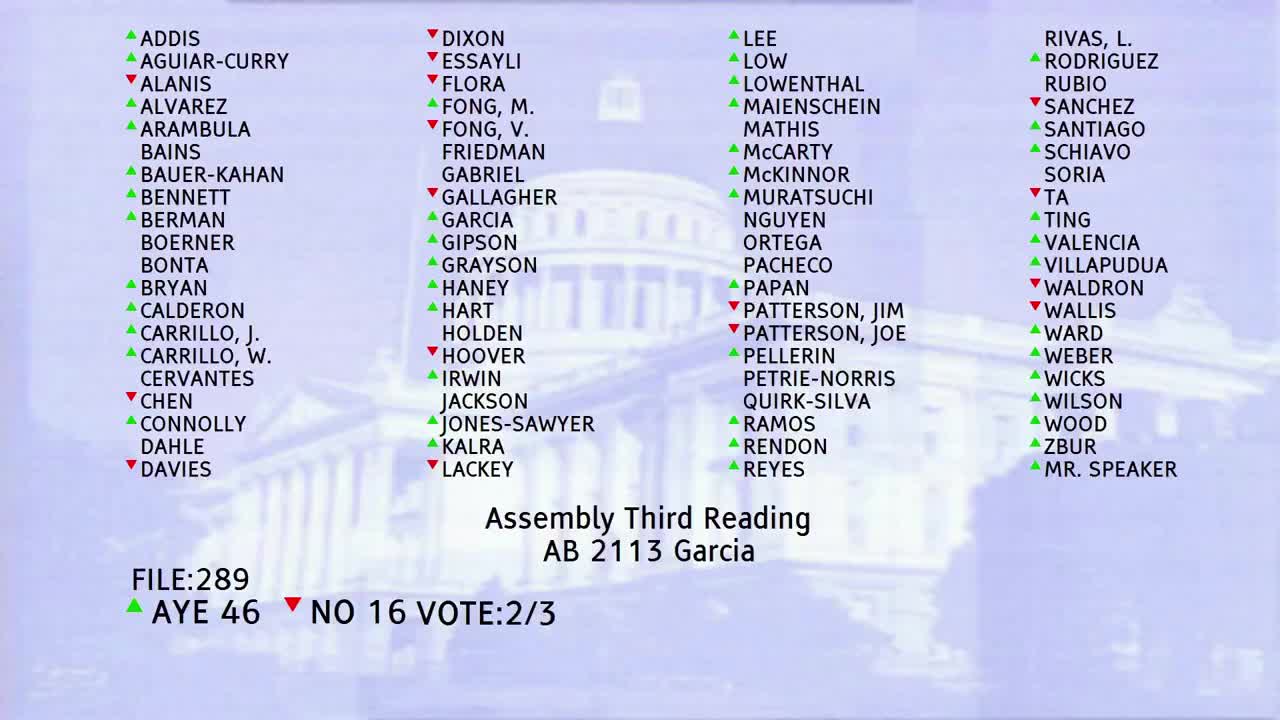
Bill Author

Bill Co-Author(s):