AB 2166: Barbering and cosmetology: hair types and textures.
- Session Year: 2023-2024
- House: Assembly
- Latest Version Date: 2024-09-22
Current Status:
Passed
(2024-09-22: Chaptered by Secretary of State - Chapter 384, Statutes of 2024.)
Introduced
In Committee
First Chamber
In Committee
Second Chamber
Enacted
(1)Existing law, the Barbering and Cosmetology Act, the violation of which is a crime, provides for the licensure and regulation of barbers and cosmetologists by the State Board of Barbering and Cosmetology in the Department of Consumer Affairs. Existing law requires the examination of applicants for a license issued by the board to consist of written tests to determine the applicants skill in, and knowledge of, the practice of the occupation for which a license is sought.
This bill would additionally require those written tests to determine the applicants skill in, and knowledge of, providing services to individuals with varying hair types and textures.
(2)Existing law requires a course in barbering or cosmetology to include, at a minimum, technical and practical instruction in specified areas, including instruction in chemical hair services and hairstyling services, as described. Existing law also requires a course in hairstyling, as provided, to include instruction in hairstyling services, as described.
This bill would additionally require instruction in chemical hair services and hairstyling services to include instruction in the provision of services to individuals with all hair types and textures, including, but not limited to, various curl or wave patterns, hair strand thicknesses, and volumes of hair. By expanding the crimes relating to violation of the Barbering and Cosmetology Act, this bill would impose a state-mandated local program.
(3)The California Constitution requires the state to reimburse local agencies and school districts for certain costs mandated by the state. Statutory provisions establish procedures for making that reimbursement.
This bill would provide that no reimbursement is required by this act for a specified reason.
(1)Existing law, the Barbering and Cosmetology Act, the violation of which is a crime, provides for the licensure and regulation of barbers and cosmetologists by the State Board of Barbering and Cosmetology in the Department of Consumer Affairs. Existing law requires the examination of applicants for a license issued by the board to consist of written tests to determine the applicants skill in, and knowledge of, the practice of the occupation for which a license is sought.
This bill would additionally require those written tests to determine the applicants skill in, and knowledge of, providing services to individuals with varying hair types and textures.
(2)Existing law requires a course in barbering or cosmetology to include, at a minimum, technical and practical instruction in specified areas, including instruction in chemical hair services and hairstyling services, as described. Existing law also requires a course in hairstyling, as provided, to include instruction in hairstyling services, as described.
This bill would additionally require that instruction in chemical hair services and hairstyling services to include instruction in the provision of services to individuals with all hair types and textures, including, but not limited to, various curl or wave patterns, hair strand thicknesses, and volumes of hair. By expanding the crimes relating to violation of the Barbering and Cosmetology Act, this bill would impose a state-mandated local program.
(3)The California Constitution requires the state to reimburse local agencies and school districts for certain costs mandated by the state. Statutory provisions establish procedures for making that reimbursement.
This bill would provide that no reimbursement is required by this act for a specified reason.
(a)The examination of applicants for a license shall consist of a written examination that evaluates competency in protecting the health and safety of consumers of the services provided by licensees.
(b)The examination shall include written tests to determine the applicants skill in, and knowledge of, the practice of the occupation for which a license is sought and shall include written tests in antisepsis, disinfection, and the use of mechanical apparatus and electricity as applicable to the practice for which the applicant has applied for licensure.
(c)The written tests, as specified in subdivision (b), shall determine the applicants skill in, and knowledge of, providing services to individuals with varying hair types and textures, as applicable to the practice for which the applicant has applied for licensure.
SEC. 2.Section 7362.5 of the Business and Professions Code is amended to read:7362.5.(a)A course in barbering or cosmetology established by a school shall consist of not less than 1,000 hours of practical and technical instruction in the practice of barbering or cosmetology, as defined in Section 7316.
(b)The curriculum for a barbering course shall, at a minimum, include technical and practical instruction in the following areas:
(1)One hundred hours in health and safety, which includes hazardous substances, chemical safety, safety data sheets, protection from hazardous chemicals, preventing chemical injuries, health and safety laws and regulations, and preventing communicable diseases.
(2)One hundred hours in disinfection and sanitation, which includes disinfection procedures to protect the health and safety of consumers as well as the technician and proper disinfection procedures for equipment used in establishments.
(3)(A)Two hundred hours in chemical hair services, which includes coloring, straightening, waving, bleaching, hair analysis, predisposition and strand tests, safety precautions, formula mixing, and the use of dye removers.
(B)Instruction in chemical hair services shall include instruction regarding the provision of services to individuals with all hair types and textures, including, but not limited to, various curl or wave patterns, hair strand thicknesses, and volumes of hair.
(4)(A)Two hundred hours in hairstyling services, which includes arranging, blow drying, cleansing, curling, dressing, hair analysis, shampooing, waving, and nonchemical straightening, and hair cutting, including the use of shears, razors, electrical clippers and trimmers, and thinning shears, for wet and dry cutting.
(B)Instruction in hairstyling services shall include instruction regarding the provision of services to individuals with all hair types and textures, including, but not limited to, various curl or wave patterns, hair strand thicknesses, and volumes of hair.
(5)Two hundred hours in shaving and trimming of the beard, which includes preparing the clients hair for shaving, assessing the condition of the clients skin, performing shaving techniques, applying aftershave antiseptic following facial services, and massaging the face and rolling cream massages.
(c)The curriculum for a cosmetology course shall, at a minimum, include technical and practical instruction in the following areas:
(1)One hundred hours in health and safety, which includes hazardous substances, chemical safety, safety data sheets, protection from hazardous chemicals, preventing chemical injuries, health and safety laws and regulations, and preventing communicable diseases.
(2)One hundred hours in disinfection and sanitation, which includes disinfection procedures to protect the health and safety of consumers as well as the technician and proper disinfection procedures for equipment used in establishments.
(3)(A)Two hundred hours in chemical hair services, which includes coloring, straightening, waving, bleaching, hair analysis, predisposition and strand tests, safety precautions, formula mixing, and the use of dye removers.
(B)Instruction in chemical hair services shall include instruction regarding the provision of services to individuals with all hair types and textures, including, but not limited to, various curl or wave patterns, hair strand thicknesses, and volumes of hair.
(4)(A)Two hundred hours in hairstyling services, which includes arranging, blow drying, cleansing, curling, dressing, hair analysis, shampooing, waving, and nonchemical straightening, and hair cutting, including the use of shears, razors, electrical clippers and trimmers, and thinning shears, for wet and dry cutting.
(B)Instruction in hairstyling services shall include instruction regarding the provision of services to individuals with all hair types and textures, including, but not limited to, various curl or wave patterns, hair strand thicknesses, and volumes of hair.
(5)One hundred fifty hours in skin care services, which includes chemical and manual facials and massaging, stimulating, exfoliating, cleansing, or beautifying the face, scalp, neck, or body by the use of hands, esthetic devices, cosmetic products, antiseptics, lotions, tonics, or creams that do not result in the ablation or destruction of the live tissue.
(6)Fifty hours in hair removal and lash and brow beautification, which includes tinting and perming eyelashes and brows and applying eyelashes to any person, and includes removing superfluous hair from the body of any person by use of depilatories, tweezers, sugaring, nonprescription chemicals, or waxing, or by the use of devices and appliances of any kind or description, except by the use of lasers or light waves, which are commonly known as rays.
(7)One hundred hours in manicure and pedicure, which includes water and oil manicures, hand and arm massage, foot and ankle massage, nail analysis, and artificial nail services, including, but not limited to, acrylic, liquid and powder brush-ons, dip, tips, wraps, and repairs.
SEC. 3.Section 7363 of the Business and Professions Code is amended to read:7363.(a)A course in hairstyling established by a school shall consist of not less than 600 hours of practical and technical instruction.
(b)The curriculum for a hairstyling course shall include, at a minimum, technical and practical instruction in the following areas:
(1)One hundred hours in health and safety, which includes hazardous substances, chemical safety, safety data sheets, protection from hazardous chemicals, preventing chemical injuries, health and safety laws and regulations, and preventing communicable diseases.
(2)One hundred hours in disinfection and sanitation, which includes disinfection procedures to protect the health and safety of consumers as well as the technician and proper disinfection procedures for equipment used in establishments.
(3)(A)Two hundred hours in hair styling services, which includes arranging, blow drying, cleansing, curling, dressing, hair analysis, shampooing, waving, and nonchemical straightening, and hair cutting including the use of shears, razors, electrical clippers and trimmers, and thinning shears, for wet and dry cutting.
(B)Instruction in hairstyling services shall include instruction regarding the provision of services to individuals with all hair types and textures, including, but not limited to, various curl or wave patterns, hair strand thicknesses, and volumes of hair.
SEC. 4.No reimbursement is required by this act pursuant to Section 6 of Article XIIIB of the California Constitution because the only costs that may be incurred by a local agency or school district will be incurred because this act creates a new crime or infraction, eliminates a crime or infraction, or changes the penalty for a crime or infraction, within the meaning of Section 17556 of the Government Code, or changes the definition of a crime within the meaning of Section 6 of Article XIIIB of the California Constitution.
|
Date
|
Status
|
|---|---|
| Sep 22, 2024 | Chaptered by Secretary of State - Chapter 384, Statutes of 2024. |
| Sep 22, 2024 | Approved by the Governor. |
| Aug 27, 2024 | Enrolled and presented to the Governor at 12 p.m. |
| Aug 20, 2024 | In Assembly. Ordered to Engrossing and Enrolling. |
| Aug 19, 2024 | Read third time. Passed. Ordered to the Assembly. (Ayes 40. Noes 0. Page 5206.). |
| Aug 6, 2024 | Read second time. Ordered to third reading. |
| Aug 5, 2024 | From committee: Be ordered to second reading pursuant to Senate Rule 28.8. |
| Jun 24, 2024 | From committee: Do pass and re-refer to Com. on APPR. (Ayes 12. Noes 0.) (June 24). Re-referred to Com. on APPR. |
| May 8, 2024 | Referred to Com. on B., P. & E. D. |
| Apr 25, 2024 | In Senate. Read first time. To Com. on RLS. for assignment. |
| Apr 25, 2024 | Read third time. Passed. Ordered to the Senate. (Ayes 75. Noes 0. Page 4997.) |
| Apr 18, 2024 | Read second time. Ordered to Consent Calendar. |
| Apr 17, 2024 | From committee: Do pass. To Consent Calendar. (Ayes 15. Noes 0.) (April 17). |
| Apr 9, 2024 | From committee: Do pass and re-refer to Com. on APPR. with recommendation: To Consent Calendar. (Ayes 18. Noes 0.) (April 9). Re-referred to Com. on APPR. |
| Feb 20, 2024 | Referred to Com. on B. & P. |
| Feb 7, 2024 | From printer. May be heard in committee March 8. |
| Feb 6, 2024 | Read first time. To print. |
|
Date
|
Description
|
Location
|
Votes
|
|
|---|---|---|---|---|
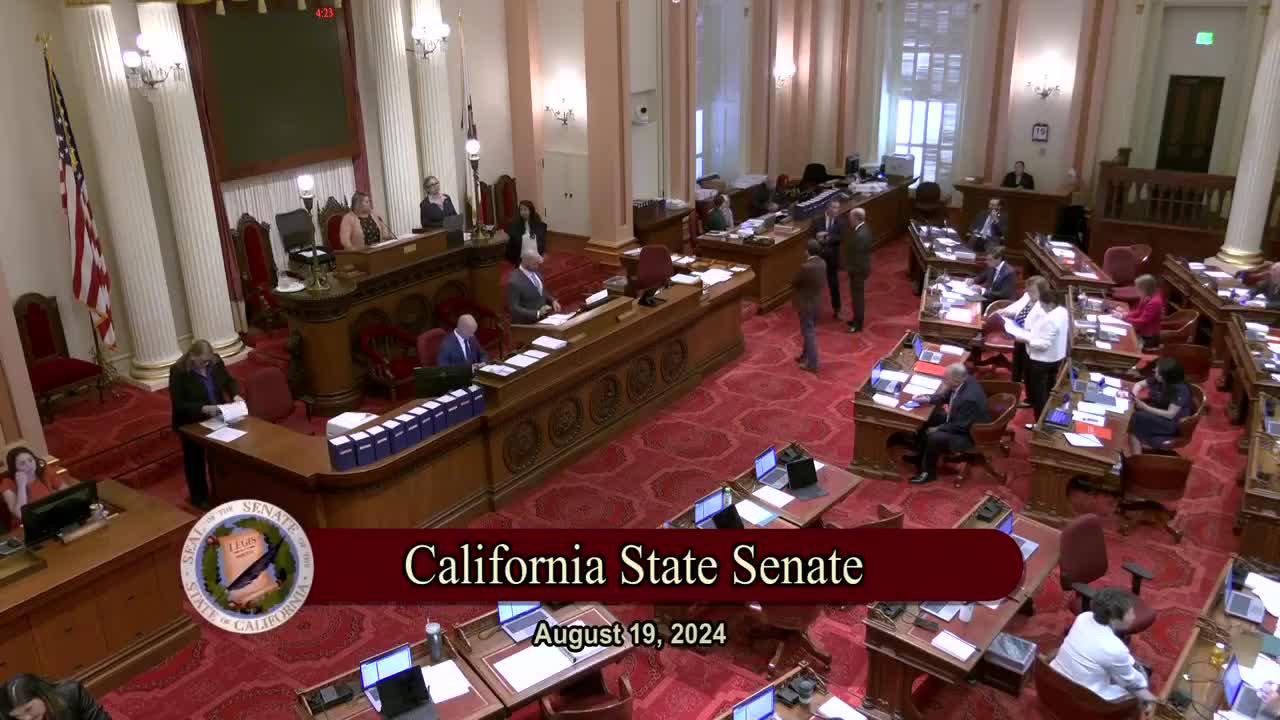
| Aug 19, 2024 | Assembly 3rd Reading AB2166 Weber By Smallwood-Cuevas | Senate Floor |
Passed |
|
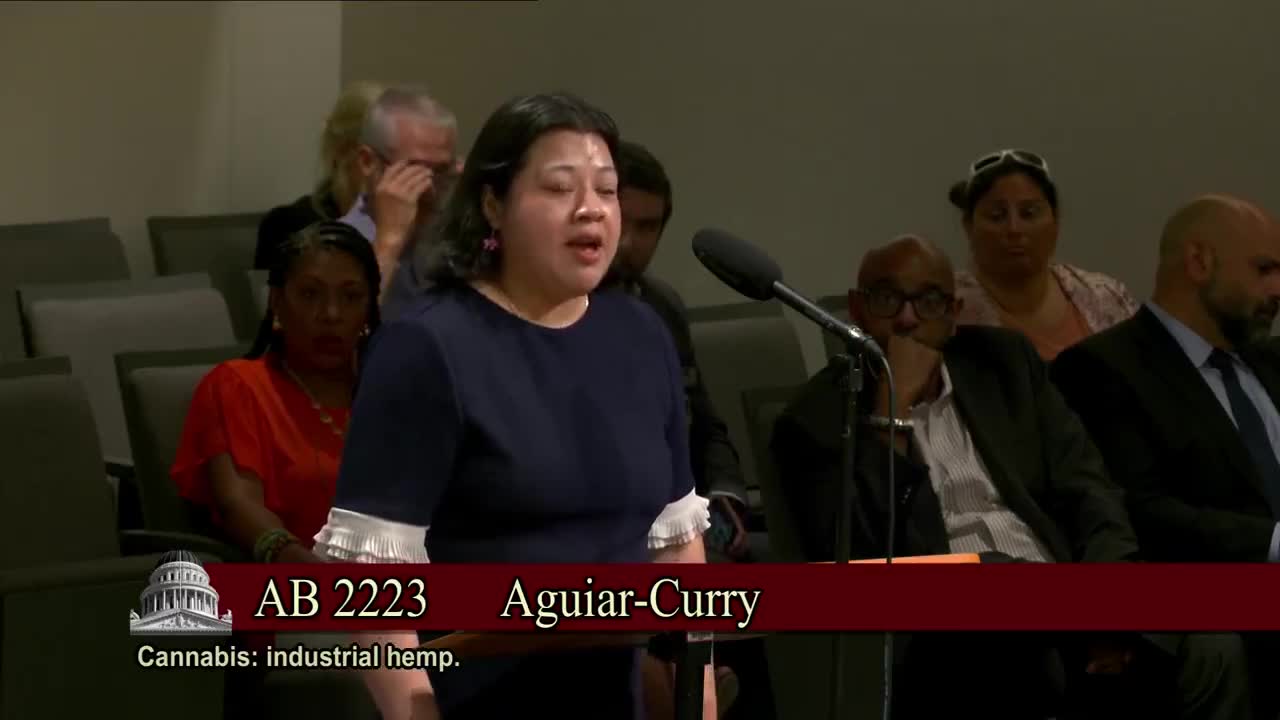
| Jun 24, 2024 | Do pass, but first be re-referred to the Committee on [Appropriations] | Senate Standing Committee on Business, Professions and Economic Development |
Passed |
|
| Apr 25, 2024 | AB 2166 Weber Consent Calendar Second Day Regular Session | Assembly Floor |
Passed |
|
| Apr 17, 2024 | Do pass. To Consent Calendar. | Assembly Standing Committee on Appropriations |
Passed |
|
| Apr 9, 2024 | Do pass and be re-referred to the Committee on [Appropriations] with recommendation: To Consent Calendar | Assembly Standing Committee on Business and Professions |
Passed |
This list shows positions taken on this bill by organizations on the date displayed, which is linked to the original source.
Positions by individuals are not included.
|
Organization
|
Position
|
Date
|
|---|---|---|
| Aveda | ** Support | |
| Aveda Arts and Sciences Institute | ** Support | |
| Conference of California Bar Associations | ** Support | |
| Department of Consumer Affairs, Board of Barbering and Cosmetology | ** Support | |
| Estee Lauder Inc | ** Support | Jun 25, 2024 |
| Estee Lauder Inc | * Support | Jun 24, 2024 |
| Henkel | ** Support | |
| Henkel Corporation | ** Support | |
| L'oreal | * Support | Jun 24, 2024 |
| L'Oréal USA | ** Support | |
| L’Oréal USA | ** Support | |
| Personal Care Products Council | ** Support | |
| Professional Beauty Association | ** Support | |
| Texture Education Collective | ** Support |
SENATE RULES COMMITTEE Office of Senate Floor Analyses (916) 651-1520 Fax: (916) 327-4478 | AB 2166 |
THIRD READING
Bill No: AB 2166
Author: Weber (D)
Introduced: 2/6/24
Vote: 21
SENATE BUS., PROF. & ECON. DEV. COMMITTEE: 12-0, 6/24/24
AYES: Ashby, Nguyen, Alvarado-Gil, Archuleta, Becker, Dodd, Eggman, Glazer, Menjivar, Niello, Smallwood-Cuevas, Wilk
NO VOTE RECORDED: Roth
SENATE APPROPRIATIONS COMMITTEE: Senate Rule 28.8
ASSEMBLY FLOOR: 75-0, 4/25/24 (Consent) - See last page for vote
SUBJECT: Barbering and cosmetology: hair types and textures
SOURCE: Professional Beauty Association
DIGEST:
This bill updates barbering, cosmetology, and hairstyling instruction in chemical and hairstyling services to include instruction on providing services to individuals with all hair types and textures, including, but not limited to, various curl or wave patterns, hair strand thicknesses, and volumes of hair. Specifies that written tests for licensure must determine an applicant’s skill in, and knowledge of, providing services to individuals with varying hair types and textures.
ANALYSIS:
Existing law:
- Establishes the Board of Barbering and Cosmetology (BBC), until January 1, 2027, responsible for administering the Barbering and Cosmetology Act and regulating specified practices through the licensure of barbers, cosmetologists, hairstylists, electrologists, manicurists, and estheticians and oversight of establishments. (Business and Professions Code (BPC) § 7301 et. seq.)
- Defines the practice of barbering as all or any combination of certain beautification practices (other than selling, fitting, or styling wigs or hairpieces; natural hair braiding or; threading) including: shaving or trimming beards or cutting hair; giving facial and scalp massages or treatments with oils, creams, lotions, or other preparations either by hand or mechanical appliances; singeing, shampooing, arranging, dressing, curling, waving, chemical waving, hair relaxing, or dyeing the hair or applying hair tonics; applying cosmetic preparations, antiseptics, powders, oils, clays, or lotions to the scalp, face, or neck and; hairstyling. Hairstyling of all textures of hair by standard methods that are current at the time of the hairstyling. (BPC § 7316(a))
- Defines the practice of cosmetology as all or any combination of certain beautification practices (other than selling, fitting, or styling wigs or hairpieces; natural hair braiding or; threading) including: arranging, dressing, curling, waving, machine-less permanent waving, permanent waving, cleansing, cutting, shampooing, relaxing, singeing, bleaching, tinting, coloring, straightening, dyeing, applying hair tonics to, beautifying, or otherwise treating hair; massaging, cleaning, or stimulating the scalp, face, neck, arms, or upper part of the human body with hands, devices, apparatus or appliances, with or without the use of cosmetic preparations, antiseptics, tonics, lotions, or creams; beautifying the face, neck, arms, or upper part of the human body by use of cosmetic preparations, antiseptics, tonics, lotions, or creams; removing superfluous hair from a person by using depilatories or tweezers, chemicals, preparations, devices, or appliances; cutting, trimming, polishing, tinting, coloring, cleansing, or manicuring a person’s nails; massaging, cleansing, treating, or beautifying a person’s hands or feet; and tinting and perming of the eyelashes and brows, or applying eyelashes to any person. (BPC § 7316(b))
- Defines the practice of hairstyling as all or any combination of the following:
- Styling of all textures of hair by standard methods that are current at the time of the hairstyling.
- Arranging, blow drying, cleansing, curling, cutting, dressing, extending, shampooing, waving, or nonchemically straightening the hair of any person using both electrical and nonelectrical devices. (BPC § 7316(h))
- Defines natural hair braiding as a service that results in tension on hair strands or roots by twisting, wrapping, weaving, extending, locking, or braiding by hand or mechanical device, provided that the service does not include haircutting or the application of dyes, reactive chemicals, or other preparations to alter the color of the hair or to straighten, curl, or alter the structure of the hair. (BPC § 7316 (e)(2))
- Requires a person who engages in natural hairstyling, defined as providing natural hair braiding services together with any of the services or procedures within the regulated practices of barbering or cosmetology, to obtain and maintain a barbering or cosmetology license as applicable to the services. (BPC § 7316(f))
- Defines “establishment” as any premises where regulated beautification services are practiced, including any premises in which natural hair styling is practiced for compensation. (BPC § 7346)
- Provides that the examination of applicants for a license under the BBC shall include written tests to determine the applicant’s skill in, and knowledge of, the practice of the occupation for which a license is sought. (BPC § 7338)
- Requires courses in barbering and courses in cosmetology to consist of not less than 1,000 hours of practical and technical instruction, with specific numbers of hours required for various areas of instruction. (BPC § 7362.5)
- Requires courses in hairstyling to consist of not less than 600 hours of practical and technical instruction, with specific numbers of hours required for various areas of instruction. (BPC § 7363)
- This bill:
- Requires, for courses in barbering, cosmetology, and hairstyling, that instruction in chemical hair services and hairstyling services include the provision of services to individuals with all hair types and textures, including, but not limited to, various curl or wave patterns, hair strand thicknesses, and volumes of hair.
- Provides that the written tests within examinations for licensure under the BBC shall determine the applicant’s skill in, and knowledge of, providing services to individuals with varying hair types and textures, as applicable to the practice for which the applicant has applied for licensure.
- BBC is responsible for licensing and regulating barbers, cosmetologists, hairstylists, estheticians, electrologists, manicurists, apprentices and establishments. BBC is an autonomous regulatory entity supported by licensing fees, with full policy and enforcement authority over the practices of hair, skin and nail care, and electrolysis in the state. The Act provides exemptions for: those involved in the health care field who, within their own scope of practice, may perform particular procedures which would constitute the practice of barbering or cosmetology; commissioned officers in the military service, or their attendants, when engaged in the actual performance of their official duties; persons employed in the movie, television, theatrical, or radio business; persons selling or demonstrating certain products. BBC is one of the largest boards in the country, with over 615,000 licensees. Annually, BBC issues approximately 261,000 licenses (initial and renewal licenses). Each profession has its own scope of practice, entry-level requirements, and professional settings, with some overlap in areas.
Background
The Act also requires individuals performing barbering or cosmetology to only provide those services in a BBC-licensed establishment, or outside of an establishment in accordance with BBC regulations which specify requirements one must meet in order to obtain a personal services permit. In addition to the exemptions for selling, fitting, or styling wigs or hairpieces; natural hair braiding; or threading, the law authorizes a licensed individual to provide beautification services outside of a licensed establishment or mobile unit, when necessary, due to illness or other physical incapacitation, such as in convalescent homes. These services, however, must be obtained from an individual who is employed by a licensed-establishment.
Notably, the Act exempts a number of individuals from having to meet the same requirements as licensees, despite being authorized to provide many of the same beautification services that require licensure. Business and Professions Code Section 7319 does not require individuals licensed to practice medicine, surgery, dentistry, pharmacy, osteopathic medicine, chiropractic, naturopathy, podiatry, or nursing, acting within the scope of practice for which they are licensed, to become licensed by BBC. Commissioned officers of the United States Army, Navy, Air Force, Marine Corps, members of the United States Public Health Service, and attendants attached to those services when engaged in the actual performance of their official duties are also exempt. Significantly, the Act exempts “persons employed to render barbering, cosmetology, or electrolysis services in the course of and incidental to the business of employers engaged in the theatrical, radio, television or motion picture production industry.” These individuals do not attend school and, despite having decades of experience, are not authorized for licensure if they provide beautification services outside the industry or after they leave the industry and wish to provide services elsewhere. Individuals are also exempt for licensure if they engage in beautification services within a particular practice but if they do so outside of a licensed establishment and without compensation. The Act also exempts individuals “engaged in the administration of hair, skin, or nail products for the exclusive purpose of recommending, demonstrating, or selling those products”, which in essence provides a pathway for an individual to apply makeup at a retail store, after receiving industry or manufacturer training, but that same experienced person is deemed unsafe to provide the same services on their own unless they attend school and become licensed.
The BBC does not require any proof of actual practical operations performed but rather only requires an individual to provide proof that they completed a certain number of hours. Significantly, in California, a review of the total number of hours an individual must complete in a particular topic for cosmetology training, compared with the minimum number of required hours, highlighted a major difference that continued to raise the question as to why a higher number of mandated educational hours remained the standard in this state. At the time of its sunset review oversight in 2020-2021, BBC stated that “the Committees may wish to decrease the amount of hours required for licensure in order to allow individuals a swifter path to completing necessary curriculum that will lead to safe beautification services practice.”
SB 803 (Roth, Chapter 648, Statutes of 2021) established a number of reforms to the Act and significant updates stemming from the sunset review oversight efforts for BBC and based on years-long discussions about various topics within BBC’s purview. Significantly SB 803 updated the number of hours of prelicensure education required, from a former 1,600-hour mandate for cosmetology licensure, to now 1,000 hours. SB 803 also increased the number of hours of health and safety curriculum an applicant must complete, from a previous only 65 hours outlined in regulations to 100 hours specified in the bill in order to protect licensees and consumers and promote public safety through knowledge in topics like hazardous substances, chemicals and health in establishments, health and safety laws and agencies, bacteriology and preventing communicable diseases, disinfection, and sanitation.
The prelicensure education hours in particular have been a discussion point for the Legislature for many years. During the 2012-13 sunset review oversight, Committee staff raised the issue of appropriate licensing categories, noting the need for BBC to evaluate adding specialized certificates or licensure in certain practices. The review asked whether many of the beautification services offered by BBC licensees require the mandatory schooling and training hours necessary for a cosmetologist or esthetician, and noted that while there may be significant health concerns related to some practices, there may also not be a need for an individual performing specialized services to invest in a whole training program. The review found that training for many of the beautification services provided by BBC licensees is provided directly from manufacturers and likely not even reflected in BBC-approved curriculum and at BBC-approved schools.
An informal survey conducted by a licensed establishment owner found that most licensees indicated they had a lot of down time, sat around and didn’t do anything, noted that working once licensed provided skills and knowledge never gained in school, and that hundreds of hours were wasted learning outdated techniques that are never utilized in day-day to practice.
In recent years, a number of states have decreased the number of hours required for licensure. Vermont and Texas require 1,000 hours. Rhode Island went even further and reduced the requirement for a cosmetology license from 1,500 to 600; the requirement for a manicurist license from 300 to 200; the requirement for an esthetics license from 600 to 300; and the requirement for a barbering license from 1500 to 600. Other states like New York have long had lower requirements than 1,600-hours.
Comments
Bellus Academy writes, “We support your desire to add textured curriculum into the Cosmetology and Barbering program, yet we strongly request that you amend your bill to include an increase in hours for both programs at minimum to 1200 hours, even though we would prefer to have the Cosmetology program at 1500 hours and the Barbering program at 1200 hours. In addition, we would like to request that you amend your bill to include a requirement that all schools have a practical final exam as part of their curriculum to test their students prior to providing them with their transcript to sit for the written exam.”
The Professional Beauty Federation of California also requests that the expanded curriculum be done in conjunction with raising the minimum threshold of educational hours from 1000 to 1200 in barbering and 1500 in cosmetology.
FISCAL EFFECT: Appropriation: No Fiscal Com.: Yes Local: Yes
SUPPORT: (Verified 8/5/24)
Professional Beauty Association (source)
Aveda
Conference of California Bar Associations
Department of Consumer Affairs, Board of Barbering and Cosmetology
Henkel Corporation
L’Oréal USA
Personal Care Products Council
OPPOSITION: (Verified 8/5/24)
None received
ARGUMENTS IN SUPPORT: The Professional Beauty Association, Henkel Corporation, L’Oréal, and Aveda write that “An estimated 65% of the US population have curly, coily, or wavy hair, (TextureTrends Report, Naturally Curly, 2018). Yet, California licensing authorities do not require substantive training and competency for styling textured hair. As of today, it is possible for students attending schools of cosmetology or natural hair styling to complete training programs without a full understanding of how to maintain, treat and style a diverse range of hair textures - including curly, coily, wavy and thick hair. This institutionalized gap in knowledge can result in damage to the hair of clients from varying cultural and ethnic backgrounds, as well as such individuals being unable to obtain appropriate services from their stylists. The absence of inclusive hair education not only perpetuates narrow beauty standards, but also has practical implications for professionals and for the beauty industry as a whole.”
The Personal Care Products Council notes that they appreciate California’s commitment to diversity in professional education by including all hair textures and hair types.
ASSEMBLY FLOOR: 75-0, 4/25/24
AYES: Addis, Aguiar-Curry, Alanis, Alvarez, Arambula, Bains, Bauer-Kahan, Bennett, Berman, Bonta, Bryan, Calderon, Juan Carrillo, Wendy Carrillo, Cervantes, Chen, Connolly, Davies, Dixon, Essayli, Flora, Mike Fong, Vince Fong, Friedman, Gabriel, Garcia, Gipson, Grayson, Haney, Holden, Hoover, Irwin, Jackson, Jones-Sawyer, Kalra, Lackey, Lee, Low, Lowenthal, Maienschein, McCarty, McKinnor, Muratsuchi, Stephanie Nguyen, Ortega, Pacheco, Papan, Jim Patterson, Joe Patterson, Pellerin, Petrie-Norris, Quirk-Silva, Ramos, Rendon, Reyes, Luz Rivas, Rodriguez, Blanca Rubio, Sanchez, Santiago, Schiavo, Soria, Ta, Ting, Valencia, Villapudua, Waldron, Wallis, Ward, Weber, Wicks, Wilson, Wood, Zbur, Robert Rivas
NO VOTE RECORDED: Boerner, Megan Dahle, Gallagher, Hart, Mathis
Prepared by: Sarah Mason / B., P. & E.D. /
8/6/24 16:10:48
**** END ****
SENATE COMMITTEE ON
BUSINESS, PROFESSIONS AND ECONOMIC DEVELOPMENT
Senator Angelique Ashby, Chair
2023 - 2024 Regular
Bill No: AB 2166 Hearing Date: June 24, 2024
Author: | Weber | ||
Version: |
| ||
Urgency: | Fiscal: | ||
Consultant: | |||
Subject: Barbering and cosmetology: hair types and textures
SUMMARY:
Updates barbering, cosmetology, and hairstyling instruction in chemical and hairstyling services to include instruction on providing services to individuals with all hair types and textures, including, but not limited to, various curl or wave patterns, hair strand thicknesses, and volumes of hair. Specifies that written tests for licensure must determine an applicant’s skill in, and knowledge of, providing services to individuals with varying hair types and textures.
Existing law:
- Establishes the Board of Barbering and Cosmetology (BBC), until January 1, 2027, responsible for administering the Barbering and Cosmetology Act and regulating specified practices through the licensure of barbers, cosmetologists, hairstylists, electrologists, manicurists, and estheticians and oversight of establishments. (Business and Professions Code (BPC) § 7301 et. seq.)
- Defines the practice of barbering as all or any combination of certain beautification practices (other than selling, fitting, or styling wigs or hairpieces; natural hair braiding or; threading) including: shaving or trimming beards or cutting hair; giving facial and scalp massages or treatments with oils, creams, lotions, or other preparations either by hand or mechanical appliances; singeing, shampooing, arranging, dressing, curling, waving, chemical waving, hair relaxing, or dyeing the hair or applying hair tonics; applying cosmetic preparations, antiseptics, powders, oils, clays, or lotions to the scalp, face, or neck and; hairstyling. Hairstyling of all textures of hair by standard methods that are current at the time of the hairstyling. (BPC § 7316(a))
- Defines the practice of cosmetology as all or any combination of certain beautification practices (other than selling, fitting, or styling wigs or hairpieces; natural hair braiding or; threading) including: arranging, dressing, curling, waving, machine-less permanent waving, permanent waving, cleansing, cutting, shampooing, relaxing, singeing, bleaching, tinting, coloring, straightening, dyeing, applying hair tonics to, beautifying, or otherwise treating hair; massaging, cleaning, or stimulating the scalp, face, neck, arms, or upper part of the human body with hands, devices, apparatus or appliances, with or without the use of cosmetic preparations, antiseptics, tonics, lotions, or creams; beautifying the face, neck, arms, or upper part of the human body by use of cosmetic preparations, antiseptics, tonics, lotions, or creams; removing superfluous hair from a person by using depilatories or tweezers, chemicals, preparations, devices, or appliances; cutting, trimming, polishing, tinting, coloring, cleansing, or manicuring a person’s nails; massaging, cleansing, treating, or beautifying a person’s hands or feet; and tinting and perming of the eyelashes and brows, or applying eyelashes to any person. (BPC § 7316(b))
- Defines the practice of hairstyling as all or any combination of the following:
- Styling of all textures of hair by standard methods that are current at the time of the hairstyling.
- Arranging, blow drying, cleansing, curling, cutting, dressing, extending, shampooing, waving, or nonchemically straightening the hair of any person using both electrical and nonelectrical devices. (BPC § 7316(h))
- Defines natural hair braiding as a service that results in tension on hair strands or roots by twisting, wrapping, weaving, extending, locking, or braiding by hand or mechanical device, provided that the service does not include haircutting or the application of dyes, reactive chemicals, or other preparations to alter the color of the hair or to straighten, curl, or alter the structure of the hair. (BPC § 7316 (e)(2))
- Requires a person who engages in natural hairstyling, defined as providing natural hair braiding services together with any of the services or procedures within the regulated practices of barbering or cosmetology, to obtain and maintain a barbering or cosmetology license as applicable to the services. (BPC § 7316(f))
- Defines “establishment” as any premises where regulated beautification services are practiced, including any premises in which natural hair styling is practiced for compensation. (BPC § 7346)
- Provides that the examination of applicants for a license under the BBC shall include written tests to determine the applicant’s skill in, and knowledge of, the practice of the occupation for which a license is sought. (BPC § 7338)
- Requires courses in barbering and courses in cosmetology to consist of not less than 1,000 hours of practical and technical instruction, with specific numbers of hours required for various areas of instruction. (BPC § 7362.5)
- Requires courses in hairstyling to consist of not less than 600 hours of practical and technical instruction, with specific numbers of hours required for various areas of instruction. (BPC § 7363)
This bill:
- Requires, for courses in barbering, cosmetology, and hairstyling, that instruction in chemical hair services and hairstyling services include the provision of services to individuals with all hair types and textures, including, but not limited to, various curl or wave patterns, hair strand thicknesses, and volumes of hair.
- Provides that the written tests within examinations for licensure under the BBC shall determine the applicant’s skill in, and knowledge of, providing services to individuals with varying hair types and textures, as applicable to the practice for which the applicant has applied for licensure.
FISCAL EFFECT:
This bill is keyed fiscal by Legislative Counsel. According to the Assembly Committee on Appropriations, the bill will not result in state costs.
COMMENTS:
- Purpose. This bill is sponsored by the Professional Beauty Association. According to the Author, “existing law does not include a requirement for cosmetology and barbering schools to include instruction and testing on every hair type, texture, thickness, and curl pattern. Including textured hair in the cosmetology curriculum and state board exams in California will further inclusivity and empower hair professionals with the knowledge and skills needed to serve all consumers, regardless of hair type.”
- Background. BBC is responsible for licensing and regulating barbers, cosmetologists, hairstylists, estheticians, electrologists, manicurists, apprentices and establishments. BBC is an autonomous regulatory entity supported by licensing fees, with full policy and enforcement authority over the practices of hair, skin and nail care, and electrolysis in the state. The Act provides exemptions for: those involved in the health care field who, within their own scope of practice, may perform particular procedures which would constitute the practice of barbering or cosmetology; commissioned officers in the military service, or their attendants, when engaged in the actual performance of their official duties; persons employed in the movie, television, theatrical, or radio business; persons selling or demonstrating certain products. BBC is one of the largest boards in the country, with over 615,000 licensees. Annually, BBC issues approximately 261,000 licenses (initial and renewal licenses). Each profession has its own scope of practice, entry-level requirements, and professional settings, with some overlap in areas.
The Act also requires individuals performing barbering or cosmetology to only provide those services in a BBC-licensed establishment, or outside of an establishment in accordance with BBC regulations which specify requirements one must meet in order to obtain a personal services permit. In addition to the exemptions for selling, fitting, or styling wigs or hairpieces; natural hair braiding; or threading, the law authorizes a licensed individual to provide beautification services outside of a licensed establishment or mobile unit, when necessary, due to illness or other physical incapacitation, such as in convalescent homes. These services, however, must be obtained from an individual who is employed by a licensed-establishment.
Notably, the Act exempts a number of individuals from having to meet the same requirements as licensees, despite being authorized to provide many of the same beautification services that require licensure. BPC Section 7319 does not require individuals licensed to practice medicine, surgery, dentistry, pharmacy, osteopathic medicine, chiropractic, naturopathy, podiatry, or nursing, acting within the scope of practice for which they are licensed, to become licensed by BBC. Commissioned officers of the United States Army, Navy, Air Force, Marine Corps, members of the United States Public Health Service, and attendants attached to those services when engaged in the actual performance of their official duties are also exempt. Significantly, the Act exempts “persons employed to render barbering, cosmetology, or electrolysis services in the course of and incidental to the business of employers engaged in the theatrical, radio, television or motion picture production industry.” These individuals do not attend school and, despite having decades of experience, are not authorized for licensure if they provide beautification services outside the industry or after they leave the industry and wish to provide services elsewhere. Individuals are also exempt for licensure if they engage in beautification services within a particular practice but if they do so outside of a licensed establishment and without compensation. The Act also exempts individuals “engaged in the administration of hair, skin, or nail products for the exclusive purpose of recommending, demonstrating, or selling those products”, which in essence provides a pathway for an individual to apply makeup at a retail store, after receiving industry or manufacturer training, but that same experienced person is deemed unsafe to provide the same services on their own unless they attend school and become licensed.
The BBC does not require any proof of actual practical operations performed but rather only requires an individual to provide proof that they completed a certain number of hours. Significantly, in California, a review of the total number of hours an individual must complete in a particular topic for cosmetology training, compared with the minimum number of required hours, highlighted a major difference that continued to raise the question as to why a higher number of mandated educational hours remained the standard in this state. At the time of its sunset review oversight in 2020-2021, BBC stated that “the Committees may wish to decrease the amount of hours required for licensure in order to allow individuals a swifter path to completing necessary curriculum that will lead to safe beautification services practice.”
SB 803 (Roth, Chapter 648, Statutes of 2021) established a number of reforms to the Act and significant updates stemming from the sunset review oversight efforts for BBC and based on years-long discussions about various topics within BBC’s purview. Significantly SB 803 updated the number of hours of prelicensure education required, from a former 1,600-hour mandate for cosmetology licensure, to now 1,000 hours. SB 803 also increased the number of hours of health and safety curriculum an applicant must complete, from a previous only 65 hours outlined in regulations to 100 hours specified in the bill in order to protect licensees and consumers and promote public safety through knowledge in topics like hazardous substances, chemicals and health in establishments, health and safety laws and agencies, bacteriology and preventing communicable diseases, disinfection, and sanitation.
The prelicensure education hours in particular have been a discussion point for the Legislature for many years. During the 2012-13 sunset review oversight, Committee staff raised the issue of appropriate licensing categories, noting the need for BBC to evaluate adding specialized certificates or licensure in certain practices. The review asked whether many of the beautification services offered by BBC licensees require the mandatory schooling and training hours necessary for a cosmetologist or esthetician, and noted that while there may be significant health concerns related to some practices, there may also not be a need for an individual performing specialized services to invest in a whole training program. The review found that training for many of the beautification services provided by BBC licensees is provided directly from manufacturers and likely not even reflected in BBC-approved curriculum and at BBC-approved schools.
An informal survey conducted by a licensed establishment owner found that most licensees indicated they had a lot of down time, sat around and didn’t do anything, noted that working once licensed provided skills and knowledge never gained in school, and that hundreds of hours were wasted learning outdated techniques that are never utilized in day-day to practice.
In recent years, a number of states have decreased the number of hours required for licensure. Vermont and Texas require 1,000 hours. Rhode Island went even further and reduced the requirement for a cosmetology license from 1,500 to 600; the requirement for a manicurist license from 300 to 200; the requirement for an esthetics license from 600 to 300; and the requirement for a barbering license from 1500 to 600. Other states like New York have long had lower requirements than 1,600-hours.
- Arguments in Support. The Professional Beauty Association, Henkel Corporation, L’Oréal, and Aveda write that “An estimated 65% of the US population have curly, coily, or wavy hair, (TextureTrends Report, Naturally Curly, 2018). Yet, California licensing authorities do not require substantive training and competency for styling textured hair. As of today, it is possible for students attending schools of cosmetology or natural hair styling to complete training programs without a full understanding of how to maintain, treat and style a diverse range of hair textures - including curly, coily, wavy and thick hair. This institutionalized gap in knowledge can result in damage to the hair of clients from varying cultural and ethnic backgrounds, as well as such individuals being unable to obtain appropriate services from their stylists. The absence of inclusive hair education not only perpetuates narrow beauty standards, but also has practical implications for professionals and for the beauty industry as a whole.”
The Personal Care Products Council notes that they appreciate California’s commitment to diversity in professional education by including all hair textures and hair types.
- Comments. Bellus Academy writes “We support your desire to add textured curriculum into the Cosmetology and Barbering program, yet we strongly request that you amend your bill to include an increase in hours for both programs at minimum to 1200 hours, even though we would prefer to have the Cosmetology program at 1500 hours and the Barbering program at 1200 hours. In addition, we would like to request that you amend your bill to include a requirement that all schools have a practical final exam as part of their curriculum to test their students prior to providing them with their transcript to sit for the written exam.”
The Professional Beauty Federation of California also requests that the expanded curriculum be done in conjunction with raising the minimum threshold of educational hours from 1000 to 1200 in barbering and 1500 in cosmetology.
SUPPORT AND OPPOSITION:
Support:
Aveda
Conference of California Bar Associations
Department of Consumer Affairs, Board of Barbering and Cosmetology
Henkel Corporation
L’Oréal USA
Personal Care Products Council
Professional Beauty Association
Opposition:
None received
-- END --
Date of Hearing: April 17, 2024
ASSEMBLY COMMITTEE ON APPROPRIATIONS
Buffy Wicks, Chair
ABPCA Bill Id:AB 2166
Author:(Weber) – As Introduced Ver:February 6, 2024
Policy Committee: | Business and Professions | Vote: | 18 - 0 |
|
| ||
|
|
Urgency: No State Mandated Local Program: Yes Reimbursable: No
SUMMARY:
This bill updates existing prelicensure education and examination requirements for license applicants under the State Board of Barbering and Cosmetology (BBC) to include instruction and testing on the provision of services to individuals with all hair types and textures.
Specifically, this bill:
- Requires, for courses in barbering, cosmetology, and hairstyling, instruction in chemical hair services and hairstyling services include the provision of services to individuals with all hair types and textures, including, but not limited to, various curl or wave patterns, hair strand thicknesses, and volumes of hair.
- Requires the written tests within examinations for licensure under the BBC to determine the applicant’s skill in, and knowledge of, providing services to individuals with varying hair types and textures, as applicable to the practice for which the applicant has applied for licensure.
FISCAL EFFECT:
No state costs. The BBC indicates the changes in this bill do not impact the board’s education reporting process.
COMMENTS:
- Purpose. According to the author:
[This bill] ensures that beauty professionals in California receive training and testing for coiled, curly, and wavy hair. This policy would apply to cosmetologists, including hairstylists, beauticians, barbers, and hair braiders. Including textured hair in the cosmetology curriculum and state board exams in California will further inclusivity and empower hair professionals with the knowledge and skills needed to serve all consumers, regardless of hair type.
- Background. The BBC, within the Department of Consumer Affairs, is responsible for licensing and regulating barbers, cosmetologists, hairstylists, estheticians, electrologists, manicurists, apprentices, and establishments. The BBC oversees more than 615,000 licensees. Recent data shows the BBC annually issues approximately 261,000 licenses (initial and renewal licenses) and administers approximately 28,000 written examinations (initial and retake examinees).
According to the Assembly Business and Professions Committee analysis, California has historically led in discussions around the significance of hair textures and styles in efforts to support equity and inclusion. In 2019, the Legislature enacted Senate Bill 188, authored by Senator Holly Mitchell. This landmark legislation is formally titled the CROWN Act—an acronym for “Creating a Respectful and Open World for Natural Hair.” The CROWN Act was the catalyst of a national movement to establish clear legal protections against discrimination based on traits historically associated with race, including, but not limited to, hair texture and protective hairstyles.
Research supporting the passage of CROWN Acts across the country highlights the significant prejudices people of color face based on their hairstyle. The 2023 CROWN Workplace Research Study detailed “the systemic social and economic impact of hair bias and discrimination against Black women in the workplace.”
In addition, according to research provided by the author, an estimated 65% of the US population have coiled, curly, or wavy hair. These consumers appear to be challenged with a lack of access to professionals who are competent to provide them with services designed to accommodate their hair types, and face higher costs for those services when they are obtained.
This bill requires, within existing instruction in barbering, cosmetology, and hairstyling, courses relating to chemical hair services and hairstyling services to include instruction on services to individuals with all hair types and textures. This bill also requires those components be included in written tests required for licensure.
Analysis Prepared by: Jennifer Swenson / APPR. / (916) 319-2081
Date of Hearing: April 9, 2024
ASSEMBLY COMMITTEE ON BUSINESS AND PROFESSIONS
Marc Berman, Chair
ABPCA Bill Id:AB 2166
Author:(Weber) – As Introduced Ver:February 6, 2024
SUBJECT: Barbering and cosmetology: hair types and textures.
SUMMARY: Updates existing prelicensure education and examination requirements for license applicants under the State Board of Barbering and Cosmetology (BBC) to include instruction and testing on the provision of services to individuals with all hair types and textures.
EXISTING LAW:
- Establishes the BBC within the Department of Consumer Affairs to license and regulate barbers, cosmetologists, hairstylists, electrologists, estheticians, and manicurists pursuant to the Barbering and Cosmetology Act. (Business and Professions Code (BPC) §§ 7301 et seq.)
- Defines the practice of barbering as all or any combination of the following:
- Shaving or trimming the beard or cutting the hair.
- Giving facial and scalp massages or treatments with oils, creams, lotions, or other preparations either by hand or mechanical appliances.
- Singeing, shampooing, arranging, dressing, curling, waving, chemical waving, hair relaxing, or dyeing the hair or applying hair tonics.
- Applying cosmetic preparations, antiseptics, powders, oils, clays, or lotions to scalp, face, or neck.
- Hairstyling of all textures of hair by standard methods that are current at the time of the hairstyling.
(BPC § 7316(a))
- Defines the practice of cosmetology as all or any combination of the following:
- Arranging, dressing, curling, waving, machineless permanent waving, permanent waving, cleansing, cutting, shampooing, relaxing, singeing, bleaching, tinting, coloring, straightening, dyeing, applying hair tonics to, beautifying, or otherwise treating by any means the hair of any person.
- Massaging, cleaning, or stimulating the scalp, face, neck, arms, or upper part of the human body, by means of the hands, devices, apparatus or appliances, with or without the use of cosmetic preparations, antiseptics, tonics, lotions, or creams.
- Beautifying the face, neck, arms, or upper part of the human body, by use of cosmetic preparations, antiseptics, tonics, lotions, or creams.
- Removing superfluous hair from the body of any person by the use of depilatories or by the use of tweezers, chemicals, or preparations or by the use of devices or appliances of any kind or description, except by the use of light waves, commonly known as rays.
- Cutting, trimming, polishing, tinting, coloring, cleansing, or manicuring the nails of any person.
- Massaging, cleansing, treating, or beautifying the hands or feet of any person.
- Tinting and perming of the eyelashes and brows, or applying eyelashes to any person.
(BPC § 7316(b))
- Defines the practice of hairstyling as all or any combination of the following:
- Styling of all textures of hair by standard methods that are current at the time of the hairstyling.
- Arranging, blow drying, cleansing, curling, cutting, dressing, extending, shampooing, waving, or nonchemically straightening the hair of any person using both electrical and nonelectrical devices.
(BPC § 7316(h))
- Exempts from the definitions of barbering, cosmetology, and hairstyling the practices of wig-fitting, natural hair braiding, and threading. (BPC § 7316(d))
- Requires that a person who engages in natural hairstyling, which is defined as the provision of natural hair braiding services together with any of the services or procedures within the regulated practices of barbering or cosmetology, must obtain and maintain a barbering or cosmetology license as applicable to the services. (BPC § 7316(f))
- Defines “establishment” as including any premises in which natural hair styling is practiced for compensation. (BPC § 7346)
- Provides that the examination of applicants for a license under the BBC shall include written tests to determine the applicant’s skill in, and knowledge of, the practice of the occupation for which a license is sought. (BPC § 7338)
- Requires courses in barbering and courses in cosmetology to consist of not less than 1,000 hours of practical and technical instruction, with specific numbers of hours required for various areas of instruction. (BPC § 7362.5)
- Requires courses in hairstyling to consist of not less than 600 hours of practical and technical instruction, with specific numbers of hours required for various areas of instruction. (BPC § 7363)
- Defines “race” within various anti-discrimination laws as inclusive of traits historically associated with race, including, but not limited to, hair texture and protective hairstyles such as braids, locks, and twists. (Education Code § 212.21; Government Code § 12926)
THIS BILL:
- Requires, for courses in barbering, cosmetology, and hairstyling, that instruction in chemical hair services and hairstyling services include the provision of services to individuals with all hair types and textures, including, but not limited to, various curl or wave patterns, hair strand thicknesses, and volumes of hair.
- Provides that the written tests within examinations for licensure under the BBC shall determine the applicant’s skill in, and knowledge of, providing services to individuals with varying hair types and textures, as applicable to the practice for which the applicant has applied for licensure.
FISCAL EFFECT: Unknown; this bill is keyed fiscal by the Legislative Counsel.
COMMENTS:
Purpose. This bill is sponsored by the Professional Beauty Association. According to the author:
“AB 2066 ensures that beauty professionals in California receive training and testing for coiled, curly, and wavy hair. This policy would apply to cosmetologists, including hairstylists, beauticians, barbers, and hair braiders. Including textured hair in the cosmetology curriculum and state board exams in California will further inclusivity and empower hair professionals with the knowledge and skills needed to serve all consumers, regardless of hair type.”
Background.
State Board of Barbering and Cosmetology. The BBC is responsible for licensing and regulating barbers, cosmetologists, hairstylists, estheticians, electrologists, manicurists, apprentices, and establishments. The BBC is one of the largest boards in the country, with over 615,000 licensees. As of the board’s most recent sunset review, the BBC annually issues approximately 261,000 licenses (initial and renewal licenses) and administers approximately 28,000 written examinations (initial and retake examinees). Each profession has its own scope of practice, entry-level requirements, and professional settings, with some overlap in areas. In addition to licensing individuals, the BBC approves schools.
Prior Recognition of Ethnic and Cultural Hairstyling. California has historically led in discussions around the significance of hair textures and styles in efforts to support equity and inclusion. In 2019, the Legislature enacted Senate Bill 188, authored by Senator Holly Mitchell. This landmark legislation is formally titled the CROWN Act—an acronym for “Creating a Respectful and Open World for Natural Hair.” The CROWN Act was the catalyst of a national movement to establish clear legal protections against discrimination based on traits historically associated with race, including, but not limited to, hair texture and protective hairstyles.
Research supporting the passage of CROWN Acts across the country highlights the significant prejudices that people of color face based on their hairstyle. The 2023 CROWN Workplace Research Study detailed “the systemic social and economic impact of hair bias and discrimination against Black women in the workplace.” The study found that Black women’s hair is 2.5x more likely to be perceived as unprofessional, among other substantial findings.
The role that the practices of barbering and cosmetology plays in cultivating societal respect and acceptance of diverse hair textures and styles has been a topic of discussion for some time. In 1997, a public interest law firm filed suit in federal district court on behalf of practitioners of African hair braiding and other forms of natural hairstyling. The plaintiffs contended that the cosmetology licensing requirements were unconstitutionally applied to hair braiding services. In 1999, the court ruled in favor of the plaintiff in Cornwell v. Hamilton, finding that the BBC’s cosmetology course requirements for licensure in California, as well as the subsequent licensing examination, were not rationally related to the plaintiff’s hair braiding activities. It was determined that the state’s mandated curriculum did not teach braiding and required braiders to learn irrelevant and even potentially harmful tasks in order to perform culturally traditional hairstyling services.
Assemblymember Marguerite Archie-Hudson had introduced Assembly Bill 2476 in 1996, which unsuccessfully attempted to lower the regulatory requirements for natural hair braiding. In 2000, two bills were introduced to exempt hair braiding from the practice of cosmetology. Assembly Bill 132 by Assemblymember Carole Migden was subsequently amended to deal with a different topic. Senate Bill 235 by Senator Ray Haynes, sponsored by the American Hairbraiders and Natural Haircare Association, was signed into law by Governor Gray Davis.
Senate Bill 235 exempted the practices of wig-fitting and natural hair braiding, as defined, from the practice of cosmetology. However, the bill additionally established a definition for “natural hair styling”— the provision of natural hair braiding services together with any services or procedures regulated within the practices of barbering or cosmetology. The bill then expressly provided that a state license was still required for persons seeking to offer or perform natural hair styling. Subsequent legislation—Assembly Bill 282 (Bermudez) of 2003—added to the exemptions from licensure under the BBC to include hair removal by threading, a longstanding tradition in Asian and Middle Eastern cultures.
In 2014, the BBC convened a Natural Hair Care Task Force to discuss what role, if any, natural hair care providers have with the BBC. Participants discussed the upsurge of traction alopecia cases, caused by improper braiding, and the possibility of the spread of infectious disease by improper disinfection or lack of knowledge. The panel provided the BBC with a recommendation that natural hair braiding again be regulated; this recommendation was ultimately rejected by the Legislature, and the exemption remains in place.
During the BBC’s 2021 sunset review, the Legislature considered adding further exemptions to the practices of barbering and cosmetology. Senate Bill 803 (Roth) ultimately did not carve out any additional services from existing license requirements. However, the bill did create a new hairstylist license, which requires fewer hours of education and training in exchange for a narrower scope of practice.
Instruction in Diverse Hair Types and Textures. The author of this bill cites research published as part of the Hair Bias Report, an initiative sponsored by TRESemmé. In the same spirit as research efforts in support of the CROWN Act, the Hair Bias Report’s stated goal to “to better understand the specific challenges Black women face in the salon and the current industry gaps that exist.” The survey found that “65% of stylists surveyed said that they wish they had more training when it comes to styling and caring for textured, coiled, and/or kinky hair types.” The report additionally found that “the lack of training with these hair textures may also translate to higher costs for Black women seeking haircare services – impacting their time and their wallets.”
The need for more diverse instruction in the practice of styling hair is not limited to Black women. According to research provided by the author that was published by NaturallyCurly in 2019, an estimated 65% of the US population have coiled, curly, or wavy hair. These consumers appear to be challenged with a lack of access to professionals who are competent to provide them with services designed to accommodate their hair types, and are faced with higher costs for those services when they are obtained.
This bill would amend existing law requiring courses in barbering, cosmetology, and hairstyling to provide that components relating to chemical hair services and hairstyling services must include instruction regarding the provision of services to individuals with all hair types and textures. This would include, but would not be limited to, various curl or wave patterns, hair strand thicknesses, and volumes of hair. Then, when applicants are examined to determine their competency prior to initial licensure, those written tests would be required to determine the applicant’s skill in, and knowledge of, providing services to individuals with varying hair types and textures, as applicable to the practice for which the applicant has applied for licensure.
It is important to note that this bill does not require any new coursework or educational curricula. Instead, the bill would simply require that existing instruction must incorporate methods of teaching how to apply the services being taught to all types and textures of hair, ensuring that students are not simply being taught how to work with one model of hair and are equipped to provide services to customers with diverse hair types and textures. This enhanced pedagogy will hopefully improve access to hair-related services for Californians of all backgrounds and contribute to ongoing efforts to reduce hair bias nationwide.
Current Related Legislation.
AB 2444 (Lee) would require the BBC to disseminate informational materials on basic labor laws to its licensees. This bill is pending in this committee.
SB 1084 (Nguyen) would abolish the hairstylist license and remove various services from the scopes of practice of barbering and cosmetology. This bill is pending in the Senate Committee on Business, Professions, and Economic Development.
Prior Related Legislation.
SB 803 (Roth, Chapter 648, Statutes of 2021) extended the operation of the BBC and, among other things, reduced the required number of hours for courses in barbering and cosmetology to 1,000 hours and established a hairstylist license.
SB 188 (Mitchell, Chapter 58, Statutes of 2019), the CROWN Act, provided that the definition of race for the purpose of anti-discrimination laws includes traits historically associated with race, including, but not limited to, hair texture and protective hairstyles.
AB 282 (Bermudez, Chapter 66, Statutes of 2003) exempted threading from the practices of barbering and cosmetology.
SB 235 (Haynes, Chapter 37, Statutes of 2000) exempted wig-fitting and natural hair braiding from the practices of barbering and cosmetology.
ARGUMENTS IN SUPPORT:
The sponsor of this bill, the Professional Beauty Association, writes in support of this bill alongside the Texture Education Collective and several companies that provide hair care products: “Our organizations and brands are on the leading edge of the inclusive hair movement, and we believe that California’s current cosmetology curriculum needs updating to ensure students are prepared to address clients' diverse needs with varying hair textures and types. By advocating for inclusivity in cosmetology education, the Legislature can bring about positive change that not only benefits aspiring beauty professionals, but also ensures that all Californians can receive comparable hair services at salons, regardless of their hair type.”
ARGUMENTS IN OPPOSITION:
None on file.
REGISTERED SUPPORT:
Professional Beauty Association (Sponsor)
Aveda Arts and Sciences Institute
Conference of California Bar Associations
Henkel
L'Oréal USA
Personal Care Products Council
State Board of Barbering and Cosmetology
Texture Education Collective
Two individuals
REGISTERED OPPOSITION:
None on file.
Analysis Prepared by: Robert Sumner / B. & P. / (916) 319-3301
Discussed in Hearing
 1MIN
Senate Floor
 11MIN
Senate Standing Committee on Business, Professions and Economic Development
Bill Author
Bill Co-Author(s):