AB 2172: Irrigation districts: Imperial Irrigation District: electricity: assessment and inventory of assets.
- Session Year: 2023-2024
- House: Assembly
- Latest Version Date: 2024-03-21
Current Status:
Failed
(2024-06-05: Referred to Com. on L. GOV.)
Introduced
In Committee
First Chamber
In Committee
Second Chamber
Enacted
What does this bill do?
The bill requires the California State Auditor’s Office to do a detailed inventory and assessment of the Imperial Irrigation District’s assets used to distribute electricity. The review must say for each asset whether it is inside or outside the district, what county it’s in, how much longer it is expected to last, its estimated cash value and replacement cost, and any new assets planned for use outside the district. The auditor must send that report to the Legislature by September 30, 2025.
The summary is provided by generative AI which can make mistakes. For original language, please view the details in the table below.
Existing law requires the California State Auditor to conduct financial and performance audits as directed by statute. Existing law authorizes the California State Auditor to conduct these audits of any state agency, any local governmental agency, including any city, county, and school or special district, or any publicly created entity.
Existing law affirms that irrigation districts are state agencies formed and existing for governmental purposes. Existing law authorizes an irrigation district to sell, dispose of, and distribute electricity for use outside of the districts boundaries.
This bill would require the California State Auditors Office to conduct a comprehensive assessment and inventory of the Imperial Irrigation Districts assets related to its distribution of electricity, as provided. The bill would require the California State Auditor, on or before September 30, 2025, to submit the assessment and inventory to the Legislature, as provided.
Existing law, the Irrigation District Law, requires all water distributed by districts for irrigation purposes, except as provided, to be apportioned ratably to each landowner upon the basis of a specified ratio. The law also authorizes the landowner to assign for use within the district the right to the whole or any portion of the water apportioned to that landowner.This bill would make nonsubstantive changes to that authorization.Existing law, the Irrigation District Law, requires all water distributed by districts for irrigation purposes, except as provided, to be apportioned ratably to each landowner upon the basis of a specified ratio. The law also authorizes the landowner to assign for use within the district the right to the whole or any portion of the water apportioned to that landowner.
This bill would make nonsubstantive changes to that authorization.
(a)The California State Auditors Office shall conduct a comprehensive assessment and inventory of the Imperial Irrigation Districts assets related to its distribution of electricity. The assessment and inventory shall include all of the following:
(1)Whether each asset is inside or outside the boundaries of the Imperial Irrigation District.
(2)The county in which each asset is located.
(3)The predicted remaining life of each asset.
(4)The estimated actual cash value and replacement cost for each asset.
(5)Each new asset planned for purchase and use outside the boundaries of the Imperial Irrigation District.
(b)(1)On or before September 30, 2025, the California State Auditor shall submit a report on the assessment and inventory to the Legislature in compliance with Section 9795 of the Government Code.
(2)A report to be submitted pursuant to this subdivision shall be submitted in compliance with Section 9795 of the Government Code.
(3)Pursuant to Section 10231.5 of the Government Code, this section is repealed on January 1, 2029.
SECTION 1.Section 22251 of the Water Code is amended to read:22251.A landowner may assign for use within the district the landowners right to the whole or any portion of the water apportioned to that landowner pursuant to Section 22250.Any A landowner may assign for use within the district his the landowners right to the whole or any portion of the water apportioned to him that landowner pursuant to Section 22250.
|
Date
|
Status
|
|---|---|
| Jun 5, 2024 | Referred to Com. on L. GOV. |
| May 24, 2024 | In Senate. Read first time. To Com. on RLS. for assignment. |
| May 23, 2024 | Read third time. Passed. Ordered to the Senate. (Ayes 71. Noes 0. Page 5624.) |
| May 20, 2024 | Read second time. Ordered to third reading. |
| May 16, 2024 | From committee: Do pass. (Ayes 14. Noes 0.) (May 16). |
| May 8, 2024 | In committee: Set, first hearing. Referred to APPR. suspense file. |
| Apr 18, 2024 | From committee: Do pass and re-refer to Com. on APPR. (Ayes 12. Noes 0.) (April 17). Re-referred to Com. on APPR. |
| Apr 1, 2024 | Re-referred to Com. on U. & E. |
| Mar 21, 2024 | From committee chair, with author's amendments: Amend, and re-refer to Com. on U. & E. Read second time and amended. |
| Mar 21, 2024 | Referred to Com. on U. & E. |
| Feb 8, 2024 | From printer. May be heard in committee March 9. |
| Feb 7, 2024 | Read first time. To print. |
|
Date
|
Description
|
Location
|
Votes
|
|
|---|---|---|---|---|
| May 23, 2024 | AB 2172 Wallis Assembly Third Reading | Assembly Floor |
Passed |
|
| May 16, 2024 | Do pass. | Assembly Standing Committee on Appropriations |
Passed |
|
| Apr 17, 2024 | Do pass and be re-referred to the Committee on [Appropriations] | Assembly Standing Committee on Utilities and Energy |
Passed |
This list shows positions taken on this bill by organizations on the date displayed, which is linked to the original source.
Positions by individuals are not included.
|
Organization
|
Position
|
Date
|
|---|---|---|
| City Of La Quinta | * Support | Apr 17, 2024 |
| Imperial Irrigation District | ** Against |
ASSEMBLY THIRD READING
ATR Bill Id:AB 2172
Author:(Wallis)
As Amended Ver:March 21, 2024
Majority vote
SUMMARY
Directs the State Auditor's Office to conduct a comprehensive assessment and inventory of the Imperial Irrigation District's (IID's) assets related to its distribution of electricity and to present a report of the audit to the Legislature on or before September 30, 2025.
Major Provisions
COMMENTS
IID Governing Board. IID is the largest irrigation district in the country. It supplies water and electricity service throughout and around Imperial County. IID provides electrical service to approximately 159,000 customers. 39% of those customers reside within IID's district boundaries. 61% of those customers, however, reside in the Coachella Valley, which lies outside the IID's district boundaries. Yet, all five members of IID's governing board are chosen by the minority of IID customers located in IID's district boundaries.
Expiration of the 1934 Agreement. Recently, Coachella Valley customers have complained of poor service by IID and have called for representation on IID's board and in its decision making. IID holds a compromise agreement dating back to 1934 with Coachella. The agreement allows for the lease of power generation to IID for 99 years, to expire on December 31, 2033. Increasing population, system reliability, aging infrastructure, capacity limitations, new development, frequent service outages, and questions regarding timely implementation of capital improvements are among the top concerns of Coachella residents, and has driven the desire for other stakeholders to obtain representation on IID's Board and provide oversight on electrical service matters. With the expiration of the 1934 agreement coming to an end in 2033, local officials have begun to weigh options and discuss the outlook of electricity service outside IID district boundaries.
The State Water Resources Control Board commissioned the Riverside Local Agency Formation Commission (LAFCO) and the Imperial LAFCO to prepare a study of alternative governance and electricity provision within the service territory of IID. The resulting report by the LAFCOs, "Alternative Governance Structures and Alternative Electricity Service Provision" provided a number of alternatives to electrical service provision by IID in the Coachella Valley. The study suggested, among other things, that parties should obtain an opinion on asset disposition and associated cost to potentially acquire existing assets from IID.
The author seeks to require the State Auditor to conduct the asset valuation called for by the LAFCO study. IID objects to this bill's direction, stating it has already completed the valuation and this bill is duplicating efforts.
According to the Author
According to the Author, "The California State Water Resources Control Board asked the Riverside and Imperial Local Agency Formation Commissions to prepare an "Alternative Governance Structures and Alternative Electricity Service Provision" Study (LAFCO Study) for provision of electricity services by the Imperial Irrigation District (IID.) As outlined in the study, its purpose is to provide an analysis of options for future governance of the IID to include proportional representation of Riverside County electricity customers being served by IID, and options for future electrical service provision by alternative public agencies if IID desires to terminate the service to Riverside and/or Imperial Counties. The LAFCO Study points out that there is limited information available from IID for existing or planned assets for the Coachella Valley territory and recommended conducting a comprehensive assessment and inventory of IID's assets. The study also notes that this information is vital to performing the type of financial evaluation needed for the stakeholders to make a determination about the region's electrical future."
Arguments in Support
This bill is supported by the Greater Coachella Valley Chamber of Commerce and some local cities, among other groups, who argue that the IID Board of Directors is exclusively in Imperial County, and while the Coachella Valley can request existing or planned assets for the Coachella Valley territory, the IID Board is not obligated to provide it. These organizations view the State Auditor as non-partisan and neutral, and the assessment of the inventory is critical for Coachella Valley's electrical service future.
Arguments in Opposition
The bill is opposed by the California Municipal Utilities Association and IID which argues that, "Physical assets encompass a component part of a much larger system and has little significance as compared to other aspects of providing electric service. IID also responds that it does not maintain the system by jurisdictional boundary and, instead, operates and maintains its electrical system, including the transmission and distribution components, as an integrated and interconnected network."
FISCAL COMMENTS
According to the Assembly Appropriations Committee, the State Auditor estimates costs of between $450,000 and $525,000 to complete the assessment required by this bill.
VOTES
ASM UTILITIES AND ENERGY: 12-0-4
YES: Petrie-Norris, Jim Patterson, Calderon, Chen, Friedman, Joe Patterson, Santiago, Schiavo, Ting, Wallis, Wood, Zbur
ABS, ABST OR NV: Bauer-Kahan, Connolly, Holden, Reyes
ASM APPROPRIATIONS: 14-0-1
YES: Wicks, Sanchez, Arambula, Bryan, Wendy Carrillo, Dixon, Mike Fong, Grayson, Haney, Hart, Jim Patterson, Pellerin, Ta, Villapudua
ABS, ABST OR NV: Calderon
UPDATED
VERSION: March 21, 2024
CONSULTANT: Lina V. Malova / U. & E. / (916) 319-2083 FN: 0003275
Date of Hearing: May 8, 2024
ASSEMBLY COMMITTEE ON APPROPRIATIONS
Buffy Wicks, Chair
ABPCA Bill Id:AB 2172
Author:(Wallis) – As Amended Ver:March 21, 2024
Policy Committee: | Utilities and Energy | Vote: | 12 - 0 |
|
| ||
|
|
Urgency: No State Mandated Local Program: No Reimbursable: No
SUMMARY:
This bill directs the State Auditor’s Office to conduct a comprehensive assessment and inventory of the Imperial Irrigation District’s (IID’s) assets related to its distribution of electricity and to present a report of the audit to the Legislature on or before September 30, 2025.
FISCAL EFFECT:
The State Auditor estimates costs of between $450,000 and $525,000 to complete the assessment required by this bill, which translates to roughly 3,000 to 3,500 hours of work, though State Auditor warns it does not know the number of assets IID has and its actual costs may vary from this estimate, possibly significantly.
The State Auditor receives its funding from the General Fund. However, the auditor notes it would not request a budget augmentation for resources to complete the work created by this bill. Rather, the auditor would interpret this work as a priority of the Legislature and, as such, the work would take the place of other work the auditor would have done, such as audits approved by the Joint Legislative Audit Committee. The costs of this bill to the state, then, is an opportunity cost, the cost being a delay in work the State Auditor would have completed, absent this bill.
Regardless, because this bill has the primary purpose of creating a study and report, it is eligible for this committee’s suspense file, consistent with the committee’s rules and practice.
COMMENTS:
- Purpose. The author intends this bill lead to the fulfilment of a recommendation made by two local agency formation commissions (LAFCOs) regarding the future of electricity services provision by IID. According to the author:
The [LAFCOs] study provides options for providing continued electrical service by IID and alternative governance structures.
The study also provides key determinations and suggested actions necessary for the region to make a decision on how to proceed. Among those recommendations is an asset valuation and condition assessment…
AB 2172 directs the California State Auditor’s Office to conduct a comprehensive assessment and inventory of IID’s electrical assets…
Having this information will give regional stakeholders badly needed information to determine the region’s electricity future. As the study points out, this information is vital to performing the type of financial evaluation needed for the stakeholders to make a determination.
- Background. IID is the largest irrigation district in the country. It supplies water and electricity service throughout and around Imperial County. Relevant to this analysis, IID provides electrical service to approximately 159,000 customers. 39% of those customers reside with IID’s district boundaries. 61% of those customers, however, reside in the Coachella Valley, which lies outside the IID’s district boundaries. Yet, IID all five members of IID’s governing board are chosen by the minority of IID customers located in IID’s district boundaries.
Recently, Coachella Valley customers have complained of poor service by IID and have called for representation on IID’s board and in its decision making. The State Water Resources Control Board commissioned the Riverside LAFCO and the Imperial LAFCO to prepare a study of alternative governance and electricity provision within the service territory of IID. The resulting report by the LAFCOs, “Alternative Governance Structures and Alternative Electricity Service Provision” provided a number of alternatives to electrical service provision by IID in the Coachella Valley. The study suggested, among other things, that parties should obtain an opinion on asset disposition and associated cost to potentially acquire existing assets from IID.
The author seeks to require the State Auditor to conduct the asset valuation called for by the LAFCO study.
Both IID and the California Municipal Utilities Association object, their main argument being that IID already has this covered. Or, as IID puts it:
the proposed legislation is unnecessary and redundant…IID completed a comprehensive aging infrastructure and system condition analysis and is undertaking a district-wide infrastructure planning initiative covering the next fifteen years. AB 2172 would duplicate these efforts.
Analysis Prepared by: Jay Dickenson / APPR. / (916) 319-2081
Date of Hearing: April 17, 2024
ASSEMBLY COMMITTEE ON UTILITIES AND ENERGY
Cottie Petrie-Norris, Chair
ABPCA Bill Id:AB 2172 (
Author:Wallis) – As Amended Ver:March 21, 2024
SUBJECT: Irrigation districts: Imperial Irrigation District: electricity: assessment and inventory of assets
SUMMARY: Requires the California State Auditor’s Office to conduct a comprehensive assessment and inventory of the Imperial Irrigation District’s assets that are related to its distribution of electricity.
EXISTING LAW:
- Requires the California State Auditor to conduct financial and performance audits as directed by statute. As such, authorizes the California State Auditor to conduct these audits of any state agency, any local governmental agency, including any city, county, and school or special district, or any publicly created entity. (Government Code § 8546.1)
- Affirms that irrigation districts are state agencies formed and existing for governmental purposes. (Water Code § 20570)
- Authorizes an irrigation district to sell, dispose of, and distribute electricity for use outside of the district’s boundaries. (Water Code § 22120)
- Authorizes an irrigation district to purchase or lease electric power from any agency or entity, public or private. Also, authorizes an irrigation district to provide for the acquisition, operation, leasing, and control of plants for the generation, transmission, distribution, sale, and lease of electric power, including sale to municipalities, public utility districts, or persons. (Water Code § 22115)
- States that an irrigation district may distribute power without regard to any assessments levied by it. (Water Code § 22119)
- States that any irrigation district providing electric power to areas outside its boundaries shall be subject to reasonable rules, regulations, and orders of the governing body of the city or county area being served, but, in no event, more restrictive than the rules, regulations, and orders of the Public Utilities Commission upon utilities providing electric power to cities or counties. (Water Code § 22123)
FISCAL EFFECT: Unknown. This bill is keyed fiscal and will be referred to the Committee on Appropriations for its review.
BACKGROUND:
Imperial Irrigation District (IID). With more than 3,000 miles of canals and drains, IID is the largest irrigation district in the nation.[1] IID was established in 1911 pursuant to the Irrigation District Law[2] and entered the electric power business in 1936 in conjunction with the construction of the All-American Canal.[3] IID anticipated that hydroelectric power generated from five falling water drops on the All-American Canal would enable them to set power rates considerably lower than the competition at that time. This is a result of Congress authorizing construction of the All-American Canal to Coachella Valley.[4] However, in negotiating repayment contracts with the United States, it was necessary that both the water and power rights of IID and the Coachella Valley Water District be determined. According to the terms of a 1934 agreement between Imperial and Coachella, IID was given first rights to water delivered through the All-American Canal and a 99-year lease on any power rights Coachella had on the canal.[5] As rental for power rights, IID agreed to pay Coachella Valley Water District a percentage of the net proceeds from its power system and Coachella in turn authorized IID to provide power service to the Coachella Valley.
Currently, IID’s district boundaries encompass all of Imperial County. IID also provides electrical service to parts of San Diego County, as well as the cities of Indio, Coachella, Desert Mirage and La Quinta in the Coachella Valley, located in Riverside County.[6] As such, IID is responsible for an annual operating budget of approximately $520 million, managing and operating over 1.2 gigawatts of energy generation facilities and power purchases, 20 megawatts of energy storage facilities and 1,800 miles of energy transmission lines.[7]
Make Up of IID Leadership. IID’s Board of Directors is composed of five officials who are elected by registered voters from geographic divisions within the district’s jurisdiction boundary, which is limited to Imperial County.[8] Since the IID’s jurisdictional boundary does not extend into Riverside County, Riverside County registered voters are ineligible to serve on IID’s Board of Directors, nor are they able to vote in IID elections. Over the years, circumstances have changed, and the electrical service requirements have evolved for IID’s service territory.
Expiration of the 1934 Agreement. Increasing population, system reliability, aging infrastructure, capacity limitations, new development, frequent service outages, and questions regarding timely implementation of capital improvements are among the top concerns and has driven the desire for other stakeholders to obtain representation on IID’s Board and provide oversight on electrical service matters.[9] Currently the Coachella Valley portion of IID energy service area represents over 60% of IID ratepayers.[10] With the expiration of the 1934 agreement coming to an end in 2033, local officials have begun to weigh options and discuss the outlook of electricity service and ability for the Coachella Valley to obtain local representation on electrical service matters.
Energy Consumers Advisory Committee (ECAC). In 1994, the ECAC was established to provide feedback and recommendations to the IID Board regarding all aspects of the energy department and its operations.[11] Since the time of its inception, the ECAC has acted in an advisory capacity to the board recommending actions of a variety of topics, including budget needs, capital expenditures and pilot program needs.[12] The ECAC is comprised of 20 representatives. In the Imperial Valley, each IID director is responsible for the selection of two appointees, totaling 10 representatives. The Coachella Valley is also represented by 10 members; however, they are nominated by the cities and the county of Riverside. Indio, Coachella and La Quinta are allowed two nominations each, while Palm Desert and Rancho Mirage share a delegate.[13] The unincorporated areas are served by three representatives nominated by the county. After nomination, each representative is then ratified by the IID board.[14]
Local Agency Formation Commission (LAFCO). Local Agency Formation Commissions, known as LAFCOs, were created in each county by the California State Legislature in 1963.[15] LAFCOs are responsible for coordinating logical and timely changes in local governmental boundaries, conducting special studies that review ways to reorganize, simplify, and streamline governmental structures, and preparing a sphere of influence for each city and special district within each county.[16] The courts refer to LAFCOs as the Legislature's "watchdog" over local boundary changes.[17] LAFCO law establishes procedures for local government changes of organization, including special district consolidations. LAFCOs regulate boundary changes through the approval or denial of proposals by other public agencies or individuals for these procedures.[18]
Alternative Governance & Electricity Services Study – Imperial Irrigation District. The Riverside Local Agency Formation Commission (Riverside LAFCO) together with the Imperial Local Agency Formation Commission (Imperial LAFCO) were commissioned by the California State Water Resources Control Board (SWRCB) to prepare an “Alternative Governance Structures and Alternative Electricity Service Provision” study (LAFCO Study) for provision of electricity services by the Imperial Irrigation District (IID) within its current service delivery area, including Riverside County.[19] The study included options for future electrical service provision by alternative public agencies if IID desires to terminate the service to Coachella Valley, Riverside and/or Imperial Counties. The LAFCO Study provided a number of alternative electrical service solutions. The study suggested actions that can support the ongoing collaboration toward developing a community-based regional solution including:
- Determine if a regional consensus based solution will be pursued: Each party will need to determine and align local priorities to determine if a regional or local solution will be feasible.
- Determine if IID will continue to provide electrical provisions for Coachella Valley: It’s unclear if members would like to pursue an alternative option with IID continuing to provide some degree of electrical services.
- Asset Valuation and Condition Assessment: The parties should obtain an opinion on asset disposition and/or associated cost to potentially acquire existing assets from IID.
- Identify Market Risks and Trends: Identifying unforeseen risk potentials with forming and operating a new utility, conducting a risk assessment is recommended.
Coachella Valley Energy Commission (CVEC). In 2021, IID board of directors approved the formation of the Coachella Valley Energy Commission.[20] The CVEC is responsible for providing diverse local representation of Coachella Valley stakeholders for the energy needs of the greater Coachella Valley portion of the Imperial Irrigation District’s energy service area.[21] The Commission consists of 14 Commissioners, all with equal voting privileges that represent the IID Board, the cities of Coachella, Indio, & La Quinta along with the Cove Communities Services Commission, Coachella Valley Tribal Nations, and both Riverside and Imperial counties.[22] Its focus includes the development of a long-term strategic plan for continued energy service to the Coachella Valley following the 2033 expiration of the 99-year lease between the Coachella Valley Water District and IID.
COMMENTS:
- Author’s Statement. According to the author, “The California State Water Resources Control Board asked the Riverside and Imperial Local Agency Formation Commissions to prepare an “Alternative Governance Structures and Alternative Electricity Service Provision” Study (LAFCO Study) for provision of electricity services by the Imperial Irrigation District (IID.) As outlined in the study, its purpose is to provide an analysis of options for future governance of the IID to include proportional representation of Riverside County electricity customers being served by IID, and options for future electrical service provision by alternative public agencies if IID desires to terminate the service to Riverside and/or Imperial Counties. The LAFCO Study points out that there is limited information available from IID for existing or planned assets for the Coachella Valley territory and recommended conducting a comprehensive assessment and inventory of IID’s assets. The study also notes that this information is vital to performing the type of financial evaluation needed for the stakeholders to make a determination about the region’s electrical future.”
- Recommendations - LAFCO Study. As eluded earlier, the LAFCO study identified actions to be considered prior to conducting any further evaluations to support community-based regional solution. This includes: Asset Valuation and Condition Assessment. The Study notes that, “limited information is available from IID on existing/planned assets for the Coachella Valley territory and the parties will likely need to obtain this information from other sources, e.g. conducting a comprehensive assessment and inventory of assets.” The author therefore contends that this bill supports this recommendation that directs the Office of the State Auditor to conduct such an assessment to help stakeholders understand significant unforeseen financial impact to members pursuing an alternative service option.
- Opposition. IID argues that physical assets encompass a component part of a much larger system and has little significance as compared to other aspects of providing electric service. IID also responds that it does not maintain the system by jurisdictional boundary and, instead, operates and maintains its electrical system, including the transmission and distribution components, as an integrated and interconnected network. Furthermore, IID maintains that over the last two years, it has taken several steps to facilitate development in Coachella Valley – including:
- In July, 2023 the IID Board of Directors initiated a comprehensive aging infrastructure and system condition analysis.
- IID is currently pursuing a district-wide infrastructure planning initiative covering the next 15 years.
- IID is currently in the process of segregating its system assets data by jurisdictional boundary.
As such, the bill as written seems to align with the various efforts that IID may be currently undertaking.
- Prior Legislation
AB 1021(Mayes, 2021) would have required the local agency formation commissions for the County of Imperial and the County of Riverside to conduct and publish on their internet websites a joint study of options for providing continued publicly owned and managed electrical service in perpetuity to the Imperial Irrigation District’s electrical service area. Adds nonvoting members to the Imperial Irrigation District (IID) Board of Directors. Status: Vetoed by Governor.
Requires a joint study to be conducted by the Imperial and Riverside local agency formation commissions (LAFCOs) and adds nonvoting members to the Imperial Irrigation District (IID) Board of Directors.
AB 854 (Mayes, 2019) would have increased the IID Board membership from five to 11 board members and required the six additional Board members to be eligible voters and residents of Riverside County. This bill provides that if a public utility district is formed to provide electricity within the Riverside County service area, the number of IID Board members can be reduced from 11 to five members. Status: This bill died in the Assembly Appropriations Committee.
AB 2629 (Mayes 2020) would have required the State Energy resources Conservation and Development Commission to study options to extend representation on the board of directors of IID to residents within the energy service area of IID but outside its jurisdictional boundaries. The report would have been due to the Legislature by June 30, 2022. This bill was not heard in the Assembly Committee on Local Government.
REGISTERED SUPPORT / OPPOSITION:
Support
None on file.
Opposition
Imperial Irrigation District
Analysis Prepared by: Lina V. Malova / U. & E. / (916) 319-2083
IID; “Water” https://www.iid.com/water ↑
Water Code Sections § 20500 et. Seq. ↑
IID; “IID History” https://www.iid.com/about-iid/mission-vision-statements/iid-history#:~:text=After%20discovering%20its%20potential%20for,Riverside%20and%20San%20Diego%20counties. ↑
LAFCO; “Alternative Governance Structures and Alternative Electricity Service Provision: Imperial Irrigation District” https://lafco.org/studies/alternative-governance-structures-and-alternative-electricity-service-provision-imperial-irrigation-district/ ↑
Ibid ↑
Ibid ↑
Pg. 1; LAFCO, Alternative Governance and Electricity Services Study-Imperial Irrigation District” March 2023 ↑
Ibid ↑
Ibid ↑
CVEC Comment letter Regarding; “Governance Alternatives for Consideration and Study.” February 10, 2023 ↑
IID, “Energy Consumers Advisory Committee”; https://www.iid.com/government/energy-consumers-advisory-committee ↑
Ibid ↑
LA Quinta, “Consumers Advisory Committee (ECAC)” https://www.laquintaca.gov/business/boards-and-commissions/imperial-irrigation-district-energy-consumers-advisory-committee ↑
Ibid ↑
Del Norte LAFCo, “Common Questions”; https://www.delnortelafco.org/common-questions ↑
San Luis Obispo, “ Local agency Formation Commission”; https://slo.lafco.ca.gov/ ↑
Pg.2; California State Library; “Rethinking Development Oversight: Exploring Possibilities for Increasing Local Input.” April 2007 ↑
Mono County; “Local Agency Formation Commission”; https://monocounty.ca.gov/lafco/page/authority ↑
LAFCO, “Alternative Governance Structures and Alternative Electricity Service Provision: Imperial Irrigation District.” ↑
IID, “IID Board Takes Action to Protect Water Rights and Address Coachella Valley Concerns.” https://www.iid.com/Home/Components/News/News/907/ ↑
IID, “Coachella Valley Energy Commission”; https://www.iid.com/government/coachella-valley-energy-commission ↑
IID, “Coachella Valley Energy Commission.” https://www.iid.com/government/coachella-valley-energy-commission ↑
Discussed in Hearing
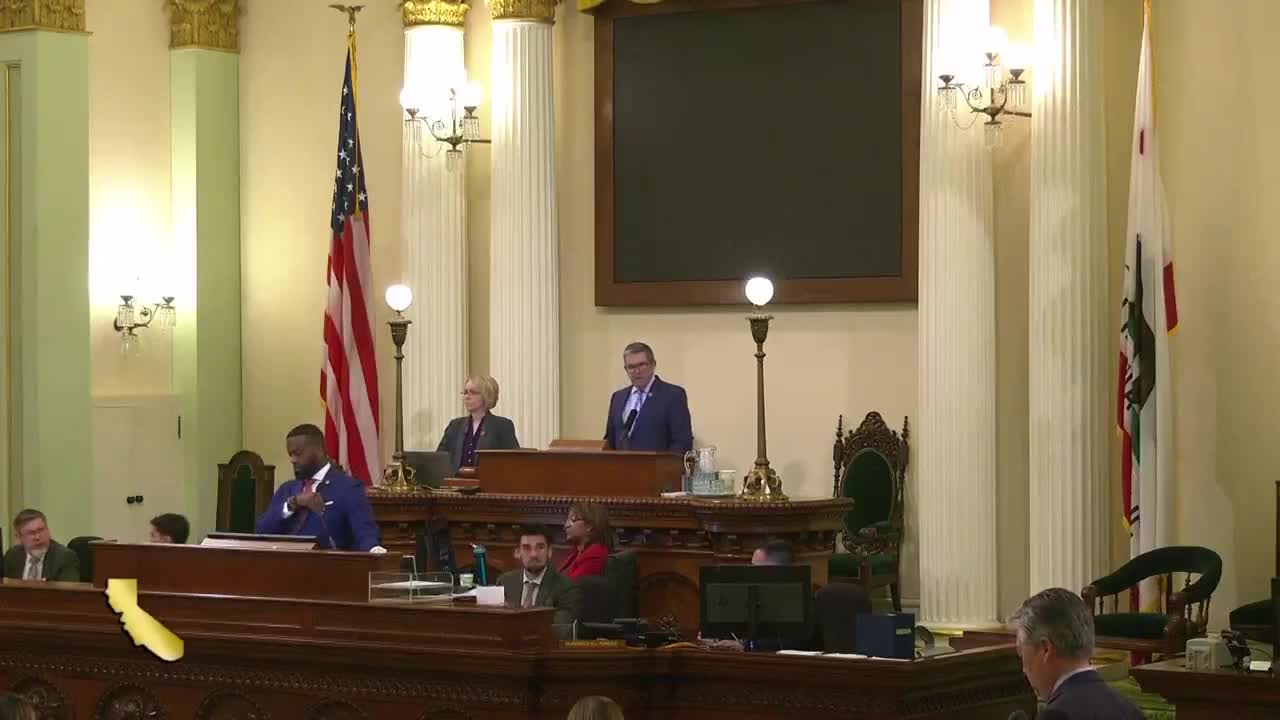 2MIN
Assembly Floor
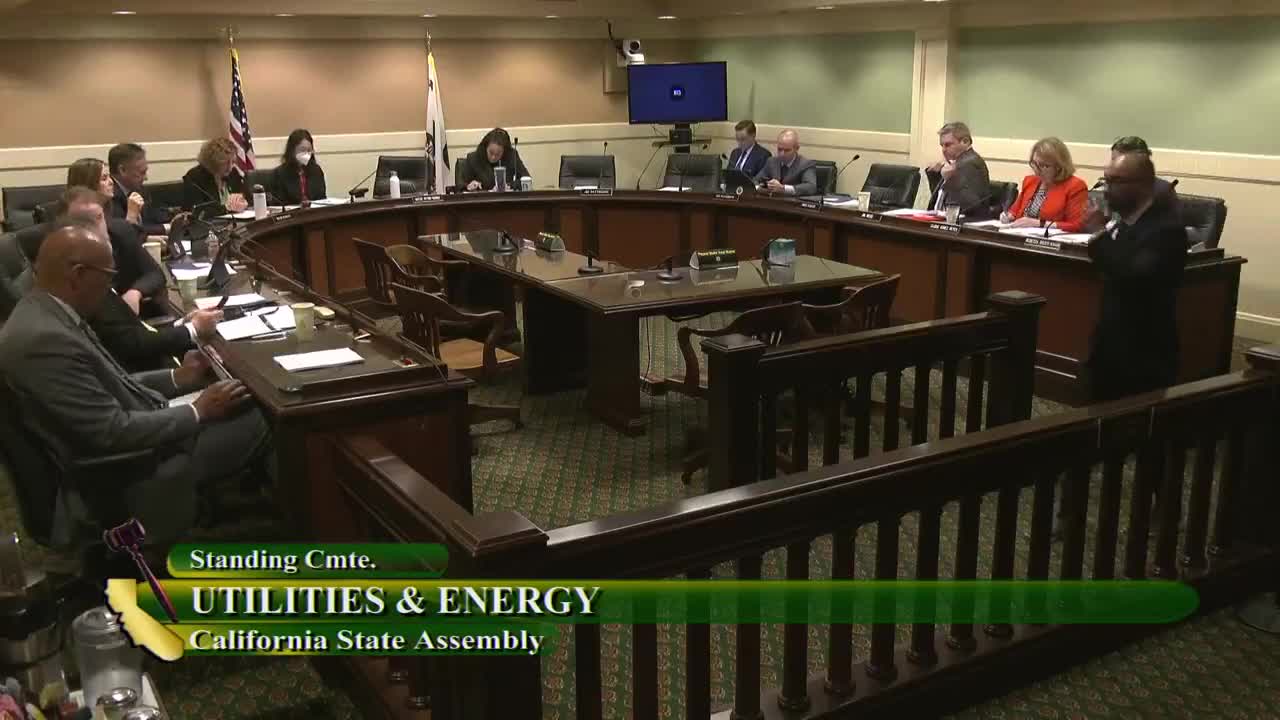 23MIN
Assembly Standing Committee on Utilities and Energy
Bill Author

Bill Co-Author(s):