AB 2192: Public agencies: cost accounting standards.
- Session Year: 2023-2024
- House: Assembly
- Latest Version Date: 2024-09-29
Current Status:
Passed
(2024-09-29: Chaptered by Secretary of State - Chapter 953, Statutes of 2024.)
Introduced
In Committee
First Chamber
In Committee
Second Chamber
Enacted
What does this bill do?
The bill changes the Uniform Public Construction Cost Accounting Act for local public agencies by adding “installation” to the definition of a public project and raising dollar limits for how work is contracted: up to $75,000 may be done by agency staff, up to $220,000 can use informal bidding, and projects over $220,000 generally require formal bidding (with authority to award up to $235,000 if all bids exceed the agency’s estimate). It also directs the commission that oversees the accounting rules to review agencies when work is split into smaller jobs or when agencies fail to follow required bid‑notice procedures.
The summary is provided by generative AI which can make mistakes. For original language, please view the details in the table below.
Existing law, the Uniform Public Construction Cost Accounting Act, authorizes a public agency which has, by resolution, elected to become subject to uniform construction cost accounting procedures. Existing law provides for the development of cost accounting standards and an alternative method for the bidding of public works projects by public entities. The act defines public project to include, among other things, construction, reconstruction, erection, alteration, renovation, improvement, demolition, and repair work involving any publicly owned, leased, or operated facility.
This bill would define public project to additionally include installations involving any publicly owned, leased, or operated facility.
The Uniform Public Construction Cost Accounting Act authorizes public projects of $60,000 or less to be performed by the employees of a public agency by force account, by negotiated contract, or by purchase order, authorizes public projects of $200,000 or less to be let to contract by informal procedures, and requires public projects of more than $200,000 to be let to contract by formal bidding procedures. The act permits the governing body of a public agency, in the event all bids received for the performance of that public project are in excess of $200,000, to award the contract at $212,500 or less to the lowest responsible bidder if it determines the cost estimate of the public agency was reasonable.
This bill would instead authorize public projects of $75,000 or less to be performed by the employees of a public agency by force account, by negotiated contract, or by purchase order, authorize public projects of $220,000 or less to be let to contract by informal procedures, and require public projects of more than $220,000 to be let to contract by formal bidding procedures. The bill would permit the governing body of a public agency, in the event all bids received for the performance of that public project are in excess of $220,000, to award the contract at $235,000 or less to the lowest responsible bidder if it determines the cost estimate of the public agency was reasonable. The bill would also make conforming changes.
The Uniform Public Construction Cost Accounting Act creates the California Uniform Construction Cost Accounting Commission, to fulfill certain duties, including recommending for adoption by the Controller uniform construction cost accounting procedures for implementation by public agencies in the performance of, or in contracting for, construction on public projects. The act requires the commission to review the accounting procedures of any participating public agency where an interested party presents evidence that the work undertaken by the public agency falls into specified categories, including that the public agency has exceeded the force account limits. The act also requires the commission to review practices of any participating public agency where an interested party presents evidence that the public agency is not in compliance with requirements to enact a prescribed informal bidding ordinance to govern the selection of contractors to perform public projects.
This bill would additionally require the commission to review the accounting procedures of any participating public agency where an interested party presents evidence that the work undertaken by the public agency has been split or separated into smaller work orders or projects, as specified, and would make conforming changes. The bill would also require the commission to review noncompliance with bidding procedures for the publication or posting and electronic transmission of notice inviting formal bids.
Existing law, the Uniform Public Construction Cost Accounting Act, authorizes a public agency, whose governing board has by resolution elected, to become subject to uniform construction cost accounting procedures. Existing law provides for the development of cost accounting standards and an alternative method for the bidding of public works projects by public entities. The act defines public project to include, among other things, construction, reconstruction, erection, alteration, renovation, improvement, demolition, and repair work involving any publicly owned, leased, or operated facility.
This bill would define public project to additionally include installations involving any publicly owned, leased, or operated facility.
The Uniform Public Construction Cost Accounting Act authorizes public projects of $60,000 or less to be performed by the employees of a public agency by force account, by negotiated contract, or by purchase order, authorizes public projects of $200,000 or less to be let to contract by informal procedures, and requires public projects of more than $200,000 to be let to contract by formal bidding procedures. The act permits the governing body of a public agency, in the event all bids received for the performance of that public project are in excess of $200,000, to award the contract at $212,500 or less to the lowest responsible bidder if it determines the cost estimate of the public agency was reasonable.
This bill would instead authorize public projects of $70,000 $75,000 or less to be performed by the employees of a public agency by force account, authorize public projects of $100,000 or less to be performed by negotiated contract or by purchase order, account, by negotiated contract, or by purchase order, authorize public projects of $220,000 or less to be let to contract by informal procedures, and require public projects of more than $220,000 to be let to contract by formal bidding procedures. The bill would permit the governing body of a public agency, in the event all bids received for the performance of that public project are in excess of $220,000, to award the contract at $235,000 or less to the lowest responsible bidder if it determines the cost estimate of the public agency was reasonable. The bill would also make conforming changes.
The Uniform Public Construction Cost Accounting Act creates the California Uniform Construction Cost Accounting Commission, to fulfill certain duties, including recommending for adoption by the Controller uniform construction cost accounting procedures for implementation by public agencies in the performance of, or in contracting for, construction on public projects. The act requires the commission to review the accounting procedures of any participating public agency where an interested party presents evidence that the work undertaken by the public agency falls into specified categories, including that the public agency has exceeded the force account limits. The act also requires the commission to review practices of any participating public agency where an interested party presents evidence that the public agency is not in compliance with requirements to enact a prescribed informal bidding ordinance to govern the selection of contractors to perform public projects.
This bill would additionally require the commission to review the accounting procedures of any participating public agency where an interested party presents evidence that the work undertaken by the public agency has been split or separated into smaller work orders or projects, as specified, and would make conforming changes. The bill would also require the commission to review noncompliance with bidding procedures for the publication or posting and electronic transmission of notice inviting formal bids.
Existing law, the Uniform Public Construction Cost Accounting Act, authorizes a public agency to elect agency, whose governing board has by resolution elected, to become subject to uniform construction cost accounting procedures. Existing law provides for the development of cost accounting standards and an alternative method for the bidding of public works projects by public entities. The act defines public project to include, among other things, construction, reconstruction, erection, alteration, renovation, improvement, demolition, and repair work involving any publicly owned, leased, or operated facility.
This bill would make nonsubstantive changes to the title provision of the Uniform Public Construction Cost Accounting Act. define public project to additionally include installations involving any publicly owned, leased, or operated facility.
The Uniform Public Construction Cost Accounting Act authorizes public projects of $60,000 or less to be performed by the employees of a public agency by force account, by negotiated contract, or by purchase order, authorizes public projects of $200,000 or less to be let to contract by informal procedures, and requires public projects of more than $200,000 to be let to contract by formal bidding procedures. The act permits the governing body of a public agency, in the event all bids received for the performance of that public project are in excess of $200,000, to award the contract at $212,500 or less to the lowest responsible bidder if it determines the cost estimate of the public agency was reasonable.
This bill would instead authorize public projects of $70,000 or less to be performed by the employees of a public agency by force account, authorize public projects of $100,000 or less to be performed by negotiated contract or by purchase order, authorize public projects of $220,000 or less to be let to contract by informal procedures, and require public projects of more than $220,000 to be let to contract by formal bidding procedures. The bill would permit the governing body of a public agency, in the event all bids received for the performance of that public project are in excess of $220,000, to award the contract at $235,000 or less to the lowest responsible bidder if it determines the cost estimate of the public agency was reasonable. The bill would also make conforming changes.
The Uniform Public Construction Cost Accounting Act creates the California Uniform Construction Cost Accounting Commission, to fulfill certain duties, including recommending for adoption by the Controller uniform construction cost accounting procedures for implementation by public agencies in the performance of, or in contracting for, construction on public projects. The act requires the commission to review the accounting procedures of any participating public agency where an interested party presents evidence that the work undertaken by the public agency falls into specified categories, including that the public agency has exceeded the force account limits. The act also requires the commission to review practices of any participating public agency where an interested party presents evidence that the public agency is not in compliance with requirements to enact a prescribed informal bidding ordinance to govern the selection of contractors to perform public projects.
This bill would additionally require the commission to review the accounting procedures of any participating public agency where an interested party presents evidence that the work undertaken by the public agency has been split or separated into smaller work orders or projects, as specified, and would make conforming changes. The bill would also require the commission to review noncompliance with bidding procedures for the publication or posting and electronic transmission of notice inviting formal bids.
Existing law, the Uniform Public Construction Cost Accounting Act, authorizes a public agency to elect to become subject to uniform construction cost accounting procedures. Existing law provides for the development of cost accounting standards and an alternative method for the bidding of public works projects by public entities.
This bill would make nonsubstantive changes to the title provision of the Uniform Public Construction Cost Accounting Act.
(a)Public agency, for purposes of this chapter, means a city, county, city and county, including chartered cities and chartered counties, any special district, and any other agency of the state for the local performance of governmental or proprietary functions within limited boundaries. Public agency also includes a nonprofit transit corporation wholly owned by a public agency and formed to carry out the purposes of the public agency.
(b)Representatives of the construction industry for purposes of this chapter, means a general contractor, subcontractor, or labor representative with experience in the field of public works construction.
(c)Public project means any of the following:
(1)Construction, reconstruction, erection, alteration, renovation, improvement, demolition, installation, and repair work involving any publicly owned, leased, or operated facility.
(2)Painting or repainting of any publicly owned, leased, or operated facility.
(3)In the case of a publicly owned electric utility system, public project shall include only the construction, erection, improvement, or repair of dams, reservoirs, powerplants, and electrical transmission lines of 230,000 volts and higher.
(d)Public project does not include maintenance work. For purposes of this section, maintenance work includes all of the following:
(1)Routine, recurring, and usual work for the preservation or protection of any publicly owned or publicly operated facility for its intended purposes.
(2)Minor repainting.
(3)Resurfacing of streets and highways at less than one inch.
(4)Landscape maintenance, including mowing, watering, trimming, pruning, planting, replacement of plants, and servicing of irrigation and sprinkler systems.
(5)Work performed to keep, operate, and maintain publicly owned water, power, or waste disposal systems, including, but not limited to, dams, reservoirs, powerplants, and electrical transmission lines of 230,000 volts and higher.
(e)For purposes of this chapter, facility means any plant, building, structure, ground facility, utility system, subject to the limitation found in paragraph (3) of subdivision (c), real property, streets and highways, or other public work improvement.
SEC. 2.Section 22032 of the Public Contract Code is amended to read:22032.(a)Public projects of seventy-five thousand dollars ($75,000) or less may be performed by the employees of a public agency by force account, by negotiated contract, or by purchase order.
(b)Public projects of two hundred twenty thousand dollars ($220,000) or less may be let to contract by informal procedures as set forth in this article.
(c)Public projects of more than two hundred twenty thousand dollars ($220,000) shall, except as otherwise provided in this article, be let to contract by formal bidding procedure.
SEC. 3.Section 22034 of the Public Contract Code is amended to read:22034.Each public agency that elects to become subject to the uniform construction accounting procedures set forth in Article 2 (commencing with Section 22010) shall enact an informal bidding ordinance to govern the selection of contractors to perform public projects pursuant to subdivision (b) of Section 22032. The ordinance shall include all of the following:
(a)Notice to contractors shall be provided in accordance with either paragraph (1) or (2), or both.
(1)The public agency shall maintain a list of qualified contractors, identified according to categories of work. Minimum criteria for development and maintenance of the contractors list shall be determined by the commission. All contractors on the list for the category of work being bid shall be mailed, faxed, or emailed a notice inviting informal bids unless the product or service is proprietary. All mailing of notices to contractors pursuant to this subdivision shall be completed not less than 10 calendar days before bids are due.
(2)The public agency may elect to mail, fax, or email a notice inviting informal bids to all construction trade journals specified in Section 22036.
(b)The notice inviting informal bids shall describe the project in general terms and how to obtain more detailed information about the project, and state the time and place for the submission of bids.
(c)The governing body of the public agency may delegate the authority to award informal contracts to the public works director, general manager, purchasing agent, or other appropriate person.
(d)If all bids received are in excess of two hundred twenty thousand dollars ($220,000), the governing body of the public agency may, by adoption of a resolution by a four-fifths vote, award the contract, at two hundred thirty-five thousand dollars ($235,000) or less, to the lowest responsible bidder, if it determines the cost estimate of the public agency was reasonable.
SEC. 4.Section 22039 of the Public Contract Code is amended to read:22039.The governing body of the participating public agency or its designated representative shall adopt plans, specifications, and working details for all public projects exceeding the amount specified in subdivision (c) of Section 22032.
SEC. 5.Section 22042 of the Public Contract Code is amended to read:22042.The commission shall review the accounting procedures of any participating public agency where an interested party presents evidence that the work undertaken by the public agency falls within any of the following categories:
(a)Is to be performed by a public agency after rejection of all bids, claiming work can be done less expensively by the public agency.
(b)Exceeded the force account limits set forth in subdivision (a) of Section 22032.
(c)Has been improperly classified as maintenance.
(d)Has been split or separated into smaller work orders or projects, in violation of Section 22033.
(e)Has exceeded the limits or otherwise not met the requirements set forth in subdivisions (b) and (c) of Section 22032.
SEC. 6.Section 22042.5 of the Public Contract Code is amended to read:22042.5.The commission shall review practices of any participating public agency where an interested party presents evidence that the public agency is not in compliance with Section 22034 or 22037.
SEC. 7.Section 22043 of the Public Contract Code is amended to read:22043.(a)In those circumstances set forth in subdivision (a) of Section 22042, a request for commission review shall be in writing, sent by certified or registered mail received by the commission postmarked not later than eight business days from the date the public agency has rejected all bids.
(b)In those circumstances set forth in subdivision (b), (c), (d), or (e) of Section 22042, a request for commission review shall be by letter received by the commission not later than eight days from the date an interested party formally complains to the public agency.
(c)The commission review shall commence immediately and conclude within the following number of days from the receipt of the request for commission review:
(1)Forty-five days for a review that falls within subdivision (a) of Section 22042.
(2)Ninety days for a review that falls within subdivision (b), (c), (d), or (e) of Section 22042.
(d)During the review of a project that falls within subdivision (a) of Section 22042, the agency shall not proceed on the project until a final decision is received by the commission.
(e)A request for commission review pursuant to Section 22042.5 shall be in writing, sent by certified or registered mail, and received by the commission no later than eight days from the day an interested party formally complains to the public agency. The commission review shall commence immediately and conclude within 90 days from the receipt of the request for commission review.
SEC. 8.Section 22044 of the Public Contract Code is amended to read:22044.The commission shall prepare written findings, which shall be presented to the public agency within 30 calendar days of formal commission review. Should the commission find that the provisions of this chapter or of the uniform cost accounting procedures provided for in this chapter were not complied with by the public agency, the following steps shall be implemented by that agency:
(a)On those projects set forth in subdivision (a) of Section 22042, the public agency has the option of either (1) abandoning the project, or (2) awarding the project to the lowest responsible bidder.
(b)On those projects set forth in subdivision (b), (c), (d), or (e) of Section 22042, the public agency shall present the commissions findings to its governing body within 30 calendar days of receipt of written notice of the findings and that governing body shall conduct a public hearing with regard to the commissions findings within 60 calendar days of receipt of the findings.
(c)(1)On findings of noncompliance pursuant to Section 22042.5, the public agency shall notify its governing body of the commissions findings within 60 calendar days of receipt of written notice of the findings from the commission.
(2)The public agency shall notify the commission in writing, within 90 days of receipt of written notice of the findings, of the public agencys best efforts to comply.
(a)Public agency, for purposes of this chapter, means a city, county, city and county, including chartered cities and chartered counties, any special district, and any other agency of the state for the local performance of governmental or proprietary functions within limited boundaries. Public agency also includes a nonprofit transit corporation wholly owned by a public agency and formed to carry out the purposes of the public agency.
(b)Representatives of the construction industry for purposes of this chapter, means a general contractor, subcontractor, or labor representative with experience in the field of public works construction.
(c)Public project means any of the following:
(1)Construction, reconstruction, erection, alteration, renovation, improvement, demolition, installation, and repair work involving any publicly owned, leased, or operated facility.
(2)Painting or repainting of any publicly owned, leased, or operated facility.
(3)In the case of a publicly owned electric utility system, public project shall include only the construction, erection, improvement, or repair of dams, reservoirs, powerplants, and electrical transmission lines of 230,000 volts and higher.
(d)Public project does not include maintenance work. For purposes of this section, maintenance work includes all of the following:
(1)Routine, recurring, and usual work for the preservation or protection of any publicly owned or publicly operated facility for its intended purposes.
(2)Minor repainting.
(3)Resurfacing of streets and highways at less than one inch.
(4)Landscape maintenance, including mowing, watering, trimming, pruning, planting, replacement of plants, and servicing of irrigation and sprinkler systems.
(5)Work performed to keep, operate, and maintain publicly owned water, power, or waste disposal systems, including, but not limited to, dams, reservoirs, powerplants, and electrical transmission lines of 230,000 volts and higher.
(e)For purposes of this chapter, facility means any plant, building, structure, ground facility, utility system, subject to the limitation found in paragraph (3) of subdivision (c), real property, streets and highways, or other public work improvement.
SEC. 2.Section 22032 of the Public Contract Code is amended to read:22032.(a)Public projects of seventy thousand dollars ($70,000) seventy-five thousand dollars ($75,000) or less may be performed by the employees of a public agency by force account. account, by negotiated contract, or by purchase order.
(b)Public projects of one hundred thousand dollars ($100,000) or less may be performed by negotiated contract or by purchase order. (c)(b)Public projects of two hundred twenty thousand dollars ($220,000) or less may be let to contract by informal procedures as set forth in this article.
(d)(c)Public projects of more than two hundred twenty thousand dollars ($220,000) shall, except as otherwise provided in this article, be let to contract by formal bidding procedure.
SEC. 3.Section 22034 of the Public Contract Code is amended to read:22034.Each public agency that elects to become subject to the uniform construction accounting procedures set forth in Article 2 (commencing with Section 22010) shall enact an informal bidding ordinance to govern the selection of contractors to perform public projects pursuant to subdivision (c) (b) of Section 22032. The ordinance shall include all of the following:
(a)Notice to contractors shall be provided in accordance with either paragraph (1) or (2), or both.
(1)The public agency shall maintain a list of qualified contractors, identified according to categories of work. Minimum criteria for development and maintenance of the contractors list shall be determined by the commission. All contractors on the list for the category of work being bid shall be mailed, faxed, or emailed a notice inviting informal bids unless the product or service is proprietary. All mailing of notices to contractors pursuant to this subdivision shall be completed not less than 10 calendar days before bids are due.
(2)The public agency may elect to mail, fax, or email a notice inviting informal bids to all construction trade journals specified in Section 22036.
(b)The notice inviting informal bids shall describe the project in general terms and how to obtain more detailed information about the project, and state the time and place for the submission of bids.
(c)The governing body of the public agency may delegate the authority to award informal contracts to the public works director, general manager, purchasing agent, or other appropriate person.
(d)If all bids received are in excess of two hundred twenty thousand dollars ($220,000), the governing body of the public agency may, by adoption of a resolution by a four-fifths vote, award the contract, at two hundred thirty-five thousand dollars ($235,000) or less, to the lowest responsible bidder, if it determines the cost estimate of the public agency was reasonable.
SEC. 4.Section 22039 of the Public Contract Code is amended to read:22039.The governing body of the participating public agency or its designated representative shall adopt plans, specifications, and working details for all public projects exceeding the amount specified in subdivision (d) (c) of Section 22032.
SEC. 5.Section 22042 of the Public Contract Code is amended to read:22042.The commission shall review the accounting procedures of any participating public agency where an interested party presents evidence that the work undertaken by the public agency falls within any of the following categories:
(a)Is to be performed by a public agency after rejection of all bids, claiming work can be done less expensively by the public agency.
(b)Exceeded the force account limits set forth in subdivision (a) of Section 22032.
(c)Has been improperly classified as maintenance.
(d)Has been split or separated into smaller work orders or projects, in violation of Section 22033.
(e)Has exceeded the limits or otherwise not met the requirements set forth in subdivisions (b), (c), and (d) (b) and (c) of Section 22032.
SEC. 6.Section 22042.5 of the Public Contract Code is amended to read:22042.5.The commission shall review practices of any participating public agency where an interested party presents evidence that the public agency is not in compliance with Section 22034 or 22037.
SEC. 7.Section 22043 of the Public Contract Code is amended to read:22043.(a)In those circumstances set forth in subdivision (a) of Section 22042, a request for commission review shall be in writing, sent by certified or registered mail received by the commission postmarked not later than eight business days from the date the public agency has rejected all bids.
(b)In those circumstances set forth in subdivision (b), (c), (d), or (e) of Section 22042, a request for commission review shall be by letter received by the commission not later than eight days from the date an interested party formally complains to the public agency.
(c)The commission review shall commence immediately and conclude within the following number of days from the receipt of the request for commission review:
(1)Forty-five days for a review that falls within subdivision (a) of Section 22042.
(2)Ninety days for a review that falls within subdivision (b), (c), (d), or (e) of Section 22042.
(d)During the review of a project that falls within subdivision (a) of Section 22042, the agency shall not proceed on the project until a final decision is received by the commission.
(e)A request for commission review pursuant to Section 22042.5 shall be in writing, sent by certified or registered mail, and received by the commission no later than eight days from the day an interested party formally complains to the public agency. The commission review shall commence immediately and conclude within 90 days from the receipt of the request for commission review.
SEC. 8.Section 22044 of the Public Contract Code is amended to read:22044.The commission shall prepare written findings, which shall be presented to the public agency within 30 calendar days of formal commission review. Should the commission find that the provisions of this chapter or of the uniform cost accounting procedures provided for in this chapter were not complied with by the public agency, the following steps shall be implemented by that agency:
(a)On those projects set forth in subdivision (a) of Section 22042, the public agency has the option of either (1) abandoning the project, or (2) awarding the project to the lowest responsible bidder.
(b)On those projects set forth in subdivision (b), (c), (d), or (e) of Section 22042, the public agency shall present the commissions findings to its governing body within 30 calendar days of receipt of written notice of the findings and that governing body shall conduct a public hearing with regard to the commissions findings within 60 calendar days of receipt of the findings.
(c)(1)On findings of noncompliance pursuant to Section 22042.5, the public agency shall notify its governing body of the commissions findings within 60 calendar days of receipt of written notice of the findings from the commission.
(2)The public agency shall notify the commission in writing, within 90 days of receipt of written notice of the findings, of the public agencys best efforts to comply.
(a)Public agency, for purposes of this chapter, means a city, county, city and county, including chartered cities and chartered counties, any special district, and any other agency of the state for the local performance of governmental or proprietary functions within limited boundaries. Public agency also includes a nonprofit transit corporation wholly owned by a public agency and formed to carry out the purposes of the public agency.
(b)Representatives of the construction industry for purposes of this chapter, means a general contractor, subcontractor, or labor representative with experience in the field of public works construction.
(c)Public project means any of the following:
(1)Construction, reconstruction, erection, alteration, renovation, improvement, demolition, installation, and repair work involving any publicly owned, leased, or operated facility.
(2)Painting or repainting of any publicly owned, leased, or operated facility.
(3)In the case of a publicly owned electric utility system, public project shall include only the construction, erection, improvement, or repair of dams, reservoirs, powerplants, and electrical transmission lines of 230,000 volts and higher.
(d)Public project does not include maintenance work. For purposes of this section, maintenance work includes all of the following:
(1)Routine, recurring, and usual work for the preservation or protection of any publicly owned or publicly operated facility for its intended purposes.
(2)Minor repainting.
(3)Resurfacing of streets and highways at less than one inch.
(4)Landscape maintenance, including mowing, watering, trimming, pruning, planting, replacement of plants, and servicing of irrigation and sprinkler systems.
(5)Work performed to keep, operate, and maintain publicly owned water, power, or waste disposal systems, including, but not limited to, dams, reservoirs, powerplants, and electrical transmission lines of 230,000 volts and higher.
(e)For purposes of this chapter, facility means any plant, building, structure, ground facility, utility system, subject to the limitation found in paragraph (3) of subdivision (c), real property, streets and highways, or other public work improvement.
SEC. 2.Section 22032 of the Public Contract Code is amended to read:22032.(a)Public projects of sixty thousand dollars ($60,000) seventy thousand dollars ($70,000) or less may be performed by the employees of a public agency by force account, by negotiated contract, or by purchase order. account.
(b)Public projects of one hundred thousand dollars ($100,000) or less may be performed by negotiated contract or by purchase order.
(b)(c)Public projects of two hundred thousand dollars ($200,000) two hundred twenty thousand dollars ($220,000) or less may be let to contract by informal procedures as set forth in this article.
(c)(d)Public projects of more than two hundred thousand dollars ($200,000) two hundred twenty thousand dollars ($220,000) shall, except as otherwise provided in this article, be let to contract by formal bidding procedure.
SEC. 3.Section 22034 of the Public Contract Code is amended to read:22034.Each public agency that elects to become subject to the uniform construction accounting procedures set forth in Article 2 (commencing with Section 22010) shall enact an informal bidding ordinance to govern the selection of contractors to perform public projects pursuant to subdivision (b) (c) of Section 22032. The ordinance shall include all of the following:
(a)Notice to contractors shall be provided in accordance with either paragraph (1) or (2), or both.
(1)The public agency shall maintain a list of qualified contractors, identified according to categories of work. Minimum criteria for development and maintenance of the contractors list shall be determined by the commission. All contractors on the list for the category of work being bid shall be mailed, faxed, or emailed a notice inviting informal bids unless the product or service is proprietary. All mailing of notices to contractors pursuant to this subdivision shall be completed not less than 10 calendar days before bids are due.
(2)The public agency may elect to mail, fax, or email a notice inviting informal bids to all construction trade journals specified in Section 22036.
(b)The notice inviting informal bids shall describe the project in general terms and how to obtain more detailed information about the project, and state the time and place for the submission of bids.
(c)The governing body of the public agency may delegate the authority to award informal contracts to the public works director, general manager, purchasing agent, or other appropriate person.
(d)If all bids received are in excess of two hundred thousand dollars ($200,000), two hundred twenty thousand dollars ($220,000), the governing body of the public agency may, by adoption of a resolution by a four-fifths vote, award the contract, at two hundred twelve thousand five hundred dollars ($212,500) two hundred thirty-five thousand dollars ($235,000) or less, to the lowest responsible bidder, if it determines the cost estimate of the public agency was reasonable.
SEC. 4.Section 22039 of the Public Contract Code is amended to read:22039.The governing body of the participating public agency or its designated representative shall adopt plans, specifications, and working details for all public projects exceeding the amount specified in subdivision (c) (d) of Section 22032.
SEC. 5.Section 22042 of the Public Contract Code is amended to read:22042.The commission shall review the accounting procedures of any participating public agency where an interested party presents evidence that the work undertaken by the public agency falls within any of the following categories:
(a)Is to be performed by a public agency after rejection of all bids, claiming work can be done less expensively by the public agency.
(b)Exceeded the force account limits. limits set forth in subdivision (a) of Section 22032.
(c)Has been improperly classified as maintenance.
(d)Has been split or separated into smaller work orders or projects, in violation of Section 22033.
(e)Has exceeded the limits or otherwise not met the requirements set forth in subdivisions (b), (c), and (d) of Section 22032.
SEC. 6.Section 22042.5 of the Public Contract Code is amended to read:22042.5.The commission shall review practices of any participating public agency where an interested party presents evidence that the public agency is not in compliance with Section 22034. 22034 or 22037.
SEC. 7.Section 22043 of the Public Contract Code is amended to read:22043.(a)In those circumstances set forth in subdivision (a) of Section 22042, a request for commission review shall be in writing, sent by certified or registered mail received by the commission postmarked not later than eight business days from the date the public agency has rejected all bids.
(b)In those circumstances set forth in subdivision (b) or (c) (b), (c), (d), or (e) of Section 22042, a request for commission review shall be by letter received by the commission not later than eight days from the date an interested party formally complains to the public agency.
(c)The commission review shall commence immediately and conclude within the following number of days from the receipt of the request for commission review:
(1)Forty-five days for a review that falls within subdivision (a) of Section 22042.
(2)Ninety days for a review that falls within subdivision (b) or (c) (b), (c), (d), or (e) of Section 22042.
(d)During the review of a project that falls within subdivision (a) of Section 22042, the agency shall not proceed on the project until a final decision is received by the commission.
(e)A request for commission review pursuant to Section 22042.5 shall be in writing, sent by certified or registered mail, and received by the commission no later than eight days from the day an interested party formally complains to the public agency. The commission review shall commence immediately and conclude within 90 days from the receipt of the request for commission review.
SEC. 8.Section 22044 of the Public Contract Code is amended to read:22044.The commission shall prepare written findings, which shall be presented to the public agency within 30 calendar days of formal commission review. Should the commission find that the provisions of this chapter or of the uniform cost accounting procedures provided for in this chapter were not complied with by the public agency, the following steps shall be implemented by that agency:
(a)On those projects set forth in subdivision (a) of Section 22042, the public agency has the option of either (1) abandoning the project, or (2) awarding the project to the lowest responsible bidder.
(b)On those projects set forth in subdivision (b) or (c) (b), (c), (d), or (e) of Section 22042, the public agency shall present the commissions findings to its governing body within 30 calendar days of receipt of written notice of the findings and that governing body shall conduct a public hearing with regard to the commissions findings within 60 calendar days of receipt of the findings.
(c)(1)On findings of noncompliance pursuant to Section 22042.5, the public agency shall notify its governing body of the commissions findings within 60 calendar days of receipt of written notice of the findings from the commission.
(2)The public agency shall notify the commission in writing, within 90 days of receipt of written notice of the findings, of the public agencys best efforts to comply.
SECTION 1.Section 22000 of the Public Contract Code is amended to read:22000.This chapter shall be known, and may be cited, as the Uniform Public Construction Cost Accounting Act.This chapter shall be known known, and may be cited cited, as the Uniform Public Construction Cost Accounting Act.
|
Date
|
Status
|
|---|---|
| Sep 29, 2024 | Chaptered by Secretary of State - Chapter 953, Statutes of 2024. |
| Sep 29, 2024 | Approved by the Governor. |
| Sep 10, 2024 | Enrolled and presented to the Governor at 4:30 p.m. |
| Aug 28, 2024 | Senate amendments concurred in. To Engrossing and Enrolling. (Ayes 77. Noes 0.). |
| Aug 28, 2024 | In Assembly. Concurrence in Senate amendments pending. May be considered on or after August 30 pursuant to Assembly Rule 77. |
| Aug 28, 2024 | Assembly Rule 77 suspended. |
| Aug 27, 2024 | Read third time. Passed. Ordered to the Assembly. (Ayes 39. Noes 0.). |
| Aug 26, 2024 | Read second time. Ordered to third reading. |
| Aug 23, 2024 | Read third time and amended. Ordered to second reading. |
| Aug 12, 2024 | Ordered to third reading. |
| Aug 12, 2024 | From Consent Calendar. |
| Aug 6, 2024 | Read second time. Ordered to Consent Calendar. |
| Aug 5, 2024 | From committee: Be ordered to second reading file pursuant to Senate Rule 28.8 and ordered to Consent Calendar. |
| Jul 3, 2024 | From committee: Do pass and re-refer to Com. on APPR with recommendation: To Consent Calendar. (Ayes 7. Noes 0.) (July 3). Re-referred to Com. on APPR. |
| May 29, 2024 | Referred to Com. on L. GOV. |
| May 16, 2024 | In Senate. Read first time. To Com. on RLS. for assignment. |
| May 16, 2024 | Read third time. Passed. Ordered to the Senate. (Ayes 71. Noes 0.) |
| May 9, 2024 | Read second time. Ordered to Consent Calendar. |
| May 8, 2024 | From committee: Do pass. To Consent Calendar. (Ayes 15. Noes 0.) (May 8). |
| Apr 25, 2024 | From committee: Do pass and re-refer to Com. on APPR. with recommendation: To Consent Calendar. (Ayes 8. Noes 0.) (April 24). Re-referred to Com. on APPR. |
| Mar 19, 2024 | Re-referred to Com. on L. GOV. |
| Mar 18, 2024 | Referred to Com. on L. GOV. |
| Mar 18, 2024 | From committee chair, with author's amendments: Amend, and re-refer to Com. on L. GOV. Read second time and amended. |
| Feb 8, 2024 | From printer. May be heard in committee March 9. |
| Feb 7, 2024 | Read first time. To print. |
|
Date
|
Description
|
Location
|
Votes
|
|
|---|---|---|---|---|
| Aug 28, 2024 | AB 2192 Juan Carrillo Concurrence in Senate Amendments | Assembly Floor |
Passed |
|
| Aug 27, 2024 | Assembly 3rd Reading AB2192 Juan Carrillo By Durazo | Senate Floor |
Passed |
|
| Jul 3, 2024 | Do pass, but first be re-referred to the Committee on [Appropriations] with the recommendation: To Consent Calendar | Senate Standing Committee on Local Government |
Passed |
|
| May 16, 2024 | AB 2192 Juan Carrillo Consent Calendar Second Day Regular Session | Assembly Floor |
Passed |
|
| May 8, 2024 | Do pass. To Consent Calendar. | Assembly Standing Committee on Appropriations |
Passed |
|
| Apr 24, 2024 | Do pass and be re-referred to the Committee on [Appropriations] with recommendation: To Consent Calendar | Assembly Standing Committee on Local Government |
Passed |
This list shows positions taken on this bill by organizations on the date displayed, which is linked to the original source.
Positions by individuals are not included.
|
Organization
|
Position
|
Date
|
|---|---|---|
| Air Conditioning Sheet Metal Association | ** Support | |
| California Legislative Conference Of Plumbing, Heating & Piping Industry | ** Support | |
| California Special Districts Association | ** Support | |
| Construction Industry Force Account Council | ** Support | |
| Finishing Contractors Association Of Southern California | ** Support | |
| International Union of Operating Engineers, Cal-Nevada Conference | ** Support | |
| National Electrical Contractors Association | ** Support | |
| Northern California Allied Trades | ** Support | |
| Northern California Floor Covering Association | ** Support | |
| Southern California Glass Management Association | ** Support | |
| State Building & Construction Trades Council Of California | ** Support | |
| United Contractors | ** Support | |
| Wall and Ceiling Alliance | ** Support | |
| Western Painting and Coating Contractors Association | ** Support | |
| Western Wall And Ceiling Contractors Association | ** Support |
CONCURRENCE IN SENATE AMENDMENTS
CSA1 Bill Id:AB 2192
Author:(Juan Carrillo)
As Amended Ver:August 23, 2024
Majority vote
SUMMARY
Increases project cost limits specified in the Uniform Public Construction Cost Accounting Act (UPCCAA) and refines the oversight authority of the California Uniform Construction Cost Accounting Commission (Commission).
Senate Amendments
- Remove language that would have separated negotiated contracts and purchase order limits from force account limits for purposes of the UPCCAA.
- Increase the dollar amount of projects that may be performed pursuant to the UPCCAA by force account, negotiated contract, or purchase order to $75,000 (up from $70,000 in the version of the bill approved by the Assembly).
COMMENTS
The Public Contract Code specifies the procedures that public agencies must follow when they build public works projects, including limits on project costs. The UPCCAA was enacted in 1983 as an alternative to these general requirements by allowing increased bid limits as long as participating agencies follow uniform accounting standards and bidding procedures. A voluntary program that is available to all public entities in the State, the UPCCAA allows public projects costing $60,000 or less to be performed by the public agency's force account, by negotiated contract, or by purchase order. Projects costing $200,000 or less can use informal bidding procedures set forth in the UPCCAA. Projects that cost more than $200,000 must be put out to bid under formal bidding procedures.
The Commission administers the UPCCAA and provides technical support to public agencies by prescribing uniform construction cost accounting procedures for agencies that opt into the UPCCAA. The Commission also reviews public complaints and recommends audits when the criteria of the UPCCAA are not fulfilled. In addition, the Commission conducts meetings open to the public, provides a manual for use by public agencies signatory to the UPCCAA and maintains a Commission web page on the Controller's website. Commissioners also facilitate and participate in outreach and training to participating agencies, candidate agencies, and professional organizations.
The UPCCAA requires the Commission to review the Act's force account and bid limits every five years to account for changes in public construction costs. If the Commission recommends higher limits, the Controller promulgates the new limits and the Legislature amends the UPCCAA to reflect the adjusted amounts. This last occurred via AB 2249 (Cooley), Chapter 169, Statutes of 2018.
According to the Author
Recently, the California Uniform Construction Cost Accounting Commission met and unanimously recommended increases to the current California Uniform Public Construction Cost Accounting Act (Act) bidding limits. The Commission unanimously passed a motion to increase the bidding thresholds based on adjustments for inflation and rising construction and project costs. Increasing the bidding limits also furthers the ongoing goal of attracting all public agencies in California that perform public works to voluntarily opt into the Act.
Arguments in Support
The Construction Industry Force Account Council (CIFAC), co-sponsor of this bill, states, "CIFAC is a non-profit coalition of concerned construction industry associations, contractors and labor unions that works to ensure public agency compliance with California laws relating to the construction industry. Ensuring that the Act is updated and provides the right balance of flexibility in construction procurement for agencies vs. the accounting requirements that must be followed once an agency elects to become subject to it, is very important to CIFAC's efforts. As is ensuring that the Commission has the tools to properly enforce and uphold the Act's requirements. AB 2192 advances both of these goals."
Arguments in Opposition
None on file.
FISCAL COMMENTS
According to the Senate Appropriations Committee, pursuant to Senate Rule 28.8, negligible state costs.
VOTES:
ASM LOCAL GOVERNMENT: 8-0-1
YES: Juan Carrillo, Waldron, Valencia, Kalra, Pacheco, Ramos, Ward, Wilson
ABS, ABST OR NV: Essayli
ASM APPROPRIATIONS: 15-0-0
YES: Wicks, Sanchez, Arambula, Bryan, Calderon, Wendy Carrillo, Dixon, Mike Fong, Friedman, Haney, Hart, Jim Patterson, Pellerin, Ta, Villapudua
ASSEMBLY FLOOR: 71-0-9
YES: Aguiar-Curry, Alanis, Arambula, Bains, Bauer-Kahan, Bennett, Berman, Boerner, Bonta, Bryan, Calderon, Juan Carrillo, Wendy Carrillo, Chen, Connolly, Davies, Dixon, Essayli, Mike Fong, Friedman, Gabriel, Gallagher, Garcia, Grayson, Haney, Hart, Holden, Hoover, Jackson, Jones-Sawyer, Kalra, Lackey, Lee, Low, Lowenthal, Maienschein, McCarty, McKinnor, Muratsuchi, Stephanie Nguyen, Ortega, Pacheco, Papan, Jim Patterson, Joe Patterson, Pellerin, Petrie-Norris, Quirk-Silva, Ramos, Rendon, Reyes, Luz Rivas, Rodriguez, Blanca Rubio, Sanchez, Santiago, Schiavo, Soria, Ta, Ting, Valencia, Villapudua, Waldron, Wallis, Ward, Weber, Wicks, Wilson, Wood, Zbur, Robert Rivas
ABS, ABST OR NV: Addis, Alvarez, Cervantes, Megan Dahle, Flora, Vince Fong, Gipson, Irwin, Mathis
SENATE FLOOR: 40-0-0
YES: Allen, Alvarado-Gil, Archuleta, Ashby, Atkins, Becker, Blakespear, Bradford, Caballero, Cortese, Dahle, Dodd, Durazo, Eggman, Glazer, Gonzalez, Grove, Hurtado, Jones, Laird, Limón, McGuire, Menjivar, Min, Newman, Nguyen, Niello, Ochoa Bogh, Padilla, Portantino, Roth, Rubio, Seyarto, Skinner, Smallwood-Cuevas, Stern, Umberg, Wahab, Wiener, Wilk
UPDATED
VERSION: August 23, 2024
CONSULTANT: Angela Mapp / L. GOV. / (916) 319-3958 FN: 0004674
SENATE RULES COMMITTEE Office of Senate Floor Analyses (916) 651-1520 Fax: (916) 327-4478 | AB 2192 |
THIRD READING
Bill No: AB 2192
Author: Juan Carrillo (D)
Amended: 8/23/24 in Senate
Vote: 21
SENATE LOCAL GOVERNMENT COMMITTEE: 7-0, 7/3/24
AYES: Durazo, Seyarto, Dahle, Glazer, Skinner, Wahab, Wiener
SENATE APPROPRIATIONS COMMITTEE: Senate Rule 28.8
ASSEMBLY FLOOR: 71-0, 5/16/24 (Consent) - See last page for vote
SUBJECT: Public agencies: cost accounting standards
SOURCE: Construction Industry Force Account Council
DIGEST:
This bill increases project cost limits specified in the Uniform Public Construction Cost Accounting Act (UPCCAA) and separates the negotiated contracts and purchase order limits from the force account limits.
Senate Floor Amendments of 8/23/24 increased the dollar amount of projects that may be performed pursuant to the UPCCAA $60,000 to $75,000 (it was $70,000 in prior version of this bill) and eliminated a new category for negotiated contracts and purchase orders the bill originally sought to create.
ANALYSIS:
Existing law:
1) Establishes the Uniform Public Construction Cost Accounting Act (UPCCAA), which contains the following bid limits that were last updated in 2018:
- Public projects costing $60,000 or less can be performed by the public agency’s force account (the dollar value of labor, materials and equipment at the rate the public agencies charge themselves), by negotiated contract, or by purchase order;
- Projects costing $200,000 or less can use informal bidding procedures set forth in the UPCCAA; and
- Projects costing more than $200,000 must be put out to bid under formal bidding procedures.
2) Tasks the California Uniform Construction Cost Accounting Commission (Commission) with administering the UPCCAA and providing technical support to public agencies by prescribing uniform construction cost accounting procedures for agencies that opt into the UPCCAA.
This bill:
1) Makes the following changes to UPCCAA bidding procedures:
- Increases the dollar amount of projects that may be performed pursuant to the UPCCAA by the employees of a public agency by force account, negotiated contracts or purchase order from $60,000 to $75,000;
- Increases the cap on the dollar amount of projects subject to the UPCCAA's informal bidding procedures from $200,000 to $220,000; and
- Increases the floor of the dollar amount of projects subject to the UPCCAA's formal bidding requirements from $200,000 to $220,000.
2) Requires the Commission to review the accounting procedures of any participating public agency in cases where a person alleges the public agency has violated the UPCCAA by either:
- Splitting or separating the project into smaller work orders or projects to come in under the bid thresholds; or
- Exceeding the limits or otherwise not meeting the requirements, for negotiated contracts, purchase orders, and the informal or formal procedures of the UPCCAA.
Background
The Public Contract Code requires public agencies to follow certain procedures when building public works projects and imposes certain cost constraints on those projects.
The UPCCAA is a voluntary program enacted in 1983 and set up an alternative to these general requirements by allowing higher bid limits as long as participating agencies follow uniform accounting standards and bidding procedures.
The Commission administers the UPCCAA and:
- Provides technical support to public agencies by prescribing uniform construction cost accounting procedures for agencies that opt into the UPCCAA;
- Reviews public complaints and recommends audits when the criteria of the UPCCAA are not fulfilled;
- Conducts public meetings, provides a manual for use by public agencies, and maintains a web page on the Controller's website; and
- Facilitates and participates in outreach and training to participating agencies, candidate agencies, and professional organizations.
The Commission is required to review the UPCCAA’s force account and bid limits every five years to account for changes in public construction costs. If the Commission recommends higher limits, the Controller sets the new limits and the Legislature amends the UPCCAA to reflect the adjusted amounts. This last occurred via AB 2249 (Cooley, Chapter 169, Statutes of 2018). The Commission on December 8, 2023, passed a motion recommending the Controller increase the UPCCAA bid limits to the amounts contained in this bill.
Comments
1) Purpose of the bill. According to the author, “Recently, the California Uniform Construction Cost Accounting Commission met and unanimously recommended changes to the current California Uniform Public Construction Cost Accounting Act (Act) bidding procedures.
“The Commission unanimously passed a motion to increase the bidding thresholds based on adjustments for inflation and rising construction and project costs. Increasing the bidding limits also furthers the ongoing goal of attracting all public agencies in California that perform public works to voluntarily opt into the Act. Additionally, the bifurcation of bidding limits between negotiated contracts and force accounts will offer quicker project delivery and greater flexibility for member agencies without restricting the use of force accounts where applicable.”
2) Keeping Up With The Jones’. The law requires the Commission to look at increasing the bid levels of the UPCCAA every five years, in part to see if those levels are keeping pace with increased costs.
The bid levels were last adjusted in 2018 and the higher bid levels permitted by this bill come close to keeping up with the overall rate of inflation (which likely underestimates the inflation rate that may be specific to contracting-related costs). Using the overall inflation rate for comparison purposes, $200,000 in 2018 dollars would be just over $248,000 in 2024 dollars, while $60,000 in 2018 dollars would be nearly $75,000 in 2024 dollars.
3) More Oversight = More Accountability. This bill also refines the oversight authority of the UPCCAA Commission by requiring it to examine any public agency when evidence is provided that a project has been split into smaller projects to get under the bid limits in the law or exceeds the dollar thresholds or other requirements for negotiated contracts, purchase orders, and informal or formal procedures.
FISCAL EFFECT: Appropriation: No Fiscal Com.: Yes Local: No
SUPPORT: (Verified 8/24/24)
Construction Industry Force Account Council (source)
Air Conditioning Sheet Metal Association
California Legislative Conference of Plumbing, Heating & Piping Industry
California Special Districts Association
Finishing Contractors Association of Southern California
National Electrical Contractors Association
Northern California Allied Trades
Northern California Floor Covering Association
Southern California Glass Management Association
State Building & Construction Trades Council of California
United Contractors
Wall and Ceiling Alliance
Western Painting and Coating Contractors Association
Western Wall and Ceiling Contractors Association
OPPOSITION: (Verified 8/24/24)
None received
ARGUMENTS IN SUPPORT: According to the Construction Industry Force Account Council (CIFAC):
“CIFAC is a non-profit coalition of concerned construction industry associations, contractors and labor unions that works to ensure public agency compliance with California laws relating to the construction industry. Ensuring that the Act is updated and provides the right balance of flexibility in construction procurement for agencies vs. the accounting requirements that must be followed once an agency elects to become subject to it, is very important to CIFAC’s efforts. As is ensuring that the Commission has the tools to properly enforce and uphold the Act’s requirements. AB 2192 advances both of these goals.”
ASSEMBLY FLOOR: 71-0, 5/16/24
AYES: Aguiar-Curry, Alanis, Arambula, Bains, Bauer-Kahan, Bennett, Berman, Boerner, Bonta, Bryan, Calderon, Juan Carrillo, Wendy Carrillo, Chen, Connolly, Davies, Dixon, Essayli, Mike Fong, Friedman, Gabriel, Gallagher, Garcia, Grayson, Haney, Hart, Holden, Hoover, Jackson, Jones-Sawyer, Kalra, Lackey, Lee, Low, Lowenthal, Maienschein, McCarty, McKinnor, Muratsuchi, Stephanie Nguyen, Ortega, Pacheco, Papan, Jim Patterson, Joe Patterson, Pellerin, Petrie-Norris, Quirk-Silva, Ramos, Rendon, Reyes, Luz Rivas, Rodriguez, Blanca Rubio, Sanchez, Santiago, Schiavo, Soria, Ta, Ting, Valencia, Villapudua, Waldron, Wallis, Ward, Weber, Wicks, Wilson, Wood, Zbur, Robert Rivas
NO VOTE RECORDED: Addis, Alvarez, Cervantes, Megan Dahle, Flora, Vince Fong, Gipson, Irwin, Mathis
Prepared by: Evan Goldberg / L. GOV. / (916) 651-4119
8/26/24 11:53:15
**** END ****
SENATE RULES COMMITTEE Office of Senate Floor Analyses (916) 651-1520 Fax: (916) 327-4478 | AB 2192 |
THIRD READING
Bill No: AB 2192
Author: Juan Carrillo (D)
Amended: 3/18/24 in Assembly
Vote: 21
SENATE LOCAL GOVERNMENT COMMITTEE: 7-0, 7/3/24
AYES: Durazo, Seyarto, Dahle, Glazer, Skinner, Wahab, Wiener
SENATE APPROPRIATIONS COMMITTEE: Senate Rule 28.8
ASSEMBLY FLOOR: 71-0, 5/16/24 (Consent) - See last page for vote
SUBJECT: Public agencies: cost accounting standards
SOURCE: Construction Industry Force Account Council
DIGEST:
This bill increases project cost limits specified in the Uniform Public Construction Cost Accounting Act (UPCCAA) and separates the negotiated contracts and purchase order limits from the force account limits.
ANALYSIS:
Existing law:
1) Establishes the UPCCAA, which contains the following bid limits that were last updated in 2018:
- Public projects costing $60,000 or less can be performed by the public agency’s force account (the dollar value of labor, materials and equipment at the rate the public agencies charge themselves), by negotiated contract, or by purchase order;
- Projects costing $200,000 or less can use informal bidding procedures set forth in the UPCCAA; and
- Projects costing more than $200,000 must be put out to bid under formal bidding procedures.
2) Tasks the California Uniform Construction Cost Accounting Commission (Commission) with administering the UPCCAA and providing technical support to public agencies by prescribing uniform construction cost accounting procedures for agencies that opt into the UPCCAA.
This bill:
1) Makes the following changes to UPCCAA bidding procedures:
- Increases the dollar amount of projects that may be performed pursuant to the UPCCAA by the employees of a public agency by force account order from $60,000 to $70,000;
- Creates a new category for negotiated contracts and purchase orders – separating them from the force account limit – and effectively increases the limit for these contracts and orders from $60,000 to $100,000;
- Increases the cap on the dollar amount of projects subject to the UPCCAA's informal bidding procedures from $200,000 to $220,000; and
- Increases the floor of the dollar amount of projects subject to the UPCCAA's formal bidding requirements from $200,000 to $220,000.
2) Requires the Commission to review the accounting procedures of any participating public agency in cases where a person alleges the public agency has violated the UPCCAA by either:
- Splitting or separating the project into smaller work orders or projects to come in under the bid thresholds; or
- Exceeding the limits or otherwise not meeting the requirements, for negotiated contracts, purchase orders, and the informal or formal procedures of the UPCCAA.
Background
The Public Contract Code requires public agencies to follow certain procedures when building public works projects and imposes certain cost constraints on those projects.
The UPCCAA is a voluntary program enacted in 1983 and set up an alternative to these general requirements by allowing higher bid limits as long as participating agencies follow uniform accounting standards and bidding procedures.
The Commission administers the UPCCAA and:
- Provides technical support to public agencies by prescribing uniform construction cost accounting procedures for agencies that opt into the UPCCAA;
- Reviews public complaints and recommends audits when the criteria of the UPCCAA are not fulfilled;
- Conducts public meetings, provides a manual for use by public agencies, and maintains a web page on the California State Controller's website; and
- Facilitates and participates in outreach and training to participating agencies, candidate agencies, and professional organizations.
The Commission is required to review the UPCCAA’s force account and bid limits every five years to account for changes in public construction costs. If the Commission recommends higher limits, the California State Controller sets the new limits and the Legislature amends the UPCCAA to reflect the adjusted amounts. This last occurred via AB 2249 (Cooley, Chapter 169, Statutes of 2018). The Commission on December 8, 2023, passed a motion recommending the California State Controller increase the UPCCAA bid limits to the amounts contained in this bill.
Comments
1) Purpose of the bill. According to the author, “Recently, the California Uniform Construction Cost Accounting Commission met and unanimously recommended changes to the current California Uniform Public Construction Cost Accounting Act (Act) bidding procedures.
“The Commission unanimously passed a motion to increase the bidding thresholds based on adjustments for inflation and rising construction and project costs. Increasing the bidding limits also furthers the ongoing goal of attracting all public agencies in California that perform public works to voluntarily opt into the Act. Additionally, the bifurcation of bidding limits between negotiated contracts and force accounts will offer quicker project delivery and greater flexibility for member agencies without restricting the use of force accounts where applicable.”
2) Keeping Up With The Jones’. The law requires the Commission to look at increasing the bid levels of the UPCCAA every five years, in part to see if those levels are keeping pace with increased costs.
The bid levels were last adjusted in 2018 and the higher bid levels permitted by this bill come close to keeping up with the overall rate of inflation (which likely underestimates the inflation rate that may be specific to contracting-related costs). Using the overall inflation rate for comparison purposes, $200,000 in 2018 dollars would be just over $248,000 in 2024 dollars, while $60,000 in 2018 dollars would be nearly $75,000 in 2024 dollars.
3) More Oversight = More Accountability. This bill also refines the oversight authority of the UPCCAA Commission by requiring it to examine any public agency when evidence is provided that a project has been split into smaller projects to get under the bid limits in the law or exceeds the dollar thresholds or other requirements for negotiated contracts, purchase orders, and informal or formal procedures.
FISCAL EFFECT: Appropriation: No Fiscal Com.: Yes Local: No
SUPPORT: (Verified 8/5/24)
Construction Industry Force Account Council (source)
Air Conditioning Sheet Metal Association
California Legislative Conference of Plumbing, Heating & Piping Industry
California Special Districts Association
Finishing Contractors Association of Southern California
National Electrical Contractors Association
Northern California Allied Trades
Northern California Floor Covering Association
Southern California Glass Management Association
State Building & Construction Trades Council of California
United Contractors
Wall and Ceiling Alliance
Western Painting and Coating Contractors Association
Western Wall and Ceiling Contractors Association
OPPOSITION: (Verified 8/5/24)
None received
ARGUMENTS IN SUPPORT: According to the Construction Industry Force Account Council (CIFAC):
“CIFAC is a non-profit coalition of concerned construction industry associations, contractors and labor unions that works to ensure public agency compliance with California laws relating to the construction industry. Ensuring that the Act is updated and provides the right balance of flexibility in construction procurement for agencies vs. the accounting requirements that must be followed once an agency elects to become subject to it, is very important to CIFAC’s efforts. As is ensuring that the Commission has the tools to properly enforce and uphold the Act’s requirements. AB 2192 advances both of these goals.”
ASSEMBLY FLOOR: 71-0, 5/16/24
AYES: Aguiar-Curry, Alanis, Arambula, Bains, Bauer-Kahan, Bennett, Berman, Boerner, Bonta, Bryan, Calderon, Juan Carrillo, Wendy Carrillo, Chen, Connolly, Davies, Dixon, Essayli, Mike Fong, Friedman, Gabriel, Gallagher, Garcia, Grayson, Haney, Hart, Holden, Hoover, Jackson, Jones-Sawyer, Kalra, Lackey, Lee, Low, Lowenthal, Maienschein, McCarty, McKinnor, Muratsuchi, Stephanie Nguyen, Ortega, Pacheco, Papan, Jim Patterson, Joe Patterson, Pellerin, Petrie-Norris, Quirk-Silva, Ramos, Rendon, Reyes, Luz Rivas, Rodriguez, Blanca Rubio, Sanchez, Santiago, Schiavo, Soria, Ta, Ting, Valencia, Villapudua, Waldron, Wallis, Ward, Weber, Wicks, Wilson, Wood, Zbur, Robert Rivas
NO VOTE RECORDED: Addis, Alvarez, Cervantes, Megan Dahle, Flora, Vince Fong, Gipson, Irwin, Mathis
Prepared by: Evan Goldberg / L. GOV. / (916) 651-4119
8/14/24 16:44:50
**** END ****
SENATE RULES COMMITTEE Office of Senate Floor Analyses (916) 651-1520 Fax: (916) 327-4478 | AB 2192 |
CONSENT
Bill No: AB 2192
Author: Juan Carrillo (D)
Amended: 3/18/24 in Assembly
Vote: 21
SENATE LOCAL GOVERNMENT COMMITTEE: 7-0, 7/3/24
AYES: Durazo, Seyarto, Dahle, Glazer, Skinner, Wahab, Wiener
SENATE APPROPRIATIONS COMMITTEE: Senate Rule 28.8
ASSEMBLY FLOOR: 71-0, 5/16/24 (Consent) - See last page for vote
SUBJECT: Public agencies: cost accounting standards
SOURCE: Construction Industry Force Account Council
DIGEST:
This bill increases project cost limits specified in the Uniform Public Construction Cost Accounting Act (UPCCAA) and separates the negotiated contracts and purchase order limits from the force account limits.
ANALYSIS:
Existing law:
1) Establishes the UPCCAA, which contains the following bid limits that were last updated in 2018:
- Public projects costing $60,000 or less can be performed by the public agency’s force account (the dollar value of labor, materials and equipment at the rate the public agencies charge themselves), by negotiated contract, or by purchase order;
- Projects costing $200,000 or less can use informal bidding procedures set forth in the UPCCAA; and
- Projects costing more than $200,000 must be put out to bid under formal bidding procedures.
2) Tasks the California Uniform Construction Cost Accounting Commission (Commission) with administering the UPCCAA and providing technical support to public agencies by prescribing uniform construction cost accounting procedures for agencies that opt into the UPCCAA.
This bill:
1) Makes the following changes to UPCCAA bidding procedures:
- Increases the dollar amount of projects that may be performed pursuant to the UPCCAA by the employees of a public agency by force account order from $60,000 to $70,000;
- Creates a new category for negotiated contracts and purchase orders – separating them from the force account limit – and effectively increases the limit for these contracts and orders from $60,000 to $100,000;
- Increases the cap on the dollar amount of projects subject to the UPCCAA's informal bidding procedures from $200,000 to $220,000; and
- Increases the floor of the dollar amount of projects subject to the UPCCAA's formal bidding requirements from $200,000 to $220,000.
2) Requires the Commission to review the accounting procedures of any participating public agency in cases where a person alleges the public agency has violated the UPCCAA by either:
- Splitting or separating the project into smaller work orders or projects to come in under the bid thresholds; or
- Exceeding the limits or otherwise not meeting the requirements, for negotiated contracts, purchase orders, and the informal or formal procedures of the UPCCAA.
Background
The Public Contract Code requires public agencies to follow certain procedures when building public works projects and imposes certain cost constraints on those projects.
The UPCCAA is a voluntary program enacted in 1983 and set up an alternative to these general requirements by allowing higher bid limits as long as participating agencies follow uniform accounting standards and bidding procedures.
The Commission administers the UPCCAA and:
- Provides technical support to public agencies by prescribing uniform construction cost accounting procedures for agencies that opt into the UPCCAA;
- Reviews public complaints and recommends audits when the criteria of the UPCCAA are not fulfilled;
- Conducts public meetings, provides a manual for use by public agencies, and maintains a web page on the California State Controller's website; and
- Facilitates and participates in outreach and training to participating agencies, candidate agencies, and professional organizations.
The Commission is required to review the UPCCAA’s force account and bid limits every five years to account for changes in public construction costs. If the Commission recommends higher limits, the California State Controller sets the new limits and the Legislature amends the UPCCAA to reflect the adjusted amounts. This last occurred via AB 2249 (Cooley, Chapter 169, Statutes of 2018). The Commission on December 8, 2023, passed a motion recommending the California State Controller increase the UPCCAA bid limits to the amounts contained in this bill.
Comments
1) Purpose of the bill. According to the author, “Recently, the California Uniform Construction Cost Accounting Commission met and unanimously recommended changes to the current California Uniform Public Construction Cost Accounting Act (Act) bidding procedures.
“The Commission unanimously passed a motion to increase the bidding thresholds based on adjustments for inflation and rising construction and project costs. Increasing the bidding limits also furthers the ongoing goal of attracting all public agencies in California that perform public works to voluntarily opt into the Act. Additionally, the bifurcation of bidding limits between negotiated contracts and force accounts will offer quicker project delivery and greater flexibility for member agencies without restricting the use of force accounts where applicable.”
2) Keeping Up With The Jones’. The law requires the Commission to look at increasing the bid levels of the UPCCAA every five years, in part to see if those levels are keeping pace with increased costs.
The bid levels were last adjusted in 2018 and the higher bid levels permitted by this bill come close to keeping up with the overall rate of inflation (which likely underestimates the inflation rate that may be specific to contracting-related costs). Using the overall inflation rate for comparison purposes, $200,000 in 2018 dollars would be just over $248,000 in 2024 dollars, while $60,000 in 2018 dollars would be nearly $75,000 in 2024 dollars.
3) More Oversight = More Accountability. This bill also refines the oversight authority of the UPCCAA Commission by requiring it to examine any public agency when evidence is provided that a project has been split into smaller projects to get under the bid limits in the law or exceeds the dollar thresholds or other requirements for negotiated contracts, purchase orders, and informal or formal procedures.
FISCAL EFFECT: Appropriation: No Fiscal Com.: Yes Local: No
SUPPORT: (Verified 8/5/24)
Construction Industry Force Account Council (source)
Air Conditioning Sheet Metal Association
California Legislative Conference of Plumbing, Heating & Piping Industry
California Special Districts Association
Finishing Contractors Association of Southern California
National Electrical Contractors Association
Northern California Allied Trades
Northern California Floor Covering Association
Southern California Glass Management Association
State Building & Construction Trades Council of California
United Contractors
Wall and Ceiling Alliance
Western Painting and Coating Contractors Association
Western Wall and Ceiling Contractors Association
OPPOSITION: (Verified 8/5/24)
None received
ARGUMENTS IN SUPPORT: According to the Construction Industry Force Account Council (CIFAC):
“CIFAC is a non-profit coalition of concerned construction industry associations, contractors and labor unions that works to ensure public agency compliance with California laws relating to the construction industry. Ensuring that the Act is updated and provides the right balance of flexibility in construction procurement for agencies vs. the accounting requirements that must be followed once an agency elects to become subject to it, is very important to CIFAC’s efforts. As is ensuring that the Commission has the tools to properly enforce and uphold the Act’s requirements. AB 2192 advances both of these goals.”
ASSEMBLY FLOOR: 71-0, 5/16/24
AYES: Aguiar-Curry, Alanis, Arambula, Bains, Bauer-Kahan, Bennett, Berman, Boerner, Bonta, Bryan, Calderon, Juan Carrillo, Wendy Carrillo, Chen, Connolly, Davies, Dixon, Essayli, Mike Fong, Friedman, Gabriel, Gallagher, Garcia, Grayson, Haney, Hart, Holden, Hoover, Jackson, Jones-Sawyer, Kalra, Lackey, Lee, Low, Lowenthal, Maienschein, McCarty, McKinnor, Muratsuchi, Stephanie Nguyen, Ortega, Pacheco, Papan, Jim Patterson, Joe Patterson, Pellerin, Petrie-Norris, Quirk-Silva, Ramos, Rendon, Reyes, Luz Rivas, Rodriguez, Blanca Rubio, Sanchez, Santiago, Schiavo, Soria, Ta, Ting, Valencia, Villapudua, Waldron, Wallis, Ward, Weber, Wicks, Wilson, Wood, Zbur, Robert Rivas
NO VOTE RECORDED: Addis, Alvarez, Cervantes, Megan Dahle, Flora, Vince Fong, Gipson, Irwin, Mathis
Prepared by: Evan Goldberg / L. GOV. / (916) 651-4119
8/7/24 13:38:13
**** END ****
SENATE COMMITTEE ON LOCAL GOVERNMENT
Senator María Elena Durazo, Chair
2023 - 2024 Regular
Bill No: | AB 2192 | Hearing Date: | 7/3/24 |
Author: | Juan Carrillo | Fiscal: | Yes |
Version: | 3/18/24 | Consultant: | Goldberg |
Public agencies: cost accounting standards
Increases project cost limits specified in the Uniform Public Construction Cost Accounting Act (UPCCAA) and separates the negotiated contracts and purchase order limits from the force account limits.
Background
The Public Contract Code requires public agencies to follow certain procedures when building public works projects and imposes certain cost constraints on those projects.
The Uniform Public Construction Cost Accounting Act (UPCCAA) was a voluntary program enacted in 1983 and set up an alternative to these general requirements by allowing higher bid limits as long as participating agencies follow uniform accounting standards and bidding procedures.
The UPCCAA establishes the following bid limits, which were last updated in 2018:
- Public projects costing $60,000 or less can be performed by the public agency’s force account (the dollar value of labor, materials and equipment at the rate the public agencies charge themselves), by negotiated contract, or by purchase order;
- Projects costing $200,000 or less can use informal bidding procedures set forth in the UPCCAA; and
- Projects costing more than $200,000 must be put out to bid under formal bidding procedures.
The California Uniform Construction Cost Accounting Commission (Commission) is tasked with administering the UPCCAA and provides technical support to public agencies by prescribing uniform construction cost accounting procedures for agencies that opt into the UPCCAA. The Commission also reviews public complaints and recommends audits when the criteria of the UPCCAA are not fulfilled. Finally, the Commission conducts public meetings, provides a manual for use by public agencies, and maintains a web page on the Controller's website. Commissioners also facilitate and participate in outreach and training to participating agencies, candidate agencies, and professional organizations.
The Commission is required to review the UPCCAA’s force account and bid limits every five years to account for changes in public construction costs. If the Commission recommends higher limits, the Controller sets the new limits and the Legislature amends the UPCCAA to reflect the adjusted amounts. This last occurred via AB 2249 (Cooley) in 2018. The Commission on December 8, 2023, passed a motion recommending the Controller increase the UPCCAA bid limits to the amounts contained in this bill.
The author would like to implement the recommendation from the UPCCAA Commission to increase the bid limits in current law.
Proposed Law
Assembly Bill 2192 makes the following changes to UPCCAA bidding procedures:
- Increases the dollar amount of projects that may be performed pursuant to the UPCCAA by the employees of a public agency by force account order from $60,000 to $70,000;
- Creates a new category for negotiated contracts and purchase orders – separating them from the force account limit – and effectively increases the limit for these contracts and orders from $60,000 to $100,000;
- Increases the cap on the dollar amount of projects subject to the UPCCAA's informal bidding procedures from $200,000 to $220,000; and
- Increases the floor of the dollar amount of projects subject to the UPCCAA's formal bidding requirements from $200,000 to $220,000.
The bill also requires the Commission to review the accounting procedures of any participating public agency in cases where a person alleges the public agency has violated the UPCCAA by either:
- Splitting or separating the project into smaller work orders or projects to come in under the bid thresholds; or
- Exceeding the limits or otherwise not meeting the requirements, for negotiated contracts, purchase orders, and the informal or formal procedures of the UPCCAA.
Comments
1. Purpose of the bill. According to the author, “Recently, the California Uniform Construction Cost Accounting Commission met and unanimously recommended changes to the current California Uniform Public Construction Cost Accounting Act (Act) bidding procedures.
“The Commission unanimously passed a motion to increase the bidding thresholds based on adjustments for inflation and rising construction and project costs. Increasing the bidding limits also furthers the ongoing goal of attracting all public agencies in California that perform public works to voluntarily opt into the Act. Additionally, the bifurcation of bidding limits between negotiated contracts and force accounts will offer quicker project delivery and greater flexibility for member agencies without restricting the use of force accounts where applicable.”
2. Keeping Up With The Jones’. The law requires the Commission to look at increasing the bid levels of the UPCCAA every five years, in part to see if those levels are keeping pace with increased costs.
The bid levels were last adjusted in 2018 and the higher bid levels permitted by this bill come close to keeping up with the overall rate of inflation (which likely underestimates the inflation rate that may be specific to contracting-related costs). Using the overall inflation rate for comparison purposes, $200,000 in 2018 dollars would be just over $248,000 in 2024 dollars, while $60,000 in 2018 dollars would be nearly $75,000 in 2024 dollars.
3. More Oversight = More Accountability. AB 2192 also refines the oversight authority of the UPCCAA Commission by requiring it to examine any public agency when evidence is provided that a project has been split into smaller projects to get under the bid limits in the law or exceeds the dollar thresholds or other requirements for negotiated contracts, purchase orders, and informal or formal procedures.
Assembly Actions
Assembly Local Government Committee: 8-0
Assembly Appropriations Committee: 15-0
Assembly Floor: 71-0
Support and Opposition
(6/28/24)
Support: Construction Industry Force Account Council, (Sponsor)
Air Conditioning Sheet Metal Association
California Legislative Conference of Plumbing, Heating & Piping Industry
California Special Districts Association
Finishing Contractors Association of Southern California
National Electrical Contractors Association (NECA)
Northern California Allied Trades
Northern California Floor Covering Association
Southern California Glass Management Association (SCGMA)
State Building & Construction Trades Council of California
United Contractors (UCON)
Wall and Ceiling Alliance
Western Painting and Coating Contractors Association
Western Wall and Ceiling Contractors Association (WWCCA)
Opposition: None submitted.
-- END --
Date of Hearing: May 8, 2024
ASSEMBLY COMMITTEE ON APPROPRIATIONS
Buffy Wicks, Chair
ABPCA Bill Id:AB 2192
Author:(Juan Carrillo) – As Amended Ver:March 18, 2024
Policy Committee: | Local Government | Vote: | 8 - 0 |
|
| ||
|
|
Urgency: No State Mandated Local Program: No Reimbursable: No
SUMMARY:
This bill increases project cost limits specified in the Uniform Public Construction Cost Accounting Act (Act) and separates the negotiated contracts and purchase order limits from the force account limits. This bill also refines the oversight authority of the California Uniform Construction Cost Accounting Commission (Commission).
Specifically, this bill:
- Increases the dollar amount of projects that may be performed pursuant to the Act by the employees of a public agency by force account order from $60,000 to $70,000.
- Separates the negotiated contracts and purchase order limits from the force account limits while setting the new limit for these procurements at $100,000.
- Increases the dollar amount of projects that are subject to the Act's informal bidding procedures from $200,000 to $220,000.
- Increases the dollar amount of projects that are subject to the Act's formal bidding requirements from $200,000 to $220,000.
- Requires the Commission to review the accounting procedures of any participating public agency where an interested party presents evidence that the work undertaken by the public agency falls, in addition to existing categories, within any of the following added categories:
- Has been split or separated into smaller work orders or projects, in violation of specified existing law.
- Has exceeded the limits or otherwise not met the requirements, for negotiated contracts, purchase orders, and the informal or formal procedures of the Act.
FISCAL EFFECT:
Costs to the Commission are minor and absorbable.
COMMENTS:
- Purpose. According to the author:
The Act was created in 1983 to permit local agencies to use informal bidding procedures for some public works contracts, up to a certain dollar amount and if the local agency uses specified accounting procedures. Every five years, the Commission reviews the current bid limits, and if they recommend adjusting the bid limit, the State Controller may then decide to accept or reject the recommendation. If the Controller accepts the recommendation, it is then up to the Legislature to amend the Act. This bill codifies the Commission’s recommendation from its September, 2017 meeting.
This bill is sponsored by the Construction Industry Force Account Council and the California State Building & Construction Trades Council.
- Background. The Public Contract Code specifies the procedures that public agencies must follow when they build public works projects, including limits on project costs. The Act was enacted in 1983 as an alternative to these general requirements by allowing increased bid limits as long as participating agencies follow uniform accounting standards and bidding procedures. A voluntary program that is available to all public entities in the state, the Act allows public projects costing $60,000 or less to be performed by the public agency’s force account, by negotiated contract, or by purchase order. Projects costing $200,000 or less can use informal bidding procedures set forth in the Act. Projects that cost more than $200,000 must be put out to bid under formal bidding procedures.
The Commission administers the Act and provides technical support to public agencies by prescribing uniform construction cost accounting procedures for agencies that opt into the Act. The Commission also reviews public complaints and recommends audits when the criteria of the Act are not fulfilled.
The Act requires the Commission to review the Act's force account and bid limits every five years to account for changes in public construction costs. If the Commission recommends higher limits, the Controller promulgates the new limits and the Legislature amends the Act to reflect the adjusted amounts. This last occurred via AB 2249 (Cooley), Chapter 169, Statutes of 2018. The Commission, on December 8, 2023, passed a motion recommending the Controller increase the Act bid limits to the amounts contained in this bill.
Analysis Prepared by: Jennifer Swenson / APPR. / (916) 319-2081
Date of Hearing: April 24, 2024
ASSEMBLY COMMITTEE ON LOCAL GOVERNMENT
Juan Carrillo, Chair
ABPCA Bill Id:AB 2192 (
Author:Juan Carrillo) – As Amended Ver:March 18, 2024
SUBJECT: Public agencies: cost accounting standards
SUMMARY: Increases project cost limits specified in the Uniform Public Construction Cost Accounting Act (UPCCAA) and separates the negotiated contracts and purchase order limits from the force account limits. Specifically, this bill:
- Increases the dollar amount of projects that may be performed pursuant to the UPCCAA by the employees of a public agency by force account order from $60,000 to $70,000.
- Separates the negotiated contracts and purchase order limits from the force account limits while setting the new limit for these procurements at $100,000;
- Increases the dollar amount of projects that are subject to the UPCCAA's informal bidding procedures from $200,000 to $220,000.
- Increases the dollar amount of projects that are subject to the UPCCAA's formal bidding requirements from $200,000 to $220,000.
- Requires the California Uniform Construction Cost Accounting Commission (Commission) to review the accounting procedures of any participating public agency where an interested party presents evidence that the work undertaken by the public agency falls within any of the following added categories in addition to existing categories:
- Has been split or separated into smaller work orders or projects, in violation of specified existing law;
- Has exceeded the limits or otherwise not met the requirements, for negotiated contracts, purchase orders, and the informal or formal procedures of the UPCCAA.
- Makes a number of technical, clarifying, and conforming changes.
EXISTING LAW:
- Establishes the UPCCAA, which is a voluntary program that allows public agencies to perform projects costing $60,000 or less with the public agency’s force account, by negotiated contract, or by purchase order, and to use an informal bidding procedure for projects costing $200,000 or less. Projects costing more than $200,000 are subject to formal bidding procedures. [Public Contract Code (PCC) § 22000-22045]
- Establishes the Commission to administer the UPCCAA and requires the commission to do all of the following:
- Recommend for adoption by the Controller, procedures and standards for the periodic evaluation and adjustment, as necessary, of the monetary limits specified in Section 22032.
- The commission shall make an annual report to the Legislature with respect to its activities and operations, together with those recommendations as it deems necessary.
- Requires the Commission to make recommendations to the State Controller (Controller) every five years regarding adjustments in the UPCCAA's project cost limits. [PCC § 22020]
- In accordance with procedures and standards adopted pursuant to Section 22017, every five years the commission shall consider whether there have been material changes in public construction costs and make recommendations to the Controller regarding adjustments in the monetary limits prescribed by Section 22032, but in no case shall the amount, as adjusted, be less than fifteen thousand dollars ($15,000). The Controller shall notify all participating public agencies of the adjustment prior to the effective date. That notification shall also describe the provisions of this chapter and the benefits of using its provisions. [PCC § 22020]
- The commission shall review the accounting procedures of any participating public agency where an interested party presents evidence that the work undertaken by the public agency falls within any of the following categories: [PCC § 22042]
- Is to be performed by a public agency after rejection of all bids, claiming work can be done less expensively by the public agency;
- Exceeded the force account limits;
- Has been improperly classified as maintenance.
FISCAL EFFECT: This bill is keyed fiscal.
COMMENTS:
- Bill Summary. This bill increases and separates project cost limits specified in the UPCCAA by:
- Increasing the dollar amount of projects that may be performed by the employees of a public agency by force account from $60,000 to $70,000;
- Separating the negotiated contracts and purchase order limits from the force account limits while setting the new limit at $100,000;
- Increasing the informal bidding threshold from $200,000 to $220,000; and,
- Increasing the formal bidding threshold from $200,000 to $220,000.
This bill also refines the oversight authority of the Commission by requiring it to review the accounting procedures of any participating public agency when there is evidence of the public project being split or separated into smaller projects in violation of existing law or exceeding the dollar thresholds or other requirements described above for negotiated contracts, purchase orders, and informal or formal procedures.
This bill is sponsored by the Construction Industry Force Account Council and the California State Building & Construction Trades Council.
- Author's Statement. According to the author, "The UPCCAA was created in 1983 to permit local agencies to use informal bidding procedures for some public works contracts, up to a certain dollar amount and if the local agency uses specified accounting procedures. Every five years, the Commission reviews the current bid limits, and if they recommend adjusting the bid limit, the State Controller may then decide to accept or reject the recommendation. If the Controller accepts the recommendation, it is then up to the Legislature to amend the UPCCAA. This bill codifies the Commission’s recommendation from its September, 2017 meeting."
- Background. The Public Contract Code specifies the procedures that public agencies must follow when they build public works projects, including limits on project costs. The UPCCAA was enacted in 1983 as an alternative to these general requirements by allowing increased bid limits as long as participating agencies follow uniform accounting standards and bidding procedures. A voluntary program that is available to all public entities in the State, the UPCCAA allows public projects costing $60,000 or less to be performed by the public agency’s force account, by negotiated contract, or by purchase order. Projects costing $200,000 or less can use informal bidding procedures set forth in the UPCCAA. Projects that cost more than $200,000 must be put out to bid under formal bidding procedures.
The Commission administers the UPCCAA and provides technical support to public agencies by prescribing uniform construction cost accounting procedures for agencies that opt into the UPCCAA. The Commission also reviews public complaints and recommends audits when the criteria of the UPCCAA are not fulfilled. In addition, the Commission conducts meetings open to the public, provides a manual for use by public agencies signatory to the UPCCAA and maintains a Commission web page on the Controller's website. Commissioners also facilitate and participate in outreach and training to participating agencies, candidate agencies, and professional organizations.
The UPCCAA requires the Commission to review the Act's force account and bid limits every five years to account for changes in public construction costs. If the Commission recommends higher limits, the Controller promulgates the new limits and the Legislature amends the UPCCAA to reflect the adjusted amounts. This last occurred via AB 2249 (Cooley), Chapter 169, Statutes 2018. The Commission on December 8, 2023, passed a motion recommending that the Controller increase the UPCCAA bid limits to the amounts contained in this bill.
- Arguments in Support. The State Building and Construction Trades Council, co-sponsor of this measure, states, “The provisions in the bill accurately reflect the Commission’s formal recommendations that were voted on and unanimously passed and then approved by the State Controller. The approved proposal recommended that the limit for which work can be performed directly by a public agency by force account be increased from $60,000 to $70,000 and that the negotiated contract, or purchase order limits should be separated from the force account limit and set at $100,000. And finally, the commission recommended that the current bid limit for public projects of $200,000 or less that can be contracted through the informal procedures of the Act, be increased to $220,000.
“The approved recommendations to increase the limits were based on increased construction costs and the Commission’s ongoing goal to attract all public agencies in California that perform public works to voluntarily opt into the Act by making the Act as appealing as possible. Additionally, the measure includes the Commission’s recommended technical updates to ensure proper oversight and implementation. While the SBCTC advocates primarily for our 450,000 members we understand that the costs of construction have increased since the last legislative effort several years ago and that increases are warranted. However, we also want to make the Act more attractive to join so that our members know that they will be treated fairly on jobs done by public agencies. The extra layer of oversight provided by the Act helps ensure that fewer low-road contractors are employing our members and getting a chance to treat them poorly while also wasting taxpayer dollars.”
- Arguments in Opposition. None on file.
REGISTERED SUPPORT / OPPOSITION:
Support
Construction Industry Force Account Council (SPONSOR)
State Building & Construction Trades Council of California (SPONSOR)
Air Conditioning Sheet Metal Association
California Legislative Conference of Plumbing, Heating, & Piping Industry
Finishing Contractors Association of Southern California
International Union of Operating Engineers, Cal-Nevada Conference
National Electrical Contractors Association
Northern California Allied Trades
Northern California Floor Covering Association
Southern California Glass Management Association
United Contractors
Wall and Ceiling Alliance
Western Painting and Coating Contractors Association
Western Wall and Ceiling Contractors Association
Opposition
None on file.
Analysis Prepared by: Claire Norton / L. GOV. / (916) 319-3958
Discussed in Hearing
View Older Hearings
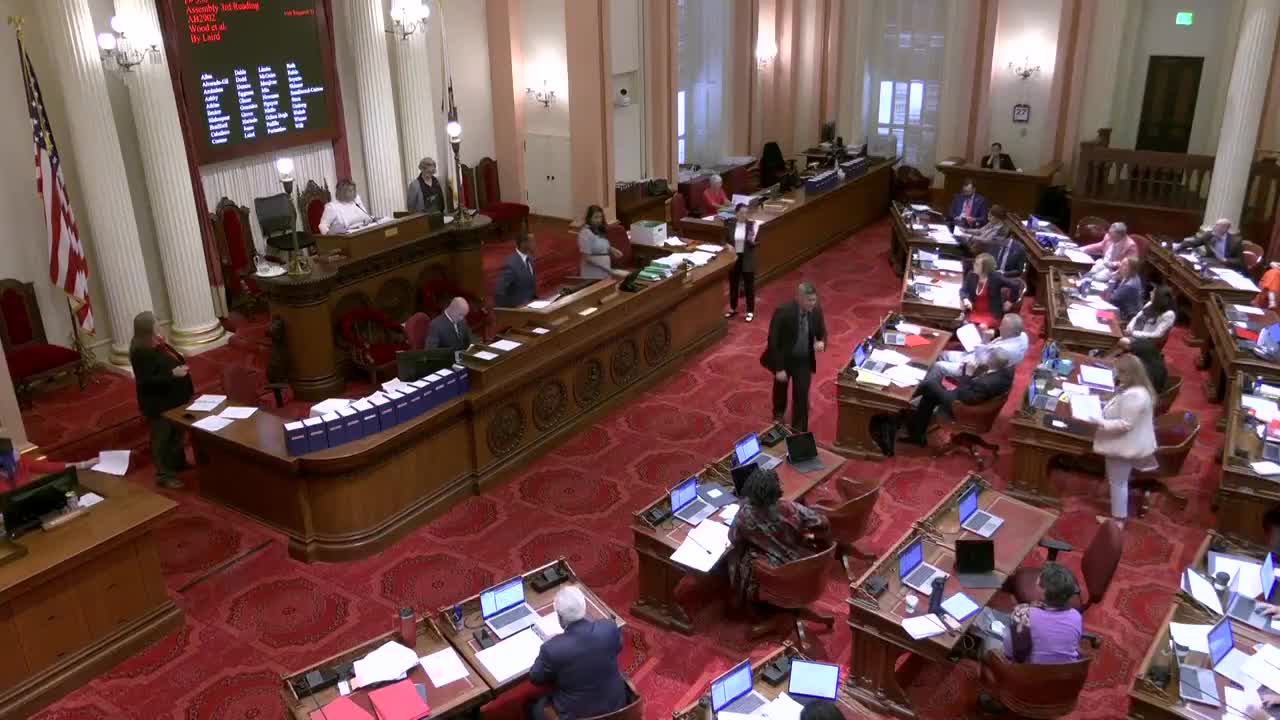
Bill Author

Bill Co-Author(s):