AB 2249: Elections: retention of election records.
- Session Year: 2023-2024
- House: Assembly
- Latest Version Date: 2024-06-20
Current Status:
Failed
(2024-08-15: In committee: Held under submission.)
Introduced
In Committee
First Chamber
In Committee
Second Chamber
Enacted
What does this bill do?
This bill requires county election officials to keep more kinds of election materials — including paper cast vote records, completed precinct and counting‑board forms, and machine reports used to account for ballots and for the one‑percent manual tally — in addition to ballots and vote‑by‑mail envelopes. If those items are damaged or threatened by a natural disaster or other unavoidable event before the retention period ends, officials must try to prevent further damage and, if they must open sealed packages to protect records, notify the Secretary of State and get a court order authorizing the inspection. The bill also states that limiting public access to some records is necessary to protect election integrity.
The summary is provided by generative AI which can make mistakes. For original language, please view the details in the table below.
Under existing law, specified election materials, including voted ballots, vote by mail voter identification envelopes, and spoiled ballots, must be kept by county elections officials for 22 months for elections involving a federal office or for 6 months for all other elections. Existing law requires the packages containing these materials to remain unopened for the 22-month or 6-month period, as applicable. Under existing law, if a contest or criminal prosecution involving fraudulent use, marking or falsification of ballots, or forgery of vote by mail voters signatures is not commenced within the 22-month period for federal elections or within the 6-month period for all other elections, the county elections official must destroy or recycle those specified election materials.
This bill would add, among other things, paper cast vote records, completed forms issued to the precinct board and machine reports used to account for ballots delivered to the polling place, and completed forms issued to the counting board and machine reports used for the One Percent Manual Tally to the list of materials that county elections officials are required to keep. The bill would also provide that if the materials that a county elections official is required to keep are destroyed or damaged due to natural disaster or other unforeseeable and unavoidable circumstances before the applicable retention period, the county elections official must take all reasonable steps to prevent further damage to those materials. The bill would provide that if a county elections official cannot prevent further damage to the election materials without inspecting the inside of damaged packages, the official must seek a writ of mandate authorizing the official to inspect the inside of the packages and notify the Secretary of State of their intent to do so.
Existing constitutional provisions require that a statute that limits the right of access to the meetings of public bodies or the writings of public officials and agencies be adopted with findings demonstrating the interest protected by the limitation and the need for protecting that interest.
This bill would make legislative findings to that effect.
By imposing additional duties on county elections officials, this bill would create a state-mandated local program.
The California Constitution requires the state to reimburse local agencies and school districts for certain costs mandated by the state. Statutory provisions establish procedures for making that reimbursement.
This bill would provide that, if the Commission on State Mandates determines that the bill contains costs mandated by the state, reimbursement for those costs shall be made pursuant to the statutory provisions noted above.
Under existing law, specified election materials, including voted ballots, vote by mail voter identification envelopes, and spoiled ballots, must be kept by county elections officials for 22 months for elections involving a federal office or for 6 months for all other elections. Existing law requires the packages containing these materials to remain unopened for the 22-month or 6-month period, as applicable. Under existing law, if a contest or criminal prosecution involving fraudulent use, marking or falsification of ballots, or forgery of vote by mail voters signatures is not commenced within the 22-month period for federal elections or within the 6-month period for all other elections, the county elections official must destroy or recycle those specified election materials.
This bill would add, among other things, paper cast vote records, completed forms issued to the precinct board and machine reports used to account for ballots delivered to the polling place, and completed forms issued to the counting board and machine reports used for the One Percent Manual Tally to the list of materials that county elections officials are required to keep. The bill would also provide that if the materials that a county elections official is required to keep are destroyed or damaged due to natural disaster or other unforeseeable and unavoidable circumstances before the applicable retention period, the county elections official must take all reasonable steps to prevent further damage to those materials. The bill would provide that if a county elections official cannot prevent further damage to the election materials without inspecting the inside of damaged packages, the official must seek a writ of mandate authorizing the official to inspect the inside of the packages and notify the Secretary of State of their intent to do so.
By imposing additional duties on county elections officials, this bill would create a state-mandated local program.
The California Constitution requires the state to reimburse local agencies and school districts for certain costs mandated by the state. Statutory provisions establish procedures for making that reimbursement.
This bill would provide that, if the Commission on State Mandates determines that the bill contains costs mandated by the state, reimbursement for those costs shall be made pursuant to the statutory provisions noted above.
Under existing law, specified election materials, including voted ballots, vote by mail voter identification envelopes, and spoiled ballots, must be kept by county elections officials for 22 months for elections involving a federal office or for 6 months for all other elections. Existing law requires the packages containing these materials to remain unopened for the 22-month or 6-month period, as applicable. Under existing law, if a contest or criminal prosecution involving fraudulent use, marking or falsification of ballots, or forgery of vote by mail voters signatures is not commenced within the 22-month period for federal elections or within the 6-month period for all other elections, the county elections official must destroy or recycle those specified election materials.
This bill would add, among other things, paper cast vote records, completed forms issued to the precinct board and machine reports used to account for ballots delivered to the polling place, and completed forms issued to the counting board and machine reports used for the One Percent Manual Tally to the list of materials that county elections officials are required to keep. The bill would also provide that if the materials that a county elections official is required to keep are destroyed or damaged due to natural disaster or other unforeseeable and unavoidable circumstances before the 22-month or 6-month period, as applicable, applicable retention period, the county elections official must take all reasonable steps to prevent further damage to those materials. The bill would provide that if a county elections official cannot prevent further damage to the election materials without inspecting the inside of damaged packages, the official must seek a writ of mandate authorizing the official to inspect the inside of the packages and notify the Secretary of State of their intent to do so.
By imposing additional duties on county elections officials, this bill would create a state-mandated local program.
The California Constitution requires the state to reimburse local agencies and school districts for certain costs mandated by the state. Statutory provisions establish procedures for making that reimbursement.
This bill would provide that, if the Commission on State Mandates determines that the bill contains costs mandated by the state, reimbursement for those costs shall be made pursuant to the statutory provisions noted above.
Under existing law, specified election materials, including voted ballots, vote by mail voter identification envelopes, and spoiled ballots, must be kept by county elections officials for 22 months for elections involving a federal office or for 6 months for all other elections. Existing law requires the packages containing these materials to remain unopened for the 22-month or 6-month period, as applicable. Under existing law, if a contest or criminal prosecution involving fraudulent use, marking or falsification of ballots, or forgery of vote by mail voters signatures is not commenced within the 22-month period for federal elections or within the 6-month period for all other elections, the county elections official must destroy or recycle those specified election materials.
This bill would add, among other things, paper cast vote records, completed forms issued to the precinct board and machine reports used to account for ballots delivered to the polling place, and completed forms issued to the counting board and machine reports used for the One Percent Manual Tally to the list of materials that county elections officials are required to keep. The bill would also provide that if the materials that a county elections official is required to keep are destroyed or damaged due to natural disaster or other unforeseeable and unavoidable circumstances before the 22-month or 6-month period, as applicable, the county elections official must take all reasonable steps to prevent further damage to those materials. The bill would provide that if a county elections official cannot prevent further damage to the election materials without inspecting the inside of damaged packages, the official must seek a writ of mandate authorizing the official to inspect the inside of the packages and notify the Secretary of State of their intent to do so.
By imposing additional duties on county elections officials, this bill would create a state-mandated local program.
The California Constitution requires the state to reimburse local agencies and school districts for certain costs mandated by the state. Statutory provisions establish procedures for making that reimbursement.
This bill would provide that, if the Commission on State Mandates determines that the bill contains costs mandated by the state, reimbursement for those costs shall be made pursuant to the statutory provisions noted above.
(a)(1)The elections official shall preserve all rosters or combined rosters and voter lists as provided for in Section 14107, if applicable, until five years after the date of the election, after which they shall be destroyed by that official.
(2)For purposes of this subdivision, if an electronic poll book is used, a copy of the electronic data file may be preserved in lieu of preserving a paper copy of the rosters or combined rosters and voter lists, if applicable.
(b)In lieu of preserving the original roster, the elections official may, by filming or other suitable method, record the original roster of voters and destroy the roster following the next subsequent general election.
SEC. 2.Section 17301 of the Elections Code is amended to read:17301.(a)The following provisions shall apply to those elections where candidates for one or more of the following offices are voted upon: President, Vice President, United States Senator, and United States Representative.
(b)The packages containing the following items shall be kept by the elections official, unopened and unaltered, for 22 months from the date of the election:
(1)Voted polling place ballots.
(2)Paper cast vote records, as defined by Section 19271, if any, of voted polling place ballots.
(3)Voted vote by mail voter ballots.
(4)Vote by mail voter identification envelopes.
(5)Voted provisional voter ballots.
(6)Voted conditional voter registration ballots.
(7)Provisional ballot voter identification envelopes, including conditional voter registration voter identification envelopes cast pursuant to subdivision (e) of Section 2170.
(8)Spoiled ballots.
(9)Canceled ballots.
(10)Unused vote by mail ballots surrendered by the voter pursuant to Section 3015.
(c)If a contest is not commenced within the 22-month period, or if a criminal prosecution involving fraudulent use, marking or falsification of ballots, or forgery of vote by mail voters signatures is not commenced within the 22-month period, either of which may involve the vote of the precinct from which voted ballots were received, the elections official shall have the items identified in subdivision (b) destroyed or recycled. The packages shall otherwise remain unopened until the items are destroyed or recycled.
SEC. 3.Section 17302 of the Elections Code is amended to read:17302.(a)The following provisions shall apply to all state or local elections not provided for in subdivision (a) of Section 17301. An election is not deemed a state or local election if votes for candidates for federal office may be cast on the same ballot as votes for candidates for state or local office.
(b)The packages containing the following items shall be kept by the elections official, unopened and unaltered, for six months from the date of the election:
(1)Voted polling place ballots.
(2)Paper cast vote records, as defined by Section 19271, if any, of voted polling place ballots.
(3)Voted vote by mail voter ballots.
(4)Vote by mail voter identification envelopes.
(5)Voted provisional voter ballots.
(6)Voted conditional voter registration ballots.
(7)Provisional ballot voter identification envelopes, including conditional voter registration voter identification envelopes cast pursuant to subdivision (e) of Section 2170.
(8)Spoiled ballots.
(9)Canceled ballots.
(10)Unused vote by mail ballots surrendered by the voter pursuant to Section 3015.
(c)If a contest is not commenced within the six-month period, or if a criminal prosecution involving fraudulent use, marking or falsification of ballots, or forgery of vote by mail voters signatures is not commenced within the six-month period, either of which may involve the vote of the precinct from which voted ballots were received, the elections official shall have the items identified in subdivision (b) destroyed or recycled. The packages shall otherwise remain unopened until the items are destroyed or recycled.
SEC. 4.Section 17303 of the Elections Code is amended to read:17303.(a)The following provisions apply to those elections in which candidates for one or more of the following offices are voted upon: President, Vice President, United States Senator, and United States Representative.
(b)The elections official shall preserve the package or packages containing the following items for a period of 22 months:
(1)Two tally sheets, if the precinct manually tabulates ballots under Section 14432.
(2)The challenge lists.
(3)The assisted voters list.
(4)Completed forms issued to the precinct board and any machine reports used to account for the ballots delivered to the polling place pursuant to Section 14405.
(5)Completed forms issued to the counting board and any machine reports used for the One Percent Manual Tally provided for in Article 5 (commencing with Section 15360) of Chapter 4 of Division 15.
(c)All voters may inspect the contents of the package or packages at all times following commencement of the official canvass of the votes, except that items that contain signatures of voters may not be copied or distributed.
(d)If a contest is not commenced within the 22-month period, or if a criminal prosecution involving fraudulent use, marking, or falsification of ballots, or forgery of vote by mail voters signatures is not commenced within the 22-month period, either of which may involve the vote of the precinct from which voted ballots were received, the elections official shall have the items identified in subdivision (b) destroyed or recycled.
SEC. 5.Section 17304 of the Elections Code is amended to read:17304.(a)The following provisions apply to all state or local elections not provided for in subdivision (a) of Section 17303. An election is not deemed a state or local election if votes for candidates for federal office may be cast on the same ballot as votes for candidates for state or local office.
(b)The elections official shall preserve the package or packages containing the following items for a period of six months:
(1)Two tally sheets, if the precinct manually tabulates ballots under Section 14432.
(2)The challenge lists.
(3)The assisted voters list.
(4)Completed forms issued to the precinct board and any machine reports used to account for the ballots delivered to the polling place pursuant to Section 14405.
(5)Completed forms issued to the counting board and any machine reports used for the One Percent Manual Tally provided for in Article 5 (commencing with Section 15360) of Chapter 4 of Division 15.
(c)All voters may inspect the contents of the package or packages at all times following commencement of the official canvass of the votes, except that items that contain signatures of voters may not be copied or distributed.
(d)If a contest is not commenced within the six-month period, or if a criminal prosecution involving fraudulent use, marking or falsification of ballots, or forgery of vote by mail voters signatures is not commenced within the six-month period, either of which may involve the vote of the precinct from which voted ballots were received, the elections official shall have the items identified in subdivision (b) destroyed or recycled.
SEC. 6.Section 17305 of the Elections Code is amended to read:17305.(a)The following provisions apply to those elections where candidates for one or more of the following offices are voted upon: President, Vice President, United States Senator, and United States Representative.
(b)Upon the completion of the counting of the votes as provided in Article 4 (commencing with Section 15640) of Chapter 9 of Division 15, all items specified in subdivision (b) of Section 17301 shall be kept by the elections official for 22 months from the date of the election or so long thereafter as any contest involving the vote at the election remains undetermined.
(c)Notwithstanding any other provision of this code, the final disposition of all items specified in subdivision (b) of Section 17301 shall be determined by the elections official.
(d)Sealed ballot containers shall not be opened unless the elections official determines it is necessary in a shredding or recycling process. This section shall not be construed to allow packages or containers to be opened except for purposes specified herein. The packages or containers shall otherwise remain unopened until the ballots are destroyed or recycled.
SEC. 7.Section 17306 of the Elections Code is amended to read:17306.(a)The following provisions shall apply to all state or local elections not provided for in subdivision (a) of Section 17305. An election is not deemed a state or local election if votes for candidates for federal office may be cast on the same ballot as votes for candidates for state or local office.
(b)Upon the completion of the counting of the votes as provided in Article 4 (commencing with Section 15640) of Chapter 9 of Division 15, all items specified in subdivision (b) of Section 17302 shall be kept by the elections official for six months from the date of the election or so long thereafter as any contest involving the vote at the election remains undetermined.
(c)Notwithstanding any other provision of this code, the final disposition of all items specified in subdivision (b) of Section 17302 shall be determined by the elections official.
(d)Sealed ballot containers shall not be opened unless the elections official determines it is necessary in a shredding or recycling process. This section shall not be construed to allow packages or containers to be opened except for purposes specified herein. The packages or containers shall otherwise remain unopened until the ballots are destroyed or recycled.
SEC. 8.Section 17504 is added to the Elections Code, to read:17504.(a)If items that are required to be preserved or kept pursuant to this division are destroyed or damaged due to natural disaster or other unforeseeable and unavoidable circumstances before the end of the applicable retention period, the elections official shall take all reasonable steps to prevent further damage to those items.
(b)If the elections official cannot prevent further damage to election records without inspecting the inside of any damaged packages that are required by this division to be kept unopened and unaltered, the elections official shall do both of the following:
(1)Notify the Secretary of State of the election officials intent to seek a writ of mandate authorizing them to inspect the inside of the packages.
(2)Seek the mandate described in paragraph (1). (1), which shall name the Secretary of State as respondent.
SEC. 9.The Legislature finds and declares that Sections 2 and 3 of this act, which amend Sections 17301 and 17302 of the Elections Code, impose a limitation on the publics right of access to the meetings of public bodies or the writings of public officials and agencies within the meaning of Section 3 of Article I of the California Constitution. Pursuant to that constitutional provision, the Legislature makes the following findings to demonstrate the interest protected by this limitation and the need for protecting that interest:
In order ensure election integrity, it is necessary that certain election records are not accessible to the public except when an election is contested or during certain criminal prosecutions.
SEC. 9.SEC. 10.If the Commission on State Mandates determines that this act contains costs mandated by the state, reimbursement to local agencies and school districts for those costs shall be made pursuant to Part 7 (commencing with Section 17500) of Division 4 of Title 2 of the Government Code.
(a)(1)The elections official shall preserve all rosters or combined rosters and voter lists as provided for in Section 14107, if applicable, until five years after the date of the election, after which they shall be destroyed by that official.
(2)For purposes of this subdivision, if an electronic poll book is used, a copy of the electronic data file may be preserved in lieu of preserving a paper copy of the rosters or combined rosters and voter lists, if applicable.
(b)In lieu of preserving the original roster, the elections official may, by filming or other suitable method, record the original roster of voters and destroy the roster following the next subsequent general election.
SEC. 2.Section 17301 of the Elections Code is amended to read:17301.(a)The following provisions shall apply to those elections where candidates for one or more of the following offices are voted upon: President, Vice President, United States Senator, and United States Representative.
(b)The packages containing the following items shall be kept by the elections official, unopened and unaltered, for 22 months from the date of the election:
(1)Voted polling place ballots.
(2)Paper cast vote records, as defined by Section 19271, if any, of voted polling place ballots.
(3)Voted vote by mail voter ballots.
(4)Vote by mail voter identification envelopes.
(5)Voted provisional voter ballots.
(6)Voted conditional voter registration ballots.
(7)Provisional ballot voter identification envelopes, including conditional voter registration voter identification envelopes cast pursuant to subdivision (e) of Section 2170.
(8)Spoiled ballots.
(9)Canceled ballots.
(10)Unused vote by mail ballots surrendered by the voter pursuant to Section 3015.
(11)Completed forms issued to the precinct board and any machine reports used to account for the ballots delivered to the polling place pursuant to Section 14405.(12)Completed forms issued to the counting board and any machine reports used for the One Percent Manual Tally provided for in Article 5 (commencing with Section 15360) of Chapter 4 of Division 15.(c)If a contest is not commenced within the 22-month period, or if a criminal prosecution involving fraudulent use, marking or falsification of ballots, or forgery of vote by mail voters signatures is not commenced within the 22-month period, either of which may involve the vote of the precinct from which voted ballots were received, the elections official shall have the items identified in subdivision (b) destroyed or recycled. The packages shall otherwise remain unopened until the items are destroyed or recycled.
SEC. 3.Section 17302 of the Elections Code is amended to read:17302.(a)The following provisions shall apply to all state or local elections not provided for in subdivision (a) of Section 17301. An election is not deemed a state or local election if votes for candidates for federal office may be cast on the same ballot as votes for candidates for state or local office.
(b)The packages containing the following items shall be kept by the elections official, unopened and unaltered, for six months from the date of the election:
(1)Voted polling place ballots.
(2)Paper cast vote records, as defined by Section 19271, if any, of voted polling place ballots.
(3)Voted vote by mail voter ballots.
(4)Vote by mail voter identification envelopes.
(5)Voted provisional voter ballots.
(6)Voted conditional voter registration ballots.
(7)Provisional ballot voter identification envelopes, including conditional voter registration voter identification envelopes cast pursuant to subdivision (e) of Section 2170.
(8)Spoiled ballots.
(9)Canceled ballots.
(10)Unused vote by mail ballots surrendered by the voter pursuant to Section 3015.
(11)Completed forms issued to the precinct board and any machine reports used to account for the ballots delivered to the polling place pursuant to Section 14405.(12)Completed forms issued to the counting board and any machine reports used for the One Percent Manual Tally provided for in Article 5 (commencing with Section 15360) of Chapter 4 of Division 15.(c)If a contest is not commenced within the six-month period, or if a criminal prosecution involving fraudulent use, marking or falsification of ballots, or forgery of vote by mail voters signatures is not commenced within the six-month period, either of which may involve the vote of the precinct from which voted ballots were received, the elections official shall have the items identified in subdivision (b) destroyed or recycled. The packages shall otherwise remain unopened until the items are destroyed or recycled.
SEC. 4.Section 17303 of the Elections Code is amended to read:17303.(a)The following provisions apply to those elections in which candidates for one or more of the following offices are voted upon: President, Vice President, United States Senator, and United States Representative.
(b)The elections official shall preserve the package or packages containing the following items for a period of 22 months:
(1)Two tally sheets, if the precinct manually tabulates ballots under Section 14432.
(2)The challenge lists.
(3)The assisted voters list.
(4)Completed forms issued to the precinct board and any machine reports used to account for the ballots delivered to the polling place pursuant to Section 14405.
(5)Completed forms issued to the counting board and any machine reports used for the One Percent Manual Tally provided for in Article 5 (commencing with Section 15360) of Chapter 4 of Division 15.
(c)All voters may inspect the contents of the package or packages at all times following commencement of the official canvass of the votes, except that items that contain signatures of voters may not be copied or distributed.
(d)If a contest is not commenced within the 22-month period, or if a criminal prosecution involving fraudulent use, marking, or falsification of ballots, or forgery of vote by mail voters signatures is not commenced within the 22-month period, either of which may involve the vote of the precinct from which voted ballots were received, the elections official shall have the items identified in subdivision (b) destroyed or recycled.
SEC. 5.Section 17304 of the Elections Code is amended to read:17304.(a)The following provisions apply to all state or local elections not provided for in subdivision (a) of Section 17303. An election is not deemed a state or local election if votes for candidates for federal office may be cast on the same ballot as votes for candidates for state or local office.
(b)The elections official shall preserve the package or packages containing the following items for a period of six months:
(1)Two tally sheets, if the precinct manually tabulates ballots under Section 14432.
(2)The challenge lists.
(3)The assisted voters list.
(4)Completed forms issued to the precinct board and any machine reports used to account for the ballots delivered to the polling place pursuant to Section 14405.
(5)Completed forms issued to the counting board and any machine reports used for the One Percent Manual Tally provided for in Article 5 (commencing with Section 15360) of Chapter 4 of Division 15.
(c)All voters may inspect the contents of the package or packages at all times following commencement of the official canvass of the votes, except that items that contain signatures of voters may not be copied or distributed.
(d)If a contest is not commenced within the six-month period, or if a criminal prosecution involving fraudulent use, marking or falsification of ballots, or forgery of vote by mail voters signatures is not commenced within the six-month period, either of which may involve the vote of the precinct from which voted ballots were received, the elections official shall have the items identified in subdivision (b) destroyed or recycled.
SEC. 6.Section 17305 of the Elections Code is amended to read:17305.(a)The following provisions apply to those elections where candidates for one or more of the following offices are voted upon: President, Vice President, United States Senator, and United States Representative.
(b)Upon the completion of the counting of the votes as provided in Article 4 (commencing with Section 15640) of Chapter 9 of Division 15, all items specified in subdivision (b) of Section 17301 shall be kept by the elections official for 22 months from the date of the election or so long thereafter as any contest involving the vote at the election remains undetermined.
(c)Notwithstanding any other provision of this code, the final disposition of all items specified in subdivision (b) of Section 17301 shall be determined by the elections official.
(d)Sealed ballot containers shall not be opened unless the elections official determines it is necessary in a shredding or recycling process. This section shall not be construed to allow packages or containers to be opened except for purposes specified herein. The packages or containers shall otherwise remain unopened until the ballots are destroyed or recycled.
SEC. 7.Section 17306 of the Elections Code is amended to read:17306.(a)The following provisions shall apply to all state or local elections not provided for in subdivision (a) of Section 17305. An election is not deemed a state or local election if votes for candidates for federal office may be cast on the same ballot as votes for candidates for state or local office.
(b)Upon the completion of the counting of the votes as provided in Article 4 (commencing with Section 15640) of Chapter 9 of Division 15, all items specified in subdivision (b) of Section 17302 shall be kept by the elections official for six months from the date of the election or so long thereafter as any contest involving the vote at the election remains undetermined.
(c)Notwithstanding any other provision of this code, the final disposition of all items specified in subdivision (b) of Section 17302 shall be determined by the elections official.
(d)Sealed ballot containers shall not be opened unless the elections official determines it is necessary in a shredding or recycling process. This section shall not be construed to allow packages or containers to be opened except for purposes specified herein. The packages or containers shall otherwise remain unopened until the ballots are destroyed or recycled.
SEC. 8.Section 17504 is added to the Elections Code, to read:17504.(a)If items that are required to be preserved or kept pursuant to this division are destroyed or damaged due to natural disaster or other unforeseeable and unavoidable circumstances before the end of the applicable retention period, the elections official shall take all reasonable steps to prevent further damage to those items.
(b)If the elections official cannot prevent further damage to election records without inspecting the inside of any damaged packages that are required by this division to be kept unopened and unaltered, the elections official shall do both of the following:
(1)Notify the Secretary of State of the election officials intent to seek a writ of mandate authorizing them to inspect the inside of the packages.
(2)Seek the mandate described in paragraph (1).
SEC. 9.If the Commission on State Mandates determines that this act contains costs mandated by the state, reimbursement to local agencies and school districts for those costs shall be made pursuant to Part 7 (commencing with Section 17500) of Division 4 of Title 2 of the Government Code.
(a)(1)The elections official shall preserve all rosters or combined rosters and voter lists as provided for in Section 14107, if applicable, until five years after the date of the election, after which they shall be destroyed by that official.
(2)For purposes of this subdivision, if an electronic poll book is used, a copy of the electronic data file may be preserved in lieu of preserving a paper copy of the rosters or combined rosters and voter lists, if applicable.
(b)In lieu of preserving the original roster, the elections official may, by filming or other suitable method, record the original roster of voters and destroy the roster following the next subsequent general election.
SEC. 2.Section 17301 of the Elections Code is amended to read:17301.(a)The following provisions shall apply to those elections where candidates for one or more of the following offices are voted upon: President, Vice President, United States Senator, and United States Representative.
(b)The packages containing the following items shall be kept by the elections official, unopened and unaltered, for 22 months from the date of the election:
(1)Voted polling place ballots.
(2)Paper cast vote records, as defined by Section 19271, if any, of voted polling place ballots.
(3)Voted vote by mail voter ballots.
(4)Vote by mail voter identification envelopes.
(5)Voted provisional voter ballots.
(6)Voted conditional voter registration ballots.
(6)(7)Provisional ballot voter identification envelopes, including conditional voter registration voter identification envelopes cast pursuant to subdivision (e) of Section 2170.
(7)(8)Spoiled ballots.
(8)(9)Canceled ballots.
(9)(10)Unused vote by mail ballots surrendered by the voter pursuant to Section 3015.
(10)(11)Completed forms issued to the precinct board and any machine reports used to account for the ballots delivered to the polling place pursuant to Section 14405.
(11)(12)Completed forms issued to the counting board and any machine reports used for the One Percent Manual Tally provided for in Article 5 (commencing with Section 15360) of Chapter 4 of Division 15.
(c)If a contest is not commenced within the 22-month period, or if a criminal prosecution involving fraudulent use, marking or falsification of ballots, or forgery of vote by mail voters signatures is not commenced within the 22-month period, either of which may involve the vote of the precinct from which voted ballots were received, the elections official shall have the items identified in subdivision (b) destroyed or recycled. The packages shall otherwise remain unopened until the items are destroyed or recycled.
(d)(1)If the packages containing the items identified in subdivision (b) are destroyed or damaged due to natural disaster or other unforeseeable and unavoidable circumstances before the date specified in subdivision (c), the elections official shall take all reasonable steps to prevent further damage to the paper record of the election.(2)If the elections official cannot prevent further damage to the paper record without inspecting the inside of any damaged packages, the elections official shall do both of the following:(A)Notify the Secretary of State of the election officials intent to seek a writ of mandate authorizing them to inspect the inside of the packages.(B)Seek the mandate described in subparagraph (A).SEC. 3.Section 17302 of the Elections Code is amended to read:17302.(a)The following provisions shall apply to all state or local elections not provided for in subdivision (a) of Section 17301. An election is not deemed a state or local election if votes for candidates for federal office may be cast on the same ballot as votes for candidates for state or local office.
(b)The packages containing the following items shall be kept by the elections official, unopened and unaltered, for six months from the date of the election:
(1)Voted polling place ballots.
(2)Paper cast vote records, as defined by Section 19271, if any, of voted polling place ballots.
(3)Voted vote by mail voter ballots.
(4)Vote by mail voter identification envelopes.
(5)Voted provisional voter ballots.
(6)Voted conditional voter registration ballots.
(6)(7)Provisional ballot voter identification envelopes, including conditional voter registration voter identification envelopes cast pursuant to subdivision (e) of Section 2170.
(7)(8)Spoiled ballots.
(8)(9)Canceled ballots.
(9)(10)Unused vote by mail ballots surrendered by the voter pursuant to Section 3015.
(10)(11)Completed forms issued to the precinct board and any machine reports used to account for the ballots delivered to the polling place pursuant to Section 14405.
(11)(12)Completed forms issued to the counting board and any machine reports used for the One Percent Manual Talley Tally provided for in Article 5 (commencing with Section 15360) of Chapter 4 of Division 15.
(c)If a contest is not commenced within the six-month period, or if a criminal prosecution involving fraudulent use, marking or falsification of ballots, or forgery of vote by mail voters signatures is not commenced within the six-month period, either of which may involve the vote of the precinct from which voted ballots were received, the elections official shall have the items identified in subdivision (b) destroyed or recycled. The packages shall otherwise remain unopened until the items are destroyed or recycled.
(d)(1)If the packages containing the items identified in subdivision (b) are destroyed or damaged due to natural disaster or other unforeseeable and unavoidable circumstances before the date specified in subdivision (c), the elections official shall take all reasonable steps to prevent further damage to the paper record of the election.(2)If the elections official cannot prevent further damage to the paper record without inspecting the inside of any damaged packages, the elections official shall do both of the following:(A)Notify the Secretary of State of the election officials intent to seek a writ of mandate authorizing them to inspect the inside of the packages.(B)Seek the mandate described in subparagraph (A).SEC. 4.Section 17303 of the Elections Code is amended to read:17303.(a)The following provisions apply to those elections in which candidates for one or more of the following offices are voted upon: President, Vice President, United States Senator, and United States Representative.
(b)The elections official shall preserve the package or packages containing the following items for a period of 22 months:
(1)Two tally sheets, if the precinct manually tabulates ballots under Section 14432.
(2)The challenge lists.
(3)The assisted voters list.
(c)All voters may inspect the contents of the package or packages at all times following commencement of the official canvass of the votes, except that items that contain signatures of voters may not be copied or distributed.
(d)If a contest is not commenced within the 22-month period, or if a criminal prosecution involving fraudulent use, marking, or falsification of ballots, or forgery of vote by mail voters signatures is not commenced within the 22-month period, either of which may involve the vote of the precinct from which voted ballots were received, the elections official shall have the items identified in subdivision (b) destroyed or recycled.
SEC. 5.Section 17304 of the Elections Code is amended to read:17304.(a)The following provisions apply to all state or local elections not provided for in subdivision (a) of Section 17303. An election is not deemed a state or local election if votes for candidates for federal office may be cast on the same ballot as votes for candidates for state or local office.
(b)The elections official shall preserve the package or packages containing the following items for a period of six months:
(1)Two tally sheets, if the precinct manually tabulates ballots under Section 14432.
(2)The challenge lists.
(3)The assisted voters list.
(c)All voters may inspect the contents of the package or packages at all times following commencement of the official canvass of the votes, except that items that contain signatures of voters may not be copied or distributed.
(d)If a contest is not commenced within the six-month period, or if a criminal prosecution involving fraudulent use, marking or falsification of ballots, or forgery of vote by mail voters signatures is not commenced within the six-month period, either of which may involve the vote of the precinct from which voted ballots were received, the elections official shall have the items identified in subdivision (b) destroyed or recycled.
SEC. 6.Section 17305 of the Elections Code is amended to read:17305.(a)The following provisions apply to those elections where candidates for one or more of the following offices are voted upon: President, Vice President, United States Senator, and United States Representative.
(b)Upon the completion of the counting of the votes as provided in Article 4 (commencing with Section 15640) of Chapter 9 of Division 15, all items specified in subdivision (b) of Section 17301 shall be kept by the elections official for 22 months from the date of the election or so long thereafter as any contest involving the vote at the election remains undetermined.
(c)Notwithstanding any other provision of this code, the final disposition of all items specified in subdivision (b) of Section 17301 shall be determined by the elections official.
(d)Sealed ballot containers shall not be opened unless the elections official determines it is necessary in a shredding or recycling process. This section shall not be construed to allow packages or containers to be opened except for purposes specified herein. The packages or containers shall otherwise remain unopened until the ballots are destroyed or recycled.
SEC. 7.Section 17306 of the Elections Code is amended to read:17306.(a)The following provisions shall apply to all state or local elections not provided for in subdivision (a) of Section 17305. An election is not deemed a state or local election if votes for candidates for federal office may be cast on the same ballot as votes for candidates for state or local office.
(b)Upon the completion of the counting of the votes as provided in Article 4 (commencing with Section 15640) of Chapter 9 of Division 15, all items specified in subdivision (b) of Section 17302 shall be kept by the elections official for six months from the date of the election or so long thereafter as any contest involving the vote at the election remains undetermined.
(c)Notwithstanding any other provision of this code, the final disposition of all items specified in subdivision (b) of Section 17302 shall be determined by the elections official.
(d)Sealed ballot containers shall not be opened unless the elections official determines it is necessary in a shredding or recycling process. This section shall not be construed to allow packages or containers to be opened except for purposes specified herein. The packages or containers shall otherwise remain unopened until the ballots are destroyed or recycled.
SEC. 8.Section 17504 is added to the Elections Code, to read:17504.(a)If items that are required to be preserved or kept pursuant to this division are destroyed or damaged due to natural disaster or other unforeseeable and unavoidable circumstances before the end of the applicable retention period, the elections official shall take all reasonable steps to prevent further damage to those items.
(b)If the elections official cannot prevent further damage to election records without inspecting the inside of any damaged packages that are required by this division to be kept unopened and unaltered, the elections official shall do both of the following:
(1)Notify the Secretary of State of the election officials intent to seek a writ of mandate authorizing them to inspect the inside of the packages.
(2)Seek the mandate described in paragraph (1).
SEC. 8.SEC. 9.If the Commission on State Mandates determines that this act contains costs mandated by the state, reimbursement to local agencies and school districts for those costs shall be made pursuant to Part 7 (commencing with Section 17500) of Division 4 of Title 2 of the Government Code.
(a)(1)The elections official shall preserve all rosters or combined rosters and voter lists as provided for in Section 14107, if applicable, until five years after the date of the election, after which they may shall be destroyed by that official.
(2)For purposes of this subdivision, if an electronic poll book is used, a copy of the electronic data file may be preserved in lieu of preserving a paper copy of the rosters or combined rosters and voter lists, if applicable.
(b)In lieu of preserving the original roster, the elections official may, by filming or other suitable method, record the original roster of voters and destroy the roster following the next subsequent general election.
SEC. 2.Section 17301 of the Elections Code is amended to read:17301.(a)The following provisions shall apply to those elections where candidates for one or more of the following offices are voted upon: President, Vice President, United States Senator, and United States Representative.
(b)The packages containing the following ballots and identification envelope items shall be kept by the elections official, unopened and unaltered, for 22 months from the date of the election:
(1)Voted polling place ballots.
(2)Paper record copies, cast vote records, as defined by Section 19271, if any, of voted polling place ballots.
(3)Voted vote by mail voter ballots.
(4)Vote by mail voter identification envelopes.
(5)Voted provisional voter ballots.
(6)Provisional ballot voter identification envelopes. envelopes, including conditional voter registration voter identification envelopes cast pursuant to subdivision (e) of Section 2170.
(7)Spoiled ballots.
(8)Canceled ballots.
(9)Unused vote by mail ballots surrendered by the voter pursuant to Section 3015.
(10)Ballot receipts.Completed forms issued to the precinct board and any machine reports used to account for the ballots delivered to the polling place pursuant to Section 14405.
(11)Completed forms issued to the counting board and any machine reports used for the One Percent Manual Tally provided for in Article 5 (commencing with Section 15360) of Chapter 4 of Division 15.
(c)If a contest is not commenced within the 22-month period, or if a criminal prosecution involving fraudulent use, marking or falsification of ballots, or forgery of vote by mail voters signatures is not commenced within the 22-month period, either of which may involve the vote of the precinct from which voted ballots were received, the elections official shall have the ballots items identified in subdivision (b) destroyed or recycled. The packages shall otherwise remain unopened until the ballots items are destroyed or recycled.
(d)(1)If the packages containing the items identified in subdivision (b) are destroyed or damaged due to natural disaster or other unforeseeable and unavoidable circumstances before the date specified in subdivision (c), the elections official shall take all reasonable steps to prevent further damage to the paper record of the election.
(2)If the elections official cannot prevent further damage to the paper record without inspecting the inside of any damaged packages, the elections official shall do both of the following:
(A)Notify the Secretary of State of the election officials intent to seek a writ of mandate authorizing them to inspect the inside of the packages.
(B)Seek the mandate described in subparagraph (A).
SEC. 3.Section 17302 of the Elections Code is amended to read:17302.(a)The following provisions shall apply to all state or local elections not provided for in subdivision (a) of Section 17301. An election is not deemed a state or local election if votes for candidates for federal office may be cast on the same ballot as votes for candidates for state or local office.
(b)The packages containing the following ballots and identification envelopes items shall be kept by the elections official, unopened and unaltered, for six months from the date of the election:
(1)Voted polling place ballots.
(2)Paper record copies, cast vote records, as defined by Section 19271, if any, of voted polling place ballots.
(3)Voted vote by mail voter ballots.
(4)Vote by mail voter identification envelopes.
(5)Voted provisional voter ballots.
(6)Provisional ballot voter identification envelopes. envelopes, including conditional voter registration voter identification envelopes cast pursuant to subdivision (e) of Section 2170.
(7)Spoiled ballots.
(8)Canceled ballots.
(9)Unused vote by mail ballots surrendered by the voter pursuant to Section 3015.
(10)Ballot receipts.Completed forms issued to the precinct board and any machine reports used to account for the ballots delivered to the polling place pursuant to Section 14405.
(11)Completed forms issued to the counting board and any machine reports used for the One Percent Manual Talley provided for in Article 5 (commencing with Section 15360) of Chapter 4 of Division 15.
(c)If a contest is not commenced within the six-month period, or if a criminal prosecution involving fraudulent use, marking or falsification of ballots, or forgery of vote by mail voters signatures is not commenced within the six-month period, either of which may involve the vote of the precinct from which voted ballots were received, the elections official shall have the packages items identified in subdivision (b) destroyed or recycled. The packages shall otherwise remain unopened until the ballots items are destroyed or recycled.
(d)(1)If the packages containing the items identified in subdivision (b) are destroyed or damaged due to natural disaster or other unforeseeable and unavoidable circumstances before the date specified in subdivision (c), the elections official shall take all reasonable steps to prevent further damage to the paper record of the election.
(2)If the elections official cannot prevent further damage to the paper record without inspecting the inside of any damaged packages, the elections official shall do both of the following:
(A)Notify the Secretary of State of the election officials intent to seek a writ of mandate authorizing them to inspect the inside of the packages.
(B)Seek the mandate described in subparagraph (A).
SEC. 4.Section 17303 of the Elections Code is amended to read:17303.(a)The following provisions apply to those elections in which candidates for one or more of the following offices are voted upon: President, Vice President, United States Senator, and United States Representative.
(b)The elections official shall preserve the package or packages containing the following items for a period of 22 months:
(1)Two tally sheets. sheets, if the precinct manually tabulates ballots under Section 14432.
(2)The challenge lists.
(3)The assisted voters list.
(c)All voters may inspect the contents of the package or packages at all times following commencement of the official canvass of the votes. votes, except that items that contain signatures of voters may not be copied or distributed.
(d)If a contest is not commenced within the 22-month period, or if a criminal prosecution involving fraudulent use, marking, or falsification of ballots, or forgery of vote by mail voters signatures is not commenced within the 22-month period, either of which may involve the vote of the precinct from which voted ballots were received, the elections official may shall have the packages items identified in subdivision (b) destroyed or recycled.
SEC. 5.Section 17304 of the Elections Code is amended to read:17304.(a)The following provisions apply to all state or local elections not provided for in subdivision (a) of Section 17303. An election is not deemed a state or local election if votes for candidates for federal office may be cast on the same ballot as votes for candidates for state or local office.
(b)The elections official shall preserve the package or packages containing the following items for a period of six months:
(1)Two tally sheets. sheets, if the precinct manually tabulates ballots under Section 14432.
(2)The copy of the roster used as the voting record. If an electronic poll book is used, a copy of the electronic data file may be preserved in lieu of creating a paper copy.(3)(2)The challenge lists.
(4)(3)The assisted voters list.
(c)All voters may inspect the contents of the package or packages at all times following commencement of the official canvass of the votes, except that items that contain signatures of voters may not be copied or distributed.
(d)If a contest is not commenced within the six-month period, or if a criminal prosecution involving fraudulent use, marking or falsification of ballots, or forgery of vote by mail voters signatures is not commenced within the six-month period, either of which may involve the vote of the precinct from which voted ballots were received, the elections official may shall have the packages items identified in subdivision (b) destroyed or recycled.
SEC. 6.Section 17305 of the Elections Code is amended to read:17305.(a)The following provisions apply to those elections where candidates for one or more of the following offices are voted upon: President, Vice President, United States Senator, and United States Representative.
(b)Upon the completion of the counting of the votes as provided in Article 4 (commencing with Section 15640) of Chapter 9 of Division 15, all ballot cards items specified in subdivision (b) of Section 17301 shall be kept by the elections official for 22 months from the date of the election or so long thereafter as any contest involving the vote at the election remains undetermined.
(c)Notwithstanding any other provision of this code, the final disposition of all voted ballot cards items specified in subdivision (b) of Section 17301 shall be determined by the elections official.
(d)Sealed ballot containers may shall not be opened if unless the elections official determines it is necessary in a shredding or recycling process. This section shall not be construed to allow packages or containers to be opened except for purposes specified herein. The packages or containers shall otherwise remain unopened until the ballots are destroyed or recycled.
SEC. 7.Section 17306 of the Elections Code is amended to read:17306.(a)The following provisions shall apply to all state or local elections not provided for in subdivision (a) of Section 17305. An election is not deemed a state or local election if votes for candidates for federal office may be cast on the same ballot as votes for candidates for state or local office.
(b)Upon the completion of the counting of the votes as provided in Article 4 (commencing with Section 15640) of Chapter 9 of Division 15, all ballot cards items specified in subdivision (b) of Section 17302 shall be kept by the elections official for six months from the date of the election or so long thereafter as any contest involving the vote at the election remains undetermined.
(c)Notwithstanding any other provision of this code, the final disposition of all voted ballot cards items specified in subdivision (b) of Section 17302 shall be determined by the elections official.
(d)Sealed ballot containers may shall not be opened if unless the elections official determines it is necessary in a shredding or recycling process. This section shall not be construed to allow packages or containers to be opened except for purposes specified herein. The packages or containers shall otherwise remain unopened until the ballots are destroyed or recycled.
SEC. 8.If the Commission on State Mandates determines that this act contains costs mandated by the state, reimbursement to local agencies and school districts for those costs shall be made pursuant to Part 7 (commencing with Section 17500) of Division 4 of Title 2 of the Government Code.
|
Date
|
Status
|
|---|---|
| Aug 15, 2024 | In committee: Held under submission. |
| Jul 1, 2024 | In committee: Referred to suspense file. |
| Jun 20, 2024 | Read second time and amended. Re-referred to Com. on APPR. |
| Jun 19, 2024 | From committee: Amend, and do pass as amended and re-refer to Com. on APPR. (Ayes 10. Noes 0.) (June 18). |
| Jun 5, 2024 | Read second time and amended. Re-referred to Com. on JUD. |
| Jun 4, 2024 | From committee: Amend, and do pass as amended and re-refer to Com. on JUD. (Ayes 6. Noes 0.) (June 4). |
| May 8, 2024 | Referred to Coms. on E. & C.A. and JUD. |
| Apr 25, 2024 | In Senate. Read first time. To Com. on RLS. for assignment. |
| Apr 25, 2024 | Read third time. Passed. Ordered to the Senate. (Ayes 61. Noes 3. Page 4992.) |
| Apr 18, 2024 | Read second time. Ordered to third reading. |
| Apr 17, 2024 | From committee: Do pass. (Ayes 11. Noes 2.) (April 17). |
| Apr 1, 2024 | Re-referred to Com. on APPR. |
| Mar 21, 2024 | Read second time and amended. |
| Mar 20, 2024 | From committee: Amend, and do pass as amended and re-refer to Com. on APPR. (Ayes 7. Noes 0.) (March 20). |
| Feb 26, 2024 | Referred to Com. on ELECTIONS. |
| Feb 9, 2024 | From printer. May be heard in committee March 10. |
| Feb 8, 2024 | Read first time. To print. |
|
Date
|
Description
|
Location
|
Votes
|
|
|---|---|---|---|---|
| Jul 1, 2024 | Placed on suspense file | Senate Standing Committee on Appropriations |
Passed |
|
| Jun 18, 2024 | Do pass as amended, but first amend, and re-refer to the Committee on [Appropriations] | Senate Standing Committee on Judiciary |
Passed |
|
| Jun 4, 2024 | Do pass as amended, but first amend, and re-refer to the Committee on [Judiciary] | Senate Standing Committee on Elections and Constitutional Amendments |
Passed |
|
| Apr 25, 2024 | AB 2249 Pellerin Assembly Third Reading | Assembly Floor |
Passed |
|
| Apr 17, 2024 | Do pass. | Assembly Standing Committee on Appropriations |
Passed |
|
| Mar 20, 2024 | Do pass as amended and be re-referred to the Committee on [Appropriations] | Assembly Standing Committee on Elections |
Passed |
This list shows positions taken on this bill by organizations on the date displayed, which is linked to the original source.
Positions by individuals are not included.
|
Organization
|
Position
|
Date
|
|---|---|---|
| California Association of Clerk and Election Officials | * Support | Jun 18, 2024 |
| California State Association Of Counties | * Support | Jun 18, 2024 |
| City Clerks Association of California | * Support | Jun 18, 2024 |
SENATE COMMITTEE ON APPROPRIATIONS
Senator Anna Caballero, Chair
2023 - 2024 Regular Session
AB 2249 (Pellerin) - Elections: retention of election records
Version: June 20, 2024 | Policy Vote: E. & C.A. 6 - 0, JUD. 10 - 0 |
Urgency: No | Mandate: Yes |
Hearing Date: July 1, 2024 | Consultant: Liah Burnley |
Bill Summary:
AB 2249 would ensure that conditional voter registration voter identification envelopes, voted conditional voter registration ballots, forms and any machine reports used to account for the ballots delivered to the polling places, and completed forms issued to the counting board and any machine reports used for the 1 percent manual tally will not be subject to a CPRA request and can only be produced if there is an elections challenge or certain specified criminal prosecutions.
Fiscal Impact:
- Cost pressures (General Fund) to the Secretary of State (SOS) to receive notification from a local election official regarding the need to seek a writ of mandate to inspect damaged records and as a result of the requirement in this bill that local elections officials seek a writ of mandate, as specified, which shall name the SOS as respondent. The SOS will incur costs to respond to and potentially litigate any such mandates.
- Potentially significant cost pressures (local fund, General Fund) to local elections officials to comply with the requirements specified in this bill. By specifying how local election officials must maintain and dispose records, this bill may create a state-mandated local program. If the Commission on State Mandates determines the provisions of this bill create a new program or impose a higher level of service for which the state must reimburse local costs, the local agency could claim reimbursement from the state.
- Potentially significant cost pressures (Trial Court Trust Fund, General Fund) By requiring a local election official to seek a writ of mandate prior to inspecting specified election records for damage, this bill may result in cost pressures to the courts. Actual costs will depend on the number of writs filed. It generally costs about $1,000 to operate a courtroom for one hour. If this bill results in 50 or more hours of court time statewide, cost pressures would exceed $50,000 annually. Although courts are not funded on the basis of workload, increased pressure on the Trial Court Trust Fund may create a need for increased funding for courts from the General Fund. The Governor’s 2024-25 May Revision proposes reducing $97 million ongoing from the General Fund to the trial courts.
Background:
This bill addresses two issues related to elections law. First, in response to a recent court case out of Nevada County, the bill seeks to ensure that certain election materials will not be subject to a California Public Records Act (CPRA) request and can only be produced if there is an elections challenge or certain specified criminal prosecutions. The bill also enacts a mechanism for preserving elections materials that are at threat of being damaged or destroyed due to a natural disaster or other unforeseen event. Part of the impetus for this bill stems from a 2014 earthquake in Napa County that damaged some records and caused the Registrar of Voters office to relocate three months before the 2014 General Election.
Proposed Law:
Requires elections officials to destroy voter rosters and voter lists after the existing five-year retention period, instead of authorizing the election official to destroy them.
Expands the list of items that must be kept unopened and unaltered for 22 months from the date of a federal election and for six months from the date of any other election to include:
Conditional voter registration voter identification envelopes;
Voted conditional voter registration ballots;
Forms and any machine reports used to account for the ballots delivered to the polling places; and,
Completed forms issued to the counting board and any machine reports used for the 1 percent manual tally.
Deletes the requirement that the copy of the roster used as the voting record or a copy of the electronic data be preserved in the case of non-federal elections.
Requires an elections official, in cases where sealed records are damaged or destroyed due to a natural disaster or other unforeseeable and unavoidable circumstances, to take all reasonable steps to prevent election records from being damaged further.
Provides that, if the elections official cannot prevent further damage to election records without inspecting the inside of any damaged packages that are required to be kept unopened and unaltered, the elections official must do both of the following:
Notify the SOS of the election official’s intent to seek a writ of mandate authorizing the official to inspect the inside of the packages; and
Seek a writ of mandate authorizing inspection, as specified, that names the SOS as the respondent.
Related Legislation:
AB 1559 (Jackson) would have updated election record retention, preservation, and destruction procedures regarding electronic voting data, including clarifying that it is a felony to knowingly provide unauthorized access to, or break the chain of custody to, certified voting technology and finished or unfinished ballot cards. AB 1559 was held on the Senate Appropriations Committee’s suspense file.
-- END --
Senator Thomas Umberg, Chair
2023-2024 Regular Session
Bill No: AB 2249 (Author:Pellerin)
Version: June 5, 2024
Hearing Date: June 18, 2024
Fiscal: Yes
Urgency: No
Consultant: AM
SUBJECT
Elections: retention of election records
DIGEST
This bill adds conditional voter registration voter identification envelopes, voted conditional voter registration ballots, forms and any machine reports used to account for the ballots delivered to the polling places, and completed forms issued to the counting board and any machine reports used for the 1 percent manual tally to the elections materials that must be sealed and only opened in response to an election challenge or specified criminal prosecutions. The bill requires elections officials to destroy voter rosters and voter lists after existing law’s five-year retention period, instead of authorizing the election official to destroy them. The bill requires an elections official, in cases where sealed records are damaged or destroyed due to a natural disaster or other unforeseeable and unavoidable circumstances, to take all reasonable steps to prevent election records from being further damaged, as provided.
EXECUTIVE SUMMARY
This bill addresses two issues related to elections law. First, in response to a recent court case out of Nevada County, the bill seeks to ensure that certain election materials will not be subject to a California Public Records Act (CPRA) request and can only be produced if there is an elections challenge or certain specified criminal prosecutions. The bill also enacts a mechanism for preserving elections materials that are at threat of being damaged or destroyed due to a natural disaster or other unforeseen event. This bill is sponsored by the California Association of Clerks and Election Officials, and supported by the California Association of Counties and the City Clerks Association of California. The bill passed the Senate Elections Committee on a vote of 6 to 0.
PROPOSED CHANGES TO THE LAW
Existing law:
- Provides, pursuant to the California Constitution, that the people have the right of access to information concerning the conduct of the people’s business, and, therefore, the meetings of public bodies and the writings of public officials and agencies are required to be open to public scrutiny. (Cal. const. art. I, § 3(b)(1).)
- Requires a statute to be broadly construed if it furthers the people’s right of access, and narrowly construed if it limits the right of access. (Cal. const. art. I, § 3(b)(1).)
- Requires a statute that limits the public’s right of access to be adopted with findings demonstrating the interest protected by the limitation and the need for protecting that interest. (Cal. const. art. I, § 3(b)(1).)
- Governs the disclosure of information collected and maintained by public agencies pursuant to the CPRA. (Gov. Code §§ 792.000 et seq.)
- States that, the Legislature, mindful of the right of individuals to privacy, finds and declares that access to information concerning the conduct of the people’s business is a fundamental and necessary right of every person in this state. (Gov. Code § 7921.000.)
- Defines “public records” as any writing containing information relating to the conduct of the public’s business prepared, owned, used, or retained by any state or local agency regardless of physical form or characteristics. (Gov. Code § 7920.530.)
- Defines “public agency” as any state or local agency. (Gov. Code § 7920.525(a).)
- Provides that all public records are accessible to the public upon request, unless the record requested is exempt from public disclosure. (Gov. Code § 7922.525.)
- Some records are prohibited from being disclosed and other records are permissively exempted from being disclosed. (See e.g. Gov. Code §§ 7920.505 & 7922.200.)
- There are several general categories of documents or information that are permissively exempt from disclosure under the CPRA essentially due to the character of the information. The exempt information can be withheld by the public agency with custody of the information, but it also may be disclosed if it is shown that the public’s interest in disclosure outweighs the public’s interest in non-disclosure of the information. (CBS, Inc. v. Block (1986) 42 Cal.3d 646, at 652.).
- Provides that the following are not public records:
- a statewide, county, city, or district initiative, referendum, or recall petition;
- a petition circulated pursuant to Section 5091 of the Education Code;
- a petition for reorganization of school districts submitted pursuant to Article 1 (commencing with Section 35700) of Chapter 4 of Part 21 of Division 3 of Title 2 of the Education Code;
- a petition for reorganization of community college districts submitted pursuant to Part 46 (commencing with Section 74000) of Division 7 of Title 3 of the Education Code; and
- a memorandum prepared by a county elections official in the examination of a petition, indicating which registered voters signed that particular petition. (Gov. Code § 7924.110(a).)
- Requires an elections official to preserve all rosters or combined rosters and voter lists from an election until five years after the date of the election.
- Authorizes the elections official to destroy those materials after that five year period. (Elec. Code § 17300.)
- Defines “roster” to mean the official list of voters for an election, which may be in paper or electronic form. Provides that the roster becomes the official list of voters who have voted in the election once signed by the voter or marked by the elections official. (Elec. Code § 349.5.)
- Defines “voter list” to mean the list of registered voters in a single or consolidated precinct or in an entire county. Requires the voter list to be updated by the elections official with public information related to who has voted in an election. (Elec. Code § 359.2.)
- Requires the elections official to keep all ballots, paper record copies of ballots, ballot identification envelopes, and ballot receipts from an election in packages that remain unopened and unaltered for 22 months from the date of the election in the case of any federal election—election for President, Vice President, Senator, or Representative—and for six months for any other election.
- Requires the elections official to destroy those materials at the end of the retention period unless an election contest or criminal prosecution, as specified, is commenced during that period.
- Requires the packages to otherwise remain unopened until the ballots are destroyed or recycled. (Elec. Code §§ 17301 & 17302.)
- Requires the elections official to keep any tally sheets used for manually tallying ballots, lists of challenged voters, and lists of assisted voters from an election in packages for 22 months from the date of a federal election and for six months from the date of any other election. (Elec. Code §§ 17303 & 17304.)
- In the case of an election that is not a federal election, requires those packages to include the copy of the roster used as the voting record or a copy of the electronic data file if an electronic poll book was used. (Elec. Code § 17304(b)(2).)
- Permits the elections official to destroy or recycle the packages at the end of the retention period unless an election contest or criminal prosecution, as specified, is commenced during that period. Permits all voters to inspect the contents of the package or packages at all times following commencement of the official canvass of the votes. (Elec. Code §§ 17303(d) & 17304(d).)
- Provides that where a court ordered a recount of an election and upon the completion of that recount, the elections official is required to keep all ballot cards for 22 months from the date of a federal election and for six months from the date of any other election, or as long thereafter as any election contest involving the vote at the election remains undetermined. (Elec. Code §§ 17305(b) & 17306(b).)
- Requires, notwithstanding any other provision of the Elections Code, that the final disposition of all such voted ballot is to be determined by the elections official. (Elec. Code §§ 17305(c) & 17306(c).)
- Allows sealed ballot containers to be opened if the elections official determines it necessary in a shredding or recycling process. Requires the packages or containers to otherwise remain unopened until the ballots are destroyed or recycled. (Elec. Code §§ 17305(d) & 17306(d).)
- Prohibits an elections official, after ballots are counted and sealed, from opening any ballots or permitting ballots to be opened, except as expressly specified. (Elec. Code § 15370.)
- Requires an elections official to preserve various other election materials for a specified period of time, including voter registration affidavits; nomination documents; signatures in lieu of filing fee petitions; initiative, referendum, and recall petitions; and records related to the appointment of precinct board members. (Elec. Code §§ 17000-17200; 17400-17506.)
- Requires an elections official, during the official canvass of an election in which a voting system is used, to conduct a public manual tally of ballots tabulated by those devices (generally referred to as the 1 percent manual tally), using either of the following methods:
- a public manual tally of the ballots canvassed in the semifinal official canvass, including vote by mail (VBM) ballots but not including provisional ballots, cast in 1 percent of the precincts chosen at random by the elections official, as specified; or
- a two-part public manual tally, which includes both of the following:
- a public manual tally of the ballots canvassed in the semifinal official canvass, not including VBM or provisional ballots, cast in 1 percent of the precincts chosen at random by the elections official; and
- a public manual tally of not less than 1 percent of the VBM ballots canvassed in the semifinal official canvass, as specified. (Elec. Code § 15360.)
This bill:
- Requires elections officials to destroy voter rosters and voter lists after existing law’s five-year retention period, instead of authorizing the election official to destroy them.
- Expands the list of items that must be kept unopened and unaltered for 22 months from the date of a federal election and for six months from the date of any other election to include: conditional voter registration voter identification envelopes, voted conditional voter registration ballots, forms and any machine reports used to account for the ballots delivered to the polling places, and completed forms issued to the counting board and any machine reports used for the 1 percent manual tally.
- Deletes the requirement that the copy of the roster used as the voting record or a copy of the electronic data be preserved in the case of non-federal elections.
- Requires an elections official, in cases where sealed records are damaged or destroyed due to a natural disaster or other unforeseeable and unavoidable circumstances, to take all reasonable steps to prevent election records from being damaged further.
- If the elections official cannot prevent further damage to election records without inspecting the inside of any damaged packages that are required to be kept unopened and unaltered, the elections official must do both of the following:
- notify the Secretary of State (SOS) of the election official’s intent to seek a writ of mandate authorizing the official to inspect the inside of the packages; and
- seek the writ of mandate.
- If the elections official cannot prevent further damage to election records without inspecting the inside of any damaged packages that are required to be kept unopened and unaltered, the elections official must do both of the following:
COMMENTS
- Stated need for the bill
The author writes:
In the pursuit of transparent elections, the preservation of the paper and electronic record of the election is of the utmost importance. However, courts and the Secretary of State have come to different conclusions regarding what documents can be safely shared by elections officials without compromising the security of an election. As elections and elections materials evolve, so too must our retention guidelines for local elections officials. AB 2249 provides clarity of the elections code so that local elections officials know exactly which materials they are required to retain and for how long.
- This bill seeks to address a situation that arose where a trial court ordered certain elections documents to be produced under seal by the County of Nevada pursuant to a California Public Records Act request even though the Secretary of State advised the county not to release the records
Access to information concerning the conduct of the people’s business is a fundamental and necessary right of every person in this state. (Gov. Cod § 7921.000.) In 2004, the right of public access was enshrined in the California Constitution with the passage of Proposition 59 (Nov. 3, 2004, statewide general election),[1] which amended the California Constitution to specifically protect the right of the public to access and obtain government records: “The people have the right of access to information concerning the conduct of the people’s business, and therefore . . . the writings of public officials and agencies shall be open to public scrutiny.” (Cal. Const., art. I, sec. 3 (b)(1).) In 2014, voters approved Proposition 42 (Jun. 3, 2014, statewide direct primary election)[2] to further increase public access to government records by requiring local agencies to comply with the CPRA and the Ralph M. Brown Act[3], and with any subsequent statutory enactment amending either act, as provided. (Cal. Const., art. I, sec. 3 (b)(7).)
Under the CPRA, public records are open to inspection by the public at all times during the office hours of the agency, unless exempted from disclosure. (Gov. Cod § 7922.525-7922.530.) A public record is defined as any writing containing information relating to the conduct of the public’s business that is prepared, owned, used, or retained by any public agency regardless of physical form or characteristics. (Gov. Code § 7920.530.) Under the CPRA, there is a “catch all” provision that provides an agency can withhold a record “that on the facts of the particular case the public interest served by not disclosing the record clearly outweighs the public interest served by disclosure of the record.” (Gov. Code § 7922.000.)
The CPRA expressly provides that certain election petitions are not public records. (Gov. Code § 7924.110(a).) Additionally, they are not open to inspection except to specified public officials or, if a petition is found to be insufficient, by the proponent of the petition in order to determine which signatures were disqualified and the reasons therefor. (Id. at (b).) The language in Sections 17301 and 17302 of the Elections Code that require certain records to be sealed except for when there is a contest of an election or a specified criminal prosecution act in a similar manner as Section 7924.110 of the Government Code by essentially making those records not accessible to the public since they are placed under seal, with certain limited exceptions.
The County of Nevada registrar was ordered by a superior court judge to restore the November 2020 archive of the election for the purpose of producing the audit log from the central tabulation system pursuant to a CPRA request, even though there was no elections challenge or a request for a recount of elections results. (Young v. Diaz (2023) Nevada County Sup. Ct., Case No. CU0000261.) Pursuant to this order, the county registrar was required to provide cast vote records, audit logs of adjudicated ballots, and ballot tabular tapes. This directly conflicted with the Secretary of State’s advice to the county, where they recommended the records not be released for election security purposes. The county registrar was required to open the sealed boxes from the election in order to retrieve the ballot tabular tapes. The court reasoned that since those materials were not expressly included in the provisions of Sections 17301 and 17302 of the Elections Code and the county did not, in the opinion of the court, meet the burden under the “catch all” exception to demonstrate that not disclosing the record clearly outweighs the public interest served by disclosure of the record.
This bill seeks to ensure that conditional voter registration voter identification envelopes, voted conditional voter registration ballots, forms and any machine reports used to account for the ballots delivered to the polling places, and completed forms issued to the counting board and any machine reports used for the 1 percent manual tally will not be subject to a CPRA request and can only be produced if there is an elections challenge or certain specified criminal prosecutions. The bill would also require that these materials and all materials already required to be contained under seal will be destroyed upon the expiration of the five-year retention period. As the SOS has already identified these records as impacting election integrity, making them not subject to public disclosure seems warranted. As the California Constitution requires a statute that limits the public’s right of access to be adopted with findings demonstrating the interest protected by the limitation and the need for protecting that interest, the author may wish to amend the bill to include such findings. (Cal. const. art. I, § 3(b)(1).)
- This bill seeks to provide a mechanism for an elections official to preserve the sealed records in the case of an emergency
The 2014 earthquake in Napa County damaged some election records and caused the office of the registrar of voters to relocate a mere three months before the 2014 General Election. The bill requires an elections official, in cases where sealed records are damaged or destroyed due to a natural disaster or other unforeseeable and unavoidable circumstances, to take all reasonable steps to prevent election records from being damaged further. If an elections official cannot prevent further damage to election records without inspecting the inside of any damaged packages that are required to be kept unopened and unaltered, the elections official must notify the SOS of the election official’s intent to seek a writ of mandate authorizing the official to inspect the inside of the packages and seek that writ. When a writ of mandate is sought it usually requires a petitioner and a respondent. In this case, it is not clear who the respondent would be in such a situation. As the bill already requires the elections official to notify the SOS, the author may wish to amend the bill to specify that the SOS is to be named as the respondent.
- Proposed amendments
The specific amendments described above are as follows:[4]
Amendment 1
Section 17504 as added to the Elections Code, is amended to read:
(a) If items that are required to be preserved or kept pursuant to this division are destroyed or damaged due to natural disaster or other unforeseeable and unavoidable circumstances before the end of the applicable retention period, the elections official shall take all reasonable steps to prevent further damage to those items.
(b) If the elections official cannot prevent further damage to election records without inspecting the inside of any damaged packages that are required by this division to be kept unopened and unaltered, the elections official shall do both of the following:
(1) Notify the Secretary of State of the election official’s intent to seek a writ of mandate authorizing them to inspect the inside of the packages.
(2) Seek the mandate described in paragraph (1). (1), which shall name the Secretary of State as respondent.
Amendment 2
The Legislature finds and declares that Sections 2 and 3 of this act, which amend Sections 17301 and 17302 of the Elections Code, impose a limitation on the public’s right of access to the meetings of public bodies or the writings of public officials and agencies within the meaning of Section 3 of Article I of the California Constitution. Pursuant to that constitutional provision, the Legislature makes the following findings to demonstrate the interest protected by this limitation and the need for protecting that interest:
In order ensure election integrity, it is necessary that certain election records are not accessible to the public except when an election is contested or during certain criminal prosecutions.
- Statements in support
The California Association of Clerks and Election Officials Elections Legislative Committee, the sponsor of the bill, write in support stating:
Since the 2020 Presidential General Election, county elections officials have received Public Records Act requests for election records they have preserved under seal. These requests are not submitted as part of an election contest litigation or criminal prosecution. And, the requesting parties have at times disagreed with the county elections official that a document they have requested is covered by Division 17 of the Elections Code. In one dispute litigated in Nevada County Superior Court, a Judge ruled that the county elections official must provide redacted versions of election records under seal.
AB 2249 would clarify that all types of ballots and the envelopes the voters used to return them, as well as paper copies of cast vote records of the ballots, must remain untouched for the specified time period absent a court order issued as part of an election contest litigation or a criminal prosecution. Additionally, your proposal would clarify that reports created for the one-percent manual tally audit during the canvass period and ballot chain of custody documents and reports are protected by the statute.
SUPPORT
California Association of Clerks and Election Officials (sponsor)
California Association of Counties
City Clerks Association of California
OPPOSITION
None received
RELATED LEGISLATION
Pending Legislation: None known.
Prior Legislation: None known.
PRIOR VOTES
Senate Elections Committee (Ayes 6, Noes 0)
Assembly Floor (Ayes 61, Noes 3)
Assembly Appropriations Committee (Ayes 11, Noes 2)
Assembly Elections Committee (Ayes 7, Noes 0)
**************
Prop. 59 was placed on the ballot by a unanimous vote of both houses of the Legislature. (SCA 1 (Burton, Ch. 1, Stats. 2004). ↑
Prop. 42 was placed on the ballot by a unanimous vote of both houses of the Legislature. (SCA 3 (Leno, Ch. 123, Stats. 2013). ↑
The Ralph M. Brown Act is the open meetings laws that apply to local agencies. (Gov. Code §§ 59450 et. seq.) ↑
The amendments may also include technical, nonsubstantive changes recommended by the Office of Legislative Counsel. ↑
SENATE COMMITTEE ON
ELECTIONS AND CONSTITUTIONAL AMENDMENTS
Senator Catherine Blakespear, Chair
2023 - 2024 Regular
Bill No: AB Hearing Date: 6/4/24
Author: | |||
Version: | 3/21/24 | ||
Urgency: | No | Fiscal: | Yes |
Consultant: | Evan Goldberg | ||
Subject: Elections: retention of election records
DIGEST
This bill adds to the list of list of elections materials that must be sealed and retained for a period of time following an election, requires certain documents to be destroyed following the retention period, and establishes a process for handling sealed documents that are damaged during the retention period.
ANALYSIS
Existing law:
- Requires elections officials to preserve all voter rosters and voter lists for five years after which an elections official is permitted destroy those records.
- Requires elections officials to keep for 22 months in the case of a federal election and 6 months in the case of a non-federal election:
- Voted polling place ballots;
- Paper record copies if any, of voted polling place ballots;
- Voted vote by mail voter ballots;
- Vote by mail voter identification envelopes;
- Voted provisional voter ballots;
- Provisional ballot voter identification envelopes;
- Spoiled ballots;
- Canceled ballots; and
- Unused vote by mail ballots surrendered by the voter.
These records must be kept under seal and remain unaltered during the retention period and they are not subject to public inspection.
Elections officials are required to destroy these items at the end of the retention periods, unless an election contest or criminal prosecution is ongoing and requires the materials to be retained.
- Requires elections officials to keep for 22 months in the case of a federal election and 6 months in the case of a non-federal election:
- Two tally sheets;
- The copy of the roster used as the voting record. If an electronic poll book is used, a copy of the electronic data file may be preserved in lieu of creating a paper copy. (This requirement only applies in non-federal elections);
- The challenge lists; and
- The assisted voters’ list.
These records are not kept under seal and are open to public inspection once the official canvass of the vote begins.
Elections officials are permitted to destroy or recycle these items at the end of the mandatory retention periods, unless an election contest or criminal prosecution is ongoing and requires the materials to be retained.
- Allows sealed ballot containers to be opened if the elections official determines it is necessary in a shredding or recycling process.
- Defines a “paper cast vote record” for the purpose of a direct recording electronic (DRE) voting system as an auditable document that reflects a voter’s selections in each contest on a ballot. A paper cast vote record is not a ballot.
- Requires each precinct board to, after the polls have closed, account for all of the ballots it received at the polling place. Each board must also sign the roster of voters and complete and sign the certificate of performance after the election.
- Requires elections officials to conduct a public, manual tally of all of the ballots in 1% of the precincts (commonly referred to as the 1% manual tally) after each election. The results of the tally must be included in the official certification of the vote.
This bill:
- Requires elections officials to destroy voter rosters and voter lists after current law’s five-year retention period has expired.
- Changes the term “paper record copies” as they relate to DRE voting systems to the term “paper cast vote record” to conform to prior legislation.
- Adds to the list of items that must be kept under seal for 22 months in the case of a federal election and 6 months in the case of a non-federal election and then be destroyed at the end of the retention period:
- Conditional voter registration voter identification envelopes;
- Voted conditional voter registration ballots;
- Forms and any machine reports used to account for the ballots delivered to the polling places; and
- Completed forms issued to the counting board and any machine reports used for the 1% manual tally.
- Deletes the requirement that the copy of the roster used as the voting record or a copy of the electronic data be preserved in the case of non-federal elections, thus conforming to retention requirements for federal elections.
- For the items in (3) under “Current law,” requires rather than permits the elections official to destroy the items at the end of the appropriate retention period, unless an election contest or criminal prosecution is ongoing and requires the materials to be retained.
- Requires an elections official, in cases where sealed records are damaged or destroyed due to a natural disaster or other unforeseeable and unavoidable circumstances, to take all reasonable steps to prevent election records from being damaged further.
- Requires, in cases where taking those reasonable steps would require the inside of a sealed package to be inspected, the elections official to notify the Secretary of State (SOS) and to seek a writ of mandate authorizing the official to inspect the inside of the packages.
- Clarifies voter signatures may not be copied or distributed when a person reviews election records that are open for public inspection.
BACKGROUND
Retention Requirements. Existing law requires most elections records to be retained for 6 months in the case of a non-federal election and for 22 months in the case of federal elections. The rosters and lists of voters who voted in an election are required to be retained for five years for all elections, regardless of whether the election included any candidates for federal office.
The retention periods are designed to ensure important materials are available should there be an election recount or contest, criminal prosecution, or other challenge to an election. Certain materials, including, ballots and ballot identification envelopes, must be kept in sealed packages that cannot be opened during the retention period, while other materials, such as lists of voters who were challenged at a voting location and lists of voters who received assistance in casting their ballots, are generally open for inspection by the public during the retention period.
Mandatory Destruction. As noted above, some sections of law require election materials to be destroyed at the end of the retention period, while other sections of law merely permit an elections official to destroy the materials.
This bill requires the destruction of all materials at the end of their retention periods. While such a change would reduce the discretion of county elections officials, the sponsor of this bill, the California Association of Clerks and Election Officials, believes such a change is important to ensure consistency in terms of how the 58 counties handle and dispose of election records after the retention periods have ended.
Nevada County Lawsuit. In August 2022, Petitioner Amy Young filed suit against then Nevada County Registrar of Voters Gregory Diaz in an effort to gain access to certain elections-related materials from the November 2020 Presidential Election and the September 2021 Gubernatorial Recall Election.
Specifically, the Petitioner in Young v. Diaz wanted access to:
- Cast vote records;
- Audit logs of adjudicated ballots;
- Ballot tabulator tapes; and
- Digital ballot images.
The Nevada County Superior Court ruled in June 2023 that under the California Public Records Act (CPRA), the Petitioner was entitled to receive copies of the first three items – the cast vote records, audit logs of adjudicated ballots (though certain information was permitted to be redacted), and ballot tabulator tapes – but was not entitled to the digital ballot images.
Cast Vote Records
A cast vote record is an auditable, electronic document that corresponds to the selection made on the voter’s ballot and lists the contests on the ballot and the voter’s selection for those contests.
The Registrar of Voters eventually provided these records to the Petitioner and argued in court that as a result, the request was moot. The Court agreed, writing:
“No purpose would be served in directing the Registrar to do what has already been done.”
Audit Logs of Adjudicated Ballots
When tabulating ballots, voting systems are programmed to set aside ballots in cases where the voter’s intent may not be clear. Common reasons why ballots are flagged include undervotes, overvotes, or write-in votes. These ballots are then “adjudicated” by an elections official who determines how they should be counted.
In ordering the release of the audit logs of adjudicated ballots, the Court noted:
“… audit logs can be utilized to provide the public with insight as to the actions taken by Respondent in connection with human adjudication of ballots (as opposed to adjudication by software). They also can be utilized to provide the public with insight as to whether election systems and equipment are being properly utilized by Respondent. Access to these logs promotes transparency in connection with the electoral process and, allows the public, on a certain level, to ‘cross-check and confirm the integrity of elections.’”
The Registrar of Voters argued the audit logs of adjudicated ballots were withheld because the County had no access to them and had no duty to re-create them from the electronic voting machines.
The Court noted it is correct that under the CPRA, a public agency is not required to create new records that didn’t exist or generate new substantive content in response to a request for public records. However, the Court stated that doesn’t mean an agency can disregard a request “simply because the information must first be retrieved and then exported into a separate record” in order to release it.
Specifically, the Court stated:
“Here, there is plentiful evidence that Respondent possessed and still possesses audit records in an electronic form from each of the elections at issue as requested by Petitioner, and that such data was reasonably subject to retrieval and exportation into a separate record for production to Petitioner. Retrieval and exportation of this data does not improperly require Respondent to create ‘new’ records that otherwise ere not in existence.”
Ballot Tabulator Tapes
The voting system used in Nevada County produces tabulator tapes in every election. These tapes are receipts printed by the precinct-based ballot scanners at the start and end of each day of in-person voting. Each tape contains information about the scanner that produced it and the votes on each election contest recorded by the machine.
Here, the Registrar of Voters argued it did not provide the ballot tabulator tapes because the records were sealed – in the words of the Court – “not due to a legal requirement, but rather due to a historical tradition of the election office to place them with other election materials that must be sealed by law.”
The Court ordered the tapes to be released, writing:
“The Court has no reason to doubt that Respondent sealed the tapes with the best of intentions. Nevertheless, it was Respondent’s decision to seal the tapes that rendered them unavailable for production when duly requested under the CPRA. Respondent’s decision, even if made in good faith, cannot defeat Petitioner’s CPRA rights.”
Digital Ballot Images
Ballot images are digital scanned copies of the actual paper ballots cast by voters.
In denying the Petitioner’s request for digital ballot images, the Court stated:
“… the Court concludes that disclosure of digital ballots is not required under the CPRA. Such production is exempted or prohibited because it is contrary to the California constitutional right to privacy and secret voting, and contrary to the previously described comprehensive statutory framework for tabulation, maintenance and disposition of voted ballots.”
COMMENTS
- According to the Author. “In the pursuit of transparent elections, the preservation of the paper and electronic record of the election is of the utmost importance. However, courts and the Secretary of State have come to different conclusions regarding what documents can be safely shared by elections officials without compromising the security of an election. As elections and elections materials evolve, so too must our retention guidelines for local elections officials. AB 2249 provides clarity of the elections code so that local elections officials know exactly which materials they are required to retain and for how long.”
- Efficiency vs. Transparency. One provision of this bill takes three items – tally sheets, challenge lists, and the list of assisted voters – which are open to public inspection and which an elections official can choose to retain indefinitely following the mandatory 6 month (non-federal election) and 22 month (federal election) retention periods and requires the elections official to destroy them.
While this will ensure consistency across all voting jurisdictions, it’s not clear what the benefit is of requiring such uniformity. Put another way, if an elections official wants to retain this information, either for their benefit or the benefit of the voters in their jurisdiction, why should this bill preclude them from doing so?
- Making Public Records Private & Then Destroying Them. As noted in the “Background” section, the case of Young v. Diaz revolved around the question of whether four elections-related items – cast vote records, audit logs of adjudicated ballots, ballot tabulator tapes, and digital ballot images – were subject to release under the CPRA.
As it pertains to digital ballot images, the Nevada County Superior Court ruled they were not subject to the CPRA, but for the other three items, the Court found they were indeed public records that the public was entitled to access.
However, this bill effectively overrides the court decision on two of those three issues – audit logs of adjudicated ballots and ballot tabulator tapes – by requiring elections officials to keep them under seal for 6 months (non-federal election) or 22 months (federal election) and then destroy them at the end of the retention period.
In Young v. Diaz, Nevada County argued there were security concerns associated with releasing the audit logs of adjudicated ballots. The Court agreed and allowed Nevada County to redact certain information prior to releasing the records, noting:
“… the Court concludes that the following data can be redacted or anonymized from the audit log records: user names, device serial number or workstation identification information and specific batch numbers.
“ … As for the remainder of the audit log … [r]espondent has not demonstrated by sufficient credible and detailed evidence that, on the facts of this particular case, the public interest served by not disclosing the audit log clearly outweighs the public interest served by disclosure of the audit log. As such, disclosure is appropriate.”
When the Court ruled the audit logs of adjudicated ballots were subject to the CPRA, it cited the California Voting System Standards issued by the SOS in October 2014:
“Election audit trails provide the supporting documentation for verifying the accuracy of reported election results. They present a concrete, indestructible archival record of all system activity related to the vote tally, and are essential for public confidence in the accuracy of the tally, for recounts, and for evidence in the event of criminal or civil litigation.”
The Court concluded:
“In short, the evidence as a whole demonstrates that disclosure of the audit log would contribute significantly to public understanding of Respondent’s activities and serve the legislative purpose of shedding light on the Registrar’s performance of its statutory duties.”
When it comes to the CPRA, for documents that aren’t specifically listed as being exempt from public release, an agency is directed to perform a balancing test – that is, whether the public interest served by withholding the records clearly outweighs the public interest served by disclosing the records.
Should the Committee wish to allow these records to remain public and require the elections official to maintain them indefinitely, it can amend the bill to strike the language on Page 3, Lines 27-34 and Page 5, Lines 5-12.
Alternatively, should the Committee wish to allow these records to remain public for the standard retention periods (6 months for non-federal elections and 22 months for federal elections) and then require them to be destroyed, it could simply amend the bill move the language above to both Section 4 (for federal elections) and Section 5 (for non-federal elections) of the bill.
- Break Glass in Case of Emergency. This bill creates a safety valve of sorts to require an elections official to preserve sealed records that may be destroyed or damaged due to a natural disaster or other unforeseeable and unavoidable circumstance before the retention period ends. It also requires the elections official, in cases where taking those reasonable steps would require the inside of a sealed package to be inspected, to notify the SOS and seek a writ of mandate authorizing the official to inspect the inside of the packages.
Part of the impetus for this provision stems from a 2014 earthquake in Napa County that damaged some records and caused the Registrar of Voters office to relocate his office just three months before the 2014 General Election.
- Does This Bus Stop At 82nd Street? Possibly, though not right away. The Committee on Rules double-referred AB 2249 to the Committee on Elections & Constitutional Amendments and the Committee on Judiciary, which is where it will go next should it be approved today.
PRIOR ACTIONS
Assembly Floor: | |
Assembly Appropriations Committee: | |
Assembly Elections Committee: |
POSITIONS
Sponsor: California Association of Clerks and Election Officials
Support: California Association of Counties
City Clerks Association of California
Oppose: None received
-- END --
ASSEMBLY THIRD READING
ATR Bill Id:AB 2249
Author:(Pellerin)
As Amended Ver:March 21, 2024
Majority vote
SUMMARY
Requires specified election records to be destroyed or recycled after the end of the required retention period. Adds to the list of election records that must be retained for a specified period of time after the election. Requires an elections official to seek a court order to allow the official to inspect the inside of packages of election materials that are otherwise required to remain sealed if such inspection is necessary to preserve materials that were damaged.
Major Provisions
- Requires an elections official to destroy rosters and voter lists from an election after five years.
- Requires an elections official to include the following election records in packages that the elections official is required to preserve unopened and unaltered for a specified period of time after an election:
- Forms used to account for the ballots delivered to the polling place, as specified.
- Forms used for the manual tally of ballots required by existing law, as specified.
- Requires election records that are required to be preserved for a specified period of time after an election to be destroyed or recycled at the end of the required retention period.
- Requires an elections official to take all reasonable steps to prevent further damage to the paper record of an election if a natural disaster or other unforeseeable circumstances damage or destroy election records that are required to be preserved after an election. Requires the elections official to seek a court order authorizing the official to inspect damaged records that are otherwise required to remain unopened and unaltered if such a step is necessary to prevent further damage, and requires the elections official to notify the Secretary of State (SOS) before seeking such an order.
COMMENTS
Existing state and federal law generally require elections officials to preserve election records for a specified period of time after the election. Among other purposes, this retention period ensures that relevant materials are available if needed for a recount, election contest, criminal prosecution, or other similar purpose.
Certain materials, including, notably, ballots and ballot identification envelopes, are required to be kept in packages that must remain unopened and unaltered until the end of the retention period, except in limited circumstances. Other election materials must be preserved for the duration of the retention period, but generally are open for inspection by the public.
The retention period for these records differs depending on whether the election included any candidates for federal office. Among other changes, this bill makes various minor changes to the election record retention provisions of the Elections Code so that the retention requirements for federal and non-federal elections are more closely aligned.
This bill is a response, in part, to litigation that was brought against the Nevada County Registrar of Voters in the Nevada County Superior Court by an individual who sought access to certain materials related to the November 2020 presidential general election and the September 2021 gubernatorial recall election under the California Public Records Act (CPRA). While the registrar of voters ultimately agreed to provide the petitioner with access to some of the records sought, the registrar objected to providing the other materials. The court subsequently ruled that under the CPRA, the registrar must provide a partially-redacted audit log of adjudicated ballots and tabulator tapes from the election. In ordering the registrar of voters to provide the petitioner with access to these materials, the court specifically noted that state law governing the retention of election materials other than ballots and identification envelopes did not specifically require those materials to be kept unopened and unaltered during the retention period and did not require those materials to be destroyed or recycled at the end of the retention period.
This bill clarifies the retention requirements for election materials related to the chain of custody of ballots and the 1% manual tally of ballots by requiring those materials to be kept with the unopened and unaltered packages that include ballots and voter identification envelopes. At the end of the required retention period, this bill would require all those materials to be destroyed.
Please see the policy committee analysis for a full discussion of this bill.
According to the Author
"In the pursuit of transparent elections, the preservation of the paper and electronic record of the election is of the utmost importance. However, courts and the Secretary of State have come to different conclusions regarding what documents can be safely shared by elections officials without compromising the security of an election. As elections and elections materials evolve, so too must our retention guidelines for local elections officials. AB 2249 provides clarity of the elections code so that local elections officials know exactly which materials they are required to retain and for how long."
Arguments in Support
The sponsor of this bill, the California Association of Clerks and Election Officials, writes in support, "Since the 2020 Presidential General Election, county elections officials have received Public Records Act requests for election records they have preserved under seal. These requests are not submitted as part of an election contest litigation or criminal prosecution….In one dispute litigated in Nevada County Superior Court, a Judge ruled that the county elections official must provide redacted versions of election records under seal. AB 2249 would clarify that all types of ballots and the envelopes the voters used to return them, as well as paper copies of cast vote records of the ballots, must remain untouched for the specified time period absent a court order issued as part of an election contest litigation or a criminal prosecution. Additionally, [this] proposal would clarify that reports created for the one-percent manual tally audit during the canvass period and ballot chain of custody documents and reports are protected by the statute."
Arguments in Opposition
None received.
FISCAL COMMENTS
According to the Assembly Appropriations Committee:
- No costs to the SOS to receive notification from a local election official regarding the need to seek a writ of mandate to inspect damaged records.
- By further specifying how a local election official must maintain and dispose records, this bill may create a state-mandated local program. If the Commission on State Mandates determines the provisions of this bill create a new program or impose a higher level of service for which the state must reimburse local costs, the local agency could claim reimbursement from the state. However, since local election officials are seeking this additional direction to clarify existing recordkeeping laws and ensure consistent practices across counties, reimbursable costs, if any, should be negligible.
- By requiring a local election official to seek a writ of mandate prior to inspecting specified election records for damage, this bill may result in cost pressures to the courts. However, any additional workload to the courts is expected to be minimal.
VOTES
ASM ELECTIONS: 7-0-1
YES: Pellerin, Lackey, Bennett, Berman, Cervantes, Low, Bonta
ABS, ABST OR NV: Essayli
ASM APPROPRIATIONS: 11-2-2
YES: Wicks, Arambula, Bryan, Calderon, Wendy Carrillo, Mike Fong, Grayson, Haney, Hart, Pellerin, Villapudua
NO: Jim Patterson, Ta
ABS, ABST OR NV: Sanchez, Dixon
UPDATED
VERSION: March 21, 2024
CONSULTANT: Ethan Jones / ELECTIONS / (916) 319-2094 FN: 0002742
Date of Hearing: April 17, 2024
ASSEMBLY COMMITTEE ON APPROPRIATIONS
Buffy Wicks, Chair
ABPCA Bill Id:AB 2249
Author:(Pellerin) – As Amended Ver:March 21, 2024
Policy Committee: | Elections | Vote: | 7 - 0 |
|
| ||
|
|
Urgency: No State Mandated Local Program: Yes Reimbursable: Yes
SUMMARY:
This bill adds to the list of election records that must be retained in unopened packages for a specified period of time after an election and requires certain election records be destroyed or recycled after the end of the retention period.
This bill also requires an election official to take all reasonable steps to preserve packaged records in light of a natural disaster or other unforeseeable and unavoidable circumstance, including requiring the election official to notify the Secretary of State (SOS) and seek a writ of mandate if the inside of a package must be opened and inspected to prevent further damage.
FISCAL EFFECT:
- No costs to the SOS to receive notification from a local election official regarding the need to seek a writ of mandate to inspect damaged records.
- By further specifying how a local election official must maintain and dispose records, this bill may create a state-mandated local program. If the Commission on State Mandates determines the provisions of this bill create a new program or impose a higher level of service for which the state must reimburse local costs, the local agency could claim reimbursement from the state. However, since local election officials are seeking this additional direction to clarify existing recordkeeping laws and ensure consistent practices across counties, reimbursable costs, if any, should be negligible.
- By requiring a local election official to seek a writ of mandate prior to inspecting specified election records for damage, this bill may result in cost pressures to the courts. However, any additional workload to the courts is expected to be minimal.
COMMENTS:
- Purpose. According to the author:
[C]ourts and the [SOS] have come to different conclusions regarding what documents can be safely shared by elections officials without compromising the security of an election. As elections and elections materials evolve, so too must our retention guidelines for local elections officials. AB 2249 provides clarity of the elections code so that local elections officials know exactly which materials they are required to retain and for how long.
This bill is sponsored by the California Association of Clerks and Election Officials.
- Retention of Election Records. Existing state and federal law requires election officials to preserve election records for a specified period of time after the election to ensure materials are available if needed for a recount, contest, criminal prosecution, or other similar purpose. This bill further aligns certain records retention requirements between federal and state or local elections, adds additional forms and reports to the list of items that must be kept in unopened packages, expressly requires the destruction of materials at the end of the retention period, and specifies how an election official must attempt to preserve records destroyed or damaged due to a natural disaster or similar unavoidable circumstance.
- Related Legislation. AB 1559 (Jackson) updates election record retention, preservation, and destruction procedures regarding electronic voting data, including clarifying that it is a felony to knowingly provide unauthorized access to, or break the chain of custody to, certified voting technology and finished or unfinished ballot cards. AB 1559 was held on the Senate Appropriations Committee’s suspense file.
SB 1328 (Bradford) is substantially similar to AB 1559. SB 1328 is pending hearing in the Senate Public Safety Committee.
Analysis Prepared by: Irene Ho / APPR. / (916) 319-2081
Date of Hearing: March 20, 2024
ASSEMBLY COMMITTEE ON ELECTIONS
Gail Pellerin, Chair
ABPCA Bill Id:AB 2249 (
Author:Pellerin) – As Introduced Ver:February 8, 2024
SUBJECT: Elections: retention of election records.
SUMMARY: Requires specified election records to be destroyed or recycled after the end of the required retention period. Adds to the list of election records that must be retained for a specified period of time after the election. Requires an elections official to seek a court order to allow the official to inspect the inside of packages of election materials that are otherwise required to remain sealed if such inspection is necessary to preserve materials that were damaged. Specifically, this bill:
- Requires an elections official to destroy rosters or combined rosters and voter lists from an election after a required five year retention period.
- Requires an elections official to include the following election records in packages that the elections official is required to preserve unopened and unaltered for a specified period of time after an election:
- Completed forms used to account for the ballots delivered to the polling place, including forms issued to the precinct board and any machine reports, as specified.
- Completed forms used for the 1% manual tally of ballots required by existing law, including forms issued to the counting board and any machine reports, as specified.
- Requires specified election records that are required to be preserved for a specified period of time after an election to be destroyed or recycled at the end of the required retention period.
- Requires an elections official, if election records that are required to be preserved unopened and unaltered for a specified period of time after an election are destroyed or damaged due to natural disaster or other unforeseeable and unavoidable circumstances before the end of the retention period, to take all reasonable steps to prevent further damage to the paper record of the election. Requires the elections official, if further damage to the paper record cannot be prevented without inspecting the inside of any damaged packages, to notify the Secretary of State (SOS) of the election official’s intent to seek a writ of mandate authorizing them to inspect the inside of the packages and to seek such a writ.
- Clarifies that voters’ signatures may not be copied or distributed when a person inspects specified election records that are open for public inspection for a specified period of time after the election.
- Deletes a provision of law that requires an elections official, for specified elections, to preserve a copy of the roster used as the voting record or, if an electronic poll book is used, a copy of the electronic data file, for a period of six months after the election. A separate provision of existing law requires these records to be preserved for five years after the election.
- Makes technical, clarifying, and conforming changes.
EXISTING STATE LAW:
- Defines the term “roster,” for the purpose of the Elections Code, to mean the official list of voters for an election, which may be in paper or electronic form. Provides that the roster becomes the official list of voters who have voted in the election once signed by the voter or marked by the elections official. (Elections Code §349.5)
- Defines the term “voter list,” for the purpose of the Elections Code, to mean the list of registered voters in a single or consolidated precinct or in an entire county. Requires the voter list to be updated by the elections official with public information related to who has voted in an election. (Elections Code §359.2)
- Requires the elections official to preserve all rosters or combined rosters and voter lists from an election until five years after the date of the election. Permits the elections official to destroy those materials after that five year period. (Elections Code §17300)
- Requires the elections official to keep the ballots, paper record copies of ballots, ballot identification envelopes, and ballot receipts from an election in packages that remain unopened and unaltered for 22 months from the date of the election in case of a federal election (any election that includes candidates for one or more of the following offices: President, Vice President, United States (US) Senator, or US Representative), and for six months for any other election. Requires the elections official to destroy or recycle the ballots (in the case of a federal election) or the packages (in the case of an election that is not a federal election) at the end of the retention period unless an election contest or criminal prosecution, as specified, is commenced during that period. Requires the packages to otherwise remain unopened until the ballots are destroyed or recycled. (Elections Code §§17301, 17302)
- Requires the elections official to keep any tally sheets used for manually tallying ballots, lists of challenged voters, and lists of assisted voters from an election in packages for 22 months from the date of a federal election and for six months from the date of any election that is not a federal election. Requires those packages to include, in the case of an election that is not a federal election, the copy of the roster used as the voting record (or a copy of the electronic data file if an electronic poll book was used). Permits the elections official to destroy or recycle the packages at the end of the retention period unless an election contest or criminal prosecution, as specified, is commenced during that period. Permits all voters to inspect the contents of the package or packages at all times following commencement of the official canvass of the votes. (Elections Code §§17303, 17304)
- Requires the elections official, in the case of an election where a court ordered a recount of the election, as specified, and upon completion of that recount, to keep all ballot cards for 22 months from the date of a federal election and for six months from the date of any election that is not a federal election, or as long thereafter as any election contest involving the vote at the election remains undetermined. Provides, notwithstanding any other provision of the Elections Code, that the final disposition of all such voted ballot cards shall be determined by the elections official. Permits sealed ballot containers to be opened if the elections official determines it necessary in a shredding or recycling process. Requires the packages or containers to otherwise remain unopened until the ballots are destroyed or recycled. (Elections Code §§17305, 17306)
- Prohibits an elections official, after ballots are counted and sealed, from opening any ballots or permitting ballots to be opened, except as expressly specified. (Elections Code §15370)
- Requires the elections official, during the official canvass of an election in which a voting system is used, to conduct a public manual tally of ballots tabulated by those devices (commonly referred to as the 1% manual tally), using either of the following methods:
- A public manual tally of the ballots canvassed in the semifinal official canvass, including vote by mail (VBM) ballots but not including provisional ballots, cast in 1% of the precincts chosen at random by the elections official, as specified; or,
- A two-part public manual tally, which includes both of the following:
- A public manual tally of the ballots canvassed in the semifinal official canvass, not including VBM or provisional ballots, cast in 1% of the precincts chosen at random by the elections official; and,
- A public manual tally of not less than 1% of the VBM ballots canvassed in the semifinal official canvass, as specified. (Elections Code §15360)
- Requires an elections official to preserve various other election materials for a specified period of time, including voter registration affidavits; nomination documents; signatures in lieu of filing fee petitions; initiative, referendum, and recall petitions; and records related to the appointment of precinct board members. (Elections Code §§17000-17200, 17400-17506)
EXISTING FEDERAL LAW requires every officer of election to retain and preserve, for a period of twenty-two months from the date of any general, special, or primary election of which candidates for the office of President, Vice President, presidential elector, Member of the Senate, or Member of the House of Representatives are voted for, all records and papers which come into the officer’s possession relating to any application, registration, payment of poll tax, or other act requisite to voting in such election, as specified. (52 U.S.C. §20701)
FISCAL EFFECT: Unknown. State-mandated local program; contains reimbursement direction.
COMMENTS:
- Purpose of the Bill: According to the author:
In the pursuit of transparent elections, the preservation of the paper and electronic record of the election is of the utmost importance. However, courts and the Secretary of State have come to different conclusions regarding what documents can be safely shared by elections officials without compromising the security of an election. As elections and elections materials evolve, so too must our retention guidelines for local elections officials. AB 2249 provides clarity of the elections code so that local elections officials know exactly which materials they are required to retain and for how long.
- Retention of Election Materials: As detailed above, existing state and federal law generally require elections officials to preserve election records for a specified period of time after the election. Among other purposes, this retention period ensures that relevant materials are available if needed for a recount, election contest, criminal prosecution, or other similar purpose.
Certain materials, including, notably, ballots and ballot identification envelopes, are required to be kept in packages that must remain unopened and unaltered until the end of the retention period, except in limited circumstances. Other election materials, including lists of voters who were challenged at a voting location and lists of voters who received assistance in casting their ballots, must be preserved for the duration of the retention period, but generally are open for inspection by the public during that time.
The retention period for these records differs depending on whether the election included any candidates for federal office. If so, federal law requires those election materials to be retained for 22 months, a retention period that is mirrored in state law. For elections that do not include candidates for federal office, state law requires the materials to be retained for six months. (The rosters and lists of voters who voted in an election are required to be retained for five years for all elections, regardless of whether the election included any candidates for federal office.)
Because the retention period for these materials differs for federal and non-federal elections, the Elections Code includes separate code sections that govern the retention of materials depending on whether the election includes candidates for federal office or not. When they were first enacted in the 1980s, these code sections were functionally identical except for the length of the retention period. Over time, however, subsequently-approved legislation has created slight differences between the rules for retention of records for federal elections and for non-federal elections. There is nothing in the legislative history to suggest that those differences were intentional; instead, it appears that they were inadvertent.
Among other changes, this bill makes various minor changes to the election record retention provisions of the Elections Code so that the retention requirements for federal and non-federal elections are more closely aligned. Additionally, this bill makes technical amendments to those provisions by changing the term “paper record copies” to “paper cast vote records” to reflect a change in terminology made in AB 2252 (Ting), Chapter 75, Statutes of 2016. - Nevada County Litigation: This bill is a response, in part, to litigation that was brought against the Nevada County Registrar of Voters in the Nevada County Superior Court by an individual who sought access to certain materials related to the November 2020 presidential general election and the September 2021 gubernatorial recall election under the California Public Records Act (CPRA). Specifically, the petitioner in that case sought access to cast vote records,[1] an audit log of adjudicated ballots,[2] tabulator tapes,[3] and digital ballot images.[4]
While the registrar of voters ultimately agreed to provide the petitioner with access to the cast vote records, it objected to providing the other materials. The court subsequently ruled that under the CPRA, the registrar must provide the audit log of adjudicated ballots (though the court allowed the registrar to redact certain information) and the tabulator tapes. In ordering the registrar of voters to provide the petitioner with access to these materials, the court specifically noted that state law governing the retention of election materials other than ballots and identification envelopes did not specifically require those materials to be kept unopened and unaltered during the retention period and did not require those materials to be destroyed or recycled at the end of the retention period. In the case of the audit logs, the court required the registrar to provide those logs even though the registrar had not produced them during the election and the subsequent canvass of election results. The court found that because the registrar still possessed those logs in electronic form and could retrieve and export them into a separate record that could be provided to the petitioner, the registrar was required to produce those logs under the CPRA.
The court denied the petitioners’ request for access to the digital ballot images. In denying that request, the court found that provisions of the California Constitution protected the right to secret voting and ballots, and found that existing Elections Code provisions related to the preservation and destruction of ballots after an election “manifest a legislative intent…to protect ballot secrecy by maintaining the integrity of all ballot processing, tabulation, maintenance and disposition.”
Among other provisions, this bill clarifies the retention requirements for election materials related to the chain of custody of ballots and the 1% manual tally of ballots by requiring those materials to be kept with the unopened and unaltered packages that include ballots and voter identification envelopes. At the end of the required retention period, this bill would require all those materials to be destroyed. - Destruction of Election Materials After Retention: As detailed above, existing law generally requires the elections official to destroy or recycle ballots from an election (in the case of a federal election) or the packages containing ballots and identification envelopes (in the case of an election that is not a federal election) at the end of the retention period. By contrast, other sections of law expressly permit, but do not require, the elections official to destroy or recycle other election materials (including rosters and lists of challenged and assisted voters) at the end of the retention period. This bill requires the destruction of these materials at the end of the retention period. While such a change would reduce the discretion of county elections officials, the sponsor of this bill, the California Association of Clerks and Election Officials, believes that such a change is warranted because they believe that it is important for ensuring consistency among counties in the disposition of election records after the retention period has ended.
- Suggested Amendments: Committee staff suggests the following amendments to address various issues with the current version of this bill:
- Preservation of Damaged Materials: The current version of this bill contains a provision that attempts to account for situations where certain election materials are destroyed or damaged due to natural disaster or other unforeseeable and unavoidable circumstances before the end of the retention period. Part of the impetus for this provision is the fact that materials from prior elections have been damaged or destroyed when there have been disasters affecting the building where those records were stored, including an earthquake that damaged the offices in which the Napa County Registrar of Voters was located.
In light of this background, it seems sensible to include language in state law that expressly provides how election materials are to be handled when they are destroyed or damaged before the end of the legally required retention period. As this bill is currently drafted, however, the language about election materials that are destroyed or damaged due to natural disaster or other unforeseeable and unavoidable circumstances applies only to certain election materials that are required to be retained. To ensure consistent policies for the preservation of election materials, committee staff recommends that this bill be amended to make those provisions applicable to all election materials that are required to be maintained under Division 17 (commencing with Section 17000) of the Elections Code. - Conditional Voter Registration Identification Envelopes and Ballots: This bill expressly provides that elections officials must preserve conditional voter registration (CVR) voter identification envelopes with other election materials. Under state law, CVR voter identification envelopes are provisional ballot voter identification envelopes, which are already required to be preserved. Accordingly, this appears to be a clarifying, rather than substantive, change.
While this clarification may resolve ambiguity about the rules governing the preservation of CVR voter identification envelopes, it could introduce new ambiguity about whether CVR ballots must be preserved, since the preservation rules would expressly speak to CVR identification envelopes while remaining silent about CVR ballots. Accordingly, committee staff recommends that this bill be amended to expressly state that CVR ballots must be preserved together with other voted ballots and voter identification envelopes. - Technical Amendment: To correct a drafting error, committee staff recommends the following amendment: On page 4, line 38, strike out “Talley” and insert “Tally”.
- Preservation of Damaged Materials: The current version of this bill contains a provision that attempts to account for situations where certain election materials are destroyed or damaged due to natural disaster or other unforeseeable and unavoidable circumstances before the end of the retention period. Part of the impetus for this provision is the fact that materials from prior elections have been damaged or destroyed when there have been disasters affecting the building where those records were stored, including an earthquake that damaged the offices in which the Napa County Registrar of Voters was located.
- Arguments in Support: The sponsor of this bill, the California Association of Clerks and Election Officials, writes in support:
Since the 2020 Presidential General Election, county elections officials have received Public Records Act requests for election records they have preserved under seal. These requests are not submitted as part of an election contest litigation or criminal prosecution. And, the requesting parties have at times disagreed with the county elections official that a document they have requested is covered by Division 17 of the Elections Code. In one dispute litigated in Nevada County Superior Court, a Judge ruled that the county elections official must provide redacted versions of election records under seal.
AB 2249 would clarify that all types of ballots and the envelopes the voters used to return them, as well as paper copies of cast vote records of the ballots, must remain untouched for the specified time period absent a court order issued as part of an election contest litigation or a criminal prosecution. Additionally, [this] proposal would clarify that reports created for the one-percent manual tally audit during the canvass period and ballot chain of custody documents and reports are protected by the statute. Finally, CACEO supports [the] proposal to require counties to destroy the voter rosters used in an election after five years to ensure uniform management and destruction of the records across the state.
- Related Legislation: AB 1559 (Jackson) of 2023 would have updated and revised election record retention, preservation, and destruction procedures to provide clear guidance for electronic voting data, as specified. Additionally, AB 1559 would have clarified that it is a felony to knowingly provide unauthorized access to, or break the chain of custody to, certified voting technology and finished or unfinished ballot cards. AB 1559 was approved by the Assembly by a vote of 80-0, but was held on the Senate Appropriations Committee’s suspense file.
SB 1328 (Bradford), which is pending in the Senate Elections & Constitutional Amendments Committee, is substantially similar to AB 1559 of 2023.
REGISTERED SUPPORT / OPPOSITION:
Support
California Association of Clerks and Election Officials (Sponsor)
Opposition
None on file.
Analysis Prepared by: Ethan Jones / ELECTIONS / (916) 319-2094
A cast vote record is an auditable document that corresponds to the selection made on the voter’s ballot and lists the contests on the ballot and the voter’s selection for those contests. ↑
When tabulating ballots, voting systems are designed to set aside ballots for human review in situations where the voter’s intent may not be clear. Common reasons why a ballot might be flagged for adjudication include that it contains undervotes, overvotes, or write-in votes. ↑
According to the Court’s decision in this lawsuit, the voting system used in Nevada County produces tabulator tapes in every election, which are printed receipts that the precinct-based ballot scanners print at the start and end of each day of in-person voting. Each tape contains information about the scanner that produced it and the votes on each election contest that the machine recorded. ↑
Ballot images are digital scanned copies of the actual paper ballots cast by voters. ↑
Discussed in Hearing
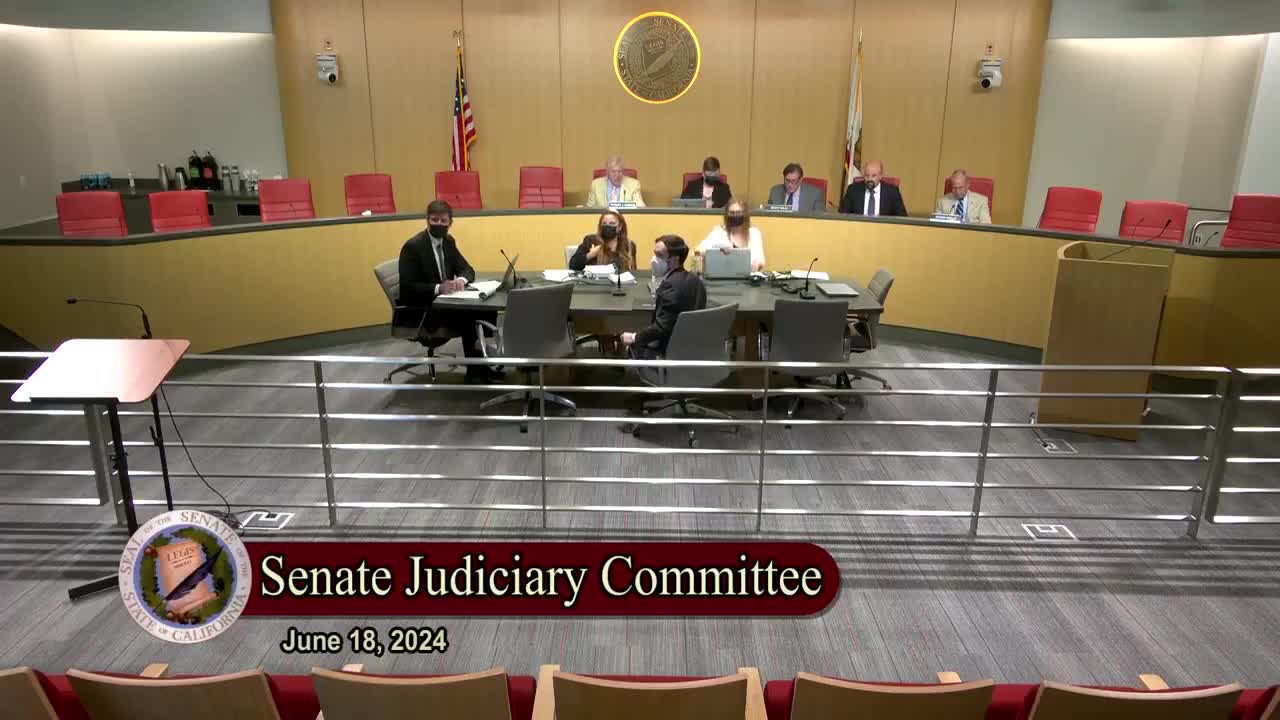 2MIN
Senate Standing Committee on Judiciary
 5MIN
Senate Standing Committee on Elections and Constitutional Amendments
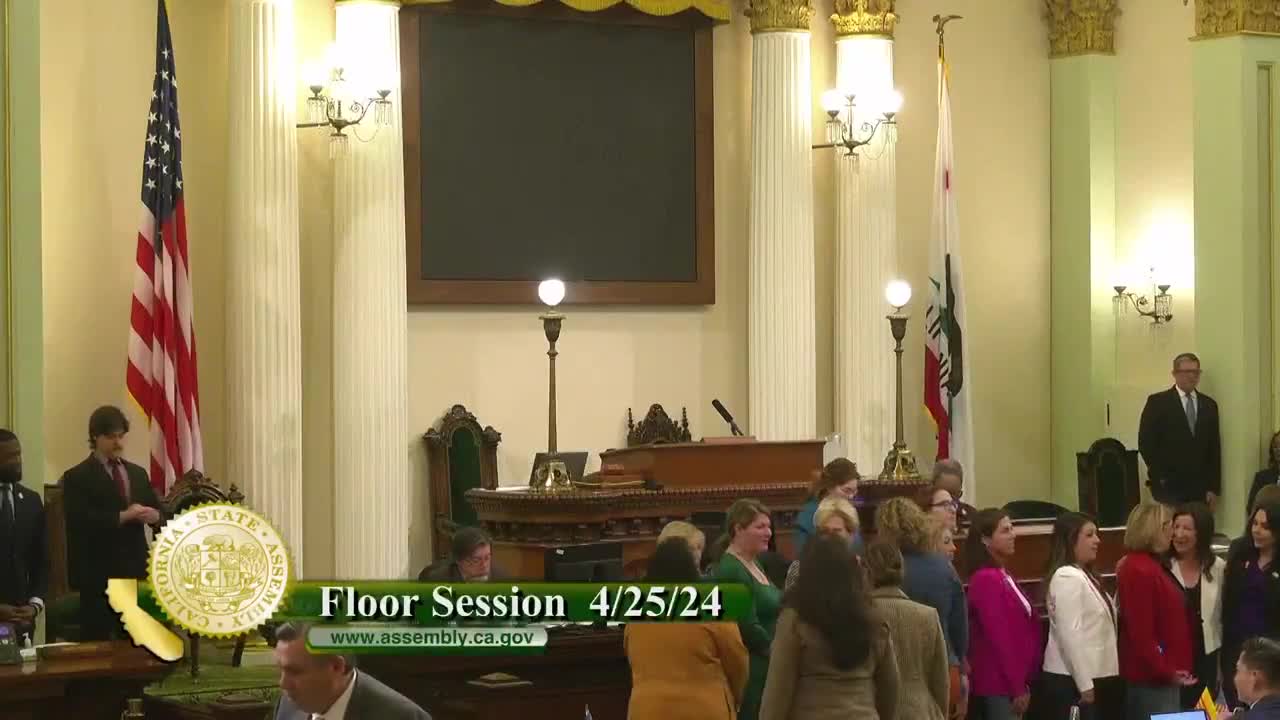 4MIN
Assembly Floor
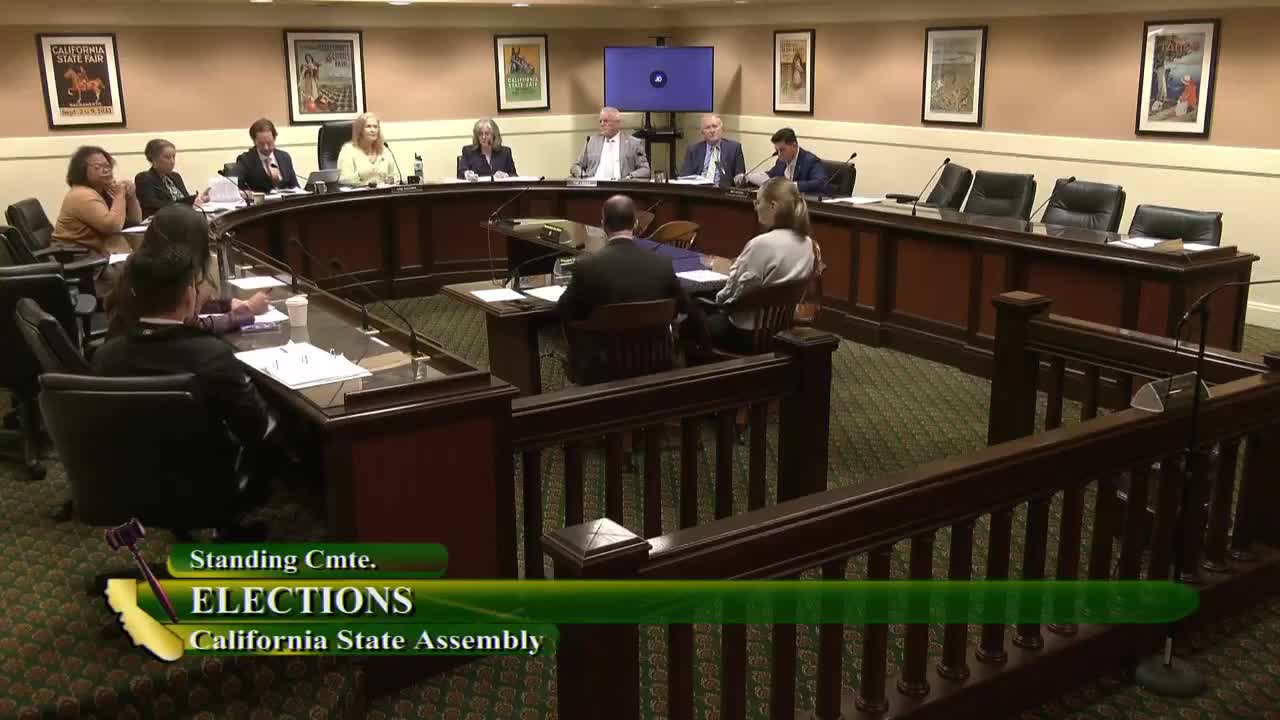 6MIN
Assembly Standing Committee on Elections
Bill Author

Bill Co-Author(s):