AB 2255: Adoption Assistance Program: eligibility.
- Session Year: 2023-2024
- House: Assembly
- Latest Version Date: 2024-03-21
Current Status:
Failed
(2024-05-16: In committee: Held under submission.)
Introduced
In Committee
First Chamber
In Committee
Second Chamber
Enacted
What does this bill do?
The bill expands who can get California Adoption Assistance Program benefits by raising the age limit so adopted youth can qualify up to age 25 (under 26) and removes the rule that they had to be 16 when their adoption assistance agreement began. It also requires counties to include an application to extend benefits when notifying adoptive parents of a child under 21 that benefits are ending because of the child’s age.
The summary is provided by generative AI which can make mistakes. For original language, please view the details in the table below.
Existing law establishes the Adoption Assistance Program (AAP) for the purpose of benefiting children residing in foster homes by providing the stability and security of permanent homes. Under existing law, a child is eligible for AAP benefits if they meet, among other requirements, an age requirement wherein the child is (1) under 18 years of age, (2) under 21 years of age with a mental or physical handicap, or (3) under 21 years of age, has attained 16 years of age before the adoption assistance agreement became effective, and one or more of specified conditions are met.
This bill would expand that 3rd category of the age requirement for AAP benefits by removing the requirement that the child has attained 16 years of age before the adoption assistance agreement became effective, and by increasing the eligible age to under 26 years of age. The bill would also require a county to include an application for extension of benefits when notifying adoptive parents of a child under 21 years of age of the expiration of benefits due to age. By expanding eligibility of a county-administered program, thereby imposing duties on counties, this bill would impose a state-mandated local program.
The California Constitution requires the state to reimburse local agencies and school districts for certain costs mandated by the state. Statutory provisions establish procedures for making that reimbursement.
This bill would provide that no reimbursement is required by this act for a specified reason.
Existing law requires the State Department of Social Services to administer the Adoption Assistance Program, under which aid is provided to persons adopting special needs children.Existing law authorizes the State Department of Social Services and the State Department of Health Care Services to enter into interstate agreements with agencies of other states for the protection of children on behalf of whom adoption assistance is being provided by the State Department of Social Services. Existing law requires children and children with special needs to be eligible or remain eligible for Medi-Cal benefits if they meet specified criteria.This bill would make technical, nonsubstantive changes to these provisions.Existing law requires the State Department of Social Services to administer the Adoption Assistance Program, under which aid is provided to persons adopting special needs children.
Existing law authorizes the State Department of Social Services and the State Department of Health Care Services to enter into interstate agreements with agencies of other states for the protection of children on behalf of whom adoption assistance is being provided by the State Department of Social Services. Existing law requires children and children with special needs to be eligible or remain eligible for Medi-Cal benefits if they meet specified criteria.
This bill would make technical, nonsubstantive changes to these provisions.
A child is eligible for Adoption Assistance Program benefits if all of the conditions specified in subdivisions (a) to (l), inclusive, are met or if the conditions specified in subdivision (m) are met.
(a)It has been determined that the child cannot or should not be returned to the home of the childs parents as evidenced by a petition for termination of parental rights, a court order terminating parental rights, or a signed relinquishment, or, in the case of a tribal customary adoption, if the court has given full faith and credit to a tribal customary adoption order as provided for pursuant to paragraph (2) of subdivision (e) of Section 366.26, or, in the case of a nonminor dependent the court has dismissed dependency or transitional jurisdiction subsequent to the approval of the nonminor dependent, adoption petition pursuant to subdivision (f) of Section 366.31.
(b)The child has at least one of the following characteristics that are barriers to the childs adoption:
(1)Adoptive placement without financial assistance is unlikely because of membership in a sibling group that should remain intact or by virtue of race, ethnicity, color, language, three years of age or older, or parental background of a medical or behavioral nature that can be determined to adversely affect the development of the child.
(2)Adoptive placement without financial assistance is unlikely because the child has a mental, physical, emotional, or medical disability that has been certified by a licensed professional competent to make an assessment and operating within the scope of that licensees profession. This paragraph shall also apply to children with a developmental disability, as defined in subdivision (a) of Section 4512, including those determined to require out-of-home nonmedical care, as described in Section 11464.
(c)The need for an adoption subsidy is evidenced by an unsuccessful search for an adoptive home to take the child without financial assistance, as documented in the case file of the prospective adoptive child. The requirement for this search shall be waived when it would be against the best interest of the child because of the existence of significant emotional ties with prospective adoptive parents while in the care of these persons as a foster child.
(d)(1)The child satisfies any of the following criteria:
(1)(A)The child is under 18 years of age.
(2)(B)The child is under 21 years of age and has a mental or physical handicap that warrants the continuation of assistance.
(3)Effective January 1, 2012, the(C)The child is under 19 years of age, effective January 1, 2013, the child is under 20 years of age, and effective January 1, 2014, the child is under 21 years of age and as described in Section 10103.5, and has attained 16 years of age before the adoption assistance agreement became effective, 26 years of age and one or more of the conditions specified in paragraphs (1) to (5), inclusive, of subdivision (b) of Section 11403 applies.
(2)A county shall include an application for extension of benefits when notifying adoptive parents of a child under 21 years of age of the expiration of benefits due to age.
(e)The adoptive family is responsible for the child pursuant to the terms of an adoptive placement agreement or a final decree of adoption and has signed an adoption assistance agreement.
(f)The adoptive family is legally responsible for the support of the child and the child is receiving support from the adoptive parent.
(g)The department or the county responsible for determining the childs Adoption Assistance Program eligibility status and for providing financial aid, and the prospective adoptive parent, prior to or at the time the adoption decree is issued by the court, have signed an adoption assistance agreement that stipulates the need for, and the amount of, Adoption Assistance Program benefits.
(h)The prospective adoptive parent or any adult living in the prospective adoptive home has completed the criminal background check requirements pursuant to Section 671(a)(20)(A) and (C) of Title 42 of the United States Code.
(i)To be eligible for state funding, the child is the subject of an agency adoption, as defined in Section 8506 of the Family Code, and was any of the following:
(1)Under the supervision of a county welfare department as the subject of a legal guardianship or juvenile court dependency.
(2)Relinquished for adoption to a licensed California private or public adoption agency, or another public agency operating a Title IV-E program on behalf of the state, and would have otherwise been at risk of dependency as certified by the responsible public child welfare agency.
(3)Committed to the care of the department pursuant to Section 8805 or 8918 of the Family Code.
(4)The child is an Indian child and the subject of an order of adoption based on tribal customary adoption of an Indian child, as described in Section 366.24. Notwithstanding Section 8600.5 of the Family Code, for purposes of this subdivision a tribal customary adoption shall be considered an agency adoption.
(j)To be eligible for federal funding, in the case of a child who is not an applicable child for the federal fiscal year, as defined in subdivision (n), the child satisfies any of the following criteria:
(1)Prior to the finalization of an agency adoption, as defined in Section 8506 of the Family Code, or an independent adoption, as defined in Section 8524 of the Family Code, is filed, the child has met the requirements to receive federal supplemental security income benefits pursuant to Subchapter 16 (commencing with Section 1381) of Chapter 7 of Title 42 of the United States Code, as determined and documented by the federal Social Security Administration.
(2)The child was removed from the home of a specified relative and the child would have been AFDC eligible in the home of removal according to Section 606(a) or 607 of Title 42 of the United States Code, as those sections were in effect on July 16, 1996, in the month of the voluntary placement agreement or in the month court proceedings are initiated to remove the child, resulting in a judicial determination that continuation in the home would be contrary to the childs welfare. The child must have been living with the specified relative from whom the child was removed within six months of the month the voluntary placement agreement was signed or the petition to remove was filed.
(3)The child was voluntarily relinquished to a licensed public or private adoption agency, or another public agency operating a Title IV-E program on behalf of the state, and there is a petition to the court to remove the child from the home within six months of the time the child lived with a specified relative and a subsequent judicial determination that remaining in the home would be contrary to the childs welfare.
(4)Title IV-E foster care maintenance was paid on behalf of the childs minor parent and covered the cost of the minor parents child while the child was in the foster family home or child care institution with the minor parent.
(5)The child is an Indian child and the subject of an order of adoption based on tribal customary adoption of an Indian child, as described in Section 366.24.
(k)To be eligible for federal funding, in the case of a child who is an applicable child for the federal fiscal year, as defined in subdivision (n), the child meets any of the following criteria:
(1)At the time of initiation of adoptive proceedings, was in the care of a public or licensed private child placement agency or Indian tribal organization pursuant to either of the following:
(A)An involuntary removal of the child from the home in accordance with a judicial determination to the effect that continuation in the home would be contrary to the welfare of the child.
(B)A voluntary placement agreement or a voluntary relinquishment.
(2)The child meets all medical or disability requirements of Title XVI with respect to eligibility for supplemental security income benefits.
(3)The child was residing in a foster family home or a child care institution with the childs minor parent, and the childs minor parent was in the foster family home or child care institution pursuant to either of the following:
(A)An involuntary removal of the child from the home in accordance with a judicial determination to the effect that continuation in the home would be contrary to the welfare of the child.
(B)A voluntary placement agreement or voluntary relinquishment.
(4)The child is an Indian child and the subject of an order of adoption based on tribal customary adoption of an Indian child, as described in Section 366.24.
(5)The nonminor dependent, as described in subdivision (v) of Section 11400, is the subject of an adoption pursuant to subdivision (f) of Section 366.31.
(l)(1)The child is a citizen of the United States or a qualified immigrant. If the child is a qualified immigrant who entered the United States on or after August 22, 1996, and is placed with an unqualified immigrant, the child must meet the five-year residency requirement pursuant to Section 673(a)(2)(B) of Title 42 of the United States Code, unless the child is a member of one of the excepted groups pursuant to Section 1612(b) of Title 8 of the United States Code.
(2)For purposes of this subdivision, a qualified immigrant means a person who meets the definition of the term defined in Section 1641 of Title 8 of the United States Code.
(m)A child or nonminor shall be eligible for Adoption Assistance Program benefits if the following conditions are met:
(1)The child or nonminor received Adoption Assistance Program benefits with respect to a prior adoption and the child or nonminor is again available for adoption because the prior adoption was dissolved and the parental rights of the adoptive parents were terminated or because the childs or nonminors adoptive parents died and the child or nonminor meets the special needs criteria described in subdivisions (a) to (c), inclusive. When a nonminor is receiving Adoption Assistance Program benefits after 18 years of age and the nonminors adoptive parents die, the juvenile court may resume dependency jurisdiction over the nonminor pursuant to Section 388.1.
(2)To receive federal funding, the citizenship requirements in subdivision (l).
(n)(1)Except as provided in this subdivision, applicable child means a child for whom an adoption assistance agreement is entered into under this section during any federal fiscal year described in this subdivision if the child attained the applicable age for that federal fiscal year before the end of that federal fiscal year.
(A)For federal fiscal year 2010, the applicable age is 16 years.
(B)For federal fiscal year 2011, the applicable age is 14 years.
(C)For federal fiscal year 2012, the applicable age is 12 years.
(D)For federal fiscal year 2013, the applicable age is 10 years.
(E)For federal fiscal year 2014, the applicable age is eight years.
(F)For federal fiscal year 2015, the applicable age is six years.
(G)For federal fiscal year 2016, the applicable age is four years.
(H)For federal fiscal year 2017, the applicable age is two years.
(I)For October 1, 2017, to December 31, 2017, any age.
(J)Effective January 1, 2018, to June 30, 2024, the applicable age is two years.
(K)Effective July 1, 2024, and thereafter, any age.
(2)Beginning with the 2010 federal fiscal year, the term applicable child shall include a child of any age on the date on which an adoption assistance agreement is entered into on behalf of the child under this section if the child meets both of the following criteria:
(A)The child has been in foster care under the responsibility of the state for at least 60 consecutive months.
(B)The child meets the requirements of subdivision (k).
(3)Beginning with the 2010 federal fiscal year, an applicable child shall include a child of any age on the date that an adoption assistance agreement is entered into on behalf of the child under this section, without regard to whether the child is described in paragraph (2), if the child meets all of the following criteria:
(A)The child is a sibling of a child who is an applicable child for the federal fiscal year, under subdivision (n) or paragraph (2).
(B)The child is to be placed in the same adoption placement as an applicable child for the federal fiscal year who is their sibling.
(C)The child meets the requirements of subdivision (k).
SEC. 2.To the extent that this act has an overall effect of increasing the costs already borne by a local agency for programs or levels of service mandated by the 2011 Realignment Legislation within the meaning of Section 36 of Article XIII of the California Constitution, it shall apply to local agencies only to the extent that the state provides annual funding for the cost increase. Any new program or higher level of service provided by a local agency pursuant to this act above the level for which funding has been provided shall not require a subvention of funds by the state or otherwise be subject to Section 6 of Article XIIIB of the California Constitution.
SECTION 1.Section 16176 of the Welfare and Institutions Code is amended to read:16176.(a)(1)A child who is a resident of California and who is the subject of a state-only adoption assistance agreement with another state, shall be eligible to receive Medi-Cal benefits whether or not there is a cash benefit.(2)A child with special needs who is the subject of a state-only adoption assistance agreement with California shall continue to be eligible for Medi-Cal benefits if the child is placed out-of-state or with their adoptive family, moves out-of-state, and the receiving state does not provide Medicaid benefits to the child.(b)The departments shall adopt regulations to implement the provisions of this chapter. REVISIONS: HeadingLine 2.(a)(1)Any A child who is a resident of California and who is the subject of a state-only adoption assistance agreement with another state, shall be eligible to receive Medi-Cal benefits whether or not there is a cash benefit.
(2)Any A child with special needs who is the subject of a state-only adoption assistance agreement with California shall continue to be eligible for Medi-Cal benefits if the child is placed out-of-state or with his or her their adoptive family, moves out-of-state, and the receiving state does not provide Medicaid benefits to the child.
(b)The departments shall adopt regulations to implement the provisions of this chapter.
|
Date
|
Status
|
|---|---|
| May 16, 2024 | Coauthors revised. |
| May 16, 2024 | In committee: Held under submission. |
| May 1, 2024 | In committee: Set, first hearing. Referred to APPR. suspense file. |
| Apr 16, 2024 | From committee: Do pass and re-refer to Com. on APPR. (Ayes 12. Noes 0.) (April 16). Re-referred to Com. on APPR. |
| Apr 10, 2024 | Coauthors revised. |
| Apr 10, 2024 | From committee: Do pass and re-refer to Com. on JUD. (Ayes 6. Noes 0.) (April 9). Re-referred to Com. on JUD. |
| Apr 1, 2024 | Re-referred to Com. on HUM. S. |
| Mar 21, 2024 | From committee chair, with author's amendments: Amend, and re-refer to Com. on HUM. S. Read second time and amended. |
| Mar 21, 2024 | Referred to Coms. on HUM. S. and JUD. |
| Feb 9, 2024 | From printer. May be heard in committee March 10. |
| Feb 8, 2024 | Read first time. To print. |
|
Date
|
Description
|
Location
|
Votes
|
|
|---|---|---|---|---|
| Apr 16, 2024 | Do pass and be re-referred to the Committee on [Appropriations] | Assembly Standing Committee on Judiciary |
Passed |
|
| Apr 9, 2024 | Do pass and be re-referred to the Committee on [Judiciary] | Assembly Standing Committee on Human Services |
Passed |
This list shows positions taken on this bill by organizations on the date displayed, which is linked to the original source.
Positions by individuals are not included.
|
Organization
|
Position
|
Date
|
|---|---|---|
| California Alliance Of Child And Family Services | * Support | Apr 16, 2024 |
| County Welfare Directors Association of America | ** Against | |
| Walden Family Services | ** Support |
Date of Hearing: May 1, 2024
ASSEMBLY COMMITTEE ON APPROPRIATIONS
Buffy Wicks, Chair
ABPCA Bill Id:AB 2255
Author:(Joe Patterson) – As Amended Ver:March 21, 2024
Policy Committee: | Human Services | Vote: | 6 - 0 |
Judiciary | 12 - 0 | ||
|
|
Urgency: No State Mandated Local Program: Yes Reimbursable: No
SUMMARY:
This bill expands eligibility for the Adoption Assistance Program (AAP).
Specifically, this bill:
- Expands eligibility for AAP from 21 years of age to include youth up to 26 years of age.
- Eliminates the current limitation on AAP eligibility for specified nonminor dependents (NMDs) to only those 16 years and older before the adoption assistance agreement became effective.
- Requires a county to include an application for extension of benefits when notifying adoptive parents of a child under 21 years of age of the expiration of benefits due to age.
FISCAL EFFECT:
- Ongoing General Fund (GF) costs, of an unknown amount, but likely in the millions of dollars annually, to provide AAP benefits to the expanded population.
- Ongoing county administrative costs (GF) of an unknown but likely significant amount for county child welfare agencies to implement this proposal. Although these county costs are state-mandated costs, they are not reimbursable, but instead must be funded by the state pursuant to Proposition 30. Proposition 30 (2012) requires legislation enacted after September 30, 2012, that has an overall effect of increasing the costs already borne by a local agency for programs or levels of service mandated by realignment (including child welfare services and foster care) to apply to local agencies only to the extent the state provides annual funding for the cost increase.
- One-time automation costs (GF) of an unknown amount for changes to the Child Welfare Services - California Automated Response and Engagement System (CWS-CARES) to integrate new data into court documentation and processes, among other items necessary to implement the bill.
According to the Legislative Analyst’s Office, the General Fund faces a structural deficit in the tens of billions of dollars over the next several fiscal years.
COMMENTS:
- Purpose. According to the author:
With over 60,000 children in California’s foster care system, the permanent placement of these kids into healthy home environments with systems of support has never been more important. While the state’s AAP has played a dynamic role in this effort, certain stipulations within the eligibility requirements for funding have placed strains on foster youth accessing critical services post-adoption. Currently, only foster youth adopted after the age of 16 are able to receive benefits and support in their formative transition years (ages 18-21) and in many cases are being denied. By removing the minimum adoption age requirement for AAP funding and increasing the eligibility age to up to 26 years old, adoptees can maintain access to critical support services as they transition into adulthood.
- Background. California’s AAP provides financial and medical coverage to facilitate the adoption of children who otherwise would remain in long-term foster care. AAP is available to both relative and non-relative families who adopt children from foster care. The AAP rate is negotiated with each family and is based on the child’s needs and family’s circumstances. Financial support continues until the child reaches age 18, unless a mental or physical disability creates eligibility until the age of 21, or the child is under 21 but was 16 at the time the adoption assistance agreement went into effect.
The AAP seeks to mitigate the financial difficulty many adoptive parents experience when adopting children out of the foster care system. Accordingly, APP payments go directly to the adoptive parents, unlike extended foster care payments, which go directly to a foster youth.
This bill extends access to AAP to all families of children adopted out of foster care up until the child reaches 26 years of age, regardless of their age at the time they were adopted.
- Arguments in Opposition. This bill is opposed by the County Welfare Directors Association of California over concerns the proposed eligibility expansion would create significant costs for the counties implementing the program. Specifically they contend:
[f]unding is not identified for counties in the budget to implement this legislative proposal, either for benefits for this new population or to assist an already strained county workforce with the workload challenges that would result from this bill.
[The bill] would also be unworkable to implement from an IT perspective. The Case Management System was not designed to track or provide benefits to young adults as old as 25. This bill has no specified implementation date and would, if made into law, require an immediate overhaul at a time when the state is already undertaking a major shift towards the CARES system, which likewise was not designed for this population.
- Related Legislation. AB 2948 (Ramos), of this legislative session, allows former dependent Indian children adopted through Tribal courts of federally recognized Tribes without a Title IV-E agreement, to be eligible for AAP. AB 2948 is pending in this committee.
Analysis Prepared by: Jennifer Swenson / APPR. / (916) 319-2081
Date of Hearing: April 16, 2024
ASSEMBLY COMMITTEE ON JUDICIARY
Ash Kalra, Chair
ABPCA Bill Id:AB 2255
Author:(Joe Patterson) – As Amended Ver:March 21, 2024
SUBJECT: Adoption Assistance Program: eligibility
KEY ISSUE: SHOULD ELIGIBILITY FOR THE ADOPTON ASSISTANCE PROGRAM BE EXTENDED TO ALL MINORS AND INCLUDE SPECIFIED YOUTH UP TO THE AGE OF 26?
SYNOPSIS
California’s Adoption Assistance Program (AAP) was created to reduce the number of children in foster care and help provide stable, secure adoptive homes for eligible children. Available to both relative and non-relative families who adopt children from foster care, the amount of AAP support is based on the child’s needs and family’s circumstances, and continue until the child reaches age 18, unless a mental or physical disability creates eligibility until the age of 21. This bill would extend access to the AAP to all families of children adopted out of foster care up until 26 years of age.
This bill is supported by California Alliance of Child and Family Services and Walden Family Services. It is opposed by the County Welfare Directors Association of California. The bill was previously approved by the Assembly Committee on Human Services on a vote of 6-0.
SUMMARY: Expands eligibility for the Adoption Assistance Program (AAP). Specifically, this bill:
- Expands eligibility for the Adoption Assistance Program (AAP) from 21 years of age to include youth up to 26 years of age.
- Eliminates the current limitation on AAP eligibility for specified nonminor dependents (NMDs) to only those 16 years and older before the adoption assistance agreement became effective.
- Requires a county to include an application for extension of benefits when notifying adoptive parents of a child under 21 years of age of the expiration of benefits due to age.
EXISTING LAW:
- Establishes eligibility for AAP benefits and specifies that a child is eligible for AAP benefits if all of the conditions specified in a) to i) are met or if the conditions specified in 2) are met.
- It has been determined that the child cannot or should not be returned to the home of the child’s parents as evidenced by a petition for termination of parental rights, a court order terminating parental rights, a signed relinquishment, or, in the case of a tribal customary adoption, if the court has given full faith and credit to a tribal customary adoption order, or, in the case of a NMD the court has dismissed dependency;
- The child has at least one of the following characteristics that are barriers to the child’s adoption:
- Adoptive placement without financial assistance is unlikely because of membership in a sibling group that should remain intact or by virtue of race, ethnicity, color, language, three years of age or older, or parental background of a medical or behavioral nature that can be determined to adversely affect the development of the child; or
- Adoptive placement without financial assistance is unlikely because the child has a mental, physical, emotional, or medical disability that has been certified by a licensed professional.
- The need for an adoption subsidy is evidenced by an unsuccessful search for an adoptive home to take the child without financial assistance, as documented in the case file of the prospective adoptive child;
- The child satisfies any of the following criteria: the child is under 18 years of age; the child is under 21 years of age and has a mental or physical handicap that warrants the continuation of assistance; the child is under 21 years of age and an NMD, who was 16 years of age before the adoption assistance agreement became effective, and one or more of the specified conditions related to attending school or working applies;
- The adoptive family is responsible for the child pursuant to the terms of an adoptive placement agreement or a final decree of adoption and has signed an adoption assistance agreement;
- The adoptive family is legally responsible for the support of the child and the child is receiving support from the adoptive parent;
- The California Department of Social Services (CDSS) or the county responsible for determining the child’s AAP eligibility status and for providing financial aid, and the prospective adoptive parent, prior to or at the time the adoption decree is issued by the court, have signed an adoption assistance agreement that stipulates the need for, and the amount of, AAP benefits;
- The prospective adoptive parent or any adult living in the prospective adoptive home has completed the required criminal background check requirements; and,
- The child is a citizen of the United States or a qualified immigrant. (Welfare and Institutions Code Section 16120. Unless otherwise specified all further statutory references are to the Welfare and Institutions Code.)
- Specifies that a youth is eligible for AAP benefits if they received AAP benefits with respect to a prior adoption and is again available for adoption because the prior adoption was dissolved and the parental rights of the adoptive parents were terminated or because the youth’s adoptive parents died and the youth meets the special needs criteria, as described. Specifies that when a nonminor is receiving AAP benefits after 18 years of age and the nonminor’s adoptive parents die, the juvenile court may resume dependency jurisdiction over the nonminor. (Section 16120 (m).)
- Requires, for initial adoption assistance agreements, the adoptive family to be paid an amount of aid based on the child’s needs otherwise covered in Aid to Families with Dependent Children-Foster Care (AFDC-FC) payments and the circumstances of the adopting parents, but that shall not exceed the basic foster care maintenance payment rate structure in effect on December 31, 2007, that would have been paid based on the age-related state-approved foster family home rate, and any applicable specialized care increment, for a child placed in a licensed or approved family home. (Section 16121 (a).)
- Establishes the “Adoption Assistance and Child Welfare Act of 1980” which mandates states to provide adoption assistance payments to parents who adopt children meeting specific criteria, and created federal incentives to encourage the adoption of special needs children. (Public Law 96-272.)
FISCAL EFFECT: As currently in print this bill is keyed fiscal.
COMMENTS: California’s Adoption Assistance Program (AAP) was created to reduce the number of children in foster care and help provide stable, secure adoptive homes for eligible children. Available to both relative and non-relative families who adopt children from foster care, the amount of AAP support is based on the child’s needs and family’s circumstances, and continue until the child reaches age 18, unless a mental or physical disability creates eligibility until the age of 21. The AAP mitigates the financial difficulty many adoptive parents experience when meeting the special needs of children who were formerly placed in California’s foster care system by providing direct payments to the adoptive families. The measure compliments the federal Adoption Assistance and Child Welfare Act of 1980, which provides federal funds for qualifying participating states to provide programs such as AAP and support foster adoptees. (Public Law 96-272.) According to the author:
With over 60,000 children in California’s foster care system, the permanent placement of these kids into healthy home environments with systems of support has never been more important. While the state’s Adoption Assistance Program has played a dynamic role in this effort, certain stipulations within the eligibility requirements for funding have placed strains on foster youth accessing critical services post-adoption. Currently, only foster youth adopted after the age of 16 are able to receive benefits and support in their formative transition years (ages 18-21) and in many cases are being denied. By removing the minimum adoption age requirement for Adoption Assistance Program funding and increasing the eligibility age to up to 26 years old, adoptees can maintain access to critical support services as they transition into adulthood.
Under existing law, adoptive families are eligible to participate in AAP if they adopted a child and meet one of the following: 1) the child is under 18 years of age, 2) the child under 21 years and “has a mental or physical handicap that warrants the continuation of assistance,” or 3) the child is under 21 but was 16 at the time the adoption assistance agreement went into effect and meets specified conditions. (Welfare and Institutions Code Section 16120 (d)(1) – (3).) An adoption assistance agreement refers to the formalized agreement between the adoptive family and Department of Social Services within the Health and Human Services Agency regarding the dollar amount the family will be receiving to help provide services to the adoptee. In sum, all children adopted out of foster care are eligible until they turn 18, and a select few are eligible for extended benefits until they turn 21.
This bill would extend access to the AAP to all families of children adopted out of foster care up until 26 years of age, regardless of their age at the time they were adopted.
This measure is the latest effort to extend the benefits of the AAP past the current 21-year age limit. Considering the intent of the AAP and its federal counterpart are to encourage the adoption of foster youth, and those youth’s risk of experiencing trauma necessitating extra services, extending the age range makes sense. Moreover, it seems likely that as foster youth spend more time in foster care, the likelihood of needing additional services would increase thus justifying services beyond 21 years to an even greater degree.
Opponents of the measure contend that the proposed eligibility expansion would create significant costs for the counties implementing the program. Specifically they contend “[f]unding is not identified for counties in the budget to implement this legislative proposal, either for benefits for this new population or to assist an already strained county workforce with the workload challenges that would result from this bill.”
Additionally, they identify a concern that the bill “would also be unworkable to implement from an IT perspective. The Case Management System was not designed to track or provide benefits to young adults as old as 25. This bill has no specified implementation date and would, if made into law, require an immediate overhaul at a time when the state is already undertaking a major shift towards the CARES system, which likewise was not designed for this population.”
In order to potentially address both concerns at once, the author may wish to consider delaying implementation of this measure at least until January 1, 2026. The delay would allow an opportunity for counties to make necessary updates to their systems, as well as allow them to seek funding either through the state budget or through external revenue sources.
ARGUMENTS IN SUPPORT: This bill is supported by Walden Family Services. They write the following:
With over 60,000 children in California’s foster care system, the permanent placement of these kids into healthy home environments with systems of support has never been more important. While the state’s Adoption Assistance Program has played a dynamic role in this effort, certain stipulations within the eligibility requirements for funding have placed strains on foster youth accessing critical services post-adoption.
Currently, only foster youth adopted after the age of 16 are able to receive AAP benefits and support in their formative transition years (ages 18-21), and in many cases are being denied. However, children adopted from foster care often have experienced trauma and adverse care and living conditions at a young age, resulting in complex needs in their later years. As many as 75% of children in foster care have a family history of mental illness, drug, and/or alcohol abuse and children in foster care are at higher risk for underdiagnosed disorders such as Fetal Alcohol Syndrome (FAS), currently 10 times higher than in the general population. In light of this, former foster youth oftentimes require additional assistance as they transition from adolescence to adulthood, contributing to the need for the extension of AAP eligibility up to 26 years old. Just as dependent children are afforded medical coverage until age 26 under the Affordable Care Act, AB 2255 would ensure adopted youth will continue to receive access and funding for critical benefits and services under the Adoption Assistance Program until age 26.
By removing the minimum adoption age requirement for Adoption Assistance Program funding and increasing the eligibility age to up to 26 years old, Assembly Bill 2255 would provide adoptees with the ability to maintain access to critical support services as they transition into adulthood.
ARGUMENTS IN OPPOSITION: This bill is opposed by the County Welfare Directors Association of California. They submit the following:
Under current law, foster youth are eligible for AAP benefits prior to aging out of the CWS system at 21 years of age if they meet certain criteria. This bill would extend eligibility to adults under the age of 26, so long as the adult is enrolled in postsecondary education, is employed for at least 80 hours a month, is in a program designed to reduce barriers to employment or has a disability that prevents them from meeting any of these other requirements.
These requirements are very broad and would greatly increase the base of recipients for AAP. CDWA anticipates significant costs resulting from AB 2255 and must oppose the bill. Funding is not identified for counties in the budget to implement this legislative proposal, either for benefits for this new population or to assist an already strained county workforce with the workload challenges that would result from this bill.
This bill would also be unworkable to implement from an IT perspective. The Case Management System was not designed to track or provide benefits to young adults as old as 25. This bill has no specified implementation date and would, if made into law, require an immediate overhaul at a time when the state is already undertaking a major shift towards the CARES system, which likewise was not designed for this population.
Finally, this bill would be unworkable for counties without clear department policy or regulations on providing AAP benefits to this new population. Without department regulations, this bill as currently written would present significant operational challenges to counties.
REGISTERED SUPPORT / OPPOSITION:
Support
California Alliance of Child and Family Services
Walden Family Services
Opposition
County Welfare Directors Association of America
Analysis Prepared by: Manuela Boucher-de la Cadena/ JUD. / (916) 319-2334
Date of Hearing: April 9, 2024
ASSEMBLY COMMITTEE ON HUMAN SERVICES
Alex Lee, Chair
ABPCA Bill Id:AB 2255 (
Author:Joe Patterson) – As Amended Ver:March 21, 2024
SUBJECT: Adoption Assistance Program: eligibility
SUMMARY: Expands eligibility for Adoption Assistance Program (AAP) benefits and requires counties to include an application for extension of benefits when notifying adoptive parents of the expiration of benefits due to age. Specifically, this bill:
- Expands eligibility for the AAP from up to 21 years of age to include youth up to 26 years of age.
- Removes the current requirement limiting AAP eligibility for specified nonminor dependents (NMDs) to only those who attained 16 years of age before the adoption assistance agreement became effective.
- Requires counties, when notifying adoptive parents of a child under 21 years of age of the expiration of benefits due to age, to include an application for extension of benefits.
EXISTING LAW:
- Establishes eligibility for AAP benefits and specifies that a child is eligible for AAP benefits if all of the conditions specified in a) to i) are met or if the conditions specified in 2) are met.
- It has been determined that the child cannot or should not be returned to the home of the child’s parents as evidenced by a petition for termination of parental rights, a court order terminating parental rights, a signed relinquishment, or, in the case of a tribal customary adoption, if the court has given full faith and credit to a tribal customary adoption order, or, in the case of a NMD the court has dismissed dependency;
- The child has at least one of the following characteristics that are barriers to the child’s adoption:
- Adoptive placement without financial assistance is unlikely because of membership in a sibling group that should remain intact or by virtue of race, ethnicity, color, language, three years of age or older, or parental background of a medical or behavioral nature that can be determined to adversely affect the development of the child; or
- Adoptive placement without financial assistance is unlikely because the child has a mental, physical, emotional, or medical disability that has been certified by a licensed professional.
- The need for an adoption subsidy is evidenced by an unsuccessful search for an adoptive home to take the child without financial assistance, as documented in the case file of the prospective adoptive child;
- The child satisfies any of the following criteria: the child is under 18 years of age; the child is under 21 years of age and has a mental or physical handicap that warrants the continuation of assistance; the child is under 21 years of age and an NMD, who was 16 years of age before the adoption assistance agreement became effective, and one or more of the specified conditions related to attending school or working applies;
- The adoptive family is responsible for the child pursuant to the terms of an adoptive placement agreement or a final decree of adoption and has signed an adoption assistance agreement;
- The adoptive family is legally responsible for the support of the child and the child is receiving support from the adoptive parent;
- The California Department of Social Services (CDSS) or the county responsible for determining the child’s AAP eligibility status and for providing financial aid, and the prospective adoptive parent, prior to or at the time the adoption decree is issued by the court, have signed an adoption assistance agreement that stipulates the need for, and the amount of, AAP benefits;
- The prospective adoptive parent or any adult living in the prospective adoptive home has completed the required criminal background check requirements; and,
- The child is a citizen of the United States or a qualified immigrant. (Welfare and Institutions Code [WIC] § 16120)
- Specifies that a youth is eligible for AAP benefits if they received AAP benefits with respect to a prior adoption and is again available for adoption because the prior adoption was dissolved and the parental rights of the adoptive parents were terminated or because the youth’s adoptive parents died and the youth meets the special needs criteria, as described. Specifies that when a nonminor is receiving AAP benefits after 18 years of age and the nonminor’s adoptive parents die, the juvenile court may resume dependency jurisdiction over the nonminor. (WIC § 16120(m))
- Requires, for initial adoption assistance agreements, the adoptive family to be paid an amount of aid based on the child’s needs otherwise covered in Aid to Families with Dependent Children-Foster Care (AFDC-FC) payments and the circumstances of the adopting parents, but that shall not exceed the basic foster care maintenance payment rate structure in effect on December 31, 2007, that would have been paid based on the age-related state-approved foster family home rate, and any applicable specialized care increment, for a child placed in a licensed or approved family home. (WIC § 16121(a))
Federal law:
- Establishes the “Adoption Assistance and Child Welfare Act of 1980” which mandates states to provide adoption assistance payments to parents who adopt children meeting specific criteria, and created federal incentives to encourage the adoption of special needs children. (Public Law 96-272)
FISCAL EFFECT: Unknown, this bill has not been analyzed by a fiscal committee.
COMMENTS:
Background: The Adoption Assistance Program. The AAP provides financial and medical coverage to facilitate the adoption of children who otherwise would remain in long-term foster care. AAP is available to both relative and non-relative families who adopt children from foster care and is designed to reduce financial barriers to the adoption of children who might otherwise remain in foster care. The AAP rate is negotiated with each family and is based on the child’s basic and special needs and the circumstances of the family. The amount that is decided upon goes directly to the parents and not the youth.
This bill would allow AAP benefits to continue for adopted youth up until they reach 26 years of age, regardless of the age of their adoption.
AAP is a realigned program: the 2011-12 Budget realigned $1.6 billion in state funding for the child welfare services, foster care, and adoption programs, to the counties. For the first year of the 2011 realignment, no changes were made to state law governing child welfare services and adoption programs. During the 2012-13 budget process, however, the Administration proposed programmatic trailer bill language related to specific major themes, all of which were addressed by SB 1013, (Committee on Budget and Fiscal Review), Chapter 35, Statutes of 2012, which also requires counties to report to CDSS on the expenditure of savings realized as a result of maximizing available federal adoption assistance funding.
In 2021, CDSS issued All County Letter (ACL) No. 21-54 to inform counties, and other interested parties of new rates implementation and to provide instructions on how to apply the AAP Level of Care (LOC) Protocol to determine the maximum eligible AAP LOC rate for an AAP-eligible child. The protocol was designed to support a consistent, statewide rate determination process. The ACL noted that the negotiated AAP rate continues to be based on the child’s care and supervision needs and the circumstances of the family. The AAP LOC Protocol is a strength-based rate-setting methodology to identify the AAP-eligible child’s individual care and supervision needs. An additional factor is the role of the prospective and adoptive parent(s) and how they will meet their adopted child’s care and supervision needs. The protocol consists of three components: an instruction guide; the rate determination questionnaire; and, an automated digital scoring tool. The ACL detailed the rate structure to be used for initial AAP agreements signed on or after April 1, 2021.
This bill requires counties to include an application for an extension of benefits when notifying adoptive parents of a child under 21 years of age of the expiration of benefits due to age.
The Adoption Assistance and Child Welfare Act of 1980 was enacted on June 17, 1980. The major provisions of the Act are below:
- Requires states to make adoption assistance payments, which take into account the circumstances of the adopting parents and the child, to parents who adopt a child who is eligible for Aid to Families with Dependent Children (AFDC) and is a child with special needs;
- Defines a child with special needs as a child who meets the following conditions:
- Cannot be returned to the parent's home;
- Has a special condition such that the child cannot be placed without providing assistance; and,
- Has not been able to be placed without assistance.
- Requires, as a condition of receiving federal foster care matching funds, that states make 'reasonable efforts' to prevent removal of the child from the home and return those who have been removed as soon as possible;
- Requires participating states to establish reunification and preventive programs for all children in foster care;
- Requires the state to place a child in the least restrictive setting and, if the child will benefit, one that is close to their parent's home;
- Requires the court or agency to review the status of a child in any nonpermanent setting every six months to determine what is in the best interest of the child, with most emphasis placed on returning the child home as soon as possible; and,
- Requires the court or administrative body to determine the child's future status, whether it is a return to parents, adoption, or continued foster care, within 18 months after initial placement into foster care.
Adoption Assistance Agreement. An adoption assistance agreement describes the adoption assistance benefit that parents will receive for their adopted child. Among the affirmations this form requires, parents are specifically asked to note their understanding that that the child will not be eligible to receive an AAP benefit after reaching 18 years of age unless they have a mental or physical disability which warrants continuation to 21 years of age. Prior to the child’s 18th birthday, parents are required to inform the responsible public agency and request they evaluate their child’s needs for continuation of benefits beyond 18 years of age.
Parents are further required to acknowledge they understand that the child will not be eligible to receive an AAP benefit after they reach 18 years of age unless the initial agreement was signed when the child was at least 16 years of age; and one of the following five participation criteria is met:
- Completing a high school or an equivalency program;
- Enrolled in a post-secondary or vocational school;
- Participating in a program or activity that promotes or removes barriers to employment;
- Is employed at least 80 hours per month; or,
- Is incapable of participating in 1 through 4 above, due to a mental or physical disability.
Parents are further required to acknowledge that they are responsible for requesting the benefit extension prior to the child’s 18th birthday, and providing documentation to the responsible public agency supporting that the child meets one of the five participation criteria.
Author’s Statement: According to the Author, “With over 60,000 children in California’s foster care system, the permanent placement of these kids into healthy home environments with systems of support has never been more important. While the state’s Adoption Assistance Program has played a dynamic role in this effort, certain stipulations within the eligibility requirements for funding have placed strains on foster youth accessing critical services post-adoption. Currently, only foster youth adopted after the age of 16 are able to receive benefits and support in their formative transition years (ages 18-21) and in many cases are being denied. By removing the minimum adoption age requirement for Adoption Assistance Program funding and increasing the eligibility age to up to 26 years old, adoptees can maintain access to critical support services as they transition into adulthood.”
Equity Implications: The provisions of this bill would increase the state’s capacity to serve underserved and marginalized communities by allowing for AAP funding for a larger subset of former foster children that lasts for a longer period of time.
Existing law restricts AAP funding extensions past 18 years old only to those recipients who were adopted after the age of 16 years old and this bill proposes to allow AAP funding to be available to children from 0-26 years old, no matter their age when adopted.
Policy Considerations: Benefits Extended to 26 Years of Age. Over the last few legislative sessions, there have been numerous attempts: AB 867 (Friedman) of 2023, SB 9 (Cortese) of 2023, AB 2306 (Cooley) of 2022, AB 2189 (Friedman) of 2022, SB 912 (Beall) of 2021, to expand foster care benefits up past 21 years of age. These efforts were ultimately not enacted due to cost concerns, among other things. This bill is attempting to extend benefits to those foster youth who were adopted. The AAP exists to incentivize adoption and permanency. This bill would extend benefits up to 26 years of age in a similar fashion that has been considered for foster youth that have not been adopted. The key difference between extended foster care and AAP benefits is that extended foster care benefits typically go directly to the youth (or the facility providing care), and as noted above, AAP benefits are provided to the parent(s).
In recent public hearings, there were reports about adoptions failing as the youth reach adulthood. Collectively, it is agreed upon that foster youth need more support as they become young adults. This begs the question(s): how long should benefits be provided for former, current, and adopted foster youth? Should it be uniform? Should benefits just be extended beyond 21 for adopted foster youth with disabilities? Are existing public assistance benefits sufficient in providing for adopted foster youth with high needs?
These remain discussions that child welfare advocates, the Legislature, and the Administration continue to deliberate.
Double referral: Should this bill pass out of this committee it will be referred to the Assembly Committee on Judiciary.
RELATED AND PRIOR LEGISLATION:
AB 2948 (Ramos), of the current legislative session, allows former dependent Indian children adopted through Tribal courts of federally recognized Tribes without a Title IV-E agreement, to be eligible for AAP. AB 2948 is pending before this committee and set for a hearing on April 9, 2023.
SB 824 (Ashby) of 2023, would have expanded eligibility for AAP to include the prospective adoptive parent or any adult living in the prospective adoptive home who had completed the criminal background check requirements for resource family approval (RFA), or if the child was subject to an order for placement with a relative, or extended family member, regardless of the status of any criminal record exemption or RFA or tribally approved home approval. SB 824 was held on the Assembly Appropriations Committee suspense file.
SB 1013 (Committee on Budget and Fiscal Review), Chapter 35, Statutes of 2012, see comments above.
REGISTERED SUPPORT / OPPOSITION:
Support
None on file.
Opposition
County Welfare Directors Association of California
Analysis Prepared by: Jessica Langtry / HUM. S. / (916) 319-2089
Discussed in Hearing
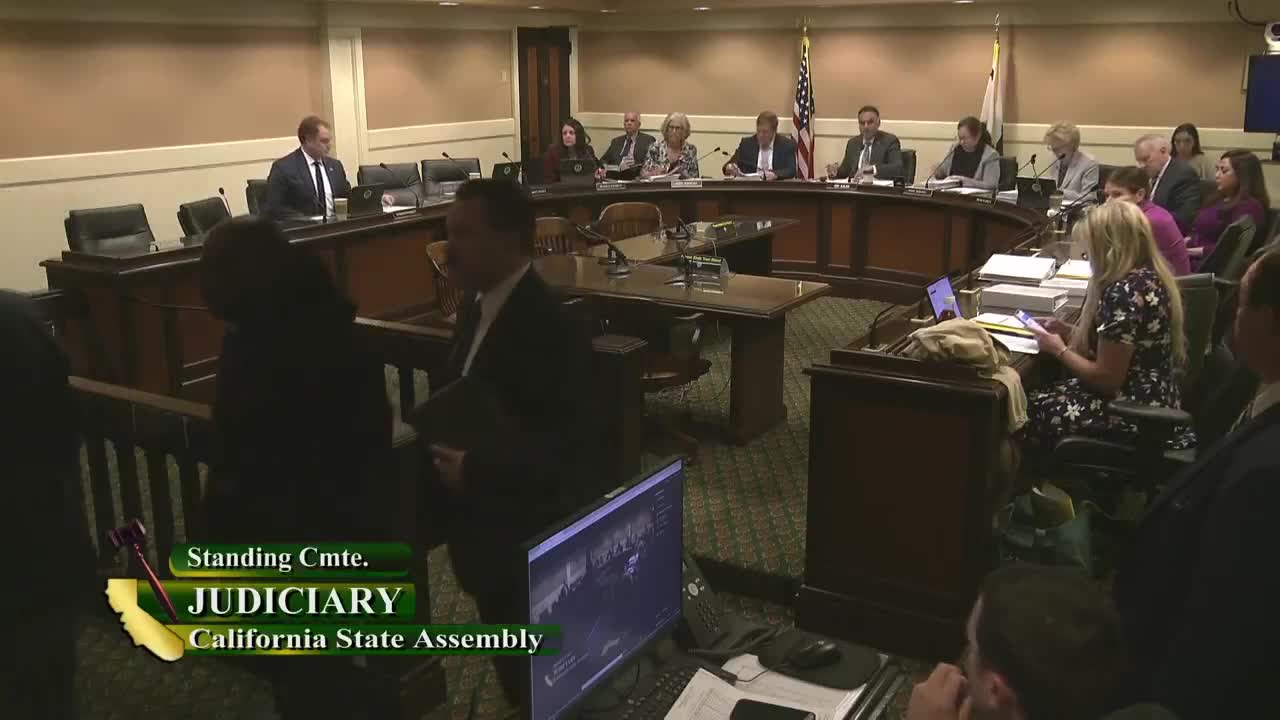 5MIN
Assembly Standing Committee on Judiciary
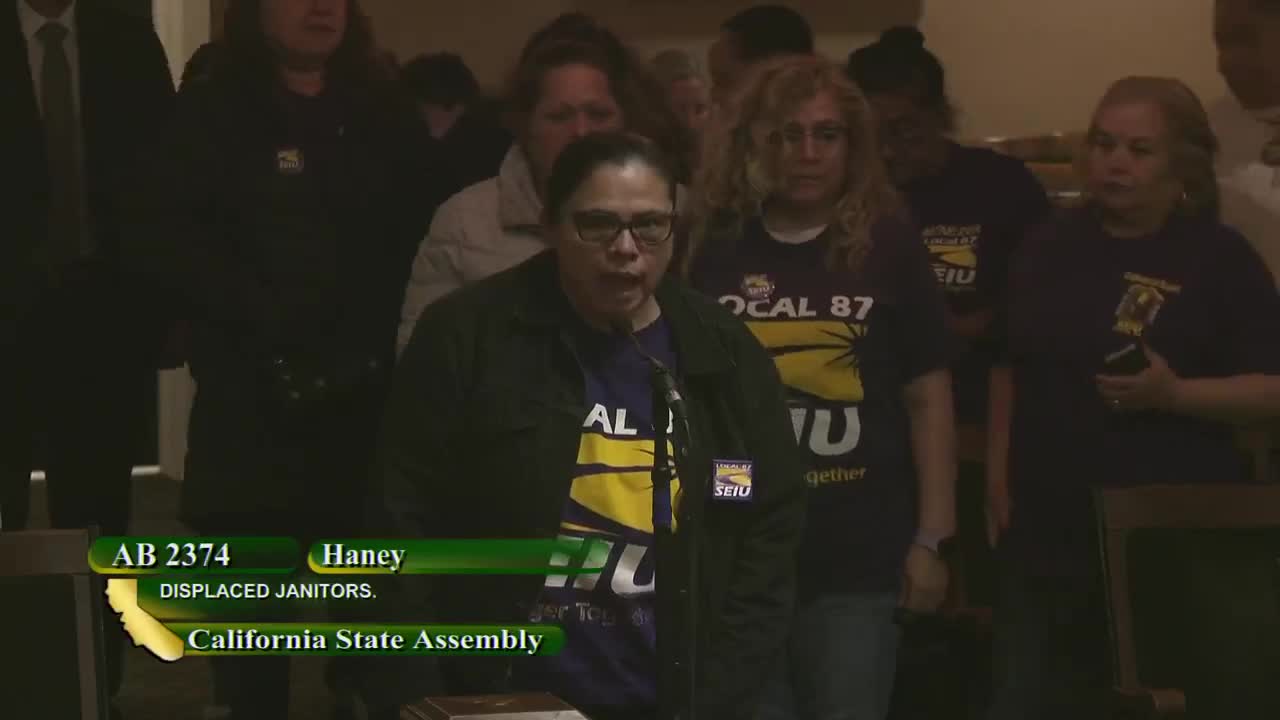 10SEC
Assembly Standing Committee on Judiciary
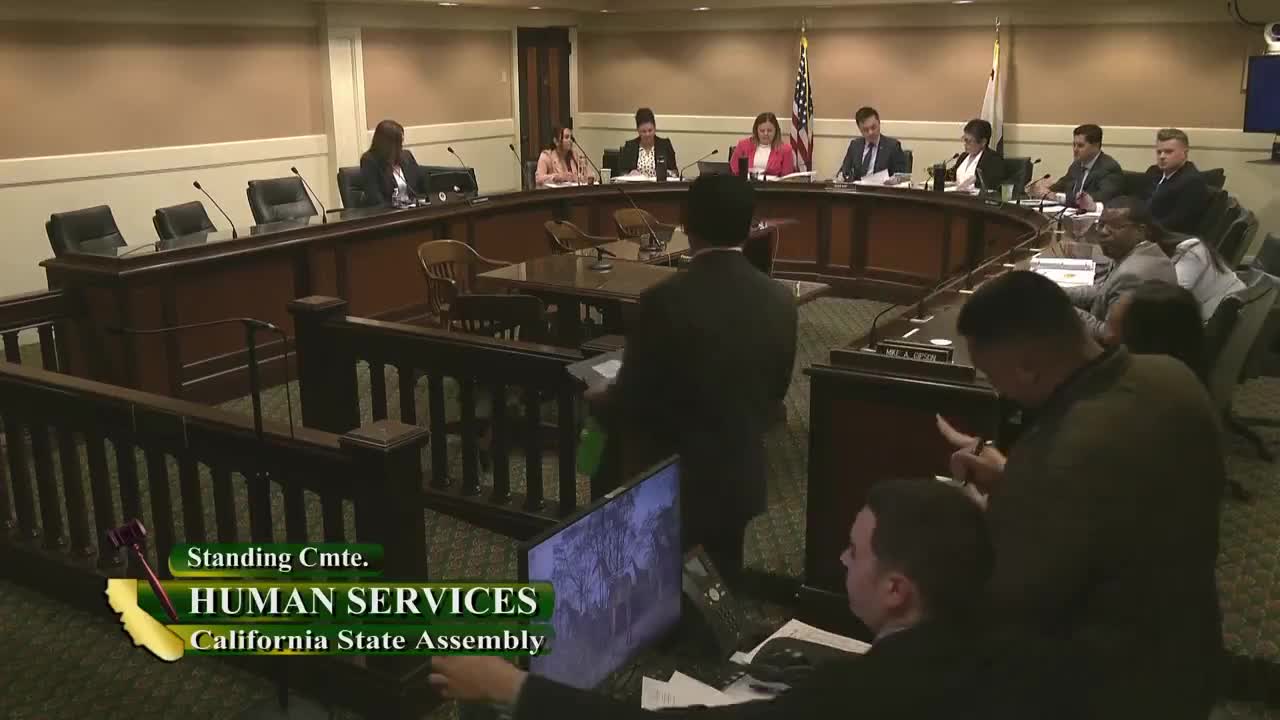 13MIN
Assembly Standing Committee on Human Services
Bill Author


