AB 2271: St. Rose Hospital.
- Session Year: 2023-2024
- House: Assembly
- Latest Version Date: 2024-09-03
Current Status:
Failed
(2024-09-22: Vetoed by Governor.)
Introduced
In Committee
First Chamber
In Committee
Second Chamber
Enacted
What does this bill do?
This bill requires the state health department, with review by the Department of Finance, to forgive any Distressed Hospital Program loans for St. Rose Hospital if the Alameda Health System Hospital Authority acquires it, canceling principal, interest, fees, and other balances. The loan forgiveness is meant to make the acquisition possible and help keep the Hayward hospital open so local and Medi‑Cal patients continue to have emergency, acute, and specialty care.
The summary is provided by generative AI which can make mistakes. For original language, please view the details in the table below.
Existing law creates the Distressed Hospital Loan Program, until January 1, 2032, for the purpose of providing loans to not-for-profit hospitals and public hospitals, as defined, in significant financial distress or to governmental entities representing a closed hospital to prevent the closure or facilitate the reopening of a closed hospital. Existing law requires the Department of Health Care Access and Information (HCAI) to administer this loan program.
Existing law authorizes the Board of Supervisors of the County of Alameda to establish the Alameda Health System Hospital Authority for the management, administration, and control of the medical center in that county. Existing law authorizes the hospital authority to acquire and possess real or personal property and to dispose of real or personal property other than that owned by the county, as may be necessary for the performance of its functions.
This bill would require HCAI, subject to review and approval by the Department of Finance, as specified, to approve the forgiveness of any loans under the Distressed Hospital Loan Program for the St. Rose Hospital in the City of Hayward if the hospital is acquired by the Alameda Health System Hospital Authority. The bill would require HCAI to forgive the full amounts of the principal, interests, fees, and any other outstanding balances of the loan.
This bill would make legislative findings and declarations as to the necessity of a special statute for the City of Hayward.
This bill would declare that it is to take effect immediately as an urgency statute.
Existing law creates the Distressed Hospital Loan Program, until January 1, 2032, for the purpose of providing loans to not-for-profit hospitals and public hospitals, as defined, in significant financial distress or to governmental entities representing a closed hospital to prevent the closure or facilitate the reopening of a closed hospital. Existing law requires the Department of Health Care Access and Information (HCAI) to administer this loan program.
Existing law authorizes the Board of Supervisors of the County of Alameda to establish the Alameda Health System Hospital Authority for the management, administration, and control of the medical center in that county. Existing law authorizes the hospital authority to acquire and possess real or personal property and to dispose of real or personal property other than that owned by the county, as may be necessary for the performance of its functions.
This bill would require the department HCAI, subject to review and approval by the Department of Finance, as specified, to approve the forgiveness of any loans under this program the Distressed Hospital Loan Program for the St. Rose Hospital in the City of Hayward. Hayward if the hospital is acquired by the Alameda Health System Hospital Authority. The bill would require the department HCAI to forgive the full amounts of the principal, interests, fees, and any other outstanding balances of the loan.
This bill would make legislative findings and declarations as to the necessity of a special statute for the City of Hayward.
This bill would declare that it is to take effect immediately as an urgency statute.
Existing law, the California Health Facility Construction Loan Insurance Law, establishes, without cost to the state, an insurance program for health facility construction, improvement, and expansion loans in order to stimulate the flow of private capital into health facilities construction, improvement, and expansion and in order to rationally meet the need for new, expanded, and modernized public and nonprofit health facilities necessary to protect the health of all the people of this state. Existing law creates the Distressed Hospital Loan Program, until January 1, 2032, for the purpose of providing loans to not-for-profit hospitals and public hospitals, as defined, in significant financial distress or to governmental entities representing a closed hospital to prevent the closure or facilitate the reopening of a closed hospital. Existing law requires the Department of Health Care Access and Information to administer both of these programs. this loan program.
This bill would require the department to approve the forgiveness of both of these loans of any loans under this program for the St. Rose Hospital in the City of Hayward. The bill would require the department to forgive the full amounts of the principal, interests, fees, and any other outstanding balances of the loan.
This bill would make legislative findings and declarations as to the necessity of a special statute for the City of Hayward.
Existing law, the California Health Facility Construction Loan Insurance Law, establishes, without cost to the state, an insurance program for health facility construction, improvement, and expansion loans in order to stimulate the flow of private capital into health facilities construction, improvement, and expansion and in order to rationally meet the need for new, expanded, and modernized public and nonprofit health facilities necessary to protect the health of all the people of this state. Existing law creates the Distressed Hospital Loan Program, until January 1, 2032, for the purpose of providing loans to not-for-profit hospitals and public hospitals, as defined, in significant financial distress or to governmental entities representing a closed hospital to prevent the closure or facilitate the reopening of a closed hospital. Existing law requires the Department of Health Care Access and Information to administer both of these programs.
This bill would require the department to approve the forgiveness of both of these loans for the St. Rose Hospital in the City of Hayward. The bill would require the department to forgive the full amounts of the principal, interests, fees, and any other outstanding balances of the loan.
This bill would make legislative findings and declarations as to the necessity of a special statute for the City of Hayward.
Existing law establishes the Medi-Cal program, which is administered by the State Department of Health Care Services and under which qualified low-income individuals receive health care services. The Medi-Cal program is, in part, governed and funded by federal Medicaid program provisions. Under existing law, the pharmacist service of furnishing naloxone hydrochloride is a covered Medi-Cal benefit. The Medi-Cal program also covers certain medications to treat opioid use disorders as part of narcotic treatment program services, or as part of medication-assisted treatment services within the Drug Medi-Cal Treatment Program, as specified.Existing law, the Knox-Keene Health Care Service Plan Act of 1975, provides for the licensure and regulation of health care service plans by the Department of Managed Health Care and makes a willful violation of the act a crime. Existing law provides for the regulation of health insurers by the Department of Insurance. Existing law sets forth specified coverage requirements for health care service plan contracts and health insurance policies.Under this bill, prescription or nonprescription naloxone hydrochloride or another drug approved by the FDA for the complete or partial reversal of an opioid overdose would be a covered benefit under the Medi-Cal program. The bill would require a health care service plan contract or health insurance policy, as specified, to include coverage for the same medications under the same conditions. The bill would prohibit a health care service plan contract or health insurance policy from imposing any cost-sharing requirements for that coverage exceeding $10 per package of medication, and would prohibit a high deductible health plan from imposing cost sharing, as specified. Because a willful violation of these provisions by a health care service plan would be a crime, the bill would impose a state-mandated local program. The bill would make implementation of its provisions contingent on funding from the Naloxone Distribution Project. The bills provisions would be inoperative when the state records 500 or fewer opioid deaths in a calendar year, and the bill would repeal these provisions on the following January 1.The California Constitution requires the state to reimburse local agencies and school districts for certain costs mandated by the state. Statutory provisions establish procedures for making that reimbursement.This bill would provide that no reimbursement is required by this act for a specified reason.Existing law establishes the Medi-Cal program, which is administered by the State Department of Health Care Services and under which qualified low-income individuals receive health care services. The Medi-Cal program is, in part, governed and funded by federal Medicaid program provisions. Under existing law, the pharmacist service of furnishing naloxone hydrochloride is a covered Medi-Cal benefit. The Medi-Cal program also covers certain medications to treat opioid use disorders as part of narcotic treatment program services, or as part of medication-assisted treatment services within the Drug Medi-Cal Treatment Program, as specified.
Existing law, the Knox-Keene Health Care Service Plan Act of 1975, provides for the licensure and regulation of health care service plans by the Department of Managed Health Care and makes a willful violation of the act a crime. Existing law provides for the regulation of health insurers by the Department of Insurance. Existing law sets forth specified coverage requirements for health care service plan contracts and health insurance policies.
Under this bill, prescription or nonprescription naloxone hydrochloride or another drug approved by the FDA for the complete or partial reversal of an opioid overdose would be a covered benefit under the Medi-Cal program. The bill would require a health care service plan contract or health insurance policy, as specified, to include coverage for the same medications under the same conditions. The bill would prohibit a health care service plan contract or health insurance policy from imposing any cost-sharing requirements for that coverage exceeding $10 per package of medication, and would prohibit a high deductible health plan from imposing cost sharing, as specified. Because a willful violation of these provisions by a health care service plan would be a crime, the bill would impose a state-mandated local program. The bill would make implementation of its provisions contingent on funding from the Naloxone Distribution Project. The bills provisions would be inoperative when the state records 500 or fewer opioid deaths in a calendar year, and the bill would repeal these provisions on the following January 1.
The California Constitution requires the state to reimburse local agencies and school districts for certain costs mandated by the state. Statutory provisions establish procedures for making that reimbursement.
This bill would provide that no reimbursement is required by this act for a specified reason.
(a)Notwithstanding any other law, and subject to review and approval by the Department of Finance, the department shall approve the forgiveness of any department loans pursuant to the Distressed Hospital Loan Program established by Chapter 4 (commencing with Section 129380) of Part 6 of Division 107 of the Health and Safety Code for the St. Rose Hospital in the City of Hayward if the St. Rose Hospital is acquired by the Alameda Health System Hospital Authority established pursuant to Section 101850 of the Health and Safety Code.
(b)The department shall forgive the full amounts of the principal, interests, fees, and any other outstanding balances of the loan.
(c)The Department of Finance shall consider in its determination to review and approve the loan forgiveness pursuant to subdivision (a) whether the forgiveness will contribute to the financial and fiscal health of the St. Rose Hospital and make it possible for the Alameda Health System Hospital Authority to acquire the hospital, thereby avoiding the closure of the hospital.
SEC. 2.The Legislature finds and declares that a special statute is necessary and that a general statute cannot be made applicable within the meaning of Section 16 of Article IV of the California Constitution because of the unique circumstances facing the City of Hayward and the surrounding areas of the County of Alameda with regard to the availability of a patient safety net hospital whose patients are overwhelmingly Medi-Cal beneficiaries. St. Rose Hospital is a licensed 171-bed hospital potentially facing imminent closure in the next several months if an adequate acquirer is not secured. The entire City of Hayward and safety net patients from the surrounding area would be left without an emergency room, acute care, and specialty care.
SEC. 3.This act is an urgency statute necessary for the immediate preservation of the public peace, health, or safety within the meaning of Article IV of the California Constitution and shall go into immediate effect. The facts constituting the necessity are:
To make it feasible for the Alameda Health System Hospital Authority to acquire the St. Rose Hospital and prevent the possible closure of the hospital in the next six months, to ensure the continuity of critical safety net patient care for those underserved communities in the city of Hayward and surrounding communities, and to help prevent the disruption of patient services that the community relies on.
(a)Notwithstanding any other law, and subject to review and approval by the Department of Finance, the department shall approve the forgiveness of any department loans pursuant to the Distressed Hospital Loan Program established by Chapter 4 (commencing with Section 129380) of Part 6 of Division 107 of the Health and Safety Code for the St. Rose Hospital in the City of Hayward. Hayward if the St. Rose Hospital is acquired by the Alameda Health System Hospital Authority established pursuant to Section 101850 of the Health and Safety Code.
(b)The department shall forgive the full amounts of the principal, interests, fees, and any other outstanding balances of the loan.
(c)The Department of Finance shall consider in its determination to review and approve the loan forgiveness pursuant to subdivision (a) whether the forgiveness will contribute to the financial and fiscal health of the St. Rose Hospital and make it possible for the Alameda Health System Hospital Authority to acquire the hospital, thereby avoiding the closure of the hospital.
SEC. 2.The Legislature finds and declares that a special statute is necessary and that a general statute cannot be made applicable within the meaning of Section 16 of Article IV of the California Constitution because of the unique circumstances facing the City of Hayward and the surrounding areas of the County of Alameda with regard to the availability of a patient safety net hospital whose patients are overwhelmingly Medi-Cal beneficiaries. St. Rose Hospital is a licensed 171-bed hospital potentially facing imminent closure in the next several months if an adequate acquirer is not secured. The entire City of Hayward and safety net patients from the surrounding area would be left without an emergency room, acute care, and specialty care.
SEC. 3.This act is an urgency statute necessary for the immediate preservation of the public peace, health, or safety within the meaning of Article IV of the California Constitution and shall go into immediate effect. The facts constituting the necessity are:
To make it feasible for the Alameda Health System Hospital Authority to acquire the St. Rose Hospital and prevent the possible closure of the hospital in the next six months, to ensure the continuity of critical safety net patient care for those underserved communities in the city of Hayward and surrounding communities, and to help prevent the disruption of patient services that the community relies on.
(a)Notwithstanding any other law, the department shall approve the forgiveness of both of the following department loans for the St. Rose Hospital in the City of Hayward:
(1)The California Health Facility Construction Loan Insurance Law established by Chapter 1 (commencing with Section 129000) of Part 6 of Division 107 of the Health and Safety Code.(2)The any department loans pursuant to the Distressed Hospital Loan Program established by Chapter 4 (commencing with Section 129380) of Part 6 of Division 107 of the Health and Safety Code. Code for the St. Rose Hospital in the City of Hayward.
(b)The department shall forgive the full amounts of the principal, interests, fees, and any other outstanding balances of the loan.
SEC. 2.The Legislature finds and declares that a special statute is necessary and that a general statute cannot be made applicable within the meaning of Section 16 of Article IV of the California Constitution because of the unique circumstances facing the City of Hayward and the surrounding areas of the County of Alameda with regard to the availability of a patient safety net hospital whose patients are overwhelmingly Medi-Cal beneficiaries. St. Rose Hospital is a licensed 171-bed hospital potentially facing imminent closure in the next several months if an adequate acquirer is not secured. The entire City of Hayward and safety net patients from the surrounding area would be left without an emergency room, acute care, and specialty care.
(a)Notwithstanding any other law, the department shall approve the forgiveness of both of the following department loans for the St. Rose Hospital in the City of Hayward:
(1)The California Health Facility Construction Loan Insurance Law established by Chapter 1 (commencing with Section 129000) of Part 6 of Division 107 of the Health and Safety Code.
(2)The Distressed Hospital Loan Program established by Chapter 4 (commencing with Section 129380) of Part 6 of Division 107 of the Health and Safety Code.
(b)The department shall forgive the full amounts of the principal, interests, fees, and any other outstanding balances of the loan.
SEC. 2.The Legislature finds and declares that a special statute is necessary and that a general statute cannot be made applicable within the meaning of Section 16 of Article IV of the California Constitution because of the unique circumstances facing the City of Hayward and the surrounding areas of the County of Alameda with regard to the availability of a patient safety net hospital whose patients are overwhelmingly Medi-Cal beneficiaries. St. Rose Hospital is a licensed 171-bed hospital potentially facing imminent closure in the next several months if an adequate acquirer is not secured. The entire City of Hayward and safety net patients from the surrounding area would be left without an emergency room, acute care, and specialty care.
SECTION 1.The Legislature finds and declares all of the following:(a)According to the United States Food and Drug Administration (FDA), naloxone hydrochloride is a medicine that can counter overdose effects when administered timely and that can help to reduce opioid overdose deaths.(b)In November 2022, the FDA issued a Federal Register notice with a preliminary assessment of the safety and effectiveness of certain naloxone hydrochloride drug products for nonprescription use, in order to facilitate the development and approval of those products, including through a potential switch from prescription status to nonprescription status.(c)In February 2023, an advisory committee to the FDA voted unanimously in favor of making Narcan, a naloxone hydrochloride nasal spray, available over the counter.(d) In March 2023, the FDA approved Narcan for nonprescription use.(e)The FDA has since approved RiVive, another medication for the complete or partial reversal of an opioid overdose for nonprescription use.(f)The California Overdose Surveillance Dashboard, administered by the State Department of Public Health, contains the following data applicable to the state for 2022:(1)Thirteen million six hundred forty thousand seven hundred ninety-four prescriptions were written for opioids.(2)Six thousand nine hundred fifty-nine deaths were documented as relating to an opioid overdose. Of those deaths, 6,095 were documented as relating to a fentanyl overdose.(3)Twenty-one thousand three hundred sixteen emergency department visits were documented as relating to an opioid overdose.SEC. 2.Section 1374.198 is added to the Health and Safety Code, immediately following Section 1374.197, to read:1374.198.(a)A health care service plan contract that is issued, amended, delivered, or renewed on or after the date that the state reaches at least 1,000 opioid overdose deaths per year, but no earlier than January 1, 2025, shall include coverage for prescription or nonprescription naloxone hydrochloride or another drug approved by the United States Food and Drug Administration (FDA) for the complete or partial reversal of an opioid overdose.(b)A health care service plan contract shall not impose any cost-sharing requirements, including a copayment or deductible, for coverage provided pursuant to this section exceeding ten dollars ($10) per package of naloxone hydrochloride or another drug approved by the FDA for the complete or partial reversal of an opioid overdose.(c)If a health care service plan contract is a high deductible health plan under the definition set forth in Section 223(c)(2) of Title 26 of the United States Code, the contract shall not impose cost sharing as specified in this section, unless not applying cost sharing would conflict with federal requirements for high deductible health plans.(d)This section shall only be implemented to the extent that funding for state costs is provided through the Naloxone Distribution Project administered by the State Department of Health Care Services.(e)This section shall remain in effect only until the state records 500 or fewer opioid overdose deaths in a calendar year, and as of the following January 1 is repealed.SEC. 3.Section 10127.22 is added to the Insurance Code, immediately following Section 10127.20, to read:10127.22.(a)A health insurance policy that is issued, amended, delivered, or renewed on or after the date that the state reaches at least 1,000 opioid overdose deaths per year, but no earlier than January 1, 2025, shall include coverage for prescription or nonprescription naloxone hydrochloride or another drug approved by the United States Food and Drug Administration (FDA) for the complete or partial reversal of an opioid overdose.(b)A health insurer shall not impose any cost-sharing requirements, including a copayment or deductible, for coverage provided pursuant to this section exceeding ten dollars ($10) per package of naloxone hydrochloride or another drug approved by the FDA for the complete or partial reversal of an opioid overdose.(c)If a health insurance policy is a high deductible health plan under the definition set forth in Section 223(c)(2) of Title 26 of the United States Code, the policy shall not impose cost sharing as specified in this section, unless not applying cost sharing would conflict with federal requirements for high deductible health plans.(d)This section shall only be implemented to the extent that funding for state costs is provided through the Naloxone Distribution Project administered by the State Department of Health Care Services.(e)This section shall remain in effect only until the state records 500 or fewer opioid overdose deaths in a calendar year, and as of the following January 1 is repealed.SEC. 4.Section 14132.37 is added to the Welfare and Institutions Code, immediately following Section 14132.36, to read:14132.37.(a)Prescription or nonprescription naloxone hydrochloride or another drug approved by the United States Food and Drug Administration for the complete or partial reversal of an opioid overdose shall be a covered benefit under the Medi-Cal program.(b)This section shall only be implemented to the extent that funding is provided through the Naloxone Distribution Project administered by the department.(c)This section shall remain in effect only until the state records 500 or fewer opioid overdose deaths in a calendar year, and as of the following January 1 is repealed.SEC. 5.No reimbursement is required by this act pursuant to Section 6 of Article XIIIB of the California Constitution because the only costs that may be incurred by a local agency or school district will be incurred because this act creates a new crime or infraction, eliminates a crime or infraction, or changes the penalty for a crime or infraction, within the meaning of Section 17556 of the Government Code, or changes the definition of a crime within the meaning of Section 6 of Article XIIIB of the California Constitution.The Legislature finds and declares all of the following:
(a)According to the United States Food and Drug Administration (FDA), naloxone hydrochloride is a medicine that can counter overdose effects when administered timely and that can help to reduce opioid overdose deaths.
(b)In November 2022, the FDA issued a Federal Register notice with a preliminary assessment of the safety and effectiveness of certain naloxone hydrochloride drug products for nonprescription use, in order to facilitate the development and approval of those products, including through a potential switch from prescription status to nonprescription status.
(c)In February 2023, an advisory committee to the FDA voted unanimously in favor of making Narcan, a naloxone hydrochloride nasal spray, available over the counter.
(d) In March 2023, the FDA approved Narcan for nonprescription use.
(e)The FDA has since approved RiVive, another medication for the complete or partial reversal of an opioid overdose for nonprescription use.
(f)The California Overdose Surveillance Dashboard, administered by the State Department of Public Health, contains the following data applicable to the state for 2022:
(1)Thirteen million six hundred forty thousand seven hundred ninety-four prescriptions were written for opioids.
(2)Six thousand nine hundred fifty-nine deaths were documented as relating to an opioid overdose. Of those deaths, 6,095 were documented as relating to a fentanyl overdose.
(3)Twenty-one thousand three hundred sixteen emergency department visits were documented as relating to an opioid overdose.
SEC. 2.Section 1374.198 is added to the Health and Safety Code, immediately following Section 1374.197, to read:1374.198.(a)A health care service plan contract that is issued, amended, delivered, or renewed on or after the date that the state reaches at least 1,000 opioid overdose deaths per year, but no earlier than January 1, 2025, shall include coverage for prescription or nonprescription naloxone hydrochloride or another drug approved by the United States Food and Drug Administration (FDA) for the complete or partial reversal of an opioid overdose.
(b)A health care service plan contract shall not impose any cost-sharing requirements, including a copayment or deductible, for coverage provided pursuant to this section exceeding ten dollars ($10) per package of naloxone hydrochloride or another drug approved by the FDA for the complete or partial reversal of an opioid overdose.
(c)If a health care service plan contract is a high deductible health plan under the definition set forth in Section 223(c)(2) of Title 26 of the United States Code, the contract shall not impose cost sharing as specified in this section, unless not applying cost sharing would conflict with federal requirements for high deductible health plans.
(d)This section shall only be implemented to the extent that funding for state costs is provided through the Naloxone Distribution Project administered by the State Department of Health Care Services.
(e)This section shall remain in effect only until the state records 500 or fewer opioid overdose deaths in a calendar year, and as of the following January 1 is repealed.
SEC. 3.Section 10127.22 is added to the Insurance Code, immediately following Section 10127.20, to read:10127.22.(a)A health insurance policy that is issued, amended, delivered, or renewed on or after the date that the state reaches at least 1,000 opioid overdose deaths per year, but no earlier than January 1, 2025, shall include coverage for prescription or nonprescription naloxone hydrochloride or another drug approved by the United States Food and Drug Administration (FDA) for the complete or partial reversal of an opioid overdose.
(b)A health insurer shall not impose any cost-sharing requirements, including a copayment or deductible, for coverage provided pursuant to this section exceeding ten dollars ($10) per package of naloxone hydrochloride or another drug approved by the FDA for the complete or partial reversal of an opioid overdose.
(c)If a health insurance policy is a high deductible health plan under the definition set forth in Section 223(c)(2) of Title 26 of the United States Code, the policy shall not impose cost sharing as specified in this section, unless not applying cost sharing would conflict with federal requirements for high deductible health plans.
(d)This section shall only be implemented to the extent that funding for state costs is provided through the Naloxone Distribution Project administered by the State Department of Health Care Services.
(e)This section shall remain in effect only until the state records 500 or fewer opioid overdose deaths in a calendar year, and as of the following January 1 is repealed.
SEC. 4.Section 14132.37 is added to the Welfare and Institutions Code, immediately following Section 14132.36, to read:14132.37.(a)Prescription or nonprescription naloxone hydrochloride or another drug approved by the United States Food and Drug Administration for the complete or partial reversal of an opioid overdose shall be a covered benefit under the Medi-Cal program.
(b)This section shall only be implemented to the extent that funding is provided through the Naloxone Distribution Project administered by the department.
(c)This section shall remain in effect only until the state records 500 or fewer opioid overdose deaths in a calendar year, and as of the following January 1 is repealed.
SEC. 5.No reimbursement is required by this act pursuant to Section 6 of Article XIIIB of the California Constitution because the only costs that may be incurred by a local agency or school district will be incurred because this act creates a new crime or infraction, eliminates a crime or infraction, or changes the penalty for a crime or infraction, within the meaning of Section 17556 of the Government Code, or changes the definition of a crime within the meaning of Section 6 of Article XIIIB of the California Constitution.
|
Date
|
Status
|
|---|---|
| Sep 22, 2024 | Vetoed by Governor. |
| Sep 11, 2024 | Enrolled and presented to the Governor at 4 p.m. |
| Aug 29, 2024 | Urgency clause adopted. Senate amendments concurred in. To Engrossing and Enrolling. (Ayes 71. Noes 0.). |
| Aug 29, 2024 | Assembly Rule 77 suspended. |
| Aug 28, 2024 | In Assembly. Concurrence in Senate amendments pending. May be considered on or after August 30 pursuant to Assembly Rule 77. |
| Aug 28, 2024 | Read third time. Urgency clause adopted. Passed. Ordered to the Assembly. (Ayes 39. Noes 0.). |
| Aug 23, 2024 | Ordered to special consent calendar. |
| Aug 19, 2024 | Read second time. Ordered to third reading. |
| Aug 15, 2024 | From committee: Do pass. (Ayes 7. Noes 0.) (August 15). |
| Jul 1, 2024 | In committee: Referred to suspense file. |
| Jun 24, 2024 | Read second time and amended. Re-referred to Com. on APPR. |
| Jun 20, 2024 | From committee: Amend, and do pass as amended and re-refer to Com. on APPR with recommendation: To Consent Calendar. (Ayes 11. Noes 0.) (June 19). |
| Jun 4, 2024 | In committee: Hearing postponed by committee. |
| May 29, 2024 | Referred to Com. on HEALTH. |
| May 22, 2024 | In Senate. Read first time. To Com. on RLS. for assignment. |
| May 21, 2024 | Read third time. Passed. Ordered to the Senate. (Ayes 69. Noes 0. Page 5369.) |
| May 20, 2024 | Read second time. Ordered to third reading. |
| May 16, 2024 | Read second time and amended. Ordered returned to second reading. |
| May 16, 2024 | Joint Rule 62(a), file notice suspended. (Page 5215.) |
| May 16, 2024 | From committee: Amend, and do pass as amended. (Ayes 12. Noes 0.) (May 16). |
| May 16, 2024 | Assembly Rule 63 suspended. |
| May 15, 2024 | In committee: Set, first hearing. Referred to APPR. suspense file. |
| Apr 24, 2024 | From committee: Do pass and re-refer to Com. on APPR. (Ayes 15. Noes 0.) (April 23). Re-referred to Com. on APPR. |
| Apr 22, 2024 | Re-referred to Com. on HEALTH. |
| Apr 18, 2024 | From committee chair, with author's amendments: Amend, and re-refer to Com. on HEALTH. Read second time and amended. |
| Feb 26, 2024 | Referred to Com. on HEALTH. |
| Feb 9, 2024 | From printer. May be heard in committee March 10. |
| Feb 8, 2024 | Read first time. To print. |
|
Date
|
Description
|
Location
|
Votes
|
|
|---|---|---|---|---|
| Aug 29, 2024 | AB 2271 Ortega Concurrence - Urgency Added | Assembly Floor |
Passed |
|
| Aug 28, 2024 | Special Consent AB2271 Ortega et al. By Wahab Urgency Clause | Senate Floor |
Passed |
|
| Aug 15, 2024 | Do pass | Senate Standing Committee on Appropriations |
Passed |
|
| Jul 1, 2024 | Placed on suspense file | Senate Standing Committee on Appropriations |
Passed |
|
| Jun 19, 2024 | Do pass as amended, but first amend, and re-refer to the Committee on [Appropriations] with the recommendation: To Consent Calendar | Senate Standing Committee on Health |
Passed |
|
| May 21, 2024 | AB 2271 Ortega Assembly Third Reading | Assembly Floor |
Passed |
|
| May 16, 2024 | Do pass as amended. | Assembly Standing Committee on Appropriations |
Passed |
|
| Apr 23, 2024 | Do pass and be re-referred to the Committee on [Appropriations] | Assembly Standing Committee on Health |
Passed |
This list shows positions taken on this bill by organizations on the date displayed, which is linked to the original source.
Positions by individuals are not included.
|
Organization
|
Position
|
Date
|
|---|---|---|
| Alameda Alliance For Health | ** Support | |
| Alameda County Board of Supervisors | ** Support | |
| Alameda County Firefighters Local 55 | ** Support | |
| Alameda Health Consortium | * Support | Jul 1, 2024 |
| Alameda Health System | ** Support | |
| City Of Hayward | ** Support | |
| City Of Newark | ** Support | |
| City of Union City | ** Support | |
| Eden Health District | ** Support | |
| Eden Township Healthcare District | * Support | Jul 1, 2024 |
| Ella Baker Center For Human Rights | ** Support | |
| First Presbyterian Church of Hayward | ** Support | |
| Glad Tidings International Church of Hayward | ** Support | |
| Hayward Chamber of Commerce | ** Support | |
| Hayward Fire Fighters Local 1909 | ** Support | |
| Hayward Sisters Hospital Dba St. Rose Hospital | ** Support | |
| La Familia | ** Support | |
| Saint Rose Hospital | * Support | Apr 23, 2024 |
| Saint Rose Hospital | * Support | Jul 1, 2024 |
| Saint Rose Hospital | * Support | Jul 1, 2024 |
| St. Rose Hospital | ** Support | |
| Tiburcio Vasquez Health Center | ** Support |
GOVERNOR'S VETO
GV Bill Id:AB 2271
Author:(Ortega)
As Enrolled Ver:September 3, 2024
2/3 vote
SUMMARY
Requires the Department of Health Care Access and Information (HCAI) to approve the forgiveness of a Distressed Hospital Loan Program (DHLP) loan for the St. Rose Hospital (SRH) in the City of Hayward. Contains an urgency clause to ensure that the provision of this bill go into immediate effect upon enactment.
Senate Amendments
Make approval of the DHLP forgiveness subject to review and approval by the Department of Finance if SRH is acquired by the Alameda Health System (AHS) Hospital Authority, and add an urgency clause.
Governor's Veto Message
This bill would require HCAI to approve the forgiveness of any loans provided to St. Rose Hospital in the City of Hayward from the DHLP.
The DHLP was established in 2023 with $300 million to offer interest-free loans to non-profit and publicly operated hospitals in financial distress. A total of 16 hospitals received loans from the program in August 2023, including $17.65 million to St. Rose Hospital. As part of the DHLP statute, HCAI is required to develop loan modification and forgiveness guidelines that all hospitals may apply for. These guidelines will be released before the end of the year, and I encourage St. Rose Hospital to pursue loan forgiveness through this path.
While I appreciate the author's effort to support Alameda Health System's potential acquisition of St. Rose Hospital in her community, this bill would circumvent the loan forgiveness application process in existing law to secure full forgiveness for one hospital through statute. This unfairly advantages St. Rose and sets a precedent for the remaining 15 hospitals that received loans.
COMMENTS
SRH. SRH is a safety net community hospital with 117 beds and a payer mix composed primarily of Medi-Cal, Medicare, and other governmentally covered vulnerable patient populations. According to information supplied by the author, late last year, it was determined by studies sponsored by a range of community stakeholders that SRH would likely not survive for much longer unless it became part of a larger and stronger health system, and the hospital issued a request for information from potential partners. As of April 15, SRH is currently in exclusive discussions with AHS, with the goal of reaching a decision within 90 days. However, as a public hospital system itself, AHS is unable to retire or pay SRH's currently outstanding capital debt.
SRH currently has major outstanding debt in the form of a $17.2 million loan under the DHLP. The retirement of that debt would be required for a successful acquisition of the hospital and integration of SRH into AHS.
DHLP. AB 112 (Committee on Budget), Chapter 6, Statutes of 2023, established the DHLP, until January 1, 2032, which will provide interest free cashflow loans to not-for-profit hospitals and public hospitals, as defined, in significant financial distress, or to governmental entities representing closed hospitals. The DHLP is jointly administered by HCAI and the California Health Facilities Financing Authority (CHFFA). The following hospitals received a total of $300 million in financial support:
- Beverly Hospital $5 million;
- Dameron Hospital Association $29 million;
- El Centro Regional Medical Center (El Centro) $28 million;
- Hayward Sisters Hospital, dba St. Rose Hospital $17.65 million;
- Hazel Hawkins Memorial $10 million (subsequently declared bankruptcy and declined their loan award);
- John C. Fremont Healthcare District $9.35 million;
- Kaweah Delta Health Care District $20.75 million;
- Madera Community Hospital $2 million;
- Martin Luther King, Jr. Community Hospital $14 million;
- Palo Verde Hospital $8.5 million;
- Pioneers Memorial Healthcare District $28 million;
- Ridgecrest Regional Hospital $5.5 million;
- San Gorgonio Memorial Healthcare District $9.8 million;
- Sonoma Valley Hospital $3.1 million;
- TriCity Medical Center $33.2 million; and,
- Watsonville Community Hospital $8.3 million.
The loans are at zero-interest and are repayable over 72 months, with an initial 18-month grace period at the beginning of the loan term. The program will sunset on December 31, 2031.
AB 112 included language that requires HCAI, in consultation with CHFFA, and upon approval of the Department of Finance, to develop an application and approval process for loan forgiveness or modification of the terms of the loan, including a delay of the beginning of the loan repayment period or an extension of the 72-month loan repayment term, or both. The process must include, but is not limited to, eligibility criteria for an applicant for loan forgiveness or modification, including which portion of a loan may be forgiven or modified.
HCAI, in consultation with California Health and Human Services Agency and CHFFA, has initiated the development of loan forgiveness criteria and intends to release draft language for comment in the next few months. Awarded facilities have an initial 18-month grace period at the beginning of the loan term. As such, the forgiveness criteria will be completed well in advance of the beginning of the repayment timeframe.
According to the Author
SRH is a distressed safety net hospital that treats mostly low-income Medi-Cal and Medicare patients who often cannot find care anywhere else. It is the only ED in the City of Hayward. SRH's current financial situation is dire; the hospital will face bankruptcy and possible closure in the next six months if another entity doesn't acquire the hospital. AHS, a public, state-created, hospital system, is in the bidding process to buy SRH, but requires financial assistance to do so. If SRH were to close, the more than 150,000 residents of Hayward would be left without a safety net hospital or an ED and would be forced to drive 20 to 40 minutes to the nearest hospitals in surrounding cities.
Arguments in Support
SRH is the sponsor of this bill and states that without this bill, AHS and SRH will not be able to finalize their transaction and St. Rose's will not be able to join AHS. Absent a transaction with AHS, SRH's future viability will be at risk and SRH will be forced to reduce services over the next several months. The closure of the hospital will also be a possibility.
Arguments in Opposition
There is no known opposition to this bill.
FISCAL COMMENTS
According to the Senate Appropriations Committee, HCAI estimates a General Fund cost pressure of $17,650,000 in 2024-25. Additionally, HCAI estimates General Fund cost pressures in 2025-26 of up to $274,850,000 with the remaining loan recipients seeking loan forgiveness from the Distressed Hospital Loan Program.
VOTES
ASM HEALTH: 15-0-1
YES: Bonta, Waldron, Aguiar-Curry, Arambula, Wendy Carrillo, Flora, Haney, Jones-Sawyer, Maienschein, McCarty, Joe Patterson, Rodriguez, Santiago, Schiavo, Weber
ABS, ABST OR NV: Sanchez
ASM APPROPRIATIONS: 12-0-3
YES: Wicks, Arambula, Bryan, Calderon, Wendy Carrillo, Mike Fong, Grayson, Haney, Hart, Jim Patterson, Pellerin, Villapudua
ABS, ABST OR NV: Sanchez, Dixon, Ta
ASSEMBLY FLOOR: 69-0-11
YES: Addis, Aguiar-Curry, Alanis, Alvarez, Arambula, Bains, Bauer-Kahan, Bennett, Berman, Boerner, Bonta, Bryan, Calderon, Juan Carrillo, Wendy Carrillo, Chen, Connolly, Davies, Essayli, Flora, Mike Fong, Vince Fong, Garcia, Gipson, Grayson, Haney, Hart, Hoover, Irwin, Jackson, Jones-Sawyer, Kalra, Lackey, Lee, Low, Lowenthal, Maienschein, McCarty, McKinnor, Muratsuchi, Stephanie Nguyen, Ortega, Pacheco, Papan, Jim Patterson, Joe Patterson, Pellerin, Petrie-Norris, Quirk-Silva, Ramos, Rendon, Reyes, Rodriguez, Blanca Rubio, Santiago, Schiavo, Soria, Ting, Valencia, Villapudua, Waldron, Wallis, Ward, Weber, Wicks, Wilson, Wood, Zbur, Robert Rivas
ABS, ABST OR NV: Cervantes, Megan Dahle, Dixon, Friedman, Gabriel, Gallagher, Holden, Mathis, Luz Rivas, Sanchez, Ta
SENATE FLOOR: 39-0-1
YES: Allen, Archuleta, Ashby, Atkins, Becker, Blakespear, Bradford, Caballero, Cortese, Dahle, Dodd, Durazo, Eggman, Glazer, Gonzalez, Grove, Hurtado, Jones, Laird, Limón, McGuire, Menjivar, Min, Newman, Nguyen, Niello, Ochoa Bogh, Padilla, Portantino, Roth, Rubio, Seyarto, Skinner, Smallwood-Cuevas, Stern, Umberg, Wahab, Wiener, Wilk
ABS, ABST OR NV: Alvarado-Gil
ASSEMBLY FLOOR: 71-0-8
YES: Addis, Aguiar-Curry, Alanis, Alvarez, Arambula, Bains, Bauer-Kahan, Bennett, Berman, Boerner, Bonta, Bryan, Calderon, Juan Carrillo, Wendy Carrillo, Chen, Connolly, Megan Dahle, Davies, Essayli, Flora, Mike Fong, Friedman, Gabriel, Garcia, Gipson, Grayson, Haney, Hart, Holden, Hoover, Irwin, Jackson, Jones-Sawyer, Kalra, Lackey, Lee, Low, Lowenthal, Maienschein, Mathis, McCarty, McKinnor, Muratsuchi, Stephanie Nguyen, Pacheco, Papan, Jim Patterson, Pellerin, Petrie-Norris, Quirk-Silva, Ramos, Rendon, Reyes, Luz Rivas, Rodriguez, Blanca Rubio, Santiago, Schiavo, Soria, Ting, Valencia, Villapudua, Waldron, Wallis, Ward, Weber, Wicks, Wilson, Wood, Robert Rivas
ABS, ABST OR NV: Cervantes, Dixon, Gallagher, Ortega, Joe Patterson, Sanchez, Ta, Zbur
UPDATED
VERSION: September 3, 2024
CONSULTANT: Lara Flynn / HEALTH / (916) 319-2097 FN: 0005091
CONCURRENCE IN SENATE AMENDMENTS
CSA1 Bill Id:AB 2271
Author:(Ortega)
As Amended Ver:June 24, 2024
2/3 vote
SUMMARY
Requires the Department of Health Care Access and Information (HCAI) to approve the forgiveness of a Distressed Hospital Loan Program (DHLP) loan for the St. Rose Hospital (SRH) in the City of Hayward. Contains an urgency clause to ensure that the provision of this bill go into immediate effect upon enactment.
Senate Amendments
Make approval of the DHLP forgiveness subject to review and approval by the Department of Finance if SRH is acquired by the Alameda Health System (AHS) Hospital Authority, and add an urgency clause.
COMMENTS
SRH. SRH is a safety net community hospital with 117 beds and a payer mix composed primarily of Medi-Cal, Medicare, and other governmentally covered vulnerable patient populations. According to information supplied by the author, late last year, it was determined by studies sponsored by a range of community stakeholders that SRH would likely not survive for much longer unless it became part of a larger and stronger health system, and the hospital issued a request for information from potential partners. As of April 15, SRH is currently in exclusive discussions with AHS, with the goal of reaching a decision within 90 days. However, as a public hospital system itself, AHS is unable to retire or pay SRH's currently outstanding capital debt.
SRH currently has major outstanding debt in the form of a $17.2 million loan under the DHLP. The retirement of that debt would be required for a successful acquisition of the hospital and integration of SRH into AHS.
SRH annual reports. As part of then-Attorney General Kamala Harris' approval of SRH entering into a management services agreement with a purchase option with another entity in 2013, the Attorney General set certain conditions on the approval. One of the conditions was the submittal of annual reports to the Attorney General's office regarding compliance with the conditions. According to the 2022 report, like many community hospitals across the State of California and the United States, SRH has been adversely impacted by the COVID-19 pandemic. Since the start of the COVID-19 pandemic, SRH has experienced: 1) decreasing patient volumes especially in its emergency department (ED); 2) significant staffing challenges especially as it relates to nurse staffing; 3) restrictions that have affected its ability to engage with the community and provide community benefits; and, 4) financial losses. First, due to the various stay-at-home orders and other restrictions in place due to the COVID-19 pandemic, SRH has seen a substantial decrease in its patient volumes when compared to pre-COVID-19 periods especially in its ED, labor and delivery unit, and inpatient surgical units. While some patient volumes have returned, the patient volumes have not returned to pre-COVID-19 levels.
DHLP. AB 112 (Committee on Budget), Chapter 6, Statutes of 2023, established the DHLP, until January 1, 2032, which will provide interest free cashflow loans to not-for-profit hospitals and public hospitals, as defined, in significant financial distress, or to governmental entities representing closed hospitals. The DHLP is jointly administered by HCAI and the California Health Facilities Financing Authority (CHFFA). The following hospitals received a total of $300 million in financial support:
- Beverly Hospital $5 million;
- Dameron Hospital Association $29 million;
- El Centro Regional Medical Center (El Centro) $28 million;
- Hayward Sisters Hospital, dba St. Rose Hospital $17.65 million;
- Hazel Hawkins Memorial $10 million (subsequently declared bankruptcy and declined their loan award);
- John C. Fremont Healthcare District $9.35 million;
- Kaweah Delta Health Care District $20.75 million;
- Madera Community Hospital $2 million;
- Martin Luther King, Jr. Community Hospital $14 million;
- Palo Verde Hospital $8.5 million;
- Pioneers Memorial Healthcare District $28 million;
- Ridgecrest Regional Hospital $5.5 million;
- San Gorgonio Memorial Healthcare District $9.8 million;
- Sonoma Valley Hospital $3.1 million;
- TriCity Medical Center $33.2 million; and,
- Watsonville Community Hospital $8.3 million.
The loans are at zero-interest and are repayable over 72 months, with an initial 18-month grace period at the beginning of the loan term. The program will sunset on December 31, 2031.
AB 112 included language that requires HCAI, in consultation with CHFFA, and upon approval of the Department of Finance, to develop an application and approval process for loan forgiveness or modification of the terms of the loan, including a delay of the beginning of the loan repayment period or an extension of the 72-month loan repayment term, or both. The process must include, but is not limited to, eligibility criteria for an applicant for loan forgiveness or modification, including which portion of a loan may be forgiven or modified.
HCAI, in consultation with California Health and Human Services Agency and CHFFA, has initiated the development of loan forgiveness criteria and intends to release draft language for comment in the next few months. Awarded facilities have an initial 18-month grace period at the beginning of the loan term. As such, the forgiveness criteria will be completed well in advance of the beginning of the repayment timeframe.
According to the Author
SRH is a distressed safety net hospital that treats mostly low-income Medi-Cal and Medicare patients who often cannot find care anywhere else. It is the only ED in the City of Hayward. SRH's current financial situation is dire; the hospital will face bankruptcy and possible closure in the next six months if another entity doesn't acquire the hospital. AHS, a public, state-created, hospital system, is in the bidding process to buy SRH, but requires financial assistance to do so. If SRH were to close, the more than 150,000 residents of Hayward would be left without a safety net hospital or an ED and would be forced to drive 20 to 40 minutes to the nearest hospitals in surrounding cities.
Arguments in Support
SRH is the sponsor of this bill and states that without this bill, AHS and SRH will not be able to finalize their transaction and St. Rose's will not be able to join AHS. Absent a transaction with AHS, SRH's future viability will be at risk and SRH will be forced to reduce services over the next several months. The closure of the hospital will also be a possibility.
Arguments in Opposition
There is no known opposition to this bill.
FISCAL COMMENTS
According to the Senate Appropriations Committee, HCAI estimates a General Fund cost pressure of $17,650,000 in 2024-25. Additionally, HCAI estimates General Fund cost pressures in 2025-26 of up to $274,850,000 with the remaining loan recipients seeking loan forgiveness from the Distressed Hospital Loan Program.
VOTES:
ASM HEALTH: 15-0-1
YES: Bonta, Waldron, Aguiar-Curry, Arambula, Wendy Carrillo, Flora, Haney, Jones-Sawyer, Maienschein, McCarty, Joe Patterson, Rodriguez, Santiago, Schiavo, Weber
ABS, ABST OR NV: Sanchez
ASM APPROPRIATIONS: 12-0-3
YES: Wicks, Arambula, Bryan, Calderon, Wendy Carrillo, Mike Fong, Grayson, Haney, Hart, Jim Patterson, Pellerin, Villapudua
ABS, ABST OR NV: Sanchez, Dixon, Ta
ASSEMBLY FLOOR: 69-0-11
YES: Addis, Aguiar-Curry, Alanis, Alvarez, Arambula, Bains, Bauer-Kahan, Bennett, Berman, Boerner, Bonta, Bryan, Calderon, Juan Carrillo, Wendy Carrillo, Chen, Connolly, Davies, Essayli, Flora, Mike Fong, Vince Fong, Garcia, Gipson, Grayson, Haney, Hart, Hoover, Irwin, Jackson, Jones-Sawyer, Kalra, Lackey, Lee, Low, Lowenthal, Maienschein, McCarty, McKinnor, Muratsuchi, Stephanie Nguyen, Ortega, Pacheco, Papan, Jim Patterson, Joe Patterson, Pellerin, Petrie-Norris, Quirk-Silva, Ramos, Rendon, Reyes, Rodriguez, Blanca Rubio, Santiago, Schiavo, Soria, Ting, Valencia, Villapudua, Waldron, Wallis, Ward, Weber, Wicks, Wilson, Wood, Zbur, Robert Rivas
ABS, ABST OR NV: Cervantes, Megan Dahle, Dixon, Friedman, Gabriel, Gallagher, Holden, Mathis, Luz Rivas, Sanchez, Ta
SENATE FLOOR: 39-0-1
YES: Allen, Archuleta, Ashby, Atkins, Becker, Blakespear, Bradford, Caballero, Cortese, Dahle, Dodd, Durazo, Eggman, Glazer, Gonzalez, Grove, Hurtado, Jones, Laird, Limón, McGuire, Menjivar, Min, Newman, Nguyen, Niello, Ochoa Bogh, Padilla, Portantino, Roth, Rubio, Seyarto, Skinner, Smallwood-Cuevas, Stern, Umberg, Wahab, Wiener, Wilk
ABS, ABST OR NV: Alvarado-Gil
UPDATED
VERSION: June 24, 2024
CONSULTANT: Lara Flynn / HEALTH / (916) 319-2097 FN: 0004381
SENATE RULES COMMITTEE Office of Senate Floor Analyses (916) 651-1520 Fax: (916) 327-4478 | AB 2271 |
THIRD READING
Bill No: AB 2271
Author: Ortega (D), et al.
Amended: 6/24/24 in Senate
Vote: 27 - Urgency
SENATE HEALTH COMMITTEE: 11-0, 6/19/24
AYES: Roth, Nguyen, Glazer, Gonzalez, Grove, Hurtado, Limón, Menjivar, Rubio, Smallwood-Cuevas, Wiener
ASSEMBLY FLOOR: 69-0, 5/21/24 - See last page for vote
SUBJECT: St. Rose Hospital
SOURCE: Alameda Health System
St. Rose Hospital
DIGEST:
This bill requires the Department of Health Care Access and Information to approve, subject to review and approval by the Department of Finance, the forgiveness of the $17.65 million loan awarded to St. Rose Hospital in Hayward from the Distressed Hospital Loan Program.
ANALYSIS:
Existing law:
- Establishes the Department of Health Care Access and Information (HCAI), and among other responsibilities, charges HCAI with administering various health facility loan insurance and financing programs, including the Health Facilities Construction Loan Insurance Program, and the Rural Hospital Grant Program. [HSC §127000 et seq. and §129000 et seq.]
- Establishes the Distressed Hospital Loan Program (DHLP) to provide interest free cash-flow loans to not-for-profit hospitals and public hospitals, as defined, in significant financial distress, or to governmental entities representing closed hospitals, to prevent the closure of, or facilitate the reopening of, those hospitals. Requires HCAI to administer the DHLP and to enter into an interagency agreement with the California Health Facilities Financing Administration (CHFFA) in the State Treasurer’s Office to implement the DHLP. [HSC §129380 et seq.]
- Requires a hospital to begin making monthly repayments of loans received under the DHLP after the first 18 months, and to repay the loan within 72 months of the date of the loan. [HSC §129834]
- Requires HCAI, in consultation with CHFFA, and upon the approval of the Department of Finance, to develop an application and approval process for loan forgiveness or modification of the terms of the loan, including a delay of the beginning of the loan repayment period or an extension of the 72-months, or both. Requires the process to include eligibility criteria for an applicant for loan forgiveness or modification. Authorizes the Department of Finance to approve any loan forgiveness and any modification of loan terms. [HSC §129834(c)]
This bill:
- Requires HCAI, subject to review and approval by the Department of Finance, to approve the forgiveness of any HCAI loans pursuant to the Distress Hospital Loan Program for the St. Rose Hospital in the City of Hayward if the St. Rose Hospital is acquired by the Alameda Health System Hospital Authority.
- Requires HCAI to forgive the full amounts of the principal, interests, fees, and any other outstanding balances of the loan.
- Requires the Department of Finance to consider, in its determination to review and approve the loan forgiveness, whether the forgiveness will contribute to the financial and fiscal health of the St. Rose Hospital and make it possible for the Alameda Health System Hospital Authority to acquire the hospital, thereby avoiding the closure of the hospital.
- Makes legislative findings and declarations that a special statute is necessary because of the unique circumstances facing the City of Hayward and the surrounding areas of the County of Alameda with regard to the availability of a patient safety net hospital whose patients are overwhelmingly Medi-Cal beneficiaries, and that the hospital is facing imminent closure in the next several months if an adequate acquirer is not secured.
- Contains an urgency clause that will make this bill effective upon enactment.
COMMENTS:
- Author’s statement. According to the author, St. Rose Hospital is a distressed safety net hospital in Hayward that treats mostly low-income Medi-Cal and Medicare patients who often cannot find care anywhere else. It is the only emergency room in the City of Hayward. St. Rose’s current financial situation is dire; the hospital will face bankruptcy and possible closure in the next six months if another entity doesn’t acquire the hospital. Alameda Health System (AHS), a public, state-created, hospital system, is in the bidding process to buy St. Rose, but requires financial assistance to do so. This bill would forgive St. Rose’s Distressed Hospital loan to make it feasible for AHS to acquire the hospital and keep it open. If St. Rose were to close, the more than 150,000 residents of Hayward would be left without a safety net hospital or an emergency room and would be forced to drive up to 40 minutes to the nearest hospitals in surrounding cities. We know that hospital closures and healthcare deserts are heavily correlated with a number of health risks, including increased maternal mortality rates. This bill is urgently needed to avoid a disastrous hospital closure and protect the health of the residents of Hayward and surrounding communities.
- DHLP. The DHLP was established through AB 112 (Committee on Budget, Chapter 6, Statutes of 2023), following the closure of Madera Community Hospital, in an effort to prevent further hospital closures and to help facilitate the reopening of Madera. AB 112 initially funded the DHLP at $150 million, but an additional $150 million was later appropriated to make it a $300 million loan program. After development of an application process and reviewing applications from 30 hospitals, HCAI initially awarded loans to the following 17 hospitals:
Beverly Hospital $5 million*
Chinese Hospital $10.35 million
Dameron Hospital $29 million
El Centro Regional Hospital $28 million
St. Rose Hospital $17.65 million
Hazel Hawkins Memorial $10 million
John C. Fremont Hospital $9.35 million
Kaweah Delta Hospital $20.75 million
Madera Community Hospital $2 million bridge loan, $50 million held in reserve*
MLK Jr. Community Hospital $14 million
Palo Verde Hospital $8.5
Pioneers Memorial Hospital $28 million
Ridgecrest Regional Hospital $5.5 million
San Gorgonio Memorial Hospital $9.8 million
Sonoma Valley Hospital $3.1 million
TriCity Medical Center $33.2 million
Watsonville Community Hospital $8.3 million
*Subsequent to these initially announced awards, a bankruptcy judge ultimately approved a reopening plan for Madera Hospital submitted by American Advanced Management. The $5 million that had been awarded to Beverly Hospital, which was already in bankruptcy and declined the loan, was combined with the $50 million held in reserve, and so Madera ended up being awarded $57 million in DHLP funds.
As described in Existing Law above, the DHLP also required HCAI to develop, in consultation with CHFFA and upon the approval of the Department of Finance, a process for hospitals who received DHLP loans to request forgiveness or loan modifications. According to HCAI, they are currently in the process of developing this application, and hope to have it completed by the end of this summer.
- St. Rose Hospital and AHS. St. Rose is a nonprofit general acute care hospital that is licensed for 171 beds. It is considered a critical safety net hospital, and many of its patients are Medi-Cal or Medicare beneficiaries, and due to its low rate of reimbursement based on its payer mix, the hospital relies on significant financial support from other sources, including Alameda County. St. Rose originally opened in 1962 by owner Sisters of St. Joseph of Wichita, Kansas, which in 1995 entered into a merger to become Via Christi Health System. In 2005, St. Rose Hospital separated from Via Christi to become an independent hospital. In 2013, the Attorney General approved St. Rose Hospital’s request to enter into a management agreement with Alecto Healthcare Services, which has managed St. Rose Hospital since that time.
AHS is an integrated public health care system that includes multiple hospitals and wellness centers totaling more than 800 beds and 1,000 physicians. AHS operates Highland Hospital in Oakland, as well as John George Psychiatric Hospital, San Leandro Hospital, and Alameda Hospital.
According to a Study on the Future Sustainability of St. Rose Hospital presented to the Alameda County Board of Supervisors in October of 2023, the current acute crisis at St. Rose Hospital was driven by the drop in utilization during the pandemic that has not rebounded. While the emergency department remains occupied at greater than 100% of capacity, surgery and catheterization laboratory utilization is down 20% to 30%, inpatient beds are only 40% occupied, and maternity beds are less than 20% occupied. The study found that the hospital does not have a robust aligned physician network to drive elective (non-emergency) volume, and due to recruiting difficulties, an aging medical staff is not being replenished with younger physicians. Losses have grown steadily and have depleted cash reserves, and is only operated on the basis of emergency county funding and the DHLP loan. The study stated that remaining an independent hospital is not a sustainable model, and recommended affiliating with another health system.
On April 14th, AHS entered into a 90-day exclusive negotiating arrangement with St. Rose Hospital, and are currently doing due diligence on whether or not to move forward with acquiring St. Rose Hospital. According to AHS, the issue of taking on the debt obligations, including the $17.65 loan from the DHLP, is a significant factor in the ability of AHS to move forward on the acquisition.
FISCAL EFFECT: Appropriation: No Fiscal Com.: Yes Local: No
According to the Senate Appropriations Committee, HCAI estimates a General Fund cost pressure of $17,650,000 in 2024-25. Additionally, HCAI estimates General Fund cost pressures in 2025-26 of up to $274,850,000 with the remaining loan recipients seeking loan forgiveness from the Distressed Hospital Loan Program
SUPPORT: (Verified 8/15/24)
Alameda Health System (co-source)
St. Rose Hospital (co-source)
Alameda Alliance for Health
Alameda County Board of Supervisors
Alameda County Firefighters, Local 55
Alameda Health System
City of Hayward
City of Newark
City of Union City
Eden Health District
Ella Baker Center for Human Right
First Presbyterian Church of Hayward
Glad Tidings International Church of Hayward
Hayward Chamber of Commerce
Hayward Firefighters Local 1909
La Familia
Tiburcio Vasquez Health Center
OPPOSITION: (Verified 8/15/24)
None received
ARGUMENTS IN SUPPORT: According to St. Rose Hospital, it is a standalone community hospital which serves a disproportionate number of underinsured and uninsured patients, and has faced and continues to face financial challenges, questions about its sustainability, and questions about its future ability to meet the healthcare needs of the seniors and low-income patients that rely on the hospital to meet their critical healthcare needs. For this reason, their Board of Directors and management team have been pursuing affiliations with larger public or non-profit health systems for the past several years. St. Rose Hospital also participated in a study coordinated by a variety of community stakeholders, which called for a well-recognized healthcare consultant to evaluate various options for their long-term sustainability. This study identified an urgent need to pursue opportunities to become part of a larger health system as part of its efforts to ensure its long-term sustainability. St. Rose Hospital states that opportunities to become part of a larger public or non-profit health systems are limited by its long-term debt, including the debt under the DHLP. Larger public or non-profit health systems cannot assume this debt while at the same time fulfilling their important missions to the communities they serve and investing in the long-term sustainability of St. Rose. By helping to address St. Rose’s long-term debt, this bill will substantially increase the likelihood that it will be able to join a larger public or non-profit health system and ensure its long-term sustainability.
According to AHS, since April 15, 2024, St. Rose Hospital has been in an exclusive negotiating position with AHS for acquisition. As an essential public safety net health system, AHS would be able to acquire St. Rose Hospital if doing so would not require AHS to assume responsibility for St. Rose Hospital’s outstanding debts. This bill would permit AHS to consider acquiring St. Rose Hospital and thereby preserve access to essential healthcare services for the residents in central and southern Alameda County.
ASSEMBLY FLOOR: 69-0, 5/21/24
AYES: Addis, Aguiar-Curry, Alanis, Alvarez, Arambula, Bains, Bauer-Kahan, Bennett, Berman, Boerner, Bonta, Bryan, Calderon, Juan Carrillo, Wendy Carrillo, Chen, Connolly, Davies, Essayli, Flora, Mike Fong, Vince Fong, Garcia, Gipson, Grayson, Haney, Hart, Hoover, Irwin, Jackson, Jones-Sawyer, Kalra, Lackey, Lee, Low, Lowenthal, Maienschein, McCarty, McKinnor, Muratsuchi, Stephanie Nguyen, Ortega, Pacheco, Papan, Jim Patterson, Joe Patterson, Pellerin, Petrie-Norris, Quirk-Silva, Ramos, Rendon, Reyes, Rodriguez, Blanca Rubio, Santiago, Schiavo, Soria, Ting, Valencia, Villapudua, Waldron, Wallis, Ward, Weber, Wicks, Wilson, Wood, Zbur, Robert Rivas
NO VOTE RECORDED: Cervantes, Megan Dahle, Dixon, Friedman, Gabriel, Gallagher, Holden, Mathis, Luz Rivas, Sanchez, Ta
Prepared by: Vincent D. Marchand / HEALTH / (916) 651-4111
8/18/24 9:07:32
**** END ****
SENATE COMMITTEE ON
Senator Anna Caballero, Chair
2023 - 2024 Regular Session
AB 2271 (Ortega) - St. Rose Hospital
Version: | Policy Vote: |
Urgency: | Mandate: |
Hearing Date: | Consultant: |
Bill Summary:
AB 2271, an urgency measure, would require the Department of Health Care Access and Information (HCAI) to approve the forgiveness of loans pursuant to the Distressed Hospital Loan Program for the St. Rose Hospital in the City of Hayward, under specified circumstances.
Fiscal Impact:
HCAI estimates a General Fund cost pressure of $17,650,000 in 2024-25. Additionally, HCAI estimates General Fund cost pressures in 2025-26 of up to $274,850,000 with the remaining loan recipients seeking loan forgiveness from the Distressed Hospital Loan Program.
Background:
Current law establishes the Distressed Hospital Loan Program (DHLP) to provide interest free cash-flow loans to not-for-profit hospitals and public hospitals, as defined, in significant financial distress, or to governmental entities representing closed hospitals, to prevent the closure of, or facilitate the reopening of, those hospitals. Current law requires HCAI to administer the DHLP and to enter into an interagency agreement with the California Health Facilities Financing Authority (CHFFA) to implement the DHLP.
Current law requires a hospital to begin making monthly repayments of loans received under the DHLP after the first 18 months, and to repay the loan within 72 months of the date of the loan. Current law requires HCAI, in consultation with CHFFA, and upon the approval of the Department of Finance, to develop an application and approval process for loan forgiveness or modification of the terms of the loan, including a delay of the beginning of the loan repayment period or an extension of the 72-months, or both. Current law authorizes the Department of Finance to approve any loan forgiveness and any modification of loan terms that would result in the extension of the payback period by more than one year.
St. Rose is a nonprofit general acute care hospital that is licensed for 171 beds. It is considered a critical safety net hospital, and many of its patients are Medi-Cal or Medicare beneficiaries. Due to its low rate of reimbursement based on its payer mix, the hospital relies on significant financial support from other sources, including Alameda County. St. Rose originally opened in 1962 by owner Sisters of St. Joseph of Wichita, Kansas, which in 1995 entered into a merger to become Via Christi Health System. In 2005, St. Rose Hospital separated from Via Christi to become an independent hospital. In 2013, the Attorney General approved St. Rose Hospital’s request to enter into a management agreement with Alecto Healthcare Services, which has managed St. Rose Hospital since that time. On April 14th, 2024, Alameda Health System (AHS) entered into a 90-day exclusive negotiating arrangement with St. Rose Hospital, and is currently doing due diligence on whether or not to move forward with acquiring St. Rose Hospital. In December of last year, St. Rose received a $17,650,000 loan from the DHLP.
Proposed Law:
Specific provisions of the bill would:
- Require, subject to review and approval by the Department of Finance, the HCAI to approve the forgiveness of any department loans pursuant to the Distressed Hospital Loan Program for the St. Rose Hospital in the City of Hayward if the St. Rose Hospital is acquired by the Alameda Health System Hospital Authority; and require the HCAI to forgive the full amounts of the principal, interests, fees, and any other outstanding balances of the loan.
- Require the Department of Finance to consider in its determination to review and approve the loan forgiveness whether the forgiveness will contribute to the financial and fiscal health of the St. Rose Hospital and make it possible for the Alameda Health System Hospital Authority to acquire the hospital, thereby avoiding the closure of the hospital.
- Contain an urgency clause.
-- END --
SENATE COMMITTEE ON HEALTH
Senator Richard Roth, Chair
BILL NO: AB 2271
AUTHOR: | Ortega | ||
VERSION: | May 16, 2024 | ||
HEARING DATE: | June 5, 2024 | ||
CONSULTANT: | Vincent D. Marchand | ||
SUBJECT: St. Rose Hospital
SUMMARY:
Requires the Department of Health Care Access and Information to approve the forgiveness of the $17.65 million loan awarded to St. Rose Hospital in Hayward from the Distressed Hospital Loan Program.
Existing law:
- Establishes the Department of Health Care Access and Information (HCAI), and among other responsibilities, charges HCAI with administering various health facility loan insurance and financing programs, including the Health Facilities Construction Loan Insurance Program, and the Rural Hospital Grant Program. [HSC §127000 et seq. and §129000 et seq.]
- Establishes the Distressed Hospital Loan Program (DHLP) to provide interest free cash-flow loans to not-for-profit hospitals and public hospitals, as defined, in significant financial distress, or to governmental entities representing closed hospitals, to prevent the closure of, or facilitate the reopening of, those hospitals. Requires HCAI to administer the DHLP and to enter into an interagency agreement with the California Health Facilities Financing Administration (CHFFA) in the State Treasurer’s Office to implement the DHLP. [HSC §129380 et seq.]
- Requires a hospital to begin making monthly repayments of loans received under the DHLP after the first 18 months, and to repay the loan within 72 months of the date of the loan. [HSC §129834]
- Requires HCAI, in consultation with CHFFA, and upon the approval of the Department of Finance, to develop an application and approval process for loan forgiveness or modification of the terms of the loan, including a delay of the beginning of the loan repayment period or an extension of the 72-months, or both. Requires the process to include eligibility criteria for an applicant for loan forgiveness or modification. Authorizes the Department of Finance to approve any loan forgiveness and any modification of loan terms. [HSC §129834(c)]
This bill:
- Requires HCAI to approve the forgiveness of any HCAI loans pursuant to the Distress Hospital Loan Program for the St. Rose Hospital in the City of Hayward.
- Requires HCAI to forgive the full amounts of the principal, interests, fees, and any other outstanding balances of the loan.
- Makes legislative findings and declarations that a special statute is necessary because of the unique circumstances facing the City of Hayward and the surrounding areas of the County of Alameda with regard to the availability of a patient safety net hospital whose patients are overwhelmingly Medi-Cal beneficiaries, and that the hospital is facing imminent closure in the next several months if an adequate acquirer is not secured.
FISCAL EFFECT:
According to the Assembly Appropriations Committee, General Fund costs of $17.7 million to forgive the DHLP loan of $17.7 million to HCAI. HCAI estimates additional General Fund cost pressure of $275 million from the remaining loan recipients seeking loan forgiveness from the DHLP in fiscal year 2025-26.
PRIOR VOTES:
Assembly Floor: | 69-0 |
Assembly Appropriations Committee: | 12-0 |
Assembly Health Committee: | 15-0 |
COMMENTS:
- Author’s statement. According to the author, St. Rose Hospital is a distressed safety net hospital in Hayward that treats mostly low-income Medi-Cal and Medicare patients who often cannot find care anywhere else. It is the only emergency room in the City of Hayward. St. Rose’s current financial situation is dire; the hospital will face bankruptcy and possible closure in the next six months if another entity doesn’t acquire the hospital. Alameda Health System (AHS), a public, state-created, hospital system, is in the bidding process to buy St. Rose, but requires financial assistance to do so. This bill would forgive St. Rose’s Distressed Hospital loan to make it feasible for AHS to acquire the hospital and keep it open. If St. Rose were to close, the more than 150,000 residents of Hayward would be left without a safety net hospital or an emergency room and would be forced to drive up to 40 minutes to the nearest hospitals in surrounding cities. We know that hospital closures and healthcare deserts are heavily correlated with a number of health risks, including increased maternal mortality rates. This bill is urgently needed to avoid a disastrous hospital closure and protect the health of the residents of Hayward and surrounding communities.
- DHLP. The DHLP was established through AB 112 (Committee on Budget, Chapter 6, Statutes of 2023), following the closure of Madera Community Hospital, in an effort to prevent further hospital closures and to help facilitate the reopening of Madera. AB 112 initially funded the DHLP at $150 million, but an additional $150 million was later appropriated to make it a $300 million loan program. After development of an application process and reviewing applications from 30 hospitals, HCAI initially awarded loans to the following 17 hospitals:
Beverly Hospital $5 million*
Chinese Hospital $10.35 million
Dameron Hospital $29 million
El Centro Regional Hospital $28 million
St. Rose Hospital $17.65 million
Hazel Hawkins Memorial $10 million
John C. Fremont Hospital $9.35 million
Kaweah Delta Hospital $20.75 million
Madera Community Hospital $2 million bridge loan, $50 million held in reserve*
MLK Jr. Community Hospital $14 million
Palo Verde Hospital $8.5
Pioneers Memorial Hospital $28 million
Ridgecrest Regional Hospital $5.5 million
San Gorgonio Memorial Hospital $9.8 million
Sonoma Valley Hospital $3.1 million
TriCity Medical Center $33.2 million
Watsonville Community Hospital $8.3 million
*Subsequent to these initially announced awards, a bankruptcy judge ultimately approved a reopening plan for Madera Hospital submitted by American Advanced Management. The $5 million that had been awarded to Beverly Hospital, which was already in bankruptcy and declined the loan, was combined with the $50 million held in reserve, and so Madera ended up being awarded $57 million in DHLP funds.
As described in Existing Law above, the DHLP also required HCAI to develop, in consultation with CHFFA and upon the approval of the Department of Finance, a process for hospitals who received DHLP loans to request forgiveness or loan modifications. According to HCAI, they are currently in the process of developing this application, and hope to have it completed by the end of this summer.
- St. Rose Hospital and AHS. St. Rose is a nonprofit general acute care hospital that is licensed for 171 beds. It is considered a critical safety net hospital, and many of its patients are Medi-Cal or Medicare beneficiaries, and due to its low rate of reimbursement based on its payer mix, the hospital relies on significant financial support from other sources, including Alameda County. St. Rose originally opened in 1962 by owner Sisters of St. Joseph of Wichita, Kansas, which in 1995 entered into a merger to become Via Christi Health System. In 2005, St. Rose Hospital separated from Via Christi to become an independent hospital. In 2013, the Attorney General approved St. Rose Hospital’s request to enter into a management agreement with Alecto Healthcare Services, which has managed St. Rose Hospital since that time.
AHS is an integrated public health care system that includes multiple hospitals and wellness centers totaling more than 800 beds and 1,000 physicians. AHS operates Highland Hospital in Oakland, as well as John George Psychiatric Hospital, San Leandro Hospital, and Alameda Hospital.
According to a Study on the Future Sustainability of St. Rose Hospital presented to the Alameda County Board of Supervisors in October of 2023, the current acute crisis at St. Rose Hospital was driven by the drop in utilization during the pandemic that has not rebounded. While the emergency department remains occupied at greater than 100% of capacity, surgery and catheterization laboratory utilization is down 20% to 30%, inpatient beds are only 40% occupied, and maternity beds are less than 20% occupied. The study found that the hospital does not have a robust aligned physician network to drive elective (non-emergency) volume, and due to recruiting difficulties, an aging medical staff is not being replenished with younger physicians. Losses have grown steadily and have depleted cash reserves, and is only operated on the basis of emergency county funding and the DHLP loan. The study stated that remaining an independent hospital is not a sustainable model, and recommended affiliating with another health system.
On April 14th, AHS entered into a 90-day exclusive negotiating arrangement with St. Rose Hospital, and are currently doing due diligence on whether or not to move forward with acquiring St. Rose Hospital. According to AHS, the issue of taking on the debt obligations, including the $17.65 loan from the DHLP, is a significant factor in the ability of AHS to move forward on the acquisition. - Related legislation. AB 2098 (Garcia) extends the repayment requirements for nondesignated public hospitals participating in a CHFFA loan program. AB 2098 is set for hearing on June 26, 2024 in this Committee.
- Prior legislation. AB 112 (Committee on Budget, Chapter 6, Statutes of 2023), established the DHLP to provide interest free cash-flow loans to not-for-profit hospitals and public hospitals, as defined, in significant financial distress, or to governmental entities representing closed hospitals. Requires HCAI to administer the DHLP and to enter into an interagency agreement with CHFFA to implement the DHLP.
AB 1131 (Garcia of 2023) would have established the Hospitals First Revolving Fund, administered by HCAI, to offer grants and low-cost loans to hospitals in rural and medically underserved communities to prevent the closure of a hospital or facilitate the reopening of a closed hospital. AB 1131 was held in the Assembly Appropriations Committee. - Support. This bill is co-sponsored by St. Rose Hospital and AHS. According to St. Rose Hospital, it is a standalone community hospital which serves a disproportionate number of underinsured and uninsured patients, and has faced and continues to face financial challenges, questions about its sustainability, and questions about its future ability to meet the healthcare needs of the seniors and low-income patients that rely on the hospital to meet their critical healthcare needs. For this reason, their Board of Directors and management team have been pursuing affiliations with larger public or non-profit health systems for the past several years. St. Rose Hospital also participated in a study coordinated by a variety of community stakeholders, which called for a well-recognized healthcare consultant to evaluate various options for their long-term sustainability. This study identified an urgent need to pursue opportunities to become part of a larger health system as part of its efforts to ensure its long-term sustainability. St. Rose Hospital states that opportunities to become part of a larger public or non-profit health systems are limited by its long-term debt, including the debt under the DHLP. Larger public or non-profit health systems cannot assume this debt while at the same time fulfilling their important missions to the communities they serve and investing in the long-term sustainability of St. Rose. By helping to address St. Rose’s long-term debt, this bill will substantially increase the likelihood that it will be able to join a larger public or non-profit health system and ensure its long-term sustainability.
According to AHS, since April 15, 2024, St. Rose Hospital has been in an exclusive negotiating position with AHS for acquisition. As an essential public safety net health system, AHS would be able to acquire St. Rose Hospital if doing so would not require AHS to assume responsibility for St. Rose Hospital’s outstanding debts. This bill would permit AHS to consider acquiring St. Rose Hospital and thereby preserve access to essential healthcare services for the residents in central and southern Alameda County. - Amendments. The author has received Rules Committee approval to add an urgency clause amendment to this bill. Additionally, the author has agreed to amendments that do the following:
- Condition the loan forgiveness on the acquisition of St. Rose Hospital by the AHS Hospital Authority; and,
- Require the Department of Finance to review and approve the loan forgiveness, based on whether the forgiveness will make it possible for the AHS Hospital Authority to acquire the hospital and thereby avoid closure of the hospital.
SUPPORT AND OPPOSITION:
Support: Alameda Health System (co-sponsor)
St. Rose Hospital (co-sponsor)
Alameda Alliance for Health
Alameda County Board of Supervisors
Alameda Health System
California Life Sciences
City of Hayward
City of Newark
City of Union
Eden Health District
Ella Baker Center for Human Right
Hayward Chamber of Commerce
Steinberg Institute
Tiburcio Vasquez Health Center
Oppose: None received
-- END --
ASSEMBLY THIRD READING
ATR Bill Id:AB 2271
Author:(Ortega)
As Amended Ver:May 16, 2024
Majority vote
SUMMARY
Requires the Department of Health Care Access and Information (HCAI) to approve the forgiveness of a Distressed Hospital Loan Program (DHLP) loan for the St. Rose Hospital (SRH) in the City of Hayward.
Major Provisions
COMMENTS
- SRH. SRH is a safety net community hospital with 117 beds and a payer mix composed primarily of Medi-Cal, Medicare and other governmentally covered vulnerable patient populations. According to information supplied by the author, late last year, it was determined by studies sponsored by a range of community stakeholders that SRH would likely not survive for much longer unless it became part of a larger and stronger health system, and the hospital issued a request for information from potential partners. As of April 15, SRH is currently in exclusive discussions with the Alameda Health System (AHS), with the goal of reaching a decision within 90 days. However, as a public hospital system itself, AHS is unable to retire or pay SRH's currently outstanding capital debt.
SRH currently has major outstanding debt in the form of a $17.2 million loan under the DHLP. The retirement of that debt would be required for a successful acquisition of the hospital and integration of SRH into AHS.
- SRH annual reports. As part of then-Attorney General Kamala Harris' approval of SRH entering into a management services agreement with a purchase option with another entity in 2013, the Attorney General set certain conditions on the approval. One of the conditions was the submittal of annual reports to the Attorney General's office regarding compliance with the conditions. According to the 2022 report, like many community hospitals across the State of California and the United States, SRH has been adversely impacted by the COVID-19 pandemic. Since the start of the COVID-19 pandemic, SRH has experienced: a) decreasing patient volumes especially in its emergency department (ED); b) significant staffing challenges especially as it relates to nurse staffing; c) restrictions that have affected its ability to engage with the community and provide community benefits; and, d) financial losses. First, due to the various stay-at-home orders and other restrictions in place due to the COVID-19 pandemic, SRH has seen a substantial decrease in its patient volumes when compared to pre-COVID-19 periods especially in its ED, labor and delivery unit, and inpatient surgical units. While some patient volumes have returned, the patient volumes have not returned to pre-COVID-19 levels.
- DHLP. AB 112 (Committee on Budget), Chapter 6, Statutes of 2023, established the DHLP, until January 1, 2032, which will provide interest free cashflow loans to not-for-profit hospitals and public hospitals, as defined, in significant financial distress, or to governmental entities representing closed hospitals. The DHLP is jointly administered by HCAI and the California Health Facilities Financing Authority (CHFFA). The following hospitals received a total of $300 million in financial support:
- Beverly Hospital $5 million;
- Dameron Hospital Association $29 million;
- El Centro Regional Medical Center (El Centro) $28 million;
- Hayward Sisters Hospital, dba St. Rose Hospital $17.65 million;
- Hazel Hawkins Memorial $10 million (subsequently declared bankruptcy and declined their loan award);
- John C. Fremont Healthcare District $9.35 million;
- Kaweah Delta Health Care District $20.75 million;
- Madera Community Hospital $2 million;
- Martin Luther King, Jr. Community Hospital $14 million;
- Palo Verde Hospital $8.5 million;
- Pioneers Memorial Healthcare District $28 million;
- Ridgecrest Regional Hospital $5.5 million;
- San Gorgonio Memorial Healthcare District $9.8 million;
- Sonoma Valley Hospital $3.1 million;
- TriCity Medical Center $33.2 million; and,
- Watsonville Community Hospital $8.3 million.
The loans are at zero-interest and are repayable over 72 months, with an initial 18-month grace period at the beginning of the loan term. The program will sunset on December 31, 2031. HCAI and CHFFA received 30 applicants for the program, however, not all hospitals were awarded funds. During the extensive loan application review process, HCAI considered a diverse set of criteria. Hospitals that demonstrated the greatest levels of financial distress, at-risk of closing in the near term, and had a well-founded plan to remain open and provide services and care, were prioritized and issued loans through the program. Hospitals that did not receive funds from the program demonstrated less financial distress when compared to other hospitals that applied.
AB 112 included language that requires HCAI, in consultation with CHFFA, and upon approval of the Department of Finance, to develop an application and approval process for loan forgiveness or modification of the terms of the loan, including a delay of the beginning of the loan repayment period or an extension of the 72-month loan repayment term, or both. The process must include, but is not limited to, eligibility criteria for an applicant for loan forgiveness or modification, including which portion of a loan may be forgiven or modified.
HCAI, in consultation with CHHSA and CHFFA, has initiated the development of loan forgiveness criteria and intends to release draft language for comment in the next few months. Awarded facilities have an initial 18-month grace period at the beginning of the loan term. As such, the forgiveness criteria will be completed well in advance of the beginning of the repayment timeframe.
According to the Author
SRH is a distressed safety net hospital that treats mostly low-income Medi-Cal and Medicare patients who often cannot find care anywhere else. It is the only ED in the City of Hayward. SRH's current financial situation is dire; the hospital will face bankruptcy and possible closure in the next six months if another entity doesn't acquire the hospital. AHS, a public, state-created, hospital system, is in the bidding process to buy SRH, but requires financial assistance to do so. If SRH were to close, the more than 150,000 residents of Hayward would be left without a safety net hospital or an ED and would be forced to drive 20 to 40 minutes to the nearest hospitals in surrounding cities.
Arguments in Support
SRH is a sponsor of this bill and states that as a standalone community hospital which serves a disproportionate number of underinsured and uninsured patients, SRH has faced and continues to face financial challenges, questions about its sustainability, and questions about its future ability to meet the healthcare needs of the seniors and low-income patients that rely on SRH to meet their critical healthcare needs. For this reason, SRH's Board of Directors and management team have been pursuing affiliations with larger public or non-profit health systems for the past several years. SRH also participated in a study coordinated by a variety of community stakeholders which called for a well-recognized healthcare consultant to evaluate various options for SRH's long-term sustainability. This study identified an urgent need for SRH to pursue opportunities to become part of a larger health system as part of its efforts to ensure its long-term sustainability.
AHS is a sponsor of this bill and states that it will make it possible for AHS to consider acquiring SRH, thereby preserving access to essential health care services for the residents of Hayward, California and the surrounding region.
Arguments in Opposition
There is no known opposition to this bill.
FISCAL COMMENTS
According to the Assembly Appropriations Committee, General Fund costs of $17.7 million to forgive the DHLP loan of $17.7 million to HCAI. HCAI estimates additional General Fund cost pressure of $275 million from the remaining loan recipients seeking loan forgiveness from the DHLP in fiscal year 2025-26. According to the Legislative Analyst's Office, the General Fund faces a structural deficit in the tens of billions of dollars over the next several fiscal years.
VOTES
ASM HEALTH: 15-0-1
YES: Bonta, Waldron, Aguiar-Curry, Arambula, Wendy Carrillo, Flora, Haney, Jones-Sawyer, Maienschein, McCarty, Joe Patterson, Rodriguez, Santiago, Schiavo, Weber
ABS, ABST OR NV: Sanchez
ASM APPROPRIATIONS: 12-0-3
YES: Wicks, Arambula, Bryan, Calderon, Wendy Carrillo, Mike Fong, Grayson, Haney, Hart, Jim Patterson, Pellerin, Villapudua
ABS, ABST OR NV: Sanchez, Dixon, Ta
UPDATED
VERSION: May 16, 2024
CONSULTANT: Lara Flynn / HEALTH / (916) 319-2097 FN: 0003406
Date of Hearing: May 15, 2024
ASSEMBLY COMMITTEE ON APPROPRIATIONS
Buffy Wicks, Chair
ABPCA Bill Id:AB 2271
Author:(Ortega) – As Amended Ver:April 18, 2024
Policy Committee: | Health | Vote: | 15 - 0 |
|
| ||
|
|
Urgency: No State Mandated Local Program: No Reimbursable: No
SUMMARY:
This bill requires the Department of Health Care Access and Information (HCAI) to approve the forgiveness of the full amount of the principal, interest, fees, and any other outstanding balance of the California Health Facility Construction Loan Insurance Program (Cal-Mortgage) loan and the Distressed Hospital Loan Program (DHLP) loan for St. Rose Hospital (SRH) in the City of Hayward.
FISCAL EFFECT:
According to HCAI, SRH has $29.3 million outstanding on its loan insured by the Cal-Mortgage Program: $19.3 million on an insured bank loan with City National Bank and $10 million on the insured line of credit. Additionally, in December 2023, SRH received a $17.7 million loan from the DHLP.
HCAI estimates General Fund costs of $19.7 million and special fund costs of $29.3 million (Health Facility Construction Loan Insurance Fund (HFCLIF) in fiscal year (FY) 2024-25 as a result of this bill. The General Fund costs include the forgiveness of the DHLP loan ($17.7 million) and legal assistance associated with forgiveness of the loan insured under Cal-Mortgage. HCAI insures, but does not hold, the Cal-Mortgage loan, and states the forgiveness of a loan insured under Cal-Mortgage is a breach of HCAI’s financial agreements with lenders, issuers, investors, and bond trustees. According to HCAI, paying off the Cal-Mortgage loan would destabilize the HFCLIF and could result in an immediate moratorium on Cal-Mortgage insuring any future loans.
HCAI estimates General Fund cost pressure in FY 2025-26 totaling $3.6 million for legal assistance when other hospitals seek forgiveness of loans insured by Cal-Mortgage, leading to additional instances where HCAI is in breach of its financial agreements, and cost pressure of over $50 million for the HFCLIF. HCAI estimates the precedent set by this bill could lead to the HFCLIF being insolvent in FY 2025-26 or FY 2026-27, resulting in transfers to the General Fund the responsibility to guarantee the $1.3 billion in Cal-Mortgage insured loans that remain. HCAI estimates additional General Fund cost pressure of $50 million in FY 2026-27 and ongoing until requests for loan forgiveness of Cal-Mortgage-insured loans ends.
Additionally, HCAI estimates General Fund cost pressure totaling $275 million from the remaining loan recipients seeking loan forgiveness from the DHLP in FY 2025-26.
According to the Legislative Analyst’s Office, the General Fund faces a structural deficit in the tens of billions of dollars over the next several fiscal years.
COMMENTS:
- Purpose. SRH and Alameda Health System are sponsors of this bill. According to the author:
St. Rose Hospital is a distressed safety net hospital in Hayward that treats mostly low-income Medi-Cal and Medicare patients who often cannot find care anywhere else. It is the only emergency room in the City of Hayward. St. Rose’s current financial situation is dire; the hospital will face bankruptcy and possible closure in the next six months if another entity doesn’t acquire the hospital. Alameda Health System (AHS), a public, state-created, hospital system, is in the bidding process to buy St. Rose, but requires financial assistance to do so.
AB 2271 would forgive two of St. Rose’s state loans to make it possible for AHS to acquire St. Rose and keep the hospital open: 1) The California Health Facility Construction Loan; and 2) The Distressed Hospital. If St. Rose were to close, the more than 150,000 residents of Hayward would be left without a safety net hospital or an emergency room and would be forced to drive 20-40 minutes to the nearest hospitals in surrounding cities. We know that hospital closures and healthcare deserts are heavily correlated with a number of health risks, including increased maternal mortality rates. This bill is urgently needed to avoid a disastrous hospital closure and protect the health of the residents of Hayward and surrounding communities.
- Background.
- SRH. SRH is a safety net community hospital with 117 beds and a payer mix composed primarily of Medi-Cal, Medicare and other government-covered vulnerable patient populations. According to information supplied by the author, late last year, studies sponsored by a range of community stakeholders determined SRH would likely not survive for much longer unless it became part of a larger and stronger health system, and the hospital issued a request for information from potential partners. As of April 15, SRH is currently in exclusive discussions with AHS, with the goal of reaching a decision within 90 days. However, as a public hospital system itself, AHS is unable to retire or pay SRH’s currently outstanding capital debt. The retirement of that debt would be required for a successful acquisition of the hospital and integration of SRH into AHS.
Health Facility Construction Loan Insurance Fund (Cal-Mortgage). To be eligible for loan insurance, through Cal-Mortgage, a borrower must be either a California nonprofit public benefit corporation (including a hospital) or a political subdivision. In addition, it must be organized to own and operate a health facility and assure that its services are, or will be, available to all persons residing in the facility’s service area. Loans may be insured to finance or refinance the construction of new facilities; to acquire existing buildings; to expand, modernize, or renovate existing buildings; or to finance fixed or movable equipment needed to operate the facility.
DHLP. AB 112 (Committee on Budget), Chapter 6, Statutes of 2023, established the DHLP to provide interest-free cashflow loans to not-for-profit hospitals and public hospitals in significant financial distress, or to governmental entities representing closed hospitals. The DHLP is jointly administered by HCAI and the California Health Facilities Financing Authority (CHFFA). The loans are at zero-interest and are repayable over 72 months, with an initial 18-month grace period at the beginning of the loan term. HCAI and CHFFA received 30 applicants for the program. Hospitals that demonstrated the greatest financial distress, were at-risk of closing in the near term, and had a well-founded plan to remain open and provide services and care were prioritized and issued loans through the program. - Related Legislation. AB 2098 (Garcia) extends the repayment requirements for nondesignated public hospitals participating in a CHFFA loan program. AB 2098 is pending on the Assembly Floor.
Analysis Prepared by: Allegra Kim / APPR. / (916) 319-2081
Date of Hearing: April 23, 2024
ASSEMBLY COMMITTEE ON HEALTH
Mia Bonta, Chair
ABPCA Bill Id:AB 2271
Author:(Ortega) – As Amended Ver:April 18, 2024
SUBJECT: St. Rose Hospital.
SUMMARY: Requires the Department of Health Care Access and Information (HCAI) to approve the forgiveness of two loans for the St. Rose Hospital (SRH) in the City of Hayward. Specifically, this bill:
- Requires HCAI to approve the forgiveness of both of the following loans for SRH:
- The California Health Facility Construction Loan Insurance Law (LIL); and,
- The Distressed Hospital Loan Program (DHLP).
- Requires HCAI to forgive the full amounts of the principal, interests, fees, and any other outstanding balances of the loans.
- Finds and declares that a special statue is necessary because of the unique circumstances facing the City of Hayward and the surrounding areas of the County of Alameda with regard to the availability of a safety net hospital whose patients are overwhelmingly Medi-Cal beneficiaries.
EXISTING LAW:
- Establishes HCAI in the California Health and Human Services Agency (CHHSA) to expand equitable access to quality, affordable health care for all Californians through resilient facilities, actionable information, and the health workforce each community needs. [Health and Safety Code (HSC) §127000, et seq.]
- Establishes the LIL within HCAI, to provide, without cost to the state, an insurance program for health facility construction, improvement, and expansion loans in order to stimulate the flow of private capital into health facilities construction, improvement, and expansion and in order to rationally meet the need for new, expanded and modernized public and nonprofit health facilities necessary to protect the health of all the people of this state. [HSC §129005]
- Establishes the DHLP until January 1, 2032, which will provide interest free cashflow loans to not-for-profit hospitals and public hospitals, as defined, in significant financial distress, or to governmental entities representing closed hospitals. Requires HCAI to administer the DHLP and to enter into an interagency agreement with CHFFA to implement the DHLP. [HSC §129381]
FISCAL EFFECT: Unknown. This bill has not yet been analyzed by a fiscal committee.
COMMENTS:
- PURPOSE OF THIS BILL. According to the author, SRH is a distressed safety net hospital that treats mostly low-income Medi-Cal and Medicare patients who often cannot find care anywhere else. It is the only emergency department (ED) in the City of Hayward. SRH’s current financial situation is dire; the hospital will face bankruptcy and possible closure in the next six months if another entity doesn’t acquire the hospital. Alameda Health System (AHS), a public, state-created, hospital system, is in the bidding process to buy SRH, but requires financial assistance to do so.
The author states that this bill would forgive two of SRH’s state loans to make it possible for AHS to acquire SRH and keep the hospital open: a) The LIL loan; and, b) The DHLP. If SRH were to close, the more than 150,000 residents of Hayward would be left without a safety net hospital or an ED and would be forced to drive 20 to 40 minutes to the nearest hospitals in surrounding cities. The author notes that we know that hospital closures and healthcare deserts are heavily correlated with a number of health risks, including increased maternal mortality rates. The author concludes that this bill is urgently needed to avoid a disastrous hospital closure and protect the health of the residents of Hayward and surrounding communities.
- BACKGROUND.
- SRH. SRH is a safety net community hospital with 117 beds and a payer mix composed primarily of Medi-Cal, Medicare and other governmentally covered vulnerable patient populations. According to information supplied by the author, late last year, it was determined by studies sponsored by a range of community stakeholders that SRH would likely not survive for much longer unless it became part of a larger and stronger health system, and the hospital issued a request for information from potential partners. As of April 15, SRH is currently in exclusive discussions with the AHS, with the goal of reaching a decision within 90 days. However, as a public hospital system itself, AHS is unable to retire or pay SRH’s currently outstanding capital debt. The retirement of that debt would be required for a successful acquisition of the hospital and integration of SRH into AHS.
SRH currently has major outstanding debt in the form of a $17.2 million distressed hospital loan under DHLP. SRH also has a mortgage loan with an outstanding balance of approximately $21 million and a line of credit of $10 million, both from City National Bank and both insured by the Cal-Mortgage LIL program. While Cal-Mortgage would be obligated to assume responsibility for these loans if SRH were to default on them, there is nothing in Cal-Mortgage’s enabling statute to permit Cal-Mortgage to proactively assume responsibility for repaying these loans.
This bill provides the statutory authority for HCAI to forgive the LIL loan, and requires HCAI to forgive the DHLP. - SRH annual reports. As part of then-Attorney General Kamala Harris’ approval of SRH entering into a management services agreement with a purchase option with another entity in 2013, the Attorney General set certain conditions on the approval. One of the conditions was the submittal of annual reports to the Attorney General’s office regarding compliance with the conditions. According to the 2022 report, like many community hospitals across the State of California and the United States, SRH has been adversely impacted by the COVID-19 pandemic. Since the start of the COVID-19 pandemic, SRH has experienced: i) decreasing patient volumes especially in its ED; ii) significant staffing challenges especially as it relates to nurse staffing; iii) restrictions that have affected its ability to engage with the community and provide community benefits; and, iv) financial losses. First, due to the various stay-at-home orders and other restrictions in place due to the COVID-19 pandemic, SRH has seen a substantial decrease in its patient volumes when compared to pre-COVID-19 periods especially in its ED, labor and delivery unit, and inpatient surgical units. While some patient volumes have returned, the patient volumes have not returned to pre-COVID-19 levels.
- SRH. SRH is a safety net community hospital with 117 beds and a payer mix composed primarily of Medi-Cal, Medicare and other governmentally covered vulnerable patient populations. According to information supplied by the author, late last year, it was determined by studies sponsored by a range of community stakeholders that SRH would likely not survive for much longer unless it became part of a larger and stronger health system, and the hospital issued a request for information from potential partners. As of April 15, SRH is currently in exclusive discussions with the AHS, with the goal of reaching a decision within 90 days. However, as a public hospital system itself, AHS is unable to retire or pay SRH’s currently outstanding capital debt. The retirement of that debt would be required for a successful acquisition of the hospital and integration of SRH into AHS.
The reduced patient volumes are described in this report as follows:
2019 | 2020 | |
ED Visits | 32,572 | 27,797 |
Newborn Deliveries | 503 | 327 |
Inpatient Surgeries | 961 | 647 |
In addition, the AG Report indicates that SRH had the following payer mix in the last quarter of 2021:
Discharges | Outpatient Visits | |
Medicare Traditional | 30% | 18% |
Medicare Managed Care | 12.5% | 6.2% |
Medi-Cal Traditional | 12.5% | 6.8% |
Medi-Cal Managed Care | 31% | 41.2% |
- HCAI LIL Program. To be eligible for loan insurance, the borrower must be either a California nonprofit public benefit corporation (including a hospital) or a political subdivision. In addition, it must be organized to own and operate a health facility and assure that its services are, or will be, available to all persons residing in the facility’s service area. Loans may be insured to finance or refinance the construction of new facilities; to acquire existing buildings; to expand, modernize, or renovate existing buildings; or, to finance fixed or movable equipment needed to operate the facility.
- DHLP. AB 112 (Committee on Budget), Chapter 6, Statutes of 2023, established the DHLP, until January 1, 2032, which will provide interest free cashflow loans to not-for-profit hospitals and public hospitals, as defined, in significant financial distress, or to governmental entities representing closed hospitals. The DHLP is jointly administered by HCAI and the California Health Facilities Financing Authority (CHFFA). The following hospitals received a total of $300 million in financial support:
- Beverly Hospital $5 million;
- Dameron Hospital Association $29 million;
- El Centro Regional Medical Center (El Centro) $28 million;
- Hayward Sisters Hospital, dba St. Rose Hospital $17.65 million;
- Hazel Hawkins Memorial $10 million (subsequently declared bankruptcy and declined their loan award);
- John C. Fremont Healthcare District $9.35 million;
- Kaweah Delta Health Care District $20.75 million;
- Madera Community Hospital $2 million;
- Martin Luther King, Jr. Community Hospital $14 million;
- Palo Verde Hospital $8.5 million;
- Pioneers Memorial Healthcare District $28 million;
- Ridgecrest Regional Hospital $5.5 million;
- San Gorgonio Memorial Healthcare District $9.8 million;
- Sonoma Valley Hospital $3.1 million;
- TriCity Medical Center $33.2 million; and,
- Watsonville Community Hospital $8.3 million.
The loans are at zero-interest and are repayable over 72 months, with an initial 18-month grace period at the beginning of the loan term. The program will sunset on December 31, 2031. HCAI and CHFFA received 30 applicants for the program, however, not all hospitals were awarded funds. During the extensive loan application review process, HCAI considered a diverse set of criteria. Hospitals that demonstrated the greatest levels of financial distress, at-risk of closing in the near term, and had a well-founded plan to remain open and provide services and care, were prioritized and issued loans through the program. Hospitals that did not receive funds from the program demonstrated less financial distress when compared to other hospitals that applied.
AB 112 included language that requires HCAI, in consultation with CHFFA, and upon approval of the Department of Finance, to develop an application and approval process for loan forgiveness or modification of the terms of the loan, including a delay of the beginning of the loan repayment period or an extension of the 72-month loan repayment term, or both. The process must include, but is not limited to, eligibility criteria for an applicant for loan forgiveness or modification, including which portion of a loan may be forgiven or modified.
HCAI, in consultation with CHHSA and CHFFA, has initiated the development of loan forgiveness criteria and intends to release draft language for comment in the next few months. Awarded facilities have an initial 18-month grace period at the beginning of the loan term. As such, the forgiveness criteria will be completed well in advance of the beginning of the repayment timeframe.
e) AHS. AHS is an integrated public health care system of five hospitals and four wellness centers with over 800 beds and 1,000 physicians. AHS was founded in 1864 as Alameda County Infirmary. By the 1920s, the Fairmont Hospital emerged as the first public rehabilitation facility in the West. In 1927, Highland Hospital opened, opening its own school of nursing. The ‘60s brought an innovative network of neighborhood-based clinics for wellness and preventive care. John George Psychiatric Hospital opened in 1992, and the separate components consolidated into what is now AHS, employing over 4,500 individuals.
In 2013 AHS took over ownership of San Leandro Hospital from Sutter Health to ensure its ED remained open. Sutter Health had previously announced its intention to close the hospital. At the time, San Leandro Hospital was the sole acute care facility in San Leandro. Its ED served 26,478 people annually. The San Leandro City Council endorsed a plan proposed by Alameda County Supervisor Wilma Chan and advanced by San Leandro Mayor Stephen H. Cassidy for San Leandro to donate $1 million per year for three years. With other funding, the city's donation was intended to keep the hospital open until it could achieve profitability as part of its transfer to AHS. As part of the transition, Sutter Health also established a $22 million fund to support the hospital’s ongoing operations. Those funds were expended to fund the transition from 2013 to 2014.
- SUPPORT. SRH is a sponsor of this bill and states that as a standalone community hospital which serves a disproportionate number of underinsured and uninsured patients, SRH has faced and continues to face financial challenges, questions about its sustainability, and questions about its future ability to meet the healthcare needs of the seniors and low-income patients that rely on SRH to meet their critical healthcare needs. For this reason, SRH’s Board of Directors and management team have been pursuing affiliations with larger public or non-profit health systems for the past several years. SRH also participated in a study coordinated by a variety of community stakeholders which called for a well-recognized healthcare consultant to evaluate various options for SRH’s long-term sustainability. This study identified an urgent need for SRH to pursue opportunities to become part of a larger health system as part of its efforts to ensure its long-term sustainability. SRH notes that opportunities to become part of a larger public or non-profit health systems are limited by SRH’s long-term debt that is insured by HCAI’s LIL Program and the debt under the DHLP. Larger public or non-profit health systems cannot assume this debt while at the same time fulfilling their important missions to the communities they serve and investing in the long-term sustainability of SRH. By addressing SRH’s long-term debt this bill will substantially increase the likelihood that SRH will be able to join a larger public or non-profit health system and ensure its long-term sustainability. SRH concludes this will also allow SRH to continue to serve the communities especially those seniors and low-income residents of southern Alameda County that rely on SRH to meet their critical healthcare needs.
AHS is a sponsor of this bill and states that it will make it possible for AHS to consider acquiring SRH, thereby preserving access to essential health care services for the residents of Hayward, California and the surrounding region.
AHS is a California public hospital authority. AHS includes three acute care hospitals, a psychiatric hospital, four ambulatory care wellness centers, five post-acute facilities, and the only adult Level 1 Trauma Center and psychiatric ED in Alameda County. As the safety net health care system in Alameda County, AHS is devoted to serving the needs of all County residents, including residents of the City of Hayward, and has the requisite operational and clinical strengths to assist SRH in developing the programs, services and efficiencies necessary to become more financially viable.
AHS notes that SRH is a critical provider of safety net services and one of three general acute disproportionate share hospitals in Alameda County. Despite protracted financial
headwinds stemming from a challenging payer mix and decreasing utilization of its non-emergency services, SRH has continued to deliver services to the Hayward community. In 2023, in response to the Hospital’s increasingly challenged financial situation, a group of stakeholders (including representatives of AHS) engaged a consulting firm to investigate the sustainability of SRH as a stand-alone hospital. In October 2023, the consulting firm recommended that SRH pursue an integrated affiliation with another health system. In December 2023, the SRH Board issued a Request for Information from hospital systems interested in such an affiliation.
AHS understands and appreciates the importance of SRH as a safety net provider for the communities and patient populations it serves. At the same time, AHS also agrees with the 2023 consultant findings that SRH is unlikely to remain financially viable, or even survive, as a stand-alone community hospital in the present environment without becoming part of a stronger health system. For these reasons, in January 2024 AHS expressed a willingness to consider exploring the possibility of acquiring SRH in a way that strengthens SRH and improves its ability to continue to serve the residents of Hayward and Alameda County.
However, AHS notes that it is also an essential public safety net health system, and would be unable to acquire SRH if doing so would require AHS to assume responsibility for the SRH’s outstanding debts. AHS concludes that for this reason, the enactment of this bill is essential to ongoing deliberations regarding this potential acquisition, and thus to the ability of SRH to continue providing access to essential emergency and hospital services to the residents of Hayward and the surrounding region.
- RELATED LEGISLATION. AB 2098 (Garcia) extends the repayment requirements for nondesignated public hospitals participating in a CHFFA loan program. AB 2098 is pending in the Assembly Appropriations Committee.
- PREVIOUS LEGISLATION.
- AB 112 established the DHLP, until January 1, 2032, which provides interest free cashflow loans to not-for-profit hospitals and public hospitals, as defined, in significant financial distress, or to governmental entities representing closed hospitals. Requires HCAI to administer the DHLP and to enter into an interagency agreement with CHFFA to implement the DHLP.
- AB 1131 (Garcia) of 2023 would have established the Hospitals First Revolving Fund, administered by HCAI, to offer grants and low-cost loans to hospitals in rural and medically underserved communities to prevent the closure of a hospital or facilitate the reopening of a closed hospital. AB 1131 was held in the Assembly Appropriations Committee.
- SB 45 (Roth) would have established the California Acute Care Psychiatric Hospital Loan Fund within CHFFA and would continuously appropriate moneys in that fund to CHFFA to provide loans to qualifying county or city and county applicants for the purpose of building or renovating acute care psychiatric hospitals, psychiatric health facilities, or psychiatric units in general acute care hospitals, as defined. Would have required CHFFA to develop an application for county or city and county applicants by January 1, 2025. SB 45 was held in the Assembly Appropriations Committee.
- AB 112 established the DHLP, until January 1, 2032, which provides interest free cashflow loans to not-for-profit hospitals and public hospitals, as defined, in significant financial distress, or to governmental entities representing closed hospitals. Requires HCAI to administer the DHLP and to enter into an interagency agreement with CHFFA to implement the DHLP.
REGISTERED SUPPORT / OPPOSITION:
Support
Alameda Health System (cosponsor)
Hayward Sisters Hospital Dba St. Rose Hospital (cosponsor)
Opposition
None on file
Analysis Prepared by: Lara Flynn / HEALTH / (916) 319-2097
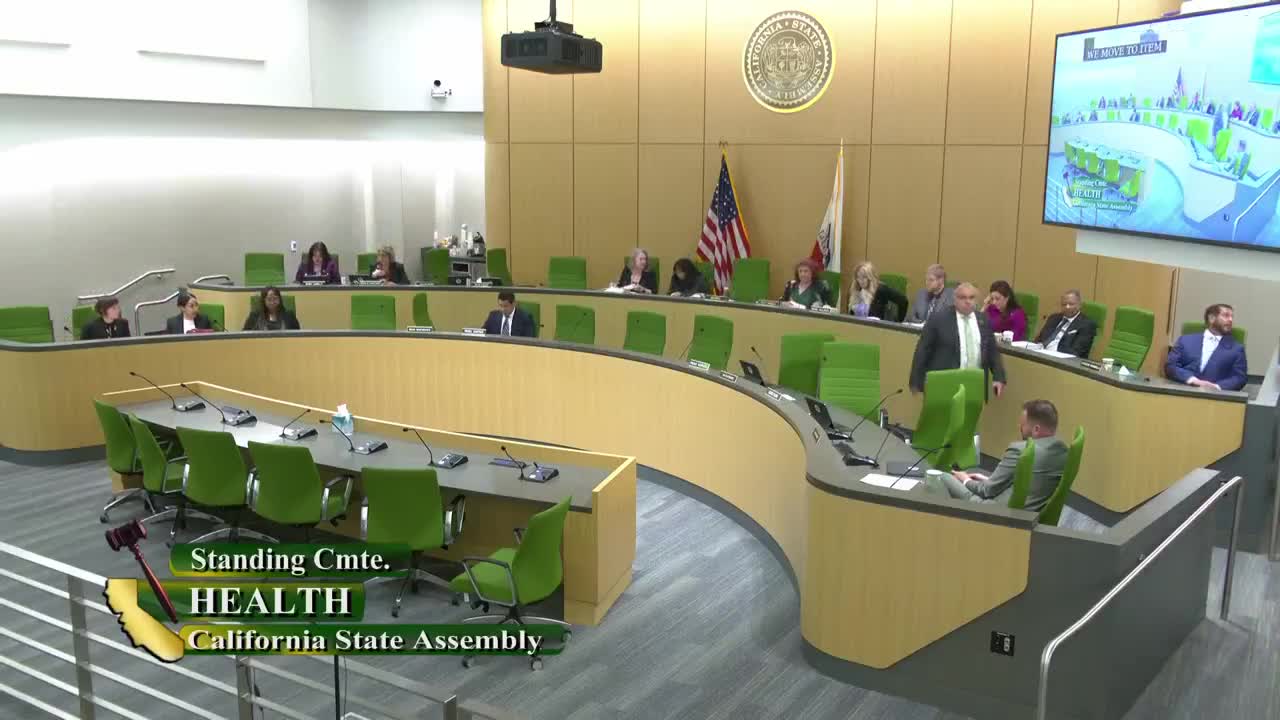
Bill Author