AB 229: Violent felonies.
- Session Year: 2023-2024
- House: Assembly
- Latest Version Date: 2023-01-11
Current Status:
Failed
(2023-05-23: From committee: Without further action pursuant to Joint Rule 62(a).)
Introduced
In Committee
First Chamber
In Committee
Second Chamber
Enacted
Existing law defines the term violent felony for various purposes, including, among others, enhancing the punishment for felonies pursuant to existing sentencing provisions commonly known as the Three Strikes Law.
This bill would expand the crimes that are within the definition of a violent felony for all purposes, including for purposes of the Three Strikes Law, to include additional forms of sexual crimes, as defined, human trafficking, as defined, and felony domestic violence, as defined. By expanding the scope of an enhancement, this bill would impose a state-mandated local program.
The California Constitution requires the state to reimburse local agencies and school districts for certain costs mandated by the state. Statutory provisions establish procedures for making that reimbursement.
This bill would provide that no reimbursement is required by this act for a specified reason.
(a)Notwithstanding subdivision (h) of Section 667, for all offenses committed on or after November 7, 2012, but before January 1, 2024, all references to existing statutes in subdivisions (c) to (g), inclusive, of Section 667, are to those statutes as they existed on November 7, 2012.
(b)Notwithstanding subdivision (h) of Section 667, for all offenses committed on or after January 1, 2024, all references to existing statutes in subdivisions (c) to (g), inclusive, of Section 667, are to those statutes as they existed on January 1, 2024.
SEC. 2.Section 667.5 of the Penal Code is amended to read:667.5.Enhancement of prison terms for new offenses because of prior prison terms shall be imposed as follows:
(a)If one of the new offenses is one of the violent felonies specified in subdivision (c), in addition to and consecutive to any other prison terms therefor, the court shall impose a three-year term for each prior separate prison term served by the defendant when if the prior offense was one of the violent felonies specified in subdivision (c). However, an additional term shall not be imposed under this subdivision for any prison term served prior to a period of 10 years in which the defendant remained free of both prison custody and the commission of an offense that results in a felony conviction.
(b)Except when if subdivision (a) applies, if the new offense is any felony for which a prison sentence or a sentence of imprisonment in a county jail under subdivision (h) of Section 1170 is imposed or is not suspended, in addition and consecutive to any other sentence therefor, the court shall impose a one-year term for each prior separate prison term for a sexually violent offense as defined in subdivision (b) of Section 6600 of the Welfare and Institutions Code, provided that an additional term shall not be imposed under this subdivision for any prison term served prior to a period of five years in which the defendant remained free of both the commission of an offense that results in a felony conviction, and prison custody or the imposition of a term of jail custody imposed under subdivision (h) of Section 1170 or any felony sentence that is not suspended.
(c)The Legislature finds and declares that the following specified crimes merit special consideration when imposing a sentence to display societys condemnation for these extraordinary crimes of violence against the person. For the purpose of this section, violent felony means any of the following:
(1)Murder or voluntary manslaughter.
(2)Mayhem.
(3)Rape as defined in paragraph (2) or (6) of subdivision (a) of Section 261 or paragraph (1) or (4) of subdivision (a) of former Section 262.
(4)Sodomy as defined in subdivision (c) or (d) (c), (d), (f), (g), (i), (j), or (k) of Section 286.
(5)Oral copulation as defined in subdivision (c) or (d) (c), (d), (f), (g), (i), (j), or (k) of Section 287 or of former Section 288a.
(6)Lewd or lascivious act as defined in subdivision (a) or (b) of Section 288.
(7)Any A felony punishable by death or imprisonment in the state prison for life.
(8)Any A felony in which the defendant inflicts great bodily injury on a person other than an accomplice, which has been charged and proved as provided for in Section 12022.7, 12022.8, or 12022.9 on or after July 1, 1977, or as specified prior to July 1, 1977, in Sections 213, 264, and 461, or any felony in which the defendant uses a firearm which use has been charged and proved as provided in subdivision (a) of Section 12022.3, or Section 12022.5 or 12022.55.
(9)Any robbery.Robbery.
(10)Arson, in violation of subdivision (a) or (b) of Section 451.
(11)Sexual penetration as defined in subdivision (a) (a), (b), (d), (e), (f), (g), or (j) of Section 289.
(12)Attempted murder.
(13)A violation of Section 18745, 18750, or 18755.
(14)Kidnapping.
(15)Assault with the intent to commit a specified felony, in violation of Section 220.
(16)Continuous sexual abuse of a child, in violation of Section 288.5.
(17)Carjacking, as defined in subdivision (a) of Section 215.
(18)Rape or sexual penetration, in concert, in violation of Section 264.1.
(19)Extortion, as defined in Section 518, which would constitute a felony violation of Section 186.22.
(20)Threats to victims or witnesses, as defined in Section 136.1, which would constitute a felony violation of Section 186.22.
(21)Any burglary of the first degree, as defined in subdivision (a) of Section 460, wherein it is charged and proved that another person, other than an accomplice, was present in the residence during the commission of the burglary.
(22)Any violation of Section 12022.53.
(23)A violation of subdivision (b) or (c) of Section 11418.
(24)Human trafficking, in violation of subdivision (b) or (c) of Section 236.1.
(25)A felony domestic violence violation of Section 273.5.
(d)For the purposes of this section, the defendant shall be deemed to remain in prison custody for an offense until the official discharge from custody, including any period of mandatory supervision, or until release on parole or postrelease community supervision, whichever first occurs, including any time during which the defendant remains subject to reimprisonment or custody in county jail for escape from custody or is reimprisoned on revocation of parole or postrelease community supervision. The additional penalties provided for prior prison terms shall not be imposed unless they are charged and admitted or found true in the action for the new offense.
(e)The additional penalties provided for prior prison terms shall not be imposed for any felony for which the defendant did not serve a prior separate term in state prison or in county jail under subdivision (h) of Section 1170.
(f)A prior conviction of a felony shall include a conviction in another jurisdiction for an offense which, if committed in California, is punishable by imprisonment in the state prison or in county jail under subdivision (h) of Section 1170 if the defendant served one year or more in prison for the offense in the other jurisdiction. A prior conviction of a particular felony shall include a conviction in another jurisdiction for an offense that includes all of the elements of the particular felony as defined under California law if the defendant served one year or more in prison for the offense in the other jurisdiction.
(g)A prior separate prison term for the purposes of this section shall mean a continuous completed period of prison incarceration imposed for the particular offense alone or in combination with concurrent or consecutive sentences for other crimes, including any reimprisonment on revocation of parole that is not accompanied by a new commitment to prison, and including any reimprisonment after an escape from incarceration.
(h)Serving a prison term includes any confinement time in any state prison or federal penal institution as punishment for commission of an offense, including confinement in a hospital or other institution or facility credited as service of prison time in the jurisdiction of the confinement.
(i)For the purposes of this section, a commitment to the State Department of Mental Health, or its successor the State Department of State Hospitals, as a mentally disordered sex offender following a conviction of a felony, which commitment exceeds one year in duration, shall be deemed a prior prison term.
(j)For the purposes of this section, when a person subject to the custody, control, and discipline of the Secretary of the Department of Corrections and Rehabilitation is incarcerated at a facility operated by the Division of Juvenile Justice, that incarceration shall be deemed to be a term served in state prison.
(k)(1)Notwithstanding subdivisions (d) and (g) or any other law, when if one of the new offenses is committed while the defendant is temporarily removed from prison pursuant to Section 2690 or while the defendant is transferred to a community facility pursuant to Section 3416, 6253, or 6263, or while the defendant is on furlough pursuant to Section 6254, the defendant shall be subject to the full enhancements provided for in this section.
(2)This subdivision does not apply when if a full, separate, and consecutive term is imposed pursuant to any other law.
SEC. 3.Section 1170.125 of the Penal Code is amended to read:1170.125.(a)Notwithstanding Section 2 of Proposition 184, as adopted at the November 8, 1994, General Election, for all offenses committed on or after November 7, 2012, all references to existing statutes in Sections 1170.12 and 1170.126 are to those sections as they existed on November 7, 2012.
(b)Notwithstanding Section 2 of Proposition 184, as adopted at the November 8, 1994, General Election, for all offenses committed on or after January 1, 2024, all references to existing statutes in Sections 1170.12 and 1170.126 are to those sections as they existed on January 1, 2024.
SEC. 4.No reimbursement is required by this act pursuant to Section 6 of Article XIIIB of the California Constitution because the only costs that may be incurred by a local agency or school district will be incurred because this act creates a new crime or infraction, eliminates a crime or infraction, or changes the penalty for a crime or infraction, within the meaning of Section 17556 of the Government Code, or changes the definition of a crime within the meaning of Section 6 of Article XIIIB of the California Constitution.
REVISIONS: HeadingLine 2.|
Date
|
Status
|
|---|---|
| May 23, 2023 | From committee: Without further action pursuant to Joint Rule 62(a). |
| Mar 15, 2023 | In committee: Set, final hearing. Failed passage. |
| Mar 14, 2023 | Coauthors revised. |
| Mar 2, 2023 | In committee: Set, second hearing. Hearing canceled at the request of author. |
| Feb 22, 2023 | In committee: Set, first hearing. Hearing canceled at the request of author. |
| Feb 2, 2023 | In committee: Hearing postponed by committee. |
| Jan 26, 2023 | Referred to Com. on PUB. S. |
| Jan 12, 2023 | From printer. May be heard in committee February 11. |
| Jan 11, 2023 | Read first time. To print. |
|
Date
|
Description
|
Location
|
Votes
|
|
|---|---|---|---|---|
| Mar 14, 2023 | Do pass and be re-referred to the Committee on [Appropriations] | Assembly Standing Committee on Public Safety |
Failed |
This list shows positions taken on this bill by organizations on the date displayed, which is linked to the original source.
Positions by individuals are not included.
|
Organization
|
Position
|
Date
|
|---|---|---|
| Aclu California Action | * Against | Mar 14, 2023 |
| Arcadia Police Officers' Association | ** Support | |
| Burbank Police Officers' Association | ** Support | |
| California Association Of Highway Patrolmen | ** Support | |
| California Attorney for Criminal Justice | * Against | Mar 14, 2023 |
| California Capitol Connection | ** Support | |
| California Coalition of School Safety Professionals | ** Support | |
| California District Attorneys Association | ** Support | |
| California Family Council | ** Support | |
| California Public Defenders Association | * Against | Mar 14, 2023 |
| California State Sheriffs' Association | ** Support | |
| CLAREMONT POLICE OFFICERS ASSOCIATION | ** Support | |
| Concerned Women for America | ** Support | |
| Corona Police Officers Association | ** Support | |
| Crime Victims United | ** Support | |
| Culver City Police Officers' Association | ** Support | |
| Ella Baker Center For Human Rights | * Against | Mar 14, 2023 |
| Friends Committee On Legislation Of California | * Against | Mar 14, 2023 |
| Fullerton Police Officers' Association | ** Support | |
| Inglewood Police Officers Association | ** Support | |
| Initiate Justice | * Against | Mar 14, 2023 |
| Los Angeles Dependency Lawyers | * Against | Mar 14, 2023 |
| los angeles school police officers association | ** Support | |
| Newport Beach Police Association | ** Support | |
| Orange County District Attorneys Office | * Support | Mar 14, 2023 |
| Pacific Juvenile Defender Center | ** Against | |
| Palos Verdes Police Officers Association | ** Support | |
| Peace Officers Research Association Of California | ** Support | |
| PLACER COUNTY DEPUTY SHERIFFS ASSOCIATION | ** Support | |
| Pomona Police Officers' Association | ** Support | |
| RIVERSIDE POLICE OFFICERS ASSOCIATION | ** Support | |
| Riverside Sheriffs' Association | ** Support | |
| San Francisco Public Defender | ** Against | |
| Santa Ana Police Officers Association | ** Support | |
| Upland Police Officers Association | ** Support | |
| Young Women's Freedom Center | ** Against |
Date of Hearing:
Counsel: Cheryl Anderson
ASSEMBLY COMMITTEE ON PUBLIC SAFETY
Reginald Byron Jones-Sawyer, Sr., Chair
ABPCA Bill Id:AB 229
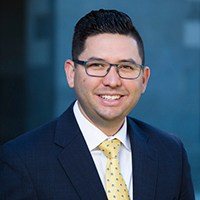
Author:(Joe Patterson) – As Introduced Ver:January 11, 2023
SUMMARY:
Expands the crimes that are within the definition of a violent felony subject to additional penalties, including for purposes of California’s Three Strikes Law, to include additional forms of sexual crimes, human trafficking, and felony domestic violence. Specifically, this bill:
- Specifies that the following offenses are violent felonies subject to additional penalties:
- Human trafficking;
- Domestic violence;
- Rape, sodomy, oral copulation, and sexual penetration if:
- The victim was incapable of giving consent because of a mental disorder or developmental or physical disability;
- The victim was unconscious;
- The victim was too intoxicated to resist;
- The victim submitted to the act under the belief that the person committing the act was someone known to the victim other than the accused; or
- The act was accomplished against the victim's will by threating to use the authority of a public official.
- The victim was incapable of giving consent because of a mental disorder or developmental or physical disability;
- Human trafficking;
- Makes the above offenses “strikes” for purposes of California’s Three Strikes Law for offenses committed on or after January 1, 2024.
EXISTING LAW:
- Defines a “violent felony” as any of the following:
- Murder or voluntary manslaughter;
- Mayhem;
- Rape accomplished by means of force or threats of retaliation;
- Sodomy by force or fear of immediate bodily injury on the victim or another person or with a child under the age of 14 years, as specified;
- Oral copulation by force or fear of immediate bodily injury on the victim or another person or with a child under the age of 14 years, as specified;
- Lewd acts on a child under the age of 14 years, as defined;
- Any felony punishable by death or imprisonment in the state prison for life;
- Any felony in which the defendant inflicts great bodily injury on any person other than an accomplice, or any felony in which the defendant has used a firearm, as specified;
- Any robbery;
- Arson of a structure, forest land, or property that causes great bodily injury or that causes an inhabited structure or property to burn;
- Arson that causes an inhabited structure or property to burn;
- Sexual penetration accomplished against the victim's will by means of force, menace or fear of immediate bodily injury on the victim or another person, by threats of retaliation, or of a child under the age of 14 years, as specified;
- Attempted murder;
- Explosion or attempted explosion of a destructive device with the intent to commit murder;
- Explosion or ignition of any destructive device or any explosive which causes bodily injury to any person;
- Explosion of a destructive device which causes death or great bodily injury;
- Kidnapping;
- Assault with intent to commit mayhem or specified sex offenses;
- Continuous sexual abuse of a child;
- Carjacking, as defined;
- Rape or sexual penetration in concert;
- Felony extortion;
- Threats to victims or witnesses, as specified;
- First degree burglary, as defined, where it is proved that another person other than an accomplice, was present in the residence during the burglary;
- Use of a firearm during the commission of specified crimes; and,
- Possession, development, production, and transfers of weapons of mass destruction. (Pen. Code § 667.5, subd. (c).)
- Murder or voluntary manslaughter;
- Provides that where the new offense is one of the specified violent felonies, in addition and consecutive to any other prison terms, the court must impose a three-year term for each prior separate prison term served by the defendant where the prior offense was one of the specified violent felonies. However, no additional term shall be imposed for any prison term served prior to a period of 10 years in which the defendant remained free of both prison custody and the commission of an offense which results in a felony conviction. (Pen. Code, § 667.5, subd. (a).)
- Provides that where the new offense is any felony for which probation is not imposed, the court must impose a consecutive one-year term for each prior separate prison term for a sexually violent offense, as defined, provided that no additional term can be imposed for any prison term served prior to a period of five years in which the defendant remained free of both the commission of an offense which results in a felony conviction, and prison custody or the imposition of a term of jail custody imposed under realignment or any felony sentence that is not suspended. (Pen. Code, § 667.5, subd. (b).)
- Defines a “serious” felony to include, among other things: rape: sodomy by force, violence, duress, menace, or threat or fear of bodily injury; oral copulation by force, violence, duress, menace or threat or fear of bodily injury; any felony in which defendant personally inflicts great bodily injury on any person other than an accomplice or personally uses a firearm; assault with intent to commit rape; any felony where defendant personally used a dangerous or deadly weapon; forcible penetration with a foreign object; commission of rape or sexual penetration in concert; and continuous sexual abuse of a child. (Pen. Code, § 1192.7, subd. (c).)
- Provides that any person convicted of a “serious” felony who has previously been convicted of a “serious” felony receives, in addition to the sentence imposed by the court, an additional and consecutive five-year enhancement for each such prior conviction. (Pen. Code, § 667, subd. (a)(1).)
- States that a conviction of a violent or serious felony counts as a prior conviction for sentencing under the two and three strikes law. (Pen. Code, § 667.)
- Specifies all references to existing statutes in specified portions of the Three Strikes Law, are to statutes as they existed on November 7, 2012. (Pen. Code § 667, subd. (h).)
- Provides that if a defendant is convicted of a felony offense and it is pled and proved that the defendant has been convicted of one prior serious or violent offense as defined, the term of imprisonment is twice the term otherwise imposed for the current offense. (Pen. Code § 667.)
- Provides that a defendant, who is convicted of a serious or violent felony offense or a specified sex offense, and it is pled and proved that the defendant has been convicted of two or more prior violent or serious offenses, the term is life in prison with a minimum term of 25 years. (Pen. Code § 667, subds. (a) and (d)(2)(i); Pen. Code § 1170.12, subd. (c)(2)(A).)
- Provides sentences of 15-years-to-life, 25-years-to-life, or life without the possibility of parole for certain sex crimes if specified circumstances are found to be true. This is known as the One-Strike-Sex-Law. Includes within the qualifying offenses under the One-Strike Sex Law rape and rape accomplished by force, duress, menace, or fear of immediate and unlawful bodily injury and rape accomplished by threat of retaliation. (Pen. Code, § 667.61.)
- Imposes a sentence of 25-years-to-life for habitual sex offenders, defined as any person who is convicted of a certain sex crime, and then is later convicted of the same sex crime or another qualifying sex offense. (Pen. Code, § 667.71.)
- States legislative intent that district attorneys prosecute violent sex crimes under statutes that provide sentencing under a "one strike," "three strikes" or habitual sex offender statute instead of engaging in plea bargaining over those offenses. (Pen. Code, § 1192.7, subd. (a)(1).)
- Prohibits plea bargaining when an indictment or information charges any serious felony, unless there is insufficient evidence to prove the people's case, or testimony of a material witness cannot be obtained, or a reduction or dismissal would not result in a substantial change in sentence. (Pen. Code, § 1192.7, subd. (a)(2).)
- Provides that the term for an offense, though otherwise punishable as a county jail felony, must be served in state prison if the current or a prior conviction is for an offense on the violent felony list. (Pen. Code, § 1170, subd. (h)(3).)
- States that any person convicted of a nonviolent felony offense and sentenced to state prison shall be eligible for parole consideration after completing the full term for their primary offense. (Cal. Const., Art. I, § 32.)
- Authorizes the California Department of Corrections (CDCR) to award credits earned for good behavior and approved rehabilitative or educational achievements. (Cal. Const., Art. I, § 32.)
- Limits the award of presentence conduct credits to 15 percent of actual confinement time on a violent felony prison term. (Pen. Code, § 2933.1.)
FISCAL EFFECT:
Unknown
COMMENTS:
- Author's Statement: According to the author, “Current California law has become too lenient on some of the most atrocious crimes. AB 229 will penalize those individuals who harm individuals in the most serious manner by making felony domestic violence, sexual assault, and human trafficking of a sexual nature a violent crime. To paint a clearer picture, ‘felony domestic violence’ is not considered a violent felony despite containing both felony and violence in its name. AB 229 is an additional measure to deter these crimes by increasing the penalties associated with them and holding the worst criminals accountable for their actions.”
- Current Penalties: The offenses addressed by this bill already carry very steep sentences. These punishments can often be further enhanced by any number of existing sentence enhancements.
To begin, rape, sodomy, oral copulation, or sexual penetration involving force, violence or duress are already violent felonies. (Pen. Code, § 667.5, subd. (c)(3), (c)(4), (c)(5) & (c)(11).) Sodomy, oral copulation, or sexual penetration with a child under the age of 14 years, as specified, are violent felonies, as is any felony in which great bodily injury is inflicted on someone other than an accomplice, or where a firearm is used. (Pen. Code, § 667.5, subd. (c)(4), (c)(5), (c)(8) & (c)(11).)
Additionally, all forms of rape are currently a serious felony, as are sodomy, oral copulation, and sexual penetration where force, violence, or duress is used. (Pen. Code, § 1192.7, subd. (c)(3), (c)(4), (c)(5) & (c)(25).) Moreover, if great bodily injury is inflicted on someone other than an accomplice, or a firearm is used in committing any of the offenses addressed in this bill, they are already also a serious felony. (Pen. Code, § 1192.7, subd. (c)(8).)
A person who has a conviction for a strike (serious or violent felony) faces increased prison time for any future felony conviction. Any future felony conviction when a person has a prior conviction for a single strike results in a doubling of the prison sentence. A person, with two prior convictions for strikes faces a minimum sentence of 25 years-to life for a felony conviction, if certain criteria are met. (Pen. Code § 667, subds. (a) and (d)(2)(i); Pen. Code § 1170.12, subd. (c)(2)(A).)
Further, violent or serious felony designation aside, any rape conviction is a felony punishable by up to eight years in prison. (Pen. Code, § 261.) Applicable sentence enhancements could be added to that – e.g., if great bodily injury is inflicted, the underlying sentence can be enhanced by three years. (Pen. Code, § 12022.7, subd. (a).) If certain circumstances apply, the sentence could be 15-years-to-life, 25-years-to-life, or life without parole under the One Strike Law for certain sex offenses. (Pen. Code, § 667.61.)
Depending on the circumstances, sodomy can be a felony and punishable in state prison for over a decade. (Pen. Code, § 286.) Oral copulation by force or fear is a felony punishable up to eight years in state prison. Where the victim is a minor, the penalties increase, and can be up to 12 years in state prison if the victim is under 14 years of age. (Pen. Code, § 287.) Forced acts of sexual penetration are generally a felony and punishable by up to eight years in prison. (Pen. Code, § 289.) As with rape, depending on the circumstances of these sexual offenses, the One Strike Law could apply and trigger a sentence of 15-years-to-life, 25-years-to-life, or life without parole under the One Strike Law. (Pen. Code, § 667.61.)
Domestic violence is currently a felony. The resulting “traumatic condition” necessary to sustain a domestic violence conviction need not be serious. It could be minor in nature. The penalties for a first offense range from up to one year in county jail to up to four years in prison. A second offense within seven years of a prior conviction is punishable up to five years in prison. (Pen. Code, § 273.5.)An enhancement adding up to five more years could apply if great bodily injury is inflicted. (Pen. Code, § 12022.7, subd. (e).) Moreover, as discussed above, if great bodily injury is inflicted, the offense is both a violent and serious felony.
The current penalty for human trafficking for the purpose of obtaining forced labor or services is imprisonment in state prison for up to 12 years. If the offense involves human trafficking for the purpose of specified sexual conduct, obscene matter or extortion, the punishment proscribed is up to 20 years in state prison. If the offense involves causing a minor to engage in a commercial sex act, the penalty imposed may be 15-years-to-life. The court may also impose up to a $1.5 million fine on a person convicted of human trafficking. (Pen. Code §§ 236.1 and 236.4.) If great bodily injury is inflicted on the victim to commit the human trafficking crime, an enhancement of up to 10 more years in state prison can be added. (Pen. Code, § 236.4, subd. (b).) And again, as discussed above, if great bodily injury is inflicted the offense if both a violent and a serious felony.
The current penalties are serious, complex, and provide for myriad permutations depending on the circumstances of the offense.
- Three Strikes Implications: In general, violent felonies as specified in Penal Code section 667.5 are considered “strikes” for purposes of California’s Three Strikes law. However, Proposition 36, which was passed by California voters on November 6, 2012, specifies that only the crimes that were included in the “violent felonies” list as of November 7, 2012, shall be treated as strikes for purposes of the Three Strikes law.
Notwithstanding subdivision (h) of Section 667, for all offenses committed on or after November 7, 2012, all references to existing statutes in subdivisions (c) to (g), inclusive, of Section 667 (Three Strikes Law), are to those statutes as they existed on November 7, 2012.
(Pen. Code, § 667.1; see also Pen. Code, § 1170.125 [“Notwithstanding Section 2 of Proposition 184, as adopted at the November 8, 1994, General Election, for all offenses committed on or after November 7, 2012, all references to existing statutes in Sections 1170.12 and 1170.126 are to those sections as they existed on November 7, 2012].)
This bill would make these offenses a strike under California law because this bill would amend the date which defines the list of strikes to include the provisions of this bill.
- Proposition 57: In November 2016, California voters overwhelmingly approved Proposition 57. (Cal. Sect. of State, Statement of Vote Summary Pages (2016) p. 12; https://elections.cdn.sos.ca.gov/sov/2016-general/sov/06-sov-summary.pdf [as of November 30, 2021]; https://www.cdcr.ca.gov/proposition57/ [as of November 30, 2021].) As relevant here, Proposition 57, authorized earlier parole consideration for people who are serving state prison terms for nonviolent offenses, and gave them more opportunities to earn sentence-reduction credits for good behavior.
(https://ballotpedia.org/California_Proposition_20,_Criminal_Sentencing,_Parole,_and_DNA_Collection_Initiative_(2020) [as of January 6, 2022]; see Cal. Const, Art. I, § 32.) For purposes of Proposition 57, violent offenses are those specified in Penal Code section 667.5, subdivision (c). (Cal. Code Regs., tit. 15, §§ 3490, subd. (c) & 3495, subd. (c).)
Importantly, Proposition 57 did not mandate early release for nonviolent offenders. Rather, it provided for early parole consideration.
The Amendment does not require that all inmates convicted of nonviolent felonies are subject to immediate release from custody. Rather, those inmates are permitted only early consideration by the Board of Parole Hearings, which is charged with determining whether an inmate is suitable for parole. (See, e.g., In re Perez (2016) 7 Cal.App.5th 65, 84 [212 Cal. Rptr. 3d 441] [Board of Parole Hearings' core determination is whether a prisoner remains a current threat to public safety].)
(Alliance for Constitutional Sex Offense Laws v. Department of Corrections & Rehabilitation (2020) 45 Cal.App.5th 225, 235-236.)
By adding these offenses to the list of violent felonies in Penal Code section 667.5, subdivision (c), these offenses would be excluded from the CDCR’s nonviolent parole consideration process under Proposition 57. A defendant convicted of one of these offenses would be excluded from this early parole regardless of whether they had also been convicted of a nonviolent felony. (In re Mohammad (2022) 12 Cal.5th 518.)
- Credit Limitations for Violent Felonies with State Prison Sentences: Under Penal Code section 2933.1, a defendant convicted of a violent felony as defined by Penal Code section 667.5, subdivision (c), has their presentence conduct credits limited to 15 percent of actual confinement time. (Cal. Code Regs., tit. 15, § 3043.1; People v. Brown (2012) 54 Cal.4th 314, 321.)
A violent felony conviction also affects post-sentence credits. As previously discussed, Proposition 57 gave incarcerated persons in state prison the ability to earn additional, nonstatutory credits for sustained good behavior and for approved rehabilitative or educational achievements. The increased credit-earning opportunities incentivizes incarcerated people to take responsibility for their own rehabilitation. (https://www.cdcr.ca.gov/proposition57/, supra.) Under CDCR regulations, a violent felony limits good conduct credits (GCC) to 33.3 percent of the total incarceration time, as opposed to 50 percent for a non-violent felony. (Ibid; 15 Cal. Code of Regs. § 3043.2.)
Additionally, under CDCR regulations, persons convicted of nonviolent crimes earn 66.6 percent GCC while housed in camp or Minimum Support Facility (MSF) settings. People convicted of violent crimes, however, earn 50 percent GCC in fire camp settings and 33.3 percent in MSF settings. (See (https://www.cdcr.ca.gov/proposition57/, supra.)
By adding these offenses to the list of violent felonies in Penal Code section 667.5, subdivision (c), these offenses would be subject to the violent felony credit limitations.
- Proposition 20: Proposition 20 was a ballot initiative of the November 2020 election which, among other things, would have defined 51 crimes and sentence enhancements as violent in order to exclude them from Proposition 57's nonviolent offender parole program. In addition to those crimes currently listed as a violent felony, and substantially similar to this bill, the list included additional forms of rape, sodomy, oral copulation, and sexual penetration, as well as human trafficking and felony domestic violence. Californians voters overwhelming rejected Proposition 20, by almost 62 percent. (https://ballotpedia.org/California_Proposition_20,_Criminal_Sentencing,_Parole,_and_DNA_Collection_Initiative_(2020), supra.) Arguably, this bill would ignore the will of the voters.
- Increased Penalties and Lack of Deterrent Effect: The National Institute of Justice (NIJ) has looked into the concept of improving public safety through increased penalties. (https://nij.ojp.gov/about-nij.) As early as 2016, the NIJ has been publishing its findings that increasing punishment for given offenses does little to deter criminals from engaging in that behavior. (“Five Things About Deterrence,” NIJ, May 2016, available at: https://www.ojp.gov/pdffiles1/nij/247350.pdf].) The NIJ has found that increasing penalties are generally ineffective and may exacerbate recidivism and actually reduce public safety. (Ibid.) These findings are consistent with other research from national institutions of renown. (See Travis, The Growth of Incarceration in the United States: Exploring Causes and Consequences, National Research Council of the National Academies of Sciences, Engineering, and Medicine, April 2014, at pp. 130 -150 available at: https://academicworks.cuny.edu/cgi/viewcontent.cgi?article=1026&context=jj_pubs, [as of Feb. 25, 2022].) Rather than penalty increases, the NIJ, advocates for polices that “increase the perception that criminals will be caught and punished” because such perception is a vastly more powerful deterrent than increasing the punishment. (“Five Things About Deterrence,” supra.)
- Argument in Support: According to the California State Sheriffs’ Association, “According to the Public Policy Institute of California (PPIC), California law enforcement agencies experienced a troubling rise in domestic violence calls for service involving subjects with firearms over the course of the COVID-19 pandemic.
“Additionally, research shows that human trafficking has become one of the top criminal enterprises in the world. According to the U.S. Department of State, California ranks as one of the nation's top four states for human trafficking, accounting for 1,334 of the 10,583 human trafficking cases reported in 2020.
“Domestic violence and human trafficking continue to create countless victims across our state. By adding these offenses to the state’s list of violent felonies, human sex traffickers and domestic abusers will face increased penalties that appropriately reflect the severity of their crimes and lifelong harm they inflict upon their victims.” - Argument in Opposition: According to the ACLU California Action, “This bill is not necessary as California law already provides significant punishments for these crimes, and these punishments are often already further enhanced by myriad existing sentence enhancements.
“Moreover, researchers have found that certainty of punishment – that someone will be punished for a particular crime – has a greater deterrent effect than the severity of the [sic]
“While we share the author’s goal of reducing crime in our communities, the evidence shows that AB 229 will unfortunately fail to do so. Although people will serve longer prison sentences, this will not increase deterrence nor meaningfully prevent crime by incapacitation.[1] Instead, data show that enhancements increase racial disparities and drive over-incarceration, thus aggravating and exacerbating the root causes of crime. Notably, California already locks up a higher percentage of its people than almost any democracy on earth.[2] And while prison overcrowding does not make our communities safer, it does result in inhumane prison conditions, cost taxpayers millions of dollars in litigation, and stymies rehabilitation.
“AB 229 takes the wrong approach to public safety as it would contribute to the expansion of the budgets and footprints of our police, jails, and courts, monopolizing resources that would be better used to invest in our communities in ways that would improve mental and physical health, and create economic stability. For these reasons, we must oppose AB 229.” - Related Legislation:
- AB 32 (Stephanie Nguyen) would add felony hate crimes to the list of violent felonies subject to enhanced penalties. AB 32 was removed from hearing at the request of the author.
- SB 14 (Grove) would expand the crimes that are within the definition of a violent felony and serious felony for all purposes, including for purposes of California’s Three Strikes Law, to include human trafficking. SB 14 is pending hearing in the Senate Public Safety Committee.
- AB 32 (Stephanie Nguyen) would add felony hate crimes to the list of violent felonies subject to enhanced penalties. AB 32 was removed from hearing at the request of the author.
- Prior Legislation:
- AB 266 (Cooper), of the 2021-2022 Legislative Session, was the same as AB 32. AB 266 failed passage in this committee.
- AB 1665 (Seyarto), of the 2021-2022 Legislative Session, would have prohibited plea bargaining in cases charging human trafficking of a minor, except in specified circumstances. AB 1665 was held on the Assembly Appropriations Committee suspense file.
- SB 1042 (Grove), of the 2021-2022 Legislative Session, would have added human trafficking to the list of violent felonies as well as to the list of serious felonies for all purposes, including for purposes of the Three Strikes Law. SB 1042 failed passage in the Senate Public Safety Committee.
- SB 1072 (Dahle), of the 2021-2022 Legislative Session, would have added human sex trafficking to the list of violent felonies. SB 1072 was not heard in the Senate Public Safety Committee at the request of the author.
- AB 786 (Kiley), of the 2019-2020 Legislative Session, would have added the crime of human trafficking, as specified, to the list of violent felonies and made it a strike under California's Three Strikes Law. AB 786 failed passage in this committee.
- AB 197 (Kiley), of the 2017-2018 Legislative Session, would have added several offenses to the list of violent felonies and specified that they are strikes under California's Three-Strikes Law. AB 197 was never heard in this committee.
- AB 67 (Rodriguez), of the 2017-2018 Legislative Session, would have added human sex trafficking and specified sexual assault offenses to the list of violent felonies. AB 67 was held in the Assembly Appropriations Committee.
- AB 27 (Melendez), of the 2017-2018 Legislative Session, would have added specified sexual assault offenses to the list of violent felonies. AB 27 was held in the Assembly Appropriations Committee.
- SB 75 (Bates), of the 2017-2018 Legislative Session, would have added vehicular manslaughter, human trafficking involving a minor, assault with a deadly weapon, solicitation of murder, rape under various specified circumstances, and grand theft of a firearm as violent felonies for purposes of imposing specified sentence enhancements. SB 75 was held in the Senate Public Safety Committee.
- SB 652 (Nielsen), of the 2017-2018 Legislative Session, would have defined the unlawful possession of a firearm by a person previously convicted of a violent felony. SB 652 was held in the Senate Public Safety Committee.
- SB 770 (Glazier), of the 2017-2018 Legislative Session, would have added human trafficking, elder and dependent adult abuse, assault with a deadly weapon, rape under specified circumstances, discharge of a firearm at an occupied building, and specified crimes against peace officers and witnesses, as violent felonies. SB 770 was held in the Senate Public Safety Committee.
- SB 1269 (Galgiani), of the 2015-2016 Legislative Session, would have included human trafficking in the list of violent felonies, for which Three Strike sentencing, sentencing credit limits, enhancements for prior violent felony prison terms and other consequences apply. SB 1269 failed passage in the Senate Public Safety Committee.
- AB 266 (Cooper), of the 2021-2022 Legislative Session, was the same as AB 32. AB 266 failed passage in this committee.
REGISTERED SUPPORT / OPPOSITION:
Support
Arcadia Police Officers' Association
Burbank Police Officers' Association
California Association of Highway Patrolmen
California Capitol Connection
California Coalition of School Safety Professionals
California District Attorneys Association
California Family Council
California State Sheriffs' Association
Claremont Police Officers Association
Concerned Women for America
Corona Police Officers Association
Crime Victims United
Culver City Police Officers' Association
Fullerton Police Officers' Association
Inglewood Police Officers Association
Los Angeles School Police Officers Association
Newport Beach Police Association
Orange County District Attorney
Palos Verdes Police Officers Association
Peace Officers Research Association of California (PORAC)
Placer County Deputy Sheriffs' Association
Pomona Police Officers' Association
Riverside Police Officers Association
Riverside Sheriffs' Association
Santa Ana Police Officers Association
Upland Police Officers Association
40 Private Individuals
Opposition
ACLU California Action
California Attorneys for Criminal Justice
California Public Defenders Association (CPDA)
Ella Baker Center for Human Rights
Friends Committee on Legislation of California
Initiate Justice
Pacific Juvenile Defender Center
San Francisco Public Defender
Young Women's Freedom Center
Analysis Prepared by:
Cheryl Anderson / PUB. S. / (916) 319-3744
“National Research Council (2014) The Growth of Incarceration in the United States: Exploring Causes and Consequences Committee on Causes and Consequences of High Rates of Incarceration, J. Travis, B. Western, and S. Redburn, Editors. Committee on Law and Justice, Division of Behavioral and Social Sciences and Education. Washington, DC: The National Academies Press.”
↑“Prison Policy Institute, California Profile. At California profile | Prison Policy Initiative” ↑
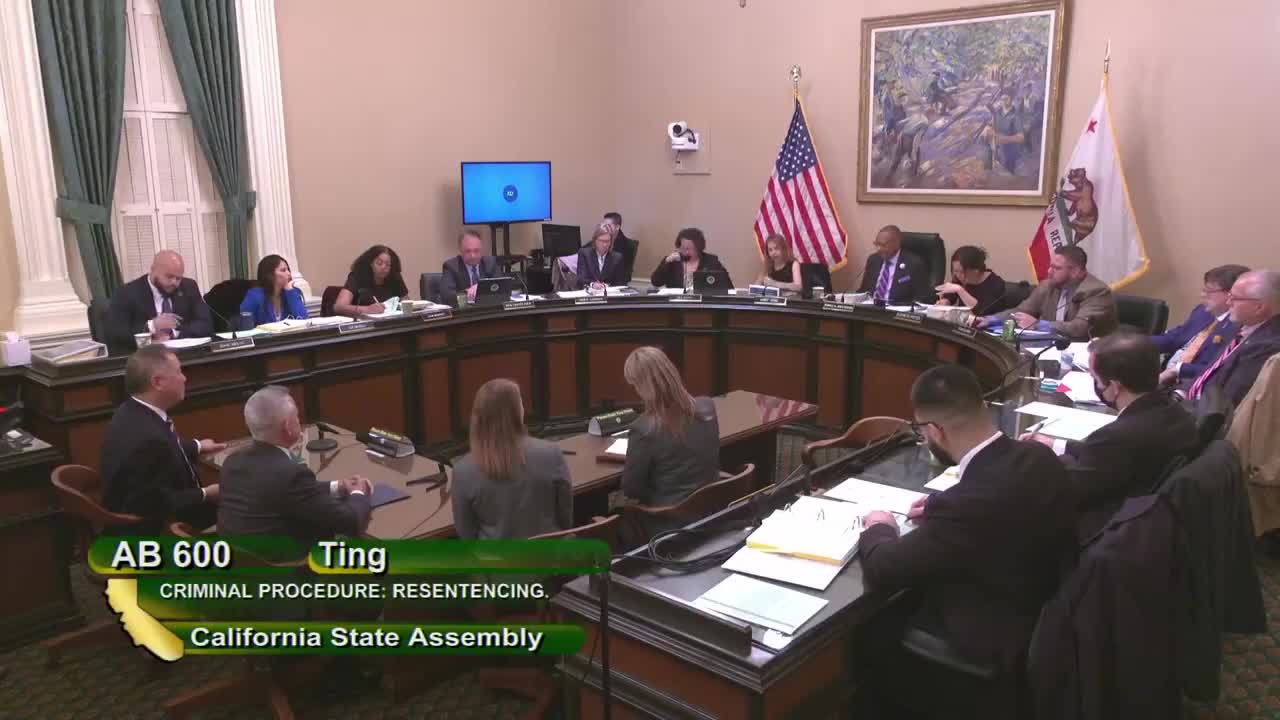
Discussed in Hearing
 27MIN
Assembly Standing Committee on Public Safety
Bill Author

Bill Co-Author(s):