AB 2304: Unlawful detainer: case records.
- Session Year: 2023-2024
- House: Assembly
- Latest Version Date: 2024-09-27
Current Status:
Passed
(2024-09-27: Chaptered by Secretary of State - Chapter 711, Statutes of 2024.)
Introduced
In Committee
First Chamber
In Committee
Second Chamber
Enacted
What does this bill do?
The bill removes a special exemption so court files in actions to end a mobilehome park tenancy are no longer kept off limits. Those eviction case records will be available under the same access rules that apply to other limited civil eviction cases, letting tenants, park owners, reporters, and others request the court file, index, and action register.
The summary is provided by generative AI which can make mistakes. For original language, please view the details in the table below.
Existing law requires the court clerk to allow specified persons access to case records, including the court file, index, and register of actions, filed in unlawful detainer actions that are limited civil cases. Existing law requires that this access must be given to any other person 60 days after the complaint has been filed if judgment against all defendants has been entered for the plaintiff within 60 days of the filing of the complaint, and other persons as specified. Existing law exempts from these requirements records in a case that seeks to terminate a mobilehome park tenancy if the statement of the character of the proceeding in the caption of the complaint clearly indicates that the complaint seeks termination of a mobilehome park tenancy.
The bill would delete the exemption for access to case records for cases that seek to terminate a mobilehome tenancy, as specified.
Existing law requires the court clerk to allow specified persons access to case records, including the court file, index, and register of actions, filed in unlawful detainer actions that are limited civil cases. Existing law requires that this acess access must be given to any other person 60 days after the complaint has been filed if judgment against all defendants has been entered for the plaintiff within 60 days of the filing of the complaint, and other persons as specified. Existing law exempts from these requirements records in a case that seeks to terminate a mobilehome park tenancy if the statement of the character of the proceeding in the caption of the complaint clearly indicates that the complaint seeks termination of a mobilehome park tenancy.
This bill expand the access requirement described above to include all unlawful detainer actions. The bill would also delete the exemption for access to case records for cases that seek to terminate a mobilehome tenancy, as specified.
Existing law requires the court clerk to allow specified persons access to case records, including the court file, index, and register of actions, filed in unlawful detainer actions that are limited civil cases. Existing law requires that this acess must be given to any other person 60 days after the complaint has been filed if judgment against all defendants has been entered for the plaintiff within 60 days of the filing of the complaint, and other persons as specified. Existing law exempts from these requirements records in a case that seeks to terminate a mobilehome park tenancy if the statement of the character of the proceeding in the caption of the complaint clearly indicates that the complaint seeks termination of a mobilehome park tenancy.
This bill expand the access requirement described above to include all unlawful detainer actions. The bill would also delete the exemption for cases that seek to terminate a mobilehome tenancy, as specified.
(a)(1)The clerk shall allow access to limited civil case records filed under this chapter, including the court file, index, and register of actions, only as follows:
(A)To a party to the action, including a partys attorney.
(B)To a person who provides the clerk with the names of at least one plaintiff and one defendant and the address of the premises, including the apartment or unit number, if any.
(C)To a resident of the premises who provides the clerk with the name of one of the parties or the case number and shows proof of residency.
(D)To a person by order of the court, which may be granted ex parte, on a showing of good cause.
(E)Except as provided in subparagraph (G), to any person by order of the court if judgment is entered for the plaintiff after trial more than 60 days since the filing of the complaint. The court shall issue the order upon issuing judgment for the plaintiff.
(F)Except as provided in subparagraph (G), to any other person 60 days after the complaint has been filed if judgment against all defendants has been entered for the plaintiff within 60 days of the filing of the complaint, in which case the clerk shall allow access to any court records in the action. If a default or default judgment is set aside more than 60 days after the complaint has been filed, this section shall apply as if the complaint had been filed on the date the default or default judgment is set aside.
(G)(i)In the case of a complaint involving residential property based on Section 1161a as indicated in the caption of the complaint, as required in subdivision (c) of Section 1166, to any other person, if 60 days have elapsed since the complaint was filed with the court, and, as of that date, judgment against all defendants has been entered for the plaintiff, after a trial.
(ii)Subparagraphs (E) and (F) shall not apply if the plaintiff filed the action between March 4, 2020, and September 30, 2021, and the action is based on an alleged default in the payment of rent.
(2)This section shall not be construed to prohibit the court from issuing an order that bars access to the court record in an action filed under this chapter if the parties to the action so stipulate.
(b)(1)For purposes of this section, good cause includes, but is not limited to, both of the following:
(A)The gathering of newsworthy facts by a person described in Section 1070 of the Evidence Code.
(B)The gathering of evidence by a party to an unlawful detainer action solely for the purpose of making a request for judicial notice pursuant to subdivision (d) of Section 452 of the Evidence Code.
(2)It is the intent of the Legislature that a simple procedure be established to request the ex parte order described in subparagraph (D) of paragraph (1) of subdivision (a).
(c)Upon the filing of a case so restricted, the court clerk shall mail notice to each defendant named in the action. The notice shall be mailed to the address provided in the complaint. The notice shall contain a statement that an unlawful detainer complaint (eviction action) has been filed naming that party as a defendant, and that access to the court file will be delayed for 60 days except to a party, an attorney for one of the parties, or any other person who (1) provides to the clerk the names of at least one plaintiff and one defendant in the action and provides to the clerk the address, including any applicable apartment, unit, or space number, of the subject premises, or (2) provides to the clerk the name of one of the parties in the action or the case number and can establish through proper identification that the person lives at the subject premises. The notice shall also contain a statement that access to the court index, register of actions, or other records is not permitted until 60 days after the complaint is filed, except pursuant to an order upon a showing of good cause for access. The notice shall contain on its face the following information:
(1)The name and telephone number of the county bar association.
(2)The name and telephone number of any entity that requests inclusion on the notice and demonstrates to the satisfaction of the court that it has been certified by the State Bar of California as a lawyer referral service and maintains a panel of attorneys qualified in the practice of landlord-tenant law pursuant to the minimum standards for a lawyer referral service established by the State Bar of California and Section 6155 of the Business and Professions Code.
(3)The following statement:
The State Bar of California certifies lawyer referral services in California and publishes a list of certified lawyer referral services organized by county. To locate a lawyer referral service in your county, go to the State Bars internet website at www.calbar.ca.gov or call 1-866-442-2529.
(4)The name and telephone number of an office or offices funded by the federal Legal Services Corporation or qualified legal services projects that receive funds distributed pursuant to Section 6216 of the Business and Professions Code that provide legal services to low-income persons in the county in which the action is filed. The notice shall state that these telephone numbers may be called for legal advice regarding the case. The notice shall be issued between 24 and 48 hours of the filing of the complaint, excluding weekends and holidays. One copy of the notice shall be addressed to all occupants and mailed separately to the subject premises. The notice shall not constitute service of the summons and complaint.
(5)The following statement, for a notice sent out pursuant to this section between October 1, 2021, and March 31, 2022:
IMPORTANT NOTICE FROM THE STATE OF CALIFORNIA YOU MUST TAKE ACTION TO AVOID AN EVICTION: As part of the states COVID-19 relief plan, money has been set aside to help renters who have fallen behind on rent or utility payments.
If you are behind on rent or utility payments, YOU SHOULD COMPLETE A RENTAL ASSISTANCE APPLICATION IMMEDIATELY! It is free and simple to apply. Citizenship or immigration status does not matter.
You can find out how to start your application by calling 1-833-430-2122 or visiting http://housingiskey.com right away.
(d)Notwithstanding any other law, the court shall charge an additional fee of fifteen dollars ($15) for filing a first appearance by the plaintiff. This fee shall be added to the uniform filing fee for actions filed under this chapter.
(e)This section does not alter any provision of the Evidence Code.
(a)(1)The clerk shall allow access to limited civil case records filed under this chapter, including the court file, index, and register of actions, only as follows:
(A)To a party to the action, including a partys attorney.
(B)To a person who provides the clerk with the names of at least one plaintiff and one defendant and the address of the premises, including the apartment or unit number, if any.
(C)To a resident of the premises who provides the clerk with the name of one of the parties or the case number and shows proof of residency.
(D)To a person by order of the court, which may be granted ex parte, on a showing of good cause.
(E)Except as provided in subparagraph (G), to any person by order of the court if judgment is entered for the plaintiff after trial more than 60 days since the filing of the complaint. The court shall issue the order upon issuing judgment for the plaintiff.
(F)Except as provided in subparagraph (G), to any other person 60 days after the complaint has been filed if judgment against all defendants has been entered for the plaintiff within 60 days of the filing of the complaint, in which case the clerk shall allow access to any court records in the action. If a default or default judgment is set aside more than 60 days after the complaint has been filed, this section shall apply as if the complaint had been filed on the date the default or default judgment is set aside.
(G)(i)In the case of a complaint involving residential property based on Section 1161a as indicated in the caption of the complaint, as required in subdivision (c) of Section 1166, to any other person, if 60 days have elapsed since the complaint was filed with the court, and, as of that date, judgment against all defendants has been entered for the plaintiff, after a trial.
(ii)Subparagraphs (E) and (F) shall not apply if the plaintiff filed the action between March 4, 2020, and September 30, 2021, and the action is based on an alleged default in the payment of rent.
(2)This section shall not be construed to prohibit the court from issuing an order that bars access to the court record in an action filed under this chapter if the parties to the action so stipulate.
(b)(1)For purposes of this section, good cause includes, but is not limited to, both of the following:
(A)The gathering of newsworthy facts by a person described in Section 1070 of the Evidence Code.
(B)The gathering of evidence by a party to an unlawful detainer action solely for the purpose of making a request for judicial notice pursuant to subdivision (d) of Section 452 of the Evidence Code.
(2)It is the intent of the Legislature that a simple procedure be established to request the ex parte order described in subparagraph (D) of paragraph (1) of subdivision (a).
(c)Upon the filing of a case so restricted, the court clerk shall mail notice to each defendant named in the action. The notice shall be mailed to the address provided in the complaint. The notice shall contain a statement that an unlawful detainer complaint (eviction action) has been filed naming that party as a defendant, and that access to the court file will be delayed for 60 days except to a party, an attorney for one of the parties, or any other person who (1) provides to the clerk the names of at least one plaintiff and one defendant in the action and provides to the clerk the address, including any applicable apartment, unit, or space number, of the subject premises, or (2) provides to the clerk the name of one of the parties in the action or the case number and can establish through proper identification that the person lives at the subject premises. The notice shall also contain a statement that access to the court index, register of actions, or other records is not permitted until 60 days after the complaint is filed, except pursuant to an order upon a showing of good cause for access. The notice shall contain on its face the following information:
(1)The name and telephone number of the county bar association.
(2)The name and telephone number of any entity that requests inclusion on the notice and demonstrates to the satisfaction of the court that it has been certified by the State Bar of California as a lawyer referral service and maintains a panel of attorneys qualified in the practice of landlord-tenant law pursuant to the minimum standards for a lawyer referral service established by the State Bar of California and Section 6155 of the Business and Professions Code.
(3)The following statement:
The State Bar of California certifies lawyer referral services in California and publishes a list of certified lawyer referral services organized by county. To locate a lawyer referral service in your county, go to the State Bars internet website at www.calbar.ca.gov or call 1-866-442-2529.
(4)The name and telephone number of an office or offices funded by the federal Legal Services Corporation or qualified legal services projects that receive funds distributed pursuant to Section 6216 of the Business and Professions Code that provide legal services to low-income persons in the county in which the action is filed. The notice shall state that these telephone numbers may be called for legal advice regarding the case. The notice shall be issued between 24 and 48 hours of the filing of the complaint, excluding weekends and holidays. One copy of the notice shall be addressed to all occupants and mailed separately to the subject premises. The notice shall not constitute service of the summons and complaint.
(5)The following statement, for a notice sent out pursuant to this section between October 1, 2021 and March 31, 2022:
IMPORTANT NOTICE FROM THE STATE OF CALIFORNIA YOU MUST TAKE ACTION TO AVOID AN EVICTION: As part of the states COVID-19 relief plan, money has been set aside to help renters who have fallen behind on rent or utility payments.
If you are behind on rent or utility payments, YOU SHOULD COMPLETE A RENTAL ASSISTANCE APPLICATION IMMEDIATELY! It is free and simple to apply. Citizenship or immigration status does not matter.
You can find out how to start your application by calling 1-833-430-2122 or visiting http://housingiskey.com right away.
(d)Notwithstanding any other law, the court shall charge an additional fee of fifteen dollars ($15) for filing a first appearance by the plaintiff. This fee shall be added to the uniform filing fee for actions filed under this chapter.
(e)This section does not apply to a case that seeks to terminate a mobilehome park tenancy if the statement of the character of the proceeding in the caption of the complaint clearly indicates that the complaint seeks termination of a mobilehome park tenancy. (f)(e)This section does not alter any provision of the Evidence Code.
|
Date
|
Status
|
|---|---|
| Sep 27, 2024 | Chaptered by Secretary of State - Chapter 711, Statutes of 2024. |
| Sep 27, 2024 | Approved by the Governor. |
| Aug 27, 2024 | Enrolled and presented to the Governor at 12 p.m. |
| Aug 20, 2024 | In Assembly. Ordered to Engrossing and Enrolling. |
| Aug 20, 2024 | Read third time. Passed. Ordered to the Assembly. (Ayes 31. Noes 9. Page 5233.). |
| Aug 6, 2024 | Read second time. Ordered to third reading. |
| Aug 5, 2024 | From committee: Be ordered to second reading pursuant to Senate Rule 28.8. |
| Jun 26, 2024 | From committee: Do pass and re-refer to Com. on APPR. (Ayes 9. Noes 2.) (June 25). Re-referred to Com. on APPR. |
| Jun 5, 2024 | Referred to Com. on JUD. |
| May 24, 2024 | In Senate. Read first time. To Com. on RLS. for assignment. |
| May 24, 2024 | Read third time. Passed. Ordered to the Senate. (Ayes 51. Noes 13. Page 5666.) |
| May 21, 2024 | Read third time and amended. Ordered to third reading. (Page 5437.) |
| May 20, 2024 | Read second time. Ordered to third reading. |
| May 16, 2024 | From committee: Do pass. (Ayes 10. Noes 4.) (May 16). |
| May 8, 2024 | In committee: Set, first hearing. Referred to APPR. suspense file. |
| Apr 9, 2024 | From committee: Do pass and re-refer to Com. on APPR. (Ayes 7. Noes 2.) (April 9). Re-referred to Com. on APPR. |
| Mar 19, 2024 | In committee: Set, first hearing. Failed passage. Reconsideration granted. |
| Feb 26, 2024 | Referred to Com. on JUD. |
| Feb 13, 2024 | From printer. May be heard in committee March 14. |
| Feb 12, 2024 | Read first time. To print. |
|
Date
|
Description
|
Location
|
Votes
|
|
|---|---|---|---|---|
| Aug 20, 2024 | Assembly 3rd Reading AB2304 Lee By Roth | Senate Floor |
Passed |
|
| Jun 25, 2024 | Do pass, but first be re-referred to the Committee on [Appropriations] | Senate Standing Committee on Judiciary |
Passed |
|
| May 24, 2024 | AB 2304 Lee Assembly Third Reading | Assembly Floor |
Passed |
|
| May 16, 2024 | Do pass. | Assembly Standing Committee on Appropriations |
Passed |
|
| Apr 9, 2024 | Do pass and be re-referred to the Committee on [Appropriations] | Assembly Standing Committee on Judiciary |
Passed |
|
| Mar 19, 2024 | Do pass and be re-referred to the Committee on [Appropriations] | Assembly Standing Committee on Judiciary |
Failed |
This list shows positions taken on this bill by organizations on the date displayed, which is linked to the original source.
Positions by individuals are not included.
|
Organization
|
Position
|
Date
|
|---|---|---|
| Building Owners and Managers Association of California | ** Against | |
| California Advocates for Nursing Home Reform | ** Support | |
| California Apartment Association | ** Against | |
| California Association Of Realtors | ** Against | |
| California Business Properties Association | ** Against | |
| California Democratic Party | ** Support | |
| California Housing Partnership | ** Support | |
| California Housing Partnership Corporation | ** Support | |
| California Rural Legal Assistance Foundation | ** Support | |
| California Women's Law Center | ** Support | |
| Contra Costa Senior Legal Services | ** Support | |
| Disability Rights California | ** Support | |
| East Bay Community Law Center | ** Support | |
| East Bay for Everyone | ** Support | |
| Eviction Defense Collaborative | ** Support | |
| Family Violence Appellate Project | ** Support | |
| Housing and Economic Rights Advocates | ** Support | |
| Housing California | ** Support | |
| Inner City Law Center | ** Support | |
| Institute of Real Estate Management | ** Against | |
| Justice in Aging | ** Support | |
| National Housing Law Project | ** Support | |
| Public Counsel | ** Support | |
| University of San Diego Law School’s Housing Rights Legal Clinic | ** Support | |
| western center on law & poverty | ** Support |
SENATE RULES COMMITTEE Office of Senate Floor Analyses (916) 651-1520 Fax: (916) 327-4478 | AB 2304 |
THIRD READING
Bill No: AB 2304
Author: Lee (D)
Amended: 5/21/24 in Assembly
Vote: 21
SENATE JUDICIARY COMMITTEE: 9-2, 6/25/24
AYES: Umberg, Allen, Ashby, Caballero, Durazo, Laird, Roth, Stern, Wahab
NOES: Wilk, Niello
SENATE APPROPRIATIONS COMMITTEE: Senate Rule 28.8
ASSEMBLY FLOOR: 51-13, 5/24/24 - See last page for vote
SUBJECT: Unlawful detainer: case records
SOURCE: California Rural Legal Assistance Foundation
Western Center on Law and Poverty
DIGEST:
This bill eliminates an exception for unlawful detainers involving mobilehomes from a prohibition on court clerks allowing access to unlawful detainer case records, except as specified.
ANALYSIS:
Existing law:
- Specifies that a mobilehome park may only evict a resident for: failing to comply with a local or state law or regulation on mobilehomes within a reasonable time after the homeowner receives notice of noncompliance; conduct of the resident that amounts to a substantial annoyance of other homeowners or residents; conviction for certain crimes; failure to comply with a reasonable rule of the park; condemnation of the park; a change of use of the park or any portion of it, as specified; or for nonpayment of rent, utilities, or other reasonable incidental services charged by the park. (Civ. Code § 798.56)
- Prohibits management from terminating or refusing to renew a tenancy, except for a reason specified in (1) and upon giving written notice to the homeowner to sell or remove the mobilehome from the park, at the homeowner’s election, within a period of not less than 60 days. Requires a copy of this notice to be sent to the legal owner of the mobilehome, each junior lienholder, and the registered owner of the mobilehome, if other than the homeowner, by United States mail within 10 days after notice to the homeowner. (Civ. Code § 798.55(b)(1))
- Provides that, in unlawful detainer proceedings in limited civil court, the court clerk must allow access to case records only to the following persons:
- a party to the action, including a party's attorney.
- any person who provides the clerk with the names of at least one plaintiff and one defendant and the address of the premises, including the apartment or unit number, if any.
- a resident of the premises who provides the clerk with the name of one of the parties or the case number and shows proof of residency.
- to any person by order of the court on a showing of good cause, as defined.
- to any person by order of the court if judgement is entered for the plaintiff after trial more than 60 days after the filing of the complaint.
- to any other person 60 days after the complaint has been filed if judgement against all defendants has been entered for the plaintiff within 60 days of the filing of the complaint, in which case the clerk shall allow access to any court records in the action. (Code of Civ. Procedure § 1161.2 (a)(1))
- Provides that, if a default or default judgment is set aside more than 60 days after the complaint was filed, the provisions in (1), above, shall apply as if the complaint had been filed on the date the default or default judgment was set aside. (Code of Civ. Procedure § 1161.2(a)(1)(F))
- Establishes that these provisions do not prohibit the court from issuing an order that bars access to the court record in an unlawful detainer case if the parties to the action so stipulate. (Code of Civ. Procedure § 1161.2 (a)(2))
- Defines “good cause,” for the purposes of (1)(d), above, to include, but not be limited to, both of the following:
- the gathering of newsworthy facts by a person, as specified;
- the gathering of evidence by a party to an unlawful detainer action solely for the purpose of making a request for judicial notice, as specified. (Code of Civ. Procedure § 1161.2(b))
- Requires, upon the filing of an applicable unlawful detainer case, that the court clerk mail notice containing a statement that an unlawful detainer complaint has been filed against them, and that access to the court file will be delayed for 60 days, except as specified, to each named defendant. (Code of Civ. Procedure § 1161.2(c))
- Excludes these provisions from a case that seeks to terminate a mobilehome park tenancy. (Code of Civil Proc. § 1161.2 (e))
- Establishes that a proceeding in unlawful detainer is a limited civil case if the whole amount of damages claimed is thirty-five thousand dollars ($35,000) or less. (Code of Civ. Proc. § 86)
This bill eliminates the provision that exempts from the requirements that a court limit access to records of an unlawful detainer case, as specified, for unlawful detainers involving a mobilehome park tenancy.
Comments
According to the author:
Current law protects tenants from disclosure of eviction court records in circumstances when the tenant is not in the wrong. However, this protection unnecessarily excludes protection for mobilehome tenants. AB 2304 closes this loophole by extending tenant eviction court record disclosure protections to mobilehome tenants. Finding a home to rent can be challenging and there is no reason to tag a person as a risky tenant when the person has done nothing to warrant such treatment.
FISCAL EFFECT: Appropriation: No Fiscal Com.: Yes Local: No
SUPPORT: (Verified 8/6/24)
California Rural Legal Assistance Foundation (co-source)
Western Center on Law & Poverty (co-source)
California Advocates for Nursing Home Reform
California Democratic Party
California Housing Partnership
California Housing Partnership Corporation
California Women's Law Center
Contra Costa Senior Legal Services
Disability Rights California
East Bay Community Law Center
East Bay for Everyone
Eviction Defense Collaborative
Family Violence Appellate Project
Housing and Economic Rights Advocates
Housing California
Inner City Law Center
Justice in Aging
National Housing Law Project
Public Counsel
OPPOSITION: (Verified 8/6/24)
Building Owners and Managers Association of California
California Business Properties Association
Institute of Real Estate Management
ARGUMENTS IN SUPPORT: According to the California Rural Legal Assistance Foundation and the Western Center on Law and Poverty, which are the sponsors of this bill:
[AB 2304] will ensure the existing law that protects tenants from unfair negative marks on their rental history applies equally to residents of mobilehome parks.
In 2016, California enacted AB 2819 (Chiu), Tenant Privacy Protection Act, (Chapter 336, Statutes of 2016) to prevent tenants from being blacklisted while they fought their unlawful detainer case in court. Under current law limited civil unlawful detainers are masked unless a landlord receives a judgement in their favor within sixty days of filing the case. Unfortunately, if the renter is a mobilehome resident these protections don’t apply. This gap in the law leaves residents of mobilehome parks vulnerable to having their data collected and published while they are in the process of fighting their case – effectively blacklisting the tenant from renting a new home for seven years, even if they win their case.
AB 2304 ensures that these protections are extended to all tenants and that the policy established under the Act is uniform.
ARGUMENTS IN OPPOSITION: According to the Building Owners and Managers Association of California and the other organizations opposed to AB 2304:
The initial law that masked unlawful detainer records from public view was intended to protect tenants and rental property owners from predatory attorneys who were accessing the court records and unethically recommending to tenants that they file bankruptcy to avoid the payment of past rent. While the law has been amended over the years for a different purpose – to protect tenants from a poor credit record – it was never intended to protect tenants who have accumulated tens of thousands of dollars in unpaid rent. While “unlimited cases” (meaning cases above $35,000) are rare and reserved for the worst offenders, there is no good reason to burden the courts with more masking procedures for cases that involve tenants who have run up a huge amount of unpaid rent. These cases typically involve the predatory system-gaming type of unethical lawyers who help tenants avoid eviction and avoid the payment of past due rent. They pose a risk to the next rental property owner and should not be allowed to hide behind a legislative masking statute. The fact that they were sued in court at this level of unpaid rent should be something the general public and the next rental property owner know.
ASSEMBLY FLOOR: 51-13, 5/24/24
AYES: Addis, Aguiar-Curry, Alvarez, Arambula, Bains, Bennett, Berman, Boerner, Bonta, Bryan, Calderon, Juan Carrillo, Wendy Carrillo, Connolly, Mike Fong, Friedman, Gabriel, Garcia, Gipson, Grayson, Haney, Hart, Irwin, Jackson, Jones-Sawyer, Kalra, Lee, Low, Lowenthal, Maienschein, McCarty, McKinnor, Muratsuchi, Stephanie Nguyen, Ortega, Pacheco, Papan, Pellerin, Petrie-Norris, Reyes, Santiago, Schiavo, Soria, Ting, Valencia, Wallis, Ward, Weber, Wilson, Zbur, Robert Rivas
NOES: Alanis, Chen, Davies, Dixon, Flora, Vince Fong, Gallagher, Hoover, Lackey, Jim Patterson, Joe Patterson, Ta, Waldron
NO VOTE RECORDED: Bauer-Kahan, Cervantes, Megan Dahle, Essayli, Holden, Mathis, Quirk-Silva, Ramos, Rendon, Luz Rivas, Rodriguez, Blanca Rubio, Sanchez, Villapudua, Wicks, Wood
Prepared by: Ian Dougherty / JUD. / (916) 651-4113
8/7/24 13:38:16
**** END ****
Senator Thomas Umberg, Chair
2023-2024 Regular Session
Bill No: AB 2304 (Author:Lee)
Version: May 21, 2024
Hearing Date: June 25, 2024
Fiscal: Yes
Urgency: No
Consultant: ID
SUBJECT
Unlawful detainer: case records
DIGEST
This bill eliminates an exception for unlawful detainers involving mobilehomes from a prohibition on court clerks allowing access to unlawful detainer case records, except as specified.
EXECUTIVE SUMMARY
California is in a housing crisis in which too few housing units are available, and rates for rent and home prices are extremely high. In this context, evictions pose a significant threat to many Californians’ ability to obtain and keep affordable housing. When a renter has an eviction on their record, it is often difficult to be approved to rent, and the units that are available to those with evictions on their records may be pricier and of lesser quality. Recognizing the negative impact that having an eviction appear on a person’s credit record can have, the Legislature has enacted laws that limit access to unlawful detainer court records unless the landlord prevails in the case within 60 days of the unlawful detainer being filed. However, the law includes an exception for unlawful detainer cases involving mobilehomes. While mobilehomes represent an important source of affordable housing in the state, many mobilehome owners own their home, but rent the lot on which it sits from a mobilehome park. In this arrangement, the mobilehome owner pays rent to the park, and the park can evict the mobilehome owner if they fail to pay rent or meet any of a number of other specified bases for eviction. In order to protect mobilehome owners from being further shut out of housing options when an unlawful detainer case is filed against them that they ultimately win, this bill proposes to remove the exception for mobilehomes in the law that requires courts to not provide access to unlawful detainer case records unless the landlord prevails. This bill is sponsored by the California Rural Legal Assistance Foundation and the Western Center on Law and Poverty, and is supported by a variety of pro-housing and tenants’ rights organizations. It is opposed by the Institute of Real Estate Management, Building Owners and Managers Association of California, California Business Properties Association.
PROPOSED CHANGES TO THE LAW
Existing law:
- Specifies that a mobilehome park may only evict a resident for: failing to comply with a local or state law or regulation on mobilehomes within a reasonable time after the homeowner receives notice of noncompliance; conduct of the resident that amounts to a substantial annoyance of other homeowners or residents; conviction for certain crimes; failure to comply with a reasonable rule of the park; condemnation of the park; a change of use of the park or any portion of it, as specified; or for nonpayment of rent, utilities, or other reasonable incidental services charged by the park. (Civ. Code § 798.56.)
- Prohibits management from terminating or refusing to renew a tenancy, except for a reason specified in (1) and upon giving written notice to the homeowner to sell or remove the mobilehome from the park, at the homeowner’s election, within a period of not less than 60 days. Requires a copy of this notice to be sent to the legal owner of the mobilehome, each junior lienholder, and the registered owner of the mobilehome, if other than the homeowner, by United States mail within 10 days after notice to the homeowner. (Civ. Code § 798.55(b)(1).)
- Provides that, in unlawful detainer proceedings in limited civil court, the court clerk must allow access to case records only to the following persons:
- a party to the action, including a party's attorney;
- any person who provides the clerk with the names of at least one plaintiff and one defendant and the address of the premises, including the apartment or unit number, if any;
- a resident of the premises who provides the clerk with the name of one of the parties or the case number and shows proof of residency;
- to any person by order of the court on a showing of good cause, as defined;
- to any person by order of the court if judgement is entered for the plaintiff after trial more than 60 days after the filing of the complaint; and
- to any other person 60 days after the complaint has been filed if judgement against all defendants has been entered for the plaintiff within 60 days of the filing of the complaint, in which case the clerk shall allow access to any court records in the action. (Code of Civ. Procedure § 1161.2 (a)(1).)
- Provides that, if a default or default judgment is set aside more than 60 days after the complaint was filed, the provisions in (1), above, shall apply as if the complaint had been filed on the date the default or default judgment was set aside. (Code of Civ. Procedure § 1161.2(a)(1)(F).)
- Establishes that these provisions do not prohibit the court from issuing an order that bars access to the court record in an unlawful detainer case if the parties to the action so stipulate. (Code of Civ. Procedure § 1161.2 (a)(2).)
- Defines “good cause,” for the purposes of (1)(d), above, to include, but not be limited to, both of the following:
- the gathering of newsworthy facts by a person, as specified;
- the gathering of evidence by a party to an unlawful detainer action solely for the purpose of making a request for judicial notice, as specified. (Code of Civ. Procedure § 1161.2(b).)
- Requires, upon the filing of an applicable unlawful detainer case, that the court clerk mail notice containing a statement that an unlawful detainer complaint has been filed against them, and that access to the court file will be delayed for 60 days, except as specified, to each named defendant. (Code of Civ. Procedure § 1161.2(c).)
- Excludes these provisions from a case that seeks to terminate a mobilehome park tenancy. (Code of Civil Proc. § 1161.2 (e).)
- Establishes that a proceeding in unlawful detainer is a limited civil case if the whole amount of damages claimed is thirty-five thousand dollars ($35,000) or less. (Code of Civ. Proc. § 86.)
This bill eliminates the provision that exempts from the requirements that a court limit access to records of an unlawful detainer case, as specified, for unlawful detainers involving a mobilehome park tenancy.
COMMENTS
- Author’s statement
According to the author:
Current law protects tenants from disclosure of eviction court records in circumstances when the tenant is not in the wrong. However, this protection unnecessarily excludes protection for mobilehome tenants. AB 2304 closes this loophole by extending tenant eviction court record disclosure protections to mobilehome tenants. Finding a home to rent can be challenging and there is no reason to tag a person as a risky tenant when the person has done nothing to warrant such treatment.
- California is facing a housing crisis
Almost 17 million Californians rent their apartments or homes, accounting for about 44 percent of all individuals in the state.[1] However, at the same time, California is experiencing a significant shortage in available housing. Some estimates suggest that the state currently has a shortfall of 1,283,734 affordable and available rental homes.[2] This combination of high demand and low supply has led California to have incredibly low rental vacancy rates, far below the national average and that of most states.[3] The tight supply has resulted in stiff competition for the available housing, and available affordable housing, that exists in many Californian’s communities. Six California metropolitan areas rank in the 25 most competitive rental markets in the United States.[4] In such a market, multiple applicants vie for one single unit, and landlords often offer waitlists for those interested in obtaining a rental even if it is not yet available. Landlords are also able to extract other concessions from prospective tenants desperate to obtain housing, including substandard housing or higher rent.
This reality has had dire financial consequences for millions of Californians. Significant numbers of California renters pay a disproportionate amount of their income toward rent and struggle to make ends meet. In 2019, 51.8 percent of California renters were cost-burdened, in which their rent costs exceeded 30 percent of their household income, and 27.3 percent were severely cost-burdened, in which their rent costs exceeded 50 percent of their household income.[5] Moreover, 78 percent of extremely low-income households are severely cost burdened, meaning that they spend more than half of their income on housing costs, and 52 percent of low-income households are severely cost burdened.[6] Data and multiple studies also have demonstrated a strong link between homelessness and the cost of housing, suggesting that California’s increases in residential rental rates contributes directly to the state’s growing population of individuals experiencing homelessness.[7]
In addition, housing in California has become so expensive in recent years that homeownership is now out of reach for the vast majority of Californians. The price of homes has increased so significantly that only the wealthiest of prospective buyers can afford to purchase. In mid-2022, the median price of a single-family home in California set an astounding record high of $898,980.[8] This represented a ten percent increase in the price of homes over the previous year, and the priciest housing market in the nation. Such a median price would require an annual income of more than double the state’s median household income. Accordingly, it should be no surprise that homeownership rates in California are the second lowest in the country, at 56 percent from 2016 to 2020.[9]
In light of this tight rental and housing market, mobilehomes represent an important source of affordable housing in California. There are an estimated 508,589 mobilehome units in California.[10] Mobilehomes are pre-fabricated homes that are designed to be able to be transported and moved between locations. Because mobilehomes are transportable, they are considered personal property instead of real property like traditionally-built homes, and are not tied to the land on which they sit. Thus, mobilehomes are unique among all residential options. However, while they are technically mobile, a significant amount of time, effort, and money is often required to actually move a mobilehome. Costs for moving a mobilehome range from a few thousand to tens of thousands of dollars. Mobilehomes are also unique because many mobilehome residents own their mobilehome, but lease the land upon which their home is located from a mobilehome park. In this arrangement, the mobilehome sits on a lot within a park of mobilehomes and common space. The mobilehome park and the lots on which the mobilehomes sit are usually privately owned and managed by a mobilehome park company. Under this relationship, while residents technically own their mobilehome, they pay rent to the park management, are subject to the rules of the mobilehome park set by the ownership of the park, and they often rely on the park for the provision of utilities. If they fall behind on their rent payments to the park for their mobilehome’s lot, or if they violate a rule of the park, they can be evicted from the park.
Mobilehome park residents may only be evicted for specified reasons. A park may evict a resident only for: failing to comply with a local or state law or regulation on mobilehomes within a reasonable time after the homeowner receives notice of noncompliance; conduct of the resident that amounts to a substantial annoyance of other homeowners or residents; conviction for certain crimes; failure to comply with a reasonable rule of the park; condemnation of the park; a change of use of the park or any portion of it, as specified; or for nonpayment of rent, utilities, or other reasonable incidental service charged by the park. (Civ. Code § 798.56.) If a mobilehome park intends to evict a mobilehome owner from the park, the park must give written notice to the resident and provide for at least 60 days for the resident to either sell their mobilehome or remove it from the park. (Civ. Code § 798.55.) After that point, the mobilehome park may initiate an unlawful detainer proceeding against a mobilehome owner who fails to sell or remove their mobilehome.
An unlawful detainer proceeding can have a significant impact on a tenant’s life and ability to obtain future housing. Not only may a tenant lose their housing if they lose their eviction case, but also having an eviction on their consumer credit record can make obtaining additional housing difficult. That is because many landlords perform checks of tenants’ history before agreeing to rent to them, and thus an eviction often results in a landlord rejecting a potential tenant’s application. Thus, tenants with evictions on their records have significantly diminished housing options, often at higher rents or deposits, and of units in poorer condition.
- California’s laws protecting tenants in unlawful detainer proceedings
California has long kept records in many unlawful detainer cases confidential, or “masked” from the public for a variety policy reasons. In 1991, the Legislature passed SB 892 (Ch. 1007, Stats. 1991), which limited access by the public to the records of any unlawful detainer case until 30 days after the complaint was filed. In the legislative findings, SB 892 cited “unscrupulous eviction defense services” in which such services utilize the public records of unlawful detainer filings to solicit and defraud tenants, as the basis for the bill’s provisions. SB 892 initially made its limitation on unlawful detainer records a three-year pilot project in San Diego, Los Angeles, Orange, and Alameda. The 30-day “masking” provision created by SB 892 was extended in 1993 to 60 days, and the provision was made permanent and applicable to all counties. (SB 236, Ch. 1191, Stats. 1993.) SB 326 also added the exception for mobilehome eviction cases that currently exists in the law. In 1997, SB 2139 narrowed the masking provision’s applicability to limited civil cases. (SB 2139, Ch. 931, Stats. 1997.)
In 2003, the Legislature passed SB 345 (Kuehl, Ch. 787, Stats. 2003), which again made significant changes the masking provision in Code of Civil Procedure Section 1161.2. SB 345 permanently masked unlawful detainer records from the public in cases where the tenant prevails within 60 days of the filing of the complaint. The purpose of this new rule was not to prevent unscrupulous eviction defense services, as has been the stated purpose of SB 892, but rather to prevent tenants from being “blacklisted” by landlords when they have any unlawful detainer filed against them.[11] The rationale was that many credit reporting companies that included unlawful detainer information in a consumer’s file often did not specify the outcome of the case, or included erroneous information, such that many tenants’ records showed the unlawful detainer proceedings when the proceeding was dismissed or the tenant won. Because of the unlawful detainer record, the tenant has difficulty obtaining subsequent rentals, even though they won the unlawful detainer case.
In 2016, the standard for masking in Section 1161.2 was reversed by AB 2819 (Chiu, Ch. 336, Stats. 2016). Instead of providing that all unlawful detainer records would be sealed when the tenant prevails within 60 days, AB 2819 required that the court records remain sealed unless the landlord prevails within 60 days. It also provided for a reset of the 60-day period when a default judgement on an unlawful detainer is set aside, allowing a tenant another opportunity to have the case’s records sealed when they succeed to getting a default judgement set aside and re-opening the case.
Currently, Section 1161.2 provides that the court clerk must allow access to case records for limited civil unlawful detainer cases only to: a party to the action; a person who provides the clerk with the names of at least one plaintiff and one defendant, and the address of the premises; a resident of the premises; a person by order of the court for good cause; to any person by order of the court if judgement is entered for the plaintiff more than 60 days after the filing of the complaint; or to any other person 60 days after the filing of the complaint if judgement against the defendant tenants is entered within 60 days of the filing of the complaint. (Code of Civ. Procedure § 1161.2.) If a default or a default judgement is set aside more than 60 days after the complaint was filed, the 60-day clock restarts for the purposes of Section 1161.2’s provisions. The court must mail a notice to any defendant in an unlawful detainer when the case is filed that provides the defendant notice that an unlawful detainer has been filed against them and of the law’s 60-day masking provisions. (Code of Civ. Proc. § 1161.2(c).)
- AB 2304 extends the law’s “masking” protections to mobilehome park residents
Since SB 326 in 1993, Section 1161.2 of the Code of Civil Procedure has included an exception to its masking provisions for unlawful detainers involving mobilehomes. AB 2304 proposes to remove this exception. The author asserts this is necessary because the exception leaves mobilehome park tenants vulnerable to having any unlawful detainer filed against them be reported by a credit reporting agency before the tenant has had the opportunity to fight their unlawful detainer case. That information may well be permanent in the mobilehome park resident’s record, even when they win the case, and thus can still hurt their ability to obtain more housing.
When AB 2304 was introduced, it initially expanded the masking provisions to unlimited civil cases, in addition to limited civil cases. Previous opposition to the bill from the California Apartment Association, California Association of Realtors, and others were principally concerned about this expansion to unlimited cases, as those cases involve a controversy of more than $35,000 and include unlawful detainer cases where a tenant has not paid a substantial amount of rent. However, amendments made on May 21, 2024 eliminated this expansion, and reverted the masking provisions to only limited civil cases, as is current law. With those amendments, the California Apartment Association and the California Association of Realtors have removed their opposition to AB 2304.
- Arguments in support
According to the California Rural Legal Assistance Foundation and the Western Center on Law and Poverty, which are the sponsors of AB 2304:
[AB 2304] will ensure the existing law that protects tenants from unfair negative marks on their rental history applies equally to residents of mobilehome parks.
In 2016, California enacted AB 2819 (Chiu), Tenant Privacy Protection Act, (Chapter 336, Statutes of 2016) to prevent tenants from being blacklisted while they fought their unlawful detainer case in court. Under current law limited civil unlawful detainers are masked unless a landlord receives a judgement in their favor within sixty days of filing the case. Unfortunately, if the renter is a mobilehome resident these protections don’t apply. This gap in the law leaves residents of mobilehome parks vulnerable to having their data collected and published while they are in the process of fighting their case – effectively blacklisting the tenant from renting a new home for seven years, even if they win their case.
AB 2304 ensures that these protections are extended to all tenants and that the policy established under the Act is uniform.
- Arguments in opposition
According to the Southern California Rental Housing Association, which is opposed to AB 2304:
The initial law that masked unlawful detainer records from public view was intended to protect tenants and rental property owners from predatory attorneys who were accessing the court records and unethically recommending to tenants that they file bankruptcy to avoid the payment of past rent. While the law has been amended over the years for a different purpose – to protect tenants from a poor credit record – it was never intended to protect tenants who have accumulated tens of thousands of dollars in unpaid rent.
While “unlimited cases” (meaning cases above $35,000) are rare and reserved for the worst offenders, there is no good reason to burden the courts with more masking procedures for cases that involve tenants who have run up a huge amount of unpaid rent. These cases typically involve the predatory system-gaming type of unethical lawyers who help tenants avoid eviction and avoid the payment of past due rent. They pose a risk to the next rental property owner and should not be allowed to hide behind a legislative masking statute. The fact that they were sued in court at this level of unpaid rent should be something the public and the next rental property owner know.
SUPPORT
California Rural Legal Assistance Foundation (sponsor)
Western Center on Law and Poverty (co-sponsor)
California Advocates for Nursing Home Reform
California Democratic Party
California Housing Partnership
California Women’s Law Center
Contra Costa Senior Legal Services
Disability Rights California
East Bay Community Law Center
East Bay for Everyone
Eviction Defense Collaborative
Family Violence Appellate Project
Housing and Economic Rights Advocates
Inner City Law Center
Justice in Aging
National Housing Law Project
Public Counsel
OPPOSITION
Building Owners and Managers Association of California
California Business Properties Association
Institute of Real Estate Management
RELATED LEGISLATION
Pending Legislation: None known
Prior Legislation:
AB 2819 (Chiu, Ch. 336, Stats. 2016) provided that the records in all unlawful detainer records in limited civil cases be sealed unless the plaintiff prevails within 60 days, and provided for an additional 60 days when a default or default judgement in such a case is set aside.
SB 345 (Kuehl, Ch. 787, Stats. 2003) permanently precluded unlawful detainer records from public access in unlawful detainer cases where the tenant prevails within 60 days of the filing of the complaint.
SB 2139 (Ch. 931, Stats. 1997) limited the masking provisions for unlawful detainer cases to limited civil cases.
SB 326 (Ch. 1191, Stats. 1993) extended the masking provisions of SB 892 from 30 days after the unlawful detainer is filed to 60 days, and made the pilot program permanent and applicable to all counties in the state.
SB 892 (Ch. 1007, Stats. 1991) limited access, in the San Diego Judicial District, and the counties of Los Angeles, Orange, and Alameda, by the public to the records of any unlawful detainer case until 30 days after the complaint is filed. Set this pilot program to expire in 1993.
PRIOR VOTES:
Assembly Floor (Ayes 51, Noes 13)
Assembly Appropriations Committee (Ayes 10, Noes 4)
Assembly Judiciary Committee (Ayes 7, Noes 2)
Assembly Judiciary Committee (Ayes 6, Noes 2)
**************
Monica Davalos et al, California’s 17 Million Renters Face Housing Instability and Inequity Before and After COVID-19, California Budget & Policy Center (Jan. 2021), available at https://calbudgetcenter.org/resources/renters-face-housing-instability-and-inequity-before-and-after-covid-19/. ↑
California Housing Partnership, “Housing Needs Dashboard,” Mar. 2024, available at https://chpc.net/housingneeds/. ↑
Alexa Mae Asperin, California has least amount of vacant housing in US, study shows, FOX 11 News (Aug. 21, 2023), available at https://www.foxla.com/news/california-vacant-housing-us-census-study; see also Federal Reserve Bank of St. Louis, Rental Vacancy Rate for California (accessed Jun. 3, 2024), available at https://fred.stlouisfed.org/series/CARVAC. ↑
Meera Pal, “The most and least competitive rental markets in America,” Forbes (Apr. 17, 2024), available at https://www.forbes.com/advisor/renters-insurance/most-competitive-rental-markets// ↑
Davalos supra note 1, p. 3. ↑
California Housing Partnership, supra note 2. ↑
Margot Kushel et al, “California Statewide Study of People Experiencing Homelessness, UCSF Benioff Homelessness and Housing Initiative (Jun. 2023), available at https://homelessness.ucsf.edu/our-impact/studies/california-statewide-study-people-experiencing-homelessness; Alex Horowitz et al, “How housing costs drive levels of homelessness: data from metro areas highlights strong connection,” The APew Charitable Trusts (ug. 22, 2023), available at https://www.pewtrusts.org/en/research-and-analysis/articles/2023/08/22/how-housing-costs-drive-levels-of-homelessness. ↑
Ryan Lillis, “Unaffordable: California home prices break yet another record. How do we compare to US?” The Sacramento Bee (Jun. 29, 2022), available at https://www.sacbee.com/news/california/article262865873.html. ↑
Marisol Cuellar Mejia el al, “Homeownership Trends in California,” Public Policy Institute of California (Jun. 14, 2022), available at https://www.ppic.org/blog/homeownership-trends-in-california/. ↑
U.S. Census Bureau, 2021 American Community Survey 1-Year Estimates (2021), available at https://data.census.gov/. ↑
See Analysis of SB 345, Senate Judiciary Committee (Apr. 8, 2003), available at https://leginfo.legislature.ca.gov/faces/billAnalysisClient.xhtml?bill_id=200320040SB345. ↑
ASSEMBLY THIRD READING
ATR Bill Id:AB 2304
Author:(Lee)
As Amended Ver:May 21, 2024
Majority vote
SUMMARY
Extends tenant eviction court record disclosure protections to mobilehome tenants.
Major Provisions
Expands the existing masking policy in current law to eviction cases by eliminating the exclusion for mobilehomes.
COMMENTS
The Legislature has long recognized the deleterious effects an eviction action, regardless of its outcome, can have on a person's ability to secure future housing. Once a tenant is "blacklisted" because of involvement in an action, it is difficult to rent another apartment. To alleviate this serious problem, the Legislature adopted a "masking" statute in 2003, which sealed court records of eviction actions of tenants who prevailed within 60 days after the complaint was filed. ((Keuhl) Chapter 787, Statutes of 2004.) In 2016, the Legislature passed AB 2819 ((Chiu) Chapter 336, Statutes of 2016), requiring courts to mask all limited civil unlawful detainer case records, unless the landlord prevailed in the action within 60 days of filing the complaint. In other words, if the landlord prevailed more than 60 days from the time is complaint was filed, the unlawful detainer (eviction) case records would remain sealed. And if the tenant prevailed, regardless of how long it took dispose of the case, the records also remained sealed. Despite these protections, the author has identified a gap in existing law: unlawful detainer actions involving mobilehome residents are entirely excluded from the law's protections, and those records are likewise publicly available, regardless of duration of the case or its outcome.
This bill closes those gaps by eliminating the mobilehome resident exception to existing masking policy.
Legislative history of 60-day masking policy. In 1991, the Legislature approved and the governor signed SB 892 (Chapter 1007, Statutes of 1991), legislation that restricted public access to court files in unlawful detainer (UD) cases for the first 30 days after filing of the complaint. The rationale at the time, as stated in the uncodified findings and declarations of SB 892, was to address a "crisis due to unscrupulous eviction defense services which utilize records of court filings . . . to solicit and defraud tenants." A pilot project was established to evaluate the effectiveness of this new restrictive access policy, and in 1993, the Legislature determined that the available data demonstrated the policy was effective in meeting predetermined benchmarks for success. The Legislature also noted that some tenants continued to be solicited and defrauded, however, so it enacted SB 236 (Chapter 1191, Statutes of 1993) to extend the masking period from 30 days to 60 days in order to further prevent tenants from being defrauded by eviction defense scams.
In 2003, the Legislature enacted SB 345 ((Kuehl) Chapter 787, Statutes of 2003), which for the first time established the rule of permanently masking of court records for UD actions in which the tenant prevails within 60 days of the filing of the complaint. The reason for this new rule, however, was to combat the problem of blacklisting of tenants who had had a UD filed against them, rather than to prevent fraudulent eviction defense scams. According to the Assembly Judiciary analysis, SB 345 was a legislative response to a Court of Appeals decision, U.D. Registry, Inc. v. State of California (1995) 34 Cal. App. 4th 107, which invalidated a previous anti-blacklisting statute that prohibited credit reporting agencies from including in a credit report any information relating to a UD unless the landlord prevailed. In its decision, the court held that the statute could not single out credit reporting agencies for its prohibition of disclosure of court records. The court also specifically noted that the state could control the initial release of such information without distinguishing between users of the information. Subsequently, the Legislature passed SB 345 to establish precisely this type of control of the information at issue.
Finally, in 2016, the Legislature approved AB 2819 ((Chiu) Chapter 336, Statutes of 2016), which flipped the standard around: court records remain sealed unless the landlord prevails within 60 days. AB 2819 was an attempt to balance competing concerns while still allowing landlords sufficient access to relevant court records. AB 2819 also established a 60-day masking period measured from the date when a default or default judgment is set aside any time after the expiration of the first 60-day period. This essentially ensured that the 60-day timeline is set back to zero whenever the tenant is successful in getting a default or default judgment set aside and the case basically becomes an active case again. It allowed a tenant who prevails on a motion to set aside the default to argue the underlying case with a clean slate, instead of being in a position where the 60- plus day old record of the initial filing of the eviction threatens to damage the tenant's credit record, even as they are defending the underlying case in court for the first time.
60-day masking policy in practice. According to the most recent data from the Judicial Council, from the 2021-2022 fiscal year, there were 73,326 unlawful detainer actions filed in limited civil court. Judicial Council does not maintain a publicly available record of how many unlawful detainer actions are filed as unlimited civil cases. Of the UD cases filed, approximately 44 percent are disposed of within less than 45 days. While no data is available for how many are disposed of within 60 days, the available data suggests that the majority of UD case records remain sealed because the case is not resolved within 60 days or the tenant prevails. And in the case where a landlord has initiated an eviction but has not yet filed a complaint, there would be no case records available at all.
The author and sponsors contend that a gap nevertheless remains: existing law does not mask unlawful detainer actions pending in cases involving mobilehome residents—regardless of the result or timing of the final disposition of the case. As the sponsors note, this leaves many vulnerable tenants at risk of long-term harm to their credit, unfairly preventing them from renting suitable housing and often leading to homelessness for those who, unable to overcome the unfair negative mark on their rental history, simply run out of options.
According to the Author
Current law protects tenants from disclosure of eviction court records in circumstances when the tenant is not in the wrong. . . In addition, the law provides no protection for mobilehome tenants.
This bill closes this loophole by extending tenant eviction court record disclosure protections to all civil cases, including mobilehome tenants. Finding a home to rent can be challenging and there is no reason to tag a person as a risky tenant when the person has done nothing to warrant such treatment.
Arguments in Support
A broad coalition of housing advocates and public interest legal services organizations support this measure:
In 2016, California enacted AB 2819 (Chiu), Tenant Privacy Protection Act, (Chapter 336, Statutes of 2016) to prevent tenants from being blacklisted while they fought their unlawful detainer case in court. Under current law limited civil unlawful detainers are masked unless a landlord wins or receives a judgement in their favor within sixty days of filing the case. Unfortunately, unscrupulous landlords are exploiting a gap in the law to expose tenants' records if the case is filed as "unlimited civil" and for cases involving mobile home residents. This gap in the law leaves tenants vulnerable to having their data collected and published while they are in the process of fighting their case – effectively blacklisting the tenant. When the tenant wins the case, they are prevented from obtaining a home because their data was unfairly collected and published.
Arguments in Opposition
A coalition of associations, including the California Business Properties Association and the Institute of Real Estate Management oppose this measure:
The initial law that masked unlawful detainer records from public view was intended to protect tenants and rental property owners from predatory attorneys who were accessing the court records and unethically recommending to tenants that they file bankruptcy to avoid the payment of past rent. While the law has been amended over the years for a different purpose – to protect tenants from a poor credit record – it was never intended to protect tenants who have accumulated tens of thousands of dollars in unpaid rent. While "unlimited cases" (meaning cases above $35,000) are rare and reserved for the worst offenders, there is no good reason to burden the courts with more masking procedures for cases that involve tenants who have run up a huge amount of unpaid rent. These cases typically involve the predatory system-gaming type of unethical lawyers who help tenants avoid eviction and avoid the payment of past due rent. They pose a risk to the next rental property owner and should not be allowed to hide behind a legislative masking statute. The fact that they were sued in court at this level of unpaid rent should be something the general public and the next rental property owner know.
FISCAL COMMENTS
According to the Assembly Appropriations analysis, minor and absorbable costs to the courts.
VOTES
ASM JUDICIARY: 7-2-3
YES: Kalra, Ting, Bryan, Connolly, Haney, McKinnor, Reyes
NO: Dixon, Sanchez
ABS, ABST OR NV: Maienschein, Pacheco, Waldron
ASM APPROPRIATIONS: 10-4-1
YES: Wicks, Arambula, Bryan, Wendy Carrillo, Mike Fong, Grayson, Haney, Hart, Pellerin, Villapudua
NO: Sanchez, Dixon, Jim Patterson, Ta
ABS, ABST OR NV: Calderon
ASM JUDICIARY: 6-2-4
YES: Kalra, Bryan, Connolly, Haney, McKinnor, Reyes
NO: Dixon, Sanchez
ABS, ABST OR NV: Bauer-Kahan, Maienschein, Pacheco, Waldron
UPDATED
VERSION: May 21, 2024
CONSULTANT: Shiran Zohar / JUD. / (916) 319-2334 FN: 0003476
ASSEMBLY THIRD READING
ATR Bill Id:AB 2304
Author:(Lee)
As Introduced Ver:February 12, 2024
Majority vote
SUMMARY
Extends tenant eviction court record disclosure protections to all civil cases, including mobilehome tenants.
Major Provisions
Expands the existing masking policy in current law to all eviction cases by eliminating the exclusion for mobilehomes and unlimited civil actions.
COMMENTS
The Legislature has long recognized the deleterious effects an eviction action, regardless of its outcome, can have on a person's ability to secure future housing. Once a tenant is "blacklisted" because of involvement in an action, it is difficult to rent another apartment. To alleviate this serious problem, the Legislature adopted a "masking" statute in 2003, which sealed court records of eviction actions of tenants who prevailed within 60 days after the complaint was filed. (Keuhl, Chapter 787, Statutes of 2004.) In 2016, the Legislature passed AB 2819 (Chiu), Chapter 336, Statutes of 2016, requiring courts to mask all limited civil unlawful detainer case records, unless the landlord prevailed in the action within 60 days of filing the complaint. In other words, if the landlord prevailed more than 60 days from the time is complaint was filed, the unlawful detainer (eviction) case records would remain sealed. And if the tenant prevailed, regardless of how long it took dispose of the case, the records also remained sealed. Despite these protections, the author has identified two gaps in existing law: first, the "masking" procedure applies only to cases filed in limited civil; records from cases where the alleged amount owed exceeds $35,000 are still publicly available, regardless of who prevails or how long it takes to dispose of the case. Second, unlawful detainer actions involving mobilehome residents are entirely excluded from the law's protections, and those records are likewise publicly available, regardless of duration of the case or its outcome.
This bill closes those gaps by eliminating the mobilehome resident exception and extending AB 2819's 60-day masking policy to all civil cases regardless of the amount in controversy.
Legislative history of 60-day masking policy. In 1991, the Legislature approved and the governor signed SB 892 (Lockyer) Chapter 1007, Statutes of 1991, legislation that restricted public access to court files in unlawful detainer (UD) cases for the first 30 days after filing of the complaint. The rationale at the time, as stated in the uncodified findings and declarations of SB 892, was to address a "crisis due to unscrupulous eviction defense services which utilize records of court filings . . . to solicit and defraud tenants." A pilot project was established to evaluate the effectiveness of this new restrictive access policy, and in 1993, the Legislature determined that the available data demonstrated the policy was effective in meeting predetermined benchmarks for success. The Legislature also noted that some tenants continued to be solicited and defrauded, however, so it enacted SB 236 (Chapter 1191, Statutes of 1993) to extend the masking period from 30 days to 60 days in order to further prevent tenants from being defrauded by eviction defense scams.
In 2003, the Legislature enacted SB 345 (Kuehl), Chapter 787, Statutes of 2003, which for the first time established the rule of permanently masking of court records for UD actions in which the tenant prevails within 60 days of the filing of the complaint. The reason for this new rule, however, was to combat the problem of blacklisting of tenants who had had a UD filed against them, rather than to prevent fraudulent eviction defense scams. According to the Assembly Judiciary analysis, SB 345 was a legislative response to a Court of Appeals decision, U.D. Registry, Inc. v. State of California (1995) 34 Cal. App. 4th 107, which invalidated a previous anti-blacklisting statute that prohibited credit reporting agencies from including in a credit report any information relating to a UD unless the landlord prevailed. In its decision, the court held that the statute could not single out credit reporting agencies for its prohibition of disclosure of court records. The court also specifically noted that the state could control the initial release of such information without distinguishing between users of the information. Subsequently, the Legislature passed SB 345 to establish precisely this type of control of the information at issue.
Finally, in 2016, the Legislature approved AB 2819 (Chiu), Chapter 336, Statutes of 2016, which flipped the standard around: court records remain sealed unless the landlord prevails within 60 days. AB 2819 was an attempt to balance competing concerns while still allowing landlords sufficient access to relevant court records. AB 2819 also established a 60-day masking period measured from the date when a default or default judgment is set aside any time after the expiration of the first 60-day period. This essentially ensured that the 60-day timeline is set back to zero whenever the tenant is successful in getting a default or default judgment set aside and the case basically becomes an active case again. It allowed a tenant who prevails on a motion to set aside the default to argue the underlying case with a clean slate, instead of being in a position where the 60- plus day old record of the initial filing of the eviction threatens to damage the tenant's credit record, even as they are defending the underlying case in court for the first time.
60-day masking policy in practice. According to the most recent data from the Judicial Council, from the 2021-2022 fiscal year, there were 73,326 unlawful detainer actions filed in limited civil court. Judicial Council does not maintain a publicly available record of how many unlawful detainer actions are filed as unlimited civil cases. Of the UD cases filed, approximately 44 percent are disposed of within less than 45 days. While no data is available for how many are disposed of within 60 days, the available data suggests that the majority of UD case records remain sealed because the case is not resolved within 60 days or the tenant prevails. And in the case where a landlord has initiated an eviction but has not yet filed a complaint, there would be no case records available at all.
The author and sponsors contend that a gap nevertheless remains: existing law does not mask unlawful detainer actions pending in unlimited civil (where the amount in controversy exceeds $35,000) or cases involving mobilehome residents—regardless of the result or timing of the final disposition of the case. As the sponsors note, this leaves many vulnerable tenants at risk of long-term harm to their credit, unfairly preventing them from renting suitable housing and often leading to homelessness for those who, unable to overcome the unfair negative mark on their rental history, simply run out of options.
Historically, most unlawful detainers were filed as a limited civil cases because the amount in controversy (i.e., the amount the landlord alleged was outstanding) was typically less than the jurisdictional limit. Up until January 2024, the limited civil case limit was $25,000; the limit is now $35,000. (Code of Civil Procedure Section 86(a)(4).) Despite this increased limit, the sponsors note that some UD cases are nevertheless brought in unlimited civil, and tenants should be extended the opportunity to shield the records from disclosure if they prevail or if disposition takes more than 60 days from the date of filing the complaint—i.e., the same protections they would otherwise be entitled to under existing law.
The author and the sponsors point to current conditions to explain why UD cases are filed in unlimited civil. Due to the pandemic and various eviction moratoriums pausing evictions based on nonpayment of rent, landlords are meeting the financial threshold to file unlawful detainer case as unlimited civil. Many of these cases are for unpaid COVID-19 arrears occur where the tenant was eligible for rental forgiveness but has not been able to obtain the funds or the tenant paid the funds and the landlord is acting in bad faith.
According to the sponsors, landlords are also increasingly "filing unlawful detainer cases as unlimited civil cases to avoid the masking statute." They claim that "unscrupulous landlords are relying on often frivolous allegations of damages, emotional distress, and other unsubstantiated legal claims to push the alleged monetary above the unlimited civil case threshold. They are then using the fact that the case is public information to force tenants into unreasonable settlements."
Supporters provide several anecdotes of this conduct in action. They tell the story of "a landlord in San Diego who filed a frivolous unlimited civil case alleging property damages, intentional infliction of emotional distress, negligent infliction of emotional distress, and holdover damages. The landlord then dangled sealing the unlimited civil case in front of the tenant to force them into a settlement agreement that was severely unfair to the tenant." Another story is about a single mother of three in San Francisco, who "was a long term [rent control] tenant and signed the lease when her children were young. Once her children turned 18, the landlord filed an unlimited civil case against her for possession only. The court refused to reclassify the case. Luckily, she was able to find an apartment, but she has an eviction on her record which would have never happened if the sealing laws applied to all tenants as intended."
Opposition's concerns. The bill is opposed by a coalition of apartment, real estate, and builder associations who believe that the proposed legislation will unfairly protect tenants who have accumulated tens of thousands of dollars in unpaid rent. They write:
While "unlimited cases" (meaning cases above $35,000) are rare and reserved for the worst offenders, there is no good reason to burden the courts with more masking procedures for cases that involve tenants who have run up a huge amount of unpaid rent. These cases typically involve the predatory system-gaming type of unethical lawyers who help tenants avoid eviction and avoid the payment of past due rent. They pose a risk to the next rental property owner and should not be allowed to hide behind a legislative masking statute. The fact that they were sued in court at this level of unpaid rent should be something the general public and the next rental property owner know.
Supporters of the bill contend, in response, that there is no policy justification for not extending "masking" protections to cases brought in unlimited civil. Finally, with respect to opponents' contentions that this bill keeps rental property owners in the dark about prospective tenants, it should be noted that there is nothing in existing law or in this bill that prevents landlords from simply requesting references from a prospective tenant's previous landlords and making a phone call to find out if the person is a good tenant who pays rent on time. It is not known why this direct, common-sense practice of calling references is not sufficient to produce the information that a landlord needs to "find out the truth" about a prospective tenant.
According to the Author
Current law protects tenants from disclosure of eviction court records in circumstances when the tenant is not in the wrong. However, this protection is unnecessarily restricted to limited civil cases, providing an opportunity to landlords to side-step these protections by filing an unlimited civil case. In addition, the law provides no protection for mobilehome tenants.
This bill closes this loophole by extending tenant eviction court record disclosure protections to all civil cases, including mobilehome tenants. Finding a home to rent can be challenging and there is no reason to tag a person as a risky tenant when the person has done nothing to warrant such treatment.
Arguments in Support
A broad coalition of housing advocates and public interest legal services organizations support this measure:
In 2016, California enacted AB 2819 (Chiu), Tenant Privacy Protection Act, (Chapter 336, Statutes of 2016) to prevent tenants from being blacklisted while they fought their unlawful detainer case in court. Under current law limited civil unlawful detainers are masked unless a landlord wins or receives a judgement in their favor within sixty days of filing the case. Unfortunately, unscrupulous landlords are exploiting a gap in the law to expose tenants' records if the case is filed as "unlimited civil" and for cases involving mobile home residents. This gap in the law leaves tenants vulnerable to having their data collected and published while they are in the process of fighting their case – effectively blacklisting the tenant. When the tenant wins the case, they are prevented from obtaining a home because their data was unfairly collected and published.
Arguments in Opposition
A coalition of associations, including the California Apartment Association, the California Association of Realtors, and the California Builder Properties Association oppose this measure:
The initial law that masked unlawful detainer records from public view was intended to protect tenants and rental property owners from predatory attorneys who were accessing the court records and unethically recommending to tenants that they file bankruptcy to avoid the payment of past rent. While the law has been amended over the years for a different purpose – to protect tenants from a poor credit record – it was never intended to protect tenants who have accumulated tens of thousands of dollars in unpaid rent. While "unlimited cases" (meaning cases above $35,000) are rare and reserved for the worst offenders, there is no good reason to burden the courts with more masking procedures for cases that involve tenants who have run up a huge amount of unpaid rent. These cases typically involve the predatory system-gaming type of unethical lawyers who help tenants avoid eviction and avoid the payment of past due rent. They pose a risk to the next rental property owner and should not be allowed to hide behind a legislative masking statute. The fact that they were sued in court at this level of unpaid rent should be something the general public and the next rental property owner know.
FISCAL COMMENTS
According to the Assembly Appropriations analysis, minor and absorbable costs to the courts.
VOTES
ASM JUDICIARY: 7-2-3
YES: Kalra, Ting, Bryan, Connolly, Haney, McKinnor, Reyes
NO: Dixon, Sanchez
ABS, ABST OR NV: Maienschein, Pacheco, Waldron
ASM APPROPRIATIONS: 10-4-1
YES: Wicks, Arambula, Bryan, Wendy Carrillo, Mike Fong, Grayson, Haney, Hart, Pellerin, Villapudua
NO: Sanchez, Dixon, Jim Patterson, Ta
ABS, ABST OR NV: Calderon
ASM JUDICIARY: 6-2-4
YES: Kalra, Bryan, Connolly, Haney, McKinnor, Reyes
NO: Dixon, Sanchez
ABS, ABST OR NV: Bauer-Kahan, Maienschein, Pacheco, Waldron
UPDATED
VERSION: February 12, 2024
CONSULTANT: Shiran Zohar / JUD. / (916) 319-2334 FN: 0003135
Date of Hearing: May 8, 2024
ASSEMBLY COMMITTEE ON APPROPRIATIONS
Buffy Wicks, Chair
ABPCA Bill Id:AB 2304
Author:(Lee) – As Introduced Ver:February 12, 2024
Policy Committee: | Judiciary | Vote: | 6 - 2 |
Judiciary | 7 - 2 | ||
|
|
Urgency: No State Mandated Local Program: No Reimbursable: No
SUMMARY:
This bill requires a court to mask all civil unlawful detainer case records, unless the landlord prevailed in the action within 60 days of filing the complaint.
FISCAL EFFECT:
Judicial Council reports one-time costs (Trial Court Trust Fund, General Fund), likely over $1 million, to update its case management system. Judicial Council also notes it would require a delay of implementation to fulfill its obligations under the bill. The Governor’s 2024-25 budget proposes $83.1 million ongoing from the General Fund to backfill declining revenue to the Trial Court Trust Fund.
According to the Legislative Analyst’s Office, the General Fund faces a structural deficit in the tens of billions of dollars over the next several fiscal years.
COMMENTS:
- Purpose. According to the author:
Current law protects tenants from disclosure of eviction court records in circumstances when the tenant is not in the wrong. However, this protection is unnecessarily restricted to limited civil cases, providing an opportunity to landlords to side-step these protections by filing an unlimited civil case. In addition, the law provides no protection for mobilehome tenants. This bill closes this loophole by extending tenant eviction court record disclosure protections to all civil cases, including mobilehome tenants. Finding a home to rent can be challenging and there is no reason to tag a person as a risky tenant when the person has done nothing to warrant such treatment.
- Background. Unlawful detainer cases are eviction proceedings. “Limited civil” means a case with less than $35,000 in controversy. “Masking” means sealing the court records, preventing members of the public (including other prospective landlords) from accessing them. Existing law requires a court to mask all limited civil unlawful detainer case records unless the landlord in the case prevailed in the action within 60 days of filing the complaint.
This bill expands the current masking statute to include all civil unlawful detainer cases (regardless of the amount of money at issue in the case) and eliminates an exception that currently prevents masking for cases where a landlord seeks to terminate a mobile home park tenancy. In other words, the bill would require the court to seal all records related to any eviction case unless the landlord prevailed in the action within 60 days of when the case was initiated.
Analysis Prepared by: Annika Carlson / APPR. / (916) 319-2081
Date of Hearing: April 9, 2024
ASSEMBLY COMMITTEE ON JUDICIARY
Ash Kalra, Chair
ABPCA Bill Id:AB 2304
Author:(Lee) – As Introduced Ver:February 12, 2024
FOR VOTE ONLY
This measure was previously heard, failed, and granted reconsideration by this Committee on March 19, 2024.
SUBJECT: Unlawful detainer: case records
KEY ISSUE: SHOULD THE 60-DAY “MASKING” LAW, WHICH SEALS COURT RECORDs OF eviction proceedings UNLESS THE LANDLORD PREVAILS WITHIN 60 DAYS OF HAVING FILED THE LAWSUIT, BE EXTENDED TO MOBILEHOME RESIDENTS AND EVICTION CASES WHERE THE DAMAGES that are ALLEGED EXCEED $35,000?
SYNOPSIS
The Legislature has long recognized the deleterious effects an eviction action can have on a person’s ability to secure future housing, even if the tenant ultimately prevails in the action. Once a tenant is “blacklisted” because of involvement in the action, it is difficult for them to rent another apartment. To alleviate this serious problem, the Legislature adopted a “masking” statute in 2003, which sealed court records of eviction actions of tenants who prevailed within 60 days after the complaint was filed. (Keuhl, Chap. 787, Stats. 2004.) In 2016, the Legislature passed AB 2819 (Chiu, Chap. 336, Stats. 2016), which among other things, flipped the standard so that records in eviction actions would remain sealed unless the landlord prevailed within 60 days of filing the complaint. Despite these protections, the author has identified two gaps in existing law: first, the “masking” procedure applies only to cases filed as limited civil matter; records from cases where the alleged amount owed exceeds $35,000 are still publicly available, regardless of who prevails or how long it takes to dispose of the case. Second, unlawful detainer actions involving mobilehome residents are entirely excluded from the law’s protections, so those records are likewise publicly available, regardless of duration of the case or its outcome. This bill closes those gaps by eliminating the mobilehome resident exception and extending AB 2819’s 60-day masking policy to all civil cases regardless of the amount in controversy.
Historically, most unlawful detainers were filed as a limited civil case because the amount in controversy (i.e., the amount the landlord alleged was outstanding) was typically less than the jurisdictional limit. Sponsors and supporters note that some evictions cases are nevertheless brought in unlimited civil because of unpaid Covid-19 arrears or due to unscrupulous landlords trying to force a settlement. They argue that tenants should be extended the opportunity to shield the records from disclosure if they prevail or if disposition takes more than 60 days from the date of filing the complaint—i.e., the same protections they would otherwise be entitled to under existing law. This measure is co-sponsored by the Western Center on Law and Poverty and the California Rural Legal Assistance Foundation. It is supported by a wide range of legal services organizations and housing advocates, including the California Women’s Law Center, Public Counsel, and the National Housing Law Project. A coalition of apartment, real estate, and builder associations, including the California Apartment Association, the California Association of Realtors, and the California Business Properties Association, oppose this measure.
SUMMARY: Expands the existing masking policy in current law to all eviction cases by eliminating the exclusion for mobilehomes and unlimited civil actions.
EXISTING LAW:
- Provides that, in unlawful detainer proceedings in limited civil court, the court clerk must allow access to case records to the following persons:
- A party to the action, including a party's attorney;
- Any person who provides the clerk with the names of at least one plaintiff and one defendant and the address of the premises, including the apartment or unit number, if any;
- A resident of the premises who provides the clerk with the name of one of the parties or the case number and shows proof of residency;
- To any person by order of the court on a showing of good cause, as defined; and
- To any other person 60 days after the complaint has been filed, if judgment against all defendants has been entered for the plaintiff within 60 days of the filing of the complaint, in which case the clerk shall allow access to any courts records in the action. (Code of Civil Procedure Section 1161.2 (a)(1).)
- Provides that if a default or default judgment is set aside more than 60 days after the complaint has been filed, the above timekeeping rule shall apply as if the complaint has been filed on the date the default or default judgment is set aside. (Ibid.)
- Establishes that these provisions do not prohibit the court from issuing an order that bars access to the court record in an unlawful detainer case if the parties to the action so stipulate. (Code of Civil Procedure Section 1161.2 (a)(2).)
- Excludes these provisions from a case that seeks to terminate a mobilehome park tenancy. (Code of Civil Procedure Section 1161.2 (e).)
- Establishes that a proceeding in unlawful detainer is a limited civil case if the whole amount of damages claimed is thirty-five thousand dollars ($35,000) or less. (Code of Civil Procedure Section 86.)
FISCAL EFFECT: As currently in print this bill is keyed fiscal.
COMMENTS: The Legislature has long recognized the deleterious effects an eviction action, regardless of its outcome, can have on a person’s ability to secure future housing. Once a tenant is “blacklisted” because of involvement in an action, it is difficult to rent another apartment. To alleviate this serious problem, the Legislature adopted a “masking” statute in 2003, which sealed court records of eviction actions of tenants who prevailed within 60 days after the complaint was filed. (Keuhl, Chap. 787, Stats. 2004.) In 2016, the Legislature passed AB 2819 (Chiu, Chap. 336, Stats. 2016), requiring courts to mask all limited civil unlawful detainer case records, unless the landlord prevailed in the action within 60 days of filing the complaint. In other words, if the landlord prevailed more than 60 days from the time is complaint was filed, the unlawful detainer (eviction) case records would remain sealed. And if the tenant prevailed, regardless of how long it took dispose of the case, the records also remained sealed. Despite these protections, the author has identified two gaps in existing law: first, the “masking” procedure applies only to cases filed in limited civil; records from cases where the alleged amount owed exceeds $35,000 are still publicly available, regardless of who prevails or how long it takes to dispose of the case. Second, unlawful detainer actions involving mobilehome residents are entirely excluded from the law’s protections, and those records are likewise publicly available, regardless of duration of the case or its outcome.
This bill closes those gaps by eliminating the mobilehome resident exception and extending AB 2819’s 60-day masking policy to all civil cases regardless of the amount in controversy. In support of this bill, the author explains:
Current law protects tenants from disclosure of eviction court records in circumstances when the tenant is not in the wrong. However, this protection is unnecessarily restricted to limited civil cases, providing an opportunity to landlords to side-step these protections by filing an unlimited civil case. In addition, the law provides no protection for mobilehome tenants.
This bill closes this loophole by extending tenant eviction court record disclosure protections to all civil cases, including mobilehome tenants. Finding a home to rent can be challenging and there is no reason to tag a person as a risky tenant when the person has done nothing to warrant such treatment.
Legislative history of 60-day masking policy. In 1991, the Legislature approved and the governor signed SB 892 (Chap. 1007, Stats. 1991), legislation that restricted public access to court files in unlawful detainer (UD) cases for the first 30 days after filing of the complaint. The rationale at the time, as stated in the uncodified findings and declarations of SB 892, was to address a “crisis due to unscrupulous eviction defense services which utilize records of court filings . . . to solicit and defraud tenants.” A pilot project was established to evaluate the effectiveness of this new restrictive access policy, and in 1993, the Legislature determined that the available data demonstrated the policy was effective in meeting predetermined benchmarks for success. The Legislature also noted that some tenants continued to be solicited and defrauded, however, so it enacted SB 236 (Chap. 1191, Stats. 1993) to extend the masking period from 30 days to 60 days in order to further prevent tenants from being defrauded by eviction defense scams.
In 2003, the Legislature enacted SB 345 (Kuehl, Chap. 787, Stats. 2003), which for the first time established the rule of permanently masking of court records for UD actions in which the tenant prevails within 60 days of the filing of the complaint. The reason for this new rule, however, was to combat the problem of blacklisting of tenants who had had a UD filed against them, rather than to prevent fraudulent eviction defense scams. According to the Assembly Judiciary analysis, SB 345 was a legislative response to a Court of Appeals decision, U.D. Registry, Inc. v. State of California (1995) 34 Cal. App. 4th 107, which invalidated a previous anti-blacklisting statute that prohibited credit reporting agencies from including in a credit report any information relating to a UD unless the landlord prevailed. In its decision, the court held that the statute could not single out credit reporting agencies for its prohibition of disclosure of court records. The court also specifically noted that the state could control the initial release of such information without distinguishing between users of the information. Subsequently, the Legislature passed SB 345 to establish precisely this type of control of the information at issue.
Finally, in 2016, the Legislature approved AB 2819 (Chiu, Ch. 336, Stats. 2016), which flipped the standard around: court records remain sealed unless the landlord prevails within 60 days. AB 2819 was an attempt to balance competing concerns while still allowing landlords sufficient access to relevant court records. AB 2819 also established a 60-day masking period measured from the date when a default or default judgment is set aside any time after the expiration of the first 60-day period. This essentially ensured that the 60-day timeline is set back to zero whenever the tenant is successful in getting a default or default judgment set aside and the case basically becomes an active case again. It allowed a tenant who prevails on a motion to set aside the default to argue the underlying case with a clean slate, instead of being in a position where the 60- plus day old record of the initial filing of the eviction threatens to damage the tenant’s credit record, even as they are defending the underlying case in court for the first time.
60-day masking policy in practice. According to the most recent data from the Judicial Council, from the 2021-2022 fiscal year, there were 73,326 unlawful detainer actions filed in limited civil court. Judicial Council does not maintain a publicly available record of how many unlawful detainer actions are filed as unlimited civil cases. Of the UD cases filed, approximately 44 percent are disposed of within less than 45 days. While no data is available for how many are disposed of within 60 days, the available data suggests that the majority of UD case records remain sealed because the case is not resolved within 60 days or the tenant prevails. And in the case where a landlord has initiated an eviction but has not yet filed a complaint, there would be no case records available at all.
The author and sponsors contend that a gap nevertheless remains: existing law does not mask unlawful detainer actions pending in unlimited civil (where the amount in controversy exceeds $35,000) or cases involving mobilehome residents—regardless of the result or timing of the final disposition of the case. As the sponsors note, this leaves many vulnerable tenants at risk of long-term harm to their credit, unfairly preventing them from renting suitable housing and often leading to homelessness for those who, unable to overcome the unfair negative mark on their rental history, simply run out of options.
Historically, most unlawful detainers were filed as a limited civil cases because the amount in controversy (i.e., the amount the landlord alleged was outstanding) was typically less than the jurisdictional limit. Up until January 2024, the limited civil case limit was $25,000; the limit is now $35,000. (Code of Civil Procedure Section 86(a)(4).) Despite this increased limit, the sponsors note that some UD cases are nevertheless brought in unlimited civil, and tenants should be extended the opportunity to shield the records from disclosure if they prevail or if disposition takes more than 60 days from the date of filing the complaint—i.e., the same protections they would otherwise be entitled to under existing law.
The author and the sponsors point to current conditions to explain why UD cases are filed in unlimited civil. Due to the pandemic and various eviction moratoriums pausing evictions based on nonpayment of rent, landlords are meeting the financial threshold to file unlawful detainer case as unlimited civil. Many of these cases are for unpaid COVID-19 arrears occur where the tenant was eligible for rental forgiveness but has not been able to obtain the funds or the tenant paid the funds and the landlord is acting in bad faith.
According to the sponsors, landlords are also increasingly “filing unlawful detainer cases as unlimited civil cases to avoid the masking statute.” They claim that “unscrupulous landlords are relying on often frivolous allegations of damages, emotional distress, and other unsubstantiated legal claims to push the alleged monetary above the unlimited civil case threshold. They are then using the fact that the case is public information to force tenants into unreasonable settlements.”
Supporters provide several anecdotes of this conduct in action. They tell the story of “a landlord in San Diego who filed a frivolous unlimited civil case alleging property damages, intentional infliction of emotional distress, negligent infliction of emotional distress, and holdover damages. The landlord then dangled sealing the unlimited civil case in front of the tenant to force them into a settlement agreement that was severely unfair to the tenant.” Another story is about a single mother of three in San Francisco, who “was a long term [rent control] tenant and signed the lease when her children were young. Once her children turned 18, the landlord filed an unlimited civil case against her for possession only. The court refused to reclassify the case. Luckily, she was able to find an apartment, but she has an eviction on her record which would have never happened if the sealing laws applied to all tenants as intended.”
Opposition’s concerns. The bill is opposed by a coalition of apartment, real estate, and builder associations who believe that the proposed legislation will unfairly protect tenants who have accumulated tens of thousands of dollars in unpaid rent. They write:
While “unlimited cases” (meaning cases above $35,000) are rare and reserved for the worst offenders, there is no good reason to burden the courts with more masking procedures for cases that involve tenants who have run up a huge amount of unpaid rent. These cases typically involve the predatory system-gaming type of unethical lawyers who help tenants avoid eviction and avoid the payment of past due rent. They pose a risk to the next rental property owner and should not be allowed to hide behind a legislative masking statute. The fact that they were sued in court at this level of unpaid rent should be something the general public and the next rental property owner know.
Supporters of the bill contend, in response, that there is no policy justification for not extending “masking” protections to cases brought in unlimited civil. Finally, with respect to opponents’ contentions that this bill keeps rental property owners in the dark about prospective tenants, Committee staff notes that there is nothing in existing law or in this bill that prevents landlords from simply requesting references from a prospective tenant’s previous landlords and making a phone call to find out if the person is a good tenant who pays rent on time. It is not known why this direct, common-sense practice of calling references is not sufficient to produce the information that a landlord needs to “find out the truth” about a prospective tenant.
ARGUMENTS IN SUPPORT: A broad coalition of housing advocates and public interest legal services organizations support this measure:
In 2016, California enacted AB 2819 (Chiu), Tenant Privacy Protection Act, (Chapter 336, Statutes of 2016) to prevent tenants from being blacklisted while they fought their unlawful detainer case in court. Under current law limited civil unlawful detainers are masked unless a landlord wins or receives a judgement in their favor within sixty days of filing the case. Unfortunately, unscrupulous landlords are exploiting a gap in the law to expose tenants’ records if the case is filed as “unlimited civil” and for cases involving mobile home residents. This gap in the law leaves tenants vulnerable to having their data collected and published while they are in the process of fighting their case – effectively blacklisting the tenant. When the tenant wins the case, they are prevented from obtaining a home because their data was unfairly collected and published.
ARGUMENTS IN OPPOSITION: A coalition of associations, including the California Apartment Association, the California Association of Realtors, and the California Builder Properties Association oppose this measure:
The initial law that masked unlawful detainer records from public view was intended to protect tenants and rental property owners from predatory attorneys who were accessing the court records and unethically recommending to tenants that they file bankruptcy to avoid the payment of past rent. While the law has been amended over the years for a different purpose – to protect tenants from a poor credit record – it was never intended to protect tenants who have accumulated tens of thousands of dollars in unpaid rent. While “unlimited cases” (meaning cases above $35,000) are rare and reserved for the worst offenders, there is no good reason to burden the courts with more masking procedures for cases that involve tenants who have run up a huge amount of unpaid rent. These cases typically involve the predatory system-gaming type of unethical lawyers who help tenants avoid eviction and avoid the payment of past due rent. They pose a risk to the next rental property owner and should not be allowed to hide behind a legislative masking statute. The fact that they were sued in court at this level of unpaid rent should be something the general public and the next rental property owner know.
REGISTERED SUPPORT / OPPOSITION:
Support
California Advocates for Nursing Home Reform
California Rural Legal Assistance Foundation
California Women's Law Center
Contra Costa Senior Legal Services
Disability Rights California
East Bay Community Law Center
Eviction Defense Collaborative
Family Violence Appellate Project
Housing and Economic Rights Advocates
Inner City Law Center
Justice in Aging
National Housing Law Project
Public Counsel
University of San Diego Law School’s Housing Rights Legal Clinic
Western Center on Law & Poverty
Opposition
Building Owners and Managers Association of California
California Apartment Association
California Association of Realtors
California Business Properties Association
Institute of Real Estate Management (IREM)
Analysis Prepared by: Shiran Zohar / JUD. / (916) 319-2334
Date of Hearing: March 19, 2024
ASSEMBLY COMMITTEE ON JUDICIARY
Ash Kalra, Chair
ABPCA Bill Id:AB 2304
Author:(Lee) – As Introduced Ver:February 12, 2024
SUBJECT: Unlawful detainer: case records
KEY ISSUE: SHOULD THE 60-DAY “MASKING” LAW, WHICH SEALS COURT RECORDs OF eviction proceedings UNLESS THE LANDLORD PREVAILS WITHIN 60 DAYS OF HAVING FILED THE LAWSUIT, BE EXTENDED TO MOBILEHOME RESIDENTS AND EVICTION CASES WHERE THE DAMAGES that are ALLEGED EXCEED $35,000?
SYNOPSIS
The Legislature has long recognized the deleterious effects an eviction action can have on a person’s ability to secure future housing, even if the tenant ultimately prevails in the action. Once a tenant is “blacklisted” because of involvement in the action, it is difficult for them to rent another apartment. To alleviate this serious problem, the Legislature adopted a “masking” statute in 2003, which sealed court records of eviction actions of tenants who prevailed within 60 days after the complaint was filed. (Keuhl, Chap. 787, Stats. 2004.) In 2016, the Legislature passed AB 2819 (Chiu, Chap. 336, Stats. 2016), which among other things, flipped the standard so that records in eviction actions would remain sealed unless the landlord prevailed within 60 days of filing the complaint. Despite these protections, the author has identified two gaps in existing law: first, the “masking” procedure applies only to cases filed as limited civil matter; records from cases where the alleged amount owed exceeds $35,000 are still publicly available, regardless of who prevails or how long it takes to dispose of the case. Second, unlawful detainer actions involving mobilehome residents are entirely excluded from the law’s protections, so those records are likewise publicly available, regardless of duration of the case or its outcome. This bill closes those gaps by eliminating the mobilehome resident exception and extending AB 2819’s 60-day masking policy to all civil cases regardless of the amount in controversy.
Historically, most unlawful detainers were filed as a limited civil case because the amount in controversy (i.e., the amount the landlord alleged was outstanding) was typically less than the jurisdictional limit. Sponsors and supporters note that some evictions cases are nevertheless brought in unlimited civil because of unpaid Covid-19 arrears or due to unscrupulous landlords trying to force a settlement. They argue that tenants should be extended the opportunity to shield the records from disclosure if they prevail or if disposition takes more than 60 days from the date of filing the complaint—i.e., the same protections they would otherwise be entitled to under existing law. This measure is co-sponsored by the Western Center on Law and Poverty and the California Rural Legal Assistance Foundation. It is supported by a wide range of legal services organizations and housing advocates, including the California Women’s Law Center, Public Counsel, and the National Housing Law Project. A coalition of apartment, real estate, and builder associations, including the California Apartment Association, the California Association of Realtors, and the California Business Properties Association, oppose this measure.
SUMMARY: Expands the existing masking policy in current law to all eviction cases by eliminating the exclusion for mobilehomes and unlimited civil actions.
EXISTING LAW:
- Provides that, in unlawful detainer proceedings in limited civil court, the court clerk must allow access to case records to the following persons:
- A party to the action, including a party's attorney;
- Any person who provides the clerk with the names of at least one plaintiff and one defendant and the address of the premises, including the apartment or unit number, if any;
- A resident of the premises who provides the clerk with the name of one of the parties or the case number and shows proof of residency;
- To any person by order of the court on a showing of good cause, as defined; and
- To any other person 60 days after the complaint has been filed, if judgment against all defendants has been entered for the plaintiff within 60 days of the filing of the complaint, in which case the clerk shall allow access to any courts records in the action. (Code of Civil Procedure Section 1161.2 (a)(1).)
- Provides that if a default or default judgment is set aside more than 60 days after the complaint has been filed, the above timekeeping rule shall apply as if the complaint has been filed on the date the default or default judgment is set aside. (Ibid.)
- Establishes that these provisions do not prohibit the court from issuing an order that bars access to the court record in an unlawful detainer case if the parties to the action so stipulate. (Code of Civil Procedure Section 1161.2 (a)(2).)
- Excludes these provisions from a case that seeks to terminate a mobilehome park tenancy. (Code of Civil Procedure Section 1161.2 (e).)
- Establishes that a proceeding in unlawful detainer is a limited civil case if the whole amount of damages claimed is thirty-five thousand dollars ($35,000) or less. (Code of Civil Procedure Section 86.)
FISCAL EFFECT: As currently in print this bill is keyed fiscal.
COMMENTS: The Legislature has long recognized the deleterious effects an eviction action, regardless of its outcome, can have on a person’s ability to secure future housing. Once a tenant is “blacklisted” because of involvement in an action, it is difficult to rent another apartment. To alleviate this serious problem, the Legislature adopted a “masking” statute in 2003, which sealed court records of eviction actions of tenants who prevailed within 60 days after the complaint was filed. (Keuhl, Chap. 787, Stats. 2004.) In 2016, the Legislature passed AB 2819 (Chiu, Chap. 336, Stats. 2016), requiring courts to mask all limited civil unlawful detainer case records, unless the landlord prevailed in the action within 60 days of filing the complaint. In other words, if the landlord prevailed more than 60 days from the time is complaint was filed, the unlawful detainer (eviction) case records would remain sealed. And if the tenant prevailed, regardless of how long it took dispose of the case, the records also remained sealed. Despite these protections, the author has identified two gaps in existing law: first, the “masking” procedure applies only to cases filed in limited civil; records from cases where the alleged amount owed exceeds $35,000 are still publicly available, regardless of who prevails or how long it takes to dispose of the case. Second, unlawful detainer actions involving mobilehome residents are entirely excluded from the law’s protections, and those records are likewise publicly available, regardless of duration of the case or its outcome.
This bill closes those gaps by eliminating the mobilehome resident exception and extending AB 2819’s 60-day masking policy to all civil cases regardless of the amount in controversy. In support of this bill, the author explains:
Current law protects tenants from disclosure of eviction court records in circumstances when the tenant is not in the wrong. However, this protection is unnecessarily restricted to limited civil cases, providing an opportunity to landlords to side-step these protections by filing an unlimited civil case. In addition, the law provides no protection for mobilehome tenants.
This bill closes this loophole by extending tenant eviction court record disclosure protections to all civil cases, including mobilehome tenants. Finding a home to rent can be challenging and there is no reason to tag a person as a risky tenant when the person has done nothing to warrant such treatment.
Legislative history of 60-day masking policy. In 1991, the Legislature approved and the governor signed SB 892 (Chap. 1007, Stats. 1991), legislation that restricted public access to court files in unlawful detainer (UD) cases for the first 30 days after filing of the complaint. The rationale at the time, as stated in the uncodified findings and declarations of SB 892, was to address a “crisis due to unscrupulous eviction defense services which utilize records of court filings . . . to solicit and defraud tenants.” A pilot project was established to evaluate the effectiveness of this new restrictive access policy, and in 1993, the Legislature determined that the available data demonstrated the policy was effective in meeting predetermined benchmarks for success. The Legislature also noted that some tenants continued to be solicited and defrauded, however, so it enacted SB 236 (Chap. 1191, Stats. 1993) to extend the masking period from 30 days to 60 days in order to further prevent tenants from being defrauded by eviction defense scams.
In 2003, the Legislature enacted SB 345 (Kuehl, Chap. 787, Stats. 2003), which for the first time established the rule of permanently masking of court records for UD actions in which the tenant prevails within 60 days of the filing of the complaint. The reason for this new rule, however, was to combat the problem of blacklisting of tenants who had had a UD filed against them, rather than to prevent fraudulent eviction defense scams. According to the Assembly Judiciary analysis, SB 345 was a legislative response to a Court of Appeals decision, U.D. Registry, Inc. v. State of California (1995) 34 Cal. App. 4th 107, which invalidated a previous anti-blacklisting statute that prohibited credit reporting agencies from including in a credit report any information relating to a UD unless the landlord prevailed. In its decision, the court held that the statute could not single out credit reporting agencies for its prohibition of disclosure of court records. The court also specifically noted that the state could control the initial release of such information without distinguishing between users of the information. Subsequently, the Legislature passed SB 345 to establish precisely this type of control of the information at issue.
Finally, in 2016, the Legislature approved AB 2819 (Chiu, Ch. 336, Stats. 2016), which flipped the standard around: court records remain sealed unless the landlord prevails within 60 days. AB 2819 was an attempt to balance competing concerns while still allowing landlords sufficient access to relevant court records. AB 2819 also established a 60-day masking period measured from the date when a default or default judgment is set aside any time after the expiration of the first 60-day period. This essentially ensured that the 60-day timeline is set back to zero whenever the tenant is successful in getting a default or default judgment set aside and the case basically becomes an active case again. It allowed a tenant who prevails on a motion to set aside the default to argue the underlying case with a clean slate, instead of being in a position where the 60- plus day old record of the initial filing of the eviction threatens to damage the tenant’s credit record, even as they are defending the underlying case in court for the first time.
60-day masking policy in practice. According to the most recent data from the Judicial Council, from the 2021-2022 fiscal year, there were 73,326 unlawful detainer actions filed in limited civil court. Judicial Council does not maintain a publicly available record of how many unlawful detainer actions are filed as unlimited civil cases. Of the UD cases filed, approximately 44 percent are disposed of within less than 45 days. While no data is available for how many are disposed of within 60 days, the available data suggests that the majority of UD case records remain sealed because the case is not resolved within 60 days or the tenant prevails. And in the case where a landlord has initiated an eviction but has not yet filed a complaint, there would be no case records available at all.
The author and sponsors contend that a gap nevertheless remains: existing law does not mask unlawful detainer actions pending in unlimited civil (where the amount in controversy exceeds $35,000) or cases involving mobilehome residents—regardless of the result or timing of the final disposition of the case. As the sponsors note, this leaves many vulnerable tenants at risk of long-term harm to their credit, unfairly preventing them from renting suitable housing and often leading to homelessness for those who, unable to overcome the unfair negative mark on their rental history, simply run out of options.
Historically, most unlawful detainers were filed as a limited civil cases because the amount in controversy (i.e., the amount the landlord alleged was outstanding) was typically less than the jurisdictional limit. Up until January 2024, the limited civil case limit was $25,000; the limit is now $35,000. (Code of Civil Procedure Section 86(a)(4).) Despite this increased limit, the sponsors note that some UD cases are nevertheless brought in unlimited civil, and tenants should be extended the opportunity to shield the records from disclosure if they prevail or if disposition takes more than 60 days from the date of filing the complaint—i.e., the same protections they would otherwise be entitled to under existing law.
The author and the sponsors point to current conditions to explain why UD cases are filed in unlimited civil. Due to the pandemic and various eviction moratoriums pausing evictions based on nonpayment of rent, landlords are meeting the financial threshold to file unlawful detainer case as unlimited civil. Many of these cases are for unpaid COVID-19 arrears occur where the tenant was eligible for rental forgiveness but has not been able to obtain the funds or the tenant paid the funds and the landlord is acting in bad faith.
According to the sponsors, landlords are also increasingly “filing unlawful detainer cases as unlimited civil cases to avoid the masking statute.” They claim that “unscrupulous landlords are relying on often frivolous allegations of damages, emotional distress, and other unsubstantiated legal claims to push the alleged monetary above the unlimited civil case threshold. They are then using the fact that the case is public information to force tenants into unreasonable settlements.”
Supporters provide several anecdotes of this conduct in action. They tell the story of “a landlord in San Diego who filed a frivolous unlimited civil case alleging property damages, intentional infliction of emotional distress, negligent infliction of emotional distress, and holdover damages. The landlord then dangled sealing the unlimited civil case in front of the tenant to force them into a settlement agreement that was severely unfair to the tenant.” Another story is about a single mother of three in San Francisco, who “was a long term [rent control] tenant and signed the lease when her children were young. Once her children turned 18, the landlord filed an unlimited civil case against her for possession only. The court refused to reclassify the case. Luckily, she was able to find an apartment, but she has an eviction on her record which would have never happened if the sealing laws applied to all tenants as intended.”
Opposition’s concerns. The bill is opposed by a coalition of apartment, real estate, and builder associations who believe that the proposed legislation will unfairly protect tenants who have accumulated tens of thousands of dollars in unpaid rent. They write:
While “unlimited cases” (meaning cases above $35,000) are rare and reserved for the worst offenders, there is no good reason to burden the courts with more masking procedures for cases that involve tenants who have run up a huge amount of unpaid rent. These cases typically involve the predatory system-gaming type of unethical lawyers who help tenants avoid eviction and avoid the payment of past due rent. They pose a risk to the next rental property owner and should not be allowed to hide behind a legislative masking statute. The fact that they were sued in court at this level of unpaid rent should be something the general public and the next rental property owner know.
Supporters of the bill contend, in response, that there is no policy justification for not extending “masking” protections to cases brought in unlimited civil. Finally, with respect to opponents’ contentions that this bill keeps rental property owners in the dark about prospective tenants, Committee staff notes that there is nothing in existing law or in this bill that prevents landlords from simply requesting references from a prospective tenant’s previous landlords and making a phone call to find out if the person is a good tenant who pays rent on time. It is not known why this direct, common-sense practice of calling references is not sufficient to produce the information that a landlord needs to “find out the truth” about a prospective tenant.
ARGUMENTS IN SUPPORT: A broad coalition of housing advocates and public interest legal services organizations support this measure:
In 2016, California enacted AB 2819 (Chiu), Tenant Privacy Protection Act, (Chapter 336, Statutes of 2016) to prevent tenants from being blacklisted while they fought their unlawful detainer case in court. Under current law limited civil unlawful detainers are masked unless a landlord wins or receives a judgement in their favor within sixty days of filing the case. Unfortunately, unscrupulous landlords are exploiting a gap in the law to expose tenants’ records if the case is filed as “unlimited civil” and for cases involving mobile home residents. This gap in the law leaves tenants vulnerable to having their data collected and published while they are in the process of fighting their case – effectively blacklisting the tenant. When the tenant wins the case, they are prevented from obtaining a home because their data was unfairly collected and published.
ARGUMENTS IN OPPOSITION: A coalition of associations, including the California Apartment Association, the California Association of Realtors, and the California Builder Properties Association oppose this measure:
The initial law that masked unlawful detainer records from public view was intended to protect tenants and rental property owners from predatory attorneys who were accessing the court records and unethically recommending to tenants that they file bankruptcy to avoid the payment of past rent. While the law has been amended over the years for a different purpose – to protect tenants from a poor credit record – it was never intended to protect tenants who have accumulated tens of thousands of dollars in unpaid rent. While “unlimited cases” (meaning cases above $35,000) are rare and reserved for the worst offenders, there is no good reason to burden the courts with more masking procedures for cases that involve tenants who have run up a huge amount of unpaid rent. These cases typically involve the predatory system-gaming type of unethical lawyers who help tenants avoid eviction and avoid the payment of past due rent. They pose a risk to the next rental property owner and should not be allowed to hide behind a legislative masking statute. The fact that they were sued in court at this level of unpaid rent should be something the general public and the next rental property owner know.
REGISTERED SUPPORT / OPPOSITION:
Support
California Advocates for Nursing Home Reform
California Rural Legal Assistance Foundation
California Women's Law Center
Contra Costa Senior Legal Services
Disability Rights California
East Bay Community Law Center
Eviction Defense Collaborative
Family Violence Appellate Project
Housing and Economic Rights Advocates
Inner City Law Center
Justice in Aging
National Housing Law Project
Public Counsel
Western Center on Law & Poverty
Opposition
Building Owners and Managers Association of California
California Apartment Association
California Association of Realtors
California Business Properties Association
Institute of Real Estate Management (IREM)
Analysis Prepared by: Shiran Zohar / JUD. / (916) 319-2334
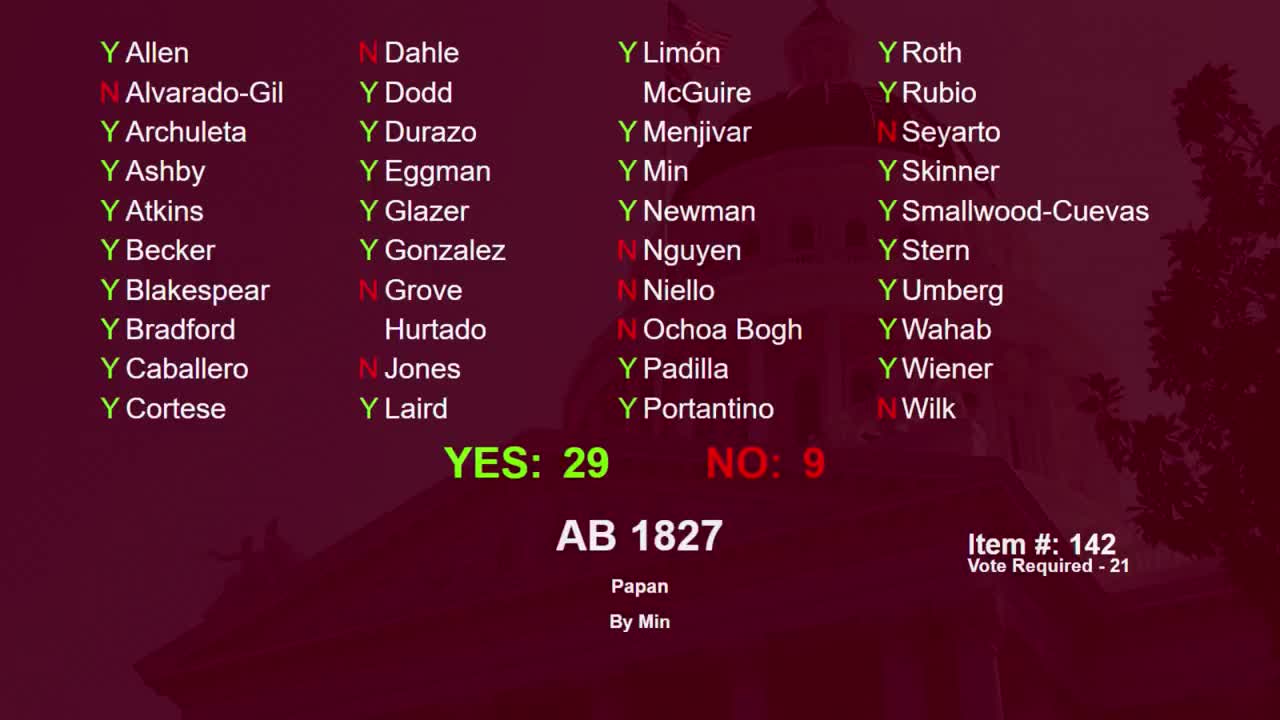


Bill Author

Bill Co-Author(s):