AB 2308: Domestic violence: protective orders.
- Session Year: 2023-2024
- House: Assembly
- Latest Version Date: 2024-09-27
Current Status:
Passed
(2024-09-27: Chaptered by Secretary of State - Chapter 649, Statutes of 2024.)
Introduced
In Committee
First Chamber
In Committee
Second Chamber
Enacted
Existing law requires a court to consider issuing a protective order restraining the defendant from contact with the victim for up to 10 years in all cases in which a criminal defendant has been convicted of certain acts of domestic violence. A violation of a protective order is punishable as contempt, a misdemeanor.
This bill would authorize a court to issue a protective order for up to 15 years. The bill would authorize the issuing court, upon a written petition by the prosecuting attorney, defendant, or victim, to modify or terminate the protective order for good cause if the parties receive notice at least 15 days before the hearing on the petition. By expanding the scope of a crime, the bill would create a state-mandated local program.
The California Constitution requires the state to reimburse local agencies and school districts for certain costs mandated by the state. Statutory provisions establish procedures for making that reimbursement.
This bill would provide that no reimbursement is required by this act for a specified reason.
This bill would incorporate additional changes to Section 273.5 of the Penal Code proposed by AB 2907 to be operative only if this bill and AB 2907 are enacted and this bill is enacted last.
Existing law requires a court to consider issuing a protective order restraining the defendant from contact with the victim for up to 10 years in all cases in which a criminal defendant has been convicted of certain acts of domestic violence. A violation of a protective order is punishable as contempt, a misdemeanor.
This bill would authorize a court to issue a protective order for up to 15 years. The bill would authorize the issuing court, upon a written petition by the prosecuting attorney, defendant, or victim, to modify or terminate the protective order for good cause if the parties receive notice at least 15 days before the hearing on the petition. By expanding the scope of a crime, the bill would create a state-mandated local program.
The California Constitution requires the state to reimburse local agencies and school districts for certain costs mandated by the state. Statutory provisions establish procedures for making that reimbursement.
This bill would provide that no reimbursement is required by this act for a specified reason.
Existing law requires a court to consider issuing a protective order restraining the defendant from contact with the victim for up to 10 years in all cases in which a criminal defendant has been convicted of certain acts of domestic violence. A violation of a protective order is punishable as contempt, a misdemeanor.
This bill would, upon the request of a victim, would authorize a court to issue a protective order on a permanent basis. for up to 15 years. By expanding the scope of a crime, the bill would create a state-mandated local program.
The California Constitution requires the state to reimburse local agencies and school districts for certain costs mandated by the state. Statutory provisions establish procedures for making that reimbursement.
This bill would provide that no reimbursement is required by this act for a specified reason.
Existing law requires a court to consider issuing a protective order restraining the defendant from contact with the victim for up to 10 years in all cases in which a criminal defendant has been convicted of certain acts of domestic violence. A violation of a protective order is punishable as contempt, a misdemeanor.
This bill would, upon the request of a victim, authorize a court to issue a protective order on a permanent basis. By expanding the scope of a crime, the bill would create a state-mandated local program.
The California Constitution requires the state to reimburse local agencies and school districts for certain costs mandated by the state. Statutory provisions establish procedures for making that reimbursement.
This bill would provide that no reimbursement is required by this act for a specified reason.
(a)A person who willfully inflicts corporal injury resulting in a traumatic condition upon a victim described in subdivision (b) is guilty of a felony, and upon conviction thereof shall be punished by imprisonment in the state prison for two, three, or four years, or in a county jail for not more than one year, or by a fine of up to six thousand dollars ($6,000), or by both that fine and imprisonment.
(b)Subdivision (a) shall apply if the victim is or was one or more of the following:
(1)The offenders spouse or former spouse.
(2)The offenders cohabitant or former cohabitant.
(3)The offenders fiance, or someone with whom the offender has, or previously had, an engagement or dating relationship, as defined in paragraph (10) of subdivision (f) of Section 243.
(4)The mother or father of the offenders child.
(c)Holding oneself out to be the spouse of the person with whom one is cohabiting is not necessary to constitute cohabitation as the term is used in this section.
(d)As used in this section, traumatic condition means a condition of the body, such as a wound, or external or internal injury, including, but not limited to, injury as a result of strangulation or suffocation, whether of a minor or serious nature, caused by a physical force. For purposes of this section, strangulation and suffocation include impeding the normal breathing or circulation of the blood of a person by applying pressure on the throat or neck.
(e)For the purpose of this section, a person shall be considered the father or mother of another persons child if the alleged male parent is presumed the natural father under Sections 7611 and 7612 of the Family Code.
(f)(1)A person convicted of violating this section for acts occurring within seven years of a previous conviction under subdivision (a), or subdivision (d) of Section 243, or Section 243.4, 244, 244.5, or 245, shall be punished by imprisonment in a county jail for not more than one year, or by imprisonment in the state prison for two, four, or five years, or by both imprisonment and a fine of up to ten thousand dollars ($10,000).
(2)A person convicted of a violation of this section for acts occurring within seven years of a previous conviction under subdivision (e) of Section 243 shall be punished by imprisonment in the state prison for two, three, or four years, or in a county jail for not more than one year, or by a fine of up to ten thousand dollars ($10,000), or by both that imprisonment and fine.
(g)If probation is granted to a person convicted under subdivision (a), the court shall impose probation consistent with the provisions of Section 1203.097.
(h)If probation is granted, or the execution or imposition of a sentence is suspended, for a defendant convicted under subdivision (a) who has been convicted of a prior offense specified in subdivision (f), the court shall impose one of the following conditions of probation:
(1)If the defendant has suffered one prior conviction within the previous seven years for a violation of an offense specified in subdivision (f), it shall be a condition of probation, in addition to the provisions contained in Section 1203.097, that the defendant be imprisoned in a county jail for not less than 15 days.
(2)If the defendant has suffered two or more prior convictions within the previous seven years for a violation of an offense specified in subdivision (f), it shall be a condition of probation, in addition to the provisions contained in Section 1203.097, that the defendant be imprisoned in a county jail for not less than 60 days.
(3)The court, upon a showing of good cause, may find that the mandatory imprisonment required by this subdivision shall not be imposed and shall state on the record its reasons for finding good cause.
(i)If probation is granted upon conviction of a violation of subdivision (a), the conditions of probation may include, consistent with the terms of probation imposed pursuant to Section 1203.097, in lieu of a fine, one or both of the following requirements:
(1)That the defendant make payments to a domestic violence shelter-based program, up to a maximum of five thousand dollars ($5,000), pursuant to Section 1203.097.
(2)(A)That the defendant reimburse the victim for reasonable costs of counseling and other reasonable expenses that the court finds are the direct result of the defendants offense.
(B)For an order to pay a fine, make payments to a domestic violence shelter-based program, or pay restitution as a condition of probation under this subdivision, the court shall make a determination of the defendants ability to pay. An order to make payments to a domestic violence shelter-based program shall not be made if it would impair the ability of the defendant to pay direct restitution to the victim or court-ordered child support. If the injury to a person who is married or in a registered domestic partnership is caused in whole or in part by the criminal acts of their spouse or domestic partner in violation of this section, the community property may not be used to discharge the liability of the offending spouse or domestic partner for restitution to the injured spouse or domestic partner, required by Section 1203.04, as operative on or before August 2, 1995, or Section 1202.4, or to a shelter for costs with regard to the injured spouse or domestic partner and dependents, required by this section, until all separate property of the offending spouse or domestic partner is exhausted.
(j)(1)Upon conviction under subdivision (a), the sentencing court shall also consider issuing an order restraining the defendant from contact with the victim, which may be valid for up to 15 years, as determined by the court. It is the intent of the Legislature that the length of a restraining order be based upon the seriousness of the facts before the court, the probability of future violations, and the safety of the victim and their immediate family. This protective order may be issued by the court whether the defendant is sentenced to state prison or county jail, or if imposition of sentence is suspended and the defendant is placed on probation.
(2)Upon a written petition by the prosecuting attorney, defendant, or victim, the issuing court may modify or terminate a protective order for good cause provided the prosecuting attorney, defendant, and victim are notified at least 15 days before the hearing on the petition.
(k)If a peace officer makes an arrest for a violation of this section, the peace officer is not required to inform the victim of their right to make a citizens arrest pursuant to subdivision (b) of Section 836.
SEC. 1.5.Section 273.5 of the Penal Code is amended to read:273.5.(a)A person who willfully inflicts corporal injury resulting in a traumatic condition upon a victim described in subdivision (b) is guilty of a felony, and upon conviction thereof shall be punished by imprisonment in the state prison for two, three, or four years, or in a county jail for not more than one year, or by a fine of up to six thousand dollars ($6,000), or by both that fine and imprisonment.
(b)Subdivision (a) shall apply if the victim is or was one or more of the following:
(1)The offenders spouse or former spouse.
(2)The offenders cohabitant or former cohabitant.
(3)The offenders fiance, or someone with whom the offender has, or previously had, an engagement or dating relationship, as defined in paragraph (10) of subdivision (f) of Section 243.
(4)The mother or father of the offenders child.
(c)Holding oneself out to be the spouse of the person with whom one is cohabiting is not necessary to constitute cohabitation as the term is used in this section.
(d)As used in this section, traumatic condition means a condition of the body, such as a wound, or external or internal injury, including, but not limited to, injury as a result of strangulation or suffocation, whether of a minor or serious nature, caused by a physical force. For purposes of this section, strangulation and suffocation include impeding the normal breathing or circulation of the blood of a person by applying pressure on the throat or neck.
(e)For the purpose of this section, a person shall be considered the father or mother of another persons child if the alleged male parent is presumed the natural father under Sections 7611 and 7612 of the Family Code.
(f)(1)A person convicted of violating this section for acts occurring within seven years of a previous conviction under subdivision (a), or subdivision (d) of Section 243, or Section 243.4, 244, 244.5, or 245, shall be punished by imprisonment in a county jail for not more than one year, or by imprisonment in the state prison for two, four, or five years, or by both imprisonment and a fine of up to ten thousand dollars ($10,000).
(2)A person convicted of a violation of this section for acts occurring within seven years of a previous conviction under subdivision (e) of Section 243 shall be punished by imprisonment in the state prison for two, three, or four years, or in a county jail for not more than one year, or by a fine of up to ten thousand dollars ($10,000), or by both that imprisonment and fine.
(g)If probation is granted to a person convicted under subdivision (a), the court shall impose probation consistent with the provisions of Section 1203.097.
(h)If probation is granted, or the execution or imposition of a sentence is suspended, for a defendant convicted under subdivision (a) who has been convicted of a prior offense specified in subdivision (f), the court shall impose one of the following conditions of probation:
(1)If the defendant has suffered one prior conviction within the previous seven years for a violation of an offense specified in subdivision (f), it shall be a condition of probation, in addition to the provisions contained in Section 1203.097, that the defendant be imprisoned in a county jail for not less than 15 days.
(2)If the defendant has suffered two or more prior convictions within the previous seven years for a violation of an offense specified in subdivision (f), it shall be a condition of probation, in addition to the provisions contained in Section 1203.097, that the defendant be imprisoned in a county jail for not less than 60 days.
(3)The court, upon a showing of good cause, may find that the mandatory imprisonment required by this subdivision shall not be imposed and shall state on the record its reasons for finding good cause.
(i)If probation is granted upon conviction of a violation of subdivision (a), the conditions of probation may include, consistent with the terms of probation imposed pursuant to Section 1203.097, in lieu of a fine, one or both of the following requirements:
(1)That the defendant make payments to a domestic violence shelter-based program, up to a maximum of five thousand dollars ($5,000), pursuant to Section 1203.097.
(2)(A)That the defendant reimburse the victim for reasonable costs of counseling and other reasonable expenses that the court finds are the direct result of the defendants offense.
(B)For an order to pay a fine, make payments to a domestic violence shelter-based program, or pay restitution as a condition of probation under this subdivision, the court shall make a determination of the defendants ability to pay. An order to make payments to a domestic violence shelter-based program shall not be made if it would impair the ability of the defendant to pay direct restitution to the victim or court-ordered child support. If the injury to a person who is married or in a registered domestic partnership is caused in whole or in part by the criminal acts of their spouse or domestic partner in violation of this section, the community property may not be used to discharge the liability of the offending spouse or domestic partner for restitution to the injured spouse or domestic partner, required by Section 1203.04, as operative on or before August 2, 1995, or Section 1202.4, or to a shelter for costs with regard to the injured spouse or domestic partner and dependents, required by this section, until all separate property of the offending spouse or domestic partner is exhausted.
(j)(1)Upon conviction under subdivision (a), the sentencing court shall also consider issuing an order restraining the defendant from contact with the victim, which may be valid for up to 15 years, as determined by the court. It is the intent of the Legislature that the length of a restraining order be based upon the seriousness of the facts before the court, the probability of future violations, the safety of the victim and their immediate family, and the information provided to the court pursuant to Section 273.75.This protective order may be issued by the court whether the defendant is sentenced to state prison or county jail, or if imposition of sentence is suspended and the defendant is placed on probation.
(2)Upon a written petition by the prosecuting attorney, defendant, or victim, the issuing court may modify or terminate a protective order for good cause provided the prosecuting attorney, defendant, and victim are notified at least 15 days before the hearing on the petition.
(k)If a peace officer makes an arrest for a violation of this section, the peace officer is not required to inform the victim of their right to make a citizens arrest pursuant to subdivision (b) of Section 836.
SEC. 2.No reimbursement is required by this act pursuant to Section 6 of Article XIIIB of the California Constitution because the only costs that may be incurred by a local agency or school district will be incurred because this act creates a new crime or infraction, eliminates a crime or infraction, or changes the penalty for a crime or infraction, within the meaning of Section 17556 of the Government Code, or changes the definition of a crime within the meaning of Section 6 of Article XIIIB of the California Constitution.
SEC. 3.Section 1.5 of this bill incorporates amendments to Section 273.5 of the Penal Code proposed by both this bill and Assembly Bill 2907. That section of this bill shall only become operative if (1) both bills are enacted and become effective on or before January 1, 2025, (2) each bill amends Section 273.5 of the Penal Code, and (3) this bill is enacted after Assembly Bill 2907, in which case Section 1 of this bill shall not become operative.
(a)A person who willfully inflicts corporal injury resulting in a traumatic condition upon a victim described in subdivision (b) is guilty of a felony, and upon conviction thereof shall be punished by imprisonment in the state prison for two, three, or four years, or in a county jail for not more than one year, or by a fine of up to six thousand dollars ($6,000), or by both that fine and imprisonment.
(b)Subdivision (a) shall apply if the victim is or was one or more of the following:
(1)The offenders spouse or former spouse.
(2)The offenders cohabitant or former cohabitant.
(3)The offenders fiance, or someone with whom the offender has, or previously had, an engagement or dating relationship, as defined in paragraph (10) of subdivision (f) of Section 243.
(4)The mother or father of the offenders child.
(c)Holding oneself out to be the spouse of the person with whom one is cohabiting is not necessary to constitute cohabitation as the term is used in this section.
(d)As used in this section, traumatic condition means a condition of the body, such as a wound, or external or internal injury, including, but not limited to, injury as a result of strangulation or suffocation, whether of a minor or serious nature, caused by a physical force. For purposes of this section, strangulation and suffocation include impeding the normal breathing or circulation of the blood of a person by applying pressure on the throat or neck.
(e)For the purpose of this section, a person shall be considered the father or mother of another persons child if the alleged male parent is presumed the natural father under Sections 7611 and 7612 of the Family Code.
(f)(1)A person convicted of violating this section for acts occurring within seven years of a previous conviction under subdivision (a), or subdivision (d) of Section 243, or Section 243.4, 244, 244.5, or 245, shall be punished by imprisonment in a county jail for not more than one year, or by imprisonment in the state prison for two, four, or five years, or by both imprisonment and a fine of up to ten thousand dollars ($10,000).
(2)A person convicted of a violation of this section for acts occurring within seven years of a previous conviction under subdivision (e) of Section 243 shall be punished by imprisonment in the state prison for two, three, or four years, or in a county jail for not more than one year, or by a fine of up to ten thousand dollars ($10,000), or by both that imprisonment and fine.
(g)If probation is granted to a person convicted under subdivision (a), the court shall impose probation consistent with the provisions of Section 1203.097.
(h)If probation is granted, or the execution or imposition of a sentence is suspended, for a defendant convicted under subdivision (a) who has been convicted of a prior offense specified in subdivision (f), the court shall impose one of the following conditions of probation:
(1)If the defendant has suffered one prior conviction within the previous seven years for a violation of an offense specified in subdivision (f), it shall be a condition of probation, in addition to the provisions contained in Section 1203.097, that the defendant be imprisoned in a county jail for not less than 15 days.
(2)If the defendant has suffered two or more prior convictions within the previous seven years for a violation of an offense specified in subdivision (f), it shall be a condition of probation, in addition to the provisions contained in Section 1203.097, that the defendant be imprisoned in a county jail for not less than 60 days.
(3)The court, upon a showing of good cause, may find that the mandatory imprisonment required by this subdivision shall not be imposed and shall state on the record its reasons for finding good cause.
(i)If probation is granted upon conviction of a violation of subdivision (a), the conditions of probation may include, consistent with the terms of probation imposed pursuant to Section 1203.097, in lieu of a fine, one or both of the following requirements:
(1)That the defendant make payments to a domestic violence shelter-based program, up to a maximum of five thousand dollars ($5,000), pursuant to Section 1203.097.
(2)(A)That the defendant reimburse the victim for reasonable costs of counseling and other reasonable expenses that the court finds are the direct result of the defendants offense.
(B)For an order to pay a fine, make payments to a domestic violence shelter-based program, or pay restitution as a condition of probation under this subdivision, the court shall make a determination of the defendants ability to pay. An order to make payments to a domestic violence shelter-based program shall not be made if it would impair the ability of the defendant to pay direct restitution to the victim or court-ordered child support. If the injury to a person who is married or in a registered domestic partnership is caused in whole or in part by the criminal acts of their spouse or domestic partner in violation of this section, the community property may not be used to discharge the liability of the offending spouse or domestic partner for restitution to the injured spouse or domestic partner, required by Section 1203.04, as operative on or before August 2, 1995, or Section 1202.4, or to a shelter for costs with regard to the injured spouse or domestic partner and dependents, required by this section, until all separate property of the offending spouse or domestic partner is exhausted.
(j)(1)Upon conviction under subdivision (a), the sentencing court shall also consider issuing an order restraining the defendant from contact with the victim, which may be valid for up to 15 years, as determined by the court. It is the intent of the Legislature that the length of a restraining order be based upon the seriousness of the facts before the court, the probability of future violations, and the safety of the victim and their immediate family. This protective order may be issued by the court whether the defendant is sentenced to state prison or county jail, or if imposition of sentence is suspended and the defendant is placed on probation.
(2)Upon a written petition by the prosecuting attorney, defendant, or victim, the issuing court may modify or terminate a protective order for good cause provided the prosecuting attorney, defendant, and victim are notified at least 15 days before the hearing on the petition.
(k)If a peace officer makes an arrest for a violation of this section, the peace officer is not required to inform the victim of their right to make a citizens arrest pursuant to subdivision (b) of Section 836.
SEC. 1.5.Section 273.5 of the Penal Code is amended to read:273.5.(a)Any A person who willfully inflicts corporal injury resulting in a traumatic condition upon a victim described in subdivision (b) is guilty of a felony, and upon conviction thereof shall be punished by imprisonment in the state prison for two, three, or four years, or in a county jail for not more than one year, or by a fine of up to six thousand dollars ($6,000), or by both that fine and imprisonment.
(b)Subdivision (a) shall apply if the victim is or was one or more of the following:
(1)The offenders spouse or former spouse.
(2)The offenders cohabitant or former cohabitant.
(3)The offenders fiance or fiancee, fiance, or someone with whom the offender has, or previously had, an engagement or dating relationship, as defined in paragraph (10) of subdivision (f) of Section 243.
(4)The mother or father of the offenders child.
(c)Holding oneself out to be the spouse of the person with whom one is cohabiting is not necessary to constitute cohabitation as the term is used in this section.
(d)As used in this section, traumatic condition means a condition of the body, such as a wound, or external or internal injury, including, but not limited to, injury as a result of strangulation or suffocation, whether of a minor or serious nature, caused by a physical force. For purposes of this section, strangulation and suffocation include impeding the normal breathing or circulation of the blood of a person by applying pressure on the throat or neck.
(e)For the purpose of this section, a person shall be considered the father or mother of another persons child if the alleged male parent is presumed the natural father under Sections 7611 and 7612 of the Family Code.
(f)(1)Any A person convicted of violating this section for acts occurring within seven years of a previous conviction under subdivision (a), or subdivision (d) of Section 243, or Section 243.4, 244, 244.5, or 245, shall be punished by imprisonment in a county jail for not more than one year, or by imprisonment in the state prison for two, four, or five years, or by both imprisonment and a fine of up to ten thousand dollars ($10,000).
(2)Any A person convicted of a violation of this section for acts occurring within seven years of a previous conviction under subdivision (e) of Section 243 shall be punished by imprisonment in the state prison for two, three, or four years, or in a county jail for not more than one year, or by a fine of up to ten thousand dollars ($10,000), or by both that imprisonment and fine.
(g)If probation is granted to any a person convicted under subdivision (a), the court shall impose probation consistent with the provisions of Section 1203.097.
(h)If probation is granted, or the execution or imposition of a sentence is suspended, for any a defendant convicted under subdivision (a) who has been convicted of any a prior offense specified in subdivision (f), the court shall impose one of the following conditions of probation:
(1)If the defendant has suffered one prior conviction within the previous seven years for a violation of any an offense specified in subdivision (f), it shall be a condition of probation, in addition to the provisions contained in Section 1203.097, that the defendant be imprisoned in a county jail for not less than 15 days.
(2)If the defendant has suffered two or more prior convictions within the previous seven years for a violation of any an offense specified in subdivision (f), it shall be a condition of probation, in addition to the provisions contained in Section 1203.097, that the defendant be imprisoned in a county jail for not less than 60 days.
(3)The court, upon a showing of good cause, may find that the mandatory imprisonment required by this subdivision shall not be imposed and shall state on the record its reasons for finding good cause.
(i)If probation is granted upon conviction of a violation of subdivision (a), the conditions of probation may include, consistent with the terms of probation imposed pursuant to Section 1203.097, in lieu of a fine, one or both of the following requirements:
(1)That the defendant make payments to a domestic violence shelter-based program, up to a maximum of five thousand dollars ($5,000), pursuant to Section 1203.097.
(2)(A)That the defendant reimburse the victim for reasonable costs of counseling and other reasonable expenses that the court finds are the direct result of the defendants offense.
(B)For any an order to pay a fine, make payments to a domestic violence shelter-based program, or pay restitution as a condition of probation under this subdivision, the court shall make a determination of the defendants ability to pay. An order to make payments to a domestic violence shelter-based program shall not be made if it would impair the ability of the defendant to pay direct restitution to the victim or court-ordered child support. If the injury to a person who is married or in a registered domestic partnership is caused in whole or in part by the criminal acts of their spouse or domestic partner in violation of this section, the community property may not be used to discharge the liability of the offending spouse or domestic partner for restitution to the injured spouse or domestic partner, required by Section 1203.04, as operative on or before August 2, 1995, or Section 1202.4, or to a shelter for costs with regard to the injured spouse or domestic partner and dependents, required by this section, until all separate property of the offending spouse or domestic partner is exhausted.
(j)(1)Upon conviction under subdivision (a), the sentencing court shall also consider issuing an order restraining the defendant from any contact with the victim, which may be valid for up to 10 15 years, as determined by the court. It is the intent of the Legislature that the length of any a restraining order be based upon the seriousness of the facts before the court, the probability of future violations, and the safety of the victim and their immediate family. family, and the information provided to the court pursuant to Section 273.75.This protective order may be issued by the court whether the defendant is sentenced to state prison or county jail, or if imposition of sentence is suspended and the defendant is placed on probation.
(2)Upon a written petition by the prosecuting attorney, defendant, or victim, the issuing court may modify or terminate a protective order for good cause provided the prosecuting attorney, defendant, and victim are notified at least 15 days before the hearing on the petition.
(k)If a peace officer makes an arrest for a violation of this section, the peace officer is not required to inform the victim of their right to make a citizens arrest pursuant to subdivision (b) of Section 836.
SEC. 2.No reimbursement is required by this act pursuant to Section 6 of Article XIIIB of the California Constitution because the only costs that may be incurred by a local agency or school district will be incurred because this act creates a new crime or infraction, eliminates a crime or infraction, or changes the penalty for a crime or infraction, within the meaning of Section 17556 of the Government Code, or changes the definition of a crime within the meaning of Section 6 of Article XIIIB of the California Constitution.
SEC. 3.Section 1.5 of this bill incorporates amendments to Section 273.5 of the Penal Code proposed by both this bill and Assembly Bill 2907. That section of this bill shall only become operative if (1) both bills are enacted and become effective on or before January 1, 2025, (2) each bill amends Section 273.5 of the Penal Code, and (3) this bill is enacted after Assembly Bill 2907, in which case Section 1 of this bill shall not become operative.
(a)Any A person who willfully inflicts corporal injury resulting in a traumatic condition upon a victim described in subdivision (b) is guilty of a felony, and upon conviction thereof shall be punished by imprisonment in the state prison for two, three, or four years, or in a county jail for not more than one year, or by a fine of up to six thousand dollars ($6,000), or by both that fine and imprisonment.
(b)Subdivision (a) shall apply if the victim is or was one or more of the following:
(1)The offenders spouse or former spouse.
(2)The offenders cohabitant or former cohabitant.
(3)The offenders fiance or fiancee, fiance, or someone with whom the offender has, or previously had, an engagement or dating relationship, as defined in paragraph (10) of subdivision (f) of Section 243.
(4)The mother or father of the offenders child.
(c)Holding oneself out to be the spouse of the person with whom one is cohabiting is not necessary to constitute cohabitation as the term is used in this section.
(d)As used in this section, traumatic condition means a condition of the body, such as a wound, or external or internal injury, including, but not limited to, injury as a result of strangulation or suffocation, whether of a minor or serious nature, caused by a physical force. For purposes of this section, strangulation and suffocation include impeding the normal breathing or circulation of the blood of a person by applying pressure on the throat or neck.
(e)For the purpose of this section, a person shall be considered the father or mother of another persons child if the alleged male parent is presumed the natural father under Sections 7611 and 7612 of the Family Code.
(f)(1)Any A person convicted of violating this section for acts occurring within seven years of a previous conviction under subdivision (a), or subdivision (d) of Section 243, or Section 243.4, 244, 244.5, or 245, shall be punished by imprisonment in a county jail for not more than one year, or by imprisonment in the state prison for two, four, or five years, or by both imprisonment and a fine of up to ten thousand dollars ($10,000).
(2)Any A person convicted of a violation of this section for acts occurring within seven years of a previous conviction under subdivision (e) of Section 243 shall be punished by imprisonment in the state prison for two, three, or four years, or in a county jail for not more than one year, or by a fine of up to ten thousand dollars ($10,000), or by both that imprisonment and fine.
(g)If probation is granted to any a person convicted under subdivision (a), the court shall impose probation consistent with the provisions of Section 1203.097.
(h)If probation is granted, or the execution or imposition of a sentence is suspended, for any a defendant convicted under subdivision (a) who has been convicted of any a prior offense specified in subdivision (f), the court shall impose one of the following conditions of probation:
(1)If the defendant has suffered one prior conviction within the previous seven years for a violation of any an offense specified in subdivision (f), it shall be a condition of probation, in addition to the provisions contained in Section 1203.097, that the defendant be imprisoned in a county jail for not less than 15 days.
(2)If the defendant has suffered two or more prior convictions within the previous seven years for a violation of any an offense specified in subdivision (f), it shall be a condition of probation, in addition to the provisions contained in Section 1203.097, that the defendant be imprisoned in a county jail for not less than 60 days.
(3)The court, upon a showing of good cause, may find that the mandatory imprisonment required by this subdivision shall not be imposed and shall state on the record its reasons for finding good cause.
(i)If probation is granted upon conviction of a violation of subdivision (a), the conditions of probation may include, consistent with the terms of probation imposed pursuant to Section 1203.097, in lieu of a fine, one or both of the following requirements:
(1)That the defendant make payments to a domestic violence shelter-based program, up to a maximum of five thousand dollars ($5,000), pursuant to Section 1203.097.
(2)(A)That the defendant reimburse the victim for reasonable costs of counseling and other reasonable expenses that the court finds are the direct result of the defendants offense.
(B)For any an order to pay a fine, make payments to a domestic violence shelter-based program, or pay restitution as a condition of probation under this subdivision, the court shall make a determination of the defendants ability to pay. An order to make payments to a domestic violence shelter-based program shall not be made if it would impair the ability of the defendant to pay direct restitution to the victim or court-ordered child support. If the injury to a person who is married or in a registered domestic partnership is caused in whole or in part by the criminal acts of their spouse or domestic partner in violation of this section, the community property may not be used to discharge the liability of the offending spouse or domestic partner for restitution to the injured spouse or domestic partner, required by Section 1203.04, as operative on or before August 2, 1995, or Section 1202.4, or to a shelter for costs with regard to the injured spouse or domestic partner and dependents, required by this section, until all separate property of the offending spouse or domestic partner is exhausted.
(j)(1)Upon conviction under subdivision (a), the sentencing court shall also consider issuing an order restraining the defendant from any contact with the victim, which may be valid for up to 15 years, as determined by the court. It is the intent of the Legislature that the length of any a restraining order be based upon the seriousness of the facts before the court, the probability of future violations, and the safety of the victim and their immediate family. This protective order may be issued by the court whether the defendant is sentenced to state prison or county jail, or if imposition of sentence is suspended and the defendant is placed on probation.
(2)Upon a written petition by the prosecuting attorney, defendant, or victim, the issuing court may modify or terminate a protective order for good cause provided the prosecuting attorney, defendant, and victim are notified at least 15 days before the hearing on the petition.
(k)If a peace officer makes an arrest for a violation of this section, the peace officer is not required to inform the victim of their right to make a citizens arrest pursuant to subdivision (b) of Section 836.
SEC. 2.No reimbursement is required by this act pursuant to Section 6 of Article XIIIB of the California Constitution because the only costs that may be incurred by a local agency or school district will be incurred because this act creates a new crime or infraction, eliminates a crime or infraction, or changes the penalty for a crime or infraction, within the meaning of Section 17556 of the Government Code, or changes the definition of a crime within the meaning of Section 6 of Article XIIIB of the California Constitution.
(a)Any person who willfully inflicts corporal injury resulting in a traumatic condition upon a victim described in subdivision (b) is guilty of a felony, and upon conviction thereof shall be punished by imprisonment in the state prison for two, three, or four years, or in a county jail for not more than one year, or by a fine of up to six thousand dollars ($6,000), or by both that fine and imprisonment.
(b)Subdivision (a) shall apply if the victim is or was one or more of the following:
(1)The offenders spouse or former spouse.
(2)The offenders cohabitant or former cohabitant.
(3)The offenders fiance or fiancee, or someone with whom the offender has, or previously had, an engagement or dating relationship, as defined in paragraph (10) of subdivision (f) of Section 243.
(4)The mother or father of the offenders child.
(c)Holding oneself out to be the spouse of the person with whom one is cohabiting is not necessary to constitute cohabitation as the term is used in this section.
(d)As used in this section, traumatic condition means a condition of the body, such as a wound, or external or internal injury, including, but not limited to, injury as a result of strangulation or suffocation, whether of a minor or serious nature, caused by a physical force. For purposes of this section, strangulation and suffocation include impeding the normal breathing or circulation of the blood of a person by applying pressure on the throat or neck.
(e)For the purpose of this section, a person shall be considered the father or mother of another persons child if the alleged male parent is presumed the natural father under Sections 7611 and 7612 of the Family Code.
(f)(1)Any person convicted of violating this section for acts occurring within seven years of a previous conviction under subdivision (a), or subdivision (d) of Section 243, or Section 243.4, 244, 244.5, or 245, shall be punished by imprisonment in a county jail for not more than one year, or by imprisonment in the state prison for two, four, or five years, or by both imprisonment and a fine of up to ten thousand dollars ($10,000).
(2)Any person convicted of a violation of this section for acts occurring within seven years of a previous conviction under subdivision (e) of Section 243 shall be punished by imprisonment in the state prison for two, three, or four years, or in a county jail for not more than one year, or by a fine of up to ten thousand dollars ($10,000), or by both that imprisonment and fine.
(g)If probation is granted to any person convicted under subdivision (a), the court shall impose probation consistent with the provisions of Section 1203.097.
(h)If probation is granted, or the execution or imposition of a sentence is suspended, for any defendant convicted under subdivision (a) who has been convicted of any prior offense specified in subdivision (f), the court shall impose one of the following conditions of probation:
(1)If the defendant has suffered one prior conviction within the previous seven years for a violation of any offense specified in subdivision (f), it shall be a condition of probation, in addition to the provisions contained in Section 1203.097, that the defendant be imprisoned in a county jail for not less than 15 days.
(2)If the defendant has suffered two or more prior convictions within the previous seven years for a violation of any offense specified in subdivision (f), it shall be a condition of probation, in addition to the provisions contained in Section 1203.097, that the defendant be imprisoned in a county jail for not less than 60 days.
(3)The court, upon a showing of good cause, may find that the mandatory imprisonment required by this subdivision shall not be imposed and shall state on the record its reasons for finding good cause.
(i)If probation is granted upon conviction of a violation of subdivision (a), the conditions of probation may include, consistent with the terms of probation imposed pursuant to Section 1203.097, in lieu of a fine, one or both of the following requirements:
(1)That the defendant make payments to a domestic violence shelter-based program, up to a maximum of five thousand dollars ($5,000), pursuant to Section 1203.097.
(2)(A)That the defendant reimburse the victim for reasonable costs of counseling and other reasonable expenses that the court finds are the direct result of the defendants offense.
(B)For any order to pay a fine, make payments to a domestic violence shelter-based program, or pay restitution as a condition of probation under this subdivision, the court shall make a determination of the defendants ability to pay. An order to make payments to a domestic violence shelter-based program shall not be made if it would impair the ability of the defendant to pay direct restitution to the victim or court-ordered child support. If the injury to a person who is married or in a registered domestic partnership is caused in whole or in part by the criminal acts of their spouse or domestic partner in violation of this section, the community property may not be used to discharge the liability of the offending spouse or domestic partner for restitution to the injured spouse or domestic partner, required by Section 1203.04, as operative on or before August 2, 1995, or Section 1202.4, or to a shelter for costs with regard to the injured spouse or domestic partner and dependents, required by this section, until all separate property of the offending spouse or domestic partner is exhausted.
(j)Upon conviction under subdivision (a), the sentencing court shall also consider issuing an order restraining the defendant from any contact with the victim, which may be valid for up to 10 years, or upon the victims request, permanently, 15 years, as determined by the court. It is the intent of the Legislature that the length of any restraining order be based upon the seriousness of the facts before the court, the probability of future violations, and the safety of the victim and their immediate family. This protective order may be issued by the court whether the defendant is sentenced to state prison or county jail, or if imposition of sentence is suspended and the defendant is placed on probation.
(k)If a peace officer makes an arrest for a violation of this section, the peace officer is not required to inform the victim of their right to make a citizens arrest pursuant to subdivision (b) of Section 836.
SEC. 2.No reimbursement is required by this act pursuant to Section 6 of Article XIIIB of the California Constitution because the only costs that may be incurred by a local agency or school district will be incurred because this act creates a new crime or infraction, eliminates a crime or infraction, or changes the penalty for a crime or infraction, within the meaning of Section 17556 of the Government Code, or changes the definition of a crime within the meaning of Section 6 of Article XIIIB of the California Constitution.
(a)Any person who willfully inflicts corporal injury resulting in a traumatic condition upon a victim described in subdivision (b) is guilty of a felony, and upon conviction thereof shall be punished by imprisonment in the state prison for two, three, or four years, or in a county jail for not more than one year, or by a fine of up to six thousand dollars ($6,000), or by both that fine and imprisonment.
(b)Subdivision (a) shall apply if the victim is or was one or more of the following:
(1)The offenders spouse or former spouse.
(2)The offenders cohabitant or former cohabitant.
(3)The offenders fiance or fiancee, or someone with whom the offender has, or previously had, an engagement or dating relationship, as defined in paragraph (10) of subdivision (f) of Section 243.
(4)The mother or father of the offenders child.
(c)Holding oneself out to be the spouse of the person with whom one is cohabiting is not necessary to constitute cohabitation as the term is used in this section.
(d)As used in this section, traumatic condition means a condition of the body, such as a wound, or external or internal injury, including, but not limited to, injury as a result of strangulation or suffocation, whether of a minor or serious nature, caused by a physical force. For purposes of this section, strangulation and suffocation include impeding the normal breathing or circulation of the blood of a person by applying pressure on the throat or neck.
(e)For the purpose of this section, a person shall be considered the father or mother of another persons child if the alleged male parent is presumed the natural father under Sections 7611 and 7612 of the Family Code.
(f)(1)Any person convicted of violating this section for acts occurring within seven years of a previous conviction under subdivision (a), or subdivision (d) of Section 243, or Section 243.4, 244, 244.5, or 245, shall be punished by imprisonment in a county jail for not more than one year, or by imprisonment in the state prison for two, four, or five years, or by both imprisonment and a fine of up to ten thousand dollars ($10,000).
(2)Any person convicted of a violation of this section for acts occurring within seven years of a previous conviction under subdivision (e) of Section 243 shall be punished by imprisonment in the state prison for two, three, or four years, or in a county jail for not more than one year, or by a fine of up to ten thousand dollars ($10,000), or by both that imprisonment and fine.
(g)If probation is granted to any person convicted under subdivision (a), the court shall impose probation consistent with the provisions of Section 1203.097.
(h)If probation is granted, or the execution or imposition of a sentence is suspended, for any defendant convicted under subdivision (a) who has been convicted of any prior offense specified in subdivision (f), the court shall impose one of the following conditions of probation:
(1)If the defendant has suffered one prior conviction within the previous seven years for a violation of any offense specified in subdivision (f), it shall be a condition of probation, in addition to the provisions contained in Section 1203.097, that the defendant be imprisoned in a county jail for not less than 15 days.
(2)If the defendant has suffered two or more prior convictions within the previous seven years for a violation of any offense specified in subdivision (f), it shall be a condition of probation, in addition to the provisions contained in Section 1203.097, that the defendant be imprisoned in a county jail for not less than 60 days.
(3)The court, upon a showing of good cause, may find that the mandatory imprisonment required by this subdivision shall not be imposed and shall state on the record its reasons for finding good cause.
(i)If probation is granted upon conviction of a violation of subdivision (a), the conditions of probation may include, consistent with the terms of probation imposed pursuant to Section 1203.097, in lieu of a fine, one or both of the following requirements:
(1)That the defendant make payments to a domestic violence shelter-based program, up to a maximum of five thousand dollars ($5,000), pursuant to Section 1203.097.
(2)(A)That the defendant reimburse the victim for reasonable costs of counseling and other reasonable expenses that the court finds are the direct result of the defendants offense.
(B)For any order to pay a fine, make payments to a domestic violence shelter-based program, or pay restitution as a condition of probation under this subdivision, the court shall make a determination of the defendants ability to pay. An order to make payments to a domestic violence shelter-based program shall not be made if it would impair the ability of the defendant to pay direct restitution to the victim or court-ordered child support. If the injury to a person who is married or in a registered domestic partnership is caused in whole or in part by the criminal acts of their spouse or domestic partner in violation of this section, the community property may not be used to discharge the liability of the offending spouse or domestic partner for restitution to the injured spouse or domestic partner, required by Section 1203.04, as operative on or before August 2, 1995, or Section 1202.4, or to a shelter for costs with regard to the injured spouse or domestic partner and dependents, required by this section, until all separate property of the offending spouse or domestic partner is exhausted.
(j)Upon conviction under subdivision (a), the sentencing court shall also consider issuing an order restraining the defendant from any contact with the victim, which may be valid for up to 10 years, or upon the victims request, permanently, as determined by the court. It is the intent of the Legislature that the length of any restraining order be based upon the seriousness of the facts before the court, the probability of future violations, and the safety of the victim and their immediate family. This protective order may be issued by the court whether the defendant is sentenced to state prison or county jail, or if imposition of sentence is suspended and the defendant is placed on probation.
(k)If a peace officer makes an arrest for a violation of this section, the peace officer is not required to inform the victim of their right to make a citizens arrest pursuant to subdivision (b) of Section 836.
SEC. 2.No reimbursement is required by this act pursuant to Section 6 of Article XIIIB of the California Constitution because the only costs that may be incurred by a local agency or school district will be incurred because this act creates a new crime or infraction, eliminates a crime or infraction, or changes the penalty for a crime or infraction, within the meaning of Section 17556 of the Government Code, or changes the definition of a crime within the meaning of Section 6 of Article XIIIB of the California Constitution.
|
Date
|
Status
|
|---|---|
| Sep 27, 2024 | Chaptered by Secretary of State - Chapter 649, Statutes of 2024. |
| Sep 27, 2024 | Approved by the Governor. |
| Sep 11, 2024 | Enrolled and presented to the Governor at 4 p.m. |
| Aug 30, 2024 | Senate amendments concurred in. To Engrossing and Enrolling. (Ayes 77. Noes 0.). |
| Aug 30, 2024 | In Assembly. Concurrence in Senate amendments pending. |
| Aug 29, 2024 | Read third time. Passed. Ordered to the Assembly. (Ayes 40. Noes 0.). |
| Aug 22, 2024 | Read second time. Ordered to third reading. |
| Aug 21, 2024 | Read third time and amended. Ordered to second reading. |
| Aug 19, 2024 | Read second time. Ordered to third reading. |
| Aug 15, 2024 | Read second time and amended. Ordered returned to second reading. |
| Aug 15, 2024 | From committee: Amend, and do pass as amended. (Ayes 7. Noes 0.) (August 15). |
| Aug 5, 2024 | In committee: Referred to APPR suspense file. |
| Jun 25, 2024 | From committee: Do pass and re-refer to Com. on APPR. (Ayes 5. Noes 0.) (June 25). Re-referred to Com. on APPR. |
| Jun 5, 2024 | Referred to Com. on PUB S. |
| May 24, 2024 | In Senate. Read first time. To Com. on RLS. for assignment. |
| May 23, 2024 | Read third time. Passed. Ordered to the Senate. (Ayes 67. Noes 0. Page 5629.) |
| May 20, 2024 | Read second time. Ordered to third reading. |
| May 16, 2024 | From committee: Do pass. (Ayes 15. Noes 0.) (May 16). |
| May 1, 2024 | In committee: Set, first hearing. Referred to APPR. suspense file. |
| Apr 25, 2024 | Re-referred to Com. on APPR. |
| Apr 24, 2024 | Read second time and amended. |
| Apr 23, 2024 | From committee: Amend, and do pass as amended and re-refer to Com. on APPR. (Ayes 8. Noes 0.) (April 16). |
| Feb 26, 2024 | Referred to Com. on PUB. S. |
| Feb 13, 2024 | From printer. May be heard in committee March 14. |
| Feb 12, 2024 | Read first time. To print. |
|
Date
|
Description
|
Location
|
Votes
|
|
|---|---|---|---|---|
| Aug 30, 2024 | AB 2308 Davies Concurrence in Senate Amendments | Assembly Floor |
Passed |
|
| Aug 29, 2024 | Assembly 3rd Reading AB2308 Davies et al. By Ochoa Bogh | Senate Floor |
Passed |
|
| Aug 15, 2024 | Do pass as amended | Senate Standing Committee on Appropriations |
Passed |
|
| Aug 5, 2024 | Placed on suspense file | Senate Standing Committee on Appropriations |
Passed |
|
| Jun 25, 2024 | Do pass, but first be re-referred to the Committee on [Appropriations] | Senate Standing Committee on Public Safety |
Passed |
|
| May 23, 2024 | AB 2308 Davies Assembly Third Reading | Assembly Floor |
Passed |
|
| May 16, 2024 | Do pass. | Assembly Standing Committee on Appropriations |
Passed |
|
| Apr 16, 2024 | Do pass as amended and be re-referred to the Committee on [Appropriations] | Assembly Standing Committee on Public Safety |
Passed |
This list shows positions taken on this bill by organizations on the date displayed, which is linked to the original source.
Positions by individuals are not included.
|
Organization
|
Position
|
Date
|
|---|---|---|
| Aclu California Action | ** Against | |
| American Association Of University Women - California | ** Support | |
| Arcadia Police Officers' Association | ** Support | |
| Burbank Police Officers' Association | ** Support | |
| California Police Chiefs Association | * Support | Apr 16, 2024 |
| California Attorneys For Criminal Justice | ** Against | |
| California District Attorneys Association | ** Support | |
| California Partnership To End Domestic Violence | ** Support | |
| California Public Defender's Association | * Support | Jun 25, 2024 |
| California Reserve Peace Officers Association | ** Support | |
| California State Sheriffs Association | ** Support | |
| Californians United for Responsible Budget | * Against | Jun 25, 2024 |
| CLAREMONT POLICE OFFICERS ASSOCIATION | ** Support | |
| Conference of California Bar Associations | ** Support | |
| Corona Police Officers Association | ** Support | |
| Culver City Police Officers' Association | ** Support | |
| Deputy Sheriffs Association of Monterey County | ** Support | |
| Ella Baker Center | * Against | Apr 16, 2024 |
| Felony Murder Elimination Project | ** Against | |
| Fullerton Police Officers' Association | ** Support | |
| Legal Services for Prisoners with Children | * Neutral | Apr 16, 2024 |
| Murrieta Police Officers' Association | ** Support | |
| Newport Beach Police Association | ** Support | |
| Novato Police Officers Association | ** Support | |
| Orange County Sheriff's Department | * Support | Apr 16, 2024 |
| Palos Verdes Police Officers Association | ** Support | |
| PLACER COUNTY DEPUTY SHERIFFS ASSOCIATION | ** Support | |
| Pomona Police Officers' Association | ** Support | |
| Riverside County District Attorney's Office | * Support | Apr 16, 2024 |
| RIVERSIDE POLICE OFFICERS ASSOCIATION | ** Support | |
| Riverside Sheriffs' Association | ** Support | |
| San Francisco Public Defenders Office | * Against | Apr 16, 2024 |
| Santa Ana Police Officers Association | ** Support | |
| Smart Justice California, a project of Tides Advocacy | ** Against | |
| Uncommon Law | * Against | Apr 16, 2024 |
| Upland Police Officers Association | ** Support |
CONCURRENCE IN SENATE AMENDMENTS
CSA1 Bill Id:AB 2308
Author:(Davies and Stephanie Nguyen)
As Amended Ver:August 21, 2024
Majority vote
SUMMARY
Extends the maximum duration of criminal protective orders that may be issued against defendants convicted of domestic violence involving corporal injury to a spouse, cohabitant, fiancé, or parent of the offender's child, from 10 years to 15 years.
Senate Amendments
- Authorize the court issuing a criminal protective order, upon a written petition by the prosecuting attorney, defendant, or victim, to modify or terminate a protective order for good cause provided the prosecuting attorney, defendant, and victim are notified at least 15 days before the hearing on the petition.
- Double joint this bill with AB 2907 (Zbur) in order to avoid chaptering issues.
COMMENTS
According to the Author
"Domestic violence is considered one of the worst crimes that can be committed against someone. Victims are often emotionally, financially and physically abused by their abuser. AB 2308 is a common-sense measure to give longer protections for victims by extending the length of a protective order for up to a permanent basis. Currently, it is only allowed up to 10-years. Extending this timeline will give relief to victims that they will be able to continue living their lives and healing from their trauma without fear their abuser will contact them ever again."[1]
Arguments in Support
According to the California State Sheriffs Association, “While California has advanced laws for intervention and prevention of domestic violence, incidents of domestic violence have shown a significant increase. The harm caused by domestic violence is not restricted to the victim alone, and often such violence has far-reaching intergenerational consequences. Our judicial system should be responsive and offer meaningful support to victims who want to obtain a restraining order against their perpetrator.
“This proposal provides criminal courts the flexibility to increase, from 10 to 15 years, the maximum duration of a restraining order that may be issued to protect victims of domestic violence. For this reason, CSSA is pleased to support AB 2308.”
Arguments in Opposition
According to California Attorneys for Criminal Justice, "Currently, judges may impose restraining orders of up to ten (10) years in cases where the defendant is convicted of a violation of Penal Code section 273.5. This term may be extraordinary when compared to conditions of probation which are limited to, in most cases, two years. It is possible for someone to rehabilitate and reform from the factors which contributed to their prior criminal conduct. During the pendency of a ten-year protective order, a defendant is not only restrained from certain conduct with respect to the protected party, but is also subject to impediments which restrict fundamental rights and can interfere with a person’s ability to obtain gainful employment. Orders made by a court pursuant to section 273.5 are public and may be used by companies to deny employment. Such orders may also prevent people from obtaining suitable housing as the tenant background check may disqualify them. It may even prevent them from engaging in volunteer opportunities as many organizations require a background check.
“AB 2308 not only conveys the ability to impose a 15-year order, extending the previous 10-year cap by five years, but does so without a requirement of ongoing status checks by a court on any timeline to determine whether an order is still necessary and appropriate.
“In anticipation of the observation that harassment and threats can extend beyond ten years from the date of a criminal offense in rare cases, one would be compelled to retort that individuals have the ability to seek civil harassment restraining orders or domestic violence restraining orders, as appropriate, in these outlier cases. At that point, a court of competent jurisdiction would then have an opportunity and duty to evaluate the necessity and value of a restraining order based on current factors and evidence. This is in contrast to AB 2308 which contains no requirement to ascertain or monitor changing circumstances and whether a restraining order remains warranted.
“While AB 2308 is well-intentioned to protect the victims of crime, courts already possess extraordinary measures at their disposal under Penal Code section 273.5 to protect victims of crime domestic violence. If harassment or threats continue beyond an entire decade, individuals have other measures available to them to seek protection including, but not limited to, civil restraining orders or reporting to law enforcement if the conduct rises to a criminal offense.”
FISCAL COMMENTS
According to the Senate Appropriations Committee:
- Unknown, potentially significant cost pressure to the state funded trial court system (Trial Court Trust Fund, General Fund) to adjudicate increased violations of restraining orders likely created by this bill. Certain rights to the defendants are attached to criminal proceedings, including the right to a jury trial and the right to counsel (at public expense if the defendants are unable to afford the costs of representation), which could lead to lengthier and more complex court proceedings with attendant workload and resource costs to the court. The fiscal impact of this bill to the courts will depend on many unknown factors, including the numbers of violations alleged to have occurred and the factors unique to each case. An eight-hour court day costs approximately $8,000 in staff in workload. If the bill results in only 12 or more days spent in court, trial court costs could be in the hundreds of thousands of dollars. While the courts are not funded on a workload basis, an increase in workload could result in delayed court services and would put pressure on the General Fund to fund additional staff and resources and to increase the amount appropriated to backfill for trial court operations. The Budget Act of 2024, for the fiscal year beginning July 1, 2024, includes a $97 million reduction to the trial courts, a commensurate reduction of up to 7.95 percent to the budget for the state-level judiciary, and a reduction of the trial court state-level emergency reserve in the Trial Court Trust Fund from $10 million to $5 million. The Budget Act also includes a $37.3 million General Fund backfill for the Trial Court Trust Fund to address the continued decline in civil fee and criminal fine and penalty revenues expected in fiscal year 2024‒25.
- Costs (local funds, General Fund) to the counties and the California Department of Corrections and Rehabilitation (CDCR) to incarcerate people convicted of violating a restraining order. Actual incarceration costs will depend on the number of convictions, the length of each sentence, and whether each sentence must be served in county jail or state prison. The average annual cost to incarcerate one person in county jail is approximately $29,000. The Legislative Analyst’s Office (LAO) estimates the average annual cost to incarcerate one person in state prison is $133,000. Although county incarceration costs are generally not considered reimbursable state mandates pursuant to Proposition 30 (2012), overcrowding in county jails creates cost pressure on the General Fund because the state has historically granted new funding to counties to offset overcrowding resulting from 2011 public safety realignment.
VOTES:
ASM PUBLIC SAFETY: 8-0-0
YES: McCarty, Alanis, Lackey, Stephanie Nguyen, Reyes, Ting, Wilson, Zbur
ASM APPROPRIATIONS: 15-0-0
YES: Wicks, Sanchez, Arambula, Bryan, Calderon, Wendy Carrillo, Dixon, Mike Fong, Grayson, Haney, Hart, Jim Patterson, Pellerin, Ta, Villapudua
ASSEMBLY FLOOR: 67-0-13
YES: Addis, Aguiar-Curry, Alanis, Alvarez, Arambula, Bains, Bauer-Kahan, Bennett, Berman, Boerner, Calderon, Juan Carrillo, Wendy Carrillo, Chen, Connolly, Davies, Dixon, Flora, Mike Fong, Vince Fong, Friedman, Gabriel, Gallagher, Garcia, Grayson, Haney, Hart, Hoover, Irwin, Jones-Sawyer, Kalra, Lackey, Lee, Low, Lowenthal, Maienschein, McCarty, McKinnor, Muratsuchi, Stephanie Nguyen, Ortega, Pacheco, Papan, Jim Patterson, Joe Patterson, Pellerin, Petrie-Norris, Quirk-Silva, Ramos, Rendon, Reyes, Rodriguez, Sanchez, Santiago, Schiavo, Soria, Ta, Ting, Valencia, Villapudua, Waldron, Wallis, Ward, Wilson, Wood, Zbur, Robert Rivas
ABS, ABST OR NV: Bonta, Bryan, Cervantes, Megan Dahle, Essayli, Gipson, Holden, Jackson, Mathis, Luz Rivas, Blanca Rubio, Weber, Wicks
SENATE FLOOR: 40-0-0
YES: Allen, Alvarado-Gil, Archuleta, Ashby, Atkins, Becker, Blakespear, Bradford, Caballero, Cortese, Dahle, Dodd, Durazo, Eggman, Glazer, Gonzalez, Grove, Hurtado, Jones, Laird, Limón, McGuire, Menjivar, Min, Newman, Nguyen, Niello, Ochoa Bogh, Padilla, Portantino, Roth, Rubio, Seyarto, Skinner, Smallwood-Cuevas, Stern, Umberg, Wahab, Wiener, Wilk
UPDATED
VERSION: August 15, 2024
CONSULTANT: Ilan Zur / PUB. S. / (916) 319-3744 FN: 0005027
Please note that as amended, this bill would extend the maximum duration of certain domestic violence criminal protective orders from 10 years to 15 years, rather than a defendant’s lifetime as initially proposed. ↑
SENATE RULES COMMITTEE Office of Senate Floor Analyses (916) 651-1520 Fax: (916) 327-4478 | AB 2308 |
THIRD READING
Bill No: AB 2308
Author: Davies (R) and Stephanie Nguyen (D)
Amended: 8/21/24 in Senate
Vote: 21
SENATE PUBLIC SAFETY COMMITTEE: 5-0, 6/25/24
AYES: Wahab, Seyarto, Bradford, Skinner, Wiener
SENATE APPROPRIATIONS COMMITTEE: 7-0, 8/15/24
AYES: Caballero, Jones, Ashby, Becker, Bradford, Seyarto, Wahab
ASSEMBLY FLOOR: 67-0, 5/23/24 - See last page for vote
SUBJECT: Domestic violence: protective orders
SOURCE: Conference of California Bar Associations
DIGEST:
This bill extends the maximum amount of time that a court can issue a post-conviction protective order against a defendant from 10 years to 15 years for felony domestic violence, and authorizes the court to modify or terminate a protective order for good cause.
Senate Floor Amendments of 8/20/24 include double-jointing language.
ANALYSIS:
Existing law:
- Provides that a person who willfully inflicts corporal injury resulting in a traumatic condition upon the offender’s spouse, former spouse, cohabitant, former cohabitant, fiancé or fiancée, someone with whom the offender has or previously had an engagement or dating relationship, or the mother or father of the offender’s child, is guilty of a felony, punishable by imprisonment in state prison for two, three, or four years, or in a county jail for up to one year, or by fine up to $6,000. (Pen. Code, § 273.5, subd. (a) & (b).)
- Defines “traumatic condition” as a condition of the body, such as a wound, or external or internal injury, including, but not limited to, injury as a result of strangulation or suffocation, whether of a minor or serious nature, caused by a physical force. Provides that “strangulation” and “suffocation” include impeding the normal breathing or circulation of the blood of a person by applying pressure on the throat or neck. (Pen. Code, § 273.5, subd. (d).)
- Requires the sentencing court to consider issuing a criminal protective order restraining the defendant from any contact with the victim, which may be valid for up to 10 years, for a person convicted of domestic violence. (Pen. Code, § 273.5, subd. (j).)
- Requires the length of the restraining order to be based upon the seriousness of the facts before the court, the probability of future violations, and the safety of the victim and their immediate family. Authorizes a court to issue a protective order regardless of whether the defendant is sentenced to state prison or county jail, or if imposition of sentence is suspended and the defendant is placed on probation. (Pen. Code, § 273.5, subd. (j).)
- Defines “domestic violence” as abuse committed against an adult or a minor who is a spouse, former spouse, cohabitant, former cohabitant, or person with whom the suspect has had a child or is having or has had a dating or engagement relationship. Defines “cohabitant” as two unrelated adult persons living together for a substantial period of time, resulting in some permanency of relationship. (Pen. Code, § 13700, subd. (b).)
- Defines “abuse” as intentionally or recklessly causing or attempting to cause bodily injury, or placing another person in reasonable apprehension of imminent serious bodily injury to them-self, or another. (Pen. Code, § 13700, subd. (a).)
- Requires the court to consider issuing a protective or restraining order when the defendant is charged with a crime involving domestic violence, rape, statutory rape, spousal rape, or a crime that requires the defendant to register as a sex offender, while the matter is pending. (Pen. Code, § 136.2, subd. (e)(1).)
- Requires the court, at the time of sentencing, to consider issuing an order restraining the defendant from any contact with a victim of the crime when the defendant has been convicted of a crime involving domestic violence, human trafficking, rape, statutory rape, spousal rape, pimping, as specified, pandering, as specified, a gang-related offense, elder abuse, stalking, or a sexual offense involving a minor victim, or a crime that requires the defendant to register as a sex offender. Provides that the order may be valid for up to 10 years, as determined by the court. (Pen. Code, §§ 136.2, subd. (i)(1); 273.5, subd. (j); 368, subd. (l); 646.9, subd. (k); 1201.3, subd. (a).)
- Provides that the post-conviction protective order may be issued by the court regardless of whether the defendant is sentenced to the state prison or a county jail, whether the defendant is subject to mandatory supervision, or whether imposition of sentence is suspended and the defendant is placed on probation. Provides that the order may be modified by the sentencing court in the county in which it was issued throughout the duration of the order. (Pen. Code, § 136.2, subd. (i)(1).)
- Provides that a willful and knowing violation of a criminal protective order constitutes contempt of court, a misdemeanor, punishable by imprisonment in a county jail for up to one year or a fine of $1,000, or both. (Pen. Code, §§ 273.6, subd. (a), 166, subd. (a)(4) & (c)(4).)
This bill:
- Extends the maximum amount of time that a court can issue a post-conviction protective order against a defendant from 10 years to 15 years for felony domestic violence.
- Authorizes the court to modify or terminate a protective order for good cause, upon a written petition by the prosecuting attorney, defendant, or victim, provided the prosecuting attorney, defendant, and victim are notified at least 15 days before the hearing on the petition.
Background
As a general matter, a court can issue a protective order in any criminal proceeding pursuant to Penal Code Section 136.2, subdivision (a), where it finds good cause belief that harm to, or intimidation or dissuasion of, a victim or witness has occurred or is reasonably likely to occur. Protective orders issued under this statute are valid only during the pendency of the criminal proceedings. (People v. Ponce (2009) 173 Cal.App.4th 378, 382.)
When criminal proceedings have concluded, the court has the authority to issue protective orders as a condition of probation in cases where probation was granted. In some cases in which probation has not been granted, the court also has the authority to issue post-conviction protective orders. The court is authorized to issue no-contact orders for up to 10 years when a defendant has been convicted of willful infliction of corporal injury to a spouse, former spouse, cohabitant, former cohabitant, or the mother or father of the defendant’s child. (Pen. Code, § 273.5, subd. (j).) The court can also issue no-contact orders lasting up to 10 years in cases involving a domestic violence-related offense, human trafficking, rape, spousal rape, statutory rape, pimping, pandering, a gang-related offense, or any crime requiring sex offender registration. (Pen. Code, § 136.2, subd. (i)(1).) A post-conviction protective order lasting up to 10 years can also be issued in cases in which there was a conviction for stalking, or abuse of an elder or dependent adult. (Pen. Code, §§ 646.9, subd. (k), 368, subd. (l).) Similarly, in cases involving a criminal conviction or juvenile adjudication for a sex offense in which the victim was a minor, the court may issue an order “that would prohibit … harassing, intimidating, or threatening the victim or the victim’s family members or spouse.” (Pen. Code, § 1201.3, subd. (a).)
The consequences of having the court issue a protective order against a person can be severe. For example, the protective order may prohibit the defendant from being within a certain distance of the person named in the order, implicating the defendant’s right to travel. Depending on the facts, such an order may implicate an individual’s property interests by forcing him or her to vacate his or her own home. A protective order may also affect a person’s immigration status given that a violation of a protective order is a deportable offense. Additionally, the restrained person will generally not be able to purchase, receive, own, or possess a firearm and will have to turn in, sell, or transfer any firearms the person has, and will not be able to buy, receive, own, or possess a firearm while the order is in effect. (Pen. Code, § 29825.)
Disobedience of a court order may be punished as criminal contempt. The crime of contempt is a general intent crime. It is proven by showing that the defendant intended to commit the prohibited act, without any additional showing that he or she intended “to do some further act or achieve some additional consequence.” (People v. Greenfield (1982) 134 Cal.App.3d Supp. 1, 4.) Nevertheless, a violation must also be willful, which in the case of a court order encompasses both intent to disobey the order, and disregard of the duty to obey the order.” (In re Karpf (1970) 10 Cal.App.3d 355, 372.)
Criminal contempt under Penal Code Section 166 is a misdemeanor, and so proceedings under the statute are conducted like any other misdemeanor offense. (In re McKinney (1968) 70 Cal.2d 8, 10; In re Kreitman (1995) 40 Cal.App.4th 750, 755.) Therefore, the criminal contempt power is vested in the prosecution, and the trial court has no power to institute criminal contempt proceedings under the Penal Code. (In re McKinney, supra, 70 Cal.2d at p. 13.) A defendant charged with the crime of contempt is “entitled to the full panoply of substantive and due process rights.” (People v. Kalnoki (1992) 7 Cal.App.4th Supp. 8, 11.) Therefore, the defendant has the right to a jury trial regardless of the sentence imposed. (People v. Earley (2004) 122 Cal.App.4th 542, 550.)
This bill extends the maximum amount of time that a court can issue a post-conviction protective order against a defendant from 10 years to 15 years for felony domestic violence. This bill also authorizes the court to modify or terminate a protective order for good cause, upon a written petition by the prosecuting attorney, defendant, or victim, provided the prosecuting attorney, defendant, and victim are notified at least 15 days before the hearing on the petition
FISCAL EFFECT: Appropriation: No Fiscal Com.: Yes Local: Yes
According to the Senate Appropriations Committee:
- Unknown, potentially significant cost pressure to the state funded trial court system (Trial Court Trust Fund, General Fund) to adjudicate increased violations of restraining orders likely created by this bill. Certain rights to the defendants are attached to criminal proceedings, including the right to a jury trial and the right to counsel (at public expense if the defendants are unable to afford the costs of representation), which could lead to lengthier and more complex court proceedings with attendant workload and resource costs to the court. The fiscal impact of this bill to the courts will depend on many unknown factors, including the numbers of violations alleged to have occurred and the factors unique to each case. An eight-hour court day costs approximately $8,000 in staff in workload. If the bill results in only 12 or more days spent in court, trial court costs could be in the hundreds of thousands of dollars. While the courts are not funded on a workload basis, an increase in workload could result in delayed court services and would put pressure on the General Fund to fund additional staff and resources and to increase the amount appropriated to backfill for trial court operations. The Budget Act of 2024, for the fiscal year beginning July 1, 2024, includes a $97 million reduction to the trial courts, a commensurate reduction of up to 7.95 percent to the budget for the state-level judiciary, and a reduction of the trial court state-level emergency reserve in the Trial Court Trust Fund from $10 million to $5 million. The Budget Act also includes a $37.3 million General Fund backfill for the Trial Court Trust Fund to address the continued decline in civil fee and criminal fine and penalty revenues expected in fiscal year 2024‒25.
- Costs (local funds, General Fund) to the counties and the California Department of Corrections and Rehabilitation (CDCR) to incarcerate people convicted of violating a restraining order. Actual incarceration costs will depend on the number of convictions, the length of each sentence, and whether each sentence must be served in county jail or state prison. The average annual cost to incarcerate one person in county jail is approximately $29,000. The Legislative Analyst’s Office (LAO) estimates the average annual cost to incarcerate one person in state prison is $133,000. Although county incarceration costs are generally not considered reimbursable state mandates pursuant to Proposition 30 (2012), overcrowding in county jails creates cost pressure on the General Fund because the state has historically granted new funding to counties to offset overcrowding resulting from 2011 public safety realignment.
SUPPORT: (Verified 8/20/24)
Conference of California Bar Associations (source)
American Association of University Women - California
California District Attorneys Association
California State Sheriffs’ Association
OPPOSITION: (Verified 8/20/24)
ACLU California Action
California Attorneys for Criminal Justice
ARGUMENT IN SUPPORT: According to the Conference of California Bar Associations:
Existing law places an arbitrary limit of 10 years on the maximum duration of a criminal protective order, following a domestic violence conviction pursuant to Penal Code section 273.5. As amended, AB 2308 would allow a criminal court to issue a protective order for up to 15 years. Increasing the maximum duration of a protective order by 5 years provides domestic violence survivors increased peace of mind and protection when a court finds that a longer duration is warranted by the factual circumstances.
… AB 2308 does not eliminate but will reduce the need for domestic violence survivors to file a separate action on their own to obtain adequate protection and peace of mind for themselves and their loved ones.
ARGUMENT IN OPPOSITION: ACLU California Action writes:
Existing law allows California courts to issue criminal protective orders for a period of up to 10 years for victims of domestic violence, human trafficking, any crime in furtherance of a criminal street gang, or a registerable sex offense.
This bill seeks to increase the maximum amount of time for a protective order from 10 to 15 years, which serves no measurable benefit given that current law provides courts discretion to impose protective orders for a sufficient amount of time.
ASSEMBLY FLOOR: 67-0, 5/23/24
AYES: Addis, Aguiar-Curry, Alanis, Alvarez, Arambula, Bains, Bauer-Kahan, Bennett, Berman, Boerner, Calderon, Juan Carrillo, Wendy Carrillo, Chen, Connolly, Davies, Dixon, Flora, Mike Fong, Vince Fong, Friedman, Gabriel, Gallagher, Garcia, Grayson, Haney, Hart, Hoover, Irwin, Jones-Sawyer, Kalra, Lackey, Lee, Low, Lowenthal, Maienschein, McCarty, McKinnor, Muratsuchi, Stephanie Nguyen, Ortega, Pacheco, Papan, Jim Patterson, Joe Patterson, Pellerin, Petrie-Norris, Quirk-Silva, Ramos, Rendon, Reyes, Rodriguez, Sanchez, Santiago, Schiavo, Soria, Ta, Ting, Valencia, Villapudua, Waldron, Wallis, Ward, Wilson, Wood, Zbur, Robert Rivas
NO VOTE RECORDED: Bonta, Bryan, Cervantes, Megan Dahle, Essayli, Gipson, Holden, Jackson, Mathis, Luz Rivas, Blanca Rubio, Weber, Wicks
Prepared by: Stephanie Jordan / PUB. S. /
8/22/24 16:10:29
**** END ****
SENATE RULES COMMITTEE Office of Senate Floor Analyses (916) 651-1520 Fax: (916) 327-4478 | AB 2308 |
THIRD READING
Bill No: AB 2308
Author: Davies (R) and Stephanie Nguyen (D)
Amended: 8/15/24 in Senate
Vote: 21
SENATE PUBLIC SAFETY COMMITTEE: 5-0, 6/25/24
AYES: Wahab, Seyarto, Bradford, Skinner, Wiener
SENATE APPROPRIATIONS COMMITTEE: 7-0, 8/15/24
AYES: Caballero, Jones, Ashby, Becker, Bradford, Seyarto, Wahab
ASSEMBLY FLOOR: 67-0, 5/23/24 - See last page for vote
SUBJECT: Domestic violence: protective orders
SOURCE: Conference of California Bar Associations
DIGEST:
This bill extends the maximum amount of time that a court can issue a post-conviction protective order against a defendant from 10 years to 15 years for felony domestic violence, and authorizes the court to modify or terminate a protective order for good cause.
ANALYSIS:
Existing law:
- Provides that a person who willfully inflicts corporal injury resulting in a traumatic condition upon the offender’s spouse, former spouse, cohabitant, former cohabitant, fiancé or fiancée, someone with whom the offender has or previously had an engagement or dating relationship, or the mother or father of the offender’s child, is guilty of a felony, punishable by imprisonment in state prison for two, three, or four years, or in a county jail for up to one year, or by fine up to $6,000. (Pen. Code, § 273.5, subd. (a) & (b).)
- Defines “traumatic condition” as a condition of the body, such as a wound, or external or internal injury, including, but not limited to, injury as a result of strangulation or suffocation, whether of a minor or serious nature, caused by a physical force. Provides that “strangulation” and “suffocation” include impeding the normal breathing or circulation of the blood of a person by applying pressure on the throat or neck. (Pen. Code, § 273.5, subd. (d).)
- Requires the sentencing court to consider issuing a criminal protective order restraining the defendant from any contact with the victim, which may be valid for up to 10 years, for a person convicted of domestic violence. (Pen. Code, § 273.5, subd. (j).)
- Requires the length of the restraining order to be based upon the seriousness of the facts before the court, the probability of future violations, and the safety of the victim and their immediate family. Authorizes a court to issue a protective order regardless of whether the defendant is sentenced to state prison or county jail, or if imposition of sentence is suspended and the defendant is placed on probation. (Pen. Code, § 273.5, subd. (j).)
- Defines “domestic violence” as abuse committed against an adult or a minor who is a spouse, former spouse, cohabitant, former cohabitant, or person with whom the suspect has had a child or is having or has had a dating or engagement relationship. Defines “cohabitant” as two unrelated adult persons living together for a substantial period of time, resulting in some permanency of relationship. (Pen. Code, § 13700, subd. (b).)
- Defines “abuse” as intentionally or recklessly causing or attempting to cause bodily injury, or placing another person in reasonable apprehension of imminent serious bodily injury to them-self, or another. (Pen. Code, § 13700, subd. (a).)
- Requires the court to consider issuing a protective or restraining order when the defendant is charged with a crime involving domestic violence, rape, statutory rape, spousal rape, or a crime that requires the defendant to register as a sex offender, while the matter is pending. (Pen. Code, § 136.2, subd. (e)(1).)
- Requires the court, at the time of sentencing, to consider issuing an order restraining the defendant from any contact with a victim of the crime when the defendant has been convicted of a crime involving domestic violence, human trafficking, rape, statutory rape, spousal rape, pimping, as specified, pandering, as specified, a gang-related offense, elder abuse, stalking, or a sexual offense involving a minor victim, or a crime that requires the defendant to register as a sex offender. Provides that the order may be valid for up to 10 years, as determined by the court. (Pen. Code, §§ 136.2, subd. (i)(1); 273.5, subd. (j); 368, subd. (l); 646.9, subd. (k); 1201.3, subd. (a).)
- Provides that the post-conviction protective order may be issued by the court regardless of whether the defendant is sentenced to the state prison or a county jail, whether the defendant is subject to mandatory supervision, or whether imposition of sentence is suspended and the defendant is placed on probation. Provides that the order may be modified by the sentencing court in the county in which it was issued throughout the duration of the order. (Pen. Code, § 136.2, subd. (i)(1).)
- Provides that a willful and knowing violation of a criminal protective order constitutes contempt of court, a misdemeanor, punishable by imprisonment in a county jail for up to one year or a fine of $1,000, or both. (Pen. Code, §§ 273.6, subd. (a), 166, subd. (a)(4) & (c)(4).)
This bill:
- Extends the maximum amount of time that a court can issue a post-conviction protective order against a defendant from 10 years to 15 years for felony domestic violence.
- Authorizes the court to modify or terminate a protective order for good cause, upon a written petition by the prosecuting attorney, defendant, or victim, provided the prosecuting attorney, defendant, and victim are notified at least 15 days before the hearing on the petition.
Background
As a general matter, a court can issue a protective order in any criminal proceeding pursuant to Penal Code Section 136.2, subdivision (a), where it finds good cause belief that harm to, or intimidation or dissuasion of, a victim or witness has occurred or is reasonably likely to occur. Protective orders issued under this statute are valid only during the pendency of the criminal proceedings. (People v. Ponce (2009) 173 Cal.App.4th 378, 382.)
When criminal proceedings have concluded, the court has the authority to issue protective orders as a condition of probation in cases where probation was granted. In some cases in which probation has not been granted, the court also has the authority to issue post-conviction protective orders. The court is authorized to issue no-contact orders for up to 10 years when a defendant has been convicted of willful infliction of corporal injury to a spouse, former spouse, cohabitant, former cohabitant, or the mother or father of the defendant’s child. (Pen. Code, § 273.5, subd. (j).) The court can also issue no-contact orders lasting up to 10 years in cases involving a domestic violence-related offense, human trafficking, rape, spousal rape, statutory rape, pimping, pandering, a gang-related offense, or any crime requiring sex offender registration. (Pen. Code, § 136.2, subd. (i)(1).) A post-conviction protective order lasting up to 10 years can also be issued in cases in which there was a conviction for stalking, or abuse of an elder or dependent adult. (Pen. Code, §§ 646.9, subd. (k), 368, subd. (l).) Similarly, in cases involving a criminal conviction or juvenile adjudication for a sex offense in which the victim was a minor, the court may issue an order “that would prohibit … harassing, intimidating, or threatening the victim or the victim’s family members or spouse.” (Pen. Code, § 1201.3, subd. (a).)
The consequences of having the court issue a protective order against a person can be severe. For example, the protective order may prohibit the defendant from being within a certain distance of the person named in the order, implicating the defendant’s right to travel. Depending on the facts, such an order may implicate an individual’s property interests by forcing him or her to vacate his or her own home. A protective order may also affect a person’s immigration status given that a violation of a protective order is a deportable offense. Additionally, the restrained person will generally not be able to purchase, receive, own, or possess a firearm and will have to turn in, sell, or transfer any firearms the person has, and will not be able to buy, receive, own, or possess a firearm while the order is in effect. (Pen. Code, § 29825.)
Disobedience of a court order may be punished as criminal contempt. The crime of contempt is a general intent crime. It is proven by showing that the defendant intended to commit the prohibited act, without any additional showing that he or she intended “to do some further act or achieve some additional consequence.” (People v. Greenfield (1982) 134 Cal.App.3d Supp. 1, 4.) Nevertheless, a violation must also be willful, which in the case of a court order encompasses both intent to disobey the order, and disregard of the duty to obey the order.” (In re Karpf (1970) 10 Cal.App.3d 355, 372.)
Criminal contempt under Penal Code Section 166 is a misdemeanor, and so proceedings under the statute are conducted like any other misdemeanor offense. (In re McKinney (1968) 70 Cal.2d 8, 10; In re Kreitman (1995) 40 Cal.App.4th 750, 755.) Therefore, the criminal contempt power is vested in the prosecution, and the trial court has no power to institute criminal contempt proceedings under the Penal Code. (In re McKinney, supra, 70 Cal.2d at p. 13.) A defendant charged with the crime of contempt is “entitled to the full panoply of substantive and due process rights.” (People v. Kalnoki (1992) 7 Cal.App.4th Supp. 8, 11.) Therefore, the defendant has the right to a jury trial regardless of the sentence imposed. (People v. Earley (2004) 122 Cal.App.4th 542, 550.)
This bill extends the maximum amount of time that a court can issue a post-conviction protective order against a defendant from 10 years to 15 years for felony domestic violence. This bill also authorizes the court to modify or terminate a protective order for good cause, upon a written petition by the prosecuting attorney, defendant, or victim, provided the prosecuting attorney, defendant, and victim are notified at least 15 days before the hearing on the petition
FISCAL EFFECT: Appropriation: No Fiscal Com.: Yes Local: Yes
According to the Senate Appropriations Committee:
• Unknown, potentially significant cost pressure to the state funded trial court system (Trial Court Trust Fund, General Fund) to adjudicate increased violations of restraining orders likely created by this bill. Certain rights to the defendants are attached to criminal proceedings, including the right to a jury trial and the right to counsel (at public expense if the defendants are unable to afford the costs of representation), which could lead to lengthier and more complex court proceedings with attendant workload and resource costs to the court. The fiscal impact of this bill to the courts will depend on many unknown factors, including the numbers of violations alleged to have occurred and the factors unique to each case. An eight-hour court day costs approximately $8,000 in staff in workload. If the bill results in only 12 or more days spent in court, trial court costs could be in the hundreds of thousands of dollars. While the courts are not funded on a workload basis, an increase in workload could result in delayed court services and would put pressure on the General Fund to fund additional staff and resources and to increase the amount appropriated to backfill for trial court operations. The Budget Act of 2024, for the fiscal year beginning July 1, 2024, includes a $97 million reduction to the trial courts, a commensurate reduction of up to 7.95 percent to the budget for the state-level judiciary, and a reduction of the trial court state-level emergency reserve in the Trial Court Trust Fund from $10 million to $5 million. The Budget Act also includes a $37.3 million General Fund backfill for the Trial Court Trust Fund to address the continued decline in civil fee and criminal fine and penalty revenues expected in fiscal year 2024‒25.
• Costs (local funds, General Fund) to the counties and the California Department of Corrections and Rehabilitation (CDCR) to incarcerate people convicted of violating a restraining order. Actual incarceration costs will depend on the number of convictions, the length of each sentence, and whether each sentence must be served in county jail or state prison. The average annual cost to incarcerate one person in county jail is approximately $29,000. The Legislative Analyst’s Office (LAO) estimates the average annual cost to incarcerate one person in state prison is $133,000. Although county incarceration costs are generally not considered reimbursable state mandates pursuant to Proposition 30 (2012), overcrowding in county jails creates cost pressure on the General Fund because the state has historically granted new funding to counties to offset overcrowding resulting from 2011 public safety realignment.
SUPPORT: (Verified 8/15/24)
Conference of California Bar Associations (source)
American Association of University Women - California
California District Attorneys Association
California State Sheriffs’ Association
OPPOSITION: (Verified 8/15/24)
ACLU California Action
California Attorneys for Criminal Justice
ARGUMENT IN SUPPORT: According to the Conference of California Bar Associations:
Existing law places an arbitrary limit of 10 years on the maximum duration of a criminal protective order, following a domestic violence conviction pursuant to Penal Code section 273.5. As amended, AB 2308 would allow a criminal court to issue a protective order for up to 15 years. Increasing the maximum duration of a protective order by 5 years provides domestic violence survivors increased peace of mind and protection when a court finds that a longer duration is warranted by the factual circumstances.
…
… AB 2308 does not eliminate but will reduce the need for domestic violence survivors to file a separate action on their own to obtain adequate protection and peace of mind for themselves and their loved ones.
ARGUMENT IN OPPOSITION: ACLU California Action writes:
Existing law allows California courts to issue criminal protective orders for a period of up to 10 years for victims of domestic violence, human trafficking, any crime in furtherance of a criminal street gang, or a registerable sex offense.
This bill seeks to increase the maximum amount of time for a protective order from 10 to 15 years, which serves no measurable benefit given that current law provides courts discretion to impose protective orders for a sufficient amount of time.
ASSEMBLY FLOOR: 67-0, 5/23/24
AYES: Addis, Aguiar-Curry, Alanis, Alvarez, Arambula, Bains, Bauer-Kahan, Bennett, Berman, Boerner, Calderon, Juan Carrillo, Wendy Carrillo, Chen, Connolly, Davies, Dixon, Flora, Mike Fong, Vince Fong, Friedman, Gabriel, Gallagher, Garcia, Grayson, Haney, Hart, Hoover, Irwin, Jones-Sawyer, Kalra, Lackey, Lee, Low, Lowenthal, Maienschein, McCarty, McKinnor, Muratsuchi, Stephanie Nguyen, Ortega, Pacheco, Papan, Jim Patterson, Joe Patterson, Pellerin, Petrie-Norris, Quirk-Silva, Ramos, Rendon, Reyes, Rodriguez, Sanchez, Santiago, Schiavo, Soria, Ta, Ting, Valencia, Villapudua, Waldron, Wallis, Ward, Wilson, Wood, Zbur, Robert Rivas
NO VOTE RECORDED: Bonta, Bryan, Cervantes, Megan Dahle, Essayli, Gipson, Holden, Jackson, Mathis, Luz Rivas, Blanca Rubio, Weber, Wicks
Prepared by: Stephanie Jordan / PUB. S. /
8/19/24 10:47:27
**** END ****
SENATE COMMITTEE ON
Senator Anna Caballero, Chair
2023 - 2024 Regular Session
AB 2308 (Davies) - Domestic violence: protective orders
Version: | Policy Vote: |
Urgency: | Mandate: |
Hearing Date: | Consultant: |
Bill Summary:
AB 2308 extends the maximum amount of time that a court can issue a post-conviction protective order against a defendant from 10 years to 15 years for felony domestic violence.
*********** ANALYSIS ADDENDUM – SUSPENSE FILE ***********
The following information is revised to reflect amendments
adopted by the committee on August 15, 2024
Fiscal Impact:
- Unknown, potentially significant cost pressure to the state funded trial court system (Trial Court Trust Fund, General Fund) to adjudicate increased violations of restraining orders likely created by this bill. Certain rights to the defendants are attached to criminal proceedings, including the right to a jury trial and the right to counsel (at public expense if the defendants are unable to afford the costs of representation), which could lead to lengthier and more complex court proceedings with attendant workload and resource costs to the court. The fiscal impact of this bill to the courts will depend on many unknown factors, including the numbers of violations alleged to have occurred and the factors unique to each case. An eight-hour court day costs approximately $8,000 in staff in workload. If the bill results in only 12 or more days spent in court, trial court costs could be in the hundreds of thousands of dollars. While the courts are not funded on a workload basis, an increase in workload could result in delayed court services and would put pressure on the General Fund to fund additional staff and resources and to increase the amount appropriated to backfill for trial court operations. The Budget Act of 2024, for the fiscal year beginning July 1, 2024, includes a $97 million reduction to the trial courts, a commensurate reduction of up to 7.95 percent to the budget for the state-level judiciary, and a reduction of the trial court state-level emergency reserve in the Trial Court Trust Fund from $10 million to $5 million. The Budget Act also includes a $37.3 million General Fund backfill for the Trial Court Trust Fund to address the continued decline in civil fee and criminal fine and penalty revenues expected in fiscal year 2024‒25.
- Costs (local funds, General Fund) to the counties and the California Department of Corrections and Rehabilitation (CDCR) to incarcerate people convicted of violating a restraining order. Actual incarceration costs will depend on the number of convictions, the length of each sentence, and whether each sentence must be served in county jail or state prison. The average annual cost to incarcerate one person in county jail is approximately $29,000. The Legislative Analyst’s Office (LAO) estimates the average annual cost to incarcerate one person in state prison is $133,000. Although county incarceration costs are generally not considered reimbursable state mandates pursuant to Proposition 30 (2012), overcrowding in county jails creates cost pressure on the General Fund because the state has historically granted new funding to counties to offset overcrowding resulting from 2011 public safety realignment.
Author Amendments:
The amendments would authorize the issuing court, upon a petition by the prosecution, defense, or victim, to modify or terminate the protective order, as specified.
-- END --
SENATE COMMITTEE ON
Senator Anna Caballero, Chair
2023 - 2024 Regular Session
AB 2308 (Davies) - Domestic violence: protective orders
Version: | Policy Vote: |
Urgency: | Mandate: |
Hearing Date: | Consultant: |
Bill Summary:
AB 2308 extends the maximum amount of time that a court can issue a post-conviction protective order against a defendant from 10 years to 15 years for felony domestic violence.
Fiscal Impact:
- Unknown, potentially significant cost pressure to the state funded trial court system (Trial Court Trust Fund, General Fund) to adjudicate increased violations of restraining orders likely created by this bill. Certain rights to the defendants are attached to criminal proceedings, including the right to a jury trial and the right to counsel (at public expense if the defendants are unable to afford the costs of representation), which could lead to lengthier and more complex court proceedings with attendant workload and resource costs to the court. The fiscal impact of this bill to the courts will depend on many unknown factors, including the numbers of violations alleged to have occurred and the factors unique to each case. An eight-hour court day costs approximately $8,000 in staff in workload. If the bill results in only 12 or more days spent in court, trial court costs could be in the hundreds of thousands of dollars. While the courts are not funded on a workload basis, an increase in workload could result in delayed court services and would put pressure on the General Fund to fund additional staff and resources and to increase the amount appropriated to backfill for trial court operations. The Budget Act of 2024, for the fiscal year beginning July 1, 2024, includes a $97 million reduction to the trial courts, a commensurate reduction of up to 7.95 percent to the budget for the state-level judiciary, and a reduction of the trial court state-level emergency reserve in the Trial Court Trust Fund from $10 million to $5 million. The Budget Act also includes a $37.3 million General Fund backfill for the Trial Court Trust Fund to address the continued decline in civil fee and criminal fine and penalty revenues expected in fiscal year 2024‒25.
- Costs (local funds, General Fund) to the counties and the California Department of Corrections and Rehabilitation (CDCR) to incarcerate people convicted of violating a restraining order. Actual incarceration costs will depend on the number of convictions, the length of each sentence, and whether each sentence must be served in county jail or state prison. The average annual cost to incarcerate one person in county jail is approximately $29,000. The Legislative Analyst’s Office (LAO) estimates the average annual cost to incarcerate one person in state prison is $133,000. Although county incarceration costs are generally not considered reimbursable state mandates pursuant to Proposition 30 (2012), overcrowding in county jails creates cost pressure on the General Fund because the state has historically granted new funding to counties to offset overcrowding resulting from 2011 public safety realignment.
Background:
When criminal proceedings have concluded, the court has the authority to issue protective orders. The court is authorized to issue no-contact orders for up to 10 years when a defendant has been convicted of willful infliction of corporal injury to a spouse, former spouse, cohabitant, former cohabitant, or the mother or father of the defendant’s child. The court can also issue no-contact orders lasting up to 10 years in cases involving a domestic violence-related offense, human trafficking, rape, spousal rape, statutory rape, pimping, pandering, a gang-related offense, or any crime requiring sex offender registration. A post-conviction protective order lasting up to 10 years can also be issued in cases in which there was a conviction for stalking, or abuse of an elder or dependent adult. Similarly, in cases involving a criminal conviction or juvenile adjudication for a sex offense in which the victim was a minor, the court may issue an order that would prohibit harassing, intimidating, or threatening the victim or the victim’s family members or spouse.
The consequences of having the court issue a protective order against a person can be severe. For example, the protective order may prohibit the defendant from being within a certain distance of the person named in the order, implicating the defendant’s right to travel. Depending on the facts, such an order may implicate an individual’s property interests by forcing him or her to vacate his or her own home. A protective order may also affect a person’s immigration status given that a violation of a protective order is a deportable offense. Additionally, the restrained person will generally not be able to purchase, receive, own, or possess a firearm and will have to turn in, sell, or transfer any firearms the person has, and will not be able to buy, receive, own, or possess a firearm while the order is in effect.
Proposed Law:
This bill increases, from 10 years to 15 years, the maximum duration for a criminal restraining order issued against a defendant convicted of a felony domestic violence offense.
-- END --
SENATE COMMITTEE ON PUBLIC SAFETY
Senator Aisha Wahab, Chair
2023 - 2024 Regular
Bill No: AB 2308 Hearing Date: June 25, 2024
Author: | Davies | ||
Version: | April 24, 2024 | ||
Urgency: | No | Fiscal: | Yes |
Consultant: | SJ | ||
Subject: Domestic violence: protective orders
HISTORY
Source: Conference of California Bar Associations
Prior Legislation: AB 467 (Gabriel), Ch. 14, Stats. 2023
AB 264 (Low), Ch. 270, Stats. 2017
AB 270 (Gallagher), held in Senate Appropriations in 2017
SB 352 (Block), Ch. 279, Stats. 2015
AB 307 (Campos), Ch. 291, Stats. 2013
AB 723 (Pavley), Ch. 155, Stats. 2011
SB 834 (Florez), Ch. 627, Stats. 2010
AB 289 (Spitzer), Ch. 582, Stats. 2007
Support: California District Attorneys Association; California State Sheriffs’ Association
Opposition: ACLU California Action
Assembly Floor Vote: 67 - 0
PURPOSE
The purpose of this bill is to extend the maximum amount of time that a court can issue a post-conviction protective order against a defendant from 10 years to 15 years for felony domestic violence.
Existing law provides that a person who willfully inflicts corporal injury resulting in a traumatic condition upon the offender’s spouse, former spouse, cohabitant, former cohabitant, fiancé or fiancée, someone with whom the offender has or previously had an engagement or dating relationship, or the mother or father of the offender’s child, is guilty of a felony, punishable by imprisonment in state prison for two, three, or four years, or in a county jail for up to one year, or by fine up to $6,000. (Pen. Code, § 273.5, subd. (a) & (b).)
Existing law defines “traumatic condition” as a condition of the body, such as a wound, or external or internal injury, including, but not limited to, injury as a result of strangulation or suffocation, whether of a minor or serious nature, caused by a physical force. Provides that “strangulation” and “suffocation” include impeding the normal breathing or circulation of the blood of a person by applying pressure on the throat or neck. (Pen. Code, § 273.5, subd. (d).)
Existing law requires the sentencing court to consider issuing a criminal protective order restraining the defendant from any contact with the victim, which may be valid for up to 10 years, for a person convicted of domestic violence. (Pen. Code, § 273.5, subd. (j).)
Existing law requires the length of the restraining order to be based upon the seriousness of the facts before the court, the probability of future violations, and the safety of the victim and their immediate family. Authorizes a court to issue a protective order regardless of whether the defendant is sentenced to state prison or county jail, or if imposition of sentence is suspended and the defendant is placed on probation. (Pen. Code, § 273.5, subd. (j).)
Existing law defines “domestic violence” as abuse committed against an adult or a minor who is a spouse, former spouse, cohabitant, former cohabitant, or person with whom the suspect has had a child or is having or has had a dating or engagement relationship. Defines “cohabitant” as two unrelated adult persons living together for a substantial period of time, resulting in some permanency of relationship. (Pen. Code, § 13700, subd. (b).)
Existing law defines “abuse” as intentionally or recklessly causing or attempting to cause bodily injury, or placing another person in reasonable apprehension of imminent serious bodily injury to them-self, or another. (Pen. Code, § 13700, subd. (a).)
Existing law requires the court to consider issuing a protective or restraining order when the defendant is charged with a crime involving domestic violence, rape, statutory rape, spousal rape, or a crime that requires the defendant to register as a sex offender, while the matter is pending. (Pen. Code, § 136.2, subd. (e)(1).)
Existing law requires the court, at the time of sentencing, to consider issuing an order restraining the defendant from any contact with a victim of the crime when the defendant has been convicted of a crime involving domestic violence, human trafficking, rape, statutory rape, spousal rape, pimping, as specified, pandering, as specified, a gang-related offense, elder abuse, stalking, or a sexual offense involving a minor victim, or a crime that requires the defendant to register as a sex offender. Provides that the order may be valid for up to 10 years, as determined by the court. (Pen. Code, §§ 136.2, subd. (i)(1); 273.5, subd. (j); 368, subd. (l); 646.9, subd. (k); 1201.3, subd. (a).)
Existing law provides that the post-conviction protective order may be issued by the court regardless of whether the defendant is sentenced to the state prison or a county jail, whether the defendant is subject to mandatory supervision, or whether imposition of sentence is suspended and the defendant is placed on probation. Provides that the order may be modified by the sentencing court in the county in which it was issued throughout the duration of the order. (Pen. Code, § 136.2, subd. (i)(1).)
Existing law provides that a willful and knowing violation of a criminal protective order constitutes contempt of court, a misdemeanor, punishable by imprisonment in a county jail for up to one year or a fine of $1,000, or both. (Pen. Code, §§ 273.6, subd. (a), 166, subd. (a)(4) & (c)(4).)
This bill extends the maximum amount of time that a court can issue a post-conviction protective order against a defendant from 10 years to 15 years for felony domestic violence.
COMMENTS
- Need For This Bill
According to the author:
Domestic violence is considered one of the worst crimes that can be committed against someone. Victims are often emotionally, financially and physically abused by their abuser. AB 2308 is a common-sense measure to give longer protections for victims by extending the length of a protective order an additional five years. Currently, it is only allowed up to 10 years. Extending this timeline will give relief to victims that they will be able to continue living their lives and healing from their trauma without fear their abuser will contact them again.
- Post-Conviction Protective Orders
As a general matter, a court can issue a protective order in any criminal proceeding pursuant to Penal Code Section 136.2, subdivision (a), where it finds good cause belief that harm to, or intimidation or dissuasion of, a victim or witness has occurred or is reasonably likely to occur. Protective orders issued under this statute are valid only during the pendency of the criminal proceedings. (People v. Ponce (2009) 173 Cal.App.4th 378, 382.)
When criminal proceedings have concluded, the court has the authority to issue protective orders as a condition of probation in cases where probation was granted. In some cases in which probation has not been granted, the court also has the authority to issue post-conviction protective orders. The court is authorized to issue no-contact orders for up to 10 years when a defendant has been convicted of willful infliction of corporal injury to a spouse, former spouse, cohabitant, former cohabitant, or the mother or father of the defendant’s child. (Pen. Code, § 273.5, subd. (j).) The court can also issue no-contact orders lasting up to 10 years in cases involving a domestic violence-related offense, human trafficking, rape, spousal rape, statutory rape, pimping, pandering, a gang-related offense, or any crime requiring sex offender registration. (Pen. Code, § 136.2, subd. (i)(1).) A post-conviction protective order lasting up to 10 years can also be issued in cases in which there was a conviction for stalking, or abuse of an elder or dependent adult. (Pen. Code, §§ 646.9, subd. (k), 368, subd. (l).) Similarly, in cases involving a criminal conviction or juvenile adjudication for a sex offense in which the victim was a minor, the court may issue an order “that would prohibit … harassing, intimidating, or threatening the victim or the victim’s family members or spouse.” (Pen. Code, § 1201.3, subd. (a).)
The consequences of having the court issue a protective order against a person can be severe. For example, the protective order may prohibit the defendant from being within a certain distance of the person named in the order, implicating the defendant’s right to travel. Depending on the facts, such an order may implicate an individual’s property interests by forcing him or her to vacate his or her own home. A protective order may also affect a person’s immigration status given that a violation of a protective order is a deportable offense. Additionally, the restrained person will generally not be able to purchase, receive, own, or possess a firearm and will have to turn in, sell, or transfer any firearms the person has, and will not be able to buy, receive, own, or possess a firearm while the order is in effect. (Pen. Code, § 29825.)
- Criminal Contempt
Disobedience of a court order may be punished as criminal contempt. The crime of contempt is a general intent crime. It is proven by showing that the defendant intended to commit the prohibited act, without any additional showing that he or she intended “to do some further act or achieve some additional consequence.” (People v. Greenfield (1982) 134 Cal.App.3d Supp. 1, 4.) Nevertheless, a violation must also be willful, which in the case of a court order encompasses both intent to disobey the order, and disregard of the duty to obey the order.” (In re Karpf (1970) 10 Cal.App.3d 355, 372.)
Criminal contempt under Penal Code Section 166 is a misdemeanor, and so proceedings under the statute are conducted like any other misdemeanor offense. (In re McKinney (1968) 70 Cal.2d 8, 10; In re Kreitman (1995) 40 Cal.App.4th 750, 755.) Therefore, the criminal contempt power is vested in the prosecution, and the trial court has no power to institute criminal contempt proceedings under the Penal Code. (In re McKinney, supra, 70 Cal.2d at p. 13.) A defendant charged with the crime of contempt is “entitled to the full panoply of substantive and due process rights.” (People v. Kalnoki (1992) 7 Cal.App.4th Supp. 8, 11.) Therefore, the defendant has the right to a jury trial regardless of the sentence imposed. (People v. Earley (2004) 122 Cal.App.4th 542, 550.)
This bill extends the maximum amount of time that a court can issue a post-conviction protective order against a defendant from 10 years to 15 years for felony domestic violence.
- Argument in Support
According to the Conference of California Bar Associations:
Existing law places an arbitrary limit of 10 years on the maximum duration of a criminal protective order, following a domestic violence conviction pursuant to Penal Code section 273.5. As amended, AB 2308 would allow a criminal court to issue a protective order for up to 15 years. Increasing the maximum duration of a protective order by 5 years provides domestic violence survivors increased peace of mind and protection when a court finds that a longer duration is warranted by the factual circumstances.
…
… AB 2308 does not eliminate but will reduce the need for domestic violence survivors to file a separate action on their own to obtain adequate protection and peace of mind for themselves and their loved ones.
- Argument in Opposition
ACLU California Action writes:
Existing law allows California courts to issue criminal protective orders for a period of up to 10 years for victims of domestic violence, human trafficking, any crime in furtherance of a criminal street gang, or a registerable sex offense.
This bill seeks to increase the maximum amount of time for a protective order from 10 to 15 years, which serves no measurable benefit given that current law provides courts discretion to impose protective orders for a sufficient amount of time.
-- END --
ASSEMBLY THIRD READING
ATR Bill Id:AB 2308
Author:(Davies and Stephanie Nguyen)
As Amended Ver:April 24, 2024
Majority vote
SUMMARY
Extends the maximum duration of criminal protective orders that may be issued against defendants convicted of domestic violence involving corporal injury to a spouse, cohabitant, fiancé, or parent of the offender's child, from 10 years to 15 years.
Major Provisions
COMMENTS
Effects of Restraining Orders: The consequences of having the court issue a restraining order can be significant. Depending on the facts, such an order may implicate an individual's housing and community interests by requiring them to vacate their home or neighborhood. Additionally, they can create consequences for a person's future employment, housing, professional licenses, and immigration status, particularly for lengthy protective orders. For example, a violation of a protective order is a deportable offense. Section 237(a)(2)(E)(ii) of the Immigration and Nationality Act (INA) states: "Any [undocumented person] who at any time after entry is enjoined under a protection order issued by a court an whom the court determines has engaged in conduct that violates the portion of a protection order that involves protection against credible threats of violence, repeated harassment, or bodily injury to the person or persons for whom the protection order was issued is deportable." Additionally, a person who has served their time, completed all terms of their probation, and otherwise is seeking to be a law abiding member of the community, could face difficulties securing employment or housing for the duration of their order, since employers or landlords running background checks may be discouraged from hiring or providing housing to persons with active criminal protective orders. While this bill is well-intended and seeks to protect victims from having to go through the pain and trauma of seeking a modification or renewal of a restraining order, increasing the maximum duration of a domestic violence criminal protective order could negatively an individual's successful reentry into the community and increase a person's likelihood to commit new crimes.
According to the Author
"Domestic violence is considered one of the worst crimes that can be committed against someone. Victims are often emotionally, financially and physically abused by their abuser. AB 2308 is a common-sense measure to give longer protections for victims by extending the length of a protective order for up to a permanent basis. Currently, it is only allowed up to 10-years. Extending this timeline will give relief to victims that they will be able to continue living their lives and healing from their trauma without fear their abuser will contact them ever again."[1]
Arguments in Support
According to the California Police Chiefs Association "According to Summit Defense, domestic violence accounts for roughly 20% of all violent crimes in California, and at the end of 2019, California had submitted about 12,500 misdemeanor convictions for domestic violence cases. When comparing domestic violence cases in California with the rest of the country, it is clear that California has records that are higher than the national average. AB 2308 would create parity within the criminal court system similar to that already allowed in family court and allow an individual to request a lifetime domestic violence restraining order against someone instead of the currently allowed 10-year order."
Arguments in Opposition
According to Smart Justice California, "This bill would allow the court to issue a permanent protective order restraining a convicted person from any contact with the victim if the person has been convicted of domestic violence. Current law provides courts discretion to impose protective orders in domestic violence cases for a sufficient amount of time. Imposing permanent protective orders would create circumstances in which individuals who have served their sentences, satisfied their supervision, and are otherwise living law abiding lives, are subject to the threat of lifetime prosecution because of a permanent restraining order. Setting a maximum length for a protective order ensures individuals have judicial review of existing orders, have notice of changes in victims geographic location (areas they are prohibited), and allows an end date for orders that no longer serve a purpose."
FISCAL COMMENTS
According to the Assembly Appropriations Committee, "Costs (Trial Court Trust Fund, General Fund) to the courts to adjudicate violations of protective orders. Generally, the longer a person is subject to a protective order, the more likely they are to violate the order's conditions. Actual costs will depend on the number of violations and the amount of court time needed for each violation. It generally costs approximately $1,000 to operate a courtroom for one hour. If these violations require more than 150 hours of court time annually statewide, these costs will exceed this committee's suspense threshold. Although courts are not funded on the basis of workload, increased pressure on the Trial Court Trust Fund may create a need for increased funding for courts from the General Fund.
The Governor's 2024-25 budget proposes $83.1 million ongoing from the General Fund to backfill declining revenue to the Trial Court Trust Fund."
VOTES
ASM PUBLIC SAFETY: 8-0-0
YES: McCarty, Alanis, Lackey, Stephanie Nguyen, Reyes, Ting, Wilson, Zbur
ASM APPROPRIATIONS: 15-0-0
YES: Wicks, Sanchez, Arambula, Bryan, Calderon, Wendy Carrillo, Dixon, Mike Fong, Grayson, Haney, Hart, Jim Patterson, Pellerin, Ta, Villapudua
UPDATED
VERSION: April 24, 2024
CONSULTANT: Ilan Zur / PUB. S. / (916) 319-3744 FN: 0003123
Please note that as amended, this bill would extend the maximum duration of certain domestic violence criminal protective orders from 10 years to 15 years, rather than a defendant’s lifetime as initially proposed. ↑
Date of Hearing: May 1, 2024
ASSEMBLY COMMITTEE ON APPROPRIATIONS
Buffy Wicks, Chair
ABPCA Bill Id:AB 2308
Author:(Davies) – As Amended Ver:April 24, 2024
Policy Committee: | Public Safety | Vote: | 8 - 0 |
|
| ||
|
|
Urgency: No State Mandated Local Program: Yes Reimbursable: No
SUMMARY:
This bill increases, from 10 to 15 years, the maximum duration of criminal protective order that may be issued against a person convicted of a specified domestic violence offense.
FISCAL EFFECT:
Costs (Trial Court Trust Fund, General Fund) to the courts to adjudicate violations of protective orders. Generally, the longer a person is subject to a protective order, the more likely they are to violate the order’s conditions. Actual costs will depend on the number of violations and the amount of court time needed for each violation. It generally costs approximately $1,000 to operate a courtroom for one hour. If these violations require more than 150 hours of court time annually statewide, these costs will exceed this committee’s suspense threshold. Although courts are not funded on the basis of workload, increased pressure on the Trial Court Trust Fund may create a need for increased funding for courts from the General Fund.
The Governor’s 2024-25 budget proposes $83.1 million ongoing from the General Fund to backfill declining revenue to the Trial Court Trust Fund.
COMMENTS:
- Purpose. According to the author:
Domestic violence is considered one of the worst crimes that can be committed against someone. Victims are often emotionally, financially and physically abused by their abuser. AB 2308 is a common-sense measure to give longer protections for victims by extending the length of a protective order for up to a permanent basis. Currently, it is only allowed up to 10-years. Extending this timeline will give relief to victims that they will be able to continue living their lives and healing from their trauma without fear…
- Background. If a defendant is convicted of a domestic violence felony involving willful infliction of corporal injury resulting in a traumatic condition, the court may issue a criminal restraining order against the defendant at sentencing. This type of restraining order prohibits the defendant from making any contact with the victim of the conviction offense. Under existing law, such a criminal restraining order has a maximum duration of 10 years. Courts may issue similar criminal restraining order against defendants convicted of other serious crimes, including human trafficking, rape, elder abuse, sex offenses that require registration under Penal Code section 290, and specified stalking offenses. The maximum duration for each of these criminal restraining orders is 10 years.
This bill increases, from 10 years to 15 years, the maximum duration for a criminal restraining order issued against a defendant convicted of a specified domestic violence offense.
Analysis Prepared by: Annika Carlson / APPR. / (916) 319-2081
Date of Hearing:
Counsel: Ilan Zur
ASSEMBLY COMMITTEE ON PUBLIC SAFETY
Kevin McCarty, Chair
ABPCA Bill Id:AB 2308
Author:(Davies) – As Introduced Ver:February 12, 2024
AS PROPOSED TO BE AMENDED IN COMMITTEE
SUMMARY:
Extends the maximum duration of criminal protective orders that may be issued against defendants convicted of domestic violence involving corporal injury to a spouse, cohabitant, fiancé, or parent of the offender’s child, from 10 years to 15 years.
EXISTING LAW:
- Provides that a person who willfully inflicts corporal injury resulting in a traumatic condition upon the offender’s spouse, former spouse, cohabitant, former cohabitant, fiancé, someone the offender has or previously had an engagement or dating relationship, or the mother or father of the offender’s child, is guilty of a felony, punishable by imprisonment in state prison for two, three, or four years, or in a county jail for up to one year, or a fine up to $6,000. (Pen. Code, § 273.5, subd. (a) & (b).)
- Defines “traumatic condition” as a condition of the body, such as a wound, or external or internal injury, including, but not limited to, injury as a result of strangulation or suffocation, whether of a minor or serious nature, caused by a physical force. For purposes of this section, “strangulation” and “suffocation” include impeding the normal breathing or circulation of the blood of a person by applying pressure on the throat or neck. (Pen. Code, § 273.5, subd. (d)
- Provides that for a person convicted of the above felony, the sentencing court shall consider issuing a criminal protective order restraining the defendant from any contact with the victim, which may be valid for up to 10 years. (Pen. Code, § 273.5, subd. (j).)
- States the length of the above restraining order should be based upon the seriousness of the facts before the court, the probability of future violations, and the safety of the victim and their immediate family. (Ibid.)
- Authorizes a court to issue a protective order regardless of whether the defendant is sentenced to state prison or county jail, or if imposition of sentence is suspended and the defendant is placed on probation. (Ibid.)
- Requires a court to consider issuing up to a 10 year post-conviction protective order prohibiting a convicted defendant from any contact with a victim of a crime, for domestic violence convictions, and other specified crimes such as human trafficking, gang activity, rape, statutory rape, spousal rape, pimping and pandering, offenses requiring sex offender registration, elder abuse, and willfully, malicious, and repeated stalking as specified. (Pen. Code, §§ 136.2, subd. (i)(1); 273.5, subd. (j); 368, subd. (l); 646.9, subd. (k); 1201.3, subd. (a).)
- Defines “Domestic violence” as abuse committed against an adult or a minor who is a spouse, former spouse, cohabitant, former cohabitant, or person with whom the suspect has had a child or is having or has had a dating or engagement relationship, any other person related by consanguinity or affinity within the second degree, and a child of a party or a child who is the subject of an action under the Uniform Parentage Act, where the presumption applies that the male parent is the father of the child to be protected. (Pen. Code, § 13700, subd. (b); (Fam. Code, § 6211.).)
- Defines abuse as intentionally or recklessly causing or attempting to cause bodily injury, or placing another person in reasonable apprehension of imminent serious bodily injury to them-self, or another. Pen. Code, § 13700, subd. (a).)
- States that for domestic violence and offenses requiring sex offender registration, the case file must be clearly marked so that the court is aware of their nature for purposes of considering a protective order. (Pen. Code, § 136.2, subd. (e)(1).)
- Provides that a willful and knowing violation of a criminal protective order constitutes contempt of court, a misdemeanor, punishable by imprisonment in county jail for up to one year or a fine of $1,000. (Pen. Code, §§ 273.6, subd. (a), 166, subd. (a)(4).)
- Permits a court to issue a civil domestic violence or elder abuse restraining order enjoining a party from, among other things contacting, coming within a specified distance of a specified person. Such orders can be issued for up to five years, may be renewed upon a request of a party for five years or permanently, without a showing of any further abuse since the issuance of the order. Failure to state the expiration date on the face of the order creates an order with duration of 3 years. (Fam. Code, §§ 6320, 6345; Welf. & Inst. Code, § 15657.03.)
- Provides that if there are both civil and criminal orders regarding the same parties and neither an emergency protective order that has precedence in enforcement nor a no-contact order has been issued, the peace officer shall enforce the criminal order issued last. (Fam. Code, § 6383, subd. (h)(2).)
FISCAL EFFECT:
Unknown
COMMENTS:
- Author's Statement: According to the author, “Domestic violence is considered one of the worst crimes that can be committed against someone. Victims are often emotionally, financially and physically abused by their abuser. AB 2308 is a common-sense measure to give longer protections for victims by extending the length of a protective order for up to a permanent basis. Currently, it is only allowed up to 10-years. Extending this timeline will give relief to victims that they will be able to continue living their lives and healing from their trauma without fear their abuser will contact them ever again.”[1]
- Civil and Criminal Protective Orders: Protective orders and restraining orders are, in the outcome, very similar – both are orders issued or approved by a court that prevents a person from contacting another person under specific circumstances and may also restrict other conduct to prevent contact, harassment, threats, or violence. (See generally, Fam. Code, § 6218, subd. (a)-(c).) There are some differences. For example, criminal protective orders are typically requested by district attorneys on behalf of the victim, while civil restraining orders are typically sought by one of the parties involved in a civil dispute. This bill pertains to criminal protective orders.
Criminal protective orders can be issued during a criminal proceeding. Specifically, a trial court in a criminal case can issue criminal protective orders when there is a good cause to believe that harm to, or intimidation or dissuasion of, a victim or witness has occurred or is reasonably likely to occur. (Pen. Code, § 136.2, subd. (a).) Such protective orders are valid only during the pendency of the criminal proceedings. (People v. Ponce (2009) 173 Cal.App.4th 378, 382.). When criminal proceedings have concluded, the court has authority to issue protective orders as a condition of probation. For example, when domestic violence criminal proceedings have concluded, the court can issue a "no-contact order" as a condition of probation. (Pen. Code, § 1203.097.)
Most relevant here, under existing law, if a person is convicted of a domestic violence felony involving willful infliction of corporal injury resulting in a traumatic condition, the sentencing court shall consider issuing a criminal protective order restraining the defendant from any contact with the victim, which may be valid for up to 10 years. (Pen. Code, § 273.5, subd. (j).) Courts can similarly issue 10 year post-conviction protective order for several other types of specified crimes: convictions pertaining to domestic violence, human trafficking, gang activity, rape, statutory rape, spousal rape, pimping and pandering, offenses requiring sex offender registration, elder abuse, and willfully, malicious, and repeated stalking as specified. (Pen. Code, §§ 136.2, subd. (i)(1); 273.5, subd. (j); 368, subd. (l); 646.9, subd. (k); 1201.3, subd. (a).)
In contrast, there are several types of civil restraining orders that can be issued in the domestic violence context. For example, a victim of domestic violence needing immediate protection may seek a temporary restraining order on an ex parte basis. The court may issue a short-term temporary order enjoining the abuser from a range of conduct, including harassing, threatening, and contacting the victim. (Fam. Code, § 6320 et seq.) After a noticed hearing, the court may issue an order protecting the survivor against a range of actions for a term of up to five years. (Fam. Code, § 6340 et seq.) At the end of the term of the protective order issued after a hearing, the court may renew the order at the request of any party, subject to any modifications ordered by the court or stipulated to by the parties. (Fam. Code, § 6345.)
As a general rule, civil courts may issue a civil restraining order up to five years. For example, civil harassment restraining orders can last up to five years, and renewed for another five years. (Civ. Pro. Code, §§ 527.6.) Similarly, a workplace violence order can be issued for up to three years, and renewed for an additional five years. (Civ. Pro. Code, §§ 527.6.) Additionally, civil domestic violence or elder abuse restraining orders can be issued up to five years. Notably these particular orders can renewed for another five years, or permanently. (Fam. Code, §§ 6320, 6345; Welf. & Inst. Code, § 15657.03.)
- Effect of this bill: Under existing law, a person convicted of domestic violence involving willful corporal injury to a spouse, cohabitant, fiancé, or parent of the offender’s child can be subject to a 10 year protective order restraining the defendant from any contact with the victim. AB 2308 would increase the maximum duration of such an order from 10 to 15 years. Notably, courts can additionally issue 10 year protective orders against defendants convicted of domestic violence offenses that do not necessarily result in corporal injury. Specifically, Penal Code Section 136.2 allows courts to issue 10 year protective orders against persons convicted of intentionally/recklessly causing or attempting to cause bodily injury, or placing spouses, cohabitants, children, and other specified persons in reasonable apprehension of imminent serious bodily injury. (Pen. Code, §§ 136.2). Therefore, AB 2308 would permit longer protective orders to be issued for more physically harmful domestic violence convictions resulting from the willful infliction of traumatic conditions, such as wounds, strangulation, suffocation, resulting from physical force. (Pen. Code, § 273.5, subd. (d).)
The need for this bill is uncertain, given there is insufficient evidence showing that the 10 protective orders provided under existing fail to protect victims or that victims face violence from defendants even after a 10 year order has expired. Additionally, civil restraining orders, which are functionally very similar to criminal restraining orders can be sought after the 10 year criminal protective order has expired. That being said, in extreme cases where a person convicted of corporeal domestic violence threatens future violence to a victim, a 15 year protective order could provide additional protection for victims and avoid the trauma of having to face their abuser to seek an additional order.
- Criminal Contempt: Disobedience of a court order may be punished as criminal contempt. The crime of contempt is a general intent crime. It is proven by showing that the defendant intended to commit the prohibited act, without any additional showing that he or she intended “to do some further act or achieve some additional consequence.” (People v. Greenfield (1982) 134 Cal.App.3d Supp. 1, 4.) Nevertheless, a violation must also be willful, which in the case of a court order encompasses both intent to disobey the order, and disregard of the duty to obey the order.” (In re Karpf (1970) 10 Cal.App.3d 355, 372.)
Criminal contempt is a misdemeanor, punishable by imprisonment in county jail for up to one year or a fine of $1,000. (Pen. Code, §§ 273.6, subd. (a), 166, subd. (a)(4).) Proceedings under the statute are conducted like any other misdemeanor offense. (In re McKinney (1968) 70 Cal.2d 8, 10; In re Kreitman (1995) 40 Cal.App.4th 750, 755.) Therefore, the criminal contempt power is vested in the prosecution; the trial court has no power to institute criminal contempt proceedings under the Penal Code. (In re McKinney, supra, 70 Cal.2d at p. 13.) A defendant charged with the crime of contempt is “entitled to the full panoply of substantive and due process rights.” (People v. Kalnoki (1992) 7 Cal.App.4t Supp. 8, 11.) Therefore, the defendant has the right to a jury trial, regardless of the sentence imposed. (People v. Earley (2004) 122 Cal.App.4th 542, 550.)
By increasing the maximum duration of a corporal domestic violence protective order from 10 years to 15 years, this bill may result in an increase in the number of criminal contempt misdemeanor convictions associated with violating protective orders.
- Effects of Restraining Orders: The consequences of having the court issue a restraining order can be significant. Depending on the facts, such an order may implicate an individual’s housing and community interests by requiring them to vacate their home or neighborhood. Additionally, they can create consequences for a person’s future employment, housing, professional licenses, and immigration status, particularly for lengthy protective orders. For example, a violation of a protective order is a deportable offense. Section 237(a)(2)(E)(ii) of the Immigration and Nationality Act (INA) states: “Any [undocumented person] who at any time after entry is enjoined under a protection order issued by a court an whom the court determines has engaged in conduct that violates the portion of a protection order that involves protection against credible threats of violence, repeated harassment, or bodily injury to the person or persons for whom the protection order was issued is deportable.” Additionally, a person who has served their time, completed all terms of their probation, and otherwise is seeking to be a law abiding member of the community, could face difficulties securing employment or housing for the duration of their order, since employers or landlords running background checks may be discouraged from hiring or providing housing to persons with active criminal protective orders. While this bill is well-intended and seeks to protect victims from having to go through the pain and trauma of seeking a modification or renewal of a restraining order, increasing the maximum duration of a domestic violence criminal protective order could negatively an individual’s successful reentry into the community and increase a person’s likelihood to commit new crimes.
- Argument in Support: According to the California Police Chiefs Association “According to Summit Defense, domestic violence accounts for roughly 20% of all violent crimes in California, and at the end of 2019, California had submitted about 12,500 misdemeanor convictions for domestic violence cases. When comparing domestic violence cases in California with the rest of the country, it is clear that California has records that are higher than the national average. AB 2308 would create parity within the criminal court system similar to that already allowed in family court and allow an individual to request a lifetime domestic violence restraining order against someone instead of the currently allowed 10-year order.”
- Argument in Opposition: According to Smart Justice California, “This bill would allow the court to issue a permanent protective order restraining a convicted person from any contact with the victim if the person has been convicted of domestic violence. Current law provides courts discretion to impose protective orders in domestic violence cases for a sufficient amount of time. Imposing permanent protective orders would create circumstances in which individuals who have served their sentences, satisfied their supervision, and are otherwise living law abiding lives, are subject to the threat of lifetime prosecution because of a permanent restraining order. Setting a maximum length for a protective order ensures individuals have judicial review of existing orders, have notice of changes in victims geographic location (areas they are prohibited), and allows an end date for orders that no longer serve a purpose.”
- Related Legislation:
- AB 1931 (Dixon), of the 2023-2024 Legislative Session, would require courts, to consider issuing a lifetime criminal protective order prohibiting a convicted defendant from contacting any victim of the crime, for any serious felony, any violent felony, or any felony offenses requiring registration as a sex-offender. AB 1931 is pending in this committee.
- AB 467 (Gabriel), Chapter 14, Statutes of 2023, clarifies that a court that sentenced a defendant and issued a 10-year criminal protective order, may make modifications to it throughout the duration of the order.
- Prior Legislation:
- AB 818 (Petrie-Norris), Chapter 242, Statutes of 2023, expands the requirement for law enforcement officers to serve domestic violence orders and specifies that law enforcement must enter a firearm obtained during service of domestic violence restraining order or obtained at the scene of a domestic violence incident into the Automated Firearms System (AFS).
- SB 853 (Hurtado), of the 2019-2020 Legislative Session, would have required courts to consider issuing a post-conviction restraining order for up to the duration that a defendant is required to register as a sex offender. SB 853 failed passage in Senate Public Safety.
- SB 382 (Caballero), Chapter 87, Statutes of 2022, includes commercial exploitation of a minor in existing provisions of law that authorize courts to issue a restraining order during the pendency of criminal proceedings and upon conviction of specified offenses.
- SB 352 (Block) Chapter 279, Statutes of 2015, authorized courts to issue a 10 year protective order upon convictions of certain elder abuse offenses.
- AB 307 (Campos), Chapter 291, Statutes of 2013, allows a court to issue a protective order for up to 10 years when a defendant is convicted of specified sex crimes, regardless of the sentence imposed.
- SB 723 (Pavley), Chapter 155, Statutes of 2011, allows a court to issue a protective order for up to 10 years when a defendant is convicted for an offense involving domestic violence.
- AB 289 (Spitzer), Chapter 582, Statutes of 2007, allows courts to issue a protective order for up to 10 years for a conviction stemming from a domestic violence causing corporal injury conviction.
- SB 834 (Florez), Chapter 627, Statutes of 2010, authorizes a court to issue a protective order for up to 10 years when a defendant is convicted for a sexual offense involving a minor.
REGISTERED SUPPORT / OPPOSITION:
Support
Arcadia Police Officers' Association
Burbank Police Officers' Association
California District Attorneys Association
California Partnership to End Domestic Violence
California Police Chiefs Association
California Reserve Peace Officers Association
California State Sheriffs' Association
Claremont Police Officers Association
Conference of California Bar Associations
Corona Police Officers Association
Culver City Police Officers' Association
Deputy Sheriffs' Association of Monterey County
Fullerton Police Officers' Association
Murrieta Police Officers' Association
Newport Beach Police Association
Novato Police Officers Association
Palos Verdes Police Officers Association
Placer County Deputy Sheriffs' Association
Pomona Police Officers' Association
Riverside Police Officers Association
Riverside Sheriffs' Association
Santa Ana Police Officers Association
Upland Police Officers Association
Oppose
ACLU California Action
California Public Defenders Association
Ella Baker Center for Human Rights
Felony Murder Elimination Project
Legal Services for Prisoners With Children
San Francisco Public Defender
Smart Justice California, a Project of Tides Advocacy
Uncommon Law
Analysis Prepared by:
Ilan Zur / PUB. S. / (916) 319-3744
Please note that as amended, this bill would extend the maximum duration of certain domestic violence criminal protective orders from 10 years to 15 years, rather than a defendant’s lifetime as initially proposed. ↑
Discussed in Hearing
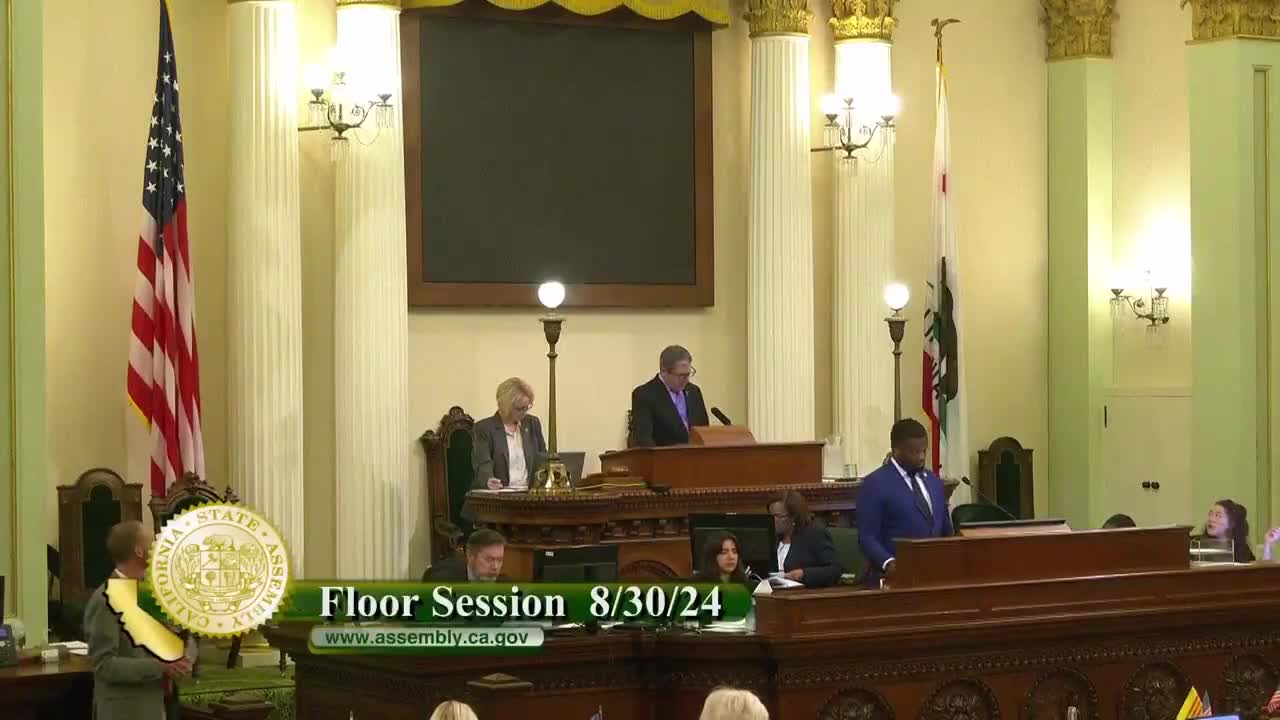 43SEC
Assembly Floor
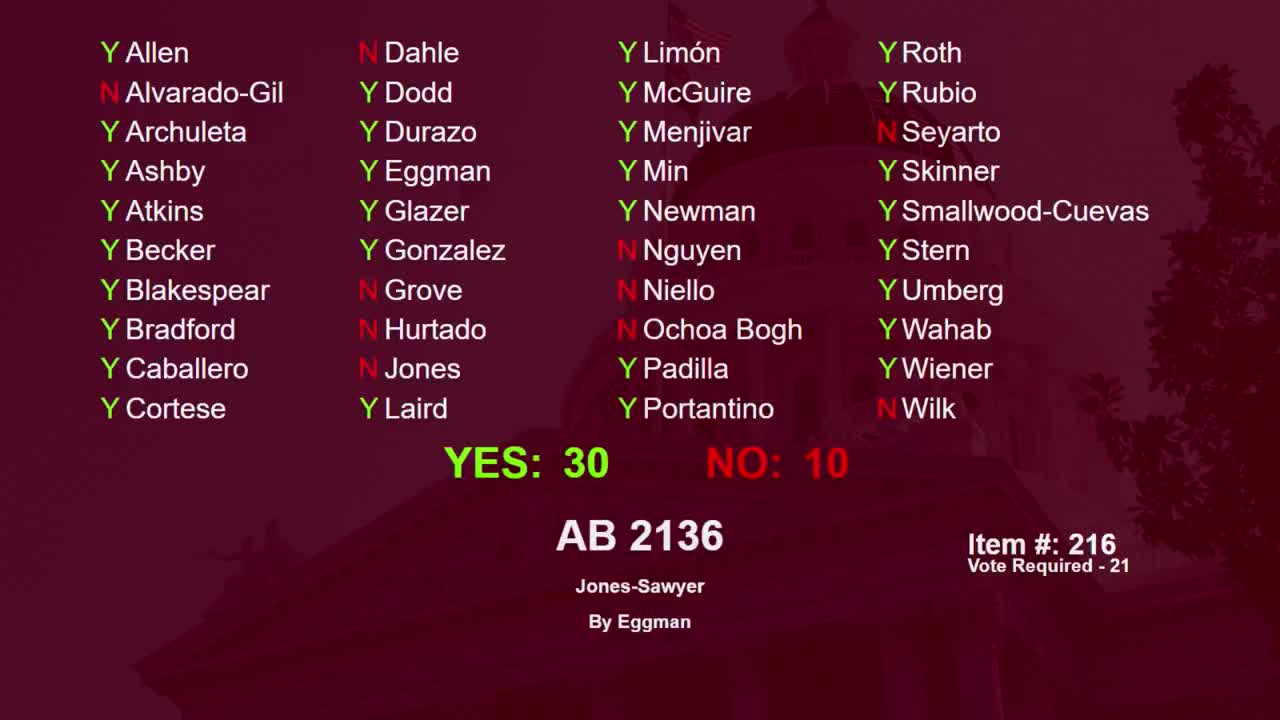 56SEC
Senate Floor
 1MIN
Senate Standing Committee on Appropriations
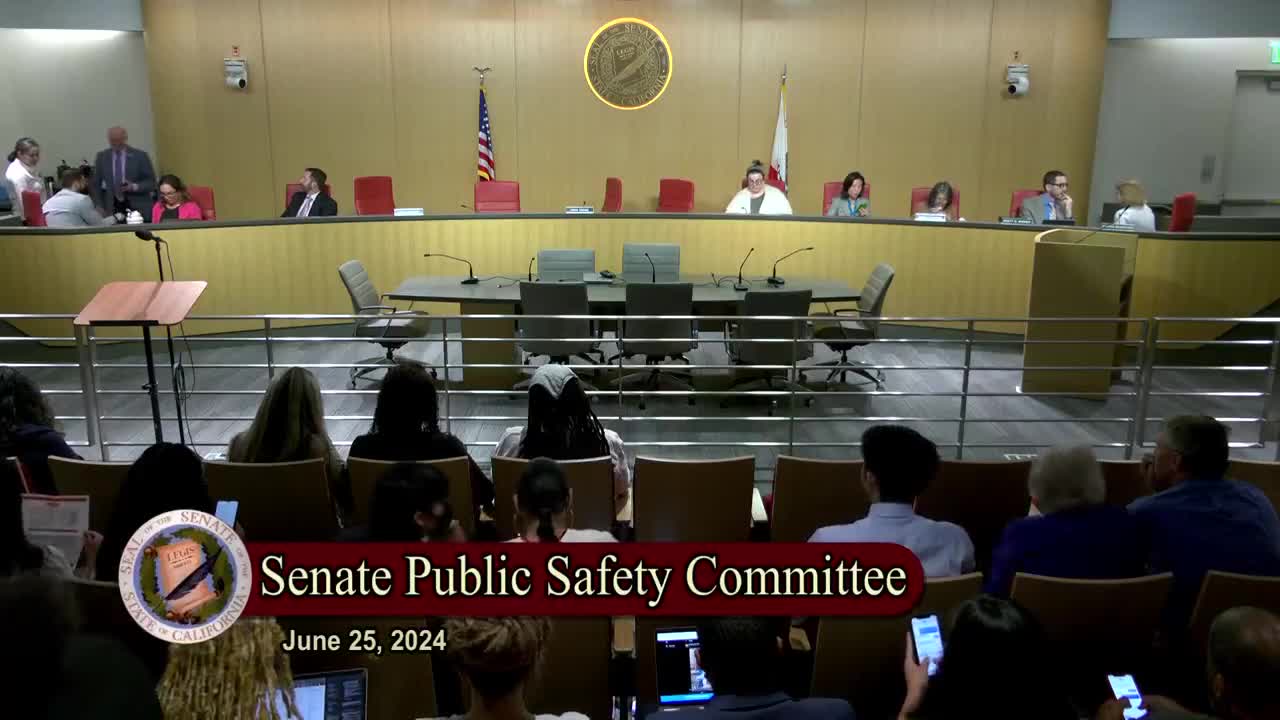 7MIN
Senate Standing Committee on Public Safety
 2MIN
Assembly Floor
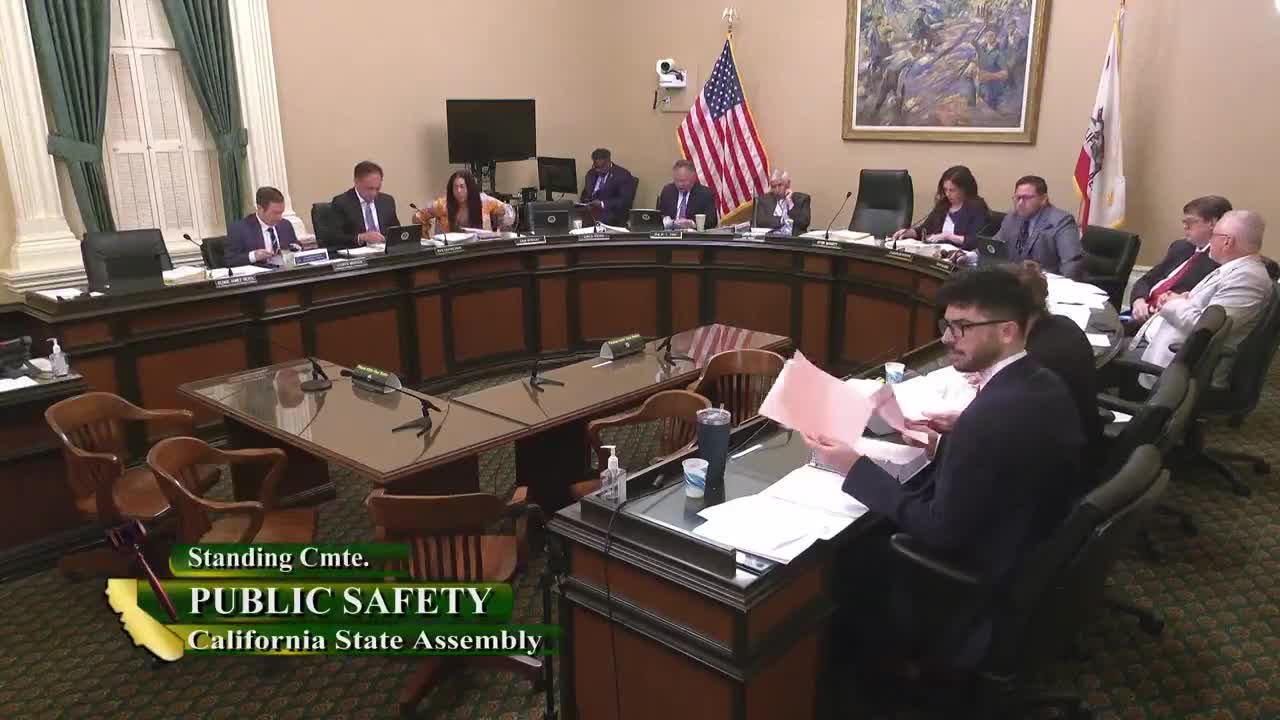 10MIN
Assembly Standing Committee on Public Safety


Bill Co-Author(s):