AB 2331: Voluntary carbon market disclosures.
- Session Year: 2023-2024
- House: Assembly
- Latest Version Date: 2024-08-23
Current Status:
Failed
(2024-08-29: Assembly Rule 77 suspended.)
Introduced
In Committee
First Chamber
In Committee
Second Chamber
Enacted
Existing law imposes various limitations on emissions of air contaminants for the control of air pollution from vehicular and nonvehicular sources. Existing law requires a business entity that is marketing or selling voluntary carbon offsets, as defined, offsets within the state to disclose on the business entitys internet website specified information about the applicable carbon offset project. project, including, among other things, the durability period for any project that the seller knows or should know that the durability of the projects greenhouse gas reductions or greenhouse gas removal enhancements is less than the atmospheric lifetime of carbon dioxide emissions. Existing law defines durability for purposes of these provisions. Existing law defines a voluntary carbon offset to mean any product sold or marketed in the state that makes specified claims. Existing law also requires an entity that makes claims regarding the achievement of net zero emissions, claims regarding carbon neutrality, or other claims implying the entity, related or affiliated entity, or a product does not add net carbon dioxide or greenhouse gases to the climate or has made significant reductions to its carbon dioxide or greenhouse gas emissions, as described, to disclose on the entitys internet website specified information pertaining to all greenhouse gas emissions associated with its claims. Existing law requires these disclosures to be updated no less than annually. Existing law makes a person who violates these provisions subject to a civil penalty of not more than $2,500 per day, as specified, for each violation, not to exceed a total amount of $500,000, as provided.
This bill would exclude from the definition of voluntary carbon offset a renewable energy certificate (REC) issued through an accounting system of a governmental regulatory body or virtual power purchase agreement of which the REC corresponds to one unit of electricity that was generated and delivered by an eligible renewable energy resource, a low-carbon fuel standard credit, or a registry offset credit that is under review for conversion to a compliance-based credit. revise the definition of a voluntary carbon offset to mean a tradable instrument, rather than a product. The bill would delete the definition of durability and the requirement to disclose the durability period, as described above, and would instead require the disclosure of the period over which carbon storage is required by law or contract to be monitored for reversals and to have any reversals reported, verified, and compensated, as provided. The bill would define reversals for purposes of the bill. The bill would expand, revise, and clarify the information that a business entity is required to disclose. The bill would authorize a business entity that markets and resells a voluntary carbon offset within the state that it has not generated to satisfy the disclosure requirements by publishing on the business entitys internet website sufficient information to direct the buyer to the disclosure made by the business entity who generated the voluntary carbon offset, by furnishing that information directly to the buyer by the time of settlement when marketing or reselling voluntary carbon offsets directly to eligible contract participants, as defined, or by publishing on the internet website sufficient information to direct the buyer to each applicable project-specific disclosure published on a registry, as provided. The bill would also require disclosures made pursuant to these laws to be initially posted on January July 1, 2025, and updated annually.
Existing law imposes various limitations on emissions of air contaminants for the control of air pollution from vehicular and nonvehicular sources. Existing law requires a business entity that is marketing or selling voluntary carbon offsets, as defined, within the state to disclose on the business entitys internet website specified information about the applicable carbon offset project. Existing law also requires an entity that makes claims regarding the achievement of net zero emissions, claims regarding carbon neutrality, or other claims implying the entity, related or affiliated entity, or a product does not add net carbon dioxide or greenhouse gases to the climate or has made significant reductions to its carbon dioxide or greenhouse gas emissions, as described, to disclose on the entitys internet website specified information pertaining to all greenhouse gas emissions associated with its claims. Existing law requires these disclosures to be updated no less than annually. Existing law makes a person who violates these provisions subject to a civil penalty of not more than $2,500 per day, as specified, for each violation, not to exceed a total amount of $500,000, as provided.
This bill would exclude from the definition of voluntary carbon offset a renewable energy certificate (REC) issued through an accounting system of a governmental regulatory body or virtual power purchase agreement of which the REC corresponds to one unit of electricity that was generated and delivered by an eligible renewable energy resource, or a low-carbon fuel standard credit, or a registry offset credit that is under review for conversion to a compliance-based credit. The bill would expand, revise, and clarify the information that a business entity is required to disclose. The bill would authorize a business entity that markets and resells a voluntary carbon offset within the state that it has not generated to satisfy the disclosure requirements by publishing on the business entitys internet website sufficient information to direct the buyer to the disclosure made by the business entity who generated the voluntary carbon offset. offset, by furnishing that information directly to the buyer by the time of settlement when marketing or reselling voluntary carbon offsets directly to eligible contract participants, as defined, or by publishing on the internet website sufficient information to direct the buyer to each applicable project-specific disclosure published on a registry, as provided. The bill would also require disclosures made pursuant to these laws to be initially posted on January 1, 2025, and updated annually.
Existing law imposes various limitations on emissions of air contaminants for the control of air pollution from vehicular and nonvehicular sources. Existing law requires a business entity that is marketing or selling voluntary carbon offsets, as defined, within the state to disclose on the business entitys internet website specified information about the applicable carbon offset project. Existing law also requires an entity that makes claims regarding the achievement of net zero emissions, claims regarding carbon neutrality, or other claims implying the entity, related or affiliated entity, or a product does not add net carbon dioxide or greenhouse gases to the climate or has made significant reductions to its carbon dioxide or greenhouse gas emissions, as described, to disclose on the entitys internet website specified information pertaining to all greenhouse gas emissions associated with its claims. Existing law requires these disclosures to be updated no less than annually. Existing law makes a person who violates these provisions subject to a civil penalty of not more than $2,500 per day, as specified, for each violation, not to exceed a total amount of $500,000, as provided.
This bill would exclude from the definition of voluntary carbon offset a renewable energy certificate (REC) issued through an accounting system of a governmental regulatory body or virtual power purchase agreement of which the REC corresponds to one unit of electricity that was generated and delivered by an eligible renewable energy resource, or a low-carbon fuel standard credit. The bill would expand, revise, and clarify the information that a business entity is required to disclose. The bill would authorize a business entity that markets or and resells a voluntary carbon offset within the state that it has not generated to satisfy the disclosure requirements by publishing on the business entitys internet website sufficient information to direct the buyer to the disclosure made by the business entity who generated the voluntary carbon offset. The bill would also require disclosures made pursuant to these laws to be initially posted on January 1, 2025, and updated annually.
Existing law imposes various limitations on emissions of air contaminants for the control of air pollution from vehicular and nonvehicular sources. Existing law requires a business entity that is marketing or selling voluntary carbon offsets, as defined, within the state to disclose on the business entitys internet website specified information about the applicable carbon offset project. Existing law also requires an entity that makes claims regarding the achievement of net zero emissions, claims regarding carbon neutrality, or other claims implying the entity, related or affiliated entity, or a product does not add net carbon dioxide or greenhouse gases to the climate or has made significant reductions to its carbon dioxide or greenhouse gas emissions, as described, to disclose on the entitys internet website specified information pertaining to all greenhouse gas emissions associated with its claims. Existing law requires these disclosures to be updated no less than annually. Existing law makes a person who violates these provisions subject to a civil penalty of not more than $2,500 per day, as specified, for each violation, not to exceed a total amount of $500,000, as provided.
This bill would exclude from the definition of voluntary carbon offset a renewable energy certificate (REC) issued through an accounting system of a governmental regulatory body, as specified, or a low-carbon fuel standard credit. body or virtual power purchase agreement of which the REC corresponds to one unit of electricity that was generated and delivered by an eligible renewable energy resource, or a low-carbon fuel standard credit. The bill would expand, revise, and clarify the information that a business entity is required to disclose. The bill would authorize a business entity that markets or resells a voluntary carbon offset within the state that it has not generated to satisfy the disclosure requirements by publishing on the business entitys internet website sufficient information to direct the buyer to the disclosure made by the business entity who generated the voluntary carbon offset. The bill would also require disclosures made pursuant to these laws to be initially posted on January 1, 2025. 2025, and updated annually.
Existing law imposes various limitations on emissions of air contaminants for the control of air pollution from vehicular and nonvehicular sources. Existing law requires a business entity that is marketing or selling voluntary carbon offsets, as defined, within the state to disclose on the business entitys internet website specified information about the applicable carbon offset project. Existing law also requires an entity that makes claims regarding the achievement of net zero emissions, claims regarding carbon neutrality, or other claims implying the entity, related or affiliated entity, or a product does not add net carbon dioxide or greenhouse gases to the climate or has made significant reductions to its carbon dioxide or greenhouse gas emissions, as described, to disclose on the entitys internet website specified information pertaining to all greenhouse gas emissions associated with its claims. Existing law requires these disclosures to be updated no less than annually. Existing law makes a person who violates these provisions subject to a civil penalty of not more than $2,500 per day, as specified, for each violation, not to exceed a total amount of $500,000, as provided.
This bill would express the intent of the Legislature to enact future legislation that would clarify the law relating to voluntary carbon market disclosures.This bill would exclude from the definition of voluntary carbon offset a renewable energy certificate issued through an accounting system of a governmental regulatory body, as specified, or a low-carbon fuel standard credit. The bill would also require disclosures made pursuant to these laws to be initially posted on January 1, 2025.
Existing law imposes various limitations on emissions of air contaminants for the control of air pollution from vehicular and nonvehicular sources. Existing law requires a business entity that is marketing or selling voluntary carbon offsets, as defined, within the state to disclose on the business entitys internet website specified information about the applicable carbon offset project.
This bill would express the intent of the Legislature to enact future legislation that would clarify the law relating to voluntary carbon market disclosures.
(a)A business entity that is marketing or selling voluntary carbon offsets within the state, on or after January July 1, 2025, shall disclose on the business entitys internet website all of the following information:
(1)Details regarding the applicable carbon offset project, including all of the following information:
(A)The project identification number, if applicable.
(B)The project name as listed in the registry or program, if applicable.
(C)The specific protocol used to estimate emissions reductions or removal benefits.
(D)The location of the offset project site.
(E)The projects crediting period.
(F)The project start date.
(G)The year of issuance, vintage period, and vintage quantity associated with the credits and if there have been any modifications or reversals.
(H)The type of project, including whether the offsets from the project are derived from a carbon removal, an avoided emission, or both. If the offsets are derived from both a carbon removal and an avoided emission, the information shall include the percentage breakdown of offsets from each if provided in the project documentation for offsets issued prior to January July 1, 2025, and for all offsets issued after January July 1, 2025.
(I)Whether the project meets any standards established by law or by a nonprofit entity.
(J)The durability period over which carbon storage will be monitored, is required by law or contract to be monitored for reversals and to have any reversals reported, verified, and compensated if reversed, for any project that is credited for carbon storage, including emission reductions and removal enhancements in natural systems and through other carbon removal activities. The mechanism or mechanisms by which carbon storage reversals will be compensated shall be explicitly specified, including any different mechanisms that might apply to intentional and unintentional reversals.
(K)Whether there is independent expert or third-party validation or verification of the project attributes. Verification by third parties required by a registry shall constitute independent third-party verification.
(L)Emissions reduced or carbon removed on an annual basis.
(2)Details regarding accountability measures regarding what actions the entity, either directly or by contractual obligation, shall take if credited carbon storage is reversed. experiences a reversal.
(3)The pertinent data and calculation methods needed to independently reproduce and verify the number of emissions reduction or removal credits issued using the protocol.
(b)A business entity that markets and resells a voluntary carbon offset within the state that it has not generated may satisfy the requirements of this section by publishing on the business entitys internet website sufficient information to direct the buyer to the disclosure made by the business entity who generated the voluntary carbon offset pursuant to paragraphs (1) to (3), inclusive, of subdivision (a), including the project identification number, if applicable. A business entity may comply with this section when marketing or reselling voluntary carbon offsets directly to eligible contract participants, as defined in paragraph (18) of Section 1a of Title 7 of the United States Code, and the rules promulgated thereunder, by furnishing the information directly to the buyer at the time of settlement.
(c)A business entity may satisfy the requirements of this section by publishing on the business entitys internet website sufficient information to direct the buyer to each applicable project-specific disclosure published on a registry pursuant to paragraphs (1) to (3), inclusive, of subdivision (a), including the project identification number, if applicable. General information to direct the buyer to a business entitys entitywide or programwide disclosures is not sufficient.
(d)For the purposes of this part, the following definitions apply:
(1)Durability period means the duration of time over which an offset project operator commits to maintain its greenhouse gas reductions and greenhouse gas removal enhancements, as applicable, exclusive of any aspirational outcomes that exceed or extend beyond the mandatory outcomes required of the offset project pursuant to its offset protocol.(2)(1)Protocol means a documented set of procedures and requirements to quantify ongoing greenhouse gas reductions or greenhouse gas removal enhancements achieved by an offset project and to calculate the project baseline, including specification of relevant data collection and monitoring procedures, emission factors, and methodologies used to conservatively account for uncertainty and activity-shifting and market-shifting leakage risks associated with an offset project.
(2)Reversal means an outcome in which carbon storage for which a carbon offset has been issued is subsequently released or emitted back to the atmosphere. Many carbon offsetting programs distinguish between intentional and unintentional reversals according to whether the reversal was within the control of one or more parties involved in the carbon offset project.
(3) (A)Voluntary carbon offset means any product tradable instrument sold or marketed in the state other than those exempted pursuant to subparagraph (B) that claims to be a greenhouse gas emissions offset, a voluntary emissions reduction, a retail offset, or any like term, that connotes that the product represents or corresponds to a reduction in the amount of greenhouse gases present in the atmosphere or that prevents the emission of greenhouse gases into the atmosphere that would have otherwise been emitted.
(B)Voluntary carbon offset does not include products tradable instruments that represent or correspond to legal or regulatory mandates for either of the following:
(i)Reduction of the amount of greenhouse gases present in the atmosphere.
(ii)Prevention of the emissions of greenhouse gases into the atmosphere.
(C)Voluntary carbon offset does not include a renewable energy certificate (REC), issued through an accounting system of a governmental regulatory body or virtual power purchase agreement, of which the REC corresponds to one unit of electricity that was generated and delivered by an eligible renewable energy resource, a low-carbon fuel standard credit, or a registry offset credit that is under review for conversion to a compliance-based credit.SEC. 2.Section 44475.1 of the Health and Safety Code is amended to read:44475.1.(a)An entity that purchases or uses voluntary carbon offsets that makes claims regarding the achievement of net zero emissions, claims that the entity, related entity, or a product is carbon neutral, or makes other claims implying the entity, related entity, or a product does not add net carbon dioxide or greenhouse gases to the climate or has made significant reductions to its carbon dioxide or greenhouse gas emissions, on or after January July 1, 2025, shall disclose on the entitys internet website all of the following information pertaining to each project or program:
(1)The name of the business entity selling the offset and the offset registry or program.
(2)The project identification number, if applicable.
(3)The project name as listed in the registry or program, if applicable.
(4)The offset project type, including whether the offsets purchased were derived from a carbon removal, an avoided emission, or a combination of both a carbon removal and an avoided emission.
(5)The location of the offset project site.
(6)The specific protocol used to estimate emissions reductions or removal benefits.
(7)Whether the claimed reductions were verified by an independent third party. Verification by third parties required by a registry shall constitute independent third-party verification.
(8)The quantity of voluntary offset credits used.
(b)A business entity may satisfy the requirements of this section by publishing on the business entitys internet website sufficient information to direct the buyer to each applicable project-specific disclosure published on a registry pursuant to paragraphs (1) to (8), inclusive, of subdivision (a), including the project identification number, if applicable. General information to direct the buyer to a business entitys entitywide or programwide disclosures is not sufficient.
(c)This section does not apply to entities that do not operate within the state or do not purchase or use voluntary carbon offsets sold within the state.
SEC. 3.Section 44475.2 of the Health and Safety Code is amended to read:44475.2.(a)An entity that makes claims regarding the achievement of net zero emissions, claims that the entity, a related or affiliated entity, or a product is carbon neutral, or makes other claims implying the entity, related or affiliated entity, or a product does not add net carbon dioxide or greenhouse gases, as defined in Section 38505, to the climate or has made significant reductions to its carbon dioxide or greenhouse gas emissions, as described in Section 38505, on or after January July 1, 2025, shall disclose on the entitys internet website the following information pertaining to all greenhouse gas emissions associated with its claims:
(1)Information documenting how a carbon neutral, net zero emission, or other similar claim was determined to be accurate or actually accomplished, and how interim progress toward that goal is being measured. accomplished. This information may include, but not be limited to, disclosure of independent third-party verification of all of the entitys greenhouse gas emissions, identification disclosure of the entitys science-based targets for its emissions reduction pathway, and disclosure of the relevant sector methodology and third-party verification used for the entitys science-based targets and emissions reduction pathway.
(2)Whether there is independent third-party verification of the data or claims.
(b)This section does not apply to entities that do not operate within the state, or entities that do not make claims within the state.
SEC. 4.Section 44475.3 of the Health and Safety Code is amended to read:44475.3.(a)A person who violates this part is subject to a civil penalty of not more than two thousand five hundred dollars ($2,500) per day, for each day that information is not available or is inaccurate on the persons internet website, for each violation, not to exceed a total amount of five hundred thousand dollars ($500,000), which shall be assessed and recovered in a civil action brought in the name of the people of the State of California by the Attorney General or by a district attorney, county counsel, or city attorney in a court of competent jurisdiction.
(b)Initial disclosures pursuant to this part shall be posted by January July 1, 2025, and updated annually.
(a)A business entity that is marketing or selling voluntary carbon offsets within the state, on or after January 1, 2025, shall disclose on the business entitys internet website all of the following information:
(a)(1)Details regarding the applicable carbon offset project, including all of the following information:
(A)The project identification number, if applicable.
(B)The project name as listed in the registry or program, if applicable.
(1)(C)The specific protocol used to estimate emissions reductions or removal benefits.
(2)(D)The location of the offset project site.
(3)(E)The projects crediting period.
(4)(F)The project start date.
(5)(G)The year of issuance, vintage period, and vintage quantity associated with the credits and if there have been any modifications or reversals.
(6)(H)The type of project, including whether the offsets from the project are derived from a carbon removal, an avoided emission, or both. If the offsets are derived from both a carbon removal and an avoided emission, the information shall include the percentage breakdown of offsets from each if provided in the project documentation for offsets issued prior to January 1, 2025, and for all offsets issued after January 1, 2025.
(7)(I)Whether the project meets any standards established by law or by a nonprofit entity.
(8)(J)The durability period over which carbon storage will be monitored, reported, verified, and compensated if reversed, for any project that is credited for carbon storage, including emission reductions and removal enhancements in natural systems and through other carbon removal activities.
(9)(K)Whether there is independent expert or third-party validation or verification of the project attributes. Verification by third parties required by a registry shall constitute independent third-party verification.
(10)(L)Emissions reduced or carbon removed on an annual basis.
(b)(2)Details regarding accountability measures regarding what actions the entity, either directly or by contractual obligation, shall take if credited carbon storage is reversed.
(c)(3)The pertinent data and calculation methods needed to independently reproduce and verify the number of emissions reduction or removal credits issued using the protocol.
(d)(b)A business entity that markets and resells a voluntary carbon offset within the state that it has not generated may satisfy the requirements of this section by publishing on the business entitys internet website sufficient information to direct the buyer to the disclosure made by the business entity who generated the voluntary carbon offset pursuant to subdivisions (a) to (c), inclusive. paragraphs (1) to (3), inclusive, of subdivision (a), including the project identification number, if applicable. A business entity may comply with this section when marketing or reselling voluntary carbon offsets directly to eligible contract participants, as defined in paragraph (18) of Section 1a of Title 7 of the United States Code, and the rules promulgated thereunder, by furnishing the information directly to the buyer at the time of settlement.
(c)A business entity may satisfy the requirements of this section by publishing on the business entitys internet website sufficient information to direct the buyer to each applicable project-specific disclosure published on a registry pursuant to paragraphs (1) to (3), inclusive, of subdivision (a), including the project identification number, if applicable. General information to direct the buyer to a business entitys entitywide or programwide disclosures is not sufficient.
(e)(d)For the purposes of this part, the following definitions apply:
(1)Durability period means the duration of time over which an offset project operator commits to maintain its greenhouse gas reductions and greenhouse gas removal enhancements, as applicable, exclusive of any aspirational outcomes that exceed or extend beyond the mandatory outcomes required of the offset project pursuant to its offset protocol.
(2)Protocol means a documented set of procedures and requirements to quantify ongoing greenhouse gas reductions or greenhouse gas removal enhancements achieved by an offset project and to calculate the project baseline, including specification of relevant data collection and monitoring procedures, emission factors, and methodologies used to conservatively account for uncertainty and activity-shifting and market-shifting leakage risks associated with an offset project.
(3)(A)Voluntary carbon offset means any product sold or marketed in the state that claims to be a greenhouse gas emissions offset, a voluntary emissions reduction, a retail offset, or any like term, that connotes that the product represents or corresponds to a reduction in the amount of greenhouse gases present in the atmosphere or that prevents the emission of greenhouse gases into the atmosphere that would have otherwise been emitted.
(B)Voluntary carbon offset does not include products that represent or correspond to legal or regulatory mandates for either of the following:
(i)Reduction of the amount of greenhouse gases present in the atmosphere.
(ii)Prevention of the emissions of greenhouse gases into the atmosphere.
(C)Voluntary carbon offset does not include a renewable energy certificate (REC), issued through an accounting system of a governmental regulatory body or virtual power purchase agreement, of which the REC corresponds to one unit of electricity that was generated and delivered by an eligible renewable energy resource, or a low-carbon fuel standard credit. credit, or a registry offset credit that is under review for conversion to a compliance-based credit.
SEC. 2.Section 44475.1 of the Health and Safety Code is amended to read:44475.1.(a)An entity that purchases or uses voluntary carbon offsets that makes claims regarding the achievement of net zero emissions, claims that the entity, related entity, or a product is carbon neutral, or makes other claims implying the entity, related entity, or a product does not add net carbon dioxide or greenhouse gases to the climate or has made significant reductions to its carbon dioxide or greenhouse gas emissions, on or after January 1, 2025, shall disclose on the entitys internet website all of the following information pertaining to each project or program:
(a)(1)The name of the business entity selling the offset and the offset registry or program.
(b)(2)The project identification number, if applicable.
(c)(3)The project name as listed in the registry or program, if applicable.
(d)(4)The offset project type, including whether the offsets purchased were derived from a carbon removal, an avoided emission, or a combination of both a carbon removal and an avoided emission.
(e)(5)The location of the offset project site.
(f)(6)The specific protocol used to estimate emissions reductions or removal benefits.
(g)(7)Whether the claimed reductions were verified by an independent third party. Verification by third parties required by a registry shall constitute independent third-party verification.
(8)The quantity of voluntary offset credits used.
(b)A business entity may satisfy the requirements of this section by publishing on the business entitys internet website sufficient information to direct the buyer to each applicable project-specific disclosure published on a registry pursuant to paragraphs (1) to (8), inclusive, of subdivision (a), including the project identification number, if applicable. General information to direct the buyer to a business entitys entitywide or programwide disclosures is not sufficient.
(h)(c)This section does not apply to entities that do not operate within the state or do not purchase or use voluntary carbon offsets sold within the state.
SEC. 3.Section 44475.2 of the Health and Safety Code is amended to read:44475.2.(a)An entity that makes claims regarding the achievement of net zero emissions, claims that the entity, a related or affiliated entity, or a product is carbon neutral, or makes other claims implying the entity, related or affiliated entity, or a product does not add net carbon dioxide or greenhouse gases, as defined in Section 38505, to the climate or has made significant reductions to its carbon dioxide or greenhouse gas emissions, as described in Section 38505, on or after January 1, 2025, shall disclose on the entitys internet website all of the following information pertaining to all greenhouse gas emissions associated with its claims:
(a)(1)Information documenting how a carbon neutral, net zero emission, or other similar claim was determined to be accurate or actually accomplished, and how interim progress toward that goal is being measured. This information may include, but not be limited to, disclosure of independent third-party verification of all of the entitys greenhouse gas emissions, identification of the entitys science-based targets for its emissions reduction pathway, and disclosure of the relevant sector methodology and third-party verification used for the entitys science-based targets and emissions reduction pathway.
(b)(2)Whether there is independent third-party verification of the data or claims.
(c)(b)This section does not apply to entities that do not operate within the state, or entities that do not make claims within the state.
SEC. 4.Section 44475.3 of the Health and Safety Code is amended to read:44475.3.(a)A person who violates this part is subject to a civil penalty of not more than two thousand five hundred dollars ($2,500) per day, for each day that information is not available or is inaccurate on the persons internet website, for each violation, not to exceed a total amount of five hundred thousand dollars ($500,000), which shall be assessed and recovered in a civil action brought in the name of the people of the State of California by the Attorney General or by a district attorney, county counsel, or city attorney in a court of competent jurisdiction.
(b)Initial disclosures pursuant to this part shall be posted by January 1, 2025, and updated annually.
A business entity that is marketing or selling voluntary carbon offsets within the state, on or after January 1, 2025, shall disclose on the business entitys internet website all of the following information:
(a)Details regarding the applicable carbon offset project, including all of the following information:
(1)The specific protocol used to estimate emissions reductions or removal benefits.
(2)The location of the offset project site.
(3)The projects crediting period.
(4)The project start date.
(5)The year of issuance, vintage period, and vintage quantity associated with the credits and if there have been any modifications or reversals.
(6)The type of project, including whether the offsets from the project are derived from a carbon removal, an avoided emission, or both. If the offsets are derived from both a carbon removal and an avoided emission, the information shall include the percentage breakdown of offsets from each if provided in the project documentation for offsets issued prior to January 1, 2025, and for all offsets issued after January 1, 2025.
(7)Whether the project meets any standards established by law or by a nonprofit entity.
(8)The durability period over which carbon storage will be monitored, reported, verified, and compensated if reversed, for any project that is credited for carbon storage, including emission reductions and removal enhancements in natural systems and through other carbon removal activities.
(9)Whether there is independent expert or third-party validation or verification of the project attributes. Verification by third parties required by a registry shall constitute independent third-party verification.
(10)Emissions reduced or carbon removed on an annual basis.
(b)Details regarding accountability measures regarding what actions the entity, either directly or by contractual obligation, shall take if credited carbon storage is reversed.
(c)The pertinent data and calculation methods needed to independently reproduce and verify the number of emissions reduction or removal credits issued using the protocol.
(d)A business entity that markets or and resells a voluntary carbon offset within the state that it has not generated may satisfy the requirements of this section by publishing on the business entitys internet website sufficient information to direct the buyer to the disclosure made by the business entity who generated the voluntary carbon offset pursuant to subdivisions (a) to (c), inclusive.
(e)For the purposes of this part, the following definitions apply:
(1)Durability period means the duration of time over which an offset project operator commits to maintain its greenhouse gas reductions and greenhouse gas removal enhancements, as applicable, exclusive of any aspirational outcomes that exceed or extend beyond the mandatory outcomes required of the offset project pursuant to its offset protocol.
(2)Protocol means a documented set of procedures and requirements to quantify ongoing greenhouse gas reductions or greenhouse gas removal enhancements achieved by an offset project and to calculate the project baseline, including specification of relevant data collection and monitoring procedures, emission factors, and methodologies used to conservatively account for uncertainty and activity-shifting and market-shifting leakage risks associated with an offset project.
(3)(A)Voluntary carbon offset means any product sold or marketed in the state that claims to be a greenhouse gas emissions offset, a voluntary emissions reduction, a retail offset, or any like term, that connotes that the product represents or corresponds to a reduction in the amount of greenhouse gases present in the atmosphere or that prevents the emission of greenhouse gases into the atmosphere that would have otherwise been emitted.
(B)Voluntary carbon offset does not include products that represent or correspond to legal or regulatory mandates for either of the following:
(i)Reduction of the amount of greenhouse gases present in the atmosphere.
(ii)Prevention of the emissions of greenhouse gases into the atmosphere.
(C)Voluntary carbon offset does not include a renewable energy certificate (REC), issued through an accounting system of a governmental regulatory body or virtual power purchase agreement, of which the REC corresponds to one unit of electricity that was generated and delivered by an eligible renewable energy resource, or a low-carbon fuel standard credit.
SEC. 2.Section 44475.1 of the Health and Safety Code is amended to read:44475.1.An entity that purchases or uses voluntary carbon offsets that makes claims regarding the achievement of net zero emissions, claims that the entity, related entity, or a product is carbon neutral, or makes other claims implying the entity, related entity, or a product does not add net carbon dioxide or greenhouse gases to the climate or has made significant reductions to its carbon dioxide or greenhouse gas emissions, on or after January 1, 2025, shall disclose on the entitys internet website all of the following information pertaining to each project or program:
(a)The name of the business entity selling the offset and the offset registry or program.
(b)The project identification number, if applicable.
(c)The project name as listed in the registry or program, if applicable.
(d)The offset project type, including whether the offsets purchased were derived from a carbon removal, an avoided emission, or a combination of both a carbon removal and an avoided emission.
(e)The location of the offset project site.
(f)The specific protocol used to estimate emissions reductions or removal benefits.
(g)Whether the claimed reductions were verified by an independent third party. Verification by third parties required by a registry shall constitute independent third-party verification.
(h)This section does not apply to entities that do not operate within the state or do not purchase or use voluntary carbon offsets sold within the state.
SEC. 3.Section 44475.2 of the Health and Safety Code is amended to read:44475.2.An entity that makes claims regarding the achievement of net zero emissions, claims that the entity, a related or affiliated entity, or a product is carbon neutral, or makes other claims implying the entity, related or affiliated entity, or a product does not add net carbon dioxide or greenhouse gases, as defined in Section 38505, to the climate or has made significant reductions to its carbon dioxide or greenhouse gas emissions, as described in Section 38505, on or after January 1, 2025, shall disclose on the entitys internet website all of the following information pertaining to all greenhouse gas emissions associated with its claims:
(a)Information documenting how a carbon neutral, net zero emission, or other similar claim was determined to be accurate or actually accomplished, and how interim progress toward that goal is being measured. This information may include, but not be limited to, disclosure of independent third-party verification of all of the entitys greenhouse gas emissions, identification of the entitys science-based targets for its emissions reduction pathway, and disclosure of the relevant sector methodology and third-party verification used for the entitys science-based targets and emissions reduction pathway.
(b)Whether there is independent third-party verification of the claims.
(c)This section does not apply to entities that do not operate within the state, or entities that do not make claims within the state.
SEC. 4.Section 44475.3 of the Health and Safety Code is amended to read:44475.3.(a)A person who violates this part is subject to a civil penalty of not more than two thousand five hundred dollars ($2,500) per day, for each day that information is not available or is inaccurate on the persons internet website, for each violation, not to exceed a total amount of five hundred thousand dollars ($500,000), which shall be assessed and recovered in a civil action brought in the name of the people of the State of California by the Attorney General or by a district attorney, county counsel, or city attorney in a court of competent jurisdiction.
(b)Initial disclosures pursuant to this part shall be posted by January 1, 2025, and updated annually.
A business entity that is marketing or selling voluntary carbon offsets within the state state, on or after January 1, 2025, shall disclose on the business entitys internet website all of the following information:
(a)Details regarding the applicable carbon offset project, including all of the following information:
(1)The specific protocol used to estimate emissions reductions or removal benefits.
(2)The location of the offset project site.
(3)The project timeline.(4)The date when the project started or will start.(5)The dates and quantities when a specified quantity of emissions reductions or removals started or will start, or was modified or reversed.(3)The projects crediting period.
(4)The project start date.
(5)The year of issuance, vintage period, and vintage quantity associated with the credits and if there have been any modifications or reversals.
(6)The type of project, including whether the offsets from the project are derived from a carbon removal, an avoided emission, or, in the case of a project with both carbon removals and avoided emissions, the breakdown of offsets from each. or both. If the offsets are derived from both a carbon removal and an avoided emission, the information shall include the percentage breakdown of offsets from each if provided in the project documentation for offsets issued prior to January 1, 2025, and for all offsets issued after January 1, 2025.
(7)Whether the project meets any standards established by law or by a nonprofit entity.
(8)The durability period for any project that the seller knows or should know that the durability of the projects greenhouse gas reductions or greenhouse gas removal enhancements is less than the atmospheric lifetime of carbon dioxide emissions.(8)The durability period over which carbon storage will be monitored, reported, verified, and compensated if reversed, for any project that is credited for carbon storage, including emission reductions and removal enhancements in natural systems and through other carbon removal activities.
(9)Whether there is independent expert or third-party validation or verification of the project attributes. Verification by third parties required by a registry shall constitute independent third-party verification.
(10)Emissions reduced or carbon removed on an annual basis.
(b)Details regarding accountability measures if a project is not completed or does not meet the projected emissions reductions or removal benefits, including, but not limited to, details regarding what actions the entity, either directly or by contractual obligation, shall take under both of the following circumstances:(1)If carbon storage projects are reversed.(2)If future emissions reductions do not materialize.(b)Details regarding accountability measures regarding what actions the entity, either directly or by contractual obligation, shall take if credited carbon storage is reversed.
(c)The pertinent data and calculation methods needed to independently reproduce and verify the number of emissions reduction or removal credits issued using the protocol.
(d)A business entity that markets or resells a voluntary carbon offset within the state that it has not generated may satisfy the requirements of this section by publishing on the business entitys internet website sufficient information to direct the buyer to the disclosure made by the business entity who generated the voluntary carbon offset pursuant to subdivisions (a) to (c), inclusive.
(d)(e)For the purposes of this part, the following definitions apply:
(1)Durability Durability period means the duration of time over which an offset project operator commits to maintain its greenhouse gas reductions and greenhouse gas removal enhancements, as applicable, exclusive of any aspirational outcomes that exceed or extend beyond the mandatory outcomes required of the offset project pursuant to its offset protocol.
(2)Protocol means a documented set of procedures and requirements to quantify ongoing greenhouse gas reductions or greenhouse gas removal enhancements achieved by an offset project and to calculate the project baseline, including specification of relevant data collection and monitoring procedures, emission factors, and methodologies used to conservatively account for uncertainty and activity-shifting and market-shifting leakage risks associated with an offset project.
(3)(A)Voluntary carbon offset means any product sold or marketed in the state that claims to be a greenhouse gas emissions offset, a voluntary emissions reduction, a retail offset, or any like term, that connotes that the product represents or corresponds to a reduction in the amount of greenhouse gases present in the atmosphere or that prevents the emission of greenhouse gases into the atmosphere that would have otherwise been emitted.
(B)(i)Voluntary carbon offset does not include products that represent or correspond to legal or regulatory mandates for either of the following:
(I)(i)Reduction of the amount of greenhouse gases present in the atmosphere.
(II)(ii)Prevention of the emissions of greenhouse gases into the atmosphere.
(ii)Voluntary carbon offset does not include a renewable energy certificate issued through an accounting system of a governmental regulatory body, such as the state board, or a virtual power purchase agreement, of which such a renewable energy certificate corresponds to one unit of electricity that was generated by an eligible renewable energy resource, or a low-carbon fuel standard credit.(C)Voluntary carbon offset does not include a renewable energy certificate (REC), issued through an accounting system of a governmental regulatory body or virtual power purchase agreement, of which the REC corresponds to one unit of electricity that was generated and delivered by an eligible renewable energy resource, or a low-carbon fuel standard credit.
SEC. 2.Section 44475.1 of the Health and Safety Code is amended to read:44475.1.An entity that purchases or uses voluntary carbon offsets that makes claims regarding the achievement of net zero emissions, claims that the entity, related entity, or a product is carbon neutral, or makes other claims implying the entity, related entity, or a product does not add net carbon dioxide or greenhouse gases to the climate or has made significant reductions to its carbon dioxide or greenhouse gas emissions emissions, on or after January 1, 2025, shall disclose on the entitys internet website all of the following information pertaining to each project or program:
(a)The name of the business entity selling the offset and the offset registry or program.
(b)The project identification number, if applicable.
(c)The project name as listed in the registry or program, if applicable.
(d)The offset project type, including whether the offsets purchased were derived from a carbon removal, an avoided emission, or a combination of both, and site location. both a carbon removal and an avoided emission.
(e)The location of the offset project site.
(e)(f)The specific protocol used to estimate emissions reductions or removal benefits.
(f)Whether there is independent third-party verification of company data and claims listed.(g)Whether the claimed reductions were verified by an independent third party. Verification by third parties required by a registry shall constitute independent third-party verification.
(g)(h)This section does not apply to entities that do not operate within the state or do not purchase or use voluntary carbon offsets sold within the state.
SEC. 3.Section 44475.2 of the Health and Safety Code is amended to read:44475.2.An entity that makes claims regarding the achievement of net zero emissions, claims that the entity, a related or affiliated entity, or a product is carbon neutral, or makes other claims implying the entity, related or affiliated entity, or a product does not add net carbon dioxide or greenhouse gases, as defined in Section 38505, to the climate or has made significant reductions to its carbon dioxide or greenhouse gas emissions, as described in Section 38505, on or after January 1, 2025, shall disclose on the entitys internet website all of the following information pertaining to all greenhouse gas emissions associated with its claims:
(a)All information documenting how, if at all, Information documenting how a carbon neutral, net zero emission, or other similar claim was determined to be accurate or actually accomplished, and how interim progress toward that goal is being measured. This information may include, but not be limited to, disclosure of independent third-party verification of all of the entitys greenhouse gas emissions, identification of the entitys science-based targets for its emissions reduction pathway, and disclosure of the relevant sector methodology and third-party verification used for the entitys science-based targets and emissions reduction pathway.
(b)Whether there is independent third-party verification of the company data and claims listed. claims.
(c)This section does not apply to entities that either do not operate within the state, or entities that do not make claims within the state.
SEC. 2.SEC. 4.Section 44475.3 of the Health and Safety Code is amended to read:44475.3.(a)A person who violates this part is subject to a civil penalty of not more than two thousand five hundred dollars ($2,500) per day, for each day that information is not available or is inaccurate on the persons internet website, for each violation, not to exceed a total amount of five hundred thousand dollars ($500,000), which shall be assessed and recovered in a civil action brought in the name of the people of the State of California by the Attorney General or by a district attorney, county counsel, or city attorney in a court of competent jurisdiction.
(b)Initial disclosures pursuant to this part shall be posted by January 1, 2025, and updated annually.
SEC. 3.Section 44475.4 is added to the Health and Safety Code, to read:44475.4.Disclosures made pursuant to this part shall be initially posted on January 1, 2025, and updated no less than annually.A business entity that is marketing or selling voluntary carbon offsets within the state shall disclose on the business entitys internet website all of the following information:
(a)Details regarding the applicable carbon offset project, including all of the following information:
(1)The specific protocol used to estimate emissions reductions or removal benefits.
(2)The location of the offset project site.
(3)The project timeline.
(4)The date when the project started or will start.
(5)The dates and quantities when a specified quantity of emissions reductions or removals started or will start, or was modified or reversed.
(6)The type of project, including whether the offsets from the project are derived from a carbon removal, an avoided emission, or, in the case of a project with both carbon removals and avoided emissions, the breakdown of offsets from each.
(7)Whether the project meets any standards established by law or by a nonprofit entity.
(8)The durability period for any project that the seller knows or should know that the durability of the projects greenhouse gas reductions or greenhouse gas removal enhancements is less than the atmospheric lifetime of carbon dioxide emissions.
(9)Whether there is independent expert or third-party validation or verification of the project attributes.
(10)Emissions reduced or carbon removed on an annual basis.
(b)Details regarding accountability measures if a project is not completed or does not meet the projected emissions reductions or removal benefits, including, but not limited to, details regarding what actions the entity, either directly or by contractual obligation, shall take under both of the following circumstances:
(1)If carbon storage projects are reversed.
(2)If future emissions reductions do not materialize.
(c)The pertinent data and calculation methods needed to independently reproduce and verify the number of emissions reduction or removal credits issued using the protocol.
(d)For the purposes of this part, the following definitions apply:
(1)Durability means the duration of time over which an offset project operator commits to maintain its greenhouse gas reductions and greenhouse gas removal enhancements, as applicable, exclusive of any aspirational outcomes that exceed or extend beyond the mandatory outcomes required of the offset project pursuant to its offset protocol.
(2)Protocol means a documented set of procedures and requirements to quantify ongoing greenhouse gas reductions or greenhouse gas removal enhancements achieved by an offset project and to calculate the project baseline, including specification of relevant data collection and monitoring procedures, emission factors, and methodologies used to conservatively account for uncertainty and activity-shifting and market-shifting leakage risks associated with an offset project.
(3)(A)Voluntary carbon offset means any product sold or marketed in the state that claims to be a greenhouse gas emissions offset, a voluntary emissions reduction, a retail offset, or any like term, that connotes that the product represents or corresponds to a reduction in the amount of greenhouse gases present in the atmosphere or that prevents the emission of greenhouse gases into the atmosphere that would have otherwise been emitted.
(B)(i)Voluntary carbon offset does not include products that represent or correspond to legal or regulatory mandates for either of the following:
(i)(I)Reduction of the amount of greenhouse gases present in the atmosphere.
(ii)(II)Prevention of the emissions of greenhouse gases into the atmosphere.
(ii)Voluntary carbon offset does not include a renewable energy certificate issued through an accounting system of a governmental regulatory body, such as the state board, or a virtual power purchase agreement, of which such a renewable energy certificate corresponds to one unit of electricity that was generated by an eligible renewable energy resource, or a low-carbon fuel standard credit.
SEC. 2.Section 44475.3 of the Health and Safety Code is amended to read:44475.3.(a)A person who violates this part is subject to a civil penalty of not more than two thousand five hundred dollars ($2,500) per day, for each day that information is not available or is inaccurate on the persons internet website, for each violation, not to exceed a total amount of five hundred thousand dollars ($500,000), which shall be assessed and recovered in a civil action brought in the name of the people of the State of California by the Attorney General or by a district attorney, county counsel, or city attorney in a court of competent jurisdiction.
(b)Disclosures pursuant to this part shall be updated no less than annually.SEC. 3.Section 44475.4 is added to the Health and Safety Code, to read:44475.4.Disclosures made pursuant to this part shall be initially posted on January 1, 2025, and updated no less than annually.
SECTION 1.It is the intent of the Legislature to enact future legislation that would clarify the provisions of Part 10 (commencing with Section 44475) of Division 26 of the Health and Safety Code, relating to voluntary carbon market disclosures.It is the intent of the Legislature to enact future legislation that would clarify the provisions of Part 10 (commencing with Section 44475) of Division 26 of the Health and Safety Code, relating to voluntary carbon market disclosures.
|
Date
|
Status
|
|---|---|
| Aug 29, 2024 | Assembly Rule 77 suspended. |
| Aug 28, 2024 | In Assembly. Concurrence in Senate amendments pending. May be considered on or after August 30 pursuant to Assembly Rule 77. |
| Aug 28, 2024 | Read third time. Passed. Ordered to the Assembly. (Ayes 39. Noes 0.). |
| Aug 26, 2024 | Read second time. Ordered to third reading. |
| Aug 23, 2024 | Read third time and amended. Ordered to second reading. |
| Aug 19, 2024 | Read second time. Ordered to third reading. |
| Aug 15, 2024 | Read second time and amended. Ordered returned to second reading. |
| Aug 15, 2024 | From committee: Amend, and do pass as amended. (Ayes 7. Noes 0.) (August 15). |
| Aug 5, 2024 | In committee: Referred to APPR suspense file. |
| Jul 3, 2024 | From committee: Do pass and re-refer to Com. on APPR. (Ayes 11. Noes 0.) (July 2). Re-referred to Com. on APPR. |
| Jun 20, 2024 | Read second time and amended. Re-referred to Com. on JUD. |
| Jun 19, 2024 | From committee: Amend, and do pass as amended and re-refer to Com. on JUD. with recommendation: To Consent Calendar. (Ayes 7. Noes 0.) (June 19). |
| Jun 6, 2024 | From committee chair, with author's amendments: Amend, and re-refer to committee. Read second time, amended, and re-referred to Com. on E.Q. |
| May 22, 2024 | Referred to Coms. on E.Q. and JUD. |
| May 13, 2024 | In Senate. Read first time. To Com. on RLS. for assignment. |
| May 13, 2024 | Read third time. Passed. Ordered to the Senate. (Ayes 67. Noes 1. Page 5184.) |
| Apr 25, 2024 | Read second time. Ordered to third reading. |
| Apr 24, 2024 | From committee: Do pass. (Ayes 14. Noes 0.) (April 24). |
| Apr 16, 2024 | From committee: Do pass and re-refer to Com. on APPR. (Ayes 10. Noes 0.) (April 15). Re-referred to Com. on APPR. |
| Apr 1, 2024 | Re-referred to Com. on NAT. RES. |
| Mar 21, 2024 | Referred to Com. on NAT. RES. |
| Mar 21, 2024 | From committee chair, with author's amendments: Amend, and re-refer to Com. on NAT. RES. Read second time and amended. |
| Feb 13, 2024 | From printer. May be heard in committee March 14. |
| Feb 12, 2024 | Read first time. To print. |
|
Date
|
Description
|
Location
|
Votes
|
|
|---|---|---|---|---|
| Aug 28, 2024 | Assembly 3rd Reading AB2331 Gabriel By Allen | Senate Floor |
Passed |
|
| Aug 15, 2024 | Do pass as amended | Senate Standing Committee on Appropriations |
Passed |
|
| Aug 5, 2024 | Placed on suspense file | Senate Standing Committee on Appropriations |
Passed |
|
| Jul 2, 2024 | Do pass, but first be re-referred to the Committee on [Appropriations] | Senate Standing Committee on Judiciary |
Passed |
|
| Jun 19, 2024 | Do pass as amended, but first amend, and re-refer to the Committee on [Judiciary] with the recommendation: To Consent Calendar | Senate Standing Committee on Environmental Quality |
Passed |
|
| May 13, 2024 | AB 2331 Gabriel Assembly Third Reading | Assembly Floor |
Passed |
|
| Apr 24, 2024 | Do pass. | Assembly Standing Committee on Appropriations |
Passed |
|
| Apr 15, 2024 | Do pass and be re-referred to the Committee on [Appropriations] | Assembly Standing Committee on Natural Resources |
Passed |
This list shows positions taken on this bill by organizations on the date displayed, which is linked to the original source.
Positions by individuals are not included.
|
Organization
|
Position
|
Date
|
|---|---|---|
| Anew Climate LLC | ** Support | |
| California Environmental Voters | ** Support | |
| Chamber of Commerce | * Support | Apr 15, 2024 |
| Environmental Defense Fund | ** Support | |
| Goldman School of Public Policy, UC Berkeley | * Support | Apr 15, 2024 |
| Ieta | ** Support | |
| International Emissions Trading Association | ** Support | |
| Pacific Merchant Shipping Association | * Support | Apr 15, 2024 |
| Securities Industry And Financial Markets Association | * Support | Apr 15, 2024 |
CONCURRENCE IN SENATE AMENDMENTS
CSA1 Bill Id:AB 2331
Author:(Gabriel)
As Amended Ver:August 23, 2024
Majority vote
SUMMARY
Amends AB 1305 (Gabriel), Chapter 365, Statutes of 2023, to update disclosure requirements for voluntary carbon offsets and provide that disclosure requirements apply beginning July 1, 2025.
Senate Amendments
- Move the effective date from January 1, 2025 to July 1, 2025.
- Revise and clarify disclosure requirements, and add the following details:
- Project identification number, if applicable.
- Project name as listed in the registry or program, if applicable.
- Permit business entities to satisfy disclosure requirements by directing buyers to the disclosure made by the entity who generated the offset or a registry, as applicable.
- Revise definitions, including striking the explicit exclusion of a renewable energy certificate (REC) or a low carbon fuel standard (LCFS) credit.
COMMENTS
Individuals and corporations purchase carbon offsets to compensate for the greenhouse gas (GHG) emissions they create or contribute to. As more people purchase these reductions to compensate for their carbon footprint, questions arise as to what is being done to ensure that they are purchasing genuine carbon offsets. There is growing concern about the validity of emission reductions from projects sold and the potential for fraud. Despite the growth of the voluntary offset market in supporting advertising claims and even legal requirements, such as mitigation of GHG emissions under the California Environmental Quality Act, the market remains fairly opaque, and is not regulated by the Air Resources Board (ARB) or any other state entity.
AB 1305 required disclosure of specified information by sellers and buyers of voluntary carbon offsets, and subjected violators to a civil penalty up to $2,500 per day for each violation. This bill updates and clarifies the disclosure requirements of AB 1305 and delays the effective date to July 1, 2025.
According to the Author
AB 2331 will improve California's ability to crack down on corporate greenwashing and junk voluntary carbon offset credits by providing clarity around implementation and enforcement of existing law. These changes will help further ensure that voluntary offset projects are not over-credited and that consumers know exactly what they are purchasing.
Arguments in Support
According to California Environmental Voters, this bill would provide needed clarification for buyers and sellers of voluntary carbon offset credits and those making emission reduction claims seeking to comply with AB 1305.
Arguments in Opposition
None received.
FISCAL COMMENTS
According to the Senate Appropriations Committee, unknown but likely minor and absorbable costs for the ARB. The author’s amendments would clarify that a “voluntary carbon offset” does not include a registry offset credit that is under review for conversion to a compliance-based credit. ARB previously identified costs for the prior version of this bill to the extent that the number of voluntary offset credits converted into ARB early-action offset credits were reduced as a result. These amendments exclude early-action offsets as specified, and thereby the number converted should be unaffected, eliminating these ARB costs.
VOTES:
ASM NATURAL RESOURCES: 10-0-1
YES: Bryan, Flora, Bauer-Kahan, Friedman, Hoover, Kalra, Muratsuchi, Pellerin, Wicks, Wood
ABS, ABST OR NV: Mathis
ASM APPROPRIATIONS: 14-0-1
YES: Wicks, Sanchez, Arambula, Bryan, Calderon, Wendy Carrillo, Dixon, Mike Fong, Grayson, Haney, Hart, Pellerin, Ta, Villapudua
ABS, ABST OR NV: Jim Patterson
ASSEMBLY FLOOR: 67-1-12
YES: Addis, Aguiar-Curry, Alanis, Alvarez, Arambula, Bains, Bennett, Berman, Boerner, Bonta, Bryan, Calderon, Juan Carrillo, Wendy Carrillo, Cervantes, Chen, Connolly, Davies, Dixon, Flora, Mike Fong, Friedman, Gabriel, Garcia, Gipson, Haney, Hart, Holden, Hoover, Irwin, Jones-Sawyer, Lee, Low, Lowenthal, Maienschein, McCarty, McKinnor, Muratsuchi, Stephanie Nguyen, Ortega, Pacheco, Papan, Pellerin, Petrie-Norris, Ramos, Rendon, Reyes, Luz Rivas, Rodriguez, Blanca Rubio, Sanchez, Santiago, Schiavo, Soria, Ta, Ting, Valencia, Villapudua, Waldron, Wallis, Ward, Weber, Wicks, Wilson, Wood, Zbur, Robert Rivas
NO: Essayli
ABS, ABST OR NV: Bauer-Kahan, Megan Dahle, Vince Fong, Gallagher, Grayson, Jackson, Kalra, Lackey, Mathis, Jim Patterson, Joe Patterson, Quirk-Silva
SENATE FLOOR: 39-0-1
YES: Allen, Archuleta, Ashby, Atkins, Becker, Blakespear, Bradford, Caballero, Cortese, Dahle, Dodd, Durazo, Eggman, Glazer, Gonzalez, Grove, Hurtado, Jones, Laird, Limón, McGuire, Menjivar, Min, Newman, Nguyen, Niello, Ochoa Bogh, Padilla, Portantino, Roth, Rubio, Seyarto, Skinner, Smallwood-Cuevas, Stern, Umberg, Wahab, Wiener, Wilk
ABS, ABST OR NV: Alvarado-Gil
UPDATED
VERSION: August 23, 2024
CONSULTANT: Lawrence Lingbloom / NAT. RES. / (916) 319-2092 FN: 0004942
CONCURRENCE IN SENATE AMENDMENTS
CSA1 Bill Id:AB 2331
Author:(Gabriel)
As Amended Ver:August 23, 2024
Majority vote
SUMMARY
Amends AB 1305 (Gabriel), Chapter 365, Statutes of 2023, to update disclosure requirements for voluntary carbon offsets and provide that disclosure requirements apply beginning July 1, 2025.
Senate Amendments
- Move the effective date from January 1, 2025 to July 1, 2025.
- Revise and clarify disclosure requirements, and add the following details:
- Project identification number, if applicable.
- Project name as listed in the registry or program, if applicable.
- Permit business entities to satisfy disclosure requirements by directing buyers to the disclosure made by the entity who generated the offset or a registry, as applicable.
- Revise definitions, including striking the explicit exclusion of a renewable energy certificate (REC) or a low carbon fuel standard (LCFS) credit.
COMMENTS
Individuals and corporations purchase carbon offsets to compensate for the greenhouse gas (GHG) emissions they create or contribute to. As more people purchase these reductions to compensate for their carbon footprint, questions arise as to what is being done to ensure that they are purchasing genuine carbon offsets. There is growing concern about the validity of emission reductions from projects sold and the potential for fraud. Despite the growth of the voluntary offset market in supporting advertising claims and even legal requirements, such as mitigation of GHG emissions under the California Environmental Quality Act, the market remains fairly opaque, and is not regulated by the Air Resources Board (ARB) or any other state entity.
AB 1305 required disclosure of specified information by sellers and buyers of voluntary carbon offsets, and subjected violators to a civil penalty up to $2,500 per day for each violation. This bill updates and clarifies the disclosure requirements of AB 1305 and delays the effective date to July 1, 2025.
According to the Author
AB 2331 will improve California's ability to crack down on corporate greenwashing and junk voluntary carbon offset credits by providing clarity around implementation and enforcement of existing law. These changes will help further ensure that voluntary offset projects are not over-credited and that consumers know exactly what they are purchasing.
Arguments in Support
According to California Environmental Voters, this bill would provide needed clarification for buyers and sellers of voluntary carbon offset credits and those making emission reduction claims seeking to comply with AB 1305.
Arguments in Opposition
None received.
FISCAL COMMENTS
According to the Senate Appropriations Committee, unknown but likely minor and absorbable costs for the ARB. The author’s amendments would clarify that a “voluntary carbon offset” does not include a registry offset credit that is under review for conversion to a compliance-based credit. ARB previously identified costs for the prior version of this bill to the extent that the number of voluntary offset credits converted into ARB early-action offset credits were reduced as a result. These amendments exclude early-action offsets as specified, and thereby the number converted should be unaffected, eliminating these ARB costs.
VOTES:
ASM NATURAL RESOURCES: 10-0-1
YES: Bryan, Flora, Bauer-Kahan, Friedman, Hoover, Kalra, Muratsuchi, Pellerin, Wicks, Wood
ABS, ABST OR NV: Mathis
ASM APPROPRIATIONS: 14-0-1
YES: Wicks, Sanchez, Arambula, Bryan, Calderon, Wendy Carrillo, Dixon, Mike Fong, Grayson, Haney, Hart, Pellerin, Ta, Villapudua
ABS, ABST OR NV: Jim Patterson
ASSEMBLY FLOOR: 67-1-12
YES: Addis, Aguiar-Curry, Alanis, Alvarez, Arambula, Bains, Bennett, Berman, Boerner, Bonta, Bryan, Calderon, Juan Carrillo, Wendy Carrillo, Cervantes, Chen, Connolly, Davies, Dixon, Flora, Mike Fong, Friedman, Gabriel, Garcia, Gipson, Haney, Hart, Holden, Hoover, Irwin, Jones-Sawyer, Lee, Low, Lowenthal, Maienschein, McCarty, McKinnor, Muratsuchi, Stephanie Nguyen, Ortega, Pacheco, Papan, Pellerin, Petrie-Norris, Ramos, Rendon, Reyes, Luz Rivas, Rodriguez, Blanca Rubio, Sanchez, Santiago, Schiavo, Soria, Ta, Ting, Valencia, Villapudua, Waldron, Wallis, Ward, Weber, Wicks, Wilson, Wood, Zbur, Robert Rivas
NO: Essayli
ABS, ABST OR NV: Bauer-Kahan, Megan Dahle, Vince Fong, Gallagher, Grayson, Jackson, Kalra, Lackey, Mathis, Jim Patterson, Joe Patterson, Quirk-Silva
UPDATED
VERSION: August 23, 2024
CONSULTANT: Lawrence Lingbloom / NAT. RES. / (916) 319-2092 FN: 0004942
SENATE RULES COMMITTEE Office of Senate Floor Analyses (916) 651-1520 Fax: (916) 327-4478 | AB 2331 |
THIRD READING
Bill No: AB 2331
Author: Gabriel (D)
Amended: 8/23/24 in Senate
Vote: 21
SENATE ENVIRONMENTAL QUALITY COMMITTEE: 7-0, 6/19/24
AYES: Allen, Dahle, Gonzalez, Hurtado, Menjivar, Nguyen, Skinner
SENATE JUDICIARY COMMITTEE: 11-0, 7/2/24
AYES: Umberg, Wilk, Allen, Ashby, Caballero, Durazo, Laird, Niello, Roth, Stern, Wahab
SENATE APPROPRIATIONS COMMITTEE: 7-0, 8/15/24
AYES: Caballero, Jones, Ashby, Becker, Bradford, Seyarto, Wahab
ASSEMBLY FLOOR: 67-1, 5/13/24 - See last page for vote
SUBJECT: Voluntary carbon market disclosures
SOURCE: Author
DIGEST:
This bill updates a number of technical provisions created by AB 1305 (Gabriel, Chapter 365, Statutes of 2023) regarding disclosure requirements for the sellers and buyers of voluntary carbon offsets (VCOs), as defined, involving the details, accounting, and justifications of VCOs with regards to claiming carbon neutrality, among related claims.
Senate FloorAmendments of 8/23/24 remove the explicit exclusions of certain instruments, alter the definitions of durability and reversals, delay implementation by six months, and make other minor and technical changes.
ANALYSIS:
Existing law:
- Under the California Climate Crisis Act (AB 1279, Muratsuchi, Chapter 337, Statutes of 2022), states that it is the policy of the state to achieve net zero greenhouse gas (GHG) emissions no later than 2045 and maintain net negative GHG emissions thereafter, and to ensure that by 2045 statewide anthropogenic GHG emissions are reduced to at least 85% below the 1990 level.
- Defines terms related to the cap-and-trade program, including the California Air Resources Board (CARB’s) Compliance Offsets Program. (Title 17 CCR, Section 95802)
- Creates specified disclosure requirements for the sellers and buyers of voluntary carbon offsets (VCOs), as defined, involving the details, accounting, and justifications of VCOs with regards to claiming carbon neutrality, among related claims. (AB 1305, Gabriel, Chapter 365, Statutes of 2023)
This bill makes changes to the requirements created by AB 1305 (Gabriel, 2023). including:
- Specifying a July 1, 2025 start date for the reporting requirements, and the date after which offset projects must quantify the removal and avoided emission components of a project.
- Making minor and technical changes to the disclosures required of business entities marketing or selling VCOs and of entities purchasing VCOs to make certain claims, including specific provisions for the marketing and sale to “eligible contract participants”, as defined.
- Permits business entities to satisfy the reporting requirements by publishing sufficient information to direct the buyer to the applicable program-specific information on a registry website, as specified.
- Defines “reversal” and specifies details of what must be reported regarding carbon being released or emitted back to the atmosphere.
Background
- What is a carbon offset? In its simplest terms, a carbon offset is when one entity who is attempting to reduce its emissions instead pays another entity to then reduce or remove an equivalent amount of emissions, rather than actually reduce their emissions themselves.
The devil, of course, is in the details. Who is reducing their emissions instead? What emissions are they reducing, avoiding, or removing? Would they have reduced those emissions if they had not been paid through the offset? Are the offset emissions directly equivalent to the original emissions, or is their equivalence depending on subjective accounting assumptions? These questions and more have swirled around offsets for as long as they have been in use.
Despite these concerns, carbon offsets are widely used by individuals, corporations, and governments to mitigate their GHG emissions on the assumption that offsets reflect equivalent climate benefits achieved elsewhere. - Voluntary offsets versus compliance offsets. In California, many of the state’s largest polluters are subject to the state’s cap-and-trade program. Under the cap-and-trade program, they are required by law to either reduce their emissions by specified amounts over time or otherwise surrender compliance instruments to cover those emissions. The two available compliance instruments are allowances (which originate from the state providing a set amount each year) and offsets (which originate from entities outside of cap-and-trade offering to reduce or avoid equivalent volumes of emissions). Offsets purchased to comply with cap-and-trade are “compliance offsets”; their use is to comply with mandatory legal obligations.
In contrast, voluntary carbon markets are not established by governments and participation is voluntary. These markets allow companies, governments, and other organizations to offset their carbon emissions on a voluntary basis, either to meet their own sustainability goals or to demonstrate their commitment to reducing their carbon footprint. The voluntary carbon market is currently smaller than the compliance market, but it is expected to grow as more entities seek to increase their climate ambitions while minimizing associated costs.
The law created by AB 1305 last year and amended by this bill this year exclusively pertains to voluntary carbon markets. It makes no changes to the ability of cap-and-trade covered entities to use compliance offsets to comply with their cap-and-trade compliance obligations.
- When offsets don’t offset. The central idea behind a carbon offset is that it can substitute for GHG emission reductions that an organization would have made on its own. When offsets are truly like-for-like (e.g. a ton of emitted CO2 is compensated by a ton of CO2 removed from the atmosphere and stored permanently), they can indeed be used to achieve carbon neutrality and reduce the total tonnage of GHG emissions to the atmosphere. This accounting quickly becomes wickedly complicated when vastly different pollutants, activities, and carbon stores are used to compensate for each other, however.
The issue is perhaps at its most inscrutable when it comes to so-called “avoided emissions.” To qualify as a genuine carbon offset, the reductions achieved by a project need to be “additional” to what would have happened if the project had not been carried out (e.g. continued as business-as-usual). In the case of avoided emissions, the business-as-usual scenario is often, at its core, an educated guess made by financially vested parties. - Junk offsets. Not all offsets are created equal. The lack of regulation and oversight of VCO markets in particular results in offsets being issued and sold that are highly unlikely to generate the carbon benefits that they claim to represent, which can be referred to as “junk offsets.” Junk offsets inflict harm in two primary ways. First, buyers of offsets who sincerely believe that purchasing an offset will finance projects that generate carbon benefits are defrauded when they are sold a junk offset that fails to deliver such benefits. Second, corporate buyers of junk offsets may greenwash their activities (intentionally or unintentionally) if they use the offsets in their accounting of the corporation’s carbon footprint, which may result in claims to customers, employees, and investors that are inaccurate.
Comments
- Purpose of Bill. According to the author, “AB 2331 will improve California's ability to crack down on corporate greenwashing and junk voluntary carbon offset credits by providing clarity around implementation and enforcement of existing law. These changes will help further ensure that voluntary offset projects are not over-credited and that consumers know exactly what they are purchasing.”
- Clean up legislation. Last year’s AB 1305, by the same author, created disclosure requirements for VCOs, both for business entities marketing or selling VCOs within the state and for entities that purchase or use VCOs to make claims about carbon neutrality. Since the passage of that bill, several issues have been raised by affected entities, which are addressed by this bill:
- Implementation date. The original legislation lacked an effective date, though a letter to the Assembly Chief Clerk stated the author intended a January 1, 2025, start date. This bill codifies that start date throughout the bill.
- Affected products & entities. The original legislation defined VCOs as “Any product sold or marketed in the state that claims to be a ‘greenhouse gas emissions offset,’ a ‘voluntary emissions reduction,’ a ‘retail offset,’ or any like term, that connotes that the product represents or corresponds to a reduction in the amount of greenhouse gases present in the atmosphere or that prevents the emission of greenhouse gases into the atmosphere that would have otherwise been emitted,” and excluded offsets used to comply with legal or regulatory mandates. This bill maintains that definition, and further explicitly states that renewably energy credits (RECs) and credits under review for conversion to compliance-based credits are not included.
- Implementation date. The original legislation lacked an effective date, though a letter to the Assembly Chief Clerk stated the author intended a January 1, 2025, start date. This bill codifies that start date throughout the bill.
A main goal of AB 1305 was to increase transparency in the VCO market. By refining some timelines and definitions, providing explicit exemptions where appropriate, and providing more flexibility in reporting, this seems like a commonsense cleanup measure that does not substantially expand what is already required under AB 1305.
FISCAL EFFECT: Appropriation: No Fiscal Com.: Yes Local: No
According to the Senate Appropriations Committee, “Unknown but likely minor and absorbable costs for the CARB. The author’s amendments would clarify that a “voluntary carbon offset” does not include a registry offset credit that is under review for conversion to a compliance-based credit. CARB previously identified costs for the prior version of this bill to the extent that the number of voluntary offset credits converted into CARB early-action offset credits were reduced as a result. These amendments exclude early-action offsets as specified, and thereby the number converted should be unaffected, eliminating these CARB costs.”
SUPPORT: (Verified 8/23/24)
Anew Climate LLC
California Environmental Voters
Environmental Defense Fund
IETA
OPPOSITION: (Verified 8/23/24)
None received
ASSEMBLY FLOOR: 67-1, 5/13/24
AYES: Addis, Aguiar-Curry, Alanis, Alvarez, Arambula, Bains, Bennett, Berman, Boerner, Bonta, Bryan, Calderon, Juan Carrillo, Wendy Carrillo, Cervantes, Chen, Connolly, Davies, Dixon, Flora, Mike Fong, Friedman, Gabriel, Garcia, Gipson, Haney, Hart, Holden, Hoover, Irwin, Jones-Sawyer, Lee, Low, Lowenthal, Maienschein, McCarty, McKinnor, Muratsuchi, Stephanie Nguyen, Ortega, Pacheco, Papan, Pellerin, Petrie-Norris, Ramos, Rendon, Reyes, Luz Rivas, Rodriguez, Blanca Rubio, Sanchez, Santiago, Schiavo, Soria, Ta, Ting, Valencia, Villapudua, Waldron, Wallis, Ward, Weber, Wicks, Wilson, Wood, Zbur, Robert Rivas
NOES: Essayli
NO VOTE RECORDED: Bauer-Kahan, Megan Dahle, Vince Fong, Gallagher, Grayson, Jackson, Kalra, Lackey, Mathis, Jim Patterson, Joe Patterson, Quirk-Silva
Prepared by: Eric Walters / E.Q. / (916) 651-4108
8/25/24 12:49:39
**** END ****
SENATE RULES COMMITTEE Office of Senate Floor Analyses (916) 651-1520 Fax: (916) 327-4478 | AB 2331 |
THIRD READING
Bill No: AB 2331
Author: Gabriel (D)
Amended: 8/15/24 in Senate
Vote: 21
SENATE ENVIRONMENTAL QUALITY COMMITTEE: 7-0, 6/19/24
AYES: Allen, Dahle, Gonzalez, Hurtado, Menjivar, Nguyen, Skinner
SENATE JUDICIARY COMMITTEE: 11-0, 7/2/24
AYES: Umberg, Wilk, Allen, Ashby, Caballero, Durazo, Laird, Niello, Roth, Stern, Wahab
SENATE APPROPRIATIONS COMMITTEE: 7-0, 8/15/24
AYES: Caballero, Jones, Ashby, Becker, Bradford, Seyarto, Wahab
ASSEMBLY FLOOR: 67-1, 5/13/24 - See last page for vote
SUBJECT: Voluntary carbon market disclosures
SOURCE: Author
DIGEST:
This bill updates a number of technical provisions created by AB 1305 (Gabriel, Chapter 365, Statutes of 2023) regarding disclosure requirements for the sellers and buyers of voluntary carbon offsets (VCOs), as defined, involving the details, accounting, and justifications of VCOs with regards to claiming carbon neutrality, among related claims.
ANALYSIS:
Existing law:
- Under the California Climate Crisis Act (AB 1279, Muratsuchi, Chapter 337, Statutes of 2022), states that it is the policy of the state to achieve net zero greenhouse gas (GHG) emissions no later than 2045 and maintain net negative GHG emissions thereafter, and to ensure that by 2045 statewide anthropogenic GHG emissions are reduced to at least 85% below the 1990 level.
- Defines terms related to the cap-and-trade program, including the California Air Resources Board (CARB’s) Compliance Offsets Program. (Title 17 CCR, Section 95802)
- Creates specified disclosure requirements for the sellers and buyers of voluntary carbon offsets (VCOs), as defined, involving the details, accounting, and justifications of VCOs with regards to claiming carbon neutrality, among related claims. (AB 1305, Gabriel, Chapter 365, Statutes of 2023)
This bill makes changes to the requirements created by AB 1305 (Gabriel, 2023), including:
- Specifying a January 1, 2025 start date for the reporting requirements, and the date after which offset projects must quantify the removal and avoided emission components of a project.
- Stating that neither a renewable energy credit (REC), as defined, nor a credit that is under review for conversion into a compliance-based credit, is a VCO.
- Making minor and technical changes to the disclosures required of business entities marketing or selling VCOs and of entities purchasing VCOs to make certain claims, including specific provisions for the marketing and sale to “eligible contract participants”, as defined.
- Permits business entities to satisfy the reporting requirements by publishing sufficient information to direct the buyer to the applicable program-specific information on a registry website, as specified.
Background
- What is a carbon offset? In its simplest terms, a carbon offset is when one entity who is attempting to reduce its emissions instead pays another entity to then reduce or remove an equivalent amount of emissions, rather than actually reduce their emissions themselves.
The devil, of course, is in the details. Who is reducing their emissions instead? What emissions are they reducing, avoiding, or removing? Would they have reduced those emissions if they had not been paid through the offset? Are the offset emissions directly equivalent to the original emissions, or is their equivalence depending on subjective accounting assumptions? These questions and more have swirled around offsets for as long as they have been in use.
Despite these concerns, carbon offsets are widely used by individuals, corporations, and governments to mitigate their GHG emissions on the assumption that offsets reflect equivalent climate benefits achieved elsewhere. - Voluntary offsets versus compliance offsets. In California, many of the state’s largest polluters are subject to the state’s cap-and-trade program. Under the cap-and-trade program, they are required by law to either reduce their emissions by specified amounts over time or otherwise surrender compliance instruments to cover those emissions. The two available compliance instruments are allowances (which originate from the state providing a set amount each year) and offsets (which originate from entities outside of cap-and-trade offering to reduce or avoid equivalent volumes of emissions). Offsets purchased to comply with cap-and-trade are “compliance offsets”; their use is to comply with mandatory legal obligations.
In contrast, voluntary carbon markets are not established by governments and participation is voluntary. These markets allow companies, governments, and other organizations to offset their carbon emissions on a voluntary basis, either to meet their own sustainability goals or to demonstrate their commitment to reducing their carbon footprint. The voluntary carbon market is currently smaller than the compliance market, but it is expected to grow as more entities seek to increase their climate ambitions while minimizing associated costs.
The law created by AB 1305 last year and amended by this bill this year exclusively pertains to voluntary carbon markets. It makes no changes to the ability of cap-and-trade covered entities to use compliance offsets to comply with their cap-and-trade compliance obligations.
- When offsets don’t offset. The central idea behind a carbon offset is that it can substitute for GHG emission reductions that an organization would have made on its own. When offsets are truly like-for-like (e.g. a ton of emitted CO2 is compensated by a ton of CO2 removed from the atmosphere and stored permanently), they can indeed be used to achieve carbon neutrality and reduce the total tonnage of GHG emissions to the atmosphere. This accounting quickly becomes wickedly complicated when vastly different pollutants, activities, and carbon stores are used to compensate for each other, however.
The issue is perhaps at its most inscrutable when it comes to so-called “avoided emissions.” To qualify as a genuine carbon offset, the reductions achieved by a project need to be “additional” to what would have happened if the project had not been carried out (e.g. continued as business-as-usual). In the case of avoided emissions, the business-as-usual scenario is often, at its core, an educated guess made by financially vested parties. - Junk offsets. Not all offsets are created equal. The lack of regulation and oversight of VCO markets in particular results in offsets being issued and sold that are highly unlikely to generate the carbon benefits that they claim to represent, which can be referred to as “junk offsets.” Junk offsets inflict harm in two primary ways. First, buyers of offsets who sincerely believe that purchasing an offset will finance projects that generate carbon benefits are defrauded when they are sold a junk offset that fails to deliver such benefits. Second, corporate buyers of junk offsets may greenwash their activities (intentionally or unintentionally) if they use the offsets in their accounting of the corporation’s carbon footprint, which may result in claims to customers, employees, and investors that are inaccurate.
Comments
- Purpose of Bill. According to the author, “AB 2331 will improve California's ability to crack down on corporate greenwashing and junk voluntary carbon offset credits by providing clarity around implementation and enforcement of existing law. These changes will help further ensure that voluntary offset projects are not over-credited and that consumers know exactly what they are purchasing.”
- Clean up legislation. Last year’s AB 1305, by the same author, created disclosure requirements for VCOs, both for business entities marketing or selling VCOs within the state and for entities that purchase or use VCOs to make claims about carbon neutrality. Since the passage of that bill, several issues have been raised by affected entities, which are addressed by this bill:
- Implementation date. The original legislation lacked an effective date, though a letter to the Assembly Chief Clerk stated the author intended a January 1, 2025, start date. This bill codifies that start date throughout the bill.
- Affected products & entities. The original legislation defined VCOs as “Any product sold or marketed in the state that claims to be a ‘greenhouse gas emissions offset,’ a ‘voluntary emissions reduction,’ a ‘retail offset,’ or any like term, that connotes that the product represents or corresponds to a reduction in the amount of greenhouse gases present in the atmosphere or that prevents the emission of greenhouse gases into the atmosphere that would have otherwise been emitted,” and excluded offsets used to comply with legal or regulatory mandates. This bill maintains that definition, and further explicitly states that renewably energy credits (RECs) and credits under review for conversion to compliance-based credits are not included.
- Implementation date. The original legislation lacked an effective date, though a letter to the Assembly Chief Clerk stated the author intended a January 1, 2025, start date. This bill codifies that start date throughout the bill.
A main goal of AB 1305 was to increase transparency in the VCO market. By refining some timelines and definitions, providing explicit exemptions where appropriate, and providing more flexibility in reporting, this seems like a commonsense cleanup measure that does not substantially expand what is already required under AB 1305.
FISCAL EFFECT: Appropriation: No Fiscal Com.: Yes Local: No
According to the Senate Appropriations Committee, “Unknown but likely minor and absorbable costs for the CARB. The author’s amendments would clarify that a “voluntary carbon offset” does not include a registry offset credit that is under review for conversion to a compliance-based credit. CARB previously identified costs for the prior version of this bill to the extent that the number of voluntary offset credits converted into CARB early-action offset credits were reduced as a result. These amendments exclude early-action offsets as specified, and thereby the number converted should be unaffected, eliminating these CARB costs.”
SUPPORT: (Verified 8/15/24)
Anew Climate LLC
California Environmental Voters
Environmental Defense Fund
IETA
OPPOSITION: (Verified 8/15/24)
None received
ASSEMBLY FLOOR: 67-1, 5/13/24
AYES: Addis, Aguiar-Curry, Alanis, Alvarez, Arambula, Bains, Bennett, Berman, Boerner, Bonta, Bryan, Calderon, Juan Carrillo, Wendy Carrillo, Cervantes, Chen, Connolly, Davies, Dixon, Flora, Mike Fong, Friedman, Gabriel, Garcia, Gipson, Haney, Hart, Holden, Hoover, Irwin, Jones-Sawyer, Lee, Low, Lowenthal, Maienschein, McCarty, McKinnor, Muratsuchi, Stephanie Nguyen, Ortega, Pacheco, Papan, Pellerin, Petrie-Norris, Ramos, Rendon, Reyes, Luz Rivas, Rodriguez, Blanca Rubio, Sanchez, Santiago, Schiavo, Soria, Ta, Ting, Valencia, Villapudua, Waldron, Wallis, Ward, Weber, Wicks, Wilson, Wood, Zbur, Robert Rivas
NOES: Essayli
NO VOTE RECORDED: Bauer-Kahan, Megan Dahle, Vince Fong, Gallagher, Grayson, Jackson, Kalra, Lackey, Mathis, Jim Patterson, Joe Patterson, Quirk-Silva
Prepared by: Eric Walters / E.Q. / (916) 651-4108
8/19/24 10:47:29
**** END ****
SENATE COMMITTEE ON
Senator Anna Caballero, Chair
2023 - 2024 Regular Session
AB 2331 (Gabriel) - Voluntary carbon market disclosures
Version: | Policy Vote: |
Urgency: | Mandate: |
Hearing Date: | Consultant: |
Bill Summary:
This bill would amend AB 1305 (Gabriel, Chapter 365, Statutes of 2023) to clarify that a voluntary carbon offset (VCO) does not include a renewable energy certificate (REC) or a low carbon fuel standard (LCFS) credit, and modify timelines for required offset disclosures.
*********** ANALYSIS ADDENDUM – SUSPENSE FILE ***********
The following information is revised to reflect amendments
adopted by the committee on August 15, 2024
Fiscal Impact:
- Unknown but likely minor and absorbable costs for the California Air Resources Board (ARB). The author’s amendments would clarify that a “voluntary carbon offset” does not include a registry offset credit that is under review for conversion to a compliance-based credit. ARB previously identified costs for the prior version of this bill to the extent that the number of voluntary offset credits converted into ARB early-action offset credits were reduced as a result. These amendments exclude early-action offsets as specified, and thereby the number converted should be unaffected, eliminating these ARB costs.
Author Amendments:
These amendments would exempt VCO credits that are in the process of being converted to compliance-based credits. They would also modify disclosure requirements and allow businesses to comply by referencing material available on an offset registry’s website. Lastly, they would make technical and other changes.
-- END --
SENATE COMMITTEE ON APPROPRIATIONS
Senator Anna Caballero, Chair
2023 - 2024 Regular Session
AB 2331 (Gabriel) - Voluntary carbon market disclosures
Version: June 20, 2024 | Policy Vote: E.Q. 7 - 0, JUD. 11 - 0 |
Urgency: No | Mandate: No |
Hearing Date: August 5, 2024 | Consultant: Ashley Ames |
Bill Summary:
This bill would amend AB 1305 (Gabriel, Chapter 365, Statutes of 2023) to clarify that a voluntary carbon offset (VCO) does not include a renewable energy certificate (REC) or a low carbon fuel standard (LCFS) credit, and modify timelines for required offset disclosures.
Fiscal Impact:
- To the extent that this bill reduces the number of voluntary offset credits that are converted into ARB early-action offset credits, ARB estimates ongoing costs of roughly $1 million annually (Cost of Implementation Account [COIA]) for 5 positions to evaluate (1) impacts for the purpose of cap-and-trade cost-containment, and (2) differing methodologies to determine atmospheric durability and/or permanence, including the “durability period” used in this bill.
Background:
In its simplest terms, a carbon offset is when one entity who is attempting to reduce their emissions instead pays another entity to reduce or remove an equivalent amount of emissions, rather than actually reduce their emissions themselves.
In California, many of the state’s largest polluters are subject to the state’s cap-and-trade program. Cap-and-trade requires covered entities to either reduce their emissions or otherwise surrender compliance instruments to cover those emissions. The two available compliance instruments are allowances (which originate from the state providing a set amount each year) and offsets (which originate from entities outside of cap-and-trade offering to reduce or avoid equivalent volumes of emissions). Offsets purchased to comply with cap-and-trade are “compliance offsets”; their use is to comply with mandatory legal obligations.
In contrast, voluntary carbon markets are not established by governments and participation is voluntary. These markets allow companies, governments, and other organizations to offset their carbon emissions on a voluntary basis, either to meet their own sustainability goals or to demonstrate their commitment to reducing their carbon footprint. The voluntary carbon market is currently smaller than the compliance market, but it is expected to grow as more governments and businesses seek to increase their climate ambitions while minimizing associated costs.
The lack of regulation and oversight of VCO markets in particular results in offsets being issued and sold that are highly unlikely to generate the carbon benefits that they claim to represent, which can be referred to as “junk offsets.” Junk offsets inflict harm in two primary ways. First, buyers of offsets who sincerely believe that purchasing an offset will finance projects that generate carbon benefits are defrauded when they are sold a junk offset that fails to deliver such benefits. Second, corporate buyers of junk offsets may greenwash their activities (intentionally or unintentionally) if they use the offsets in their accounting of the corporation’s carbon footprint, which may result in claims to customers, employees, and investors that are inaccurate.
Proposed Law:
This bill would amend AB 1305 (Gabriel) to clarify that VCOs do not include a RECs or LCFS credits, and modify timelines for required offset disclosures. Specifically, this bill would:
- Clarify that it applies to marketing and sales on or after January 1, 2025 and that initial disclosures are due by that date and updated annually thereafter.
- Modify details of the project required to be disclosed on the business’ website.
- Exclude from the definition of “voluntary carbon offset” a REC, issued through an accounting system of a governmental regulatory body or virtual power purchase agreement, of which the REC corresponds to one unit of electricity that was generated and delivered by an eligible renewable energy resource, or a low-carbon fuel standard (LCFS) credit.
- Provide that verification by third parties required by a registry shall constitute independent third-party verification of company data and claims.
Related Legislation:
SB 1036 (Limon, 2024) would add certain claims about VCOs to the False Advertising Law, related to VCOs that are known or should be known to not be quantifiable, real, and additional, as defined. SB 1036 is currently in the Assembly Natural Resources Committee.
SB 390 (Limon, 2023) was identical to SB 1036 as introduced, and was vetoed by the Governor.
AB 1305 (Gabriel, Chapter 365, Statutes of 2023) requires a business entity that is selling VCOs to disclose specified information about the applicable carbon offset project and details regarding accountability if a project is not completed or does not meet the projected emission reductions or removal benefits.
SB 27 (Skinner, Chapter 237, Statutes of 2021) established, among other things, a registry for the purposes of identifying and listing projects in the state that drive climate action on the state’s natural and working lands and are seeking funding from state agencies or private entities.
Staff Comments:
Last year’s SB 1036 and SB 390 two years ago (both by Limon) were nearly identical bills seeking to add to the False Advertising Law certain claims related to VCOs that are known or should be known to not be quantifiable, real, and additional. For the earlier bill (SB 390), all affected boards, departments, and organizations reported very low or no costs, including ARB. SB 390 bypassed a hearing in this committee pursuant to Senate Rule 28.8. Under the provisions of Senate Rule 28.8, if the Chair determines that any state costs of a bill are not significant, the measure is sent directly to the Senate Floor for Second Reading without a hearing in the Appropriations Committee. SB 390 was subsequently vetoed by Governor Newsom.
The next year, a nearly identical bill was introduced in SB 1036 (also Limon). Even though SB 390 and SB 1036 were practically the exact same bill, ARB contended it could incur costs of $2.5 million per year as a result of SB 1036 in a significant departure from its prior year report of minor and absorbable costs related to SB 390. According to ARB, in the first year, it was not clear to ARB or stakeholders that SB 390 could implicate the compliance offsets program as the bill focused on voluntary offsets. However, the voluntary offset registries later brought it to ARB’s attention. ARB states the registries had identified a key point of vulnerability to its program that would be impacted by the bill. Upon further review related to the second bill, ARB revised its fiscal and provided committee staff with an estimate for SB 1036 in the millions of dollars annually.
In response, the author’s office submitted Suspense amendments addressing several of the costs identified by ARB to refine the bill’s terms, exempt VCOs used in California's compliance market, and allow greater flexibility for required disclosures. Amendments taken in the Senate Appropriations Committee change the concept around disclosing VCOs that have a shorter duration than the atmospheric lifetime of CO2. Some groups in opposition were concerned that the atmospheric lifetime of CO2 was a complicated and undefined term. In response, the author has amended the bill to apply to a 1,000-year duration. According to the Senate Environmental Quality Committee, this is unambiguous and in line with best practices developed in the carbon dioxide removal space, such as by companies funded by Frontier Climate.
As a result, committee staff recalculated costs to reflect the bill as amended coming off Suspense. The updated fiscal impact appears in the Suspense Addendum for SB 1036 and, in part, is as follows:
- This bill would require VCOs that are not physically equivalent to the climate impact of carbon dioxide emissions, as specified, to be explicitly marketed as such. As a result, the use of some strategies such as nature based solutions might not be eligible for credits without the explicit marketing. To the extent an absence of explicit marketing results in nature based solutions being ineligible for voluntary offset credits, there is a potential for some ongoing costs (Cost of Implementation Account) for ARB to evaluate the implications on state sequestration targets. However, staff note that a simple disclosure of GHG reduction durability when VCOs are marketed or sold would meet the requirement in this bill and therefore do not expect a significant impact on the use of nature based solutions or state sequestration targets. As such, these costs are likely to be minor.
This bill, AB 2331, would exempt RECs and LCFS credits, but not explicitly exempt registry offset credits as SB 1036 amendments did. Registry offset credits are the precursor to Cap-and-Trade compliance offsets and SB 27. For this bill as currently written, the main cost driver could be potential reductions in the number of VCO credits converted into ARB early-action offset credits.
-- END --
SENATE COMMITTEE ON
Senator Anna Caballero, Chair
2023 - 2024 Regular Session
AB 2331 (Gabriel) - Voluntary carbon market disclosures
Version: | Policy Vote: |
Urgency: | Mandate: |
Hearing Date: | Consultant: |
Bill Summary:
This bill would amend AB 1305 (Gabriel, Chapter 365, Statutes of 2023) to clarify that a voluntary carbon offset (VCO) does not include a renewable energy certificate (REC) or a low carbon fuel standard (LCFS) credit, and modify timelines for required offset disclosures.
Fiscal Impact:
- To the extent that this bill reduces the number of voluntary offset credits that are converted into ARB early-action offset credits, ARB estimates ongoing costs of roughly $1 million annually (Cost of Implementation Account [COIA]) for 5 positions to evaluate (1) impacts for the purpose of cap-and-trade cost-containment, and (2) differing methodologies to determine atmospheric durability and/or permanence, including the “atmospheric lifetime” used in this bill.
Background:
In its simplest terms, a carbon offset is when one entity who is attempting to reduce their emissions instead pays another entity to reduce or remove an equivalent amount of emissions, rather than actually reduce their emissions themselves.
In California, many of the state’s largest polluters are subject to the state’s cap-and-trade program. Cap-and-trade requires covered entities to either reduce their emissions or otherwise surrender compliance instruments to cover those emissions. The two available compliance instruments are allowances (which originate from the state providing a set amount each year) and offsets (which originate from entities outside of cap-and-trade offering to reduce or avoid equivalent volumes of emissions). Offsets purchased to comply with cap-and-trade are “compliance offsets”; their use is to comply with mandatory legal obligations.
In contrast, voluntary carbon markets are not established by governments and participation is voluntary. These markets allow companies, governments, and other organizations to offset their carbon emissions on a voluntary basis, either to meet their own sustainability goals or to demonstrate their commitment to reducing their carbon footprint. The voluntary carbon market is currently smaller than the compliance market, but it is expected to grow as more governments and businesses seek to increase their climate ambitions while minimizing associated costs.
The lack of regulation and oversight of VCO markets in particular results in offsets being issued and sold that are highly unlikely to generate the carbon benefits that they claim to represent, which can be referred to as “junk offsets.” Junk offsets inflict harm in two primary ways. First, buyers of offsets who sincerely believe that purchasing an offset will finance projects that generate carbon benefits are defrauded when they are sold a junk offset that fails to deliver such benefits. Second, corporate buyers of junk offsets may greenwash their activities (intentionally or unintentionally) if they use the offsets in their accounting of the corporation’s carbon footprint, which may result in claims to customers, employees, and investors that are inaccurate.
Proposed Law:
This bill would amend AB 1305 (Gabriel) to clarify that VCOs do not include a RECs or LCFS credits, and modify timelines for required offset disclosures. Specifically, this bill would:
- Clarify that it applies to marketing and sales on or after January 1, 2025 and that initial disclosures are due by that date and updated annually thereafter.
- Modify details of the project required to be disclosed on the business’ website.
- Exclude from the definition of “voluntary carbon offset” a REC, issued through an accounting system of a governmental regulatory body or virtual power purchase agreement, of which the REC corresponds to one unit of electricity that was generated and delivered by an eligible renewable energy resource, or a low-carbon fuel standard (LCFS) credit.
- Provide that verification by third parties required by a registry shall constitute independent third-party verification of company data and claims.
Related Legislation:
SB 1036 (Limon, 2024) would add certain claims about VCOs to the False Advertising Law, related to VCOs that are known or should be known to not be quantifiable, real, and additional, as defined. SB 1036 is currently in the Assembly Natural Resources Committee.
SB 390 (Limon, 2023) was identical to SB 1036 as introduced, and was vetoed by the Governor.
AB 1305 (Gabriel, Chapter 365, Statutes of 2023) requires a business entity that is selling VCOs to disclose specified information about the applicable carbon offset project and details regarding accountability if a project is not completed or does not meet the projected emission reductions or removal benefits.
SB 27 (Skinner, Chapter 237, Statutes of 2021) established, among other things, a registry for the purposes of identifying and listing projects in the state that drive climate action on the state’s natural and working lands and are seeking funding from state agencies or private entities.
Staff Comments:
Last year’s SB 1036 and SB 390 two years ago (both by Limon) were nearly identical bills seeking to add to the False Advertising Law certain claims related to VCOs that are known or should be known to not be quantifiable, real, and additional. For the earlier bill (SB 390), all affected boards, departments, and organizations reported very low or no costs, including ARB. SB 390 bypassed a hearing in this committee pursuant to Senate Rule 28.8. Under the provisions of Senate Rule 28.8, if the Chair determines that any state costs of a bill are not significant, the measure is sent directly to the Senate Floor for Second Reading without a hearing in the Appropriations Committee. SB 390 was subsequently vetoed by Governor Newsom.
The next year, a nearly identical bill was introduced in SB 1036 (also Limon). Even though SB 390 and SB 1036 were practically the exact same bill, ARB contended it could incur costs of $2.5 million per year as a result of SB 1036 in a significant departure from its prior year report of minor and absorbable costs related to SB 390. According to ARB, in the first year, it was not clear to ARB or stakeholders that SB 390 could implicate the compliance offsets program as the bill focused on voluntary offsets. However, the voluntary offset registries later brought it to ARB’s attention. ARB states the registries had identified a key point of vulnerability to its program that would be impacted by the bill. Upon further review related to the second bill, ARB revised its fiscal and provided committee staff with an estimate for SB 1036 in the millions of dollars annually.
In response, the author’s office submitted Suspense amendments addressing several of the costs identified by ARB to refine the bill’s terms, exempt VCOs used in California's compliance market, and allow greater flexibility for required disclosures. Amendments taken in the Senate Appropriations Committee change the concept around disclosing VCOs that have a shorter duration than the atmospheric lifetime of CO2. Some groups in opposition were concerned that the atmospheric lifetime of CO2 was a complicated and undefined term. In response, the author has amended the bill to apply to a 1,000-year duration. According to the Senate Environmental Quality Committee, this is unambiguous and in line with best practices developed in the carbon dioxide removal space, such as by companies funded by Frontier Climate.
As a result, committee staff recalculated costs to reflect the bill as amended coming off Suspense. The updated fiscal impact appears in the Suspense Addendum for SB 1036 and, in part, is as follows:
- This bill would require VCOs that are not physically equivalent to the climate impact of carbon dioxide emissions, as specified, to be explicitly marketed as such. As a result, the use of some strategies such as nature based solutions might not be eligible for credits without the explicit marketing. To the extent an absence of explicit marketing results in nature based solutions being ineligible for voluntary offset credits, there is a potential for some ongoing costs (Cost of Implementation Account) for ARB to evaluate the implications on state sequestration targets. However, staff note that a simple disclosure of GHG reduction durability when VCOs are marketed or sold would meet the requirement in this bill and therefore do not expect a significant impact on the use of nature based solutions or state sequestration targets. As such, these costs are likely to be minor.
This bill, AB 2331, would exempt RECs and LCFS credits, but not explicitly exempt registry offset credits as SB 1036 amendments did. Projects. Registry offset credits are the precursor to Cap-and-Trade compliance offsets and SB 27. For this bill as currently written, the main cost driver could be potential reductions in the number of VCO credits converted into ARB early-action offset credits.
-- END --
Senator Thomas Umberg, Chair
2023-2024 Regular Session
Bill No: AB 2331 (Author:Gabriel)
Version: June 20, 2024
Hearing Date: July 2, 2024
Fiscal: Yes
Urgency: No
Consultant: CK
SUBJECT
Voluntary carbon market disclosures
DIGEST
This bill clarifies and modifies the law governing voluntary carbon offsets (VCOs).
EXECUTIVE SUMMARY
Carbon offsetting is an activity that compensates for, or balances out, greenhouse gas emissions generated by an organization through its activities and operations. Essentially, an entity that wants to mitigate its greenhouse gas emissions can pay another entity or person to eliminate, reduce, or refrain from greenhouse gas emissions, offsetting the first party’s emissions. Verifying that these emissions are actually being offset is core to voluntary carbon offsets. Unlike the state’s cap and trade program, the voluntary carbon offset market is largely unregulated. This has driven concerns that there is rampant fraud in the industry and that many of these offsets are essentially worthless.
Last year, AB 1305 (Gabriel, Ch. 365, Stats. 2023) sought to require more transparency by requiring a business entity that is selling VCOs to disclose specified information about the applicable carbon offset project, including details regarding accountability if a project is not completed or does not meet the projected emission reductions or removal benefits.
This bill is a cleanup of those provisions to provide more clarity around implementation, scope, and reporting.
This bill is author-sponsored. The bill is supported by various organizations and industry groups, including the International Emissions Trading Association. No timely opposition was received by the Committee. The bill passed out of the Senate Environmental Quality Committee on a 7 to 0 vote.
PROPOSED CHANGES TO THE LAW
Existing law:
- Imposes disclosure requirements on those who would sell or market VCOs in California, including:
- Details regarding the project generating the offset including the location, timeline, dates, quantities of offset GHG emissions (as defined), total project emissions, type of project, durability of the project, compliance with voluntary standards, and whether there is independent validation or verification of the project.
- Accountability measures if a project is not completed or does not meet the projected emissions reductions or removal benefits.
- Pertinent data and calculation methods needed to independently reproduce and verify the number of offsets issued using the protocol.
- Definitions for pertinent terms, including “durability”, “protocol”, and “voluntary carbon offset.” (Health & Saf. Code § 44475.)
- Imposes disclosure requirements on in-state buyers (or users) of VCOs who claim “carbon neutrality” or similar claims, including the name of the entity selling the offset, names and identification numbers if applicable, the type and location of the project generating the offset, the protocol used to estimate emission reductions or removal benefits, and whether there was independent third-party verification of the data and claims. (Health & Saf. Code § 44475.1.)
- Requires an entity that claims “carbon neutrality” or a similar claim for themselves, their product, or an affiliated entity to disclose on their website information justifying that claim, including:
- How the claim was determined to be accurate.
- How interim progress to that goal is being measured.
- Whether there is independent third-party verification of the company data and claims listed. (Health & Saf. Code § 44475.2.)
- Declares that a violation of this act is subject to a civil penalty of not more than $2,500 per day, for each day that information is not available or is inaccurate, for each violation, not to exceed a total amount of $500,000, which is to be recovered in a civil action by the Attorney General, a district attorney, county counsel, or city attorney. (Health & Saf. Code § 44475.3.)
This bill:
- Clarifies that it applies to marketing and sales on or after January 1, 2025 and that initial disclosures are due by that date and updated annually thereafter.
- Modifies and clarifies the details of the project that are required to be disclosed on the business’ website.
- Excludes from the definition of “voluntary carbon offset” a renewable energy certificate (REC), issued through an accounting system of a governmental regulatory body or virtual power purchase agreement, of which the REC corresponds to one unit of electricity that was generated and delivered by an eligible renewable energy resource, or a low-carbon fuel standard credit.
- Provides that verification by third parties required by a registry shall constitute independent third-party verification of company data and claims.
COMMENTS
- Cleaning up the voluntary carbon offset market
Carbon offsets operate where a certain entity absolutely must emit carbon dioxide and so provides for the same amount of the greenhouse gas to be removed from the atmosphere by other means to compensate. Offsets were historically centered on the planting or protection of trees, which absorb carbon dioxide, however, the term has since been applied to a variety of environmental efforts globally:
The vast majority of offsets available fall into a category called “avoided emissions.” These are projects that either protect forests, provide people with alternatives to using fossil fuels, or avert emissions from waste. If done right, such projects can reduce the volume of greenhouse gases being added to the atmosphere while providing other benefits to local communities and promoting biodiversity. Beyond planting or protecting trees, offsets can also be generated by preventing the release of greenhouse gases other than CO2, like methane or nitrous oxide. Typically, more expensive offsets involve removing carbon dioxide that’s already in the atmosphere and storing it away. That may involve projects like growing a forest or installing machines that vacuum carbon dioxide out of the air. Just 4% of off sets actually remove CO2 from the atmosphere. . . .[1]
The voluntary carbon offsets targeted by this bill are distinct from carbon offsets involved in the state’s cap-and-trade program. Under the cap-and-trade program, industry polluters are legally required to either reduce their emissions by specified amounts over time, or otherwise surrender compliance instruments to cover those emissions. The two available compliance instruments are allowances (which originate from the state providing a set amount each year) and offsets (which originate from entities outside of cap-and-trade offering to reduce or avoid equivalent volumes of emissions). Offsets purchased to comply with cap-and-trade are “compliance offsets”; their use is to comply with mandatory legal obligations.
Voluntary carbon offsets are just that, voluntary. Voluntary carbon offsets allow companies, governments, and other organizations to offset their carbon emissions on a voluntary basis, either to meet their own sustainability goals or to demonstrate their commitment to reducing their carbon footprint.
The Federal Trade Commission has issued guidance on appropriate marketing of these products:
- Given the complexities of carbon offsets, sellers should employ competent and reliable scientific and accounting methods to properly quantify claimed emission reductions and to ensure that they do not sell the same reduction more than one time.
- It is deceptive to misrepresent, directly or by implication, that a carbon offset represents emission reductions that have already occurred or will occur in the immediate future. To avoid deception, marketers should clearly and prominently disclose if the carbon offset represents emission reductions that will not occur for two years or longer.
- It is deceptive to claim, directly or by implication, that a carbon offset represents an emission reduction if the reduction, or the activity that caused the reduction, was required by law.[2]
Despite this guidance, this market is largely unregulated and there are concerns about the legitimacy of these offsets.
- Addressing these concerns with transparency measures
Last year, AB 1305 was introduced and signed into law in response to the largely unregulated VCO market and reports demonstrating consistent over-crediting and a lack of legitimate additionality in VCO projects. The concerns are well-documented and widespread:
The brisk sales of meaningless offsets is leading to widespread claims of climate progress that isn’t actually happening. As Bloomberg Green previously reported, environmental groups such as the Nature Conservancy and the National Audubon Society have sold credits for protecting trees that weren’t in danger of being harvested, leading to misleading claims of emissions reductions by Walt Disney Co., JPMorgan Chase & Co., and other companies. Meanwhile, North America’s largest carbon reforestation project, Green Trees, has sold credits for trees that were already planted through government programs, sometimes more than a decade earlier, resulting in inflated carbon reduction claims by Bank of America Corp. and many others. (The Nature Conservancy, Audubon, and Green Trees all said their projects followed the market’s rules, while Disney, JPMorgan, and Bank of America each declined to comment.) “There’s a distinct possibility that a great deal of existing carbon offsets are effectively fake,” says Robert Mendelsohn, professor of forest policy and economics at Yale.[3]
These “junk offsets” inflict two major harms. First, buyers of offsets who sincerely believe that purchasing an offset will finance projects that generate carbon benefits are defrauded when they are sold a junk offset that fails to deliver such benefits. Second, corporate buyers of junk offsets may greenwash their activities (intentionally or unintentionally) if they use the offsets in their accounting of the corporation’s carbon footprint, which may result in claims to customers, employees, and investors that are inaccurate and can constitute a form of unfair competition.
AB 1305 required a series of disclosures to be placed on the websites of business entities that sell VCOs. It requires them to disclose certain details regarding the applicable carbon offset projects. This includes basic information regarding the type, location, and relevant timing of the project. They must also disclose the specific protocol used to estimate emissions reductions or removal benefits. It also requires information regarding certain metrics and validation, including whether the project meets established legal or industry standards and whether there is third-party validation or verification.
These entities selling offsets must also post details regarding accountability measures if a project is not completed or does not meet the projected emissions reductions or removal benefits. This includes details about what the entity plans to do if the carbon storage projects are reversed or if the future emissions reductions do not materialize. These entities must post all data and calculation methods needed to independently reproduce and verify the number of emissions reduction or removal credits issued using the protocol.
The law also requires each entity that purchases or uses voluntary carbon offsets that makes claims regarding the achievement of net zero emissions, claims that the entity, related entity, or a product is “carbon neutral,” or makes other claims implying they do not add net carbon dioxide or greenhouse gases to the climate or has made significant reductions to its carbon dioxide or greenhouse gas emissions to disclose specified information on their website. This includes basic information about the entity that sold the offset and identifying information about the project. In addition, and similar to above, the purchasing entity must detail the specific protocol used to estimate emissions reductions or removal benefits and whether there is independent third-party verification of company data and claims listed.
AB 1305 also requires similar postings be made by each entity that makes claims regarding the achievement of net zero emissions, claims that the entity, a related or affiliated entity, or a product is “carbon neutral,” or makes other claims implying they do not add net carbon dioxide or greenhouse gases to the climate or has made significant reductions to its carbon dioxide or greenhouse gas emissions. These entities must post all information documenting how, if at all, a “carbon neutral,” “net zero emission,” or other similar claim was determined to be accurate or actually accomplished, and how interim progress toward that goal is being measured, for all greenhouse gas emissions associated with its claims.
Again, the entity must document whether there is independent third-party verification of the company data and claims listed.
Enforcement is tasked to public prosecutors, namely the Attorney General, district attorneys, county counsel, or city attorneys. They may seek civil penalties of not more than $2,500 per day, for each day that information is not available or is inaccurate on the relevant website, for each violation, not to exceed a total amount of $500,000.
- Clean up and clarification
This bill is a clean up of AB 1305 in response to confusion around implementation, scope, and timelines. The bill provides that it applies to marketing and sales on or after January 1, 2025 and that initial disclosures are due by that date and updated annually thereafter.
The bill also modifies and clarifies the details of the project that are required to be disclosed on the business’ website. For instance, it provides that a business entity that markets or resells a VCO within the state that it has not generated may satisfy the requirements of the statute by publishing on the business entity’s website sufficient information to direct the buyer to the disclosure made by the business entity who generated the VCO.
The bill also excludes from the definition of “voluntary carbon offset” a renewable energy certificate (REC), issued through an accounting system of a governmental regulatory body or virtual power purchase agreement, of which the REC corresponds to one unit of electricity that was generated and delivered by an eligible renewable energy resource, or a low-carbon fuel standard credit.
As to verification obligations, it provides that verification by third parties required by a registry shall constitute independent third-party verification of company data and claims.
According to the author:
Assembly Bill 2331 will improve California’s ability to crack down on corporate greenwashing and junk voluntary carbon offset credits by providing clarity around implementation and enforcement of existing law. These changes will help further ensure that voluntary offset projects are not over-credited and that consumers know exactly what they are purchasing.
California Environmental Voters states in support:
Last year, the legislature passed AB 1305 (Gabriel), which established first in the nation disclosure requirements for entities buying and selling voluntary carbon offsets or making specified emission reduction-related claims. As entities began efforts to comply with the bill’s disclosure requirements, provisions were identified that could benefit from increased clarity and technical changes. . . .
AB 2331 makes technical and clarifying changes to the provisions of AB 1305, providing increased clarity for entities seeking to engage with the voluntary carbon offset market or make claims regarding significant reductions in carbon emissions. These changes include specifying the date entities must publish their first disclosure to be January 1, 2025, and ensuring unintended energy and climate products are not within scope.
SUPPORT
Anew Climate, LLC
California Environmental Voters
Environmental Defense Fund
International Emissions Trading Association
OPPOSITION
None received
RELATED LEGISLATION
Pending Legislation: SB 1036 (Limón, 2024) makes it unlawful, pursuant to the False Advertising Law, to engage in specified unfair, deceptive, or fraudulent practices in the market related to VCOs, including verifying an offset project for the purposes of issuing a voluntary carbon offset if the person knows or should know that the GHG reductions or GHG removal enhancements of the offset project are unlikely to be quantifiable, real, and additional. SB 1036 is currently in the Assembly Committee on Natural Resources.
Prior Legislation:
SB 390 (Author:Limón, 2023) was nearly identical to SB 1036. SB 390 was vetoed by Governor Newsom, who stated in his veto message:
I support the author’s intent to bring greater transparency to the verification, issuance, and sale of voluntary carbon offsets, and to address the problem of so-called “junk offsets.” However, by imposing civil liability for even unintentional mistakes about offset quality, this bill could inadvertently capture well-intentioned sellers and verifiers of voluntary offsets, and risks creating significant turmoil in the market for carbon offsets, potentially even beyond California. I encourage the author to consider an alternative approach to ensuring voluntary carbon offset quality that avoids these unintended consequences.
AB 1305 (Gabriel, Ch. 365, Stats. 2023) See Executive Summary and Comment 2.
SB 343 (Allen, Ch. 507, Stats. 2022) tightened the requirements around the permissible use of the “chasing arrows” recycling symbol to avoid deceptive uses in marketing and otherwise.
PRIOR VOTES:
Senate Environmental Quality Committee (Ayes 7, Noes 0)
Assembly Floor (Ayes 67, Noes 1)
Assembly Appropriations Committee (Ayes 14, Noes 0)
Assembly Natural Resources Committee (Ayes 10, Noes 0)
**************
Ashkat Rathi & Ben Elgin, What Are Carbon Offsets and How Many Really Work? (June 14, 2022) Bloomberg, https://www.bloomberg.com/news/articles/2022-06-14/what-are-carbon-offsets-and-how-many-really-work-quicktake?leadSource=uverify%20wall. All internet citations are current as of June 17, 2024. ↑
Green Guides, FTC, https://www.ftc.gov/sites/default/files/attachments/press-releases/ftc-issues-revised-green-guides/greenguides.pdf. ↑
Ben Elgin, This Timber Company Sold Millions of Dollars of Useless Carbon Offsets (Mar. 17, 2022) Bloomberg, https://www.bloomberg.com/news/articles/2022-03-17/timber-ceo-wants-to-reform-flawed-carbon-offset-market. ↑
SENATE COMMITTEE ON ENVIRONMENTAL QUALITY
Senator Allen, Chair
2023 - 2024 Regular
Bill No. | AB 2331 | Hearing Date: | 6/19/2024 |
Author: | Gabriel | ||
Version: | 6/6/2024 | ||
Urgency: | No | Fiscal: | Yes |
Consultant: | Eric Walters | ||
SUBJECT: Voluntary carbon market disclosures
DIGEST: This bill updates a number of technical provisions created by AB 1305 (Gabriel, Chapter 365, Statutes of 2023) regarding disclosure requirements for the sellers and buyers of voluntary carbon offsets (VCOs), as defined, involving the details, accounting, and justifications of VCOs with regards to claiming carbon neutrality, among related claims.
ANALYSIS:
Existing law:
- Under the California Climate Crisis Act (AB 1279, Muratsuchi, Chapter 337, Statutes of 2022), states that it is the policy of the state to achieve net zero greenhouse gas (GHG) emissions no later than 2045 and maintain net negative GHG emissions thereafter, and to ensure that by 2045 statewide anthropogenic GHG emissions are reduced to at least 85% below the 1990 level.
- Defines terms related to the cap-and-trade program, including the California Air Resources Board (CARB’s) Compliance Offsets Program. (Title 17 CCR, Section 95802)
- Creates specified disclosure requirements for the sellers and buyers of voluntary carbon offsets (VCOs), as defined, involving the details, accounting, and justifications of VCOs with regards to claiming carbon neutrality, among related claims. (AB 1305, Gabriel, Chapter 365, Statutes of 2023)
This bill makes changes to the requirements created by AB 1305 (Gabriel, 2023), including:
- Specifying a January 1, 2025 start date for the reporting requirements, and the date after which offset projects must quantify the removal and avoided emission components of a project.
- Stating that a renewable energy credit (REC), as defined, is not a VCO.
- Making minor and technical changes to the disclosures required of business entities marketing or selling VCOs and of entities purchasing VCOs to make certain claims.
Background
- What is a carbon offset? In its simplest terms, a carbon offset is when one entity who is attempting to reduce its emissions instead pays another entity to then reduce or remove an equivalent amount of emissions, rather than actually reduce their emissions themselves.
The devil, of course, is in the details. Who is reducing their emissions instead? What emissions are they reducing, avoiding, or removing? Would they have reduced those emissions if they had not been paid through the offset arrangement? Are the offset emissions directly equivalent to the original emissions, or is their equivalence depending on subjective accounting assumptions? These questions and more have swirled around offsets for as long as they have been in use.
Despite these concerns, carbon offsets are widely used by individuals, corporations, and governments to mitigate their GHG emissions on the assumption that offsets reflect equivalent climate benefits achieved elsewhere. - Voluntary offsets versus compliance offsets. In California, many of the state’s largest polluters are subject to the state’s cap-and-trade program. Under the cap-and-trade program, they are required by law to either reduce their emissions by specified amounts over time or otherwise surrender compliance instruments to cover those emissions. The two available compliance instruments are allowances (which originate from the state providing a set amount each year) and offsets (which originate from entities outside of cap-and-trade offering to reduce or avoid equivalent volumes of emissions). Offsets purchased to comply with cap-and-trade are “compliance offsets”; their use is to comply with mandatory legal obligations.
In contrast, voluntary carbon markets are not established by governments and participation is voluntary. These markets allow companies, governments, and other organizations to offset their carbon emissions on a voluntary basis, either to meet their own sustainability goals or to demonstrate their commitment to reducing their carbon footprint. The voluntary carbon market is currently smaller than the compliance market, but it is expected to grow as more entities seek to increase their climate ambitions while minimizing associated costs.
AB 1305 exclusively pertains to voluntary carbon markets. It makes no changes to the ability of cap-and-trade covered entities to use compliance offsets to comply with their cap-and-trade compliance obligations.
- When offsets don’t offset. The central idea behind a carbon offset is that it can substitute for GHG emission reductions that an organization would have made on its own. When offsets are truly like-for-like (e.g. a ton of emitted CO2 is compensated by a ton of CO2 removed from the atmosphere and stored permanently), they can indeed be used to achieve carbon neutrality and reduce the total tonnage of GHG emissions to the atmosphere. This accounting quickly becomes wickedly complicated when vastly different pollutants, activities, and carbon stores are used to compensate for each other, however.
The issue is perhaps at its most inscrutable when it comes to so-called “avoided emissions.” To qualify as a genuine carbon offset, the reductions achieved by a project need to be “additional” to what would have happened if the project had not been carried out (e.g. continued as business-as-usual). In the case of avoided emissions, the business-as-usual scenario is often, at its core, an educated guess made by financially vested parties.
If you own and protect a forest for generations, it does not inherently create avoided emissions offsets. On the other hand, if you own and protect a forest, tell an offset registry you were planning to cut it down, and then continue protecting it for generations, you can potentially create a number of valuable avoided emissions offsets. While simplistic, this example illustrates the vital importance of transparency, safeguards, and other best practices.
Moreover, continuing the example of the protected forest, no one can predict the future. Even with the best of intentions for responsible stewardship, the conditions for extreme wildfires arise more often as climate change worsens. What happens when your forest burns down? If the offset was already generated, and the (nearly permanent) CO2 emission was already justified, what recourse remains? Different protocols take different approaches to deal with these so-called “reversals”, but it is crucial that plans are in place and able to assure that carbon removals do not simply go up in smoke without further compensatory actions.
- Junk offsets. Not all offsets are created equal. The lack of regulation and oversight of VCO markets in particular results in offsets being issued and sold that are highly unlikely to generate the carbon benefits that they claim to represent, which can be referred to as “junk offsets.” Junk offsets inflict harm in two primary ways. First, buyers of offsets who sincerely believe that purchasing an offset will finance projects that generate carbon benefits are defrauded when they are sold a junk offset that fails to deliver such benefits. Second, corporate buyers of junk offsets may greenwash their activities (intentionally or unintentionally) if they use the offsets in their accounting of the corporation’s carbon footprint, which may result in claims to customers, employees, and investors that are inaccurate.
- The Federal Trade Commission’s (FTC’s) Green Guides. The Green Guides are designed to help marketers avoid making environmental claims that mislead consumers. The FTC’s most recent update of the Guides includes, among other things, guidance on marketers’ claims about carbon offsets.
On carbon offsets, the FTC’s Green Guides read:
“Given the complexities of carbon offsets, sellers should employ competent and reliable scientific and accounting methods to properly quantify claimed emission reductions and to ensure that they do not sell the same reduction more than one time.
“It is deceptive to misrepresent, directly or by implication, that a carbon offset represents emission reductions that have already occurred or will occur in the immediate future. To avoid deception, marketers should clearly and prominently disclose if the carbon offset represents emission reductions that will not occur for two years or longer.
“It is deceptive to claim, directly or by implication, that a carbon offset represents an emission reduction if the reduction, or the activity that caused the reduction, was required by law.”
Comments
- Purpose of Bill. According to the author, “AB 2331 will improve California's ability to crack down on corporate greenwashing and junk voluntary carbon offset credits by providing clarity around implementation and enforcement of existing law. These changes will help further ensure that voluntary offset projects are not over-credited and that consumers know exactly what they are purchasing.”
- Clean up legislation. Last year’s AB 1305, by the same author, created disclosure requirements for VCOs, both for business entities marketing or selling VCOs within the state and for entities that purchase or use VCOs to make claims about carbon neutrality. Since the passage of that bill, several issues have been raised by affected entities, which are addressed by this bill:
- Implementation date. The original legislation lacked an effective date, though a letter to the Assembly Chief Clerk stated the author intended a January 1, 2025, start date. AB 2331 codifies that start date throughout the bill.
- Affected products & entities. The original legislation defined VCOs as “Any product sold or marketed in the state that claims to be a ‘greenhouse gas emissions offset,’ a ‘voluntary emissions reduction,’ a ‘retail offset,’ or any like term, that connotes that the product represents or corresponds to a reduction in the amount of greenhouse gases present in the atmosphere or that prevents the emission of greenhouse gases into the atmosphere that would have otherwise been emitted,” and excluded offsets used to comply with legal or regulatory mandates. AB 2331 maintains that definition, and further explicitly states that renewably energy credits (RECs) are not included.
To facilitate compliance, AB 2331 currently allows, “a business entity that markets or resells a VCO…” which it itself has not generated to direct a buyer to the disclosure made by the entity that generated the offset. To ensure this compliance option is only used as intended, the committee may wish to amend this to apply to a business entity that markets and resells a VCO.
- Implementation date. The original legislation lacked an effective date, though a letter to the Assembly Chief Clerk stated the author intended a January 1, 2025, start date. AB 2331 codifies that start date throughout the bill.
- Which instruments, exactly? A main goal of AB 1305 was to increase transparency in the VCO market. By adding a specific exclusion for RECs, AB 2331 could now raise a question of if other, non-VCO products might be implicated unless explicitly excluded. However, the provisions of AB 1305/AB 2331 notably only apply in two instances: “A business entity that is marketing or selling voluntary carbon offsets within the state,” or “An entity that purchases or uses voluntary carbon offsets that makes claims regarding the achievement of net zero emissions, claims that the entity, related entity, or a product is ‘carbon neutral,’ (or similar claims).” While there are a number of other instances where a registry exists or VCOs may be used as a temporary step towards other instruments, those seem to neither be “being marketed or sold by a business entity,” nor “used by an entity to make claims about carbon neutrality.” As such, this seems like a commonsense cleanup measure that does not substantially expand what is already required under AB 1305.
- Committee amendments. Staff recommends the committee adopt the bolded amendments in comment 2 above.
DOUBLE REFERRAL:
If this measure is approved by the Senate Environmental Quality Committee, the do pass motion must include the action to re-refer the bill to the Senate Judiciary Committee.
Related/Prior Legislation
SB 1036 (Limon, 2024) adds certain claims about VCOs to the False Advertising Law, related to VCOs that are known or should be known to not be quantifiable, real, and additional, as defined. SB 1036 is currently in the Assembly Natural Resources Committee.
SB 390 (Limon, 2023) was identical to SB 1036 as introduced, and was vetoed by the Governor.
SB 27 (Skinner, Chapter 237, Statutes of 2021) established, among other things, a registry for the purposes of identifying and listing projects in the state that drive climate action on the state’s natural and working lands and are seeking funding from state agencies or private entities.
SOURCE:
Author
SUPPORT:
Anew Climate LLC
California Environmental Voters (formerly CLCV)
Environmental Defense Fund
IETA
OPPOSITION:
None received
Positions reflect letters received by noon one week prior to the hearing.
-- END --
ASSEMBLY THIRD READING
ATR Bill Id:AB 2331
Author:(Gabriel)
As Amended Ver:March 21, 2024
Majority vote
SUMMARY
Amends AB 1305 (Gabriel), Chapter 365, Statutes of 2023, to clarify that a voluntary carbon offset does not include a renewable energy certificate (REC) or a low carbon fuel standard (LCFS) credit, as specified. Requires offset disclosures required by AB 1305 to be posted January 1, 2025 and updated annually.
Major Provisions
Clarifies, for purposes of AB 1305's disclosure requirements, that a voluntary carbon offset does not include a REC or a LCFS credit. Requires offset disclosures to be posted first by January 1, 2025 and updated annually thereafter.
COMMENTS
Individuals and corporations purchase carbon offsets to compensate for the greenhouse gas (GHG) emissions they create or contribute to. As more people purchase these reductions to compensate for their carbon footprint, questions arise as to what is being done to ensure that they are purchasing genuine carbon offsets. There is growing concern about the validity of emission reductions from projects sold and the potential for fraud. Despite the growth of the voluntary offset market in supporting advertising claims and even legal requirements, such as mitigation of GHG emissions under the California Environmental Quality Act, the market remains fairly opaque, and is not regulated by the Air Resources Board (ARB) or any other state entity.
AB 1305 requires disclosure of specified information by sellers and buyers of voluntary carbon offsets, and subjects violators to a civil penalty up to $2,500 per day for each violation. This bill clarifies the author's intent of AB 1305. First, the bill clarifies that RECs and LCFS credits, which have similarities to carbon offsets, but are not commonly regarded as carbon offsets, are not carbon offsets for purposes of the bill's disclosure requirements. Second, the bill adds an initial compliance date of January 1, 2025. AB 1305 did not specify the date on which the first set of disclosures must be posted to a company's Internet website, which created uncertainty among entities subject to disclosure. This bill confirms the author's intent on this point, consistent with his January 3, 2024 letter to the Assembly Chief Clerk.
Several parties have sought additional clarifications, filing "support if amended" or comment letters. The author has indicated he will consider and work on these additional clarifications.
According to the Author
[This bill] will improve California's ability to crack down on corporate greenwashing and junk voluntary carbon offset credits by providing clarity around implementation and enforcement of existing law. These changes will help further ensure that voluntary offset projects are not over-credited and that consumers know exactly what they are purchasing.
Arguments in Support
According to California Environmental Voters, [this bill] makes technical and clarifying changes to the provisions of AB 1305, providing increased clarity for entities seeking to engage with the voluntary carbon offset market or make claims regarding significant reductions in carbon emissions. These changes include specifying the date entities must publish their first disclosure to be January 1, 2025, and ensuring unintended energy and climate products are not within scope. Just as with the initial passage of AB 1305, these actions will further ensure that projects are not over-credited and consumers can know what they are purchasing and the accuracy of the claims being advertised to them.
Arguments in Opposition
None received.
FISCAL COMMENTS
According to the Assembly Appropriations Committee, minor and absorbable state costs.
VOTES
ASM NATURAL RESOURCES: 10-0-1
YES: Bryan, Flora, Bauer-Kahan, Friedman, Hoover, Kalra, Muratsuchi, Pellerin, Wicks, Wood
ABS, ABST OR NV: Mathis
ASM APPROPRIATIONS: 14-0-1
YES: Wicks, Sanchez, Arambula, Bryan, Calderon, Wendy Carrillo, Dixon, Mike Fong, Grayson, Haney, Hart, Pellerin, Ta, Villapudua
ABS, ABST OR NV: Jim Patterson
UPDATED
VERSION: March 21, 2024
CONSULTANT: Lawrence Lingbloom / NAT. RES. / (916) 319-2092 FN: 0002797
Date of Hearing: April 24, 2024
ASSEMBLY COMMITTEE ON APPROPRIATIONS
Buffy Wicks, Chair
ABPCA Bill Id:AB 2331
Author:(Gabriel) – As Amended Ver:March 21, 2024
Policy Committee: | Natural Resources | Vote: | 10 - 0 |
|
| ||
|
|
Urgency: No State Mandated Local Program: No Reimbursable: No
SUMMARY:
This bill amends AB 1305 (Gabriel), Chapter 365, Statutes of 2023, to clarify that a voluntary carbon offset does not include a renewable energy certificate (REC) or a low carbon fuel standard (LCFS) credit, as specified. This bill also requires offset disclosures required by AB 1305 to be initially posted on January 1, 2025, and updated no less than annually.
FISCAL EFFECT:
Minor and absorbable state costs.
With respect to AB 1305, this committee noted costs of an unknown but potentially significant amount, in excess of $150,000, for the Department of Justice (DOJ) to bring an unknown number of enforcement actions against violators of AB 1305’s disclosure requirements, which would require an increase in attorney hours (General Fund, Legal Services Revolving Fund, or a different special fund.) This bill makes a technical clarification and postpones the compliance date for offset disclosures by one year. It is unlikely these changes will result in new or additional enforcement costs for DOJ.
COMMENTS:
1) Purpose. According to the author:
AB 2331 will improve California's ability to crack down on corporate greenwashing and junk voluntary carbon offset credits by providing clarity around implementation and enforcement of existing law. These changes will help further ensure that voluntary offset projects are not over-credited and that consumers know exactly what they are purchasing.
2) Background. Individuals and corporations purchase carbon offsets to compensate for the greenhouse gas (GHG) emissions they create or contribute to. There is growing concern, however, about the validity of emission reductions from projects sold and the potential for fraud. Despite the growth of the voluntary offset market in supporting advertising claims and even legal requirements, such as mitigation of greenhouse gas emissions under the California Environmental Quality Act, the market remains fairly opaque, is not regulated by the Air Resources Board or any other state entity, and can result in corporate greenwashing.
A 2022 United Nations (UN) report titled “Integrity Matters: Net Zero Commitments by Businesses, Financial Institutions, Cities, and Regions” notes that, in order to meet global climate goals, “non‑state actors cannot buy cheap credits that often lack integrity instead of immediately cutting their own emissions across their value chain.” The UN recommends regulators increase corporate “assurance on their net zero pledges and mandatory annual progress reporting.” Furthermore, the report notes that accurate reporting of offsets helps regulators and industry identify the most promising projects and the most innovative means of deploying carbon offset projects to the market.
Seeking to increase transparency and accountability in the carbon offset markets, AB 1305 (a) requires a business entity that is marketing or selling voluntary carbon offsets within the state to disclose on the entity’s website specified information, and (b) subjects violators to specified civil penalties.
According to the Assembly Natural Resources Committee analysis of this bill, this bill clarifies the author’s intent of AB 1305. First, the bill clarifies that RECs and LCFS credits, which have similarities to carbon offsets, but are not commonly regarded as carbon offsets, are not carbon offsets for purposes of AB 1305’s disclosure requirements. Second, the bill adds an initial compliance date of January 1, 2025. AB 1305 did not specify the date on which the first set of disclosures must be posted to a company’s website, which has created uncertainty among entities subject to disclosure.
Analysis Prepared by: Nikita Koraddi / APPR. / (916) 319-2081
Date of Hearing: April 15, 2024
ASSEMBLY COMMITTEE ON NATURAL RESOURCES
Isaac G. Bryan, Chair
ABPCA Bill Id:AB 2331 (
Author:Gabriel) – As Amended Ver:March 21, 2024
SUBJECT: Voluntary carbon market disclosures
SUMMARY: Amends AB 1305 (Gabriel), Chapter 365, Statutes of 2023, to clarify that a voluntary carbon offset does not include a renewable energy certificate (REC) or a low carbon fuel standard (LCFS) credit, as specified. Requires offset disclosures required by AB 1305 to be posted January 1, 2025 and updated annually.
EXISTING LAW:
- The California Global Warming Solutions Act requires the Air Resources Board (ARB) to adopt a statewide greenhouse gas (GHG) emissions limit equivalent to 1990 levels by 2020, to ensure that statewide GHG emissions are reduced to at least 40% below the 2020 statewide limit no later than December 31, 2030, and declares the policy of the state to achieve net zero greenhouse gas emissions by 2045. (Health and Safety Code (HSC) 38500 et seq.)
- Requires ARB, among other things, to:
- Adopt rules and regulations to achieve maximum technologically feasible and cost-effective GHG emission reductions;
- Ensure any direct regulation or market-based compliance mechanism achieves GHG reductions that are real, permanent, quantifiable, verifiable, and enforceable by ARB;
- Limit offsets used in the cap and trade regulation to 4% of a covered entity’s compliance obligation from 2021 to 2025 and 6% from 2026 to 2030, of which no more than one-half may be sourced from projects that do not provide direct environmental benefits in state; and,
- Adopt methodologies for the quantification of voluntary GHG emission reductions.
- Generally prohibits the use of false or misleading statements in advertising, including any untruthful, deceptive, or misleading environmental marketing claim. Provides that a violation is a misdemeanor punishable by imprisonment in the county jail not to exceed six months, or by a fine not to exceed $2,500, or by both. Provides an affirmative defense when an environmental marketing claim conforms to voluntary guidelines published by the Federal Trade Commission (FTC). (Business and Professions Code 17580-17581)
- AB 1305 requires disclosure of specified information by sellers and buyers of voluntary carbon offsets, and subjects violators to a civil penalty up to $2,500 per day for each violation. (HSC 44475 et seq.)
FISCAL EFFECT: Unknown
COMMENTS:
- Background. Individuals and corporations purchase carbon offsets to compensate for the GHG emissions they create or contribute to. As more people purchase these reductions to compensate for their carbon footprint, questions arise as to what is being done to ensure that they are purchasing genuine carbon offsets. There is growing concern about the validity of emission reductions from projects sold and the potential for fraud. Despite the growth of the voluntary offset market in supporting advertising claims and even legal requirements, such as mitigation of GHG emissions under the California Environmental Quality Act, the market remains fairly opaque, and is not regulated by the Air Resources Board (ARB) or any other state entity.
The Federal Trade Commission's "Guides for the Use of Environmental Marketing Claims," which are intended to help marketers avoid making environmental marketing claims that are unfair or deceptive, includes the following brief guidance regarding carbon offsets:
260.5 Carbon Offsets.
(a) Given the complexities of carbon offsets, sellers should employ competent and reliable scientific and accounting methods to properly quantify claimed emission reductions and to ensure that they do not sell the same reduction more than one time.
(b) It is deceptive to misrepresent, directly or by implication, that a carbon offset represents emission reductions that have already occurred or will occur in the immediate future. To avoid deception, marketers should clearly and prominently disclose if the carbon offset represents emission reductions that will not occur for two years or longer.
(c) It is deceptive to claim, directly or by implication, that a carbon offset represents an emission reduction if the reduction, or the activity that caused the reduction, was required by law.
This bill clarifies the author’s intent of AB 1305. First, the bill clarifies that RECs and LCFS credits, which have similarities to carbon offsets, but are not commonly regarded as carbon offsets, are not carbon offsets for purposes of the bill’s disclosure requirements. Second, the bill adds an initial compliance date of January 1, 2025. AB 1305 did not specify the date on which the first set of disclosures must be posted to a company’s Internet website, which created uncertainty among entities subject to disclosure. This bill confirms the author’s intent on this point, consistent with his January 3, 2024 letter to the Assembly Chief Clerk.
Several parties have sought additional clarifications, filing “support if amended” or comment letters. The author has indicated he will consider and work on these additional clarifications in consultation with the committee.
- Author’s statement:
AB 2331 will improve California's ability to crack down on corporate greenwashing and junk voluntary carbon offset credits by providing clarity around implementation and enforcement of existing law. These changes will help further ensure that voluntary offset projects are not over-credited and that consumers know exactly what they are purchasing.
REGISTERED SUPPORT / OPPOSITION:
Support
California Environmental Voters
Opposition
None on file
Analysis Prepared by: Lawrence Lingbloom / NAT. RES. /
Discussed in Hearing
 2MIN
Senate Floor
 56SEC
Senate Standing Committee on Appropriations
 1MIN
Senate Standing Committee on Judiciary
 1MIN
Assembly Floor
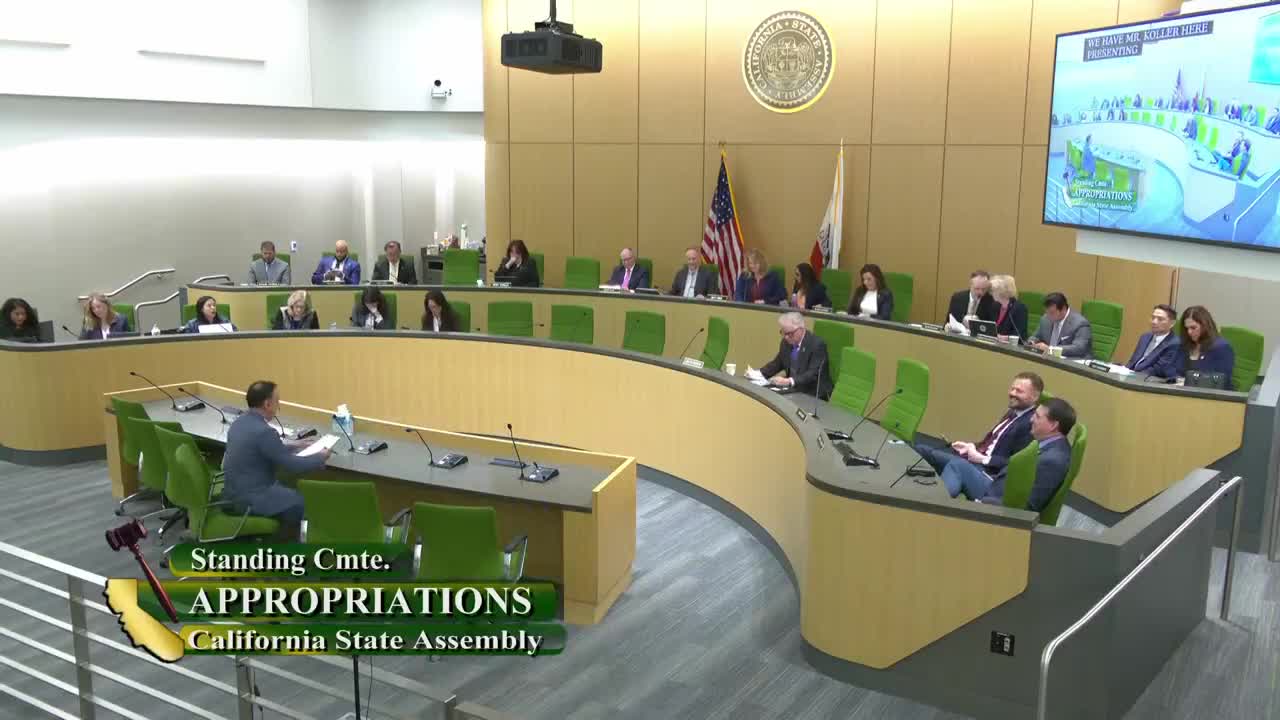 48SEC
Assembly Standing Committee on Appropriations
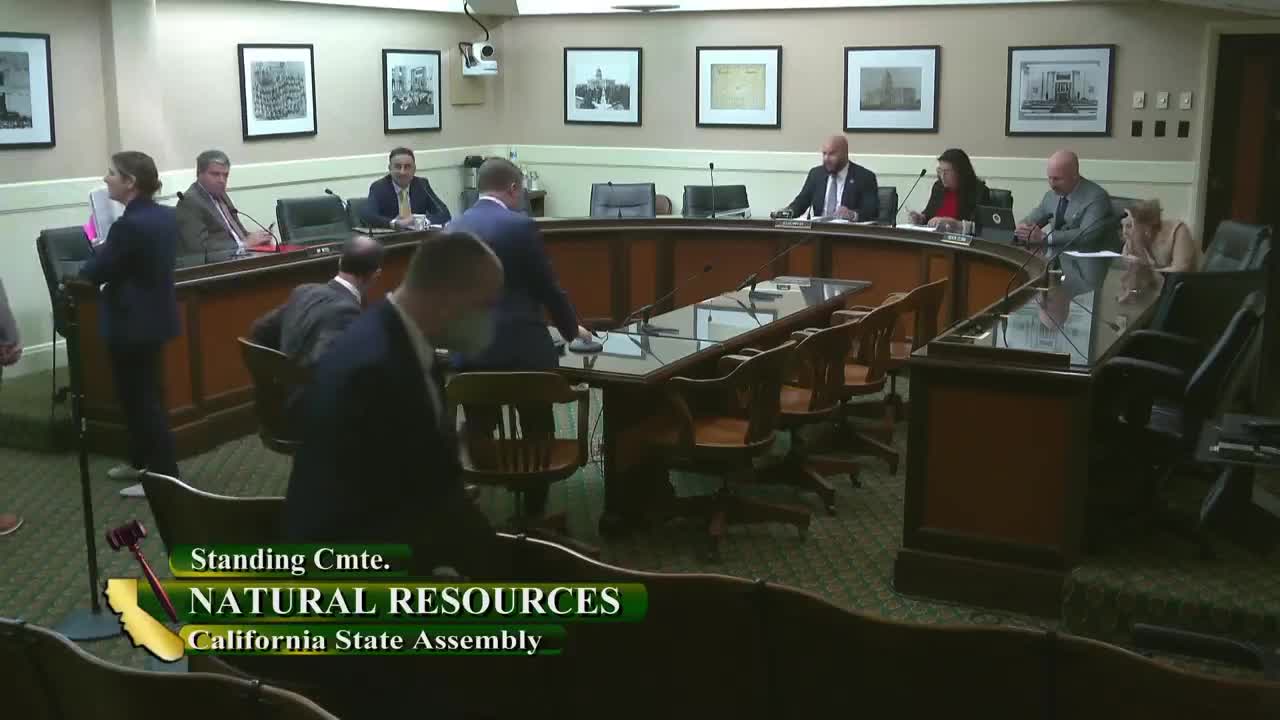 5MIN
Assembly Standing Committee on Natural Resources
Bill Author

Bill Co-Author(s):