AB 2399: Mobilehome park residences: rental agreements: Mobilehome Residency Law Protection Program.
- Session Year: 2023-2024
- House: Assembly
- Latest Version Date: 2024-09-22
Current Status:
Passed
(2024-09-22: Chaptered by Secretary of State - Chapter 397, Statutes of 2024.)
Introduced
In Committee
First Chamber
In Committee
Second Chamber
Enacted
Existing law, the Mobilehome Residency Law, governs the terms and conditions of residency in mobilehome parks and prescribes the content of a rental agreement for a tenancy. Existing law requires that a copy of the Mobilehome Residency Law be provided as an exhibit and incorporated into the rental agreement by reference, as specified. Existing law also requires that a copy of a specified notice containing the rights and responsibilities of homeowners and park managers be included in the rental agreement and requires management to provide a copy of the notice to all homeowners each year, as specified. Existing law, the Mobilehome Residency Law Protection Act, until January 1, 2027, establishes the Mobilehome Residency Law Protection Program within the Department of Housing and Community Development, which requires the department to provide assistance in taking complaints, and helping to resolve and coordinate the resolution of those complaints, from homeowners relating to the Mobilehome Residency Law.
This bill would require the above-specified notice to additionally include information about the Mobilehome Residency Law Protection Program, as specified.
Under existing law, the State Department of Health Care Services is responsible for administering prevention, treatment, and recovery services for alcohol and drug abuse. Existing law requires the department to issue allocations of state and federal funds available to counties to provide alcohol and other drug programs.This bill would make technical, nonsubstantive changes to those provisions.Under existing law, the State Department of Health Care Services is responsible for administering prevention, treatment, and recovery services for alcohol and drug abuse. Existing law requires the department to issue allocations of state and federal funds available to counties to provide alcohol and other drug programs.
This bill would make technical, nonsubstantive changes to those provisions.
The rental agreement shall be in writing and shall contain, in addition to the provisions otherwise required by law to be included, all of the following:
(a)The term of the tenancy and the rent therefor.
(b)The rules and regulations of the park.
(c)A copy of the text of this chapter shall be provided as an exhibit and shall be incorporated into the rental agreement by reference. Management shall do one of the following prior to February 1 of each year, if a significant change was made in this chapter by legislation enacted in the prior year:
(1)Provide all homeowners with a copy of this chapter.
(2)Provide written notice to all homeowners that there has been a change to this chapter and that they may obtain one copy of this chapter from management at no charge. Management shall provide a copy within a reasonable time, not to exceed seven days, upon request.
(d)A provision specifying that (1) it is the responsibility of the management to provide and maintain physical improvements in the common facilities in good working order and condition and (2) with respect to a sudden or unforeseeable breakdown or deterioration of these improvements, the management shall have a reasonable period of time to repair the sudden or unforeseeable breakdown or deterioration and bring the improvements into good working order and condition after management knows or should have known of the breakdown or deterioration. For purposes of this subdivision, a reasonable period of time to repair a sudden or unforeseeable breakdown or deterioration shall be as soon as possible in situations affecting a health or safety condition, and shall not exceed 30 days in any other case except where exigent circumstances justify a delay.
(e)A description of the physical improvements to be provided the homeowner during the homeowners tenancy.
(f)A provision listing those services which will be provided at the time the rental agreement is executed and will continue to be offered for the term of tenancy and the fees, if any, to be charged for those services.
(g)A provision stating that management may charge a reasonable fee for services relating to the maintenance of the land and premises upon which a mobilehome is situated in the event the homeowner fails to maintain the land or premises in accordance with the rules and regulations of the park after written notification to the homeowner and the failure of the homeowner to comply within 14 days. The written notice shall state the specific condition to be corrected and an estimate of the charges to be imposed by management if the services are performed by management or its agent.
(h)All other provisions governing the tenancy.
(i)A copy of the following notice. Management shall also, prior to February 1 of each year, provide a copy of the following notice to all homeowners:
IMPORTANT NOTICE TO ALL MANUFACTURED HOME/MOBILEHOME OWNERS: CALIFORNIA LAW REQUIRES THAT YOU BE MADE AWARE OF THE FOLLOWING: | ||
The Mobilehome Residency Law (MRL), found in Section 798 et seq. of the Civil Code, establishes the rights and responsibilities of homeowners and park management. The MRL is deemed a part of the terms of any park rental agreement or lease. This notice is intended to provide you with a general awareness of selected parts of the MRL and other important laws. It does not serve as a legal explanation or interpretation. For authoritative information, you must read and understand the laws. These laws change from time to time. In any year in which the law has changed, you may obtain one copy of the full text of the law from management at no charge. This notice is required by Civil Code Section 798.15(i) and the information provided may not be current. | ||
Homeowners and park management have certain rights and responsibilities under the MRL. These include, but are not limited to: | ||
1. | Management must give a homeowner written notice of any increase in the rent at least 90 days before the date of the increase. (Civil Code Section 798.30) | |
2. | No rental or sales agreement may contain a provision by which a purchaser or a homeowner waives any of their rights under the MRL. (Civil Code Sections 798.19, 798.77) | |
3. | Management may not terminate or refuse to renew a homeowners tenancy except for one or more of the authorized reasons set forth in the MRL. (Civil Code Sections 798.55, 798.56) Homeowners must pay rent, utility charges, and reasonable incidental service charges in a timely manner. Failure to comply could be grounds for eviction from the park. (Civil Code Section 798.56) | |
4. | Homeowners, residents, and their guests must comply with the rental agreement or lease, including the reasonable rules and regulations of the park and all applicable local ordinances and state laws and regulations relating to mobilehomes. Failure to comply could be grounds for eviction from the park. (Civil Code Section 798.56) | |
5. | Homeowners have a right to peacefully assemble and freely communicate with respect to mobilehome living and for social or educational purposes. Homeowners have a right to meet in the park, at reasonable hours and in a reasonable manner, for any lawful purpose. Homeowners may not be charged a cleaning deposit in order to use the park clubhouse for meetings of resident organizations or for other lawful purposes, such as to hear from political candidates, so long as a homeowner of the park is hosting the meeting and all park residents are allowed to attend. Homeowners may not be required to obtain liability insurance in order to use common facilities unless alcohol is served. (Civil Code Sections 798.50, 798.51) | |
6. | If a home complies with certain standards, the homeowner is entitled to sell it in place in the park. If you sell your home, you are required to provide a manufactured home and mobilehome transfer disclosure statement to the buyer prior to sale. (Civil Code Section 1102.6d) When a home is sold, the owner is required to transfer the title to the buyer. The sale of the home is not complete until you receive the title from the seller. It is the responsibility of the buyer to also file paperwork with the Department of Housing and Community Development to register the home in the buyers name. (Civil Code Sections 798.70798.74) | |
7. | Management has the right to enter the space upon which a mobilehome is situated for maintenance of utilities, trees, and driveways; for inspection and maintenance of the space in accordance with the rules and regulations of the park when the homeowner or resident fails to maintain the space; and for protection and maintenance of the mobilehome park at any reasonable time, but not in a manner or at a time that would interfere with the residents quiet enjoyment of the residents home. (Civil Code Section 798.26) | |
8. | A homeowner may not make any improvements or alterations to the homeowners space or home without following the rules and regulations of the park and all applicable local ordinances and state laws and regulations, which may include obtaining a permit to construct, and, if required by park rules or the rental agreement, without prior written approval of management. Failure to comply could be grounds for eviction from the park. (Civil Code Section 798.56) | |
9. | In California, mobilehome owners must pay annual property tax to the county tax collector or an annual fee in lieu of taxes to the Department of Housing and Community Development (HCD). If you are unsure which to pay, contact HCD. Failure to pay taxes or in lieu fees can have serious consequences, including losing your home at a tax sale. | |
10. | For more information on registration, titling, and taxes, contact: the Department of Housing and Community Development at www.hcd.ca.gov (800) 952-8356; your County Tax Collector; or call your local county government. | |
11. | The Mobilehome Residency Law Protection Program (MRLPP), found in Section 18800 et seq. of the Health and Safety Code, protects and safeguards mobilehome homeowners and residents by affording them an additional avenue to enforce violations of the MRL. The Department of Housing and Community Development (HCD) administers the program by providing assistance in taking complaints and helping to resolve and coordinate the resolution of those complaints from homeowners and residents relating to the MRL. The HCD contracts with nonprofit legal service providers and refers complaints of alleged MRL violations to these legal service providers. The HCD may not arbitrate, mediate, negotiate, or provide legal advice in connection with mobilehome park rent disputes, lease or rental agreements, or disputes arising from lease or rental agreements, but may provide information on these issues to the complaining party, management, or other responsible party. The MRLPP is funded by an annual registration fee of $10.00 for each permitted mobilehome lot, collected from management, which management may pass on and collect from the homeowner at the time of rent payment. The annual MRLPP registration fee must appear as a separate line item on the rent bill and be accompanied by a clear written description of the purposes of the charge, along with contact information for the HCD. For questions regarding the fee or the MRLPP, contact: the HCD at [email protected] or by calling (800) 952-8356. | |
The rental agreement shall be in writing and shall contain, in addition to the provisions otherwise required by law to be included, all of the following:
(a)The term of the tenancy and the rent therefor.
(b)The rules and regulations of the park.
(c)A copy of the text of this chapter shall be provided as an exhibit and shall be incorporated into the rental agreement by reference. Management shall do one of the following prior to February 1 of each year, if a significant change was made in this chapter by legislation enacted in the prior year:
(1)Provide all homeowners with a copy of this chapter.
(2)Provide written notice to all homeowners that there has been a change to this chapter and that they may obtain one copy of this chapter from management at no charge. Management shall provide a copy within a reasonable time, not to exceed seven days, upon request.
(d)A provision specifying that (1) it is the responsibility of the management to provide and maintain physical improvements in the common facilities in good working order and condition and (2) with respect to a sudden or unforeseeable breakdown or deterioration of these improvements, the management shall have a reasonable period of time to repair the sudden or unforeseeable breakdown or deterioration and bring the improvements into good working order and condition after management knows or should have known of the breakdown or deterioration. For purposes of this subdivision, a reasonable period of time to repair a sudden or unforeseeable breakdown or deterioration shall be as soon as possible in situations affecting a health or safety condition, and shall not exceed 30 days in any other case except where exigent circumstances justify a delay.
(e)A description of the physical improvements to be provided the homeowner during his or her the homeowners tenancy.
(f)A provision listing those services which will be provided at the time the rental agreement is executed and will continue to be offered for the term of tenancy and the fees, if any, to be charged for those services.
(g)A provision stating that management may charge a reasonable fee for services relating to the maintenance of the land and premises upon which a mobilehome is situated in the event the homeowner fails to maintain the land or premises in accordance with the rules and regulations of the park after written notification to the homeowner and the failure of the homeowner to comply within 14 days. The written notice shall state the specific condition to be corrected and an estimate of the charges to be imposed by management if the services are performed by management or its agent.
(h)All other provisions governing the tenancy.
(i)A copy of the following notice. Management shall also, prior to February 1 of each year, provide a copy of the following notice to all homeowners:
IMPORTANT NOTICE TO ALL MANUFACTURED HOME/MOBILEHOME OWNERS: CALIFORNIA LAW REQUIRES THAT YOU BE MADE AWARE OF THE FOLLOWING: | ||
The Mobilehome Residency Law (MRL), found in Section 798 et seq. of the Civil Code, establishes the rights and responsibilities of homeowners and park management. The MRL is deemed a part of the terms of any park rental agreement or lease. This notice is intended to provide you with a general awareness of selected parts of the MRL and other important laws. It does not serve as a legal explanation or interpretation. For authoritative information, you must read and understand the laws. These laws change from time to time. In any year in which the law has changed, you may obtain one copy of the full text of the law from management at no charge. This notice is required by Civil Code Section 798.15(i) and the information provided may not be current. | ||
Homeowners and park management have certain rights and responsibilities under the MRL. These include, but are not limited to: | ||
1. | Management must give a homeowner written notice of any increase in his or her the rent at least 90 days before the date of the increase. (Civil Code Section 798.30) | |
2. | No rental or sales agreement may contain a provision by which a purchaser or a homeowner waives any of his or her their rights under the MRL. (Civil Code Sections 798.19, 798.77) | |
3. | Management may not terminate or refuse to renew a homeowners tenancy except for one or more of the authorized reasons set forth in the MRL. (Civil Code Sections 798.55, 798.56) Homeowners must pay rent, utility charges, and reasonable incidental service charges in a timely manner. Failure to comply could be grounds for eviction from the park. (Civil Code Section 798.56) | |
4. | Homeowners, residents, and their guests must comply with the rental agreement or lease, including the reasonable rules and regulations of the park and all applicable local ordinances and state laws and regulations relating to mobilehomes. Failure to comply could be grounds for eviction from the park. (Civil Code Section 798.56) | |
5. | Homeowners have a right to peacefully assemble and freely communicate with respect to mobilehome living and for social or educational purposes. Homeowners have a right to meet in the park, at reasonable hours and in a reasonable manner, for any lawful purpose. Homeowners may not be charged a cleaning deposit in order to use the park clubhouse for meetings of resident organizations or for other lawful purposes, such as to hear from political candidates, so long as a homeowner of the park is hosting the meeting and all park residents are allowed to attend. Homeowners may not be required to obtain liability insurance in order to use common facilities unless alcohol is served. (Civil Code Sections 798.50, 798.51) | |
6. | If a home complies with certain standards, the homeowner is entitled to sell it in place in the park. If you sell your home, you are required to provide a manufactured home and mobilehome transfer disclosure statement to the buyer prior to sale. (Civil Code Section 1102.6d) When a home is sold, the owner is required to transfer the title to the buyer. The sale of the home is not complete until you receive the title from the seller. It is the responsibility of the buyer to also file paperwork with the Department of Housing and Community Development to register the home in his or her the buyers name. (Civil Code Sections 798.70798.74) | |
7. | Management has the right to enter the space upon which a mobilehome is situated for maintenance of utilities, trees, and driveways; for inspection and maintenance of the space in accordance with the rules and regulations of the park when the homeowner or resident fails to maintain the space; and for protection and maintenance of the mobilehome park at any reasonable time, but not in a manner or at a time that would interfere with the residents quiet enjoyment of his or her the residents home. (Civil Code Section 798.26) | |
8. | A homeowner may not make any improvements or alterations to his or her the homeowners space or home without following the rules and regulations of the park and all applicable local ordinances and state laws and regulations, which may include obtaining a permit to construct, and, if required by park rules or the rental agreement, without prior written approval of management. Failure to comply could be grounds for eviction from the park. (Civil Code Section 798.56) | |
9. | In California, mobilehome owners must pay annual property tax to the county tax collector or an annual fee in lieu of taxes to the Department of Housing and Community Development (HCD). If you are unsure which to pay, contact HCD. Failure to pay taxes or in lieu fees can have serious consequences, including losing your home at a tax sale. | |
10. | For more information on registration, titling, and taxes, contact: the Department of Housing and Community Development at www.hcd.ca.gov (800) 952-8356; your County Tax Collector; or call your local county government. | |
11. | The Mobilehome Residency Law Protection Program (MRLPP), found in Section 18800 et seq. of the Health and Safety Code, protects and safeguards mobilehome homeowners and residents by affording them an additional avenue to enforce violations of the MRL. The Department of Housing and Community Development (HCD) administers the program by providing assistance in taking complaints and helping to resolve and coordinate the resolution of those complaints from homeowners and residents relating to the MRL. The HCD contracts with nonprofit legal service providers and refers complaints of alleged MRL violations to these legal service providers. The HCD may not arbitrate, mediate, negotiate, or provide legal advice in connection with mobilehome park rent disputes, lease or rental agreements, or disputes arising from lease or rental agreements, but may provide information on these issues to the complaining party, management, or other responsible party. The MRLPP is funded by an annual registration fee of $10.00 for each permitted mobilehome lot, collected from management, which management may pass on and collect from the homeowner at the time of rent payment. The annual MRLPP registration fee must appear as a separate line item on the rent bill and be accompanied by a clear written description of the purposes of the charge, along with contact information for the HCD. For questions regarding the fee or the MRLPP, contact: the HCD at [email protected] or by calling (800) 952-8356. | |
(a)The board of supervisors of each county may apply to the department for funds for the purpose of alleviating problems in its county that are related to alcohol abuse and other drug use. This part applies only to counties receiving state or federal funds allocated by the department under this part.
(b)The department shall coordinate state and local alcohol and other drug abuse prevention, care, treatment, and rehabilitation programs. It is the intent of the Legislature that the department and the counties maintain a cooperative partnership to assure ensure effective implementation of this chapter.
(c)The Legislature grants responsibility to the county to administer and coordinate all county alcohol and other drug programs funded under this part. County alcohol and other drug programs shall account to the board of supervisors and to the state for their effective implementation. The county shall establish its own priorities for alcohol and other drug programs funded under this part, except with respect to funds that are allocated to the county for federally required programs and services.
|
Date
|
Status
|
|---|---|
| Sep 22, 2024 | Chaptered by Secretary of State - Chapter 397, Statutes of 2024. |
| Sep 22, 2024 | Approved by the Governor. |
| Aug 27, 2024 | Enrolled and presented to the Governor at 12 p.m. |
| Aug 20, 2024 | In Assembly. Ordered to Engrossing and Enrolling. |
| Aug 20, 2024 | Read third time. Passed. Ordered to the Assembly. (Ayes 30. Noes 9. Page 5224.). |
| Jun 6, 2024 | Read second time. Ordered to third reading. |
| Jun 5, 2024 | From committee: Do pass. (Ayes 9. Noes 2.) (June 4). |
| May 15, 2024 | Referred to Com. on JUD. |
| May 2, 2024 | In Senate. Read first time. To Com. on RLS. for assignment. |
| May 2, 2024 | Read third time. Passed. Ordered to the Senate. (Ayes 57. Noes 4. Page 5082.) |
| Apr 25, 2024 | Read second time. Ordered to third reading. |
| Apr 24, 2024 | From committee: Do pass. (Ayes 7. Noes 1.) (April 24). |
| Apr 1, 2024 | Re-referred to Com. on H. & C.D. |
| Mar 21, 2024 | Referred to Com. on H. & C.D. |
| Mar 21, 2024 | From committee chair, with author's amendments: Amend, and re-refer to Com. on H. & C.D. Read second time and amended. |
| Feb 13, 2024 | From printer. May be heard in committee March 14. |
| Feb 12, 2024 | Read first time. To print. |
|
Date
|
Description
|
Location
|
Votes
|
|
|---|---|---|---|---|
| Aug 20, 2024 | Assembly 3rd Reading AB2399 Rendon By Laird | Senate Floor |
Passed |
|
| Jun 4, 2024 | Do pass | Senate Standing Committee on Judiciary |
Passed |
|
| May 2, 2024 | AB 2399 Rendon Assembly Third Reading | Assembly Floor |
Passed |
|
| Apr 24, 2024 | Do pass. | Assembly Standing Committee on Housing and Community Development |
Passed |
This list shows positions taken on this bill by organizations on the date displayed, which is linked to the original source.
Positions by individuals are not included.
|
Organization
|
Position
|
Date
|
|---|---|---|
| Golden State Manufactured Home Owners League | * Support | Jun 4, 2024 |
| Legal Aid of Sonoma County | * Support | Apr 24, 2024 |
| Western Manufactured Housing Communities Association | * Against | Jun 4, 2024 |
SENATE RULES COMMITTEE Office of Senate Floor Analyses (916) 651-1520 Fax: (916) 327-4478 | AB 2399 |
THIRD READING
Bill No: AB 2399
Author: Rendon (D)
Amended: 3/21/24 in Assembly
Vote: 21
SENATE JUDICIARY COMMITTEE: 9-2, 6/4/24
AYES: Umberg, Ashby, Caballero, Durazo, Laird, Roth, Stern, Wahab, Wiener
NOES: Wilk, Niello
ASSEMBLY FLOOR: 57-4, 5/2/24 - See last page for vote
SUBJECT: Mobilehome park residences: rental agreements: Mobilehome Residency Law Protection Program
SOURCE: Author
DIGEST:
This bill requires a notice regarding the Mobilehome Residency Law Protection Program (MRLPP), and how to contact the program, to be included in a specified notice of a mobilehome owner and mobilehome park’s rights and responsibilities that the mobilehome park must provide to all mobilehome owners on an annual basis and as part of the rental agreement.
ANALYSIS:
Existing law:
- Establishes the Mobilehome Residency Law (MRL) to regulate the relationship between mobilehome park management and park residents, and establishes various rights, responsibilities and limits of both groups. (Civ. Code § 798 et seq.)
- Specifies that a mobilehome park may only evict a resident for: failing to comply with a local or state law or regulation on mobilehomes within a reasonable time after the homeowner receives notice of noncompliance; conduct of the resident that amounts to a substantial annoyance of other homeowners or residents; conviction for certain crimes; failure to comply with a reasonable rule of the park; or for nonpayment of rent, utilities, or other reasonable incidental services charged by the park. (Civ. Code § 798.56.)
- Requires that a rental agreement between a mobilehome park and a mobilehome owner for a mobilehome lot include specified information, including:
- The term of the tenancy, and the rent for the lot;
- The rules and regulations of the park;
- A copy of the text of the MRL;
- A provision specifying that it is the responsibility of management to provide and maintain physical improvements in the common facilities in good working order and condition, and the management must repair sudden or unforeseeable breakdowns of the improvements within 30 days;
- A description of the physical improvements that the park will provide to the homeowner during the tenancy;
- A provision listing those services which will be provided to the homeowner, and any fee that will be charged for these services;
- A provision stating that management may charge a reasonable fee for services relating to the maintenance of the land and premises;
- All other provisions of law governing the tenancy; and
- A specified notice regarding the MRL and the rights and responsibilities of homeowners and mobilehome parks under the MRL, including that:
- management must give the homeowner written notice of any increase in rent at least 90 days before the date of the increase;
- no rental or sales agreement may waive any of a homeowner’s rights under the MRL;
- management may terminate or refuse to renew a homeowner’s tenancy only for one of the reasons specified in the MRL, but that a homeowner must pay rent, utility charges, and reasonable incidental service charges in a timely manner or risk grounds for eviction;
- homeowners, residents, and their guests must comply with the rental agreement or lease, including the reasonable rules and regulations of the park and all applicable local ordinances and state laws and regulations;
- homeowners have the right to peacefully assemble and communicate with respect to mobilehome living and social and educational purposes, the right to meet in the park at reasonable hours and manner, for any lawful purpose, as specified;
- a homeowner is entitled, under certain circumstances, to sell their mobilehome in place in the park, as specified;
- management has the right to enter the space upon which the mobilehome rests for maintenance of utilities, trees, and driveways, and for other maintenance purposes;
- a homeowner may not make any improvements or alterations to their space or mobilehome without following the rules and regulations of the park and all applicable local ordinances and state laws and regulations;
- mobilehome owners must pay annual property tax to the county tax collector, or a fee to HCD in lieu of taxes; and that
- HCD may be contacted for more information on registration, titling, and taxes at their website and phone number, as provided. (Civ. Code § 798.15.)
- Requires that mobilehome park management provide all mobilehome owners with a copy of the MRL prior to February 1 of each year if a significant change was made to the MRL by legislation enacted in the prior year. Requires mobilehome park management provide all mobilehome owners with the notice of rights described in (3)(i) above, before February 1 of each year. (Civ. Code § 798.15.)
- Establishes the MRLPP within HCD to receive complaints from mobilehome park residents regarding violations of the MRL and refer certain, meritorious valid complaints to a Legal Service Provider or appropriate enforcement agency. Sunsets the MRLPP on January 1, 2027. (Health & Saf. Code § 18800 et seq.).
This bill:
- Requires that, as part of the notice required to be included in the rental agreement for a mobilehome site and provided to a mobilehome owner prior to February 1 each year, mobilehome park management provide the following specified statement regarding the MRLPP:
- “The mobilehome Residency Law Protection Program (MRLPP), found in Section 18800 et seq. of the Health and Safety Code, protects and safeguards mobilehome homeowners and residents by affording them an additional avenue to enforce violations of the MRL. The Department of Housing and Community Development (HCD) administers the program by providing assistance in taking complaints and helping to resolve and coordinate the resolution of those complaints from homeowners and residents relating to the MRL. The HCD contracts with nonprofit legal service providers and refers complaints of alleged MRL violations to these legal service providers. The HCD may not arbitrate, mediate, negotiate, or provide legal advice in connection with mobilehome park rent disputes, lease or rental agreements, or disputes arising from lease or rental agreements, but may provide information on these issues to the complaining party, management, or other responsible party. The MRLPP is funded by an annual registration fee of $10.00 for each permitted mobilehome lot, collected from management, which management may pass on and collect from the homeowner at the time of rent payment. The annual MRLPP registration fee must appear as a separate line item on the rent bill and be accompanied by a clear written description of the purposes of the charge, along with contact information for the HCD. For questions regarding the fee or the MRLPP, contact: the HCD at [email protected] or by calling (800) 952-8356.”
- Makes non-substantive changes to the relevant section of the Civil Code to use gender neutral terms and pronouns.
FISCAL EFFECT: Appropriation: No Fiscal Com.: No Local: No
SUPPORT: (Verified 6/4/24)
Golden State Manufactured-home Owners League, Inc.
OPPOSITION: (Verified 6/4/24)
Western Manufactured Housing Communities Association
ARGUMENTS IN SUPPORT: According to the Golden State Manufactured-Home Owners League, Inc., which supports this bill:
In 2018, the state enacted the Mobilehome Residency Law Protection Act, which amended the Health and Safety Code to establish the Mobilehome Residency Law Protection Program (MRLPP), a program housed within the Department of Housing and Community Development (HCD), to help coordinate resolution of complaints from mobilehome residents relating to the Mobilehome Residency Law (MRL). It was the first time in California’s history.
The MRLPP was developed for and is funded by mobilehome residents to protect mobilehome residents from park owners who violate the Mobilehome Residency Law.
In their 2021-22 annual report, the state Department of Housing and Community Development highlighted the need for education and outreach to mobilehome homeowners regarding the Mobilehome Residency Law Protection Program. Ensuring mobilehome residents receive notice of the MRLPP program is a critical first step to this outreach.
ARGUMENTS IN OPPOSITION: According to the Western Manufactured Housing Communities Association, which opposes this bill:
[. . . ] As of December 2023, the MRLPP operating fund had a surplus of $7,988,433. When the MRLPP was implemented, HCD estimated approximately 4,500 complaints to be received and forwarded to a Legal Services Provider (LSP) each year, but since the program was implemented on January 1, 2019, a total of 5,671 complaint allegation have been received, and 5,047 of these allegations were processed with 1,235 complaint allegations referred to another enforcement agency or to an LSP – only 18.2% of the number expected.
The Mobilehome Residency Law (MRL) already requires a notice be provided to residents about the 10 most common issues involving complaints to the Department of Housing and Community Development (HCD) about the rights and responsibilities of tenants and park owners. AB 2399 adds another item to the list by requiring notice about the MRLPP. Currently, many park owners choose not to pass on the $10 fee to residents as a $10 charge will create many questions to park managers that will take time away from the manager that could be better spent dealing with their other responsibilities. If AB 2399 becomes law, it is very likely that all park owners will begin to collect the $10 annual fee from residents.
If the current list required by the MRL of ten rights and responsibilities is expanded to include the MRLPP, WMA may wish to add other items, like guest use of common areas and how many pets a tenant may have, to name a couple. Expanding this list opens the door to an overload of information provided in summary form but which is already included in the existing MRL.
Further, if AB 2399 is signed into law this year, it would be virtually impossible for HCD to provide the appropriate language for notification in 2025. Given that the MRLPP is set to expire on January 1, 2027, this means the notice provided to tenants would effectively only be in effect for 2026.
Also, WMA is curious about the intent of AB 2399. Since the MRLPP has an operational surplus of nearly $8 million, why not just require HCD to send a notice directly to tenants about the program? WMA has argued that the MRLPP is duplicative of other divisions within HCD to receive complaint allegations as there is already the Mobilehome Assistance Center and the Ombudsman. We believe measures like AB 2399 will make it more confusing for people to know which entity to lodge complaints.
Finally, a material change to the MRL often triggers a new, full copy to residents – the entire 30 pages to every resident on an annual basis. AB 2399 would add another page bringing it to 31 pages in all. Having HCD simply use the MRLPP funds available to notify residents directly may be more impactful and reviewed by residents. The volume of park manager notices required by law to distribute that end up in trash cans and as litter in the common areas or on the streets of mobilehome parks may surprise you.
ASSEMBLY FLOOR: 57-4, 5/2/24
AYES: Addis, Aguiar-Curry, Alvarez, Arambula, Bains, Bauer-Kahan, Bennett, Berman, Boerner, Bonta, Bryan, Juan Carrillo, Wendy Carrillo, Cervantes, Connolly, Mike Fong, Friedman, Gabriel, Garcia, Gipson, Grayson, Haney, Hart, Holden, Irwin, Jackson, Jones-Sawyer, Kalra, Lee, Lowenthal, Maienschein, McCarty, McKinnor, Muratsuchi, Stephanie Nguyen, Ortega, Pacheco, Papan, Pellerin, Petrie-Norris, Quirk-Silva, Ramos, Rendon, Reyes, Luz Rivas, Rodriguez, Santiago, Schiavo, Soria, Ting, Villapudua, Wallis, Ward, Wicks, Wilson, Wood, Zbur
NOES: Davies, Vince Fong, Hoover, Sanchez
NO VOTE RECORDED: Alanis, Calderon, Chen, Megan Dahle, Dixon, Essayli, Flora, Gallagher, Lackey, Low, Mathis, Jim Patterson, Joe Patterson, Blanca Rubio, Ta, Valencia, Waldron, Weber, Robert Rivas
Prepared by: Ian Dougherty / JUD. / (916) 651-4113
6/5/24 13:33:16
**** END ****
Senator Thomas Umberg, Chair
2023-2024 Regular Session
Bill No: AB 2399 (Author:Rendon)
Version: March 21, 2024
Hearing Date: June 4, 2024
Fiscal: No
Urgency: No
Consultant: ID
SUBJECT
Mobilehome park residences: rental agreements: Mobilehome Residency Law Protection Program
DIGEST
This bill requires a notice regarding the Mobilehome Residency Law Protection Program, and how to contact the program, to be included in a specified notice of a mobilehome owner and mobilehome park’s rights and responsibilities that the mobilehome park must provide to all mobilehome owners on an annual basis and as part of the rental agreement
EXECUTIVE SUMMARY
Mobilehomes and the mobilehome parks in which most mobilehome owners reside represent an important source of affordable housing in California. However, mobilehomes are unique among housing options in the state, as mobilehome residents often own their mobilehome, but rent the land on which it sits from the mobilehome park in which it resides. Moreover, despite their name, mobilehomes are actually incredibly difficult and expensive to move. Accordingly, the Legislature enacted the Mobilehome Residency Law (MRL) to regulate the relationship between mobilehome parks and park residents, and to establish the various rights, responsibilities, and limits of both groups. The MRL is enforced through the court system by a civil cause of action. To help mobilehome residents receive legal representation and legal assistance with their claims of MRL violations and ensure that the MRL is complied with, the Legislature created the Mobilehome Residency Law Protection Program (MRLPP) in 2018. The MRLPP accepts complaints from mobilehome residents of violations of the MRL, screens complaints, and refers meritorious complaints to legal services providers or an appropriate enforcement agency. However, reports suggest more outreach and awareness of the MRLPP is needed. AB 2399 proposes to increase mobilehome residents’ awareness of the MRLPP by requiring that mobilehome parks provide specified information regarding the MRLPP and how to contact it to all mobilehome owners as part of an annual notice that mobilehome parks must provide owners regarding their rights, and as an exhibit to all rental agreements. AB 2399 is author sponsored, is supported by the Golden State Manufactured-home Owners League, Inc., and is opposed by the Western Manufactured Housing Communities Association.
PROPOSED CHANGES TO THE LAW
Existing law:
- Establishes the Mobilehome Residency Law (MRL) to regulate the relationship between mobilehome park management and park residents, and establishes various rights, responsibilities and limits of both groups. (Civ. Code § 798 et seq.)
- Specifies that a mobilehome park may only evict a resident for: failing to comply with a local or state law or regulation on mobilehomes within a reasonable time after the homeowner receives notice of noncompliance; conduct of the resident that amounts to a substantial annoyance of other homeowners or residents; conviction for certain crimes; failure to comply with a reasonable rule of the park; or for nonpayment of rent, utilities, or other reasonable incidental services charged by the park. (Civ. Code § 798.56.)
- Requires that a rental agreement between a mobilehome park and a mobilehome owner for a mobilehome lot include specified information, including:
- The term of the tenancy, and the rent for the lot;
- The rules and regulations of the park;
- A copy of the text of the MRL;
- A provision specifying that it is the responsibility of management to provide and maintain physical improvements in the common facilities in good working order and condition, and the management must repair sudden or unforeseeable breakdowns of the improvements within 30 days;
- A description of the physical improvements that the park will provide to the homeowner during the tenancy;
- A provision listing those services which will be provided to the homeowner, and any fee that will be charged for these services;
- A provision stating that management may charge a reasonable fee for services relating to the maintenance of the land and premises;
- All other provisions of law governing the tenancy; and
- A specified notice regarding the MRL and the rights and responsibilities of homeowners and mobilehome parks under the MRL, including that:
- management must give the homeowner written notice of any increase in rent at least 90 days before the date of the increase;
- no rental or sales agreement may waive any of a homeowner’s rights under the MRL;
- management may terminate or refuse to renew a homeowner’s tenancy only for one of the reasons specified in the MRL, but that a homeowner must pay rent, utility charges, and reasonable incidental service charges in a timely manner or risk grounds for eviction;
- homeowners, residents, and their guests must comply with the rental agreement or lease, including the reasonable rules and regulations of the park and all applicable local ordinances and state laws and regulations;
- homeowners have the right to peacefully assemble and communicate with respect to mobilehome living and social and educational purposes, the right to meet in the park at reasonable hours and manner, for any lawful purpose, as specified;
- a homeowner is entitled, under certain circumstances, to sell their mobilehome in place in the park, as specified;
- management has the right to enter the space upon which the mobilehome rests for maintenance of utilities, trees, and driveways, and for other maintenance purposes;
- a homeowner may not make any improvements or alterations to their space or mobilehome without following the rules and regulations of the park and all applicable local ordinances and state laws and regulations;
- mobilehome owners must pay annual property tax to the county tax collector, or a fee to HCD in lieu of taxes; and that
- HCD may be contacted for more information on registration, titling, and taxes at their website and phone number, as provided. (Civ. Code § 798.15.)
- Requires that mobilehome park management provide all mobilehome owners with a copy of the MRL prior to February 1 of each year if a significant change was made to the MRL by legislation enacted in the prior year. Requires mobilehome park management provide all mobilehome owners with the notice of rights described in (3)(i) above, before February 1 of each year. (Civ. Code § 798.15.)
- Establishes the MRLPP within HCD to receive complaints from mobilehome park residents regarding violations of the MRL and refer certain, meritorious valid complaints to a Legal Service Provider or appropriate enforcement agency. Sunsets the MRLPP on January 1, 2027. (Health & Saf. Code § 18800 et seq.).
This bill:
- Requires that, as part of the notice required to be included in the rental agreement for a mobilehome site and provided to a mobilehome owner prior to February 1 each year, mobilehome park management provide the following specified statement regarding the MRLPP:
- “The mobilehome Residency Law Protection Program (MRLPP), found in Section 18800 et seq. of the Health and Safety Code, protects and safeguards mobilehome homeowners and residents by affording them an additional avenue to enforce violations of the MRL. The Department of Housing and Community Development (HCD) administers the program by providing assistance in taking complaints and helping to resolve and coordinate the resolution of those complaints from homeowners and residents relating to the MRL. The HCD contracts with nonprofit legal service providers and refers complaints of alleged MRL violations to these legal service providers. The HCD may not arbitrate, mediate, negotiate, or provide legal advice in connection with mobilehome park rent disputes, lease or rental agreements, or disputes arising from lease or rental agreements, but may provide information on these issues to the complaining party, management, or other responsible party. The MRLPP is funded by an annual registration fee of $10.00 for each permitted mobilehome lot, collected from management, which management may pass on and collect from the homeowner at the time of rent payment. The annual MRLPP registration fee must appear as a separate line item on the rent bill and be accompanied by a clear written description of the purposes of the charge, along with contact information for the HCD. For questions regarding the fee or the MRLPP, contact: the HCD at [email protected] or by calling (800) 952-8356.”
- Makes non-substantive changes to the relevant section of the Civil Code to use gender neutral terms and pronouns.
COMMENTS
- Author’s statement
According to the author:
Californians who live in mobile homes tend to be older, low-income, and people of color. These populations are especially vulnerable to violations of their housing rights, including illegal rent increases and unlawful evictions. Mobile home residents deserve a greater level of protection, and stronger housing rights. [This bill] would make sure that every year, California's mobile home residents are provided information about what legal services are available to them through the state's Mobilehome Residency Law Protection Program. By notifying tenants of their rights and services, California can afford a stronger level of protection for mobile home residents most in need of support.
- Mobilehomes are a vital source of affordable housing in California
There are an estimated 508,589 mobilehome units in California.[1] Mobilehomes are pre-fabricated homes that are designed to be able to be transported and moved between locations. Thus, mobilehomes are unique among all residential options. However, while they are technically mobile, mobilehomes often require a significant amount of time, effort, and money to actually be moved between locations. Costs for moving a mobilehome range from a few thousand to tens of thousands of dollars. Mobilehomes are also unique because many mobilehome residents own their mobilehome, but lease from a mobilehome park the land upon which their home is located. In this arrangement, the mobilehome sits on a lot within a park of mobilehomes and common space. The mobilehome park and the lots on which the mobilehomes sit are usually privately owned and managed by a mobilehome park company.
Under this relationship, while residents technically own their mobilehome, they pay rent to the park management, are subject to the rules of the mobilehome park set by the ownership of the park, and they often rely on the park for the provision of utilities. If a resident falls behind on their rent payments to the park for their mobilehome’s lot, or if they violate a rule of the park, they can be evicted from the park. Considering they may have paid considerable amounts of money to buy the mobilehome that they can no longer live in, they could lose the equity they’ve accumulated in their mobilehome upon eviction by the park, either by having to sell the mobilehome quickly, or spending thousands of dollars to move their mobilehome elsewhere.
While most mobilehome parks are owned by a private company separate from the mobilehome owners, some mobilehome parks are organized in arrangements where the mobilehome residents and owners are part-owners of the entire park. These arrangements include a subdivision of mobilehomes, a cooperative, a condominium for mobilehomes, and resident-owned mobilehome parks.
Mobilehome residents in California tend to be poorer and older than the average California renter, for which mobilehome ownership is an important option for affordable housing. In fact, the median price of a mobilehome in 2022 was $82,600, making mobilehome ownership one of the most significant, un-subsidized sources of affordable housing.[2] While mobilehome park residents are generally older than the general population, there are still many young and middle-aged individuals and families living in mobilehome parks. As housing in California continues to become more expensive, mobilehomes will likely become an even more attractive option for low-income Californians looking for affordable home ownership.
- The Mobilehome Residency Law
In light of the unique nature of mobilehome parks and the issues mobilehome park residents face, the Legislature passed the Mobilehome Residency Law (MRL) in 1978 to regulate the relationship between mobilehome park management and park residents and establish the various rights, responsibilities and limits of both groups. (Civ. Code § 798 et seq.) Over time, the MRL has been amended to include additional protections for residents and limits on charges mobilehome parks can bill residents.
The MRL covers a variety of areas, including: permissible rental and lease contract terms; permissible park rules and mandatory notices to residents; limits on fees and charges, as well as increases to them; and conditions and limits related to mobilehome park evictions. The MRL also requires that the rules and the regulations of the park be included in the rental agreement for the mobilehome site, and specifies the procedures that a park must follow to change the park rules. (Civ. Code § 798.15.) Mobilehome owners, residents, and guests must comply with the rental agreement, and any reasonable rule or regulation of the park that are part of the agreement. (Civ. Code § 798.56.) Not complying with these rules, or applicable local ordinances or state laws and regulations relating to mobilehomes can be grounds for eviction from the park. The provision of the MRL relating to eviction specifies that a park may evict a resident only for: failing to comply with a local or state law or regulation on mobilehomes within a reasonable time after the homeowner receives notice of noncompliance; conduct of the resident that amounts to a substantial annoyance of other homeowners or residents; conviction of certain crimes; failure to comply with a reasonable rule of the park; or for nonpayment of rent, utilities, or another reasonable incidental service charged by the park. (Civ. Code § 798.56.) Additionally, a mobilehome owner may not make improvements or alterations to their space or home without following the rules and regulations of the park, and all applicable local ordinances and state laws and regulations relating to the improvement or construction, including any that require obtaining a permit. (Civ. Code § 798.56.) If the park rules require it, a mobilehome owner may have to obtain prior written approval from the park management for any alterations or improvements. (Id.)
The MRL includes a variety of provisions that require mobilehome parks to provide certain information to park residents regarding the MRL and residents’ rights and responsibilities. The MRL requires that mobilehome parks provide a copy of the text of the MRL to residents as an exhibit to all rental agreements for mobilehome lots, and that parks must provide a copy or a specified notice of the change to residents at the beginning of the year and whenever the Legislature makes significant changes to the MRL during the prior year. (Civ. Code § 798.15.) In addition, mobilehome parks must include with the rental agreement provisions describing the park’s responsibility to maintain physical improvements in the common facilities of the park in good working order, the physical improvements and services to be provided the resident, and a statement regarding the rights and responsibilities of park management and mobilehome owners. This statement includes notice of various provisions of the MRL, including: that management must give a homeowner written notice of any increase in their rent at least 90 days before the date of the increase; that no rental or sales agreement may contain a provision waiving a homeowner’s rights under the MRL; that homeowners and their guests must comply with the rental agreement and all reasonable rules and regulations of the park; and that park management may not terminate a resident’s tenancy except for one or more of the reasons authorized in the MRL. (Civ. Code § 798.15(i).) This statement of rights and responsibilities under the MRL must also be provided by the park management to all homeowners before February 1 of each year. (Id.)
The Department of Housing and Community Development (HCD) is the agency that oversees a variety of areas relating to mobilehome parks, including health and safety standards, the registration and titling of mobilehomes and parks, and the inspections of parks for health and safety issues. HCD must annually inspect five percent of parks for compliance with health and safety requirements under the Health and Safety Code, and must accept and respond to health and safety complaints. (Health & Saf. Code §§ 18200-18700.) HCD also houses the Mobilehome Ombudsman, who assists the public with questions or issues related to various aspects of mobilehome law. However, neither HCD nor the ombudsman have enforcement authority for the MRL, and cannot provide legal advice or arbitrate or mediate park disputes. Instead, residents and mobilehome owners must go to court over a violation of the MRL. This fact creates a few practical limitations on mobilehome park residents enforcing their rights and the MRL: going to court can be costly, can be a lengthy process, and usually requires an attorney. Moreover, if the recoverable amount for the violation is not significant, private attorneys may not be willing to take on the case for the resident, leaving the resident without many options of representation.
- The Mobilehome Residency Law Protection Program
In 2018, AB 3066 (Stone, Ch. 744, Stats. 2018) established the Mobilehome Residency Law Protection Program (MRLPP) to create a process through which mobilehome residents could file complaints with the HCD relating to violations of the MRL, and receive assistance for resolving their complaints. (Health & Saf. Code §§ 18800-18806.) The premise of the MRLPP is to protect and safeguard the most vulnerable mobilehome homeowners by affording them an avenue to enforce violations of the MRL. (Health & Saf. Code § 18800.) The MRLPP helps mobilehome residents obtain enforcement of the MRL and redress for violations without necessarily requiring an attorney or going through the often complex, drawn-out, and expensive court system. It also ensures that residents can be assisted through the court process, if needed, by connecting credible complaints with legal services providers that provide free legal representation paid for through the program.
According to the author of AB 3066, when it was before the Legislature in 2018:
This bill will create the Mobilehome Residency Law Protection Act, a 5-year pilot program within HCD set to expire in December 2023. The program will give homeowners the opportunity to file a MRL complaint; while the department will have the authority to assess such complaints, collect data regarding the complaints, and refer the substantiated claims to a contracted nonprofit legal services organization.
For homeowners, many of them low income or fixed income seniors, the ability to submit a claim rather than pursue litigation is momentous. Not only is litigation typically out of the price range of homeowners, mobilehome owners are at an even greater disadvantage since it can cost even more money to move their home and leave the park.
Funded through willing homeowners, this pilot program creates a process in which California can alleviate a power imbalance between mobilehome owners and mobilehome park owners.
Under the MRLPP, the HCD receives complaints, assesses each complaint, and refers substantiated complaints to contracted nonprofit legal services organizations or to an appropriate enforcement agency to assist the resident in resolving the issue with the mobilehome park. The MRLPP is funded through a $10 annual fee charged to the mobilehome park for each mobilehome lot within the park. (Health & Saf. Code § 18804.) The park may collect all or a portion of the $10 fee from the homeowner of each lot. (Id.) In 2023, the Legislature enacted AB 318 that made slight adjustments to the MRLPP and extended its sunset provision to January 1, 2027. (AB 318 (Addis), Ch. 736, Stats. 2023.)
In 2022, HCD released a report on the MRLPP in its annual report for the 2021-22 fiscal year.[3] In the first three years of the program, the MRLPP collected $10,878,986 in total program revenue and had at the time of reporting expended $3,763,703. The HCD noted that nearly 69 percent of complaints referred to a Legal Services Provider (LSP) were either in the complaint intake stage or still receiving assistance, leaving cases open and more expenses to be incurred before the program’s end. The HCD also reported that the total number of allegations of MRL violations received under the MRLPP were 3,561. Of those complaints, the MRLPP processed 2,999, referring 409 to another enforcement agency and 579 to a LSP for legal assistance. Of the types of complaints received, the most were for violations of the rules on rental agreements (444), violations related to a termination of tenancy (398), and for violations of MRL provisions on park rules and regulations (661). The MRLPP also received a significant number of allegations relating to trees and driveways (149), notices of rent increases (146), utility service billing and rate schedules (145), fees charged for unlisted services without notice (144), the application of rules and regulations to park owners and employees (136), and relating to allegations involving housing discrimination (124). The MRLPP also received 409 allegations that fell under another enforcement agency’s jurisdiction and not under the MRL. As part of its report, HCD included a number of recommendations for the program, which included extending the sunset for the program and conducting more outreach and education to increase awareness and utilization of the program.
- AB 2399 Requires that mobilehome parks provide mobilehome owners with a specified notice regarding the MRLPP and how to file a complain
AB 2399 proposes to include information regarding the MRLPP and how to contact the program in the annual notices of a mobilehome owner’s rights that mobilehome parks must provide to the mobilehome owners in their parks. The required notice describes the program, the process through which HCD takes and processes complaints, that complaints are referred to LSP’s with which HCD contracts, that HCD itself may not arbitrate, mediate, or negotiate resolutions or provide legal advice with regard to disputes, and that the MRLPP is funded by the annual fee assessed upon mobilehome parks. The notice also provides the email and phone number for contacting the MRLPP for questions regarding the program or its annual fee. This notice is also currently required to be included with the rental agreement.
The author asserts that AB 2399 will increase awareness of the MRLPP so that the program may be fully utilized by mobilehome park residents experiencing issues with park management. The author points to HCD’s 2022 report on the MRLPP to support this assertion, as HCD concluded that mobilehome residents often do not know about the MRL or the MRLPP. Currently, no part of the MRLPP or the MRL require that homeowners be notified or made aware of the MRLPP, unless the park passes some part of the annual MRLPP fee onto the mobilehome owner. Thus, AB 2399 will ensure that mobilehome owners are provided information about the program every year, and it does so by requiring the inclusion of this information in the annual notice of a mobilehome resident’s rights that a mobilehome park must provide every resident every year.
- Arguments in support
According to the Golden State Manufactured-Home Owners League, Inc., which supports AB 2399:
In 2018, the state enacted the Mobilehome Residency Law Protection Act, which amended the Health and Safety Code to establish the Mobilehome Residency Law Protection Program (MRLPP), a program housed within the Department of Housing and Community Development (HCD), to help coordinate resolution of complaints from mobilehome residents relating to the Mobilehome Residency Law (MRL). It was the first time in California’s history.
The MRLPP was developed for and is funded by mobilehome residents to protect mobilehome residents from park owners who violate the Mobilehome Residency Law.
In their 2021-22 annual report, the state Department of Housing and Community Development highlighted the need for education and outreach to mobilehome homeowners regarding the Mobilehome Residency Law Protection Program. Ensuring mobilehome residents receive notice of the MRLPP program is a critical first step to this outreach.
- Arguments in opposition
According to the Western Manufactured Housing Communities Association, which opposes AB 2399:
[. . . ] As of December 2023, the MRLPP operating fund had a surplus of $7,988,433. When the MRLPP was implemented, HCD estimated approximately 4,500 complaints to be received and forwarded to a Legal Services Provider (LSP) each year, but since the program was implemented on January 1, 2019, a total of 5,671 complaint allegation have been received, and 5,047 of these allegations were processed with 1,235 complaint allegations referred to another enforcement agency or to an LSP – only 18.2% of the number expected.
The Mobilehome Residency Law (MRL) already requires a notice be provided to residents about the 10 most common issues involving complaints to the Department of Housing and Community Development (HCD) about the rights and responsibilities of tenants and park owners. AB 2399 adds another item to the list by requiring notice about the MRLPP. Currently, many park owners choose not to pass on the $10 fee to residents as a $10 charge will create many questions to park managers that will take time away from the manager that could be better spent dealing with their other responsibilities. If AB 2399 becomes law, it is very likely that all park owners will begin to collect the $10 annual fee from residents.
If the current list required by the MRL of ten rights and responsibilities is expanded to include the MRLPP, WMA may wish to add other items, like guest use of common areas and how many pets a tenant may have, to name a couple. Expanding this list opens the door to an overload of information provided in summary form but which is already included in the existing MRL.
Further, if AB 2399 is signed into law this year, it would be virtually impossible for HCD to provide the appropriate language for notification in 2025. Given that the MRLPP is set to expire on January 1, 2027, this means the notice provided to tenants would effectively only be in effect for 2026.
Also, WMA is curious about the intent of AB 2399. Since the MRLPP has an operational surplus of nearly $8 million, why not just require HCD to send a notice directly to tenants about the program? WMA has argued that the MRLPP is duplicative of other divisions within HCD to receive complaint allegations as there is already the Mobilehome Assistance Center and the Ombudsman. We believe measures like AB 2399 will make it more confusing for people to know which entity to lodge complaints.
Finally, a material change to the MRL often triggers a new, full copy to residents – the entire 30 pages to every resident on an annual basis. AB 2399 would add another page bringing it to 31 pages in all. Having HCD simply use the MRLPP funds available to notify residents directly may be more impactful and reviewed by residents. The volume of park manager notices required by law to distribute that end up in trash cans and as litter in the common areas or on the streets of mobilehome parks may surprise you.
SUPPORT
Golden State Manufactured-Home Owners League, Inc.
OPPOSITION
Western Manufactured Housing Communities Association
RELATED LEGISLATION
Pending Legislation:
AB 2291 (Alanis, 2024) would requires HCD to conduct regular surveys of complainants referred to a nonprofit legal services provider, and monitor updates from a nonprofit legal services provider to detect any inappropriate denial of services. Would require HCD to respond immediately to correct any wrongful denials. AB 2291 is currently in the Senate Rules Committee.
SB 1052 (Seyarto, 2024) would require a nonprofit legal services provider contracted with HCD to provide legal services for the MRLPP to provide HCD full access to information regarding the status of cases and the services provided to complainants through the MRLPP, would require HCD to conduct regular surveys of complainants referred to an LSP, and would authorize HCD to collect the annual registration fee of $10 if HCD and the Department of Finance determine that MRLPP’s fund can only cover 6 months of expenditures. SB 1052 failed passage in the Senate Judiciary Committee.
Prior Legislation:
AB 318 (Addis, Ch. 736, Stats. 2023) extended the Mobilehome Residency Law Protection Program administered by HCD until January 1, 2027, and made various changes to the requirements of eligible mobilehome resident complaints and the process for the referral of such complaints to appropriate legal services providers or enforcement agencies.
AB 3066 (Stone, Ch. 774, Stats. 2018) established the Mobilehome Residency Law Protection Act.
PRIOR VOTES:
Assembly Floor (Ayes 57, Noes 4)
Assembly Housing and Community Development Committee (Ayes 7, Noes 1)
**************
U.S. Census Bureau, 2021 American Community Survey 1-Year Estimates (2021), available at https://data.census.gov/. ↑
U.S. Census Bureau, Manufactured Housing Survey (Jun. 2022), available at https://www.census.gov/data/tables/time-series/econ/mhs/annual-data.html. ↑
Cal. Dept. of Housing & Community Dev., Annual Report: Fiscal Year 2021-22, Cal. Bus., Consumer Svcs. & Housing Agency (Jun. 30, 2022), available at https://www.hcd.ca.gov/policy-and-research/plans-and-reports. ↑
ASSEMBLY THIRD READING
ATR Bill Id:AB 2399
Author:(Rendon)
As Amended Ver:March 21, 2024
Majority vote
SUMMARY
Requires the rental agreement for a tenancy in a mobilehome park and the existing notice that must be provided to all homeowners by February 1 each year to include specified information about the Mobilehome Residency Law Protection Program (MRLPP).
Major Provisions
COMMENTS
Background: More than 1 million people live in California's approximately 4,500 mobilehome parks. Mobilehomes are not truly mobile, in that it is often cost prohibitive to relocate them. The cost to move a mobilehome ranges from $2,000 to upwards of $20,000 depending on the size of the home and the distance traveled. A mobilehome owner whose home is located in a mobilehome park does not own the land the unit sits on, and must pay rent and fees for the land and any community spaces.
The Mobilehome Residency Law (MRL) extensively regulates the relationship between landlords and homeowners who occupy a mobilehome park. A limited number of provisions also apply to residents who rent, as opposed to own, their mobilehome. The MRL has two parts: Articles 1 through 8 apply to most mobilehome parks and Article 9 applies to resident-owned parks or parks which are established as a subdivision, cooperative or condominium. The provisions cover many issues, including, but not limited to: 1) the rental and lease contract terms and specific conditions of receipt and delivery of written leases, park rules and regulations, and other mandatory notices; 2) mandatory notice and amendment procedures for mobilehome park rules and regulations; 3) mandatory notice of fees and charges, and increases or changes in them; and 4) specified conditions governing mobilehome park evictions. A dispute that arises pursuant to the application of the MRL generally must be resolved in a civil court of competent jurisdiction.
The Department of Housing and Community Development (HCD) oversees several areas of mobilehome law, including health and safety standards, registration and titling of mobilehomes and parks, and, through the Mobilehome Ombudsman, assists the public with questions or problems associated with various aspects of mobilehome law. The Mobilehome Ombudsman provides assistance by taking complaints and helping to resolve and coordinate the resolution of those complaints. However, the Ombudsman does not have enforcement authority for the MRL, and cannot arbitrate, mediate, negotiate, or provide legal advice on mobilehome park rent disputes, lease or rental agreements, but may provide general information on these issues.
HCD also inspects parks and mobilehomes for health and safety issues. Under the Mobilehome Park Maintenance (MPM) program, HCD annually inspects 5% of parks for compliance with health and safety requirements under the Health and Safety Code (Mobilehome Parks Act) and Title 25. The program is funded through a $4 fee, of which the property owner may charge half ($2) to the homeowners. In addition to the MPM program, HCD also responds to health and safety complaints under the Mobilehome Parks Act.
MRLPP: AB 3066 (Stone), Chapter 744, Statutes of 2018, established the MRLPP as a time-limited five year pilot program to intake complaints regarding alleged violations of the MRL and refer complaints to legal service providers (LSPs). Last year, the Legislature extended the program for another three years. The MRLPP is meant to resolve certain disputes between mobilehome/manufactured homeowners in mobilehome parks and park owners/management, and the annual program fee is paid by homeowners.
HCD performed a review of the program in 2023 and recommended, among other changes, that the program allow for more homeowner education opportunities so more homeowners become aware of the program's existence. This bill would require the following statement to be provided in rental agreements and annually to homeowners:
The Mobilehome Residency Law Protection Program (MRLPP), found in Section 18800 et seq. of the Health and Safety Code, protects and safeguards mobilehome homeowners and residents by affording them an additional avenue to enforce violations of the MRL. The Department of Housing and Community Development (HCD) administers the program by providing assistance in taking complaints and helping to resolve and coordinate the resolution of those complaints from homeowners and residents relating to the MRL. The HCD contracts with nonprofit legal service providers and refers complaints of alleged MRL violations to these legal service providers. The HCD may not arbitrate, mediate, negotiate, or provide legal advice in connection with mobilehome park rent disputes, lease or rental agreements, or disputes arising from lease or rental agreements, but may provide information on these issues to the complaining party, management, or other responsible party. The MRLPP is funded by an annual registration fee of $10.00 for each permitted mobilehome lot, collected from management, which management may pass on and collect from the homeowner at the time of rent payment. The annual MRLPP registration fee must appear as a separate line item on the rent bill and be accompanied by a clear written description of the purposes of the charge, along with contact information for the HCD. For questions regarding the fee or the MRLPP, contact: the HCD at [email protected] or by calling (800) 952-8356.
According to the Author
"Californians who live in mobile homes tend to be older, low-income, and people of color. These populations are especially vulnerable to violations of their housing rights, including illegal rent increases and unlawful evictions. Mobile home residents deserve a greater level of protection, and stronger housing rights. [This bill] would make sure that every year, California's mobile home residents are provided information about what legal services are available to them through the state's Mobilehome Residency Law Protection Program. By notifying tenants of their rights and services, California can afford a stronger level of protection for mobile home residents most in need of support."
Arguments in Support
According to the Golden State Manufactured-home Owners League (GSMOL), "The MRLPP was developed for and is funded by mobilehome residents to protect mobilehome residents from park owners who violate the Mobilehome Residency Law. In their 2021-22 annual report, the state Department of Housing and Community Development highlighted the need for education and outreach to mobilehome homeowners regarding the Mobilehome Residency Law Protection Program. Ensuring mobilehome residents receive notice of the MRLPP program is a critical first step to this outreach."
Arguments in Opposition
According to the Western Manufactured Housing Communities Association (WMA), "If the current list required by the MRL of ten rights and responsibilities is expanded to include the MRLPP, WMA may wish to add other items guest use of common areas and how many pets a tenant may have to name a couple. Expanding this list opens the door to an overload of information provided in summary form but which is already included in the existing MRL. Further, if [this bill] is signed into law this year, it would be virtually impossible for HCD to provide the appropriate language for notification in 2025. Given that the MRLPP is set to expire on January 1, 2027, this means the notice provided to tenants would effectively only be in effect for 2026."
FISCAL COMMENTS
None.
VOTES
ASM HOUSING AND COMMUNITY DEVELOPMENT: 7-1-1
YES: Ward, Grayson, Kalra, Lee, Quirk-Silva, Reyes, Wilson
NO: Sanchez
ABS, ABST OR NV: Joe Patterson
UPDATED
VERSION: March 21, 2024
CONSULTANT: Nicole Restmeyer / H. & C.D. / (916) 319-2085 FN: 0002790
Date of Hearing: April 24, 2024
ASSEMBLY COMMITTEE ON HOUSING AND COMMUNITY DEVELOPMENT
Christopher M. Ward, Chair
ABPCA Bill Id:AB 2399 (
Author:Rendon) – As Amended Ver:March 21, 2024
SUBJECT: Mobilehome park residences: rental agreements: Mobilehome Residency Law Protection Program
SUMMARY: Requires the rental agreement for a tenancy in a mobilehome park and the existing notice that must be provided to all homeowners by February 1 each year to include specified information about the Mobilehome Residency Law Protection Program (MRLPP). Specifically, this bill:
- Requires the existing notice that must be provided in a rental agreement with specified information about rights and responsibilities under the Mobilehome Residency Law (MRL) to also include the following statement:
- “The Mobilehome Residency Law Protection Program (MRLPP), found in Section 18800 et seq. of the Health and Safety Code, protects and safeguards mobilehome homeowners and residents by affording them an additional avenue to enforce violations of the MRL. The Department of Housing and Community Development (HCD) administers the program by providing assistance in taking complaints and helping to resolve and coordinate the resolution of those complaints from homeowners and residents relating to the MRL. The HCD contracts with nonprofit legal service providers and refers complaints of alleged MRL violations to these legal service providers. The HCD may not arbitrate, mediate, negotiate, or provide legal advice in connection with mobilehome park rent disputes, lease or rental agreements, or disputes arising from lease or rental agreements, but may provide information on these issues to the complaining party, management, or other responsible party. The MRLPP is funded by an annual registration fee of $10.00 for each permitted mobilehome lot, collected from management, which management may pass on and collect from the homeowner at the time of rent payment. The annual MRLPP registration fee must appear as a separate line item on the rent bill and be accompanied by a clear written description of the purposes of the charge, along with contact information for the HCD. For questions regarding the fee or the MRLPP, contact: the HCD at [email protected] or by calling (800) 952-8356.”
- Requires the statement in 1)a) to also be provided in the copy of the existing notice with specified information about rights and responsibilities under the MRL that must be provided by management to all homeowners by February 1 of each year.
EXISTING LAW:
- Regulates, pursuant to the MRL, the rights, responsibilities, obligations, and relationships between mobilehome park management and park residents. (Civil Code (CC) Section 798, et seq.)
- Establishes the Mobilehome Residency Law Protection Act (MRLPA). States the intent of the Legislature in enacting the MRLPA is to protect and safeguard the most vulnerable mobilehome homeowners by affording them an additional avenue to enforce violations of the MRL. (Health and Safety Code (HSC) Section 18800)
- Establishes the Mobilehome Residency Law Protection Program (MRLPP) within the Department of Housing and Community Development (HCD). Requires HCD to provide assistance in taking complaints, and helping to resolve and coordinate the resolution of those complaints, from homeowners related to the MRL. (HSC 18802)
- Requires a mobilehome park rental agreement to be in writing and to contain specified provisions, including a copy of a notice with the following:
IMPORTANT NOTICE TO ALL MANUFACTURED HOME/MOBILEHOME OWNERS: CALIFORNIA LAW REQUIRES THAT YOU BE MADE AWARE OF THE FOLLOWING:
The Mobilehome Residency Law (MRL), found in Section 798 et seq. of the Civil Code, establishes the rights and responsibilities of homeowners and park management. The MRL is deemed a part of the terms of any park rental agreement or lease. This notice is intended to provide you with a general awareness of selected parts of the MRL and other important laws. It does not serve as a legal explanation or interpretation. For authoritative information, you must read and understand the laws. These laws change from time to time. In any year in which the law has changed, you may obtain one copy of the full text of the law from management at no charge. This notice is required by Civil Code Section 798.15(i) and the information provided may not be current.
Homeowners and park management have certain rights and responsibilities under the MRL. These include, but are not limited to:
- Management must give a homeowner written notice of any increase in his or her rent at least 90 days before the date of the increase. (Civil Code Section 798.30)
- No rental or sales agreement may contain a provision by which a purchaser or a homeowner waives any of his or her rights under the MRL. (Civil Code Sections 798.19, 798.77)
- Management may not terminate or refuse to renew a homeowner’s tenancy except for one or more of the authorized reasons set forth in the MRL. (Civil Code Sections 798.55, 798.56) Homeowners must pay rent, utility charges, and reasonable incidental service charges in a timely manner. Failure to comply could be grounds for eviction from the park. (Civil Code Section 798.56)
- Homeowners, residents, and their guests must comply with the rental agreement or lease, including the reasonable rules and regulations of the park and all applicable local ordinances and state laws and regulations relating to mobilehomes. Failure to comply could be grounds for eviction from the park. (Civil Code Section 798.56)
- Homeowners have a right to peacefully assemble and freely communicate with respect to mobilehome living and for social or educational purposes. Homeowners have a right to meet in the park, at reasonable hours and in a reasonable manner, for any lawful purpose. Homeowners may not be charged a cleaning deposit in order to use the park clubhouse for meetings of resident organizations or for other lawful purposes, such as to hear from political candidates, so long as a homeowner of the park is hosting the meeting and all park residents are allowed to attend. Homeowners may not be required to obtain liability insurance in order to use common facilities unless alcohol is served. (Civil Code Sections 798.50, 798.51)
- If a home complies with certain standards, the homeowner is entitled to sell it in place in the park. If you sell your home, you are required to provide a manufactured home and mobilehome transfer disclosure statement to the buyer prior to sale. (Civil Code Section 1102.6d) When a home is sold, the owner is required to transfer the title to the buyer. The sale of the home is not complete until you receive the title from the seller. It is the responsibility of the buyer to also file paperwork with the Department of Housing and Community Development to register the home in his or her name. (Civil Code Sections 798.70–798.74)
- Management has the right to enter the space upon which a mobilehome is situated for maintenance of utilities, trees, and driveways; for inspection and maintenance of the space in accordance with the rules and regulations of the park when the homeowner or resident fails to maintain the space; and for protection and maintenance of the mobilehome park at any reasonable time, but not in a manner or at a time that would interfere with the resident’s quiet enjoyment of his or her home. (Civil Code Section 798.26)
- A homeowner may not make any improvements or alterations to his or her space or home without following the rules and regulations of the park and all applicable local ordinances and state laws and regulations, which may include obtaining a permit to construct, and, if required by park rules or the rental agreement, without prior written approval of management. Failure to comply could be grounds for eviction from the park. (Civil Code Section 798.56)
- In California, mobilehome owners must pay annual property tax to the county tax collector or an annual fee in lieu of taxes to the Department of Housing and Community Development (HCD). If you are unsure which to pay, contact HCD. Failure to pay taxes or in lieu fees can have serious consequences, including losing your home at a tax sale.
- For more information on registration, titling, and taxes, contact: the Department of Housing and Community Development www.hcd.ca.gov (800) 952-8356; your County Tax Collector; or call your local county government.
FISCAL EFFECT: None.
COMMENTS:
Author’s Statement: According to the author, “Californians who live in mobile homes tend to be older, low-income, and people of color. These populations are especially vulnerable to violations of their housing rights, including illegal rent increases and unlawful evictions. Mobile home residents deserve a greater level of protection, and stronger housing rights. AB 2399 would make sure that every year, California’s mobile home residents are provided information about what legal services are available to them through the state’s Mobilehome Residency Law Protection Program. By notifying tenants of their rights and services, California can afford a stronger level of protection for mobile home residents most in need of support.”
Background: More than 1 million people live in California's approximately 4,500 mobilehome parks. Mobilehomes are not truly mobile, in that it is often cost prohibitive to relocate them. The cost to move a mobilehome ranges from $2,000 to upwards of $20,000 depending on the size of the home and the distance traveled. A mobilehome owner whose home is located in a mobilehome park does not own the land the unit sits on, and must pay rent and fees for the land and any community spaces.
The MRL extensively regulates the relationship between landlords and homeowners who occupy a mobilehome park. A limited number of provisions also apply to residents who rent, as opposed to own, their mobilehome. The MRL has two parts: Articles 1 through 8 apply to most mobilehome parks and Article 9 applies to resident-owned parks or parks which are established as a subdivision, cooperative or condominium. The provisions cover many issues, including, but not limited to: 1) the rental and lease contract terms and specific conditions of receipt and delivery of written leases, park rules and regulations, and other mandatory notices; 2) mandatory notice and amendment procedures for mobilehome park rules and regulations; 3) mandatory notice of fees and charges, and increases or changes in them; and 4) specified conditions governing mobilehome park evictions. A dispute that arises pursuant to the application of the MRL generally must be resolved in a civil court of competent jurisdiction.
HCD oversees several areas of mobilehome law, including health and safety standards, registration and titling of mobilehomes and parks, and, through the Mobilehome Ombudsman, assists the public with questions or problems associated with various aspects of mobilehome law. The Mobilehome Ombudsman provides assistance by taking complaints and helping to resolve and coordinate the resolution of those complaints. However, the Ombudsman does not have enforcement authority for the MRL, and cannot arbitrate, mediate, negotiate, or provide legal advice on mobilehome park rent disputes, lease or rental agreements, but may provide general information on these issues.
HCD also inspects parks and mobilehomes for health and safety issues. Under the Mobilehome Park Maintenance (MPM) program, HCD annually inspects 5% of parks for compliance with health and safety requirements under the Health and Safety Code (Mobilehome Parks Act) and Title 25. The program is funded through a $4 fee, of which the property owner may charge half ($2) to the homeowners. In addition to the MPM program, HCD also responds to health and safety complaints under the Mobilehome Parks Act.
MRLPP: AB 3066 (Stone), Chapter 744, Statutes of 2018, established the MRLPP as a time-limited five year pilot program to intake complaints regarding alleged violations of the MRL and refer complaints to legal service providers (LSPs). Last year, the Legislature extended the program for another three years. The MRLPP is meant to resolve certain disputes between mobilehome/manufactured homeowners in mobilehome parks and park owners/management, and the annual program fee is paid by homeowners.
HCD performed a review of the program in 2023 and recommended, among other changes, that the program allow for more homeowner education opportunities so more homeowners become aware of the program’s existence. This bill would require the following statement to be provided in rental agreements and annually to homeowners:
The Mobilehome Residency Law Protection Program (MRLPP), found in Section 18800 et seq. of the Health and Safety Code, protects and safeguards mobilehome homeowners and residents by affording them an additional avenue to enforce violations of the MRL. The Department of Housing and Community Development (HCD) administers the program by providing assistance in taking complaints and helping to resolve and coordinate the resolution of those complaints from homeowners and residents relating to the MRL. The HCD contracts with nonprofit legal service providers and refers complaints of alleged MRL violations to these legal service providers. The HCD may not arbitrate, mediate, negotiate, or provide legal advice in connection with mobilehome park rent disputes, lease or rental agreements, or disputes arising from lease or rental agreements, but may provide information on these issues to the complaining party, management, or other responsible party. The MRLPP is funded by an annual registration fee of $10.00 for each permitted mobilehome lot, collected from management, which management may pass on and collect from the homeowner at the time of rent payment. The annual MRLPP registration fee must appear as a separate line item on the rent bill and be accompanied by a clear written description of the purposes of the charge, along with contact information for the HCD. For questions regarding the fee or the MRLPP, contact: the HCD at [email protected] or by calling (800) 952-8356.
Arguments in Support: According to the Golden State Manufactured-home Owners League (GSMOL), “The MRLPP was developed for and is funded by mobilehome residents to protect mobilehome residents from park owners who violate the Mobilehome Residency Law. In their 2021-22 annual report, the state Department of Housing and Community Development highlighted the need for education and outreach to mobilehome homeowners regarding the Mobilehome Residency Law Protection Program. Ensuring mobilehome residents receive notice of the MRLPP program is a critical first step to this outreach.”
Arguments in Opposition: According to the Western Manufactured Housing Communities Association (WMA), “If the current list required by the MRL of ten rights and responsibilities is expanded to include the MRLPP, WMA may wish to add other items guest use of common areas and how many pets a tenant may have to name a couple. Expanding this list opens the door to an overload of information provided in summary form but which is already included in the existing MRL. Further, if AB 2399 is signed into law this year, it would be virtually impossible for HCD to provide the appropriate language for notification in 2025. Given that the MRLPP is set to expire on January 1, 2027, this means the notice provided to tenants would effectively only be in effect for 2026.”
Related Legislation:
AB 2291 (Alanis) of the current legislative session would suspend collection of the MRLPP fee and make other changes to how HCD oversees LSPs who have contracted with the department to execute functions under the MRLPP. This bill is currently pending before this committee.
AB 318 (Addis), Chapter 736, Statutes of 2023: Extended the sunset on the MRLPP from January 1, 2024 to January 1, 2027, and made several changes to the program.
AB 3066 (Stone), Chapter 774, Statutes of 2018: Established the Mobilehome Residency Law Protection Act.
REGISTERED SUPPORT / OPPOSITION:
Support
Golden State Manufactured-home Owners League
Opposition
Western Manufactured Housing Communities Association
Analysis Prepared by: Nicole Restmeyer / H. & C.D. / (916) 319-2085
Discussed in Hearing
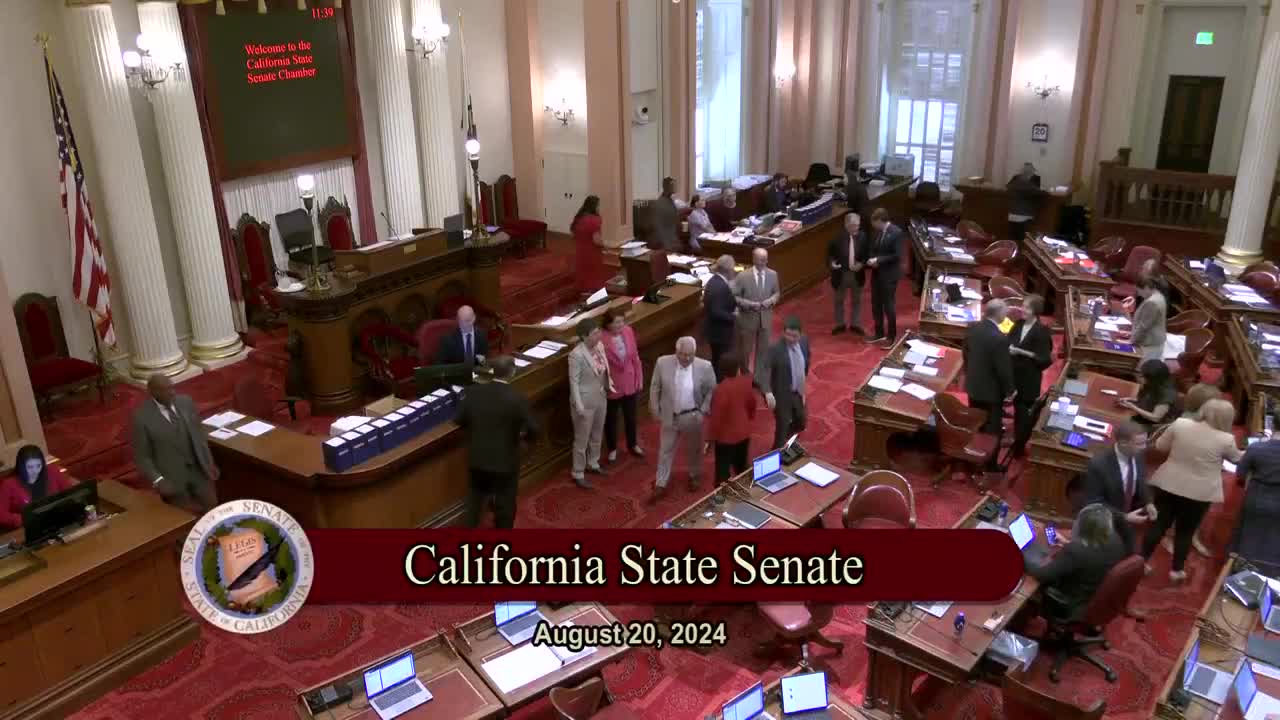 2MIN
Senate Floor
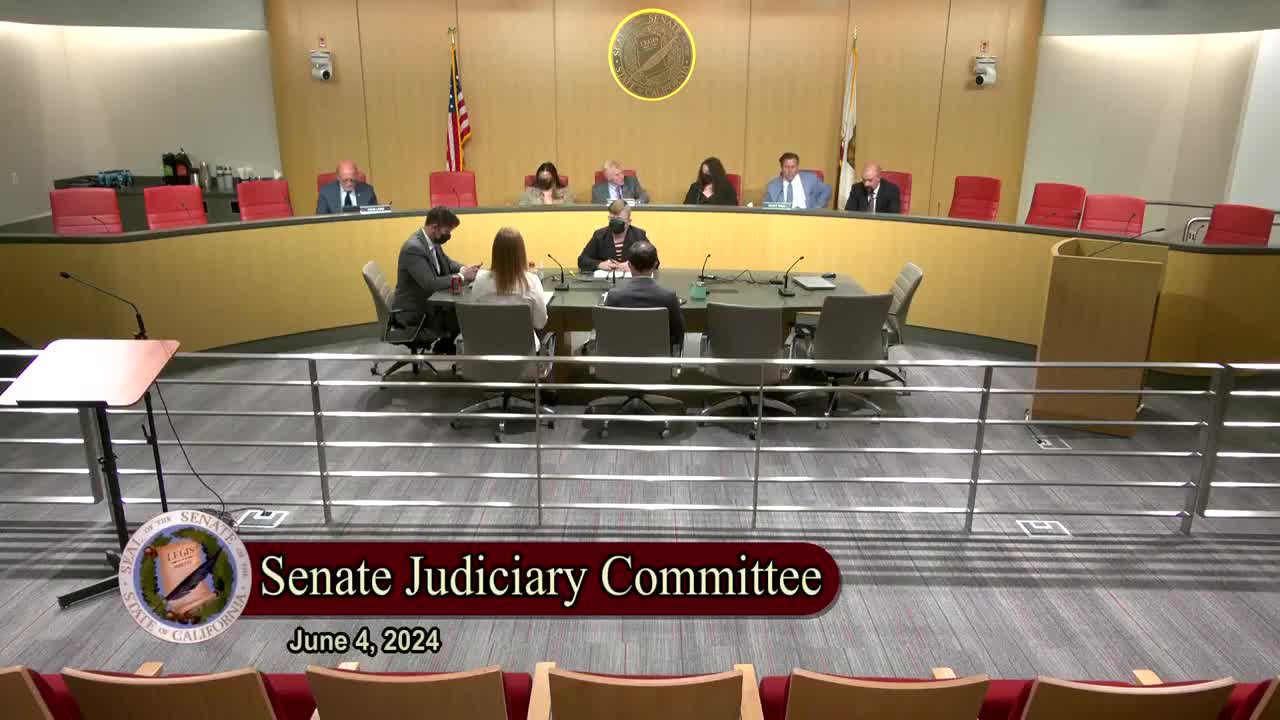 7MIN
Senate Standing Committee on Judiciary
 1MIN
Assembly Floor
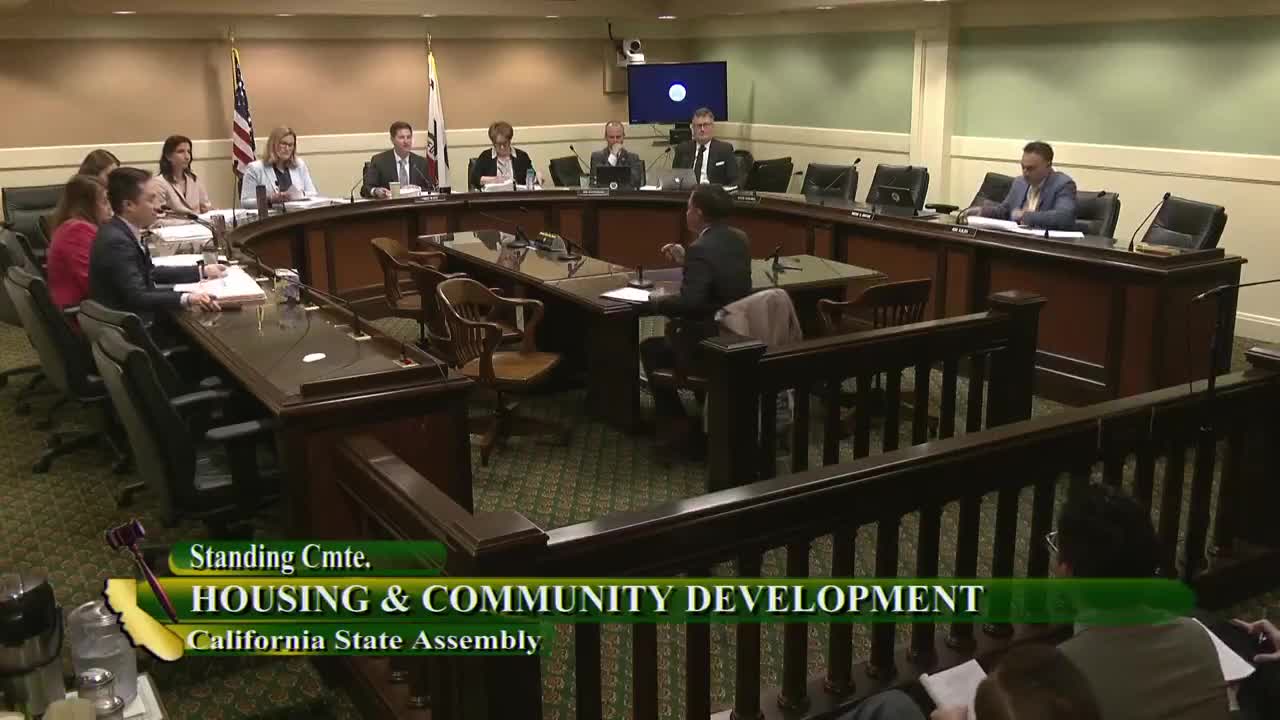 7MIN
Assembly Standing Committee on Housing and Community Development
Bill Author

Bill Co-Author(s):