AB 2420: Criminal records: sealing.
- Session Year: 2023-2024
- House: Assembly
- Latest Version Date: 2024-02-13
Current Status:
Failed
(2024-05-16: In committee: Held under submission.)
Introduced
In Committee
First Chamber
In Committee
Second Chamber
Enacted
What does this bill do?
This bill lets people whose convictions were later set aside and dismissed (for example under Penal Code sections 1203.4 or 1203.4a, which allow clearing convictions after probation) petition a court to have the related arrest and records sealed. It also requires local law enforcement to seal those arrest records when ordered, which may create a state‑mandated local program.
The summary is provided by generative AI which can make mistakes. For original language, please view the details in the table below.
Existing law allows a person who has suffered an arrest that did not result in a conviction, or resulted in a conviction that was subsequently vacated or reversed on appeal, to petition the court to have their arrest and related records sealed. Existing law allows a person who has fulfilled the conditions of probation, or was convicted of a misdemeanor and not granted probation, to set the conviction aside and dismiss the accusation or information against them.
This bill would allow a person who has had their conviction set aside and dismissed to petition to have their arrest and related records sealed. Because this bill would result in additional duties on local law enforcement agencies to seal these arrest records, this bill would impose a state-mandated local program.
The California Constitution requires the state to reimburse local agencies and school districts for certain costs mandated by the state. Statutory provisions establish procedures for making that reimbursement.
This bill would provide that, if the Commission on State Mandates determines that the bill contains costs mandated by the state, reimbursement for those costs shall be made pursuant to the statutory provisions noted above.
(a)A person who has suffered an arrest that did not result in a conviction may petition the court to have his or her their arrest and related records sealed, as described in Section 851.92.
(1)For purposes of this section, an arrest did not result in a conviction if any of the following are true:
(A)The statute of limitations has run on every offense upon which the arrest was based and the prosecuting attorney of the city or county that would have had jurisdiction over the offense or offenses upon which the arrest was based has not filed an accusatory pleading based on the arrest.
(B)The prosecuting attorney filed an accusatory pleading based on the arrest, but, with respect to all charges, one or more of the following has occurred:
(i)No conviction occurred, the charge has been dismissed, and the charge may not be refiled.
(ii)No conviction occurred and the arrestee has been acquitted of the charges.
(iii)A conviction occurred, but has been vacated or reversed on appeal, all appellate remedies have been exhausted, and the charge may not be refiled.
(iv)A conviction occurred, but has been dismissed pursuant to Section 1203.4 or 1203.4a.
(2)A person is not eligible for relief under this section in any of the following circumstances:
(A)He or she The person may still be charged with any of the offenses upon which the arrest was based.
(B)Any of the arrest charges, as specified by the law enforcement agency that conducted the arrest, or any of the charges in the accusatory pleading based on the arrest, if filed, is a charge of murder or any other offense for which there is no statute of limitations, except when the person has been acquitted or found factually innocent of the charge.
(C)The petitioner intentionally evaded law enforcement efforts to prosecute the arrest, including by absconding from the jurisdiction in which the arrest occurred. The existence of bench warrants or failures to appear that were adjudicated before the case closed with no conviction does not establish intentional evasion.
(D)The petitioner intentionally evaded law enforcement efforts to prosecute the arrest by engaging in identity fraud and was subsequently charged with a crime for that act of identity fraud.
(b)(1)A petition to seal an arrest shall:
(A)Be verified.
(B)Be filed in the court in which the accusatory pleading based on the arrest was filed or, if no accusatory pleading was filed, in a court with criminal jurisdiction in the city or county in which the arrest occurred.
(C)Be filed at least 15 days prior to the hearing on the petition.
(D)Be served, by copy, upon the prosecuting attorney of the city or county in which the arrest occurred and upon the law enforcement agency that made the arrest at least 15 days prior to the hearing on the petition.
(E)Include all of the following information:
(i)The petitioners name and date of birth.
(ii)The date of the arrest for which sealing is sought.
(iii)The city and county where the arrest took place.
(iv)The law enforcement agency that made the arrest.
(v)Any other information identifying the arrest that is available from the law enforcement agency that conducted the arrest or from the court in which the accusatory pleading, if any, based on the arrest was filed, including, but not limited to, the case number for the police investigative report documenting the arrest, and the court number under which the arrest was reviewed by the prosecuting attorney or under which the prosecuting attorney filed an accusatory pleading.
(vi)The offenses upon which the arrest was based or, if an accusatory pleading was filed based on the arrest, the charges in the accusatory pleading.
(vii)A statement that the petitioner is entitled to have his or her their arrest sealed as a matter of right or, if the petitioner is requesting to have his or her their arrest sealed in the interests of justice, how the interests of justice would be served by granting the petition, accompanied by declarations made directly and verified by the petitioner, his or her their supporting declarants, or both.
(2)The court may deny a petition for failing to meet any of the requirements described in paragraph (1).
(3)(A)The Judicial Council shall furnish forms to be utilized by a person applying to have his or her their arrest sealed pursuant to this section. The petition form shall include all of the information required to be included in the petition by paragraph (1) of subdivision (b), shall be available in English, Spanish, Chinese, Vietnamese, and Korean, and shall include a statement that the petition form is available in additional languages and the Internet Web site internet website where the form is available in alternative languages. The forms shall include notice of other means to address arrest records, including a determination of factual innocence under Section 851.8 and deeming an arrest a detention under Section 849.5.
(B)(i)A facility at which an arrestee is detained shall, at the request of an arrestee upon release, provide the forms furnished by Judicial Council pursuant to subparagraph (A) to the arrestee.
(ii)A facility at which an arrestee is detained shall post a sign containing the following information: A person who has been arrested but not convicted may petition the court to have his or her their arrest and related records sealed. The petition form is available on the Internet or upon request in this facility.
(c)A petition to seal an arrest record pursuant to this section may be granted as a matter of right or in the interests of justice.
(1)A petitioner who is eligible for relief under subdivision (a) is entitled to have his or her their arrest sealed as a matter of right unless he or she is they are subject to paragraph (2).
(2)(A)(i)A petitioner may have his or her their arrest sealed only upon a showing that the sealing would serve the interests of justice if any of the offenses upon which the arrest was based, as specified by the law enforcement agency that made the arrest, or, if an accusatory pleading was filed, any of the charges in the accusatory pleading, was one of the following:
(I)Domestic violence, if the petitioners record demonstrates a pattern of domestic violence arrests, convictions, or both.
(II)Child abuse, if the petitioners record demonstrates a pattern of child abuse arrests, convictions, or both.
(III)Elder abuse, if the petitioners record demonstrates a pattern of elder abuse arrests, convictions, or both.
(ii)For purposes of this subparagraph, pattern means two or more convictions, or five or more arrests, for separate offenses occurring on separate occasions within three years from at least one of the other convictions or arrests.
(B)In determining whether the interests of justice would be served by sealing an arrest record pursuant to this section, the court may consider any relevant factors, including, but not limited to, any of the following:
(i)Hardship to the petitioner caused by the arrest that is the subject of the petition.
(ii)Declarations or evidence regarding the petitioners good character.
(iii)Declarations or evidence regarding the arrest.
(iv)The petitioners record of convictions.
(d)(1)At a hearing on a petition under this section, the petitioner, the prosecuting attorney, and, through the prosecuting attorney, the arresting agency may present evidence to the court. Notwithstanding Section 1538.5 or 1539, the hearing may be heard and determined upon declarations, affidavits, police investigative reports, copies of state summary criminal history information and local summary criminal history information, or any other evidence submitted by the parties that is material, relevant, and reliable.
(2)The petitioner has the initial burden of proof to show that he or she is they are entitled to have his or her their arrest sealed as a matter of right or that sealing would serve the interests of justice. If the court finds that petitioner has satisfied his or her their burden of proof, then the burden of proof shall shift to the respondent prosecuting attorney.
(e)If the court grants a petition pursuant to this section, the court shall do all of the following:
(1)Furnish a disposition report to the Department of Justice, pursuant to Section 13151, stating that relief was granted under this section.
(2)(A)Issue a written ruling and order to the petitioner, the prosecuting attorney, and to the law enforcement agency that made the arrest that states all of the following:
(B)The record of arrest has been sealed as to petitioner, the arrest is deemed not to have occurred, the petitioner may answer any question relating to the sealed arrest accordingly, and the petitioner is released from all penalties and disabilities resulting from the arrest, except as provided in Section 851.92 and as follows:
(i)The sealed arrest may be pleaded and proved in any subsequent prosecution of the petitioner for any other offense, and shall have the same effect as if it had not been sealed.
(ii)The sealing of an arrest pursuant to this section does not relieve the petitioner of the obligation to disclose the arrest, if otherwise required by law, in response to any direct question contained in a questionnaire or application for public office, for employment as a peace officer, for licensure by any state or local agency, or for contracting with the California State Lottery Commission.
(iii)The sealing of an arrest pursuant to this section does not affect petitioners authorization to own, possess, or have in his or her their custody or control any firearm, or his or her their susceptibility to conviction under Chapter 2 (commencing with Section 29800) of Division 9 of Title 4 of Part 6, if the arrest would otherwise affect this authorization or susceptibility.
(iv)The sealing of an arrest pursuant to this section does not affect any prohibition from holding public office that would otherwise apply under law as a result of the arrest.
SEC. 2.If the Commission on State Mandates determines that this act contains costs mandated by the state, reimbursement to local agencies and school districts for those costs shall be made pursuant to Part 7 (commencing with Section 17500) of Division 4 of Title 2 of the Government Code.
|
Date
|
Status
|
|---|---|
| May 16, 2024 | In committee: Held under submission. |
| Apr 17, 2024 | In committee: Set, first hearing. Referred to APPR. suspense file. |
| Mar 19, 2024 | From committee: Do pass and re-refer to Com. on APPR. (Ayes 6. Noes 0.) (March 19). Re-referred to Com. on APPR. |
| Feb 26, 2024 | Referred to Com. on PUB. S. |
| Feb 14, 2024 | From printer. May be heard in committee March 15. |
| Feb 13, 2024 | Read first time. To print. |
|
Date
|
Description
|
Location
|
Votes
|
|
|---|---|---|---|---|
| Mar 19, 2024 | Do pass and be re-referred to the Committee on [Appropriations] | Assembly Standing Committee on Public Safety |
Passed |
This list shows positions taken on this bill by organizations on the date displayed, which is linked to the original source.
Positions by individuals are not included.
|
Organization
|
Position
|
Date
|
|---|---|---|
| ACLU Action | * Support | Mar 19, 2024 |
| ACLU of Northern California | * Support | Mar 19, 2024 |
| All of Us or None | * Support | Mar 19, 2024 |
| Anti-Recidivism Coalition | * Support | Mar 19, 2024 |
| California Attorneys For Criminal Justice | * Support | Mar 19, 2024 |
| California Public Defenders Association | * Support | Mar 19, 2024 |
| Californians for Safety and Justice | * Support | Mar 19, 2024 |
| Californians United for a Responsible Budget | * Support | Mar 19, 2024 |
| Ella Baker Center For Human Rights | * Support | Mar 19, 2024 |
| Legal Services for Prisoners with Children | * Support | Mar 19, 2024 |
Date of Hearing: April 17, 2024
ASSEMBLY COMMITTEE ON APPROPRIATIONS
Buffy Wicks, Chair
ABPCA Bill Id:AB 2420
Author:(Lowenthal) – As Introduced Ver:February 13, 2024
Policy Committee: | Public Safety | Vote: | 6 - 0 |
|
| ||
|
|
Urgency: No State Mandated Local Program: Yes Reimbursable: Yes
SUMMARY:
This bill authorizes a person whose arrest or conviction was expunged to petition the court to have related records sealed.
FISCAL EFFECT:
- Costs (Trial Court Trust Fund, General Fund) to the courts of an unknown but potentially significant amount. Actual costs will depend on the number of petitions filed and the amount of court time needed to adjudicate each petition. It generally costs approximately $1,000 to operate a courtroom for one hour. Although courts are not funded on the basis of workload, increased pressure on the Trial Court Trust Fund may create a need for increased funding for courts from the General Fund. The Governor’s 2024-25 budget proposes $83.1 million ongoing from the General Fund to backfill declining revenue to the Trial Court Trust Fund.
- Ongoing costs to the Department of Justice (DOJ) (General Fund), likely in the hundreds of thousands of dollars annually. Costs will likely be higher in the first few years of implementation as historical criminal records are processed, with costs falling and leveling off thereafter. DOJ projects staffing costs of $621,000 in Fiscal Year (FY) 2024-25, $1,062,000 in FY 2025-26, $710,000 in FY 2026-27, and $340,000 in FY 2027-28 and ongoing for program technicians, program analysts, and additional attorney workload in DOJ’s Office of General Counsel.
- Likely reimbursable costs (local funds, General Fund) of an unknown amount to local law enforcement agencies to seal arrest records upon a court order. Actual costs will depend on the number of petitions granted and the amount of staff time needed to seal records. General Fund costs will depend on whether the duties imposed by this bill constitute a reimbursable state mandate, as determined by the Commission on State Mandates.
According to the Legislative Analyst’s Office, the General Fund faces a structural deficit in the tens of billions of dollars over the next several fiscal years.
COMMENTS:
- Purpose. According to the author:
AB 2420 will allow individuals who have been convicted of low-level, misdemeanor crimes to be eligible to have their records sealed, enabling them to once again engage in society without the loss of civil rights, public benefits, employment opportunities, housing eligibility, and freedom to live and work without restriction that these convictions too often cause.
- Background. Expungement is a legal process by which a court may set aside and dismiss a person’s arrest and criminal conviction. However, even offenses that are expunged from a person’s criminal record may be accessed by some employers, licensing agencies, and credit agencies. According to supporters of this measure, people whose records have been expunged still experience significant difficulty obtaining employment, housing, and acceptance in the community due to their criminal histories.
This bill allows a person who received an expungement following successful completion of probation to petition the court to have their arrest and case-related documentation sealed. “Sealing” means the records related to the person’s arrest and criminal conviction may not be accessed by the public, though they may still be accessed by certain government agencies. If a qualifying person files a petition for sealing under this bill, the court may order a hearing to gather evidence about the merits of the request to seal. The burden of proof is on the person who filed the petition to show that they have a right to have the records sealed or that doing so would be in the interest of justice. At the hearing, prosecutors and the arresting agency are also entitled to present evidence. If the court grants the petition, it must report to DOJ that relief was granted, and DOJ, the prosecuting agency, and the arresting agency must seal their records.
Analysis Prepared by: Annika Carlson / APPR. / (916) 319-2081
Date of Hearing:
Counsel: Kimberly Horiuchi
ASSEMBLY COMMITTEE ON PUBLIC SAFETY
Kevin McCarty, Chair
ABPCA Bill Id:AB 2420
Author:(Lowenthal) – As Introduced Ver:February 13, 2024
SUMMARY:
Authorizes any person who had their arrest or conviction set aside and dismissed pursuant to existing law related to expungements to petition the court to have their arrest and related records sealed.
EXISTING LAW:
- Authorizes any person who is convicted of a crime, as specified, and has fulfilled the conditions of probation or has been discharged prior to termination of probation to petition the court to withdraw their plea of guilty or plea of nolo contendere and enter a plea of not guilty; or, if they have been convicted after a plea of not guilty, the court shall set aside the verdict of guilty; and, in either case, the court shall thereupon dismiss the accusations or information against the defendant. (Pen. Code, § 1203.4, subd. (a)(1).)
- Requires the DOJ, as of July 1, 2022, and subject to an appropriation in the annual Budget Act, on a monthly basis, to review the records in the statewide criminal justice databases, and based on information in the state summary criminal history repository and the Supervised Release File, identify persons with convictions that meet specified criteria and are eligible for automatic conviction record relief. (Pen. Code § 1203.425, subd. (a)(1)(A).)
- States that a person is eligible for automatic conviction relief if they meet all of the following conditions:
- The person is not required to register pursuant to the Sex Offender Registration Act;
- The person does not have an active record for local, state, or federal supervision in the Supervised Release File;
- Based upon the information available in the department’s record, including disposition dates and sentencing terms, it does not appear that the person is currently serving a sentence for any offense and there is no indication of any pending criminal charges;
- Except as otherwise provided, there is no indication that the conviction resulted in a sentence of incarceration in the state prison; and,
- The conviction occurred on or after January 1, 2021, and meets either of the following criteria:
- The defendant was sentenced to probation and, based upon the disposition date and the term of probation specified in the department’s records, appears to have completed their term of probation without revocation; or,
- The defendant was convicted of an infraction or misdemeanor, was not granted probation, and, based upon the disposition date and the term specified in the department’s records, the defendant appears to have completed their sentence, and at least one calendar year has elapsed since the date of judgment. (Pen. Code § 1203.425, subd. (a)(1)(A)(B).)
- The defendant was sentenced to probation and, based upon the disposition date and the term of probation specified in the department’s records, appears to have completed their term of probation without revocation; or,
- The person is not required to register pursuant to the Sex Offender Registration Act;
- Requires the DOJ to grant relief, including dismissal of a conviction, to a person who is eligible, without requiring a petition or motion by a party for that relief if the relevant information is present in the department’s electronic records. (Pen. Code § 1203.425, subd. (a)(2)(A).)
- States that a person who has suffered an arrest that did not result in a conviction, as specified, may petition the court to have his or her arrest and related records sealed. (Pen. Code, § 851.91, subd. (a).)
- Specifies that an arrest that did not result in a conviction has occurred if any of the following are true:
- The statute of limitations has run on every offense upon which the arrest was based and the prosecuting attorney of the city or county that would have had jurisdiction over the offense or offenses upon which the arrest was based has not filed an accusatory pleading based on the arrest; or
- The prosecuting attorney filed an accusatory pleading based on the arrest, but, with respect to all charges, one or more of the following has occurred:
- No conviction occurred, the charge has been dismissed, and the charge may not be refiled;
- No conviction occurred and the arrestee has been acquitted of the charges; or,
- A conviction occurred, but has been vacated or reversed on appeal, all appellate remedies have been exhausted, and the charge may not be refiled. (Pen. Code, § 851.91, subd. (a).)
- No conviction occurred, the charge has been dismissed, and the charge may not be refiled;
- The statute of limitations has run on every offense upon which the arrest was based and the prosecuting attorney of the city or county that would have had jurisdiction over the offense or offenses upon which the arrest was based has not filed an accusatory pleading based on the arrest; or
- Specifies that a person is not eligible for relief in the form of sealing an arrest for which no conviction has occurred in a variety of circumstances, including when the arrest was for a crime that has no statute of limitations, such as murder, or when the person evaded law enforcement efforts to prosecute the arrest, including by absconding from the jurisdiction in which the arrest occurred. (Pen. Code, § 851.91, subd. (a)(2).)
- Specifies procedures for filing a petition to seal an arrest record for an arrest that did not result in a conviction and allows a court to deny a petition to seal for failing to meet any of those procedural requirements. (Pen. Code, § 851.91, subds. (b) and (d).)
- Specifies that a petition to seal an arrest record for an arrest that did not result in a conviction may be granted as a matter of right or in the interests of justice, as specified. (Pen. Code, § 851.91, subd. (c).)
FISCAL EFFECT:
Unknown
COMMENTS:
- Author's Statement: According to the author: “AB 2420 will allow individuals who have been convicted of low-level, misdemeanor crimes to be eligible to have their records sealed, enabling them to once again engage in society without the loss of civil rights, public benefits, employment opportunities, housing eligibility, and freedom to live and work without restriction that these convictions too often cause. … Through allowing persons convicted of low-level, misdemeanor crimes to have their records sealed, they will be able to more successfully re-assimilate into society. Criminal records can act as a scarlet letter, negatively effecting the individual’s chances of securing a job, housing, and educational opportunities. This bill would ensure that a low level, misdemeanor crime that is eligible for dismissal and expungement does not carry with it, a potentially very long lasting set of consequences and restrictions to how that individual is able to engage with society.”
- Automatic Conviction Relief: In 2019, the Legislature passed AB 1076 (Ting), Chapter 578, Statutes of 2019 which established a procedure in which persons could have certain convictions dismissed and have such information withheld from disclosure without having to file a petition with the court. (Pen. Code, § 1203.425.) The purpose of AB 1076 was to remove barriers to housing and employment for convicted and arrested individuals in order to foster their successful reintegration into the community.
AB 200 (Committee on Budget), Chapter 58, Statutes of 2022, delayed the implementation date of AB 1076 related to prohibiting dissemination of criminal records for which relief was granted to January 1, 2023. SB 731 (Durazo), Chapter 814, Statutes of 2022, as relevant to this bill, expanded automatic conviction relief to a person who was convicted of a felony on or after January 1, 2005, and who has successfully completed their sentence (including any term of probation) after having had their probation revoked. SB 763 (Durazo) proposes to allow for automatic conviction relief for any conviction occurring on or after January 1, 1973. SB 763 was held on suspense in the Senate Appropriations Committee.
- Expungement: As a general matter, expungement is a court-ordered dismissal of pending charges or, in some cases, may involve dismissal after a conviction. (See Pen. Code, § 1203.4, subd. (a).) Additionally, Penal Code section 1203.425 extends automatic conviction record relief to misdemeanor convictions where the sentence has been successfully completed following a revocation of probation. (Pen Code, § 1203.425, subd. (a)(1).)
However, in actual practice, the effects of a dismissal are often severely restricted. (52 Ops. Cal. Atty. Gen. 118, 118–119 (1969) [dismissal of criminal conviction does not release person from responsibility of registering as sex offender when civilly committed].) The effects are limited to reinstitution of voting rights relief from criminal registration statutes or relief from impeachment, except when testifying as a criminal defendant. Many expungement statutes offer broader relief for a narrow class of people. They provide for the sealing of a person’s criminal records from the public and, in two cases, provide for both the sealing and the later destruction of the records.[1] In addition, under the California Criminal Record Purge Program, the California Department of Justice (“DOJ”) voluntarily destroys criminal records in its files after they have been retained for requisite periods of time.
Pursuant to Penal Code Section 1203.4, a person must be released from penalties and disabilities resulting from conviction in any case in which the person has been granted and successfully completed probation, by fulfilling the conditions of probation for the entire period. (People v. Chandler (1988) 203 Cal. App. 3d 782, 788–90.) The court has discretion to do so in the interests of justice in other probation cases. Penal Code Section 1203.4, subdivision (a) expungement is not available from a conviction for certain sex offenses, certain misdemeanor offenses under the Vehicle Code, and certain infractions. (See Pen. Code, § 261.5, subd. (d); and Veh. Code, §§ 12810, subd. (a) and 42002.1.)
This bill proposes to allow any person who received an expungement following successful completion of probation to petition the court to have their arrest and case related documentation sealed.
- Collateral Consequences: Collateral consequences are legal disabilities imposed by law as a result of a criminal conviction regardless of whether a convicted individual serves any time incarcerated. (See Description, National Inventory of Collateral Consequences.)[2] These consequences create social and economic barriers for people reentering into society following incarceration. Collateral consequences are known to adversely affect adoptions, housing, welfare, immigration, employment, professional licensure, property rights, mobility, and other opportunities—the collective effect of which increases recidivism and undermines meaningful reentry of the convicted for a lifetime. (See Michael Pinard, Reflections and Perspectives on Reentry and Collateral Consequences (2010) 100 J.L & Criminology 1213, 1220.)
Moreover, collateral consequences disproportionately affect Black, Indigenous, and People of Color as well as people from historically marginalized communities. (American Bar Association (2015) Collateral Consequences of Criminal Convictions Judicial Bench Book, National Inventory of Collateral Consequences of Criminal Convictions, p. 4.)[3] Despite the sweeping adverse consequences flowing from any criminal conviction, defendants are generally not entitled, as a matter of due process, to be warned of these consequences, either before accepting a plea or upon conviction. Although the U.S. Supreme Court has required consideration of certain immigration consequences of a criminal conviction, the Court left open what other disenfranchisements might rise to the level requiring constitutional protection. (See Padilla v. Kentucky (2010) 559 U.S.356.)
The negative impact of collateral consequences on a returning citizen’s chances of successful re-entry into their community are clear and well-documented --consider barriers to employment: 87% of employers conduct background checks, and recent surveys indicate that most employers are unwilling to hire applicants who have served time in prison. According to the ABA Judicial Bench Book on Collateral Consequences in 2015:
For those who do find work, the resultant pay cuts are staggering: formerly incarcerated men take home 40% less pay annually, resulting in an average earnings loss of nearly $179,000 by age 48. The nation as a whole suffers from this unfortunate reality. In 2008, the Center for Economic Policy Research estimated that the loss in GDP due to employment barriers for people with criminal records was as much as $65 billion annually—higher than the GDPs of more than half the world’s nations—and employers are losing qualified and motivated workers as a result of the stigma associated with prior incarceration.
For many returning citizens, collateral-consequence laws put public housing out of reach. Federal law includes a mandatory ban on access to public housing for people with certain types of convictions and grants discretion to local housing authorities to deny housing based on any criminal activity. Entire households may be evicted based on the arrest or pending criminal charge of one household member. This one-strike provision has a profound impact on family structure. Many families residing in public housing have to sign agreements that returning citizens’ family members cannot live with or even visit them at their public housing unit. Private housing is not easy to come by either. Most landlords use background and credit checks to screen out prospective tenants with criminal records. It is no wonder, then, that nearly one-third of individuals released from incarceration expect to go to homeless shelters, which are more often than not unsafe. Obviously, lack of stable housing undoubtedly contributes to increased recidivism. (American Bar Association (2015) Collateral Consequences of Criminal Convictions Judicial Bench Book, National Inventory of Collateral Consequences of Criminal Convictions, p. 4).
Since this bill allows any person who had a conviction dismissed pursuant to expungement to petition the court to seal their arrest and related records, it reduces barriers to reentry following incarceration. By expanding the eligibility for records sealing to people who received an expungement it will likely expand opportunities for the formerly incarcerated or convicted by eliminating collateral consequences. Finally, existing law already allows people who had a matter dismissed following expungement to seal their conviction and DOJ, subject to a budget appropriation, is required to update its databases to reflect a reduction from a felony to a misdemeanor or if the matter was dismissed. (Pen. Code, § 1203.425, subd. (a)(3)(A).)
- Argument in Support: According to the California Public Defenders Association (CPDA): “AB 2420 removes yet another legal barrier and obstacle for individuals who have made mistakes, paid their debt to society, and now want to make a better life for themselves and those who depend on them. In the future, we hope that the Legislature considers expanding the record sealing provisions to individuals who successfully completed misdemeanor diversion but were never arrested in the first place but came to court after getting a prosecutor letter’s telling them to come to court. Unfortunately, the Los Angeles Appellate Division in People v. Hadim (2022) 82 Cal.App.5thSupp. 39, barred individuals who had never been arrested from relief. This is another gap in Penal Code Section 851.91 which also needs to be addressed. AB 2420 is a commonsense, cost-effective solution that allows rehabilitated individuals to become productive tax paying members of their communities.”
- Argument in Opposition: According to the California District Attorneys Association: “While section 1203.4 broadly provides relief for most felony convictions, section 851.91 limits the interest of justice exclusion to a narrow set of three types of offenses. If passed, AB 2420 would expand sealing to offenses that are equally and more serious than the crimes that are listed as exceptions. This expansion of the sealing statute also directly conflicts with a prosecutor’s constitutional and statutory discovery obligations and hampers the ability to introduce relevant, admissible evidence at trial. Under Brady v. Maryland (1963) 363 U.S. 83 and its progeny, a prosecutor must disclose favorable, material evidence to the accused. This obligation is self-executing and does not depend upon a request by the defense. Evidence is favorable if it exculpates the accused or can impeach a prosecution witness.
“Prior convictions, irrespective of whether those convictions have been expunged or sealed, may constitute Brady evidence, which the prosecution is required to disclose. And importantly, AB 2420 hampers a prosecutor’s ability to affirmatively use the conviction or underlying conduct to attack the credibility of a witness. The provision would also prevent a prosecutor from seeking to admit evidence that a person committed a crime to show motive, opportunity, intent, preparation, plan, knowledge, identity, or absence of mistake under section 1101, subdivision (b) of the Evidence Code. This bill would also obstruct a prosecutor’s ability to seek to admit evidence of another sexual offense or acts of domestic violence, elder abuse, or child abuse. (Evid. Code, §§ 1108, 1109.)
“Other statutes, like Penal Code section 851.7, create an exception so that a prosecuting attorney may comply with their discovery obligations. For example, subdivision (g)(1) of section 851.7 provides that a prosecuting attorney may access, inspect, or use a record that has been sealed under that provision “in order to meet a statutory or constitutional obligation to disclose favorable or exculpatory evidence to a defendant in a criminal case in which the prosecuting attorney has reason to believe that access to the record is necessary to meet the disclosure obligation.”
“Critically, other provisions, like Penal Code sections 851.92, explicitly state that sealing in no way hampers the ability of criminal justice agencies to “access, furnish to other criminal agencies, and use” any sealed records—to the same extent that they would have if the arrest had not been sealed. (Pen. Code, § 851.92, subd. (b)(6); see also Pen. Code, § 851.92. subd. (d)(2).) Unfortunately, AB 2420 includes no such exceptions.”
- Related Legislation: SB 763 (Durazo) would apply automatic conviction record relief to specified felony convictions occurring on or after January 1, 1973, instead of on or after January 1, 2005. SB 763 was held on the Senate Appropriations suspense file.
- Prior Legislation:
- SB 731 (Durazo), Chapter 814, Statutes 2022, as relevant here, expanded automatic arrest record and conviction relief to additional felony offenses, as specified.
- AB 1038 (Ting), of the 2021-2022 Legislative Session, would have required DOJ, on a monthly basis, to review the records in the statewide criminal justice databases and to identify persons who are eligible for arrest record relief or automatic conviction record relief by having their arrest records, or their criminal conviction records, withheld from disclosure or modified, as specified, for all convictions that occurred on or after January 1, 1973, rather than just those that occurred on or after January 1, 2021. AB 1038 was not heard in the Senate Public Safety Committee.
- SB 118 (Committee on Budget and Fiscal Review), Chapter 29, Statutes of 2020, adjusted the timeline for implementation of AB 1076 (Ting), Chapter 578, Statutes of 2019.
- AB 88 (Committee on Budget), of the 2019-2020 Legislative Session, would have adjusted the timeline for implementation of AB 1076 (Ting), Chapter 578, Statutes of 2019. AB 88 died on the Senate inactive file.
- AB 1076 (Ting), Chapter 578, Statutes of 2019, requires the DOJ, as of January 1, 2021, and subject to an appropriation, to review its criminal justice databases on a weekly basis, identify persons who are eligible for relief by having either their arrest records or conviction records withheld from disclosure, with specified exceptions, and required the DOJ to grant that relief to the eligible person without a petition or motion to being filed on the person's behalf.
REGISTERED SUPPORT / OPPOSITION:
SUPPORT
ACLU California Action
California Attorneys for Criminal Justice
California Public Defenders Association
Californians for Safety and Justice
Ella Baker Center for Human Rights
Initiate Justice
OPPOSITION
California District Attorneys Association
Analysis Prepared by:
Kimberly Horiuchi / PUB. S. / (916) 319-3744
See Penal Code §§ 851.8 (sealing and destroying arrest records of factually innocent person never tried for offense), 851.85 (sealing record of person found factually innocent after acquittal), 851.86 (sealing record of person whose conviction was set aside based on determination of factual innocence), 851.87 (sealing arrest records after completion of pre-filing diversion program), 1000.4 (confidentiality of records after dismissal of charges under pretrial diversion program), 1001.9, 1001.33 (sealing arrest records of various pretrial diversion programs); Health & Safety Code § 11361.5 (sealing and destroying record of certain minor narcotics offenses).) ↑
http://www.abacollateralconsequences.org/description (last accessed March 14, 2024).
↑https://www.ojp.gov/pdffiles1/nij/grants/251583.pdf (last accessed March 14, 2024.) ↑
Discussed in Hearing
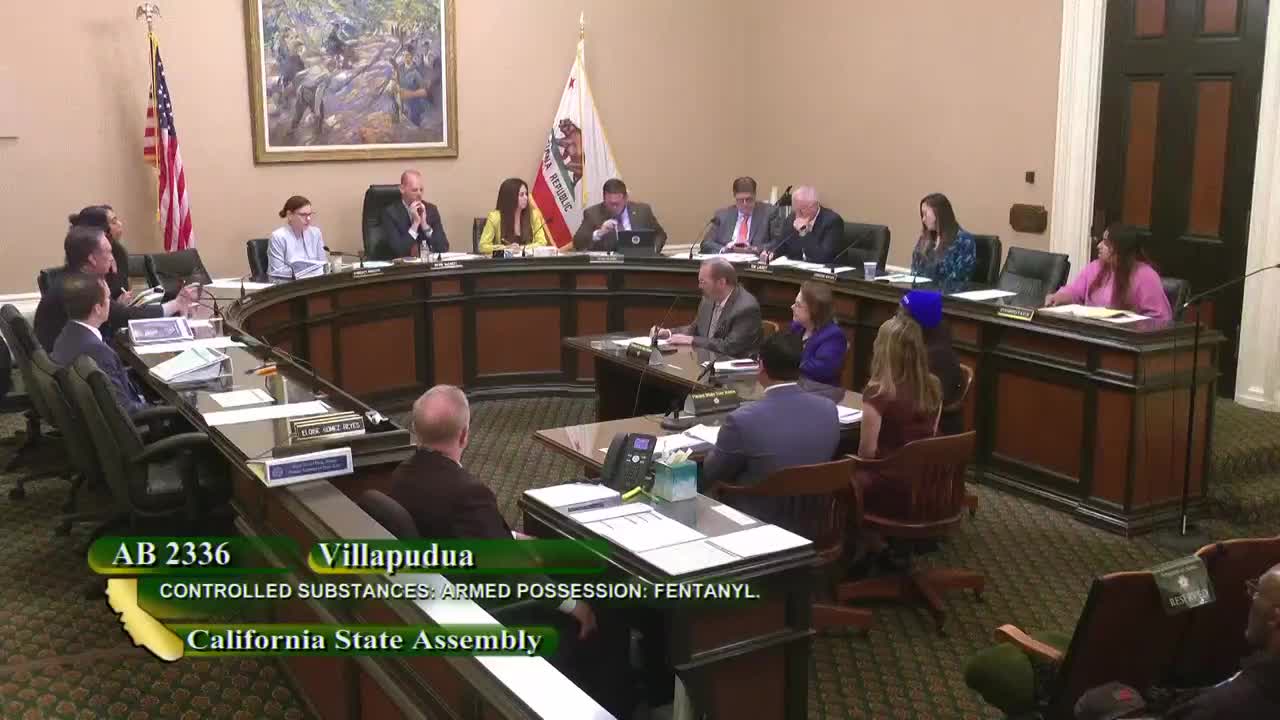 13MIN
Assembly Standing Committee on Public Safety
Bill Author

Bill Co-Author(s):