AB 2476: Childcare services: alternative payment programs.
- Session Year: 2023-2024
- House: Assembly
- Latest Version Date: 2024-05-16
Current Status:
Failed
(2024-08-15: In committee: Held under submission.)
Introduced
In Committee
First Chamber
In Committee
Second Chamber
Enacted
Existing law, the Child Care and Development Services Act, administered by the State Department of Social Services, establishes a system of childcare and development services for children up to 13 years of age. Existing law requires the department to contract with local contracting agencies for alternative payment programs for childcare services to be provided throughout the state. Existing law establishes a payment schedule for those programs. Existing law requires a childcare provider to submit to the alternative payment program a monthly attendance record or invoice, maintained in the unaltered original format in which it was created, for each child who received services. Existing law requires the alternative payment program to reimburse childcare providers based upon specified criteria, including the actual days and hours of attendance for those families with variable schedules.
This bill would remove the requirement that alternative payment programs reimburse childcare providers based on specified criteria and the requirement that an invoice be maintained in the unaltered original format in which it was created. The bill would require the department to ensure that childcare providers are reimbursed at the applicable regional market rate ceiling. The bill would also require that, commencing on April 30, 2026, alternative payment programs provide payment to childcare providers prior to the day the childcare begins for the child and require the department to compensate issue guidance for prospective payments to the alternative payment programs that reimburse childcare providers for the provision of state-funded subsidized childcare and development services no later than April 30, 2025.
Existing law, the Child Care and Development Services Act, administered by the State Department of Social Services, establishes a system of childcare and development services for children up to 13 years of age. Existing law requires the department to contract with local contracting agencies for alternative payment programs for childcare services to be provided throughout the state. Existing law establishes a payment schedule for those programs. Existing law requires a childcare provider to submit to the alternative payment program a monthly attendance record or invoice, maintained in the unaltered original format in which it was created, for each child who received services. Existing law requires the alternative payment program to reimburse childcare providers based upon specified criteria, including the actual days and hours of attendance for those families with variable schedules.
This bill would remove the requirement that alternative payment programs reimburse childcare providers based on specified criteria. criteria and the requirement that an invoice be maintained in the unaltered original format in which it was created. The bill would require the department to ensure that childcare providers are reimbursed at the applicable regional market rate ceiling. The bill would also require that, commencing on May 1, 2025, April 30, 2026, alternative payment programs provide payment to childcare providers prior to the day the childcare begins for the child and require the department to compensate the alternative payment programs that reimburse childcare providers for the provision of state-funded subsidized childcare and development services no later than February 1, April 30, 2025.
Existing law, the Child Care and Development Services Act, administered by the State Department of Social Services, establishes a system of childcare and development services for children up to 13 years of age. Existing law requires the department to contract with local contracting agencies for alternative payment programs for childcare services to be provided throughout the state. Existing law establishes a payment schedule for those programs. Existing law requires the alternative payment program to reimburse childcare providers based upon specified criteria, including the actual days and hours of attendance for those families with variable schedules.
This bill would remove the requirement that alternative payment programs reimburse childcare providers based on specified criteria. The bill would require the department to ensure that childcare providers are reimbursed at the applicable regional market rate ceiling. The bill would also require that, commencing on May 1, 2025, alternative payment programs provide payment to childcare providers prior to the day the childcare begins for the child and require the department to compensate the alternative payment programs that reimburse childcare providers for the provision of state-funded subsidized childcare and development services no later than February 1, 2025.
The Legislature finds and declares all of the following:
(a)All families ought to have fair and equitable access to childcare that supports both the learning and nurturing needs of babies and children.
(b)Subsidized families must have the same ability to pay a childcare provider or center the cost to cover providing care from the first day the care is provided.
(c)Family childcare providers are valued and integral to supporting the employers and a functioning economy.
(d)Family childcare providers and centers have costs that must be covered in order to keep their doors open serving their community.
(e)A set payment for providing childcare should be paid not later than the day the childcare is to begin.
SEC. 2.Section 10227.5 of the Welfare and Institutions Code is amended to read:10227.5.(a)Childcare providers authorized to provide services pursuant to this chapter shall submit to the alternative payment program a monthly attendance record or invoice for each child who received services that, at a minimum, documents the dates and actual times care was provided each day, including the time the child entered and the time the child left care each day. The information shall be documented on a daily basis.
(b)(1)The monthly attendance record or invoice shall, at a minimum, be signed by the parent or guardian of the child receiving services and the childcare provider once per month to attest that the childs attendance is accurately reflected. The verification of attendance shall be made by signature at the end of each month of care and under penalty of perjury by both the parent or guardian of the child receiving services and the childcare provider.
(2)(A)Notwithstanding paragraph (1) and pursuant to subdivision (d) of Section 10277, a childcare provider may submit a monthly attendance record or invoice without a parents signature when the parent has not communicated with the provider for a minimum of seven consecutive days, the provider has notified the contractor of the parents lack of communication in accordance with Section 18066.5 of Title 5 of the California Code of Regulations, and the contractor has documented the providers unsuccessful attempts to collect a signature.
(B)If the provisions of this paragraph are in conflict with the provisions of a memorandum of understanding reached pursuant to Section 10426, the memorandum of understanding shall be controlling without further legislative action, except that if such provisions of a memorandum of understanding require the expenditure of funds, the provisions shall not become effective unless approved by the Legislature in the annual Budget Act.
(c)The monthly attendance record shall be maintained by the childcare provider in the unaltered original format in which it was created, which may be in paper form or electronic format.
(d) The alternative payment program shall accept the monthly attendance record or invoice as documentation of the hours of care provided if the attendance record or invoice includes adequate information documented on a daily basis, including, at a minimum, the dates and actual times care was provided each day, including the time the child entered and the time the child left care each day.
(e) For purposes of reimbursement to providers through an alternative payment program, contractors shall not be required to track absences.
(f) For purposes of this section, a monthly attendance record or invoice is defined as documentation that includes, at a minimum, the name of the child receiving services, the dates and actual times care was provided each day, including the time the child entered and the time the child left care each day, that is signed under penalty of perjury by both the parent or guardian and the childcare provider, attesting that the information provided is accurate.
SEC. 3.Section 10227.7 is added to the Welfare and Institutions Code, to read:10227.7.Notwithstanding any other law, the department shall ensure that childcare providers for the provision of state-funded subsidized childcare and development services shall be reimbursed at the applicable regional market rate ceiling.
SEC. 4.Section 10277.6 is added to the Welfare and Institutions Code, to read:10277.6.Commencing April 30, 2026, alternative payment programs shall provide payment to a childcare provider for childcare services prior to the day the childcare begins for the child. The department shall compensate issue guidance for prospective payments to alternative payment programs that reimburse childcare providers for the provision of state-funded subsidized childcare and development services no later than April 30, 2025.
The Legislature finds and declares all of the following:
(a)All families ought to have fair and equitable access to childcare that supports both the learning and nurturing needs of babies and children.
(b)Subsidized families must have the same ability to pay a childcare provider or center the cost to cover providing care from the first day the care is provided.
(c)Family childcare providers are valued and integral to supporting the employers and a functioning economy.
(d)Family childcare providers and centers have costs that must be covered in order to keep their doors open serving their community.
(e)A set payment for providing childcare should be paid not later than then the day the childcare is to begin.
SEC. 2.Section 10227.5 of the Welfare and Institutions Codeis amended to read:10227.5.(a)Childcare providers authorized to provide services pursuant to this chapter shall submit to the alternative payment program a monthly attendance record or invoice for each child who received services that, at a minimum, documents the dates and actual times care was provided each day, including the time the child entered and the time the child left care each day. The information shall be documented on a daily basis.
(b)(1)The monthly attendance record or invoice shall, at a minimum, be signed by the parent or guardian of the child receiving services and the childcare provider once per month to attest that the childs attendance is accurately reflected. The verification of attendance shall be made by signature at the end of each month of care and under penalty of perjury by both the parent or guardian of the child receiving services and the childcare provider.
(2)(A)Notwithstanding paragraph (1) and pursuant to subdivision (d) of Section 10277, a childcare provider may submit a monthly attendance record or invoice without a parents signature when the parent has not communicated with the provider for a minimum of seven consecutive days, the provider has notified the contractor of the parents lack of communication in accordance with Section 18066.5 of Title 5 of the California Code of Regulations, and the contractor has documented the providers unsuccessful attempts to collect a signature.
(B)If the provisions of this paragraph are in conflict with the provisions of a memorandum of understanding reached pursuant to Section 10426, the memorandum of understanding shall be controlling without further legislative action, except that if such provisions of a memorandum of understanding require the expenditure of funds, the provisions shall not become effective unless approved by the Legislature in the annual Budget Act.
(c)The monthly attendance record or invoice shall be maintained by the childcare provider in the unaltered original format in which it was created, which may be in paper form or electronic format.
(d) The alternative payment program shall accept the monthly attendance record or invoice as documentation of the hours of care provided if the attendance record or invoice includes adequate information documented on a daily basis, including, at a minimum, the dates and actual times care was provided each day, including the time the child entered and the time the child left care each day.
(e) For purposes of reimbursement to providers through an alternative payment program, contractors shall not be required to track absences.
(f) For purposes of this section, a monthly attendance record or invoice is defined as documentation that includes, at a minimum, the name of the child receiving services, the dates and actual times care was provided each day, including the time the child entered and the time the child left care each day, that is signed under penalty of perjury by both the parent or guardian and the childcare provider, attesting that the information provided is accurate.
SEC. 3.Section 10227.7 is added to the Welfare and Institutions Code, to read:10227.7.Notwithstanding any other law, the department shall ensure that childcare providers for the provision of state-funded subsidized childcare and development services shall be reimbursed at the applicable regional market rate ceiling.
SEC. 4.Section 10277.6 is added to the Welfare and Institutions Code, to read:10277.6.Commencing May 1, 2025, April 30, 2026, alternative payment programs shall provide payment to a childcare provider for childcare services prior to the day the childcare begins for the child. The department shall compensate alternative payment programs that reimburse childcare providers for the provision of state-funded subsidized childcare and development services no later than February 1, April 30, 2025.
The Legislature finds and declares all of the following:
(a)All families ought to have fair and equitable access to childcare that supports both the learning and nurturing needs of babies and children.
(b)Subsidized families must have the same ability to pay a childcare provider or center the cost to cover providing care from the first day the care is provided.
(c)Family childcare providers are valued and integral to supporting the employers and a functioning economy.
(d)Family childcare providers and centers have costs that must be covered in order to keep their doors open serving their community.
(e)A set payment for providing childcare should be paid not later than then day the childcare is to begin.
SEC. 2.Section 10227.5 of the Welfare and Institutions Code is amended to read:10227.5.(a)Childcare providers authorized to provide services pursuant to this chapter shall submit to the alternative payment program a monthly attendance record or invoice for each child who received services that, at a minimum, documents the dates and actual times care was provided each day, including the time the child entered and the time the child left care each day. The information shall be documented on a daily basis.
(b)(1)The monthly attendance record or invoice shall, at a minimum, be signed by the parent or guardian of the child receiving services and the childcare provider once per month to attest that the childs attendance is accurately reflected. The verification of attendance shall be made by signature at the end of each month of care and under penalty of perjury by both the parent or guardian of the child receiving services and the childcare provider.
(2)(A)Notwithstanding paragraph (1) and pursuant to subdivision (d) of Section 10277, a childcare provider may submit a monthly attendance record or invoice without a parents signature when the parent has not communicated with the provider for a minimum of seven consecutive days, the provider has notified the contractor of the parents lack of communication in accordance with Section 18066.5 of Title 5 of the California Code of Regulations, and the contractor has documented the providers unsuccessful attempts to collect a signature.
(B)If the provisions of this paragraph are in conflict with the provisions of a memorandum of understanding reached pursuant to Section 10426, the memorandum of understanding shall be controlling without further legislative action, except that if such provisions of a memorandum of understanding require the expenditure of funds, the provisions shall not become effective unless approved by the Legislature in the annual Budget Act.
(c)The monthly attendance record or invoice shall be maintained by the childcare provider in the unaltered original format in which it was created, which may be in paper form or electronic format.
(d) The alternative payment program shall accept the monthly attendance record or invoice as documentation of the hours of care provided if the attendance record or invoice includes adequate information documented on a daily basis, including, at a minimum, the dates and actual times care was provided each day, including the time the child entered and the time the child left care each day. The alternative payment program shall reimburse childcare providers based upon the following criteria:
(1)The hours of service provided that are broadly consistent with certified hours of need.(2)For families with variable schedules, the actual days and hours of attendance, up to the maximum certified hours.(3)For license-exempt providers that provide part-time services, the actual days and hours of attendance, up to the maximum certified hours.(e) For purposes of reimbursement to providers through an alternative payment program, contractors shall not be required to track absences.
(f) For purposes of this section, a monthly attendance record or invoice is defined as documentation that includes, at a minimum, the name of the child receiving services, the dates and actual times care was provided each day, including the time the child entered and the time the child left care each day, that is signed under penalty of perjury by both the parent or guardian and the childcare provider, attesting that the information provided is accurate.
SEC. 3.Section 10227.7 is added to the Welfare and Institutions Code, to read:10227.7.Notwithstanding any other law, the department shall ensure that childcare providers for the provision of state-funded subsidized childcare and development services shall be reimbursed at the applicable regional market rate ceiling.
SEC. 4.Section 10277.6 is added to the Welfare and Institutions Code, to read:10277.6.Commencing May 1, 2025, alternative payment programs shall provide payment to a childcare provider for childcare services prior to the day the childcare begins for the child. The department shall compensate alternative payment programs that reimburse childcare providers for the provision of state-funded subsidized childcare and development services no later than February 1, 2025.
|
Date
|
Status
|
|---|---|
| Aug 15, 2024 | In committee: Held under submission. |
| Aug 5, 2024 | In committee: Referred to APPR suspense file. |
| Jul 2, 2024 | From committee: Do pass and re-refer to Com. on APPR. (Ayes 5. Noes 0.) (July 1). Re-referred to Com. on APPR. |
| Jun 5, 2024 | Referred to Com. on HUMAN S. |
| May 24, 2024 | In Senate. Read first time. To Com. on RLS. for assignment. |
| May 23, 2024 | Read third time. Passed. Ordered to the Senate. (Ayes 73. Noes 0. Page 5602.) |
| May 20, 2024 | Read second time. Ordered to third reading. |
| May 16, 2024 | Joint Rule 62(a), file notice suspended. (Page 5215.) |
| May 16, 2024 | Read second time and amended. Ordered returned to second reading. |
| May 16, 2024 | From committee: Amend, and do pass as amended. (Ayes 11. Noes 0.) (May 16). |
| May 16, 2024 | Assembly Rule 63 suspended. |
| May 15, 2024 | In committee: Set, first hearing. Referred to APPR. suspense file. |
| Apr 24, 2024 | From committee: Do pass and re-refer to Com. on APPR. (Ayes 5. Noes 0.) (April 23). Re-referred to Com. on APPR. |
| Apr 18, 2024 | Re-referred to Com. on HUM. S. |
| Apr 17, 2024 | From committee chair, with author's amendments: Amend, and re-refer to Com. on HUM. S. Read second time and amended. |
| Mar 4, 2024 | Referred to Com. on HUM. S. |
| Feb 14, 2024 | From printer. May be heard in committee March 15. |
| Feb 13, 2024 | Read first time. To print. |
|
Date
|
Description
|
Location
|
Votes
|
|
|---|---|---|---|---|
| Aug 5, 2024 | Placed on suspense file | Senate Standing Committee on Appropriations |
Passed |
|
| Jul 1, 2024 | Do pass, but first be re-referred to the Committee on [Appropriations] | Senate Standing Committee on Human Services |
Passed |
|
| May 23, 2024 | AB 2476 Bonta Assembly Third Reading | Assembly Floor |
Passed |
|
| May 16, 2024 | Do pass as amended. | Assembly Standing Committee on Appropriations |
Passed |
|
| Apr 23, 2024 | Do pass and be re-referred to the Committee on [Appropriations] | Assembly Standing Committee on Human Services |
Passed |
This list shows positions taken on this bill by organizations on the date displayed, which is linked to the original source.
Positions by individuals are not included.
|
Organization
|
Position
|
Date
|
|---|---|---|
| 4c's Alameda | ** Support | |
| 4c's of alameda county | ** Support | |
| 4c's Sonoma | ** Support | |
| 4Cs Sonoma County | ** Support | |
| AFSCME | * Support | Jul 1, 2024 |
| Angel Arms Learning Center | * Support | Apr 23, 2024 |
| Catalyst Family INC. | ** Support | |
| Changing Tides Family Services | ** Support | |
| Child Action | * Support | Jul 1, 2024 |
| Child Development Associates | ** Support | |
| Child Development Resources of Ventura County, Inc. | ** Support | |
| Children’s Resource & Referral of Santa Barbara County | ** Support | |
| Coalition of California Welfare Rights Organizations | ** Support | |
| Community Resources for Children | ** Support | |
| Contra Costa County Office of Education | ** Support | |
| Davis Street Family Resource Center | ** Support | |
| Early Care And Education Consortium | * Support | Jul 1, 2024 |
| Early Edge California | ** Support | |
| First 5 Monterey County | ** Support | |
| Girls Club of Los Angeles | ** Support | |
| Hively | ** Support | |
| Marin Child Care Council | ** Support | |
| Napa County | ** Support | |
| Napa County Board of Supervisors | * Support | Jul 1, 2024 |
| North Coast Opportunities | ** Support | |
| Office of Lieutenant Governor Eleni Kounalakis | ** Support | |
| SEIU | * Support | Apr 23, 2024 |
| Silicon Valley Community Foundation | * Support | Jul 1, 2024 |
| Solano Family & Children's Services | ** Support | |
| Thriving Families California | * Support | Jul 1, 2024 |
| Valley Oak Children's Services, INC. | ** Support |
SENATE COMMITTEE ON APPROPRIATIONS
Senator Anna Caballero, Chair
2023 - 2024 Regular Session
AB 2476 (Bonta) - Childcare services: alternative payment programs
Version: May 16, 2024 | Policy Vote: HUMAN S. 5 - 0 |
Urgency: No | Mandate: No |
Hearing Date: August 5, 2024 | Consultant: Agnes Lee |
Bill Summary:
AB 2476 would revise the requirements related to alternative payment program reimbursements to child care providers, as specified.
Fiscal Impact:
The California Department of Social Services (CDSS) estimates the following General Fund costs:
- At least $70,000,000 annually for increased administrative workload on CDSS' contractors to pay prospectively. At a minimum, contractors would require a 2 percent administrative increase to plan for and implement this change.
- Approximately $126,000,000 annually for the cost associated with reimbursing providers at the regional market rate ceiling.
- State operations costs of $879,000 in 2024-25 and $857,000 ongoing thereafter.
- Unknown costs to update the automated payment system.
Background:
The CDSS administers numerous child care and development programs, including, but not limited to, CalWORKs child care, alternative payment programs that provide vouchers for eligible families, and center-based direct-contract child care programs. Alternative payment programs use federal and state funding to provide vouchers for eligible low-income families and make payments for those services directly to the child care provider selected by the family.
Current law requires child care providers to submit to the alternative payment program a monthly attendance record or invoice for each child who received services that, at a minimum, documents the dates and actual times care was provided each day, including the time the child entered and the time the child left care each day. Current law requires the alternative payment program to accept the monthly attendance record or invoice as documentation of the hours of care provided if the attendance record or invoice includes adequate information documented on a daily basis, including, at a minimum, the dates and actual times care was provided each day, including the time the child entered and the time the child left care each day. The alternative payment program must reimburse child care providers based upon the following criteria:
- The hours of service provided that are broadly consistent with certified hours of need.
- For families with variable schedules, the actual days and hours of attendance, up to the maximum certified hours.
- For license-exempt providers that provide part-time services, the actual days and hours of attendance, up to the maximum certified hours.
Proposed Law:
Specific provisions of the bill would:
- Delete the requirement that alternative payments programs be reimbursed based upon the criteria described above.
- Require CDSS to ensure that child care providers for the provision of state-funded subsidized child care and development services must be reimbursed at the applicable regional market rate ceiling.
- Require, commencing April 30, 2026, alternative payment programs to provide payment to a child care provider prior to the day the child care begins for the child; and require CDSS to issue guidance for prospective payments to alternative payment programs no later than April 30, 2025.
-- END --
SENATE COMMITTEE ON HUMAN SERVICES
Senator Alvarado-Gil, Chair
2023 - 2024 Regular
Bill No: | AB 2476 | ||
Author: | Bonta | ||
Version: | May 16, 2024 | Hearing Date: | July 1, 2024 |
Urgency: | No | Fiscal: | Yes |
Consultant: | Diana Dominguez | ||
Subject: Childcare services: alternative payment programs
SUMMARY
This bill would strike the requirement for an Alternative Payment program to reimburse childcare providers based upon certified hours of need or actual days and hours of attendance. This bill would require CDSS to ensure that subsidized childcare providers are reimbursed at the applicable market rate ceiling. This bill would, commencing April 30, 2026, require Alternative Payment programs to provide payment to a childcare provider prior to the day the care begins for the child, and requires CDSS to issue guidance by April 30, 2025.
ABSTRACT
Existing Law:
- Establishes the Child Care and Development Services Act to provide a comprehensive, coordinated, and cost-effective system of childcare and development services for children from infancy to 13 years of age and their parents, including a full range of supervision, health, and support services through full- and part-time programs. (WIC 10207 et seq.)
- States legislative intent that all families have access to childcare and development services, and that subsidized childcare and development services be provided to persons meeting eligibility criteria specified by the Act. (WIC 10207.5)
- Defines “childcare and development services” as services designed to meet a wide variety of needs of children and their families, while their parents or guardians are working, in training, seeking employment, incapacitated, or in need of respite. These services may include direct care and supervision, instructional activities, resource and referral programs, and alternative payment arrangements. (WIC 10213.5(j))
- Requires families to meet certain criteria in order to be eligible for federal and state subsidized child development services, including that a family must be either a current aid recipient, income eligible, homeless, or one whose children are recipients of protective services or have been identified as being, or at risk of being, abused or neglected, as specified. (WIC 10271)
- Defines “alternative payments” as payments that are made by one childcare agency to another agency or childcare provider for the provision of childcare and development services, and payments that are made by an agency to a parent for the parent’s purchase of childcare and development services. (WIC 10213.5(a))
- Defines “alternative payment program” as a local government agency or nonprofit organization that has contracted with CDSS pursuant to WIC 10225.5, or a migrant alternative payment program pursuant to Chapter 6 (commencing with WIC 10235), to provide alternative payments and to provide support services to parents and providers. (WIC 10213.5(b))
- Authorizes the use of funds for alternative payment programs in order to maximize parental choice in selecting an appropriate childcare setting, and establishes requirements regarding alternative payment programs, as specified. (WIC 10225)
- Requires CDSS to contract with local contracting agencies for alternative payment programs so that services will be provided throughout the state, as specified. (WIC 10225.5(b))
- Requires childcare providers to submit to the alternative payment program a monthly attendance record or invoice for each child who received services that documents the dates and actual times care was provided each day, including the time the child entered and the time the child left care each day. Requires this information to be documented on a daily basis. (WIC 10227.5(a))
- Requires an Alternative Payment program to reimburse childcare providers based upon the following criteria:
- The hours of service provided that are broadly consistent with certified hours of need.
- For families with variable schedules, the actual days and hours of attendance, up to the maximum certified hours.
- For license-exempt providers that provide part-time services, the actual days and hours of attendance, up to the maximum certified hours. (WIC 10227.5(d))
- Requires, on or before March 1, 2024, each county and contractor that reimburses childcare providers for the provision of state-funded subsidized childcare and development services to develop, implement, and publish a plan for timely payment to childcare providers. Requires the plan to include all of the following:
- A provision requiring that childcare providers be paid within 21 calendar days of the submission of either a complete monthly attendance record or invoice, or daily sign-in and sign-out sheets, as specified.
- A schedule for the payment of services signed by the childcare provider.
- A provision requiring that, if a provider submits attendance records or invoices for multiple children, and not all individual records or invoices within the submission include adequate information to provide a payment, payments shall not be withheld for those records or invoices that include adequate information to provide a payment.
- Procedures that establish clear processes and timelines to resolve overpayment and underpayment issues, which shall include provider written consent to recover any overpayment.
- A provision that if a county or contractor is unable to issue reimbursement payments within 21 calendar days pursuant to the requirement specified in a) due to extenuating circumstances, the impacted provider shall be notified within a reasonable timeframe of the county or contractor becoming aware of the circumstance causing the delay of reimbursement payment. (WIC 10277(a))
- Requires the State and Child Care Providers United - California, consistent with the agreement dated June 25, 2021, to establish a Joint Labor Management Committee to develop recommendations for a single reimbursement rate structure that addresses quality standards for equity and accessibility while supporting positive learning and developmental outcomes for children. (WIC 10280.2)
- Defines “Regional Market Rate” as care costing no more than 1.5 market standard deviations above the mean cost of care for that region. States legislative intent to reimburse childcare providers at the 85th percentile of the most recent Regional Market Rate survey. (WIC 10374.5(a))
- Commencing July 1, 2021, sets the Standard Reimbursement Rate at $12,888, and, commencing with the 2022–23 fiscal year, requires this rate to be increased by the cost-of-living adjustment granted by the Legislature annually, as specified. (WIC 10280)
- Commencing January 1, 2022, establishes the Regional Market Rate ceilings at the greater of either of the following:
- The 75th percentile of the 2018 Regional Market Rate survey for that region.
- The Regional Market Rate ceiling that existed in that region on December 31, 2021. (WIC 10374.5(b)(2))
- Commencing January 1, 2022, requires contractors who received the Standard Reimbursement Rate as of December 31, 2021, to be reimbursed at the greater of the following:
- The 75th percentile of the 2018 Regional Market Rate survey.
- The contract per-child reimbursement amount as of December 31, 2021. (WIC 10280(c)(1))
- Defines “alternative methodology” as a cost-based rate setting model, including a cost estimation model, on which to base payment rates pursuant to the requirements set forth in Section 98.45 of Title 45 of the Code of Federal Regulations. (WIC 10213.5(ak))
- States legislative intent to utilize an alternative methodology to inform the setting of reimbursement rates for subsidized childcare. (WIC 10227.6(a))
- Requires CDSS, in collaboration with the Department of Education (CDE), to develop and conduct an alternative methodology. Requires CDSS to begin the process of data collection and analysis by July 1, 2023, and consult with CDE on data collection, analysis, and methodology for preschool programs. Requires the alternative methodology to build on the recommendations of the working group established pursuant to WIC 10280.2 and be aligned with the recommendations of the Joint Labor Management Committee established pursuant to WIC 10280.2. (WIC 10227.6(c))
- Requires CDSS, in collaboration with CDE and the Joint Labor Management Committee established pursuant to WIC 10280.2, no later than February 2024, using information from the cost estimation model, to define elements of the base rate and any enhanced rates to inform the state’s proposed single rate structure and rates. Requires these elements to be subject to the mandated public engagement state plan process and legislative review. Requires CDSS to report to legislative budget subcommittees and the Legislative Analyst’s Office on progress made to conduct an alternative methodology and cost estimate model. (WIC 10227.6(d))
- Requires CDSS, no later than May 15, 2024, to report on the status of the draft Child Care and Development Fund state plan to legislative budget subcommittees and the Legislative Analyst’s Office on the state’s proposed single rate structure to be submitted to the U.S. Department of Health and Human Services, Administration for Children and Families. (WIC 10227.6(e))
- Requires CDSS, no later July 1, 2024, to submit necessary information to support use of a single rate structure utilizing the alternative methodology to the U.S. Department of Health and Human Services, Administration for Children and Families in the Child Care and Development Fund state plan or an amendment to the state plan. Requires CDSS to provide a copy of the submitted Child Care and Development Fund state plan or amendment to the state plan to legislative budget subcommittees and the Legislative Analyst’s Office no later than July 10, 2024. (WIC 10227.6(f))
- Requires CDSS, within 60 days of federal approval of the single rate structure utilizing the alternative methodology in the state plan, to provide the legislative budget subcommittees and the Legislative Analyst’s Office an outline of implementation components for the approved single rate structure. States the Legislature shall have a period of 30 days for the opportunity to review and provide feedback regarding draft guidance for implementation of policies. (WIC 10227.6(g))
- If the U.S. Department of Health and Human Services, Administration for Children and Families does not approve the alternative methodology, requires CDSS to develop and conduct a survey of the market rates for childcare services. (WIC 10227.6(i))
- Requires childcare providers to be paid no more than 21 calendar days after submitting a complete invoice for services. (45 Code of Federal Regulations 98.45(l)(1)(ii))
This Bill:
- Makes the following Legislative findings and declarations:
- All families ought to have fair and equitable access to childcare that supports both the learning and nurturing needs of babies and children.
- Subsidized families must have the same ability to pay a childcare provider or center the cost to cover providing care from the first day the care is provided.
- Family childcare providers are valued and integral to supporting the employers and a functioning economy.
- Family childcare providers and centers have costs that must be covered in order to keep their doors open serving their community.
- A set payment for providing childcare should be paid not later than the day the childcare is to begin.
- Strikes language requiring an Alternative Payment program to reimburse childcare providers based upon certified hours of need, actual days and hours of attendance for families with variable schedules, and actual days and hours of attendance for license-exempt providers that provide part-time services.
- Requires CDSS to ensure that childcare providers that provide state-subsidized childcare and development services are reimbursed at the applicable regional market rate ceiling.
- Commencing April 30, 2026, requires Alternative Payment programs to provide payment to a childcare provider for childcare services prior to the day the childcare begins for the child.
- Requires CDSS, no later than April 30, 2025, to issue guidance for prospective payments to Alternative Payment programs that reimburse childcare providers for the provision of state-funded subsidized childcare and development services.
FISCAL IMPACT
According to the Assembly Appropriations Committee analysis,
- “CDSS estimates significant General Fund (GF) costs of an unknown amount, but likely at least $70 million annually to CDSS contractors for administrative workload to provide prospective payments. CDSS estimates, at minimum, contractors would require a 2% administrative increase to plan for and implement this change.
- “CDSS indicates the costs of applying the applicable Regional Market Rate ceiling are unknown without further analysis, but anticipates this cost will be in the hundreds of millions of dollars.
- “CDSS estimates GF costs of an unknown amount to update its payment processing systems and to provide guidance to counties on updating local payment processing systems. CDSS indicates neither the state nor local systems have the capacity to process prospective payments. CDSS further notes the two-year waiver to implement the federal prospective payment requirement makes it difficult to estimate both automation and staffing costs for these updates because it is unknown how the payment systems will evolve in the two year timeframe.
“According to the Legislative Analyst’s Office, the General Fund faces a structural deficit in the tens of billions of dollars over the next several fiscal years.”
BACKGROUND AND DISCUSSION
Purpose of the Bill:
According to the author, “California is facing a childcare crisis. Between 2019 and 2021, our state lost over 1,100 licensed childcare facilities and nearly 19,000 licensed childcare spaces. This means that only 1 in 4 children aged 0 to 12, with working parents, has access to a licensed childcare space. These shortages hit hardest in low-income communities and deepen existing inequities. Alternative Payment Programs help low-income families to access childcare at a subsidized rate using vouchers. However, the current retrospective payment policies of Alternative Payment programs force childcare providers to shoulder the cost of care for 21 days until they are finally able to receive payment from the state. AB 2476 will stabilize operations for childcare providers by guaranteeing payment at the start of the month. This will help childcare providers remain open, and incentivize them to accept vouchers through Alternative Payment programs, increasing access to childcare for low-income families.”
Subsidized Childcare
California’s subsidized childcare system is designed to provide assistance for income eligible parents and guardians who are working, in training, seeking employment, incapacitated, or in need of respite through a number of programs, including voucher-based programs, which provide vouchers for families to use at licensed childcare centers, licensed family childcare homes, or license-exempt childcare. Families have a choice in the type of care their children receive. Voucher-based programs are referred to collectively as Alternative Payment programs, which include:
- CalWORKs Child Care: The California Work Opportunity and Responsibility to Kids (CalWORKs) program provides childcare to families receiving cash assistance or transitioning off cash assistance. CalWORKs childcare includes three stages, Stage One, Stage Two, and Stage Three.
- Alternative Payment Program: The Alternative Payment program provides vouchers for eligible low-income families. Alternative Payment agencies located in each county help families arrange childcare services and makes payments for those services directly to the childcare provider selected by the family.
- Migrant Alternative Payment Program: Similar to the Alternative Payment program, the Migrant Alternative Payment Program issues vouchers to eligible migrant families that can be used to purchase childcare services with providers throughout California’s central valley. The voucher follows families as they move from place to place for agricultural work.
- Emergency Child Care Bridge Program for Foster Children (Bridge Program): The Bridge Program addresses childcare needs as a barrier for families otherwise willing to bring a child in the foster care system into their home, and for parenting youth in the foster care system. The Bridge Program provides time-limited vouchers for childcare and navigator services.
Dual Reimbursement Rate Structure
Providers that accept subsidies for reimbursement of childcare services are paid based on either the Regional Market Rate or the Standard Reimbursement Rate. Voucher-based programs are subject to Title 22 regulations and are reimbursed using the Regional Market Rate, which is based on a survey of licensed centers and family childcare homes. The survey measures the prices charged by providers to families, often tailored to local affordability rather than actual costs of operating a childcare business. The Legislature uses Regional Market Rate survey data to inform decisions to establish reimbursement rate ceilings for each county, different early learning and care settings, and additional service attributes, such as part- versus full-day care and age groups served.
Providers contracted directly with CDE, including licensed centers, Family Child Care Home Education Networks, and State Preschool, are subject to both Title 22 and Title 5 regulations and are reimbursed using the Standard Reimbursement Rate. The Standard Reimbursement Rate is a specific, uniform rate established in statute. Like with the Regional Market Rate, providers also receive adjustment factors for attributes such as age groups served.
This dual rate structure has been criticized as being overly complex and inequitable. For example, Title 5 regulations require higher training, education and health and safety standards. However, in some counties, Title 22 providers (paid using the Regional Market Rate) have historically been paid at a higher reimbursement rate than Title 5 providers (paid using the Standard Reimbursement Rate). As a result, the Legislator and Administration have made efforts to reform California’s childcare reimbursement rate structure.
Reimbursement Rate Reform
AB 131 (Committee on Budget, Chapter 116, Statutes of 2021) established the state’s efforts to move to a single reimbursement rate structure. The first was a Joint Labor Management Committee, established between the State and Child Care Providers United - California, the family childcare providers union. The Joint Labor Management Committee was tasked with developing recommendations for a single reimbursement rate structure that addresses quality standards for equity and accessibility. The second effort was the Rate and Quality Stakeholder Workgroup, established by CDSS in consultation with CDE. The Workgroup was tasked with assessing the methodology for establishing reimbursement rates and the existing quality standards for childcare and preschool programs. AB 131 also increased rates for all contractors, effective January 1, 2022, by updating the Regional Market Rate ceiling from the 2016 survey to the 2018 survey, and requiring all providers to be reimbursed using the Regional Market Rate, with a hold harmless provision for Standard Reimbursement Rate-reimbursed providers already being reimbursed at a higher amount.
AB 116 (Committee on Budget, Chapter 41, Statutes of 2023) required CDSS, in consultation with CDE, to develop and conduct an alternative methodology for setting reimbursement rates. CDSS contracted with Prenatal to Five Fiscal Strategies to assist in designing and implementing an alternative methodology process. SB 140 (Committee on Budget and Fiscal Review, Chapter 193, Statutes of 2023) added a timeline for adoption of a new alternative methodology, requiring CDSS to submit information on the alternative methodology to the federal Administration for Children and Families in the Child Care and Development Fund state plan by July 1, 2024. Additionally, the timeline in SB 140 requires CDSS to provide the Legislature with an outline for planned implementation of the single rate structure utilizing the alternative methodology within 60 days of federal approval, upon which the Legislature shall have 30 days to review and provide feedback for implementation of these policies.
2024 Final Rule
On March 1, 2024, the Office of Child Care within the federal Administration for Children and Families released the 2024 Child Care and Development Fund final rule. The final rule, effective April 30, 2024, amends federal regulations to make the following changes related to payment practices[1]:
- Requires provider payment practices to meet generally accepted payment practices used for families not participating in the Child Care and Development Fund program (i.e., the private market).
- Requires states to ensure timely provider payments by paying subsidized providers in advance or at the beginning of the delivery of childcare services, known as “prospective payment,” to align with generally-accepted payment practices. Additionally, removes the current option for states to reimburse childcare providers within 21 days of receiving a completed invoice.
- Requires states to pay childcare providers based on a child’s authorized enrollment, to the extent practicable. Requires states to implement enrollment and eligibility policies that support the fixed costs of providing childcare services by delinking provider payment rates from a child’s attendance. Allows states to continue to require childcare providers to submit attendance records to ensure children participating in subsidized care are utilizing their subsidy.
Understanding that states will have to make regulatory and systems changes to implement these requirements, the final rule allows states to submit temporary waivers to allow for an extended implementation timeline. CDSS, the lead agency for the Child Care and Development Fund, submitted a waiver on June 12, 2024 requesting an extension to August 1, 2026. The federal Administration for Children and Families has not yet responded to the waiver request.
This bill would require Alternative Payment programs to reimburse providers for childcare services prior to the day care begins for the child. This bill would additionally remove the requirement for an Alternative Payment program to reimburse childcare providers based on hours of attendance, effectively allowing Alternative Payment programs to reimburse based on enrollment. These changes align with the recent final rule changes to payment practices.
Related/Prior Legislation:
SB 140 (Committee on Budget and Fiscal Review, Chapter 193, Statutes of 2023), a budget trailer bill, among other changes, added a timeline for adoption of a new alternative methodology. SB 140 also continued the hold harmless policy to reimburse childcare providers based upon the maximum authorized hours of care, with an updated sunset of June 30, 2025.
AB 116 (Committee on Budget, Chapter 41, Statutes of 2023), a budget trailer bill, among other changes, required CDSS, in consultation with CDE, to develop and conduct an alternative methodology for setting reimbursement rates.
AB 596 (Reyes, 2023) would require CDSS, in collaboration with CDE, to develop and implement an alternative reimbursement rate setting methodology and develop an equitable sliding scale for family fees. AB 596 would require reimbursement for childcare and State Preschool providers to be based on program enrollment rather than attendance records. AB 596 was held on the Senate Appropriations Committee suspense file.
AB 210 (Committee on Budget, Chapter 62, Statutes of 2022), a budget trailer bill, among other changes, continued the hold harmless policy established in AB 131 to reimburse providers based on the maximum authorized hours of care, with an updated sunset of June 30, 2023.
AB 1649 (Quirk-Silva, 2022) would have required Alternative Payment programs to reimburse childcare providers based upon the maximum certified hours of care instead of the actual days and hours of attendance. AB 1649 was held on the Assembly Appropriations Committee suspense file.
AB 131 (Committee on Budget, Chapter 116, Statutes of 2021), a budget trailer bill, among other changes, required childcare providers to be reimbursed based upon the maximum certified hours of need, as documented on the certificate or voucher, until June 30, 2022. AB 131 also raised reimbursement rates to the 85th percentile of the 2018 Regional Market Rate survey and established the Joint Labor Management Committee and Rate and Quality Stakeholder Workgroup.
AB 865 (Quirk-Silva, 2021) would have required Alternative Payment programs to reimburse childcare providers based upon the maximum certified hours of care instead of the actual days and hours of attendance, and struck a requirement to verify provider rates at least annually through a random verification process. AB 865 was vetoed by Governor Newsom.
SB 246 (Leyva, 2021) would have required CDSS to establish a single reimbursement rate for childcare programs and State Preschool, including variation for regional costs and quality adjustment factors. SB 246 was referred to the Assembly Appropriations Committee with no further action.
AB 820 (Committee on Budget, Chapter 110, Statutes of 2020), a budget trailer bill, among other changes, from July 1, 2020, to June 30, 2021, required reimbursement to childcare programs and State Preschool providers to be 100 percent of the contract maximum reimbursable amount, and required providers for families with a certified variable schedule to be reimbursed based on the maximum authorized hours of care.
AB 2883 (Quirk-Silva, 2020), among other things, would have required Alternative Payment programs to reimburse childcare providers based upon the maximum certified hours of care for families with variable schedules or accessing part-time services. AB 2883 was referred to the Senate Education Committee with no further action.
AB 378 (Limón, Chapter 385, Statutes of 2019) authorized family childcare home providers to form, join, and participate in the activities of a provider organization (union) of their own choosing for the purpose of representing them and bargaining on matters regarding the terms and conditions of their employment.
SB 174 (Leyva, 2019) would have required, subject to an appropriation, specified providers of subsidized childcare be reimbursed based upon an updated Regional Market Rate. SB 174 was co-joined with AB 125 (McCarty, 2019). SB 174 was referred to the Assembly Appropriations Committee with no further action.
AB 125 (McCarty, 2019) would have revised the state’s system and rates for reimbursing subsidized childcare programs to create a more uniform reimbursement system reflecting regional costs of care. AB 125 was co-joined with SB 174 (Leyva, 2019). AB 125 was referred to the Senate Appropriations Committee with no further action.
AB 2125 (Ridley-Thomas, 2014) would have required the Superintendent of Public Instruction to review the plan that establishes standards and assigns reimbursement rates for childcare programs, and to submit recommendations for a single reimbursement system that reflects the actual current cost of childcare based on the most recent regional market rate survey. AB 2125 was held in the Senate Appropriations Committee.
COMMENTS
This bill seeks to update childcare provider reimbursement practices by requiring Alternative Payment programs to reimburse providers prior to the start of care and based upon enrollment rather than child attendance. These changes align with recently updated federal regulations, as outlined in the 2024 final rule for the Child Care and Development Fund.
Requiring providers to be paid prospectively could make accepting subsidy payment more attractive to providers, whereas subsidy payments are currently less attractive than private payment due to the delay in reimbursement. Implementation of prospective payment would likely require several months to update payment processing software, including automation processes, and provide corresponding training to Alternative Payment program staff.
The state has already been reimbursing providers based on enrollment since 2020 in recognition of providers’ struggles to pay for fixed costs during the COVID-19 pandemic. At the time, uncertainty around enrolled children’s attendance made budgeting difficult. Continuing this policy would maintain stable revenue for providers, who are unable to predict or control the actual hours that a child will be in attendance, and who cannot simply enroll another child to replace lost revenue when an enrolled child is absent.
According to the bill sponsor, Thriving Families California, the implementation dates proposed in this bill for prospective payment are meant to align with the Child Care and Development Fund waiver submitted to the federal Administration for Children and Families.
PRIOR VOTES
Assembly Floor: | 73 - 0 |
Assembly Appropriations Committee: | 11 - 0 |
Assembly Human Services Committee: | 5 - 0 |
POSITIONS
Support:
Thriving Families California (Sponsor)
Child Action, INC. (Co-Sponsor)
4c's Alameda
4c's Sonoma
Catalyst Family INC.
Changing Tides Family Services
Child Development Associates
Child Development Resources of Ventura County, INC.
Children's Resource & Referral of Santa Barbara County
Community Resources for Children
Contra Costa County Office of Education
Davis Street Family Resource Center
Early Care and Education Consortium
Early Edge California
First 5 Monterey County
Girls Club of Los Angeles
Hively
Marin Child Care Council
Napa County
North Coast Opportunities
Office of Lieutenant Governor Eleni Kounalakis
Silicon Valley Community Foundation
Solano Family & Children's Services
Valley Oak Children's Services, INC.
Oppose:
None
-- END --
https://www.federalregister.gov/d/2024-04139/p-367 ↑
ASSEMBLY THIRD READING
ATR Bill Id:AB 2476
Author:(Bonta and Quirk-Silva)
As Amended Ver:May 16, 2024
Majority vote
SUMMARY
Removes the requirement that the Alternative Payment Program (APP) reimburse childcare providers based on actual days and hours of attendance, and instead, requires the California Department of Social Services (CDSS) to ensure that childcare providers be reimbursed at the regional market rate (RMR) ceiling. Commencing April 30, 2026, requires APPs to provide payment to a childcare provider before childcare services begin for the child. Requires CDSS to issue guidance for prospective payments to APPs that reimburse childcare providers no later than April 30, 2025.
Major Provisions
- Repeals the requirement that the APPs reimburse childcare providers based upon the following criteria:
- The hours of service provided that are broadly consistent with certified hours of need;
- The actual day and hours of attendance, up to the maximum certified hours, for families with variable schedules; and,
- The actual days and hours of attendance, up to the maximum certified hours, for license-exempt providers that provide part-time services.
- Requires CDSS to ensure that childcare providers for the provision of state-funded subsidized childcare and development services be reimbursed at the applicable RMR ceiling.
- Requires APPs to provide payment to a childcare provider for childcare services prior to the day the childcare begins for the child commencing April 30, 2026.
- Requires CDSS to issue guidance for prospective payments to APPs that reimburse childcare providers for the provision of state-funded subsidized childcare and development services no later than April 30, 2025.
COMMENTS
Background: Reimbursement Rates. Subsidized childcare providers in California are paid based on either the RMR or the Standard Reimbursement Rate (SRR).
Voucher-based programs, including the California Work Opportunities and Responsibility to Kids (CalWORKs) and APPs are reimbursed using the RMR, which is determined by a survey of licensed childcare providers and prevailing market rates within a specific region. This survey, conducted every two to three years, reflects the prices charged by providers to families, often tailored to local affordability rather than actual cost. This data is utilized by the Legislature to establish reimbursement ceilings for each county, different early learning and care environments, such as centers and family childcare homes, and based on additional service attributes, such as part-day or full-day care, and age group. Currently, the RMR ceilings, effective January 1, 2022, are set to either the 75th percentile of the 2018 RMR survey for that region or the RMR ceiling that existed in that region on December 31, 2021, whichever is higher. RMR levels typically only increase when the state takes action to use a higher percentile of the survey or the most recent survey.
Direct contracts with the state that cater to a specified number of eligible children, such as the California State Preschool Program (CSPP) and General Child Care and Development (CCTR) program determine their rates through the SRR, which is a fixed rate established annually in the state budget. The SRR is modified based on the duration of care and the child's age, with higher rates allocated for children with limited English proficiency or disabilities. Unlike the RMR, the SRR remains constant across different geographic areas, neglecting regional cost variations. Nonetheless, the SRR undergoes an annual adjustment to accommodate changes in the cost of living, as mandated by law. According to the February 2023 report by the LAO, the current SRR stands at $54.93 per day for childcare and $55.27 for state preschool. In 2021-22, the state shifted direct contract providers to the RMR to the extent the RMR was higher than the SRR.
The primary differences between RMR- and SRR-funded programs are, among others, as follows:
Regional Market Rate (RMR) | Standard Reimbursement Rate (SRR) |
|
|
|
|
|
|
Federal law mandates that childcare providers who accept vouchers be reimbursed no more than 21 days after providing childcare and submitting an attendance sheet or invoice. This practice requires providers to bear the upfront cost of service, unlike the private pay market where payment is typically required upfront to acknowledge the business cost associated with each childcare slot. Rather than paying providers based on fluctuating attendance rates, which makes it difficult to predict forthcoming revenue, this bill seeks to pay providers based on enrollment, mirroring practices in the private sector. This approach assists in offsetting providers' fixed costs, especially as they endeavor to rebuild their enrollment levels, which were significantly impacted by the COVID-19 pandemic and have not yet fully recovered. Specifically, this bill requires CDSS to ensure that childcare providers who offer state-funded subsidized childcare receive reimbursement at the applicable RMR ceiling. This bill further requires, starting April 30, 2026, APPs to pay childcare providers prior to the day the childcare services begin for the child, rather than reimburse them after the fact.
Child Care Development Fund (CCDF). On April 18, 2023, President Biden issued an Executive Order directing the Department of Health and Human Services (HHS) to advance policies that reduce childcare costs for families and improve provider payment policies. On March 1, 2024, HHS published a final rule to make regulatory changes to the CCDF, effective April 30, 2024. The CCDF is a federal and state partnership program that provides over $5 billion in federal funding authorized under the Child Care and Development Block Grant to states, territories, and tribes. CCDF must be used to provide financial assistance to low-income families for childcare. As part of the final rule, states, territories, and any tribes administering CCDF must use private-pay practices that account for childcare fixed costs by paying in advance of or at the beginning of the delivery of services.
This bill serves as the enacting legislation for the prospective payment requirement described above. Because many of the policies outlined in the final rule require time to implement, states and territories receiving CCDF funding can apply for temporary waivers. CDSS has applied for a temporary waiver that is expected to expire on April 30, 2026. This bill would require that CDSS administer guidelines on how to implement a prospective payment system to childcare providers administering childcare through the APP by April 30, 2025, and would require the payment system to be fully implemented by April 30, 2026.
Equity Implications: For family childcare businesses and centers, determining a business cost for each childcare slot is crucial for budgeting and maintaining operational viability. Private pay families pay upfront to secure a slot for the month, recognizing this cost. However, the existing practice of delayed payment for voucher-based care has disadvantaged low-income working families seeking quality childcare, as many providers cannot afford to hold a slot and then wait for payment.
This bill alleviates some of the inequities that exist between families paying for childcare privately and families using subsidized vouchers by aligning childcare subsidized through the APP with private pay policies for childcare businesses and guaranteeing payment upfront so that they can keep their doors open, while still accepting vouchers that serve low-income families. It will also remove the burden childcare providers take on when they accept vouchers since they will no longer have to frontload the state for the cost of the care provided already prior to receiving payment. In turn, this bill will incentivize more providers to accept childcare vouchers and help childcare providers who already accept vouchers to cover their fixed costs and remain open.
According to the Author
"California is facing a childcare crisis. Between 2019 and 2021, our state lost over 1,100 licensed childcare facilities and nearly 19,000 licensed childcare spaces. This means that only 1 in 4 children aged 0 to 12, with working parents, has access to a licensed childcare space. These shortages hit hardest in low-income communities and deepen existing inequities. Alternative Payment Programs help low-income families to access childcare at a subsidized rate using vouchers. However, the current retrospective payment policies of Alternative Payment Programs force childcare providers to shoulder the cost of care for 21 days until they are finally able to receive payment from the state. [This bill] will stabilize operations for childcare providers by guaranteeing payment at the start of the month. This will help childcare providers remain open, and incentivize them to accept vouchers through Alternative Payment Programs, increasing access to childcare for low-income families."
Arguments in Support
According to Thriving Families California, "[This bill] promotes equity for subsidized families by promising an upfront payment for a family child care provider for the cost of the child care slot specific to the subsidized family. This shift will greatly reduce the discrimination subsidized families have faced when accessing child care. [This bill] is a recognition to family child care providers that they are business owners and need to be treated as such. For families, this guaranteed payment will level the field by aligning the rules between the private and subsidized markets."
Arguments in Opposition
No opposition on file.
FISCAL COMMENTS
According to the Assembly Appropriations Committee on May 16, 2024:
- CDSS estimates significant General Fund (GF) costs of an unknown amount, but likely at least $70 million annually to CDSS contractors for administrative workload to provide prospective payments. CDSS estimates, at minimum, contractors would require a 2% administrative increase to plan for and implement this change. These costs would be incurred on or after April 30, 2026. The bill requires CDSS to issue guidance for prospective payments to APPs by April 30, 2025.
- CDSS indicates the costs of applying the applicable RMR ceiling are unknown without further analysis, but anticipates this cost will be in the hundreds of millions of dollars.
- CDSS estimates GF costs of an unknown amount to update its payment processing systems and to provide guidance to counties on updating local payment processing systems. CDSS indicates neither the state nor local systems have the capacity to process prospective payments. CDSS further notes the two-year waiver to implement the federal prospective payment requirement makes it difficult to estimate both automation and staffing costs for these updates because it is unknown how the payment systems will evolve in the two year timeframe.
According to the Legislative Analyst's Office, the General Fund faces a structural deficit in the tens of billions of dollars over the next several fiscal years.
VOTES
ASM HUMAN SERVICES: 5-0-2
YES: Lee, Calderon, Gipson, Jackson, Ortega
ABS, ABST OR NV: Essayli, Mathis
ASM APPROPRIATIONS: 11-0-4
YES: Wicks, Arambula, Bryan, Calderon, Wendy Carrillo, Mike Fong, Grayson, Haney, Hart, Pellerin, Villapudua
ABS, ABST OR NV: Sanchez, Dixon, Jim Patterson, Ta
UPDATED
VERSION: May 16, 2024
CONSULTANT: Bri-Ann Hernández / HUM. S. / (916) 319-2089 FN: 0003421
Date of Hearing: May 15, 2024
ASSEMBLY COMMITTEE ON APPROPRIATIONS
Buffy Wicks, Chair
ABPCA Bill Id:AB 2476
Author:(Bonta) – As Amended Ver:April 17, 2024
Policy Committee: | Human Services | Vote: | 5 - 0 |
|
| ||
|
|
Urgency: No State Mandated Local Program: No Reimbursable: No
SUMMARY:
This bill repeals the requirement for alternative payment programs (APPs) to pay child care providers based on scheduling criteria and instead, requires the California Department of Social Services (CDSS) to ensure childcare providers are reimbursed at the regional market rate (RMR) ceiling. The bill also requires APPs, beginning April 30, 2026, to pay providers for childcare services prior to the day the services begin.
Specifically, this bill:
- Repeals the requirement for APPs to reimburse childcare providers based upon the following criteria:
- The hours of service provided that are broadly consistent with certified hours of need.
- The actual day and hours of attendance, up to the maximum certified hours, for families with variable schedules.
- The actual days and hours of attendance, up to the maximum certified hours, for license-exempt providers that provide part-time services.
- Requires CDSS to ensure childcare providers for state-funded subsidized childcare and development services be reimbursed at the applicable RMR ceiling.
- Requires APPs, beginning April 30, 2026, to provide payment to a childcare provider for childcare services prior to the day the childcare begins for the child.
- Requires CDSS to compensate APPs for the prospective payment no later than April 30, 2025.
FISCAL EFFECT:
- CDSS estimates significant General Fund (GF) costs of an unknown amount, but likely at least $70 million annually to CDSS contractors for administrative workload to provide prospective payments. CDSS estimates, at minimum, contractors would require a 2% administrative increase to plan for and implement this change.
- CDSS indicates the costs of applying the applicable RMR ceiling are unknown without further analysis, but anticipates this cost will be in the hundreds of millions of dollars.
- CDSS estimates GF costs of an unknown amount to update its payment processing systems and to provide guidance to counties on updating local payment processing systems. CDSS indicates neither the state nor local systems have the capacity to process prospective payments. CDSS further notes the two-year waiver to implement the federal prospective payment requirement makes it difficult to estimate both automation and staffing costs for these updates because it is unknown how the payment systems will evolve in the two year timeframe.
According to the Legislative Analyst’s Office, the General Fund faces a structural deficit in the tens of billions of dollars over the next several fiscal years.
COMMENTS:
- Purpose. According to the author:
Between 2019 and 2021, our state lost over 1,100 licensed childcare facilities and nearly 19,000 licensed childcare spaces. This means that only 1 in 4 children aged 0 to 12, with working parents, has access to a licensed childcare space. These shortages hit hardest in low-income communities and deepen existing inequities. Alternative Payment Programs help low-income families to access childcare at a subsidized rate using vouchers. However, the current retrospective payment policies of Alternative Payment Programs force childcare providers to shoulder the cost of care for 21 days until they are finally able to receive payment from the state. [This bill] will stabilize operations for childcare providers by guaranteeing payment at the start of the month. This will help childcare providers remain open, and incentivize them to accept vouchers through Alternative Payment Programs, increasing access to childcare for low-income families.
- Background. Child Care Voucher Programs. California’s subsidized childcare system provides assistance to parents and guardians through a number of programs, including voucher-based programs, which provide vouchers for families to use at licensed childcare centers (CCCs), licensed family childcare homes, or license-exempt childcare.
The Child Care and Development Division (CCDD), within CDSS, administers six different voucher-based childcare programs. These programs provide vouchers for families to use at licensed childcare centers, licensed family childcare homes, or for license-exempt childcare, and allow families to choose the type of care their children receive. These voucher-based programs are referred to collectively as Alternative Payment Programs (APPs).
Under existing law and regulations, a family childcare provider or center that accepts a voucher for reimbursement is paid 21 days after providing childcare or submitting an attendance sheet or invoice. This practice requires providers to bear the upfront cost of service, unlike the private pay market where payment is typically required upfront to acknowledge the business cost associated with each childcare slot.
Advocates indicate, for family childcare businesses and centers, determining a business cost for each childcare slot is crucial for budgeting and maintaining operational viability. Private pay families pay upfront to secure a slot for the month, recognizing this cost. However, the existing practice of delayed payment for voucher-based care provides a financial disincentive for childcare providers to accept vouchers.
This bill aligns childcare subsidized through APPs with private pay policies for childcare businesses. The bill does not address the overall need for rate reform within the childcare sector; however, it does provide relief to childcare providers by requiring APPs to pay providers in advance of the delivery of services.
Child Care and Development Fund (CCDF). On April 18, 2023, President Biden issued an Executive Order directing the Department of Health and Human Services (HHS) to advance policies that reduce childcare costs for families and improve provider payment policies. On March 1, 2024, HHS published a final rule to make regulatory changes to the CCDF, effective April 30, 2024.
The CCDF is a federal and state partnership program that provides over $5 billion in federal funding authorized under the Child Care and Development Block Grant Act to states, territories, and tribes. CCDF must be used to provide financial assistance to low-income families for childcare. As part of the final rule, states, territories, and tribes administering CCDF must use private-pay practices that account for childcare fixed costs by paying in advance of or at the beginning of the delivery of services. Most of the programs within the APP utilize CCDF funding and will be subject to this final rule.
This bill additionally serves as the enacting legislation for the prospective payment requirement described above. Because many of the policies outlined in the final rule require time to implement, states and territories receiving CCDF funding can apply for temporary waivers. CDSS has applied for a temporary waiver that is expected to expire on April 30, 2026. This bill requires CDSS to administer guidelines on implementing a prospective payment system to childcare providers administering childcare through the APP by April 30, 2025, and requires the payment system to be fully implemented by April 30, 2026.
Analysis Prepared by: Jennifer Swenson / APPR. / (916) 319-2081
Date of Hearing: April 23, 2024
ASSEMBLY COMMITTEE ON HUMAN SERVICES
Alex Lee, Chair
ABPCA Bill Id:AB 2476 (
Author:Bonta) – As Amended Ver:April 17, 2024
SUBJECT: Childcare services: alternative payment programs
SUMMARY: Removes the requirement that the Alternative Payment Program (APP) reimburse childcare providers based on actual days and hours of attendance, and instead, requires the California Department of Social Services (CDSS) to ensure that childcare providers be reimbursed at the regional market rate (RMR) ceiling. Commencing April 30, 2026, requires APPs to provide payment to a childcare provider before childcare services begin for the child. Requires CDSS to compensate APPs that reimburse childcare providers no later than April 30, 2025. Specifically, this bill:
- Repeals the requirement that the APPs reimburse childcare providers based upon the following criteria:
- The hours of service provided that are broadly consistent with certified hours of need;
- The actual day and hours of attendance, up to the maximum certified hours, for families with variable schedules; and,
- The actual days and hours of attendance, up to the maximum certified hours, for license-exempt providers that provide part-time services.
- Requires CDSS to ensure that childcare providers for the provision of state-funded subsidized childcare and development services be reimbursed at the applicable regional market rate ceiling.
- Requires APPs to provide payment to a childcare provider for childcare services prior to the day the childcare begins for the child commencing April 30, 2026.
- Requires CDSS to compensate APPs that reimburse childcare providers for the provision of state-funded subsidized childcare and development services no later than April 30, 2025.
EXISTING LAW:
State law:
- Establishes the “Child Care and Development Services Act” (CCDSA) to provide childcare and development services as part of a coordinated, comprehensive, and cost-effective system serving children from birth to 13 years of age and their parents including a full range of supervision, health, and support services through full- and part-time programs. (Welfare and Institutions Code [WIC] § 10207 et seq.)
- States the legislative intent that all families have access to childcare and development services, through resource and referral where appropriate, and regardless of demographic background or special needs, and that families are provided the opportunity to attain financial stability through employment, while maximizing growth and development of their children and enhancing their parenting skills through participation in childcare and development programs. (WIC § 10207.5)
- Defines “childcare and development services” to mean services designed to meet a wide variety of children’s and families’ needs while parents and guardians are working, in training, seeking employment, incapacitated, or in need of respite and states that these services may include direct care supervision, instructional activities, resource and referral programs, and alternative payment arrangements. (WIC § 10213.5(j))
- Requires families to meet certain criteria in order to be eligible for federal and state subsidized child development services, including that a family must be either a current aid recipient, income eligible, homeless, or one whose children are recipients of protective services or have been identified as being, or at risk of being, abused, or neglected, as specified. (WIC § 10271)
- Defines “alternative payment program” as a local government agency or nonprofit organization that has contracted with CDSS, as specified, to provide alternative payments and to provide support services to parents and providers. (WIC § 10213.5(b))
- Defines “alternative payments” to include payments made by one childcare agency to another agency or provider for the provision of childcare and development services, and payments that are made by an agency to a parent for the parent's purchase of childcare and development services. (WIC § 10213.5(a))
- Authorizes the use of childcare and development funds (CCDF) for APPs in order to maximize parental choice in selecting an appropriate childcare setting, and establishes requirements regarding APPs, as specified. (WIC § 10225)
- Requires CDSS to contract with local contracting agencies for APPs so that services can be provided throughout the state, as specified. (WIC § 10225.5(b))
- Requires childcare providers authorized to provide services using alternative payments to submit to the APP a monthly attendance record or invoice for each child who received services that documents the dates and actual times care was provided each day, including the time the child entered and the time the child left care each day. (WIC § 10227.5(a))
- Requires an APP to reimburse childcare providers based upon the following criteria:
- The hours of service provided that are broadly consistent with certified hours of need;
- For families with variable schedules, the actual days and hours of attendance, up to the maximum certified hours; and,
- For license exempt providers that provide part-time services, the actual days and hours of attendance, up to the maximum certified hours. (WIC § 10227.5(d))
- Requires, on or before March 1, 2024, each county and contractor that reimburses childcare providers for the provision of state-funded subsidized childcare and development services to develop, implement, and publish a plan for timely payments to childcare providers. (WIC § 10277(a))
- Requires the Governor and the Child Care Providers United (CCPU), consistent with the agreement dated June 25, 2021, to establish a Joint Labor Management Committee (JLMC) to develop recommendations for a single reimbursement rate structure that addresses quality standards for equity and accessibility while supporting positive learning and developmental outcomes for children. (WIC § 10280.2)
- Defines “regional market rate” to mean care costing no more than 1.5 market standard deviations above the mean cost of care for that region. (WIC § 10374.5(a))
- States legislative intent to reimburse childcare providers at the 85th percentile of the most recent RMR survey. (WIC § 10374.5(a))
- Establishes, beginning January 1, 2022, the RMR ceilings at the greater of either: the 75th percentile of the 2018 RMR survey for that region; or, the RMR ceiling that existed in that region on December 31, 2021. (WIC § 10374.5(b)(2))
- Requires, beginning January 1, 2022, contractors who, as of December 31, 2021, received the standard reimbursement rate (SRR) to be reimbursed at the greater of the following: the 75th percentile of the 2018 RMR survey; or, the contract per-child reimbursement amount as of December 31, 2021. (WIC 10280(c)(1))
- Defines “alternative methodology” to mean a cost-based rate-setting method, including a cost estimation model, on which to base payment rates. (WIC § 10213.5(ak))
- Makes legislative intent regarding utilizing an alternative methodology to inform the setting of reimbursement rates for subsidized childcare, which are subject to agreement and codification by the Legislature. (WIC § 10227.6)
- Requires CDSS, in collaboration with the California Department of Education (CDE), to develop and conduct an alternative methodology. (WIC § 10227.6(c))
- Requires CDSS to begin the process of data collection and analysis pursuant to developing an alternative methodology by July 1, 2023. (WIC § 10227.6(c))
- Requires, no later than February 15, 2024, CDSS, in collaboration with CDE and JLMC, using information from the cost estimation model, to define elements of the base rate and any enhanced rates to inform the state’s proposed single rate structure and rates. (WIC 10227.3(d))
- Requires, no later than May 15, 2024, CDSS to report on the status of the draft CCDF state plan on the state’s proposed single rate structure to be submitted to the United States Department of Health and Human Services (DHHS), Administration for Children and Families (ACF). (WIC § 10227.6(e))
- Requires, within 60 days of federal approval of the single rate structure utilizing the alternative methodology in the state plan, CDSS to provide an outline of implementation components for the approved single rate structure. (WIC § 10227.6(g))
- Requires, if the DHHS ACF does not approve the alternative methodology, CDSS to develope and conduct a survey of the market rates for childcare services. (WIC § 10227.6(i))
Federal law:
- Requires childcare providers to be paid no more than 21 calendar days after submitting a complete invoice for services. (45 Code of Federal Regulations 98.45(l)(1)(ii)
FISCAL EFFECT: Unknown, this bill has not been analyzed by a fiscal committee.
COMMENTS:
Background: Subsidized Childcare. California’s subsidized childcare system is designed to provide assistance to parents and guardians who are working, in training, seeking employment, incapacitated, or in need of respite through a number of programs, including voucher-based programs, which provide vouchers for families to use at licensed childcare centers (CCCs), licensed family childcare homes, or license-exempt childcare. Families have a choice in the type of care their children receive. In statutes, voucher-based programs are looped together and referred to collectively as Alternative Payment Programs (APP), which include:
- California Work Opportunity and Responsibility to Kids (CalWORKs) Stage One: Begins when a family starts receiving CalWORKs cash assistance, providing childcare for up to 12 months and can be extended for another 12 months if needed before the childcare end date. Childcare is available for children up to 12 years of age and up to 21 years of age for those with exceptional needs. County welfare departments (CWDs) or their contractors, local APP agencies, administer Stage One. Families move to Stage Two once they no longer receive CalWORKs cash aid.
- CalWORKs Stage Two (C2AP): A family moves to Stage Two once a family is deemed stable by CWDs due to securing employment or when CalWORKs cash aid concludes, and may remain in Stage Two for an additional 24 months. CDSS contracts with APP agencies to administer Stage Two.
- CalWORKs Stage Three (C3AP): A family transitions to Stage Three after having been off CalWORKs cash aid for 24 months, and may remain in Stage Three until their children surpass the eligibility age or their income exceeds 85% of the state median income, if funding is available. CDSS contracts with APP agencies to administer Stage Three.
- Alternative Payment Programs (APPs): APPs use federal and state funding to provide vouchers for eligible low-income families. APP agencies help families enrolled in CalWORKs childcare or APPs arrange childcare services and makes payment for those services directly to the childcare provider selected by the family.
- Migrant Alternative Payment Program: Issues vouchers to eligible, migrant families that can be used to purchase childcare and development services with childcare providers throughout California’s central valley. This program provides services for children birth through 12 years of age, and for older children with exceptional needs. Funding for services follows families as they move from place to place for agricultural work.
- Emergency Child Care Bridge Program for Foster Children (Bridge Program): The Bridge Program addresses childcare needs as a barrier for families otherwise willing to bring a child in the foster care system into their home, and for parenting youth in the foster care system. It provides time-limited vouchers for childcare and childcare navigator services. There is also trauma-informed care training and coaching component for childcare providers to enhance their ability to provide nurturing and safe environments for children. The Bridge Program is not an entitlement, instead, it is a time-limited “bridge” to long-term childcare solutions used at the time of placement to stabilize children in the best possible settings ensuring that caretakers have adequate support to balance their work and home lives.
Reimbursement Rates. Subsidized childcare providers in California are paid based on either the RMR or SRR.
Voucher-based programs, including CalWORKs and APPs are reimbursed using the RMR, which is determined by a survey of licensed childcare providers and prevailing market rates within a specific region. This survey, conducted every two to three years, reflects the prices charged by providers to families, often tailored to local affordability rather than actual cost. This data is utilized by the Legislature to establish reimbursement ceilings for each county, different early learning and care environments, such as centers and family childcare homes, and based on additional service attributes, such as part-day or full-day care, and age group. Currently, the RMR ceilings, effective January 1, 2022, are set to either the 75th percentile of the 2018 RMR survey for that region or the RMR ceiling that existed in that region on December 31, 2021, whichever is higher. RMR levels typically only increase when the state takes action to use a higher percentile of the survey or the most recent survey.
Direct contracts with the state that cater to a specified number of eligible children, such as the California State Preschool Program (CSPP) and General Child Care and Development (CCTR) program determine their rates through the SRR, which is a fixed rate established annually in the state budget. The SRR is modified based on the duration of care and the child's age, with higher rates allocated for children with limited English proficiency or disabilities. Unlike the RMR, the SRR remains constant across different geographic areas, neglecting regional cost variations. Nonetheless, the SRR undergoes an annual adjustment to accommodate changes in the cost of living, as mandated by law. According to the February 2023 report by the LAO, the current SRR stands at $54.93 per day for childcare and $55.27 for state preschool. In 2021-22, the state shifted direct contract providers to the RMR to the extent the RMR was higher than the SRR.
The primary differences between RMR- and SRR-funded programs are, among others, as follows:
Regional Market Rate (RMR) | Standard Reimbursement Rate (SRR) |
|
|
|
|
|
|
Federal law mandates that childcare providers who accept vouchers be reimbursed no more than 21 days after providing childcare and submitting an attendance sheet or invoice. This practice requires providers to bear the upfront cost of service, unlike the private pay market where payment is typically required upfront to acknowledge the business cost associated with each childcare slot. Rather than paying providers based on fluctuating attendance rates, which makes it difficult to predict forthcoming revenue, this bill seeks to pay providers based on enrollment, mirroring practices in the private sector. This approach assists in offsetting providers’ fixed costs, especially as they endeavor to rebuild their enrollment levels, which were significantly impacted by the COVID-19 pandemic and have not yet fully recovered. Specifically, this bill requires CDSS to ensure that childcare providers who offer state-funded subsidized childcare receive reimbursement at the applicable RMR ceiling. This bill further requires, starting May 1, 2025, APPs to pay childcare providers the day prior to childcare services begin for the child, rather than reimburse them after the fact.
Actual Cost of Care. Paying providers ahead of childcare services beginning is a positive step; however, reimbursement rates paid to providers frequently fall short of covering the true cost of care, and recent increases in inflation have further strained their budgets. For instance, a March 2023 brief from the Child Care Resource Center demonstrates that the cost of providing care for a preschooler in a full-time CCC exceeds current reimbursement rates, particularly when adjusted for inflation. This funding shortfall varies across regions, with providers in counties like San Bernardino, Los Angeles, Alameda, and Butte facing substantial gaps between reimbursement rates and the actual costs of care. In San Bernardino County, the 75th percentile of the 2018 RMR survey equates to a rate of $983.03, but adjusted for inflation in 2023, this reimbursement rate should be $1,092. The brief indicates that the monthly cost of care in the region is approximately $1,908.17, resulting in a funding shortfall of $925.14 for providers in San Bernardino County. Similar funding gaps exist in other counties, such as $987.33 in Los Angeles County, $717.05 in Alameda County, and $537.30 in Butte County. These financial constraints undermine the ability of providers to deliver quality care and maintain essential supplies, exacerbating challenges within the childcare system.
Moreover, childcare reimbursement rates in California have not kept pace with increases in the minimum wage, exacerbating financial challenges for childcare providers. Despite a 55% increase in the minimum wage from 2016-17 to 2022-23, reimbursement rates for childcare providers across all 58 counties have generally lagged behind, according to a March 2023 report from the California Budget & Policy Center. In Los Angeles County, for example, payment rates for licensed centers caring for preschool-aged children increased by less than half as much as the statewide minimum wage. Some counties, like Riverside County, saw a negligible rate increase of less than 5%. Licensed centers in 27 counties have not received a single rate increase for preschool-age care since 2016-17 due to limitations in the rate-setting process. This lack of adjusting reimbursement rates consistently has left providers struggling to cover rising staff costs and the increasing prices of food and supplies. As a result, 17% of California childcare providers are living in poverty, according to the Center for the Study of Child Care Employment at the University of Berkeley. This disparity underscores the need to ensure that childcare providers can sustainably operate while providing quality care to children.
Alternative Methodology. In 2019, Governor Newsom signed AB 378 (Limon), Chapter 385, Statutes of 2019, which gave approximately 40,000 childcare providers the right to join a union and collectively bargain with the State of California. In 2021, AB 131 (Committee on Budget), Chapter 116, Statutes of 2021, ratified the bargaining contract agreed to between the CCPU and the State of California, and codified portions of the agreements related to rate increases, provider stipends, licensing initiatives, and mental health supports. AB 131 also required the State of California and CCPU to create a JLMC for the purposes of providing recommendations on a single reimbursement rate system in coordination with a larger working group convened by CDSS (discussed below). The first agreement was effective beginning July 26, 2021, and remained in effect until June 30, 2023. CCPU bargained negotiations with the state for a new contract that would take effect upon ratification in the state budget. As such, the most recent agreement is effective beginning September 13, 2024, through July 1, 2025. Beginning January 1, 2024, and upon full ratification of the agreement, all represented family childcare providers are required to receive once per month per child served who is enrolled in subsidized childcare cost of care plus rate, ranging between $140 to $211 based on region.
No later than July 1, 2024, the state is required to submit a state plan to the federal government to approve a proposed alternative methodology. Within 60 days of approval, California is required to provide CCPU with an outline detailing the implementation components for the approved single-rate structure. CCPU will then have a 30-day window to review and provide feedback on draft guidance for the implementation of policies within the scope of representation. Within 90 days following approval, further negotiations will take place regarding the restructuring of current subsidy reimbursement rates and the allocation of associated funding for family childcare providers, in accordance with the approved single rate structure and its implementation. Rates would then become effective upon completion of any additional activities deemed reasonably necessary for implementation, including regulatory and policy guidance, contractor training, and updates to contracts and essential data systems.
Rate and Quality Workgroup (RQWG). AB 131 established a RQWG to be convened by CDSS with diverse stakeholder representation to assess the methodology for establishing reimbursement rates and the existing quality standards for childcare and development and preschool programs. AB 131 required the workgroup to submit recommendations to the Legislature no later than August 15, 2022. The workgroup met over a dozen times between January and August 2022 and included the perspectives of early learning and care providers, APPs, childcare experts, families, and representatives of CDSS and CDE.
In a summary of its findings, the report states, “The current approach of using a [RMR] survey of prices that programs are charging families institutionalizes race- and income-based inequities by establishing low rates in low-income areas where programs are offsetting their prices so that families can afford to pay.” Among the final recommendations of the RQWQ are the following:
- Use an alternative methodology rather than the current market rate survey to set base rates for compensating early learning and care providers, accounting for the costs associated with meeting current state requirements;
- Introduce a single rate structure that specifies base rates, aimed at addressing historical disparities; and,
- Regularly assess the rate-setting methodology to ensure equity, adapting to evolving circumstances and rising costs.
This bill does not address the overall need for rate reform within the childcare sector; however, it does provide relief to childcare providers by requiring APPs to pay providers in advance of the delivery of services.
Child Care Development Fund. On April 18, 2023, President Biden issued an Executive Order directing HHS to advance policies that reduce childcare costs for families and improve provider payment policies. On March 1, 2024, HHS published a final rule to make regulatory changes to the CCDF, effective April 30, 2024. The CCDF is a federal and state partnership program that provides over $5 billion in federal funding authorized under the Child Care and Development Block Grant to states, territories, and tribes. CCDF must be used to provide financial assistance to low-income families for childcare. The final rule amends the CCDF regulations to 1) lower families’ costs for childcare to increase access to childcare and improve family well-being; 2) strengthen CCDF payment practices to childcare providers to expand parents’ childcare options and better support childcare operations; and, 3) reduce program bureaucracy for families to make it easier for families to enroll in CCDF. As part of the final rule, states, territories, and any tribes administering CCDF must use private-pay practices that account for childcare fixed costs by paying in advance of or at the beginning of the delivery of services.
As most of the programs within the APP utilize CCDF funding, they will be subject to this final rule. To implement the policies put forth in the final rule, the Legislature must pass enacting legislation. This bill seeks to serve as the enacting legislation for the prospective payment requirement described above. Because many of the policies outlined in the final rule require time to implement, states and territories receiving CCDF funding can apply for temporary waivers. CDSS has applied for a temporary waiver that is expected to expire on April 30, 2026. This bill would require that CDSS administer guidelines on how to implement a prospective payment system to childcare providers administering childcare through the APP by April 30, 2025, and would require the payment system to be fully implemented by April 30, 2026.
Administered by CWDs, this bill does not apply to CalWORKs Stage One childcare, as it is funded through the Temporary Assistance for Needy Families (TANF) Block Grant, which was not included in the final rule described above. Some contend that this exclusion affects parental choice, as childcare facilities may be reluctant to enroll children with CalWORKs Stage One vouchers since reimbursement occurs after services are rendered, inadvertently creating inequitable access to childcare. Conversely, under this bill, proponents argue that providers already receiving upfront payments through APPs funded by the CCDF would possess the financial means and capability to manage reimbursement delays associated with CalWORKs. While this assumes that all providers have equal access to resources and can absorb the financial strain of delayed payments, the decision to exclude CalWORKs Stage One childcare from the final rule reflects a policy choice aimed at addressing immediate payment challenges within specific subsidy programs, including APP, C2AP, C3AP, Bridge, CMAP, which directly benefit
178,117 children compared to 48,095 served in CalWORKs Stage One in fiscal year 2022-23.
Author’s Statement: According to the Author, “California is facing a childcare crisis. Between 2019 and 2021, our state lost over 1,100 licensed childcare facilities and nearly 19,000 licensed childcare spaces. This means that only 1 in 4 children aged 0 to 12, with working parents, has access to a licensed childcare space. These shortages hit hardest in low-income communities and deepen existing inequities. Alternative Payment Programs help low-income families to access childcare at a subsidized rate using vouchers. However, the current retrospective payment policies of Alternative Payment Programs force childcare providers to shoulder the cost of care for 21 days until they are finally able to receive payment from the state. [This bill] will stabilize operations for childcare providers by guaranteeing payment at the start of the month. This will help childcare providers remain open, and incentivize them to accept vouchers through Alternative Payment Programs, increasing access to childcare for low-income families.”
Equity Implications: For family childcare businesses and centers, determining a business cost for each childcare slot is crucial for budgeting and maintaining operational viability. Private pay families pay upfront to secure a slot for the month, recognizing this cost. However, the existing practice of delayed payment for voucher-based care has disadvantaged low-income working families seeking quality childcare, as many providers cannot afford to hold a slot and then wait for payment.
This bill alleviates some of the inequities that exist between families paying for childcare privately and families using subsidized vouchers by aligning childcare subsidized through the APP with private pay policies for childcare businesses and guaranteeing payment upfront so that they can keep their doors open, while still accepting vouchers that serve low-income families. It will also remove the burden childcare providers take on when they accept vouchers since they will no longer have to frontload the state for the cost of the care provided already prior to receiving payment. In turn, this bill will incentivize more providers to accept childcare vouchers and help childcare providers who already accept vouchers to cover their fixed costs and remain open.
Overall, this bill proposes changes to the reimbursement process for childcare providers, signifying a shift towards streamlined payment processes for APPs and enhanced financial stability for childcare providers who are predominately women of color. By enacting these changes, California can work towards a more responsive, efficient, and inclusive childcare system that meets the needs of families and children across the state.
RELATED OR PRIOR LEGISLATION:
AB 51 (Bonta) of the current legislative sesion, requires CDSS, in collaboration with CDE, to consider adopting regulations to support childcare providers impacted by the expansion of transitional kindergarten as reimbursement rates are updated and modified to align to an alternative methodology, among other things. AB 51 was ordered to inactive file at the request of Senator Ashby.
AB 596 (Aguiar-Curry) of 2023, would have required CDSS, in collaboration with the CDE, to develop and implement an alternative methodology for calculating subsidy payment rates for childcare services and CSPP services; would have required CDSS, in consultation with CDE, to develop an equitable sliding scale for the payment of family fees and prohibit family fees from being collected until the new equitable sliding scale was implemented; and would have increased reimbursements to state preschool and childcare providers, as specified. AB 596 was held on the Senate Appropriations suspense file.
AB 1649 (Quirk-Silva) of 2022, would have required the AAP to reimburse childcare providers based upon the maximum certified hours of care instead of the actual days and hours of attendance. AB 1649 was held on the Assembly Appropriations Committee suspense file.
AB 131 (Committee on Budget), Chapter 116, Statutes of 2021, amongst other things, required childcare providers to be reimbursed based upon the maximum certified hours of need, as documented on the certificate or voucher, until June 30, 2022.
AB 865 (Quirk-Silva) of 2021, would have made changes to the CCDSA regarding administrative and payment processes for APP agencies. AB 865 was vetoed by Governor Newsom.
SB 246 (Leyva) of 2021, would have required CDSS to establish a single reimbursement rate for early learning and care programs, including variation for regional costs and quality adjustment factors. SB 246 was referred to the Assembly Appropriations Committee with no further action.
AB 820 (Committee on Budget), Chapter 110, Statutes of 2020, was the education clean-up budget trailer bill, and, among other things, from July 1, 2020, to June 30, 2021, allowed family child care providers to be reimbursed based on enrollment and not based on child attendance.
AB 2883 (Quirk-Silva) of 2020, would have made changes to the CCDSA regarding administrative and payment processes for APP agencies including, amongst other things, requiring that APPs reimburse childcare providers for the maximum certified hours of families with variable schedules or those accessing part-time services. AB 2883 was referred to the Senate Education Committee but was not set for hearing.
AB 378 (Limón), Chapter 385, Statutes of 2019, provided that family childcare providers have the right to form, join, and participate in the activities of a provider organization of their own choosing for the purpose of representing them and bargaining on matters related to the terms and conditions of their employment.
SB 174 (Leyva) of 2019, would have required that specified providers of subsidized childcare be reimbursed based upon an updated RMR as of January 1, 2021; would have established the Quality Counts California Pilot Reimbursement Program, to provide higher reimbursement rates to APP providers for meeting certain quality standards; and, would have made the enactment of the bill contingent upon the enactment of related legislation, as specified. SB 174 was referred to the Assembly Appropriations Committee but was not set for a hearing.
AB 194 (Reyes) of 2019, would have required $1 billion, upon appropriation, be made available to immediately improve access to AAPs and CCTRs, as specified, for the state’s eligible children and families in need. AB 194 was held on the Assembly Appropriations suspense file.
REGISTERED SUPPORT / OPPOSITION:
Support
4C's of Alameda County
4C's Sonoma County
Catalyst Family INC.
Changing Tides Family Services
Child Action INC
Child Development Associates
Child Development Resources of Ventura County, INC.
Children's Resource & Referral of Santa Barbara County
Coalition of California Welfare Rights Organizations
Community Resources for Children
Contra Costa County Office of Education
Davis Street Family Resource Center
Early Care and Education Consortium
Early Edge California
First 5 Monterey County
Girls Club of Los Angeles
Hively
Marin Child Care Council
North Coast Opportunities
Solano Family & Children's Services
Thriving Families California (TFC)
Valley Oak Children's Services, INC.
Opposition
None on file.
Analysis Prepared by: Bri-Ann Hernández / HUM. S. / (916) 319-2089
Discussed in Hearing
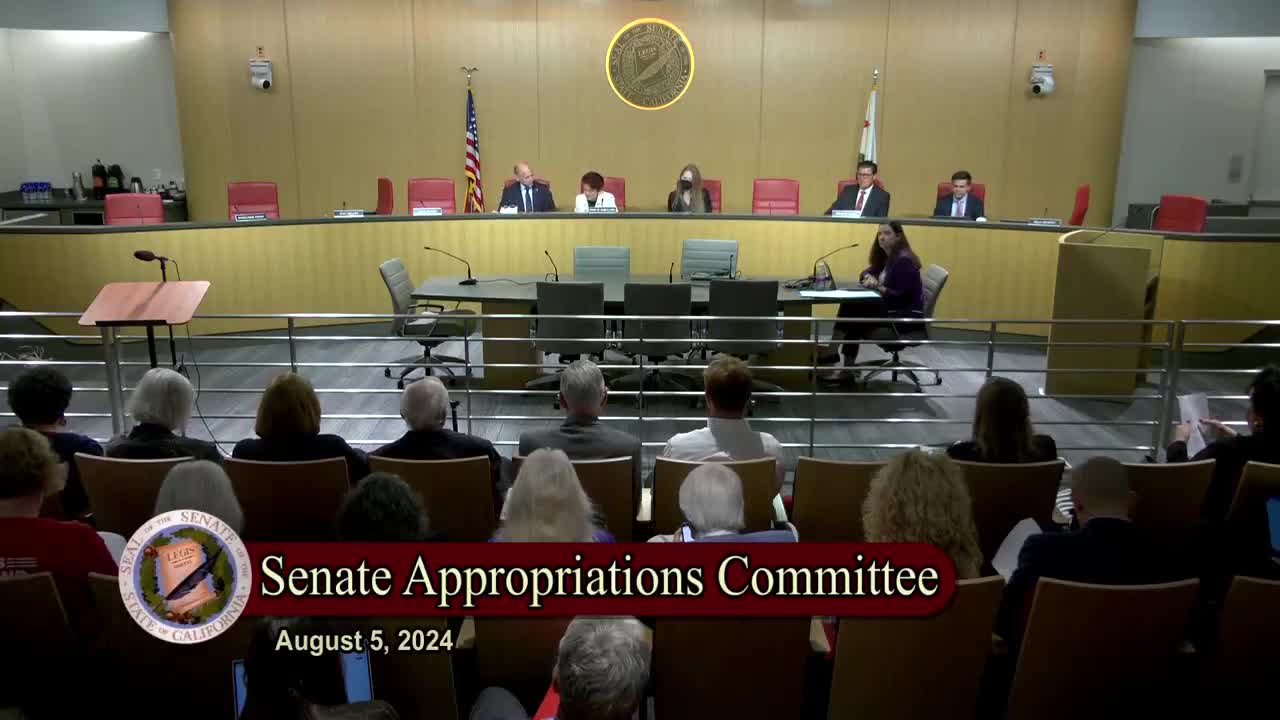 1MIN
Senate Standing Committee on Appropriations
 8MIN
Senate Standing Committee on Human Services
 1MIN
Assembly Floor
 8MIN
Assembly Standing Committee on Human Services

Bill Co-Author(s):
