AB 2484: Courts: juveniles: remote proceedings.
- Session Year: 2023-2024
- House: Assembly
- Latest Version Date: 2024-09-29
Current Status:
Passed
(2024-09-29: Chaptered by Secretary of State - Chapter 965, Statutes of 2024.)
Introduced
In Committee
First Chamber
In Committee
Second Chamber
Enacted
Existing law, until January 1, 2027, authorizes a party to appear remotely and a court to conduct conferences, hearings, proceedings, and trials in civil cases, in whole or in part, through the use of remote technology. Existing law, until January 1, 2027, allows any juvenile dependency proceeding to be conducted in whole or in part through the use of remote technology subject to certain conditions, including that a witness may appear through remote technology only with the consent of all parties and if the witness has access to appropriate technology.
This bill would exempt parents, children, nonminor dependents, and Indian tribes in juvenile dependency proceedings from obtaining the consent of all parties in order to utilize remote technology for the appearance of an expert witness.
Existing law, until January 1, 2026, 2027, authorizes a party to appear remotely and a court to conduct conferences, hearings, proceedings, and trials in civil cases, in whole or in part, through the use of remote technology. Existing law, until January 1, 2026, 2027, allows any juvenile dependency proceeding to be conducted in whole or in part through the use of remote technology subject to certain conditions, including that a witness may appear through remote technology only with the consent of all parties and if the witness has access to appropriate technology.
This bill would exempt parents, children, nonminor dependents, and Indian tribes in juvenile dependency proceedings from obtaining the consent of all parties in order to utilize remote technology for the appearance of an expert witness.
Existing law, until January 1, 2026, authorizes a party to appear remotely and a court to conduct conferences, hearings, proceedings, and trials in civil cases, in whole or in part, through the use of remote technology. Existing law, until January 1, 2026, allows any juvenile dependency proceeding to be conducted in whole or in part through the use of remote technology subject to certain conditions, including that a witness may appear through remote technology only with the consent of all parties and if the witness has access to appropriate technology.
This bill would exempt parents parents, children, nonminor dependents, and Indian tribes in juvenile dependency proceedings from obtaining the consent of all parties in order to utilize remote technology for the appearance of an expert witness.
Existing law, until January 1, 2026, authorizes a party to appear remotely and a court to conduct conferences, hearings, proceedings, and trials in civil cases, in whole or in part, through the use of remote technology. Existing law, until January 1, 2026, allows any juvenile dependency proceeding to be conducted in whole or in part through the use of remote technology subject to certain conditions, including that a witness may appear through remote technology only with the consent of all parties and if the witness has access to appropriate technology.
This bill would exempt parents in juvenile dependency proceedings with an income of $100,000 or less from obtaining the consent of all parties in order to utilize remote technology for the appearance of an expert witness.
(a)(1)Except as provided in subdivisions (b) and (d), in civil cases, when a party has provided notice to the court and all other parties that it intends to appear remotely, a party may appear remotely and the court may conduct conferences, hearings, and proceedings, in whole or in part, through the use of remote technology.
(2)This section does not apply to any of the following type of proceedings:
(A)Any proceeding in matters identified in paragraph (1) of subdivision (a) of Section 367.76.
(B)A juvenile justice proceeding covered by Section 679.5 of the Welfare and Institutions Code.
(b)Except as otherwise provided by law, the court may require a party or witness to appear in person at a conference, hearing, or proceeding described in subdivision (a), or under subdivisions (e) and (h), if any of the following conditions are present:
(1)The court with jurisdiction over the case does not have the technology necessary to conduct the conference, hearing, or proceeding remotely.
(2)Although the court has the requisite technology, the quality of the technology or audibility at a conference, hearing, or proceeding prevents the effective management or resolution of the conference, hearing, or proceeding.
(3)The court determines on a hearing-by-hearing basis that an in-person appearance would materially assist in the determination of the conference, hearing, or proceeding or in the effective management or resolution of the particular case.
(4)The quality of the technology or audibility at a conference, hearing, or proceeding inhibits the court reporters ability to accurately prepare a transcript of the conference, hearing, or proceeding.
(5)The quality of the technology or audibility at a conference, hearing, or proceeding prevents an attorney from being able to provide effective representation to the attorneys client.
(6)The quality of the technology or audibility at a conference, hearing, or proceeding inhibits a court interpreters ability to provide language access to a court user or authorized individual.
(c)Notwithstanding paragraph (3) of subdivision (b), an expert witness may appear remotely absent good cause to compel in-person testimony.
(d)(1)Except as otherwise provided by law and subject to the limitations of subdivision (b), upon its own motion or the motion of any party, the court may conduct a trial or evidentiary hearing, in whole or in part, through the use of remote technology, absent a showing by the opposing party as to why a remote appearance or testimony should not be allowed.
(2)(A)Except as provided in Section 269 of the Code of Civil Procedure and Section 69957 of the Government Code, if the court conducts a trial, in whole or in part, through the use of remote technology, the official reporter or official reporter pro tempore shall be physically present in the courtroom.
(B)If the court conducts a trial, in whole or in part, through the use of remote technology, upon request, the court interpreter shall be physically present in the courtroom.
(e)(1)Before the court with jurisdiction over the case may proceed with a remote conference, hearing, proceeding, or trial, the court shall have a process for a party, witness, official reporter, official reporter pro tempore, court interpreter, or other court personnel to alert the judicial officer of technology or audibility issues that arise during the conference, hearing, proceeding, or trial.
(2)The court shall require that a remote appearance by a party or witness have the necessary privacy and security appropriate for the conference, hearing, proceeding, or trial.
(3)The court shall inform all parties, particularly parties without legal representation, about the potential technological or audibility issues that could arise when using remote technology, which may require a delay of or halt the conference, hearing, proceeding, or trial. The court shall make information available to self-represented parties regarding the options for appearing in person and through the use of remote technology.
(f)The court shall not require a party to appear through the use of remote technology. If the court permits an appearance through remote technology, the court must ensure that technology in the courtroom enables all parties, whether appearing remotely or in person, to fully participate in the conference, hearing, or proceeding.
(g)A self-represented party may appear remotely in a conference, hearing, or proceeding conducted through the use of remote technology only if they agree to do so.
(h)Any juvenile dependency proceeding may be conducted in whole or in part through the use of remote technology subject to the following:
(1)Any person authorized to be present may request to appear remotely.
(2)(A)Any party to the proceeding may request that the court compel the physical presence of a witness or party. A witness, including a party providing testimony, may appear through remote technology only with the consent of all parties, except as provided in subparagraph (B), and if the witness has access to the appropriate technology.
(B)A parent, child, nonminor dependent, or Indian tribe as defined in Section 224.1 of the Welfare and Institutions Code, may utilize remote technology for the appearance of an expert witness without the consent of all parties.
(3)A court shall not require a party to appear through the use of remote technology.
(4)The confidentiality requirements that apply to an in-person juvenile dependency proceeding shall apply to a juvenile dependency proceeding conducted through the use of remote technology.
(i)(1)Notwithstanding Section 8613.5 of the Family Code, in an adoption proceeding under Division 13 (commencing with Section 8500) of the Family Code, the court may conduct an adoption finalization hearing, in whole or in part, through the use of remote technology, without the court finding that it is impossible or impracticable for either prospective adoptive parent to make the appearance in person.
(2)A court shall not require a party to appear through the use of remote technology.
(3)The confidentiality and privacy requirements that apply to an in-person adoption finalization hearing, including, but not limited to, the requirements in Section 8611 of the Family Code, apply to an adoption finalization hearing conducted through the use of remote technology.
(j)For purposes of this section, a party includes a nonparty subject to Chapter 6 of Title 4 of Part 4 (commencing with Section 2020.010).
(k)Subject to the limitations in subdivision (b), this section is not intended to prohibit the use of appearances through the use of remote technology when stipulated by attorneys for represented parties.
(l)Consistent with its constitutional rulemaking authority, the Judicial Council shall adopt rules to implement the policies and provisions in this section to promote statewide consistency, including, but not limited to, the following procedures:
(1)A deadline by which a party must notify the court and the other parties of their request to appear remotely.
(2)Procedures and standards for a judicial officer to determine when a conference, hearing, or proceeding may be conducted through the use of remote technology. The procedures and standards shall require that a judicial officer give consideration to the limited access to technology or transportation that a party or witness might have.
(m)This section shall remain in effect only until January 1, 2027, and as of that date is repealed.
(a)(1)Except as provided in subdivisions (b) and (d), in civil cases, when a party has provided notice to the court and all other parties that it intends to appear remotely, a party may appear remotely and the court may conduct conferences, hearings, and proceedings, in whole or in part, through the use of remote technology.
(2)This section does not apply to any of the following type of proceedings:
(A)Any proceeding in matters identified in paragraph (1) of subdivision (a) of Section 367.76.
(B)A juvenile justice proceeding covered by Section 679.5 of the Welfare and Institutions Code.
(b)Except as otherwise provided by law, the court may require a party or witness to appear in person at a conference, hearing, or proceeding described in subdivision (a), or under subdivisions (e) and (h), if any of the following conditions are present:
(1)The court with jurisdiction over the case does not have the technology necessary to conduct the conference, hearing, or proceeding remotely.
(2)Although the court has the requisite technology, the quality of the technology or audibility at a conference, hearing, or proceeding prevents the effective management or resolution of the conference, hearing, or proceeding.
(3)The court determines on a hearing-by-hearing basis that an in-person appearance would materially assist in the determination of the conference, hearing, or proceeding or in the effective management or resolution of the particular case.
(4)The quality of the technology or audibility at a conference, hearing, or proceeding inhibits the court reporters ability to accurately prepare a transcript of the conference, hearing, or proceeding.
(5)The quality of the technology or audibility at a conference, hearing, or proceeding prevents an attorney from being able to provide effective representation to the attorneys client.
(6)The quality of the technology or audibility at a conference, hearing, or proceeding inhibits a court interpreters ability to provide language access to a court user or authorized individual.
(c)Notwithstanding paragraph (3) of subdivision (b), an expert witness may appear remotely absent good cause to compel in-person testimony.
(d)(1)Except as otherwise provided by law and subject to the limitations of subdivision (b), upon its own motion or the motion of any party, the court may conduct a trial or evidentiary hearing, in whole or in part, through the use of remote technology, absent a showing by the opposing party as to why a remote appearance or testimony should not be allowed.
(2)(A)Except as provided in Section 269 of the Code of Civil Procedure and Section 69957 of the Government Code, if the court conducts a trial, in whole or in part, through the use of remote technology, the official reporter or official reporter pro tempore shall be physically present in the courtroom.
(B)If the court conducts a trial, in whole or in part, through the use of remote technology, upon request, the court interpreter shall be physically present in the courtroom.
(e)(1)Before the court with jurisdiction over the case may proceed with a remote conference, hearing, proceeding, or trial, the court shall have a process for a party, witness, official reporter, official reporter pro tempore, court interpreter, or other court personnel to alert the judicial officer of technology or audibility issues that arise during the conference, hearing, proceeding, or trial.
(2)The court shall require that a remote appearance by a party or witness have the necessary privacy and security appropriate for the conference, hearing, proceeding, or trial.
(3)The court shall inform all parties, particularly parties without legal representation, about the potential technological or audibility issues that could arise when using remote technology, which may require a delay of or halt the conference, hearing, proceeding, or trial. The court shall make information available to self-represented parties regarding the options for appearing in person and through the use of remote technology.
(f)The court shall not require a party to appear through the use of remote technology. If the court permits an appearance through remote technology, the court must ensure that technology in the courtroom enables all parties, whether appearing remotely or in person, to fully participate in the conference, hearing, or proceeding.
(g)A self-represented party may appear remotely in a conference, hearing, or proceeding conducted through the use of remote technology only if they agree to do so.
(h)Any juvenile dependency proceeding may be conducted in whole or in part through the use of remote technology subject to the following:
(1)Any person authorized to be present may request to appear remotely.
(2)(A)Any party to the proceeding may request that the court compel the physical presence of a witness or party. A witness, including a party providing testimony, may appear through remote technology only with the consent of all parties parties, except as provided in subparagraph (B), and if the witness has access to the appropriate technology.
(B)A parent, child, nonminor dependent, or Indian tribe as defined in Section 224.1 of the Welfare and Institutions Code, may utilize remote technology for the appearance of an expert witness without the consent of all parties.
(3)A court shall not require a party to appear through the use of remote technology.
(4)The confidentiality requirements that apply to an in-person juvenile dependency proceeding shall apply to a juvenile dependency proceeding conducted through the use of remote technology.
(i)(1)Notwithstanding Section 8613.5 of the Family Code, in an adoption proceeding under Division 13 (commencing with Section 8500) of the Family Code, the court may conduct an adoption finalization hearing, in whole or in part, through the use of remote technology, without the court finding that it is impossible or impracticable for either prospective adoptive parent to make the appearance in person.
(2)A court shall not require a party to appear through the use of remote technology.
(3)The confidentiality and privacy requirements that apply to an in-person adoption finalization hearing, including, but not limited to, the requirements in Section 8611 of the Family Code, apply to an adoption finalization hearing conducted through the use of remote technology.
(j)For purposes of this section, a party includes a nonparty subject to Chapter 6 of Title 4 of Part 4 (commencing with Section 2020.010).
(k)Subject to the limitations in subdivision (b), this section is not intended to prohibit the use of appearances through the use of remote technology when stipulated by attorneys for represented parties.
(l)Consistent with its constitutional rulemaking authority, the Judicial Council shall adopt rules to implement the policies and provisions in this section to promote statewide consistency, including, but not limited to, the following procedures:
(1)A deadline by which a party must notify the court and the other parties of their request to appear remotely.
(2)Procedures and standards for a judicial officer to determine when a conference, hearing, or proceeding may be conducted through the use of remote technology. The procedures and standards shall require that a judicial officer give consideration to the limited access to technology or transportation that a party or witness might have.
(m)This section shall remain in effect only until January 1, 2027, and as of that date is repealed.
SECTION 1.Section 367.75 of the Code of Civil Procedure is amended to read:367.75.(a)(1)Except as provided in subdivisions (b) and (d), in civil cases, when a party has provided notice to the court and all other parties that it intends to appear remotely, a party may appear remotely and the court may conduct conferences, hearings, and proceedings, in whole or in part, through the use of remote technology.(2)This section does not apply to any of the following type of proceedings:(A)Any proceeding in matters identified in paragraph (1) of subdivision (a) of Section 367.76.(B)A juvenile justice proceeding covered by Section 679.5 of the Welfare and Institutions Code.(b)Except as otherwise provided by law, the court may require a party or witness to appear in person at a conference, hearing, or proceeding described in subdivision (a), or under subdivisions (e) and (h), if any of the following conditions are present:(1)The court with jurisdiction over the case does not have the technology necessary to conduct the conference, hearing, or proceeding remotely.(2)Although the court has the requisite technology, the quality of the technology or audibility at a conference, hearing, or proceeding prevents the effective management or resolution of the conference, hearing, or proceeding.(3)The court determines on a hearing-by-hearing basis that an in-person appearance would materially assist in the determination of the conference, hearing, or proceeding or in the effective management or resolution of the particular case.(4)The quality of the technology or audibility at a conference, hearing, or proceeding inhibits the court reporters ability to accurately prepare a transcript of the conference, hearing, or proceeding.(5)The quality of the technology or audibility at a conference, hearing, or proceeding prevents an attorney from being able to provide effective representation to the attorneys client.(6)The quality of the technology or audibility at a conference, hearing, or proceeding inhibits a court interpreters ability to provide language access to a court user or authorized individual.(c)Notwithstanding paragraph (3) of subdivision (b), an expert witness may appear remotely absent good cause to compel in-person testimony.(d)(1)Except as otherwise provided by law and subject to the limitations of subdivision (b), upon its own motion or the motion of any party, the court may conduct a trial or evidentiary hearing, in whole or in part, through the use of remote technology, absent a showing by the opposing party as to why a remote appearance or testimony should not be allowed.(2)(A)Except as provided in Section 269 of the Code of Civil Procedure and Section 69957 of the Government Code, if the court conducts a trial, in whole or in part, through the use of remote technology, the official reporter or official reporter pro tempore shall be physically present in the courtroom.(B)If the court conducts a trial, in whole or in part, through the use of remote technology, upon request, the court interpreter shall be physically present in the courtroom.(e)(1)Before the court with jurisdiction over the case may proceed with a remote conference, hearing, proceeding, or trial, the court shall have a process for a party, witness, official reporter, official reporter pro tempore, court interpreter, or other court personnel to alert the judicial officer of technology or audibility issues that arise during the conference, hearing, proceeding, or trial.(2)The court shall require that a remote appearance by a party or witness have the necessary privacy and security appropriate for the conference, hearing, proceeding, or trial.(3)The court shall inform all parties, particularly parties without legal representation, about the potential technological or audibility issues that could arise when using remote technology, which may require a delay of or halt the conference, hearing, proceeding, or trial. The court shall make information available to self-represented parties regarding the options for appearing in person and through the use of remote technology.(f)The court shall not require a party to appear through the use of remote technology. If the court permits an appearance through remote technology, the court must ensure that technology in the courtroom enables all parties, whether appearing remotely or in person, to fully participate in the conference, hearing, or proceeding.(g)A self-represented party may appear remotely in a conference, hearing, or proceeding conducted through the use of remote technology only if they agree to do so.(h)Any juvenile dependency proceeding may be conducted in whole or in part through the use of remote technology subject to the following:(1)Any person authorized to be present may request to appear remotely.(2)(A)Any party to the proceeding may request that the court compel the physical presence of a witness or party. A witness, including a party providing testimony, may appear through remote technology only with the consent of all parties, except as provided in subparagraph (B), and if the witness has access to the appropriate technology.(B)A parent, child, nonminor dependent, or Indian tribe as defined in Section 224.1 of the Welfare and Institutions Code, may utilize remote technology for the appearance of an expert witness without the consent of all parties.(3)A court shall not require a party to appear through the use of remote technology.(4)The confidentiality requirements that apply to an in-person juvenile dependency proceeding shall apply to a juvenile dependency proceeding conducted through the use of remote technology.(i)(1)Notwithstanding Section 8613.5 of the Family Code, in an adoption proceeding under Division 13 (commencing with Section 8500) of the Family Code, the court may conduct an adoption finalization hearing, in whole or in part, through the use of remote technology, without the court finding that it is impossible or impracticable for either prospective adoptive parent to make the appearance in person.(2)A court shall not require a party to appear through the use of remote technology.(3)The confidentiality and privacy requirements that apply to an in-person adoption finalization hearing, including, but not limited to, the requirements in Section 8611 of the Family Code, apply to an adoption finalization hearing conducted through the use of remote technology.(j)For purposes of this section, a party includes a nonparty subject to Chapter 6 of Title 4 of Part 4 (commencing with Section 2020.010).(k)Subject to the limitations in subdivision (b), this section is not intended to prohibit the use of appearances through the use of remote technology when stipulated by attorneys for represented parties.(l)Consistent with its constitutional rulemaking authority, the Judicial Council shall adopt rules to implement the policies and provisions in this section to promote statewide consistency, including, but not limited to, the following procedures:(1)A deadline by which a party must notify the court and the other parties of their request to appear remotely.(2)Procedures and standards for a judicial officer to determine when a conference, hearing, or proceeding may be conducted through the use of remote technology. The procedures and standards shall require that a judicial officer give consideration to the limited access to technology or transportation that a party or witness might have.(m)This section shall remain in effect only until January 1, 2026, and as of that date is repealed.(a)(1)Except as provided in subdivisions (b) and (d), in civil cases, when a party has provided notice to the court and all other parties that it intends to appear remotely, a party may appear remotely and the court may conduct conferences, hearings, and proceedings, in whole or in part, through the use of remote technology.
(2)This section does not apply to any of the following type of proceedings:
(A)Any proceeding in matters identified in paragraph (1) of subdivision (a) of Section 367.76.
(B)A juvenile justice proceeding covered by Section 679.5 of the Welfare and Institutions Code.
(b)Except as otherwise provided by law, the court may require a party or witness to appear in person at a conference, hearing, or proceeding described in subdivision (a), or under subdivisions (e) and (h), if any of the following conditions are present:
(1)The court with jurisdiction over the case does not have the technology necessary to conduct the conference, hearing, or proceeding remotely.
(2)Although the court has the requisite technology, the quality of the technology or audibility at a conference, hearing, or proceeding prevents the effective management or resolution of the conference, hearing, or proceeding.
(3)The court determines on a hearing-by-hearing basis that an in-person appearance would materially assist in the determination of the conference, hearing, or proceeding or in the effective management or resolution of the particular case.
(4)The quality of the technology or audibility at a conference, hearing, or proceeding inhibits the court reporters ability to accurately prepare a transcript of the conference, hearing, or proceeding.
(5)The quality of the technology or audibility at a conference, hearing, or proceeding prevents an attorney from being able to provide effective representation to the attorneys client.
(6)The quality of the technology or audibility at a conference, hearing, or proceeding inhibits a court interpreters ability to provide language access to a court user or authorized individual.
(c)Notwithstanding paragraph (3) of subdivision (b), an expert witness may appear remotely absent good cause to compel in-person testimony.
(d)(1)Except as otherwise provided by law and subject to the limitations of subdivision (b), upon its own motion or the motion of any party, the court may conduct a trial or evidentiary hearing, in whole or in part, through the use of remote technology, absent a showing by the opposing party as to why a remote appearance or testimony should not be allowed.
(2)(A)Except as provided in Section 269 of the Code of Civil Procedure and Section 69957 of the Government Code, if the court conducts a trial, in whole or in part, through the use of remote technology, the official reporter or official reporter pro tempore shall be physically present in the courtroom.
(B)If the court conducts a trial, in whole or in part, through the use of remote technology, upon request, the court interpreter shall be physically present in the courtroom.
(e)(1)Before the court with jurisdiction over the case may proceed with a remote conference, hearing, proceeding, or trial, the court shall have a process for a party, witness, official reporter, official reporter pro tempore, court interpreter, or other court personnel to alert the judicial officer of technology or audibility issues that arise during the conference, hearing, proceeding, or trial.
(2)The court shall require that a remote appearance by a party or witness have the necessary privacy and security appropriate for the conference, hearing, proceeding, or trial.
(3)The court shall inform all parties, particularly parties without legal representation, about the potential technological or audibility issues that could arise when using remote technology, which may require a delay of or halt the conference, hearing, proceeding, or trial. The court shall make information available to self-represented parties regarding the options for appearing in person and through the use of remote technology.
(f)The court shall not require a party to appear through the use of remote technology. If the court permits an appearance through remote technology, the court must ensure that technology in the courtroom enables all parties, whether appearing remotely or in person, to fully participate in the conference, hearing, or proceeding.
(g)A self-represented party may appear remotely in a conference, hearing, or proceeding conducted through the use of remote technology only if they agree to do so.
(h)Any juvenile dependency proceeding may be conducted in whole or in part through the use of remote technology subject to the following:
(1)Any person authorized to be present may request to appear remotely.
(2)(A)Any party to the proceeding may request that the court compel the physical presence of a witness or party. A witness, including a party providing testimony, may appear through remote technology only with the consent of all parties, except as provided in subparagraph (B), and if the witness has access to the appropriate technology.
(B)A parent parent, child, nonminor dependent, or Indian tribe as defined in Section 224.1 of the Welfare and Institutions Code, may utilize remote technology for the appearance of an expert witness without the consent of all parties.
(3)A court shall not require a party to appear through the use of remote technology.
(4)The confidentiality requirements that apply to an in-person juvenile dependency proceeding shall apply to a juvenile dependency proceeding conducted through the use of remote technology.
(i)(1)Notwithstanding Section 8613.5 of the Family Code, in an adoption proceeding under Division 13 (commencing with Section 8500) of the Family Code, the court may conduct an adoption finalization hearing, in whole or in part, through the use of remote technology, without the court finding that it is impossible or impracticable for either prospective adoptive parent to make the appearance in person.
(2)A court shall not require a party to appear through the use of remote technology.
(3)The confidentiality and privacy requirements that apply to an in-person adoption finalization hearing, including, but not limited to, the requirements in Section 8611 of the Family Code, apply to an adoption finalization hearing conducted through the use of remote technology.
(j)For purposes of this section, a party includes a nonparty subject to Chapter 6 of Title 4 of Part 4 (commencing with Section 2020.010).
(k)Subject to the limitations in subdivision (b), this section is not intended to prohibit the use of appearances through the use of remote technology when stipulated by attorneys for represented parties.
(l)Consistent with its constitutional rulemaking authority, the Judicial Council shall adopt rules to implement the policies and provisions in this section to promote statewide consistency, including, but not limited to, the following procedures:
(1)A deadline by which a party must notify the court and the other parties of their request to appear remotely.
(2)Procedures and standards for a judicial officer to determine when a conference, hearing, or proceeding may be conducted through the use of remote technology. The procedures and standards shall require that a judicial officer give consideration to the limited access to technology or transportation that a party or witness might have.
(m)This section shall remain in effect only until January 1, 2026, and as of that date is repealed.
(a)(1)Except as provided in subdivisions (b) and (d), in civil cases, when a party has provided notice to the court and all other parties that it intends to appear remotely, a party may appear remotely and the court may conduct conferences, hearings, and proceedings, in whole or in part, through the use of remote technology.
(2)This section does not apply to any of the following type of proceedings:
(A)Any proceeding in matters identified in paragraph (1) of subdivision (a) of Section 367.76.
(B)A juvenile justice proceeding covered by Section 679.5 of the Welfare and Institutions Code.
(b)Except as otherwise provided by law, the court may require a party or witness to appear in person at a conference, hearing, or proceeding described in subdivision (a), or under subdivisions (e) and (h), if any of the following conditions are present:
(1)The court with jurisdiction over the case does not have the technology necessary to conduct the conference, hearing, or proceeding remotely.
(2)Although the court has the requisite technology, the quality of the technology or audibility at a conference, hearing, or proceeding prevents the effective management or resolution of the conference, hearing, or proceeding.
(3)The court determines on a hearing-by-hearing basis that an in-person appearance would materially assist in the determination of the conference, hearing, or proceeding or in the effective management or resolution of the particular case.
(4)The quality of the technology or audibility at a conference, hearing, or proceeding inhibits the court reporters ability to accurately prepare a transcript of the conference, hearing, or proceeding.
(5)The quality of the technology or audibility at a conference, hearing, or proceeding prevents an attorney from being able to provide effective representation to the attorneys client.
(6)The quality of the technology or audibility at a conference, hearing, or proceeding inhibits a court interpreters ability to provide language access to a court user or authorized individual.
(c)Notwithstanding paragraph (3) of subdivision (b), an expert witness may appear remotely absent good cause to compel in-person testimony.
(d)(1)Except as otherwise provided by law and subject to the limitations of subdivision (b), upon its own motion or the motion of any party, the court may conduct a trial or evidentiary hearing, in whole or in part, through the use of remote technology, absent a showing by the opposing party as to why a remote appearance or testimony should not be allowed.
(2)(A)Except as provided in Section 269 of the Code of Civil Procedure and Section 69957 of the Government Code, if the court conducts a trial, in whole or in part, through the use of remote technology, the official reporter or official reporter pro tempore shall be physically present in the courtroom.
(B)If the court conducts a trial, in whole or in part, through the use of remote technology, upon request, the court interpreter shall be physically present in the courtroom.
(e)(1)Before the court with jurisdiction over the case may proceed with a remote conference, hearing, proceeding, or trial, the court shall have a process for a party, witness, official reporter, official reporter pro tempore, court interpreter, or other court personnel to alert the judicial officer of technology or audibility issues that arise during the conference, hearing, proceeding, or trial.
(2)The court shall require that a remote appearance by a party or witness have the necessary privacy and security appropriate for the conference, hearing, proceeding, or trial.
(3)The court shall inform all parties, particularly parties without legal representation, about the potential technological or audibility issues that could arise when using remote technology, which may require a delay of or halt the conference, hearing, proceeding, or trial. The court shall make information available to self-represented parties regarding the options for appearing in person and through the use of remote technology.
(f)The court shall not require a party to appear through the use of remote technology. If the court permits an appearance through remote technology, the court must ensure that technology in the courtroom enables all parties, whether appearing remotely or in person, to fully participate in the conference, hearing, or proceeding.
(g)A self-represented party may appear remotely in a conference, hearing, or proceeding conducted through the use of remote technology only if they agree to do so.
(h)Any juvenile dependency proceeding may be conducted in whole or in part through the use of remote technology subject to the following:
(1)Any person authorized to be present may request to appear remotely.
(2)(A)Any party to the proceeding may request that the court compel the physical presence of a witness or party. A witness, including a party providing testimony, may appear through remote technology only with the consent of all parties, except as provided in subparagraph (B), and if the witness has access to the appropriate technology.
(B)A parent with an income of one hundred thousand dollars ($100,000) or less may utilize remote technology for the appearance of an expert witness without the consent of all parties.
(3)A court shall not require a party to appear through the use of remote technology.
(4)The confidentiality requirements that apply to an in-person juvenile dependency proceeding shall apply to a juvenile dependency proceeding conducted through the use of remote technology.
(i)(1)Notwithstanding Section 8613.5 of the Family Code, in an adoption proceeding under Division 13 (commencing with Section 8500) of the Family Code, the court may conduct an adoption finalization hearing, in whole or in part, through the use of remote technology, without the court finding that it is impossible or impracticable for either prospective adoptive parent to make the appearance in person.
(2)A court shall not require a party to appear through the use of remote technology.
(3)The confidentiality and privacy requirements that apply to an in-person adoption finalization hearing, including, but not limited to, the requirements in Section 8611 of the Family Code, apply to an adoption finalization hearing conducted through the use of remote technology.
(j)For purposes of this section, a party includes a nonparty subject to Chapter 6 of Title 4 of Part 4 (commencing with Section 2020.010).
(k)Subject to the limitations in subdivision (b), this section is not intended to prohibit the use of appearances through the use of remote technology when stipulated by attorneys for represented parties.
(l)Consistent with its constitutional rulemaking authority, the Judicial Council shall adopt rules to implement the policies and provisions in this section to promote statewide consistency, including, but not limited to, the following procedures:
(1)A deadline by which a party must notify the court and the other parties of their request to appear remotely.
(2)Procedures and standards for a judicial officer to determine when a conference, hearing, or proceeding may be conducted through the use of remote technology. The procedures and standards shall require that a judicial officer give consideration to the limited access to technology or transportation that a party or witness might have.
(m)This section shall remain in effect only until January 1, 2026, and as of that date is repealed.
(a)(1)Except as provided in subdivisions (b) and (d), in civil cases, when a party has provided notice to the court and all other parties that it intends to appear remotely, a party may appear remotely and the court may conduct conferences, hearings, and proceedings, in whole or in part, through the use of remote technology.
(2)This section does not apply to any of the following type of proceedings:
(A)Any proceeding in matters identified in paragraph (1) of subdivision (a) of section 367.76.
(B)A juvenile justice proceeding covered by Section 679.5 of the Welfare and Institutions Code.
(b)Except as otherwise provided by law, the court may require a party or witness to appear in person at a conference, hearing, or proceeding described in subdivision (a), or under subdivisions (e) and (h), if any of the following conditions are present:
(1)The court with jurisdiction over the case does not have the technology necessary to conduct the conference, hearing, or proceeding remotely.
(2)Although the court has the requisite technology, the quality of the technology or audibility at a conference, hearing, or proceeding prevents the effective management or resolution of the conference, hearing, or proceeding.
(3)The court determines on a hearing-by-hearing basis that an in-person appearance would materially assist in the determination of the conference, hearing, or proceeding or in the effective management or resolution of the particular case.
(4)The quality of the technology or audibility at a conference, hearing, or proceeding inhibits the court reporters ability to accurately prepare a transcript of the conference, hearing, or proceeding.
(5)The quality of the technology or audibility at a conference, hearing, or proceeding prevents an attorney from being able to provide effective representation to the attorneys client.
(6)The quality of the technology or audibility at a conference, hearing, or proceeding inhibits a court interpreters ability to provide language access to a court user or authorized individual.
(c)Notwithstanding paragraph (3) of subdivision (b), an expert witness may appear remotely absent good cause to compel in-person testimony.
(d)(1)Except as otherwise provided by law and subject to the limitations of subdivision (b), upon its own motion or the motion of any party, the court may conduct a trial or evidentiary hearing, in whole or in part, through the use of remote technology, absent a showing by the opposing party as to why a remote appearance or testimony should not be allowed.
(2)(A)Except as provided in Section 269 of the Code of Civil Procedure and Section 69957 of the Government Code, if the court conducts a trial, in whole or in part, through the use of remote technology, the official reporter or official reporter pro tempore shall be physically present in the courtroom.
(B)If the court conducts a trial, in whole or in part, through the use of remote technology, upon request, the court interpreter shall be physically present in the courtroom.
(e)(1)Before the court with jurisdiction over the case may proceed with a remote conference, hearing, proceeding, or trial, the court shall have a process for a party, witness, official reporter, official reporter pro tempore, court interpreter, or other court personnel to alert the judicial officer of technology or audibility issues that arise during the conference, hearing, proceeding, or trial.
(2)The court shall require that a remote appearance by a party or witness have the necessary privacy and security appropriate for the conference, hearing, proceeding, or trial.
(3)The court shall inform all parties, particularly parties without legal representation, about the potential technological or audibility issues that could arise when using remote technology, which may require a delay of or halt the conference, hearing, proceeding, or trial. The court shall make information available to self-represented parties regarding the options for appearing in person and through the use of remote technology.
(f)The court shall not require a party to appear through the use of remote technology. If the court permits an appearance through remote technology, the court must ensure that technology in the courtroom enables all parties, whether appearing remotely or in person, to fully participate in the conference, hearing, or proceeding.
(g)A self-represented party may appear remotely in a conference, hearing, or proceeding conducted through the use of remote technology only if they agree to do so.
(h)Any juvenile dependency proceeding may be conducted in whole or in part through the use of remote technology subject to the following:
(1)Any person authorized to be present may request to appear remotely.
(2)Any (A)Any party to the proceeding may request that the court compel the physical presence of a witness or party. A witness, including a party providing testimony, may appear through remote technology only with the consent of all parties parties, except as provided in subparagraph (B), and if the witness has access to the appropriate technology.
(B)A parent with an income of one hundred thousand dollars ($100,000) or less may utilize remote technology for the appearance of an expert witness without the consent of all parties.
(3)A court shall not require a party to appear through the use of remote technology.
(4)The confidentiality requirements that apply to an in-person juvenile dependency proceeding shall apply to a juvenile dependency proceeding conducted through the use of remote technology.
(i)(1)Notwithstanding Section 8613.5 of the Family Code, in an adoption proceeding under Division 13 (commencing with Section 8500) of the Family Code, the court may conduct an adoption finalization hearing, in whole or in part, through the use of remote technology, without the court finding that it is impossible or impracticable for either prospective adoptive parent to make the appearance in person.
(2)A court shall not require a party to appear through the use of remote technology.
(3)The confidentiality and privacy requirements that apply to an in-person adoption finalization hearing, including, but not limited to, the requirements in Section 8611 of the Family Code, apply to an adoption finalization hearing conducted through the use of remote technology.
(j)For purposes of this section, a party includes a nonparty subject to Chapter 6 of Title 4 of Part 4 (commencing with Section 2020.010).
(k)Subject to the limitations in subdivision (b), this section is not intended to prohibit the use of appearances through the use of remote technology when stipulated by attorneys for represented parties.
(l)Consistent with its constitutional rulemaking authority, the Judicial Council shall adopt rules to implement the policies and provisions in this section to promote statewide consistency, including, but not limited to, the following procedures:
(1)A deadline by which a party must notify the court and the other parties of their request to appear remotely.
(2)Procedures and standards for a judicial officer to determine when a conference, hearing, or proceeding may be conducted through the use of remote technology. The procedures and standards shall require that a judicial officer give consideration to the limited access to technology or transportation that a party or witness might have.
(m)This section shall remain in effect only until January 1, 2026, and as of that date is repealed.
|
Date
|
Status
|
|---|---|
| Sep 29, 2024 | Chaptered by Secretary of State - Chapter 965, Statutes of 2024. |
| Sep 29, 2024 | Approved by the Governor. |
| Sep 11, 2024 | Enrolled and presented to the Governor at 4 p.m. |
| Aug 30, 2024 | Senate amendments concurred in. To Engrossing and Enrolling. (Ayes 77. Noes 0.). |
| Aug 30, 2024 | In Assembly. Concurrence in Senate amendments pending. |
| Aug 29, 2024 | Read third time. Passed. Ordered to the Assembly. (Ayes 40. Noes 0.). |
| Aug 6, 2024 | Read second time. Ordered to third reading. |
| Aug 5, 2024 | Read third time and amended. Ordered to second reading. |
| Jun 10, 2024 | Ordered to third reading. |
| Jun 10, 2024 | From Consent Calendar. |
| Jun 5, 2024 | Read second time. Ordered to Consent Calendar. |
| Jun 4, 2024 | From committee: Do pass. To Consent Calendar. (Ayes 11. Noes 0.) (June 4). |
| May 23, 2024 | From committee chair, with author's amendments: Amend, and re-refer to committee. Read second time, amended, and re-referred to Com. on JUD. |
| May 1, 2024 | Referred to Com. on JUD. |
| Apr 1, 2024 | In Senate. Read first time. To Com. on RLS. for assignment. |
| Apr 1, 2024 | Read third time. Passed. Ordered to the Senate. (Ayes 72. Noes 0. Page 4534.) |
| Mar 20, 2024 | Read second time. Ordered to Consent Calendar. |
| Mar 19, 2024 | From committee: Do pass. To Consent Calendar. (Ayes 12. Noes 0.) (March 19). |
| Mar 14, 2024 | Re-referred to Com. on JUD. |
| Mar 13, 2024 | From committee chair, with author's amendments: Amend, and re-refer to Com. on JUD. Read second time and amended. |
| Feb 26, 2024 | Referred to Com. on JUD. |
| Feb 14, 2024 | From printer. May be heard in committee March 15. |
| Feb 13, 2024 | Read first time. To print. |
|
Date
|
Description
|
Location
|
Votes
|
|
|---|---|---|---|---|
| Aug 30, 2024 | AB 2484 Bryan Concurrence in Senate Amendments | Assembly Floor |
Passed |
|
| Aug 29, 2024 | Assembly 3rd Reading AB2484 Bryan By Becker | Senate Floor |
Passed |
|
| Jun 4, 2024 | Do pass and be ordered to the Consent Calendar | Senate Standing Committee on Judiciary |
Passed |
|
| Apr 1, 2024 | AB 2484 Bryan Consent Calendar Second Day Regular Session | Assembly Floor |
Passed |
|
| Mar 19, 2024 | Do pass. To Consent Calendar. | Assembly Standing Committee on Judiciary |
Passed |
This list shows positions taken on this bill by organizations on the date displayed, which is linked to the original source.
Positions by individuals are not included.
|
Organization
|
Position
|
Date
|
|---|---|---|
| California Attorneys For Criminal Justice | ** Support | |
| California Dependency Attorneys for Parents | ** Support | |
| California State Association Of Counties | ** Support | |
| County Welfare Directors Association of California | ** Support | |
| Los Angeles Dependency Lawyers, Inc. | ** Support |
CONCURRENCE IN SENATE AMENDMENTS
CSA1 Bill Id:AB 2484
Author:(Bryan)
As Amended Ver:August 5, 2024
Majority vote
SUMMARY
Authorizes expert witnesses who are called by parents in a juvenile dependency proceeding to appear remotely without the consent of all parties. Specifically, this bill authorizes a parent, child, nonminor dependent or Indian tribe to utilize remote technology for the appearance of an expert witness without the consent of all parties in juvenile dependency proceedings.
Senate Amendments
- Expand the scope of the parties guaranteed the ability to utilize remote technology to call expert witnesses in dependency proceedings to include children, non-minor dependents, and Indian tribes.
- Extend the sunset date of the bill until January 1, 2027.
COMMENTS
In recent years, California law has moved to increase the use of remote technology in court proceedings. While the pandemic spurred significant advancements in online teleconferencing technology, the use of remote technology in court proceedings has proved to be highly contentious in the Legislature. As a compromise, the Legislature mandated that most uses of remote technology require the consent of all parties to a proceeding. As it related to juvenile dependency proceedings, existing law provides that expert witnesses may testify remotely so long as all parties consent. However, as the author and proponents of this measure note, hiring an expert witness and paying for their court appearance can be extremely expensive. Permitting an expert witness to appear remotely can significantly reduce costs related to witness travel and lodging. But existing law enables another party in the proceeding to prevent an expert from testifying remotely, thus forcing the party seeking to obtain expert testimony to incur greater costs. Recognizing that many parents involved in dependency matters face budget constraints, this bill provides that an expert witness retained in a juvenile dependency proceeding may appear remotely by right and cannot be blocked from testifying remotely solely by another party’s objections.
A significant portion of civil litigation requires persons to be in the close physical presence of one another. The courtroom is no different. Although various county Superior Courts have handled civil litigation differently during the pandemic, the realities of social distancing and the constitutional priority afforded to criminal cases imposed delays to most if not all civil cases at the height of the pandemic. Some counties went so far as to vacate all civil trials on the 2020 court calendar. (Cheryl Miller, How COVID-19 Is Impacting California Courts: Roundup of Services, The Recorder (July 21, 2020).) The proponents of this bill, both plaintiffs and defense counsel, note that these delays greatly impacted some aspects of litigation, impacts the courts are only now beginning to recover from.
In-court litigation was not the only aspect of the legal practice impacted by the pandemic. Many aspects of practicing law--from interviewing potential clients, to deposing witnesses, to conducting trials--require people to be in close proximity with one another. Given the legal industry’s experience with technology during the pandemic, and the growing comfort with the technology, the Legislature moved to adopt rules for the use of remote technology in the courts on a permanent basis. In 2021, the Legislature adopted SB 241 (Umberg), Chapter 214, Statutes of 2021, to codify the ability to use remote proceedings in civil matters through June 2023 under specific conditions. At the time, most of the discussion focused on the use of remote technology that would primarily occur in traditional tort civil cases. One of the most debated of those conditions was the location of court reporters and interpreters during remote proceedings. Representatives for both court reporters and interpreters argued that the remote technology deployed by the court was insufficient to properly hear witnesses and thus both real-time stenographer transcription and translation services were being impacted. Of particular concern was the impact these difficulties posed on the generation of a complete and accurate record. Although, at the time, the Judicial Council of California argued the technology was sufficient to keep court reporters and interpreters at remote locations, a compromise was reached whereby a court reporter was required to be in the courtroom.
Because the debate surrounding SB 241 focused on traditional tort matters, other civil matters (including juvenile dependency proceedings) were not the focus of that measure. When the original sunset date included in SB 241 was renewed, the Legislature added safeguards for other areas of civil practice when it approved SB 135 (Committee on Budget and Fiscal Review) Chapter 190, Statutes of 2023, last summer. One of those additional provisions included guidance for the use of expert witnesses in juvenile dependency proceedings. Following the trend adopted by SB 241, which generally operated on the assumption that parties must mutually agree to use remote technology, SB 135 permitted experts to testify remotely in juvenile dependency proceedings so long as no other party objected to the remote testimony and so long as the technology was sufficient to ensure that the testimony could be audible and recoded by a court reporter. However, the proponents of this bill contend that these provisions offer parties the ability to needlessly veto remote testimony and thus drive up costs for parents.
Juvenile dependency hearings typically revolve around a parent’s ability to care for their children. In California, the law generally prefers to reunite children and parents whenever possible, even if visits between parents and children are required to be monitored by courts and social workers. In some cases, a parent may need the assistance of an expert witness, including mental health or other medical experts, to convince the court to reunify them with their children. Obtaining the services of these experts can be very expensive. These witnesses must frequently meet with and examine a parent or child before ever stepping foot in a courthouse. On top of these upfront costs, expert witnesses can then charge appearance fees and fees for their travel to and from a courthouse. Especially for low and middle income parents, these costs can quickly become significant. Remote appearances in courts have helped reduce these costs to parents in dependency proceedings. However, under existing law, another party to the dependency proceeding can simply force a parent to incur these costs by refusing to agree to the witness testifying remotely. This bill simply gives all parents the right to have an expert witness testify remotely in a juvenile dependency proceeding, regardless of any objections from another party. It should be noted that nothing in this measure changes any of the other necessary qualifications for a witness to appear remotely or the qualifications of a witness to be considered an expert; and most importantly, nothing in this bill eliminates the requirement that a court reporter be physically present in the courtroom in order to maintain the accuracy of the official record.
In addition to requiring the presence of a court reporter in a courtroom, existing law related to remote appearances in California courts also focuses on the adequacy of the technology. The specific provisions of the existing law related to remote appearances by experts in dependency proceedings requires both consent of the parties and adequate technology to facilitate a reliable connection between the witness and the courtroom. While this bill eliminates the requirement that all parties consent to the remote appearance, this bill does not impact the provisions related to adequacy of the remote appearance technology. Accordingly, this bill still authorizes a judicial officer to compel an in-person appearance by an expert witness should the witness not possess sufficient technology to appear remotely or the technology fails during the appearance. Thus, this bill strikes the appropriate balance between saving parents money in dependency proceedings while ensuring the adequacy of the court’s records and the integrity of the dependency proceeding.
According to the Author
Assembly Bill 2484 seeks to address the financial constraints faced by parents in Child Dependency cases and ensures their equal access to expert testimony. By exempting parents from obtaining consent from all parties for remote appearances of expert witnesses this bill aims to alleviate the disproportionate burden carried by financially disadvantaged parents. This solution enables experts in support of parents to testify remotely instead of in person, thereby ensuring their fair access to the expert testimony they are entitled to.
Arguments in Support
This bill is supported by the California Dependency Attorneys for Parents. In support of this measure they write:
Dependency attorneys for parents in California face a tremendous obstacle in terms of getting the experts necessary for a robust defense of our clients. Moving to a system wherein experts may be called by video means a great deal of experts who were previously unobtainable due to cost and distance will become viable defense expert witnesses for parents.
Prior to the advances brought about through new technology, if parents' attorneys needed to call an expert witness in a dependency case, the only experts available were those who were both geographically local and fiscally affordable. Particularly in the more remote portions of our state, very few experts could ever be found which meet these conditions. The only experts which could be afforded locally would then likely not have the stature of the opposing expert brought by the county.
The prospect of having experts testify by video also means that rarer experts in any given field who are geographically located far from the county at issue might be utilized. County courts might hear from the top experts in the world rather than merely their counties’ best.
This bill will make such testimony a right rather than a privilege.
Arguments in Opposition
No opposition on file.
FISCAL COMMENTS
None.
VOTES:
ASM JUDICIARY: 12-0-0
YES: Kalra, Dixon, Bauer-Kahan, Bryan, Connolly, Haney, Maienschein, McKinnor, Pacheco, Reyes, Sanchez, Waldron
ASSEMBLY FLOOR: 72-0-8
YES: Addis, Aguiar-Curry, Alanis, Arambula, Bains, Bauer-Kahan, Bennett, Berman, Boerner, Bonta, Calderon, Juan Carrillo, Wendy Carrillo, Chen, Connolly, Davies, Dixon, Essayli, Flora, Mike Fong, Vince Fong, Friedman, Gabriel, Gallagher, Garcia, Gipson, Grayson, Hart, Holden, Hoover, Irwin, Jackson, Jones-Sawyer, Kalra, Lackey, Lee, Lowenthal, Maienschein, McCarty, McKinnor, Muratsuchi, Stephanie Nguyen, Ortega, Pacheco, Papan, Joe Patterson, Pellerin, Petrie-Norris, Quirk-Silva, Ramos, Rendon, Reyes, Luz Rivas, Rodriguez, Blanca Rubio, Sanchez, Santiago, Schiavo, Soria, Ta, Ting, Valencia, Villapudua, Waldron, Wallis, Ward, Weber, Wicks, Wilson, Wood, Zbur, Robert Rivas
ABS, ABST OR NV: Alvarez, Bryan, Cervantes, Megan Dahle, Haney, Low, Mathis, Jim Patterson
SENATE FLOOR: 40-0-0
YES: Allen, Alvarado-Gil, Archuleta, Ashby, Atkins, Becker, Blakespear, Bradford, Caballero, Cortese, Dahle, Dodd, Durazo, Eggman, Glazer, Gonzalez, Grove, Hurtado, Jones, Laird, Limón, McGuire, Menjivar, Min, Newman, Nguyen, Niello, Ochoa Bogh, Padilla, Portantino, Roth, Rubio, Seyarto, Skinner, Smallwood-Cuevas, Stern, Umberg, Wahab, Wiener, Wilk
UPDATED
VERSION: August 5, 2024
CONSULTANT: Nicholas Liedtke / JUD. / (916) 319-2334 FN: 0004344
SENATE RULES COMMITTEE Office of Senate Floor Analyses (916) 651-1520 Fax: (916) 327-4478 | AB 2484 |
THIRD READING
Bill No: AB 2484
Author: Bryan (D)
Amended: 8/5/24 in Senate
Vote: 21
SENATE JUDICIARY COMMITTEE: 11-0, 6/4/24
AYES: Umberg, Wilk, Ashby, Caballero, Durazo, Laird, Niello, Roth, Stern, Wahab, Wiener
ASSEMBLY FLOOR: 72-0, 4/1/24 (Consent) - See last page for vote
SUBJECT: Courts: juveniles: remote proceedings
SOURCE: California Dependency Attorneys for Parents
DIGEST:
This bill permits a parent, child, nonminor dependent, or Indian tribe, as defined, in a juvenile dependency case to utilize remote technology for the appearance of an expert witness without the consent of all parties.
Senate Floor Amendments of 8/5/24 update the sunset date for Code of Civil Procedure Section 367.75, which authorizes remote appearances in civil cases, reflecting a one-year extension of the sunset date recently amended into the statute.
ANALYSIS:
Existing law:
- Permits, in general civil cases, a party to appear at a proceeding through the use of remote technology, provided that certain conditions are met, including:
- The party has provided notice to the court and all other parties of their intention to appear remotely.
- The court has the technology necessary to conduct the conference, hearing, or proceeding remotely, and the quality of the technology or audibility at the proceeding does not inhibit the court reporter’s ability to accurately prepare a transcript.
- The court has not determined that an in-person appearance would materially assist in the determination in, or effective management or resolution of, the case.
- If the proceeding is a trial or an evidentiary hearing, the opposing party has not shown why a remote appearance or testimony should not be allowed. (Code Civ. Proc., § 367.75(a), (b), (d))
- Permits an expert witness to appear remotely in a general civil matter, subject to the technology requirements, absent good cause to compel in-person testimony. (Code Civ. Proc., § 367.75(c))
- Permits a juvenile dependency hearing to be conducted in whole or in part through the use of remote technology subject to the following:
- Any person authorized to be present may request to appear remotely.
- Any party to the proceeding may request that the court compel the physical presence of a witness or party. A witness, including a party providing testimony, may appear through remote technology only with the consent of all parties and if the witness has access to the appropriate technology.
- A court shall not require a party to appear through the use of remote technology.
- The confidentiality requirements that apply to an in-person juvenile dependency proceeding shall apply to a juvenile dependency proceeding conducted through the use of remote technology. (Code Civ. Proc., § 367.75(h))
- Provides that 1)-3) will sunset on January 1, 2027.
This bill:
- Permits a parent, child, nonminor dependent, or Indian tribe, as defined, in a juvenile dependency case to utilize remote technology for the appearance of an expert witness without the consent of all parties, subject to the existing sunset.
- Makes nonsubstantive technical and conforming changes.
Comments
In recent years, California law has moved to increase the use of remote technology in court proceedings. In juvenile dependency proceedings, existing law permits an expert witnesses to testify remotely only if all of the parties consent. This limitation was intended to balance the convenience of remote appearances with the recognition that, in some circumstances, remote appearances can hamper the presentation of argument or evidence—a balance which is particularly acute in dependency proceedings, where parental rights may be at stake.
As the author and proponents of this bill note, hiring an expert witness and paying for their court appearance can be extremely expensive; because current law gives all parties in a dependency case veto power over another party’s right to present an expert witness remotely, these parties can force each other to incur significant costs in connection with expert testimony. To prevent this potential for gamesmanship, and to assist low- and middle-income participants in the dependency process, this bill establishes a narrow exception to the requirement that all parties consent to a remote appearance in a dependency case, by permitting an expert witness for a parent, child, nonminor dependent, or Indian tribe to present an expert witness remotely without the consent of all parties.
FISCAL EFFECT: Appropriation: No Fiscal Com.: No Local: No
SUPPORT: (Verified 8/5/24)
California Dependency Attorneys for Parents (source)
California State Association of Counties
County Welfare Directors Association of California
Los Angeles Dependency Lawyers, Inc.
OPPOSITION: (Verified 8/5/24)
None received
ARGUMENTS IN SUPPORT: According to the County Welfare Directors Association of California:
While expert testimony is often an important component of child dependency hearings, the process of obtaining testimony in-person can be highly expensive, adding additional travel associated costs and other fees. The disproportionate cost to low-income families or those located in rural or underserved areas for in-person testimony presents a major equity concern.
The COVID 19 Pandemic has demonstrated the viability of remote expert testimony for child dependency hearings. This bill maintains all existing requirements intended to ensure that remote testimony remains effective and that court records can be accurately maintained, while also allowing parents, children, nonminor dependents, and Indian tribes to solicit expert witnesses remotely without being blocked by a unilateral veto from another party. Therefore, AB 2484 will fairly ensure that parties may solicit testimonies regardless of their ability to pay for an expert to physically travel to the courtroom, leading to better outcomes for families and children.
ASSEMBLY FLOOR: 72-0, 4/1/24
AYES: Addis, Aguiar-Curry, Alanis, Arambula, Bains, Bauer-Kahan, Bennett, Berman, Boerner, Bonta, Calderon, Juan Carrillo, Wendy Carrillo, Chen, Connolly, Davies, Dixon, Essayli, Flora, Mike Fong, Vince Fong, Friedman, Gabriel, Gallagher, Garcia, Gipson, Grayson, Hart, Holden, Hoover, Irwin, Jackson, Jones-Sawyer, Kalra, Lackey, Lee, Lowenthal, Maienschein, McCarty, McKinnor, Muratsuchi, Stephanie Nguyen, Ortega, Pacheco, Papan, Joe Patterson, Pellerin, Petrie-Norris, Quirk-Silva, Ramos, Rendon, Reyes, Luz Rivas, Rodriguez, Blanca Rubio, Sanchez, Santiago, Schiavo, Soria, Ta, Ting, Valencia, Villapudua, Waldron, Wallis, Ward, Weber, Wicks, Wilson, Wood, Zbur, Robert Rivas
NO VOTE RECORDED: Alvarez, Bryan, Cervantes, Megan Dahle, Haney, Low, Mathis, Jim Patterson
Prepared by: Allison Whitt Meredith / JUD. / (916) 651-4113
8/7/24 17:55:39
**** END ****
SENATE RULES COMMITTEE Office of Senate Floor Analyses (916) 651-1520 Fax: (916) 327-4478 | AB 2484 |
THIRD READING
Bill No: AB 2484
Author: Bryan (D)
Amended: 5/23/24 in Senate
Vote: 21
SENATE JUDICIARY COMMITTEE: 11-0, 6/4/24
AYES: Umberg, Wilk, Ashby, Caballero, Durazo, Laird, Niello, Roth, Stern, Wahab, Wiener
ASSEMBLY FLOOR: 72-0, 4/1/24 (Consent) - See last page for vote
SUBJECT: Courts: juveniles: remote proceedings
SOURCE: California Dependency Attorneys for Parents
DIGEST:
This bill permits a parent, child, nonminor dependent, or Indian tribe, as defined, in a juvenile dependency case to utilize remote technology for the appearance of an expert witness without the consent of all parties.
ANALYSIS:
Existing law:
- Permits, in general civil cases, a party to appear at a proceeding through the use of remote technology, provided that certain conditions are met, including:
- The party has provided notice to the court and all other parties of their intention to appear remotely.
- The court has the technology necessary to conduct the conference, hearing, or proceeding remotely, and the quality of the technology or audibility at the proceeding does not inhibit the court reporter’s ability to accurately prepare a transcript.
- The court has not determined that an in-person appearance would materially assist in the determination in, or effective management or resolution of, the case.
- If the proceeding is a trial or an evidentiary hearing, the opposing party has not shown why a remote appearance or testimony should not be allowed. (Code Civ. Proc., § 367.75(a), (b), (d).)
- Permits an expert witness to appear remotely in a general civil matter, subject to the technology requirements, absent good cause to compel in-person testimony. (Code Civ. Proc., § 367.75(c).)
- Permits a juvenile dependency hearing to be conducted in whole or in part through the use of remote technology subject to the following:
- Any person authorized to be present may request to appear remotely.
- Any party to the proceeding may request that the court compel the physical presence of a witness or party. A witness, including a party providing testimony, may appear through remote technology only with the consent of all parties and if the witness has access to the appropriate technology.
- A court shall not require a party to appear through the use of remote technology.
- The confidentiality requirements that apply to an in-person juvenile dependency proceeding shall apply to a juvenile dependency proceeding conducted through the use of remote technology. (Code Civ. Proc., § 367.75(h).)
- Provides that 1)-3) will sunset on January 1, 2026.
This bill:
- Permits a parent, child, nonminor dependent, or Indian tribe, as defined, in a juvenile dependency case to utilize remote technology for the appearance of an expert witness without the consent of all parties, subject to the existing sunset.
- Makes nonsubstantive technical and conforming changes.
Comments
In recent years, California law has moved to increase the use of remote technology in court proceedings. In juvenile dependency proceedings, existing law permits an expert witnesses to testify remotely only if all of the parties consent. This limitation was intended to balance the convenience of remote appearances with the recognition that, in some circumstances, remote appearances can hamper the presentation of argument or evidence—a balance which is particularly acute in dependency proceedings, where parental rights may be at stake.
As the author and proponents of this bill note, hiring an expert witness and paying for their court appearance can be extremely expensive; because current law gives all parties in a dependency case veto power over another party’s right to present an expert witness remotely, these parties can force each other to incur significant costs in connection with expert testimony. To prevent this potential for gamesmanship, and to assist low- and middle-income participants in the dependency process, this bill establishes a narrow exception to the requirement that all parties consent to a remote appearance in a dependency case, by permitting an expert witness for a parent, child, nonminor dependent, or Indian tribe to present an expert witness remotely without the consent of all parties.
FISCAL EFFECT: Appropriation: No Fiscal Com.: No Local: No
SUPPORT: (Verified 6/5/24)
California Dependency Attorneys for Parents (source)
County Welfare Directors Association of California
Los Angeles Dependency Lawyers, Inc.
OPPOSITION: (Verified 6/5/24)
None received
ARGUMENTS IN SUPPORT: According to the County Welfare Directors Association of California:
While expert testimony is often an important component of child dependency hearings, the process of obtaining testimony in-person can be highly expensive, adding additional travel associated costs and other fees. The disproportionate cost to low-income families or those located in rural or underserved areas for in-person testimony presents a major equity concern.
The COVID 19 Pandemic has demonstrated the viability of remote expert testimony for child dependency hearings. This bill maintains all existing requirements intended to ensure that remote testimony remains effective and that court records can be accurately maintained, while also allowing parents, children, nonminor dependents, and Indian tribes to solicit expert witnesses remotely without being blocked by a unilateral veto from another party. Therefore, AB 2484 will fairly ensure that parties may solicit testimonies regardless of their ability to pay for an expert to physically travel to the courtroom, leading to better outcomes for families and children.
ASSEMBLY FLOOR: 72-0, 4/1/24
AYES: Addis, Aguiar-Curry, Alanis, Arambula, Bains, Bauer-Kahan, Bennett, Berman, Boerner, Bonta, Calderon, Juan Carrillo, Wendy Carrillo, Chen, Connolly, Davies, Dixon, Essayli, Flora, Mike Fong, Vince Fong, Friedman, Gabriel, Gallagher, Garcia, Gipson, Grayson, Hart, Holden, Hoover, Irwin, Jackson, Jones-Sawyer, Kalra, Lackey, Lee, Lowenthal, Maienschein, McCarty, McKinnor, Muratsuchi, Stephanie Nguyen, Ortega, Pacheco, Papan, Joe Patterson, Pellerin, Petrie-Norris, Quirk-Silva, Ramos, Rendon, Reyes, Luz Rivas, Rodriguez, Blanca Rubio, Sanchez, Santiago, Schiavo, Soria, Ta, Ting, Valencia, Villapudua, Waldron, Wallis, Ward, Weber, Wicks, Wilson, Wood, Zbur, Robert Rivas
NO VOTE RECORDED: Alvarez, Bryan, Cervantes, Megan Dahle, Haney, Low, Mathis, Jim Patterson
Prepared by: Allison Whitt Meredith / JUD. / (916) 651-4113
6/10/24 15:08:10
**** END ****
Senator Thomas Umberg, Chair
2023-2024 Regular Session
Bill No: AB 2484 (Author:Bryan)
Version: May 23, 2024
Hearing Date: June 4, 2024
Fiscal: No
Urgency: No
Consultant: AWM
SUBJECT
Courts: juveniles: remote proceedings
DIGEST
This bill permits a parent, child, nonminor dependent, or Indian tribe, as defined, in a juvenile dependency case to utilize remote technology for the appearance of an expert witness without the consent of all parties.
EXECUTIVE SUMMARY
In recent years, California law has moved to increase the use of remote technology in court proceedings. In juvenile dependency proceedings, existing law permits an expert witnesses to testify remotely only if all of the parties consent. This limitation was intended to balance the convenience of remote appearances with the recognition that, in some circumstances, remote appearances can hamper the presentation of argument or evidence—a balance which is particularly acute in dependency proceedings, where parental rights may be at stake.
As the author and proponents of this bill note, hiring an expert witness and paying for their court appearance can be extremely expensive; because current law gives all parties in a dependency case veto power over another party’s right to present an expert witness remotely, these parties can force each other to incur significant costs in connection with expert testimony. To prevent this potential for gamesmanship, and to assist low- and middle-income participants in the dependency process, this bill establishes a narrow exception to the requirement that all parties consent to a remote appearance in a dependency case, by permitting an expert witness for a parent, child, nonminor dependent, or Indian tribe to present an expert witness remotely without the consent of all parties.
This bill is sponsored by California Dependency Attorneys for Parents and is supported by the County Welfare Directors Association of California. The Committee has not received timely opposition to this bill.
PROPOSED CHANGES TO THE LAW
Existing law:
- Permits, in general civil cases, a party to appear at a proceeding through the use of remote technology, provided that certain conditions are met, including:
- The party has provided notice to the court and all other parties of their intention to appear remotely.
- The court has the technology necessary to conduct the conference, hearing, or proceeding remotely, and the quality of the technology or audibility at the proceeding does not inhibit the court reporter’s ability to accurately prepare a transcript.
- The court has not determined that an in-person appearance would materially assist in the determination in, or effective management or resolution of, the case.
- If the proceeding is a trial or an evidentiary hearing, the opposing party has not shown why a remote appearance or testimony should not be allowed. (Code Civ. Proc., § 367.75(a), (b), (d).)
- Permits an expert witness to appear remotely in a general civil matter, subject to the technology requirements, absent good cause to compel in-person testimony. (Code Civ. Proc., § 367.75(c).)
- Permits a juvenile dependency hearing to be conducted in whole or in part through the use of remote technology subject to the following:
- Any person authorized to be present may request to appear remotely.
- Any party to the proceeding may request that the court compel the physical presence of a witness or party. A witness, including a party providing testimony, may appear through remote technology only with the consent of all parties and if the witness has access to the appropriate technology.
- A court shall not require a party to appear through the use of remote technology.
- The confidentiality requirements that apply to an in-person juvenile dependency proceeding shall apply to a juvenile dependency proceeding conducted through the use of remote technology. (Code Civ. Proc., § 367.75(h).)
- Provides that 1)-3) will sunset on January 1, 2026.
This bill:
- Permits a parent, child, nonminor dependent, or Indian tribe, as defined, in a juvenile dependency case to utilize remote technology for the appearance of an expert witness without the consent of all parties, subject to the existing sunset.
- Makes nonsubstantive technical and conforming changes.
COMMENTS
- Author’s comment
According to the author:
Assembly Bill 2484 seeks to address the financial constraints faced by parents in Child Dependency cases and ensures their equal access to expert testimony. By exempting parents from obtaining consent from all parties for remote appearances of expert witnesses this bill aims to alleviate the disproportionate burden carried by financially disadvantaged parents. This solution enables experts in support of parents to testify remotely instead of in person, thereby ensuring their fair access to the expert testimony they are entitled to.
2. Background on remote proceedings
To prevent cases from grinding to a complete halt during the COVID-19 pandemic, many courts pivoted to remote proceedings, which allowed them to process cases while still complying with state and local health and safety orders. This pivot was first authorized by the Judicial Council’s Emergency Rule 3, adopted on April 6, 2020.[1] Then, in 2021, the Legislature enacted SB 241 (Umberg, Ch. 214, Stats. 2021), which authorized remote proceedings in civil and juvenile dependency proceedings, subject to certain technological and procedural requirements; a court may not require a party to appear remotely, so that each individual can determine whether to appear in-person or remotely based on their own assessment of the needs of the case.[2] The bill included a sunset provision set at July 1, 2023. Although the bill did not expressly address juvenile justice proceedings (criminal cases for minor defendants) and civil commitment proceedings, the Judicial Council voted to adopt a Rule of Court setting forth procedures for remote appearances in all civil matters, including juvenile justice and civil commitments.[3]
In 2022, the Legislature considered a bill that would have first removed the sunset, then extended it until January 1, 2026;[4] however, after the Assembly Appropriations Committee amended the bill to prohibit certain types of civil proceedings from using remote technology, the bill failed passage on the Senate Floor at the request of the author. The following year, provisions extending the sunset on the use of remote technology in civil proceedings, and adding a separate statute for remote proceedings in juvenile justice, civil commitment, and competency proceedings were added through the budget.[5] Both civil remote statutes are now set to sunset on January 1, 2026.[6]
The statute covering remote appearances in general civil cases includes specific provisions for juvenile dependency cases (i.e., cases in which a child has, or may be, taken from the custody of their parent or guardian) which are more stringent than those in other cases.[7] Under those provisions, any party may request to appear remotely, but any other party may request that the court compel the physical presence of a witness or party.[8] Additionally, a witness (including a party) may provide testimony through remote technology only if all of the parties consent to the remote appearance and the witness has access to the appropriate technology.[9] Unlike the provisions for general civil appearances, the juvenile dependency provisions do not establish special rules for the appearances of expert witnesses.[10]
3. This bill allows a parent, child, nonminor dependent, or Indian tribe in a juvenile dependency case to present an expert witness’s testimony through remote means without the consent of all of the parties
This bill creates a narrow exception to the requirement that a party may appear in a juvenile dependency case only with the consent of all other parties, by permitting a parent, child, nonminor dependent, or Indian tribe[11] to present the testimony of an expert witness through the use of remote technology without the other parties’ consent. This exception is consistent with the rule in general civil cases, which permits an expert witness to appear remotely unless there is good cause to require in-person testimony.[12] According to the author, this measure is intended to help the individuals navigating the juvenile court by easing the financial burden of retaining an expert. Allowing an expert to testify remotely would likely reduce the expert’s travel expenses and the need to bill time while waiting for a case to be called; given that expert witness fees can be significant, it seems likely that this bill could meaningfully cut down on those fees.
Because this bill’s provisions are being added to the existing statute authorizing remote appearances in civil cases, this bill will sunset on January 1, 2026, along with the rest of the statute, unless the sunset is extended or eliminated.
4. Arguments in support
According to the County Welfare Directors Association of California:
While expert testimony is often an important component of child dependency hearings, the process of obtaining testimony in-person can be highly expensive, adding additional travel associated costs and other fees. The disproportionate cost to low-income families or those located in rural or underserved areas for in-person testimony presents a major equity concern.
The COVID 19 Pandemic has demonstrated the viability of remote expert testimony for child dependency hearings. This bill maintains all existing requirements intended to ensure that remote testimony remains effective and that court records can be accurately maintained, while also allowing parents, children, nonminor dependents, and Indian tribes to solicit expert witnesses remotely without being blocked by a unilateral veto from another party. Therefore, AB 2484 will fairly ensure that parties may solicit testimonies regardless of their ability to pay for an expert to physically travel to the courtroom, leading to better outcomes for families and children.
SUPPORT
California Dependency Attorneys for Parents (sponsor)
County Welfare Directors Association of California
OPPOSITION
None received
RELATED LEGISLATION
Pending Legislation: None known.
Prior Legislation:
SB 133 (Committee on Budget and Fiscal Review, Ch. 34, Stats. 2023) extended the sunset on the statute authorizing remote appearances in civil cases, until January 1, 2026; and established a new statute authorizing remote appearances in juvenile justice, civil commitment, competency, and civil commitment proceedings, which is also set to sunset on January 1, 2026.
SB 22 (Umberg, 2023) would have created a separate statute for the use of remote technology in juvenile justice and specified civil commitment proceedings, which would sunset on January 1, 2023, and would have extended the sunset on the statutes authorizing the use of remote technology in criminal matters from January 1, 2024, to January 1, 2028. The subject matter of this bill was included in the budget and this bill was gutted and amended to address a different subject matter after it was heard by this Committee.
SB 21 (Umberg, 2023) would have extended the sunset on the remote provisions statute until January 1, 2026; clarified that the existing remote provisions do not apply in specified juvenile justice and commitment proceedings; specifies that an adoption finalization hearing may be held through remote technology; required the Judicial Council to annually report to the Legislature matters relating to the use of remote technology; and eliminated the sunset provision on the statute clarifying that a continuance or postponement of a trial or arbitration date also extends any deadlines not already passed. The subject matter of this bill was included in the budget and this bill was gutted and amended to address a different subject matter after it was heard by this Committee.
AB 1214 (Maienschein, 2023) among other things, would have prohibited a trial court from retaliating or threatening to retaliate against an official reporter or official reporter pro tempore who notifies the judicial officer that technology or audibility issues are impeding the creation of the verbatim records of a proceeding that includes participation through remote technology. The subject matter of this bill was included in the budget, and AB 1214 is pending before the Senate Judiciary Committee.
SB 848 (Umberg, 2022) in its final form would have extended the remote proceedings sunset until January 1, 2026; the bill also would have prohibited remote proceedings in certain types of proceedings as a result of amendments added in the Assembly Appropriations Committee. SB 848 was voted down on the Senate Floor with a vote of 0-38 at the request of the author.
SB 241 (Umberg, Ch. 214, Stats. 2021) titled the 2021 Court Efficiency Act, among other things, authorized specified remote appearances in specified civil court proceedings, set to sunset on July 1, 2023, and added arbitrations to the statute requiring discovery deadlines to be extended when a trial date is continued.
AB 177 (Assembly Committee on Budget, Ch. 257, Stats. 2021) among other things, required the Judicial Council of California to convene a working group for the purpose for recommending a statewide framework for remote civil court proceedings that addresses equal and fair access to justice, to be submitted no later than January 1, 2023.
PRIOR VOTES:
Assembly Floor (Ayes 72, Noes 0)
Assembly Judiciary Committee (Ayes 12, Noes 0)
**************
Cal. Rules of Court, Appendix I, Emergency Rule 3 [repealed]; California Courts Newsroom, Judicial Council Adopts New Rules to Lower Jail Population, Suspend Evictions and Foreclosures (Apr. 6, 2020), available at https://newsroom.courts.ca.gov/news/judicial-council-adopts-new-rules-lower-jail-population-suspend-evictions-and-foreclosures (link current as of May 30, 2024). ↑
See Code Civ. Proc., § 367.75. The bill also authorizes a court to conduct proceedings remotely, but there is no statutory basis for forcing a party to appear remotely, even if the court is experiencing extenuating circumstances. (Ibid.) ↑
See Cal. Rules of Court, r. 3.672. Juvenile justice proceedings are technically civil, but are also quasi-criminal in nature because they so often involve “the possibility of a substantial loss of freedom.” (Joe Z. v. Superior Court (1970) 3 Cal.3d 797, 801).) ↑
See SB 848 (Umberg, 2022). ↑
SB 133 (Committee on Budget and Fiscal Review, Ch. 34, Stats. 2023). ↑
Code Civ. Proc., §§ 367.75(m), 367.76(q). ↑
See Welf. & Inst. Code, §§ 300 et seq. ↑
Code Civ. Proc., § 367.75(h). ↑
Ibid. ↑
Compare ibid. with id., § 367.75(c). In at least one case, a county attorney objected to a parent presenting an expert witness’s testimony over Zoom, meaning the parent was unable to present their expert testimony. (Valerie W. Superior Court (Aug. 24, 2023, F086300, F086302) [nonpub. opn] 2023 WL 5443505, *8.) The Court of Appeal agreed, in a nonpublished opinion, that the court lacked the discretion to permit the expert witness to appear remotely absent consent from all the parties. (Id. at p. *10.) ↑
“Indian tribe” has the same meaning as in Welfare & Institutions Code section 224.1 and the federal Indian Child Welfare Act of 1978 (25 U.S.C. §§ 1901 et seq.), which, among other things, establish the rights of Indian tribes when an Indian child is under the jurisdiction of the juvenile court. ↑
Code Civ. Proc., § 367.75(c). ↑
Date of Hearing: March 19, 2024
ASSEMBLY COMMITTEE ON JUDICIARY
Ash Kalra, Chair
ABPCA Bill Id:AB 2484
Author:(Bryan) – As Amended Ver:March 13, 2024
PROPOSED CONSENT
SUBJECT: Courts: juveniles: remote proceedings
KEY ISSUE: should a parent involved in a juvenile dependency proceeding be entitled, by right, to have expert witnesses appear by remote means at the proceeding?
SYNOPSIS
In recent years the use of technology to facilitate remote appearances in California courts has grown significantly. As a result of a series of bills approved by the Legislature, remote technology is generally permitted in nearly every type of civil proceeding, including juvenile dependency matters. As a general guiding principle, the Legislature has approved of the use of remote technology so long as the parties agree to its use; those appearing remotely have the technological ability to do so; and the court reporter is physically present in the courtroom to ensure the accuracy of the official record. While evidence suggests that the successful deployment of remote technology in California courts has been mixed at best, one area in which remote technology has demonstrated significant usefulness is in lowering the costs of utilizing expert witnesses. Expert witness fees can be significant and include the expert’s fees for initial consultations, expenses of traveling to and from a courthouse, and appearance fees. By utilizing remote technology, parties can minimize many of the logistical costs associated with bringing an expert witness to the courthouse. These savings are especially important for low and middle income litigants, including parents in dependency matters. However, because existing law permits any party in a dependency proceeding to veto a witness’s remote appearance, the proponents of this measure contend that too few parents are able to take advantage of these costs savings under existing law.
Seeking to help low and middle income parents involved in dependency litigation, this modest bill grants parents the right to have an expert witness appear remotely in a dependency proceeding, regardless of any objections of the other parties. Recognizing that the consent of all parties is only one factor in authorizing remote appearances, this bill maintains the existing law’s requirements that the remote appearance technology must work properly and that a court reporter must be present to obtain the official record. This measure is supported by the California Dependency Attorneys for Parents, who highlight the cost savings that thousands of California parents would be able to achieve through an automatic right to have an expert appear remotely in dependency proceedings. Unlike many of the prior bills heard by this Committee related to remote court proceedings, this measure appears to be entirely uncontroversial and has no known opposition.
SUMMARY: Authorizes expert witnesses who are called by parents in a juvenile dependency proceeding to appear remotely without the consent of all parties. Specifically, this bill authorizes a parent to utilize remote technology for the appearance of an expert witness without the consent of all parties in juvenile dependency proceedings.
EXISTING LAW:
- Provides that, generally, a party that has provided notice may appear by telephone at the following conferences, hearings, and proceedings:
- A case management conference, provided the party has made a good faith effort to meet and confer before the conference as required by law and has timely served and filed a case management statement;
- A trial setting conference;
- A hearing on law and motion, except motions in limine;
- A hearing on a discovery motion;
- A conference to review the status of an arbitration or mediation;
- A hearing to review the dismissal of an action; and
- Any other hearing, conference, or proceeding if the court determines that a telephone appearance is appropriate. (Code of Civil Procedure Section 367.5 (b).)
- Provides that, notwithstanding 1), a court may require a party to appear in person at a hearing, conference, or proceeding if the court determines on a hearing-by-hearing basis that a personal appearance would materially assist in the determination of the proceedings or in the effective management or resolution of the particular case. (Code of Civil Procedure Section 367.5 (c).)
- Provides that, generally, in civil cases, when a party has provided notice to the court and all other parties that it intends to appear remotely, a party may appear remotely and the court may conduct conferences, hearings, and proceedings, in whole or in part, through the use of remote technology. (Code of Civil Procedure Section 367.75 (a).)
- Provides that, notwithstanding 3), a court may require a party or witness to appear in person at a conference, hearing, or proceeding if any of the following conditions are present:
- The court with jurisdiction over the case does not have the technology necessary to conduct the conference, hearing, or proceeding remotely;
- The quality of the technology or audibility at a conference, hearing, or proceeding prevents the effective management or resolution of the conference, hearing, or proceeding;
- The court determines on a hearing-by-hearing basis that an in-person appearance would materially assist in the determination of the conference, hearing, or proceeding or in the effective management or resolution of the particular case;
- The quality of the technology or audibility at a conference, hearing, or proceeding inhibits the court reporter’s ability to accurately prepare a transcript of the conference, hearing, or proceeding;
- The quality of the technology or audibility at a conference, hearing, or proceeding prevents an attorney from being able to provide effective representation to the attorney’s client; or
- The quality of the technology or audibility at a conference, hearing, or proceeding inhibits a court interpreter’s ability to provide language access to a court user or authorized individual. (Code of Civil Procedure Section 367.75 (b).)
- Provides that a juvenile dependency proceeding may be conducted in whole or in part through the use of remote technology subject to the following:
- Any person authorized to be present may request to appear remotely; and
- Any party to the proceeding may request that the court compel the physical presence of a witness or party except that a witness, including a party providing testimony, may appear through remote technology only with the consent of all and provided that the witness has the appropriate technology to participate remotely. (Code of Civil Procedure Section 367.75 (h).)
- Requires, if the court conducts a trial, in whole or in part, through the use of remote technology, the official reporter or official reporter pro tempore shall be physically present in the courtroom, as specified. (Code of Civil Procedure Section 367.75 (d)(2).)
FISCAL EFFECT: As currently in print this bill is keyed non-fiscal.
COMMENTS: In recent years, California law has moved to increase the use of remote technology in court proceedings. While the pandemic spurred significant advancements in online teleconferencing technology, the use of remote technology in court proceedings has proved to be highly contentious in the Legislature. As a compromise, the Legislature mandated that most uses of remote technology require the consent of all parties to a proceeding. As it related to juvenile dependency proceedings, existing law provides that expert witnesses may testify remotely so long as all parties consent. However, as the author and proponents of this measure note, hiring an expert witness and paying for their court appearance can be extremely expensive. Permitting an expert witness to appear remotely can significantly reduce costs related to witness travel and lodging. But existing law enables another party in the proceeding to prevent an expert from testifying remotely, thus forcing the party seeking to obtain expert testimony to incur greater costs. Recognizing that many parents involved in dependency matters face budget constraints, this bill provides that an expert witness retained ina juvenile dependency proceeding may appear remotely by right and cannot be blocked from testifying remotely solely by another party’s objections. In support of this measure, the author states:
Assembly Bill 2484 seeks to address the financial constraints faced by parents in Child Dependency cases and ensures their equal access to expert testimony. By exempting parents from obtaining consent from all parties for remote appearances of expert witnesses this bill aims to alleviate the disproportionate burden carried by financially disadvantaged parents. This solution enables experts in support of parents to testify remotely instead of in person, thereby ensuring their fair access to the expert testimony they are entitled to.
The pandemic promoted the increased use of remote technology in the courts. A significant portion of civil litigation requires persons to be in the close physical presence of one another. The courtroom is no different. Although various county Superior Courts have handled civil litigation differently during the pandemic, the realities of social distancing and the constitutional priority afforded to criminal cases imposed delays to most if not all civil cases at the height of the pandemic. Some counties went so far as to vacate all civil trials on the 2020 court calendar. (Cheryl Miller, How COVID-19 Is Impacting California Courts: Roundup of Services, The Recorder (July 21, 2020).) The proponents of this bill, both plaintiffs and defense counsel, note to the Committee that these delays greatly impacted some aspects of litigation, impacts the courts are only now beginning to recover from.
In-court litigation was not the only aspect of the legal practice impacted by the pandemic. Many aspects of practicing law--from interviewing potential clients, to deposing witnesses, to conducting trials--require people to be in close proximity with one another. Given the legal industry’s experience with technology during the pandemic, and the growing comfort with the technology, the Legislature moved to adopt rules for the use of remote technology in the courts on a permanent basis. In 2021, the Legislature adopted SB 241 (Umberg), Chap. 214, Stats. 2021, to codify the ability to use remote proceedings in civil matters through June 2023 under specific conditions. At the time, most of the discussion focused on the use of remote technology that would primarily occur in traditional tort civil cases. One of the most debated of those conditions was the location of court reporters and interpreters during remote proceedings. Representatives for both court reporters and interpreters argued that the remote technology deployed by the court was insufficient to properly hear witnesses and thus both real-time stenographer transcription and translation services were being impacted. Of particular concern was the impact these difficulties posed on the generation of a complete and accurate record. Although, at the time, the Judicial Council of California argued the technology was sufficient to keep court reporters and interpreters at remote locations, a compromise was reached whereby a court reporter was required to be in the courtroom.
Because the debate surrounding SB 241 focused on traditional tort matters, other civil matters (including juvenile dependency proceedings) were not the focus of that measure. When the original sunset date included in SB 241 was renewed, the Legislature added safeguards for other areas of civil practice when it approved SB 135 (Committee on Budget and Fiscal Review) Chap. 190, Stats. 2023, last summer. One of those additional provisions included guidance for the use of expert witnesses in juvenile dependency proceedings. Following the trend adopted by SB 241, which generally operated on the assumption that parties must mutually agree to use remote technology, SB 135 permitted experts to testify remotely in juvenile dependency proceedings so long as no other party objected to the remote testimony and so long as the technology was sufficient to ensure that the testimony could be audible and recoded by a court reporter. However, the proponents of this bill contend that these provisions offer parties the ability to needlessly veto remote testimony and thus drive up costs for parents.
This bill. Juvenile dependency hearings typically revolve around a parent’s ability to care for their children. In California, the law generally prefers to reunite children and parents whenever possible, even if visits between parents and children are required to be monitored by courts and social workers. In some cases, a parent may need the assistance of an expert witness, including mental health or other medical experts, to convince the court to reunify them with their children. Obtaining the services of these experts can be very expensive. These witnesses must frequently meet with and examine a parent or child before ever stepping foot in a courthouse. On top of these upfront costs, expert witnesses can then charge appearance fees and fees for their travel to and from a courthouse. Especially for low and middle income parents, these costs can quickly become significant. Remote appearances in courts have helped reduce these costs to parents in dependency proceedings. However, under existing law, another party to the dependency proceeding can simply force a parent to incur these costs by refusing to agree to the witness testifying remotely. This bill will simply give all parents the right to have an expert witness testify remotely in a juvenile dependency proceeding, regardless of any objections from another party. It should be noted that nothing in this measure changes any of the other necessary qualifications for a witness to appear remotely or the qualifications of a witness to be considered an expert; and most importantly, nothing in this bill eliminates the requirement that a court reporter be physically present in the courtroom in order to maintain the accuracy of the official record.
This bill maintains the existing technological requirements for remote appearances, thus ensuring adequate court records. In addition to requiring the presence of a court reporter in a courtroom, existing law related to remote appearances in California courts also focuses on the adequacy of the technology. The specific provisions of the existing law related to remote appearances by experts in dependency proceedings requires both consent of the parties and adequate technology to facilitate a reliable connection between the witness and the courtroom. While this bill eliminates the requirement that all parties consent to the remote appearance, this bill does not impact the provisions related to adequacy of the remote appearance technology. Accordingly, this bill still authorizes a judicial officer to compel an in-person appearance by an expert witness should the witness not possess sufficient technology to appear remotely or the technology fails during the appearance. Thus, this bill strikes the appropriate balance between saving parents money in dependency proceedings while ensuring the adequacy of the court’s records and the integrity of the dependency proceeding.
ARGUMENTS IN SUPPORT: This bill is supported by the California Dependency Attorneys for Parents. In support of this measure they write:
Dependency attorneys for parents in California face a tremendous obstacle in terms of getting the experts necessary for a robust defense of our clients. Moving to a system wherein experts may be called by video means a great deal of experts who were previously unobtainable due to cost and distance will become viable defense expert witnesses for parents.
Prior to the advances brought about through new technology, if parents' attorneys needed to call an expert witness in a dependency case, the only experts available were those who were both geographically local and fiscally affordable. Particularly in the more remote portions of our state, very few experts could ever be found which meet these conditions. The only experts which could be afforded locally would then likely not have the stature of the opposing expert brought by the county.
The prospect of having experts testify by video also means that rarer experts in any given field who are geographically located far from the county at issue might be utilized. County courts might hear from the top experts in the world rather than merely their counties’ best.
This bill will make such testimony a right rather than a privilege.
REGISTERED SUPPORT / OPPOSITION:
Support
California Attorneys for Criminal Justice
California Dependency Attorneys for Parents
One individual
Opposition
None on file
Analysis Prepared by: Nicholas Liedtke / JUD. / (916) 319-2334
Discussed in Hearing
View Older Hearings
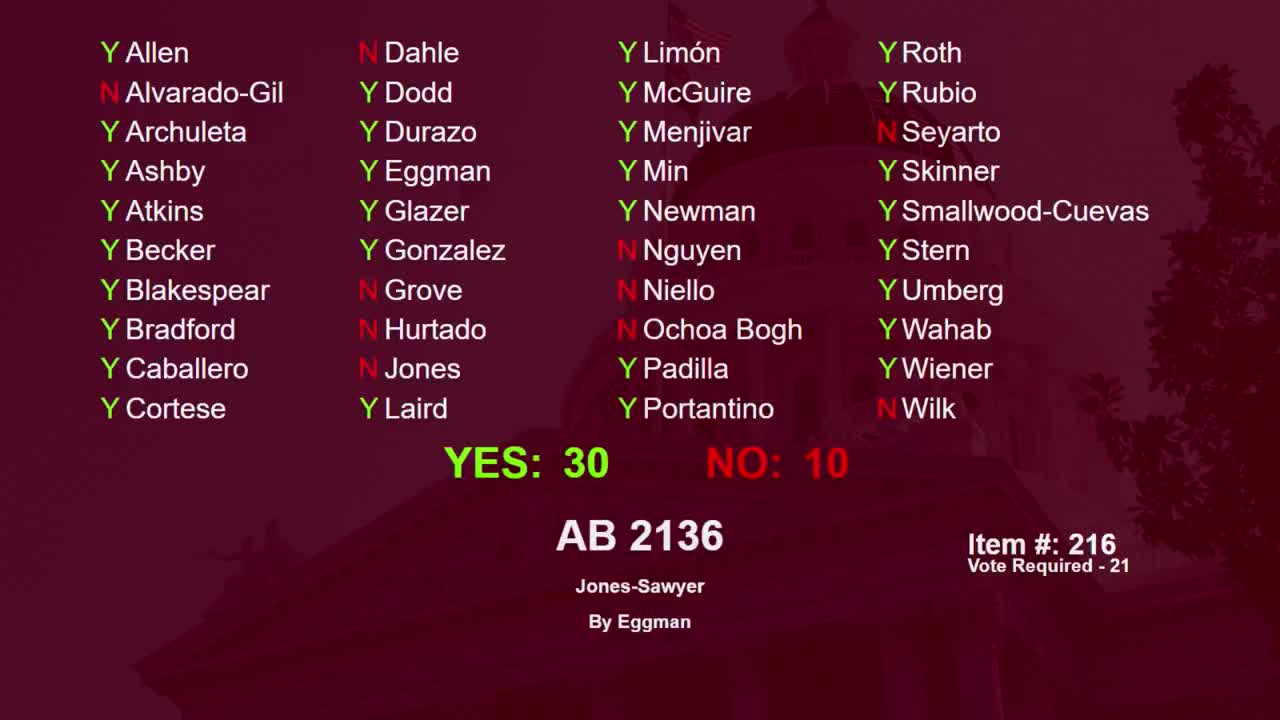
Bill Author

Bill Co-Author(s):