AB 2543: Small Business Procurement and Contract Act: eligibility.
- Session Year: 2023-2024
- House: Assembly
- Latest Version Date: 2024-09-22
Current Status:
Passed
(2024-09-22: Chaptered by Secretary of State - Chapter 407, Statutes of 2024.)
Introduced
In Committee
First Chamber
In Committee
Second Chamber
Enacted
What does this bill do?
This bill declares that the state's Small Business Procurement and Contract Act is a law that provides assistance and services to people regardless of their immigration status under a federal rule that allows states to do so. That change affects people and businesses that apply for or use state small-business certifications, contracts, or services by making them eligible regardless of immigration status.
The summary is provided by generative AI which can make mistakes. For original language, please view the details in the table below.
Existing law, the Small Business Procurement and Contract Act, requires state agencies to take certain actions in order to facilitate the participation of small businesses and microbusinesses in the provision of goods, information technology, and services to the state, and in the construction of state facilities. Existing law gives the Department of General Services sole responsibility for certifying and determining the eligibility of small businesses and microbusinesses under the act. Existing law requires the department to require an applicant or certified firm to submit a written declaration, under penalty of perjury, that information submitted to the department is true and correct, as specified.
Existing federal law provides that certain aliens are not eligible for any state or local public benefit, except as provided. Existing federal law authorizes a state to provide that an alien who is not lawfully present in the United States is eligible for a state or local public benefit for which the alien would otherwise be ineligible under these provisions only through the enactment of a state law after August 22, 1996, which affirmatively provides for that eligibility.
This bill would specify that the act is a state law that provides assistance and services for persons regardless of immigration status within the meaning of the federal law described above. By expanding the scope of the crime of perjury, this bill would impose a state-mandated local program.
The California Constitution requires the state to reimburse local agencies and school districts for certain costs mandated by the state. Statutory provisions establish procedures for making that reimbursement.
This bill would provide that reimbursement is not required by this act for a specified reason.
Existing law, the Small Business Procurement and Contract Act, requires state agencies to take certain actions in order to facilitate the participation of small businesses and microbusinesses in the provision of goods, information technology, and services to the state, and in the construction of state facilities. Existing law gives the Department of General Services sole responsibility for certifying and determining the eligibility of small businesses and microbusinesses under the act. Existing law requires the department to require an applicant or certified firm to submit a written declaration, under penalty of perjury, that information submitted to the department is true and correct, as specified.
Existing federal law provides that certain aliens are not eligible for any state or local public benefit, except as provided. Existing federal law authorizes a state to provide that an alien who is not lawfully present in the United States is eligible for a state or local public benefit for which the alien would otherwise be ineligible under these provisions only through the enactment of a state law after August 22, 1996, which affirmatively provides for that eligibility.
This bill would specify that the act is a state law that provides assistance and services for persons regardless of immigration status within the meaning of the federal law described above. By expanding the scope of the crime of perjury, this bill would impose a state-mandated local program.
The California Constitution requires the state to reimburse local agencies and school districts for certain costs mandated by the state. Statutory provisions establish procedures for making that reimbursement.
This bill would provide that no reimbursement is reimbursement is not required by this act for a specified reason.
Existing law, the Small Business Procurement and Contract Act, requires state agencies to take certain actions in order to facilitate the participation of small businesses and microbusinesses in the provision of goods, information technology, and services to the state, and in the construction of state facilities. Existing law gives the Department of General Services sole responsibility for certifying and determining the eligibility of small businesses and microbusinesses under the act. Existing law requires the department to require an applicant or certified firm to submit a written declaration, under penalty of perjury, that information submitted to the department is true and correct, as specified.
Existing federal law provides that certain aliens are not eligible for any state or local public benefit, except as provided. Existing federal law authorizes a state to provide that an alien who is not lawfully present in the United States is eligible for a state or local public benefit for which the alien would otherwise be ineligible under these provisions only through the enactment of a state law after August 22, 1996, which affirmatively provides for that eligibility.
This bill would specify that the act is a state law that provides assistance and services for undocumented persons regardless of immigration status within the meaning of the federal law described above. By expanding the scope of the crime of perjury, this bill would impose a state-mandated local program.
The California Constitution requires the state to reimburse local agencies and school districts for certain costs mandated by the state. Statutory provisions establish procedures for making that reimbursement.
This bill would provide that no reimbursement is required by this act for a specified reason.
Existing law, the Small Business Procurement and Contract Act, requires state agencies to take certain actions in order to facilitate the participation of small businesses and microbusinesses in the provision of goods, information technology, and services to the state, and in the construction of state facilities. Existing law gives the Department of General Services sole responsibility for certifying and determining the eligibility of small businesses and microbusinesses under the act. Existing law requires the department to require an applicant or certified firm to submit a written declaration, under penalty of perjury, that information submitted to the department is true and correct, as specified.
Existing federal law provides that certain aliens are not eligible for any state or local public benefit, except as provided. Existing federal law authorizes a state to provide that an alien who is not lawfully present in the United States is eligible for a state or local public benefit for which the alien would otherwise be ineligible under these provisions only through the enactment of a state law after August 22, 1996, which affirmatively provides for that eligibility.
This bill would specify that the act is a state law that provides assistance and services for undocumented persons within the meaning of the federal law described above. By expanding the scope of the crime of perjury, this bill would impose a state-mandated local program.
The California Constitution requires the state to reimburse local agencies and school districts for certain costs mandated by the state. Statutory provisions establish procedures for making that reimbursement.
This bill would provide that no reimbursement is required by this act for a specified reason.
Existing law requires the Natural Resources Agency to establish and maintain the California Carbon Sequestration and Climate Resiliency Project Registry for the purposes of identifying and listing projects in the state that drive climate action on the states natural and working lands and are seeking funding from state agencies or private entities. If a state or private entity contacts the Natural Resources Agency and chooses to fund a project on the registry, existing law requires the agency to establish a mechanism for retiring the listing of a project from the registry once it is funded and tracking the outcome of the project to ensure it is completed.This bill would make nonsubstantive changes to the requirement that the agency establish a mechanism for retiring the listing of a project from the registry once it is funded.Existing law requires the Natural Resources Agency to establish and maintain the California Carbon Sequestration and Climate Resiliency Project Registry for the purposes of identifying and listing projects in the state that drive climate action on the states natural and working lands and are seeking funding from state agencies or private entities. If a state or private entity contacts the Natural Resources Agency and chooses to fund a project on the registry, existing law requires the agency to establish a mechanism for retiring the listing of a project from the registry once it is funded and tracking the outcome of the project to ensure it is completed.
This bill would make nonsubstantive changes to the requirement that the agency establish a mechanism for retiring the listing of a project from the registry once it is funded.
The Legislature finds and declares that this chapter is a state law that provides assistance and services for persons regardless of immigration status within the meaning of Section 1621(d) of Title 8 of the United States Code.
SEC. 2.Reimbursement is not required by this act pursuant to Section 6 of Article XIIIB of the California Constitution because the only costs that may be incurred by a local agency or school district will be incurred because this act creates a new crime or infraction, eliminates a crime or infraction, or changes the penalty for a crime or infraction, within the meaning of Section 17556 of the Government Code, or changes the definition of a crime within the meaning of Section 6 of Article XIIIB of the California Constitution.
The Legislature finds and declares that this chapter is a state law that provides assistance and services for persons regardless of immigration status within the meaning of Section 1621(d) of Title 8 of the United States Code.
SEC. 2.No reimbursement is Reimbursement is not required by this act pursuant to Section 6 of Article XIIIB of the California Constitution because the only costs that may be incurred by a local agency or school district will be incurred because this act creates a new crime or infraction, eliminates a crime or infraction, or changes the penalty for a crime or infraction, within the meaning of Section 17556 of the Government Code, or changes the definition of a crime within the meaning of Section 6 of Article XIIIB of the California Constitution.
The Legislature finds and declares that this chapter is a state law that provides assistance and services for undocumented persons regardless of immigration status within the meaning of Section 1621(d) of Title 8 of the United States Code.
SEC. 2.No reimbursement is required by this act pursuant to Section 6 of Article XIIIB of the California Constitution because the only costs that may be incurred by a local agency or school district will be incurred because this act creates a new crime or infraction, eliminates a crime or infraction, or changes the penalty for a crime or infraction, within the meaning of Section 17556 of the Government Code, or changes the definition of a crime within the meaning of Section 6 of Article XIIIB of the California Constitution.
The Legislature finds and declares that this chapter is a state law that provides assistance and services for undocumented persons within the meaning of Section 1621(d) of Title 8 of the United States Code.
SEC. 2.No reimbursement is required by this act pursuant to Section 6 of Article XIIIB of the California Constitution because the only costs that may be incurred by a local agency or school district will be incurred because this act creates a new crime or infraction, eliminates a crime or infraction, or changes the penalty for a crime or infraction, within the meaning of Section 17556 of the Government Code, or changes the definition of a crime within the meaning of Section 6 of Article XIIIB of the California Constitution.
SECTION 1.Section 39740.6 of the Health and Safety Code is amended to read:39740.6.If a state or private entity contacts the Natural Resources Agency and chooses to fund a project on the registry, the Natural Resources Agency shall establish a mechanism for retiring the listing of a project from the registry when it is funded, and for tracking the outcome of the project to ensure it is completed. The project proponent shall notify the Natural Resources Agency when the project is completed, and shall provide to the agency monitoring and reporting data for the duration of the contract terms of the project.If a state or private entity contacts the Natural Resources Agency and chooses to fund a project on the registry, the Natural Resources Agency shall establish a mechanism for retiring the listing of a project from the registry once when it is funded and funded, and for tracking the outcome of the project to ensure it is completed. The project proponent shall notify the Natural Resources Agency when the project is completed, and shall provide to the agency monitoring and reporting data for the duration of the contract terms of the project.
|
Date
|
Status
|
|---|---|
| Sep 22, 2024 | Chaptered by Secretary of State - Chapter 407, Statutes of 2024. |
| Sep 22, 2024 | Approved by the Governor. |
| Sep 9, 2024 | Enrolled and presented to the Governor at 3:30 p.m. |
| Aug 28, 2024 | Senate amendments concurred in. To Engrossing and Enrolling. (Ayes 64. Noes 9.). |
| Aug 28, 2024 | In Assembly. Concurrence in Senate amendments pending. May be considered on or after August 30 pursuant to Assembly Rule 77. |
| Aug 28, 2024 | Assembly Rule 77 suspended. |
| Aug 27, 2024 | Read third time. Passed. Ordered to the Assembly. (Ayes 30. Noes 9.). |
| Aug 26, 2024 | Read second time. Ordered to third reading. |
| Aug 22, 2024 | Read third time and amended. Ordered to second reading. |
| Aug 6, 2024 | Read second time. Ordered to third reading. |
| Aug 5, 2024 | From committee: Be ordered to second reading pursuant to Senate Rule 28.8. |
| Jun 26, 2024 | From committee: Do pass and re-refer to Com. on APPR. (Ayes 9. Noes 2.) (June 25). Re-referred to Com. on APPR. |
| Jun 13, 2024 | From committee chair, with author's amendments: Amend, and re-refer to committee. Read second time, amended, and re-referred to Com. on JUD. |
| Jun 11, 2024 | From committee: Do pass and re-refer to Com. on JUD. (Ayes 10. Noes 5.) (June 11). Re-referred to Com. on JUD. |
| May 29, 2024 | Referred to Coms. on G.O. and JUD. |
| May 22, 2024 | In Senate. Read first time. To Com. on RLS. for assignment. |
| May 21, 2024 | Read third time. Passed. Ordered to the Senate. (Ayes 61. Noes 10. Page 5349.) |
| May 9, 2024 | Read second time. Ordered to third reading. |
| May 8, 2024 | From committee: Do pass. (Ayes 11. Noes 4.) (May 8). |
| Apr 16, 2024 | From committee: Do pass and re-refer to Com. on APPR. (Ayes 7. Noes 0.) (April 16). Re-referred to Com. on APPR. |
| Apr 1, 2024 | Re-referred to Com. on J., E.D., & E. |
| Mar 21, 2024 | Referred to Com. on J., E.D., & E. |
| Mar 21, 2024 | From committee chair, with author's amendments: Amend, and re-refer to Com. on J., E.D., & E. Read second time and amended. |
| Feb 14, 2024 | From printer. May be heard in committee March 15. |
| Feb 13, 2024 | Read first time. To print. |
|
Date
|
Description
|
Location
|
Votes
|
|
|---|---|---|---|---|
| Aug 28, 2024 | AB 2543 Arambula Concurrence in Senate Amendments | Assembly Floor |
Passed |
|
| Aug 27, 2024 | Assembly 3rd Reading AB2543 Arambula et al. By Rubio | Senate Floor |
Passed |
|
| Jun 25, 2024 | Do pass, but first be re-referred to the Committee on [Appropriations] | Senate Standing Committee on Judiciary |
Passed |
|
| Jun 11, 2024 | Do pass, but first be re-referred to the Committee on [Judiciary] | Senate Standing Committee on Governmental Organization |
Passed |
|
| May 21, 2024 | AB 2543 Arambula Assembly Third Reading | Assembly Floor |
Passed |
|
| May 8, 2024 | Do pass. | Assembly Standing Committee on Appropriations |
Passed |
|
| Apr 16, 2024 | Do pass and be re-referred to the Committee on [Appropriations] | Assembly Standing Committee on Jobs, Economic Development, and the Economy |
Passed |
This list shows positions taken on this bill by organizations on the date displayed, which is linked to the original source.
Positions by individuals are not included.
|
Organization
|
Position
|
Date
|
|---|---|---|
| Buen Vecino | ** Support | |
| California Immigrant Policy Center | ** Support | |
| California Rural Legal Assistance Foundation | ** Support | |
| Central Valley Immigrant Integration Collaborative | ** Support | |
| Cultiva La Salud | ** Support | |
| Education and Leadership Foundation | ** Support | |
| Fresno County Economic Development Corporation | ** Support | |
| Immigrant Rising | ** Support | |
| Immigrants Rising | * Support | Jun 11, 2024 |
| Latino Community Foundation | ** Support | |
| Oasis Legal Services | ** Support | |
| Orale: Organizing Rooted in Abolition, Liberation, and Empowerment | ** Support | |
| Saley Policy Research | ** Support | |
| Seley Policy Research, LLC | ** Support |
CONCURRENCE IN SENATE AMENDMENTS
CSA1 Bill Id:AB 2543
Author:(Arambula)
As Amended Ver:August 22, 2024
Majority vote
SUMMARY
This bill allows undocumented business owners, including Deferred Action for Childhood Arrivals (DACA) entrepreneurs to register their businesses with the state as a Certified Small Business. This bill clarifies that the Small Business Procurement and Contract Act provides assistance and services to individuals regardless of immigration status, as permitted by federal law.
Senate Amendments
Delete Senator Alvarado-Gil as coauthor.
COMMENTS
The Personal Responsibility and Work Opportunity Reconciliation Act of 1996 restricts the eligibility of noncitizens for state or local public benefits, which include grants, contracts, licenses, and various welfare services. However, federal law allows states to pass laws that make undocumented individuals eligible for certain benefits. This bill would enable undocumented small business owners to access state benefits, such as procurement opportunities, including Deferred Action for Childhood Arrivals (DACA) entrepreneurs to register their businesses with the state as a Certified Small Business.
While the Department of General Services (DGS) does not collect immigration status information for Small Business/Disabled Veteran Business Enterprise (SB/DVBE) certification, applicants must submit federal tax returns. Eligible small businesses, including microbusinesses, benefit from bid preferences and can participate in the State’s Business Participation Program, which aims to allocate 25% of annual contract dollars to small businesses. Additionally, the Disabled Veteran Business Enterprise (DVBE) Program requires state agencies to meet a 3% participation goal for contracting with DVBEs, ensuring financial opportunities for disabled veteran-owned businesses.
Small businesses in California owned by undocumented individuals continue to grow and generate economic activity. In 2104, almost 10% of undocumented working age individuals were entrepreneurs. In 2016, these small businesses generated more than $3.5 billion in business income in California. California stands to gain, with additional small business certifications to increase procurement opportunities and allow overall economic expansion for the state.
According to the Author
Despite their importance to local communities and their economic contributions to the state, many small businesses cannot access the benefits of the small business certification program. These businesses offer the same services, products and benefits as other certified businesses. However, their owners may not have proof of lawful status in this country, even when the federal government has issued them an Employer Identification Number. This prevents them from accessing the benefits of small business certification, restricting their ability to expand and continue to help the state's economy grow.
Arguments in Support
Supporters argue that the bill will enable many small businesses, which are vital to local communities in California, to access the benefits of the small business certification program. Despite offering similar services and products as certified businesses, these businesses are currently barred from certification due to their immigration status, even though they have an Employer Identification Number. The bill seeks to remove this barrier, allowing them to fully participate in and benefit from the program.
Arguments in Opposition
No opposition on file
FISCAL COMMENTS
Unknown
VOTES:
ASM JOBS, ECONOMIC DEVELOPMENT, AND THE ECONOMY: 7-0-0
YES: Villapudua, Hoover, Stephanie Nguyen, Petrie-Norris, Ramos, Soria, Wallis
ASM APPROPRIATIONS: 11-4-0
YES: Wicks, Arambula, Bryan, Calderon, Wendy Carrillo, Mike Fong, Friedman, Haney, Hart, Pellerin, Villapudua
NO: Sanchez, Dixon, Jim Patterson, Ta
ASSEMBLY FLOOR: 61-10-9
YES: Addis, Aguiar-Curry, Alanis, Alvarez, Arambula, Bains, Bauer-Kahan, Bennett, Berman, Boerner, Bonta, Bryan, Calderon, Juan Carrillo, Wendy Carrillo, Connolly, Mike Fong, Garcia, Gipson, Grayson, Haney, Hart, Hoover, Irwin, Jackson, Jones-Sawyer, Kalra, Lee, Low, Lowenthal, Maienschein, McCarty, McKinnor, Muratsuchi, Stephanie Nguyen, Ortega, Pacheco, Papan, Pellerin, Petrie-Norris, Quirk-Silva, Ramos, Rendon, Reyes, Luz Rivas, Rodriguez, Blanca Rubio, Santiago, Schiavo, Soria, Ting, Valencia, Villapudua, Waldron, Wallis, Ward, Wicks, Wilson, Wood, Zbur, Robert Rivas
NO: Davies, Dixon, Essayli, Flora, Vince Fong, Gallagher, Jim Patterson, Joe Patterson, Sanchez, Ta
ABS, ABST OR NV: Cervantes, Chen, Megan Dahle, Friedman, Gabriel, Holden, Lackey, Mathis, Weber
SENATE FLOOR: 30-9-1
YES: Allen, Archuleta, Ashby, Atkins, Becker, Bradford, Caballero, Cortese, Dodd, Durazo, Eggman, Glazer, Gonzalez, Hurtado, Laird, Limón, McGuire, Menjivar, Min, Newman, Padilla, Portantino, Roth, Rubio, Skinner, Smallwood-Cuevas, Stern, Umberg, Wahab, Wiener
NO: Alvarado-Gil, Dahle, Grove, Jones, Nguyen, Niello, Ochoa Bogh, Seyarto, Wilk
ABS, ABST OR NV: Blakespear
UPDATED
VERSION: August 22, 2024
CONSULTANT: Carla Castilla / J., E.D., & E. / (916) 319-2090 FN: 0004848
SENATE RULES COMMITTEE Office of Senate Floor Analyses (916) 651-1520 Fax: (916) 327-4478 | AB 2543 |
THIRD READING
Bill No: AB 2543
Author: Arambula (D), et al.
Amended: 8/22/24 in Senate
Vote: 21
SENATE GOVERNMENTAL ORG. COMMITTEE: 10-5, 6/11/24
AYES: Dodd, Alvarado-Gil, Archuleta, Ashby, Bradford, Glazer, Padilla, Portantino, Roth, Rubio
NOES: Wilk, Jones, Nguyen, Ochoa Bogh, Seyarto
NO VOTE RECORDED: Smallwood-Cuevas
SENATE JUDICIARY COMMITTEE: 9-2, 6/25/24
AYES: Umberg, Allen, Ashby, Caballero, Durazo, Laird, Roth, Stern, Wahab
NOES: Wilk, Niello
SENATE APPROPRIATIONS COMMITTEE: Senate Rule 28.8
ASSEMBLY FLOOR: 61-10, 5/21/24 - See last page for vote
SUBJECT: Small Business Procurement and Contract Act: eligibility
SOURCE: Central Valley Immigrant Integration Collaborative
DIGEST: This bill specifies, for purposes of the Small Business Procurement and Contract Act, that the act is a state law that provides assistance and services for persons regardless of immigration status within the meaning of a specified provision in federal law. In doing so, this bill allows a small business owner who does not have proof of lawful status in the United States to access certain state benefits afforded to small business owners, such as state procurement opportunities.
Senate Floor Amendments of 8/22/24 delete Senator Alvarado-Gil as coauthor.
ANALYSIS:
Existing law:
- Requires, under the Small Business Procurement and Contract Act (Act), state agencies to take certain actions in order to facilitate the participation of small businesses and microbusinesses in the provisions of goods, information technology, and services to the state, and in the construction of state facilities.
- Gives the Department of General Services (DGS) sole responsibility for certifying and determining the eligibility of small businesses and microbusinesses under the Act.
- Establishes the disabled veteran business enterprise (DVBE) Program within DGS and tasks the program with establishing a uniform process for state contracting that would provide a DVBE participation incentive to bidders.
- Requires DGS to require an applicant or certified firm to submit written declaration, under penalty of perjury, that information submitted to DGS is true and correct, as specified.
- Provides, under federal law, Title IV of the Personal Responsibility and Work Opportunity Reconciliation Act of 1996, that certain undocumented individuals are not eligible for any state or local public benefit, except as provided. For purposes of this law the term “state or local public benefit means the following:
- Any grant, contract, loan, professional license, or commercial license provided by an agency or state of local government or by appropriated funds of a State or local government: and
- Any retirement, welfare, health, disability, public or assisted housing, postsecondary education, food assistance, unemployment benefit, or any other similar benefit for which payments or assistance are provided to an individual, household, or family eligibility unit by an agency of a State or local government or by appropriated funds of a State of local government.
- Federal law authorizes a state to provide that undocumented immigrants who are not lawfully present in the United States are eligible for a state or local public benefit for which the individual would otherwise be ineligible under the provisions only through the enactment of a state law after August 22, 1996, which affirmatively provides for that eligibility.
- Defines a “small business” (SB) to mean an independently owned and operated business that is not dominant in its field of operation, the principal office of which is located in California, the officers of which are domiciled in California, and which, together with its affiliates, has 100 or fewer employees, and average annual gross receipts of $10,000,000 or less over the previous three years, or is a manufacturer with 100 or fewer employees and less than $15,000,000 average annual gross receipts, as specified.
- Defines a “microbusiness” as a small business which, together with affiliates, has average annual gross receipts of $5 million, as may be adjusted to reflect changes in the California Consumer Price Index, or less over the previous three years
- Requires DGS and other state agencies that enter into contracts concerning the provisions of goods, information technology, services, and construction of state facilities, to establish goals for the extent of participation of small business, including microbusinesses, for those contracts.
- Requires each state agency that significantly regulates or impacts small business to designate at least one person to serve as a small business liaison for the agency. The small business liaison is responsible for, among other things, receiving and responding to complaints received by the agency from small businesses and assisting in ensuring that the procurement and contracting processes of the entity are administered in order to meet or exceed the goal of 25% small business participation.
- Requires DGS and other state agencies that enter into contracts for the provision of goods, information technology, services to the state, and construction of state facilities, to provide for a small business preference, in the award of contracts, in solicitations where an award is to be made to the lowest responsible bidder meeting specifications, with the amount being five percent of the lowest responsible bidder meeting those specifications.
- Prohibits a state licensing entity under the Department of Consumer Affairs from denying a contracting license based on an applicant’s citizenship or immigration status.
- Establishes the Social Entrepreneurs for Economic Development Initiative to support emerging entrepreneurs in targeted populations, regardless of immigration status.
This bill specifies, for purposes of the Small Business Procurement and Contract Act, that the act is a state law that provides assistance and services for persons regardless of immigration status within the meaning of a specified provision in federal law. In doing so, the bill allows a small business owner who does not have proof of lawful status in the United States to access certain state benefits afforded to small business owners, such as state procurement opportunities.
Background
Author’s Statement. According to the author’s office, “despite their importance to local communities and their economic contributions to the state, many small businesses are unable to access the benefits of the small business certification program. These businesses offer the same services, products and benefits as other certified businesses. However, their owners may not have proof of lawful status in this country, even when the federal government has issued them an Employer Identification Number. This prevents them from accessing the benefits of small business certification, restricting their ability to expand and continue to help the state’s economy grow.”
Federal Law. Title IV of the Personal Responsibility and Work Opportunity Reconciliation Act of 1996 established comprehensive restrictions on the eligibility on noncitizens for any state or local public benefit. The law provides that certain undocumented individuals are not eligible for any state or local public benefit, except as provided. For purposes of this law the term “state or local public benefit means the following:
- Any grant, contract, loan, professional license, or commercial license provided by an agency or state of local government or by appropriated funds of a State or local government: and
- Any retirement, welfare, health, disability, public or assisted housing, postsecondary education, food assistance, unemployment benefit, or any other similar benefit for which payments or assistance are provided to an individual, household, or family eligibility unit by an agency of a State or local government or by appropriated funds of a State of local government.
However, federal law authorizes a state to enact laws that would provide undocumented individuals eligibility for a state or local public benefit for which the individual would otherwise be ineligible. This bill would provide such eligibility for undocumented individuals and allow a small business owner who does not have proof of lawful status in the United States to access certain state benefits afforded to small business owners, such as state procurement opportunities.
It is important to note however that DGS’s Office of Small Business and Disabled Veteran Business Enterprises notes that they do not inquire or collect information regarding an individual’s immigration status. However, all applicants must include Federal tax returns for the applicant business for the three most recently completed tax years. This includes all pages, forms, schedules, and statements as submitted to the Internal Revenue Service. State tax returns are collected when deemed necessary for verification purposes or as part of research to determine/confirm if eligibility criteria is met. An individual who is undocumented, but able to provide all other necessary information for the SB/DVBE certification process, is not hindered because of their immigration status.
Small Business Eligibility Requirements. In order for a small business to be eligible for certification, the small business must be independently owned and operated; not dominant in its field of operation; and, its principal office must be located in California. In addition, the business must be either a business with 100 or fewer employees and an average annual gross receipts of $15 million or less over the last three tax years; a manufacturer, as defined, with 100 or fewer employees; or, a microbusiness. A small business will automatically be designated as microbusiness, if gross annual receipts are less than $3.5 million; or the small business is a manufacturer with 25 or fewer employees.
Upon meeting eligibility requirements, certified small businesses and microbusinesses are entitled, to among other things, a five percent bid preference. The goal of the preference is to help small and micro businesses to be more competitive in the bid process, thereby enhancing state contract awards directly or indirectly to these types of businesses. The preference is only used for computation purposes to determine the winning bidder, the contract is awarded at the actual bid amount. In addition, certified small businesses are eligible for the State’s Business Participation Program, which sets a goal for the use of small businesses in at least 25 percent of the state’s overall annual contract dollars.
DVBE Program. The DVBE Program directs state governmental entities, such as state agencies and departments, to procure goods and services from DVBEs that DGS has certified as meeting the eligibility requirements of a DVBE. The legislative intent of the program is to target DVBEs and for those DVBEs to benefit financially from doing business with California. In order for a business to be certified as a DVBE, the business must be at least 51 percent owned by one or more disabled veterans, have its daily operations managed by one or more disabled veterans, and have its home office located in the United States.
The DVBE Program requires state governmental entities that award contracts for goods or services, known as awarding departments, to meet or exceed the statewide participation goal of three percent. Awarding departments may meet the three percent goal either by contracting directly with a certified DVBEs as prime contractors or by requiring a prime contractor to use DVBEs as subcontractors for a portion of the work. State departments that fail to meet the annual three percent goal can, in theory, have their delegated contracting authority removed, however DGS has never removed that authority based solely on a department’s failure to meet the percent goal.
Related/Prior Legislation
AB 915 (Chiu, 2021) would have codified a 25% small business goal for state procurement and proposes a number of actions to enhance the ability and commitment of state agencies to include small businesses, disadvantaged business enterprises (DBEs) and DVBEs in state contracting. (Held in the Senate Appropriations Committee’s Suspense File)
AB 82 (Committee on Budget, Chapter 14, Statutes of 2020) established, among other things, the Social Entrepreneurs for Economic Development Initiative to support emerging entrepreneurs in targeted populations, regardless of immigration status.
SB 1159 (Lara, Chapter 752, Statutes of 2014) prohibits licensing boards under the Department of Consumer Affairs from denying licensure to an applicant based on their citizenship or immigration status.
FISCAL EFFECT: Appropriation: No Fiscal Com.: Yes Local: Yes
SUPPORT: (Verified 8/5/24)
Central Valley Immigrant Integration Collaborative (source)
Buen Vecino
California Immigrant Policy Center
California Rural Legal Assistance Foundation
Cultiva La Salud
Education and Leadership Foundation
Fresno County Economic Development Corporation
Immigrant Rising
Latino Community Foundation
Oasis Legal Services
Orale: Organizing Rooted in Abolition, Liberation, and Empowerment
Saley Policy Research
OPPOSITION: (Verified 8/5/24)
None received
ARGUMENTS IN SUPPORT: According to the California Immigrant Policy Center, “small business certification provides significant benefits to small businesses and to local economies, including access to procurement opportunities, bidding preferences, and to prompt payments of state contracts. By authorizing DGS to provide small business certification for all eligible small businesses, AB 2543 will ensure that all small business owners, regardless of status, can expand and continue to help the state’s economy grow.”
ASSEMBLY FLOOR: 61-10, 5/21/24
AYES: Addis, Aguiar-Curry, Alanis, Alvarez, Arambula, Bains, Bauer-Kahan, Bennett, Berman, Boerner, Bonta, Bryan, Calderon, Juan Carrillo, Wendy Carrillo, Connolly, Mike Fong, Garcia, Gipson, Grayson, Haney, Hart, Hoover, Irwin, Jackson, Jones-Sawyer, Kalra, Lee, Low, Lowenthal, Maienschein, McCarty, McKinnor, Muratsuchi, Stephanie Nguyen, Ortega, Pacheco, Papan, Pellerin, Petrie-Norris, Quirk-Silva, Ramos, Rendon, Reyes, Luz Rivas, Rodriguez, Blanca Rubio, Santiago, Schiavo, Soria, Ting, Valencia, Villapudua, Waldron, Wallis, Ward, Wicks, Wilson, Wood, Zbur, Robert Rivas
NOES: Davies, Dixon, Essayli, Flora, Vince Fong, Gallagher, Jim Patterson, Joe Patterson, Sanchez, Ta
NO VOTE RECORDED: Cervantes, Chen, Megan Dahle, Friedman, Gabriel, Holden, Lackey, Mathis, Weber
Prepared by: Felipe Lopez / G.O. / (916) 651-1530
8/23/24 21:36:29
**** END ****
SENATE RULES COMMITTEE Office of Senate Floor Analyses (916) 651-1520 Fax: (916) 327-4478 | AB 2543 |
THIRD READING
Bill No: AB 2543
Author: Arambula (D), et al.
Amended: 6/13/24 in Senate
Vote: 21
SENATE GOVERNMENTAL ORG. COMMITTEE: 10-5, 6/11/24
AYES: Dodd, Alvarado-Gil, Archuleta, Ashby, Bradford, Glazer, Padilla, Portantino, Roth, Rubio
NOES: Wilk, Jones, Nguyen, Ochoa Bogh, Seyarto
NO VOTE RECORDED: Smallwood-Cuevas
SENATE JUDICIARY COMMITTEE: 9-2, 6/25/24
AYES: Umberg, Allen, Ashby, Caballero, Durazo, Laird, Roth, Stern, Wahab
NOES: Wilk, Niello
SENATE APPROPRIATIONS COMMITTEE: Senate Rule 28.8
ASSEMBLY FLOOR: 61-10, 5/21/24 - See last page for vote
SUBJECT: Small Business Procurement and Contract Act: eligibility
SOURCE: Central Valley Immigrant Integration Collaborative
DIGEST: This bill specifies, for purposes of the Small Business Procurement and Contract Act, that the act is a state law that provides assistance and services for persons regardless of immigration status within the meaning of a specified provision in federal law. In doing so, the bill allows a small business owner who does not have proof of lawful status in the United States to access certain state benefits afforded to small business owners, such as state procurement opportunities.
ANALYSIS:
Existing law:
- Requires, under the Small Business Procurement and Contract Act (Act), state agencies to take certain actions in order to facilitate the participation of small businesses and microbusinesses in the provisions of goods, information technology, and services to the state, and in the construction of state facilities.
- Gives the Department of General Services (DGS) sole responsibility for certifying and determining the eligibility of small businesses and microbusinesses under the Act.
- Establishes the disabled veteran business enterprise (DVBE) Program within DGS and tasks the program with establishing a uniform process for state contracting that would provide a DVBE participation incentive to bidders.
- Requires DGS to require an applicant or certified firm to submit written declaration, under penalty of perjury, that information submitted to DGS is true and correct, as specified.
- Provides, under federal law, Title IV of the Personal Responsibility and Work Opportunity Reconciliation Act of 1996, that certain undocumented individuals are not eligible for any state or local public benefit, except as provided. For purposes of this law the term “state or local public benefit means the following:
- Any grant, contract, loan, professional license, or commercial license provided by an agency or state of local government or by appropriated funds of a State or local government: and
- Any retirement, welfare, health, disability, public or assisted housing, postsecondary education, food assistance, unemployment benefit, or any other similar benefit for which payments or assistance are provided to an individual, household, or family eligibility unit by an agency of a State or local government or by appropriated funds of a State of local government.
- Federal law authorizes a state to provide that undocumented immigrants who are not lawfully present in the United States are eligible for a state or local public benefit for which the individual would otherwise be ineligible under the provisions only through the enactment of a state law after August 22, 1996, which affirmatively provides for that eligibility.
- Defines a “small business” (SB) to mean an independently owned and operated business that is not dominant in its field of operation, the principal office of which is located in California, the officers of which are domiciled in California, and which, together with its affiliates, has 100 or fewer employees, and average annual gross receipts of $10,000,000 or less over the previous three years, or is a manufacturer with 100 or fewer employees and less than $15,000,000 average annual gross receipts, as specified.
- Defines a “microbusiness” as a small business which, together with affiliates, has average annual gross receipts of $5 million, as may be adjusted to reflect changes in the California Consumer Price Index, or less over the previous three years
- Requires DGS and other state agencies that enter into contracts concerning the provisions of goods, information technology, services, and construction of state facilities, to establish goals for the extent of participation of small business, including microbusinesses, for those contracts.
- Requires each state agency that significantly regulates or impacts small business to designate at least one person to serve as a small business liaison for the agency. The small business liaison is responsible for, among other things, receiving and responding to complaints received by the agency from small businesses and assisting in ensuring that the procurement and contracting processes of the entity are administered in order to meet or exceed the goal of 25% small business participation.
- Requires DGS and other state agencies that enter into contracts for the provision of goods, information technology, services to the state, and construction of state facilities, to provide for a small business preference, in the award of contracts, in solicitations where an award is to be made to the lowest responsible bidder meeting specifications, with the amount being five percent of the lowest responsible bidder meeting those specifications.
- Prohibits a state licensing entity under the Department of Consumer Affairs from denying a contracting license based on an applicant’s citizenship or immigration status.
- Establishes the Social Entrepreneurs for Economic Development Initiative to support emerging entrepreneurs in targeted populations, regardless of immigration status.
This bill specifies, for purposes of the Small Business Procurement and Contract Act, that the act is a state law that provides assistance and services for persons regardless of immigration status within the meaning of a specified provision in federal law. In doing so, the bill allows a small business owner who does not have proof of lawful status in the United States to access certain state benefits afforded to small business owners, such as state procurement opportunities.
Background
Author’s Statement. According to the author’s office, “despite their importance to local communities and their economic contributions to the state, many small businesses are unable to access the benefits of the small business certification program. These businesses offer the same services, products and benefits as other certified businesses. However, their owners may not have proof of lawful status in this country, even when the federal government has issued them an Employer Identification Number. This prevents them from accessing the benefits of small business certification, restricting their ability to expand and continue to help the state’s economy grow.”
Federal Law. Title IV of the Personal Responsibility and Work Opportunity Reconciliation Act of 1996 established comprehensive restrictions on the eligibility on noncitizens for any state or local public benefit. The law provides that certain undocumented individuals are not eligible for any state or local public benefit, except as provided. For purposes of this law the term “state or local public benefit means the following:
- Any grant, contract, loan, professional license, or commercial license provided by an agency or state of local government or by appropriated funds of a State or local government: and
- Any retirement, welfare, health, disability, public or assisted housing, postsecondary education, food assistance, unemployment benefit, or any other similar benefit for which payments or assistance are provided to an individual, household, or family eligibility unit by an agency of a State or local government or by appropriated funds of a State of local government.
However, federal law authorizes a state to enact laws that would provide undocumented individuals eligibility for a state or local public benefit for which the individual would otherwise be ineligible. This bill would provide such eligibility for undocumented individuals and allow a small business owner who does not have proof of lawful status in the United States to access certain state benefits afforded to small business owners, such as state procurement opportunities.
It is important to note however that DGS’s Office of Small Business and Disabled Veteran Business Enterprises notes that they do not inquire or collect information regarding an individual’s immigration status. However, all applicants must include Federal tax returns for the applicant business for the three most recently completed tax years. This includes all pages, forms, schedules, and statements as submitted to the Internal Revenue Service. State tax returns are collected when deemed necessary for verification purposes or as part of research to determine/confirm if eligibility criteria is met. An individual who is undocumented, but able to provide all other necessary information for the SB/DVBE certification process, is not hindered because of their immigration status.
Small Business Eligibility Requirements. In order for a small business to be eligible for certification, the small business must be independently owned and operated; not dominant in its field of operation; and, its principal office must be located in California. In addition, the business must be either a business with 100 or fewer employees and an average annual gross receipts of $15 million or less over the last three tax years; a manufacturer, as defined, with 100 or fewer employees; or, a microbusiness. A small business will automatically be designated as microbusiness, if gross annual receipts are less than $3.5 million; or the small business is a manufacturer with 25 or fewer employees.
Upon meeting eligibility requirements, certified small businesses and microbusinesses are entitled, to among other things, a five percent bid preference. The goal of the preference is to help small and micro businesses to be more competitive in the bid process, thereby enhancing state contract awards directly or indirectly to these types of businesses. The preference is only used for computation purposes to determine the winning bidder, the contract is awarded at the actual bid amount.
In addition, certified small businesses are eligible for the State’s Business Participation Program, which sets a goal for the use of small businesses in at least 25 percent of the state’s overall annual contract dollars.
DVBE Program. The DVBE Program directs state governmental entities, such as state agencies and departments, to procure goods and services from DVBEs that DGS has certified as meeting the eligibility requirements of a DVBE. The legislative intent of the program is to target DVBEs and for those DVBEs to benefit financially from doing business with California. In order for a business to be certified as a DVBE, the business must be at least 51 percent owned by one or more disabled veterans, have its daily operations managed by one or more disabled veterans, and have its home office located in the United States.
The DVBE Program requires state governmental entities that award contracts for goods or services, known as awarding departments, to meet or exceed the statewide participation goal of three percent. Awarding departments may meet the three percent goal either by contracting directly with a certified DVBEs as prime contractors or by requiring a prime contractor to use DVBEs as subcontractors for a portion of the work.
State departments that fail to meet the annual three percent goal can, in theory, have their delegated contracting authority removed, however DGS has never removed that authority based solely on a department’s failure to meet the percent goal.
Related/Prior Legislation
AB 915 (Chiu, 2021) would have codified a 25% small business goal for state procurement and proposes a number of actions to enhance the ability and commitment of state agencies to include small businesses, disadvantaged business enterprises (DBEs) and DVBEs in state contracting. (Held in the Senate Appropriations Committee’s Suspense File)
AB 82 (Committee on Budget, Chapter 14, Statutes of 2020) established, among other things, the Social Entrepreneurs for Economic Development Initiative to support emerging entrepreneurs in targeted populations, regardless of immigration status.
SB 1159 (Lara, Chapter 752, Statutes of 2014) prohibits licensing boards under the Department of Consumer Affairs from denying licensure to an applicant based on their citizenship or immigration status.
FISCAL EFFECT: Appropriation: No Fiscal Com.: Yes Local: Yes
SUPPORT: (Verified 8/5/24)
Central Valley Immigrant Integration Collaborative (source)
Buen Vecino
California Immigrant Policy Center
California Rural Legal Assistance Foundation
Cultiva La Salud
Education and Leadership Foundation
Fresno County Economic Development Corporation
Immigrant Rising
Latino Community Foundation
Oasis Legal Services
Orale: Organizing Rooted in Abolition, Liberation, and Empowerment
Saley Policy Research
OPPOSITION: (Verified 8/5/24)
None received
ARGUMENTS IN SUPPORT: According to the California Immigrant Policy Center, “small business certification provides significant benefits to small businesses and to local economies, including access to procurement opportunities, bidding preferences, and to prompt payments of state contracts. By authorizing DGS to provide small business certification for all eligible small businesses, AB 2543 will ensure that all small business owners, regardless of status, can expand and continue to help the state’s economy grow.”
ASSEMBLY FLOOR: 61-10, 5/21/24
AYES: Addis, Aguiar-Curry, Alanis, Alvarez, Arambula, Bains, Bauer-Kahan, Bennett, Berman, Boerner, Bonta, Bryan, Calderon, Juan Carrillo, Wendy Carrillo, Connolly, Mike Fong, Garcia, Gipson, Grayson, Haney, Hart, Hoover, Irwin, Jackson, Jones-Sawyer, Kalra, Lee, Low, Lowenthal, Maienschein, McCarty, McKinnor, Muratsuchi, Stephanie Nguyen, Ortega, Pacheco, Papan, Pellerin, Petrie-Norris, Quirk-Silva, Ramos, Rendon, Reyes, Luz Rivas, Rodriguez, Blanca Rubio, Santiago, Schiavo, Soria, Ting, Valencia, Villapudua, Waldron, Wallis, Ward, Wicks, Wilson, Wood, Zbur, Robert Rivas
NOES: Davies, Dixon, Essayli, Flora, Vince Fong, Gallagher, Jim Patterson, Joe Patterson, Sanchez, Ta
NO VOTE RECORDED: Cervantes, Chen, Megan Dahle, Friedman, Gabriel, Holden, Lackey, Mathis, Weber
Prepared by: Felipe Lopez / G.O. / (916) 651-1530
8/6/24 16:10:56
**** END ****
Senator Thomas Umberg, Chair
2023-2024 Regular Session
Bill No: AB 2543 (Author:Arambula)
Version: March 21, 2024
Hearing Date: June 25, 2024
Fiscal: Yes
Urgency: No
Consultant: ID
SUBJECT
Small Business Procurement and Contract Act: eligibility
DIGEST
This bill specifies that the Small Business Procurement and Contract Act is a state law that provides assistance and services for undocumented persons within the meaning of a federal law providing for an exemption to a general federal prohibition on state laws that provide public benefits to undocumented persons.
EXECUTIVE SUMMARY
Small businesses are an essential part of the California economy and of communities across the state. They provide vital services where people live, support entrepreneurship and innovation in the marketplace, and offer culturally-relevant goods and services to communities through California. Many of the state’s small businesses are immigrant-owned. While many immigrant business owners have some form of immigration status, others do not. The California Small Business Procurement and Contract Act was enacted to aid and assist the state’s small businesses and facilitate their participation in contracts and services provided to the state through preferences, special consideration, and other benefits. Federal law prohibits state laws from providing individuals without lawful immigration status public benefits, unless a state enacts a law after August 22, 1996 that affirmatively provides for eligibility for the public benefit for undocumented individuals. In order to ensure that undocumented small business owners can benefit from the preferences and other benefits of the Small Business Procurement and Contract Act (Act), this bill specifies in the Act that the Act is a state law that provides assistance and services to undocumented persons pursuant to the exemption in federal law. AB 2543 is sponsored by the Central Valley Immigrant Integration Collaborative and is supported by the California Immigrant Policy Center and the Latino Community Foundation. The Committee has received no timely opposition. It passed out of the Senate Governmental Organization Committee on a vote of 10 to 5.
PROPOSED CHANGES TO THE LAW
Existing law:
- Establishes the Personal Responsibility and Work Opportunity Reconciliation Act of 1996 and specifies that certain immigrants shall not be eligible for any state or local public benefit, except as provided.
- Defines “state or local public benefit” to mean the following:
- any grant, contract, loan, professional license, or commercial license provided by an agency or state of local government or by appropriated funds of a State or local government; and
- any retirement, welfare, health, disability, public or assisted housing, postsecondary education, food assistance, unemployment benefit, or any other similar benefit for which payments or assistance are provided to an individual, household, or family eligibility unit by an agency of a State or local government or by appropriated funds of a State or local government.
- Provides specified state or local public benefits that are exempt from the prohibition in (1). (8 U.S.C. § 1621.)
- Defines “state or local public benefit” to mean the following:
- Specifies that a state may provide that undocumented immigrants who are not lawfully present in the United States are eligible for a state or local public benefit for which the individual would otherwise be ineligible under this Act only through the enactment of a state law after August 22, 1996, that affirmatively provides for that eligibility. (8 U.S.C. § 1621(d).)
- Requires, under the Small Business Procurement and Contract Act (Act), state agencies to take certain actions, including providing preferences to and special consideration for small businesses, in order to facilitate the participation of small businesses and microbusinesses in the provision of goods, information technology, and services to the state, and in the construction of state facilities. (Gov. Code § 14835 et seq.)
- Defines a “small business” to mean an independently owned and operated business that is not dominant in its field of operation, the principal office of which is located in California, the officers of which are domiciled in California, and which, together with its affiliates, has 100 or fewer employees, and average annual gross receipts of $10,000,000 or less over the previous three years, or is a manufacturer with 100 or fewer employees and less than $15,000,000 average annual gross receipts, as specified. (Gov. Code § 14837(d).)
- Defines a “microbusiness” as a small business which, together with affiliates, has average annual gross receipts of $5 million, as may be adjusted to reflect changes in the California Consumer Price Index, or less over the previous three years, or is a manufacturer with 25 or fewer employees. (Gov. Code § 14837(d)(2).)
- Requires DGS and other state agencies that enter into contracts concerning the provisions of goods, information technology, services, and construction of state facilities, to establish goals for the extent of participation of small businesses, including microbusinesses, for those contracts, with a minimum goal of 25 percent procurement. (Gov. Code § 14838(a).)
- Gives the Department of General Services (DGS) sole responsibility for certifying and determining the eligibility of small businesses and microbusinesses under the Act. (Gov. Code § 14839.1.)
- Establishes the Disabled Veteran Business Enterprise (DVBE) Program within DGS and tasks the program with establishing a uniform process for state contracting that would provide a DVBE participation incentives to eligible bidders. (Gov. Code § 14839.)
- Establishes a process by which DGS may certify a small business or DVBE for eligibility for the benefits and preferences provided by the Act, which includes a requirement that an applicant submit a written declaration, under penalty of perjury, that information submitted to DGS is true and correct, as specified. (Gov. Code § 14840.)
- Requires each state agency that significantly regulates or impacts small businesses to designate at least one person to serve as a small business liaison for the agency. The small business liaison is responsible for, among other things, receiving and responding to complaints received by the agency from small businesses and assisting in ensuring that the procurement and contracting processes of the entity are administered in order to meet or exceed the goal of 25% small business participation. (Gov. Code § 14846.)
This bill specifies that the Legislature finds and declares that the Small Business Procurement and Contract Act is a state law that provides assistance and services for undocumented persons within the meaning of Subdivision (d) of Section 1621 of Title 8 of the United States Code.
COMMENTS
- Author’s statement
According to the author:
Despite their importance to local communities and their economic contribution to the state, many small businesses are unable to access the benefits of the small business certification program. These businesses offer the same services, products and benefits as other certified businesses. However, their owners may not have proof of lawful status in this country, even when the federal government has issued them an Employer Identification Number. This prevents them from accessing the benefits of small business certification, restricting their ability to expand and continue to help the state’s economy grow.
- Immigrant-owned small businesses are vital parts of California’s communities
Small businesses are an essential part of the California economy and of communities across the state. They provide vital services where people live, support entrepreneurship and innovation in the marketplace, and offer culturally-relevant goods and services to communities through California. Studies have found that minority-owned small businesses, which account for 46 percent of all of the state’s small businesses, support 10.9 percent of all jobs in the state, generate 3.5 percent of the state’s economic output, and contribute $192.8 billion in economic output a year.[1]
Many of the state’s small businesses are immigrant-owned. In fact, 42% of new companies in the state are founded by immigrants.[2] While many immigrant business owners have some form of immigration status, others do not. It is estimated that there are 892,400 undocumented entrepreneurs across the nation, and many more undocumented Californians are becoming business owners every day.[3] Many undocumented immigrants start businesses in part because starting a business does not require work authorization from the federal government or a social security number, two things that undocumented immigrants cannot obtain due to their lack of immigration status.[4] Thus, access to resources and support for starting a business is a powerful tool for the state’s undocumented community members who wish to start a business, and promoting undocumented immigrant-owned businesses is essential for the state and its economy.
- The Personal Responsibility and Work Opportunity Reconciliation Act of 1996
In 1996, President Bill Clinton signed the Personal Responsibility and Work Opportunity Reconciliation Act of 1996 (PRWORA). (Pub. L. 104-193, 104th Cong. 1996.) PRWORA substantially reformed the welfare system, including how immigrants may qualify for public benefits. It limited many immigrants’ eligibility for public benefits to those who were considered a qualified immigrant, which included only those of certain immigration statuses. For Federal means-tested public benefits, PRWORA limited such benefits to qualified immigrants who had resided in the United States for at least five years.
In addition, PRWORA put into place the provisions relevant to this bill. Those provisions make any immigrant who is not a qualified immigrant under the statute, a nonimmigrant under immigration law, or an immigrant who has been temporarily paroled into the United States for urgent humanitarian reasons or significant public benefit, ineligible for state or local public benefits, with specified exceptions. (8 U.S.C. § 1621.) PRWORA provided that a state or local public benefit for the purposes of its prohibition includes: any grant, contract, loan, professional license, or commercial license; any retirement, welfare, health, disability, public or assisted housing, postsecondary education, food assistance, unemployment benefit, or any other similar benefit. (8 U.S.C. § 1621(c).) However, PWRORA included an important caveat to its prohibition: a state may provide that an immigrant without lawful status in the United States is eligible for a State or local public benefit through enactment of a state law that affirmatively provides for such eligibility. (8 U.S.C. § 1621(d).)
- California’s Small Business Procurement and Contract Act
The California Small Business Procurement and Contract Act (the Act) was enacted to aid and assist the state’s small businesses and facilitate their participation in contracts and services provided to the state. (Gov. Code § 14835 et seq.) The Act requires state agencies and the Director of DGS to facilitate the participation in and procurement of state contracts for goods, services, information technology, and construction by small businesses, with the minimum goal of having 25% of agencies’ contracts be procured by small businesses. (Gov. Code § 14838.) The Act directs agencies to provide a small business preference in the award of contracts, give special consideration to small businesses and microbusinesses with regard to required qualifications, award contracts to small businesses and microbusinesses whenever feasible, and make continuous efforts to expand the pool of small businesses and microbusinesses that participate in the agency’s contracts. (Gov. Code § 14838.) The Act also provides a number of benefits and preferences for small businesses in projects for construction or improvement of the state’s infrastructure. (Gov. Code § 14838.1.)
Under the Act, a small business is defined as one that is independently owned and operated, not dominant in a field of operation, located in California, owned by individuals domiciled in California, and meet certain requirements related to the number of employees it has and its annual gross receipts. (Gov. Code § 14837(d).) DGS is responsible for certifying small businesses that qualify to be considered by agencies for the preferences and benefits under the Act. (Gov. Code § 14839.1.)
- AB 2584 ensures that businesses owned by individuals without immigration status may access the preferences and benefits of the Small Business Procurement and Contract Act
AB 2584 clarifies that the Small Business Procurement and Contract Act is the exception to the PRWORA’s prohibition on a states providing public benefits to undocumented individuals. As the exception to PRWORA requires that any state statute that seeks to be exempt from PRWORA’s prohibition explicitly state that it provides eligibility for undocumented individuals, AB 2584 adds language to the Act specifying just that.
There has been some litigation around PRWORA and other state laws that provide benefits to undocumented individuals. In Martinez v. Regents of University of California, out-of-state students of the University of California challenged California’s law providing undocumented individuals with in-state tuition when they have attended California high schools and met other requirements. (Martinez v. Regents of University of California, (2010) 50 Cal. 4th 1277.) The California Supreme Court determined that the law complied with PRWORA’s exception because it was enacted after PRWORA, and stated in numerous provisions that it applies to persons without lawful immigration status. (Id., 1294.) In another case, In Re Garcia, the California Supreme Court found that an undocumented applicant for admission to the State Bar as a licensed attorney was not precluded from being admitted because Business and Professions Code Section 6064 explicitly allowed undocumented individuals to be admitted to the State Bar. (In re Garcia, (2014) 58 Cal. 4th 440.) While the power to regulate immigration is exclusively a federal power, any question of preemption raised by AB 2584 can be easily dispensed with because PRWORA’s exemption expressly permits AB 2584’s provisions. (Martinez, 50 Cal. at 1298.)
- Arguments in support
According to the Central Valley Immigrant Integration Collaborative, which is the sponsor of AB 2543:
AB 2543 is a necessary reform that has the potential to benefit thousands of immigrants in the Central Valley and the State of California, opening doors for the expansion of their businesses and enabling them to strengthen and diversify the regional and state economies.
Despite their importance to local communities and their economic contribution to the state, many small businesses are unable to access the benefits of the small business certification program. These immigrant-owned businesses offer the same services, products and benefits as other certified businesses. However, they are not able to obtain small business certification due to the citizenship or immigration status of their owners, even when the federal government has issued them an Employer Identification Number to engage in business. This prevents them from accessing the benefits of small business certification, restricting their ability to expand and continue to help the state’s economy grow.
SUPPORT
Central Valley Immigrant Integration Collaborative (sponsor)
California Immigrant Policy Center
Latino Community Foundation
OPPOSITION
None received
RELATED LEGISLATION
Pending Legislation:
AB 2586 (Alvarez, 2024) prohibits the University of California, the California State University, and California Community Colleges from disqualifying a student from being hired due to their failure to provide proof of federal work authorization, with exceptions. AB 2586 is currently in the Senate Judiciary Committee.
AB 1840 (Arambula, 2024) specifies that an applicant under the California Dream for All Program that provides shared appreciation loans to qualified first-time homebuyers who meets all other requirements for a loan shall not be disqualified solely based on the applicant’s immigration status, and specifies that the Program is a state law within the meaning of subsection (d) of Section 1621 of Title 8 of the United States Code. AB 1840 is currently in the Senate Judiciary Committee.
AB 1431 (Zbur, 2023) would have, upon appropriation of the Legislature, established the California Housing Security Program to provide a housing subsidy to eligible persons to reduce housing insecurity. Would have specified that an undocumented person who meets the eligibility criteria is eligible to receive the subsidy within the meaning of subsection (d) of Section 1621 of Title 8 of the United States Code. AB 1431 died in the Assembly Housing and Community Development Committee.
Prior Legislation:
AB 915 (Chiu, 2021) would have codified a 25% small business goal for state procurement, and proposed a number of actions to enhance the ability and commitment of state agencies to include small businesses, disadvantaged business enterprises and DVBEs in state contracting. AB 915 died in the Senate Appropriations Committee.
AB 82 (Committee on Budget, Ch. 14, Stats. 2020) established, among other things, the Social Entrepreneurs for Economic Development Initiative to support emerging entrepreneurs in targeted populations, regardless of immigration status.
SB 1159 (Lara, Ch. 752, Stats. 2014) prohibited licensing boards under the Department of Consumer Affairs from denying licensure to an applicant based on their citizenship or immigration status.
AB 540 (Firebaugh, Ch. 814, Stats. 2001) provided that a person who has attended a California high school for at least three years, has graduated from a California high school or equivalent, will attend an accredited institution of higher education in California, and has filed an affidavit if they are without lawful immigration status may be eligible for in-state tuition at a California Community College or State University.
PRIOR VOTES:
Senate Committee on Governmental Organization (Ayes 10, Noes 5)
Assembly Floor (Ayes 61, Noes 10)
Assembly Appropriations Committee (Ayes 11, Noes 4)
Assembly Jobs, Economic Development, and the Economy Committee (Ayes 7, Noes 0)
**************
California Office of the Small Business Advocate, The State of Diverse Businesses in California (Jun. 2023), Executive Summary, available at https://business.ca.gov/californias-minority-owned-small-businesses-contribute-192-8-billion-in-economic-output-and-support-over-2-5-million-jobs-annually-new-report-shows/. ↑
David Wagner, “Immigrant entrepreneurs continue to shape California’s economy,” Cal Matters (Jun. 19, 2019), available at https://calmatters.org/california-divide/2019/06/immigrant-entrepreneurs-california-economy/. ↑
New Americans in California, American Immigration Council (2022), available at https://map.americanimmigrationcouncil.org/locations/california/#; Cindy Carcamo, “Shut out of DACA, and traditional jobs, young immigrants start businesses to get ahead,” Los Angeles Times (Sept. 15, 2022), available at https://www.latimes.com/california/story/2022-09-15/10-years-ago-this-immigrant-didnt-qualify-for-daca-protection-now-hes-an-entrepreneur. ↑
Id. ↑
SENATE COMMITTEE ON GOVERNMENTAL ORGANIZATION
Senator Bill Dodd
Chair
2023 - 2024 Regular
Bill No: 2543 Hearing Date: 6/11/2024
Author: | |||
Version: | 3/21/2024 Amended | ||
Urgency: | No | Fiscal: | Yes |
Consultant: | Felipe Lopez | ||
SUBJECT: Small Business Procurement and Contract Act: eligibility
DIGEST: This bill specifies, for purposes of the Small Business Procurement and Contract Act, that the act is a state law that provides assistance and services for undocumented persons within the meaning of a specified provision in federal law. In doing so, the bill allows a small business owner who does not have proof of lawful status in the United States to access certain state benefits afforded to small business owners, such as state procurement opportunities.
ANALYSIS:
Existing law:
- Requires, under the Small Business Procurement and Contract Act (Act), state agencies to take certain actions in order to facilitate the participation of small businesses and microbusinesses in the provisions of goods, information technology, and services to the state, and in the construction of state facilities.
- Gives the Department of General Services (DGS) sole responsibility for certifying and determining the eligibility of small businesses and microbusinesses under the Act.
- Establishes the disabled veteran business enterprise (DVBE) Program within DGS and tasks the program with establishing a uniform process for state contracting that would provide a DVBE participation incentive to bidders.
- Requires DGS to require an applicant or certified firm to submit written declaration, under penalty of perjury, that information submitted to DGS is true and correct, as specified.
- Provides, under federal law, Title IV of the Personal Responsibility and Work Opportunity Reconciliation Act of 1996, that certain undocumented individuals are not eligible for any state or local public benefit, except as provided. For purposes of this law the term “state or local public benefit means the following:
- Any grant, contract, loan, professional license, or commercial license provided by an agency or state of local government or by appropriated funds of a State or local government: and
- Any retirement, welfare, health, disability, public or assisted housing, postsecondary education, food assistance, unemployment benefit, or any other similar benefit for which payments or assistance are provided to an individual, household, or family eligibility unit by an agency of a State or local government or by appropriated funds of a State of local government.
- Federal law authorizes a state to provide that undocumented immigrants who are not lawfully present in the United States are eligible for a state or local public benefit for which the individual would otherwise be ineligible under the provisions only through the enactment of a state law after August 22, 1996, which affirmatively provides for that eligibility.
- Defines a “small business” (SB) to mean an independently owned and operated business that is not dominant in its field of operation, the principal office of which is located in California, the officers of which are domiciled in California, and which, together with its affiliates, has 100 or fewer employees, and average annual gross receipts of $10,000,000 or less over the previous three years, or is a manufacturer with 100 or fewer employees and less than $15,000,000 average annual gross receipts, as specified.
- Defines a “microbusiness” as a small business which, together with affiliates, has average annual gross receipts of $5 million, as may be adjusted to reflect changes in the California Consumer Price Index, or less over the previous three years
- Requires DGS and other state agencies that enter into contracts concerning the provisions of goods, information technology, services, and construction of state facilities, to establish goals for the extent of participation of small business, including microbusinesses, for those contracts.
- Requires each state agency that significantly regulates or impacts small business to designate at least one person to serve as a small business liaison for the agency. The small business liaison is responsible for, among other things, receiving and responding to complaints received by the agency from small businesses and assisting in ensuring that the procurement and contracting processes of the entity are administered in order to meet or exceed the goal of 25% small business participation.
- Requires DGS and other state agencies that enter into contracts for the provision of goods, information technology, services to the state, and construction of state facilities, to provide for a small business preference, in the award of contracts, in solicitations where an award is to be made to the lowest responsible bidder meeting specifications, with the amount being five percent of the lowest responsible bidder meeting those specifications.
- Prohibits a state licensing entity under the Department of Consumer Affairs from denying a contracting license based on an applicant’s citizenship or immigration status.
- Establishes the Social Entrepreneurs for Economic Development Initiative to support emerging entrepreneurs in targeted populations, regardless of immigration status.
This bill specifies, for purposes of the Small Business Procurement and Contract Act, that the act is a state law that provides assistance and services for undocumented persons within the meaning of a specified provision in federal law. In doing so, the bill allows a small business owner who does not have proof of lawful status in the United States to access certain state benefits afforded to small business owners, such as state procurement opportunities.
Background
Author Statement. According to the author’s office, “despite their importance to local communities and their economic contributions to the state, many small businesses are unable to access the benefits of the small business certification program. These businesses offer the same services, products and benefits as other certified businesses. However, their owners may not have proof of lawful status in this country, even when the federal government has issued them an Employer Identification Number. This prevents them from accessing the benefits of small business certification, restricting their ability to expand and continue to help the state’s economy grow.”
Federal Law. Title IV of the Personal Responsibility and Work Opportunity Reconciliation Act of 1996 established comprehensive restrictions on the eligibility on noncitizens for any state or local public benefit. The law provides that certain undocumented individuals are not eligible for any state or local public benefit, except as provided. For purposes of this law the term “state or local public benefit means the following:
- Any grant, contract, loan, professional license, or commercial license provided by an agency or state of local government or by appropriated funds of a State or local government: and
- Any retirement, welfare, health, disability, public or assisted housing, postsecondary education, food assistance, unemployment benefit, or any other similar benefit for which payments or assistance are provided to an individual, household, or family eligibility unit by an agency of a State or local government or by appropriated funds of a State of local government.
However, federal law authorizes a state to enact laws that would provide undocumented individuals eligibility for a state or local public benefit for which the individual would otherwise be ineligible. This bill would provide such eligibility for undocumented individuals and allow a small business owner who does not have proof of lawful status in the United States to access certain state benefits afforded to small business owners, such as state procurement opportunities.
It is important to note however that DGS’s Office of Small Business and Disabled Veteran Business Enterprises notes that they do not inquire or collect information regarding an individual’s immigration status. However, all applicants must include Federal tax returns for the applicant business for the three most recently completed tax years. This includes all pages, forms, schedules, and statements as submitted to the Internal Revenue Service. State tax returns are collected when deemed necessary for verification purposes or as part of research to determine/confirm if eligibility criteria is met. An individual who is undocumented, but able to provide all other necessary information for the SB/DVBE certification process, is not hindered because of their immigration status.
Small Business Eligibility Requirements. In order for a small business to be eligible for certification, the small business must be independently owned and operated; not dominant in its field of operation; and, its principal office must be located in California. In addition, the business must be either a business with 100 or fewer employees and an average annual gross receipts of $15 million or less over the last three tax years; a manufacturer, as defined, with 100 or fewer employees; or, a microbusiness. A small business will automatically be designated as microbusiness, if gross annual receipts are less than $3.5 million; or the small business is a manufacturer with 25 or fewer employees.
Upon meeting eligibility requirements, certified small businesses and microbusinesses are entitled, to among other things, a five percent bid preference. The goal of the preference is to help small and micro businesses to be more competitive in the bid process, thereby enhancing state contract awards directly or indirectly to these types of businesses. The preference is only used for computation purposes to determine the winning bidder, the contract is awarded at the actual bid amount.
In addition, certified small businesses are eligible for the State’s Business Participation Program, which sets a goal for the use of small businesses in at least 25 percent of the state’s overall annual contract dollars.
DVBE Program. The DVBE Program directs state governmental entities, such as state agencies and departments, to procure goods and services from DVBEs that DGS has certified as meeting the eligibility requirements of a DVBE. The legislative intent of the program is to target DVBEs and for those DVBEs to benefit financially from doing business with California. In order for a business to be certified as a DVBE, the business must be at least 51 percent owned by one or more disabled veterans, have its daily operations managed by one or more disabled veterans, and have its home office located in the United States.
The DVBE Program requires state governmental entities that award contracts for goods or services, known as awarding departments, to meet or exceed the statewide participation goal of three percent. Awarding departments may meet the three percent goal either by contracting directly with a certified DVBEs as prime contractors or by requiring a prime contractor to use DVBEs as subcontractors for a portion of the work.
State departments that fail to meet the annual three percent goal can, in theory, have their delegated contracting authority removed, however DGS has never removed that authority based solely on a department’s failure to meet the percent goal.
Participation Goals. On March 29, 2006, Executive Order S-02-06 by Governor Schwarzenegger, established a minimum participation goal of 25% for small businesses/microbusinesses and directed DGS to monitor the progress of all agencies, departments, boards and commissions towards meeting the 25% small business participation goal.
It should be noted that there is currently no microbusiness participation goal; rather the 25% participation goal for small businesses is a combination of small businesses and microbusinesses. Also, though DGS implements various strategies to aid departments’ achievement of their participation goals, there is no statutory penalty for not meeting the goal.
Every year, DGS releases a Consolidated Annual Report (CAR) on contracting dollars that state departments award to small businesses. During fiscal year 2018-19 there were 131 mandatory reporting departments, those that are under DGS’ statutory purchasing authority, that are required to report and another 27 state departments that report voluntarily, departments that are not under DGS’ statutory purchasing authority.
According to the 2018-19 CAR, mandatory reporting departments did not meet the statewide goal; reporting 20.58% participation by small businesses/ microbusinesses. The primary reason why departments gave for not meeting the participation goals was the large number of emergency contracts related to the 2018 wildfires, such as the Camp Fire. Other departments, such as Water Resources and State Hospitals, cited the lack of qualified contractors and the highly specialized contracts with little to no availability of certified firms as the main reason for not meeting the participation goals. Removing major emergency purchases from the reporting, mandatory departments would have met the 25% participation goals; reporting 25.59% of total dollars being awarded to small businesses.
Based on data that DGS is required to publicly report, aside from 2018-2019, the state has generally met the 25% small business goal and the three percent DVBE procurement participation goals. These official numbers are, however, only part of the program assessment. DGS prepares an extensive annual report on state procurement activities, the California Consolidated Report. In addition to reporting the amount of contracts with small businesses and DVBEs, these reports also provide information on outreach activities and other information to provide a framework for understanding the state’s targeted procurement activities.
Although DGS works diligently to gather and aggregate this information, the CAR also highlights potential data irregularities, including the inconsistent reporting by state agencies and the failure of some state agencies to even make a report. As an example, in 2012-13, only 79% of the mandatory reporting entities reported their contracting activity to DGS.
The data also provides only a partial look at contracting activities, as it reflects the amount contracted for and not the amounts actually received by a small business or DVBE. A state audit of the DVBE Program, released in 2019, suggests that very few state agencies have implemented practices to monitor and report DVBE procurement participation violations for follow-up by DGS.
Prior/Related Legislation
AB 915 (Chiu, 2021) would have codified a 25% small business goal for state procurement and proposes a number of actions to enhance the ability and commitment of state agencies to include small businesses, disadvantaged business enterprises (DBEs) and DVBEs in state contracting. (Held in the Senate Appropriations Committee’s Suspense File)
AB 82 (Committee on Budget, Chapter 14, Statutes of 2020) established, among other things, the Social Entrepreneurs for Economic Development Initiative to support emerging entrepreneurs in targeted populations, regardless of immigration status.
SB 1159 (Lara, Chapter 752, Statutes of 2014) prohibits licensing boards under the Department of Consumer Affairs from denying licensure to an applicant based on their citizenship or immigration status.
FISCAL EFFECT: Appropriation: Fiscal Com.: Local:
SUPPORT:
Central Valley Immigrant Integration Collaborative (Source)
Buen Vecino
California Immigrant Policy Center
California Rural Legal Assistance Foundation
Cultiva La Salud
Education and Leadership Foundation
Fresno County Economic Development Corporation
Immigrant Rising
Latino Community Foundation
Oasis Legal Services
Orale: Organizing Rooted in Abolition, Liberation, and Empowerment
Saley Policy Research
OPPOSITION:
None received
ARGUMENTS IN SUPPORT: According to the California Immigrant Policy Center, “small business certification provides significant benefits to small businesses and to local economies, including access to procurement opportunities, bidding preferences, and to prompt payments of state contracts. By authorizing DGS to provide small business certification for all eligible small businesses, AB 2543 will ensure that all small business owners, regardless of status, can expand and continue to help the state’s economy grow.”
DUAL REFERRAL: Senate Governmental Organization Committee & Senate Judiciary Committee
ASSEMBLY THIRD READING
ATR Bill Id:AB 2543
Author:(Arambula)
As Amended Ver:March 21, 2024
Majority vote
SUMMARY
Enables small business owners lacking proof of lawful status in the US to register their businesses with the state as Certified Small Businesses.
Major Provisions
- No reimbursement is required by this act pursuant to Section 6 of Article XIIIB of the California Constitution because the only costs that may be incurred by a local agency or school district will be incurred because this act creates a new crime or infraction, eliminates a crime or infraction, or changes the penalty for a crime or infraction, within the meaning of Section 17556 of the Government Code, or changes the definition of a crime within the meaning of Section 6 of Article XIIIB of the California Constitution.
- The Legislature finds and declares that this chapter is a state law that provides assistance and services for undocumented persons within the meaning of Section 1621(d) of Title 8 of the United States Code.
COMMENTS
California's small businesses, including a significant portion owned by minorities, are vital for the state's economy, generating billions in output and fostering inclusivity. Undocumented entrepreneurs contribute substantially but face barriers to resources such as small business certification. This bill aims to amend laws, allowing certification for undocumented-owned businesses, enhancing their access to state contracts and fostering economic growth. Having a federally issued Employer Identification Number and lawfully paying taxes, some business owners may not have proof of lawful status in this country. Prior legislation supports similar initiatives, emphasizing inclusivity regardless of immigration status.
According to the Author
Despite their importance to local communities and their economic contribution to the state, many small businesses are unable to access the benefits of the small business certification program. These businesses offer the same services, products, and benefits as other certified businesses. However, their owners may not have proof of lawful status in this country, even when the federal government has issued them an Employer Identification Number. This prevents them from accessing the benefits of small business certification, restricting their ability to expand and continue to help the state's economy grow.
Arguments in Support
According to the Central Valley Immigrant Integration Collaborative (CVIIC), "AB 2543 is a necessary reform that has the potential to benefit thousands of immigrants in the Central
Valley and the State of California, opening doors for the expansion of their businesses and enabling them to strengthen and diversify the regional and state economies."
Arguments in Opposition
None on file.
FISCAL COMMENTS
According to the Assembly Appropriations Committee, no fiscal impact to the Department of General Services (DGS).
VOTES
ASM JOBS, ECONOMIC DEVELOPMENT, AND THE ECONOMY: 7-0-0
YES: Villapudua, Hoover, Stephanie Nguyen, Petrie-Norris, Ramos, Soria, Wallis
ASM APPROPRIATIONS: 11-4-0
YES: Wicks, Arambula, Bryan, Calderon, Wendy Carrillo, Mike Fong, Friedman, Haney, Hart, Pellerin, Villapudua
NO: Sanchez, Dixon, Jim Patterson, Ta
UPDATED
VERSION: March 21, 2024
CONSULTANT: Ashley Bennett / J., E.D., & E. / (916) 319-2090 FN: 0002922
Date of Hearing: May 8, 2024
ASSEMBLY COMMITTEE ON APPROPRIATIONS
Buffy Wicks, Chair
ABPCA Bill Id:AB 2543
Author:(Arambula) – As Amended Ver:March 21, 2024
Policy Committee: | Jobs, Economic Development, and the Economy | Vote: | 7 - 0 |
|
| ||
|
|
Urgency: No State Mandated Local Program: Yes Reimbursable: No
SUMMARY:
This bill allows a small business owner who does not have proof of lawful status in the United States to access certain state benefits afforded to small business owners, such as state procurement opportunities.
FISCAL EFFECT:
No fiscal impact to the Department of General Services (DGS).
COMMENTS:
- Purpose. According to the author:
Despite their importance to local communities and their economic contribution to the state, many small businesses are unable to access the benefits of the small business certification program. These businesses offer the same services, products and benefits as other certified businesses. However, their owners may not have proof of lawful status in this country, even when the federal government has issued them an Employer Identification Number. This prevents them from accessing the benefits of small business certification, restricting their ability to expand and continue to help the state’s economy grow.
- Background. State law does not allow for small business certification for businesses owned or operated by individuals without proof of lawful status in the United States.
Federal law prohibits eligibility for any state or local public benefit to people without proof of lawful status in the United States, unless a state provides eligibility in state law.
This bill allows DGS to provide small business certifications to small businesses owned or operated by undocumented individuals. Small business certification provides certain benefits to small businesses, including state procurement opportunities.
- Prior Legislation. AB 82 (Committee on Budget), Chapter 14, Statutes of 2020, established the Social Entrepreneurs for Economic Development Initiative to support emerging entrepreneurs in targeted populations, regardless of immigration status.
SB 1159 (Lara), Chapter 752, Statutes of 2014, prohibits a state licensing entity from denying a contracting license based on an applicant’s citizenship or immigration status.
Analysis Prepared by: Natasha Collins / APPR. / (916) 319-2081
Date of Hearing: April 16, 2024
ASSEMBLY COMMITTEE ON JOBS, ECONOMIC DEVELOPMENT, AND THE ECONOMY
Carlos Villapudua, Chair
ABPCA Bill Id:AB 2543 (
Author:Arambula) – As Amended Ver:March 21, 2024
SUBJECT: Small Business Procurement and Contract Act: eligibility
SUMMARY: This bill allows undocumented business owners, including Deferred Action for Childhood Arrivals (DACA) entrepreneurs to register their businesses with the state as a Certified Small Business.
Specifically, this bill:
- The Legislature finds and declares that this chapter is a state law that provides assistance and services for undocumented persons within the meaning of Section 1621(d) of Title 8 of the United States Code.
- No reimbursement is required by this act pursuant to Section 6 of Article XIIIB of the California Constitution because the only costs that may be incurred by a local agency or school district will be incurred because this act creates a new crime or infraction, eliminates a crime or infraction, or changes the penalty for a crime or infraction, within the meaning of Section 17556 of the Government Code, or changes the definition of a crime within the meaning of Section 6 of Article XIIIB of the California Constitution.
EXISTING LAW:
- The Small Business Procurement and Contract Act, requires state agencies to take certain actions in order to facilitate the participation of small businesses and microbusinesses in the provision of goods, information technology, and services to the state, and in the construction of state facilities.
- Existing law gives the Department of General Services sole responsibility for certifying and determining the eligibility of small businesses and microbusinesses under the act.
- Existing law requires the department to require an applicant or certified firm to submit a written declaration, under penalty of perjury, that information submitted to the department is true and correct, as specified.
- Existing federal law provides that certain aliens are not eligible for any state or local public benefit, except as provided.
- Existing federal law authorizes a state to provide that an alien who is not lawfully present in the United States is eligible for a state or local public benefit for which the alien would otherwise be ineligible under these provisions only through the enactment of a state law after August 22, 1996, which affirmatively provides for that eligibility.
- Business and Professions Code § 135.5, prohibits a state licensing entity from denying a contracting license based on an applicant’s citizenship or immigration status.
- Unemployment Insurance Code §14107, establishes the Social Entrepreneurs for Economic Development (SEED) Initiative to support emerging entrepreneurs in targeted populations, regardless of immigration status.
FISCAL EFFECT: Unknown
COMMENTS: California boasts an impressive over 4 million small businesses, with approximately 1.9 million being minority-owned. Minority-owned businesses constitute approximately 46% of all businesses in the state and contribute $192.8 billion in economic output, which is more than the annual Gross Domestic Product of 18 US States, generating $28.7 million in tax revenue, and supporting 2.56 million jobs. Beyond the economic and fiscal contributions, small businesses have a vital role in local capacity building, community engagement, empowering marginalized communities, supporting cultural diversity, creating a more inclusive environment and therefore contributing to a more diverse and inclusive economy. Research shows entrepreneurship creates intergenerational wealth-building opportunities that is particularly strong for minority and women owned businesses.
Small businesses in California owned by undocumented individuals continue to grow and generate economic activity. In 2104, almost 10% of undocumented working age individuals were entrepreneurs. In 2016, they generated more than $3.5 billion in business income in California. California stands to gain, with additional small business certifications to increase procurement opportunities and allow overall economic expansion for the state.
Despite the importance to local communities and the economic contribution to the state, many small businesses are unable to access the benefits of the small business certification program. These businesses offer the same services, products and benefits as other certified businesses. Having a federally issued Employer Identification Number and lawfully paying taxes, some business owners may not have proof of lawful status in this country. This prevents the business from accessing the small business certification process. According to the U.S. Small Business Administration, this restricts the business’s ability to expand and continue contributing to the state’s economic growth.
The Legislature has a vital role in supporting long-term statewide economic growth while also ensuring the gains from such growth are widespread throughout the entire State. In recognition of the importance of small businesses, the state established the Certified Small Business program, administered by the State Department of General Service. A small business certified under the program is eligible for bidding preferences, prompt payment of state contracts, and bidding preference for prime contractors who subcontract a specified percentage of small businesses, among others.
California has a 40-year history of employing the Small Business Procurement and Contract Act utilizing state contracting to support business development within targeted business populations.
Current law, Business and Professions Code § 135.5, created by SB 1159 (2014), prohibits a state licensing entity from denying a contracting license based on an applicant’s citizenship or immigration status. Current law, Unemployment Insurance Code §14107, created by AB 82 (2020) established the Social Entrepreneurs for Economic Development (SEED) Initiative to support emerging entrepreneurs in targeted populations, regardless of immigration status.
Despite these investments, state law does not allow for small business certification for businesses owned or operated by undocumented individuals, limiting their ability to expand, and depriving the state of additional procurement opportunities and tax revenues and receipts.
Author Statement:
“Despite their importance to local communities and their economic contribution to the state, many small businesses are unable to access the benefits of the small business certification program. These businesses offer the same services, products and benefits as other certified businesses. However, their owners may not have proof of lawful status in this country, even when the federal government has issued them an Employer Identification Number. This prevents them from accessing the benefits of small business certification, restricting their ability to expand and continue to help the state’s economy grow.”
Arguments in Support:
According to the Central Valley Immigrant Integration Collaborative (CVIIC), “AB 2543 is a necessary reform that has the potential to benefit thousands of immigrants in the Central
Valley and the State of California, opening doors for the expansion of their businesses and enabling them to strengthen and diversify the regional and state economies.”
Arguments in Opposition: None on file
REGISTERED SUPPORT / OPPOSITION:
Support
Buen Vecino
California Immigrant Policy Center
California Rural Legal Assistance Foundation, INC.
Central Valley Immigrant Integration Collaborative
Cultiva LA Salud
Education and Leadership Foundation
Fresno County Economic Development Corporation
Immigrants Rising
Oasis Legal Services
Orale: Organizing Rooted in Abolition Liberation and Empowerment
Seley Policy Research, LLC
Opposition
None on file
Analysis Prepared by: Carla Castilla / J., E.D., & E. / (916) 319-2090
Discussed in Hearing
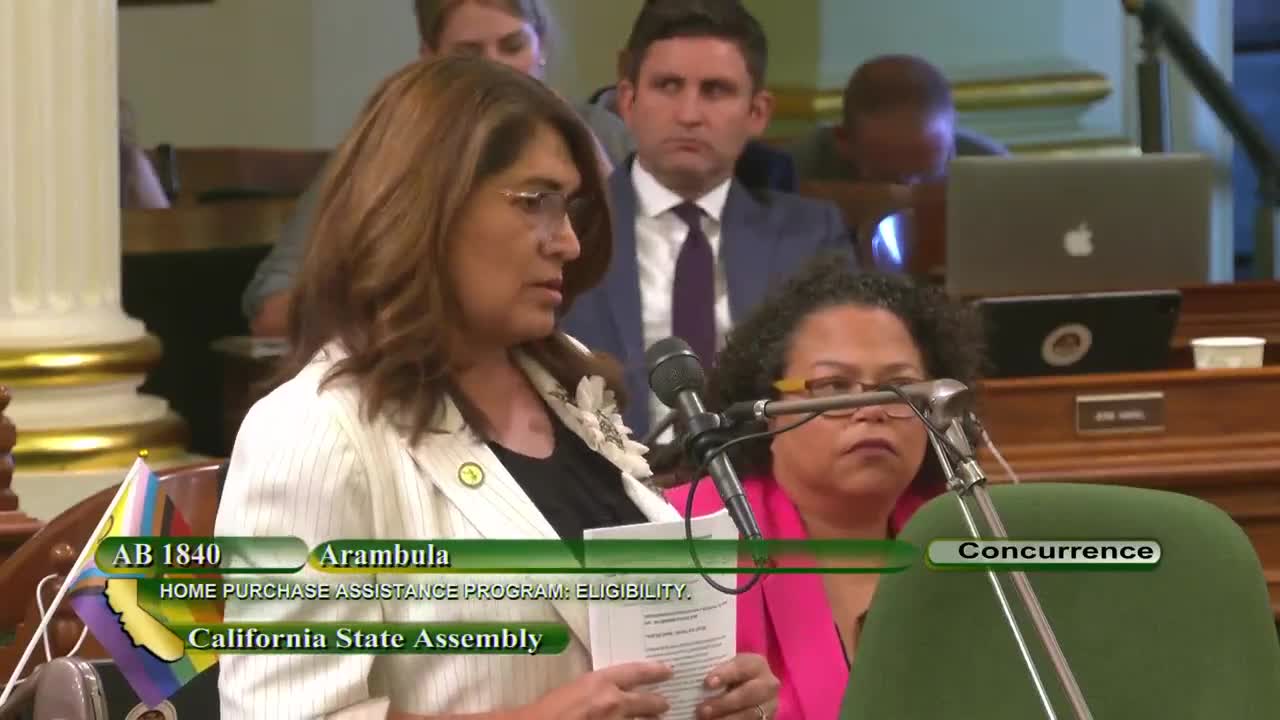 1MIN
Assembly Floor
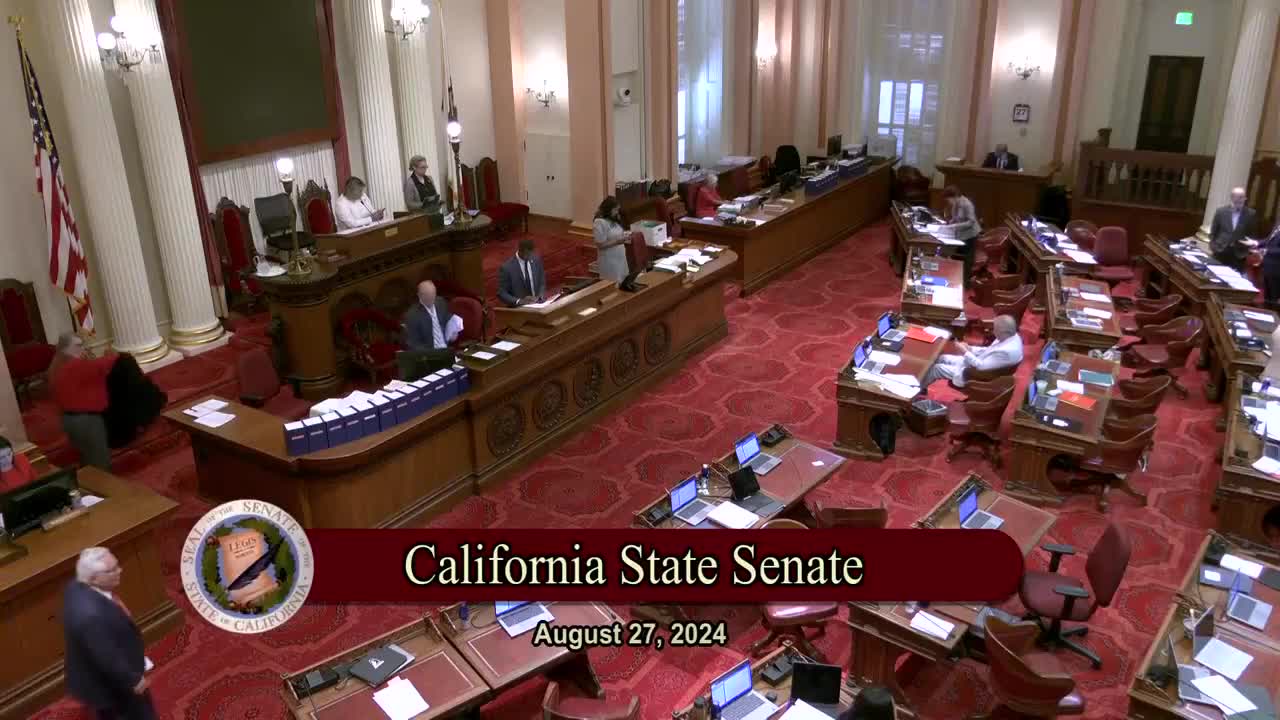 2MIN
Senate Floor
 10MIN
Senate Standing Committee on Judiciary
 9MIN
Senate Standing Committee on Governmental Organization
 2MIN
Assembly Floor
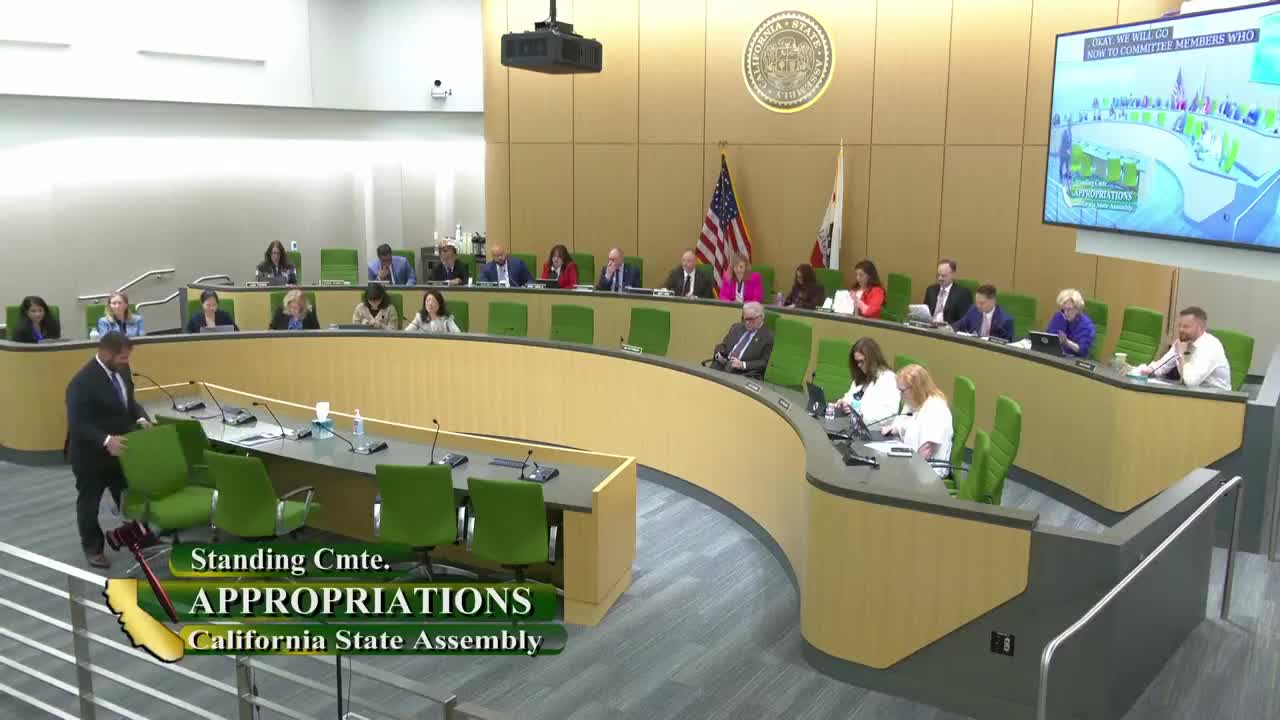 57SEC
Assembly Standing Committee on Appropriations
 6MIN
Assembly Standing Committee on Jobs, Economic Development, and the Economy
Bill Author