AB 2546: Law enforcement and state agencies: military equipment: funding, acquisition, and use.
- Session Year: 2023-2024
- House: Assembly
- Latest Version Date: 2024-09-22
Current Status:
Passed
(2024-09-22: Chaptered by Secretary of State - Chapter 408, Statutes of 2024.)
Introduced
In Committee
First Chamber
In Committee
Second Chamber
Enacted
Existing federal law authorizes the United States Department of Defense to transfer surplus personal property, including arms and ammunition, to federal or state agencies for use in law enforcement activities, subject to specified conditions, at no cost to the acquiring agency.
Existing law requires a law enforcement agency to adopt a military equipment use policy, as specified, before obtaining military equipment. Existing law also requires a law enforcement agency to obtain approval from their governing body before obtaining military equipment, as specified.
Existing law defines military equipment for purposes of these provisions.
This bill would replace certain devices referred to in this definition by a specific trade name with a general description of those devices.
For purposes of this chapter, the following definitions shall apply:
(a)Governing body means the elected body that oversees a law enforcement agency or, if there is no elected body that directly oversees the law enforcement agency, the appointed body that oversees a law enforcement agency. In the case of a law enforcement agency of a county, including a sheriffs department or a district attorneys office, governing body means the board of supervisors of the county.
(b)Law enforcement agency means any of the following:
(1)A police department, including the police department of a transit agency, school district, or any campus of the University of California, the California State University, or California Community Colleges.
(2)A sheriffs department.
(3)A district attorneys office.
(4)A county probation department.
(c)Military equipment means the following:
(1)Unmanned, remotely piloted, powered aerial or ground vehicles.
(2)Mine-resistant ambush-protected (MRAP) vehicles or armored personnel carriers. However, police versions of standard consumer vehicles are specifically excluded from this subdivision.
(3)High mobility multipurpose wheeled vehicles (HMMWV), commonly referred to as Humvees, two and one-half-ton trucks, five-ton trucks, or wheeled vehicles that have a breaching or entry apparatus attached. However, unarmored all-terrain vehicles (ATVs) and motorized dirt bikes are specifically excluded from this subdivision.
(4)Tracked armored vehicles that provide ballistic protection to their occupants and utilize a tracked system instead of wheels for forward motion.
(5)Command and control vehicles that are either built or modified to facilitate the operational control and direction of public safety units.
(6)Weaponized aircraft, vessels, or vehicles of any kind.
(7)Battering rams, slugs, and breaching apparatuses that are explosive in nature. However, items designed to remove a lock, such as bolt cutters, or a handheld ram designed to be operated by one person, are specifically excluded from this subdivision.
(8)Firearms of .50 caliber or greater. However, standard issue shotguns are specifically excluded from this subdivision.
(9)Ammunition of .50 caliber or greater. However, standard issue shotgun ammunition is specifically excluded from this subdivision.
(10)Specialized firearms and ammunition of less than .50 caliber, including assault weapons as defined in Sections 30510 and 30515 of the Penal Code, with the exception of standard issue service weapons and ammunition of less than .50 caliber that are issued to officers, agents, or employees of a law enforcement agency or a state agency.
(11)Any firearm or firearm accessory that is designed to launch explosive projectiles.
(12)Flashbang grenades and explosive breaching tools, tear gas, and pepper balls, excluding standard, service-issued handheld pepper spray.
(13)Area denial electroshock devices, microwave weapons, water cannons, long-range acoustic devices, acoustic hailing devices, and sound cannons.
(14)The following projectile launch platforms and their associated munitions: 40mm projectile launchers, bean bag, rubber bullet, and specialty impact munition (SIM) weapons.
(15)Any other equipment as determined by a governing body or a state agency to require additional oversight.
(16)Notwithstanding paragraphs (1) through (15), military equipment does not include general equipment not designated as prohibited or controlled by the federal Defense Logistics Agency.
(d)Military equipment use policy means a publicly released, written document governing the use of military equipment by a law enforcement agency or a state agency that addresses, at a minimum, all of the following:
(1)A description of each type of military equipment, the quantity sought, its capabilities, expected lifespan, and product descriptions from the manufacturer of the military equipment.
(2)The purposes and authorized uses for which the law enforcement agency or the state agency proposes to use each type of military equipment.
(3)The fiscal impact of each type of military equipment, including the initial costs of obtaining the equipment and estimated annual costs of maintaining the equipment.
(4)The legal and procedural rules that govern each authorized use.
(5)The training, including any course required by the Commission on Peace Officer Standards and Training, that must be completed before any officer, agent, or employee of the law enforcement agency or the state agency is allowed to use each specific type of military equipment to ensure the full protection of the publics welfare, safety, civil rights, and civil liberties and full adherence to the military equipment use policy.
(6)The mechanisms to ensure compliance with the military equipment use policy, including which independent persons or entities have oversight authority, and, if applicable, what legally enforceable sanctions are put in place for violations of the policy.
(7)For a law enforcement agency, the procedures by which members of the public may register complaints or concerns or submit questions about the use of each specific type of military equipment, and how the law enforcement agency will ensure that each complaint, concern, or question receives a response in a timely manner.
(e)State agency means the law enforcement division of every state office, officer, department, division, bureau, board, and commission or other state body or agency, except those agencies provided for in Article IV (except Section 20 thereof) or Article VI of the California Constitution.
(f)Type means each item that shares the same manufacturer model number.
For purposes of this chapter, the following definitions shall apply:
(a)Governing body means the elected body that oversees a law enforcement agency or, if there is no elected body that directly oversees the law enforcement agency, the appointed body that oversees a law enforcement agency. In the case of a law enforcement agency of a county, including a sheriffs department or a district attorneys office, governing body means the board of supervisors of the county.
(b)Law enforcement agency means any of the following:
(1)A police department, including the police department of a transit agency, school district, or any campus of the University of California, the California State University, or California Community Colleges.
(2)A sheriffs department.
(3)A district attorneys office.
(4)A county probation department.
(c)Military equipment means the following:
(1)Unmanned, remotely piloted, powered aerial or ground vehicles.
(2)Mine-resistant ambush-protected (MRAP) vehicles or armored personnel carriers. However, police versions of standard consumer vehicles are specifically excluded from this subdivision.
(3)High mobility multipurpose wheeled vehicles (HMMWV), commonly referred to as Humvees, two and one-half-ton trucks, five-ton trucks, or wheeled vehicles that have a breaching or entry apparatus attached. However, unarmored all-terrain vehicles (ATVs) and motorized dirt bikes are specifically excluded from this subdivision.
(4)Tracked armored vehicles that provide ballistic protection to their occupants and utilize a tracked system instead of wheels for forward motion.
(5)Command and control vehicles that are either built or modified to facilitate the operational control and direction of public safety units.
(6)Weaponized aircraft, vessels, or vehicles of any kind.
(7)Battering rams, slugs, and breaching apparatuses that are explosive in nature. However, items designed to remove a lock, such as bolt cutters, or a handheld ram designed to be operated by one person, are specifically excluded from this subdivision.
(8)Firearms of .50 caliber or greater. However, standard issue shotguns are specifically excluded from this subdivision.
(9)Ammunition of .50 caliber or greater. However, standard issue shotgun ammunition is specifically excluded from this subdivision.
(10)Specialized firearms and ammunition of less than .50 caliber, including assault weapons as defined in Sections 30510 and 30515 of the Penal Code, with the exception of standard issue service weapons and ammunition of less than .50 caliber that are issued to officers, agents, or employees of a law enforcement agency or a state agency.
(11)Any firearm or firearm accessory that is designed to launch explosive projectiles.
(12)Flashbang grenades and explosive breaching tools, tear gas, and pepper balls, excluding standard, service-issued handheld pepper spray.
(13)Taser Shockwave, microwave weapons, water cannons, and the Long Range Acoustic Device (LRAD).(13)Area denial electroshock devices, microwave weapons, water cannons, long-range acoustic devices, acoustic hailing devices, and sound cannons.
(14)The following projectile launch platforms and their associated munitions: 40mm projectile launchers, bean bag, rubber bullet, and specialty impact munition (SIM) weapons.
(15)Any other equipment as determined by a governing body or a state agency to require additional oversight.
(16)Notwithstanding paragraphs (1) through (15), military equipment does not include general equipment not designated as prohibited or controlled by the federal Defense Logistics Agency.
(d)Military equipment use policy means a publicly released, written document governing the use of military equipment by a law enforcement agency or a state agency that addresses, at a minimum, all of the following:
(1)A description of each type of military equipment, the quantity sought, its capabilities, expected lifespan, and product descriptions from the manufacturer of the military equipment.
(2)The purposes and authorized uses for which the law enforcement agency or the state agency proposes to use each type of military equipment.
(3)The fiscal impact of each type of military equipment, including the initial costs of obtaining the equipment and estimated annual costs of maintaining the equipment.
(4)The legal and procedural rules that govern each authorized use.
(5)The training, including any course required by the Commission on Peace Officer Standards and Training, that must be completed before any officer, agent, or employee of the law enforcement agency or the state agency is allowed to use each specific type of military equipment to ensure the full protection of the publics welfare, safety, civil rights, and civil liberties and full adherence to the military equipment use policy.
(6)The mechanisms to ensure compliance with the military equipment use policy, including which independent persons or entities have oversight authority, and, if applicable, what legally enforceable sanctions are put in place for violations of the policy.
(7)For a law enforcement agency, the procedures by which members of the public may register complaints or concerns or submit questions about the use of each specific type of military equipment, and how the law enforcement agency will ensure that each complaint, concern, or question receives a response in a timely manner.
(e)State agency means the law enforcement division of every state office, officer, department, division, bureau, board, and commission or other state body or agency, except those agencies provided for in Article IV (except Section 20 thereof) or Article VI of the California Constitution.
(f)Type means each item that shares the same manufacturer model number.
|
Date
|
Status
|
|---|---|
| Sep 22, 2024 | Chaptered by Secretary of State - Chapter 408, Statutes of 2024. |
| Sep 22, 2024 | Approved by the Governor. |
| Aug 27, 2024 | Enrolled and presented to the Governor at 12 p.m. |
| Aug 20, 2024 | In Assembly. Ordered to Engrossing and Enrolling. |
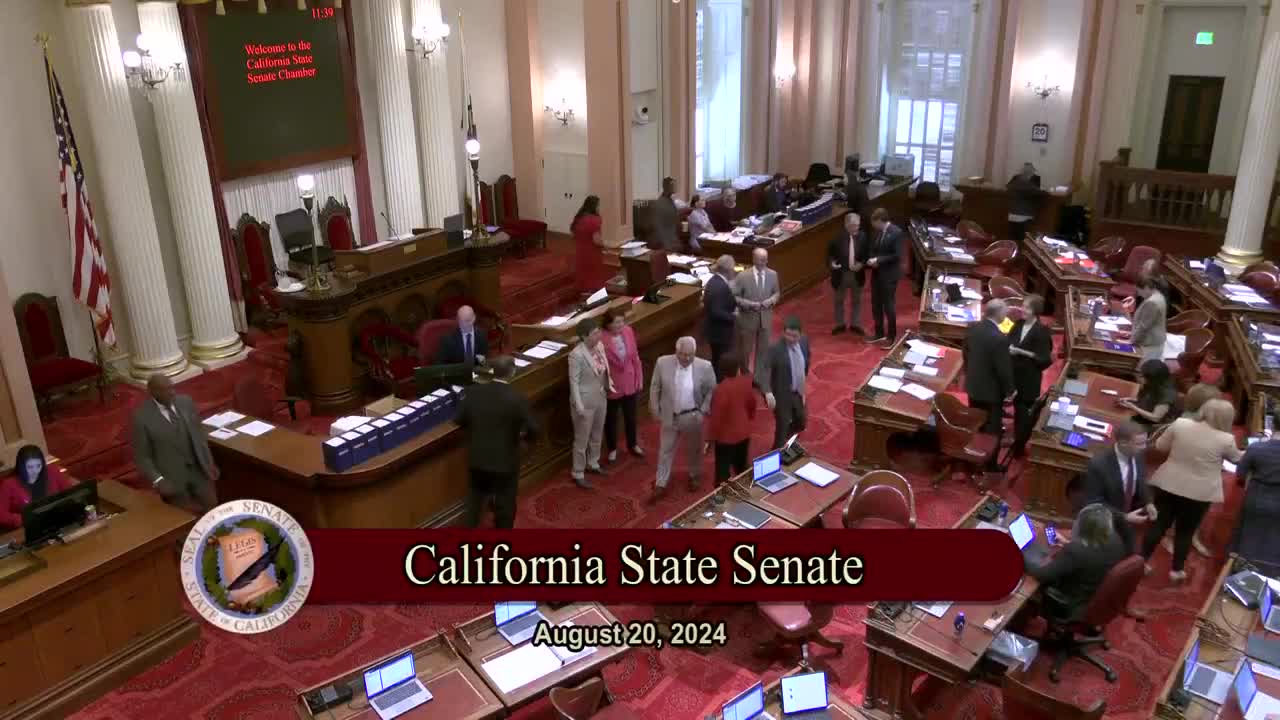
| Aug 20, 2024 | Read third time. Passed. Ordered to the Assembly. (Ayes 32. Noes 4. Page 5222.). |
| May 29, 2024 | Read second time. Ordered to third reading. |
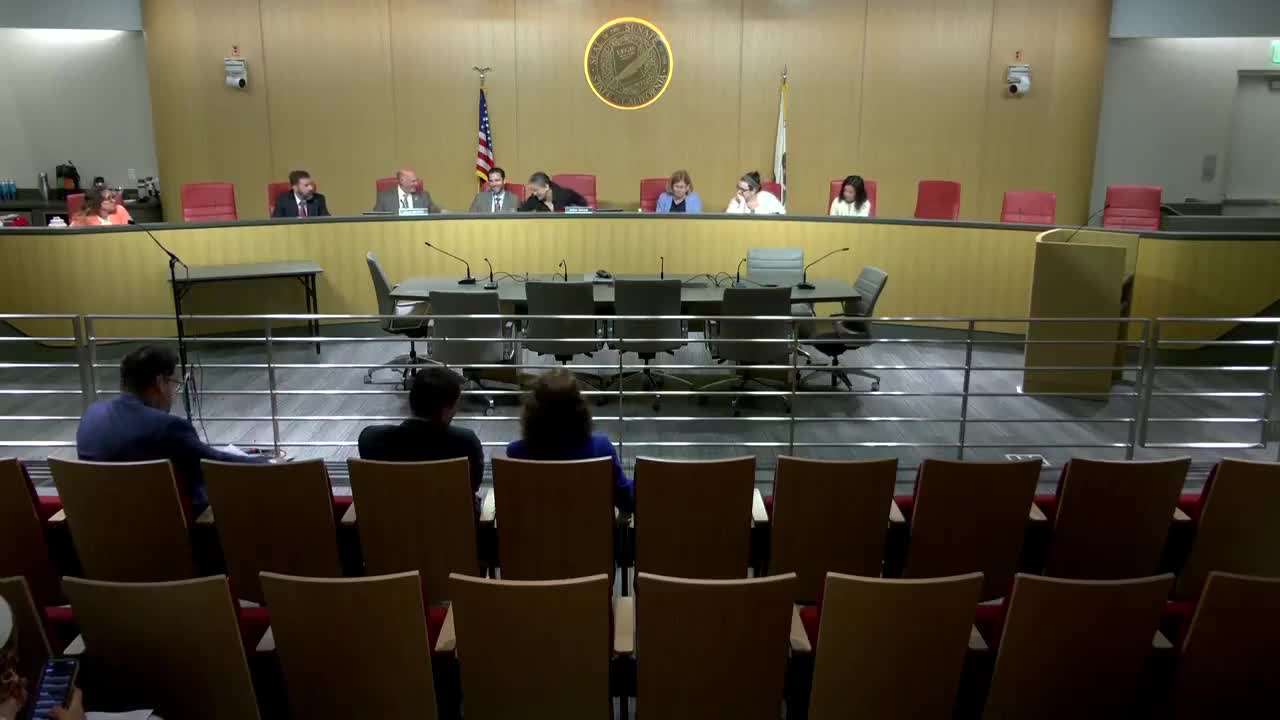
| May 28, 2024 | From committee: Do pass. (Ayes 3. Noes 1.) (May 28). |
| May 1, 2024 | Referred to Com. on PUB S. |
| Apr 1, 2024 | In Senate. Read first time. To Com. on RLS. for assignment. |
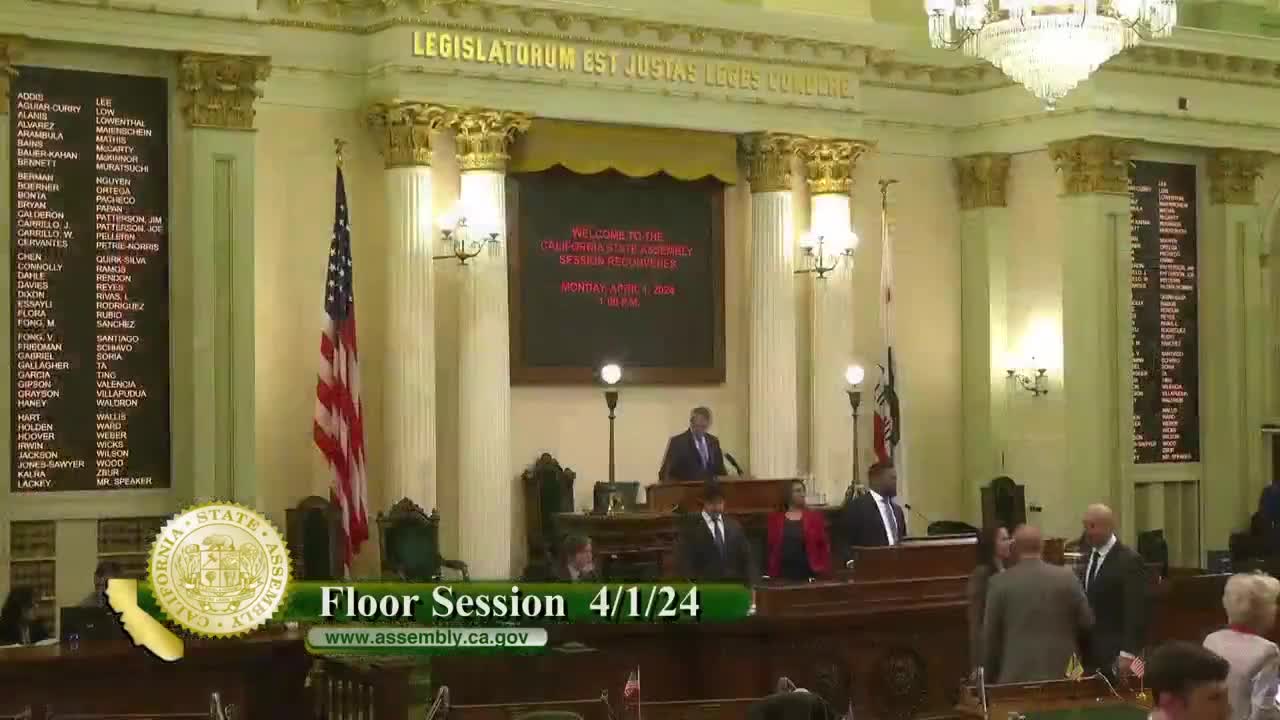
| Apr 1, 2024 | Read third time. Passed. Ordered to the Senate. (Ayes 58. Noes 6. Page 4532.) |
| Mar 20, 2024 | Read second time. Ordered to third reading. |
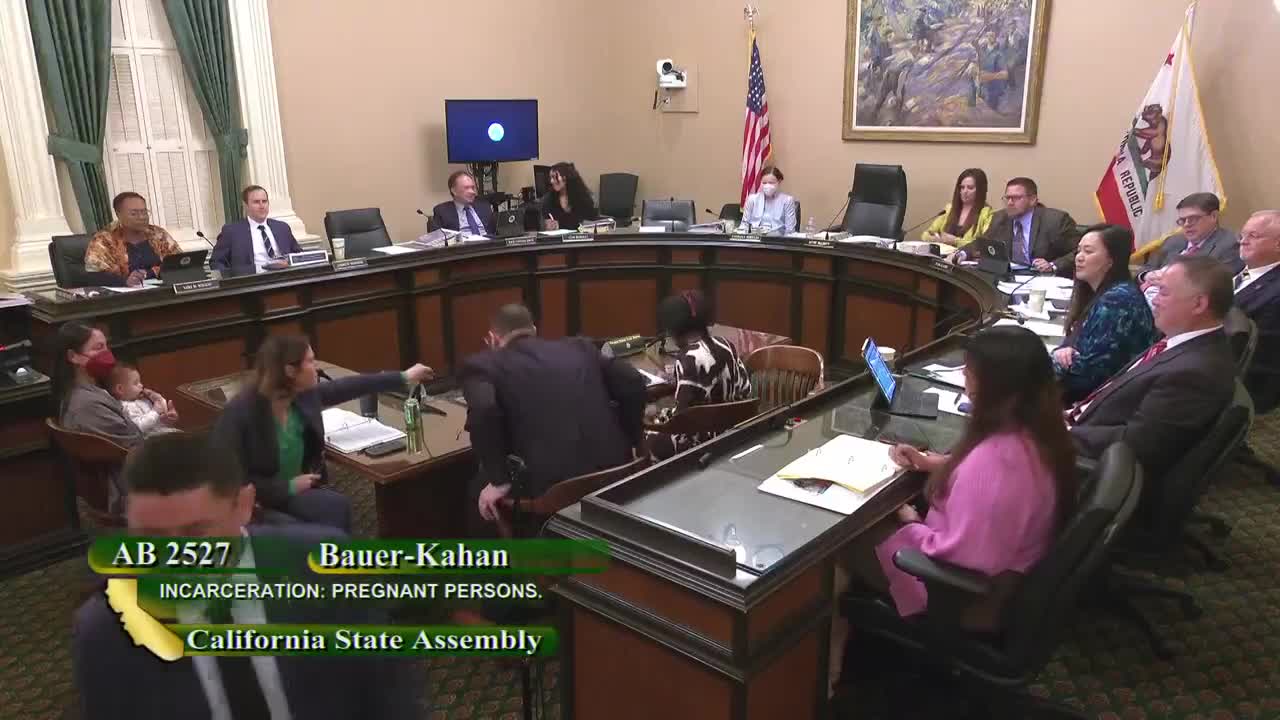
| Mar 19, 2024 | From committee: Do pass. (Ayes 7. Noes 0.) (March 19). |
| Mar 4, 2024 | Referred to Com. on PUB. S. |
| Feb 14, 2024 | From printer. May be heard in committee March 15. |
| Feb 13, 2024 | Read first time. To print. |
|
Date
|
Description
|
Location
|
Votes
|
|
|---|---|---|---|---|
| Aug 20, 2024 | Assembly 3rd Reading AB2546 Rendon By Atkins | Senate Floor |
Passed |
|
| May 28, 2024 | Do pass | Senate Standing Committee on Public Safety |
Passed |
|
| Apr 1, 2024 | AB 2546 Rendon Assembly Third Reading | Assembly Floor |
Passed |
|
| Mar 19, 2024 | Do pass. | Assembly Standing Committee on Public Safety |
Passed |
This list shows positions taken on this bill by organizations on the date displayed, which is linked to the original source.
Positions by individuals are not included.
|
Organization
|
Position
|
Date
|
|---|---|---|
| Genesis | * Support | Mar 19, 2024 |
| Genesis Corporation | * Support | May 28, 2024 |
| Public Policy Advocates LLC | * Support | Mar 19, 2024 |
SENATE RULES COMMITTEE Office of Senate Floor Analyses (916) 651-1520 Fax: (916) 327-4478 | AB 2546 |
THIRD READING
Bill No: AB 2546
Author: Rendon (D)
Introduced: 2/13/24
Vote: 21
SENATE PUBLIC SAFETY COMMITTEE: 3-1, 5/28/24
AYES: Wahab, Skinner, Wiener
NOES: Seyarto
NO VOTE RECORDED: Bradford
ASSEMBLY FLOOR: 58-6, 4/1/24 - See last page for vote
SUBJECT: Law enforcement and state agencies: military equipment: funding, acquisition, and use
SOURCE: Genasys Corporation
DIGEST:
This bill clarifies that the definition of “military equipment” for the purposes of existing law regarding police procurement of that equipment refers to certain devices, such as tasers and sound-based weapons, with a general description of the device rather than a specific trade name.
ANALYSIS:
Existing law:
- Requires a law enforcement agency to obtain approval of the governing body, as defined, by an ordinance adopting a military equipment use policy at a regular meeting of the governing body before, among other things, requesting, acquiring or seeking funds for military equipment, and other specified actions relating to military equipment. (Gov. Code, § 7071, subd. (a).)
- Requires a law enforcement agency to submit a proposed military equipment use policy to the governing body and make those documents available on the law enforcement agency’s internet website at least 30 days prior to any public hearing concerning the military equipment at issue. (Gov. Code, § 7071, subd. (b).)
- Provides that the governing body shall consider a proposed military equipment use policy as an agenda item for an open session of a regular meeting and provide for public comment in accordance with existing open meeting requirements. (Gov. Code, § 7071, subd. (c).)
- Provides that the governing body shall only approve a military equipment use policy if it determines all of the following:
- The military equipment is necessary because there is no reasonable alternative that can achieve the same objective of officer and civilian safety.
- The proposed military equipment use policy will safeguard the public’s welfare, safety, civil rights, and civil liberties.
- If purchasing the equipment, the equipment is reasonably cost effective compared to available alternatives that can achieve the same objective of officer and civilian safety.
- Prior military equipment use complied with the military equipment use policy that was in effect at the time, or if prior uses did not comply with the accompanying military equipment use policy, corrective action have been taken to remedy nonconforming uses and ensure future compliance. (Gov. Code, § 7071, subd. (d)(1).)
- Requires, in order to facilitate public participation, any proposed or final military equipment use policy to be made publicly available on the internet website of the relevant law enforcement agency for as long as the military equipment is available for use. (Gov. Code, § 7071, subd. (d)(2).)
- Provides that the governing body shall review any ordinance that it has adopted approving the funding, acquisition, or use of military equipment at least annually and vote on whether to renew the ordinance at a regular meeting. (Gov. Code, § 7071, subd. (e).)
- Provides that a law enforcement agency that receives approval for a military equipment use policy shall submit to the governing body an annual military equipment report for each type of military equipment approved by the governing body within one year of approval, and annually thereafter for as long as the military equipment is available for use. (Gov. Code, § 7072, subd. (a).)
- Provides that, within 30 days of submitting and publicly releasing an annual military equipment report, the law enforcement agency shall hold at least one well-publicized and conveniently located community engagement meeting, at which the general public may discuss and ask questions regarding the annual military equipment report and the law enforcement agency’s funding, acquisition, or use of military equipment. (Gov. Code, § 7072, subd. (a).)
- Defines, for the purposes of the provisions above, “military equipment” to include a wide variety of vehicles, firearms, ammunition and other equipment, as well as any equipment as determined by a governing body or state agency to require additional oversight; the definition includes “Taser Shockwave, microwave weapons, water cannons, and the Long Range Acoustic Device (LRAD).” (Gov. Code, §7070(c)(13).
This bill strikes, within the definition of “military equipment,” the reference to “Taser Shockwave” and instead includes all “area denial electroshock devices,” and also strikes “the Long Range Acoustic Device” and instead includes long range acoustic devices, acoustic hailing devices, and sound cannons.”
Comments
According to the author, “A loophole in state law means that some long-range acoustic devices, which are military-grade weapons, may be acquired by law enforcement agencies without the approval of the local governing body. By making a simple clarifying change to how these weapons are defined in state law, we can close this loophole, and ensure that all long-range acoustic devices are subject to California’s important public review and transparency protocols for acquiring military-grade weapons.
In 2021, the Legislature passed AB 481 (Chiu, Chapter 206, Statutes of 2021), which was signed by Governor Newsom and established several new requirements related to the funding, acquisition and use of military equipment by local law enforcement agencies. Specifically, existing law established by AB 481 requires a law enforcement agency, prior to acquiring or using military equipment, to develop a military equipment use policy and obtain approval of that policy from the governing body that oversees the agency, such as a city council or board of supervisors. Further, the governing body is required to review any ordinance approving the funding, acquisition or use of military equipment at least annually, and vote on whether to renew that ordinance at a regular meeting. Additionally, any law enforcement agency that has obtained military equipment pursuant to the AB 481 process must prepare and submit an annual report to their governing body regarding the use of that equipment, and to hold a community engagement meeting regarding that report.
“Military equipment” is defined under existing law via generalized categories rather than an exhaustive list of specific pieces of equipment, and includes, among other things, robots and drones, battering rams, command and control vehicles, tracked armored vehicles that provide ballistic protection to their occupants, and firearms and firearm accessories that can launch explosive projectiles. Of central relevance to this bill, the definition of military equipment includes the "Taser Shockwave” device and the “Long Range Acoustic Device (LRAD).” However, these devices are in fact the trade names of specific non-lethal crowd control products manufactured for use by law enforcement, and do not encompass similar devices that do not fall under those trade names. Consequently, under existing law, law enforcement agencies would have to seek approval for the Taser Shockwave and LRAD pursuant to AB 481, but could procure devices that are virtually identical to those but use a different trade name without going through the AB 481 process. This bill removes references to the Taser Shockwave and LRAD for the purposes of AB 481 procurement and clarifies that military equipment includes all “area denial electroshock devices,” “long range acoustic devices, acoustic hailing devices and sound cannons.”
FISCAL EFFECT: Appropriation: No Fiscal Com.: No Local: No
SUPPORT: (Verified 5/28/24)
Genasys Corporation (source)
OPPOSITION: (Verified 5/28/24)
None received
ASSEMBLY FLOOR: 58-6, 4/1/24
AYES: Addis, Aguiar-Curry, Alanis, Arambula, Bauer-Kahan, Bennett, Berman, Boerner, Bonta, Calderon, Juan Carrillo, Wendy Carrillo, Connolly, Mike Fong, Friedman, Gabriel, Garcia, Gipson, Grayson, Hart, Holden, Hoover, Irwin, Jackson, Jones-Sawyer, Kalra, Lee, Lowenthal, Maienschein, McCarty, McKinnor, Muratsuchi, Stephanie Nguyen, Ortega, Pacheco, Papan, Pellerin, Petrie-Norris, Quirk-Silva, Rendon, Reyes, Luz Rivas, Rodriguez, Blanca Rubio, Santiago, Schiavo, Soria, Ting, Villapudua, Waldron, Wallis, Ward, Weber, Wicks, Wilson, Wood, Zbur, Robert Rivas
NOES: Dixon, Essayli, Vince Fong, Gallagher, Joe Patterson, Sanchez
NO VOTE RECORDED: Alvarez, Bains, Bryan, Cervantes, Chen, Megan Dahle, Davies, Flora, Haney, Lackey, Low, Mathis, Jim Patterson, Ramos, Ta, Valencia
Prepared by: Alex Barnett / PUB. S. /
5/29/24 10:12:14
**** END ****
SENATE COMMITTEE ON PUBLIC SAFETY
Senator Aisha Wahab, Chair
2023 - 2024 Regular
Bill No: AB 2546 Hearing Date: May 28, 2024
Author: | Rendon | ||
Version: | February 13, 2024 | ||
Urgency: | No | Fiscal: | No |
Consultant: | AB | ||
Subject: Law enforcement and state agencies: military equipment: funding, acquisition, and use
HISTORY
Source: Genasys Corporation
Prior Legislation: AB 1486 (Jones-Sawyer, 2023), currently on Senate Inactive File
AB 481 (Chiu, Ch. 406, Stats. of 2021)
Support: Unknown
Opposition: None known
Assembly Floor Vote: 58 - 6
PURPOSE
The purpose of this bill is to clarify that the definition of “military equipment” for the purposes of existing law regarding police procurement of that equipment refers to certain devices, such as tasers and sound-based weapons, with a general description of the device rather than a specific trade name.
Existing law requires a law enforcement agency to obtain approval of the governing body, as defined, by an ordinance adopting a military equipment use policy at a regular meeting of the governing body before, among other things, requesting, acquiring or seeking funds for military equipment, and other specified actions relating to military equipment. (Gov. Code, § 7071, subd. (a).)
Existing law requires a law enforcement agency to submit a proposed military equipment use policy to the governing body and make those documents available on the law enforcement agency’s internet website at least 30 days prior to any public hearing concerning the military equipment at issue. (Gov. Code, § 7071, subd. (b).)
Existing law provides that the governing body shall consider a proposed military equipment use policy as an agenda item for an open session of a regular meeting and provide for public comment in accordance with existing open meeting requirements. (Gov. Code, § 7071, subd. (c).)
Existing law provides that the governing body shall only approve a military equipment use policy if it determines all of the following:
- The military equipment is necessary because there is no reasonable alternative that can achieve the same objective of officer and civilian safety.
- The proposed military equipment use policy will safeguard the public’s welfare, safety, civil rights, and civil liberties.
- If purchasing the equipment, the equipment is reasonably cost effective compared to available alternatives that can achieve the same objective of officer and civilian safety.
- Prior military equipment use complied with the military equipment use policy that was in effect at the time, or if prior uses did not comply with the accompanying military equipment use policy, corrective action have been taken to remedy nonconforming uses and ensure future compliance. (Gov. Code, § 7071, subd. (d)(1).)
- The military equipment is necessary because there is no reasonable alternative that can achieve the same objective of officer and civilian safety.
Existing law, requires, in order to facilitate public participation, any proposed or final military equipment use policy to be made publicly available on the internet website of the relevant law enforcement agency for as long as the military equipment is available for use. (Gov. Code, § 7071, subd. (d)(2).)
Existing law provides that the governing body shall review any ordinance that it has adopted approving the funding, acquisition, or use of military equipment at least annually and vote on whether to renew the ordinance at a regular meeting. (Gov. Code, § 7071, subd. (e).)
Existing law provides that a law enforcement agency that receives approval for a military equipment use policy shall submit to the governing body an annual military equipment report for each type of military equipment approved by the governing body within one year of approval, and annually thereafter for as long as the military equipment is available for use. (Gov. Code, § 7072, subd. (a).)
Existing law provides that, within 30 days of submitting and publicly releasing an annual military equipment report, the law enforcement agency shall hold at least one well-publicized and conveniently located community engagement meeting, at which the general public may discuss and ask questions regarding the annual military equipment report and the law enforcement agency’s funding, acquisition, or use of military equipment. (Gov. Code, § 7072, subd. (a).)
Existing law, for the purposes of the provisions above, defines “military equipment” to include a wide variety of vehicles, firearms, ammunition and other equipment, as well as any equipment as determined by a governing body or state agency to require additional oversight; the definition includes “Taser Shockwave, microwave weapons, water cannons, and the Long Range Acoustic Device (LRAD).” (Gov. Code, §7070(c)(13).
This bill, within the definition of “military equipment,” strikes the reference to “Taser Shockwave” and instead includes all “area denial electroshock devices,” and also strikes “the Long Range Acoustic Device” and instead includes long range acoustic devices, acoustic hailing devices, and sound cannons.”
COMMENTS
- Need for This Bill
According to the Author:
A loophole in state law means that some long-range acoustic devices, which are military-grade weapons, may be acquired by law enforcement agencies without the approval of the local governing body. By making a simple clarifying change to how these weapons are defined in state law, we can close this loophole, and ensure that all long-range acoustic devices are subject to California’s important public review and transparency protocols for acquiring military-grade weapons.
- Law Enforcement Procurement of Military Equipment under AB 481 (Chiu, 2021) and Effect of This Bill
In 2021, the Legislature passed AB 481 (Chiu), which was signed by Governor Newsom and established several new requirements related to the funding, acquisition and use of military equipment by local law enforcement agencies. Specifically, existing law established by AB 481 requires a law enforcement agency, prior to acquiring or using military equipment, to develop a military equipment use policy and obtain approval of that policy from the governing body that oversees the agency, such as a city council or board of supervisors. Further, the governing body is required to review any ordinance approving the funding, acquisition or use of military equipment at least annually, and vote on whether to renew that ordinance at a regular meeting.[1] Additionally, any law enforcement agency that has obtained military equipment pursuant to the AB 481 process must prepare and submit an annual report to their governing body regarding the use of that equipment, and to hold a community engagement meeting regarding that report.
“Military equipment” is defined under existing law via generalized categories rather than an exhaustive list of specific pieces of equipment, and includes, among other things, robots and drones, battering rams, command and control vehicles, tracked armored vehicles that provide ballistic protection to their occupants, and firearms and firearm accessories that can launch explosive projectiles.[2] Of central relevance to this bill, the definition of military equipment includes the "Taser Shockwave” device and the “Long Range Acoustic Device (LRAD).” However, these devices are in fact the trade names of specific non-lethal crowd control products manufactured for use by law enforcement, and do not encompass similar devices that do not fall under those trade names. Consequently, under existing law, law enforcement agencies would have to seek approval for the Taser Shockwave and LRAD pursuant to AB 481, but could procure devices that are virtually identical to those but use a different trade name without going through the AB 481 process. This bill removes references to the Taser Shockwave and LRAD for the purposes of AB 481 procurement and clarifies that military equipment includes all “area denial electroshock devices,” “long range acoustic devices, acoustic hailing devices and sound cannons.”
- Prior Legislation
AB 1486 (Jones-Sawyer, 2023) would have clarified that assault weapons, as defined under existing law, do not constitute “standard issue service weapons” and thus fall under the definition of “military equipment,” and would have required that the community engagement meeting required under AB 481 occur prior to the governing body’s adoption of an ordinance regarding the use of military equipment. That measure also included the language contained in this bill, but was ordered to the inactive file in September 2023 and remains there as of the time this analysis was finalized.
- Argument in Support
According to the sponsor of the bill, the Genasys Corporation:
Currently, Section 7070 of the California Government Code includes LRAD in the list of military equipment that requires a law enforcement agency to get approval from its governing body prior to purchasing one of the items on the list. LRAD is a trademarked term for a long range acoustic device that is manufactured by one company, Genasys Inc. located in San Diego, California. LRAD was trademarked in 2003 under USPTO serial number 78304629. The acronym LRAD and “Long Range Acoustic Device” are synonymous and associated with a single company, Genasys. There are other manufacturers of this technology outside California, in the U.S. and overseas, but they refer to their products as “acoustic hailing devices,” “long range acoustic hailer,” or “acoustic stabilized systems” to avoid infringement on the Genasys trademark.
We appreciate your effort to correct the reference in state statute. The statute should list the generic terms for the product instead of using a trademarked term. If the statute is not corrected, other manufacturers of acoustic devices will be able to avoid the pre-approval requirements placed on law enforcement. The bill's approach to broadening the scope of the Government Code currently in statute is a practical step towards ensuring the regulations apply uniformly to all relevant technologies.
-- END –
ASSEMBLY THIRD READING
ATR Bill Id:AB 2546
Author:(Rendon)
As Introduced Ver:February 13, 2024
Majority vote
SUMMARY
Clarifies that the definition of "military equipment" includes area denial electroshock devices generally and not just the Taser Shockwave system; and that the definition also includes long-range acoustic devices, acoustic hailing devices, and sound cannons rather than just the Long-Range Acoustic Device (LRAD) manufactured by the Genasys Corporation.
Major Provisions
COMMENTS
Need for the Bill: Current law requires a law enforcement agency to obtain approval from the governing body that oversees it before acquiring or using military equipment. (Government Code, Section 7071, subdivision (a), et seq.) Military equipment includes, among other things, robots and drones, battering rams, command and control vehicles, tracked armored vehicles that provide ballistic protection to their occupants, and firearms and firearm accessories that can launch explosive projectiles. (Government Code, Section 7070, subdivision (c).) It also includes Taser Shockwave, microwave weapons, water cannons, and the Long Range Acoustic Device (LRAD). (Government Code, Section 7070, subdivision (c)(13).). However, there may be other companies that make virtually the same or very similar systems. Yet, because existing law requires law enforcement to seek approval for devices made by just two companies, these systems would not fall under existing law and law enforcement would be free to fund, acquire, and use them without local government approval. This bill would clarify that technologies similar to Taser Shockwave and Genasys's LRAD system but manufactured by other companies fall under the definition of military equipment.
AB 1486 (Jones-Sawyer), of the 2023-2024 Legislatives Session, would have clarified that an assault weapon is not a "standard issue service weapon" and therefore falls under the definition of "military equipment," which requires approval from the local governing body before a law enforcement agency may acquire it. It was amended in the Senate to include the proposed changes to existing law made by this bill. But AB 1486 was ordered to the inactive file in the Senate.
According to the Author
"A loophole in state law means that some long-range acoustic devices, which are military-grade weapons, may be acquired by law enforcement agencies without the approval of the local governing body. By making a simple clarifying change to how these weapons are defined in state law, we can close this loophole, and ensure that all long-range acoustic devices are subject to California's important public review and transparency protocols for acquiring military-grade weapons."
Arguments in Support
According to Genasys Corporation, the manufacturer of LRAD, "Currently, Section 7070 of the California Government Code includes LRAD in the list of military equipment that requires a law enforcement agency to get approval from its governing body prior to purchasing one of the items on the list. LRAD is a trademarked term for a long range acoustic device that is manufactured by one company, Genasys Inc. located in San Diego, California.
"LRAD was trademarked in 2003 under USPTO serial number 78304629. The acronym LRAD and 'Long Range Acoustic Device' are synonymous and associated with a single company, Genasys. There are other manufacturers of this technology outside California, in the U.S. and overseas, but they refer to their products as 'acoustic hailing devices,' 'long range acoustic hailer,' or 'acoustic stabilized systems' to avoid infringement on the Genasys trademark.
"We appreciate your effort to correct the reference in state statute. The statute should list the generic terms for the product instead of using a trademarked term. If the statute is not corrected, other manufacturers of acoustic devices will be able to avoid the pre-approval requirements placed on law enforcement.
"The bill's approach to broadening the scope of the Government Code currently in statute is a practical step towards ensuring the regulations apply uniformly to all relevant technologies."
Arguments in Opposition
None Submitted.
FISCAL COMMENTS
Unknown. This bill is keyed non-fiscal by the Legislative Counsel.
VOTES
ASM PUBLIC SAFETY: 7-0-1
YES: McCarty, Alanis, Stephanie Nguyen, Reyes, Ting, Wilson, Zbur
ABS, ABST OR NV: Lackey
UPDATED
VERSION: February 13, 2024
CONSULTANT: Andrew Ironside / PUB. S. / (916) 319-3744 FN: 0002672
Date of Hearing: March 19, 2024
Counsel: Andrew Ironside
ASSEMBLY COMMITTEE ON
Kevin McCarty, Chair
ABPCA Bill Id:
Author:() – As Ver:
SUMMARY:
Clarifies that the definition of “military equipment” includes area denial electroshock devices generally and not just the Taser Shockwave system; and that the definition also includes long-range acoustic devices, acoustic hailing devices, and sound cannons rather than just the Long-Range Acoustic Device (LRAD) manufactured by the Genasys Corporation.
EXISTING LAW:
- Requires a law enforcement agency to obtain approval of the governing body, by an ordinance adopting a military-equipment-use policy at a regular meeting of the governing body before, among other things, requesting, acquiring, or seeking funds for military equipment. (Gov. Code, § 7071, subd. (a).)
- Defines “military equipment” to include equipment such as drones, specialized firearms, command and control vehicles, the Taser Shockwave, and the LRAD. (Gov. Code, § 7070, subd. (c).)
- Defines “governing body” as the elected body that oversees a law enforcement agency or, if there is no elected body that directly oversees the law enforcement agency, the appointed body that oversees a law enforcement agency. (Gov. Code, § 7070, subd. (a).)
- Defines “law enforcement agency” as a police department, sheriff’s department, district attorney’s office, or county probation department. (Gov. Code, § 7070, subd. (b)(1)-(4).)
- Requires a law enforcement agency to submit a proposed military-equipment-use policy to the governing body and make those documents available on the law enforcement agency’s internet website at least 30 days prior to any public hearing concerning the military equipment at issue. (Gov. Code, § 7070, subd. (b).)
- Provides that the governing body shall only approve a military-equipment-use policy if it determines all of the following:
- The military equipment is necessary because there is no reasonable alternative that can achieve the same objective of officer and civilian safety.
- The proposed use policy will safeguard the public’s welfare, safety, civil rights, and civil liberties.
- If purchasing the equipment, the equipment is reasonably cost effective compared to available alternatives that can achieve the same objective of officer and civilian safety.
- Prior military equipment use complied with the use policy that was in effect at the time, or if prior uses did not comply with the accompanying military equipment use policy, corrective action has been taken to remedy nonconforming uses and ensure future compliance. (Gov. Code, § 7071, subd. (d)(1).)
- The military equipment is necessary because there is no reasonable alternative that can achieve the same objective of officer and civilian safety.
- Requires, in order to facilitate public participation, any proposed or final military equipment use policy to be made publicly available on the internet website of the relevant law enforcement agency for as long as the military equipment is available for use. (Gov. Code, § 7071, subd. (d)(2).)
FISCAL EFFECT:
Unknown
COMMENTS:
- Author's Statement: According to the author, “A loophole in state law means that some long-range acoustic devices, which are military-grade weapons, may be acquired by law enforcement agencies without the approval of the local governing body. By making a simple clarifying change to how these weapons are defined in state law, we can close this loophole, and ensure that all long-range acoustic devices are subject to California’s important public review and transparency protocols for acquiring military-grade weapons.”
- Need for the Bill: Current law requires a law enforcement agency to obtain approval from the governing body that oversees it before acquiring or using military equipment. (Gov. Code, § 7071, subd. (a), et seq.) Military equipment includes, among other things, robots and drones, battering rams, command and control vehicles, tracked armored vehicles that provide ballistic protection to their occupants, and firearms and firearm accessories that can launch explosive projectiles. (Gov. Code, § 7070, subd. (c).) It also includes Taser Shockwave, microwave weapons, water cannons, and the Long Range Acoustic Device (LRAD). (Gov. Code, § 7070, subd. (c)(13).). However, there may be other companies that make virtually the same or very similar systems. Yet, because existing law requires law enforcement to seek approval for devices made by just two companies, these systems would not fall under existing law and law enforcement would be free to fund, acquire, and use them without local government approval. This bill would clarify that technologies similar to Taser Shockwave and Genasys’s LRAD system but manufactured by other companies fall under the definition of military equipment.
AB 1486 (Jones-Sawyer), of the 2023-2024 Legislatives Session, would have clarified that an assault weapon is not a “standard issue service weapon” and therefore falls under the definition of “military equipment,” which requires approval from the local governing body before a law enforcement agency may acquire it. It was amended in the Senate to include the proposed changes to existing law made by this bill. But AB 1486 was ordered to the inactive file in the Senate. - Argument in Support: According to Genasys Corporation, the manufacturer of LRAD, “Currently, Section 7070 of the California Government Code includes LRAD in the list of military equipment that requires a law enforcement agency to get approval from its governing body prior to purchasing one of the items on the list. LRAD is a trademarked term for a long range acoustic device that is manufactured by one company, Genasys Inc. located in San Diego, California.
“LRAD was trademarked in 2003 under USPTO serial number 78304629. The acronym LRAD and ‘Long Range Acoustic Device’ are synonymous and associated with a single company, Genasys. There are other manufacturers of this technology outside California, in the U.S. and overseas, but they refer to their products as ‘acoustic hailing devices,’ ‘long range acoustic hailer,’ or ‘acoustic stabilized systems’ to avoid infringement on the Genasys trademark.
“We appreciate your effort to correct the reference in state statute. The statute should list the generic terms for the product instead of using a trademarked term. If the statute is not corrected, other manufacturers of acoustic devices will be able to avoid the pre-approval requirements placed on law enforcement.
“The bill's approach to broadening the scope of the Government Code currently in statute is a practical step towards ensuring the regulations apply uniformly to all relevant technologies.” - Argument in Opposition: None submitted.
- Related Legislation: AB 2014 (Nguyen), would change law enforcement’s duty to seek approval from the local governing body before funding, acquiring or using drones or robots to only require approval if the drone or robot were weaponized. The hearing on AB 2014 was canceled at the request of the author.
- Prior Legislation:
- AB 1486 (Jones-Sawyer), of the 2023-2024 Legislative Session, would have clarified that an assault weapon is not a “standard issue service weapon” and therefore falls under the definition of “military equipment,” which requires approval from the local governing body before a law enforcement agency may acquire it. AB 1486 was placed on the inactive file in the Senate.
- AB 421 (Chiu), Chapter 406, Statutes of 2021, requires local law enforcement agencies to follow specific procedures to obtain approval from local government prior to the acquisition or use of federal surplus military equipment.
- AB 3131 (Gloria), of the 2017 – 2018 Legislative Session, was substantially similar to AB 421. AB 3131 was vetoed.
- AB 36 (Campos), of the 2015 – 2016 Legislative Session, would have prohibited local agencies, except local law enforcement agencies that are directly under the control of an elected officer, from applying to receive specified surplus military equipment from the federal government, unless the legislative body of the local agency approves the acquisition at a regular meeting. The governor vetoed AB 36.
- SB 242 (Monning), Chapter 79, Statutes of 2015, requires a school district's police department to obtain approval from its governing board prior to receiving federal surplus military equipment.
- AB 1486 (Jones-Sawyer), of the 2023-2024 Legislative Session, would have clarified that an assault weapon is not a “standard issue service weapon” and therefore falls under the definition of “military equipment,” which requires approval from the local governing body before a law enforcement agency may acquire it. AB 1486 was placed on the inactive file in the Senate.
REGISTERED SUPPORT / OPPOSITION:
Support
Genasys Corporation
Opposition
None
Analysis Prepared by:
Discussed in Hearing
 3MIN
Senate Floor
 2MIN
Senate Standing Committee on Public Safety
 1MIN
Assembly Floor
 4MIN
Assembly Standing Committee on Public Safety
Bill Author

Bill Co-Author(s):