AB 2579: Inspections: exterior elevated elements.
- Session Year: 2023-2024
- House: Assembly
- Latest Version Date: 2024-09-28
Current Status:
Passed
(2024-09-28: Chaptered by Secretary of State - Chapter 835, Statutes of 2024.)
Introduced
In Committee
First Chamber
In Committee
Second Chamber
Enacted
What does this bill do?
This bill delays the required safety inspection of exterior elevated elements — such as balconies, decks, porches, stairways, and walkways — on buildings with three or more multifamily units from January 1, 2025 to January 1, 2026. It also extends to January 1, 2026 the exemption for properties inspected within three years before January 1, 2019, so those owners don’t need a new inspection until then.
The summary is provided by generative AI which can make mistakes. For original language, please view the details in the table below.
Existing law provides authority for an enforcement agency to enter and inspect any buildings or premises whenever necessary to secure compliance with or prevent a violation of the building standards published in the California Building Standards Code and other rules and regulations that the enforcement agency has the power to enforce. Existing law requires an inspection, by January 1, 2025, and by January 1 every 6 years thereafter, of exterior elevated elements and associated waterproofing elements, as defined, including decks and balconies, for buildings with 3 or more multifamily dwelling units, as specified. Existing law that provides that, if the property was inspected within 3 years prior to January 1, 2019, as specified, no new inspection is required until January 1, 2025.
This bill would extend the deadline for initial inspection until January 1, 2026. The bill would also provide that no new inspection is required until January 1, 2026, if the property was inspected within 3 years prior to January 1, 2019, as specified.
Existing law provides authority for an enforcement agency to enter and inspect any buildings or premises whenever necessary to secure compliance with or prevent a violation of the building standards published in the California Building Standards Code and other rules and regulations that the enforcement agency has the power to enforce. Existing law requires an inspection, by January 1, 2025, and by January 1 every 6 years thereafter, of exterior elevated elements and associated waterproofing elements, as defined, including decks and balconies, for buildings with 3 or more multifamily dwelling units, as specified. Existing law that provides that, if the property was inspected within 3 years prior to January 1, 2019, as specified, no new inspection is required until January 1, 2025.
This bill would extend the deadline for initial inspection until July 1, 2025. January 1, 2026. The bill would also provide that no new inspection is required until January 1, 2026, if the property was inspected within 3 years prior to January 1, 2019, as specified.
Existing law provides authority for an enforcement agency to enter and inspect any buildings or premises whenever necessary to secure compliance with or prevent a violation of the building standards published in the California Building Standards Code and other rules and regulations that the enforcement agency has the power to enforce. Existing law requires an inspection, by January 1, 2025, and by January 1 every 6 years thereafter, of exterior elevated elements and associated waterproofing elements, as defined, including decks and balconies, for buildings with 3 or more multifamily dwelling units, as specified. Existing law that provides that, if the property was inspected within 3 years prior to January 1, 2019, as specified, no new inspection is required until January 1, 2025.
This bill would extend the deadline for initial inspection until July 1, 2025. The bill would also provide that no new inspection is required until July 1, 2027, January 1, 2026, if the property was inspected within 3 years prior to January 1, 2019, as specified.
Existing law provides authority for an enforcement agency to enter and inspect any buildings or premises whenever necessary to secure compliance with or prevent a violation of the building standards published in the California Building Standards Code and other rules and regulations that the enforcement agency has the power to enforce. Existing law requires an inspection, by January 1, 2025, and by January 1 every 6 years thereafter, of exterior elevated elements and associated waterproofing elements, as defined, including decks and balconies, for buildings with 3 or more multifamily dwelling units, as specified. Existing law that provides that, if the property was inspected within 3 years prior to January 1, 2019, as specified, no new inspection is required until January 1, 2025.
This bill would extend the deadline for initial inspection until July 1, 2025. The bill would also provide that no new inspection is required until July 1, 2027, if the property was inspected within 3 years prior to January 1, 2019, as specified.
Existing property tax law requires the county auditor, in each fiscal year, to allocate property tax revenue to local jurisdictions in accordance with specified formulas and procedures, and generally requires that each jurisdiction be allocated an amount equal to the total of the amount of revenue allocated to that jurisdiction in the prior fiscal year, subject to certain modifications, and that jurisdictions portion of the annual tax increment, as defined. Existing property tax law also reduces the amounts of ad valorem property tax revenue that would otherwise be annually allocated to the county, cities, and special districts pursuant to these general allocation requirements by requiring, for purposes of determining property tax revenue allocations in each county for the 199293 and 199394 fiscal years, that the amounts of property tax revenue deemed allocated in the prior fiscal year to the county, cities, and special districts be reduced in accordance with certain formulas. Existing property tax law requires that the revenues not allocated to the county, cities, and special districts as a result of these reductions be transferred to the Educational Revenue Augmentation Fund in that county for allocation to school districts, community college districts, and the county office of education.This bill, for the 202526 fiscal year and each fiscal year thereafter, would require the auditor of the County of Orange to increase the total amount of ad valorem property tax revenue that is otherwise required to be allocated to the county by the county equity amount, as defined, and to commensurately decrease the amount of ad valorem property tax revenue that is otherwise required to be allocated to the county Educational Revenue Augmentation Fund and, if necessary, the amount of those revenues otherwise required to be allocated to school districts.By imposing new duties upon local officials in the allocation of ad valorem property tax revenues, this bill would impose a state-mandated local program. This bill would make legislative findings and declarations as to the necessity of a special statute for the County of Orange.The California Constitution requires the state to reimburse local agencies and school districts for certain costs mandated by the state. Statutory provisions establish procedures for making that reimbursement.This bill would provide that, if the Commission on State Mandates determines that the bill contains costs mandated by the state, reimbursement for those costs shall be made pursuant to the statutory provisions noted above.Existing property tax law requires the county auditor, in each fiscal year, to allocate property tax revenue to local jurisdictions in accordance with specified formulas and procedures, and generally requires that each jurisdiction be allocated an amount equal to the total of the amount of revenue allocated to that jurisdiction in the prior fiscal year, subject to certain modifications, and that jurisdictions portion of the annual tax increment, as defined. Existing property tax law also reduces the amounts of ad valorem property tax revenue that would otherwise be annually allocated to the county, cities, and special districts pursuant to these general allocation requirements by requiring, for purposes of determining property tax revenue allocations in each county for the 199293 and 199394 fiscal years, that the amounts of property tax revenue deemed allocated in the prior fiscal year to the county, cities, and special districts be reduced in accordance with certain formulas. Existing property tax law requires that the revenues not allocated to the county, cities, and special districts as a result of these reductions be transferred to the Educational Revenue Augmentation Fund in that county for allocation to school districts, community college districts, and the county office of education.
This bill, for the 202526 fiscal year and each fiscal year thereafter, would require the auditor of the County of Orange to increase the total amount of ad valorem property tax revenue that is otherwise required to be allocated to the county by the county equity amount, as defined, and to commensurately decrease the amount of ad valorem property tax revenue that is otherwise required to be allocated to the county Educational Revenue Augmentation Fund and, if necessary, the amount of those revenues otherwise required to be allocated to school districts.
By imposing new duties upon local officials in the allocation of ad valorem property tax revenues, this bill would impose a state-mandated local program.
This bill would make legislative findings and declarations as to the necessity of a special statute for the County of Orange.
The California Constitution requires the state to reimburse local agencies and school districts for certain costs mandated by the state. Statutory provisions establish procedures for making that reimbursement.
This bill would provide that, if the Commission on State Mandates determines that the bill contains costs mandated by the state, reimbursement for those costs shall be made pursuant to the statutory provisions noted above.
(a)Exterior elevated elements that include load-bearing components in all buildings containing three or more multifamily dwelling units shall be inspected. The inspection shall be performed by a licensed architect; licensed civil or structural engineer; a building contractor holding any or all of the A, B, or C-5 license classifications issued by the Contractors State License Board, with a minimum of five years experience, as a holder of the aforementioned classifications or licenses, in constructing multistory wood frame buildings; or an individual certified as a building inspector or building official from a recognized state, national, or international association, as determined by the local jurisdiction. These individuals shall not be employed by the local jurisdiction while performing these inspections. The purpose of the inspection is to determine that exterior elevated elements and their associated waterproofing elements are in a generally safe condition, adequate working order, and free from any hazardous condition caused by fungus, deterioration, decay, or improper alteration to the extent that the life, limb, health, property, safety, or welfare of the public or the occupants is not endangered. The person or business performing the inspection shall be hired by the owner of the building.
(b)For purposes of this section, the following terms have the following definitions:
(1)Associated waterproofing elements include flashings, membranes, coatings, and sealants that protect the load-bearing components of exterior elevated elements from exposure to water and the elements.
(2)Exterior elevated element means the following types of structures, including their supports and railings: balconies, decks, porches, stairways, walkways, and entry structures that extend beyond exterior walls of the building and which have a walking surface that is elevated more than six feet above ground level, are designed for human occupancy or use, and rely in whole or in substantial part on wood or wood-based products for structural support or stability of the exterior elevated element.
(3)Load-bearing components are those components that extend beyond the exterior walls of the building to deliver structural loads from the exterior elevated element to the building.
(c)The inspection required by this section shall at a minimum include:
(1)Identification of each type of exterior elevated element that, if found to be defective, decayed, or deteriorated to the extent that it does not meet its load requirements, would, in the opinion of the inspector, constitute a threat to the health or safety of the occupants.
(2)Assessment of the load-bearing components and associated waterproofing elements of the exterior elevated elements identified in paragraph (1) using methods allowing for evaluation of their performance by direct visual examination or comparable means of evaluating their performance. For purposes of this section, a sample of at least 15 percent of each type of exterior elevated element shall be inspected.
(3)The evaluation and assessment shall address each of the following as of the date of the evaluation:
(A)The current condition of the exterior elevated elements.
(B)Expectations of future performance and projected service life.
(C)Recommendations of any further inspection necessary.
(4)A written report of the evaluation stamped or signed by the inspector presented to the owner of the building or the owners designated agent within 45 days of completion of the inspection. The report shall include photographs, any test results, and narrative sufficient to establish a baseline of the condition of the components inspected that can be compared to the results of subsequent inspections. In addition to the evaluation required by this section, the report shall advise which, if any, exterior elevated element poses an immediate threat to the safety of the occupants, and whether preventing occupant access or conducting emergency repairs, including shoring, are necessary.
(d)The inspection shall be completed by January 1, 2026, and by January 1 every six years thereafter. The inspector conducting the inspection shall produce an initial report pursuant to paragraph (4) of subdivision (c) and, if requested by the owner, a final report indicating that any required repairs have been completed. A copy of any report that recommends immediate repairs, advises that any building assembly poses an immediate threat to the safety of the occupants, or that preventing occupant access or emergency repairs, including shoring, are necessary, shall be provided by the inspector to the owner of the building and to the local enforcement agency within 15 days of completion of the report. Subsequent inspection reports shall incorporate copies of prior inspection reports, including the locations of the exterior elevated elements inspected. Local enforcement agencies may determine whether any additional information is to be provided in the report and may require a copy of the initial or final reports, or both, be submitted to the local jurisdiction. Copies of all inspection reports shall be maintained in the building owners permanent records for not less than two inspection cycles, and shall be disclosed and delivered to the buyer at the time of any subsequent sale of the building.
(e)The inspection of buildings for which a building permit application has been submitted on or after January 1, 2019, shall occur no later than six years following issuance of a certificate of occupancy from the local jurisdiction and shall otherwise comply with the provisions of this section.
(f)If the property was inspected within three years prior to January 1, 2019, by an inspector as described in subdivision (a) and a report of that inspector was issued stating that the exterior elevated elements and associated waterproofing elements are in proper working condition and do not pose a threat to the health and safety of the public, no new inspection pursuant to this section shall be required until January 1, 2026.
(g)An exterior elevated element found by the inspector that is in need of repair or replacement shall be corrected by the owner of the building. All necessary permits for repair or replacement shall be obtained from the local jurisdiction. All repair and replacement work shall be performed by a qualified and licensed contractor in compliance with all of the following:
(1)The recommendations of a licensed professional described in subdivision (a).
(2)Any applicable manufacturers specifications.
(3)The California Building Standards Code, consistent with subdivision (d) of Section 17922 of the Health and Safety Code.
(4)All local jurisdictional requirements.
(h)(1)An exterior elevated element that the inspector advises poses an immediate threat to the safety of the occupants, or finds preventing occupant access or emergency repairs, including shoring, or both, are necessary, shall be considered an emergency condition and the owner of the building shall perform required preventive measures immediately. Immediately preventing occupant access to the exterior elevated element until emergency repairs can be completed constitutes compliance with this paragraph. Repairs of emergency conditions shall comply with the requirements of subdivision (g), be inspected by the inspector, and reported to the local enforcement agency.
(2)The owner of the building requiring corrective work to an exterior elevated element that, in the opinion of the inspector, does not pose an immediate threat to the safety of the occupants, shall apply for a permit within 120 days of receipt of the inspection report. Once the permit is approved, the owner of the building shall have 120 days to make the repairs unless an extension of time is granted by the local enforcement agency.
(i)(1)The owner of the building shall be responsible for complying with the requirements of this section.
(2)If the owner of the building does not comply with the repair requirements within 180 days, the inspector shall notify the local enforcement agency and the owner of the building. If within 30 days of the date of the notice the repairs are not completed, the owner of the building shall be assessed a civil penalty based on the fee schedule set by the local authority of not less than one hundred dollars ($100) nor more than five hundred dollars ($500) per day until the repairs are completed, unless an extension of time is granted by the local enforcement agency.
(3)In the event that a civil penalty is assessed pursuant to this section, a building safety lien may be recorded in the county recorders office by the local jurisdiction in the county in which the parcel of land is located and from the date of recording shall have the force, effect, and priority of a judgment lien.
(j)(1)A building safety lien authorized by this section shall specify the amount of the lien, the name of the agency on whose behalf the lien is imposed, the street address, the legal description and assessors parcel number of the parcel on which the lien is imposed, and the name and address of the recorded owner of the building.
(2)In the event that the lien is discharged, released, or satisfied, either through payment or foreclosure, notice of the discharge containing the information specified in paragraph (1) shall be recorded by the governmental agency. A safety lien and the release of the lien shall be indexed in the grantor-grantee index.
(3)A building safety lien may be foreclosed by an action brought by the appropriate local jurisdiction for a money judgment.
(4)Notwithstanding any other law, the county recorder may impose a fee on the city to reimburse the costs of processing and recording the lien and providing notice to the owner of the building. A city may recover from the owner of the building any costs incurred regarding the processing and recording of the lien and providing notice to the owner of the building as part of its foreclosure action to enforce the lien.
(k)The continued and ongoing maintenance of exterior elevated elements in a safe and functional condition in compliance with these provisions shall be the responsibility of the owner of the building.
(l)Local enforcement agencies shall have the ability to recover enforcement costs associated with the requirements of this section.
(m)For any building subject to the provisions of this section that is proposed for conversion to condominiums to be sold to the public after January 1, 2019, the inspection required by this section shall be conducted prior to the first close of escrow of a separate interest in the project and shall include the inspectors recommendations for repair or replacement of any exterior elevated element found to be defective, decayed, or deteriorated to the extent that it does not meet its load requirements, and would, in the opinion of the inspector, constitute a threat to the health or safety of the occupants. The inspection report and written confirmation by the inspector that any repairs or replacements recommended by the inspector have been completed shall be submitted to the Department of Real Estate by the proponent of the conversion and shall be a condition to the issuance of the final public report. A complete copy of the inspection report and written confirmation by the inspector that any repairs or replacements recommended by the inspector have been completed shall be included with the written statement of defects required by Section 1134 of the Civil Code, and provided to the local jurisdiction in which the project is located. The inspection, report, and confirmation of completed repairs shall be a condition of the issuance of a final inspection or certificate of occupancy by the local jurisdiction.
(n)This section shall not apply to a common interest development, as defined in Section 4100 of the Civil Code.
(o)The governing body of any city, county, or city and county, may enact ordinances or laws imposing requirements greater than those imposed by this section.
(a)Exterior elevated elements that include load-bearing components in all buildings containing three or more multifamily dwelling units shall be inspected. The inspection shall be performed by a licensed architect; licensed civil or structural engineer; a building contractor holding any or all of the A, B, or C-5 license classifications issued by the Contractors State License Board, with a minimum of five years experience, as a holder of the aforementioned classifications or licenses, in constructing multistory wood frame buildings; or an individual certified as a building inspector or building official from a recognized state, national, or international association, as determined by the local jurisdiction. These individuals shall not be employed by the local jurisdiction while performing these inspections. The purpose of the inspection is to determine that exterior elevated elements and their associated waterproofing elements are in a generally safe condition, adequate working order, and free from any hazardous condition caused by fungus, deterioration, decay, or improper alteration to the extent that the life, limb, health, property, safety, or welfare of the public or the occupants is not endangered. The person or business performing the inspection shall be hired by the owner of the building.
(b)For purposes of this section, the following terms have the following definitions:
(1)Associated waterproofing elements include flashings, membranes, coatings, and sealants that protect the load-bearing components of exterior elevated elements from exposure to water and the elements.
(2)Exterior elevated element means the following types of structures, including their supports and railings: balconies, decks, porches, stairways, walkways, and entry structures that extend beyond exterior walls of the building and which have a walking surface that is elevated more than six feet above ground level, are designed for human occupancy or use, and rely in whole or in substantial part on wood or wood-based products for structural support or stability of the exterior elevated element.
(3)Load-bearing components are those components that extend beyond the exterior walls of the building to deliver structural loads from the exterior elevated element to the building.
(c)The inspection required by this section shall at a minimum include:
(1)Identification of each type of exterior elevated element that, if found to be defective, decayed, or deteriorated to the extent that it does not meet its load requirements, would, in the opinion of the inspector, constitute a threat to the health or safety of the occupants.
(2)Assessment of the load-bearing components and associated waterproofing elements of the exterior elevated elements identified in paragraph (1) using methods allowing for evaluation of their performance by direct visual examination or comparable means of evaluating their performance. For purposes of this section, a sample of at least 15 percent of each type of exterior elevated element shall be inspected.
(3)The evaluation and assessment shall address each of the following as of the date of the evaluation:
(A)The current condition of the exterior elevated elements.
(B)Expectations of future performance and projected service life.
(C)Recommendations of any further inspection necessary.
(4)A written report of the evaluation stamped or signed by the inspector presented to the owner of the building or the owners designated agent within 45 days of completion of the inspection. The report shall include photographs, any test results, and narrative sufficient to establish a baseline of the condition of the components inspected that can be compared to the results of subsequent inspections. In addition to the evaluation required by this section, the report shall advise which, if any, exterior elevated element poses an immediate threat to the safety of the occupants, and whether preventing occupant access or conducting emergency repairs, including shoring, are necessary.
(d)In order to allow for a 12-month extension period to address the interruptions to inspections caused by COVID-19, the The inspection shall be completed by January 1, 2026, and by January 1 every six years thereafter. The inspector conducting the inspection shall produce an initial report pursuant to paragraph (4) of subdivision (c) and, if requested by the owner, a final report indicating that any required repairs have been completed. A copy of any report that recommends immediate repairs, advises that any building assembly poses an immediate threat to the safety of the occupants, or that preventing occupant access or emergency repairs, including shoring, are necessary, shall be provided by the inspector to the owner of the building and to the local enforcement agency within 15 days of completion of the report. Subsequent inspection reports shall incorporate copies of prior inspection reports, including the locations of the exterior elevated elements inspected. Local enforcement agencies may determine whether any additional information is to be provided in the report and may require a copy of the initial or final reports, or both, be submitted to the local jurisdiction. Copies of all inspection reports shall be maintained in the building owners permanent records for not less than two inspection cycles, and shall be disclosed and delivered to the buyer at the time of any subsequent sale of the building.
(e)The inspection of buildings for which a building permit application has been submitted on or after January 1, 2019, shall occur no later than six years following issuance of a certificate of occupancy from the local jurisdiction and shall otherwise comply with the provisions of this section.
(f)If the property was inspected within three years prior to January 1, 2019, by an inspector as described in subdivision (a) and a report of that inspector was issued stating that the exterior elevated elements and associated waterproofing elements are in proper working condition and do not pose a threat to the health and safety of the public, no new inspection pursuant to this section shall be required until January 1, 2026.
(g)An exterior elevated element found by the inspector that is in need of repair or replacement shall be corrected by the owner of the building. All necessary permits for repair or replacement shall be obtained from the local jurisdiction. All repair and replacement work shall be performed by a qualified and licensed contractor in compliance with all of the following:
(1)The recommendations of a licensed professional described in subdivision (a).
(2)Any applicable manufacturers specifications.
(3)The California Building Standards Code, consistent with subdivision (d) of Section 17922 of the Health and Safety Code.
(4)All local jurisdictional requirements.
(h)(1)An exterior elevated element that the inspector advises poses an immediate threat to the safety of the occupants, or finds preventing occupant access or emergency repairs, including shoring, or both, are necessary, shall be considered an emergency condition and the owner of the building shall perform required preventive measures immediately. Immediately preventing occupant access to the exterior elevated element until emergency repairs can be completed constitutes compliance with this paragraph. Repairs of emergency conditions shall comply with the requirements of subdivision (g), be inspected by the inspector, and reported to the local enforcement agency.
(2)The owner of the building requiring corrective work to an exterior elevated element that, in the opinion of the inspector, does not pose an immediate threat to the safety of the occupants, shall apply for a permit within 120 days of receipt of the inspection report. Once the permit is approved, the owner of the building shall have 120 days to make the repairs unless an extension of time is granted by the local enforcement agency.
(i)(1)The owner of the building shall be responsible for complying with the requirements of this section.
(2)If the owner of the building does not comply with the repair requirements within 180 days, the inspector shall notify the local enforcement agency and the owner of the building. If within 30 days of the date of the notice the repairs are not completed, the owner of the building shall be assessed a civil penalty based on the fee schedule set by the local authority of not less than one hundred dollars ($100) nor more than five hundred dollars ($500) per day until the repairs are completed, unless an extension of time is granted by the local enforcement agency.
(3)In the event that a civil penalty is assessed pursuant to this section, a building safety lien may be recorded in the county recorders office by the local jurisdiction in the county in which the parcel of land is located and from the date of recording shall have the force, effect, and priority of a judgment lien.
(j)(1)A building safety lien authorized by this section shall specify the amount of the lien, the name of the agency on whose behalf the lien is imposed, the street address, the legal description and assessors parcel number of the parcel on which the lien is imposed, and the name and address of the recorded owner of the building.
(2)In the event that the lien is discharged, released, or satisfied, either through payment or foreclosure, notice of the discharge containing the information specified in paragraph (1) shall be recorded by the governmental agency. A safety lien and the release of the lien shall be indexed in the grantor-grantee index.
(3)A building safety lien may be foreclosed by an action brought by the appropriate local jurisdiction for a money judgment.
(4)Notwithstanding any other law, the county recorder may impose a fee on the city to reimburse the costs of processing and recording the lien and providing notice to the owner of the building. A city may recover from the owner of the building any costs incurred regarding the processing and recording of the lien and providing notice to the owner of the building as part of its foreclosure action to enforce the lien.
(k)The continued and ongoing maintenance of exterior elevated elements in a safe and functional condition in compliance with these provisions shall be the responsibility of the owner of the building.
(l)Local enforcement agencies shall have the ability to recover enforcement costs associated with the requirements of this section.
(m)For any building subject to the provisions of this section that is proposed for conversion to condominiums to be sold to the public after January 1, 2019, the inspection required by this section shall be conducted prior to the first close of escrow of a separate interest in the project and shall include the inspectors recommendations for repair or replacement of any exterior elevated element found to be defective, decayed, or deteriorated to the extent that it does not meet its load requirements, and would, in the opinion of the inspector, constitute a threat to the health or safety of the occupants. The inspection report and written confirmation by the inspector that any repairs or replacements recommended by the inspector have been completed shall be submitted to the Department of Real Estate by the proponent of the conversion and shall be a condition to the issuance of the final public report. A complete copy of the inspection report and written confirmation by the inspector that any repairs or replacements recommended by the inspector have been completed shall be included with the written statement of defects required by Section 1134 of the Civil Code, and provided to the local jurisdiction in which the project is located. The inspection, report, and confirmation of completed repairs shall be a condition of the issuance of a final inspection or certificate of occupancy by the local jurisdiction.
(n)This section shall not apply to a common interest development, as defined in Section 4100 of the Civil Code.
(o)The governing body of any city, county, or city and county, may enact ordinances or laws imposing requirements greater than those imposed by this section.
The Legislature finds and declares all of the following:
(a)Californias balcony inspection requirements, set forth in Section 17973 of the Health and Safety Code, provide for a six-year period to complete the necessary inspections of dwelling units that meet specified requirements.
(b)California issued a state of emergency for COVID-19 beginning March 4th, 2020, and lasting until February 28, 2023, for a total of 1,091 days, during which time schools and businesses were closed, and stay-at-home orders were issued by the Governors administration. These orders prevented access to dwelling units with balconies that required inspection under Section 17973 of the Health and Safety Code.
(c)To prevent punishing good actors who adhered to the states recommended and legally enforceable guidelines, the timeline for completing required inspections should be extended proportional to the 1,091 days of emergency declared by the state.
SEC. 2.Section 17973 of the Health and Safety Code is amended to read:17973.(a)Exterior elevated elements that include load-bearing components in all buildings containing three or more multifamily dwelling units shall be inspected. The inspection shall be performed by a licensed architect; licensed civil or structural engineer; a building contractor holding any or all of the A, B, or C-5 license classifications issued by the Contractors State License Board, with a minimum of five years experience, as a holder of the aforementioned classifications or licenses, in constructing multistory wood frame buildings; or an individual certified as a building inspector or building official from a recognized state, national, or international association, as determined by the local jurisdiction. These individuals shall not be employed by the local jurisdiction while performing these inspections. The purpose of the inspection is to determine that exterior elevated elements and their associated waterproofing elements are in a generally safe condition, adequate working order, and free from any hazardous condition caused by fungus, deterioration, decay, or improper alteration to the extent that the life, limb, health, property, safety, or welfare of the public or the occupants is not endangered. The person or business performing the inspection shall be hired by the owner of the building.
(b)For purposes of this section, the following terms have the following definitions:
(1)Associated waterproofing elements include flashings, membranes, coatings, and sealants that protect the load-bearing components of exterior elevated elements from exposure to water and the elements.
(2)Exterior elevated element means the following types of structures, including their supports and railings: balconies, decks, porches, stairways, walkways, and entry structures that extend beyond exterior walls of the building and which have a walking surface that is elevated more than six feet above ground level, are designed for human occupancy or use, and rely in whole or in substantial part on wood or wood-based products for structural support or stability of the exterior elevated element.
(3)Load-bearing components are those components that extend beyond the exterior walls of the building to deliver structural loads from the exterior elevated element to the building.
(c)The inspection required by this section shall at a minimum include:
(1)Identification of each type of exterior elevated element that, if found to be defective, decayed, or deteriorated to the extent that it does not meet its load requirements, would, in the opinion of the inspector, constitute a threat to the health or safety of the occupants.
(2)Assessment of the load-bearing components and associated waterproofing elements of the exterior elevated elements identified in paragraph (1) using methods allowing for evaluation of their performance by direct visual examination or comparable means of evaluating their performance. For purposes of this section, a sample of at least 15 percent of each type of exterior elevated element shall be inspected.
(3)The evaluation and assessment shall address each of the following as of the date of the evaluation:
(A)The current condition of the exterior elevated elements.
(B)Expectations of future performance and projected service life.
(C)Recommendations of any further inspection necessary.
(4)A written report of the evaluation stamped or signed by the inspector presented to the owner of the building or the owners designated agent within 45 days of completion of the inspection. The report shall include photographs, any test results, and narrative sufficient to establish a baseline of the condition of the components inspected that can be compared to the results of subsequent inspections. In addition to the evaluation required by this section, the report shall advise which, if any, exterior elevated element poses an immediate threat to the safety of the occupants, and whether preventing occupant access or conducting emergency repairs, including shoring, are necessary.
(d)In order to allow for a 30-month 12-month extension period to address the interruptions to inspections caused by COVID-19, the inspection shall be completed by July 1, 2027, and January 1, 2026, and by January 1 every six years thereafter. The inspector conducting the inspection shall produce an initial report pursuant to paragraph (4) of subdivision (c) and, if requested by the owner, a final report indicating that any required repairs have been completed. A copy of any report that recommends immediate repairs, advises that any building assembly poses an immediate threat to the safety of the occupants, or that preventing occupant access or emergency repairs, including shoring, are necessary, shall be provided by the inspector to the owner of the building and to the local enforcement agency within 15 days of completion of the report. Subsequent inspection reports shall incorporate copies of prior inspection reports, including the locations of the exterior elevated elements inspected. Local enforcement agencies may determine whether any additional information is to be provided in the report and may require a copy of the initial or final reports, or both, be submitted to the local jurisdiction. Copies of all inspection reports shall be maintained in the building owners permanent records for not less than two inspection cycles, and shall be disclosed and delivered to the buyer at the time of any subsequent sale of the building.
(e)The inspection of buildings for which a building permit application has been submitted on or after January 1, 2019, shall occur no later than six years following issuance of a certificate of occupancy from the local jurisdiction and shall otherwise comply with the provisions of this section.
(f)If the property was inspected within three years prior to January 1, 2019, by an inspector as described in subdivision (a) and a report of that inspector was issued stating that the exterior elevated elements and associated waterproofing elements are in proper working condition and do not pose a threat to the health and safety of the public, no new inspection pursuant to this section shall be required until July 1, 2027. January 1, 2026.
(g)An exterior elevated element found by the inspector that is in need of repair or replacement shall be corrected by the owner of the building. All necessary permits for repair or replacement shall be obtained from the local jurisdiction. All repair and replacement work shall be performed by a qualified and licensed contractor in compliance with all of the following:
(1)The recommendations of a licensed professional described in subdivision (a).
(2)Any applicable manufacturers specifications.
(3)The California Building Standards Code, consistent with subdivision (d) of Section 17922 of the Health and Safety Code.
(4)All local jurisdictional requirements.
(h)(1)An exterior elevated element that the inspector advises poses an immediate threat to the safety of the occupants, or finds preventing occupant access or emergency repairs, including shoring, or both, are necessary, shall be considered an emergency condition and the owner of the building shall perform required preventive measures immediately. Immediately preventing occupant access to the exterior elevated element until emergency repairs can be completed constitutes compliance with this paragraph. Repairs of emergency conditions shall comply with the requirements of subdivision (g), be inspected by the inspector, and reported to the local enforcement agency.
(2)The owner of the building requiring corrective work to an exterior elevated element that, in the opinion of the inspector, does not pose an immediate threat to the safety of the occupants, shall apply for a permit within 120 days of receipt of the inspection report. Once the permit is approved, the owner of the building shall have 120 days to make the repairs unless an extension of time is granted by the local enforcement agency.
(i)(1)The owner of the building shall be responsible for complying with the requirements of this section.
(2)If the owner of the building does not comply with the repair requirements within 180 days, the inspector shall notify the local enforcement agency and the owner of the building. If within 30 days of the date of the notice the repairs are not completed, the owner of the building shall be assessed a civil penalty based on the fee schedule set by the local authority of not less than one hundred dollars ($100) nor more than five hundred dollars ($500) per day until the repairs are completed, unless an extension of time is granted by the local enforcement agency.
(3)In the event that a civil penalty is assessed pursuant to this section, a building safety lien may be recorded in the county recorders office by the local jurisdiction in the county in which the parcel of land is located and from the date of recording shall have the force, effect, and priority of a judgment lien.
(j)(1)A building safety lien authorized by this section shall specify the amount of the lien, the name of the agency on whose behalf the lien is imposed, the street address, the legal description and assessors parcel number of the parcel on which the lien is imposed, and the name and address of the recorded owner of the building.
(2)In the event that the lien is discharged, released, or satisfied, either through payment or foreclosure, notice of the discharge containing the information specified in paragraph (1) shall be recorded by the governmental agency. A safety lien and the release of the lien shall be indexed in the grantor-grantee index.
(3)A building safety lien may be foreclosed by an action brought by the appropriate local jurisdiction for a money judgment.
(4)Notwithstanding any other law, the county recorder may impose a fee on the city to reimburse the costs of processing and recording the lien and providing notice to the owner of the building. A city may recover from the owner of the building any costs incurred regarding the processing and recording of the lien and providing notice to the owner of the building as part of its foreclosure action to enforce the lien.
(k)The continued and ongoing maintenance of exterior elevated elements in a safe and functional condition in compliance with these provisions shall be the responsibility of the owner of the building.
(l)Local enforcement agencies shall have the ability to recover enforcement costs associated with the requirements of this section.
(m)For any building subject to the provisions of this section that is proposed for conversion to condominiums to be sold to the public after January 1, 2019, the inspection required by this section shall be conducted prior to the first close of escrow of a separate interest in the project and shall include the inspectors recommendations for repair or replacement of any exterior elevated element found to be defective, decayed, or deteriorated to the extent that it does not meet its load requirements, and would, in the opinion of the inspector, constitute a threat to the health or safety of the occupants. The inspection report and written confirmation by the inspector that any repairs or replacements recommended by the inspector have been completed shall be submitted to the Department of Real Estate by the proponent of the conversion and shall be a condition to the issuance of the final public report. A complete copy of the inspection report and written confirmation by the inspector that any repairs or replacements recommended by the inspector have been completed shall be included with the written statement of defects required by Section 1134 of the Civil Code, and provided to the local jurisdiction in which the project is located. The inspection, report, and confirmation of completed repairs shall be a condition of the issuance of a final inspection or certificate of occupancy by the local jurisdiction.
(n)This section shall not apply to a common interest development, as defined in Section 4100 of the Civil Code.
(o)The governing body of any city, county, or city and county, may enact ordinances or laws imposing requirements greater than those imposed by this section.
The Legislature finds and declares all of the following:
(a)Californias balcony inspection requirements, set forth in Section 17973 of the Health and Safety Code, provide for a six-year period to complete the necessary inspections of dwelling units that meet specified requirements.
(b)California issued a state of emergency for COVID-19 beginning March 4th, 2020, and lasting until February 28, 2023, for a total of 1,091 days, during which time schools and businesses were closed, and stay-at-home orders were issued by the Governors administration. These orders prevented access to dwelling units with balconies that required inspection under Section 17973 of the Health and Safety Code.
(c)To prevent punishing good actors who adhered to the states recommended and legally enforceable guidelines, the timeline for completing required inspections should be extended proportional to the 1,091 days of emergency declared by the state.
SEC. 2.Section 17973 of the Health and Safety Code is amended to read:17973.(a)Exterior elevated elements that include load-bearing components in all buildings containing three or more multifamily dwelling units shall be inspected. The inspection shall be performed by a licensed architect; licensed civil or structural engineer; a building contractor holding any or all of the A, B, or C-5 license classifications issued by the Contractors State License Board, with a minimum of five years experience, as a holder of the aforementioned classifications or licenses, in constructing multistory wood frame buildings; or an individual certified as a building inspector or building official from a recognized state, national, or international association, as determined by the local jurisdiction. These individuals shall not be employed by the local jurisdiction while performing these inspections. The purpose of the inspection is to determine that exterior elevated elements and their associated waterproofing elements are in a generally safe condition, adequate working order, and free from any hazardous condition caused by fungus, deterioration, decay, or improper alteration to the extent that the life, limb, health, property, safety, or welfare of the public or the occupants is not endangered. The person or business performing the inspection shall be hired by the owner of the building.
(b)For purposes of this section, the following terms have the following definitions:
(1)Associated waterproofing elements include flashings, membranes, coatings, and sealants that protect the load-bearing components of exterior elevated elements from exposure to water and the elements.
(2)Exterior elevated element means the following types of structures, including their supports and railings: balconies, decks, porches, stairways, walkways, and entry structures that extend beyond exterior walls of the building and which have a walking surface that is elevated more than six feet above ground level, are designed for human occupancy or use, and rely in whole or in substantial part on wood or wood-based products for structural support or stability of the exterior elevated element.
(3)Load-bearing components are those components that extend beyond the exterior walls of the building to deliver structural loads from the exterior elevated element to the building.
(c)The inspection required by this section shall at a minimum include:
(1)Identification of each type of exterior elevated element that, if found to be defective, decayed, or deteriorated to the extent that it does not meet its load requirements, would, in the opinion of the inspector, constitute a threat to the health or safety of the occupants.
(2)Assessment of the load-bearing components and associated waterproofing elements of the exterior elevated elements identified in paragraph (1) using methods allowing for evaluation of their performance by direct visual examination or comparable means of evaluating their performance. For purposes of this section, a sample of at least 15 percent of each type of exterior elevated element shall be inspected.
(3)The evaluation and assessment shall address each of the following as of the date of the evaluation:
(A)The current condition of the exterior elevated elements.
(B)Expectations of future performance and projected service life.
(C)Recommendations of any further inspection necessary.
(4)A written report of the evaluation stamped or signed by the inspector presented to the owner of the building or the owners designated agent within 45 days of completion of the inspection. The report shall include photographs, any test results, and narrative sufficient to establish a baseline of the condition of the components inspected that can be compared to the results of subsequent inspections. In addition to the evaluation required by this section, the report shall advise which, if any, exterior elevated element poses an immediate threat to the safety of the occupants, and whether preventing occupant access or conducting emergency repairs, including shoring, are necessary.
(d)The In order to allow for a 30-month extension period to address the interruptions to inspections caused by COVID-19, the inspection shall be completed by January 1, 2025, July 1, 2027, and by January 1 every six years thereafter. The inspector conducting the inspection shall produce an initial report pursuant to paragraph (4) of subdivision (c) and, if requested by the owner, a final report indicating that any required repairs have been completed. A copy of any report that recommends immediate repairs, advises that any building assembly poses an immediate threat to the safety of the occupants, or that preventing occupant access or emergency repairs, including shoring, are necessary, shall be provided by the inspector to the owner of the building and to the local enforcement agency within 15 days of completion of the report. Subsequent inspection reports shall incorporate copies of prior inspection reports, including the locations of the exterior elevated elements inspected. Local enforcement agencies may determine whether any additional information is to be provided in the report and may require a copy of the initial or final reports, or both, be submitted to the local jurisdiction. Copies of all inspection reports shall be maintained in the building owners permanent records for not less than two inspection cycles, and shall be disclosed and delivered to the buyer at the time of any subsequent sale of the building.
(e)The inspection of buildings for which a building permit application has been submitted on or after January 1, 2019, shall occur no later than six years following issuance of a certificate of occupancy from the local jurisdiction and shall otherwise comply with the provisions of this section.
(f)If the property was inspected within three years prior to January 1, 2019, by an inspector as described in subdivision (a) and a report of that inspector was issued stating that the exterior elevated elements and associated waterproofing elements are in proper working condition and do not pose a threat to the health and safety of the public, no new inspection pursuant to this section shall be required until January 1, 2025. July 1, 2027.
(g)An exterior elevated element found by the inspector that is in need of repair or replacement shall be corrected by the owner of the building. All necessary permits for repair or replacement shall be obtained from the local jurisdiction. All repair and replacement work shall be performed by a qualified and licensed contractor in compliance with all of the following:
(1)The recommendations of a licensed professional described in subdivision (a).
(2)Any applicable manufacturers specifications.
(3)The California Building Standards Code, consistent with subdivision (d) of Section 17922 of the Health and Safety Code.
(4)All local jurisdictional requirements.
(h)(1)An exterior elevated element that the inspector advises poses an immediate threat to the safety of the occupants, or finds preventing occupant access or emergency repairs, including shoring, or both, are necessary, shall be considered an emergency condition and the owner of the building shall perform required preventive measures immediately. Immediately preventing occupant access to the exterior elevated element until emergency repairs can be completed constitutes compliance with this paragraph. Repairs of emergency conditions shall comply with the requirements of subdivision (g), be inspected by the inspector, and reported to the local enforcement agency.
(2)The owner of the building requiring corrective work to an exterior elevated element that, in the opinion of the inspector, does not pose an immediate threat to the safety of the occupants, shall apply for a permit within 120 days of receipt of the inspection report. Once the permit is approved, the owner of the building shall have 120 days to make the repairs unless an extension of time is granted by the local enforcement agency.
(i)(1)The owner of the building shall be responsible for complying with the requirements of this section.
(2)If the owner of the building does not comply with the repair requirements within 180 days, the inspector shall notify the local enforcement agency and the owner of the building. If within 30 days of the date of the notice the repairs are not completed, the owner of the building shall be assessed a civil penalty based on the fee schedule set by the local authority of not less than one hundred dollars ($100) nor more than five hundred dollars ($500) per day until the repairs are completed, unless an extension of time is granted by the local enforcement agency.
(3)In the event that a civil penalty is assessed pursuant to this section, a building safety lien may be recorded in the county recorders office by the local jurisdiction in the county in which the parcel of land is located and from the date of recording shall have the force, effect, and priority of a judgment lien.
(j)(1)A building safety lien authorized by this section shall specify the amount of the lien, the name of the agency on whose behalf the lien is imposed, the street address, the legal description and assessors parcel number of the parcel on which the lien is imposed, and the name and address of the recorded owner of the building.
(2)In the event that the lien is discharged, released, or satisfied, either through payment or foreclosure, notice of the discharge containing the information specified in paragraph (1) shall be recorded by the governmental agency. A safety lien and the release of the lien shall be indexed in the grantor-grantee index.
(3)A building safety lien may be foreclosed by an action brought by the appropriate local jurisdiction for a money judgment.
(4)Notwithstanding any other law, the county recorder may impose a fee on the city to reimburse the costs of processing and recording the lien and providing notice to the owner of the building. A city may recover from the owner of the building any costs incurred regarding the processing and recording of the lien and providing notice to the owner of the building as part of its foreclosure action to enforce the lien.
(k)The continued and ongoing maintenance of exterior elevated elements in a safe and functional condition in compliance with these provisions shall be the responsibility of the owner of the building.
(l)Local enforcement agencies shall have the ability to recover enforcement costs associated with the requirements of this section.
(m)For any building subject to the provisions of this section that is proposed for conversion to condominiums to be sold to the public after January 1, 2019, the inspection required by this section shall be conducted prior to the first close of escrow of a separate interest in the project and shall include the inspectors recommendations for repair or replacement of any exterior elevated element found to be defective, decayed, or deteriorated to the extent that it does not meet its load requirements, and would, in the opinion of the inspector, constitute a threat to the health or safety of the occupants. The inspection report and written confirmation by the inspector that any repairs or replacements recommended by the inspector have been completed shall be submitted to the Department of Real Estate by the proponent of the conversion and shall be a condition to the issuance of the final public report. A complete copy of the inspection report and written confirmation by the inspector that any repairs or replacements recommended by the inspector have been completed shall be included with the written statement of defects required by Section 1134 of the Civil Code, and provided to the local jurisdiction in which the project is located. The inspection, report, and confirmation of completed repairs shall be a condition of the issuance of a final inspection or certificate of occupancy by the local jurisdiction.
(n)This section shall not apply to a common interest development, as defined in Section 4100 of the Civil Code.
(o)The governing body of any city, county, or city and county, may enact ordinances or laws imposing requirements greater than those imposed by this section.
SECTION 1.Section 97.80 is added to the Revenue and Taxation Code, to read:97.80.(a)Notwithstanding any other law, for the 202526 fiscal year, and for each fiscal year thereafter, the auditor of the County of Orange shall do both of the following:(1)Increase the total amount of ad valorem property tax revenue that is otherwise required to be allocated to the county by the county equity amount.(2)(A)Decrease the total amount of ad valorem property tax revenue that is otherwise required to be allocated to the county Educational Revenue Augmentation Fund by the county equity amount.(B)If, for any fiscal year, there is not enough ad valorem property tax revenue that is otherwise required to be allocated to a county Educational Revenue Augmentation Fund for the auditor to complete the allocation reduction required by subparagraph (A), the auditor shall additionally reduce the total amount of ad valorem property tax revenue that is otherwise required to be allocated to all school districts in the county for that fiscal year by an amount equal to the difference between the county equity amount and the amount of ad valorem property tax revenue that is otherwise required to be allocated to the county Educational Revenue Augmentation Fund for that fiscal year. This reduction for each school district in the county shall be the percentage share of the total reduction that is equal to the proportion that the total amount of ad valorem property tax revenue that is otherwise required to be allocated to the school district bears to the total amount of ad valorem property tax revenue that is otherwise required to be allocated to all school districts in a county. For purposes of this subparagraph, school districts do not include any districts that are excess tax school entities, as defined in Section 95. (C)Any reduction in the amount of ad valorem property tax revenues deposited in the county Educational Revenue Augmentation Fund as a result of subparagraph (A) shall be applied exclusively to reduce the amounts that are allocated from that fund to school districts and county offices of education, and shall not be applied to reduce the amounts of ad valorem property tax revenues that are otherwise required to be allocated from that fund to community college districts. (b)For purposes of this section, the following definitions shall apply:(1)County equity amount shall mean the following:(A)For the 202526 fiscal year, 1 percent of the total amount of property tax revenue otherwise required to be allocated to the county Educational Revenue Augmentation Fund.(B)For the 202627 fiscal year, and each fiscal year thereafter, the sum of the following amounts:(i)The county equity amount for the prior fiscal year.(ii)The product of the two following amounts:(I)The amount described in subparagraph (A).(II)The percentage change from the prior fiscal year to the current fiscal year in gross taxable assessed valuation within the jurisdiction of the County of Orange, as reflected in the equalized assessment roll for those fiscal years.(iii)If the county property tax threshold amount is less than 12 percent of countywide ad valorem property tax revenues and the percentage change from the prior fiscal year to the current fiscal year in gross taxable assessed valuation within the jurisdiction of the County of Orange, as reflected in the equalized assessment roll for those fiscal years, is greater than 3 percent, then the product of the following amounts:(I)The total amount of property tax revenue otherwise required to be allocated to the county Educational Revenue Augmentation Fund.(II)The percentage change from the prior fiscal year to the current fiscal year in gross taxable assessed valuation within the jurisdiction of the County of Orange, as reflected in the equalized assessment roll for those fiscal years, minus 3 percent.(2)County property tax threshold amount equals the sum of the following amounts:(A)The County of Oranges allocation of countywide ad valorem property tax revenues which are not subject to Section 6503.1 of the Government Code.(B)The county equity amount for the prior year.(c)For the 202122 fiscal year and each fiscal year thereafter, ad valorem property tax revenue allocations made pursuant to Sections 96.1 and 96.5, or any successor to either of those provisions, shall not incorporate the allocation adjustments made by this section.SEC. 2.The Legislature finds and declares that a special statute is necessary and that a general statute cannot be made applicable within the meaning of Section 16 of Article IV of the California Constitution because of the unique inequities experienced from fiscal year to fiscal year by the County of Orange that, of all the counties in the state, was allocated the lowest percentage of countywide ad valorem property tax revenues as determined by the State Board of Equalization for the 202122 fiscal year.SEC. 3.If the Commission on State Mandates determines that this act contains costs mandated by the state, reimbursement to local agencies and school districts for those costs shall be made pursuant to Part 7 (commencing with Section 17500) of Division 4 of Title 2 of the Government Code.(a)Notwithstanding any other law, for the 202526 fiscal year, and for each fiscal year thereafter, the auditor of the County of Orange shall do both of the following:
(1)Increase the total amount of ad valorem property tax revenue that is otherwise required to be allocated to the county by the county equity amount.
(2)(A)Decrease the total amount of ad valorem property tax revenue that is otherwise required to be allocated to the county Educational Revenue Augmentation Fund by the county equity amount.
(B)If, for any fiscal year, there is not enough ad valorem property tax revenue that is otherwise required to be allocated to a county Educational Revenue Augmentation Fund for the auditor to complete the allocation reduction required by subparagraph (A), the auditor shall additionally reduce the total amount of ad valorem property tax revenue that is otherwise required to be allocated to all school districts in the county for that fiscal year by an amount equal to the difference between the county equity amount and the amount of ad valorem property tax revenue that is otherwise required to be allocated to the county Educational Revenue Augmentation Fund for that fiscal year. This reduction for each school district in the county shall be the percentage share of the total reduction that is equal to the proportion that the total amount of ad valorem property tax revenue that is otherwise required to be allocated to the school district bears to the total amount of ad valorem property tax revenue that is otherwise required to be allocated to all school districts in a county. For purposes of this subparagraph, school districts do not include any districts that are excess tax school entities, as defined in Section 95.
(C)Any reduction in the amount of ad valorem property tax revenues deposited in the county Educational Revenue Augmentation Fund as a result of subparagraph (A) shall be applied exclusively to reduce the amounts that are allocated from that fund to school districts and county offices of education, and shall not be applied to reduce the amounts of ad valorem property tax revenues that are otherwise required to be allocated from that fund to community college districts.
(b)For purposes of this section, the following definitions shall apply:
(1)County equity amount shall mean the following:
(A)For the 202526 fiscal year, 1 percent of the total amount of property tax revenue otherwise required to be allocated to the county Educational Revenue Augmentation Fund.
(B)For the 202627 fiscal year, and each fiscal year thereafter, the sum of the following amounts:
(i)The county equity amount for the prior fiscal year.
(ii)The product of the two following amounts:
(I)The amount described in subparagraph (A).
(II)The percentage change from the prior fiscal year to the current fiscal year in gross taxable assessed valuation within the jurisdiction of the County of Orange, as reflected in the equalized assessment roll for those fiscal years.
(iii)If the county property tax threshold amount is less than 12 percent of countywide ad valorem property tax revenues and the percentage change from the prior fiscal year to the current fiscal year in gross taxable assessed valuation within the jurisdiction of the County of Orange, as reflected in the equalized assessment roll for those fiscal years, is greater than 3 percent, then the product of the following amounts:
(I)The total amount of property tax revenue otherwise required to be allocated to the county Educational Revenue Augmentation Fund.
(II)The percentage change from the prior fiscal year to the current fiscal year in gross taxable assessed valuation within the jurisdiction of the County of Orange, as reflected in the equalized assessment roll for those fiscal years, minus 3 percent.
(2)County property tax threshold amount equals the sum of the following amounts:
(A)The County of Oranges allocation of countywide ad valorem property tax revenues which are not subject to Section 6503.1 of the Government Code.
(B)The county equity amount for the prior year.
(c)For the 202122 fiscal year and each fiscal year thereafter, ad valorem property tax revenue allocations made pursuant to Sections 96.1 and 96.5, or any successor to either of those provisions, shall not incorporate the allocation adjustments made by this section.
SEC. 2.The Legislature finds and declares that a special statute is necessary and that a general statute cannot be made applicable within the meaning of Section 16 of Article IV of the California Constitution because of the unique inequities experienced from fiscal year to fiscal year by the County of Orange that, of all the counties in the state, was allocated the lowest percentage of countywide ad valorem property tax revenues as determined by the State Board of Equalization for the 202122 fiscal year.
SEC. 3.If the Commission on State Mandates determines that this act contains costs mandated by the state, reimbursement to local agencies and school districts for those costs shall be made pursuant to Part 7 (commencing with Section 17500) of Division 4 of Title 2 of the Government Code.
|
Date
|
Status
|
|---|---|
| Sep 28, 2024 | Chaptered by Secretary of State - Chapter 835, Statutes of 2024. |
| Sep 28, 2024 | Approved by the Governor. |
| Aug 28, 2024 | Enrolled and presented to the Governor at 4 p.m. |
| Aug 22, 2024 | Senate amendments concurred in. To Engrossing and Enrolling. (Ayes 62. Noes 0. Page 6424.). |
| Aug 20, 2024 | In Assembly. Concurrence in Senate amendments pending. May be considered on or after August 22 pursuant to Assembly Rule 77. |
| Aug 19, 2024 | Read third time. Passed. Ordered to the Assembly. (Ayes 40. Noes 0. Page 5208.). |
| Jul 2, 2024 | Read second time and amended. Ordered to third reading. |
| Jul 1, 2024 | From committee: Amend, and do pass as amended. (Ayes 13. Noes 0.) (July 1). |
| Jun 26, 2024 | Read second time and amended. Re-referred to Com. on B., P. & E. D. |
| Jun 25, 2024 | From committee: Amend, and do pass as amended and re-refer to Com. on B., P. & E. D. (Ayes 10. Noes 0.) (June 24). |
| Jun 24, 2024 | Joint Rule 62(a) suspended. (Ayes 30. Noes 6. Page 4666.) |
| May 30, 2024 | In committee: Hearing postponed by committee. |
| May 15, 2024 | Referred to Coms. on HOUSING and B., P. & E. D. |
| May 2, 2024 | In Senate. Read first time. To Com. on RLS. for assignment. |
| May 2, 2024 | Read third time. Passed. Ordered to the Senate. (Ayes 73. Noes 0. Page 5091.) |
| Apr 25, 2024 | Read second time. Ordered to Consent Calendar. |
| Apr 24, 2024 | From committee: Do pass. To Consent Calendar. (Ayes 9. Noes 0.) (April 24). |
| Apr 15, 2024 | Re-referred to Com. on H. & C.D. pursuant to Assembly Rule 96. |
| Apr 10, 2024 | Re-referred to Com. on L. GOV. |
| Apr 9, 2024 | From committee chair, with author's amendments: Amend, and re-refer to Com. on L. GOV. Read second time and amended. |
| Mar 18, 2024 | Referred to Com. on L. GOV. |
| Feb 15, 2024 | From printer. May be heard in committee March 16. |
| Feb 14, 2024 | Read first time. To print. |
|
Date
|
Description
|
Location
|
Votes
|
|
|---|---|---|---|---|
| Aug 22, 2024 | AB 2579 Quirk-Silva Concurrence in Senate Amendments | Assembly Floor |
Passed |
|
| Aug 19, 2024 | Assembly 3rd Reading AB2579 Quirk-Silva By Menjivar | Senate Floor |
Passed |
|
| Jul 1, 2024 | Do pass as amended | Senate Standing Committee on Business, Professions and Economic Development |
Passed |
|
| Jun 24, 2024 | Do pass as amended, but first amend, and re-refer to the Committee on [Business, Professions and Economic Development] | Senate Standing Committee on Housing |
Passed |
|
| May 2, 2024 | AB 2579 Quirk-Silva Consent Calendar Second Day Regular Session | Assembly Floor |
Passed |
|
| Apr 24, 2024 | Do pass. To Consent Calendar. | Assembly Standing Committee on Housing and Community Development |
Passed |
This list shows positions taken on this bill by organizations on the date displayed, which is linked to the original source.
Positions by individuals are not included.
|
Organization
|
Position
|
Date
|
|---|---|---|
| Apartment Association of Greater Los Angeles | ** Support | |
| Apartment Association Of Orange County | ** Support | |
| Berkeley Property Owners Association | ** Support | |
| Building Industry Association of Southern California | ** Support | |
| California Apartment Association | ** Support | |
| California Business Properties Association | ** Support | |
| California Rental Housing Association | ** Support | |
| East Bay Rental Housing Association | ** Support | |
| Nor Cal Rental Property Association | ** Support | |
| North Valley Property Owners Association | ** Support | |
| Santa Barbara Rental Property Association | ** Support | |
| Small Property Owners of San Francisco Institute | ** Support | |
| Southern California Rental Property Association | ** Support |
CONCURRENCE IN SENATE AMENDMENTS
CSA1 Bill Id:AB 2579
Author:(Quirk-Silva)
As Amended Ver:July 2, 2024
Majority vote
SUMMARY
Provides a 12-month extension to the deadline for the obligation to begin performing inspections of exterior elevated elements that include load-bearing components in all buildings containing three or more multifamily dwelling units, thereby delaying the inspection deadline from January 1, 2025, to January 1, 2026.
Senate Amendments
- Reduce the inspection deadline extension from 30 months to 12 months.
- Delete legislative findings and declarations.
COMMENTS
Background: In 2015, a wooden balcony collapsed at the Library Gardens apartment complex located in the City of Berkeley, near the University of California, Berkeley campus. The balcony collapsed due to decayed wooden joists caused by wood dry rot as a result of poor building maintenance, killing six young adults and injuring seven others.
Ultimately, the Contractor's State License Board revoked the license of Segue Construction, Inc., the general contractor responsible for building the apartment complex where the collapse occurred, as it was alleged that the contractor company "willfully departed from or disregarded building plans or specifications, and willfully departed from accepted trade standards for good and workmanlike construction."
As a result of that collapse, the Legislature passed SB 465 (Hill), Chapter 372, Statutes of 2016, which, in addition to requiring additional oversight for contractors, also required the California Building Standards Commission (CBSC) to establish a working group to study the failure of exterior elevated elements. The bill directed the CBSC to submit a report to the Legislature containing findings and possible recommendations for statutory or other changes to the California Building Standards Code. In 2017, the CBSC approved emergency regulations to accelerate the adoption of higher construction standards.
As a result of that report and the emergency regulations, in 2018, SB 721 (Hill), Chapter 445 established a requirement to perform regular inspections of exterior elevated elements of certain multi-unit residential buildings. The bill required that those elements and other load-bearing components and waterproofing elements be inspected at least every six years by certain licensed persons, to determine that the exterior elevated elements and their associated waterproofing elements are in a generally safe conditions, adequate working order, and free from any hazardous conditions. The bill also required any identified repairs to be made within a designated timeframe and provided penalties for building owners who do not complete the required repairs.
SB 721 lays out a list of inspectors who are eligible to perform the inspections: a licensed architect; licensed civil or structural engineer; a building contractor holding an "A," "B," or "C-5" license classification issued by the Contractors' State License Board, with a minimum of five years' experience in constructing multistory wood frame buildings; or an individual certified as a building inspector or building official from a recognized state, national, or international association, as determined by a local jurisdiction.
The first inspection deadline is January 1, 2025, or six years after the effective date of the balcony legislation (January 1, 2019). The COVID-19 stay-at-home order and associated business shutdowns occurred in the middle of this six-year period, and according to the author, the state of emergency lasted for 1,091 days, during which it was difficult, if not impossible for building owners to bring third parties into their apartment buildings to complete these required balcony inspections. This bill extends the inspection deadline from January 1, 2025, to January 1, 2026, to provide a 12-month extension for building owners to complete their inspection obligations.
According to the Author
"When California issued a state-of-emergency for COVID-19 in March of 2020, unforeseen challenges emerged, including barriers to accessing dwelling units for necessary balcony inspections under SB 721. Because of these unavoidable delays, allowing additional time for balcony inspections is not just a necessity, but is crucial for the safety of residents with balconies. AB 2579 provides building owners a much needed thirty-month extension for inspections, bringing these properties in line with existing law, ensuring the safety of the public, and preventing avoidable collapses or, worse yet, tragic losses of life."
Arguments in Support
According to a coalition of rental housing associations, "This bill would provide no requirement of a new inspection until January 1, 2026, if the property was inspected within 3 years prior to January 1, 2019. Inspection delays due to interruptions caused by Covid-19 are unavoidable, this extension would allow the time needed to get work done while upholding the safety and integrity of the buildings."
Arguments in Opposition
None on file.
FISCAL COMMENTS
Unknown. This bill is keyed non-fiscal by the Legislative Counsel.
VOTES:
ASM HOUSING AND COMMUNITY DEVELOPMENT: 9-0-0
YES: Ward, Joe Patterson, Grayson, Kalra, Lee, Quirk-Silva, Reyes, Sanchez, Wilson
ASSEMBLY FLOOR: 73-0-7
YES: Addis, Aguiar-Curry, Alanis, Alvarez, Arambula, Bains, Bauer-Kahan, Bennett, Berman, Boerner, Bonta, Bryan, Juan Carrillo, Wendy Carrillo, Cervantes, Chen, Connolly, Davies, Dixon, Essayli, Mike Fong, Vince Fong, Friedman, Gabriel, Gallagher, Garcia, Gipson, Grayson, Haney, Hart, Holden, Hoover, Irwin, Jackson, Jones-Sawyer, Kalra, Lackey, Lee, Lowenthal, Maienschein, McCarty, McKinnor, Muratsuchi, Stephanie Nguyen, Ortega, Pacheco, Papan, Jim Patterson, Joe Patterson, Pellerin, Petrie-Norris, Quirk-Silva, Ramos, Rendon, Reyes, Luz Rivas, Rodriguez, Blanca Rubio, Sanchez, Santiago, Schiavo, Soria, Ta, Ting, Valencia, Villapudua, Waldron, Wallis, Ward, Wicks, Wilson, Wood, Zbur
ABS, ABST OR NV: Calderon, Megan Dahle, Flora, Low, Mathis, Weber, Robert Rivas
SENATE FLOOR: 40-0-0
YES: Allen, Alvarado-Gil, Archuleta, Ashby, Atkins, Becker, Blakespear, Bradford, Caballero, Cortese, Dahle, Dodd, Durazo, Eggman, Glazer, Gonzalez, Grove, Hurtado, Jones, Laird, Limón, McGuire, Menjivar, Min, Newman, Nguyen, Niello, Ochoa Bogh, Padilla, Portantino, Roth, Rubio, Seyarto, Skinner, Smallwood-Cuevas, Stern, Umberg, Wahab, Wiener, Wilk
UPDATED
VERSION: July 2, 2024
CONSULTANT: Nicole Restmeyer / H. & C.D. / (916) 319-2085 FN: 0003859
SENATE RULES COMMITTEE Office of Senate Floor Analyses (916) 651-1520 Fax: (916) 327-4478 | AB 2579 |
THIRD READING
Bill No: AB 2579
Author: Quirk-Silva (D)
Amended: 7/2/24 in Senate
Vote: 21
SENATE HOUSING COMMITTEE: 10-0, 6/24/24
AYES: Skinner, Ochoa Bogh, Blakespear, Caballero, Cortese, Menjivar, Padilla, Seyarto, Umberg, Wahab
SENATE BUSINESS, PROFESSIONS, AND ECONOMIC DEVELOPMENT COMMITTEE: 13-0, 7/1/24
AYES: Ashby, Nguyen, Alvarado-Gil, Archuleta, Becker, Dodd, Eggman, Glazer, Menjivar, Niello, Roth, Smallwood-Cuevas, Wilk
ASSEMBLY FLOOR: 73-0, 5/2/24 (Consent) - See last page for vote
SUBJECT: Inspections: exterior elevated elements
SOURCE: Author
DIGEST:
This bill provides an extension to the deadline for performing inspections of exterior elevated element in all buildings containing three or more multifamily dwelling units, thereby delaying the inspection deadline from January 1, 2025, to January 1, 2026.
ANALYSIS:
Existing law:
- Requires owners of all buildings containing three or more multifamily dwelling units to have inspections of exterior elevated elements that include load-bearing components by specified professionals.
- Specifies that the purpose of the inspection is to determine that exterior elevated elements and their associated waterproofing elements are in a generally safe condition, adequate working order, and free from any hazardous condition as specified to the extent that the life, limb, health, property, safety, or welfare of the public or the occupants is not endangered.
- Defines “exterior elevated element” as specified types of structures, including their supports and railings.
- Requires the inspection to include, at a minimum:
- Identification of each type of exterior elevated element that constitute a threat to the health or safety of the occupants;
- Assessment of the load-bearing components and associated waterproofing elements of a sample of at least 15 percent of each type of exterior elevated element;
- The current condition of the exterior elevated elements, expectations of future performance and projected service life, and recommendations of any further inspection necessary; and
- A written report of the evaluation that includes certain specified information and is stamped or signed by the inspector and presented to the building owner within 45 days.
- Requires the initial inspection to be completed by January 1, 2025, and requires subsequent inspections every six years.
- Requires the inspector to produce an initial report and, if requested by the owner, a final report indicating that any required repairs have been completed. The inspector must provide a copy of any report that recommends immediate repairs or finds severe safety issues to the building owner and the local enforcement agency within 15 days.
- Requires the building owner to correct an exterior elevated element found by the inspector to be in need of repair or replacement. All repair and replacement work must follow certain prescribed timelines and be performed by a qualified and licensed contractor in compliance with the recommendations of a specified licensed professional, any applicable manufacturer’s specifications, applicable building standards, and local jurisdictional requirements.
This bill provides an extension to the deadline for performing inspections of exterior elevated elements that include load-bearing components in all buildings containing three or more multifamily dwelling units, thereby delaying the inspection deadline from January 1, 2025, to January 1, 2026.
Background
In 2015, a wooden balcony collapsed at the Library Gardens apartment complex located in the City of Berkeley, near the University of California, Berkeley campus. The balcony collapse killed six young adults and injured seven others, and investigations later revealed the balcony had decayed wooden joists caused by wood dry rot left untreated because of poor building maintenance.
Ultimately, the Contractor’s State License Board revoked the license of Segue Construction, Inc., the general contractor responsible for building the apartment complex where the collapse occurred, as it was alleged that the contractor company “willfully departed from or disregarded building plans or specifications, and willfully departed from accepted trade standards for good and workmanlike construction.”
As a result of that collapse, the Legislature passed SB 465 (Hill, Chapter 372, Statutes of 2016), which, in addition to requiring additional oversight for contractors, also required the California Building Standards Commission (CBSC) to establish a working group to study the failure of exterior elevated elements. The bill directed the CBSC to submit a report to the Legislature containing findings and possible recommendations for statutory or other changes to the California Building Standards Code. In 2017, the CBSC approved emergency regulations to accelerate the adoption of higher construction standards.
In 2018, SB 721 (Hill, Chapter 445, Statutes of 2018) established a requirement to perform regular inspections of exterior elevated elements of certain multi-unit residential buildings. The bill required building owners to have those elements and other load-bearing components and waterproofing elements inspected at least every six years by certain licensed persons, to determine that the exterior elevated elements and their associated waterproofing elements are in a generally safe condition, adequate working order, and free from any hazardous conditions. That bill also required any identified repairs to be made within a designated timeframe and provided penalties for building owners who do not complete the required repairs.
Comments
- Author’s statement. According to the author, “When California issued a state-of-emergency for COVID-19 in March of 2020, unforeseen challenges emerged, including barriers to accessing dwelling units for necessary balcony inspections under SB 721. Because of these unavoidable delays, allowing additional time for balcony inspections is not just a necessity, but is crucial for the safety of residents with balconies. AB 2579 provides building owners a much needed thirty-month extension for inspections, bringing these properties in line with existing law, ensuring the safety of the public, and preventing avoidable collapses or, worse yet, tragic losses of life.”
- Building inspection timeline delays. The first inspection deadline is January 1, 2025, or six years after the effective date of the balcony legislation (January 1, 2019). The COVID-19 stay-at-home order and associated business shutdowns occurred in the middle of this six-year period, and according to the author, the state of emergency lasted for 1,091 days, during which it was difficult, if not impossible for building owners to bring third parties into their apartment buildings to complete these required balcony inspections. Since the 2015 balcony collapse, there have been subsequent balcony collapses throughout California, often resulting in injuries. These include balcony collapses in San Francisco in 2018, Malibu in 2021, Daly City in 2022, and Isla Vista in 2024. This bill extends the inspection deadline from January 1, 2025, to January 1, 2026, to provide extended time due to that state of emergency for building owners to complete their inspection obligations while ensuring that inspections will happen soon to mitigate the risk of further accidents.
Related/Prior Legislation
SB 721 (Hill, Chapter 445, Statutes of 2018) established minimum inspection requirements for the exterior elevated elements, including balconies and decks, of buildings with three or more multifamily dwelling units, as specified.
FISCAL EFFECT: Appropriation: No Fiscal Com.: No Local: No
SUPPORT: (Verified 6/27/24)
Apartment Association of Greater Los Angeles
Apartment Association of Orange County
Berkeley Property Owner's Association
Building Industry Association of Southern California
California Apartment Association
California Business Properties Association
California Rental Housing Association
East Bay Rental Housing Association
Nor Cal Rental Property Association
North Valley Property Owners Association
Santa Barbara Rental Property Association
Small Property Owners of San Francisco Institute
Southern California Rental Property Association
OPPOSITION: (Verified 6/27/24)
None received.
ASSEMBLY FLOOR: 73-0, 5/2/24
AYES: Addis, Aguiar-Curry, Alanis, Alvarez, Arambula, Bains, Bauer-Kahan, Bennett, Berman, Boerner, Bonta, Bryan, Juan Carrillo, Wendy Carrillo, Cervantes, Chen, Connolly, Davies, Dixon, Essayli, Mike Fong, Vince Fong, Friedman, Gabriel, Gallagher, Garcia, Gipson, Grayson, Haney, Hart, Holden, Hoover, Irwin, Jackson, Jones-Sawyer, Kalra, Lackey, Lee, Lowenthal, Maienschein, McCarty, McKinnor, Muratsuchi, Stephanie Nguyen, Ortega, Pacheco, Papan, Jim Patterson, Joe Patterson, Pellerin, Petrie-Norris, Quirk-Silva, Ramos, Rendon, Reyes, Luz Rivas, Rodriguez, Blanca Rubio, Sanchez, Santiago, Schiavo, Soria, Ta, Ting, Valencia, Villapudua, Waldron, Wallis, Ward, Wicks, Wilson, Wood, Zbur
NO VOTE RECORDED: Calderon, Megan Dahle, Flora, Low, Mathis, Weber, Robert Rivas
Prepared by: Max Ladow / HOUSING / (916) 651-4124
7/2/24 15:16:44
**** END ****
SENATE COMMITTEE ON
BUSINESS, PROFESSIONS AND ECONOMIC DEVELOPMENT
Senator Angelique Ashby, Chair
2023 - 2024 Regular
Bill No: AB 2579 Hearing Date: July 1, 2024
Author: | Quirk-Silva | ||
Version: |
| ||
Urgency: | Fiscal: | ||
Consultant: | |||
Subject: Inspections: exterior elevated elements
SUMMARY:
Provides a 12-month extension to perform inspections of exterior elevated elements (EEEs) that include load-bearing components in all buildings containing three or more multifamily dwelling units, from January 1, 2025, to January 1, 2026.
NOTE: This bill was previously heard in the Senate Committee on Housing. The bill passed 10-0 on June 24, 2024.
Existing law:
- Requires EEEs that include load-bearing components in all buildings containing three or more multifamily dwelling units be inspected. (Health and Safety Code (HSC) 17973(a))
- Requires that the inspection be performed by a licensed architect; licensed civil or structural engineer; a building contractor holding any or all of the “A,” “B,” or “C-5” license classifications issued by the CSLB, with a minimum of five years’ experience, as specified; and prohibits those licensed individuals from being employed by the local jurisdiction while performing these inspections. (HSC § 17973(a))
- States that the purpose of the inspection is to determine that EEEs and their associated waterproofing elements are in a generally safe condition, adequate working order, and free from any hazardous condition caused by fungus, deterioration, decay, or improper alteration to the extent that the life, limb, health, property, safety, or welfare of the public or the occupants is not endangered. (HSC § 17973(a))
- Requires the person or business performing the inspection to be hired by the owner of the building. (HSC § 17973(a))
- Requires the inspection to include the following:
- Identification of each type of EEE that, if found to be defective, decayed, or deteriorated, as specified would, in the opinion of the inspector, constitute a threat to the health or safety of the occupants;
- Assessment of the load-bearing components and associated waterproofing elements of the EEEs, as specified;
- The evaluation and assessment to address the current condition of the EEEs, the expectations of future performance and projected service life; and recommendations of any further inspection necessary; and
- A written report of the evaluation stamped or signed by the inspector presented to the owner of the building or the owner’s designated agent within 45 days of completion of the inspection, as specified, and the report must advise which, if any, EEEs poses an immediate threat to the safety of the occupants, and whether preventing occupant access or conducting emergency repairs, including shoring, are necessary. (HSC § 17973(c))
- Requires the inspections in 1) above, to be completed by January 1, 2025, and by January 1 every six years thereafter. (HSC § 17973(d))
- States that if the property was inspected within three years prior to January 1, 2019, and a report of that inspector was issued stating that the EEEs and associated waterproofing elements are in proper working condition and do not pose a threat to the health and safety of the public, then no new inspection will be required until January 1, 2025. (HSC § 17973(f))
- Defines “EEE” to mean the following types of structures, including their supports and railings: balconies, decks, porches, stairways, walkways, and entry structures that extend beyond exterior walls of the building and which have a walking surface that is elevated more than six feet above ground level, are designed for human occupancy or use, and rely in whole or in substantial part on wood or wood-based products for structural support or stability of the exterior elevated element. (HSC § 17973(b)(2)).
This bill:
- Allows a 12-month extension for the inspection of EEEs, as specified, from January 1, 2025, to July 1, 2026, for both an initial inspection and a property, which was inspected within three-years prior to 2019.
- Makes the following findings and declarations:
- California’s balcony inspection requirements, as specified, provide for a six-year period to complete the necessary inspections of dwelling units that meet specified requirements;
- California issued a state of emergency for COVID-19 beginning March 4, 2020 and lasting until February 28, 2023 for a total of 1,091 days, during which time schools and businesses were closed, and stay-at home orders were issued by the Governor’s administration. These orders prevented access to dwelling units with balconies that required inspection, as specified; and,
- To prevent punishing good actors who adhered to the state’s recommended and legally enforceable guidelines, the timeline for completing required inspections should be extended proportional to the 1,091 days of emergency declared by the state.
FISCAL EFFECT:
Unknown. This bill is not keyed fiscal by Legislation Counsel.
COMMENTS:
- Purpose. The Author is the sponsor of this bill. According to the Author, “The problem, or deficiency in existing law which this bill seeks to address, and why it is needed, is due to the social distancing and shutdown requirements imposed by COVID-19 shutdown interrupted the initial six-year period (2018-2025) in which building owners were required to complete inspections. Inspections can take over 200 days from start to finish, including planning, 30-day notice to residents, inspections themselves, reporting requirements, closeout, and payment periods. As previously mentioned, the thirty-month period is calculated to be proportional to the amount of time inspections were untenable due to the COVID-19 shutdown.”
- Background.
Exterior Elevated Elements. SB 721 (Hill, Chapter 445, Statutes of 2018) added a new inspection requirement to multi-family dwellings intended to ensure that load-bearing components of building assemblies are safe. SB 721 was one of multiple measures introduced to address deficiencies in law after the tragic Berkeley Balcony Collapse of 2015, which resulted in the deaths of six young adults and injured several others. It was widely reported that the balcony collapsed due to decayed wooden joists.
The Contractors State License Board (CSLB) was one of several entities tasked with investigating the 2015 incident. Part of their responsibility was to determine the cause, and if any, to what extent there was a contractor’s role in constructing the apartment building where the collapse occurred. Ultimately, the CSLB found there was a violation.
In the CSLB’s accusation against Segue, the contractor who worked on the apartment complex where the accident occurred, the CSLB alleged that floor joists installed on the balcony of the affected unit were not pressure treated and instead of plywood called for in the design plans, a thinner composite material was used. Shortly after the Berkeley Balcony Collapse incident, the City of Berkeley passed an ordinance requiring the inspection of EEEs in multiple unit dwellings. SB 721 was introduced to help increase safety and oversight of multi-family dwellings by requiring existing EEEs to be inspected at least every six years by certain licensed professionals. The inspections are to determine whether the EEEs and their associated waterproofing elements are in generally safe conditions, adequate working order, and free from any hazardous conditions. SB 721 focused on buildings containing more than three family dwelling units and required any identified repairs to be made within a designated timeframe and set penalties for building owners who do not complete the required repairs. SB 721 also required that the EEEs be inspected by January 1, 2025, and then once every six years, thereafter. The bill was specific as to who could provide the inspections and who could provide the repairs to ensure the integrity of both the inspection and repair work. The inspection must be performed by a licensed architect; licensed civil or structural engineer; a licensed A,” “B,” or “C-5” contractor with a minimum of five years’ experience in constructing multistory wood frame buildings; or an individual certified as a building inspector or building official from a recognized state, national, or international association, as determined by the local jurisdiction. The person performing the inspection must be hired by the owner of the building and not be employed by the jurisdiction in which the inspection is taking place.
In 2019, SB 326 (Hill, Chapter 207, Statutes of 2019) extended similar inspection requirements to common interest developments (CIDs). SB 326 requires a homeowner association board arrange a reasonably competent and diligent visual inspection every nine years of a statistically-significant sample of the CID’s balconies over which the association has maintenance or repair responsibility. The purpose of the inspection is to “determine whether the exterior elevated elements are in a generally safe condition and performing in accordance with applicable standards.” SB 326 requires that the first required inspection be conducted by the HOA by January 1, 2025, and every nine years thereafter.
COVID-19. The COVID-19 pandemic led Governor Newson to issue a state of emergency, which was effective March 4, 2020, through February 28, 2023. During that timeframe, the Governor issued multiple stay-at-home orders, affecting multiple sectors of the economic marketplace. Sporting events, beautification service providers, movie theaters, airlines, hotels, and retail are just some examples of businesses that had to alter, pause, or stop providing services due to the requirement to stay at home. As noted by the author and the source of this bill, due to the social distancing and shutdown requirements imposed by COVID-19, the shutdown interrupted the initial six-year period (2018-2025) during which building owners were required to complete inspections. This bill would provide a one-year extension for the inspections to be complete, by January 1, 2026. It is unknown how many EEEs remain to be inspected in each local jurisdiction as mandated by SB 721 or the total number of EEEs that have been inspected in compliance with the inspection timeframe requirements.
Since the 2015 balcony collapse in Berkeley, there have been other balcony collapses throughout California. These include balcony collapses in Folsom in 2015, San Francisco in 2018, Malibu in 2021, Daly City in 2022, and Isla Vista in 2024. Reports of these subsequent collapses reinforce the necessity of inspections as a matter of public safety.
- Related Legislation. AB 2114 (Irwin of 2024) as an urgency measure, would allow common interest developments with three or more multifamily units to obtain visual inspections of their exterior elevated elements, as required by law, through a civil engineer. (Status: this bill is pending on the Senate Floor)
AB 1101 (Flora of 2023) would have authorized a Branch 3 registered company registered with the Structural Pest Control Board within the Department of Consumer Affairs, with a minimum of five years of experience, to conduct inspections of exterior elevated elements that include load-bearing components (balconies) in buildings with three or more residential dwelling units. (Status: This bill was held in the Senate Committee on Appropriations)
SB 1340 (Wilk of 2020) would have eliminated the current prohibition against the contractor performing the inspection from bidding on the repair work for purposes of inspection and repair of EEEs. (Status: This bill died in the Senate Committee on Housing)
SB 721 (Hill, Chapter 445, Statutes of 2018) established minimum inspection requirements for the exterior elevated elements, including balconies and decks, of buildings with three or more multifamily dwelling units and common interest developments, as specified.
SB 465 (Hill, Chapter 372, Statutes of 2016) required CSLB to enter into an interagency agreement with state or local agencies to ensure that CSLB receives specified disciplinary information relating to a contractor in a timely manner; required a licensee to report to the CSLB the occurrence of any conviction of any felony or crime, as specified; required the California Building Standards Commission to convene a specified working group and recommend any statutory changes or changes to the California Building Standards Code; required the Division of Occupational Safety and Health, after consultation with the CSLB, to transmit to the CSLB copies of any citations or other actions taken by the division against a contractor, as defined; and required the CSLB to report the results of a study to determine if the CSLB's ability to protect the public would be enhanced by specified regulations.
- Arguments in Support. Building Industry Association of Southern California writes in support and notes, “…The last thing we want to do is rush inspections, repairs and replacements given the 5-year compliance period was reduced to less than 2 years because of Covid-19.”
The California Apartment Association writes in support and notes, “We appreciate that AB 2579 balances regulatory compliance with practical challenges posed by unprecedented global events.”
- Suggested Author’s Amendment. Due to recent amendments, which provide only a one-year inspection delay for EEEs, the author should amend the bill to remove references to COVID-19.
SUPPORT AND OPPOSITION:
Support:
Building Industry Association of Southern California
California Apartment Association
Opposition:
None received
-- END --
SENATE COMMITTEE ON
BUSINESS, PROFESSIONS AND ECONOMIC DEVELOPMENT
Senator Angelique Ashby, Chair
2023 - 2024 Regular
Bill No: Hearing Date: July 1, 2024
Author: | |||
Version: | June 26, 2024 | ||
Urgency: | No | Fiscal: | No |
Consultant: | Elissa Silva | ||
Subject:
SUMMARY:
Provides a 12-month extension to perform inspections of exterior elevated elements (EEEs) that include load-bearing components in all buildings containing three or more multifamily dwelling units, from January 1, 2025, to January 1, 2026.
NOTE: This bill was previously heard in the Senate Committee on Housing. The bill passed 10-0 on June 24, 2024.
Existing law:
- Requires EEEs that include load-bearing components in all buildings containing three or more multifamily dwelling units be inspected. (Health and Safety Code (HSC) 17973(a))
- Requires that the inspection be performed by a licensed architect; licensed civil or structural engineer; a building contractor holding any or all of the “A,” “B,” or “C-5” license classifications issued by the CSLB, with a minimum of five years’ experience, as specified; and prohibits those licensed individuals from being employed by the local jurisdiction while performing these inspections. (HSC § 17973(a))
- States that the purpose of the inspection is to determine that EEEs and their associated waterproofing elements are in a generally safe condition, adequate working order, and free from any hazardous condition caused by fungus, deterioration, decay, or improper alteration to the extent that the life, limb, health, property, safety, or welfare of the public or the occupants is not endangered. (HSC § 17973(a))
- Requires the person or business performing the inspection to be hired by the owner of the building. (HSC § 17973(a))
- Requires the inspection to include the following:
- Identification of each type of EEE that, if found to be defective, decayed, or deteriorated, as specified would, in the opinion of the inspector, constitute a threat to the health or safety of the occupants;
- Assessment of the load-bearing components and associated waterproofing elements of the EEEs, as specified;
- The evaluation and assessment to address the current condition of the EEEs, the expectations of future performance and projected service life; and recommendations of any further inspection necessary; and
- A written report of the evaluation stamped or signed by the inspector presented to the owner of the building or the owner’s designated agent within 45 days of completion of the inspection, as specified, and the report must advise which, if any, EEEs poses an immediate threat to the safety of the occupants, and whether preventing occupant access or conducting emergency repairs, including shoring, are necessary. (HSC § 17973(c))
- Requires the inspections in 1) above, to be completed by January 1, 2025, and by January 1 every six years thereafter. (HSC § 17973(d))
- States that if the property was inspected within three years prior to January 1, 2019, and a report of that inspector was issued stating that the EEEs and associated waterproofing elements are in proper working condition and do not pose a threat to the health and safety of the public, then no new inspection will be required until January 1, 2025. (HSC § 17973(f))
- Defines “EEE” to mean the following types of structures, including their supports and railings: balconies, decks, porches, stairways, walkways, and entry structures that extend beyond exterior walls of the building and which have a walking surface that is elevated more than six feet above ground level, are designed for human occupancy or use, and rely in whole or in substantial part on wood or wood-based products for structural support or stability of the exterior elevated element. (HSC § 17973(b)(2)).
This bill:
- Allows a 12-month extension for the inspection of EEEs, as specified, from January 1, 2025, to July 1, 2026, for both an initial inspection and a property, which was inspected within three-years prior to 2019.
- Makes the following findings and declarations:
- California’s balcony inspection requirements, as specified, provide for a six-year period to complete the necessary inspections of dwelling units that meet specified requirements;
- California issued a state of emergency for COVID-19 beginning March 4, 2020 and lasting until February 28, 2023 for a total of 1,091 days, during which time schools and businesses were closed, and stay-at home orders were issued by the Governor’s administration. These orders prevented access to dwelling units with balconies that required inspection, as specified; and,
- To prevent punishing god actors who adhered to the state’s recommended and legally enforceable guidelines, the timeline for completing required inspections should be extended proportional to the 1,091 days of emergency declared by the state.
FISCAL EFFECT:
Unknown. This bill is not keyed fiscal by Legislation Counsel.
COMMENTS:
- Purpose. The Author is the sponsor of this bill. According to the Author, “The problem, or deficiency in existing law which this bill seeks to address, and why it is needed, is due to the social distancing and shutdown requirements imposed by COVID-19 shutdown interrupted the initial six-year period (2018-2025) in which building owners were required to complete inspections. Inspections can take over 200 days from start to finish, including planning, 30-day notice to residents, inspections themselves, reporting requirements, closeout, and payment periods. As previously mentioned, the thirty-month period is calculated to be proportional to the amount of time inspections were untenable due to the COVID-19 shutdown.”
- Background.
Exterior Elevated Elements. SB 721 (Hill, Chapter 445, Statutes of 2018) added a new inspection requirement to multi-family dwellings intended to ensure that load-bearing components of building assemblies are safe. SB 721 was one of multiple measures introduced to address deficiencies in law after the tragic Berkeley Balcony Collapse of 2015, which resulted in the deaths of six young adults and injured several others. It was widely reported that the balcony collapsed due to decayed wooden joists.
The Contractors State License Board (CSLB) was one of several entities tasked with investigating the 2015 incident. Part of their responsibility was to determine the cause, and if any, to what extent there was a contractor’s role in constructing the apartment building where the collapse occurred. Ultimately, the CSLB found there was a violation.
In the CSLB’s accusation against Segue, the contractor who worked on the apartment complex where the accident occurred, the CSLB alleged that floor joists installed on the balcony of the affected unit were not pressure treated and instead of plywood called for in the design plans, a thinner composite material was used. Shortly after the Berkeley Balcony Collapse incident, the City of Berkeley passed an ordinance requiring the inspection of EEEs in multiple unit dwellings. SB 721 was introduced to help increase safety and oversight of multi-family dwellings by requiring existing EEEs to be inspected at least every six years by certain licensed professionals. The inspections are to determine whether the EEEs and their associated waterproofing elements are in generally safe conditions, adequate working order, and free from any hazardous conditions. SB 721 focused on buildings containing more than three family dwelling units and required any identified repairs to be made within a designated timeframe and set penalties for building owners who do not complete the required repairs. SB 721 also required that the EEEs be inspected by January 1, 2025, and then once every six years, thereafter. The bill was specific as to who could provide the inspections and who could provide the repairs to ensure the integrity of both the inspection and repair work. The inspection must be performed by a licensed architect; licensed civil or structural engineer; a licensed A,” “B,” or “C-5” contractor with a minimum of five years’ experience in constructing multistory wood frame buildings; or an individual certified as a building inspector or building official from a recognized state, national, or international association, as determined by the local jurisdiction. The person performing the inspection must be hired by the owner of the building and not be employed by the jurisdiction in which the inspection is taking place.
In 2019, SB 326 (Hill, Chapter 207, Statutes of 2019) extended similar inspection requirements to common interest developments (CIDs). SB 326 requires a homeowner association board arrange a reasonably competent and diligent visual inspection every nine years of a statistically-significant sample of the CID’s balconies over which the association has maintenance or repair responsibility. The purpose of the inspection is to “determine whether the exterior elevated elements are in a generally safe condition and performing in accordance with applicable standards.” SB 326 requires that the first required inspection be conducted by the HOA by January 1, 2025, and every nine years thereafter.
COVID-19. The COVID-19 pandemic led Governor Newson to issue a state of emergency, which was effective March 4, 2020, through February 28, 2023. During that timeframe, the Governor issued multiple stay-at-home orders, affecting multiple sectors of the economic marketplace. Sporting events, beautification service providers, movie theaters, airlines, hotels, and retail are just some examples of businesses that had to alter, pause, or stop providing services due to the requirement to stay at home. As noted by the author and the source of this bill, due to the social distancing and shutdown requirements imposed by COVID-19, the shutdown interrupted the initial six-year period (2018-2025) during which building owners were required to complete inspections. This bill would provide a one-year extension for the inspections to be complete, by January 1, 2026. It is unknown how many EEEs remain to be inspected in each local jurisdiction as mandated by SB 721 or the total number of EEEs that have been inspected in compliance with the inspection timeframe requirements.
Since the 2015 balcony collapse in Berkeley, there have been other balcony collapses throughout California. These include balcony collapses in Folsom in 2015, San Francisco in 2018, Malibu in 2021, Daly City in 2022, and Isla Vista in 2024. Reports of these subsequent collapses reinforce the necessity of inspections as a matter of public safety.
- Related Legislation. AB 2114 (Irwin of 2024) as an urgency measure, would allow common interest developments with three or more multifamily units to obtain visual inspections of their exterior elevated elements, as required by law, through a civil engineer. (Status: this bill is pending on the Senate Floor)
AB 1101 (Flora of 2023) would have authorized a Branch 3 registered company registered with the Structural Pest Control Board within the Department of Consumer Affairs, with a minimum of five years of experience, to conduct inspections of exterior elevated elements that include load-bearing components (balconies) in buildings with three or more residential dwelling units. (Status: This bill was held in the Senate Committee on Appropriations)
SB 1340 (Wilk of 2020) would have eliminated the current prohibition against the contractor performing the inspection from bidding on the repair work for purposes of inspection and repair of EEEs. (Status: This bill died in the Senate Committee on Housing)
SB 721 (Hill, Chapter 445, Statutes of 2018) established minimum inspection requirements for the exterior elevated elements, including balconies and decks, of buildings with three or more multifamily dwelling units and common interest developments, as specified.
SB 465 (Hill, Chapter 372, Statutes of 2016) required CSLB to enter into an interagency agreement with state or local agencies to ensure that CSLB receives specified disciplinary information relating to a contractor in a timely manner; required a licensee to report to the CSLB the occurrence of any conviction of any felony or crime, as specified; required the California Building Standards Commission to convene a specified working group and recommend any statutory changes or changes to the California Building Standards Code; required the Division of Occupational Safety and Health, after consultation with the CSLB, to transmit to the CSLB copies of any citations or other actions taken by the division against a contractor, as defined; and required the CSLB to report the results of a study to determine if the CSLB's ability to protect the public would be enhanced by specified regulations.
- Arguments in Support. Building Industry Association of Southern California writes in support and notes, “…The last thing we want to do is rush inspections, repairs and replacements given the 5-year compliance period was reduced to less than 2 years because of Covid-19.”
The California Apartment Association writes in support and notes, “We appreciate that AB 2579 balances regulatory compliance with practical challenges posed by unprecedented global events.”
- Suggested Author’s Amendment. Due to recent amendments, which provide only a one-year inspection delay for EEEs, the author should amend the bill to remove references to COVID-19.
SUPPORT AND OPPOSITION:
Support:
Building Industry Association of Southern California
California Apartment Association
Opposition:
None received
-- END --
SENATE COMMITTEE ON HOUSING
Senator Nancy Skinner, Chair
2023 - 2024 Regular
Bill No: AB 2579 Hearing Date: 6/24/2024
Author: | Quirk-Silva | ||
Version: | 4/9/2024 | ||
Urgency: | No | Fiscal: | No |
Consultant: | Max Ladow | ||
SUBJECT: Inspections: exterior elevated elements
DIGEST: This bill provides a 30-month extension to the deadline for performing inspections of exterior elevated element in all buildings containing three or more multifamily dwelling units, thereby delaying the inspection deadline from January 1, 2025, to July 1, 2027.
ANALYSIS:
Existing law:
- Requires owners of all buildings containing three or more multifamily dwelling units to have inspections of exterior elevated elements that include load-bearing components by specified professionals.
- Specifies that the purpose of the inspection is to determine that exterior elevated elements and their associated waterproofing elements are in a generally safe condition, adequate working order, and free from any hazardous condition as specified to the extent that the life, limb, health, property, safety, or welfare of the public or the occupants is not endangered.
- Defines “exterior elevated element” as specified types of structures, including their supports and railings.
- Requires the inspection to include, at a minimum:
- Identification of each type of exterior elevated element that constitute a threat to the health or safety of the occupants;
- Assessment of the load-bearing components and associated waterproofing elements of a sample of at least 15 percent of each type of exterior elevated element;
- The current condition of the exterior elevated elements, expectations of future performance and projected service life, and recommendations of any further inspection necessary; and
- A written report of the evaluation that includes certain specified information and is stamped or signed by the inspector and presented to the building owner within 45 days.
- Requires the initial inspection to be completed by January 1, 2025, and requires subsequent inspections every six years.
- Requires the inspector to produce an initial report and, if requested by the owner, a final report indicating that any required repairs have been completed. The inspector must provide a copy of any report that recommends immediate repairs or finds severe safety issues to the building owner and the local enforcement agency within 15 days.
- Requires the building owner to correct an exterior elevated element found by the inspector to be in need of repair or replacement. All repair and replacement work must follow certain prescribed timelines and be performed by a qualified and licensed contractor in compliance with the recommendations of a specified licensed professional, any applicable manufacturer’s specifications, applicable building standards, and local jurisdictional requirements.
This bill provides a 30-month extension to the deadline for performing inspections of exterior elevated elements that include load-bearing components in all buildings containing three or more multifamily dwelling units, thereby delaying the inspection deadline from January 1, 2025, to July 1, 2027.
COMMENTS:
- Author’s statement. “When California issued a state-of-emergency for COVID-19 in March of 2020, unforeseen challenges emerged, including barriers to accessing dwelling units for necessary balcony inspections under SB 721. Because of these unavoidable delays, allowing additional time for balcony inspections is not just a necessity, but is crucial for the safety of residents with balconies. AB 2579 provides building owners a much needed thirty-month extension for inspections, bringing these properties in line with existing law, ensuring the safety of the public, and preventing avoidable collapses or, worse yet, tragic losses of life.”
- Background: In 2015, a wooden balcony collapsed at the Library Gardens apartment complex located in the City of Berkeley, near the University of California, Berkeley campus. The balcony collapse killed six young adults and injured seven others, and investigations later revealed the balcony had decayed wooden joists caused by wood dry rot left untreated because of poor building maintenance.
Ultimately, the Contractor’s State License Board revoked the license of Segue Construction, Inc., the general contractor responsible for building the apartment complex where the collapse occurred, as it was alleged that the contractor company “willfully departed from or disregarded building plans or specifications, and willfully departed from accepted trade standards for good and workmanlike construction.”
As a result of that collapse, the Legislature passed SB 465 (Hill, Chapter 372, Statutes of 2016), which, in addition to requiring additional oversight for contractors, also required the California Building Standards Commission (CBSC) to establish a working group to study the failure of exterior elevated elements. The bill directed the CBSC to submit a report to the Legislature containing findings and possible recommendations for statutory or other changes to the California Building Standards Code. In 2017, the CBSC approved emergency regulations to accelerate the adoption of higher construction standards.
In 2018, SB 721 (Hill, Chapter 445) established a requirement to perform regular inspections of exterior elevated elements of certain multi-unit residential buildings. The bill required building owners to have those elements and other load-bearing components and waterproofing elements inspected at least every six years by certain licensed persons, to determine that the exterior elevated elements and their associated waterproofing elements are in a generally safe condition, adequate working order, and free from any hazardous conditions. That bill also required any identified repairs to be made within a designated timeframe and provided penalties for building owners who do not complete the required repairs.
- Building inspection timeline delays. The first inspection deadline is January 1, 2025, or six years after the effective date of the balcony legislation (January 1, 2019). The COVID-19 stay-at-home order and associated business shutdowns occurred in the middle of this six-year period, and according to the author, the state of emergency lasted for 1,091 days, during which it was difficult, if not impossible for building owners to bring third parties into their apartment buildings to complete these required balcony inspections. This bill extends the inspection deadline from January 1, 2025, to July 1, 2027, to provide a roughly proportionate amount of time as the state of emergency for building owners to complete their inspection obligations.
Since the 2015 balcony collapse, there have been subsequent balcony collapses throughout California, often resulting in injuries. These include balcony collapses in San Francisco in 2018, Malibu in 2021, Daly City in 2022, and Isla Vista in 2024. While some delay may be necessary to account for interruptions as a result of COVID-19, delaying the inspection of balconies by 30 months could increase the risk of further collapses leading to more property damage, injury, and death. The author has agreed to amend the deadline extension down from 30 months to 12 months.
- Double-referral. This bill was also referred to Business, Professions, and Economic Development Committee.
Related Legislation:
AB 1101 (Flora, 2023) — would have authorized a Branch 3 registered company licensed by the Structural Pest Control Board with a minimum of five years of experience to perform exterior elevated element inspections. This bill was held in the Assembly Appropriations Committee.
SB 607 (Min, Chapter 367, Statutes of 2021) — deleted a prohibition on repairs of exterior elevated elements being performed by a licensed contractor serving as the inspector of those elements.
SB 721 (Hill, Chapter 445, Statutes of 2018) — established minimum inspection requirements for the exterior elevated elements, including balconies and decks, of buildings with three or more multifamily dwelling units, as specified.
SB 465 (Hill, Chapter 372, Statutes of 2016) — In addition to requiring additional oversight for contractors, also required the CBSC to establish a working group to study the failure of exterior elevated elements and to submit a report to the Legislature containing findings and possible recommendations for statutory or other changes to the California Building Standards Code.
FISCAL EFFECT: Appropriation: Fiscal Com.: Local:
POSITIONS: (Communicated to the committee before noon on Wednesday, June 19, 2024.)
SUPPORT:
Building Industry Association of Southern California
California Apartment Association
California Business Properties Association
OPPOSITION:
None received.
-- END --
Date of Hearing: April 24, 2024
ASSEMBLY COMMITTEE ON HOUSING AND COMMUNITY DEVELOPMENT
Christopher M. Ward, Chair
ABPCA Bill Id:AB 2579 (
Author:Quirk-Silva) – As Amended Ver:April 9, 2024
SUBJECT: Inspections: exterior elevated elements
SUMMARY: Provides a 30-month extension to the deadline for the obligation to perform inspections of exterior elevated elements that include load-bearing components in all buildings containing three or more multifamily dwelling units, thereby delaying the inspection deadline from January 1, 2025, to July 1, 2027.
EXISTING LAW:
- Requires owners of all buildings containing three or more multifamily dwelling units to inspect exterior elevated elements that include load-bearing components. Requires the inspection to be performed by a licensed architect; licensed civil or structural engineer; a building contractor holding any or all of the “A,” “B,” or “C-5” license classifications issued by the Contractors’ State License Board, with a minimum of five years’ experience as a holder of the aforementioned classifications or licenses, in constructing multistory wood frame buildings; or an individual certified as a building inspector or building official from a recognized state, national, or international association, as determined by a local jurisdiction. (Health and Safety Code (HSC) Section 17973(a))
- Specifies that the purpose of the inspection is to determine that exterior elevated elements and their associated waterproofing elements are in a generally safe condition, adequate working order, and free from any hazardous condition caused by fungus, deterioration, decay, or improper alteration to the extent that the life, limb, health, property, safety, or welfare of the public or the occupants is not endangered. (HSC 17973(a))
- Defines “exterior elevated element” as the following types of structures, including their supports and railings: balconies, decks, porches, stairways, walkways, and entry structures that extend beyond exterior walls of the building and which have a walking surface that is elevated more than six feet above ground level, are designed for human occupancy or use, and rely in whole or in substantial part on wood or wood-based products for structural support or stability of the exterior elevated element. (HSC 17973(b)(2))
- Defines “load-bearing components” as components that extend beyond the exterior walls of the building to deliver structural loads from the exterior elevated element to the building. (HSC 17973(b)(3))
- Defines “associated waterproofing elements” as flashings, membranes, coatings, and sealants that protect the load-bearing components of exterior elevated elements from exposure to water and the elements. (HSC 17973(b)(a))
- Requires the inspection to include, at a minimum:
- Identification of each type of exterior elevated element that constitute a threat to the health or safety of the occupants;
- Assessment of the load-bearing components and associated waterproofing elements of a sample of at least 15 percent of each type of exterior elevated element;
- The current condition of the exterior elevated elements, expectations of future performance and projected service life, and recommendations of any further inspection necessary; and
- A written report of the evaluation that includes certain specified information and is stamped or signed by the inspector and presented to the building owner within 45 days. (HSC 17973(c))
- Requires the initial inspection to be completed by January 1, 2025, and requires subsequent inspections every six years. (HSC 17973(d))
- Requires the inspector to produce an initial report and, if requested by the owner, a final report indicating that any required repairs have been completed. The inspector must provide a copy of any report that recommends immediate repairs or finds severe safety issues to the building owner and the local enforcement agency within 15 days. (HSC 17973(d))
- Requires the building owner to correct an exterior elevated element found by the inspector to be in need of repair or replacement. All repair and replacement work must follow certain prescribed timelines and be performed by a qualified and licensed contractor in compliance with the recommendations of a specified licensed professional, any applicable manufacturer’s specifications, applicable building standards, and local jurisdictional requirements. (HSC 17973(g))
- Requires the inspector, if the owner of the building does not comply with the repair requirements within 180 days, to notify the local enforcement agency and the owner of the building. If within 30 days of the date of the notice the repairs are not completed, the owner of the building must be assessed a civil penalty based on the fee schedule set by the local authority of not less than $100 nor more than $500 per day until the repairs are completed, unless an extension of time is granted by the local enforcement agency. (HSC 17973(i))
FISCAL EFFECT: None.
COMMENTS:
Author’s Statement: According to the author, “When California issued a state-of-emergency for COVID-19 in March of 2020, unforeseen challenges emerged, including barriers to accessing dwelling units for necessary balcony inspections under SB 721. Because of these unavoidable delays, allowing additional time for balcony inspections is not just a necessity, but is crucial for the safety of residents with balconies. AB 2579 provides building owners a much needed thirty-month extension for inspections, bringing these properties in line with existing law, ensuring the safety of the public, and preventing avoidable collapses or, worse yet, tragic losses of life.”
Background: In 2015, a wooden balcony collapsed at the Library Gardens apartment complex located in the City of Berkeley, near the University of California, Berkeley campus. The balcony collapsed due to decayed wooden joists caused by wood dry rot as a result of poor building maintenance, killing six young adults and injuring seven others.
Ultimately, the Contractor’s State License Board revoked the license of Segue Construction, Inc., the general contractor responsible for building the apartment complex where the collapse occurred, as it was alleged that the contractor company “willfully departed from or disregarded building plans or specifications, and willfully departed from accepted trade standards for good and workmanlike construction.”
As a result of that collapse, the Legislature passed SB 465 (Hill), Chapter 372, Statutes of 2016, which, in addition to requiring additional oversight for contractors, also required the California Building Standards Commission (CBSC) to establish a working group to study the failure of exterior elevated elements. The bill directed the CBSC to submit a report to the Legislature containing findings and possible recommendations for statutory or other changes to the California Building Standards Code. In 2017, the CBSC approved emergency regulations to accelerate the adoption of higher construction standards.
As a result of that report and the emergency regulations, in 2018, SB 721 (Hill), Chapter 445 established a requirement to perform regular inspections of exterior elevated elements of certain multi-unit residential buildings. The bill required that those elements and other load-bearing components and waterproofing elements be inspected at least every six years by certain licensed persons, to determine that the exterior elevated elements and their associated waterproofing elements are in a generally safe conditions, adequate working order, and free from any hazardous conditions. The bill also required any identified repairs to be made within a designated timeframe and provided penalties for building owners who do not complete the required repairs.
SB 721 lays out a list of inspectors who are eligible to perform the inspections: a licensed architect; licensed civil or structural engineer; a building contractor holding an “A,” “B,” or “C-5” license classification issued by the Contractors’ State License Board, with a minimum of five years’ experience in constructing multistory wood frame buildings; or an individual certified as a building inspector or building official from a recognized state, national, or international association, as determined by a local jurisdiction.
The first inspection deadline is January 1, 2025, or six years after the effective date of the balcony legislation (January 1, 2019). The COVID-19 stay-at-home order and associated business shutdowns occurred in the middle of this six-year period, and according to the author, the state of emergency lasted for 1,091 days, during which it was difficult, if not impossible for building owners to bring third parties into their apartment buildings to complete these required balcony inspections. This bill extends the inspection deadline from January 1, 2025, to July 1, 2027, to provide a roughly proportionate amount of time as the state of emergency for building owners to complete their inspection obligations.
Arguments in Support: According to the California Business Properties Association and the California Apartment Association, “This bill proposes a 30-month extension to the inspection timeline for balconies and other elevated structures, recognizing the extensive disruptions caused by the COVID-19 pandemic. The extended timeline is a necessary response to the state’s emergency measures, which significantly restricted access to properties and hindered timely inspections. This measure ensures property owners are not unfairly penalized for delays caused by the pandemic, while still upholding the safety and integrity of buildings throughout California. AB 2579 thoughtfully balances regulatory compliance with practical challenges posed by unprecedented global events.”
Arguments in Opposition: None on file for the current version of the bill.
Related Legislation:
AB 1101 (Flora) of the 2023 legislative session would have authorized a Branch 3 registered company registered with the Structural Pest Control Board within the Department of Consumer Affairs, with a minimum of five years of experience, to conduct inspections of exterior elevated elements that include load-bearing components (balconies) in buildings with three or more residential dwelling units.
SB 607 (Min), Chapter 367, Statutes of 2021: Deleted a prohibition on repairs of exterior elevated elements being performed by a licensed contractor serving as the inspector of those elements.
SB 721 (Hill), Chapter 445, Statutes of 2018: Established a requirement to perform regular inspections of exterior elevated elements of certain multi-unit residential buildings by January 1, 2025, and every six years thereafter.
REGISTERED SUPPORT / OPPOSITION:
Support
California Apartment Association
California Business Properties Association
Opposition
None on file.
Analysis Prepared by: Nicole Restmeyer / H. & C.D. / (916) 319-2085
Discussed in Hearing
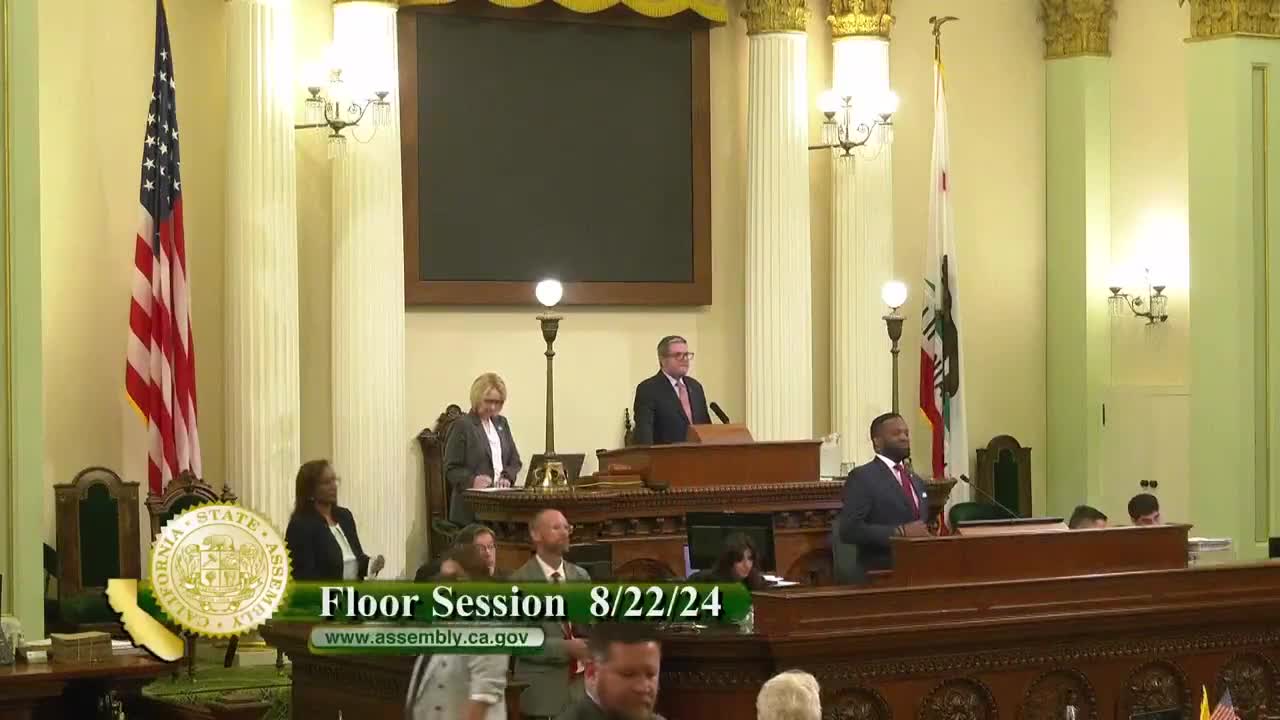 1MIN
Assembly Floor
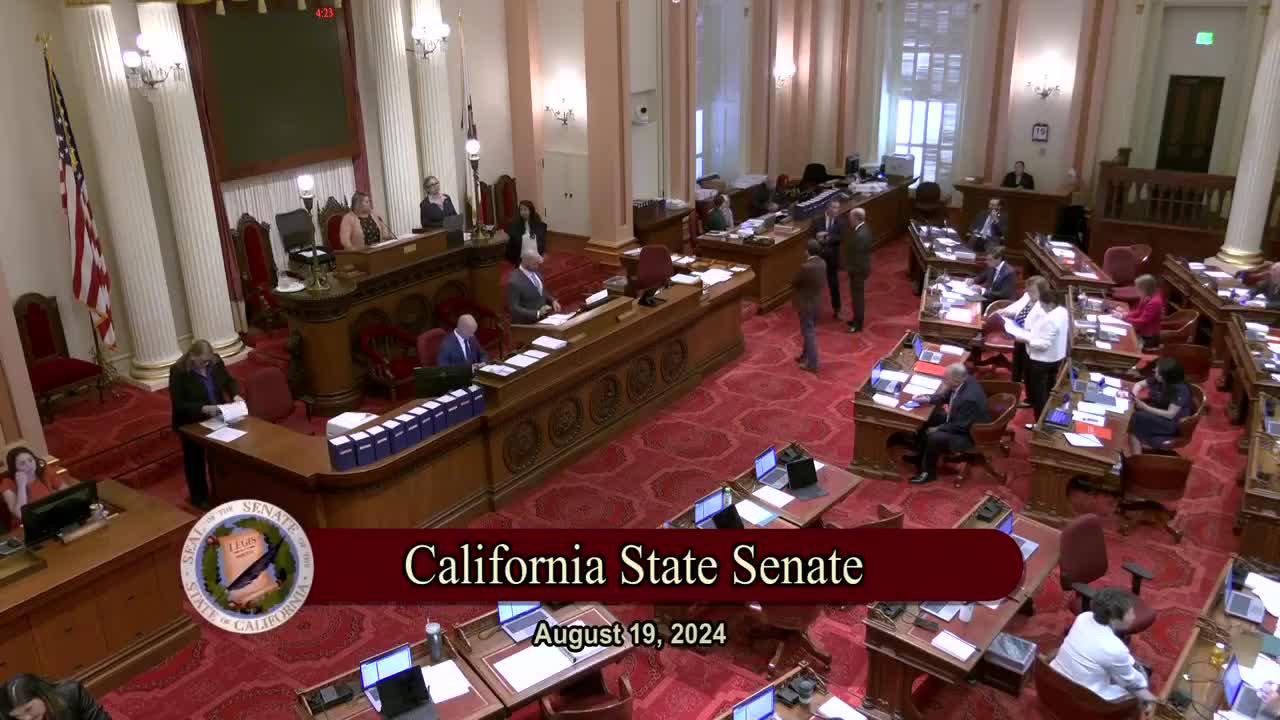 1MIN
Senate Floor
 2MIN
Senate Standing Committee on Business, Professions and Economic Development
 4MIN
Senate Standing Committee on Housing
Bill Author

Bill Co-Author(s):