AB 2628: California State Auditor: internet website.
- Session Year: 2023-2024
- House: Assembly
- Latest Version Date: 2024-09-28
Current Status:
Passed
(2024-09-28: Chaptered by Secretary of State - Chapter 837, Statutes of 2024.)
Introduced
In Committee
First Chamber
In Committee
Second Chamber
Enacted
Existing law requires, by January 15th of each year, the State Auditor to report to the Joint Legislative Budget Committee, the Joint Legislative Audit Committee, and the Department of Finance with respect to each recommendation the State Auditor has made based on an audit or investigation that was reported more than one year prior and that has not been fully implemented by the affected agency.
This bill would instead require the State Auditor to maintain a publicly accessible internet website that displays the status of recommendations the State Auditor has made based on an audit or investigation, as specified. The bill would require a state agency to submit an update to the State Auditor, and the State Auditor to post the update to the publicly available internet website on recommendations the State Auditor has determined are not fully implemented, as specified.
Existing law requires the State Auditor to, among other things, identify five judicial branch entities, excluding the Administrative Office of the Courts, for audit every two years, as specified.
This bill instead would require the State Auditor to take that action every three years.
Existing law establishes within the State Treasury the State Audit Fund, which is a continuously appropriated fund for the expenses of the State Auditor.
By expanding the duties of the State Auditors Office, this bill would create an appropriation.
Existing law requires, by January 15th of each year, the State Auditor to report to the Joint Legislative Budget Committee, the Joint Legislative Audit Committee, and the Department of Finance with respect to each recommendation the State Auditor has made based on an audit or investigation that was reported more than one year prior and that has not been fully implemented by the affected agency.
This bill would instead require the State Auditor to maintain a publicly accessible internet website that displays the status of recommendations the State Auditor has made based on an audit or investigation, as specified. The bill would require a state agency to submit an update to the State Auditor, and the State Auditor to post the update to the publicly available internet website on recommendations the State Auditor has determined are not fully implemented, as specified.
Existing law requires the State Auditor to, among other things, identify five judicial branch entities, excluding the Administrative Office of the Courts, for audit every two years, as specified.
This bill instead would require the State Auditor to take that action every three years.
Existing law establishes within the State Treasury the State Audit Fund, which is a continuously appropriated fund for the expenses of the State Auditor.
By expanding the duties of the State Auditors Office, this bill would create an appropriation.
Existing law requires, by January 15th of each year, the State Auditor to report to the Joint Legislative Budget Committee, the Joint Legislative Audit Committee, and the Department of Finance with respect to each recommendation the State Auditor has made based on an audit or investigation that was reported more than one year prior and that has not been fully implemented by the affected agency.
This bill would instead require the State Auditor to maintain a publicly accessible internet website that displays the status of recommendations the State Auditor has made based on an audit or investigation, as specified. The bill would require a state agency to submit an update to the State Auditor, and the State Auditor to post the update to the publicly available internet website on recommendations the State Auditor has determined are not fully implemented, as specified.
Existing law requires the State Auditor to, among other things, identify five judicial branch entities, excluding the Administrative Office of the Courts, for audit every two years, as specified.
This bill instead would require the State Auditor to take that action every three years.
Existing law establishes within the State Treasury the State Audit Fund, which is a continuously appropriated fund for the expenses of the State Auditor.
By expanding the duties of the State Auditors Office, this bill would create an appropriation.
Existing law requires, by January 15th of each year, the State Auditor to report to the Joint Legislative Budget Committee, the Joint Legislative Audit Committee, and the Department of Finance with respect to each recommendation the State Auditor has made based on an audit or investigation that was reported more than one year prior and that has not been fully implemented by the affected agency.
This bill would instead require the State Auditor to maintain a publicly accessible internet website that displays the status of recommendations the State Auditor has made based on an audit or investigation, as specified. The bill would require a state agency to update the publicly available internet website on recommendations the State Auditor has determined are not fully implemented, as specified.
Existing law requires the State Auditor to, among other things, identify five judicial branch entities, excluding the Administrative Office of the Courts, for audit every two years, as specified.
This bill instead would require the State Auditor to take that action every three years.
Existing law establishes within the State Treasury the State Audit Fund, which is a continuously appropriated fund for the expenses of the State Auditor.
By expanding the duties of the State Auditors Office, this bill would create an appropriation.
Existing law requires all money belonging to the state received from any source whatever by any state agency to be accounted for to the Controller, except as specified. Existing law requires that any increment collected as the result of investment of state money be collected by the Treasurer, reported to the Controller, and credited to the General Fund.This bill would make nonsubstantive changes to the provision describing the actions to be taken by the Treasurer and the Controller with respect to any incremented collected as the result of investment of state money.Existing law requires all money belonging to the state received from any source whatever by any state agency to be accounted for to the Controller, except as specified. Existing law requires that any increment collected as the result of investment of state money be collected by the Treasurer, reported to the Controller, and credited to the General Fund.
This bill would make nonsubstantive changes to the provision describing the actions to be taken by the Treasurer and the Controller with respect to any incremented collected as the result of investment of state money.
(a)The State Auditor shall, for a period of time established by the State Auditor, but for no less than three years from the publication of the audit or investigation, maintain a publicly accessible internet website that displays the status of recommendations the State Auditor made in audits and investigations.
(b)The internet website shall clearly identify the state agency audited or investigated, the audit or investigation that contained the recommendation, the text of the recommendation, the date it was issued, and the most recent explanation provided by the agency to the State Auditor on the status of the recommendation, including the expected date of full implementation. The State Auditor may include additional information on the internet website.
(c)A state agency shall submit an update to the State Auditor and the State Auditor shall post the update to the publicly accessible internet website, at an interval and in a manner established by the State Auditor and at least annually for the period of time established pursuant to subdivision (a), on recommendations the State Auditor has determined are not fully implemented. The update shall explain why the audit or investigation recommendation has not been fully implemented and include the expected date of full implementation.
(d)For the purposes of this section, state agency means a state agency as defined by Section 11000, the California State University, the Supreme Court, a Court of Appeal, a superior court, and the Administrative Office of the Courts.
SEC. 2.Section 19210 of the Public Contract Code is amended to read:19210.(a)The California State Auditor shall do all of the following:
(1)On or before March 15, 2014, biennially thereafter, and every three years beginning in calendar year 2025, identify five judicial branch entities, excluding the Administrative Office of the Courts, for audit to assess the implementation of this part by the judicial branch entity based upon risk factors that include, but are not limited to, all of the following:
(A)Significant changes in legal or other requirements that have occurred that impact compliance with this part.
(B)The amount of time since the last audit performed of the identified judicial branch entity to assess its implementation and compliance with this part.
(C)Previous audit results or known deficiencies.
(D)Significant or unusual changes in management or high employee turnover.
(E)The complexity and size of the judicial branch entity.
(F)The level of sophistication and complexity of existing contracting practices and procedures.
(G)The total volume and type of procurement made by the judicial branch entity compared with overall judicial branch procurement.
(H)Substantial changes in total procurements, including, but not limited to, number and allotted amount, from one year to the next.
(2)On or before March 15 of the year in which the judicial branch entities are identified pursuant to paragraph (1), notify the Joint Legislative Budget Committee and the Joint Legislative Audit Committee of the five judicial branch entities identified and the estimated cost to conduct an audit of each judicial branch entity.
(3)On or before July 1 of the year in which the judicial branch entities are identified, commence an audit of each identified judicial branch entity, subject to an appropriation for this audit whereby moneys are allocated in the annual Budget Act to one or more funds that are available for use by judicial branch entities. Upon completion of the final audit report, as identified in paragraph (4), the Administrative Office of the Courts shall reimburse the California State Auditor for the actual costs of the work performed.
(4)Provide the judicial branch entity with a reasonable opportunity to respond to the findings of the audit. An audit report shall not be considered final until this opportunity is provided and any response is included or incorporated into the audit report.
(5)On or before January 15 of the fiscal year for which the appropriation for the audit was made, report the judicial branch entity audit findings, including any response by the judicial branch entity, to the judicial branch entity, the Legislature, the Judicial Council, and the Department of Finance.
(6)Annually provide updates to the Legislature on the status of the judicial branch entity implementation of an audit recommendation.
(b)If, on or before March 15 of the year in which the judicial branch entities are identified pursuant to subdivision (a), the California State Auditor identifies, on the basis of the risk factors described in subdivision (a), judicial branch entities for audit in addition to the five identified pursuant to subdivision (a) and notifies the Joint Legislative Budget Committee and the Joint Legislative Audit Committee of these additional entities, along with the estimated cost of each audit, and an appropriation is made for this purpose in the same manner as described in paragraph (3) of subdivision (a), the California State Auditor shall then audit the additional judicial branch entities and provide a final audit report as described in paragraphs (4) and (5) of subdivision (a).
(c)On or before July 1, 2015, biennially thereafter, and every three years beginning in calendar year 2025, the California State Auditor shall commence an audit of the Administrative Office of the Courts, to assess the implementation of, and compliance with, this part, subject to an appropriation by the Legislature to the Judicial Council for transfer to the State Audit Fund for this purpose, and provide a final audit report in the manner described in paragraphs (4) and (5) of subdivision (a).
(d)The California State Auditor may follow up on a prior audit finding at any time.
(e)The California State Auditor shall conduct an audit pursuant to this section in accordance with Chapter 6.5 (commencing with Section 8543) of Division 1 of Title 2 of the Government Code. Pursuant to Section 8546.2 of the Government Code, the California State Auditor shall request updates from an audited judicial branch entity regarding its progress in implementing audit recommendations made pursuant to this section. The audited judicial branch entity shall provide these updates at intervals prescribed by the California State Auditor so that the California State Auditor may conduct appropriate followup activities.
(f)Moneys that have been transferred to the State Audit Fund pursuant to this section to audit a specific judicial branch entity, but have not been expended by the California State Auditor at the time the California State Auditor provides its final audit report for that judicial branch entity, shall revert back to the fund from which the moneys were transferred.
(g)A report submitted pursuant to this section shall be submitted in compliance with Section 9795 of the Government Code.
(h)If the California State Auditor is selected as the auditing entity pursuant to subdivision (j) of Section 77206 of the Government Code, then the California State Auditor may combine the results of an audit of a trial court conducted pursuant to that section with an audit of the same trial court conducted pursuant to this section. The California State Auditor may also combine the results of an audit of the Administrative Office of the Courts pursuant to Section 77206 of the Government Code with the results of an audit of the Administrative Office of the Courts pursuant to this section.
(a)The State Auditor shall, for a period of time established by the State Auditor, but for no less than three years from the publication of the audit or investigation, maintain a publicly accessible internet website that displays the status of recommendations the State Auditor made in audits and investigations.
(b)The internet website shall clearly identify the state agency audited or investigated, the audit or investigation that contained the recommendation, the text of the recommendation, the date it was issued, and the most recent explanation provided by the agency to the State Auditor on the status of the recommendation, including the expected date of full implementation. The State Auditor may include additional information on the internet website.
(c)A state agency shall submit an update to the State Auditor and the State Auditor shall post the update to the publicly accessible internet website, at an interval and in a manner established by the State Auditor and at least annually for the period of time established pursuant to subdivision (a), on recommendations the State Auditor has determined are not fully implemented. The update shall explain why the audit or investigation recommendation has not been fully implemented and include the expected date of full implementation.
(d)For the purposes of this section, state agency means a state agency as defined by Section 11000, the California State University, the Supreme Court, a Court of Appeal, a superior court, and the Administrative Office of the Courts.
SEC. 2.Section 19210 of the Public Contract Code is amended to read:19210.(a)The California State Auditor shall do all of the following:
(1)On or before March 15, 2014, biennially thereafter, and every three years beginning in calendar year 2025, identify five judicial branch entities, excluding the Administrative Office of the Courts, for audit to assess the implementation of this part by the judicial branch entity based upon risk factors that include, but are not limited to, all of the following:
(A)Significant changes in legal or other requirements that have occurred that impact compliance with this part.
(B)The amount of time since the last audit performed of the identified judicial branch entity to assess its implementation and compliance with this part.
(C)Previous audit results or known deficiencies.
(D)Significant or unusual changes in management or high employee turnover.
(E)The complexity and size of the judicial branch entity.
(F)The level of sophistication and complexity of existing contracting practices and procedures.
(G)The total volume and type of procurement made by the judicial branch entity compared with overall judicial branch procurement.
(H)Substantial changes in total procurements, including, but not limited to, number and allotted amount, from one year to the next.
(2)On or before March 15 of the year in which the judicial branch entities are identified pursuant to paragraph (1), notify the Joint Legislative Budget Committee and the Joint Legislative Audit Committee of the five judicial branch entities identified and the estimated cost to conduct an audit of each judicial branch entity.
(3)On or before July 1 of the year in which the judicial branch entities are identified, commence an audit of each identified judicial branch entity, subject to an appropriation for this audit whereby moneys are allocated in the annual Budget Act to one or more funds that are available for use by judicial branch entities. Upon completion of the final audit report, as identified in paragraph (4), the Administrative Office of the Courts shall reimburse the California State Auditor for the actual costs of the work performed.
(4)Provide the judicial branch entity with a reasonable opportunity to respond to the findings of the audit. An audit report shall not be considered final until this opportunity is provided and any response is included or incorporated into the audit report.
(5)On or before January 15 of the fiscal year for which the appropriation for the audit was made, report the judicial branch entity audit findings, including any response by the judicial branch entity, to the judicial branch entity, the Legislature, the Judicial Council, and the Department of Finance.
(6)Annually provide updates to the Legislature on the status of the judicial branch entity implementation of an audit recommendation.
(b)If, on or before March 15 of the year in which the judicial branch entities are identified pursuant to subdivision (a), the California State Auditor identifies, on the basis of the risk factors described in subdivision (a), judicial branch entities for audit in addition to the five identified pursuant to subdivision (a) and notifies the Joint Legislative Budget Committee and the Joint Legislative Audit Committee of these additional entities, along with the estimated cost of each audit, and an appropriation is made for this purpose in the same manner as described in paragraph (3) of subdivision (a), the California State Auditor shall then audit the additional judicial branch entities and provide a final audit report as described in paragraphs (4) and (5) of subdivision (a).
(c)On or before July 1, 2015, biennially thereafter, and every three years beginning in calendar year 2025, the California State Auditor shall commence an audit of the Administrative Office of the Courts, to assess the implementation of, and compliance with, this part, subject to an appropriation by the Legislature to the Judicial Council for transfer to the State Audit Fund for this purpose, and provide a final audit report in the manner described in paragraphs (4) and (5) of subdivision (a).
(d)The California State Auditor may follow up on a prior audit finding at any time.
(e)The California State Auditor shall conduct an audit pursuant to this section in accordance with Chapter 6.5 (commencing with Section 8543) of Division 1 of Title 2 of the Government Code. Pursuant to Section 8546.2 of the Government Code, the California State Auditor shall request updates from an audited judicial branch entity regarding its progress in implementing audit recommendations made pursuant to this section. The audited judicial branch entity shall provide these updates at intervals prescribed by the California State Auditor so that the California State Auditor may conduct appropriate followup activities.
(f)Moneys that have been transferred to the State Audit Fund pursuant to this section to audit a specific judicial branch entity, but have not been expended by the California State Auditor at the time the California State Auditor provides its final audit report for that judicial branch entity, shall revert back to the fund from which the moneys were transferred.
(g)A report submitted pursuant to this section shall be submitted in compliance with Section 9795 of the Government Code.
(h)If the California State Auditor is selected as the auditing entity pursuant to subdivision (j) of Section 77206 of the Government Code, then the California State Auditor may combine the results of an audit of a trial court conducted pursuant to that section with an audit of the same trial court conducted pursuant to this section. The California State Auditor may also combine the results of an audit of the Administrative Office of the Courts pursuant to Section 77206 of the Government Code with the results of an audit of the Administrative Office of the Courts pursuant to this section.
(a)The State Auditor shall, for a period of time established by the State Auditor, but for no less than three years from the publication of the audit or investigation, maintain a publicly accessible internet website that displays the status of recommendations the State Auditor made in audits and investigations.
(b)The internet website shall clearly identify the state agency audited or investigated, the audit or investigation that contained the recommendation, the text of the recommendation, the date it was issued, and the most recent explanation provided by the agency to the State Auditor on the status of the recommendation, including the expected date of full implementation. The State Auditor may include additional information on the internet website.
(c)A state agency shall post submit an update to the State Auditor and the State Auditor shall post the update to the publicly accessible internet website, at an interval and in a manner established by the State Auditor and at least annually for the period of time established pursuant to subdivision (a), on recommendations the State Auditor has determined are not fully implemented. The update shall explain why the audit or investigation recommendation has not been fully implemented and include the expected date of full implementation.
(d)For the purposes of this section, state agency means a state agency as defined by Section 11000, the California State University, the Supreme Court, a Court of Appeal, a superior court, and the Administrative Office of the Courts.
SEC. 2.Section 19210 of the Public Contract Code is amended to read:19210.(a)The California State Auditor shall do all of the following:
(1)On or before March 15, 2014, biennially thereafter, and every three years beginning in calendar year 2025, identify five judicial branch entities, excluding the Administrative Office of the Courts, for audit to assess the implementation of this part by the judicial branch entity based upon risk factors that include, but are not limited to, all of the following:
(A)Significant changes in legal or other requirements that have occurred that impact compliance with this part.
(B)The amount of time since the last audit performed of the identified judicial branch entity to assess its implementation and compliance with this part.
(C)Previous audit results or known deficiencies.
(D)Significant or unusual changes in management or high employee turnover.
(E)The complexity and size of the judicial branch entity.
(F)The level of sophistication and complexity of existing contracting practices and procedures.
(G)The total volume and type of procurement made by the judicial branch entity compared with overall judicial branch procurement.
(H)Substantial changes in total procurements, including, but not limited to, number and allotted amount, from one year to the next.
(2)On or before March 15 of the year in which the judicial branch entities are identified pursuant to paragraph (1), notify the Joint Legislative Budget Committee and the Joint Legislative Audit Committee of the five judicial branch entities identified and the estimated cost to conduct an audit of each judicial branch entity.
(3)On or before July 1 of the year in which the judicial branch entities are identified, commence an audit of each identified judicial branch entity, subject to an appropriation for this audit whereby moneys are allocated in the annual Budget Act to one or more funds that are available for use by judicial branch entities. Upon completion of the final audit report, as identified in paragraph (4), the Administrative Office of the Courts shall reimburse the California State Auditor for the actual costs of the work performed.
(4)Provide the judicial branch entity with a reasonable opportunity to respond to the findings of the audit. An audit report shall not be considered final until this opportunity is provided and any response is included or incorporated into the audit report.
(5)On or before January 15 of the fiscal year for which the appropriation for the audit was made, report the judicial branch entity audit findings, including any response by the judicial branch entity, to the judicial branch entity, the Legislature, the Judicial Council, and the Department of Finance.
(6)Annually provide updates to the Legislature on the status of the judicial branch entity implementation of an audit recommendation.
(b)If, on or before March 15 of the year in which the judicial branch entities are identified pursuant to subdivision (a), the California State Auditor identifies, on the basis of the risk factors described in subdivision (a), judicial branch entities for audit in addition to the five identified pursuant to subdivision (a) and notifies the Joint Legislative Budget Committee and the Joint Legislative Audit Committee of these additional entities, along with the estimated cost of each audit, and an appropriation is made for this purpose in the same manner as described in paragraph (3) of subdivision (a), the California State Auditor shall then audit the additional judicial branch entities and provide a final audit report as described in paragraphs (4) and (5) of subdivision (a).
(c)On or before July 1, 2015, biennially thereafter, and every three years beginning in calendar year 2025, the California State Auditor shall commence an audit of the Administrative Office of the Courts, to assess the implementation of, and compliance with, this part, subject to an appropriation by the Legislature to the Judicial Council for transfer to the State Audit Fund for this purpose, and provide a final audit report in the manner described in paragraphs (4) and (5) of subdivision (a).
(d)The California State Auditor may follow up on a prior audit finding at any time.
(e)The California State Auditor shall conduct an audit pursuant to this section in accordance with Chapter 6.5 (commencing with Section 8543) of Division 1 of Title 2 of the Government Code. Pursuant to Section 8546.2 of the Government Code, the California State Auditor shall request updates from an audited judicial branch entity regarding its progress in implementing audit recommendations made pursuant to this section. The audited judicial branch entity shall provide these updates at intervals prescribed by the California State Auditor so that the California State Auditor may conduct appropriate followup activities.
(f)Moneys that have been transferred to the State Audit Fund pursuant to this section to audit a specific judicial branch entity, but have not been expended by the California State Auditor at the time the California State Auditor provides its final audit report for that judicial branch entity, shall revert back to the fund from which the moneys were transferred.
(g)A report submitted pursuant to this section shall be submitted in compliance with Section 9795 of the Government Code.
(h)If the California State Auditor is selected as the auditing entity pursuant to subdivision (j) of Section 77206 of the Government Code, then the California State Auditor may combine the results of an audit of a trial court conducted pursuant to that section with an audit of the same trial court conducted pursuant to this section. The California State Auditor may also combine the results of an audit of the Administrative Office of the Courts pursuant to Section 77206 of the Government Code with the results of an audit of the Administrative Office of the Courts pursuant to this section.
(a)The State Auditor shall, by January 15th of each year, report to the Joint Legislative Budget Committee, the Joint Legislative Audit Committee, and the Department of Finance with respect to each recommendation he or she has made based on an audit or investigation that was reported more than one year prior and that has not been fully implemented by the affected agency. shall, for a period of time established by the State Auditor, but for no less than three years from the publication of the audit or investigation, maintain a publicly accessible internet website that displays the status of recommendations the State Auditor made in audits and investigations.
(b)The report internet website shall clearly identify the state agency audited or investigated, the audit or investigation that contained the recommendation, a brief description the text of the recommendation, the date it was issued, and the most recent explanation provided by the agency to the State Auditor on the status of the recommendation. recommendation, including the expected date of full implementation. The State Auditor may include additional information on the internet website.
(c)Any state agency that is notified by the State Auditor that it has not fully implemented a recommendation made pursuant to this chapter more than one year prior, shall do either of the following:(1)Provide a written report to the State Auditor, the respective policy committees and budget subcommittees of the Assembly and Senate with oversight of the agency, and the Department of Finance, explaining why the audit recommendation or investigation has not been fully implemented.(2)Notify all entities described in subdivision (a) that it will begin implementing the audit recommendation or investigation recommendation within 90 days of the notification by the State Auditor, and include the estimated date of full implementation.(c)A state agency shall post an update to the publicly accessible internet website, at an interval and in a manner established by the State Auditor and at least annually for the period of time established pursuant to subdivision (a), on recommendations the State Auditor has determined are not fully implemented. The update shall explain why the audit or investigation recommendation has not been fully implemented and include the expected date of full implementation.
(d)For the purposes of this section, state agency means a state agency as defined by Section 11000, the California State University, the Supreme Court, a Court of Appeal, a superior court, and the Administrative Office of the Courts.
SEC. 2.Section 19210 of the Public Contract Code is amended to read:19210.(a)The California State Auditor shall do all of the following:
(1)On or before March 15, 2014, and biennially thereafter, and every three years beginning in calendar year 2025, identify five judicial branch entities, excluding the Administrative Office of the Courts, for audit to assess the implementation of this part by the judicial branch entity based upon risk factors that include, but are not limited to, all of the following:
(A)Significant changes in legal or other requirements that have occurred that impact compliance with this part.
(B)The amount of time since the last audit performed of the identified judicial branch entity to assess its implementation and compliance with this part.
(C)Previous audit results or known deficiencies.
(D)Significant or unusual changes in management or high employee turnover.
(E)The complexity and size of the judicial branch entity.
(F)The level of sophistication and complexity of existing contracting practices and procedures.
(G)The total volume and type of procurement made by the judicial branch entity compared with overall judicial branch procurement.
(H)Substantial changes in total procurements, including, but not limited to, number and allotted amount, from one year to the next.
(2)On or before March 15 of the year in which the judicial branch entities are identified pursuant to paragraph (1), notify the Joint Legislative Budget Committee and the Joint Legislative Audit Committee of the five judicial branch entities identified and the estimated cost to conduct an audit of each judicial branch entity.
(3)On or before July 1 of the year in which the judicial branch entities are identified, commence an audit of each identified judicial branch entity, subject to an appropriation for this audit whereby moneys are allocated in the annual Budget Act to one or more funds that are available for use by judicial branch entities. Upon completion of the final audit report, as identified in paragraph (4), the Administrative Office of the Courts shall reimburse the California State Auditor for the actual costs of the work performed.
(4)Provide the judicial branch entity with a reasonable opportunity to respond to the findings of the audit. An audit report shall not be considered final until this opportunity is provided and any response is included or incorporated into the audit report.
(5)On or before January 15 of the fiscal year for which the appropriation for the audit was made, report the judicial branch entity audit findings, including any response by the judicial branch entity, to the judicial branch entity, the Legislature, the Judicial Council, and the Department of Finance.
(6)Annually provide updates to the Legislature on the status of the judicial branch entity implementation of an audit recommendation.
(b)If, on or before March 15 of the year in which the judicial branch entities are identified pursuant to subdivision (a), the California State Auditor identifies, on the basis of the risk factors described in subdivision (a), judicial branch entities for audit in addition to the five identified pursuant to subdivision (a) and notifies the Joint Legislative Budget Committee and the Joint Legislative Audit Committee of these additional entities, along with the estimated cost of each audit, and an appropriation is made for this purpose in the same manner as described in paragraph (3) of subdivision (a), the California State Auditor shall then audit the additional judicial branch entities and provide a final audit report as described in paragraphs (4) and (5) of subdivision (a).
(c)On or before July 1, 2015, and biennially thereafter, and every three years beginning in calendar year 2025, the California State Auditor shall commence an audit of the Administrative Office of the Courts, to assess the implementation of, and compliance with, this part, subject to an appropriation by the Legislature to the Judicial Council for transfer to the State Audit Fund for this purpose, and provide a final audit report in the manner described in paragraphs (4) and (5) of subdivision (a).
(d)The California State Auditor may follow up on a prior audit finding at any time.
(e)The California State Auditor shall conduct an audit pursuant to this section in accordance with Chapter 6.5 (commencing with Section 8543) of Division 1 of Title 2 of the Government Code. Pursuant to Section 8546.2 of the Government Code, the California State Auditor shall request updates from an audited judicial branch entity regarding its progress in implementing audit recommendations made pursuant to this section. The audited judicial branch entity shall provide these updates at intervals prescribed by the California State Auditor so that the California State Auditor may conduct appropriate followup activities.
(f)Moneys that have been transferred to the State Audit Fund pursuant to this section to audit a specific judicial branch entity, but have not been expended by the California State Auditor at the time the California State Auditor provides its final audit report for that judicial branch entity, shall revert back to the fund from which the moneys were transferred.
(g)A report submitted pursuant to this section shall be submitted in compliance with Section 9795 of the Government Code.
(h)If the California State Auditor is selected as the auditing entity pursuant to subdivision (j) of Section 77206 of the Government Code, then the California State Auditor may combine the results of an audit of a trial court conducted pursuant to that section with an audit of the same trial court conducted pursuant to this section. The California State Auditor may also combine the results of an audit of the Administrative Office of the Courts pursuant to Section 77206 of the Government Code with the results of an audit of the Administrative Office of the Courts pursuant to this section.
(i)This section shall become operative on January 1, 2014.SECTION 1.Section 16305.7 of the Government Code is amended to read:16305.7.Any increment collected as the result of investment of state money shall be collected by the Treasurer and reported by them to the Controller for credit to the General Fund in the State Treasury.Any increment collected as the result of investment of state money shall be collected by the State Treasurer and reported by him them to the State Controller for credit to the General Fund in the State Treasury.
|
Date
|
Status
|
|---|---|
| Sep 28, 2024 | Chaptered by Secretary of State - Chapter 837, Statutes of 2024. |
| Sep 28, 2024 | Approved by the Governor. |
| Aug 28, 2024 | Enrolled and presented to the Governor at 4 p.m. |
| Aug 22, 2024 | Senate amendments concurred in. To Engrossing and Enrolling. (Ayes 62. Noes 0. Page 6435.). |
| Aug 20, 2024 | In Assembly. Concurrence in Senate amendments pending. May be considered on or after August 22 pursuant to Assembly Rule 77. |
| Aug 20, 2024 | Read third time. Passed. Ordered to the Assembly. (Ayes 40. Noes 0. Page 5238.). |
| Aug 13, 2024 | Read second time. Ordered to third reading. |
| Aug 12, 2024 | Read third time and amended. Ordered to second reading. |
| Aug 5, 2024 | Ordered to third reading. |
| Aug 5, 2024 | From Consent Calendar. |
| Jul 2, 2024 | Read second time. Ordered to Consent Calendar. |
| Jul 1, 2024 | From committee: Be ordered to second reading file pursuant to Senate Rule 28.8 and ordered to Consent Calendar. |
| Jun 12, 2024 | From committee: Do pass and re-refer to Com. on APPR with recommendation: To Consent Calendar. (Ayes 11. Noes 0.) (June 11). Re-referred to Com. on APPR. |
| May 28, 2024 | From committee: Do pass and re-refer to Com. on JUD. with recommendation: To Consent Calendar. (Ayes 12. Noes 0.) (May 28). Re-referred to Com. on JUD. |
| May 15, 2024 | Referred to Coms. on G.O. and JUD. |
| May 2, 2024 | In Senate. Read first time. To Com. on RLS. for assignment. |
| May 2, 2024 | Read third time. Passed. Ordered to the Senate. (Ayes 73. Noes 0. Page 5089.) |
| Apr 25, 2024 | Read second time. Ordered to Consent Calendar. |
| Apr 24, 2024 | From committee: Do pass. To Consent Calendar. (Ayes 14. Noes 0.) (April 24). |
| Apr 9, 2024 | From committee: Do pass and re-refer to Com. on APPR. with recommendation: To Consent Calendar. (Ayes 12. Noes 0.) (April 9). Re-referred to Com. on APPR. |
| Apr 1, 2024 | Re-referred to Com. on JUD. |
| Mar 21, 2024 | Referred to Com. on JUD. |
| Mar 21, 2024 | From committee chair, with author's amendments: Amend, and re-refer to Com. on JUD. Read second time and amended. |
| Feb 15, 2024 | From printer. May be heard in committee March 16. |
| Feb 14, 2024 | Read first time. To print. |
|
Date
|
Description
|
Location
|
Votes
|
|
|---|---|---|---|---|
| Aug 22, 2024 | AB 2628 Hart Concurrence in Senate Amendments | Assembly Floor |
Passed |
|
| Aug 20, 2024 | Assembly 3rd Reading AB2628 Hart By Laird | Senate Floor |
Passed |
|
| Jun 11, 2024 | Do pass, but first be re-referred to the Committee on [Appropriations] with the recommendation: To Consent Calendar | Senate Standing Committee on Judiciary |
Passed |
|
| May 28, 2024 | Do pass, but first be re-referred to the Committee on [Judiciary] with the recommendation: To Consent Calendar | Senate Standing Committee on Governmental Organization |
Passed |
|
| May 2, 2024 | AB 2628 Hart Consent Calendar Second Day Regular Session | Assembly Floor |
Passed |
|
| Apr 24, 2024 | Do pass. To Consent Calendar. | Assembly Standing Committee on Appropriations |
Passed |
|
| Apr 9, 2024 | Do pass and be re-referred to the Committee on [Appropriations] with recommendation: To Consent Calendar | Assembly Standing Committee on Judiciary |
Passed |
This list shows positions taken on this bill by organizations on the date displayed, which is linked to the original source.
Positions by individuals are not included.
CONCURRENCE IN SENATE AMENDMENTS
CSA1 Bill Id:AB 2628
Author:(Hart)
As Amended Ver:August 12, 2024
2/3 vote.
SUMMARY
Requires the State Auditor to maintain and update a website on the status of its recommendations, as specified, and modifies the schedule for identifying judicial branch entities for audit from every two years to every three years.
Major Provisions
- Requires the State Auditor to maintain a publicly accessible internet website that displays the status of recommendations the State Auditor has made based upon an audit or investigation, as specified.
- Requires a state agency to update the publicly available internet website described in 1) above as to any recommendations the State Auditor has determined that the state agency has not fully implemented. Specifies that the update shall explain why the recommendation has not been fully implemented and include the expected date of full implementation.
- Requires the State Auditor, beginning in the calendar year 2025, to identify five judicial branch entities, excluding the Administrative Office of the Courts, for audit every three years, as specified.
- Requires a state agency to submit an update to the State Auditor, and the State Auditor to post the update to the publicly available internet website, as specified.
Senate Amendments
Require a state agency to submit an update to the State Auditor, and the State Auditor to post the update to the publicly available internet website, as specified.
COMMENTS
The California State Auditor is an independent agency that investigates state agencies and makes recommendations to help government provide high-quality, efficient, and equitable access to state services. Existing law requires the State Auditor to report to designated joint legislative committees and to the Department of Finance concerning its recommendations, including recommendations that were made more than one year prior and that have not yet been fully implemented by the audited state agency. This bill would require the State Auditor to maintain a publicly accessible internet website that contains the same information required by the reports. The State Auditor, in fact, already maintains such a website; this bill would make this existing practice a codified legal requirement.
In addition, existing law requires audited state agencies, when notified by the State Auditor that it has not implemented a recommendation, to provide a written report to the Auditor, the relevant legislative committees, and the Department of Finance explaining why it has not implemented the recommendation, or report to these same entities when the agency will begin implementing the recommendations. This bill would require the state agencies to post the information required by the written reports on the State Auditor's internet website. According to the State Auditor, state agencies will, as they do now, use the website to submit their responses to Auditor recommendations, as specified. This bill requires state agencies to submit the reports at intervals to be determined by the Auditor, but at least annually. The bill requires a state agency's update to explain why the audit or investigation recommendation has not been fully implemented and to include the expected date of full implementation.
Finally, existing law requires the State Auditor to identify five judicial branch entities for audit every two years; this bill, in order to achieve greater efficiency, would require the Auditor to identify the entities for audit every three years. According to the author, under the existing audit schedule, along with all of the other regularly required statutory audits, the two-year requirement takes up valuable resources that could be used to conduct other needed audits. Spacing the audits out over three years will better align with other regularly required statutory audits.
In sum, this bill makes changes to the audit process that will increase transparency, by requiring the regular posting and updating on an internet website, and which will provide a more efficient, but still effective, schedule of auditing judicial branch agencies.
According to the Author
AB 2628 will ensure transparency regarding the status of how audited agencies are complying with and implementing recommendations made in audit reports by providing the most recent information in an easily publicly accessible website. This bill will also consolidate required audits of various areas of the judicial branch. AB 2628 allows the State Auditor to maximize resources on critical statutorily and legislatively mandated audits while preserving the integrity of the judicial branch audits.
Arguments in Support
No support on file.
Arguments in Opposition
No opposition on file.
FISCAL COMMENTS
According to the Senate Appropriations Committee, pursuant to Senate Rule 28.8, negligible state costs.
VOTES:
ASM JUDICIARY: 12-0-0
YES: Kalra, Dixon, Ting, Bryan, Connolly, Haney, Maienschein, McKinnor, Pacheco, Reyes, Sanchez, Waldron
ASM APPROPRIATIONS: 14-0-1
YES: Wicks, Sanchez, Arambula, Bryan, Calderon, Wendy Carrillo, Dixon, Mike Fong, Grayson, Haney, Hart, Jim Patterson, Pellerin, Ta
ABS, ABST OR NV: Villapudua
ASSEMBLY FLOOR: 73-0-7
YES: Addis, Aguiar-Curry, Alanis, Alvarez, Arambula, Bains, Bauer-Kahan, Bennett, Berman, Boerner, Bonta, Bryan, Juan Carrillo, Wendy Carrillo, Cervantes, Chen, Connolly, Davies, Dixon, Essayli, Mike Fong, Vince Fong, Friedman, Gabriel, Gallagher, Garcia, Gipson, Grayson, Haney, Hart, Holden, Hoover, Irwin, Jackson, Jones-Sawyer, Kalra, Lackey, Lee, Lowenthal, Maienschein, McCarty, McKinnor, Muratsuchi, Stephanie Nguyen, Ortega, Pacheco, Papan, Jim Patterson, Joe Patterson, Pellerin, Petrie-Norris, Quirk-Silva, Ramos, Rendon, Reyes, Luz Rivas, Rodriguez, Blanca Rubio, Sanchez, Santiago, Schiavo, Soria, Ta, Ting, Valencia, Villapudua, Waldron, Wallis, Ward, Wicks, Wilson, Wood, Zbur
ABS, ABST OR NV: Calderon, Megan Dahle, Flora, Low, Mathis, Weber, Robert Rivas
SENATE FLOOR: 40-0-0
YES: Allen, Alvarado-Gil, Archuleta, Ashby, Atkins, Becker, Blakespear, Bradford, Caballero, Cortese, Dahle, Dodd, Durazo, Eggman, Glazer, Gonzalez, Grove, Hurtado, Jones, Laird, Limón, McGuire, Menjivar, Min, Newman, Nguyen, Niello, Ochoa Bogh, Padilla, Portantino, Roth, Rubio, Seyarto, Skinner, Smallwood-Cuevas, Stern, Umberg, Wahab, Wiener, Wilk
UPDATED
VERSION: August 12, 2024
CONSULTANT: Tom Clark / JUD. / (916) 319-2334 FN: 0004269
SENATE RULES COMMITTEE Office of Senate Floor Analyses (916) 651-1520 Fax: (916) 327-4478 | AB 2628 |
THIRD READING
Bill No: AB 2628
Author: Hart (D)
Amended: 8/12/24 in Senate
Vote: 27
SENATE GOVERNMENTAL ORG. COMMITTEE: 12-0, 5/28/24
AYES: Dodd, Wilk, Alvarado-Gil, Archuleta, Glazer, Jones, Nguyen, Padilla, Portantino, Roth, Seyarto, Smallwood-Cuevas
NO VOTE RECORDED: Ashby, Bradford, Ochoa Bogh, Rubio
SENATE JUDICIARY COMMITTEE: 11-0, 6/11/24
AYES: Umberg, Wilk, Allen, Ashby, Caballero, Durazo, Laird, Niello, Roth, Stern, Wahab
SENATE APPROPRIATIONS COMMITTEE: Senate Rule 28.8
ASSEMBLY FLOOR: 73-0, 5/2/24 (Consent) - See last page for vote
SUBJECT: California State Auditor: internet website
SOURCE: Author
DIGEST:
This bill requires the California State Auditor (Auditor) to maintain on a publicly accessible internet website the status of recommendations the Auditor has made; requires a state agency to update the publicly accessible internet website on recommendations the Auditor has determined are not fully implemented; and, changes from every two years to every three years, the frequency that the Auditor must identify five judicial branch entities to audit, as specified.
Senate Floor Amendments of 8/12/24 clarify that a state agency shall submit an update to the Auditor and that the Auditor will post the update to the publicly accessible internet website, as specified.
ANALYSIS:
Existing law:
- Requires the Auditor, by January 15 of each year, to report to the Joint Legislative Budget Committee (JLBC), the Joint Legislative Audit Committee (JLAC), and the Department of Finance (DOF) with respect to each recommendation the Auditor has made based on an audit or investigation that was reported more than one year prior and that has not been fully implemented by the affected agency.
- Requires the above mentioned report to clearly identify the state agency audited or investigated, the audit or investigation that contained the recommendation, a brief description of the recommendation, the date it was issued, and the most recent explanation provided by the agency to the Auditor on the status of the recommendation.
- Requires the Auditor to, among other things, identify five judicial branch entities, excluding the Administrative Office of the Courts, for audit every two years, as specified.
- Establishes the State Audit Fund, within the State Treasury, which is a continuously appropriated fund for the expenses of the Auditor.
- Defines “state agency” to include every state office, officer, department, division, bureau, board, and commission, as specified.
This bill:
- Removes existing reporting requirements mentioned above, and instead, requires the Auditor to, for a period of time established by the Auditor, but for no less than three years from the publication of the audit or investigation, maintain a publicly accessible internet website that displays the status of recommendations the Auditor has made in audits and investigations.
- Requires the internet website to clearly identify the state agency audited or investigated, the audit or investigation that contained the recommendation, the text of the recommendation, the date it was issued, and the most recent explanation provided by the agency to the Auditor on the status of the recommendation, including the expected date of full implementation.
- Authorizes the Auditor to include additional information on the internet website.
- Requires a state agency to submit an update to the Auditor and requires the Auditor to post the update to the publicly accessibly internet website, as specified.
- Requires the update to explain why the audit or investigation recommendation has not been fully implemented and to include the expected date of full implementation.
- Requires the Auditor, every three years beginning in calendar year 2025, to identify five judicial branch entities, excluding the Administrative Office of the Courts, for audit, as specified.
Background
Author Statement. According to the author’s office, “AB 2628 will ensure transparency regarding the status of how audited agencies are complying with and implementing recommendations made in audit reports by providing the most recent information in an easily publicly accessible website. This bill will also consolidate required audits of various areas of the judicial branch. AB 2628 allows the State Auditor to maximize resources on critical statutorily and legislatively mandated audits while preserving the integrity of the judicial branch audits.”
California State Auditor. The Auditor’s office functions as an independent agency focused on auditing state agencies, among other things, and makes recommendations to help government provide high-quality, efficient, and equitable access to state services. According to the Auditor’s internet website, their mission is to “provide objective evaluations and effective solutions that enhance the transparency, accountability, and performance of California government for the people it serves.” Audits are initiated via: Legislative request; whistleblower complaints, existing statute, as specified; and through the High-Risk program.
Legislators concerned about a program or agency can request a performance/policy evaluation through the bipartisan JLAC. If JLAC approves the request, the Auditor’s work begins. In that phase of the process, the Auditor gathers the facts and dives into the details. Once all evidence is analyzed, the Auditor issues a public report, after which the Legislature may hold hearings and/or pass legislation to address the weaknesses identified.
Existing law requires the Auditor to report annually, by January 15th, to the JLBC, JLAC, and DOF concerning recommendations, including recommendations that were made more than one year prior and that have not yet been fully implemented by the audited state agency. This bill would, instead, require the Auditor to maintain a publicly accessible internet website that contains the same information required by the reports. The Auditor currently maintains such a website, this bill codifies that current practice.
Additionally, existing law requires audited state agencies, when notified by the Auditor that it has not implemented a recommendation, to provide a written report to the Auditor, the relevant Legislative committees, and DOF explaining why it has not implemented the recommendations, or report to these same entities when the agency will begin implementing the recommendations. This bill would, instead, require the state agencies to post the information required by the written reports on the Auditor’s internet website.
According to the Auditor, state agencies will, as they do now, use the website to submit their responses to Auditor recommendations at regular intervals. This bill requires state agencies to submit the reports at intervals to be determined by the Auditor, but at least annually. This bill requires a state agency’s update to explain why the audit or investigation recommendation has not been fully implemented and to include the expected date of full implementation.
Finally, existing law requires the Auditor to identify five judicial branch entities, excluding the Administrative Office of the Courts, for audit every two years. This bill, in order to achieve greater efficiency, would require the Auditor to identify the entities for audit every three years. According to the author, who serves as the Chair of JLAC, under the existing audit schedule, along with all of the other regularly required statutory audits, the two-year requirement takes up valuable resources that could be used to conduct other needed audits. Spacing the audits out over three years will better align with other regularly required statutory audits.
Related/Prior Legislation
AB 956 (Alvarez, Chapter 94, Statutes of 2023) required the Auditor to collect fingerprints from perspective employees and contractors, as specified, and complete a background check with the Department of Justice (DOJ), as specified.
AB 1790 (Connolly, 2023) would require, by July 1, 2026, the California State University (CSU) implement the recent recommendations provided by the Auditor related to sexual discrimination at CSU, as specified. (Pending in the Senate Rules Committee)
AB 2407 (Hart, 2023) would require, beginning January 1, 2026, and every three years thereafter, the Auditor to conduct an audit of California Community Colleges (CCC), the CSU, and the University of California (UC) regarding their handling and investigation of sexual harassment complaints, as specified. (Pending Referral in the Senate Rules Committee)
AB 562 (Muratsuchi, Chapter 406, Statutes of 2017) subjected any officer, employee, or person who commits obstruction of the Auditor in the performance of the duties related to an audit to a fine of as much as $5,000.
AB 1102 (Lara, Chapter 328, Statutes of 2011) clarified the authority of the Auditor to conduct audits of the judiciary, and included all Bureau of State Audits’ costs under their continuous appropriations authority.
FISCAL EFFECT: Appropriation: Yes Fiscal Com.: Yes Local: No
SUPPORT: (Verified 8/12/24)
None received
OPPOSITION: (Verified 8/12/24)
None received
ASSEMBLY FLOOR: 73-0, 5/2/24
AYES: Addis, Aguiar-Curry, Alanis, Alvarez, Arambula, Bains, Bauer-Kahan, Bennett, Berman, Boerner, Bonta, Bryan, Juan Carrillo, Wendy Carrillo, Cervantes, Chen, Connolly, Davies, Dixon, Essayli, Mike Fong, Vince Fong, Friedman, Gabriel, Gallagher, Garcia, Gipson, Grayson, Haney, Hart, Holden, Hoover, Irwin, Jackson, Jones-Sawyer, Kalra, Lackey, Lee, Lowenthal, Maienschein, McCarty, McKinnor, Muratsuchi, Stephanie Nguyen, Ortega, Pacheco, Papan, Jim Patterson, Joe Patterson, Pellerin, Petrie-Norris, Quirk-Silva, Ramos, Rendon, Reyes, Luz Rivas, Rodriguez, Blanca Rubio, Sanchez, Santiago, Schiavo, Soria, Ta, Ting, Valencia, Villapudua, Waldron, Wallis, Ward, Wicks, Wilson, Wood, Zbur
NO VOTE RECORDED: Calderon, Megan Dahle, Flora, Low, Mathis, Weber, Robert Rivas
Prepared by: Brian Duke / G.O. / (916) 651-1530
8/13/24 12:59:37
**** END ****
SENATE RULES COMMITTEE Office of Senate Floor Analyses (916) 651-1520 Fax: (916) 327-4478 | AB 2628 |
THIRD READING
Bill No: AB 2628
Author: Hart (D)
Amended: 3/21/24 in Assembly
Vote: 27
SENATE GOVERNMENTAL ORG. COMMITTEE: 12-0, 5/28/24
AYES: Dodd, Wilk, Alvarado-Gil, Archuleta, Glazer, Jones, Nguyen, Padilla, Portantino, Roth, Seyarto, Smallwood-Cuevas
NO VOTE RECORDED: Ashby, Bradford, Ochoa Bogh, Rubio
SENATE JUDICIARY COMMITTEE: 11-0, 6/11/24
AYES: Umberg, Wilk, Allen, Ashby, Caballero, Durazo, Laird, Niello, Roth, Stern, Wahab
SENATE APPROPRIATIONS COMMITTEE: Senate Rule 28.8
ASSEMBLY FLOOR: 73-0, 5/2/24 (Consent) - See last page for vote
SUBJECT: California State Auditor: internet website
SOURCE: Author
DIGEST:
This bill requires the California State Auditor (Auditor) to maintain on a publicly accessible internet website the status of recommendations the Auditor has made; requires a state agency to update the publicly accessible internet website on recommendations the Auditor has determined are not fully implemented; and, changes from every two years to every three years, the frequency that the Auditor must identify five judicial branch entities to audit, as specified.
ANALYSIS:
Existing law:
- Requires the Auditor, by January 15 of each year, to report to the Joint Legislative Budget Committee (JLBC), the Joint Legislative Audit Committee (JLAC), and the Department of Finance (DOF) with respect to each recommendation the Auditor has made based on an audit or investigation that was reported more than one year prior and that has not been fully implemented by the affected agency.
- Requires the above mentioned report to clearly identify the state agency audited or investigated, the audit or investigation that contained the recommendation, a brief description of the recommendation, the date it was issued, and the most recent explanation provided by the agency to the Auditor on the status of the recommendation.
- Requires the Auditor to, among other things, identify five judicial branch entities, excluding the Administrative Office of the Courts, for audit every two years, as specified.
- Establishes the State Audit Fund, within the State Treasury, which is a continuously appropriated fund for the expenses of the Auditor.
- Defines “state agency” to include every state office, officer, department, division, bureau, board, and commission, as specified.
This bill:
- Removes existing reporting requirements mentioned above, and instead, requires the Auditor to, for a period of time established by the Auditor, but for no less than three years from the publication of the audit or investigation, maintain a publicly accessible internet website that displays the status of recommendations the Auditor has made in audits and investigations.
- Requires the internet website to clearly identify the state agency audited or investigated, the audit or investigation that contained the recommendation, the text of the recommendation, the date it was issued, and the most recent explanation provided by the agency to the Auditor on the status of the recommendation, including the expected date of full implementation.
- Authorizes the Auditor to include additional information on the internet website.
- Requires a state agency to post an update to the publicly accessible internet website, at an interval and in a manner established by the Auditor and at least annually for the period of time established, on recommendations the Auditor has determined are not fully implemented.
- Requires the update to explain why the audit or investigation recommendation has not been fully implemented and to include the expected date of full implementation.
- Requires the Auditor, every three years beginning in calendar year 2025, to identify five judicial branch entities, excluding the Administrative Office of the Courts, for audit, as specified.
Background
Author Statement. According to the author’s office, “AB 2628 will ensure transparency regarding the status of how audited agencies are complying with and implementing recommendations made in audit reports by providing the most recent information in an easily publicly accessible website. This bill will also consolidate required audits of various areas of the judicial branch. AB 2628 allows the State Auditor to maximize resources on critical statutorily and legislatively mandated audits while preserving the integrity of the judicial branch audits.”
California State Auditor. The Auditor’s office functions as an independent agency focused on auditing state agencies, among other things, and makes recommendations to help government provide high-quality, efficient, and equitable access to state services. According to the Auditor’s internet website, their mission is to “provide objective evaluations and effective solutions that enhance the transparency, accountability, and performance of California government for the people it serves.” Audits are initiated via: Legislative request; whistleblower complaints, existing statute, as specified; and through the High-Risk program.
Legislators concerned about a program or agency can request a performance/policy evaluation through the bipartisan JLAC. If JLAC approves the request, the Auditor’s work begins. In that phase of the process, the Auditor gathers the facts and dives into the details. Once all evidence is analyzed, the Auditor issues a public report, after which the Legislature may hold hearings and/or pass legislation to address the weaknesses identified.
Existing law requires the Auditor to report annually, by January 15th, to the JLBC, JLAC, and DOF concerning recommendations, including recommendations that were made more than one year prior and that have not yet been fully implemented by the audited state agency. This bill would, instead, require the Auditor to maintain a publicly accessible internet website that contains the same information required by the reports. The Auditor currently maintains such a website, this bill codifies that current practice.
Additionally, existing law requires audited state agencies, when notified by the Auditor that it has not implemented a recommendation, to provide a written report to the Auditor, the relevant Legislative committees, and DOF explaining why it has not implemented the recommendations, or report to these same entities when the agency will begin implementing the recommendations. This bill would, instead, require the state agencies to post the information required by the written reports on the Auditor’s internet website.
According to the Auditor, state agencies will, as they do now, use the website to submit their responses to Auditor recommendations at regular intervals. This bill requires state agencies to submit the reports at intervals to be determined by the Auditor, but at least annually. This bill requires a state agency’s update to explain why the audit or investigation recommendation has not been fully implemented and to include the expected date of full implementation.
Finally, existing law requires the Auditor to identify five judicial branch entities, excluding the Administrative Office of the Courts, for audit every two years. This bill, in order to achieve greater efficiency, would require the Auditor to identify the entities for audit every three years. According to the author, who serves as the Chair of JLAC, under the existing audit schedule, along with all of the other regularly required statutory audits, the two-year requirement takes up valuable resources that could be used to conduct other needed audits. Spacing the audits out over three years will better align with other regularly required statutory audits.
Related/Prior Legislation
AB 956 (Alvarez, Chapter 94, Statutes of 2023) required the Auditor to collect fingerprints from perspective employees and contractors, as specified, and complete a background check with the Department of Justice (DOJ), as specified.
AB 1790 (Connolly, 2023) required, by July 1, 2026, the California State University (CSU) implement the recent recommendations provided by the Auditor related to sexual discrimination at CSU, as specified. (Pending in the Senate Rules Committee)
AB 2407 (Hart, 2023) required, beginning January 1, 2026, and every three years thereafter, the Auditor to conduct an audit of California Community Colleges (CCC), the CSU, and the University of California (UC) regarding their handling and investigation of sexual harassment complaints, as specified. (Pending Referral in the Senate Rules Committee)
AB 562 (Muratsuchi, Chapter 406, Statutes of 2017) subjected any officer, employee, or person who commits obstruction of the Auditor in the performance of the duties related to an audit to a fine of as much as $5,000.
AB 1102 (Lara, Chapter 328, Statutes of 2011) clarified the authority of the Auditor to conduct audits of the judiciary, and included all Bureau of State Audits’ costs under their continuous appropriations authority.
FISCAL EFFECT: Appropriation: Yes Fiscal Com.: Yes Local: No
SUPPORT: (Verified 6/28/24)
None received
OPPOSITION: (Verified 6/28/24)
None received
ASSEMBLY FLOOR: 73-0, 5/2/24
AYES: Addis, Aguiar-Curry, Alanis, Alvarez, Arambula, Bains, Bauer-Kahan, Bennett, Berman, Boerner, Bonta, Bryan, Juan Carrillo, Wendy Carrillo, Cervantes, Chen, Connolly, Davies, Dixon, Essayli, Mike Fong, Vince Fong, Friedman, Gabriel, Gallagher, Garcia, Gipson, Grayson, Haney, Hart, Holden, Hoover, Irwin, Jackson, Jones-Sawyer, Kalra, Lackey, Lee, Lowenthal, Maienschein, McCarty, McKinnor, Muratsuchi, Stephanie Nguyen, Ortega, Pacheco, Papan, Jim Patterson, Joe Patterson, Pellerin, Petrie-Norris, Quirk-Silva, Ramos, Rendon, Reyes, Luz Rivas, Rodriguez, Blanca Rubio, Sanchez, Santiago, Schiavo, Soria, Ta, Ting, Valencia, Villapudua, Waldron, Wallis, Ward, Wicks, Wilson, Wood, Zbur
NO VOTE RECORDED: Calderon, Megan Dahle, Flora, Low, Mathis, Weber, Robert Rivas
Prepared by: Brian Duke / G.O. / (916) 651-1530
8/7/24 17:36:28
SENATE RULES COMMITTEE Office of Senate Floor Analyses (916) 651-1520 Fax: (916) 327-4478 | AB 2628 |
CONSENT
Bill No: AB 2628
Author: Hart (D)
Amended: 3/21/24 in Assembly
Vote: 27
SENATE GOVERNMENTAL ORG. COMMITTEE: 12-0, 5/28/24
AYES: Dodd, Wilk, Alvarado-Gil, Archuleta, Glazer, Jones, Nguyen, Padilla, Portantino, Roth, Seyarto, Smallwood-Cuevas
NO VOTE RECORDED: Ashby, Bradford, Ochoa Bogh, Rubio
SENATE JUDICIARY COMMITTEE: 11-0, 6/11/24
AYES: Umberg, Wilk, Allen, Ashby, Caballero, Durazo, Laird, Niello, Roth, Stern, Wahab
SENATE APPROPRIATIONS COMMITTEE: Senate Rule 28.8
ASSEMBLY FLOOR: 73-0, 5/2/24 (Consent) - See last page for vote
SUBJECT: California State Auditor: internet website
SOURCE: Author
DIGEST:
This bill requires the California State Auditor (Auditor) to maintain on a publicly accessible internet website the status of recommendations the Auditor has made; requires a state agency to update the publicly accessible internet website on recommendations the Auditor has determined are not fully implemented; and, changes from every two years to every three years, the frequency that the Auditor must identify five judicial branch entities to audit, as specified.
ANALYSIS:
Existing law:
- Requires the Auditor, by January 15 of each year, to report to the Joint Legislative Budget Committee (JLBC), the Joint Legislative Audit Committee (JLAC), and the Department of Finance (DOF) with respect to each recommendation the Auditor has made based on an audit or investigation that was reported more than one year prior and that has not been fully implemented by the affected agency.
- Requires the above mentioned report to clearly identify the state agency audited or investigated, the audit or investigation that contained the recommendation, a brief description of the recommendation, the date it was issued, and the most recent explanation provided by the agency to the Auditor on the status of the recommendation.
- Requires the Auditor to, among other things, identify five judicial branch entities, excluding the Administrative Office of the Courts, for audit every two years, as specified.
- Establishes the State Audit Fund, within the State Treasury, which is a continuously appropriated fund for the expenses of the Auditor.
- Defines “state agency” to include every state office, officer, department, division, bureau, board, and commission, as specified.
This bill:
- Removes existing reporting requirements mentioned above, and instead, requires the Auditor to, for a period of time established by the Auditor, but for no less than three years from the publication of the audit or investigation, maintain a publicly accessible internet website that displays the status of recommendations the Auditor has made in audits and investigations.
- Requires the internet website to clearly identify the state agency audited or investigated, the audit or investigation that contained the recommendation, the text of the recommendation, the date it was issued, and the most recent explanation provided by the agency to the Auditor on the status of the recommendation, including the expected date of full implementation.
- Authorizes the Auditor to include additional information on the internet website.
- Requires a state agency to post an update to the publicly accessible internet website, at an interval and in a manner established by the Auditor and at least annually for the period of time established, on recommendations the Auditor has determined are not fully implemented.
- Requires the update to explain why the audit or investigation recommendation has not been fully implemented and to include the expected date of full implementation.
- Requires the Auditor, every three years beginning in calendar year 2025, to identify five judicial branch entities, excluding the Administrative Office of the Courts, for audit, as specified.
Background
Author Statement. According to the author’s office, “AB 2628 will ensure transparency regarding the status of how audited agencies are complying with and implementing recommendations made in audit reports by providing the most recent information in an easily publicly accessible website. This bill will also consolidate required audits of various areas of the judicial branch. AB 2628 allows the State Auditor to maximize resources on critical statutorily and legislatively mandated audits while preserving the integrity of the judicial branch audits.”
California State Auditor. The Auditor’s office functions as an independent agency focused on auditing state agencies, among other things, and makes recommendations to help government provide high-quality, efficient, and equitable access to state services. According to the Auditor’s internet website, their mission is to “provide objective evaluations and effective solutions that enhance the transparency, accountability, and performance of California government for the people it serves.” Audits are initiated via: Legislative request; whistleblower complaints, existing statute, as specified; and through the High-Risk program.
Legislators concerned about a program or agency can request a performance/policy evaluation through the bipartisan JLAC. If JLAC approves the request, the Auditor’s work begins. In that phase of the process, the Auditor gathers the facts and dives into the details. Once all evidence is analyzed, the Auditor issues a public report, after which the Legislature may hold hearings and/or pass legislation to address the weaknesses identified.
Existing law requires the Auditor to report annually, by January 15th, to the JLBC, JLAC, and DOF concerning recommendations, including recommendations that were made more than one year prior and that have not yet been fully implemented by the audited state agency. This bill would, instead, require the Auditor to maintain a publicly accessible internet website that contains the same information required by the reports. The Auditor currently maintains such a website, this bill codifies that current practice.
Additionally, existing law requires audited state agencies, when notified by the Auditor that it has not implemented a recommendation, to provide a written report to the Auditor, the relevant Legislative committees, and DOF explaining why it has not implemented the recommendations, or report to these same entities when the agency will begin implementing the recommendations. This bill would, instead, require the state agencies to post the information required by the written reports on the Auditor’s internet website.
According to the Auditor, state agencies will, as they do now, use the website to submit their responses to Auditor recommendations at regular intervals. This bill requires state agencies to submit the reports at intervals to be determined by the Auditor, but at least annually. This bill requires a state agency’s update to explain why the audit or investigation recommendation has not been fully implemented and to include the expected date of full implementation.
Finally, existing law requires the Auditor to identify five judicial branch entities, excluding the Administrative Office of the Courts, for audit every two years. This bill, in order to achieve greater efficiency, would require the Auditor to identify the entities for audit every three years. According to the author, who serves as the Chair of JLAC, under the existing audit schedule, along with all of the other regularly required statutory audits, the two-year requirement takes up valuable resources that could be used to conduct other needed audits. Spacing the audits out over three years will better align with other regularly required statutory audits.
Related/Prior Legislation
AB 956 (Alvarez, Chapter 94, Statutes of 2023) required the Auditor to collect fingerprints from perspective employees and contractors, as specified, and complete a background check with the Department of Justice (DOJ), as specified.
AB 1790 (Connolly, 2023) required, by July 1, 2026, the California State University (CSU) implement the recent recommendations provided by the Auditor related to sexual discrimination at CSU, as specified. (Pending in the Senate Rules Committee)
AB 2407 (Hart, 2023) required, beginning January 1, 2026, and every three years thereafter, the Auditor to conduct an audit of California Community Colleges (CCC), the CSU, and the University of California (UC) regarding their handling and investigation of sexual harassment complaints, as specified. (Pending Referral in the Senate Rules Committee)
AB 562 (Muratsuchi, Chapter 406, Statutes of 2017) subjected any officer, employee, or person who commits obstruction of the Auditor in the performance of the duties related to an audit to a fine of as much as $5,000.
AB 1102 (Lara, Chapter 328, Statutes of 2011) clarified the authority of the Auditor to conduct audits of the judiciary, and included all Bureau of State Audits’ costs under their continuous appropriations authority.
FISCAL EFFECT: Appropriation: Yes Fiscal Com.: Yes Local: No
SUPPORT: (Verified 6/28/24)
None received
OPPOSITION: (Verified 6/28/24)
None received
ASSEMBLY FLOOR: 73-0, 5/2/24
AYES: Addis, Aguiar-Curry, Alanis, Alvarez, Arambula, Bains, Bauer-Kahan, Bennett, Berman, Boerner, Bonta, Bryan, Juan Carrillo, Wendy Carrillo, Cervantes, Chen, Connolly, Davies, Dixon, Essayli, Mike Fong, Vince Fong, Friedman, Gabriel, Gallagher, Garcia, Gipson, Grayson, Haney, Hart, Holden, Hoover, Irwin, Jackson, Jones-Sawyer, Kalra, Lackey, Lee, Lowenthal, Maienschein, McCarty, McKinnor, Muratsuchi, Stephanie Nguyen, Ortega, Pacheco, Papan, Jim Patterson, Joe Patterson, Pellerin, Petrie-Norris, Quirk-Silva, Ramos, Rendon, Reyes, Luz Rivas, Rodriguez, Blanca Rubio, Sanchez, Santiago, Schiavo, Soria, Ta, Ting, Valencia, Villapudua, Waldron, Wallis, Ward, Wicks, Wilson, Wood, Zbur
NO VOTE RECORDED: Calderon, Megan Dahle, Flora, Low, Mathis, Weber, Robert Rivas
Prepared by: Brian Duke / G.O. / (916) 651-1530
7/2/24 9:32:03
Senator Thomas Umberg, Chair
2023-2024 Regular Session
Bill No: AB 2628 (Author:Hart)
Version: March 21, 2024
Hearing Date: June 11, 2024
Fiscal: Yes
Urgency: No
Consultant: AM
SUBJECT
California State Auditor: internet website
DIGEST
This bill requires the California State Auditor (Auditor) to maintain a publicly accessible website that displays the status of recommendations the Auditor made in audits and investigations conducted by the Auditor, and requires a state agency to update the website at least annually on recommendations the Auditor determines have not been fully implemented, as specified. The bill also requires the Auditor to identify five judicial branch entities to audit every three years beginning in 2025 instead of every two years.
EXECUTIVE SUMMARY
The California State Auditor Office (CSAO) is an independent agency that investigates state agencies and makes recommendations to help government provide efficient and equitable access to services. Existing law requires the Auditor to report to designated joint legislative committees and the Department of Finance concerning its recommendations, including recommendations that have been in place for one year but not yet been fully implemented by the audited state agency. This bill instead requires the Auditor to maintain a publicly available website to display the status of recommendations that the Auditor made in its audit or investigation, and requires state agencies to update the website on recommendations that Auditor has determined are not fully implemented. The bill also requires the Auditor to audit five judicial branch entities every three years instead of every two. The bill is author sponsored. The Committee has received no timely support or opposition. The bill passed the Senate Governmental Organization Committee on a vote of 12 to 0.
PROPOSED CHANGES TO THE LAW
Existing law:
- Establishes the California State Auditor's Office (CSAO), and states it is the intent of the Legislature that the CSAO has the independence necessary to conduct its audits in conformity with specified federal standards and be free of organizational impairments and from influence of existing state control agencies that could be the subject of audits conducted by the office. (§ 8543 & 8546.)
- Requires the Auditor to annually report to the Joint Legislative Budget Committee, the Joint Legislative Audit Committee, and the Department of Finance with respect to each recommendation the Auditor has made based on an audit or investigation that was reported more than one year prior and that has not been fully implemented by the affected agency. (Gov. Code § 8548.9.)
- Requires a state agency, when it is notified by the State Auditor that it has not implemented a recommendation made by the State Auditor, to do one of the following:
- Provide a written report to the State Auditor, the respective policy committees and budget subcommittees of the Assembly and Senate with oversight of the agency, and the Department of Finance, explaining why the audit recommendation or investigation has not been fully implemented.
- Notify all entities described in a), above, that it will begin implementing the audit recommendation or investigation recommendation within 90 days of the notification by the State Auditor, and include the estimated date of full implementation. (Id. at (c).)
- Requires the State Auditor to, among other things, identify five judicial branch entities, excluding the Administrative Office of the Courts, for audit every two years, as specified. (Pub. Contract Code § 19210.)
This bill:
- Requires the State Auditor to maintain a publicly accessible internet website that displays the status of recommendations the State Auditor has made based upon an audit or investigation, as specified.
- Requires a state agency to update the publicly available internet website described in 1) above as to any recommendations the State Auditor has determined that the state agency has not fully implemented. Specifies that the update shall explain why the recommendation has not been fully implemented and include the expected date of full implementation.
- Requires the State Auditor, beginning in the calendar year 2025, to identify five judicial branch entities, excluding the Administrative Office of the Courts, for audit
every three years, as specified.
COMMENTS
- Stated need for the bill
The author writes:
AB 2628 will ensure transparency regarding the status of how audited agencies are complying with and implementing recommendations made in audit reports by providing the most recent information in an easily publicly accessible website. This bill will also consolidate required audits of various areas of the judicial branch. AB 2628 allows the State Auditor to maximize resources on critical statutorily mandated audits while preserving the integrity of the judicial branch audits.
- Auditor reports and recommendations
Existing law requires the Auditor to conduct audits and investigations and make recommendations to address issues and deficiencies identified during the audit or investigation.
As the Senate Governmental Organization Committee analysis of this bill notes:
Audits are initiated via: Legislative request; whistleblower complaints, existing statute, as specified; and through the High-Risk program. Legislators concerned about a program or agency can request a performance/policy evaluation through the bipartisan [Joint Legislative Audit Committee] JLAC. If JLAC approves the request, the Auditor’s work begins. In that phase of the process, the Auditor gathers the facts and dives into the details. Once all evidence is analyzed, the Auditor issues a public report, after which the Legislature may hold hearings and/or pass legislation to address the weaknesses identified.[1]
Existing law requires the Auditor to annually report to the Joint Legislative Budget Committee, JLAC, and the Department of Finance (DOF) with respect to each recommendation the Auditor has made in an audit or investigation that was reported more than one year prior and that has not been fully implemented by the affected agency. Additionally, state agencies must provide a written report, when notified by the Auditor that the agency has not implemented a recommendation, to the Auditor, any relevant Legislative committees, and the DOF explaining why the recommendation has not been implemented and when it will be implemented.
This bill would instead require the Auditor to maintain a publicly accessible internet website that displays the status of recommendations the State Auditor has made based upon an audit or investigation, including the expected date of full implementation of the recommendations. The Auditor would be required to display the status of recommendations for at least three years from the publication of the audit or investigation. The bill would also require the state agency that was the subject of the audit or investigation to update the website at least annually on the recommendations made by the Auditor that have not been fully implemented, including the expected date of full implementation. Lastly, the bill would require the Auditor to identify five judicial branch entities to audit every three years, instead of every two years as existing law requires, beginning in 2025.
SUPPORT
None received
OPPOSITION
None received
RELATED LEGISLATION
Pending Legislation: None known.
Prior Legislation: None known.
PRIOR VOTES
Senate Governmental Organization Committee (Ayes 12, Noes 0)
Assembly Floor (Ayes 73, Noes 0)
Assembly Appropriations Committee (Ayes 14, Noes 0)
Assembly Judiciary Committee (Ayes 12, Noes 0)
**************
Sen. Gov. Organization Comm. analysis of AB 2628 (2023-24 reg. sess.) as amended Mar. 21, 2024 at p. 3. ↑
SENATE COMMITTEE ON GOVERNMENTAL ORGANIZATION
Senator Bill Dodd
Chair
2023 - 2024 Regular
Bill No: AB Hearing Date: 5/28/2024
Author: | Hart | ||
Version: | Amended | ||
Urgency: | Fiscal: | ||
Consultant: | |||
SUBJECT:
DIGEST: This bill requires the California State Auditor (Auditor) to maintain on their publicly accessible internet website the status of recommendations the Auditor has made; requires a state agency to update the publicly accessible internet website on recommendations the Auditor has determined are not fully implemented; and, changes from every two years to every three years, the frequency that the Auditor must identify five judicial branch entities to audit, as specified.
ANALYSIS:
Existing law:
- Requires the Auditor, by January 15 of each year, to report to the Joint Legislative Budget Committee (JLBC), the Joint Legislative Audit Committee (JLAC), and the Department of Finance (DOF) with respect to each recommendation the Auditor has made based on an audit or investigation that was reported more than one year prior and that has not been fully implemented by the affected agency.
- Requires the above mentioned report to clearly identify the state agency audited or investigated, the audit or investigation that contained the recommendation, a brief description of the recommendation, the date it was issued, and the most recent explanation provided by the agency to the Auditor on the status of the recommendation.
- Requires the Auditor to, among other things, identify five judicial branch entities, excluding the Administrative Office of the Courts, for audit every two years, as specified.
- Establishes the State Audit Fund, within the State Treasury, which is a continuously appropriated fund for the expenses of the Auditor.
- Defines “state agency” to include every state office, officer, department, division, bureau, board, and commission, as specified.
This bill:
- Removes existing reporting requirements mentioned above, and instead, requires the Auditor to, for a period of time established by the Auditor, but for no less than three years from the publication of the audit or investigation, maintain a publicly accessible internet website that displays the status of recommendations the Auditor has made in audits and investigations.
- Requires the internet website to clearly identify the state agency audited or investigated, the audit or investigation that contained the recommendation, the text of the recommendation, the date it was issued, and the most recent explanation provided by the agency to the Auditor on the status of the recommendation, including the expected date of full implementation.
- Authorizes the Auditor to include additional information on the internet website.
- Requires a state agency to post an update to the publicly accessible internet website, at an interval and in a manner established by the Auditor and at least annually for the period of time established, on recommendations the Auditor has determined are not fully implemented.
- Requires the update to explain why the audit or investigation recommendation has not been fully implemented and to include the expected date of full implementation.
- Requires the Auditor, every three years beginning in calendar year 2025, to identify five judicial branch entities, excluding the Administrative Office of the Courts, for audit, as specified.
Background
Author Statement. According to the author’s office, “AB 2628 will ensure transparency regarding the status of how audited agencies are complying with and implementing recommendations made in audit reports by providing the most recent information in an easily publicly accessible website. This bill will also consolidate required audits of various areas of the judicial branch. AB 2628 allows the State Auditor to maximize resources on critical statutorily and legislatively mandated audits while preserving the integrity of the judicial branch audits.”
California State Auditor. The Auditor’s office functions as an independent agency focused on auditing state agencies, among other things, and makes recommendations to help government provide high-quality, efficient, and equitable access to state services. According to the Auditor’s internet website, their mission is to “provide objective evaluations and effective solutions that enhance the transparency, accountability, and performance of California government for the people it serves.” Audits are initiated via: Legislative request; whistleblower complaints, existing statute, as specified; and through the High-Risk program.
Legislators concerned about a program or agency can request a performance/policy evaluation through the bipartisan JLAC. If JLAC approves the request, the Auditor’s work begins. In that phase of the process, the Auditor gathers the facts and dives into the details. Once all evidence is analyzed, the Auditor issues a public report, after which the Legislature may hold hearings and/or pass legislation to address the weaknesses identified.
Existing law requires the Auditor to report annually, by January 15th, to the JLBC, JLAC, and DOF concerning recommendations, including recommendations that were made more than one year prior and that have not yet been fully implemented by the audited state agency. This bill would, instead, require the Auditor to maintain a publicly accessible internet website that contains the same information required by the reports. The Auditor currently maintains such a website, this bill codifies that current practice.
Additionally, existing law requires audited state agencies, when notified by the Auditor that it has not implemented a recommendation, to provide a written report to the Auditor, the relevant Legislative committees, and DOF explaining why it has not implemented the recommendations, or report to these same entities when the agency will begin implementing the recommendations. This bill would, instead, require the state agencies to post the information required by the written reports on the Auditor’s internet website.
According to the Auditor, state agencies will, as they do now, use the website to submit their responses to Auditor recommendations at regular intervals. This bill requires state agencies to submit the reports at intervals to be determined by the Auditor, but at least annually. This bill requires a state agency’s update to explain why the audit or investigation recommendation has not been fully implemented and to include the expected date of full implementation.
Finally, existing law requires the Auditor to identify five judicial branch entities, excluding the Administrative Office of the Courts, for audit every two years. This bill, in order to achieve greater efficiency, would require the Auditor to identify the entities for audit every three years. According to the author, who serves as the Chair of JLAC, under the existing audit schedule, along with all of the other regularly required statutory audits, the two-year requirement takes up valuable resources that could be used to conduct other needed audits. Spacing the audits out over three years will better align with other regularly required statutory audits.
Prior/Related Legislation
AB 956 (Alvarez, Chapter 94, Statutes of 2023) requires the Auditor to collect fingerprints from perspective employees and contractors, as specified, and complete a background check with the Department of Justice (DOJ), as specified.
AB 1790 (Connolly, 2023) requires, by July 1, 2026, the California State University (CSU) implement the recent recommendations provided by the Auditor related to sexual discrimination at CSU, as specified. (Pending in the Senate Rules Committee)
AB 2407 (Hart, 2023) requires, beginning January 1, 2026, and every three years thereafter, the Auditor to conduct an audit of California Community Colleges (CCC), the CSU, and the University of California (UC) regarding their handling and investigation of sexual harassment complaints, as specified. (Pending Referral in the Senate Rules Committee)
AB 1102 (Lara, Chapter 328, Statutes of 2011) clarified the authority of the Auditor to conduct audits of the judiciary, and included all Bureau of State Audits’ costs under their continuous appropriations authority.
FISCAL EFFECT: Appropriation: Yes Fiscal Com.: Yes Local: No
SUPPORT:
None received
OPPOSITION:
None received
DUAL REFERRAL: Senate Governmental Organization Committee & Senate Judiciary Committee
Date of Hearing: April 24, 2024
ASSEMBLY COMMITTEE ON APPROPRIATIONS
Buffy Wicks, Chair
ABPCA Bill Id:AB 2628
Author:(Hart) – As Amended Ver:March 21, 2024
Policy Committee: | Judiciary | Vote: | 12 - 0 |
|
| ||
|
|
Urgency: No State Mandated Local Program: No Reimbursable: No
SUMMARY:
This bill requires the State Auditor to maintain a website that displays its recommendations and extends the State Auditor’s timeline for conducting judicial audits.
Specifically, this bill:
- Requires the State Auditor to maintain a publicly accessible website that displays the status of each recommendation the State Auditor has made based upon an audit or investigation, including the expected date of full implementation.
- Requires a state agency that has been audited or investigated to provide regular updates to be posted on the State Auditor’s website about any recommendations made by the State Auditor that are not yet fully implemented, including the expected date of full implementation.
- Requires the State Auditor to, every three years beginning in 2025, identify five judicial branch entities for audit, instead of every two years as required under existing law.
FISCAL EFFECT:
Minor and absorbable costs to the State Auditor to continue posting its recommendations on its existing website. Likely minor and absorbable costs to state agencies that have been audited to make the required updates.
The State Auditor reports no significant cost savings from the bill’s change to its judicial audit schedule.
COMMENTS:
- Purpose. According to the author:
AB 2628 will ensure transparency regarding the status of how audited agencies are complying with and implementing recommendations made in audit reports by providing the most recent information in an easily publicly accessible website. This bill will also consolidate required audits of various areas of the judicial branch. AB 2628 allows the State Auditor to maximize resources on critical statutorily and legislatively mandated audits while preserving the integrity of the judicial branch audits.
- Background. The State Auditor is an independent agency that performs audits of the programs and fiscal operations of state and local government entities. Upon completing an audit or investigation, the State Auditor generally provides recommendations to help improve the government’s operations and use of resources. The State Auditor is separate and independent from the legislative, executive, and judicial branches of California’s government, and has expansive statutory authority to access and examine information from a government agency for any investigation or audit.
Existing law requires the State Auditor to annually report to the Joint Legislative Budget Committee, the Joint Legislative Audit Committee, and the Department of Finance if a recommendation made by the State Auditor after an audit or investigation has not been fully implemented by the affected agency one year after the audit or investigation. This bill instead requires the State Auditor to post its recommendations from each investigation or audit on its website, and provide updates about whether those recommendations are implemented in the subsequent few years. The bill also requires a state agency that is audited or investigated to provide updates to be posted on the State Auditor’s website about its progress on implementing the State Auditor’s recommendations. These two provisions will likely result in only minor costs to the State Auditor and to audited agencies. Actually implementing the recommendations made by the State Auditor may be a significant undertaking, but this bill’s ongoing reporting requirement seems relatively easy to complete.
Analysis Prepared by: Annika Carlson / APPR. / (916) 319-2081
Date of Hearing: April 9, 2024
ASSEMBLY COMMITTEE ON JUDICIARY
Ash Kalra, Chair
ABPCA Bill Id:AB 2628
Author:(Hart) – As Amended Ver:March 21, 2024
proposed consent
SUBJECT: California State Auditor: internet website
KEY ISSUES:
- should the state auditor maintain a publicly accessible website that displays the status of recommendations resulting from its investigations, and should audited state agencies be required to update the website on the status of recommendations not yet IMPLEMENTED?
- Should the auditor identify five judicial branch entities for audit every three years, instead of every two years?
SYNOPSIS
The California State Auditor is an independent agency that investigates state agencies and makes recommendations to help government provide high-quality, efficient, and equitable access to state services. Existing law requires the State Auditor to report to designated joint legislative committees and the Department of Finance concerning its recommendations, including recommendations that have been in place for one year but not yet been fully implemented by the audited state agency. This bill would require the State Auditor to maintain a publicly accessible internet website that contains the information required by the reports. The State Auditor, in fact, already maintains such a website; this bill, among other things, would make this existing practice a codified legal requirement. Existing law also requires the audited state agencies, when notified by the State Auditor that it has not implemented a recommendation, to provide a written report to the Auditor, the relevant legislative committees, and the Department of Finance explaining why it has not implemented the recommendation, or when they will begin implementing the recommendations. The bill would require the state agencies to post the information required by the written reports on the State Auditor’s internet website. Finally, existing law requires the State Auditor to identify five judicial branch entities for audit every two years; this bill would require the Auditor to identify the entities for audit every three years. According to the author, these changes will ensure greater transparency on state agency progress on implementing recommendations, and the provision on judicial branch audits will allow the Auditor to maximize resources while still maintaining the integrity of the audits. There is no registered support or opposition to the bill.
SUMMARY: Requires the State Auditor to maintain and update a website on the status of its recommendations, as specified, and modifies the schedule for identifying judicial branch entities for audit from every two years to every three years. Specifically, this bill:
- Requires the State Auditor to maintain a publicly accessible internet website that displays the status of recommendations the State Auditor has made based upon an audit or investigation, as specified.
- Requires a state agency to update the publicly available internet website described in 1) above as to any recommendations the State Auditor has determined that the state agency has not fully implemented. Specifies that the update shall explain why the recommendation has not been fully implemented and include the expected date of full implementation.
- Requires the State Auditor, beginning in the calendar year 2025, to identify five judicial branch entities, excluding the Administrative Office of the Courts, for audit every three years, as specified.
EXISTING LAW:
- Requires the State Auditor to annually report to the Joint Legislative Budget Committee, the Joint Legislative Audit Committee, and the Department of Finance with respect to each recommendation the State Auditor has made based on an audit or investigation that was reported more than one year prior and that has not been fully implemented by the affected agency. (Government Code Section 8548.9.)
- Requires a state agency, when it is notified by the State Auditor that it has not implemented a recommendation made by the State Auditor, to do one of the following:
- Provide a written report to the State Auditor, the respective policy committees and budget subcommittees of the Assembly and Senate with oversight of the agency, and the Department of Finance, explaining why the audit recommendation or investigation has not been fully implemented.
- Notify all entities described in a) above that it will begin implementing the audit recommendation or investigation recommendation within 90 days of the notification by the State Auditor, and include the estimated date of full implementation. (Government Code Section 8548.9 (c).)
- Requires the State Auditor to, among other things, identify five judicial branch entities, excluding the Administrative Office of the Courts, for audit every two years, as specified. (Government Code Section 19210.)
FISCAL EFFECT: As currently in print this bill is keyed fiscal.
COMMENTS: According to the author, “AB 2628 will ensure transparency regarding the status of how audited agencies are complying with and implementing recommendations made in audit reports by providing the most recent information in an easily publicly accessible website. This bill will also consolidate required audits of various areas of the judicial branch. AB 2628 allows the State Auditor to maximize resources on critical statutorily and legislatively mandated audits while preserving the integrity of the judicial branch audits.”
State Auditor Reports and Recommendations. The California State Auditor is an independent agency that investigates state agencies and makes recommendations to help government provide high-quality, efficient, and equitable access to state services. Existing law requires the State Auditor to report to designated joint legislative committees and to the Department of Finance concerning its recommendations, including recommendations that were made more than one year prior and that have not yet been fully implemented by the audited state agency. This bill would require the State Auditor to maintain a publicly accessible internet website that contains the same information required by the reports. The State Auditor, in fact, already maintains such a website; this bill would make this existing practice a codified legal requirement.
In addition, existing law requires audited state agencies, when notified by the State Auditor that it has not implemented a recommendation, to provide a written report to the Auditor, the relevant legislative committees, and the Department of Finance explaining why it has not implemented the recommendation, or report to these same entities when the agency will begin implementing the recommendations. This bill would require the state agencies to post the information required by the written reports on the State Auditor’s internet website. According to the State Auditor, state agencies will, as they do now, use the website to submit their responses to Auditor recommendations at regular intervals. This bill requires state agencies to submit the reports at intervals to be determined by the Auditor, but at least annually. The bill requires a state agency’s update to explain why the audit or investigation recommendation has not been fully implemented and to include the expected date of full implementation.
Finally, existing law requires the State Auditor to identify five judicial branch entities for audit every two years; this bill, in order to achieve greater efficiency, would require the Auditor to identify the entities for audit every three years. According to the author, under the existing audit schedule, along with all of the other regularly required statutory audits, the two-year requirement takes up valuable resources that could be used to conduct other needed audits. Spacing the audits out over three years will better align with other regularly required statutory audits.
In sum, this bill makes changes to the audit process that will increase transparency, by requiring the regular posting and updating on an internet website, and which will provide a more efficient, but still effective, schedule of auditing judicial branch agencies.
REGISTERED SUPPORT / OPPOSITION:
Support
None on file
Opposition
None on file
Analysis Prepared by: Tom Clark / JUD. / (916) 319-2334
Discussed in Hearing
View Older Hearings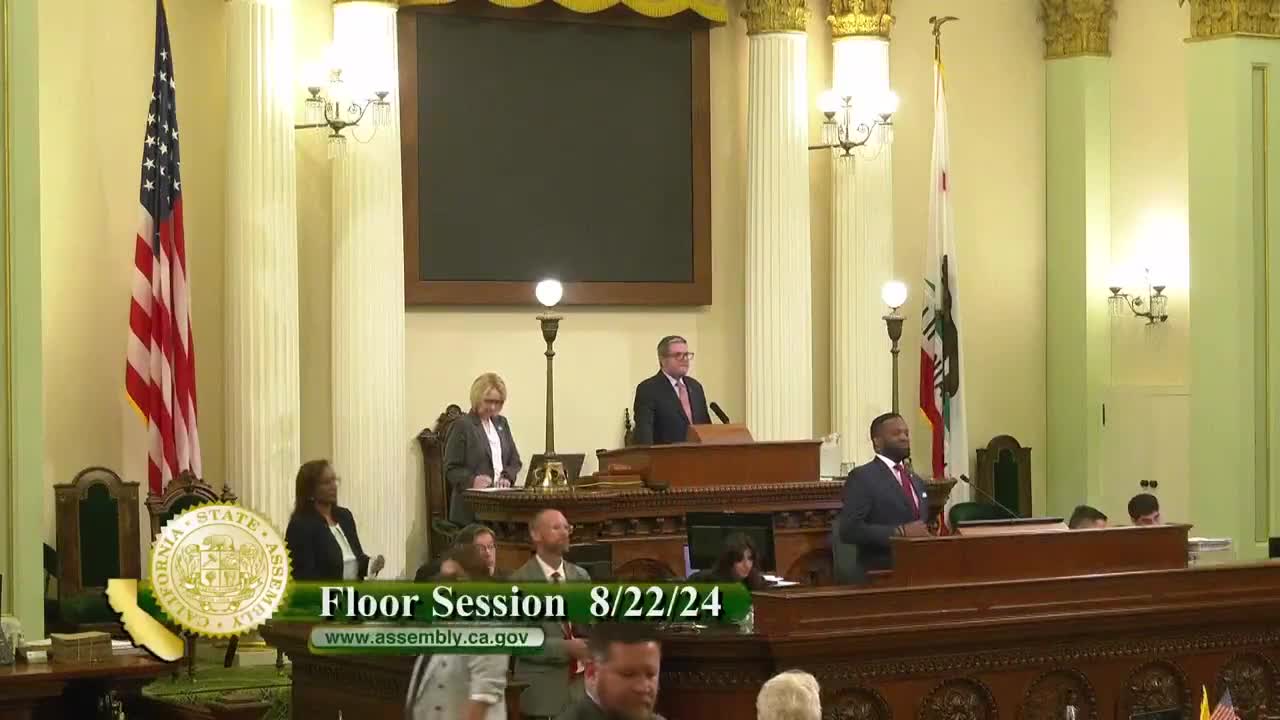
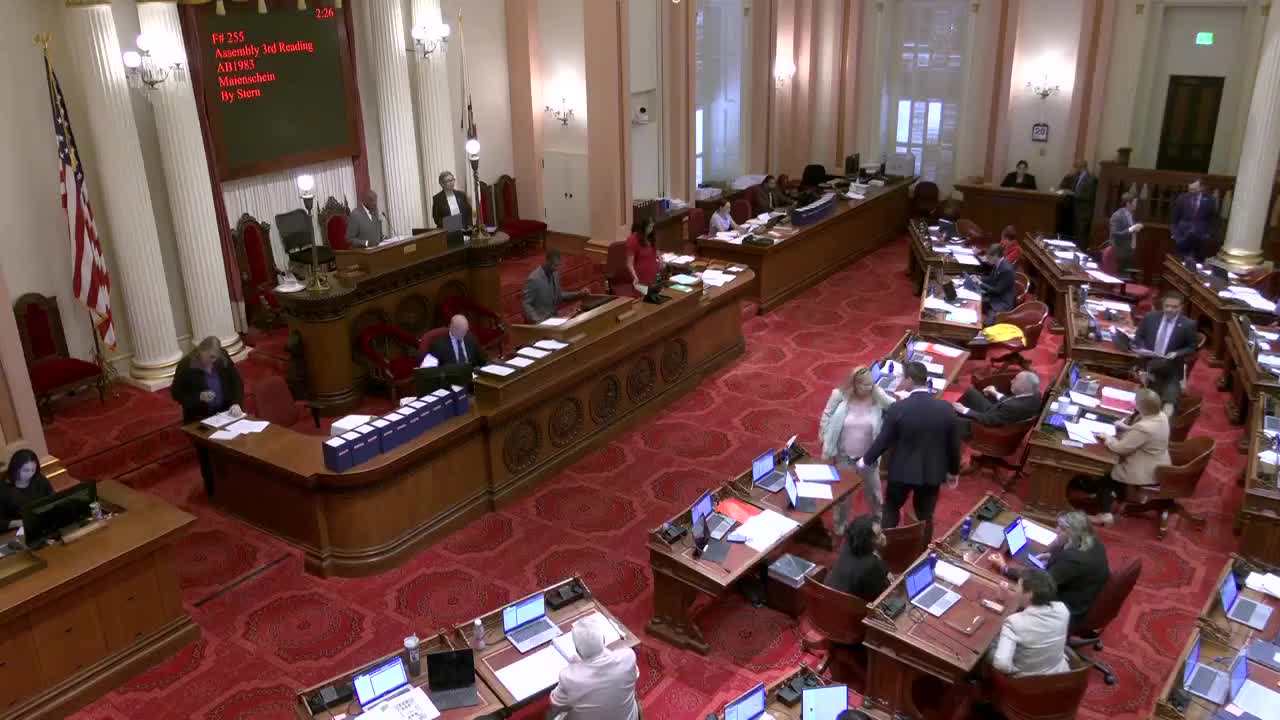
Bill Author

Bill Co-Author(s):