AB 2631: Local agencies: ethics training.
- Session Year: 2023-2024
- House: Assembly
- Latest Version Date: 2024-08-26
Current Status:
Passed
(2024-08-26: Chaptered by Secretary of State - Chapter 201, Statutes of 2024.)
Introduced
In Committee
First Chamber
In Committee
Second Chamber
Enacted
What does this bill do?
The bill requires the Fair Political Practices Commission, working with the Attorney General, to create, maintain, and make available an ethics training course for local government officials. The course must meet the law’s existing rule that local agency officials — including school district and charter school board members — receive at least two hours of ethics training every two years.
The summary is provided by generative AI which can make mistakes. For original language, please view the details in the table below.
Existing law requires all local agency officials to receive training in ethics, at specified intervals, if the local agency provides certain monetary payments to a member of a legislative body, as provided. Existing law requires all local agency officials who are members of specified public bodies to receive the above-described training, whether or not the member receives any type of compensation, salary, or stipend or reimbursement for actual and necessary expenses incurred in the performance of official duties. Existing law requires an entity that develops curricula to satisfy the above-described requirements to consult with the Fair Political Practices Commission and the Attorney General regarding the sufficiency and accuracy of the proposed course content. Existing law prohibits the Fair Political Practices Commission and the Attorney General, as specified, from precluding an entity from also including local ethics policies in the curricula.
This bill would require the Fair Political Practices Commission, in consultation with the Attorney General, to create, maintain, and make available to local agency officials an ethics training course, as specified.
Existing law requires all local agency officials to receive training in ethics, at specified intervals, if the local agency provides certain monetary payments to a member of a legislative body, as provided. Existing law requires all local agency officials who are members of specified public bodies to receive the above-described training, whether or not the member receives any type of compensation, salary, or stipend or reimbursement for actual and necessary expenses incurred in the performance of official duties. Existing law requires an entity that develops curricula to satisfy the above-described requirements to consult with the Fair Political Practices Commission and the Attorney General regarding the sufficiency and accuracy of the proposed course content. Existing law prohibits the Fair Political Practices Commission and the Attorney General, as specified, from precluding an entity from also including local ethics policies in the curricula.
This bill would, contingent upon an appropriation for these purposes, would require the Fair Political Practices Commission, in consultation with the Attorney General, to create, maintain, and make available to local agency officials an ethics training course, as specified.
Existing law requires all local agency officials to receive training in ethics, at specified intervals, if the local agency provides certain monetary payments to a member of a legislative body, as provided. Existing law requires all local agency officials who are members of specified public bodies to receive the above-described training, whether or not the member receives any type of compensation, salary, or stipend or reimbursement for actual and necessary expenses incurred in the performance of official duties. Existing law requires an entity that develops curricula to satisfy the above-described requirements to consult with the Fair Political Practices Commission and the Attorney General regarding the sufficiency and accuracy of the proposed course content. Existing law prohibits the Fair Political Practices Commission and the Attorney General, as specified, from precluding an entity from also including local ethics policies in the curricula.
This bill would, contingent upon an appropriation for these purposes, require the Fair Political Practices Commission, in consultation with the Attorney General, to create, maintain, and make available to local agency officials an ethics training course, as specified.
(a)(1)If a local agency provides any type of compensation, salary, or stipend to a member of a legislative body, or provides reimbursement for actual and necessary expenses incurred by a member of a legislative body in the performance of official duties, then all local agency officials shall receive training in ethics pursuant to this article.
(2)All local agency officials who are members of the governing board of a school district, a county board of education, or the governing body of a charter school shall receive training in ethics pursuant to this article, whether or not any member receives any type of compensation, salary, or stipend or reimbursement for actual and necessary expenses incurred in the performance of official duties.
(b)Each local agency official shall receive at least two hours of training in general ethics principles and ethics laws relevant to the officials public service every two years.
(c)(1)The Fair Political Practices Commission, in consultation with the Attorney General, shall create, maintain, and make available to local agency officials an ethics training course that satisfies the requirements of this section.
(2)(A)If another entity develops curricula to satisfy the requirements of this section, the entity shall consult with the Fair Political Practices Commission and the Attorney General regarding the sufficiency and accuracy of the proposed course content.
(B)When reviewing any proposed course content developed by another entity, the Fair Political Practices Commission and the Attorney General shall not preclude the entity from also including local ethics policies in the curricula.
(d)A local agency or an association of local agencies may offer one or more training courses, or sets of self-study materials with tests, to meet the requirements of this section. These courses may be taken at home, in-person, or online.
(e)A provider of training courses to meet the requirements of this article shall provide participants with proof of participation to meet the requirements of Section 53235.2.
(f)A local agency shall provide information on training available to meet the requirements of this article to its local officials at least once annually.
(a)(1)If a local agency provides any type of compensation, salary, or stipend to a member of a legislative body, or provides reimbursement for actual and necessary expenses incurred by a member of a legislative body in the performance of official duties, then all local agency officials shall receive training in ethics pursuant to this article.
(2)All local agency officials who are members of the governing board of a school district, a county board of education, or the governing body of a charter school shall receive training in ethics pursuant to this article, whether or not any member receives any type of compensation, salary, or stipend or reimbursement for actual and necessary expenses incurred in the performance of official duties.
(b)Each local agency official shall receive at least two hours of training in general ethics principles and ethics laws relevant to the officials public service every two years.
(c)(1)The Fair Political Practices Commission, in consultation with the Attorney General, shall create, maintain, and make available to local agency officials an ethics training course that satisfies the requirements of this section. The implementation of this paragraph is contingent upon an appropriation in the annual Budget Act or another statute to the Fair Political Practices Commission for these purposes.
(c)(2)(A)If an another entity develops curricula to satisfy the requirements of this section, then the entity shall consult with the Fair Political Practices Commission and the Attorney General shall be consulted regarding the sufficiency and accuracy of the proposed course content. When
(B)When reviewing any proposed course content developed by another entity, the Fair Political Practices Commission and the Attorney General shall not preclude an the entity from also including local ethics policies in the curricula.
(d)A local agency or an association of local agencies may offer one or more training courses, or sets of self-study materials with tests, to meet the requirements of this section. These courses may be taken at home, in-person, or online.
(e)A provider of training courses to meet the requirements of this article shall provide participants with proof of participation to meet the requirements of Section 53235.2.
(f)A local agency shall provide information on training available to meet the requirements of this article to its local officials at least once annually.
|
Date
|
Status
|
|---|---|
| Aug 26, 2024 | Chaptered by Secretary of State - Chapter 201, Statutes of 2024. |
| Aug 26, 2024 | Approved by the Governor. |
| Aug 19, 2024 | Enrolled and presented to the Governor at 3 p.m. |
| Aug 12, 2024 | In Assembly. Ordered to Engrossing and Enrolling. |
| Aug 12, 2024 | Read third time. Passed. Ordered to the Assembly. (Ayes 38. Noes 0. Page 5044.). |
| Aug 6, 2024 | Read second time. Ordered to Consent Calendar. |
| Aug 5, 2024 | From committee: Be ordered to second reading file pursuant to Senate Rule 28.8 and ordered to Consent Calendar. |
| Jul 2, 2024 | From committee: Do pass and re-refer to Com. on APPR with recommendation: To Consent Calendar. (Ayes 7. Noes 0.) (July 2). Re-referred to Com. on APPR. |
| Jun 5, 2024 | Referred to Com. on E. & C.A. |
| May 23, 2024 | In Senate. Read first time. To Com. on RLS. for assignment. |
| May 22, 2024 | Read third time. Passed. Ordered to the Senate. (Ayes 70. Noes 0. Page 5544.) |
| May 21, 2024 | Read second time. Ordered to third reading. |
| May 20, 2024 | Read second time and amended. Ordered returned to second reading. |
| May 20, 2024 | From committee: Amend, and do pass as amended. (Ayes 11. Noes 0.) (May 16). |
| Apr 10, 2024 | In committee: Set, first hearing. Referred to APPR. suspense file. |
| Mar 20, 2024 | From committee: Do pass and re-refer to Com. on APPR. with recommendation: To Consent Calendar. (Ayes 8. Noes 0.) (March 20). Re-referred to Com. on APPR. |
| Mar 4, 2024 | Referred to Com. on ELECTIONS. |
| Feb 15, 2024 | From printer. May be heard in committee March 16. |
| Feb 14, 2024 | Read first time. To print. |
|
Date
|
Description
|
Location
|
Votes
|
|
|---|---|---|---|---|
| Aug 12, 2024 | Consent Calendar 2nd AB2631 Mike Fong | Senate Floor |
Passed |
|
| Jul 2, 2024 | Do pass, but first be re-referred to the Committee on [Appropriations] with the recommendation: To Consent Calendar | Senate Standing Committee on Elections and Constitutional Amendments |
Passed |
|
| May 22, 2024 | AB 2631 Mike Fong Assembly Third Reading | Assembly Floor |
Passed |
|
| May 16, 2024 | Do pass as amended. | Assembly Standing Committee on Appropriations |
Passed |
|
| Mar 20, 2024 | Do pass and be re-referred to the Committee on [Appropriations] with recommendation: To Consent Calendar | Assembly Standing Committee on Elections |
Passed |
This list shows positions taken on this bill by organizations on the date displayed, which is linked to the original source.
Positions by individuals are not included.
|
Organization
|
Position
|
Date
|
|---|---|---|
| California Special Districts Association | ** Support | |
| California State Association Of Counties | ** Support | |
| City of Camarillo | ** Support | |
| City of Moorpark | ** Support | |
| City of Pico Rivera | ** Support | |
| City Of Pleasanton | ** Support | |
| City of San Marcos | ** Support | |
| Fair Political Practices Commission | ** Support | |
| League Of California Cities | ** Support | |
| Mesa Water District | ** Support |
SENATE RULES COMMITTEE Office of Senate Floor Analyses (916) 651-1520 Fax: (916) 327-4478 | AB 2631 |
CONSENT
Bill No: AB 2631
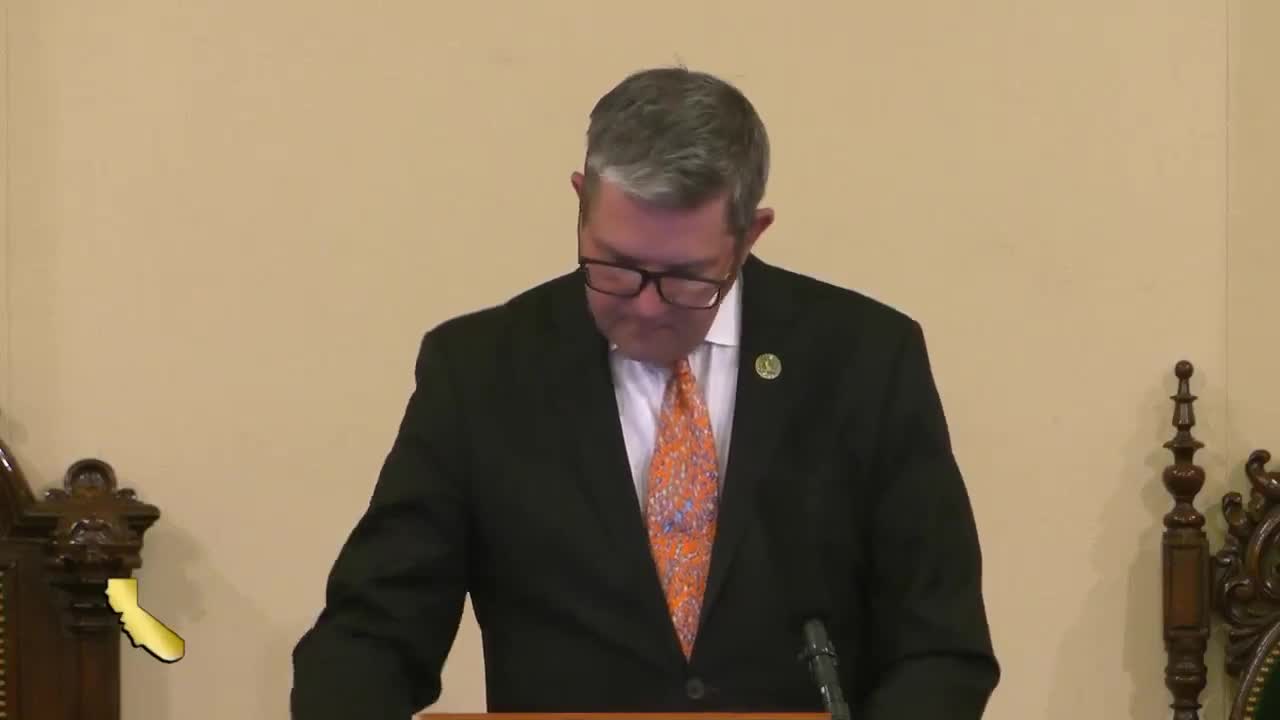
Author: Mike Fong (D)
Amended: 5/20/24 in Assembly
Vote: 21
SENATE ELECTIONS & C.A. COMMITTEE: 7-0, 7/2/24
AYES: Blakespear, Nguyen, Allen, Menjivar, Newman, Portantino, Umberg
SENATE APPROPRIATIONS COMMITTEE: Senate Rule 28.8
ASSEMBLY FLOOR: 70-0, 5/22/24 - See last page for vote
SUBJECT: Local agencies: ethics training
SOURCE: California Special Districts Association
California State Association of Counties
Fair Political Practices Commission
League of California Cites
DIGEST:
This bill requires the Fair Political Practices Commission (FPPC) to provide an ethics training course to local officials.
ANALYSIS:
Existing law:
- Requires local agency officials to receive at least two hours of ethics training within their first year of service and at least once every two years thereafter unless certain conditions are met.
- Requires the FPPC and the Attorney General (AG) to be consulted when local agencies develop ethics training curricula.
- Permits a local agency or an association of local agencies to offer one or more training courses, or sets of self-study materials with tests, to meet the local ethics training requirements.
- Requires a local agency to provide information on the availability of ethics training that meets the requirements for local officials.
- Defines the following terms for the purpose of the local ethics training requirements:
- A “local agency” is a city, county, city and county, charter city, charter county, charter city and county, school district, county office of education, charter school, or special district.
- A “local agency official” is:
- A member of a local agency legislative body or an elected local agency official who receives any type of compensation, salary, or stipend or reimbursement for actual and necessary expenses incurred in the performance of official duties; or
- An employee designated by a local agency governing body to receive ethics training.
- A member of the governing board of a school district, a county board of education, or the governing body of a charter school, whether or not they receive any type of compensation, salary, or stipend or reimbursement for actual and necessary expenses incurred in the performance of official duties.
- Requires each official of a state agency who is required to file a statement of economic interests (SEI) pursuant to the Political Reform Act of 1974 (PRA) to attend an ethics orientation course within six months after beginning in their position, and then at least once during every two calendar years.
This bill requires the FPPC, in consultation with the AG, to create, maintain, and make available an ethics training course for local agency officials.
Background
Local Ethics Training History. Since 1999, California has required all state agencies to offer a course on ethics laws governing the conduct of state officials, and has required specified state agency officials to attend this course periodically. In 2005, following a series of incidents related to inappropriate uses of local tax dollars, the Legislature enacted AB 1234 (Salinas, Chapter 700, Statutes of 2005), which established new ethics training requirements for certain local government officials. Specifically, AB 1234 required certain county, city, and special district officials to receive at least two hours of ethics training every two years. The ethics training requirements in AB 1234 applied only to officials at local agencies that provide any type of compensation, salary, or stipend to a member of a legislative body, or provide reimbursement for actual and necessary expenses incurred by a member of a legislative body in the performance of official duties. Each local official is required to receive at least two hours of training in general ethics principles and ethics laws relevant to the official’s public service every two years.
In October 2006, the FPPC launched a free online training program on its website, which allowed local officials to satisfy the requirements of AB 1234. The “AB 1234 Ethics Training for Local Officials” program was developed in coordination with the Institute for Local Government, the County of Monterey, and other state and local agencies. A local official who completes the online training course is provided with a certificate of completion to submit to the official’s agency as documentation that they completed the required training. According to the FPPC, it began hosting this local ethics training system without additional resources, and it did not request additional personnel to support the program when it was implemented. The FPPC has continued to offer this online training, and it reports that 13,615 people completed the free online training in 2023.
Last session, the Legislature approved and Governor Newsom signed AB 2158 (Mike Fong, Chapter 279, Statutes of 2022), which extended AB 1234’s requirements to all members of the governing board of a school district, county board of education, or the governing body of a charter school, whether or not the member receives any type of compensation, salary, stipend, or reimbursement of expenses.
Comments
According to the Author: “Access to mandatory ethics training is crucial, and for the last 20 years, the FPPC has played an important role, ensuring that local officials are able to complete this training. As the FPPC’s training is free, local agencies are able to save money and resources, as they do not have to create or purchase their own training course. In addition, having the FPPC provide this training is beneficial as they are the body that oversees required political reporting. AB 2631 ensures that this training remains permanent and available.”
Related/Prior Legislation
AB 1234 (Salinas, Chapter 700, Statutes of 2005) required specified officials at counties, cities, and special districts to receive at least two hours of ethics training every two years.
AB 2158 (Mike Fong, Chapter 279, Statutes of 2022) extended the local ethics training requirements of AB 1234 to all members of the governing board of a school district, county board of education, or the governing body of a charter school.
FISCAL EFFECT: Appropriation: No Fiscal Com.: Yes Local: No
SUPPORT: (Verified 8/5/24)
California Special Districts Association (co-source)
California State Association of Counties (co-source)
Fair Political Practices Commission (co-source)
League of California Cites (co-source)
City of Camarillo
City of Pico Rivera
City of Pleasanton
City of Moorpark
City of San Marcos
Mesa Water District
OPPOSITION: (Verified 8/5/24)
None received
ASSEMBLY FLOOR: 70-0, 5/22/24
AYES: Addis, Aguiar-Curry, Alanis, Alvarez, Arambula, Bains, Bauer-Kahan, Bennett, Berman, Boerner, Bonta, Bryan, Juan Carrillo, Wendy Carrillo, Chen, Connolly, Davies, Dixon, Flora, Mike Fong, Vince Fong, Gabriel, Garcia, Gipson, Grayson, Haney, Hart, Hoover, Irwin, Jackson, Jones-Sawyer, Kalra, Lackey, Lee, Low, Lowenthal, Maienschein, McCarty, McKinnor, Muratsuchi, Stephanie Nguyen, Ortega, Pacheco, Papan, Jim Patterson, Pellerin, Petrie-Norris, Quirk-Silva, Ramos, Rendon, Reyes, Rodriguez, Blanca Rubio, Sanchez, Santiago, Schiavo, Soria, Ta, Ting, Valencia, Villapudua, Waldron, Wallis, Ward, Weber, Wicks, Wilson, Wood, Zbur, Robert Rivas
NO VOTE RECORDED: Calderon, Cervantes, Megan Dahle, Essayli, Friedman, Gallagher, Holden, Mathis, Joe Patterson, Luz Rivas
Prepared by: Scott Matsumoto / E. & C.A. / (916) 651-4106
8/7/24 14:34:42
**** END ****
SENATE COMMITTEE ON
ELECTIONS AND CONSTITUTIONAL AMENDMENTS
Senator Catherine Blakespear, Chair
2023 - 2024 Regular
Bill No: 2631 Hearing Date: 7/2/24
Author: | Mike Fong | ||
Version: |
| ||
Urgency: | Fiscal: | ||
Consultant: | |||
Subject:
DIGEST
This bill requires the Fair Political Practices Commission (FPPC) to provide an ethics training course to local officials.
ANALYSIS
Existing law:
- Requires local agency officials to receive at least two hours of ethics training within their first year of service and at least once every two years thereafter unless certain conditions are met.
- Requires the FPPC and the Attorney General (AG) to be consulted when local agencies develop ethics training curricula.
- Permits a local agency or an association of local agencies to offer one or more training courses, or sets of self-study materials with tests, to meet the local ethics training requirements.
- Requires a local agency to provide information on the availability of ethics training that meets the requirements for local officials.
- Defines the following terms for the purpose of the local ethics training requirements:
- A “local agency” is a city, county, city and county, charter city, charter county, charter city and county, school district, county office of education, charter school, or special district.
- A “local agency official” is:
- A member of a local agency legislative body or an elected local agency official who receives any type of compensation, salary, or stipend or reimbursement for actual and necessary expenses incurred in the performance of official duties; or
- An employee designated by a local agency governing body to receive ethics training.
- A member of the governing board of a school district, a county board of education, or the governing body of a charter school, whether or not they receive any type of compensation, salary, or stipend or reimbursement for actual and necessary expenses incurred in the performance of official duties.
- Requires each official of a state agency who is required to file a statement of economic interests (SEI) pursuant to the Political Reform Act of 1974 (PRA) to attend an ethics orientation course within six months after beginning in their position, and then at least once during every two calendar years.
This bill:
- Requires the FPPC, in consultation with the AG, to create, maintain, and make available an ethics training course for local agency officials.
BACKGROUND
Local Ethics Training History. Since 1999, California has required all state agencies to offer a course on ethics laws governing the conduct of state officials, and has required specified state agency officials to attend this course periodically. In 2005, following a series of incidents related to inappropriate uses of local tax dollars, the Legislature enacted AB 1234 (Salinas), Chapter 700, Statutes of 2005, which established new ethics training requirements for certain local government officials. Specifically, AB 1234 required certain county, city, and special district officials to receive at least two hours of ethics training every two years. The ethics training requirements in AB 1234 applied only to officials at local agencies that provide any type of compensation, salary, or stipend to a member of a legislative body, or provide reimbursement for actual and necessary expenses incurred by a member of a legislative body in the performance of official duties. Each local official is required to receive at least two hours of training in general ethics principles and ethics laws relevant to the official’s public service every two years.
In October 2006, the FPPC launched a free online training program on its website, which allowed local officials to satisfy the requirements of AB 1234. The “AB 1234 Ethics Training for Local Officials” program was developed in coordination with the Institute for Local Government, the County of Monterey, and other state and local agencies. A local official who completes the online training course is provided with a certificate of completion to submit to the official’s agency as documentation that they completed the required training. According to the FPPC, it began hosting this local ethics training system without additional resources, and it did not request additional personnel to support the program when it was implemented. The FPPC has continued to offer this online training, and it reports that 13,615 people completed the free online training in 2023.
Last session, the Legislature approved and Governor Newsom signed AB 2158 (Mike Fong), Chapter 279, Statutes of 2022, which extended AB 1234’s requirements to all members of the governing board of a school district, county board of education, or the governing body of a charter school, whether or not the member receives any type of compensation, salary, stipend, or reimbursement of expenses.
COMMENTS
According to the Author: “Access to mandatory ethics training is crucial, and for the last 20 years, the FPPC has played an important role, ensuring that local officials are able to complete this training. As the FPPC’s training is free, local agencies are able to save money and resources, as they do not have to create or purchase their own training course. In addition, having the FPPC provide this training is beneficial as they are the body that oversees required political reporting. AB 2631 ensures that this training remains permanent and available.”
RELATED/PRIOR LEGISLATION
AB 1234 (Salinas), Chapter 700, Statutes of 2005, required specified officials at counties, cities, and special districts to receive at least two hours of ethics training every two years.
AB 2158 (Mike Fong), Chapter 279, Statutes of 2022, extended the local ethics training requirements of AB 1234 to all members of the governing board of a school district, county board of education, or the governing body of a charter school.
PRIOR ACTION
Assembly Floor: | 70 - 0 |
Assembly Appropriations Committee: | 11 - 0 |
Assembly Committee: | 8 - 0 |
POSITIONS
Sponsor: California Special Districts Association
California State Association of Counties
Fair Political Practices Commission
League of California Cites
Support: City of Camarillo
City of Pleasanton
Mesa Water District
Oppose: None received
-- END --
ASSEMBLY THIRD READING
ATR Bill Id:AB 2631
Author:(Mike Fong)
As Amended Ver:May 20, 2024
Majority vote
SUMMARY
Requires the Fair Political Practices Commission (FPPC), in consultation with the Attorney General (AG), to create, maintain, and make available to local agency officials an ethics training course that meets the requirements of an existing law that requires specified local agency officials to receive at least two hours of training in general ethics principles and ethics laws relevant to the official's public service every two years.
Major Provisions
COMMENTS
In 2005, following a series of incidents related to inappropriate uses of local tax dollars, the Legislature enacted AB 1234 (Salinas) Chapter 700, Statutes of 2005, which established new ethics training requirements for certain local government officials, among other provisions. Specifically, AB 1234 required specified officials at counties, cities, and special districts to receive at least two hours of ethics training every two years. The ethics training requirements in AB 1234 applied only to officials at local agencies that provide any type of compensation, salary, or stipend to a member of a legislative body, or provide reimbursement for actual and necessary expenses incurred by a member in the performance of official duties.
In October 2006, the FPPC announced that it had launched a free online training program, hosted on the FPPC's website, which allowed local officials to satisfy the requirements of AB 1234. According to information from the FPPC, it began hosting this local ethics training system without additional resources, and it did not request additional personnel to support the program when it was implemented. The FPPC has continued to offer this online training, and it reports that 13,615 individuals completed the free online training in 2023.
Last session, the Legislature approved and the Governor signed AB 2158 (Mike Fong) Chapter 279, Statutes of 2022, which extended the local ethics training requirements of AB 1234 to all members of the governing board of a school district, county board of education, or the governing body of a charter school, whether or not the member receives any type of compensation, salary, stipend, or reimbursement of expenses. According to the Senate Appropriations Committee analysis of that bill, it adds more than 2,000 additional agencies to those that must comply with local ethics training requirements.
The Governor's proposed budget for the 2024-25 fiscal year, as released on January 10, 2024, proposes increasing the FPPC's budget by $234,000 in the 2024-25 fiscal year, and by $227,000 ongoing annually thereafter, along with one additional staff position, to support its local agency ethics training program. The Budget Change Proposal (BCP) that was prepared by the FPPC in connection with that requested funding notes their existing local ethics training system cannot be upgraded to meet current technological standards, was not built to accommodate a significant increase in users, and cannot support additional users without system slowdown.
According to the Author
"Ensuring access to mandatory ethics training is crucial, and for the last 20 years, the Fair Political Practices Commission has played an important role, ensuring that local officials are able to complete this training. As the FPPC's training is free, local agencies are able to save money and resources, as they do not have to create or purchase their own training course. In addition, having the FPPC provide this training is beneficial as they are the body that oversees required political reporting. As the number of users of this training is expected to increase, due in part to the expanding number of individuals required to take the training, it is the responsibility of the Legislature to ensure that the FPPC is able to not only accommodate this influx but continue to offer this needed service."
Arguments in Support
In a joint letter of support, the FPPC, the California State Association of Counties, and the League of California Cities (three of the co-sponsors of this bill), write, "Existing law requires each local agency official to receive ethics training every two years that includes training on their ethical duties under the Political Reform Act of 1974 and on other ethics principles and laws. The Fair Political Practices Commission has voluntarily maintained an online local ethics training course that is available to all local officials free of charge. The training course is a highly beneficial resource for local agencies and is heavily relied on and used by local officials, with 88,900 users completing the course since 2010…AB 2631 would codify the FPPC's ethics training program in statute, thereby making it a permanent program that can be relied on by local officials indefinitely. The bill will ensure that local officials continue to have free and convenient access to a resource that educates these officials on important ethics laws that impact their work and decision-making."
Arguments in Opposition
None received.
FISCAL COMMENTS
According to the Assembly Appropriations Committee:
- Costs of approximately $234,000 in fiscal year (FY) 2024-25 and $227,000 annually thereafter to the FPPC to support development of a local training program (General Fund (GF)). The Governor's proposed budget for FY 2024-25 includes funding the training program at this requested amount, detailed in the FPPC's BCP.
- No costs to the AG to consult with the FPPC on the ethics training course.
According to the Legislative Analyst's Office, the GF faces a structural deficit in the tens of billions of dollars over the next several FYs.
VOTES
ASM ELECTIONS: 8-0-0
YES: Pellerin, Lackey, Bennett, Berman, Cervantes, Essayli, Low, Bonta
ASM APPROPRIATIONS: 11-0-4
YES: Wicks, Arambula, Bryan, Calderon, Wendy Carrillo, Mike Fong, Grayson, Haney, Hart, Pellerin, Villapudua
ABS, ABST OR NV: Sanchez, Dixon, Jim Patterson, Ta
UPDATED
VERSION: May 20, 2024
CONSULTANT: Ethan Jones / ELECTIONS / (916) 319-2094 FN: 0003058
Date of Hearing: April 10, 2024
ASSEMBLY COMMITTEE ON APPROPRIATIONS
Buffy Wicks, Chair
ABPCA Bill Id:AB 2631
Author:(Mike Fong) – As Introduced Ver:February 14, 2024
Policy Committee: | Elections | Vote: | 8 - 0 |
|
| ||
|
|
Urgency: No State Mandated Local Program: No Reimbursable: No
SUMMARY:
This bill requires, upon appropriation, the Fair Political Practices Commission (FPPC), in consultation with the Attorney General (AG), to create and make available an ethics training course that satisfies mandatory training requirements for local agency officials.
FISCAL EFFECT:
- Cost pressures of approximately $234,000 in fiscal year (FY) 20245-25 and $227,000 annually thereafter to the FPPC to support development of a local training program (General Fund (GF)). The Governor’s proposed budget for FY 2024-25 includes funding the training program at this requested amount, detailed in the FPPC’s Budget Change Proposal (BCP).
- No costs to the AG to consult with the FPPC on the ethics training course.
According to the Legislative Analyst’s Office, the GF faces a structural deficit in the tens of billions of dollars over the next several FYs.
COMMENTS:
- Purpose. The author notes the FPPC has helped ensure local officials are able to complete mandatory ethics training for the last 20 years. According to the author:
As the FPPC’s training is free, local agencies are able to save money and resources, as they do not have to create or purchase their own training course. In addition, having the FPPC provide this training is beneficial as they are the body that oversees required political reporting. As the number of users of this training is expected to increase, due in part to the expanding number of individuals required to take the training, it is the responsibility of the Legislature to ensure that the FPPC is able to not only accommodate this influx but continue to offer this needed service.
This bill is co-sponsored by the FPPC, California State Association of Counties, League of California Cities, and California Special Districts Association.
- Background.
Expansion of Existing Ethics Training Requirements. Existing law mandates biennial ethics training for certain state and local government officials. In 2006, the FPPC launched a free online training program for specified county, city, and special district officials to satisfy training requirements. The FPPC notes it developed and administers the program without having requested additional resources or personnel. The FPPC reports 13,615 local officials completed the training in 2023.
AB 2158 (Mike Fong), Chapter 279, Statutes of 2022, expanded local ethics training requirements to apply to each governing board member of a school district, county board of education, and charter school, regardless of whether the member receives any type of compensation, salary, stipend, or reimbursement of expenses for their service. As a result, thousands of newly covered officials must receive training by January 1, 2026, which will significantly increase demand for the FPPC’s local ethics training program.
FPPC BCP. The FPPC submitted a BCP for new ongoing funding and one additional staff position, beginning in FY 2024-25, to support the local ethics training program, noting challenges to maintaining the ethics training system (ETS) with existing resources:
The current ETS cannot meet today’s security standards, staff have concerns about allowing the system to continue running as it stands. Additionally, the ETS cannot be updated to accommodate the increase in individuals anticipated to use the course to fulfill new law requirements. To continue providing mandatory ethics training on a cost-free basis for all local agencies, the FPPC concluded that the best solution is to replace the current ETS with a Learning Management System.
This bill requires, upon appropriation, the FPPC to create and make available an ethics training course that satisfies mandatory training requirements for local agency officials. In practice, this bill would codify the provision of the FPPC’s existing local ethics training program, but only if an appropriation is made to the FPPC for this purpose. To the extent adequate resources are not provided, the FPPC may cease program operations.
Analysis Prepared by: Irene Ho / APPR. / (916) 319-2081
Date of Hearing: March 20, 2024
ASSEMBLY COMMITTEE ON ELECTIONS
Gail Pellerin, Chair
ABPCA Bill Id:AB 2631 (
Author:Mike Fong) – As Introduced Ver:February 14, 2024
SUBJECT: Local agencies: ethics training.
SUMMARY: Requires the Fair Political Practices Commission (FPPC) to maintain a local ethics training course that local officials can take to satisfy their obligations to complete ethics training, contingent on an appropriation for that purpose. Specifically, this bill:
- Requires the FPPC, in consultation with the Attorney General (AG), to create, maintain, and make available to local agency officials an ethics training course that meets the requirements of an existing law that requires specified local agency officials to receive at least two hours of training in general ethics principles and ethics laws relevant to the official’s public service every two years. Makes the implementation of this provision contingent upon an appropriation to the FPPC for these purposes.
- Makes conforming changes.
EXISTING LAW:
- Requires specified local agency officials to receive ethics training as follows:
- Except as provided below in b), the official must receive at least two hours of ethics training no later than one year from the first day of service with the local agency, and at least once every two years thereafter.
- In the case of a local agency official who, as of January 1, 2025, is a member of the governing board of a school district, a county board of education, or the governing body of a charter school, except for an official whose term of office ends before January 1, 2026, the official must receive at least two hours of ethics training before January 1, 2026, and at least once every two years thereafter. (Government Code §§53235, 53235.1)
- Except as provided below in b), the official must receive at least two hours of ethics training no later than one year from the first day of service with the local agency, and at least once every two years thereafter.
- Requires an entity that develops curricula to satisfy the local ethics training requirements detailed above to consult with the FPPC and the AG regarding the sufficiency and accuracy of the proposed course content. (Government Code §53235(c))
- Permits a local agency or an association of local agencies to offer one or more training courses, or sets of self-study materials with tests, to meet the local ethics training requirements. (Government Code §53235(d))
- Requires a local agency to provide information on ethics training available to meet the requirements to its local officials at least once annually. (Government Code §53235(d))
- Defines the following terms for the purpose of the local ethics training requirements:
- “Local agency” to mean a city, county, city and county, charter city, charter county, charter city and county, school district, county office of education, charter school, or special district.
- “Local agency official” to mean any of the following:
- A member of a local agency legislative body or an elected local agency official who receives any type of compensation, salary, or stipend or reimbursement for actual and necessary expenses incurred in the performance of official duties.
- An employee designated by a local agency governing body to receive ethics training.
- A member of the governing board of a school district, a county board of education, or the governing body of a charter school, whether or not that member receives any type of compensation, salary, or stipend or reimbursement for actual and necessary expenses incurred in the performance of official duties. (Government Code §53234)
- “Local agency” to mean a city, county, city and county, charter city, charter county, charter city and county, school district, county office of education, charter school, or special district.
- Requires each official of a state agency who is required to file a statement of economic interests (SEI) pursuant to the Political Reform Act of 1974 (PRA) to attend an ethics orientation course within six months after beginning in the position that required the person to file an SEI, and at least once during every two calendar year period thereafter, as specified. (Government Code §§11146-11146.4)
FISCAL EFFECT: Unknown
COMMENTS:
- Purpose of the Bill: According to the author:
Ensuring access to mandatory ethics training is crucial, and for the last 20 years, the Fair Political Practices Commission has played an important role, ensuring that local officials are able to complete this training. As the FPPC’s training is free, local agencies are able to save money and resources, as they do not have to create or purchase their own training course. In addition, having the FPPC provide this training is beneficial as they are the body that oversees required political reporting. As the number of users of this training is expected to increase, due in part to the expanding number of individuals required to take the training, it is the responsibility of the Legislature to ensure that the FPPC is able to not only accommodate this influx but continue to offer this needed service.
- Local Ethics Training History: Since 1999, state law has required all state agencies to offer a course on ethics laws governing the conduct of state officials, and has required specified state agency officials to attend this ethics training course periodically. In 2005, following a series of incidents related to inappropriate uses of local tax dollars, the Legislature enacted AB 1234 (Salinas), Chapter 700, Statutes of 2005, which established new ethics training requirements for certain local government officials, among other provisions. Specifically, AB 1234 required specified officials at counties, cities, and special districts to receive at least two hours of ethics training every two years. The ethics training requirements in AB 1234 applied only to officials at local agencies that provide any type of compensation, salary, or stipend to a member of a legislative body, or provide reimbursement for actual and necessary expenses incurred by a member of a legislative body in the performance of official duties. Each local official is required to receive at least two hours of training in general ethics principles and ethics laws relevant to the official’s public service every two years.
In October 2006, the FPPC announced that it had launched a free online training program, hosted on the FPPC’s website, which allowed local officials to satisfy the requirements of AB 1234. The “AB 1234 Ethics Training for Local Officials” program was developed in coordination with the Institute for Local Government, the County of Monterey, and other state and local agencies. A local official who completed the online training course is provided with a certificate of completion to submit to the official’s agency as documentation that the official completed the required training. According to information from the FPPC, it began hosting this local ethics training system without additional resources, and it did not request additional personnel to support the program when it was implemented. The FPPC has continued to offer this online training, and it reports that 13,615 individuals completed the free online training in 2023.
Last session, the Legislature approved and the Governor signed AB 2158 (Mike Fong), Chapter 279, Statutes of 2022, which extended the local ethics training requirements of AB 1234 to all members of the governing board of a school district, county board of education, or the governing body of a charter school, whether or not the member receives any type of compensation, salary, stipend, or reimbursement of expenses. According to the Senate Appropriations Committee analysis of that bill, it adds more than 2,000 additional agencies to those that must comply with local ethics training requirements. The AB 2158 ethics training requirements do not kick-in for most, if not all of the affected school officials until 2025. Once those requirements are fully in effect, they are expected to significantly increase demand for the FPPC’s online local ethics training program. - Governor’s Budget Proposal for FPPC’s Local Ethics Training System: The Governor’s proposed budget for the 2024-25 fiscal year, as released on January 10, 2024, proposes increasing the FPPC’s budget by $234,000 in the 2024-25 fiscal year, and by $227,000 ongoing annually thereafter, along with one additional staff position, to support its local agency ethics training program. The Budget Change Proposal (BCP) that was prepared by the FPPC in connection with that requested funding notes the following challenges to the FPPC maintaining its ethics training system (ETS) with existing resources:
The ETS is hosted onsite at the FPPC and requires maintenance for both the hardware and the software. Along with the infrastructure support, the FPPC’s Information Technology Unit (IT) is responsible for handling the multiple requests that come to the [ETS], including updating training materials, managing user accounts, answering direct technical questions, redirecting non-technical questions to the appropriate FPPC personnel, and managing and maintaining the applications hosting infrastructure. The IT unit has been receiving an average of fifteen support tickets per day relating to ETS…
AB 2158 (Chapter 279, Statutes of 2022) amended Government Code 53234 to extend the mandatory local ethics training requirements by adding into the definition of “local agency” school districts, county offices of education, and charter schools for purposes of those ethics training requirements and includes in the definition of “local agency official” all members of the governing board of a school district, a county board of education, or the governing body of a charter school, whether or not the member receives any type of compensation, salary, or stipend or reimbursement for actual and necessary expenses incurred in the performance of official duties beginning January 1, 2025, and at least once every 2 years thereafter. This is a significant expansion of who will be required to complete the training by not only expanding the number of agencies but also by removing the condition that the officials who have to comply have to receive some form of compensation…
The current ETS was built over eighteen years ago using a system that cannot be updated to meet the current technological standards. At the beginning of this ETS project, resources were not properly evaluated, and the system was not built to consider an increase in users year after year. It is hosted on a server that cannot support additional users or usage without the system slowdown. In the past few years, Microsoft began to require a higher communication protocol for sending email replies, and the ETS could not be upgraded to the new standard. Therefore, the ETS cannot meet the current security standards and all password reset requests must be handled manually…
Existing law provides that if an entity develops criteria for the ethics training required by AB 1234, the FPPC and the [AG] need to be consulted regarding any proposed course content… If the current AB 1234 Local Ethics Training is discontinued, there will be increased cost and workload associated with approving the various programs for the local agencies but also for the FPPC in the increase in new programs to review.
The current ETS cannot meet today’s security standards, staff have concerns about allowing the system to continue running as it stands. Additionally, the ETS cannot be updated to accommodate the increase in individuals anticipated to use the course to fulfill new law requirements. To continue providing mandatory ethics training on a cost-free basis for all local agencies, the FPPC concluded that the best solution is to replace the current ETS with a Learning Management System.
At the time of the preparation of this committee analysis, the relevant budget subcommittees in the Assembly and the Senate have not yet discussed this budget proposal.
This bill specifies that its requirement for the FPPC to maintain a local ethics training course is contingent on an appropriation for that purpose, either in the annual Budget Act or in another bill. If the enacted budget for the 2024-25 fiscal year includes adequate resources for the FPPC to replace its online local ethics training course, as included in the Governor’s proposed budget, it may be appropriate to remove that contingency language from this bill if this bill has not already been approved by the Legislature at that time. Removing that contingency language from this bill if the resources are provided in the budget will remove ambiguity in the law about the FPPC’s obligation to maintain a local ethics training course.
- Arguments in Support: In a joint letter of support, the FPPC, the California State Association of Counties, and the League of California Cities (three of the co-sponsors of this bill), write:
Existing law requires each local agency official to receive ethics training every two years that includes training on their ethical duties under the Political Reform Act of 1974 and on other ethics principles and laws. The Fair Political Practices Commission has voluntarily maintained an online local ethics training course that is available to all local officials free of charge. The training course is a highly beneficial resource for local agencies and is heavily relied on and used by local officials, with 88,900 users completing the course since 2010. With the passage of AB 2158 in 2022, about 2,000 additional agencies and several thousand additional agency officials will become subject to these training requirements starting in 2025, which the FPPC expects will result in increased usage of the training course.
AB 2631 would codify the FPPC’s ethics training program in statute, thereby making it a permanent program that can be relied on by local officials indefinitely. The bill will ensure that local officials continue to have free and convenient access to a resource that educates these officials on important ethics laws that impact their work and decision-making.
REGISTERED SUPPORT / OPPOSITION:
Support
California Special Districts Association (co-sponsor)
California State Association of Counties (co-sponsor)
Fair Political Practices Commission (co-sponsor)
League of California Cities (co-sponsor)
Opposition
None on file.
Analysis Prepared by: Ethan Jones / ELECTIONS / (916) 319-2094
Bill Author
Bill Co-Author(s):