AB 2633: California State University: joint degrees: international institutions of higher education.
- Session Year: 2023-2024
- House: Assembly
- Latest Version Date: 2024-09-27
Current Status:
Passed
(2024-09-27: Chaptered by Secretary of State - Chapter 729, Statutes of 2024.)
Introduced
In Committee
First Chamber
In Committee
Second Chamber
Enacted
Existing law sets forth the missions and functions of Californias public and independent segments of higher education, and details the ways in which their respective institutions are to be differentiated. Existing law specifies that the California State University shall offer undergraduate and graduate instruction through the masters degree in the liberal arts and sciences and professional education. Existing law states that the University of California has the sole authority in public higher education to award doctoral degrees in all fields of learning, except that it may agree with the California State University to award joint doctoral degrees in selected fields and the California State University may award professional or applied doctoral degrees statewide that do not duplicate University of California doctoral degrees and satisfy certain requirements.
This bill, notwithstanding any other law, would authorize the California State University to award undergraduate and graduate degrees jointly with international institutions of higher education. The bill would also authorize the California State University to award professional or applied doctoral degrees jointly with international institutions of higher education only if the doctoral degrees do not duplicate University of California doctoral degrees and satisfy the requirements of existing law.
Existing law sets forth the missions and functions of Californias public and independent segments of higher education, and details the ways in which their respective institutions are to be differentiated. Existing law specifies that the California State University shall offer undergraduate and graduate instruction through the masters degree in the liberal arts and sciences and professional education and may award a doctoral degree jointly with the University of California, or with one or more independent institutions of higher education, as provided. education. Existing law states that the University of California has the sole authority in public higher education to award doctoral degrees in all fields of learning, except that it may agree with the California State University to award joint doctoral degrees in selected fields and the California State University may award professional or applied doctoral degrees statewide that do not duplicate University of California doctoral degrees and satisfy certain requirements.
This bill, notwithstanding any other law, would authorize the California State University to award undergraduate, graduate, and doctoral undergraduate and graduate degrees jointly with international institutions of higher education. The bill would also authorize the California State University to award professional or applied doctoral degrees jointly with international institutions of higher education only if the doctoral degrees do not duplicate University of California doctoral degrees and satisfy the requirements of existing law.
Existing law sets forth the missions and functions of Californias public and independent segments of higher education, and details the ways in which their respective institutions are to be differentiated. Existing law specifies that the California State University shall offer undergraduate and graduate instruction through the masters degree in the liberal arts and sciences and professional education and may award a doctoral degree jointly with the University of California, or with one or more independent institutions of higher education if the proposed doctoral program is approved by the California Postsecondary Education Commission (CPEC). education, as provided.
Existing law establishes CPEC as the statewide postsecondary education coordinating and planning agency, and provides for its functions and responsibilities. Existing law also provides for the composition of CPECs membership. The annual state Budget Acts from the 201112 fiscal year to the 202324 fiscal year, inclusive, have provided no funding for CPEC.This bill would remove the requirement that the California State University obtain approval from CPEC for purposes of awarding a doctoral degree jointly with independent institutions of higher education. The bill, notwithstanding any other law, would authorize the California State University to award undergraduate, graduate, and doctoral degrees jointly with international institutions of higher education.
Existing law sets forth the missions and functions of Californias public and independent segments of higher education, and details the ways in which their respective institutions are to be differentiated. Existing law specifies that the California State University shall offer undergraduate and graduate instruction through the masters degree in the liberal arts and sciences and professional education and may award a doctoral degree jointly with the University of California, or with one or more independent institutions of higher education if the proposed doctoral program is approved by the California Postsecondary Education Commission (CPEC).
Existing law establishes CPEC as the statewide postsecondary education coordinating and planning agency, and provides for its functions and responsibilities. Existing law also provides for the composition of CPECs membership. The annual state Budget Acts from the 201112 fiscal year to the 202324 fiscal year, inclusive, have provided no funding for CPEC.
This bill would remove the requirement that the California State University obtain approval from CPEC for purposes of awarding a doctoral degree jointly with independent institutions of higher education. The bill, notwithstanding any other law, would authorize the California State University to award undergraduate, graduate, and doctoral degrees jointly with international institutions of higher education.
Existing law establishes the California Community Colleges, the California State University, the University of California, independent institutions of higher education, and private postsecondary educational institutions as the segments of postsecondary education in the state. The missions and functions of these segments are set forth in the Donahoe Higher Education Act.This bill would make nonsubstantive changes in a provision that, for purposes of the Donahoe Higher Education Act, designates the segments of public postsecondary education as the California Community Colleges, the California State University, and the University of California, as specified, and defines independent institutions of higher education for these purposes.Existing law establishes the California Community Colleges, the California State University, the University of California, independent institutions of higher education, and private postsecondary educational institutions as the segments of postsecondary education in the state. The missions and functions of these segments are set forth in the Donahoe Higher Education Act.
This bill would make nonsubstantive changes in a provision that, for purposes of the Donahoe Higher Education Act, designates the segments of public postsecondary education as the California Community Colleges, the California State University, and the University of California, as specified, and defines independent institutions of higher education for these purposes.
The missions and functions of Californias public and independent segments, and their respective institutions of higher education, shall be differentiated as follows:
(a)(1)The California Community Colleges shall, as a primary mission, offer academic and vocational instruction at the lower division level for both younger and older students, including those persons returning to school. Public community colleges shall offer instruction through but not beyond the second year of college. These institutions may grant the associate in arts and the associate in science degree.
(2)The community colleges mission shall include all of the following:
(A)The provision of instruction and additional learning supports to close learning gaps for those who need it, instruction in English as a second language, adult noncredit instruction, and support services that help students succeed at the postsecondary level.
(B)The provision of adult noncredit education curricula in areas defined as being in the states interest is an essential and important function of the community colleges.
(C)The provision of community services courses and programs is an authorized function of the community colleges if their provision is compatible with an institutions ability to meet its obligations in its primary missions.
(D)The provision of student support services to facilitate academic success and achievement.
(3)A primary mission of the California Community Colleges is to advance Californias economic growth and global competitiveness through education, training, and services that contribute to continuous workforce improvement.
(4)The California Community Colleges may conduct institutional research concerning student learning and retention, and community college programming to facilitate its educational mission.
(5)The provision of instruction and support to close learning gaps authorized by subparagraph (A) of paragraph (2) shall be provided in the form of concurrent support, unless college data and research demonstrates that even with concurrent support a student is highly unlikely to succeed in the course.
(b)(1)The California State University shall offer undergraduate and graduate instruction through the masters degree in the liberal arts and sciences and professional education, including teacher education. Notwithstanding any other law, undergraduate and graduate degrees may be awarded jointly with international institutions of higher education. Presently established two-year programs in agriculture are authorized, but other two-year programs shall be permitted only when mutually agreed upon by the Trustees of the California State University and the Board of Governors of the California Community Colleges.
(2)The doctoral degree may be awarded jointly, as follows:
(A)With the University of California, as provided in subdivision (c) and pursuant to Section 66904.
(B)With one or more independent institutions of higher education, provided that the proposed doctoral program is approved by the California Postsecondary Education Commission.
(C)With international institutions of higher education if the doctoral degree program has been authorized pursuant to Article 4.92 (commencing with Section 66046).
(3)Research, scholarship, and creative activity in support of its undergraduate and graduate instructional mission is authorized in the California State University and shall be supported by the state.
(4)The primary mission of the California State University is undergraduate and graduate instruction through the masters degree.
(c)The University of California may provide undergraduate and graduate instruction in the liberal arts and sciences and in the professions, including the teaching professions. It shall have exclusive jurisdiction in public higher education over instruction in the profession of law and over graduate instruction in the professions of medicine, dentistry, and veterinary medicine. It has the sole authority in public higher education to award the doctoral degree in all fields of learning, except that it may agree with the California State University to award joint doctoral degrees in selected fields. The University of California shall be the primary state-supported academic agency for research.
(d)The independent institutions of higher education shall provide undergraduate and graduate instruction and research in accordance with their respective missions.
The missions and functions of Californias public and independent segments, and their respective institutions of higher education, shall be differentiated as follows:
(a)(1)The California Community Colleges shall, as a primary mission, offer academic and vocational instruction at the lower division level for both younger and older students, including those persons returning to school. Public community colleges shall offer instruction through but not beyond the second year of college. These institutions may grant the associate in arts and the associate in science degree.
(2)The community colleges mission shall include all of the following:
(A)The provision of instruction and additional learning supports to close learning gaps for those who need it, instruction in English as a second language, adult noncredit instruction, and support services that help students succeed at the postsecondary level.
(B)The provision of adult noncredit education curricula in areas defined as being in the states interest is an essential and important function of the community colleges.
(C)The provision of community services courses and programs is an authorized function of the community colleges so long as if their provision is compatible with an institutions ability to meet its obligations in its primary missions.
(D)The provision of student support services to facilitate academic success and achievement.
(3)A primary mission of the California Community Colleges is to advance Californias economic growth and global competitiveness through education, training, and services that contribute to continuous workforce improvement.
(4)The California Community Colleges may conduct institutional research concerning student learning and retention, and community college programming to facilitate its educational mission.
(5)The provision of instruction and support to close learning gaps authorized by subparagraph (A) of paragraph (2) shall be provided in the form of concurrent support, unless college data and research demonstrates that even with concurrent support a student is highly unlikely to succeed in the course.
(b)(1)The California State University shall offer undergraduate and graduate instruction through the masters degree in the liberal arts and sciences and professional education, including teacher education. Notwithstanding any other law, undergraduate and graduate degrees may be awarded jointly with international institutions of higher education. Presently established two-year programs in agriculture are authorized, but other two-year programs shall be permitted only when mutually agreed upon by the Trustees of the California State University and the Board of Governors of the California Community Colleges.
(2)The doctoral degree may be awarded jointly, as follows:
(A)With the University of California, as provided in subdivision (c) and pursuant to Section 66904.
(B)With one or more independent institutions of higher education, provided that the proposed doctoral program is approved by the California Postsecondary Education Commission.
(C)With international institutions of higher education if the doctoral degree program has been authorized pursuant to Article 4.92 (commencing with Section 66046).
(3)Research, scholarship, and creative activity in support of its undergraduate and graduate instructional mission is authorized in the California State University and shall be supported by the state.
(4)The primary mission of the California State University is undergraduate and graduate instruction through the masters degree.
(c)The University of California may provide undergraduate and graduate instruction in the liberal arts and sciences and in the professions, including the teaching professions. It shall have exclusive jurisdiction in public higher education over instruction in the profession of law and over graduate instruction in the professions of medicine, dentistry, and veterinary medicine. It has the sole authority in public higher education to award the doctoral degree in all fields of learning, except that it may agree with the California State University to award joint doctoral degrees in selected fields. The University of California shall be the primary state-supported academic agency for research.
(d)The independent institutions of higher education shall provide undergraduate and graduate instruction and research in accordance with their respective missions.
The missions and functions of Californias public and independent segments, and their respective institutions of higher education, shall be differentiated as follows:
(a)(1)The California Community Colleges shall, as a primary mission, offer academic and vocational instruction at the lower division level for both younger and older students, including those persons returning to school. Public community colleges shall offer instruction through but not beyond the second year of college. These institutions may grant the associate in arts and the associate in science degree.
(2)The community colleges mission shall include all of the following:
(A)The provision of instruction and additional learning supports to close learning gaps for those who need it, instruction in English as a second language, adult noncredit instruction, and support services that help students succeed at the postsecondary level.
(B)The provision of adult noncredit education curricula in areas defined as being in the states interest is an essential and important function of the community colleges.
(C)The provision of community services courses and programs is an authorized function of the community colleges so long as their provision is compatible with an institutions ability to meet its obligations in its primary missions.
(D)The provision of student support services to facilitate academic success and achievement.
(3)A primary mission of the California Community Colleges is to advance Californias economic growth and global competitiveness through education, training, and services that contribute to continuous workforce improvement.
(4)The California Community Colleges may conduct institutional research concerning student learning and retention, and community college programming to facilitate its educational mission.
(5)The provision of instruction and support to close learning gaps authorized by subparagraph (A) of paragraph (2) shall be provided in the form of concurrent support, unless college data and research demonstrates that even with concurrent support a student is highly unlikely to succeed in the course.
(b)(1)The California State University shall offer undergraduate and graduate instruction through the masters degree in the liberal arts and sciences and professional education, including teacher education. Notwithstanding any other law, undergraduate and graduate degrees may be awarded jointly with international institutions of higher education. Presently established two-year programs in agriculture are authorized, but other two-year programs shall be permitted only when mutually agreed upon by the Trustees of the California State University and the Board of Governors of the California Community Colleges.
(2)The doctoral degree may be awarded jointly with jointly, as follows:
(A)With the University of California, as provided in subdivision (c) and pursuant to Section 66904. The doctoral degree may also be awarded jointly with
(B)With one or more independent institutions of higher education, provided that the proposed doctoral program is approved by the California Postsecondary Education Commission. Notwithstanding any other law, the doctoral degree may be awarded jointly with
(C)With international institutions of higher education. education if the doctoral degree program has been authorized pursuant to Article 4.92 (commencing with Section 66046).
(3)Research, scholarship, and creative activity in support of its undergraduate and graduate instructional mission is authorized in the California State University and shall be supported by the state.
(4)The primary mission of the California State University is undergraduate and graduate instruction through the masters degree.
(c)The University of California may provide undergraduate and graduate instruction in the liberal arts and sciences and in the professions, including the teaching professions. It shall have exclusive jurisdiction in public higher education over instruction in the profession of law and over graduate instruction in the professions of medicine, dentistry, and veterinary medicine. It has the sole authority in public higher education to award the doctoral degree in all fields of learning, except that it may agree with the California State University to award joint doctoral degrees in selected fields. The University of California shall be the primary state-supported academic agency for research.
(d)The independent institutions of higher education shall provide undergraduate and graduate instruction and research in accordance with their respective missions.
The missions and functions of Californias public and independent segments, and their respective institutions of higher education, shall be differentiated as follows:
(a)(1)The California Community Colleges shall, as a primary mission, offer academic and vocational instruction at the lower division level for both younger and older students, including those persons returning to school. Public community colleges shall offer instruction through but not beyond the second year of college. These institutions may grant the associate in arts and the associate in science degree.
(2)The community colleges mission shall include all of the following:
(A)The provision of instruction and additional learning supports to close learning gaps for those who need it, instruction in English as a second language, adult noncredit instruction, and support services that help students succeed at the postsecondary level.
(B)The provision of adult noncredit education curricula in areas defined as being in the states interest is an essential and important function of the community colleges.
(C)The provision of community services courses and programs is an authorized function of the community colleges so long as their provision is compatible with an institutions ability to meet its obligations in its primary missions.
(D)The provision of student support services to facilitate academic success and achievement.
(3)A primary mission of the California Community Colleges is to advance Californias economic growth and global competitiveness through education, training, and services that contribute to continuous workforce improvement.
(4)The California Community Colleges may conduct institutional research concerning student learning and retention, and community college programming to facilitate its educational mission.
(5)The provision of instruction and support to close learning gaps authorized by subparagraph (A) of paragraph (2) shall be provided in the form of concurrent support, unless college data and research demonstrates that even with concurrent support a student is highly unlikely to succeed in the course.
(b)(1)The California State University shall offer undergraduate and graduate instruction through the masters degree in the liberal arts and sciences and professional education, including teacher education. Notwithstanding any other law, undergraduate and graduate degrees may be awarded jointly with international institutions of higher education. Presently established two-year programs in agriculture are authorized, but other two-year programs shall be permitted only when mutually agreed upon by the Trustees of the California State University and the Board of Governors of the California Community Colleges.
(2)The doctoral degree may be awarded jointly with the University of California, as provided in subdivision (c) and pursuant to Section 66904. The doctoral degree may also be awarded jointly with one or more independent institutions of higher education. education, provided that the proposed doctoral program is approved by the California Postsecondary Education Commission. Notwithstanding any other law, the doctoral degree may be awarded jointly with international institutions of higher education.
(3)Research, scholarship, and creative activity in support of its undergraduate and graduate instructional mission is authorized in the California State University and shall be supported by the state.
(4)The primary mission of the California State University is undergraduate and graduate instruction through the masters degree.
(c)The University of California may provide undergraduate and graduate instruction in the liberal arts and sciences and in the professions, including the teaching professions. It shall have exclusive jurisdiction in public higher education over instruction in the profession of law and over graduate instruction in the professions of medicine, dentistry, and veterinary medicine. It has the sole authority in public higher education to award the doctoral degree in all fields of learning, except that it may agree with the California State University to award joint doctoral degrees in selected fields. The University of California shall be the primary state-supported academic agency for research.
(d)The independent institutions of higher education shall provide undergraduate and graduate instruction and research in accordance with their respective missions.
The missions and functions of Californias public and independent segments, and their respective institutions of higher education, shall be differentiated as follows:
(a)(1)The California Community Colleges shall, as a primary mission, offer academic and vocational instruction at the lower division level for both younger and older students, including those persons returning to school. Public community colleges shall offer instruction through but not beyond the second year of college. These institutions may grant the associate in arts and the associate in science degree.
(2)The community colleges mission shall include all of the following:
(A)The provision of instruction and additional learning supports to close learning gaps for those who need it, instruction in English as a second language, adult noncredit instruction, and support services that help students succeed at the postsecondary level.
(B)The provision of adult noncredit education curricula in areas defined as being in the states interest is an essential and important function of the community colleges.
(C)The provision of community services courses and programs is an authorized function of the community colleges so long as their provision is compatible with an institutions ability to meet its obligations in its primary missions.
(D)The provision of student support services to facilitate academic success and achievement.
(3)A primary mission of the California Community Colleges is to advance Californias economic growth and global competitiveness through education, training, and services that contribute to continuous workforce improvement.
(4)The California Community Colleges may conduct institutional research concerning student learning and retention, and community college programming to facilitate its educational mission.
(5)The provision of instruction and support to close learning gaps authorized by subparagraph (A) of paragraph (2) shall be provided in the form of concurrent support, unless college data and research demonstrates that even with concurrent support a student is highly unlikely to succeed in the course.
(b)(1)The California State University shall offer undergraduate and graduate instruction through the masters degree in the liberal arts and sciences and professional education, including teacher education. Notwithstanding any other law, undergraduate and graduate degrees may be awarded jointly with international institutions of higher education. Presently established two-year programs in agriculture are authorized, but other two-year programs shall be permitted only when mutually agreed upon by the Trustees of the California State University and the Board of Governors of the California Community Colleges. The
(2)The doctoral degree may be awarded jointly with the University of California, as provided in subdivision (c) and pursuant to Section 66904. The doctoral degree may also be awarded jointly with one or more independent institutions of higher education, provided that the proposed doctoral program is approved by the California Postsecondary Education Commission. Research, education. Notwithstanding any other law, the doctoral degree may be awarded jointly with international institutions of higher education.
(3)Research, scholarship, and creative activity in support of its undergraduate and graduate instructional mission is authorized in the California State University and shall be supported by the state. The
(4)The primary mission of the California State University is undergraduate and graduate instruction through the masters degree.
(c)The University of California may provide undergraduate and graduate instruction in the liberal arts and sciences and in the professions, including the teaching professions. It shall have exclusive jurisdiction in public higher education over instruction in the profession of law and over graduate instruction in the professions of medicine, dentistry, and veterinary medicine. It has the sole authority in public higher education to award the doctoral degree in all fields of learning, except that it may agree with the California State University to award joint doctoral degrees in selected fields. The University of California shall be the primary state-supported academic agency for research.
(d)The independent institutions of higher education shall provide undergraduate and graduate instruction and research in accordance with their respective missions.
SECTION 1.Section 66010 of the Education Code is amended to read:66010.(a)Public higher education consists of all of the following: (1) the California Community Colleges; (2) the California State University, and each campus, branch, and function thereof; and (3) each campus, branch, and function of the University of California.(b)As used in this part, independent institutions of higher education are those nonpublic higher education institutions that grant undergraduate degrees, graduate degrees, or both, and that are formed as nonprofit corporations in this state and are accredited by an agency recognized by the United States Department of Education.(c)This part is not intended to regulate, subsidize, or intrude upon private education, including, but not limited to, independent educational institutions and religious schools, nor to vary existing state law or state constitutional provisions relating to private education. REVISIONS: HeadingLine 2.(a)Public higher education consists of all of the following: (1) the California Community Colleges, Colleges; (2) the California State University, and each campus, branch, and function thereof, thereof; and (3) each campus, branch, and function of the University of California.
(b)As used in this part, independent institutions of higher education are those nonpublic higher education institutions that grant undergraduate degrees, graduate degrees, or both, and that are formed as nonprofit corporations in this state and are accredited by an agency recognized by the United States Department of Education.
(c)No provision of this This part is not intended to regulate, subsidize, or intrude upon private education, including, but not limited to, independent educational institutions and religious schools, nor to vary existing state law or state constitutional provisions relating to private education.
|
Date
|
Status
|
|---|---|
| Sep 27, 2024 | Chaptered by Secretary of State - Chapter 729, Statutes of 2024. |
| Sep 27, 2024 | Approved by the Governor. |
| Sep 3, 2024 | Enrolled and presented to the Governor at 3:30 p.m. |
| Aug 26, 2024 | Senate amendments concurred in. To Engrossing and Enrolling. (Ayes 76. Noes 0. Page 6560.). |
| Aug 20, 2024 | In Assembly. Concurrence in Senate amendments pending. May be considered on or after August 22 pursuant to Assembly Rule 77. |
| Aug 20, 2024 | Read third time. Passed. Ordered to the Assembly. (Ayes 40. Noes 0. Page 5242.). |
| Aug 15, 2024 | Read second time. Ordered to third reading. |
| Aug 14, 2024 | Read third time and amended. Ordered to second reading. |
| Aug 6, 2024 | Read second time. Ordered to third reading. |
| Aug 5, 2024 | From committee: Be ordered to second reading pursuant to Senate Rule 28.8. |
| Jun 25, 2024 | Read second time and amended. Re-referred to Com. on APPR. |
| Jun 24, 2024 | From committee: Amend, and do pass as amended and re-refer to Com. on APPR. (Ayes 7. Noes 0.) (June 19). |
| Jun 10, 2024 | From committee chair, with author's amendments: Amend, and re-refer to committee. Read second time, amended, and re-referred to Com. on ED. |
| Jun 5, 2024 | Referred to Com. on ED. |
| May 23, 2024 | In Senate. Read first time. To Com. on RLS. for assignment. |
| May 22, 2024 | Read third time. Passed. Ordered to the Senate. (Ayes 71. Noes 0. Page 5495.) |
| May 20, 2024 | Read second time. Ordered to third reading. |
| May 16, 2024 | From committee: Do pass. (Ayes 15. Noes 0.) (May 16). |
| May 8, 2024 | In committee: Set, first hearing. Referred to APPR. suspense file. |
| Apr 24, 2024 | From committee: Do pass and re-refer to Com. on APPR. (Ayes 10. Noes 0.) (April 23). Re-referred to Com. on APPR. |
| Apr 24, 2024 | Coauthors revised. |
| Mar 20, 2024 | Re-referred to Com. on HIGHER ED. |
| Mar 19, 2024 | From committee chair, with author's amendments: Amend, and re-refer to Com. on HIGHER ED. Read second time and amended. |
| Mar 18, 2024 | Referred to Com. on HIGHER ED. |
| Feb 15, 2024 | From printer. May be heard in committee March 16. |
| Feb 14, 2024 | Read first time. To print. |
|
Date
|
Description
|
Location
|
Votes
|
|
|---|---|---|---|---|
| Aug 26, 2024 | AB 2633 Alvarez Concurrence in Senate Amendments | Assembly Floor |
Passed |
|
| Aug 20, 2024 | Assembly 3rd Reading AB2633 Alvarez et al. By Limón | Senate Floor |
Passed |
|
| Jun 19, 2024 | Do pass as amended, but first amend, and re-refer to the Committee on [Appropriations] | Senate Standing Committee on Education |
Passed |
|
| May 22, 2024 | AB 2633 Alvarez Assembly Third Reading | Assembly Floor |
Passed |
|
| May 16, 2024 | Do pass. | Assembly Standing Committee on Appropriations |
Passed |
|
| Apr 23, 2024 | Do pass and be re-referred to the Committee on [Appropriations] | Assembly Standing Committee on Higher Education |
Passed |
This list shows positions taken on this bill by organizations on the date displayed, which is linked to the original source.
Positions by individuals are not included.
|
Organization
|
Position
|
Date
|
|---|---|---|
| California-Mexico Studies Center | ** Support | |
| California-Mexico Studies Center, INC. | ** Support | |
| City of Chula Vista Office of Deputy Mayor Alonso Gonzalez 2024 | ** Support | |
| Hispanic Association of Colleges & Universities | ** Support | |
| Individual | ** Support | |
| IVEDC | ** Support | |
| Latino Education and Advocacy Days | ** Support | |
| San Diego Organizing Project | ** Support |
CONCURRENCE IN SENATE AMENDMENTS
CSA1 Bill Id:AB 2633
Author:(Alvarez)
As Amended Ver:August 14, 2024
Majority vote
SUMMARY
This bill authorizes the California State University (CSU) to award undergraduate, graduate, and doctoral degrees jointly with international institutions of higher education.
Senate Amendments
Amendments taken in the Senate restored references to the California Postsecondary Education Commission (CPEC), authorizes the CSU to award professional or applied doctoral degrees jointly with international institutions of higher education only if the doctoral degrees do not duplicate University of California (UC) doctoral degrees, as specified, and adds coauthors.
COMMENTS
Trans-national higher education (TNHE). An article published in the Journal of Comparative & International Higher Education in 2021 titled "Understanding International Joint and Dual Degree Programs: Opportunities and Challenges during and after the COVID-19 Pandemic" by Professor Roy Y. Chan, Ph.D explored the policies, perspectives, and practices of building and developing cross-border and TNHE programs, with a particular emphasis on international collaborative academic degree programs between the United States and Mainland China.
The article more specifically identified that, "TNHE has been able to provide a reliable, bona fide education, with a flexible, cost-efficient tuition. TNHE programs can help students obtain international qualifications or degrees that promote transnational learning, collaborative research, and global mobility. TNHE can also play a crucial role in enhancing international strategic planning, global learning, and institutional prestige to help institutions position themselves for a world-class status to improve their academic rankings and to increase the quality of national higher education systems and academic programs worldwide."
The article also contained several policy recommendations, which included:
- Establish clear expectations and maintain shared governance on general education requirements.
- Improve communication between academic affairs and student affairs offices concerning international student housing.
- Create policies that foster inter-institutional collaboration and cooperation.
- Create a top-down approach to policy decisions (as international programs require buy-in from the most senior leaders).
- Engage with governmental associations and governmental agencies.
Master Plan for Higher Education. As outlined in the Master Plan for Higher Education and by state statute, the CCCs are designated to have an open admission policy and bear the most extensive responsibility for lower-division undergraduate instruction. Its three primary areas of mission include; education leading to associates degrees and university transfer, career technical education, and basic skills. The primary mission of the CSU is undergraduate and graduate instruction through the master's degree. The UC was granted the sole authority to independently offer doctoral degrees.
Notwithstanding the differentiation of the mission envisioned by the Master Plan, as outlined in statute, the Legislature authorized the CSU to go beyond its original mission to offer six professional doctoral degrees which include the Au.D, Ed.D, D.P.T., DNP, OTD, and Dr.PH. Each program was individually approved through legislation. Fees were capped at the rate charged at the UC, no additional funding was provided by the state, and these programs were to be implemented without diminishing or reducing enrollment in undergraduate programs. Additionally, the CSU programs that offer applied doctorates were not duplicative of degrees offered by UC.
Binational partnership at the K-12 level. The San Diego County Office of Education's (SDCOE) Global Academy developed a bilingual/binational high school for transnational students, available via hybrid and distance learning on both sides of the border. Specifically, the school offers opportunities for students to earn the California state seal of biliteracy and a binational high school diploma based on articulated criteria recognized by the SDCOE and the Baja California Secretary of Education. The school additionally provides virtual and in-person career technical education opportunities. Seemingly, this binational high school diploma demonstrates the feasibility of binational education programs.
Binational UC partnership. The author asserts that the UC Center for US-Mexico Studies at the UC San Diego is a prime example of the benefit of critical size and visibility of an entity within an institution for the success of bilateral exchange. The center operates the USMEX Scholars Program Fellowship, provides opportunities for scholarly visits for frequent conferences on US-Mexico issues and student and scholarly mobility related to ongoing research initiatives with Mexican institutions like the National Autonomous University of Mexico (UNAM), the Autonomous Technological Institute of Mexico (ITAM), and the Center for Economic Research and Teaching (CIDE). However, this partnership does not offer a joint degree program.
According to the Author
According to the author, "AB 2633 addresses the need for the [CSU] system to adapt to the rising demand for joint degree programs with international universities. These programs, marked by collaborative efforts between institutions, offer students invaluable academic experiences enriched by diverse perspectives and resources. Given the increasing global prevalence of joint degrees, AB 2633 helps foster deep partnerships and facilitating academic mobility on a global scale. With California's unique status as a state that shares a border with Mexico, there is a great opportunity to empower CSU to establish lasting international educational relationships and potentially draw in binational students with expanded opportunities for academic and scholarly exchange. AB 2633 is pivotal for enhancing the CSU system's global recognition, fostering scholarly innovation, and strengthening binational and international educational relationships."
Arguments in Support
The Imperial Valley Economic Development Corporation wrote in support, arguing that "AB 2633 builds upon existing international academic endeavors, offering a pivotal opportunity for students to engage in a unique international academic landscape.
It is especially important to the Imperial County / San Diego County region, which has a cross border population of 8 million annually. Like San Diego County, students travel to and from Mexico to attend college. As Imperial County continues to grow in population, the economy is also growing, particularly in the STEM fields. Most recently, the development of lithium and other minerals has flourished, with billions of dollars in investments. There also is a tremendous need for workers in the healthcare industry, putting tremendous pressure on our local universities and colleges to prepare students to meet these health demands."
"As we rely on cross-border trade, there is an enormous benefit to our economy if our future workforce is educated and trained for jobs that require international expertise and knowledge of how each country handles business. Expanding the ability of students to learn about how each country handles each field of study is an incredible opportunity for them and will serve to develop our long-term economic growth."
Arguments in Opposition
None on file.
FISCAL COMMENTS
The Senate Committee on Appropriations determined that AB 2633 does not contain significant fiscal impact and, pursuant to Senate Rule 28.8, sent the bill directly to the Senate Floor.
VOTES:
ASM HIGHER EDUCATION: 10-0-1
YES: Mike Fong, Ta, Arambula, Boerner, Chen, Essayli, Irwin, Jackson, Low, Muratsuchi
ABS, ABST OR NV: Quirk-Silva
ASM APPROPRIATIONS: 15-0-0
YES: Wicks, Sanchez, Arambula, Bryan, Calderon, Wendy Carrillo, Dixon, Mike Fong, Grayson, Haney, Hart, Jim Patterson, Pellerin, Ta, Villapudua
ASSEMBLY FLOOR: 71-0-9
YES: Addis, Aguiar-Curry, Alanis, Alvarez, Arambula, Bains, Bauer-Kahan, Bennett, Berman, Boerner, Bonta, Bryan, Juan Carrillo, Wendy Carrillo, Chen, Connolly, Davies, Dixon, Flora, Mike Fong, Vince Fong, Gabriel, Gallagher, Garcia, Gipson, Grayson, Haney, Hart, Hoover, Irwin, Jackson, Jones-Sawyer, Kalra, Lee, Low, Lowenthal, Maienschein, McCarty, McKinnor, Muratsuchi, Stephanie Nguyen, Ortega, Pacheco, Papan, Jim Patterson, Joe Patterson, Pellerin, Petrie-Norris, Quirk-Silva, Ramos, Rendon, Reyes, Rodriguez, Blanca Rubio, Sanchez, Santiago, Schiavo, Soria, Ta, Ting, Valencia, Villapudua, Waldron, Wallis, Ward, Weber, Wicks, Wilson, Wood, Zbur, Robert Rivas
ABS, ABST OR NV: Calderon, Cervantes, Megan Dahle, Essayli, Friedman, Holden, Lackey, Mathis, Luz Rivas
SENATE FLOOR: 40-0-0
YES: Allen, Alvarado-Gil, Archuleta, Ashby, Atkins, Becker, Blakespear, Bradford, Caballero, Cortese, Dahle, Dodd, Durazo, Eggman, Glazer, Gonzalez, Grove, Hurtado, Jones, Laird, Limón, McGuire, Menjivar, Min, Newman, Nguyen, Niello, Ochoa Bogh, Padilla, Portantino, Roth, Rubio, Seyarto, Skinner, Smallwood-Cuevas, Stern, Umberg, Wahab, Wiener, Wilk
UPDATED
VERSION: August 14, 2024
CONSULTANT: Kevin J. Powers / HIGHER ED. / (916) 319-3960 FN: 0004285
SENATE RULES COMMITTEE Office of Senate Floor Analyses (916) 651-1520 Fax: (916) 327-4478 | AB 2633 |
THIRD READING
Bill No: AB 2633
Author: Alvarez (D), et al.
Amended: 8/14/24 in Senate
Vote: 21
SENATE EDUCATION COMMITTEE: 7-0, 6/19/24
AYES: Newman, Ochoa Bogh, Cortese, Glazer, Gonzalez, Smallwood-Cuevas, Wilk
SENATE APPROPRIATIONS COMMITTEE: Senate Rule 28.8
ASSEMBLY FLOOR: 71-0, 5/22/24 - See last page for vote
SUBJECT: California State University: joint degrees: international institutions of higher education
SOURCE: California-Mexico Studies Center
Latino Education and Advocacy Days
DIGEST:
This bill authorizes the California State University (CSU) to award undergraduate, graduate, and doctoral degrees jointly with international institutions of higher education.
Senate Floor Amendments of 8/14/24 add one co-author.
ANALYSIS:
Existing law:
- Differentiates the missions and functions of public and independent institutions of higher education. Under these provisions:
- The primary mission of the CSU is to offer undergraduate and graduate instruction through the master’s degree in the liberal arts and sciences and professional education including teacher education. The CSU is authorized to establish two-year programs only when mutually agreed upon by the Trustees and the California Community Colleges (CCC) Board of Governors (BOG). The CSU is also authorized to jointly award the doctoral degree with the University of California (UC) and with one or more independent institutions of higher education.
- The UC is authorized to provide undergraduate and graduate instruction and has exclusive jurisdiction in public higher education over graduate instruction in the professions of law, medicine, dentistry and veterinary medicine. The UC is also the primary state-supported academic agency for research.
- The independent institutions of higher education are required to provide undergraduate and graduate instruction and research in accordance with their respective missions.
- The mission and function of the CCC is the offering of academic and vocational instruction at the lower division level, and the CCC are authorized to grant the Associate in Arts and the Associate in Science degrees. The community colleges are also required to offer learning supports to close learning gaps, English as a Second Language instruction, and adult noncredit instruction, and support services which help students succeed at the postsecondary level. (Education Code (EC) § 66010.4)
- Authorizes the CSU to award professional or applied doctoral degrees statewide, provided that only 10 baccalaureate degree programs are approved per academic year and do not duplicate doctoral degrees offered by the UC. Additionally, existing law:
- Requires the Chancellor of the CSU to consult with and seek feedback from the UC President, and the President of the Association of Independent California Colleges and Universities (AICCU) on proposed doctoral programs, as specified, and establishes a mechanism for the assessment, consultation, and approval of programs where duplication is identified, as specified;
- Requires that enrollment in CSU professional or applied doctoral degree programs do not diminish enrollment in CSU undergraduate programs, and fees for professional or applied doctoral degree programs established pursuant to this article that shall be comparable to, but no higher than, those fees charged for UC doctoral degree programs; and,
- Specifies that the total number of baccalaureate degree programs offered by a CSU campus, 25% of the total number of undergraduate, graduate through the master’s degree, and professional and teacher education programs offered by the CSU campus. (EC § 66046, et seq.)
- In addition to the CSU doctoral degree authorization existing law:
- Authorizes the CSU to independently award the Doctor of Education (Ed.D.) degree focused solely on preparing administrative leaders for California public elementary and secondary schools and community colleges and on the knowledge and skills needed by administrators to be effective leaders in California public schools and community colleges. (EC § 66040, et seq.)
- Authorizes the CSU to offer the Doctor of Audiology (Au.D) degree; and, specifies that the Au.D degree programs at the CSU will focus on preparing audiologists to provide health care services and shall be consistent with the standards for accreditation set forth by the Council on Academic Accreditation in Audiology and Speech-Language Pathology. (EC § 66041, et seq.)
- Authorizes the CSU to offer the Doctor of Physical Therapy (D.P.T.) degree, and specifies that the D.P.T. degree programs at the CSU will focus on preparing physical therapists to provide health care services, and be consistent with meeting the requirements of the Commission on Accreditation in Physical Therapy Education. (EC § 66042, et seq.)
- Authorizes CSU to offer the Doctor of Nursing Practice (DNP) degree programs, and specifies that the DNP offered by the CSU will focus on the preparation of nursing faculty to teach in postsecondary nursing education programs and may also train nurses for advanced nursing practice or nurse leadership. (EC § 89280, et seq.)
- Authorizes CSU to offer the Doctor of Occupational Therapy (OTD) degree, and specifies that OTD degree programs offered by the CSU will focus on preparing occupational therapists to provide health care services and to be consistent with the standards for accreditation set forth by the appropriate accrediting body. (EC § 66043, et seq.)
- Authorizes CSU to offer the Doctor of Public Health (Dr.PH) degree, and specifies that Dr.PH degree programs offered by the CSU will focus on health and scientific knowledge translation and transformative community leadership, and will be designed to address the community public health workforce needs of California and prepare qualified professionals to be leaders and experienced practitioners who apply their advanced knowledge in service to California’s diverse communities in areas such as community health administration, health education and promotion, and public health advocacy. (EC § 66044, et seq.)
- Establishes California Postsecondary Education Commission (CPEC) as the statewide postsecondary education coordinating and planning agency, and provides for its functions and responsibilities. Existing law also provides for the composition of CPEC’s membership. The annual state Budget Acts from the 2011–12 fiscal year to the 2023–24 fiscal year, inclusive, have provided no funding for CPEC.
This bill:
- Authorizes the CSU to award undergraduate, graduate, and doctoral degrees jointly with international institutions of higher education. Specifically, this bill:
- Establishes that, notwithstanding any other law, undergraduate and graduate degrees may be awarded jointly with international institutions of higher education.
- Authorizes the awarding of joint doctoral degree with international institutions of higher education provided that the doctoral degree program has been authorized by the CSU doctoral degree approval process pursuant to existing law.
Comments
- Need for the bill. According to the author, “AB 2633 addresses the need for the California State University (CSU) system to adapt to the rising demand for joint degree programs with international universities. These programs, marked by collaborative efforts between institutions, offer students invaluable academic experiences enriched by diverse perspectives and resources. Given the increasing global prevalence of joint degrees, AB 2633 helps foster deep partnerships and facilitating academic mobility on a global scale. With California’s unique status as a state that shares a border with Mexico, there is a great opportunity to empower CSU to establish lasting international educational relationships and potentially draw in binational students with expanded opportunities for academic and scholarly exchange. AB 2633 is pivotal for enhancing the CSU system's global recognition, fostering scholarly innovation, and strengthening binational and international educational relationships.”
- Why doctoral degrees? As outlined in the Master Plan for Higher Education and by state statute, the primary mission of the CSU is undergraduate and graduate instruction through the master’s degree. The UC is granted the sole authority to offer doctoral degrees. However, in recent years the Legislature has authorized the CSU to go beyond its original mission to offer a limited number of professional doctoral degrees so long as programs do not duplicate those offered by the UC with primary jurisdiction. The process for which CSU doctoral degrees are reviewed and approved is prescribed in statute. Additionally, fees are capped at the rate charged at the UC, no additional funding is provided by the state, and these programs are to be implemented without diminishing or reducing enrollment in undergraduate programs. Current law also authorizes the offering of joint doctoral degrees with a California independent institution of higher education if approved by the CPEC, which was defunded in 2011. This bill, in addition to graduate (master’s degree) and undergraduate, authorizes the awarding of international joint-doctoral degree programs. However, the bill restricts joint doctoral degree programs to those approved by the current CSU doctoral degree review and approval process.
- Trans-national higher education (TNHE). An article published in the Journal of Comparative & International Higher Education in 2021 titled “Understanding International Joint and Dual Degree Programs: Opportunities and Challenges during and after the COVID-19 Pandemic” by Professor Roy Y. Chan, Ph.D explored the policies, perspectives, and practices of building and developing cross-border and TNHE programs, with a particular emphasis on international collaborative academic degree programs between the United States and Mainland China.
The article more specifically identified that, “TNHE has been able to provide a reliable, bona fide education, with a flexible, cost-efficient tuition. TNHE programs can help students obtain international qualifications or degrees that promote transnational learning, collaborative research, and global mobility. TNHE can also play a crucial role in enhancing international strategic planning, global learning, and institutional prestige to help institutions position themselves for a world-class status to improve their academic rankings and to increase the quality of national higher education systems and academic programs worldwide.” The article also contained several policy recommendations, which included:
- Establish clear expectations and maintain shared governance on general education requirements.
- Improve communication between academic affairs and student affairs offices concerning international student housing.
- Create policies that foster inter-institutional collaboration and cooperation.
- Create a top-down approach to policy decisions (as international programs require buy-in from the most senior leaders).
- Engage with governmental associations and governmental agencies.
- Binational partnership at the K-12 level. The San Diego County Office of Education’s (SDCOE) Global Academy developed a bilingual/binational high school for transnational students, available via hybrid and distance learning on both sides of the border. Specifically, the school offers opportunities for students to earn the California state seal of biliteracy and a binational high school diploma based on articulated criteria recognized by the SDCOE and the Baja California Secretary of Education. The school additionally provides virtual and in-person career technical education opportunities. Seemingly, this binational high school diploma demonstrates the feasibility of binational education programs.
- Binational UC partnership. The author asserts that the UC Center for US-Mexico Studies at the UC San Diego is a prime example of the benefit of critical size and visibility of an entity within an institution for the success of bilateral exchange. The center operates the USMEX Scholars Program Fellowship, provides opportunities for scholarly visits for frequent conferences on US-Mexico issues and student and scholarly mobility related to ongoing research initiatives with Mexican institutions like the National Autonomous University of Mexico (UNAM), the Autonomous Technological Institute of Mexico (ITAM), and the Center for Economic Research and Teaching (CIDE). However, this partnership does not offer a joint degree program.
FISCAL EFFECT: Appropriation: No Fiscal Com.: Yes Local: No
SUPPORT: (Verified 8/15/24)
California-Mexico Studies Center (Co-Source)
Latino Education and Advocacy Days (Co-Source)
Hispanic Association of Colleges & Universities
OPPOSITION: (Verified 8/15/24)
None received
ASSEMBLY FLOOR: 71-0, 5/22/24
AYES: Addis, Aguiar-Curry, Alanis, Alvarez, Arambula, Bains, Bauer-Kahan, Bennett, Berman, Boerner, Bonta, Bryan, Juan Carrillo, Wendy Carrillo, Chen, Connolly, Davies, Dixon, Flora, Mike Fong, Vince Fong, Gabriel, Gallagher, Garcia, Gipson, Grayson, Haney, Hart, Hoover, Irwin, Jackson, Jones-Sawyer, Kalra, Lee, Low, Lowenthal, Maienschein, McCarty, McKinnor, Muratsuchi, Stephanie Nguyen, Ortega, Pacheco, Papan, Jim Patterson, Joe Patterson, Pellerin, Petrie-Norris, Quirk-Silva, Ramos, Rendon, Reyes, Rodriguez, Blanca Rubio, Sanchez, Santiago, Schiavo, Soria, Ta, Ting, Valencia, Villapudua, Waldron, Wallis, Ward, Weber, Wicks, Wilson, Wood, Zbur, Robert Rivas
NO VOTE RECORDED: Calderon, Cervantes, Megan Dahle, Essayli, Friedman, Holden, Lackey, Mathis, Luz Rivas
Prepared by: Olgalilia Ramirez / ED. / (916) 651-4105
8/16/24 12:47:38
**** END ****
SENATE RULES COMMITTEE Office of Senate Floor Analyses (916) 651-1520 Fax: (916) 327-4478 | AB 2633 |
THIRD READING
Bill No: AB 2633
Author: Alvarez (D)
Amended: 6/25/24 in Senate
Vote: 21
SENATE EDUCATION COMMITTEE: 7-0, 6/19/24
AYES: Newman, Ochoa Bogh, Cortese, Glazer, Gonzalez, Smallwood-Cuevas, Wilk
SENATE APPROPRIATIONS COMMITTEE: Senate Rule 28.8
ASSEMBLY FLOOR: 71-0, 5/22/24 - See last page for vote
SUBJECT: California State University: joint degrees: international institutions of higher education
SOURCE: California-Mexico Studies Center
Latino Education and Advocacy Days
DIGEST:
This bill authorizes the California State University (CSU) to award undergraduate, graduate, and doctoral degrees jointly with international institutions of higher education.
ANALYSIS:
Existing law:
- Differentiates the missions and functions of public and independent institutions of higher education. Under these provisions:
- The primary mission of the CSU is to offer undergraduate and graduate instruction through the master’s degree in the liberal arts and sciences and professional education including teacher education. The CSU is authorized to establish two-year programs only when mutually agreed upon by the Trustees and the California Community Colleges (CCC) Board of Governors (BOG). The CSU is also authorized to jointly award the doctoral degree with the University of California (UC) and with one or more independent institutions of higher education.
- The UC is authorized to provide undergraduate and graduate instruction and has exclusive jurisdiction in public higher education over graduate instruction in the professions of law, medicine, dentistry and veterinary medicine. The UC is also the primary state-supported academic agency for research.
- The independent institutions of higher education are required to provide undergraduate and graduate instruction and research in accordance with their respective missions.
- The mission and function of the CCC is the offering of academic and vocational instruction at the lower division level, and the CCC are authorized to grant the Associate in Arts and the Associate in Science degrees. The community colleges are also required to offer learning supports to close learning gaps, English as a Second Language instruction, and adult noncredit instruction, and support services which help students succeed at the postsecondary level. (Education Code (EC) § 66010.4)
- Authorizes the CSU to award professional or applied doctoral degrees statewide, provided that only 10 baccalaureate degree programs are approved per academic year and do not duplicate doctoral degrees offered by the UC. Additionally, existing law:
- Requires the Chancellor of the CSU to consult with and seek feedback from the UC President, and the President of the Association of Independent California Colleges and Universities (AICCU) on proposed doctoral programs, as specified, and establishes a mechanism for the assessment, consultation, and approval of programs where duplication is identified, as specified;
- Requires that enrollment in CSU professional or applied doctoral degree programs do not diminish enrollment in CSU undergraduate programs, and fees for professional or applied doctoral degree programs established pursuant to this article that shall be comparable to, but no higher than, those fees charged for UC doctoral degree programs; and,
- Specifies that the total number of baccalaureate degree programs offered by a CSU campus, 25% of the total number of undergraduate, graduate through the master’s degree, and professional and teacher education programs offered by the CSU campus. (EC § 66046, et seq.)
- In addition to the CSU doctoral degree authorization existing law:
- Authorizes the CSU to independently award the Doctor of Education (Ed.D.) degree focused solely on preparing administrative leaders for California public elementary and secondary schools and community colleges and on the knowledge and skills needed by administrators to be effective leaders in California public schools and community colleges. (EC § 66040, et seq.)
- Authorizes the CSU to offer the Doctor of Audiology (Au.D) degree; and, specifies that the Au.D degree programs at the CSU will focus on preparing audiologists to provide health care services and shall be consistent with the standards for accreditation set forth by the Council on Academic Accreditation in Audiology and Speech-Language Pathology. (EC § 66041, et seq.)
- Authorizes the CSU to offer the Doctor of Physical Therapy (D.P.T.) degree, and specifies that the D.P.T. degree programs at the CSU will focus on preparing physical therapists to provide health care services, and be consistent with meeting the requirements of the Commission on Accreditation in Physical Therapy Education. (EC § 66042, et seq.)
- Authorizes CSU to offer the Doctor of Nursing Practice (DNP) degree programs, and specifies that the DNP offered by the CSU will focus on the preparation of nursing faculty to teach in postsecondary nursing education programs and may also train nurses for advanced nursing practice or nurse leadership. (EC § 89280, et seq.)
- Authorizes CSU to offer the Doctor of Occupational Therapy (OTD) degree, and specifies that OTD degree programs offered by the CSU will focus on preparing occupational therapists to provide health care services and to be consistent with the standards for accreditation set forth by the appropriate accrediting body. (EC § 66043, et seq.)
- Authorizes CSU to offer the Doctor of Public Health (Dr.PH) degree, and specifies that Dr.PH degree programs offered by the CSU will focus on health and scientific knowledge translation and transformative community leadership, and will be designed to address the community public health workforce needs of California and prepare qualified professionals to be leaders and experienced practitioners who apply their advanced knowledge in service to California’s diverse communities in areas such as community health administration, health education and promotion, and public health advocacy. (EC § 66044, et seq.)
- Establishes California Postsecondary Education Commission (CPEC) as the statewide postsecondary education coordinating and planning agency, and provides for its functions and responsibilities. Existing law also provides for the composition of CPEC’s membership. The annual state Budget Acts from the 2011–12 fiscal year to the 2023–24 fiscal year, inclusive, have provided no funding for CPEC.
This bill:
- Authorizes the CSU to award undergraduate, graduate, and doctoral degrees jointly with international institutions of higher education. Specifically, this bill:
- Establishes that, notwithstanding any other law, undergraduate and graduate degrees may be awarded jointly with international institutions of higher education.
- Authorizes the awarding of joint doctoral degree with international institutions of higher education provided that the doctoral degree program has been authorized by the CSU doctoral degree approval process pursuant to existing law.
Comments
- Need for the bill. According to the author, “AB 2633 addresses the need for the California State University (CSU) system to adapt to the rising demand for joint degree programs with international universities. These programs, marked by collaborative efforts between institutions, offer students invaluable academic experiences enriched by diverse perspectives and resources. Given the increasing global prevalence of joint degrees, AB 2633 helps foster deep partnerships and facilitating academic mobility on a global scale. With California’s unique status as a state that shares a border with Mexico, there is a great opportunity to empower CSU to establish lasting international educational relationships and potentially draw in binational students with expanded opportunities for academic and scholarly exchange. AB 2633 is pivotal for enhancing the CSU system's global recognition, fostering scholarly innovation, and strengthening binational and international educational relationships.”
- Why doctoral degrees? As outlined in the Master Plan for Higher Education and by state statute, the primary mission of the CSU is undergraduate and graduate instruction through the master’s degree. The UC is granted the sole authority to offer doctoral degrees. However, in recent years the Legislature has authorized the CSU to go beyond its original mission to offer a limited number of professional doctoral degrees so long as programs do not duplicate those offered by the UC with primary jurisdiction. The process for which CSU doctoral degrees are reviewed and approved is prescribed in statute. Additionally, fees are capped at the rate charged at the UC, no additional funding is provided by the state, and these programs are to be implemented without diminishing or reducing enrollment in undergraduate programs. Current law also authorizes the offering of joint doctoral degrees with a California independent institution of higher education if approved by the CPEC, which was defunded in 2011. This bill, in addition to graduate (master’s degree) and undergraduate, authorizes the awarding of international joint-doctoral degree programs. However, the bill restricts joint doctoral degree programs to those approved by the current CSU doctoral degree review and approval process.
- Trans-national higher education (TNHE). An article published in the Journal of Comparative & International Higher Education in 2021 titled “Understanding International Joint and Dual Degree Programs: Opportunities and Challenges during and after the COVID-19 Pandemic” by Professor Roy Y. Chan, Ph.D explored the policies, perspectives, and practices of building and developing cross-border and TNHE programs, with a particular emphasis on international collaborative academic degree programs between the United States and Mainland China.
The article more specifically identified that, “TNHE has been able to provide a reliable, bona fide education, with a flexible, cost-efficient tuition. TNHE programs can help students obtain international qualifications or degrees that promote transnational learning, collaborative research, and global mobility. TNHE can also play a crucial role in enhancing international strategic planning, global learning, and institutional prestige to help institutions position themselves for a world-class status to improve their academic rankings and to increase the quality of national higher education systems and academic programs worldwide.”
The article also contained several policy recommendations, which included:
- Establish clear expectations and maintain shared governance on general education requirements.
- Improve communication between academic affairs and student affairs offices concerning international student housing.
- Create policies that foster inter-institutional collaboration and cooperation.
- Create a top-down approach to policy decisions (as international programs require buy-in from the most senior leaders).
- Engage with governmental associations and governmental agencies.
- Binational partnership at the K-12 level. The San Diego County Office of Education’s (SDCOE) Global Academy developed a bilingual/binational high school for transnational students, available via hybrid and distance learning on both sides of the border. Specifically, the school offers opportunities for students to earn the California state seal of biliteracy and a binational high school diploma based on articulated criteria recognized by the SDCOE and the Baja California Secretary of Education. The school additionally provides virtual and in-person career technical education opportunities. Seemingly, this binational high school diploma demonstrates the feasibility of binational education programs.
- Binational UC partnership. The author asserts that the UC Center for US-Mexico Studies at the UC San Diego is a prime example of the benefit of critical size and visibility of an entity within an institution for the success of bilateral exchange. The center operates the USMEX Scholars Program Fellowship, provides opportunities for scholarly visits for frequent conferences on US-Mexico issues and student and scholarly mobility related to ongoing research initiatives with Mexican institutions like the National Autonomous University of Mexico (UNAM), the Autonomous Technological Institute of Mexico (ITAM), and the Center for Economic Research and Teaching (CIDE). However, this partnership does not offer a joint degree program.
FISCAL EFFECT: Appropriation: No Fiscal Com.: Yes Local: No
SUPPORT: (Verified 8/5/24)
California-Mexico Studies Center (Co-Source)
Latino Education and Advocacy Days (Co-Source)
Hispanic Association of Colleges and Universities
OPPOSITION: (Verified 8/5/24)
None received
ASSEMBLY FLOOR: 71-0, 5/22/24
AYES: Addis, Aguiar-Curry, Alanis, Alvarez, Arambula, Bains, Bauer-Kahan, Bennett, Berman, Boerner, Bonta, Bryan, Juan Carrillo, Wendy Carrillo, Chen, Connolly, Davies, Dixon, Flora, Mike Fong, Vince Fong, Gabriel, Gallagher, Garcia, Gipson, Grayson, Haney, Hart, Hoover, Irwin, Jackson, Jones-Sawyer, Kalra, Lee, Low, Lowenthal, Maienschein, McCarty, McKinnor, Muratsuchi, Stephanie Nguyen, Ortega, Pacheco, Papan, Jim Patterson, Joe Patterson, Pellerin, Petrie-Norris, Quirk-Silva, Ramos, Rendon, Reyes, Rodriguez, Blanca Rubio, Sanchez, Santiago, Schiavo, Soria, Ta, Ting, Valencia, Villapudua, Waldron, Wallis, Ward, Weber, Wicks, Wilson, Wood, Zbur, Robert Rivas
NO VOTE RECORDED: Calderon, Cervantes, Megan Dahle, Essayli, Friedman, Holden, Lackey, Mathis, Luz Rivas
Prepared by: Olgalilia Ramirez / ED. / (916) 651-4105
8/7/24 13:38:30
**** END ****
SENATE COMMITTEE ON EDUCATION
Senator Josh Newman, Chair
2023 - 2024 Regular
Bill No: Hearing Date: June 19, 2024
Author: | Alvarez | ||
Version: |
| ||
Urgency: | Fiscal: | ||
Consultant: | |||
Subject: .
SUMMARY
This bill authorizes the California State University (CSU) to award undergraduate, graduate, and doctoral degrees jointly with international institutions of higher education.
BACKGROUND
Existing law:
1) Differentiates the missions and functions of public and independent institutions of
higher education. Under these provisions:
a) The primary mission of the CSU is to offer undergraduate and graduate instruction through the master’s degree in the liberal arts and sciences and professional education including teacher education. The CSU is authorized to establish two-year programs only when mutually agreed upon by the Trustees and the California Community Colleges (CCC) Board of Governors (BOG). The CSU is also authorized to jointly award the doctoral degree with the University of California (UC) and with one or more independent institutions of higher education.
b) The UC is authorized to provide undergraduate and graduate instruction and has exclusive jurisdiction in public higher education over graduate instruction in the professions of law, medicine, dentistry and veterinary medicine. The UC is also the primary state-supported academic agency for research.
c) The independent institutions of higher education are required to provide undergraduate and graduate instruction and research in accordance with their respective missions.
d) The mission and function of the CCC is the offering of academic and vocational instruction at the lower division level, and the CCC are authorized to grant the Associate in Arts and the Associate in Science degrees. The community colleges are also required to offer learning supports to close learning gaps, English as a Second Language instruction, and adult noncredit instruction, and support services which help students succeed at the postsecondary level. (Education Code (EC) § 66010.4)
2) Authorizes the CSU to award professional or applied doctoral degrees statewide, provided that only 10 baccalaureate degree programs are approved per academic year and do not duplicate doctoral degrees offered by the UC. Additionally, existing law:
a) Requires the Chancellor of the CSU to consult with and seek feedback from the UC President, and the President of the Association of Independent California Colleges and Universities (AICCU) on proposed doctoral programs, as specified, and establishes a mechanism for the assessment, consultation, and approval of programs where duplication is identified, as specified;
b) Requires that enrollment in CSU professional or applied doctoral degree programs do not diminish enrollment in CSU undergraduate programs, and fees for professional or applied doctoral degree programs established pursuant to this article that shall be comparable to, but no higher than, those fees charged for UC doctoral degree programs; and,
c) Specifies that the total number of baccalaureate degree programs offered by a CSU campus, 25 percent of the total number of undergraduate, graduate through the master’s degree, and professional and teacher education programs offered by the CSU campus. (EC § 66046, et seq.)
3) In addition to the CSU doctoral degree authorization existing law:
a) Authorizes the CSU to independently award the Doctor of Education (Ed.D.) degree focused solely on preparing administrative leaders for California public elementary and secondary schools and community colleges and on the knowledge and skills needed by administrators to be effective leaders in California public schools and community colleges. (EC § 66040, et seq.)
b) Authorizes the CSU to offer the Doctor of Audiology (Au.D) degree; and, specifies that the Au.D degree programs at the CSU will focus on preparing audiologists to provide health care services and shall be consistent with the standards for accreditation set forth by the Council on Academic Accreditation in Audiology and Speech-Language Pathology. (EC § 66041, et seq.)
c) Authorizes the CSU to offer the Doctor of Physical Therapy (D.P.T.) degree, and specifies that the D.P.T. degree programs at the CSU will focus on preparing physical therapists to provide health care services, and be consistent with meeting the requirements of the Commission on Accreditation in Physical Therapy Education. (EC § 66042, et seq.)
d) Authorizes CSU to offer the Doctor of Nursing Practice (DNP) degree programs, and specifies that the DNP offered by the CSU will focus on the preparation of nursing faculty to teach in postsecondary nursing education programs and may also train nurses for advanced nursing practice or nurse leadership. (EC § 89280, et seq.)
c) Authorizes CSU to offer the Doctor of Occupational Therapy (OTD) degree, and specifies that OTD degree programs offered by the CSU will focus on preparing occupational therapists to provide health care services and to be consistent with the standards for accreditation set forth by the appropriate accrediting body. (EC § 66043, et seq.)
e) Authorizes CSU to offer the Doctor of Public Health (Dr.PH) degree, and specifies that Dr.PH degree programs offered by the CSU will focus on health and scientific knowledge translation and transformative community leadership, and will be designed to address the community public health workforce needs of California and prepare qualified professionals to be leaders and experienced practitioners who apply their advanced knowledge in service to California’s diverse communities in areas such as community health administration, health education and promotion, and public health advocacy. (EC § 66044, et seq.)
4) Establishes CPEC as the statewide postsecondary education coordinating and planning agency, and provides for its functions and responsibilities. Existing law also provides for the composition of CPEC’s membership. The annual state Budget Acts from the 2011–12 fiscal year to the 2023–24 fiscal year, inclusive, have provided no funding for CPEC.
ANALYSIS
This bill:
1) Authorizes the CSU to award undergraduate, graduate, and doctoral degrees jointly with international institutions of higher education. Specifically, this bill:
a) Establishes that, notwithstanding any other law, undergraduate and
graduate degrees may be awarded jointly with international institutions of higher education.
b) Notwithstands any other law authorizes the doctoral degree may be
awarded jointly with international institutions of higher education.
STAFF COMMENTS
- Need for the bill. According to the author, “AB 2633 addresses the need for the California State University (CSU) system to adapt to the rising demand for joint degree programs with international universities. These programs, marked by collaborative efforts between institutions, offer students invaluable academic experiences enriched by diverse perspectives and resources. Given the increasing global prevalence of joint degrees, AB 2633 helps foster deep partnerships and facilitating academic mobility on a global scale. With California’s unique status as a state that shares a border with Mexico, there is a great opportunity to empower CSU to establish lasting international educational relationships and potentially draw in binational students with expanded opportunities for academic and scholarly exchange. AB 2633 is pivotal for enhancing the CSU system's global recognition, fostering scholarly innovation, and strengthening binational and international educational relationships.”
- Trans-national higher education (TNHE). As noted in the Assembly Higher Education analysis, an article published in the Journal of Comparative & International Higher Education in 2021 titled “Understanding International Joint and Dual Degree Programs: Opportunities and Challenges during and after the COVID-19 Pandemic” by Professor Roy Y. Chan, Ph.D explored the policies, perspectives, and practices of building and developing cross-border and TNHE programs, with a particular emphasis on international collaborative academic degree programs between the United States and Mainland China.
The article more specifically identified that, “TNHE has been able to provide a reliable, bona fide education, with a flexible, cost-efficient tuition. TNHE programs can help students obtain international qualifications or degrees that promote transnational learning, collaborative research, and global mobility. TNHE can also play a crucial role in enhancing international strategic planning, global learning, and institutional prestige to help institutions position themselves for a world-class status to improve their academic rankings and to increase the quality of national higher education systems and academic programs worldwide.”
The article also contained several policy recommendations, which included:
- Establish clear expectations and maintain shared governance on general education requirements.
- Improve communication between academic affairs and student affairs offices concerning international student housing.
- Create policies that foster inter-institutional collaboration and cooperation.
- Create a top-down approach to policy decisions (as international programs require buy-in from the most senior leaders).
- Engage with governmental associations and governmental agencies.
- Binational partnership at the K-12 level. The San Diego County Office of Education’s (SDCOE) Global Academy developed a bilingual/binational high school for transnational students, available via hybrid and distance learning on both sides of the border. Specifically, the school offers opportunities for students to earn the California state seal of biliteracy and a binational high school diploma based on articulated criteria recognized by the SDCOE and the Baja California Secretary of Education. The school additionally provides virtual and in-person career technical education opportunities. Seemingly, this binational high school diploma demonstrates the feasibility of binational education programs.
- Binational UC partnership. The author asserts that the UC Center for US-Mexico Studies at the UC San Diego is a prime example of the benefit of critical size and visibility of an entity within an institution for the success of bilateral exchange. The center operates the USMEX Scholars Program Fellowship, provides opportunities for scholarly visits for frequent conferences on US-Mexico issues and student and scholarly mobility related to ongoing research initiatives with Mexican institutions like the National Autonomous University of Mexico (UNAM), the Autonomous Technological Institute of Mexico (ITAM), and the Center for Economic Research and Teaching (CIDE). Staff is unaware of comparable programs that may exist within the CSU.
- Why doctoral degrees? As outlined in the Master Plan for Higher Education and by state statute, the primary mission of the CSU is undergraduate and graduate instruction through the master’s degree. The UC is granted the sole authority to offer doctoral degrees. However, in recent years the Legislature has authorized the CSU to go beyond its original mission to offer a limited number of professional doctoral degrees so long as programs do not duplicate those offered by the UC with primary jurisdiction. The process for which CSU doctoral degrees are reviewed and approved is prescribed in statute. Additionally, fees are capped at the rate charged at the UC, no additional funding is provided by the state, and these programs are to be implemented without diminishing or reducing enrollment in undergraduate programs. Current law also authorizes the offering of joint doctoral degrees with UC or if approved by CPEC (unfunded state agency) with an independent institution of higher education. In addition to graduate (master’s) and undergraduate, this bill authorizes international joint-doctoral degree partnerships It further nothwithstands any other law for those purposes. Concerns have been raised that allowing CSU to establish new partnerships through the doctoral level, may inadvertently circumvent the existing CSU doctoral approval process. As such staff recommends that the bill be amended to align it with the current CSU doctoral degree approval process as follows:
(b) (1) The California State University shall offer undergraduate and graduate instruction through the master’s degree in the liberal arts and sciences and professional education, including teacher education. Notwithstanding any other law, Undergraduate and graduate degrees may be awarded jointly with international institutions of higher education including doctoral degrees authorized pursuant to EC Section 66046.2. Presently established two-year programs in agriculture are authorized, but other two-year programs shall be permitted only when mutually agreed upon by the Trustees of the California State University and the Board of Governors of the California Community Colleges.
(2) The doctoral degree may be awarded jointly with the University of California, as provided in subdivision (c) and pursuant to Section 66904. The doctoral degree may also be awarded jointly with one or more independent institutions of higher education provided that the proposed doctoral program is approved by the California Postsecondary Education Commission. Notwithstanding any other law, The doctoral degree may be awarded jointly with international institutions of higher education.
(3) Research, scholarship, and creative activity in support of its undergraduate and graduate instructional mission is authorized in the California State University and shall be supported by the state.
(4) The primary mission of the California State University is undergraduate and graduate instruction through the master’s degree
- Prior legislation.
AB 656 (McCarty, Chapter 663, Statutes of 2023), authorized the CSU to award professional or applied doctoral degrees statewide, provided that only 10 baccalaureate degree programs are approved per academic year and do not duplicate doctoral degrees offered by the UC, as specified.
SUPPORT
California-Mexico Studies Center (Co-Sponsor)
Latino Education and Advocacy Days (Co-Sponsor)
Hispanic Association of Colleges & Universities
OPPOSITION
None received
-- END --
ASSEMBLY THIRD READING
ATR Bill Id:AB 2633
Author:(Alvarez)
As Amended Ver:March 19, 2024
Majority vote
SUMMARY
Removes the requirement that the California State University (CSU) obtain approval from the California Postsecondary Education Commission (CPEC) for purposes of awarding a doctoral degree jointly with independent institutions of higher education and, notwithstanding any other law, authorizes the CSU to award undergraduate, graduate, and doctoral degrees jointly with international institutions of higher education.
Major Provisions
- Establishes that, notwithstanding any other law, undergraduate and graduate degrees may be awarded jointly with international institutions of higher education.
- Removes the requirement that the CSU obtain approval from the CPEC for purposes of awarding a doctoral degree jointly with independent institutions of higher education.
- Specifies that, notwithstanding any other law, the doctoral degree may be awarded jointly with international institutions of higher education.
COMMENTS
Trans-national higher education (TNHE). An article published in the Journal of Comparative & International Higher Education in 2021 titled "Understanding International Joint and Dual Degree Programs: Opportunities and Challenges during and after the COVID-19 Pandemic" by Professor Roy Y. Chan, Ph.D explored the policies, perspectives, and practices of building and developing cross-border and TNHE programs, with a particular emphasis on international collaborative academic degree programs between the United States and Mainland China.
The article more specifically identified that, "TNHE has been able to provide a reliable, bona fide education, with a flexible, cost-efficient tuition. TNHE programs can help students obtain international qualifications or degrees that promote transnational learning, collaborative research, and global mobility. TNHE can also play a crucial role in enhancing international strategic planning, global learning, and institutional prestige to help institutions position themselves for a world-class status to improve their academic rankings and to increase the quality of national higher education systems and academic programs worldwide."
The article also contained several policy recommendations, which included:
- Establish clear expectations and maintain shared governance on general education requirements.
- Improve communication between academic affairs and student affairs offices concerning international student housing.
- Create policies that foster inter-institutional collaboration and cooperation.
- Create a top-down approach to policy decisions (as international programs require buy-in from the most senior leaders).
- Engage with governmental associations and governmental agencies.
Master Plan for Higher Education. As outlined in the Master Plan for Higher Education and by state statute, the California Community Colleges (CCCs) are designated to have an open admission policy and bear the most extensive responsibility for lower-division undergraduate instruction. Its three primary areas of mission include; education leading to associates degrees and university transfer, career technical education, and basic skills. The primary mission of the CSU is undergraduate and graduate instruction through the master's degree. The UC was granted the sole authority to independently offer doctoral degrees.
Notwithstanding the differentiation of the mission envisioned by the Master Plan, as outlined in statute, the Legislature authorized the CSU to go beyond its original mission to offer six professional doctoral degrees which include the Au.D, Ed.D, D.P.T., DNP, OTD, and Dr.PH. Each program was individually approved through legislation. Fees were capped at the rate charged at the UC, no additional funding was provided by the state, and these programs were to be implemented without diminishing or reducing enrollment in undergraduate programs. Additionally, the CSU programs that offer applied doctorates were not duplicative of degrees offered by UC.
CPEC. As specified in the "Existing Law" section of this analysis, CPEC was established to coordinate postsecondary education in California and to provide independent policy analyses and recommendations to the Legislature and the Governor on postsecondary education issues. However, CPEC's budget and responsibilities were reduced over time, casting doubt on its effectiveness and triggering calls for its restructuring. In the 2011-12 Budget Act, Governor Brown vetoed funding for CPEC, citing the agency's ineffectiveness in higher education oversight. In his veto message, the Governor acknowledged the well-established need for coordinating and guiding state higher education policy and requested that stakeholders explore alternative ways these functions could be fulfilled.
In fall 2011, CPEC shut down, transferring its federal Teacher Quality Improvement grant program to the California Department of Education (CDE) and extensive data resources to the California Community Colleges (CCC) Chancellor's Office. Currently no coordinating entity for higher education in California exists.
Unintended consequences? AB 656 (McCarty), Chapter 663, Statutes of 2023, authorizes CSU to award doctoral degrees statewide that do not duplicate UC doctoral degrees and satisfy certain requirements – among which are an annual restriction on the number of new programs authorized (10) and a limit on what percentage those programs can constitute of the total number of undergraduate, graduate through the master's degree, and professional and teacher education programs offered by the CSU campus. Many of these constraints on growth and duplication parallel that are in place for the CCC when offering baccalaureate degrees.
This bill principally has two major components. The first is that it authorizes CSU to partner with international institutions of higher education to offer degrees through the doctoral level. Unlike AB 656, there are no constraints or any approval process established for these joint international degrees.
The second major component is the removal of a reference to CPEC in current law. This reference serves a historical purpose, in that it indicates that CSU needed to get approval from a 3rd party in order to partner with independent institutions of higher education for joint doctoral degrees.
According to the Author
According to the author, "AB 2633 addresses the need for the [CSU] system to adapt to the rising demand for joint degree programs with international universities. These programs, marked by collaborative efforts between institutions, offer students invaluable academic experiences enriched by diverse perspectives and resources. Given the increasing global prevalence of joint degrees, AB 2633 helps foster deep partnerships and facilitating academic mobility on a global scale. With California's unique status as a state that shares a border with Mexico, there is a great opportunity to empower CSU to establish lasting international educational relationships and potentially draw in binational students with expanded opportunities for academic and scholarly exchange. AB 2633 is pivotal for enhancing the CSU system's global recognition, fostering scholarly innovation, and strengthening binational and international educational relationships."
Arguments in Support
The Imperial Valley Economic Development Corporation wrote in support, arguing that "AB 2633 builds upon existing international academic endeavors, offering a pivotal opportunity for students to engage in a unique international academic landscape.
It is especially important to the Imperial County / San Diego County region, which has a cross border population of 8 million annually. Like San Diego County, students travel to and from Mexico to attend college. As Imperial County continues to grow in population, the economy is also growing, particularly in the STEM fields. Most recently, the development of lithium and other minerals has flourished, with billions of dollars in investments. There also is a tremendous need for workers in the healthcare industry, putting tremendous pressure on our local universities and colleges to prepare students to meet these health demands."
"As we rely on cross-border trade, there is an enormous benefit to our economy if our future workforce is educated and trained for jobs that require international expertise and knowledge of how each country handles business. Expanding the ability of students to learn about how each country handles each field of study is an incredible opportunity for them and will serve to develop our long-term economic growth."
Arguments in Opposition
None on file.
FISCAL COMMENTS
According to the Assembly Committee on Appropriations:
Potential General Fund cost pressures to CSU to establish more degree programs with international institutions of higher education and with independent institutions of higher education, to the extent CSU pursues these partnerships. Costs would depend on the number of partnerships and the intricacy of the partnerships CSU ultimately pursues.
VOTES
ASM HIGHER EDUCATION: 10-0-1
YES: Mike Fong, Ta, Arambula, Boerner, Chen, Essayli, Irwin, Jackson, Low, Muratsuchi
ABS, ABST OR NV: Quirk-Silva
ASM APPROPRIATIONS: 15-0-0
YES: Wicks, Sanchez, Arambula, Bryan, Calderon, Wendy Carrillo, Dixon, Mike Fong, Grayson, Haney, Hart, Jim Patterson, Pellerin, Ta, Villapudua
UPDATED
VERSION: March 19, 2024
CONSULTANT: Kevin J. Powers / HIGHER ED. / (916) 319-3960 FN: 0003203
Date of Hearing: May 8, 2024
ASSEMBLY COMMITTEE ON APPROPRIATIONS
Buffy Wicks, Chair
ABPCA Bill Id:AB 2633
Author:(Alvarez) – As Amended Ver:March 19, 2024
Policy Committee: | Higher Education | Vote: | 10 - 0 |
|
| ||
|
|
Urgency: No State Mandated Local Program: No Reimbursable: No
SUMMARY:
This bill authorizes the California State University (CSU) to award undergraduate, graduate, and doctoral degrees jointly with international institutions of higher education. The bill also removes the requirement that the California State University (CSU) obtain approval from the California Postsecondary Education Commission (CPEC) for purposes of awarding a doctoral degree jointly with independent institutions of higher education.
FISCAL EFFECT:
Potential General Fund cost pressures to CSU to establish more degree programs with international institutions of higher education and with independent institutions of higher education, to the extent CSU pursues these partnerships. Costs would depend on the number of partnerships and the intricacy of the partnerships CSU ultimately pursues.
COMMENTS:
- Purpose. According to the author:
AB 2633 addresses the need for the [CSU] system to adapt to the rising demand for joint degree programs with international universities. These programs, marked by collaborative efforts between institutions, offer students invaluable academic experiences enriched by diverse perspectives and resources. Given the increasing global prevalence of joint degrees, AB 2633 helps foster deep partnerships and facilitating academic mobility on a global scale. With California’s unique status as a state that shares a border with Mexico, there is a great opportunity to empower CSU to establish lasting international educational relationships and potentially draw in binational students with expanded opportunities for academic and scholarly exchange. AB 2633 is pivotal for enhancing the CSU system's global recognition, fostering scholarly innovation, and strengthening binational and international educational relationships.
- Background. Traditionally, CSU has provided education toward baccalaureate degrees and the University of California (UC) has provided education toward baccalaureate degrees and doctoral degrees. AB 656 (McCarty), Chapter 663, Statutes of 2023, authorizes the CSU to award professional or applied doctoral degrees statewide, provided that there are not more than 10 new doctoral degree disciplines pursuant to the bill per academic year and that they do not duplicate doctoral degrees offered by the UC. Prior to this bill, the Legislature authorized the CSU to go beyond its original mission to offer six professional doctoral degrees.
Current law establishes CPEC as the statewide postsecondary education coordinating and planning agency. While CPEC is still established in statute, it has not received funding for over a decade and is no longer operational. One of CPEC’s duties in current law is to provide approval to CSU proposals to award doctoral degrees jointly with independent institutions of higher education. Because current law requires CPEC approve these programs and CPEC no longer operates, CSU has not pursued new joint doctoral programs with independent institutions in recent years.
This bill eliminates the requirement that CPEC approve CSU proposals to award doctoral degrees jointly with independent institutions of higher education.
This bill also authorizes CSU to award undergraduate, graduate, and doctoral degrees jointly with international institutions of higher education
- Related Legislation. AB 1142 (Mike Fong) establishes the Coordinating Commission for Postsecondary Education in California as the independent statewide postsecondary education oversight, coordination, and planning agency as a successor to CPEC. AB 1142 is pending in the Senate Rules Committee.
Analysis Prepared by: Natasha Collins / APPR. / (916) 319-2081
Date of Hearing: April 23, 2024
ASSEMBLY COMMITTEE ON HIGHER EDUCATION
Mike Fong, Chair
ABPCA Bill Id:AB 2633 (
Author:Alvarez) – As Amended Ver:March 19, 2024
SUBJECT: California State University: joint degrees: international institutions of higher education
SUMMARY: Removes the requirement that the California State University (CSU) obtain approval from the California Postsecondary Education Commission (CPEC) for purposes of awarding a doctoral degree jointly with independent institutions of higher education and, notwithstanding any other law, authorizes the CSU to award undergraduate, graduate, and doctoral degrees jointly with international institutions of higher education. Specifically, this bill:
- Establishes that, notwithstanding any other law, undergraduate and graduate degrees may be awarded jointly with international institutions of higher education.
- Removes the requirement that the CSU obtain approval from the CPEC for purposes of awarding a doctoral degree jointly with independent institutions of higher education.
- Specifies that, notwithstanding any other law, the doctoral degree may be awarded jointly with international institutions of higher education.
EXISTING LAW:
- Differentiates the missions and functions of public and independent institutions of higher education. Under these provisions:
- The primary mission of the California State University (CSU) is to offer undergraduate and graduate instruction through the master’s degree in the liberal arts and sciences and professional education including teacher education. The CSU is authorized to establish two-year programs only when mutually agreed upon by the Trustees and the CCC Board of Governors (BOG). The CSU is also authorized to jointly award the doctoral degree with the University of California (UC) and with one or more independent institutions of higher education.
- The UC is authorized to provide undergraduate and graduate instruction and has exclusive jurisdiction in public higher education over graduate instruction in the professions of law, medicine, dentistry and veterinary medicine. The UC is also the primary state-supported academic agency for research.
- The independent institutions of higher education are required to provide undergraduate and graduate instruction and research in accordance with their respective missions.
- The mission and function of the CCC is the offering of academic and vocational instruction at the lower division level, and the CCC are authorized to grant the Associate in Arts and the Associate in Science degrees. The community colleges are also required to offer learning supports to close learning gaps, English as a Second Language instruction, and adult noncredit instruction, and support services which help students succeed at the postsecondary level. (Education Code (EDC) Section 66010.4)
- Authorizes the BOG of the CCC to establish permanent district baccalaureate degree programs, and provided that only 15 baccalaureate degree programs are approved during each application period allowing for a total of 30 baccalaureate degree programs per academic year. Additionally, existing law:
- Specifies that CCDs, as part of the baccalaureate degree program, will have the additional mission to provide high-quality undergraduate education at an affordable price for students and the state.
- Requires the Chancellor of the CCC to consult with and seek feedback from the Chancellor of the CSU, the President of the University of California (UC), and the President of the Association of Independent California Colleges and Universities (AICCU) on proposed baccalaureate degree programs, as specified, and establishes a mechanism for the assessment, consultation, and approval of programs where duplication is identified, as specified;
- Requires a CCD to continue to offer an associate degree program in the same academic subject for which baccalaureate degree program has been approved, unless the CCD has received approval from the CCC Chancellor to eliminate the associate degree program, and requires the CCC Chancellor to evaluate both changes to the labor market viability of an associate degree and changes to the minimum education required to maintain program accreditation when making a decision to authorize the elimination of an associate degree program; and,
- Specifies that the total number of baccalaureate degree programs offered by a CCD, at any time, does not exceed 25% of the total number of associate degree programs offered by the CCD, including associate degrees for transfer. (EDC Section 78040, et seq.)
- Authorizes the CSU to award professional or applied doctoral degrees statewide, provided that only 10 baccalaureate degree programs are approved per academic year and do not duplicate doctoral degrees offered by the UC. Additionally, existing law:
- Requires the Chancellor of the CSU to consult with and seek feedback from the President of, and the President of the Association of Independent California Colleges and Universities (AICCU) on proposed baccalaureate doctoral programs, as specified, and establishes a mechanism for the assessment, consultation, and approval of programs where duplication is identified, as specified;
- Requires that enrollment in CSU professional or applied doctoral degree programs do not diminish enrollment in CSU undergraduate programs, and fees for professional or applied doctoral degree programs established pursuant to this article that shall be comparable to, but no higher than, those fees charged for UC doctoral degree programs; and,
- Specifies that the total number of baccalaureate degree programs offered by a CSU campus, 25 percent of the total number of undergraduate, graduate through the master’s degree, and professional and teacher education programs offered by the CSU campus. (EDC Section 66046, et seq.)
- Authorizes the CSU to independently award the Doctor of Education (Ed.D.) degree focused solely on preparing administrative leaders for California public elementary and secondary schools and community colleges and on the knowledge and skills needed by administrators to be effective leaders in California public schools and community colleges. (EDC Section 66040, et seq.)
- Authorizes the CSU to offer the Doctor of Audiology (Au.D) degree; and, specifies that the Au.D degree programs at the CSU will focus on preparing audiologists to provide health care services and shall be consistent with the standards for accreditation set forth by the Council on Academic Accreditation in Audiology and Speech-Language Pathology. (EDC Section 66041, et seq.)
- Authorizes the CSU to offer the Doctor of Physical Therapy (D.P.T.) degree, and specifies that the D.P.T. degree programs at the CSU will focus on preparing physical therapists to provide health care services, and be consistent with meeting the requirements of the Commission on Accreditation in Physical Therapy Education. (EDC Section 66042, et seq.)
- Authorizes CSU to offer the Doctor of Nursing Practice (DNP) degree programs, and specifies that the DNP offered by the CSU will focus on the preparation of nursing faculty to teach in postsecondary nursing education programs and may also train nurses for advanced nursing practice or nurse leadership. (EDC Section 89280, et seq.)
- Authorizes CSU to offer the Doctor of Occupational Therapy (OTD) degree, and specifies that OTD degree programs offered by the CSU will focus on preparing occupational therapists to provide health care services and to be consistent with the standards for accreditation set forth by the appropriate accrediting body. (EDC Section 66043, et seq.)
- Authorizes CSU to offer the Doctor of Public Health (Dr.PH) degree, and specifies that DrPH degree programs offered by the CSU will focus on health and scientific knowledge translation and transformative community leadership, and will be designed to address the community public health workforce needs of California and prepare qualified professionals to be leaders and experienced practitioners who apply their advanced knowledge in service to California’s diverse communities in areas such as community health administration, health education and promotion, and public health advocacy. (EDC Section 66044, et seq.)
- Establishes CPEC as the statewide postsecondary education coordinating and planning agency, and provides for its functions and responsibilities. Existing law also provides for the composition of CPEC’s membership. The annual state Budget Acts from the 2011–12 fiscal year to the 2023–24 fiscal year, inclusive, have provided no funding for CPEC.
FISCAL EFFECT: Unknown.
COMMENTS: Purpose. According to the author, “AB 2633 addresses the need for the [CSU] system to adapt to the rising demand for joint degree programs with international universities. These programs, marked by collaborative efforts between institutions, offer students invaluable academic experiences enriched by diverse perspectives and resources. Given the increasing global prevalence of joint degrees, AB 2633 helps foster deep partnerships and facilitating academic mobility on a global scale. With California’s unique status as a state that shares a border with Mexico, there is a great opportunity to empower CSU to establish lasting international educational relationships and potentially draw in binational students with expanded opportunities for academic and scholarly exchange. AB 2633 is pivotal for enhancing the CSU system's global recognition, fostering scholarly innovation, and strengthening binational and international educational relationships.”
Trans-national higher education (TNHE). An article published in the Journal of Comparative & International Higher Education in 2021 titled “Understanding International Joint and Dual Degree Programs: Opportunities and Challenges during and after the COVID-19 Pandemic” by Professor Roy Y. Chan, Ph.D explored the policies, perspectives, and practices of building and developing cross-border and TNHE programs, with a particular emphasis on international collaborative academic degree programs between the United States and Mainland China.
The article more specifically identified that, “TNHE has been able to provide a reliable, bona fide education, with a flexible, cost-efficient tuition. TNHE programs can help students obtain international qualifications or degrees that promote transnational learning, collaborative research, and global mobility. TNHE can also play a crucial role in enhancing international strategic planning, global learning, and institutional prestige to help institutions position themselves for a world-class status to improve their academic rankings and to increase the quality of national higher education systems and academic programs worldwide.”
The article also contained several policy recommendations, which included:
- Establish clear expectations and maintain shared governance on general education requirements.
- Improve communication between academic affairs and student affairs offices concerning international student housing.
- Create policies that foster inter-institutional collaboration and cooperation.
- Create a top-down approach to policy decisions (as international programs require buy-in from the most senior leaders).
- Engage with governmental associations and governmental agencies.
Master Plan for Higher Education. As outlined in the Master Plan for Higher Education and by state statute, the CCCs are designated to have an open admission policy and bear the most extensive responsibility for lower-division undergraduate instruction. Its three primary areas of mission include; education leading to associates degrees and university transfer, career technical education, and basic skills. The primary mission of the CSU is undergraduate and graduate instruction through the master’s degree. The UC was granted the sole authority to independently offer doctoral degrees.
Notwithstanding the differentiation of the mission envisioned by the Master Plan, as outlined in statute, the Legislature authorized the CSU to go beyond its original mission to offer six professional doctoral degrees which include the Au.D, Ed.D, D.P.T., DNP, OTD, and Dr.PH. Each program was individually approved through legislation. Fees were capped at the rate charged at the UC, no additional funding was provided by the state, and these programs were to be implemented without diminishing or reducing enrollment in undergraduate programs. Additionally, the CSU programs that offer applied doctorates were not duplicative of degrees offered by UC.
CPEC. As specified in the “Existing Law” section of this analysis, CPEC was established to coordinate postsecondary education in California and to provide independent policy analyses and recommendations to the Legislature and the Governor on postsecondary education issues. However, CPEC's budget and responsibilities were reduced over time, casting doubt on its effectiveness and triggering calls for its restructuring. In the 2011-12 Budget Act, Governor Brown vetoed funding for CPEC, citing the agency’s ineffectiveness in higher education oversight. In his veto message, the Governor acknowledged the well-established need for coordinating and guiding state higher education policy and requested that stakeholders explore alternative ways these functions could be fulfilled.
In fall 2011, CPEC shut down, transferring its federal Teacher Quality Improvement grant program to the California Department of Education (CDE) and extensive data resources to the California Community Colleges (CCC) Chancellor's Office. Currently no coordinating entity for higher education in California exists.
Arguments in support. The Imperial Valley Economic Development Corporation wrote in support, arguing that “AB 2633 builds upon existing international academic endeavors, offering a pivotal opportunity for students to engage in a unique international academic landscape.
It is especially important to the Imperial County / San Diego County region, which has a cross border population of 8 million annually. Like San Diego County, students travel to and from Mexico to attend college. As Imperial County continues to grow in population, the economy is also growing, particularly in the STEM fields. Most recently, the development of lithium and other minerals has flourished, with billions of dollars in investments. There also is a tremendous need for workers in the healthcare industry, putting tremendous pressure on our local universities and colleges to prepare students to meet these health demands.”
“As we rely on cross-border trade, there is an enormous benefit to our economy if our future workforce is educated and trained for jobs that require international expertise and knowledge of how each country handles business. Expanding the ability of students to learn about how each country handles each field of study is an incredible opportunity for them and will serve to develop our long-term economic growth.”
Unintended consequences? AB 656 (McCarty), Chapter 663, Statutes of 2023, authorizes CSU to award doctoral degrees statewide that do not duplicate UC doctoral degrees and satisfy certain requirements – among which are an annual restriction on the number of new programs authorized (10) and a limit on what percentage those programs can constitute of the total number of undergraduate, graduate through the master’s degree, and professional and teacher education programs offered by the CSU campus. Many of these constraints on growth and duplication parallel that are in place for the CCC when offering baccalaureate degrees.
AB 2633 (Alvarez) principally has two major components. The first is that it authorizes CSU to partner with international institutions of higher education to offer degrees through the doctoral level. Committee Staff notes that there are no constraints or any approval process established for these joint international degrees.
The second major component is the removal of a reference to CPEC in current law. This reference serves a historical purpose, in that it indicates that CSU needed to get approval from a 3rd party in order to partner with independent institutions of higher education for joint doctoral degrees. The defunding of CPEC means that there has not been an approval source – and Committee Staff understands that new joint doctoral programs with independent institutions have not been pursued.
The removal of the reference to CPEC would thus allow for CSU to pursue both international and domestic joint doctoral degrees without the need for any kind of review or approval. Given the careful and measured nature of CSU’s expansion of their independent doctoral authority just last year, the Committee may wish to consider if the provisions of this bill might unintentionally grant broad authority for CSU to pursue joint doctoral degrees when, per current law the, “primary mission of the [CSU] is undergraduate and graduate instruction through the master’s degree.”
The author may also wish to consider removing the language striking the reference CPEC in current law, and instead explore models that would include a review process and reasonable limits on the annual expansion of joint doctoral degrees with independent and international institutions.
Current and prior legislation. AB 1142 (Mike Fong), establishes the Coordinating Commission for Postsecondary Education in California (CCPEC) as the independent statewide postsecondary education oversight, coordination, and planning agency as a successor to CPEC. AB 1142 (Mike Fong) is currently pending a hearing in the Senate Committee on Education.
AB 656 (McCarty), Chapter 663, Statutes of 2023, authorizes the CSU to award professional or applied doctoral degrees statewide, provided that only 10 baccalaureate degree programs are approved per academic year and do not duplicate doctoral degrees offered by the UC, as specified.
SB 684 (Hueso), Chapter 936, Statutes of 2022, authorized CSU to offer the DrPH degree, and specified that DrPH degree programs offered by the CSU will focus on health and scientific knowledge translation and transformative community leadership.
AB 927 (Medina), Chapter 565, Statutes of 2021, expanded and indefinitely authorized the CCC Baccalaureate Degree Pilot Program.
AB 829 (Bloom), Chapter 183, Statutes of 2019, authorized CSU to offer the OTD degree, and specifies that OTD degree programs offered by the CSU will focus on preparing occupational therapists to provide health care services and to be consistent with the standards for accreditation set forth by the appropriate accrediting body
AB 130 (Low) of 2019, established the Higher Education Performance, Accountability and Coordination Commission as the state's independent postsecondary education coordination and agency, was vetoed by Governor Newsom.
SB 3 (Allen) of 2019, established the Office of Higher Education Coordination, Accountability and Performance as California’s independent coordination, oversight and planning entity for postsecondary education. It was held on suspense in Assembly Appropriations.
AB 1936 (Low) of 2018, which was held on Suspense in Assembly Appropriations, is similar in nature to AB 130.
AB 422 (Arambula), Chapter 702, Statutes of 2017, authorized CSU to offer the DNP degree programs, and specified that the DNP offered by the CSU shall focus on the preparation of nursing faculty to teach in postsecondary nursing education programs and may also train nurses for advanced nursing practice or nurse leadership.
AB 217 (Low) of 2017, which was held on Suspense in Assembly Appropriations, was virtually identical to AB 130.
AB 1038 (Bonta) of 2017, which was held on Suspense in Assembly Appropriations, in part, established a Blue Ribbon Commission on Public Postsecondary Education to provide research and recommendations regarding California higher education.
AB 2317 (Mullin), Chapter 267, Statutes of 2016, authorized the CSU to offer the Au.D degree, and specifies that the Au.D degree programs at the CSU shall be focused on preparing audiologists to provide health care services and shall be consistent with the standards for accreditation set forth by the Council on Academic Accreditation in Audiology and Speech-Language Pathology.
AB 1837 (Low) 2016, which was held on Suspense in Senate Appropriations, was virtually identical to AB 130.
AB 2434 (Bonta) of 2016, which was held on Suspense in Assembly Appropriations, was substantially similar to AB 1038.
SB 42 (Liu) of 2015, which was substantially similar to this measure, was vetoed, with Governor Brown stating, in part, "While there is much work to be done to improve higher education, I am not convinced we need a new office and an advisory board, especially of the kind this bill proposes, to get the job done."
SB 850 (Block), Chapter 747, Statutes of 2014, authorized the CCC BOG, in consultation with the CSU and the UC, to establish a baccalaureate degree pilot program. The pilot program allows up to 15 participating community college districts to offer one baccalaureate degree program each to meet local workforce needs as long as it does not duplicate a baccalaureate degree program already offered by the CSU or the UC.
AB 1348 (John A. Pérez) of 2014, which was held on Suspense in Senate Appropriations, established the California Higher Education Authority, its governing board, and its responsibilities.
AB 2190 (John A. Pérez) of 2012, which was held on Suspense in Assembly Appropriations, established a new state oversight and coordinating body for higher education.
AB 2382 (Blumenfield), Chapter 425, Statutes of 2010, authorized the CSU to offer the D.P.T. degree, and specified that the D.P.T. degree programs at the CSU shall be focused on preparing physical therapists to provide health care services, and shall be consistent with meeting the requirements of the Commission on Accreditation in Physical Therapy Education.
SB 724 (Scott), Chapter 269, Statutes of 2005, authorized the CSU to independently award the Ed.D degree focused solely on preparing administrative leaders for California public K-14 schools
REGISTERED SUPPORT / OPPOSITION:
Support
California-Mexico Studies Center, INC.
City of Chula Vista Office of Deputy Mayor Alonso Gonzalez 2024
IVEDC
Latino Education and Advocacy Days (LEAD)
San Diego Organizing Project
Individual
Opposition
None on file.
Analysis Prepared by: Kevin J. Powers / HIGHER ED. / (916) 319-3960
Discussed in Hearing
 46SEC
Assembly Floor
 53SEC
Senate Floor
 4MIN
Senate Standing Committee on Education
 2MIN
Assembly Floor
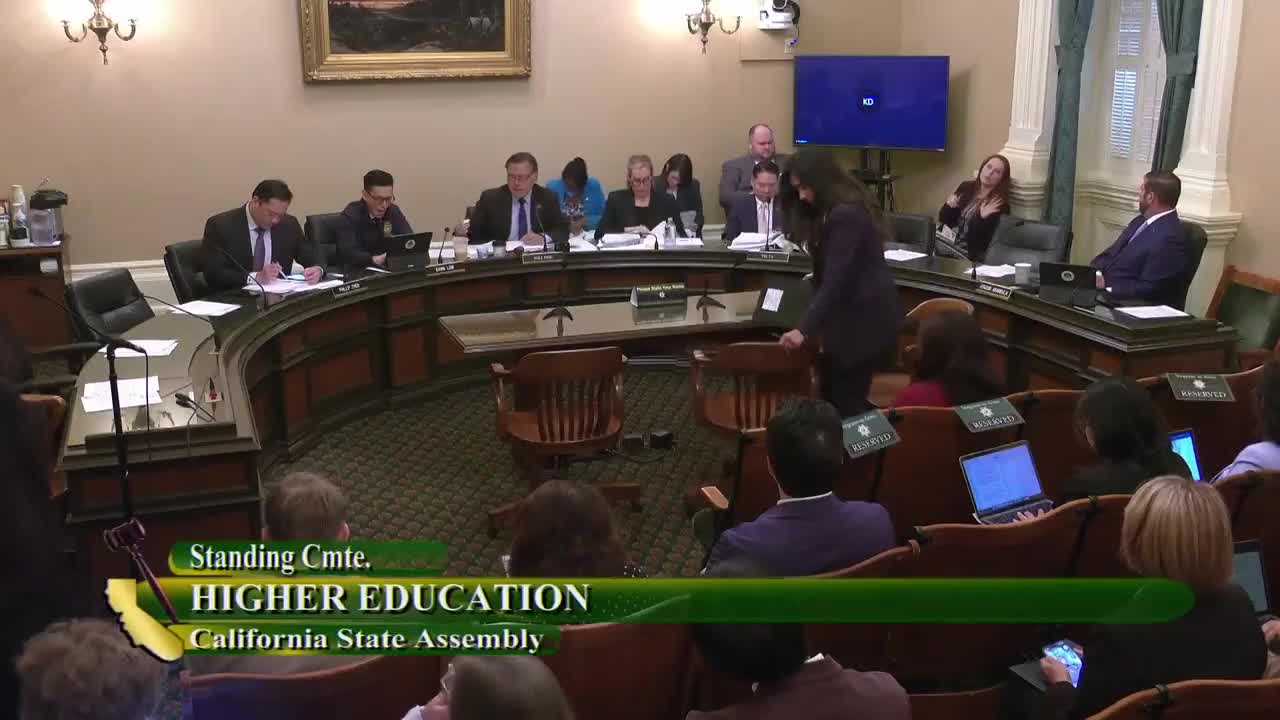 6MIN
Assembly Standing Committee on Higher Education
53SEC
Assembly Standing Committee on Higher Education
30SEC
Assembly Standing Committee on Higher Education
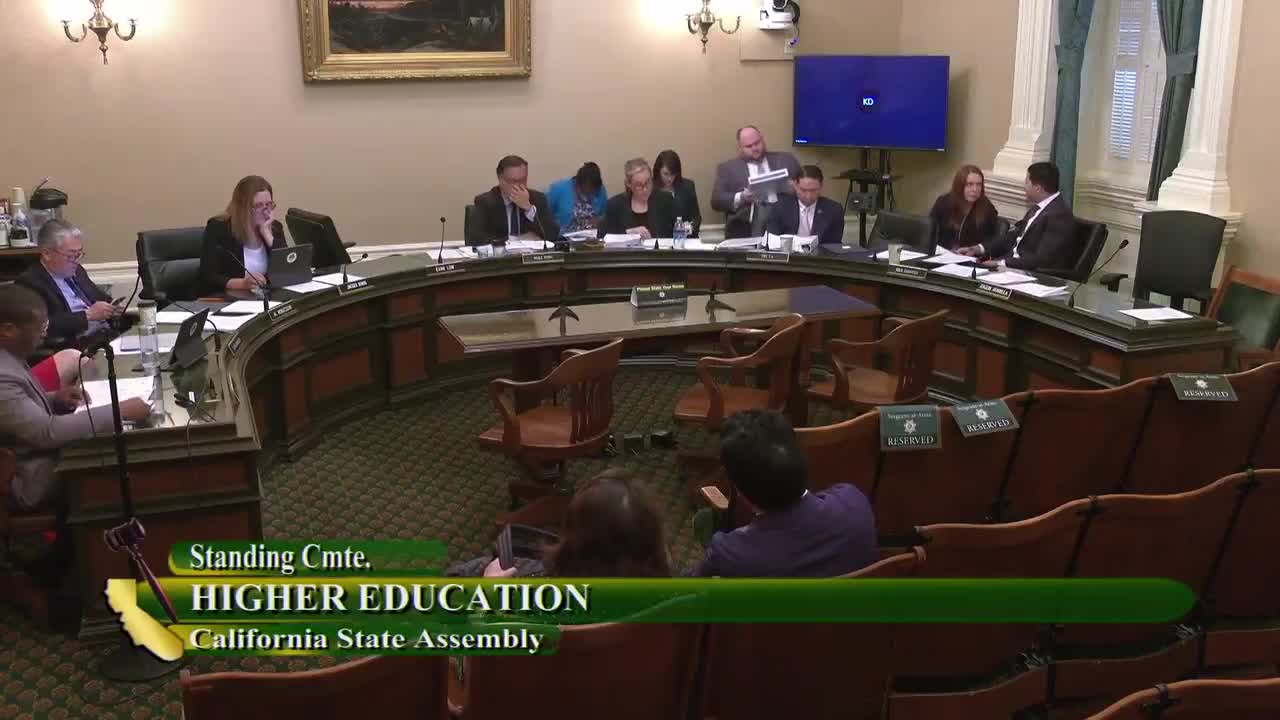 33SEC
Assembly Standing Committee on Higher Education
Bill Author
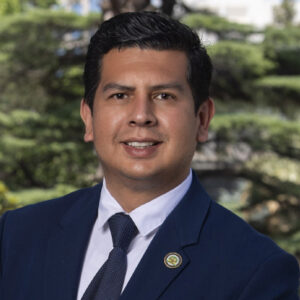
Bill Co-Author(s):
