AB 2672: California Alternate Rates for Energy program: public housing authority owned or administered Homekey housing facilities.
- Session Year: 2023-2024
- House: Assembly
- Latest Version Date: 2024-09-27
Current Status:
Passed
(2024-09-27: Chaptered by Secretary of State - Chapter 732, Statutes of 2024.)
Introduced
In Committee
First Chamber
In Committee
Second Chamber
Enacted
What does this bill do?
The bill expands the state's CARE low‑income utility discount to include Homekey housing owned or run by public housing authorities or nonprofits funded by Homekey when most residents meet CARE income limits. It directs the Public Utilities Commission to allow electric and gas companies to give discounts to those facility accounts and to set up a feasible way to verify the assistance is used for the direct benefit of the residents.
The summary is provided by generative AI which can make mistakes. For original language, please view the details in the table below.
Existing law vests the Public Utilities Commission with regulatory authority over public utilities, including electrical corporations and gas corporations. Existing law requires the commission to establish a program of assistance to low-income electricity and gas customers with annual household incomes that are no greater than 200% of the federal poverty guidelines levels, referred to as the California Alternate Rates for Energy or CARE program.
Existing law establishes the Multifamily Housing Program administered by the Department of Housing and Community Development. Existing law requires that specified funds appropriated to provide housing for individuals and families who are experiencing homelessness or who are at risk of homelessness and who are inherently impacted by or at increased risk for medical diseases or conditions due to the COVID-19 pandemic or other communicable diseases be disbursed in accordance with the Multifamily Housing Program for specified uses. This disbursement scheme is referred to as Homekey.
This bill would require that the CARE program include public housing authority owned or administered Homekey housing facilities where the residents of the facility substantially meet the CARE programs income eligibility requirements, as determined by the commission, and the account is in the name of Homekey, a nonprofit funded by Homekey, or the public housing authority that owns or administers the facility. The bill would require the commission to authorize electrical corporations and gas corporations to offer discounts to those facilities and to establish a feasible process for certifying that the assistance is used for the direct benefit of the residents of those facilities.
Under existing law, a violation of the Public Utilities Act, or of an order, decision, rule, direction, demand, or requirement of the commission is a crime.
Because the provisions of this bill would be a part of the act, and because a violation of a commission action implementing its requirements would be a crime, the bill would impose a state-mandated local program.
The California Constitution requires the state to reimburse local agencies and school districts for certain costs mandated by the state. Statutory provisions establish procedures for making that reimbursement.
This bill would provide that no reimbursement is required by this act for a specified reason.
Existing law vests the Public Utilities Commission with regulatory authority over public utilities, including electrical corporations and gas corporations. Existing law requires the commission to establish a program of assistance to low-income electricity and gas customers with annual household incomes that are no greater than 200% of the federal poverty guidelines levels, referred to as the California Alternate Rates for Energy or CARE program.
Existing law establishes the Multifamily Housing Program administered by the Department of Housing and Community Development. Existing law requires that specified funds appropriated to provide housing for individuals and families who are experiencing homelessness or who are at risk of homelessness and who are inherently impacted by or at increased risk for medical diseases or conditions due to the COVID-19 pandemic or other communicable diseases be disbursed in accordance with the Multifamily Housing Program for specified uses. This disbursement scheme is referred to as Homekey.
This bill would require that the CARE program include public housing authority owned or administered Homekey housing facilities where the residents of the facility substantially meet the CARE programs income eligibility requirements, as determined by the commission, and the account is in the name of Homekey or Homekey, a nonprofit funded by Homekey. Homekey, or the public housing authority that owns or administers the facility. The bill would require the commission to authorize electrical corporations and gas corporations to offer discounts to those facilities and to establish a feasible process for certifying that the assistance is used for the direct benefit of the residents of those facilities.
Under existing law, a violation of the Public Utilities Act, or of an order, decision, rule, direction, demand, or requirement of the commission is a crime.
Because the provisions of this bill would be a part of the act, and because a violation of a commission action implementing its requirements would be a crime, the bill would impose a state-mandated local program.
The California Constitution requires the state to reimburse local agencies and school districts for certain costs mandated by the state. Statutory provisions establish procedures for making that reimbursement.
This bill would provide that no reimbursement is required by this act for a specified reason.
Existing law vests the Public Utilities Commission with regulatory authority over public utilities, including electrical corporations and gas corporations. Existing law requires the commission to establish a program of assistance to low-income electricity and gas customers with annual household incomes that are no greater than 200% of the federal poverty guidelines levels, referred to as the California Alternate Rates for Energy or CARE program. Existing law requires the CARE program to include nonprofit group living facilities specified by the commission, as provided.
Existing law establishes the Multifamily Housing Program administered by the Department of Housing and Community Development. Existing law requires that specified funds appropriated to provide housing for individuals and families who are experiencing homelessness or who are at risk of homelessness and who are inherently impacted by or at increased risk for medical diseases or conditions due to the COVID-19 pandemic or other communicable diseases be disbursed in accordance with the Multifamily Housing Program for specified uses. This disbursement scheme is referred to as Homekey.
This bill would delete the requirement that the above-described nonprofit group living facilities be group facilities. The bill would also require that the CARE program include public housing authority owned or administered Homekey housing facilities that are master-metered and that where the residents of which the facility substantially meet the commissions low-income CARE programs income eligibility requirements, as identified determined by the commission, and the account is in the name of Homekey or a nonprofit funded by Homekey. The bill would require the commission to authorize electrical corporations and gas corporations to offer discounts to those facilities and to establish a feasible process for certifying that the assistance is used for the direct benefit of the residents of those facilities.
Under existing law, a violation of the Public Utilities Act, or of an order, decision, rule, direction, demand, or requirement of the commission is a crime.
Because the provisions of this bill would be a part of the act, and because a violation of a commission action implementing its requirements would be a crime, the bill would impose a state-mandated local program.
The California Constitution requires the state to reimburse local agencies and school districts for certain costs mandated by the state. Statutory provisions establish procedures for making that reimbursement.
This bill would provide that no reimbursement is required by this act for a specified reason.
Existing law vests the Public Utilities Commission with regulatory authority over public utilities, including electrical corporations and gas corporations. Existing law requires the commission to establish a program of assistance to low-income electricity and gas customers with annual household incomes that are no greater than 200% of the federal poverty guidelines levels, referred to as the California Alternate Rates for Energy or CARE program. Existing law requires the CARE program to include nonprofit group living facilities specified by the commission, as provided.
Existing law establishes the Multifamily Housing Program administered by the Department of Housing and Community Development. Existing law requires that specified funds appropriated to provide housing for individuals and families who are experiencing homelessness or who are at risk of homelessness and who are inherently impacted by or at increased risk for medical diseases or conditions due to the COVID-19 pandemic or other communicable diseases be disbursed in accordance with the Multifamily Housing Program for specified uses. This disbursement scheme is referred to as Homekey.
This bill would delete the requirement that the above-described nonprofit group living facilities be group facilities. The bill would also require that the CARE program to include public housing authority owned or administered Homekey housing facilities that are master-metered and that the residents of which substantially meet the commissions low-income eligibility requirements, as identified by the commission, and would require the commission to authorize electrical corporations and gas corporations to offer discounts to those facilities and to establish a feasible process for certifying that the assistance is used for the direct benefit of the residents of those facilities.
Under existing law, a violation of the Public Utilities Act, or of an order, decision, rule, direction, demand, or requirement of the commission is a crime.
Because the provisions of this bill would be a part of the act, and because a violation of a commission action implementing its requirements would be a crime, the bill would impose a state-mandated local program.
The California Constitution requires the state to reimburse local agencies and school districts for certain costs mandated by the state. Statutory provisions establish procedures for making that reimbursement.
This bill would provide that no reimbursement is required by this act for a specified reason.
Existing law vests the Public Utilities Commission with regulatory authority over public utilities, including electrical corporations and gas corporations. Existing law, the Powering Up Californians Act, requires the commission to establish, on or before September 30, 2024, reasonable average and maximum target energization time periods, as defined, and a procedure for customers to report energization delays to the commission, as provided. Existing law requires the commission to require the electrical corporation to take remedial actions necessary to achieve the commissions targets and requires all reports to be publicly available, among other reporting requirements. Existing law authorizes the commission to modify or adjust the acts requirements for any electrical corporation with fewer than 100,000 service connections, as individual circumstances merit. Existing law requires the commission to establish a program of assistance to low-income electricity and gas customers with annual household incomes that are no greater than 200% of the federal poverty guidelines levels, referred to as the California Alternate Rates for Energy or CARE program. Existing law requires the CARE program to include nonprofit group living facilities specified by the commission, as provided.
This bill would instead authorize the commission to modify or adjust the acts requirements for any electrical corporation with fewer than 110,000 service connections, as individual circumstances merit. delete the requirement that the above-described nonprofit group living facilities be group facilities. The bill would also require the CARE program to include public housing authority owned or administered housing facilities that the residents of which substantially meet the commissions low-income eligibility requirements, as identified by the commission, and would require the commission to authorize electrical corporations and gas corporations to offer discounts to those facilities and to establish a feasible process for certifying that the assistance is used for the direct benefit of the residents of those facilities.
Under existing law, a violation of the Public Utilities Act, or of an order, decision, rule, direction, demand, or requirement of the commission is a crime. Because
Because the provisions of this bill would be a part of the act, and because a violation of a commission action implementing its requirements would be a crime, the bill would impose a state-mandated local program.
The California Constitution requires the state to reimburse local agencies and school districts for certain costs mandated by the state. Statutory provisions establish procedures for making that reimbursement.
This bill would provide that no reimbursement is required by this act for a specified reason.
Existing law vests the Public Utilities Commission with regulatory authority over public utilities, including electrical corporations. Existing law, the Powering Up Californians Act, requires the commission to establish, on or before September 30, 2024, reasonable average and maximum target energization time periods, as defined, and a procedure for customers to report energization delays to the commission, as provided. Existing law requires the commission to require the electrical corporation to take remedial actions necessary to achieve the commissions targets and requires all reports to be publicly available, among other reporting requirements. Existing law authorizes the commission to modify or adjust the acts requirements for any electrical corporation with fewer than 100,000 service connections, as individual circumstances merit.
This bill would instead authorize the commission to modify or adjust the acts requirements for any electrical corporation with fewer than 110,000 service connections, as individual circumstances merit.
Under existing law, a violation of the Public Utilities Act, or of an order, decision, rule, direction, demand, or requirement of the commission is a crime. Because this bill would be a part of the act, and because a violation of a commission action implementing its requirements would be a crime, the bill would impose a state-mandated local program.
The California Constitution requires the state to reimburse local agencies and school districts for certain costs mandated by the state. Statutory provisions establish procedures for making that reimbursement.
This bill would provide that no reimbursement is required by this act for a specified reason.
(a)The commission shall continue a program of assistance to low-income electricity and gas customers with annual household incomes that are no greater than 200 percent of the federal poverty guideline levels, the cost of which shall not be borne solely by any single class of customer. For one-person households, program eligibility shall be based on two-person household guideline levels. The program shall be referred to as the California Alternate Rates for Energy or CARE program. The commission shall ensure that the level of discount for low-income electricity and gas customers correctly reflects the level of need.
(b)The commission shall establish rates for CARE program participants, subject to both of the following:
(1)That the commission ensure that low-income ratepayers are not jeopardized or overburdened by monthly energy expenditures, pursuant to subdivision (b) of Section 382.
(2)That the level of the discount for low-income electricity and gas ratepayers correctly reflects the level of need as determined by the needs assessment conducted pursuant to subdivision (d) of Section 382.
(c)In establishing CARE program discounts for an electrical corporation with 100,000 or more customer accounts in California, the commission shall ensure all of the following:
(1)The average effective CARE program discount shall not be less than 30 percent or more than 35 percent of the revenues that would have been produced for the same billed usage by non-CARE program customers. The average effective discount determined by the commission shall not reflect any charges for which CARE program customers are exempted, discounts to fixed charges or other rates paid by non-CARE program customers, or bill savings resulting from participation in other programs, including the medical baseline allowance pursuant to subdivision (c) of Section 739. The average effective CARE program discount shall be calculated as a weighted average of the CARE program discounts provided to individual customers.
(2)If an electrical corporation provides an average effective CARE program discount in excess of the maximum percentage specified in paragraph (1), the electrical corporation shall not reduce, on an annual basis, the average effective CARE program discount by more than a reasonable percentage decrease below the discount in effect on January 1, 2013, or that the electrical corporation had been authorized to place in effect by that date.
(3)The entire CARE program discount shall be provided in the form of a reduction in the overall bill for the eligible CARE program customer.
(d)The commission shall work with electrical and gas corporations to establish penetration goals. The commission shall authorize recovery of all administrative costs associated with the implementation of the CARE program that the commission determines to be reasonable, through a balancing account mechanism. Administrative costs shall include, but are not limited to, outreach, marketing, regulatory compliance, certification and verification, billing, measurement and evaluation, and capital improvements and upgrades to communications and processing equipment.
(e)The commission shall examine methods to improve CARE program enrollment and participation. This examination shall include, but need not be limited to, comparing information from the CARE program and the Universal Lifeline Telephone Service (ULTS) program to determine the most effective means of using that information to increase CARE program enrollment, automatic enrollment of ULTS program customers who are eligible for the CARE program, customer privacy issues, and alternative mechanisms for outreach to potential enrollees. The commission shall ensure that a customer consents before enrollment. The commission shall consult with interested parties, including ULTS program providers, to develop the best methods of informing ULTS program customers about other available low-income programs and the best mechanism for telephone providers to recover reasonable costs incurred pursuant to this section.
(f)(1)The commission shall improve the CARE program application process by cooperating with other entities and representatives of California government, including the California Health and Human Services Agency and the Secretary of California Health and Human Services, to ensure that all gas and electricity customers eligible for public assistance programs in California that reside within the service territory of an electrical corporation or gas corporation, are enrolled in the CARE program. The commission may determine that gas and electricity customers are categorically eligible for CARE program assistance if they are enrolled in other public assistance programs with substantially the same income eligibility requirements as the CARE program. To the extent practicable, the commission shall develop a CARE program application process using the existing ULTS program application process as a model. The commission shall work with electrical corporations, gas corporations, and the Low-Income Oversight Board established in Section 382.1 to meet the low-income objectives in this section.
(2)The commission shall ensure that an electrical corporation or gas corporation with a commission-approved program to provide discounts based on economic need in addition to the CARE program, including a Family Electric Rate Assistance program, uses a single application form, to enable an applicant to alternatively apply for any assistance program for which the applicant may be eligible. It is the intent of the Legislature to allow applicants under one program, who may not be eligible under that program, but who may be eligible under an alternative assistance program based on economic need, to complete a single application for any commission-approved assistance program offered by the public utility.
(g)It is the intent of the Legislature that the commission ensure CARE program participants receive affordable electrical and gas service that does not impose an unfair economic burden on those participants.
(h)The CARE program shall, as soon as practicable, include nonprofit group living facilities specified by the commission, if the commission finds that the residents in these facilities substantially meet the commissions low-income eligibility requirements and there is a feasible process for certifying that the assistance shall be used for the direct benefit, such as improved quality of care or improved food service, of the low-income residents in the facilities. The commission shall authorize electrical corporations and gas corporations to offer discounts to eligible facilities licensed or permitted by appropriate state or local agencies, and to facilities, including womens shelters, hospices, and homeless shelters, that may not have a license or permit but provide other proof satisfactory to the electrical corporation or gas corporation that they are eligible to participate in the CARE program.
(i)The CARE program shall, as soon as practicable, include public housing authority owned or administered Homekey housing facilities, as described in Section 50675.1.1 of the Health and Safety Code, where the residents of the facility substantially meet the CARE programs income eligibility requirements, as determined by the commission, and the account is in the name of Homekey, a nonprofit funded by Homekey, or the public housing authority that owns or administers the facility. The commission shall authorize electrical corporations and gas corporations to offer discounts to those identified facilities and to establish feasible processes for certifying that the assistance is used for the direct benefit of the residents of those facilities.
(j)(1)In addition to existing assessments of eligibility, an electrical corporation may require proof of income eligibility for those CARE program participants whose electricity usage, in any monthly or other billing period, exceeds 400 percent of baseline usage. The authority of an electrical corporation to require proof of income eligibility is not limited by the means by which the CARE program participant enrolled in the program, including if the participant was automatically enrolled in the CARE program because of participation in a governmental assistance program. If a CARE program participants electricity usage exceeds 400 percent of baseline usage, the electrical corporation may require the CARE program participant to participate in the Energy Savings Assistance Program (ESAP), which includes a residential energy assessment, in order to provide the CARE program participant with information and assistance in reducing the CARE program participants energy usage. Continued participation in the CARE program may be conditioned upon the CARE program participant agreeing to participate in ESAP within 45 days of notice being given by the electrical corporation pursuant to this paragraph. The electrical corporation may require the CARE program participant to notify the electrical corporation of whether the residence is rented, and, if so, a means by which to contact the landlord, and the electrical corporation may share any evaluation and recommendation relative to the residential structure that is made as part of an energy assessment with the landlord of the CARE program participant. Requirements imposed pursuant to this paragraph shall be consistent with procedures adopted by the commission.
(2)If a CARE program participants electricity usage exceeds 600 percent of baseline usage, the electrical corporation shall require the CARE program participant to participate in ESAP, which includes a residential energy assessment, in order to provide the CARE program participant with information and assistance in reducing the CARE program participants energy usage. Continued participation in the CARE program shall be conditioned upon the CARE program participant agreeing to participate in ESAP within 45 days of a notice made by the electrical corporation pursuant to this paragraph. The electrical corporation may require the CARE program participant to notify the electrical corporation of whether the residence is rented, and, if so, a means by which to contact the landlord, and the electrical corporation may share any evaluation and recommendation relative to the residential structure that is made as part of an energy assessment with the landlord of the CARE program participant. Following the completion of the energy assessment, if the CARE program participants electricity usage continues to exceed 600 percent of baseline usage, the electrical corporation may remove the CARE program participant from the program if the removal is consistent with procedures adopted by the commission. This paragraph does not prevent a CARE program participant with electricity usage exceeding 600 percent of baseline usage from participating in an appeals process with the electrical corporation to determine whether the participants usage levels are legitimate.
(3)A CARE program participant in a rental residence shall not be removed from the program in situations where the landlord is nonresponsive when contacted by the electrical corporation or does not provide for ESAP participation.
SEC. 2.No reimbursement is required by this act pursuant to Section 6 of Article XIIIB of the California Constitution because the only costs that may be incurred by a local agency or school district will be incurred because this act creates a new crime or infraction, eliminates a crime or infraction, or changes the penalty for a crime or infraction, within the meaning of Section 17556 of the Government Code, or changes the definition of a crime within the meaning of Section 6 of Article XIIIB of the California Constitution.
(a)The commission shall continue a program of assistance to low-income electricity and gas customers with annual household incomes that are no greater than 200 percent of the federal poverty guideline levels, the cost of which shall not be borne solely by any single class of customer. For one-person households, program eligibility shall be based on two-person household guideline levels. The program shall be referred to as the California Alternate Rates for Energy or CARE program. The commission shall ensure that the level of discount for low-income electricity and gas customers correctly reflects the level of need.
(b)The commission shall establish rates for CARE program participants, subject to both of the following:
(1)That the commission ensure that low-income ratepayers are not jeopardized or overburdened by monthly energy expenditures, pursuant to subdivision (b) of Section 382.
(2)That the level of the discount for low-income electricity and gas ratepayers correctly reflects the level of need as determined by the needs assessment conducted pursuant to subdivision (d) of Section 382.
(c)In establishing CARE program discounts for an electrical corporation with 100,000 or more customer accounts in California, the commission shall ensure all of the following:
(1)The average effective CARE program discount shall not be less than 30 percent or more than 35 percent of the revenues that would have been produced for the same billed usage by non-CARE program customers. The average effective discount determined by the commission shall not reflect any charges for which CARE program customers are exempted, discounts to fixed charges or other rates paid by non-CARE program customers, or bill savings resulting from participation in other programs, including the medical baseline allowance pursuant to subdivision (c) of Section 739. The average effective CARE program discount shall be calculated as a weighted average of the CARE program discounts provided to individual customers.
(2)If an electrical corporation provides an average effective CARE program discount in excess of the maximum percentage specified in paragraph (1), the electrical corporation shall not reduce, on an annual basis, the average effective CARE program discount by more than a reasonable percentage decrease below the discount in effect on January 1, 2013, or that the electrical corporation had been authorized to place in effect by that date.
(3)The entire CARE program discount shall be provided in the form of a reduction in the overall bill for the eligible CARE program customer.
(d)The commission shall work with electrical and gas corporations to establish penetration goals. The commission shall authorize recovery of all administrative costs associated with the implementation of the CARE program that the commission determines to be reasonable, through a balancing account mechanism. Administrative costs shall include, but are not limited to, outreach, marketing, regulatory compliance, certification and verification, billing, measurement and evaluation, and capital improvements and upgrades to communications and processing equipment.
(e)The commission shall examine methods to improve CARE program enrollment and participation. This examination shall include, but need not be limited to, comparing information from the CARE program and the Universal Lifeline Telephone Service (ULTS) program to determine the most effective means of using that information to increase CARE program enrollment, automatic enrollment of ULTS program customers who are eligible for the CARE program, customer privacy issues, and alternative mechanisms for outreach to potential enrollees. The commission shall ensure that a customer consents before enrollment. The commission shall consult with interested parties, including ULTS program providers, to develop the best methods of informing ULTS program customers about other available low-income programs and the best mechanism for telephone providers to recover reasonable costs incurred pursuant to this section.
(f)(1)The commission shall improve the CARE program application process by cooperating with other entities and representatives of California government, including the California Health and Human Services Agency and the Secretary of California Health and Human Services, to ensure that all gas and electricity customers eligible for public assistance programs in California that reside within the service territory of an electrical corporation or gas corporation, are enrolled in the CARE program. The commission may determine that gas and electricity customers are categorically eligible for CARE program assistance if they are enrolled in other public assistance programs with substantially the same income eligibility requirements as the CARE program. To the extent practicable, the commission shall develop a CARE program application process using the existing ULTS program application process as a model. The commission shall work with electrical corporations, gas corporations, and the Low-Income Oversight Board established in Section 382.1 to meet the low-income objectives in this section.
(2)The commission shall ensure that an electrical corporation or gas corporation with a commission-approved program to provide discounts based on economic need in addition to the CARE program, including a Family Electric Rate Assistance program, uses a single application form, to enable an applicant to alternatively apply for any assistance program for which the applicant may be eligible. It is the intent of the Legislature to allow applicants under one program, who may not be eligible under that program, but who may be eligible under an alternative assistance program based on economic need, to complete a single application for any commission-approved assistance program offered by the public utility.
(g)It is the intent of the Legislature that the commission ensure CARE program participants receive affordable electrical and gas service that does not impose an unfair economic burden on those participants.
(h)The CARE program shall, as soon as practicable, include nonprofit group living facilities specified by the commission, if the commission finds that the residents in these facilities substantially meet the commissions low-income eligibility requirements and there is a feasible process for certifying that the assistance shall be used for the direct benefit, such as improved quality of care or improved food service, of the low-income residents in the facilities. The commission shall authorize electrical corporations and gas corporations to offer discounts to eligible facilities licensed or permitted by appropriate state or local agencies, and to facilities, including womens shelters, hospices, and homeless shelters, that may not have a license or permit but provide other proof satisfactory to the electrical corporation or gas corporation that they are eligible to participate in the CARE program.
(i)The CARE program shall, as soon as practicable, include public housing authority owned or administered Homekey housing facilities, as described in Section 50675.1.1 of the Health and Safety Code, where the residents of the facility substantially meet the CARE programs income eligibility requirements, as determined by the commission, and the account is in the name of Homekey or Homekey, a nonprofit funded by Homekey. Homekey, or the public housing authority that owns or administers the facility. The commission shall authorize electrical corporations and gas corporations to offer discounts to those identified facilities and to establish feasible processes for certifying that the assistance is used for the direct benefit of the residents of those facilities.
(j)(1)In addition to existing assessments of eligibility, an electrical corporation may require proof of income eligibility for those CARE program participants whose electricity usage, in any monthly or other billing period, exceeds 400 percent of baseline usage. The authority of an electrical corporation to require proof of income eligibility is not limited by the means by which the CARE program participant enrolled in the program, including if the participant was automatically enrolled in the CARE program because of participation in a governmental assistance program. If a CARE program participants electricity usage exceeds 400 percent of baseline usage, the electrical corporation may require the CARE program participant to participate in the Energy Savings Assistance Program (ESAP), which includes a residential energy assessment, in order to provide the CARE program participant with information and assistance in reducing the CARE program participants energy usage. Continued participation in the CARE program may be conditioned upon the CARE program participant agreeing to participate in ESAP within 45 days of notice being given by the electrical corporation pursuant to this paragraph. The electrical corporation may require the CARE program participant to notify the electrical corporation of whether the residence is rented, and, if so, a means by which to contact the landlord, and the electrical corporation may share any evaluation and recommendation relative to the residential structure that is made as part of an energy assessment with the landlord of the CARE program participant. Requirements imposed pursuant to this paragraph shall be consistent with procedures adopted by the commission.
(2)If a CARE program participants electricity usage exceeds 600 percent of baseline usage, the electrical corporation shall require the CARE program participant to participate in ESAP, which includes a residential energy assessment, in order to provide the CARE program participant with information and assistance in reducing the CARE program participants energy usage. Continued participation in the CARE program shall be conditioned upon the CARE program participant agreeing to participate in ESAP within 45 days of a notice made by the electrical corporation pursuant to this paragraph. The electrical corporation may require the CARE program participant to notify the electrical corporation of whether the residence is rented, and, if so, a means by which to contact the landlord, and the electrical corporation may share any evaluation and recommendation relative to the residential structure that is made as part of an energy assessment with the landlord of the CARE program participant. Following the completion of the energy assessment, if the CARE program participants electricity usage continues to exceed 600 percent of baseline usage, the electrical corporation may remove the CARE program participant from the program if the removal is consistent with procedures adopted by the commission. This paragraph does not prevent a CARE program participant with electricity usage exceeding 600 percent of baseline usage from participating in an appeals process with the electrical corporation to determine whether the participants usage levels are legitimate.
(3)A CARE program participant in a rental residence shall not be removed from the program in situations where the landlord is nonresponsive when contacted by the electrical corporation or does not provide for ESAP participation.
SEC. 2.No reimbursement is required by this act pursuant to Section 6 of Article XIIIB of the California Constitution because the only costs that may be incurred by a local agency or school district will be incurred because this act creates a new crime or infraction, eliminates a crime or infraction, or changes the penalty for a crime or infraction, within the meaning of Section 17556 of the Government Code, or changes the definition of a crime within the meaning of Section 6 of Article XIIIB of the California Constitution.
(a)The commission shall continue a program of assistance to low-income electricity and gas customers with annual household incomes that are no greater than 200 percent of the federal poverty guideline levels, the cost of which shall not be borne solely by any single class of customer. For one-person households, program eligibility shall be based on two-person household guideline levels. The program shall be referred to as the California Alternate Rates for Energy or CARE program. The commission shall ensure that the level of discount for low-income electricity and gas customers correctly reflects the level of need.
(b)The commission shall establish rates for CARE program participants, subject to both of the following:
(1)That the commission ensure that low-income ratepayers are not jeopardized or overburdened by monthly energy expenditures, pursuant to subdivision (b) of Section 382.
(2)That the level of the discount for low-income electricity and gas ratepayers correctly reflects the level of need as determined by the needs assessment conducted pursuant to subdivision (d) of Section 382.
(c)In establishing CARE program discounts for an electrical corporation with 100,000 or more customer accounts in California, the commission shall ensure all of the following:
(1)The average effective CARE program discount shall not be less than 30 percent or more than 35 percent of the revenues that would have been produced for the same billed usage by non-CARE program customers. The average effective discount determined by the commission shall not reflect any charges for which CARE program customers are exempted, discounts to fixed charges or other rates paid by non-CARE program customers, or bill savings resulting from participation in other programs, including the medical baseline allowance pursuant to subdivision (c) of Section 739. The average effective CARE program discount shall be calculated as a weighted average of the CARE program discounts provided to individual customers.
(2)If an electrical corporation provides an average effective CARE program discount in excess of the maximum percentage specified in paragraph (1), the electrical corporation shall not reduce, on an annual basis, the average effective CARE program discount by more than a reasonable percentage decrease below the discount in effect on January 1, 2013, or that the electrical corporation had been authorized to place in effect by that date.
(3)The entire CARE program discount shall be provided in the form of a reduction in the overall bill for the eligible CARE program customer.
(d)The commission shall work with electrical and gas corporations to establish penetration goals. The commission shall authorize recovery of all administrative costs associated with the implementation of the CARE program that the commission determines to be reasonable, through a balancing account mechanism. Administrative costs shall include, but are not limited to, outreach, marketing, regulatory compliance, certification and verification, billing, measurement and evaluation, and capital improvements and upgrades to communications and processing equipment.
(e)The commission shall examine methods to improve CARE program enrollment and participation. This examination shall include, but need not be limited to, comparing information from the CARE program and the Universal Lifeline Telephone Service (ULTS) program to determine the most effective means of using that information to increase CARE program enrollment, automatic enrollment of ULTS program customers who are eligible for the CARE program, customer privacy issues, and alternative mechanisms for outreach to potential enrollees. The commission shall ensure that a customer consents before enrollment. The commission shall consult with interested parties, including ULTS program providers, to develop the best methods of informing ULTS program customers about other available low-income programs and the best mechanism for telephone providers to recover reasonable costs incurred pursuant to this section.
(f)(1)The commission shall improve the CARE program application process by cooperating with other entities and representatives of California government, including the California Health and Human Services Agency and the Secretary of California Health and Human Services, to ensure that all gas and electricity customers eligible for public assistance programs in California that reside within the service territory of an electrical corporation or gas corporation, are enrolled in the CARE program. The commission may determine that gas and electricity customers are categorically eligible for CARE program assistance if they are enrolled in other public assistance programs with substantially the same income eligibility requirements as the CARE program. To the extent practicable, the commission shall develop a CARE program application process using the existing ULTS program application process as a model. The commission shall work with electrical corporations, gas corporations, and the Low-Income Oversight Board established in Section 382.1 to meet the low-income objectives in this section.
(2)The commission shall ensure that an electrical corporation or gas corporation with a commission-approved program to provide discounts based on economic need in addition to the CARE program, including a Family Electric Rate Assistance program, uses a single application form, to enable an applicant to alternatively apply for any assistance program for which the applicant may be eligible. It is the intent of the Legislature to allow applicants under one program, who may not be eligible under that program, but who may be eligible under an alternative assistance program based on economic need, to complete a single application for any commission-approved assistance program offered by the public utility.
(g)It is the intent of the Legislature that the commission ensure CARE program participants receive affordable electrical and gas service that does not impose an unfair economic burden on those participants.
(h)The CARE program shall, as soon as practicable, include nonprofit group living facilities specified by the commission, if the commission finds that the residents in these facilities substantially meet the commissions low-income eligibility requirements and there is a feasible process for certifying that the assistance shall be used for the direct benefit, such as improved quality of care or improved food service, of the low-income residents in the facilities. The commission shall authorize electrical corporations and gas corporations to offer discounts to eligible facilities licensed or permitted by appropriate state or local agencies, and to facilities, including womens shelters, hospices, and homeless shelters, that may not have a license or permit but provide other proof satisfactory to the electrical corporation or gas corporation that they are eligible to participate in the CARE program.
(i)The CARE program shall, as soon as practicable, include public housing authority owned or administered Homekey housing facilities, as described in Section 50675.1.1 of the Health and Safety Code, that are master-metered and that where the residents of which the facility substantially meet the commissions low-income CARE programs income eligibility requirements, as identified determined by the commission. commission, and the account is in the name of Homekey or a nonprofit funded by Homekey. The commission shall authorize electrical corporations and gas corporations to offer discounts to those identified facilities and to establish feasible processes for certifying that the assistance is used for the direct benefit of the residents of those facilities.
(j)(1)In addition to existing assessments of eligibility, an electrical corporation may require proof of income eligibility for those CARE program participants whose electricity usage, in any monthly or other billing period, exceeds 400 percent of baseline usage. The authority of an electrical corporation to require proof of income eligibility is not limited by the means by which the CARE program participant enrolled in the program, including if the participant was automatically enrolled in the CARE program because of participation in a governmental assistance program. If a CARE program participants electricity usage exceeds 400 percent of baseline usage, the electrical corporation may require the CARE program participant to participate in the Energy Savings Assistance Program (ESAP), which includes a residential energy assessment, in order to provide the CARE program participant with information and assistance in reducing the CARE program participants energy usage. Continued participation in the CARE program may be conditioned upon the CARE program participant agreeing to participate in ESAP within 45 days of notice being given by the electrical corporation pursuant to this paragraph. The electrical corporation may require the CARE program participant to notify the electrical corporation of whether the residence is rented, and, if so, a means by which to contact the landlord, and the electrical corporation may share any evaluation and recommendation relative to the residential structure that is made as part of an energy assessment with the landlord of the CARE program participant. Requirements imposed pursuant to this paragraph shall be consistent with procedures adopted by the commission.
(2)If a CARE program participants electricity usage exceeds 600 percent of baseline usage, the electrical corporation shall require the CARE program participant to participate in ESAP, which includes a residential energy assessment, in order to provide the CARE program participant with information and assistance in reducing the CARE program participants energy usage. Continued participation in the CARE program shall be conditioned upon the CARE program participant agreeing to participate in ESAP within 45 days of a notice made by the electrical corporation pursuant to this paragraph. The electrical corporation may require the CARE program participant to notify the electrical corporation of whether the residence is rented, and, if so, a means by which to contact the landlord, and the electrical corporation may share any evaluation and recommendation relative to the residential structure that is made as part of an energy assessment with the landlord of the CARE program participant. Following the completion of the energy assessment, if the CARE program participants electricity usage continues to exceed 600 percent of baseline usage, the electrical corporation may remove the CARE program participant from the program if the removal is consistent with procedures adopted by the commission. This paragraph does not prevent a CARE program participant with electricity usage exceeding 600 percent of baseline usage from participating in an appeals process with the electrical corporation to determine whether the participants usage levels are legitimate.
(3)A CARE program participant in a rental residence shall not be removed from the program in situations where the landlord is nonresponsive when contacted by the electrical corporation or does not provide for ESAP participation.
SEC. 2.No reimbursement is required by this act pursuant to Section 6 of Article XIIIB of the California Constitution because the only costs that may be incurred by a local agency or school district will be incurred because this act creates a new crime or infraction, eliminates a crime or infraction, or changes the penalty for a crime or infraction, within the meaning of Section 17556 of the Government Code, or changes the definition of a crime within the meaning of Section 6 of Article XIIIB of the California Constitution.
(a)The commission shall continue a program of assistance to low-income electricity and gas customers with annual household incomes that are no greater than 200 percent of the federal poverty guideline levels, the cost of which shall not be borne solely by any single class of customer. For one-person households, program eligibility shall be based on two-person household guideline levels. The program shall be referred to as the California Alternate Rates for Energy or CARE program. The commission shall ensure that the level of discount for low-income electricity and gas customers correctly reflects the level of need.
(b)The commission shall establish rates for CARE program participants, subject to both of the following:
(1)That the commission ensure that low-income ratepayers are not jeopardized or overburdened by monthly energy expenditures, pursuant to subdivision (b) of Section 382.
(2)That the level of the discount for low-income electricity and gas ratepayers correctly reflects the level of need as determined by the needs assessment conducted pursuant to subdivision (d) of Section 382.
(c)In establishing CARE program discounts for an electrical corporation with 100,000 or more customer accounts in California, the commission shall ensure all of the following:
(1)The average effective CARE program discount shall not be less than 30 percent or more than 35 percent of the revenues that would have been produced for the same billed usage by non-CARE program customers. The average effective discount determined by the commission shall not reflect any charges for which CARE program customers are exempted, discounts to fixed charges or other rates paid by non-CARE program customers, or bill savings resulting from participation in other programs, including the medical baseline allowance pursuant to subdivision (c) of Section 739. The average effective CARE program discount shall be calculated as a weighted average of the CARE program discounts provided to individual customers.
(2)If an electrical corporation provides an average effective CARE program discount in excess of the maximum percentage specified in paragraph (1), the electrical corporation shall not reduce, on an annual basis, the average effective CARE program discount by more than a reasonable percentage decrease below the discount in effect on January 1, 2013, or that the electrical corporation had been authorized to place in effect by that date.
(3)The entire CARE program discount shall be provided in the form of a reduction in the overall bill for the eligible CARE program customer.
(d)The commission shall work with electrical and gas corporations to establish penetration goals. The commission shall authorize recovery of all administrative costs associated with the implementation of the CARE program that the commission determines to be reasonable, through a balancing account mechanism. Administrative costs shall include, but are not limited to, outreach, marketing, regulatory compliance, certification and verification, billing, measurement and evaluation, and capital improvements and upgrades to communications and processing equipment.
(e)The commission shall examine methods to improve CARE program enrollment and participation. This examination shall include, but need not be limited to, comparing information from the CARE program and the Universal Lifeline Telephone Service (ULTS) program to determine the most effective means of using that information to increase CARE program enrollment, automatic enrollment of ULTS program customers who are eligible for the CARE program, customer privacy issues, and alternative mechanisms for outreach to potential enrollees. The commission shall ensure that a customer consents before enrollment. The commission shall consult with interested parties, including ULTS program providers, to develop the best methods of informing ULTS program customers about other available low-income programs and the best mechanism for telephone providers to recover reasonable costs incurred pursuant to this section.
(f)(1)The commission shall improve the CARE program application process by cooperating with other entities and representatives of California government, including the California Health and Human Services Agency and the Secretary of California Health and Human Services, to ensure that all gas and electricity customers eligible for public assistance programs in California that reside within the service territory of an electrical corporation or gas corporation, are enrolled in the CARE program. The commission may determine that gas and electricity customers are categorically eligible for CARE program assistance if they are enrolled in other public assistance programs with substantially the same income eligibility requirements as the CARE program. To the extent practicable, the commission shall develop a CARE program application process using the existing ULTS program application process as a model. The commission shall work with electrical corporations, gas corporations, and the Low-Income Oversight Board established in Section 382.1 to meet the low-income objectives in this section.
(2)The commission shall ensure that an electrical corporation or gas corporation with a commission-approved program to provide discounts based on economic need in addition to the CARE program, including a Family Electric Rate Assistance program, uses a single application form, to enable an applicant to alternatively apply for any assistance program for which the applicant may be eligible. It is the intent of the Legislature to allow applicants under one program, who may not be eligible under that program, but who may be eligible under an alternative assistance program based on economic need, to complete a single application for any commission-approved assistance program offered by the public utility.
(g)It is the intent of the Legislature that the commission ensure CARE program participants receive affordable electrical and gas service that does not impose an unfair economic burden on those participants.
(h)The CARE program shall, as soon as practicable, include nonprofit living facilities specified by the commission, if the commission finds that the residents in these facilities substantially meet the commissions low-income eligibility requirements and there is a feasible process for certifying that the assistance shall be used for the direct benefit, such as improved quality of care or improved food service, of the low-income residents in the facilities. The commission shall authorize electrical corporations and gas corporations to offer discounts to eligible facilities licensed or permitted by appropriate state or local agencies, and to facilities, including womens shelters, hospices, and homeless shelters, that may not have a license or permit but provide other proof satisfactory to the electrical corporation or gas corporation that they are eligible to participate in the CARE program.
(i)The CARE program shall, as soon as practicable, include public housing authority owned or administered Homekey housing facilities facilities, as described in Section 50675.1.1 of the Health and Safety Code, that are master-metered and that the residents of which substantially meet the commissions low-income eligibility requirements, as identified by the commission. The commission shall authorize electrical corporations and gas corporations to offer discounts to those identified facilities and to establish feasible processes for certifying that the assistance is used for the direct benefit of the residents of those facilities.
(j)(1)In addition to existing assessments of eligibility, an electrical corporation may require proof of income eligibility for those CARE program participants whose electricity usage, in any monthly or other billing period, exceeds 400 percent of baseline usage. The authority of an electrical corporation to require proof of income eligibility is not limited by the means by which the CARE program participant enrolled in the program, including if the participant was automatically enrolled in the CARE program because of participation in a governmental assistance program. If a CARE program participants electricity usage exceeds 400 percent of baseline usage, the electrical corporation may require the CARE program participant to participate in the Energy Savings Assistance Program (ESAP), which includes a residential energy assessment, in order to provide the CARE program participant with information and assistance in reducing the CARE program participants energy usage. Continued participation in the CARE program may be conditioned upon the CARE program participant agreeing to participate in ESAP within 45 days of notice being given by the electrical corporation pursuant to this paragraph. The electrical corporation may require the CARE program participant to notify the electrical corporation of whether the residence is rented, and, if so, a means by which to contact the landlord, and the electrical corporation may share any evaluation and recommendation relative to the residential structure that is made as part of an energy assessment with the landlord of the CARE program participant. Requirements imposed pursuant to this paragraph shall be consistent with procedures adopted by the commission.
(2)If a CARE program participants electricity usage exceeds 600 percent of baseline usage, the electrical corporation shall require the CARE program participant to participate in ESAP, which includes a residential energy assessment, in order to provide the CARE program participant with information and assistance in reducing the CARE program participants energy usage. Continued participation in the CARE program shall be conditioned upon the CARE program participant agreeing to participate in ESAP within 45 days of a notice made by the electrical corporation pursuant to this paragraph. The electrical corporation may require the CARE program participant to notify the electrical corporation of whether the residence is rented, and, if so, a means by which to contact the landlord, and the electrical corporation may share any evaluation and recommendation relative to the residential structure that is made as part of an energy assessment with the landlord of the CARE program participant. Following the completion of the energy assessment, if the CARE program participants electricity usage continues to exceed 600 percent of baseline usage, the electrical corporation may remove the CARE program participant from the program if the removal is consistent with procedures adopted by the commission. This paragraph does not prevent a CARE program participant with electricity usage exceeding 600 percent of baseline usage from participating in an appeals process with the electrical corporation to determine whether the participants usage levels are legitimate.
(3)A CARE program participant in a rental residence shall not be removed from the program in situations where the landlord is nonresponsive when contacted by the electrical corporation or does not provide for ESAP participation.
SEC. 2.No reimbursement is required by this act pursuant to Section 6 of Article XIIIB of the California Constitution because the only costs that may be incurred by a local agency or school district will be incurred because this act creates a new crime or infraction, eliminates a crime or infraction, or changes the penalty for a crime or infraction, within the meaning of Section 17556 of the Government Code, or changes the definition of a crime within the meaning of Section 6 of Article XIIIB of the California Constitution.
(a)The commission shall continue a program of assistance to low-income electric electricity and gas customers with annual household incomes that are no greater than 200 percent of the federal poverty guideline levels, the cost of which shall not be borne solely by any single class of customer. For one-person households, program eligibility shall be based on two-person household guideline levels. The program shall be referred to as the California Alternate Rates for Energy or CARE program. The commission shall ensure that the level of discount for low-income electric electricity and gas customers correctly reflects the level of need.
(b)The commission shall establish rates for CARE program participants, subject to both of the following:
(1)That the commission ensure that low-income ratepayers are not jeopardized or overburdened by monthly energy expenditures, pursuant to subdivision (b) of Section 382.
(2)That the level of the discount for low-income electricity and gas ratepayers correctly reflects the level of need as determined by the needs assessment conducted pursuant to subdivision (d) of Section 382.
(c)In establishing CARE program discounts for an electrical corporation with 100,000 or more customer accounts in California, the commission shall ensure all of the following:
(1)The average effective CARE program discount shall not be less than 30 percent or more than 35 percent of the revenues that would have been produced for the same billed usage by non-CARE program customers. The average effective discount determined by the commission shall not reflect any charges for which CARE program customers are exempted, discounts to fixed charges or other rates paid by non-CARE program customers, or bill savings resulting from participation in other programs, including the medical baseline allowance pursuant to subdivision (c) of Section 739. The average effective CARE program discount shall be calculated as a weighted average of the CARE program discounts provided to individual customers.
(2)If an electrical corporation provides an average effective CARE program discount in excess of the maximum percentage specified in paragraph (1), the electrical corporation shall not reduce, on an annual basis, the average effective CARE program discount by more than a reasonable percentage decrease below the discount in effect on January 1, 2013, or that the electrical corporation had been authorized to place in effect by that date.
(3)The entire CARE program discount shall be provided in the form of a reduction in the overall bill for the eligible CARE program customer.
(d)The commission shall work with electrical and gas corporations to establish penetration goals. The commission shall authorize recovery of all administrative costs associated with the implementation of the CARE program that the commission determines to be reasonable, through a balancing account mechanism. Administrative costs shall include, but are not limited to, outreach, marketing, regulatory compliance, certification and verification, billing, measurement and evaluation, and capital improvements and upgrades to communications and processing equipment.
(e)The commission shall examine methods to improve CARE program enrollment and participation. This examination shall include, but need not be limited to, comparing information from the CARE program and the Universal Lifeline Telephone Service (ULTS) program to determine the most effective means of using that information to increase CARE program enrollment, automatic enrollment of ULTS program customers who are eligible for the CARE program, customer privacy issues, and alternative mechanisms for outreach to potential enrollees. The commission shall ensure that a customer consents before enrollment. The commission shall consult with interested parties, including ULTS program providers, to develop the best methods of informing ULTS program customers about other available low-income programs and the best mechanism for telephone providers to recover reasonable costs incurred pursuant to this section.
(f)(1)The commission shall improve the CARE program application process by cooperating with other entities and representatives of California government, including the California Health and Human Services Agency and the Secretary of California Health and Human Services, to ensure that all gas and electric electricity customers eligible for public assistance programs in California that reside within the service territory of an electrical corporation or gas corporation, are enrolled in the CARE program. The commission may determine that gas and electric electricity customers are categorically eligible for CARE program assistance if they are enrolled in other public assistance programs with substantially the same income eligibility requirements as the CARE program. To the extent practicable, the commission shall develop a CARE program application process using the existing ULTS program application process as a model. The commission shall work with electrical and corporations, gas corporations corporations, and the Low-Income Oversight Board established in Section 382.1 to meet the low-income objectives in this section.
(2)The commission shall ensure that an electrical corporation or gas corporation with a commission-approved program to provide discounts based upon on economic need in addition to the CARE program, including a Family Electric Rate Assistance program, uses a single application form, to enable an applicant to alternatively apply for any assistance program for which the applicant may be eligible. It is the intent of the Legislature to allow applicants under one program, that who may not be eligible under that program, but that who may be eligible under an alternative assistance program based upon on economic need, to complete a single application for any commission-approved assistance program offered by the public utility.
(g)It is the intent of the Legislature that the commission ensure CARE program participants receive affordable electrical and gas service that does not impose an unfair economic burden on those participants.
(h)The commissions program of assistance to low-income electric and gas customers CARE program shall, as soon as practicable, include nonprofit group living facilities specified by the commission, if the commission finds that the residents in these facilities substantially meet the commissions low-income eligibility requirements and there is a feasible process for certifying that the assistance shall be used for the direct benefit, such as improved quality of care or improved food service, of the low-income residents in the facilities. The commission shall authorize utilities electrical corporations and gas corporations to offer discounts to eligible facilities licensed or permitted by appropriate state or local agencies, and to facilities, including womens shelters, hospices, and homeless shelters, that may not have a license or permit but provide other proof satisfactory to the utility electrical corporation or gas corporation that they are eligible to participate in the CARE program.
(i)The CARE program shall, as soon as practicable, include public housing authority owned or administered housing facilities that the residents of which substantially meet the commissions low-income eligibility requirements, as identified by the commission. The commission shall authorize electrical corporations and gas corporations to offer discounts to those identified facilities and to establish feasible processes for certifying that the assistance is used for the direct benefit of the residents of those facilities.
(i)(j)(1)In addition to existing assessments of eligibility, an electrical corporation may require proof of income eligibility for those CARE program participants whose electricity usage, in any monthly or other billing period, exceeds 400 percent of baseline usage. The authority of an electrical corporation to require proof of income eligibility is not limited by the means by which the CARE program participant enrolled in the program, including if the participant was automatically enrolled in the CARE program because of participation in a governmental assistance program. If a CARE program participants electricity usage exceeds 400 percent of baseline usage, the electrical corporation may require the CARE program participant to participate in the Energy Savings Assistance Program (ESAP), which includes a residential energy assessment, in order to provide the CARE program participant with information and assistance in reducing the CARE program participants energy usage. Continued participation in the CARE program may be conditioned upon the CARE program participant agreeing to participate in ESAP within 45 days of notice being given by the electrical corporation pursuant to this paragraph. The electrical corporation may require the CARE program participant to notify the utility electrical corporation of whether the residence is rented, and, if so, a means by which to contact the landlord, and the electrical corporation may share any evaluation and recommendation relative to the residential structure that is made as part of an energy assessment, assessment with the landlord of the CARE program participant. Requirements imposed pursuant to this paragraph shall be consistent with procedures adopted by the commission.
(2)If a CARE program participants electricity usage exceeds 600 percent of baseline usage, the electrical corporation shall require the CARE program participant to participate in ESAP, which includes a residential energy assessment, in order to provide the CARE program participant with information and assistance in reducing the CARE program participants energy usage. Continued participation in the CARE program shall be conditioned upon the CARE program participant agreeing to participate in ESAP within 45 days of a notice made by the electrical corporation pursuant to this paragraph. The electrical corporation may require the CARE program participant to notify the utility electrical corporation of whether the residence is rented, and, if so, a means by which to contact the landlord, and the electrical corporation may share any evaluation and recommendation relative to the residential structure that is made as part of an energy assessment, assessment with the landlord of the CARE program participant. Following the completion of the energy assessment, if the CARE program participants electricity usage continues to exceed 600 percent of baseline usage, the electrical corporation may remove the CARE program participant from the program if the removal is consistent with procedures adopted by the commission. This paragraph does not prevent a CARE program participant with electricity usage exceeding 600 percent of baseline usage from participating in an appeals process with the electrical corporation to determine whether the participants usage levels are legitimate.
(3)A CARE program participant in a rental residence shall not be removed from the program in situations where the landlord is nonresponsive when contacted by the electrical corporation or does not provide for ESAP participation.
SEC. 2.No reimbursement is required by this act pursuant to Section 6 of Article XIIIB of the California Constitution because the only costs that may be incurred by a local agency or school district will be incurred because this act creates a new crime or infraction, eliminates a crime or infraction, or changes the penalty for a crime or infraction, within the meaning of Section 17556 of the Government Code, or changes the definition of a crime within the meaning of Section 6 of Article XIIIB of the California Constitution.
The commission may modify or adjust the requirements of this article for any electrical corporation with fewer than 100,000 110,000 service connections, as individual circumstances merit.
SEC. 2.No reimbursement is required by this act pursuant to Section 6 of Article XIIIB of the California Constitution because the only costs that may be incurred by a local agency or school district will be incurred because this act creates a new crime or infraction, eliminates a crime or infraction, or changes the penalty for a crime or infraction, within the meaning of Section 17556 of the Government Code, or changes the definition of a crime within the meaning of Section 6 of Article XIIIB of the California Constitution.
|
Date
|
Status
|
|---|---|
| Sep 27, 2024 | Chaptered by Secretary of State - Chapter 732, Statutes of 2024. |
| Sep 27, 2024 | Approved by the Governor. |
| Sep 11, 2024 | Enrolled and presented to the Governor at 4 p.m. |
| Aug 30, 2024 | Senate amendments concurred in. To Engrossing and Enrolling. (Ayes 74. Noes 1.). |
| Aug 30, 2024 | In Assembly. Concurrence in Senate amendments pending. |
| Aug 29, 2024 | Read third time. Passed. Ordered to the Assembly. (Ayes 37. Noes 0.). |
| Aug 19, 2024 | Read second time. Ordered to third reading. |
| Aug 15, 2024 | From committee: Do pass. (Ayes 7. Noes 0.) (August 15). |
| Aug 12, 2024 | In committee: Referred to APPR suspense file. |
| Aug 5, 2024 | From committee chair, with author's amendments: Amend, and re-refer to committee. Read second time, amended, and re-referred to Com. on APPR. |
| Jul 31, 2024 | In committee: Hearing postponed by committee. |
| Jul 3, 2024 | Read second time and amended. Re-referred to Com. on APPR. |
| Jul 3, 2024 | From committee: Amend, and do pass as amended and re-refer to Com. on APPR. (Ayes 15. Noes 0.) (July 2). |
| Jun 5, 2024 | Referred to Com. on E., U. & C. |
| May 24, 2024 | In Senate. Read first time. To Com. on RLS. for assignment. |
| May 23, 2024 | Read third time. Passed. Ordered to the Senate. (Ayes 71. Noes 0. Page 5597.) |
| May 16, 2024 | Read second time. Ordered to third reading. |
| May 15, 2024 | From committee: Do pass. (Ayes 14. Noes 1.) (May 15). |
| Apr 23, 2024 | Re-referred to Com. on APPR. |
| Apr 22, 2024 | Read second time and amended. |
| Apr 18, 2024 | From committee: Amend, and do pass as amended and re-refer to Com. on APPR. (Ayes 16. Noes 0.) (April 17). |
| Apr 9, 2024 | Re-referred to Com. on U. & E. |
| Apr 8, 2024 | From committee chair, with author's amendments: Amend, and re-refer to Com. on U. & E. Read second time and amended. |
| Mar 28, 2024 | In committee: Hearing postponed by committee. |
| Mar 4, 2024 | Referred to Com. on U. & E. |
| Feb 15, 2024 | From printer. May be heard in committee March 16. |
| Feb 14, 2024 | Read first time. To print. |
|
Date
|
Description
|
Location
|
Votes
|
|
|---|---|---|---|---|
| Aug 30, 2024 | AB 2672 Petrie-Norris Concurrence in Senate Amendments | Assembly Floor |
Passed |
|
| Aug 29, 2024 | Assembly 3rd Reading AB2672 Petrie-Norris et al. By Bradford | Senate Floor |
Passed |
|
| Aug 15, 2024 | Do pass | Senate Standing Committee on Appropriations |
Passed |
|
| Aug 12, 2024 | Placed on suspense file | Senate Standing Committee on Appropriations |
Passed |
|
| Jul 2, 2024 | Do pass as amended, but first amend, and re-refer to the Committee on [Appropriations] | Senate Standing Committee on Energy, Utilities and Communications |
Passed |
|
| May 23, 2024 | AB 2672 Petrie-Norris Assembly Third Reading | Assembly Floor |
Passed |
|
| May 15, 2024 | Do pass. | Assembly Standing Committee on Appropriations |
Passed |
|
| Apr 17, 2024 | Do pass as amended and be re-referred to the Committee on [Appropriations] | Assembly Standing Committee on Utilities and Energy |
Passed |
This list shows positions taken on this bill by organizations on the date displayed, which is linked to the original source.
Positions by individuals are not included.
|
Organization
|
Position
|
Date
|
|---|---|---|
| Ava Community Energy | ** Support | |
| California Community Choice Association | ** Support | |
| City Of San Diego | ** Support | |
| Lighthouse Public Affairs | * Support | Jul 2, 2024 |
| San Diego Community Power | ** Support | |
| San Diego Gas Electric | * Support | May 15, 2024 |
| San Diego Gas and Electric Company | ** Support | |
| San Diego Housing Commission | ** Support |
CONCURRENCE IN SENATE AMENDMENTS
CSA1 Bill Id:AB 2672
Author:(Petrie-Norris)
As Amended Ver:August 5, 2024
Majority vote
SUMMARY
Requires the California Public Utilities Commission (CPUC) to extend the low-income utility assistance rate program, California Alternate Rates for Energy (CARE), to include public housing authority owned or administered Homekey housing facilities.
Senate Amendments
- Removes the requirement for eligible Homekey housing facilities to be only those that are master-metered.
- Requires the account of an eligible facility to be under the name of Homekey, a nonprofit funded by Homekey, or the public housing authority that owns or administers the facility.
COMMENTS
The CARE program is the primary existing state policy to help low-income customers of the state's investor-owned utilities (IOUs) pay their electric and gas bills. Households enrolled in CARE receive a 30-35% discount – 20% if the household is subscribed to an IOU with fewer than 100,000 customers – on their electric bill and a 20% discount on their natural gas bill. The CARE discount is primarily provided to eligible energy utility customers at a single meter. However, over the past 30 years, legislation has extended CARE to occupants of group housing for women's shelters, hospices, homeless shelters, farmworker housing, and others, as well as food banks. CARE is funded through a rate surcharge paid by all other utility customers, both residential and non-residential.
Project Homekey, launched in July 2020, aims to provide permanent housing security for people experiencing homelessness. The program provides grant funding to local public entities, such as housing authorities, to develop a broad range of housing types into permanent or interim housing units. This bill would expand the CARE subsidy to Homekey sites owned or administered by public housing authorities. Importantly, Project Homekey serves a population that faces housing insecurity and comprises of a high density of individuals that would be eligible for CARE. This bill would explicitly state that residents that live in a Homekey facility where the utility account is managed by the facility, whether a public housing authority, nonprofit funded by Homekey, or Homekey itself, can receive the benefits of the CARE discount.
According to the Author
"Many Project Homekey participants, as formerly homeless individuals, would be eligible for CARE discounts on their electric and gas bills. However, these individuals are not currently receiving the help they need, since Homekey sites are routinely master-metered properties, which are generally prohibited from CARE. [This bill] would expand the CARE program eligibility to include housing owned or administered by a public housing authority, enabling vulnerable participants in Project Homekey a needed reduction on their energy bills."
Arguments in Support
The City of San Diego writes, "Since Homekey's inception, the City of San Diego has been awarded more than $105 million to create more than 600 affordable homes in San Diego for people experiencing homelessness. This bill will help ensure those 600+ residents can succeed on their journey out of homelessness. [This bill] is a common-sense bill that ensures the successful CARE program can be accessed by those who need it most."
Arguments in Opposition
None on file.
FISCAL COMMENTS
According to the Senate Committee on Appropriations, this bill would incur unknown ongoing costs (various funds) to the state as a natural gas and electric ratepayer – the state purchases roughly 4% of all natural gas and 1% of all electricity sold in-state. To the extent that the eligibility expansion proposed by this bill leads to an increase in the total amount of CARE discounts provided that must be recovered from other energy customers, it could result in increased costs to the state.
VOTES:
ASM UTILITIES AND ENERGY: 16-0-0
YES: Petrie-Norris, Jim Patterson, Bauer-Kahan, Calderon, Chen, Connolly, Friedman, Holden, Joe Patterson, Reyes, Santiago, Schiavo, Ting, Wallis, Wood, Zbur
ASM APPROPRIATIONS: 14-1-0
YES: Wicks, Sanchez, Arambula, Bryan, Calderon, Wendy Carrillo, Mike Fong, Grayson, Haney, Hart, Jim Patterson, Pellerin, Ta, Villapudua
NO: Dixon
ASSEMBLY FLOOR: 71-0-9
YES: Addis, Aguiar-Curry, Alanis, Alvarez, Arambula, Bains, Bauer-Kahan, Bennett, Berman, Boerner, Bonta, Bryan, Calderon, Juan Carrillo, Wendy Carrillo, Chen, Connolly, Davies, Dixon, Flora, Mike Fong, Vince Fong, Friedman, Gabriel, Garcia, Gipson, Grayson, Haney, Hart, Hoover, Irwin, Jackson, Jones-Sawyer, Lackey, Lee, Low, Lowenthal, Maienschein, McCarty, McKinnor, Muratsuchi, Stephanie Nguyen, Ortega, Pacheco, Papan, Jim Patterson, Joe Patterson, Pellerin, Petrie-Norris, Quirk-Silva, Ramos, Rendon, Reyes, Rodriguez, Sanchez, Santiago, Schiavo, Soria, Ta, Ting, Valencia, Villapudua, Waldron, Wallis, Ward, Weber, Wicks, Wilson, Wood, Zbur, Robert Rivas
ABS, ABST OR NV: Cervantes, Megan Dahle, Essayli, Gallagher, Holden, Kalra, Mathis, Luz Rivas, Blanca Rubio
SENATE FLOOR: 37-0-3
YES: Allen, Alvarado-Gil, Archuleta, Ashby, Atkins, Becker, Blakespear, Bradford, Caballero, Cortese, Dodd, Durazo, Eggman, Glazer, Gonzalez, Hurtado, Jones, Laird, Limón, McGuire, Menjivar, Min, Newman, Niello, Ochoa Bogh, Padilla, Portantino, Roth, Rubio, Seyarto, Skinner, Smallwood-Cuevas, Stern, Umberg, Wahab, Wiener, Wilk
ABS, ABST OR NV: Dahle, Grove, Nguyen
UPDATED
VERSION: August 5, 2024
CONSULTANT: Kathleen Chen / U. & E. / (916) 319-2083 FN: 0004999
SENATE RULES COMMITTEE Office of Senate Floor Analyses (916) 651-1520 Fax: (916) 327-4478 | AB 2672 |
THIRD READING
Bill No: AB 2672
Author: Petrie-Norris (D), et al.
Amended: 8/5/24 in Senate
Vote: 21
SENATE ENERGY, U. & C. COMMITTEE: 15-0, 7/2/24
AYES: Bradford, Ashby, Becker, Caballero, Dodd, Durazo, Eggman, Gonzalez, Limón, Min, Newman, Rubio, Skinner, Stern, Wilk
NO VOTE RECORDED: Dahle, Grove, Seyarto
SENATE APPROPRIATIONS COMMITTEE: 7-0, 8/15/24
AYES: Caballero, Jones, Ashby, Becker, Bradford, Seyarto, Wahab
ASSEMBLY FLOOR: 71-0, 5/23/24 - See last page for vote
SUBJECT: California Alternate Rates for Energy program: public housing authority owned or administered Homekey housing facilities
SOURCE: Author
DIGEST:
This bill requires the California Public Utilities Commission (CPUC) to extend a low-income energy utility rate assistance program to include public housing authority owned or administered Homekey housing facilities.
ANALYSIS:
Existing law:
- Establishes and vests the CPUC with regulatory authority over public utilities, including electrical corporations and gas corporations. (Article XII of the California Constitution)
- Requires the CPUC to ensure that low-income ratepayers are not jeopardized or overburdened by monthly energy expenditures. (Public Utilities Code §382)
- Requires all charges demanded or received by any public utility, or by any two or more public utilities, for any product or commodity furnished or any service rendered or to be just and reasonable. (Public Utilities Code §451)
- Requires the CPUC to establish a program of assistance to low-income electricity and gas customers with annual household incomes that are no greater than 200 percent of the federal poverty guidelines levels, referred to as the California Alternate Rates for Energy or CARE program. (Public Utilities Code §739.1)
- Requires the CARE program to include nonprofit group living facilities specified by the CPUC, if the CPUC finds the occupants of the facilities substantially meet the CPUC’s low-income eligibility requirements and there is a feasible process for certifying that the assistance is used for the direct benefit of the occupants. (Public Utilities Code §739.1(h))
- Requires the CPUC’s program of assistance to low-income electric and gas customers to include migrant farmworker housing centers, employee housing, housing for agricultural employees, if the CPUC finds the occupants of the facilities substantially meet the CPUC’s low-income eligibility requirements and there is a feasible process for certifying that the assistance is used for the direct benefit of the occupants. (Public Utilities Code §739.2)
- Requires the CPUC to continue a program of assistance to residential customers of the state’s three largest electrical corporations consisting of households of three or more persons with total household annual gross income levels between 200 percent and 250 percent of the federal poverty guideline level, which is referred to as the Family Electric Rate Assistance (FERA) program. Requires the FERA program discount to be an 18 percent line-item discount applied to an eligible customer’s bill calculated at the applicable rate for the billing period. (Public Utilities Code §739.12)
- Establishes the Multifamily Housing Program administered by the Department of Housing and Community Development. Requires that specified funds appropriated to provide housing for individuals and families who are experiencing homelessness or who are at risk of homelessness and who are inherently impacted by or at increased risk for medical diseases or conditions due to the COVID-19 pandemic or other communicable diseases be disbursed in accordance with the Multifamily Housing Program for specified uses. This disbursement scheme is referred to as Homekey. (Health and Safety Code §50675.1.1)
This bill:
- Requires the CARE program to include public housing authority owned or administered Homekey housing facilities where the residents of which substantially meet the CPUC’s low-income eligibility requirements, as determined by the CPUC, and the account is in the name of Homekey, a nonprofit funded by Homekey, or the public housing authority that owns or administers the facility.
- Requires the CPUC to authorize electrical corporations and gas corporations to offer discounts to those facilities and to establish a feasible process for certifying that the assistance is used for the direct benefit of the residents of those facilities.
- Includes clarifying changes to the statutes regarding the CARE program.
Background
- CARE program. Existing law requires the CPUC to establish the CARE program, which provides assistance to low-income customers, defined as those with annual household incomes less than 200 percent of federal poverty guideline levels, of electric and natural gas investor-owned utilities (IOUs). The cost of this program is spread across multiple classes of customers. AB 327 (Perea, Chapter 611, Statutes of 2013) restructured the rate design for residential electric customers, including directing the CPUC to establish rates for the CARE program customers of the large IOUs. The rates must effectively give a discount between 30 percent and 35 percent to eligible customers of electrical corporations with 100,000 or more customer accounts. Electrical corporations with fewer than 100,000 customer accounts offer a 20 percent discount. Customers may also be eligible for CARE if they are enrolled in public assistance programs, such as: Medicaid/Medi-Cal, Women, Infant, Children Program (WIC), Healthy Families A&B, National School Lunch’s Free Lunch Program, Food Stamps/SNAP, Low Income Home Energy Assistance Program, Head Start Income Eligible, Supplemental Security Income, Bureau of Indian Affairs General Assistance, and Temporary Assistance for Needy Families (TANF). CARE enrollment participation rates are generally in the 80 percent or more of the eligible population for most of the energy utilities. CARE customers also qualify for the Energy Savings Assistance Program which provides subsidized weatherization and other energy efficiency upgrades to help reduce a CARE customer’s overall energy load.
- Project Homekey. Project Homekey was launched in July 2020 to evolve Project Roomkey, a short-term health and safety measure to house unsheltered residents during the COVID-19 pandemic, into a more permanent measure. While Roomkey focused on immediate shelter needs, Homekey focuses on providing permanent housing security. Based on a January 18th press release by Governor Newsom, since the start of Homekey, the state has rapidly transformed office spaces, hotels, motels, and other unused buildings into housing, creating more than 15,000 housing units to serve over 163,000 people experiencing homelessness. More specifically, Homekey provides grant funding to local public entities, such as housing authorities, to develop a broad range of housing types into permanent or interim housing units. Over $700 million was appropriated in Fiscal Year 2022-2023 to fund Homekey, according to the California Department of Housing and Community Development (HCD).
Comments
- Need for this bill. According to the author, “Many Project Homekey participants, as formerly homeless individuals, would be eligible for CARE discounts on their electric and gas bills. However, these individuals are not currently receiving the help they need. AB 2672 would expand the CARE program eligibility to include housing owned or administered by a public housing authority, enabling vulnerable participants in Project Homekey a needed reduction on their energy bills.”
- Other examples. Currently, the CARE discount is provided to eligible energy utility customers at a single meter, with some exceptions extended to other certain facilities. Over the past 30 years, legislation (listed below) has extended low-income utility discount assistance programs to occupants of group housing for women’s shelters, hospices, homeless shelters, farmworker housing, and others. Additionally, legislation has extended electric utility bill discounts to food banks.
- Impacts to ratepayers. Expanding the CARE program to include residents of Homekey facilities may put some upward pressures on costs to non-CARE customers, as the costs of the discounts are recovered via a nonbypassable surcharge, the public purpose program surcharge, on all non-CARE customers’ energy utility bills. However, Homekey beneficiaries are likely already CARE-eligible due to their income. This bill would explicitly state that residents that live in a Homekey facility where the utility account is managed by the facility, whether a public housing authority, nonprofit funded by Homekey, can receive the benefits of the CARE discount.
Related/Prior Legislation
SB 1130 (Bradford, 2024) would expand eligibility for the FERA electric utility bill discount program to households with fewer than three members and requires specified reporting by electrical corporations about enrollment in the program. The bill is pending before the full Assembly.
AB 205 (Committee on Budget, Chapter 61, Statutes of 2022) among its many provisions, included language that prohibits the CPUC from including discounts on fixed charges to count towards the average effective discount for CARE.
SB 1135 (Bradford, Chapter 413, Statutes of 2018) codified the requirements of an existing low-income electric rate discount program, known as the FERA program, for eligible customers of the state’s three largest electrical corporations and increased the program discount from 12 percent to 18 percent line-item discount on a customer’s electric utility bill.
AB 2218 (Bradford, Chapter 581, Statutes of 2014) required electrical and gas corporations to develop and implement a program of rate assistance to eligible food banks, subject to discretion and supervision by the CPUC.
AB 327 (Perea, Chapter 611, Statutes of 2013) restructured the rate design for residential electric customers, including directing the CPUC to establish rates for the CARE program to effectively give a discount between 30 percent and 35 percent to eligible customers of electrical corporations with 100,000 or more customer accounts.
AB 3429 (Bustamante, Chapter 946, Statutes of 1994) directed the CPUC to extend the CARE program for low-income group living facilities to include farmworker housing facilities.
SB 491 (Rosenthal, Chapter 947, Statutes of 1994) directed the CPUC to refer to its low-income ratepayer assistance program as the "CARE" program and to include eligible women's shelters, hospices and homeless shelters in the program.
SB 693 (Rosenthal, Chapter 443, Statutes of 1991) directed the CPUC to include nonprofit group living facilities that serve low-income individuals within the CPUC’s low-income energy assistance program.
SB 987 (Dills, Chapter 212, Statutes of 1988) directed the CPUC to establish a program of assistance for low-income electric and gas customers.
FISCAL EFFECT: Appropriation: No Fiscal Com.: Yes Local: Yes
According to the Senate Committee on Appropriations, unknown ongoing costs (various funds) to the state as ratepayer due to expanded eligibility for the California Alternate Rates for Energy (CARE) program. The State of California is a natural gas and electricity customer, purchasing roughly four percent of natural gas one percent of all electricity sold in-state. As such, the state incurs costs if energy rates rise. To the extent that the eligibility expansion proposed by this bill leads to an increase in the total amount of CARE discounts provided that must be recovered from other energy customers, it could result in increased costs to the state.
SUPPORT: (Verified 8/13/24)
Ava Community Energy
California Community Choice Association
City of San Diego
San Diego Community Power
San Diego Gas and Electric Company
San Diego Housing Commission
OPPOSITION: (Verified 8/13/24)
None received
ARGUMENTS IN SUPPORT: San Diego Gas and Electric Company states:
AB 2672 adds to the Expanded California Alternate Rates for Energy (CARE) program specified public housing where the residents substantially meet CPUC low-income eligibility requirements. Currently the Expanded CARE program provides a discount to qualified non-profit group living facilities, qualified shelters with a 501(c)(3) status, and qualified agricultural employee housing facilities. AB 2672 is intended to expand access to the CARE discount to facilities that target providing housing for individuals who are experiencing homelessness or are at risk of homelessness, as specified, a goal we support.
The San Diego Housing Commission states:
Many Homekey participants, as individuals who experienced homelessness, would be eligible for CARE discounts on their electric and gas bills based on their current income. However, excepting some currently eligible nonprofit group living facilities, such as homeless shelters and hospices, the CARE discount is typically limited to qualifying customers at the individual meter. By allowing CARE discounts to be applied to Homekey developments with one meter for the entire facility, AB 2672 will expand eligibility to provide much-needed energy discounts to households that would otherwise be eligible.
ASSEMBLY FLOOR: 71-0, 5/23/24
AYES: Addis, Aguiar-Curry, Alanis, Alvarez, Arambula, Bains, Bauer-Kahan, Bennett, Berman, Boerner, Bonta, Bryan, Calderon, Juan Carrillo, Wendy Carrillo, Chen, Connolly, Davies, Dixon, Flora, Mike Fong, Vince Fong, Friedman, Gabriel, Garcia, Gipson, Grayson, Haney, Hart, Hoover, Irwin, Jackson, Jones-Sawyer, Lackey, Lee, Low, Lowenthal, Maienschein, McCarty, McKinnor, Muratsuchi, Stephanie Nguyen, Ortega, Pacheco, Papan, Jim Patterson, Joe Patterson, Pellerin, Petrie-Norris, Quirk-Silva, Ramos, Rendon, Reyes, Rodriguez, Sanchez, Santiago, Schiavo, Soria, Ta, Ting, Valencia, Villapudua, Waldron, Wallis, Ward, Weber, Wicks, Wilson, Wood, Zbur, Robert Rivas
NO VOTE RECORDED: Cervantes, Megan Dahle, Essayli, Gallagher, Holden, Kalra, Mathis, Luz Rivas, Blanca Rubio
Prepared by: Nidia Bautista / E., U. & C. / (916) 651-4107
8/18/24 9:19:26
**** END ****
SENATE COMMITTEE ON APPROPRIATIONS
Senator Anna Caballero, Chair
2023 - 2024 Regular Session
AB 2672 (Petrie-Norris) - California Alternate Rates for Energy program: public housing authority owned or administered Homekey housing facilities
Version: August 5, 2024 | Policy Vote: E., U. & C. 15 - 0 |
Urgency: No | Mandate: Yes |
Hearing Date: August 12, 2024 | Consultant: Ashley Ames |
Bill Summary:
This bill would require the California Public Utilities Commission (CPUC) to extend a low-income utility rate assistance program to include public housing authority owned or administered Homekey housing facilities, as specified.
Fiscal Impact:
- Unknown ongoing costs (various funds) to the state as ratepayer due to expanded eligibility for the California Alternate Rates for Energy (CARE) program. The State of California is a natural gas and electricity customer, purchasing roughly four percent of natural gas one percent of all electricity sold in-state. As such, the state incurs costs if energy rates rise. To the extent that the eligibility expansion proposed by this bill leads to an increase in the total amount of CARE discounts provided that must be recovered from other energy customers, it could result in increased costs to the state.
Background:
California customers of investor-owned electric utilities with qualifying incomes can receive utility bill assistance, most notably under two key programs, Family Electric Rate Assistance and California Alternate Rates for Energy (CARE).
CARE program. Existing law requires the CPUC to establish the CARE program, which provides assistance to low-income customers, defined as those with annual household incomes less than 200 percent of federal poverty guideline levels, of electric and natural gas investor-owned utilities (IOUs). The cost of this program is spread across multiple classes of customers. AB 327 (Perea, Chapter 611, Statutes of 2013) restructured the rate design for residential electric customers, including directing the CPUC to establish rates for the CARE program customers of the large IOUs. The set rates must effectively give a discount between 30 percent and 35 percent to eligible customers of electrical corporations with 100,000 or more customer accounts. Electrical corporations with fewer than 100,000 customer accounts offer a 20 percent discount. Customers may also be eligible for CARE if they are enrolled in public assistance programs, such as: Medicaid/Medi-Cal, Women, Infant, Children Program (WIC), Healthy Families A&B, National School Lunch’s Free Lunch Program, Food Stamps/SNAP, Low Income Home Energy Assistance Program, Head Start Income Eligible, Supplemental Security Income, Bureau of Indian Affairs General Assistance, and Temporary Assistance for Needy Families (TANF). CARE enrollment participation rates are generally in the 80 percent or more of the eligible population for most of the energy utilities. CARE customers also qualify for energy savings assistance program which provides subsidized weatherization and other energy efficiency upgrades to help reduce a CARE customer’s overall energy load.
Project Homekey. Project Homekey was launched in July 2020 to evolve Project Roomkey, a short-term health and safety measure to house unsheltered residents during the COVID-19 pandemic, into a more permanent measure. While Roomkey focused on immediate shelter needs, Homekey focuses on providing permanent housing security. Based on a January 18th press release by Governor Newsom, since the start of Homekey, the state has rapidly transformed office spaces, hotels, motels, and other unused buildings into housing, creating more than 15,000 housing units to serve over 163,000 people experiencing homelessness. More specifically, Homekey provides grant funding to local public entities, such as housing authorities, to develop a broad range of housing types into permanent or interim housing units. Over $700 million was appropriated in Fiscal Year 2022-2023 to fund Homekey, according to the California Department of Housing and Community Development.
Proposed Law:
This bill would require the CPUC to extend the CARE program to include public housing authority owned or administered Homekey housing facilities. Specifically, it would:
- Require that the CARE program include public housing authority owned or administered Homekey housing facilities that the residents of which substantially meet the CPUC’s low-income eligibility requirements, as identified by the CPUC, and that the account is in the name of Homekey, a nonprofit funded by Homekey, or the public housing authority that owns or administers the facility.
- Require the CPUC to authorize electrical corporations and gas corporations to offer discounts to those facilities and to establish a feasible process for certifying that the assistance is used for the direct benefit of the residents of those facilities.
Related Legislation:
SB 1130 (Bradford, 2024) would expand eligibility for the FERA electric utility bill discount program to households with fewer than three members and requires specified reporting by electrical corporations about enrollment in the program.
AB 205 (Committee on Budget, Chapter 61, Statutes of 2022) among its many provisions, included language that prohibits the CPUC from including discounts on fixed charges to count towards the average effective discount for CARE.
SB 1135 (Bradford, Chapter 413, Statutes of 2018) codified the requirements of an existing low-income electric rate discount program, known as the FERA program, for eligible customers of the state’s three largest electrical corporations and increased the program discount from 12 percent to 18 percent line-item discount on a customer’s electric utility bill.
AB 2218 (Bradford, Chapter 581, Statutes of 2014) required electrical and gas corporations to develop and implement a program of rate assistance to eligible food banks, subject to discretion and supervision by the CPUC.
AB 327 (Perea, Chapter 611, Statutes of 2013) restructured the rate design for residential electric customers, including directing the CPUC to establish rates for the CARE program to effectively give a discount between 30 percent and 35 percent to eligible customers of electrical corporations with 100,000 or more customer accounts.
AB 3429 (Bustamante, Chapter 946, Statutes of 1994) directed the CPUC to extend the CARE program for low-income group living facilities to include farmworker housing facilities.
SB 491 (Rosenthal, Chapter 947, Statutes of 1994) directed the CPUC to refer to its low-income ratepayer assistance program as the "CARE" program and to include eligible women's shelters, hospices and homeless shelters in the program.
SB 693 (Rosenthal, Chapter 443, Statutes of 1991) directed the CPUC to include nonprofit group living facilities that serve low-income individuals within the CPUC’s low-income energy assistance program.
SB 987 (Dills, Chapter 212, Statutes of 1988) directed the CPUC to establish a program of assistance for low-income electric and gas customers.
Staff Comments:
By expanding the CARE program, as proposed by this bill, the costs to non-CARE customers may increase as the discount provided must be recovered from all other customers via the public purpose program surcharge on utility bills. Homekey beneficiaries are likely CARE-eligible based on their income. Currently, there are roughly 15 Homekey facilities and approximately 15,000 housing units in the state.
-- END --
SENATE COMMITTEE ON ENERGY, UTILITIES AND COMMUNICATIONS
Senator Steven Bradford, Chair
2023 - 2024 Regular
Bill No: AB 2672 Hearing Date: 7/2/2024
Author: | Petrie-Norris | ||
Version: | 4/22/2024 Amended | ||
Urgency: | No | Fiscal: | Yes |
Consultant: | Nidia Bautista | ||
SUBJECT: California Alternate Rates for Energy program: public housing authority owned or administered Homekey housing facilities
DIGEST: This bill requires the California Public Utilities Commission (CPUC) to extend a low-income utility rate assistance program to include public housing authority owned or administered Homekey housing facilities.
ANALYSIS:
Existing law:
- Establishes and vests the CPUC with regulatory authority over public utilities, including electrical corporations and gas corporations. (Article XII of the California Constitution)
- Requires the CPUC to ensure that low-income ratepayers are not jeopardized or overburdened by monthly energy expenditures. (Public Utilities Code §382)
- Requires all charges demanded or received by any public utility, or by any two or more public utilities, for any product or commodity furnished or any service rendered or to be just and reasonable. (Public Utilities Code §451)
- Requires the CPUC to establish a program of assistance to low-income electricity and gas customers with annual household incomes that are no greater than 200 percent of the federal poverty guidelines levels, referred to as the California Alternate Rates for Energy or CARE program. (Public Utilities Code §739.1)
- Requires the CARE program to include nonprofit group living facilities specified by the CPUC, if the CPUC finds the occupants of the facilities substantially meet the CPUC’s low-income eligibility requirements and there is a feasible process for certifying that the assistance is used for the direct benefit of the occupants. (Public Utilities Code §739.1(h))
- Requires the CPUC’s program of assistance to low-income electric and gas customers to include migrant farmworker housing centers, employee housing, housing for agricultural employees, if the CPUC finds the occupants of the facilities substantially meet the CPUC’s low-income eligibility requirements and there is a feasible process for certifying that the assistance is used for the direct benefit of the occupants. (Public Utilities Code §739.2)
- Requires the CPUC to continue a program of assistance to residential customers of the state’s three largest electrical corporations consisting of households of three or more persons with total household annual gross income levels between 200 percent and 250 percent of the federal poverty guideline level, which is referred to as the Family Electric Rate Assistance (FERA) program. Requires the FERA program discount to be an 18 percent line-item discount applied to an eligible customer’s bill calculated at the applicable rate for the billing period. (Public Utilities Code §739.12)
- Establishes the Multifamily Housing Program administered by the Department of Housing and Community Development. Requires that specified funds appropriated to provide housing for individuals and families who are experiencing homelessness or who are at risk of homelessness and who are inherently impacted by or at increased risk for medical diseases or conditions due to the COVID-19 pandemic or other communicable diseases be disbursed in accordance with the Multifamily Housing Program for specified uses. This disbursement scheme is referred to as Homekey. (Health and Safety Code §50675.1.1)
This bill:
- Requires that the CARE program include public housing authority owned or administered Homekey housing facilities that are master-metered and that the residents of which substantially meet the CPUC’s low-income eligibility requirements, as identified by the CPUC.
- Requires the CPUC to authorize electrical corporations and gas corporations to offer discounts to those facilities and to establish a feasible process for certifying that the assistance is used for the direct benefit of the residents of those facilities.
- Deletes the requirement that the nonprofit group living facilities be group facilities.
Background
CARE program. Existing law requires the CPUC to establish the CARE program, which provides assistance to low-income customers, defined as those with annual household incomes less than 200 percent of federal poverty guideline levels, of electric and natural gas investor-owned utilities (IOUs). The cost of this program is spread across multiple classes of customers. AB 327 (Perea, Chapter 611, Statutes of 2013) restructured the rate design for residential electric customers, including directing the CPUC to establish rates for the CARE program customers of the large IOUs. The set rates must effectively give a discount between 30 percent and 35 percent to eligible customers of electrical corporations with 100,000 or more customer accounts. Electrical corporations with fewer than 100,000 customer accounts offer a 20 percent discount. Customers may also be eligible for CARE if they are enrolled in public assistance programs, such as: Medicaid/Medi-Cal, Women, Infant, Children Program (WIC), Healthy Families A&B, National School Lunch’s Free Lunch Program, Food Stamps/SNAP, Low Income Home Energy Assistance Program, Head Start Income Eligible, Supplemental Security Income, Bureau of Indian Affairs General Assistance, and Temporary Assistance for Needy Families (TANF). CARE enrollment participation rates are generally in the 80 percent or more of the eligible population for most of the energy utilities. CARE customers also qualify for energy savings assistance program which provides subsidized weatherization and other energy efficiency upgrades to help reduce a CARE customer’s overall energy load.
Project Homekey. Project Homekey was launched in July 2020 to evolve Project Roomkey, a short-term health and safety measure to house unsheltered residents during the COVID-19 pandemic, into a more permanent measure. While Roomkey focused on immediate shelter needs, Homekey focuses on providing permanent housing security. Based on a January 18th press release by Governor Newsom, since the start of Homekey, the state has rapidly transformed office spaces, hotels, motels, and other unused buildings into housing, creating more than 15,000 housing units to serve over 163,000 people experiencing homelessness. More specifically, Homekey provides grant funding to local public entities, such as housing authorities, to develop a broad range of housing types into permanent or interim housing units. Over $700 million was appropriated in Fiscal Year 2022-2023 to fund Homekey, according to the California Department of Housing and Community Development.
Comments
Need for this bill. According to the author, “Many Project Homekey participants, as formerly homeless individuals, would be eligible for CARE discounts on their electric and gas bills. However, these individuals are not currently receiving the help they need. AB 2672 would expand the CARE program eligibility to include housing owned or administered by a public housing authority, enabling vulnerable participants in Project Homekey a needed reduction on their energy bills.”
Other examples. Over the past 30 years, legislation (listed below) has extended utility low-income discount assistance programs to various populations, including to occupants of group housing for women’s shelters, hospices, homeless shelters, farmworker housing, and others. Additionally, legislation has extended electric utility bill discounts to food banks. This bill would extend CARE discount program to occupants of public housing authority owned or administered Homekey housing facilities. Given that the population served by these facilities are residents who experienced the loss of shelter, it is very likely these residents meet the income-eligibility for the CARE program. However, since the public housing authority facilities and nonprofit facilities administer Homekey, this bill would ensure the benefits of CARE are extended to the occupants of these facilities as the utility bills are likely to be managed by the owners of the facilities.
Impacts to ratepayers. By expanding the CARE program, as proposed by this bill, the costs to non-CARE customers may increase as the discount provided must be recovered from all other customers via the public purpose program surcharge on utility bills. Homekey beneficiaries are likely CARE-eligible based on their income. There are roughly 15 Homekey facilities and roughly 15,000 housing units, the impact of expanding eligibility to the residents may have a limited impact on the increasing collections for the CARE program.
Amendments needed. The author and committee may wish to amend this bill to remove the reference to master-meters, as not all Homekey facilities are master-metered, and make other clarifying changes.
Prior/Related Legislation
SB 1130 (Bradford, 2024) expands eligibility for the FERA electric utility bill discount program to households with fewer than three members and requires specified reporting by electrical corporations about enrollment in the program. The bill is pending the in the Assembly Committee on Appropriations.
AB 205 (Committee on Budget, Chapter 61, Statutes of 2022) among its many provisions, included language that prohibits the CPUC from including discounts on fixed charges to count towards the average effective discount for CARE.
SB 1135 (Bradford, Chapter 413, Statutes of 2018) codified the requirements of an existing low-income electric rate discount program, known as the FERA program, for eligible customers of the state’s three largest electrical corporations and increased the program discount from 12 percent to 18 percent line-item discount on a customer’s electric utility bill.
AB 2218 (Bradford, Chapter 581, Statutes of 2014) required electrical and gas corporations to develop and implement a program of rate assistance to eligible food banks, subject to discretion and supervision by the CPUC.
AB 327 (Perea, Chapter 611, Statutes of 2013) restructured the rate design for residential electric customers, including directing the CPUC to establish rates for the CARE program to effectively give a discount between 30 percent and 35 percent to eligible customers of electrical corporations with 100,000 or more customer accounts.
AB 3429 (Bustamante, Chapter 946, Statutes of 1994) directed the CPUC to extend the CARE program for low-income group living facilities to include farmworker housing facilities.
SB 491 (Rosenthal, Chapter 947, Statutes of 1994) directed the CPUC to refer to its low-income ratepayer assistance program as the "CARE" program and to include eligible women's shelters, hospices and homeless shelters in the program.
SB 693 (Rosenthal, Chapter 443, Statutes of 1991) directed the CPUC to include nonprofit group living facilities that serve low-income individuals within the CPUC’s low-income energy assistance program.
SB 987 (Dills, Chapter 212, Statutes of 1988) directed the CPUC to establish a program of assistance for low-income electric and gas customers.
FISCAL EFFECT: Appropriation: No Fiscal Com.: Yes Local: Yes
SUPPORT:
Ava Community Energy
California Community Choice Association
City of San Diego
San Diego Community Power
San Diego Gas and Electric Company
San Diego Housing Commission
OPPOSITION:
None received
ARGUMENTS IN SUPPORT: According to the San Diego Gas & Electric:
AB 2672 adds to the Expanded California Alternate Rates for Energy (CARE) program specified public housing where the residents substantially meet CPUC low-income eligibility requirements. Currently the Expanded CARE program provides a discount to qualified non-profit group living facilities, qualified shelters with a 501(c)(3) status, and qualified agricultural employee housing facilities. AB 2672 is intended to expand access to the CARE discount to facilities that target providing housing for individuals who are experiencing homelessness or are at risk of homelessness, as specified, a goal we support.
-- END --
ASSEMBLY THIRD READING
ATR Bill Id:AB 2672
Author:(Petrie-Norris)
As Amended Ver:April 22, 2024
Majority vote
SUMMARY
Expands the California Alternate Rates for Energy (CARE) program to public housing authority owned or administered Homekey housing facilities that are master-metered and that the residents of which substantially meet the California Public Utilities Commission's (CPUC) low-income eligibility requirements. Requires the CPUC to establish feasible processes for certifying that the CARE assistance is used for the direct benefit of the residents of those Homekey facilities.
COMMENTS
The CARE program is the primary existing state policy to help low-income customers of the state's investor-owned utilities (IOUs) pay their electric and gas bills. Households enrolled in CARE receive a 30-35% discount – 20% if the household is subscribed to an IOU with fewer than 100,000 customers – on their electric bill and a 20% discount on their natural gas bill. CARE is funded through a rate surcharge paid by all other utility customers, both residential and non-residential.
CARE discounts typically apply to individual customers, and are applied at the customer meter. This helps to ensure qualifying customers directly receive the benefits of their discounts, rather than risk landlords claiming some or all of the credit for themselves. Statute provides exceptions for nonprofit group living facilities, such as women's shelters, hospices, and homeless shelters. In those circumstances, the nonprofit is the utility customer and receives the CARE discount for the entire facility; the CARE-eligible residents do not receive a bill.
Project Homekey, launched in July 2020, aims to provide permanent housing security for people experiencing homelessness. The program provides grant funding to local public entities, such as housing authorities, to develop a broad range of housing types into permanent or interim housing units. This bill would expand the CARE subsidy to Homekey sites owned or administered by public housing authorities. Importantly, Project Homekey serves a population that faces housing insecurity and comprises of a high density of individuals that would be eligible for CARE. This bill would statutorily permit Homekey facilities to receive a CARE discount at the meter on behalf of serving qualifying residents.
The CARE subsidy would apply to the facility meter, and would represent a discounted bill for that facility, but is not cumulative based on the residential population. As such, the expansion provided under this bill would be very small – tens of facilities – relative to the 4.8 million customers served under CARE today.
According to the Author
"Many Project Homekey participants, as formerly homeless individuals, would be eligible for CARE discounts on their electric and gas bills. However, these individuals are not currently receiving the help they need, since Homekey sites are routinely master-metered properties, which are generally prohibited from CARE. [This bill] would expand the CARE program eligibility to include housing owned or administered by a public housing authority, enabling vulnerable participants in Project Homekey a needed reduction on their energy bills."
Arguments in Support
The San Diego Housing Commission (SDHC) writes in support, "In collaboration with the City of San Diego and County of San Diego, SDHC has been awarded more than $105 million in state Homekey funds since 2020 toward the creation of 608 permanent affordable housing units with supportive services for people experiencing homelessness. Of these units, 555 will be owned by SDHC, including 223 that are pending completion. The additional 53 Homekey-funded units are collaborations with developers. Many Homekey participants, as individuals who experienced homelessness, would be eligible for CARE discounts on their electric and gas bills based on their current income. By allowing CARE discounts to be applied to Homekey developments with one meter for the entire facility, [this bill] will expand eligibility to provide much-needed energy discounts to households that would otherwise be eligible."
Arguments in Opposition
None on file.
FISCAL COMMENTS
According to the Assembly Committee on Appropriations, the CPUC anticipates no new costs as a result of this bill.
VOTES
ASM UTILITIES AND ENERGY: 16-0-0
YES: Petrie-Norris, Jim Patterson, Bauer-Kahan, Calderon, Chen, Connolly, Friedman, Holden, Joe Patterson, Reyes, Santiago, Schiavo, Ting, Wallis, Wood, Zbur
ASM APPROPRIATIONS: 14-1-0
YES: Wicks, Sanchez, Arambula, Bryan, Calderon, Wendy Carrillo, Mike Fong, Grayson, Haney, Hart, Jim Patterson, Pellerin, Ta, Villapudua
NO: Dixon
UPDATED
VERSION: April 22, 2024
CONSULTANT: Kathleen Chen / U. & E. / (916) 319-2083 FN: 0002956
Date of Hearing: May 15, 2024
ASSEMBLY COMMITTEE ON APPROPRIATIONS
Buffy Wicks, Chair
ABPCA Bill Id:AB 2672
Author:(Petrie-Norris) – As Amended Ver:April 22, 2024
Policy Committee: | Utilities and Energy | Vote: | 16 - 0 |
|
| ||
|
|
Urgency: No State Mandated Local Program: Yes Reimbursable: No
SUMMARY:
This bill expands the low-income utility bill discount program—known as California Alternate Rates for Energy, or CARE, program—to Homekey housing facilities.
Specifically, this bill expands the low-income utility bill discount program—known as California Alternate Rates for Energy, or CARE, program—to include, as soon as practicable, public housing authority owned or administered Homekey housing facilities that are master-metered and that the residents of which substantially meet the California Public Utilities Commission’s (CPUC’s) low-income eligibility requirements, so that electrical corporations and gas corporations (investor-owned utilities, or IOUs) offer discounts to those facilities and establish feasible processes for certifying that the CARE discount is used for the direct benefit of the residents of those facilities
FISCAL EFFECT:
The CPUC anticipates no new costs as a result of this bill.
COMMENTS:
State law provides for subsidized service for the customers of the state investor-owned utilities. Specifically, the California Alternate Rates for Energy Program—known as CARE—provides a low-income household a discount of between 20% and 35% on its electric bill and a 20% discount on its natural gas bill. Eligibility for CARE is based on household income; however, a household living in a master-metered building, such as many apartment buildings, may not participate in CARE. This is because, in such cases, the building owner or manager or owner is responsible for the cost of utility service to the building.
Homekey is a state-funded program that provides grants to local public entities, such as housing authorities, to develop a broad range of housing types into permanent or interim housing units. Over $700 million was appropriated in Fiscal Year 2022- 2023 to fund Homekey. Oftentimes, Homekey housing is in buildings with master-metered utility service. The author intends this bill to extend CARE eligibility to such Homekey sites. According to the author:
Project Homekey participants, as formerly homeless individuals, would be eligible for CARE discounts on their electric and gas bills. However, these individuals are not currently receiving the help they need, since Homekey sites are routinely master-metered properties, which are generally prohibited from CARE. AB 2672 would expand the CARE program eligibility to include housing owned or administered by a public housing authority, enabling vulnerable participants in Project Homekey a needed reduction on their energy bills.
Analysis Prepared by: Jay Dickenson / APPR. / (916) 319-2081
Date of Hearing: April 17, 2024
ASSEMBLY COMMITTEE ON UTILITIES AND ENERGY
Cottie Petrie-Norris, Chair
ABPCA Bill Id:AB 2672 (
Author:Petrie-Norris) – As Amended Ver:April 8, 2024
SUBJECT: California Alternate Rates for Energy program: public housing authority owned or administered housing facilities
SUMMARY: Expands the California Alternate Rates for Energy (CARE) program to eligible low-income residents in housing owned or administered by public housing authorities.
EXISTING LAW:
- Requires the California Public Utilities Commission (CPUC) to establish a program of assistance to low-income electricity and gas customers – including those residing in nonprofit group living facilities – with annual household incomes that are no greater than 200% of the federal poverty guidelines levels. This is known as the CARE program. (Public Utilities Code § 739.1)
- Requires local publicly owned electric utilities (POUs) to establish a surcharge to fund investments in, among other things, services provided for low-income electricity customers, including but not limited to energy efficiency services, education, weatherization, and rate discounts. (Public Utilities Code § 385)
- Requires the management of master-meter mobilehome parks, apartment buildings, or similar residential complexes, to provide annual notices to homeowners and residents about CARE and help homeowners and residents process CARE applications should they need it. Requires management to pass through the full amount of the CARE program discount and notice the discount in monthly utility billings to qualified customers. (Civil Code § 798.43.1)
FISCAL EFFECT: Unknown. This bill is keyed fiscal and will be referred to the Committee on Appropriations for its review.
BACKGROUND:
The CARE program – Now almost 25 years old, the CARE program is the primary existing state policy to help low-income customers of the state’s investor-owned utilities (IOUs) pay their electric and gas bills.[1] Households enrolled in CARE receive a 30-35% discount – 20% if the household is subscribed to an IOU with fewer than 100,000 customers – on their electric bill and a 20% discount on their natural gas bill.[2] CARE is funded through a rate surcharge paid by all other utility customers, both residential and non-residential. The spending on CARE has grown massively since its inception in 1998. At the beginning of 2001, the four largest utilities – Pacific Gas and Electric (PG&E), San Diego Gas and Electric (SDG&E), Southern California Edison (SCE), and Southern California Gas Company (SoCal Gas) – spent about $126 million on the program;[3] by the end of 2022, the utilities spent $1.9 billion to help 4.5 million households.[4] In their May 2023 monthly reports, the IOUs cited penetration rates, or the percentage of eligible beneficiaries that are enrolled, between 90-112%, with a cumulative authorized program budget of over $1.4 billion serving over 4.8 million customers.[5] The IOUs continue to engage in outreach to increase penetration rates of CARE today.[6]
CARE discounts typically apply to individual customers, and are applied at the customer meter. This helps to ensure qualifying customers directly receive the benefits of their discounts, rather than risk landlords claiming some or all of the credit for themselves. Such unscrupulous behavior in mobilehome parks prompted the Legislature to enact SB 920 (Dunn, Chapter 437, Statutes of 2001) in order to protect low-income residents in master-metered mobilehome parks who qualify for CARE, by mandating that park management must pass through the full amount of the monthly discount to the eligible resident, among other protections. Statute also provides another exception for nonprofit group living facilities, such as women’s shelters, hospices, and homeless shelters.[7] In those circumstances, the nonprofit is the utility customer and receives the CARE discount for the entire facility; the CARE-eligible residents do not receive a bill.
Project Roomkey – Project Roomkey began in April 2020 as a collaborative effort between the state, County of Los Angeles (LA), and the LA Homeless Services Authority to secure hotel and motel rooms for vulnerable people experiencing homelessness during the COVID-19 pandemic. By early May 2020, Roomkey had expanded to nearly 90% of California’s 58 counties and 300 hotels were participating in the initiative.[8] By December 2020, Roomkey had provided rooms to more than 22,000 people.[9] Though Roomkey was conceived as a short-term health and safety measure, the program was cited as a key factor for increasing the population of sheltered individuals experiencing homelessness and received program extensions and additional influxes of funding.[10]
Project Homekey – Building on the success of Roomkey, Project Homekey was launched in July 2020 to evolve Project Roomkey into a more permanent measure. While Roomkey focused on immediate shelter needs, Homekey focuses on providing permanent housing security. Since the start of Homekey, the state has rapidly transformed office spaces, hotels, motels, and other unused buildings into housing, creating more than 15,000 housing units to serve over 163,000 people experiencing homelessness.[11] More specifically, Homekey provides grant funding to local public entities, such as housing authorities, to develop a broad range of housing types into permanent or interim housing units. Over $700 million was appropriated in Fiscal Year 2022-2023 to fund Homekey.[12]
COMMENTS:
- Author’s statement. According to the author, “Many Project Homekey participants, as formerly homeless individuals, would be eligible for CARE discounts on their electric and gas bills. However, these individuals are not currently receiving the help they need, since Homekey sites are routinely master-metered properties, which are generally prohibited from CARE. AB 2672 would expand the CARE program eligibility to include housing owned or administered by a public housing authority, enabling vulnerable participants in Project Homekey a needed reduction on their energy bills.”
- Who pays? A utility bill consists of a variety of costs, including generation procurement, infrastructure investments, bond and fee charges, and a category collectively known as Public Purpose Programs (PPP). PPP costs include energy efficiency, CARE, and various other programs like the Schools Energy Efficiency Program, created pursuant to AB 841 (Ting, Chapter 372, Statutes of 2020). From 2020 to 2021, the PPP increased for PG&E and SCE, and decreased for SDG&E.[13] The primary driver of the increase in PPP costs was an increase in CARE collections. Based on 2023 data the committee received the CPUC, the total PPP portion of an estimated monthly bill ranges from $8-12 across the IOUs, making up about 5-8% of the bill. Of that, roughly half ($4-6) arises from the CARE subsidy. The CARE subsidy is paid for by ratepayers not enrolled in CARE. Over a quarter of IOU customer accounts are currently enrolled in CARE.[14]
This bill expands the CARE subsidy to facilities owned or managed by public housing authorities. Since the author motivates the need for this bill with Project Homekey, the committee recommends limiting expanded eligibility of CARE specifically to Project Homekey sites in order to reduce the impacts on bills for non-CARE ratepayers. In Project Homekey, there are roughly 34 facilities that would be eligible under this expansion.[15] The CARE subsidy would apply to the facility meter, and would represent a discounted bill for that facility, but is not cumulative based on the residential population. As such, the expansion provided under this amended bill would be very small – tens of facilities – relative to the 4.8 million customers served under CARE today.
- We’ve done it before. As mentioned above, several (typically) master-metered communities, such as mobilehome parks and homeless shelters, receive statutory authorization to receive a CARE discount on behalf of qualifying residents, and pass those discounts onto the qualifying residents if they receive a utility bill. These communities often have a high density of low-income and vulnerable residents that would be individually eligible for CARE. Similarly, Project Homekey serves a population that faces housing insecurity and comprises of a high density of individuals that would be eligible for CARE. This bill would statutorily permit Homekey facilities to receive a CARE discount at the meter on behalf of serving qualifying residents.
- Prior legislation.
AB 982 (Villapudua) would have eliminated from IOU rates the costs of various Public Purpose Programs, except for the Family Electric Rate Assistance and CARE programs, as specified. Status: Died in the Assembly Committee on Appropriations in January 2024.
SB 920 (Dunn) requires the management of master-meter mobilehome parks, apartment buildings, or similar residential complexes, to provide annual notices to homeowners and residents about CARE and help homeowners and residents process CARE applications should they need it. Requires management to pass through the full amount of the CARE program discount and notice the discount in monthly utility billings to qualified customers. Status: Chapter 437, Statutes of 2001.
REGISTERED SUPPORT / OPPOSITION:
Support
San Diego Housing Commission
Opposition
None on file.
Analysis Prepared by: Kathleen Chen / U. & E. / (916) 319-2083
Public Utilities Code § 739.1 ↑
CPUC; “California Alternate Rates for Energy (CARE)”; https://www.cpuc.ca.gov/consumer-support/financial-assistance-savings-and-discounts/california-alternate-rates-for-energy. ↑
LIHEAP Clearinghouse; “State PBF/USF History, Legislation, and Implementation”; https://liheapch.acf.hhs.gov/dereg/states/california.htm; August 2016. ↑
See each IOU report at https://liob.cpuc.ca.gov/monthly-annual-reports/. ↑
Or roughly ~$292/customer per year, without accounting for other indirect costs such as CARE participant exemptions from some legislatively mandated program fees. See each IOU report at https://liob.cpuc.ca.gov/monthly-annual-reports/. ↑
Advice 7107-E, PG&E; “Information-only Advice Letter on Pacific Gas and Electric Company’s Progress to Increase Family Electric Rate Assistance Program Enrollment Pursuant to Decision (D.)18-08-013”; December 2023. ↑
Public Utilities Code § 739.1(h) ↑
California Health Care Foundation; “California’s Project Roomkey”; https://www.chcf.org/publication/californias-project-roomkey/#innovation; July 2020. ↑
Public Policy Institute of California; “What Lessons Can Be Learned from Project Roomkey?”; https://www.ppic.org/blog/what-lessons-can-be-learned-from-project-roomkey/; December 2020. ↑
US Department of Housing and Urban Development; The 2023 Annual Homelessness Assessment Report (AHAR) to Congress; December 2023. ↑
Office of Governor Gavin Newsom; “Homekey Hits Milestone: 15,000 Homes Created Since Program Began”; https://www.gov.ca.gov/2024/01/18/homekey-hits-milestone-15000-homes-created-since-program-began/; January 2024. ↑
California Department of Housing and Community Development (HCD); “Homekey: Funding Overview”; https://www.hcd.ca.gov/grants-and-funding/homekey/funding-overview. ↑
48% increase from 2020-2021 for PG&E, 90% increase for SCE, 10% decrease for SDG&E; CPUC; 2021 California Electric and Gas Utility Costs Report: AB 67 Annual Report to the Governor and Legislature; April 2022. ↑
IOU monthly reports; https://liob.cpuc.ca.gov/monthly-annual-reports/; May 2023. ↑
HCD; “Homekey: Awards Dashboard”; https://www.hcd.ca.gov/grants-and-funding/homekey/awards-dashboard. ↑
Discussed in Hearing
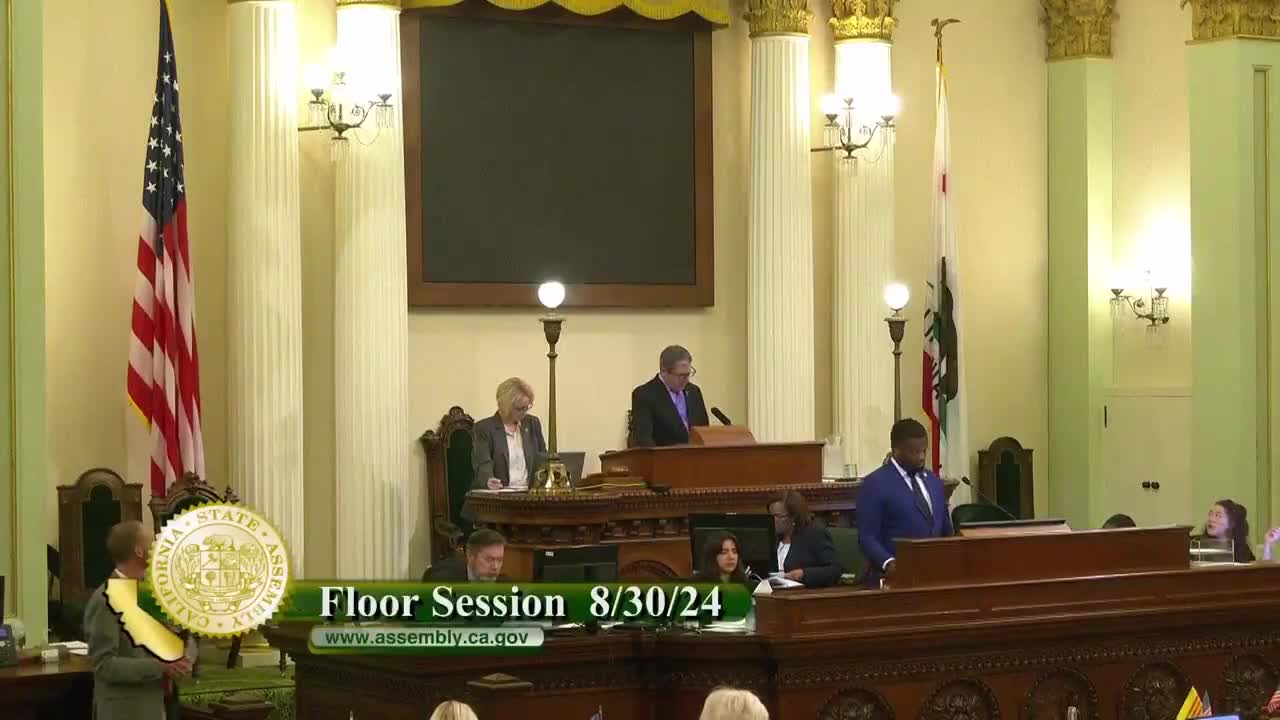 58SEC
Assembly Floor
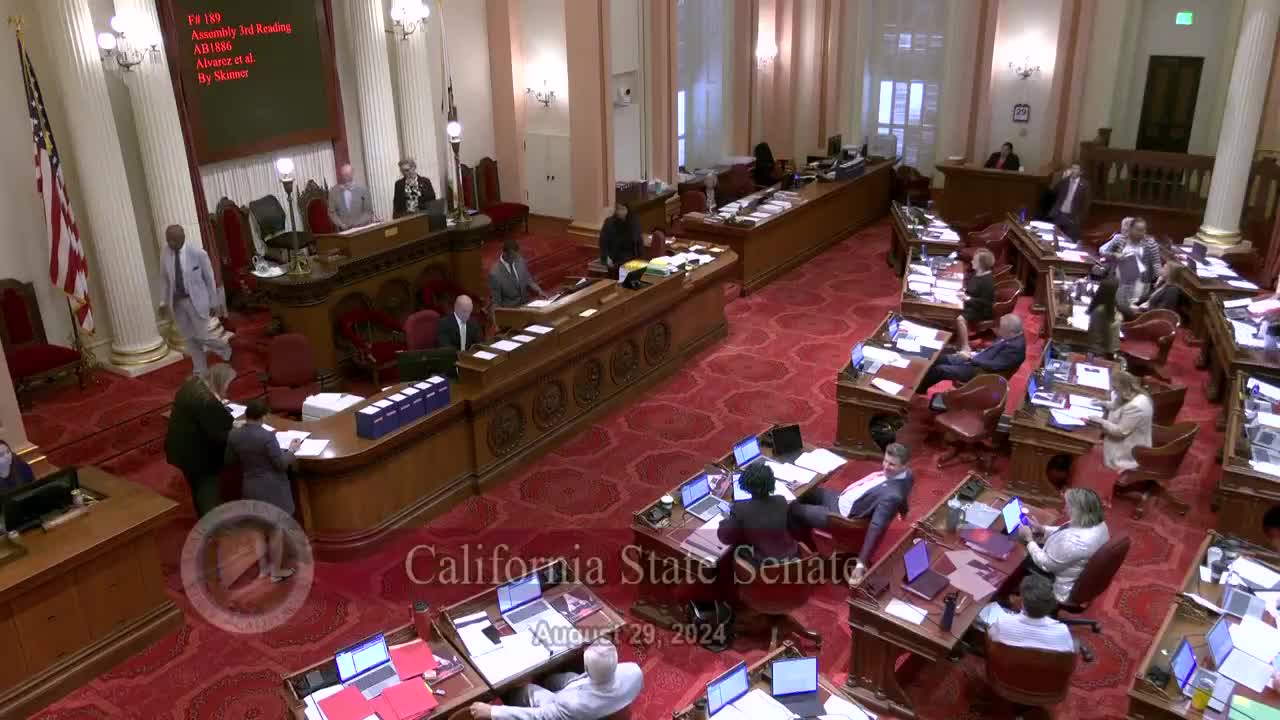 2MIN
Senate Floor
 7MIN
Senate Standing Committee on Energy, Utilities and Communications
 1MIN
Assembly Floor
 2MIN
Assembly Standing Committee on Appropriations
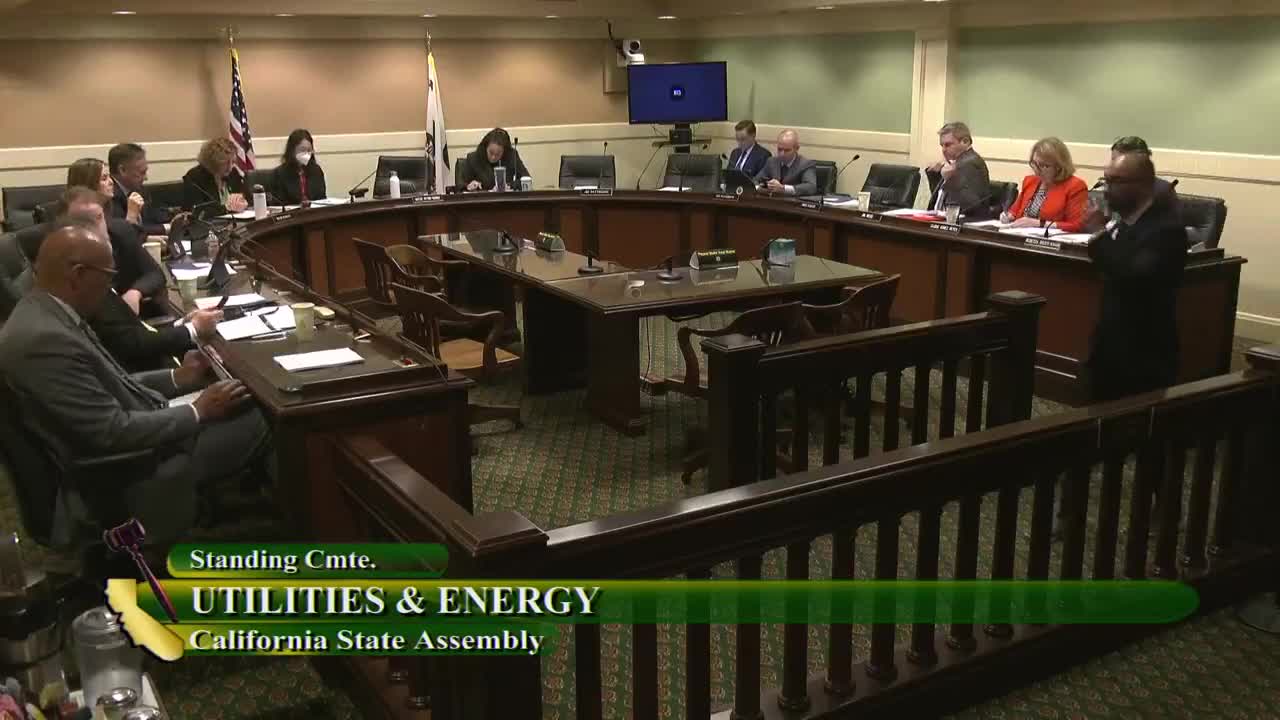 8MIN
Assembly Standing Committee on Utilities and Energy
Bill Author



