AB 2682: Santa Clara Valley Open-Space Authority.
- Session Year: 2023-2024
- House: Assembly
- Latest Version Date: 2024-09-27
Current Status:
Passed
(2024-09-27: Chaptered by Secretary of State - Chapter 733, Statutes of 2024.)
Introduced
In Committee
First Chamber
In Committee
Second Chamber
Enacted
(1)Existing law creates the Santa Clara Valley Open-Space Authority, and prescribes the jurisdiction and functions and duties of the authority. Existing law authorizes the authority, among other things, to acquire, hold, use, enjoy, and lease or dispose of real and personal property, within or without the authoritys jurisdiction, necessary to the full exercise of its powers. Existing law requires the authority to acquire remote ranchlands east of the westernmost ridgeline of the Diablo Range as permanent open space only through conservation easement purchases or the granting of lands or conservation easements by owners to the authority.
This bill would instead require the authority to acquire remote ranchlands east of the westernmost ridgeline of the Diablo Range as permanent open space only from willing sellers through conservation easement or fee title purchases or the granting of lands or conservation easements by owners to the authority.
(2)Existing law authorizes the governing board of the authority to contract with any person or public agency for any services, supplies, equipment, or materials, or for the construction or completion of any building, structure, or improvement. Existing law requires a contract for any supplies, equipment, or materials that exceeds $25,000 to be contracted for and let to the lowest responsible bidder. Existing law requires a contract of $75,000 or less to be let by informal bidding procedures, but requires a contract of more than $75,000 to be let by formal bidding procedures.
This bill, among other things, would authorize the governing board to also contract for the maintenance or repair of any building, structure, or improvement. The bill would increase the amount by which a contract for any supplies, equipment, or materials may be contracted for and let to the lowest responsible bidder to $50,000. The bill would increase the amount by which a contract for any supplies, equipment, or materials to be let by informal bidding procedures to $100,000 or less, and would increase the amount by which a contract for any supplies, equipment, or materials to be let by formal bidding procedures to more than $100,000. The bill would require a contract for the construction, completion, maintenance, or repair of any building, structure, or improvement that exceeds $25,000 to be contracted for and let to the lowest responsible bidder. The bill would require a contract for the construction, completion, maintenance, or repair of any building, structure, or improvement of $75,000 or less to be let by informal bidding procedures, and would require a contract for the construction, completion, maintenance, or repair of any building, structure, or improvement of more than $75,000 to be let by formal bidding procedures. The bill would authorize the governing board to appoint a general manager to be the authoritys chief administrative officer. The bill would authorize the governing board to authorize the general manager to bind the authority, in accordance with governing board policy adopted in an open meeting and without advertising, for contracts for any services, supplies, equipment, or materials, or for the construction, completion, maintenance, or repair of any building, structure, or improvement, not exceeding $50,000. The bill would require all expenditures related to contracts for any services, supplies, equipment, or materials, or for the construction, completion, maintenance, or repair of any building, structure, or improvement, approved by the general manager to be reported to the governing board at its next regular meeting.
(3)Existing law authorizes the authority to impose special taxes, as specified.
This bill instead would authorize the authority to impose qualified special taxes, as defined, subject to specified constitutional and statutory provisions, and to provide for an exemption for persons who are 65 years of age or older, for persons receiving Supplemental Security Income for a disability, or for persons receiving Social Security Disability Insurance benefits, as specified. The bill would authorize the authority to enter into an agreement with a county to collect any special tax on behalf of the authority. The bill would require the authority, if it provides for an exemption from a qualified special tax described above, and contracts or enters into an agreement with the county to collect the qualified special tax within the authoritys jurisdiction, to annually provide specified information relating to that exemption to the county tax collector. The bill would require a county tax collector that contracts or enters into an agreement with the authority and receives that information to include a hyperlink, identified as Parcel Tax Exemptions, on the tax collectors internet website home page to another location on the tax collectors internet website that contains the information submitted by the authority to the tax collector relating to that exemption, except as specified.
(4)Existing law authorizes the authority, for its purposes, to levy assessments, as provided, and incur indebtedness to finance capital improvements, as specified.
This bill would authorize the authority to finance facilities and issue bonds for its purposes pursuant to the Mello-Roos Community Facilities Act of 1982.
(1)Existing law creates the Santa Clara Valley Open-Space Authority, and prescribes the jurisdiction and functions and duties of the authority. Existing law authorizes the authority, among other things, to acquire, hold, use, enjoy, and lease or dispose of real and personal property, within or without the authoritys jurisdiction, necessary to the full exercise of its powers. Existing law requires the authority to acquire remote ranchlands east of the westernmost ridgeline of the Diablo Range as permanent open space only through conservation easement purchases or the granting of lands or conservation easements by owners to the authority.
This bill would instead require the authority to acquire remote ranchlands east of the westernmost ridgeline of the Diablo Range as permanent open space only from willing sellers through conservation easement or fee title purchases or the granting of lands or conservation easements by owners to the authority.
(2)Existing law authorizes the governing board of the authority to contract with any person or public agency for any services, supplies, equipment, or materials, or for the construction or completion of any building, structure, or improvement. Existing law requires a contract for any supplies, equipment, or materials that exceeds $25,000 to be contracted for and let to the lowest responsible bidder. Existing law requires a contract of $75,000 or less to be let by informal bidding procedures, but requires a contract of more than $75,000 to be let by formal bidding procedures.
This bill bill, among other things, would authorize the governing board to also contract for the maintenance or repair of any building, structure, or improvement. The bill would increase the amount by which a contract for any supplies, equipment, or materials may be contracted for and let to the lowest responsible bidder to $50,000. The bill would increase the amount by which a contract for any supplies, equipment, or materials to be let by informal bidding procedures to $100,000 or less, and would increase the amount by which a contract for any supplies, equipment, or materials to be let by formal bidding procedures to more than $100,000. The bill would require a contract for the construction, completion, maintenance, or repair of any building, structure, or improvement that exceeds $25,000 to be contracted for and let to the lowest responsible bidder. The bill would require a contract for the construction, completion, maintenance, or repair of any building, structure, or improvement of $75,000 or less to be let by informal bidding procedures, and would require a contract for the construction, completion, maintenance, or repair of any building, structure, or improvement of more than $75,000 to be let by formal bidding procedures. The bill would authorize the governing board to appoint a general manager to be the authoritys chief administrative officer. The bill would authorize the governing board to authorize the general manager to bind the authority, in accordance with the governing boards board policy adopted in an open meeting and without advertising, for contracts for any services, supplies, equipment, or materials, or for the construction, completion, maintenance, or repair of any building, structure, or improvement, not exceeding $50,000. The bill would require all expenditures related to contracts for any services, supplies, equipment, or materials, or for the construction, completion, maintenance, or repair of any building, structure, or improvement, approved by the general manager to be reported to the governing board at its next regular meeting.
(3)Existing law authorizes the authority to impose special taxes, as specified.
This bill instead would authorize the authority to impose qualified special taxes, as defined, subject to specified constitutional and statutory provisions, and to provide for an exemption for persons who are 65 years of age or older, for persons receiving Supplemental Security Income for a disability, or for persons receiving Social Security Disability Insurance benefits, as specified. The bill would authorize the authority to enter into an agreement with a county to collect any special tax on behalf of the authority. The bill would require the authority, if it provides for an exemption from a qualified special tax described above, and contracts or enters into an agreement with the county to collect the qualified special tax within the authoritys jurisdiction, to annually provide specified information relating to that exemption to the county tax collector. The bill would require a county tax collector that contracts or enters into an agreement with the authority and receives that information to include a hyperlink, identified as Parcel Tax Exemptions, on the tax collectors internet website home page to another location on the tax collectors internet website that contains the information submitted by the authority to the tax collector relating to that exemption, except as specified.
(4)Existing law authorizes the authority, for its purposes, to levy assessments, as provided, and incur indebtedness to finance capital improvements, as specified.
This bill would authorize the authority to finance facilities and issue bonds for its purposes pursuant to the Mello-Roos Community Facilities Act of 1982.
(1)Existing law creates the Santa Clara Valley Open-Space Authority, and prescribes the jurisdiction and functions and duties of the authority. Existing law authorizes the authority, among other things, to acquire, hold, use, enjoy, and lease or dispose of real and personal property, within or without the authoritys jurisdiction, necessary to the full exercise of its powers. Existing law requires the authority to acquire remote ranchlands east of the westernmost ridgeline of the Diablo Range as permanent open space only through conservation easement purchases or the granting of lands or conservation easements by owners to the authority.
This bill would instead require the authority to acquire remote ranchlands east of the westernmost ridgeline of the Diablo Range as permanent open space only from willing sellers through conservation easement or fee title purchases or the granting of lands or conservation easements by owners to the authority.
(2)Existing law authorizes the governing board of the authority to contract with any person or public agency for any services, supplies, equipment, or materials, or for the construction or completion of any building, structure, or improvement. Existing law requires a contract for any supplies, equipment, or materials that exceeds $25,000 to be contracted for and let to the lowest responsible bidder. Existing law requires a contract of $75,000 or less to be let by informal bidding procedures, but requires a contract of more than $75,000 to be let by formal bidding procedures.
This bill would increase the amount by which a contract for any supplies, equipment, or materials may be contracted for and let to the lowest responsible bidder to $50,000. The bill would increase the amount by which a contract to be let by informal bidding procedures to $100,000 or less, and would increase the amount by which a contract to be let by formal bidding procedures to more than $100,000. The bill would authorize the governing board to appoint a general manager to be the authoritys chief administrative officer. The bill would authorize the governing board to authorize the general manager to bind the authority, in accordance with the governing boards policy adopted in an open meeting and without advertising, for contracts not exceeding $50,000. The bill would require all expenditures related to contracts approved by the general manager to be reported to the governing board at its next regular meeting.
(3)Existing law authorizes the authority to impose special taxes, as specified.
This bill instead would authorize the authority to impose qualified special taxes, as defined, subject to specified constitutional and statutory provisions, and to provide for an exemption for persons who are 65 years of age or older, for persons receiving Supplemental Security Income for a disability, or for persons receiving Social Security Disability Insurance benefits, as specified. The bill would authorize the authority to enter into an agreement with a county to collect any special tax on behalf of the authority. The bill would require the authority, if it provides for an exemption from a qualified special tax described above, and contracts or enters into an agreement with the county to collect the qualified special tax within the authoritys jurisdiction, to annually provide specified information relating to that exemption to the county tax collector. The bill would require a county tax collector that contracts or enters into an agreement with the authority and receives that information to include a hyperlink, identified as Parcel Tax Exemptions, on the tax collectors internet website home page to another location on the tax collectors internet website that contains the information submitted by the authority to the tax collector relating to that exemption, except as specified.
(3)(4)Existing law authorizes the authority, for its purposes, to impose special taxes, as specified, levy assessments, as provided, and incur indebtedness to finance capital improvements, as specified.
This bill would authorize the authority to finance facilities and issue bonds for its purposes pursuant to the Mello-Roos Community Facilities Act of 1982.
(1)Existing law creates the Santa Clara Valley Open-Space Authority, and prescribes the jurisdiction and functions and duties of the authority. Existing law authorizes the authority, among other things, to acquire, hold, use, enjoy, and lease or dispose of real and personal property, within or without the authoritys jurisdiction, necessary to the full exercise of its powers. Existing law requires the authority to acquire remote ranchlands east of the westernmost ridgeline of the Diablo Range as permanent open space only through conservation easement purchases or the granting of lands or conservation easements by owners to the authority.
This bill would instead require the authority to acquire remote ranchlands east of the westernmost ridgeline of the Diablo Range as permanent open space only from willing sellers through conservation easement or fee title purchases or the granting of lands or conservation easements by owners to the authority.
(2)Existing law authorizes the governing board of the authority to contract with any person or public agency for any services, supplies, equipment, or materials, or for the construction or completion of any building, structure, or improvement. Existing law requires a contract for any supplies, equipment, or materials that exceeds $25,000 to be contracted for and let to the lowest responsible bidder. Existing law requires a contract of $75,000 or less to be let by informal bidding procedures, but requires a contract of more than $75,000 to be let by formal bidding procedures.
This bill would increase the amount by which a contract for any supplies, equipment, or materials may be contracted for and let to the lowest responsible bidder to $50,000. The bill would increase the amount by which a contract to be let by informal bidding procedures to $100,000 or less, and would increase the amount by which a contract to be let by formal bidding procedures to more than $100,000. The bill would authorize the governing board to appoint a general manager to be the authoritys chief administrative officer. The bill would authorize the governing board to authorize the general manager to bind the authority, in accordance with the governing boards policy adopted in an open meeting and without advertising, for contracts not exceeding $50,000. The bill would require all expenditures related to contracts approved by the general manager to be reported to the governing board at its next regular meeting.
(3)Existing law authorizes the authority, for its purposes, to impose special taxes, as specified, levy assessments, as provided, and incur indebtedness to finance capital improvements, as specified.
This bill would authorize the authority to finance facilities and issue bonds for its purposes pursuant to the Mello-Roos Community Facilities Act of 1982.
(a)The authority may take by grant, appropriation, purchase, gift, devise, condemnation, or lease, and may hold, use, enjoy, and lease or dispose of real and personal property of every kind, and rights in real and personal property, within or without the authoritys jurisdiction, necessary to the full exercise of its powers. The authority may accept and hold open-space easements and purchase development credits wherever the authority may acquire real property.
(b)Priority for open-space acquisition should be focused on those lands closest, most accessible, and visible to the urban area. The remote ranchlands east of the westernmost ridgeline of the Diablo Range shall be acquired as permanent open space only from willing sellers through conservation easement or fee title purchases or the granting of lands or conservation easements by owners to the authority.
(c)Lands subject to the grant of an open-space easement executed and accepted by the authority in accordance with this division are enforceably restricted within the meaning of Section 8 of Article XIII of the California Constitution. An easement or other interest in real property may be dedicated for open-space purposes by the adoption of a resolution by the governing board, and any interest so dedicated may be conveyed only as provided in this section.
(d)The authority shall not validly convey an interest in any real property actually dedicated and used for open-space purposes without the consent of a majority of the voters of the authority voting at a special election called by the governing board and held for that purpose. Consent need not first be obtained for a lease of any real property for a period not exceeding 25 years if that real property remains in open-space or agricultural use for the entire duration of the lease.
SEC. 2.Section 35159 of the Public Resources Code is amended to read:35159.(a)The governing board may contract with any person or public agency for any services, supplies, equipment, or materials, or for the construction, completion, maintenance, or repair of any building, structure, or improvement. The governing board may appoint a general manager to be the chief administrative officer of the authority, and the governing board may authorize the general manager to bind the authority, in accordance with governing board policy that has been adopted in an open meeting and without advertising, for contracts for any services, supplies, equipment, or materials, or for the construction, completion, maintenance, or repair of any building, structure, or improvement, not exceeding fifty thousand dollars ($50,000). All expenditures related to contracts for any services, supplies, equipment, or materials, or for the construction, completion, maintenance, or repair of any building, structure, or improvement, approved by a general manager shall be reported to the governing board at its next regular meeting.
(b)(1)Notwithstanding any other law, a contract for any services, supplies, equipment, or materials that exceeds fifty thousand dollars ($50,000) shall be contracted for and let to the lowest responsible bidder. A contract for any services, supplies, equipment, or materials of one hundred thousand dollars ($100,000) or less may be let by informal bidding procedures, but a contract for any services, supplies, equipment, or materials of more than one hundred thousand dollars ($100,000) shall be let by formal bidding procedures.
(2)A contract for the construction, completion, maintenance, or repair of any building, structure, or improvement that exceeds twenty-five thousand dollars ($25,000) shall be contracted for and let to the lowest responsible bidder. A contract for the construction, completion, maintenance, or repair of any building, structure, or improvement of seventy-five thousand dollars ($75,000) or less may be let by informal bidding procedures, but a contract for the construction, completion, maintenance, or repair of any building, structure, or improvement of more than seventy-five thousand dollars ($75,000) shall be let by formal bidding procedures.
(3)If two or more bids, for a contract described in paragraph (1) or (2), are the same and the lowest, the governing board may accept the one it chooses.
(4)If the governing board delegates authority in the manner specified in subdivision (a) for a contract for the construction, completion, maintenance, or repair of any building, structure, or improvement, the decision by the chief administrative officer of the authority shall be binding on the authority, and all existing protest and grievance procedures regarding that decision remain valid.
(5)(A)Notwithstanding paragraph (1), contracts for services, including, but not limited to, planning, consulting, legal, or appraisal services, or to contracts for services authorized to be procured pursuant to Chapter 10 (commencing with Section 4525) of Division 5 of Title 1 of the Government Code, are not required to be contracted for or let to the lowest responsible bidder, if the governing board awards the contract to the most responsible and qualified bidder.
(B)For purposes of this subdivision, most responsible and qualified bidder means the bidder deemed by the governing board that best fits the needs of the service contract or meets the criteria prescribed in subparagraph (C).
(C)In determining the most responsible and qualified bidder, the governing board may use criteria, including, but not limited to, all of the following:
(i)Experience of the bidder as a firm, including past performance of the firm on contracts of similar size and scope.
(ii)Experience and qualifications of personnel employed by the bidder.
(iii)Demonstrated understanding of the scope of the service, including schedule and plan to accomplish the service.
(iv)Best overall financial return to the governing board on the contract.
(v)In addition, for purposes of this paragraph, a responsible bidder who has demonstrated the attribute of trustworthiness, as well as quality, fitness, and experience to satisfactorily perform the work or provide the goods required.
(c)The notice inviting bids shall set a date for the opening of bids. The first publication or posting of the notice shall be at least 10 days before the date of opening the bids. For purposes of contracts requiring formal bidding, notice shall be published at least twice, at least five days apart, in a newspaper of general circulation in the authority, or if there is none, it shall be posted in at least three public places in the authority. The notice shall distinctly state the nature of the contract.
(d)The governing board may reject any bids. If the governing board rejects all bids, it may either readvertise or adopt a resolution, by four-fifths vote, declaring that the contract can be performed more economically by the employees of the authority or obtained at a lower price on the open market. Upon adoption of the resolution, the governing board may undertake the project without further complying with subdivisions (b) and (c).
(e)If bids are not received, the governing board may undertake the project without further complying with subdivisions (b) to (d), inclusive.
(f)(1)In the case of an emergency, the governing board may adopt a resolution by a two-thirds vote of all the members of the governing board declaring that the public interest and necessity demand immediate expenditure of public money to safeguard life, health, or property. The governing board may expend any sum required in the emergency without submitting the expenditure to bid.
(2)For purposes of this subdivision, emergency means a sudden, unexpected occurrence, involving a clear and imminent danger, demanding immediate action to prevent or mitigate loss of, or damage to, life, health, property, or essential public services. Emergency includes a fire, a flood, an earthquake, or other soil or geologic movements, as well as a riot, an accident, or sabotage.
SEC. 3.Section 35172 of the Public Resources Code is repealed.SEC. 4.Section 35172 is added to the Public Resources Code, to read:35172.(a)Subject to Section 4 of Article XIIIA of the California Constitution, the authority may impose qualified special taxes within the authoritys jurisdiction pursuant to the procedures established in Article 3.5 (commencing with Section 50075) of Chapter 1 of Part 1 of Division 1 of Title 5 of the Government Code and any other applicable procedures provided by law.
(b)(1)As used in this section, qualified special taxes means special taxes that apply uniformly to all taxpayers or all real property within the authoritys jurisdiction, except that unimproved property may be taxed at a lower rate than improved property. Qualified special taxes may include taxes that provide for an exemption from those taxes for any or all of the following taxpayers:
(A)Persons who are 65 years of age or older.
(B)Persons receiving Supplemental Security Income for a disability, regardless of age.
(C)Persons receiving Social Security Disability Insurance benefits, regardless of age, whose yearly income does not exceed 250 percent of the 2012 federal poverty guidelines issued by the United States Department of Health and Human Services.
(2)Qualified special taxes does not include special taxes imposed on a particular class of property or taxpayers.
(c)Any exemption granted pursuant to subdivision (b) shall remain in effect until the taxpayer becomes ineligible. If the taxpayer becomes ineligible for the exemption for any reason, a new exemption may be granted in the same manner.
(d)(1)If the authority provides for an exemption for a qualified special tax pursuant to subdivision (b), and the authority contracts or enters into an agreement with the county to collect the qualified special tax within the authoritys jurisdiction, the authority shall annually provide to the tax collector of that county all of the following information:
(A)A hyperlink to the location on the internet website of the authority that contains exemption information, if available.
(B)A hyperlink to the location on the internet website of the authority that contains the application for the exemption, if available.
(C)A telephone number to provide persons with exemption information or direct persons requesting exemption information.
(2)If a county contracts or enters into an agreement with the authority to collect a qualified special tax for the authority and for which the authority provides for an exemption pursuant to subdivision (b), the tax collector of that county shall include a hyperlink, which shall be identified as Parcel Tax Exemptions, on the tax collectors internet website home page to another location on the tax collectors internet website that posts the hyperlinks and information provided by the authority in paragraph (1).
(3)Paragraph (2) shall only apply when the authority provides the information to the tax collector required by paragraph (1). The tax collector shall not post any hyperlink to a location on the authoritys internet website that is invalid.
SEC. 5.Section 35175 is added to the Public Resources Code, to read:35175.The authority may finance facilities and issue bonds under this division pursuant to the Mello-Roos Community Facilities Act of 1982 (Chapter 2.5 (commencing with Section 53311) of Part 1 of Division 2 of Title 5 of the Government Code).
(a)The authority may take by grant, appropriation, purchase, gift, devise, condemnation, or lease, and may hold, use, enjoy, and lease or dispose of real and personal property of every kind, and rights in real and personal property, within or without the authoritys jurisdiction, necessary to the full exercise of its powers. The authority may accept and hold open-space easements and purchase development credits wherever the authority may acquire real property.
(b)Priority for open-space acquisition should be focused on those lands closest, most accessible, and visible to the urban area. The remote ranchlands east of the westernmost ridgeline of the Diablo Range shall be acquired as permanent open space only from willing sellers through conservation easement or fee title purchases or the granting of lands or conservation easements by owners to the authority.
(c)Lands subject to the grant of an open-space easement executed and accepted by the authority in accordance with this division are enforceably restricted within the meaning of Section 8 of Article XIII of the California Constitution. An easement or other interest in real property may be dedicated for open-space purposes by the adoption of a resolution by the governing board, and any interest so dedicated may be conveyed only as provided in this section.
(d)The authority shall not validly convey an interest in any real property actually dedicated and used for open-space purposes without the consent of a majority of the voters of the authority voting at a special election called by the governing board and held for that purpose. Consent need not first be obtained for a lease of any real property for a period not exceeding 25 years if that real property remains in open-space or agricultural use for the entire duration of the lease.
SEC. 2.Section 35159 of the Public Resources Code is amended to read:35159.(a)The governing board may contract with any person or public agency for any services, supplies, equipment, or materials, or for the construction or completion construction, completion, maintenance, or repair of any building, structure, or improvement. The governing board may appoint a general manager to be the chief administrative officer of the authority, and the governing board may authorize the general manager to bind the authority, in accordance with governing board policy that has been adopted in an open meeting and without advertising, for contracts for any services, supplies, equipment, or materials, or for the construction, completion, maintenance, or repair of any building, structure, or improvement, not exceeding fifty thousand dollars ($50,000). All expenditures related to contracts for any services, supplies, equipment, or materials, or for the construction, completion, maintenance, or repair of any building, structure, or improvement, approved by a general manager shall be reported to the governing board at its next regular meeting.
(b)(1)Notwithstanding any other law, a contract for any services, supplies, equipment, or materials, materials that exceeds fifty thousand dollars ($50,000) shall be contracted for and let to the lowest responsible bidder. If two or more bids are the same and the lowest, the governing board may accept the one it chooses. A contract for any services, supplies, equipment, or materials of one hundred thousand dollars ($100,000) or less may be let by informal bidding procedures, but a contract for any services, supplies, equipment, or materials of more than one hundred thousand dollars ($100,000) shall be let by formal bidding procedures. The governing board may appoint a general manager to be the chief administrative officer of the authority. The governing board may authorize the general manager to bind the authority, in accordance with the governing boards policy adopted in an open meeting and without advertising, for contracts not exceeding fifty thousand dollars ($50,000). All expenditures related to contracts approved by the general manager shall be reported to the governing board at its next regular meeting.
(2)A contract for the construction, completion, maintenance, or repair of any building, structure, or improvement that exceeds twenty-five thousand dollars ($25,000) shall be contracted for and let to the lowest responsible bidder. A contract for the construction, completion, maintenance, or repair of any building, structure, or improvement of seventy-five thousand dollars ($75,000) or less may be let by informal bidding procedures, but a contract for the construction, completion, maintenance, or repair of any building, structure, or improvement of more than seventy-five thousand dollars ($75,000) shall be let by formal bidding procedures.
(3)If two or more bids, for a contract described in paragraph (1) or (2), are the same and the lowest, the governing board may accept the one it chooses.
(4)If the governing board delegates authority in the manner specified in subdivision (a) for a contract for the construction, completion, maintenance, or repair of any building, structure, or improvement, the decision by the chief administrative officer of the authority shall be binding on the authority, and all existing protest and grievance procedures regarding that decision remain valid.
(2)(5)(A)This subdivision shall not apply to contracts Notwithstanding paragraph (1), contracts for services, including, but not limited to, planning, consulting, legal, or appraisal services, or to contracts for services authorized to be procured pursuant to Chapter 10 (commencing with Section 4525) of Division 5 of Title 1 of the Government Code, are not required to be contracted for or let to the lowest responsible bidder, if the governing board awards the contract to the most responsible and qualified bidder.
(B)For purposes of this subdivision, most responsible and qualified bidder means the bidder deemed by the governing board that best fits the needs of the service contract or meets the criteria prescribed in subparagraph (C).
(C)In determining the most responsible and qualified bidder, the governing board may use criteria, including, but not limited to, all of the following:
(i)Experience of the bidder as a firm, including past performance of the firm on contracts of similar size and scope.
(ii)Experience and qualifications of personnel employed by the bidder.
(iii)Demonstrated understanding of the scope of the service, including schedule and plan to accomplish the service.
(iv)Best overall financial return to the governing board on the contract.
(v)In addition, for purposes of this paragraph, a responsible bidder who has demonstrated the attribute of trustworthiness, as well as quality, fitness, and experience to satisfactorily perform the work or provide the goods required.
(c)The notice inviting bids shall set a date for the opening of bids. The first publication or posting of the notice shall be at least 10 days before the date of opening the bids. For purposes of contracts requiring formal bidding, notice shall be published at least twice, at least five days apart, in a newspaper of general circulation in the authority, or if there is none, it shall be posted in at least three public places in the authority. The notice shall distinctly state the nature of the contract.
(d)The governing board may reject any bids. If the governing board rejects all bids, it may either readvertise or adopt a resolution, by four-fifths vote, declaring that the contract can be performed more economically by the employees of the authority or obtained at a lower price on the open market. Upon adoption of the resolution, the governing board may undertake the project without further complying with subdivisions (b) and (c).
(e)If bids are not received, the governing board may undertake the project without further complying with subdivisions (b) to (d), inclusive.
(f)(1)In the case of an emergency, the governing board may adopt a resolution by a two-thirds vote of all the members of the governing board declaring that the public interest and necessity demand immediate expenditure of public money to safeguard life, health, or property. The governing board may expend any sum required in the emergency without submitting the expenditure to bid.
(2)For purposes of this subdivision, emergency means a sudden, unexpected occurrence, involving a clear and imminent danger, demanding immediate action to prevent or mitigate loss of, or damage to, life, health, property, or essential public services. Emergency includes a fire, a flood, an earthquake, or other soil or geologic movements, as well as a riot, an accident, or sabotage.
SEC. 3.Section 35172 of the Public Resources Code is repealed.SEC. 4.Section 35172 is added to the Public Resources Code, to read:35172.(a)Subject to Section 4 of Article XIIIA of the California Constitution, the authority may impose qualified special taxes within the authoritys jurisdiction pursuant to the procedures established in Article 3.5 (commencing with Section 50075) of Chapter 1 of Part 1 of Division 1 of Title 5 of the Government Code and any other applicable procedures provided by law.
(b)(1)As used in this section, qualified special taxes means special taxes that apply uniformly to all taxpayers or all real property within the authoritys jurisdiction, except that unimproved property may be taxed at a lower rate than improved property. Qualified special taxes may include taxes that provide for an exemption from those taxes for any or all of the following taxpayers:
(A)Persons who are 65 years of age or older.
(B)Persons receiving Supplemental Security Income for a disability, regardless of age.
(C)Persons receiving Social Security Disability Insurance benefits, regardless of age, whose yearly income does not exceed 250 percent of the 2012 federal poverty guidelines issued by the United States Department of Health and Human Services.
(2)Qualified special taxes does not include special taxes imposed on a particular class of property or taxpayers.
(c)Any exemption granted pursuant to subdivision (b) shall remain in effect until the taxpayer becomes ineligible. If the taxpayer becomes ineligible for the exemption for any reason, a new exemption may be granted in the same manner.
(d)(1)If the authority provides for an exemption for a qualified special tax pursuant to subdivision (b), and the authority contracts or enters into an agreement with the county to collect the qualified special tax within the authoritys jurisdiction, the authority shall annually provide to the tax collector of that county all of the following information:
(A)A hyperlink to the location on the internet website of the authority that contains exemption information, if available.
(B)A hyperlink to the location on the internet website of the authority that contains the application for the exemption, if available.
(C)A telephone number to provide persons with exemption information or direct persons requesting exemption information.
(2)If a county contracts or enters into an agreement with the authority to collect a qualified special tax for the authority and for which the authority provides for an exemption pursuant to subdivision (b), the tax collector of that county shall include a hyperlink, which shall be identified as Parcel Tax Exemptions, on the tax collectors internet website home page to another location on the tax collectors internet website that posts the hyperlinks and information provided by the authority in paragraph (1).
(3)Paragraph (2) shall only apply when the authority provides the information to the tax collector required by paragraph (1). The tax collector shall not post any hyperlink to a location on the authoritys internet website that is invalid.
SEC. 5.Section 35175 is added to the Public Resources Code, to read:35175.The authority may finance facilities and issue bonds under this division pursuant to the Mello-Roos Community Facilities Act of 1982 (Chapter 2.5 (commencing with Section 53311) of Part 1 of Division 2 of Title 5 of the Government Code).
(a)The authority may take by grant, appropriation, purchase, gift, devise, condemnation, or lease, and may hold, use, enjoy, and lease or dispose of real and personal property of every kind, and rights in real and personal property, within or without the authoritys jurisdiction, necessary to the full exercise of its powers. The authority may accept and hold open-space easements and purchase development credits wherever the authority may acquire real property.
(b)Priority for open-space acquisition should be focused on those lands closest, most accessible, and visible to the urban area. The remote ranchlands east of the westernmost ridgeline of the Diablo Range shall be acquired as permanent open space only from willing sellers through conservation easement or fee title purchases or the granting of lands or conservation easements by owners to the authority.
(c)Lands subject to the grant of an open-space easement executed and accepted by the authority in accordance with this division are enforceably restricted within the meaning of Section 8 of Article XIII of the California Constitution. An easement or other interest in real property may be dedicated for open-space purposes by the adoption of a resolution by the governing board, and any interest so dedicated may be conveyed only as provided in this section.
(d)The authority shall not validly convey an interest in any real property actually dedicated and used for open-space purposes without the consent of a majority of the voters of the authority voting at a special election called by the governing board and held for that purpose. Consent need not first be obtained for a lease of any real property for a period not exceeding 25 years if that real property remains in open-space or agricultural use for the entire duration of the lease.
SEC. 2.Section 35159 of the Public Resources Code is amended to read:35159.(a)The governing board may contract with any person or public agency for any services, supplies, equipment, or materials, or for the construction or completion of any building, structure, or improvement.
(b)(1)Notwithstanding any other law, a contract for any supplies, equipment, or materials, that exceeds fifty thousand dollars ($50,000) shall be contracted for and let to the lowest responsible bidder. If two or more bids are the same and the lowest, the governing board may accept the one it chooses. A contract of one hundred thousand dollars ($100,000) or less may be let by informal bidding procedures, but a contract of more than one hundred thousand dollars ($100,000) shall be let by formal bidding procedures. The governing board may appoint a general manager to be the chief administrative officer of the authority. The governing board may authorize the general manager to bind the authority, in accordance with the governing boards policy adopted in an open meeting and without advertising, for contracts not exceeding fifty thousand dollars ($50,000). All expenditures related to contracts approved by the general manager shall be reported to the governing board at its next regular meeting.
(2)(A)This subdivision shall not apply to contracts for services, including, but not limited to, planning, consulting, legal, or appraisal services, or to contracts for services authorized to be procured pursuant to Chapter 10 (commencing with Section 4525) of Division 5 of Title 1 of the Government Code, if the governing board awards the contract to the most responsible and qualified bidder.
(B)For purposes of this subdivision, most responsible and qualified bidder means the bidder deemed by the governing board that best fits the needs of the service contract or meets the criteria prescribed in subparagraph (C).
(C)In determining the most responsible and qualified bidder, the governing board may use criteria, including, but not limited to, all of the following:
(i)Experience of the bidder as a firm, including past performance of the firm on contracts of similar size and scope.
(ii)Experience and qualifications of personnel employed by the bidder.
(iii)Demonstrated understanding of the scope of the service, including schedule and plan to accomplish the service.
(iv)Best overall financial return to the governing board on the contract.
(v)In addition, for purposes of this paragraph, a responsible bidder who has demonstrated the attribute of trustworthiness, as well as quality, fitness, and experience to satisfactorily perform the work or provide the goods required.
(c)The notice inviting bids shall set a date for the opening of bids. The first publication or posting of the notice shall be at least 10 days before the date of opening the bids. For purposes of contracts requiring formal bidding, notice shall be published at least twice, at least five days apart, in a newspaper of general circulation in the authority, or if there is none, it shall be posted in at least three public places in the authority. The notice shall distinctly state the nature of the contract.
(d)The governing board may reject any bids. If the governing board rejects all bids, it may either readvertise or adopt a resolution, by four-fifths vote, declaring that the contract can be performed more economically by the employees of the authority or obtained at a lower price on the open market. Upon adoption of the resolution, the governing board may undertake the project without further complying with subdivisions (b) and (c).
(e)If bids are not received, the governing board may undertake the project without further complying with subdivisions (b) to (d), inclusive.
(f)(1)In the case of an emergency, the governing board may adopt a resolution by a two-thirds vote of all the members of the governing board declaring that the public interest and necessity demand immediate expenditure of public money to safeguard life, health, or property. The governing board may expend any sum required in the emergency without submitting the expenditure to bid.
(2)For purposes of this subdivision, emergency means a sudden, unexpected occurrence, involving a clear and imminent danger, demanding immediate action to prevent or mitigate loss of, or damage to, life, health, property, or essential public services. Emergency includes a fire, a flood, an earthquake, or other soil or geologic movements, as well as a riot, an accident, or sabotage.
SEC. 3.Section 35172 of the Public Resources Code is repealed.35172.The authority may impose a special tax pursuant to Article 3.5 (commencing with Section 50075) of Chapter 12 of Part 1 of Division 1 of Title 5 of the Government Code. The special taxes shall be applied uniformly to all taxpayers or all real property within the authority, except that unimproved property may be taxed at a lower rate than improved property.SEC. 4.Section 35172 is added to the Public Resources Code, to read:35172.(a)Subject to Section 4 of Article XIIIA of the California Constitution, the authority may impose qualified special taxes within the authoritys jurisdiction pursuant to the procedures established in Article 3.5 (commencing with Section 50075) of Chapter 1 of Part 1 of Division 1 of Title 5 of the Government Code and any other applicable procedures provided by law.
(b)(1)As used in this section, qualified special taxes means special taxes that apply uniformly to all taxpayers or all real property within the authoritys jurisdiction, except that unimproved property may be taxed at a lower rate than improved property. Qualified special taxes may include taxes that provide for an exemption from those taxes for any or all of the following taxpayers:
(A)Persons who are 65 years of age or older.
(B)Persons receiving Supplemental Security Income for a disability, regardless of age.
(C)Persons receiving Social Security Disability Insurance benefits, regardless of age, whose yearly income does not exceed 250 percent of the 2012 federal poverty guidelines issued by the United States Department of Health and Human Services.
(2)Qualified special taxes does not include special taxes imposed on a particular class of property or taxpayers.
(c)Any exemption granted pursuant to subdivision (b) shall remain in effect until the taxpayer becomes ineligible. If the taxpayer becomes ineligible for the exemption for any reason, a new exemption may be granted in the same manner.
(d)(1)If the authority provides for an exemption for a qualified special tax pursuant to subdivision (b), and the authority contracts or enters into an agreement with the county to collect the qualified special tax within the authoritys jurisdiction, the authority shall annually provide to the tax collector of that county all of the following information:
(A)A hyperlink to the location on the internet website of the authority that contains exemption information, if available.
(B)A hyperlink to the location on the internet website of the authority that contains the application for the exemption, if available.
(C)A telephone number to provide persons with exemption information or direct persons requesting exemption information.
(2)If a county contracts or enters into an agreement with the authority to collect a qualified special tax for the authority and for which the authority provides for an exemption pursuant to subdivision (b), the tax collector of that county shall include a hyperlink, which shall be identified as Parcel Tax Exemptions, on the tax collectors internet website home page to another location on the tax collectors internet website that posts the hyperlinks and information provided by the authority in paragraph (1).
(3)Paragraph (2) shall only apply when the authority provides the information to the tax collector required by paragraph (1). The tax collector shall not post any hyperlink to a location on the authoritys internet website that is invalid.
SEC. 3.SEC. 5.Section 35175 is added to the Public Resources Code, to read:35175.The authority may finance facilities and issue bonds under this division pursuant to the Mello-Roos Community Facilities Act of 1982 (Chapter 2.5 (commencing with Section 53311) of Part 1 of Division 2 of Title 5 of the Government Code).
(a)The authority may take by grant, appropriation, purchase, gift, devise, condemnation, or lease, and may hold, use, enjoy, and lease or dispose of real and personal property of every kind, and rights in real and personal property, within or without the authoritys jurisdiction, necessary to the full exercise of its powers. The authority may accept and hold open-space easements and purchase development credits wherever the authority may acquire real property.
(b)Priority for open-space acquisition should be focused on those lands closest, most accessible, and visible to the urban area. The remote ranchlands east of the westernmost ridgeline of the Diablo Range shall be acquired as permanent open space only from willing sellers through conservation easement or fee title purchases or the granting of lands or conservation easements by owners to the authority.
(c)Lands subject to the grant of an open-space easement executed and accepted by the authority in accordance with this division are enforceably restricted within the meaning of Section 8 of Article XIII of the California Constitution. An easement or other interest in real property may be dedicated for open-space purposes by the adoption of a resolution by the governing board, and any interest so dedicated may be conveyed only as provided in this section.
(d)The authority shall not validly convey an interest in any real property actually dedicated and used for open-space purposes without the consent of a majority of the voters of the authority voting at a special election called by the governing board and held for that purpose. Consent need not first be obtained for a lease of any real property for a period not exceeding 25 years if that real property remains in open-space or agricultural use for the entire duration of the lease.
SEC. 2.Section 35159 of the Public Resources Code is amended to read:35159.(a)The governing board may contract with any person or public agency for any services, supplies, equipment, or materials, or for the construction or completion of any building, structure, or improvement.
(b)(1)Notwithstanding any other laws, law, a contract for any supplies, equipment, or materials, that exceeds twenty-five thousand dollars ($25,000) fifty thousand dollars ($50,000) shall be contracted for and let to the lowest responsible bidder. If two or more bids are the same and the lowest, the governing board may accept the one it chooses. A contract of seventy-five thousand dollars ($75,000) one hundred thousand dollars ($100,000) or less may be let by informal bidding procedures, but a contract of more than seventy-five thousand dollars ($75,000) one hundred thousand dollars ($100,000) shall be let by formal bidding procedures. The governing board may appoint a general manager to be the chief administrative officer of the authority. The governing board may authorize the general manager to bind the authority, in accordance with the governing boards policy adopted in an open meeting and without advertising, for contracts not exceeding fifty thousand dollars ($50,000). All expenditures related to contracts approved by the general manager shall be reported to the governing board at its next regular meeting.
(2)(A)This subdivision shall not apply to contracts for services, including, but not limited to, planning, consulting, legal, or appraisal services, or to contracts for services authorized to be procured pursuant to Chapter 10 (commencing with Section 4525) of Division 5 of Title 1 of the Government Code, if the governing board awards the contract to the most responsible and qualified bidder.
(B)For purposes of this subdivision, most responsible and qualified bidder means the bidder deemed by the governing board that best fits the needs of the service contract or meets the criteria prescribed in subparagraph (C).
(C)In determining the most responsible and qualified bidder, the governing board may use criteria, including, but not limited to, all of the following:
(i)Experience of the bidder as a firm, including past performance of the firm on contracts of similar size and scope.
(ii)Experience and qualifications of personnel employed by the bidder.
(iii)Demonstrated understanding of the scope of the service, including schedule and plan to accomplish the service.
(iv)Best overall financial return to the governing board on the contract.
(v)In addition, for purposes of this paragraph, a responsible bidder who has demonstrated the attribute of trustworthiness, as well as quality, fitness, and experience to satisfactorily perform the work or provide the goods required.
(c)The notice inviting bids shall set a date for the opening of bids. The first publication or posting of the notice shall be at least 10 days before the date of opening the bids. For purposes of contracts requiring formal bidding, notice shall be published at least twice, at least five days apart, in a newspaper of general circulation in the authority, or if there is none, it shall be posted in at least three public places in the authority. The notice shall distinctly state the nature of the contract.
(d)The governing board may reject any bids. If the governing board rejects all bids, it may either readvertise or adopt a resolution, by four-fifths vote, declaring that the contract can be performed more economically by the employees of the authority or obtained at a lower price on the open market. Upon adoption of the resolution, the governing board may undertake the project without further complying with subdivisions (b) and (c).
(e)If bids are not received, the governing board may undertake the project without further complying with subdivisions (b) to (d), inclusive.
(f)(1)In the case of an emergency, the governing board may adopt a resolution by a two-thirds vote of all the members of the governing board declaring that the public interest and necessity demand immediate expenditure of public money to safeguard life, health, or property. The governing board may expend any sum required in the emergency without submitting the expenditure to bid.
For the purpose(2)For purposes of this subdivision, emergency means a sudden, unexpected occurrence, involving a clear and imminent danger, demanding immediate action to prevent or mitigate loss of, or damage to, life, health, property, or essential public services. Emergency includes a fire, a flood, an earthquake, or other soil or geologic movements, as well as a riot, an accident, or sabotage.
SEC. 3.Section 35175 is added to the Public Resources Code, to read:35175.The authority may finance facilities and issue bonds under this division pursuant to the Mello-Roos Community Facilities Act of 1982 (Chapter 2.5 (commencing with Section 53311) of Part 1 of Division 2 of Title 5 of the Government Code).
|
Date
|
Status
|
|---|---|
| Sep 27, 2024 | Chaptered by Secretary of State - Chapter 733, Statutes of 2024. |
| Sep 27, 2024 | Approved by the Governor. |
| Aug 27, 2024 | Enrolled and presented to the Governor at 12 p.m. |
| Aug 20, 2024 | In Assembly. Ordered to Engrossing and Enrolling. |
| Aug 20, 2024 | Read third time. Passed. Ordered to the Assembly. (Ayes 31. Noes 8. Page 5229.). |
| Jun 27, 2024 | Read second time. Ordered to third reading. |
| Jun 26, 2024 | From committee: Do pass. (Ayes 5. Noes 2.) (June 26). |
| May 22, 2024 | Referred to Com. on L. GOV. |
| May 13, 2024 | In Senate. Read first time. To Com. on RLS. for assignment. |
| May 13, 2024 | Read third time. Passed. Ordered to the Senate. (Ayes 58. Noes 5. Page 5187.) |
| May 6, 2024 | Read third time and amended. Ordered to third reading. (Page 5108.) |
| Apr 29, 2024 | Read second time. Ordered to third reading. |
| Apr 25, 2024 | From committee: Do pass. (Ayes 7. Noes 0.) (April 24). |
| Apr 17, 2024 | Re-referred to Com. on L. GOV. |
| Apr 16, 2024 | From committee chair, with author's amendments: Amend, and re-refer to Com. on L. GOV. Read second time and amended. |
| Mar 4, 2024 | Referred to Com. on L. GOV. |
| Feb 15, 2024 | From printer. May be heard in committee March 16. |
| Feb 14, 2024 | Read first time. To print. |
|
Date
|
Description
|
Location
|
Votes
|
|
|---|---|---|---|---|
| Aug 20, 2024 | Assembly 3rd Reading AB2682 Kalra By Laird | Senate Floor |
Passed |
|
| Jun 26, 2024 | Do pass | Senate Standing Committee on Local Government |
Passed |
|
| May 13, 2024 | AB 2682 Kalra Assembly Third Reading | Assembly Floor |
Passed |
|
| Apr 24, 2024 | Do pass. | Assembly Standing Committee on Local Government |
Passed |
This list shows positions taken on this bill by organizations on the date displayed, which is linked to the original source.
Positions by individuals are not included.
|
Organization
|
Position
|
Date
|
|---|---|---|
| California Special Districts Association | ** Support | |
| Lighthouse Public Affairs | * Support | Jun 26, 2024 |
| Santa Clara Valley Open Space Authority | ** Support | |
| Santa Clara Valley Water District | ** Support | |
| Valley Water | * Support | Jun 26, 2024 |
SENATE RULES COMMITTEE Office of Senate Floor Analyses (916) 651-1520 Fax: (916) 327-4478 | AB 2682 |
THIRD READING
Bill No: AB 2682
Author: Kalra (D)
Amended: 5/6/24 in Assembly
Vote: 21
SENATE LOCAL GOVERNMENT COMMITTEE: 5-2, 6/26/24
AYES: Durazo, Glazer, Skinner, Wahab, Wiener
NOES: Seyarto, Dahle
ASSEMBLY FLOOR: 58-5, 5/13/24 - See last page for vote
SUBJECT: Santa Clara Valley Open-Space Authority
SOURCE: Santa Clara Valley Open-Space Authority
DIGEST:
This bill make a number of changes to how the Santa Clara Valley Open-Space Authority can operate.
ANALYSIS:
Existing law:
- Creates the Santa Clara Valley Open-Space Authority (Authority) to preserve open space and create greenbelts to counter the conversion of lands into urban uses.
- Funds the Authority through an annual $24 parcel tax and various grants and gifts.
- Requires the Authority to be governed by a seven-member Board of Directors, each of whom is elected to a four-year term and each director represents one of the Authority’s seven governing districts.
- States the Authority:
- Can accept and hold all types of property;
- Must, when acquiring property, focus on those lands closest, most accessible, and visible to the urban area.
- Acquire the remote ranchlands east of the westernmost ridgeline of the Diablo Range as permanent open space only through conservation easement purchases or the granting of lands or conservation easements by owners to the authority.
- Must ensure lands subject to the grant of an open-space easement executed and accepted by the Authority are restricted within the meaning of Section 8 of Article XIII of the California Constitution. An easement or other interest in real property may be dedicated for open-space purposes by the adoption of a resolution by the governing board.
- Cannot convey an interest in any real property dedicated and used for open-space purposes without the consent of a majority of the voters of the Authority at a special election called by the governing board. This requirement does not apply to a lease of any real property for a period of up to 25 years if that real property remains in open-space or agricultural use for the duration of the lease.
- May contract with any person or public agency for any services, supplies, equipment, or materials, or for the construction or completion of any building, structure, or improvement.
- May contract for any supplies, equipment, or materials, worth up to $25,000 by awarding a contract to the lowest responsible bidder. A contract of up to $75,000 may be let by informal bidding procedures, but a contract of more than $75,000 shall be let by formal bidding procedures
- Must, when inviting bids, set a date for the opening of bids. The first publication or posting of the notice shall be at least 10 days before the date of opening the bids. When letting contracts requiring formal bidding, notice shall be published at least twice, at least five days apart, in a newspaper of general circulation, or if there is none, it must be posted in at least three public places in the Authority.
- May impose a special tax that is uniformly applied to all taxpayers or all real property within the Authority, except that unimproved property may be taxed at a lower rate than improved property.
This bill:
- Clarifies the Authority can only acquire remote ranchlands east of the westernmost ridgeline of the Diablo Range as permanent open space from willing sellers through conservation easement or fee title purchases, or the granting of lands or conservation easements by owners to the Authority.
- Increases from $25,000 to $50,000 the level at which any contract for any supplies, equipment, or materials be let to the lowest responsible bidder.
- Increases from $75,000 to $100,000 the level at which a contract must be let using formal bidding procedures. Any contract between $50,000 and $100,000 may be let by relying on informal bidding procedures.
- Authorizes the Authority to appoint a general manager to be the chief administrative officer of the authority and to enter into contracts of up to $50,000 without board approval. All expenditures related to contracts approved by the general manager shall be reported to the governing board at its next regular meeting.
- Specifies the Authority may finance facilities and issue bonds pursuant to the Mello-Roos Community Facilities Act of 1982.
- Revises and recasts the Authority’s ability to impose special taxes, specifying it may impose qualified special taxes within its jurisdiction.
- Defines “qualified special taxes” as special taxes that apply uniformly to all taxpayers or all real property within the Authority’s jurisdiction, except unimproved property may be taxed at a lower rate than improved property. “Qualified special taxes” may include taxes that provide an exemption from those taxes for any or all of the following taxpayers:
- Those 65 years old or older;
- Those who receive Supplemental Security Income for a disability, regardless of age; and
- Those who receive Social Security Disability Insurance benefits, regardless of age, whose yearly income does not exceed 250% of the 2012 federal poverty guidelines issued by the United State Department of Health and Human Services.
8) Specifies “qualified special taxes” does not include special taxes imposed on a particular class of property or taxpayers.
9) Specifies if the Authority provides an exemption for a qualified special tax, and the Authority contracts or enters into an agreement with the county to collect that tax, the Authority shall annually provide the tax collector with:
- A hyperlink to the location on the internet website of the Authority that contains exemption information, if available;
- A hyperlink to the location on the internet website of the Authority that contains the application for the exemption, if available; and
- A telephone number to provide persons with exemption information or direct persons requesting exemption information.
10) Provides if the Authority provides an exemption for a qualified special tax, the county tax collector must include a hyperlink on its website identified as “Parcel Tax Exemptions.”
Background
Santa Clara Valley Open-Space Authority. SB 2027 (Mello, Chapter 822, Statutes of 1992) created the Authority to preserve open space and create greenbelts in order to counter the conversion of lands into urban uses. The Authority includes the cities of Campbell, Milpitas, Morgan Hill, San Jose, and Santa Clara, as well as the unincorporated areas of Santa Clara County, and is tasked with prioritizing the acquisition of land closest and most accessible and visible to the urban area and since 1993, it has protected over 28,000 acres of open space, natural areas, watersheds, and wildlife habitat.
Parcel taxes. One common form of local tax is the parcel tax, which can be imposed by cities, counties, and some special districts. Parcel taxes are not ad valorem (i.e., assessed based on the value of a property) like property taxes are. Instead, they are generally a flat rate assessed per parcel regardless of the parcel’s size, or per square foot of a parcel or its improvements. Agencies can generally use parcel tax revenues in almost any way that serves local needs, such as ongoing operational expenses or one-time infrastructure costs. Counties collect parcel taxes as part of the property tax bills mailed out to property owners, then send the parcel tax funds to the appropriate agency.
Mello-Roos. The Mello-Roos Community Facilities Act allows counties, cities, special districts, and school districts to levy parcel taxes to finance a wide variety of public works, including parks, recreation centers, schools, libraries, child care facilities, and utility infrastructure. A Mello-Roos Community Facilities Districts (CFD) issues bonds against these special taxes to finance the public works projects.
To form a CFD, a local agency's legislative body must adopt a resolution of intention to establish the district, which must:
- Describe the district's boundaries;
- Describe the facilities and services proposed to be financed;
- State that a special tax, secured by a lien against real property, will be annually levied;
- Specify, in detail, the rate, method of apportionment, and manner of collections of the special tax; and
- Fix a time and place for public hearing.
After holding the hearing and considering protests, the legislative body must adopt a resolution of formation containing all of the information provided in the resolution of intention and, if a special tax is to be levied, include additional information about the tax levy.
Comments
- Purpose of the bill. According to the author, “AB 2682 would allow the purchase of certain lands from willing sellers in fee title, update contracting requirements for materials, and grant the ability to employ Community Facilities Districts (CFDs). These changes will align the Authority with similar jurisdictions and better facilitate their mission to conserve the natural environment, support sustainable agriculture, and connect people to nature.”
- Go east of the west, young man. This bill clarifies the Authority may acquire remote ranchlands east of the westernmost ridgeline of the Diablo Range as permanent open space only from willing sellers through a conservation easement or fee title purchases, or the granting of lands or conservation easements by owners to the Authority. This provision is consistent with the manner in which the authority can acquire land throughout the rest of its jurisdiction.
- Keeping up with the Jones’. The levels at which the Authority’s contracts must be awarded to the lowest responsible bidder, be awarded through an informal bidding process, and go through a formal bidding process were last adjusted in 2012. The annual inflation rate since 2012 is about 2.46%, so $25,000 in 2012 dollars is approximately $34,200 in 2024, while $75,000 in 2012 dollars is the equivalent of just under $102,600 in 2012.
This bill increases the amount by which a contract for supplies, equipment, or materials may be contracted for and let to the lowest responsible bidder, from $25,000 to $50,000 and increases the amount at which a contract may be let by formal bidding procedures, from $75,000 to $100,000. Contracts between $50,000 and $100,000 may be let using informal bidding procedures.
- Black tie vs. sport coat & slacks. The formal competitive bidding process usually involves requirements to publicly advertise for the submission of sealed bids, the public opening of bids, and the award of contracts to the lowest responsible bidder that is responsive to the solicitation for bids.
The disadvantage of the formal competitive bidding process is it can be cumbersome and complicated, and in many instances the costs associated with administering the bid process outweigh the cost savings associated with the closed bid process.
By contrast, the informal bidding process, which is developed under the California Uniform Public Construction Cost Accounting Act, is seen as simpler and more efficient than the formal competitive bidding without sacrificing an entity’s desire to get the lowest price. The informal process allows agency’s to choose from a pre-approved list of contractors rather than going out to bid and advertising for bids only has to be done once a year, not with every project.
Related/Prior Legislation
AB 2388 (Beall, Chapter 259, Statutes of 2012) increased the Authority’s contract requirements for supplies, equipment, or materials from $10,000 to $25,000 for contracts that must go to the lowest responsible bidder and increased from $50,000 to $75,000, the threshold at which the Authority must award contracts through formal bidding procedures. Contracts between $25,000 and $75,000 could be let using informal bidding procedures.
SB 422 (Monning, Chapter 99, Statutes of 2015), changed the name of the Authority, authorized it to acquire interest in real property located outside of its boundaries, and authorized the Authority’s boundaries to be altered by the annexation of contiguous territory in the unincorporated area of a neighboring county.
FISCAL EFFECT: Appropriation: No Fiscal Com.: No Local: No
SUPPORT: (Verified 6/26/24)
Santa Clara Valley Open-Space Authority (source)
California Special Districts Association
Santa Clara Valley Water District
OPPOSITION: (Verified 6/26/24)
None received
ARGUMENTS IN SUPPORT: According to the Santa Clara Valley Open-Space Authority:
“The Open Space Authority is a public, independent special district created by the California State Legislature in 1993, as Division 26 of the Public Resources Code (PRC), commencing with Section 35100, with the mission to conserve the natural environment, support agriculture, and connect people to nature by protecting open spaces, natural areas, and working farms and ranches for future generations. The Authority enjoys its own unique statute while sister agency regional park, park and open space, and open space districts are governed by PRC § 5500. Accordingly, the Authority has pursued amendments over the years to modify the original
“Enabling Act in 2007, 2012, 2015, and lastly in 2019 to provide new financing and program authorities as well as to formally change the name of the Authority to its current version. AB 2682 is seeking to amend sections of Division 26 to further facilitate the Authority’s mission. The proposed amendments would enable greater open space protection in the Diablo Range, update General Manager expenditure authority to keep up with rising costs, and provide a new power to the Authority to employ Community Facilities Districts for revenue financing, similar the power that other open space districts have.
“In addition, AB 2682 is providing the Authority with the power to facilitate exemptions to proposed property taxes assessed by the Authority so that seniors and fixed-income and low-income Californians can receive some financial relief as costs everywhere continue to rise. Currently, PRC § 35172 requires the Authority to assess special taxes in a uniform manner, a requirement that is imposed on some other special districts assessing taxes. In the 2018 legislative session, AB 2458 (Weber) granted school districts with the authority to exempt certain individuals, the same exemption that the Authority seeks in AB 2682. AB 2682 follows precedent set by AB 2458 to bring financial relief to some of our most burdened Californians.”
ASSEMBLY FLOOR: 58-5, 5/13/24
AYES: Addis, Aguiar-Curry, Alvarez, Arambula, Bains, Bennett, Berman, Boerner, Bonta, Bryan, Calderon, Juan Carrillo, Wendy Carrillo, Cervantes, Connolly, Mike Fong, Friedman, Gabriel, Garcia, Gipson, Haney, Hart, Holden, Irwin, Jackson, Jones-Sawyer, Kalra, Lee, Low, Lowenthal, Maienschein, McCarty, McKinnor, Muratsuchi, Stephanie Nguyen, Ortega, Pacheco, Papan, Pellerin, Petrie-Norris, Ramos, Rendon, Reyes, Luz Rivas, Rodriguez, Blanca Rubio, Santiago, Schiavo, Ting, Valencia, Villapudua, Ward, Weber, Wicks, Wilson, Wood, Zbur, Robert Rivas
NOES: Davies, Essayli, Gallagher, Joe Patterson, Sanchez
NO VOTE RECORDED: Alanis, Bauer-Kahan, Chen, Megan Dahle, Dixon, Flora, Vince Fong, Grayson, Hoover, Lackey, Mathis, Jim Patterson, Quirk-Silva, Soria, Ta, Waldron, Wallis
Prepared by: Evan Goldberg / L. GOV. / (916) 651-4119
6/28/24 13:06:22
**** END ****
SENATE COMMITTEE ON LOCAL GOVERNMENT
Senator María Elena Durazo, Chair
2023 - 2024 Regular
Bill No: | AB 2682 | Hearing Date: | 6/26/24 |
Author: | Kalra | Fiscal: | No |
Version: | 5/6/24 | Consultant: | Goldberg |
Santa Clara Valley Open-Space Authority
This bill make a number of changes to how the Santa Clara Valley Open-Space Authority can operate.
Background
Parcel taxes. One common form of local tax is the parcel tax, which can be imposed by cities, counties, and some special districts. Parcel taxes are not ad valorem (i.e., assessed based on the value of a property) like property taxes are. Instead, they are generally a flat rate assessed per parcel regardless of the parcel’s size, or per square foot of a parcel or its improvements. Agencies can generally use parcel tax revenues in almost any way that serves local needs, such as ongoing operational expenses or one-time infrastructure costs. Counties collect parcel taxes as part of the property tax bills mailed out to property owners, then send the parcel tax funds to the appropriate agency.
Mello-Roos. The Mello-Roos Community Facilities Act allows counties, cities, special districts, and school districts to levy parcel taxes to finance a wide variety of public works, including parks, recreation centers, schools, libraries, child care facilities, and utility infrastructure. A Mello-Roos Community Facilities Districts (CFD) issues bonds against these special taxes to finance the public works projects.
To form a CFD, a local agency's legislative body must adopt a resolution of intention to establish the district, which must:
- Describe the district's boundaries;
- Describe the facilities and services proposed to be financed;
- State that a special tax, secured by a lien against real property, will be annually levied;
- Specify, in detail, the rate, method of apportionment, and manner of collections of the special tax; and
- Fix a time and place for public hearing.
After holding the hearing and considering protests, the legislative body must adopt a resolution of formation containing all of the information provided in the resolution of intention and, if a special tax is to be levied, include additional information about the tax levy.
Santa Clara Valley Open-Space Authority. SB 2027 (Mello,1992) created the Santa Clara Valley Open-Space Authority (Authority) to preserve open space and create greenbelts in order to counter the conversion of lands into urban uses. The Authority must prioritize acquiring land closest and most accessible and visible to the urban area and since 1993, it has protected over 28,000 acres of open space, natural areas, watersheds, and wildlife habitat.
The Authority includes the cities of Campbell, Milpitas, Morgan Hill, San Jose, and Santa Clara, as well as the unincorporated areas of Santa Clara County. It is funded through an annual $24 parcel tax and various grants and gifts. The Authority is governed by a seven-member Board of Directors, each of whom is elected to a four-year term and each director represents one of the Authority’s seven governing districts.
The Authority:
- Can accept and hold all types of property;
- Must, when acquiring property, focus on those lands closest, most accessible, and visible to the urban area.
- Acquire the remote ranchlands east of the westernmost ridgeline of the Diablo Range as permanent open space only through conservation easement purchases or the granting of lands or conservation easements by owners to the authority.
- Must ensure lands subject to the grant of an open-space easement executed and accepted by the Authority are restricted within the meaning of Section 8 of Article XIII of the California Constitution. An easement or other interest in real property may be dedicated for open-space purposes by the adoption of a resolution by the governing board.
- Cannot convey an interest in any real property dedicated and used for open-space purposes without the consent of a majority of the voters of the Authority at a special election called by the governing board. This requirement does not apply to a lease of any real property for a period of up to 25 years if that real property remains in open-space or agricultural use for the duration of the lease.
- May contract with any person or public agency for any services, supplies, equipment, or materials, or for the construction or completion of any building, structure, or improvement.
- May contract for any supplies, equipment, or materials, worth up to $25,000 by awarding a contract to the lowest responsible bidder. A contract of up to $75,000 may be let by informal bidding procedures, but a contract of more than $75,000 shall be let by formal bidding procedures
- Must, when inviting bids, set a date for the opening of bids. The first publication or posting of the notice shall be at least 10 days before the date of opening the bids. When letting contracts requiring formal bidding, notice shall be published at least twice, at least five days apart, in a newspaper of general circulation, or if there is none, it must be posted in at least three public places in the Authority.
- May impose a special tax that is uniformly applied to all taxpayers or all real property within the Authority, except that unimproved property may be taxed at a lower rate than improved property.
The Authority wants to expand its ability to buy land from willing sellers, alter the numbers regarding when a contract must be put out to bid, and create a CFD.
Proposed Law
Assembly Bill 2682 makes the following changes to how the Authority can operate:
- Clarifies the Authority can only acquire remote ranchlands east of the westernmost ridgeline of the Diablo Range as permanent open space from willing sellers through conservation easement or fee title purchases, or the granting of lands or conservation easements by owners to the Authority;
- Increases from $25,000 to $50,000 the level at which any contract for any supplies, equipment, or materials be let to the lowest responsible bidder;
- Increases from $75,000 to $100,000 the level at which a contract must be let using formal bidding procedures. Any contract between $50,000 and $100,000 may be let by relying on informal bidding procedures;
- Authorizes the Authority to appoint a general manager to be the chief administrative officer of the authority and to enter into contracts of up to $50,000 without board approval. All expenditures related to contracts approved by the general manager shall be reported to the governing board at its next regular meeting;
- Specifies the Authority may finance facilities and issue bonds pursuant to the Mello-Roos Community Facilities Act of 1982;
- Revises and recasts the Authority’s ability to impose special taxes, specifying it may impose qualified special taxes within its jurisdiction;
- Defines “qualified special taxes” as special taxes that apply uniformly to all taxpayers or all real property within the Authority’s jurisdiction, except unimproved property may be taxed at a lower rate than improved property. “Qualified special taxes” may include taxes that provide an exemption from those taxes for any or all of the following taxpayers:
- Those 65 years old or older;
- Those who receive Supplemental Security Income for a disability, regardless of age; and
- Those who receive Social Security Disability Insurance benefits, regardless of age, whose yearly income does not exceed 250% of the 2012 federal poverty guidelines issued by the United State Department of Health and Human Services.
- Specifies “qualified special taxes” does not include special taxes imposed on a particular class of property or taxpayers;
- Specifies if the Authority provides an exemption for a qualified special tax, and the Authority contracts or enters into an agreement with the county to collect that tax, the Authority shall annually provide the tax collector with:
- A hyperlink to the location on the internet website of the Authority that contains exemption information, if available;
- A hyperlink to the location on the internet website of the Authority that contains the application for the exemption, if available; and
- A telephone number to provide persons with exemption information or direct persons requesting exemption information.
- Provides if the Authority provides an exemption for a qualified special tax, the county tax collector must include a hyperlink on its website identified as “Parcel Tax Exemptions.”
Comments
1. Purpose of the bill. According to the author, “AB 2682 would allow the purchase of certain lands from willing sellers in fee title, update contracting requirements for materials, and grant the ability to employ Community Facilities Districts (CFDs). These changes will align the Authority with similar jurisdictions and better facilitate their mission to conserve the natural environment, support sustainable agriculture, and connect people to nature.”
2. Go east of the west, young man. This bill clarifies the Authority may acquire remote ranchlands east of the westernmost ridgeline of the Diablo Range as permanent open space only from willing sellers through a conservation easement or fee title purchases, or the granting of lands or conservation easements by owners to the Authority. This provision is consistent with the manner in which the authority can acquire land throughout the rest of its jurisdiction.
3. Keeping up with the Jones’. The levels at which the Authority’s contracts must be awarded to the lowest responsible bidder, be awarded through an informal bidding process, and go through a formal bidding process were last adjusted in 2012. The annual inflation rate since 2012 is about 2.46%, so $25,000 in 2012 dollars is approximately $34,200 in 2024, while $75,000 in 2012 dollars is the equivalent of just under $102,600 in 2012.
This bill increases the amount by which a contract for supplies, equipment, or materials may be contracted for and let to the lowest responsible bidder, from $25,000 to $50,000 and increases the amount at which a contract may be let by formal bidding procedures, from $75,000 to $100,000. Contracts between $50,000 and $100,000 may be let using informal bidding procedures.
4. Black tie vs. sport coat & slacks. The formal competitive bidding process usually involves requirements to publicly advertise for the submission of sealed bids, the public opening of bids, and the award of contracts to the lowest responsible bidder that is responsive to the solicitation for bids.
The disadvantage of the formal competitive bidding process is it can be cumbersome and complicated, and in many instances the costs associated with administering the bid process outweigh the cost savings associated with the closed bid process.
By contrast, the informal bidding process, which is developed under the California Uniform Public Construction Cost Accounting Act, is seen as simpler and more efficient than the formal competitive bidding without sacrificing an entity’s desire to get the lowest price. The informal process allows agency’s to choose from a pre-approved list of contractors rather than going out to bid and advertising for bids only has to be done once a year, not with every project.
5. Previous legislation. AB 2388 (Beall) of 2012 increased the Authority’s contract requirements for supplies, equipment, or materials from $10,000 to $25,000 for contracts that must go to the lowest responsible bidder and increased from $50,000 to $75,000, the threshold at which the Authority must award contracts through formal bidding procedures. Contracts between $25,000 and $75,000 could be let using informal bidding procedures.
SB 422 (Monning) of 2015, changed the name of the Authority, authorized it to acquire interest in real property located outside of its boundaries, and authorized the Authority’s boundaries to be altered by the annexation of contiguous territory in the unincorporated area of a neighboring county.
Assembly Actions
Assembly Local Government Committee: 7-0
Assembly Floor: 58-5
Support and Opposition
(6/21/24)
Support: Santa Clara Valley Open Space Authority (Sponsor)
California Special Districts Association
Santa Clara Valley Water District
Opposition: None submitted.
-- END --
ASSEMBLY THIRD READING
ATR Bill Id:AB 2682
Author:(Kalra)
As Amended Ver:May 6, 2024
Majority vote
SUMMARY
This bill make a number of changes to laws governing the Santa Clara Valley Open-Space Authority (Authority).
Major Provisions
- Clarifies that the Authority may acquire remote ranchlands east of the westernmost ridgeline of the Diablo Range as permanent open space only from willing sellers through conservation easement or fee title purchases, or the granting of lands or conservation easements by owners to the Authority.
- Requires a contract for any services, supplies, equipment, or materials, that exceeds $50,000, instead of $25,000, to be contracted for and let to the lowest responsible bidder.
- Specifies that a contract for any services, supplies equipment, or materials of $100,000, instead of $75,000, or less may be let by informal bidding procedures, but a contract for any services, supplies, equipment, or materials of more than $100,000, instead of $75,000 shall be let by formal bidding procedures.
- Authorizes the governing board of the Authority to appoint a general manager to be the chief administrative officer of the authority. The governing board may authorize the general manager to bind the Authority, in accordance with the governing board's policy adopted in an open meeting and without advertising, for specified contracts not exceeding $50,000. All expenditures related to specified contracts approved by the general manager shall be reported to the governing board at its next regular meeting.
- Specifies that the Authority may finance facilities and issue bonds pursuant to the Mello-Roos Community Facilities Act of 1982.
- Revises and recasts the Authority's ability to impose special taxes, specifying that the Authority may impose qualified special taxes within the Authority's jurisdiction, subject to existing constitutional requirements, pursuant to procedures established in existing law.
- Defines "qualified special taxes" as special taxes that apply uniformly to all taxpayers or all real property within the Authority's jurisdiction, except that unimproved property may be taxed at a lower rate than improved property. "Qualified special taxes" may include taxes that provide an exemption from those taxes for any or all of the following taxpayers:
- Persons who are 65 years of age or older.
- Persons receiving Supplemental Security Income for a disability, regardless of age.
- Persons receiving Social Security Disability Insurance benefits, regardless of age, whose yearly income does not exceed 250% of the 2012 federal poverty guidelines issued by the United State Department of Health and Human Services.
- Makes other technical, clarifying, and conforming changes.
COMMENTS
Santa Clara Valley Open-Space Authority. SB 2027 (Mello), Chapter 822, Statutes of 1992, established the Authority Act (Act). The Act creates the Authority to preserve open space and create greenbelts in order to counter the conversion of lands into urban uses. The Act requires the Authority to prioritize acquiring land closest and most accessible and visible to the urban area. According to the Authority, since 1993, the Authority has protected over 28,000 acres of open space, natural areas, watersheds, and wildlife habitat.
The Authority's jurisdiction includes the cities of Campbell, Milpitas, Morgan Hill, San Jose, and Santa Clara and the unincorporated areas of Santa Clara County. The Authority is funded through a $24 a year parcel tax (referred to as Measure T), a benefit assessment, and various grants and gifts. The Authority is governed by a seven-member Board of Directors elected to four-year terms. Each director represents one of the Authority's seven governing districts.
Parcel Taxes. One common form of local tax is the parcel tax, which can be imposed by cities, counties, or special districts, like school districts. Parcel taxes are not ad valorem or assessed based on the value of a property like property taxes; instead they are generally a flat rate assessed per parcel regardless of its size, or per square foot of a parcel or its improvements. Agencies can generally use revenues from a parcel tax in almost any way that serves local needs, such as ongoing expenses, programs, or buildings. Counties collect parcel taxes with property taxes, and then remit funds to the agency imposing the parcel tax. Property tax law generally guides parcel tax collection.
The Legislature allowed school and community college districts to impose qualified special taxes that applied uniformly, to all taxpayers or real property within the district, but allowed districts to exempt persons over the age of 65 from the tax (AB 1440 (Hannigan), Chapter 100, Statutes of 1987). In 2006, the Legislature allowed school districts to also exempt persons receiving Supplemental Security Income regardless of age (AB 385 (Lieber), Chapter 41, Statutes of 2006), and persons receiving Social Security Disability Insurance, whose yearly income was less than 250% of 2012 federal poverty guidelines (SB 874 (Hancock), Chapter 791, Statutes of 2012).
AB 2458 (Weber), Chapter 391, Statutes of 2018, required school districts that provide an exemption to its qualified special tax, and either contract or enter into an agreement with the county to collect the tax, to annually send to the county tax collector the following information:
- A hyperlink to the location on the Internet Web site of the school district that contains exemption information, if available.
- A hyperlink to the location on the Internet Web site of the school district that contains the application for the exemption, if available.
- A phone number to provide persons with exemption information or direct persons requesting exemption information.
Mello-Roos. The Mello-Roos Community Facilities Act allows counties, cities, special districts, and school districts to levy special taxes (parcel taxes) to finance a wide variety of public works, including parks, recreation centers, schools, libraries, child care facilities, and utility infrastructure. A Mello-Roos Community Facilities Districts (CFD) issues bonds against these special taxes to finance the public works projects.
To initiate the formation of a CFD, a local agency's legislative body must adopt a resolution of intention to establish the district, which must do all of the following: describe the district's boundaries; describe the facilities and services proposed to be financed; state that a special tax, secured by a lien against real property, will be annually levied; specify, in detail, the rate, method of apportionment, and manner of collections of the special tax; and, fix a time and place for public hearing. After holding the hearing and considering protests, the legislative body, to establish the CFD, must adopt a resolution of formation containing all of the information provided in the resolution of intention; and, if a special tax is to be levied, include additional information about the tax levy.
According to the Author
According to the author, "[This bill] will provide flexibility with open space acquisition in the Diablo Range by allowing the Authority to purchase lands in fee title in this area from willing sellers. In addition, the bill will update its expenditure authority to keep up with rising costs and allow the Authority to employ CFDs for revenue financing, like other jurisdictions. These amendments will provide greater efficiencies to the Authority and help facilitate their mission to conserve the natural environment, support sustainable agriculture, and connect people to nature."
Arguments in Support
According to the Authority, "The Open Space Authority is a public, independent special district created by the California State Legislature in 1993, as Division 26 of the Public Resources Code (PRC), commencing with Section 35100, with the mission to conserve the natural environment, support agriculture, and connect people to nature by protecting open spaces, natural areas, and working farms and ranches for future generations. The Authority enjoys its own unique statute while sister agency regional park, park and open space, and open space districts are governed by PRC Section 5500. Accordingly, the Authority has pursued amendments over the years to modify the original Enabling Act in 2007, 2012, 2015, and lastly in 2019 to provide new financing and program authorities as well as to formally change the name of the Authority to its current version.
"AB 2682 is seeking to amend sections of Division 26 to further facilitate the Authority's mission. The proposed amendments would enable greater open space protection in the Diablo Range, update General Manager expenditure authority to keep up with rising costs, and provide a new power to the Authority to employ Community Facilities Districts for revenue financing, similar the power that other open space districts have.
"In addition, AB 2682 is providing the Authority with the power to facilitate exemptions to proposed property taxes assessed by the Authority so that seniors and fixed-income and low-income Californians can receive some financial relief as costs everywhere continue to rise. Currently, PRC Section 35172 requires the Authority to assess special taxes in a uniform manner, a requirement that is imposed on some other special districts assessing taxes. In the 2018 legislative session, AB 2458 (Weber) granted school districts with the authority to exempt certain individuals, the same exemption that the Authority seeks in AB 2682. [This bill] follows precedent set by AB 2458 to bring financial relief to some of our most burdened Californians."
Arguments in Opposition
None on file.
FISCAL COMMENTS
None.
VOTES
ASM LOCAL GOVERNMENT: 7-0-2
YES: Juan Carrillo, Valencia, Kalra, Pacheco, Ramos, Ward, Wilson
ABS, ABST OR NV: Waldron, Essayli
UPDATED
VERSION: May 6 2024
CONSULTANT: Jimmy MacDonald / L. GOV. / (916) 319-3958 FN: 0002856
ASSEMBLY THIRD READING
ATR Bill Id:AB 2682
Author:(Kalra)
As Amended Ver:April 16, 2024
Majority vote
SUMMARY
This bill make a number of changes to laws governing the Santa Clara Valley Open-Space Authority (Authority).
Major Provisions
- Clarifies that the Authority may acquire remote ranchlands east of the westernmost ridgeline of the Diablo Range as permanent open space only from willing sellers through conservation easement or fee title purchases, or the granting of lands or conservation easements by owners to the Authority.
- Requires a contract for any supplies, equipment, or materials, that exceeds $50,000, instead of $25,000, to be contracted for and let to the lowest responsible bidder.
- Specifies that a contract of $100,000, instead of $75,000, or less may be let by informal bidding procedures, but a contract of more than $100,000, instead of $75,000 shall be let by formal bidding procedures.
- Authorizes the governing board of the Authority to appoint a general manager to be the chief administrative officer of the authority. The governing board may authorize the general manager to bind the Authority, in accordance with the governing board's policy adopted in an open meeting and without advertising, for contracts not exceeding $50,000. All expenditures related to contracts approved by the general manager shall be reported to the governing board at its next regular meeting.
- Specifies that the Authority may finance facilities and issue bonds pursuant to the Mello-Roos Community Facilities Act of 1982.
- Revises and recasts the Authority's ability to impose special taxes, specifying that the Authority may impose qualified special taxes within the Authority's jurisdiction, subject to existing constitutional requirements, pursuant to procedures established in existing law.
- Defines "qualified special taxes" as special taxes that apply uniformly to all taxpayers or all real property within the Authority's jurisdiction, except that unimproved property may be taxed at a lower rate than improved property. "Qualified special taxes" may include taxes that provide an exemption from those taxes for any or all of the following taxpayers:
- Persons who are 65 years of age or older.
- Persons receiving Supplemental Security Income for a disability, regardless of age.
- Persons receiving Social Security Disability Insurance benefits, regardless of age, whose yearly income does not exceed 250% of the 2012 federal poverty guidelines issued by the United State Department of Health and Human Services.
COMMENTS
Santa Clara Valley Open-Space Authority. SB 2027 (Mello), Chapter 822, Statutes of 1992, established the Authority Act (Act). The Act creates the Authority to preserve open space and create greenbelts in order to counter the conversion of lands into urban uses. The Act requires the Authority to prioritize acquiring land closest and most accessible and visible to the urban area. According to the Authority, since 1993, the Authority has protected over 28,000 acres of open space, natural areas, watersheds, and wildlife habitat.
The Authority's jurisdiction includes the cities of Campbell, Milpitas, Morgan Hill, San Jose, and Santa Clara and the unincorporated areas of Santa Clara County. The Authority is funded through a $24 a year parcel tax (referred to as Measure T), a benefit assessment, and various grants and gifts. The Authority is governed by a seven-member Board of Directors elected to four-year terms. Each director represents one of the Authority's seven governing districts.
Parcel Taxes. One common form of local tax is the parcel tax, which can be imposed by cities, counties, or special districts, like school districts. Parcel taxes are not ad valorem or assessed based on the value of a property like property taxes; instead they are generally a flat rate assessed per parcel regardless of its size, or per square foot of a parcel or its improvements. Agencies can generally use revenues from a parcel tax in almost any way that serves local needs, such as ongoing expenses, programs, or buildings. Counties collect parcel taxes with property taxes, and then remit funds to the agency imposing the parcel tax. Property tax law generally guides parcel tax collection.
The Legislature allowed school and community college districts to impose qualified special taxes that applied uniformly, to all taxpayers or real property within the district, but allowed districts to exempt persons over the age of 65 from the tax (AB 1440 (Hannigan), Chapter 100, Statutes of 1987). In 2006, the Legislature allowed school districts to also exempt persons receiving Supplemental Security Income regardless of age (AB 385 (Lieber), Chapter 41, Statutes of 2006), and persons receiving Social Security Disability Insurance, whose yearly income was less than 250% of 2012 federal poverty guidelines (SB 874 (Hancock), Chapter 791, Statutes of 2012).
AB 2458 (Weber), Chapter 391, Statutes of 2018, required school districts that provide an exemption to its qualified special tax, and either contract or enter into an agreement with the county to collect the tax, to annually send to the county tax collector the following information:
- A hyperlink to the location on the Internet Web site of the school district that contains exemption information, if available.
- A hyperlink to the location on the Internet Web site of the school district that contains the application for the exemption, if available.
- A phone number to provide persons with exemption information or direct persons requesting exemption information.
Mello-Roos. The Mello-Roos Community Facilities Act allows counties, cities, special districts, and school districts to levy special taxes (parcel taxes) to finance a wide variety of public works, including parks, recreation centers, schools, libraries, child care facilities, and utility infrastructure. A Mello-Roos Community Facilities Districts (CFD) issues bonds against these special taxes to finance the public works projects.
To initiate the formation of a CFD, a local agency's legislative body must adopt a resolution of intention to establish the district, which must do all of the following: describe the district's boundaries; describe the facilities and services proposed to be financed; state that a special tax, secured by a lien against real property, will be annually levied; specify, in detail, the rate, method of apportionment, and manner of collections of the special tax; and, fix a time and place for public hearing. After holding the hearing and considering protests, the legislative body, to establish the CFD, must adopt a resolution of formation containing all of the information provided in the resolution of intention; and, if a special tax is to be levied, include additional information about the tax levy.
According to the Author
According to the author, "[This bill] will provide flexibility with open space acquisition in the Diablo Range by allowing the Authority to purchase lands in fee title in this area from willing sellers. In addition, the bill will update its expenditure authority to keep up with rising costs and allow the Authority to employ CFDs for revenue financing, like other jurisdictions. These amendments will provide greater efficiencies to the Authority and help facilitate their mission to conserve the natural environment, support sustainable agriculture, and connect people to nature."
Arguments in Support
According to the Authority, "The Open Space Authority is a public, independent special district created by the California State Legislature in 1993, as Division 26 of the Public Resources Code (PRC), commencing with Section 35100, with the mission to conserve the natural environment, support agriculture, and connect people to nature by protecting open spaces, natural areas, and working farms and ranches for future generations. The Authority enjoys its own unique statute while sister agency regional park, park and open space, and open space districts are governed by PRC Section5500. Accordingly, the Authority has pursued amendments over the years to modify the original Enabling Act in 2007, 2012, 2015, and lastly in 2019 to provide new financing and program authorities as well as to formally change the name of the Authority to its current version.
"AB 2682 is seeking to amend sections of Division 26 to further facilitate the Authority's mission. The proposed amendments would enable greater open space protection in the Diablo Range, update General Manager expenditure authority to keep up with rising costs, and provide a new power to the Authority to employ Community Facilities Districts for revenue financing, similar the power that other open space districts have.
"In addition, AB 2682 is providing the Authority with the power to facilitate exemptions to proposed property taxes assessed by the Authority so that seniors and fixed-income and low-income Californians can receive some financial relief as costs everywhere continue to rise. Currently, PRC Section 35172 requires the Authority to assess special taxes in a uniform manner, a requirement that is imposed on some other special districts assessing taxes. In the 2018 legislative session, AB 2458 (Weber) granted school districts with the authority to exempt certain individuals, the same exemption that the Authority seeks in AB 2682. AB 2682 follows precedent set by AB 2458 to bring financial relief to some of our most burdened Californians."
Arguments in Opposition
None on file.
FISCAL COMMENTS
None.
VOTES
ASM LOCAL GOVERNMENT: 7-0-2
YES: Juan Carrillo, Valencia, Kalra, Pacheco, Ramos, Ward, Wilson
ABS, ABST OR NV: Waldron, Essayli
UPDATED
VERSION: April 16, 2024
CONSULTANT: Jimmy MacDonald / L. GOV. / (916) 319-3958 FN: 0002804
Date of Hearing: April 24, 2024
ASSEMBLY COMMITTEE ON LOCAL GOVERNMENT
Juan Carrillo, Chair
ABPCA Bill Id:AB 2682 (
Author:Kalra) – As Amended Ver:April 16, 2024
SUBJECT: Santa Clara Valley Open-Space Authority.
SUMMARY: This bill make a number of changes to laws governing the Santa Clara Valley Open-Space Authority (Authority). Specifically, this bill:
- Clarifies that the Authority may acquire remote ranchlands east of the westernmost ridgeline of the Diablo Range as permanent open space only from willing sellers through conservation easement or fee title purchases, or the granting of lands or conservation easements by owners to the Authority.
- Requires a contract for any supplies, equipment, or materials, that exceeds $50,000, instead of $25,000, to be contracted for and let to the lowest responsible bidder.
- Specifies that a contract of $100,000, instead of $75,000, or less may be let by informal bidding procedures, but a contract of more than $100,000, instead of $75,000 shall be let by formal bidding procedures.
- Authorizes the governing board of the Authority to appoint a general manager to be the chief administrative officer of the authority. The governing board may authorize the general manager to bind the Authority, in accordance with the governing board’s policy adopted in an open meeting and without advertising, for contracts not exceeding $50,000. All expenditures related to contracts approved by the general manager shall be reported to the governing board at its next regular meeting.
- Specifies that the Authority may finance facilities and issue bonds pursuant to the Mello-Roos Community Facilities Act of 1982.
- Revises and recasts the Authority’s ability to impose special taxes, specifying that the Authority may impose qualified special taxes within the Authority’s jurisdiction, subject to existing constitutional requirements, pursuant to procedures established in existing law.
- Defines “qualified special taxes” as special taxes that apply uniformly to all taxpayers or all real property within the Authority’s jurisdiction, except that unimproved property may be taxed at a lower rate than improved property. “Qualified special taxes” may include taxes that provide an exemption from those taxes for any or all of the following taxpayers:
- Persons who are 65 years of age or older.
- Persons receiving Supplemental Security Income for a disability, regardless of age.
- Persons receiving Social Security Disability Insurance benefits, regardless of age, whose yearly income does not exceed 250% of the 2012 federal poverty guidelines issued by the United State Department of Health and Human Services.
- Specifies that “qualified special taxes” does not include special taxes imposed on a particular class of property or taxpayers.
- Provides that any exemption pursuant to 7) above, shall remain in effect until the taxpayer becomes ineligible. If the taxpayer becomes ineligible for the exemption for any reason, a new exemption may be granted in the same manner.
- Specifies that if the Authority provides for an exemption for a qualified special tax, and the Authority contracts or enters into an agreement with the county to collect the qualified special tax within the Authority’s jurisdiction, the Authority shall annually provide the tax collector of that county all of the following information:
- A hyperlink to the location on the internet website of the Authority that contains exemption information, if available
- A hyperlink to the location on the internet website of the Authority that contains the application for the exemption, if available.
- A telephone number to provide persons with exemption information or direct persons requesting exemption information.
- Provides that if a county contracts or enters into an agreement with the Authority to collect a qualified special tax for the Authority and for which the Authority provides an exemption, the tax collector of the county shall include a hyperlink, which shall be identified as “Parcel Tax Exemptions,” on the tax collector’s internet website home page to another location on the tax collector’s internet website that posts the hyperlinks and information provided by the Authority in 10) above.
- Specifies that 11) above, shall only apply when the Authority provides information to the tax collector required by 10) above. The tax collector shall not post any hyperlink to a location on the Authority’s internet website that is invalid.
EXISTING LAW:
- Provides that the Authority may take by grant, appropriation, purchase, gift, devise, condemnation, or lease, and may hold, use, enjoy, and lease or dispose of real and personal property of every kind, and rights in real and personal property, within or without the Authority’s jurisdiction, necessary to the full exercise of its powers. The Authority may accept and hold open-space easements and purchase development credits wherever the authority may acquire real property [Public Resources Code (PRC) § 35152].
- Specifies that the priority for open-space acquisition by the Authority should be focused on those lands closest, most accessible, and visible to the urban area. The remote ranchlands east of the westernmost ridgeline of the Diablo Range shall be acquired as permanent open space only through conservation easement purchases or the granting of lands or conservation easements by owners to the authority (PRC § 35152).
- Provides that lands subject to the grant of an open-space easement executed and accepted by the Authority are enforceably restricted within the meaning of Section 8 of Article XIII of the California Constitution. An easement or other interest in real property may be dedicated for open-space purposes by the adoption of a resolution by the governing board, and any interest so dedicated may be conveyed only as specified (PRC § 35152).
- Specifies that the Authority shall not validly convey an interest in any real property actually dedicated and used for open-space purposes without the consent of a majority of the voters of the Authority voting at a special election called by the governing board and held for that purpose. Consent need not first be obtained for a lease of any real property for a period not exceeding 25 years if that real property remains in open-space or agricultural use for the entire duration of the lease (PRC § 35152).
- Provides that the governing board of the Authority may contract with any person or public agency for any services, supplies, equipment, or materials, or for the construction or completion of any building, structure, or improvement (PRC § 35159).
- Specifies that, notwithstanding any other laws, a contract by the Authority for any supplies, equipment, or materials, that exceeds $25,000 shall be contracted for and let to the lowest responsible bidder. If two or more bids are the same and the lowest, the governing board may accept the one it chooses. A contract of $75,000 or less may be let by informal bidding procedures, but a contract of more than $75,000 shall be let by formal bidding procedures (PRC § 35159).
- Provides that the notice inviting bids, pursuant to 6) above, shall set a date for the opening of bids. The first publication or posting of the notice shall be at least 10 days before the date of opening the bids. For purposes of contracts requiring formal bidding, notice shall be published at least twice, at least five days apart, in a newspaper of general circulation in the Authority, or if there is none, it shall be posted in at least three public places in the Authority. The notice shall distinctly state the nature of the contract (PRC § 35159).
- Authorizes the Authority to impose a special tax. The special taxes shall be applied uniformly to all taxpayers or all real property within the Authority, except that unimproved property may be taxed at a lower rate than improved property (PRC § 35172).
FISCAL EFFECT: None.
COMMENTS:
- Bill Summary. This bill clarifies that the Authority may acquire remote ranchlands east of the westernmost ridgeline of the Diablo Range as permanent open space only from willing sellers through conservation easement or fee title purchases, or the granting of lands or conservation easements by owners to the Authority. This bill specifies that the Authority to finance facilities and issue bonds pursuant to the Mello-Roos Community Facility Act of 1982. This bill also revises and recasts the Authority’s ability to impose special taxes and allows the Authority to provide exemptions from those taxes, as specified.
This bill increases the amount by which a contract for supplies, equipment, or materials may be contracted for and let to the lowest responsible bidder, from $25,000 to $50,000. Additionally, this bill also increases the amount by which a contract may be let by informal bidding procedures from, $75,000 to $100,000 or less. It also increases the amount by which a contract may be let by formal bidding procedures, from more than $75,000 to $100,000. Lastly, this bill allows the Authority to appoint a general manager and allows the Authority’s general manager to bind the Authority, without advertising, for contacts not exceeding $50,000. The Authority is the sponsor of this bill.
- Author’s Statement. According to the author, “AB 2682 will provide flexibility with open space acquisition in the Diablo Range by allowing the Authority to purchase lands in fee title in this area from willing sellers. In addition, the bill will update its expenditure authority to keep up with rising costs and allow the Authority to employ CFDs for revenue financing, like other jurisdictions. These amendments will provide greater efficiencies to the Authority and help facilitate their mission to conserve the natural environment, support sustainable agriculture, and connect people to nature.”
- Santa Clara Valley Open-Space Authority. SB 2027 (Mello), Chapter 822, Statutes of 1992, established the Authority Act (Act). The Act creates the Authority to preserve open space and create greenbelts in order to counter the conversion of lands into urban uses. The Act requires the Authority to prioritize acquiring land closest and most accessible and visible to the urban area. According to the Authority, since 1993, the Authority has protected over 28,000 acres of open space, natural areas, watersheds, and wildlife habitat.
The Authority’s jurisdiction includes the cities of Campbell, Milpitas, Morgan Hill, San Jose, and Santa Clara and the unincorporated areas of Santa Clara County. The Authority is funded through a $24 a year parcel tax (referred to as Measure T), a benefit assessment, and various grants and gifts. The Authority is governed by a seven-member Board of Directors elected to four-year terms. Each director represents one of the Authority’s seven governing districts.
- Parcel Taxes. One common form of local tax is the parcel tax, which can be imposed by cities, counties, or special districts, like school districts. Parcel taxes are not ad valorem or assessed based on the value of a property like property taxes; instead they are generally a flat rate assessed per parcel regardless of its size, or per square foot of a parcel or its improvements. Agencies can generally use revenues from a parcel tax in almost any way that serves local needs, such as ongoing expenses, programs, or buildings. Counties collect parcel taxes with property taxes, and then remit funds to the agency imposing the parcel tax. Property tax law generally guides parcel tax collection.
The Legislature allowed school and community college districts to impose qualified special taxes that applied uniformly, to all taxpayers or real property within the district, but allowed districts to exempt persons over the age of 65 from the tax [AB 1440 (Hannigan), Chapter 100, Statutes of 1987]. In 2006, the Legislature allowed school districts to also exempt persons receiving Supplemental Security Income regardless of age [AB 385 (Lieber), Chapter 41, Statutes of 2006], and persons receiving Social Security Disability Insurance, whose yearly income was less than 250% of 2012 federal poverty guidelines [SB 874 (Hancock), Chapter 791, Statutes of 2012].
AB 2458 (Weber), Chapter 391, Statutes of 2018, required school districts that provide an exemption to its qualified special tax, and either contract or enter into an agreement with the county to collect the tax, to annually send to the county tax collector the following information:
- A hyperlink to the location on the Internet Web site of the school district that contains exemption information, if available.
- A hyperlink to the location on the Internet Web site of the school district that contains the application for the exemption, if available.
- A phone number to provide persons with exemption information or direct persons requesting exemption information.
- Mello-Roos. The Mello-Roos Community Facilities Act allows counties, cities, special districts, and school districts to levy special taxes (parcel taxes) to finance a wide variety of public works, including parks, recreation centers, schools, libraries, child care facilities, and utility infrastructure. A Mello-Roos Community Facilities Districts (CFD) issues bonds against these special taxes to finance the public works projects.
To initiate the formation of a CFD, a local agency's legislative body must adopt a resolution of intention to establish the district, which must do all of the following: describe the district's boundaries; describe the facilities and services proposed to be financed; state that a special tax, secured by a lien against real property, will be annually levied; specify, in detail, the rate, method of apportionment, and manner of collections of the special tax; and, fix a time and place for public hearing. After holding the hearing and considering protests, the legislative body, to establish the CFD, must adopt a resolution of formation containing all of the information provided in the resolution of intention; and, if a special tax is to be levied, include additional information about the tax levy.
- Previous Legislation. AB 2388 (Beall), Chapter 259, Statutes of 2012, changed the Santa Clara Open-Space Authority’s contract requirements for supplies, equipment, or materials, as follows: (1) increased, from $10,000 to $25,000, the threshold at which the Authority must award contracts to the lowest responsible bidder and (2) increased, from $50,000 to $75,000, the threshold at which the Authority must award contracts through formal bidding procedures, among other provisions.
SB 422 (Monning), Chapter 99, Statutes of 2015, changed the name of the Authority, authorized the Authority to acquire interest in real property located outside of its boundaries, and authorized the Authority’s boundaries to be altered by the annexation of contiguous territory in the unincorporated area of a neighboring county.
- Arguments in Support. According to the Authority, “The Open Space Authority is a public, independent special district created by the California State Legislature in 1993, as Division 26 of the Public Resources Code (PRC), commencing with Section 35100, with the mission to conserve the natural environment, support agriculture, and connect people to nature by protecting open spaces, natural areas, and working farms and ranches for future generations. The Authority enjoys its own unique statute while sister agency regional park, park and open space, and open space districts are governed by PRC § 5500. Accordingly, the Authority has pursued amendments over the years to modify the original Enabling Act in 2007, 2012, 2015, and lastly in 2019 to provide new financing and program authorities as well as to formally change the name of the Authority to its current version.
“AB 2682 is seeking to amend sections of Division 26 to further facilitate the Authority’s mission. The proposed amendments would enable greater open space protection in the Diablo Range, update General Manager expenditure authority to keep up with rising costs, and provide a new power to the Authority to employ Community Facilities Districts for revenue financing, similar the power that other open space districts have.
“In addition, AB 2682 is providing the Authority with the power to facilitate exemptions to proposed property taxes assessed by the Authority so that seniors and fixed-income and low-income Californians can receive some financial relief as costs everywhere continue to rise. Currently, PRC § 35172 requires the Authority to assess special taxes in a uniform manner, a requirement that is imposed on some other special districts assessing taxes. In the 2018 legislative session, AB 2458 (Weber) granted school districts with the authority to exempt certain individuals, the same exemption that the Authority seeks in AB 2682. AB 2682 follows precedent set by AB 2458 to bring financial relief to some of our most burdened Californians.”
- Arguments in Opposition. None on file.
REGISTERED SUPPORT / OPPOSITION:
Support
Santa Clara Valley Open-Space Authority [SPONSOR]
California Special Districts Association
Santa Clara Valley Water District
Opposition
None on file
Analysis Prepared by: Jimmy MacDonald / L. GOV. / (916) 319-3958
Discussed in Hearing
 2MIN
Senate Floor
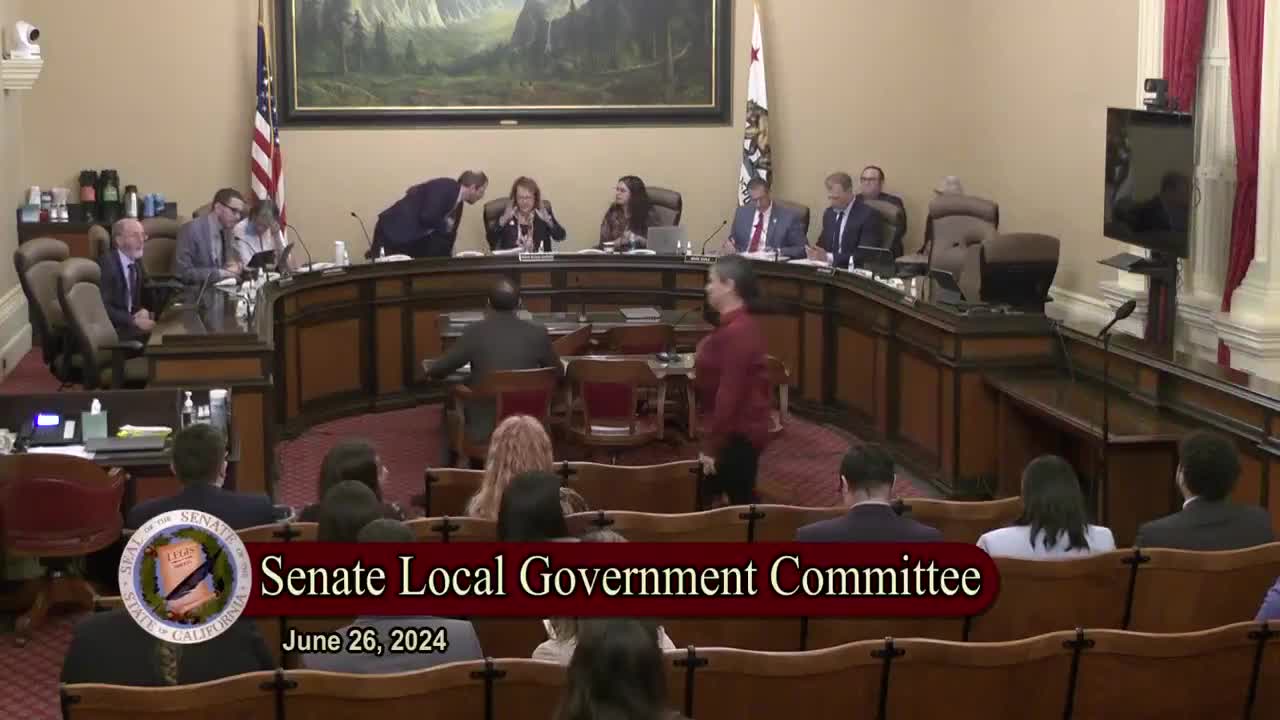 6MIN
Senate Standing Committee on Local Government
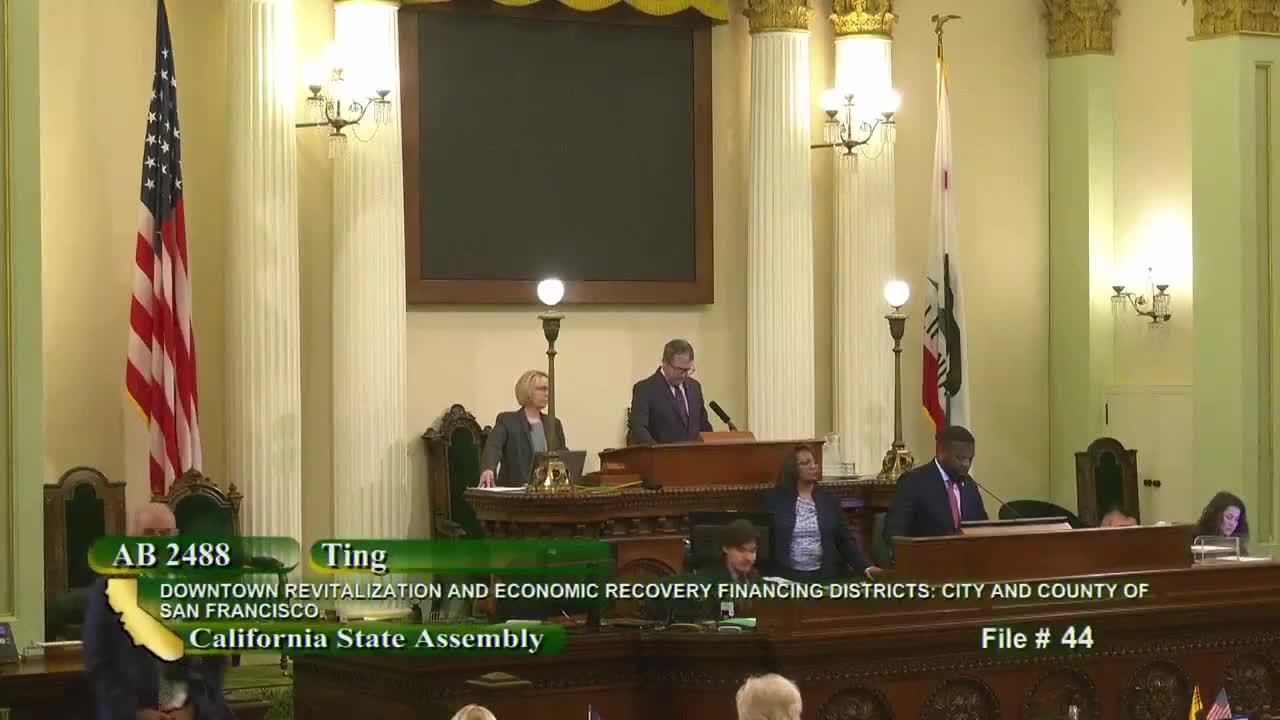 50SEC
Assembly Floor
 50SEC
Assembly Floor
Bill Author

Bill Co-Author(s):