AB 2696: Labor-related liabilities: direct contractor and subcontractor.
- Session Year: 2023-2024
- House: Assembly
- Latest Version Date: 2024-09-27
Current Status:
Passed
(2024-09-27: Chaptered by Secretary of State - Chapter 734, Statutes of 2024.)
Introduced
In Committee
First Chamber
In Committee
Second Chamber
Enacted
Existing law requires, for contracts entered into on or after January 1, 2022, a direct contractor making or taking a contract in the state for the erection, construction, alteration, or repair of a building, structure, or other private work, to assume, and be liable for, any debt owed to a wage claimant or third party on the wage claimants behalf, incurred by a subcontractor at any tier acting under, by, or for the direct contractor for the wage claimants performance of labor included in the subject of the contract between the direct contractor and the owner. Existing law extends, for contracts entered into on or after January 1, 2022, the direct contractors liability to penalties, liquidated damages, and interest owed by the subcontractor on account of the performance of the labor, except as provided. Existing law authorizes a joint labor-management cooperation committee, established as specified, to bring an action in any court of competent jurisdiction against a direct contractor or subcontractor at any tier to enforce liability for any unpaid wage, fringe or other benefit payment or contribution, penalties or liquidated damages, and interest owed by the subcontractor on account of the performance of the labor on a private work, as provided.
This bill would additionally authorize a joint labor-management cooperation committee, established as specified, to bring an action in any court of competent jurisdiction against a direct contractor to enforce liability for any unpaid wage, fringe or other benefit payment or contribution, penalties or liquidated damages, and interest owed by the direct contractor on account of the performance of the labor on private work.
Existing law requires, for contracts entered into on or after January 1, 2022, a direct contractor making or taking a contract in the state for the erection, construction, alteration, or repair of a building, structure, or other private work, to assume, and be liable for, any debt owed to a wage claimant or third party on the wage claimants behalf, incurred by a subcontractor at any tier acting under, by, or for the direct contractor for the wage claimants performance of labor included in the subject of the contract between the direct contractor and the owner. Existing law extends, for contracts entered into on or after January 1, 2022, the direct contractors liability to penalties, liquidated damages, and interest owed by the subcontractor on account of the performance of the labor, except as provided. Existing law authorizes a joint labor-management cooperation committee, established as specified, to bring an action in any court of competent jurisdiction against a direct contractor or subcontractor at any tier to enforce liability for any unpaid wage, fringe or other benefit payment or contribution, penalties or liquidated damages, and interest owed by the subcontractor on account of the performance of the labor on a private work, as provided.
This bill would instead authorize a joint labor-management cooperation committee, established as specified, to bring an action in any court of competent jurisdiction against a direct contractor or subcontractor at any tier for any unpaid wage, fringe or other benefit payment or contribution, penalties or liquidated damages, and interest owed to a wage claimant by the direct contractor or subcontractor for the performance of private work. The bill would instead authorize a joint labor-management cooperation committee, established as specified, to bring an action in any court of competent jurisdiction against a direct contractor or subcontractor at any tier for any unpaid wages, fringe or other benefit payment or contribution, penalties or liquidated damages, and interest owed by the direct contractor, as provided.This bill would additionally authorize a joint labor-management cooperation committee, established as specified, to bring an action in any court of competent jurisdiction against a direct contractor to enforce liability for any unpaid wage, fringe or other benefit payment or contribution, penalties or liquidated damages, and interest owed by the direct contractor on account of the performance of the labor on private work.
Existing law requires, for contracts entered into on or after January 1, 2022, a direct contractor making or taking a contract in the state for the erection, construction, alteration, or repair of a building, structure, or other private work, to assume, and be liable for, any debt owed to a wage claimant or third party on the wage claimants behalf, incurred by a subcontractor at any tier acting under, by, or for the direct contractor for the wage claimants performance of labor included in the subject of the contract between the direct contractor and the owner. Existing law extends, for contracts entered into on or after January 1, 2022, the direct contractors liability to penalties, liquidated damages, and interest owed by the subcontractor on account of the performance of the labor, except as provided. Existing law authorizes a joint labor-management cooperation committee, established as specified, to bring an action in any court of competent jurisdiction against a direct contractor or subcontractor at any tier to enforce liability for any unpaid wage, fringe or other benefit payment or contribution, penalties or liquidated damages, and interest owed by the subcontractor on account of the performance of the labor on a private work, as provided.
This bill would instead authorize a joint labor-management cooperation committee, established as specified, to bring an action in any court of competent jurisdiction against a direct contractor or subcontractor at any tier for any unpaid wage, fringe or other benefit payment or contribution, penalties or liquidated damages, and interest owed to a wage claimant by the direct contractor or subcontractor for the performance of private work. The bill would instead authorize a joint labor-management cooperation committee, established as specified, to bring an action in any court of competent jurisdiction against a direct contractor or subcontractor at any tier for any unpaid wages, fringe or other benefit payment or contribution, penalties or liquidated damages, and interest owed by the direct contractor, as provided.
Existing law requires, for contracts entered into on or after January 1, 2022, a direct contractor making or taking a contract in the state for the erection, construction, alteration, or repair of a building, structure, or other private work, to assume, and be liable for, any debt owed to a wage claimant or third party on the wage claimants behalf, incurred by a subcontractor at any tier acting under, by, or for the direct contractor for the wage claimants performance of labor included in the subject of the contract between the direct contractor and the owner. Existing law extends, for contracts entered into on or after January 1, 2022, the direct contractors liability to penalties, liquidated damages, and interest owed by the subcontractor on account of the performance of the labor, except as provided. Existing law authorizes a joint labor-management cooperation committee, established as specified, to bring an action in any court of competent jurisdiction against a direct contractor or subcontractor at any tier to enforce liability for any unpaid wage, fringe or other benefit payment or contribution, penalties or liquidated damages, and interest owed by the subcontractor on account of the performance of the labor on a private work, as provided.
This bill would instead authorize a joint labor-management cooperation committee, established as specified, to bring an action in any court of competent jurisdiction against a direct contractor or subcontractor at any tier for any unpaid wage, fringe or other benefit payment or contribution, penalties or liquidated damages, and interest owed to a wage claimant by the direct contractor or subcontractor for the performance of private work. The bill would instead authorize a joint labor-management cooperation committee, established as specified, to bring an action in any court of competent jurisdiction against a direct contractor or subcontractor at any tier for any unpaid wages, benefit payment or contribution, penalties or liquidated damages, and interest owed by the direct contractor, as provided.
Existing law states the policy of the state to encourage the use of apprenticeship as a form of on-the-job training, as specified.This bill would make nonsubstantive changes to those provisions.Existing law states the policy of the state to encourage the use of apprenticeship as a form of on-the-job training, as specified.
This bill would make nonsubstantive changes to those provisions.
(a)(1)For contracts entered into on or after January 1, 2022, a direct contractor making or taking a contract in the state for the erection, construction, alteration, or repair of a building, structure, or other private work, shall assume, and is liable for, any debt owed to a wage claimant or third party on the wage claimants behalf, incurred by a subcontractor at any tier acting under, by, or for the direct contractor for the wage claimants performance of labor included in the subject of the contract between the direct contractor and the owner.
(2)Subject to paragraph (3), the direct contractors liability under this section shall extend to any unpaid wage, fringe or other benefit payment or contribution, penalties or liquidated damages, and interest owed by the subcontractor on account of the performance of the labor.
(3)The direct contractors liability under this section shall extend to penalties and liquidates damages only as follows:
If a worker employed by a subcontractor on a private construction project is not paid the wage, fringe or other benefit payment or contribution owed by the subcontractor on account of the workers performance of labor on that project, the direct contractor of the project is not liable for any associated penalties or liquidated damages under paragraph (2) unless the direct contractor had knowledge of the subcontractors failure to pay the specified wage, fringe or other benefit payment or contribution, or the direct contractor fails to comply with all of the following requirements:
(A)The contractor shall monitor the payment by the subcontractor of wage, fringe or other benefit payment or contribution to the employees or the labor trust fund, by periodic review of the subcontractors payroll records which, at a minimum, contain the information set forth in subdivision (a) of Section 226, and which are payroll records as contemplated by Section 1174.
(B)Upon becoming aware of the failure of the subcontractor to pay the wage, fringe or other benefit payment or contribution to the employees or the labor trust fund, the contractor shall diligently take corrective action to halt or rectify the failure, including, but not limited to, retaining sufficient funds due the subcontractor for work performed on the private construction project.
(C)Prior to making final payment to the subcontractor for work performed on the private construction project, the contractor shall obtain an affidavit signed under penalty of perjury from the subcontractor that the subcontractor has paid the wage, fringe or other benefit payment or contribution due to the employees or the labor trust fund for all work performed on the private construction project.
(4)The Division of Labor Standards Enforcement shall notify the contractor and subcontractor on a private works project within 15 days of the receipt by the Division of Labor Standards Enforcement of a complaint of the failure of a subcontractor on that private works project to pay the specified wage, fringe, or other benefit due to workers.
(5)A direct contractor or any other person shall not evade, or commit any act that negates, the requirements of this section. This section does not prohibit a direct contractor or subcontractor at any tier from establishing by contract or enforcing any otherwise lawful remedies against a subcontractor it hires for liability created by the nonpayment of wages, fringe or other benefit payments, or contributions by that subcontractor or by a subcontractor at any tier working under that subcontractor, including liability for associated penalties and liquidated damages.
(b)(1)(A)The Labor Commissioner may enforce against a direct contractor the liability for unpaid wages, liquidated damages, interest, and penalties created by subdivision (a) pursuant to Section 98 or 1197.1, or through a civil action.
(B)The Labor Commissioner shall notify the direct contractor and subcontractor at any tier on a private works project at least 30 days prior to a hearing held on an administrative complaint pursuant to Section 98, prior to issuance of a citation pursuant to Section 1197.1, or prior to filing a civil action, for the failure of a subcontractor on that private works project to pay the specified wage, fringe, or other benefit due to workers. The notice need only describe the general nature of the claim, the project name or address, and the name of the employer. The notice shall not preclude subsequent amendments of an action to encompass additional contractors or wage claimants employed by the subcontractor.
(2)A third party owed fringe or other benefit payments or contributions on a wage claimants behalf may bring a civil action against a direct contractor to enforce the liability for any unpaid wage, fringe or other benefit payment or contribution, penalties or liquidated damages, and interest owed by the subcontractor on account of the performance of the labor pursuant to subdivision (a). The court shall award a prevailing plaintiff in such an action its reasonable attorneys fees and costs, including expert witness fees.
(3)(A)A joint labor-management cooperation committee established pursuant to the federal Labor Management Cooperation Act of 1978 (29 U.S.C. Sec. 175a) may bring an action in any court of competent jurisdiction against a direct contractor or subcontractor at any tier to enforce liability for any unpaid wage, fringe or other benefit payment or contribution, penalties or liquidated damages, and interest owed by the subcontractor on account of the performance of the labor on private work pursuant to subdivision (a). Prior to commencement of an action against a direct contractor to enforce the liability created by subdivision (a), the committee shall provide the direct contractor and subcontractor that employed the wage claimant with at least 30 days notice by first-class mail. The notice need only describe the general nature of the claim, the project name, and the name of the employer, and shall not limit the liability of the direct contractor or preclude subsequent amendments of an action to encompass additional wage claimants employed by the subcontractor.
(B)A joint labor-management cooperation committee established pursuant to the federal Labor Management Cooperation Act of 1978 (29 U.S.C. Sec. 175a) may bring an action in any court of competent jurisdiction against a direct contractor to enforce liability for any unpaid wage, fringe or other benefit payment or contribution, penalties or liquidated damages, and interest owed by the direct contractor on account of the performance of the labor on private work.
(C)In a claim brought pursuant to subparagraph (A) or (B), the court shall award a prevailing plaintiff its reasonable attorneys fees and costs, including expert witness fees.
(4)No other party may bring an action against a direct contractor to enforce the liability created by subdivision (a).
(5)Any liquidated damages awarded by the Labor Commissioner or the court shall be payable to the aggrieved employee.
(c)Unless otherwise provided by law, property of the direct contractor may be attached, after trial, for the payment of any judgment received pursuant to this section.
(d)An action brought pursuant to this section shall be filed within one year of the earliest of the following:
(1)Recordation of the notice of completion of the direct contract, pursuant to Section 8182 of the Civil Code.
(2)Recordation of a notice of cessation of the work covered by the direct contract, pursuant to Section 8188 of the Civil Code.
(3)Actual completion of the work covered by the direct contract.
(e)This section does not apply to work performed by an employee of the state, a special district, a city, a county, a city and county, or any political subdivision of the state.
(f)(1)Upon request by a direct contractor to a subcontractor, the subcontractor and any lower tier subcontractors under contract to the subcontractor shall provide payroll records, which, at a minimum, contain the information set forth in subdivision (a) of Section 226, and which are payroll records as contemplated by Section 1174, of its employees who are providing labor on a private work, which payroll records shall be marked or obliterated only to prevent disclosure of an individuals full social security number, but shall provide the last four digits of the social security number. The payroll records must contain information sufficient to apprise the requesting party of the subcontractors payment status in making fringe or other benefit payments or contributions to a third party on the employees behalf.
(2)Upon request of a direct contractor to a subcontractor, the subcontractor and any lower tier subcontractors under contract to the subcontractor shall provide the direct contractor award information that includes the project name, name and address of the subcontractor, the contractor with whom the subcontractor is under contract, anticipated start date, duration, and estimated journeymen and apprentice hours, and contact information for its subcontractors on the project.
(3)A subcontractors failure to comply with this subdivision shall not relieve a direct contractor from any of the obligations contained in this section.
(g)For purposes of this section, direct contractor and subcontractor have the same meanings as provided in Sections 8018 and 8046, respectively, of the Civil Code.
(h)Nothing in this section shall alter the owners obligation to timely pay a direct contractor as set forth in Sections 8800 and 8812 of the Civil Code, or a direct contractors obligation to timely pay a subcontractor as set forth in Section 7108.5 of the Business and Professions Code and Section 8814 of the Civil Code, or the penalties for failing to do so as set forth in Sections 8800 and 8818 of the Civil Code and Section 7108.5 of the Business and Professions Code, except that the direct contractor may withhold as disputed all sums owed if a subcontractor does not timely provide the information requested under paragraphs (1) and (2) of subdivision (f), until that information is provided.
(i)For any contract entered into on or after January 1, 2022, in order to withhold payments as disputed pursuant to subdivision (h), the direct contractor must specify, in its contract with the subcontractor, the specific documents and information that the direct contractor will require that the subcontractor provide under paragraphs (1) and (2) of subdivision (f). Subcontractors may include the same requirements in their contracts with lower tiered subcontractors and may withhold as disputed all sums owed if a lower tiered subcontractor does not provide the information requested under paragraphs (1) and (2) of subdivision (f), until that information is provided.
(j)The provisions of this section are severable. If any provision of this section or its application is held invalid, that invalidity shall not affect other provisions or applications that can be given effect without the invalid provision or application.
(a)(1)For contracts entered into on or after January 1, 2022, a direct contractor making or taking a contract in the state for the erection, construction, alteration, or repair of a building, structure, or other private work, shall assume, and is liable for, any debt owed to a wage claimant or third party on the wage claimants behalf, incurred by a subcontractor at any tier acting under, by, or for the direct contractor for the wage claimants performance of labor included in the subject of the contract between the direct contractor and the owner.
(2)Subject to paragraph (3), the direct contractors liability under this section shall extend to any unpaid wage, fringe or other benefit payment or contribution, penalties or liquidated damages, and interest owed by the subcontractor on account of the performance of the labor.
(3)The direct contractors liability under this section shall extend to penalties and liquidates damages only as follows:
If a worker employed by a subcontractor on a private construction project is not paid the wage, fringe or other benefit payment or contribution owed by the subcontractor on account of the workers performance of labor on that project, the direct contractor of the project is not liable for any associated penalties or liquidated damages under paragraph (2) unless the direct contractor had knowledge of the subcontractors failure to pay the specified wage, fringe or other benefit payment or contribution, or the direct contractor fails to comply with all of the following requirements:
(A)The contractor shall monitor the payment by the subcontractor of wage, fringe or other benefit payment or contribution to the employees or the labor trust fund, by periodic review of the subcontractors payroll records which, at a minimum, contain the information set forth in subdivision (a) of Section 226, and which are payroll records as contemplated by Section 1174.
(B)Upon becoming aware of the failure of the subcontractor to pay the wage, fringe or other benefit payment or contribution to the employees or the labor trust fund, the contractor shall diligently take corrective action to halt or rectify the failure, including, but not limited to, retaining sufficient funds due the subcontractor for work performed on the private construction project.
(C)Prior to making final payment to the subcontractor for work performed on the private construction project, the contractor shall obtain an affidavit signed under penalty of perjury from the subcontractor that the subcontractor has paid the wage, fringe or other benefit payment or contribution due to the employees or the labor trust fund for all work performed on the private construction project.
(4)The Division of Labor Standards Enforcement shall notify the contractor and subcontractor on a private works project within 15 days of the receipt by the Division of Labor Standards Enforcement of a complaint of the failure of a subcontractor on that private works project to pay the specified wage, fringe, or other benefit due to workers.
(5)A direct contractor or any other person shall not evade, or commit any act that negates, the requirements of this section. This section does not prohibit a direct contractor or subcontractor at any tier from establishing by contract or enforcing any otherwise lawful remedies against a subcontractor it hires for liability created by the nonpayment of wages, fringe or other benefit payments, or contributions by that subcontractor or by a subcontractor at any tier working under that subcontractor, including liability for associated penalties and liquidated damages.
(b)(1)(A)The Labor Commissioner may enforce against a direct contractor the liability for unpaid wages, liquidated damages, interest, and penalties created by subdivision (a) pursuant to Section 98 or 1197.1, or through a civil action.
(B)The Labor Commissioner shall notify the direct contractor and subcontractor at any tier on a private works project at least 30 days prior to a hearing held on an administrative complaint pursuant to Section 98, prior to issuance of a citation pursuant to Section 1197.1, or prior to filing a civil action, for the failure of a subcontractor on that private works project to pay the specified wage, fringe, or other benefit due to workers. The notice need only describe the general nature of the claim, the project name or address, and the name of the employer. The notice shall not preclude subsequent amendments of an action to encompass additional contractors or wage claimants employed by the subcontractor.
(2)A third party owed fringe or other benefit payments or contributions on a wage claimants behalf may bring a civil action against a direct contractor to enforce the liability for any unpaid wage, fringe or other benefit payment or contribution, penalties or liquidated damages, and interest owed by the subcontractor on account of the performance of the labor pursuant to subdivision (a). The court shall award a prevailing plaintiff in such an action its reasonable attorneys fees and costs, including expert witness fees.
(3)(A)A joint labor-management cooperation committee established pursuant to the federal Labor Management Cooperation Act of 1978 (29 U.S.C. Sec. 175a) may bring an action in any court of competent jurisdiction against a direct contractor or subcontractor at any tier for any of the following: to enforce liability for any unpaid wage, fringe or other benefit payment or contribution, penalties or liquidated damages, and interest owed by the subcontractor on account of the performance of the labor on private work pursuant to subdivision (a). Prior to commencement of an action against a direct contractor to enforce the liability created by subdivision (a), the committee shall provide the direct contractor and subcontractor that employed the wage claimant with at least 30 days notice by first-class mail. The notice need only describe the general nature of the claim, the project name, and the name of the employer, and shall not limit the liability of the direct contractor or preclude subsequent amendments of an action to encompass additional wage claimants employed by the subcontractor.
(i)Any unpaid wage, fringe or other benefit payment or contribution, penalties or liquidated damages, and interest owed to a wage claimant by the direct contractor or subcontractor for the performance of private work.(ii)Any unpaid wages, fringe or other benefit payment or contribution, penalties or liquidated damages, and interest owed by the direct contractor pursuant to subdivision (a).(B)A joint labor-management cooperation committee established pursuant to the federal Labor Management Cooperation Act of 1978 (29 U.S.C. Sec. 175a) may bring an action in any court of competent jurisdiction against a direct contractor to enforce liability for any unpaid wage, fringe or other benefit payment or contribution, penalties or liquidated damages, and interest owed by the direct contractor on account of the performance of the labor on private work.
(B)The(C)In a claim brought pursuant to subparagraph (A) or (B), the court shall award a prevailing plaintiff in such an action its reasonable attorneys fees and costs, including expert witness fees.
(C)(i)Prior to commencement of an action against a direct contractor to enforce the liability created by subdivision (a), the committee shall provide the direct contractor and subcontractor that employed the wage claimant with at least 30 days notice by first-class mail.(ii)The notice need only describe the general nature of the claim, the project name and the name of the employer, and shall not limit the liability of the direct contractor or preclude subsequent amendments of an action to encompass additional wage claimants employed by the subcontractor.(4)No other party may bring an action against a direct contractor to enforce the liability created by subdivision (a).
(5)Any liquidated damages awarded by the Labor Commissioner or the court shall be payable to the aggrieved employee.
(c)Unless otherwise provided by law, property of the direct contractor may be attached, after trial, for the payment of any judgment received pursuant to this section.
(d)An action brought pursuant to this section shall be filed within one year of the earliest of the following:
(1)Recordation of the notice of completion of the direct contract, pursuant to Section 8182 of the Civil Code.
(2)Recordation of a notice of cessation of the work covered by the direct contract, pursuant to Section 8188 of the Civil Code.
(3)Actual completion of the work covered by the direct contract.
(e)This section does not apply to work performed by an employee of the state, a special district, a city, a county, a city and county, or any political subdivision of the state.
(f)(1)Upon request by a direct contractor to a subcontractor, the subcontractor and any lower tier subcontractors under contract to the subcontractor shall provide payroll records, which, at a minimum, contain the information set forth in subdivision (a) of Section 226, and which are payroll records as contemplated by Section 1174, of its employees who are providing labor on a private work, which payroll records shall be marked or obliterated only to prevent disclosure of an individuals full social security number, but shall provide the last four digits of the social security number. The payroll records must contain information sufficient to apprise the requesting party of the subcontractors payment status in making fringe or other benefit payments or contributions to a third party on the employees behalf.
(2)Upon request of a direct contractor to a subcontractor, the subcontractor and any lower tier subcontractors under contract to the subcontractor shall provide the direct contractor award information that includes the project name, name and address of the subcontractor, the contractor with whom the subcontractor is under contract, anticipated start date, duration, and estimated journeymen and apprentice hours, and contact information for its subcontractors on the project.
(3)A subcontractors failure to comply with this subdivision shall not relieve a direct contractor from any of the obligations contained in this section.
(g)For purposes of this section, direct contractor and subcontractor have the same meanings as provided in Sections 8018 and 8046, respectively, of the Civil Code.
(h)Nothing in this section shall alter the owners obligation to timely pay a direct contractor as set forth in Sections 8800 and 8812 of the Civil Code, or a direct contractors obligation to timely pay a subcontractor as set forth in Section 7108.5 of the Business and Professions Code and Section 8814 of the Civil Code, or the penalties for failing to do so as set forth in Sections 8800 and 8818 of the Civil Code and Section 7108.5 of the Business and Professions Code, except that the direct contractor may withhold as disputed all sums owed if a subcontractor does not timely provide the information requested under paragraphs (1) and (2) of subdivision (f), until that information is provided.
(i)For any contract entered into on or after January 1, 2022, in order to withhold payments as disputed pursuant to subdivision (h), the direct contractor must specify, in its contract with the subcontractor, the specific documents and information that the direct contractor will require that the subcontractor provide under paragraphs (1) and (2) of subdivision (f). Subcontractors may include the same requirements in their contracts with lower tiered subcontractors and may withhold as disputed all sums owed if a lower tiered subcontractor does not provide the information requested under paragraphs (1) and (2) of subdivision (f), until that information is provided.
(j)The provisions of this section are severable. If any provision of this section or its application is held invalid, that invalidity shall not affect other provisions or applications that can be given effect without the invalid provision or application.
(a)(1)For contracts entered into on or after January 1, 2022, a direct contractor making or taking a contract in the state for the erection, construction, alteration, or repair of a building, structure, or other private work, shall assume, and is liable for, any debt owed to a wage claimant or third party on the wage claimants behalf, incurred by a subcontractor at any tier acting under, by, or for the direct contractor for the wage claimants performance of labor included in the subject of the contract between the direct contractor and the owner.
(2)Subject to paragraph (3), the direct contractors liability under this section shall extend to any unpaid wage, fringe or other benefit payment or contribution, penalties or liquidated damages, and interest owed by the subcontractor on account of the performance of the labor.
(3)The direct contractors liability under this section shall extend to penalties and liquidates damages only as follows:
If a worker employed by a subcontractor on a private construction project is not paid the wage, fringe or other benefit payment or contribution owed by the subcontractor on account of the workers performance of labor on that project, the direct contractor of the project is not liable for any associated penalties or liquidated damages under paragraph (2) unless the direct contractor had knowledge of the subcontractors failure to pay the specified wage, fringe or other benefit payment or contribution, or the direct contractor fails to comply with all of the following requirements:
(A)The contractor shall monitor the payment by the subcontractor of wage, fringe or other benefit payment or contribution to the employees or the labor trust fund, by periodic review of the subcontractors payroll records which, at a minimum, contain the information set forth in subdivision (a) of Section 226, and which are payroll records as contemplated by Section 1174.
(B)Upon becoming aware of the failure of the subcontractor to pay the wage, fringe or other benefit payment or contribution to the employees or the labor trust fund, the contractor shall diligently take corrective action to halt or rectify the failure, including, but not limited to, retaining sufficient funds due the subcontractor for work performed on the private construction project.
(C)Prior to making final payment to the subcontractor for work performed on the private construction project, the contractor shall obtain an affidavit signed under penalty of perjury from the subcontractor that the subcontractor has paid the wage, fringe or other benefit payment or contribution due to the employees or the labor trust fund for all work performed on the private construction project.
(4)The Division of Labor Standards Enforcement shall notify the contractor and subcontractor on a private works project within 15 days of the receipt by the Division of Labor Standards Enforcement of a complaint of the failure of a subcontractor on that private works project to pay the specified wage, fringe, or other benefit due to workers.
(5)A direct contractor or any other person shall not evade, or commit any act that negates, the requirements of this section. This section does not prohibit a direct contractor or subcontractor at any tier from establishing by contract or enforcing any otherwise lawful remedies against a subcontractor it hires for liability created by the nonpayment of wages, fringe or other benefit payments, or contributions by that subcontractor or by a subcontractor at any tier working under that subcontractor, including liability for associated penalties and liquidated damages.
(b)(1)(A)The Labor Commissioner may enforce against a direct contractor the liability for unpaid wages, liquidated damages, interest, and penalties created by subdivision (a) pursuant to Section 98 or 1197.1, or through a civil action.
(B)The Labor Commissioner shall notify the direct contractor and subcontractor at any tier on a private works project at least 30 days prior to a hearing held on an administrative complaint pursuant to Section 98, prior to issuance of a citation pursuant to Section 1197.1, or prior to filing a civil action, for the failure of a subcontractor on that private works project to pay the specified wage, fringe, or other benefit due to workers. The notice need only describe the general nature of the claim, the project name or address, and the name of the employer. The notice shall not preclude subsequent amendments of an action to encompass additional contractors or wage claimants employed by the subcontractor.
(2)A third party owed fringe or other benefit payments or contributions on a wage claimants behalf may bring a civil action against a direct contractor to enforce the liability for any unpaid wage, fringe or other benefit payment or contribution, penalties or liquidated damages, and interest owed by the subcontractor on account of the performance of the labor pursuant to subdivision (a). The court shall award a prevailing plaintiff in such an action its reasonable attorneys fees and costs, including expert witness fees.
(3)(A)A joint labor-management cooperation committee established pursuant to the federal Labor Management Cooperation Act of 1978 (29 U.S.C. Sec. 175a) may bring an action in any court of competent jurisdiction against a direct contractor or subcontractor at any tier for any of the following:
(i)Any unpaid wage, fringe or other benefit payment or contribution, penalties or liquidated damages, and interest owed to a wage claimant by the direct contractor or subcontractor for the performance of private work.
(ii)Any unpaid wages, fringe or other benefit payment or contribution, penalties or liquidated damages, and interest owed by the direct contractor pursuant to subdivision (a).
(B) The court shall award a prevailing plaintiff in such an action its reasonable attorneys fees and costs, including expert witness fees.
(C)(i)Prior to commencement of an action against a direct contractor to enforce the liability created by subdivision (a), the committee shall provide the direct contractor and subcontractor that employed the wage claimant with at least 30 days notice by first-class mail.
(ii)The notice need only describe the general nature of the claim, the project name and the name of the employer, and shall not limit the liability of the direct contractor or preclude subsequent amendments of an action to encompass additional wage claimants employed by the subcontractor.
(4)No other party may bring an action against a direct contractor to enforce the liability created by subdivision (a).
(5)Any liquidated damages awarded by the Labor Commissioner or the court shall be payable to the aggrieved employee.
(c)Unless otherwise provided by law, property of the direct contractor may be attached, after trial, for the payment of any judgment received pursuant to this section.
(d)An action brought pursuant to this section shall be filed within one year of the earliest of the following:
(1)Recordation of the notice of completion of the direct contract, pursuant to Section 8182 of the Civil Code.
(2)Recordation of a notice of cessation of the work covered by the direct contract, pursuant to Section 8188 of the Civil Code.
(3)Actual completion of the work covered by the direct contract.
(e)This section does not apply to work performed by an employee of the state, a special district, a city, a county, a city and county, or any political subdivision of the state.
(f)(1)Upon request by a direct contractor to a subcontractor, the subcontractor and any lower tier subcontractors under contract to the subcontractor shall provide payroll records, which, at a minimum, contain the information set forth in subdivision (a) of Section 226, and which are payroll records as contemplated by Section 1174, of its employees who are providing labor on a private work, which payroll records shall be marked or obliterated only to prevent disclosure of an individuals full social security number, but shall provide the last four digits of the social security number. The payroll records must contain information sufficient to apprise the requesting party of the subcontractors payment status in making fringe or other benefit payments or contributions to a third party on the employees behalf.
(2)Upon request of a direct contractor to a subcontractor, the subcontractor and any lower tier subcontractors under contract to the subcontractor shall provide the direct contractor award information that includes the project name, name and address of the subcontractor, the contractor with whom the subcontractor is under contract, anticipated start date, duration, and estimated journeymen and apprentice hours, and contact information for its subcontractors on the project.
(3)A subcontractors failure to comply with this subdivision shall not relieve a direct contractor from any of the obligations contained in this section.
(g)For purposes of this section, direct contractor and subcontractor have the same meanings as provided in Sections 8018 and 8046, respectively, of the Civil Code.
(h)Nothing in this section shall alter the owners obligation to timely pay a direct contractor as set forth in Sections 8800 and 8812 of the Civil Code, or a direct contractors obligation to timely pay a subcontractor as set forth in Section 7108.5 of the Business and Professions Code and Section 8814 of the Civil Code, or the penalties for failing to do so as set forth in Sections 8800 and 8818 of the Civil Code and Section 7108.5 of the Business and Professions Code, except that the direct contractor may withhold as disputed all sums owed if a subcontractor does not timely provide the information requested under paragraphs (1) and (2) of subdivision (f), until that information is provided.
(i)For any contract entered into on or after January 1, 2022, in order to withhold payments as disputed pursuant to subdivision (h), the direct contractor must specify, in its contract with the subcontractor, the specific documents and information that the direct contractor will require that the subcontractor provide under paragraphs (1) and (2) of subdivision (f). Subcontractors may include the same requirements in their contracts with lower tiered subcontractors and may withhold as disputed all sums owed if a lower tiered subcontractor does not provide the information requested under paragraphs (1) and (2) of subdivision (f), until that information is provided.
(j)The provisions of this section are severable. If any provision of this section or its application is held invalid, that invalidity shall not affect other provisions or applications that can be given effect without the invalid provision or application.
(a)(1)For contracts entered into on or after January 1, 2022, a direct contractor making or taking a contract in the state for the erection, construction, alteration, or repair of a building, structure, or other private work, shall assume, and is liable for, any debt owed to a wage claimant or third party on the wage claimants behalf, incurred by a subcontractor at any tier acting under, by, or for the direct contractor for the wage claimants performance of labor included in the subject of the contract between the direct contractor and the owner.
(2)Subject to paragraph (3), the direct contractors liability under this section shall extend to any unpaid wage, fringe or other benefit payment or contribution, penalties or liquidated damages, and interest owed by the subcontractor on account of the performance of the labor.
(3)The direct contractors liability under this section shall extend to penalties and liquidates damages only as follows:
If a worker employed by a subcontractor on a private construction project is not paid the wage, fringe or other benefit payment or contribution owed by the subcontractor on account of the workers performance of labor on that project, the direct contractor of the project is not liable for any associated penalties or liquidated damages under paragraph (2) unless the direct contractor had knowledge of the subcontractors failure to pay the specified wage, fringe or other benefit payment or contribution, or the direct contractor fails to comply with all of the following requirements:
(A)The contractor shall monitor the payment by the subcontractor of wage, fringe or other benefit payment or contribution to the employees or the labor trust fund, by periodic review of the subcontractors payroll records which, at a minimum, contain the information set forth in subdivision (a) of Section 226, and which are payroll records as contemplated by Section 1174.
(B)Upon becoming aware of the failure of the subcontractor to pay the wage, fringe or other benefit payment or contribution to the employees or the labor trust fund, the contractor shall diligently take corrective action to halt or rectify the failure, including, but not limited to, retaining sufficient funds due the subcontractor for work performed on the private construction project.
(C)Prior to making final payment to the subcontractor for work performed on the private construction project, the contractor shall obtain an affidavit signed under penalty of perjury from the subcontractor that the subcontractor has paid the wage, fringe or other benefit payment or contribution due to the employees or the labor trust fund for all work performed on the private construction project.
(4)The Division of Labor Standards Enforcement shall notify the contractor and subcontractor on a private works project within 15 days of the receipt by the Division of Labor Standards Enforcement of a complaint of the failure of a subcontractor on that private works project to pay the specified wage, fringe, or other benefit due to workers.
(5)A direct contractor or any other person shall not evade, or commit any act that negates, the requirements of this section. This section does not prohibit a direct contractor or subcontractor at any tier from establishing by contract or enforcing any otherwise lawful remedies against a subcontractor it hires for liability created by the nonpayment of wages, fringe or other benefit payments, or contributions by that subcontractor or by a subcontractor at any tier working under that subcontractor, including liability for associated penalties and liquidated damages.
(b)(1)(A)The Labor Commissioner may enforce against a direct contractor the liability for unpaid wages, liquidated damages, interest, and penalties created by subdivision (a) pursuant to Section 98 or 1197.1, or through a civil action.
(B)The Labor Commissioner shall notify the direct contractor and subcontractor at any tier on a private works project at least 30 days prior to a hearing held on an administrative complaint pursuant to Section 98, prior to issuance of a citation pursuant to Section 1197.1, or prior to filing a civil action, for the failure of a subcontractor on that private works project to pay the specified wage, fringe, or other benefit due to workers. The notice need only describe the general nature of the claim, the project name or address, and the name of the employer. The notice shall not preclude subsequent amendments of an action to encompass additional contractors or wage claimants employed by the subcontractor.
(2)A third party owed fringe or other benefit payments or contributions on a wage claimants behalf may bring a civil action against a direct contractor to enforce the liability for any unpaid wage, fringe or other benefit payment or contribution, penalties or liquidated damages, and interest owed by the subcontractor on account of the performance of the labor pursuant to subdivision (a). The court shall award a prevailing plaintiff in such an action its reasonable attorneys fees and costs, including expert witness fees.
(3)(A)A joint labor-management cooperation committee established pursuant to the federal Labor Management Cooperation Act of 1978 (29 U.S.C. Sec. 175a) may bring an action in any court of competent jurisdiction against a direct contractor or subcontractor at any tier to enforce liability for any unpaid of the following:
(i)Any unpaid wage, fringe or other benefit payment or contribution, penalties or liquidated damages, and interest owed to a wage claimant by the direct contractor or subcontractor on account of for the performance of the labor on a private work pursuant to subdivision (a). The work.
(ii)Any unpaid wages, benefit payment or contribution, penalties or liquidated damages, and interest owed by the direct contractor pursuant to subdivision (a).
(B) The court shall award a prevailing plaintiff in such an action its reasonable attorneys fees and costs, including expert witness fees. Prior
(C)(i)Prior to commencement of an action against a direct contractor to enforce the liability created by subdivision (a), the committee shall provide the direct contractor and subcontractor that employed the wage claimant with at least 30 days notice by first-class mail. The
(ii)The notice need only describe the general nature of the claim, the project name and the name of the employer, and shall not limit the liability of the direct contractor or preclude subsequent amendments of an action to encompass additional wage claimants employed by the subcontractor.
(4)No other party may bring an action against a direct contractor to enforce the liability created by subdivision (a).
(5)Any liquidated damages awarded by the Labor Commissioner or the court shall be payable to the aggrieved employee.
(c)Unless otherwise provided by law, property of the direct contractor may be attached, after trial, for the payment of any judgment received pursuant to this section.
(d)An action brought pursuant to this section shall be filed within one year of the earliest of the following:
(1)Recordation of the notice of completion of the direct contract, pursuant to Section 8182 of the Civil Code.
(2)Recordation of a notice of cessation of the work covered by the direct contract, pursuant to Section 8188 of the Civil Code.
(3)Actual completion of the work covered by the direct contract.
(e)This section does not apply to work performed by an employee of the state, a special district, a city, a county, a city and county, or any political subdivision of the state.
(f)(1)Upon request by a direct contractor to a subcontractor, the subcontractor and any lower tier subcontractors under contract to the subcontractor shall provide payroll records, which, at a minimum, contain the information set forth in subdivision (a) of Section 226, and which are payroll records as contemplated by Section 1174, of its employees who are providing labor on a private work, which payroll records shall be marked or obliterated only to prevent disclosure of an individuals full social security number, but shall provide the last four digits of the social security number. The payroll records must contain information sufficient to apprise the requesting party of the subcontractors payment status in making fringe or other benefit payments or contributions to a third party on the employees behalf.
(2)Upon request of a direct contractor to a subcontractor, the subcontractor and any lower tier subcontractors under contract to the subcontractor shall provide the direct contractor award information that includes the project name, name and address of the subcontractor, the contractor with whom the subcontractor is under contract, anticipated start date, duration, and estimated journeymen and apprentice hours, and contact information for its subcontractors on the project.
(3)A subcontractors failure to comply with this subdivision shall not relieve a direct contractor from any of the obligations contained in this section.
(g)For purposes of this section, direct contractor and subcontractor have the same meanings as provided in Sections 8018 and 8046, respectively, of the Civil Code.
(h)Nothing in this section shall alter the owners obligation to timely pay a direct contractor as set forth in Sections 8800 and 8812 of the Civil Code, or a direct contractors obligation to timely pay a subcontractor as set forth in Section 7108.5 of the Business and Professions Code and Section 8814 of the Civil Code, or the penalties for failing to do so as set forth in Sections 8800 and 8818 of the Civil Code and Section 7108.5 of the Business and Professions Code, except that the direct contractor may withhold as disputed all sums owed if a subcontractor does not timely provide the information requested under paragraphs (1) and (2) of subdivision (f), until that information is provided.
(i)For any contract entered into on or after January 1, 2022, in order to withhold payments as disputed pursuant to subdivision (h), the direct contractor must specify, in its contract with the subcontractor, the specific documents and information that the direct contractor will require that the subcontractor provide under paragraphs (1) and (2) of subdivision (f). Subcontractors may include the same requirements in their contracts with lower tiered subcontractors and may withhold as disputed all sums owed if a lower tiered subcontractor does not provide the information requested under paragraphs (1) and (2) of subdivision (f), until that information is provided.
(j)The provisions of this section are severable. If any provision of this section or its application is held invalid, that invalidity shall not affect other provisions or applications that can be given effect without the invalid provision or application.
SECTION 1.Section 3075.1 of the Labor Code is amended to read:3075.1.(a)It is the public policy of this state to encourage the use of apprenticeship as a form of on-the-job training, if that training is cost-effective in developing skills needed to perform public services. State and local public agencies shall make a diligent effort to establish apprenticeship programs for apprenticeable occupations in their respective work forces.(b)In furtherance of this policy, public agencies shall take into consideration both of the following:(1)The extent to which a continuous supply of trained personnel is readily available to public agencies to meet their skill requirements in the various occupations that are determined to be apprenticeable.(2)Application of established apprenticeship programs in the private sector, if appropriate.(c)Public sector apprenticeship programs should be fully compatible with affirmative action goals for the participation of minorities and women in apprenticeship programs.(a)It is the public policy of this state to encourage the utilization use of apprenticeship as a form of on-the-job training, when such if that training is cost-effective in developing skills needed to perform public services. State and local public agencies shall make a diligent effort to establish apprenticeship programs for apprenticeable occupations in their respective work forces. In
(b)In furtherance of this policy, public agencies shall take into consideration (a) the both of the following:
(1)The extent to which a continuous supply of trained personnel is readily available to public agencies to meet their skill requirements in the various occupations which that are determined to be apprenticeable, and (b) the application apprenticeable.
(2)Application of established apprenticeship programs in the private sector, where if appropriate. Public
(c)Public sector apprenticeship programs should be fully compatible with affirmative action goals for the participation of minorities and women in apprenticeship programs.
|
Date
|
Status
|
|---|---|
| Sep 27, 2024 | Chaptered by Secretary of State - Chapter 734, Statutes of 2024. |
| Sep 27, 2024 | Approved by the Governor. |
| Sep 9, 2024 | Enrolled and presented to the Governor at 3:30 p.m. |
| Aug 28, 2024 | Senate amendments concurred in. To Engrossing and Enrolling. (Ayes 71. Noes 0.). |
| Aug 28, 2024 | In Assembly. Concurrence in Senate amendments pending. May be considered on or after August 30 pursuant to Assembly Rule 77. |
| Aug 28, 2024 | Assembly Rule 77 suspended. |
| Aug 27, 2024 | Read third time. Passed. Ordered to the Assembly. (Ayes 32. Noes 5.). |
| Aug 19, 2024 | Read second time. Ordered to third reading. |
| Aug 15, 2024 | From committee: Do pass. (Ayes 5. Noes 2.) (August 15). |
| Aug 5, 2024 | In committee: Referred to APPR suspense file. |
| Jul 3, 2024 | From committee: Do pass and re-refer to Com. on APPR. (Ayes 11. Noes 0.) (July 2). Re-referred to Com. on APPR. |
| Jun 19, 2024 | From committee: Do pass and re-refer to Com. on JUD. (Ayes 4. Noes 0.) (June 19). Re-referred to Com. on JUD. |
| Jun 10, 2024 | From committee chair, with author's amendments: Amend, and re-refer to committee. Read second time, amended, and re-referred to Com. on L., P.E. & R. |
| Jun 5, 2024 | Referred to Coms. on L., P.E. & R., JUD. and APPR. |
| May 23, 2024 | In Senate. Read first time. To Com. on RLS. for assignment. |
| May 22, 2024 | Read third time. Passed. Ordered to the Senate. (Ayes 69. Noes 0. Page 5499.) |
| May 20, 2024 | Read second time. Ordered to third reading. |
| May 16, 2024 | Joint Rule 62(a), file notice suspended. (Page 5215.) |
| May 16, 2024 | From committee: Do pass. (Ayes 14. Noes 1.) (May 16). |
| May 15, 2024 | In committee: Set, first hearing. Referred to APPR. suspense file. |
| May 1, 2024 | From committee: Do pass and re-refer to Com. on APPR. (Ayes 11. Noes 1.) (April 30). Re-referred to Com. on APPR. |
| Apr 25, 2024 | Re-referred to Com. on JUD. |
| Apr 24, 2024 | From committee chair, with author's amendments: Amend, and re-refer to Com. on JUD. Read second time and amended. |
| Apr 4, 2024 | From committee: Do pass and re-refer to Com. on JUD. (Ayes 7. Noes 0.) (April 3). Re-referred to Com. on JUD. |
| Mar 12, 2024 | Re-referred to Com. on L. & E. |
| Mar 11, 2024 | Referred to Coms. on L. & E. and JUD. |
| Mar 11, 2024 | From committee chair, with author's amendments: Amend, and re-refer to Com. on L. & E. Read second time and amended. |
| Feb 15, 2024 | From printer. May be heard in committee March 16. |
| Feb 14, 2024 | Read first time. To print. |
|
Date
|
Description
|
Location
|
Votes
|
|
|---|---|---|---|---|
| Aug 28, 2024 | AB 2696 Rendon Concurrence in Senate Amendments | Assembly Floor |
Passed |
|
| Aug 27, 2024 | Assembly 3rd Reading AB2696 Rendon By Atkins | Senate Floor |
Passed |
|
| Aug 15, 2024 | Do pass | Senate Standing Committee on Appropriations |
Passed |
|
| Aug 5, 2024 | Placed on suspense file | Senate Standing Committee on Appropriations |
Passed |
|
| Jul 2, 2024 | Do pass, but first be re-referred to the Committee on [Appropriations] | Senate Standing Committee on Judiciary |
Passed |
|
| Jun 19, 2024 | Do pass, but first be re-referred to the Committee on [Judiciary] | Senate Standing Committee on Labor, Public Employment and Retirement |
Passed |
|
| May 22, 2024 | AB 2696 Rendon Assembly Third Reading | Assembly Floor |
Passed |
|
| May 16, 2024 | Do pass. | Assembly Standing Committee on Appropriations |
Passed |
|
| Apr 30, 2024 | Do pass and be re-referred to the Committee on [Appropriations] | Assembly Standing Committee on Judiciary |
Passed |
|
| Apr 3, 2024 | Do pass and be re-referred to the Committee on [Judiciary] | Assembly Standing Committee on Labor and Employment |
Passed |
This list shows positions taken on this bill by organizations on the date displayed, which is linked to the original source.
Positions by individuals are not included.
|
Organization
|
Position
|
Date
|
|---|---|---|
| Associated Builders and Contractors | * Against | Jul 2, 2024 |
| Associated General Contractors Of California | ** Against | |
| California Building Industry Association | ** Against | |
| California Conference of Carpenters | ** Support | |
| Carpenters Contractors Cooperation Committee | * Support | Jul 2, 2024 |
| Contra Costa County | * Support | Apr 3, 2024 |
| drywall lathers 68 | * Support | Apr 3, 2024 |
| Housing Contractors Of California | ** Against | |
| Joint Labor Management Committee | * Support | Apr 30, 2024 |
| local 109 | * Support | Apr 3, 2024 |
| local 15 | * Support | Apr 3, 2024 |
| Local 152 | * Support | Apr 3, 2024 |
| Local 152 | * Support | Apr 3, 2024 |
| Local 180 | * Support | Apr 3, 2024 |
| Local 180 | * Support | Apr 3, 2024 |
| Local 405 | * Support | Apr 3, 2024 |
| Local 405 | * Support | Apr 3, 2024 |
| LOCAL 46 | * Support | Apr 3, 2024 |
| Local 713 | * Support | Apr 3, 2024 |
| Western Electrical Contractors Association | ** Against | |
| Western States Regional Council or Capenters | ** Support |
CONCURRENCE IN SENATE AMENDMENTS
CSA1 Bill Id:AB 2696
Author:(Rendon)
As Amended Ver:June 10, 2024
Majority vote
SUMMARY
Authorizes a joint labor-management cooperation committee (JLMCC), as specified, to bring an action in court against a direct contractor for any unpaid wage, fringe or other benefit payment or contribution, penalties or liquidated damages, and interest owed to a wage claimant by the direct contractor for the performance of private work.
Senate Amendments
Make technical and clarifying changes.
COMMENTS
Wage theft is a persistent issue in the construction industry. It can take many forms, from failure to pay minimum wage or overtime to missed rest or meal breaks. In 2021, the Wage Claim Adjudication Unit of the Labor Commissioner's Office found that construction along with full-service restaurants and retail stores represented the top three industries for the number of wage claims. These industries had approximately 4,200 wage claims, which represented nearly a quarter of all wage claims statewide.[1]
According to the Author
"General contractors shouldn't be off the hook for wage law violations when they use their own workforce instead of subcontracting the work out. AB 2696 will close this loophole, and ensure general contractors are being held accountable by labor-management committees, regardless of whether they use their own workforce or not."
The author further states that the bill promotes equity because "the vast majority of construction workers in the housing industry are low-wage immigrant Latinx workers. This legislation will provide tools to improve the wages and working conditions of thousands of exploited workers."
Arguments in Support
The California Conference of Carpenters are in support and state, "This bill will close an inadvertent enforcement loophole resulting from the passage of AB 1701 (Thurmond), [Chapter 804, Statutes of] 2017, LC 218.7) and SB 727 (Leyva), [Chapter 338, Statutes of] 2021, LC 218.8).
AB 1701 and SB 727 established joint liability for General Contractors for wages violations committed by their subcontractors. That joint liability covers "any unpaid wage, fringe or other benefit payment or contribution, penalties or liquidated damages, and interest owed by the subcontractor on account of the performance of the labor." Passage of these statutes clearly recognized the need for greater wage theft enforcement. Consequently, the bills also provided direct enforcement authority for federally certified joint Labor-Management Committees (LMC's).
Unfortunately, unscrupulous General Contractors have found a way to avoid this enhanced LMC enforcement. They are increasingly self-performing work through the direct hire of workers to do a portion of the construction project that previously could or would have been subcontracted out. Since there is no subcontractor to share "joint" liability," our LMC's lose their authority to enforce violations directly on self-performing General Contractors.
AB 2696 will simply allow federally certified Labor-Management Committees to apply their enforcement authority directly to General Contractors who are violating already existing wage laws."
Arguments in Opposition
The Housing Contractors of California is opposed and states, "Housing Contractors of California has long supported fair and effective enforcement against underground employers. These underground employers compete unfairly, and exploit the public and workers. We believe there are already sufficient safeguards for enforcement by state and local agencies. The employer workers' compensation surcharge to fund the California Division of Labor Standards Enforcement has increased from $53 Million in 2010 to $192 Million this year. This is sufficient funding for the state to provide effective enforcement activities."
FISCAL COMMENTS
According to the Senate Appropriations Committee,
By allowing a JLMCC to bring a civil action against a direct contractor for unpaid wages and benefits, this bill could result in an increased number of civil actions. Consequently, the bill could result in potentially significant cost pressures to the courts; the magnitude is unknown (Trial Court Trust Fund (TCTF)). The specific number of new actions that could be filed under the bill also is unknown; however, it generally costs about $1,000 to operate a courtroom for one hour. Courts are not funded on the basis of workload, and increased pressure on TCTF may create a need for increased funding for courts from the General Fund. The enacted 2024-25 budget includes $37 million in ongoing support from the General Fund to continue to backfill TCTF for revenue declines.
VOTES:
ASM LABOR AND EMPLOYMENT: 7-0-0
YES: Ortega, Flora, Alanis, Wendy Carrillo, Kalra, Ward, Zbur
ASM JUDICIARY: 11-1-0
YES: Kalra, Dixon, Bauer-Kahan, Bryan, Connolly, Haney, Maienschein, McKinnor, Pacheco, Reyes, Sanchez
NO: Essayli
ASM APPROPRIATIONS: 14-1-0
YES: Wicks, Sanchez, Arambula, Bryan, Calderon, Wendy Carrillo, Dixon, Mike Fong, Grayson, Haney, Hart, Pellerin, Ta, Villapudua
NO: Jim Patterson
ASSEMBLY FLOOR: 69-0-11
YES: Addis, Aguiar-Curry, Alanis, Alvarez, Arambula, Bains, Bauer-Kahan, Bennett, Berman, Boerner, Bonta, Bryan, Juan Carrillo, Wendy Carrillo, Chen, Connolly, Davies, Dixon, Flora, Mike Fong, Gabriel, Gallagher, Garcia, Gipson, Grayson, Haney, Hart, Hoover, Irwin, Jackson, Jones-Sawyer, Kalra, Lee, Low, Lowenthal, Maienschein, McCarty, McKinnor, Muratsuchi, Stephanie Nguyen, Ortega, Pacheco, Papan, Joe Patterson, Pellerin, Petrie-Norris, Quirk-Silva, Ramos, Rendon, Reyes, Rodriguez, Blanca Rubio, Sanchez, Santiago, Schiavo, Soria, Ta, Ting, Valencia, Villapudua, Waldron, Wallis, Ward, Weber, Wicks, Wilson, Wood, Zbur, Robert Rivas
ABS, ABST OR NV: Calderon, Cervantes, Megan Dahle, Essayli, Vince Fong, Friedman, Holden, Lackey, Mathis, Jim Patterson, Luz Rivas
SENATE FLOOR: 33-5-2
YES: Allen, Archuleta, Ashby, Atkins, Becker, Blakespear, Bradford, Caballero, Cortese, Dodd, Durazo, Eggman, Glazer, Gonzalez, Hurtado, Laird, Limón, McGuire, Menjivar, Min, Newman, Niello, Padilla, Portantino, Roth, Rubio, Skinner, Smallwood-Cuevas, Stern, Umberg, Wahab, Wiener, Wilk
NO: Dahle, Grove, Jones, Nguyen, Seyarto
ABS, ABST OR NV: Alvarado-Gil, Ochoa Bogh
UPDATED
VERSION: June 10, 2024
CONSULTANT: Megan Lane / L. & E. / (916) 319-2091 FN: 0004644
Wage Claims Adjudication Unit, Annual Report Pursuant to Labor Code Section 96.1, Calendar Year 2021, p.6. ↑
SENATE RULES COMMITTEE Office of Senate Floor Analyses (916) 651-1520 Fax: (916) 327-4478 | AB 2696 |
THIRD READING
Bill No: AB 2696
Author: Rendon (D)
Amended: 6/10/24 in Senate
Vote: 21
SENATE LABOR, PUB. EMP. & RET. COMMITTEE: 4-0, 6/19/24
AYES: Smallwood-Cuevas, Cortese, Gonzalez, Laird
NO VOTE RECORDED: Wilk
SENATE JUDICIARY COMMITTEE: 11-0, 7/2/24
AYES: Umberg, Wilk, Allen, Ashby, Caballero, Durazo, Laird, Niello, Roth, Stern, Wahab
SENATE APPROPRIATIONS COMMITTEE: 5-2, 8/15/24
AYES: Caballero, Ashby, Becker, Bradford, Wahab
NOES: Jones, Seyarto
ASSEMBLY FLOOR: 69-0, 5/22/24 - See last page for vote
SUBJECT: Labor-related liabilities: direct contractor and subcontractor
SOURCE: California Conference of Carpenters
DIGEST:
This bill authorizes a joint labor-management committee (JLMC) to bring an action in court against a direct contractor for any unpaid wage, fringe or other benefit payment or contribution, penalties or liquidated damages, and interest owed to a wage claimant by the direct contractor for the performance of private work.
ANALYSIS:
Existing federal law:
- Permits, pursuant to the Labor Management Cooperation Act of 1978, the establishment of plant, area, and industrywide labor management committees, which have been organized jointly by employers and labor organizations representing employees in that plant, area, or industry, as specified. (29 U.S.C. §175a)
- Establishes labor management committees for the purpose of improving labor management relationships, job security, organizational effectiveness, enhancing economic development, or involving workers in decisions affecting their jobs. (29 U.S.C. §175a)
Existing state law:
- Establishes within the Department of Industrial Relations (DIR) the Division of Labor Standards Enforcement (DLSE) under the direction of the Labor Commissioner (LC), and empowers the LC to ensure a just day’s pay in every work place and to promote justice through robust enforcement of labor laws. (Labor Code §79-107)
- Requires, for contracts entered into on or after January 1, 2022, a direct contractor making or taking a contract in the state for the erection, construction, alteration, or repair of a building, structure, or other private work, to assume, and be liable for, any debt owed to a wage claimant or third party on the wage claimant’s behalf, incurred by a subcontractor at any tier acting under, by, or for the direct contractor for the wage claimant’s performance of labor included in the subject of the contract between the direct contract and the owner. (Labor Code §218(a)(1))
- Extends the direct contractor’s liability to any unpaid wage, fringe or other benefit payment or contribution, penalties or liquidated damages, and interest owed by the subcontractor on account of the performance of the labor covered by the contract, unless specified requirements are met. (Labor Code §218.8(a)(2))
- Provides that if a worker employed by a subcontractor on a private construction project is not paid the wage, fringe or other benefit payment or contribution owed by the subcontractor, the direct contractor of the project is not liable for any associated penalties or liquidated damages unless the direct contractor had knowledge of the subcontractor’s failure to pay the specified wage, fringe or other benefit payment or contribution, or the direct contractor fails to comply with all of the following requirements:
- The contractor must monitor the payment by the subcontractor of wage, fringe or other benefit payment or contribution to the employees or the labor trust fund, by periodic review of the subcontractor’s payroll records, as specified.
- Upon becoming aware of the failure of the subcontractor to pay wages, the contractor must diligently take corrective action to halt or rectify the failure.
- Prior to making final payment to the subcontractor, the contractor must obtain an affidavit from the subcontractor affirming that all workers have been properly paid. (Labor Code §218.8(a)(3))
- Permits the LC to enforce against a direct contractor the liability for unpaid wages, liquidated damages, interest, and penalties created by the performance of labor on a private work described in 2) above. (Labor Code §218.8(b)(a))
- Authorizes a JLMC, as specified, to bring an action in any court of competent jurisdiction against a direct contractor or subcontractor at any tier to enforce liability for any unpaid wage, fringe or other benefit payment or contribution, penalties or liquidated damages, and interest owed by the subcontractor on account of the performance of the labor on a private work described in 2) above. (Labor Code §818.8(b)(3))
- Authorizes a court to award a prevailing plaintiff its reasonable attorney’s fees and costs, including expert witness fees, for claims brought by a JLMC, as specified. (Labor Code §818.8(b)(3))
This bill:
- Authorizes a JLMC, as specified, to bring an action in any court of competent jurisdiction against a direct contractor to enforce liability for any unpaid wage, fringe or other benefit payment or contribution, penalties or liquidated damages, and interest owed by the direct contractor on account of the performance of the labor on a private work.
- Authorizes a court to award a prevailing plaintiff its reasonable attorney’s fees and costs, including expert witness fees, for claims brought pursuant to this bill’s provisions.
Background
Joint Labor-Management Committees. JLMCs, established pursuant to the federal Labor Management Cooperation Act of 1978, aim to improve communications and working relationships between labor and management, provide workers and employers with opportunities to explore joint approaches to problems, and develop ways to increase productivity and promote economic development. In California, JLMCs play a vital role in ensuring compliance with public and private works statutes.
In 2017, the Legislature passed AB 1701 (Thurmond, Chapter 804, Statutes of 2017) requiring direct contractors to assume and be liable for any wages, fringe benefits, or contributions owed to a subcontractor’s employees for the performance of private work. Before the bill passed, direct contractors were able to look away from some of the disreputable labor practices of their subcontractors without risking financial penalties. To help enforce this newly established joint liability, JLMCs were authorized to bring a claim against either the direct contractor or subcontractor to collect on the subcontractor’s unpaid wages.
However, in 2021, the Legislature sought to create serious economic consequences for direct contractors who did not properly pay their workers. Thus, the Legislature passed SB 727 (Leyva, Chapter 338, Statutes of 2021), which currently extends the liability established under AB 1701 to include the penalties and liquidated damages associated with wages, fringe benefits, and contributions that go unpaid by subcontractors. SB 727 also established a mechanism for direct contractors to avoid liability if they meet specified requirements. Again, JLMCs may bring a claim to collect on this joint liability.
In response to AB 1701 and SB 727, direct contractors began directly hiring workers rather than using subcontractors. In these instances, JLMCs lose their enforcement capabilities. This bill, authorizes JLMCs to bring a claim to collect unpaid wages, fringe benefits, or contributions owed to a direct contractor’s own employee, thus closing this gap in enforcement.
Wage Theft Wage theft is a persistent issue across California industries. Every year, tens of thousands of workers lose millions of dollars in stolen wages. Despite having some of the strongest labor protections in the nation, California struggles with enforcement. Wage theft is particularly prevalent in the construction industry. In 2021, the Wage Claim Adjudication Unit of the Labor Commissioner’s Office (LCO) found that construction, along with full-service restaurants and retail stores were the industries with the highest number of wage claims. These industries had approximately 4,200 wage claims, which represented nearly a quarter of all claims statewide[1]. A 2024 audit of the LCO, found that due to an inefficient wage claim process, the LCO often takes two years or longer to resolve the claims it receives. Additionally, severe understaffing contributes to a rapidly growing backlog of cases.
By allowing JLMCs to pursue a claim to collect unpaid wages owed by a direct contractor to their own employee for the performance of private work, this bill would provide another avenue to cut down on wage theft in the construction industry.
Related/Prior Legislation
SB 727 (Leyva, Chapter 338, Statutes of 2021) extended direct contractor liability to penalties, liquidated damages, and interest owed to a subcontractor’s employees for the performance of a private work and established specified safe harbor provisions.
AB 1701 (Thurmond, Chapter 804, Statutes of 2017) established direct contractor liability for the wages, fringe benefits, or contributions of all workers on a private construction project, in the event that the subcontractor directly employing the workers fails to pay them.
FISCAL EFFECT: Appropriation: No Fiscal Com.: No Local: No
According to the Senate Appropriations Committee:
“By allowing a JLMCC to bring a civil action against a direct contractor for unpaid wages and benefits, this bill could result in an increased number of civil actions. Consequently, the bill could result in potentially significant cost pressures to the courts; the magnitude is unknown (Trial Court Trust Fund (TCTF)). The specific number of new actions that could be filed under the bill also is unknown; however, it generally costs about $1,000 to operate a courtroom for one hour. Courts are not funded on the basis of workload, and increased pressure on TCTF may create a need for increased funding for courts from the General Fund. The enacted 2024-25 budget includes $37 million in ongoing support from the General Fund to continue to backfill TCTF for revenue declines.”
SUPPORT: (Verified 8/15/24)
California Conference of Carpenters (source)
Western States Regional Council of Carpenters
OPPOSITION: (Verified 8/15/24)
Associated General Contractors of California
Housing Contractors of California
Western Electrical Contractors Association
ARGUMENTS IN SUPPORT:
The sponsors of the measure, the California Conference of Carpenters, state:
“AB 1701 and SB 727 established joint liability for General Contractors for wages violations committed by their subcontractors. That joint liability covers ‘any unpaid wage, fringe or other benefit payment or contribution, penalties or liquidated damages, and interest owed by the subcontractor on account of the performance of the labor.’ Passage of these statutes clearly recognized the need for greater wage theft enforcement. Consequently, the bills also provided direct enforcement authority for federally certified joint Labor-Management Committees (LMC’s).
Unfortunately, unscrupulous General Contractors have found a way to avoid this enhanced LMC enforcement. They are increasingly self-performing work through the direct hire of workers to do a portion of the construction project that previously could or would have been subcontracted out. Since there is no subcontractor to share ‘joint liability,’ our LMC’s lose their authority to enforce violations directly on self-performing General Contractors.
AB 2696 will simply allow federally certified Labor-Management Committees to apply their enforcement authority directly to General Contractors who are violating already existing wage laws.”
ARGUMENTS IN OPPOSITION:
The Western Electrical Contractors Association is opposed to the measure, stating:
“Section 218.8, added to the Labor Code in 2021 by SB 727 (Leyva), has been instrumental in allowing LMCCs to file lawsuits against general contractors due to subcontractors' alleged failure to pay proper wages. SB 727's underlying rationale addressed the potential need for more knowledge among subcontractor employees about the general contractor or owner and how to file a wage claim. LMCCs have used this provision to file numerous lawsuits against contractors over the past two years.
WECA believes the proposed expansion of Section 218.8, as contained in AB 2696, is redundant from an enforcement perspective. Employees of contractors are well-informed about their direct employer and have multiple avenues to address wage issues. AB 2696 only encourages unnecessary lawsuits that lack a legitimate enforcement purpose.”
ASSEMBLY FLOOR: 69-0, 5/22/24
AYES: Addis, Aguiar-Curry, Alanis, Alvarez, Arambula, Bains, Bauer-Kahan, Bennett, Berman, Boerner, Bonta, Bryan, Juan Carrillo, Wendy Carrillo, Chen, Connolly, Davies, Dixon, Flora, Mike Fong, Gabriel, Gallagher, Garcia, Gipson, Grayson, Haney, Hart, Hoover, Irwin, Jackson, Jones-Sawyer, Kalra, Lee, Low, Lowenthal, Maienschein, McCarty, McKinnor, Muratsuchi, Stephanie Nguyen, Ortega, Pacheco, Papan, Joe Patterson, Pellerin, Petrie-Norris, Quirk-Silva, Ramos, Rendon, Reyes, Rodriguez, Blanca Rubio, Sanchez, Santiago, Schiavo, Soria, Ta, Ting, Valencia, Villapudua, Waldron, Wallis, Ward, Weber, Wicks, Wilson, Wood, Zbur, Robert Rivas
NO VOTE RECORDED: Calderon, Cervantes, Megan Dahle, Essayli, Vince Fong, Friedman, Holden, Lackey, Mathis, Jim Patterson, Luz Rivas
Prepared by: Emma Bruce / L., P.E. & R. / (916) 651-1556
8/18/24 9:19:30
**** END ****
Wage Claims Adjudication Unit, Annual Report Pursuant to Labor Code Section 96.1, Calendar Year 2021, p.6. ↑
SENATE COMMITTEE ON
Senator Anna Caballero, Chair
2023 - 2024 Regular Session
AB 2696 (Rendon) - Labor-related liabilities: direct contractor and subcontractor
Version: | Policy Vote: |
Urgency: | Mandate: |
Hearing Date: | Consultant: |
Bill Summary:
AB 2696 would provide a joint labor-management cooperation committee (JLMCC) the ability to bring an action against a direct contractor of a private construction project for wage violations, as specified.
Fiscal Impact:
By allowing a JLMCC to bring a civil action against a direct contractor for unpaid wages and benefits, this bill could result in an increased number of civil actions. Consequently, the bill could result in potentially significant cost pressures to the courts; the magnitude is unknown (Trial Court Trust Fund (TCTF)). The specific number of new actions that could be filed under the bill also is unknown; however, it generally costs about $1,000 to operate a courtroom for one hour. Courts are not funded on the basis of workload, and increased pressure on TCTF may create a need for increased funding for courts from the General Fund. The enacted 2024-25 budget includes $37 million in ongoing support from the General Fund to continue to backfill TCTF for revenue declines.
Background:
Violations of state labor law are a major issue. California has enacted a series of labor laws that protect the rights and dignity of workers. Nevertheless, violations of workers’ rights and theft of their wages still occurs, and is especially prevalent in the construction industry. To address this issue, the Legislature recently enacted laws to extend liability to general contractors for wage violations committed by subcontractors. The Legislature has also provided JLMCCs, entities created through the federal Labor Management Cooperation Act of 1978, with authority to enforce this liability upon general contractors. However, JLMCCs do not have authority to enforce liability upon contractors on construction projects when those contractors hire workers directly and fail to pay them.
Proposed Law:
This bill would do the following:
- Provide that a joint labor-management cooperation committee pursuant to the federal Labor Management Cooperation Act of 1978 may bring an action in any court of competent jurisdiction against a direct contractor to enforce liability for any unpaid wage, fringe or other benefit payment or contribution, penalties or liquidated damages, and interest owed by the direct contractor to a worker for their labor on a private work project.
- Specify that, in any claim brought pursuant to the previous bullet, the court must award a prevailing plaintiff reasonable attorney’s fees and costs, including expert witness fees.
Related Legislation:
- SB 727 (Leyva, Chapter 338, Statutes of 2021) extended direct contractor liability to penalties, liquidated damages, and interest owed to a subcontractor’s employees for the performance of a private work, and established specified safe harbor provisions by which the contractor may not be liable.
- AB 1701 (Thurmond, Chapter 804, Statutes of 2017) established direct contractor liability for the wages, fringe benefits, or contributions of all workers on a private construction project, in the event that the subcontractor directly employing the workers fails to pay them.
- AB 1897 (Hernández, Chapter 728, Statutes of 2014) required a client employer, defined as “a business entity that obtains or is provided workers to perform labor within the usual course of business from a labor contractor,” to share with a labor contractor all civil legal responsibility and civil liability for all workers supplied by that labor contractor for the payment of wages and the failure to obtain valid workers’ compensation coverage.
Staff Comments:
The Office of the Legislative Counsel has keyed this bill “non-fiscal.” However, the purview of this Committee, pursuant to Joint Rule 10.5, is to review and analyze bills that would, among other things, result in a substantial expenditure of state money. Thus, even though the bill was keyed “non-fiscal,” the Committee requested the bill to examine the extent to which it might potentially increase costs to the State.
The $37 million in General Fund support for TCTF in 2024-25 is down sharply (over 50 percent) from previous years. The comparative figure was $74 million in 2023-24, $72 million in 2022-23, and $84 million in 2021-22.
-- END --
Senator Thomas Umberg, Chair
2023-2024 Regular Session
Bill No: AB 2696 (Author:Rendon)
Version: June 10, 2024
Hearing Date: July 2, 2024
Fiscal: No
Urgency: No
Consultant: ID
SUBJECT
Labor-related liabilities: direct contractor and subcontractor
DIGEST
This bill provides a joint labor-management cooperation committee the ability to bring an action against a direct contractor of a private construction project for wage violations, as specified.
EXECUTIVE SUMMARY
Violations of California’s labor laws are a major issue throughout the state. Despite California’s strong labor laws that protect the rights and dignity of workers, enforcement of those laws through the current enforcement agency cannot meet the need for actions redressing wrongs and preventing further violations. In this context, violations of workers’ rights and theft of their wages is rampant in the construction industry. To address this issue, the California Legislature has, in recent years, enacted laws to extend liability to general contractors for wage violations committed by subcontractors. The Legislature has also provided joint labor-management cooperation committees, entities created through the federal Labor Management Cooperation Act of 1978, with authority to enforce this liability upon general contractors. However, joint labor-management cooperation committees do not have authority to enforce liability upon contractors on construction projects when those contractors hire workers directly and fail to pay them. AB 2696 closes this loophole by providing joint labor-management cooperation committees with authority to bring suits against direct contractors for wage violations they commit against employees. AB 2696 is sponsored by the California Conference of Carpenters, and is supported by the Western States Regional Council of Carpenters. It is opposed by the Housing Contractors of California, the Associated General Contractors of California, and the Western Electrical Contractors Association. AB 2696 passed out of the Senate Labor, Public Employment and Retirement Committee by a vote of 4 to 0.
PROPOSED CHANGES TO THE LAW
Existing federal law:
- Permits, pursuant to the Labor Management Cooperation Act of 1978, the establishment of plant, area, and industry-wide joint labor management committees, which are organized jointly by employers and labor organizations representing employees in that plant, area, or industry, as specified. (29 U.S.C. § 175a.)
- Establishes labor management committees for the purpose of improving labor management relationships, job security, organizational effectiveness, enhancing economic development, or involving workers in decisions affecting their jobs. (29 U.S.C. § 175a.)
Existing state law:
- Establishes within the Department of Industrial Relations (DIR) the Division of Labor Standards Enforcement (DLSE) under the direction of the Labor Commissioner (LC), and empowers the LC to ensure a just day’s pay in every work place and to promote justice through the robust enforcement of labor laws. (Lab. Code § 79 et seq.)
- Specifies certain requirements relating to an employee’s compensation, allowable hours of work, overtime work and pay, required rest breaks and days off, and guaranteed time off. (Lab. Code §§ 200-2699.8.)
- Requires, for contracts entered into on or after January 1, 2022, a direct contractor making or taking a contract for the erection, construction, alteration, or repair of a building, structure, or other private work, to assume, and be liable for, any debt owed to a wage claimant or third party on the wage claimant’s behalf, incurred by a subcontractor at any tier acting under, by, or for the direct contractor for the wage claimant’s performance of labor included in the subject of the contract between the direct contractor and the owner. (Lab. Code § 218.8(a)(1).)
- Extends the direct contractor’s liability to penalties, liquidated damages, and interest owed by the subcontractor on account of the performance of the labor covered by the contract, unless specified requirements are met. (Lab. Code § 218.8(a)(2).)
- Provides that, if a worker employed by a subcontractor on a private construction project is not paid the wage, fringe or other benefit payment or contribution owed by the subcontractor, the direct contractor of the project is not liable for any associated penalties or liquidated damages unless the direct contractor had knowledge of the subcontractor’s failure to pay the specified wage, fringe or other benefit payment or contribution, or the direct contractor fails to comply with all of the following requirements:
- the contractor monitors the payment by the subcontractor of wage, fringe or other benefit payment or contribution to the employees or the labor trust fund, by periodic review of the subcontractor’s payroll records, as specified;
- upon becoming aware of the failure of the subcontractor to pay wages, the contractor diligently takes corrective action to halt or rectify the failure;
- prior to making final payment to the subcontractor, the contractor must obtain an affidavit from the subcontractor affirming that all workers have been properly paid. (Lab. Code § 218.8(a)(3).)
- Permits a Joint Labor-Management Committee established pursuant to the federal Labor Management Cooperation Act of 1978 to bring an action in any court of competent jurisdiction against a direct contractor or subcontractor at any tier to enforce liability for any unpaid wage, fringe or other benefit payment or contribution, and for corresponding penalties or liquidated damages, and interest owed by the subcontractor on account for a worker’s labor on a private work. (Section 218.8(b)(3).)
- Requires a court to award a prevailing plaintiff its reasonable attorney’s fees and costs, including expert witness fees, for claims brought by a JLMC, as specified. (Lab. Code § 818.8(b)(3).)
This bill:
- Provides that a joint labor-management cooperation committee pursuant to the federal Labor Management Cooperation Act of 1978 may bring an action in any court of competent jurisdiction against a direct contractor to enforce liability for any unpaid wage, fringe or other benefit payment or contribution, penalties or liquidated damages, and interest owed by the direct contractor to a worker for their labor on a private work project.
- Specifies that, in any claim brought pursuant to (1), the court must award a prevailing plaintiff reasonable attorney’s fees and costs, including expert witness fees.
COMMENTS
- Author’s statement
According to the author:
General contractors shouldn’t be off the hook for wage law violations when they use their own workforce instead of subcontracting the work out. AB 2696 will close this loophole, and ensure general contractors are being held accountable by labor-management committees, regardless of whether they use their own workforce or not.
- Wage theft is a significant problem
Many of California’s labor laws aim to protect the state’s workers and ensure they are paid fairly and adequately for their work. These laws are of significant importance, as they ensure that workers can meet their basic needs and protect their right to just compensation for their labor. However, wage theft, in which an employer does not pay a worker the amount the worker is due, or does not pay the worker for all of their working hours, is the largest form of theft in the nation.[1] Reports state that workers lost at least 338 million dollars to wage theft in 2021, and one of the top industries for wage theft was construction.[2] Between 2017 and 2020, over $221 million in unpaid wages were recovered in actions by both the Division of Labor Standards Enforcement (DLSE) of the Department of Industrial Relations (DIR) and the Office of the Attorney General (AG).[3]
Despite these serious and pervasive violations of labor law, employees and the public have limited options to ensure compliance. DLSE, the main public enforcement agency for the labor code, is chronically backlogged with cases. The Labor Commissioner, which is the head of DLSE that hears and adjudicates labor law violations, received 19,000 complaints in 2021 alone, and has been continually dealing with staffing and funding shortages.[4] In light of those issues, cases typically take on average 505 days to be adjudicated. With such long processing times, many simply give up and withdraw their claims.
Non-enforcement causes serious harm. When an employer violates labor law, it places law-abiding employers at a disadvantage, and if violations are not enforced, it incentivizes a race to the bottom as employers try to compete with their competitors in the market. Moreover, those employees wronged by violations or who have their wages stolen lose thousands of dollars every year, hurting their pocketbooks and livelihoods. Thus, enforcement is essential to ensuring California’s strong labor laws actually protect workers and society from harm.
- California’s attempts to ensure enforcement of labor laws in the construction industry
In light of this crisis, the Legislature has taken various steps to try to increase enforcement of the state’s labor laws. In 2017, the Legislature enacted AB 1701 (Thurmond, Ch. 804, Stats. 2017) to tackle a recurrent issue in which employers utilize subcontractors to hire workers for a construction project in order to avoid responsibility for ensuring workers are paid fairly. Contractors could engage the services of a subcontractor that would violate its workers’ labor rights, and when the enforcement agency or worker tried to go after the subcontractor, the subcontractor would fold up shop and the worker would be out of luck. The contractor who hired the subcontractor would escape responsibility, only to engage another subcontractor on their next project and again be immunized from responsibility for ensuring the workers on their projects were fully paid.
AB 1701 attempted to disrupt this system by establishing that a direct contractor on a private construction project is jointly liable with the subcontractor for all of the wages and fringe benefits and contributions owed any worker on its project. However, AB 1701 limited the direct contractor’s liability to the underlying labor code violations, and did not extend that liability to any statutory penalties or liquidated damages. AB 1701 also authorized the Labor Commissioner or a joint labor-management committee (JLMC) to bring an action to enforce this liability. JLMC’s are entities created under the federal Labor Management Cooperation Act of 1978 (P.L. 94-524 (1978)) to improve communications and working relationships between labor and management. In 2021, the Legislature extended the liability created under AB 1701 to include statutory penalties and liquidated damages associated with labor violations by subcontractors. (SB 727 (Leyva, Ch. 338, Stats. 2021.)) AB 727 also created a “safe harbor” provision by which a contractor could avoid liability for these penalties and liquidated damages if they did not know of the labor violations, or conducted monitoring, diligently corrected any failure by a subcontractor to pay its workers of which the contractor became aware, and obtained an affidavit from the subcontractor upon the completion of the work stating that the subcontractor paid all due wages to its workers. (Lab. Code § 218.8(a)(3).)
- AB 2696 attempts to hold contractors liable for labor law violations against direct employees
However, the authority provided by AB 1701 to JLMC’s to enforce violations of labor laws against a contractor only applied in the context in which the contractor utilized a subcontractor for its labor needs. If a contractor on a construction project instead elects to directly hire workers for a project, JLMC’s have no authority to enforce labor law violations. Instead, a worker would need to bring a suit on their own, or rely on the under-resourced Labor Commissioner. According to the author, general contractors have been directly hiring workers for projects and committing labor law violations against their employees. In such circumstances, JLMC’s are unable to pursue claims for these violations directly.
AB 2696 addresses and corrects this loophole by specifying that a JLMC may bring an action against a direct contractor to enforce liability for any unpaid wages, fringe benefits, other benefit payment or contribution, for statutory penalties and liquidated damages associated with those violations, and for interest owed by the direct contractor to the worker. AB 2696 specifies that, as it can for an action against a contractor for a violation by a subcontractor, a prevailing JLMC must be awarded reasonable attorney’s fees and costs, including expert witness fees, for an action against a direct contractor.
- Arguments in support
According to the California Conference of Carpenters, which is the sponsor of AB 2696:
This bill will close an inadvertent enforcement loophole resulting from the passage of AB 1701 (Thurmond, 2017, LC 218.7) and SB 727 (Leyva, 2021, LC 218.8). Clarifying amendments requested by California Building Industry Association have been accepted since 61-0 passage on the Assembly Floor.
AB 1701 and SB 727 established joint liability for General Contractors for wages violations committed by their subcontractors. That joint liability covers “any unpaid wage, fringe or other benefit payment or contribution, penalties or liquidated damages, and interest owed by the subcontractor on account of the performance of the labor.” Passage of these statutes clearly recognized the need for greater wage theft enforcement. Consequently, the bills also provided direct enforcement authority for federally certified joint Labor-Management Committees (LMC’s).
Unfortunately, unscrupulous General Contractors have found a way to avoid this enhanced LMC enforcement. They are increasingly self-performing work through the direct hire of workers to do a portion of the construction project that previously could or would have been subcontracted out. Since there is no subcontractor to share “joint” liability,” our LMC’s lose their authority to enforce violations directly on self-performing General Contractors.
AB 2696 will simply allow federally certified Labor-Management Committees to apply their enforcement authority directly to General Contractors who are violating already existing wage laws.
- Arguments in opposition
According to the Housing Contractors of California, which opposes AB 2696:
Housing Contractors of California has long supported fair and effective enforcement against underground employers. These underground employers compete unfairly, and exploit the public and workers. We believe there are already sufficient safeguards for enforcement by state and local agencies. The employer workers’ compensation surcharge to fund the California Division of Labor Standards Enforcement has increased from $53 Million in 2010 to $192 Million this year. This is sufficient funding for the state to provide effective enforcement activities.
[…]
The state does not need to deputize Labor-Management Cooperation Committees further than already authorized, to help with this enforcement.
SUPPORT
California Conference of Carpenters (sponsor)
Western States Regional Council of Carpenters
OPPOSITION
Associated General Contractors of California
Housing Contractors of California
Western Electrical Contractors Association
RELATED LEGISLATION
Pending Legislation: None known.
Prior Legislation:
SB 727 (Leyva, Ch. 338, Stats. 2021) extended direct contractor liability to penalties, liquidated damages, and interest owed to a subcontractor’s employees for the performance of a private work, and established specified safe harbor provisions by which the contractor may not be liable.
AB 1701 (Thurmond, Ch. 804, Stats. 2017) established direct contractor liability for the wages, fringe benefits, or contributions of all workers on a private construction project, in the event that the subcontractor directly employing the workers fails to pay them.
AB 1897 (Hernández, Ch. 728, Stats. 2014) required a client employer, defined as “a business entity that obtains or is provided workers to perform labor within the usual course of business from a labor contractor,” to share with a labor contractor all civil legal responsibility and civil liability for all workers supplied by that labor contractor for the payment of wages and the failure to obtain valid workers’ compensation coverage.
PRIOR VOTES:
Senate Labor, Public Employment and Retirement Committee (Ayes 4, Noes 0)
Assembly Floor (Ayes 69, Noes 0)
Assembly Appropriations Committee (Ayes 14, Noes 1)
Assembly Judiciary Committee (Ayes 11, Noes 1)
Assembly Labor and Employment Committee (Ayes 7, Noes 0)
**************
Brady Meixell & Ross Eisenbrey, Wage theft is a much bigger problem than other forms of theft – but workers remain mostly unprotected, Economic Policy Institute (Sept. 18, 2014), available at https://www.epi.org/publication/wage-theft-bigger-problem-forms-theft-workers/. ↑
Alejandro Lazo et al, When employers steal wages from workers, CalMatters (Jul. 25, 2022), available at https://calmatters.org/explainers/when-employers-steal-wages-from-workers/?series=unpaid-wages-california-workers. ↑
(Ilhna Mangundayao et al, “More than 3 billion in stolen wages recovered for workers between 2017 and 2020” Economic Policy Institute 7 (Dec. 22, 2021), available at https://files.epi.org/uploads/240542.pdf. ↑
Jeanne Kuang, “Agency battling wage theft in California is too short-staffed to do its job,” CalMatters (Oct. 17, 2022), available at https://calmatters.org/california-divide/2022/10/agency-battling-wage-theft/?series=unpaid-wages-california-workers. ↑
SENATE COMMITTEE ON LABOR, PUBLIC EMPLOYMENT AND RETIREMENT
Senator Lola Smallwood-Cuevas, Chair
2023 - 2024 Regular
Bill No: AB 2696 Hearing Date: June 19, 2024
Author: | Rendon | ||
Version: | June 10, 2024 | ||
Urgency: | No | Fiscal: | No |
Consultant: | Emma Bruce | ||
SUBJECT: Labor-related liabilities: direct contractor and subcontractor
KEY ISSUE
This bill authorizes a joint labor-management committee (JLMC) to bring an action in court against a direct contractor for any unpaid wage, fringe or other benefit payment or contribution, penalties or liquidated damages, and interest owed to a wage claimant by the direct contractor for the performance of private work.
ANALYSIS
Existing federal law:
- Permits, pursuant to the Labor Management Cooperation Act of 1978, the establishment of plant, area, and industrywide labor management committees, which have been organized jointly by employers and labor organizations representing employees in that plant, area, or industry, as specified. (29 U.S.C. §175a)
- Establishes labor management committees for the purpose of improving labor management relationships, job security, organizational effectiveness, enhancing economic development, or involving workers in decisions affecting their jobs. (29 U.S.C. §175a)
Existing state law:
- Establishes within the Department of Industrial Relations (DIR) the Division of Labor Standards Enforcement (DLSE) under the direction of the Labor Commissioner (LC), and empowers the LC to ensure a just day’s pay in every work place and to promote justice through robust enforcement of labor laws. (Labor Code §79-107)
- Requires, for contracts entered into on or after January 1, 2022, a direct contractor making or taking a contract in the state for the erection, construction, alteration, or repair of a building, structure, or other private work, to assume, and be liable for, any debt owed to a wage claimant or third party on the wage claimant’s behalf, incurred by a subcontractor at any tier acting under, by, or for the direct contractor for the wage claimant’s performance of labor included in the subject of the contract between the direct contract and the owner. (Labor Code §218(a)(1))
- Extends the direct contractor’s liability to any unpaid wage, fringe or other benefit payment or contribution, penalties or liquidated damages, and interest owed by the subcontractor on account of the performance of the labor covered by the contract, unless specified requirements are met. (Labor Code §218.8(a)(2))
- Provides that if a worker employed by a subcontractor on a private construction project is not paid the wage, fringe or other benefit payment or contribution owed by the subcontractor, the direct contractor of the project is not liable for any associated penalties or liquidated damages unless the direct contractor had knowledge of the subcontractor’s failure to pay the specified wage, fringe or other benefit payment or contribution, or the direct contractor fails to comply with all of the following requirements:
- The contractor must monitor the payment by the subcontractor of wage, fringe or other benefit payment or contribution to the employees or the labor trust fund, by periodic review of the subcontractor’s payroll records, as specified.
- Upon becoming aware of the failure of the subcontractor to pay wages, the contractor must diligently take corrective action to halt or rectify the failure.
- Prior to making final payment to the subcontractor, the contractor must obtain an affidavit from the subcontractor affirming that all workers have been properly paid. (Labor Code §218.8(a)(3))
- Permits the LC to enforce against a direct contractor the liability for unpaid wages, liquidated damages, interest, and penalties created by the performance of labor on a private work described in 2) above. (Labor Code §218.8(b)(a))
- Authorizes a JLMC, as specified, to bring an action in any court of competent jurisdiction against a direct contractor or subcontractor at any tier to enforce liability for any unpaid wage, fringe or other benefit payment or contribution, penalties or liquidated damages, and interest owed by the subcontractor on account of the performance of the labor on a private work described in 2) above. (Labor Code §818.8(b)(3))
- Authorizes a court to award a prevailing plaintiff its reasonable attorney’s fees and costs, including expert witness fees, for claims brought by a JLMC, as specified. (Labor Code §818.8(b)(3))
This bill:
- Authorizes a JLMC, as specified, to bring an action in any court of competent jurisdiction against a direct contractor to enforce liability for any unpaid wage, fringe or other benefit payment or contribution, penalties or liquidated damages, and interest owed by the direct contractor on account of the performance of the labor on a private work.
- Authorizes a court to award a prevailing plaintiff its reasonable attorney’s fees and costs, including expert witness fees, for claims brought pursuant to this bill’s provisions.
COMMENTS
1. Background:
Joint Labor-Management Committees
JLMCs, established pursuant to the federal Labor Management Cooperation Act of 1978, aim to improve communications and working relationships between labor and management, provide workers and employers with opportunities to explore joint approaches to problems, and develop ways to increase productivity and promote economic development. In California, JLMCs play a vital role in ensuring compliance with public and private works statutes.
In 2017, the Legislature passed AB 1701 (Thurmond) requiring direct contractors to assume and be liable for any wages, fringe benefits, or contributions owed to a subcontractor’s employees for the performance of private work. Before the bill passed, direct contractors were able to look away from some of the disreputable labor practices of their subcontractors without risking financial penalties. To help enforce this newly established joint liability, JLMCs were authorized to bring a claim against either the direct contractor or subcontractor to collect on the subcontractor’s unpaid wages.
However, in 2021, the Legislature sought to create serious economic consequences for direct contractors who did not properly pay their workers. Thus, the Legislature passed SB 727, which currently extends the liability established under AB 1701 to include the penalties and liquidated damages associated with wages, fringe benefits, and contributions that go unpaid by subcontractors. SB 727 also established a mechanism for direct contractors to avoid liability if they meet specified requirements. Again, JLMCs may bring a claim to collect on this joint liability.
In response to AB 1701 and SB 727, direct contractors began directly hiring workers rather than using subcontractors. In these instances, JLMCs lose their enforcement capabilities. This bill, AB 2696, would authorize JLMCs to bring a claim to collect unpaid wages, fringe benefits, or contributions owed to a direct contractor’s own employee, thus closing this gap in enforcement.
2. Wage Theft:
Wage theft is a persistent issue across California industries. Every year, tens of thousands of workers lose millions of dollars in stolen wages. Despite having some of the strongest labor protections in the nation, California struggles with enforcement. Wage theft is particularly prevalent in the construction industry. In 2021, the Wage Claim Adjudication Unit of the Labor Commissioner’s Office (LCO) found that construction, along with full-service restaurants and retail stores were the industries with the highest number of wage claims. These industries had approximately 4,200 wage claims, which represented nearly a quarter of all claims statewide[1]. A 2024 audit of the LCO, found that due to an inefficient wage claim process, the LCO often takes two years or longer to resolve the claims it receives. Additionally, severe understaffing contributes to a rapidly growing backlog of cases.
By allowing JLMCs to pursue a claim to collect unpaid wages owed by a direct contractor to their own employee for the performance of private work, this bill would provide another avenue to cut down on wage theft in the construction industry.
3. Need for this bill?
According to the author:
“Current law allows for federally certified joint Labor-Management Committees to have direct enforcement authority for subcontractor wage violations that are subject to ‘joint’ general contractor-subcontractor liability. Despite this, LMCs lose that enforcement capability when a general contractor uses their own workforce, or ‘self-performs’, construction work instead of subcontracting it out. This is a loophole that allows general contractors to avoid liability for violating labor law under these circumstances.
AB 2696 closes a loophole in existing law by extending Labor-Management Committees’ enforcement authority to include direct enforcement on a self-performing general contractor. Existing joint liability for subcontractor wage violations remains intact.”
4. Proponent Arguments:
The sponsors of the measure, the California Conference of Carpenters, state:
“AB 1701 and SB 727 established joint liability for General Contractors for wages violations committed by their subcontractors. That joint liability covers ‘any unpaid wage, fringe or other benefit payment or contribution, penalties or liquidated damages, and interest owed by the subcontractor on account of the performance of the labor.’ Passage of these statutes clearly recognized the need for greater wage theft enforcement. Consequently, the bills also provided direct enforcement authority for federally certified joint Labor-Management Committees (LMC’s).
Unfortunately, unscrupulous General Contractors have found a way to avoid this enhanced LMC enforcement. They are increasingly self-performing work through the direct hire of workers to do a portion of the construction project that previously could or would have been subcontracted out. Since there is no subcontractor to share ‘joint liability,’ our LMC’s lose their authority to enforce violations directly on self-performing General Contractors.
AB 2696 will simply allow federally certified Labor-Management Committees to apply their enforcement authority directly to General Contractors who are violating already existing wage laws.”
5. Opponent Arguments:
The Western Electrical Contractors Association is opposed to the measure, stating:
“Section 218.8, added to the Labor Code in 2021 by SB 727 (Leyva), has been instrumental in allowing LMCCs to file lawsuits against general contractors due to subcontractors' alleged failure to pay proper wages. SB 727's underlying rationale addressed the potential need for more knowledge among subcontractor employees about the general contractor or owner and how to file a wage claim. LMCCs have used this provision to file numerous lawsuits against contractors over the past two years.
WECA believes the proposed expansion of Section 218.8, as contained in AB 2696, is redundant from an enforcement perspective. Employees of contractors are well-informed about their direct employer and have multiple avenues to address wage issues. AB 2696 only encourages unnecessary lawsuits that lack a legitimate enforcement purpose.”
6. Dual Referral:
The Senate Rules Committee referred this bill to the Senate Labor, Public Employment and Retirement Committee and the Senate Judiciary Committee.
7. Prior Legislation:
AB 2182 (Haney, 2024) would, among other things, provide representatives of a JLMC reasonable access to active public works job sites to monitor compliance with prevailing wage and apprenticeship requirements. This bill is pending in the Senate Judiciary Committee.
SB 727 (Leyva, Chapter 338, Statutes of 2021) extended direct contractor liability to penalties, liquidated damages, and interest owed to a subcontractor’s employees for the performance of a private work and established specified safe harbor provisions.
AB 1701 (Thurmond, Chapter 804, Statutes of 2017) established direct contractor liability for the wages, fringe benefits, or contributions of all workers on a private construction project, in the event that the subcontractor directly employing the workers fails to pay them.
AB 1897 (Hernández, Ch. 728, Stats. 2014) required a client employer, defined as “a business entity that obtains or is provided workers to perform labor within the usual course of business from a labor contractor” to share with a labor contractor all civil legal responsibility and civil liability for all workers supplied by that labor contractor for the payment of wages and the failure to obtain valid workers’ compensation coverage.
SUPPORT
California Conference of Carpenters (Sponsors)
Western States Regional Council of Carpenters
OPPOSITION
Housing Contractors of California
Western Electrical Contractors Association
-- END --
Wage Claims Adjudication Unit, Annual Report Pursuant to Labor Code Section 96.1, Calendar Year 2021, p.6. ↑
ASSEMBLY THIRD READING
ATR Bill Id:AB 2696
Author:(Rendon)
As Amended Ver:April 24, 2024
Majority vote
SUMMARY
Authorizes a joint labor-management cooperation committee (JLMCC), as specified, to bring an action in court against a direct contractor or subcontractor at any tier for any unpaid wage, fringe or other benefit payment or contribution, penalties or liquidated damages, and interest owed to a wage claimant by the direct contractor for the performance of private work.
Major Provisions
- Authorizes a JLMCC, as specified, to bring an action in any court of competent jurisdiction against a direct contractor or subcontractor at any tier for any unpaid wage, fringe or other benefit payment or contribution, penalties or liquidated damages, and interest owed to a wage claimant by the direct contractor for the performance of private work.
- Authorizes a JLMCC, as specified, to bring an action in any court of competent jurisdiction against a direct contractor or subcontractor at any tier for any unpaid wages, fringe or other benefit payment or contribution, penalties or liquidated damages, and interest due by the direct contractor for debt owed to a wage claimant or third party on the wage claimant's behalf, incurred by a subcontractor at any tier acting under, by, or for the direct contractor for the wage claimant's performance of labor on specified private contracts.
COMMENTS
Wage theft is a persistent issue in the construction industry. It can take many forms, from failure to pay minimum wage or overtime to missed rest or meal breaks. In 2021, the Wage Claim Adjudication Unit of the Labor Commissioner's Office found that construction along with full-service restaurants and retail stores represented the top three industries for the number of wage claims. These industries had approximately 4,200 wage claims, which represented nearly a quarter of all wage claims statewide.[1]
According to the Author
"General contractors shouldn't be off the hook for wage law violations when they use their own workforce instead of subcontracting the work out. AB 2696 will close this loophole, and ensure general contractors are being held accountable by labor-management committees, regardless of whether they use their own workforce or not."
The author further states that the bill promotes equity because "the vast majority of construction workers in the housing industry are low-wage immigrant Latinx workers. This legislation will provide tools to improve the wages and working conditions of thousands of exploited workers."
Arguments in Support
The California Conference of Carpenters are in support and state, "This bill will close an inadvertent enforcement loophole resulting from the passage of AB 1701 (Thurmond), [Chapter 804, Statutes of] 2017, LC 218.7) and SB 727 (Leyva), [Chapter 338, Statutes of] 2021, LC 218.8).
AB 1701 and SB 727 established joint liability for General Contractors for wages violations committed by their subcontractors. That joint liability covers "any unpaid wage, fringe or other benefit payment or contribution, penalties or liquidated damages, and interest owed by the subcontractor on account of the performance of the labor." Passage of these statutes clearly recognized the need for greater wage theft enforcement. Consequently, the bills also provided direct enforcement authority for federally certified joint Labor-Management Committees (LMC's).
Unfortunately, unscrupulous General Contractors have found a way to avoid this enhanced LMC enforcement. They are increasingly self-performing work through the direct hire of workers to do a portion of the construction project that previously could or would have been subcontracted out. Since there is no subcontractor to share "joint" liability," our LMC's lose their authority to enforce violations directly on self-performing General Contractors.
AB 2696 will simply allow federally certified Labor-Management Committees to apply their enforcement authority directly to General Contractors who are violating already existing wage laws."
Arguments in Opposition
The Housing Contractors of California is opposed and states, "Housing Contractors of California has long supported fair and effective enforcement against underground employers. These underground employers compete unfairly, and exploit the public and workers. We believe there are already sufficient safeguards for enforcement by state and local agencies. The employer workers' compensation surcharge to fund the California Division of Labor Standards Enforcement has increased from $53 Million in 2010 to $192 Million this year. This is sufficient funding for the state to provide effective enforcement activities."
FISCAL COMMENTS
According to the Assembly Appropriations Committee By allowing a JLMCC to bring a civil action against a direct contractor for unpaid wages and benefits, this bill may result in an increased number of civil claims, resulting in potentially significant cost pressures of an unknown amount to the courts (Trial Court Trust Fund (TCTF)). It is unclear how many new actions may be filed statewide, but one hour of court time is estimated to cost $1,000 in workload. Although courts are not funded on the basis of workload, increased pressure on staff and the TCTF may create a need for increased court funding from the General Fund (GF) to perform existing duties. The Governor's proposed 2024-25 state budget includes $83.1 million ongoing GF to backfill declining TCTF revenue.
According to the Legislative Analyst's Office, the GF faces a structural deficit in the tens of billions of dollars over the next several fiscal years.
VOTES
ASM LABOR AND EMPLOYMENT: 7-0-0
YES: Ortega, Flora, Alanis, Wendy Carrillo, Kalra, Ward, Zbur
ASM JUDICIARY: 11-1-0
YES: Kalra, Dixon, Bauer-Kahan, Bryan, Connolly, Haney, Maienschein, McKinnor, Pacheco, Reyes, Sanchez
NO: Essayli
ASM APPROPRIATIONS: 14-1-0
YES: Wicks, Sanchez, Arambula, Bryan, Calderon, Wendy Carrillo, Dixon, Mike Fong, Grayson, Haney, Hart, Pellerin, Ta, Villapudua
NO: Jim Patterson
UPDATED
VERSION: March 11, 2024
CONSULTANT: Megan Lane / L. & E. / (916) 319-2091 FN: 0003239
Wage Claims Adjudication Unit, Annual Report Pursuant to Labor Code Section 96.1, Calendar Year 2021, p.6. ↑
Date of Hearing: May 15, 2024
ASSEMBLY COMMITTEE ON APPROPRIATIONS
Buffy Wicks, Chair
ABPCA Bill Id:AB 2696
Author:(Rendon) – As Amended Ver:April 24, 2024
Policy Committee: | Labor and Employment | Vote: | 7 - 0 |
Judiciary | 11 - 1 | ||
|
|
Urgency: No State Mandated Local Program: No Reimbursable: No
SUMMARY:
This bill allows a joint labor-management cooperation committee (JLMCC) to bring a civil claim against a direct contractor to enforce liability for a claimant’s unpaid wages and benefits, including reasonable attorney’s fees and costs for a prevailing plaintiff, similar to the existing authority of a JLMCC to bring such claims against a subcontractor.
FISCAL EFFECT:
By allowing a JLMCC to bring a civil action against a direct contractor for unpaid wages and benefits, this bill may result in an increased number of civil claims, resulting in potentially significant cost pressures of an unknown amount to the courts (Trial Court Trust Fund (TCTF)). It is unclear how many new actions may be filed statewide, but one hour of court time is estimated to cost $1,000 in workload. Although courts are not funded on the basis of workload, increased pressure on staff and the TCTF may create a need for increased court funding from the General Fund (GF) to perform existing duties. The Governor’s proposed 2024-25 state budget includes $83.1 million ongoing GF to backfill declining TCTF revenue.
According to the Legislative Analyst’s Office, the GF faces a structural deficit in the tens of billions of dollars over the next several fiscal years.
COMMENTS:
- Purpose. According to the author:
General contractors shouldn’t be off the hook for wage law violations when they use their own workforce instead of subcontracting the work out. AB 2696 will close this loophole, and ensure general contractors are being held accountable by labor-management committees, regardless of whether they use their own workforce or not.
- Support and Opposition. This bill is supported by the California Conference of Carpenters and the Western States Regional Council of Carpenters, with the former arguing that unscrupulous general contractors have found a way to avoid enhanced JLMCC enforcement by “increasingly self-performing work through the direct hire of workers to do a portion of the construction project that previously could or would have been subcontracted out.”
This bill is opposed by contractor associations, with the Western Electrical Contractors Association arguing, “Employees of contractors are well-informed about their direct employer and have multiple avenues to address wage issues. AB 2696 only encourages unnecessary lawsuits that lack a legitimate enforcement purpose.” This bill is also opposed by the California Building Industry Association, unless amended to “preserve the ability for our direct contractors to use the enforcement incentives” created by a safe harbor provision under existing law.
- Background.
JLMCC Enforcement. SB 727 (Leyva), Chapter 338, Statutes of 2021, made a direct contractor in the construction industry liable for any unpaid wages, benefits, penalties or liquidated damages, and interest owed to a subcontractor’s employees for the performance of private work. The purpose of SB 727 was to curb the practice of subcontractors escaping liability for failure to pay workers by incentivizing direct contractors to engage. As part of the enforcement structure, a JLMCC may bring a claim against either the direct contractor or subcontractor to collect on the subcontractor’s liabilities. However, existing law does not authorize a JLMCC to bring a claim to collect unpaid wages and other amounts owed to a direct contractor’s own employee. This bill addresses that gap and allows a JLMCC to bring a claim against a direct contractor.
Safe Harbor. SB 727 included a safe harbor provision to protect a direct contractor from penalties and liquidated damages if the direct contractor complied with certain actions that certified the direct contractor acted within their power to ensure the subcontractor paid the wages and benefits owed to the subcontractor’s employees. This bill restructures existing law in a way that makes application of the safe harbor provision less clear. As noted in the Assembly Judiciary Committee’s analysis of this bill, “the author may wish to amend the bill to clarify that a direct contractor will continue to benefit from the safe harbor provision present in the existing statute in the event a JLMCC brings a claim against them for a subcontractor’s failure to adequately pay their workers.”
Analysis Prepared by: Irene Ho / APPR. / (916) 319-2081
Date of Hearing: April 30, 2024
ASSEMBLY COMMITTEE ON JUDICIARY
Ash Kalra, Chair
ABPCA Bill Id:AB 2696
Author:Rendon – As Amended Ver:April 24, 2024
SUBJECT: Labor-related liabilities: direct contractor and subcontractor
KEY ISSUE: SHOULD a JOINT LABOR-MANAGEMENT COOPERATION COMMITTEE BE AUTHORIZED TO BRING A CIVIL CLAIM AGAINST a DIRECT CONTRACTOR FOR PAYMENTS OWED TO A WAGE CLAIMANT FOR WORK COMPLETED FOR A DIRECT CONTRACTOR?
SYNOPSIS
In 2021, the Legislature approved SB 727 (Leyva, Chap. 338, Stats. 2021), which made a direct contractor in the construction industry liable for any unpaid wages owed to a subcontractor’s employees. As part of that measure, the bill authorized joint labor-management cooperation committees (JLMCCs) to bring claims to collect on the liability incurred by either direct contractors or subcontractors. The intent of the bill was to curb the practice of subcontractors escaping liability for a failure to pay their workers appropriately by incentivizing direct contractors to engage in contracts with subcontractors who are more likely to comply with the requirements of the contract and labor law. However, existing law does not authorize JLMCCs to bring claims to collect unpaid wages and other costs stemming from violations committed by the direct contractors themselves. This bill closes this apparent loophole by authorizing JLMCCs to bring a claim against direct contractors for unpaid wages and other costs owed to workers for the performance of private work for direct contractors. This bill is sponsored by the California Conference of Carpenters and supported by the Western States Regional Council of Carpenters. It is opposed by the Housing Contractors of California and the Western Electrical Contactors Association. The California Building Industry Association has a position of support, if amended. The bill was previously approved unanimously by the Committee on Labor & Employment.
SUMMARY: Authorizes a joint labor management cooperation committee to bring a civil claim against a direct contractor for unpaid wages and other costs owed to a wage claimant by the direct contractor. Specifically, this bill:
- Authorizes a joint labor-management cooperation committee (JLMCC) to bring a civil claim against a director contractor or subcontractor at any tier for any of the following:
- Any unpaid wage, fringe or other benefit payment or contribution, penalties or liquidated damages, and interest owed to a wage claimant by the direct contractor or subcontractor for the performance of private work;
- Any unpaid wages, fringe or other benefit payment or contribution, penalties or liquidated damages, and interest owed by the direct contractor but incurred by a subcontractor at any tier acting under, by, or for the direct contractor for the wage claimant’s performance of labor included in the contract between the direct contractor and owner.
EXISTING LAW:
- Requires, for contracts entered into on or after January 1, 2022, a direct contractor making or taking a contract for the erection, construction, alteration, or repair of a building, structure, or other private work, to assume, and be liable for, any debt owed to a wage claimant or third party on the wage claimant’s behalf, incurred by a subcontractor at any tier acting under, by, or for the direct contractor for the wage claimant’s performance of labor included in the subject of the contract between the direct contractor and the owner. (Labor Code Section 218.8(a)(1). Unless otherwise specified all further statutory references are to the Labor Code.)
- Extends the direct contractor’s liability to penalties, liquidated damages, and interest owed by the subcontractor on account of the performance of the labor covered by the contract, unless specified requirements are met. (Section 218.8(a)(2).)
- Permits a JLMCC established pursuant to the federal Labor Management Cooperation Act of 1978 to bring an action in any court of competent jurisdiction against a direct contractor or subcontractor at any tier to enforce liability for any unpaid wage, fringe or other benefit payment or contribution, penalties or liquidated damages, and interest owed by the subcontractor on account of the performance of the labor on a private work described in 1) above. (Section 218.8(b)(3).)
FISCAL EFFECT: As currently in print this bill is keyed non-fiscal.
COMMENTS: In 2021, the Legislature approved SB 727 (Leyva, Chap. 338, Stats. 2021), which made a direct contractor in the construction industry liable for any unpaid wages owed to a subcontractor’s employees. As part of that measure, the bill authorized joint labor-management cooperation committees (JLMCCs) to bring claims to collect on the liability incurred by either direct contractors or subcontractors. The intent of the bill was to curb the practice of subcontractors escaping liability for a failure to pay their workers appropriately by incentivizing direct contractors to engage in contracts with subcontractors who are more likely to comply with the requirements of the contract and labor law. However, JLMCCs were not authorized to enforce liability against direct contractors for wages or costs owed for their own violations. According to the author:
General contractors shouldn’t be off the hook for wage law violations when they use their own workforce instead of subcontracting the work out. AB 2696 will close this loophole, and ensure general contractors are being held accountable by labor-management committees, regardless of whether they use their own workforce or not.
This bill closes an apparent loophole in existing law by authorizing JLMCCs to bring a claim against direct contractors for unpaid wages and other costs owed to a worker by the direct contractor for the performance of private work.
The California Building Industry Association has submitted a position of oppose unless amended. In their letter dated March 7, 2024, they state that they agree with the underlying intent of the bill, but take issue with how the language is crafted. Specifically they believe that the bill’s current drafting would prevent direct contractors from taking advantage of the safe harbor language found at existing Labor Code Section 218.8 (a)(3). The language in that provision provides a safe harbor against penalties and liquidated damages for direct contractors who comply with certain steps designed to ensure that the direct contractor did what was within their power to ensure the subcontractor paid the wages and benefits owed to their workers.
Section 218 (b)(3) currently provides that a JLMCC may bring a civil claim “against a direct contractor or subcontractor at any tier to enforce liability for any unpaid wage, fringe or other benefit payment or contribution, penalties or liquidated damages, and interest owed by the subcontractor on account of performance of the labor on a private work pursuant to subdivision (a).” This reference to subdivision (a) incorporates the safe harbor provision. The bill as currently written amends this section to authorize a JLMCC to bring a civil claim “against a direct contractor or subcontractor at any tier for any of the following,” either: 1) “any unpaid wage, fringe or other benefit payment or contribution, penalties, or liquidated damages, and interest owed to a wage claimant by the direct contractor or subcontractor for the performance of private work,” or 2) “any unpaid wages, fringe or other benefit payment contribution, penalties, or liquidated damages, and interest owed by the direct contractor pursuant to subdivision (a).” (Proposed section 218.8 (b)(3)(A).)
It appears that there is a degree of ambiguity in this new language insofar as the proposed subparagraph (3)(A) authorizes a claim against a direct contractor or subcontractor for either costs owed by the director contractor or subcontractor or costs owed by the director contractor but incurred by the subcontractor pursuant to existing law. Under this language it appears as though a JLMCC could bring a claim for recovery of wages against a direct contractor for wages owed by a subcontractor under either of the new provisions in (3)(A)(i) or (ii), but only the provision in (ii) includes reference to the existing safe harbor.
Understanding that this is not the author’s intent and may simply be a drafting error, the author may wish to amend the bill to clarify that a direct contractor will continue to benefit from the safe harbor provision present in the existing statute in the event a JLMCC brings a claim against them for a subcontractor’s failure to adequately pay their workers.
Despite this apparent discrepancy, the underlying intent of the measure is clear – to allow JLMCCs to enforce against violations committed by direct contractors themselves. The remaining question is whether this is sound policy. The bill’s proponents contend that “unscrupulous General Contractors have found a way to avoid […] enhanced LMC enforcement [by] increasingly self-performing work through the direct hire of workers to do a portion of the construction project that previously could or would have been subcontracted out,” thereby evading the JLMCCs enforcement authority. To the extent the Legislature has seen fit to authorize JLMCCs to enforce against wage violations committed by subcontractors by holding direct contractors liable, it seems reasonable to also grant them the same authority to hold direct contractors who themselves violate the Labor Code.
ARGUMENTS IN SUPPORT: This bill is sponsored by the California Conference of Carpenters. It is supported by the Western States Regional Council of Carpenters. The sponsors submit the following:
AB 1701 and SB 727 established joint liability for General Contractors for wages violations committed by their subcontractors. That joint liability covers “any unpaid wage, fringe or other benefit payment or contribution, penalties or liquidated damages, and interest owed by the subcontractor on account of the performance of the labor.” Passage of these statutes clearly recognized the need for greater wage theft enforcement. Consequently, the bills also provided direct enforcement authority for federally certified joint Labor-Management Committees (LMC’s).
Unfortunately, unscrupulous General Contractors have found a way to avoid this enhanced LMC enforcement. They are increasingly self-performing work through the direct hire of workers to do a portion of the construction project that previously could or would have been subcontracted out. Since there is no subcontractor to share “joint” liability,” our LMC’s lose their authority to enforce violations directly on self-performing General Contractors.
AB 2696 will simply allow federally certified Labor-Management Committees to apply their enforcement authority directly to General Contractors who are violating already existing wage laws.
ARGUMENTS IN OPPOSITION: This bill is opposed by the Housing Contractors of California and by the Western Electrical Contractors Association. The Housing Contractors of California submit the following:
Section 218.8, added to the Labor Code in 2021 by SB 727 (Leyva), has been instrumental in allowing LMCCs to file lawsuits against general contractors due to subcontractors' alleged failure to pay proper wages. SB 727's underlying rationale addressed the potential need for more knowledge among subcontractor employees about the general contractor or owner and how to file a wage claim. LMCCs have used this provision to file numerous lawsuits against contractors over the past two years.
WECA believes the proposed expansion of Section 218.8, as contained in AB 2696, is redundant from an enforcement perspective. Employees of contractors are well-informed about their direct employer and have multiple avenues to address wage issues. AB 2696 only encourages unnecessary lawsuits that lack a legitimate enforcement purpose.
REGISTERED SUPPORT / OPPOSITION:
Support
California Conference of Carpenters
Western States Regional Council of Carpenters
Opposition
Housing Contractors of California
Western Electrical Contractors Association
Oppose unless amended
California Building Industry Association
Analysis Prepared by: Manuela Boucher-de la Cadena / JUD. / (916) 319-2334
Date of Hearing: April 3, 2024
ASSEMBLY COMMITTEE ON LABOR AND EMPLOYMENT
Liz Ortega, Chair
ABPCA Bill Id:AB 2696 (
Author:Rendon) – As Amended Ver:March 11, 2024
SUBJECT: Labor-related liabilities: direct contractor and subcontractor
SUMMARY: Authorizes a joint labor-management cooperation committee (JLMCC), as specified, to bring an action in court against a direct contractor or subcontractor at any tier for any unpaid wage, fringe or other benefit payment or contribution, penalties or liquidated damages, and interest owed to a wage claimant by the direct contractor for the performance of private work. Specifically, this bill:
- Authorizes a JLMCC, as specified, to bring an action in any court of competent jurisdiction against a direct contractor or subcontractor at any tier for any unpaid wage, fringe or other benefit payment or contribution, penalties or liquidated damages, and interest owed to a wage claimant by the direct contractor for the performance of private work.
- Authorizes a JLMCC, as specified, to bring an action in any court of competent jurisdiction against a direct contractor or subcontractor at any tier for any unpaid wages, benefit payment or contribution, penalties or liquidated damages, and interest due by the direct contractor for debt owed to a wage claimant or third party on the wage claimant’s behalf, incurred by a subcontractor at any tier acting under, by, or for the direct contractor for the wage claimant’s performance of labor on specified private contracts.
EXISTING LAW:
- Requires, for contracts entered into on or after January 1, 2022, a direct contractor making or taking a contract for the erection, construction, alteration, or repair of a building, structure, or other private work, to assume, and be liable for, any debt owed to a wage claimant or third party on the wage claimant’s behalf, incurred by a subcontractor at any tier acting under, by, or for the direct contractor for the wage claimant’s performance of labor included in the subject of the contract between the direct contractor and the owner. Labor Code §218.8(a)(1).
- Extends the direct contractor’s liability to penalties, liquidated damages, and interest owed by the subcontractor on account of the performance of the labor covered by the contract, unless specified requirements are met. Labor Code §218.8(a)(2).
- Permits a JLMCC established pursuant to the federal Labor Management Cooperation Act of 1978 to bring an action in any court of competent jurisdiction against a direct contractor or subcontractor at any tier to enforce liability for any unpaid wage, fringe or other benefit payment or contribution, penalties or liquidated damages, and interest owed by the subcontractor on account of the performance of the labor on a private work described in 1) above. Labor Code §218.8(b)(3).
FISCAL EFFECT: None
COMMENTS: Note: This bill is double referred to the Assembly Judiciary Committee upon passage out of this Committee.
Wage theft is a persistent issue in the construction industry. It can take many forms, from failure to pay minimum wage or overtime to missed rest or meal breaks. In 2021, the Wage Claim Adjudication Unit of the Labor Commissioner’s Office found that construction along with full-service restaurants and retail stores represented the top three industries for the number of wage claims. These industries had approximately 4,200 wage claims, which represented nearly a quarter of all wage claims statewide.[1]
According to the author, “General contractors shouldn’t be off the hook for wage law violations when they use their own workforce instead of subcontracting the work out. AB 2696 will close this loophole, and ensure general contractors are being held accountable by labor-management committees, regardless of whether they use their own workforce or not.”
The author further states that the bill promotes equity because “the vast majority of construction workers in the housing industry are low-wage immigrant Latinx workers. This legislation will provide tools to improve the wages and working conditions of thousands of exploited workers.”
Committee Comments
Committee staff is informed that the author plans to add “fringe” benefits to proposed Labor Code §218.8(b)(3)(A)(ii) subsequent to this committee to align it with Labor Code §218.8(b)(3)(A)(i). This was a drafting error.
Arguments in Support
The California Conference of Carpenters are in support and state, “This bill will close an inadvertent enforcement loophole resulting from the passage of AB 1701 (Thurmond, 2017, LC 218.7) and SB 727 (Leyva, 2021, LC 218.8).
AB 1701 and SB 727 established joint liability for General Contractors for wages violations committed by their subcontractors. That joint liability covers “any unpaid wage, fringe or other benefit payment or contribution, penalties or liquidated damages, and interest owed by the subcontractor on account of the performance of the labor.” Passage of these statutes clearly recognized the need for greater wage theft enforcement. Consequently, the bills also provided direct enforcement authority for federally certified joint Labor-Management Committees (LMC’s).
Unfortunately, unscrupulous General Contractors have found a way to avoid this enhanced LMC enforcement. They are increasingly self-performing work through the direct hire of workers to do a portion of the construction project that previously could or would have been subcontracted out. Since there is no subcontractor to share “joint” liability,” our LMC’s lose their authority to enforce violations directly on self-performing General Contractors.
AB 2696 will simply allow federally certified Labor-Management Committees to apply their enforcement authority directly to General Contractors who are violating already existing wage laws.”
Arguments in Opposition
The Housing Contractors of California is opposed and states, “Housing Contractors of California has long supported fair and effective enforcement against underground employers. These underground employers compete unfairly, and exploit the public and workers. We believe there are already sufficient safeguards for enforcement by state and local agencies. The employer workers’ compensation surcharge to fund the California Division of Labor Standards Enforcement has increased from $53 Million in 2010 to $192 Million this year. This is sufficient funding for the state to provide effective enforcement activities.”
Related and Prior Legislation
AB 2182 (Haney) of 2024 provides, among other things, that representatives of a joint labor-management committee shall be permitted reasonable access to active public works job sites to monitor compliance with prevailing wage and apprenticeship requirements. This bill is awaiting hearing in this committee.
SB 727 (Leyva), Chapter 338, Statutes of 2021 required joint liability for fines, liquidated damages, and penalties associated with those wage violations.
AB 1701 (Thurmond), Chapter 804, Statutes of 2017 required joint liability for wages, benefits, and other benefit payments.
REGISTERED SUPPORT / OPPOSITION:
Support
California Conference of Carpenters
Western States Regional Council of Carpenters
Opposition
Housing Contractors of California
Oppose Unless Amended
California Building Industry Association
Analysis Prepared by: Megan Lane / L. & E. /
Wage Claims Adjudication Unit, Annual Report Pursuant to Labor Code Section 96.1, Calendar Year 2021, p.6. ↑
Discussed in Hearing
 1MIN
Assembly Floor
 3MIN
Senate Floor
 1MIN
Senate Standing Committee on Appropriations
 4MIN
Senate Standing Committee on Judiciary
 8MIN
Senate Standing Committee on Labor, Public Employment and Retirement
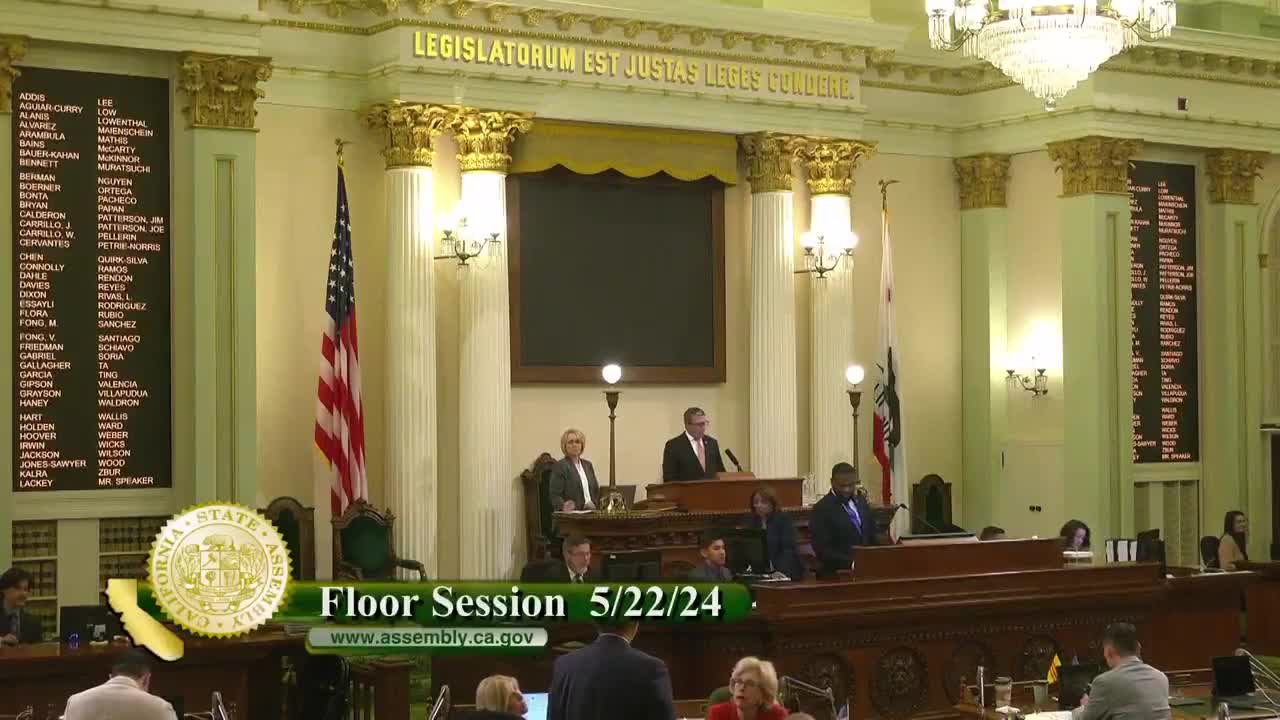 50SEC
Assembly Floor
 5MIN
Assembly Standing Committee on Judiciary
 11MIN
Assembly Standing Committee on Labor and Employment
Bill Author

Bill Co-Author(s):