AB 2721: Food and agriculture: omnibus bill.
- Session Year: 2023-2024
- House: Assembly
- Latest Version Date: 2024-09-06
Current Status:
Passed
(2024-09-06: Chaptered by Secretary of State - Chapter 215, Statutes of 2024.)
Introduced
In Committee
First Chamber
In Committee
Second Chamber
Enacted
(1)Existing law establishes fruit, nut, and vegetable standards and requires the Secretary of Food and Agriculture and county agricultural commissioners to enforce those provisions. Existing law authorizes the secretary and other specified agents of the Department of Food and Agriculture to enforce and make inspections of grade, standards of quality, and other provisions of any raw unprocessed fruit, nut, or vegetable marketing, food safety, or enforcement program adopted under state or federal authority.
Existing law prohibits the disclosure of proprietary information obtained for the purpose of, or pursuant to, the produce safety program, as defined, data collected during inspections or investigations conducted under the produce safety rule, as defined, and sales data and noncompliance observations obtained during a produce safety program inspection, except when required by a court order, as specified. Existing law also prohibits making public any information that is contained in individual reports of produce safety program inspections, except as specified, and authorizes that information to be made available pursuant to a court order, as specified.
This bill would authorize any information, data, or observations, including, but not limited to, proprietary information, obtained pursuant to the produce safety program to be shared with any local, state, or federal authority for the purpose of evaluating, inspecting, or investigating an imminent or potential food safety hazard or risk in order to protect public health and safety.
(2)Existing law regulates rendering, which is defined as the recycling, processing, and conversion of, among other things, inedible kitchen grease, as provided. Existing law requires renderers and collection centers to be licensed and to annually pay a license fee of $100. Existing law authorizes the Department of Food and Agriculture, until July 1, 2025, to charge each licensed renderer and collection center an additional fee, up to $10,000 per year for each licensed rendering plant or collection center, to cover the reasonable costs of administering certain provisions regulating renderers, collection centers, and transporters of inedible kitchen grease. Existing law requires fees and penalties collected pursuant to these provisions to be deposited into the Department of Food and Agriculture Fund and continuously appropriates the collected funds for the purposes described above.
This bill would extend the departments authorization to charge that additional fee until July 1, 2030. By extending the operation of provisions authorizing the collection of fees and penalties that are deposited into a continuously appropriated fund, this bill would make an appropriation.
(3)Under existing law, it is unlawful for any person or entity to engage in the transportation of inedible kitchen grease without being registered with the Department of Food and Agriculture. Existing law defines inedible kitchen grease for that purpose as any fat or used cooking greases and oils obtained from any source. Existing law requires that registration to include, among other requirements, a registration fee not to exceed $250. Existing law authorizes the department, until July 1, 2025, to charge additional fees to cover the costs of administering these provisions, up to $500 per year for each vehicle that is operated to transport kitchen grease and up to $10,000 per year for each registered transporter, except as provided. Existing law requires fees and penalties collected pursuant to these provisions to be deposited into the Department of Food and Agriculture Fund and continuously appropriates those moneys for the purposes described above.
This bill would extend the departments authorization to charge that additional fee until July 1, 2030. By extending the departments authority to charge that additional fee, the revenues from which are deposited into a continuously appropriated fund, the bill would make an appropriation.
(4)Existing law authorizes the secretary to enter into certain cooperative agreements to develop projects or programs that are designed to improve, expand, and correlate work related to, among other things, federal-state cooperative market news services.
This bill would, if a cooperative agreement related to federal-state cooperative market news services is not in effect in the state, authorize the secretary to define grape-pricing districts in the state.
(5)Under existing law, any person who is found guilty of violating the above-described provisions involving renderers, collection centers, or transporters of inedible kitchen grease, or rules and regulations promulgated pursuant to those provisions, is subject to imprisonment or a fine, as specified.
By extending the dates described above and therefore expanding the period over which these crimes may occur, the bill would impose a state-mandated local program.
The California Constitution requires the state to reimburse local agencies and school districts for certain costs mandated by the state. Statutory provisions establish procedures for making that reimbursement.
This bill would provide that no reimbursement is required by this act for a specified reason.
(1)Existing law establishes fruit, nut, and vegetable standards and requires the Secretary of Food and Agriculture and county agricultural commissioners to enforce those provisions. Existing law authorizes the secretary and other specified agents of the Department of Food and Agriculture to enforce and make inspections of grade, standards of quality, and other provisions of any raw unprocessed fruit, nut, or vegetable marketing, food safety, or enforcement program adopted under state or federal authority.
Existing law prohibits the disclosure of proprietary information obtained for the purpose of, or pursuant to, the produce safety program, as defined, data collected during inspections or investigations conducted under the produce safety rule, as defined, and sales data and noncompliance observations obtained during a produce safety program inspection, except when required by a court order, as specified. Existing law also prohibits making public any information that is contained in individual reports of produce safety program inspections, except as specified, and authorizes that information to be made available pursuant to a court order, as specified.
This bill would authorize any information, data, or observations, including, but not limited to, proprietary information, obtained pursuant to the produce safety program to be shared with any local, state, or federal authority for the purpose of evaluating, inspecting, or investigating an imminent or potential food safety hazard or risk in order to protect public health and safety.
(2)Existing law regulates rendering, which is defined as the recycling, processing, and conversion of, among other things, inedible kitchen grease, as provided. Existing law requires renderers and collection centers to be licensed and to annually pay a license fee of $100. Existing law authorizes the Department of Food and Agriculture, until July 1, 2025, to charge each licensed renderer and collection center an additional fee, up to $10,000 per year for each licensed rendering plant or collection center, to cover the reasonable costs of administering certain provisions regulating renderers, collection centers, and transporters of inedible kitchen grease. Existing law requires fees and penalties collected pursuant to these provisions to be deposited into the Department of Food and Agriculture Fund and continuously appropriates the collected funds for the purposes described above.
This bill would extend the departments authorization to charge that additional fee until July 1, 2030. By extending the operation of provisions authorizing the collection of fees and penalties that are deposited into a continuously appropriated fund, this bill would make an appropriation.
(3)Under existing law, it is unlawful for any person or entity to engage in the transportation of inedible kitchen grease without being registered with the Department of Food and Agriculture. Existing law defines inedible kitchen grease for that purpose as any fat or used cooking greases and oils obtained from any source. Existing law requires that registration to include, among other requirements, a registration fee not to exceed $250. Existing law authorizes the department, until July 1, 2025, to charge additional fees to cover the costs of administering these provisions, up to $500 per year for each vehicle that is operated to transport kitchen grease and up to $10,000 per year for each registered transporter, except as provided. Existing law requires fees and penalties collected pursuant to these provisions to be deposited into the Department of Food and Agriculture Fund and continuously appropriates those moneys for the purposes described above.
This bill would extend the departments authorization to charge that additional fee until July 1, 2030. By extending the departments authority to charge that additional fee, the revenues from which are deposited into a continuously appropriated fund, the bill would make an appropriation.
(4)Existing law authorizes the secretary to enter into certain cooperative agreements to develop projects or programs that are designed to improve, expand, and correlate work related to, among other things, federal-state cooperative market news services.
This bill would, if a cooperative agreement related to federal-state cooperative market news services is not in effect in the state, authorize the secretary to define grape-pricing districts in the state.
(4)(5)Under existing law, any person who is found guilty of violating the above-described provisions involving inedible kitchen grease or rules and regulations promulgated pursuant to those provisions is subject to imprisonment or a fine, as specified.
By extending the dates described above and therefore expanding the period over which these crimes may occur, the bill would impose a state-mandated local program.
The California Constitution requires the state to reimburse local agencies and school districts for certain costs mandated by the state. Statutory provisions establish procedures for making that reimbursement.
This bill would provide that no reimbursement is required by this act for a specified reason.
(1)Existing law establishes fruit, nut, and vegetable standards and requires the Secretary of Food and Agriculture and county agricultural commissioners to enforce those provisions. Existing law authorizes the secretary and other specified agents of the Department of Food and Agriculture to enforce and make inspections of grade, standards of quality, and other provisions of any raw unprocessed fruit, nut, or vegetable marketing, food safety, or enforcement program adopted under state or federal authority.
Existing law prohibits the disclosure of proprietary information obtained for the purpose of, or pursuant to, the produce safety program, as defined, data collected during inspections or investigations conducted under the produce safety rule, as defined, and sales data and noncompliance observations obtained during a produce safety program inspection, except when required by a court order, as specified. Existing law also prohibits making public any information that is contained in individual reports of produce safety program inspections, except as specified, and authorizes that information to be made available pursuant to a court order, as specified.
This bill would authorize any information, data, or observations, including, but not limited to, proprietary information, obtained pursuant to the produce safety program to be shared with any local, state, or federal authority for the purpose of evaluating, inspecting, or investigating an imminent or potential food safety hazard or risk in order to protect public health and safety.
(2)Existing law regulates rendering, which is defined as the recycling, processing, and conversion of, among other things, inedible kitchen grease, as provided. Existing law requires renderers and collection centers to be licensed and to annually pay a license fee of $100. Existing law authorizes the Department of Food and Agriculture, until July 1, 2025, to charge each licensed renderer and collection center an additional fee, up to $10,000 per year for each licensed rendering plant or collection center, to cover the reasonable costs of administering certain provisions regulating renderers, collection centers, and transporters of inedible kitchen grease. Existing law requires fees and penalties collected pursuant to these provisions to be deposited into the Department of Food and Agriculture Fund and continuously appropriates the collected funds for the purposes described above.
This bill would extend the departments authorization to charge that additional fee until July 1, 2030. By extending the operation of provisions authorizing the collection of fees and penalties that are deposited into a continuously appropriated fund, this bill would make an appropriation.
(1)(3)Under existing law, it is unlawful for any person or entity to engage in the transportation of inedible kitchen grease without being registered with the Department of Food and Agriculture. Existing law defines inedible kitchen grease for that purpose as any fat or used cooking greases and oils obtained from any source. Existing law requires that registration to include, among other requirements, a specified registration fee. fee not to exceed $250. Existing law authorizes the department, until July 1, 2025, to charge an additional fee fees to cover the costs of administering these provisions, up to a specified maximum amount $500 per year for each vehicle that is operated to transport kitchen grease and up to $10,000 per year for each registered transporter, except as provided. Existing law requires fees and penalties collected pursuant to these provisions to be deposited into the Department of Food and Agriculture Fund and continuously appropriates those moneys for the purposes described above.
This bill would extend the departments authorization to charge that additional fee until July 1, 2030. By extending the departments authority to charge that additional fee, the revenues from which are deposited into a continuously appropriated fund, the bill would make an appropriation.
(2)(4)Under existing law, any person who is found guilty of violating the above-described provisions involving inedible kitchen grease or rules and regulations promulgated pursuant to the above-described those provisions is subject to imprisonment or a fine, as specified.
By extending the dates described above and therefore expanding the period over which these crimes may occur, the bill would impose a state-mandated local program.
The California Constitution requires the state to reimburse local agencies and school districts for certain costs mandated by the state. Statutory provisions establish procedures for making that reimbursement.
This bill would provide that no reimbursement is required by this act for a specified reason.
(1)Under existing law, it is unlawful for any person or entity to engage in the transportation of inedible kitchen grease without being registered with the Department of Food and Agriculture. Existing law requires that registration to include, among other requirements, a specified registration fee. Existing law authorizes the department, until July 1, 2025, to charge an additional fee to cover the costs of administering these provisions, up to a specified maximum amount per year for each vehicle that is operated to transport kitchen grease and each registered transporter, except as provided. Existing law requires fees and penalties collected pursuant to these provisions to be deposited into the Department of Food and Agriculture Fund and continuously appropriates those moneys for the purposes described above.
This bill would extend the departments authorization to charge that additional fee until July 1, 2030. By extending the departments authority to charge that additional fee, the revenues from which are deposited into a continuously appropriated fund, the bill would make an appropriation.
(2)Under existing law, any person who is found guilty of violating the above-described provisions or rules and regulations promulgated pursuant to the above-described provisions is subject to imprisonment or a fine, as specified.
By extending the dates described above and therefore expanding the period over which these crimes may occur, the bill would impose a state-mandated local program.
The California Constitution requires the state to reimburse local agencies and school districts for certain costs mandated by the state. Statutory provisions establish procedures for making that reimbursement.
This bill would provide that no reimbursement is required by this act for a specified reason.
(a)In addition to the license fee required pursuant to Section 19225, the department may charge each licensed renderer and collection center an additional fee necessary to cover the reasonable costs of administering Article 6 (commencing with Section 19300) and Article 6.5 (commencing with Section 19310). The additional fees authorized to be imposed by this section shall not exceed ten thousand dollars ($10,000) per year per each licensed rendering plant or collection center.
(b)The secretary may, based upon the findings and recommendation of the Rendering Industry Advisory Board, determine the additional fee amounts necessary to provide the revenue needed to carry out the provisions of this chapter specified in subdivision (a). The secretary and the Rendering Industry Advisory Board shall not exceed the maximum amount for additional fees authorized pursuant to subdivision (a). Setting the additional fee or fees shall not be subject to Chapter 3.5 (commencing with Section 11340) of Part 1 of Division 3 of Title 2 of the Government Code. The secretary shall only have the authority to raise an additional fee pursuant to this section upon recommendation of the Rendering Industry Advisory Board.
(c)The secretary shall fix the additional fee amounts established pursuant to this section and may fix different fees for renderers and collection centers. If an additional fee is imposed on licensed renderers pursuant to subdivision (a) and an additional fee is imposed on registered transporters pursuant to subdivision (a) of Section 19315, only one additional fee may be imposed on a person or firm that is both licensed as a renderer pursuant to Article 6 (commencing with Section 19300) and registered as a transporter of inedible kitchen grease pursuant to Article 6.5 (commencing with Section 19310), which fee shall be the higher of the two fees.
(d)If the additional fee established pursuant to this section is not paid within one calendar month of the date it is due, a penalty shall be imposed in the amount of 10 percent per annum on the amount of the unpaid fee.
(e)This section shall become inoperative on July 1, 2030, and, as of January 1, 2031, is repealed, unless a later enacted statute that becomes operative on or before January 1, 2031, deletes or extends the dates on which it becomes inoperative and is repealed.
SEC. 2.Section 19315 of the Food and Agricultural Code is amended to read:19315.(a)Except as provided in subdivision (c), in addition to the registration fee required by Section 19312, the department may charge a fee necessary to cover the costs of administering this article. Any additional fee charged pursuant to this section shall not exceed five hundred dollars ($500) per year per vehicle that is operated to transport kitchen grease, and shall not exceed ten thousand dollars ($10,000) per year per registered transporter.
(b)The secretary may, based upon the findings and recommendation of the Rendering Industry Advisory Board, determine the specific fee per vehicle necessary to provide the revenue needed to carry out the provisions of this article. The secretary and the Rendering Industry Advisory Board shall not exceed the maximum fee amounts established by this section. Setting the fee amounts authorized pursuant to subdivision (a) shall not be subject to Chapter 3.5 (commencing with Section 11340) of Part 1 of Division 3 of Title 2 of the Government Code. The secretary shall only have the authority to raise an additional fee pursuant to this section upon recommendation of the Rendering Industry Advisory Board.
(c)An individual registered pursuant to this article who transports inedible kitchen grease for the individuals own personal, noncommercial use as an alternative fuel is exempt from 75 percent of the fee charged pursuant to subdivision (a), and shall meet all of the following requirements:
(1)The individual shall meet all other requirements of this article.
(2)The individual shall not transport more than 55 gallons of inedible kitchen grease per load for that purpose, and shall have no more than 165 gallons of inedible kitchen grease in the individuals possession or control at any time.
(3)The individual shall not take any inedible kitchen grease from a container owned by another registered transporter of inedible kitchen grease or from an inedible kitchen grease provider under contract with a registered transporter of inedible kitchen grease or from a container owned by a renderer or collection center.
(4)The individual shall have a document in the individuals possession while transporting inedible kitchen grease signed by the responsible party providing the inedible kitchen grease to the individual at the source of the inedible kitchen grease that provides permission for the inedible kitchen grease to be removed from that site.
(5)The individual shall specify where the inedible kitchen grease is stored and processed as an alternative fuel, if that address is different from the address included on the registration form for that individual pursuant to Section 19312.
(6)The individual shall not sell, barter, or trade any inedible kitchen grease.
(d)The secretary shall fix the additional fees established pursuant to this section and may fix different fees for transporters of inedible kitchen grease and collection centers, and for transporters of interceptor grease. If an additional fee is imposed on licensed renderers pursuant to subdivision (a) of Section 19227 and an additional fee is imposed on registered transporters pursuant to subdivision (a) of this section, only one additional fee may be imposed on a person or firm that is both licensed as a renderer pursuant to Article 6 (commencing with Section 19300) and registered as a transporter of inedible kitchen grease pursuant to this article, which fee shall be the higher of the two fees.
(e)If the additional fee established pursuant to this section is not paid within one calendar month of the date it is due, a penalty shall be imposed in the amount of 10 percent per annum on the amount of the unpaid fee.
(f)For purposes of this section, interceptor grease means inedible kitchen grease that is principally derived from food preparation, processing, or waste, and that is removed from a grease trap or grease interceptor.
(g)This section shall become inoperative on July 1, 2030, and, as of January 1, 2031, is repealed, unless a later enacted statute, which becomes effective on or before January 1, 2031, deletes or extends the dates on which it becomes inoperative and is repealed.
SEC. 3.Section 42653 of the Food and Agricultural Code is amended to read:42653.(a)The secretary, through the chief of the branch of the department that has jurisdiction over the enforcement of this division, or any deputy, inspector, or agent of the department, may enforce and make inspections of grade, standard of quality, and other provisions of any raw unprocessed fruit, nut, or vegetable marketing, food safety, or enforcement program that is adopted under the authority of the United States or of this state.
(b)(1)All proprietary information obtained for the purposes of the produce safety program, regardless of the source of that information, is confidential and shall not be disclosed except when required by court order in a judicial proceeding or as provided in subdivision (c).
(2)The information that is contained in individual reports of produce safety program inspections shall not be made public by the secretary in that form, but the information that is contained in those reports may be prepared in combined form for use by the secretary, the agents of the secretary, or other interested persons in the formulation, administration, and enforcement of the produce safety rule, or may be made available pursuant to court order or as provided in subdivision (c). The information shall not be made available to anyone for private purposes.
(3)All proprietary information obtained pursuant to the produce safety program by the secretary from any source, including, but not limited to, the names and addresses of farmers, growers, producers, handlers, or cooler operators, and data collected during inspections or investigations conducted under the produce safety rule, shall be confidential and shall not be disclosed except when required by court order in a judicial proceeding or as provided in subdivision (c). In addition, sales data and noncompliance observations obtained during a produce safety program inspection shall not be disclosed except when required by court order in a judicial proceeding or as provided in subdivision (c).
(4)Information on crops or any other related information that is required for reports and inventory information, and any other information that gives only totals, but excludes individual information, may be disclosed.
(c)Any information, data, or observations, including, but not limited to, proprietary information, obtained pursuant to the produce safety program may be shared with any local, state, or federal authority for the purpose of evaluating, inspecting, or investigating an imminent or potential food safety hazard or risk in order to protect public health and safety.
(d)For purposes of this section, the following definitions apply:
(1)Produce safety program means the unit operating in the departments inspection services division responsible for implementing the produce safety rule.
(2)Produce safety rule means Part 112 (commencing with Section 112.1) of Subchapter B of Chapter I of Title 21 of the Code of Federal Regulations.
SEC. 4.Section 58231 of the Food and Agricultural Code is amended to read:58231.The secretary may enter into cooperative agreements with the Secretary of Agriculture of the United States Department of Agriculture or the Administrator, Agricultural Marketing Act of 1946 (7 U.S.C. Sec. 1621 et seq.), or both, to develop projects or programs that are designed to improve, expand, and correlate the work of both agencies in any of the following:
(a)Federal-state cooperative crop reporting.
(b)Federal-state cooperative market news services.
(c)Seed and crop improvement.
(d)Agricultural products certification.
(e)Marketing orders and programs.
(f)Milk and milk products stabilization.
(g)Market enforcement.
(h)Agricultural trade.
(i)Agricultural commodities, grades, and standards.
(j)Prepackaging of, and special containers for, shipment of any farm product.
SEC. 5.Section 58231.1 is added to the Food and Agricultural Code, to read:58231.1.If a cooperative agreement related to federal-state cooperative market news services, as described in subdivision (b) of Section 58321, is not in effect in the state, the secretary may define grape-pricing districts in the state.
SEC. 6.No reimbursement is required by this act pursuant to Section 6 of Article XIIIB of the California Constitution because the only costs that may be incurred by a local agency or school district will be incurred because this act creates a new crime or infraction, eliminates a crime or infraction, or changes the penalty for a crime or infraction, within the meaning of Section 17556 of the Government Code, or changes the definition of a crime within the meaning of Section 6 of Article XIIIB of the California Constitution.
(a)In addition to the license fee required pursuant to Section 19225, the department may charge each licensed renderer and collection center an additional fee necessary to cover the reasonable costs of administering Article 6 (commencing with Section 19300) and Article 6.5 (commencing with Section 19310). The additional fees authorized to be imposed by this section shall not exceed ten thousand dollars ($10,000) per year per each licensed rendering plant or collection center.
(b)The secretary may, based upon the findings and recommendation of the Rendering Industry Advisory Board, determine the additional fee amounts necessary to provide the revenue needed to carry out the provisions of this chapter specified in subdivision (a). The secretary and the Rendering Industry Advisory Board shall not exceed the maximum amount for additional fees authorized pursuant to subdivision (a). Setting the additional fee or fees shall not be subject to Chapter 3.5 (commencing with Section 11340) of Part 1 of Division 3 of Title 2 of the Government Code. The secretary shall only have the authority to raise an additional fee pursuant to this section upon recommendation of the Rendering Industry Advisory Board.
(c)The secretary shall fix the additional fee amounts established pursuant to this section and may fix different fees for renderers and collection centers. If an additional fee is imposed on licensed renderers pursuant to subdivision (a) and an additional fee is imposed on registered transporters pursuant to subdivision (a) of Section 19315, only one additional fee may be imposed on a person or firm that is both licensed as a renderer pursuant to Article 6 (commencing with Section 19300) and registered as a transporter of inedible kitchen grease pursuant to Article 6.5 (commencing with Section 19310), which fee shall be the higher of the two fees.
(d)If the additional fee established pursuant to this section is not paid within one calendar month of the date it is due, a penalty shall be imposed in the amount of 10 percent per annum on the amount of the unpaid fee.
(e)This section shall become inoperative on July 1, 2030, and, as of January 1, 2031, is repealed, unless a later enacted statute that becomes operative on or before January 1, 2031, deletes or extends the dates on which it becomes inoperative and is repealed.
SEC. 2.Section 19315 of the Food and Agricultural Code is amended to read:19315.(a)Except as provided in subdivision (c), in addition to the registration fee required by Section 19312, the department may charge a fee necessary to cover the costs of administering this article. Any additional fee charged pursuant to this section shall not exceed five hundred dollars ($500) per year per vehicle that is operated to transport kitchen grease, and shall not exceed ten thousand dollars ($10,000) per year per registered transporter.
(b)The secretary may, based upon the findings and recommendation of the Rendering Industry Advisory Board, determine the specific fee per vehicle necessary to provide the revenue needed to carry out the provisions of this article. The secretary and the Rendering Industry Advisory Board shall not exceed the maximum fee amounts established by this section. Setting the fee amounts authorized pursuant to subdivision (a) shall not be subject to Chapter 3.5 (commencing with Section 11340) of Part 1 of Division 3 of Title 2 of the Government Code. The secretary shall only have the authority to raise an additional fee pursuant to this section upon recommendation of the Rendering Industry Advisory Board.
(c)An individual registered pursuant to this article who transports inedible kitchen grease for the individuals own personal, noncommercial use as an alternative fuel is exempt from 75 percent of the fee charged pursuant to subdivision (a), and shall meet all of the following requirements:
(1)The individual shall meet all other requirements of this article.
(2)The individual shall not transport more than 55 gallons of inedible kitchen grease per load for that purpose, and shall have no more than 165 gallons of inedible kitchen grease in the individuals possession or control at any time.
(3)The individual shall not take any inedible kitchen grease from a container owned by another registered transporter of inedible kitchen grease or from an inedible kitchen grease provider under contract with a registered transporter of inedible kitchen grease or from a container owned by a renderer or collection center.
(4)The individual shall have a document in the individuals possession while transporting inedible kitchen grease signed by the responsible party providing the inedible kitchen grease to the individual at the source of the inedible kitchen grease that provides permission for the inedible kitchen grease to be removed from that site.
(5)The individual shall specify where the inedible kitchen grease is stored and processed as an alternative fuel, if that address is different from the address included on the registration form for that individual pursuant to Section 19312.
(6)The individual shall not sell, barter, or trade any inedible kitchen grease.
(d)The secretary shall fix the additional fees established pursuant to this section and may fix different fees for transporters of inedible kitchen grease and collection centers, and for transporters of interceptor grease. If an additional fee is imposed on licensed renderers pursuant to subdivision (a) of Section 19227 and an additional fee is imposed on registered transporters pursuant to subdivision (a) of this section, only one additional fee may be imposed on a person or firm that is both licensed as a renderer pursuant to Article 6 (commencing with Section 19300) and registered as a transporter of inedible kitchen grease pursuant to this article, which fee shall be the higher of the two fees.
(e)If the additional fee established pursuant to this section is not paid within one calendar month of the date it is due, a penalty shall be imposed in the amount of 10 percent per annum on the amount of the unpaid fee.
(f)For purposes of this section, interceptor grease means inedible kitchen grease that is principally derived from food preparation, processing, or waste, and that is removed from a grease trap or grease interceptor.
(g)This section shall become inoperative on July 1, 2030, and, as of January 1, 2031, is repealed, unless a later enacted statute, which becomes effective on or before January 1, 2031, deletes or extends the dates on which it becomes inoperative and is repealed.
SEC. 3.Section 42653 of the Food and Agricultural Code is amended to read:42653.(a)The secretary, through the chief of the branch of the department that has jurisdiction over the enforcement of this division, or any deputy, inspector, or agent of the department, may enforce and make inspections of grade, standard of quality, and other provisions of any raw unprocessed fruit, nut, or vegetable marketing, food safety, or enforcement program that is adopted under the authority of the United States or of this state.
(b)(1)All proprietary information obtained for the purposes of the produce safety program, regardless of the source of that information, is confidential and shall not be disclosed except when required by court order in a judicial proceeding or as provided in subdivision (c).
(2)The information that is contained in individual reports of produce safety program inspections shall not be made public by the secretary in that form, but the information that is contained in those reports may be prepared in combined form for use by the secretary, the agents of the secretary, or other interested persons in the formulation, administration, and enforcement of the produce safety rule, or may be made available pursuant to court order or as provided in subdivision (c). The information shall not be made available to anyone for private purposes.
(3)All proprietary information obtained pursuant to the produce safety program by the secretary from any source, including, but not limited to, the names and addresses of farmers, growers, producers, handlers, or cooler operators, and data collected during inspections or investigations conducted under the produce safety rule, shall be confidential and shall not be disclosed except when required by court order in a judicial proceeding or as provided in subdivision (c). In addition, sales data and noncompliance observations obtained during a produce safety program inspection shall not be disclosed except when required by court order in a judicial proceeding or as provided in subdivision (c).
(4)Information on crops or any other related information that is required for reports and inventory information, and any other information that gives only totals, but excludes individual information, may be disclosed.
(c)Any information, data, or observations, including, but not limited to, proprietary information, obtained pursuant to the produce safety program may be shared with any local, state, or federal authority for the purpose of evaluating, inspecting, or investigating an imminent or potential food safety hazard or risk in order to protect public health and safety.
(d)For purposes of this section, the following definitions apply:
(1)Produce safety program means the unit operating in the departments inspection services division responsible for implementing the produce safety rule.
(2)Produce safety rule means Part 112 (commencing with Section 112.1) of Subchapter B of Chapter I of Title 21 of the Code of Federal Regulations.
SEC. 4.Section 58231 of the Food and Agricultural Code is amended to read:58231.The director secretary may enter into cooperative agreements with the Secretary of Agriculture of the United States Department of Agriculture or the Administrator, Agricultural Marketing Act of 1946 (7 U.S.C. , U.S.C. Sec. 1621 et seq.), or both, to develop projects or programs which that are designed to improve, expand, and correlate the work of both agencies in any of the following:
(a)Federal-state cooperative crop reporting.
(b)Federal-state cooperative market news services.
(c)Seed and crop improvement.
(d)Agricultural products certification.
(e)Marketing orders and programs.
(f)Milk and milk products stabilization.
(g)Market enforcement.
(h)Agricultural trade.
(i)Agricultural commodities, grades, and standards.
(j)Prepackaging of, and special containers for, shipment of any farm product.
SEC. 5.Section 58231.1 is added to the Food and Agricultural Code, to read:58231.1.If a cooperative agreement related to federal-state cooperative market news services, as described in subdivision (b) of Section 58321, is not in effect in the state, the secretary may define grape-pricing districts in the state.
SEC. 4.SEC. 6.No reimbursement is required by this act pursuant to Section 6 of Article XIIIB of the California Constitution because the only costs that may be incurred by a local agency or school district will be incurred because this act creates a new crime or infraction, eliminates a crime or infraction, or changes the penalty for a crime or infraction, within the meaning of Section 17556 of the Government Code, or changes the definition of a crime within the meaning of Section 6 of Article XIIIB of the California Constitution.
(a)In addition to the license fee required pursuant to Section 19225, the department may charge each licensed renderer and collection center an additional fee necessary to cover the reasonable costs of administering Article 6 (commencing with Section 19300) and Article 6.5 (commencing with Section 19310). The additional fees authorized to be imposed by this section may shall not exceed ten thousand dollars ($10,000) per year per each licensed rendering plant or collection center.
(b)The secretary may, based upon the findings and recommendation of the Rendering Industry Advisory Board, determine the additional fee amounts necessary to provide the revenue needed to carry out the provisions of this chapter specified in subdivision (a). The secretary and the Rendering Industry Advisory Board shall not exceed the maximum amount for additional fees authorized pursuant to subdivision (a). Setting the additional fee or fees shall not be subject to Chapter 3.5 (commencing with Section 11340) of Part 1 of Division 3 of Title 2 of the Government Code. The secretary shall only have the authority to raise an additional fee pursuant to this section upon recommendation of the Rendering Industry Advisory Board.
(c)The secretary shall fix the additional fee amounts established pursuant to this section and may fix different fees for renderers and collection centers. If an additional fee is imposed on licensed renderers pursuant to subdivision (a) and an additional fee is imposed on registered transporters pursuant to subdivision (a) of Section 19315, only one additional fee may be imposed on a person or firm that is both licensed as a renderer pursuant to Article 6 (commencing with Section 19300) and registered as a transporter of inedible kitchen grease pursuant to Article 6.5 (commencing with Section 19310), which fee shall be the higher of the two fees.
(d)If the additional fee established pursuant to this section is not paid within one calendar month of the date it is due, a penalty shall be imposed in the amount of 10 percent per annum on the amount of the unpaid fee.
(e)This section shall become inoperative on July 1, 2025, 2030, and, as of January 1, 2026, 2031, is repealed, unless a later enacted statute that becomes operative on or before January 1, 2026, 2031, deletes or extends the dates on which it becomes inoperative and is repealed.
SECTION 1.SEC. 2.Section 19315 of the Food and Agricultural Code is amended to read:19315.(a)Except as provided in subdivision (c), in addition to the registration fee required by Section 19312, the department may charge a fee necessary to cover the costs of administering this article. Any additional fee charged pursuant to this section shall not exceed five hundred dollars ($500) per year per vehicle that is operated to transport kitchen grease, and shall not exceed ten thousand dollars ($10,000) per year per registered transporter.
(b)The secretary may, based upon the findings and recommendation of the Rendering Industry Advisory Board, determine the specific fee per vehicle necessary to provide the revenue needed to carry out the provisions of this article. The secretary and the Rendering Industry Advisory Board shall not exceed the maximum fee amounts established by this section. Setting the fee amounts authorized pursuant to subdivision (a) shall not be subject to Chapter 3.5 (commencing with Section 11340) of Part 1 of Division 3 of Title 2 of the Government Code. The secretary shall only have the authority to raise an additional fee pursuant to this section upon recommendation of the Rendering Industry Advisory Board.
(c)An individual registered pursuant to this article who transports inedible kitchen grease for the individuals own personal, noncommercial use as an alternative fuel is exempt from 75 percent of the fee charged pursuant to subdivision (a), and shall meet all of the following requirements:
(1)The individual shall meet all other requirements of this article.
(2)The individual shall not transport more than 55 gallons of inedible kitchen grease per load for that purpose, and shall have no more than 165 gallons of inedible kitchen grease in the individuals possession or control at any time.
(3)The individual shall not take any inedible kitchen grease from a container owned by another registered transporter of inedible kitchen grease or from an inedible kitchen grease provider under contract with a registered transporter of inedible kitchen grease or from a container owned by a renderer or collection center.
(4)The individual shall have a document in the individuals possession while transporting inedible kitchen grease signed by the responsible party providing the inedible kitchen grease to the individual at the source of the inedible kitchen grease that provides permission for the inedible kitchen grease to be removed from that site.
(5)The individual shall specify where the inedible kitchen grease is stored and processed as an alternative fuel, if that address is different from the address included on the registration form for that individual pursuant to Section 19312.
(6)The individual shall not sell, barter, or trade any inedible kitchen grease.
(d)The secretary shall fix the additional fees established pursuant to this section and may fix different fees for transporters of inedible kitchen grease and collection centers, and for transporters of interceptor grease. If an additional fee is imposed on licensed renderers pursuant to subdivision (a) of Section 19227 and an additional fee is imposed on registered transporters pursuant to subdivision (a) of this section, only one additional fee may be imposed on a person or firm that is both licensed as a renderer pursuant to Article 6 (commencing with Section 19300) and registered as a transporter of inedible kitchen grease pursuant to this article, which fee shall be the higher of the two fees.
(e)If the additional fee established pursuant to this section is not paid within one calendar month of the date it is due, a penalty shall be imposed in the amount of 10 percent per annum on the amount of the unpaid fee.
(f)For purposes of this section, interceptor grease means inedible kitchen grease that is principally derived from food preparation, processing, or waste, and that is removed from a grease trap or grease interceptor.
(g)This section shall become inoperative on July 1, 2030, and, as of January 1, 2031, is repealed, unless a later enacted statute, which becomes effective on or before January 1, 2031, deletes or extends the dates on which it becomes inoperative and is repealed.
SEC. 3.Section 42653 of the Food and Agricultural Code is amended to read:42653.(a)The secretary, through the chief of the branch of the department that has jurisdiction over the enforcement of this division, or any deputy, inspector, or agent of the department, may enforce and make inspections of grade, standard of quality, and other provisions of any raw unprocessed fruit, nut, or vegetable marketing, food safety, or enforcement program that is adopted under the authority of the United States or of this state.
(b)(1)All proprietary information obtained for the purposes of the produce safety program, regardless of the source of that information, is confidential and shall not be disclosed except when required by court order in a judicial proceeding. proceeding or as provided in subdivision (c).
(2)The information that is contained in individual reports of produce safety program inspections shall not be made public by the secretary in that form, but the information that is contained in those reports may be prepared in combined form for use by the secretary, the agents of the secretary, or other interested persons in the formulation, administration, and enforcement of the produce safety rule, or may be made available pursuant to court order. order or as provided in subdivision (c). The information shall not be made available to anyone for private purposes.
(3)All proprietary information obtained pursuant to the produce safety program by the secretary from any source, including, but not limited to, the names and addresses of farmers, growers, producers, handlers, or cooler operators, as well as and data collected during inspections or investigations conducted under the produce safety rule, shall be confidential and shall not be disclosed except when required by court order in a judicial proceeding. proceeding or as provided in subdivision (c). In addition, sales data and noncompliance observations obtained during a produce safety program inspection shall not be disclosed except when required by court order in a judicial proceeding. proceeding or as provided in subdivision (c).
(4)Information on crops or any other related information that is required for reports and inventory information, and any other information that gives only totals, but excludes individual information, may be disclosed.
(c)Any information, data, or observations, including, but not limited to, proprietary information, obtained pursuant to the produce safety program may be shared with any local, state, or federal authority for the purpose of evaluating, inspecting, or investigating an imminent or potential food safety hazard or risk in order to protect public health and safety.
(5)(d)For purposes of this section, the following definitions apply:
(A)(1)Produce safety program means the unit operating in the departments inspection services division responsible for implementing the produce safety rule.
(B)(2)Produce safety rule means Part 112 (commencing with Section 112.1) of Subchapter B of Chapter I of Title 21 of the Code of Federal Regulations.
SEC. 2.SEC. 4.No reimbursement is required by this act pursuant to Section 6 of Article XIIIB of the California Constitution because the only costs that may be incurred by a local agency or school district will be incurred because this act creates a new crime or infraction, eliminates a crime or infraction, or changes the penalty for a crime or infraction, within the meaning of Section 17556 of the Government Code, or changes the definition of a crime within the meaning of Section 6 of Article XIIIB of the California Constitution.
(a)Except as provided in subdivision (c), in addition to the registration fee required by Section 19312, the department may charge a fee necessary to cover the costs of administering this article. Any additional fee charged pursuant to this section shall not exceed five hundred dollars ($500) per year per vehicle that is operated to transport kitchen grease, and shall not exceed ten thousand dollars ($10,000) per year per registered transporter.
(b)The secretary may, based upon the findings and recommendation of the Rendering Industry Advisory Board, determine the specific fee per vehicle necessary to provide the revenue needed to carry out the provisions of this article. The secretary and the Rendering Industry Advisory Board shall not exceed the maximum fee amounts established by this section. Setting the fee amounts authorized pursuant to subdivision (a) shall not be subject to Chapter 3.5 (commencing with Section 11340) of Part 1 of Division 3 of Title 2 of the Government Code. The secretary shall only have the authority to raise an additional fee pursuant to this section upon recommendation of the Rendering Industry Advisory Board.
(c)An individual registered pursuant to this article who transports inedible kitchen grease for the individuals own personal, noncommercial use as an alternative fuel is exempt from 75 percent of the fee charged pursuant to subdivision (a), and shall meet all of the following requirements:
(1)The individual shall meet all other requirements of this article.
(2)The individual shall not transport more than 55 gallons of inedible kitchen grease per load for that purpose, and shall have no more than 165 gallons of inedible kitchen grease in the individuals possession or control at any time.
(3)The individual shall not take any inedible kitchen grease from a container owned by another registered transporter of inedible kitchen grease or from an inedible kitchen grease provider under contract with a registered transporter of inedible kitchen grease or from a container owned by a renderer or collection center.
(4)The individual shall have a document in the individuals possession while transporting inedible kitchen grease signed by the responsible party providing the inedible kitchen grease to the individual at the source of the inedible kitchen grease that provides permission for the inedible kitchen grease to be removed from that site.
(5)The individual shall specify where the inedible kitchen grease is stored and processed as an alternative fuel, if that address is different from the address included on the registration form for that individual pursuant to Section 19312.
(6)The individual shall not sell, barter, or trade any inedible kitchen grease.
(d)The secretary shall fix the additional fees established pursuant to this section and may fix different fees for transporters of inedible kitchen grease and collection centers, and for transporters of interceptor grease. If an additional fee is imposed on licensed renderers pursuant to subdivision (a) of Section 19227 and an additional fee is imposed on registered transporters pursuant to subdivision (a) of this section, only one additional fee may be imposed on a person or firm that is both licensed as a renderer pursuant to Article 6 (commencing with Section 19300) and registered as a transporter of inedible kitchen grease pursuant to this article, which fee shall be the higher of the two fees.
(e)If the additional fee established pursuant to this section is not paid within one calendar month of the date it is due, a penalty shall be imposed in the amount of 10 percent per annum on the amount of the unpaid fee.
(f)For purposes of this section, interceptor grease means inedible kitchen grease that is principally derived from food preparation, processing, or waste, and that is removed from a grease trap or grease interceptor.
(g)This section shall become inoperative on July 1, 2025, 2030, and, as of January 1, 2026, 2031, is repealed, unless a later enacted statute, which becomes effective on or before January 1, 2026, 2031, deletes or extends the dates on which it becomes inoperative and is repealed.
SEC. 2.No reimbursement is required by this act pursuant to Section 6 of Article XIIIB of the California Constitution because the only costs that may be incurred by a local agency or school district will be incurred because this act creates a new crime or infraction, eliminates a crime or infraction, or changes the penalty for a crime or infraction, within the meaning of Section 17556 of the Government Code, or changes the definition of a crime within the meaning of Section 6 of Article XIIIB of the California Constitution.
|
Date
|
Status
|
|---|---|
| Sep 6, 2024 | Chaptered by Secretary of State - Chapter 215, Statutes of 2024. |
| Sep 6, 2024 | Approved by the Governor. |
| Sep 3, 2024 | Enrolled and presented to the Governor at 3:30 p.m. |
| Aug 26, 2024 | Senate amendments concurred in. To Engrossing and Enrolling. (Ayes 77. Noes 0. Page 6499.). |
| Aug 20, 2024 | In Assembly. Concurrence in Senate amendments pending. May be considered on or after August 22 pursuant to Assembly Rule 77. |
| Aug 19, 2024 | Read third time. Passed. Ordered to the Assembly. (Ayes 40. Noes 0. Page 5207.). |
| Aug 13, 2024 | Read second time. Ordered to third reading. |
| Aug 12, 2024 | Read third time and amended. Ordered to second reading. |
| Aug 8, 2024 | Ordered to third reading. |
| Aug 8, 2024 | From Consent Calendar. |
| Aug 6, 2024 | Read second time. Ordered to Consent Calendar. |
| Aug 5, 2024 | From committee: Be ordered to second reading file pursuant to Senate Rule 28.8 and ordered to Consent Calendar. |
| Jul 2, 2024 | From committee: Do pass and re-refer to Com. on APPR with recommendation: To Consent Calendar. (Ayes 4. Noes 0.) (July 2). Re-referred to Com. on APPR. |
| Jun 6, 2024 | From committee chair, with author's amendments: Amend, and re-refer to committee. Read second time, amended, and re-referred to Com. on AGRI. |
| Jun 5, 2024 | Referred to Com. on AGRI. |
| May 23, 2024 | In Senate. Read first time. To Com. on RLS. for assignment. |
| May 22, 2024 | Read third time. Passed. Ordered to the Senate. (Ayes 72. Noes 0. Page 5500.) |
| May 20, 2024 | Read second time. Ordered to third reading. |
| May 16, 2024 | From committee: Do pass. (Ayes 15. Noes 0.) (May 16). |
| May 8, 2024 | In committee: Set, first hearing. Referred to APPR. suspense file. |
| Apr 25, 2024 | From committee: Do pass and re-refer to Com. on APPR. with recommendation: To Consent Calendar. (Ayes 9. Noes 0.) (April 24). Re-referred to Com. on APPR. |
| Mar 4, 2024 | Referred to Com. on AGRI. |
| Feb 15, 2024 | From printer. May be heard in committee March 16. |
| Feb 14, 2024 | Read first time. To print. |
|
Date
|
Description
|
Location
|
Votes
|
|
|---|---|---|---|---|
| Aug 26, 2024 | AB 2721 Agriculture Concurrence in Senate Amendments By SORIA | Assembly Floor |
Passed |
|
| Aug 19, 2024 | Assembly 3rd Reading AB2721 AGRI. (Soria) By Caballero | Senate Floor |
Passed |
|
| Jul 2, 2024 | Do pass, but first be re-referred to the Committee on [Appropriations] with the recommendation: To Consent Calendar | Senate Standing Committee on Agriculture |
Passed |
|
| May 22, 2024 | AB 2721 Agriculture Assembly Third Reading By SORIA | Assembly Floor |
Passed |
|
| May 16, 2024 | Do pass. | Assembly Standing Committee on Appropriations |
Passed |
|
| Apr 24, 2024 | Do pass and be re-referred to the Committee on [Appropriations] with recommendation: To Consent Calendar | Assembly Standing Committee on Agriculture |
Passed |
This list shows positions taken on this bill by organizations on the date displayed, which is linked to the original source.
Positions by individuals are not included.
CONCURRENCE IN SENATE AMENDMENTS
CSA1 Bill Id:AB 2721
Author:(Committee on Agriculture)
As Amended Ver:August 12, 2024
2/3 vote
SUMMARY
This bill authorizes the California Department of Food and Agriculture (CDFA) to share any information, data, or observations obtained pursuant to the Produce Safety Program (PSP) with any local, state, or federal authority for purposes of evaluating, inspecting, or investigating an imminent or potential food safety hazard or risk in order to protect public health and safety. This bill extends the sunset of the CDFA's ability to charge each licensed renderer and collection center an additional fee for each licensed inedible kitchen grease rendering plant or collection center to cover the costs of the program to July 1, 2030. This bill extends the sunset of CDFA's ability to charge each licensed transporter of inedible kitchen grease an additional fee to cover the costs of the program until July 1, 2030. Finally, this bill allows the secretary of CDFA, if a cooperative agreement related to federal-state cooperative market news service is not in effect in the state, to define grape-pricing districts in the state.
Senate Amendments
- Conformed CDFA's PSP to U.S. FDA's Produce Safety Rule (PSR).
- Allows the secretary of CDFA, if a cooperative agreement related to federal-state cooperative market news service is not in effect in the state, to define grape-pricing districts in the state.
COMMENTS
Inedible Kitchen Grease:
The hauling of IKG takes little capital investment to enter into, making it an easy potential operation for fly by night operators. The theft of IKG or the unlawful dumping of IKG or interceptor grease occurs depending on the price of the product – the higher the price the more theft and the lower the price the more dumping. The proper disposal of some of these products may require the operator to incur the cost of tipping fees, so when product prices are low, some operators improperly dispose of the product in various illicit methods, such as, dumping into sewer lines, open fields, water bodies or even into other commercial food holding tanks, passing the cost onto the public or other operators. When prices are high, more theft occurs and legitimate operators lose revenues.
The IKG Program is funded by fees paid annually by renderers, collection centers and transporters of IKG. Current fees are set at $7,000 per renderer, $3,500 per collection center, $500 per vehicle for commercial transporters, and $250 per vehicle for personal transporters.
Produce Safety Program:
CDFA's PSP ensure that California produce farmers understand how to comply with the requirements of the Produce Safety Rule under the Food Safety Modernization Act.
CDFA need to conform the PSP to new regulation in the Food Safety Modernization Act, related to sharing information needed due to investigation into food safety problems.
Federal-state cooperative agreements:
The State of California enters into cooperated agreement with the Federal government on many Agriculture marketing issues. This bill help if a cooperative agreement related to federal-state cooperative market news services is not in effect in an area of the state, by allowing CDFA to define a grape-pricing district in that area.
According to the Author
This bill will extend to 2031 the California Department of Food and Agriculture’s (CDFA) program to licenses and enforce issues related to inedible kitchen grease (IKG) and enforcement, and extend CDFA authority to collect fees and penalties related to IKG and rendering.
This bill conforms CDFA’s produce safety program to FDA’s Produce Safety Rules and makes technical changes to state/federal marketing agreements.
Arguments in Support
None on file
Arguments in Opposition
None on file
FISCAL COMMENTS
According to the Assembly Committee on Appropriations, CDFA's IKG program is projected to bring in approximately $1 million in fee revenue in fiscal year 2023-24 and expend an equivalent amount (Food and Agriculture Fund). The IKG program is fully funded by license fees, registration fees, and additional fees paid annually by renderers, collection centers, and transporters of IKG; the program does not receive any other state funding. Extending the sunset on CDFA's fee authority will continue the IKG's costs as well as the fees paid by the industry.
VOTES:
ASM AGRICULTURE: 9-0-1
YES: Soria, Alanis, Aguiar-Curry, Connolly, Irwin, Jones-Sawyer, Sanchez, Villapudua, Wood
ABS, ABST OR NV: Ta
ASM APPROPRIATIONS: 15-0-0
YES: Wicks, Sanchez, Arambula, Bryan, Calderon, Wendy Carrillo, Dixon, Mike Fong, Grayson, Haney, Hart, Jim Patterson, Pellerin, Ta, Villapudua
ASSEMBLY FLOOR: 72-0-8
YES: Addis, Aguiar-Curry, Alanis, Alvarez, Arambula, Bains, Bauer-Kahan, Bennett, Berman, Boerner, Bonta, Bryan, Juan Carrillo, Wendy Carrillo, Chen, Connolly, Davies, Dixon, Flora, Mike Fong, Vince Fong, Gabriel, Gallagher, Garcia, Gipson, Grayson, Haney, Hart, Hoover, Irwin, Jackson, Jones-Sawyer, Kalra, Lackey, Lee, Low, Lowenthal, Maienschein, McCarty, McKinnor, Muratsuchi, Stephanie Nguyen, Ortega, Pacheco, Papan, Jim Patterson, Joe Patterson, Pellerin, Petrie-Norris, Quirk-Silva, Ramos, Rendon, Reyes, Rodriguez, Blanca Rubio, Sanchez, Santiago, Schiavo, Soria, Ta, Ting, Valencia, Villapudua, Waldron, Wallis, Ward, Weber, Wicks, Wilson, Wood, Zbur, Robert Rivas
ABS, ABST OR NV: Calderon, Cervantes, Megan Dahle, Essayli, Friedman, Holden, Mathis, Luz Rivas
SENATE FLOOR: 40-0-0
YES: Allen, Alvarado-Gil, Archuleta, Ashby, Atkins, Becker, Blakespear, Bradford, Caballero, Cortese, Dahle, Dodd, Durazo, Eggman, Glazer, Gonzalez, Grove, Hurtado, Jones, Laird, Limón, McGuire, Menjivar, Min, Newman, Nguyen, Niello, Ochoa Bogh, Padilla, Portantino, Roth, Rubio, Seyarto, Skinner, Smallwood-Cuevas, Stern, Umberg, Wahab, Wiener, Wilk
UPDATED
VERSION: August 12, 2024
CONSULTANT: Victor Francovich / AGRI. / (916) 319-2084 FN: 0004221
SENATE RULES COMMITTEE Office of Senate Floor Analyses (916) 651-1520 Fax: (916) 327-4478 | AB 2721 |
THIRD READING
Bill No: AB 2721
Author: Committee on Agriculture
Amended: 8/12/24 in Senate
Vote: 27
SENATE AGRICULTURE COMMITTEE: 4-0, 7/2/24
AYES: Hurtado, Alvarado-Gil, Cortese, Padilla
NO VOTE RECORDED: Grove
SENATE APPROPRIATIONS COMMITTEE: Senate Rule 28.8
ASSEMBLY FLOOR: 72-0, 5/22/24 - See last page for vote
SUBJECT: Food and agriculture: omnibus bill
SOURCE: Author
DIGEST:
This bill authorizes the California Department of Food and Agriculture (CDFA) to share any information, data, or observations obtained pursuant to the Produce Safety Program (PSP) with any local, state, or federal authority for purposes of evaluating, inspecting, or investigating an imminent or potential food safety hazard or risk in order to protect public health and safety. This bill extends the sunset of the CDFA’s ability to charge each licensed renderer and collection center an additional fee for each licensed inedible kitchen grease rendering plant or collection center to cover the costs of the program to July 1, 2030. This bill extends the sunset of CDFA’s ability to charge each licensed transporter of inedible kitchen grease an additional fee to cover the costs of the program until July 1, 2030. Finally, this bill allows the secretary of CDFA, if a cooperative agreement related to federal-state cooperative market news service is not in effect in the state, to define grape-pricing districts in the state.
Senate Floor Amendments of 8/12/24 allow the California Department of Food and Agriculture (CDFA) to define grape-pricing districts within the state if a federal-state cooperative agreement is not in affect.
ANALYSIS:
Existing law:
- Establishes the Produce Safety Program (PSP) under the CDFA Inspection Service Division. Its purpose is to help bring California farms into compliance with U.S. FDA’s Produce Safety Rule (PSR). (Food and Agricultural Code Section 42653 (a))
- Restricts proprietary information obtained by CDFA’s PSP to be confidential and only disclosed when required by court order in a judicial proceeding. (Food and Agricultural Code Section 42653)
- Establishes the Inedible Kitchen Grease Program (IKGP) under the Rendering Program in the Meat, Poultry, & Egg Safety Branch of CDFA.
- Allows CDFA, until July 1, 2025, to charge a fee, in addition to the license fee required, to each licensed renderer and collection center to cover the reasonable costs of administering the IKGP. The additional fees may not exceed ten thousand dollars ($10,000) per year per each licensed rendering plant or collection center. (Food and Agricultural Code Section 19227)
- Allows CDFA, until July 1, 2025, to charge a fee, in addition to the license fee required, to each licensed transporter of inedible kitchen grease, not to exceed $500 per year per vehicle that is operated to transport kitchen grease, and shall not exceed $10,000 per year. (Food and Agricultural Code Section 19315)
- Allows the secretary of CDFA to enter into agreements with the Secretary of Agriculture of the United States Department of Agriculture or the Administrator, Agricultural Marketing Act of 1946 (Title 7 United States Code Section 1621 et seq.) or both, to develop projects or programs that are designed to improve, expand, and correlate the work of both agencies in any of the following (Food and Agricultural Code Section 58231):
- Federal-state cooperative crop reporting.
- Federal-state cooperative market news services.
- Seed and crop improvement.
- Agricultural products certification.
- Marketing orders and programs.
- Milk and milk products stabilization.
- Market enforcement.
- Agricultural trade.
- Agricultural commodities, grades, and standards.
- Prepackaging of, and special containers for, shipment of any farm product.
- Establishes the California Grape Pricing Districts by regulation. California has 17 grape pricing districts. (Food and Agricultural Code Section 55601.5)
This bill:
- Allows the PSP to comply with the FDA’s PSR by authorizing CDFA to share any information, data, or observations, including, but not limited to, proprietary information, to any local, state, or federal authority for the purpose of evaluating, inspecting, or investigating an imminent or potential food safety hazard or risk for the protection of public health and safety.
- Extends the sunset to July 1, 2030 for the IKGP to charge the additional fee to a licensed rendering plant or collection center to cover the cost of administering the program.
- Extends the sunset to July 1, 2030 for the department to charge the additional fee for each vehicle that is operated to transport kitchen grease to cover the cost of administering the program.
- Authorizes the secretary of CDFA, if a cooperative agreement related to federal-state cooperative market news service is not in effect in the state, to define grape-pricing districts in the state.
FISCAL EFFECT: Appropriation: Yes Fiscal Com.: Yes Local: Yes
SUPPORT: (Verified 8/13/24)
None received
OPPOSITION: (Verified 8/13/24)
None received
ARGUMENTS IN SUPPORT: According to the author, “This bill will extend to 2031 the CDFA program to licenses and enforce issues related to IKG and enforcement, and extend CDFA authority to collect fees and penalties related to IKG and rendering. Furthermore, this bill conforms CDFA’s produce safety program to FDA’s Produce Safety Rules.”
ASSEMBLY FLOOR: 72-0, 5/22/24
AYES: Addis, Aguiar-Curry, Alanis, Alvarez, Arambula, Bains, Bauer-Kahan, Bennett, Berman, Boerner, Bonta, Bryan, Juan Carrillo, Wendy Carrillo, Chen, Connolly, Davies, Dixon, Flora, Mike Fong, Vince Fong, Gabriel, Gallagher, Garcia, Gipson, Grayson, Haney, Hart, Hoover, Irwin, Jackson, Jones-Sawyer, Kalra, Lackey, Lee, Low, Lowenthal, Maienschein, McCarty, McKinnor, Muratsuchi, Stephanie Nguyen, Ortega, Pacheco, Papan, Jim Patterson, Joe Patterson, Pellerin, Petrie-Norris, Quirk-Silva, Ramos, Rendon, Reyes, Rodriguez, Blanca Rubio, Sanchez, Santiago, Schiavo, Soria, Ta, Ting, Valencia, Villapudua, Waldron, Wallis, Ward, Weber, Wicks, Wilson, Wood, Zbur, Robert Rivas
NO VOTE RECORDED: Calderon, Cervantes, Megan Dahle, Essayli, Friedman, Holden, Mathis, Luz Rivas
Prepared by: Reichel Everhart / AGRI. / (916) 651-1508
8/14/24 15:51:01
**** END ****
SENATE RULES COMMITTEE Office of Senate Floor Analyses (916) 651-1520 Fax: (916) 327-4478 | AB 2721 |
THIRD READING
Bill No: AB 2721
Author: Committee on Agriculture
Amended: 8/12/24 in Senate
Vote: 27
SENATE AGRICULTURE COMMITTEE: 4-0, 7/2/24
AYES: Hurtado, Alvarado-Gil, Cortese, Padilla
NO VOTE RECORDED: Grove
SENATE APPROPRIATIONS COMMITTEE: Senate Rule 28.8
ASSEMBLY FLOOR: 72-0, 5/22/24 - See last page for vote
SUBJECT: Food and agriculture: omnibus bill
SOURCE: Author
DIGEST:
This bill authorizes the California Department of Food and Agriculture (CDFA) to share any information, data, or observations obtained pursuant to the Produce Safety Program (PSP) with any local, state, or federal authority for purposes of evaluating, inspecting, or investigating an imminent or potential food safety hazard or risk in order to protect public health and safety. This bill extends the sunset of the CDFA’s ability to charge each licensed renderer and collection center an additional fee for each licensed inedible kitchen grease rendering plant or collection center to cover the costs of the program to July 1, 2030. This bill extends the sunset of CDFA’s ability to charge each licensed transporter of inedible kitchen grease an additional fee to cover the costs of the program until July 1, 2030. Finally, this bill allows the secretary of CDFA, if a cooperative agreement related to federal-state cooperative market news service is not in effect in the state, to define grape-pricing districts in the state.
ANALYSIS:
Existing law:
- Establishes the Produce Safety Program (PSP) under the CDFA Inspection Service Division. Its purpose is to help bring California farms into compliance with U.S. FDA’s Produce Safety Rule (PSR). (Food and Agricultural Code Section 42653 (a))
- Restricts proprietary information obtained by CDFA’s PSP to be confidential and only disclosed when required by court order in a judicial proceeding. (Food and Agricultural Code Section 42653)
- Establishes the Inedible Kitchen Grease Program (IKGP) under the Rendering Program in the Meat, Poultry, & Egg Safety Branch of CDFA.
- Allows CDFA, until July 1, 2025, to charge a fee, in addition to the license fee required, to each licensed renderer and collection center to cover the reasonable costs of administering the IKGP. The additional fees may not exceed ten thousand dollars ($10,000) per year per each licensed rendering plant or collection center. (Food and Agricultural Code Section 19227)
- Allows CDFA, until July 1, 2025, to charge a fee, in addition to the license fee required, to each licensed transporter of inedible kitchen grease, not to exceed $500 per year per vehicle that is operated to transport kitchen grease, and shall not exceed $10,000 per year. (Food and Agricultural Code Section 19315)
- Allows the secretary of CDFA to enter into agreements with the Secretary of Agriculture of the United States Department of Agriculture or the Administrator, Agricultural Marketing Act of 1946 (Title 7 United States Code Section 1621 et seq.) or both, to develop projects or programs that are designed to improve, expand, and correlate the work of both agencies in any of the following (Food and Agricultural Code Section 58231):
- Federal-state cooperative crop reporting.
- Federal-state cooperative market news services.
- Seed and crop improvement.
- Agricultural products certification.
- Marketing orders and programs.
- Milk and milk products stabilization.
- Market enforcement.
- Agricultural trade.
- Agricultural commodities, grades, and standards.
- Prepackaging of, and special containers for, shipment of any farm product.
- Establishes the California Grape Pricing Districts by regulation. California has 17 grape pricing districts. (Food and Agricultural Code Section 55601.5)
This bill:
- Allows the PSP to comply with the FDA’s PSR by authorizing CDFA to share any information, data, or observations, including, but not limited to, proprietary information, to any local, state, or federal authority for the purpose of evaluating, inspecting, or investigating an imminent or potential food safety hazard or risk for the protection of public health and safety.
- Extends the sunset to July 1, 2030 for the IKGP to charge the additional fee to a licensed rendering plant or collection center to cover the cost of administering the program.
- Extends the sunset to July 1, 2030 for the department to charge the additional fee for each vehicle that is operated to transport kitchen grease to cover the cost of administering the program.
- Authorizes the secretary of CDFA, if a cooperative agreement related to federal-state cooperative market news service is not in effect in the state, to define grape-pricing districts in the state.
FISCAL EFFECT: Appropriation: Yes Fiscal Com.: Yes Local: Yes
SUPPORT: (Verified 8/13/24)
None received
OPPOSITION: (Verified 8/13/24)
None received
ARGUMENTS IN SUPPORT: According to the author, “This bill will extend to 2031 the CDFA program to licenses and enforce issues related to IKG and enforcement, and extend CDFA authority to collect fees and penalties related to IKG and rendering. Furthermore, this bill conforms CDFA’s produce safety program to FDA’s Produce Safety Rules.”
ASSEMBLY FLOOR: 72-0, 5/22/24
AYES: Addis, Aguiar-Curry, Alanis, Alvarez, Arambula, Bains, Bauer-Kahan, Bennett, Berman, Boerner, Bonta, Bryan, Juan Carrillo, Wendy Carrillo, Chen, Connolly, Davies, Dixon, Flora, Mike Fong, Vince Fong, Gabriel, Gallagher, Garcia, Gipson, Grayson, Haney, Hart, Hoover, Irwin, Jackson, Jones-Sawyer, Kalra, Lackey, Lee, Low, Lowenthal, Maienschein, McCarty, McKinnor, Muratsuchi, Stephanie Nguyen, Ortega, Pacheco, Papan, Jim Patterson, Joe Patterson, Pellerin, Petrie-Norris, Quirk-Silva, Ramos, Rendon, Reyes, Rodriguez, Blanca Rubio, Sanchez, Santiago, Schiavo, Soria, Ta, Ting, Valencia, Villapudua, Waldron, Wallis, Ward, Weber, Wicks, Wilson, Wood, Zbur, Robert Rivas
NO VOTE RECORDED: Calderon, Cervantes, Megan Dahle, Essayli, Friedman, Holden, Mathis, Luz Rivas
Prepared by: Reichel Everhart / AGRI. / (916) 651-1508
8/13/24 19:44:43
**** END ****
SENATE RULES COMMITTEE Office of Senate Floor Analyses (916) 651-1520 Fax: (916) 327-4478 | AB 2721 |
THIRD READING
Bill No: AB 2721
Author: Committee on Agriculture
Amended: 6/6/24 in Senate
Vote: 27
SENATE AGRICULTURE COMMITTEE: 4-0, 7/2/24
AYES: Hurtado, Alvarado-Gil, Cortese, Padilla
NO VOTE RECORDED: Grove
SENATE APPROPRIATIONS COMMITTEE: Senate Rule 28.8
ASSEMBLY FLOOR: 72-0, 5/22/24 - See last page for vote
SUBJECT: Food and agriculture: omnibus bill
SOURCE: Author
DIGEST:
This bill authorizes the California Department of Food and Agriculture (CDFA) to share any information, data, or observations obtained pursuant to the Produce Safety Program (PSP) with any local, state, or federal authority for purposes of evaluating, inspecting, or investigating an imminent or potential food safety hazard or risk in order to protect public health and safety. This bill extends the sunset of the CDFA’s ability to charge each licensed renderer and collection center an additional fee for each licensed inedible kitchen grease rendering plant or collection center to cover the costs of the program to July 1, 2030.
ANALYSIS:
Existing law:
- Establishes the Food and Safety Modernization Act (FSMA) within the U.S. Food and Drug Administration (FDA) in 2011 to prevent foodborne illness at each point in the United States’ food safety system.
- Establishes the Produce Safety Rule (PSR) in the FSMA to ensure mandatory science-based, minimum standards for the safe growing, harvesting, packing, and holding of fruits and vegetables grown for human consumption. These standards are designed to work effectively for food safety across the wide diversity of produce farms.
- Establishes the PSP under the CDFA Inspection Service Division. Its purpose is to help bring California farms into compliance with U.S. FDA’s PSR (Food and Agriculture Code Section 42653 (a)).
- Restricts proprietary information obtained by CDFA’s PSP to be confidential and only disclosed when required by court order in a judicial proceeding (Food and Agriculture Code Section 42653).
- Establishes the Inedible Kitchen Grease Program (IKGP) under the Rendering Program in the Meat, Poultry, & Egg Safety Branch of CDFA. It was established in 1995 due to the large amount of inedible kitchen grease (IKG) theft that began in the early 1990’s and its mission is to stop IKG theft and related damage to IKG containers and the environment.
- Allows CDFA to charge a fee, in addition to the license fee required, to each licensed renderer and collection center to cover the reasonable costs of administering the IKGP. The fee shall not exceed $500 per year per vehicle that is operated to transport kitchen grease, and shall not exceed $10,000 per year per registered transporter. This additional fee expires on July 1, 2025 (Food and Agriculture Code Section 19227).
This bill:
- Allows the PSP to comply with the FDA’s PSR by authorizing CDFA to share any information, data, or observations, including, but not limited to, proprietary information, to any local, state, or federal authority for the purpose of evaluating, inspecting, or investigating an imminent or potential food safety hazard or risk for the protection of public health and safety.
- Extends the sunset to July 1, 2030 for the IKGP to charge an additional fee to a licensed rendering plant or collection center to cover the cost of administering the program.
FISCAL EFFECT: Appropriation: Yes Fiscal Com.: Yes Local: Yes
SUPPORT: (Verified 8/5/24)
None received
OPPOSITION: (Verified 8/5/24)
None received
ARGUMENTS IN SUPPORT: According to the author: “This bill will extend to 2031 the CDFA program to licenses and enforce issues related to IKG and enforcement, and extend CDFA authority to collect fees and penalties related to IKG and rendering.
“Furthermore, this bill conforms CDFA’s produce safety program to FDA’s Produce Safety Rules.”
ASSEMBLY FLOOR: 72-0, 5/22/24
AYES: Addis, Aguiar-Curry, Alanis, Alvarez, Arambula, Bains, Bauer-Kahan, Bennett, Berman, Boerner, Bonta, Bryan, Juan Carrillo, Wendy Carrillo, Chen, Connolly, Davies, Dixon, Flora, Mike Fong, Vince Fong, Gabriel, Gallagher, Garcia, Gipson, Grayson, Haney, Hart, Hoover, Irwin, Jackson, Jones-Sawyer, Kalra, Lackey, Lee, Low, Lowenthal, Maienschein, McCarty, McKinnor, Muratsuchi, Stephanie Nguyen, Ortega, Pacheco, Papan, Jim Patterson, Joe Patterson, Pellerin, Petrie-Norris, Quirk-Silva, Ramos, Rendon, Reyes, Rodriguez, Blanca Rubio, Sanchez, Santiago, Schiavo, Soria, Ta, Ting, Valencia, Villapudua, Waldron, Wallis, Ward, Weber, Wicks, Wilson, Wood, Zbur, Robert Rivas
NO VOTE RECORDED: Calderon, Cervantes, Megan Dahle, Essayli, Friedman, Holden, Mathis, Luz Rivas
Prepared by: Reichel Everhart / AGRI. / (916) 651-1508
8/9/24 16:38:00
**** END ****
SENATE RULES COMMITTEE Office of Senate Floor Analyses (916) 651-1520 Fax: (916) 327-4478 | AB 2721 |
CONSENT
Bill No: AB 2721
Author: Committee on Agriculture
Amended: 6/6/24 in Senate
Vote: 27
SENATE AGRICULTURE COMMITTEE: 4-0, 7/2/24
AYES: Hurtado, Alvarado-Gil, Cortese, Padilla
NO VOTE RECORDED: Grove
SENATE APPROPRIATIONS COMMITTEE: Senate Rule 28.8
ASSEMBLY FLOOR: 72-0, 5/22/24 - See last page for vote
SUBJECT: Food and agriculture: omnibus bill
SOURCE: Author
DIGEST:
This bill authorizes the California Department of Food and Agriculture (CDFA) to share any information, data, or observations obtained pursuant to the Produce Safety Program (PSP) with any local, state, or federal authority for purposes of evaluating, inspecting, or investigating an imminent or potential food safety hazard or risk in order to protect public health and safety. This bill extends the sunset of the CDFA’s ability to charge each licensed renderer and collection center an additional fee for each licensed inedible kitchen grease rendering plant or collection center to cover the costs of the program to July 1, 2030.
ANALYSIS:
Existing law:
- Establishes the Food and Safety Modernization Act (FSMA) within the U.S. Food and Drug Administration (FDA) in 2011 to prevent foodborne illness at each point in the United States’ food safety system.
- Establishes the Produce Safety Rule (PSR) in the FSMA to ensure mandatory science-based, minimum standards for the safe growing, harvesting, packing, and holding of fruits and vegetables grown for human consumption. These standards are designed to work effectively for food safety across the wide diversity of produce farms.
- Establishes the PSP under the CDFA Inspection Service Division. Its purpose is to help bring California farms into compliance with U.S. FDA’s PSR (Food and Agriculture Code Section 42653 (a)).
- Restricts proprietary information obtained by CDFA’s PSP to be confidential and only disclosed when required by court order in a judicial proceeding (Food and Agriculture Code Section 42653).
- Establishes the Inedible Kitchen Grease Program (IKGP) under the Rendering Program in the Meat, Poultry, & Egg Safety Branch of CDFA. It was established in 1995 due to the large amount of inedible kitchen grease (IKG) theft that began in the early 1990’s and its mission is to stop IKG theft and related damage to IKG containers and the environment.
- Allows CDFA to charge a fee, in addition to the license fee required, to each licensed renderer and collection center to cover the reasonable costs of administering the IKGP. The fee shall not exceed $500 per year per vehicle that is operated to transport kitchen grease, and shall not exceed $10,000 per year per registered transporter. This additional fee expires on July 1, 2025 (Food and Agriculture Code Section 19227).
This bill:
- Allows the PSP to comply with the FDA’s PSR by authorizing CDFA to share any information, data, or observations, including, but not limited to, proprietary information, to any local, state, or federal authority for the purpose of evaluating, inspecting, or investigating an imminent or potential food safety hazard or risk for the protection of public health and safety.
- Extends the sunset to July 1, 2030 for the IKGP to charge an additional fee to a licensed rendering plant or collection center to cover the cost of administering the program.
FISCAL EFFECT: Appropriation: Yes Fiscal Com.: Yes Local: Yes
SUPPORT: (Verified 8/5/24)
None received
OPPOSITION: (Verified 8/5/24)
None received
ARGUMENTS IN SUPPORT: According to the author: “This bill will extend to 2031 the CDFA program to licenses and enforce issues related to IKG and enforcement, and extend CDFA authority to collect fees and penalties related to IKG and rendering.
“Furthermore, this bill conforms CDFA’s produce safety program to FDA’s Produce Safety Rules.”
ASSEMBLY FLOOR: 72-0, 5/22/24
AYES: Addis, Aguiar-Curry, Alanis, Alvarez, Arambula, Bains, Bauer-Kahan, Bennett, Berman, Boerner, Bonta, Bryan, Juan Carrillo, Wendy Carrillo, Chen, Connolly, Davies, Dixon, Flora, Mike Fong, Vince Fong, Gabriel, Gallagher, Garcia, Gipson, Grayson, Haney, Hart, Hoover, Irwin, Jackson, Jones-Sawyer, Kalra, Lackey, Lee, Low, Lowenthal, Maienschein, McCarty, McKinnor, Muratsuchi, Stephanie Nguyen, Ortega, Pacheco, Papan, Jim Patterson, Joe Patterson, Pellerin, Petrie-Norris, Quirk-Silva, Ramos, Rendon, Reyes, Rodriguez, Blanca Rubio, Sanchez, Santiago, Schiavo, Soria, Ta, Ting, Valencia, Villapudua, Waldron, Wallis, Ward, Weber, Wicks, Wilson, Wood, Zbur, Robert Rivas
NO VOTE RECORDED: Calderon, Cervantes, Megan Dahle, Essayli, Friedman, Holden, Mathis, Luz Rivas
Prepared by: Reichel Everhart / AGRI. / (916) 651-1508
8/7/24 13:38:34
**** END ****
SENATE COMMITTEE ON AGRICULTURE
Senator Melissa Hurtado, Chair
2023 - 2024 Regular
Bill No: AB 2721 Hearing Date: 7/2/24
Author: | Committee on Agriculture | ||
Version: | 6/6/24 | ||
Urgency: | No | Fiscal: | Yes |
Consultant: | Reichel Everhart | ||
Subject: Food and agriculture: omnibus bill
SUMMARY
:
This bill would authorize the California Department of Food and Agriculture (CDFA) to share any information, data, or observations obtained pursuant to the produce safety program (PSP) with any local, state, or federal authority for purposes of evaluating, inspecting, or investigating an imminent or potential food safety hazard or risk in order to protect public health and safety. This bill would extend the sunset of the CDFA’s ability to charge each licensed renderer and collection center an additional fee for each licensed inedible kitchen grease rendering plant or collection center to cover the costs of the program to July 1, 2030.
BACKGROUND AND EXISTING LAW
:
Existing law:
- Establishes the Food and Safety Modernization Act (FSMA) within the U.S. Food and Drug Administration (FDA) in 2011 to prevent foodborne illness at each point in the United States’ food safety system (https://www.fda.gov/food/guidance-regulation-food-and-dietary-supplements/food-safety-modernization-act-fsma).
- Establishes the Produce Safety Rule in the FSMA to ensure mandatory science-based, minimum standards for the safe growing, harvesting, packing, and holding of fruits and vegetables grown for human consumption. These standards are designed to work effectively for food safety across the wide diversity of produce farms (https://www.fda.gov/food/food-safety-modernization-act-fsma/fsma-final-rule-produce-safety).
- Establishes the Produce Safety Program (PSP) under the California Department of Food and Agriculture’s (CDFA) Inspection Service Division. Its purpose is to help bring California farms into compliance with U.S. FDA’s Produce Safety Rule (Food and Agriculture Code Section 42653 (a)).
- Restricts proprietary information obtained by CDFA’s PSP to be confidential and only disclosed when required by court order in a judicial proceeding (Food and Agriculture Code Section 42653).
- Establishes the Inedible Kitchen Grease Program (IKGP) under the Rendering Program in the Meat, Poultry, & Egg Safety Branch of CDFA. It was established in 1995 due to the large amount of inedible kitchen grease (IKG) theft that began in the early 1990’s and its mission is to stop IKG theft and related damage to IKG containers and the environment (https://www.cdfa.ca.gov/ahfss/MPES/Rendering/).
- Allows CDFA to charge a fee, in addition to the license fee required, to each licensed renderer and collection center to cover the reasonable costs of administering the IKGP. The fee shall not exceed $500 per year per vehicle that is operated to transport kitchen grease, and shall not exceed $10,000 per year per registered transporter. This additional fee expires on July 1, 2025 (Food and Agriculture Code Section 19227).
PROPOSED LAW
:
This bill:
- Allows the PSP to comply with the FDA’s Produce Safety Rule by authorizing CDFA to share any information, data, or observations, including, but not limited to, proprietary information, to any local, state, or federal authority for the purpose of evaluating, inspecting, or investigating an imminent or potential food safety hazard or risk for the protection of public health and safety.
- Extends the sunset to July 1, 2030 for the IKGP to charge an additional fee to a licensed rendering plant or collection center to cover the cost of administering the program.
ARGUMENTS IN SUPPORT:
According to the author:
“This bill will extend to 2031 the California Department of Food and Agriculture’s (CDFA) program to licenses and enforce issues related to inedible kitchen grease (IKG) and enforcement, and extend CDFA authority to collect fees and penalties related to IKG and rendering.
“Furthermore, this bill conforms CDFA’s produce safety program to FDA’s Produce Safety Rules.”
ARGUMENTS IN OPPOSITION:
None received
COMMENTS
:
Currently, CDFA does not have the authority to release proprietary information to any local, state, or federal authority unless there has been a court order to do so, limiting its cooperation in evaluating, inspecting, or investigating an imminent or potential food safety hazard or risk for the protection of the public health and safety. This may have the potential consequence of terminating the issuance of federal funds for produce safety inspections in California because the PSP is not fully complying with the Federal Produce Safety Rule.
Likewise, the ability for the department to charge an additional fee paid annually by IKG renderers and collection centers to sustain the IKGP and will expire if the sunset is not extended. Theft of IKG when the price of is high damages restaurants and operators economically and the illegal dumping of IKG when the price is low causes damage to public health in waterways and sewers, and habitat in open fields.
RELATED LEGISLATION
:
AB 419 (Chapter 261, Statues of 2019): Extended the Inedible Kitchen Grease Program (IKGP) sunset to July 1, 2025.
AB 1959 (Chapter 254, Statues of 2021): Provided that proprietary information obtained in connection with PSP is confidential and can only be disclosed when required by court order in a judicial proceeding.
PRIOR ACTIONS
:
Assembly Floor: | 72 - 0 |
Assembly Appropriations Committee: | 15 - 0 |
Assembly Agriculture Committee: | 9 - 0 |
SUPPORT
:
None received
OPPOSITION
:
None received
-- END --
ASSEMBLY THIRD READING
ATR Bill Id:AB 2721
Author:(Committee on Agriculture)
As Introduced Ver:February 14, 2024
2/3 vote
SUMMARY
This bill will extend to 2031 the California Department of Food and Agriculture's (CDFA) program to license and enforce issues related to inedible kitchen grease (IKG).
Major Provisions
See above.
COMMENTS
The hauling of IKG takes little capital investment to enter into, making it an easy potential operation for fly by night operators. The theft of IKG or the unlawful dumping of IKG or interceptor grease occurs depending on the price of the product – the higher the price the more theft and the lower the price the more dumping. The proper disposal of some of these products may require the operator to incur the cost of tipping fees. When product prices are low, some operators improperly dispose of the product in various illicit methods, such as, dumping into sewer lines, open fields, water bodies or even into other commercial food holding tanks, passing the cost onto the public or other operators. When prices are high, more theft occurs and legitimate operators lose revenues.
The IKG Program is funded by fees paid annually by renderers, collection centers and transporters of IKG. Current fees are set at $7,000 per renderer, $3,500 per collection center, $500 per vehicle for commercial transporters, and $250 per vehicle for personal transporters.
According to the Author
This bill will extend the IKG program until 2031.
Arguments in Support
None on file.
Arguments in Opposition
None on file.
FISCAL COMMENTS
According to the Assembly Committee on Appropriations, CDFA's IKG program is projected to bring in approximately $1 million in fee revenue in fiscal year 2023-24 and expend an equivalent amount (Food and Agriculture Fund). The IKG program is fully funded by license fees, registration fees, and additional fees paid annually by renderers, collection centers, and transporters of IKG; the program does not receive any other state funding. Extending the sunset on CDFA's fee authority will continue the IKG's costs as well as the fees paid by the industry.
VOTES
ASM AGRICULTURE: 9-0-1
YES: Soria, Alanis, Aguiar-Curry, Connolly, Irwin, Jones-Sawyer, Sanchez, Villapudua, Wood
ABS, ABST OR NV: Ta
ASM APPROPRIATIONS: 15-0-0
YES: Wicks, Sanchez, Arambula, Bryan, Calderon, Wendy Carrillo, Dixon, Mike Fong, Grayson, Haney, Hart, Jim Patterson, Pellerin, Ta, Villapudua
UPDATED
VERSION: February 14, 2024
CONSULTANT: Victor Francovich / AGRI. / (916) 319-2084 FN: 0003017
Date of Hearing: May 8, 2024
ASSEMBLY COMMITTEE ON APPROPRIATIONS
Buffy Wicks, Chair
ABPCA Bill Id:AB 2721
Author:(Committee on Agriculture) – As Introduced Ver:February 14, 2024
Policy Committee: | Agriculture | Vote: | 9 - 0 |
|
| ||
|
|
Urgency: No State Mandated Local Program: Yes Reimbursable: No
SUMMARY:
This bill extends until July 1, 2030, the California Department of Food and Agriculture’s (CDFA) authority to establish an additional fee to operate the licensing program for the rendering and collection of inedible kitchen grease (IKG).
FISCAL EFFECT:
CDFA’s inedible kitchen grease program (IKGP) is projected to bring in approximately $1 million in fee revenue in fiscal year 2023-24 and expend an equivalent amount (Food and Agriculture Fund). The IKGP is fully funded by license fees, registration fees, and additional fees paid annually by renderers, collection centers, and transporters of IKG; the program does not receive any other state funding. Extending the sunset on CDFA’s fee authority will continue the IKGP’s costs as well as the fees paid by the industry.
COMMENTS:
Purpose and Background. According to CDFA, since the mid-1990s, IKG has grown to become a valuable commodity in California commerce. Once IKG is processed through licensed renderers, it is used in a wide array of consumer products. IKG is transformed into a bulk commodity called yellow grease and is then sold to the agricultural, biofuel, and commercial industries. The agricultural industry utilizes it in feed for the livestock, poultry, and pet food industry; the biofuel industry uses it in biodiesel and other fuel components; and the commercial industry manufactures the refined product into soaps, cosmetics, shampoos, and other products.
CDFA’s meat, poultry, and egg safety branch is responsible for regulating IKG collection, transport, and rendering in California. The IKPG was established in 1995 due to the large amount of IKG thefts starting in the early 1990s. The mission of the IKGP is to stop the theft of IKG and related damage to IKG containers and the environment through investigations and cooperation with local law enforcement.
As noted above, the IKGP is funded by fees paid annually by renderers, collection centers, and transporters of IKG. Current fees are set at $7,000 per renderer, $3,500 per collection center, $500 per vehicle for commercial transporters, and $125 per vehicle for personal transporters.
Analysis Prepared by: Nikita Koraddi / APPR. / (916) 319-2081
Date of Hearing: April 24, 2024
ASSEMBLY COMMITTEE ON AGRICULTURE
Esmeralda Soria, Chair
ABPCA Bill Id:AB 2721
Author:(Committee on Agriculture) – As Introduced Ver:February 14, 2024
SUBJECT: Transporting kitchen grease: fees in addition to registration fees: extending sunset date
SUMMARY: This bill will extend to 2031 the California Department of Food and Agriculture’s (CDFA) program to license and enforce issues related to inedible kitchen grease (IKG). Specifically, this bill:
EXISTING LAW:
- Makes it is unlawful for any person or entity to engage in the transportation of IKG without being registered with the CDFA.
- Requires IKG registration to include, among other requirements, a specified registration fee.
- Authorizes the CDFA, until July 1, 2025, to charge an additional fee to cover the costs of administering these provisions, up to a specified maximum amount per year for each vehicle that is operated to transport kitchen grease and each registered transporter, except as provided.
- Requires fees and penalties collected pursuant to these provisions to be deposited into the CDFA Fund and continuously appropriates those moneys for IKG enforcement.
FISCAL EFFECT: Unknown.
COMMENTS: The hauling of IKG takes little capital investment to enter into, making it an easy potential operation for fly by night operators. The theft of IKG or the unlawful dumping of IKG or interceptor grease occurs depending on the price of the product – the higher the price the more theft and the lower the price the more dumping. The proper disposal of some of these products may require the operator to incur the cost of tipping fees. When product prices are low, some operators improperly dispose of the product in various illicit methods, such as, dumping into sewer lines, open fields, water bodies or even into other commercial food holding tanks, passing the cost onto the public or other operators. When prices are high, more theft occurs and legitimate operators lose revenues.
The IKG Program is funded by fees paid annually by renderers, collection centers and transporters of IKG. Current fees are set at $7,000 per renderer, $3,500 per collection center, $500 per vehicle for commercial transporters, and $250 per vehicle for personal transporters.
This bill will extend the IKG program until 2031.
REGISTERED SUPPORT / OPPOSITION:
Support
None on file.
Opposition
None on file.
Analysis Prepared by: Victor Francovich / AGRI. / (916) 319-2084
Discussed in Hearing
View Older Hearings
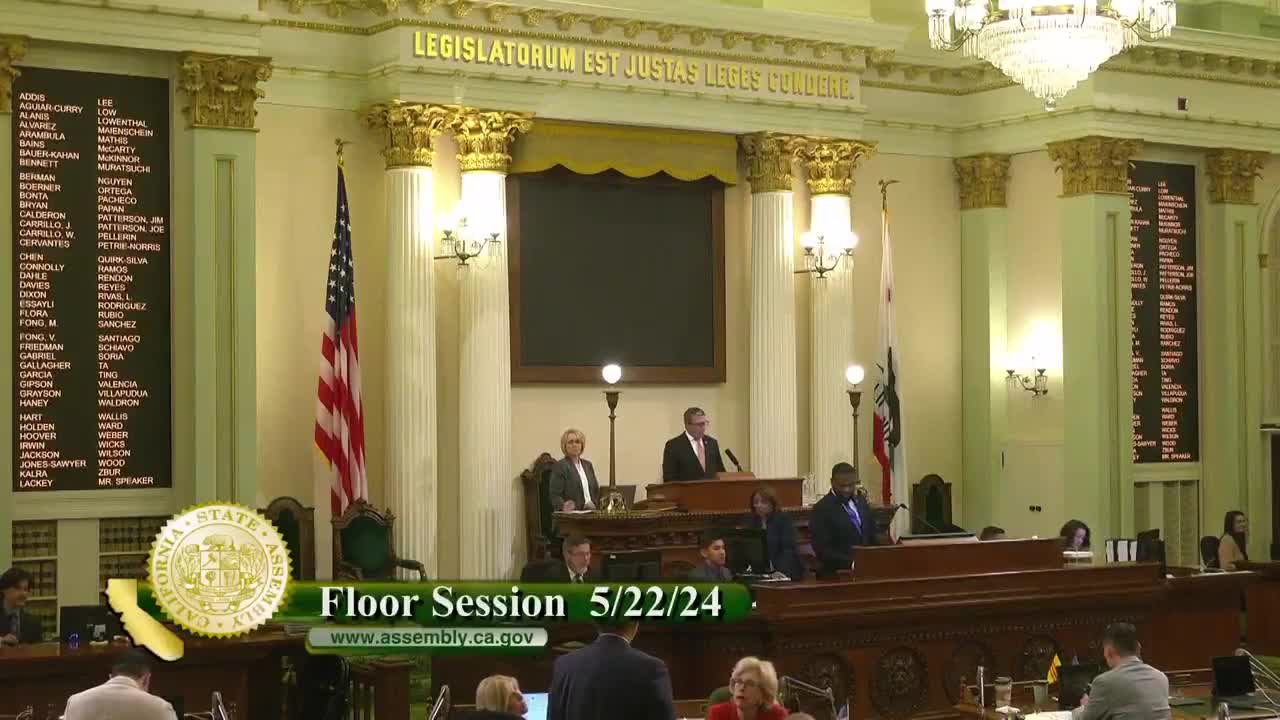
Bill Author
Bill Co-Author(s):