AB 2739: Firearms.
- Session Year: 2023-2024
- House: Assembly
- Latest Version Date: 2024-09-24
Current Status:
Passed
(2024-09-24: Chaptered by Secretary of State - Chapter 534, Statutes of 2024.)
Introduced
In Committee
First Chamber
In Committee
Second Chamber
Enacted
Existing law prohibits the carrying of a concealed firearm, as specified and except as exempted. Under existing law, a handgun carried in violation of this provision is a nuisance and is subject to forfeiture and destruction, as specified.
Existing law also prohibits carrying a loaded firearm in public, as specified and except as exempted, and openly carrying an unloaded handgun in public, as specified and except as exempted.
This bill would deem any firearm carried in violation of either of these provisions to be a nuisance and subject to forfeiture and destruction, as specified.
By requiring additional firearms to be forfeited to and destroyed by local law enforcement agencies, this bill would impose a state-mandated local program.
This bill would incorporate additional changes to Section 18005 of the Penal Code proposed by SB 1019 and AB 2842 to be operative only if this bill and either one or both of those bills are enacted and this bill is enacted last.
The California Constitution requires the state to reimburse local agencies and school districts for certain costs mandated by the state. Statutory provisions establish procedures for making that reimbursement.
This bill would provide that, if the Commission on State Mandates determines that the bill contains costs mandated by the state, reimbursement for those costs shall be made pursuant to the statutory provisions noted above.
Existing law prohibits the carrying of a concealed firearm, as specified and except as exempted. Under existing law, a handgun carried in violation of this provision is a nuisance and is subject to forfeiture and destruction, as specified.
Existing law also prohibits carrying a loaded firearm in public, as specified and except as exempted, and openly carrying an unloaded handgun in public, as specified and except as exempted.
This bill would deem any firearm carried in violation of either of these provisions to be a nuisance and subject to forfeiture and destruction, as specified.
By requiring additional firearms to be forfeited to and destroyed by local law enforcement agencies, this bill would impose a state-mandated local program.
The California Constitution requires the state to reimburse local agencies and school districts for certain costs mandated by the state. Statutory provisions establish procedures for making that reimbursement.
This bill would provide that, if the Commission on State Mandates determines that the bill contains costs mandated by the state, reimbursement for those costs shall be made pursuant to the statutory provisions noted above.
(2)Existing
Existing law prohibits the carrying of a concealed firearm, as specified and except as exempted. Under existing law, a handgun carried in violation of this provision is a nuisance and is subject to forfeiture and destruction, as specified.
Existing law also prohibits carrying a loaded firearm in public, as specified and except as exempted, and openly carrying an unloaded handgun in public, as specified and except as exempted.
This bill would deem any firearm carried in violation of either of these provisions to be a nuisance and subject to forfeiture and destruction, as specified.
By requiring additional firearms to be forfeited to and destroyed by local law enforcement agencies, this bill would impose a state-mandated local program.
The California Constitution requires the state to reimburse local agencies and school districts for certain costs mandated by the state. Statutory provisions establish procedures for making that reimbursement.
This bill would provide that, if the Commission on State Mandates determines that the bill contains costs mandated by the state, reimbursement for those costs shall be made pursuant to the statutory provisions noted above.
(1)Existing law requires any weapon that was carried unlawfully for specified crimes to be surrendered to specified law enforcement entities. Existing law requires weapons surrendered pursuant to these provisions to be destroyed by the law enforcement entity.
This bill would additionally require a weapon carried unlawfully for those crimes to be surrendered to law enforcement if the defendant is granted diversion for the underlying crime.
(2)Existing law prohibits the carrying of a concealed firearm, as specified and except as exempted. Under existing law, a handgun carried in violation of this provision is a nuisance and is subject to forfeiture and destruction, as specified.
Existing law also prohibits carrying a loaded firearm in public, as specified and except as exempted, and openly carrying an unloaded handgun in public, as specified and except as exempted.
This bill would deem any firearm carried in violation of either of these provisions to be a nuisance and subject to forfeiture and destruction, as specified.
By requiring additional firearms to be forfeited to and destroyed by local law enforcement agencies, this bill would impose a state-mandated local program.
The California Constitution requires the state to reimburse local agencies and school districts for certain costs mandated by the state. Statutory provisions establish procedures for making that reimbursement.
This bill would provide that, if the Commission on State Mandates determines that the bill contains costs mandated by the state, reimbursement for those costs shall be made pursuant to the statutory provisions noted above.
(a)Any weapon described in Section 19190, 21390, 21590, 25700, 26110, or 26395, or, upon conviction of the defendant or upon a juvenile court finding that an offense that would be a misdemeanor or felony if committed by an adult was committed or attempted by the juvenile with the use of a firearm, any weapon described in Section 29300, shall be surrendered to one of the following:
(1)The sheriff of a county.
(2)The chief of police or other head of a municipal police department of any city or city and county.
(3)The chief of police of any campus of the University of California or the California State University.
(4)The Commissioner of the California Highway Patrol.
(b)For purposes of this section, the Commissioner of the California Highway Patrol shall receive only weapons that were confiscated by a member of the California Highway Patrol.
(c)A finding that the defendant was guilty of the offense but was insane at the time the offense was committed is a conviction for the purposes of this section.
SEC. 2.Section 18005 of the Penal Code is amended to read:18005.(a)An officer to whom a weapon is surrendered under Section 18000, except upon the certificate of a judge of a court of record, or of the district attorney of the county, that the retention thereof is necessary or proper to the ends of justice, shall destroy that weapon and, if applicable, submit proof of its destruction to the court.
(b)If any weapon has been stolen and is thereafter recovered from the thief or the thiefs transferee, or is used in a manner as to constitute a nuisance under Section 19190, 21390, 21590, 25700, 26110, 26395, or 29300, without the prior knowledge of its lawful owner that it would be so used, it shall not be destroyed pursuant to subdivision (a) but shall be restored to the lawful owner, as soon as its use as evidence has been served, upon the lawful owners identification of the weapon and proof of ownership, and after the law enforcement agency has complied with Chapter 2 (commencing with Section 33850) of Division 11 of Title 4.
(c)No stolen weapon shall be destroyed pursuant to subdivision (a) unless reasonable notice is given to its lawful owner, if the lawful owners identity and address can be reasonably ascertained.
(d)If the weapon was evidence in a criminal case, the weapon shall be retained as required by Chapter 13 (commencing with Section 1417) of Title 10 of Part 2.
SEC. 2.1.Section 18005 of the Penal Code is amended to read:18005.(a)An officer to whom a weapon is surrendered under Section 18000, except upon the certificate of a judge of a court of record, or of the district attorney of the county, that the retention thereof is necessary or proper to the ends of justice, shall destroy that weapon and, if applicable, submit proof of its destruction to the court.
(b)If any weapon has been stolen and is thereafter recovered from the thief or the thiefs transferee, or is used in a manner as to constitute a nuisance under Section 19190, 21390, 21590, 25700, 26110, 26395, or 29300, without the prior knowledge of its lawful owner that it would be so used, it shall not be destroyed pursuant to subdivision (a) but shall be restored to the lawful owner, as soon as its use as evidence has been served, upon the lawful owners identification of the weapon and proof of ownership, and after the law enforcement agency has complied with Chapter 2 (commencing with Section 33850) of Division 11 of Title 4.
(c)No stolen weapon shall be destroyed pursuant to subdivision (a) unless reasonable notice is given to its lawful owner, if the lawful owners identity and address can be reasonably ascertained.
(d)If the weapon was evidence in a criminal case, the weapon shall be retained as required by Chapter 13 (commencing with Section 1417) of Title 10 of Part 2.
(e)(1)Every law enforcement agency shall develop and maintain a written policy on the destruction of firearms and other weapons including, without limitation, policies for identifying firearms and other weapons that are required to be destroyed, keeping records of those firearms and other weapons, including entry into the Automated Firearms System, as applicable, and the destruction and disposal of those firearms and other weapons. A law enforcement agency that either contracts with, or operates under, a memorandum of understanding (MOU) with another agency for the storage or destruction of weapons or other firearms shall have a policy identifying the other agency and outlining the responsibilities of both agencies under the contract or MOU.
(2)Every law enforcement agency shall post the policy required by this subdivision on its internet website.
(f)As used in this section, the following terms are defined as follows:
(1)Destroy means to destroy a firearm or other weapon in its entirety by smelting, shredding, crushing, or cutting and shall include all parts including, without limitation, the frame or receiver, barrel, bolt, and grip of a firearm, as applicable, and any attachments including, but not limited to, a sight, scope, silencer, or suppressor, as applicable.
(2)Law enforcement agency means any police department, sheriffs department, or other department or agency of the state, or any political subdivision thereof, that employs any peace officer as described in Section 830.
(g)A law enforcement agency that had an existing contract with another person or entity for the destruction of firearms or other weapons prior to November 1, 2024, is not required to destroy a weapon pursuant to the requirements of subdivision (e) or (f) if any of those requirements would require the law enforcement agency to breach its contract with the other person or entity.
SEC. 2.3.Section 18005 of the Penal Code is amended to read:18005.(a)An officer to whom a weapon is surrendered under Section 18000, except upon the certificate of a judge of a court of record, or of the district attorney of the county, that the retention thereof is necessary or proper to the ends of justice, shall destroy that weapon and, if applicable, submit proof of its destruction to the court.
(b)If any weapon has been stolen and is thereafter recovered from the thief or the thiefs transferee, or is used in a manner as to constitute a nuisance under Section 19190, 21390, 21590, 25700, 26110, 26395, or 29300, without the prior knowledge of its lawful owner that it would be so used, it shall not be destroyed pursuant to subdivision (a) but shall be restored to the lawful owner, as soon as its use as evidence has been served, upon the lawful owners identification of the weapon and proof of ownership, and after the law enforcement agency has complied with Chapter 2 (commencing with Section 33850) of Division 11 of Title 4.
(c)No stolen weapon shall be destroyed pursuant to subdivision (a) unless reasonable notice is given to its lawful owner, if the lawful owners identity and address can be reasonably ascertained.
(d)If the weapon was evidence in a criminal case, the weapon shall be retained as required by Chapter 13 (commencing with Section 1417) of Title 10 of Part 2.
(e)(1)If a law enforcement agency contracts with a third party for the destruction of firearms or other weapons pursuant to this section or any other related law, the agency shall ensure that any such contract explicitly prohibits the sale of any firearm or weapon, or any part or attachment thereof.
(2)This subdivision is not intended to prohibit the recycling, or sale for the purpose of recycling, of any scrap metal or other material resulting from the destruction of a firearm or other weapon.
SEC. 2.5.Section 18005 of the Penal Code is amended to read:18005.(a)An officer to whom a weapon is surrendered under Section 18000, except upon the certificate of a judge of a court of record, or of the district attorney of the county, that the retention thereof is necessary or proper to the ends of justice, shall destroy that weapon and, if applicable, submit proof of its destruction to the court.
(b)If any weapon has been stolen and is thereafter recovered from the thief or the thiefs transferee, or is used in a manner as to constitute a nuisance under Section 19190, 21390, 21590, 25700, 26110, 26395, or 29300, without the prior knowledge of its lawful owner that it would be so used, it shall not be destroyed pursuant to subdivision (a) but shall be restored to the lawful owner, as soon as its use as evidence has been served, upon the lawful owners identification of the weapon and proof of ownership, and after the law enforcement agency has complied with Chapter 2 (commencing with Section 33850) of Division 11 of Title 4.
(c)No stolen weapon shall be destroyed pursuant to subdivision (a) unless reasonable notice is given to its lawful owner, if the lawful owners identity and address can be reasonably ascertained.
(d)If the weapon was evidence in a criminal case, the weapon shall be retained as required by Chapter 13 (commencing with Section 1417) of Title 10 of Part 2.
(e)(1)Every law enforcement agency shall develop and maintain a written policy on the destruction of firearms and other weapons including, without limitation, policies for identifying firearms and other weapons that are required to be destroyed, keeping records of those firearms and other weapons, including entry into the Automated Firearms System, as applicable, and the destruction and disposal of those firearms and other weapons. A law enforcement agency that either contracts with, or operates under, a memorandum of understanding (MOU) with another agency for the storage or destruction of weapons or other firearms shall have a policy identifying the other agency and outlining the responsibilities of both agencies under the contract or MOU.
(2)Every law enforcement agency shall post the policy required by this subdivision on its internet website.
(f)As used in this section, the following terms are defined as follows:
(1)Destroy means to destroy a firearm or other weapon in its entirety by smelting, shredding, crushing, or cutting and shall include all parts including, without limitation, the frame or receiver, barrel, bolt, and grip of a firearm, as applicable, and any attachments including, but not limited to, a sight, scope, silencer, or suppressor, as applicable.
(2)Law enforcement agency means any police department, sheriffs department, or other department or agency of the state, or any political subdivision thereof, that employs any peace officer as described in Section 830.
(g)(1)If a law enforcement agency contracts with a third party for the destruction of firearms or other weapons pursuant to this section or any other related law, the agency shall ensure that any such contract explicitly prohibits the sale of any firearm or weapon, or any part or attachment thereof.
(2)This subdivision is not intended to prohibit the recycling, or sale for the purpose of recycling, of any scrap metal or other material resulting from the destruction of a firearm or other weapon.
(h)A law enforcement agency that had an existing contract with another person or entity for the destruction of firearms or other weapons prior to November 1, 2024, is not required to destroy a weapon pursuant to the requirements of subdivision (e) or (f) if any of those requirements would require the law enforcement agency to breach its contract with the other person or entity.
SEC. 3.Article 6 (commencing with Section 26110) is added to Chapter 3 of Division 5 of Title 4 of Part 6 of the Penal Code, to read:6.Carrying a Loaded Firearm as a Nuisance26110.(a)The unlawful carrying of any firearm in violation of Section 25850 is a nuisance and is subject to Sections 18000 and 18005.
(b)This section does not apply to either of the following:
(1)Any firearm that was used in the violation of any provision of the Fish and Game Code or any regulation adopted pursuant thereto.
(2)Any firearm that is forfeited pursuant to Section 5008.6 of the Public Resources Code.
SEC. 4.Article 3 (commencing with Section 26395) is added to Chapter 6 of Division 5 of Title 4 of Part 6 of the Penal Code, to read:3.Openly Carrying an Unloaded Handgun as a Nuisance26395.(a)The unlawful carrying of any handgun in violation of Section 26350 is a nuisance and is subject to Sections 18000 and 18005.
(b)This section does not apply to either of the following:
(1)Any firearm that was used in the violation of any provision of the Fish and Game Code or any regulation adopted pursuant thereto.
(2)Any firearm that is forfeited pursuant to Section 5008.6 of the Public Resources Code.
SEC. 5.(a)Section 2.1 of this bill incorporates amendments to Section 18005 of the Penal Code proposed by both this bill and Senate Bill 1019. That section of this bill shall only become operative if (1) both bills are enacted and become effective on or before January 1, 2025, (2) each bill amends Section 18005 of the Penal Code, (3) Assembly Bill 2842 is not enacted or as enacted does not amend that section, and (4) this bill is enacted after Senate Bill 1019, in which case Sections 2, 2.3, and 2.5 of this bill shall not become operative.
(b)Section 2.3 of this bill incorporates amendments to Section 18005 of the Penal Code proposed by both this bill and Assembly Bill 2842. That section of this bill shall only become operative if (1) both bills are enacted and become effective on or before January 1, 2025, (2) each bill amends Section 18005 of the Penal Code, (3) Senate Bill 1019 is not enacted or as enacted does not amend that section, and (4) this bill is enacted after Assembly Bill 2842 in which case Sections 2, 2.1, and 2.5 of this bill shall not become operative.
(c)Section 2.5 of this bill incorporates amendments to Section 18005 of the Penal Code proposed by this bill, Senate Bill 1019, and Assembly Bill 2842. That section of this bill shall only become operative if (1) all three bills are enacted and become effective on or before January 1, 2025, (2) all three bills amend Section 18005 of the Penal Code, and (3) this bill is enacted after Senate Bill 1019 and Assembly Bill 2842, in which case Sections 2, 2.1, and 2.3 of this bill shall not become operative.
SEC. 6.If the Commission on State Mandates determines that this act contains costs mandated by the state, reimbursement to local agencies and school districts for those costs shall be made pursuant to Part 7 (commencing with Section 17500) of Division 4 of Title 2 of the Government Code.
(a)Any weapon described in Section 19190, 21390, 21590, 25700, 26110, or 26395, or, upon conviction of the defendant or upon a juvenile court finding that an offense that would be a misdemeanor or felony if committed by an adult was committed or attempted by the juvenile with the use of a firearm, any weapon described in Section 29300, shall be surrendered to one of the following:
(1)The sheriff of a county.
(2)The chief of police or other head of a municipal police department of any city or city and county.
(3)The chief of police of any campus of the University of California or the California State University.
(4)The Commissioner of the California Highway Patrol.
(b)For purposes of this section, the Commissioner of the California Highway Patrol shall receive only weapons that were confiscated by a member of the California Highway Patrol.
(c)A finding that the defendant was guilty of the offense but was insane at the time the offense was committed is a conviction for the purposes of this section.
SEC. 2.Section 18005 of the Penal Code is amended to read:18005.(a)An officer to whom a weapon is surrendered under Section 18000, except upon the certificate of a judge of a court of record, or of the district attorney of the county, that the retention thereof is necessary or proper to the ends of justice, shall destroy that weapon and, if applicable, submit proof of its destruction to the court.
(b)If any weapon has been stolen and is thereafter recovered from the thief or the thiefs transferee, or is used in a manner as to constitute a nuisance under Section 19190, 21390, 21590, 25700, 26110, 26395, or 29300, without the prior knowledge of its lawful owner that it would be so used, it shall not be destroyed pursuant to subdivision (a) but shall be restored to the lawful owner, as soon as its use as evidence has been served, upon the lawful owners identification of the weapon and proof of ownership, and after the law enforcement agency has complied with Chapter 2 (commencing with Section 33850) of Division 11 of Title 4.
(c)No stolen weapon shall be destroyed pursuant to subdivision (a) unless reasonable notice is given to its lawful owner, if the lawful owners identity and address can be reasonably ascertained.
(d)If the weapon was evidence in a criminal case, the weapon shall be retained as required by Chapter 13 (commencing with Section 1417) of Title 10 of Part 2.
SEC. 2.1.Section 18005 of the Penal Code is amended to read:18005.(a)An officer to whom a weapon is surrendered under Section 18000, except upon the certificate of a judge of a court of record, or of the district attorney of the county, that the retention thereof is necessary or proper to the ends of justice, shall destroy that weapon and, if applicable, submit proof of its destruction to the court.
(b)If any weapon has been stolen and is thereafter recovered from the thief or the thiefs transferee, or is used in a manner as to constitute a nuisance under Section 19190, 21390, 21590, or 29300, or subdivision (a) of Section 25700 25700, 26110, 26395, or 29300, without the prior knowledge of its lawful owner that it would be so used, it shall not be destroyed pursuant to subdivision (a) but shall be restored to the lawful owner, as soon as its use as evidence has been served, upon the lawful owners identification of the weapon and proof of ownership, and after the law enforcement agency has complied with Chapter 2 (commencing with Section 33850) of Division 11 of Title 4.
(c)No stolen weapon shall be destroyed pursuant to subdivision (a) unless reasonable notice is given to its lawful owner, if the lawful owners identity and address can be reasonably ascertained.
(d)If the weapon was evidence in a criminal case, the weapon shall be retained as required by Chapter 13 (commencing with Section 1417) of Title 10 of Part 2.
(e)(1)Every law enforcement agency shall develop and maintain a written policy on the destruction of firearms and other weapons including, without limitation, policies for identifying firearms and other weapons that are required to be destroyed, keeping records of those firearms and other weapons, including entry into the Automated Firearms System, as applicable, and the destruction and disposal of those firearms and other weapons. A law enforcement agency that either contracts with, or operates under, a memorandum of understanding (MOU) with another agency for the storage or destruction of weapons or other firearms shall have a policy identifying the other agency and outlining the responsibilities of both agencies under the contract or MOU.
(2)Every law enforcement agency shall post the policy required by this subdivision on its internet website.
(f)As used in this section, the following terms are defined as follows:
(1)Destroy means to destroy a firearm or other weapon in its entirety by smelting, shredding, crushing, or cutting and shall include all parts including, without limitation, the frame or receiver, barrel, bolt, and grip of a firearm, as applicable, and any attachments including, but not limited to, a sight, scope, silencer, or suppressor, as applicable.
(2)Law enforcement agency means any police department, sheriffs department, or other department or agency of the state, or any political subdivision thereof, that employs any peace officer as described in Section 830.
(g)A law enforcement agency that had an existing contract with another person or entity for the destruction of firearms or other weapons prior to November 1, 2024, is not required to destroy a weapon pursuant to the requirements of subdivision (e) or (f) if any of those requirements would require the law enforcement agency to breach its contract with the other person or entity.
SEC. 2.3.Section 18005 of the Penal Code is amended to read:18005.(a)An officer to whom a weapon is surrendered under Section 18000, except upon the certificate of a judge of a court of record, or of the district attorney of the county, that the retention thereof is necessary or proper to the ends of justice, shall destroy that weapon and, if applicable, submit proof of its destruction to the court.
(b)If any weapon has been stolen and is thereafter recovered from the thief or the thiefs transferee, or is used in a manner as to constitute a nuisance under Section 19190, 21390, 21590, or 29300, or subdivision (a) of Section 25700 25700, 26110, 26395, or 29300, without the prior knowledge of its lawful owner that it would be so used, it shall not be destroyed pursuant to subdivision (a) but shall be restored to the lawful owner, as soon as its use as evidence has been served, upon the lawful owners identification of the weapon and proof of ownership, and after the law enforcement agency has complied with Chapter 2 (commencing with Section 33850) of Division 11 of Title 4.
(c)No stolen weapon shall be destroyed pursuant to subdivision (a) unless reasonable notice is given to its lawful owner, if the lawful owners identity and address can be reasonably ascertained.
(d)If the weapon was evidence in a criminal case, the weapon shall be retained as required by Chapter 13 (commencing with Section 1417) of Title 10 of Part 2.
(e)(1)If a law enforcement agency contracts with a third party for the destruction of firearms or other weapons pursuant to this section or any other related law, the agency shall ensure that any such contract explicitly prohibits the sale of any firearm or weapon, or any part or attachment thereof.
(2)This subdivision is not intended to prohibit the recycling, or sale for the purpose of recycling, of any scrap metal or other material resulting from the destruction of a firearm or other weapon.
SEC. 2.5.Section 18005 of the Penal Code is amended to read:18005.(a)An officer to whom a weapon is surrendered under Section 18000, except upon the certificate of a judge of a court of record, or of the district attorney of the county, that the retention thereof is necessary or proper to the ends of justice, shall destroy that weapon and, if applicable, submit proof of its destruction to the court.
(b)If any weapon has been stolen and is thereafter recovered from the thief or the thiefs transferee, or is used in a manner as to constitute a nuisance under Section 19190, 21390, 21590, or 29300, or subdivision (a) of Section 25700 25700, 26110, 26395, or 29300, without the prior knowledge of its lawful owner that it would be so used, it shall not be destroyed pursuant to subdivision (a) but shall be restored to the lawful owner, as soon as its use as evidence has been served, upon the lawful owners identification of the weapon and proof of ownership, and after the law enforcement agency has complied with Chapter 2 (commencing with Section 33850) of Division 11 of Title 4.
(c)No stolen weapon shall be destroyed pursuant to subdivision (a) unless reasonable notice is given to its lawful owner, if the lawful owners identity and address can be reasonably ascertained.
(d)If the weapon was evidence in a criminal case, the weapon shall be retained as required by Chapter 13 (commencing with Section 1417) of Title 10 of Part 2.
(e)(1)Every law enforcement agency shall develop and maintain a written policy on the destruction of firearms and other weapons including, without limitation, policies for identifying firearms and other weapons that are required to be destroyed, keeping records of those firearms and other weapons, including entry into the Automated Firearms System, as applicable, and the destruction and disposal of those firearms and other weapons. A law enforcement agency that either contracts with, or operates under, a memorandum of understanding (MOU) with another agency for the storage or destruction of weapons or other firearms shall have a policy identifying the other agency and outlining the responsibilities of both agencies under the contract or MOU.
(2)Every law enforcement agency shall post the policy required by this subdivision on its internet website.
(f)As used in this section, the following terms are defined as follows:
(1)Destroy means to destroy a firearm or other weapon in its entirety by smelting, shredding, crushing, or cutting and shall include all parts including, without limitation, the frame or receiver, barrel, bolt, and grip of a firearm, as applicable, and any attachments including, but not limited to, a sight, scope, silencer, or suppressor, as applicable.
(2)Law enforcement agency means any police department, sheriffs department, or other department or agency of the state, or any political subdivision thereof, that employs any peace officer as described in Section 830.
(g)(1)If a law enforcement agency contracts with a third party for the destruction of firearms or other weapons pursuant to this section or any other related law, the agency shall ensure that any such contract explicitly prohibits the sale of any firearm or weapon, or any part or attachment thereof.
(2)This subdivision is not intended to prohibit the recycling, or sale for the purpose of recycling, of any scrap metal or other material resulting from the destruction of a firearm or other weapon.
(h)A law enforcement agency that had an existing contract with another person or entity for the destruction of firearms or other weapons prior to November 1, 2024, is not required to destroy a weapon pursuant to the requirements of subdivision (e) or (f) if any of those requirements would require the law enforcement agency to breach its contract with the other person or entity.
SEC. 3.Article 6 (commencing with Section 26110) is added to Chapter 3 of Division 5 of Title 4 of Part 6 of the Penal Code, to read:6.Carrying a Loaded Firearm as a Nuisance26110.(a)The unlawful carrying of any firearm in violation of Section 25850 is a nuisance and is subject to Sections 18000 and 18005.
(b)This section does not apply to either of the following:
(1)Any firearm that was used in the violation of any provision of the Fish and Game Code or any regulation adopted pursuant thereto.
(2)Any firearm that is forfeited pursuant to Section 5008.6 of the Public Resources Code.
SEC. 4.Article 3 (commencing with Section 26395) is added to Chapter 6 of Division 5 of Title 4 of Part 6 of the Penal Code, to read:3.Openly Carrying an Unloaded Handgun as a Nuisance26395.(a)The unlawful carrying of any handgun in violation of Section 26350 is a nuisance and is subject to Sections 18000 and 18005.
(b)This section does not apply to either of the following:
(1)Any firearm that was used in the violation of any provision of the Fish and Game Code or any regulation adopted pursuant thereto.
(2)Any firearm that is forfeited pursuant to Section 5008.6 of the Public Resources Code.
SEC. 5.(a)Section 2.1 of this bill incorporates amendments to Section 18005 of the Penal Code proposed by both this bill and Senate Bill 1019. That section of this bill shall only become operative if (1) both bills are enacted and become effective on or before January 1, 2025, (2) each bill amends Section 18005 of the Penal Code, (3) Assembly Bill 2842 is not enacted or as enacted does not amend that section, and (4) this bill is enacted after Senate Bill 1019, in which case Sections 2, 2.3, and 2.5 of this bill shall not become operative.
(b)Section 2.3 of this bill incorporates amendments to Section 18005 of the Penal Code proposed by both this bill and Assembly Bill 2842. That section of this bill shall only become operative if (1) both bills are enacted and become effective on or before January 1, 2025, (2) each bill amends Section 18005 of the Penal Code, (3) Senate Bill 1019 is not enacted or as enacted does not amend that section, and (4) this bill is enacted after Assembly Bill 2842 in which case Sections 2, 2.1, and 2.5 of this bill shall not become operative.
(c)Section 2.5 of this bill incorporates amendments to Section 18005 of the Penal Code proposed by this bill, Senate Bill 1019, and Assembly Bill 2842. That section of this bill shall only become operative if (1) all three bills are enacted and become effective on or before January 1, 2025, (2) all three bills amend Section 18005 of the Penal Code, and (3) this bill is enacted after Senate Bill 1019 and Assembly Bill 2842, in which case Sections 2, 2.1, and 2.3 of this bill shall not become operative.
SEC. 5.SEC. 6.If the Commission on State Mandates determines that this act contains costs mandated by the state, reimbursement to local agencies and school districts for those costs shall be made pursuant to Part 7 (commencing with Section 17500) of Division 4 of Title 2 of the Government Code.
(a)Any weapon described in Section 19190, 21390, 21590, 25700, 26110, or 26395, or, upon conviction of the defendant or upon a juvenile court finding that an offense that would be a misdemeanor or felony if committed by an adult was committed or attempted by the juvenile with the use of a firearm, any weapon described in Section 29300, shall be surrendered to one of the following:
(1)The sheriff of a county.
(2)The chief of police or other head of a municipal police department of any city or city and county.
(3)The chief of police of any campus of the University of California or the California State University.
(4)The Commissioner of the California Highway Patrol.
(b)For purposes of this section, the Commissioner of the California Highway Patrol shall receive only weapons that were confiscated by a member of the California Highway Patrol.
(c)A finding that the defendant was guilty of the offense but was insane at the time the offense was committed is a conviction for the purposes of this section.
SEC. 2.Section 18005 of the Penal Code is amended to read:18005.(a)An officer to whom a weapon is surrendered under Section 18000, except upon the certificate of a judge of a court of record, or of the district attorney of the county, that the retention thereof is necessary or proper to the ends of justice, shall destroy that weapon and, if applicable, submit proof of its destruction to the court.
(b)If any weapon has been stolen and is thereafter recovered from the thief or the thiefs transferee, or is used in a manner as to constitute a nuisance under Section 19190, 21390, 21590, 25700, 26110, 26395, or 29300, without the prior knowledge of its lawful owner that it would be so used, it shall not be destroyed pursuant to subdivision (a) but shall be restored to the lawful owner, as soon as its use as evidence has been served, upon the lawful owners identification of the weapon and proof of ownership, and after the law enforcement agency has complied with Chapter 2 (commencing with Section 33850) of Division 11 of Title 4.
(c)No stolen weapon shall be destroyed pursuant to subdivision (a) unless reasonable notice is given to its lawful owner, if the lawful owners identity and address can be reasonably ascertained.
(d)If the weapon was evidence in a criminal case, the weapon shall be retained as required by Chapter 13 (commencing with Section 1417) of Title 10 of Part 2.
SEC. 3.Article 6 (commencing with Section 26110) is added to Chapter 3 of Division 5 of Title 4 of Part 6 of the Penal Code, to read:6.Carrying a Loaded Firearm as a Nuisance26110.(a)The unlawful carrying of any firearm in violation of Section 25850 is a nuisance and is subject to Sections 18000 and 18005.
(b)This section does not apply to any either of the following:
(1)Any firearm in the possession of the Department of Fish and Wildlife.(2)(1)Any firearm that was used in the violation of any provision of the Fish and Game Code or any regulation adopted pursuant thereto.
(3)(2)Any firearm that is forfeited pursuant to Section 5008.6 of the Public Resources Code.
SEC. 4.Article 3 (commencing with Section 26395) is added to Chapter 6 of Division 5 of Title 4 of Part 6 of the Penal Code, to read:3.Openly Carrying an Unloaded Handgun as a Nuisance26395.(a)The unlawful carrying of any handgun in violation of Section 26350 is a nuisance and is subject to Sections 18000 and 18005.
(b)This section does not apply to any either of the following:
(1)Any firearm in the possession of the Department of Fish and Wildlife.(2)(1)Any firearm that was used in the violation of any provision of the Fish and Game Code or any regulation adopted pursuant thereto.
(3)(2)Any firearm that is forfeited pursuant to Section 5008.6 of the Public Resources Code.
SEC. 5.If the Commission on State Mandates determines that this act contains costs mandated by the state, reimbursement to local agencies and school districts for those costs shall be made pursuant to Part 7 (commencing with Section 17500) of Division 4 of Title 2 of the Government Code.
(a)Any weapon described in Section 19190, 21390, 21590, 25700, 26110, or 26395, or, upon conviction of the defendant or upon a juvenile court finding that an offense that would be a misdemeanor or felony if committed by an adult was committed or attempted by the juvenile with the use of a firearm, any weapon described in Section 29300, shall be surrendered to one of the following:
(1)The sheriff of a county.
(2)The chief of police or other head of a municipal police department of any city or city and county.
(3)The chief of police of any campus of the University of California or the California State University.
(4)The Commissioner of the California Highway Patrol.
(b)For purposes of this section, the Commissioner of the California Highway Patrol shall receive only weapons that were confiscated by a member of the California Highway Patrol.
(c)A finding that the defendant was guilty of the offense but was insane at the time the offense was committed is a conviction for the purposes of this section.
(d)Subdivision (a) shall also apply to a weapon when a defendant is granted diversion pursuant to Section 1001.95 for a crime for which subdivision (a) would apply if the defendant had been convicted of that crime.SEC. 2.Section 18005 of the Penal Code is amended to read:18005.(a)An officer to whom a weapon is surrendered under Section 18000, except upon the certificate of a judge of a court of record, or of the district attorney of the county, that the retention thereof is necessary or proper to the ends of justice, shall destroy that weapon and, if applicable, submit proof of its destruction to the court.
(b)If any weapon has been stolen and is thereafter recovered from the thief or the thiefs transferee, or is used in a manner as to constitute a nuisance under Section 19190, 21390, 21590, 25700, 26110, 26395, or 29300, without the prior knowledge of its lawful owner that it would be so used, it shall not be destroyed pursuant to subdivision (a) but shall be restored to the lawful owner, as soon as its use as evidence has been served, upon the lawful owners identification of the weapon and proof of ownership, and after the law enforcement agency has complied with Chapter 2 (commencing with Section 33850) of Division 11 of Title 4.
(c)No stolen weapon shall be destroyed pursuant to subdivision (a) unless reasonable notice is given to its lawful owner, if the lawful owners identity and address can be reasonably ascertained.
(d)If the weapon was evidence in a criminal case, the weapon shall be retained as required by Chapter 13 (commencing with Section 1417) of Title 10 of Part 2.
SEC. 3.Article 6 (commencing with Section 26110) is added to Chapter 3 of Division 5 of Title 4 of Part 6 of the Penal Code, to read:6.Carrying a Loaded Firearm as a Nuisance26110.(a)The unlawful carrying of any firearm in violation of Section 25850 is a nuisance and is subject to Sections 18000 and 18005.
(b)This section does not apply to any of the following:
(1)Any firearm in the possession of the Department of Fish and Wildlife.
(2)Any firearm that was used in the violation of any provision of the Fish and Game Code or any regulation adopted pursuant thereto.
(3)Any firearm that is forfeited pursuant to Section 5008.6 of the Public Resources Code.
SEC. 4.Article 3 (commencing with Section 26395) is added to Chapter 6 of Division 5 of Title 4 of Part 6 of the Penal Code, to read:3.Openly Carrying an Unloaded Handgun as a Nuisance26395.(a)The unlawful carrying of any handgun in violation of Section 26350 is a nuisance and is subject to Sections 18000 and 18005.
(b)This section does not apply to any of the following:
(1)Any firearm in the possession of the Department of Fish and Wildlife.
(2)Any firearm that was used in the violation of any provision of the Fish and Game Code or any regulation adopted pursuant thereto.
(3)Any firearm that is forfeited pursuant to Section 5008.6 of the Public Resources Code.
SEC. 5.If the Commission on State Mandates determines that this act contains costs mandated by the state, reimbursement to local agencies and school districts for those costs shall be made pursuant to Part 7 (commencing with Section 17500) of Division 4 of Title 2 of the Government Code.
(a)Any weapon described in Section 19190, 21390, 21590, or 25700, 26110, or 26395, or, upon conviction of the defendant or upon a juvenile court finding that an offense that would be a misdemeanor or felony if committed by an adult was committed or attempted by the juvenile with the use of a firearm, any weapon described in Section 29300, shall be surrendered to one of the following:
(1)The sheriff of a county.
(2)The chief of police or other head of a municipal police department of any city or city and county.
(3)The chief of police of any campus of the University of California or the California State University.
(4)The Commissioner of the California Highway Patrol.
(b)For purposes of this section, the Commissioner of the California Highway Patrol shall receive only weapons that were confiscated by a member of the California Highway Patrol.
(c)A finding that the defendant was guilty of the offense but was insane at the time the offense was committed is a conviction for the purposes of this section.
(d)Subdivision (a) shall also apply to a weapon when a defendant is granted diversion pursuant to Section 1001.95 for a crime for which subdivision (a) would apply if the defendant had been convicted of that crime.
SEC. 2.Section 18005 of the Penal Code is amended to read:18005.(a)An officer to whom a weapon is surrendered under Section 18000, except upon the certificate of a judge of a court of record, or of the district attorney of the county, that the retention thereof is necessary or proper to the ends of justice, shall destroy that weapon and, if applicable, submit proof of its destruction to the court.
(b)If any weapon has been stolen and is thereafter recovered from the thief or the thiefs transferee, or is used in a manner as to constitute a nuisance under Section 19190, 21390, 21590, 25700, 26110, 26395, or 29300, or subdivision (a) of Section 25700 without the prior knowledge of its lawful owner that it would be so used, it shall not be destroyed pursuant to subdivision (a) but shall be restored to the lawful owner, as soon as its use as evidence has been served, upon the lawful owners identification of the weapon and proof of ownership, and after the law enforcement agency has complied with Chapter 2 (commencing with Section 33850) of Division 11 of Title 4.
(c)No stolen weapon shall be destroyed pursuant to subdivision (a) unless reasonable notice is given to its lawful owner, if the lawful owners identity and address can be reasonably ascertained.
(d)If the weapon was evidence in a criminal case, the weapon shall be retained as required by Chapter 13 (commencing with Section 1417) of Title 10 of Part 2.
SEC. 3.Article 6 (commencing with Section 26110) is added to Chapter 3 of Division 5 of Title 4 of Part 6 of the Penal Code, to read:6.Carrying a Loaded Firearm as a Nuisance26110.(a)The unlawful carrying of any firearm in violation of Section 25850 is a nuisance and is subject to Sections 18000 and 18005.
(b)This section does not apply to any of the following:
(1)Any firearm in the possession of the Department of Fish and Wildlife.
(2)Any firearm that was used in the violation of any provision of the Fish and Game Code or any regulation adopted pursuant thereto.
(3)Any firearm that is forfeited pursuant to Section 5008.6 of the Public Resources Code.
SEC. 4.Article 3 (commencing with Section 26395) is added to Chapter 6 of Division 5 of Title 4 of Part 6 of the Penal Code, to read:3.Openly Carrying an Unloaded Handgun as a Nuisance26395.(a)The unlawful carrying of any handgun in violation of Section 26350 is a nuisance and is subject to Sections 18000 and 18005.
(b)This section does not apply to any of the following:
(1)Any firearm in the possession of the Department of Fish and Wildlife.
(2)Any firearm that was used in the violation of any provision of the Fish and Game Code or any regulation adopted pursuant thereto.
(3)Any firearm that is forfeited pursuant to Section 5008.6 of the Public Resources Code.
SEC. 5.If the Commission on State Mandates determines that this act contains costs mandated by the state, reimbursement to local agencies and school districts for those costs shall be made pursuant to Part 7 (commencing with Section 17500) of Division 4 of Title 2 of the Government Code.
|
Date
|
Status
|
|---|---|
| Sep 24, 2024 | Chaptered by Secretary of State - Chapter 534, Statutes of 2024. |
| Sep 24, 2024 | Approved by the Governor. |
| Sep 11, 2024 | Enrolled and presented to the Governor at 4 p.m. |
| Aug 30, 2024 | Senate amendments concurred in. To Engrossing and Enrolling. (Ayes 66. Noes 3.). |
| Aug 30, 2024 | In Assembly. Concurrence in Senate amendments pending. |
| Aug 29, 2024 | Read third time. Passed. Ordered to the Assembly. (Ayes 31. Noes 5.). |
| Aug 26, 2024 | Read second time. Ordered to third reading. |
| Aug 23, 2024 | Read third time and amended. Ordered to second reading. |
| Aug 20, 2024 | Read second time. Ordered to third reading. |
| Aug 19, 2024 | Read third time and amended. Ordered to second reading. |
| Aug 19, 2024 | Read second time. Ordered to third reading. |
| Aug 15, 2024 | Read second time and amended. Ordered returned to second reading. |
| Aug 15, 2024 | From committee: Amend, and do pass as amended. (Ayes 4. Noes 2.) (August 15). |
| Jun 24, 2024 | In committee: Referred to suspense file. |
| Jun 11, 2024 | From committee: Do pass and re-refer to Com. on APPR. (Ayes 4. Noes 0.) (June 11). Re-referred to Com. on APPR. |
| May 22, 2024 | Referred to Com. on PUB S. |
| May 13, 2024 | In Senate. Read first time. To Com. on RLS. for assignment. |
| May 13, 2024 | Read third time. Passed. Ordered to the Senate. (Ayes 63. Noes 0. Page 5183.) |
| Apr 18, 2024 | Read second time. Ordered to third reading. |
| Apr 17, 2024 | From committee: Do pass. (Ayes 13. Noes 0.) (April 17). |
| Apr 3, 2024 | From committee: Do pass and re-refer to Com. on APPR. (Ayes 7. Noes 0.) (April 2). Re-referred to Com. on APPR. |
| Mar 4, 2024 | Referred to Com. on PUB. S. |
| Feb 16, 2024 | From printer. May be heard in committee March 17. |
| Feb 15, 2024 | Read first time. To print. |
|
Date
|
Description
|
Location
|
Votes
|
|
|---|---|---|---|---|
| Aug 30, 2024 | AB 2739 Maienschein Concurrence in Senate Amendments | Assembly Floor |
Passed |
|
| Aug 29, 2024 | Assembly 3rd Reading AB2739 Maienschein By Becker | Senate Floor |
Passed |
|
| Aug 15, 2024 | Do pass as amended | Senate Standing Committee on Appropriations |
Passed |
|
| Jun 24, 2024 | Placed on suspense file | Senate Standing Committee on Appropriations |
Passed |
|
| Jun 11, 2024 | Do pass, but first be re-referred to the Committee on [Appropriations] | Senate Standing Committee on Public Safety |
Passed |
|
| May 13, 2024 | AB 2739 Maienschein Assembly Third Reading | Assembly Floor |
Passed |
|
| Apr 17, 2024 | Do pass. | Assembly Standing Committee on Appropriations |
Passed |
|
| Apr 2, 2024 | Do pass and be re-referred to the Committee on [Appropriations] | Assembly Standing Committee on Public Safety |
Passed |
This list shows positions taken on this bill by organizations on the date displayed, which is linked to the original source.
Positions by individuals are not included.
|
Organization
|
Position
|
Date
|
|---|---|---|
| California District Attorneys Association | ** Support | |
| California Police Chiefs Association | ** Support | |
| City of Alameda | ** Support | |
| City Of San Diego | * Support | Apr 2, 2024 |
| County Of Los Angeles District Attorney'S Office | * Support | Jun 11, 2024 |
| Los Angeles County District Attorney's Association | ** Support |
CONCURRENCE IN SENATE AMENDMENTS
CSA1 Bill Id:AB 2739
Author:(Maienschein)
As Amended Ver:August 23, 2024
Majority vote
SUMMARY
Provides that any loaded firearm unlawfully carried in public or unloaded handgun openly and unlawfully carried in public constitutes a public nuisance and must be surrendered to law enforcement.
Senate Amendments
- Delete the proposed requirement that, when a defendant is granted diversion, specified firearms used in commission of the crime be surrendered to law enforcement if the crime would require their surrender if the defendant had been convicted of that crime.
- Remove the exemption for firearms in possession of the Department of Fish and Wildlife from provisions making it a public nuisance to carry either a loaded firearm unlawfully in public or an unloaded handgun openly and unlawfully in public, as specified.
- Double-joint this bill with AB 2842 (Papan) and SB 1019 (Blakespear) to avoid chaptering issues.
COMMENTS
As Passed by the Assembly, this bill:
- Stated any loaded firearm carried in public is a nuisance and shall be surrendered to law enforcement, except as follows:
- Any firearm in the possession of the Department of Fish and Wildlife.
- Any firearm used in violation of the Fish and Game Code or any regulation related to the Fish and Game Code.
- Any firearm used to kill, injure, or capture a person or an animal, in violation of the Public Resource Code.
- Stated any unloaded handgun openly carried in public is a nuisance and shall be surrendered to law enforcement, except as follows:
- Any firearm in the possession of the Department of Fish and Wildlife.
- Any firearm used in violation of the Fish and Game Code or any regulation related to the Fish and Game Code.
- Any firearm used to kill, injure, or capture a person or an animal, in violation of the Public Resource Code.
- Required specified firearms used in the commission of a crime to be surrendered to law enforcement when a defendant is granted diversion, if the crime would require the firearm to be surrendered if the defendant had been convicted of that crime.
According to the Author
"Longstanding California law has established a precedent- if a gun is carried illegally, that gun cannot remain on the streets. The law states that, if a person carries a concealed firearm illegally, that firearm must be surrendered and destroyed. However current law does not apply equally to other violations such as carrying a loaded firearm in public or openly carrying an unloaded handgun in public. [This bill] seeks to treat all illegally carried firearms the same way and require all illegal firearms to be surrendered and destroyed. This bill will help increase public safety by cracking down on irresponsible gun ownership and removing illegally carried weapons from our streets."
Arguments in Support
According to the California District Attorneys Association, "[c]urrently, the crime of carrying a concealed firearm in violation of Penal Code section 25400 requires the firearm to be surrendered and destroyed as a nuisance. However, violations of Penal Code sections 25850 and 26350 do not require surrender and destruction of the firearm as a nuisance. AB 2739 would close this disparity in consequences for firearm violations."
Arguments in Opposition
None Submitted.
FISCAL COMMENTS
According to the Senate Appropriations Committee, "Potentially reimbursable costs (local funds, General Fund) of an unknown amount to local law enforcement agencies to collect and destroy additional firearms as required by this bill. General Fund costs will depend on whether the duties imposed by this bill constitute a reimbursable state mandate, as determined by the Commission on State Mandates."
VOTES:
ASM PUBLIC SAFETY: 7-0-1
YES: McCarty, Alanis, Stephanie Nguyen, Reyes, Ting, Wilson, Zbur
ABS, ABST OR NV: Lackey
ASM APPROPRIATIONS: 13-0-2
YES: Wicks, Sanchez, Arambula, Bryan, Calderon, Wendy Carrillo, Dixon, Mike Fong, Grayson, Haney, Hart, Pellerin, Villapudua
ABS, ABST OR NV: Jim Patterson, Ta
ASSEMBLY FLOOR: 63-0-17
YES: Addis, Aguiar-Curry, Alvarez, Arambula, Bains, Bennett, Berman, Boerner, Bonta, Calderon, Juan Carrillo, Wendy Carrillo, Cervantes, Chen, Connolly, Davies, Dixon, Mike Fong, Friedman, Gabriel, Garcia, Gipson, Haney, Hart, Holden, Irwin, Jackson, Jones-Sawyer, Kalra, Lee, Low, Lowenthal, Maienschein, McCarty, McKinnor, Muratsuchi, Stephanie Nguyen, Ortega, Pacheco, Papan, Pellerin, Petrie-Norris, Ramos, Rendon, Reyes, Luz Rivas, Rodriguez, Blanca Rubio, Sanchez, Santiago, Schiavo, Soria, Ting, Valencia, Villapudua, Waldron, Ward, Weber, Wicks, Wilson, Wood, Zbur, Robert Rivas
ABS, ABST OR NV: Alanis, Bauer-Kahan, Bryan, Megan Dahle, Essayli, Flora, Vince Fong, Gallagher, Grayson, Hoover, Lackey, Mathis, Jim Patterson, Joe Patterson, Quirk-Silva, Ta, Wallis
SENATE FLOOR: 31-5-4
YES: Allen, Alvarado-Gil, Archuleta, Ashby, Atkins, Becker, Blakespear, Bradford, Caballero, Cortese, Dodd, Durazo, Eggman, Glazer, Gonzalez, Hurtado, Laird, Limón, McGuire, Menjivar, Min, Newman, Padilla, Portantino, Roth, Rubio, Skinner, Smallwood-Cuevas, Stern, Umberg, Wiener
NO: Dahle, Grove, Jones, Seyarto, Wilk
ABS, ABST OR NV: Nguyen, Niello, Ochoa Bogh, Wahab
UPDATED
VERSION: August 23, 2024
CONSULTANT: Ilan Zur / PUB. S. / (916) 319-3744 FN: 0005009
SENATE RULES COMMITTEE Office of Senate Floor Analyses (916) 651-1520 Fax: (916) 327-4478 | AB 2739 |
THIRD READING
Bill No: AB 2739
Author: Maienschein (D)
Amended: 8/23/24 in Senate
Vote: 21
SENATE PUBLIC SAFETY COMMITTEE: 4-0, 6/11/24
AYES: Wahab, Bradford, Skinner, Wiener
NO VOTE RECORDED: Seyarto
SENATE APPROPRIATIONS COMMITTEE: 4-2, 8/15/24
AYES: Caballero, Ashby, Becker, Wahab
NOES: Jones, Seyarto
NO VOTE RECORDED: Bradford
ASSEMBLY FLOOR: 63-0, 5/13/24 - See last page for vote
SUBJECT: Firearms
SOURCE: Author
DIGEST:
This bill provides that any loaded firearm unlawfully carried in public or unloaded firearm openly and unlawfully carried in public constitutes a public nuisance and must be surrendered to law enforcement, as specified.
Senate Floor Amendments of 8/23/24 address chaptering conflicts between this bill and SB 1019 (Blakespear, 2024) and AB 2842 (Papan, 2024).
ANALYSIS:
Existing law:
- Makes concealed carry of an explosive substance other than fixed ammunition, a nuisance subject to surrender of a firearm. (Pen. Code, § 19190.)
- Makes the unlawful carrying of a concealed dirk or dagger a nuisance, subject to surrender to law enforcement. (Pen. Code, § 21390.)
- Makes the unlawful carrying of any switchblade knife a nuisance, subject to surrender to law enforcement. (Pen. Code, § 21590.)
- Provides that any weapon which is considered a nuisance under specified provisions of existing law shall be surrendered to the sheriff of a county, the chief of police or other head of a municipal police department of any city or city and county, the chief of police of any campus of the University of California or the California State University, or the Commissioner of the Highway Patrol (CHP). (Pen. Code § 18000, subd. (a).)
- Specifies that, for the purposes of the requirement above, the Commissioner of the CHP shall receive only weapons that were confiscated by a member of the CHP. (Pen. Code § 18000, subd. (b).)
- Provides that a finding that the defendant was guilty of the offense but was insane at the time the offense was committed is a conviction for the purpose of the surrender requirement above. (Pen. Code § 18000, subd. (c).)
- Makes it a crime to carry a loaded firearm on the person or in a vehicle while in any public place in a city, or any prohibited place in an unincorporated area of a county, punishable as a felony or a misdemeanor depending on specified circumstances. (Pen. Code, §25850, subds. (a), (c).)
- Makes it a crime to openly carry an unloaded handgun upon the person outside a vehicle while in or on any of the following:
- A public place or public street in an incorporated city or city and county.
- A public street in a prohibited area of an unincorporated area of a county or city and county.
- A public place in a prohibited area of a county or city and county. (Pen. Code, §26350, subd. (a)(1).)
- Makes it a crime to openly carry an unloaded handgun inside or on a vehicle, whether or not on the firearm is on their person, while in or on any of the following:
- A public place or public street in an incorporated city or city and county.
- A public street in a prohibited area of an unincorporated area of a county or city and county.
- A public place in a prohibited area of a county or city and county. (Pen. Code, §26350, subd. (a)(2).)
- Provides that the two open carry crimes above are punishable as a standard misdemeanor, except as specified. (Pen. Code, §26350, subd. (b).)
This bill:
- Provides that the unlawful carrying of any loaded firearm is a nuisance and renders the firearm subject to surrender to law enforcement and subsequent destruction, except with regard to the following firearms:
- Any firearm used in violation of the Fish and Game Code or any regulation related to the Fish and Game Code.
- Any firearm used to kill, injure, or capture a person or an animal, in violation of the Public Resource Code.
- Provides that the unlawful open carrying of any handgun is a nuisance and renders the firearm subject to surrender to law enforcement and subsequent destruction, except with regard to the following firearms:
- Any firearm used in violation of the Fish and Game Code or any regulation related to the Fish and Game Code.
- Any firearm used to kill, injure, or capture a person or an animal, in violation of the Public Resource Code.
Comments
According to the author, “Longstanding California law has established a precedent- if a gun is carried illegally, that gun cannot remain on the streets. The law states that, if a person carries a concealed firearm illegally, that firearm must be surrendered and destroyed. However current law does not apply equally to other violations such as carrying a loaded firearm in public or openly carrying an unloaded handgun in public. AB 2739 seeks to treat all illegally carried firearms the same way and require all illegal firearms to be surrendered and destroyed. This bill will help increase public safety by cracking down on irresponsible gun ownership and removing illegally carried weapons from our streets.”
Under existing California law, in a criminal setting, a “public nuisance” is defined as “anything which is injurious to health, or is indecent, or offensive to the senses, or an obstruction to the free use of property, so as to interfere with the comfortable enjoyment of life or property by an entire community or neighborhood, or by any considerable number of persons, or unlawfully obstructs the free passage or use, in the customary manner, of any navigable lake, or river, bay, stream, canal, or basin, or any public park, square, street, or highway.” In order to be guilty of the crime of creating a public nuisance, it must be proven that the individual maintained or effectuated the public nuisance or willfully failed to perform a legal duty to remove a public nuisance. However, certain conduct constituting a public nuisance might be specifically prescribed via statute, as is the case with the possession of various weapons, including firearms under specified circumstances. For example, existing law makes it a crime to carry a concealed firearm on your person or in a vehicle (unless you have a valid concealed carry permit). A separate, related provision of existing law specifies that the carrying of a concealed firearm in violation of that law is a public nuisance and renders the firearm in question subject to surrender to law enforcement and subsequent destruction.
Existing law also proscribes other conduct related to the public carrying of firearms, including openly carrying an unloaded handgun on the person and carrying a loaded firearm on the person or in a vehicle (again, absent a valid concealed carry permit). According to the Author, existing law regarding firearms as a public nuisance should apply equally to all violations related to the unlawful public carrying of firearms. Thus, this bill provides that both the unlawful carrying of any loaded firearm and the unlawful open carrying of any unloaded handgun constitute a public nuisance and makes those firearms subject to surrender and destruction upon conviction for the underlying offense. However, it provides exemptions for a firearm used in violation of the Fish and Game Code and a firearm forfeited to the Department of State Parks, as specified.
FISCAL EFFECT: Appropriation: No Fiscal Com.: Yes Local: Yes
According to the Senate Appropriations Committee:
Potentially reimbursable costs (local funds, General Fund) of an unknown amount to local law enforcement agencies to collect and destroy additional firearms as required by this bill. General Fund costs will depend on whether the duties imposed by this bill constitute a reimbursable state mandate, as determined by the Commission on State Mandates.
SUPPORT: (Verified 8/23/24)
California District Attorneys Association
City of Alameda
Los Angeles County District Attorneys Association
OPPOSITION: (Verified 8/23/24)
None received
ASSEMBLY FLOOR: 63-0, 5/13/24
AYES: Addis, Aguiar-Curry, Alvarez, Arambula, Bains, Bennett, Berman, Boerner, Bonta, Calderon, Juan Carrillo, Wendy Carrillo, Cervantes, Chen, Connolly, Davies, Dixon, Mike Fong, Friedman, Gabriel, Garcia, Gipson, Haney, Hart, Holden, Irwin, Jackson, Jones-Sawyer, Kalra, Lee, Low, Lowenthal, Maienschein, McCarty, McKinnor, Muratsuchi, Stephanie Nguyen, Ortega, Pacheco, Papan, Pellerin, Petrie-Norris, Ramos, Rendon, Reyes, Luz Rivas, Rodriguez, Blanca Rubio, Sanchez, Santiago, Schiavo, Soria, Ting, Valencia, Villapudua, Waldron, Ward, Weber, Wicks, Wilson, Wood, Zbur, Robert Rivas
NO VOTE RECORDED: Alanis, Bauer-Kahan, Bryan, Megan Dahle, Essayli, Flora, Vince Fong, Gallagher, Grayson, Hoover, Lackey, Mathis, Jim Patterson, Joe Patterson, Quirk-Silva, Ta, Wallis
Prepared by: Alex Barnett / PUB. S. /
8/25/24 13:35:44
**** END ****
SENATE RULES COMMITTEE Office of Senate Floor Analyses (916) 651-1520 Fax: (916) 327-4478 | AB 2739 |
THIRD READING
Bill No: AB 2739
Author: Maienschein (D)
Amended: 8/19/24 in Senate
Vote: 21
SENATE PUBLIC SAFETY COMMITTEE: 4-0, 6/11/24
AYES: Wahab, Bradford, Skinner, Wiener
NO VOTE RECORDED: Seyarto
SENATE APPROPRIATIONS COMMITTEE: 4-2, 8/15/24
AYES: Caballero, Ashby, Becker, Wahab
NOES: Jones, Seyarto
NO VOTE RECORDED: Bradford
ASSEMBLY FLOOR: 63-0, 5/13/24 - See last page for vote
SUBJECT: Firearms
SOURCE: Author
DIGEST:
This bill provides that any loaded firearm unlawfully carried in public or unloaded firearm openly and unlawfully carried in public constitutes a public nuisance and must be surrendered to law enforcement, as specified.
Senate Floor amendments of 8/19/24 remove the exemption for firearms possessed by the Department of Fish and Wildlife, rendering those firearms subject to destruction requirements in existing law.
ANALYSIS:
Existing law:
- Makes concealed carry of an explosive substance other than fixed ammunition, a nuisance subject to surrender of a firearm. (Pen. Code, § 19190.)
- Makes the unlawful carrying of a concealed dirk or dagger a nuisance, subject to surrender to law enforcement. (Pen. Code, § 21390.)
- Makes the unlawful carrying of any switchblade knife a nuisance, subject to surrender to law enforcement. (Pen. Code, § 21590.)
- Provides that any weapon which is considered a nuisance under specified provisions of existing law shall be surrendered to the sheriff of a county, the chief of police or other head of a municipal police department of any city or city and county, the chief of police of any campus of the University of California or the California State University, or the Commissioner of the Highway Patrol (CHP). (Pen. Code § 18000, subd. (a).)
- Specifies that, for the purposes of the requirement above, the Commissioner of the CHP shall receive only weapons that were confiscated by a member of the CHP. (Pen. Code § 18000, subd. (b).)
- Provides that a finding that the defendant was guilty of the offense but was insane at the time the offense was committed is a conviction for the purpose of the surrender requirement above. (Pen. Code § 18000, subd. (c).)
- Makes it a crime to carry a loaded firearm on the person or in a vehicle while in any public place in a city, or any prohibited place in an unincorporated area of a county, punishable as a felony or a misdemeanor depending on specified circumstances. (Pen. Code, §25850, subds. (a), (c).)
- Makes it a crime to openly carry an unloaded handgun upon the person outside a vehicle while in or on any of the following:
- A public place or public street in an incorporated city or city and county.
- A public street in a prohibited area of an unincorporated area of a county or city and county.
- A public place in a prohibited area of a county or city and county. (Pen. Code, §26350, subd. (a)(1).)
- Makes it a crime to openly carry an unloaded handgun inside or on a vehicle, whether or not on the firearm is on their person, while in or on any of the following:
- A public place or public street in an incorporated city or city and county.
- A public street in a prohibited area of an unincorporated area of a county or city and county.
- A public place in a prohibited area of a county or city and county. (Pen. Code, §26350, subd. (a)(2).)
- Provides that the two open carry crimes above are punishable as a standard misdemeanor, except as specified. (Pen. Code, §26350, subd. (b).)
This bill:
- Provides that the unlawful carrying of any loaded firearm is a nuisance and renders the firearm subject to surrender to law enforcement and subsequent destruction, except with regard to the following firearms:
- Any firearm used in violation of the Fish and Game Code or any regulation related to the Fish and Game Code.
- Any firearm used to kill, injure, or capture a person or an animal, in violation of the Public Resource Code.
- Provides that the unlawful open carrying of any handgun is a nuisance and renders the firearm subject to surrender to law enforcement and subsequent destruction, except with regard to the following firearms:
- Any firearm used in violation of the Fish and Game Code or any regulation related to the Fish and Game Code.
- Any firearm used to kill, injure, or capture a person or an animal, in violation of the Public Resource Code.
Comments
According to the author, “Longstanding California law has established a precedent- if a gun is carried illegally, that gun cannot remain on the streets. The law states that, if a person carries a concealed firearm illegally, that firearm must be surrendered and destroyed. However current law does not apply equally to other violations such as carrying a loaded firearm in public or openly carrying an unloaded handgun in public. AB 2739 seeks to treat all illegally carried firearms the same way and require all illegal firearms to be surrendered and destroyed. This bill will help increase public safety by cracking down on irresponsible gun ownership and removing illegally carried weapons from our streets.”
Under existing California law, in a criminal setting, a “public nuisance” is defined as “anything which is injurious to health, or is indecent, or offensive to the senses, or an obstruction to the free use of property, so as to interfere with the comfortable enjoyment of life or property by an entire community or neighborhood, or by any considerable number of persons, or unlawfully obstructs the free passage or use, in the customary manner, of any navigable lake, or river, bay, stream, canal, or basin, or any public park, square, street, or highway.” In order to be guilty of the crime of creating a public nuisance, it must be proven that the individual maintained or effectuated the public nuisance or willfully failed to perform a legal duty to remove a public nuisance. However, certain conduct constituting a public nuisance might be specifically prescribed via statute, as is the case with the possession of various weapons, including firearms under specified circumstances. For example, existing law makes it a crime to carry a concealed firearm on your person or in a vehicle (unless you have a valid concealed carry permit). A separate, related provision of existing law specifies that the carrying of a concealed firearm in violation of that law is a public nuisance and renders the firearm in question subject to surrender to law enforcement and subsequent destruction.
Existing law also proscribes other conduct related to the public carrying of firearms, including openly carrying an unloaded handgun on the person and carrying a loaded firearm on the person or in a vehicle (again, absent a valid concealed carry permit). According to the Author, existing law regarding firearms as a public nuisance should apply equally to all violations related to the unlawful public carrying of firearms. Thus, this bill provides that both the unlawful carrying of any loaded firearm and the unlawful open carrying of any unloaded handgun constitute a public nuisance and makes those firearms subject to surrender and destruction upon conviction for the underlying offense. However, it provides exemptions for a firearm used in violation of the Fish and Game Code and a firearm forfeited to the Department of State Parks, as specified.
FISCAL EFFECT: Appropriation: No Fiscal Com.: Yes Local: Yes
According to the Senate Appropriations Committee:
Potentially reimbursable costs (local funds, General Fund) of an unknown amount to local law enforcement agencies to collect and destroy additional firearms as required by this bill. General Fund costs will depend on whether the duties imposed by this bill constitute a reimbursable state mandate, as determined by the Commission on State Mandates.
SUPPORT: (Verified 8/15/24)
California District Attorneys Association
City of Alameda
Los Angeles County District Attorneys Association
OPPOSITION: (Verified 8/15/24)
None received
ASSEMBLY FLOOR: 63-0, 5/13/24
AYES: Addis, Aguiar-Curry, Alvarez, Arambula, Bains, Bennett, Berman, Boerner, Bonta, Calderon, Juan Carrillo, Wendy Carrillo, Cervantes, Chen, Connolly, Davies, Dixon, Mike Fong, Friedman, Gabriel, Garcia, Gipson, Haney, Hart, Holden, Irwin, Jackson, Jones-Sawyer, Kalra, Lee, Low, Lowenthal, Maienschein, McCarty, McKinnor, Muratsuchi, Stephanie Nguyen, Ortega, Pacheco, Papan, Pellerin, Petrie-Norris, Ramos, Rendon, Reyes, Luz Rivas, Rodriguez, Blanca Rubio, Sanchez, Santiago, Schiavo, Soria, Ting, Valencia, Villapudua, Waldron, Ward, Weber, Wicks, Wilson, Wood, Zbur, Robert Rivas
NO VOTE RECORDED: Alanis, Bauer-Kahan, Bryan, Megan Dahle, Essayli, Flora, Vince Fong, Gallagher, Grayson, Hoover, Lackey, Mathis, Jim Patterson, Joe Patterson, Quirk-Silva, Ta, Wallis
Prepared by: Alex Barnett / PUB. S. /
8/20/24 16:01:51
**** END ****
SENATE RULES COMMITTEE Office of Senate Floor Analyses (916) 651-1520 Fax: (916) 327-4478 | AB 2739 |
THIRD READING
Bill No: AB 2739
Author: Maienschein (D)
Amended: 8/15/24 in Senate
Vote: 21
SENATE PUBLIC SAFETY COMMITTEE: 4-0, 6/11/24
AYES: Wahab, Bradford, Skinner, Wiener
NO VOTE RECORDED: Seyarto
SENATE APPROPRIATIONS COMMITTEE: 4-2, 8/15/24
AYES: Caballero, Ashby, Becker, Wahab
NOES: Jones, Seyarto
NO VOTE RECORDED: Bradford
ASSEMBLY FLOOR: 63-0, 5/13/24 - See last page for vote
SUBJECT: Firearms
SOURCE: Author
DIGEST:
This bill provides that any loaded firearm unlawfully carried in public or unloaded firearm openly and unlawfully carried in public constitutes a public nuisance and must be surrendered to law enforcement, as specified.
ANALYSIS:
Existing law:
- Makes concealed carry of an explosive substance other than fixed ammunition, a nuisance subject to surrender of a firearm. (Pen. Code, § 19190.)
- Makes the unlawful carrying of a concealed dirk or dagger a nuisance, subject to surrender to law enforcement. (Pen. Code, § 21390.)
- Makes the unlawful carrying of any switchblade knife a nuisance, subject to surrender to law enforcement. (Pen. Code, § 21590.)
- Provides that any weapon which is considered a nuisance under specified provisions of existing law shall be surrendered to the sheriff of a county, the chief of police or other head of a municipal police department of any city or city and county, the chief of police of any campus of the University of California or the California State University, or the Commissioner of the Highway Patrol (CHP). (Pen. Code § 18000, subd. (a).)
- Specifies that, for the purposes of the requirement above, the Commissioner of the CHP shall receive only weapons that were confiscated by a member of the CHP. (Pen. Code § 18000, subd. (b).)
- Provides that a finding that the defendant was guilty of the offense but was insane at the time the offense was committed is a conviction for the purpose of the surrender requirement above. (Pen. Code § 18000, subd. (c).)
- Makes it a crime to carry a loaded firearm on the person or in a vehicle while in any public place in a city, or any prohibited place in an unincorporated area of a county, punishable as a felony or a misdemeanor depending on specified circumstances. (Pen. Code, §25850, subds. (a), (c).)
- Makes it a crime to openly carry an unloaded handgun upon the person outside a vehicle while in or on any of the following:
- A public place or public street in an incorporated city or city and county.
- A public street in a prohibited area of an unincorporated area of a county or city and county.
- A public place in a prohibited area of a county or city and county. (Pen. Code, §26350, subd. (a)(1).)
- Makes it a crime to openly carry an unloaded handgun inside or on a vehicle, whether or not on the firearm is on their person, while in or on any of the following:
- A public place or public street in an incorporated city or city and county.
- A public street in a prohibited area of an unincorporated area of a county or city and county.
- A public place in a prohibited area of a county or city and county. (Pen. Code, §26350, subd. (a)(2).)
- Provides that the two open carry crimes above are punishable as a standard misdemeanor, except as specified. (Pen. Code, §26350, subd. (b).)
This bill:
- Provides that the unlawful carrying of any loaded firearm is a nuisance and renders the firearm subject to surrender to law enforcement and subsequent destruction, except with regard to the following firearms:
- Any firearm in the possession of the Department of Fish and Wildlife.
- Any firearm used in violation of the Fish and Game Code or any regulation related to the Fish and Game Code.
- Any firearm used to kill, injure, or capture a person or an animal, in violation of the Public Resource Code.
- Provides that the unlawful open carrying of any handgun is a nuisance and renders the firearm subject to surrender to law enforcement and subsequent destruction, except with regard to the following firearms:
- Any firearm in the possession of the Department of Fish and Wildlife.
- Any firearm used in violation of the Fish and Game Code or any regulation related to the Fish and Game Code.
- Any firearm used to kill, injure, or capture a person or an animal, in violation of the Public Resource Code.
Comments
According to the author, “Longstanding California law has established a precedent- if a gun is carried illegally, that gun cannot remain on the streets. The law states that, if a person carries a concealed firearm illegally, that firearm must be surrendered and destroyed. However current law does not apply equally to other violations such as carrying a loaded firearm in public or openly carrying an unloaded handgun in public. AB 2739 seeks to treat all illegally carried firearms the same way and require all illegal firearms to be surrendered and destroyed. This bill will help increase public safety by cracking down on irresponsible gun ownership and removing illegally carried weapons from our streets.”
Under existing California law, in a criminal setting, a “public nuisance” is defined as “anything which is injurious to health, or is indecent, or offensive to the senses, or an obstruction to the free use of property, so as to interfere with the comfortable enjoyment of life or property by an entire community or neighborhood, or by any considerable number of persons, or unlawfully obstructs the free passage or use, in the customary manner, of any navigable lake, or river, bay, stream, canal, or basin, or any public park, square, street, or highway.” In order to be guilty of the crime of creating a public nuisance, it must be proven that the individual maintained or effectuated the public nuisance or willfully failed to perform a legal duty to remove a public nuisance. However, certain conduct constituting a public nuisance might be specifically prescribed via statute, as is the case with the possession of various weapons, including firearms under specified circumstances. For example, existing law makes it a crime to carry a concealed firearm on your person or in a vehicle (unless you have a valid concealed carry permit). A separate, related provision of existing law specifies that the carrying of a concealed firearm in violation of that law is a public nuisance and renders the firearm in question subject to surrender to law enforcement and subsequent destruction.
Existing law also proscribes other conduct related to the public carrying of firearms, including openly carrying an unloaded handgun on the person and carrying a loaded firearm on the person or in a vehicle (again, absent a valid concealed carry permit). According to the Author, existing law regarding firearms as a public nuisance should apply equally to all violations related to the unlawful public carrying of firearms. Thus, this bill provides that both the unlawful carrying of any loaded firearm and the unlawful open carrying of any unloaded handgun constitute a public nuisance and makes those firearms subject to surrender and destruction upon conviction for the underlying offense. However, it provides exemptions for specified firearms in the possession of the Department of Fish and Wildlife, a firearm used in violation of the Fish and Game Code and a firearm forfeited to the Department of State Parks, as specified.
FISCAL EFFECT: Appropriation: No Fiscal Com.: Yes Local: Yes
According to the Senate Appropriations Committee:
Potentially reimbursable costs (local funds, General Fund) of an unknown amount to local law enforcement agencies to collect and destroy additional firearms as required by this bill. General Fund costs will depend on whether the duties imposed by this bill constitute a reimbursable state mandate, as determined by the Commission on State Mandates.
SUPPORT: (Verified 8/15/24)
California District Attorneys Association
City of Alameda
Los Angeles County District Attorneys Association
OPPOSITION: (Verified 8/15/24)
None received
ASSEMBLY FLOOR: 63-0, 5/13/24
AYES: Addis, Aguiar-Curry, Alvarez, Arambula, Bains, Bennett, Berman, Boerner, Bonta, Calderon, Juan Carrillo, Wendy Carrillo, Cervantes, Chen, Connolly, Davies, Dixon, Mike Fong, Friedman, Gabriel, Garcia, Gipson, Haney, Hart, Holden, Irwin, Jackson, Jones-Sawyer, Kalra, Lee, Low, Lowenthal, Maienschein, McCarty, McKinnor, Muratsuchi, Stephanie Nguyen, Ortega, Pacheco, Papan, Pellerin, Petrie-Norris, Ramos, Rendon, Reyes, Luz Rivas, Rodriguez, Blanca Rubio, Sanchez, Santiago, Schiavo, Soria, Ting, Valencia, Villapudua, Waldron, Ward, Weber, Wicks, Wilson, Wood, Zbur, Robert Rivas
NO VOTE RECORDED: Alanis, Bauer-Kahan, Bryan, Megan Dahle, Essayli, Flora, Vince Fong, Gallagher, Grayson, Hoover, Lackey, Mathis, Jim Patterson, Joe Patterson, Quirk-Silva, Ta, Wallis
Prepared by: Alex Barnett / PUB. S. /
8/19/24 10:55:52
**** END ****
SENATE COMMITTEE ON
Senator Anna Caballero, Chair
2023 - 2024 Regular Session
AB 2739 (Maienschein) - Firearms
Version: | Policy Vote: |
Urgency: | Mandate: |
Hearing Date: | Consultant: |
Bill Summary:
AB 2739 specifies that the unlawful carrying of an unloaded handgun and the unlawful carrying of a loaded firearm in public are public nuisances.
*********** ANALYSIS ADDENDUM – SUSPENSE FILE ***********
The following information is revised to reflect amendments
adopted by the committee on August 15, 2024
Fiscal Impact:
Potentially reimbursable costs (local funds, General Fund) of an unknown amount to local law enforcement agencies to collect and destroy additional firearms as required by this bill. General Fund costs will depend on whether the duties imposed by this bill constitute a reimbursable state mandate, as determined by the Commission on State Mandates.
Committee Amendments:
Delete provisions of this bill requiring surrender of a firearm when a defendant is granted diversion.
-- END --
SENATE COMMITTEE ON APPROPRIATIONS
Senator Anna Caballero, Chair
2023 - 2024 Regular Session
AB 2739 (Maienschein) - Firearms
Version: February 15, 2024 | Policy Vote: PUB. S. 4 - 0 |
Urgency: No | Mandate: Yes |
Hearing Date: June 24, 2024 | Consultant: Liah Burnley |
Bill Summary:
AB 2739 would expand the circumstances under which a firearm used in the commission of a crime must be surrendered to law enforcement to include when a defendant is granted diversion and when a person carries an unloaded handgun openly in public.
Fiscal Impact:
Potentially reimbursable costs (local funds, General Fund) of an unknown amount to local law enforcement agencies to collect and destroy additional firearms as required by this bill. The actual number of people that will be convicted of or diverted for the included offenses annually is unknown. However, assuming 450 qualifying offenses statewide per year, the workload, storage, and destruction costs incurred by law enforcement agencies as a result of this bill may be approximately $100,000. General Fund costs will depend on whether the duties imposed by this bill constitute a reimbursable state mandate, as determined by the Commission on State Mandates.
Background:
Penal Code section 18000 requires that any firearm used in the commission of an offense for which a defendant is convicted must surrender the firearm to law enforcement. In most cases, that weapon will be destroyed, or ordered destroyed by the court. This bill expands the existing nuisance law by requiring any person who is granted diversion to surrender their firearm if, short of the diversion, they would have been convicted of a felony or misdemeanor.
Proposed Law:
This bill requires the surrender of a firearm that is used in the commission of a crime where the defendant is granted diversion if the crime would require surrender of the firearm if the defendant had been convicted, and to provides that any loaded firearm unlawfully carried in public or unloaded firearm openly and unlawfully carried in public constitutes a public nuisance and must be surrendered to law enforcement.
Staff Comments:
Existing law lists circumstances in which a weapon used during a crime must be surrendered to law enforcement because the weapon is deemed a public nuisance. For example, currently, if a person is convicted of carrying a concealed explosive device, dirk or dagger, or switchblade, the weapon used in the offense must be surrendered to law enforcement and may be destroyed. This bill expands that list and specifies that the unlawful carrying of an unloaded handgun and the unlawful carrying of a loaded firearm in public are public nuisances.
Accordingly, if a person commits one of these offenses, the firearm used in the commission of the offense must be surrendered to law enforcement and may be destroyed. The bill also states that if a person is granted misdemeanor diversion for either of these firearm offenses – or any other offense for which a weapon is classified as a public nuisance – the person must surrender the weapon in the same way that would be required if they were convicted of the offense. In most cases, if a person successfully completes diversion, their arrest is voided and the criminal case against them is dismissed. Regardless, this bill would require such a person to surrender their weapon even if they are never actually convicted of a crime due to their successful completion of misdemeanor diversion.
As explained in the Assembly Public Safety Committee analysis of this bill, a firearm, is private property, and without a hearing, proceeding, or other forum in which the determination can be made that a weapon was in fact used in the commission of an underlying crime, the confiscation and destruction of the property would be an unconstitutional deprivation of property without due process of law.
-- END --
SENATE COMMITTEE ON PUBLIC SAFETY
Senator Aisha Wahab, Chair
2023 - 2024 Regular
Bill No: AB 2739 Hearing Date: June 11, 2024
Author: | Maienschein | ||
Version: | February 15, 2024 | ||
Urgency: | No | Fiscal: | Yes |
Consultant: | AB | ||
Subject: Firearms
HISTORY
Source: Author
Prior Legislation: AB 733 (Mike Fong, 2023), vetoed by the Governor
AB 200 (Committee on Budget, Ch. 58, Stats. of 2022)
AB 178 (Ting, Ch. 45, Stats. of 2022)
AB 1594 (Ting, Ch. 98, Stats. of 2022)
SB 129 (Skinner, Ch. 69, Stats. of 2021)
Support: California District Attorneys Association
Opposition: None known
Assembly Floor Vote: 63 - 0
PURPOSE
The purpose of this bill is to 1) require the surrender of a firearm that is used in the commission of a crime where the defendant is granted diversion if the crime would require surrender of the firearm if the defendant had been convicted, and to 2) provide that any loaded firearm unlawfully carried in public or unloaded firearm openly and unlawfully carried in public constitutes a public nuisance and must be surrendered to law enforcement, as specified.
Existing law makes concealed carry of an explosive substance other than fixed ammunition, a nuisance subject to surrender of a firearm. (Pen. Code, § 19190.)
Existing law makes the unlawful carrying of a concealed dirk or dagger a nuisance, subject to surrender to law enforcement. (Pen. Code, § 21390.)
Existing law makes the unlawful carrying of any switchblade knife a nuisance, subject to surrender to law enforcement. (Pen. Code, § 21590.)
Existing law provides that any weapon which is considered a nuisance under specified provisions of existing law shall be surrendered to the sheriff of a county, the chief of police or other head of a municipal police department of any city or city and county, the chief of police of any campus of the University of California or the California State University, or the Commissioner of the Highway Patrol (CHP). (Pen. Code § 18000, subd. (a).)
Existing law specifies that, for the purposes of the requirement above, the Commissioner of the CHP shall receive only weapons that were confiscated by a member of the CHP. (Pen. Code § 18000, subd. (b).)
Existing law provides that a finding that the defendant was guilty of the offense but was insane at the time the offense was committed is a conviction for the purpose of the surrender requirement above. (Pen. Code § 18000, subd. (c).)
Existing law states a judge in the superior court in which a misdemeanor is being prosecuted may, at the judge’s discretion, and over the objection of a prosecuting attorney, offer diversion to a defendant. (Pen. Code, § 1001.95, subd. (a).)
Existing law states if the defendant has complied with the imposed terms and conditions, at the end of the period of diversion, the judge shall dismiss the action against the defendant. (Pen. Code, § 1001.95, subd. (b).)
This bill provides that the surrender requirement above shall also apply to a weapon when a defendant is granted diversion for a crime for which the surrender requirement would apply if the defendant had been convicted of that crime.
Existing law provides that the judge before whom any person is tried for a violation of any provision of the Public Resources Code, as specified, or regulation adopted pursuant thereto, may, upon the conviction of the accused, order the forfeiture of any device or apparatus which is designed to and capable of injuring or killing any person or animal or capturing any animal and which was used in committing the offense charged. The department shall either sell or destroy any device or apparatus so forfeited. (Public Resources Code, § 5008.6)
Existing law makes it a crime to carry a loaded firearm on the person or in a vehicle while in any public place in a city, or any prohibited place in an unincorporated area of a county, punishable as a felony or a misdemeanor depending on specified circumstances. (Pen. Code, §25850, subds. (a), (c).)
Existing law makes it a crime to openly carry an unloaded handgun upon the person outside a vehicle while in or on any of the following:
- A public place or public street in an incorporated city or city and county.
- A public street in a prohibited area of an unincorporated area of a county or city and county.
- A public place in a prohibited area of a county or city and county. (Pen. Code, §26350, subd. (a)(1).)
Existing law makes it a crime to openly carry an unloaded handgun inside or on a vehicle, whether or not on the firearm is on their person, while in or on any of the following:
- A public place or public street in an incorporated city or city and county.
- A public street in a prohibited area of an unincorporated area of a county or city and county.
- A public place in a prohibited area of a county or city and county. (Pen. Code, §26350, subd. (a)(2).)
Existing law provides that the two open carry crimes above are punishable as a standard misdemeanor, except as specified. (Pen. Code, §26350, subd. (b).)
This bill provides that the unlawful carrying of any loaded firearm is a nuisance and renders the firearm subject to surrender to law enforcement and subsequent destruction, except with regard to the following firearms:
- Any firearm in the possession of the Department of Fish and Wildlife.
- Any firearm used in violation of the Fish and Game Code or any regulation related to the Fish and Game Code.
- Any firearm used to kill, injure, or capture a person or an animal, in violation of the Public Resource Code.
This bill provides that the unlawful open carrying of any handgun is a nuisance and renders the firearm subject to surrender to law enforcement and subsequent destruction, except with regard to the following firearms:
- Any firearm in the possession of the Department of Fish and Wildlife.
- Any firearm used in violation of the Fish and Game Code or any regulation related to the Fish and Game Code.
- Any firearm used to kill, injure, or capture a person or an animal, in violation of the Public Resource Code.
COMMENTS
- Need for This Bill
According to the Author:
Longstanding California law has established a precedent- if a gun is carried illegally, that gun cannot remain on the streets. The law states that, if a person carries a concealed firearm illegally, that firearm must be surrendered and destroyed. However current law does not apply equally to other violations such as carrying a loaded firearm in public or openly carrying an unloaded handgun in public. AB 2739 seeks to treat all illegally carried firearms the same way and require all illegal firearms to be surrendered and destroyed. This bill will help increase public safety by cracking down on irresponsible gun ownership and removing illegally carried weapons from our streets.
- Firearms as Public Nuisance
Under existing California law, in a criminal setting, a “public nuisance” is defined as “anything which is injurious to health, or is indecent, or offensive to the senses, or an obstruction to the free use of property, so as to interfere with the comfortable enjoyment of life or property by an entire community or neighborhood, or by any considerable number of persons, or unlawfully obstructs the free passage or use, in the customary manner, of any navigable lake, or river, bay, stream, canal, or basin, or any public park, square, street, or highway.”[1] In order to be guilty of the crime of creating a public nuisance, it must be proven that the individual maintained or effectuated the public nuisance or willfully failed to perform a legal duty to remove a public nuisance.[2] However, certain conduct constituting a public nuisance might be specifically prescribed via statute, as is the case with the possession of various weapons, including firearms under specified circumstances. For example, existing law makes it a crime to carry a concealed firearm on your person or in a vehicle (unless you have a valid concealed carry permit). A separate, related provision of existing law specifies that the carrying of a concealed firearm in violation of that law is a public nuisance and renders the firearm in question subject to surrender to law enforcement and subsequent destruction (see Comment 3).[3]
Existing law also proscribes other conduct related to the public carrying of firearms, including openly carrying an unloaded handgun on the person and carrying a loaded firearm on the person or in a vehicle (again, absent a valid concealed carry permit).[4] According to the Author, existing law regarding firearms as a public nuisance should apply equally to all violations related to the unlawful public carrying of firearms. Thus, this bill provides that both the unlawful carrying of any loaded firearm and the unlawful open carrying of any unloaded handgun constitute a public nuisance and makes those firearms subject to surrender and destruction upon conviction for the underlying offense. However, it provides exemptions for specified firearms in the possession of the Department of Fish and Wildlife, a firearm used in violation of the Fish and Game Code and a firearm forfeited to the Department of State Parks, as specified.
- Surrender of Firearms upon Conviction for Specified Offenses
Existing law requires that all firearms that are deemed to be a nuisance under existing law, including those that are deemed to be a nuisance only after a conviction, must be surrendered to law enforcement.[5] Under prior law, persons convicted of a felony were automatically required to surrender all weapons to law enforcement following their conviction. However, the Legislature modified the statute in 2003 to provide an alternative to automatic surrender, namely, that "[a] firearm is not a nuisance pursuant to this section if the firearm owner disposes of the firearm pursuant to Section 29810," which specifies the procedure for the relinquishment of a firearm upon conviction of a felony or specified misdemeanor offense.[6] Existing law also provides that an officer to whom a weapon is surrendered must destroy that weapon unless retention of that weapon is otherwise requested by a court or district attorney or required under existing law.[7] However, because firearms are private property, they are afforded certain due process safeguards:
The application [existing law] providing for the confiscation and destruction of firearms used in the commission of a crime, depends on some determination that firearms were actually so used. The nature of the crime charged, or of sentence enhancement charges, must raise the issue of firearm use so that the defendant has a forum in which to litigate it, or to admit it in a guilty plea, in order for the firearm to be properly declared a nuisance under [existing law] […]Without a hearing or other forum in which it could be determined that the weapons were in fact used in the commission of the crime, their confiscation and destruction would be an unconstitutional deprivation of property without due process of law.[8]
This bill makes firearms that are deemed a nuisance due to specified public carry prohibitions subject to the surrender and destruction requirements in existing law described above.
- Misdemeanor Diversion
Diversion is the suspension of criminal proceedings for a prescribed time period with certain conditions. A defendant may not be required to admit guilt as a prerequisite for placement in a pretrial diversion program. If diversion is successfully completed, the criminal charges are dismissed and the defendant may, with certain exceptions, legally answer that he or she has never been arrested or charged for the diverted offense. If diversion is not successfully completed, the criminal proceedings resume, however, a hearing to terminate diversion is required.
Diversion programs may be pre-plea or post-plea. Pre-plea programs allow a defendant to participate in the program without admitting guilt. In post-plea programs, the defendant must first admit guilt before participating in the program. The main difference between the two types of diversion is that in a pre-plea program, if the defendant does not successfully complete the program, criminal proceedings resume and the defendant has the option to plead guilty or pursue a defense against their case. In a post-plea diversion program, if a defendant does not successfully complete the program, the defendant having already plead guilty, would be sentenced.
Court-initiated misdemeanor diversion was enacted in 2020 to reduce the number of people convicted of low level charges that may have catastrophic societal consequences and reduce court costs.[9] This diversion program authorizes a judge to divert a misdemeanor defendant, over the objection of the prosecution, except in cases of stalking, domestic violence and any offense requiring sex offender registration. The judge has broad authority to order the defendant to comply with terms, conditions, or programs that the judge deems appropriate based on the specific situation, however the case may not be diverted for a period exceeding 24 months. Similar to other existing diversion programs, if a defendant successfully completes diversion, the charges would be dismissed; if not, the judge is to hold a hearing to determine whether the defendant has not complied with the terms and conditions of diversion and whether the criminal proceedings should be reinstituted. Unlike some of the other existing pre-plea diversion programs such as mental health diversion or military diversion, court-initiated diversion contains no statutory requirements for the defendant to satisfy in order to be eligible other than the crimes that are specifically excluded.[10]
According to the Author, a loophole in existing law exists for defendants granted misdemeanor diversion in that firearms carried illegally pursuant to Penal Code §25400 must be surrendered and destroyed, but if a defendant is granted diversion for that offense, no mechanism exists for the court to order the illegally carried firearm to be surrendered, since a conviction has not been entered. Accordingly, this bill provides that the firearm surrender and destruction requirements described above also apply to a weapon when the defendant is granted court-initiated diversion for a crime for which the weapon would be subject to surrender and destruction if the defendant were convicted.
- Argument in Support
According to the City of San Diego:
California law includes inconsistent restrictions on carrying weapons in public without a valid permit. Specifically, current law deems carrying a concealed firearm a nuisance, requiring the illegally carried firearm to be surrendered and destroyed. However, the same rules do not exist for loaded or unloaded firearms carried in public in violation of the law. AB 2739 will close this loophole and remove guns carried illegally from our streets.
A recently published report provides a sobering profile of gun violence in the San Diego region. Although San Diego ranked lower in gun related deaths per capita than the state and national averages, the report, conducted by Health Assessment and Research for Communities, noted that from 2017 through 2022, there have been 1,310 deaths by firearms in San Diego County, often either due to homicide or suicide. San Diego has taken a leadership role, statewide and nationally in reducing gun violence through programs like the Gun Violence Prevention Unit, organized by our City Attorney and supported by the San Diego Police Department. Additionally, San Diego enacted one of the first “ghost gun” bans in the nation and continues to sponsor and support legislation that reduces the likelihood of gun violence.
San Diego is a leader in gun violence prevention, but more must be done to protect our communities and save lives. AB 2739 is an important measure to keep guns out of the hands of those who clearly should not have them.
-- END –
Penal Code § 370 ↑
Penal Code §372 ↑
Existing law specifies that several other types of weapons, including certain firearms under certain circumstances, constitute public nuisances. For a nearly exhaustive list, see Penal Code § 18010, which authorizes the Attorney General, a district attorney, or city attorney to bring an action to enjoin specified conduct related to these weapons; another provision, §29300, deems most firearms illegally owned or possessed by juveniles and prohibited persons as a nuisance and subject to surrender and destruction. ↑
Penal Code §§ 26350, 25850. ↑
Penal Code §18000 ↑
Penal Code §29300, subd. (c) ↑
Penal Code §18005. ↑
(People v. Beck (1994) 25 Cal.App.4th 1095, 1103.) ↑
AB 3234 (Ting, Ch. 334, Stats. of 2020) ↑
Penal Code § 1001.95, et. seq. ↑
ASSEMBLY THIRD READING
ATR Bill Id:AB 2739
Author:(Maienschein)
As Introduced Ver:February 15, 2024
Majority vote
SUMMARY
Requires a firearm, as specified, that is used in the commission of a crime, to be surrendered to law enforcement even where the defendant is granted diversion, if the crime would require the firearm to be surrendered if the defendant had been convicted of the crime.
Major Provisions
- States any loaded firearm carried in public is a nuisance and shall be surrendered to law enforcement, except as follows:
- Any firearm in the possession of the Department of Fish and Wildlife.
- Any firearm used in violation of the Fish and Game Code or any regulation related to the Fish and Game Code.
- Any firearm used to kill, injure, or capture a person or an animal, in violation of the Public Resource Code.
- States any unloaded handgun openly carried in public is a nuisance and shall be surrendered to law enforcement, except as follows:
- Any firearm in the possession of the Department of Fish and Wildlife.
- Any firearm used in violation of the Fish and Game Code or any regulation related to the Fish and Game Code.
- Any firearm used to kill, injure, or capture a person or an animal, in violation of the Public Resource Code.
COMMENTS
According to the Author
"Longstanding California law has established a precedent- if a gun is carried illegally, that gun cannot remain on the streets. The law states that, if a person carries a concealed firearm illegally, that firearm must be surrendered and destroyed. However current law does not apply equally to other violations such as carrying a loaded firearm in public or openly carrying an unloaded handgun in public. [This bill] seeks to treat all illegally carried firearms the same way and require all illegal firearms to be surrendered and destroyed. This bill will help increase public safety by cracking down on irresponsible gun ownership and removing illegally carried weapons from our streets."
Arguments in Support
According to the California District Attorney's Office, "[This bill] would also expand the requirements for the surrender of illegally carried firearms to eligible crimes that are resolved through misdemeanor diversion. Currently, the crime of carrying a concealed firearm in violation of Penal Code section 25400 requires the firearm to be surrendered and destroyed as a nuisance. However, violations of Penal Code sections 25850 and 26350 do not require surrender and destruction of the firearm as a nuisance. [This bill] would close this disparity in consequences for firearm violations. Existing law requires some weapons deemed to be nuisances to be surrendered to law enforcement upon conviction or a juvenile court finding. [This bill] would also require the surrender and destruction of weapons when the defendant is granted misdemeanor diversion pursuant to PC 1001.95 for a crime that otherwise would require surrender and destruction upon conviction."
Arguments in Opposition
None on file.
FISCAL COMMENTS
According to the Assembly Appropriations Committee, "Likely reimbursable costs (local funds, General Fund) of an unknown amount to law enforcement agencies to collect and destroy additional firearms as required by this bill. The actual number of people that will be convicted of or diverted for the included offenses annually is unknown. However, assuming 450 qualifying offenses statewide per year, the workload, storage, and destruction costs incurred by law enforcement agencies as a result of this bill may be approximately $100,000. General Fund costs will depend on whether the duties imposed by this bill constitute a reimbursable state mandate, as determined by the Commission on State Mandates."
VOTES
ASM PUBLIC SAFETY: 7-0-1
YES: McCarty, Alanis, Stephanie Nguyen, Reyes, Ting, Wilson, Zbur
ABS, ABST OR NV: Lackey
ASM APPROPRIATIONS: 13-0-2
YES: Wicks, Sanchez, Arambula, Bryan, Calderon, Wendy Carrillo, Dixon, Mike Fong, Grayson, Haney, Hart, Pellerin, Villapudua
ABS, ABST OR NV: Jim Patterson, Ta
UPDATED
VERSION: February 15, 2024
CONSULTANT: Kimberly Horiuchi / PUB. S. / (916) 319-3744 FN: 0002745
Date of Hearing: April 17, 2024
ASSEMBLY COMMITTEE ON APPROPRIATIONS
Buffy Wicks, Chair
ABPCA Bill Id:AB 2739
Author:(Maienschein) – As Introduced Ver:February 15, 2024
Policy Committee: | Public Safety | Vote: | 7 - 0 |
|
| ||
|
|
Urgency: No State Mandated Local Program: Yes Reimbursable: Yes
SUMMARY:
This bill expands the circumstances under which a firearm used in the commission of a crime must be surrendered to law enforcement to include when a defendant is granted diversion and when a person carries an unloaded handgun openly in public.
FISCAL EFFECT:
Likely reimbursable costs (local funds, General Fund) of an unknown amount to law enforcement agencies to collect and destroy additional firearms as required by this bill. The actual number of people that will be convicted of or diverted for the included offenses annually is unknown. However, assuming 450 qualifying offenses statewide per year, the workload, storage, and destruction costs incurred by law enforcement agencies as a result of this bill may be approximately $100,000. General Fund costs will depend on whether the duties imposed by this bill constitute a reimbursable state mandate, as determined by the Commission on State Mandates.
COMMENTS:
- Purpose. According to the author:
Longstanding California law has established a precedent- if a gun is carried illegally, that gun cannot remain on the streets. The law states that, if a person carries a concealed firearm illegally, that firearm must be surrendered and destroyed. However current law does not apply equally to other violations such as carrying a loaded firearm in public or openly carrying an unloaded handgun in public. AB 2739 seeks to treat all illegally carried firearms the same way and require all illegal firearms to be surrendered and destroyed. This bill will help increase public safety by cracking down on irresponsible gun ownership and removing illegally carried weapons from our streets.
- Background. Existing law lists circumstances in which a weapon used during a crime must be surrendered to law enforcement because the weapon is deemed a public nuisance. For example, currently, if a person is convicted of carrying a concealed explosive device, dirk or dagger, or switchblade, the weapon used in the offense must be surrendered to law enforcement and may be destroyed. This bill expands that list and specifies that the unlawful carrying of an unloaded handgun and the unlawful carrying of a loaded firearm in public are public nuisances. Accordingly, if a person commits one of these offenses, the firearm used in the commission of the offense must be surrendered to law enforcement and may be destroyed. The bill also states that if a person is granted misdemeanor diversion for either of these firearm offenses – or any other offense for which a weapon is classified as a public nuisance – the person must surrender the weapon in the same way that would be required if they were convicted of the offense. In most cases, if a person successfully completes diversion, their arrest is voided and the criminal case against them is dismissed. Regardless, this bill would require such a person to surrender their weapon even if they are never actually convicted of a crime due to their successful completion of misdemeanor diversion.
Analysis Prepared by: Annika Carlson / APPR. / (916) 319-2081
Date of Hearing:
Counsel: Kimberly Horiuchi
ASSEMBLY COMMITTEE ON PUBLIC SAFETY
Kevin McCarty, Chair
ABPCA Bill Id:AB 2739
Author:(Maienschein) – As Introduced Ver:February 15, 2024
SUMMARY:
Requires a firearm, as specified, that is used in the commission of a crime, to be surrendered to law enforcement even where the defendant is granted diversion, if the crime would require the firearm to be surrendered if the defendant had been convicted of the crime. Specifically, this bill:
- States any loaded firearm carried in public is a nuisance and shall be surrendered to law enforcement, except as follows:
- Any firearm in the possession of the Department of Fish and Wildlife.
- Any firearm used in violation of the Fish and Game Code or any regulation related to the Fish and Game Code.
- Any firearm used to kill, injure, or capture a person or an animal, in violation of the Public Resource Code.
- Any firearm in the possession of the Department of Fish and Wildlife.
- States any unloaded handgun openly carried in public is a nuisance and shall be surrendered to law enforcement, except as follows:
- Any firearm in the possession of the Department of Fish and Wildlife.
- Any firearm used in violation of the Fish and Game Code or any regulation related to the Fish and Game Code.
- Any firearm used to kill, injure, or capture a person or an animal, in violation of the Public Resource Code.
- Any firearm in the possession of the Department of Fish and Wildlife.
EXISTING LAW:
- States any person is guilty of carrying a loaded firearm when the person carries a loaded firearm on the person or in a vehicle while in any public place or on any public street in an incorporated city, city and county, or in any public place or on any public street in a prohibited area of an unincorporated area of a county or city and county. (Pen. Code, § 25850, subd. (a).)
- States any weapon, used in the commission of a crime, whether a misdemeanor or felony, shall be surrendered to one of the following:
- The sheriff of a county.
- The chief of police or other head of a municipal police department of any city or city and county.
- The chief of police of any campus of the University of California or the California State University.
- The Commissioner of the California Highway Patrol. (Pen. Code, § 18000, subd. (a).)
- The sheriff of a county.
- Clarifies that a finding that the defendant was guilty of the offense but was insane at the time the offense was committed is a conviction for the purposes of surrendering a firearm to law enforcement. (Pen. Code, § 18000, subd. (c).)
- Provides that any officer to whom a weapon is surrendered, except upon the certificate of a judge of a court of record, or of the district attorney of the county, that the retention thereof is necessary or proper to the ends of justice, shall destroy that weapon and, if applicable, submit proof of its destruction to the court. (Pen. Code, § 18005, subd. (a).)
- Makes concealed carry of an explosive substance other than fixed ammunition, a nuisance subject to surrender of a firearm. (Pen. Code, § 19190.)
- Makes the unlawful carrying of a concealed dirk or dagger a nuisance, subject to surrender to law enforcement. (Pen. Code, § 21390.)
- States any firearm owned or possessed by a felon, as specified, or used in the commission of any misdemeanor, any felony, or an attempt to commit any misdemeanor or any felony, is a nuisance and must be surrendered to law enforcement. (Pen. Code, § 29800, subd. (a)(1).)
- States a judge in the superior court in which a misdemeanor is being prosecuted may, at the judge’s discretion, and over the objection of a prosecuting attorney, offer diversion to a defendant. (Pen. Code, § 1001.95, subd. (a).)
- States if the defendant has complied with the imposed terms and conditions, at the end of the period of diversion, the judge shall dismiss the action against the defendant. (Pen. Code, § 1001.95, subd. (b).)
FISCAL EFFECT:
Unknown
COMMENTS:
- Author's Statement: According to the author, "Longstanding California law has established a precedent- if a gun is carried illegally, that gun cannot remain on the streets. The law states that, if a person carries a concealed firearm illegally, that firearm must be surrendered and destroyed. However current law does not apply equally to other violations such as carrying a loaded firearm in public or openly carrying an unloaded handgun in public. AB 2739 seeks to treat all illegally carried firearms the same way and require all illegal firearms to be surrendered and destroyed. This bill will help increase public safety by cracking down on irresponsible gun ownership and removing illegally carried weapons from our streets.”
- Surrender of a Firearm upon Conviction: According to information provided by the Author’s Office:
California law places restrictions on carrying weapons in public without a valid permit: Penal Code §25850- makes it illegal to carry a loaded firearm in public either on the person or in a vehicle. Penal Code §26350- makes it illegal to openly carry an unloaded handgun in a public place. Penal Code §25400- makes it illegal to carry a concealed firearm within a vehicle or upon the person. (Emphasis retained.) Additionally, current law deems carrying a concealed firearm (in violation of PEN §25400) a nuisance (PEN § 25700) and requires the illegally carried firearm to be surrendered and destroyed (PEN §1800-1805). However, the same rules do not exist for loaded or unloaded firearms (PEN§25850 and PEN §26350) carried in public in violation of the law. Lastly, a loophole exists for defendants granted misdemeanor diversion. Firearms carried illegally pursuant to §25400 must be surrendered and destroyed, however if a defendant is granted diversion there is no mechanism for the court to order the illegally carried firearm to be surrendered. AB 2739 focuses on irresponsible gun ownership- specifically on the firearms that are carried in violation of state law. The bill does not interfere with a defendant’s ability to be granted diversion and it does not create additional crimes. AB 2739 builds upon the statutory precedent that does not allow guns carried illegally to remain on the streets by ensuring all illegally carried firearms are treated the same under the law. There has been a documented increase in the history of violent crime in California involving firearms. In 2022 guns were used in 71% of homicides and 22% of assaults, which is an increase in both statistics over pre-pandemic levels. (See LA Times Article, “More violent crimes are being committed with guns in California,” Los Angeles Times (June 10, 2023).[1]
Penal Code section 18000 requires the surrender of all firearms deemed to be a nuisance, and section 29300, subdivision (a), states that any weapon possessed, owned or controlled by a convicted felon constitutes a nuisance. Under prior law, persons convicted of a felony were automatically required to surrender all weapons to law enforcement following their conviction.
However, the Legislature modified the statute in 2003 to provide an alternative to automatic surrender. Specifically, section 29300, subdivision (c), provides: "[a] firearm is not a nuisance pursuant to this section if the firearm owner disposes of the firearm pursuant to Section 29810."
Section 29810 provides that in a felony case, a defendant must be advised at the time judgment is rendered of the prohibition against owning a firearm, and must be given a form to facilitate transfer of any firearms they own or possesses. In other words, when a defendant is convicted of a felony and is, going forward, prohibited from owning firearms, they must be given the opportunity to avoid violating section 29300, subdivision (a), by transferring the firearms to a third person, including law enforcement, at the time judgment is rendered. That person, as an agent for the defendant, may then transfer title to the firearms or facilitate their sale.
- Firearms as Nuisance: Penal Code section 18000 requires that any firearm used in the commission of an offense for which a defendant is convicted must surrender the firearm to law enforcement. In most cases, that weapon will be destroyed, or ordered destroyed by the court. (Pen. Code, § 18005, subd. (a).) This bill expands the existing nuisance law by requiring any person who is granted diversion to surrender their firearm if, short of the diversion, they would have been convicted of a felony or misdemeanor.
Either a public or a private nuisance may be enjoined because harm is threatened that would be significant if it occurred, and that would make the nuisance actionable, although no harm has yet resulted. Thus the threat of communication of smallpox to a single person may be enough to constitute a public nuisance because of the possibility of an epidemic; and a fire hazard to one adjoining landowner may be a public nuisance because of the danger of a conflagration. (In re Firearm Cases (2005) 126 Cal.App.4th 959, 988.)
The elements of a cause of action for public nuisance include the existence of a duty and causation.” (Ibid..)
“Public nuisance liability ‘does not hinge on whether the defendant owns, possesses or controls the property, nor on whether he is in a position to abate the nuisance; the critical question is whether the defendant created or assisted in the creation of the nuisance.” Emphasis added.) (See City of Modesto Redevelopment Agency v. Superior Court (2004) 119 Cal.App.4th 28, 38.) The elements of public nuisance are: (1) a nuisance that served as an obstruction of the free use of property so as to interfere with the comfortable enjoyment of life or property; (2) the nuisance affected a substantial number of people; (3) an ordinary person would be unreasonably annoyed or disturbed by the nuisance; (4) the seriousness of the harm occasioned by the nuisance outweighed its social utility; (5) plaintiffs did not consent to the nuisance; (6) plaintiffs suffered harm as a result of the nuisance that was different from the type of harm suffered by the general public; and (7) the nuisance was a substantial factor in causing the plaintiffs' harm. (Department of Fish & Game v. Superior Court (2011) 17 Cal.App.4th 1323, 1352.) On a claim for public nuisance, the plaintiffs must "prove a substantial number of people were harmed and the plaintiffs suffered harm that was different from that suffered by the general public.”
However, a firearm, is private property, and “without a hearing, proceeding, or other forum in which the determination can be made that a weapon was in fact "used in the commission of" an underlying crime (i.e., that it meets the statutory requirements for being declared a confiscable weapon), the confiscation and destruction of the property would be an unconstitutional deprivation of property without due process of law.” (People v. Beck (1994) 25 Cal.App.4th 1095, 1103.)
- Diversion: This bill would allow the removal and possible destruction of a firearm for any person granted misdemeanor diversion. Court-initiated misdemeanor diversion pursuant to Penal Code section 1001.95, was enacted in 2020 to reduce the number of people convicted of low level charges that may have catastrophic societal consequences and reduce court costs. Most diversion statutes require the district attorney’s approval, but not in cases where the court orders diversion. If a person completes diversion, in most cases, the arrest is voided and no conviction results.
Completion of a successful diversion and subsequent erasure of the arrest requires: (a) completion of all conditions ordered by the court; (b) making full restitution (but a defendant’s inability to pay restitution due to indigence shall not be grounds for denial of diversion or a finding that the defendant has failed to comply with the terms of diversion); and (c) complying with a court-ordered protective order, stay-away order, or order prohibiting firearm possession, if applicable. Is it fair to require surrender and possible destruction of personal property where the person successfully finished diversion and did not suffer any arrest or conviction? The point of diversion is to give first time offenders and other non-violent misdemeanants a chance to turn things around. Given a person subject to diversion does not suffer a conviction, does the automatic forfeiture of their firearms seem appropriate?
- Argument in Support: According to the California District Attorney’s Office: AB 2739 would also expand the requirements for the surrender of illegally carried firearms to eligible crimes that are resolved through misdemeanor diversion. Currently, the crime of carrying a concealed firearm in violation of Penal Code section 25400 requires the firearm to be surrendered and destroyed as a nuisance. However, violations of Penal Code sections 25850 and 26350 do not require surrender and destruction of the firearm as a nuisance. AB 2739 would close this disparity in consequences for firearm violations. Existing law requires some weapons deemed to be nuisances to be surrendered to law enforcement upon conviction or a juvenile court finding. AB 2739 would also require the surrender and destruction of weapons when the defendant is granted misdemeanor diversion pursuant to PC 1001.95 for a crime that otherwise would require surrender and destruction upon conviction.
- Argument in Opposition: None on file.
- Related Legislation:
- AB 732 (Min), Chapter 240, reduces the amount of time a defendant who does not remain in custody has to relinquish a firearm following a conviction, and requires the Department of Justice (DOJ) to provide local law enforcement agencies and district attorneys access through an electronic portal to information identifying persons who have not relinquished their firearms as required by law.
- AB 29 (Gabriel), would have required DOJ to develop an Internet-based platform to allow California residents to voluntarily add their own name to the California Do Not Sell List for firearms, which prohibits an individual from purchasing a firearm. AB 29 was held on the Assembly Appropriations Committee suspense file.
- AB 36 (Gabriel) would have prohibit any person subject to a civil or criminal protective order issued on or after July 1, 2024, from owning, possessing, purchasing, or receiving a firearm or ammunition within three years after expiration of the order. AB 36 was held on the Assembly Appropriations Committee suspense file.
- AB 303 (Davies), Chapter 161, Statutes of 2023, requires the Attorney General to provide local law enforcement agencies enumerated information related to armed and prohibited persons in the APPS database. AB 303 is pending hearing in the Assembly Appropriations Committee.
- AB 732 (Min), Chapter 240, reduces the amount of time a defendant who does not remain in custody has to relinquish a firearm following a conviction, and requires the Department of Justice (DOJ) to provide local law enforcement agencies and district attorneys access through an electronic portal to information identifying persons who have not relinquished their firearms as required by law.
- Prior Legislation:
- AB 178 (Ting), Chapter 45, Statutes of 2022, allocates $40 million to the Judicial Council to support a court-based firearm relinquishment program to ensure the consistent and safe removal of firearms from individuals who become prohibited from owning or possessing firearms and ammunition pursuant to court order.
- AB 1594 (Ting), Chapter 98, Statutes of 2022, authorizes DOJ, local governments and survivors of gun violence to file a civil action in a California court for damages against a gun manufacturer, importer or dealer that violates firearm industry standards of conduct, as specified.
- SB 129 (Skinner), Chapter 69, Statutes of 2021, allocates funds to DOJ to disburse to local sheriffs’ departments for APPS enforcement operations, and outlined reporting requirements for participating sheriffs’ departments.
- SB 94 (Committee on Public Safety), Chapter 25, Statutes of 2019, requires DOJ to send an annual report to the Legislature detailing information related to APPS including the number of individuals in the database, firearms removed, number of staff enforcing APPS, and information regarding collaborative task forces with local law enforcement agencies.
- SB 140 (Leno), Chapter 2, Statutes of 2013, appropriates $24 million to step up efforts to reduce the number of pending cases in the APPS backlog.
- AB 809 (Feuer), Chapter 745, Statutes of 2011, requires the DOJ to collect and retain firearm transaction information for all types of firearms, including long guns.
- AB 178 (Ting), Chapter 45, Statutes of 2022, allocates $40 million to the Judicial Council to support a court-based firearm relinquishment program to ensure the consistent and safe removal of firearms from individuals who become prohibited from owning or possessing firearms and ammunition pursuant to court order.
REGISTERED SUPPORT / OPPOSITION:
Support
California District Attorneys Association
California Police Chiefs Association
City of San Diego
Opposition
None Submitted.
Analysis Prepared by:
Kimberly Horiuchi / PUB. S. / (916) 319-3744
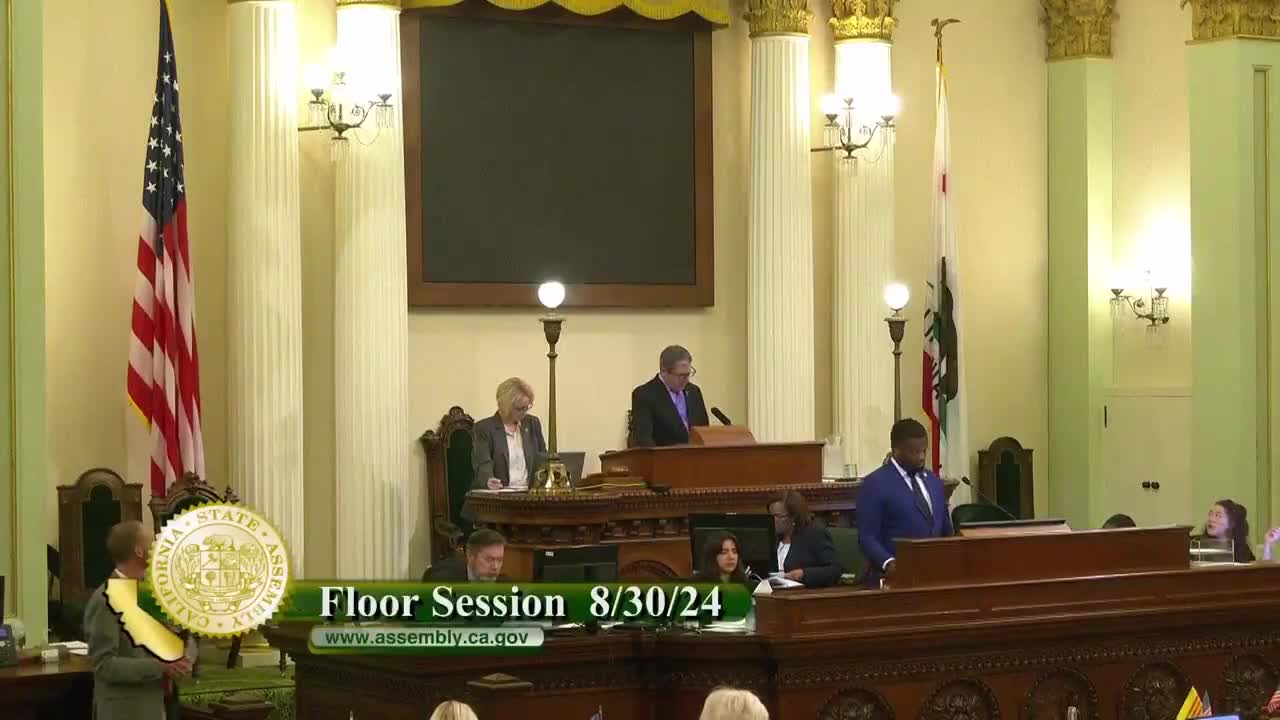
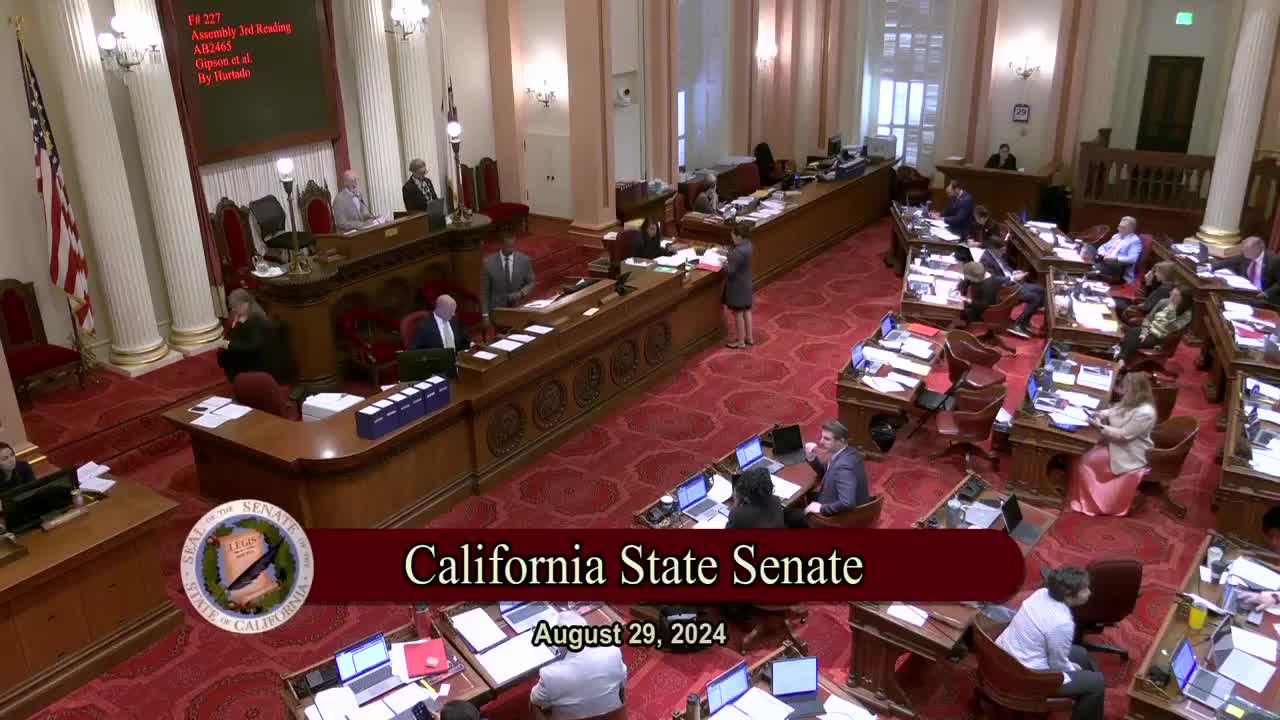
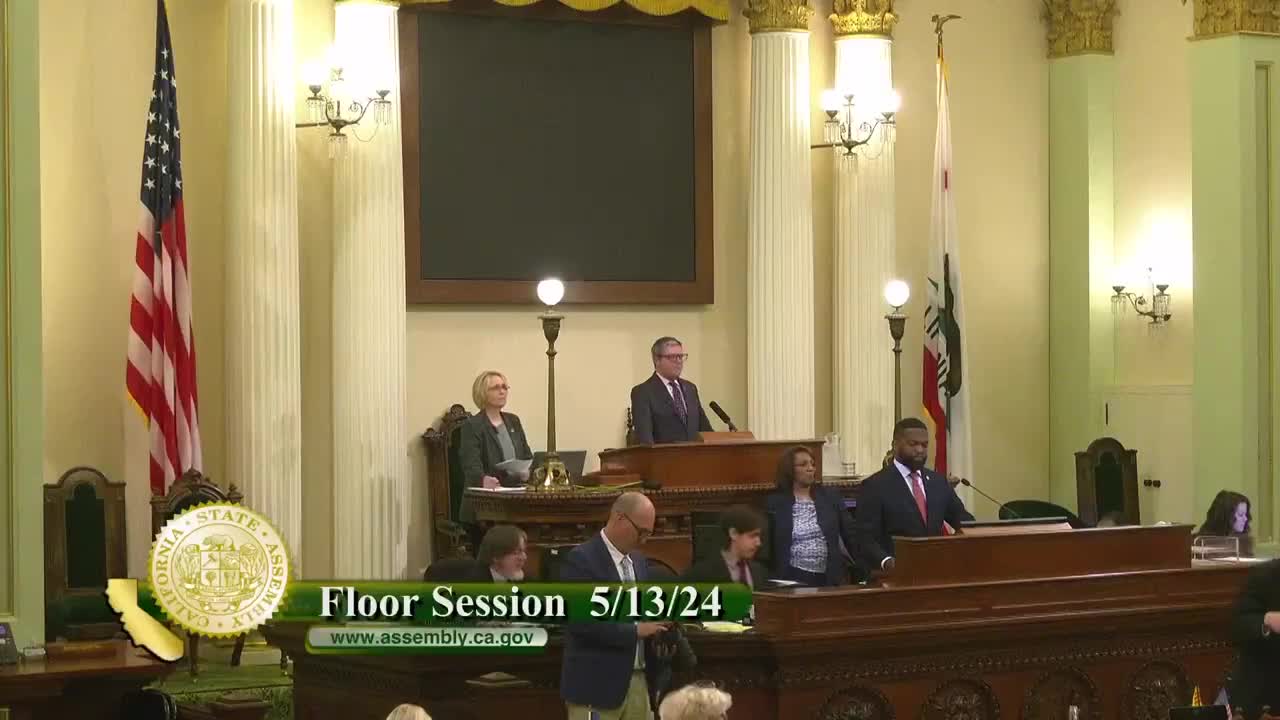
Bill Author

Bill Co-Author(s):