AB 2743: Insurance: personal vehicle sharing.
- Session Year: 2023-2024
- House: Assembly
- Latest Version Date: 2024-09-14
Current Status:
Passed
(2024-09-14: Chaptered by Secretary of State - Chapter 244, Statutes of 2024.)
Introduced
In Committee
First Chamber
In Committee
Second Chamber
Enacted
What does this bill do?
The bill requires personal vehicle sharing programs (car‑sharing platforms) to provide minimum liability insurance while a car is shared: at least $45,000 for one person's injury, $90,000 per accident for all people, and $15,000 for property damage, and beginning January 1, 2031 to provide at least three times the state's minimum private‑passenger limits. It also requires written disclosures to owners and drivers about the coverages and gaps, lets owners and drivers buy extra coverage, warns that a personal auto policy may exclude sharing, and imposes civil penalties up to $5,000 per violation (or $10,000 if willful).
The summary is provided by generative AI which can make mistakes. For original language, please view the details in the table below.
Existing law generally regulates classes of insurance, including automobile liability insurance. Existing law prohibits classifying a private passenger motor vehicle as a commercial vehicle, for-hire vehicle, permissive use vehicle, or livery solely because its owner allows it to be shared, if specified criteria are met, including if the annual revenue received by the vehicles owner generated by the personal vehicle sharing of the vehicle does not exceed the annual expenses of owning and operating the vehicle.
Existing law requires a personal vehicle sharing program, for each vehicle that it facilitates the use of, among other things, to provide insurance coverages for the vehicle and operator of the vehicle that are equal to or greater than the insurance coverages maintained by the vehicle owner, but no less than 3 times the minimum coverage amounts for private passenger vehicles.
Existing law requires an owner or operator of a motor vehicle, or an owner of a vehicle used to transport passengers for hire not regulated by the Public Utilities Commission, to maintain liability insurance coverage for the named insured and any other person using the vehicle with permission in the amount of $15,000 for the bodily injury or death of any one person, $30,000 for the bodily injury or death of all persons, and $5,000 for damage to the property of others resulting from any one accident. Existing law increases these minimum amounts to $30,000, $60,000, and $15,000, respectively, on January 1, 2025.
This bill would require a personal vehicle sharing program to provide, instead, insurance coverages for the vehicle and operator at a minimum of $45,000 for bodily injury or death for one person, $90,000 for bodily injury or death for all persons, and $15,000 for property damage, and, on and after January 1, 2031, to provide liability coverage at least 3 times the minimum insurance requirements for private passenger vehicles. The bill would require a personal vehicle sharing program to disclose to a vehicle owner and any person that operates the vehicle specified information, including the minimum mandatory coverage and limits that the personal vehicle sharing program is required to provide and the coverages and limits provided. The bill would require a personal vehicle sharing program to disclose in writing specified information to the vehicle owner, including that the vehicle owners personal automobile insurance may expressly exclude coverage for the vehicle while it is being operated pursuant to a personal vehicle sharing program. A violation of these requirements would make a person liable for a specified civil penalty.
Existing law generally regulates classes of insurance, including automobile liability insurance. Existing law prohibits classifying a private passenger motor vehicle as a commercial vehicle, for-hire vehicle, permissive use vehicle, or livery solely because its owner allows it to be shared, if specified criteria are met, including if the annual revenue received by the vehicles owner generated by the personal vehicle sharing of the vehicle does not exceed the annual expenses of owning and operating the vehicle.
Existing law requires a personal vehicle sharing program, for each vehicle that it facilitates the use of, among other things, to provide insurance coverages for the vehicle and operator of the vehicle that are equal to or greater than the insurance coverages maintained by the vehicle owner, but no less than 3 times the minimum coverage amounts for private passenger vehicles.
Existing law requires an owner or operator of a motor vehicle, or an owner of a vehicle used to transport passengers for hire not regulated by the Public Utilities Commission, to maintain liability insurance coverage for the named insured and any other person using the vehicle with permission in the amount of $15,000 for the bodily injury or death of any one person, $30,000 for the bodily injury or death of all persons, and $5,000 for damage to the property of others resulting from any one accident. Existing law increases these minimum amounts to $30,000, $60,000, and $15,000, respectively, on January 1, 2025.
This bill would require a personal vehicle sharing program to provide, instead, insurance coverages for the vehicle and operator at a minimum of $45,000 for bodily injury or death for one person, $90,000 for bodily injury or death for all persons, and $15,000 for property damage, and, on and after January 1, 2035, 2031, to provide liability coverage at least 3 times the minimum insurance requirements for private passenger vehicles. The bill would require a personal vehicle sharing program to disclose to a vehicle owner and any person that operates the vehicle specified information, including the minimum mandatory coverage and limits that the personal vehicle sharing program is required to provide and the coverages and limits provided. The bill would require a personal vehicle sharing program to disclose in writing specified information to the vehicle owner, including that the vehicle owners personal automobile insurance may expressly exclude coverage for the vehicle while it is being operated pursuant to a personal vehicle sharing program. A violation of these requirements would make a person liable for a specified civil penalty.
Existing law generally regulates classes of insurance, including automobile liability insurance. Existing law prohibits classifying a private passenger motor vehicle as a commercial vehicle, for-hire vehicle, permissive use vehicle, or livery solely because its owner allows it to be shared, if specified criteria are met, including if the annual revenue received by the vehicles owner generated by the personal vehicle sharing of the vehicle does not exceed the annual expenses of owning and operating the vehicle.
This bill would clarify the above condition prohibiting a private passenger motor vehicle from being classified as a commercial vehicle, for-hire vehicle, permissive use vehicle, or livery solely because its owner allows it to be shared, to instead prohibiting that classification if the total annual revenue received by the vehicles owner generated by the personal vehicle sharing of the vehicle does not exceed the total annual expenses of owning and operating the vehicle.Existing law requires a personal vehicle sharing program, for each vehicle that it facilitates the use of, among other things, to provide insurance coverages for the vehicle and operator of the vehicle that are equal to or greater than the insurance coverages maintained by the vehicle owner, but no less than 3 times the minimum coverage amounts for private passenger vehicles.
Existing law requires an owner or operator of a motor vehicle, or an owner of a vehicle used to transport passengers for hire not regulated by the Public Utilities Commission, to maintain liability insurance coverage for the named insured and any other person using the vehicle with permission in the amount of $15,000 for the bodily injury or death of any one person, $30,000 for the bodily injury or death of all persons, and $5,000 for damage to the property of others resulting from any one accident. Existing law increases these minimum amounts to $30,000, $60,000, and $15,000, respectively, on January 1, 2025.
This bill would require a personal vehicle sharing program to provide, instead, insurance coverages for the vehicle and operator at a minimum of $45,000 for bodily injury or death for one person, $90,000 for bodily injury or death for all persons, and $15,000 for property damage, and, on and after January 1, 2035, to provide liability coverage at least 3 times the minimum insurance requirements for private passenger vehicles. The bill would require a personal vehicle sharing program to disclose to a vehicle owner and any person that operates the vehicle specified information, including the minimum mandatory coverage and limits that the personal vehicle sharing program is required to provide and the coverages and limits provided. The bill would require a personal vehicle sharing program to disclose in writing specified information to the vehicle owner, including that the vehicle owners personal automobile insurance may expressly exclude coverage for the vehicle while it is being operated pursuant to a personal vehicle sharing program. A violation of these requirements would make a person liable for a specified civil penalty.
Existing law generally regulates classes of insurance, including automobile liability insurance. Existing law prohibits classifying a private passenger motor vehicle as a commercial vehicle, for-hire vehicle, permissive use vehicle, or livery solely because its owner allows it to be shared, if specified criteria are met, including if the annual revenue received by the vehicles owner generated by the personal vehicle sharing of the vehicle does not exceed the annual expenses of owning and operating the vehicle.
This bill would clarify the above condition prohibiting a private passenger motor vehicle from being classified as a commercial vehicle, for-hire vehicle, permissive use vehicle, or livery solely because its owner allows it to be shared, to instead prohibiting that classification if the total annual revenue received by the vehicles owner generated by the personal vehicle sharing of the vehicle does not exceed the total annual expenses of owning and operating the vehicle.
(a)A private passenger motor vehicle insured by its owner pursuant to a policy of insurance subject to Section 11580.1 or 11580.2 shall not be classified as a commercial vehicle, for-hire vehicle, permissive use vehicle, or livery solely because its owner allows it to be used for personal vehicle sharing as long as all of the following circumstances apply:
(1)The personal vehicle sharing is conducted pursuant to a personal vehicle sharing program.
(2)The annual revenue received by the vehicles owner that was generated by the personal vehicle sharing of the vehicle does not exceed the annual expenses of owning and operating the vehicle, including depreciation, interest, lease payments, auto loan payments, insurance, maintenance, parking, fuel, cleaning, automobile repair, and costs associated with personal vehicle sharing, including, but not limited to, the installation, operation, and maintenance of computer hardware and software, signage identifying the vehicle as a personal sharing vehicle, and any fees charged by a personal vehicle sharing program.
(3)The owner of the private passenger motor vehicle does not knowingly place the vehicle into commercial use, as defined by Section 675.5, by a personal vehicle sharing user while engaged in personal vehicle sharing.
(b)For purposes of this section the following definitions apply:
(1)Personal vehicle sharing means the use of private passenger motor vehicles by persons other than the vehicles owner, in connection with a personal vehicle sharing program.
(2)Personal vehicle sharing program means a legal entity qualified to do business in the State of California engaged in the business of facilitating the sharing of private passenger vehicles for noncommercial use by individuals within the state.
(3)Private passenger motor vehicle means a vehicle that is insured, or is subject to being insured, under a personal automobile liability insurance policy insuring a single individual or individuals residing in the same household, as the named insured, or meets the requirements of Section 16058 of the Vehicle Code, but does not include a vehicle with fewer than four wheels.
(c)A personal vehicle sharing program shall, for each vehicle that it facilitates the use of, do all of the following:
(1)Provide the registered owner of the vehicle with a Department of Motor Vehicles Form REG 5085 or other suitable proof of compliance with the insurance requirements of this section and the requirements of the California Financial Responsibility Law in Section 1656.2 of the Vehicle Code, a copy of which shall be maintained in the vehicle by the vehicles registered owner during any time when the vehicle is operated by any person other than the vehicles owner pursuant to a personal vehicle sharing program.
(2)Collect, maintain, and make available to the vehicles owner, the vehicle owners primary automobile liability insurer on file with the Department of Motor Vehicles, and to any other government agency as required by law, at the cost of the personal vehicle sharing program, verifiable electronic records that identify the date, time, initial and final locations of the vehicle, and miles driven when the vehicle is under the control of a person other than the vehicles owner pursuant to a personal vehicle sharing program.
(3)Not knowingly permit the vehicle to be operated for commercial use by a personal vehicle sharing user while engaged in personal vehicle sharing.
(4)Use only private passenger vehicles.
(5)Facilitate the installation, operation, and maintenance of computer hardware and software and signage, necessary for a vehicle to be used in a personal vehicle sharing program, including payment of the cost of damage or theft of that equipment and any damage caused to the vehicle by the installation, operation, and maintenance of that equipment.
(d)Notwithstanding any other law or any provision in a private passenger motor vehicle owners automobile insurance policy, in the event of a loss or injury that occurs during any time period when the vehicle is under the operation and control of a person, other than the vehicle owner, pursuant to a personal vehicle sharing program, or otherwise under the control of a personal vehicle sharing program, the personal vehicle sharing program shall assume all liability of the owner and shall be considered the owner of the vehicle for all purposes. Nothing in this section limits the liability of the personal vehicle sharing program for its acts or omissions that result in injury to any persons as a result of the use or operation of a personal vehicle sharing program.
(e)A personal vehicle sharing program shall continue to be liable pursuant to subdivision (d) until both of the following occur:
(1)The private passenger motor vehicle is returned to a location designated by the personal vehicle sharing program.
(2)The earliest of one of the following occurs:
(A)The expiration of the time period established for the particular use of the vehicle.
(B)The intent to terminate the personal vehicle sharing use is verifiably communicated to the personal vehicle sharing program.
(C)The vehicles owner takes possession and control of the vehicle.
(f)The personal vehicle sharing program shall assume liability for a claim in which a dispute exists as to who was in control of the vehicle when the loss occurred giving rise to the claim, and the vehicles private passenger motor vehicle insurer shall indemnify the personal vehicle sharing program to the extent of its obligation under the applicable insurance policy, if it is determined that the vehicles owner was in control of the vehicle at the time of the loss.
(g)If the owner of the vehicle is named as a defendant in a civil action for a loss or injury that occurs during any time period when the vehicle is under the operation and control of a person other than the vehicles owner pursuant to a personal vehicle sharing program, or otherwise under the control of a personal vehicle sharing program, the personal vehicle sharing program shall have the duty to defend and indemnify the vehicles owner, subject to the provisions of subdivisions (d) and (f).
(h)Notwithstanding any other law or any provision in a vehicle owners automobile liability insurance policy, while a private passenger motor vehicle is used by a person other than its owner pursuant to personal vehicle sharing facilitated through a personal vehicle sharing program, all of the following shall apply:
(1)The insurer of that vehicle on file with the Department of Motor Vehicles may exclude any and all coverage afforded pursuant to its policy.
(2)The primary and excess insurer or insurers of the owners, operators, and maintainers of the private passenger motor vehicle used in a personal vehicle sharing program shall have the right to notify an insured that it has no duty to defend or indemnify any person or organization for liability for any loss that occurs during use of the vehicle in a personal vehicle sharing program.
(i)A policy of insurance that is subject to Section 11580.1 or 11580.2 shall not be canceled, voided, terminated, rescinded, or nonrenewed solely on the basis that the private passenger motor vehicle has been made available for personal vehicle sharing pursuant to a personal vehicle sharing program that is in compliance with this section.
SEC. 2.Section 11580.241 is added to the Insurance Code, to read:11580.241.(a)A personal vehicle sharing program shall, for each vehicle that it facilitates the use of, do all of the following:
(1)Provide both of the following during all times that the vehicle is engaged in personal vehicle sharing:
(A)(i)Insurance coverages for the vehicle and operator at a minimum of forty-five thousand dollars ($45,000) for bodily injury or death for one person, ninety thousand dollars ($90,000) for bodily injury or death for all persons, and fifteen thousand dollars ($15,000) for property damage.
(ii)On and after January 1, 2031, the personal vehicle sharing program shall not provide liability coverage less than three times the minimum insurance requirements for private passenger vehicles set forth in Section 16056 of the Vehicle Code.
(B)The ability for the vehicle owner and operator to obtain or purchase additional insurance in excess of the minimum mandatory coverage and limits pursuant to subparagraph (A), including comprehensive and collision coverages or contractual protections.
(2)Provide the vehicle owner and any person that operates the vehicle pursuant to a personal vehicle sharing program with a written disclosure of all of the following:
(A)The terms and conditions contained in this section, including any applicable insurance requirements, coverages, coverage gaps, protections, limits, and exclusions.
(B)The minimum mandatory coverage and limits that the personal vehicle sharing program is required to provide to owners and operators pursuant to Section 16056 of the Vehicle Code.
(C)The coverages and limits provided by the personal vehicle sharing program.
(D)The requirement that the personal vehicle sharing program provide the vehicle owner and any person that operates the vehicle pursuant to a personal vehicle sharing program with the option to purchase or obtain additional limits, coverages, or protections.
(3)Disclose all of the following in writing to the vehicle owner:
(A)That the vehicle owner may have chosen higher limits, different coverages, or both, on their personal automobile insurance policy than those being provided by the personal vehicle sharing program, and, if so, that they have the option to purchase or obtain higher limits or optional coverages or protections.
(B)That their personal automobile insurance may expressly exclude coverage for a vehicle while it is being operated pursuant to a personal vehicle sharing program in accordance with subdivision (h) of Section 11580.24.
(C)That if their personal automobile insurer does not expressly exclude coverage for vehicle sharing, it may still deny coverage for an accident occurring during vehicle sharing if the annual revenue from the personal vehicle sharing program to the vehicle owner exceeds the vehicle owners annual expense of owning and operating the vehicle, as provided in subdivision (a) of Section 11580.24.
(b)(1)A person who violates this section is liable to the state for a civil penalty, to be determined by the commissioner, not to exceed five thousand dollars ($5,000) for each violation or, if the violation was willful, a civil penalty not to exceed ten thousand dollars ($10,000) for each violation.
(2)The duties and obligations imposed by this act are cumulative with any other duties or obligations imposed under any other law, and shall not be construed to relieve any party from a duty or obligation imposed under any other law.
(c)A penalty imposed pursuant to subdivision (b) is appealable by means of any remedy provided by Section 12940 or by the Administrative Procedure Act (Chapter 5 (commencing with Section 11500) of Part 1 of Division 3 of Title 2 of the Government Code).
(d)(1)If the commissioner has reason to believe that a person has engaged or is engaging in this state in a violation of this section, and that a proceeding by the commissioner would be in the interest of the public, the commissioner shall issue and serve upon that person an order to show cause. The order to show cause shall contain a statement of the charges, a statement of that persons potential liability under this section, and a notice of a hearing. The hearing shall be held at a time and place fixed in the notice, which shall not be less than 30 days after the service of the notice, for the purpose of determining whether or not the commissioner shall issue an order to that person to pay the penalty imposed by subdivision (b) and to cease and desist those methods, acts, or practices that violate this section.
(2)If the charges noticed pursuant to paragraph (1) are confirmed by a preponderance of the evidence, the commissioner shall issue and cause to be served upon the person an order requiring that person to pay the penalty imposed pursuant to subdivision (b) and to cease and desist from engaging in those methods, acts, or practices found to be in violation of this section.
(3)The hearing shall be conducted in accordance with the Administrative Procedure Act (Chapter 5 (commencing with Section 11500) of Part 1 of Division 3 of Title 2 of the Government Code), except that the hearings may be conducted by an administrative law judge in the administrative law bureau of the department when the proceedings involve a common question of law or fact with another proceeding arising under this code that may be conducted by the administrative law bureaus administrative law judges. The commissioner and the appointed administrative law judge shall have all the powers granted under the Administrative Procedure Act.
(4)The person shall be entitled to have the proceedings and the order reviewed by means of any remedy provided by Section 12940 or by the Administrative Procedure Act (Chapter 5 (commencing with Section 11500) of Part 1 of Division 3 of Title 2 of the Government Code).
(a)A private passenger motor vehicle insured by its owner pursuant to a policy of insurance subject to Section 11580.1 or 11580.2 shall not be classified as a commercial vehicle, for-hire vehicle, permissive use vehicle, or livery solely because its owner allows it to be used for personal vehicle sharing as long as all of the following circumstances apply:
(1)The personal vehicle sharing is conducted pursuant to a personal vehicle sharing program.
(2)The annual revenue received by the vehicles owner that was generated by the personal vehicle sharing of the vehicle does not exceed the annual expenses of owning and operating the vehicle, including depreciation, interest, lease payments, auto loan payments, insurance, maintenance, parking, fuel, cleaning, automobile repair, and costs associated with personal vehicle sharing, including, but not limited to, the installation, operation, and maintenance of computer hardware and software, signage identifying the vehicle as a personal sharing vehicle, and any fees charged by a personal vehicle sharing program.
(3)The owner of the private passenger motor vehicle does not knowingly place the vehicle into commercial use, as defined by Section 675.5, by a personal vehicle sharing user while engaged in personal vehicle sharing.
(b)For purposes of this section the following definitions apply:
(1)Personal vehicle sharing means the use of private passenger motor vehicles by persons other than the vehicles owner, in connection with a personal vehicle sharing program.
(2)Personal vehicle sharing program means a legal entity qualified to do business in the State of California engaged in the business of facilitating the sharing of private passenger vehicles for noncommercial use by individuals within the state.
(3)Private passenger motor vehicle means a vehicle that is insured, or is subject to being insured, under a personal automobile liability insurance policy insuring a single individual or individuals residing in the same household, as the named insured, or meets the requirements of Section 16058 of the Vehicle Code, but does not include a vehicle with fewer than four wheels.
(c)A personal vehicle sharing program shall, for each vehicle that it facilitates the use of, do all of the following:
(1)Provide the registered owner of the vehicle with a Department of Motor Vehicles Form REG 5085 or other suitable proof of compliance with the insurance requirements of this section and the requirements of the California Financial Responsibility Law in Section 1656.2 of the Vehicle Code, a copy of which shall be maintained in the vehicle by the vehicles registered owner during any time when the vehicle is operated by any person other than the vehicles owner pursuant to a personal vehicle sharing program.
(2)Collect, maintain, and make available to the vehicles owner, the vehicle owners primary automobile liability insurer on file with the Department of Motor Vehicles, and to any other government agency as required by law, at the cost of the personal vehicle sharing program, verifiable electronic records that identify the date, time, initial and final locations of the vehicle, and miles driven when the vehicle is under the control of a person other than the vehicles owner pursuant to a personal vehicle sharing program.
(3)Not knowingly permit the vehicle to be operated for commercial use by a personal vehicle sharing user while engaged in personal vehicle sharing.
(4)Use only private passenger vehicles.
(5)Facilitate the installation, operation, and maintenance of computer hardware and software and signage, necessary for a vehicle to be used in a personal vehicle sharing program, including payment of the cost of damage or theft of that equipment and any damage caused to the vehicle by the installation, operation, and maintenance of that equipment.
(d)Notwithstanding any other law or any provision in a private passenger motor vehicle owners automobile insurance policy, in the event of a loss or injury that occurs during any time period when the vehicle is under the operation and control of a person, other than the vehicle owner, pursuant to a personal vehicle sharing program, or otherwise under the control of a personal vehicle sharing program, the personal vehicle sharing program shall assume all liability of the owner and shall be considered the owner of the vehicle for all purposes. Nothing in this section limits the liability of the personal vehicle sharing program for its acts or omissions that result in injury to any persons as a result of the use or operation of a personal vehicle sharing program.
(e)A personal vehicle sharing program shall continue to be liable pursuant to subdivision (d) until both of the following occur:
(1)The private passenger motor vehicle is returned to a location designated by the personal vehicle sharing program.
(2)The earliest of one of the following occurs:
(A)The expiration of the time period established for the particular use of the vehicle.
(B)The intent to terminate the personal vehicle sharing use is verifiably communicated to the personal vehicle sharing program.
(C)The vehicles owner takes possession and control of the vehicle.
(f)The personal vehicle sharing program shall assume liability for a claim in which a dispute exists as to who was in control of the vehicle when the loss occurred giving rise to the claim, and the vehicles private passenger motor vehicle insurer shall indemnify the personal vehicle sharing program to the extent of its obligation under the applicable insurance policy, if it is determined that the vehicles owner was in control of the vehicle at the time of the loss.
(g)If the owner of the vehicle is named as a defendant in a civil action for a loss or injury that occurs during any time period when the vehicle is under the operation and control of a person other than the vehicles owner pursuant to a personal vehicle sharing program, or otherwise under the control of a personal vehicle sharing program, the personal vehicle sharing program shall have the duty to defend and indemnify the vehicles owner, subject to the provisions of subdivisions (d) and (f).
(h)Notwithstanding any other law or any provision in a vehicle owners automobile liability insurance policy, while a private passenger motor vehicle is used by a person other than its owner pursuant to personal vehicle sharing facilitated through a personal vehicle sharing program, all of the following shall apply:
(1)The insurer of that vehicle on file with the Department of Motor Vehicles may exclude any and all coverage afforded pursuant to its policy.
(2)The primary and excess insurer or insurers of the owners, operators, and maintainers of the private passenger motor vehicle used in a personal vehicle sharing program shall have the right to notify an insured that it has no duty to defend or indemnify any person or organization for liability for any loss that occurs during use of the vehicle in a personal vehicle sharing program.
(i)A policy of insurance that is subject to Section 11580.1 or 11580.2 shall not be canceled, voided, terminated, rescinded, or nonrenewed solely on the basis that the private passenger motor vehicle has been made available for personal vehicle sharing pursuant to a personal vehicle sharing program that is in compliance with this section.
SEC. 2.Section 11580.241 is added to the Insurance Code, to read:11580.241.(a)A personal vehicle sharing program shall, for each vehicle that it facilitates the use of, do all of the following:
(1)Provide both of the following during all times that the vehicle is engaged in personal vehicle sharing:
(A)(i)Insurance coverages for the vehicle and operator at a minimum of forty-five thousand dollars ($45,000) for bodily injury or death for one person, ninety thousand dollars ($90,000) for bodily injury or death for all persons, and fifteen thousand dollars ($15,000) for property damage.
(ii)On and after January 1, 2035, 2031, the personal vehicle sharing program shall not provide liability coverage less than three times the minimum insurance requirements for private passenger vehicles set forth in Section 16056 of the Vehicle Code.
(B)The ability for the vehicle owner and operator to obtain or purchase additional insurance in excess of the minimum mandatory coverage and limits pursuant to subparagraph (A), including comprehensive and collision coverages or contractual protections.
(2)Provide the vehicle owner and any person that operates the vehicle pursuant to a personal vehicle sharing program with a written disclosure of all of the following:
(A)The terms and conditions contained in this section, including any applicable insurance requirements, coverages, coverage gaps, protections, limits, and exclusions.
(B)The minimum mandatory coverage and limits that the personal vehicle sharing program is required to provide to owners and operators pursuant to Section 16056 of the Vehicle Code.
(C)The coverages and limits provided by the personal vehicle sharing program.
(D)The requirement that the personal vehicle sharing program provide the vehicle owner and any person that operates the vehicle pursuant to a personal vehicle sharing program with the option to purchase or obtain additional limits, coverages, or protections.
(3)Disclose all of the following in writing to the vehicle owner:
(A)That the vehicle owner may have chosen higher limits, different coverages, or both, on their personal automobile insurance policy than those being provided by the personal vehicle sharing program, and, if so, that they have the option to purchase or obtain higher limits or optional coverages or protections.
(B)That their personal automobile insurance may expressly exclude coverage for a vehicle while it is being operated pursuant to a personal vehicle sharing program in accordance with subdivision (h) of Section 11580.24.
(C)That if their personal automobile insurer does not expressly exclude coverage for vehicle sharing, it may still deny coverage for an accident occurring during vehicle sharing if the annual revenue from the personal vehicle sharing program to the vehicle owner exceeds the vehicle owners annual expense of owning and operating the vehicle, as provided in subdivision (a) of Section 11580.24.
(b)(1)A person who violates this section is liable to the state for a civil penalty, to be determined by the commissioner, not to exceed five thousand dollars ($5,000) for each violation or, if the violation was willful, a civil penalty not to exceed ten thousand dollars ($10,000) for each violation.
(2)The duties and obligations imposed by this act are cumulative with any other duties or obligations imposed under any other law, and shall not be construed to relieve any party from a duty or obligation imposed under any other law.
(c)A penalty imposed pursuant to subdivision (b) is appealable by means of any remedy provided by Section 12940 or by the Administrative Procedure Act (Chapter 5 (commencing with Section 11500) of Part 1 of Division 3 of Title 2 of the Government Code).
(d)(1)If the commissioner has reason to believe that a person has engaged or is engaging in this state in a violation of this section, and that a proceeding by the commissioner would be in the interest of the public, the commissioner shall issue and serve upon that person an order to show cause. The order to show cause shall contain a statement of the charges, a statement of that persons potential liability under this section, and a notice of a hearing. The hearing shall be held at a time and place fixed in the notice, which shall not be less than 30 days after the service of the notice, for the purpose of determining whether or not the commissioner shall issue an order to that person to pay the penalty imposed by subdivision (b) and to cease and desist those methods, acts, or practices that violate this section.
(2)If the charges noticed pursuant to paragraph (1) are confirmed by a preponderance of the evidence, the commissioner shall issue and cause to be served upon the person an order requiring that person to pay the penalty imposed pursuant to subdivision (b) and to cease and desist from engaging in those methods, acts, or practices found to be in violation of this section.
(3)The hearing shall be conducted in accordance with the Administrative Procedure Act (Chapter 5 (commencing with Section 11500) of Part 1 of Division 3 of Title 2 of the Government Code), except that the hearings may be conducted by an administrative law judge in the administrative law bureau of the department when the proceedings involve a common question of law or fact with another proceeding arising under this code that may be conducted by the administrative law bureaus administrative law judges. The commissioner and the appointed administrative law judge shall have all the powers granted under the Administrative Procedure Act.
(4)The person shall be entitled to have the proceedings and the order reviewed by means of any remedy provided by Section 12940 or by the Administrative Procedure Act (Chapter 5 (commencing with Section 11500) of Part 1 of Division 3 of Title 2 of the Government Code).
(a)No A private passenger motor vehicle insured by its owner pursuant to a policy of insurance subject to Section 11580.1 or 11580.2 shall not be classified as a commercial vehicle, for-hire vehicle, permissive use vehicle, or livery solely because its owner allows it to be used for personal vehicle sharing as long as all of the following circumstances apply:
(1)The personal vehicle sharing is conducted pursuant to a personal vehicle sharing program.
(2)The total annual revenue received by the vehicles owner that was generated by the personal vehicle sharing of the vehicle does not exceed the total annual expenses of owning and operating the vehicle, including depreciation, interest, lease payments, auto loan payments, insurance, maintenance, parking, fuel, cleaning, automobile repair, and costs associated with personal vehicle sharing, including, but not limited to, the installation, operation, and maintenance of computer hardware and software, signage identifying the vehicle as a personal sharing vehicle, and any fees charged by a personal vehicle sharing program.
(3)The owner of the private passenger motor vehicle does not knowingly place the vehicle into commercial use, as defined by Section 675.5, by a personal vehicle sharing user while engaged in personal vehicle sharing.
(b)For purposes of this section the following definitions apply:
(1)Personal vehicle sharing means the use of private passenger motor vehicles by persons other than the vehicles owner, in connection with a personal vehicle sharing program.
(2)Personal vehicle sharing program means a legal entity qualified to do business in the State of California engaged in the business of facilitating the sharing of private passenger vehicles for noncommercial use by individuals within the state.
(3)Private passenger motor vehicle means a vehicle that is insured, or is subject to being insured, under a personal automobile liability insurance policy insuring a single individual or individuals residing in the same household, as the named insured, or meets the requirements of Section 16058 of the Vehicle Code, but does not include a vehicle with fewer than four wheels.
(c)A personal vehicle sharing program shall, for each vehicle that it facilitates the use of, do all of the following:
(1)During all times that the vehicle is engaged in personal vehicle sharing, provide insurance coverages for the vehicle and operator of the vehicle that are equal to or greater than the insurance coverages maintained by the vehicle owner and reported to the personal vehicle sharing program. However, the personal vehicle sharing program shall not provide liability coverage less than three times the minimum insurance requirements for private passenger vehicles. Compliance with the terms and conditions of this paragraph shall be deemed to avoid the application of the limitation on damage recoveries set forth in Section 3333.4 of the Civil Code.(2)(1)Provide the registered owner of the vehicle with a Department of Motor Vehicles Form REG 5085 or other suitable proof of compliance with the insurance requirements of this section and the requirements of the California Financial Responsibility Law in Section 1656.2 of the Vehicle Code, a copy of which shall be maintained in the vehicle by the vehicles registered owner during any time when the vehicle is operated by any person other than the vehicles owner pursuant to a personal vehicle sharing program.
(3)(2)Collect, maintain, and make available to the vehicles owner, the vehicle owners primary automobile liability insurer on file with the Department of Motor Vehicles, and to any other government agency as required by law, at the cost of the personal vehicle sharing program, verifiable electronic records that identify the date, time, initial and final locations of the vehicle, and miles driven when the vehicle is under the control of a person other than the vehicles owner pursuant to a personal vehicle sharing program.
(4)Provide the vehicles owner and any person that operates the vehicle pursuant to a personal vehicle sharing program with a disclosure that contains information explaining the terms and conditions contained in this section.(5)(3)Not knowingly permit the vehicle to be operated for commercial use by a personal vehicle sharing user while engaged in personal vehicle sharing.
(6)(4)Use only private passenger vehicles.
(7)(5)Facilitate the installation, operation, and maintenance of computer hardware and software and signage, necessary for a vehicle to be used in a personal vehicle sharing program, including payment of the cost of damage or theft of that equipment and any damage caused to the vehicle by the installation, operation, and maintenance of that equipment.
(d)Notwithstanding any other provision of law or any provision in a private passenger motor vehicle owners automobile insurance policy, in the event of a loss or injury that occurs during any time period when the vehicle is under the operation and control of a person, other than the vehicle owner, pursuant to a personal vehicle sharing program, or otherwise under the control of a personal vehicle sharing program, the personal vehicle sharing program shall assume all liability of the owner and shall be considered the owner of the vehicle for all purposes. Nothing in this section limits the liability of the personal vehicle sharing program for its acts or omissions that result in injury to any persons as a result of the use or operation of a personal vehicle sharing program.
(e)A personal vehicle sharing program shall continue to be liable pursuant to subdivision (d) until both of the following occur:
(1)The private passenger motor vehicle is returned to a location designated by the personal vehicle sharing program.
(2)The earliest of one of the following occurs:
(A)The expiration of the time period established for the particular use of the vehicle.
(B)The intent to terminate the personal vehicle sharing use is verifiably communicated to the personal vehicle sharing program.
(C)The vehicles owner takes possession and control of the vehicle.
(f)The personal vehicle sharing program shall assume liability for a claim in which a dispute exists as to who was in control of the vehicle when the loss occurred giving rise to the claim, and the vehicles private passenger motor vehicle insurer shall indemnify the personal vehicle sharing program to the extent of its obligation under the applicable insurance policy, if it is determined that the vehicles owner was in control of the vehicle at the time of the loss.
(g)In the event that If the owner of the vehicle is named as a defendant in a civil action, action for a loss or injury that occurs during any time period when the vehicle is under the operation and control of a person, person other than the vehicles owner, owner pursuant to a personal vehicle sharing program, or otherwise under the control of a personal vehicle sharing program, the personal vehicle sharing program shall have the duty to defend and indemnify the vehicles owner, subject to the provisions of subdivisions (d) and (f).
(h)Notwithstanding any other provision of law or any provision in a vehicle owners automobile liability insurance policy, while a private passenger motor vehicle is used by a person other than its owner pursuant to personal vehicle sharing facilitated through a personal vehicle sharing program, all of the following shall apply:
(1)The insurer of that vehicle on file with the Department of Motor Vehicles may exclude any and all coverage afforded pursuant to its policy.
(2)The primary and excess insurer or insurers of the owners, operators, and maintainers of the private passenger motor vehicle used in a personal vehicle sharing program shall have the right to notify an insured that it has no duty to defend or indemnify any person or organization for liability for any loss that occurs during use of the vehicle in a personal vehicle sharing program.
(i)No A policy of insurance that is subject to Section 11580.1 or 11580.2 shall not be canceled, voided, terminated, rescinded, or nonrenewed solely on the basis that the private passenger motor vehicle has been made available for personal vehicle sharing pursuant to a personal vehicle sharing program that is in compliance with the provisions of this section.
SEC. 2.Section 11580.241 is added to the Insurance Code, to read:11580.241.(a)A personal vehicle sharing program shall, for each vehicle that it facilitates the use of, do all of the following:
(1)Provide both of the following during all times that the vehicle is engaged in personal vehicle sharing:
(A)(i)Insurance coverages for the vehicle and operator at a minimum of forty-five thousand dollars ($45,000) for bodily injury or death for one person, ninety thousand dollars ($90,000) for bodily injury or death for all persons, and fifteen thousand dollars ($15,000) for property damage.
(ii)On and after January 1, 2035, the personal vehicle sharing program shall not provide liability coverage less than three times the minimum insurance requirements for private passenger vehicles set forth in Section 16056 of the Vehicle Code.
(B)The ability for the vehicle owner and operator to obtain or purchase additional insurance in excess of the minimum mandatory coverage and limits pursuant to subparagraph (A), including comprehensive and collision coverages or contractual protections.
(2)Provide the vehicle owner and any person that operates the vehicle pursuant to a personal vehicle sharing program with a written disclosure of all of the following:
(A)The terms and conditions contained in this section, including any applicable insurance requirements, coverages, coverage gaps, protections, limits, and exclusions.
(B)The minimum mandatory coverage and limits that the personal vehicle sharing program is required to provide to owners and operators pursuant to Section 16056 of the Vehicle Code.
(C)The coverages and limits provided by the personal vehicle sharing program.
(D)The requirement that the personal vehicle sharing program provide the vehicle owner and any person that operates the vehicle pursuant to a personal vehicle sharing program with the option to purchase or obtain additional limits, coverages, or protections.
(3)Disclose all of the following in writing to the vehicle owner:
(A)That the vehicle owner may have chosen higher limits, different coverages, or both, on their personal automobile insurance policy than those being provided by the personal vehicle sharing program, and, if so, that they have the option to purchase or obtain higher limits or optional coverages or protections.
(B)That their personal automobile insurance may expressly exclude coverage for a vehicle while it is being operated pursuant to a personal vehicle sharing program in accordance with subdivision (h) of Section 11580.24.
(C)That if their personal automobile insurer does not expressly exclude coverage for vehicle sharing, it may still deny coverage for an accident occurring during vehicle sharing if the annual revenue from the personal vehicle sharing program to the vehicle owner exceeds the vehicle owners annual expense of owning and operating the vehicle, as provided in subdivision (a) of Section 11580.24.
(b)(1)A person who violates this section is liable to the state for a civil penalty, to be determined by the commissioner, not to exceed five thousand dollars ($5,000) for each violation or, if the violation was willful, a civil penalty not to exceed ten thousand dollars ($10,000) for each violation.
(2)The duties and obligations imposed by this act are cumulative with any other duties or obligations imposed under any other law, and shall not be construed to relieve any party from a duty or obligation imposed under any other law.
(c)A penalty imposed pursuant to subdivision (b) is appealable by means of any remedy provided by Section 12940 or by the Administrative Procedure Act (Chapter 5 (commencing with Section 11500) of Part 1 of Division 3 of Title 2 of the Government Code).
(d)(1)If the commissioner has reason to believe that a person has engaged or is engaging in this state in a violation of this section, and that a proceeding by the commissioner would be in the interest of the public, the commissioner shall issue and serve upon that person an order to show cause. The order to show cause shall contain a statement of the charges, a statement of that persons potential liability under this section, and a notice of a hearing. The hearing shall be held at a time and place fixed in the notice, which shall not be less than 30 days after the service of the notice, for the purpose of determining whether or not the commissioner shall issue an order to that person to pay the penalty imposed by subdivision (b) and to cease and desist those methods, acts, or practices that violate this section.
(2)If the charges noticed pursuant to paragraph (1) are confirmed by a preponderance of the evidence, the commissioner shall issue and cause to be served upon the person an order requiring that person to pay the penalty imposed pursuant to subdivision (b) and to cease and desist from engaging in those methods, acts, or practices found to be in violation of this section.
(3)The hearing shall be conducted in accordance with the Administrative Procedure Act (Chapter 5 (commencing with Section 11500) of Part 1 of Division 3 of Title 2 of the Government Code), except that the hearings may be conducted by an administrative law judge in the administrative law bureau of the department when the proceedings involve a common question of law or fact with another proceeding arising under this code that may be conducted by the administrative law bureaus administrative law judges. The commissioner and the appointed administrative law judge shall have all the powers granted under the Administrative Procedure Act.
(4)The person shall be entitled to have the proceedings and the order reviewed by means of any remedy provided by Section 12940 or by the Administrative Procedure Act (Chapter 5 (commencing with Section 11500) of Part 1 of Division 3 of Title 2 of the Government Code).
(a)No private passenger motor vehicle insured by its owner pursuant to a policy of insurance subject to Section 11580.1 or 11580.2 shall be classified as a commercial vehicle, for-hire vehicle, permissive use vehicle, or livery solely because its owner allows it to be used for personal vehicle sharing as long as all of the following circumstances apply:
(1)The personal vehicle sharing is conducted pursuant to a personal vehicle sharing program.
(2)The total annual revenue received by the vehicles owner which that was generated by the personal vehicle sharing of the vehicle does not exceed the total annual expenses of owning and operating the vehicle, including depreciation, interest, lease payments, auto loan payments, insurance, maintenance, parking, fuel, cleaning, automobile repair, and costs associated with personal vehicle sharing, including, but not limited to, the installation, operation, and maintenance of computer hardware and software, signage identifying the vehicle as a personal sharing vehicle, and any fees charged by a personal vehicle sharing program.
(3)The owner of the private passenger motor vehicle does not knowingly place the vehicle into commercial use, as defined by Section 675.5, by a personal vehicle sharing user while engaged in personal vehicle sharing.
(b)For purposes of this section the following definitions apply:
(1)Personal vehicle sharing means the use of private passenger motor vehicles by persons other than the vehicles owner, in connection with a personal vehicle sharing program.
(2)Personal vehicle sharing program means a legal entity qualified to do business in the State of California engaged in the business of facilitating the sharing of private passenger vehicles for noncommercial use by individuals within the state.
(3)Private passenger motor vehicle means a vehicle that is insured, or is subject to being insured, under a personal automobile liability insurance policy insuring a single individual or individuals residing in the same household, as the named insured, or meets the requirements of Section 16058 of the Vehicle Code, but does not include a vehicle with fewer than four wheels.
(c)A personal vehicle sharing program shall, for each vehicle that it facilitates the use of, do all of the following:
(1)During all times that the vehicle is engaged in personal vehicle sharing, provide insurance coverages for the vehicle and operator of the vehicle that are equal to or greater than the insurance coverages maintained by the vehicle owner and reported to the personal vehicle sharing program. However, the personal vehicle sharing program shall not provide liability coverage less than three times the minimum insurance requirements for private passenger vehicles. Compliance with the terms and conditions of this paragraph shall be deemed to avoid the application of the limitation on damage recoveries set forth in Section 3333.4 of the Civil Code.
(2)Provide the registered owner of the vehicle with a Department of Motor Vehicles Form REG 5085 or other suitable proof of compliance with the insurance requirements of this section and the requirements of the California Financial Responsibility Law in Section 1656.2 of the Vehicle Code, a copy of which shall be maintained in the vehicle by the vehicles registered owner during any time when the vehicle is operated by any person other than the vehicles owner pursuant to a personal vehicle sharing program.
(3)Collect, maintain, and make available to the vehicles owner, the vehicle owners primary automobile liability insurer on file with the Department of Motor Vehicles, and to any other government agency as required by law, at the cost of the personal vehicle sharing program, verifiable electronic records that identify the date, time, initial and final locations of the vehicle, and miles driven when the vehicle is under the control of a person other than the vehicles owner pursuant to a personal vehicle sharing program.
(4)Provide the vehicles owner and any person that operates the vehicle pursuant to a personal vehicle sharing program with a disclosure that contains information explaining the terms and conditions contained in this section.
(5)Not knowingly permit the vehicle to be operated for commercial use by a personal vehicle sharing user while engaged in personal vehicle sharing.
(6)Use only private passenger vehicles.
(7)Facilitate the installation, operation, and maintenance of computer hardware and software and signage, necessary for a vehicle to be used in a personal vehicle sharing program, including payment of the cost of damage or theft of that equipment and any damage caused to the vehicle by the installation, operation, and maintenance of that equipment.
(d)Notwithstanding any other provision of law or any provision in a private passenger motor vehicle owners automobile insurance policy, in the event of a loss or injury that occurs during any time period when the vehicle is under the operation and control of a person, other than the vehicle owner, pursuant to a personal vehicle sharing program, or otherwise under the control of a personal vehicle sharing program, the personal vehicle sharing program shall assume all liability of the owner and shall be considered the owner of the vehicle for all purposes. Nothing in this section limits the liability of the personal vehicle sharing program for its acts or omissions that result in injury to any persons as a result of the use or operation of a personal vehicle sharing program.
(e)A personal vehicle sharing program shall continue to be liable pursuant to subdivision (d) until both of the following occur:
(1)The private passenger motor vehicle is returned to a location designated by the personal vehicle sharing program.
(2)The earliest of one of the following occurs:
(A)The expiration of the time period established for the particular use of the vehicle.
(B)The intent to terminate the personal vehicle sharing use is verifiably communicated to the personal vehicle sharing program.
(C)The vehicles owner takes possession and control of the vehicle.
(f)The personal vehicle sharing program shall assume liability for a claim in which a dispute exists as to who was in control of the vehicle when the loss occurred giving rise to the claim, and the vehicles private passenger motor vehicle insurer shall indemnify the personal vehicle sharing program to the extent of its obligation under the applicable insurance policy, if it is determined that the vehicles owner was in control of the vehicle at the time of the loss.
(g)In the event that the owner of the vehicle is named as a defendant in a civil action, for a loss or injury that occurs during any time period when the vehicle is under the operation and control of a person, other than the vehicles owner, pursuant to a personal vehicle sharing program, or otherwise under the control of a personal vehicle sharing program, the personal vehicle sharing program shall have the duty to defend and indemnify the vehicles owner, subject to the provisions of subdivisions (d) and (f).
(h)Notwithstanding any other provision of law or any provision in a vehicle owners automobile liability insurance policy, while a private passenger motor vehicle is used by a person other than its owner pursuant to personal vehicle sharing facilitated through a personal vehicle sharing program, all of the following shall apply:
(1)The insurer of that vehicle on file with the Department of Motor Vehicles may exclude any and all coverage afforded pursuant to its policy.
(2)The primary and excess insurer or insurers of the owners, operators, and maintainers of the private passenger motor vehicle used in a personal vehicle sharing program shall have the right to notify an insured that it has no duty to defend or indemnify any person or organization for liability for any loss that occurs during use of the vehicle in a personal vehicle sharing program.
(i)No policy of insurance that is subject to Section 11580.1 or 11580.2 shall be canceled, voided, terminated, rescinded, or nonrenewed solely on the basis that the private passenger motor vehicle has been made available for personal vehicle sharing pursuant to a personal vehicle sharing program that is in compliance with the provisions of this section.
|
Date
|
Status
|
|---|---|
| Sep 14, 2024 | Chaptered by Secretary of State - Chapter 244, Statutes of 2024. |
| Sep 14, 2024 | Approved by the Governor. |
| Sep 5, 2024 | Enrolled and presented to the Governor at 4 p.m. |
| Aug 27, 2024 | Senate amendments concurred in. To Engrossing and Enrolling. (Ayes 77. Noes 0.). |
| Aug 27, 2024 | Assembly Rule 77 suspended. |
| Aug 26, 2024 | In Assembly. Concurrence in Senate amendments pending. May be considered on or after August 28 pursuant to Assembly Rule 77. |
| Aug 26, 2024 | Read third time. Passed. Ordered to the Assembly. (Ayes 38. Noes 0.). |
| Aug 6, 2024 | Read second time. Ordered to third reading. |
| Aug 5, 2024 | From committee: Be ordered to second reading pursuant to Senate Rule 28.8. |
| Jun 27, 2024 | Read second time and amended. Re-referred to Com. on APPR. |
| Jun 26, 2024 | From committee: Amend, and do pass as amended and re-refer to Com. on APPR. (Ayes 10. Noes 0.) (June 25). |
| Jun 12, 2024 | From committee: Do pass and re-refer to Com. on JUD. (Ayes 7. Noes 0.) (June 12). Re-referred to Com. on JUD. |
| May 22, 2024 | Referred to Coms. on INS. and JUD. |
| May 9, 2024 | In Senate. Read first time. To Com. on RLS. for assignment. |
| May 9, 2024 | Read third time. Passed. Ordered to the Senate. (Ayes 65. Noes 0. Page 5160.) |
| May 2, 2024 | Read second time. Ordered to Consent Calendar. |
| May 1, 2024 | From committee: Do pass. To Consent Calendar. (Ayes 14. Noes 0.) (May 1). |
| Apr 17, 2024 | From committee: Do pass and re-refer to Com. on APPR. (Ayes 15. Noes 0.) (April 17). Re-referred to Com. on APPR. |
| Apr 11, 2024 | Re-referred to Com. on INS. |
| Apr 10, 2024 | From committee chair, with author's amendments: Amend, and re-refer to Com. on INS. Read second time and amended. |
| Mar 4, 2024 | Referred to Com. on INS. |
| Feb 16, 2024 | From printer. May be heard in committee March 17. |
| Feb 15, 2024 | Read first time. To print. |
|
Date
|
Description
|
Location
|
Votes
|
|
|---|---|---|---|---|
| Aug 27, 2024 | AB 2743 Pacheco Concurrence in Senate Amendments | Assembly Floor |
Passed |
|
| Aug 26, 2024 | Assembly 3rd Reading AB2743 Pacheco By Dodd | Senate Floor |
Passed |
|
| Jun 25, 2024 | Do pass as amended, but first amend, and re-refer to the Committee on [Appropriations] | Senate Standing Committee on Judiciary |
Passed |
|
| Jun 12, 2024 | Do pass, but first be re-referred to the Committee on [Judiciary] | Senate Standing Committee on Insurance |
Passed |
|
| May 9, 2024 | AB 2743 Pacheco Consent Calendar Second Day Regular Session | Assembly Floor |
Passed |
|
| May 1, 2024 | Do pass. To Consent Calendar. | Assembly Standing Committee on Appropriations |
Passed |
|
| Apr 17, 2024 | Do pass and be re-referred to the Committee on [Appropriations] | Assembly Standing Committee on Insurance |
Passed |
This list shows positions taken on this bill by organizations on the date displayed, which is linked to the original source.
Positions by individuals are not included.
|
Organization
|
Position
|
Date
|
|---|---|---|
| California Rising | ** Support | |
| Chamber Of Progress | ** Support | |
| Civil Justice Association Of California | ** Support | |
| Consumer Attorneys Of California | ** Against | |
| Consumer Federation Of California | ** Against | |
| Dream Foundation | ** Support | |
| Garden Grove City Council | ** Support | |
| Getaround | ** Support | |
| Keeper Tax, INC. | ** Support | |
| Rideshare Mechanic | ** Support | |
| Technet-Technology Network | ** Support | |
| Tenet Energy | ** Support | |
| The Florence Firestone Walnut Park Chamber of Commerce | ** Support | |
| Turo | ** Support |
CONCURRENCE IN SENATE AMENDMENTS
CSA1 Bill Id:AB 2743
Author:(Pacheco)
As Amended Ver:June 27, 2024
Majority vote
SUMMARY
Updates the insurance coverage limits for a personal vehicle sharing program (PVSP) when the vehicle is engaged in personal vehicle sharing. Specifically, this bill:
- Requires a PVSP for each vehicle that it facilitates the use of to do all of the following:
- Provide insurance coverages for the vehicle and operator at a minimum of $45,000 for bodily injury or death for one person, $90,000 for bodily injury or death for all persons, and $15,000 for property damage; and,
- On and after January 1, 2031, the PVSP shall not provide liability coverage less than three times the minimum insurance requirements for private passenger vehicles.
- Allows the ability for the vehicle owner and operator to obtain or purchase additional insurance in excess of the minimum mandatory coverage and limits, including comprehensive and collision coverages or contractual protections.
- Provides the vehicle owner and any person that operates the vehicle pursuant to a PVSP with a written disclosure of all of the following:
- The terms and conditions, including any applicable insurance requirements, coverages, coverage gaps, protections, limits, and exclusions;
- The minimum mandatory coverage and limits that the PVSP is required to provide to owners and operators;
- The coverages and limits provided by the PVSP; and,
- The requirement that the PVSP provide the vehicle owner and any person that operates the vehicle pursuant to a PVSP with the option to purchase or obtain additional limits, coverages, or protections.
- Requires a PVSP to disclose all of the following in writing to the vehicle owner:
- That the vehicle owner may have chosen higher limits, different coverages, or both, on their personal automobile insurance policy than those being provided by the PVSP, and, if so, that they have the option to purchase or obtain higher limits or optional coverages or protections.;
- That their personal automobile insurance may expressly exclude coverage for a vehicle while it is being operated pursuant to a PVSP; and,
- That if their personal automobile insurer does not expressly exclude coverage for vehicle sharing, it may still deny coverage for an accident occurring during vehicle sharing if the annual revenue from the PVSP to the vehicle owner exceeds the vehicle owner's annual expense of owning and operating the vehicle.
- Provides that a person who violates this section may be liable to the state for a civil penalty, to be determined by the Insurance Commissioner, not to exceed $5,000 for each violation or, if the violation was willful, a civil penalty not to exceed $10,000 for each violation.
- States the duties and obligations imposed by this act are cumulative with any other duties or obligations imposed under any other law, and shall not be construed to relieve any party from a duty or obligation imposed under any other law.
Senate Amendments
Changed the date from, on or after, January 1, 2035 to on or after January 1, 2031, when a PVSP will have to provide liability coverage not less than three times the minimum insurance requirements for private passenger vehicles.
COMMENTS
Background: In 2010, AB 1871 (Jones) created PVSPs, which is also known as peer-to-peer car sharing. The bill specified that a PVSP is an entity that facilitates personal vehicle sharing, provides liability insurance for private vehicles, and provides disclosures to the vehicle owner about the law and the terms and conditions of the transaction. The requirement for PVSPs to carry FR limits three times as much as private passenger vehicles was established in this measure. California was the first state to establish PVSPs.
PVSPs allows car owners to make their vehicles available to others to rent for periods of time. Car owners list their vehicles on a platform, then prospective renters can search the platform, and then select a vehicle to rent.
Every driver in California must show financial responsibility, which is essentially insurance. Financial responsibility shows that a driver is financially able to provide monetary protection to those injured or vehicle damaged due to an accident, regardless of fault. Current FR limits until January 1, 2025 for private passenger vehicles stands at $15,000 for injury/death to one person/$30,000 for injury/death to more than one person /$5,000 for damage to property.
In 2022, SB 1107 (Dodd), increased FRL for personal driving. The limits increase January 1, 2025 to $30,000/$60,000/$15,000 and additional increase in 2035 to $50,000/$100,000/$25,000. These new FRLs apply to personal use driving and car rental, but SB 1107 did not address new PVSP limits, hence the reason for this bill.
Starting January 1, 2025, PVSPs will have to provide a minimum of three times the new minimum FR limits, which would be $90,000/$180,000/$45,000. Moreover, in 2035, these FR minimum limits will increase to $150,000/$300,000/$75,000 for PVSPs.
AB 2743 provides that starting in 2025, PVSPs must provide a minimum of $45,000/$90,000/$15,000. Starting in 2031, PVSPs will revert back to three times the limit. It should be noted that between now and 2031, an overarching goal will be to collect data on frequency/severity of harms and losses (accidents) associated with PVSPs. Currently, the California Department of Insurance (CDI) does not collect this information. When this program was created in 2010, while the three times the amount was a negotiated number, there was also no data to accurately determine what FR limits should apply to PVSPs. Almost 15 years later, the data still does not exist or is not provided to CDI. This is an issue that should be revisited prior to 2031 to accurately determine appropriate FR limits for PVSPs.
According to the Author
"PVSP provide an affordable mobility option to Californians and have expanded significantly since their inception. The PVSP market in 2021 was $1.6 billion and is expected to grow to $7.2 billion by 2030. The major factors driving the double-digit growth of PVSP include the competitive pricing and convenience of these mobility programs, burgeoning concerns over greenhouse gas emissions, push for vehicle electrification, and worsening traffic congestion. As the cost of vehicle ownership has increased, consumers have migrated towards PVSP. Yet, California's financial responsibility (FR) limits are out of step with 43 other states and the District of Columbia where those limits are set at the same level as personal vehicle FR limits.
This bill provides an appropriate adjustment in FR limits for PVSP to ensure that Californians have access to a vital mode of mobility without leaving consumers financially exposed or underinsured. The adjustment in limits in AB 2743 is designed to protect consumers while fostering the growth of this mobility segment. This bill contains robust consumer notices that are tailored to the modern car sharing market and includes penalty provisions for violations of these new PVSP insurance limits, guaranteeing that all PVSP customers remain protected and well-informed when driving in California."
Arguments in Support
According to the sponsor of the measure, Turo, "This bill will help preserve affordable mobility options for Californians and prevent the loss of economic development derived from peer to peer sharing. Specifically, AB 2743 fixes an unintended increase in minimum FR limits for PVSPs starting January 1, 2025 as a result of the passage of SB 1107 (Dodd, 2022) which dealt with FR limits for personal vehicles."
Arguments in Opposition
None on file.
FISCAL COMMENTS
According to the Assembly Appropriations Committee, no state costs, as this bill maintains the coverage rates applicable to a PSVP under current law. In addition, CDI expects little new enforcement activity as a result of this bill.
VOTES:
ASM INSURANCE: 15-0-0
YES: Calderon, Chen, Alvarez, Bauer-Kahan, Berman, Gipson, Jones-Sawyer, Lowenthal, Ortega, Joe Patterson, Petrie-Norris, Blanca Rubio, Valencia, Wallis, Wood
ASM APPROPRIATIONS: 14-0-1
YES: Wicks, Sanchez, Arambula, Bryan, Calderon, Wendy Carrillo, Dixon, Mike Fong, Grayson, Haney, Hart, Pellerin, Ta, Villapudua
ABS, ABST OR NV: Jim Patterson
ASSEMBLY FLOOR: 65-0-15
YES: Addis, Aguiar-Curry, Alanis, Alvarez, Arambula, Bauer-Kahan, Bennett, Berman, Boerner, Bonta, Bryan, Calderon, Juan Carrillo, Wendy Carrillo, Chen, Connolly, Davies, Dixon, Essayli, Mike Fong, Vince Fong, Friedman, Gallagher, Garcia, Gipson, Hart, Holden, Hoover, Irwin, Jackson, Jones-Sawyer, Kalra, Lackey, Lee, Lowenthal, Maienschein, McCarty, McKinnor, Muratsuchi, Ortega, Pacheco, Papan, Jim Patterson, Joe Patterson, Pellerin, Quirk-Silva, Ramos, Rendon, Reyes, Rodriguez, Blanca Rubio, Sanchez, Santiago, Soria, Ta, Valencia, Villapudua, Waldron, Ward, Weber, Wicks, Wilson, Wood, Zbur, Robert Rivas
ABS, ABST OR NV: Bains, Cervantes, Megan Dahle, Flora, Gabriel, Grayson, Haney, Low, Mathis, Stephanie Nguyen, Petrie-Norris, Luz Rivas, Schiavo, Ting, Wallis
SENATE FLOOR: 38-0-2
YES: Allen, Alvarado-Gil, Archuleta, Ashby, Atkins, Becker, Blakespear, Bradford, Caballero, Cortese, Dahle, Dodd, Durazo, Eggman, Glazer, Gonzalez, Grove, Hurtado, Jones, Laird, Limón, McGuire, Menjivar, Newman, Nguyen, Niello, Ochoa Bogh, Padilla, Portantino, Roth, Rubio, Seyarto, Skinner, Smallwood-Cuevas, Stern, Umberg, Wiener, Wilk
ABS, ABST OR NV: Min, Wahab
UPDATED
VERSION: June 27, 2024
CONSULTANT: Kathleen O'Malley / INS. / (916) 319-2086 FN: 0004686
SENATE RULES COMMITTEE Office of Senate Floor Analyses (916) 651-1520 Fax: (916) 327-4478 | AB 2743 |
THIRD READING
Bill No: AB 2743
Author: Pacheco (D)
Amended: 6/27/24 in Senate
Vote: 21
SENATE INSURANCE COMMITTEE: 7-0, 6/12/24
AYES: Rubio, Niello, Alvarado-Gil, Caballero, Cortese, Dodd, Ochoa Bogh
SENATE JUDICIARY COMMITTEE: 10-0, 6/25/24
AYES: Umberg, Wilk, Allen, Ashby, Caballero, Durazo, Laird, Niello, Roth, Stern
NO VOTE RECORDED: Wahab
ASSEMBLY FLOOR: 65-0, 5/9/24 (Consent) - See last page for vote
SUBJECT: Insurance: personal vehicle sharing
SOURCE: Turo
DIGEST:
This bill (a) requires a personal vehicle sharing program to provide, instead, insurance coverages for the vehicle and operator at a minimum of $45,000 for bodily injury or death for one person, $90,000 for bodily injury or death for all persons, and $15,000 for property damage, and, on and after January 1, 2031, to provide liability coverage at least 3 times the minimum insurance requirements for private passenger vehicles; (b) requires a personal vehicle sharing program to disclose to a vehicle owner and any person that operates the vehicle specified information, including the minimum mandatory coverage and limits that the personal vehicle sharing program is required to provide and the coverages and limits provided; and (c) require a personal vehicle sharing program to disclose in writing specified information to the vehicle owner, including that the vehicle owner’s personal automobile insurance may expressly exclude coverage for the vehicle while it is being operated pursuant to a personal vehicle sharing program.
ANALYSIS:
Existing law:
- Defines “personal vehicle sharing” as the use of private passenger motor vehicles by a person other than the vehicle’s owner, in connection with a personal vehicle sharing program.
- Defines “personal vehicle sharing program” (PVSP) as a legal entity qualified to do business in the State of California engaged in the business of facilitating the sharing of private passenger vehicles for noncommercial use of individuals within the state.
- Prohibits a vehicle sharing program from providing liability coverage less than three times the minimum insurance requirements for private passenger vehicles.
- Increases, effective January 1, 2025, the requirements of the Financial Responsibility Law (FRL), which requires most drivers purchase auto insurance with certain minimum limits of coverage, to $30,000 for liability resulting in bodily injury or death of one person, $60,000 for liability resulting in bodily injury or death to more than one person, and $15,000 for liability resulting from property damage (known as $30,000/$60,000/$15,000), up from the current requirements of $15,000, $30,000, and $5,000 respectively.
- Increases, effective January 1, 2035, the requirements of the FRL to $50,000 for bodily injury or death to one person, $100,000 for bodily injury or death to more than one person, and $25,000 for liability resulting from property damage.
This bill:
- Requires a PVSP for each vehicle that it facilitates the use of to do all of the following: a) Provide insurance coverages for the vehicle and operator at a minimum of $45,000 for bodily injury or death for one person, $90,000 for bodily injury or death for all persons, and $15,000 for property damage; and, b) On and after January 1, 2031, the PVSP shall not provide liability coverage less than three times the minimum insurance requirements for private passenger vehicles.
- Allows the ability for the vehicle owner and operator to obtain or purchase additional insurance in excess of the minimum mandatory coverage and limits, including comprehensive and collision coverages or contractual protections.
- Provides the vehicle owner and any person that operates the vehicle pursuant to a PVSP with a written disclosure of all of the following: a) The terms and conditions, including any applicable insurance requirements, coverages, coverage gaps, protections, limits, and exclusions; b) The minimum mandatory coverage and limits that the PVSP is required to provide to owners and operators; c) The coverages and limits provided by the PVSP; and, d) The requirement that the PVSP provide the vehicle owner and any person that operates the vehicle pursuant to a PVSP with the option to purchase or obtain additional limits, coverages, or protections.
- Requires a PVSP to disclose all of the following in writing to the vehicle owner:
- That the vehicle owner may have chosen higher limits, different coverages, or both, on their personal automobile insurance policy than those being provided by the PVSP, and, if so, that they have the option to purchase or obtain higher limits or optional coverages or protections.;
- That their personal automobile insurance may expressly exclude coverage for a vehicle while it is being operated pursuant to a PVSP;
- That if their personal automobile insurer does not expressly exclude coverage for vehicle sharing, it may still deny coverage for an accident occurring during vehicle sharing if the annual revenue from the PVSP to the vehicle owner exceeds the vehicle owner’s annual expense of owning and operating the vehicle.
- Provides that a person who violates this section may be liable to the state for a civil penalty, to be determined by the Insurance Commissioner, not to exceed $5,000 for each violation or, if the violation was willful, a civil penalty not to exceed $10,000 for each violation.
- States the duties and obligations imposed by this act are cumulative with any other duties or obligations imposed under any other law, and shall not be construed to relieve any party from a duty or obligation imposed under any other law.
Background
Author’s Statement. According to the author, “Personal vehicle sharing programs (PVSP) provide an affordable mobility option to Californians and have expanded significantly since their inception. The PVSP market in 2021 was $1.6 billion and is expected to grow to $7.2 billion by 2030. The major factors driving the double-digit growth of PVSP include the competitive pricing and convenience of these mobility programs, burgeoning concerns over greenhouse gas emissions, push for vehicle electrification, and worsening traffic congestion. As the cost of vehicle ownership has increased, consumers have migrated towards PVSP. Yet, California’s financial responsibility (FR) limits are out of step with 43 other states and the District of Columbia where those limits are set at the same level as personal vehicle FR limits.
“This bill provides an appropriate adjustment in FR limits for PVSP to ensure that Californians have access to a vital mode of mobility without leaving consumers financially exposed or underinsured. The adjustment in limits in AB 2743 is designed to protect consumers while fostering the growth of this mobility segment. This bill contains robust consumer notices that are tailored to the modern car sharing market and includes penalty provisions for violations of these new PVSP insurance limits, guaranteeing that all PVSP customers remain protected and well-informed when driving in California.”
Comments
In 2022, SB 1107 (Dodd, Chapter 717, Statutes of 2022) increased FRL for personal driving. The limits increase January 1, 2025 to $30,000 for bodily injury or death for one person, $60,000 for bodily injury or death for all persons, and $15,000 for liability resulting from property damage and additional increase in 2035 to $50,000 for bodily injury or death for one person, $100,000 for bodily injury or death for all persons, and $25,000 for liability resulting from property damage.
These new FRLs apply to personal use driving and car rental, but SB 1107 did not address new PVSP limits, hence the reason for this bill. Starting January 1, 2025, PVSPs will have to provide a minimum of three times the new minimum FR limits, which would be $90,000/$180,000/$45,000. Moreover, in 2035, these FR minimum limits will increase to $150,000/$300,000/$75,000 for PVSPs. Based on recent amendments, this bill provides that starting in 2025, PVSPs must provide a minimum of $45,000/$90,000/$15,000. Starting in 2031, PVSPs will revert back to three times the limit.
Related/Prior Legislation
AB 1095 (Low, 2023) would have deleted the insurance coverage requirement for a personal vehicle-sharing program and instead requires a personal vehicle-sharing program, when a vehicle is engaged in personal vehicle sharing to provide liability insurance coverage of the same minimum coverage that applies to an owner or operator or a motor vehicle. Died in the Assembly Insurance Committee.
SB 1107 (Dodd, Chapter 717, Statutes of 2022) (1) increased, effective January 1, 2025, the requirements of the FRL, which requires most drivers purchase auto insurance with certain minimum limits of coverage, to $30,000 for liability resulting in bodily injury or death of one person, $60,000 for liability resulting in bodily injury or death to more than one person, and $15,000 for liability resulting from property damage (known as $30,000/$60,000/$15,000), up from the current requirements of $15,000, $30,000, and $5,000 respectively; (2) adjusted further, on January 1, 2035, the FRL requirements upward by $20,000, $40,000, and $10,000, respectively, so that on January 1, 2035, the minimum limits will become $50,000 for bodily injury or death to one person, $100,000 for bodily injury or death to more than one person, and $25,000 for liability resulting from property damage; (3) required the Insurance Commissioner to solicit rate applications in advance of each change to the FRL that would go into effect with the change in the FRL; and, (4) adjusted the bonding and deposit requirements for drivers that do not purchase auto insurance to match the FRL requirements as they change
AB 1871 (Jones, Chapter 454, Statutes of 2010) authorized private passenger motor vehicle owners to make their vehicle available for use by a personal vehicle sharing program without impacting the owners' private passenger automobile insurance policy.
FISCAL EFFECT: Appropriation: No Fiscal Com.: Yes Local: No
SUPPORT: (Verified 8/5/24)
Turo (source)
California Rising
Chamber of Progress
Civil Justice Association of California
Dream Foundation
Garden Grove City Council
Getaround
Keeper Tax, INC.
Rideshare Mechanic
Technet-technology Network
Tenet Energy
The Florence Firestone Walnut Park Chamber of Commerce
2153 Individuals
OPPOSITION: (Verified 8/5/24)
Consumer Federation of California
ARGUMENTS IN SUPPORT: According to the sponsor of the measure, “This bill will help preserve affordable mobility options for Californians and prevent the loss of economic development derived from peer to peer sharing. Specifically, AB 2743 fixes an unintended increase in minimum FR limits for PVSPs starting January 1, 2025 as a result of the passage of SB 1107 (Dodd, 2022) which dealt with FR limits for personal vehicles.”
ARGUMENTS IN OPPOSITION: According to the Consumer Federation of California, who is opposed unless amended, the bill has two fundamental problems: it 1) reduces “the availability of insurance available to those killed or injured in accidents which they believe is a terrible policy move, and (2) does not require a data call or closed claim study by the Department of Insurance so that the Legislature has adequate information to make an informed decision on adequate insurance limits for ‘peer to peer’ car sharing.”
This organization contends that peer to peer car sharing vehicles should carry three times the minimum financial responsibility limits of individuals, though they offer a concession. Saying they would agree to a change to two times the minimum limits. Further, this organizations believes data must be provided in order for the legislature to make an informed decision, arguing that currently, there is no data. They proffered amendments to this end requiring the Department of Insurance to report to the legislature with real data so that a good policy choice can be made.
ASSEMBLY FLOOR: 65-0, 5/9/24
AYES: Addis, Aguiar-Curry, Alanis, Alvarez, Arambula, Bauer-Kahan, Bennett, Berman, Boerner, Bonta, Bryan, Calderon, Juan Carrillo, Wendy Carrillo, Chen, Connolly, Davies, Dixon, Essayli, Mike Fong, Vince Fong, Friedman, Gallagher, Garcia, Gipson, Hart, Holden, Hoover, Irwin, Jackson, Jones-Sawyer, Kalra, Lackey, Lee, Lowenthal, Maienschein, McCarty, McKinnor, Muratsuchi, Ortega, Pacheco, Papan, Jim Patterson, Joe Patterson, Pellerin, Quirk-Silva, Ramos, Rendon, Reyes, Rodriguez, Blanca Rubio, Sanchez, Santiago, Soria, Ta, Valencia, Villapudua, Waldron, Ward, Weber, Wicks, Wilson, Wood, Zbur, Robert Rivas
NO VOTE RECORDED: Bains, Cervantes, Megan Dahle, Flora, Gabriel, Grayson, Haney, Low, Mathis, Stephanie Nguyen, Petrie-Norris, Luz Rivas, Schiavo, Ting, Wallis
Prepared by: Jill Rice / INS. / (916) 651-4110
8/20/24 17:21:29
**** END ****
SENATE RULES COMMITTEE Office of Senate Floor Analyses (916) 651-1520 Fax: (916) 327-4478 | AB 2743 |
THIRD READING
Bill No: AB 2743
Author: Pacheco (D)
Amended: 6/27/24 in Senate
Vote: 21
SENATE INSURANCE COMMITTEE: 7-0, 6/12/24
AYES: Rubio, Niello, Alvarado-Gil, Caballero, Cortese, Dodd, Ochoa Bogh
SENATE JUDICIARY COMMITTEE: 10-0, 6/25/24
AYES: Umberg, Wilk, Allen, Ashby, Caballero, Durazo, Laird, Niello, Roth, Stern
NO VOTE RECORDED: Wahab
ASSEMBLY FLOOR: 65-0, 5/9/24 (Consent) - See last page for vote
SUBJECT: Insurance: personal vehicle sharing
SOURCE: Turo
DIGEST:
This bill (a) requires a personal vehicle sharing program to provide, instead, insurance coverages for the vehicle and operator at a minimum of $45,000 for bodily injury or death for one person, $90,000 for bodily injury or death for all persons, and $15,000 for property damage, and, on and after January 1, 2031, to provide liability coverage at least 3 times the minimum insurance requirements for private passenger vehicles; (b) requires a personal vehicle sharing program to disclose to a vehicle owner and any person that operates the vehicle specified information, including the minimum mandatory coverage and limits that the personal vehicle sharing program is required to provide and the coverages and limits provided; and (c) require a personal vehicle sharing program to disclose in writing specified information to the vehicle owner, including that the vehicle owner’s personal automobile insurance may expressly exclude coverage for the vehicle while it is being operated pursuant to a personal vehicle sharing program.
ANALYSIS:
Existing law:
- Defines “personal vehicle sharing” as the use of private passenger motor vehicles by a person other than the vehicle’s owner, in connection with a personal vehicle sharing program.
- Defines “personal vehicle sharing program” (PVSP) as a legal entity qualified to do business in the State of California engaged in the business of facilitating the sharing of private passenger vehicles for noncommercial use of individuals within the state.
- Prohibits a vehicle sharing program from providing liability coverage less than three times the minimum insurance requirements for private passenger vehicles.
- Increases, effective January 1, 2025, the requirements of the Financial Responsibility Law (FRL), which requires most drivers purchase auto insurance with certain minimum limits of coverage, to $30,000 for liability resulting in bodily injury or death of one person, $60,000 for liability resulting in bodily injury or death to more than one person, and $15,000 for liability resulting from property damage (known as $30,000/$60,000/$15,000), up from the current requirements of $15,000, $30,000, and $5,000 respectively.
- Increases, effective January 1, 2035, the requirements of the FRL to $50,000 for bodily injury or death to one person, $100,000 for bodily injury or death to more than one person, and $25,000 for liability resulting from property damage.
This bill:
- Requires a PVSP for each vehicle that it facilitates the use of to do all of the following: a) Provide insurance coverages for the vehicle and operator at a minimum of $45,000 for bodily injury or death for one person, $90,000 for bodily injury or death for all persons, and $15,000 for property damage; and, b) On and after January 1, 2031, the PVSP shall not provide liability coverage less than three times the minimum insurance requirements for private passenger vehicles.
- Allows the ability for the vehicle owner and operator to obtain or purchase additional insurance in excess of the minimum mandatory coverage and limits, including comprehensive and collision coverages or contractual protections.
- Provides the vehicle owner and any person that operates the vehicle pursuant to a PVSP with a written disclosure of all of the following: a) The terms and conditions, including any applicable insurance requirements, coverages, coverage gaps, protections, limits, and exclusions; b) The minimum mandatory coverage and limits that the PVSP is required to provide to owners and operators; c) The coverages and limits provided by the PVSP; and, d) The requirement that the PVSP provide the vehicle owner and any person that operates the vehicle pursuant to a PVSP with the option to purchase or obtain additional limits, coverages, or protections.
- Requires a PVSP to disclose all of the following in writing to the vehicle owner:
- That the vehicle owner may have chosen higher limits, different coverages, or both, on their personal automobile insurance policy than those being provided by the PVSP, and, if so, that they have the option to purchase or obtain higher limits or optional coverages or protections.;
- That their personal automobile insurance may expressly exclude coverage for a vehicle while it is being operated pursuant to a PVSP;
- That if their personal automobile insurer does not expressly exclude coverage for vehicle sharing, it may still deny coverage for an accident occurring during vehicle sharing if the annual revenue from the PVSP to the vehicle owner exceeds the vehicle owner’s annual expense of owning and operating the vehicle.
- Provides that a person who violates this section may be liable to the state for a civil penalty, to be determined by the Insurance Commissioner, not to exceed $5,000 for each violation or, if the violation was willful, a civil penalty not to exceed $10,000 for each violation.
- States the duties and obligations imposed by this act are cumulative with any other duties or obligations imposed under any other law, and shall not be construed to relieve any party from a duty or obligation imposed under any other law.
Background
Author’s Statement. According to the author, “Personal vehicle sharing programs (PVSP) provide an affordable mobility option to Californians and have expanded significantly since their inception. The PVSP market in 2021 was $1.6 billion and is expected to grow to $7.2 billion by 2030. The major factors driving the double-digit growth of PVSP include the competitive pricing and convenience of these mobility programs, burgeoning concerns over greenhouse gas emissions, push for vehicle electrification, and worsening traffic congestion. As the cost of vehicle ownership has increased, consumers have migrated towards PVSP. Yet, California’s financial responsibility (FR) limits are out of step with 43 other states and the District of Columbia where those limits are set at the same level as personal vehicle FR limits.
“This bill provides an appropriate adjustment in FR limits for PVSP to ensure that Californians have access to a vital mode of mobility without leaving consumers financially exposed or underinsured. The adjustment in limits in AB 2743 is designed to protect consumers while fostering the growth of this mobility segment. This bill contains robust consumer notices that are tailored to the modern car sharing market and includes penalty provisions for violations of these new PVSP insurance limits, guaranteeing that all PVSP customers remain protected and well-informed when driving in California.”
Comments
In 2022, SB 1107 (Dodd, Chapter 717, Statutes of 2022) increased FRL for personal driving. The limits increase January 1, 2025 to $30,000 for bodily injury or death for one person, $60,000 for bodily injury or death for all persons, and $15,000 for liability resulting from property damage and additional increase in 2035 to $50,000 for bodily injury or death for one person, $100,000 for bodily injury or death for all persons, and $25,000 for liability resulting from property damage.
These new FRLs apply to personal use driving and car rental, but SB 1107 did not address new PVSP limits, hence the reason for this bill. Starting January 1, 2025, PVSPs will have to provide a minimum of three times the new minimum FR limits, which would be $90,000/$180,000/$45,000. Moreover, in 2035, these FR minimum limits will increase to $150,000/$300,000/$75,000 for PVSPs. Based on recent amendments, this bill provides that starting in 2025, PVSPs must provide a minimum of $45,000/$90,000/$15,000. Starting in 2031, PVSPs will revert back to three times the limit.
Related/Prior Legislation
AB 1095 (Low, 2023) would have deleted the insurance coverage requirement for a personal vehicle-sharing program and instead requires a personal vehicle-sharing program, when a vehicle is engaged in personal vehicle sharing to provide liability insurance coverage of the same minimum coverage that applies to an owner or operator or a motor vehicle. Died in the Assembly Insurance Committee.
SB 1107 (Dodd, Chapter 717, Statutes of 2022) (1) increased, effective January 1, 2025, the requirements of the FRL, which requires most drivers purchase auto insurance with certain minimum limits of coverage, to $30,000 for liability resulting in bodily injury or death of one person, $60,000 for liability resulting in bodily injury or death to more than one person, and $15,000 for liability resulting from property damage (known as $30,000/$60,000/$15,000), up from the current requirements of $15,000, $30,000, and $5,000 respectively; (2) adjusted further, on January 1, 2035, the FRL requirements upward by $20,000, $40,000, and $10,000, respectively, so that on January 1, 2035, the minimum limits will become $50,000 for bodily injury or death to one person, $100,000 for bodily injury or death to more than one person, and $25,000 for liability resulting from property damage; (3) required the Insurance Commissioner to solicit rate applications in advance of each change to the FRL that would go into effect with the change in the FRL; and, (4) adjusted the bonding and deposit requirements for drivers that do not purchase auto insurance to match the FRL requirements as they change
AB 1871 (Jones, Chapter 454, Statutes of 2010) authorized private passenger motor vehicle owners to make their vehicle available for use by a personal vehicle sharing program without impacting the owners' private passenger automobile insurance policy.
FISCAL EFFECT: Appropriation: No Fiscal Com.: Yes Local: No
SUPPORT: (Verified 8/5/24)
Turo (source)
California Rising
Chamber of Progress
Civil Justice Association of California
Dream Foundation
Garden Grove City Council
Getaround
Keeper Tax, INC.
Rideshare Mechanic
Technet-technology Network
Tenet Energy
The Florence Firestone Walnut Park Chamber of Commerce
2153 Individuals
OPPOSITION: (Verified 8/5/24)
Consumer Attorneys of California
Consumer Federation of California
ARGUMENTS IN SUPPORT: According to the sponsor of the measure, “This bill will help preserve affordable mobility options for Californians and prevent the loss of economic development derived from peer to peer sharing. Specifically, AB 2743 fixes an unintended increase in minimum FR limits for PVSPs starting January 1, 2025 as a result of the passage of SB 1107 (Dodd, 2022) which dealt with FR limits for personal vehicles.”
ARGUMENTS IN OPPOSITION: According to the Consumer Attorneys of California and Consumer Federation of California, who are both opposed unless amended, the bill has two fundamental problems: it 1) reduces “the availability of insurance available to those killed or injured in accidents which they believe is a terrible policy move, and (2) does not require a data call or closed claim study by the Department of Insurance so that the Legislature has adequate information to make an informed decision on adequate insurance limits for ‘peer to peer’ car sharing.”
These organizations contend that peer to peer car sharing vehicles should carry three times the minimum financial responsibility limits of individuals, though they offer a concession. Saying they would agree to a change to two times the minimum limits. Further, these organizations believe data must be provided in order for the legislature to make an informed decision, arguing that currently, there is no data. They proffered amendments to this end requiring the Department of Insurance to report to the legislature with real data so that a good policy choice can be made.
ASSEMBLY FLOOR: 65-0, 5/9/24
AYES: Addis, Aguiar-Curry, Alanis, Alvarez, Arambula, Bauer-Kahan, Bennett, Berman, Boerner, Bonta, Bryan, Calderon, Juan Carrillo, Wendy Carrillo, Chen, Connolly, Davies, Dixon, Essayli, Mike Fong, Vince Fong, Friedman, Gallagher, Garcia, Gipson, Hart, Holden, Hoover, Irwin, Jackson, Jones-Sawyer, Kalra, Lackey, Lee, Lowenthal, Maienschein, McCarty, McKinnor, Muratsuchi, Ortega, Pacheco, Papan, Jim Patterson, Joe Patterson, Pellerin, Quirk-Silva, Ramos, Rendon, Reyes, Rodriguez, Blanca Rubio, Sanchez, Santiago, Soria, Ta, Valencia, Villapudua, Waldron, Ward, Weber, Wicks, Wilson, Wood, Zbur, Robert Rivas
NO VOTE RECORDED: Bains, Cervantes, Megan Dahle, Flora, Gabriel, Grayson, Haney, Low, Mathis, Stephanie Nguyen, Petrie-Norris, Luz Rivas, Schiavo, Ting, Wallis
Prepared by: Jill Rice / INS. / (916) 651-4110
8/7/24 15:18:39
**** END ****
Senator Thomas Umberg, Chair
2023-2024 Regular Session
Bill No: AB 2743 (Author:Pacheco)
Version: April 10, 2024
Hearing Date: June 25, 2024
Fiscal: Yes
Urgency: No
Consultant: AM
SUBJECT
Insurance: personal vehicle sharing
DIGEST
This bill requires a personal vehicle sharing program (PVSP) to have minimum insurance limits of $45,000 for bodily injury or death for one person, $90,000 for bodily injury or death for all persons, and $15,000 for property damage. The bill also enacts various notice requirements on PVSPs and makes a violation of these provisions subject to a civil penalty, which is authorized to be brought by the Insurance Commissioner.
EXECUTIVE SUMMARY
Existing law requires PVSPs to carry minimum insurance requirements at three times the limit for personal vehicles under the Financial Responsibility Law (FRL). (Ins. Code § 11580.24(c).) In 2022, SB 1107 (Dodd, Ch. 717, Stats. 2022) increased the personal vehicle limits under the FRL beginning on January 1, 2025, which also increases the minimum insurance requirements for PVSPs. This bill seeks to address this by setting different minimum insurance limits for PVSPs that are roughly 1.5 times the personal vehicle limits. The bill is sponsored by Turo, a PVSP, and supported by Garden Grove City Council and various entities representing business organizations. The bill is opposed unless amended by the Consumer Federation of California and the Consumer Attorneys of California. The bill passed the Senate Insurance Committee on a vote of 7 to 0.
PROPOSED CHANGES TO THE LAW
Existing law:
- Defines “personal vehicle sharing” as the use of private passenger motor vehicles by a person other than the vehicle’s owner, in connection with a personal vehicle sharing program. (Ins. Code § 11580.24.)
- Defines “personal vehicle sharing program” (PVSP) as a legal entity qualified to do business in the state of California engaged in the business of facilitating the sharing of private passenger vehicles for noncommercial use of individuals within the state. (Ins. Code 11580.24.)
- Prohibits a vehicle sharing program from providing liability coverage less than three times the minimum insurance requirements for private passenger vehicles. (Ins. Code 11580.24.)
- Establishes the Financial Responsibility Law (FRL), which requires most drivers purchase auto insurance with certain minimum limits of coverage, as follows:
- $15,000 for liability resulting in bodily injury or death of one person;
- $30,000 for liability resulting in bodily injury or death to more than one person; and
- $5,000 for liability resulting from property damage (hereafter $15k/$30k/$5k). (Veh. Code § 16500.)
- Increases, effective January 1, 2025, the requirements of the Financial Responsibility Law (FRL), which requires most drivers purchase auto insurance with certain minimum limits of coverage, to:
- $30,000 for liability resulting in bodily injury or death of one person;
- $60,000 for liability resulting in bodily injury or death to more than one person; and
- $15,000 for liability resulting from property damage (hereafter $30k/$60k/$15k). (Veh. Code § 16500.)
- Increases, effective January 1, 2035, the requirements of the FRL to:
- $50,000 for bodily injury or death to one person;
- $100,000 for bodily injury or death to more than one person; and
- $25,000 for liability resulting from property damage (hereafter $50k/$100k/$25k). (Veh. Code § 16500.)
This bill:
- Requires a PVSP for each vehicle that it facilitates to provide insurance coverage for the vehicle and operator at a minimum of:
- $45,000 for bodily injury or death for one person;
- $90,000 for bodily injury or death for all persons; and
- $15,000 for property damage (hereafter $45k/$90k/$15k).
- Requires, on and after January 1, 2035, the PVSP to provide liability coverage of at least three times the minimum insurance requirements for private passenger vehicles under the FRPL, which will be $50k/$100k/$25k.
- Authorizes the vehicle owner and operator to obtain or purchase additional insurance in excess of the minimum mandatory coverage and limits, including comprehensive and collision coverages or contractual protections.
- Requires a written disclosure to be provided to the vehicle owner and any person that operates the vehicle pursuant to a PVSP that contains all of the following:
- the terms and conditions, including any applicable insurance requirements, coverages, coverage gaps, protections, limits, and exclusions;
- the minimum mandatory coverage and limits that the PVSP is required to provide to owners and operators;
- the coverages and limits provided by the PVSP; and
- the requirement that the PVSP provide the vehicle owner and any person that operates the vehicle pursuant to a PVSP with the option to purchase or obtain additional limits, coverages, or protections.
- Requires a PVSP to disclose all of the following in writing to the vehicle owner:
- that the vehicle owner may have chosen higher limits, different coverages, or both, on their personal automobile insurance policy than those being provided by the PVSP, and, if so, that they have the option to purchase or obtain higher limits or optional coverages or protections;
- that their personal automobile insurance may expressly exclude coverage for a vehicle while it is being operated pursuant to a PVSP; and
- that if their personal automobile insurer does not expressly exclude coverage for vehicle sharing, it may still deny coverage for an accident occurring during vehicle sharing if the annual revenue from the PVSP to the vehicle owner exceeds the vehicle owner’s annual expense of owning and operating the vehicle.
- Provides that a person who violates this section may be liable to the state for a civil penalty, to be determined by the Insurance Commissioner, not to exceed $5,000 for each violation or, if the violation was willful, a civil penalty not to exceed $10,000 for each violation.
- States the duties and obligations imposed by these provisions are cumulative with any other duties or obligations imposed under any other law, and are not to be construed to relieve any party from a duty or obligation imposed under any other law.
COMMENTS
- Stated need for the bill
The author writes:
Personal vehicle sharing programs (PVSP) provide an affordable mobility option to Californians and have expanded significantly since their inception. The PVSP market in 2021 was $1.6 billion and is expected to grow to $7.2 billion by 2030. The major factors driving the double-digit growth of PVSP include the competitive pricing and convenience of these mobility programs, burgeoning concerns over greenhouse gas emissions, push for vehicle electrification, and worsening traffic congestion. As the cost of vehicle ownership has increased, consumers have migrated towards PVSP. Yet, California’s financial responsibility (FR) limits are out of step with 43 other states and the District of Columbia where those limits are set at the same level as personal vehicle FR limits.
AB 2743 provides an appropriate adjustment in FR limits for PVSP to ensure that Californians have access to a vital mode of mobility without leaving consumers financially exposed or underinsured. The adjustment in limits in AB 2743 is designed to protect consumers while fostering the growth of this mobility segment. This bill contains robust consumer notices that are tailored to the modern car sharing market and includes penalty provisions for violations of these new PVSP insurance limits, guaranteeing that all PVSP customers remain protected and well-informed when driving in California.
- PVSPs and insurance limits
A PVSP or peer-to-peer car sharing program is a platform where car owners can list their cars to be shared or used by others for a fee, somewhat similar to the model of AirBnb. The existing statutes governing PVSPs were enacted in 2010 by AB 1871 (Jones, Ch. 454, Stats. 2010) and specified that PVSPs must carry insurance in limits three times the limits required under the FRL, which until January 1, 2025 are $15k/$30k/$5k. In 2022, SB 1107 (Dodd, Ch. 717, Stats. 2022) increased the personal vehicle limits under the FRL to $30k/$60k/$15k on January 1, 2025, and to $50k/$100k/$25k on January 1, 2035. As PVSPs are required to carry insurance limits in amounts three times the personal vehicle limits under the FRL, SB 1107 also raised the required insurance limits for PVSPs.
The chart below shows the limits for PVSPs if this bill is not enacted:
Existing Law | 1/1/25 | 1/1/35 | ||||
Personal | PVSPs | Personal | PVSPs | Personal | PVSPs | |
Bodily injury 1 person | $15k | $45k | $30k | $90k | $50k | $150k |
Bodily injury > 1 person | $30k | $90k | $60k | $1800k | $100k | $300k |
Property damage | $5k | $15k | $15k | $45k | $25k | $75k |
The author and sponsor of the bill argue that this bill is necessary to bring California in line with the majority of other states that require PVSPs to have the same limits as those required for a personal vehicle, pointing to 43 other states and the District of Columbia. They believe existing law is outdated and has not kept up with current practices in the industry. The bill proposes to address this issue by requiring PVSPs to maintain the same minimum insurance limits they are required to carry under existing law, which are $45k/$90k/$15k. The bill would require, on and after January 1, 2035, that PVSPs carry minimum insurance amounts at three times the personal vehicle limits, thereby requiring PVSPs to have minimum insurance limits of $150k/$300k/$75k.
The chart below shows the limits for PVSPs if this bill is enacted:
Existing Law | 1/1/25 | 1/1/35 | ||||
Personal | PVSPs | Personal | PVSPs | Personal | PVSPs | |
Bodily injury 1 person | $15k | $45 | $30k | $45 | $50k | $150k |
Bodily injury > 1 person | $30k | $90k | $60k | $90k | $100k | $300k |
Property damage | $5k | $15k | $15k | $15k | $25k | $75k |
In order to add more consumer protections to the existing statutes, the bill enacts certain notice requirements including requiring a PVSP to provide a vehicle owner and any person that operates the vehicle pursuant to a PVSP:
- the terms and conditions, including any applicable insurance requirements, coverages, coverage gaps, protections, limits, and exclusions;
- the minimum mandatory coverage and limits that the PVSP is required to provide to owners and operators;
- the coverages and limits provided by the PVSP; and
- the requirement that the PVSP provide the vehicle owner and any person that operates the vehicle pursuant to a PVSP with the option to purchase or obtain additional limits, coverages, or protections.
The bill also requires a PVSP to disclose all of the following in writing to a vehicle owner sharing their vehicle through the platform:
- that the vehicle owner may have chosen higher limits, different coverages, or both, on their personal automobile insurance policy than those being provided by the PVSP, and, if so, that they have the option to purchase or obtain higher limits or optional coverages or protections;
- that their personal automobile insurance may expressly exclude coverage for a vehicle while it is being operated pursuant to a PVSP; and
- that if their personal automobile insurer does not expressly exclude coverage for vehicle sharing, it may still deny coverage for an accident occurring during vehicle sharing if the annual revenue from the PVSP to the vehicle owner exceeds the vehicle owner’s annual expense of owning and operating the vehicle.
The bill enacts civil penalties for a violation of these provisions that are authorized to be enforced by the Insurance Commissioner. The penalties are not to exceed $5,000 for each violation or, if the violation was willful, not to exceed $10,000 for each violation.
Turo, the sponsor of the bill, argues they will not be able to operate in California if this bill is not enacted, writing:
If not fixed, PVSP limits will be automatically skyrocket above the current personal vehicle FR limits ($90,000/$180,000/$45,000) because of the outdated multiplier provision that was put into place over a decade ago when PVSP was in its infancy and data was not available to determine appropriate FR limits for peer to peer car sharing platforms providing crucial service to many Californians. There is no data that justifies singling out the PVSP industry with these artificially higher limits – a burden not shared by rental car companies who present the same risk on the road. Today, California’s limits are already out of step with 43 other states and the District of Columbia where PVSP FR limits are set at the same level as personal vehicle FR limits.
We support sufficient liability coverage to protect consumers but the PVSP FR levels triggered by SB 1107 next year may make it impossible for us to operate in California and jeopardizes the jobs, income, and alternative affordable mobility mode that PVSP provides to the residents of the state.
- Opposition
The Consumer Federation of California and the Consumer Attorneys of California are opposed unless amended. They are seeking amendments to have PVSPs maintain minimum insurance limits at two times the personal vehicle requirements, so $60k/$120k/$30k. They argue that the bill will “reduce the availability of insurance available to those killed or injured in accidents which [they] believe is a terrible policy move,” and they want “a data call or closed claim study by the Department of Insurance so that the Legislature has adequate information to make an informed decision on adequate insurance limits” for PVSPs.
Specifically, they seek a requirement that PVSPs submit a report to the Insurance Commissioner on any claims in the previous five years by September 1, 2031. They also want the Insurance Commissioner to review the data submitted and provide a report on if changes to insurance limits are necessary.
In order for the Legislature to make an accurate assessment of what insurance limits should be for PVSPs it is imperative that accurate and complete data be provided to the Legislature. The current issue with collecting accurate claims and insurance data for PVSPs is that some accidents and claims are not reported to PVSPs by the owner of the vehicle or user as the claims are handled on the owner of the vehicle’s insurance policy not the PVSPs. There were various concerns from stakeholders about doing a traditional data call on insurance companies because of the unique business model of PVSPs.
In light of the fact that the current available data does not provide an accurate picture for the Legislature to make a determination on the appropriate level of insurance limits for PVSPs, the author has agreed to amend the bill to include a 5-year sunset date instead of a 10-year sunset date, and commits to continue working on the data collection issue. Potential solutions to the data collection issue are placing requirements on PVSPs to require the owner of the vehicle and the user of the vehicle to report all accidents that have occurred from the use of the vehicle pursuant to a PVSP. This information and data on all claims made against a PVSP’s own insurance could then be provided to the DOI in order for the DOI to assess the data and provide a report to the Legislature on its analysis and appropriateness of current insurance limits for PVSPs.
- Amendment
The specific amendment to address the issues above is as follows:
Section 11580.241 as added to the Insurance Code is amended to read.
(a) A personal vehicle sharing program shall, for each vehicle that it facilitates the use of, do all of the following:
(1) Provide both of the following during all times that the vehicle is engaged in personal vehicle sharing:
(A) (i) Insurance coverages for the vehicle and operator at a minimum of forty-five thousand dollars ($45,000) for bodily injury or death for one person, ninety thousand dollars ($90,000) for bodily injury or death for all persons, and fifteen thousand dollars ($15,000) for property damage.
(ii) On and after January 1, 2035, 2031 the personal vehicle sharing program shall not provide liability coverage less than three times the minimum insurance requirements for private passenger vehicles set forth in Section 16056 of the Vehicle Code. […]
- Statements in support
TechNet writes in support, stating:
Specifically, AB 2743 fixes an unintended increase in minimum FR limits for PVSPs as a result of the passage of SB 1107 (Dodd, 2022) which dealt with FR limits for personal vehicles. Unfortunately, SB 1107 did not directly address the appropriate recalculation of PVSP limits, resulting in exponentially higher FR limits that will go into effect in 2025 unless they are adjusted by the Legislature this year.
California’s limits are already out of step with 43 other states and the District of Columbia where PVSP FR limits are set at the same level as personal vehicle FR limits. PVSPs provide a marketplace where people can find affordable short-term transportation or turn their car into a meaningful tool to make ends meet.
In addition, AB 2743 also includes robust consumer notices that are better tailored to the modern car sharing market and includes penalty provisions for violations of these new PVSP insurance limits ensuring that all PVSP customers remain protected and well-informed when driving in California.
- Statements in opposition
The Consumer Federation of California and the Consumer Attorneys of California write in opposition, stating:
The key policy issue is how much liability insurance should a platform like TURO or Getaround be required to carry. Are they similar to a rental car or not? We have heard the argument that the limits should be reduced because they are similar to a rental car; however, Turo’s own arguments in court submissions argue specifically that they are not rental cars. We find it odd that in one venue-the legislature- they are arguing for limits parallel to a rental car, yet in legal pleadings, they claim they are not nor were they ever a rental car company. In Turo v. Superior Court, Turo cross-complained against the City and County of San Francisco (the City), which owns and operates SFO, “seeking a declaratory judgment that it is not a rental car company under California law.” So it appears that TURO is choosing to be similar to a rental car company as related to how much insurance it must provide to injured Californians, yet in the same breath is arguing that it is not a rental car company when it comes to California law. Turo v. Superior Court, 80 Cal.App.5th 517. We find this double-sided and inconsistent argument troubling, further amplifying our two amendment request as a middle ground and very reasonable.
Peer to peer companies present themselves as comparable to rental car companies as they advocate for lower insurance limits; however, there are clear differences between the two industries.
SUPPORT
Turo (sponsor)
Garden Grove City Council
Florence Firestone Walnut Park Chamber of Commerce
Keeper Tax, Inc.
Rideshare Mechanic
TechNet
Tenet Energy
OPPOSITION
Consumer Federation of California
Consumer Attorneys of California
RELATED LEGISLATION
Pending Legislation: None known.
Prior Legislation:
SB 1107 (Dodd, Ch. 717, Stats. 2022) see Comment 2), above.
AB 1871 (Jones, Ch. 454, Stats. 2010) see Comment 2), above.
PRIOR VOTES
Senate Insurance Committee (Ayes 7, Noes 0)
Assembly Floor (Ayes 65, Noes 0)
Assembly Appropriations Committee (Ayes 14, Noes 0)
Assembly Insurance Committee (Ayes 15, Noes 0)
**************
SENATE COMMITTEE ON INSURANCE
Senator Susan Rubio, Chair
2023 - 2024 Regular
Bill No: AB 2743 Hearing Date: June 12, 2024
Author: | Pacheco | ||
Version: | April 10, 2024 | ||
Urgency: | No | Fiscal: | Yes |
Consultant: | Jill Rice | ||
SUBJECT: Insurance: personal vehicle sharing
DIGEST:
This bill would require a personal vehicle sharing program to provide insurance coverages for a vehicle and operator at a minimum of $45,000 for bodily injury or death for one person, $90,000 for bodily injury or death for all persons, and $15,000 for property damage, and, on and after January 1, 2035, to provide liability coverage at least three times the minimum insurance requirements for private passenger vehicles. The bill would require a personal vehicle sharing program to disclose to a vehicle owner and any person that operates the vehicle specified information, including the minimum mandatory coverage and limits that the personal vehicle sharing program is required to provide and the coverages and limits provided. The bill would require a personal vehicle sharing program to disclose in writing specified information to the vehicle owner, including that the vehicle owner’s personal automobile insurance may expressly exclude coverage for the vehicle while it is being operated pursuant to a personal vehicle sharing program. A violation of these requirements would make a person liable for a specified civil penalty.
ANALYSIS:
Existing law:
- Defines “personal vehicle sharing” as the use of private passenger motor vehicles by a person other than the vehicle’s owner, in connection with a personal vehicle sharing program.
- Defines “personal vehicle sharing program” (PVSP) as a legal entity qualified to do business in the State of California engaged in the business of facilitating the sharing of private passenger vehicles for noncommercial use of individuals within the state.
- Prohibits a vehicle sharing program from providing liability coverage less than three times the minimum insurance requirements for private passenger vehicles.
- Increases, effective January 1, 2025, the requirements of the Financial Responsibility Law (FRL), which requires most drivers purchase auto insurance with certain minimum limits of coverage, to $30,000 for liability resulting in bodily injury or death of one person, $60,000 for liability resulting in bodily injury or death to more than one person, and $15,000 for liability resulting from property damage (known as $30,000/$60,000/$15,000), up from the current requirements of $15,000, $30,000, and $5,000 respectively.
- Increases, effective January 1, 2035, the requirements of the FRL to $50,000 for bodily injury or death to one person, $100,000 for bodily injury or death to more than one person, and $25,000 for liability resulting from property damage.
This bill:
- Requires a PVSP for each vehicle that it facilitates the use of to do all of the following: a) Provide insurance coverages for the vehicle and operator at a minimum of $45,000 for bodily injury or death for one person, $90,000 for bodily injury or death for all persons, and $15,000 for property damage; and, b) On and after January 1, 2035, the PVSP shall not provide liability coverage less than three times the minimum insurance requirements for private passenger vehicles.
- Allows the ability for the vehicle owner and operator to obtain or purchase additional insurance in excess of the minimum mandatory coverage and limits, including comprehensive and collision coverages or contractual protections.
- Provides the vehicle owner and any person that operates the vehicle pursuant to a PVSP with a written disclosure of all of the following: a) The terms and conditions, including any applicable insurance requirements, coverages, coverage gaps, protections, limits, and exclusions; b) The minimum mandatory coverage and limits that the PVSP is required to provide to owners and operators; c) The coverages and limits provided by the PVSP; and, d) The requirement that the PVSP provide the vehicle owner and any person that operates the vehicle pursuant to a PVSP with the option to purchase or obtain additional limits, coverages, or protections.
- Requires a PVSP to disclose all of the following in writing to the vehicle owner:
- That the vehicle owner may have chosen higher limits, different coverages, or both, on their personal automobile insurance policy than those being provided by the PVSP, and, if so, that they have the option to purchase or obtain higher limits or optional coverages or protections.;
- That their personal automobile insurance may expressly exclude coverage for a vehicle while it is being operated pursuant to a PVSP;
- That if their personal automobile insurer does not expressly exclude coverage for vehicle sharing, it may still deny coverage for an accident occurring during vehicle sharing if the annual revenue from the PVSP to the vehicle owner exceeds the vehicle owner’s annual expense of owning and operating the vehicle.
- Provides that a person who violates this section may be liable to the state for a civil penalty, to be determined by the Insurance Commissioner, not to exceed $5,000 for each violation or, if the violation was willful, a civil penalty not to exceed $10,000 for each violation.
- States the duties and obligations imposed by this act are cumulative with any other duties or obligations imposed under any other law, and shall not be construed to relieve any party from a duty or obligation imposed under any other law.
Background (Author’s Statement)
Personal vehicle sharing programs (PVSP) provide an affordable mobility option to Californians and have expanded significantly since their inception. The PVSP market in 2021 was $1.6 billion and is expected to grow to $7.2 billion by 2030. The major factors driving the double-digit growth of PVSP include the competitive pricing and convenience of these mobility programs, burgeoning concerns over greenhouse gas emissions, push for vehicle electrification, and worsening traffic congestion. As the cost of vehicle ownership has increased, consumers have migrated towards PVSP. Yet, California’s financial responsibility (FR) limits are out of step with 43 other states and the District of Columbia where those limits are set at the same level as personal vehicle FR limits.
AB 2743 provides an appropriate adjustment in FR limits for PVSP to ensure that Californians have access to a vital mode of mobility without leaving consumers financially exposed or underinsured. The adjustment in limits in AB 2743 is designed to protect consumers while fostering the growth of this mobility segment. This bill contains robust consumer notices that are tailored to the modern car sharing market and includes penalty provisions for violations of these new PVSP insurance limits, guaranteeing that all PVSP customers remain protected and well-informed when driving in California.
Comments
In 2022, SB 1107 (Dodd), increased FRL for personal driving. The limits increase January 1, 2025 to $30,000 for bodily injury or death for one person, $60,000 for bodily injury or death for all persons, and $15,000 for liability resulting from property damage and additional increase in 2035 to $50,000 for bodily injury or death for one person, $100,000 for bodily injury or death for all persons, and $25,000 for liability resulting from property damage.
These new FRLs apply to personal use driving and car rental, but SB 1107 did not address new PVSP limits, hence the reason for AB 2743. Starting January 1, 2025, PVSPs will have to provide a minimum of three times the new minimum FR limits, which would be $90,000/$180,000/$45,000. Moreover, in 2035, these FR minimum limits will increase to $150,000/$300,000/$75,000 for PVSPs. Based on recent amendments, AB 2743 provides that starting in 2025, PVSPs must provide a minimum of $45,000/$90,000/$15,000. Starting in 2035, PVSPs will revert back to three times the limit.
Related/Prior Legislation
AB 1095 (Low) 2023 Legislative Session, would have deleted the insurance coverage requirement for a personal vehicle-sharing program and instead requires a personal vehicle-sharing program, when a vehicle is engaged in personal vehicle sharing to provide liability insurance coverage of the same minimum coverage that applies to an owner or operator or a motor vehicle. Died in the Assembly Insurance Committee.
SB 1107 (Dodd) (Chapter 717, Statutes of 2022) This bill (1) increases, effective January 1, 2025, the requirements of the FRL, which requires most drivers purchase auto insurance with certain minimum limits of coverage, to $30,000 for liability resulting in bodily injury or death of one person, $60,000 for liability resulting in bodily injury or death to more than one person, and $15,000 for liability resulting from property damage (known as $30,000/$60,000/$15,000), up from the current requirements of $15,000, $30,000, and $5,000 respectively; (2) adjusts further, on January 1, 2035, the FRL requirements upward by $20,000, $40,000, and $10,000, respectively, so that on January 1, 2035, the minimum limits will become $50,000 for bodily injury or death to one person, $100,000 for bodily injury or death to more than one person, and $25,000 for liability resulting from property damage; (3) requires the Insurance Commissioner to solicit rate applications in advance of each change to the FRL that would go into effect with the change in the FRL; and, (4) adjusts the bonding and deposit requirements for drivers that do not purchase auto insurance to match the FRL requirements as they change
AB 1871 (Jones) (Chapter 454, Statutes of 2010) This bill authorizes private passenger motor vehicle owners to make their vehicle available for use by a personal vehicle sharing program without impacting the owners' private passenger automobile insurance policy.
ARGUMENTS IN SUPPORT:
According to the sponsor of the measure, “This bill will help preserve affordable mobility options for Californians and prevent the loss of economic development derived from peer to peer sharing. Specifically, AB 2743 fixes an unintended increase in minimum FR limits for PVSPs starting January 1, 2025 as a result of the passage of SB 1107 (Dodd, 2022) which dealt with FR limits for personal vehicles.”
ARGUMENTS IN OPPOSITION:
According to the Consumer Attorneys of California and Consumer Federation of California, who are both opposed unless amended, the bill has two fundamental problems: it 1) reduces “the availability of insurance available to those killed or injured in accidents which they believe is a terrible policy move, and (2) does not require a data call or closed claim study by the Department of Insurance so that the Legislature has adequate information to make an informed decision on adequate insurance limits for “peer to peer” car sharing.”
These organizations contend that peer to peer car sharing vehicles should carry three times the minimum financial responsibility limits of individuals, though they offer a concession. Saying they would agree to a change to two times the minimum limits. Further, these organizations believe data must be provided in order for the legislature to make an informed decision, arguing that currently, there is no data. They proffered amendments to this end requiring the Department of Insurance to report to the legislature with real data so that a good policy choice can be made.
SUPPORT:
2153 Individuals
California Rising
Chamber of Progress
Civil Justice Association of California
Dream Foundation
Garden Grove City Council
Getaround
Keeper Tax, INC.
Relay Rides D.B.A. Turo (Sponsor)
Rideshare Mechanic
Technet-technology Network
Tenet Energy
The Florence Firestone Walnut Park Chamber of Commerce
OPPOSITION:
Consumer Attorneys of California (Oppose Unless Amended)
Consumer Federation of California (Oppose Unless Amended)
-- END --
SENATE COMMITTEE ON INSURANCE
Senator Susan Rubio, Chair
2023 - 2024 Regular
Bill No: AB 2743 Hearing Date: June 12, 2024
Author: | Pacheco | ||
Version: | April 10, 2024 | ||
Urgency: | No | Fiscal: | Yes |
Consultant: | Jill Rice | ||
SUBJECT: Insurance: personal vehicle sharing
DIGEST:
This bill would require a personal vehicle sharing program to provide insurance coverages for a vehicle and operator at a minimum of $45,000 for bodily injury or death for one person, $90,000 for bodily injury or death for all persons, and $15,000 for property damage, and, on and after January 1, 2035, to provide liability coverage at least three times the minimum insurance requirements for private passenger vehicles. The bill would require a personal vehicle sharing program to disclose to a vehicle owner and any person that operates the vehicle specified information, including the minimum mandatory coverage and limits that the personal vehicle sharing program is required to provide and the coverages and limits provided. The bill would require a personal vehicle sharing program to disclose in writing specified information to the vehicle owner, including that the vehicle owner’s personal automobile insurance may expressly exclude coverage for the vehicle while it is being operated pursuant to a personal vehicle sharing program. A violation of these requirements would make a person liable for a specified civil penalty.
ANALYSIS:
Existing law:
- Defines “personal vehicle sharing” as the use of private passenger motor vehicles by a person other than the vehicle’s owner, in connection with a personal vehicle sharing program.
- Defines “personal vehicle sharing program” (PVSP) as a legal entity qualified to do business in the State of California engaged in the business of facilitating the sharing of private passenger vehicles for noncommercial use of individuals within the state.
- Prohibits a vehicle sharing program from providing liability coverage less than three times the minimum insurance requirements for private passenger vehicles.
- Increases, effective January 1, 2025, the requirements of the Financial Responsibility Law (FRL), which requires most drivers purchase auto insurance with certain minimum limits of coverage, to $30,000 for liability resulting in bodily injury or death of one person, $60,000 for liability resulting in bodily injury or death to more than one person, and $15,000 for liability resulting from property damage (known as $30,000/$60,000/$15,000), up from the current requirements of $15,000, $30,000, and $5,000 respectively.
- Increases, effective January 1, 2035, the requirements of the FRL to $50,000 for bodily injury or death to one person, $100,000 for bodily injury or death to more than one person, and $25,000 for liability resulting from property damage.
This bill:
- Requires a PVSP for each vehicle that it facilitates the use of to do all of the following: a) Provide insurance coverages for the vehicle and operator at a minimum of $45,000 for bodily injury or death for one person, $90,000 for bodily injury or death for all persons, and $15,000 for property damage; and, b) On and after January 1, 2035, the PVSP shall not provide liability coverage less than three times the minimum insurance requirements for private passenger vehicles.
- Allows the ability for the vehicle owner and operator to obtain or purchase additional insurance in excess of the minimum mandatory coverage and limits, including comprehensive and collision coverages or contractual protections.
- Provides the vehicle owner and any person that operates the vehicle pursuant to a PVSP with a written disclosure of all of the following: a) The terms and conditions, including any applicable insurance requirements, coverages, coverage gaps, protections, limits, and exclusions; b) The minimum mandatory coverage and limits that the PVSP is required to provide to owners and operators; c) The coverages and limits provided by the PVSP; and, d) The requirement that the PVSP provide the vehicle owner and any person that operates the vehicle pursuant to a PVSP with the option to purchase or obtain additional limits, coverages, or protections.
- Requires a PVSP to disclose all of the following in writing to the vehicle owner:
- That the vehicle owner may have chosen higher limits, different coverages, or both, on their personal automobile insurance policy than those being provided by the PVSP, and, if so, that they have the option to purchase or obtain higher limits or optional coverages or protections.;
- That their personal automobile insurance may expressly exclude coverage for a vehicle while it is being operated pursuant to a PVSP;
- That if their personal automobile insurer does not expressly exclude coverage for vehicle sharing, it may still deny coverage for an accident occurring during vehicle sharing if the annual revenue from the PVSP to the vehicle owner exceeds the vehicle owner’s annual expense of owning and operating the vehicle.
- Provides that a person who violates this section may be liable to the state for a civil penalty, to be determined by the Insurance Commissioner, not to exceed $5,000 for each violation or, if the violation was willful, a civil penalty not to exceed $10,000 for each violation.
- States the duties and obligations imposed by this act are cumulative with any other duties or obligations imposed under any other law, and shall not be construed to relieve any party from a duty or obligation imposed under any other law.
Background (Author’s Statement)
Personal vehicle sharing programs (PVSP) provide an affordable mobility option to Californians and have expanded significantly since their inception. The PVSP market in 2021 was $1.6 billion and is expected to grow to $7.2 billion by 2030. The major factors driving the double-digit growth of PVSP include the competitive pricing and convenience of these mobility programs, burgeoning concerns over greenhouse gas emissions, push for vehicle electrification, and worsening traffic congestion. As the cost of vehicle ownership has increased, consumers have migrated towards PVSP. Yet, California’s financial responsibility (FR) limits are out of step with 43 other states and the District of Columbia where those limits are set at the same level as personal vehicle FR limits.
AB 2743 provides an appropriate adjustment in FR limits for PVSP to ensure that Californians have access to a vital mode of mobility without leaving consumers financially exposed or underinsured. The adjustment in limits in AB 2743 is designed to protect consumers while fostering the growth of this mobility segment. This bill contains robust consumer notices that are tailored to the modern car sharing market and includes penalty provisions for violations of these new PVSP insurance limits, guaranteeing that all PVSP customers remain protected and well-informed when driving in California.
Comments
In 2022, SB 1107 (Dodd), increased FRL for personal driving. The limits increase January 1, 2025 to $30,000 for bodily injury or death for one person, $60,000 for bodily injury or death for all persons, and $15,000 for liability resulting from property damage and additional increase in 2035 to $50,000 for bodily injury or death for one person, $100,000 for bodily injury or death for all persons, and $25,000 for liability resulting from property damage.
These new FRLs apply to personal use driving and car rental, but SB 1107 did not address new PVSP limits, hence the reason for AB 2743. Starting January 1, 2025, PVSPs will have to provide a minimum of three times the new minimum FR limits, which would be $90,000/$180,000/$45,000. Moreover, in 2035, these FR minimum limits will increase to $150,000/$300,000/$75,000 for PVSPs. Based on recent amendments, AB 2743 provides that starting in 2025, PVSPs must provide a minimum of $45,000/$90,000/$15,000. Starting in 2035, PVSPs will revert back to three times the limit.
Related/Prior Legislation
AB 1095 (Low) 2023 Legislative Session, would have deleted the insurance coverage requirement for a personal vehicle-sharing program and instead requires a personal vehicle-sharing program, when a vehicle is engaged in personal vehicle sharing to provide liability insurance coverage of the same minimum coverage that applies to an owner or operator or a motor vehicle. Died in the Assembly Insurance Committee.
SB 1107 (Dodd) (Chapter 717, Statutes of 2022) This bill (1) increases, effective January 1, 2025, the requirements of the FRL, which requires most drivers purchase auto insurance with certain minimum limits of coverage, to $30,000 for liability resulting in bodily injury or death of one person, $60,000 for liability resulting in bodily injury or death to more than one person, and $15,000 for liability resulting from property damage (known as $30,000/$60,000/$15,000), up from the current requirements of $15,000, $30,000, and $5,000 respectively; (2) adjusts further, on January 1, 2035, the FRL requirements upward by $20,000, $40,000, and $10,000, respectively, so that on January 1, 2035, the minimum limits will become $50,000 for bodily injury or death to one person, $100,000 for bodily injury or death to more than one person, and $25,000 for liability resulting from property damage; (3) requires the Insurance Commissioner to solicit rate applications in advance of each change to the FRL that would go into effect with the change in the FRL; and, (4) adjusts the bonding and deposit requirements for drivers that do not purchase auto insurance to match the FRL requirements as they change
AB 1871 (Jones) (Chapter 454, Statutes of 2010) This bill authorizes private passenger motor vehicle owners to make their vehicle available for use by a personal vehicle sharing program without impacting the owners' private passenger automobile insurance policy.
ARGUMENTS IN SUPPORT:
According to the sponsor of the measure, “This bill will help preserve affordable mobility options for Californians and prevent the loss of economic development derived from peer to peer sharing. Specifically, AB 2743 fixes an unintended increase in minimum FR limits for PVSPs starting January 1, 2025 as a result of the passage of SB 1107 (Dodd, 2022) which dealt with FR limits for personal vehicles.”
ARGUMENTS IN OPPOSITION:
According to the Consumer Attorneys of California, who are opposed unless amended, “the bill will reduce the availability of insurance available to those killed or injured in accidents which we believe is a terrible policy move, and not require a data call or closed claim study by the Department of Insurance so that the Legislature has adequate information to make an informed decision on adequate insurance limits for “peer to peer” car sharing.”
SUPPORT:
2153 Individuals
California Rising
Chamber of Progress
Civil Justice Association of California
Dream Foundation
Garden Grove City Council
Getaround
Keeper Tax, INC.
Relay Rides D.B.A. Turo (Sponsor)
Rideshare Mechanic
Technet-technology Network
Tenet Energy
The Florence Firestone Walnut Park Chamber of Commerce
OPPOSITION:
Consumer Attorneys of California (Oppose Unless Amended)
-- END --
Date of Hearing: May 1, 2024
ASSEMBLY COMMITTEE ON APPROPRIATIONS
Buffy Wicks, Chair
ABPCA Bill Id:AB 2743
Author:(Pacheco) – As Amended Ver:April 10, 2024
Policy Committee: | Insurance | Vote: | 15 - 0 |
|
| ||
|
|
Urgency: No State Mandated Local Program: No Reimbursable: No
SUMMARY:
This bill temporarily reduces the amount of liability coverage (also known as liability insurance) an operator of a personal vehicle sharing program (PSVP) must provide for a vehicle participating in the program, and for the operator of such a vehicle. The bill also provides mechanisms, including imposition of civil penalties, to the Insurance Commissioner for violations of the liability coverage requirements.
Specifically, this bill requires a PSVP to provide, at all times, a vehicle in personal vehicle sharing insurance coverages (liability coverages) for the vehicle and operator (1) at least $45,000 for bodily injury or death for one person, (2) $90,000 for bodily injury or death for all persons and (3) $15,000 for property damage. This differs from current law, which requires a PSVP provide liability coverage that is at least three times the minimum insurance requirements for private passenger vehicles.
The bill reverts the liability coverage requirements applicable to a PSVP to their current statutory minimum—that is, at least three times the minimum insurance requirements for private passenger vehicles—effective January 1, 2035.
The bill also requires a PSVP to disclose information about liability coverage obligations and limitations to a vehicle owner who participates in the program.
Finally, the bill makes a person who violates the liability coverage requirements liable to the state for a civil penalty, to be determined by the Insurance Commissioner, of no more than $5,000 for each violation or, if the violation was willful, a civil penalty of no more than $10,000, and specifies such a person’s ability to appeal the decision of the Insurance Commissioner.
FISCAL EFFECT:
No state costs, as this bill maintains the coverage rates applicable to a PSVP under current law. In addition, the California Department of Insurance expects little new enforcement activity as a result of this bill.
COMMENTS:
- Purpose. The author intends this bill to lead to insurance costs for PSVPs that are, in the author’s words, “appropriate” so that Californians can afford to use such services. According to the author:
Personal vehicle sharing programs (PVSP) provide an affordable mobility option to Californians and have expanded significantly since their inception…Yet, California’s financial responsibility (FR) limits are out of step with 43 other states and the District of Columbia where those limits are set at the same level as personal vehicle FR limits. AB 2743 provides an appropriate adjustment in FR limits for PVSP to ensure that Californians have access to a vital mode of mobility without leaving consumers financially exposed or underinsured…This bill contains robust consumer notices…and includes penalty provisions for violations of these new PVSP insurance limits, guaranteeing that all PVSP customers remain protected and well informed when driving in California.
- Background. APSVP is one that, for compensation, connects a vehicle owner with a vehicle driver. Statute places numerous parameters on the operation PSVPs, including that the annual revenue received by the vehicle’s owner that was generated by the personal vehicle sharing of the vehicle does not exceed the annual expenses of owning and operating the vehicle.
In addition, statute enacted in 2010 requires a PSVP provide to a vehicle owner and a vehicle, while engaged in person vehicle sharing, liability coverage no less than three times the minimum insurance requirements for private passenger vehicles. At the time the Legislature imposed these additional insurance requirements on PSVPs, there was little or no data on the driving record of those participating in such a program. This is not remarkable; after all, the programs were fairly new. The greater liability insurance these programs needed to carry was acknowledgement of the possibility that participants in such programs may be more likely to be involved in an accident than other drivers of personal vehicles.
Subsequently, SB 1107 (Dodd), Chapter 717, Statutes of 2022, increased the minimum liability amounts that must be carried by any person operating a personal vehicle. Effective January 1, 2025, most drivers will need to purchase auto insurance with minimum limits of coverage of $30,000 for liability resulting in bodily injury or death of one person, $60,000 for liability resulting in bodily injury or death to more than one person and $15,000 for liability resulting from property damage. These minimums are increases from the current requirements of $15,000, $30,000 and $5,000 respectively.
The effect of these increases on PSVPs is notable. Because existing law requires a PSVP to carry liability insurance that is at least three times the minimum insurance requirements for private passenger vehicles, SB 1107 increased the amount of insurance such a program needs to carry from $45,000 to $90,000 for liability resulting in bodily injury or death of one person, from $60,000 to $180,000 for liability resulting in bodily injury or death to more than one person and from $15,000 to $45,000 for liability resulting from property damage.
This bill, until 2035, requires a PSVP to carry a minimum of 45,000 for bodily injury or death for one person, ninety thousand dollars $90,000 for bodily injury or death for all persons and fifteen thousand dollars $15,000 for property damage. As of 2035, the minimum coverages revert to the amounts described in the preceding paragraph. The author intends these temporarily reduced minimum coverages to foster growth of the industry. The policy committee analysis of this bill contends that between now and 2035, an “overarching goal” should be to collect data on the frequency and severity of accidents associated withPSVPs so that the state may then set liability insurance rates accordingly.
Analysis Prepared by: Jay Dickenson / APPR. / (916) 319-2081
Date of Hearing: April 17, 2024
ASSEMBLY COMMITTEE ON INSURANCE
Lisa Calderon, Chair
ABPCA Bill Id:AB 2743 (
Author:Pacheco) – As Amended Ver:April 10, 2024
SUBJECT: Insurance: personal vehicle sharing
SUMMARY: Updates the insurance coverage limits for a personal vehicle sharing program (PVSP) when the vehicle is engaged in personal vehicle sharing. Specifically, this bill:
- Requires a PVSP for each vehicle that it facilitates the use of to do all of the following:
- Provide insurance coverages for the vehicle and operator at a minimum of $45,000 for bodily injury or death for one person, $90,000 for bodily injury or death for all persons, and $15,000 for property damage; and,
- On and after January 1, 2035, the PVSP shall not provide liability coverage less than three times the minimum insurance requirements for private passenger vehicles.
- Allows the ability for the vehicle owner and operator to obtain or purchase additional insurance in excess of the minimum mandatory coverage and limits, including comprehensive and collision coverages or contractual protections.
- Provides the vehicle owner and any person that operates the vehicle pursuant to a PVSP with a written disclosure of all of the following:
- The terms and conditions, including any applicable insurance requirements, coverages, coverage gaps, protections, limits, and exclusions;
- The minimum mandatory coverage and limits that the PVSP is required to provide to owners and operators;
- The coverages and limits provided by the PVSP; and,
- The requirement that the PVSP provide the vehicle owner and any person that operates the vehicle pursuant to a PVSP with the option to purchase or obtain additional limits, coverages, or protections.
- Requires a PVSP to disclose all of the following in writing to the vehicle owner:
- That the vehicle owner may have chosen higher limits, different coverages, or both, on their personal automobile insurance policy than those being provided by the PVSP, and, if so, that they have the option to purchase or obtain higher limits or optional coverages or protections.;
- That their personal automobile insurance may expressly exclude coverage for a vehicle while it is being operated pursuant to a PVSP; and,
- That if their personal automobile insurer does not expressly exclude coverage for vehicle sharing, it may still deny coverage for an accident occurring during vehicle sharing if the annual revenue from the PVSP to the vehicle owner exceeds the vehicle owner’s annual expense of owning and operating the vehicle.
- Provides that a person who violates this section may be liable to the state for a civil penalty, to be determined by the Insurance Commissioner, not to exceed $5,000 for each violation or, if the violation was willful, a civil penalty not to exceed $10,000 for each violation.
- States the duties and obligations imposed by this act are cumulative with any other duties or obligations imposed under any other law, and shall not be construed to relieve any party from a duty or obligation imposed under any other law.
EXISTING LAW:
- Defines “personal vehicle sharing” as the use of private passenger motor vehicles by a person other than the vehicle’s owner, in connection with a personal vehicle sharing program. (Insurance Code, Section 11580.24)
- Defines “personal vehicle sharing program” as a legal entity qualified to do business in the state of California engaged in the business of facilitating the sharing of private passenger vehicles for noncommercial use of individuals within the state. (Insurance Code, Section 11580.24)
- Prohibits a vehicle sharing program from providing liability coverage less than three times the minimum insurance requirements for private passenger vehicles. (Insurance Code, Section 11580.24)
- Increases, effective January 1, 2025, the requirements of the Financial Responsibility Law (FRL), which requires most drivers purchase auto insurance with certain minimum limits of coverage, to $30,000 for liability resulting in bodily injury or death of one person, $60,000 for liability resulting in bodily injury or death to more than one person, and $15,000 for liability resulting from property damage (known as $30,000/$60,000/$15,000), up from the current requirements of $15,000, $30,000, and $5,000 respectively. (Vehicle Code, Section 16500)
- Increases, effective January 1, 2035, the requirements of the FRL to $50,000 for bodily injury or death to one person, $100,000 for bodily injury or death to more than one person, and $25,000 for liability resulting from property damage. (Vehicle Code, Section 16500)
FISCAL EFFECT: Unknown
COMMENTS:
- Purpose: According to the Author:
Personal vehicle sharing programs (PVSP) provide an affordable mobility option to Californians and have expanded significantly since their inception. The PVSP market in 2021 was $1.6 billion and is expected to grow to $7.2 billion by 2030. The major factors driving the double-digit growth of PVSP include the competitive pricing and convenience of these mobility programs, burgeoning concerns over greenhouse gas emissions, push for vehicle electrification, and worsening traffic congestion. As the cost of vehicle ownership has increased, consumers have migrated towards PVSP. Yet, California’s financial responsibility (FR) limits are out of step with 43 other states and the District of Columbia where those limits are set at the same level as personal vehicle FR limits.
AB 2743 provides an appropriate adjustment in FR limits for PVSP to ensure that Californians have access to a vital mode of mobility without leaving consumers financially exposed or underinsured. The adjustment in limits in AB 2743 is designed to protect consumers while fostering the growth of this mobility segment. This bill contains robust consumer notices that are tailored to the modern car sharing market and includes penalty provisions for violations of these new PVSP insurance limits, guaranteeing that all PVSP customers remain protected and well informed when driving in California.
- Background: In 2010, AB 1871 (Jones) created PVSPs, which is also known as peer-to-peer car sharing. The bill specified that a PVSP is an entity that facilitates personal vehicle sharing, provides liability insurance for private vehicles, and provides disclosures to the vehicle owner about the law and the terms and conditions of the transaction. The requirement for PVSPs to carry FR limits three times as much as private passenger vehicles was established in this measure. California was the first state to establish PVSPs.
PVSPs allows car owners to make their vehicles available to others to rent for periods of time. Car owners list their vehicles on a platform, then prospective renters can search the platform, and then select a vehicle to rent.
Every driver in California must show financial responsibility, which is essentially insurance. Financial responsibility shows that a driver is financially able to provide monetary protection to those injured or vehicle damaged due to an accident, regardless of fault. Current FR limits until January 1, 2025 for private passenger vehicles stands at $15,000 for injury/death to one person/$30,000 for injury/death to more than one person /$5,000 for damage to property.
In 2022, SB 1107 (Dodd), increased FRL for personal driving. The limits increase January 1, 2025 to $30,000/$60,000/$15,000 and additional increase in 2035 to $50,000/$100,000/$25,000. These new FRLs apply to personal use driving and car rental, but SB 1107 did not address new PVSP limits, hence the reason for AB 2743.
Starting January 1, 2025, PVSPs will have to provide a minimum of three times the new minimum FR limits, which would be $90,000/$180,000/$45,000. Moreover, in 2035, these FR minimum limits will increase to $150,000/$300,000/$75,000 for PVSPs.
Based on recent amendments, AB 2743 provides that starting in 2025, PVSPs must provide a minimum of $45,000/$90,000/$15,000. Starting in 2035, PVSPs will revert back to three times the limit. It should be noted that between now and 2035, an overarching goal will be to collect data on frequency/severity of harms and losses (accidents) associated with PVSPs. Currently, the California Department of Insurance (CDI) does not collect this information. When this program was created in 2010, while the three times the amount was a negotiated number, there was also no data to accurately determine what FR limits should apply to PVSPs. Almost 15 years later, the data still does not exist or is not provided to CDI. This is an issue that should be revisited prior to 2035 to accurately determine appropriate FR limits for PVSPs.
Graph below depicts the FRLs without AB 2743.
FRLs to 12/31/24 2025 FRLs 2035 FRLs
Individuals | PVSP | Individuals | PVSP | Individuals | PVSP | |
Bodily injury/death 1 person | 15k | 45k | 30k | 90k | 50k | 150k |
Bodily injury/death multiple people | 30k | 90k | 60k | 180k | 100k | 300k |
Property damage | 5k | 15k | 15k | 45k | 25k | 75k |
Graph below depicts the FRLs should AB 2743 become law.
FRLs to 12/31/24 2025 FRLs 2035 FRLs
Individuals | PVSP | Individuals | PVSP | Individuals | PVSP | |
Bodily injury/death 1 person | 15k | 45k | 30k | 45k | 50k | 150k |
Bodily injury/death multiple people | 30k | 90k | 60k | 90k | 100k | 300k |
Property damage | 5k | 15k | 15k | 15k | 25k | 75k |
- Arguments in support: According to the sponsor of the measure, Turo, “This bill will help preserve affordable mobility options for Californians and prevent the loss of economic development derived from peer to peer sharing. Specifically, AB 2743 fixes an unintended increase in minimum FR limits for PVSPs starting January 1, 2025 as a result of the passage of SB 1107 (Dodd, 2022) which dealt with FR limits for personal vehicles.”
- Arguments in opposition: According to the Consumer Attorneys of California, who are opposed unless amended, “the bill will reduce the availability of insurance available to those killed or injured in accidents which we believe is a terrible policy move, and not require a data call or closed claim study by the Department of Insurance so that the Legislature has adequate information to make an informed decision on adequate insurance limits for “peer to peer” car sharing.”
- Previous legislation: AB 1095 (Low) 2023 Legislative Session, would have deleted the insurance coverage requirement for a personal vehicle-sharing program and instead requires a personal vehicle-sharing program, when a vehicle is engaged in personal vehicle sharing to provide liability insurance coverage of the same minimum coverage that applies to an owner or operator or a motor vehicle. Died in the Assembly Insurance Committee.
SB 1107 (Dodd) (Chapter 717, Statutes of 2022) This bill (1) increases, effective January 1, 2025, the requirements of the FRL, which requires most drivers purchase auto insurance with certain minimum limits of coverage, to $30,000 for liability resulting in bodily injury or death of one person, $60,000 for liability resulting in bodily injury or death to more than one person, and $15,000 for liability resulting from property damage (known as $30,000/$60,000/$15,000), up from the current requirements of $15,000, $30,000, and $5,000 respectively; (2) adjusts further, on January 1, 2035, the FRL requirements upward by $20,000, $40,000, and $10,000, respectively, so that on January 1, 2035, the minimum limits will become $50,000 for bodily injury or death to one person, $100,000 for bodily injury or death to more than one person, and $25,000 for liability resulting from property damage; (3) requires the Insurance Commissioner to solicit rate applications in advance of each change to the FRL that would go into effect with the change in the FRL; and, (4) adjusts the bonding and deposit requirements for drivers that do not purchase auto insurance to match the FRL requirements as they change
AB 1871 (Jones) (Chapter 454, Statutes of 2010) This bill authorizes private passenger motor vehicle owners to make their vehicle available for use by a personal vehicle sharing program without impacting the owners' private passenger automobile insurance policy.
REGISTERED SUPPORT / OPPOSITION:
Support
2153 Individuals
California Rising
Chamber of Progress
Civil Justice Association of California
Dream Foundation
Garden Grove City Council
Keeper Tax, INC.
Turo
Rideshare Mechanic
Technet-technology Network
Tenet Energy
The Florence Firestone Walnut Park Chamber of Commerce
Opposition
Consumer Attorneys of California (oppose unless amended)
Analysis Prepared by: Kathleen O'Malley / INS. / (916) 319-2086
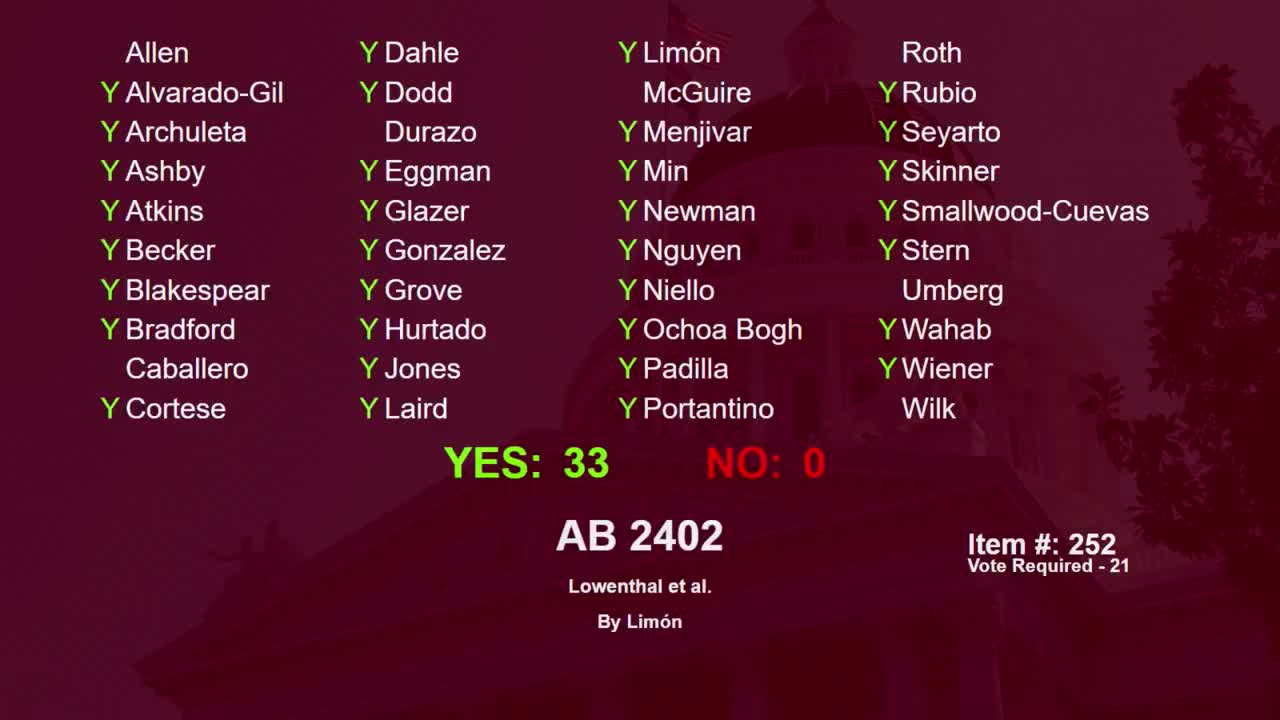
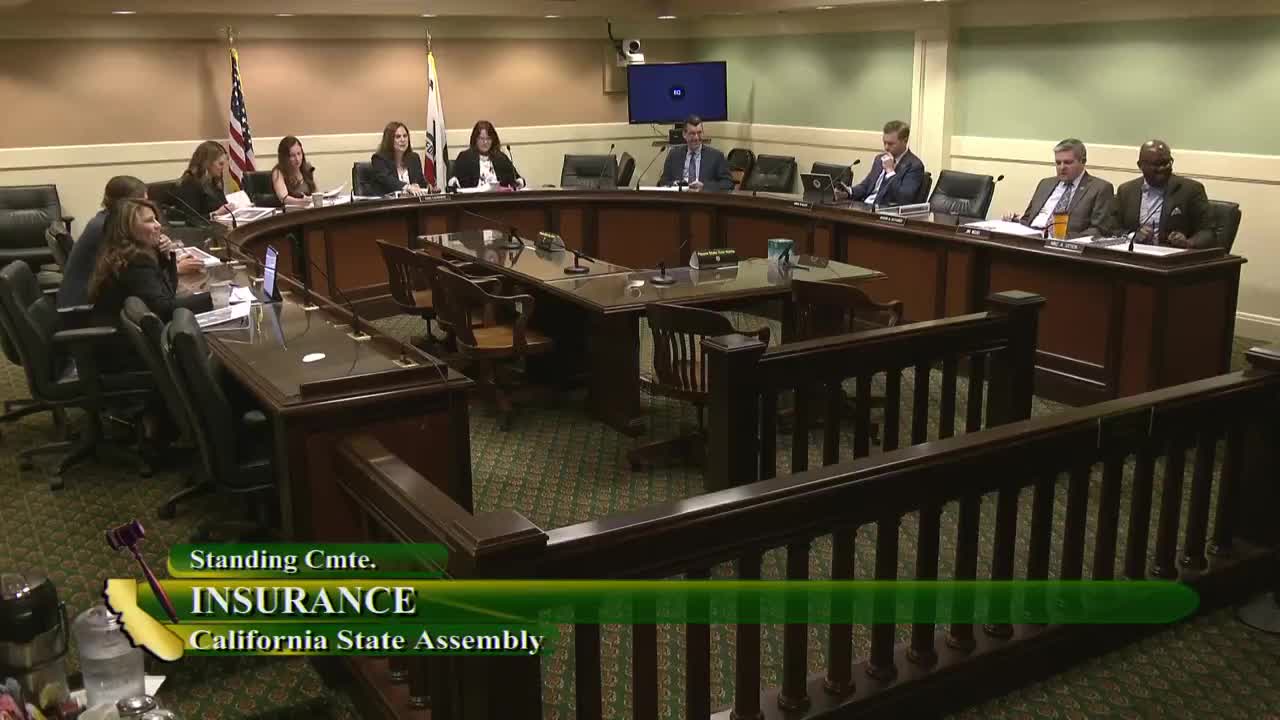
Bill Author
Bill Co-Author(s):