AB 2794: Community development: Antidisplacement Commercial Property Acquisition Program.
- Session Year: 2023-2024
- House: Assembly
- Latest Version Date: 2024-04-04
Current Status:
Failed
(2024-05-16: In committee: Held under submission.)
Introduced
In Committee
First Chamber
In Committee
Second Chamber
Enacted
Existing law creates the Governors Office of Business and Economic Development (GO-Biz) and requires GO-Biz to serve the Governor as the lead entity for economic strategy and the marketing of California on issues relating to business development, private sector investment, and economic growth.
This bill would establish the Antidisplacement Commercial Property Acquisition Program, to be administered by the Department of Housing and Community Development, GO-Biz to provide low-interest loans to eligible community-based acquisition partners to acquire commercial property in communities that are vulnerable to gentrification and displacement. The bill would specify the goals of the program, including ensuring local businesses remain in high-risk communities vulnerable to gentrification and displacement. The bill would establish the Antidisplacement Commercial Property Acquisition Revolving Loan Fund, and would authorize the department, GO-Biz, upon appropriation by the Legislature to the fund for purposes of the program, to provide low-interest loans for purposes of the program. The bill would require the department GO-Biz to adopt regulations to administer the program, including qualifications that prioritize the preservation of Black-, indigenous-, people of color-, and women-owned businesses and the acquisition of commercial property in culturally significant commercial corridors. The bill would require the department GO-Biz to report to the Legislature on the progress of the program by January 1, 2030, or 5 years after the disbursement of the first loan by the department, GO-Biz, whichever is later. The bill would make the program contingent upon appropriation by the Legislature in the annual Budget Act or another statute for its purposes.
Existing law establishes the Department of Housing and Community Development to administer various programs and policies to support state housing and community development.
This bill would establish the Antidisplacement Commercial Property Acquisition Program, to be administered by the Department of Housing and Community Development, to provide low-interest loans to eligible community-based acquisition partners to acquire commercial property in communities that are vulnerable to gentrification and displacement. The bill would specify the goals of the program, including ensuring local businesses remain in high-risk communities vulnerable to gentrification and displacement. The bill would establish the Antidisplacement Commercial Property Acquisition Revolving Loan Fund, and would authorize the department, upon appropriation by the Legislature to the fund for purposes of the program, to provide low-interest loans for purposes of the program. The bill would require the department to adopt regulations to administer the program, including qualifications that prioritize the preservation of Black-, indigenous-, people of color-, and women-owned businesses and the acquisition of commercial property in culturally significant commercial corridors. The bill would require the department to report to the Legislature on the progress of the program by January 1, 2030, or 5 years after the disbursement of the first loan by the department, whichever is later. The bill would make the program contingent upon appropriation by the Legislature in the annual Budget Act or another statute for its purposes.
Existing law, the Planning and Zoning Law, requires a local government that adopts a requirement in its housing element for a housing development to contain a fixed percentage of affordable housing units to permit a developer to satisfy that requirement by constructing rental housing at affordable monthly rents.This bill would make nonsubstantive changes to that provision.Existing law, the Planning and Zoning Law, requires a local government that adopts a requirement in its housing element for a housing development to contain a fixed percentage of affordable housing units to permit a developer to satisfy that requirement by constructing rental housing at affordable monthly rents.
This bill would make nonsubstantive changes to that provision.
This title shall be known, and may be cited, as the Antidisplacement Commercial Property Acquisition Program.
62401.62601.The Antidisplacement Commercial Property Acquisition Program is hereby established, to be administered by the Department of Housing and Community Development. Governors Office of Business and Economic Development. The program shall provide low-interest loans to eligible community-based acquisition partners to acquire commercial property in communities that are vulnerable to gentrification and displacement in order to achieve the following goals:
(a)To ensure local businesses remain in high-risk communities vulnerable to gentrification and displacement.
(b)To stabilize Black-, indigenous-, people of color-, and women-owned small businesses in order to preserve and strengthen low-income communities of color.
(c)To strengthen communities that have historically faced redlining and systemic disinvestment.
62402.62602.For purposes of this title:
(a)Department means the Department of Housing and Community Development.(b)(a)Eligible community-based acquisition partner means a nonprofit organization or a land trust.
(c)(b)Fund means the Antidisplacement Commercial Property Acquisition Revolving Loan Fund established in Section 62403.
(c)GO-Biz means the Governors Office of Business and Economic Development.
(d)Program means the Antidisplacement Commercial Property Acquisition Program established pursuant to this title.
62403.62603.(a)There is hereby created in the State Treasury the Antidisplacement Commercial Property Acquisition Revolving Loan Fund, to be administered by the department, GO-Biz, to provide low-interest loans to eligible community-based acquisition partners, nonprofit organizations, and land trusts, to acquire commercial property in communities that are vulnerable to gentrification and displacement.
(b)The department, GO-Biz, upon appropriation by the Legislature to the fund for these purposes, may provide low-interest loans from the fund for purposes of the program to eligible community-based acquisition partners that meet the requirements of, and regulations adopted pursuant to, this title.
(c)All moneys received for repayment of a loan, and any penalties, interest, and fees in connection with a loan, provided pursuant to the program shall be deposited in the fund for appropriation by the Legislature. Penalty moneys in the revolving fund shall be available, upon appropriation by the Legislature, for additional loans authorized under this title.
(d)The department GO-Biz may use moneys in the fund, upon appropriation for this purpose, for administrative costs incurred in implementing the program.
62404.The department 62604.GO-Biz shall adopt regulations to administer this title that include, but are not limited to, the following:
(a)Qualifications that prioritize the preservation of Black-, indigenous-, people of color-, and women-owned businesses and the acquisition of commercial property in culturally significant commercial corridors.
(b)Guidelines for the use of funds that prevent the displacement of communities of color, including long-term use restrictions on the property and social impact requirements on the businesses.
62405.62605.(a)By January 1, 2030, or five years after the disbursement of the first loan by the department GO-Biz pursuant to this title, whichever is later, the department GO-Biz shall report to the Legislature on the progress of the program, including how the program has supported its own goals.
(b)The report shall be submitted in accordance with Section 9795.
62406.62606.The implementation of this title is contingent upon appropriation by the Legislature in the annual Budget Act or another statute for its purposes.
REVISIONS: HeadingLine 2.This title shall be known, and may be cited, as the Antidisplacement Commercial Property Acquisition Program.
62401.The Antidisplacement Commercial Property Acquisition Program is hereby established, to be administered by the Department of Housing and Community Development. The program shall provide low-interest loans to eligible community-based acquisition partners to acquire commercial property in communities that are vulnerable to gentrification and displacement in order to achieve the following goals:
(a)To ensure local businesses remain in high-risk communities vulnerable to gentrification and displacement.
(b)To stabilize Black-, indigenous-, people of color-, and women-owned small businesses in order to preserve and strengthen low-income communities of color.
(c)To strengthen communities that have historically faced redlining and systemic disinvestment.
62402.For purposes of this title:
(a)Department means the Department of Housing and Community Development.
(b)Eligible community-based acquisition partner means a nonprofit organization or a land trust.
(c)Fund means the Antidisplacement Commercial Property Acquisition Revolving Loan Fund established in Section 62403.
(d)Program means the Antidisplacement Commercial Property Acquisition Program established pursuant to this title.
62403.(a)There is hereby created in the State Treasury the Antidisplacement Commercial Property Acquisition Revolving Loan Fund, to be administered by the department, to provide low-interest loans to eligible community-based acquisition partners, nonprofit organizations, and land trusts, to acquire commercial property in communities that are vulnerable to gentrification and displacement.
(b)The department, upon appropriation by the Legislature to the fund for these purposes, may provide low-interest loans from the fund for purposes of the program to eligible community-based acquisition partners that meet the requirements of, and regulations adopted pursuant to, this title.
(c)All moneys received for repayment of a loan, and any penalties, interest, and fees in connection with a loan, provided pursuant to the program shall be deposited in the fund for appropriation by the Legislature. Penalty moneys in the revolving fund shall be available, upon appropriation by the Legislature, for additional loans authorized under this title.
(d)The department may use moneys in the fund, upon appropriation for this purpose, for administrative costs incurred in implementing the program.
62404.The department shall adopt regulations to administer this title that include, but are not limited to, the following:
(a)Qualifications that prioritize the preservation of Black-, indigenous-, people of color-, and women-owned businesses and the acquisition of commercial property in culturally significant commercial corridors.
(b)Guidelines for the use of funds that prevent the displacement of communities of color, including long-term use restrictions on the property and social impact requirements on the businesses.
62405.(a)By January 1, 2030, or five years after the disbursement of the first loan by the department pursuant to this title, whichever is later, the department shall report to the Legislature on the progress of the program, including how the program has supported its own goals.
(b)The report shall be submitted in accordance with Section 9795.
62406.The implementation of this title is contingent upon appropriation by the Legislature in the annual Budget Act or another statute for its purposes.
SECTION 1.Section 65589.8 of the Government Code is amended to read:65589.8.(a)A local government that adopts a requirement in its housing element that a housing development contain a fixed percentage of affordable housing units shall permit a developer to satisfy all or a portion of that requirement by constructing rental housing at affordable monthly rents, as determined by that local government.(b)This section does not expand or reduce the authority of a local government to adopt an ordinance, charter amendment, or policy requiring that any housing development contain a fixed percentage of affordable housing units.(a)A local government which that adopts a requirement in its housing element that a housing development contain a fixed percentage of affordable housing units, units shall permit a developer to satisfy all or a portion of that requirement by constructing rental housing at affordable monthly rents, as determined by the that local government.
Nothing in this section shall be construed to expand or contract(b)This section does not expand or reduce the authority of a local government to adopt an ordinance, charter amendment, or policy requiring that any housing development contain a fixed percentage of affordable housing units.
|
Date
|
Status
|
|---|---|
| May 16, 2024 | In committee: Held under submission. |
| May 8, 2024 | In committee: Set, first hearing. Referred to APPR. suspense file. |
| Apr 23, 2024 | Coauthors revised. |
| Apr 23, 2024 | From committee: Do pass and re-refer to Com. on APPR. (Ayes 10. Noes 1.) (April 23). Re-referred to Com. on APPR. |
| Apr 16, 2024 | From committee: Do pass and re-refer to Com. on JUD. (Ayes 5. Noes 2.) (April 16). Re-referred to Com. on JUD. |
| Apr 8, 2024 | Re-referred to Com. on H. & C.D. |
| Apr 8, 2024 | Re-referred to Coms. on J., E.D., & E. and JUD. pursuant to Assembly Rule 96. |
| Apr 4, 2024 | From committee chair, with author's amendments: Amend, and re-refer to Com. on H. & C.D. Read second time and amended. |
| Apr 1, 2024 | Re-referred to Com. on H. & C.D. |
| Mar 21, 2024 | From committee chair, with author's amendments: Amend, and re-refer to Com. on H. & C.D. Read second time and amended. |
| Mar 21, 2024 | Referred to Coms. on H. & C.D. and JUD. |
| Feb 16, 2024 | From printer. May be heard in committee March 17. |
| Feb 15, 2024 | Read first time. To print. |
|
Date
|
Description
|
Location
|
Votes
|
|
|---|---|---|---|---|
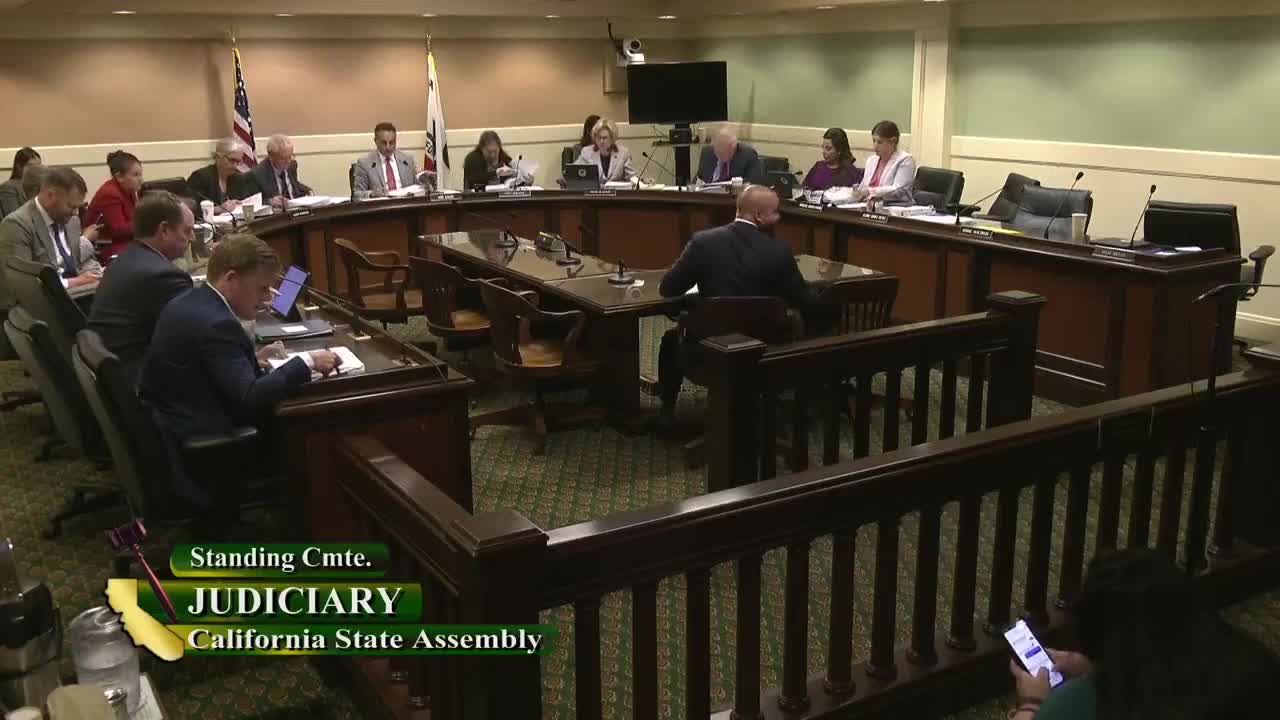
| Apr 23, 2024 | Do pass and be re-referred to the Committee on [Appropriations] | Assembly Standing Committee on Judiciary |
Passed |
|
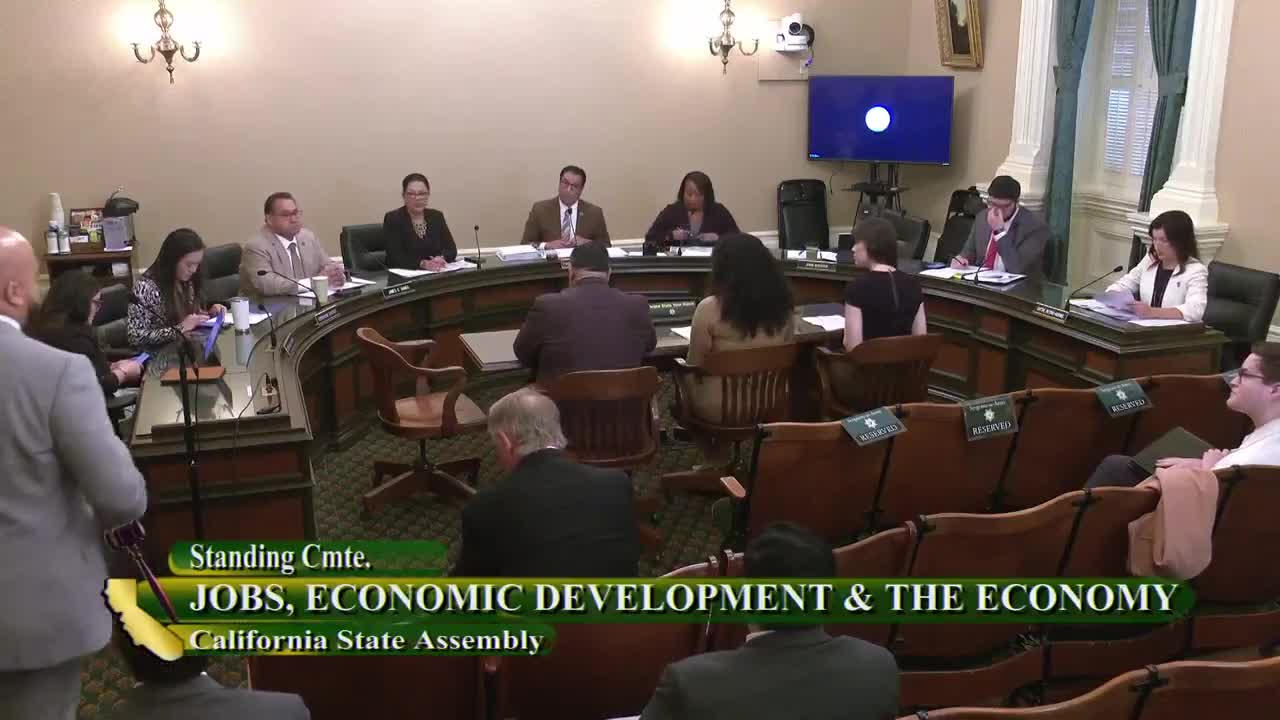
| Apr 16, 2024 | Do pass and be re-referred to the Committee on [Judiciary] | Assembly Standing Committee on Jobs, Economic Development, and the Economy |
Passed |
This list shows positions taken on this bill by organizations on the date displayed, which is linked to the original source.
Positions by individuals are not included.
|
Organization
|
Position
|
Date
|
|---|---|---|
| Black Owned and Operated Community Land Trust | * Support | Apr 23, 2024 |
| California Business Properties Association | * Support | Apr 23, 2024 |
| Cruz Strategies | * Support | Apr 16, 2024 |
| Treehouse Co-Living | * Support | Apr 23, 2024 |
Date of Hearing: May 8, 2024
ASSEMBLY COMMITTEE ON APPROPRIATIONS
Buffy Wicks, Chair
ABPCA Bill Id:AB 2794
Author:(Bryan) – As Amended Ver:April 4, 2024
Policy Committee: | Jobs, Economic Development, and the Economy | Vote: | 5 - 2 |
Judiciary | 10 - 1 | ||
|
|
Urgency: No State Mandated Local Program: No Reimbursable: No
SUMMARY:
This bill, subject to appropriation, creates a program at Governor’s Office of Business and Economic Development (GO-Biz) to provide a low-interest loan to an eligible community-based nonprofit organization or land trust to acquire commercial property in communities vulnerable to gentrification and displacement.
Specifically, this bill creates a revolving loan fund in the State Treasury and requires GO-Biz to adopt regulations to administer the low-interest loan program. The regulations are to include (a) guidelines for the use of funds to prevent the displacement of communities of color and (b) qualifications that prioritize the preservation of Black-, indigenous-, people of color-, and women-owned businesses and the acquisition of commercial property in culturally significant commercial corridors.
The bill specifies that all moneys received for a repayment of a loan and any penalties, interest, and fees in connection with a loan, are to be redeposited in the fund for appropriation by the Legislature. The bill requires, by January 1, 2030, or five years after the disbursement of the first loan, whichever is later, GO-Biz to report to the Legislature on the progress of the program.
The bill authorizes GO-Biz to use money from the fund for administrative costs for implementing the program.
FISCAL EFFECT:
- General Fund cost pressures to provide start-up funding for the loan program of an unspecified, but likely significant, amount.
- Ongoing General Fund costs for the life of the program to GO-Biz of unknown amount, but potentially in the low millions of dollars annually, to develop regulations, administer the program, and produce a report. The bill authorizes GO-Biz to use money from the loan program fund for these costs.
GO-Biz indicates it is difficult to quantify a specific cost, which depends on several factors including the volume of loans, complexity, and turnaround time. For context GO-Biz likens administration of the proposed program to the IBank’s existing Infrastructure State Revolving Fund program, which costs approximately $2.5 million annually for 11 staff and support. The program closes about six municipal loans a year and has an outstanding loan portfolio of more than $500 million.
According to the Legislative Analyst’s Office, the General Fund faces a structural deficit in the tens of billions of dollars over the next several fiscal years.
COMMENTS:
- Purpose. According to the author, this bill:
Will help our local small businesses acquire commercial property in areas that are vulnerable to gentrification and displacement. This will create a community land trust model that will keep rent costs reasonable for local small businesses and preserve cultural identities of the communities they operate in.
- Background. GO-Biz is the state’s lead agency for issues related to business development, private sector investment, and economic growth. Current law authorizes GO-Biz to administer various programs and provide technical assistance to for a variety of economic development purposes.
- Related Legislation. AB 930 (Friedman) authorizes two or more local governments to jointly form a Reinvestment in Infrastructure for a Sustainable and Equitable California (RISE) district to plan, finance, and facilitate infill supportive infrastructure and affordable housing development near transit. The bill, upon appropriation by the Legislature, requires GO-Biz to establish the RISE Revolving Loan Fund to provide startup funding. The bill is pending in the Senate.
Analysis Prepared by: Natasha Collins / APPR. / (916) 319-2081
Date of Hearing: April 23, 2024
ASSEMBLY COMMITTEE ON JUDICIARY
Ash Kalra, Chair
ABPCA Bill Id:AB 2794
Author:(Bryan) – As Amended Ver:April 4, 2024
SUBJECT: Community development: Antidisplacement Commercial Property Acquisition Program
KEY ISSUE: should a program be established within the governor’s office of Business and Economic development (Go-biz) to provide low-interest loans to groups working to protect vulnerable communities from gentrification and displacement?
SYNOPSIS
While urban development projects seek long-term economic benefits that improve the quality of life for city residents, the benefits are not always equally distributed; indeed, in some cases urban development has a negative effect on some residents. This is especially evident when urban development results in “gentrification,” a process by which neighborhood development raises property values, often driving poorer people and older businesses out as wealthier people and trendier businesses move in. Given the systemic racial disparity in our society, gentrification usually means the displacement of people of color and minority-owned businesses. However, urban development, when properly planned, need not always lead to gentrification. Indeed, in recent years, community land trusts and other nonprofit organizations have devised creative ways to promote sustainable economic development that provides permanent affordable housing and generates wealth without forcing longtime residences and businesses to leave or stagnate while others prosper.
This bill seeks to reinforce this work by establishing an “Anti-Displacement Commercial Property Acquisition Program” within the Governor’s Office of Business and Economic Development (GO-Biz). Specifically, the program would provide low-interest loans to community-based “acquisition partners,” including land trusts and other nonprofits, to acquire commercial property in communities vulnerable to gentrification and displacement. It seeks to use the power of public-private collaboration to redress a history of redlining and discrimination that leaves some neighborhoods poor and under-developed, until the well-to-do take an interest in living or investing there.
This bill recently passed out of the Assembly Committee on Jobs, Economic Development, and The Economy on a 5-2 vote. There is no registered support for, or opposition to, the bill on file.
SUMMARY: Establishes a program within the Governor’s Office of Business Development to provide low interest loans to groups seeking to prevent gentrification and displacement, as specified. Specifically, this bill:
- Establishes the Anti-Displacement Commercial Property Acquisition Program to be administered by the Governor’s Office of Business and Economic Development (GO-Biz). Specifies that the program shall provide low-interest loans to eligible community-based acquisition partners to acquire commercial property in communities that are vulnerable to gentrification and displacement in order to achieve the following goals:
- To ensure local businesses remain in high-risk communities vulnerable to gentrification and displacement.
- To stabilize Black-, indigenous-, people of color-, and women-owned small businesses in order to preserve and strengthen low-income communities of color.
- To strengthen communities that have historically faced redlining and systemic disinvestment.
- Creates within the State Treasury the Anti-Displacement Commercial Property Acquisition Revolving Loan Fund (Loan Fund) to provide, upon appropriation by the Legislature, low-interest loans to eligible community-based acquisition partners, nonprofit organizations, and land trusts, to acquire commercial property in communities that are vulnerable to gentrification and displacement.
- Provides, for purposes of the above, that all moneys received for repayment of a loan, and any penalties, interest, and fees in connection with a loan, shall be deposited in the fund for appropriation by the Legislature, as specified.
- Requires GO-Biz to adopt regulations, to implement the above, that include, but are not limited to:
- Qualifications that prioritize the preservation of Black-, indigenous-, people of color-, and women-owned businesses and the acquisition of commercial property in culturally significant commercial corridors.
- Guidelines for the use of funds that prevent the displacement of communities of color, including long-term use restrictions on the property and social impact requirements on the businesses.
- Requires GO-Biz to submit a report to the Legislature every five years, as specified, on the progress of the anti-displacement program.
EXISTING LAW:
- Establishes GO-Biz to serve the Governor as the lead entity for economic strategy and the marketing of California on issues relating to business development, private sector investment, and economic growth. (Government Code Section 12096 et seq.)
- Authorizes GO-Biz to make grants and offer technical assistance to a variety of entities for a variety of economic development purposes. Grants and assistance are offered through several programs administered by GO-Biz, including the California Business Investment Program; California Permit Assistance; Local Economic Development Liaison Services; the Small Business Advocate Program; the Made in California Program; Local Government Immigrant Integration Services, the Zero Emission Vehicle Development Office, and the Building and Reinforcing Inclusive, Diverse, Gender-Supportive Equity Project, among others. (Government Code Sections 12096.5-12100.171.)
FISCAL EFFECT: As currently in print this bill is keyed fiscal.
COMMENTS: According to the author, small businesses “are the backbone of our economy.” The author cites a report by the California Office of the Small Business Advocate, revealing that “small minority-owned businesses contribute $192.8 billion in economic output, generate $28.7 million in tax revenue, and support 2.56 million jobs in California. As California continues to invest unprecedented dollars into development and modernization, we must ensure that our small businesses are not priced out of operation.” The author believes that this bill, by creating the Anti-Displacement Commercial Property Acquisition Program, “will help our local small businesses acquire commercial property in areas that are vulnerable to gentrification and displacement. This will create a community land trust model that will keep rent costs reasonable for local small businesses and preserve cultural identities of the communities they operate in.”
Urban development, gentrification, and creative solutions. While urban development projects seek long-term economic benefits that improve the quality of life for city residents, the benefits are not always equally distributed; indeed, urban development not infrequently has a negative effect on some residents. This is especially evident when urban development results in “gentrification,” a process by which development raises property values, often driving poorer people and older businesses out, as wealthier people and upscale businesses move in. Given the systemic racial disparity in our society, it is not simply a matter of the poor being replaced by the rich: people of color and small minority-owned businesses are the ones most often displaced by gentrification. A recent Brookings study found that in California, between the years 2000 and 2019, nearly one-half of low-socioeconomic status neighborhoods experienced gentrification. The Brookings study also concluded that gentrified neighborhoods “were more racially and economically diverse than neighborhoods that did not gentrify during the same period.” A recent UCLA study found that “white flight” of the 1950s and 1960s created segregated neighborhoods, and thus segregated schools; however, it found that the movement of whites back into those neighborhoods through the process of gentrification has not reversed the patterns of school segregation. Other studies show that gentrification in California leads to racial disparities in measures of health. A number of studies reach the seemingly irrefutable conclusion that gentrification displaces communities of color, and that even when longstanding residents and businesses are not displaced, they do not benefit equally from the development. (See e.g. Jennifer Ayscue, et.al. Gentrification’s Impact on School Demographics: A Study of Three California Cities (March 2024), available at https://www.brookings.edu; UCLA Civil Rights Project, Gentrification and Schools: Challenges, Opportunities, and Policy Options (November 2023), available at https://www.civilrightsproject.ucla.edu; and Chinyere Agbai, Shifting Neighborhoods, Shifting Health: A Longitudinal Analysis of Gentrification and Health in Los Angeles County (2021), available at https://www.elsevier.com/open-access.)
However, when properly planned, urban development need not always lead to gentrification and its racially disparate outcomes. Indeed, in recent years, community land trusts and other nonprofit organizations have creatively devised ways to promote sustainable economic development that provides permanent affordable housing and generates wealth without forcing longtime residences and businesses to leave. Land trusts may work in a variety of ways; those developed to combat gentrification and displacement generally work by acquiring land “when cities donate abandoned residential or commercial properties or through purchases supported by private donations, local and state affordable housing grants, or a small percentage added to the property tax rate.” In one common approach, the trust owns the land underneath but sell the buildings that sit on top, which makes the home or building more affordable. (See e.g. Richard Rothstein and Leah Rothstein, Just Action: How to Challenge Segregation Enacted under the Color of Law (Liveright Publishing Co., 2023), especially pp. 95-124.) This bill would reinforce the land trust approach – and presumably other approaches by nonprofits – by establishing an “Anti-Displacement Commercial Property Acquisition Program” within the Governor’s Office of Business and Economic Development (GO-Biz.)
GO-Biz: Existing state promotion of business and economic development. The Legislature established the Governor’s Office of Business and Economic Development – known as GO-Biz – to act as the lead entity for economic strategy and marketing on issues relating to business development, private sector investment, and economic growth. Existing programs administered by GO-Biz provide a range of services to businesses of all kinds. However, the legislation creating GO-Biz, and its many programs administered by it, expressly recognize that small business is the “lifeblood” of the California economy.
This bill, consistent with the goals of GO-Biz, seeks to promote business and economic development in ways that counter systemic and racially discriminatory policies of the past, such as redlining and federal loan programs that discriminated against persons, communities, and businesses of color. Most importantly, the program would provide low-interest loans to community-based land trusts and other nonprofits in communities vulnerable to gentrification and displacement. Recipients of the loans would be dedicated to the following goals: ensuring local businesses remain in high-risk communities vulnerable to gentrification and displacement; stabilizing Black-, indigenous-, people of color-, and women-owned small businesses in order to preserve and strengthen low-income communities of color; and strengthening communities that have historically faced redlining and systemic disinvestment. The bill would also create a revolving loan fund to advance the low-interest loans and carry out the program’s general operational costs. Finally, the bill requires GO-Biz to submit a report to the Legislature every five years detailing the progress of the program.
In short, by authorizing low-interest loans to community nonprofit groups, this bill uses public-private collaboration to address problems that are caused, at least in substantial part, by racially discriminatory state and federal policy. In this sense, the bill also conforms with the recommendations of the Reparations Task Force – which has been discussed in relation to numerous measures heard by the Committee this session – by offering at least some redress for past wrongs.
REGISTERED SUPPORT / OPPOSITION:
Support
None on file
Opposition
None on file
Analysis Prepared by: Tom Clark / JUD. / (916) 319-2334
Date of Hearing: April 16, 2024
ASSEMBLY COMMITTEE ON JOBS, ECONOMIC DEVELOPMENT, AND THE ECONOMY
Carlos Villapudua, Chair
ABPCA Bill Id:AB 2794 (
Author:Bryan) – As Amended Ver:April 4, 2024
SUBJECT: Community development: Antidisplacement Commercial Property Acquisition Program
SUMMARY: AB 2794, also known as the Bryan Community Development Antidisplacement Commercial Property Acquisition Program, proposes the establishment of a program administered by The Governor's Office of Business and Economic Development (GO-Biz). It aims to provide low-interest loans to community-based acquisition partners, enabling them to acquire commercial properties in areas vulnerable to gentrification and displacement.
Specifically, this bill:
- Establishes the Antidisplacement Commercial Property Acquisition Program, to be administered by GO-Biz to provide low-interest loans to eligible community-based acquisition partners to acquire commercial property in communities that are vulnerable to gentrification and displacement.
- Specifies the goals of the program, including ensuring local businesses remain in high-risk communities vulnerable to gentrification and displacement.
- Establishes the Antidisplacement Commercial Property Acquisition Revolving Loan Fund, and would authorize, GO-Biz, upon appropriation by the Legislature to the fund for purposes of the program, to provide low-interest loans for purposes of the program.
- Requires GO-Biz to adopt regulations to administer the program, including qualifications that prioritize the preservation of Black-, indigenous-, people of color-, and women-owned businesses and the acquisition of commercial property in culturally significant commercial corridors.
- Requires GO-Biz to report to the Legislature on the progress of the program by January 1, 2030, or 5 years after the disbursement of the first loan by GO-Biz, whichever is later.
- Makes the program contingent upon appropriation by the Legislature in the annual Budget Act or another statute for its purposes.
EXISTING LAW:
- Existing law creates the Governor’s Office of Business and Economic Development (GO-Biz) and requires GO-Biz to serve the Governor as the lead entity for economic strategy and the marketing of California on issues relating to business development, private sector investment, and economic growth.
FISCAL EFFECT: >Unknown
COMMENTS: Note: This bill is double referred to the Assembly Committee on Judiciary upon passage of this Committee.
California boasts over 4 million small businesses, with approximately 1.9 million being minority-owned. Minority-owned businesses constitute approximately 46% of all businesses in the state and contribute $192.8 billion in economic output, which is more than the annual Gross Domestic Product of 18 US States, generating $28.7 million in tax revenue, and supporting 2.56 million jobs. Beyond the economic and fiscal contributions, small businesses have a vital role in local capacity building, community engagement, empowering marginalized communities, supporting cultural diversity, creating a more inclusive environment and therefore contributing to a more diverse and inclusive economy. Research shows entrepreneurship creates intergenerational wealth-building opportunities that is particularly strong for minority and women owned businesses.
According to the author, “existing law lacks sufficient measures to counteract the historical injustices of redlining and predatory banking that have led to systemic disinvestment in Black communities, particularly in South LA. Shortcomings include inadequate support for local small businesses and artisan merchants who lack equitable ownership or decision-making power in their communities. The absence of effective public policy has resulted in local entrepreneurs and community-based organizations substituting for the responsibilities of government agencies, addressing key issues like housing, community safety, and small business support with no municipal or institutional reinforcement. These deficiencies contribute to a cycle of irresponsible gentrification, displacement, and a widening wealth gap due to disproportionate land ownership, as well as inequitable access to capital and other resources that contribute to community development.”
The Legislature has a vital role in supporting long-term statewide economic growth while also ensuring the gains from such growth are widespread throughout the entire State. Building a future where more people of color are homeowners, business owners, and have access to wealth-building infrastructure is critical to the health and vibrancy of California’s economy.
Author Statement: “Small businesses are the backbone of our economy. A report by the California Office of the Small Business Advocate revealed that small minority-owned businesses contribute $192.8 billion in economic output, generate $28.7 million in tax revenue, and support 2.56 million jobs in California. As California continues to invest unprecedented dollars into development and modernization, we must ensure that our small businesses are not priced out of operation. This bill will create the Anti-Displacement Commercial Property Acquisition Program, which will help our local small businesses acquire commercial property in areas that are vulnerable to gentrification and displacement. This will create a community land trust model that will keep rent costs reasonable for local small businesses and preserve cultural identities of the communities they operate in.”
REGISTERED SUPPORT / OPPOSITION:
Support
None on file
Opposition
None on file
Analysis Prepared by: Carla Castilla / J., E.D., & E. / (916) 319-2090
Discussed in Hearing
 8MIN
Assembly Standing Committee on Judiciary
 13MIN
Assembly Standing Committee on Jobs, Economic Development, and the Economy
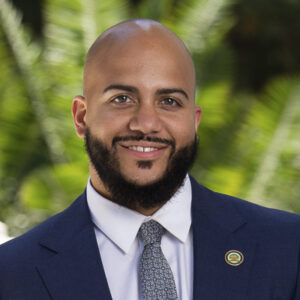
Bill Author
Bill Co-Author(s):
