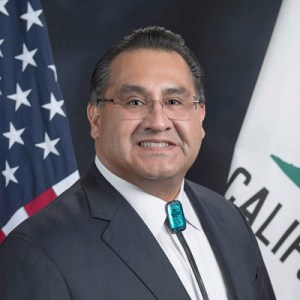
AB 2795: CalWORKs Indian Health Clinic Program.
- Session Year: 2023-2024
- House: Assembly
- Latest Version Date: 2024-09-27
Current Status:
Passed
(2024-09-27: Chaptered by Secretary of State - Chapter 663, Statutes of 2024.)
Introduced
In Committee
First Chamber
In Committee
Second Chamber
Enacted
Existing federal law provides for allocation of federal funds to eligible states and tribes through the federal Temporary Assistance for Needy Families (TANF) block grant program. Existing state law provides for the California Work Opportunity and Responsibility to Kids (CalWORKs) program under which, through a combination of state and county funds and federal funds received through the TANF program, each county provides cash assistance and other benefits to qualified low-income families.
Existing law requires the State Department of Social Services to annually allocate appropriated funds to each federally recognized American Indian tribe with reservation lands or rancherias in the state that administers a federal tribal TANF grant program.
Existing law authorizes the Director of Social Services to provide funding to Indian health clinics to provide substance abuse and mental health services, and other related services authorized under the CalWORKs program to CalWORKs applicants and recipients and tribal TANF applicants and recipients living in California.
This bill would identify those funding provisions as the Indian Health Clinic Program, and would revise the definition of applicants and recipients for purposes of the program to include individuals who self-attest to as either having applied for, or currently receiving, CalWORKs or tribal TANF assistance. The bill also would authorize an Indian health clinic to provide services to an individual the clinic verifies is enrolled in the Medi-Cal program, or who self-attests to their enrollment. The bill would authorize an Indian health clinic, at the beginning of each state fiscal year, to request an advance payment of up to 50% of the total allocated amount, contingent upon a written request and the clinics timely and accurate submission, and the departments approval within 90 days of the completed submission, of specified reports from the prior year. The bill would require the department to remit this advance payment if funds have been appropriated through the annual Budget Act, and to remit the remainder of the total allocated amount as a reimbursement when in receipt of a written request and supporting documents from the Indian health clinic.
Existing federal law provides for allocation of federal funds to eligible states and tribes through the federal Temporary Assistance for Needy Families (TANF) block grant program. Existing state law provides for the California Work Opportunity and Responsibility to Kids (CalWORKs) program under which, through a combination of state and county funds and federal funds received through the TANF program, each county provides cash assistance and other benefits to qualified low-income families.
Existing law requires the State Department of Social Services to annually allocate appropriated funds to each federally recognized American Indian tribe with reservation lands or rancherias in the state that administers a federal tribal TANF grant program.
Existing law authorizes the Director of Social Services to provide funding to Indian health clinics to provide substance abuse and mental health services, and other related services authorized under the CalWORKs program to CalWORKs applicants and recipients and tribal TANF applicants and recipients living in California.
This bill would identify those funding provisions as the Indian Health Clinic Program, and would revise the definition of applicants and recipients for purposes of the program to include individuals who self-attest to as either having applied for, or currently receiving, CalWORKs or tribal TANF assistance. The bill also would authorize an Indian health clinic to provide services to an individual the clinic verifies is enrolled in the Medi-Cal program, or who self-attests to their enrollment. The bill would authorize an Indian health clinic, at the beginning of each state fiscal year, to request an advance payment of up to 50% of the total allocated amount, contingent upon a written request and the clinics timely and accurate submission, and the departments approval within 90 days of the completed submission, of specified reports from the prior year. The bill would require the department to remit this advance payment if funds have been appropriated through the annual Budget Act, and to remit the remainder of the total allocated amount as a reimbursement when in receipt of a written request and supporting documents from the Indian health clinic.
Existing federal law provides for allocation of federal funds to eligible states and tribes through the federal Temporary Assistance for Needy Families (TANF) block grant program. Existing state law provides for the California Work Opportunity and Responsibility to Kids (CalWORKs) program under which, through a combination of state and county funds and federal funds received through the TANF program, each county provides cash assistance and other benefits to qualified low-income families.
Existing law requires the State Department of Social Services to annually allocate appropriated funds to each federally recognized American Indian tribe with reservation lands or rancherias in the state that administers a federal tribal TANF grant program.
Existing law authorizes the Director of Social Services to provide funding to Indian health clinics to provide substance abuse and mental health services, and other related services authorized under the CalWORKs program to CalWORKs applicants and recipients and tribal TANF applicants and recipients living in California.
This bill would identify those funding provisions as the Indian Health Clinic Program, and would revise the definition of applicants and recipients for purposes of the program to include individuals who self-attest to as either having applied for, or currently receiving, CalWORKs or tribal TANF assistance. The bill also would authorize an Indian health clinic to provide services to an individual the clinic verifies is enrolled in the Medi-Cal program, or who self-attests to their enrollment. The bill would authorize an Indian health clinic, at the beginning of each state fiscal year, to request an advance payment of up to 50% of the total allocated amount, contingent upon a written request and the clinics timely and accurate submission, and the departments approval within 90 days of the completed submission, of specified reports from the prior year. The bill would require the department to remit this advance payment if funds have been appropriated through the annual Budget Act, and to remit the remainder of the total allocated amount as a reimbursement when in receipt of a written request and supporting documents from the Indian health clinic.
Existing federal law provides for allocation of federal funds to eligible states and tribes through the federal Temporary Assistance for Needy Families (TANF) block grant program. Existing state law provides for the California Work Opportunity and Responsibility to Kids (CalWORKs) program under which, through a combination of state and county funds and federal funds received through the TANF program, each county provides cash assistance and other benefits to qualified low-income families.
Existing law requires the State Department of Social Services to annually allocate appropriated funds to each federally recognized American Indian tribe with reservation lands or rancherias in the state that administers a federal tribal TANF grant program.
Existing law authorizes the Director of Social Services to provide funding to Indian health clinics to provide substance abuse and mental health services, and other related services authorized under the CalWORKs program to CalWORKs applicants and recipients and tribal TANF applicants and recipients living in California.
This bill would designate that funding authorization for Indian health clinics as the CalWORKs Indian Health Clinic Program. The bill would require the department, to the extent that funds are appropriated by the Legislature for this purpose, to provide semiannual prospective payments to a grantee under the program equal to no more than 90% of the total grant amount during a 12-month fiscal year. The bill would require the grant payments to be contingent upon a written request for payment from the grantee, and the submission by the grantee, and the approval by the department, of specified progress reports and budget expenditure reports. The bill would require the department to retain the final payment, pending satisfactory submission by the grantee of all progress reports required by the grant, budget expenditure reports, and an annual reconciliation report for the grant year, as specified.This bill would identify those funding provisions as the Indian Health Clinic Program, and would revise the definition of applicants and recipients for purposes of the program to include individuals who self-attest to as either having applied for, or currently receiving, CalWORKs or tribal TANF assistance. The bill also would authorize an Indian health clinic to provide services to an individual the clinic verifies is enrolled in the Medi-Cal program, or who self-attests to their enrollment. The bill would authorize an Indian health clinic, at the beginning of each state fiscal year, to request an advance payment of up to 50% of the total allocated amount, contingent upon the clinics timely and accurate submission, and the departments approval within 90 days of the completed submission, of specified reports from the prior year.
Existing federal law provides for allocation of federal funds to eligible states and tribes through the federal Temporary Assistance for Needy Families (TANF) block grant program. Existing state law provides for the California Work Opportunity and Responsibility to Kids (CalWORKs) program under which, through a combination of state and county funds and federal funds received through the TANF program, each county provides cash assistance and other benefits to qualified low-income families.
Existing law requires the State Department of Social Services to annually allocate appropriated funds to each federally recognized American Indian tribe with reservation lands or rancherias in the state that administers a federal tribal TANF grant program.
Existing law authorizes the Director of Social Services to provide funding to Indian health clinics to provide substance abuse and mental health services, and other related services authorized under the CalWORKs program to CalWORKs applicants and recipients and tribal TANF applicants and recipients living in California.
This bill would make technical, nonsubstantive changes to those provisions. designate that funding authorization for Indian health clinics as the CalWORKs Indian Health Clinic Program. The bill would require the department, to the extent that funds are appropriated by the Legislature for this purpose, to provide semiannual prospective payments to a grantee under the program equal to no more than 90% of the total grant amount during a 12-month fiscal year. The bill would require the grant payments to be contingent upon a written request for payment from the grantee, and the submission by the grantee, and the approval by the department, of specified progress reports and budget expenditure reports. The bill would require the department to retain the final payment, pending satisfactory submission by the grantee of all progress reports required by the grant, budget expenditure reports, and an annual reconciliation report for the grant year, as specified.
Existing federal law provides for allocation of federal funds to eligible states and tribes through the federal Temporary Assistance for Needy Families (TANF) block grant program. Existing state law provides for the California Work Opportunity and Responsibility to Kids (CalWORKs) program under which, through a combination of state and county funds and federal funds received through the TANF program, each county provides cash assistance and other benefits to qualified low-income families.
Existing law requires the State Department of Social Services to annually allocate appropriated funds to each federally recognized American Indian tribe with reservation lands or rancherias in the state that administers a federal tribal TANF grant program.
Existing law authorizes the Director of Social Services to provide funding to Indian health clinics to provide substance abuse and mental health services, and other related services authorized under the CalWORKs program to CalWORKs applicants and recipients and tribal TANF applicants and recipients living in California.
This bill would make technical, nonsubstantive changes to those provisions.
(a)The CalWORKs Indian Health Clinic Program is established to provide funding to Indian health clinics to provide substance abuse and mental health treatment services, and other related services authorized under the CalWORKs program, to CalWORKs applicants and recipients and tribal Temporary Assistance for Needy Families (TANF) applicants and recipients living in California.
(b)For purposes of this section, applicants and recipients includes individuals who self-attest to an Indian health clinic as either having applied for, or currently receiving, CalWORKs or tribal TANF assistance. An Indian health clinic may also provide services under this section to an individual the clinic verifies is enrolled in the Medi-Cal program, or who self-attests to their enrollment in the Medi-Cal program. An Indian health clinic may accept self-attestation, as described in this subdivision, as conclusive proof of eligibility for services under this section, and is not required to further verify eligibility.
(c)(1)At the beginning of each state fiscal year, an Indian health clinic may choose to request an advance payment in an amount equal to not more than 50 percent of the total allocated amount, contingent upon both of the following:
(A)A written request for an advance payment from the Indian health clinic.
(B)The grantees timely and accurate submission within 45 days of the beginning of the fiscal year, and the departments approval within 90 days of the completed submission, of the data reports required under the agreement, budget expenditure reports, and an annual reconciliation report, from the prior year.
(2)The department shall remit the advance payment requested pursuant to paragraph (1) if funds have been appropriated through the annual Budget Act.
(3)The department shall remit the remainder of the total allocated amount as a reimbursement when in receipt of a written request and supporting documents from the Indian health clinic.
(a)The CalWORKs Indian Health Clinic Program is established to provide funding to Indian health clinics to provide substance abuse and mental health treatment services, and other related services authorized under the CalWORKs program, to CalWORKs applicants and recipients and tribal Temporary Assistance for Needy Families (TANF) applicants and recipients living in California.
(b)For purposes of this section, applicants and recipients includes individuals who self-attest to an Indian health clinic as either having applied for, or currently receiving, CalWORKs or tribal TANF assistance. An Indian health clinic may also provide services under this section to an individual the clinic verifies is enrolled in the Medi-Cal program, or who self-attests to their enrollment in the Medi-Cal program. An Indian health clinic may accept self-attestation, as described in this subdivision, as conclusive proof of eligibility for services under this section, and is not required to further verify eligibility.
(c)(1)At the beginning of each state fiscal year, an Indian health clinic may choose to request an advance payment in an amount equal to not more than 50 percent of the total allocated amount, contingent upon both of the following:
(A)A written request for an advance payment from the Indian health clinic.
(B)The grantees timely and accurate submission within 45 days of the beginning of the fiscal year, and the departments approval within 90 days of the completed submission, of the data reports required under the agreement, budget expenditure reports, and an annual reconciliation report, from the prior year.
(2)The department shall remit the advance payment requested pursuant to paragraph (1) if funds have been appropriated through the annual Budget Act.
(3)The department shall remit the remainder of the total allocated amount as a reimbursement when in receipt of a written request and supporting documents from the Indian health clinic.
(a)The CalWORKs Indian Health Clinic Program is established to provide funding to Indian health clinics to provide substance abuse and mental health treatment services, and other related services authorized under the CalWORKs program, to CalWORKs applicants and recipients and tribal Temporary Assistance for Needy Families (TANF) applicants and recipients living in California.
(b)For purposes of this section, applicants and recipients includes individuals who self-attest to an Indian health clinic as either having applied for, or currently receiving, CalWORKs or tribal TANF assistance. An Indian health clinic may also provide services under this section to an individual the clinic verifies is enrolled in the Medi-Cal program, or who self-attests to their enrollment. enrollment in the Medi-Cal program. An Indian health clinic may accept self-attestation, as described in this subdivision, as conclusive proof of eligibility for services under this section, and is not required to further verify eligibility.
(c)(1)At the beginning of each state fiscal year, an Indian health clinic may choose to request an advance payment in an amount equal to not more than 50 percent of the total allocated amount, contingent upon the both of the following:
(A)A written request for an advance payment from the Indian health clinic.
(B)The grantees timely and accurate submission, submission within 45 days of the beginning of the fiscal year, and the departments approval within 90 days of the completed submission, of the data reports required under the agreement, budget expenditure reports, and an annual reconciliation report, from the prior year.
(2)The department shall remit the advance payment requested pursuant to paragraph (1) if funds have been appropriated through the annual Budget Act.
(3)The department shall remit the remainder of the total allocated amount as a reimbursement when in receipt of a written request and supporting documents from the Indian health clinic.
(a)The CalWORKs Indian Health Clinic Program is established to provide funding to Indian health clinics to provide substance abuse and mental health treatment services, and other related services authorized under the CalWORKs program, to CalWORKs applicants and recipients and tribal Temporary Assistance for Needy Families (TANF) applicants and recipients living in California.
(b)For purposes of this section, applicants and recipients includes individuals who self-attest to an Indian health clinic as either having applied for, or currently receiving, CalWORKs or tribal TANF assistance. An Indian health clinic may also provide services under this section to an individual the clinic verifies is enrolled in the Medi-Cal program, or who self-attests to their enrollment. An Indian health clinic may accept self-attestation, as described in this subdivision, as conclusive proof of eligibility for services under this section, and is not required to further verify eligibility.
(c)At the beginning of each state fiscal year, an Indian health clinic may request an advance payment in an amount equal to not more than 50 percent of the total allocated amount, contingent upon the grantees timely and accurate submission, and the departments approval within 90 days of the completed submission, of the reports required under the agreement, budget expenditure reports, and an annual report, from the prior year.
SECTION 1.Section 10553.15 of the Welfare and Institutions Code is amended to read:10553.15.(a)The CalWORKs Indian Health Clinic Program is established to provide grant funding to Indian health clinics to provide substance abuse and mental health treatment services, and other related services authorized under the CalWORKs program to CalWORKs applicants and recipients and tribal Temporary Assistance for Needy Families (TANF) applicants and recipients living in California.(b)Notwithstanding any other law, and to the extent that funds are appropriated by the Legislature for this purpose, the department shall provide semiannual prospective payments to a grantee under the program during a 12-month fiscal year, as specified in this section.(c)The first semiannual prospective payment, in an amount equal to not more than 50 percent of the total grant, shall be processed for payment to the grantee following the enactment of the annual Budget Act and upon formal execution of the grant by the state, and shall be contingent upon both of the following:(1)A written request for payment from the grantee.(2)The grantees timely and accurate submission, and the departments approval, of the progress reports required under the grant, budget expenditure reports, and an annual reconciliation report, from the prior year.(d)Based upon the grantees timely and accurate submission of progress reports and budget expenditure reports from the grant year, and satisfactory performance under the grant, the processing of a second semiannual prospective payment of not more than 40 percent of the total grant shall be processed by the department for payment to a grantee no earlier than January 1 during the term of the grant year. The processing of the grantees second semiannual prospective payment by the department shall be contingent upon both of the following:(1)A written request for payment from the grantee.(2)The grantees timely and accurate submission, and the departments approval, of progress reports and budget expenditure reports.(e)Any remaining amount, which shall be at least 10 percent of the total grant award, shall be retained by the department, pending satisfactory submission by the grantee of all progress reports required by the grant, budget expenditure reports, and an annual reconciliation report for the grant year. Payment of the withheld amount shall be processed by the department for payment to the grantee contingent upon both of the following:(1)A written request for payment from the grantee.(2)The grantees timely and accurate submission, and the departments approval, of all progress reports required under the grant, budget expenditure reports from the grant year, the annual reconciliation report for the grant year, and satisfactory performance under the grant.Notwithstanding any other law, the director may provide (a)The CalWORKs Indian Health Clinic Program is established to provide grant funding to Indian health clinics to provide substance abuse and mental health treatment services, and other related services authorized under the CalWORKs program to CalWORKs applicants and recipients and tribal Temporary Assistance for Needy Families (TANF) applicants and recipients living in California.
(b)Notwithstanding any other law, and to the extent that funds are appropriated by the Legislature for this purpose, the department shall provide semiannual prospective payments to a grantee under the program during a 12-month fiscal year, as specified in this section.
(c)The first semiannual prospective payment, in an amount equal to not more than 50 percent of the total grant, shall be processed for payment to the grantee following the enactment of the annual Budget Act and upon formal execution of the grant by the state, and shall be contingent upon both of the following:
(1)A written request for payment from the grantee.
(2)The grantees timely and accurate submission, and the departments approval, of the progress reports required under the grant, budget expenditure reports, and an annual reconciliation report, from the prior year.
(d)Based upon the grantees timely and accurate submission of progress reports and budget expenditure reports from the grant year, and satisfactory performance under the grant, the processing of a second semiannual prospective payment of not more than 40 percent of the total grant shall be processed by the department for payment to a grantee no earlier than January 1 during the term of the grant year. The processing of the grantees second semiannual prospective payment by the department shall be contingent upon both of the following:
(1)A written request for payment from the grantee.
(2)The grantees timely and accurate submission, and the departments approval, of progress reports and budget expenditure reports.
(e)Any remaining amount, which shall be at least 10 percent of the total grant award, shall be retained by the department, pending satisfactory submission by the grantee of all progress reports required by the grant, budget expenditure reports, and an annual reconciliation report for the grant year. Payment of the withheld amount shall be processed by the department for payment to the grantee contingent upon both of the following:
(1)A written request for payment from the grantee.
(2)The grantees timely and accurate submission, and the departments approval, of all progress reports required under the grant, budget expenditure reports from the grant year, the annual reconciliation report for the grant year, and satisfactory performance under the grant.
Notwithstanding any other provision of law, the director may provide funding to Indian health clinics to provide substance abuse and mental health treatment services, and other related services authorized under the CalWORKs program to CalWORKs applicants and recipients and Tribal tribal Temporary Assistance for Needy Families (TANF) applicants and recipients living in California.
|
Date
|
Status
|
|---|---|
| Sep 27, 2024 | Chaptered by Secretary of State - Chapter 663, Statutes of 2024. |
| Sep 27, 2024 | Approved by the Governor. |
| Sep 13, 2024 | Enrolled and presented to the Governor at 4 p.m. |
| Aug 31, 2024 | Senate amendments concurred in. To Engrossing and Enrolling. (Ayes 72. Noes 0.). |
| Aug 31, 2024 | In Assembly. Concurrence in Senate amendments pending. |
| Aug 31, 2024 | Read third time. Passed. Ordered to the Assembly. (Ayes 39. Noes 0.). |
| Aug 29, 2024 | Read second time. Ordered to third reading. |
| Aug 28, 2024 | Read third time and amended. Ordered to second reading. |
| Aug 28, 2024 | Joint Rule 61 suspended. |
| Aug 19, 2024 | Read second time. Ordered to third reading. |
| Aug 15, 2024 | Read second time and amended. Ordered returned to second reading. |
| Aug 15, 2024 | From committee: Amend, and do pass as amended. (Ayes 7. Noes 0.) (August 15). |
| Aug 5, 2024 | In committee: Referred to APPR suspense file. |
| Jul 2, 2024 | From committee: Do pass and re-refer to Com. on APPR with recommendation: To Consent Calendar. (Ayes 5. Noes 0.) (July 1). Re-referred to Com. on APPR. |
| Jun 5, 2024 | Referred to Com. on HUMAN S. |
| May 23, 2024 | In Senate. Read first time. To Com. on RLS. for assignment. |
| May 22, 2024 | Read third time. Passed. Ordered to the Senate. (Ayes 72. Noes 0. Page 5504.) |
| May 20, 2024 | Read second time. Ordered to third reading. |
| May 16, 2024 | Joint Rule 62(a), file notice suspended. (Page 5215.) |
| May 16, 2024 | From committee: Do pass. (Ayes 15. Noes 0.) (May 16). |
| May 15, 2024 | In committee: Set, first hearing. Referred to APPR. suspense file. |
| Apr 24, 2024 | From committee: Do pass and re-refer to Com. on APPR. with recommendation: To Consent Calendar. (Ayes 6. Noes 0.) (April 23). Re-referred to Com. on APPR. |
| Apr 1, 2024 | Re-referred to Com. on HUM. S. |
| Mar 21, 2024 | Referred to Com. on HUM. S. |
| Mar 21, 2024 | From committee chair, with author's amendments: Amend, and re-refer to Com. on HUM. S. Read second time and amended. |
| Feb 16, 2024 | From printer. May be heard in committee March 17. |
| Feb 15, 2024 | Read first time. To print. |
|
Date
|
Description
|
Location
|
Votes
|
|
|---|---|---|---|---|
| Aug 31, 2024 | AB 2795 Arambula Concurrence in Senate Amendments | Assembly Floor |
Passed |
|
| Aug 31, 2024 | Assembly 3rd Reading AB2795 Arambula et al. By Menjivar | Senate Floor |
Passed |
|
| Aug 15, 2024 | Do pass as amended | Senate Standing Committee on Appropriations |
Passed |
|
| Aug 5, 2024 | Placed on suspense file | Senate Standing Committee on Appropriations |
Passed |
|
| Jul 1, 2024 | Do pass, but first be re-referred to the Committee on [Appropriations] with the recommendation: To Consent Calendar | Senate Standing Committee on Human Services |
Passed |
|
| May 22, 2024 | AB 2795 Arambula Assembly Third Reading | Assembly Floor |
Passed |
|
| May 16, 2024 | Do pass. | Assembly Standing Committee on Appropriations |
Passed |
|
| Apr 23, 2024 | Do pass and be re-referred to the Committee on [Appropriations] with recommendation: To Consent Calendar | Assembly Standing Committee on Human Services |
Passed |
This list shows positions taken on this bill by organizations on the date displayed, which is linked to the original source.
Positions by individuals are not included.
|
Organization
|
Position
|
Date
|
|---|---|---|
| California Rural Indian Health Board, Inc. | ** Support | |
| indian health council, inc. | ** Support | |
| Karuk Tribe | ** Support | |
| Lake County Tribal Health Consortium | ** Support | |
| Mathiesen Memorial Health Clinic | ** Support | |
| Pit River Health Service | ** Support | |
| Quartz Valley Indian Reservation | ** Support | |
| Redwood Valley Little River Band of Pomo Indians | ** Support | |
| Riverside-san Bernardino County Indian Health, INC. | ** Support | |
| Sonoma County Indian Health Project | ** Support | |
| Southern Indian Health Council, INC. | ** Support | |
| Toiyabe Indian Health Project, Inc. | ** Support |
CONCURRENCE IN SENATE AMENDMENTS
CSA1 Bill Id:AB 2795
Author:(Arambula)
As Amended Ver:August 28, 2024
Majority vote
SUMMARY
Establishes the California Work Opportunity and Responsibility to Kids (CalWORKs) Indian Health Clinic Program (grant program) to provide grant funding to Indian Health Clinics (IHCs) providing substance abuse, mental health treatment services, and other related services authorized under CalWORKs.
Senate Amendments
- Remove provisions related to seminannual prospective payments and progress reports, and instead permits IHCs, at the beginning of each fiscal year, to request an advance payment of no more than 50% of the total allocated amount, contingent upon a written request for an advance payment from the IHC and the grantee's timely and accurate submission within 45 days of the beginning of the fiscal year, and the California Department of Social Services' (CDSS) approval within 90 days of the completed submission, of the reports required under the agreement, budget expenditure reports, and an annual reconciliation report, from the prior year.
- Permit an IHC to also provide services to an individual the clinic verifies is enrolled in the Medi-Cal program, or who self-attests to their enrollment in the Medi-Cal program. Permits IHCs to self-attestation as conclusive proof of eligibility for services, and is not required to further verify eligibility.
- Require CDSS to remit the advance payment requested if funds have been appropriated through the annual Budget Act.
- Require CDSS to remit the remainder of the total allocated amount as a reimbursement when in receipt of a written request and supporting documents from the IHC.
COMMENTS
Background: Disparities in Health Outcomes for Natives. Disparities faced by Native or Indigenous communities are deeply rooted and multifaceted, stemming from a combination of historical, social, economic, and cultural factors. These disparities manifest in various ways, including lower life expectancy, higher rates of chronic diseases, and increased mortality from specific causes such as heart disease, cancer, diabetes, and unintentional injuries.
Historical Trauma: Centuries of colonization, forced relocation, loss of land, and cultural suppression have left lasting impacts on the health and well-being of Indigenous peoples. Historical trauma has resulted in a loss of traditional practices, cultural disconnection, and intergenerational trauma, which can affect health outcomes.
Socioeconomic Factors: Native or Indigenous communities often face disproportionate poverty, inadequate access to education, limited employment opportunities, and substandard housing conditions. These socioeconomic determinants of health can contribute to higher rates of chronic diseases and poorer health outcomes.
Healthcare Access and Quality: Many Indigenous communities experience barriers to accessing healthcare, including geographic isolation, lack of healthcare facilities, transportation challenges, and limited health insurance coverage. Additionally, cultural and linguistic barriers can impede effective communication and healthcare delivery.
Discrimination and Bias: Discrimination and bias, both within the healthcare system and in society at large, contribute to disparities in health outcomes for American Indian and Alaska Native populations. Cultural insensitivity, stereotypes, and racism can undermine trust in healthcare providers and deter individuals from seeking care.
Cultural Factors: Traditional beliefs, practices, and cultural norms can influence health behaviors, healthcare utilization, and treatment preferences within Indigenous communities. Culturally appropriate approaches to healthcare delivery and health promotion are essential for addressing the unique needs of these populations.
CalWORKS Indian Health Clinic Program. Currently through a Memorandum of Understanding (MOU), CDSS and each of the 36 IHCs enter into an agreement to carry out duties, as specified in existing law. The current MOU is authorized through 2027. The goal of the program is to assist adult program participants to secure or retain employment or successfully complete employment and training programs. Under the program, IHCs provide culturally relevant mental health and/or substance use services and other needed services to eligible Native American California residents who are applying for or participating in the CalWORKs or tribal TANF programs. IHCs provide services necessary for participants to obtain or retain employment, or to participate in county CalWORKs or tribal TANF welfare-to-work (WTW) activities. According to CDSS, services provided by IHCs may include:
- Outreach to and identification of Native Americans who are receiving or may be eligible for CalWORKs or tribal TANF.
- Preliminary screening of individuals for mental health, substance abuse other issues.
- Transportation of individuals to County Welfare Departments (CWDs) to apply for CalWORKs cash assistance and/or participate in WTW activities or to determine the need for an evaluation for mental health, substance abuse services or other services.
- Transportation of individuals to the evaluation for mental health, substance abuse, or other services conducted by local agencies, if necessary.
- Work with CWDs and the local mental health, alcohol or other drug, or other social services agencies, if necessary, in the development of the CalWORKs or tribal member's WTW plan.
- Provision of culturally appropriate individual or group mental health and/or substance abuse treatment services necessary for Native Americans to obtain and sustain employment.
- Provision of individual or group services and/or make referrals to more intensive treatment services offered by the CWD or by county alcohol and drug programs, and other program services.
- Provision of culturally relevant Native American Medicine and Traditional Health healing services and/or practices.
- Integration of individuals into the CalWORKs or the tribal TANF program.
Indian Health Clinic Operating Struggles. IHCs currently report operating hardships due to being short-staffed, a lack of resources, and an inability to transport clients. Currently, the MOUs governing the existing program through CDSS are reimbursed after services are given and not given money upfront. Additionally, MOUs require reporting twice annually which can be burdensome when already short staffed. The current MOU states, "The Semi-Annual Report and Semi-Annual Claim Form must be submitted to CDSS within 90 calendar days following the end of the reporting period. Incomplete or inaccurate reports will be returned to the IHC for correction and payment will be released only when the report accurately captures the data as required by the CDSS."
Equity Implications: Natives born today have a life expectancy that is 5.5 years less than the all other races in the United States population (73.0 years to 78.5 years, respectively). Natives continue to die at higher rates than other Americans in many categories, including chronic liver disease and cirrhosis, diabetes mellitus, unintentional injuries, assault/homicide, intentional self-harm/suicide, and chronic lower respiratory diseases. (Indian Health Service, 2019) This bill seeks to ensure Native Americans have access to health programs that align with legislative intent.
According to the Author
"Eligible members of tribal communities should receive equitable access to safety net programs. Indian Health Clinics (IHC) were created to provide tribal communities with resources to overcome poverty, mental health, and substance abuse. IHCs help adults secure and retain employment, provide referrals to mental health and substance abuse treatment programs, assist with legal and law enforcement needs, and provide counseling services focused on suicide prevention, domestic violence, anger, or stress.
"IHCs participating in the Indian Health Clinic Program can be reimbursed by the California Department of Social Services (DSS) through the California Work Opportunity and Responsibility to Kids (CalWORKs) and tribal Temporary Assistance for Needy Families (TANF). Each IHC is currently able to draw from $107 thousand allocated per year per clinic. However, significant administrative reporting requirements and significant staff shortages, leave smaller IHC grantees unable to access appropriated funds.
"[This bill] models the Indian Health Clinic Program, administered by DSS, after the similarly named Indian Health Program, administered by the Department of Health Care Services (DHCS), which provides direct grant funding to Tribal communities with significantly fewer reporting requirements."
Arguments in Support
Supporters of this bill report the importance of the Indian Health Clinic Program on Tribal communities to overcome poverty, mental health barriers, and substance abuse. Furthermore, supporters express that this bill addresses significant administrative barriers to receiving reimbursement due to the reporting requirements and staffing shortages.
Arguments in Opposition
No opposition on file.
FISCAL COMMENTS
According to the Senate Appropriations Committee on August 15, 2024, unknown General Fund costs for the CDSS for state administration.
VOTES:
ASM HUMAN SERVICES: 6-0-1
YES: Lee, Essayli, Calderon, Gipson, Jackson, Ortega
ABS, ABST OR NV: Mathis
ASM APPROPRIATIONS: 15-0-0
YES: Wicks, Sanchez, Arambula, Bryan, Calderon, Wendy Carrillo, Dixon, Mike Fong, Grayson, Haney, Hart, Jim Patterson, Pellerin, Ta, Villapudua
ASSEMBLY FLOOR: 72-0-8
YES: Addis, Aguiar-Curry, Alanis, Alvarez, Arambula, Bains, Bauer-Kahan, Bennett, Berman, Boerner, Bonta, Bryan, Juan Carrillo, Wendy Carrillo, Chen, Connolly, Davies, Dixon, Flora, Mike Fong, Vince Fong, Gabriel, Gallagher, Garcia, Gipson, Grayson, Haney, Hart, Hoover, Irwin, Jackson, Jones-Sawyer, Kalra, Lackey, Lee, Low, Lowenthal, Maienschein, McCarty, McKinnor, Muratsuchi, Stephanie Nguyen, Ortega, Pacheco, Papan, Jim Patterson, Joe Patterson, Pellerin, Petrie-Norris, Quirk-Silva, Ramos, Rendon, Reyes, Rodriguez, Blanca Rubio, Sanchez, Santiago, Schiavo, Soria, Ta, Ting, Valencia, Villapudua, Waldron, Wallis, Ward, Weber, Wicks, Wilson, Wood, Zbur, Robert Rivas
ABS, ABST OR NV: Calderon, Cervantes, Megan Dahle, Essayli, Friedman, Holden, Mathis, Luz Rivas
UPDATED
VERSION: August 28, 2024
CONSULTANT: Alexandria Smith / HUM. S. / (916) 319-2089 FN: 0004983
SENATE RULES COMMITTEE Office of Senate Floor Analyses (916) 651-1520 Fax: (916) 327-4478 | AB 2795 |
THIRD READING
Bill No: AB 2795
Author: Arambula (D), et al.
Amended: 8/28/24 in Senate
Vote: 21
SENATE HUMAN SERVICES COMMITTEE: 5-0, 7/1/24
AYES: Alvarado-Gil, Ochoa Bogh, Blakespear, Limón, Menjivar
SENATE APPROPRIATIONS COMMITTEE: 7-0, 8/15/24
AYES: Caballero, Jones, Ashby, Becker, Bradford, Seyarto, Wahab
ASSEMBLY FLOOR: 72-0, 5/22/24 - See last page for vote
SUBJECT: CalWORKs Indian Health Clinic Program
SOURCE: California Rural Indian Health Board, Inc.
DIGEST:
This bill requires the California Department of Social Services (CDSS) to make 50 percent of the funding allocated to a California Work Opportunity and Responsibility to Kids (CalWORKs) Indian Health Clinic Program grantee provided as an advance payment if specified conditions are met.
Senate Floor Amendments of 8/28/24 clarify that Indian Health Clinic programs must submit a written request to receive an advance payment and clarifies that the remaining funds will be remit as reimbursement and advance payments are only available if funds have been appropriated through the budget.
ANALYSIS:
Existing law:
- Authorizes California to have state jurisdiction of Indian affairs, including health services for American Indians are based on a special historical legal responsibility identified in treaties with the U.S. government. (Public Law (P.L.) 83-280 in 1954)
- Allows reimbursement by Medicare and Medicaid for services provided to American Indians and Alaska Natives in Indian Health Service and tribal health care facilities. It also provides states with a 100 percent federal medical assistance percentage for Medicaid services provided through an Indian Health Service or Tribal health care facility (25 USC 18.)
- Establishes the federal Temporary Assistance for Needy Families (TANF) program, which provides block grants to states to develop and implement their own state welfare-to-work programs designed to provide cash assistance and other supports and services to low-income families. (42 USC 601 et seq.)
- Establishes the CalWORKs program to provide cash assistance and other social services for low-income families through the federal TANF program. Under CalWORKs, each county provides assistance through a combination of state, county, and federal TANF funds. (WIC 11200 et seq.)
- Allows the director of CDSS to provide funding to Indian Health Clinics for CalWORKS authorized services to CalWORKS and tribal TANF recipients. (WIC 10553.15)
- Requires CDSS to make an annual allocation of funds appropriated for the purpose of this subdivision to all eligible federally recognized American Indian tribes with reservation lands or rancherias located in this state that administer a program pursuant to the federal Personal Responsibility and Work Opportunity Reconciliation Act of 1996 (WIC 10553.25)
This bill:
- Establishes the CalWORKs Indian Health Clinic Program to fund Indian Health Clinics that provide services authorized under CalWORKS to CalWORKS and Tribal TANF applicants and recipients.
- Defines “applicants and recipients” as individuals who self-attest to an Indian Health Clinic that they applied for or receive CalWORKS or tribal TANF benefits. The bill does not require verification of eligibility.
- Allows Medi- Cal enrollees to receive services at an Indian Health Clinic if they self- attest to enrollment in Medi- Cal.
- Allows an Indian Health Clinic to request advance payment in an amount equal to but no more than 50 percent of its total allocated funding amount at the beginning of each fiscal year, if the following documents are submitted:
- A written request for advance payment
- Timely and accurate submission of data reports required under the agreement, budget expenditure reports, and an annual reconciliation report from the prior year, within 45 days of the beginning of the fiscal year, and CDSS to approval within 90 days.
- Requires CDSS to remit advance payments only if funds have been appropriated through the budget.
- Requires CDSS to remit the remainder of the total allocated amount as reimbursement when in receipt of a written request and supporting documents from the Indian health clinic.
Comments
According to the author, “Eligible members of tribal communities should receive equitable access to safety net programs. Indian Health Clinics were created to provide tribal communities with resources to overcome poverty, mental health, and substance abuse. Indian Health Clinics help adults secure and retain employment, provide referrals to mental health and substance abuse treatment programs, assist with legal and law enforcement needs, and provide counseling services focused on suicide prevention, domestic violence, anger, or stress.
Indian Health Clinics participating in the Indian Health Clinic Program can be reimbursed by the CDSS through the CalWORKs and tribal TANF. Each Indian Health Clinics is currently able to draw from $107 thousand allocated per year per clinic. However, significant administrative reporting requirements and significant staff shortages, leave smaller Indian Health Clinics grantees unable to access appropriated funds.
AB 2795 models the Indian Health Clinic Program, administered by DSS, after the similarly named Indian Health Program, administered by the DHCS, which provides direct grant funding to Tribal communities with significantly fewer reporting requirements.”
CalWORKs. CalWORKs, is the state version of the federal Temporary Assistance for Needy Families (TANF) and is the state’s largest anti-poverty program. It provides temporary cash assistance aimed at moving children out of poverty and helping qualified low-income families meet their basic needs, such as rent, clothing, utility bills, food, and other items needed to ensure children are cared for at home and safely remain with their families. In addition to cash assistance, adult CalWORKs recipients are provided education and employment and training services designed to help remove barriers to work and promote self-sufficiency. These services are typically outlined in a Welfare-to-Work plan. CDSS is the designated state agency responsible for program supervision at the state level, and counties are responsible for administering the program at the local level.
Before TANF, the federal Aid to Families with Dependent Children Program funded similar anti- poverty programs. Congress ended the program in 1996 and required states to implement certain reforms. When California eliminated the Aid to Families with Dependent Children program and replaced it with the CalWORKS program to align with federal law, the statute required the state to make an annual allocation of state funding to supplement federal funding to tribes administering Tribal TANF.
Eligibility for CalWORKS, is based on family size, income level, and region and families must show economic hardship through income and asset tests. It is also time limited. Adults are only allowed to use CalWORKS for 60 months in their lifetime. Children of adults who receive cash aid can continue to receive benefits until they are 18 in California.
Behavioral Health Disparities within the California American Indian/ Alaska Native population. California American Indian/ Alaska Native populations experience a disproportionate amount of negative health outcomes due to historic marginalization and denial of resources. According to a report by California Department of Public Health, these poor health outcomes are also the result of “the policies leading to their economic and geographic marginalization and to the disruption of cultural and familial systems that form the foundation of healthy [American Indian or Alaska Native] communities.”[1] A two-year long project providing prevention and early intervention efforts for various populations, including American Indian/ Alaska Native populations, funded by the Mental Health Services Act and California Reducing Disparities Project, led to a report by the Native American Health Center on mental health challenges of the American Indian/ Alaska Native population. The report says the common approach to mental health diagnosis and treatment put American Indian/ Alaska Native populations at a disadvantage because they are commonly misdiagnosed. This has led to a push for community based, culturally appropriate services. It also highlights the importance of treating co- occurring disorders, such as substance abuse in these settings.[2] Another report found that “approximately 15% of American Indian/ Alaska Natives reported lifetime use of stimulants such as cocaine and methamphetamines and…according to the 2018 National Survey on Drug Use and Health, 7.4% of American Indian/ Alaska Native adults age 18–25 used opioids compared to 5.5% of adults in the general population.”[3]
CalWORKS Indian Health Clinic Program. According to CDSS, Indian Health Clinics provide “traditional and mainstream mental health and substance abuse treatment and other support services”[4] The goals are similar to all CalWORKS programs to provide services that help adults retain employment or receive education or training that leads to employment.
Services are limited to Native American California residents that are in CalWORKs or Tribal TANF Programs. They are also able to provide culturally sensitive behavioral health treatment and culturally relevant traditional health services. Indian Health Clinics are currently funded through a semi- annual reimbursement process.
There are 36 Indian Health Clinics and each enter into memorandums of understanding (MOUs) with CDSS to provide services and receive reimbursements. Those MOUs were recently renewed for a five year cycle from July 1, 2022, to June 30, 2027. Each Indian Health Clinic is eligible to receive up to $107,900 per fiscal year to provide services, pay their staffs and provide transportation to clients as appropriate. Large Indian Health Clinics are able to complete the forms necessary to receive appropriate reimbursement but for smaller and more rural Indian Health Clinics, it presents an administrative burden and hinders them from receiving the funding they are eligible to receive from the state.
Related/Prior Legislation:
AB 1279 (Assembly Committee on Budget, Chapter 759, Statutes of 2008) allowed CDSS to provide funding to Indian health clinics to provide substance abuse and mental health treatment services, and other related services authorized under the CalWORKs program to CalWORKs applicants and recipients and Tribal Temporary Assistance for Needy Families (TANF) applicants and recipients living in California.
FISCAL EFFECT: Appropriation: No Fiscal Com.: Yes Local: No
Unknown General Fund costs for the CDSS for state administration.
SUPPORT: (Verified 8/15/24)
California Rural Indian Health Board, INC. (source)
OPPOSITION: (Verified 8/15/24)
None received
ASSEMBLY FLOOR: 72-0, 5/22/24
AYES: Addis, Aguiar-Curry, Alanis, Alvarez, Arambula, Bains, Bauer-Kahan, Bennett, Berman, Boerner, Bonta, Bryan, Juan Carrillo, Wendy Carrillo, Chen, Connolly, Davies, Dixon, Flora, Mike Fong, Vince Fong, Gabriel, Gallagher, Garcia, Gipson, Grayson, Haney, Hart, Hoover, Irwin, Jackson, Jones-Sawyer, Kalra, Lackey, Lee, Low, Lowenthal, Maienschein, McCarty, McKinnor, Muratsuchi, Stephanie Nguyen, Ortega, Pacheco, Papan, Jim Patterson, Joe Patterson, Pellerin, Petrie-Norris, Quirk-Silva, Ramos, Rendon, Reyes, Rodriguez, Blanca Rubio, Sanchez, Santiago, Schiavo, Soria, Ta, Ting, Valencia, Villapudua, Waldron, Wallis, Ward, Weber, Wicks, Wilson, Wood, Zbur, Robert Rivas
NO VOTE RECORDED: Calderon, Cervantes, Megan Dahle, Essayli, Friedman, Holden, Mathis, Luz Rivas
Prepared by: Naima Ford Antal / HUMAN S. / (916) 651-1524
8/29/24 16:35:30
**** END ****
CA American Indian/Alaska Native Maternal and Infant Health Status Report. June 2019. CDPH. https://www.cdph.ca.gov/Programs/CFH/DMCAH/MIHA/CDPH%20Document%20Library/AIAN-MIH-Status-Report-2019.pdf ↑
California Reducing Disparities Project: Native American Strategic Planning Workgroup Report.” Native American Health Center, Inc. March 30, 2012. https://cpehn.org/assets/uploads/2021/05/Native_CRDP_Vision_Report_Compressed.pdf ↑
Soto, C., West, A., etc all. “Substance and Behavioral Addictions among American Indian and Alaska Native Populations.” 19 March 2022. National Library of Medicine. ↑
https://www.cdss.ca.gov/inforesources/tribal-tanf/ihc ↑
SENATE RULES COMMITTEE Office of Senate Floor Analyses (916) 651-1520 Fax: (916) 327-4478 | AB 2795 |
THIRD READING
Bill No: AB 2795
Author: Arambula (D), et al.
Amended: 8/15/24 in Senate
Vote: 21
SENATE HUMAN SERVICES COMMITTEE: 5-0, 7/1/24
AYES: Alvarado-Gil, Ochoa Bogh, Blakespear, Limón, Menjivar
SENATE APPROPRIATIONS COMMITTEE: 7-0, 8/15/24
AYES: Caballero, Jones, Ashby, Becker, Bradford, Seyarto, Wahab
ASSEMBLY FLOOR: 72-0, 5/22/24 - See last page for vote
SUBJECT: CalWORKs Indian Health Clinic Program
SOURCE: California Rural Indian Health Board, Inc.
DIGEST:
This bill requires the California Department of Social Services (CDSS) to provide a California Work Opportunity and Responsibility to Kids (CalWORKs) Indian Health Clinic Program grantee semiannual prospective payments during the year, rather than reimbursements.
ANALYSIS:
Existing law:
- Authorizes California to have state jurisdiction of Indian affairs, including health services for American Indians are based on a special historical legal responsibility identified in treaties with the U.S. government. (Public Law (P.L.) 83-280 in 1954)
- Allows reimbursement by Medicare and Medicaid for services provided to American Indians and Alaska Natives in Indian Health Service and tribal health care facilities. It also provides states with a 100 percent federal medical assistance percentage for Medicaid services provided through an Indian Health Service or Tribal health care facility (25 USC 18.)
- Establishes the federal Temporary Assistance for Needy Families (TANF) program, which provides block grants to states to develop and implement their own state welfare-to-work programs designed to provide cash assistance and other supports and services to low-income families. (42 USC 601 et seq.)
- Establishes the CalWORKs program to provide cash assistance and other social services for low-income families through the federal TANF program. Under CalWORKs, each county provides assistance through a combination of state, county, and federal TANF funds. (WIC 11200 et seq.)
- Allows the director of CDSS to provide funding to Indian Health Clinics for CalWORKS authorized services to CalWORKS and tribal TANF recipients. (WIC 10553.15)
- Requires CDSS to make an annual allocation of funds appropriated for the purpose of this subdivision to all eligible federally recognized American Indian tribes with reservation lands or rancherias located in this state that administer a program pursuant to the federal Personal Responsibility and Work Opportunity Reconciliation Act of 1996. (WIC 10553.25)
This bill:
- Establishes the CalWORKs Indian Health Clinic Program to fund Indian Health Clinics that provide services authorized under CalWORKS to CalWORKS and Tribal TANF applicants and recipients.
- Defines “applicants and recipients” as individuals who self-attest to an Indian Health Clinic that they applied for or receive CalWORKS or TANF benefits. The bill does not require verification of eligibility.
- Allows Medi- Cal enrollees to receive services at an Indian Health Clinic if they self- attest to enrollment.
- Allows an Indian Health Clinic to request advance payment in an amount equal to but no more than than 50 percent of the their total allocated funding amount at the beginning of each fiscal year.
- Makes advance payment requests contingent on the grantee’s timely and accurate submission of reports required under the agreement, budget expenditure reports, and an annual report, from the prior year and approval by CDSS.
- Requires CDSS to approve a submission within 90 days.
Comments
According to the author, “Eligible members of tribal communities should receive equitable access to safety net programs. Indian Health Clinics were created to provide tribal communities with resources to overcome poverty, mental health, and substance abuse. Indian Health Clinics help adults secure and retain employment, provide referrals to mental health and substance abuse treatment programs, assist with legal and law enforcement needs, and provide counseling services focused on suicide prevention, domestic violence, anger, or stress.
“Indian Health Clinics participating in the Indian Health Clinic Program can be reimbursed by the CDSS through the CalWORKs and tribal TANF. Each Indian Health Clinics is currently able to draw from $107 thousand allocated per year per clinic. However, significant administrative reporting requirements and significant staff shortages, leave smaller Indian Health Clinics grantees unable to access appropriated funds.
“AB 2795 models the Indian Health Clinic Program, administered by DSS, after the similarly named Indian Health Program, administered by the DHCS, which provides direct grant funding to Tribal communities with significantly fewer reporting requirements.”
CalWORKs. CalWORKs, is the state version of the federal Temporary Assistance for Needy Families (TANF) and is the state’s largest anti-poverty program. It provides temporary cash assistance aimed at moving children out of poverty and helping qualified low-income families meet their basic needs, such as rent, clothing, utility bills, food, and other items needed to ensure children are cared for at home and safely remain with their families. In addition to cash assistance, adult CalWORKs recipients are provided education and employment and training services designed to help remove barriers to work and promote self-sufficiency. These services are typically outlined in a Welfare-to-Work plan. CDSS is the designated state agency responsible for program supervision at the state level, and counties are responsible for administering the program at the local level.
Before TANF, the federal Aid to Families with Dependent Children Program funded similar anti- poverty programs. Congress ended the program in 1996 and required states to implement certain reforms. When California eliminated the Aid to Families with Dependent Children program and replaced it with the CalWORKS program to align with federal law, the statute required the state to make an annual allocation of state funding to supplement federal funding to tribes administering Tribal TANF.
Eligibility for CalWORKS, is based on family size, income level, and region and families must show economic hardship through income and asset tests. It is also time limited. Adults are only allowed to use CalWORKS for 60 months in their lifetime. Children of adults who receive cash aid can continue to receive benefits until they are 18 in California.
Behavioral Health Disparities within the California American Indian/ Alaska Native population. California American Indian/ Alaska Native populations experience a disproportionate amount of negative health outcomes due to historic marginalization and denial of resources. According to a report by California Department of Public Health, these poor health outcomes are also the result of “the policies leading to their economic and geographic marginalization and to the disruption of cultural and familial systems that form the foundation of healthy [American Indian or Alaska Native] communities.”[1] A two-year long project providing prevention and early intervention efforts for various populations, including American Indian/ Alaska Native populations, funded by the Mental Health Services Act and California Reducing Disparities Project, led to a report by the Native American Health Center on mental health challenges of the American Indian/ Alaska Native population. The report says the common approach to mental health diagnosis and treatment put American Indian/ Alaska Native populations at a disadvantage because they are commonly misdiagnosed. This has led to a push for community based, culturally appropriate services. It also highlights the importance of treating co- occurring disorders, such as substance abuse in these settings.[2] Another report found that “approximately 15% of American Indian/ Alaska Natives reported lifetime use of stimulants such as cocaine and methamphetamines and…according to the 2018 National Survey on Drug Use and Health, 7.4% of American Indian/ Alaska Native adults age 18–25 used opioids compared to 5.5% of adults in the general population.”[3]
CalWORKS Indian Health Clinic Program. According to CDSS, Indian Health Clinics provide “traditional and mainstream mental health and substance abuse treatment and other support services”[4] The goals are similar to all CalWORKS programs to provide services that help adults retain employment or receive education or training that leads to employment.
Services are limited to Native American California residents that are in CalWORKs or Tribal TANF Programs. They are also able to provide culturally sensitive behavioral health treatment and culturally relevant traditional health services. Indian Health Clinics are currently funded through a semi- annual reimbursement process.
There are 36 Indian Health Clinics and each enter into memorandums of understanding (MOUs) with CDSS to provide services and receive reimbursements. Those MOUs were recently renewed for a five year cycle from July 1, 2022, to June 30, 2027. Each Indian Health Clinic is eligible to receive up to $107,900 per fiscal year to provide services, pay their staffs and provide transportation to clients as appropriate. Large Indian Health Clinics are able to complete the forms necessary to receive appropriate reimbursement but for smaller and more rural Indian Health Clinics, it presents an administrative burden and hinders them from receiving the funding they are eligible to receive from the state.
Related/Prior Legislation:
AB 1279 (Assembly Committee on Budget, Chapter 759, Statutes of 2008) allowed CDSS to provide funding to Indian health clinics to provide substance abuse and mental health treatment services, and other related services authorized under the CalWORKs program to CalWORKs applicants and recipients and Tribal Temporary Assistance for Needy Families (TANF) applicants and recipients living in California.
FISCAL EFFECT: Appropriation: No Fiscal Com.: Yes Local: No
According to Senate Appropriations Committee, “Unknown General Fund costs for the CDSS for state administration.”
SUPPORT: (Verified 8/15/24)
California Rural Indian Health Board, INC. (source)
OPPOSITION: (Verified 8/15/24)
None received
ASSEMBLY FLOOR: 72-0, 5/22/24
AYES: Addis, Aguiar-Curry, Alanis, Alvarez, Arambula, Bains, Bauer-Kahan, Bennett, Berman, Boerner, Bonta, Bryan, Juan Carrillo, Wendy Carrillo, Chen, Connolly, Davies, Dixon, Flora, Mike Fong, Vince Fong, Gabriel, Gallagher, Garcia, Gipson, Grayson, Haney, Hart, Hoover, Irwin, Jackson, Jones-Sawyer, Kalra, Lackey, Lee, Low, Lowenthal, Maienschein, McCarty, McKinnor, Muratsuchi, Stephanie Nguyen, Ortega, Pacheco, Papan, Jim Patterson, Joe Patterson, Pellerin, Petrie-Norris, Quirk-Silva, Ramos, Rendon, Reyes, Rodriguez, Blanca Rubio, Sanchez, Santiago, Schiavo, Soria, Ta, Ting, Valencia, Villapudua, Waldron, Wallis, Ward, Weber, Wicks, Wilson, Wood, Zbur, Robert Rivas
NO VOTE RECORDED: Calderon, Cervantes, Megan Dahle, Essayli, Friedman, Holden, Mathis, Luz Rivas
Prepared by: Naima Ford Antal / HUMAN S. / (916) 651-1524
8/19/24 17:46:30
**** END ****
CA American Indian/Alaska Native Maternal and Infant Health Status Report. June 2019. CDPH. https://www.cdph.ca.gov/Programs/CFH/DMCAH/MIHA/CDPH%20Document%20Library/AIAN-MIH-Status-Report-2019.pdf ↑
California Reducing Disparities Project: Native American Strategic Planning Workgroup Report.” Native American Health Center, Inc. March 30, 2012. https://cpehn.org/assets/uploads/2021/05/Native_CRDP_Vision_Report_Compressed.pdf ↑
Soto, C., West, A., etc all. “Substance and Behavioral Addictions among American Indian and Alaska Native Populations.” 19 March 2022. National Library of Medicine. ↑
https://www.cdss.ca.gov/inforesources/tribal-tanf/ihc ↑
SENATE COMMITTEE ON APPROPRIATIONS
Senator Anna Caballero, Chair
2023 - 2024 Regular Session
AB 2795 (Arambula) - CalWORKs Indian Health Clinic Program
Version: March 21, 2024 | Policy Vote: HUMAN S. 5 - 0 |
Urgency: No | Mandate: No |
Hearing Date: August 15, 2024 | Consultant: Agnes Lee |
Bill Summary:
AB 2795 would require, to the extent that funds are appropriated by the Legislature, the California Department of Social Services (CDSS) to provide semiannual prospective payments to a grantee under the California Work Opportunity and Responsibility to Kids (CalWORKs) Indian Health Clinic Program, as specified.
*********** ANALYSIS ADDENDUM – SUSPENSE FILE ***********
The following information is revised to reflect amendments
adopted by the committee on August 15, 2024
Fiscal Impact:
Unknown General Fund costs for the CDSS for state administration.
Author Amendments:
Replace the provisions to instead authorize, at the beginning of each state fiscal year, an Indian health clinic to request an advance payment in an amount equal to not more than 50 percent of the total allocated amount, contingent upon the grantee’s timely and accurate submission, and the CDSS’s approval within 90 days of the completed submission, of the reports required under the agreement, budget expenditure reports, and an annual report, from the prior year.
-- END --
SENATE COMMITTEE ON
Senator Anna Caballero, Chair
2023 - 2024 Regular Session
AB 2795 (Arambula) - CalWORKs Indian Health Clinic Program
Version: | Policy Vote: |
Urgency: | Mandate: |
Hearing Date: | Consultant: |
Bill Summary:
AB 2795 would require, to the extent that funds are appropriated by the Legislature, the California Department of Social Services (CDSS) to provide semiannual prospective payments to a grantee under the California Work Opportunity and Responsibility to Kids (CalWORKs) Indian Health Clinic Program, as specified.
Fiscal Impact:
The CDSS estimates General Fund costs of $566,000 in the first year and $544,000 ongoing thereafter for state administration.
Background:
CalWORKs provides temporary cash assistance aimed at moving children out of poverty and helping qualified low-income families meet their basic needs, such as rent, clothing, utility bills, food, and other items needed to ensure children are cared for at home and safely remain with their families. In addition to cash assistance, adult CalWORKs recipients are provided education and employment and training services designed to help remove barriers to work and promote self-sufficiency. Adults are also required to participate in welfare- to- work activities, unless exempted, which include: employment, education, job skills training, and/or vocational education, work study on college campuses, on-the-job training, community service, and job retention services; or activities to address or remove barriers like mental health, substance use disorder, and domestic abuse. Eligible families can also receive supportive services like child care, transportation, ancillary expenses, mental health services, substance abuse services, and personal counseling.
According to CDSS, Indian Health Clinics provide “traditional and mainstream mental health and substance abuse treatment and other support services.” The goals are similar to all CalWORKS programs to provide services that help adults retain employment or receive education or training that leads to employment. The services Indian Health Clinics provide include:
- Outreach to Native American communities about Indian Health Clinic Program services
- Completion of needs assessments
- Development of treatment plans
- Referrals to appropriate treatment programs
- Referrals to employment, education, and skills training programs
- Assistance to obtain needed benefits/services
- Assistance with issues related to the legal and law enforcement systems
- Counseling services for family issues such as suicide prevention, domestic abuse, and anger/stress management
- Transportation services
Indian Health Clinics are currently funded through a semiannual reimbursement process. Each Indian Health Clinic is eligible to receive up to $107,900 per fiscal year to provide services, pay their staffs and provide transportation to clients as appropriate.
Proposed Law:
Specific provisions of the bill would:
- Require, to the extent that funds are appropriated by the Legislature, CDSS to provide semiannual prospective payments to a grantee under the CalWORKs Indian Health Clinic Program during a 12-month fiscal year, as specified.
- Require the first semiannual prospective payment, in an amount equal to not more than 50 percent of the total grant, to be processed for payment to the grantee following the enactment of the annual Budget Act and upon formal execution of the grant by the state, as specified.
- Require, based upon the grantee’s timely and accurate submission of progress reports and budget expenditure reports from the grant year, and satisfactory performance under the grant, the processing of a second semiannual prospective payment of not more than 40 percent of the total grant for payment to a grantee no earlier than January 1 during the term of the grant year.
- Require any remaining amount, which must be at least 10 percent of the total grant award, to be retained by the CDSS, pending satisfactory submission by the grantee of all progress reports required by the grant, budget expenditure reports, and an annual reconciliation report for the grant year.
-- END --
SENATE COMMITTEE ON HUMAN SERVICES
Senator Alvarado-Gil, Chair
2023 - 2024 Regular
Bill No: | AB 2795 | ||
Author: | Arambula | ||
Version: | March 21, 2024 | Hearing Date: | July 1, 2024 |
Urgency: | No | Fiscal: | Yes |
Consultant: | Naima Ford Antal | ||
Subject: CalWORKs Indian Health Clinic Program
SUMMARY
This bill requires the California Department of Social Services (CDSS) to provide a California Work Opportunity and Responsibility to Kids (CalWORKs) Indian Health Clinic Program grantee semiannual prospective payments during the year, rather than reimbursements.
ABSTRACT
Existing Law:
- Authorizes California to have state jurisdiction of Indian affairs, including health services for American Indians are based on a special historical legal responsibility identified in treaties with the U.S. government. (Public Law (P.L.) 83-280 in 1954)
- Allows reimbursement by Medicare and Medicaid for services provided to American Indians and Alaska Natives in Indian Health Service and tribal health care facilities. It also provides states with a 100 percent federal medical assistance percentage for Medicaid services provided through an Indian Health Service or Tribal health care facility (25 USC 18.)
- Establishes the federal Temporary Assistance for Needy Families (TANF) program, which provides block grants to states to develop and implement their own state welfare-to-work programs designed to provide cash assistance and other supports and services to low-income families. (42 USC 601 et seq.)
- Establishes the CalWORKs program to provide cash assistance and other social services for low-income families through the federal TANF program. Under CalWORKs, each county provides assistance through a combination of state, county, and federal TANF funds. (WIC 11200 et seq.)
- Allows the director of CDSS to provide funding to Indian Health Clinics for CalWORKS authorized services to CalWORKS and tribal TANF recipients. (WIC 10553.15)
- Requires CDSS to make an annual allocation of funds appropriated for the purpose of this subdivision to all eligible federally recognized American Indian tribes with reservation lands or rancherias located in this state that administer a program pursuant to the federal Personal Responsibility and Work Opportunity Reconciliation Act of 1996 (WIC 10553.25)
- Requires the Department of Healthcare Services (DHCS) to maintain a program for American Indians and their families, consisting of all of the following:
- Studies of the health and health services available to American Indians and their families throughout the state.
- Technical and financial assistance to local agencies concerned with the health of American Indians and their families.
- Coordination with similar programs of the federal government, other states, and voluntary agencies. (Health and Safety Code (HSC)124575)
- Requires the Department of Healthcare Services to the extent that funds are available, provide to an American Indian health program grantee under this chapter semiannual prospective payments, as specified in this section, during a 12-month fiscal year. (HSC 124586(a))
- The first semiannual prospective payment, in an amount equal to not more than 50 percent of the total grant, shall be processed for payment to the American Indian health program grantee following the enactment of the annual Budget Act, and upon formal execution of the grant by the state and shall be contingent upon both of the following:
- A written request for payment from the grantee;
- The grantee’s timely and accurate submission, and the department’s approval, of the progress reports required under the grant, budget expenditure report, and annual reconciliation report, from the prior year. (HSC 124586 (b))
- Based upon the American Indian health program grantee’s timely and accurate submission of the progress reports and budget expenditure reports from the grant year, and satisfactory performance under the grant, the processing of a second semiannual prospective payment of not more than 40 percent of the total grant shall be processed by the department for payment to a grantee no earlier than January 1 during the term of the grant year. The processing of the grantee’s second semiannual prospective payment by the department shall be contingent upon both of the following:
- A written request for payment from the grantee.
- The grantee’s timely and accurate submission, and the department’s approval, of progress reports and budget expenditure reports. (HSC 124586(c))
- Any remaining amount, which shall be at least 10 percent of the total grant award, shall be retained by the department, pending satisfactory submission by the American Indian health program grantee of all progress reports required by the grant, budget expenditure reports, and an annual reconciliation report for the grant year. Payment of the withheld amount shall be processed by the department for payment to the grantee contingent upon both of the following:
- A written request for payment from the grantee.
- The grantee’s timely and accurate submission, and the department’s approval, of all progress reports required under the grant, budget expenditure reports from the grant year, the annual reconciliation report for the grant year, and satisfactory performance under the grant. (HSC 124586(d))
This Bill:
- Requires CDSS, to the extent that funds are appropriated by the Legislature for this purpose, to provide a CalWORKs Indian Health Clinic Program grantee semiannual prospective payments during a 12-month fiscal year.
- Requires that the first semiannual payment, of equal to but not more than 50 percent of the total grant, to be processed for payment to the grantee following the enactment of the annual Budget Act and upon formal execution of the grant by the state and be contingent upon:
- A written request for payment from the grantee
- Timely and accurate submission, and CDSS approval, of progress reports required by the grant, budget expenditure, and annual reconciliation reports, of the prior year.
- Requires that the second payment, to be not more than 40 percent of the total grant, be processed for payment upon grantee’s timely and accurate submission of progress reports and budget expenditure reports from the grant year, and satisfactory performance under the grant, and made no earlier than January 1 of the grant year, and is contingent upon:
- A written request for payment from the grantee
- Timely and accurate submission, and CDSS approval, of progress reports required by the grant, budget expenditure, and annual reconciliation reports.
- Requires CDSS to retain 10 percent of the total grant award, pending satisfactory submission by the grantee of all required reports. Payments of the retained amount can be made contingent upon both of the following:
- A written request for payment from the grantee
- Timely and accurate submission, and CDSS approval, of progress reports required by the grant, budget expenditure, and annual reconciliation reports, of the prior year.
FISCAL IMPACT
According to the Assembly Appropriations Committee, “Ongoing General Fund costs of approximately $300,000 to CDSS for two staff positions to process annual MOUs. CDSS indicates the current allocation process requires the department to process an MOU every five years, but a grant program requires CDSS to process the MOU annually. CDSS indicates providing prospective payments is a change they are working to accomplish administratively.”
BACKGROUND AND DISCUSSION
Purpose of the Bill:
According to the author, “Eligible members of tribal communities should receive equitable access to safety net programs. Indian Health Clinics were created to provide tribal communities with resources to overcome poverty, mental health, and substance abuse. Indian Health Clinics help adults secure and retain employment, provide referrals to mental health and substance abuse treatment programs, assist with legal and law enforcement needs, and provide counseling services focused on suicide prevention, domestic violence, anger, or stress.
Indian Health Clinics participating in the Indian Health Clinic Program can be reimbursed by the CDSS through the CalWORKs and tribal TANF. Each Indian Health Clinics is currently able to draw from $107 thousand allocated per year per clinic. However, significant administrative reporting requirements and significant staff shortages, leave smaller Indian Health Clinics grantees unable to access appropriated funds.
AB 2795 models the Indian Health Clinic Program, administered by DSS, after the similarly named Indian Health Program, administered by the DHCS, which provides direct grant funding to Tribal communities with significantly fewer reporting requirements.”
CalWORKs
CalWORKs, is the state version of the federal Temporary Assistance for Needy Families (TANF) and is the state’s largest anti-poverty program. It provides temporary cash assistance aimed at moving children out of poverty and helping qualified low-income families meet their basic needs, such as rent, clothing, utility bills, food, and other items needed to ensure children are cared for at home and safely remain with their families. In addition to cash assistance, adult CalWORKs recipients are provided education and employment and training services designed to help remove barriers to work and promote self-sufficiency. These services are typically outlined in a Welfare-to-Work plan. CDSS is the designated state agency responsible for program supervision at the state level, and counties are responsible for administering the program at the local level.
CalWORKS is funded through federal, state, county and realignment funds. The federal government gives the state a $3.7 billion TANF block grant and CalWORKS receives $2 billion of that allocation. California and local governments spend a maintenance-of-effort amount of $2.9 billion as required by federal law. The state also uses general fund moneys for state only programs and provides counties with a single allocation to fund many CalWORKS services. Funds from the 1991 realignment are also used to fund assistance payments and are part of the single allocation.
Eligibility for CalWORKS, is based on family size, income level, and region and families must show economic hardship through income and asset tests. It is also time limited. Adults are only allowed to use CalWORKS for 60 months in their lifetime. Children of adults who receive cash aid can continue to receive benefits until they are 18 in California. Adults are also required to participate in welfare- to- work activities, unless exempted, which include: employment, education, job skills training, and/or vocational education, work study on college campuses, on-the-job training, community service, and job retention services, or activities to address or remove barriers like mental health, substance use disorder, and domestic abuse. Eligible families can also receive supportive services like child care, transportation, ancillary expenses, mental health services, substance abuse services, and personal counseling.
When California eliminated the Aid to Families with Dependent Children program and replaced it with the CalWORKS program, the statute required the state to make an annual allocation of state funding to supplement federal funding to tribes administering Tribal TANF.
Behavioral Health Disparities within the California American Indian/ Alaska Native population
California American Indian/ Alaska Native populations experience a disproportionate amount of negative health outcomes due to historic marginalization and denial of resources. According to a report by California Department of Public Health, these poor health outcomes are also the result of “the policies leading to their economic and geographic marginalization and to the disruption of cultural and familial systems that form the foundation of healthy [American Indian or Alaska Native] communities.”[1] A two-year long project providing prevention and early intervention efforts for various populations, including American Indian/ Alaska Native populations, funded by the Mental Health Services Act and California Reducing Disparities Project, led to a report by the Native American Health Center on mental health challenges of the American Indian/ Alaska Native population. The report says the common approach to mental health diagnosis and treatment put American Indian/ Alaska Native populations at a disadvantage because they are commonly misdiagnosed. This has led to a push for community based, culturally appropriate services. It also highlights the importance of treating co- occurring disorders, such as substance abuse in these settings.[2] Another report found that “approximately 15% of American Indian/ Alaska Natives reported lifetime use of stimulants such as cocaine and methamphetamines and…according to the 2018 National Survey on Drug Use and Health, 7.4% of American Indian/ Alaska Native adults age 18–25 used opioids compared to 5.5% of adults in the general population.”[3]
CalWORKS Indian Health Clinic Program
According to CDSS, Indian Health Clinics provide “traditional and mainstream mental health and substance abuse treatment and other support services”[4] The goals are similar to all CalWORKS programs to provide services that help adults retain employment or receive education or training that leads to employment. The services Indian Health Clinics provide include:
- Outreach to Native American communities about Indian Health Clinic Program services
- Completion of needs assessments
- Development of treatment plans
- Referrals to appropriate treatment programs
- Referrals to employment, education, and skills training programs
- Assistance to obtain needed benefits/services
- Assistance with issues related to the legal and law enforcement systems
- Counseling services for family issues such as suicide prevention, domestic abuse, and anger/stress management
- Transportation services.
Services are limited to Native American California residents that are in CalWORKs or Tribal TANF Programs. They are also able to provide culturally sensitive behavioral health treatment and culturally relevant traditional health services. Indian Health Clinics are currently funded through a semi- annual reimbursement process.
There are 36 Indian Health Clinics and each enter into memorandums of understanding (MOUs) with CDSS to provide services and receive reimbursements. Those MOUs were recently renewed for a five year cycle from July 1, 2022, to June 30, 2027. Each Indian Health Clinic is eligible to receive up to $107,900 per fiscal year to provide services, pay their staffs and provide transportation to clients as appropriate. Large Indian Health Clinics are able to complete the forms necessary to receive appropriate reimbursement but for smaller and more rural Indian Health Clinics, it presents an administrative burden and hinders them from receiving the funding they are eligible to receive from the state.
Indian Health Program
The Indian Health Program is run by DHCS with the mission “to improve the health status of American Indians living in urban, rural, and reservation or Rancheria communities throughout California.”[5] The program provides direct physical health services through clinics to the American Indian/ Alaska Native population which include primary healthcare; outreach, education; referral and follow up services, specialized services; screenings; dental; substance abuse detox; family planning; maternal and child health; and care for chronic conditions. Indian Health Program grantees receive funding to operate through two or three payments during the year that are awarded based on a one page request and submission of regular progress reports. This bill requires CDSS to use the same semiannual prospective payment system DHCS uses instead of a reimbursement system.
Related/Prior Legislation:
AB 1279 (Assembly Committee on Budget, Chapter 759, 2008) allows CDSS to provide funding to Indian health clinics to provide substance abuse and mental health treatment services, and other related services authorized under the CalWORKs program to CalWORKs applicants and recipients and Tribal Temporary Assistance for Needy Families (TANF) applicants and recipients living in California.
COMMENTS
This bill aims to simplify the funding process for Indian Health Clinics by allowing them to be reimbursed similarly to the Indian Health Program administered by DHCS. Currently there are many small Indian Health Clinics that are unable to handle the administrative burden required by CDSS to be reimbursed for the behavioral health and support services they provide. These services are critical to these communities. The Indian Health Program provides physical health services provides funding prospectively to clinics and require much less paperwork. Implementing this proven funding mechanism could enable more Indian Health Clinics to have access to a larger amount of funding and serve more people.
PRIOR VOTES
| |
Assembly Floor: | 72 - 0 |
Assembly Appropriations Committee: | 15 - 0 |
Assembly Human Services Committee: | 6 - 0 |
POSITIONS
Support:
California Rural Indian Health Board, INC. (Sponsor)
Oppose:
None
-- END --
CA American Indian/Alaska Native Maternal and Infant Health Status Report. June 2019. CDPH. https://www.cdph.ca.gov/Programs/CFH/DMCAH/MIHA/CDPH%20Document%20Library/AIAN-MIH-Status-Report-2019.pdf ↑
California Reducing Disparities Project: Native American Strategic Planning Workgroup Report.” Native American Health Center, Inc. March 30, 2012. https://cpehn.org/assets/uploads/2021/05/Native_CRDP_Vision_Report_Compressed.pdf ↑
Soto, C., West, A., etc all. “Substance and Behavioral Addictions among American Indian and Alaska Native Populations.” 19 March 2022. National Library of Medicine. ↑
https://www.cdss.ca.gov/inforesources/tribal-tanf/ihc ↑
https://www.dhcs.ca.gov/services/rural/Pages/IndianHealthProgram.aspx ↑
ASSEMBLY THIRD READING
ATR Bill Id:AB 2795
Author:(Arambula)
As Amended Ver:March 21, 2024
Majority vote
SUMMARY
Establishes the California Work Opportunity and Responsibility to Kids (CalWORKs) Indian Health Clinic Program (grant program) to provide grant funding to Indian Health Clinics (IHCs) providing substance abuse, mental health treatment services, and other related services authorized under CalWORKs.
Major Provisions
- Requires the first semiannual prospective payment, in an amount equal to not more than 50% of the total grant, to be processed for payment to the grantee following the enactment of the annual Budget Act and upon formal execution of the grant by the state, and is contingent upon both of the following:
- A written request for payment from the grantee; and,
- The grantee's timely and accurate submission, and the California Department of Social Services' (CDSS) approval, of the progress reports required under the grant, budget expenditure reports, and an annual reconciliation report, from the prior year.
- Requires, based upon the grantee's timely and accurate submission of progress reports and budget expenditure reports from the grant year, and satisfactory performance under the grant, the processing of a second semiannual prospective payment of not more than 40% of the total grant to be processed by CDSS for payment to a grantee no earlier than January 1 during the term of the grant year. Requires the processing of the grantee's second semiannual prospective payment by CDSS to be contingent upon both of the following:
- A written request for payment from the grantee; and,
- The grantee's timely and accurate submission, and CDSS's approval, of progress reports and budget expenditure reports.
- Requires any remaining amount, which must be at least 10% of the total grant award, to be retained by CDSS, pending satisfactory submission by the grantee of all progress reports required by the grant, budget expenditure reports, and an annual reconciliation report for the grant year. Requires payment of the withheld amount to be processed by CDSS for payment to the grantee contingent upon both of the following:
- A written request for payment from the grantee; and,
- The grantee's timely and accurate submission, and CDSS’ approval, of all progress reports required under the grant, budget expenditure reports from the grant year, the annual reconciliation report for the grant year, and satisfactory performance under the grant.
COMMENTS
Background: Disparities in Health Outcomes for Natives. Disparities faced by Native or Indigenous communities are deeply rooted and multifaceted, stemming from a combination of historical, social, economic, and cultural factors. These disparities manifest in various ways, including lower life expectancy, higher rates of chronic diseases, and increased mortality from specific causes such as heart disease, cancer, diabetes, and unintentional injuries.
Historical Trauma: Centuries of colonization, forced relocation, loss of land, and cultural suppression have left lasting impacts on the health and well-being of Indigenous peoples. Historical trauma has resulted in a loss of traditional practices, cultural disconnection, and intergenerational trauma, which can affect health outcomes.
Socioeconomic Factors: Native or Indigenous communities often face disproportionate poverty, inadequate access to education, limited employment opportunities, and substandard housing conditions. These socioeconomic determinants of health can contribute to higher rates of chronic diseases and poorer health outcomes.
Healthcare Access and Quality: Many Indigenous communities experience barriers to accessing healthcare, including geographic isolation, lack of healthcare facilities, transportation challenges, and limited health insurance coverage. Additionally, cultural and linguistic barriers can impede effective communication and healthcare delivery.
Discrimination and Bias: Discrimination and bias, both within the healthcare system and in society at large, contribute to disparities in health outcomes for American Indian and Alaska Native populations. Cultural insensitivity, stereotypes, and racism can undermine trust in healthcare providers and deter individuals from seeking care.
Cultural Factors: Traditional beliefs, practices, and cultural norms can influence health behaviors, healthcare utilization, and treatment preferences within Indigenous communities. Culturally appropriate approaches to healthcare delivery and health promotion are essential for addressing the unique needs of these populations.
CalWORKS Indian Health Clinic Program. Currently through a Memorandum of Understanding (MOU), CDSS and each of the 36 IHCs enter into an agreement to carry out duties, as specified in existing law. The current MOU is authorized through 2027. The goal of the program is to assist adult program participants to secure or retain employment or successfully complete employment and training programs. Under the program, IHCs provide culturally relevant mental health and/or substance use services and other needed services to eligible Native American California residents who are applying for or participating in the CalWORKs or tribal TANF programs. IHCs provide services necessary for participants to obtain or retain employment, or to participate in county CalWORKs or tribal TANF welfare-to-work (WTW) activities. According to CDSS, services provided by IHCs may include:
- Outreach to and identification of Native Americans who are receiving or may be eligible for CalWORKs or tribal TANF.
- Preliminary screening of individuals for mental health, substance abuse other issues.
- Transportation of individuals to County Welfare Departments (CWDs) to apply for CalWORKs cash assistance and/or participate in WTW activities or to determine the need for an evaluation for mental health, substance abuse services or other services.
- Transportation of individuals to the evaluation for mental health, substance abuse, or other services conducted by local agencies, if necessary.
- Work with CWDs and the local mental health, alcohol or other drug, or other social services agencies, if necessary, in the development of the CalWORKs or tribal member’s WTW plan.
- Provision of culturally appropriate individual or group mental health and/or substance abuse treatment services necessary for Native Americans to obtain and sustain employment.
- Provision of individual or group services and/or make referrals to more intensive treatment services offered by the CWD or by county alcohol and drug programs, and other program services.
- Provision of culturally relevant Native American Medicine and Traditional Health healing services and/or practices.
- Integration of individuals into the CalWORKs or the tribal TANF program.
Indian Health Clinic Operating Struggles. IHCs currently report operating hardships due to being short-staffed, a lack of resources, and an inability to transport clients. Currently, the MOUs governing the existing program through CDSS are reimbursed after services are given and not given money upfront. Additionally, MOUs require reporting twice annually which can be burdensome when already short staffed. The current MOU states, "The Semi-Annual Report and Semi-Annual Claim Form must be submitted to CDSS within 90 calendar days following the end of the reporting period. Incomplete or inaccurate reports will be returned to the IHC for correction and payment will be released only when the report accurately captures the data as required by the CDSS."
Equity Implications: Natives born today have a life expectancy that is 5.5 years less than the all other races in the United States population (73.0 years to 78.5 years, respectively). Natives continue to die at higher rates than other Americans in many categories, including chronic liver disease and cirrhosis, diabetes mellitus, unintentional injuries, assault/homicide, intentional self-harm/suicide, and chronic lower respiratory diseases. (Indian Health Service, 2019) This bill seeks to ensure Native Americans have access to health programs that align with legislative intent.
According to the Author
"Eligible members of tribal communities should receive equitable access to safety net programs. Indian Health Clinics (IHC) were created to provide tribal communities with resources to overcome poverty, mental health, and substance abuse. IHCs help adults secure and retain employment, provide referrals to mental health and substance abuse treatment programs, assist with legal and law enforcement needs, and provide counseling services focused on suicide prevention, domestic violence, anger, or stress.
"IHCs participating in the Indian Health Clinic Program can be reimbursed by the California Department of Social Services (DSS) through the California Work Opportunity and Responsibility to Kids (CalWORKs) and tribal Temporary Assistance for Needy Families (TANF). Each IHC is currently able to draw from $107 thousand allocated per year per clinic. However, significant administrative reporting requirements and significant staff shortages, leave smaller IHC grantees unable to access appropriated funds.
"[This bill] models the Indian Health Clinic Program, administered by DSS, after the similarly named Indian Health Program, administered by the Department of Health Care Services (DHCS), which provides direct grant funding to Tribal communities with significantly fewer reporting requirements."
Arguments in Support
Supporters of this bill report the importance of the Indian Health Clinic Program on Tribal communities to overcome poverty, mental health barriers, and substance abuse. Furthermore, supporters express that this bill addresses significant administrative barriers to receiving reimbursement due to the reporting requirements and staffing shortages.
Arguments in Opposition
No opposition on file.
FISCAL COMMENTS
According to the Assembly Appropriations Committee on May 14, 2024:
Ongoing General Fund costs of approximately $300,000 to CDSS for two staff positions to process annual MOUs. CDSS indicates the current allocation process requires the department to process an MOU every five years, but a grant program requires CDSS to process the MOU annually. CDSS indicates providing prospective payments is a change they are working to accomplish administratively.
According to the Legislative Analyst’s Office, the General Fund faces a structural deficit in the tens of billions of dollars over the next several fiscal years.
VOTES
ASM HUMAN SERVICES: 6-0-1
YES: Lee, Essayli, Calderon, Gipson, Jackson, Ortega
ABS, ABST OR NV: Mathis
ASM APPROPRIATIONS: 15-0-0
YES: Wicks, Sanchez, Arambula, Bryan, Calderon, Wendy Carrillo, Dixon, Mike Fong, Grayson, Haney, Hart, Jim Patterson, Pellerin, Ta, Villapudua
UPDATED
VERSION: March 21, 2024
CONSULTANT: Alexandria Smith / HUM. S. / (916) 319-2089 FN: 0003117
Date of Hearing: May 15, 2024
ASSEMBLY COMMITTEE ON APPROPRIATIONS
Buffy Wicks, Chair
ABPCA Bill Id:AB 2795
Author:(Arambula) – As Amended Ver:March 21, 2024
Policy Committee: | Human Services | Vote: | 6 - 0 |
|
| ||
|
|
Urgency: No State Mandated Local Program: No Reimbursable: No
SUMMARY:
This bill designates the existing funding authorization for Indian health clinics as the California Work Opportunity and Responsibility to Kids (CalWORKs) Indian Health Clinic Program (grant program), thereby changing the funding allocation methodology to Indian Health Clinics (IHCs) that provide substance abuse, mental health treatment services, and other related services authorized under CalWORKs.
Specifically, this bill:
- Requires the California Department of Social Services (CDSS), to the extent funds are appropriated by the Legislature, to provide semiannual prospective payments to a grantee under the program during a 12-month fiscal year, as specified.
- Requires CDSS to process the first semiannual prospective payment, in an amount equal to not more than 50% of the total grant, upon enactment of the annual Budget Act and the formal execution of the grant by the state, contingent upon a written request for payment from the grantee and grantee’s submission, and CDSS’ approval, of the progress reports required under the grant, budget expenditure reports, and an annual reconciliation report, from the prior year.
- Requires CDSS to process a second semiannual prospective payment of not more than 40% of the total grant, no earlier than January 1 during the term of the grant year, based on the grantee’s submission of progress reports and budget expenditure reports from the grant year, and satisfactory performance under the grant, contingent upon a written request for payment from the grantee and the grantee’s submission, and CDSS’s approval, of the required reports.
- Requires CDSS to retain any remaining amount, which must be at least 10% of the total grant award, pending satisfactory submission by the grantee of all progress reports required by the grant, budget expenditure reports, and an annual reconciliation report for the grant year. Requires CDSS to process payment of the withheld amount to the grantee contingent upon a written request for payment from the grantee, and the grantee’s submission, and CDSS’ approval, of all required reports and satisfactory performance under the grant.
FISCAL EFFECT:
Ongoing General Fund costs of approximately $300,000 to CDSS for two staff positions to process annual MOUs. CDSS indicates the current allocation process requires the department to process an MOU every five years, but a grant program requires CDSS to process the MOU annually. CDSS indicates providing prospective payments is a change they are working to accomplish administratively.
According to the Legislative Analyst’s Office, the General Fund faces a structural deficit in the tens of billions of dollars over the next several fiscal years.
COMMENTS:
- Purpose. According to the author:
Indian Health Clinics (IHC) were created to provide tribal communities with resources to overcome poverty, mental health, and substance abuse. IHCs help adults secure and retain employment, provide referrals to mental health and substance abuse treatment programs, assist with legal and law enforcement needs, and provide counseling services focused on suicide prevention, domestic violence, anger, or stress.
IHCs participating in the Indian Health Clinic Program can be reimbursed by the CDSS through CalWORKs and tribal Temporary Assistance for Needy Families (TANF). Each IHC is currently able to draw from $107 thousand allocated per year per clinic. However, significant administrative reporting requirements and significant staff shortages, leave smaller IHC grantees unable to access appropriated funds.
[This bill] models the Indian Health Clinic Program, administered by CDSS, after the similarly named Indian Health Program, administered by the Department of Health Care Services (DHCS), which provides direct grant funding to Tribal communities with significantly fewer reporting requirements.
- Background. Through a Memorandum of Understanding (MOU), CDSS and each of the 36 IHCs enter into an agreement to provide substance abuse and mental health treatment services, and other related services authorized under the CalWORKs program. The goal of the program is to assist adult program participants to secure or retain employment or successfully complete employment and training programs. Under the program, IHCs provide culturally relevant mental health and substance use services and other needed services to eligible Native American California residents who are applying for or participating in the CalWORKs or tribal TANF programs. The current MOU is authorized through 2027.
Some IHCs are reporting operating hardships due to staffing shortages, a lack of resources, and an inability to transport clients. Currently, the MOUs governing the existing program through CDSS are reimbursed after services are given and only if certain reporting requirements are met.
In fiscal year 2023-24, of the $3.88 million total IHC allocation, $2.81 million went unclaimed by clinics. Proponents of the bill attribute this to burdensome reporting requirements. This bill aims to ease access to this program by providing prospective payments while still maintaining sufficient reporting requirements.
Analysis Prepared by: Jennifer Swenson / APPR. / (916) 319-2081
Date of Hearing: April 23, 2024
ASSEMBLY COMMITTEE ON HUMAN SERVICES
Alex Lee, Chair
ABPCA Bill Id:AB 2795 (
Author:Arambula) – As Amended Ver:March 21, 2024
SUBJECT: CalWORKs Indian Health Clinic Program
SUMMARY: Establishes the the California Work Opportunity and Responsibility to Kids (CalWORKs) Indian Health Clinic Program (grant program) to provide grant funding to Indian Health Clinics (IHCs) providing substance abuse, mental health treatment services, and other related services authorized under CalWORKs. Specifically, this bill:
- Requires the first semiannual prospective payment, in an amount equal to not more than 50% of the total grant, to be processed for payment to the grantee following the enactment of the annual Budget Act and upon formal execution of the grant by the state, and is contingent upon both of the following:
- A written request for payment from the grantee; and,
- The grantee’s timely and accurate submission, and the California Department of Social Services’ (CDSS’) approval, of the progress reports required under the grant, budget expenditure reports, and an annual reconciliation report, from the prior year.
- Requires, based upon the grantee’s timely and accurate submission of progress reports and budget expenditure reports from the grant year, and satisfactory performance under the grant, the processing of a second semiannual prospective payment of not more than 40% of the total grant to be processed by CDSS for payment to a grantee no earlier than January 1 during the term of the grant year. Requires the processing of the grantee’s second semiannual prospective payment by CDSS to be contingent upon both of the following:
- A written request for payment from the grantee; and,
- The grantee’s timely and accurate submission, and CDSS’s approval, of progress reports and budget expenditure reports.
- Requires any remaining amount, which must be at least 10% of the total grant award, to be retained by CDSS, pending satisfactory submission by the grantee of all progress reports required by the grant, budget expenditure reports, and an annual reconciliation report for the grant year. Requires payment of the withheld amount to be processed by CDSS for payment to the grantee contingent upon both of the following:
- A written request for payment from the grantee; and,
- The grantee’s timely and accurate submission, and CDSS’ approval, of all progress reports required under the grant, budget expenditure reports from the grant year, the annual reconciliation report for the grant year, and satisfactory performance under the grant.
EXISTING LAW:
- Permits CDSS to provide funding to IHCs to provide substance abuse and mental health treatment services, and other related services authorized under the CalWORKs program to CalWORKs applicants and recipients and tribal Temporary Assistance for Needy Families (tribal TANF) applicants and recipients living in California. (Welfare and Institutions Code [WIC] § 10553.15)
- Requires CDSS make an annual allocation of appropriated funds to all eligible federally recognized American Indian tribes with reservation lands or rancherias located in this state that administer a program pursuant to the federal Welfare Reform Act. (WIC § 10553.25)
- Requires the Department of Health Care Services to establish a program for American Indians and their families, consisting of all of the following:
- Studies of the health and health services available to American Indians and their families throughout the state.
- Technical and financial assistance to local agencies concerned with the health of American Indians and their families. and,
- Coordination with similar programs of the federal government, other states, and voluntary agencies. (Health and Safety Code [HSC] § 124575)
- Declares that the health status of many American Indians in California is not adequate and legislative intent to insure that in addition to funding provided pursuant to the American Indian Health Service program, sufficient funding is provided to American Indians from other programs in order to substantially improve their access to health services. These programs include, but are not limited to, the following:
- Rural health services;
- Mental health services;
- Developmental disability programs;
- Maternal and child health programs;
- Alcoholism programs;
- Programs for the aging; and,
- Environmental health programs. (HSC § 124590)
- Defines "Indian" as:
- Identified as an Indian on the rolls maintained by the Bureau of Indian Affairs;
- Identified as an Indian on the rolls maintained by an Indian tribe, band, or other organized group of Indians in any state;
- A descendant in the first or second degree of any person identified at any time on a roll referred to in subsection (a) or (b);
- Declared to be a member of a tribe or a descendant in the first or second degree of a member of a tribe by the tribal council of his or her tribe; or,
- A descendant in any degree from a member of a tribe which has been declared to be terminated by the United States government. However, any person qualifying under this subsection must be at least one quarter Indian blood. (California Code of Regulations, Title 17 § 1500)
Federal law:
- Grants certain states, including California, criminal jurisdiction over Indians on reservations and allows civil litigation that had come under tribal or federal court jurisdiction to be handled by state court. (Public Law § 83-280)
FISCAL EFFECT: Unknown, this bill has not been analyzed by a fiscal committee.
COMMENTS:
Background: Disparities in Health Outcomes for Natives. Disparities faced by Native or Indigenous communities are deeply rooted and multifaceted, stemming from a combination of historical, social, economic, and cultural factors. These disparities manifest in various ways, including lower life expectancy, higher rates of chronic diseases, and increased mortality from specific causes such as heart disease, cancer, diabetes, and unintentional injuries.
Historical Trauma: Centuries of colonization, forced relocation, loss of land, and cultural suppression have left lasting impacts on the health and well-being of Indigenous peoples. Historical trauma has resulted in a loss of traditional practices, cultural disconnection, and intergenerational trauma, which can affect health outcomes.
Socioeconomic Factors: Native or Indigenous communities often face disproportionate poverty, inadequate access to education, limited employment opportunities, and substandard housing conditions. These socioeconomic determinants of health can contribute to higher rates of chronic diseases and poorer health outcomes.
Healthcare Access and Quality: Many Indigenous communities experience barriers to accessing healthcare, including geographic isolation, lack of healthcare facilities, transportation challenges, and limited health insurance coverage. Additionally, cultural and linguistic barriers can impede effective communication and healthcare delivery.
Discrimination and Bias: Discrimination and bias, both within the healthcare system and in society at large, contribute to disparities in health outcomes for American Indian and Alaska Native populations. Cultural insensitivity, stereotypes, and racism can undermine trust in healthcare providers and deter individuals from seeking care.
Cultural Factors: Traditional beliefs, practices, and cultural norms can influence health behaviors, healthcare utilization, and treatment preferences within Indigenous communities. Culturally appropriate approaches to healthcare delivery and health promotion are essential for addressing the unique needs of these populations.
CalWORKS Indian Health Clinic Program. Currently through a Memorandum of Understanding (MOU), CDSS and each of the 36 IHCs enter into an agreement to carry out duties as described in 1) in existing law above. The current MOU is authorized through 2027. The goal of the program is to assist adult program participants to secure or retain employment or successfully complete employment and training programs. Under the program, IHCs provide culturally relevant mental health and/or substance use services and other needed services to eligible Native American California residents who are applying for or participating in the CalWORKs or tribal TANF programs. IHCs provide services necessary for participants to obtain or retain employment, or to participate in county CalWORKs or tribal TANF welfare-to-work (WTW) activities. According to CDSS, services provided by IHCs may include:
- Outreach to and identification of Native Americans who are receiving or may be eligible for CalWORKs or tribal TANF.
- Preliminary screening of individuals for mental health, substance abuse other issues.
- Transportation of individuals to County Welfare Departments (CWDs) to apply for CalWORKs cash assistance and/or participate in WTW activities or to determine the need for an evaluation for mental health, substance abuse services or other services.
- Transportation of individuals to the evaluation for mental health, substance abuse, or other services conducted by local agencies, if necessary.
- Work with CWDs and the local mental health, alcohol or other drug, or other social services agencies, if necessary, in the development of the CalWORKs or tribal member’s WTW plan.
- Provision of culturally appropriate individual or group mental health and/or substance abuse treatment services necessary for Native Americans to obtain and sustain employment.
- Provision of individual or group services and/or make referrals to more intensive treatment services offered by the CWD or by county alcohol and drug programs, and other program services.
- Provision of culturally relevant Native American Medicine and Traditional Health healing services and/or practices.
- Integration of individuals into the CalWORKs or the tribal TANF program.
Indian Health Clinic Operating Struggles. IHCs currently report operating hardships due to being short-staffed, a lack of resources, and an inability to transport clients. Currently, the MOUs governing the existing program through CDSS are reimbursed after services are given and not given money upfront. Additionally, MOUs require reporting twice annually which can be burdensome when already short staffed. The current MOU states, “The Semi-Annual Report and Semi-Annual Claim Form must be submitted to CDSS within 90 calendar days following the end of the reporting period. Incomplete or inaccurate reports will be returned to the IHC for correction and payment will be released only when the report accurately captures the data as required by the CDSS.” The following graph shows the total amount allocated for Indian Health Clinics, how much was claimed, and how much was left on the table. There is no one specific reason for the large number left on the table; however, proponents of this bill attribute this to the burdenson reporting.
This bill aims to ease access to this program by giving prospective payments rather than the above described existing practice.
Author’s Statement: According to the Author, “Eligible members of tribal communities should receive equitable access to safety net programs. Indian Health Clinics (IHC) were created to provide tribal communities with resources to overcome poverty, mental health, and substance abuse. IHCs help adults secure and retain employment, provide referrals to mental health and substance abuse treatment programs, assist with legal and law enforcement needs, and provide counseling services focused on suicide prevention, domestic violence, anger, or stress.
IHCs participating in the Indian Health Clinic Program can be reimbursed by the California Department of Social Services (DSS) through the California Work Opportunity and Responsibility to Kids (CalWORKs) and tribal Temporary Assistance for Needy Families (TANF). Each IHC is currently able to draw from $107 thousand allocated per year per clinic. However, significant administrative reporting requirements and significant staff shortages, leave smaller IHC grantees unable to access appropriated funds.
AB 2795 models the Indian Health Clinic Program, administered by DSS, after the similarly named Indian Health Program, administered by the Department of Health Care Services (DHCS), which provides direct grant funding to Tribal communities with significantly fewer reporting requirements.”
Equity Implications: Natives born today have a life expectancy that is 5.5 years less than the all other races in the United States population (73.0 years to 78.5 years, respectively). Natives continue to die at higher rates than other Americans in many categories, including chronic liver disease and cirrhosis, diabetes mellitus, unintentional injuries, assault/homicide, intentional self-harm/suicide, and chronic lower respiratory diseases. (Indian Health Service, 2019)
This bill seeks to ensure Native Americans have access to health programs that align with legislative intent.
RELATED AND PRIOR LEGISLATION:
AB 1279 (Committee on Budget), Statutes of 2008, Chapter 759, permited the CDSS director provide funding to Indian health clinics to provide substance abuse and mental health treatment services, and other related services authorized under the CalWORKs program to CalWORKs applicants and recipients and TANF applicants and recipients living in California.
REGISTERED SUPPORT / OPPOSITION:
Support
California Rural Indian Health Board, INC. (Sponsor)
Indian Health Council, INC.
Karuk Tribe
Lake County Tribal Health Consortium
Mathiesen Memorial Health Clinic
Pit River Health Services
Quartz Valley Indian Reservation
Redwood Valley Little River Band of Pomo Indians
Riverside-San Bernardino County Indian Health, INC.
Sonoma County Indian Health Project
Southern Indian Health Council, INC.
Toiyabe Indian Health Project, INC.
Opposition
None on file.
Analysis Prepared by: Alexandria Smith / HUM. S. / (916) 319-2089
Discussed in Hearing
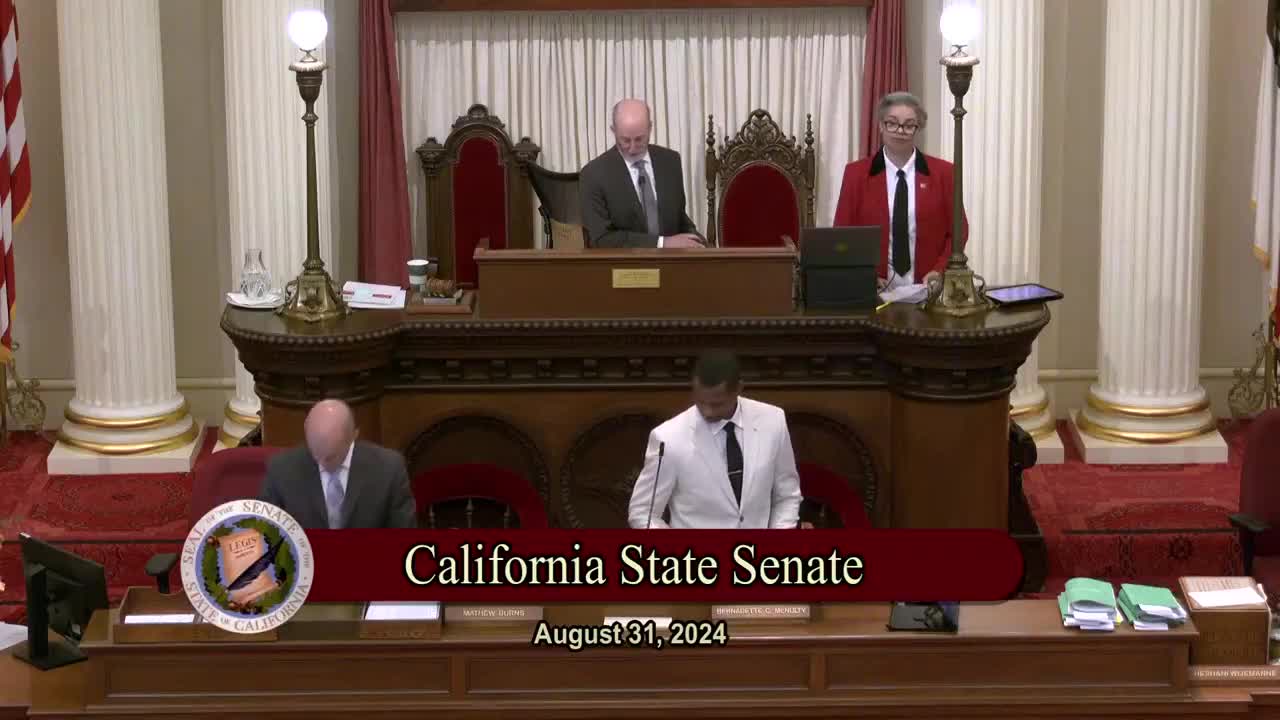 45SEC
Senate Floor
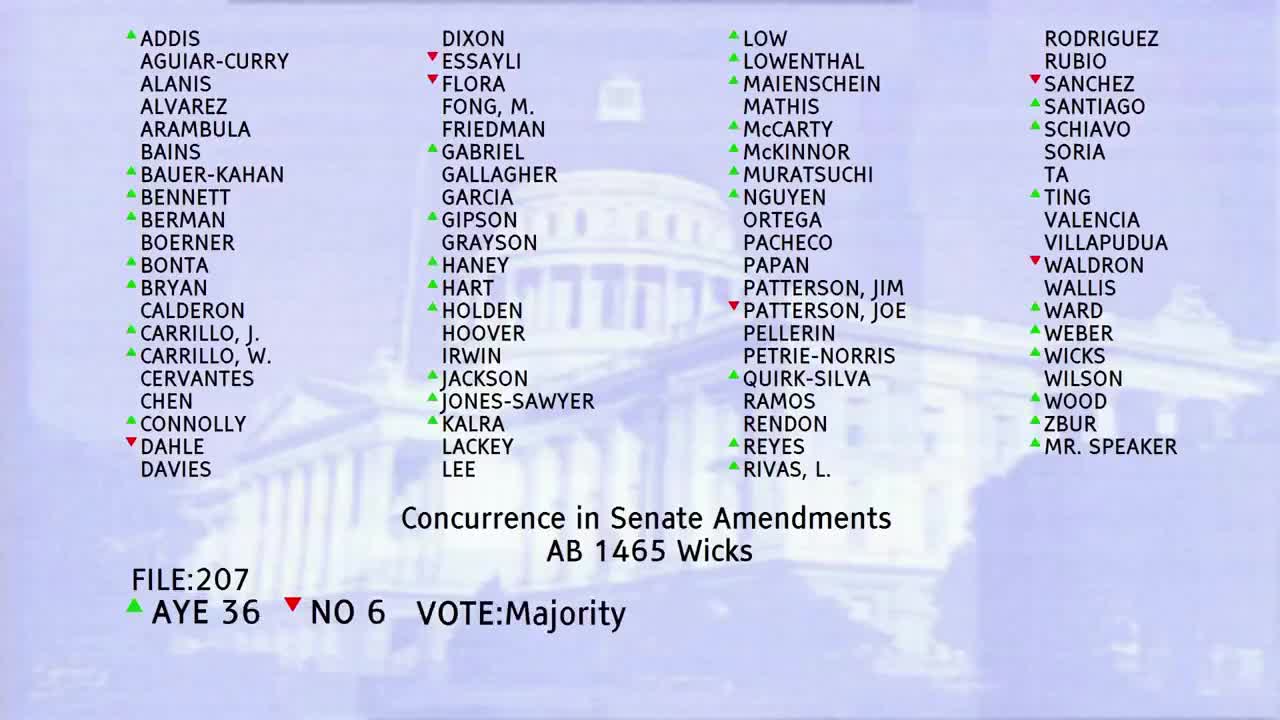 1MIN
Assembly Floor
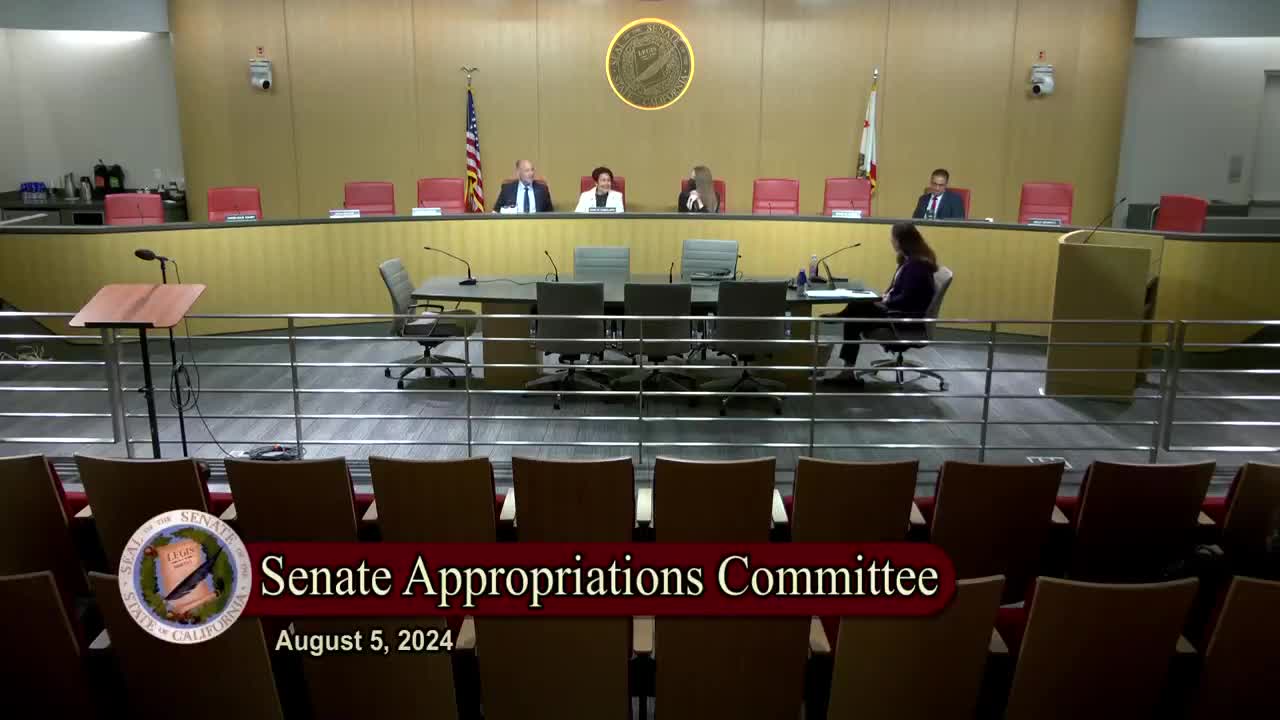 46SEC
Senate Standing Committee on Appropriations
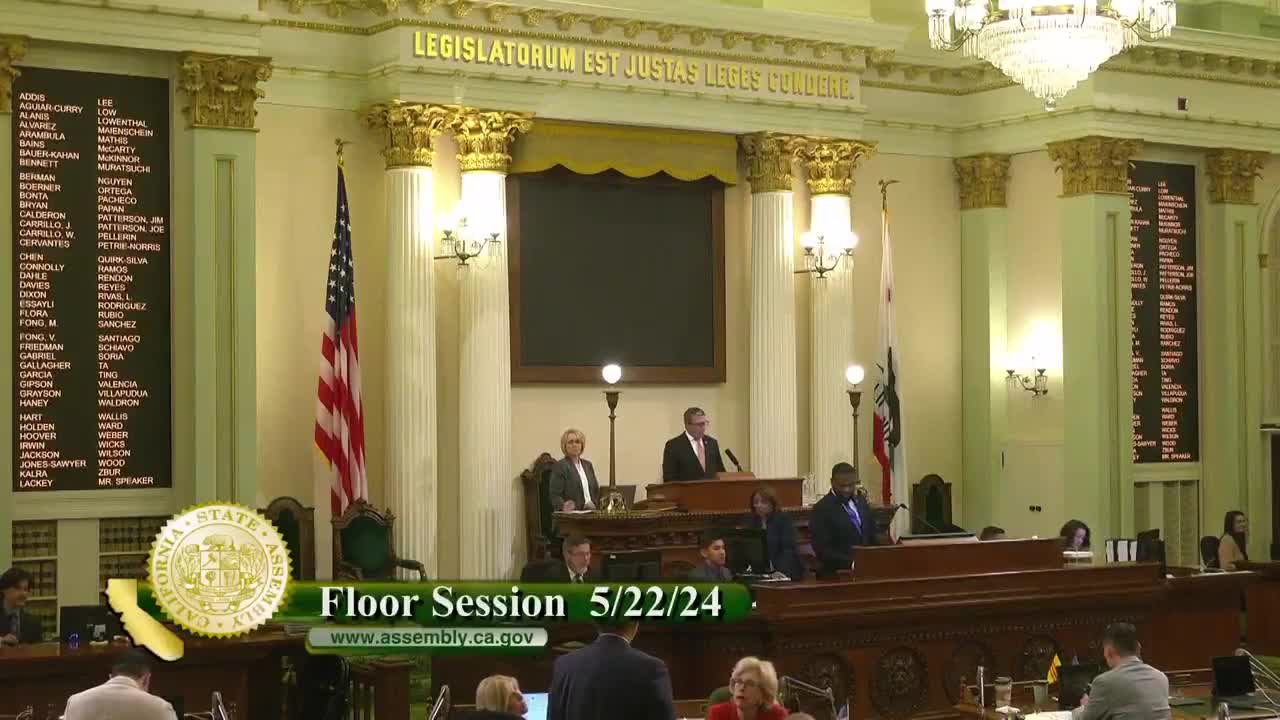 1MIN
Assembly Floor
Bill Author
Bill Co-Author(s):