AB 2799: Sustainable groundwater management: small farms: fees.
- Session Year: 2023-2024
- House: Assembly
- Latest Version Date: 2024-06-06
Current Status:
Failed
(2024-06-17: In committee: Set, first hearing. Hearing canceled at the request of author.)
Introduced
In Committee
First Chamber
In Committee
Second Chamber
Enacted
Existing law, the Sustainable Groundwater Management Act, requires all groundwater basins designated as high- or medium-priority basins by the Department of Water Resources to be managed under a groundwater sustainability plan or coordinated groundwater plans, except as specified. Existing law authorizes any local agency or combination of local agencies overlying a groundwater basin to decide to become a groundwater sustainability agency for that basin and imposes specified duties upon that agency or combination of agencies, as provided. Existing law authorizes a groundwater sustainability agency that adopts a groundwater sustainability plan to impose fees on the extraction of groundwater from the basin to fund costs of groundwater management, as specified.
This bill would require a groundwater sustainability agency to consider the efforts of small farms, as defined, that recharge groundwater into the basin upon which their property is located when imposing or increasing fees.
Existing law, the Sustainable Groundwater Management Act, requires all groundwater basins designated as high- or medium-priority basins by the Department of Water Resources to be managed under a groundwater sustainability plan or coordinated groundwater plans, except as specified. Existing law requires all relevant state agencies, as described, to consider the policies of the act, and any groundwater sustainability plans adopted pursuant to the act, when revising or adopting policies, regulations, or criteria, or when issuing orders or determinations, where pertinent. Existing law authorizes any local agency or combination of local agencies overlying a groundwater basin to decide to become a groundwater sustainability agency for that basin and imposes specified duties upon that agency or combination of agencies, as provided. Existing law authorizes a groundwater sustainability agency that adopts a groundwater sustainability plan to impose fees on the extraction of groundwater from the basin to fund costs of groundwater management, as specified.
This bill would make a nonsubstantive change to the latter requirement.This bill would require a groundwater sustainability agency to consider the efforts of small farms, as defined, that recharge groundwater into the basin upon which their property is located when imposing or increasing fees.
Existing law, the Sustainable Groundwater Management Act, requires all groundwater basins designated as high- or medium-priority basins by the Department of Water Resources to be managed under a groundwater sustainability plan or coordinated groundwater plans, except as specified. Existing law requires all relevant state agencies, as described, to consider the policies of the act, and any groundwater sustainability plans adopted pursuant to the act, when revising or adopting policies, regulations, or criteria, or when issuing orders or determinations, where pertinent.
This bill would make a nonsubstantive change to the latter requirement.
(a)For purposes of this section, small farm means a farm with a gross cash farm income of two hundred fifty thousand dollars ($250,000) or less.
(b)A groundwater sustainability agency shall consider the efforts of small farms that recharge groundwater into the basin upon which their property is located when either imposing or increasing fees pursuant to Section 10730 or 10730.2.
(a)For purposes of this section, small farm means a farm with a gross cash farm income of two hundred fifty thousand dollars ($250,000) or less.
(b)A groundwater sustainability agency shall consider the efforts of small farms that recharge groundwater into the basin upon which their property is located when imposing or increasing fees pursuant to Section 10730 or 10730.2.
SECTION 1.Section 10720.9 of the Water Code is amended to read:10720.9.All relevant state agencies, including, but not limited to, the board, the regional water quality control boards, the department, and the Department of Fish and Wildlife, shall consider the policies of this part, and any groundwater sustainability plans adopted pursuant to this part, when revising or adopting policies, regulations, or criteria, or when issuing orders or determinations, when pertinent. REVISIONS: HeadingLine 2.All relevant state agencies, including, but not limited to, the board, the regional water quality control boards, the department, and the Department of Fish and Wildlife, shall consider the policies of this part, and any groundwater sustainability plans adopted pursuant to this part, when revising or adopting policies, regulations, or criteria, or when issuing orders or determinations, where when pertinent.
|
Date
|
Status
|
|---|---|
| Jun 17, 2024 | In committee: Set, first hearing. Hearing canceled at the request of author. |
| Jun 12, 2024 | Re-referred to Com. on N.R. & W. |
| Jun 6, 2024 | From committee chair, with author's amendments: Amend, and re-refer to committee. Read second time, amended, and re-referred to Com. on RLS. |
| May 29, 2024 | Referred to Com. on RLS. |
| May 22, 2024 | In Senate. Read first time. To Com. on RLS. for assignment. |
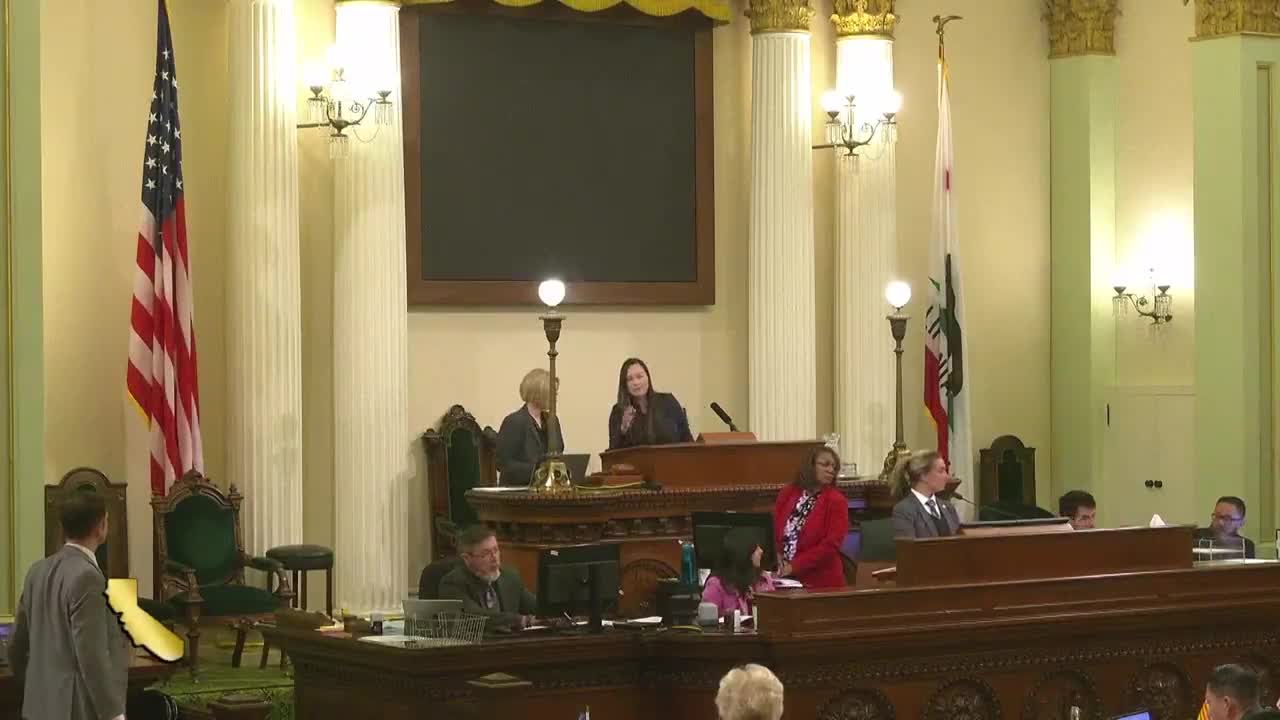
| May 21, 2024 | Read third time. Passed. Ordered to the Senate. (Ayes 70. Noes 0. Page 5356.) |
| Apr 29, 2024 | Read second time. Ordered to third reading. |
| Apr 25, 2024 | Coauthors revised. |
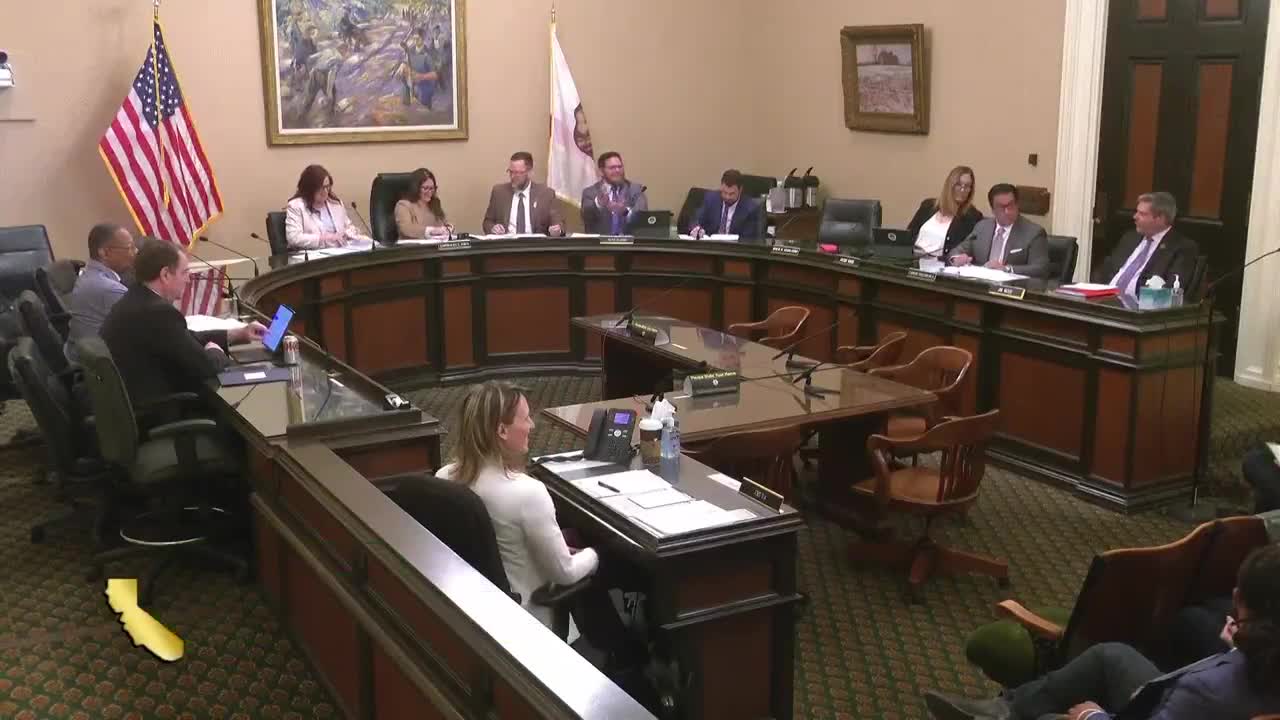
| Apr 25, 2024 | From committee: Do pass. (Ayes 9. Noes 0.) (April 24). |
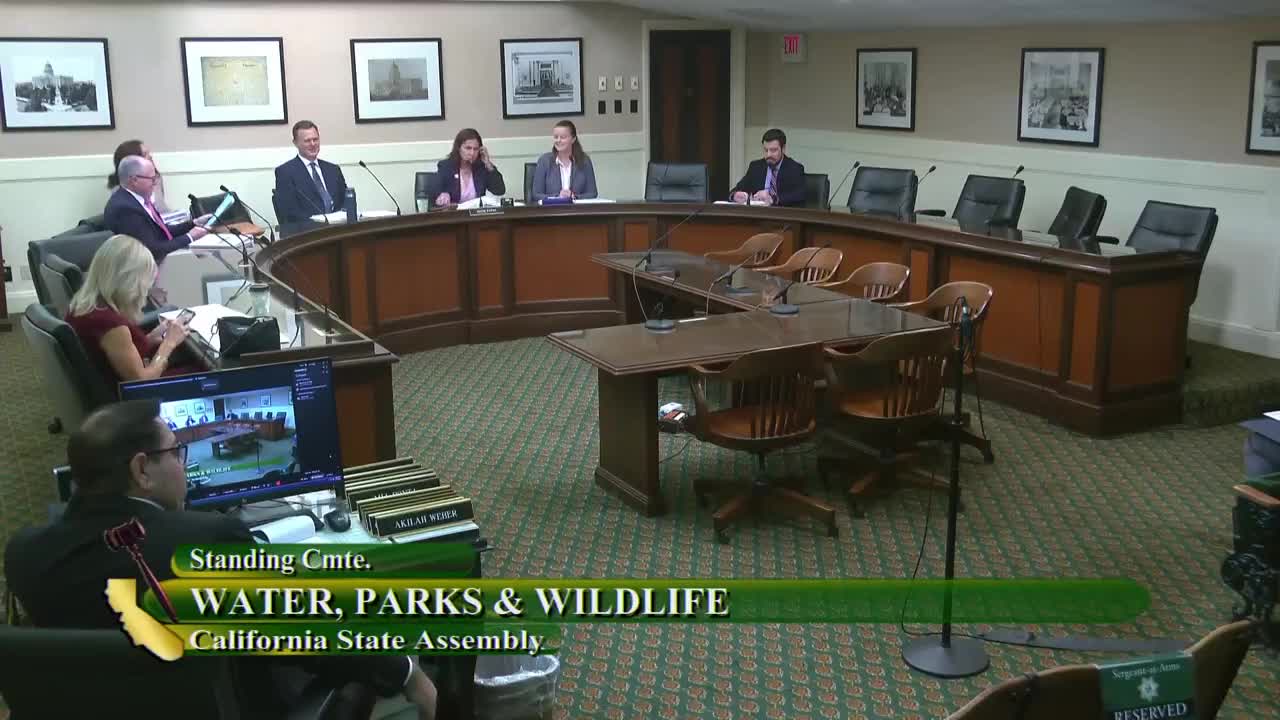
| Apr 16, 2024 | From committee: Do pass and re-refer to Com. on AGRI. (Ayes 15. Noes 0.) (April 16). Re-referred to Com. on AGRI. |
| Apr 1, 2024 | Re-referred to Com. on W., P., & W. |
| Mar 21, 2024 | From committee chair, with author's amendments: Amend, and re-refer to Com. on W., P., & W. Read second time and amended. |
| Mar 21, 2024 | Referred to Coms. on W., P., & W. and AGRI. |
| Feb 16, 2024 | From printer. May be heard in committee March 17. |
| Feb 15, 2024 | Read first time. To print. |
|
Date
|
Description
|
Location
|
Votes
|
|
|---|---|---|---|---|
| May 21, 2024 | AB 2799 Vince Fong Assembly Third Reading | Assembly Floor |
Passed |
|
| Apr 24, 2024 | Do pass. | Assembly Standing Committee on Agriculture |
Passed |
|
| Apr 16, 2024 | Do pass and be re-referred to the Committee on [Agriculture] | Assembly Standing Committee on Water, Parks, and Wildlife |
Passed |
This list shows positions taken on this bill by organizations on the date displayed, which is linked to the original source.
Positions by individuals are not included.
ASSEMBLY THIRD READING
ATR Bill Id:AB 2799
Author:(Vince Fong)
As Amended Ver:March 21, 2024
Majority vote
SUMMARY
Requires groundwater sustainability agencies (GSA) to consider the efforts of small farms to recharge groundwater when assessing fees on pumpers.
Major Provisions
- Requires a GSA to consider the efforts of small farms to recharge groundwater when assessing fees on pumpers.
- Defines "small farm" as a farm with a gross income of $250,000 or less.
COMMENTS
Passed in 2014, the Sustainable Groundwater Management Act (SGMA) provides a comprehensive framework to manage groundwater resources in overdrafted groundwater basins (i.e., those basins deemed high- or medium-priority by DWR). To comply with SGMA, local agencies in overdrafted basins had to form a GSA by 2017 and develop GSPs by 2020 or 2022 that will lead to sustainable groundwater management over 20 years. SGMA defines sustainable groundwater management as the avoidance of "undesirable results." SGMA's explicit intent is to keep management of groundwater resources at the local level while allowing for state intervention if local agencies are unsuccessful or get off track in meeting their sustainability goals. SGMA also intends for GSAs to have flexibility to address conditions unique to their particular basin and states that it does not alter groundwater rights.
Each GSA will have to determine how to finance the groundwater sustainability program outlined in their respective GSPs. SGMA grants GSAs new and specific fee authorities for this purpose. This authority is subject to other requirements in the California Constitution and law (e.g., Proposition 218). According to guidance by DWR, four common funding mechanisms that are available to GSAs are: (1) regulatory fee; (2) property related fee; (3) benefit assessment; and (4) special taxes. Each of these mechanisms has different requirements for their adoption and collection. These requirements may include documentation of the cost of the service for which a fee will be assessed (e.g., "fee study" or "engineer's report"), public notice and hearing to allow for input on a proposed fee, and approval by a simple majority or two-third's majority at an election on the proposed fee. See Table 1 for a brief overview.
Table 1. Comparison of SGMA Implementation Funding Options.
Funding Mechanism. | Regulatory Mechanism | Ballot Required | Approval | Collection | Public Outreach Requirements |
Regulatory Fee | Proposition 26 | No | Board Approval | Direct or County Tax Roll | Public Meeting Notice |
Property Fee | Proposition 218 | No | No Majority Protest and Board Approval | Direct or County Tax Roll | Mailed Notice to impacted customers, Public Hearing |
Benefit Assessment | Proposition 218 | Yes | No Majority Protest and Board Approval | County Tax Roll | Mailed Notice to impacted customers, Public Hearing |
Special Tax | California Government Code | Yes | Two-thirds approval from electorate | County Tax Roll | Mailed Notice to impacted customers, Public Hearing |
Source: Resource Guide: Funding SGMA Implementation by DWR.
This bill will most likely result in GSAs needing to consider additional factors when documenting the cost of the service for which a fee may be assessed.
According to the Author
The author notes that a number of farmers voluntarily recharged groundwater during last year's wet winter. These efforts benefitted the whole industry and some communities threatened by flooding; however, the author maintains "these farmers received no credit towards their water use bills for this voluntary groundwater recharge and flood management. The author argues this bill "recognizes the commendable efforts of farmers to voluntarily recharge the groundwater basins during extreme flood events, like those that took place during the winter and spring of 2023. [GSAs] should consider the beneficial effects of these actions when determining their fee assessments on small farms across the state."
Arguments in Support
None on file.
Arguments in Opposition
None on file.
FISCAL COMMENTS
None. This bill is keyed non-fiscal.
VOTES
ASM WATER, PARKS, AND WILDLIFE: 15-0-0
YES: Papan, Addis, Alanis, Alvarez, Bennett, Bonta, Gallagher, Davies, Garcia, Hart, Ta, Luz Rivas, Schiavo, Villapudua, Weber
ASM AGRICULTURE: 9-0-1
YES: Soria, Alanis, Aguiar-Curry, Connolly, Irwin, Jones-Sawyer, Sanchez, Villapudua, Wood
ABS, ABST OR NV: Ta
UPDATED
VERSION: March 21, 2024
CONSULTANT: Pablo Garza / W., P., & W. / (916) 319-2096 FN: 0002808
Date of Hearing: April 24, 2024
ASSEMBLY COMMITTEE ON AGRICULTURE
Esmeralda Soria, Chair
ABPCA Bill Id:AB 2799
Author:(Vince Fong) – As Amended Ver:March 21, 2024
SUBJECT: Sustainable groundwater management: small farms: fees
SUMMARY: Requires groundwater sustainability agencies (GSA) to consider the efforts of small farms to recharge groundwater when assessing fees on pumpers. Specifically, this bill:
1) Requires a GSA to consider the efforts of small farms to recharge groundwater when assessing fees on pumpers.
2) Defines “small farm” as a farm with a gross income of $250,000 or less.
EXISTING LAW:
- Provides, under the Sustainable Groundwater Management Act (SGMA), that local agencies must sustainably manage groundwater in high- or medium-priority basins by 2040. Defines sustainable management of groundwater as the avoidance of the following six “undesirable results:” (a) chronic lowering of groundwater levels; (b) reduction of groundwater storage; (c) seawater intrusion; (d) degraded water quality; (e) land subsidence; and (f) depletions of interconnected surface water (Water Code (WAT) 10720 et seq.).
- Requires a local agency or group of local agencies to form a GSA in all high- and medium-priority basins by January 1, 2017. A local agency may submit an alternative plan for review by the Department of Water Resources if it had been managing groundwater prior to the enactment of SGMA (WAT 10735.2(a)(1)).
- Authorizes a GSA to impose fees, including permit fees, fees on groundwater pumping, or fees on other regulated activity to fund the costs of a groundwater sustainability program (WAT 10730).
- Authorizes a GSA that adopts a groundwater sustainability plan (GSP) to impose fees on groundwater pumping to fund the costs of groundwater management. Provides that the adoption of such fees shall be adopted in accordance with Proposition 218 (WAT 10730.2).
FISCAL EFFECT: Unknown.
COMMENTS: SGMA provides a comprehensive framework to manage groundwater resources in overdrafted groundwater basins. To comply with SGMA, local agencies in overdrafted basins had to form a GSA by 2017 and develop GSPs by 2020 or 2022 that will lead to sustainable groundwater management over 20 years. SGMA defines sustainable groundwater management as the avoidance of undesirable results. SGMA’s explicit intent is to keep management of groundwater resources at the local level while allowing for state intervention if local agencies are unsuccessful or get off track in meeting their sustainability goals. SGMA also intends for GSAs to have flexibility to address conditions unique to their particular basin and states that it does not alter groundwater rights.
Each GSA will have to determine how to finance the groundwater sustainability program outlined in their respective GSPs. SGMA grants GSAs new and specific fee authorities for this purpose. This authority is subject to other requirements in the California Constitution and law specifically, Proposition 218). According to guidance by DWR, four common funding mechanisms that are available to GSAs are:
- Regulatory fee;
- Property related fee;
- Benefit assessment; and
- Special taxes.
Each of these mechanisms has different requirements for their adoption and collection. These requirements may include documentation of the cost of the service for which a fee will be assessed public notice and hearing to allow for input on a proposed fee, and approval by a simple majority or two-third’s majority at an election on the proposed fee.
According to the author, a number of farmers voluntarily recharged groundwater during last year’s wet winter. These efforts benefitted the whole industry and some communities threatened by flooding; however, the author maintains these farmers received no credit towards their water use bills for this voluntary groundwater recharge and flood management. The author argues this bill recognizes the commendable efforts of farmers to voluntarily recharge the groundwater basins during extreme flood events, like those that took place during the winter and spring of 2023. GSAs should consider the beneficial effects of these actions when determining their fee assessments on small farms across the state.
Related/Prior Legislation:
AB 828 (Connolly) of the current legislative session exempts groundwater use by managed wetlands and small community water systems serving disadvantaged communities from specified authorities of GSAs (e.g., fees) to regulate groundwater pumping under SGMA. AB 828 is currently pending in the Senate.
AB 2874 (Beth Gaines), Chapter 139, Statutes of 2016, requires a GSA to notify the California Public Utilities Commission (PUC) before imposing or increasing a fee authorized by SGMA in a groundwater basin that includes a water corporation regulated by the PUC.
AB 939 (Salas), Chapter 667, Statutes of 2015, among other provisions, extends from 10 days to 20 days the review period during which data used for setting fees under SGMA is publicly available.
SB 13 (Pavley), Chapter 255, Statutes of 2015, among other provisions, clarifies that a local agency's powers to enforce fees and regulatory requirements are limited to that local agency's own boundaries.
REGISTERED SUPPORT / OPPOSITION:
Support
None on file.
Opposition
None on file.
Analysis Prepared by: Victor Francovich / AGRI. / (916) 319-2084
Date of Hearing: April 16, 2024
ASSEMBLY COMMITTEE ON WATER, PARKS, AND WILDLIFE
Diane Papan, Chair
ABPCA Bill Id:AB 2799 (
Author:Vince Fong) – As Amended Ver:March 21, 2024
SUBJECT: Sustainable groundwater management: small farms: fees
SUMMARY: Requires groundwater sustainability agencies (GSA) to consider the efforts of small farms to recharge groundwater when assessing fees on pumpers. Specifically, this bill:
- Requires a GSA to consider the efforts of small farms to recharge groundwater when assessing fees on pumpers.
- Defines “small farm” as a farm with a gross income of $250,000 or less.
EXISTING LAW:
- Provides, under the Sustainable Groundwater Management Act (SGMA), that local agencies must sustainably manage groundwater in high- or medium-priority basins by 2040. Defines sustainable management of groundwater as the avoidance of the following six “undesirable results:” (a) chronic lowering of groundwater levels; (b) reduction of groundwater storage; (c) seawater intrusion; (d) degraded water quality; (e) land subsidence; and (f) depletions of interconnected surface water (Water Code § 10720 et seq.).
- Requires a local agency or group of local agencies to form a GSA in all high- and medium-priority basins by January 1, 2017. A local agency may submit an alternative plan for review by the Department of Water Resources if it had been managing groundwater prior to the enactment of SGMA [Water Code § 10735.2(a)(1)].
- Authorizes a GSA to impose fees, including permit fees, fees on groundwater pumping, or fees on other regulated activity to fund the costs of a groundwater sustainability program (Water Code § 10730).
- Authorizes a GSA that adopts a groundwater sustainability plan (GSP) to impose fees on groundwater pumping to fund the costs of groundwater management. Provides such the adoption of such fees shall be adopted in accordance with Proposition 218 (Water Code § 10730.2).
FISCAL EFFECT: Unknown. This bill is keyed non-fiscal.
COMMENTS:
- Purpose of this bill. The author notes that a number of farmers voluntarily recharged groundwater during last year’s wet winter. These efforts benefitted the whole industry and some communities threatened by flooding; however, the author maintains “these farmers received no credit towards their water use bills for this voluntary groundwater recharge and flood management. The author argues this bill “recognizes the commendable efforts of farmers to voluntarily recharge the groundwater basins during extreme flood events, like those that took place during the winter and spring of 2023. [GSAs] should consider the beneficial effects of these actions when determining their fee assessments on small farms across the state.”
- Background. Passed in 2014, SGMA provides a comprehensive framework to manage groundwater resources in overdrafted groundwater basins (i.e., those basins deemed high- or medium-priority by DWR). To comply with SGMA, local agencies in overdrafted basins had to form a GSA by 2017 and develop GSPs by 2020 or 2022 that will lead to sustainable groundwater management over 20 years. SGMA defines sustainable groundwater management as the avoidance of “undesirable results” (see #1, above, under Existing Law). SGMA’s explicit intent is to keep management of groundwater resources at the local level while allowing for state intervention if local agencies are unsuccessful or get off track in meeting their sustainability goals. SGMA also intends for GSAs to have flexibility to address conditions unique to their particular basin and states that it does not alter groundwater rights.
Each GSA will have to determine how to finance the groundwater sustainability program outlined in their respective GSPs. SGMA grants GSAs new and specific fee authorities for this purpose. This authority is subject to other requirements in the California Constitution and law (e.g., Proposition 218). According to guidance by DWR, four common funding mechanisms that are available to GSAs are: (1) regulatory fee; (2) property related fee; (3) benefit assessment; and (4) special taxes. Each of these mechanisms has different requirements for their adoption and collection. These requirements may include documentation of the cost of the service for which a fee will be assessed (e.g., “fee study” or “engineer’s report”), public notice and hearing to allow for input on a proposed fee, and approval by a simple majority or two-third’s majority at an election on the proposed fee. See Table 1 for a brief overview.
Table 1. Comparison of SGMA Implementation Funding Options.
Funding Mechanism | Regulatory Mechanism | Ballot Required | Approval | Collection | Public Outreach Requirements |
Regulatory Fee | Proposition 26 | No | Board Approval | Direct or County Tax Roll | Public Meeting Notice |
Property Fee | Proposition 218 | No | No Majority Protest and Board Approval | Direct or County Tax Roll | Mailed Notice to impacted customers, Public Hearing |
Benefit Assessment | Proposition 218 | Yes | No Majority Protest and Board Approval | County Tax Roll | Mailed Notice to impacted customers, Public Hearing |
Special Tax | California Government Code | Yes | Two-thirds approval from electorate | County Tax Roll | Mailed Notice to impacted customers, Public Hearing |
Source: Resource Guide: Funding SGMA Implementation by DWR.
This bill will most likely result in GSAs needing to consider additional factors when documenting the cost of the service for which a fee may be assessed.
- Double-referral. This bill has also been referred to the Committee on Agriculture.
- Related legislation. AB 828 (Connolly) of the current legislative session exempts groundwater use by managed wetlands and small community water systems serving disadvantaged communities from specified authorities of GSAs (e.g., fees) to regulate groundwater pumping under SGMA. AB 828 is currently pending in the Senate.
AB 2874 (Beth Gaines), Chapter 139, Statutes of 2016, requires a GSA to notify the California Public Utilities Commission (PUC) before imposing or increasing a fee authorized by SGMA in a groundwater basin that includes a water corporation regulated by the PUC.
AB 939 (Salas), Chapter 667, Statutes of 2015, among other provisions, extends from 10 days to 20 days the review period during which data used for setting fees under SGMA is publicly available.
SB 13 (Pavley), Chapter 255, Statutes of 2015, among other provisions, clarifies that a local agency's powers to enforce fees and regulatory requirements are limited to that local agency's own boundaries.
REGISTERED SUPPORT / OPPOSITION:
Support
None on file
Opposition
None on file
Analysis Prepared by: Pablo Garza / W., P., & W. / (916) 319-2096
Discussed in Hearing
 1MIN
Assembly Floor
 3MIN
Assembly Standing Committee on Agriculture
 1MIN
Assembly Standing Committee on Water, Parks, and Wildlife


Bill Co-Author(s):