AB 2878: Statute of limitations: Pandemic Unemployment Assistance fraud.
- Session Year: 2023-2024
- House: Assembly
- Latest Version Date: 2024-03-18
Current Status:
Failed
(2024-05-16: In committee: Held under submission.)
Introduced
In Committee
First Chamber
In Committee
Second Chamber
Enacted
Existing law prescribes the time after the commission of a crime in which a criminal action is required to be commenced, referred to as a statute of limitations. Existing law provides that prosecution for unauthorized use of personal identifying information shall be commenced within 3 years after the commission of the offense. Existing law provides that prosecution for offenses, including grand theft and insurance fraud, shall be commenced within 4 years after discovery of the offense, or within 4 years after completion of the offense, whichever is later.
For offenses involving Pandemic Unemployment Assistance fraud through the Employment Development Department, this bill would extend the statute of limitations for each of the above-described prosecutions to 12 years.
Existing law defines the term code enforcement officer as a person who is not a peace officer, who has enforcement authority for health, safety, and welfare requirements, and who is authorized to issue citations or file formal complaints, as specified. Existing law requires each local jurisdiction that employs code enforcement officers to develop safety standards appropriate for the code enforcement officers employed in their jurisdiction. This bill would make a technical, nonsubstantive change to this provision.Existing law defines the term code enforcement officer as a person who is not a peace officer, who has enforcement authority for health, safety, and welfare requirements, and who is authorized to issue citations or file formal complaints, as specified. Existing law requires each local jurisdiction that employs code enforcement officers to develop safety standards appropriate for the code enforcement officers employed in their jurisdiction.
This bill would make a technical, nonsubstantive change to this provision.
(a)Except as provided in Sections 799 and 800, 800 and subdivision (b), prosecution for an offense punishable by imprisonment in the state prison or pursuant to subdivision (h) of Section 1170 shall be commenced within three years after commission of the offense.
(b)Prosecution for any offense described in Section 530.5 involving Pandemic Unemployment Assistance fraud through the Employment Development Department where the offender accessed state unemployment insurance funds between March 19, 2020, and December 31, 2022, shall be commenced within 12 years after commission of the offense.
SEC. 2.Section 801.5 of the Penal Code is amended to read:801.5.(a)Notwithstanding Section 801 or any other provision of law, and except as provided in subdivision (b), prosecution for any offense described in subdivision (c) of Section 803 shall be commenced within four years after discovery of the commission of the offense, or within four years after the completion of the offense, whichever is later.
(b)Prosecution for any offense described in subdivision (c) of Section 803 involving Pandemic Unemployment Assistance fraud through the Employment Development Department where the offender accessed state unemployment insurance funds between March 19, 2020, and December 31, 2022, shall be commenced within 12 years after discovery of the commission of the offense, or within 12 years after the completion of the offense, whichever is later.
SECTION 1.Section 829.7 of the Penal Code is amended to read:829.7.A local jurisdiction that employs code enforcement officers shall develop code enforcement officer safety standards appropriate for the code enforcement officers employed in their jurisdiction.Each A local jurisdiction that employs code enforcement officers shall develop code enforcement officer safety standards appropriate for the code enforcement officers employed in their jurisdiction.
|
Date
|
Status
|
|---|---|
| May 16, 2024 | In committee: Held under submission. |
| May 8, 2024 | In committee: Set, first hearing. Referred to APPR. suspense file. |
| Apr 24, 2024 | From committee: Do pass and re-refer to Com. on APPR. with recommendation: To Consent Calendar. (Ayes 8. Noes 0.) (April 23). Re-referred to Com. on APPR. |
| Mar 19, 2024 | Re-referred to Com. on PUB. S. |
| Mar 18, 2024 | From committee chair, with author's amendments: Amend, and re-refer to Com. on PUB. S. Read second time and amended. |
| Mar 18, 2024 | Referred to Com. on PUB. S. |
| Feb 16, 2024 | From printer. May be heard in committee March 17. |
| Feb 15, 2024 | Read first time. To print. |
|
Date
|
Description
|
Location
|
Votes
|
|
|---|---|---|---|---|
| Apr 23, 2024 | Do pass and be re-referred to the Committee on [Appropriations] with recommendation: To Consent Calendar | Assembly Standing Committee on Public Safety |
Passed |
This list shows positions taken on this bill by organizations on the date displayed, which is linked to the original source.
Positions by individuals are not included.
|
Organization
|
Position
|
Date
|
|---|---|---|
| California Chamber Of Commerce | ** Support | |
| California District Attorneys Association | ** Support |
Date of Hearing: May 8, 2024
ASSEMBLY COMMITTEE ON APPROPRIATIONS
Buffy Wicks, Chair
ABPCA Bill Id:AB 2878
Author:(Gabriel) – As Amended Ver:March 18, 2024
Policy Committee: | Public Safety | Vote: | 8 - 0 |
|
| ||
|
|
Urgency: No State Mandated Local Program: No Reimbursable: No
SUMMARY:
This bill extends, from three or four years to 12 years, the statute of limitations for offenses involving Pandemic Assistance fraud that occurred between March 19, 2020, and December 31, 2022.
FISCAL EFFECT:
- Costs (Trial Court Trust Fund, General Fund) to the courts to adjudicate cases brought under this bill that would otherwise have been barred by the current statute of limitations. Actual costs will depend on the number of cases filed statewide and the amount of court time needed to adjudicate them. It generally costs approximately $1,000 to operate a courtroom for one hour. If 10 new cases are brought and each requires two days of court time, the resulting cost would be approximately $160,000. Questions about the constitutionality of convictions obtained under this bill may lead to additional litigation. Although courts are not funded on the basis of workload, increased pressure on the Trial Court Trust Fund may create a need for increased funding for courts from the General Fund. The Governor’s 2024-25 budget proposes $83.1 million ongoing from the General Fund to backfill declining revenue to the Trial Court Trust Fund.
- Possible incarceration costs (local funds, General Fund) to the counties and the California Department of Corrections and Rehabilitation, if people are convicted of offenses for which prosecution would be barred by the existing statute of limitations. Actual incarceration costs will depend on the number of convictions, the length of each sentence, and whether each sentence must be served in county jail or state prison. The average annual cost to incarcerate one person in county jail is approximately $29,000. The Legislative Analyst’s Office (LAO) estimates the average annual cost to incarcerate one person in state prison is $133,000. Although county incarceration costs are generally not considered reimbursable state mandates pursuant to Proposition 30 (2012), overcrowding in county jails creates cost pressure on the General Fund because the state has historically granted new funding to counties to offset overcrowding resulting from 2011 public safety realignment.
According to the Legislative Analyst’s Office, the General Fund faces a structural deficit in the tens of billions of dollars over the next several fiscal years.
COMMENTS:
- Purpose. According to the author:
Extending the statute of limitations in cases related to pandemic-era EDD fraud will help ensure that we recapture the state funds that should be going to hardworking Californians in need. This bill, by extending the statute of limitations in the criminal cases most commonly used in response to EDD fraud, will support prosecutors who seek to hold those responsible for that miscarriage of justice.
- Background. A statute of limitations is a legal requirement that the prosecution of a criminal offense must be commenced within a set period of time after the offense occurred. These statutes help protect a defendant from facing a charge they can no longer effectively defend against due to the passage of time. Over time, physical evidence can get lost or degrade so that it cannot be tested, and witnesses may move, die, or forget what they saw. If criminal charges are filed many years after an offense occurred, it can be extremely difficult for a defendant to mount an effective legal defense, even if the defendant is, in fact, innocent. With some exceptions, existing law generally establishes a one-year statute of limitations for most misdemeanors and a three-year statute of limitations for felonies punishable by less than eight years in prison.
This bill extends the statute of limitations for certain offenses involving Pandemic Assistance fraud from three or four years to 12 years. Because this bill applies retroactively, it is likely unconstitutional. An ex post facto law is a law that imposes criminal liability or increases criminal punishment for offenses that occurred before the law was enacted. The Supreme Court has held a law that revives a case for which the statute of limitations has already expired violates the ex post clause. As summarized by the Assembly Committee on Public Safety:
This bill, if it were to be chaptered, would go into effect January 1, 2025. Thus, the statute of limitations for most of these cases, which under existing law range from one to four years, will have expired. As such, this bill unconstitutionally attempts to reset the clock and revive time-barred prosecutions. This bill will “produce the kind of retroactivity that the Constitution forbids.”
- Related Legislation. AB 2295 (Addis) prospectively eliminates the statute of limitations for certain sexual offenses where the victim was a minor and certain conditions are met. AB 2295 is pending in this committee.
AB 2984 (Gipson) prospectively eliminates the statute of limitations for fleeing the scene of an accident that caused death or permanent, serious injury. AB 2984 is pending in this committee.
SB 690 (Rubio) extends the statute of limitations for the crime of domestic violence from five years to 15 years. SB 690 is pending on this committee’s suspense file.
Analysis Prepared by: Annika Carlson / APPR. / (916) 319-2081
Date of Hearing: April 23, 2024
Counsel: Liah Burnley
ASSEMBLY COMMITTEE ON
Kevin McCarty, Chair
ABPCA Bill Id:
Author:() – As Ver:
SUMMARY:
Extends the statute of limitations for offenses involving Pandemic Unemployment Assistance fraud that occurred between March 19, 2020 and December 31, 2022, from three or four years, to 12 years.
EXISTING LAW:
- Prohibits states from passing ex post facto laws. (U.S. Const., art. I, § 10, cl. 1.)
- Provides that prosecution for an offense punishable by death or by imprisonment in the state prison for life or for life without the possibility of parole, or for the embezzlement of public money, may be commenced at any time. (Pen. Code, § 799.)
- Provides that the prosecution for an offense punishable by imprisonment in the state prison for eight years or more or by imprisonment in the county jail for eight years or more shall be commenced within six years after commission of the offense. (Pen. Code, § 800.)
- Provides that prosecution of a felony, except as specified, shall be commenced within three years after the commission of the offense. (Pen. Code, § 801.)
- Provides that prosecution of misdemeanor, except as specified, shall be commenced within one year after the commission of the offense. (Pen. Code, § 802.)
- Provides that prosecution for specified offenses, including grand theft, falsification of public records, welfare fraud, insurance fraud, which include a material element of fraud, shall be commenced within four years after discovery of the commission of the offense, or within four years after the completion of the offense, whichever is later. (Pen. Code, §§ 801.5, 803, subd. (c).)
- Makes it a crime to commit identity theft. This offense is a wobbler, punishable as a misdemeanor by a year in county jail or a felony punishable up to 16 months, 2 years, or three years in county jail. (Pen. Code, § 530.5.)
FISCAL EFFECT:
Unknown
COMMENTS:
- Author's Statement: According to the author, “Extending the statute of limitations in cases related to pandemic-era EDD fraud will help ensure that we recapture the state funds that should be going to hardworking Californians in need. This bill, by extending the statute of limitations in the criminal cases most commonly used in response to EDD fraud, will support prosecutors who seek to hold those responsible for that miscarriage of justice.”
- This Bill is Unconstitutional: This bill would apply retroactively only. This bill would extend the statute of limitations to offenses that occurred between March 19, 2020 and December 31, 2022. At the outset, a nonsensical unintended consequence of this bill is that it would create a disparate statute of limitations period for offences depending on the date that they were committed. For example, for an offense that occurred on January 1, 2023, the statute of limitations would expire January 1, 2027. For an offense that occurred one day earlier on December 31, 2022 however, the statute of limitations would not expire until December 31, 2034.
In addition, this bill is patently unconstitutional.
In Stogner v. California, (2003) 539 U.S. 607, the Supreme Court resolutely ruled that a law enacted after expiration of a previously applicable limitations period violates the Ex Post Facto Clause when it is applied to revive a previously time-barred prosecution. (Id. at pp. 610-611, 616.) An ex post facto law is a law that imposes criminal liability or increases criminal punishment retroactively. Ex post facto laws are not only outright prohibited by the United States Constitution, but they also violate all notions of fundamental fairness and result in a substantial deprivation of defendant’s due process rights. This Clause protects liberty by preventing governments from enacting statutes with “manifestly unjust and oppressive” retroactive effects. (Calder v. Bull (1978) 3 U.S. 386.) Extending a limitations period after the state has assured “a man that he has become safe from its pursuit . . . seems to most of us unfair and dishonest.” (Falter v. United States (1928) 23 F.2d 420, 426.) In such a case, the government has refused “to play by its own rules.” (Carmell v. Texas (2000) 529 U.S. 513, 533.) It deprives the defendant of the “fair warning,” that might have led the defendant to preserve exculpatory evidence. (Weaver v. Graham (1981) 450 U.S. 24, 28.) And, permitting such an extension, allowing legislatures to pick and choose when to act retroactively, risks both “arbitrary and potentially vindictive legislation,” and erosion of the separation of powers. (Ibid.)
This bill, if it were to be chaptered, would go into effect January 1, 2025. Thus, the statute of limitations for most of these cases, which under existing law range from one to four years, will have expired. As such, this bill unconstitutionally attempts to reset the clock and revive time-barred prosecutions. This bill will “produce the kind of retroactivity that the Constitution forbids.” (Stronger, supra, at 607.)
Further, the failure of a prosecution to be commenced within the applicable period of limitation is a complete defense to the charge. The statute of limitations is jurisdictional and may be raised as a defense at any time, before or after judgment. (People v. Morris (1988) 46 Cal.3d 1, 13.) The defense may only be waived under limited circumstances. (See Cowan v. Superior Court (1996) 14 Cal.4th 367.) The prosecution bears the burden of proving, by a preponderance of the evidence, that a charged offense was committed within the applicable period of limitations. (People v. Lopez (1997) 52 Cal.App.4th 233, 248.) The court is required to construe application of the statute of limitations strictly in favor of the defendants. (People v. Zamora (1976) 18 Cal.3d 538, 574; People v. Lee (2000) 82 Cal.App.4th 1352, 1357-1358.) This bill would strip some defendants of this jurisdictional defense, solely because the state has delayed filing charges.
- Statutes of Limitations Serve Crucial Purpose: The statute of limitations requires commencement of a prosecution within a certain period of time after the commission of a crime. A prosecution is initiated by filing an indictment or information, filing a complaint, certifying a case to superior court, or issuing an arrest or bench warrant. (Pen. Code, § 804.)
The statute of limitations serves several important purposes in a criminal prosecution, including staleness, prompt investigation, and repose. The statute of limitations protects persons accused of crime from having to face charges based on evidence that may be unreliable, and from losing access to the evidentiary means to defend against the accusation. With the passage of time, memory fades, witnesses die or otherwise become unavailable, and physical evidence becomes unobtainable or contaminated.
The statute of limitations also imposes a priority among crimes for investigation and prosecution. The deadline serves to motivate the police and to ensure against bureaucratic delays in investigating crimes.
Additionally, the statute of limitations reflects society's lack of desire to prosecute for crimes committed in the distant past. The interest in repose represents a societal evaluation of the time after which it is neither profitable nor desirable to commence a prosecution.
These principals are reflected in court decisions. The United States Supreme Court has stated that statutes of limitations are the primary guarantee against bringing overly stale criminal charges. (United States v. Ewell (1966) 383 U.S. 116, 122.) There is a measure of predictability provided by specifying a limit beyond which there is an irrebuttable presumption that a defendant's right to a fair trial would be prejudiced. Such laws reflect legislative assessments of relative interests of the state and the defendant in administering and receiving justice.
In Stogner v. California (2003) 539 U.S. 607, the United States Supreme Court underscored the basis for statutes of limitations: “Significantly, a statute of limitations reflects a legislative judgment that, after a certain time, no quantum of evidence is sufficient to convict. And that judgment typically rests, in large part, upon evidentiary concerns – for example, concern that the passage of time has eroded memories or made witnesses or other evidence unavailable.” (Id. at p. 615.)
The amount of time a prosecuting agency may charge an alleged defendant varies based on the crime. In general, the limitations period is related to the seriousness of the offense as reflected in the length of punishment established by the Legislature. (People v. Turner (2005) 134 Cal.App.4th 1591, 1594-1595; see, e.g., Pen. Code, §§ 799-805.) After a comprehensive review of criminal statutes of limitation in 1984, the Law Revision Commission recommended that the length of a “limitations statute should generally be based on the seriousness of the crime.” (17 Cal. Law Revision Com. Rep. (1984) p. 313.) The Legislature overhauled the entire statutory scheme with this recommendation in mind. (People v. Turner, supra, 134 Cal.App.4th 1591.)
For most types of offenses, the statute of limitations begins to run on the day that the offense was actually committed. However, the statute of limitations period does not commence as to continuing offenses until the entire course of conduct is complete. (People v. Zamora, supra, 18 Cal.3d 538.) And in cases involving crimes such as fraud or embezzlement the statute of limitations may begin to run at the point that the offense is discovered. (See e.g. Pen. Code, § 803, subd. (c).)
It bears repeating, that as noted above, there is a strong public policy against extending the statute of limitations. Memories fade as time passes. Evidence that might have been gathered by the police is lost. Witnesses move or die. Fairness and due process demand prosecution be commenced in a reasonable time so the accused may be able to gather evidence to prove his or her innocence. - Pandemic Unemployment Assistance: Pandemic Unemployment Assistance was part of the federal assistance that helped unemployed Californians who were not usually eligible for regular unemployment insurance benefits. Pandemic Unemployment Assistance included up to 86 weeks of benefits, between February 2, 2020 and September 4, 2021.[1] According to the Employment Development Department, “During the COVID-19 pandemic, we experienced an unprecedented surge of fraud attempts, particularly in new, federal pandemic benefit programs, which lacked traditional safeguards in an effort to get benefits to workers who needed them.”[2] Since 2020, over 2,000 investigations have opened, hundreds of suspects have been arrested, and many have been criminally charged and convicted.[3] As of February 2024, $5,990,220,491 in unemployment funds have been seized or recovered.[4]
- Argument in Support: According to the California Chamber of Commerce, “AB 2878 will provide a critical opportunity for California to identify and pursue these fraudsters by allowing authorities the time necessary to locate, investigate, and potentially prosecute them.
“By way of background – the COVID-19 pandemic overwhelmed many institutional systems that, simply put, were not ready to address the unexpected crisis. Notable among them was California’s EDD, which was suddenly pushed to process an unprecedented number of claims for unemployment and for the newly-created federal benefits, such as the Pandemic Unemployment Assistance program (known as “PUA” benefits). Because of well-documented failures in EDD’s fraud-prevention systems, California paid out what was initially estimated at $20 billion in mistaken payments, but most recently was revised upward to $55 billion pursuant to the most recent California Auditor review. The scale of this fraud has created a new tidal wave of work for California’s enforcement authorities, as EDD staff, District Attorneys, and others attempt to sort through the vast troves of documents and information related to these billions of dollars of potential fraud.
“However, the present 3-year statute of limitations would act as a shield for may fraudsters because law enforcement resources simply cannot address all this fraud in that time period. And, while legal consequences are always important as a deterrent, they are also particularly important here because such legal actions are a key method to recover the incorrectly-distributed funds from fraudsters and re-pay both the federal government and California’s UI Fund.
“Without such recovery, California employers will be forced to bear the cost of this fraud because the employer community is paying increased taxes to re-fill the California UI Fund. In other words, all traditional unemployment insurance benefits which were lost due to fraud during the pandemic were, effectively, lost from California’s employers – as we will be required to replace those lost funds in the form of increased taxes.”
- Related Legislation:
- AB 2984 (Gipson) would allow a fleeing the scene of an incident to be prosecuted at any time. AB 2984 is pending in this Committee.
- AB 2295 (Addis), would allow the prosecution of specified sex offenses to be commenced at any time. AB 2295 is pending in this Committee.
- SB 690 (Rubio) would extends the statute of limitations for the crime of domestic violence from 5 years to 15 years. SB 690 is pending in Assembly Appropriations Committee.
- SB 1343 (Min) would toll the statute of limitation for specified offenses, including the willful or negligent cutting, destroying, mutilating, or removing of plant material growing upon state or county highway rights-of-way or the unlawful importation, transportation, possession, or release into this state of specified wild animals, until the offenses have been discovered or could have reasonably been discovered. SB 1343 is pending in Senate Public Safety Committee.
- AB 2984 (Gipson) would allow a fleeing the scene of an incident to be prosecuted at any time. AB 2984 is pending in this Committee.
- Prior Legislation:
- AB 2274 (Rubio), Chapter 587,Statutes of 2022, extends the statute of limitations for failing to report child abuse, as specified, to no later than 4 years after the commission of the offense.
- AB 1247 (Chau), Chapter 206, Statutes of 2021, extends the statute of computer-related felonies to be commenced within three years after discovery of the commission of the offense.
- SB 610 (Nguyen), Chapter 74, Statutes of 2017, extends the statute of limitations for the crime of concealing an accidental death to no more than four years after the concealment.
- SB 813 (Leyva), Chapter 777, Statutes of 2016, eliminated the statute of limitations for specified sex crimes.
- AB 2274 (Rubio), Chapter 587,Statutes of 2022, extends the statute of limitations for failing to report child abuse, as specified, to no later than 4 years after the commission of the offense.
REGISTERED SUPPORT / OPPOSITION:
Support
California Chamber of Commerce
California District Attorneys Association
Opposition
None Submitted
Analysis Prepared by:
Employment Development Department, Pandemic Unemployment Assistance. Available at: <https://edd.ca.gov/en/about_edd/coronavirus-2019/pandemic-unemployment-assistance/>. ↑
Employment Development Department, The EDD’s Response to Fraud. Available at: <https://edd.ca.gov/en/about_edd/fraud-response/>. ↑
Ibid. ↑
Ibid. ↑
Bill Author
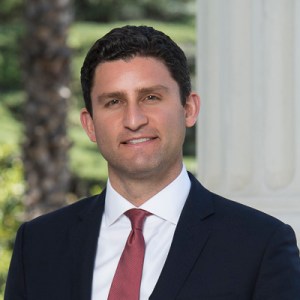
Bill Co-Author(s):