AB 289: Mental health services: representation.
- Session Year: 2023-2024
- House: Assembly
- Latest Version Date: 2023-10-08
Current Status:
Passed
(2023-10-08: Chaptered by Secretary of State - Chapter 518, Statutes of 2023.)
Introduced
In Committee
First Chamber
In Committee
Second Chamber
Enacted
What does this bill do?
This bill requires county mental health programs to include more diverse stakeholders when they write their three‑year plans, adding youth from historically marginalized communities, groups that work with underserved racially and ethnically diverse communities, and LGBTQ+ representatives. Counties must also show meaningful partnership with these stakeholders in policy, program planning, implementation, monitoring, quality improvement, evaluation, and budget decisions.
The summary is provided by generative AI which can make mistakes. For original language, please view the details in the table below.
Existing law, the Bronzan-McCorquodale Act, contains provisions governing the operation and financing of community mental health services in every county through locally administered and locally controlled community mental health programs. Existing law, the Mental Health Services Act, an initiative measure enacted by the voters as Proposition 63 in the November 2, 2004, statewide general election, establishes the Mental Health Services Fund to fund various county mental health programs. The act may be amended by the Legislature only by a 2/3 vote of both houses and only so long as the amendment is consistent with and furthers the intent of the act. The Legislature may clarify procedures and terms of the act by majority vote.
Existing law establishes the Mental Health Services Oversight and Accountability Commission and requires counties to prepare and submit a 3-year program and expenditure plan, and annual updates, as specified, to the commission and the State Department of Health Care Services. Existing law requires the plan to be developed with specified local stakeholders, along with other important interests.
This bill would require stakeholders to include sufficient participation of individuals representing diverse viewpoints, including representatives from youth from historically marginalized communities, representatives from organizations specializing in working with underserved racially and ethnically diverse communities, and representatives from LGBTQ+ communities. By requiring counties to consult with additional stakeholders, the bill would impose a state-mandated local program.
The California Constitution requires the state to reimburse local agencies and school districts for certain costs mandated by the state. Statutory provisions establish procedures for making that reimbursement.
This bill would provide that, if the Commission on State Mandates determines that the bill contains costs mandated by the state, reimbursement for those costs shall be made pursuant to the statutory provisions noted above.
Existing law, the Bronzan-McCorquodale Act, contains provisions governing the operation and financing of community mental health services in every county through locally administered and locally controlled community mental health programs. Existing law, the Mental Health Services Act, an initiative measure enacted by the voters as Proposition 63 in the November 2, 2004, statewide general election, establishes the Mental Health Services Fund to fund various county mental health programs. The act may be amended by the Legislature only by a 2/3 vote of both houses and only so long as the amendment is consistent with and furthers the intent of the act. The Legislature may clarify procedures and terms of the act by majority vote.
Existing law establishes the Mental Health Services Oversight and Accountability Commission and requires counties to prepare and submit a 3-year program and expenditure plan, and annual updates, as specified, to the commission and the State Department of Health Care Services. Existing law requires the plan to be developed with specified local stakeholders, along with other important interests.
This bill would require stakeholders to include sufficient participation of individuals representing diverse viewpoints, including representatives from youth from historically marginalized communities, representatives from organizations specializing in working with underserved racially and ethnically diverse communities, and representatives from LGBTQ+ communities. By requiring counties to consult with additional stakeholders, the bill would impose a state-mandated local program.
The California Constitution requires the state to reimburse local agencies and school districts for certain costs mandated by the state. Statutory provisions establish procedures for making that reimbursement.
This bill would provide that, if the Commission on State Mandates determines that the bill contains costs mandated by the state, reimbursement for those costs shall be made pursuant to the statutory provisions noted above.
Existing law, the Bronzan-McCorquodale Act, contains provisions governing the operation and financing of community mental health services in every county through locally administered and locally controlled community mental health programs. Existing law, the Mental Health Services Act, an initiative measure enacted by the voters as Proposition 63 in the November 2, 2004, statewide general election, establishes the Mental Health Services Fund to fund various county mental health programs. The act may be amended by the Legislature only by a 2/3 vote of both houses and only so long as the amendment is consistent with and furthers the intent of the act. The Legislature may clarify procedures and terms of the act by majority vote.
Existing law establishes the Mental Health Services Oversight and Accountability Commission and requires counties to prepare and submit a 3-year program and expenditure plan, and annual updates, as specified, to the commission and the State Department of Health Care Services. Existing law requires the plan to be developed with specified local stakeholders, along with other important interests.
This bill would include youths or youth mental health organizations as a specified local stakeholder for purposes of a county developing a 3-year plan and annual updates. The bill would also remove the requirement that stakeholders include other important interests, and instead require stakeholders to include sufficient participation of individuals representing diverse viewpoints, including representatives from youth from historically marginalized communities, representatives from organizations specializing in working with underserved racially and ethnically diverse communities, and representatives from LBGTQ+ LGBTQ+ communities. By requiring counties to consult with an additional stakeholder, additional stakeholders, the bill would impose a state-mandated local program.
The California Constitution requires the state to reimburse local agencies and school districts for certain costs mandated by the state. Statutory provisions establish procedures for making that reimbursement.
This bill would provide that, if the Commission on State Mandates determines that the bill contains costs mandated by the state, reimbursement for those costs shall be made pursuant to the statutory provisions noted above.
Existing law, the Bronzan-McCorquodale Act, contains provisions governing the operation and financing of community mental health services in every county through locally administered and locally controlled community mental health programs. Existing law, the Mental Health Services Act, an initiative measure enacted by the voters as Proposition 63 in the November 2, 2004, statewide general election, establishes the Mental Health Services Fund to fund various county mental health programs. The act may be amended by the Legislature only by a 2/3 vote of both houses and only so long as the amendment is consistent with and furthers the intent of the act. The Legislature may clarify procedures and terms of the act by majority vote.
Existing law establishes the Mental Health Services Oversight and Accountability Commission and requires counties to prepare and submit a 3-year program and expenditure plan, and annual updates, as specified, to the commission and the State Department of Health Care Services. Existing law requires the plan to be developed with specified local stakeholders. stakeholders, along with other important interests.
This bill would include youths or youth mental health organizations as a specified local stakeholder for purposes of a county developing a 3-year plan and annual updates. The bill would also remove the requirement that stakeholders include other important interests, and instead require stakeholders to include sufficient participation of individuals representing diverse viewpoints, including representatives from youth from historically marginalized communities, representatives from organizations specializing in working with underserved racially and ethnically diverse communities, and representatives from LBGTQ+ communities. By requiring counties to consult with an additional stakeholder, the bill would impose a state-mandated local program.
The California Constitution requires the state to reimburse local agencies and school districts for certain costs mandated by the state. Statutory provisions establish procedures for making that reimbursement.
This bill would provide that, if the Commission on State Mandates determines that the bill contains costs mandated by the state, reimbursement for those costs shall be made pursuant to the statutory provisions noted above.
Existing law, the Bronzan-McCorquodale Act, contains provisions governing the operation and financing of community mental health services in every county through locally administered and locally controlled community mental health programs. Existing law, the Mental Health Services Act, an initiative measure enacted by the voters as Proposition 63 in the November 2, 2004, statewide general election, establishes the Mental Health Services Fund to fund various county mental health programs. The act may be amended by the Legislature only by a 2/3 vote of both houses and only so long as the amendment is consistent with and furthers the intent of the act. The Legislature may clarify procedures and terms of the act by majority vote.
Existing law establishes the Mental Health Services Oversight and Accountability Commission and requires counties to prepare and submit a 3-year program and expenditure plan, and annual updates, as specified, to the commission and the State Department of Health Care Services. Existing law requires the plan to be developed with specified local stakeholders.
This bill would include youths or youth mental health organizations as a specified local stakeholder for purposes of a county developing a 3-year plan and annual updates. By requiring counties to consult with an additional stakeholder, the bill would impose a state-mandated local program.
The California Constitution requires the state to reimburse local agencies and school districts for certain costs mandated by the state. Statutory provisions establish procedures for making that reimbursement.
This bill would provide that, if the Commission on State Mandates determines that the bill contains costs mandated by the state, reimbursement for those costs shall be made pursuant to the statutory provisions noted above.
(a)Each three-year program and expenditure plan and update shall be developed with local stakeholders, including adults and seniors with severe mental illness, families of children, adults, and seniors with severe mental illness, youths or youth mental health organizations, providers of services, law enforcement agencies, education, social services agencies, veterans, representatives from veterans organizations, providers of alcohol and drug services, health care organizations, and other important interests. Additionally, stakeholders shall include sufficient participation of individuals representing diverse viewpoints, including, but not limited to, representatives from youth from historically marginalized communities, representatives from organizations specializing in working with underserved racially and ethnically diverse communities, and representatives from LGBTQ+ communities. Counties shall demonstrate a partnership with constituents and stakeholders throughout the process that includes meaningful stakeholder involvement on mental health policy, program planning, and implementation, monitoring, quality improvement, evaluation, and budget allocations. A draft plan and update shall be prepared and circulated for review and comment for at least 30 days to representatives of stakeholder interests and any interested party who has requested a copy of the draft plans.
(b)The mental health board established pursuant to Section 5604 shall conduct a public hearing on the draft three-year program and expenditure plan and annual updates at the close of the 30-day comment period required by subdivision (a). Each adopted three-year program and expenditure plan and update shall include any substantive written recommendations for revisions. The adopted three-year program and expenditure plan or update shall summarize and analyze the recommended revisions. The mental health board shall review the adopted plan or update and make recommendations to the local mental health agency or local behavioral health agency, as applicable, for revisions. The local mental health agency or local behavioral health agency, as applicable, shall provide an annual report of written explanations to the local governing body and the State Department of Health Care Services for any substantive recommendations made by the local mental health board that are not included in the final plan or update.
(c)The plans shall include reports on the achievement of performance outcomes for services pursuant to Part 3 (commencing with Section 5800), Part 3.6 (commencing with Section 5840), and Part 4 (commencing with Section 5850) funded by the Mental Health Services Fund and established jointly by the State Department of Health Care Services and the Mental Health Services Oversight and Accountability Commission, in collaboration with the County Behavioral Health Directors Association of California.
(d)Mental health services provided pursuant to Part 3 (commencing with Section 5800) and Part 4 (commencing with Section 5850) shall be included in the review of program performance by the California Behavioral Health Planning Council required by paragraph (2) of subdivision (c) of Section 5772 and in the local mental health boards review and comment on the performance outcome data required by paragraph (7) of subdivision (a) of Section 5604.2.
(e)The department shall annually post on its internet website a summary of the performance outcomes reports submitted by counties if clearly and separately identified by counties as the achievement of performance outcomes pursuant to subdivision (c).
(f)For purposes of this section, substantive recommendations made by the local mental health board means any recommendation that is brought before the board and approved by a majority vote of the membership present at a public hearing of the local mental health board that has established its quorum.
SEC. 2.If the Commission on State Mandates determines that this act contains costs mandated by the state, reimbursement to local agencies and school districts for those costs shall be made pursuant to Part 7 (commencing with Section 17500) of Division 4 of Title 2 of the Government Code.
(a)Each three-year program and expenditure plan and update shall be developed with local stakeholders, including adults and seniors with severe mental illness, families of children, adults, and seniors with severe mental illness, youths or youth mental health organizations, providers of services, law enforcement agencies, education, social services agencies, veterans, representatives from veterans organizations, providers of alcohol and drug services, health care organizations, and other important interests. Additionally, stakeholders shall include sufficient participation of individuals representing diverse viewpoints, including, but not limited to, representatives from youth from historically marginalized communities, representatives from organizations specializing in working with underserved racially and ethnically diverse communities, and representatives from LGBTQ+ communities. Counties shall demonstrate a partnership with constituents and stakeholders throughout the process that includes meaningful stakeholder involvement on mental health policy, program planning, and implementation, monitoring, quality improvement, evaluation, and budget allocations. A draft plan and update shall be prepared and circulated for review and comment for at least 30 days to representatives of stakeholder interests and any interested party who has requested a copy of the draft plans.
(b)The mental health board established pursuant to Section 5604 shall conduct a public hearing on the draft three-year program and expenditure plan and annual updates at the close of the 30-day comment period required by subdivision (a). Each adopted three-year program and expenditure plan and update shall include any substantive written recommendations for revisions. The adopted three-year program and expenditure plan or update shall summarize and analyze the recommended revisions. The mental health board shall review the adopted plan or update and make recommendations to the local mental health agency or local behavioral health agency, as applicable, for revisions. The local mental health agency or local behavioral health agency, as applicable, shall provide an annual report of written explanations to the local governing body and the State Department of Health Care Services for any substantive recommendations made by the local mental health board that are not included in the final plan or update.
(c)The plans shall include reports on the achievement of performance outcomes for services pursuant to Part 3 (commencing with Section 5800), Part 3.6 (commencing with Section 5840), and Part 4 (commencing with Section 5850) funded by the Mental Health Services Fund and established jointly by the State Department of Health Care Services and the Mental Health Services Oversight and Accountability Commission, in collaboration with the County Behavioral Health Directors Association of California.
(d)Mental health services provided pursuant to Part 3 (commencing with Section 5800) and Part 4 (commencing with Section 5850) shall be included in the review of program performance by the California Behavioral Health Planning Council required by paragraph (2) of subdivision (c) of Section 5772 and in the local mental health boards review and comment on the performance outcome data required by paragraph (7) of subdivision (a) of Section 5604.2.
(e)The department shall annually post on its internet website a summary of the performance outcomes reports submitted by counties if clearly and separately identified by counties as the achievement of performance outcomes pursuant to subdivision (c).
(f)For purposes of this section, substantive recommendations made by the local mental health board means any recommendation that is brought before the board and approved by a majority vote of the membership present at a public hearing of the local mental health board that has established its quorum.
SEC. 2.If the Commission on State Mandates determines that this act contains costs mandated by the state, reimbursement to local agencies and school districts for those costs shall be made pursuant to Part 7 (commencing with Section 17500) of Division 4 of Title 2 of the Government Code.
(a)Each three-year program and expenditure plan and update shall be developed with local stakeholders, including adults and seniors with severe mental illness, families of children, adults, and seniors with severe mental illness, youths or youth mental health organizations, providers of services, law enforcement agencies, education, social services agencies, veterans, representatives from veterans organizations, providers of alcohol and drug services, and health care organizations. health care organizations, and other important interests. Additionally, stakeholders shall include sufficient participation of individuals representing diverse viewpoints, including, but not limited to, representatives from youth from historically marginalized communities, representatives from organizations specializing in working with underserved racially and ethnically diverse communities, and representatives from LBGTQ+ LGBTQ+ communities. Counties shall demonstrate a partnership with constituents and stakeholders throughout the process that includes meaningful stakeholder involvement on mental health policy, program planning, and implementation, monitoring, quality improvement, evaluation, and budget allocations. A draft plan and update shall be prepared and circulated for review and comment for at least 30 days to representatives of stakeholder interests and any interested party who has requested a copy of the draft plans.
(b)The mental health board established pursuant to Section 5604 shall conduct a public hearing on the draft three-year program and expenditure plan and annual updates at the close of the 30-day comment period required by subdivision (a). Each adopted three-year program and expenditure plan and update shall include any substantive written recommendations for revisions. The adopted three-year program and expenditure plan or update shall summarize and analyze the recommended revisions. The mental health board shall review the adopted plan or update and make recommendations to the local mental health agency or local behavioral health agency, as applicable, for revisions. The local mental health agency or local behavioral health agency, as applicable, shall provide an annual report of written explanations to the local governing body and the State Department of Health Care Services for any substantive recommendations made by the local mental health board that are not included in the final plan or update.
(c)The plans shall include reports on the achievement of performance outcomes for services pursuant to Part 3 (commencing with Section 5800), Part 3.6 (commencing with Section 5840), and Part 4 (commencing with Section 5850) funded by the Mental Health Services Fund and established jointly by the State Department of Health Care Services and the Mental Health Services Oversight and Accountability Commission, in collaboration with the County Behavioral Health Directors Association of California.
(d)Mental health services provided pursuant to Part 3 (commencing with Section 5800) and Part 4 (commencing with Section 5850) shall be included in the review of program performance by the California Behavioral Health Planning Council required by paragraph (2) of subdivision (c) of Section 5772 and in the local mental health boards review and comment on the performance outcome data required by paragraph (7) of subdivision (a) of Section 5604.2.
(e)The department shall annually post on its internet website a summary of the performance outcomes reports submitted by counties if clearly and separately identified by counties as the achievement of performance outcomes pursuant to subdivision (c).
(f)For purposes of this section, substantive recommendations made by the local mental health board means any recommendation that is brought before the board and approved by a majority vote of the membership present at a public hearing of the local mental health board that has established its quorum.
SEC. 2.If the Commission on State Mandates determines that this act contains costs mandated by the state, reimbursement to local agencies and school districts for those costs shall be made pursuant to Part 7 (commencing with Section 17500) of Division 4 of Title 2 of the Government Code.
(a)Each three-year program and expenditure plan and update shall be developed with local stakeholders, including adults and seniors with severe mental illness, families of children, adults, and seniors with severe mental illness, youths or youth mental health organizations, providers of services, law enforcement agencies, education, social services agencies, veterans, representatives from veterans organizations, providers of alcohol and drug services, health care organizations, and other important interests. and health care organizations. Additionally, stakeholders shall include sufficient participation of individuals representing diverse viewpoints, including, but not limited to, representatives from youth from historically marginalized communities, representatives from organizations specializing in working with underserved racially and ethnically diverse communities, and representatives from LBGTQ+ communities. Counties shall demonstrate a partnership with constituents and stakeholders throughout the process that includes meaningful stakeholder involvement on mental health policy, program planning, and implementation, monitoring, quality improvement, evaluation, and budget allocations. A draft plan and update shall be prepared and circulated for review and comment for at least 30 days to representatives of stakeholder interests and any interested party who has requested a copy of the draft plans.
(b)The mental health board established pursuant to Section 5604 shall conduct a public hearing on the draft three-year program and expenditure plan and annual updates at the close of the 30-day comment period required by subdivision (a). Each adopted three-year program and expenditure plan and update shall include any substantive written recommendations for revisions. The adopted three-year program and expenditure plan or update shall summarize and analyze the recommended revisions. The mental health board shall review the adopted plan or update and make recommendations to the local mental health agency or local behavioral health agency, as applicable, for revisions. The local mental health agency or local behavioral health agency, as applicable, shall provide an annual report of written explanations to the local governing body and the State Department of Health Care Services for any substantive recommendations made by the local mental health board that are not included in the final plan or update.
(c)The plans shall include reports on the achievement of performance outcomes for services pursuant to Part 3 (commencing with Section 5800), Part 3.6 (commencing with Section 5840), and Part 4 (commencing with Section 5850) funded by the Mental Health Services Fund and established jointly by the State Department of Health Care Services and the Mental Health Services Oversight and Accountability Commission, in collaboration with the County Behavioral Health Directors Association of California.
(d)Mental health services provided pursuant to Part 3 (commencing with Section 5800) and Part 4 (commencing with Section 5850) shall be included in the review of program performance by the California Behavioral Health Planning Council required by paragraph (2) of subdivision (c) of Section 5772 and in the local mental health boards review and comment on the performance outcome data required by paragraph (7) of subdivision (a) of Section 5604.2.
(e)The department shall annually post on its internet website a summary of the performance outcomes reports submitted by counties if clearly and separately identified by counties as the achievement of performance outcomes pursuant to subdivision (c).
(f)For purposes of this section, substantive recommendations made by the local mental health board means any recommendation that is brought before the board and approved by a majority vote of the membership present at a public hearing of the local mental health board that has established its quorum.
SEC. 2.If the Commission on State Mandates determines that this act contains costs mandated by the state, reimbursement to local agencies and school districts for those costs shall be made pursuant to Part 7 (commencing with Section 17500) of Division 4 of Title 2 of the Government Code.
(a)Each three-year program and expenditure plan and update shall be developed with local stakeholders, including adults and seniors with severe mental illness, families of children, adults, and seniors with severe mental illness, youths or youth mental health organizations, providers of services, law enforcement agencies, education, social services agencies, veterans, representatives from veterans organizations, providers of alcohol and drug services, health care organizations, and other important interests. Counties shall demonstrate a partnership with constituents and stakeholders throughout the process that includes meaningful stakeholder involvement on mental health policy, program planning, and implementation, monitoring, quality improvement, evaluation, and budget allocations. A draft plan and update shall be prepared and circulated for review and comment for at least 30 days to representatives of stakeholder interests and any interested party who has requested a copy of the draft plans.
(b)The mental health board established pursuant to Section 5604 shall conduct a public hearing on the draft three-year program and expenditure plan and annual updates at the close of the 30-day comment period required by subdivision (a). Each adopted three-year program and expenditure plan and update shall include any substantive written recommendations for revisions. The adopted three-year program and expenditure plan or update shall summarize and analyze the recommended revisions. The mental health board shall review the adopted plan or update and make recommendations to the local mental health agency or local behavioral health agency, as applicable, for revisions. The local mental health agency or local behavioral health agency, as applicable, shall provide an annual report of written explanations to the local governing body and the State Department of Health Care Services for any substantive recommendations made by the local mental health board that are not included in the final plan or update.
(c)The plans shall include reports on the achievement of performance outcomes for services pursuant to Part 3 (commencing with Section 5800), Part 3.6 (commencing with Section 5840), and Part 4 (commencing with Section 5850) funded by the Mental Health Services Fund and established jointly by the State Department of Health Care Services and the Mental Health Services Oversight and Accountability Commission, in collaboration with the County Behavioral Health Directors Association of California.
(d)Mental health services provided pursuant to Part 3 (commencing with Section 5800) and Part 4 (commencing with Section 5850) shall be included in the review of program performance by the California Behavioral Health Planning Council required by paragraph (2) of subdivision (c) of Section 5772 and in the local mental health boards review and comment on the performance outcome data required by paragraph (7) of subdivision (a) of Section 5604.2.
(e)The department shall annually post on its internet website a summary of the performance outcomes reports submitted by counties if clearly and separately identified by counties as the achievement of performance outcomes pursuant to subdivision (c).
(f)For purposes of this section, substantive recommendations made by the local mental health board means any recommendation that is brought before the board and approved by a majority vote of the membership present at a public hearing of the local mental health board that has established its quorum.
SEC. 2.If the Commission on State Mandates determines that this act contains costs mandated by the state, reimbursement to local agencies and school districts for those costs shall be made pursuant to Part 7 (commencing with Section 17500) of Division 4 of Title 2 of the Government Code.
|
Date
|
Status
|
|---|---|
| Oct 8, 2023 | Chaptered by Secretary of State - Chapter 518, Statutes of 2023. |
| Oct 8, 2023 | Approved by the Governor. |
| Sep 15, 2023 | Enrolled and presented to the Governor at 4 p.m. |
| Sep 11, 2023 | In Assembly. Ordered to Engrossing and Enrolling. |
| Sep 11, 2023 | Read third time. Passed. Ordered to the Assembly. (Ayes 39. Noes 0. Page 2552.). |
| Sep 5, 2023 | Read second time. Ordered to third reading. |
| Sep 1, 2023 | From committee: Do pass. (Ayes 6. Noes 0.) (September 1). |
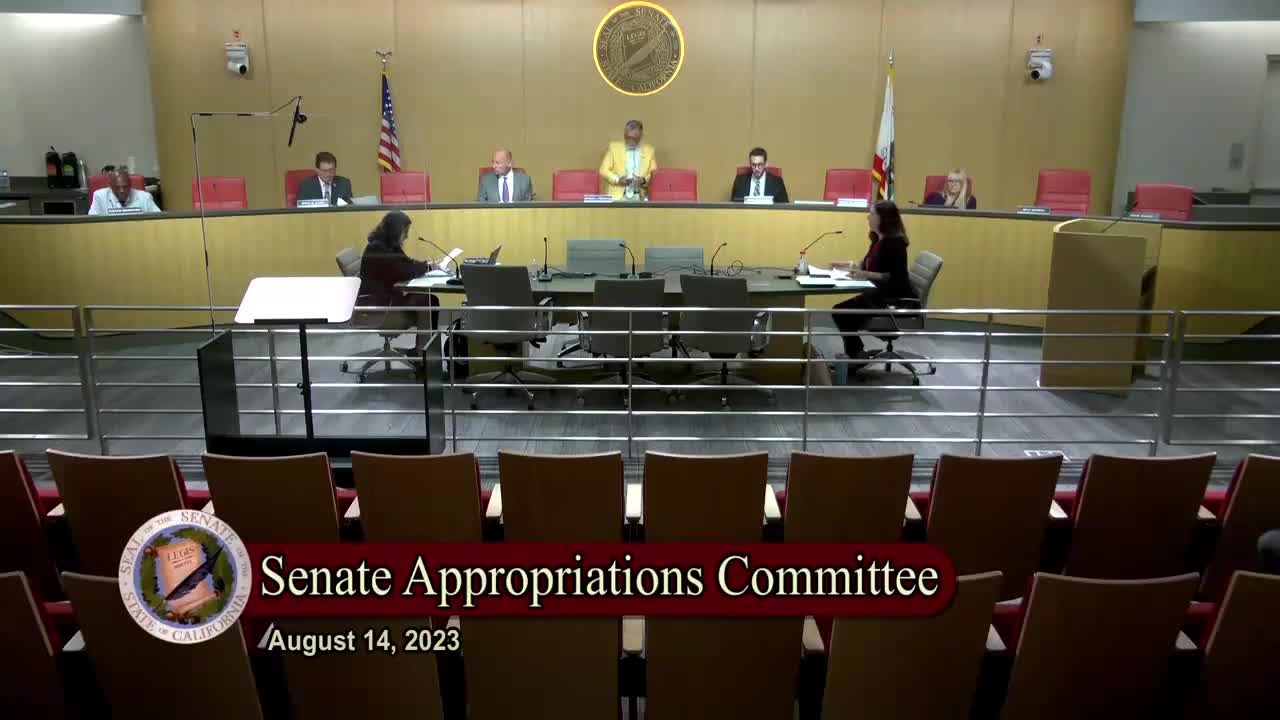
| Aug 14, 2023 | In committee: Referred to APPR suspense file. |
| Jun 7, 2023 | From committee: Do pass and re-refer to Com. on APPR with recommendation: To Consent Calendar. (Ayes 12. Noes 0.) (June 7). Re-referred to Com. on APPR. |
| May 3, 2023 | Referred to Com. on HEALTH. |
| Mar 30, 2023 | In Senate. Read first time. To Com. on RLS. for assignment. |
| Mar 30, 2023 | Read third time. Passed. Ordered to the Senate. (Ayes 65. Noes 0. Page 1008.) |
| Mar 23, 2023 | Read second time. Ordered to Consent Calendar. |
| Mar 22, 2023 | From committee: Do pass. To Consent Calendar. (Ayes 15. Noes 0.) (March 22). |
| Mar 15, 2023 | From committee: Do pass and re-refer to Com. on APPR. with recommendation: To Consent Calendar. (Ayes 13. Noes 0.) (March 14). Re-referred to Com. on APPR. |
| Mar 8, 2023 | Re-referred to Com. on HEALTH. |
| Mar 7, 2023 | From committee chair, with author's amendments: Amend, and re-refer to Com. on HEALTH. Read second time and amended. |
| Mar 6, 2023 | Re-referred to Com. on HEALTH. |
| Mar 2, 2023 | From committee chair, with author's amendments: Amend, and re-refer to Com. on HEALTH. Read second time and amended. |
| Feb 2, 2023 | Referred to Com. on HEALTH. |
| Jan 26, 2023 | From printer. May be heard in committee February 25. |
| Jan 25, 2023 | Read first time. To print. |
|
Date
|
Description
|
Location
|
Votes
|
|
|---|---|---|---|---|
| Sep 11, 2023 | Assembly 3rd Reading AB289 Holden By Wiener | Senate Floor |
Passed |
|
| Sep 1, 2023 | Do pass | Senate Standing Committee on Appropriations |
Passed |
|
| Aug 14, 2023 | Placed on suspense file | Senate Standing Committee on Appropriations |
Passed |
|
| Jun 7, 2023 | Do pass, but first be re-referred to the Committee on [Appropriations] with the recommendation: To Consent Calendar | Senate Standing Committee on Health |
Passed |
|
| Mar 30, 2023 | AB 289 Holden Consent Calendar Second Day Regular Session | Assembly Floor |
Passed |
|
| Mar 22, 2023 | Do pass. To Consent Calendar. | Assembly Standing Committee on Appropriations |
Passed |
|
| Mar 14, 2023 | Do pass and be re-referred to the Committee on [Appropriations] with recommendation: To Consent Calendar | Assembly Standing Committee on Health |
Passed |
This list shows positions taken on this bill by organizations on the date displayed, which is linked to the original source.
Positions by individuals are not included.
|
Organization
|
Position
|
Date
|
|---|---|---|
| American Civil Liberties Union California Action | ** Support | |
| Cal Voices | ** Support | |
| California Alliance Of Child And Family Services | ** Support | |
| California Coalition For Youth | ** Support | |
| California Faculty Association | ** Support | |
| California LGBTQ Health and Human Services Network | ** Support | |
| California Pan-Ethnic Health Network | ** Support | |
| California Youth Empowerment Network | ** Support | |
| Californians for Justice | ** Support | |
| Children’s Alliance of Child and Family Services | ** Support | |
| County Behavioral Health Directors Association of California | ** Support | |
| County of Santa Clara | ** Support | |
| Depression And Bipolar Support Alliance | ** Support | |
| Disability Rights California | ** Support | |
| Hillsides | ** Support | |
| mental health american of california | ** Support | |
| National Association Of Social Workers, California Chapter | ** Support | |
| Racial and Ethnic Mental Health Disparities Coalition | ** Support | |
| Southeast Asia Resource Action Center | ** Support | |
| Sycamores | ** Support | |
| The Childrens Partnership | ** Support | |
| The Los Angeles Trust for Childrens Health | ** Support |
SENATE RULES COMMITTEE Office of Senate Floor Analyses (916) 651-1520 Fax: (916) 327-4478 | AB 289 |
THIRD READING
Bill No: AB 289
Author: Holden (D)
Amended: 3/7/23 in Assembly
Vote: 21
SENATE HEALTH COMMITTEE: 12-0, 6/7/23
AYES: Eggman, Nguyen, Glazer, Gonzalez, Grove, Hurtado, Limón, Menjivar, Roth, Rubio, Wahab, Wiener
SENATE APPROPRIATIONS COMMITTEE: 6-0, 9/1/23
AYES: Portantino, Jones, Ashby, Bradford, Wahab, Wiener
NO VOTE RECORDED: Seyarto
ASSEMBLY FLOOR: 60-0, 3/30/23 (Consent) - See last page for vote
SUBJECT: Mental health services: representation
SOURCE: Racial and Ethnic Mental Health Disparities Coalition
The Children’s Partnership
DIGEST:
This bill expands the list of local stakeholders with which a county mental health program is required to develop and update the three-year program and expenditure plan pursuant to the Mental Health Services Act.
ANALYSIS:
Existing law:
- Establishes the Mental Health Services Act (MHSA), enacted by voters in 2004 as Proposition 63, to provide funds to counties to expand services, develop innovative programs, and integrate service plans for mentally ill children, adults, and seniors through a 1% income tax on personal income above $1 million. [WIC §5890, et seq.]
- Requires each county mental health program (CMHP) to prepare and submit a three-year program and expenditure plan for MHSA funds, with annual updates, adopted by the county board of supervisors, to the Mental Health Services Oversight and Accountability Commission (MHSOAC) and the Department of Health Care Services (DHCS) within 30 days after adoption. [WIC §5847]
- Requires each three-year program and expenditure plan and update to be developed with local stakeholders, including adults and seniors with severe mental illness; families of children, adults, and seniors with severe mental illness; providers of services; law enforcement agencies; education; social services agencies; veterans; representatives from veterans organizations; providers of alcohol and drug services; health care organizations; and other important interests. [WIC §5848]
This bill:
- Expands the list of local stakeholders with which a county mental health program is required to develop the three-year program and expenditure plan and update to include youth or youth mental health organizations, pursuant to the MHSA.
- Requires stakeholders to include sufficient participation of individuals representing diverse viewpoints, including, but not limited to, representatives from youth from historically marginalized communities, representatives from organizations specializing in working with underserved racially and ethnically diverse communities, and representatives from LGBTQ+ communities.
Comments
- Author’s statement. According to the author, current law omits an important voice from the behavioral health conversation, as one in seven people aged ten to 19 experience mental health conditions worldwide. For many, these conditions extend into adulthood, and a lack of access to supportive resources can limit future opportunities for these adolescents. Youth voices, and the organizations that support their mental well-being, deserve to be heard in this process. With their help, our behavioral health system can become much more proactive in addressing mental health concerns.
- MHSA. The MHSA requires each CMHP to prepare and submit a three-year plan to DHCS that must be updated each year and approved by DHCS after review and comment by the MHSOAC. DHCS is required to provide guidelines to CMHPs related to each component of the MHSA. In the three-year plans, CMHPs are required to include a list of all programs for which MHSA funding is being requested, identifies how the funds will be spent, and which populations will be served, which is generally developed with input from stakeholders and local mental health boards. CMHPs also must submit their plans for approval to the MHSOAC before they can spend innovation program funds. The MHSA provides funding for programs generally within these five components:
- Community Services and Supports (CSS): Provides direct mental health services to the severely and seriously mentally ill, such as mental health treatment, cost of health care treatment, and housing supports. Regulations require CMHPs to direct the majority of its CSS funds to FSPs, which are county-coordinated plans, in collaboration with the client and the family, to provide the full spectrum of community services. These services consist of mental health services and supports, such as peer support and crisis intervention services; and non-mental health services and supports, such as food, clothing, housing, and the cost of medical treatment;
- Prevention and Early Intervention (PEI): Provides services to mental health clients in order to help prevent mental illness from becoming severe and disabling;
- Innovation: Provides services and approaches that are creative in an effort to address mental health clients’ persistent issues, such as improving services for underserved or unserved populations within the community;
- Capital Facilities and Technological Needs: Creates additional county infrastructure, such as additional clinics and facilities and/or development of a technological infrastructure for the mental health system, such as electronic health records for mental health services; and,
- Workforce Education and Training: Provides training for existing county mental health employees, outreach and recruitment to increase employment in the mental health system, and financial incentives to recruit or retain employees within the public mental health system.
FISCAL EFFECT: Appropriation: No Fiscal Com.: Yes Local: Yes
According to the Senate Appropriations Committee, unknown potential General Fund cost pressures to reimburse counties for costs to implement the provisions. Cost to counties for administration would be potentially reimbursable by the state, subject to a determination by the Commission on State Mandates.
SUPPORT: (Verified 8/21/23)
Racial and Ethnic Mental Health Disparities Coalition (co-source)
The Children’s Partnership (co-source)
American Civil Liberties Union California Action
Cal Voices
California Alliance of Child and Family Services
California Coalition for Youth
California Faculty Association
California LGBTQ Health and Human Services Network
California Pan-Ethnic Health Network
California Youth Empowerment Network
Californians for Justice
Children’s Alliance of Child and Family Services
County Behavioral Health Directors Association of California
County of Santa Clara
Depression and Bipolar Support Alliance
Disability Rights California
Hillsides
Mental Health American of California
National Association of Social Workers, California Chapter
Southeast Asia Resources Action Center
The Los Angeles Trust for Children’s Health
OPPOSITION: (Verified 8/21/23)
None received
ARGUMENTS IN SUPPORT: The cosponsors of this bill and other supporters state that California’s children and youth are in a long-standing and quickly escalating state of mental health crisis and unmet need, with those from historically marginalized communities and identities bearing the brunt of the cost to their well-being. For example, despite an overall decrease in the suicide rate in California, in 2020, youth—particularly Black, Latinx, and girls—all showed disproportionate increases in suicide. Supporters state, additionally, a shocking 78% of LGBTQ+ youth who were surveyed shared they had considered suicide, with the vast majority of those who had considered suicide sharing they had done so in the last year, and nearly one-third had made an attempt in the past year. Supporters argue that one of the goals of the MHSA was to reduce mental health disparities in this state, and, unfortunately, since the passage of the MHSA, it has been difficult to detect significant reduction in disparities for racial, ethnic, and LGBTQ+ communities. The COVID pandemic only made this problem worse. Supporters state that getting representation from these communities involved with the community planning process should improve the chances that progress will be made in disparities being reduced.
ASSEMBLY FLOOR: 60-0, 3/30/23
AYES: Addis, Aguiar-Curry, Alanis, Arambula, Bains, Bennett, Berman, Boerner Horvath, Juan Carrillo, Wendy Carrillo, Cervantes, Connolly, Megan Dahle, Davies, Essayli, Flora, Mike Fong, Vince Fong, Friedman, Gallagher, Gipson, Haney, Hart, Holden, Hoover, Jackson, Jones-Sawyer, Lackey, Lee, Low, Lowenthal, Maienschein, McKinnor, Muratsuchi, Stephanie Nguyen, Pacheco, Jim Patterson, Joe Patterson, Petrie-Norris, Ramos, Reyes, Luz Rivas, Robert Rivas, Rodriguez, Blanca Rubio, Sanchez, Santiago, Schiavo, Ta, Ting, Valencia, Villapudua, Waldron, Wallis, Weber, Wicks, Wilson, Wood, Zbur, Rendon
NO VOTE RECORDED: Alvarez, Bauer-Kahan, Bonta, Bryan, Calderon, Chen, Dixon, Gabriel, Garcia, Grayson, Irwin, Kalra, Mathis, McCarty, Ortega, Papan, Pellerin, Quirk-Silva, Soria, Ward
Prepared by: Reyes Diaz / HEALTH / (916) 651-4111
9/2/23 14:58:35
**** END ****
SENATE COMMITTEE ON APPROPRIATIONS
Senator Anthony Portantino, Chair
2023 - 2024 Regular Session
AB 289 (Holden) - Mental health services: representation
Version: March 7, 2023 | Policy Vote: HEALTH 12 - 0 |
Urgency: No | Mandate: Yes |
Hearing Date: August 14, 2023 | Consultant: Agnes Lee |
Bill Summary:
AB 289 would expand the list of local stakeholders with which a county mental health program is required to develop and update the three-year program and expenditure plan pursuant to the Mental Health Services Act.
Fiscal Impact:
Unknown potential General Fund cost pressures to reimburse counties for costs to implement the provisions. Cost to counties for administration would be potentially reimbursable by the state, subject to a determination by the Commission on State Mandates.
Background:
The Mental Health Services Act (MHSA), enacted by voters in 2004 as Proposition 63, provides funds to counties to expand mental health services through a 1 percent income tax on personal income above $1 million. Current law requires each county mental health program to prepare and submit a three-year program and expenditure plan for MHSA funds, with annual updates, adopted by the county board of supervisors, to the state within 30 days after adoption.
Each three-year program and expenditure plan and update must be developed with local stakeholders, including adults and seniors with severe mental illness; families of children, adults, and seniors with severe mental illness; providers of services; law enforcement agencies; education; social services agencies; veterans; representatives from veterans organizations; providers of alcohol and drug services; health care organizations; and other important interests.
Proposed Law:
AB 289 would expand the list of local stakeholders with which a county mental health program is required to develop the three-year program and expenditure plan and update to include youth or youth mental health organizations. The bill would also require stakeholders to include sufficient participation of individuals representing diverse viewpoints, as specified.
-- END --
SENATE COMMITTEE ON HEALTH
Senator Dr. Susan Talamantes Eggman, Chair
BILL NO: AB 289
AUTHOR: | Holden | ||
VERSION: | March 7, 2023 | ||
HEARING DATE: | June 7, 2023 | ||
CONSULTANT: | Reyes Diaz | ||
SUBJECT: Mental health services: representation
SUMMARY:
Expands the list of local stakeholders with which a county mental health program is required to develop and update the three-year program and expenditure plan pursuant to the Mental Health Services Act.
Existing law:
- Establishes the Mental Health Services Act (MHSA), enacted by voters in 2004 as Proposition 63, to provide funds to counties to expand services, develop innovative programs, and integrate service plans for mentally ill children, adults, and seniors through a 1% income tax on personal income above $1 million. [WIC §5890, et seq.]
- Requires each county mental health program (CMHP) to prepare and submit a three-year program and expenditure plan for MHSA funds, with annual updates, adopted by the county board of supervisors, to the Mental Health Services Oversight and Accountability Commission (MHSOAC) and the Department of Health Care Services (DHCS) within 30 days after adoption. [WIC §5847]
- Requires each three-year program and expenditure plan and update to be developed with local stakeholders, including adults and seniors with severe mental illness; families of children, adults, and seniors with severe mental illness; providers of services; law enforcement agencies; education; social services agencies; veterans; representatives from veterans organizations; providers of alcohol and drug services; health care organizations; and other important interests. [WIC §5848]
This bill:
- Expands the list of local stakeholders with which a county mental health program is required to develop the three-year program and expenditure plan and update to include youth or youth mental health organizations, pursuant to the MHSA.
- Requires stakeholders to include sufficient participation of individuals representing diverse viewpoints, including, but not limited to, representatives from youth from historically marginalized communities, representatives from organizations specializing in working with underserved racially and ethnically diverse communities, and representatives from LGBTQ+ communities.
FISCAL EFFECT:
According to the Assembly Appropriations Committee, there are no costs to the MHSOAC. Costs to counties are unlikely to increase.
PRIOR VOTES:
Assembly Floor: | 60 - 0 |
Assembly Appropriations Committee: | 15 - 0 |
Assembly Health Committee: | 13 - 0 |
COMMENTS:
- Author’s statement. According to the author, current law omits an important voice from the behavioral health conversation, as one in seven people aged ten to 19 experience mental health conditions worldwide. For many, these conditions extend into adulthood, and a lack of access to supportive resources can limit future opportunities for these adolescents. Youth voices, and the organizations that support their mental well-being, deserve to be heard in this process. With their help, our behavioral health system can become much more proactive in addressing mental health concerns.
- MHSA. The MHSA requires each CMHP to prepare and submit a three-year plan to DHCS that must be updated each year and approved by DHCS after review and comment by the MHSOAC. DHCS is required to provide guidelines to CMHPs related to each component of the MHSA. In the three-year plans, CMHPs are required to include a list of all programs for which MHSA funding is being requested, identifies how the funds will be spent, and which populations will be served, which is generally developed with input from stakeholders and local mental health boards. CMHPs also must submit their plans for approval to the MHSOAC before they can spend innovation program funds. The MHSA provides funding for programs generally within these five components:
- Community Services and Supports (CSS): Provides direct mental health services to the severely and seriously mentally ill, such as mental health treatment, cost of health care treatment, and housing supports. Regulations require CMHPs to direct the majority of its CSS funds to FSPs, which are county-coordinated plans, in collaboration with the client and the family, to provide the full spectrum of community services. These services consist of mental health services and supports, such as peer support and crisis intervention services; and non-mental health services and supports, such as food, clothing, housing, and the cost of medical treatment;
- Prevention and Early Intervention (PEI): Provides services to mental health clients in order to help prevent mental illness from becoming severe and disabling;
- Innovation: Provides services and approaches that are creative in an effort to address mental health clients’ persistent issues, such as improving services for underserved or unserved populations within the community;
- Capital Facilities and Technological Needs: Creates additional county infrastructure, such as additional clinics and facilities and/or development of a technological infrastructure for the mental health system, such as electronic health records for mental health services; and,
- Workforce Education and Training: Provides training for existing county mental health employees, outreach and recruitment to increase employment in the mental health system, and financial incentives to recruit or retain employees within the public mental health system.
- Related legislation. SB 326 (Eggman) requires a county, for a behavioral health service eligible for reimbursement, to submit the claims for reimbursement to DHCS in order to maximize federal financial participation when that service is paid, in whole or in part, using MHSA funds. SB 326 is pending in the Assembly Health Committee.
- SB 551 (Portantino), among other things, requires a mental health board to include an individual 25 years of age or younger, as specified. SB 551 is pending in the Assembly Health Committee.
- Prior legislation. AB 738 (Nguyen, Chapter 378, Statutes of 2022) requires at least one member of a mental health board (MHB) to be a veteran or veteran advocate in a county with a population of 100,000 or more, as specified.
AB 1352 (Waldron, Chapter 460, Statutes of 2019) makes various changes to the operation of local mental health boards, including requiring them to review and evaluate the local public mental health system and advise the governing body on community mental health services delivered by the local mental health agency or local behavioral health agency, as specified.
- Support. The cosponsors of this bill and other supporters state that California’s children and youth are in a long-standing and quickly escalating state of mental health crisis and unmet need, with those from historically marginalized communities and identities bearing the brunt of the cost to their well-being. For example, despite an overall decrease in the suicide rate in California, in 2020, youth—particularly Black, Latinx, and girls—all showed disproportionate increases in suicide. Supporters state, additionally, a shocking 78% of LGBTQ+ youth who were surveyed shared they had considered suicide, with the vast majority of those who had considered suicide sharing they had done so in the last year, and nearly one-third had made an attempt in the past year. Supporters argue that one of the goals of the MHSA was to reduce mental health disparities in this state, and, unfortunately, since the passage of the MHSA, it has been difficult to detect significant reduction in disparities for racial, ethnic, and LGBTQ+ communities. The COVID pandemic only made this problem worse. Supporters state that getting representation from these communities involved with the community planning process should improve the chances that progress will be made in disparities being reduced.
SUPPORT AND OPPOSITION:
Support: The Children’s Partnership (cosponsor)
Racial and Ethnic Mental Health Disparities Coalition (cosponsor)
American Civil Liberties Union California Action
Cal Voices
California Alliance of Child and Family Services
California Coalition for Youth
California LGBTQ Health and Human Services Network
California Pan-Ethnic Health Network
California Youth Empowerment Network
Californians for Justice
Children’s Alliance of Child and Family Services
County Behavioral Health Directors Association of California
County of Santa Clara
Depression and Bipolar Support Alliance
Disability Rights California
Hillsides
Mental Health American of California
National Association of Social Workers, California Chapter
Southeast Asia Resources Action Center
Oppose: None received
-- END --
Date of Hearing: March 22, 2023
ASSEMBLY COMMITTEE ON APPROPRIATIONS
Chris Holden, Chair
ABPCA Bill Id:AB 289
Author:(Holden) – As Amended Ver:March 7, 2023
Policy Committee: | Health | Vote: | 13 - 0 |
|
| ||
|
|
Urgency: No State Mandated Local Program: Yes Reimbursable: Yes
SUMMARY:
This bill requires a county that is developing a three-year plan and annual updates under the Mental Health Services Act (MHSA) to include among the stakeholders in its development efforts youth or youth mental health organizations and individuals representing diverse viewpoints, including youth from historically marginalized communities, representatives from organizations specializing in working with underserved and racially and ethnically diverse communities, and representatives from LGBTQ+ communities.
FISCAL EFFECT:
No costs to the Mental Health Services Oversight and Accountability Commission (MHSOAC).
Costs to counties are unlikely to increase.
COMMENTS:
- Purpose. According to the author, this bill “will ensure youth voices are included in the behavioral health conversation, bringing California to closer to its goal of preventative mental health care.”
- Background.
- MHSA. Proposition 63, the MHSA, passed by voters in November 2004, imposes a 1% income tax on personal income in excess of $1 million. The MHSA creates the 16-member MHSOAC charged with overseeing the implementation of MHSA, which addresses a broad continuum of prevention, early intervention and service needs as well as providing funding for infrastructure, technology, and training needs for the community mental health system.
The MHSA requires each county mental health department to prepare and submit to the Department of Health Care Services (DHCS) a three-year plan that must be updated each year and approved by DHCS after review and comment by the MHSOAC. In their three-year plans, each county is required to include a list of all programs for which MHSA funding is being requested and that identifies how the funds will be spent and which populations will be served.
- MHSA Community Program Planning Process (CPPP). The CPPP provides a structured process for counties to use in partnership with stakeholders in determining how best to utilize funds that become available from the MHSA. The county CPPP must include, among other things, participation of:
- Stakeholders defined by WIC Section 5848(a) as adults and seniors with serious mental illness (SMI), families of children, adults, and seniors with SMI, providers of services, law enforcement agencies, education, social services agencies, veterans, representatives from veterans organizations, providers of alcohol and drug services, health care organizations, and other important interests.
- Underserved populations: participation from representatives of unserved/underserved populations and their family members.
- Diversity: stakeholders must “reflect the diversity of the demographics of the County, including but not limited to, geographic location, age, gender, and race/ethnicity.”
- MHSA Community Program Planning Process (CPPP). The CPPP provides a structured process for counties to use in partnership with stakeholders in determining how best to utilize funds that become available from the MHSA. The county CPPP must include, among other things, participation of:
- Prior Legislation.
- SB 1283 (Bates) of 2022 would have amended the MHSA to provide the counties with more flexibility in shifting county MHSA money between programs and to include additional allowable services, including addiction treatment, case management, employment services, peer support, crisis intervention and stabilization, and family unification. SB 1283 was not heard in the Senate at the request of the author.
- AB 573 (Carrillo) of 2021 would have established the California Youth Mental Health Board within the California Health and Human Services Agency and required the MHSOAC to assess the extent to which local youth boards have been established and to make recommendations on ways to strengthen the youth voice to support appropriate behavioral health services. AB 573 was held in this committee on the suspense file.
Analysis Prepared by: Allegra Kim / APPR. / (916) 319-2081
Date of Hearing: March 14, 2023
ASSEMBLY COMMITTEE ON HEALTH
Jim Wood, Chair
ABPCA Bill Id:AB 289
Author:Holden – As Amended Ver:March 7, 2023
SUBJECT: Mental health services: representation.
SUMMARY: Expands the list of required stakeholders for purposes of county development of a three-year plan and annual updates under the Mental Health Services Act (MHSA) to include youths or youth mental health organizations. Requires stakeholders to include sufficient participation of individuals representing diverse viewpoints, including representatives from youth from historically marginalized communities, representatives from organizations specializing in work with underserved racially and ethnically diverse communities, and representatives from LGBTQ+ communities.
EXISTING LAW:
- Establishes the Mental Health Services Oversight and Accountability Commission (MHSOAC) to oversee the implementation of the MHSA, enacted by voters in 2004 as Proposition 63, to provide funds to counties to expand services, develop innovative programs, and integrate service plans for mentally ill children, adults, and seniors through a one percent income tax on personal income above $1 million. [Welfare and Institutions Code (WIC) §5845]
- Permits the MHSOAC to perform various functions in carrying out its duties and responsibilities, such as:
- Meeting at least once quarterly in locations convenient and open to the public;
- Establishing technical advisory committees, such as a committee of consumers and family members;
- Obtaining data and information from state or local entities that receive MHSA funds, as specified, to allow the MHSOAC to utilize in its oversight, review, training and technical assistance, accountability, and evaluation capacity, as specified;
- Assisting in providing technical assistance to accomplish the purposes of the MHSA; and,
- Working in collaboration with the Department of Health Care Services (DHCS), the California Behavioral Health Planning Council, and the County Behavioral Health Directors Association of California, as specified, to design a joint plan for a coordinated evaluation of client outcomes in the community-based mental health system, as specified. [WIC §5845]
- Requires each county mental health department (CMHD) to prepare and submit a three-year program and expenditure plan, and annual updates, adopted by the county board of supervisors, to the MHSOAC and the DHCS based on available unspent MHSA funds and estimated revenue allocations provided by the state and in accordance with established stakeholder engagement and planning requirements, as specified. [WIC §5847]
- Requires that each three-year program and expenditure plan and update be developed with local stakeholders, as specified. [WIC §5848]
- Requires that counties demonstrate a partnership with constituents and stakeholders throughout the process that includes meaningful stakeholder involvement on mental health policy, program planning, and implementation, monitoring, quality improvement, evaluation, and budget allocations. [WIC §5848]
FISCAL EFFECT: Unknown. This bill has not yet been analyzed by a fiscal committee.
COMMENTS:
- PURPOSE OF THIS BILL. According to the author, when making decisions for the future generation of Californians, it is critical that their voice and perspectives are heard. Listening and providing quality care that is youth informed helps the adults of tomorrow, today. The author concludes that youth voices, and the organizations that support their mental wellbeing, deserve to be heard in this process
- BACKGROUND.
- MHSA. Proposition 63, the MHSA was passed by voters in November 2004. The MHSA imposes a 1% income tax on personal income in excess of $1 million and creates the 16 member MHSOAC charged with overseeing the implementation of MHSA. The MHSA addresses a broad continuum of prevention, early intervention and service needs as well as providing funding for infrastructure, technology, and training needs for the community mental health system.
The MHSA requires each CMHD to prepare and submit a three-year plan to DHCS that must be updated each year and approved by DHCS after review and comment by the MHSOAC. In their three-year plans, counties are required to include a list of all programs for which MHSA funding is being requested and that identifies how the funds will be spent and which populations will be served. MHSA programs are divided into the following five categories:
- Community Services and Supports;
- Prevention and Early Intervention;
- Innovation;
- Capital Facilities and Technological Needs; and,
- Workforce Education and Training.
Before the counties may spend certain categories of funding, including Prevention and Early Intervention and Innovation funds, their plans must be submitted for approval to the MHSOAC.
- MHSA Community Program Planning Process (CPPP). The CPPP provides a structured process that counties are to use in partnership with stakeholders in determining how best to utilize funds that become available from the MHSA.
The county MSHA CPPP must adhere to the following general standards.
- Community Collaboration is a process by which clients and/or families receiving services, other community members, agencies, organizations, and businesses work together to share information and resources in order to fulfill a shared vision and goals;
- Cultural Competence means that equal access is provided to equal quality of services to all racial/ethnic, cultural, and linguistic communities. Disparities are identified and strategies developed to eliminate disparities. Cultural competence means that program planning and service delivery takes into account diverse belief systems and the impact of historic forms of racism and discrimination on the mental health of community members. Services and supports utilize strengths and forms of healing that are unique to an individual’s racial/ethnic, cultural, and linguistic community. Service providers are trained to understand and address the needs and values of the particular communities they serve, and strategies are developed and implemented to promote equal opportunities for those involved in service delivery who share the cultural characteristics of individuals with severe mental illness and/or severe emotional (SMI/SED) in the community;
- Integrated Services Experience means the client, and when appropriate the client's family, accesses a full range of services provided by multiple agencies, programs and funding sources in a comprehensive and coordinated manner;
- Client Driven means that the client has the primary decision-making role in identifying their needs, preferences and strengths and a shared decision-making role in determining the services and supports that are most effective and helpful for them. Client-driven programs/services use clients' input as the main factor for planning, policies, procedures, service delivery, evaluation, and the definition and determination of outcomes;
- Family Driven means that families of children and youth with SED a primary decision-making role in the care of their own children, including the identification of needs, preferences, and strengths, and a shared decision-making role in determining the services and supports that would be most effective and helpful for their children. Family-driven programs/services use the input of families as the main factor for planning, policies, procedures, service delivery, evaluation, and the definition and determination of outcomes; and,
- Wellness, Recovery, and Resilience focused means that planning for services are consistent with the philosophy, principles, and practices of the Recovery Vision for mental health consumers: “To promote concepts key to the recovery for individuals who have mental illness: hope, personal empowerment, respect, social connections, self-responsibility, and self-determination. To promote consumer-operated services as a way to support recovery.”
The MHSA CPPP must also include the following participants and processes:
- Clients and family members: Involvement of clients with SMI/SED and their family members in all aspects of the CPPP;
- Broad-based constituents: Participation of stakeholders defined by WIC Section 5848(a) as adults and seniors with SMI, families of children, adults, and seniors with SMI, providers of services, law enforcement agencies, education, social services agencies, veterans, representatives from veterans organizations, providers of alcohol and drug services, health care organizations, and other important interests;
- Underserved populations: participation from representatives of unserved and/or underserved populations and family members of unserved/underserved populations; and,
- Diversity: Stakeholders that “reflect the diversity of the demographics of the County, including but not limited to, geographic location, age, gender, and race/ethnicity, and have the opportunity to participate in the CPPP.
The MHSA CPPP must also include: training; outreach to clients with SMI/SED, and their family members, to ensure the opportunity to participate; and a local review process prior to submitting the three-year program and expenditure plans or annual updates that includes a 30-day public comment period;
Counties must submit documentation of three-year program and expenditure plans or annual updates that includes:
- A description of methods used to circulate copies of the draft three-year program and expenditure plans or annual updates to representatives of stakeholders' interests and any other interested parties who request the draft for the purpose of public comment;
- Documentation that a public hearing was held by the local mental health board/commission, including the date of the hearing;
- A summary and analysis of any substantive recommendations; and,
- A description of any substantive changes made to the proposed three-year program and expenditure plan or annual update that was circulated.
- Children and Youth Behavioral Health Initiative (CYBHI). Enacted in 2021-22, the CYBHI is a $4.7 billion, five-year initiative to “reimagine and transform the way California supports children, youth and families.” The CYBHI serves as the centerpiece of the Administrations’ Master Plan for Kids’ Mental Health. Since its inception the CYBHI, overseen by the California Health and Human Services Agency (CHHSA), has engaged over 1,000 organizations including 394 local, county and state government entities; 203 providers of health care, education and social services, and 70 child, youth and family organizations. The CYBHI has conducted over 300 listening sessions, stakeholder and expert interviews, as well as 75 roundtable, focus group and community engagement sessions. As an equity-focused and youth-centered initiative, the CYBHI is designed for and with children, youth and families. Their voices are informing every phase of the work from design to implementation and evaluation. Partner engagement efforts have focused on addressing equity by engaging with black, indigenous, and people of color (BIPOC), LGBTQ+ and low—income and underserved youth. The CYBHI focuses on four key strategic areas:
- Workforce Training and Capacity;
- Behavioral Health Ecosystem Infrastructure;
- Coverage Architecture; and,
- Public Awareness.
The work in these areas has been divided into 20 separate work streams, each one managed by one or more CHHSA departments or offices including the DHCS, Department of Health Care Access and Information, Department of Managed Health Care, Department of Public Health and the Office of the California Surgeon General. In addition, CYBHI efforts are coordinated with other agencies such as the Department of Education, Department of Social Services, and the MHSOAC, engaging them as appropriate on the work to be undertaken.
- SUPPORT. The Racial and Ethnic Mental Health Disparities Coalition (REMHDCO), cosponsor of the bill, states that one of the goals of the MHSA was to reduce mental health disparities in this state. Unfortunately, since the passage of the MHSA, it has been difficult to detect significant reduction in disparities for racial, ethnic, and LGBTQ+ communities. The COVID pandemic only made this problem worse. REMHDCO concludes that getting representation from these communities involved with the community planning process should improve the chances that progress will be made in disparities being reduced.
Mental Health America of California (MHACa), also in a position of support states that the MHSA was written to transform California’s public mental health system by prioritizing, among other things, extensive stakeholder involvement in the development, implementation, and evaluation of MHSA-funded county programs and services. The reasoning behind this is that each county has different community needs, and the stakeholders living in the community are the most knowledgeable about the needs and service gaps within their own communities. The behavioral health needs of Youth and Transition Age Youth require services that are often separate and distinct from the services utilized by adults. MHACa concludes by stating that to ensure that MHSA-funded services in each county are responsive to the needs of youth, it is important that youth and youth mental health organizations be required stakeholders in county MHSA planning.
- RELATED LEGISLATION. AB 283 (Patterson) urges the Governor, when making appointments to the MHSOAC, to consider ensuring geographic representations among the 10 geographic regions of California as defined by the 2020 census. AB 283 is pending hearing in the Assembly Health Committee.
- PREVIOUS LEGISLATION.
- AB 1668 (Patterson) of 2022, identical to AB 283, was vetoed by the Governor who indicated:
“I am committed to having boards and commissions that represent California's diversity, including regional representation, and I already consider these factors in the appointment process. In addition to being unnecessary, this bill overlooks the fact that other officials serve on, or can designate individuals to serve on, the MHSOAC. Therefore, I cannot sign this bill.”
- SB 1283 (Bates) of 2022 would have amended the MHSA to provide the counties with more flexibility in shifting county MHSA money between programs and to include additional allowable services, including addiction treatment, case management, employment services, peer support, crisis intervention and stabilization, and family unification. SB 1283 was not heard in the Senate at the request of the author.
- AB 465 (Eggman), Chapter 544, Statutes of 2021, requires the MHSOAC to report to specified legislative committees the outcomes for people receiving community mental health services under a full service partnership (FSP) model, as specified, including any barriers to receiving the data and recommendations to strengthen California’s use of FSPs to reduce incarceration, hospitalization, and homelessness.
- AB 573 (Carrillo) of 2021 would have established the California Youth Mental Health Board within CHHSA. Would have required the MHSOAC by December 30, 2024, and every five years thereafter, to assess the extent to which the local youth boards have been established and to make recommendations on ways to strengthen the youth voice to support appropriate behavioral health services. AB 573 was held in the Assembly Appropriations Committee on the suspense file.
- AB 850 (Chau) of 2017 would have increased the membership of the MHSOAC to include an individual with knowledge and experience in reducing mental health disparities, especially for racial and ethnic communities, to be appointed by the Governor. AB 850 was vetoed by Governor Brown who indicated:
“This bill adds a member to the MHSOAC who has experience in reducing mental health disparities. I believe MHSOAC as currently constituted is up to the task entrusted to it.”
REGISTERED SUPPORT / OPPOSITION:
Support
The Children’s Partnership (cosponsor)
Racial and Ethnic Mental Health Disparities Coalition (cosponsor)
California Alliance of Child and Family Services
California LGBTQ Health and Human Services Network
California Youth Empowerment Network
Californians for Justice
Cal Voices
Disability Rights California
Mental Health America of California
Southeast Asia Resource Action Center
Sycamores
Opposition
None on file.
Analysis Prepared by: Judith Babcock / HEALTH / (916) 319-2097
Discussed in Hearing
View Older Hearings
Bill Author
Bill Co-Author(s):