AB 2900: Small agricultural truck fleet assistance program.
- Session Year: 2023-2024
- House: Assembly
- Latest Version Date: 2024-09-27
Current Status:
Passed
(2024-09-27: Chaptered by Secretary of State - Chapter 746, Statutes of 2024.)
Introduced
In Committee
First Chamber
In Committee
Second Chamber
Enacted
What does this bill do?
The bill directs the State Air Resources Board to create or use an existing Small Agricultural Truck Fleet Assistance Program to provide technical help to individual truck owners and small agricultural fleets to switch to cleaner, regulation‑compliant trucks. The program must prioritize near‑zero or zero‑emission trucks when feasible and aim to protect farm supply chains and ensure disadvantaged communities share in the benefits.
The summary is provided by generative AI which can make mistakes. For original language, please view the details in the table below.
Existing law imposes various limitations on emissions of air contaminants for the control of air pollution from vehicular sources. Existing law generally designates the State Air Resources Board as the state agency with the primary responsibility for the control of vehicular air pollution. Existing law requires the board, upon appropriation by the Legislature, to allocate funds on a competitive basis for projects that are shown to achieve the greatest emission reduction from sources associated with the movement of freight along Californias trade corridors.
This bill would require the state board, in order to minimize the impact of the energy transition on the supply chains in the critical agricultural sector and ensure that disadvantaged communities equitably share in the benefits of and investments in emission reductions, to establish the Small Agricultural Truck Fleet Assistance Program, or use an existing program, to provide dedicated technical assistance to owner-operators or owners of small fleets to support the transition to cleaner emission-compliant trucks, as provided.
Existing law imposes various limitations on emissions of air contaminants for the control of air pollution from vehicular sources. Existing law generally designates the State Air Resources Board as the state agency with the primary responsibility for the control of vehicular air pollution. Existing law requires the board, upon appropriation by the Legislature, to allocate funds on a competitive basis for projects that are shown to achieve the greatest emission reduction from sources associated with the movement of freight along Californias trade corridors.
This bill would require the state board, in order to minimize the impact of the energy transition on the supply chains in the critical agricultural sector and ensure that disadvantaged communities equitably share in the benefits of and investments in emission reductions, to establish the Small Agricultural Truck Fleet Assistance Program Program, or use an existing program, to provide dedicated technical and funding assistance, upon an appropriation by the Legislature for this purpose, assistance to owner-operators or owners of small fleets to support the transition to cleaner emission-compliant trucks, as provided.
Existing law imposes various limitations on emissions of air contaminants for the control of air pollution from vehicular sources. Existing law generally designates the State Air Resources Board as the state agency with the primary responsibility for the control of vehicular air pollution. Existing law requires the board, upon appropriation by the Legislature, to allocate funds on a competitive basis for projects that are shown to achieve the greatest emission reduction from sources associated with the movement of freight along Californias trade corridors.
This bill would require the state board, in order to minimize the impact of the energy transition on the supply chains in the critical agricultural sector and ensure that disadvantaged communities equitably share in the benefits of and investments in emission reductions, to establish the Small Agricultural Truck Fleet Assistance Program to provide dedicated technical and funding assistance, upon an appropriation by the Legislature for this purpose, to owner-operators or owners of small fleets to support the transition to cleaner emission-compliant trucks, as provided.
Existing law requires the State Air Resources Board to establish airborne toxic control measures for toxic air contaminants, as provided.This bill would state the intent of the Legislature to enact subsequent legislation to address toxic air contaminant emissions in Californias central valley.Existing law requires the State Air Resources Board to establish airborne toxic control measures for toxic air contaminants, as provided.
This bill would state the intent of the Legislature to enact subsequent legislation to address toxic air contaminant emissions in Californias central valley.
The Legislature finds and declares all of the following:
(a)Freight-related emissions, including heavy-duty motor vehicle emissions, comprise the majority of criteria pollutant and air toxics emissions, and contribute to community-level air quality-related public health impacts. Reducing emissions from this sector is critical to assisting areas of the state, including the San Joaquin Valley, attain public health-based air quality standards.
(b)Studies show that lower income households and people of color are more likely to be disproportionately impacted by transportation-related impacts.
(c)To reduce criteria and air toxics emissions, the state has adopted aggressive timelines for fleets to replace aging heavy-duty vehicles with cleaner vehicles.
(d)It is not economically viable for many owner-operators and owners of small fleets, including seasonal agriculture operators, to replace their heavy-duty vehicles with newer, cleaner equipment.
(e)Many seasonal use trucks used in agriculture owned by owner-operators and owners of small fleets face significant challenges in complying with the truck and bus regulation (Section 2025 of Title 13 of the California Code of Regulations).
(f)As the state transitions to zero-emission technologies, owner-operators and owners of small fleets are having difficulty obtaining the significantly more expensive battery electric and other advanced heavy-duty motor vehicle technologies, and the associated fueling infrastructure.
SEC. 2.Section 43021.5 is added to the Health and Safety Code, to read:43021.5.In order to minimize the impact of the energy transition on the supply chains in the critical agricultural sector and ensure that disadvantaged communities equitably share in the benefits of and investments in emission reductions, the state board shall establish the Small Agricultural Truck Fleet Assistance Program, or use an existing program, to provide dedicated technical assistance to owner-operators or owners of small fleets to support the transition to cleaner emission-compliant trucks, giving priority for near-zero-emission or zero-emission trucks as feasible.
The Legislature finds and declares all of the following:
(a)Freight-related emissions, including heavy-duty motor vehicle emissions, comprise the majority of criteria pollutant and air toxics emissions, and contribute to community-level air quality-related public health impacts. Reducing emissions from this sector is critical to assisting areas of the state, including the San Joaquin Valley, attain public health-based air quality standards.
(b)Studies show that lower income households and people of color are more likely to be disproportionately impacted by transportation-related impacts.
(c)To reduce criteria and air toxics emissions, the state has adopted aggressive timelines for fleets to replace aging heavy-duty vehicles with cleaner vehicles.
(d)It is not economically viable for many owner-operators and owners of small fleets, including seasonal agriculture operators, to replace their heavy-duty vehicles with newer, cleaner equipment.
(e)Many seasonal use trucks used in agriculture owned by owner-operators and owners of small fleets face significant challenges in complying with the truck and bus regulation (Section 2025 of Title 13 of the California Code of Regulations).
(f)As the state transitions to zero-emission technologies, owner-operators and owners of small fleets are having difficulty obtaining the significantly more expensive battery electric and other advanced heavy-duty motor vehicle technologies, and the associated fueling infrastructure.
SEC. 2.Section 43021.5 is added to the Health and Safety Code, to read:43021.5.In order to minimize the impact of the energy transition on the supply chains in the critical agricultural sector and ensure that disadvantaged communities equitably share in the benefits of and investments in emission reductions, the state board shall establish the Small Agricultural Truck Fleet Assistance Program Program, or use an existing program, to provide dedicated technical and funding assistance, upon an appropriation by the Legislature for this purpose, assistance to owner-operators or owners of small fleets to support the transition to cleaner emission-compliant trucks, giving priority for near-zero-emission or zero-emission trucks as feasible.
The Legislature finds and declares all of the following:
(a)Freight-related emissions, including heavy-duty motor vehicle emissions, comprise the majority of criteria pollutant and air toxics emissions, and contribute to community-level air quality-related public health impacts. Reducing emissions from this sector is critical to assisting areas of the state, including the San Joaquin Valley, attain public health-based air quality standards.
(b)Studies show that lower income households and people of color are more likely to be disproportionately impacted by transportation-related impacts.
(c)To reduce criteria and air toxics emissions, the state has adopted aggressive timelines for fleets to replace aging heavy-duty vehicles with cleaner vehicles.
(d)It is not economically viable for many owner-operators and owners of small fleets, including seasonal agriculture operators, to replace their heavy-duty vehicles with newer, cleaner equipment.
(e)Many seasonal use trucks used in agriculture owned by owner-operators and owners of small fleets face significant challenges in complying with the truck and bus regulation (Section 2025 of Title 13 of the California Code of Regulations).
(f)As the state transitions to zero-emission technologies, owner-operators and owners of small fleets are having difficulty obtaining the significantly more expensive battery electric and other advanced heavy-duty motor vehicle technologies, and the associated fueling infrastructure.
SEC. 2.Section 43021.5 is added to the Health and Safety Code, to read:43021.5.In order to minimize the impact of the energy transition on the supply chains in the critical agricultural sector and ensure that disadvantaged communities equitably share in the benefits of and investments in emission reductions, the state board shall establish the Small Agricultural Truck Fleet Assistance Program to provide dedicated technical and funding assistance, upon an appropriation by the Legislature for this purpose, to owner-operators or owners of small fleets to support the transition to cleaner emission-compliant trucks, giving priority for near-zero-emission or zero-emission trucks as feasible.
SECTION 1.It is the intent of the Legislature to enact subsequent legislation to address toxic air contaminant emissions in Californias central valley.It is the intent of the Legislature to enact subsequent legislation to address toxic air contaminant emissions in Californias central valley.
|
Date
|
Status
|
|---|---|
| Sep 27, 2024 | Chaptered by Secretary of State - Chapter 746, Statutes of 2024. |
| Sep 27, 2024 | Approved by the Governor. |
| Aug 19, 2024 | Enrolled and presented to the Governor at 3 p.m. |
| Aug 12, 2024 | In Assembly. Ordered to Engrossing and Enrolling. |
| Aug 12, 2024 | Read third time. Passed. Ordered to the Assembly. (Ayes 38. Noes 0. Page 5045.). |
| Aug 6, 2024 | Read second time. Ordered to Consent Calendar. |
| Aug 5, 2024 | From committee: Be ordered to second reading file pursuant to Senate Rule 28.8 and ordered to Consent Calendar. |
| Jun 26, 2024 | From committee: Do pass and re-refer to Com. on APPR with recommendation: To Consent Calendar. (Ayes 15. Noes 0.) (June 25). Re-referred to Com. on APPR. |
| Jun 19, 2024 | From committee: Do pass and re-refer to Com. on TRANS. with recommendation: To Consent Calendar. (Ayes 7. Noes 0.) (June 19). Re-referred to Com. on TRANS. |
| May 29, 2024 | Referred to Coms. on E.Q. and TRANS. |
| May 22, 2024 | In Senate. Read first time. To Com. on RLS. for assignment. |
| May 21, 2024 | Read third time. Passed. Ordered to the Senate. (Ayes 73. Noes 0. Page 5380.) |
| May 20, 2024 | Read second time. Ordered to third reading. |
| May 16, 2024 | Read second time and amended. Ordered returned to second reading. |
| May 16, 2024 | From committee: Amend, and do pass as amended. (Ayes 11. Noes 0.) (May 16). |
| May 16, 2024 | Assembly Rule 63 suspended. |
| May 1, 2024 | In committee: Set, first hearing. Referred to APPR. suspense file. |
| Apr 16, 2024 | From committee: Do pass and re-refer to Com. on APPR. with recommendation: To Consent Calendar. (Ayes 15. Noes 0.) (April 15). Re-referred to Com. on APPR. |
| Apr 1, 2024 | Re-referred to Com. on TRANS. |
| Mar 21, 2024 | Referred to Com. on TRANS. |
| Mar 21, 2024 | From committee chair, with author's amendments: Amend, and re-refer to Com. on TRANS. Read second time and amended. |
| Feb 16, 2024 | From printer. May be heard in committee March 17. |
| Feb 15, 2024 | Read first time. To print. |
|
Date
|
Description
|
Location
|
Votes
|
|
|---|---|---|---|---|
| Aug 12, 2024 | Consent Calendar 2nd AB2900 Soria | Senate Floor |
Passed |
|
| Jun 25, 2024 | Do pass, but first be re-referred to the Committee on [Appropriations] with the recommendation: To Consent Calendar | Senate Standing Committee on Transportation |
Passed |
|
| Jun 19, 2024 | Do pass, but first be re-referred to the Committee on [Transportation] with the recommendation: To Consent Calendar | Senate Standing Committee on Environmental Quality |
Passed |
|
| May 21, 2024 | AB 2900 Soria Assembly Third Reading | Assembly Floor |
Passed |
|
| May 16, 2024 | Do pass as amended. | Assembly Standing Committee on Appropriations |
Passed |
|
| Apr 15, 2024 | Do pass and be re-referred to the Committee on [Appropriations] with recommendation: To Consent Calendar | Assembly Standing Committee on Transportation |
Passed |
This list shows positions taken on this bill by organizations on the date displayed, which is linked to the original source.
Positions by individuals are not included.
|
Organization
|
Position
|
Date
|
|---|---|---|
| Agricultural Council Of California | ** Support | |
| Almond Alliance | ** Support | |
| American Pistachio Growers | ** Support | |
| Association Of California Egg Farmers | ** Support | |
| California Agricultural Aircraft Association | ** Support | |
| California Apple Commission | ** Support | |
| California Association Of Wheat Growers | ** Support | |
| California Association Of Winegrape Growers | ** Support | |
| California Bean Shippers Association | ** Support | |
| California Blueberry Association | ** Support | |
| California Blueberry Commission | ** Support | |
| California Cattlemen'S Association | ** Support | |
| California Citrus Mutual | ** Support | |
| California Cotton Ginners and Growers Association | ** Support | |
| California Farm Bureau | ** Support | |
| California Fresh Fruit Association | ** Support | |
| California Grain & Feed Association | ** Support | |
| California Pear Growers | ** Support | |
| California Rice Commission | ** Support | |
| California Seed Association | ** Support | |
| California State Floral Association | ** Support | |
| California Strawberry Commission | ** Support | |
| California Walnut Commission | ** Support | |
| California Warehouse Association | ** Support | |
| Family Business Association of California | ** Support | |
| Olive Growers Council of California | ** Support | |
| Pacific Egg & Poultry Association | ** Support | |
| San Joaquin Valley Air Pollution Control District | ** Support | |
| Western Agricultural Processors Association | ** Support |
SENATE RULES COMMITTEE Office of Senate Floor Analyses (916) 651-1520 Fax: (916) 327-4478 | AB 2900 |
CONSENT
Bill No: AB 2900
Author: Soria (D)
Amended: 5/16/24 in Assembly
Vote: 21
SENATE ENVIRONMENTAL QUALITY COMMITTEE: 7-0, 6/19/24
AYES: Allen, Dahle, Gonzalez, Hurtado, Menjivar, Nguyen, Skinner
SENATE TRANSPORTATION COMMITTEE: 15-0, 6/25/24
AYES: Cortese, Niello, Allen, Archuleta, Becker, Blakespear, Dahle, Dodd, Gonzalez, Laird, Limón, Newman, Nguyen, Seyarto, Umberg
SENATE APPROPRIATIONS COMMITTEE: Senate Rule 28.8
ASSEMBLY FLOOR: 73-0, 5/21/24 - See last page for vote
SUBJECT: Small agricultural truck fleet assistance program
SOURCE: Author
DIGEST:
This bill requires the California Air Resources Board (CARB) to provide dedicated technical assistance to owners of small fleets to support the transition to cleaner emission-compliant trucks, either through the establishment of the Small Agricultural Truck Fleet Assistance Program or by using an existing program.
ANALYSIS:
Existing law:
- Establishes CARB as the air pollution control agency in California and requires CARB, among other things, to control emissions from a wide array of mobile sources and coordinate with local air districts to control emissions from stationary sources in order to implement the Federal Clean Air Act. (Health and Safety Code (HSC) 39602; HSC 39602.5)
- Requires CARB, pursuant to California Global Warming Solutions Act of 2006 (AB 32, Núñez, Chapter 488, Statutes of 2006) to adopt a statewide greenhouse gas (GHG) emissions limit equivalent to 1990 levels by 2020 and to develop a scoping plan for achieving the maximum technologically feasible and cost-effective reductions in GHGs. (HSC 38500)
- Requires CARB to review its existing enforcement of diesel emission control regulations and anticipated enforcement needs for future diesel emission control regulations for manufacturers, owners, or operators of on-road and off-road vehicles and engines to implement CARB’s Diesel Risk Reduction Plan and Emission Reduction Plan for Ports and Goods Movement. (HSC 43011.5)
- Requires CARB to implement a Heavy-Duty Vehicle Inspection and Maintenance Program (also known as HD I/M or Clean Truck Check) for nongasoline heavy-duty on-road motor vehicles with a gross vehicle weight rating (GVWR) of more than 14,000 pounds, requires vehicles to pass the test procedures in order to register or operate in the state, creates the Truck Emission Check (TEC) Fund and authorizes CARB to assess a fee and penalties, to be deposited into the TEC fund or the Air Pollution Control Fund. (HSC 44152 and 44154)
- Prohibits laws or regulations adopted or amended after January 1, 2017, from requiring retirement, replacement, retrofit, or repower of a self-propelled commercial motor vehicle, until after the useful life of the vehicle. (HSC 43021)
- Requires CARB, by January 1, 2025, to evaluate the impact of the provisions of HSC 43021 on state and local clean air efforts to meet state and local clean air goals, including the following:
- Compliance with the truck and bus rule. (Section 2025 of Title 13 of the California Code of Regulations);
- The benefits and impacts of measures enacted to improve local air quality impacts from stationary sources; and
- State implementation plan compliance. (HSC 43021)
This bill:
- Requires CARB to provide dedicated technical assistance to owners of small fleets to support the transition to cleaner emission-compliant trucks, either through the establishment of the Small Agricultural Truck Fleet Assistance Program or by using an existing program.
- Makes findings and declarations regarding vehicular air pollution and the health and economic impacts thereof.
Background
- Cleaning up trucking emissions. The transportation sector accounts for over 40% of all GHG emissions in California—the most of any economic sector in our state—and consistent and significant reductions in vehicle emissions remain elusive. Commercial trucking in particular is a critical focus area for climate policy. Heavy-duty vehicles emit a fifth of all transportation-related GHGs. They also produce toxic air pollutants that significantly increase the risk of cancer and other severe health challenges for California residents, particularly in low-income communities of color.
- An embarrassment of riches. To meet the challenge of drastically reducing emissions from MD/HD vehicles, California has passed and continues to develop new policies designed to accelerate the adoption of low- and zero-emissions vehicles (ZEVs) in the commercial trucking subsector. Currently, there are at least 13 state programs that provide financial incentives for medium- and heavy-duty ZEVs. Most are administered by CARB, one by the California Energy Commission (CEC), one by the California Alternative Energy and Advanced Transportation Financing Authority, and one by the California Pollution Control Financing Authority.
- Trucks for agriculture. Over the last several decades, CARB has placed increasingly stringent requirements on diesel fuel and diesel-powered vehicles to improve air quality, including engine model year requirements, annual (or more frequent) emissions testing and, most recently, zero-emission purchase requirements for certain fleets. Diesel-powered vehicles are prevalent in the agricultural sector, which contributes 18% of the state’s particulate matter emissions. Medium-duty diesel-fueled trucks are commonplace on farms due to their durability, ruggedness, and towing capabilities. Both MD/HD diesel-fueled trucks play a huge role in the transport of goods from farms, to points of first processing, all the way to ports for shipment.
- The California Farm Bureau has highlighted the difficulty for agricultural fleets to understand and comply with the overlapping state regulations for on-road diesel vehicles, especially for owners of small fleets. In addition, the owner-operators of agricultural fleets may also be subject to emissions rules for off-road vehicles and equipment that are common on farms and ranches.
Comments
- Purpose of the bill. According to the author, “Recent years have seen an increasing number of emission regulations applied to agricultural trucks that smaller growers have struggled to comply with. In order to meet California’s emission reduction goals while ensuring California’s small farmers can continue to ship and sell their produce, we must ensure they understand and are able to comply with our clean air regulations. AB 2900 will do this by directing CARB to create a program of technical assistance for owners of small agricultural truck fleets or provide these services through an existing program. This will help California’s farms navigate the obstacles blocking their acquisition of emission-compliant trucks while making sure that California’s transition away from polluting vehicles does not leave behind the state’s small farmers.”
- Building upon existing programs. As described above, California has many incentive programs that can help get MD/HD vehicles into drivers’ hands. While this is a laudable commitment to incentivizing cleaner transportation, it has become a bit of a maze for potential recipients to navigate. Luckily, CARB has created several resources to help fleet managers and individuals navigate the regulatory and incentive landscape in California.
CARB's TruckStop is a centralized online resource that provides guidance to the trucking industry for complying with California's diesel vehicle regulations. The website outlines specific compliance requirements like vehicle model year standards and reporting obligations under policies such as the Truck and Bus Rule. It offers tools and documentation to assist with tasks like registering vehicles and annual reporting. The Truck Stop also highlights 13 different financial incentive programs available to help offset the costs of upgrading or replacing older, higher-polluting trucks and buses.
Perhaps more relevant to the goals of this bill is the recently launched Cal Fleet Advisor. Cal Fleet Advisor is a free, personalized assistance program launched by CARB and CALSTART to guide MD/HD vehicle fleets and owner-operators in transitioning to ZEVs as mandated by California's regulations. It provides one-on-one support through assigned experts who serve as single points of contact, offering individualized action plans, information on approved technologies, funding options, utility resources, charging solutions, and other guidance tailored to each fleet's needs. The program prioritizes assisting smaller businesses, independent operators, and disadvantaged communities facing barriers to accessing assistance. By offering customized advice, document tracking, and liaison services rather than just website information, Cal Fleet Advisor aims to equitably facilitate the complex transition process for fleets navigating California's zero-emission vehicle mandates.
Amendments taken in the Assembly Appropriations Committee allow CARB to accomplish the goals of this bill by using existing programs rather than strictly through a new Small Agricultural Truck Fleet Assistance Program. Given the existing resources described above, it seems likely the author’s aims can be achieved with only minor changes to tools available today, which should help reduce costs and bring technical assistance to those who need it more quickly.
FISCAL EFFECT: Appropriation: No Fiscal Com.: Yes Local: No
Related/Prior Legislation
SB 372 (Levya, Chapter 639, Statutes of 2021) established the Medium- and Heavy-Duty Zero-Emission Vehicle Fleet Purchasing Assistance Program within the Air Quality Improvement Program to make financing tools and nonfinancial supports available to operators of medium-and heavy-duty vehicle fleets to enable those operators to transition their fleets to zero-emission vehicles.
SB 210 (Leyva, Chapter 298, Statutes of 2019) directed CARB to implement a comprehensive program for heavy-duty vehicle inspection and regulation maintenance (HD I/M, the Clean Truck Check).
SUPPORT: (Verified 8/6/24)
Agricultural Council of California
Almond Alliance
American Pistachio Growers
Association of California Egg Farmers
California Agricultural Aircraft Association
California Apple Commission
California Association of Wheat Growers
California Association of Winegrape Growers
California Bean Shippers Association
California Blueberry Association
California Blueberry Commission
California Cattlemen's Association
California Citrus Mutual
California Cotton Ginners and Growers Association
California Farm Bureau
California Fresh Fruit Association
California Grain & Feed Association
California Pear Growers
California Rice Commission
California Seed Association
California State Floral Association
California Strawberry Commission
California Walnut Commission
California Warehouse Association
Family Business Association of California
Olive Growers Council of California
Pacific Egg & Poultry Association
Western Agricultural Processors Association
OPPOSITION: (Verified 8/6/24)
None received
ASSEMBLY FLOOR: 73-0, 5/21/24
AYES: Addis, Aguiar-Curry, Alanis, Alvarez, Arambula, Bains, Bauer-Kahan, Bennett, Berman, Boerner, Bonta, Bryan, Calderon, Juan Carrillo, Wendy Carrillo, Chen, Connolly, Davies, Dixon, Essayli, Flora, Mike Fong, Vince Fong, Gallagher, Garcia, Gipson, Grayson, Haney, Hart, Hoover, Irwin, Jackson, Jones-Sawyer, Kalra, Lackey, Lee, Low, Lowenthal, Maienschein, McCarty, McKinnor, Muratsuchi, Stephanie Nguyen, Ortega, Pacheco, Papan, Jim Patterson, Joe Patterson, Pellerin, Petrie-Norris, Quirk-Silva, Ramos, Rendon, Reyes, Rodriguez, Blanca Rubio, Sanchez, Santiago, Schiavo, Soria, Ta, Ting, Valencia, Villapudua, Waldron, Wallis, Ward, Weber, Wicks, Wilson, Wood, Zbur, Robert Rivas
NO VOTE RECORDED: Cervantes, Megan Dahle, Friedman, Gabriel, Holden, Mathis, Luz Rivas
Prepared by: Eric Walters / E.Q. / (916) 651-4108
8/7/24 13:38:40
**** END ****
SENATE COMMITTEE ON TRANSPORTATION
Senator Dave Cortese, Chair
2023 - 2024 Regular
Bill No: Hearing Date: 6/25/2024
Author: | Soria | ||
Version: | 5/16/2024 Amended | ||
Urgency: | No | Fiscal: | Yes |
Consultant: | Benjamin O'Brien-Hokanson | ||
SUBJECT:
DIGEST: This bill requires the California Air Resources Board (CARB) to establish the Small Agricultural Truck Fleet Assistance Program, or use an existing program, to provide dedicated technical and funding assistance to owner-operators or owners of small fleets to support the transition to cleaner emission-compliant trucks.
ANALYSIS:
Existing law:
- Establishes CARB as the air pollution control agency in California and requires CARB, among other things, to control emissions from a wide array of mobile sources and coordinate with local air districts to control emission from stationary sources in order to implement the Federal Clean Air Act. (Health and Safety Code (HSC) 39602; HSC 39602.5)
- Requires CARB to adopt a statewide greenhouse gas (GHG) emissions limit equivalent to 1990 levels by 2020 and to develop a scoping plan for achieving the maximum technologically feasible and cost effective reductions in GHGs. (HSC 38500)
- Requires CARB to review its existing enforcement of diesel emission control regulations and anticipated enforcement needs for future diesel emission control regulations for manufacturers, owners, or operators of on-road and off-road vehicles and engines to implement CARB’s Diesel Risk Reduction Plan and Emission Reduction Plan for Ports and Goods Movement. (HSC 43011.5)
- Requires CARB to develop a strategic plan for consistent, comprehensive, and fair enforcement of diesel emission control regulations, and to submit the plan to the relevant legislative policy and fiscal committees by January 1, 2009, and every three years thereafter, and requires the strategic plan to include, at a minimum:
- An assessment of the need for additional staff and technology resources at CARB to ensure that the appropriate resources are available to ensure consistent enforcement of diesel emission control regulations for on-road and off-road vehicles and engines throughout the state and in areas where diesel emissions are concentrated; and
- An education and outreach component to increase public awareness and understanding of the diesel regulations. (HSC 43011.5)
- Requires the Department of Motor Vehicles (DMV), to confirm, prior to the initial registration or the transfer of ownership and registration of a diesel-fueled vehicle with a gross vehicle weight rating (GVWR) of more than 14,000 pounds, that the vehicle is compliant with, or exempt from, applicable air pollution control technology and, unless the vehicle is otherwise exempted, to refuse registration, or renewal or transfer of registration for a diesel-fueled vehicle with a GVWR 14,001 or more and vehicle model years (MY) 2010 and older. (Vehicle Code 4000.15)
- Requires CARB to implement a Heavy-Duty Vehicle Inspection and Maintenance Program (also known as HD I/M or Clean Truck Check) for nongasoline heavy-duty on road motor vehicles with GVWR more than 14,000 pounds. Also requires vehicles to pass the test procedures in order to register or operate in the state, creates the Truck Emission Check (TEC) Fund and authorizes CARB to assess a fee and penalties to be deposited into the TEC Fund or the Air Pollution Control Fund. (HSC 44152 and 44154)
- Prohibits laws or regulations adopted or amended after January 1, 2017, from requiring retirement, replacement, retrofit, or repower of a self-propelled commercial motor vehicle, as until after the useful life of the vehicle. (HSC 43021)
- Requires CARB, by January 1, 2025, to evaluate the impact of the provisions of HSC 43021 on state and local clean air efforts to meet state and local clean air goals, including the following:
- Compliance with the truck and bus rule; (Section 2025 of Title 13 of the California Code of Regulations)
- The benefits and impacts of measures enacted to improve local air quality impacts from stationary sources; and
- State implementation plan compliance. (HSC 43021)
This bill:
- Requires CARB to establish the Small Agricultural Truck Fleet Assistance Program, or use an existing program, to provide dedicated technical assistance to owner-operators or owners of small fleets to support the transition to cleaner emission-compliant trucks, giving priority for near-zero-emission or zero-emission trucks as feasible.
- Makes findings and declarations regarding vehicular air pollution and the health and economic impacts thereof.
COMMENTS:
- Purpose of the bill. According to the author, “Recent years have seen an increasing number of emission regulations applied to agricultural trucks that smaller growers have struggled to comply with. In order to meet California’s emission reduction goals while ensuring California’s small farmers can continue to ship and sell their produce, we must ensure they understand and are able to comply with our clean air regulations. AB 2900 will do this by directing CARB to create a program of technical and financial assistance for owners of small agricultural truck fleets. This will help California’s farms navigate the obstacles blocking their acquisition of emission-compliant trucks, while making sure that the state’s transition away from polluting vehicles does not leave behind the state’s small farmers.”
- Transportation emissions and CARB regulations. Nearly 40% of California's GHG emissions are generated by the transportation sector, which includes both the light-duty (passenger) and medium- and heavy-duty (MD/HD) fleets. Diesel-fueled trucks, in particular, contribute to unhealthy levels of ozone, inhalable particulate matter, carbon monoxide, nitrogen oxides (NOx), and sulfur dioxide, affecting local air quality. According to CARB’s 2022 Scoping Plan, the transportation sector accounted for over 80% of statewide NOx emissions and 30% of fine particulate matter emissions, including toxic diesel particulate matter.
Over the last several decades, CARB has placed increasingly stringent requirements on diesel fuel and diesel-powered vehicles to improve air quality, including engine model year requirements, annual (or more frequent) emissions testing and, most recently, zero-emission purchase requirements for certain fleets.
Diesel-powered vehicles are prevalent in the agricultural sector, which contributes 18% of the state’s particulate matter emissions. Medium-duty diesel-fueled trucks are commonplace on farms due to their durability, ruggedness and towing capabilities. Both MD/HD diesel-fueled trucks play a huge role in transport of goods from farms, to points of first processing, all the way to ports for shipment. The California Farm Bureau has highlighted the difficulty for agricultural fleets to understand and comply with the overlapping state regulations for on-road diesel vehicles, especially for owners of small fleets. In addition, the owner-operators of agricultural fleets may also be subject to emissions rules for off-road vehicles and equipment that are common on farms and ranches.
- Truck and bus regulation. Starting in 2009, CARB’s Truck and Bus Regulation (or Truck and Bus Rule) phased in requirements for owners of diesel-powered vehicles with GVWR of 14,001 pounds or greater and equipped with engine MY 2009 or older to replace their vehicles with newer vehicles or retrofit them with a cleaner engine. Agricultural vehicles were previously exempted from the requirements if they qualified for the low-use threshold of fewer than 10,000 miles driven per year; however, this threshold was reduced to 1,000 miles per year in 2023. Additional extensions were previously available to small fleets of one to three vehicles but they were repealed in view of a lawsuit brought by the California Trucker Association. The Legislature further required the DMV to refuse registration to diesel-fueled vehicles that were not compliant with the Truck and Bus Rule or not otherwise outfitted with best available control technologies. Before the January 2023 deadline, CARB estimated that 36,900 diesel vehicles registered in California had 2007-2009 engines that had still not upgraded. Final registration data from 2022 showed 71-98% compliance with Truck and Bus Rules, with smaller fleets having 10 or fewer California-registered vehicles still needing to comply.
- Heavy-duty vehicle inspection and maintenance. In 2019, the Legislature directed CARB to develop and implement a program for heavy-duty vehicle inspection and maintenance (HD I/M). The HD I/M regulation went into force as the Clean Truck Check starting 2023, and required owners of nongasoline heavy-duty on road motor vehicles having GVWR greater than 14,000 pounds to submit their vehicle to emissions tests multiple times per year. Owners of heavy-duty agricultural vehicles subject to the HD I/M program are required to register their vehicles with the program and undergo Clean Truck Check certification annually. As of January 1, 2024, certification is required as a pre-condition for registering and operating these vehicles in state, and vehicle owners may be subject to penalties for lack of compliance.
- Advanced clean fleets. The Advanced Clean Fleets (ACF) regulation promulgated by CARB sets zero-emission purchase requirements for certain fleets of vehicles with GVWR 8,501 and higher (Class 2b-Class 8), including drayage trucks and high priority fleets (HPFs, where HPFs operate at least one vehicle Class 2b or greater in California and further either have $50 million in annual gross revenue or at least 50 vehicles under common ownership). A parallel regulation, the Advanced Clean Truck (ACT) regulation, requires manufacturers to sell increasing percentages of MD/HD vehicles in California over time (55% of Class 2b – 3 truck sales, 75% of Class 4 – 8 straight truck sales, and 40% of truck tractor sales, by 2035) to match the expected demand induced by ACF.
- Existing incentive programs and resources. There are a number of financial incentive and assistance programs available to owners and operators of small agricultural fleets, including the Funding Agricultural Replacement Measures for Emission Reductions (FARMER) Program, the Truck Loan Assistance Program (established in 2009 to help facilitate compliance with the Truck and Bus Rule) and the MD/HD ZEV Fleet Purchasing Assistance Program (established in 2021 to align with the ACF regulation).
Although these programs are available, the existence of multiple MD/HD incentive and financing programs creates confusion among potential program recipients, leading to reduced program utilization and effectiveness. SB 372 (Levya, 2021) required CARB to create the “ZEV Truck Stop”, a “one-stop-shop” to provide consumer information about all of the potential state ZEV financing options.
Additionally, the recently launched Cal Fleet Advisor is a free, personalized assistance program launched by CARB and CALSTART to guide MD/HD vehicle fleets and owner-operators in transitioning to ZEVs as mandated by California's regulations. It provides one-on-one support through assigned experts who serve as single points of contact, offering individualized action plans, information on approved technologies, funding options, utility resources, charging solutions, and other guidance tailored to each fleet's needs. The program prioritizes assisting smaller businesses, independent operators, and disadvantaged communities facing barriers to accessing assistance. By offering customized advice, document tracking, and liaison services rather than just website information, Cal Fleet Advisor aims to equitably facilitate the complex transition process for fleets navigating California's zero-emission vehicle mandates. Despite the existence of these resources, the San Joaquin Valley Air Pollution Control District reports to the committee that they receive continued calls from small agricultural fleet operators that are unsure which regulations apply to them, how to make use of existing resources, and how to get back into compliance after a lapse.
- Supporting small agricultural fleets. Small, family-owned farms and ranches may find regulations especially complex to navigate due to technical and financial considerations involved. According to the Public Policy Institute of California, small farms are 77% of farms in San Joaquin Valley. Small farms are typified by low annual gross revenue (e.g., gross cash farm income less than $350,000) or low acreage (e.g., between 1-100 acres). On the technical side, owners of MD/HD diesel-fueled vehicles must first determine which regulations apply to them, whether they qualify for any exemptions, and, if not, what deadlines they must meet. On the financial side, owners must evaluate whether they have the means to purchase a new vehicle, or whether they can qualify for any state incentives or public or private lending assistance.
Due to the nature of farming, diesel-powered vehicles often only see seasonal use and can have useful lives beyond that of the average vehicle. The cost for upgrading to newer, cleaner diesel-fueled can be prohibitively expensive, let alone a ZEV. Even if ZEV equivalents were available and an owner or owner-operator of a small farm could afford one, a vehicle owner would also need to have access to reliable EV charging or hydrogen fueling infrastructure that is likely absent in a rural farming community.
With a number of regulations coming into force (Truck and Bus Rule, Clean Truck Check, and ACF), owners and operators of small farms having small agricultural fleets have had to tackle a maze of regulations. The majority of small farm owners are likely not implicated in the ACF regulation. However, many owners-operators of small agricultural fleets still have to comply with both the Truck and Bus Rule and annual Clean Truck Checks.
While there are a number of financial assistance programs available for fleets to transition to cleaner vehicles, there remains a need to help smaller fleets, and particularly small agricultural fleets, navigate the technical and financial aspects of vehicle compliance.
Amendments taken in the Assembly Appropriations Committee allow CARB to accomplish the goals of this bill by using existing programs rather than strictly through a new Small Agricultural Truck Fleet Assistance Program. Given the existing resources described above, it seems likely the author’s aims can be achieved with changes to tools available today, which should help reduce costs and bring technical assistance to those who need it more quickly.
- Double referral. This bill was already heard and passed out of the Senate Environmental Quality Committee.
Related Legislation:
AB 126 (Reyes, Chapter 319, Statutes of 2023). Requires the Energy Commission to propose to the Legislature alternative funding methodologies or fee structures for funding zero-emission vehicle infrastructure.
SB 372 (Levya, Chapter 639, Statutes of 2021). Establishes the Medium- and Heavy-Duty Zero-Emission Vehicle Fleet Purchasing Assistance Program within the Air Quality Improvement Program.
SB 210 (Leyva, Chapter 298, Statutes of 2019). Directs CARB to implement a comprehensive program for heavy-duty vehicle inspection and regulation maintenance (HD I/M, the Clean Truck Check).
AB 1044 (Gallagher, 2023). Would have required CARB to exempt agricultural vehicles and specialty agricultural vehicles that do not exceed 10,000 miles of operation annually from any regulation to reduce emissions. Died in Assembly Appropriations Committee.
AB 345 (Caballero, 2017). Would have required CARB to exempt vehicles that do not exceed 5,000 miles annually and low-mileage agricultural vehicles that meet certain requirements from any regulation to reduce emissions. Held in Senate Environmental Quality Committee.
SB 1 (Beall, Chapter 5, Statutes of 2017). Requires the DMV, effective January 1, 2020, to confirm that a diesel-fueled vehicle with a gross vehicle weight rating of more than 14,000 pounds is compliant with, or exempt from, applicable air pollution control technology requirements.
FISCAL EFFECT: Appropriation: No Fiscal Com.: Yes Local: No
According to the Assembly Appropriations Committee:
Ongoing annual costs to ARB of approximately $938,000 for two new positions and contract funds to implement this bill (Greenhouse Gas Reduction Fund (GGRF)). Tasks include conducting workshops and outreach to identify the specific needs of small agricultural fleets; overseeing a contractor to develop and implement the program; collaborating with approved dealers, vehicle manufacturers, utilities, and local agencies; providing individualized recommendations based on fleet needs; assisting fleets with insurance, financing, and leasing options; developing program metrics; and other tasks.
Cost pressure of an unknown but significant amount, potentially in the low millions of dollars to tens of millions of dollars, for ARB to provide funding assistance via the Program (General Fund or special fund such as GGRF), subject to appropriation. According to the Legislative Analyst’s Office, the General Fund faces a structural deficit in the tens of billions of dollars over the next several fiscal years.
POSITIONS: (Communicated to the committee before noon on Wednesday,
June 19, 2024.)
SUPPORT:
Agricultural Council of California
Almond Alliance
American Pistachio Growers
Association of California Egg Farmers
California Agricultural Aircraft Association
California Apple Commission
California Association of Wheat Growers
California Association of Winegrape Growers
California Bean Shippers Association
California Blueberry Association
California Blueberry Commission
California Cattlemen's Association
California Citrus Mutual
California Cotton Ginners and Growers Association
California Farm Bureau
California Fresh Fruit Association
California Grain & Feed Association
California Pear Growers
California Rice Commission
California Seed Association
California State Floral Association
California Strawberry Commission
California Walnut Commission
California Warehouse Association
Family Business Association of California
Olive Growers Council of California
Pacific Egg & Poultry Association
San Joaquin Valley Air Pollution Control District
Western Agricultural Processors Association
OPPOSITION:
None received
-- END --
SENATE COMMITTEE ON ENVIRONMENTAL QUALITY
Senator Allen, Chair
2023 - 2024 Regular
Bill No. | AB 2900 | Hearing Date: | 6/19/2024 |
Author: | Soria | ||
Version: | 5/16/2024 | ||
Urgency: | No | Fiscal: | Yes |
Consultant: | Eric Walters | ||
SUBJECT: Small agricultural truck fleet assistance program
DIGEST: This bill requires the California Air Resources Board (CARB) to provide dedicated technical assistance to owners of small fleets to support the transition to cleaner emission-compliant trucks, either through the establishment of the Small Agricultural Truck Fleet Assistance Program or by using an existing program.
ANALYSIS:
Existing law:
- Establishes CARB as the air pollution control agency in California and requires CARB, among other things, to control emissions from a wide array of mobile sources and coordinate with local air districts to control emissions from stationary sources in order to implement the Federal Clean Air Act. (Health and Safety Code (HSC) 39602; HSC 39602.5)
- Requires CARB, pursuant to California Global Warming Solutions Act of 2006 (AB 32 (Núñez) Chapter 488, Statutes of 2006) to adopt a statewide greenhouse gas (GHG) emissions limit equivalent to 1990 levels by 2020 and to develop a scoping plan for achieving the maximum technologically feasible and cost-effective reductions in GHGs. (HSC 38500)
- Requires CARB to review its existing enforcement of diesel emission control regulations and anticipated enforcement needs for future diesel emission control regulations for manufacturers, owners, or operators of on-road and off-road vehicles and engines to implement CARB’s Diesel Risk Reduction Plan and Emission Reduction Plan for Ports and Goods Movement. (HSC 43011.5)
- Requires CARB to implement a Heavy-Duty Vehicle Inspection and Maintenance Program (also known as HD I/M or Clean Truck Check) for nongasoline heavy-duty on-road motor vehicles with a gross vehicle weight rating (GVWR) of more than 14,000 pounds, requires vehicles to pass the test procedures in order to register or operate in the state, creates the Truck Emission Check (TEC) Fund and authorizes CARB to assess a fee and penalties, to be deposited into the TEC fund or the Air Pollution Control Fund. (HSC 44152 and 44154)
- Prohibits laws or regulations adopted or amended after January 1, 2017, from requiring retirement, replacement, retrofit, or repower of a self-propelled commercial motor vehicle, until after the useful life of the vehicle. (HSC 43021)
- Requires CARB, by January 1, 2025, to evaluate the impact of the provisions of HSC 43021 on state and local clean air efforts to meet state and local clean air goals, including the following:
- Compliance with the truck and bus rule. (Section 2025 of Title 13 of the California Code of Regulations);
- The benefits and impacts of measures enacted to improve local air quality impacts from stationary sources; and
- State implementation plan compliance. (HSC 43021)
This bill:
- Requires CARB to provide dedicated technical assistance to owners of small fleets to support the transition to cleaner emission-compliant trucks, either through the establishment of the Small Agricultural Truck Fleet Assistance Program or by using an existing program.
- Makes findings and declarations regarding vehicular air pollution and the health and economic impacts thereof.
Background
- Cleaning up trucking emissions. The transportation sector accounts for over 40% of all GHG emissions in California—the most of any economic sector in our state—and consistent and significant reductions in vehicle emissions remain elusive. Commercial trucking in particular is a critical focus area for climate policy. Heavy-duty vehicles emit a fifth of all transportation-related GHGs. They also produce toxic air pollutants that significantly increase the risk of cancer and other severe health challenges for California residents, particularly in low-income communities of color.
- An embarrassment of riches. To meet the challenge of drastically reducing emissions from MD/HD vehicles, California has passed and continues to develop new policies designed to accelerate the adoption of low- and zero-emissions vehicles (ZEVs) in the commercial trucking subsector. Currently, there are at least 13 state programs that provide financial incentives for medium- and heavy-duty ZEVs. Most are administered by CARB, one by the California Energy Commission (CEC), one by the California Alternative Energy and Advanced Transportation Financing Authority, and one by the California Pollution Control Financing Authority.
- Trucks for agriculture. Over the last several decades, CARB has placed increasingly stringent requirements on diesel fuel and diesel-powered vehicles to improve air quality, including engine model year requirements, annual (or more frequent) emissions testing and, most recently, zero-emission purchase requirements for certain fleets. Diesel-powered vehicles are prevalent in the agricultural sector, which contributes 18% of the state’s particulate matter emissions. Medium-duty diesel-fueled trucks are commonplace on farms due to their durability, ruggedness, and towing capabilities. Both MD/HD diesel-fueled trucks play a huge role in the transport of goods from farms, to points of first processing, all the way to ports for shipment.
The California Farm Bureau has highlighted the difficulty for agricultural fleets to understand and comply with the overlapping state regulations for on-road diesel vehicles, especially for owners of small fleets. In addition, the owner-operators of agricultural fleets may also be subject to emissions rules for off-road vehicles and equipment that are common on farms and ranches.
Comments
- Purpose of Bill. According to the author, “Recent years have seen an increasing number of emission regulations applied to agricultural trucks that smaller growers have struggled to comply with. In order to meet California’s emission reduction goals while ensuring California’s small farmers can continue to ship and sell their produce, we must ensure they understand and are able to comply with our clean air regulations. AB 2900 will do this by directing CARB to create a program of technical assistance for owners of small agricultural truck fleets or provide these services through an existing program. This will help California’s farms navigate the obstacles blocking their acquisition of emission-compliant trucks while making sure that California’s transition away from polluting vehicles does not leave behind the state’s small farmers.”
- Building upon existing programs. As described above, California has many incentive programs that can help get MD/HD vehicles into drivers’ hands. While this is a laudable commitment to incentivizing cleaner transportation, it has become a bit of a maze for potential recipients to navigate. Luckily, CARB has created several resources to help fleet managers and individuals navigate the regulatory and incentive landscape in California.
CARB's TruckStop is a centralized online resource that provides guidance to the trucking industry for complying with California's diesel vehicle regulations. The website outlines specific compliance requirements like vehicle model year standards and reporting obligations under policies such as the Truck and Bus Rule. It offers tools and documentation to assist with tasks like registering vehicles and annual reporting. The Truck Stop also highlights 13 different financial incentive programs available to help offset the costs of upgrading or replacing older, higher-polluting trucks and buses.
Perhaps more relevant to the goals of this bill is the recently launched Cal Fleet Advisor. Cal Fleet Advisor is a free, personalized assistance program launched by CARB and CALSTART to guide MD/HD vehicle fleets and owner-operators in transitioning to ZEVs as mandated by California's regulations. It provides one-on-one support through assigned experts who serve as single points of contact, offering individualized action plans, information on approved technologies, funding options, utility resources, charging solutions, and other guidance tailored to each fleet's needs. The program prioritizes assisting smaller businesses, independent operators, and disadvantaged communities facing barriers to accessing assistance. By offering customized advice, document tracking, and liaison services rather than just website information, Cal Fleet Advisor aims to equitably facilitate the complex transition process for fleets navigating California's zero-emission vehicle mandates.
Amendments taken in the Assembly Appropriations Committee allow CARB to accomplish the goals of this bill by using existing programs rather than strictly through a new Small Agricultural Truck Fleet Assistance Program. Given the existing resources described above, it seems likely the author’s aims can be achieved with only minor changes to tools available today, which should help reduce costs and bring technical assistance to those who need it more quickly.
DOUBLE REFERRAL:
If this measure is approved by the Senate Environmental Quality Committee, the do pass motion must include the action to re-refer the bill to the Senate Transportation Committee.
Related/Prior Legislation
SB 372 (Levya), Chapter 639, Statutes of 2021 establishes the Medium- and Heavy-Duty Zero-Emission Vehicle Fleet Purchasing Assistance Program within the Air Quality Improvement Program to make financing tools and nonfinancial supports available to operators of medium-and heavy-duty vehicle fleets to enable those operators to transition their fleets to zero-emission vehicles.
SB 210 (Leyva), Chapter 298, Statutes of 2019 directs CARB to implement a comprehensive program for heavy-duty vehicle inspection and regulation maintenance (HD I/M, the Clean Truck Check).
SOURCE:
Author
SUPPORT:
Agricultural Council of California
Almond Alliance
American Pistachio Growers
Association of California Egg Farmers
California Agricultural Aircraft Association
California Apple Commission
California Association of Wheat Growers
California Association of Winegrape Growers
California Bean Shippers Association
California Blueberry Association
California Blueberry Commission
California Cattlemen's Association
California Citrus Mutual
California Cotton Ginners and Growers Association
California Farm Bureau
California Fresh Fruit Association
California Grain & Feed Association
California Pear Growers
California Rice Commission
California Seed Association
California State Floral Association
California Strawberry Commission
California Walnut Commission
California Warehouse Association
Family Business Association of California
Olive Growers Council of California
Pacific Egg & Poultry Association
Western Agricultural Processors Association
OPPOSITION:
None received
-- END --
ASSEMBLY THIRD READING
ATR Bill Id:AB 2900
Author:(Soria)
As Amended Ver:May 16, 2024
Majority vote
SUMMARY
Requires the California Air Resources Board (CARB) to establish the Small Agricultural Truck Fleet Assistance Program, or to use an existing program, to provide dedicated technical assistance to owner-operators or owners of small fleets to support the transition to cleaner emission-compliant trucks, giving priority for near-zero-emission or zero-emission trucks as feasible.
COMMENTS
Nearly 40% of California's GHG emissions are generated by the transportation sector, which includes both the light-duty (passenger) and medium- and heavy-duty (MD/HD) fleets. Diesel-fueled trucks, in particular, contribute to unhealthy levels of ozone, inhalable particulate matter, carbon monoxide, NOx, and sulfur dioxide, affecting local air quality. According to CARB's 2022 Scoping Plan, the transportation sector accounted for over 80% of statewide NOx emissions and 30% of fine particulate matter emissions, including toxic diesel particulate matter.
Over the last several decades, CARB has placed increasingly stringent requirements on diesel fuel and diesel-powered vehicles to improve air quality, including engine model year requirements, annual (or more frequent) emissions testing and, most recently, zero-emission purchase requirements for certain fleets. Diesel-powered vehicles are prevalent in the agricultural sector, which contributes 18% of the state's particulate matter emissions. The California Farm Bureau has highlighted the difficulty for agricultural fleets to understand and comply with the overlapping state regulations for on-road diesel vehicles, especially for owners of small fleets. In addition, the owner-operators of agricultural fleets may also be subject to emissions rules for off-road vehicles and equipment that are common on farms and ranches.
Starting in 2009, CARB's Truck and Bus Regulation (or Truck and Bus Rule) phased in requirements for owners of diesel-powered vehicles with GVWR of 14,001 pounds or greater and equipped with engine Model Year (MY) 2009 or older to replace their vehicles with newer vehicles or retrofit them with a cleaner engine—culminating in a final deadline of January 1, 2023, for all on-road diesel vehicles to have MY 2010 engines or newer. Agricultural vehicles were previously exempted from the requirements if they qualified for the low-use threshold of fewer than 10,000 miles driven per year; however, this threshold was reduced to 1,000 miles per year in 2023. The Legislature further required the DMV to refuse registration to diesel-fueled vehicles that were not compliant with the Truck and Bus Rule or not otherwise outfitted with best available control technologies. Before the January 2023 deadline, CARB estimated that 36,900 diesel vehicles registered in California had 2007-2009 engines that had still not upgraded. However, final registration data from 2022 showed 71-98% compliance with the Truck and Bus Rule, with smaller fleets having 10 or fewer California-registered vehicles still needing to comply.
In 2019, the Legislature directed CARB to develop and implement a program for heavy-duty vehicle inspection and maintenance (HD I/M). The HD I/M regulation went into force as the Clean Truck Check starting 2023, and required owners of nongasoline heavy-duty onroad motor vehicles having GVWR greater than 14,000 pounds to submit their vehicle to emissions tests multiple times per year. Owners of heavy-duty agricultural vehicles subject to the HD I/M program are required to register their vehicles with the program and undergo Clean Truck Check certification annually. As of January 1, 2024, certification is required as a pre-condition for registering and operating these vehicles in state, and vehicle owners may be subject to penalties for lack of compliance. Based on current enrollment and compliance rates, CARB has recently projected that approximately 25,000 vehicles per month will be blocked from obtaining DMV registration starting April 2024.
More recently, the Advanced Clean Fleets (ACF) regulation promulgated by CARB, effective Jan 1, 2024, sets zero-emission purchase requirements for certain fleets of vehicles with GVWR 8,501 and higher (Class 2b-Class 8), including drayage trucks and high priority fleets (HPFs, where HPFs operate at least one vehicle Class 2b or greater in California and further either have $50 million in annual gross revenue or at least 50 vehicles under common ownership). A parallel regulation, the Advanced Clean Truck (ACT) regulation, requires manufacturers to sell increasing percentages of MD/HD vehicles in California over time (55% of Class 2b– 3 truck sales, 75% of Class 4 –8 straight truck sales, and 40% of truck tractor sales, by 2035) to match the expected demand induced by ACF.
Small, family-owned farms and ranches may find regulations especially complex to navigate due to technical and financial considerations involved. According to the Public Policy Institute of California, small farms are 77% of farms in San Joaquin Valley. Small farms are typified by low annual gross revenue (e.g., gross cash farm income less than $350,000) per the U.S. Department of Agriculture or low acreage (e.g., between 1-100 acres) per San Joaquin Valley Air Pollution Control District. On the technical side, owners of MD/HD diesel-fueled vehicles must first determine which regulations apply to them, whether they qualify for any exemptions, and, if not, what deadlines they must meet. On the financial side, owners must evaluate whether they have the means to purchase a new vehicle, or whether they can qualify for any state incentives or public or private lending assistance.
Due to the nature of farming, diesel-powered vehicles often only see seasonal use and can have useful lives beyond that of the average vehicle. The cost for upgrading to newer, cleaner diesel-fueled can be prohibitively expensive, let alone a ZEV. Even if ZEV equivalents were available and an owner or owner-operator of a small farm could afford one, a vehicle owner would also need to have access to reliable EV charging or hydrogen fueling infrastructure that is likely absent in a rural farming community.
There are a number of financial incentive and assistance programs available to owners and operators of small agricultural fleets, including the Funding Agricultural Replacement Measures for Emission Reductions (FARMER) Program, the Truck Loan Assistance Program (established in 2009 to help facilitate compliance with the Truck and Bus Rule) and the MD/HD ZEV Fleet Purchasing Assistance Program (established in 2021 to align with the ACF regulation).
However, although these programs are available, the existence of multiple MD/HD incentive and financing programs creates confusion among potential program recipients, leading to reduced program utilization and effectiveness. SB 372 (Levya), Chapter 639 in 2021 required CARB to create the "ZEV Truck Stop", a "one-stop-shop" to provide consumer information about all of the potential state ZEV financing options. Even so, the ZEV Truck Stop is specific only to zero-emission vehicles.
A November 2020 report "Financing the Transition: Unlocking Capital to Electrify Truck and Bus Fleets” (Environmental Defense Fund, EDF) examined barriers and provided recommendations on how to more effectively leverage public dollars and engage private capital. The report states "The traditional public and private mechanisms that have been developed to assist the purchase of cleaner trucks and buses are often mismatched with the highest priority needs for fleet transitions. Nationwide, most existing programs were designed for one-to-one replacements of older internal combustion trucks with new, less polluting ones. These programs have been limited in their ability to support new infrastructure or address the additional costs, risks, uncertainties and frictions that arise when shifting vehicle technology. Further, fleet owners often find existing grant programs to be administratively difficult and costly to navigate, given constraints such as reporting and vehicle scrappage requirements. The end result is a lost opportunity to replace more internal combustion vehicles with zero-emission ones."
Committee comments: This bill requires CARB to establish the Small Agricultural Truck Fleet Assistance Program, or to use an existing program, to provide dedicated technical assistance to small fleets transitioning to cleaner emission-compliant trucks. With a number of regulations coming into force, owners and operators of small farms having small agricultural fleets have had to tackle with an overwhelming maze of regulations. The majority of small farm owners are likely not implicated in the ACF regulation. However, many owners-operators of small agricultural fleets still have to comply with both the Truck and Bus Rule and annual Clean Truck Checks.
While there are a number of financial assistance programs available for fleets to transition to cleaner vehicles, there remains a need to help smaller fleets, and particularly small agricultural fleets, navigate the technical and financial aspects of vehicle compliance. The author may wish to consider having CARB coordinate with California Department of Food and Agriculture or local air districts to provide readily accessible technical assistance to small farms most in need.
According to the Author
"Recent years have seen an increasing number of emission regulations applied to agricultural trucks that smaller growers have struggled to comply with. In order to meet California's emission reduction goals while ensuring California's small farmers can continue to ship and sell their produce, we must ensure they understand and are able to comply with our clean air regulations. AB 2900 will do this by directing CARB to create a program of technical and financial assistance for owners of small agricultural truck fleets. This will help California's farms navigate the obstacles blocking their acquisition of emission-compliant trucks, while making sure that the state's transition away from polluting vehicles does not leave behind the state's small farmers."
Arguments in Support
Western Agricultural Processors Association and California Cotton Ginners and Growers Association state that "the purchase of new, zero emission or near zero emission medium and heavy-duty vehicles is prohibitively expensive. While California's annual farm gate value exceeds $50 billion annually, 2024 data released from the U.S Department of Agriculture's census identifies California's average gross farm income is less than $160,000/year. With the cost of a medium duty vehicle ranging from $200,000 to $800,000, most of California's medium and small farms are not capable of affording the transition, even if financial incentives are available. Secondly, electrical charging infrastructure is inaccessible in the state's rural regions, which are synonymous with agriculture. The L.A. Times recently published a study noting the necessary charging infrastructure would cost $1 trillion, or $54,000 to $145,000 per vehicle. And negotiations with utility providers for access to power are inherently complex, resulting in significant delays in meeting electricity commitments. Rural, agricultural communities are often last served when statewide needs are at play. Failure to respond to these realities with financial and policy constraints will leave the agricultural sector in perpetual non-compliance and at risk of becoming financially insolvent, leading to significant food insecurity, job loss and decimating local economies in the state's Central Valley."
Arguments in Opposition
None on file.
FISCAL COMMENTS
The Assembly Appropriations Committee, based on analysis of the May 16, 2024 version of the bill, estimates approximately $938,000 in ongoing annual costs to CARB to cover two new positions and contract funds to implement this program (Greenhouse Gas Reduction Fund (GGRF)), including conducting workshops and outreach to identify the specific needs of small agricultural fleets; overseeing a contractor to develop and implement the program; collaborating with approved dealers, vehicle manufacturers, utilities, and local agencies; providing individualized recommendations based on fleet needs; assisting fleets with insurance, financing, and leasing options; developing program metrics; and other tasks.
VOTES
ASM TRANSPORTATION: 15-0-0
YES: Wilson, Davies, Aguiar-Curry, Berman, Juan Carrillo, Hart, Hoover, Jackson, Lowenthal, Papan, Sanchez, Ting, Wallis, Ward, Wicks
ASM APPROPRIATIONS: 11-0-4
YES: Wicks, Arambula, Bryan, Calderon, Wendy Carrillo, Mike Fong, Grayson, Haney, Hart, Pellerin, Villapudua
ABS, ABST OR NV: Sanchez, Dixon, Jim Patterson, Ta
UPDATED
VERSION: May 16, 2024
CONSULTANT: Stephanie Choing / TRANS. / (916) 319-2093 FN: 0003313
Date of Hearing: May 1, 2024
ASSEMBLY COMMITTEE ON APPROPRIATIONS
Buffy Wicks, Chair
ABPCA Bill Id:AB 2900
Author:(Soria) – As Amended Ver:March 21, 2024
Policy Committee: | Transportation | Vote: | 15 - 0 |
|
| ||
|
|
Urgency: No State Mandated Local Program: No Reimbursable: No
SUMMARY:
This bill requires the Air Resources Board (ARB) to establish the Small Agricultural Truck Fleet Assistance Program (Program) to provide dedicated technical and funding assistance, upon appropriation, to owner-operators or owners of small fleets to support the transition to cleaner emission-compliant trucks, giving priority for near-zero-emission or zero-emission trucks as feasible.
FISCAL EFFECT:
1) Ongoing annual costs to ARB of approximately $938,000 for two new positions and contract funds to implement this bill (Greenhouse Gas Reduction Fund (GGRF)). Tasks include conducting workshops and outreach to identify the specific needs of small agricultural fleets; overseeing a contractor to develop and implement the program; collaborating with approved dealers, vehicle manufacturers, utilities, and local agencies; providing individualized recommendations based on fleet needs; assisting fleets with insurance, financing, and leasing options; developing program metrics; and other tasks.
2) Cost pressure of an unknown but significant amount, potentially in the low millions of dollars to tens of millions of dollars, for ARB to provide funding assistance via the Program (General Fund or special fund such as GGRF), subject to appropriation. According to the Legislative Analyst’s Office, the General Fund faces a structural deficit in the tens of billions of dollars over the next several fiscal years.
COMMENTS:
1) Purpose. According to the author:
Recent years have seen an increasing number of emission regulations applied to agricultural trucks that smaller growers have struggled to comply with. In order to meet California’s emission reduction goals while ensuring California’s small farmers can continue to ship and sell their produce, we must ensure they understand and are able to comply with our clean air regulations. AB 2900 will do this by directing CARB to create a program of technical and financial assistance for owners of small agricultural truck fleets.
2) Background. Diesel-powered medium- and heavy-duty vehicles are prevalent in the agricultural sector, which contributes 18% of the state’s particulate matter emissions. Diesel-fueled trucks also contribute to unhealthy levels of ozone, carbon monoxide, nitrogen oxides, and sulfur dioxide, affecting local air quality. To meet the state’s air quality standards and greenhouse gas emission reduction goals, ARB is working to transition truck and bus fleets to zero emissions by 2045 everywhere feasible and earlier for certain market segments such as drayage applications.
Owner-operators and owners of small agricultural fleets are and will be required to comply with a number of regulations, including the Truck and Bus Regulation, the Clean Truck Check, and the Advanced Clean Fleets regulation. Various agricultural associations, writing in support of this bill, note that the industry is working to transition to near- or zero-emission vehicles but faces many challenges. The California Cotton Ginners and Growers Association and Western Agricultural Processors Association note that the average gross farm income is less than $160,000 per year, asserting that “With the cost of a medium duty vehicle ranging from $200,000 to $800,000, most of California’s medium and small farms are not capable of affording the transition, even if financial incentives are available.” In addition, charging infrastructure is often inaccessible in the state’s rural regions.
The state funds many financial and technical assistance programs and efforts to support owners and operators of medium- and heavy-duty trucks seeking to purchase zero-emission vehicles. For example, ZEV TruckStop offers up-to-date information on medium- and heavy-duty zero-emission regulation requirements, funding opportunities, upcoming trainings, market availability, and background information on how to transition to zero-emission technologies. Cal Fleet Advisor, a free technical assistance program, pairs medium- and heavy-duty truck fleets and single truck owner-operators with dedicated advisors who can help participants navigate the ins and outs of transitioning to zero-emission vehicles. Since Cal Fleet Advisor launched in 2023, the program has assisted more than 500 fleets and is increasing its outreach to small fleets and fleets operating in underserved communities.
Examples of existing incentive programs that are available and accessible to small agricultural truck fleet owners and owner-operators include the Funding Agricultural Replacement Measures for Emission Reductions Program, the Clean Off-Road Equipment Voucher Incentive Project, Innovative Small e-Fleet Pilot Program, the On-Road Heavy-Duty Voucher Incentive Program, the Truck Loan Assistance Program, and the Carl Moyer Memorial Air Quality Standards Attainment Program.
Analysis Prepared by: Nikita Koraddi / APPR. / (916) 319-2081
Date of Hearing: April 15, 2024
ASSEMBLY COMMITTEE ON TRANSPORTATION
Lori D. Wilson, Chair
ABPCA Bill Id:AB 2900 (
Author:Soria) – As Amended Ver:March 21, 2024
SUBJECT: Small agricultural truck fleet assistance program
SUMMARY: Requires the California Air Resources Board (CARB) to establish the Small Agricultural Truck Fleet Assistance Program to provide dedicated technical and funding assistance to owner-operators or owners of small fleets to support the transition to cleaner emission-compliant trucks, giving priority for near-zero-emission or zero-emission trucks as feasible, upon appropriation by the Legislature.
EXISTING LAW:
- Establishes CARB as the air pollution control agency in California and requires CARB, among other things, to control emissions from a wide array of mobile sources and coordinate with local air districts to control emission from stationary sources in order to implement the Federal Clean Air Act. (Health and Safety Code (HSC) 39602; HSC 39602.5)
- Requires CARB, pursuant to California Global Warming Solutions Act of 2006 (AB 32 (Núñez) Chapter 488, Statutes of 2006) to adopt a statewide greenhouse gas (GHG) emissions limit equivalent to 1990 levels by 2020 and to develop a scoping plan for achieving the maximum technologically feasible and cost effective reductions in GHGs. (HSC 38500)
- Requires CARB to review its existing enforcement of diesel emission control regulations and anticipated enforcement needs for future diesel emission control regulations for manufacturers, owners, or operators of on-road and off-road vehicles and engines to implement CARB’s Diesel Risk Reduction Plan and Emission Reduction Plan for Ports and Goods Movement. (HSC 43011.5)
- Requires CARB to develop a strategic plan for consistent, comprehensive, and fair enforcement of diesel emission control regulations, and to submit the plan to the relevant legislative policy and fiscal committees by January 1, 2009, and every three years thereafter, and requires the strategic plan to include, among others:
- An assessment of the need for additional staff and technology resources at CARB to ensure that the appropriate resources are available to ensure consistent enforcement of diesel emission control regulations for on-road and off-road vehicles and engines throughout the state and in areas where diesel emissions are concentrated; and,
- An education and outreach component to increase public awareness and understanding of the diesel regulations. (HSC 43011.5)
- Requires the Department of Motor Vehicles (DMV), effective January 1, 2020, to confirm, prior to the initial registration or the transfer of ownership and registration of a diesel-fueled vehicle with a gross vehicle weight rating (GVWR) of more than 14,000 pounds, that the vehicle is compliant with, or exempt from, applicable air pollution control technology, and, unless the vehicle is otherwise exempted, to refuse registration, or renewal or transfer of registration, effective January 1, 2023, for a diesel-fueled vehicle with a GVWR 14,001 or more and vehicle model years (MY) 2010 and older. (Vehicle Code 4000.15)
- Requires CARB to implement a Heavy-Duty Vehicle Inspection and Maintenance Program (also known as HD I/M or Clean Truck Check) for nongasoline heavy-duty onroad motor vehicles with GVWR more than 14,000 pounds, requires vehicles to pass the test procedures in order to register or operate in the state, creates the Truck Emission Check (TEC) Fund and authorizes CARB to assess a fee and penalties, to be deposited into the TEC fund or the Air Pollution Control Fund. (HSC 44152 and 44154)
- Prohibits laws or regulations adopted or amended after January 1, 2017, from requiring retirement, replacement, retrofit, or repower of a self-propelled commercial motor vehicle, as until after the useful life of the vehicle. (HSC 43021)
- Requires CARB, by January 1, 2025, to evaluate the impact of the provisions of HSC 43021 on state and local clean air efforts to meet state and local clean air goals, including the following:
- Compliance with the truck and bus rule. (Section 2025 of Title 13 of the California Code of Regulations)
- The benefits and impacts of measures enacted to improve local air quality impacts from stationary sources.
- State implementation plan compliance. (HSC 43021)
FISCAL EFFECT: Unknown
COMMENTS: Nearly 40% of California's GHG emissions are generated by the transportation sector, which includes both the light-duty (passenger) and medium- and heavy-duty (MD/HD) fleets. Diesel-fueled trucks, in particular, contribute to unhealthy levels of ozone, inhalable particulate matter, carbon monoxide, NOx, and sulfur dioxide, affecting local air quality. According to CARB’s 2022 Scoping Plan, the transportation sector accounted for over 80% of statewide NOx emissions and 30% of fine particulate matter emissions, including toxic diesel particulate matter.
Over the last several decades, CARB has placed increasingly stringent requirements on diesel fuel and diesel-powered vehicles to improve air quality, including engine model year requirements, annual (or more frequent) emissions testing and, most recently, zero-emission purchase requirements for certain fleets. Diesel-powered vehicles are prevalent in the agricultural sector, which contributes 18% of the state’s particulate matter emissions. Medium-duty diesel-fueled trucks are commonplace on farms due to their durability, ruggedness and towing capabilities. Both MD/HD diesel-fueled trucks play a huge role in transport of goods from farms, to points of first processing, all the way to ports for shipment. The California Farm Bureau has highlighted the difficulty for agricultural fleets to understand and comply with the overlapping state regulations for on-road diesel vehicles, especially for owners of small fleets. In addition, the owner-operators of agricultural fleets may also be subject to emissions rules for off-road vehicles and equipment that are common on farms and ranches.
Starting in 2009, CARB’s Truck and Bus Regulation (or Truck and Bus Rule) phased in requirements for owners of diesel-powered vehicles with GVWR of 14,001 pounds or greater and equipped with engine MY 2009 or older to replace their vehicles with newer vehicles or retrofit them with a cleaner engine—culminating in a final deadline of January 1, 2023, for all on-road diesel vehicles to have MY 2010 engines or newer. Agricultural vehicles were previously exempted from the requirements if they qualified for the low-use threshold of fewer than 10,000 miles driven per year; however, this threshold was reduced to 1,000 miles per year in 2023. Additional extensions were previously available to small fleets of one to three vehicles but they were repealed in view of a lawsuit brought by the California Trucker Association, arguing that such exemptions were improperly created in violation of California’s Environmental Quality Act and Administrative Procedure Act. The Legislature further required the DMV to refuse registration to diesel-fueled vehicles that were not compliant with the Truck and Bus Rule or not otherwise outfitted with best available control technologies. Before the January 2023 deadline, CARB estimated that 36,900 diesel vehicles registered in California had 2007-2009 engines that had still not upgraded. However, final registration data from 2022 showed 71-98% compliance with Truck and Bus Rules, with smaller fleets having 10 or fewer California-registered vehicles still needing to comply.
In 2019, the Legislature directed CARB to develop and implement a program for heavy-duty vehicle inspection and maintenance (HD I/M). The HD I/M regulation went into force as the Clean Truck Check starting 2023, and required owners of nongasoline heavy-duty onroad motor vehicles having GVWR greater than 14,000 pounds to submit their vehicle to emissions tests multiple times per year. Owners of heavy-duty agricultural vehicles subject to the HD I/M program are required to register their vehicles with the program and undergo Clean Truck Check certification annually. As of January 1, 2024, certification is required as a pre-condition for registering and operating these vehicles in state, and vehicle owners may be subject to penalties for lack of compliance. Based on current enrollment and compliance rates, CARB has recently projected that approximately 25,000 vehicles per month will be blocked from obtaining DMV registration starting this month (April 2024).
More recently, the Advanced Clean Fleets (ACF) regulation promulgated by CARB, effective Jan 1, 2024, sets zero-emission purchase requirements for certain fleets of vehicles with GVWR 8,501 and higher (Class 2b-Class 8), including drayage trucks and high priority fleets (HPFs, where HPFs operate at least one vehicle Class 2b or greater in California and further either have $50 million in annual gross revenue or at least 50 vehicles under common ownership). The ACF regulation allows for drayage trucks to remain on the road for their useful life, but requires 100% of purchases from 2024 onwards to be zero-emission vehicles (ZEVs); for HPFs, fleets may similarly transition to zero-emission vehicles at the end of each vehicle’s useful life (model year schedule) or elect to meet ZEV targets as percentages of their total fleet (ZEV milestone option) by target dates. A parallel regulation, the Advanced Clean Truck (ACT) regulation, requires manufacturers to sell increasing percentages of MD/HD vehicles in California over time (55% of Class 2b – 3 truck sales, 75% of Class 4 – 8 straight truck sales, and 40% of truck tractor sales, by 2035) to match the expected demand induced by ACF.
Small, family-owned farms and ranches may find regulations especially complex to navigate due to technical and financial considerations involved. According to the Public Policy Institute of California, small farms are 77% of farms in San Joaquin Valley. Small farms are typified by low annual gross revenue (e.g., gross cash farm income less than $350,000) per the U.S. Department of Agriculture or low acreage (e.g., between 1-100 acres) per San Joaquin Valley Air Pollution Control District. On the technical side, owners of MD/HD diesel-fueled vehicles must first determine which regulations apply to them, whether they qualify for any exemptions, and, if not, what deadlines they must meet. On the financial side, owners must evaluate whether they have the means to purchase a new vehicle, or whether they can qualify for any state incentives or public or private lending assistance.
Due to the nature of farming, diesel-powered vehicles often only see seasonal use and can have useful lives beyond that of the average vehicle. The cost for upgrading to newer, cleaner diesel-fueled can be prohibitively expensive, let alone a ZEV. Even if ZEV equivalents were available and an owner or owner-operator of a small farm could afford one, a vehicle owner would also need to have access to reliable EV charging or hydrogen fueling infrastructure that is likely absent in a rural farming community.
There are a number of financial incentive and assistance programs available to owners and operators of small agricultural fleets, including the Funding Agricultural Replacement Measures for Emission Reductions (FARMER) Program, the Truck Loan Assistance Program (established in 2009 to help facilitate compliance with the Truck and Bus Rule) and the MD/HD ZEV Fleet Purchasing Assistance Program (established in 2021 to align with the ACF regulation).
However, although these programs are available, the existence of multiple MD/HD incentive and financing programs creates confusion among potential program recipients, leading to reduced program utilization and effectiveness. SB 372 (Levya) in 2021 required CARB to create the “ZEV Truck Stop”, a “one-stop-shop” to provide consumer information about all of the potential state ZEV financing options. Even so, the ZEV Truck Stop is specific only to zero-emission vehicles.
A November 2020 report “Financing the Transition: Unlocking Capital to Electrify Truck and Bus Fleets” (Environmental Defense Fund, EDF) examined barriers and provided recommendations on how to more effectively leverage public dollars and engage private capital. The report states “The traditional public and private mechanisms that have been developed to assist the purchase of cleaner trucks and buses are often mismatched with the highest priority needs for fleet transitions. Nationwide, most existing programs were designed for one-to-one replacements of older internal combustion trucks with new, less polluting ones. These programs have been limited in their ability to support new infrastructure or address the additional costs, risks, uncertainties and frictions that arise when shifting vehicle technology. Further, fleet owners often find existing grant programs to be administratively difficult and costly to navigate, given constraints such as reporting and vehicle scrappage requirements. The end result is a lost opportunity to replace more internal combustion vehicles with zero-emission ones.”
According to the author, “Recent years have seen an increasing number of emission regulations applied to agricultural trucks that smaller growers have struggled to comply with. In order to meet California’s emission reduction goals while ensuring California’s small farmers can continue to ship and sell their produce, we must ensure they understand and are able to comply with our clean air regulations. AB 2900 will do this by directing CARB to create a program of technical and financial assistance for owners of small agricultural truck fleets. This will help California’s farms navigate the obstacles blocking their acquisition of emission-compliant trucks, while making sure that the state’s transition away from polluting vehicles does not leave behind the state’s small farmers.”
Writing in support, the Western Agricultural Processors Association and California Cotton Ginners and Growers Association state that “the purchase of new, zero emission or near zero emission medium and heavy-duty vehicles is prohibitively expensive. While California’s annual farm gate value exceeds $50 billion annually, 2024 data released from the U.S Department of Agriculture’s census identifies California’s average gross farm income is less than $160,000/year. With the cost of a medium duty vehicle ranging from $200,000 to $800,000, most of California’s medium and small farms are not capable of affording the transition, even if financial incentives are available. Secondly, electrical charging infrastructure is inaccessible in the state’s rural regions, which are synonymous with agriculture. The L.A. Times recently published a study noting the necessary charging infrastructure would cost $1 trillion, or $54,000 to $145,000 per vehicle. And negotiations with utility providers for access to power are inherently complex, resulting in significant delays in meeting electricity commitments. Rural, agricultural communities are often last served when statewide needs are at play. Failure to respond to these realities with financial and policy constraints will leave the agricultural sector in perpetual non-compliance and at risk of becoming financially insolvent, leading to significant food insecurity, job loss and decimating local economies in the state’s Central Valley.”
Committee comments: This bill requires CARB to establish the Small Agricultural Truck Fleet Assistance Program to provide dedicated technical and funding assistance to owner-operators or owners of small fleets transitioning to cleaner emission-compliant trucks. With a number of regulations coming into force (Truck and Bus Rule, Clean Truck Check, and ACF), owners and operators of small farms having small agricultural fleets have had to tackle with an overwhelming maze of regulations. The majority of small farm owners are likely not implicated in the ACF regulation. However, many owners-operators of small agricultural fleets still have to comply with both the Truck and Bus Rule and annual Clean Truck Checks.
While there are a number of financial assistance programs available for fleets to transition to cleaner vehicles, there remains a need to help smaller fleets, and particularly small agricultural fleets, navigate the technical and financial aspects of vehicle compliance.
The author may wish to consider having CARB coordinate with California Department of Food and Agriculture or local air districts to provide readily accessible technical assistance to small farms most in need.
Related Legislation: AB 126 (Reyes) Chapter 319, Statutes of 2023 requires the Energy Commission, in consultation with CARB and the DMV, to propose to the Legislature by January 1, 2026, alternative funding methodologies or fee structures for funding zero-emission vehicle infrastructure for light-, medium-, and heavy-duty vehicles, including an assessment of the economic equity of the alternatives.
SB 372 (Levya), Chapter 639, Statutes of 2021 establishes the Medium- and Heavy-Duty Zero-Emission Vehicle Fleet Purchasing Assistance Program within the Air Quality Improvement Program to make financing tools and nonfinancial supports available to operators of medium-and heavy-duty vehicle fleets to enable those operators to transition their fleets to zero-emission vehicles.
SB 210 (Leyva), Chapter 298, Statutes of 2019 directs CARB to implement a comprehensive program for heavy-duty vehicle inspection and regulation maintenance (HD I/M, the Clean Truck Check), requires the DMV to confirm that a heavy-duty vehicle is compliant with or exempt from the program prior to initial registration or the transfer of ownership and registration, authorizes the DMV to issue a temporary permit valid for a specified period and subject to certain conditions to operate the vehicle, requires a legal owner or registered owner of the heavy-duty vehicle to maintain a certificate of compliance with the vehicle, with exceptions, and makes a violation subject to a notice issued by an officer to correct the violation.
AB 1044 (Gallagher) of 2023 would have required CARB to exempt agricultural vehicles and specialty agricultural vehicles that do not exceed 10,000 miles of operation annually from any regulation to reduce emissions of diesel particulate matter, oxides of nitrogen, and other criteria air pollutants from in-use, diesel-fueled vehicles. Re-purposed as California Agricultural Relief Act to appropriate $100 million from the General Fund to provide grants under the California Small Agricultural Business Drought Relief Grant Program. Died in Assembly Appropriations Committee.
AB 345 (Caballero) of 2017 would have required CARB to exempt vehicles that do not exceed 5,000 miles annually and low-mileage agricultural vehicles, that meet certain requirements from any regulation to reduce emissions of diesel particulate matter, nitrogen oxides and other criteria air pollutants from in-use, diesel-fueled vehicles. Held in Senate Environmental Quality Committee.
SB 1 (Beall), Chapter 5, Statutes of 2017 requires the DMV, effective January 1, 2020, to confirm that a diesel-fueled vehicle with a gross vehicle weight rating of more than 14,000 pounds, is compliant with, or exempt from, applicable air pollution control technology requirements, and to refuse registration, renewal, or transfer of registration if the vehicle is non-compliant with these requirements. SB 1 also prohibits any law or regulation after January 1, 2017, from requiring replacement or retrofit of a vehicle until the end of its useful lifetime.
REGISTERED SUPPORT / OPPOSITION:
Support
Almond Alliance
California Cattlemen's Association
California Cotton Ginners and Growers Association
California Farm Bureau
San Joaquin Valley Air Pollution Control District
Western Agricultural Processors Association
Opposition
None on file
Analysis Prepared by: Stephanie Choing / TRANS. / (916) 319-2093
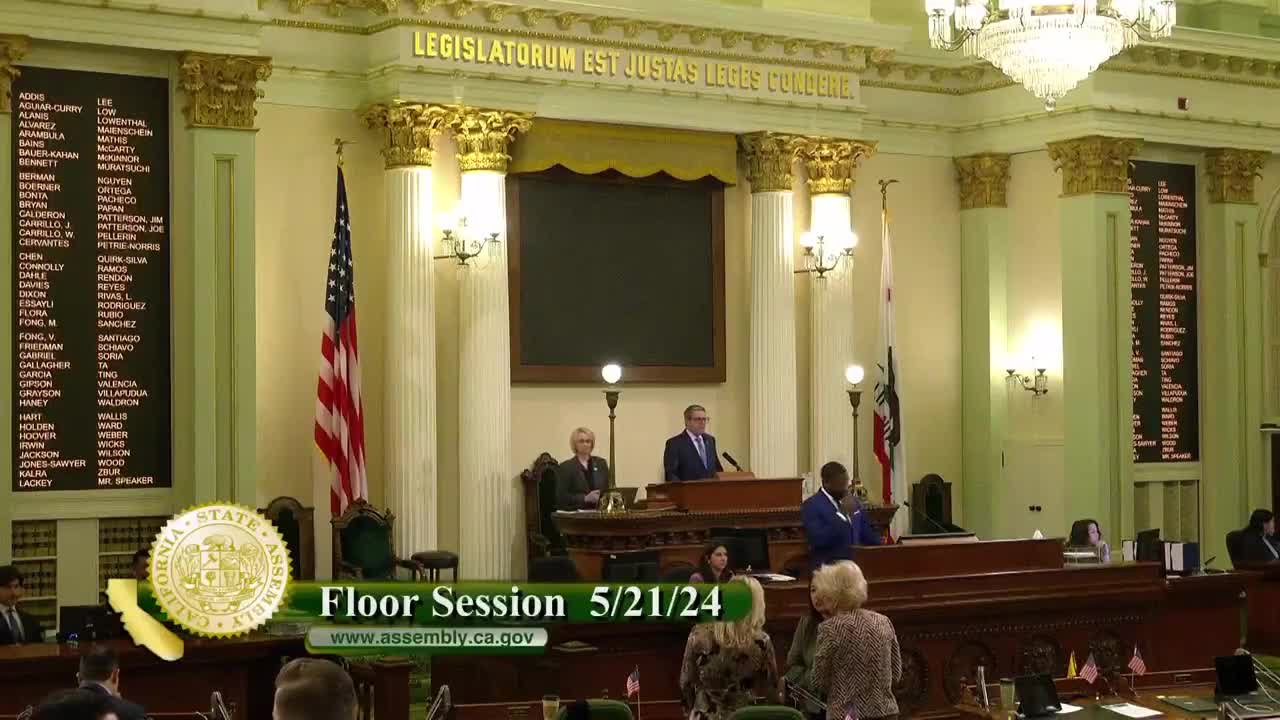
Bill Author

Bill Co-Author(s):