AB 301: Gun violence restraining orders: body armor.
- Session Year: 2023-2024
- House: Assembly
- Latest Version Date: 2023-09-26
Current Status:
Passed
(2023-09-26: Chaptered by Secretary of State - Chapter 234, Statutes of 2023.)
Introduced
In Committee
First Chamber
In Committee
Second Chamber
Enacted
What does this bill do?
This bill lets courts consider evidence that a person acquired body armor when deciding whether to issue a temporary emergency gun violence restraining order (a short-term order that can keep someone from having guns or ammunition). It adds acquisition of body armor to the list of factors courts may look at as possible signs of increased risk of violence.
The summary is provided by generative AI which can make mistakes. For original language, please view the details in the table below.
Existing law authorizes a court to issue an ex parte gun violence restraining order prohibiting the subject of the petition from having custody or control of, owning, purchasing, possessing, or receiving, or attempting to purchase or receive a firearm or ammunition when it is shown that there is a substantial likelihood that the subject of the petition poses a significant danger of harm to themselves or to another person in the near future by having custody or control of, owning, purchasing, possessing, or receiving a firearm, and that the order is necessary to prevent personal injury to themselves or to another. Existing law requires the court, when determining whether grounds for a gun violence restraining order exists, to consider evidence of, among other things, a recent threat of violence by the subject of the petition, and also authorizes the court to consider evidence of, among other things, recent acquisition of firearms, ammunition, or other deadly weapons by the subject of the petition.
This bill would additionally authorize the court to consider evidence of acquisition of body armor when determining whether grounds for a gun violence restraining order exist.
Existing law makes it a felony for a person who has been convicted of a violent felony to purchase, own, or possess body armor. Existing law authorizes a person subject to that prohibition, whose employment, livelihood, or safety is dependent on the ability to legally possess and use body armor, to file a petition for an exception to the prohibition with the chief of police or county sheriff of the jurisdiction in which the person seeks to possess and use the body armor, as provided.This bill would repeal those provisions and instead make it a misdemeanor for any person to purchase or take possession of body armor, and a felony for any person who has been convicted of a violent felony to do so, unless they are employed in specified professions. The bill would additionally make it a misdemeanor for a person, firm, or corporation to sell or deliver body armor to any person not engaged in one of those professions. The bill would require a seller to verify that a transferee is from an eligible profession, as specified. The bill would authorize the Department of Justice to expand the list of eligible professions if the duties of the profession may expose an individual engaged in the profession to serious physical injury that may be prevented or mitigated by the wearing of body armor, or if the duties of the profession are necessary to facilitate the lawful purchase, sale, or use of body armor.The California Constitution requires the state to reimburse local agencies and school districts for certain costs mandated by the state. Statutory provisions establish procedures for making that reimbursement.This bill would provide that no reimbursement is required by this act for a specified reason.Existing law makes it a felony for a person who has been convicted of a violent felony to purchase, own, or possess body armor. Existing law authorizes a person subject to that prohibition, whose employment, livelihood, or safety is dependent on the ability to legally possess and use body armor, to file a petition for an exception to the prohibition with the chief of police or county sheriff of the jurisdiction in which the person seeks to possess and use the body armor, as provided.
This bill would repeal those provisions and instead make it a misdemeanor for any person to purchase or take possession of body armor, and a felony for any person who has been convicted of a violent felony to do so, unless they are employed in specified professions. The bill would additionally make it a misdemeanor for a person, firm, or corporation to sell or deliver body armor to any person not engaged in one of those professions. The bill would require a seller to verify that a transferee is from an eligible profession, as specified. The bill would authorize the Department of Justice to expand the list of eligible professions if the duties of the profession may expose an individual engaged in the profession to serious physical injury that may be prevented or mitigated by the wearing of body armor, or if the duties of the profession are necessary to facilitate the lawful purchase, sale, or use of body armor.
The California Constitution requires the state to reimburse local agencies and school districts for certain costs mandated by the state. Statutory provisions establish procedures for making that reimbursement.
This bill would provide that no reimbursement is required by this act for a specified reason.
Existing law makes it a felony for a person who has been convicted of a violent felony to purchase, own, or possess body armor. Existing law authorizes a person subject to that prohibition, whose employment, livelihood, or safety is dependent on the ability to legally possess and use body armor, to file a petition for an exception to the prohibition with the chief of police or county sheriff of the jurisdiction in which the person seeks to possess and use the body armor, as provided.
This bill would repeal those provisions and instead make it a misdemeanor for any person to purchase or take possession of body armor, and a felony for any person who has been convicted of a violent felony to do so, unless they are employed in specified professions. The bill would additionally make it a misdemeanor for a person, firm, or corporation to sell or deliver body armor to any person not engaged in one of those professions. The bill would require a seller to verify that a transferee is from an eligible profession, as specified. The bill would authorize the Department of Justice to expand the list of eligible professions if the duties of the profession may expose an individual engaged in the profession to serious physical injury that may be prevented or mitigated by the wearing of body armor, or if the duties of the profession are necessary to facilitate the lawful purchase, sale, or use of body armor.
The California Constitution requires the state to reimburse local agencies and school districts for certain costs mandated by the state. Statutory provisions establish procedures for making that reimbursement.
This bill would provide that no reimbursement is required by this act for a specified reason.
(a)(1)The court, before issuing an ex parte gun violence restraining order, shall examine on oath, the petitioner and any witness the petitioner may produce.
(2)In lieu of examining the petitioner and any witness the petitioner may produce, the court may require the petitioner and any witness to submit a written affidavit signed under oath.
(b)(1)In determining whether grounds for a gun violence restraining order exist, the court shall consider all evidence of the following:
(A)A recent threat of violence or act of violence by the subject of the petition directed toward another.
(B)A recent threat of violence or act of violence by the subject of the petition directed toward themselves.
(C)A violation of an emergency protective order issued pursuant to Section 646.91 or Part 3 (commencing with Section 6240) of Division 10 of the Family Code that is in effect at the time the court is considering the petition.
(D)A recent violation of an unexpired protective order issued pursuant to Part 4 (commencing with Section 6300) of Division 10 of the Family Code, Section 136.2, Section 527.6 of the Code of Civil Procedure, or Section 213.5 or 15657.03 of the Welfare and Institutions Code.
(E)A conviction for any offense listed in Section 29805.
(F)A pattern of violent acts or violent threats within the past 12 months, including, but not limited to, threats of violence or acts of violence by the subject of the petition directed toward themselves or another.
(2)In determining whether grounds for a gun violence restraining order exist, the court may consider any other evidence of an increased risk for violence, including, but not limited to, evidence of any of the following:
(A)The unlawful and reckless use, display, or brandishing of a firearm by the subject of the petition.
(B)The history of use, attempted use, or threatened use of physical force by the subject of the petition against another person.
(C)A prior arrest of the subject of the petition for a felony offense.
(D)A history of a violation by the subject of the petition of an emergency protective order issued pursuant to Section 646.91 or Part 3 (commencing with Section 6240) of Division 10 of the Family Code.
(E)A history of a violation by the subject of the petition of a protective order issued pursuant to Part 4 (commencing with Section 6300) of Division 10 of the Family Code, Section 136.2, Section 527.6 of the Code of Civil Procedure, or Section 213.5 or 15657.03 of the Welfare and Institutions Code.
(F)Documentary evidence, including, but not limited to, police reports and records of convictions, of either recent criminal offenses by the subject of the petition that involve controlled substances or alcohol or ongoing abuse of controlled substances or alcohol by the subject of the petition.
(G)Evidence of recent acquisition of firearms, ammunition, or other deadly weapons.
(H)Evidence of acquisition of body armor, as defined in Section 16288.
(3)For the purposes of this subdivision, recent means within the six months prior to the date the petition was filed.
(c)If the court determines that the grounds to issue an ex parte gun violence restraining order exist, it shall issue an ex parte gun violence restraining order that prohibits the subject of the petition from having in their custody or control, owning, purchasing, possessing, or receiving, or attempting to purchase or receive a firearm or ammunition, and expires no later than 21 days from the date of the order.
(a)(1)The court, before issuing an ex parte gun violence restraining order, shall examine on oath, the petitioner and any witness the petitioner may produce.
(2)In lieu of examining the petitioner and any witness the petitioner may produce, the court may require the petitioner and any witness to submit a written affidavit signed under oath.
(b)(1)In determining whether grounds for a gun violence restraining order exist, the court shall consider all evidence of the following:
(A)A recent threat of violence or act of violence by the subject of the petition directed toward another.
(B)A recent threat of violence or act of violence by the subject of the petition directed toward himself or herself. themselves.
(C)A violation of an emergency protective order issued pursuant to Section 646.91 or Part 3 (commencing with Section 6240) of Division 10 of the Family Code that is in effect at the time the court is considering the petition.
(D)A recent violation of an unexpired protective order issued pursuant to Part 4 (commencing with Section 6300) of Division 10 of the Family Code, Section 136.2, Section 527.6 of the Code of Civil Procedure, or Section 213.5 or 15657.03 of the Welfare and Institutions Code.
(E)A conviction for any offense listed in Section 29805.
(F)A pattern of violent acts or violent threats within the past 12 months, including, but not limited to, threats of violence or acts of violence by the subject of the petition directed toward himself, herself, themselves or another.
(2)In determining whether grounds for a gun violence restraining order exist, the court may consider any other evidence of an increased risk for violence, including, but not limited to, evidence of any of the following:
(A)The unlawful and reckless use, display, or brandishing of a firearm by the subject of the petition.
(B)The history of use, attempted use, or threatened use of physical force by the subject of the petition against another person.
(C)A prior arrest of the subject of the petition for a felony offense.
(D)A history of a violation by the subject of the petition of an emergency protective order issued pursuant to Section 646.91 or Part 3 (commencing with Section 6240) of Division 10 of the Family Code.
(E)A history of a violation by the subject of the petition of a protective order issued pursuant to Part 4 (commencing with Section 6300) of Division 10 of the Family Code, Section 136.2, Section 527.6 of the Code of Civil Procedure, or Section 213.5 or 15657.03 of the Welfare and Institutions Code.
(F)Documentary evidence, including, but not limited to, police reports and records of convictions, of either recent criminal offenses by the subject of the petition that involve controlled substances or alcohol or ongoing abuse of controlled substances or alcohol by the subject of the petition.
(G)Evidence of recent acquisition of firearms, ammunition, or other deadly weapons.
(H)Evidence of acquisition of body armor, as defined in Section 16288.
(3)For the purposes of this subdivision, recent means within the six months prior to the date the petition was filed.
(c)If the court determines that the grounds to issue an ex parte gun violence restraining order exist, it shall issue an ex parte gun violence restraining order that prohibits the subject of the petition from having in his or her their custody or control, owning, purchasing, possessing, or receiving, or attempting to purchase or receive, receive a firearm or ammunition, and expires no later than 21 days from the date of the order.
SECTION 1.Section 31360 of the Penal Code is repealed.SEC. 2.Section 31360 is added to the Penal Code, to read:31360.(a)A person is guilty of the unlawful purchase of body armor when, not being engaged or employed in an eligible profession, they knowingly purchase or take possession of body armor. This subdivision does not apply to individuals or entities engaged or employed in eligible professions.(b)(1)No person, firm, or corporation shall sell or deliver body armor to any person or entity not engaged or employed in an eligible profession. Before selling or delivering body armor, a person, firm, or corporation shall check proof of engagement in an eligible profession.(2)No sale or delivery of body armor shall be made unless the transferee meets in person with the transferor to accomplish the sale or delivery.(3)For the purposes of paragraph (1), proof of engagement in an eligible profession may be satisfied by submission to the seller of a professional license issued by a federal, state, or local government, employment card or other credential issued by an employer, or in the absence of either of those, submission to the seller of a form approved by the Department of Justice that is notarized, verifying that the purchaser is engaged in an eligible profession.(4)This subdivision does not apply to purchases made by federal, state, or local government agencies for the purpose of furnishing body armor to employees in eligible professions.(c)For the purposes of this section, eligible professions means any of the following:(1)Peace officers.(2)Persons in military service in the state or military or other service for the United States.(3)Federal law enforcement officers.(4)Armored car guards.(5)Security guards.(6)Firefighters.(7)Emergency medical technicians and paramedics.(8)Firearms dealers.(9)Body armor retailers or salespersons.(10)Private investigators.(11)Building safety inspectors.(12)Code enforcement officers.(13)Animal control officers.(14)Humane officers.(15)Violence intervention and prevention workers.(16)Movie actors.(17)Attorneys.(18)Journalists.(19)Any profession added by the Department of Justice pursuant to subdivision (d).(d)(1)The Department of Justice may add additional professions pursuant to paragraph (19) of subdivision (c). The department shall add a profession to the list of eligible professions if the duties of the profession may expose an individual engaged in the profession to serious physical injury that may be prevented or mitigated by the wearing of body armor, or if the duties of the profession are necessary to facilitate the lawful purchase, sale, or use of body armor.(2)An individual or entity engaged in a profession in the state that is not on the list of eligible professions may request that the Department of Justice add their profession to the list of eligible professions by filing a request with the Department of Justice in a form and method approved by the department.(e)(1)Except as provided in paragraph (2), a violation of subdivision (a) or (b) shall be a misdemeanor, punishable by a fine not to exceed five thousand dollars ($5,000) for a first offense, and not to exceed ten thousand dollars ($10,000) for any subsequent offense.(2)A violation of subdivision (a) by a person who has been convicted of a violent felony under the laws of the United States, the State of California, or any other state, government, or country shall be punishable by imprisonment in state prison for 16 months, or two or three years.(f)For the purposes of this section, body armor has the same meaning as in Section 16288.SEC. 3.No reimbursement is required by this act pursuant to Section 6 of Article XIIIB of the California Constitution because the only costs that may be incurred by a local agency or school district will be incurred because this act creates a new crime or infraction, eliminates a crime or infraction, or changes the penalty for a crime or infraction, within the meaning of Section 17556 of the Government Code, or changes the definition of a crime within the meaning of Section 6 of Article XIIIB of the California Constitution.(a)A person is guilty of the unlawful purchase of body armor when, not being engaged or employed in an eligible profession, they knowingly purchase or take possession of body armor. This subdivision does not apply to individuals or entities engaged or employed in eligible professions.
(b)(1)No person, firm, or corporation shall sell or deliver body armor to any person or entity not engaged or employed in an eligible profession. Before selling or delivering body armor, a person, firm, or corporation shall check proof of engagement in an eligible profession.
(2)No sale or delivery of body armor shall be made unless the transferee meets in person with the transferor to accomplish the sale or delivery.
(3)For the purposes of paragraph (1), proof of engagement in an eligible profession may be satisfied by submission to the seller of a professional license issued by a federal, state, or local government, employment card or other credential issued by an employer, or in the absence of either of those, submission to the seller of a form approved by the Department of Justice that is notarized, verifying that the purchaser is engaged in an eligible profession.
(4)This subdivision does not apply to purchases made by federal, state, or local government agencies for the purpose of furnishing body armor to employees in eligible professions.
(c)For the purposes of this section, eligible professions means any of the following:
(1)Peace officers.
(2)Persons in military service in the state or military or other service for the United States.
(3)Federal law enforcement officers.
(4)Armored car guards.
(5)Security guards.
(6)Firefighters.
(7)Emergency medical technicians and paramedics.
(8)Firearms dealers.
(9)Body armor retailers or salespersons.
(10)Private investigators.
(11)Building safety inspectors.
(12)Code enforcement officers.
(13)Animal control officers.
(14)Humane officers.
(15)Violence intervention and prevention workers.
(16)Movie actors.
(17)Attorneys.
(18)Journalists.
(13)(19)Any profession added by the Department of Justice pursuant to subdivision (d).
(d)(1)The Department of Justice may add additional professions pursuant to paragraph (13) (19) of subdivision (d). (c). The department shall add a profession to the list of eligible professions if the duties of the profession may expose an individual engaged in the profession to serious physical injury that may be prevented or mitigated by the wearing of body armor, or if the duties of the profession are necessary to facilitate the lawful purchase, sale, or use of body armor.
(2)An individual or entity engaged in a profession in the state that is not on the list of eligible professions may request that the Department of Justice add their profession to the list of eligible professions by filing a request with the Department of Justice in a form and method approved by the department.
(e)(1)Except as provided in paragraph (2), a violation of subdivision (a) or (b) shall be a misdemeanor, punishable by a fine not to exceed five thousand dollars ($5,000) for a first offense, and not to exceed ten thousand dollars ($10,000) for any subsequent offense.
(2)A violation of subdivision (a) by a person who has been convicted of a violent felony under the laws of the United States, the State of California, or any other state, government, or country shall be punishable by imprisonment in state prison for 16 months, or two or three years.
(f)For the purposes of this section, body armor has the same meaning as in Section 16288.
SEC. 3.No reimbursement is required by this act pursuant to Section 6 of Article XIIIB of the California Constitution because the only costs that may be incurred by a local agency or school district will be incurred because this act creates a new crime or infraction, eliminates a crime or infraction, or changes the penalty for a crime or infraction, within the meaning of Section 17556 of the Government Code, or changes the definition of a crime within the meaning of Section 6 of Article XIIIB of the California Constitution.
(a)A person is guilty of the unlawful purchase of body armor when, not being engaged or employed in an eligible profession, they knowingly purchase or take possession of body armor. This subdivision does not apply to individuals or entities engaged or employed in eligible professions.
(b)(1)No person, firm, or corporation shall sell or deliver body armor to any person or entity not engaged or employed in an eligible profession. Before selling or delivering body armor, a person, firm, or corporation shall check proof of engagement in an eligible profession.
(2)No sale or delivery of body armor shall be made unless the transferee meets in person with the transferor to accomplish the sale or delivery.
(3)For the purposes of paragraph (1), proof of engagement in an eligible profession may be satisfied by submission to the seller of a professional license issued by a federal, state, or local government, employment card or other credential issued by an employer, or in the absence of either of those, submission to the seller of a form approved by the Department of Justice that is notarized, verifying that the purchaser is engaged in an eligible profession.
(4)This subdivision does not apply to purchases made by federal, state, or local government agencies for the purpose of furnishing body armor to employees in eligible professions.
(c)For the purposes of this section, eligible professions means any of the following:
(1)Peace officers.
(2)Persons in military service in the state or military or other service for the United States.
(3)Federal law enforcement officers.
(4)Armored car guards.
(5)Security guards.
(6)Firefighters.
(7)Emergency medical technicians and paramedics.
(8)Firearms dealers.
(9)Body armor retailers or salespersons.
(10)Private investigators.
(11)Building safety inspectors.
(12)Code enforcement officers.
(13)Any profession added by the Department of Justice pursuant to subdivision (d).
(d)(1)The Department of Justice may add additional professions pursuant to paragraph (13) of subdivision (d). The department shall add a profession to the list of eligible professions if the duties of the profession may expose an individual engaged in the profession to serious physical injury that may be prevented or mitigated by the wearing of body armor, or if the duties of the profession are necessary to facilitate the lawful purchase, sale, or use of body armor.
(2)An individual or entity engaged in a profession in the state that is not on the list of eligible professions may request that the Department of Justice add their profession to the list of eligible professions by filing a request with the Department of Justice in a form and method approved by the department.
(e)(1)Except as provided in paragraph (2), a violation of subdivision (a) or (b) shall be a misdemeanor, punishable by a fine not to exceed five thousand dollars ($5,000) for a first offense, and not to exceed ten thousand dollars ($10,000) for any subsequent offense.
(2)A violation of subdivision (a) by a person who has been convicted of a violent felony under the laws of the United States, the State of California, or any other state, government, or country shall be punishable by imprisonment in state prison for 16 months, or two or three years.
SEC. 3.No reimbursement is required by this act pursuant to Section 6 of Article XIIIB of the California Constitution because the only costs that may be incurred by a local agency or school district will be incurred because this act creates a new crime or infraction, eliminates a crime or infraction, or changes the penalty for a crime or infraction, within the meaning of Section 17556 of the Government Code, or changes the definition of a crime within the meaning of Section 6 of Article XIIIB of the California Constitution.
|
Date
|
Status
|
|---|---|
| Sep 26, 2023 | Chaptered by Secretary of State - Chapter 234, Statutes of 2023. |
| Sep 26, 2023 | Approved by the Governor. |
| Sep 12, 2023 | Enrolled and presented to the Governor at 2 p.m. |
| Sep 5, 2023 | In Assembly. Ordered to Engrossing and Enrolling. |
| Sep 5, 2023 | Read third time. Passed. Ordered to the Assembly. (Ayes 31. Noes 8. Page 2367.). |
| Jun 29, 2023 | Read second time. Ordered to third reading. |
| Jun 28, 2023 | From committee: Do pass. (Ayes 4. Noes 0.) (June 27). |
| May 17, 2023 | Referred to Com. on PUB S. |
| May 9, 2023 | In Senate. Read first time. To Com. on RLS. for assignment. |
| May 8, 2023 | Read third time. Passed. Ordered to the Senate. (Ayes 54. Noes 17. Page 1484.) |
| Apr 27, 2023 | Read second time. Ordered to third reading. |
| Apr 26, 2023 | From committee: Do pass. (Ayes 12. Noes 4.) (April 26). |
| Mar 14, 2023 | From committee: Do pass and re-refer to Com. on APPR. (Ayes 6. Noes 2.) (March 14). Re-referred to Com. on APPR. |
| Mar 6, 2023 | Re-referred to Com. on PUB. S. |
| Mar 2, 2023 | In committee: Set, second hearing. Hearing canceled at the request of author. |
| Mar 2, 2023 | From committee chair, with author's amendments: Amend, and re-refer to Com. on PUB. S. Read second time and amended. |
| Feb 28, 2023 | In committee: Set, first hearing. Hearing canceled at the request of author. |
| Feb 23, 2023 | Re-referred to Com. on PUB. S. |
| Feb 22, 2023 | From committee chair, with author's amendments: Amend, and re-refer to Com. on PUB. S. Read second time and amended. |
| Feb 2, 2023 | Referred to Com. on PUB. S. |
| Jan 27, 2023 | From printer. May be heard in committee February 26. |
| Jan 26, 2023 | Read first time. To print. |
|
Date
|
Description
|
Location
|
Votes
|
|
|---|---|---|---|---|
| Sep 5, 2023 | Assembly 3rd Reading AB301 Bauer-Kahan et al. By Blakespear | Senate Floor |
Passed |
|
| Jun 27, 2023 | Do pass | Senate Standing Committee on Public Safety |
Passed |
|
| May 8, 2023 | AB 301 Bauer-Kahan Assembly Third Reading | Assembly Floor |
Passed |
|
| Apr 26, 2023 | Do pass. | Assembly Standing Committee on Appropriations |
Passed |
|
| Mar 14, 2023 | Do pass and be re-referred to the Committee on [Appropriations] | Assembly Standing Committee on Public Safety |
Passed |
This list shows positions taken on this bill by organizations on the date displayed, which is linked to the original source.
Positions by individuals are not included.
|
Organization
|
Position
|
Date
|
|---|---|---|
| Alameda County District Attorney's Office | * Support | Jun 27, 2023 |
| California School Employees Association | ** Support | |
| Everytown for Gun Safety | ** Support | |
| Everytown for Gun Safety Action Fund | ** Support | |
| Friends Committee On Legislation Of California | * Support | Jun 27, 2023 |
| Gun Owners Of California Inc | ** Against | |
| Los Angeles County District AttorneyS Office | ** Support | |
| March for Our Lives | * Support | Jun 27, 2023 |
| Moms Demand Action for Gun Sense in America | ** Support | |
| Riverside County Sheriff's Office | ** Against | |
| San Diegans For Gun Violence Prevention | ** Support |
SENATE RULES COMMITTEE Office of Senate Floor Analyses (916) 651-1520 Fax: (916) 327-4478 | AB 301 |
THIRD READING
Bill No: AB 301
Author: Bauer-Kahan (D), et al.
Amended: 3/2/23 in Assembly
Vote: 21
SENATE PUBLIC SAFETY COMMITTEE: 4-0, 6/27/23
AYES: Wahab, Bradford, Skinner, Wiener
NO VOTE RECORDED: Ochoa Bogh
ASSEMBLY FLOOR: 54-17, 5/8/23 - See last page for vote
SUBJECT: Gun violence restraining orders: body armor
SOURCE: Everytown for Gun Safety
DIGEST:
This bill provides that, in determining whether grounds for issuing a gun violence restraining order (GVRO) exist, the court may consider evidence of the acquisition of body armor.
ANALYSIS:
Existing law:
- Defines a “GVRO” as an order in writing, signed by the court, prohibiting and enjoining a named person from having in his or her custody or control, owning, purchasing, possessing, or receiving any firearms or ammunition. (Pen. Code, § 18100.)
- Requires a petition for a GVRO to describe the number, types, and locations of any firearms and ammunition presently believed by the petitioner to be possessed or controlled by the subject of the petition. (Pen. Code, § 18107.)
- Prohibits a person that is subject to a GVRO from having in his or her custody any firearms or ammunition while the order is in effect. Specifies that this means the person cannot own, purchase, possess, or receive any firearms or ammunition. (Pen. Code, § 18120, subd. (a).)
- Requires the court to order the restrained person to surrender all firearms and ammunition in his or her control, or which the person possesses or owns. (Pen. Code, § 18120, subd. (b)(1).)
- Requires the law enforcement officer serving a GVRO to request that all firearms and ammunition be immediately surrendered. Requires, if the request is not made by a law enforcement officer, the surrender to occur within 24 hours of being served with the order, by surrendering all firearms and ammunition in a safe manner to the control of the local law enforcement agency, selling all firearms and ammunition to a licensed firearms dealer, or transferring all firearms and ammunition to a licensed firearms dealer. (Pen. Code, § 18120, subd. (b)(2) & (3).)
- Requires the law enforcement officer or licensed firearms dealer taking possession of any firearms or ammunition to issue a receipt to the person surrendering the firearm, or firearms, or ammunition, or both, at the time of surrender and requires the restrained person to, within 48 hours of being served, do both of the following:
- File with the court that issued the GVRO the original receipt showing all firearms and ammunition have been surrendered to a local law enforcement agency or sold or transferred to a licensed firearms dealer. Failure to timely file a receipt shall constitute a violation of the restraining order; and,
- File a copy of the receipt with the law enforcement agency, if any, that served the GVRO. Failure to timely file a copy of the receipt shall constitute a violation of the restraining order. (Pen. Code, § 18120, subd. (b)(4) & (5).)
- Provides that there is no filing fee for an application, a responsive pleading, or an order to show cause that seeks to obtain, modify, or enforce a GVRO or other authorized order if the request for the other order is necessary to obtain or give effect to a GVRO or other authorized order. Provides that there is no fee for a subpoena filed in connection with that application, responsive pleading, or order to show cause. (Pen. Code, § 18121.)
- Allows law enforcement to obtain a temporary GVRO if the officer asserts, and the court finds, that there is reasonable cause to believe the following:
- The subject of the petition poses an immediate and present danger of causing injury to himself, herself, or another by having in his or her custody or control, owning, purchasing, possessing, or receiving a firearm or ammunition; and,
- A temporary emergency GVRO is necessary to prevent personal injury to the subject of the order or another because less restrictive alternatives have been tried and been ineffective or have been determined to be inadequate or inappropriate under the circumstances. (Pen. Code, § 18125, subd. (a).)
- Provides that a temporary GVRO expire 21 days from the date the order is issued. (Pen. Code, § 18125, subd. (b).)
- Requires the court that issued the order or another court in the same jurisdiction, within 21 days after the date on the temporary GVRO order, to hold a hearing to determine if a GVRO should be issued after notice and hearing. (Pen. Code, § 18148.)
- Allows any of the following individuals to file a petition requesting that the court issue an ex parte GVRO enjoining a person from having in his or her custody or control, owning, purchasing, or receiving a firearm or ammunition:
- An immediate family member of the subject of the petition;
- An employer of the subject of the petition;
- A coworker, if they have had substantial and regular interactions with the subject for at least one year and have obtained the approval of the employer;
- An employee or teacher of a school that the subject has attended in the past six months, if the employee or teacher has obtained the approval of a school administrator or a school administration staff member with a supervisorial role;
- A law enforcement officer;
- A roommate of the subject of the petition;
- An individual who has a dating relationship with the subject of the petition; or,
- An individual who has a child in common with the subject of the petition, if they have had substantial and regular interactions with the subject for at least one year. (Pen. Code, § 18150, subd. (a)(1).)
- Allows a court to issue an ex parte GVRO if an affidavit, made in writing and signed by the petitioner under oath, or an oral statement, and any additional information provided to the court shows there is a substantial likelihood that both of the following are true:
- The subject of the petition poses a significant danger, in the near future, of causing personal injury to himself, herself, or another by having under his or her custody and control, owning, purchasing, possessing, or receiving a firearm as determined by balancing specified factors.
- An ex parte GVRO is necessary to prevent personal injury to the subject of the petition or another because less restrictive alternatives either have been tried and found to be ineffective, or are inadequate or inappropriate for the circumstances of the subject of the petition. (Pen. Code, §§ 18150, subd. (b) & 18155.)
- Provides that an ex parte GVRO expires no later than 21 days from the date the order is issued. (Pen. Code, § 18155, subd. (c).)
- States that at the hearing, the petitioner has the burden of proof, which is to establish by clear and convincing evidence that both of the following are true:
- The person poses a significant danger of causing personal injury to themselves or another by having in the subject’s custody or control, owning, purchasing, possessing, or receiving a firearm; and,
- A GVRO is necessary to prevent personal injury to the subject of the petition or another because less restrictive alternatives either have been tried and found to be ineffective, or are inadequate or inappropriate for the circumstances of the subject of the petition. (Pen. Code, § 18175, subd. (b).)
- Provides that in determining whether grounds for a GVRO exist, the court shall consider all evidence of the following:
- A recent threat of violence or act of violence by the subject of the petition directed toward another;
- A recent threat of violence or act of violence by the subject of the petition directed toward himself or herself;
- A violation of an emergency protective order issued that is in effect at the time the court is considering the petition;
- A recent violation of an unexpired protective order;
- A conviction for a misdemeanor offense that results in firearm prohibitions; or,
- A pattern of violent acts or violent threats within the past 12 months, including, but not limited to, threats of violence or acts of violence by the subject of the petition directed toward himself, herself, or another. (Pen. Code, § 18155, subd. (b)(1), italics added.)
- States that in determining whether grounds for a GVRO exist, the court may consider any other evidence of an increased risk for violence, including, but not limited to, evidence of any of the following:
- The unlawful and reckless use, display, or brandishing of a firearm by the subject of the petition;
- The history of use, attempted use, or threatened use of physical force by the subject of the petition against another person;
- A prior arrest of the subject of the petition for a felony offense;
- A history of a violation by the subject of the petition of an emergency protective order;
- A history of a violation by the subject of the petition of a protective order;
- Documentary evidence, including, but not limited to, police reports and records of convictions, of either recent criminal offenses by the subject of the petition that involve controlled substances or alcohol or ongoing abuse of controlled substances or alcohol by the subject of the petition; or,
- Evidence of recent acquisition of firearms, ammunition, or other deadly weapons. (Pen. Code, § 18155, subd. (b)(2), italics added.)
- Defines “body armor” to mean “any bullet-resistant material intended to provide ballistic and trauma protection for the person wearing the body armor.” (Pen. Code, § 16288.)
This bill authorizes a court to consider evidence of acquisition of body armor when determining whether grounds for a GVRO exist.
Comments
According to the author of this bill:
AB 301 safeguards the security of our communities by allowing judges to consider the acquisition of body armor as an important piece of evidence when deciding whether or not to grant a gun violence restraining order. According to The Violence Project, 21 mass shooters have worn tactical gear during their attacks. Most recent incidents include the Buffalo, New York mass shooting and in 2015 the San Bernardino shooting where both the perpetrators wore body armor to prolong their attacks, making it harder for law enforcement to apprehend them. As such, it is vital for judges to recognize the significance of body armor and its use in violent crimes.
FISCAL EFFECT: Appropriation: No Fiscal Com.: No Local: No
SUPPORT: (Verified 6/28/23)
Everytown for Gun Safety (source)
California School Employees Association
Los Angeles County District Attorney’s Office
March for Our Lives Action Fund
Moms Demand Action for Gun Sense in America
OPPOSITION: (Verified 6/28/23)
None received
ARGUMENTS IN SUPPORT: According to Everytown for Gun Safety, the sponsor of this bill:
The number of mass shooters wearing body armor has been trending upwards in the past number of years, with at least 21 mass shooters over the last 40 years wearing body armor, according to The Violence Project. The majority of these have been in the past 10 years. This includes the May 2022 mass shooting at the Tops supermarket in Buffalo, NY where an act of white supremacist, hate-motivated violence killed 10 people and left a community forever traumatized. Other high-casualty mass shootings where the perpetrator utilized body armor include the 2015 San Bernardino mass shooting here in California, the 2012 Aurora, CO movie theater mass shooting, and the 2021 Boulder, CO supermarket mass shooting.
Over the past decade, body armor has become an increasingly common accessory worn by extremists and those committing mass terror acts against communities. Body armor leads to greater damage by making it more difficult to disarm an active shooter. In the recent mass shooting at Tops supermarket in Buffalo, NY, an armed security guard on site tried to stop the shooter - at least one of his shots hit the gunman but did not disable him because of his body armor. The shooter had reportedly researched the type of firearm the security guard would be carrying to ensure he had the appropriate body armor to protect him from the gun’s bullets. Shortly after the Buffalo shooting, the New York state legislature passed a bill significantly limiting the sale of body armor.
. . . .
Courts should be encouraged to consider acquisition of body armor when evaluating the full constellation of risk factors to determine whether to issue a gun violence restraining order.
ASSEMBLY FLOOR: 54-17, 5/8/23
AYES: Addis, Aguiar-Curry, Alvarez, Bauer-Kahan, Bennett, Berman, Boerner, Bonta, Bryan, Calderon, Wendy Carrillo, Connolly, Davies, Mike Fong, Friedman, Gabriel, Garcia, Gipson, Grayson, Haney, Holden, Irwin, Jackson, Jones-Sawyer, Kalra, Low, Lowenthal, Maienschein, McKinnor, Muratsuchi, Stephanie Nguyen, Pacheco, Papan, Pellerin, Petrie-Norris, Quirk-Silva, Ramos, Reyes, Luz Rivas, Robert Rivas, Rodriguez, Blanca Rubio, Santiago, Schiavo, Soria, Ting, Valencia, Villapudua, Weber, Wicks, Wilson, Wood, Zbur, Rendon
NOES: Alanis, Bains, Chen, Megan Dahle, Dixon, Essayli, Vince Fong, Gallagher, Hoover, Lackey, Mathis, Jim Patterson, Joe Patterson, Sanchez, Ta, Waldron, Wallis
NO VOTE RECORDED: Arambula, Juan Carrillo, Cervantes, Flora, Hart, Lee, McCarty, Ortega, Ward
Prepared by: Stella Choe / PUB. S. /
6/30/23 13:34:25
**** END ****
SENATE COMMITTEE ON PUBLIC SAFETY
Senator Aisha Wahab, Chair
2023 - 2024 Regular
Bill No: AB 301 Hearing Date: June 27, 2023
Author: | Bauer-Kahan | ||
Version: | March 2, 2023 | ||
Urgency: | No | Fiscal: | No |
Consultant: | SC | ||
Subject: Gun violence restraining orders: body armor
HISTORY
Source: Everytown for Gun and Safety
Prior Legislation: AB 2870 (Santiago), Ch. 974, Stats. 2022
AB 538 (Rubio), Ch. 686, Stats. 2021
AB 2617 (Gabriel), Ch. 286, Stats. 2020
AB 12 (Irwin), Ch. 724, Stats. 2019
AB 61 (Ting), Ch. 725, Stats. 2019
AB 339 (Irwin), Ch. 727, Stats. 2019
SB 1200 (Skinner), Ch. 898, Stats. 2018
AB 2888 (Ting), vetoed, 2018
SB 505 (Jackson), Ch. 918, Stats. 2014
AB 1014 (Skinner), Ch. 872, Stats. 2014
Support: Los Angeles County District Attorney’s Office; March for Our Lives Action Fund
Opposition: None known
Assembly Floor Vote: 54 - 17
PURPOSE
The purpose of this bill is to provide that, in determining whether grounds for issuing a gun violence restraining order (GVRO) exist, the court may consider evidence of the acquisition of body armor.
Existing law defines a “GVRO” as an order in writing, signed by the court, prohibiting and enjoining a named person from having in his or her custody or control, owning, purchasing, possessing, or receiving any firearms or ammunition. (Pen. Code, § 18100.)
Existing law requires a petition for a GVRO to describe the number, types, and locations of any firearms and ammunition presently believed by the petitioner to be possessed or controlled by the subject of the petition. (Pen. Code, § 18107.)
Existing law prohibits a person that is subject to a GVRO from having in his or her custody any firearms or ammunition while the order is in effect. Specifies that this means the person cannot own, purchase, possess, or receive any firearms or ammunition. (Pen. Code, § 18120, subd. (a).)
Existing law requires the court to order the restrained person to surrender all firearms and ammunition in his or her control, or which the person possesses or owns. (Pen. Code, § 18120, subd. (b)(1).)
Existing law requires the law enforcement officer serving a GVRO to request that all firearms and ammunition be immediately surrendered. Requires, if the request is not made by a law enforcement officer, the surrender to occur within 24 hours of being served with the order, by surrendering all firearms and ammunition in a safe manner to the control of the local law enforcement agency, selling all firearms and ammunition to a licensed firearms dealer, or transferring all firearms and ammunition to a licensed firearms dealer. (Pen. Code, § 18120, subd. (b)(2) & (3).)
Existing law requires the law enforcement officer or licensed firearms dealer taking possession of any firearms or ammunition to issue a receipt to the person surrendering the firearm, or firearms, or ammunition, or both, at the time of surrender and requires the restrained person to, within 48 hours of being served, do both of the following:
- File with the court that issued the GVRO the original receipt showing all firearms and ammunition have been surrendered to a local law enforcement agency or sold or transferred to a licensed firearms dealer. Failure to timely file a receipt shall constitute a violation of the restraining order; and,
- File a copy of the receipt with the law enforcement agency, if any, that served the GVRO. Failure to timely file a copy of the receipt shall constitute a violation of the restraining order. (Pen. Code, § 18120, subd. (b)(4) & (5).)
Existing law provides that there is no filing fee for an application, a responsive pleading, or an order to show cause that seeks to obtain, modify, or enforce a GVRO or other authorized order if the request for the other order is necessary to obtain or give effect to a GVRO or other authorized order. Provides that there is no fee for a subpoena filed in connection with that application, responsive pleading, or order to show cause. (Pen. Code, § 18121.)
Existing law allows law enforcement to obtain a temporary GVRO if the officer asserts, and the court finds, that there is reasonable cause to believe the following:
- The subject of the petition poses an immediate and present danger of causing injury to himself, herself, or another by having in his or her custody or control, owning, purchasing, possessing, or receiving a firearm or ammunition; and,
- A temporary emergency GVRO is necessary to prevent personal injury to the subject of the order or another because less restrictive alternatives have been tried and been ineffective or have been determined to be inadequate or inappropriate under the circumstances. (Pen. Code, § 18125, subd. (a).)
Existing law provides that a temporary GVRO expire 21 days from the date the order is issued. (Pen. Code, § 18125, subd. (b).)
Existing law requires a law enforcement officer who requests a temporary GVRO do all of the following:
- If the request is made orally, sign a declaration under penalty of perjury reciting the oral statements provided to the judicial officer and memorialize the order of the court on the form approved by the Judicial Council;
- Serve the order on the restrained person, if the restrained person can reasonably be located;
- File a copy of the order with the court as soon as practicable, but not later than 3 court days, after issuance; and,
- Have the order entered into the computer database system for protective and restraining orders maintained by the Department of Justice. (Pen. Code, § 18140.)
Existing law requires the court that issued the order or another court in the same jurisdiction, within 21 days after the date on the temporary GVRO order, to hold a hearing to determine if a GVRO should be issued after notice and hearing. (Pen. Code, § 18148.)
Existing law allows any of the following individuals to file a petition requesting that the court issue an ex parte GVRO enjoining a person from having in his or her custody or control, owning, purchasing, or receiving a firearm or ammunition:
- an immediate family member of the subject of the petition;
- an employer of the subject of the petition;
- a coworker, if they have had substantial and regular interactions with the subject for at least one year and have obtained the approval of the employer;
- an employee or teacher of a school that the subject has attended in the past 6 months, if the employee or teacher has obtained the approval of a school administrator or a school administration staff member with a supervisorial role;
- a law enforcement officer;
- A roommate of the subject of the petition;
- An individual who has a dating relationship with the subject of the petition; or,
- An individual who has a child in common with the subject of the petition, if they have had substantial and regular interactions with the subject for at least one year. (Pen. Code, § 18150, subd. (a)(1).)
Existing law defines “immediate family member” to mean “any spouse, whether by marriage or not, domestic partner, parent, child, any person related by consanguinity or affinity within the second degree, or any person related by consanguinity or affinity within the fourth degree who has had substantial and regular interactions with the subject for at least one year.” (Pen. Code, § 18150, subd. (a)(3).)
Existing law allows a court to issue an ex parte GVRO if an affidavit, made in writing and signed by the petitioner under oath, or an oral statement, and any additional information provided to the court shows there is a substantial likelihood that both of the following are true:
- The subject of the petition poses a significant danger, in the near future, of causing personal injury to himself, herself, or another by having under his or her custody and control, owning, purchasing, possessing, or receiving a firearm as determined by balancing specified factors.
- An ex parte GVRO is necessary to prevent personal injury to the subject of the petition or another because less restrictive alternatives either have been tried and found to be ineffective, or are inadequate or inappropriate for the circumstances of the subject of the petition. (Pen. Code, §§ 18150, subd. (b) & 18155.)
Existing law requires an ex parte GVRO to be issued or denied on the same day that the petition is submitted to the court unless the petition is filed too late in the day to permit effective review, in which case the order is required to be issued or denied on the next judicial business day. (Pen. Code, § 18150, subd. (d).)
Existing law requires a law enforcement officer to serve the ex parte GVRO on the restrained person, if the restrained person can reasonably be located. Requires the law enforcement officer to inform the restrained person that he or she is entitled to a hearing and provide the date of the scheduled hearing when serving a gun violence restraining order. (Pen. Code, § 18160.)
Existing law provides that an ex parte GVRO expires no later than 21 days from the date the order is issued. (Pen. Code, § 18155, subd. (c).)
Existing law requires the court that issued the order or another court in the same jurisdiction, within 21 days after the date on the ex parte GVRO order, to hold a hearing to determine if a GVRO should be issued after notice and hearing. (Pen. Code, § 18165.)
Existing law allows the following individuals to file a petition requesting that the court issue a GVRO after notice and a hearing enjoining a person from having in his or her custody or control, owning, purchasing, or receiving a firearm or ammunition: an immediate family member of the subject of the petition; an employer of the subject of the petition; a coworker, if they have had substantial and regular interactions with the subject for at least one year and have obtained the approval of the employer; an employee or teacher of a school that the subject has attended in the past 6 months, if the employee or teacher has obtained the approval of a school administrator or a school administration staff member with a supervisorial role; or a law enforcement officer. (Pen. Code, § 18170.)
Existing law states that at the hearing, the petitioner has the burden of proof, which is to establish by clear and convincing evidence that both of the following are true:
- The person poses a significant danger of causing personal injury to themselves or another by having in the subject’s custody or control, owning, purchasing, possessing, or receiving a firearm.
- A GVRO is necessary to prevent personal injury to the subject of the petition or another because less restrictive alternatives either have been tried and found to be ineffective, or are inadequate or inappropriate for the circumstances of the subject of the petition. (Pen. Code, § 18175, subd. (b).)
Existing law provides that in determining whether grounds for a GVRO exist, the court shall consider all evidence of the following:
- A recent threat of violence or act of violence by the subject of the petition directed toward another;
- A recent threat of violence or act of violence by the subject of the petition directed toward himself or herself;
- A violation of an emergency protective order issued that is in effect at the time the court is considering the petition;
- A recent violation of an unexpired protective order;
- A conviction for a misdemeanor offense that results in firearm prohibitions; or,
- A pattern of violent acts or violent threats within the past 12 months, including, but not limited to, threats of violence or acts of violence by the subject of the petition directed toward himself, herself, or another. (Pen. Code, § 18155, subd. (b)(1), italics added.)
Existing law states that in determining whether grounds for a GVRO exist, the court may consider any other evidence of an increased risk for violence, including, but not limited to, evidence of any of the following:
- The unlawful and reckless use, display, or brandishing of a firearm by the subject of the petition;
- The history of use, attempted use, or threatened use of physical force by the subject of the petition against another person;
- A prior arrest of the subject of the petition for a felony offense;
- A history of a violation by the subject of the petition of an emergency protective order;
- A history of a violation by the subject of the petition of a protective order;
- Documentary evidence, including, but not limited to, police reports and records of convictions, of either recent criminal offenses by the subject of the petition that involve controlled substances or alcohol or ongoing abuse of controlled substances or alcohol by the subject of the petition; or,
- Evidence of recent acquisition of firearms, ammunition, or other deadly weapons. (Pen. Code, § 18155, subd. (b)(2), italics added.)
Existing law defines “body armor” to mean “any bullet-resistant material intended to provide ballistic and trauma protection for the person wearing the body armor.” (Pen. Code, § 16288.)
This bill authorizes a court to consider evidence of acquisition of body armor when determining whether grounds for a GVRO exist.
COMMENTS
- Need for This Bill
According to the author of this bill:
AB 301 safeguards the security of our communities by allowing judges to consider the acquisition of body armor as an important piece of evidence when deciding whether or not to grant a gun violence restraining order. According to The Violence Project, 21 mass shooters have worn tactical gear during their attacks. Most recent incidents include the Buffalo, New York mass shooting and in 2015 the San Bernardino shooting where both the perpetrators wore body armor to prolong their attacks, making it harder for law enforcement to apprehend them. As such, it is vital for judges to recognize the significance of body armor and its use in violent crimes.
- California’s GVRO Law
California’s GVRO law, modeled after domestic violence restraining order laws, was signed into law on September 30, 2014, with a delayed implementation date of January 1, 2016. (AB 1014 (Skinner), Ch. 872, Stats. 2014.) Since the original law went into effect, the GVRO law has been amended several times. The initial one year limit on GVROs issued after notice and a hearing was extended to a period of up to 5 years. (See AB 12 (Irwin), Ch. 724, Stats. 2019.) The persons who may file a petition for an ex parte GVRO and GVRO issued after notice and a hearing has been expanded to include a coworker of the subject of the petition, if they have had substantial and regular interactions with the subject for at least one year and have obtained the approval of the employer and an employee or teacher of a secondary or postsecondary school that the subject has attended in the last six months, if the employee or teacher has obtained the approval of a school administrator or a school administration staff member with a supervisorial role. (See AB 61 (Ting), Ch. 725, Stats. 2019.) The law was again amended last year to expand who can petition the court for an ex parte GVRO and GVRO issued after notice and a hearing to include a person who has a dating relationship with the subject of the petition and a person who has a child in common with the subject of the petition if they have had substantial and regular interactions with the subject for at least one year. (AB 2870 (Santiago), Ch. 974, Stats. 2022.)
Law enforcement agencies are required to develop and adopt written policies and standards regarding the use of GVROs. (AB 339 (Irwin) Ch. 727, Stats. 2019.) Persons who are prohibited from owning or possessing a firearm or ammunition due to a valid order issued out-of-state that is similar or equivalent to California’s GVRO law is also prohibited from owning or possessing a firearm or ammunition within the state. (AB 2617 (Gabriel), Ch. 286, Stats. 2020.)
A GVRO prohibits the restrained person from purchasing or possessing firearms or ammunition and authorizes law enforcement to remove any firearms or ammunition already in the individual’s possession.
The statutory scheme establishes three types of GVRO’s: (1) a temporary emergency GVRO, (2) an ex parte GVRO, and (3) a GVRO issued after notice and hearing.
A temporary emergency GVRO may only be sought by a law enforcement officer. (Pen. Code, § 18125.) To obtain this order, a court must find that the subject of the petition poses an immediate and present danger of causing injury to himself, herself, or another by having in his or her custody or control, owning, purchasing, possessing, or receiving a firearm or ammunition; and the order is necessary to prevent personal injury to the subject of the order or another because less restrictive alternatives have been tried and been ineffective or have been determined to be inadequate or inappropriate under the circumstances. (Ibid.)
The second type of GVRO is an ex parte GVRO, which may be sought by an immediate family member of the subject of the petition; an individual who has a dating relationship with the subject or who has a child in common with the subject; an employer of the subject of the petition; a coworker, if they have had substantial and regular interactions with the subject for at least one year and have obtained the approval of the employer; an employee or teacher of a school that the subject has attended in the past 6 months, if the employee or teacher has obtained the approval of a school administrator or a school administration staff member with a supervisorial role; or a law enforcement officer. The ex parte order may be issued if the court finds that (1) the subject of the petition poses a significant danger, in the near future, of causing personal injury to himself, herself, or another by having under his or her custody and control, owning, purchasing, possessing, or receiving a firearm as determined as determined by considering the factors listed in Penal Code section 18155; and (2) an order is necessary to prevent personal injury to the subject of the petition or another because less restrictive alternatives either have been tried and found to be ineffective, or are inadequate or inappropriate for the circumstances of the subject of the petition. (Pen. Code, § 18150.) The petition for an ex parte GVRO must be supported by an affidavit that sets forth the facts tending to establish the grounds of the petition, or the reason for believing that they exist. (Ibid.)
Within 21 days, and before the temporary or ex parte GVRO expires, one of the above listed categories of individuals may request that a court, after notice and a hearing, issue a GVRO enjoining the subject of the petition from having in his or her custody or control, owning, purchasing, possessing, or receiving a firearm or ammunition for a period of one to five years. (Pen. Code, § 18170 et seq.) At the hearing, the petitioner has the burden of proving, by clear and convincing evidence, that both of the following are true: (1) the person poses a significant danger of causing personal injury to themselves or another by having in the subject’s custody or control, owning, purchasing, possessing, or receiving a firearm; and (2) a GVRO is necessary to prevent personal injury to the subject of the petition or another because less restrictive alternatives either have been tried and found to be ineffective, or are inadequate or inappropriate for the circumstances of the subject of the petition. (Pen. Code, § 18175, subd. (b).) If the court finds that there is clear and convincing evidence to issue a GVRO, the court shall issue a GVRO that prohibits the subject of the petition from having in his or her custody or control, owning, purchasing, possessing, or receiving, or attempting to purchase or receive, a firearm, ammunition, or magazine. (Pen. Code, § 18175, subd. (c).) If the court finds that there is not clear and convincing evidence to support the issuance of a GVRO, the court shall dissolve any temporary emergency or ex parte GVRO then in effect. (Ibid.)
The law specifies factors for a court to consider when determining whether grounds exist for issuing a GVRO, including evidence of recent acquisition of firearms, ammunition, or other deadly weapons. (Pen. Code, § 18155.) This bill additionally authorizes a court to consider evidence of acquisition of body armor.
- Data on the Issuance of GVROs
The Department of Justice (DOJ) has statutory authority to collect GVRO data. (Pen. Code, § 18115.) According to DOJ’s data, since the law went into effect in 2016, courts issued GVROs 86 times in 2016 and 104 times in 2017. Los Angeles County had the highest number of GVROs issued for a total of 32 from 2016 to 2017. The county with the second highest number was Santa Barbara with 21 GVROs. The county that had the highest number of GVROs per capita was Contra Costa.
In 2018, 424 GVROs were issued throughout the state. San Diego County accounted for the majority of the increase with 185 orders issued; the nine Bay Area counties accounted for 53 GVROs with only one issued in San Francisco. In 2019, 700 GVROs were issued and in 2020, 1,284 GVROs were issued. The data shows that a law enforcement petitioner accounted between 95 and 97 percent of the GVRO orders issued overall. In 2021, there were 1384 GVROs issued with an increased amount of petitions coming from family members and co-workers. In 2022, there were 1,909 GVROs issued. The highest number of GVROs were issued in San Diego County and the second highest from Santa Clara County.
- Argument in Support
According to Everytown for Gun Safety, the sponsor of this bill:
The number of mass shooters wearing body armor has been trending upwards in the past number of years, with at least 21 mass shooters over the last 40 years wearing body armor, according to The Violence Project. The majority of these have been in the past 10 years. This includes the May 2022 mass shooting at the Tops supermarket in Buffalo, NY where an act of white supremacist, hate-motivated violence killed 10 people and left a community forever traumatized. Other high-casualty mass shootings where the perpetrator utilized body armor include the 2015 San Bernardino mass shooting here in California, the 2012 Aurora, CO movie theater mass shooting, and the 2021 Boulder, CO supermarket mass shooting.
Over the past decade, body armor has become an increasingly common accessory worn by extremists and those committing mass terror acts against communities. Body armor leads to greater damage by making it more difficult to disarm an active shooter. In the recent mass shooting at Tops supermarket in Buffalo, NY, an armed security guard on site tried to stop the shooter - at least one of his shots hit the gunman but did not disable him because of his body armor. The shooter had reportedly researched the type of firearm the security guard would be carrying to ensure he had the appropriate body armor to protect him from the gun’s bullets. Shortly after the Buffalo shooting, the New York state legislature passed a bill significantly limiting the sale of body armor.
. . . .
Courts should be encouraged to consider acquisition of body armor when evaluating the full constellation of risk factors to determine whether to issue a gun violence restraining order.
-- END –
ASSEMBLY THIRD READING
ATR Bill Id:AB 301
Author:(Bauer-Kahan)
As Amended Ver:March 2, 2023
Majority vote
SUMMARY
Provides that, in determining whether grounds for issuing a gun violence restraining order (GVRO) exist, the court may consider evidence of acquisition of body armor.
Major Provisions
COMMENTS
Gun Violence Restraining Orders: California's GVRO laws, modeled after domestic violence restraining order laws, went into effect on January 1, 2016. A GVRO will prohibit the restrained person from purchasing or possessing firearms or ammunition and authorizes law enforcement to remove any firearms or ammunition already in the individual's possession. Currently, a court may, when considering evidence of an individual's increased risk of violence, look into any prior felony arrest history, past violations of certain protective orders, substance abuse issues, and any recent acquisitions of firearms or other deadly weapons (Penal Code (PEN) Section 18155(b)(2)). Authorizing the court to take into account a recent acquisition of a firearm is based on the common sense assumption that a person at risk of committing gun violence generally owns or possesses a firearm. Indeed, the National Institute of Justice (NIJ) has reported that 13% of mass shooters purchased their firearm illegally, and 77% purchased their firearm legally—meaning that 90% of mass shooters owned a firearm prior to the shooting. (NIJ. Public Mass Shootings: Database Amasses Details of a Half Century of U.S. Mass Shootings with Firearms, Generating Psychosocial Histories. (Feb. 3, 2022) <https://nij.ojp.gov/topics/articles/public-mass-shootings-database-amasses-details-half-century-us-mass-shootings#firearms> [as of Mar. 7, 2022].)
Similarly, this bill would authorize a court to also consider whether a person has body armor in deciding whether to issue a GVRO. Although acquisition of body armor in and of itself may not be indicative of a greater risk for violence, when taking it into account under the totality of the circumstances, it may be pertinent. It should be noted that existing law limits courts to only considering recent purchases of firearms, defining "recent" as within six months prior to the date the GVRO petition was filed. (PEN Section 18155(b)(2) & (3).) Should this bill be amended to only consider recent body armor purchases?
According to the Author
"AB 301 safeguards the security of our communities by allowing judges to consider the acquisition of body armor as an important piece of evidence when deciding whether or not to grant a gun violence restraining order. According to The Violence Project, 21 mass shooters have worn tactical gear during their attacks. Most recent incidents include the Buffalo, New York mass shooting and in 2015 the San Bernardino shooting where both the perpetrators wore body armor to prolong their attacks, making it harder for law enforcement to apprehend them. As such, it is vital for judges to recognize the significance of body armor and its use in violent crimes."
Arguments in Support
According to Everytown for Gun Safety, "The number of mass shooters wearing body armor has been trending upwards in the past number of years, with at least 21 mass shooters over the last 40 years wearing body armor, according to The Violence Project. The majority of these have been in the past 10 years. This includes the May 2022 mass shooting at the Tops supermarket in Buffalo, NY where an act of white supremacist, hate-motivated violence killed 10 people and left a community forever traumatized. Other high-casualty mass shootings where the perpetrator utilized body armor include the 2015 San Bernardino mass shooting here in California, the 2012 Aurora, CO movie theater mass shooting, and the 2021 Boulder, CO supermarket mass shooting.
Over the past decade, body armor has become an increasingly common accessory worn by extremists and those committing mass terror acts against communities. Body armor leads to greater damage by making it more difficult to disarm an active shooter. In the recent mass shooting at Tops supermarket in Buffalo, NY, an armed security guard on site tried to stop the shooter - at least one of his shots hit the gunman but did not disable him because of his body armor. The shooter had reportedly researched the type of firearm the security guard would be carrying to ensure he had the appropriate body armor to protect him from the gun's bullets. Shortly after the Buffalo shooting, the New York state legislature passed a bill significantly limiting the sale of body armor.
California's gun violence restraining order (GVRO) process allows a court to prohibit someone from possessing a firearm or ammunition for a temporary period of time.
Prior to issuing an ex parte gun violence restraining order, a court must examine the petitioner or review a written affidavit from the petitioner signed under oath. In its evaluation of the evidence, a court is required to consider all evidence of recent threats of violence or acts of violence, any violations of emergency protective orders or other unexpired protective orders, certain types of convictions, or any pattern of violent acts or violent threats within the past 12 months.
During that process of determining whether grounds for a GVRO exist, the court may consider any other evidence of increased risk for violence, including but not limited to, evidence of unlawful and reckless use, display, or brandishing of a firearm; the history of use, attempted use, or threatened use of physical force against another person; a prior arrest for a felony offense; a history of a violation of an emergency protective order or other protective orders; documentary evidence of recent criminal offenses involving controlled substances or alcohol of ongoing abuse of controlled substances or alcohol; or evidence of recent acquisition of firearms, ammunition, or other deadly weapons.
If the court determines that grounds exist to issue an ex parte GVRO, it issues an order prohibiting the subject of the petition from possessing, purchasing, or receiving a firearm or ammunition for up to 21 days from the date of the order.
Body armor's primary purpose is to provide a defensive barrier for one's body while in the line of fire. Purchase or acquisition of body armor is a signal that a person anticipates requiring protection from bullets. When combined with recent threats or violent behavior, acquisition of body armor can be an important indicator of an increased risk for gun violence. Indeed, the San Jose Police Department reported that they found tactical body armor along with assault-style rifles and hundreds of rounds of ammunition after obtaining a gun violence restraining order in May 2022."
Arguments in Opposition
No longer applicable.
FISCAL COMMENTS
According to the Assembly Appropriations Committee, "No state costs."
VOTES
ASM PUBLIC SAFETY: 6-2-0
YES: Jones-Sawyer, Bonta, Bryan, Ortega, Santiago, Zbur
NO: Alanis, Lackey
ASM APPROPRIATIONS: 12-4-0
YES: Holden, Bryan, Calderon, Wendy Carrillo, Mike Fong, Hart, Lowenthal, Papan, Pellerin, Robert Rivas, Weber, Wilson
NO: Megan Dahle, Dixon, Mathis, Sanchez
UPDATED
VERSION: March 2, 2023
CONSULTANT: Mureed Rasool / PUB. S. / (916) 319-3744 FN: 0000275
Date of Hearing: April 26, 2023
ASSEMBLY COMMITTEE ON APPROPRIATIONS
Chris Holden, Chair
ABPCA Bill Id:AB 301
Author:(Bauer-Kahan) – As Amended Ver:March 2, 2023
Policy Committee: | Public Safety | Vote: | 6 - 2 |
|
| ||
|
|
Urgency: No State Mandated Local Program: No Reimbursable: No
SUMMARY:
This bill allows a court to consider evidence of acquisition of body armor when determining whether grounds for a gun violence restraining order exist.
FISCAL EFFECT:
No state costs.
COMMENTS:
- Author’s Statement. According to the author:
AB 301 safeguards the security of our communities by allowing judges to consider the acquisition of body armor as an important piece of evidence when deciding whether or not to grant a gun violence restraining order. According to The Violence Project, 21 mass shooters have worn tactical gear during their attacks. Most recent incidents include the Buffalo, New York mass shooting and in 2015 the San Bernardino shooting where both the perpetrators wore body armor to prolong their attacks, making it harder for law enforcement to apprehend them. As such, it is vital for judges to recognize the significance of body armor and its use in violent crimes.
- Gun Violence Restraining Orders. A gun violence restraining order (GVRO) prohibits a restrained person from buying or possessing firearms or ammunition and authorizes law enforcement agencies to remove firearms and ammunition from the restrained person’s possession. Law enforcement officers, family members, roommates, employers, coworkers, and teachers, among others, may petition for a GVRO against someone whom the petitioner believes poses a significant risk of harm to themselves or others due to their access to firearms or ammunition. When determining whether a GVRO is warranted, current law requires courts to consider certain factors, including evidence of recent threats or acts of violence, violation of certain protective orders, and a pattern of violent acts or threats. Current law also permits the court to consider other evidence of an increased risk of violence, including evidence of recent acquisition of firearms, ammunition, or other deadly weapons. (Penal Code section 18155.) This bill would add evidence of acquisition of body armor to the list of factors a court may consider when determining whether a GVRO is warranted.
Analysis Prepared by: Annika Carlson / APPR. / (916) 319-2081
Date of Hearing: March 14, 2023
Counsel: Mureed Rasool
ASSEMBLY COMMITTEE ON
Reginald Byron Jones-Sawyer, Sr., Chair
ABPCA Bill Id:
Author:() – As Ver:
SUMMARY:
Provides that, in determining whether grounds for issuing a gun violence restraining order (GVRO) exist, the court may consider evidence of acquisition of body armor. Specifically, this bill: Allows a court to take into consideration the acquisition of body armor as a factor which is indicative of an increased risk of violence for purposes of issuing an ex parte GVRO or a GVRO after notice and hearing.
EXISTING LAW:
- Defines a GVRO as an order in writing, signed by the court, prohibiting and enjoining a named person from having in his or her custody or control, owning, purchasing, possessing, or receiving any firearms or ammunition. (Pen. Code, § 18100.)
- Requires a petition for a GVRO to describe the number, types, and locations of any firearms and ammunition that the petitioner believes the subject of the petition possesses. (Pen. Code, § 18107.)
- Prohibits a person that is subject to a GVRO from having in his or her custody or control any firearms or ammunition while the order is in effect. (Pen. Code, § 18120, subd. (a).)
- Allows law enforcement to seek a temporary emergency GVRO to be issued if there is reasonable cause to believe the subject of the petition poses an immediate and present danger of personal injury due to a firearm and there are no less restrictive alternatives. (Pen. Code, § 18125, subd. (a).)
- Allows an ex parte GVRO to be issued pursuant to statements made under oath that indicate a substantial likelihood the subject of the petition poses a significant danger in the near future due to a firearm and there are no less restrictive alternatives or such alternatives are inadequate for the circumstances. (Pen. Code, § 18150, subd. (b).)
- Allows a GVRO after notice and hearing to be issued if there is clear and convincing evidence that the subject of the petition poses a significant danger of causing personal injury due to a firearm and if there are no less restrictive alternatives or such alternatives are inadequate for the circumstances. (Pen. Code, § 18175, subd. (b).)
- States that a court, when determining whether grounds exist for the issuance of an ex parte GVRO or a GVRO after notice and hearing, must consider the following, among other things:
- Recent threat of violence by the subject of the petition,
- Any pattern of violent acts or threats within the past year,
- Violations of specified emergency protective orders, and;
- Convictions of certain misdemeanor offenses. (Pen. Code, § 18155, subd. (b)(1); Pen. Code, § 18175, subd. (a).)
- Provides that a court, when determining grounds exist for the issuance of an ex parte GVRO or a GVRO after notice and hearing, may consider any other evidence of an increased risk for violence, including:
- Unlawful and reckless use or brandishing of a firearm,
- Prior arrest history for felony offenses,
- A history of violating certain protective orders,
- Documentary evidence demonstrating criminal offenses involving substance abuse, or demonstrating ongoing substance abuse,
- Evidence of a recent acquisition of firearms. (Pen. Code, § 18155, subd. (b)(2); Pen. Code, § 18175, subd. (a).)
- States that at the hearing, the petitioner has the burden to establish by clear and convincing evidence that the person poses a significant danger of causing injury to themselves or to another by possessing, owning, purchasing, possessing, or receiving a firearm and that the order is necessary to prevent injury. (Pen. Code, § 18175, subd. (b).)
- Allows a restrained person to file one written request per year for a hearing to terminate the order. (Pen. Code, §18185.)
- Makes a violation of a GVRO a misdemeanor. (Pen. Code, § 18205.)
- Defines “body armor” as “any bullet-resistant material intended to provide ballistic and trauma protection for the person wearing the body armor.” (Pen. Code, § 16288.)
FISCAL EFFECT:
Unknown
COMMENTS:
- Author's Statement: According to the author, “AB 301 safeguards the security of our communities by allowing judges to consider the acquisition of body armor as an important piece of evidence when deciding whether or not to grant a gun violence restraining order. According to The Violence Project, 21 mass shooters have worn tactical gear during their attacks. Most recent incidents include the Buffalo, New York mass shooting and in 2015 the San Bernardino shooting where both the perpetrators wore body armor to prolong their attacks, making it harder for law enforcement to apprehend them. As such, it is vital for judges to recognize the significance of body armor and its use in violent crimes.”
- Gun Violence Restraining Orders: California's GVRO laws, modeled after domestic violence restraining order laws, went into effect on January 1, 2016. A GVRO will prohibit the restrained person from purchasing or possessing firearms or ammunition and authorizes law enforcement to remove any firearms or ammunition already in the individual's possession. Currently, a court may, when considering evidence of an individual’s increased risk of violence, look into any prior felony arrest history, past violations of certain protective orders, substance abuse issues, and any recent acquisitions of firearms or other deadly weapons. (Pen. Code, § 18155, subd. (b)(2).) Authorizing the court to take into account a recent acquisition of a firearm is based on the common sense assumption that a person at risk of committing gun violence generally owns or possesses a firearm. Indeed, the National Institute of Justice (NIJ) has reported that 13% of mass shooters purchased their firearm illegally, and 77% purchased their firearm legally—meaning that 90% of mass shooters owned a firearm prior to the shooting. (NIJ. Public Mass Shootings: Database Amasses Details of a Half Century of U.S. Mass Shootings with Firearms, Generating Psychosocial Histories. (Feb. 3, 2022) <https://nij.ojp.gov/topics/articles/public-mass-shootings-database-amasses-details-half-century-us-mass-shootings#firearms> [as of Mar. 7, 2022].)
Similarly, this bill would authorize a court to also consider whether a person has body armor in deciding whether to issue a GVRO. Although acquisition of body armor in and of itself may not be indicative of a greater risk for violence, when taking it into account under the totality of the circumstances, it may be pertinent. It should be noted that existing law limits courts to only considering recent purchases of firearms, defining “recent” as within six months prior to the date the GVRO petition was filed. (See Pen. Code, § 18155(b)(2) & (3).) Should this bill be amended to only consider recent body armor purchases? - Overview of Body Armor: The term “body armor” is commonly associated with vests that provide protection against ballistic impacts, i.e. bullets. (National Institute of Justice (NIJ). Selection and Application Guide to Ballistic-Resistant Body Armor: For Law Enforcement, Corrections and Public Safety. NIJ Selection and Application Guide-0101.06. (hereafter NIJ Selection Guide) (Dec. 2014.) <https://www.ojp.gov/pdffiles1/nij/247281.pdf> [as of Feb. 22, 2023] at p. 4.) There are generally two kinds of body armor, soft body armor and hard body armor. (Ibid.) Soft body armor is generally composed of ballistic resistant material that is layered so that when a bullet hits it, the fibers absorb and disperse the bullet’s energy without letting it penetrate through to the wearer. (Id. at 5.) Hard body armor refers to plates that can be constructed from ceramics, metal, or other rigid material. (Id. at 6-7.) There are also variants that combine different types of body armor for greater protection against ballistics as well as stabbing weapons. (Id. at 7.)
In recent years, body armor has been evolving from vests to other types of attire and is increasingly being purchased by civilians. (NPR. Sales of body armor are on the rise. Who's buying and why? (hereafter NPR Body Armor Sales) (Jun. 14, 2022) <https://www.npr.org/2022/06/14/1103935711/body-armor-sales-increase-rise-mass-shootings-bans> [as of Feb. 22, 2023].) Body armor now takes the shape of covert bullet resistant T-shirts and even backpacks, although their protection ratings vary. (Ibid.) There are even body armor blazers and vests that have been tested and rated by the NIJ. (Vice. After Every Mass Shooting, Americans Turn to Bogotá's 'Bulletproof Tailor' (Jan. 13, 2016.) <https://www.vice.com/en/article/nz7bbq/after-every-mass-shooting-americans-turn-to-bogotas-bulletproof-tailor> [as of Feb. 23, 2023].) According to body armor retailers who spoke with NPR, body armor sales have increased and although their customers used to be mainly law enforcement and journalists, there is a growing popularity among individuals who want to wear body armor in everyday life. (NPR Body Armor Sales, supra.) One retailer stated that the customer base tends to be people working night shifts at liquor stores or gas stations. (Ibid.)
- Gun Violence, Mass Shootings, and Body Armor: According to The Violence Project, over the past forty years at least 21 mass shooters wore body armor, with a majority of those occurring in the past decade. (AP. Buffalo is latest mass shooting by gunman wearing body armor. (hereafter AP Buffalo Shooting.) (May 26, 2022) <https://apnews.com/article/mass-shootings-buffalo-body-armor-f7789ba97dee4d786ac24ec5c642b7ca> [as of Feb. 23, 2023].) Although the database does not show a clear correlation with body armor and the number of victims, a co-founder of The Violence Project stated that body armor could enable attackers to shoot longer and is a symbolic way to adhere to societal expectations of what a mass shooting looks like. Most recently, the shooter in Buffalo was wearing body armor and was in fact shot by a security guard, but was not stopped. (Ibid.)
While acquisitions of body armor alone might not be indicative of a person posing a significant danger of causing injury to themselves or to another, for purposes of issuing a GVRO, when taken into consideration with other relevant factors, it may. - Argument in Support: According to Everytown for Gun Safety, “The number of mass shooters wearing body armor has been trending upwards in the past number of years, with at least 21 mass shooters over the last 40 years wearing body armor, according to The Violence Project. The majority of these have been in the past 10 years. This includes the May 2022 mass shooting at the Tops supermarket in Buffalo, NY where an act of white supremacist, hate-motivated violence killed 10 people and left a community forever traumatized. Other high-casualty mass shootings where the perpetrator utilized body armor include the 2015 San Bernardino mass shooting here in California, the 2012 Aurora, CO movie theater mass shooting, and the 2021 Boulder, CO supermarket mass shooting.
Over the past decade, body armor has become an increasingly common accessory worn by extremists and those committing mass terror acts against communities. Body armor leads to greater damage by making it more difficult to disarm an active shooter. In the recent mass shooting at Tops supermarket in Buffalo, NY, an armed security guard on site tried to stop the shooter - at least one of his shots hit the gunman but did not disable him because of his body armor. The shooter had reportedly researched the type of firearm the security guard would be carrying to ensure he had the appropriate body armor to protect him from the gun’s
bullets. Shortly after the Buffalo shooting, the New York state legislature passed a bill significantly limiting the sale of body armor.
California’s gun violence restraining order (GVRO) process allows a court to prohibit someone from possessing a firearm or ammunition for a temporary period of time.
Prior to issuing an ex parte gun violence restraining order, a court must examine the petitioner or review a written affidavit from the petitioner signed under oath. In its evaluation of the evidence, a court is required to consider all evidence of recent threats of violence or acts of violence, any violations of emergency protective orders or other unexpired protective orders, certain types of convictions, or any pattern of violent acts or violent threats within the past 12 months.
During that process of determining whether grounds for a GVRO exist, the court may consider any other evidence of increased risk for violence, including but not limited to, evidence of unlawful and reckless use, display, or brandishing of a firearm; the history of use, attempted use, or threatened use of physical force against another person; a prior arrest for a felony offense; a history of a violation of an emergency protective order or other protective orders; documentary evidence of recent criminal offenses involving controlled
substances or alcohol of ongoing abuse of controlled substances or alcohol; or evidence of recent acquisition of firearms, ammunition, or other deadly weapons.
If the court determines that grounds exist to issue an ex parte GVRO, it issues an order prohibiting the subject of the petition from possessing, purchasing, or receiving a firearm or ammunition for up to 21 days from the date of the order.
Body armor’s primary purpose is to provide a defensive barrier for one’s body while in the line of fire. Purchase or acquisition of body armor is a signal that a person anticipates requiring protection from bullets. When combined with recent threats or violent behavior, acquisition of body armor can be an important indicator of an increased risk for gun violence. Indeed, the San Jose Police Department reported that they found tactical body armor along with assault-style rifles and hundreds of rounds of ammunition after obtaining a gun violence restraining order in May 2022.”
- Related Legislation:
- AB 92 (Connolly), prohibits a person from purchasing or possessing body armor if state law prohibits them from possessing a firearm and allows them to petition for an exemption. AB 92 is pending hearing in the Assembly Appropriations Committee.
- SB 762 (Becker), states intent to further strengthen and expand GVRO provisions. SB 762 is in the Senate Rules Committee.
- AB 92 (Connolly), prohibits a person from purchasing or possessing body armor if state law prohibits them from possessing a firearm and allows them to petition for an exemption. AB 92 is pending hearing in the Assembly Appropriations Committee.
- Prior Legislation: AB 1014 (Skinner), Chapter 872, Statutes of 2014, allows the court to issue a GVRO and established the process by which the orders can be obtained.
REGISTERED SUPPORT / OPPOSITION:
Support
Everytown for Gun Safety Action Fund
March for Our Lives Action Fund
San Diegans for Gun Violence Prevention
Opposition
Gun Owners of California, INC.
Riverside County Sheriff's Office
2 Private Individuals
Analysis Prepared by:
Date of Hearing: February 28, 2023
Counsel: Mureed Rasool
ASSEMBLY COMMITTEE ON
Reginald Byron Jones-Sawyer, Sr., Chair
ABPCA Bill Id:
Author:() – As Ver:
SUMMARY:
Prohibits the purchase of body armor by, and the sale of body armor to, a person who is not employed in a specified eligible profession. Specifically, this bill:
- Repeals existing laws prohibiting violent felons from possessing body armor.
- Prohibits any person or corporation from selling or delivering body armor unless the purchaser is in an eligible profession.
- Prohibits any person from purchasing or taking possession of body armor unless they are in an eligible profession.
- Makes the unlawful sale, delivery, or acquisition of body armor a misdemeanor with a fine of $5,000 for a first offense and $10,000 for subsequent offenses, except in cases involving violent felons, in which case it is a felony.
- Requires, except if the purchaser is a specified government agency employing eligible persons, a distributor of body armor to verify a purchaser’s eligibility by inspecting one of the following documents:
- A professional license issued by a government entity;
- An employment card or other similar credential issued by an employer; or,
- A notarized form approved by the Department of Justice (DOJ) stating that the purchaser is eligible.
- Requires that a sale or delivery of body armor be made in person, except in cases where the purchaser is a government agency furnishing body armor to employees in eligible professions.
- Defines “eligible profession” as including:
- Peace officers;
- Military members;
- Federal law enforcement officers;
- Armored car guards;
- Security guards;
- Firefighters;
- Paramedics and emergency medical technicians;
- Firearms dealers;
- Body armor retailers or salespersons;
- Private investigators;
- Building safety inspectors;
- Code enforcement officers;
- Animal control officers;
- Humane officers;
- Violence intervention and prevention workers;
- Movie actors;
- Attorneys;
- Journalists; and,
- Any profession added by the DOJ.
- Authorizes the DOJ to expand the eligible professions list if the profession exposes the employee to serious physical injury which could be prevented or mitigated by wearing body armor, or if the profession requires the employee to facilitate the distribution of body armor.
- Allows ineligible professions to request that the DOJ add them onto the eligible professions list, as specified.
- Defines “body armor” as “any bullet-resistant material intended to provide ballistic and trauma protection for the person wearing the body armor.”
EXISTING STATE LAW:
- States that all people have inalienable rights among which are enjoying and defending life and liberty. (Cal. Const. Art. I § 1.)
- Defines “body vest” and “body shield” in general as “any bullet-resistant material intended to provide ballistic and trauma protection for the wearer or holder.” (Pen. Code, § 16290.)
- Defines “body armor” as, “any bullet-resistant material intended to provide ballistic and trauma protection for the person wearing the body armor.” (Pen. Code, § 16288.)
- Prohibits a violent felon from possessing body armor unless their livelihood or safety are dependent on its possession, in which case they can petition their chief of police or sheriff to modify or eliminate the prohibition, as outlined. (Pen. Code, §§ 31360 & 17320.)
- Imposes an enhancement of one, two, or five years for any person who commits a violent felony while wearing a body vest, as defined. (Pen. Code, § 12022.2.)
- Requires that the DOJ establish a testing and certification process for body armor that will be used by state peace officers. (Pen Code, § 31310 et seq.)
- Defines “body armor” for DOJ certification purposes, in part, as, “those parts of a complete armor that provide ballistic resistance to the penetration of the test ammunition for which a complete armor is certified. In certain models, the body armor consists of ballistic panels without a carrier. Other models have a carrier from which the ballistic panels may be removed for cleaning or replacement.” (11 C.C.R. § 942, subd. (f).)
- Outlines the DOJ certification process for body armor. (11 C.C.R. § 941 et seq.)
EXISTING FEDERAL LAW
- Provides that “[a] well regulated Militia, being necessary to the security of a free State, the right of the people to keep and bear Arms, shall not be infringed. (U.S. Const. Second Amend.)
- Prohibits states from denying any person equal protection under the law. (U.S. Const. Fourteenth Amend.)
- Prohibits violent felons, as defined, from purchasing, owning, or possessing body armor. (18 U.S.C. § 931.)
- Defines body armor for purposes of this prohibition as, “any product sold or offered for sale, in interstate or foreign commerce, as personal protective body covering intended to protect against gunfire, regardless of whether the product is to be worn alone or is sold as a complement to another product or garment.” (18 U.S.C. § 921 subd. (a)(35).)
- Defines body armor for purposes of sentencing enhancements in violent or drug trafficking crimes, in part, as, “personal protective body covering intended to protect against gunfire, regardless of whether the product is to be worn alone or is sold as a complement to another product or garment.” (34 U.S.C. § 10534.)
FISCAL EFFECT:
Unknown
COMMENTS:
- Author's Statement: According to the author, “AB 301 is a crucial step to protect the safety of our communities and ensure that law enforcement have the necessary resources to protect us. The use of body armor by perpetrators of mass terror acts has increased in the past decade, and its purchase is largely unregulated, with no background checks or permit requirements. This lack of regulation poses a significant obstacle to intercepting perpetrators of violence and terror. It is essential to impose regulations on body armor purchases.”
- Overview of Body Armor: The term “body armor” is commonly associated with vests that provide protection against ballistic impacts, i.e. bullets. (National Institute of Justice (NIJ). Selection and Application Guide to Ballistic-Resistant Body Armor: For Law Enforcement, Corrections and Public Safety. NIJ Selection and Application Guide-0101.06. (hereafter NIJ Selection Guide) (Dec. 2014.) <https://www.ojp.gov/pdffiles1/nij/247281.pdf> [as of Feb. 22, 2023] at p. 4.) There are generally two kinds of body armor, soft body armor and hard body armor. (Ibid.) Soft body armor is generally composed of ballistic resistant material that is layered so that when a bullet hits it, the fibers absorb and disperse the bullet’s energy without letting it penetrate through to the wearer. (Id. at 5.) Hard body armor refers to plates that can be constructed from ceramics, metal, or other rigid material. (Id. at 6-7.) There are also variants that combine different types of body armor for greater protection against ballistics as well as stabbing weapons. (Id. at 7.)
Since 1972, the NIJ has established a program through which they set and update standards for minimum performance levels, as well as testing body armor for compliance. (Id. at 8.) The NIJ developed the program to assist protecting officers from firearm deaths in the line of duty. FBI statistics from 1987 through 2015 indicated that 92% of all felonious deaths of law enforcement officers in the line of duty were due to firearms. (NIJ. The Next Revision of the NIJ Performance Standard for Ballistic Resistance of Body Armor, NIJ Standard 0101.07: Changes to Test Methods and Test Threats. (hereafter NIJ Revision) (2018) <https://nij.ojp.gov/topics/articles/next-revision-nij-performance-standard-ballistic-resistance-body-armor-nij-standard> [as of Feb. 23, 2023].) The NIJ has conducted an analysis and found that officers who were wearing body armor when shot were 76% less likely to be killed than those who were not. (Id.)
In recent years, body armor has been evolving from vests to other types of attire and is increasingly being purchased by civilians. (NPR. Sales of body armor are on the rise. Who's buying and why? (hereafter NPR Body Armor Sales) (Jun. 14, 2022) <https://www.npr.org/2022/06/14/1103935711/body-armor-sales-increase-rise-mass-shootings-bans> [as of Feb. 22, 2023].) Body armor now takes the shape of covert bullet resistant T-shirts and even backpacks, although their protection ratings vary. (Ibid.) There are even body armor blazers and vests that have been tested and rated by the NIJ. (Vice. After Every Mass Shooting, Americans Turn to Bogotá's 'Bulletproof Tailor' (Jan. 13, 2016.) <https://www.vice.com/en/article/nz7bbq/after-every-mass-shooting-americans-turn-to-bogotas-bulletproof-tailor> [as of Feb. 23, 2023].) - Gun Violence, Mass Shootings, and Body Armor: According to The Violence Project, over the past forty years at least 21 mass shooters wore body armor, with a majority of those occurring in the past decade.[1] (AP. Buffalo is latest mass shooting by gunman wearing body armor. (hereafter AP Buffalo Shooting.) (May 26, 2022) <https://apnews.com/article/mass-shootings-buffalo-body-armor-f7789ba97dee4d786ac24ec5c642b7ca> [as of Feb. 23, 2023].) Although the database does not show a clear correlation with body armor and the number of victims, a co-founder of The Violence Project stated that body armor could enable attackers to shoot longer and is a symbolic way to adhere to societal expectations of what a mass shooting looks like. Most recently, the shooter in Buffalo was wearing body armor and was in fact shot by a security guard, but was not stopped. (Ibid.)
According to body armor retailers who spoke with NPR, body armor sales have increased and although their customers used to be mainly law enforcement and journalists, there is a growing popularity among individuals who want to wear body armor in everyday life. (NPR Body Armor Sales.) One retailer stated that the customer base tends to be people working night shifts at liquor stores or gas stations. (Id.)
The author’s stated reason for prohibiting body armor is that it has been and can be used to facilitate mass shootings. However, unlike firearms, body armor are an inherently defensive instrument.
Considering recent Supreme Court cases which have essentially cemented Americans’ right to possess firearms, does it make sense to then ban all individuals from one avenue of possible protection against firearms? If anything, the unfortunate fact that approximately 19,000[2] people were killed by firearms in one year should give pause to a broad body armor ban, even when taking into account the 21 mass shooters who have worn body armor through the past four decades. Weighing all the statistics and data regarding gun violence, the evidence does not seem to support a sweeping prohibition of this nature for body armor.
This bill would prohibit a law-abiding individual from acquiring body armor unless they are in an eligible profession, but that same person would be able to then go and purchase a firearm. Take for example, as mentioned in the NPR article above, a gas station or convenience store clerk who might be apprehensive about carrying a firearm, and may be assuaged by at least having the ability to wear body armor. This can extend to teachers, retired peace officers, victims of domestic violence, and essentially any individual who worries about gun violence. Although this bill authorizes the Department of Justice to include other professions, would this bill have the unintended consequence that those excluded could be incentivized to purchase a firearm instead? - The Second Amendment, the Right to Self-Defense, and Body Armor: Self-defense has historically been recognized as an inherent right. (District of Columbia v. Heller (hereafter Heller) (2008) 554 U.S. 570, 592, 628 [quoting United States v. Cruikshank (1876) 92 U.S. 542, 553]; N.Y. State Rifle & Pistol Ass’n v. Bruen (hereafter Bruen) (2022) 142 S. Ct. 2111, 2157.) The right to self-defense, “is a basic right, recognized by many legal systems from ancient times to the present day, and in Heller, we held that individual self-defense is ‘the central component’ of the Second Amendment right. (McDonald v. City of Chicago (hereafter McDonald) (2010) 561 U.S. 742, 767.)
Although Heller’s main focus was firearms, it discussed the meaning of “arms” as used in the Second Amendment and noted that it included defensive instruments. (Heller, supra, at 581.) When interpreting the meaning of the word “arms” the court stated:
“The 18th-century meaning is no different from the meaning today. The 1773 edition of Samuel Johnson’s dictionary defined ‘arms’ as ‘[w]eapons of offence, or armour [sic] of defence [sic].’ [Citations.] Timothy Cunningham’s important 1771 legal dictionary defined ‘arms’ as ‘any thing that a man wears for his defence [sic], or takes into his hands, or useth [sic] in wrath to cast at or strike another.’ [Citations].
(Ibid.)
Since then, the Supreme Court has ruled that a stun gun, although not a firearm, constituted a bearable “arm” and as such was covered by the Second Amendment. (Caetano v. Massachusetts (2016) 577 U.S. 411.) The Supreme Court has not specifically ruled on whether body armor constitutes “arms” as used in the Second Amendment.
Lower courts are split in their interpretation as to whether body armor is included in the definition of “arms.” (United States v. Bonner (hereafter Bonner) (2008) U.S. Dist. LEXIS 80765; [holding that it did not interpret Heller to permit felons the ability to possess firearms or body armor]; U.S. v. Smith (2009) U.S. Dist. LEXIS 93948 at 2 [finding implicitly that under Heller the Second Amendment protects body armor but extend to felons]; U.S. v. Davis 906 F.Supp.2d 545, 552-558 [rejecting a defendant’s contention that the Second Amendment covered body armor].)
In its most recent Second Amendment opinion, the Supreme Court has stated, “that the standard for applying the Second Amendment is as follows: When the Second Amendment’s plain text covers an individual’s conduct, the Constitution presumptively protects that conduct. The government must then justify its regulation by demonstrating that it is consistent with the Nation’s historical tradition of firearm regulation.” (Bruen, supra, 92 U.S. at 15; see also id. at 8 [“To justify its regulation, the government may not simply posit that the regulation promotes an important interest.”].) Because Second Amendment jurisprudence has generally looked to historical firearm traditions, it is unclear what body armor legislation looked like historically. Body armor has been used throughout the centuries, and there are some accounts of it being used during the Civil War. (National Museum of American History. Failed objects: Bullet proof vests and design in the American Civil War. (Apr. 29, 2013.) <https://americanhistory.si.edu/blog/2013/04/failed-objects-bullet-proof-vests-and-design-in-the-american-civil-war.html> [as of Feb. 24, 2023].)
- Equal Protection Questions: The Fourteenth Amendment’s Equal Protection Clause has been described as mandating that all persons in similar situations should be treated alike under the law. (City of Cleburne v. Cleburne Living Ctr. (1985) 473 U.S. 432, 439.) A person claiming that the state has created a classification that affects two or more similarly situated groups must show that the classification treats them in an unequal manner. (People v. Valladares (2009) 173 Cal.App.4th 1388, 1398.) If the classification draws a distinction regarding race, national origin, or a fundamental right, it will be given the most exacting scrutiny. (Clark v. Jeter (1988) 486 U.S. 456, 461.) In those cases, “the state has the burden of establishing it has a compelling interest that justifies the law and that the distinctions, or disparate treatment, made by that law are necessary to further its purpose. (People v. McKee (2012) 207 Cal.App.4th 1325, 1335.) If body armor were to fall under the Second Amendment as discussed above, then it would be considered a fundamental right. (McDonald, supra 561 U.S. at 767-68.)
If body armor is not a fundamental right then any statute that treats certain groups differently from others has to be rationally related to a legitimate governmental purpose. (McDonald, supra 561 U.S. at 767-68. Any statute that treats groups differently but that does not regulate a fundamental right, will have a strong presumption of validity and anyone seeking to attack the rationality “of the legislative classification have the burden ‘to negative every conceivable basis which might support it.’ ” (F.C.C. v. Beach Communications (1993) 508 U.S. 307, 314-315.)
This bill lists peace officers, security guards, firefighters, humane officers, violence intervention and prevention workers, and attorneys as those in professions eligible to wear body armor. Out of this list, peace officers and security guards would likely withstand even the strictest of scrutiny by a court. On the other hand, if body armor is not a fundamental right and a court merely looked to see if a rational basis exists for the classifications on the list, would the classifications still be valid? Take for example attorneys or humane officers, do their professions inherently expose them to a greater need to wear body armor than say a late night shift clerk or even an Uber driver? (NYTimes. At least 50 people have been killed doing gig driving since 2017, report says. (Apr. 6, 2022) <https://www.nytimes.com/2022/04/06/business/uber-lyft-driver-deaths.html> [as of Feb. 23, 2023].) Although this bill would allow for professions to be added on to the list, if a group such as attorneys qualify, then realistically how many other professions should qualify as well, and at what point does the list continue to serve its purpose?
Moreover, arguably there are some people that might feel the need to defend themselves with body armor, not based on their profession, but rather because of some other characteristic or classification. For example, a victim of domestic violence who has sought a restraining order against their abuser, or a person who has been the victim of a hate crime. Are these persons less deserving of protection simply because they do not fall within a protected class? - Practical Considerations: New York recently enacted legislation prohibiting the purchase or taking possession of body armor. (N.Y. CLS Penal § 270.21.) The phrasing of the language does not prohibit the outright possession of body armor. This allowed New Yorkers who previously owned body armor to keep their armor, and it also allowed New Yorkers to simply purchase or take possession of body armor in a neighboring state. (NPR. New body armor rules in New York miss the vest worn by the Buffalo killer. (hereafter NPR NY Body Armor Rules) (Jun. 20, 2022.) <https://www.npr.org/2022/06/20/1106192556/new-body-armor-rules-in-new-york-miss-the-vest-worn-by-the-buffalo-killer> [as of Feb. 24, 2023].)
This bill uses identical language in prohibiting the purchase or taking possession of body armor as New York’s legislation does. This may result in confusion when it comes to prosecution efforts. Body armor is not serialized and there are no reporting requirements for sales. An individual could have previously owned body armor prior to the prohibition taking effect, but without keeping a receipt would have severe difficulty proving their innocence. The same would apply for an individual who took possession of body armor outside of the state, unless they had evidence to prove otherwise, they could also be wrongly convicted of this crime.
When asked about this issue, the lead sponsor of the body armor bill in New York stated that he would work to eliminate those options in the next session. (NPR NY Body Armor Rules.) Eliminating those options would create an outright prohibition on the possession of body armor, which would criminalize all individuals possessing body armor. Which, taking into account the NPR article detailing individuals who currently own body armor T-shirts, backpacks, and other attire, should be considered carefully. - Argument in Support: According to March for Our Lives, “Over the past decade, body armor has become an increasingly common accessory worn by those committing mass terror acts against our communities. Without regulations, body armor will continue to be a barrier to intercepting perpetrators of violence and terror.
“According to The Violence Project, 21 mass shooters have worn body armor during their attacks, including the recent mass shooting in Buffalo, New York as well as previous attacks such as the San Bernardino shooting in 2015 and the Aurora movie theater shooting in 2012. The use of body armor by these perpetrators prolongs their attacks and makes it difficult for law enforcement to deescalate the situation.
“Body armor purchases have virtually no regulations, and they are not subject to background checks or permit requirements. Under federal law individuals convicted of a violent felony may not purchase, own, or possess body armor, however there is no screening mechanism at the point of sale so these prohibitions are rarely enforced….” - Argument in Opposition: According to the Gun Owners of California, “U.S. Supreme Court precedent has ruled in Heller v Washington DC, McDonald v Chicago, Caetano v Massachusetts and most recently in NYSRPA v Bruen, that the right to keep and bear arms is not limited to firearms. Rather, it includes anything that is in common use by the people for lawful purposes (i.e. defense) is protected by the Second Amendment. This includes body armor.
“The Court has held that “the Second Amendment extends, prima facie, to all instruments that constitute bearable arms, even those that were not in existence at the time of the founding,” District of Columbia v. Heller, 554 U. S. 570, 582 (2008), and that this “Second Amendment right is fully applicable to the States,” McDonald v. Chicago, 561 U. S. 742, 750 (2010). In this case, the Supreme Judicial Court of Massachusetts upheld a Massachusetts law prohibiting the possession of stun guns after examining “whether a stun gun is the type of weapon contemplated by Congress in 1789 as being protected by the Second Amendment.” 470 Mass. 774, 777, 26 N. E. 3d 688, 691 (2015).
“Magazines, ammunition, accessories, and body armor fall under the same protection.
“It’s important to note that this legislation would criminalize a significant number of people – including parents who have chosen to provide school backpacks with body armor panels for their children in order to provide some level of protection in the tragic event of a school shooting. Further, motorcycle enthusiasts often use articles of clothing constructed with body armor, which can offer significant protection in the case of an accident. Other protective garments are manufactured with body armor, including athletic wear, hats, and denim jeans.
“California law already stipulates that it is illegal to use body armor in the commission of a crime; thus, AB 301 will only penalize lawful citizens who choose to exercise their personal protection – using body armor – under the Second Amendment…”
- Related Legislation: AB 92 (Connolly), as proposed to be amended in committee, would prohibit the possession of body armor by those prohibited from possessing a firearm. AB 92 will be heard in this Committee today.
REGISTERED SUPPORT / OPPOSITION:
Support
Everytown for Gun Safety Action Fund
March for Our Lives Action Fund
Opposition
Gun Owners of California, INC.
Riverside County Sheriff's Office
Analysis Prepared by:
In terms of mass shootings in the U.S. overall, getting specific statistics proves more difficult due to different definitions. (Pew Gun Death Data.) The Violence Project defines a mass shooting as a shooting with four or more fatalities occurring in public and not associated with typical criminal activity like gang violence or robberies. (RAND Corporation. Mass Shootings in the United States. (hereafter RAND Research) (Apr. 15, 2021) <https://www.rand.org/research/gun-policy/analysis/essays/mass-shootings.html> [as of Feb. 23, 2023].) In contrast the Gun Violence Archive defines mass shooting as a shooting with four or more injuries in any location and with any type of motive, including gang activity or robberies. (Ibid.) According to the Violence Project, there were six mass shootings and sixty resulting fatalities in 2019; whereas the Gun Violence Archive states there were four hundred and eighteen mass shootings and four hundred and sixty-five resulting fatalities. (Ibid.) Although definitional differences makes analysis of overall mass shootings more difficult, at least one subset of those events, active shooter attacks in K-12 schools since 1970 certainly indicates a disturbing increase in frequency and fatalities. (New York Times. Texas Massacre Is the Second-Deadliest School Shooting on Record. (hereafter NYT School Shootings.) (May 24, 2022.) <https://www.nytimes.com/interactive/2022/05/24/us/texas-school-shooting-deaths.html> [as of Feb. 23, 2023].) ↑
Pew Gun Death Data, supra. ↑
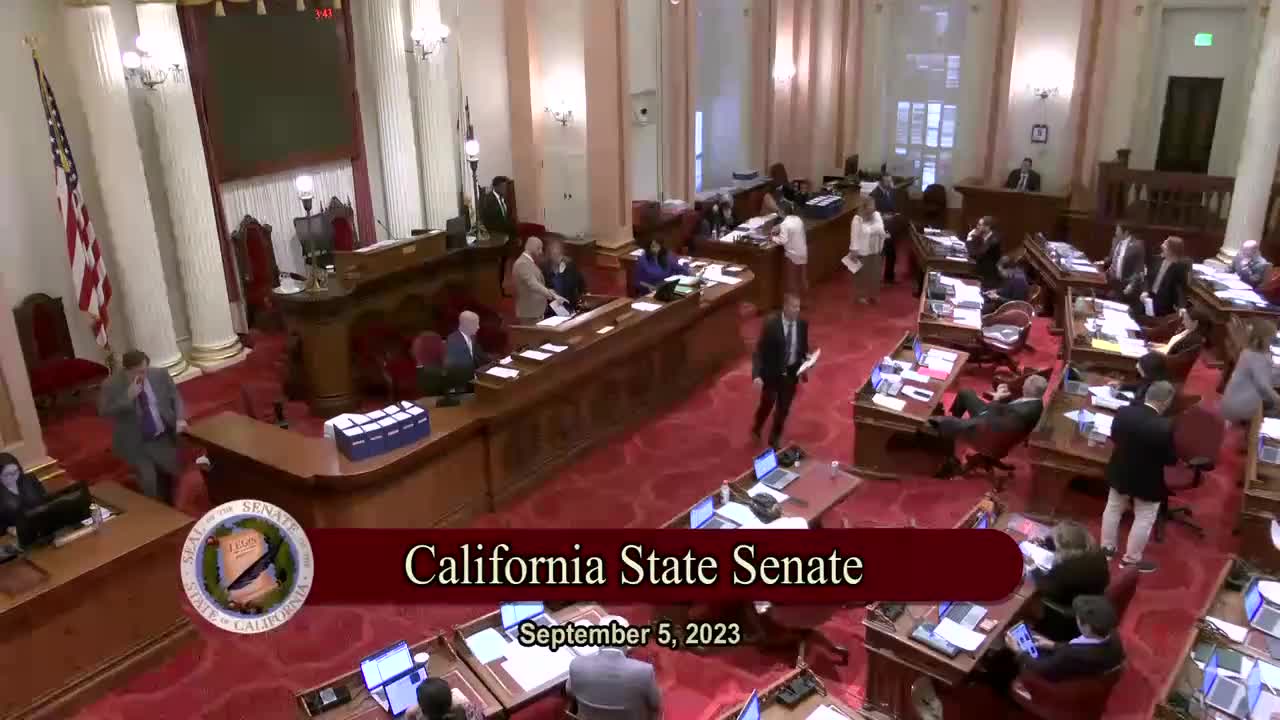
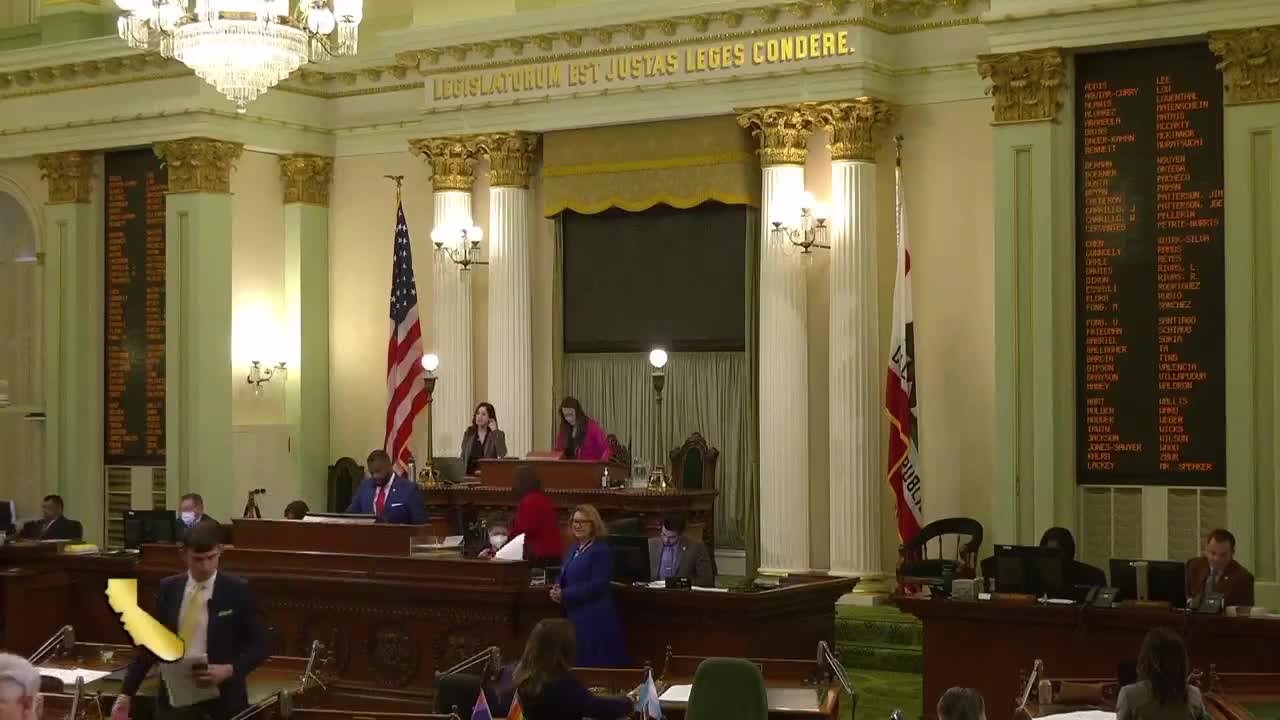
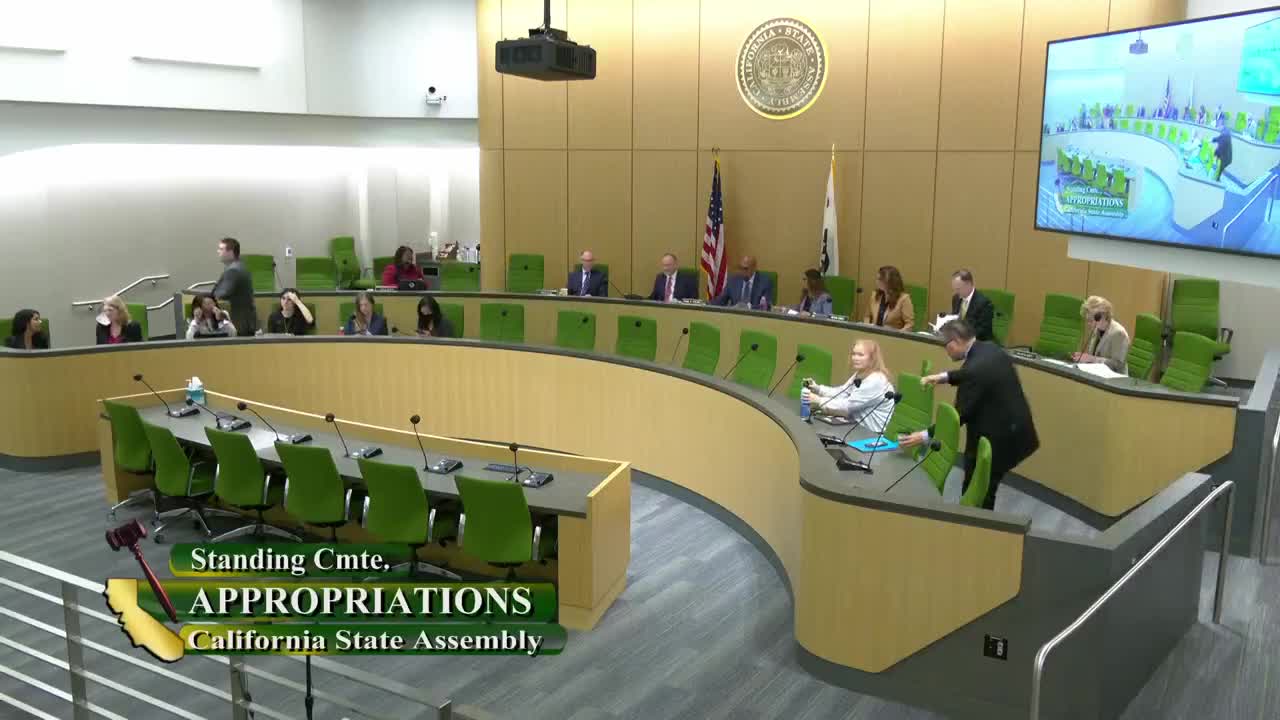
Bill Author

Bill Co-Author(s):