AB 3034: Public postsecondary education: waiver of tuition and fees: California Conservation Corps.
- Session Year: 2023-2024
- House: Assembly
- Latest Version Date: 2024-09-03
Current Status:
Failed
(2024-09-22: Vetoed by Governor.)
Introduced
In Committee
First Chamber
In Committee
Second Chamber
Enacted
What does this bill do?
The bill lets students who served in the California Conservation Corps get their mandatory systemwide tuition and fees (such as enrollment, registration, differential, and incidental fees) waived at California State University campuses and at University of California campuses if the UC Regents agree. To qualify, a student must have completed at least one year in the Corps, be no longer in the Corps, enroll full time within four years of that service, be a California resident and low‑ or moderate‑income, and remain in good academic and behavioral standing; the waiver is limited to the equivalent of two years.
The summary is provided by generative AI which can make mistakes. For original language, please view the details in the table below.
Existing law establishes the California State University, under the administration of the Trustees of the California State University, and the University of California, under the administration of the Regents of the University of California, which are 2 of the segments of public postsecondary education in the state. The Donahoe Higher Education Act prohibits the campuses of those segments from charging mandatory systemwide tuition or fees to specified students who apply for a waiver, including a child of any veteran of the United States military who has a service-connected disability, has been killed in service, or has died of a service-connected disability, an undergraduate student who is a recipient of a Medal of Honor, or an undergraduate student who is a child of a recipient of a Medal of Honor and who is no more than 27 years of age, if certain requirements are satisfied. Provisions of the act apply to the University of California only to the extent that the Regents of the University of California act, by appropriate resolution, to make them applicable.
This bill would additionally prohibit the campuses of the California State University and the University of California from charging mandatory systemwide tuition or fees, as specified, for students who meet certain requirements, including having completed one year in the California Conservation Corps, as specified. The bill would apply to the campuses of the University of California only to the extent that the regents, by appropriate resolution, make it apply.
Existing law establishes the California State University, under the administration of the Trustees of the California State University, and the University of California, under the administration of the Regents of the University of California, which are 2 of the segments of public postsecondary education in the state. The Donahoe Higher Education Act prohibits the campuses of those segments from charging mandatory systemwide tuition or fees to specified students who apply for a waiver, including a child of any veteran of the United States military who has a service-connected disability, has been killed in service, or has died of a service-connected disability, an undergraduate student who is a recipient of a Medal of Honor, or an undergraduate student who is a child of a recipient of a Medal of Honor and who is no more than 27 years of age, if certain requirements are satisfied. Provisions of the act apply to the University of California only to the extent that the Regents of the University of California act, by appropriate resolution, to make them applicable.
This bill would additionally prohibit the campuses of the California State University and the University of California from charging mandatory systemwide tuition or fees, as specified, for students who meet certain requirements, including having completed one year in the California Conservation Corps. Corps, as specified. The bill would apply to the campuses of the University of California only to the extent that the regents, by appropriate resolution, make it apply.
Existing law establishes the California State University, under the administration of the Trustees of the California State University, and the University of California, under the administration of the Regents of the University of California, which are 2 of the segments of public postsecondary education in the state. The Donahoe Higher Education Act prohibits the campuses of those segments from charging mandatory systemwide tuition or fees to specified students who apply for a waiver, including a child of any veteran of the United States military who has a service-connected disability, has been killed in service, or has died of a service-connected disability, an undergraduate student who is a recipient of a Medal of Honor, or an undergraduate student who is a child of a recipient of a Medal of Honor and who is no more than 27 years of age, if certain requirements are satisfied. Provisions of the act apply to the University of California only to the extent that the Regents of the University of California act, by appropriate resolution, to make them applicable.
This bill would additionally prohibit the campuses of the California State University and the University of California from charging mandatory systemwide tuition or fees, as specified, for students who meet certain requirements, including having completed one year in the California Conservation Corps. The bill would apply to the campuses of the University of California only to the extent that the regents, by appropriate resolution, make it apply.
Existing law establishes the University of California, under the administration of the Regents of the University of California, the California State University, under the administration of the Trustees of the California State University, the California Community Colleges, under the administration of the Board of Governors of the California Community Colleges, independent institutions of higher education, and private postsecondary educational institutions as the segments of postsecondary education in this state.Existing law expresses the intent of the Legislature that each resident of California who has the capacity and motivation to benefit from higher education should have the opportunity to enroll in an institution of higher education and to continue with that higher education, as provided.This bill would make nonsubstantive changes in this statement of the intent of the Legislature.Existing law establishes the University of California, under the administration of the Regents of the University of California, the California State University, under the administration of the Trustees of the California State University, the California Community Colleges, under the administration of the Board of Governors of the California Community Colleges, independent institutions of higher education, and private postsecondary educational institutions as the segments of postsecondary education in this state.
Existing law expresses the intent of the Legislature that each resident of California who has the capacity and motivation to benefit from higher education should have the opportunity to enroll in an institution of higher education and to continue with that higher education, as provided.
This bill would make nonsubstantive changes in this statement of the intent of the Legislature.
(a)As used in this section, the following definitions apply:
(1)Institution means a campus of the California State University or the University of California.
(2)Persons and families of low or moderate income has the same meaning as defined in Section 50093 of the Health and Safety Code.
(b)An institution shall not charge any mandatory systemwide tuition or fees, including enrollment fees, registration fees, differential fees, or incidental fees, to a student who meets all of the following requirements:
(1)Has completed at least one year of service in the California Conservation Corps within two years of joining the California Conservation Corps.
(2)Is no longer with the California Conservation Corps.
(3)Has completed service in the California Conservation Corps as described in paragraph (1) within the four years preceding the students enrollment in an undergraduate program at the institution.
(4)Maintains full-time enrollment in an undergraduate program at the institution.
(5)Maintains a minimum grade point average and meets all conditions necessary for the student to be in good academic standing at the institution, as determined by the appropriate public postsecondary segment.
(6)Maintains good behavioral standing at the institution, as determined by the appropriate public postsecondary segment.
(7)Is a person of low or moderate income or is a member of a family of low or moderate income.
(c)A student shall not have the students mandatory systemwide tuition or fees waived pursuant to this section in excess of the equivalent of two years of attendance in an undergraduate program at the institution that the student attends.
(d)A student who is eligible for a waiver of tuition or fees under this section may receive a waiver for each academic year during which the student applies for that waiver, but an eligible student may not receive a waiver of tuition or fees for a prior academic year.
(e)A student shall contact the institutions office of the registrar to request the waiver of tuition or fees under this section. The student requesting the waiver shall submit verification from the California Conservation Corps that the student meets the requirements of paragraphs (1), (2), and (7) of subdivision (b).
(f)The waiver of tuition or fees under this section shall apply only to a student who is determined to be a resident of California pursuant to Chapter 1 (commencing with Section 68000) of Part 41.
(g)An institution may require a student who is eligible for a waiver of tuition or fees under this section to first apply for federal, state, and institution-based financial aid. The institution shall waive any remaining systemwide tuition or fees, including enrollment fees, registration fees, differential fees, or incidental fees, after federal, state, and institution-based financial aid received by the student have been applied.
(h)Consistent with Section 67400, this section shall apply to the University of California only to the extent that the Regents of the University of California, by appropriate resolution, make it apply.
(a)As used in this section, the following definitions apply:
(1)Institution means a campus of the California State University or the University of California.
(2)Persons and families of low or moderate income has the same meaning as defined in Section 50093 of the Health and Safety Code.
(b)An institution shall not charge any mandatory systemwide tuition or fees, including enrollment fees, registration fees, differential fees, or incidental fees, to a student who meets all of the following requirements:
(1)Has completed at least one year of service in the California Conservation Corps within two years of joining the California Conservation Corps.
(2)Is no longer with the California Conservation Corps.
(2)(3)Has completed service in the California Conservation Corps as described in paragraph (1) within the four years preceding the students enrollment in an undergraduate program at the institution.
(3)(4)Maintains full-time enrollment in an undergraduate program at the institution.
(4)(5)Maintains a minimum grade point average and meets all conditions necessary for the student to be in good academic standing at the institution, as determined by the appropriate public postsecondary segment.
(5)(6)Maintains good behavioral standing at the institution, as determined by the appropriate public postsecondary segment.
(6)(7)Is a person of low or moderate income or is a member of a family of low or moderate income.
(c)A student shall not have the students mandatory systemwide tuition or fees waived pursuant to this section in excess of the equivalent of two years of attendance in an undergraduate program at the institution that the student attends.
(d)A student who is eligible for a waiver of tuition or fees under this section may receive a waiver for each academic year during which the student applies for that waiver, but an eligible student may not receive a waiver of tuition or fees for a prior academic year.
(e)A student shall contact the institutions office of the registrar to request the waiver of tuition or fees under this section. The student requesting the waiver shall submit verification from the California Conservation Corps that the student meets the requirements of paragraphs (1) and (6) (1), (2), and (7) of subdivision (b).
(f)The waiver of tuition or fees under this section shall apply only to a student who is determined to be a resident of California pursuant to Chapter 1 (commencing with Section 68000) of Part 41.
(g)An institution may require a student who is eligible for a waiver of tuition or fees under this section to first apply for federal, state, and institution-based financial aid. The institution shall waive any remaining systemwide tuition or fees, including enrollment fees, registration fees, differential fees, or incidental fees, after federal, state, and institution-based financial aid received by the student have been applied.
(h)Consistent with Section 67400, this section shall apply to the University of California only to the extent that the Regents of the University of California, by appropriate resolution, make it apply.
(a)As used in this section, the following definitions apply:
(1)Institution means a campus of the California State University or the University of California.
(2)Persons and families of low or moderate income has the same meaning as defined in Section 50093 of the Health and Safety Code.
(b)An institution shall not charge any mandatory systemwide tuition or fees, including enrollment fees, registration fees, differential fees, or incidental fees, to a student who meets all of the following requirements:
(1)Has completed at least one year of service in the California Conservation Corps within two years of joining the California Conservation Corps.
(2)Has completed service in the California Conservation Corps as described in paragraph (1) within the two four years preceding the students enrollment in an undergraduate program at the institution.
(3)Maintains full-time enrollment in an undergraduate program at the institution.
(4)Maintains a minimum grade point average and meets other all conditions necessary for the student to be in good academic standing at the institution, as determined by the appropriate public postsecondary segment.
(5)Maintains good behavioral standing at the institution, as determined by the appropriate public postsecondary segment.
(6)Is a person of low or moderate income or is a member of a family of low or moderate income.
(c)A student shall not have the students mandatory systemwide tuition or fees waived pursuant to this section in excess of the equivalent of two years of attendance in an undergraduate program at the institution that the student attends.
(d)A student who is eligible for a waiver of tuition or fees under this section may receive a waiver for each academic year during which the student applies for that waiver, but an eligible student may not receive a waiver of tuition or fees for a prior academic year.
(e)A student shall contact the institutions office of the registrar to request the waiver of tuition or fees under this section. The student requesting the waiver shall submit verification from the California Conservation Corps that the student meets the requirements of paragraphs (1) and (6) of subdivision (b).
(e)(f)The waiver of tuition or fees under this section shall apply only to a student who is determined to be a resident of California pursuant to Chapter 1 (commencing with Section 68000) of Part 41.
(g)An institution may require a student who is eligible for a waiver of tuition or fees under this section to first apply for federal, state, and institution-based financial aid. The institution shall waive any remaining systemwide tuition or fees, including enrollment fees, registration fees, differential fees, or incidental fees, after federal, state, and institution-based financial aid received by the student have been applied.
(f)(h)Consistent with Section 67400, this section shall apply to the University of California only to the extent that the Regents of the University of California, by appropriate resolution, make it apply.
(a)As used in this section, the following definitions apply:
(1)Institution means a campus of the California State University or the University of California.
(2)Persons and families of low or moderate income has the same meaning as defined in Section 50093 of the Health and Safety Code.
(b)An institution shall not charge any mandatory systemwide tuition or fees, including enrollment fees, registration fees, differential fees, or incidental fees, to a student who meets all of the following requirements:
(1)Has completed at least one year of service in the California Conservation Corps. Corps within two years of joining the California Conservation Corps.
(2)Has completed service in the California Conservation Corps as described in paragraph (1) within the two years preceding the students enrollment in an undergraduate program at the institution.
(2)(3)Maintains full-time enrollment in an undergraduate program at the institution.
(3)(4)Maintains a minimum grade point average and meets other conditions necessary for the student to be in good standing at the institution, as determined by the appropriate public postsecondary segment.
(4)(5)Maintains good behavioral standing at the institution, as determined by the appropriate public postsecondary segment.
(5)(6)Is a person of low or moderate income or is a member of a family of low or moderate income.
(c)A student shall not have the students mandatory systemwide tuition or fees waived pursuant to this section in excess of the equivalent of two years of attendance in an undergraduate program at the institution that the student attends.
(d)A student who is eligible for a waiver of tuition or fees under this section may receive a waiver for each academic year during which the student applies for that waiver, but an eligible student may not receive a waiver of tuition or fees for a prior academic year.
(e)The waiver of tuition or fees under this section shall apply only to a student who is determined to be a resident of California pursuant to Chapter 1 (commencing with Section 68000) of Part 41.
(f)Consistent with Section 67400, this section shall apply to the University of California only to the extent that the Regents of the University of California, by appropriate resolution, make it apply.
(a)As used in this section, institution the following definitions apply:
(1)Institution means a campus of the California State University or the University of California.
(2)Persons and families of low or moderate income has the same meaning as defined in Section 50093 of the Health and Safety Code.
(b)An institution shall not charge any mandatory systemwide tuition or fees, including enrollment fees, registration fees, differential fees, or incidental fees, to a student who meets all of the following requirements:
(1)Has completed at least one year of service in the California Conservation Corps.
(2)Maintains full-time enrollment in an undergraduate program at the institution.
(3)Maintains a minimum grade point average and meets other conditions necessary for the student to be in good standing at the institution, as determined by the appropriate public postsecondary segment.
(4)Maintains good behavioral standing at the institution, as determined by the appropriate public postsecondary segment.
(5)Is a person of low or moderate income or is a member of a family of low or moderate income.
(c)A student shall not have the students mandatory systemwide tuition or fees waived pursuant to this section in excess of the equivalent of two years of attendance in an undergraduate program at the institution that the student attends.
(d)A student who is eligible for a waiver of tuition or fees under this section may receive a waiver for each academic year during which the student applies for that waiver, but an eligible student may not receive a waiver of tuition or fees for a prior academic year.
(e)The waiver of tuition or fees under this section shall apply only to a student who is determined to be a resident of California pursuant to Chapter 1 (commencing with Section 68000) of Part 41.
(f)Consistent with Section 67400, this section shall apply to the University of California only to the extent that the Regents of the University of California, by appropriate resolution, make it apply.
(a)As used in this section, institution means a campus of the California State University or the University of California.
(b)An institution shall not charge any mandatory systemwide tuition or fees, including enrollment fees, registration fees, differential fees, or incidental fees, to a student who meets all of the following requirements:
(1)Has completed at least one year of service in the California Conservation Corps.
(2)Maintains full-time enrollment in an undergraduate program at the institution.
(3)Maintains a minimum grade point average and meets other conditions necessary for the student to be in good standing at the institution, as determined by the appropriate public postsecondary segment.
(4)Maintains good behavioral standing at the institution, as determined by the appropriate public postsecondary segment.
(c)A student shall not have the students mandatory systemwide tuition or fees waived pursuant to this section in excess of the equivalent of two years of attendance in an undergraduate program at the institution that the student attends.
(d)A student who is eligible for a waiver of tuition or fees under this section may receive a waiver for each academic year during which the student applies for that waiver, but an eligible student may not receive a waiver of tuition or fees for a prior academic year.
(e)The waiver of tuition or fees under this section shall apply only to a student who is determined to be a resident of California pursuant to Chapter 1 (commencing with Section 68000) of Part 41.
(f)Consistent with Section 67400, this section shall apply to the University of California only to the extent that the Regents of the University of California, by appropriate resolution, make it apply.
SECTION 1.Section 66201 of the Education Code is amended to read:66201.(a)It is the intent of the Legislature that each resident of California who has the capacity and motivation to benefit from higher education should have the opportunity to enroll in an institution of higher education. Once enrolled, each individual should have the opportunity to continue as long and as far as their capacity and motivation, as indicated by academic performance and commitment to educational advancement, will lead them to meet academic standards and institutional requirements.(b)The Legislature hereby reaffirms the commitment of the State of California to provide an appropriate place in California public higher education for every student who is willing and able to benefit from attendance.(a)It is the intent of the Legislature that each resident of California who has the capacity and motivation to benefit from higher education should have the opportunity to enroll in an institution of higher education. Once enrolled, each individual should have the opportunity to continue as long and as far as his or her their capacity and motivation, as indicated by academic performance and commitment to educational advancement, will lead him or her them to meet academic standards and institutional requirements.
The(b)The Legislature hereby reaffirms the commitment of the State of California to provide an appropriate place in California public higher education for every student who is willing and able to benefit from attendance.
|
Date
|
Status
|
|---|---|
| Sep 22, 2024 | Vetoed by Governor. |
| Sep 11, 2024 | Enrolled and presented to the Governor at 4 p.m. |
| Aug 29, 2024 | Senate amendments concurred in. To Engrossing and Enrolling. (Ayes 74. Noes 0.). |
| Aug 29, 2024 | Assembly Rule 77 suspended. |
| Aug 28, 2024 | In Assembly. Concurrence in Senate amendments pending. May be considered on or after August 30 pursuant to Assembly Rule 77. |
| Aug 28, 2024 | Read third time. Passed. Ordered to the Assembly. (Ayes 34. Noes 1.). |
| Aug 26, 2024 | Read second time. Ordered to third reading. |
| Aug 23, 2024 | Read third time and amended. Ordered to second reading. |
| Aug 19, 2024 | Read second time. Ordered to third reading. |
| Aug 15, 2024 | Read second time and amended. Ordered returned to second reading. |
| Aug 15, 2024 | From committee: Amend, and do pass as amended. (Ayes 5. Noes 2.) (August 15). |
| Aug 5, 2024 | In committee: Referred to APPR suspense file. |
| Jun 26, 2024 | From committee: Do pass and re-refer to Com. on APPR. (Ayes 6. Noes 0.) (June 26). Re-referred to Com. on APPR. |
| Jun 6, 2024 | From committee chair, with author's amendments: Amend, and re-refer to committee. Read second time, amended, and re-referred to Com. on ED. |
| May 29, 2024 | Referred to Com. on ED. |
| May 22, 2024 | In Senate. Read first time. To Com. on RLS. for assignment. |
| May 21, 2024 | Read third time. Passed. Ordered to the Senate. (Ayes 68. Noes 0. Page 5383.) |
| May 20, 2024 | Read second time. Ordered to third reading. |
| May 16, 2024 | Read second time and amended. Ordered returned to second reading. |
| May 16, 2024 | From committee: Amend, and do pass as amended. (Ayes 11. Noes 1.) (May 16). |
| May 16, 2024 | Assembly Rule 63 suspended. |
| May 8, 2024 | In committee: Set, first hearing. Referred to APPR. suspense file. |
| Apr 24, 2024 | From committee: Do pass and re-refer to Com. on APPR. (Ayes 9. Noes 0.) (April 23). Re-referred to Com. on APPR. |
| Mar 20, 2024 | Re-referred to Com. on HIGHER ED. |
| Mar 19, 2024 | From committee chair, with author's amendments: Amend, and re-refer to Com. on HIGHER ED. Read second time and amended. |
| Mar 18, 2024 | Referred to Com. on HIGHER ED. |
| Feb 17, 2024 | From printer. May be heard in committee March 18. |
| Feb 16, 2024 | Read first time. To print. |
|
Date
|
Description
|
Location
|
Votes
|
|
|---|---|---|---|---|
| Aug 29, 2024 | AB 3034 Low Concurrence in Senate Amendments | Assembly Floor |
Passed |
|
| Aug 28, 2024 | Assembly 3rd Reading AB3034 Low By Wilk | Senate Floor |
Passed |
|
| Aug 15, 2024 | Do pass as amended | Senate Standing Committee on Appropriations |
Passed |
|
| Aug 5, 2024 | Placed on suspense file | Senate Standing Committee on Appropriations |
Passed |
|
| Jun 26, 2024 | Do pass, but first be re-referred to the Committee on [Appropriations] | Senate Standing Committee on Education |
Passed |
|
| May 21, 2024 | AB 3034 Low Assembly Third Reading | Assembly Floor |
Passed |
|
| May 16, 2024 | Do pass as amended. | Assembly Standing Committee on Appropriations |
Passed |
|
| Apr 23, 2024 | Do pass and be re-referred to the Committee on [Appropriations] | Assembly Standing Committee on Higher Education |
Passed |
This list shows positions taken on this bill by organizations on the date displayed, which is linked to the original source.
Positions by individuals are not included.
|
Organization
|
Position
|
Date
|
|---|---|---|
| California State University, Office Of The Chancellor | ** Against |
GOVERNOR'S VETO
GV Bill Id:AB 3034
Author:(Low)
As Enrolled Ver:September 3, 2024
2/3 vote
SUMMARY
Requires the California State University (CSU), and requests the University of California (UC), to waive tuition and mandatory systemwide fees to a full-time student who has served in the California Conservations Corps for at least one year, and meets specified eligibility requirements.
Senate Amendments:
- Require the CSU and request that the UC waive mandatory systemwide tuition or fees, including enrollment fees, registration fees, differential fees, or incidental fees, for a student who meets the additional requirements:
- Has completed at least one year of service in the California Conservation Corps within two years of joining the California Conservation Corps;
- Is no longer with the California Conservation Corps; and,
- Has completed service in the California Conservation Corps within the four years preceding the student’s enrollment in an undergraduate program at the institution.
- Require a student to contact the institution's office of the registrar to request the waiver of tuition or fees, as specified. The student requesting the waiver shall submit verification from the California Conservation Corps that the student meets the requirements, as specified.
- Authorize an institution to require a student who is eligible for a waiver to first apply for federal, state, and institution-based financial aid. The institution is required to waive any remaining systemwide tuition or fees, including enrollment fees, registration fees, differential fees, or incidental fees, after federal, state, and institution-based financial aid received by the student have been applied.
- Make clarifying and technical changes.
Governor’s Veto Message
The bill requires the California State University, and requests that the University of California, waive tuition and mandatory fees for two years for full-time students who have served in the California Conservation Corps for at least one year and meet specified eligibility requirements.
I appreciate the author's commitment to college affordability and rewarding public service. Unfortunately, this bill could create ongoing significant General Fund cost pressures in the millions of dollars not included in the 2024 Budget Act.
In partnership with the Legislature this year, my Administration has enacted a balanced budget that avoids deep program cuts to vital services and protected investments in education, health care, climate, public safety, housing, and social service programs that millions of Californians rely on. It is important to remain disciplined when considering bills with significant fiscal implications that are not included in the budget, such as this measure.
COMMENTS
California Conservation Corps. The California Conservation Corps is the oldest and largest conservation corps in the nation. Created in 1976 by Governor Jerry Brown, it was soon made a permanent state department under the umbrella of the California Natural Resources Agency. The California Conservation Corps mission is to protect and enhance California's natural resources and communities while empowering and developing young adults.
The California Conservation Corps is dedicated to transforming the lives of California's young adults, ages 18 to 25, and military veterans through age 29, through hard work, education and training; enabling them to earn meaningful skills and hands-on experience for launching a career and becoming assets to our communities. During their year of paid service (Corpsmembers receive a monthly stipend of $2,814) to the State of California, Corpsmembers receive "basic" training called COMET (Corpsmember Orientation, Motivation Education and Training) which includes first aid, proper use of hand tools, water safety, roadside safety, and emergency response training, as well as effective communication techniques, sexual harassment and violence prevention, life skills, team-building, educational assessments, and more.
Corpsmembers also benefit from the California Conservation Corps specialized training and certification programs ranging from firefighting techniques to chain saw operation to food preparation to trail building. Young adults come from across California and represent the state's rich ethnic diversity. To date, more than 120,000 Corpsmembers have participated in the California Conservation Corps, taking with them the skills, education and experience to become productive citizens of California.
How many? According to the California Conservation Corps, on average, approximately 3,000 young adults enroll in the California Conservation Corps annually; however, the program capacity at any given time is 1,667 Corpsmembers. Corpsmembers enroll in and depart from the California Conservation Corps program at different times throughout the year. The average Corpsmember length of stay is none months.
Of the estimated 3,000 individuals, 79% identify as male and 21% identify as female. For the current Fiscal Year (FY) (2023-24) there are 1,667 Corpsmembers. Once a Corpmember separates from the Corps, some will end up matriculating to an adult school or postsecondary education.
#CaliforniansForAll College Corps. College Corps is a statewide, paid service program, launched during the 2022-2023 academic year, which provides meaningful work to college students in exchange for serving their community. The program helps participants graduate on time and with less debt while gaining valuable work experience. Students will receive up to $10,000 for completing up to 450 hours of community service.
On February 1, 2023, the Governor and the California Volunteers announced that applications were open for the first cohort of #CaliforniansForAll College Corps, which over 3,000 students from various colleges and universities in the State can participate during the 2023-24 academic year.
This measure appears to be somewhat duplicative of the Governor's #CaliforniansForAll College Corps.
Expands the list of mandatory tuition waivers imposed on public colleges. Existing law requires public postsecondary institutions to waive systemwide tuition and fees for various groups impacted by a tragic event. This measure would expand the overall number and category of individuals eligible for a tuition waiver at CSU or UC. It further authorizes an institution to require an eligible student to first apply for federal or state financial aid.
According to the Author
"Students should be motivated to participate in community service and should have the opportunity to pursue higher education without the burden of excessive debt. This bill incentivizes students who dedicate a year to public service by providing them with two years of [waived tuition and fees at a] University or a California State Institution without any financial burden."
Arguments in Support
None on file.
Arguments in Opposition
According to the CSU's letter of opposition, "currently, 81% of all CSU students receive financial aid, and more than 60% of all CSU undergraduate students receive non-loan aid to cover the full cost of tuition. Additionally, the CSU provides qualified students with tuition fee waivers set forth by existing law. AB 3034 would establish a fee waiver that is unpredictable and creates an unfunded mandate during a period of fiscal uncertainty."
The CSU states that, "currently, each year the CSU waives over $52 million in fee waivers mandated by the Legislature. The CSU would ask that all financial aid options be awarded to cover tuition and fees prior to a waiver being authorized to help minimize the fee waiver mandate. Governor Newsom's May revision estimates a $27.6 billion budget deficit over the next two years. As a result, the CSU will be required to make difficult financial decisions that will have significant impacts on our students, faculty and staff. This would be further compounded with legislation that mandates further fee waivers. While the CSU appreciates the desire of Assemblymember Low to incentive the expansion of the Conservation Corp, we would ask that the Legislature consider the fiscal impacts this will create to our universities at this time."
FISCAL COMMENTS
According to the Senate Committee on Appropriations, this measure could result in unknown, but potentially significant revenue losses to the UC and CSU. A precise estimate would depend on the number of students that receive fee waivers as a result of this bill. Assuming the number of recipients is 50 statewide for each segment, the revenue losses would be approximately $812,000 to the UC and about $302,000 to the CSU. This estimate assumes the annual tuition rate for a full-time resident student at UC of $16,236 and $6,048 for the CSU. These costs could be lower to the extent that students receive financial aid from other sources to cover tuition costs.
VOTES
ASM HIGHER EDUCATION: 9-0-2
YES: Mike Fong, Ta, Arambula, Boerner, Chen, Irwin, Jackson, Low, Muratsuchi
ABS, ABST OR NV: Essayli, Quirk-Silva
ASM APPROPRIATIONS: 11-1-3
YES: Wicks, Arambula, Bryan, Calderon, Wendy Carrillo, Mike Fong, Grayson, Haney, Hart, Pellerin, Villapudua
NO: Dixon
ABS, ABST OR NV: Sanchez, Jim Patterson, Ta
ASSEMBLY FLOOR: 68-0-12
YES: Addis, Aguiar-Curry, Alanis, Alvarez, Arambula, Bains, Bauer-Kahan, Bennett, Berman, Boerner, Bonta, Bryan, Calderon, Juan Carrillo, Wendy Carrillo, Chen, Connolly, Davies, Flora, Mike Fong, Garcia, Gipson, Grayson, Haney, Hart, Hoover, Irwin, Jackson, Jones-Sawyer, Kalra, Lackey, Lee, Low, Lowenthal, Maienschein, McCarty, McKinnor, Muratsuchi, Stephanie Nguyen, Ortega, Pacheco, Papan, Jim Patterson, Pellerin, Petrie-Norris, Quirk-Silva, Ramos, Rendon, Reyes, Rodriguez, Blanca Rubio, Sanchez, Santiago, Schiavo, Soria, Ta, Ting, Valencia, Villapudua, Waldron, Wallis, Ward, Weber, Wicks, Wilson, Wood, Zbur, Robert Rivas
ABS, ABST OR NV: Cervantes, Megan Dahle, Dixon, Essayli, Vince Fong, Friedman, Gabriel, Gallagher, Holden, Mathis, Joe Patterson, Luz Rivas
SENATE FLOOR: 34-1-5
YES: Allen, Archuleta, Ashby, Atkins, Becker, Blakespear, Bradford, Caballero, Cortese, Dodd, Durazo, Eggman, Glazer, Gonzalez, Grove, Hurtado, Jones, Laird, Limón, McGuire, Min, Newman, Padilla, Portantino, Roth, Rubio, Seyarto, Skinner, Smallwood-Cuevas, Stern, Umberg, Wahab, Wiener, Wilk
NO: Menjivar
ABS, ABST OR NV: Alvarado-Gil, Dahle, Nguyen, Niello, Ochoa Bogh
ASSEMBLY FLOOR: 74-0-5
YES: Addis, Aguiar-Curry, Alanis, Alvarez, Arambula, Bains, Bauer-Kahan, Bennett, Berman, Boerner, Bonta, Bryan, Calderon, Juan Carrillo, Wendy Carrillo, Chen, Connolly, Megan Dahle, Davies, Dixon, Flora, Mike Fong, Friedman, Gabriel, Gallagher, Garcia, Gipson, Grayson, Haney, Hart, Holden, Hoover, Irwin, Jackson, Jones-Sawyer, Kalra, Lackey, Lee, Low, Lowenthal, Maienschein, Mathis, McCarty, McKinnor, Muratsuchi, Stephanie Nguyen, Pacheco, Papan, Jim Patterson, Pellerin, Petrie-Norris, Quirk-Silva, Ramos, Rendon, Reyes, Luz Rivas, Rodriguez, Blanca Rubio, Sanchez, Santiago, Schiavo, Soria, Ta, Ting, Valencia, Villapudua, Waldron, Wallis, Ward, Weber, Wicks, Wilson, Wood, Robert Rivas
ABS, ABST OR NV: Cervantes, Essayli, Ortega, Joe Patterson, Zbur
UPDATED
VERSION: September 3, 2024
CONSULTANT: Jeanice Warden / HIGHER ED. / (916) 319-3960 FN: 0005129
CONCURRENCE IN SENATE AMENDMENTS
CSA1 Bill Id:AB 3034
Author:(Low)
As Amended Ver:August 23, 2024
Majority vote
SUMMARY
Requires the California State University (CSU), and requests the University of California (UC), to waive tuition and mandatory systemwide fees to a full-time student who has served in the California Conservations Corps for at least one year, and meets specified eligibility requirements.
Senate Amendments
- Require the CSU and request that the UC waive mandatory systemwide tuition or fees, including enrollment fees, registration fees, differential fees, or incidental fees, for a student who meets the additional requirements:
- Has completed at least one year of service in the California Conservation Corps within two years of joining the California Conservation Corps;
- Is no longer with the California Conservation Corps; and,
- Has completed service in the California Conservation Corps within the four years preceding the student's enrollment in an undergraduate program at the institution.
- Require a student to contact the institution's office of the registrar to request the waiver of tuition or fees, as specified. The student requesting the waiver shall submit verification from the California Conservation Corps that the student meets the requirements, as specified.
- Authorize an institution to require a student who is eligible for a waiver to first apply for federal, state, and institution-based financial aid. The institution is required to waive any remaining systemwide tuition or fees, including enrollment fees, registration fees, differential fees, or incidental fees, after federal, state, and institution-based financial aid received by the student have been applied.
- Make clarifying and technical changes.
COMMENTS
California Conservation Corps. The California Conservation Corps is the oldest and largest conservation corps in the nation. Created in 1976 by Governor Jerry Brown, it was soon made a permanent state department under the umbrella of the California Natural Resources Agency. The California Conservation Corps mission is to protect and enhance California's natural resources and communities while empowering and developing young adults.
The California Conservation Corps is dedicated to transforming the lives of California's young adults, ages 18 to 25, and military veterans through age 29, through hard work, education and training; enabling them to earn meaningful skills and hands-on experience for launching a career and becoming assets to our communities. During their year of paid service (Corpsmembers receive a monthly stipend of $2,814) to the State of California, Corpsmembers receive "basic" training called COMET (Corpsmember Orientation, Motivation Education and Training) which includes first aid, proper use of hand tools, water safety, roadside safety, and emergency response training, as well as effective communication techniques, sexual harassment and violence prevention, life skills, team-building, educational assessments, and more.
Corpsmembers also benefit from the California Conservation Corps specialized training and certification programs ranging from firefighting techniques to chain saw operation to food preparation to trail building. Young adults come from across California and represent the state's rich ethnic diversity. To date, more than 120,000 Corpsmembers have participated in the California Conservation Corps, taking with them the skills, education and experience to become productive citizens of California.
How many? According to the California Conservation Corps, on average, approximately 3,000 young adults enroll in the California Conservation Corps annually; however, the program capacity at any given time is 1,667 Corpsmembers. Corpsmembers enroll in and depart from the California Conservation Corps program at different times throughout the year. The average Corpsmember length of stay is none months.
Of the estimated 3,000 individuals, 79% identify as male and 21% identify as female. For the current Fiscal Year (FY) (2023-24) there are 1,667 Corpsmembers. Once a Corpmember separates from the Corps, some will end up matriculating to an adult school or postsecondary education.
#CaliforniansForAll College Corps. College Corps is a statewide, paid service program, launched during the 2022-2023 academic year, which provides meaningful work to college students in exchange for serving their community. The program helps participants graduate on time and with less debt while gaining valuable work experience. Students will receive up to $10,000 for completing up to 450 hours of community service.
On February 1, 2023, the Governor and the California Volunteers announced that applications were open for the first cohort of #CaliforniansForAll College Corps, which over 3,000 students from various colleges and universities in the State can participate during the 2023-24 academic year.
This measure appears to be somewhat duplicative of the Governor's #CaliforniansForAll College Corps.
Expands the list of mandatory tuition waivers imposed on public colleges. Existing law requires public postsecondary institutions to waive systemwide tuition and fees for various groups impacted by a tragic event. This measure would expand the overall number and category of individuals eligible for a tuition waiver at CSU or UC. It further authorizes an institution to require an eligible student to first apply for federal or state financial aid.
According to the Author
"Students should be motivated to participate in community service and should have the opportunity to pursue higher education without the burden of excessive debt. This bill incentivizes students who dedicate a year to public service by providing them with two years of [waived tuition and fees at a] University or a California State Institution without any financial burden."
Arguments in Support
None on file.
Arguments in Opposition
According to the CSU's letter of opposition, "currently, 81% of all CSU students receive financial aid, and more than 60% of all CSU undergraduate students receive non-loan aid to cover the full cost of tuition. Additionally, the CSU provides qualified students with tuition fee waivers set forth by existing law. AB 3034 would establish a fee waiver that is unpredictable and creates an unfunded mandate during a period of fiscal uncertainty."
The CSU states that, "currently, each year the CSU waives over $52 million in fee waivers mandated by the Legislature. The CSU would ask that all financial aid options be awarded to cover tuition and fees prior to a waiver being authorized to help minimize the fee waiver mandate. Governor Newsom's May revision estimates a $27.6 billion budget deficit over the next two years. As a result, the CSU will be required to make difficult financial decisions that will have significant impacts on our students, faculty and staff. This would be further compounded with legislation that mandates further fee waivers. While the CSU appreciates the desire of Assemblymember Low to incentive the expansion of the Conservation Corp, we would ask that the Legislature consider the fiscal impacts this will create to our universities at this time."
FISCAL COMMENTS
According to the Senate Committee on Appropriations, this measure could result in unknown, but potentially significant revenue losses to the UC and CSU. A precise estimate would depend on the number of students that receive fee waivers as a result of this bill. Assuming the number of recipients is 50 statewide for each segment, the revenue losses would be approximately $812,000 to the UC and about $302,000 to the CSU. This estimate assumes the annual tuition rate for a full-time resident student at UC of $16,236 and $6,048 for the CSU. These costs could be lower to the extent that students receive financial aid from other sources to cover tuition costs.
VOTES:
ASM HIGHER EDUCATION: 9-0-2
YES: Mike Fong, Ta, Arambula, Boerner, Chen, Irwin, Jackson, Low, Muratsuchi
ABS, ABST OR NV: Essayli, Quirk-Silva
ASM APPROPRIATIONS: 11-1-3
YES: Wicks, Arambula, Bryan, Calderon, Wendy Carrillo, Mike Fong, Grayson, Haney, Hart, Pellerin, Villapudua
NO: Dixon
ABS, ABST OR NV: Sanchez, Jim Patterson, Ta
ASSEMBLY FLOOR: 68-0-12
YES: Addis, Aguiar-Curry, Alanis, Alvarez, Arambula, Bains, Bauer-Kahan, Bennett, Berman, Boerner, Bonta, Bryan, Calderon, Juan Carrillo, Wendy Carrillo, Chen, Connolly, Davies, Flora, Mike Fong, Garcia, Gipson, Grayson, Haney, Hart, Hoover, Irwin, Jackson, Jones-Sawyer, Kalra, Lackey, Lee, Low, Lowenthal, Maienschein, McCarty, McKinnor, Muratsuchi, Stephanie Nguyen, Ortega, Pacheco, Papan, Jim Patterson, Pellerin, Petrie-Norris, Quirk-Silva, Ramos, Rendon, Reyes, Rodriguez, Blanca Rubio, Sanchez, Santiago, Schiavo, Soria, Ta, Ting, Valencia, Villapudua, Waldron, Wallis, Ward, Weber, Wicks, Wilson, Wood, Zbur, Robert Rivas
ABS, ABST OR NV: Cervantes, Megan Dahle, Dixon, Essayli, Vince Fong, Friedman, Gabriel, Gallagher, Holden, Mathis, Joe Patterson, Luz Rivas
SENATE FLOOR: 34-1-5
YES: Allen, Archuleta, Ashby, Atkins, Becker, Blakespear, Bradford, Caballero, Cortese, Dodd, Durazo, Eggman, Glazer, Gonzalez, Grove, Hurtado, Jones, Laird, Limón, McGuire, Min, Newman, Padilla, Portantino, Roth, Rubio, Seyarto, Skinner, Smallwood-Cuevas, Stern, Umberg, Wahab, Wiener, Wilk
NO: Menjivar
ABS, ABST OR NV: Alvarado-Gil, Dahle, Nguyen, Niello, Ochoa Bogh
UPDATED
VERSION: August 23, 2024
CONSULTANT: Jeanice Warden / HIGHER ED. / (916) 319-3960 FN: 0004767
CONCURRENCE IN SENATE AMENDMENTS
CSA1 Bill Id:AB 3034
Author:(Low)
As Amended Ver:August 23, 2024
Majority vote
SUMMARY
Requires the California State University (CSU), and requests the University of California (UC), to waive tuition and mandatory systemwide fees to a full-time student who has served in the California Conservations Corps for at least one year, and meets specified eligibility requirements.
Senate Amendments
- Require the CSU and request that the UC waive mandatory systemwide tuition or fees, including enrollment fees, registration fees, differential fees, or incidental fees, for a student who meets the additional requirements:
- Has completed at least one year of service in the California Conservation Corps within two years of joining the California Conservation Corps;
- Is no longer with the California Conservation Corps; and,
- Has completed service in the California Conservation Corps within the four years preceding the student's enrollment in an undergraduate program at the institution.
- Require a student to contact the institution's office of the registrar to request the waiver of tuition or fees, as specified. The student requesting the waiver shall submit verification from the California Conservation Corps that the student meets the requirements, as specified.
- Authorize an institution to require a student who is eligible for a waiver to first apply for federal, state, and institution-based financial aid. The institution is required to waive any remaining systemwide tuition or fees, including enrollment fees, registration fees, differential fees, or incidental fees, after federal, state, and institution-based financial aid received by the student have been applied.
- Make clarifying and technical changes.
COMMENTS
California Conservation Corps. The California Conservation Corps is the oldest and largest conservation corps in the nation. Created in 1976 by Governor Jerry Brown, it was soon made a permanent state department under the umbrella of the California Natural Resources Agency. The California Conservation Corps mission is to protect and enhance California's natural resources and communities while empowering and developing young adults.
The California Conservation Corps is dedicated to transforming the lives of California's young adults, ages 18 to 25, and military veterans through age 29, through hard work, education and training; enabling them to earn meaningful skills and hands-on experience for launching a career and becoming assets to our communities. During their year of paid service (Corpsmembers receive a monthly stipend of $2,814) to the State of California, Corpsmembers receive "basic" training called COMET (Corpsmember Orientation, Motivation Education and Training) which includes first aid, proper use of hand tools, water safety, roadside safety, and emergency response training, as well as effective communication techniques, sexual harassment and violence prevention, life skills, team-building, educational assessments, and more.
Corpsmembers also benefit from the California Conservation Corps specialized training and certification programs ranging from firefighting techniques to chain saw operation to food preparation to trail building. Young adults come from across California and represent the state's rich ethnic diversity. To date, more than 120,000 Corpsmembers have participated in the California Conservation Corps, taking with them the skills, education and experience to become productive citizens of California.
How many? According to the California Conservation Corps, on average, approximately 3,000 young adults enroll in the California Conservation Corps annually; however, the program capacity at any given time is 1,667 Corpsmembers. Corpsmembers enroll in and depart from the California Conservation Corps program at different times throughout the year. The average Corpsmember length of stay is none months.
Of the estimated 3,000 individuals, 79% identify as male and 21% identify as female. For the current Fiscal Year (FY) (2023-24) there are 1,667 Corpsmembers. Once a Corpmember separates from the Corps, some will end up matriculating to an adult school or postsecondary education.
#CaliforniansForAll College Corps. College Corps is a statewide, paid service program, launched during the 2022-2023 academic year, which provides meaningful work to college students in exchange for serving their community. The program helps participants graduate on time and with less debt while gaining valuable work experience. Students will receive up to $10,000 for completing up to 450 hours of community service.
On February 1, 2023, the Governor and the California Volunteers announced that applications were open for the first cohort of #CaliforniansForAll College Corps, which over 3,000 students from various colleges and universities in the State can participate during the 2023-24 academic year.
This measure appears to be somewhat duplicative of the Governor's #CaliforniansForAll College Corps.
Expands the list of mandatory tuition waivers imposed on public colleges. Existing law requires public postsecondary institutions to waive systemwide tuition and fees for various groups impacted by a tragic event. This measure would expand the overall number and category of individuals eligible for a tuition waiver at CSU or UC. It further authorizes an institution to require an eligible student to first apply for federal or state financial aid.
According to the Author
"Students should be motivated to participate in community service and should have the opportunity to pursue higher education without the burden of excessive debt. This bill incentivizes students who dedicate a year to public service by providing them with two years of [waived tuition and fees at a] University or a California State Institution without any financial burden."
Arguments in Support
None on file.
Arguments in Opposition
According to the CSU's letter of opposition, "currently, 81% of all CSU students receive financial aid, and more than 60% of all CSU undergraduate students receive non-loan aid to cover the full cost of tuition. Additionally, the CSU provides qualified students with tuition fee waivers set forth by existing law. AB 3034 would establish a fee waiver that is unpredictable and creates an unfunded mandate during a period of fiscal uncertainty."
The CSU states that, "currently, each year the CSU waives over $52 million in fee waivers mandated by the Legislature. The CSU would ask that all financial aid options be awarded to cover tuition and fees prior to a waiver being authorized to help minimize the fee waiver mandate. Governor Newsom's May revision estimates a $27.6 billion budget deficit over the next two years. As a result, the CSU will be required to make difficult financial decisions that will have significant impacts on our students, faculty and staff. This would be further compounded with legislation that mandates further fee waivers. While the CSU appreciates the desire of Assemblymember Low to incentive the expansion of the Conservation Corp, we would ask that the Legislature consider the fiscal impacts this will create to our universities at this time."
FISCAL COMMENTS
According to the Senate Committee on Appropriations, this measure could result in unknown, but potentially significant revenue losses to the UC and CSU. A precise estimate would depend on the number of students that receive fee waivers as a result of this bill. Assuming the number of recipients is 50 statewide for each segment, the revenue losses would be approximately $812,000 to the UC and about $302,000 to the CSU. This estimate assumes the annual tuition rate for a full-time resident student at UC of $16,236 and $6,048 for the CSU. These costs could be lower to the extent that students receive financial aid from other sources to cover tuition costs.
VOTES:
ASM HIGHER EDUCATION: 9-0-2
YES: Mike Fong, Ta, Arambula, Boerner, Chen, Irwin, Jackson, Low, Muratsuchi
ABS, ABST OR NV: Essayli, Quirk-Silva
ASM APPROPRIATIONS: 11-1-3
YES: Wicks, Arambula, Bryan, Calderon, Wendy Carrillo, Mike Fong, Grayson, Haney, Hart, Pellerin, Villapudua
NO: Dixon
ABS, ABST OR NV: Sanchez, Jim Patterson, Ta
ASSEMBLY FLOOR: 68-0-12
YES: Addis, Aguiar-Curry, Alanis, Alvarez, Arambula, Bains, Bauer-Kahan, Bennett, Berman, Boerner, Bonta, Bryan, Calderon, Juan Carrillo, Wendy Carrillo, Chen, Connolly, Davies, Flora, Mike Fong, Garcia, Gipson, Grayson, Haney, Hart, Hoover, Irwin, Jackson, Jones-Sawyer, Kalra, Lackey, Lee, Low, Lowenthal, Maienschein, McCarty, McKinnor, Muratsuchi, Stephanie Nguyen, Ortega, Pacheco, Papan, Jim Patterson, Pellerin, Petrie-Norris, Quirk-Silva, Ramos, Rendon, Reyes, Rodriguez, Blanca Rubio, Sanchez, Santiago, Schiavo, Soria, Ta, Ting, Valencia, Villapudua, Waldron, Wallis, Ward, Weber, Wicks, Wilson, Wood, Zbur, Robert Rivas
ABS, ABST OR NV: Cervantes, Megan Dahle, Dixon, Essayli, Vince Fong, Friedman, Gabriel, Gallagher, Holden, Mathis, Joe Patterson, Luz Rivas
UPDATED
VERSION: August 23, 2024
CONSULTANT: Jeanice Warden / HIGHER ED. / (916) 319-3960 FN: 0004767
SENATE RULES COMMITTEE Office of Senate Floor Analyses (916) 651-1520 Fax: (916) 327-4478 | AB 3034 |
THIRD READING
Bill No: AB 3034
Author: Low (D)
Amended: 8/23/24 in Senate
Vote: 21
SENATE EDUCATION COMMITTEE: 6-0, 6/26/24
AYES: Newman, Cortese, Glazer, Gonzalez, Smallwood-Cuevas, Wilk
NO VOTE RECORDED: Ochoa Bogh
SENATE APPROPRIATIONS COMMITTEE: 5-2, 8/15/24
AYES: Caballero, Ashby, Becker, Bradford, Wahab
NOES: Jones, Seyarto
ASSEMBLY FLOOR: 68-0, 5/21/24 - See last page for vote
SUBJECT: Public postsecondary education: waiver of tuition and fees: California Conservation Corps
SOURCE: Author
DIGEST:
This bill requires the California State University (CSU) and requests that the University of California (UC), waive tuition and mandatory systemwide fees to a full-time student who has served in the California Conservation Corps for at least one year, and meets other eligibility requirements.
Senate Floor Amendments of 8/23/24 narrow eligibility to students who have completed one year of service and are no longer with the California Conservation Corps.
ANALYSIS:
Existing law:
- Exempts from mandatory systemwide tuition or fees at the UC, CSU and California Community Colleges (CCC) any surviving spouse or child, of a deceased person, who met all of the following requirements:
- The person was a resident of this state;
- The person was employed by a state or local public agency, or was a contractor, or an employee of a contractor, performing services for a public agency, or was a firefighter employed by the federal government whose duty assignment involved performing firefighting services in California;
- The person’s principal duties consisted of active law enforcement service or active fire suppression and prevention; and,
- The person was killed in the performance of active law enforcement or active fire suppression and prevention duties, died as a result of an accident or an injury caused by external violence or physical force during the performing of those duties, or died as a result of an industrial injury or illness arising out of and in the course of performing those duties. (Education Code (EC) § 68120)
- Exempts from mandatory systemwide tuition and fees at the UC, CSU, and CCC any of the following:
- The dependent of any California resident killed in the September 11, 2001 terrorist attacks;
- The dependent of a veteran killed or permanently disabled in the line of duty, as specified; and,
- Current and former foster youth, as specified.
- Exonerated students.
- Any surviving spouse or child, of a licensed physician, a licensed nurse, or first responder who died from COVID during the pandemic state of emergency. (EC § 66025.3, § 76300, § 69000, and § 68120.3)
- The dependent of any California resident killed in the September 11, 2001 terrorist attacks;
This bill:
- Requires the CSU and requests that the UC waive mandatory systemwide tuition or fees, including enrollment fees, registration fees, differential fees, or incidental fees, for a student who meets all of the following requirements:
- Has completed at least one year of service in the California Conservation Corps within two years of joining the California Conservation Corps.
- Has completed service in the California Conservation Corps within the four years preceding the student’s enrollment in an undergraduate program at a CSU or UC.
- Is no longer with the California Conservation Corps.
- Maintains full-time enrollment in an undergraduate program at a CSU or UC.
- Maintains a minimum grade point average and meets all conditions necessary for the student to be in good academic standing at CSU or UC.
- Maintains good behavioral standing at CSU or UC.
- Is a person of low or moderate income or is a member of a family of low or moderate income.
- Is classified as a classified resident for purposes of paying in-state tuition.
- Prohibits a waiver of mandatory systemwide tuition or fees from exceeding the equivalent of two years of attendance in an undergraduate program at the institution that the student attends.
- Requires that the student contact the institution’s office of the registrar to request the waiver of tuition or fees and submit verification from the California Conservation Corps that the student meets eligibility requirements for the waiver.
- Provides for an eligible student to receive a waiver for each academic year during which the student applies for that waiver, but not for waiving tuition or fees for a prior academic year.
- Authorizes an institution to require a student who is eligible for a waiver to first apply for federal, state, and institution-based financial aid. The institution is required to waive any remaining systemwide tuition or fees, including enrollment fees, registration fees, differential fees, or incidental fees, after federal, state, and institution-based financial aid received by the student have been applied.
- Defines the following terms for purposes of the bill:
- “Institution” means a campus of the California State University or the University of California.
- “Persons and families of low or moderate income” has the same meaning as is defined in the California Health and Safety Code as specified, which includes, “Persons and families of low or moderate income” means persons and families whose income does not exceed 120 percent of area median income, adjusted for family size by the department in accordance with adjustment factors adopted and amended from time to time by the United States Department of Housing and Urban Development pursuant to Section 8 of the United States Housing Act of 1937.
Comments
- Need for the bill. According to the author, “Students should be motivated to participate in community service and should have the opportunity to pursue higher education without the burden of excessive debt. This bill incentivizes students who dedicate a year to public service by providing them with two years of University or a California State without any financial burden."
- Who is eligible? Students who completed at least one year of service in the California Conservation Corps within the four years prior to enrolling in an undergraduate program at a California State University or UC (if UC chooses to participate) are eligible for the proposed tuition waiver. To qualify, these students must have completed the one year of service in the California Conservation Corps within two years of joining, maintain full-time enrollment, maintain good academic standing, maintain good behavioral standing, be of low or moderate income, and be classified as a California resident for purposes of paying in-state tuition. Tuition waivers are not to exceed two years of undergraduate program attendance.
- California Conservation Corps members. The California Conservation Corps is a state department within the California Natural Resources Agency. The mission of the California Conservation Corps is to protect and enhance California's natural resources and communities, while also empowering and developing young adults. California Conservation Corps members complete a year of service to the State of California and receive a monthly stipend of $2,814 from the State of California. According to the California Conservation Corps, annual participation is typically around 3,000. For the 2023–24 fiscal year, however, there are 1,667 Corps members. In the 2021–22 fiscal year, about 400 students matriculated to postsecondary education in the 12-month period following their service.
- #CaliforniansForAll College Corps. This bill may be duplicating another financial aid-for-state-service program established in 2023. College Corps is a statewide, paid service program launched during the 2022–2023 academic year that provides meaningful work to college students in exchange for serving their community. College Corps priority areas consist of K-12 education, climate action, and food insecurity. The program helps participants graduate on time and with less debt while gaining work experience. In exchange, the students will receive up to $10,000 for completing up to 450 hours of community service. On February 1, 2023, the Governor and the California Volunteers announced that applications were open for the first cohort of the #CaliforniansForAll College Corps, in which over 3,000 students from various colleges and universities in the state can participate during the 2023-24 academic year.
- Expands the list of mandatory tuition waivers imposed on public colleges. As noted in the background section of this analysis, existing law requires public postsecondary institutions to waive systemwide tuition and fees for various groups impacted by a tragic event. This bill would expand the overall number and category of individuals eligible for a tuition waiver at CSU or UC. It further authorizes an institution to require an eligible student to first apply for federal or state financial aid.
FISCAL EFFECT: Appropriation: No Fiscal Com.: Yes Local: No
According to the Senate Appropriations Committee analysis, this bill would have the following fiscal impact, this bill could result in unknown, but potentially significant revenue losses to the UC and CSU. A precise estimate would depend on the number of students that receive fee waivers as a result of this bill. Assuming the number of recipients is 50 statewide for each segment, the revenue losses would be approximately $812,000 to the UC and about $302,000 to the CSU. This estimate assumes the annual tuition rate for a full-time resident student at UC of $16,236 and $6,048 for the CSU. These costs could be lower to the extent that students receive financial aid from other sources to cover tuition costs.
SUPPORT: (Verified 8/23/24)
None received
OPPOSITION: (Verified 8/23/24)
California State University, Office of the Chancellor
ASSEMBLY FLOOR: 68-0, 5/21/24
AYES: Addis, Aguiar-Curry, Alanis, Alvarez, Arambula, Bains, Bauer-Kahan, Bennett, Berman, Boerner, Bonta, Bryan, Calderon, Juan Carrillo, Wendy Carrillo, Chen, Connolly, Davies, Flora, Mike Fong, Garcia, Gipson, Grayson, Haney, Hart, Hoover, Irwin, Jackson, Jones-Sawyer, Kalra, Lackey, Lee, Low, Lowenthal, Maienschein, McCarty, McKinnor, Muratsuchi, Stephanie Nguyen, Ortega, Pacheco, Papan, Jim Patterson, Pellerin, Petrie-Norris, Quirk-Silva, Ramos, Rendon, Reyes, Rodriguez, Blanca Rubio, Sanchez, Santiago, Schiavo, Soria, Ta, Ting, Valencia, Villapudua, Waldron, Wallis, Ward, Weber, Wicks, Wilson, Wood, Zbur, Robert Rivas
NO VOTE RECORDED: Cervantes, Megan Dahle, Dixon, Essayli, Vince Fong, Friedman, Gabriel, Gallagher, Holden, Mathis, Joe Patterson, Luz Rivas
Prepared by: Olgalilia Ramirez / ED. / (916) 651-4105
8/25/24 13:35:55
**** END ****
SENATE RULES COMMITTEE Office of Senate Floor Analyses (916) 651-1520 Fax: (916) 327-4478 | AB 3034 |
THIRD READING
Bill No: AB 3034
Author: Low (D)
Amended: 8/15/24 in Senate
Vote: 21
SENATE EDUCATION COMMITTEE: 6-0, 6/26/24
AYES: Newman, Cortese, Glazer, Gonzalez, Smallwood-Cuevas, Wilk
NO VOTE RECORDED: Ochoa Bogh
SENATE APPROPRIATIONS COMMITTEE: 5-2, 8/15/24
AYES: Caballero, Ashby, Becker, Bradford, Wahab
NOES: Jones, Seyarto
ASSEMBLY FLOOR: 68-0, 5/21/24 - See last page for vote
SUBJECT: Public postsecondary education: waiver of tuition and fees: California Conservation Corps
SOURCE: Author
DIGEST:
This bill requires the California State University (CSU) and requests that the University of California (UC), waive tuition and mandatory systemwide fees to a full-time student who has served in the California Conservation Corps for at least one year, and meets specified eligibility requirements.
ANALYSIS:
Existing law:
- Exempts from mandatory systemwide tuition or fees at the UC, CSU and California Community Colleges (CCC) any surviving spouse or child, of a deceased person, who met all of the following requirements:
- The person was a resident of this state;
- The person was employed by a state or local public agency, or was a contractor, or an employee of a contractor, performing services for a public agency, or was a firefighter employed by the federal government whose duty assignment involved performing firefighting services in California;
- The person’s principal duties consisted of active law enforcement service or active fire suppression and prevention; and,
- The person was killed in the performance of active law enforcement or active fire suppression and prevention duties, died as a result of an accident or an injury caused by external violence or physical force during the performing of those duties, or died as a result of an industrial injury or illness arising out of and in the course of performing those duties. (Education Code (EC) § 68120)
- Exempts from mandatory systemwide tuition and fees at the UC, CSU and CCC any of the following:
- The dependent of any California resident killed in the September 11, 2001 terrorist attacks;
- The dependent of a veteran killed or permanently disabled in the line of duty, as specified; and,
- Current and former foster youth, as specified.
- Exonerated students.
- Any surviving spouse or child, of a licensed physician, a licensed nurse, or first responder who died from COVID during the pandemic state of emergency. (EC § 66025.3, § 76300, § 69000, and § 68120.3)
- The dependent of any California resident killed in the September 11, 2001 terrorist attacks;
This bill:
- Requires the CSU and requests that the UC waive mandatory systemwide tuition or fees, including enrollment fees, registration fees, differential fees, or incidental fees, for a student who meets all of the following requirements:
- Has completed at least one year of service in the California Conservation Corps within two years of joining the California Conservation Corps.
- Has completed service in the California Conservation Corps within the two years preceding the student’s enrollment in an undergraduate program at a CSU or UC.
- Maintains full-time enrollment in an undergraduate program at a CSU or UC.
- Maintains a minimum grade point average and meets all conditions necessary for the student to be in good academic standing at CSU or UC.
- Maintains good behavioral standing at CSU or UC.
- Is a person of low or moderate income or is a member of a family of low or moderate income.
- Is classified as a classified resident for purposes of paying in-state tuition.
- Prohibits a waiver of mandatory systemwide tuition or fees from exceeding the equivalent of two years of attendance in an undergraduate program at the institution that the student attends.
- Requires that the student contact the institution’s office of the registrar to request the waiver of tuition or fees and submit verification from the California Conservation Corps that the student meets eligibility requirements for the waiver.
- Provides for an eligible student to receive a waiver for each academic year during which the student applies for that waiver, but not for waiving tuition or fees for a prior academic year.
- Authorizes an institution to require a student who is eligible for a waiver to first apply for federal, state, and institution-based financial aid. The institution is required to waive any remaining systemwide tuition or fees, including enrollment fees, registration fees, differential fees, or incidental fees, after federal, state, and institution-based financial aid received by the student have been applied.
- Defines the following terms for purposes of the bill:
- “Institution” means a campus of the California State University or the University of California.
- “Persons and families of low or moderate income” has the same meaning as is defined in the California Health and Safety Code as specified, which includes, “Persons and families of low or moderate income” means persons and families whose income does not exceed 120 percent of area median income, adjusted for family size by the department in accordance with adjustment factors adopted and amended from time to time by the United States Department of Housing and Urban Development pursuant to Section 8 of the United States Housing Act of 1937.
Comments
- Need for the bill. According to the author, “Students should be motivated to participate in community service and should have the opportunity to pursue higher education without the burden of excessive debt. This bill incentivizes students who dedicate a year to public service by providing them with two years of University or a California State without any financial burden."
- Who is eligible? Students who completed at least one year of service in the California Conservation Corps within the four years prior to enrolling in an undergraduate program at a California State University or UC (if UC chooses to participate) are eligible for the proposed tuition waiver. To qualify, these students must have completed the one year of service in the California Conservation Corps within two years of joining, maintain full-time enrollment, maintain good academic standing, maintain good behavioral standing, be of low or moderate income, and be classified as a California resident for purposes of paying in-state tuition. Tuition waivers are not to exceed two years of undergraduate program attendance.
- California Conservation Corps members. The California Conservation Corps is a state department within the California Natural Resources Agency. The mission of the California Conservation Corps is to protect and enhance California's natural resources and communities, while also empowering and developing young adults. California Conservation Corps members complete a year of service to the State of California and receive a monthly stipend of $2,814 from the State of California. According to the California Conservation Corps, annual participation is typically around 3,000. For the 2023–24 fiscal year, however, there are 1,667 Corps members. In the 2021–22 fiscal year, about 400 students matriculated to postsecondary education in the 12-month period following their service.
- #CaliforniansForAll College Corps. This bill may be duplicating another financial aid-for-state-service program established in 2023. College Corps is a statewide, paid service program launched during the 2022–2023 academic year that provides meaningful work to college students in exchange for serving their community. College Corps priority areas consist of K-12 education, climate action, and food insecurity. The program helps participants graduate on time and with less debt while gaining work experience. In exchange, the students will receive up to $10,000 for completing up to 450 hours of community service. On February 1, 2023, the Governor and the California Volunteers announced that applications were open for the first cohort of the #CaliforniansForAll College Corps, in which over 3,000 students from various colleges and universities in the state can participate during the 2023-24 academic year.
- Expands the list of mandatory tuition waivers imposed on public colleges. As noted in the background section of this analysis, existing law requires public postsecondary institutions to waive systemwide tuition and fees for various groups impacted by a tragic event. This bill would expand the overall number and category of individuals eligible for a tuition waiver at CSU or UC. It further authorizes an institution to require an eligible student to first apply for federal or state financial aid.
FISCAL EFFECT: Appropriation: No Fiscal Com.: Yes Local: No
According to the Senate Appropriations Committee analysis, this bill would have the following fiscal impact, this bill could result in unknown, but potentially significant revenue losses to the UC and CSU. A precise estimate would depend on the number of students that receive fee waivers as a result of this bill. Assuming the number of recipients is 50 statewide for each segment, the revenue losses would be approximately $812,000 to the UC and about $302,000 to the CSU. This estimate assumes the annual tuition rate for a full-time resident student at UC of $16,236 and $6,048 for the CSU. These costs could be lower to the extent that students receive financial aid from other sources to cover tuition costs.
SUPPORT: (Verified 8/16/24)
None received
OPPOSITION: (Verified 8/16/24)
California State University, Office of the Chancellor
ASSEMBLY FLOOR: 68-0, 5/21/24
AYES: Addis, Aguiar-Curry, Alanis, Alvarez, Arambula, Bains, Bauer-Kahan, Bennett, Berman, Boerner, Bonta, Bryan, Calderon, Juan Carrillo, Wendy Carrillo, Chen, Connolly, Davies, Flora, Mike Fong, Garcia, Gipson, Grayson, Haney, Hart, Hoover, Irwin, Jackson, Jones-Sawyer, Kalra, Lackey, Lee, Low, Lowenthal, Maienschein, McCarty, McKinnor, Muratsuchi, Stephanie Nguyen, Ortega, Pacheco, Papan, Jim Patterson, Pellerin, Petrie-Norris, Quirk-Silva, Ramos, Rendon, Reyes, Rodriguez, Blanca Rubio, Sanchez, Santiago, Schiavo, Soria, Ta, Ting, Valencia, Villapudua, Waldron, Wallis, Ward, Weber, Wicks, Wilson, Wood, Zbur, Robert Rivas
NO VOTE RECORDED: Cervantes, Megan Dahle, Dixon, Essayli, Vince Fong, Friedman, Gabriel, Gallagher, Holden, Mathis, Joe Patterson, Luz Rivas
Prepared by: Olgalilia Ramirez / ED. / (916) 651-4105
8/19/24 12:46:39
**** END ****
SENATE COMMITTEE ON
Senator Anna Caballero, Chair
2023 - 2024 Regular Session
AB 3034 (Low) - Public postsecondary education: waiver of tuition and fees: California Conservation Corps
Version: | Policy Vote: |
Urgency: | Mandate: |
Hearing Date: | Consultant: |
Bill Summary:
This bill requires the California State University (CSU), and requests the University of California (UC), to waive tuition and mandatory systemwide fees for two years to a full-time student who has served in the California Conservation Corps for at least one year and meets other eligibility requirements, as specified.
*********** ANALYSIS ADDENDUM – SUSPENSE FILE ***********
The following information is revised to reflect amendments
adopted by the committee on August 15, 2024
Fiscal Impact:
This bill could result in unknown, but potentially significant revenue losses to the UC and CSU. A precise estimate would depend on the number of students that receive fee waivers as a result of this bill. Assuming the number of recipients is 50 statewide for each segment, the revenue losses would be approximately $812,000 to the UC and about $302,000 to the CSU. This estimate assumes the annual tuition rate for a full-time resident student at UC of $16,236 and $6,048 for the CSU. These costs could be lower to the extent that students receive financial aid from other sources to cover tuition costs.
Author Amendments:
Establish specified requirements for the receipt of tuition waivers.
-- END --
SENATE COMMITTEE ON APPROPRIATIONS
Senator Anna Caballero, Chair
2023 - 2024 Regular Session
AB 3034 (Low) - Public postsecondary education: waiver of tuition and fees: California Conservation Corps
Version: June 6, 2024 | Policy Vote: ED. 6 - 0 |
Urgency: No | Mandate: No |
Hearing Date: August 5, 2024 | Consultant: Lenin Del Castillo |
Bill Summary:
This bill requires the California State University (CSU), and requests the University of California (UC), to waive tuition and mandatory systemwide fees for two years to a full-time student who has served in the California Conservation Corps for at least one year and meets other eligibility requirements, as specified.
Fiscal Impact:
This bill could result in unknown, but potentially significant revenue losses to the UC and CSU. A precise estimate would depend on the number of students that receive fee waivers as a result of this bill. Assuming the number of recipients is 50 statewide for each segment, the revenue losses would be approximately $812,000 to the UC and about $302,000 to the CSU. This estimate assumes the annual tuition rate for a full-time resident student at UC of $16,236 and $6,048 for the CSU. These costs could be lower to the extent that students receive financial aid from other sources to cover tuition costs.
Background:
Existing law exempts from mandatory systemwide tuition or fees at the UC, CSU and California Community Colleges (CCCs) any surviving spouse or child, of a deceased person, who met all of the following requirements:
- The person was a resident of this state;
- The person was employed by a state or local public agency, or was a contractor, or an employee of a contractor, performing services for a public agency, or was a firefighter employed by the federal government whose duty assignment involved performing firefighting services in California;
- The person’s principal duties consisted of active law enforcement service or active fire suppression and prevention; and,
- The person was killed in the performance of active law enforcement or active fire suppression and prevention duties, died as a result of an accident or an injury caused by external violence or physical force during the performing of those duties, or died as a result of an industrial injury or illness arising out of and in the course of performing those duties.
Existing law exempts from mandatory systemwide tuition and fees at the UC, CSU and CCC any of the following:
- The dependent of any California resident killed in the September 11, 2001 terrorist attacks;
- The dependent of a veteran killed or permanently disabled in the line of duty, as specified;
- Current and former foster youth, as specified;
- Exonerated students.
- Any surviving spouse or child, of a licensed physician, a licensed nurse, or first responder who died from COVID during the pandemic state of emergency.
Proposed Law:
This bill requires the CSU, and requests the UC, to waive mandatory systemwide tuition or fees, including enrollment fees, registration fees, differential fees, or incidental fees, for a student who meets all of the following requirements:
- Has completed at least one year of service in the California Conservation Corps within two years of joining the California Conservation Corps.
- Has completed service in the California Conservation Corps within the two years preceding the student’s enrollment in an undergraduate program at a CSU or UC.
- Maintains full-time enrollment in an undergraduate program at a CSU or UC.
- Maintains a minimum grade point average and meets other conditions necessary for the student to be in good standing at CSU or UC.
- Maintains good behavioral standing at CSU or UC.
- Is a person of low or moderate income or is a member of a family of low or moderate income.
- Is classified as a classified resident for purposes of paying in-state tuition.
This bill prohibits a waiver of mandatory systemwide tuition or fees from exceeding the equivalent of two years of attendance in an undergraduate program at the institution that the student attends.
This bill provides for an eligible student to receive a waiver for each academic year during which the student applies for that waiver, but not for waiving tuition or fees for a prior academic year.
Related Legislation:
AB 1113 (Medina, Chapter 569, Statutes of 2021) expanded mandatory systemwide or campus-based tuition or fees at the CCC, CSU, and UC for any surviving spouse or child, of a licensed physician or a licensed nurse employed by a health facility regulated and licensed by the State Department of Public Health or as a first responder employed to provide emergency services who died of COVID-19.
AB 1090 (Medina, Chapter 516, Statutes of 2019) expanded existing mandatory systemwide tuition and fee waivers at the CCC, CSU, and UC for qualifying surviving spouses and dependents of active duty law enforcement or firefights to include mandatory campus-based fees.
Staff Comments:
Existing law prohibits public postsecondary institutions from applying certain fees to various groups impacted by a tragic event. These waivers include: a surviving spouse or child of a deceased person of active law enforcement service and fire suppression and prevention, dependents of any California resident killed in the September 11, 2001 terrorist attacks, and any dependent of a veteran killed or permanently disabled in the line of duty.
This bill expands overall the number and category of individuals eligible for a tuition waiver at UC and CSU to students who have completed at least one year at the California Conservation Corps. However, it is unclear exactly how many students would be impacted. The California Conservation Corps is a state department within the California Natural Resources Agency. California Conservation Corps members complete a year of service to the State of California and receive a monthly stipend of $2,814 from the State of California. According to the California Conservation Corps, annual participation is typically around 3,000. For the 2023–24 fiscal year, however, there are 1,667 Corps members. In the 2021–22 fiscal year, about 400 students matriculated to postsecondary education in the 12-month period following their service.
-- END --
SENATE COMMITTEE ON EDUCATION
Senator Josh Newman, Chair
2023 - 2024 Regular
Bill No: AB 3034 Hearing Date: June 26, 2024
Author: | |||
Version: | June 6, 2024 | ||
Urgency: | No | Fiscal: | Yes |
Consultant: | Olgalilia Ramirez | ||
Subject: Public postsecondary education: waiver of tuition and fees: California Conservation Corps.
SUMMARY
This bill requires the California State University (CSU) and requests that the University of California (UC), waive tuition and mandatory systemwide fees for two years to a full-time student who has served in the California Conservation Corps for at least one year, and meets specified eligibility requirements.
BACKGROUND
Existing law:
- Exempts from mandatory systemwide tuition or fees at the UC, CSU and California Community Colleges (CCC) any surviving spouse or child, of a deceased person, who met all of the following requirements:
- The person was a resident of this state;
- The person was employed by a state or local public agency, or was a contractor, or an employee of a contractor, performing services for a public agency, or was a firefighter employed by the federal government whose duty assignment involved performing firefighting services in California;
- The person’s principal duties consisted of active law enforcement service or active fire suppression and prevention; and,
- The person was killed in the performance of active law enforcement or active fire suppression and prevention duties, died as a result of an accident or an injury caused by external violence or physical force during the performing of those duties, or died as a result of an industrial injury or illness arising out of and in the course of performing those duties. (Education Code (EC) § 68120)
- Exempts from mandatory systemwide tuition and fees at the UC, CSU and CCC any of the following:
- The dependent of any California resident killed in the September 11, 2001 terrorist attacks;
- The dependent of a veteran killed or permanently disabled in the line of duty, as specified; and,
- Current and former foster youth, as specified.
- Exonerated students.
- Any surviving spouse or child, of a licensed physician, a licensed nurse, or first responder who died from COVID during the pandemic state of emergency. (EC § 66025.3, § 76300, § 69000, and § 68120.3)
- The dependent of any California resident killed in the September 11, 2001 terrorist attacks;
ANALYSIS
This bill:
- Requires the CSU and requests that the UC waive mandatory systemwide tuition or fees, including enrollment fees, registration fees, differential fees, or incidental fees, for a student who meets all of the following requirements:
- Has completed at least one year of service in the California Conservation
Corps within two years of joining the California Conservation Corps.
- Has completed service in the California Conservation Corps within the two
years preceding the student’s enrollment in an undergraduate program at a CSU or UC.
- Maintains full-time enrollment in an undergraduate program at a CSU or
UC.
- Maintains a minimum grade point average and meets other conditions
necessary for the student to be in good standing at CSU or UC.
- Maintains good behavioral standing at CSU or UC.
- Is a person of low or moderate income or is a member of a family of low or
moderate income.
- Is classified as a classified resident for purposes of paying in-state tuition.
- Prohibits a waiver of mandatory systemwide tuition or fees from exceeding the equivalent of two years of attendance in an undergraduate program at the institution that the student attends.
- Provides for an eligible student to receive a waiver for each academic year during which the student applies for that waiver, but not for waiving tuition or fees for a prior academic year.
- Defines the following terms for purposes of the bill:
- “Institution” means a campus of the California State University or the
University of California.
- “Persons and families of low or moderate income” has the same meaning
as is defined in the California Health and Safety Code as specified, which includes, “Persons and families of low or moderate income” means persons and families whose income does not exceed 120 percent of area median income, adjusted for family size by the department in accordance with adjustment factors adopted and amended from time to time by the United States Department of Housing and Urban Development pursuant to Section 8 of the United States Housing Act of 1937.
STAFF COMMENTS
- Need for the bill. According to the author, “Students should be motivated to participate in community service and should have the opportunity to pursue higher education without the burden of excessive debt. This bill incentivizes students who dedicate a year to public service by providing them with two years of University or a California State without any financial burden."
- Who is eligible? Students who completed at least one year of service in the California Conservation Corps within the two years prior to enrolling in an undergraduate program at a California State University or UC (if UC chooses to participate) are eligible for the proposed tuition waiver. To qualify, these students must have completed at least one year of service in the California Conservation Corps within two years of joining, maintain full-time enrollment, maintain good academic standing, maintain good behavioral standing, be of low or moderate income, and be classified as a California resident for purposes of paying in-state tuition. Tuition waivers are not to exceed two years of undergraduate program attendance.
- California Conservation Corps members. The California Conservation Corps is a state department within the California Natural Resources Agency. The mission of the California Conservation Corps is to protect and enhance California's natural resources and communities, while also empowering and developing young adults. California Conservation Corps members complete a year of service to the State of California and receive a monthly stipend of $2,814 from the State of California. According to the California Conservation Corps, annual participation is typically around 3,000. For the 2023–24 fiscal year, however, there are 1,667 Corps members. In the 2021–22 fiscal year, about 400 students matriculated to postsecondary education in the 12-month period following their service.
- #CaliforniansForAll College Corps. As noted in the Assembly Higher Education Committee analysis, this bill appears to duplicate another financial aid-for-state-service program established in 2023. College Corps is a statewide, paid service program launched during the 2022–2023 academic year that provides meaningful work to college students in exchange for serving their community. College Corps priority areas consist of K-12 education, climate action, and food insecurity. The program helps participants graduate on time and with less debt while gaining work experience. In exchange, the students will receive up to $10,000 for completing up to 450 hours of community service. On February 1, 2023, the Governor and the California Volunteers announced that applications were open for the first cohort of the #CaliforniansForAll College Corps, in which over 3,000 students from various colleges and universities in the state can participate during the 2023-24 academic year. The Committee may wish to consider if this bill's proposed postsecondary education benefit duplicates existing efforts.
- Expands the list of mandatory tuition waivers imposed on public colleges. As noted in the background section of this analysis, existing law requires public postsecondary institutions to waive systemwide tuition and fees for various groups impacted by a tragic event. This bill would expand the overall number and category of individuals eligible for a tuition waiver at CSU or UC. It is likely that future legislation prohibiting the charging of tuition and fees to other groups of students will follow suit. Many individuals face barriers to covering tuition costs, particularly those with financial hardships. While providing free college to California Conservation Corps members may be reasonable, the Committee may wish to consider the broader policy implications of mandating numerous waiver programs, as well as whether group-by-group tuition exemptions are an appropriate remedy to address college costs or if a comprehensive solution based on an individual's ability to pay is warranted.
- Prior legislation.
AB 1113 (Medina, Chapter 569, Statutes of 2021) expanded mandatory systemwide or campus-based tuition or fees at the CCC, CSU, and UC for any surviving spouse or child, of a licensed physician or a licensed nurse employed by a health facility regulated and licensed by the State Department of Public Health or as a first responder employed to provide emergency services who died of COVID-19.
AB 1090 (Medina, Chapter 516, Statutes of 2019) expanded existing mandatory systemwide tuition and fee waivers at the CCC, CSU, and UC for qualifying surviving spouses and dependents of active duty law enforcement or firefights to include mandatory campus-based fees.
AB 2164 (O’Donnell, Chapter 435, Statues of 2016) expanded existing systemwide tuition and fee waivers at the CCC, CSU, and UC for surviving spouses and dependents of active duty law enforcement or firefights to include those who died as a result of an industrial injury or illness arising from work in law enforcement or fire suppression.
AB 1746 (Liu, Chapter 450, Statutes of 2002) established a tuition and fee waiver for qualifying surviving dependents and spouses, as defined of individuals killed in September 11, 2001 terrorist attacks on the World Trade Center, the Pentagon, or the crash of United Airlines Flight 93 in southwestern Pennsylvania.
SUPPORT
None received
OPPOSITION
California State University, Office of the Chancellor
-- END --
ASSEMBLY THIRD READING
ATR Bill Id:AB 3034
Author:(Low)
As Amended Ver:May 16, 2024
Majority vote
SUMMARY
Requires the California State University (CSU), and requests the University of California (UC), to waive tuition and mandatory systemwide fees for two years to a full-time student who has served in the California Conservations Corps for at least one year, and meets specified eligibility requirements.
Major Provisions
- Stipulates a California Conservation Corps Member must meet all the following in order to have all tuition and fees including registration fees, differential fees, or incidental fees, (as enumerated in the summary above) waived:
- Completed one year of paid service to the California Conservation Corps;
- Maintains full-time enrollment in an undergraduate program at the CSU or UC;
- Maintains a minimum grade point average and meets other conditions necessary for the student to be in good standing at the institution, as determined by the CSU or UC;
- Maintains good behavioral standing at the institution, as determined by the appropriate public postsecondary segment; and,
- Is a person of low or moderate income or is a member of a family of low or moderate income.
- Stipulates that a student cannot have the student's mandatory systemwide tuition or fees waived in excess of the equivalent of two years of attendance in an undergraduate program at the institution that the student attends.
- Stipulates that a student who is eligible for a waiver of tuition or fees may receive a waiver for each academic year during which the student applies for that waiver, but an eligible student may not receive a waiver of tuition or fees for a prior academic year.
- Specifies that the waiver of tuition or fees can apply only to a student who is determined to be a resident of California.
COMMENTS
California Conservation Corps. The California Conservation Corps is the oldest and largest conservation corps in the nation. Created in 1976 by Governor Jerry Brown, it was soon made a permanent state department under the umbrella of the California Natural Resources Agency. The California Conservation Corps mission is to protect and enhance California’s natural resources and communities while empowering and developing young adults.
The California Conservation Corps is dedicated to transforming the lives of California's young adults, ages 18 to 25, and military veterans through age 29, through hard work, education and training; enabling them to earn meaningful skills and hands-on experience for launching a career and becoming assets to our communities. During their year of paid service (Corpsmembers receive a monthly stipend of $2,814) to the State of California, Corpsmembers receive "basic" training called COMET (Corpsmember Orientation, Motivation Education and Training) which includes first aid, proper use of hand tools, water safety, roadside safety, and emergency response training, as well as effective communication techniques, sexual harassment and violence prevention, life skills, team-building, educational assessments, and more.
Corpsmembers also benefit from the California Conservation Corps specialized training and certification programs ranging from firefighting techniques to chain saw operation to food preparation to trail building. Young adults come from across California and represent the state's rich ethnic diversity. To date, more than 120,000 Corpsmembers have participated in the California Conservation Corps, taking with them the skills, education and experience to become productive citizens of California.
How many? According to the California Conservation Corps, on average, approximately 3,000 young adults enroll in the California Conservation Corps annually; however, the program capacity at any given time is 1,667 Corpsmembers. Corpsmembers enroll in and depart from the California Conservation Corps program at different times throughout the year. The average Corpsmember length of stay is none months.
Of the estimated 3,000 individuals, 79% identify as male and 21% identify as female. For the current Fiscal Year (FY) (2023-24) there are 1,667 Corpsmembers. Once a Corpmember separates from the Corps, some will end up matriculating to an adult school or postsecondary education. The chart below, from the California Conservation Corps shows the number of Corpsmembers who have gone on to enroll in an adult school or California college or university:
FY19/20 | FY20/21 | FY 21/22 | |
Enrolled in Adult SchoolA | 53 | 82 | 158 |
Postsecondary educationB | 309 | 352 | 393 |
TOTAL | 362 | 434 | 551 |
A: Number of Corpsmembers in cohort who, in the 12-month period following final separation from the Corps enrolled in an adult school or other precollegiate-level program. Data Source: Third-party generated, Comprehensive Adult Student Assessment Systems (CASAS)
B: Number of Corpsmembers in cohort who, in the 12-month period following final separation from the Corps, enrolled in postsecondary education. DATA SOURCE: Internal collection, analysis of C³data; self-reported, survey; third-party generated, California Community College Chancellor's Office (CCCCO)
#CaliforniansForAll College Corps. College Corps is a statewide, paid service program, launched during the 2022-2023 academic year, which provides meaningful work to college students in exchange for serving their community. The program helps participants graduate on time and with less debt while gaining valuable work experience. Students will receive up to $10,000 for completing up to 450 hours of community service.
On February 1, 2023, the Governor and the California Volunteers announced that applications were open for the first cohort of #CaliforniansForAll College Corps, which over 3,000 students from various colleges and universities in the State can participate during the 2023-24 academic year.
This measure appears to be somewhat duplicative of the Governor's #CaliforniansForAll College Corps.
According to the Author
"Students should be motivated to participate in community service and should have the opportunity to pursue higher education without the burden of excessive debt. This bill incentivizes students who dedicate a year to public service by providing them with two years of [waived tuition and fees at a] University or a California State Institution without any financial burden."
Arguments in Support
None on file.
Arguments in Opposition
None on file.
FISCAL COMMENTS
According to the Assembly Committee on Appropriations:
- General Fund costs of an unknown amount to UC to waive tuition and fees for two years for a student who has completed at least one year in the California Conservation Corps. Annual tuition for a full-time resident student at UC is $14,436. If 25 students received a tuition waiver as a result of this bill in a given year, costs would be about $350,000. To the extent these individuals receive financial aid from other sources to cover tuition costs, costs would be lower.
- General Fund costs of an unknown amount to CSU to waive tuition and fees for two years for a student who has completed at least one year in the California Conservation Corps. Annual tuition for a full-time resident student at CSU is $6,084. If 50 students received a tuition waiver as a result of this bill, costs would be about $300,000. To the extent these individuals receive financial aid from other sources to cover tuition costs, costs would be lower.
VOTES
ASM HIGHER EDUCATION: 9-0-2
YES: Mike Fong, Ta, Arambula, Boerner, Chen, Irwin, Jackson, Low, Muratsuchi
ABS, ABST OR NV: Essayli, Quirk-Silva
ASM APPROPRIATIONS: 11-1-3
YES: Wicks, Arambula, Bryan, Calderon, Wendy Carrillo, Mike Fong, Grayson, Haney, Hart, Pellerin, Villapudua
NO: Dixon
ABS, ABST OR NV: Sanchez, Jim Patterson, Ta
UPDATED
VERSION: May 16, 2024
CONSULTANT: Jeanice Warden / HIGHER ED. / (916) 319-3960 FN: 0003418
Date of Hearing: May 8, 2024
ASSEMBLY COMMITTEE ON APPROPRIATIONS
Buffy Wicks, Chair
ABPCA Bill Id:AB 3034
Author:(Low) – As Amended Ver:March 19, 2024
Policy Committee: | Higher Education | Vote: | 9 - 0 |
|
| ||
|
|
Urgency: No State Mandated Local Program: No Reimbursable: No
SUMMARY:
This bill prohibits California State University (CSU) campuses and University of California (UC) campuses from charging tuition and fees for two years to a student who has completed at least one year in the California Conservation Corps.
Specifically, this bill prohibits a CSU or UC from any mandatory systemwide tuition or fees, including enrollment fees, registration fees, differential fees, or incidental fees, to a student who meets all of the following requirements:
- Has completed at least one year of service in the California Conservation Corps.
- Maintains full-time enrollment in an undergraduate program at the institution.
- Maintains a minimum grade point average and meets other conditions necessary for the student to be in good standing at the institution, as determined by the appropriate public postsecondary segment.
- Maintains good behavioral standing at the institution, as determined by the appropriate public postsecondary segment.
The bill specifies a student must be a California resident. The bill is to apply only to UC to the extent that the Regents of the University of California, by appropriate resolution, make it apply.
FISCAL EFFECT:
- General Fund costs of an unknown amount to UC to waive tuition and fees for two years for a student who has completed at least one year in the California Conservation Corps. Annual tuition for a full-time resident student at UC is $14,436. If 25 students received a tuition waiver as a result of this bill in a given year, costs would be about $350,000. To the extent these individuals receive financial aid from other sources to cover tuition costs, costs would be lower.
- General Fund costs of an unknown amount to CSU to waive tuition and fees for two years for a student who has completed at least one year in the California Conservation Corps. Annual tuition for a full-time resident student at CSU is $6,084. If 50 students received a tuition waiver as a result of this bill, costs would be about $300,000. To the extent these individuals receive financial aid from other sources to cover tuition costs, costs would be lower.
COMMENTS:
- Purpose. According to the author, “Students should be motivated to participate in community service and should have the opportunity to pursue higher education without the burden of excessive debt. This bill incentivizes students who dedicate a year to public service.”
- Background. The California Conservation Corps is a state department within the California Natural Resources Agency. The California Conservation Corps mission is to protect and enhance California’s natural resources and communities while empowering and developing young adults. Corpsmembers complete a year of service to the State of California and receive a monthly stipend of $2,814 to the State of California. According to the California Conservation Corps, annual participation is typically around 3,000. For the 2023-24 fiscal year, however, there are 1,667 Corpsmembers. In the 2021-22 fiscal year, about 400 students matriculated to postsecondary education in the 12 month period following their service.
This bill provides a tuition waiver to public universities in California to a student who has completed at least one year in the California Conservation Corps. The bill does not specify for how many years of study an eligible spouse or dependent may access the waiver.
Analysis Prepared by: Natasha Collins / APPR. / (916) 319-2081
Date of Hearing: April 23, 2024
ASSEMBLY COMMITTEE ON HIGHER EDUCATION
Mike Fong, Chair
ABPCA Bill Id:AB 3034 (
Author:Low) – As Amended Ver:March 19, 2024
SUBJECT: Public postsecondary education: waiver of tuition and fees: California Conservation Corps.
SUMMARY: Requires the California State University (CSU), and requests the University of California (UC), to waive tuition and mandatory systemwide fees for two years to any full-time student who has served in the California Conservations Corps for at least one year. Specifically, this bill:
- Stipulates a California Conservation Corps Member must meet all the following in order to have all tuition and fees including registration fees, differential fees, or incidental fees, (as enumerated in the summary above) waived:
- Completed one year of paid service to the California Conservation Corps;
- Maintains full-time enrollment in an undergraduate program at the CSU or UC;
- Maintains a minimum grade point average and meets other conditions necessary for the student to be in good standing at the institution, as determined by the CSU or UC; and,
- Maintains good behavioral standing at the institution, as determined by the appropriate public postsecondary segment.
- Stipulates that a student cannot have the student’s mandatory systemwide tuition or fees waived in excess of the equivalent of two years of attendance in an undergraduate program at the institution that the student attends.
- Stipulates that a student who is eligible for a waiver of tuition or fees may receive a waiver for each academic year during which the student applies for that waiver, but an eligible student may not receive a waiver of tuition or fees for a prior academic year.
- Specifies that the waiver of tuition or fees can apply only to a student who is determined to be a resident of California.
EXISTING LAW:
- Establishes the UC as a public trust to be administered by the Regents of the UC; and, grants the Regents full powers of organization and government, subject only to such legislative control as may be necessary to insure security of its funds, compliance with the terms of its endowments, statutory requirements around competitive bidding and contracts, sales of property and the purchase of materials, goods and services (Article IX, Section (9)(a) of the California Constitution).
- Establishes the CSU administered by the Board of Trustees, and provides that the Trustees shall have the full power over the construction and development of any CSU campus and any buildings or other facilities or improvements (Education Code (EC) Section 89030, et seq.).
- Requires the campuses of the California Community Colleges (CCC) and the CSU and requests the UC, to place on their website a listing of systemwide fees and/or tuition waivers that are available to students, and requires the online posting to include:
- A description, including eligibility requirements, of the systemwide fee or tuition waiver and a link to an application for the systemwide fee or tuition waiver on the campus webpage and the campuses’ financial aid webpage (EC Section 68120.7).
- Exempts from mandatory systemwide tuition or fees at the UC, CSU, and CCC any surviving spouse or child, of a deceased person, who met all of the following requirements:
- The person was a resident of this state;
- The person was employed by a state or local public agency, or was a contractor, or an employee of a contractor, performing services for a public agency, or was a firefighter employed by the federal government whose duty assignment involved performing firefighting services in California;
- The person’s principal duties consisted of active law enforcement service or active fire suppression and prevention; and,
- The person was killed in the performance of active law enforcement or active fire suppression and prevention duties, died as a result of an accident or an injury caused by external violence or physical force during the performing those duties, or died as a result of an industrial injury or illness arising out of and in the course of performing those duties (EC Section 68120).
- Exempts from mandatory systemwide tuition and fees at the UC, CSU, and CCC a student who is in an undergraduate program and who is the surviving dependent of any individual killed in the September 11, 2001, terrorist attacks on the World Trade Center in New York City, the Pentagon building in Washington, DC, or the crash of United Airlines Flight 93 in southwestern Pennsylvania, if the student meets the financial need requirements set forth in Section 69432.7 for the Cal Grant A Program and either of the following apply:
- The surviving dependent was a resident of California on September 11, 2001; and,
- The individual killed in the attacks was a resident of California on September 11, 2001 (EC Section 68121).
- The surviving dependent was a resident of California on September 11, 2001; and,
- Exempts from mandatory systemwide tuition or fees at the UC, CSU, and CCC any surviving spouse or child, of a deceased person, who met all of the following requirements:
- The deceased person was a resident of this state;
- The deceased person was a licensed physician or a licensed nurse employed by or under contract with a health facility regulated and licensed by the State Department of Public Health to provide medical services or a first responder employed to provide emergency services, as specified;
- The deceased person’s principal duties consisted of providing medical services or emergency services during the COVID-19 pandemic state of emergency; and,
- The deceased person died of COVID-19 during the COVID-19 pandemic state of emergency (EC Section 68120.3).
- Exempts from mandatory systemwide tuition and fees at the UC, CSU, and CCC a student who has been exonerated if the student meets all of the following conditions:
- Completes and submits the Free Application for Federal Student Aid; and,
- Meets the financial need requirements established for Cal Grant A awards (EC Section 69000).
- Completes and submits the Free Application for Federal Student Aid; and,
- Exempts from mandatory systemwide tuition and fees at the UC, CSU, and CCC any of the following:
- The dependent of any California resident killed in the September 11, 2001 terrorist attacks;
- The dependent of veteran killed or permanently disabled in the line of duty, as specified; and,
- Current and former foster youth, as specified (EC Section 66025.3 and Section 76300).
- The dependent of any California resident killed in the September 11, 2001 terrorist attacks;
FISCAL EFFECT: Unknown
COMMENTS: Purpose of the measure. According to the author, “Students should be motivated to participate in community service and should have the opportunity to pursue higher education without the burden of excessive debt. This bill incentivizes students who dedicate a year to public service by providing them with two years of [waived tuition and fees at a] University or a California State Institution without any financial burden."
California Conservation Corps. The California Conservation Corps is the oldest and largest conservation corps in the nation. Created in 1976 by Governor Jerry Brown, it was soon made a permanent state department under the umbrella of the California Natural Resources Agency. The California Conservation Corps mission is to protect and enhance California’s natural resources and communities while empowering and developing young adults.
The California Conservation Corps is dedicated to transforming the lives of California’s young adults, ages 18 to 25, and military veterans through age 29, through hard work, education and training; enabling them to earn meaningful skills and hands-on experience for launching a career and becoming assets to our communities. During their year of paid service (Corpsmembers receive a monthly stipend of $2,814) to the State of California, Corpsmembers receive “basic” training called COMET (Corpsmember Orientation, Motivation Education and Training) which includes first aid, proper use of hand tools, water safety, roadside safety, and emergency response training, as well as effective communication techniques, sexual harassment and violence prevention, life skills, team-building, educational assessments, and more.
Corpsmembers also benefit from the California Conservation Corps specialized training and certification programs ranging from firefighting techniques to chain saw operation to food preparation to trail building. Young adults come from across California and represent the state’s rich ethnic diversity. To date, more than 120,000 Corpsmembers have participated in the California Conservation Corps, taking with them the skills, education and experience to become productive citizens of California.
How many? According to the California Conservation Corps, approximately 3,000 eligible individuals join the Corps each year. Of the estimated 3,000 individuals, 79% identify as male and 21% identify as female. For the current Fiscal Year (FY) (2023-24) there are 1,667 Corpsmembers. Committee Staff understands that once a Corpmember separates from the Corps, some will end up matriculating to an adult school or postsecondary education. The chart below, from the California Conservation Corps shows the number of Corpsmembers who have gone on to enroll in an adult school or California college or university:
FY19/20 | FY20/21 | FY 21/22 | |
Enrolled in Adult SchoolA | 53 | 82 | 158 |
Postsecondary educationB | 309 | 352 | 393 |
TOTAL | 362 | 434 | 551 |
A: Number of Corpsmembers in cohort who, in the 12-month period following final separation from the Corps enrolled in an adult school or other precollegiate-level program. Data Source: Third-party generated, Comprehensive Adult Student Assessment Systems (CASAS)
B: Number of Corpsmembers in cohort who, in the 12-month period following final separation from the Corps, enrolled in postsecondary education. DATA SOURCE: Internal collection, analysis of C³data; self-reported, survey; third-party generated, California Community College Chancellor’s Office (CCCCO)
Committee Staff is not aware as to why this year’s cohort is well below the typical threshold of 3,000 Corpsmembers.
#CaliforniansForAll College Corps. College Corps is a statewide, paid service program, launched during the 2022-2023 academic year, which provides meaningful work to college students in exchange for serving their community. The program helps participants graduate on time and with less debt while gaining valuable work experience. Students will receive up to $10,000 for completing up to 450 hours of community service.
On February 1, 2023, the Governor and the California Volunteers announced that applications were open for the first cohort of #CaliforniansForAll College Corps, which over 3,000 students from various colleges and universities in the State can participate during the 2023-24 academic year.
This measure appears to be somewhat duplicative of the Governor's #CaliforniansForAll College Corps.
Committee comments. This measure would waive up to two-years of UC and CSU tuition fees for eligible Corpsmembers, however, based on the data above, it remains unclear how many Corpsmembers, upon completion of the California Conservation Corps, matriculate directly to a UC or CSU. Further, the measure is silent as to how long a former Corpsmembers would be eligible to draw down on the tuition waiver. For example, would a Corpsmember be eligible if the Corpsmember separated two or more years after completing the California Conservation Corps?
Moving forward, the author may wish to provide specificity as to the length of eligibility for a former Corpsmember to qualify for the tuition and fees waiver.
Additionally, Committee Staff understands that Corpsmembers come from a variety of socioeconomic backgrounds. As this measure is drafted all former Corpsmembers, regardless of their economic background, would be eligible for the wavier of tuition and fees.
Moving forward the author may wish to consider implementing income limits in order to ensure that the Corpsmembers matriculating to a CSU or UC with the greatest financial need have priority in receiving the tuition and fees waiver.
Based on data provided by the California Conservation Corps, it would appear that disaggregated demographic data reporting is warranted, in order to ensure that the program is not violating any discrimination law, like Title IX.
Moving forward, the author may wish to disaggregated data reporting to this measure.
Prior legislation. In recent years, there has been an increase in measures that allow, under unique and specified circumstances, students to be exempt from paying statewide tuition and fees. The list below does not include all of the measures.
- AB 1113 (Medina), Chapter 569, Statutes of 2021, expands mandatory systemwide or campus-based tuition or fees at the CCC, CSU, and UC for any surviving spouse or child, of a licensed physician or a licensed nurse employed by a health facility regulated and licensed by the State Department of Public Health or as a first responder employed to provide emergency services who died of COVID-19.
- AB 1090 (Medina), Chapter 516, Statutes of 2019, expands existing mandatory systemwide tuition and fee waivers at the CCC, CSU, and UC for qualifying surviving spouses and dependents of active duty law enforcement or firefights to include mandatory campus-based fees.
- AB 2164 (O’Donnell), Chapter 435, Statues of 2016, expands existing systemwide tuition and fee waivers at the CCC, CSU, and UC for surviving spouses and dependents of active duty law enforcement or firefights to include those who died as a result of an industrial injury or illness arising from work in law enforcement or fire suppression.
- AB 1746 (Liu), Chapter 450, Statutes of 2002, establishes a tuition and fee waiver for qualifying surviving dependents and spouses, as defined of individuals killed in September 11, 2001 terrorist attacks on the World Trade Center, the Pentagon, or the crash of United Airlines Flight 93 in southwestern Pennsylvania.
REGISTERED SUPPORT / OPPOSITION:
Support
None on file.
Opposition
None on file.
Analysis Prepared by: Jeanice Warden / HIGHER ED. / (916) 319-3960
Discussed in Hearing
 55SEC
Assembly Floor
 2MIN
Senate Floor
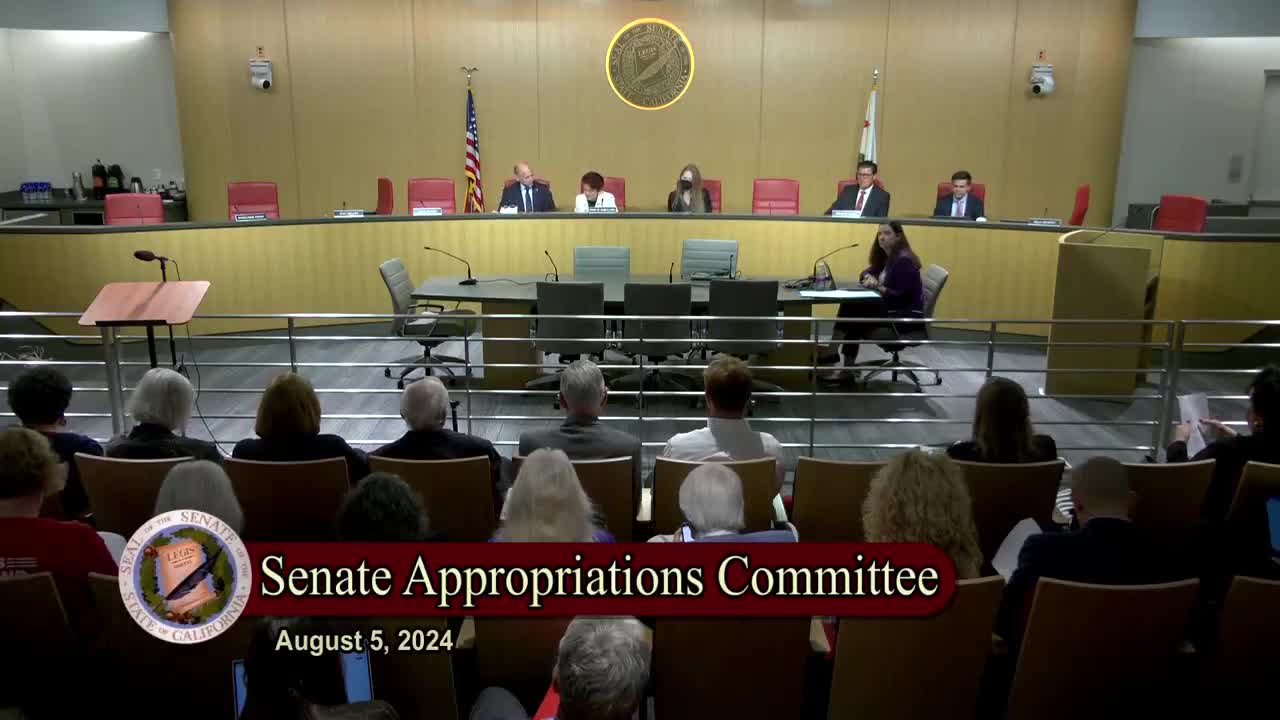 1MIN
Senate Standing Committee on Appropriations
 2MIN
Senate Standing Committee on Education
 43SEC
Assembly Floor
 1MIN
Assembly Standing Committee on Higher Education
 28SEC
Assembly Standing Committee on Higher Education
Bill Author

Bill Co-Author(s):