AB 3063: Pharmacies: compounding.
- Session Year: 2023-2024
- House: Assembly
- Latest Version Date: 2024-09-05
Current Status:
Failed
(2024-09-27: Vetoed by Governor.)
Introduced
In Committee
First Chamber
In Committee
Second Chamber
Enacted
Existing law, the Pharmacy Law, requires the California State Board of Pharmacy to license and regulate the practice of pharmacy by pharmacists and pharmacy corporations in this state. Existing law prohibits a pharmacy from compounding sterile drug products unless the pharmacy has obtained a sterile compounding pharmacy license from the board. Existing law requires the compounding of drug preparations by a pharmacy for furnishing, distribution, or use to be consistent with standards established in the pharmacy compounding chapters of the current version of the United States Pharmacopeia-National Formulary, including relevant testing and quality assurance. Existing law authorizes the board to adopt regulations to impose additional standards for compounding drug preparations.
This bill would, for purposes of those provisions, specify that the addition of a flavoring agent to a conventionally manufactured product is not considered compounding if certain conditions are met, including that the flavoring agent does not alter a medications concentration beyond the level of variance accepted by the United States Pharmacopeia. The bill would require the addition of the flavoring agent to be documented in the prescription record, as specified. The bill would make those provisions operative until January 1, 2030.
This bill would declare that it is to take effect immediately as an urgency statute.
Existing law, the Pharmacy Law, requires the California State Board of Pharmacy to license and regulate the practice of pharmacy by pharmacists and pharmacy corporations in this state. Existing law prohibits a pharmacy from compounding sterile drug products unless the pharmacy has obtained a sterile compounding pharmacy license from the board. Existing law requires the compounding of drug preparations by a pharmacy for furnishing, distribution, or use to be consistent with standards established in the pharmacy compounding chapters of the current version of the United States Pharmacopeia-National Formulary, including relevant testing and quality assurance. Existing law authorizes the board to adopt regulations to impose additional standards for compounding drug preparations.
This bill would, notwithstanding for purposes of those provisions, specify that compounding does not include reconstitution of a drug pursuant to a manufacturers directions, the sole act of tablet splitting or crushing, capsule opening, or the addition of a flavoring agent to enhance palatability. The bill would require a pharmacy to retain documentation that a flavoring agent was added to a prescription and to make that documentation available to the board or its agent upon request. the addition of a flavoring agent to a conventionally manufactured product is not considered compounding if certain conditions are met, including that the flavoring agent does not alter a medications concentration beyond the level of variance accepted by the United States Pharmacopeia. The bill would require the addition of the flavoring agent to be documented in the prescription record, as specified. The bill would make those provisions operative until January 1, 2030.
This bill would declare that it is to take effect immediately as an urgency statute.
Existing law, the Pharmacy Law, requires the California State Board of Pharmacy to license and regulate the practice of pharmacy by pharmacists and pharmacy corporations in this state. Existing law prohibits a pharmacy from compounding sterile drug products unless the pharmacy has obtained a sterile compounding pharmacy license from the board. Existing law requires the compounding of drug preparations by a pharmacy for furnishing, distribution, or use to be consistent with standards established in the pharmacy compounding chapters of the current version of the United States Pharmacopeia-National Formulary, including relevant testing and quality assurance. Existing law authorizes the board to adopt regulations to impose additional standards for compounding drug preparations.
This bill would, notwithstanding those provisions, specify that compounding does not include reconstitution of a drug pursuant to a manufacturers directions, the sole act of tablet splitting or crushing, capsule opening, or the addition of a flavoring agent to enhance palatability. The bill would require a pharmacy to retain documentation that a flavoring agent was added to a prescription and to make that documentation available to the board or its agent upon request. The bill would make those provisions operative until January 1, 2030.
This bill would declare that it is to take effect immediately as an urgency statute.
(a)The compounding of drug preparations by a pharmacy for distribution, furnishing, or use in this state shall be consistent with standards established in the pharmacy compounding chapters of the current version of the United States Pharmacopeia-National Formulary, including relevant testing and quality assurance. The board may adopt regulations to impose additional standards for compounding drug preparations.
(b)(1)For purposes of subdivision (a), the addition of a flavoring agent to a conventionally manufactured product shall not be considered compounding if the following conditions are met:
(A)The flavoring agent is inert, nonallergenic, and produces no effect other than the instillation or modification of flavor.
(B)The flavoring agent does not alter a medications concentration beyond the level of variance accepted by the United States Pharmacopeia.
(2)The addition of a flavoring agent to a conventionally manufactured product shall be documented in the prescription record. The documentation shall include all of the following:
(A)The date on which the flavoring agent was added.
(B)The prescription number and name of the medication.
(C)The name, lot number, expiry date, and quantity used of each flavor component.
(D)The initials of the person who prepared the product.
(c)This section shall remain in effect only until January 1, 2030, and as of that date is repealed.
SEC. 2.Section 4126.8 is added to the Business and Professions Code, to read:4126.8.(a)The compounding of drug preparations by a pharmacy for furnishing, distribution, or use in this state shall be consistent with standards established in the pharmacy compounding chapters of the current version of the United States Pharmacopeia-National Formulary, including relevant testing and quality assurance. The board may adopt regulations to impose additional standards for compounding drug preparations.
(b)This section shall become operative on January 1, 2030.
SEC. 3.This act is an urgency statute necessary for the immediate preservation of the public peace, health, or safety within the meaning of Article IV of the California Constitution and shall go into immediate effect. The facts constituting the necessity are:
In order to address the immediate public health threat to patients, especially young patients that do not take their medicine as prescribed, it is necessary for this act to take effect immediately.
(a)The compounding of drug preparations by a pharmacy for distribution, furnishing, or use in this state shall be consistent with standards established in the pharmacy compounding chapters of the current version of the United States Pharmacopeia-National Formulary, including relevant testing and quality assurance. The board may adopt regulations to impose additional standards for compounding drug preparations.
(b)Notwithstanding subdivision (a), compounding does not include reconstitution of a drug pursuant to a manufacturers directions, the sole act of tablet splitting or crushing, capsule opening, or the addition of a flavoring agent to enhance palatability. A pharmacy shall retain documentation that a flavoring agent was added to a prescription and that documentation shall be made available to the board, or an agent of the board, upon request.(b)(1)For purposes of subdivision (a), the addition of a flavoring agent to a conventionally manufactured product shall not be considered compounding if the following conditions are met:
(A)The flavoring agent is inert, nonallergenic, and produces no effect other than the instillation or modification of flavor.
(B)The flavoring agent does not alter a medications concentration beyond the level of variance accepted by the United States Pharmacopeia.
(2)The addition of a flavoring agent to a conventionally manufactured product shall be documented in the prescription record. The documentation shall include all of the following:
(A)The date on which the flavoring agent was added.
(B)The prescription number and name of the medication.
(C)The name, lot number, expiry date, and quantity used of each flavor component.
(D)The initials of the person who prepared the product.
(c)This section shall remain in effect only until January 1, 2030, and as of that date is repealed.
SEC. 2.Section 4126.8 is added to the Business and Professions Code, to read:4126.8.(a)The compounding of drug preparations by a pharmacy for furnishing, distribution, or use in this state shall be consistent with standards established in the pharmacy compounding chapters of the current version of the United States Pharmacopeia-National Formulary, including relevant testing and quality assurance. The board may adopt regulations to impose additional standards for compounding drug preparations.
(b)This section shall become operative on January 1, 2030.
SEC. 3.This act is an urgency statute necessary for the immediate preservation of the public peace, health, or safety within the meaning of Article IV of the California Constitution and shall go into immediate effect. The facts constituting the necessity are:
In order to address the immediate public health threat to patients, especially young patients that do not take their medicine as prescribed, it is necessary for this act to take effect immediately.
(a)The compounding of drug preparations by a pharmacy for furnishing, distribution, furnishing, or use in this state shall be consistent with standards established in the pharmacy compounding chapters of the current version of the United States Pharmacopeia-National Formulary, including relevant testing and quality assurance. The board may adopt regulations to impose additional standards for compounding drug preparations.
(b)Notwithstanding subdivision (a), compounding does not include reconstitution of a drug pursuant to a manufacturers directions, the sole act of tablet splitting or crushing, capsule opening, or the addition of a flavoring agent to enhance palatability. A pharmacy shall retain documentation that a flavoring agent was added to a prescription and that documentation shall be made available to the board, or an agent of the board, upon request.
(c)This section shall remain in effect only until January 1, 2030, and as of that date is repealed.
SEC. 2.Section 4126.8 is added to the Business and Professions Code, to read:4126.8.(a)The compounding of drug preparations by a pharmacy for furnishing, distribution, or use in this state shall be consistent with standards established in the pharmacy compounding chapters of the current version of the United States Pharmacopeia-National Formulary, including relevant testing and quality assurance. The board may adopt regulations to impose additional standards for compounding drug preparations.
(b)This section shall become operative on January 1, 2030.
SEC. 3.This act is an urgency statute necessary for the immediate preservation of the public peace, health, or safety within the meaning of Article IV of the California Constitution and shall go into immediate effect. The facts constituting the necessity are:
In order to address the immediate public health threat to patients, especially young patients that do not take their medicine as prescribed, it is necessary for this act to take effect immediately.
REVISIONS: HeadingLine 2.|
Date
|
Status
|
|---|---|
| Sep 27, 2024 | Vetoed by Governor. |
| Sep 13, 2024 | Enrolled and presented to the Governor at 4 p.m. |
| Aug 31, 2024 | Urgency clause adopted. Senate amendments concurred in. To Engrossing and Enrolling. (Ayes 76. Noes 0.). |
| Aug 28, 2024 | In Assembly. Concurrence in Senate amendments pending. May be considered on or after August 30 pursuant to Assembly Rule 77. |
| Aug 28, 2024 | Assembly Rule 77 suspended. |
| Aug 27, 2024 | Read third time. Urgency clause adopted. Passed. Ordered to the Assembly. (Ayes 39. Noes 0.). |
| Aug 22, 2024 | Read second time. Ordered to third reading. |
| Aug 21, 2024 | Read third time and amended. Ordered to second reading. |
| Jun 25, 2024 | Read second time. Ordered to third reading. |
| Jun 24, 2024 | From committee: Be ordered to second reading pursuant to Senate Rule 28.8. |
| Jun 10, 2024 | From committee: Do pass and re-refer to Com. on APPR. (Ayes 12. Noes 0.) (June 10). Re-referred to Com. on APPR. |
| May 15, 2024 | Referred to Com. on B., P. & E. D. |
| May 2, 2024 | In Senate. Read first time. To Com. on RLS. for assignment. |
| May 2, 2024 | Read third time. Urgency clause adopted. Passed. Ordered to the Senate. (Ayes 73. Noes 0. Page 5090.). |
| Apr 25, 2024 | Read second time. Ordered to Consent Calendar. |
| Apr 24, 2024 | From committee: Do pass. To Consent Calendar. (Ayes 14. Noes 0.) (April 24). |
| Apr 2, 2024 | From committee: Do pass and re-refer to Com. on APPR. (Ayes 17. Noes 0.) (April 2). Re-referred to Com. on APPR. |
| Apr 2, 2024 | Coauthors revised. |
| Mar 11, 2024 | Referred to Com. on B. & P. |
| Feb 17, 2024 | From printer. May be heard in committee March 18. |
| Feb 16, 2024 | Read first time. To print. |
|
Date
|
Description
|
Location
|
Votes
|
|
|---|---|---|---|---|
| Aug 31, 2024 | AB 3063 McKinnor Concurrence in Senate Amendments | Assembly Floor |
Passed |
|
| Aug 27, 2024 | Assembly 3rd Reading AB3063 McKinnor et al. By Smallwood-Cuevas Urgency Clause | Senate Floor |
Passed |
|
| Jun 10, 2024 | Do pass, but first be re-referred to the Committee on [Appropriations] | Senate Standing Committee on Business, Professions and Economic Development |
Passed |
|
| May 2, 2024 | AB 3063 McKinnor Consent Calendar Second Day Regular Session | Assembly Floor |
Passed |
|
| Apr 24, 2024 | Do pass. To Consent Calendar. | Assembly Standing Committee on Appropriations |
Passed |
|
| Apr 2, 2024 | Do pass and be re-referred to the Committee on [Appropriations] | Assembly Standing Committee on Business and Professions |
Passed |
This list shows positions taken on this bill by organizations on the date displayed, which is linked to the original source.
Positions by individuals are not included.
|
Organization
|
Position
|
Date
|
|---|---|---|
| Arc Of California | ** Support | |
| Association of California Healthcare Districts | * Support | Apr 2, 2024 |
| Association Of California Healthcare Districts The | ** Support | |
| Association Of Regional Center Agencies | ** Support | |
| Board of Pharmacy | ** Against | |
| California Academy of Eye Physicians and Surgeons | ** Support | |
| California Association Of Health Facilities | ** Support | |
| California Coalition for Children's Safety and Health | ** Support | |
| California Community Pharmacy Coalition | ** Support | |
| California Society of Health System Pharmacists | ** Support | |
| California State Board of Pharmacy | ** Against | |
| California Veterinary Medical Association | ** Support | |
| Children'S Specialty Care Coalition | ** Support | |
| Flavor RX | * Support | Jun 10, 2024 |
| Flavorx | ** Support | |
| Jordan’s Guardian Angels | ** Support | |
| Maxim Healthcare Services, Inc. | ** Support | |
| United Cerebral Palsy California Collaboration | ** Support |
GOVERNOR'S VETO
GV Bill Id:AB 3063
Author:(McKinnor)
As Enrolled Ver:September 5, 2024
2/3 vote. Urgency
SUMMARY
Exempts the addition of flavoring agents to a drug from the state's requirement that such actions comply with pharmacy compounding standards set under the United States Pharmacopeia-National Formulary (USP), until January 1, 2030.
Senate Amendments
- Narrow and clarify the exemption established in the bill to specifically apply to the addition of a flavoring agent to a conventionally manufactured product.
- Require that the flavoring agent be inert, nonallergenic, and produce no effect other than the instillation or modification of flavor, and prohibit the flavoring agent from altering a medication’s concentration beyond the level of variance accepted by the USP.
- Require the addition of a flavoring agent to be documented in the prescription record.
Governor’s Veto Message
In his veto message for this bill, Governor Newsom writes:
This bill would exempt from the definition of compounding the addition of a flavoring agent that meets specified conditions.
While I appreciate the author's goal to address the availability of flavored medication in the state, this bill creates an exception to national standards for compounding which poses a risk to consumer health and safety. This bill would undermine AB 973, which I signed in 2019, that required both sterile and non-sterile compounding in California to be consistent with the United States Pharmacopeia-National Formulary's guidelines. AB 973 was passed and enacted to ensure the state adheres to the federally required minimum standards of consumer protection.
I vetoed a similar bill last year that would have created conflicting standards for California and contradicted AB 973. While this bill attempts to specify the conditions necessary for exclusion, it still contains exceptions to national guidelines, which poses an increased risk to consumers from contamination.
Flavoring is a useful tool for pharmacists to help improve the palatability of medication, and I encourage the author to work with the Department of Consumer Affairs on legislation that facilitates the availability of medication flavoring while maintaining foundational consumer protections.
COMMENTS
According to the federal Food and Drug Administration (FDA), drug compounding is generally described as the process of combining, mixing, or altering ingredients to create a medication tailored to the needs of an individual patient. Combining two or more drugs is a form of compounding, as is the reconstitution of a drug into another ingestible form. Compounded drugs are not approved by the FDA for safety or effectiveness.
Pharmacy professionals who engage in the practice of drug compounding are required to obtain a license from the BOP. However, prior to 2020, there were no state laws that specifically outline requirements for the compounding of prescription drugs. Partially in response to a multistate outbreak of fungal meningitis for which the unsafe compounding of a preservative-free steroid injection resulted in numerous deaths, the BOP sponsored legislation in 2019 to provide that compounding in California must be performed consistent with consistent with standards established in the pharmacy compounding chapters of the current version of the USP.
The United States Pharmacopeia-National Formulary is a combination of two compendia published by two longstanding nonprofits: the USP, published by the United States Pharmacopeial Convention; and the National Formulary, published by the American Pharmaceutical Association. As the FDA's officially designated compendium, the USP sets numerous standards for drug ingredients and manufacturing processes, including testing and quality assurance. Generally speaking, drug products and ingredients sold in the United States must conform to the USP to be considered unadulterated and of minimum quality.
Several years after the enactment of the 2019 legislation, concerns emerged that USP standards for compounding would apply to the addition of flavoring to medication. USP General Chapter 795 sets minimum standards for preparing compounded nonsterile preparations. These standards include minimum personnel qualifications, personal hygiene and garbing requirements, and cleaning and sanitizing protocols.
For purposes of its General Chapter 795, the USP defines nonsterile compounding as "combining, admixing, diluting, pooling, reconstituting other than as provided in the manufacturer's labeling, or otherwise altering a drug product or bulk drug substance to create a nonsterile preparation." The USP has published a position statement affirming that it has considered the flavoring of conventionally manufactured medications to be within the scope of General Chapter 795 since 2004. In formal commentary published in November 2022, the USP responded to a comment indicating that the addition of flavoring agents should not be required to meet nonsterile compounding requirements with the following statement:
"Flavorings are organic chemicals with reactive functional groups including acids, alcohols, aldehydes, amides, amines, esters, ketones, and lactams. Flavorings are not always labeled with their full ingredients and may contain solvents. Minor components in a flavoring system can impact the stability of a CNSP. Impacts on stability can lead to degradation, production of harmful impurities, and/or reduced bioavailability. Flavorings can impact levels of impurities while having no impact on assay values."
The FDA has not officially issued guidance relating to the question of whether adding flavoring constitutes compounding. However, correspondence between the FDA and the BOP confirmed that "the addition of a flavoring by a pharmacy to a drug generally would be considered compounding" but that "if the labeling for an FDA-approved drug includes directions to do so, adding flavoring to the drug in accordance with these directions would not be considered compounding." This would indicate that the addition of flavoring does not need to comply with General Chapter 795 if directions for flavoring were included on an FDA-approved drug label.
While the USP and the FDA have considered the most cases of adding flavoring to constitute compounding since years before the enactment of the 2019 legislation, the BOP’s regulations previously exempted addition of flavors. Specifically, the BOP’s regulations have stated:
"Compounding' does not include reconstitution of a drug pursuant to a manufacturer's direction(s), nor does it include the sole act of tablet splitting or crushing, capsule opening, or the addition of flavoring agent(s) to enhance palatability."
Because the BOP's regulations would seemingly be out of compliance with the USP, the BOP has taken steps to reconcile its regulations and remove the above exemptions. This has caused concerns amongst stakeholders that many pharmacies who do not wish to comply with the USP General Chapter 795 standards will cease to engage in the addition of flavoring. As a result, this bill has been introduced to statutorily restore the exemption for flavoring for purposes of California, notwithstanding the provisions of the USP. The bill would codify the language currently contained in regulations and effectively authorize specified noncompliance with the USP in state compounding requirements.
The author of this measure introduced a substantially similar bill in 2023 that was passed by the Legislature but subsequently vetoed by the Governor. In his veto message, the Governor stated that while he "appreciate[d] the author's intention to maintain the current availability of flavored medication, this bill would create standards for California that do not meet the United States Pharmacopeia-National Formulary's guidelines regarding compounding that have been put in place to minimize patients' risk of harm." The Governor's veto message raised the concern that making exceptions to federal guidelines "would pose a risk to consumers."
The Governor's veto message was consistent with arguments made against the prior bill by the BOP, which had previously sponsored the 2019 legislation that set baseline standards in California for nonsterile compounding to align with what federal agencies require under the USP. Because the BOP regularly enforces both state as well as federal laws as part of its public protection mission, concerns were raised that deliberately creating a misalignment for flavoring would cause confusion amongst pharmacy professionals and frustrate the BOP's efforts to enforce clearly delineated requirements.
Notwithstanding the BOP's concerns, there has not been strong evidence that patients were harmed at a higher rate prior to 2019 when flavoring was exempted from the definition of compounding. Similarly, no evidence has been presented of harm in other states, where the overwhelming majority of jurisdictions allow a full or limited exemption for flavoring in their laws governing pharmacy compounding. The current proposal includes a sunset date for the exemption, which would allow the Legislature to reevaluate its appropriateness if evidence of harm does arise. Additionally, amendments to the bill add additional safeguards to minimize any risk to the patient as a result of adding flavoring agents, and require the addition of flavoring agents to be documented in the prescription record. The author and supporters of this bill believe these safeguards sufficiently address concerns raised in the Governor's veto message.
According to the Author
"Flavoring for children's medications has been available in pharmacies across California for decades. It's one of the most effective tools available to reduce stress around medicine-time and increase medication adherence. It is estimated that over 6 million medications have been flavored in California and 200 million across the country over the past 25 years, without incident. However, because of an unforeseen consequence of AB 973 (Irwin, 2019), the Board of Pharmacy adopted regulations requiring community pharmacies to adopt over 80 new rules and regulations just to continue adding flavor to kid’s medicine. As a result, over 3,000 pharmacies ceased to offer flavoring overnight. Now, only approximately 30 pharmacies in the entire state provide this critical service. AB 3063 rectifies this deficiency by clarifying that adding flavoring to medications does not constitute compounding, thus ensuring continued access to flavored medications and promoting better medication adherence and health outcomes."
Arguments in Support
The California Community Pharmacy Coalition (CPPC) writes in support of this bill: "California's community pharmacies provide a simple and safe service to flavor medications for their patients who may otherwise not be able to take the medication they need, especially for parents with small children. Without this bill, this new regulation by the California State Board of Pharmacy will remove this essential service that pharmacists all over the state—including in rural, hard to reach and underserved areas—can offer sick children and worried parents alike."
Arguments in Opposition
The California State Board of Pharmacy opposes this bill, writing: "As a consumer protection agency, the Board is concerned that the measure places patients and licensees at risk, as the measure would create conflicts between state and federal law and runs contrary to national standards established by United States Pharmacopeia (USP)." The Board argues that "the approach taken in Assembly Bill 3063 places consumers at risk and runs afoul of national standards and state and federal law."
FISCAL COMMENTS
Pursuant to Senate Rule 28.8, negligible state costs.
VOTES
ASM BUSINESS AND PROFESSIONS: 17-0-1
YES: Berman, Flora, Alanis, Bains, Chen, Dixon, Grayson, Irwin, Jackson, Low, Lowenthal, McKinnor, Stephanie Nguyen, Pellerin, Sanchez, Soria, Zbur
ABS, ABST OR NV: Juan Carrillo
ASM APPROPRIATIONS: 14-0-1
YES: Wicks, Sanchez, Arambula, Bryan, Calderon, Wendy Carrillo, Dixon, Mike Fong, Grayson, Haney, Hart, Jim Patterson, Pellerin, Ta
ABS, ABST OR NV: Villapudua
ASSEMBLY FLOOR: 73-0-7
YES: Addis, Aguiar-Curry, Alanis, Alvarez, Arambula, Bains, Bauer-Kahan, Bennett, Berman, Boerner, Bonta, Bryan, Juan Carrillo, Wendy Carrillo, Cervantes, Chen, Connolly, Davies, Dixon, Essayli, Mike Fong, Vince Fong, Friedman, Gabriel, Gallagher, Garcia, Gipson, Grayson, Haney, Hart, Holden, Hoover, Irwin, Jackson, Jones-Sawyer, Kalra, Lackey, Lee, Lowenthal, Maienschein, McCarty, McKinnor, Muratsuchi, Stephanie Nguyen, Ortega, Pacheco, Papan, Jim Patterson, Joe Patterson, Pellerin, Petrie-Norris, Quirk-Silva, Ramos, Rendon, Reyes, Luz Rivas, Rodriguez, Blanca Rubio, Sanchez, Santiago, Schiavo, Soria, Ta, Ting, Valencia, Villapudua, Waldron, Wallis, Ward, Wicks, Wilson, Wood, Zbur
ABS, ABST OR NV: Calderon, Megan Dahle, Flora, Low, Mathis, Weber, Robert Rivas
SENATE FLOOR: 40-0-0
YES: Allen, Alvarado-Gil, Archuleta, Ashby, Atkins, Becker, Blakespear, Bradford, Caballero, Cortese, Dahle, Dodd, Durazo, Eggman, Glazer, Gonzalez, Grove, Hurtado, Jones, Laird, Limón, McGuire, Menjivar, Min, Newman, Nguyen, Niello, Ochoa Bogh, Padilla, Portantino, Roth, Rubio, Seyarto, Skinner, Smallwood-Cuevas, Stern, Umberg, Wahab, Wiener, Wilk
ASSEMBLY FLOOR: 76-0-3
YES: Addis, Aguiar-Curry, Alanis, Alvarez, Arambula, Bains, Bauer-Kahan, Bennett, Berman, Boerner, Bonta, Bryan, Juan Carrillo, Wendy Carrillo, Cervantes, Chen, Connolly, Megan Dahle, Davies, Dixon, Essayli, Flora, Mike Fong, Friedman, Gallagher, Garcia, Gipson, Grayson, Haney, Hart, Holden, Hoover, Irwin, Jackson, Jones-Sawyer, Kalra, Lackey, Lee, Low, Lowenthal, Maienschein, Mathis, McCarty, McKinnor, Muratsuchi, Stephanie Nguyen, Pacheco, Papan, Jim Patterson, Joe Patterson, Pellerin, Petrie-Norris, Quirk-Silva, Ramos, Rendon, Reyes, Luz Rivas, Rodriguez, Blanca Rubio, Sanchez, Santiago, Schiavo, Soria, Ta, Ting, Valencia, Villapudua, Waldron, Wallis, Ward, Weber, Wicks, Wilson, Wood, Zbur, Robert Rivas
ABS, ABST OR NV: Calderon, Gabriel, Ortega
UPDATED
VERSION: September 5, 2024
CONSULTANT: Robert Sumner / B. & P. / (916) 319-3301 FN: 0005190
CONCURRENCE IN SENATE AMENDMENTS
CSA1 Bill Id:AB 3063
Author:(McKinnor)
As Amended Ver:August 21, 2024
2/3 vote. Urgency
SUMMARY
Exempts the addition of flavoring agents to a drug from the state's requirement that such actions comply with pharmacy compounding standards set under the United States Pharmacopeia-National Formulary (USP), until January 1, 2030.
Senate Amendments
- Narrow and clarify the exemption established in the bill to specifically apply to the addition of a flavoring agent to a conventionally manufactured product.
- Require that the flavoring agent be inert, nonallergenic, and produce no effect other than the instillation or modification of flavor, and prohibit the flavoring agent from altering a medication's concentration beyond the level of variance accepted by the USP.
- Require the addition of a flavoring agent to be documented in the prescription record.
COMMENTS
According to the federal Food and Drug Administration (FDA), drug compounding is generally described as the process of combining, mixing, or altering ingredients to create a medication tailored to the needs of an individual patient. Combining two or more drugs is a form of compounding, as is the reconstitution of a drug into another ingestible form. Compounded drugs are not approved by the FDA for safety or effectiveness.
Pharmacy professionals who engage in the practice of drug compounding are required to obtain a license from the BOP. However, prior to 2020, there were no state laws that specifically outline requirements for the compounding of prescription drugs. Partially in response to a multistate outbreak of fungal meningitis for which the unsafe compounding of a preservative-free steroid injection resulted in numerous deaths, the BOP sponsored legislation in 2019 to provide that compounding in California must be performed consistent with consistent with standards established in the pharmacy compounding chapters of the current version of the USP.
The United States Pharmacopeia-National Formulary is a combination of two compendia published by two longstanding nonprofits: the USP, published by the United States Pharmacopeial Convention; and the National Formulary, published by the American Pharmaceutical Association. As the FDA's officially designated compendium, the USP sets numerous standards for drug ingredients and manufacturing processes, including testing and quality assurance. Generally speaking, drug products and ingredients sold in the United States must conform to the USP to be considered unadulterated and of minimum quality.
Several years after the enactment of the 2019 legislation, concerns emerged that USP standards for compounding would apply to the addition of flavoring to medication. USP General Chapter 795 sets minimum standards for preparing compounded nonsterile preparations. These standards include minimum personnel qualifications, personal hygiene and garbing requirements, and cleaning and sanitizing protocols.
For purposes of its General Chapter 795, the USP defines nonsterile compounding as "combining, admixing, diluting, pooling, reconstituting other than as provided in the manufacturer's labeling, or otherwise altering a drug product or bulk drug substance to create a nonsterile preparation." The USP has published a position statement affirming that it has considered the flavoring of conventionally manufactured medications to be within the scope of General Chapter 795 since 2004. In formal commentary published in November 2022, the USP responded to a comment indicating that the addition of flavoring agents should not be required to meet nonsterile compounding requirements with the following statement:
"Flavorings are organic chemicals with reactive functional groups including acids, alcohols, aldehydes, amides, amines, esters, ketones, and lactams. Flavorings are not always labeled with their full ingredients and may contain solvents. Minor components in a flavoring system can impact the stability of a CNSP. Impacts on stability can lead to degradation, production of harmful impurities, and/or reduced bioavailability. Flavorings can impact levels of impurities while having no impact on assay values."
The FDA has not officially issued guidance relating to the question of whether adding flavoring constitutes compounding. However, correspondence between the FDA and the BOP confirmed that “the addition of a flavoring by a pharmacy to a drug generally would be considered compounding” but that "if the labeling for an FDA-approved drug includes directions to do so, adding flavoring to the drug in accordance with these directions would not be considered compounding." This would indicate that the addition of flavoring does not need to comply with General Chapter 795 if directions for flavoring were included on an FDA-approved drug label.
While the USP and the FDA have considered the most cases of adding flavoring to constitute compounding since years before the enactment of the 2019 legislation, the BOP’s regulations previously exempted addition of flavors. Specifically, the BOP's regulations have stated:
"Compounding' does not include reconstitution of a drug pursuant to a manufacturer's direction(s), nor does it include the sole act of tablet splitting or crushing, capsule opening, or the addition of flavoring agent(s) to enhance palatability."
Because the BOP’s regulations would seemingly be out of compliance with the USP, the BOP has taken steps to reconcile its regulations and remove the above exemptions. This has caused concerns amongst stakeholders that many pharmacies who do not wish to comply with the USP General Chapter 795 standards will cease to engage in the addition of flavoring. As a result, this bill has been introduced to statutorily restore the exemption for flavoring for purposes of California, notwithstanding the provisions of the USP. The bill would codify the language currently contained in regulations and effectively authorize specified noncompliance with the USP in state compounding requirements.
The author of this measure introduced a substantially similar bill in 2023 that was passed by the Legislature but subsequently vetoed by the Governor. In his veto message, the Governor stated that while he "appreciate[d] the author's intention to maintain the current availability of flavored medication, this bill would create standards for California that do not meet the United States Pharmacopeia-National Formulary's guidelines regarding compounding that have been put in place to minimize patients' risk of harm." The Governor's veto message raised the concern that making exceptions to federal guidelines "would pose a risk to consumers."
The Governor's veto message was consistent with arguments made against the prior bill by the BOP, which had previously sponsored the 2019 legislation that set baseline standards in California for nonsterile compounding to align with what federal agencies require under the USP. Because the BOP regularly enforces both state as well as federal laws as part of its public protection mission, concerns were raised that deliberately creating a misalignment for flavoring would cause confusion amongst pharmacy professionals and frustrate the BOP's efforts to enforce clearly delineated requirements.
Notwithstanding the BOP's concerns, there has not been strong evidence that patients were harmed at a higher rate prior to 2019 when flavoring was exempted from the definition of compounding. Similarly, no evidence has been presented of harm in other states, where the overwhelming majority of jurisdictions allow a full or limited exemption for flavoring in their laws governing pharmacy compounding. The current proposal includes a sunset date for the exemption, which would allow the Legislature to reevaluate its appropriateness if evidence of harm does arise. Additionally, amendments to the bill add additional safeguards to minimize any risk to the patient as a result of adding flavoring agents, and require the addition of flavoring agents to be documented in the prescription record. The author and supporters of this bill believe these safeguards sufficiently address concerns raised in the Governor's veto message.
According to the Author
"Flavoring for children's medications has been available in pharmacies across California for decades. It's one of the most effective tools available to reduce stress around medicine-time and increase medication adherence. It is estimated that over 6 million medications have been flavored in California and 200 million across the country over the past 25 years, without incident. However, because of an unforeseen consequence of AB 973 (Irwin, 2019), the Board of Pharmacy adopted regulations requiring community pharmacies to adopt over 80 new rules and regulations just to continue adding flavor to kid's medicine. As a result, over 3,000 pharmacies ceased to offer flavoring overnight. Now, only approximately 30 pharmacies in the entire state provide this critical service. AB 3063 rectifies this deficiency by clarifying that adding flavoring to medications does not constitute compounding, thus ensuring continued access to flavored medications and promoting better medication adherence and health outcomes."
Arguments in Support
The California Community Pharmacy Coalition (CPPC) writes in support of this bill: "California's community pharmacies provide a simple and safe service to flavor medications for their patients who may otherwise not be able to take the medication they need, especially for parents with small children. Without this bill, this new regulation by the California State Board of Pharmacy will remove this essential service that pharmacists all over the state—including in rural, hard to reach and underserved areas—can offer sick children and worried parents alike."
Arguments in Opposition
The California State Board of Pharmacy opposes this bill, writing: "As a consumer protection agency, the Board is concerned that the measure places patients and licensees at risk, as the measure would create conflicts between state and federal law and runs contrary to national standards established by United States Pharmacopeia (USP)." The Board argues that "the approach taken in Assembly Bill 3063 places consumers at risk and runs afoul of national standards and state and federal law."
FISCAL COMMENTS
Pursuant to Senate Rule 28.8, negligible state costs.
VOTES:
ASM BUSINESS AND PROFESSIONS: 17-0-1
YES: Berman, Flora, Alanis, Bains, Chen, Dixon, Grayson, Irwin, Jackson, Low, Lowenthal, McKinnor, Stephanie Nguyen, Pellerin, Sanchez, Soria, Zbur
ABS, ABST OR NV: Juan Carrillo
ASM APPROPRIATIONS: 14-0-1
YES: Wicks, Sanchez, Arambula, Bryan, Calderon, Wendy Carrillo, Dixon, Mike Fong, Grayson, Haney, Hart, Jim Patterson, Pellerin, Ta
ABS, ABST OR NV: Villapudua
ASSEMBLY FLOOR: 73-0-7
YES: Addis, Aguiar-Curry, Alanis, Alvarez, Arambula, Bains, Bauer-Kahan, Bennett, Berman, Boerner, Bonta, Bryan, Juan Carrillo, Wendy Carrillo, Cervantes, Chen, Connolly, Davies, Dixon, Essayli, Mike Fong, Vince Fong, Friedman, Gabriel, Gallagher, Garcia, Gipson, Grayson, Haney, Hart, Holden, Hoover, Irwin, Jackson, Jones-Sawyer, Kalra, Lackey, Lee, Lowenthal, Maienschein, McCarty, McKinnor, Muratsuchi, Stephanie Nguyen, Ortega, Pacheco, Papan, Jim Patterson, Joe Patterson, Pellerin, Petrie-Norris, Quirk-Silva, Ramos, Rendon, Reyes, Luz Rivas, Rodriguez, Blanca Rubio, Sanchez, Santiago, Schiavo, Soria, Ta, Ting, Valencia, Villapudua, Waldron, Wallis, Ward, Wicks, Wilson, Wood, Zbur
ABS, ABST OR NV: Calderon, Megan Dahle, Flora, Low, Mathis, Weber, Robert Rivas
SENATE FLOOR: 40-0-0
YES: Allen, Alvarado-Gil, Archuleta, Ashby, Atkins, Becker, Blakespear, Bradford, Caballero, Cortese, Dahle, Dodd, Durazo, Eggman, Glazer, Gonzalez, Grove, Hurtado, Jones, Laird, Limón, McGuire, Menjivar, Min, Newman, Nguyen, Niello, Ochoa Bogh, Padilla, Portantino, Roth, Rubio, Seyarto, Skinner, Smallwood-Cuevas, Stern, Umberg, Wahab, Wiener, Wilk
UPDATED
VERSION: August 21, 2024
CONSULTANT: Robert Sumner / B. & P. / (916) 319-3301 FN: 0004815
SENATE RULES COMMITTEE Office of Senate Floor Analyses (916) 651-1520 Fax: (916) 327-4478 | AB 3063 |
THIRD READING
Bill No: AB 3063
Author: McKinnor (D), et al.
Amended: 8/21/24 in Senate
Vote: 27 - Urgency
SENATE BUS., PROF. & ECON. DEV. COMMITTEE: 12-0, 6/10/24
AYES: Ashby, Nguyen, Alvarado-Gil, Archuleta, Becker, Dodd, Eggman, Glazer, Menjivar, Niello, Roth, Wilk
NO VOTE RECORDED: Smallwood-Cuevas
SENATE APPROPRIATIONS COMMITTEE: Senate Rule 28.8
ASSEMBLY FLOOR: 73-0, 5/2/24 (Consent) - See last page for vote
SUBJECT: Pharmacies: compounding
SOURCE: Author
DIGEST:
This bill is exempts, as an urgency measure, the addition of a flavoring agent to a conventionally manufactured product from being considered compounding according to specific conditions.
Senate Floor Amendments of 8/21/24 revise and recast provisions to specify conditions necessary for flavoring to not be considered compounding and enhance documentation requirements when flavoring agents are added to conventionally manufactured products.
ANALYSIS:
Existing law:
- Establishes the Pharmacy Law and California State Board of Pharmacy (BOP) to administer and enforce the Pharmacy Law. (Business and Professions Code (BPC) §§ 4000 et seq.)
- Defines a “drug” as an article recognized in the official United States Pharmacopeia (USP). Defines articles intended for use in the diagnosis, cure, mitigation, treatment, or prevention of disease in humans or other animals. Defines articles (other than food) intended to affect the structure or any function of the body of humans or other animals. (BPC § 4025)
- Defines “compounding” as any of the following activities occurring in a licensed pharmacy, by or under the supervision of a licensed pharmacist, pursuant to a prescription:
- Altering the dosage form or delivery system of a drug.
- Altering the strength of a drug.
- Combining components or active ingredients.
- Preparing a compounded drug preparation from chemicals or bulk drug substances. (Title 16, California Code of Regulations (16 CCR) § 1735 (a))
- Requires a resident and a nonresident pharmacy that compounds sterile drugs to have a sterile compounding pharmacy license. (BPC §§ 4127, 4127.2)
- Prohibits the manufacture, compounding, furnishing, selling, or dispensing of a dangerous drug, or dispensing or compounding a prescription of a prescriber unless the person is a pharmacist. (BPC § 4051)
- Authorizes a pharmacist to furnish a reasonable quantity of a compounded drug product to a prescriber for office use by the prescriber. (BPC § 4052 (a)(1))
- Establishes sterile compounding quality assurance and process validation standards, which includes references to the USP. (16 CCR § 1751.7)
- States the compounding of drug preparations by a pharmacy for distribution, furnishing, or use in this state shall be consistent with standards established in the pharmacy compounding chapters of the current version of the USP-National Formulary, including relevant testing and quality assurance. States the BOP may adopt regulations to impose additional standards for compounding drug preparations (BPC § 4126.8)
This bill, until 2030, provides that the addition of a flavoring agent to a conventionally manufactured product shall not be considered compounding if the following conditions are met:
- The flavoring agent is inert, nonallergenic, and produces no effect other than the installation or modification of flavor.
- The flavoring agent does not alter a medication’s concentration beyond the level of variance accepted by the United States Pharmacopeia.
- The addition of a flavoring agent to a conventionally manufactured product must be documented in the prescription record and must include the date on which the flavoring agent was added, the prescription number and name of the medication, the name, lot number, expiry date, and quantity used of each flavor component, and the initials of the person who prepared the product.
Background
BOP regulates over 47,000 pharmacists, 550 advanced practice pharmacists, 6,500 intern pharmacists, and 70,000 pharmacy technicians across a total of 32 licensing programs as of the most recent sunset review report in 2021. Entrusted with administering and enforcing the state’s Pharmacy Law, statute provides that “protection of the public shall be the highest priority for the BOP in exercising its licensing, regulatory, and disciplinary functions. Whenever the protection of the public is inconsistent with other interests sought to be promoted, the protection of the public shall be paramount.” (BPC § 4001.1)
USP is a reference document created by a nonprofit organization of uniform preparations for the most commonly used drugs and tests to ensure their quality, potency and purity. According to the USP’s website, USP develops scientific standards that help ensure the quality and safety of medicines, dietary supplements and foods. USP standards apply to drug products sold in the US and 140 countries.
USP–NF is a combination of two compendia, the USP and NF (National Formulary). The United States Federal Food, Drug, and Cosmetics Act designates the USP–NF as the official compendia for drugs marketed in the United States. A drug product in the US market must conform to the standards in USP–NF to avoid possible charges of adulteration and misbranding.
A compounding pharmacy is a specific type of pharmacy that creates custom medications for people with specific medical needs. As such, it has different requirements for which pharmacies meet the threshold to be allowed to be a compounding pharmacy. Adding flavoring to medication is a way to encourage patients, particularly children, to consume the medication. Medications that commonly include flavoring include antibiotics like amoxicillin, augmentin, cleocin, tamiflu, and Zithromax. FLAVORx is one company that manufactures flavoring agents. The process of adding flavoring to medication takes place at over 3,000 pharmacies in California and 40,000 pharmacies nationwide, according to a recent CalMatters article.
In 2010, the BOP took a position on flavoring through 16 CCR § 1735(b), which states:
“‘Compounding’ does not include reconstitution of a drug pursuant to a manufacture’s direction(s) for oral, rectal topical, or injectable administration, nor does it include tablet splitting or the addition of flavoring agent(s) to enhance palatability.”
In 2017, this regulation was updated to note:
“‘Compounding’ does not include reconstitution of a drug pursuant to a manufacturer’s direction(s), nor does it include the sole act of tablet splitting or crushing, capsule opening, or the addition of flavoring agent(s) to enhance palatability.”
AB 973 (Irwin, Chapter 184, Statutes of 2019) required the compounding of drug preparations by a pharmacy to be consistent with standards established in the current version of the USP–NF, including relevant testing and quality assurance. Prior to this bill, the BOP referenced USP in some statutes and regulations, but AB 973 bill formally established USP as the minimum standard for compounding. At the time, BOP reported it has a compounding committee that will be assessing any changes necessary to existing regulations to comply with this change.
USP recently updated its definition of compounding and the requirements to perform compounding. In doing so, the question as to whether flavoring was included under the definition of altering a drug or bulk drug substance as nonsterile compounding arose. In an FAQ document released by USP posing this question, USP responded: “[f]lavoring a manufactured product is compounding and must be conducted under compounding standards in accordance with the exemptions for compounding in the Federal Food, Drug, and Cosmetic Act, otherwise the drug product would be deemed adulterated under the Act. Compounding standards apply to the assembly of premeasured kits.” This change is consistent with USP’s long-standing positon on this issue.
The Federal Food, Drug and Cosmetic Act establishes, in provisions of 503A, the conditions under which a pharmacist (or others) may compound. The provisions explicitly state that the compounding much comply with the USP chapter on pharmacy compounding. As the BOP noted recently in its decision to oppose this bill, “Generally speaking, when there is a conflict between state and federal law, the more restrictive law must be followed, meaning that even if AB 782 passes, the provisions in 503A will remain in place and enforceable and or applicable to the Board in its regulation as well the FDA and potentially accreditors that assess for compliance with USP as a condition of accreditation.”
Since the USP considers flavoring compounding, as adding of flavoring agents can destabilize a product, the BOP is adopting regulations to reflect that, given AB 973 requires the compounding of drug preparations by a pharmacy to be consistent with standards established in the current version of the USP-NF.
FISCAL EFFECT: Appropriation: No Fiscal Com.: Yes Local: No
SUPPORT: (Verified 8/20/24)
Arc of California
Association of California Healthcare Districts; the
Association of Regional Center Agencies
California Academy of Eye Physicians and Surgeons
California Association of Health Facilities
California Coalition for Children's Safety and Health
California Community Pharmacy Coalition
California Society of Health System Pharmacists
California Veterinary Medical Association
Children's Specialty Care Coalition
FLAVORx
Jordan’s Guardian Angels
Maxim Healthcare Services, INC.
United Cerebral Palsy California Collaboration
OPPOSITION: (Verified 8/20/24)
Board of Pharmacy
ARGUMENTS IN SUPPORT: Supporters state that pharmacies in California have been flavoring children’s liquid medications for decades to successfully encourage millions of children to take their prescribed medication by enhancing palatability. Flavoring of children’s medications has been expressly authorized by [BOP] since 2010. However, the Board is poised to reverse its longstanding position by adopting new regulations that would effectively repeal the exemption for flavoring of medication. Due to the Board’s recent regulatory shift, thousands of pharmacies across California stopped flavoring children’s medications on November 1, 2023. Flavoring is widely regarded as one of the most effective tools pharmacists have to help children take their medication. Restricted access to flavored medicine harms public health. If children do not take their medication, their illness persists, and their contagious period is prolonged. This often leads to the need for additional medical services. If medical conditions go untreated, it could result in long-term health conditions.
ARGUMENTS IN OPPOSITION: The Board of Pharmacy notes that it “…supports the long-standing pharmacy practice of compounding, including the use of flavoring agents, consistent with legal requirements. However, the Board believes the approach taken in Assembly Bill 3063 places consumers at risk and runs afoul of national standards and state and federal law. As shared last year in response to Assembly Bill 782, the Board believes a more appropriate approach is to focus on how to operationalize the USP <795 requirements to assist pharmacists and pharmacies that choose to provide medication flavoring services to patients. Last year, the Board became aware of information circulating related to its history of actions related to the issue of flavoring. The Board acknowledges that when it originally promulgated its compounding regulations in 2010, it established an exemption from its definition of compounding for the addition of flavoring agents. State and federal laws governing the practice of pharmacy are dynamic, however, with significant changes occurring over the past decade due in large part to local and national tragedies stemming from compounding related events.”
ASSEMBLY FLOOR: 73-0, 5/2/24
AYES: Addis, Aguiar-Curry, Alanis, Alvarez, Arambula, Bains, Bauer-Kahan, Bennett, Berman, Boerner, Bonta, Bryan, Juan Carrillo, Wendy Carrillo, Cervantes, Chen, Connolly, Davies, Dixon, Essayli, Mike Fong, Vince Fong, Friedman, Gabriel, Gallagher, Garcia, Gipson, Grayson, Haney, Hart, Holden, Hoover, Irwin, Jackson, Jones-Sawyer, Kalra, Lackey, Lee, Lowenthal, Maienschein, McCarty, McKinnor, Muratsuchi, Stephanie Nguyen, Ortega, Pacheco, Papan, Jim Patterson, Joe Patterson, Pellerin, Petrie-Norris, Quirk-Silva, Ramos, Rendon, Reyes, Luz Rivas, Rodriguez, Blanca Rubio, Sanchez, Santiago, Schiavo, Soria, Ta, Ting, Valencia, Villapudua, Waldron, Wallis, Ward, Wicks, Wilson, Wood, Zbur
NO VOTE RECORDED: Calderon, Megan Dahle, Flora, Low, Mathis, Weber, Robert Rivas
Prepared by: Sarah Mason / B., P. & E.D. /
8/22/24 16:10:43
**** END ****
SENATE RULES COMMITTEE Office of Senate Floor Analyses (916) 651-1520 Fax: (916) 327-4478 | AB 3063 |
THIRD READING
Bill No: AB 3063
Author: McKinnor (D), et al.
Introduced: 2/16/24
Vote: 27 - Urgency
SENATE BUS., PROF. & ECON. DEV. COMMITTEE: 12-0, 6/10/24
AYES: Ashby, Nguyen, Alvarado-Gil, Archuleta, Becker, Dodd, Eggman, Glazer, Menjivar, Niello, Roth, Wilk
NO VOTE RECORDED: Smallwood-Cuevas
SENATE APPROPRIATIONS COMMITTEE: Senate Rule 28.8
ASSEMBLY FLOOR: 73-0, 5/2/24 (Consent) - See last page for vote
SUBJECT: Pharmacies: compounding
SOURCE: Author
DIGEST:
This bill is an urgency measure that exempts the addition of flavoring agents to a drug from the state’s requirement that such actions comply with pharmacy compounding standards set under the United States Pharmacopeia-National Formulary (USP), until January 1, 2030.
ANALYSIS:
Existing law:
- Establishes the Pharmacy Law and California State Board of Pharmacy (BOP) to administer and enforce the Pharmacy Law. (Business and Professions Code (BPC) §§ 4000 et seq.)
- Defines a “drug” as an article recognized in the official USP. Defines articles intended for use in the diagnosis, cure, mitigation, treatment, or prevention of disease in humans or other animals. Defines articles (other than food) intended to affect the structure or any function of the body of humans or other animals. (BPC § 4025)
- Defines “compounding” as any of the following activities occurring in a licensed pharmacy, by or under the supervision of a licensed pharmacist, pursuant to a prescription:
- Altering the dosage form or delivery system of a drug.
- Altering the strength of a drug.
- Combining components or active ingredients.
- Preparing a compounded drug preparation from chemicals or bulk drug substances. (Title 16, California Code of Regulations (16 CCR) § 1735 (a))
- Requires a resident and a nonresident pharmacy that compounds sterile drugs to have a sterile compounding pharmacy license. (BPC §§ 4127, 4127.2)
- Prohibits the manufacture, compounding, furnishing, selling, or dispensing of a dangerous drug, or dispensing or compounding a prescription of a prescriber unless the person is a pharmacist. (BPC § 4051)
- Authorizes a pharmacist to furnish a reasonable quantity of a compounded drug product to a prescriber for office use by the prescriber. (BPC § 4052 (a)(1))
- Establishes sterile compounding quality assurance and process validation standards, which includes references to the USP. (16 CCR § 1751.7)
- States the compounding of drug preparations by a pharmacy for distribution, furnishing, or use in this state shall be consistent with standards established in the pharmacy compounding chapters of the current version of the USP-National Formulary, including relevant testing and quality assurance. States the BOP may adopt regulations to impose additional standards for compounding drug preparations (BPC § 4126.8)
This bill:
- Exempts, until 2030, from the definition of compounding, the adding of a flavoring agent to enhance palatability.
- Requires a pharmacy to retain documentation that a flavoring agent was added to the prescription and requires that the documentation to be made available to BOP.
- States that the measure is necessary for the immediate preservation of the public peace, health, or safety and that in order to address the immediate public health threat to patients, especially young patients who do not take their medicine as prescribed, it is necessary for this bill to take effect immediately.
Background
- The California Board of Pharmacy. BOP regulates over 47,000 pharmacists, 550 advanced practice pharmacists, 6,500 intern pharmacists, and 70,000 pharmacy technicians across a total of 32 licensing programs as of the most recent sunset review report in 2021. Entrusted with administering and enforcing the state’s Pharmacy Law, statute provides that “protection of the public shall be the highest priority for the BOP in exercising its licensing, regulatory, and disciplinary functions. Whenever the protection of the public is inconsistent with other interests sought to be promoted, the protection of the public shall be paramount.” (BPC § 4001.1)
- The USP. USP is a reference document created by a nonprofit organization of uniform preparations for the most commonly used drugs and tests to ensure their quality, potency and purity. According to the USP’s website, USP develops scientific standards that help ensure the quality and safety of medicines, dietary supplements and foods. USP standards apply to drug products sold in the US and 140 countries. USP–NF is a combination of two compendia, the USP and NF (National Formulary). The United States Federal Food, Drug, and Cosmetics Act designates the USP–NF as the official compendia for drugs marketed in the United States. A drug product in the US market must conform to the standards in USP–NF to avoid possible charges of adulteration and misbranding.
- The Landscape Today: Compounding Pharmacy and AB 973. A compounding pharmacy is a specific type of pharmacy that creates custom medications for people with specific medical needs. As such, it has different requirements for which pharmacies meet the threshold to be allowed to be a compounding pharmacy. Adding flavoring to medication is a way to encourage patients, particularly children, to consume the medication. Medications that commonly include flavoring include antibiotics like amoxicillin, augmentin, cleocin, tamiflu, and Zithromax. FLAVORx is one company that manufactures flavoring agents. The process of adding flavoring to medication takes place at over 3,000 pharmacies in California and 40,000 pharmacies nationwide, according to a recent CalMatters article.
In 2010, the BOP took a position on flavoring through 16 CCR § 1735(b), which states:
“‘Compounding’ does not include reconstitution of a drug pursuant to a manufacture’s direction(s) for oral, rectal topical, or injectable administration, nor does it include tablet splitting or the addition of flavoring agent(s) to enhance palatability.”
In 2017, this regulation was updated to note:
“‘Compounding’ does not include reconstitution of a drug pursuant to a manufacturer’s direction(s), nor does it include the sole act of tablet splitting or crushing, capsule opening, or the addition of flavoring agent(s) to enhance palatability.”
AB 973 (Irwin, Chapter 184, Statutes of 2019) required the compounding of drug preparations by a pharmacy to be consistent with standards established in the current version of the USP–NF, including relevant testing and quality assurance. Prior to this bill, the BOP referenced USP in some statutes and regulations, but AB 973 bill formally established USP as the minimum standard for compounding. At the time, BOP reported it has a compounding committee that will be assessing any changes necessary to existing regulations to comply with this change.
USP recently updated its definition of compounding and the requirements to perform compounding. In doing so, the question as to whether flavoring was included under the definition of altering a drug or bulk drug substance as nonsterile compounding arose. In an FAQ document released by USP posing this question, USP responded: “[f]lavoring a manufactured product is compounding and must be conducted under compounding standards in accordance with the exemptions for compounding in the Federal Food, Drug, and Cosmetic Act, otherwise the drug product would be deemed adulterated under the Act. Compounding standards apply to the assembly of premeasured kits.” This change is consistent with USP’s long-standing positon on this issue.
The Federal Food, Drug and Cosmetic Act establishes, in provisions of 503A, the conditions under which a pharmacist (or others) may compound. The provisions explicitly state that the compounding much comply with the USP chapter on pharmacy compounding. As the BOP noted recently in its decision to oppose this bill, “Generally speaking, when there is a conflict between state and federal law, the more restrictive law must be followed, meaning that even if AB 782 passes, the provisions in 503A will remain in place and enforceable and or applicable to the Board in its regulation as well the FDA and potentially accreditors that assess for compliance with USP as a condition of accreditation.”
Since the USP considers flavoring compounding, as adding of flavoring agents can destabilize a product, the BOP is adopting regulations to reflect that, given AB 973 requires the compounding of drug preparations by a pharmacy to be consistent with standards established in the current version of the USP-NF.
Comments
The Author introduced an almost identical measure last year, AB 782, which was vetoed by the Governor. In his veto message, the Governor noted that “While I appreciate the author's intention to maintain the current availability of flavored medication, this bill would create standards for California that do not meet the United States Pharmacopeia-National Formulary's guidelines regarding compounding that have been put in place to minimize patients' risk of harm. This bill also contradicts AB 973, which I signed in 2019, which required both sterile and non-sterile compounding in California to be consistent with the United States Pharmacopeia guidelines, which ensured clear compounding standards and provided greater consumer safety. This bill would make exceptions to federal guidelines, which would pose a risk to consumers.” This bill includes a sunset date but does not appear to respond to these issues.
FISCAL EFFECT: Appropriation: No Fiscal Com.: Yes Local: No
SUPPORT: (Verified 6/25/24)
Arc of California
Association of California Healthcare Districts; the
Association of Regional Center Agencies
California Academy of Eye Physicians and Surgeons
California Association of Health Facilities
California Coalition for Children's Safety and Health
California Community Pharmacy Coalition
California Society of Health System Pharmacists
California Veterinary Medical Association
Children's Specialty Care Coalition
FLAVORx
Jordan’s Guardian Angels
Maxim Healthcare Services, INC.
United Cerebral Palsy California Collaboration
OPPOSITION: (Verified 6/25/24)
Board of Pharmacy
ARGUMENTS IN SUPPORT: Supporters state that pharmacies in California have been flavoring children’s liquid medications for decades to successfully encourage millions of children to take their prescribed medication by enhancing palatability. Flavoring of children’s medications has been expressly authorized by [BOP] since 2010. However, the Board is poised to reverse its longstanding position by adopting new regulations that would effectively repeal the exemption for flavoring of medication. Due to the Board’s recent regulatory shift, thousands of pharmacies across California stopped flavoring children’s medications on November 1, 2023. Flavoring is widely regarded as one of the most effective tools pharmacists have to help children take their medication. Restricted access to flavored medicine harms public health. If children do not take their medication, their illness persists, and their contagious period is prolonged. This often leads to the need for additional medical services. If medical conditions go untreated, it could result in long-term health conditions.
ARGUMENTS IN OPPOSITION: The Board of Pharmacy writes, “the Board is concerned that the measure places patients and licensees at risk, as the measure would create conflicts between state and federal law and runs contrary to national standards established by [USP].” BOP notes that it “…supports the long-standing pharmacy practice of compounding, including the use of flavoring agents, consistent with legal requirements. However, the Board believes the approach taken in Assembly Bill 3063 places consumers at risk and runs afoul of national standards and state and federal law. As shared last year in response to Assembly Bill 782, the Board believes a more appropriate approach is to focus on how to operationalize the USP <795 requirements to assist pharmacists and pharmacies that choose to provide medication flavoring services to patients. Last year, the Board became aware of information circulating related to its history of actions related to the issue of flavoring. The Board acknowledges that when it originally promulgated its compounding regulations in 2010, it established an exemption from its definition of compounding for the addition of flavoring agents. State and federal laws governing the practice of pharmacy are dynamic, however, with significant changes occurring over the past decade due in large part to local and national tragedies stemming from compounding related events.
ASSEMBLY FLOOR: 73-0, 5/2/24
AYES: Addis, Aguiar-Curry, Alanis, Alvarez, Arambula, Bains, Bauer-Kahan, Bennett, Berman, Boerner, Bonta, Bryan, Juan Carrillo, Wendy Carrillo, Cervantes, Chen, Connolly, Davies, Dixon, Essayli, Mike Fong, Vince Fong, Friedman, Gabriel, Gallagher, Garcia, Gipson, Grayson, Haney, Hart, Holden, Hoover, Irwin, Jackson, Jones-Sawyer, Kalra, Lackey, Lee, Lowenthal, Maienschein, McCarty, McKinnor, Muratsuchi, Stephanie Nguyen, Ortega, Pacheco, Papan, Jim Patterson, Joe Patterson, Pellerin, Petrie-Norris, Quirk-Silva, Ramos, Rendon, Reyes, Luz Rivas, Rodriguez, Blanca Rubio, Sanchez, Santiago, Schiavo, Soria, Ta, Ting, Valencia, Villapudua, Waldron, Wallis, Ward, Wicks, Wilson, Wood, Zbur
NO VOTE RECORDED: Calderon, Megan Dahle, Flora, Low, Mathis, Weber, Robert Rivas
Prepared by: Sarah Mason / B., P. & E.D. /
6/25/24 13:11:41
**** END ****
SENATE COMMITTEE ON
BUSINESS, PROFESSIONS AND ECONOMIC DEVELOPMENT
Senator Angelique Ashby, Chair
2023 - 2024 Regular
Bill No: AB 3063 Hearing Date: June 10, 2024
Author: | McKinnor | ||
Version: |
| ||
Urgency: | Fiscal: | ||
Consultant: | |||
Subject: Pharmacies: compounding
SUMMARY:
An urgency measure that exempts the addition of flavoring agents to a drug from the state’s requirement that such actions comply with pharmacy compounding standards set under the United States Pharmacopeia-National Formulary (USP), until January 1, 2030.
Existing law:
- Establishes the Pharmacy Law and California State Board of Pharmacy (BOP) to administer and enforce the Pharmacy Law. (Business and Professions Code (BPC) §§ 4000 et seq.)
- Defines a “drug” as an article recognized in the official USP. Defines articles intended for use in the diagnosis, cure, mitigation, treatment, or prevention of disease in humans or other animals. Defines articles (other than food) intended to affect the structure or any function of the body of humans or other animals. (BPC § 4025)
- Defines “compounding” as any of the following activities occurring in a licensed pharmacy, by or under the supervision of a licensed pharmacist, pursuant to a prescription:
- Altering the dosage form or delivery system of a drug.
- Altering the strength of a drug.
- Combining components or active ingredients.
- Preparing a compounded drug preparation from chemicals or bulk drug substances. (Title 16, California Code of Regulations (16 CCR) § 1735 (a))
- Requires a resident and a nonresident pharmacy that compounds sterile drugs to have a sterile compounding pharmacy license. (BPC §§ 4127, 4127.2)
- Prohibits the manufacture, compounding, furnishing, selling, or dispensing of a dangerous drug, or dispensing or compounding a prescription of a prescriber unless the person is a pharmacist. (BPC § 4051)
- Authorizes a pharmacist to furnish a reasonable quantity of a compounded drug product to a prescriber for office use by the prescriber. (BPC § 4052 (a)(1))
- Establishes sterile compounding quality assurance and process validation standards, which includes references to the USP. (16 CCR § 1751.7)
- States the compounding of drug preparations by a pharmacy for distribution, furnishing, or use in this state shall be consistent with standards established in the pharmacy compounding chapters of the current version of the USP-National Formulary, including relevant testing and quality assurance. States the BOP may adopt regulations to impose additional standards for compounding drug preparations (BPC § 4126.8)
This bill:
- Until 2030, exempts from the definition of compounding, the adding of a flavoring agent to enhance palatability.
- Requires a pharmacy to retain documentation that a flavoring agent was added to the prescription and requires that the documentation to be made available to BOP.
- States that the measure is necessary for the immediate preservation of the public peace, health, or safety and that in order to address the immediate public health threat to patients, especially young patients who do not take their medicine as prescribed, it is necessary for the bill to take effect immediately.
FISCAL EFFECT:
This bill is keyed fiscal by Legislative Counsel. According to the Assembly Committee on Appropriations, the bill will result in minor and absorbable costs to BOP.
COMMENTS:
- Purpose. The Author is the sponsor of this bill. According to the Author, “In November 2022, USP reiterated its definition of compounding and issued a guidance document that states that flavoring falls within the purview of the USP 795 text. Guidance documents explicitly state that they are not official USP text and are not intended to be enforceable by regulatory authorities. Despite this disclaimer and the fact that the Board has not yet promulgated formal regulations adopting USP’s non-sterile compounding standards, the Board informed pharmacy licensees that it would begin enforcing the USP standards on November 1, 2023, including flavoring as compounding. As a result, on November 1, 2023, the number of pharmacies providing flavoring dropped from 3,100 to roughly 30 total – an alarming 99% reduction in access to the service, literally overnight. AB 3063 aims to rectify this deficiency by clarifying that adding flavoring to medications does not constitute compounding, thus ensuring continued access to flavored medications and promoting better medication adherence and health outcomes.”
- Background.
The California Board of Pharmacy. BOP regulates over 47,000 pharmacists, 550 advanced practice pharmacists, 6,500 intern pharmacists, and 70,000 pharmacy technicians across a total of 32 licensing programs as of the most recent sunset review report in 2021. Entrusted with administering and enforcing the state’s Pharmacy Law, statute provides that “protection of the public shall be the highest priority for the BOP in exercising its licensing, regulatory, and disciplinary functions. Whenever the protection of the public is inconsistent with other interests sought to be promoted, the protection of the public shall be paramount.” (BPC § 4001.1)
The USP. USP is a reference document created by a nonprofit organization of uniform preparations for the most commonly used drugs and tests to ensure their quality, potency and purity. According to the USP’s website, USP develops scientific standards that help ensure the quality and safety of medicines, dietary supplements and foods. USP standards apply to drug products sold in the US and 140 countries.
USP–NF is a combination of two compendia, the USP and NF (National Formulary). The United States Federal Food, Drug, and Cosmetics Act designates the USP–NF as the official compendia for drugs marketed in the United States. A drug product in the US market must conform to the standards in USP–NF to avoid possible charges of adulteration and misbranding.
The Landscape Today: Compounding Pharmacy and AB 973. A compounding pharmacy is a specific type of pharmacy that creates custom medications for people with specific medical needs. As such, it has different requirements for which pharmacies meet the threshold to be allowed to be a compounding pharmacy. Adding flavoring to medication is a way to encourage patients, particularly children, to consume the medication. Medications that commonly include flavoring include antibiotics like amoxicillin, augmentin, cleocin, tamiflu, and Zithromax. FLAVORx is one company that manufactures flavoring agents. The process of adding flavoring to medication takes place at over 3,000 pharmacies in California and 40,000 pharmacies nationwide, according to a recent CalMatters article.
In 2010, the BOP took a position on flavoring through 16 CCR § 1735(b), which states:
“‘Compounding’ does not include reconstitution of a drug pursuant to a manufacture’s direction(s) for oral, rectal topical, or injectable administration, nor does it include tablet splitting or the addition of flavoring agent(s) to enhance palatability.”
In 2017, this regulation was updated to note:
“‘Compounding’ does not include reconstitution of a drug pursuant to a manufacturer’s direction(s), nor does it include the sole act of tablet splitting or crushing, capsule opening, or the addition of flavoring agent(s) to enhance palatability.”
AB 973 (Irwin, Chapter 184, Statutes of 2019) required the compounding of drug preparations by a pharmacy to be consistent with standards established in the current version of the USP–NF, including relevant testing and quality assurance. Prior to this bill, the BOP referenced USP in some statutes and regulations, but AB 973 bill formally established USP as the minimum standard for compounding. At the time, BOP reported it has a compounding committee that will be assessing any changes necessary to existing regulations to comply with this change.
USP recently updated its definition of compounding and the requirements to perform compounding. In doing so, the question as to whether flavoring was included under the definition of altering a drug or bulk drug substance as nonsterile compounding arose. In an FAQ document released by USP posing this question, USP responded: “[f]lavoring a manufactured product is compounding and must be conducted under compounding standards in accordance with the exemptions for compounding in the Federal Food, Drug, and Cosmetic Act, otherwise the drug product would be deemed adulterated under the Act. Compounding standards apply to the assembly of premeasured kits.” This change is consistent with USP’s long-standing positon on this issue.
The Federal Food, Drug and Cosmetic Act establishes, in provisions of 503A, the conditions under which a pharmacist (or others) may compound. The provisions explicitly state that the compounding much comply with the USP chapter on pharmacy compounding. As the BOP noted recently in its decision to oppose this bill, “Generally speaking, when there is a conflict between state and federal law, the more restrictive law must be followed, meaning that even if AB 782 passes, the provisions in 503A will remain in place and enforceable and or applicable to the Board in its regulation as well the FDA and potentially accreditors that assess for compliance with USP as a condition of accreditation.”
Since the USP considers flavoring compounding, as adding of flavoring agents can destabilize a product, the BOP is adopting regulations to reflect that, given AB 973 requires the compounding of drug preparations by a pharmacy to be consistent with standards established in the current version of the USP-NF.
- Arguments in Support. Supporters state that “Pharmacies in California have been flavoring children’s liquid medications for decades to successfully encourage millions of children to take their prescribed medication by enhancing palatability. Flavoring of children’s medications has been expressly authorized by [BOP] since 2010. However, the Board is poised to reverse its longstanding position by adopting new regulations that would effectively repeal the exemption for flavoring of medication. Due to the Board’s recent regulatory shift, thousands of pharmacies across California stopped flavoring children’s medications on November 1, 2023. Flavoring is widely regarded as one of the most effective tools pharmacists have to help children take their medication. Restricted access to flavored medicine harms public health. If children do not take their medication, their illness persists, and their contagious period is prolonged. This often leads to the need for additional medical services. If medical conditions go untreated, it could result in long-term health conditions.”
- Arguments in Opposition. The Board of Pharmacy writes, “the Board is concerned that the measure places patients and licensees at risk, as the measure would create conflicts between state and federal law and runs contrary to national standards established by [USP].” BOP notes that it “…supports the long-standing pharmacy practice of compounding, including the use of flavoring agents, consistent with legal requirements. However, the Board believes the approach taken in Assembly Bill 3063 places consumers at risk and runs afoul of national standards and state and federal law. As shared last year in response to Assembly Bill 782, the Board believes a more appropriate approach is to focus on how to operationalize the USP <795> requirements to assist pharmacists and pharmacies that choose to provide medication flavoring services to patients. Last year, the Board became aware of information circulating related to its history of actions related to the issue of flavoring. The Board acknowledges that when it originally promulgated its compounding regulations in 2010, it established an exemption from its definition of compounding for the addition of flavoring agents. State and federal laws governing the practice of pharmacy are dynamic, however, with significant changes occurring over the past decade due in large part to local and national tragedies stemming from compounding related events.”
- Policy Comments.
AB 782. The Author introduced an almost identical measure last year, AB 782, which was vetoed by the Governor. In his veto message, the Governor noted that “While I appreciate the author's intention to maintain the current availability of flavored medication, this bill would create standards for California that do not meet the United States Pharmacopeia-National Formulary's guidelines regarding compounding that have been put in place to minimize patients' risk of harm. This bill also contradicts AB 973, which I signed in 2019, which required both sterile and non-sterile compounding in California to be consistent with the United States Pharmacopeia guidelines, which ensured clear compounding standards and provided greater consumer safety. This bill would make exceptions to federal guidelines, which would pose a risk to consumers.” This bill includes a sunset date but does not appear to respond to these issues.
SUPPORT AND OPPOSITION:
Support:
Arc of California
Association of California Healthcare Districts; the
Association of Regional Center Agencies
California Academy of Eye Physicians and Surgeons
California Association of Health Facilities
California Coalition for Children's Safety and Health
California Community Pharmacy Coalition
California Society of Health System Pharmacists
California Veterinary Medical Association
Children's Specialty Care Coalition
FLAVORx
Jordan’s Guardian Angels
Maxim Healthcare Services, INC.
United Cerebral Palsy California Collaboration
Opposition:
Board of Pharmacy
-- END --
Date of Hearing: April 24, 2024
ASSEMBLY COMMITTEE ON APPROPRIATIONS
Buffy Wicks, Chair
ABPCA Bill Id:AB 3063
Author:(McKinnor) – As Introduced Ver:February 16, 2024
Policy Committee: | Business and Professions | Vote: | 17 - 0 |
|
| ||
|
|
Urgency: Yes State Mandated Local Program: No Reimbursable: No
SUMMARY:
This bill exempts, until January 1, 2030, the addition of flavoring agents to a drug to enhance palatability, tablet splitting or crushing, or capsule opening, from the state’s requirement that such actions comply with pharmacy compounding standards set under the U. S. Pharmacopeia-National Formulary (USP).
FISCAL EFFECT:
Minor and absorbable costs to the Board of Pharmacy (BOP).
COMMENTS:
- Purpose. According to the author:
Flavoring for children’s medications has been available in pharmacies across California for decades. It’s one of the most effective tools available to reduce stress around medicine-time and increase medication adherence. It is estimated that over 6 million medications have been flavored in California and 200 million across the country over the past 25 years, without incident. However, because of an unforeseen consequence of AB 973 [(Irwin), Chapter 184, Statutes of 2019)], the Board of Pharmacy adopted regulations requiring community pharmacies to adopt over 80 new rules and regulations just to continue adding flavor to kids’ medicine. As a result, over 3,000 pharmacies ceased to offer flavoring overnight. Now, only approximately 30 pharmacies in the entire state provide this critical service. AB 3063 rectifies this deficiency by clarifying that adding flavoring to medications does not constitute compounding, thus ensuring continued access to flavored medications and promoting better medication adherence and health outcomes.
- Background.
Compounding. According to the U.S. Food and Drug Administration (FDA), drug compounding is the process of combining, mixing, or altering ingredients to create a medication tailored to the needs of an individual patient. Combining two or more drugs is a form of compounding, as is the reconstitution of a drug into another ingestible form. Compounded drugs are not approved by the FDA for safety or effectiveness.
Existing law requires the compounding of drug preparations by a pharmacy for furnishing, distribution, or use in California to be consistent with standards established in the current version of the USP National Formulary.
Prior to 2020, no state laws specifically outlined requirements for the compounding of prescription drugs. Partially in response to a deadly multistate outbreak of fungal meningitis attributed to the unsafe compounding of a preservative-free steroid injection, the BOP sponsored AB 973 (Irwin), Chapter 184, Statutes of 2019, which requires compounding to comply with the USP.
Flavoring. After the enactment of AB 973, concerns emerged that USP standards for compounding would apply to the addition of flavoring to medication. USP General Chapter 795 sets minimum standards for preparing compounded nonsterile preparations. The USP defines nonsterile compounding as “combining, admixing, diluting, pooling, reconstituting other than as provided in the manufacturer’s labeling, or otherwise altering a drug product or bulk drug substance to create a nonsterile preparation.” The USP has published a position statement affirming that it considers the flavoring of conventionally manufactured medications to be within the scope of General Chapter 795, and subsequently confirmed that position in a formal comment. FDA has not officially issued guidance relating to the question of whether adding flavoring constitutes compounding.
However, FDA, in correspondence with the BOP, stated “the addition of a flavoring by a pharmacy to a drug generally would be considered compounding” but “if the labeling for an FDA-approved drug includes directions to do so, adding flavoring to the drug in accordance with these directions would not be considered compounding.”
The BOP’s regulations previously exempted addition of flavors, but the BOP removed the exemptions, which has caused concerns amongst stakeholders that many pharmacies who do not wish to comply with the USP General Chapter 795 standards will cease to engage in the addition of flavoring. This bill was introduced to statutorily restore the exemption for flavoring for purposes of California, notwithstanding the provisions of the USP.
- Related Legislation. AB 782 (McKinnor), of the current legislative session, was substantially similar to this measure and was vetoed by Governor Newsom, who stated, in part: “this bill would create standards for California that do not meet the United States Pharmacopeia-National Formulary's guidelines regarding compounding that have been put in place to minimize patients’ risk of harm.”
- BOP Opposition. The BOP argues “the approach taken in Assembly Bill 3063 places consumers at risk and runs afoul of national standards and state and federal law.”
Analysis Prepared by: Allegra Kim / APPR. / (916) 319-2081
Date of Hearing:
ASSEMBLY COMMITTEE ON BUSINESS AND PROFESSIONS
Marc Berman, Chair
ABPCA Bill Id:AB 3063
Author:(McKinnor) – As Introduced Ver:February 16, 2024
SUBJECT: Pharmacies: compounding.
SUMMARY: Exempts the addition of flavoring agents to a drug from the state’s requirement that such actions comply with pharmacy compounding standards set under the United States Pharmacopeia-National Formulary (USP), until January 1, 2030.
EXISTING LAW:
- Establishes the Pharmacy Law. (Business and Professions Code (BPC) §§ 4000 et seq.)
- Establishes the California State Board of Pharmacy (BOP) to administer and enforce the Pharmacy Law, comprised of seven pharmacists and six public members. (BPC § 4002)
- Provides that protection of the public shall be the highest priority for the BOP in exercising its licensing, regulatory, and disciplinary functions. (BPC § 4001.1)
- Authorizes the BOP to adopt rules and regulations as may be necessary for the protection of the public. (BPC § 4005)
- Defines “outsourcing facility” as a facility that is engaged in the compounding of sterile drugs and nonsterile drugs in California and is both registered with the Food and Drug Administration (FDA) and licensed by the BOP. (BPC § 4034)
- Defines “pharmacy” as an area, place, or premises licensed by the BOP in which the profession of pharmacy is practiced and where prescriptions are compounded. (BPC § 4037)
- Defines “pharmacist” as a natural person to whom a license has been issued by the BOP which is required for any person to manufacture, compound, furnish, sell, or dispense a dangerous drug or dangerous device, or to dispense or compound a prescription. (BPC § 4036; BPC § 4051)
- Requires persons seeking to conduct a pharmacy in California to obtain a license from the BOP and requires applications for renewal of a pharmacy license to include notification to the BOP regarding compounding practices, including compounded human drug preparations distributed outside of the state. (BPC § 4110)
- Requires each pharmacy to designate a pharmacist-in-charge, subject to approval by the BOP, who is responsible for a pharmacy’s compliance with all state and federal laws and regulations pertaining to the practice of pharmacy. (BPC § 4113)
- Requires pharmacies that contract to compound a drug for parenteral therapy to report that contractual arrangement to the BOP within 30 days of commencing the compounding. (BPC § 4123)
- Requires every pharmacy to establish a quality assurance program that documents medication errors attributable to the pharmacy or its personnel. (BPC § 4125)
- Provides that the compounding of drug preparations by a pharmacy for furnishing, distribution, or use in California shall be consistent with standards established in the pharmacy compounding chapters of the current version of the USP National Formulary, including relevant testing and quality assurance; authorizes the BOP to adopt regulations to impose additional standards for compounding drug preparations. (BPC § 4126.8)
- Requires a pharmacy that issues a recall notice regarding a nonsterile compounded drug product to contact the recipient pharmacy, prescriber, or patient of the recalled drug and the board within 12 hours of the recall notice under specified circumstances. (BPC § 4126.9)
- Authorizes a pharmacy to distribute compounded human drug preparations interstate if specified conditions are met. (BPC § 4126.10)
- Requires clinics to retain a consulting pharmacist to approve policies and procedures and to certify in writing quarterly that the clinic is, or is not, operating in compliance with the requirements of the Pharmacy Law. (BPC § 4192)
- Provides that the BOP shall take action against any licensee who is guilty of unprofessional conduct, with various specific examples provided. (BPC § 4301)
- Subjects a licensed pharmacist to formal discipline for unprofessional conduct that includes acts or omissions that involve the following:
- Inappropriate exercise of their education, training, or experience as a pharmacist.
- The failure to exercise or implement their best professional judgment or corresponding responsibility with regard to the dispensing or furnishing of controlled substances, dangerous drugs, or dangerous devices, or the provision of services.
- The failure to consult appropriate patient, prescription, and other records pertaining to the performance of any pharmacy function.
- The failure to fully maintain and retain appropriate patient-specific information pertaining to the performance of any pharmacy function.
(BPC § 4306.5)
THIS BILL:
- Exempts reconstitution of a drug pursuant to a manufacturer’s directions, the sole act of tablet splitting or crushing, capsule opening, or the addition of a flavoring agent to enhance palatability from the definition of “compounding.”
- Requires a pharmacy to retain documentation that a flavoring agent was added to a prescription and to make that documentation available to the BOP, or an agent of the board, upon request.
- Repeals these changes and reverts to prior law on January 1, 2030.
FISCAL EFFECT: Unknown; this bill is keyed fiscal by the Legislative Counsel.
COMMENTS:
Purpose. This bill is sponsored by the author. According to the author:
“Flavoring for children’s medications has been available in pharmacies across California for decades. It’s one of the most effective tools available to reduce stress around medicine-time and increase medication adherence. It is estimated that over 6 million medications have been flavored in California and 200 million across the country over the past 25 years, without incident. However, because of an unforeseen consequence of AB 973 (Irwin, 2019), the Board of Pharmacy adopted regulations requiring community pharmacies to adopt over 80 new rules and regulations just to continue adding flavor to kid’s medicine. As a result, over 3,000 pharmacies ceased to offer flavoring overnight. Now, only approximately 30 pharmacies in the entire state provide this critical service. AB 3063 rectifies this deficiency by clarifying that adding flavoring to medications does not constitute compounding, thus ensuring continued access to flavored medications and promoting better medication adherence and health outcomes.”
Background.
According to the FDA, drug compounding is generally described as the process of combining, mixing, or altering ingredients to create a medication tailored to the needs of an individual patient. Combining two or more drugs is a form of compounding, as is the reconstitution of a drug into another ingestible form. Compounded drugs are not approved by the FDA for safety or effectiveness.
Pharmacy professionals who engage in the practice of drug compounding are required to obtain a license from the BOP. However, prior to 2020, there were no state laws that specifically outline requirements for the compounding of prescription drugs. Partially in response to a multistate outbreak of fungal meningitis for which the unsafe compounding of a preservative-free steroid injection resulted in numerous deaths, the BOP sponsored legislation in 2019 to provide that compounding in California must be performed consistent with consistent with standards established in the pharmacy compounding chapters of the current version of the USP.
The United States Pharmacopeia-National Formulary is a combination of two compendia published by two longstanding nonprofits: the USP, published by the United States Pharmacopeial Convention; and the National Formulary, published by the American Pharmaceutical Association. As the FDA’s officially designated compendium, the USP sets numerous standards for drug ingredients and manufacturing processes, including testing and quality assurance. Generally speaking, drug products and ingredients sold in the United States must conform to the USP to be considered unadulterated and of minimum quality.
Several years after the enactment of the 2019 legislation, concerns emerged that USP standards for compounding would apply to the addition of flavoring to medication. USP General Chapter 795 sets minimum standards for preparing compounded nonsterile preparations. These standards include minimum personnel qualifications, personal hygiene and garbing requirements, and cleaning and sanitizing protocols.
For purposes of its General Chapter 795, the USP defines nonsterile compounding as “combining, admixing, diluting, pooling, reconstituting other than as provided in the manufacturer’s labeling, or otherwise altering a drug product or bulk drug substance to create a nonsterile preparation.” The USP has published a position statement affirming that it has considered the flavoring of conventionally manufactured medications to be within the scope of General Chapter 795 since 2004. In formal commentary published in November 2022, the USP responded to a comment indicating that the addition of flavoring agents should not be required to meet nonsterile compounding requirements with the following statement:
“Flavorings are organic chemicals with reactive functional groups including acids, alcohols, aldehydes, amides, amines, esters, ketones, and lactams. Flavorings are not always labeled with their full ingredients and may contain solvents. Minor components in a flavoring system can impact the stability of a CNSP. Impacts on stability can lead to degradation, production of harmful impurities, and/or reduced bioavailability. Flavorings can impact levels of impurities while having no impact on assay values.”
The FDA has not officially issued guidance relating to the question of whether adding flavoring constitutes compounding. However, correspondence between the FDA and the BOP confirmed that “the addition of a flavoring by a pharmacy to a drug generally would be considered compounding” but that “if the labeling for an FDA-approved drug includes directions to do so, adding flavoring to the drug in accordance with these directions would not be considered compounding.” This would indicate that the addition of flavoring does not need to comply with General Chapter 795 if directions for flavoring were included on an FDA-approved drug label.
While the USP and the FDA have considered the most cases of adding flavoring to constitute compounding since years before the enactment of the 2019 legislation, the BOP’s regulations previously exempted addition of flavors. Specifically, the BOP’s regulations have stated:
“‘Compounding’ does not include reconstitution of a drug pursuant to a manufacturer's direction(s), nor does it include the sole act of tablet splitting or crushing, capsule opening, or the addition of flavoring agent(s) to enhance palatability.”[1]
Because the BOP’s regulations would seemingly be out of compliance with the USP, the BOP has taken steps to reconcile its regulations and remove the above exemptions. This has caused concerns amongst stakeholders that many pharmacies who do not wish to comply with the USP General Chapter 795 standards will cease to engage in the addition of flavoring. As a result, this bill has been introduced to statutorily restore the exemption for flavoring for purposes of California, notwithstanding the provisions of the USP. The bill would codify the language currently contained in regulations and effectively authorize specified noncompliance with the USP in state compounding requirements.
The author and supporters believe that this bill will ensure that children and other vulnerable patients are able to take needed medication that would not otherwise be palatable. This is due to a perception that many pharmacies would be reluctant to engage in flavoring if they were required to comply with stricter compounding requirements. The author contends that this exemption will not pose any increased risk to patients but would merely preserve a status quo that existed prior to 2019.
The author of this measure introduced a substantially similar bill in 2023 that was passed by the Legislature but subsequently vetoed by the Governor. In his veto message, the Governor stated that while he “appreciate[d] the author's intention to maintain the current availability of flavored medication, this bill would create standards for California that do not meet the United States Pharmacopeia-National Formulary's guidelines regarding compounding that have been put in place to minimize patients’ risk of harm.” The Governor’s veto message raised the concern that making exceptions to federal guidelines “would pose a risk to consumers.”
The Governor’s veto message was consistent with arguments made against the prior bill by the BOP, which had previously sponsored the 2019 legislation that set baseline standards in California for nonsterile compounding to align with what federal agencies require under the USP. Because the BOP regularly enforces both state as well as federal laws as part of its public protection mission, concerns were raised that deliberately creating a misalignment for flavoring would cause confusion amongst pharmacy professionals and frustrate the BOP’s efforts to enforce clearly delineated requirements.
Notwithstanding the BOP’s concerns, there has not been strong evidence that patients were harmed at a higher rate prior to 2019 when flavoring was exempted from the definition of compounding. Similarly, no evidence has been presented of harm in other states, where the overwhelming majority of jurisdictions allow a full or limited exemption for flavoring in their laws governing pharmacy compounding. The current proposal includes a sunset date for the exemption, which would allow the Legislature to reevaluate its appropriateness if evidence of harm does arise. However, given the Governor’s veto of similar legislation, the author and supporters should continue to engage in dialogue with the administration to ensure that any outstanding policy issues have been resolved prior to its ultimate passage by the Legislature.
Prior Related Legislation.
AB 782 (McKinnor) of 2023 was substantially similar to this measure. This bill was vetoed by the Governor.
AB 973 (Irwin, Chapter 184, Statutes of 2020) requires compounding to comply with the USP.
ARGUMENTS IN SUPPORT:
The California Community Pharmacy Coalition (CPPC) writes in support of this bill: “California’s community pharmacies provide a simple and safe service to flavor medications for their patients who may otherwise not be able to take the medication they need, especially for parents with small children. Without this bill, this new regulation by the California State Board of Pharmacy will remove this essential service that pharmacists all over the state—including in rural, hard to reach and underserved areas—can offer sick children and worried parents alike.”
ARGUMENTS IN OPPOSITION:
The California State Board of Pharmacy opposes this bill, writing: “As a consumer protection agency, the Board is concerned that the measure places patients and licensees at risk, as the measure would create conflicts between state and federal law and runs contrary to national standards established by United States Pharmacopeia (USP).” The Board argues that “the approach taken in Assembly Bill 3063 places consumers at risk and runs afoul of national standards and state and federal law.”
REGISTERED SUPPORT:
Association of California Healthcare Districts
Association of Regional Center Agencies
California Coalition for Children’s Safety and Health
California Community Pharmacy Coalition
Children’s Specialty Care Coalition
Jordan’s Guardian Angels
Maxim Healthcare Services
The Arc & United Cerebral Palsy California Collaboration
REGISTERED OPPOSITION:
California State Board of Pharmacy
Analysis Prepared by: Robert Sumner / B. & P. / (916) 319-3301
Cal. Code Regs. Tit. 16, § 1735 ↑
Discussed in Hearing
 1MIN
Assembly Floor
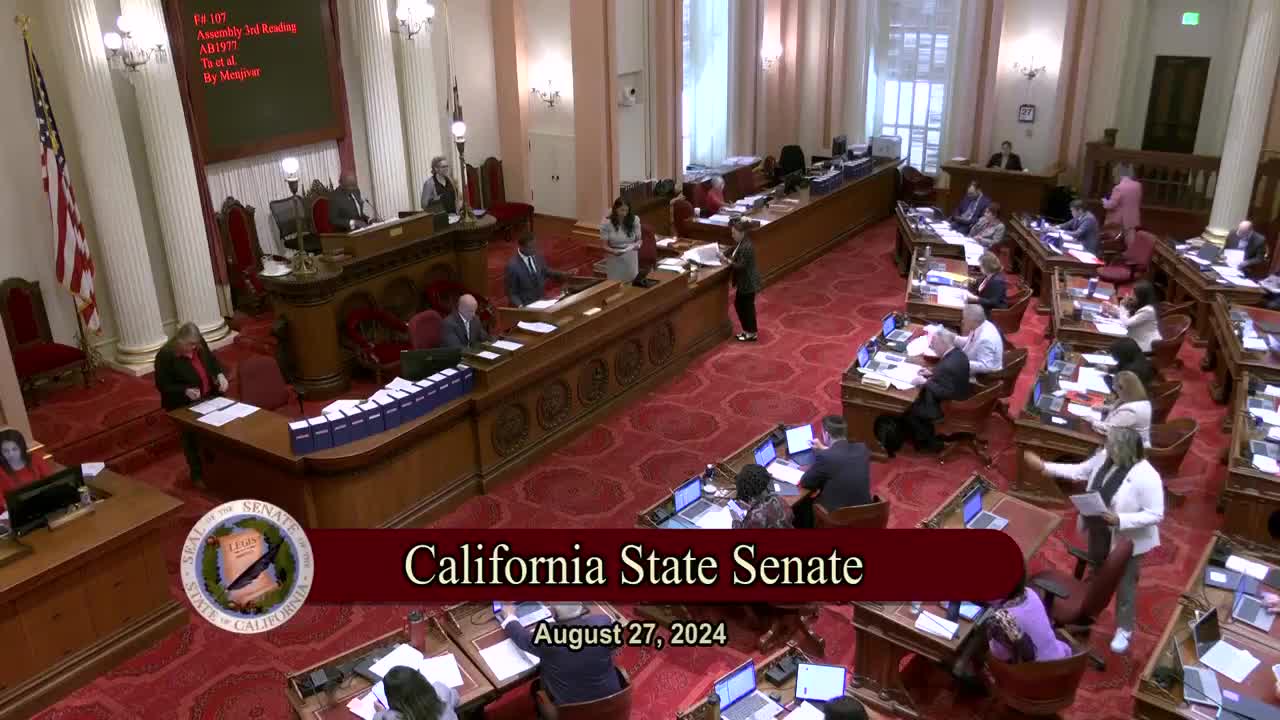 1MIN
Senate Floor
 5MIN
Senate Standing Committee on Business, Professions and Economic Development
 7MIN
Assembly Standing Committee on Business and Professions
Bill Author

Bill Co-Author(s):
