AB 3097: Radiologist assistants.
- Session Year: 2023-2024
- House: Assembly
- Latest Version Date: 2024-04-10
Current Status:
Failed
(2024-05-16: In committee: Held under submission.)
Introduced
In Committee
First Chamber
In Committee
Second Chamber
Enacted
What does this bill do?
This bill creates legal standards for people who call themselves radiologist assistants, requiring they pass an approved national exam, keep current registration, and be certified or permitted in California or hold a comparable out‑of‑state license. It also requires radiologist assistants to work under a supervising radiologist, bars them from independently interpreting images, making diagnoses, or prescribing treatments, allows them to document initial observations only for the radiologist’s use and to relay the radiologist’s report to other providers, and lets the supervising radiologist delegate tasks the assistant is trained to do.
The summary is provided by generative AI which can make mistakes. For original language, please view the details in the table below.
Existing law, the Radiologic Technology Act, prohibits a person from administering or using diagnostic or therapeutic X-rays on human beings in this state, unless that person either qualifies for a specified exemption or has been certified or granted a permit by the State Department of Public Health, as specified, is acting within the scope of that certification or permit, and is acting under the supervision of a healing arts licensee. A person who violates a provision of the Radiologic Technology Act or regulation of the department adopted pursuant to that act is guilty of a misdemeanor.
This bill would prohibit a person from holding themselves out as a radiologist assistant unless the person meets certain requirements, including that they have passed the radiologist assistant examination, as specified, and that they maintain current registration with prescribed entities. The bill would require a radiologist assistant to work only under the supervision of a radiologist and would prohibit a radiologist assistant from functioning in that capacity independent of a supervising radiologist. The bill, among other things, would authorize a radiologist assistant to communicate and document initial clinical and imaging observations or procedures only to a radiologist for the radiologists use. The bill would authorize a supervising radiologist to delegate to a radiologist assistant, as the radiologist determines appropriate to the assistants competence, those tasks or services that a radiologist usually performs and is qualified to perform. By imposing additional prohibitions and requirements under the Radiologic Technology Act, the violation of which is a crime, the bill would impose a state-mandated local program.
The California Constitution requires the state to reimburse local agencies and school districts for certain costs mandated by the state. Statutory provisions establish procedures for making that reimbursement.
This bill would provide that no reimbursement is required by this act for a specified reason.
Existing law, the Medical Practice Act, establishes the Medical Board of California for the licensure and regulation of physicians and surgeons. Existing law, the Radiologic Technology Act, prohibits a person from administering or using diagnostic or therapeutic x-rays X-rays on human beings in this state, unless that person either qualifies for a specified exemption or has been certified or granted a permit by the State Department of Public Health, as specified, is acting within the scope of that certification or permit, and is acting under the supervision of a healing arts licensee. A person who violates a provision of the Radiologic Technology Act or regulation of the department adopted pursuant to that act is guilty of a misdemeanor.
This bill would establish the Radiologist Assistant Practice Act, to be administered by the Radiologist Assistant Committee, which this bill would create within the Medical Board of California. The bill would establish the duties of the committee, including considering the qualifications of individuals who apply for registration under the act and granting registration, and would impose related duties on the Medical Board of California, including establishing reasonable fees for registration and registration renewal, to be deposited in the Radiologist Assistant Fund, which would be established by the bill. The bill would require money in the fund to be available upon appropriation by the Legislature to implement and administer the provisions of the act. The bill would establish requirements for registration as a radiologist assistant, including passing an examination, maintaining registration with specified national organizations, and possessing and maintaining a certification or permit under the Radiologic Technology Act, as specfied. The bill would prescribe requirements for supervision of a radiologist assistant by a radiologist, would prohibit a radiologist assistant from performing specified acts, and would make a violation of the acts provisions a misdemeanor, and, under specified circumstances, subject to a specified civil penalty. By creating a new crime, the bill would impose a state-mandated local program.This bill would prohibit a person from holding themselves out as a radiologist assistant unless the person meets certain requirements, including that they have passed the radiologist assistant examination, as specified, and that they maintain current registration with prescribed entities. The bill would require a radiologist assistant to work only under the supervision of a radiologist and would prohibit a radiologist assistant from functioning in that capacity independent of a supervising radiologist. The bill, among other things, would authorize a radiologist assistant to communicate and document initial clinical and imaging observations or procedures only to a radiologist for the radiologists use. The bill would authorize a supervising radiologist to delegate to a radiologist assistant, as the radiologist determines appropriate to the assistants competence, those tasks or services that a radiologist usually performs and is qualified to perform. By imposing additional prohibitions and requirements under the Radiologic Technology Act, the violation of which is a crime, the bill would impose a state-mandated local program.
The California Constitution requires the state to reimburse local agencies and school districts for certain costs mandated by the state. Statutory provisions establish procedures for making that reimbursement.
This bill would provide that no reimbursement is required by this act for a specified reason.
Existing law, the Medical Practice Act, establishes the Medical Board of California for the licensure and regulation of physicians and surgeons. Existing law, the Radiologic Technology Act, prohibits a person from administering or using diagnostic or therapeutic x-rays on human beings in this state, unless that person has been certified or granted a permit by the State Department of Public Health, as specified, is acting within the scope of that certification or permit, and is acting under the supervision of a healing arts licensee.
This bill would establish the Radiologist Assistant Practice Act, to be administered by the Radiologist Assistant Committee, which this bill would create within the Medical Board of California. The bill would establish the duties of the committee, including considering the qualifications of individuals who apply for registration under the act and granting registration, and would impose related duties on the Medical Board of California, including establishing reasonable fees for registration and registration renewal, to be deposited in the Radiologist Assistant Fund, which would be established by the bill. The bill would require money in the fund to be available upon appropriation by the Legislature to implement and administer the provisions of the act. The bill would establish requirements for registration as a radiologist assistant, including passing an examination, maintaining registration with specified national organizations, and possessing and maintaining a certification or permit under the Radiologic Technology Act, as specfied. The bill would prescribe requirements for supervision of a radiologist assistant by a radiologist, would prohibit a radiologist assistant from performing specified acts, and would make a violation of the acts provisions a misdemeanor, and, under specified circumstances, subject to a specified civil penalty. By creating a new crime, the bill would impose a state-mandated local program.
The California Constitution requires the state to reimburse local agencies and school districts for certain costs mandated by the state. Statutory provisions establish procedures for making that reimbursement.
This bill would provide that no reimbursement is required by this act for a specified reason.
The Legislature finds and declares all of the following:
(a)The radiologist assistant is an advanced-level radiographer who has completed a nationally recognized radiologists assistant educational program and successfully completed a nationally recognized certification examination for radiologist assistants.
(b)Radiologist assistants are an extension of a radiologist and work under the supervision of a radiologist, as part of a radiologist-led team, performing medical imaging procedures within the scope of practice that the radiologist assistant is educationally prepared, clinically competent, and delegated by a radiologist to perform.
(c)Radiologist assistants do not hold the responsibility of diagnosing illnesses; however, radiologist assistants assist a radiologist by completing patient history, describing procedures, performing medical imaging procedures, and communicating initial clinical and imaging observations or procedure details only to the supervising radiologist for the radiologists use.
(d)Radiologist assistants work in hospitals, outpatient facilities, or diagnostic imaging centers. Radiologist assistants work only under the supervision and delegation of a radiologist.
SEC. 2.Section 114876 is added to the Health and Safety Code, to read:114876.(a)No person shall hold themselves out to be a radiologist assistant, or use the title of radiologist assistant, or any other term, to imply or to suggest that the person is a radiologist assistant, unless the person meets all of the following requirements:
(1)The person has passed the radiologist assistant examination administered by the American Registry of Radiologic Technologists, the radiology practitioner assistant examination administered by the Certification Board for Radiology Practitioner Assistants, or another examination offered by a successor or comparable entity that has been determined by the department to evaluate the knowledge and skills necessary to ensure the protection of the public and has been approved by the department.
(2)The person maintains current registration with the American Registry of Radiologic Technologists, the Certification Board for Radiology Practitioner Assistants, or a successor or comparable entity.
(3)The person is certified or permitted to conduct radiologic technology in this state or possesses a radiologist assistant license from another state that licenses radiologist assistants.
(b)A radiologist assistant shall work only under the supervision of a radiologist. A radiologist assistant shall not function in their capacity as a radiologist assistant independent of a supervising radiologist.
(c)A radiologist assistant shall not interpret images, make diagnoses, or prescribe medications or therapies.
(d)A radiologist assistant may administer prescribed drugs only as directed by a supervising radiologist or their designee.
(e)(1)A radiologist assistant may communicate and document initial clinical and imaging observations or procedures only to a radiologist for the radiologists use.
(2)A radiologist assistant may communicate a supervising radiologists report to an appropriate health care provider consistent with the American College of Radiology guideline for communicating diagnostic imaging findings.
(f)A supervising radiologist may delegate to a radiologist assistant, as the radiologist determines appropriate to the radiologist assistants competence, those tasks or services that a radiologist usually performs and is qualified to perform.
(g)This section shall not be construed to eliminate, or in any way affect, any existing duties for a radiologic technologist or any existing requirements for the supervision of a radiologic technologist.
SEC. 3.No reimbursement is required by this act pursuant to Section 6 of Article XIIIB of the California Constitution because the only costs that may be incurred by a local agency or school district will be incurred because this act creates a new crime or infraction, eliminates a crime or infraction, or changes the penalty for a crime or infraction, within the meaning of Section 17556 of the Government Code, or changes the definition of a crime within the meaning of Section 6 of Article XIIIB of the California Constitution.
The Legislature finds and declares all of the following:
(a)The radiologist assistant is an advanced-level radiographer who has completed a nationally recognized radiologists assistant educational program and successfully completed a nationally recgonized recognized certification examination for radiologist assistants.
(b)Radiologist assistants are an extension of a radiologist and work under the supervision of a radiologist, as part of a radiologist-led team, performing medical imaging procedures within the scope of practice that the radiologist assistant is educationally prepared, clinically competent, and delegated by a radiologist to perform.
(c)Radiologist assistants do not hold the responsibility of diagnosing illnesses; however, radiologist assistants assist a radiologist by completing patient history, describing procedures, performing medical imaging procedures, and communicating initial clinical and imaging observations or procedure details only to the supervising radiologist for the radiologists use.
(d)Radiologist assistants work in hospitals, outpatient facilities, or diagnostic imaging centers. Radiologist assistants work only under the supervision and delegation of a radiologist.
SEC. 2.Chapter 8.5 (commencing with Section 3800) is added to Division 2 of the Business and Professions Code, to read:8.5.Radiologist Assistant Practice Act1.General Provisions3800.This chapter shall be known and cited as the Radiologist Assistant Practice Act.3801.This chapter does not apply to any of the following:(a)A radiologist assistant trainee or a student enrolled in a radiologist assistant approved educational program.(b)A radiologist assistant employed in the service of the federal government while performing duties incident to that employment.(c)A health care professional, technician, or other assistant or employee of a physician and surgeon who performs delegated tasks in the office of a physician and surgeon, but who does not render services as a radiologist assistant or profess to be a radiologist assistant.3802.This chapter grants a supervising radiologist or radiologist designee the authority to delegate, as the radiologist determines is appropriate, those tasks or services the radiologist typically performs and is qualified to perform.3803.This chapter does not grant authority to a radiologist assistant to function independently of a radiologists supervision.3804.(a)Approved educational program means an educational program for radiologist assistants approved by the committee. (b)Board means the Medical Board of California.(c)Committee means the Radiologist Assistant Committee established by this chapter.(d)Interpret means to identify and classify a medical image pattern that results in the creation of a final diagnosis and final report.(e)Radiologist assistant means an individual who meets the qualifications of, and is registered under, this chapter.(f)Radiologist designee means a physician and surgeon who works, or is trained, in the same practice area as the practice area of the supervising radiologist and to whom responsibility for the supervision of a radiologist assistant is temporarily designated when the supervising radiologist is unavailable.(g)Supervising radiologist means a physician and surgeon licensed by the board and certified by the American Board of Radiology who supervises, and is responsible for, a radiologist assistant.(h)Supervision means overseeing the activities of and accepting responsibility for, the medical services rendered or performed by a radiologist assistant. The term includes the use of protocols, guidelines, levels of supervision, and standing orders developed or approved by the supervising radiologist.(i)Trainee means an individual who is currently enrolled in an approved radiologist assistant program.2.Administration3811.There is established a Radiologist Assistant Committee within the Medical Board of California. The committee shall consist of five members appointed by the Governor for three-year terms as follows:(a)Three radiologist assistants who are residents of the state, have at least two years of experience as radiologist assistants, and are registered or meet the requirements for registration under this chapter.(b)One radiologist licensed in this state who supervises the practice of radiologist assistants.(c)One public member who is not associated with radiologist assistants in any way other than as a consumer.3812.A radiologist assistant appointed to the committee is required to continue to practice as a radiologist assistant while serving as a member of the committee. A member of the committee may be removed by the Governor for misconduct, neglect of duty, or incompetence.3813.The initial terms of appointment of the members of the committee shall be as follows:(a)One radiologist assistant for a one-year term.(b)One radiologist assistant for a two-year term.(c)One radiologist assistant for a three-year term.(d)One radiologist for a two-year term.(e)One public member for a three-year term.3814.(a)The committee shall have regular meetings, called upon the request of the president of the board or by a majority of the members appointed to the committee, and upon the advice and consent of the executive director of the board for the transaction of business that comes before the committee under this chapter.(b)At the first committee meeting of each calendar year, the committee shall elect a chief and any other officer considered necessary by the committee by an affirmative vote of a majority of the members appointed to the committee.3815.Three members of the committee constitute a quorum. An affirmative vote of a majority of the members appointed to the committee is required for the committee to take action on any business.3816.It shall be the duty of the committee to do all of the following: (a)Consider the qualifications of individuals who apply for an initial registration under this chapter.(b)Approve or reject registration applications and registration renewal applications.(c)Propose rules to the board concerning the competent practice of radiologist assistants and the administration of this chapter.(d)Recommend to the board the amounts of fees required under this chapter.3817.After considering the committees proposed rules, the board shall adopt rules establishing standards for the following:(a)The competent practice of radiologist assistants.(b)The renewal of registrations issued under this chapter.(c)Standards for the administration of this chapter.3818.After considering the committees recommendations for fees, the board shall establish reasonable fees to be imposed to administer the provisions of this chapter.3819.Each member of the committee shall receive a per diem and expenses as provided in Section 103. 3.Registration3821.An individual shall be registered by the committee before the individual engages in practice as a radiologist assistant. The committee shall grant registration as a radiologist assistant to an applicant who meets all of the following requirements:(a)Submits an application on forms approved by the committee.(b)Pays the fee established by the board. (c)Passed the radiologist assistant examination administered by the American Registry of Radiologic Technologists, the radiology practitioner assistant examination administered by the Certification Board for Radiology Practitioner Assistants, or another examination, approved by the committee, by a successor or comparable entity. The committee shall ensure the examination evaluates the knowledge and skills necessary to ensure the protection of the public.(d)Maintains current registration as a radiologist assistant with the American Registry of Radiologic Technologists, the Certification Board for Radiology Practitioner Assistants, or a successor or comparable entity.(e)Possesses and maintains a certification or permit granted pursuant to subdivision (b) or (c) of Section 114870, Section 114871, or Section 114885 of the Health and Safety Code.(f)Submits to the committee any other information the committee considers necessary to evaluate the applicants qualifications.(g)Presents satisfactory evidence to the committee that the individual has not been engaged in an act that would constitute grounds for discipline or be the subject of a disciplinary action by a licensing or certification agency of another state or jurisdiction on the grounds that the individual was not able to practice as a radiologist assistant without endangering the public.3822.The committee may refuse to issue a registration to an individual if the individual has been disciplined by an administrative agency in another jurisdiction or has been convicted of a crime and the committee determines the act for which the individual was disciplined or convicted has a direct bearing on the individuals ability to practice competently as a radiologist assistant.3823.(a)The committee may grant a temporary registration to an applicant who meets the qualifications for registration under this act, but is awaiting the next scheduled meeting of the committee for registration approval.(b)A temporary registration is valid until the committee makes a final decision on the applicants request for registration.3824.(a)A registration issued by the committee expires two years following the date of issuance.(b)An individual may renew a registration by paying a renewal fee on or before the expiration date of the registration.(c)If an individual fails to pay a renewal fee on or before the expiration date of a registration, the registration becomes invalid and shall be returned to the committee.3825.The committee shall reinstate an invalid registration up to three years after the expiration date of the registration if the individual holding the invalid registration meets the requirements under this chapter.3826.(a)An individual who is registered under this chapter shall notify the committee in writing when the individual retires from practice.(b)Upon receipt of the notice, the committee shall record the fact that the individual is retired and release the individual from further payment of renewal fees.3827.If an individual surrenders a registration to the committee, the committee may reinstate the registration upon written request by the individual. The committee may impose conditions on the license that the committee deems are appropriate to the reinstatement. An individual may not surrender a registration without written approval by the committee if a disciplinary proceeding under this chapter is pending against the individual.3828.(a)A radiologist assistant who notifies the committee in writing may elect to place the radiologist assistants registration on inactive status.(b)The renewal fee for an inactive registration is one-half of the renewal fee to maintain an active registration.(c)If a radiologist assistant with an inactive registration elects to activate the registration, the radiologist assistant shall pay the renewal fee less any of the amount paid for the inactive registration.(d)An individual who holds a registration under this chapter and who practices as a radiologist assistant while the individuals registration has lapsed or if the individuals registration is on inactive status is considered to be practicing without a registration and is subject to discipline.3829.Supervision by the supervising radiologist or the radiologist designee shall be continuous and the supervising radiologist or the radiologist designee shall be physically present in the radiologist assistants practice site to render direction or assistance in the performance of a patient procedure. A supervising radiologist shall determine the level of supervision of a radiologist assistant performing a procedure based on a radiologist assistants technical ability, the procedure, the patients history and clinical presentation, and other relevant factors.3830.A radiologist shall not supervise more than two radiologist assistants at the same time.3831.It is the obligation of each supervising radiologist to ensure the following:(a)That the radiologist assistants scope of practice is identified.(b)That delegation of medical tasks is appropriate to the radiologist assistants level of competence and within the supervising radiologists scope of practice.(c)That the relationship of, and access to, the supervising radiologist is defined.(d)That a process for evaluating the radiologist assistants performance is established and maintained.3832.(a)A supervising radiologist shall meet all of the following requirements:(1)Be licensed as a physician and surgeon to practice medicine in the state.(2)Register with the committee the radiologists intent to supervise a radiologist assistant.(3)Submit a statement to the committee that the radiologist shall exercise supervision over the radiologist assistant in accordance with rules adopted by the board and retain professional and legal responsibility for the care rendered by the radiologist assistant.(4)Not have a disciplinary action restriction that limits the radiologists ability to supervise a radiologist assistant.(5)(A)Maintain a written agreement with the radiologist assistant that states the radiologist shall do both of the following:(i)Exercise supervision over the radiologist assistant in accordance with any rules adopted by the board. (ii)Retain responsibility for the care rendered by the radiologist assistant.(B)The agreement shall be signed by the supervising radiologist and radiologist assistant, updated annually, and made available to the committee upon request.(b)Except as provided in this section, the provisions of this chapter shall not be construed to limit the employment arrangement with a supervising radiologist under this chapter. 3833.(a)Before engaging in practice pursuant to this chapter, the supervising radiologist and the radiologist assistant shall submit, on forms approved by the board, the following information:(1)The name, the business address, and the telephone number of the supervising radiologist.(2)The name, the business address, and the telephone number of the radiologist assistant.(3)A brief description of the setting in which the radiologist assistant will practice.(4)Any other information required by the board.(b)A radiologist assistant shall notify the committee of any changes or additions in practice sites or supervising radiologists not more than 30 days after the change or addition.3834.If a radiologist assistant is employed by a radiologist, a group of radiologists, or another legal entity, the radiologist assistant shall be supervised by, and be the legal responsibility of, the supervising radiologist. The legal responsibility for the radiologist assistants patient care activities are that of the supervising radiologist, including when the radiologist assistant provides care and treatment for patients in health care facilities. If a radiologist assistant is employed by a health care facility or other entity, the legal responsibility for the radiologist assistants actions is that of the supervising radiologist. A radiologist assistant employed by a health care facility or entity shall be supervised by a licensed radiologist.3835.(a)This section applies to a radiologist assistant registered in this state, registered or authorized to practice in any other state or territory of the United States, or credentialed as a radiologist assistant by a federal employer.(b)As used in this section, emergency means an event or a condition that is an emergency, a disaster, or a public health emergency.(c)A radiologist assistant who responds to a need for medical care created by an emergency may render care that the radiologist assistant is able to provide without the supervision required under this chapter, but with such supervision as is available.(d)A radiologist who supervises a radiologist assistant providing medical care in response to an emergency is not required to meet the requirements under this chapter for a supervising radiologist.4.Prohibitions and Offenses3840.An individual may not do any of the following unless the individual is registered as a radiologist assistant under this chapter.(a)Profess to be a radiologist assistant.(b)Use the title radiologist assistant, certified radiologist assistant, or registered radiologist assistant.(c)Use the initials R.A., R.R.A., R.P.A., or any other words, letters, abbreviations, or insignia indicating or implying that the individual is a radiologist assistant registered under this chapter.3841.A radiologist assistant shall not interpret images, make diagnoses, or prescribe medications or therapies. A radiologist assistant may administer prescribed drugs as directed by the supervising radiologist or radiologist designee. A radiologist assistant may communicate and document initial clinical and imaging observations or procedure details only to the radiologist for the radiologists use.3842.A violation of this chapter is a misdemeanor. An individual who intentionally, or through gross negligence, violates this chapter shall also be subject to a civil penalty not to exceed five thousand dollars ($5,000).5.Revenue3851.The Radiologist Assistant Fund is hereby created in the State Treasury. All fees, penalties, and fines authorized by this chapter shall be deposited into the fund. All money in the fund shall, upon appropriation by the Legislature, be used by the board to carry out the purposes of this chapter.3852.Fees to be paid by radiologist assistants for registration and renewal of registration shall be set by the board in an amount sufficient to cover the reasonable and necessary costs of implementing and administering this chapter.SEC. 2.Section 114876 is added to the Health and Safety Code, to read:114876.(a)No person shall hold themselves out to be a radiologist assistant, or use the title of radiologist assistant, or any other term, to imply or to suggest that the person is a radiologist assistant, unless the person meets all of the following requirements:
(1)The person has passed the radiologist assistant examination administered by the American Registry of Radiologic Technologists, the radiology practitioner assistant examination administered by the Certification Board for Radiology Practitioner Assistants, or another examination offered by a successor or comparable entity that has been determined by the department to evaluate the knowledge and skills necessary to ensure the protection of the public and has been approved by the department.
(2)The person maintains current registration with the American Registry of Radiologic Technologists, the Certification Board for Radiology Practitioner Assistants, or a successor or comparable entity.
(3)The person is certified or permitted to conduct radiologic technology in this state or possesses a radiologist assistant license from another state that licenses radiologist assistants.
(b)A radiologist assistant shall work only under the supervision of a radiologist. A radiologist assistant shall not function in their capacity as a radiologist assistant independent of a supervising radiologist.
(c)A radiologist assistant shall not interpret images, make diagnoses, or prescribe medications or therapies.
(d)A radiologist assistant may administer prescribed drugs only as directed by a supervising radiologist or their designee.
(e)(1)A radiologist assistant may communicate and document initial clinical and imaging observations or procedures only to a radiologist for the radiologists use.
(2)A radiologist assistant may communicate a supervising radiologists report to an appropriate health care provider consistent with the American College of Radiology guideline for communicating diagnostic imaging findings.
(f)A supervising radiologist may delegate to a radiologist assistant, as the radiologist determines appropriate to the radiologist assistants competence, those tasks or services that a radiologist usually performs and is qualified to perform.
SEC. 3.No reimbursement is required by this act pursuant to Section 6 of Article XIIIB of the California Constitution because the only costs that may be incurred by a local agency or school district will be incurred because this act creates a new crime or infraction, eliminates a crime or infraction, or changes the penalty for a crime or infraction, within the meaning of Section 17556 of the Government Code, or changes the definition of a crime within the meaning of Section 6 of Article XIIIB of the California Constitution.
The Legislature finds and declares all of the following:
(a)The radiologist assistant is an advanced-level radiographer who has completed a nationally recognized radiologists assistant educational program and successfully completed a nationally recgonized certification examination for radiologist assistants.
(b)Radiologist assistants are an extension of a radiologist and work under the supervision of a radiologist, as part of a radiologist-led team, performing medical imaging procedures within the scope of practice that the radiologist assistant is educationally prepared, clinically competent, and delegated by a radiologist to perform.
(c)Radiologist assistants do not hold the responsibility of diagnosing illnesses; however, radiologist assistants assist a radiologist by completing patient history, describing procedures, performing medical imaging procedures, and communicating initial clinical and imaging observations or procedure details only to the supervising radiologist for the radiologists use.
(d)Radiologist assistants work in hospitals, outpatient facilities, or diagnostic imaging centers. Radiologist assistants work only under the supervision and delegation of a radiologist.
SEC. 2.Chapter 8.5 (commencing with Section 3800) is added to Division 2 of the Business and Professions Code, to read:8.5.Radiologist Assistant Practice Act1.General Provisions3800.This chapter shall be known and cited as the Radiologist Assistant Practice Act.
3801.This chapter does not apply to any of the following:
(a)A radiologist assistant trainee or a student enrolled in a radiologist assistant approved educational program.
(b)A radiologist assistant employed in the service of the federal government while performing duties incident to that employment.
(c)A health care professional, technician, or other assistant or employee of a physician and surgeon who performs delegated tasks in the office of a physician and surgeon, but who does not render services as a radiologist assistant or profess to be a radiologist assistant.
3802.This chapter grants a supervising radiologist or radiologist designee the authority to delegate, as the radiologist determines is appropriate, those tasks or services the radiologist typically performs and is qualified to perform.
3803.This chapter does not grant authority to a radiologist assistant to function independently of a radiologists supervision.
3804.(a)Approved educational program means an educational program for radiologist assistants approved by the committee.
(b)Board means the Medical Board of California.
(c)Committee means the Radiologist Assistant Committee established by this chapter.
(d)Interpret means to identify and classify a medical image pattern that results in the creation of a final diagnosis and final report.
(e)Radiologist assistant means an individual who meets the qualifications of, and is registered under, this chapter.
(f)Radiologist designee means a physician and surgeon who works, or is trained, in the same practice area as the practice area of the supervising radiologist and to whom responsibility for the supervision of a radiologist assistant is temporarily designated when the supervising radiologist is unavailable.
(g)Supervising radiologist means a physician and surgeon licensed by the board and certified by the American Board of Radiology who supervises, and is responsible for, a radiologist assistant.
(h)Supervision means overseeing the activities of and accepting responsibility for, the medical services rendered or performed by a radiologist assistant. The term includes the use of protocols, guidelines, levels of supervision, and standing orders developed or approved by the supervising radiologist.
(i)Trainee means an individual who is currently enrolled in an approved radiologist assistant program.
2.Administration3811.There is established a Radiologist Assistant Committee within the Medical Board of California. The committee shall consist of five members appointed by the Governor for three-year terms as follows:
(a)Three radiologist assistants who are residents of the state, have at least two years of experience as radiologist assistants, and are registered or meet the requirements for registration under this chapter.
(b)One radiologist licensed in this state who supervises the practice of radiologist assistants.
(c)One public member who is not associated with radiologist assistants in any way other than as a consumer.
3812.A radiologist assistant appointed to the committee is required to continue to practice as a radiologist assistant while serving as a member of the committee. A member of the committee may be removed by the Governor for misconduct, neglect of duty, or incompetence.
3813.The initial terms of appointment of the members of the committee shall be as follows:
(a)One radiologist assistant for a one-year term.
(b)One radiologist assistant for a two-year term.
(c)One radiologist assistant for a three-year term.
(d)One radiologist for a two-year term.
(e)One public member for a three-year term.
3814.(a)The committee shall have regular meetings, called upon the request of the president of the board or by a majority of the members appointed to the committee, and upon the advice and consent of the executive director of the board for the transaction of business that comes before the committee under this chapter.
(b)At the first committee meeting of each calendar year, the committee shall elect a chief and any other officer considered necessary by the committee by an affirmative vote of a majority of the members appointed to the committee.
3815.Three members of the committee constitute a quorum. An affirmative vote of a majority of the members appointed to the committee is required for the committee to take action on any business.
3816.It shall be the duty of the committee to do all of the following:
(a)Consider the qualifications of individuals who apply for an initial registration under this chapter.
(b)Approve or reject registration applications and registration renewal applications.
(c)Propose rules to the board concerning the competent practice of radiologist assistants and the administration of this chapter.
(d)Recommend to the board the amounts of fees required under this chapter.
3817.After considering the committees proposed rules, the board shall adopt rules establishing standards for the following:
(a)The competent practice of radiologist assistants.
(b)The renewal of registrations issued under this chapter.
(c)Standards for the administration of this chapter.
3818.After considering the committees recommendations for fees, the board shall establish reasonable fees to be imposed to administer the provisions of this chapter.
3819.Each member of the committee shall receive a per diem and expenses as provided in Section 103.
3.Registration3821.An individual shall be registered by the committee before the individual engages in practice as a radiologist assistant. The committee shall grant registration as a radiologist assistant to an applicant who meets all of the following requirements:
(a)Submits an application on forms approved by the committee.
(b)Pays the fee established by the board.
(c)Passed the radiologist assistant examination administered by the American Registry of Radiologic Technologists, the radiology practitioner assistant examination administered by the Certification Board for Radiology Practitioner Assistants, or another examination, approved by the committee, by a successor or comparable entity. The committee shall ensure the examination evaluates the knowledge and skills necessary to ensure the protection of the public.
(d)Maintains current registration as a radiologist assistant with the American Registry of Radiologic Technologists, the Certification Board for Radiology Practitioner Assistants, or a successor or comparable entity.
(e)Possesses and maintains a certification or permit granted pursuant to subdivision (b) or (c) of Section 114870, Section 114871, or Section 114885 of the Health and Safety Code.
(f)Submits to the committee any other information the committee considers necessary to evaluate the applicants qualifications.
(g)Presents satisfactory evidence to the committee that the individual has not been engaged in an act that would constitute grounds for discipline or be the subject of a disciplinary action by a licensing or certification agency of another state or jurisdiction on the grounds that the individual was not able to practice as a radiologist assistant without endangering the public.
3822.The committee may refuse to issue a registration to an individual if the individual has been disciplined by an administrative agency in another jurisdiction or has been convicted of a crime and the committee determines the act for which the individual was disciplined or convicted has a direct bearing on the individuals ability to practice competently as a radiologist assistant.
3823.(a)The committee may grant a temporary registration to an applicant who meets the qualifications for registration under this act, but is awaiting the next scheduled meeting of the committee for registration approval.
(b)A temporary registration is valid until the committee makes a final decision on the applicants request for registration.
3824.(a)A registration issued by the committee expires two years following the date of issuance.
(b)An individual may renew a registration by paying a renewal fee on or before the expiration date of the registration.
(c)If an individual fails to pay a renewal fee on or before the expiration date of a registration, the registration becomes invalid and shall be returned to the committee.
3825.The committee shall reinstate an invalid registration up to three years after the expiration date of the registration if the individual holding the invalid registration meets the requirements under this chapter.
3826.(a)An individual who is registered under this chapter shall notify the committee in writing when the individual retires from practice.
(b)Upon receipt of the notice, the committee shall record the fact that the individual is retired and release the individual from further payment of renewal fees.
3827.If an individual surrenders a registration to the committee, the committee may reinstate the registration upon written request by the individual. The committee may impose conditions on the license that the committee deems are appropriate to the reinstatement. An individual may not surrender a registration without written approval by the committee if a disciplinary proceeding under this chapter is pending against the individual.
3828.(a)A radiologist assistant who notifies the committee in writing may elect to place the radiologist assistants registration on inactive status.
(b)The renewal fee for an inactive registration is one-half of the renewal fee to maintain an active registration.
(c)If a radiologist assistant with an inactive registration elects to activate the registration, the radiologist assistant shall pay the renewal fee less any of the amount paid for the inactive registration.
(d)An individual who holds a registration under this chapter and who practices as a radiologist assistant while the individuals registration has lapsed or if the individuals registration is on inactive status is considered to be practicing without a registration and is subject to discipline.
3829.Supervision by the supervising radiologist or the radiologist designee shall be continuous and the supervising radiologist or the radiologist designee shall be physically present in the radiologist assistants practice site to render direction or assistance in the performance of a patient procedure. A supervising radiologist shall determine the level of supervision of a radiologist assistant performing a procedure based on a radiologist assistants technical ability, the procedure, the patients history and clinical presentation, and other relevant factors.
3830.A radiologist shall not supervise more than two radiologist assistants at the same time.
3831.It is the obligation of each supervising radiologist to ensure the following:
(a)That the radiologist assistants scope of practice is identified.
(b)That delegation of medical tasks is appropriate to the radiologist assistants level of competence and within the supervising radiologists scope of practice.
(c)That the relationship of, and access to, the supervising radiologist is defined.
(d)That a process for evaluating the radiologist assistants performance is established and maintained.
3832.(a)A supervising radiologist shall meet all of the following requirements:
(1)Be licensed as a physician and surgeon to practice medicine in the state.
(2)Register with the committee the radiologists intent to supervise a radiologist assistant.
(3)Submit a statement to the committee that the radiologist shall exercise supervision over the radiologist assistant in accordance with rules adopted by the board and retain professional and legal responsibility for the care rendered by the radiologist assistant.
(4)Not have a disciplinary action restriction that limits the radiologists ability to supervise a radiologist assistant.
(5)(A)Maintain a written agreement with the radiologist assistant that states the radiologist shall do both of the following:
(i)Exercise supervision over the radiologist assistant in accordance with any rules adopted by the board.
(ii)Retain responsibility for the care rendered by the radiologist assistant.
(B)The agreement shall be signed by the supervising radiologist and radiologist assistant, updated annually, and made available to the committee upon request.
(b)Except as provided in this section, the provisions of this chapter shall not be construed to limit the employment arrangement with a supervising radiologist under this chapter.
3833.(a)Before engaging in practice pursuant to this chapter, the supervising radiologist and the radiologist assistant shall submit, on forms approved by the board, the following information:
(1)The name, the business address, and the telephone number of the supervising radiologist.
(2)The name, the business address, and the telephone number of the radiologist assistant.
(3)A brief description of the setting in which the radiologist assistant will practice.
(4)Any other information required by the board.
(b)A radiologist assistant shall notify the committee of any changes or additions in practice sites or supervising radiologists not more than 30 days after the change or addition.
3834.If a radiologist assistant is employed by a radiologist, a group of radiologists, or another legal entity, the radiologist assistant shall be supervised by, and be the legal responsibility of, the supervising radiologist. The legal responsibility for the radiologist assistants patient care activities are that of the supervising radiologist, including when the radiologist assistant provides care and treatment for patients in health care facilities. If a radiologist assistant is employed by a health care facility or other entity, the legal responsibility for the radiologist assistants actions is that of the supervising radiologist. A radiologist assistant employed by a health care facility or entity shall be supervised by a licensed radiologist.
3835.(a)This section applies to a radiologist assistant registered in this state, registered or authorized to practice in any other state or territory of the United States, or credentialed as a radiologist assistant by a federal employer.
(b)As used in this section, emergency means an event or a condition that is an emergency, a disaster, or a public health emergency.
(c)A radiologist assistant who responds to a need for medical care created by an emergency may render care that the radiologist assistant is able to provide without the supervision required under this chapter, but with such supervision as is available.
(d)A radiologist who supervises a radiologist assistant providing medical care in response to an emergency is not required to meet the requirements under this chapter for a supervising radiologist.
4.Prohibitions and Offenses3840.An individual may not do any of the following unless the individual is registered as a radiologist assistant under this chapter.
(a)Profess to be a radiologist assistant.
(b)Use the title radiologist assistant, certified radiologist assistant, or registered radiologist assistant.
(c)Use the initials R.A., R.R.A., R.P.A., or any other words, letters, abbreviations, or insignia indicating or implying that the individual is a radiologist assistant registered under this chapter.
3841.A radiologist assistant shall not interpret images, make diagnoses, or prescribe medications or therapies. A radiologist assistant may administer prescribed drugs as directed by the supervising radiologist or radiologist designee. A radiologist assistant may communicate and document initial clinical and imaging observations or procedure details only to the radiologist for the radiologists use.
3842.A violation of this chapter is a misdemeanor. An individual who intentionally, or through gross negligence, violates this chapter shall also be subject to a civil penalty not to exceed five thousand dollars ($5,000).
5.Revenue3851.The Radiologist Assistant Fund is hereby created in the State Treasury. All fees, penalties, and fines authorized by this chapter shall be deposited into the fund. All money in the fund shall, upon appropriation by the Legislature, be used by the board to carry out the purposes of this chapter.
3852.Fees to be paid by radiologist assistants for registration and renewal of registration shall be set by the board in an amount sufficient to cover the reasonable and necessary costs of implementing and administering this chapter.
SEC. 3.No reimbursement is required by this act pursuant to Section 6 of Article XIIIB of the California Constitution because the only costs that may be incurred by a local agency or school district will be incurred because this act creates a new crime or infraction, eliminates a crime or infraction, or changes the penalty for a crime or infraction, within the meaning of Section 17556 of the Government Code, or changes the definition of a crime within the meaning of Section 6 of Article XIIIB of the California Constitution.
|
Date
|
Status
|
|---|---|
| May 16, 2024 | In committee: Held under submission. |
| Apr 24, 2024 | In committee: Set, first hearing. Referred to APPR. suspense file. |
| Apr 11, 2024 | Re-referred to Com. on APPR. |
| Apr 10, 2024 | Read second time and amended. |
| Apr 9, 2024 | From committee: Amend, and do pass as amended and re-refer to Com. on APPR. (Ayes 17. Noes 0.) (April 9). |
| Apr 4, 2024 | Re-referred to Com. on B. & P. |
| Apr 3, 2024 | From committee chair, with author's amendments: Amend, and re-refer to Com. on B. & P. Read second time and amended. |
| Mar 11, 2024 | Referred to Com. on B. & P. |
| Feb 17, 2024 | From printer. May be heard in committee March 18. |
| Feb 16, 2024 | Read first time. To print. |
|
Date
|
Description
|
Location
|
Votes
|
|
|---|---|---|---|---|
| Apr 9, 2024 | Do pass as amended and be re-referred to the Committee on [Appropriations] | Assembly Standing Committee on Business and Professions |
Passed |
This list shows positions taken on this bill by organizations on the date displayed, which is linked to the original source.
Positions by individuals are not included.
|
Organization
|
Position
|
Date
|
|---|---|---|
| Aaron Read and Associates | * Support | Apr 9, 2024 |
| California Radiological Society | * Support | Apr 9, 2024 |
| California Society of Radiologic Technologists | * Support | Apr 9, 2024 |
| Radiologist Assistant | * Support | Apr 9, 2024 |
Date of Hearing: April 24, 2024
ASSEMBLY COMMITTEE ON APPROPRIATIONS
Buffy Wicks, Chair
ABPCA Bill Id:AB 3097
Author:(Chen) – As Amended Ver:April 10, 2024
Policy Committee: | Business and Professions | Vote: | 17 - 0 |
|
| ||
|
|
Urgency: No State Mandated Local Program: Yes Reimbursable: No
SUMMARY:
This bill prohibits a person from holding themselves out as a radiologist assistant (RA) or using the RA title or any other term to imply or suggest that the person is an RA unless the person meets specified requirements. This bill also establishes requirements and restrictions for the work of an RA.
FISCAL EFFECT:
For SB 377 (Hertzberg), of the 2021-22 Legislative Session, which was essentially identical to this bill, the California Department of Public Health (CDPH) estimated ongoing annual enforcement costs of approximately $249,000 for staff time to address legal, medical, and scope of practice issues (Radiation Control Fund). CDPH stated the estimate was based on an average of three enforcement actions on similar scope of practice issues, at an average cost $83,000 per investigation.
Minor and absorbable costs to the Medical Board of California (MBC). MBC anticipates this bill will result in one additional complaint, investigation, and disciplinary action per year for inadequate supervision from a licensed physician.
- Purpose. This bill is sponsored by the American Registry of Radiologic Technologists (ARRT). According to the author:
AB 3097 builds off the Legislature’s previous work to ensure patient safety and uphold the dignity of work in healthcare settings. This bill codifies protections to safeguard the Radiologist Assistant (RA) position, and builds out a framework to ensure the longevity of this role in the years to come.
- Background.
RAs. An RA is defined by the American College of Radiology, the American Society of Radiologic Technologists, and the American Registry of Radiologic Technologists as an advanced level radiologic technologist (RT). RAs complete additional educational training and commensurate additional certification beyond that obtained as an RT.
RTs. RTs are trained to prevent excessive and improper exposure to ionizing radiation. RTs generally obtain a two-year associate's degree in radiologic technology. After obtaining their degree, a student is eligible to take the California examination for a diagnostic or therapeutic radiologic technology certificate, as well as the national examination for a therapeutic radiologic technology certificate. The state and national examinations are both administered by the ARRT. Successful passage of an examination qualifies an RT to X-ray any part of the body. Those who obtain California state certification may also apply for additional certificates, such as the RT Fluoroscopy Permit or the Mammographic Radiologic Technology Certificate, if they meet the requirements. An RT may also become certified in radiation therapy technology through the ARRT.
CDPH Role. The CDPH Radiologic Health Branch (RHB) administers and enforces the Radiologic Technology Act (Act), including the education, training, and licensing requirements for RTs. RHB also administers the meetings of the Radiologic Technology Certification Committee, which assists, advises, and makes recommendations for ensuring proper administration and enforcement of the Act.
- Prior Legislation.
- SB 377 (Hertzberg), of the 2021-22 Legislative Session, was essentially identical to this bill and was held on the Senate Appropriations Committee suspense file.
- SB 480 (Archuleta), Chapter 336, Statutes of 2020, before being amended to address a different subject matter, would have established the RA Advisory Committee to identify the appropriate training, qualifications, and scope of practice for individuals assisting radiologists.
- SB 377 (Hertzberg), of the 2021-22 Legislative Session, was essentially identical to this bill and was held on the Senate Appropriations Committee suspense file.
Analysis Prepared by: Allegra Kim / APPR. / (916) 319-2081
Date of Hearing:
ASSEMBLY COMMITTEE ON BUSINESS AND PROFESSIONS
Marc Berman, Chair
ABPCA Bill Id:AB 3097
Author:(Chen) – As Amended Ver:April 3, 2024
SUBJECT: Radiologist assistants.
SUMMARY: Prohibits a person from holding themselves out as a radiologist assistant (RA) or using the RA title or any other term to imply or to suggest that the person is an RA unless the person meets specified requirements.
Contents
Major Provisions of This Bill 3
Policy Issues for Consideration 12
Existing Law Regarding Radiology Professionals:
- Regulates the practice of medicine under the Medical Practice Act and establishes the Medical Board of California to administer and enforce the act. (BPC §§ 2000-2529.6)
- Prohibits the practice, attempt to practice, advertisement of, or holding out as practicing any system or mode of treating the sick or afflicted, or diagnosis, treatment, operation for, or prescription for any ailment, blemish, deformity, disease, disfigurement, disorder, injury, or other physical or mental condition of any person, without having at the time of doing so a valid, unrevoked, or unsuspended medical license or being otherwise authorized under state law to perform the medical act. (BPC § 2052)
- Regulates the practice of nursing under the Nursing Practice Act and establishes the Board of Registered Nursing to administer and enforce the act, including the licensure of registered nurses and the certification of nurse practitioners (NPs). (BPC §§ 2700-2838.4)
- Regulates the practice of physician assistants (PAs) under the Physician Assistant Practice Act and establishes the Physician Assistant Board to administer and enforce the act. (BPC §§ 3500-3545).
- Regulates radiologic technology under the Radiology Technology Act to protect the public and radiation workers from excessive or improper exposure to ionizing radiation and requires the California Department of Public Health (CDPH) to administer and enforce the act. (Health and Safety Code (HSC) §§ 27(f), 106965-107115, 114840-114896)
- Prohibits any person from administering or using diagnostic or therapeutic X-rays on human beings unless that person has been certified as a radiologic technologist (RT) or granted a permit as specified, is acting within the scope of that certification or permit, and is acting under the supervision of a licentiate of the healing arts. (HSC § 106965)
- Authorizes CDPH to deny, revoke, or suspend certificates and permits, as specified. (HSC § 107070)
- Requires the CDPH to appoint a Radiologic Technology Certification Committee to assist, advise, and make recommendations for the establishment of regulations necessary to ensure the proper administration and enforcement of radiologic technology certification. (HSC §§ 114850(b), 114855)
- Specifies the composition of the certification committee, including six physicians, 3 of whom are certified in radiology, two certified RTs, one radiological physicist, one podiatrist, and one chiropractor. (HSC § 114860)
Existing Law Regarding New Regulation of a Profession:
- Establishes requirements and procedures for legislative oversight of state board formation and licensed professional practice. (Government Code (GOV) §§ 9148-9148.8)
- Requires, before consideration by the Legislature of legislation creating a new state board or legislation creating a new category of licensed professional, that the author or sponsor of the legislation develop a plan for the establishment and operation of the proposed state board or new category of licensed professional. (GOV § 9148.4)
- The plan must include all of the following:
- A description of the problem that the creation of the specific state board or new category of licensed professional would address, including the specific evidence of need for the state to address the problem. (GOV § 9148.4 (a))
- The reasons why this proposed state board or new category of licensed professional was selected to address this problem, including the full range of alternatives considered and the reason why each of these alternatives was not selected. (GOV § 9148.4(b))
- Alternatives that shall be considered include, but are not limited to, the following:
- No action taken to establish a state board or create a new category of licensed professional. (GOV § 9148.4(b)(1))
- The use of a current state board or agency or the existence of a current category of licensed professional to address the problem, including any necessary changes to the mandate or composition of the existing state board or agency or current category of licensed professional. (GOV § 9148.4(b)(2))
- The various levels of regulation or administration available to address the problem. (GOV § 9148.4(b)(3))
- Addressing the problem by federal or local agencies. (GOV § 9148.4(b)(4))
- The specific public benefit or harm that would result from the establishment of the proposed state board or new category of licensed professional, the specific manner in which the proposed state board or new category of licensed professional would achieve this benefit and the specific standards of performance which shall be used in reviewing the subsequent operation of the board or category of licensed professional. (GOV § 9148.4(c))
- The specific source or sources of revenue and funding to be utilized by the proposed state board or new category of licensed professional in achieving its mandate. (GOV § 9148.4(d))
- The necessary data and other information required in this section shall be provided to the Legislature with the initial legislation and forwarded to the policy committees in which the bill will be heard. (GOV § 9148.4(e))
- Authorizes the appropriate policy committee of the Legislature to evaluate the plan prepared in connection with a legislative proposal to create a new state board and provides that, if the appropriate policy committee does not evaluate a plan, then the Joint Sunset Review Committee shall evaluate the plan and provide recommendations to the Legislature. (GOV § 9148.8)
This Bill:
- Makes various findings and declarations regarding RAs.
- Prohibits a person from holding themselves out to be an RA, or use the title of “radiologist assistant,” or any other term, to imply or to suggest that the person is an RA, unless the person meets all of the following requirements:
- The person has passed the RA examination administered by the American Registry of Radiologic Technologists, the radiology practitioner assistant examination administered by the Certification Board for Radiology Practitioner Assistants, or another examination offered by a successor or comparable entity that has been determined by the CDPH to evaluate the knowledge and skills necessary to ensure the protection of the public and has been approved by the CDPH.
- The person maintains current registration with the American Registry of Radiologic Technologists, the Certification Board for Radiology Practitioner Assistants, or a successor or comparable entity.
- The person is certified or permitted to conduct radiologic technology in this state or possesses an RA license from another state that licenses RAs.
- Requires an RA to work only under the supervision of a radiologist.
- Prohibits an RA from functioning in their capacity as an RA independent of a supervising radiologist.
- Prohibits an RA from interpreting images, making diagnoses, or prescribing medications or therapies.
- Authorizes an RA to administer prescribed drugs only as directed by a supervising radiologist or their designee.
- Authorizes an RA to communicate and document initial clinical and imaging observations or procedures only to a radiologist for the radiologist’s use.
- Authorizes an RA to communicate a supervising radiologist’s report to an appropriate health care provider consistent with the American College of Radiology guideline for communicating diagnostic imaging findings.
- Authorizes a supervising radiologist to delegate to an RA, as the radiologist determines appropriate to the RA’s competence, those tasks or services that a radiologist usually performs and is qualified to perform.
Fiscal Effect: Unknown. This bill is keyed fiscal by the Legislative Counsel.
Comments:
Purpose. This bill is sponsored by the American Registry of Radiologic Technologists. According to the author, “[This bill] builds off the Legislature’s previous work to ensure patient safety and uphold the dignity of work in healthcare settings. This bill codifies protections to safeguard the Radiologist Assistant (RA) position, and builds out a framework to ensure the longevity of this role in the years to come.”
Background. According to the sponsor, an RA is a medical radiographer who is certified by the American Registry of Radiologic Technologists (ARRT) as a Registered Radiologist Assistant (RRA) or by the Certification Board for Radiology Practitioner Assistants (CBRPA) as a Radiology Practitioner Assistant (RPA) to perform radiology services under the supervision of a radiologist. RAs can perform patient assessment, patient management, and certain imaging procedures, including fluoroscopy, but not image interpretation. Currently in California, RAs are certified as RTs and required to hold a license as a certified diagnostic RT and an RT fluoroscopy permit.
RAs must obtain a minimum of a bachelor’s degree for RPA certification and a master's or higher for an RRA certification, complete an RA educational program approved by either the ARRT or the CBRPA, pass an examination offered by the relevant organization, and obtain and maintain the certificate. The RA training goes beyond what is required for RTs, preparing RAs to become advanced practice RTs or radiologist extenders.
Radiologic Technologists. RTs work with ionizing radiation and their education, training, and experience requirements are designed to prevent excessive and improper exposure to ionizing radiation. RTs generally obtain a two-year associate's degree in Radiologic Technology. After obtaining their degree, students are eligible to take the California examination for a diagnostic or therapeutic radiologic technology certificate. They are also eligible to take the national examination for a therapeutic radiologic technology certificate. Both examinations, state and national, are administered by the ARRT. Successful passage of an examination qualifies an RT to X-ray any part of the body. Those who obtain California state certification may also apply for additional certificates, such as the RT Fluoroscopy Permit or the Mammographic Radiologic Technology Certificate if they the requirements. RTs may also become certified in radiation therapy technology through the ARRT. According to the American Society of Radiologic Technologists, RTs practice in hospitals, clinics, and physician’s offices across many specialties, from prenatal care to orthopedics.
Radiology. Radiographers perform the imaging aspect of radiology. Radiology is a branch of medicine that uses imaging technology to diagnose and treat disease. The primary medical practitioner of radiology is the radiologist. Radiologists are physician and surgeons who specialize in diagnosing and treating injuries and diseases using radiology, including medical imaging procedures like X-rays, computed tomography (CT), magnetic resonance imaging (MRI), nuclear medicine, positron emission tomography (PET), and ultrasound. Podiatrists and chiropractors also perform radiology within their scope of practice.
Radiologic Technology Act. The Radiologic Technology Act was enacted to protect the public from excessive or improper exposure to ionizing radiation via X-rays. It requires that any individual who uses X-rays on humans for diagnostic or therapeutic purposes meet certain standards of education, training, and experience.
Ionizing radiation is a form of radiation that has enough energy to potentially cause damage to DNA. Risk factors for harm include the radiosensitivity of body organs, the nature and complexity of procedures to be performed, the radiation safety protection problems associated with X-ray procedures, the types of patients to be X-rayed (e.g., ambulatory, geriatric, pediatric, bedridden, non-ambulatory), whether contrast media is used for a procedure, the types of facilities (e.g., hospitals, surgery centers, physician or podiatry offices) and equipment to be encountered (e.g., radiographic, fluoroscopic, portable, mobile and computerized tomography equipment, and ancillary medical equipment such as infusion pumps or contrast injectors), and the types of imaging systems used.
The Radiologic Health Branch (RHB) of the CDPH administers and enforces the Radiologic Technology Act, including the education, training, and licensing requirements. It also administers the meetings of the Radiologic Technology Certification Committee (RTCC). RTCC assists, advises, and makes recommendations for ensuring proper administration and enforcement of the act.
Prior Related Legislation. SB 377 (Hertzberg) of 2022, which was held on the Senate Appropriations Committee suspense file, was identical to this bill as drafted.
SB 480 (Archuleta), Chapter 336, Statutes of 2020, before being amended to address a different subject matter, would have established the RA Advisory Committee under the Medical Board of California to identify the appropriate training, qualifications, and scope of practice for individuals assisting radiologists.
AB 352 (Eng) of 2012, which died pending a hearing in the Assembly Business, Professions and Consumer Protection Committee, would have established title protection for certified RAs.
AB 623 (Lieu) of 2007, which was held on the Appropriations Committee suspense file, would have established an RA certificate program under the CDPH.
SB 700 (Aanestad) of 2005, which died pending a hearing in the Senate Business, Professions and Economic Development Committee, would have established an RA certificate program under the CDPH.
Arguments in Support:
The American Registry of Radiologic Technologists (sponsor) writes in support:
Today, 31 states license, accept, or otherwise recognize the RA. Federal agencies and state governments continue to agree that RAs greatly increase hospital efficiency, improve access to patient care (especially in rural areas), while providing the highest levels of radiation safety. Other than a radiologist, no other practitioner gets as much specialized training in radiology services and radiation safety as the RA.
The fact is, RAs extend the reach of the radiologist and free [them] to focus on those services only the radiologist can provide such as performing complex procedures, consulting with their referring primary care colleagues, interpreting images, and generally diagnosing and treating patients. What’s more, RAs help alleviate physician burnout.
As the need for more highly trained medical personnel in the state increases, it is imperative the state keep pace with the rest of the country and recognize the RA profession so they can operate in the state and provide high quality medical care to all Californians.
The California Radiological Society writes in support, “RAs in California are not allowed to practice according to their training since there is currently no recognition of the advanced level practitioner. [This bill] would create that opportunity and allow radiology groups to incorporate these professionals into their practice to delegate tasks under their supervision. It would help address the growing issue of workforce capability, complexity of radiology/ imaging practice with the volume of images to be reviewed. This limited delegation of appropriate duties would help address the workload and workforce issues.”
RadNet writes in support, “RadNet, like many other medical imaging providers, is affected negatively by the current serious shortage of radiologists and radiologic technologists in California and across the nation. For perspective, we have nearly 400 vacancies currently for radiologic technologists. The lack of radiologic technologists results in decreased patient access and delayed care as imaging modalities are sidelined and scheduling times lengthened. Radiologists too are in short supply. Radiologist assistants also can help the radiologist by working with patients (e.g., obtaining medical histories, providing procedure descriptions) and performing procedures as directed and supervised by the radiologist. In conclusion, [this bill] is a step in the right direction for dealing with the shortage of radiologists and radiologic technologists in California.”
Arguments in Opposition:
None on file
Sunrise Review:
When there are proposals for new or expanded regulation of an occupation, legislators and administrative officials are expected to weigh arguments regarding the necessity of the proposed regulation, determine the appropriate level of regulation (e.g., registration, certification, or licensure), and select a set of standards (education, experience, examinations). As a result, the Legislature uses a process known as “sunrise” to review and assess the proposals.
The process includes a questionnaire and a set of evaluative scales to be completed by the group supporting regulation. The questionnaire is an objective tool for collecting and analyzing information needed to arrive at accurate, informed, and publicly supportable decisions regarding the merits of regulatory proposals.
The Need for Sunrise. New regulatory and licensing proposals are generally intended to assure the competence of specified practitioners in different occupations. However, these proposals have resulted in a proliferation of licensure and certification programs, which are often met with mixed support. Proponents argue that regulation benefits the public by assuring competence and an avenue for consumer redress. Critics argue that regulation benefits a profession more than it benefits the public.
Sunrise helps distill those arguments by: (1) placing the burden of showing the necessity for new regulations on the requesting groups; (2) allowing the systematic collection of opinions both pro and con; and (3) documenting the criteria used to decide upon new regulatory proposals.
Sunrise has been in law since 1990, but recent studies continue to support the need for the process. Specifically, those studies show that, while licensing and other forms of regulation may increase employment opportunities and raise wages, they can also have negative or unintended economic impacts, such as shortages of practitioners or increased costs for services.[1]
In response to concerns over the growing number of professions requiring a license, the White House issued a report in 2015, Occupational Licensing: A Framework for Policymakers. The report agreed that, while licensing offers important protections to consumers and can benefit workers, there are also substantial costs, and licensing requirements may not always align with the skills necessary for the profession being licensed. Specifically, the report found:
There is evidence that licensing requirements raise the price of goods and services, restrict employment opportunities, and make it more difficult for workers to take their skills across State lines. Too often, policymakers do not carefully weigh these costs and benefits when making decisions about whether or how to regulate a profession through licensing. In some cases, alternative forms of occupational regulation, such as State certification, may offer a better balance between consumer protections and flexibility for workers.
Levels of Regulation. If a review of the proponents’ case indicates that regulation is necessary to protect public health, safety, and welfare, then a determination must be made regarding the appropriate level of regulation. As noted above, the public is often best served by minimal government intervention. The definitions and guidelines below are intended to facilitate the selection of the least restrictive level of regulation that will adequately protect the public interest.
Level I: Strengthen existing laws and controls. The choice may include providing stricter civil actions or criminal prosecutions. It is most appropriate where the public can effectively implement control.
Level II: Impose inspections and enforcement requirements. This choice may allow inspection and enforcement by a state agency. These should be considered where a service is provided that involves a hazard to the public health, safety, or welfare. Enforcement may include recourse to court injunctions and should apply to the business or organization providing the service, rather than the individual employees.
Level III: Impose registration requirements. Under registration, the state maintains an official roster of the practitioners of an occupation, recording also the location and other particulars of the practice, including a description of the services provided. This level of regulation is appropriate where any threat to the public is small.
Level IV: Provide an opportunity for certification. Certification is voluntary; it grants recognition to persons who have met certain prerequisites. Certification protects a title: non-certified persons may perform the same tasks but may not use “certified” in their titles. Usually, an occupational association is the certifying agency, but the state can be one as well. Either can provide consumers a list of certified practitioners who have agreed to provide services of a specified quality for a stated fee. This level of regulation is appropriate when the potential for harm exists and when consumers have a substantial need to rely on the services of practitioners.
Level V: Impose licensure requirements. Under licensure, the state allows persons who meet predetermined standards to work at an occupation that would be unlawful for an unlicensed person to practice. Licensure protects the scope of practice and the title. It also provides for a disciplinary process administered by a state control agency. This level of regulation is appropriate only in those cases where a clear potential for harm exists and no lesser level of regulation can be shown to adequately protect the public.
Sunrise Criteria and Questions. Central to the sunrise process are nine sunrise criteria, which were developed in coordination with the Department of Consumer Affairs to provide a framework for evaluating the need for regulation. These criteria are:
- Unregulated practice of the occupation in question will harm or endanger the public health, safety or welfare.
- Existing protections available to the consumer are insufficient.
- No alternatives to regulation will adequately protect the public.
- Regulation will alleviate existing problems.
- Practitioners operate independently, making decisions of consequence.
- The functions and tasks of the occupation are clearly defined.
- The occupation is clearly distinguishable from other occupations that are already regulated.
- The occupation requires knowledge, skills, and abilities that are both teachable and testable.
- The economic impact of regulation is justified.
The criteria were used to develop the sunrise questionnaire noted above and help legislators and administrators answer three policy questions:
- Does the proposed regulation benefit the public health, safety, or welfare?
- Will the proposed regulation be the most effective way to correct existing problems?
- Is the level of the proposed regulation appropriate?
Sunrise Analysis. The following analysis is based on the above criteria and corresponding questions and answers provided by the author, sponsor of the bill, and applicant group in the sunrise questionnaire. The applicant group is the California Coalition for Radiologist Assistants (CCRA). According to the CCRA, “We are a coalition of the California Society of Radiologic Technologists, including the [Society of Radiology Physician Extenders (SRPE)], the [American Registry of Radiologic Technologists (ARRT)], and [American Society of Radiologic Technologists (ASRT)].”
Criteria 1. Unregulated practice of RAs will harm or endanger the public health, safety, or welfare. While RAs are not specifically regulated as RAs, all aspects of the RA practice proposed under this bill are regulated in other ways. The lower levels of RA practice are regulated through the certification of RTs, and the higher levels of practice are regulated through the licensure of physicians, physician assistants, and nurse practitioners. If harm is occurring, the practitioner causing the harm will have their license or certificate disciplined. Unlicensed radiology practice, particularly at the higher level of an RA, is also highly unlikely, as the radiological procedures often require expensive and sophisticated equipment and the results would ultimately have to be interpreted by a radiologist or other authorized licensee.
As a result, the applicants acknowledge that there is not currently a significant public demand for the regulation of RAs on the basis of harm, nor is there significant demand generally outside of the radiology community. Instead, they argue that the regulation of RAs will help carve out a regulatory space to practice, increasing public exposure to services specific to RAs and creating additional demand. The applicants specifically note, “The basis for the application is the attempt to improve efficiency and reduce the cost to consumers.”
Of the conceptual harms, the applicants note the following:
- “Fluoroscopy and CT scans use radiation for image-guided [procedures] are dangerous in unqualified hands. The more skilled a practitioner is in using these procedures, the less a consumer will be exposed to radiation.”
- “There is always the risk of burns from over-radiation, but also, long term risks include cancers that are not easily traceable to radiation. The [radiologic] technologist unqualified in performing an RA's tasks would also risk misdiagnosis of disease.”
- “RAs are highly specialized in their area of expertise and have specific training in radiation safety, equipment operation, and all the things needed to prevent patient harm.”
On the frequency of harms, the applicants note, “There are examples of radiation burns and over-radiation, but are often [settled] out of court… Harm is more likely to occur to the consumer when other providers are practicing procedures that they rarely or infrequently perform. The risks from providers who do not have the extensive education and clinical training that RA's have, are greatly increased.”
While the applicants did provide examples of harm from over-radiation, the two case examples are media articles covering investigations into the harm, which do not go into enough detail to determine whether any particular type of practitioner was the cause of the harm.
Another potential data point would be CDPH enforcement. While this bill does not require the CDPH to regulate the certification of RAs, it does amend the RT Act, which CDPH is required to enforce. The CDPH has previously stated (in the context of SB 377 (Hertzberg) of 2022, which was identical to this bill) that it annually conducts an average of three enforcement actions on similar scope of practice issues.
Criteria 2. Existing protections available to the consumer are insufficient. As noted above, this sunrise application is primarily about providing pathways for RAs to practice. However, while RAs are not specifically licensed, they can currently practice as RTs or theoretically as PAs or NPs who completed multiple pathways for training. As a result, the applicants argue “that there is a lack of clarity both for the consumer and the provider.”
Criteria 3. No alternatives to regulation will adequately protect the public. Applicants argue that the following non-governmental avenues are insufficient:
- Code of ethics: “ARRT has an active ethics enforcement program and California patients would benefit from it. If the RA does not become licensed, then RAs will journey to states where their employers can be paid by Medicare and Medicaid (at least 60% of patients) for RA performed tests and procedures”
- Codes of practice enforced by professional associations:
- “Standards of Practice are developed, published, and adopted by the American Society of Radiologic Technologists… and the Certification Board for Radiology Practitioner Assistants that outline acceptable practice for the RAs. There is no enforcement mechanism for those unless there is a state statute that references them.”
- “The Rules of Ethics are enforced by the ARRT and CBRPA. When a rule of ethics violation happens in a state, it is usually reported to the state’s licensing agency, the oversight board, or advisory committee. Those agencies or boards notify ARRT. It is not usual to see something like this come from an individual that is not related to the state agencies that oversee licensure.”
The applicants do not make arguments for the inadequacy of dispute-resolution mechanisms such as mediation or arbitration, recourse to currently applicable law, or regulation of those who employ or supervise practitioners.
Criteria 4. Regulation will mitigate existing problems. According to the applicants, the primary problems that would be addressed are quality and access to care. According to the applicants, “The public's best chance for high quality patient care and radiation safety is to recognize educationally prepared and clinically competent providers.” As a specific example, they cite that “at Memorial Sloan Kettering Cancer Center show, patient satisfaction scores are noticeably higher when radiology departments employ RAs.”
The applicants argue that this bill would also increase access to radiology services by establishing a workforce of radiologist extenders, creating an avenue for reducing the workload of radiologists. Specifically, they write:
For non-critical access hospitals in rural areas that frequently have less than 5 radiologists on staff, employing an RA could increase the availability of times that fluoroscopy procedures and minor procedures could be performed. The smaller facilities must limit the number of these types of procedures they can do each day that require a radiologist because the radiologists need to spend most of their time interpreting images. With the RA, the facilities could open up more time slots for these procedures.
Rural hospitals with limited radiologist coverage often manage multiple modalities. Typically, only one radiologist is assigned to fluoroscopy and minor procedures, but they still must perform all the regular interpretations. In these settings, radiology departments are only able to schedule regular fluoroscopy and minor procedures for 1-2 hours per day and patients have to wait for the next available time slot. With an RA, these facilities can do those procedures for 6-7 hours a day, greatly improving rural access to care.
Criteria 5. Practitioners operate independently, making decisions of consequence. While RAs operate under the supervision of radiologists, their function is to extend the reach of the radiologist’s practice and independently exercise judgement in delegated duties. According to the applicants, “Nearly every action that an RA takes is a professional judgment such as: how much radiation is needing to be used, needle placement for lumbar puncture, etc…. One example would be the use of fluoroscopy (high levels of radiation) generally involving image guided procedures.”
Criteria 6. Functions and tasks of the occupation are clearly defined. The functions and tasks of RAs are well established via the existing voluntary certification requirements and radiology practice generally, although the day to day practice of any individual RA will depend on the supervising radiologist. This model is similar to PAs under practice agreements or NPs under standardized procedures, although the scope of practice is much broader for PAs and NPs.
Criteria 7. The occupation is clearly distinguishable from other occupations that are already regulated. As noted above, RTs, NPs, and PAs theoretically cover the range of services RAs provide, although RTs would not reach the upper end of services and CDPH does not issue fluoroscopy permits to NPs. In addition, NPs and PAs, like physician radiologists, begin as generalists so would likely need to seek additional training in radiology.
Criteria 8. The occupation requires possession of knowledge, skills, and abilities that are both teachable and testable. Based on the information provided by the applicants and as discussed above, the RA education, examination, and certification process are well established. This career pathway is utilized in other states where RAs are licensed.
Criteria 9. The economic impact of regulation is justified. This bill would only have a financial impact on those who wish to use the title RA and practice as specified under the bill. For those who already fill the practice space the proposed RA would practice in (e.g. RTs, NPs, or PAs), there would be no change unless they wanted to use the title but did not meet the certification requirements under the bill. For those who already meet the requirements of the bill, there would be no impact. The only impact would be to those who currently use the title RA and do not meet the requirements under this bill, although it is unclear how much that is occurring. There may be some inadvertent or otherwise non-objectionable usage, such as an unlicensed medical assistant or RT whose position at work is titled “RA,” but that situation can likely be remedied by the employer.
Policy Issues for Consideration:
Sunrise Review. As noted above, the criteria and the sunrise questionnaire are intended to assist policymakers in answering the following questions:
- Does the proposed regulation benefit the public health, safety, or welfare? Based on the information provided by the author, sponsor, applicant group, and supporters, there is demand for RAs in radiology practice, and RAs extending the functions of radiologists may help with workforce issues. However, the sponsor’s last estimate (2022) was that there were about 73 RAs in California and 660 RAs nationwide. The sponsor and supporters hope that state recognition, additional practice authority, and the potential to bill Medicare will increase interest in the profession.
- Will the proposed regulation be the most effective way to correct existing problems? This is unclear. The reason RAs are unable to practice to the higher end of their training is that the existing licensing structure of medicine and radiologic technology precludes them from doing so. The approach under this bill is to carve out functions in that regulated practice space and authorize RAs to perform them. There may be other approaches that are conceptually different (i.e. do not create new regulatory requirements on an occupation) that have not been explored, but they would likely require more comprehensive changes to other licensing structures or move the bill outside the jurisdiction of this committee. One option might be authorizing the facilities where radiology is performed to allow more advanced practices under specified circumstances.
- Is the level of the proposed regulation appropriate? The author and sponsors have already agreed to amend the bill to a lower level of regulation, from licensure (Level V) to voluntary certification and title protection (Level IV). It is unclear if a lower level of regulation would achieve the goals of the bill. Strengthening existing laws (Level I), imposing inspections and enforcement requirements (Level II), and establishing a registry without certification or title protection requirements (Level III) are focused on reducing consumer harm, which is not the primary goal of this bill. Registration would also not authorize more advanced practice, and would unnecessarily require more state resources as all RAs are registered with their certifying entities.
Implementation Issues:
- Definition of Radiologist. This bill requires RAs to be supervised by radiologists but does not define the term “radiologist.” While the title “radiologist” is understood to mean a physician who specializes in radiology, there are physicians who also complete a one- or two-year fellowship and become board-certified. If this bill passes this committee, the author may wish to consider clarifying the level of specialization required to be considered a radiologist.
- Impacts on Existing RT Supervision Requirements. This bill is not intended to impact existing RT practice, but the current language could be misconstrued to subsequently require the supervision of a radiologist in cases where (1) currently, an RT is being supervised by a non-physician and (2) after the bill passes, the RT qualifies as an RA.
Amendments:
To clarify that RTs and RAs existing supervision will not be impacted:
On page 12, between lines 30 and 31, insert:
(g) This chapter shall not be construed to eliminate, or in any way affect any existing duties for a radiologic technologist or any existing requirements for the supervision of a radiologic technologist.
Registered Support:
American Registry of Radiologic Technologists (sponsor)
California Radiological Society
California Society of Radiologic Technologists
Gurnick Academy
RadNet
3 Individuals
Registered Opposition:
None on file
Analysis Prepared by: Vincent Chee / B. & P. / (916) 319-3301
See generally, Morris M. Kleiner, Reforming Occupational Licensing Policies, Discussion Paper 2015-01 (The Hamilton Project, Brookings Institution, March 2015); Michelle Natividad Rodriguez and Beth Avery, Unlicensed & Untapped: Removing Barriers to State Occupational Licenses for People with Records (National Employment Law Project, April 2016); Jobs for Californians: Strategies to Ease Occupational Licensing Barriers, Report #234 (Little Hoover Commission, 2016); Dick M. Carpenter II, Lisa Knepper, Kyle Sweetland, and Jennifer McDonald, License to Work: A National Study of Burdens from Occupational Licensing, 2nd Edition (Institute for Justice, November 2017); Adam Thierer and Trace Mitchell, Occupational Licensing Reform and the Right to Earn a Living: A Blueprint for Action (Mercatus Center/George Mason University April 2020). ↑
Date of Hearing: April 9, 2024
ASSEMBLY COMMITTEE ON BUSINESS AND PROFESSIONS
Marc Berman, Chair
ABPCA Bill Id:AB 3097
Author:(Chen) – As Amended Ver:April 3, 2024
SUBJECT: Radiologist assistants.
SUMMARY: Prohibits a person from holding themselves out as a radiologist assistant (RA) or using the RA title or any other term to imply or to suggest that the person is an RA unless the person meets specified requirements.
Contents
Major Provisions of This Bill 3
Policy Issues for Consideration 12
Existing Law Regarding Radiology Professionals:
- Regulates the practice of medicine under the Medical Practice Act and establishes the Medical Board of California to administer and enforce the act. (BPC §§ 2000-2529.6)
- Prohibits the practice, attempt to practice, advertisement of, or holding out as practicing any system or mode of treating the sick or afflicted, or diagnosis, treatment, operation for, or prescription for any ailment, blemish, deformity, disease, disfigurement, disorder, injury, or other physical or mental condition of any person, without having at the time of doing so a valid, unrevoked, or unsuspended medical license or being otherwise authorized under state law to perform the medical act. (BPC § 2052)
- Regulates the practice of nursing under the Nursing Practice Act and establishes the Board of Registered Nursing to administer and enforce the act, including the licensure of registered nurses and the certification of nurse practitioners (NPs). (BPC §§ 2700-2838.4)
- Regulates the practice of physician assistants (PAs) under the Physician Assistant Practice Act and establishes the Physician Assistant Board to administer and enforce the act. (BPC §§ 3500-3545).
- Regulates radiologic technology under the Radiology Technology Act to protect the public and radiation workers from excessive or improper exposure to ionizing radiation and requires the California Department of Public Health (CDPH) to administer and enforce the act. (Health and Safety Code (HSC) §§ 27(f), 106965-107115, 114840-114896)
- Prohibits any person from administering or using diagnostic or therapeutic X-rays on human beings unless that person has been certified as a radiologic technologist (RT) or granted a permit as specified, is acting within the scope of that certification or permit, and is acting under the supervision of a licentiate of the healing arts. (HSC § 106965)
- Authorizes CDPH to deny, revoke, or suspend certificates and permits, as specified. (HSC § 107070)
- Requires the CDPH to appoint a Radiologic Technology Certification Committee to assist, advise, and make recommendations for the establishment of regulations necessary to ensure the proper administration and enforcement of radiologic technology certification. (HSC §§ 114850(b), 114855)
- Specifies the composition of the certification committee, including six physicians, 3 of whom are certified in radiology, two certified RTs, one radiological physicist, one podiatrist, and one chiropractor. (HSC § 114860)
Existing Law Regarding New Regulation of a Profession:
- Establishes requirements and procedures for legislative oversight of state board formation and licensed professional practice. (Government Code (GOV) §§ 9148-9148.8)
- Requires, before consideration by the Legislature of legislation creating a new state board or legislation creating a new category of licensed professional, that the author or sponsor of the legislation develop a plan for the establishment and operation of the proposed state board or new category of licensed professional. (GOV § 9148.4)
- The plan must include all of the following:
- A description of the problem that the creation of the specific state board or new category of licensed professional would address, including the specific evidence of need for the state to address the problem. (GOV § 9148.4 (a))
- The reasons why this proposed state board or new category of licensed professional was selected to address this problem, including the full range of alternatives considered and the reason why each of these alternatives was not selected. (GOV § 9148.4(b))
- Alternatives that shall be considered include, but are not limited to, the following:
- No action taken to establish a state board or create a new category of licensed professional. (GOV § 9148.4(b)(1))
- The use of a current state board or agency or the existence of a current category of licensed professional to address the problem, including any necessary changes to the mandate or composition of the existing state board or agency or current category of licensed professional. (GOV § 9148.4(b)(2))
- The various levels of regulation or administration available to address the problem. (GOV § 9148.4(b)(3))
- Addressing the problem by federal or local agencies. (GOV § 9148.4(b)(4))
- The specific public benefit or harm that would result from the establishment of the proposed state board or new category of licensed professional, the specific manner in which the proposed state board or new category of licensed professional would achieve this benefit and the specific standards of performance which shall be used in reviewing the subsequent operation of the board or category of licensed professional. (GOV § 9148.4(c))
- The specific source or sources of revenue and funding to be utilized by the proposed state board or new category of licensed professional in achieving its mandate. (GOV § 9148.4(d))
- The necessary data and other information required in this section shall be provided to the Legislature with the initial legislation and forwarded to the policy committees in which the bill will be heard. (GOV § 9148.4(e))
- Authorizes the appropriate policy committee of the Legislature to evaluate the plan prepared in connection with a legislative proposal to create a new state board and provides that, if the appropriate policy committee does not evaluate a plan, then the Joint Sunset Review Committee shall evaluate the plan and provide recommendations to the Legislature. (GOV § 9148.8)
This Bill:
- Makes various findings and declarations regarding RAs.
- Prohibits a person from holding themselves out to be an RA, or use the title of “radiologist assistant,” or any other term, to imply or to suggest that the person is an RA, unless the person meets all of the following requirements:
- The person has passed the RA examination administered by the American Registry of Radiologic Technologists, the radiology practitioner assistant examination administered by the Certification Board for Radiology Practitioner Assistants, or another examination offered by a successor or comparable entity that has been determined by the CDPH to evaluate the knowledge and skills necessary to ensure the protection of the public and has been approved by the CDPH.
- The person maintains current registration with the American Registry of Radiologic Technologists, the Certification Board for Radiology Practitioner Assistants, or a successor or comparable entity.
- The person is certified or permitted to conduct radiologic technology in this state or possesses an RA license from another state that licenses RAs.
- Requires an RA to work only under the supervision of a radiologist.
- Prohibits an RA from functioning in their capacity as an RA independent of a supervising radiologist.
- Prohibits an RA from interpreting images, making diagnoses, or prescribing medications or therapies.
- Authorizes an RA to administer prescribed drugs only as directed by a supervising radiologist or their designee.
- Authorizes an RA to communicate and document initial clinical and imaging observations or procedures only to a radiologist for the radiologist’s use.
- Authorizes an RA to communicate a supervising radiologist’s report to an appropriate health care provider consistent with the American College of Radiology guideline for communicating diagnostic imaging findings.
- Authorizes a supervising radiologist to delegate to an RA, as the radiologist determines appropriate to the RA’s competence, those tasks or services that a radiologist usually performs and is qualified to perform.
Fiscal Effect: Unknown. This bill is keyed fiscal by the Legislative Counsel.
Comments:
Purpose. This bill is sponsored by the American Registry of Radiologic Technologists. According to the author, “[This bill] builds off the Legislature’s previous work to ensure patient safety and uphold the dignity of work in healthcare settings. This bill codifies protections to safeguard the Radiologist Assistant (RA) position, and builds out a framework to ensure the longevity of this role in the years to come.”
Background. According to the sponsor, an RA is a medical radiographer who is certified by the American Registry of Radiologic Technologists (ARRT) as a Registered Radiologist Assistant (RRA) or by the Certification Board for Radiology Practitioner Assistants (CBRPA) as a Radiology Practitioner Assistant (RPA) to perform radiology services under the supervision of a radiologist. RAs can perform patient assessment, patient management, and certain imaging procedures, including fluoroscopy, but not image interpretation. Currently in California, RAs are certified as RTs and required to hold a license as a certified diagnostic RT and an RT fluoroscopy permit.
RAs must obtain a minimum of a bachelor’s degree for RPA certification and a master's or higher for an RRA certification, complete an RA educational program approved by either the ARRT or the CBRPA, pass an examination offered by the relevant organization, and obtain and maintain the certificate. The RA training goes beyond what is required for RTs, preparing RAs to become advanced practice RTs or radiologist extenders.
Radiologic Technologists. RTs work with ionizing radiation and their education, training, and experience requirements are designed to prevent excessive and improper exposure to ionizing radiation. RTs generally obtain a two-year associate's degree in Radiologic Technology. After obtaining their degree, students are eligible to take the California examination for a diagnostic or therapeutic radiologic technology certificate. They are also eligible to take the national examination for a therapeutic radiologic technology certificate. Both examinations, state and national, are administered by the ARRT. Successful passage of an examination qualifies an RT to X-ray any part of the body. Those who obtain California state certification may also apply for additional certificates, such as the RT Fluoroscopy Permit or the Mammographic Radiologic Technology Certificate if they the requirements. RTs may also become certified in radiation therapy technology through the ARRT. According to the American Society of Radiologic Technologists, RTs practice in hospitals, clinics, and physician’s offices across many specialties, from prenatal care to orthopedics.
Radiology. Radiographers perform the imaging aspect of radiology. Radiology is a branch of medicine that uses imaging technology to diagnose and treat disease. The primary medical practitioner of radiology is the radiologist. Radiologists are physician and surgeons who specialize in diagnosing and treating injuries and diseases using radiology, including medical imaging procedures like X-rays, computed tomography (CT), magnetic resonance imaging (MRI), nuclear medicine, positron emission tomography (PET), and ultrasound. Podiatrists and chiropractors also perform radiology within their scope of practice.
Radiologic Technology Act. The Radiologic Technology Act was enacted to protect the public from excessive or improper exposure to ionizing radiation via X-rays. It requires that any individual who uses X-rays on humans for diagnostic or therapeutic purposes meet certain standards of education, training, and experience.
Ionizing radiation is a form of radiation that has enough energy to potentially cause damage to DNA. Risk factors for harm include the radiosensitivity of body organs, the nature and complexity of procedures to be performed, the radiation safety protection problems associated with X-ray procedures, the types of patients to be X-rayed (e.g., ambulatory, geriatric, pediatric, bedridden, non-ambulatory), whether contrast media is used for a procedure, the types of facilities (e.g., hospitals, surgery centers, physician or podiatry offices) and equipment to be encountered (e.g., radiographic, fluoroscopic, portable, mobile and computerized tomography equipment, and ancillary medical equipment such as infusion pumps or contrast injectors), and the types of imaging systems used.
The Radiologic Health Branch (RHB) of the CDPH administers and enforces the Radiologic Technology Act, including the education, training, and licensing requirements. It also administers the meetings of the Radiologic Technology Certification Committee (RTCC). RTCC assists, advises, and makes recommendations for ensuring proper administration and enforcement of the act.
Prior Related Legislation. SB 377 (Hertzberg) of 2022, which was held on the Senate Appropriations Committee suspense file, was identical to this bill as drafted.
SB 480 (Archuleta), Chapter 336, Statutes of 2020, before being amended to address a different subject matter, would have established the RA Advisory Committee under the Medical Board of California to identify the appropriate training, qualifications, and scope of practice for individuals assisting radiologists.
AB 352 (Eng) of 2012, which died pending a hearing in the Assembly Business, Professions and Consumer Protection Committee, would have established title protection for certified RAs.
AB 623 (Lieu) of 2007, which was held on the Appropriations Committee suspense file, would have established an RA certificate program under the CDPH.
SB 700 (Aanestad) of 2005, which died pending a hearing in the Senate Business, Professions and Economic Development Committee, would have established an RA certificate program under the CDPH.
Arguments in Support:
The American Registry of Radiologic Technologists (sponsor) writes in support:
Today, 31 states license, accept, or otherwise recognize the RA. Federal agencies and state governments continue to agree that RAs greatly increase hospital efficiency, improve access to patient care (especially in rural areas), while providing the highest levels of radiation safety. Other than a radiologist, no other practitioner gets as much specialized training in radiology services and radiation safety as the RA.
The fact is, RAs extend the reach of the radiologist and free [them] to focus on those services only the radiologist can provide such as performing complex procedures, consulting with their referring primary care colleagues, interpreting images, and generally diagnosing and treating patients. What’s more, RAs help alleviate physician burnout.
As the need for more highly trained medical personnel in the state increases, it is imperative the state keep pace with the rest of the country and recognize the RA profession so they can operate in the state and provide high quality medical care to all Californians.
The California Radiological Society writes in support, “RAs in California are not allowed to practice according to their training since there is currently no recognition of the advanced level practitioner. [This bill] would create that opportunity and allow radiology groups to incorporate these professionals into their practice to delegate tasks under their supervision. It would help address the growing issue of workforce capability, complexity of radiology/ imaging practice with the volume of images to be reviewed. This limited delegation of appropriate duties would help address the workload and workforce issues.”
RadNet writes in support, “RadNet, like many other medical imaging providers, is affected negatively by the current serious shortage of radiologists and radiologic technologists in California and across the nation. For perspective, we have nearly 400 vacancies currently for radiologic technologists. The lack of radiologic technologists results in decreased patient access and delayed care as imaging modalities are sidelined and scheduling times lengthened. Radiologists too are in short supply. Radiologist assistants also can help the radiologist by working with patients (e.g., obtaining medical histories, providing procedure descriptions) and performing procedures as directed and supervised by the radiologist. In conclusion, [this bill] is a step in the right direction for dealing with the shortage of radiologists and radiologic technologists in California.”
Arguments in Opposition:
None on file
Sunrise Review:
When there are proposals for new or expanded regulation of an occupation, legislators and administrative officials are expected to weigh arguments regarding the necessity of the proposed regulation, determine the appropriate level of regulation (e.g., registration, certification, or licensure), and select a set of standards (education, experience, examinations). As a result, the Legislature uses a process known as “sunrise” to review and assess the proposals.
The process includes a questionnaire and a set of evaluative scales to be completed by the group supporting regulation. The questionnaire is an objective tool for collecting and analyzing information needed to arrive at accurate, informed, and publicly supportable decisions regarding the merits of regulatory proposals.
The Need for Sunrise. New regulatory and licensing proposals are generally intended to assure the competence of specified practitioners in different occupations. However, these proposals have resulted in a proliferation of licensure and certification programs, which are often met with mixed support. Proponents argue that regulation benefits the public by assuring competence and an avenue for consumer redress. Critics argue that regulation benefits a profession more than it benefits the public.
Sunrise helps distill those arguments by: (1) placing the burden of showing the necessity for new regulations on the requesting groups; (2) allowing the systematic collection of opinions both pro and con; and (3) documenting the criteria used to decide upon new regulatory proposals.
Sunrise has been in law since 1990, but recent studies continue to support the need for the process. Specifically, those studies show that, while licensing and other forms of regulation may increase employment opportunities and raise wages, they can also have negative or unintended economic impacts, such as shortages of practitioners or increased costs for services.[1]
In response to concerns over the growing number of professions requiring a license, the White House issued a report in 2015, Occupational Licensing: A Framework for Policymakers. The report agreed that, while licensing offers important protections to consumers and can benefit workers, there are also substantial costs, and licensing requirements may not always align with the skills necessary for the profession being licensed. Specifically, the report found:
There is evidence that licensing requirements raise the price of goods and services, restrict employment opportunities, and make it more difficult for workers to take their skills across State lines. Too often, policymakers do not carefully weigh these costs and benefits when making decisions about whether or how to regulate a profession through licensing. In some cases, alternative forms of occupational regulation, such as State certification, may offer a better balance between consumer protections and flexibility for workers.
Levels of Regulation. If a review of the proponents’ case indicates that regulation is necessary to protect public health, safety, and welfare, then a determination must be made regarding the appropriate level of regulation. As noted above, the public is often best served by minimal government intervention. The definitions and guidelines below are intended to facilitate the selection of the least restrictive level of regulation that will adequately protect the public interest.
Level I: Strengthen existing laws and controls. The choice may include providing stricter civil actions or criminal prosecutions. It is most appropriate where the public can effectively implement control.
Level II: Impose inspections and enforcement requirements. This choice may allow inspection and enforcement by a state agency. These should be considered where a service is provided that involves a hazard to the public health, safety, or welfare. Enforcement may include recourse to court injunctions and should apply to the business or organization providing the service, rather than the individual employees.
Level III: Impose registration requirements. Under registration, the state maintains an official roster of the practitioners of an occupation, recording also the location and other particulars of the practice, including a description of the services provided. This level of regulation is appropriate where any threat to the public is small.
Level IV: Provide an opportunity for certification. Certification is voluntary; it grants recognition to persons who have met certain prerequisites. Certification protects a title: non-certified persons may perform the same tasks but may not use “certified” in their titles. Usually, an occupational association is the certifying agency, but the state can be one as well. Either can provide consumers a list of certified practitioners who have agreed to provide services of a specified quality for a stated fee. This level of regulation is appropriate when the potential for harm exists and when consumers have a substantial need to rely on the services of practitioners.
Level V: Impose licensure requirements. Under licensure, the state allows persons who meet predetermined standards to work at an occupation that would be unlawful for an unlicensed person to practice. Licensure protects the scope of practice and the title. It also provides for a disciplinary process administered by a state control agency. This level of regulation is appropriate only in those cases where a clear potential for harm exists and no lesser level of regulation can be shown to adequately protect the public.
Sunrise Criteria and Questions. Central to the sunrise process are nine sunrise criteria, which were developed in coordination with the Department of Consumer Affairs to provide a framework for evaluating the need for regulation. These criteria are:
- Unregulated practice of the occupation in question will harm or endanger the public health, safety or welfare.
- Existing protections available to the consumer are insufficient.
- No alternatives to regulation will adequately protect the public.
- Regulation will alleviate existing problems.
- Practitioners operate independently, making decisions of consequence.
- The functions and tasks of the occupation are clearly defined.
- The occupation is clearly distinguishable from other occupations that are already regulated.
- The occupation requires knowledge, skills, and abilities that are both teachable and testable.
- The economic impact of regulation is justified.
The criteria were used to develop the sunrise questionnaire noted above and help legislators and administrators answer three policy questions:
- Does the proposed regulation benefit the public health, safety, or welfare?
- Will the proposed regulation be the most effective way to correct existing problems?
- Is the level of the proposed regulation appropriate?
Sunrise Analysis. The following analysis is based on the above criteria and corresponding questions and answers provided by the author, sponsor of the bill, and applicant group in the sunrise questionnaire. The applicant group is the California Coalition for Radiologist Assistants (CCRA). According to the CCRA, “We are a coalition of the California Society of Radiologic Technologists, including the [Society of Radiology Physician Extenders (SRPE)], the [American Registry of Radiologic Technologists (ARRT)], and [American Society of Radiologic Technologists (ASRT)].”
Criteria 1. Unregulated practice of RAs will harm or endanger the public health, safety, or welfare. While RAs are not specifically regulated as RAs, all aspects of the RA practice proposed under this bill are regulated in other ways. The lower levels of RA practice are regulated through the certification of RTs, and the higher levels of practice are regulated through the licensure of physicians, physician assistants, and nurse practitioners. If harm is occurring, the practitioner causing the harm will have their license or certificate disciplined. Unlicensed radiology practice, particularly at the higher level of an RA, is also highly unlikely, as the radiological procedures often require expensive and sophisticated equipment and the results would ultimately have to be interpreted by a radiologist or other authorized licensee.
As a result, the applicants acknowledge that there is not currently a significant public demand for the regulation of RAs on the basis of harm, nor is there significant demand generally outside of the radiology community. Instead, they argue that the regulation of RAs will help carve out a regulatory space to practice, increasing public exposure to services specific to RAs and creating additional demand. The applicants specifically note, “The basis for the application is the attempt to improve efficiency and reduce the cost to consumers.”
Of the conceptual harms, the applicants note the following:
- “Fluoroscopy and CT scans use radiation for image-guided [procedures] are dangerous in unqualified hands. The more skilled a practitioner is in using these procedures, the less a consumer will be exposed to radiation.”
- “There is always the risk of burns from over-radiation, but also, long term risks include cancers that are not easily traceable to radiation. The [radiologic] technologist unqualified in performing an RA's tasks would also risk misdiagnosis of disease.”
- “RAs are highly specialized in their area of expertise and have specific training in radiation safety, equipment operation, and all the things needed to prevent patient harm.”
On the frequency of harms, the applicants note, “There are examples of radiation burns and over-radiation, but are often [settled] out of court… Harm is more likely to occur to the consumer when other providers are practicing procedures that they rarely or infrequently perform. The risks from providers who do not have the extensive education and clinical training that RA's have, are greatly increased.”
While the applicants did provide examples of harm from over-radiation, the two case examples are media articles covering investigations into the harm, which do not go into enough detail to determine whether any particular type of practitioner was the cause of the harm.
Another potential data point would be CDPH enforcement. While this bill does not require the CDPH to regulate the certification of RAs, it does amend the RT Act, which CDPH is required to enforce. The CDPH has previously stated (in the context of SB 377 (Hertzberg) of 2022, which was identical to this bill) that it annually conducts an average of three enforcement actions on similar scope of practice issues.
Criteria 2. Existing protections available to the consumer are insufficient. As noted above, this sunrise application is primarily about providing pathways for RAs to practice. However, while RAs are not specifically licensed, they can currently practice as RTs or theoretically as PAs or NPs who completed multiple pathways for training. As a result, the applicants argue “that there is a lack of clarity both for the consumer and the provider.”
Criteria 3. No alternatives to regulation will adequately protect the public. Applicants argue that the following non-governmental avenues are insufficient:
- Code of ethics: “ARRT has an active ethics enforcement program and California patients would benefit from it. If the RA does not become licensed, then RAs will journey to states where their employers can be paid by Medicare and Medicaid (at least 60% of patients) for RA performed tests and procedures”
- Codes of practice enforced by professional associations:
- “Standards of Practice are developed, published, and adopted by the American Society of Radiologic Technologists… and the Certification Board for Radiology Practitioner Assistants that outline acceptable practice for the RAs. There is no enforcement mechanism for those unless there is a state statute that references them.”
- “The Rules of Ethics are enforced by the ARRT and CBRPA. When a rule of ethics violation happens in a state, it is usually reported to the state’s licensing agency, the oversight board, or advisory committee. Those agencies or boards notify ARRT. It is not usual to see something like this come from an individual that is not related to the state agencies that oversee licensure.”
The applicants do not make arguments for the inadequacy of dispute-resolution mechanisms such as mediation or arbitration, recourse to currently applicable law, or regulation of those who employ or supervise practitioners.
Criteria 4. Regulation will mitigate existing problems. According to the applicants, the primary problems that would be addressed are quality and access to care. According to the applicants, “The public's best chance for high quality patient care and radiation safety is to recognize educationally prepared and clinically competent providers.” As a specific example, they cite that “at Memorial Sloan Kettering Cancer Center show, patient satisfaction scores are noticeably higher when radiology departments employ RAs.”
The applicants argue that this bill would also increase access to radiology services by establishing a workforce of radiologist extenders, creating an avenue for reducing the workload of radiologists. Specifically, they write:
For non-critical access hospitals in rural areas that frequently have less than 5 radiologists on staff, employing an RA could increase the availability of times that fluoroscopy procedures and minor procedures could be performed. The smaller facilities must limit the number of these types of procedures they can do each day that require a radiologist because the radiologists need to spend most of their time interpreting images. With the RA, the facilities could open up more time slots for these procedures.
Rural hospitals with limited radiologist coverage often manage multiple modalities. Typically, only one radiologist is assigned to fluoroscopy and minor procedures, but they still must perform all the regular interpretations. In these settings, radiology departments are only able to schedule regular fluoroscopy and minor procedures for 1-2 hours per day and patients have to wait for the next available time slot. With an RA, these facilities can do those procedures for 6-7 hours a day, greatly improving rural access to care.
Criteria 5. Practitioners operate independently, making decisions of consequence. While RAs operate under the supervision of radiologists, their function is to extend the reach of the radiologist’s practice and independently exercise judgement in delegated duties. According to the applicants, “Nearly every action that an RA takes is a professional judgment such as: how much radiation is needing to be used, needle placement for lumbar puncture, etc…. One example would be the use of fluoroscopy (high levels of radiation) generally involving image guided procedures.”
Criteria 6. Functions and tasks of the occupation are clearly defined. The functions and tasks of RAs are well established via the existing voluntary certification requirements and radiology practice generally, although the day to day practice of any individual RA will depend on the supervising radiologist. This model is similar to PAs under practice agreements or NPs under standardized procedures, although the scope of practice is much broader for PAs and NPs.
Criteria 7. The occupation is clearly distinguishable from other occupations that are already regulated. As noted above, RTs, NPs, and PAs theoretically cover the range of services RAs provide, although RTs would not reach the upper end of services and CDPH does not issue fluoroscopy permits to NPs. In addition, NPs and PAs, like physician radiologists, begin as generalists so would likely need to seek additional training in radiology.
Criteria 8. The occupation requires possession of knowledge, skills, and abilities that are both teachable and testable. Based on the information provided by the applicants and as discussed above, the RA education, examination, and certification process are well established. This career pathway is utilized in other states where RAs are licensed.
Criteria 9. The economic impact of regulation is justified. This bill would only have a financial impact on those who wish to use the title RA and practice as specified under the bill. For those who already fill the practice space the proposed RA would practice in (e.g. RTs, NPs, or PAs), there would be no change unless they wanted to use the title but did not meet the certification requirements under the bill. For those who already meet the requirements of the bill, there would be no impact. The only impact would be to those who currently use the title RA and do not meet the requirements under this bill, although it is unclear how much that is occurring. There may be some inadvertent or otherwise non-objectionable usage, such as an unlicensed medical assistant or RT whose position at work is titled “RA,” but that situation can likely be remedied by the employer.
Policy Issues for Consideration:
Sunrise Review. As noted above, the criteria and the sunrise questionnaire are intended to assist policymakers in answering the following questions:
- Does the proposed regulation benefit the public health, safety, or welfare? Based on the information provided by the author, sponsor, applicant group, and supporters, there is demand for RAs in radiology practice, and RAs extending the functions of radiologists may help with workforce issues. However, the sponsor’s last estimate (2022) was that there were about 73 RAs in California and 660 RAs nationwide. The sponsor and supporters hope that state recognition, additional practice authority, and the potential to bill Medicare will increase interest in the profession.
- Will the proposed regulation be the most effective way to correct existing problems? This is unclear. The reason RAs are unable to practice to the higher end of their training is that the existing licensing structure of medicine and radiologic technology precludes them from doing so. The approach under this bill is to carve out functions in that regulated practice space and authorize RAs to perform them. There may be other approaches that are conceptually different (i.e. do not create new regulatory requirements on an occupation) that have not been explored, but they would likely require more comprehensive changes to other licensing structures or move the bill outside the jurisdiction of this committee. One option might be authorizing the facilities where radiology is performed to allow more advanced practices under specified circumstances.
- Is the level of the proposed regulation appropriate? The author and sponsors have already agreed to amend the bill to a lower level of regulation, from licensure (Level V) to voluntary certification and title protection (Level IV). It is unclear if a lower level of regulation would achieve the goals of the bill. Strengthening existing laws (Level I), imposing inspections and enforcement requirements (Level II), and establishing a registry without certification or title protection requirements (Level III) are focused on reducing consumer harm, which is not the primary goal of this bill. Registration would also not authorize more advanced practice, and would unnecessarily require more state resources as all RAs are registered with their certifying entities.
Implementation Issues:
- Definition of Radiologist. This bill requires RAs to be supervised by radiologists but does not define the term “radiologist.” While the title “radiologist” is understood to mean a physician who specializes in radiology, there are physicians who also complete a one- or two-year fellowship and become board-certified. If this bill passes this committee, the author may wish to consider clarifying the level of specialization required to be considered a radiologist.
- Impacts on Existing RT Supervision Requirements. This bill is not intended to impact existing RT practice, but the current language could be misconstrued to subsequently require the supervision of a radiologist in cases where (1) currently, an RT is being supervised by a non-physician and (2) after the bill passes, the RT qualifies as an RA.
Amendments:
To clarify that RTs and RAs existing supervision will not be impacted:
On page 12, between lines 30 and 31, insert:
(g) This chapter shall not be construed to eliminate, or in any way affect any existing duties for a radiologist assistant or any existing requirements for the supervision of a radiologist assistant.
Registered Support:
American Registry of Radiologic Technologists (sponsor)
California Radiological Society
California Society of Radiologic Technologists
Gurnick Academy
RadNet
3 Individuals
Registered Opposition:
None on file
Analysis Prepared by: Vincent Chee / B. & P. / (916) 319-3301
See generally, Morris M. Kleiner, Reforming Occupational Licensing Policies, Discussion Paper 2015-01 (The Hamilton Project, Brookings Institution, March 2015); Michelle Natividad Rodriguez and Beth Avery, Unlicensed & Untapped: Removing Barriers to State Occupational Licenses for People with Records (National Employment Law Project, April 2016); Jobs for Californians: Strategies to Ease Occupational Licensing Barriers, Report #234 (Little Hoover Commission, 2016); Dick M. Carpenter II, Lisa Knepper, Kyle Sweetland, and Jennifer McDonald, License to Work: A National Study of Burdens from Occupational Licensing, 2nd Edition (Institute for Justice, November 2017); Adam Thierer and Trace Mitchell, Occupational Licensing Reform and the Right to Earn a Living: A Blueprint for Action (Mercatus Center/George Mason University April 2020). ↑
Discussed in Hearing
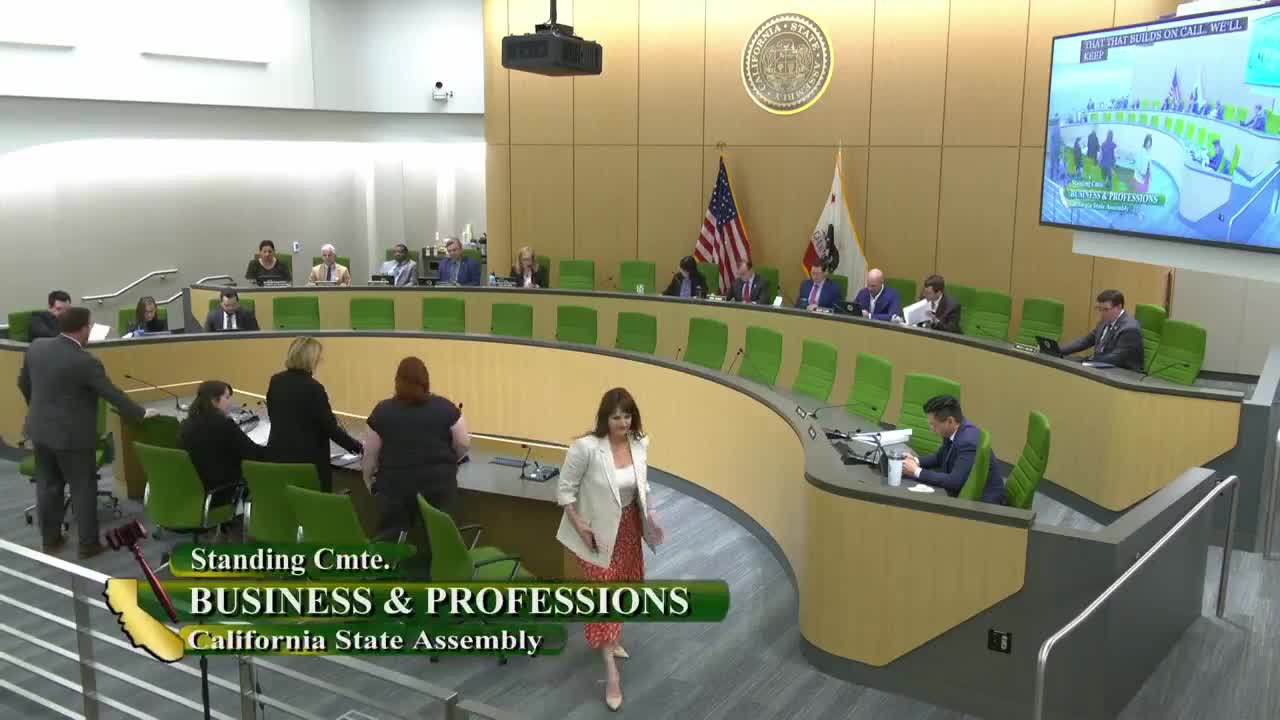 7MIN
Assembly Standing Committee on Business and Professions
Bill Author

Bill Co-Author(s):