AB 3130: County board of supervisors: disclosure.
- Session Year: 2023-2024
- House: Assembly
- Latest Version Date: 2024-09-14
Current Status:
Passed
(2024-09-14: Chaptered by Secretary of State - Chapter 251, Statutes of 2024.)
Introduced
In Committee
First Chamber
In Committee
Second Chamber
Enacted
What does this bill do?
This bill requires a county supervisor to publicly disclose any known family relationship with an officer or employee of a nonprofit before the county board approves funding for that nonprofit. Disclosure must be announced at an open meeting and entered in the board’s official records; “family” includes blood, adoption, marriage, domestic partnership, or living together, and “nonprofit” covers 501(c)(3), 501(c)(5), or nonprofit corporations.
The summary is provided by generative AI which can make mistakes. For original language, please view the details in the table below.
Existing law prohibits certain public officials, including, but not limited to, state, county, or district officers or employees, from being financially interested in any contract made by them in their official capacity, or by any body or board of which they are members, except as provided. A willful violation of these provisions is a crime.
Existing law excepts from the above conflict-of-interest provisions certain remote interests, as described, including those of officers or employees of a nonprofit entity exempt from taxation or a nonprofit corporation, except as prescribed. Existing law excepts the remote interest if it is disclosed to the body or board of which the officer is a member and noted in its official records, and thereafter the body or board authorizes, approves, or ratifies the contract in good faith by a vote of its membership sufficient for the purpose without counting the vote or votes of the officer or member with the remote interest.
This bill would require a member of the board of supervisors to disclose a known family relationship with an officer or employee of a nonprofit entity before the board of supervisors appropriates money to that nonprofit entity.
Existing law prohibits certain public officials, including, but not limited to, state, county, or district officers or employees, from being financially interested in any contract made by them in their official capacity, or by any body or board of which they are members, except as provided. A willful violation of these provisions is a crime.
Existing law excepts from the above conflict-of-interest provisions certain remote interests, as described, including those of officers or employees of a nonprofit entity exempt from taxation or a nonprofit corporation, except as prescribed. Existing law requires a remote interest to be disclosed to the body or board of which the officer is a member and noted in its official records, and thereafter the body or board to authorize, approve, or ratify the contract in good faith by a vote of its membership sufficient for the purpose without counting the vote or votes of the officer or member with the remote interest.
This bill would require a member of the board of supervisors to disclose a known family relationship with an officer or employee of a nonprofit entity before the board of supervisors appropriates money to that nonprofit entity.
(1)Existing law prohibits Members of the Legislature, and state, county, district, judicial district, and city officers or employees from being financially interested in a contract, as specified, made by them in their official capacity or by any body or board of which they are members, subject to specified exceptions. Existing law identifies certain remote interests that are not subject to this prohibition and other situations in which an official is not deemed to be financially interested in a contract, including, among others, that of a parent in the earnings of their minor child for personal services. Existing law makes a willful violation of this prohibition a crime.This bill would instead include within the definition of remote interests that of a public officer who is an elected member of any state or local body, board, or commission, if that public officers spouse, child, parent, sibling, or the spouse of the child, parent, or sibling, has a financial interest in any contract made by that public officer in their official capacity, or by any body, board, or commission of which that public officer is a member.(2)Existing law imposes a criminal penalty for every officer or person who willfully violates the prohibitions against making or being financially interested in contracts, as specified.This bill would additionally provide that a member who knows and willfully fails to disclose the fact of their remote interest in a contract, as described, is subject to criminal penalty. By expanding these prohibitions, the bill would create a new crime, and thus, would impose a state-mandated local program.(3)The California Constitution requires the state to reimburse local agencies and school districts for certain costs mandated by the state. Statutory provisions establish procedures for making that reimbursement.This bill would provide that no reimbursement is required by this act for a specified reason.(1)Existing law prohibits Members of the Legislature, and state, county, district, judicial district, and city officers or employees from being financially interested in a contract, as specified, made by them in their official capacity or by any body or board of which they are members, subject to specified exceptions. Existing law identifies certain remote interests that are not subject to this prohibition and other situations in which an official is not deemed to be financially interested in a contract, including, among others, that of a parent in the earnings of their minor child for personal services. Existing law makes a willful violation of this prohibition a crime.
This bill would instead include within the definition of remote interests that of a public officer who is an elected member of any state or local body, board, or commission, if that public officers spouse, child, parent, sibling, or the spouse of the child, parent, or sibling, has a financial interest in any contract made by that public officer in their official capacity, or by any body, board, or commission of which that public officer is a member.
(2)Existing law imposes a criminal penalty for every officer or person who willfully violates the prohibitions against making or being financially interested in contracts, as specified.
This bill would additionally provide that a member who knows and willfully fails to disclose the fact of their remote interest in a contract, as described, is subject to criminal penalty. By expanding these prohibitions, the bill would create a new crime, and thus, would impose a state-mandated local program.
(3)The California Constitution requires the state to reimburse local agencies and school districts for certain costs mandated by the state. Statutory provisions establish procedures for making that reimbursement.
This bill would provide that no reimbursement is required by this act for a specified reason.
Existing law requires an operator of a commercial internet website or online service that collects personally identifiable information through the internet website or online service from individual consumers who use or visit the commercial internet website or online service and who reside in California to comply with specified provisions relating to the operators privacy policy. Noncompliance, as described, constitutes a violation of these provisions.This bill would make nonsubstantive changes to these provisions.Existing law requires an operator of a commercial internet website or online service that collects personally identifiable information through the internet website or online service from individual consumers who use or visit the commercial internet website or online service and who reside in California to comply with specified provisions relating to the operators privacy policy. Noncompliance, as described, constitutes a violation of these provisions.
This bill would make nonsubstantive changes to these provisions.
(a)For purposes of this section, the following definitions apply:
(1)Disclose means to have information announced in an open and public meeting and noted in the official records of the board of supervisors.
(2)Family relationship means a relationship by blood, adoption, marriage, domestic partnership, or cohabitation.
(3)Nonprofit entity means a nonprofit entity exempt from taxation pursuant to Section 501(c)(3) of the Internal Revenue Code (26 U.S.C. Sec. 501(c)(3)), pursuant to Section 501(c)(5) of the Internal Revenue Code (26 U.S.C. Sec. 501(c)(5)), or a nonprofit corporation.
(b)A member of the board of supervisors shall disclose a known family relationship with an officer or employee of a nonprofit entity before the board of supervisors appropriates money to that nonprofit entity.
(a)For purposes of this section, the following definitions apply:
(1)Disclose means to have information noted in the official records of the board of supervisors.
(2)Family relationship means a relationship by blood, adoption, marriage, domestic partnership, or cohabitation.
(3)Nonprofit entity means a nonprofit entity exempt from taxation pursuant to Section 501(c)(3) of the Internal Revenue Code (26 U.S.C. Sec. 501(c)(3)), pursuant to Section 501(c)(5) of the Internal Revenue Code (26 U.S.C. Sec. 501(c)(5)), or a nonprofit corporation.
(b)A member of the board of supervisors shall disclose a known family relationship with an officer or employee of a nonprofit entity before the board of supervisors appropriates money to that nonprofit entity.
SECTION 1.Section 1091 of the Government Code is amended to read:1091.(a)An officer shall not be deemed to be interested in a contract entered into by a body or board of which the officer is a member within the meaning of this article if the officer has only a remote interest in the contract and if the fact of that interest is disclosed to the body or board of which the officer is a member and noted in its official records, and thereafter the body or board authorizes, approves, or ratifies the contract in good faith by a vote of its membership sufficient for the purpose without counting the vote or votes of the officer or member with the remote interest.(b)As used in this article, remote interest means any of the following:(1)That of an officer or employee of a nonprofit entity exempt from taxation pursuant to Section 501(c)(3) of the Internal Revenue Code (26 U.S.C. Sec. 501(c)(3)), pursuant to Section 501(c)(5) of the Internal Revenue Code (26 U.S.C. Sec. 501(c)(5)), or a nonprofit corporation, except as provided in paragraph (8) of subdivision (a) of Section 1091.5.(2)That of an employee or agent of the contracting party, if the contracting party has 10 or more other employees and if the officer was an employee or agent of that contracting party for at least three years prior to the officer initially accepting their office and the officer owns less than 3 percent of the shares of stock of the contracting party; and the employee or agent is not an officer or director of the contracting party and did not directly participate in formulating the bid of the contracting party.For purposes of this paragraph, time of employment with the contracting party by the officer shall be counted in computing the three-year period specified in this paragraph even though the contracting party has been converted from one form of business organization to a different form of business organization within three years of the initial taking of office by the officer. Time of employment in that case shall be counted only if, after the transfer or change in organization, the real or ultimate ownership of the contracting party is the same or substantially similar to that which existed before the transfer or change in organization. For purposes of this paragraph, stockholders, bondholders, partners, or other persons holding an interest in the contracting party are regarded as having the real or ultimate ownership of the contracting party.(3)That of an employee or agent of the contracting party, if all of the following conditions are met:(A)The agency of which the person is an officer is a local public agency located in a county with a population of less than 4,000,000.(B)The contract is competitively bid and is not for personal services.(C)The employee or agent is not in a primary management capacity with the contracting party, is not an officer or director of the contracting party, and holds no ownership interest in the contracting party.(D)The contracting party has 10 or more other employees.(E)The employee or agent did not directly participate in formulating the bid of the contracting party.(F)The contracting party is the lowest responsible bidder.(4)That of a public officer who is an elected member of any state or local body, board, or commission, if that public officers spouse, child, parent, sibling, or the spouse of the child, parent, or sibling, has a financial interest in any contract made by that officer in their official capacity, or by any body, board, or commission of which that public officer is a member. If the member knows and willfully fails to disclose their interest in a contract pursuant to this paragraph, the member is punishable as provided in Section 1097. That violation does not void the contract unless the contracting party had knowledge of the fact of the remote interest of the officer at the time the contract was executed.(5)That of a landlord or tenant of the contracting party.(6)That of an attorney of the contracting party or that of an owner, officer, employee, or agent of a firm that renders, or has rendered, service to the contracting party in the capacity of stockbroker, insurance agent, insurance broker, real estate agent, or real estate broker, if these individuals have not received and will not receive remuneration, consideration, or a commission as a result of the contract and if these individuals have an ownership interest of 10 percent or more in the law practice or firm, stock brokerage firm, insurance firm, or real estate firm.(7)That of a member of a nonprofit corporation formed under the Food and Agricultural Code or a nonprofit corporation formed under the Corporations Code for the sole purpose of engaging in the merchandising of agricultural products or the supplying of water.(8)That of a supplier of goods or services when those goods or services have been supplied to the contracting party by the officer for at least five years prior to their election or appointment to office.(9)That of a person subject to the provisions of Section 1090 in any contract or agreement entered into pursuant to the provisions of the California Land Conservation Act of 1965.(10)Except as provided in subdivision (b) of Section 1091.5, that of a director of, or a person having an ownership interest of, 10 percent or more in a bank, bank holding company, or savings and loan association with which a party to the contract has a relationship of borrower or depositor, debtor or creditor.(11)That of an engineer, geologist, architect, or planner employed by a consulting engineering, architectural, or planning firm. This paragraph applies only to an employee of a consulting firm who does not serve in a primary management capacity, and does not apply to an officer or director of a consulting firm.(12)That of an elected officer otherwise subject to Section 1090, in any housing assistance payment contract entered into pursuant to Section 8 of the United States Housing Act of 1937 (42 U.S.C. Sec. 1437f) as amended, provided that the housing assistance payment contract was in existence before Section 1090 became applicable to the officer and will be renewed or extended only as to the existing tenant, or, in a jurisdiction in which the rental vacancy rate is less than 5 percent, as to new tenants in a unit previously under a Section 8 contract. This section applies to any person who became a public official on or after November 1, 1986.(13)That of a person receiving salary, per diem, or reimbursement for expenses from a government entity.(14)That of a person owning less than 3 percent of the shares of a contracting party that is a for-profit corporation, provided that the ownership of the shares derived from the persons employment with that corporation.(15)That of a party to litigation involving the body or board of which the officer is a member in connection with an agreement in which all of the following apply:(A)The agreement is entered into as part of a settlement of litigation in which the body or board is represented by legal counsel.(B)After a review of the merits of the agreement and other relevant facts and circumstances, a court of competent jurisdiction finds that the agreement serves the public interest.(C)The interested member has recused themself from all participation, direct or indirect, in the making of the agreement on behalf of the body or board.(16)That of a person who is an officer or employee of an investor-owned utility that is regulated by the Public Utilities Commission with respect to a contract between the investor-owned utility and a state, county, district, judicial district, or city body or board of which the person is a member, if the contract requires the investor-owned utility to provide energy efficiency rebates or other type of program to encourage energy efficiency that benefits the public when all of the following apply:(A)The contract is funded by utility consumers pursuant to regulations of the Public Utilities Commission.(B)The contract provides no individual benefit to the person that is not also provided to the public, and the investor-owned utility receives no direct financial profit from the contract.(C)The person has recused themself from all participation in making the contract on behalf of the state, county, district, judicial district, or city body or board of which they are a member.(D)The contract implements a program authorized by the Public Utilities Commission.(17)That of an owner or partner of a firm serving as an appointed member of an unelected board or commission of the contracting agency if the owner or partner recuses themself from providing any advice to the contracting agency regarding the contract between the firm and the contracting agency and from all participation in reviewing a project that results from that contract.(c)This section is not applicable to any officer interested in a contract who influences or attempts to influence another member of the body or board of which they are a member to enter into the contract.(d)The willful failure of an officer to disclose the fact of their interest in a contract pursuant to this section is punishable as provided in Section 1097. That violation does not void the contract unless the contracting party had knowledge of the fact of the remote interest of the officer at the time the contract was executed.SEC. 2.No reimbursement is required by this act pursuant to Section 6 of Article XIIIB of the California Constitution because the only costs that may be incurred by a local agency or school district will be incurred because this act creates a new crime or infraction, eliminates a crime or infraction, or changes the penalty for a crime or infraction, within the meaning of Section 17556 of the Government Code, or changes the definition of a crime within the meaning of Section 6 of Article XIIIB of the California Constitution.(a)An officer shall not be deemed to be interested in a contract entered into by a body or board of which the officer is a member within the meaning of this article if the officer has only a remote interest in the contract and if the fact of that interest is disclosed to the body or board of which the officer is a member and noted in its official records, and thereafter the body or board authorizes, approves, or ratifies the contract in good faith by a vote of its membership sufficient for the purpose without counting the vote or votes of the officer or member with the remote interest.
(b)As used in this article, remote interest means any of the following:
(1)That of an officer or employee of a nonprofit entity exempt from taxation pursuant to Section 501(c)(3) of the Internal Revenue Code (26 U.S.C. Sec. 501(c)(3)), pursuant to Section 501(c)(5) of the Internal Revenue Code (26 U.S.C. Sec. 501(c)(5)), or a nonprofit corporation, except as provided in paragraph (8) of subdivision (a) of Section 1091.5.
(2)That of an employee or agent of the contracting party, if the contracting party has 10 or more other employees and if the officer was an employee or agent of that contracting party for at least three years prior to the officer initially accepting his or her their office and the officer owns less than 3 percent of the shares of stock of the contracting party; and the employee or agent is not an officer or director of the contracting party and did not directly participate in formulating the bid of the contracting party.
For purposes of this paragraph, time of employment with the contracting party by the officer shall be counted in computing the three-year period specified in this paragraph even though the contracting party has been converted from one form of business organization to a different form of business organization within three years of the initial taking of office by the officer. Time of employment in that case shall be counted only if, after the transfer or change in organization, the real or ultimate ownership of the contracting party is the same or substantially similar to that which existed before the transfer or change in organization. For purposes of this paragraph, stockholders, bondholders, partners, or other persons holding an interest in the contracting party are regarded as having the real or ultimate ownership of the contracting party.
(3)That of an employee or agent of the contracting party, if all of the following conditions are met:
(A)The agency of which the person is an officer is a local public agency located in a county with a population of less than 4,000,000.
(B)The contract is competitively bid and is not for personal services.
(C)The employee or agent is not in a primary management capacity with the contracting party, is not an officer or director of the contracting party, and holds no ownership interest in the contracting party.
(D)The contracting party has 10 or more other employees.
(E)The employee or agent did not directly participate in formulating the bid of the contracting party.
(F)The contracting party is the lowest responsible bidder.
(4)That of a parent in the earnings of his or her minor child for personal services. public officer who is an elected member of any state or local body, board, or commission, if that public officers spouse, child, parent, sibling, or the spouse of the child, parent, or sibling, has a financial interest in any contract made by that officer in their official capacity, or by any body, board, or commission of which that public officer is a member. If the member knows and willfully fails to disclose their interest in a contract pursuant to this paragraph, the member is punishable as provided in Section 1097. That violation does not void the contract unless the contracting party had knowledge of the fact of the remote interest of the officer at the time the contract was executed.
(5)That of a landlord or tenant of the contracting party.
(6)That of an attorney of the contracting party or that of an owner, officer, employee, or agent of a firm that renders, or has rendered, service to the contracting party in the capacity of stockbroker, insurance agent, insurance broker, real estate agent, or real estate broker, if these individuals have not received and will not receive remuneration, consideration, or a commission as a result of the contract and if these individuals have an ownership interest of 10 percent or more in the law practice or firm, stock brokerage firm, insurance firm, or real estate firm.
(7)That of a member of a nonprofit corporation formed under the Food and Agricultural Code or a nonprofit corporation formed under the Corporations Code for the sole purpose of engaging in the merchandising of agricultural products or the supplying of water.
(8)That of a supplier of goods or services when those goods or services have been supplied to the contracting party by the officer for at least five years prior to his or her their election or appointment to office.
(9)That of a person subject to the provisions of Section 1090 in any contract or agreement entered into pursuant to the provisions of the California Land Conservation Act of 1965.
(10)Except as provided in subdivision (b) of Section 1091.5, that of a director of, or a person having an ownership interest of, 10 percent or more in a bank, bank holding company, or savings and loan association with which a party to the contract has a relationship of borrower or depositor, debtor or creditor.
(11)That of an engineer, geologist, architect, or planner employed by a consulting engineering, architectural, or planning firm. This paragraph applies only to an employee of a consulting firm who does not serve in a primary management capacity, and does not apply to an officer or director of a consulting firm.
(12)That of an elected officer otherwise subject to Section 1090, in any housing assistance payment contract entered into pursuant to Section 8 of the United States Housing Act of 1937 (42 U.S.C. Sec. 1437f) as amended, provided that the housing assistance payment contract was in existence before Section 1090 became applicable to the officer and will be renewed or extended only as to the existing tenant, or, in a jurisdiction in which the rental vacancy rate is less than 5 percent, as to new tenants in a unit previously under a Section 8 contract. This section applies to any person who became a public official on or after November 1, 1986.
(13)That of a person receiving salary, per diem, or reimbursement for expenses from a government entity.
(14)That of a person owning less than 3 percent of the shares of a contracting party that is a for-profit corporation, provided that the ownership of the shares derived from the persons employment with that corporation.
(15)That of a party to litigation involving the body or board of which the officer is a member in connection with an agreement in which all of the following apply:
(A)The agreement is entered into as part of a settlement of litigation in which the body or board is represented by legal counsel.
(B)After a review of the merits of the agreement and other relevant facts and circumstances, a court of competent jurisdiction finds that the agreement serves the public interest.
(C)The interested member has recused himself or herself themself from all participation, direct or indirect, in the making of the agreement on behalf of the body or board.
(16)That of a person who is an officer or employee of an investor-owned utility that is regulated by the Public Utilities Commission with respect to a contract between the investor-owned utility and a state, county, district, judicial district, or city body or board of which the person is a member, if the contract requires the investor-owned utility to provide energy efficiency rebates or other type of program to encourage energy efficiency that benefits the public when all of the following apply:
(A)The contract is funded by utility consumers pursuant to regulations of the Public Utilities Commission.
(B)The contract provides no individual benefit to the person that is not also provided to the public, and the investor-owned utility receives no direct financial profit from the contract.
(C)The person has recused himself or herself themself from all participation in making the contract on behalf of the state, county, district, judicial district, or city body or board of which he or she is they are a member.
(D)The contract implements a program authorized by the Public Utilities Commission.
(17)That of an owner or partner of a firm serving as an appointed member of an unelected board or commission of the contracting agency if the owner or partner recuses himself or herself themself from providing any advice to the contracting agency regarding the contract between the firm and the contracting agency and from all participation in reviewing a project that results from that contract.
(c)This section is not applicable to any officer interested in a contract who influences or attempts to influence another member of the body or board of which he or she is they are a member to enter into the contract.
(d)The willful failure of an officer to disclose the fact of his or her their interest in a contract pursuant to this section is punishable as provided in Section 1097. That violation does not void the contract unless the contracting party had knowledge of the fact of the remote interest of the officer at the time the contract was executed.
SEC. 2.No reimbursement is required by this act pursuant to Section 6 of Article XIIIB of the California Constitution because the only costs that may be incurred by a local agency or school district will be incurred because this act creates a new crime or infraction, eliminates a crime or infraction, or changes the penalty for a crime or infraction, within the meaning of Section 17556 of the Government Code, or changes the definition of a crime within the meaning of Section 6 of Article XIIIB of the California Constitution.
SECTION 1.Section 22576 of the Business and Professions Code is amended to read:22576.An operator of a commercial internet website or online service that collects personally identifiable information through the internet website or online service from individual consumers who use or visit the commercial internet website or online service and who reside in California shall be in violation of this section if the operator fails to comply with the provisions of Section 22575 or with the provisions of its posted privacy policy in either of the following ways:(a)Knowingly and willfully.(b)Negligently and materially.An operator of a commercial Web site internet website or online service that collects personally identifiable information through the Web site internet website or online service from individual consumers who use or visit the commercial Web site internet website or online service and who reside in California shall be in violation of this section if the operator fails to comply with the provisions of Section 22575 or with the provisions of its posted privacy policy in either of the following ways:
(a)Knowingly and willfully.
(b)Negligently and materially.
|
Date
|
Status
|
|---|---|
| Sep 14, 2024 | Chaptered by Secretary of State - Chapter 251, Statutes of 2024. |
| Sep 14, 2024 | Approved by the Governor. |
| Aug 28, 2024 | Enrolled and presented to the Governor at 4 p.m. |
| Aug 22, 2024 | In Assembly. Ordered to Engrossing and Enrolling. |
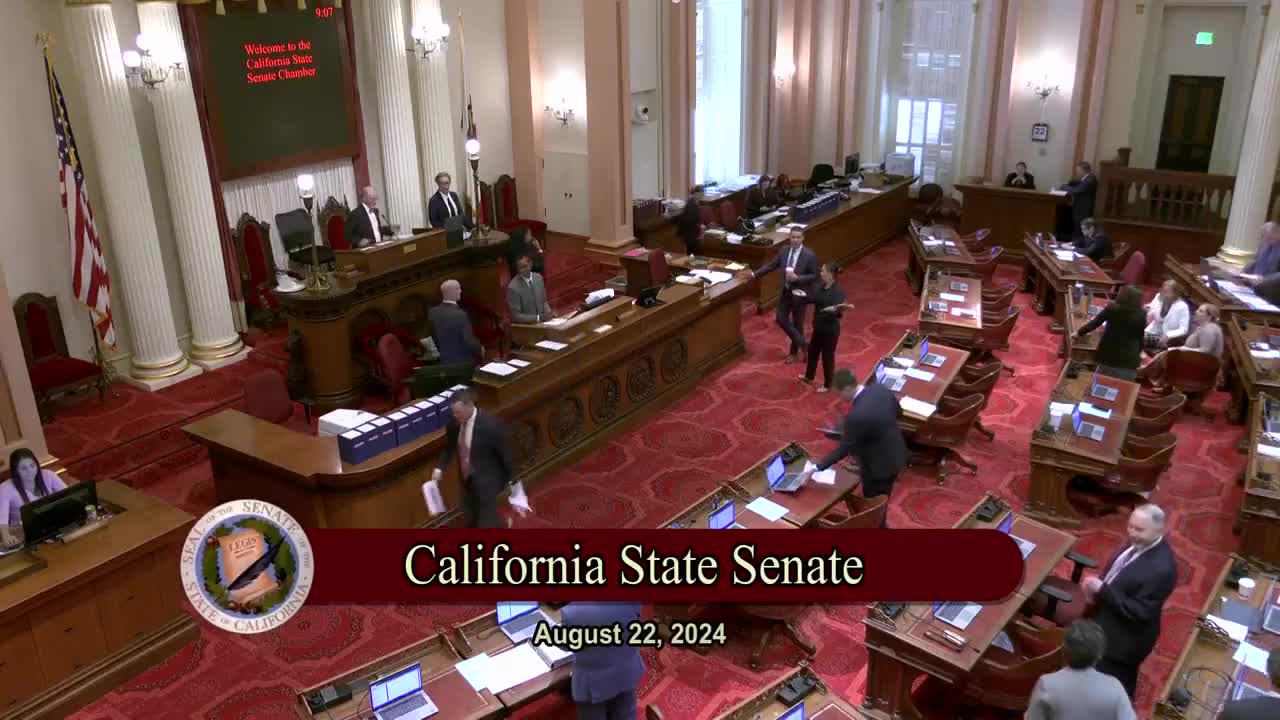
| Aug 22, 2024 | Read third time. Passed. Ordered to the Assembly. (Ayes 33. Noes 0. Page 5292.). |
| Jun 27, 2024 | Read second time. Ordered to third reading. |
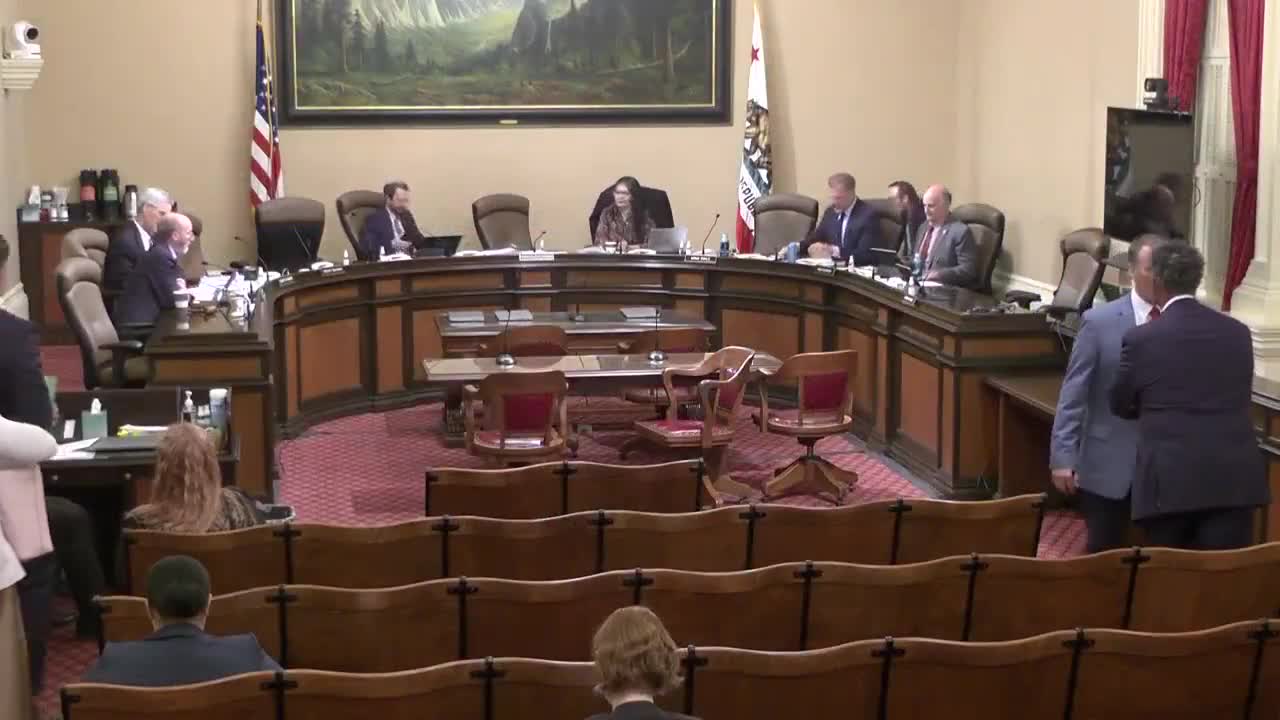
| Jun 26, 2024 | From committee: Do pass. (Ayes 7. Noes 0.) (June 26). |
| May 29, 2024 | Referred to Com. on L. GOV. |
| May 21, 2024 | In Senate. Read first time. To Com. on RLS. for assignment. |
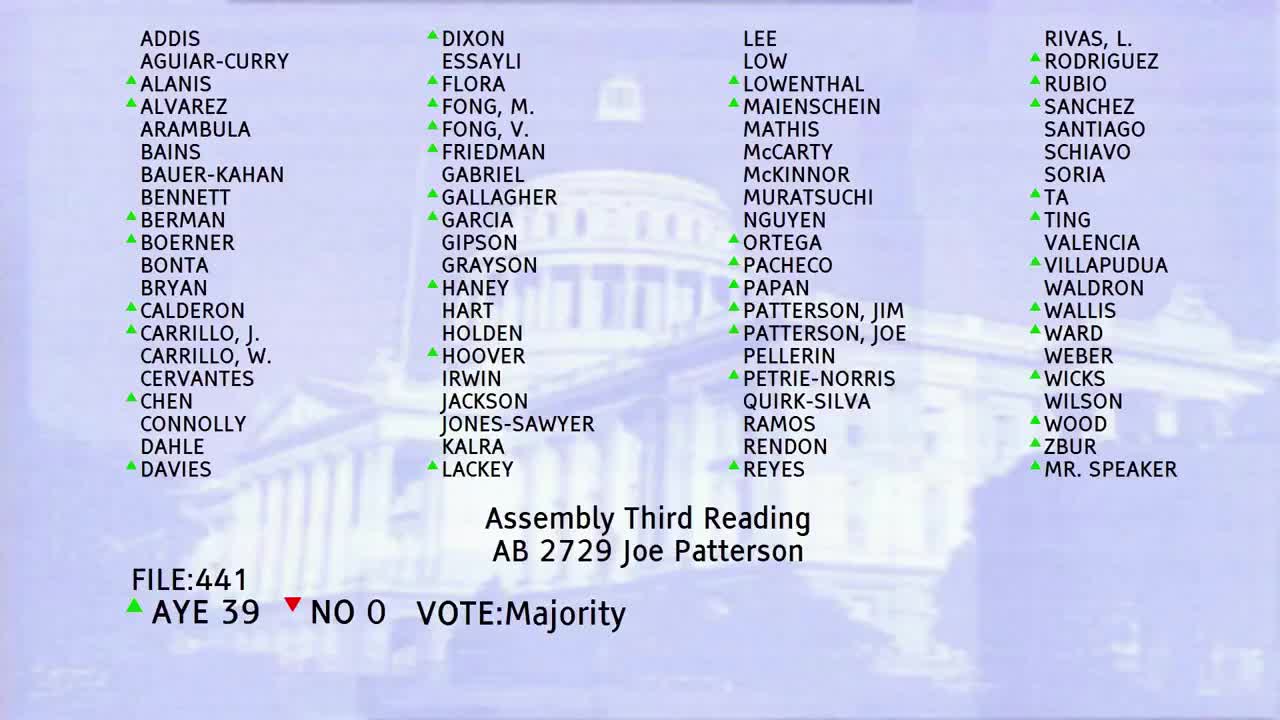
| May 20, 2024 | Read third time. Passed. Ordered to the Senate. (Ayes 72. Noes 0. Page 5310.) |
| May 6, 2024 | Read second time. Ordered to third reading. |
| May 2, 2024 | Read second time and amended. Ordered returned to second reading. |
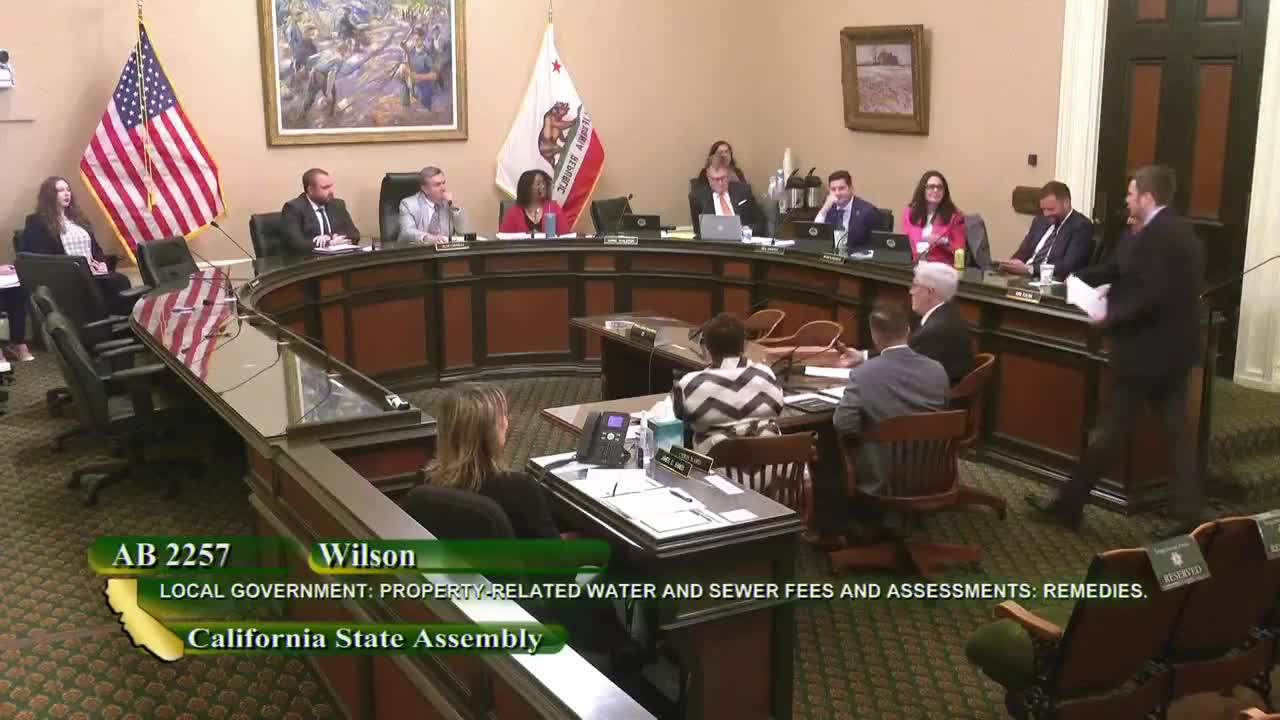
| May 1, 2024 | From committee: Amend, and do pass as amended. (Ayes 9. Noes 0.) (May 1). |
| Apr 4, 2024 | Re-referred to Com. on L. GOV. pursuant to Assembly Rule 96. |
| Apr 2, 2024 | Re-referred to Com. on ELECTIONS. |
| Apr 1, 2024 | Re-referred to Com. on ELECTIONS. |
| Apr 1, 2024 | In committee: Hearing postponed by committee. |
| Apr 1, 2024 | From committee chair, with author's amendments: Amend, and re-refer to Com. on ELECTIONS. Read second time and amended. |
| Mar 21, 2024 | Referred to Coms. on ELECTIONS and PUB. S. |
| Mar 21, 2024 | From committee chair, with author's amendments: Amend, and re-refer to Com. on ELECTIONS. Read second time and amended. |
| Feb 17, 2024 | From printer. May be heard in committee March 18. |
| Feb 16, 2024 | Read first time. To print. |
|
Date
|
Description
|
Location
|
Votes
|
|
|---|---|---|---|---|
| Aug 22, 2024 | Assembly 3rd Reading AB3130 Quirk-Silva et al. By Archuleta | Senate Floor |
Passed |
|
| Jun 26, 2024 | Do pass | Senate Standing Committee on Local Government |
Passed |
|
| May 20, 2024 | AB 3130 Quirk-Silva Assembly Third Reading | Assembly Floor |
Passed |
|
| May 1, 2024 | Do pass as amended. | Assembly Standing Committee on Local Government |
Passed |
This list shows positions taken on this bill by organizations on the date displayed, which is linked to the original source.
Positions by individuals are not included.
SENATE RULES COMMITTEE Office of Senate Floor Analyses (916) 651-1520 Fax: (916) 327-4478 | AB 3130 |
THIRD READING
Bill No: AB 3130
Author: Quirk-Silva (D) and Valencia (D)
Amended: 5/2/24 in Assembly
Vote: 21
SENATE LOCAL GOVERNMENT COMMITTEE: 7-0, 6/26/24
AYES: Durazo, Seyarto, Dahle, Glazer, Skinner, Wahab, Wiener
ASSEMBLY FLOOR: 72-0, 5/20/24 - See last page for vote
SUBJECT: County board of supervisors: disclosure
SOURCE: Author
DIGEST:
This bill requires a member of a board of supervisors to disclose a known family relationship with an officer or employee of a nonprofit entity before the county appropriates money to that nonprofit entity.
ANALYSIS:
Existing law:
- Prohibits members of the Legislature, and state, county, district, judicial district, and city officers or employees from being financially interested in a contract made by them in their official capacity or by any body or board of which they are members, subject to specified exceptions.
- Provides that a public officer shall not be deemed financially interested in contract if the officer only has a remote interest.
- Identifies certain remote interests, including the interest of a parent in the earnings of their minor child for personal services.
- Provides that in order to be deemed not interested in the relevant contract due to a remote interest, a public officer must disclose the interest, and the body or board must authorize, approve, or ratify the contract in good faith without counting the vote of the public officer with the remote interest.
- Creates the Fair Political Practices Commission (FPPC) and makes it responsible for the impartial, effective administration and implementation of the Political Reform Act of 1974 (PRA).
- Provides individual supervisors may have to forfeit $500 to the county for each act where they do not perform their duties, or do so corruptly.
This bill:
- Requires a member of a board of supervisors to disclose a known family relationship with an officer or employee of a nonprofit entity before it appropriates money to that nonprofit entity.
- Provides that, under the measure, disclosure means announcing the relationship in an open and public meeting and noting it in the official records of the board of supervisors.
Background
- Government Code Section 1090. Section 1090 formalized the longstanding common law rule prohibiting public officials—including board members, officers, and employees—from having a personal financial interest in the contracts they participate in awarding while exercising their official capacities. Financial interest has been liberally interpreted by the courts and includes the property and income of a public official’s spouse. The consequences of violating Section 1090 are severe: a contract that runs afoul of the law is void, even if the affected official did not intend to receive a personal benefit. Willful violators can also face criminal penalties ranging from fines to prison time, plus a lifetime ban on holding public office.
- The Political Reform Act. In 1974, California voters passed Proposition 9 to create the Political Reform Act (PRA), along with the Fair Political Practices Commission (FPPC), the agency tasked with enforcing the PRA through administrative and civil penalties. In 2013, the Legislature expanded the FPPC’s jurisdiction to include Section 1090 (AB 1090, Fong). The PRA is broader than Section 1090 because it prohibits any state or local public official from using his or her official position to influence any “governmental decision” in which the official has a financial interest. The PRA also applies to decisions that will have a material financial effect on a member of the official’s “immediate family,” which the Legislature has defined as a government official’s spouse or dependent children. The PRA supersedes most other conflict of interest laws, including Section 1090, in the case of an inconsistency. Public officials must therefore consider whether a conflict exists under either the PRA or Section 1090, or both.
- Common law conflict of interest. In 1850, California’s first Legislature adopted the English common law as the state’s basic legal framework, insofar as it did not conflict with state statutes or the state and federal Constitutions. This legal framework remains in place today. Independent of Section 1090 and the PRA, California courts continue to apply the common law doctrine against conflicts of interests to invalidate public contracts tainted by self-dealing, even in situations when Section 1090 or the PRA do not apply. In several recent opinions, the Attorney General’s Office has suggested the common law doctrine against conflicts of interest is broader than Section 1090 and the PRA, even prohibiting public contracts that raise only potential conflicts of interest, or even the mere appearance of impropriety. For example, the Attorney General has opined that a contract that benefits the adult child of a public official might be prohibited under common law, even though neither the PRA nor Section 1090 consider it a financial interest. Courts can void a contract that violates this common law doctrine.
- Recent conflict of interest controversies. In April 2021, the Orange County Board of Supervisors adopted a policy that allowed each Supervisor to determine how to award COVID-19 relief funding in their respective districts. Each of the five districts received an initial $10 million allocation, to which the Board added another $3 million in June 2023, for a total of $65 million. Once each supervisor decided how to prioritize these funds, the board voted to approve the disbursement of funds.
Starting in late 2023, news surfaced that an Orange County Supervisor awarded COVID-19 relief funding to an organization run by his daughter without disclosing the connection to the public. After public scrutiny over the contracts, news surfaced the organization was also behind on required audits. Despite these concerns, the Supervisor continued to award funding to the organization.
Comments
- Purpose of the bill. According to the author, “California has long been a leader in protecting the public against ‘self-dealings’ by elected officials and their families. Even the perception of selfish political agendas can strain the public’s trust in government, hence the many conflict-of-interest-laws across our nation extending beyond the individual public officeholder to also include their family, including adult children and their spouses. By requiring disclosure of familial ties with nonprofit entities before the allocation of public funds, AB 3130 preserves public trust and protects government integrity.”
- An alternative approach? While this bill responds to recent contracting controversies in Orange County, this is not the first time the Legislature has tried to deal with this issue. A 2015 audit of the City of Industry found the former mayor and his family benefited from favorable contracts totaling more than $326 million over 20 years. This lead to a series of legislative efforts to address contracts favoring family members. SB 1011 (Mendoza, 2016) and SB 330 (Mendoza, 2015) both sought to expand the definition of remote interest to include the financial interests of a public officer’s child, parent, or sibling, or the spouses of those individuals under the provisions of Section 1090. Both bills were held under submission in the Assembly Appropriations Committee. This bill is not included in Section 1090, which means a violator would not be subject to Section 1090 penalties for failing to disclose a known family relationship with an officer or employee of a nonprofit entity before it appropriates money to that nonprofit entity. While a violation of this bill may also result in violations of the PRA or common law, there is no specific penalty for violating this bill. A court could find that a supervisor violating this bill’s requirements is failing to perform their duties, which would subject them to fines, but those consequences are much less severe than if the disclosure requirement is subject to the penalties under Section 1090. The penalties under this bill may not be sufficient to alter the behavior of supervisors seeking to hide relationships with family members receiving contracts.
Related/Prior legislation
SB 1111 (Min, 2024) expands the definition of remote interest in Section 1090 to include the financial interests of a public officer’s child, parent, or sibling, or the spouses of those individuals. The bill is currently pending in the Assembly Appropriations Committee.
AB 2946 (Valencia, 2024) provides that the Orange County Board of Supervisors can only appropriate district discretionary funds by majority vote, and requires the board to report discretionary funding decisions on its website. The bill is currently pending on the Senate Floor.
FISCAL EFFECT: Appropriation: No Fiscal Com.: No Local: No
SUPPORT: (Verified 6/27/24)
None received
OPPOSITION: (Verified 6/27/24)
None received
ASSEMBLY FLOOR: 72-0, 5/20/24
AYES: Addis, Aguiar-Curry, Alanis, Bains, Bauer-Kahan, Bennett, Berman, Boerner, Bonta, Bryan, Calderon, Juan Carrillo, Wendy Carrillo, Chen, Connolly, Davies, Dixon, Essayli, Flora, Mike Fong, Vince Fong, Friedman, Gallagher, Garcia, Gipson, Grayson, Haney, Hart, Holden, Hoover, Irwin, Jackson, Jones-Sawyer, Kalra, Lackey, Lee, Low, Lowenthal, Maienschein, McCarty, McKinnor, Muratsuchi, Ortega, Pacheco, Papan, Jim Patterson, Joe Patterson, Pellerin, Petrie-Norris, Quirk-Silva, Ramos, Rendon, Reyes, Rodriguez, Blanca Rubio, Sanchez, Santiago, Schiavo, Soria, Ta, Ting, Valencia, Villapudua, Waldron, Wallis, Ward, Weber, Wicks, Wilson, Wood, Zbur, Robert Rivas
NO VOTE RECORDED: Alvarez, Arambula, Cervantes, Megan Dahle, Gabriel, Mathis, Stephanie Nguyen, Luz Rivas
Prepared by: Jonathan Peterson / L. GOV. / (916) 651-4119
6/28/24 10:45:07
**** END ****
SENATE COMMITTEE ON LOCAL GOVERNMENT
Senator María Elena Durazo, Chair
2023 - 2024 Regular
Bill No: | AB 3130 | Hearing Date: | 6/26/24 |
Author: | Quirk-Silva | Fiscal: | No |
Version: | 5/2/24 | Consultant: | Peterson |
County board of supervisors: disclosure
Requires a member of a board of supervisors to disclose a known family relationship with an officer or employee of a nonprofit entity before the county appropriates money to that nonprofit entity.
Background
California state and local officials who negotiate, make, or vote on public contracts are subject to two main conflicts of interest laws: Section 1090 et seq. of the Government Code (known simply as “Section 1090”) and the Political Reform Act of 1974.
Section 1090. Section 1090 formalized the longstanding common law rule prohibiting public officials—including board members, officers, and employees—from having a personal financial interest in the contracts they participate in awarding while exercising their official capacities. Financial interest has been liberally interpreted by the courts and includes the property and income of a public official’s spouse. The consequences of violating Section 1090 are severe: a contract that runs afoul of the law is void, even if the affected official did not intend to receive a personal benefit. Willful violators can also face criminal penalties ranging from fines to prison time, plus a lifetime ban on holding public office.
Section 1090 contains several exceptions. In particular, state law identifies 17 situations that do not constitute financial interests, but that present some risk of undue influence. These “remote interests” include when a public contract would financially benefit a public official’s minor child or a nonprofit corporation at which a public official is also a non-salaried officer. Section 1090 requires an official with a remote interest to publicly disclose their interest, note the interest in the public record, and abstain from voting on the contract or influencing the other board members. The government body on which they sit may only approve the contract if there are sufficient votes to pass it without the interested official. Thus, only public officials that sit on multi-member boards may use the remote interest exception; officers and employees may not. The courts and the Attorney General have found there is an additional, non-statutory exception to Section 1090: a “rule of necessity” that allows an interested public official to participate in a contract if (1) the government agency must contract for essential services but no other source is available, and (2) the board or official is the only authority that can legally act on the matter.
The Political Reform Act. In 1974, California voters passed Proposition 9 to create the Political Reform Act (PRA), along with the Fair Political Practices Commission (FPPC), the agency tasked with enforcing the PRA through administrative and civil penalties. In 2013, the Legislature expanded the FPPC’s jurisdiction to include Section 1090 (AB 1090, Fong). The PRA is broader than Section 1090 because it prohibits any state or local public official from using his or her official position to influence any “governmental decision” in which the official has a financial interest. The PRA also applies to decisions that will have a material financial effect on a member of the official’s “immediate family,” which the Legislature has defined as a government official’s spouse or dependent children. The PRA supersedes most other conflict of interest laws, including Section 1090, in the case of an inconsistency. Public officials must therefore consider whether a conflict exists under either the PRA or Section 1090, or both.
Common law conflict of interest. In 1850, California’s first Legislature adopted the English common law as the state’s basic legal framework, insofar as it did not conflict with state statutes or the state and federal Constitutions. This legal framework remains in place today. Independent of Section 1090 and the PRA, California courts continue to apply the common law doctrine against conflicts of interests to invalidate public contracts tainted by self-dealing, even in situations when Section 1090 or the PRA do not apply. In several recent opinions, the Attorney General’s Office has suggested the common law doctrine against conflicts of interest is broader than Section 1090 and the PRA, even prohibiting public contracts that raise only potential conflicts of interest, or even the mere appearance of impropriety. For example, the Attorney General has opined that a contract that benefits the adult child of a public official might be prohibited under common law, even though neither the PRA nor Section 1090 consider it a financial interest. Courts can void a contract that violates this common law doctrine.
Other accountability measures. Individual supervisors may also face additional penalties if they do not perform their duties, or do so corruptly, may have to forfeit $500 to the county for each act.
Recent conflict of interest controversies. In April 2021, the Orange County Board of Supervisors adopted a policy that allowed each Supervisor to determine how to award COVID-19 relief funding in their respective districts. Each of the five districts received an initial $10 million allocation, which the Board added another $3 million in June 2023, for a total of $65 million. Once each supervisor decided how to prioritize these funds, the board voted to approve the disbursement of funds.
Starting in late 2023, news surfaced that an Orange County Supervisor awarded COVID-19 relief funding to an organization run by his daughter without disclosing the connection to the public.[1] After public scrutiny over the contracts, news surfaced that the organization was also behind on required audits.[2] Despite these concerns, the Supervisor continued to award funding to the organization.[3]
The author wants to ensure that board members notify the public when a contract would benefit a family member, and recuse themselves from voting on the contract.
Proposed Law
Assembly Bill 3130 requires a member of a board of supervisors to disclose a known family relationship with an officer or employee of a nonprofit entity before it appropriates money to that nonprofit entity.
Under the measure, disclosure means announcing the relationship in an open and public meeting and noting it in the official records of the board of supervisors.
Comments
1. Purpose of the bill. According to the author, “California has long been a leader in protecting the public against ‘self-dealings’ by elected officials and their families. Even the perception of selfish political agendas can strain the public’s trust in government, hence the many conflict-of-interest-laws across our nation extending beyond the individual public officeholder to also include their family, including adult children and their spouses. By requiring disclosure of familial ties with nonprofit entities before the allocation of public funds, AB 3130 preserves public trust and protects government integrity.”
2. An alternative approach? While AB 3130 responds to recent contracting controversies in Orange County, this is not the first time the Legislature has tried to deal with this issue. A 2015 audit of the City of Industry found the former mayor and his family benefited from favorable contracts totaling more than $326 million over 20 years. This lead to a series of legislative efforts to address contracts favoring family members. SB 1011 (Mendoza, 2016) and SB 330 (Mendoza, 2015) both sought to expand the definition of remote interest to include the financial interests of a public officer’s child, parent, or sibling, or the spouses of those individuals under the provisions of Section 1090. Both bills were held under submission in the Assembly Appropriations Committee.
AB 3130 is not included in Section 1090, which means a violator would not be subject to Section 1090 penalties for failing to disclose a known family relationship with an officer or employee of a nonprofit entity before it appropriates money to that nonprofit entity. While a violation of AB 3130 may also result in violations of the PRA or common law, there is no specific penalty for violating AB 3130. A court could find that a supervisor violating AB 3130’s requirements is failing to perform their duties, which would subject them to fines, but those consequences are much less severe than if the disclosure requirement is subject to the penalties under Section 1090. The penalties under AB 3130 may not be sufficient to alter the behavior of supervisors seeking to hide relationships with family members receiving contracts.
3. Related legislation. The Legislature is considering two other bills to address the recent funding controversies in Orange County:
- SB 1111 (Min), which this Committee approved on a 6-0 vote at its April 17th hearing, is substantially similar to these previous measures. SB 1111 is currently pending in the Assembly Elections Committee.
- AB 2946 (Valencia) provides that the Orange County Board of Supervisors can only appropriate district discretionary funds by majority vote, and requires the board to report discretionary funding decisions on its website. The measure is also scheduled for this Committee’s June 26th hearing.
Assembly Actions
Assembly Local Government Committee: 9-0
Assembly Floor: 72-0
Support and Opposition
(6/21/24)
Support: None submitted.
Opposition: None submitted.
-- END --
https://laist.com/news/politics/andrew-do-rhiannon-do-investigation-warner-wellness-orange-county-viet-america-society-pham ↑
https://laist.com/news/politics/orange-county-taxpayer-money-andrew-do-viet-america-society-warner-wellness ↑
https://laist.com/news/politics/orange-county-supervisor-andrew-do-taxpayer-money-daughter-viet-america-society-warner-wellness-rhiannon-do ↑
ASSEMBLY THIRD READING
ATR Bill Id:AB 3130
Author:(Quirk-Silva and Valencia)
As Amended Ver:May 2, 2024
Majority vote
SUMMARY
Requires a member of the board of supervisors for a county to disclose a known family relationship with an officer or employee of a nonprofit entity in an open and public meeting before the board appropriates money to that nonprofit entity.
Major Provisions
Requires a member of a county board of supervisors to disclose a known family relationship with an officer or employee of a nonprofit entity before the board of supervisors appropriates money to that nonprofit entity.
Defines the following terms:
- "Disclose" as to have information announced in an open and public meeting and noted in the official records of the board of supervisors.
- "Family relationship" as a relationship by blood, adoption, marriage, domestic partnership, or cohabitation.
"Nonprofit entity" as a nonprofit entity exempt from taxation under existing law, or a nonprofit corporation.
COMMENTS
- The Political Reform Act. In 1974, California voters passed Proposition 9 to create the Political Reform Act (PRA), along with the Fair Political Practices Commission (FPPC), the agency tasked with enforcing the PRA through administrative and civil penalties. The PRA is broader than Section 1090 because it prohibits any state or local public official from using his or her official position to influence any "governmental decision" in which the official has a financial interest. The PRA also applies to decisions that will have a material financial effect on a member of the official's "immediate family," which the Legislature has defined as a government official's spouse or dependent children.
- County Governance. Existing law provides for county powers and governance, including an elected county board of supervisors, an elected county sheriff, an elected district attorney, and an elected assessor. The powers of a county can only be exercised by the board of supervisors or through officers acting under the authority of the board or authority conferred by law. The board supervises the official conduct of all county officers, particularly as their activities pertain to the management and disbursement of public funds.
The board of supervisors of any county can appropriate and expend money from the general fund of the county to establish county programs or to fund other programs considered by the board of supervisors to be necessary to meet the social needs of the population of the county. The board of supervisors can also contract with other public agencies or private agencies or individuals to operate such programs if the board of supervisors determines it will serve public purposes.
A program may consist of a community support program including a charitable fund drive conducted in cooperation with one or more nonprofit charitable organizations if the board of supervisors believes a program will assist in meeting the social needs of the population of the county. If the board establishes a program, the officers and employees of the county must have the authority to carry out the program, using county funds and property if authorized by the board.
- Orange County. Starting in late 2023, news surfaced that an Orange County Supervisor awarded COVID-19 relief funding to an organization run by his daughter without disclosing the connection to the public.[1] After public scrutiny over the contracts, news surfaced that the organization was also behind on required audits.[2] Despite these concerns, the Supervisor continued to award funding to the organization.[3]
According to an April 8, Los Angeles Times Article, "In September 2022, with the five supervisors' districts splitting federal coronavirus relief funds earmarked for 'social needs,' the board voted unanimously to approve $6.9 million in discretionary funds for Do's district.
According to public records obtained by The Times, Do's office sent $2.2 million of that money to the Viet America Society between December 2022 and March 2023 and an additional $1 million in October 2023 for a Vietnam War Memorial. The board had decided that proper uses for the coronavirus relief money included parks, infrastructure, 'projects and programs.'
"In June 2023, the board voted unanimously to approve $3 million in discretionary funds, this time from the county's general fund, for each of the districts. Do directed his $3 million to the Viet America Society in August 2023. According to LAist, the news site that has spearheaded reporting on the controversy, Do has directed as much as $13.5 million in government money to the nonprofit, often without placing it on a public agenda and without disclosing his daughter's connection to the group."[4]
According to Orange County, the Orange County Board of Supervisors agendized and voted on all discretionary spending requested by individual supervisors. The process was initially noticed and approved by the Board on April 27, 2021 and included authorization to allow each Supervisor to develop their own approach to meet the needs of their respective districts.
According to the Author
California has long been a leader in protecting the public against 'self-dealings' by elected officials and their families. Even the perception of selfish political agendas can strain the public's trust in government, hence the many conflict-of-interest-laws across our nation extending beyond the individual public officeholder to also include their family, including adult children and their spouses. By requiring disclosure of familial ties with nonprofit entities before the allocation of public funds, this bill preserves public trust and protects government integrity.
Arguments in Support
None on file.
Arguments in Opposition
None on file.
FISCAL COMMENTS
None.
VOTES
ASM LOCAL GOVERNMENT: 9-0-0
YES: Juan Carrillo, Waldron, Essayli, Haney, Kalra, Pacheco, Ramos, Ward, Wilson
UPDATED
VERSION: May 2, 2024
CONSULTANT: Claire Norton / L. GOV. / (916) 319-3958 FN: 0002867
https://laist.com/news/politics/andrew-do-rhiannon-do-investigation-warner-wellness-orange-county-viet-america-society-pham ↑
https://laist.com/news/politics/orange-county-taxpayer-money-andrew-do-viet-america-society-warner-wellness ↑
https://laist.com/news/politics/orange-county-supervisor-andrew-do-taxpayer-money-daughter-viet-america-society-warner-wellness-rhiannon-do ↑
https://www.latimes.com/california/story/2024-04-08/scandal-shadows-andrew-dos-final-year-on-the-o-c-board-of-supervisors ↑
Date of Hearing: May 1, 2024
ASSEMBLY COMMITTEE ON LOCAL GOVERNMENT
Juan Carrillo, Chair
ABPCA Bill Id:AB 3130 (
Author:Quirk-Silva) – As Amended Ver:April 1, 2024
SUBJECT: County board of supervisors: disclosure
SUMMARY: Requires a member of the board of supervisors for a county to disclose a known family relationship with an officer or employee of a nonprofit entity before the board appropriates money to that nonprofit entity. Specifically, this bill:
- Defines the following terms:
- “Disclose” as to have information noted in the official records of the board of supervisors.
- “Family relationship” as a relationship by blood, adoption, marriage, domestic partnership, or cohabitation.
- “Nonprofit entity” as a nonprofit entity exempt from taxation under existing law, or a nonprofit corporation.
- Requires a member of the board of supervisors to disclose a known family relationship with an officer or employee of a nonprofit entity before the board of supervisors appropriates money to that nonprofit entity.
EXISTING LAW:
- Prohibits certain public officials, including, but not limited to, state, county, or district officers or employees, from being financially interested in any contract made by them in their official capacity, or by any body or board of which they are members, except as provided. A willful violation of these provisions is a crime. (Gov. Code Sec. 1090)
- Requires a remote interest to be disclosed to the body or board of which the officer is a member and noted in its official records, and thereafter the body or board to authorize, approve, or ratify the contract in good faith by a vote of its membership sufficient for the purpose without counting the vote or votes of the officer or member with the remote interest. (Gov. Code Sec. 1091)
- Identifies certain remote interests in contracts that are not subject to the above prohibition and other situations in which an official is not deemed to be financially interested in a contract. (Gov. Code Sec. 1091.5)
FISCAL EFFECT: None.
COMMENTS:
- Bill Summary. This bill requires a member of a county board of supervisors to disclose a known family relationship, defined as a relationship by blood, adoption, marriage, domestic partnership, or cohabitation, with an officer or employee of a nonprofit entity before the board of supervisors appropriates money to that nonprofit entity. This bill also defines disclosure as having the information noted in the official records of the board of supervisors, and a nonprofit entity as one exempt from taxation under existing law, or a nonprofit corporation.
This bill is author-sponsored.
- Author’s Statement. According to the author, “California has long been a leader in protecting the public against ‘self-dealings’ by elected officials and their families. Even the perception of selfish political agendas can strain the public’s trust in government, hence the many conflict-of-interest-laws across our nation extending beyond the individual public officeholder to also include their family, including adult children and their spouses. By requiring disclosure of familial ties with nonprofit entities before the allocation of public funds, AB 3130 preserves public trust and protects government integrity.”
- The Political Reform Act. In 1974, California voters passed Proposition 9 to create the Political Reform Act (PRA), along with the Fair Political Practices Commission (FPPC), the agency tasked with enforcing the PRA through administrative and civil penalties. In 2013, the Legislature expanded the FPPC’s jurisdiction to include Section 1090 [AB 1090 (Fong), Chapter 650, Statutes 2013]. The PRA is broader than Section 1090 because it prohibits any state or local public official from using his or her official position to influence any “governmental decision” in which the official has a financial interest. The PRA also applies to decisions that will have a material financial effect on a member of the official’s “immediate family,” which the Legislature has defined as a government official’s spouse or dependent children. The PRA supersedes most other conflict of interest laws, including Section 1090, in the case of an inconsistency. Public officials must therefore consider whether a conflict exists under either the PRA or Section 1090, or both.
- County Governance. Existing law provides for county powers and governance, including an elected county board of supervisors, an elected county sheriff, an elected district attorney, and an elected assessor. The powers of a county can only be exercised by the board of supervisors or through officers acting under the authority of the board or authority conferred by law. The board supervises the official conduct of all county officers, particularly as their activities pertain to the management and disbursement of public funds. The board of supervisors is also vested with the constitutional authority to provide for the number, compensation, tenure, and appointment of employees.
The board of supervisors of any county can appropriate and expend money from the general fund of the county to establish county programs or to fund other programs considered by the board of supervisors to be necessary to meet the social needs of the population of the county. This includes the areas of health, law enforcement, public safety, and education, among others. The board of supervisors can also contract with other public agencies or private agencies or individuals to operate such programs if the board of supervisors determines it will serve public purposes.
A program may consist of a community support program including a charitable fund drive conducted in cooperation with one or more nonprofit charitable organizations if the board of supervisors believes a program will assist in meeting the social needs of the population of the county. If the board establishes a program, the officers and employees of the county must have the authority to carry out the program, using county funds and property if authorized by the board.
- Orange County. Starting in late 2023, news surfaced that an Orange County Supervisor awarded COVID-19 relief funding to an organization run by his daughter without disclosing the connection to the public.[1] After public scrutiny over the contracts, news surfaced that the organization was also behind on required audits.[2] Despite these concerns, the Supervisor continued to award funding to the organization.[3]
According to an April 8, Los Angeles Times Article, “In September 2022, with the five supervisors’ districts splitting federal coronavirus relief funds earmarked for ‘social needs,’ the board voted unanimously to approve $6.9 million in discretionary funds for Do’s district.
According to public records obtained by The Times, Do’s office sent $2.2 million of that money to the Viet America Society between December 2022 and March 2023 and an additional $1 million in October 2023 for a Vietnam War Memorial. The board had decided that proper uses for the coronavirus relief money included parks, infrastructure, ‘projects and programs.’
“In June 2023, the board voted unanimously to approve $3 million in discretionary funds, this time from the county’s general fund, for each of the districts. Do directed his $3 million to the Viet America Society in August 2023. According to LAist, the news site that has spearheaded reporting on the controversy, Do has directed as much as $13.5 million in government money to the nonprofit, often without placing it on a public agenda and without disclosing his daughter’s connection to the group.”[4]
According to Orange County, the Orange County Board of Supervisors agendized and voted on all discretionary spending requested by individual supervisors. The process was initially noticed and approved by the Board on April 27, 2021 and included authorization to allow each Supervisor to develop their own approach to meet the needs of their respective districts.
- Policy Consideration. This bill defines “disclose” as to have information noted in the official records of the board of supervisors. This definition is somewhat vague and might not provide the kind of disclosure the author is seeking.
- Committee Amendment. The Committee may wish to amend this bill’s definition of “disclose” as follows:
“Disclose” means to have information announced in an open and public meeting and noted in the official records of the board of supervisors.
- Related Legislation. AB 2946 (Valencia) specifies that the board of supervisors of Orange County must only appropriate district discretionary funds if the board of supervisors approves, by majority vote, appropriating the district discretionary funds. This bill also requires the board to post a log of appropriated district discretionary funds on its website and places specified limitations on a member of the board of supervisors who is on a ballot as a candidate. AB 2946 is pending in the Assembly Appropriations Committee.
SB 1111 (Min) expands the definition of “remote interest” for the purpose of the state’s conflict-of interest laws governing contracting by public officials or employees (commonly called the “1090” laws) to include the financial interests of a public officer’s child, parent, or sibling, or the spouses of those individuals. SB 1111 is pending in the Senate Appropriations Committee.
- Arguments in Support. None on file.
- Arguments in Opposition. None on file.
REGISTERED SUPPORT / OPPOSITION:
Support
None on file.
Opposition
None on file.
Analysis Prepared by: Claire Norton / L. GOV. / (916) 319-3958
https://laist.com/news/politics/andrew-do-rhiannon-do-investigation-warner-wellness-orange-county-viet-america-society-pham ↑
https://laist.com/news/politics/orange-county-taxpayer-money-andrew-do-viet-america-society-warner-wellness ↑
https://laist.com/news/politics/orange-county-supervisor-andrew-do-taxpayer-money-daughter-viet-america-society-warner-wellness-rhiannon-do ↑
https://www.latimes.com/california/story/2024-04-08/scandal-shadows-andrew-dos-final-year-on-the-o-c-board-of-supervisors ↑
Discussed in Hearing
 3MIN
Senate Floor
 2MIN
Senate Standing Committee on Local Government
 1MIN
Assembly Floor
 2MIN
Assembly Standing Committee on Local Government


Bill Co-Author(s):