AB 3177: Mitigation Fee Act: land dedications: mitigating vehicular traffic impacts.
- Session Year: 2023-2024
- House: Assembly
- Latest Version Date: 2024-09-22
Current Status:
Passed
(2024-09-22: Chaptered by Secretary of State - Chapter 436, Statutes of 2024.)
Introduced
In Committee
First Chamber
In Committee
Second Chamber
Enacted
Existing law, the Mitigation Fee Act, imposes various requirements with respect to the establishment, increase, or imposition of a fee by a local agency as a condition of approval of a development project. Existing law requires a local agency that imposes a fee on a housing development for the purpose of mitigating vehicular traffic impacts to set the rate for the fee to reflect a lower rate of automobile trip generation if the housing development satisfies specified characteristics, including that the housing development is located within 1/2 mile of a transit station, as specified. Existing law defines transit station for these purposes to mean a rail or light-rail station, ferry terminal, bus hub, or bus transfer station.
This bill would instead require, for purposes of a local agency setting the rate for a mitigating vehicular traffic impacts fee to reflect a lower rate of automobile trip generation, the housing development to be located within a transit priority area, as defined, and the major transit stop, if planned, is programmed to be completed before or within one year from the scheduled completion and occupancy of the housing development.
This bill would prohibit a local agency from imposing a land dedication requirement, as defined, on a housing development to widen a roadway if the land dedication requirement is for the purpose of mitigating vehicular traffic impacts, achieving an adopted traffic level of service related to vehicular traffic, or achieving a desired roadway width. The bill, notwithstanding that prohibition, would authorize a local agency to, among other things, impose a land dedication requirement on a housing development if the housing development is not located in a transit priority area and the housing development has a linear street frontage of 500 feet or more.
By imposing a mandate on local agencies that approve housing development projects with regard to impact fees, this bill would impose a state-mandated local program.
The California Constitution requires the state to reimburse local agencies and school districts for certain costs mandated by the state. Statutory provisions establish procedures for making that reimbursement.
This bill would provide that, if the Commission on State Mandates determines that the bill contains costs mandated by the state, reimbursement for those costs shall be made pursuant to the statutory provisions noted above.
This bill would incorporate additional changes to Section 66005.1 of the Government Code proposed by AB 2553 to be operative only if this bill and AB 2553 are enacted and this bill is enacted last.
Existing law, the Mitigation Fee Act, imposes various requirements with respect to the establishment, increase, or imposition of a fee by a local agency as a condition of approval of a development project. Existing law requires a local agency that imposes a fee on a housing development for the purpose of mitigating vehicular traffic impacts to set the rate for the fee to reflect a lower rate of automobile trip generation if the housing development satisfies specified characteristics, including that the housing development is located within 1/2 mile of a transit station, as specified. Existing law defines transit station for these purposes to mean a rail or light-rail station, ferry terminal, bus hub, or bus transfer station.
This bill would instead require the housing development to be located within a transit priority area, as specified, for purposes of a local agency setting the rate for a mitigating vehicular traffic impacts fee to reflect a lower rate of automobile trip generation. The bill would define transit priority area as an area within 1/2 mile of a major transit stop that is existing or planned, if the planned stop is scheduled to be completed within the planning horizon included in a Transportation Improvement Program or applicable regional transportation plan.
This bill would prohibit a local agency from imposing a land dedication requirement, as defined, on a housing development to widen a roadway if the land dedication requirement is for the purpose of mitigating vehicular traffic impacts, achieving an adopted traffic level of service related to vehicular traffic, or achieving a desired roadway width. The bill, notwithstanding that prohibition, would authorize a local agency to, among other things, impose a land dedication requirement on a housing development if the housing development is not located in a transit priority area and the housing development has a linear street frontage of 500 feet or more.
By imposing a mandate on local agencies that approve housing development projects with regard to impact fees, this bill would impose a state-mandated local program.
The California Constitution requires the state to reimburse local agencies and school districts for certain costs mandated by the state. Statutory provisions establish procedures for making that reimbursement.
This bill would provide that, if the Commission on State Mandates determines that the bill contains costs mandated by the state, reimbursement for those costs shall be made pursuant to the statutory provisions noted above.
This bill would incorporate additional changes to Section 66005.1 of the Government Code proposed by AB 2553 to be operative only if this bill and AB 2553 are enacted and this bill is enacted last.
Existing law, the Mitigation Fee Act, imposes various requirements with respect to the establishment, increase, or imposition of a fee by a local agency as a condition of approval of a development project. Existing law requires a local agency that imposes a fee on a housing development for the purpose of mitigating vehicular traffic impacts to set the rate for the fee to reflect a lower rate of automobile trip generation if the housing development satisfies specified characteristics, including that the housing development is located within1/2 mile of a transit station. station, as specified. Existing law defines transit station for these purposes to mean a rail or light-rail station, ferry terminal, bus hub, or bus transfer station.
This bill would instead require the housing development to be located within 1/2 mile of a transit priority area area, as specified, for purposes of a local agency setting the rate for a mitigating vehicular traffic impacts fee to reflect a lower rate of automobile trip generation. The bill would define transit priority area as an area within 1/2 mile of a major transit stop that is existing or planned, if the planned stop is scheduled to be completed within the planning horizon included in a Transportation Improvement Program or applicable regional transportation plan.
This bill would prohibit a local agency from imposing a land dedication requirement, as defined, on a housing development to widen a roadway if the land dedication requirement is for the purpose of mitigating vehicular traffic impacts or impacts, achieving an adopted traffic level of service related to vehicular traffic, unless the housing development is not located in a transit priority area and the housing development has a street frontage of 500 feet or more. traffic, or achieving a desired roadway width. The bill, notwithstanding that prohibition, would authorize a local agency to to, among other things, impose a land dedication requirement on a housing development for the purpose of street widening if the local agency makes a finding specific to the housing development project that the land dedication requirement is necessary to preserve the health, safety, and welfare of the public. if the housing development is not located in a transit priority area and the housing development has a linear street frontage of 500 feet or more.
By imposing a mandate on local agencies that approve housing development projects with regard to impact fees, this bill would impose a state-mandated local program.
The California Constitution requires the state to reimburse local agencies and school districts for certain costs mandated by the state. Statutory provisions establish procedures for making that reimbursement.
This bill would provide that, if the Commission on State Mandates determines that the bill contains costs mandated by the state, reimbursement for those costs shall be made pursuant to the statutory provisions noted above.
Existing law, the Mitigation Fee Act, imposes various requirements with respect to the establishment, increase, or imposition of a fee by a local agency as a condition of approval of a development project. Existing law requires a local agency that imposes a fee on a housing development for the purpose of mitigating vehicular traffic impacts to set the rate for the fee to reflect a lower rate of automobile trip generation if the housing development satisfies specified characteristics, including that the housing development is located within1/2 mile of a transit station. Existing law defines transit station for these purposes to mean a rail or light-rail station, ferry terminal, bus hub, or bus transfer station.
This bill would instead require the housing development to be located within 1/2 mile of a transit priority area for purposes of a local agency setting the rate for a mitigating vehicular traffic impacts fee to reflect a lower rate of automobile trip generation. The bill would define transit priority area as an area within 1/2 mile of a major transit stop that is existing or planned, if the planned stop is scheduled to be completed within the planning horizon included in a Transportation Improvement Program or applicable regional transportation plan.
This bill would prohibit a local agency from imposing a land dedication requirement, as defined, on a housing development for the purpose of mitigating vehicular traffic impacts or achieving an adopted traffic level of service related to vehicular traffic, unless the housing development is not located in a transit priority area and the housing development has a street frontage of 500 feet or more. The bill, notwithstanding that prohibition, would authorize a local agency to impose a land dedication requirement on a housing development for the purpose of street widening if the local agency makes a finding specific to the housing development project that the land dedication requirement is necessary to preserve the health, safety, and welfare of the public.
The California Constitution requires the state to reimburse local agencies and school districts for certain costs mandated by the state. Statutory provisions establish procedures for making that reimbursement.
This bill would provide that, if the Commission on State Mandates determines that the bill contains costs mandated by the state, reimbursement for those costs shall be made pursuant to the statutory provisions noted above.
Existing law, the Mitigation Fee Act, imposes various requirements with respect to the establishment, increase, or imposition of a fee by a local agency as a condition of approval of a development project. Existing law requires a local agency that imposes a fee on a housing development for the purpose of mitigating vehicular traffic impacts to set the rate for the fee to reflect a lower rate of automobile trip generation if the housing development satisfies specified characteristics, including that the housing development is located within a1/2 mile of a transit station. Existing law defines transit station for these purposes to mean a rail or light-rail station, ferry terminal, bus hub, or bus transfer station.
This bill would instead require the housing development to be located within a1/2 mile of a transit priority area for purposes of a local agency setting the rate for a mitigating vehicular traffic impacts fee to reflect a lower rate of automobile trip generation. The bill would define transit priority area as an area within 1/2 mile of a major transit stop that is existing or planned, if the planned stop is scheduled to be completed within the planning horizon included in a Transportation Improvement Program or applicable regional transportation plan.
This bill would prohibit a local agency from imposing a land dedication requirement, as defined, on a housing development for the purpose of mitigating vehicular traffic impacts or achieving an adopted traffic level of service related to vehicular traffic, unless the housing development is not located in a transit priority area and the housing development has a street frontage of 500 feet or more. The bill, notwithstanding that prohibition, would authorize a local agency to impose a land dedication requirement on a housing development for the purpose of street widening if the local agency makes a finding specific to the housing development project that the land dedication requirement is necessary to preserve the health, safety, and welfare of the public.
The California Constitution requires the state to reimburse local agencies and school districts for certain costs mandated by the state. Statutory provisions establish procedures for making that reimbursement.
This bill would provide that, if the Commission on State Mandates determines that the bill contains costs mandated by the state, reimbursement for those costs shall be made pursuant to the statutory provisions noted above.
Existing law, the Mitigation Fee Act, imposes various requirements with respect to the establishment, increase, or imposition of a fee by a local agency as a condition of approval of a development project. Existing law requires a local agency that imposes a fee on a housing development for the purpose of mitigating vehicular traffic impacts to set the rate for the fee to reflect a lower rate of automobile trip generation if the housing development satisfies specified characteristics, including that the housing development is located within a 1/2 mile of a transit station. Existing law defines transit station for these purposes to mean a rail or light-rail station, ferry terminal, bus hub, or bus transfer station.
This bill would instead require the housing development to be located within a 1/2 mile of a transit priority area for purposes of a local agency setting the rate for a mitigating vehicular traffic impacts fee to reflect a lower rate of automobile trip generation. The bill would define transit priority area as an area within 1/2 mile of a major transit stop that is existing or planned, if the planned stop is scheduled to be completed within the planning horizon included in a Transportation Improvement Program or applicable regional transportation plan. The
This bill would also prohibit a local agency from imposing a land dedication requirement, as defined, on a housing development for the purpose of mitigating vehicular traffic impacts or achieving an adopted traffic level of service related to vehicular traffic. traffic, unless the housing development is not located in a transit priority area and the housing development has a street frontage of 500 feet or more. The bill, notwithstanding that prohibition, would authorize a local agency to impose a land dedication requirement on a housing development for the purpose of street widening if the local agency makes a finding specific to the housing development project that the land dedication requirement is necessary to preserve the health, safety, and welfare of the public.
The California Constitution requires the state to reimburse local agencies and school districts for certain costs mandated by the state. Statutory provisions establish procedures for making that reimbursement.
This bill would provide that, if the Commission on State Mandates determines that the bill contains costs mandated by the state, reimbursement for those costs shall be made pursuant to the statutory provisions noted above.
Existing law, the Mitigation Fee Act, imposes various requirements with respect to the establishment, increase, or imposition of a fee by a local agency as a condition of approval of a development project. Existing law requires a local agency that imposes a fee on a housing development for the purpose of mitigating vehicular traffic impacts to set the rate for the fee to reflect a lower rate of automobile trip generation if the housing development satisfies specified characteristics, including that the housing development is located within a 1/2 mile of a transit station. Existing law defines transit station for these purposes to mean a rail or light-rail station, ferry terminal, bus hub, or bus transfer station.
This bill would instead require the housing development to be located within a 1/2 mile of a transit priority area for purposes of a local agency setting the rate for a mitigating vehicular traffic impacts fee to reflect a lower rate of automobile trip generation. The bill would define transit priority area as an area within 1/2 mile of a major transit stop that is existing or planned, if the planned stop is scheduled to be completed within the planning horizon included in a Transportation Improvement Program or applicable regional transportation plan. The bill would also prohibit local agency from imposing a land dedication requirement, as defined, on a housing development for the purpose of mitigating vehicular traffic impacts or achieving an adopted level of service related to vehicular traffic.
The California Constitution requires the state to reimburse local agencies and school districts for certain costs mandated by the state. Statutory provisions establish procedures for making that reimbursement.
This bill would provide that, if the Commission on State Mandates determines that the bill contains costs mandated by the state, reimbursement for those costs shall be made pursuant to the statutory provisions noted above.
(a)When a local agency imposes a fee on a housing development pursuant to Section 66001 for the purpose of mitigating vehicular traffic impacts, if that housing development satisfies all of the following characteristics, the fee, or the portion thereof relating to vehicular traffic impacts, shall be set at a rate that reflects a lower rate of automobile trip generation associated with such housing developments in comparison with housing developments without these characteristics, unless the local agency adopts findings after a public hearing establishing that the housing development, even with these characteristics, would not generate fewer automobile trips than a housing development without those characteristics:
(1)The housing development is located within a transit priority area and the major transit stop, if planned, is programmed to be completed before or within one year from the scheduled completion and occupancy of the housing development.
(2)Convenience retail uses, including a store that sells food, are located within one-half mile of the housing development.
(3)The housing development provides either the minimum number of parking spaces required by the local ordinance, or no more than one onsite parking space for zero- to two-bedroom units, and two onsite parking spaces for three or more bedroom units, whichever is less.
(b)If a housing development does not satisfy the characteristics in subdivision (a), the local agency may charge a fee that is proportional to the estimated rate of automobile trip generation associated with the housing development.
(c)(1)A local agency shall not impose a land dedication requirement on a housing development pursuant to Section 66001 to widen a roadway if the land dedication requirement is for the purpose of mitigating vehicular traffic impacts, achieving an adopted traffic level of service related to vehicular traffic, or achieving a desired roadway width.
(2)Notwithstanding paragraph (1), a local agency may do any of the following:
(A)Impose a land dedication requirement on a housing development if both of the following conditions are met:
(i)The housing development is not located in a transit priority area.
(ii)The housing development has a linear street frontage of 500 feet or more.
(B)Discretionarily impose a land dedication requirement as a condition of approval of a specific housing development project for traffic safety features if the local agency makes a finding, specific to the housing development project and supported by substantial evidence, that the land dedication requirement is necessary to preserve the health, safety, and welfare of the public, including pedestrians, cyclists, and children.
(C)Impose a land dedication requirement to construct public improvements, including, but not limited to, sidewalk and sewer improvements.
(d)For purposes of this section:
(1)Housing development means a development project with common ownership and financing consisting of residential use or mixed use where not less than 50 percent of the floorspace is for residential use.
(2)Land dedication means a physical exaction of property for public use without compensation, whether imposed on an ad hoc or legislative basis, that is charged by a local agency to the applicant in connection with approval of a development project for the purpose of defraying all or a portion of the cost of public facilities related to the development project.
(3)Roadway means the same as defined in Section 530 of the Vehicle Code.
(4)Transit priority area means the same as defined in paragraph (7) of subdivision (a) of Section 21099 of the Public Resources Code.
(e)This section shall become operative on January 1, 2011.
SEC. 1.5.Section 66005.1 of the Government Code is amended to read:66005.1.(a)When a local agency imposes a fee on a housing development pursuant to Section 66001 for the purpose of mitigating vehicular traffic impacts, if that housing development satisfies all of the following characteristics, the fee, or the portion thereof relating to vehicular traffic impacts, shall be set at a rate that reflects a lower rate of automobile trip generation associated with such housing developments in comparison with housing developments without these characteristics, unless the local agency adopts findings after a public hearing establishing that the housing development, even with these characteristics, would not generate fewer automobile trips than a housing development without those characteristics:
(1)The housing development is located within a transit priority area and the major transit stop, if planned, is programmed to be completed before or within one year from the scheduled completion and occupancy of the housing development.
(2)Convenience retail uses, including a store that sells food, are located within one-half mile of the housing development.
(3)The housing development provides either the minimum number of parking spaces required by the local ordinance, or no more than one onsite parking space for zero- to two-bedroom units, and two onsite parking spaces for three or more bedroom units, whichever is less.
(b)If a housing development does not satisfy the characteristics in subdivision (a), the local agency may charge a fee that is proportional to the estimated rate of automobile trip generation associated with the housing development.
(c)(1)A local agency shall not impose a land dedication requirement on a housing development pursuant to Section 66001 to widen a roadway if the land dedication requirement is for the purpose of mitigating vehicular traffic impacts, achieving an adopted traffic level of service related to vehicular traffic, or achieving a desired roadway width.
(2)Notwithstanding paragraph (1), a local agency may do any of the following:
(A)Impose a land dedication requirement on a housing development if both of the following conditions are met:
(i)The housing development is not located in a transit priority area.
(ii)The housing development has a linear street frontage of 500 feet or more.
(B)Discretionarily impose a land dedication requirement as a condition of approval of a specific housing development project for traffic safety features if the local agency makes a finding, specific to the housing development project and supported by substantial evidence, that the land dedication requirement is necessary to preserve the health, safety, and welfare of the public, including pedestrians, cyclists, and children.
(C)Impose a land dedication requirement to construct public improvements, including, but not limited to, sidewalk and sewer improvements.
(d)For purposes of this section:
(1)Housing development means a development project with common ownership and financing consisting of residential use or mixed use where not less than 50 percent of the floorspace is for residential use.
(2)Land dedication means a physical exaction of property for public use without compensation, whether imposed on an ad hoc or legislative basis, that is charged by a local agency to the applicant in connection with approval of a development project for the purpose of defraying all or a portion of the cost of public facilities related to the development project.
(3)Major transit stop has the meaning as the term is defined in Section 21064.3 of the Public Resources Code, except that, for purposes of this section, it also includes major transit stops that are included in the applicable regional transportation plan. Major transit stop includes planned major transit stops otherwise meeting this definition whose construction is programmed to be completed before or within one year from the scheduled completion and occupancy of the housing development.
(4)Roadway means the same as defined in Section 530 of the Vehicle Code.
(5)Transit priority area means the same as defined in paragraph (7) of subdivision (a) of Section 21099 of the Public Resources Code.
(e)This section shall become operative on January 1, 2011.
SEC. 2.If the Commission on State Mandates determines that this act contains costs mandated by the state, reimbursement to local agencies and school districts for those costs shall be made pursuant to Part 7 (commencing with Section 17500) of Division 4 of Title 2 of the Government Code.
SEC. 3.Section 1.5 of this bill incorporates amendments to Section 66005.1 of the Government Code proposed by both this bill and Assembly Bill 2553. That section of this bill shall only become operative if (1) both bills are enacted and become effective on or before January 1, 2025, (2) each bill amends Section 66005.1 of the Government Code, and (3) this bill is enacted after Assembly Bill 2553, in which case Section 1 of this bill shall not become operative.
(a)When a local agency imposes a fee on a housing development pursuant to Section 66001 for the purpose of mitigating vehicular traffic impacts, if that housing development satisfies all of the following characteristics, the fee, or the portion thereof relating to vehicular traffic impacts, shall be set at a rate that reflects a lower rate of automobile trip generation associated with such housing developments in comparison with housing developments without these characteristics, unless the local agency adopts findings after a public hearing establishing that the housing development, even with these characteristics, would not generate fewer automobile trips than a housing development without those characteristics:
(1)The housing development is located within a transit priority area and the major transit stop, if planned, is programmed to be completed before or within one year from the scheduled completion and occupancy of the housing development.
(2)Convenience retail uses, including a store that sells food, are located within one-half mile of the housing development.
(3)The housing development provides either the minimum number of parking spaces required by the local ordinance, or no more than one onsite parking space for zero- to two-bedroom units, and two onsite parking spaces for three or more bedroom units, whichever is less.
(b)If a housing development does not satisfy the characteristics in subdivision (a), the local agency may charge a fee that is proportional to the estimated rate of automobile trip generation associated with the housing development.
(c)(1)A local agency shall not impose a land dedication requirement on a housing development pursuant to Section 66001 to widen a roadway if the land dedication requirement is for the purpose of mitigating vehicular traffic impacts, achieving an adopted traffic level of service related to vehicular traffic, or achieving a desired roadway width.
(2)Notwithstanding paragraph (1), a local agency may do any of the following:
(A)Impose a land dedication requirement on a housing development if both of the following conditions are met:
(i)The housing development is not located in a transit priority area.
(ii)The housing development has a linear street frontage of 500 feet or more.
(B)Discretionarily impose a land dedication requirement as a condition of approval of a specific housing development project for traffic safety features if the local agency makes a finding, specific to the housing development project and supported by substantial evidence, that the land dedication requirement is necessary to preserve the health, safety, and welfare of the public, including pedestrians, cyclists, and children.
(C)Impose a land dedication requirement to construct public improvements, including, but not limited to, sidewalk and sewer improvements.
(d)For purposes of this section:
(1)Housing development means a development project with common ownership and financing consisting of residential use or mixed use where not less than 50 percent of the floorspace is for residential use.
(2)Land dedication means a physical exaction of property for public use without compensation, whether imposed on an ad hoc or legislative basis, that is charged by a local agency to the applicant in connection with approval of a development project for the purpose of defraying all or a portion of the cost of public facilities related to the development project.
(3)Roadway means the same as defined in Section 530 of the Vehicle Code.
(4)Transit priority area means the same as defined in paragraph (7) of subdivision (a) of Section 21099 of the Public Resources Code.
(e)This section shall become operative on January 1, 2011.
SEC. 1.5.Section 66005.1 of the Government Code is amended to read:66005.1.(a)When a local agency imposes a fee on a housing development pursuant to Section 66001 for the purpose of mitigating vehicular traffic impacts, if that housing development satisfies all of the following characteristics, the fee, or the portion thereof relating to vehicular traffic impacts, shall be set at a rate that reflects a lower rate of automobile trip generation associated with such housing developments in comparison with housing developments without these characteristics, unless the local agency adopts findings after a public hearing establishing that the housing development, even with these characteristics, would not generate fewer automobile trips than a housing development without those characteristics:
(1)The housing development is located within one-half mile of a transit station and there is direct access between the housing development and the transit station along a barrier-free walkable pathway not exceeding one-half mile in length. a transit priority area and the major transit stop, if planned, is programmed to be completed before or within one year from the scheduled completion and occupancy of the housing development.
(2)Convenience retail uses, including a store that sells food, are located within one-half mile of the housing development.
(3)The housing development provides either the minimum number of parking spaces required by the local ordinance, or no more than one onsite parking space for zero to two bedroom zero- to two-bedroom units, and two onsite parking spaces for three or more bedroom units, whichever is less.
(b)If a housing development does not satisfy the characteristics in subdivision (a), the local agency may charge a fee that is proportional to the estimated rate of automobile trip generation associated with the housing development.
(c)(1)A local agency shall not impose a land dedication requirement on a housing development pursuant to Section 66001 to widen a roadway if the land dedication requirement is for the purpose of mitigating vehicular traffic impacts, achieving an adopted traffic level of service related to vehicular traffic, or achieving a desired roadway width.
(2)Notwithstanding paragraph (1), a local agency may do any of the following:
(A)Impose a land dedication requirement on a housing development if both of the following conditions are met:
(i)The housing development is not located in a transit priority area.
(ii)The housing development has a linear street frontage of 500 feet or more.
(B)Discretionarily impose a land dedication requirement as a condition of approval of a specific housing development project for traffic safety features if the local agency makes a finding, specific to the housing development project and supported by substantial evidence, that the land dedication requirement is necessary to preserve the health, safety, and welfare of the public, including pedestrians, cyclists, and children.
(C)Impose a land dedication requirement to construct public improvements, including, but not limited to, sidewalk and sewer improvements.
(d)For purposes of this section:
(c)As used in this section, housing(1)Housing development means a development project with common ownership and financing consisting of residential use or mixed use where not less than 50 percent of the floorspace is for residential use.
(d)For the purposes of this section, transit station has the meaning set forth in paragraph (4) of subdivision (b) of Section 65460.1. Transit station includes planned transit stations otherwise meeting this definition whose construction is programmed to be completed prior to the scheduled completion and occupancy of the housing development.(2)Land dedication means a physical exaction of property for public use without compensation, whether imposed on an ad hoc or legislative basis, that is charged by a local agency to the applicant in connection with approval of a development project for the purpose of defraying all or a portion of the cost of public facilities related to the development project.
(3)Major transit stop has the meaning as the term is defined in Section 21064.3 of the Public Resources Code, except that, for purposes of this section, it also includes major transit stops that are included in the applicable regional transportation plan. Major transit stop includes planned major transit stops otherwise meeting this definition whose construction is programmed to be completed before or within one year from the scheduled completion and occupancy of the housing development.
(4)Roadway means the same as defined in Section 530 of the Vehicle Code.
(5)Transit priority area means the same as defined in paragraph (7) of subdivision (a) of Section 21099 of the Public Resources Code.
(e)This section shall become operative on January 1, 2011.
SEC. 2.If the Commission on State Mandates determines that this act contains costs mandated by the state, reimbursement to local agencies and school districts for those costs shall be made pursuant to Part 7 (commencing with Section 17500) of Division 4 of Title 2 of the Government Code.
SEC. 3.Section 1.5 of this bill incorporates amendments to Section 66005.1 of the Government Code proposed by both this bill and Assembly Bill 2553. That section of this bill shall only become operative if (1) both bills are enacted and become effective on or before January 1, 2025, (2) each bill amends Section 66005.1 of the Government Code, and (3) this bill is enacted after Assembly Bill 2553, in which case Section 1 of this bill shall not become operative.
(a)When a local agency imposes a fee on a housing development pursuant to Section 66001 for the purpose of mitigating vehicular traffic impacts, if that housing development satisfies all of the following characteristics, the fee, or the portion thereof relating to vehicular traffic impacts, shall be set at a rate that reflects a lower rate of automobile trip generation associated with such housing developments in comparison with housing developments without these characteristics, unless the local agency adopts findings after a public hearing establishing that the housing development, even with these characteristics, would not generate fewer automobile trips than a housing development without those characteristics:
(1)The housing development is located within one-half mile of a transit priority area. area and the major transit stop, if planned, is programmed to be completed before or within one year from the scheduled completion and occupancy of the housing development.
(2)Convenience retail uses, including a store that sells food, are located within one-half mile of the housing development.
(3)The housing development provides either the minimum number of parking spaces required by the local ordinance, or no more than one onsite parking space for zero- to two-bedroom units, and two onsite parking spaces for three or more bedroom units, whichever is less.
(b)If a housing development does not satisfy the characteristics in subdivision (a), the local agency may charge a fee that is proportional to the estimated rate of automobile trip generation associated with the housing development.
(c)(1)A local agency shall not impose a land dedication requirement on a housing development pursuant to Section 66001 to widen a roadway if the land dedication requirement is for the purpose of mitigating vehicular traffic impacts or impacts, achieving an adopted traffic level of service related to vehicular traffic. traffic, or achieving a desired roadway width.
(2)Notwithstanding paragraph (1), a local agency may impose do any of the following:(A)Impose a land dedication requirement on a housing development if both of the following conditions are met:
(A)(i)The housing development is not located in a transit priority area.
(B)(ii)The housing development has a linear street frontage of 500 feet or more.
(3)Notwithstanding paragraph (1), a local government may impose a land dedication requirement on a housing development for the purpose of street widening if the local agency makes a finding, specific to the housing development project and supported by a preponderance of the evidence, that the land dedication requirement is necessary to preserve the health, safety, and welfare of the public.(4)Nothing in this subdivision shall prohibit any other lawful land(B)Discretionarily impose a land dedication requirement as a condition of approval of a specific housing development project for traffic safety features if the local agency makes a finding, specific to the housing development project and supported by substantial evidence, that the land dedication requirement is necessary to preserve the health, safety, and welfare of the public, including pedestrians, cyclists, and children.
(C)Impose a land dedication requirement or requirement to construct public improvements, including, but not limited to, sidewalk and sewer improvements.
(d)For purposes of this section:
(1)Housing development means a development project with common ownership and financing consisting of residential use or mixed use where not less than 50 percent of the floorspace is for residential use.
(2)Land dedication means a physical exaction of property for public use without compensation, whether imposed on an ad hoc or legislative basis, that is charged by a local agency to the applicant in connection with approval of a development project for the purpose of defraying all or a portion of the cost of public facilities related to the development project.
(3)Roadway means the same as defined in Section 530 of the Vehicle Code.
(3)(4)Transit priority area means the same as defined in paragraph (7) of subdivision (a) of Section 21099 of the Public Resources Code.
(e)This section shall become operative on January 1, 2011.
SEC. 2.If the Commission on State Mandates determines that this act contains costs mandated by the state, reimbursement to local agencies and school districts for those costs shall be made pursuant to Part 7 (commencing with Section 17500) of Division 4 of Title 2 of the Government Code.
(a)When a local agency imposes a fee on a housing development pursuant to Section 66001 for the purpose of mitigating vehicular traffic impacts, if that housing development satisfies all of the following characteristics, the fee, or the portion thereof relating to vehicular traffic impacts, shall be set at a rate that reflects a lower rate of automobile trip generation associated with such housing developments in comparison with housing developments without these characteristics, unless the local agency adopts findings after a public hearing establishing that the housing development, even with these characteristics, would not generate fewer automobile trips than a housing development without those characteristics:
(1)The housing development is located within one-half mile of a transit priority area.
(2)Convenience retail uses, including a store that sells food, are located within one-half mile of the housing development.
(3)The housing development provides either the minimum number of parking spaces required by the local ordinance, or no more than one onsite parking space for zero to two bedroom zero- to two-bedroom units, and two onsite parking spaces for three or more bedroom units, whichever is less.
(b)If a housing development does not satisfy the characteristics in subdivision (a), the local agency may charge a fee that is proportional to the estimated rate of automobile trip generation associated with the housing development.
(c)(1)A local agency shall not impose a land dedication requirement on a housing development pursuant to Section 66001 for the purpose of mitigating vehicular traffic impacts or achieving an adopted traffic level of service related to vehicular traffic.
(2)Notwithstanding paragraph (1), a local agency may impose a land dedication requirement on a housing development if both of the following conditions are met:
(A)The housing development is not located in a transit priority area.
(B)The housing development has a street frontage of 500 feet or more.
(3)Notwithstanding paragraph (1), a local government may impose a land dedication requirement on a housing development for the purpose of street widening if the local agency makes a finding, specific to the housing development project and supported by a preponderance of the evidence, that the land dedication requirement is necessary to preserve the health, safety, and welfare of the public.
(4)Nothing in this subdivision shall prohibit any other lawful land dedication requirement or requirement to construct public improvements, including, but not limited to, sidewalk and sewer improvements.
(d)(1)For purposes of this section:
Housing(1)Housing development means a development project with common ownership and financing consisting of residential use or mixed use where not less than 50 percent of the floorspace is for residential use.
(2)Land dedication means a physical exaction of property for public use without compensation, whether imposed on an ad hoc or legislative basis, that is charged by a local agency to the applicant in connection with approval of a development project for the purpose of defraying all or a portion of the cost of public facilities related to the development project.
(2)(3)Transit priority area means the same as defined in paragraph (7) of subdivision (a) of Section 21099 of the Public Resources Code.
(e)This section shall become operative on January 1, 2011.
SEC. 3.SEC. 2.If the Commission on State Mandates determines that this act contains costs mandated by the state, reimbursement to local agencies and school districts for those costs shall be made pursuant to Part 7 (commencing with Section 17500) of Division 4 of Title 2 of the Government Code.
As used in this chapter, the following terms have the following meanings:
(a)Development project means any project undertaken for the purpose of development. Development project includes a project involving the issuance of a permit for construction or reconstruction, but not a permit to operate.
(b)Fee means a monetary exaction other than a tax or special assessment, whether established for a broad class of projects by legislation of general applicability or imposed on a specific project on an ad hoc basis, that is charged by a local agency to the applicant in connection with approval of a development project for the purpose of defraying all or a portion of the cost of public facilities related to the development project, but does not include fees specified in Section 66477, fees for processing applications for governmental regulatory actions or approvals, fees collected under development agreements adopted pursuant to Article 2.5 (commencing with Section 65864) of Chapter 4, or fees collected pursuant to agreements with redevelopment agencies that provide for the redevelopment of property in furtherance or for the benefit of a redevelopment project for which a redevelopment plan has been adopted pursuant to the Community Redevelopment Law (Part 1 (commencing with Section 33000) of Division 24 of the Health and Safety Code).
(c)Land dedication means a physical exaction of property for public use without compensation, whether imposed on an ad hoc or legislative basis, that is charged by a local agency to the applicant in connection with approval of a development project for the purpose of defraying all or a portion of the cost of public facilities related to the development project.
(d)Local agency means a county, city, whether general law or chartered, city and county, school district, special district, authority, agency, any other municipal public corporation or district, or other political subdivision of the state.
(e)Public facilities includes public improvements, public services, and community amenities.
SEC. 2.Section 66005.1 of the Government Code is amended to read:66005.1.(a)When a local agency imposes a fee on a housing development pursuant to Section 66001 for the purpose of mitigating vehicular traffic impacts, if that housing development satisfies all of the following characteristics, the fee, or the portion thereof relating to vehicular traffic impacts, shall be set at a rate that reflects a lower rate of automobile trip generation associated with such housing developments in comparison with housing developments without these characteristics, unless the local agency adopts findings after a public hearing establishing that the housing development, even with these characteristics, would not generate fewer automobile trips than a housing development without those characteristics:
(1)The housing development is located within one-half mile of a transit priority area.
(2)Convenience retail uses, including a store that sells food, are located within one-half mile of the housing development.
(3)The housing development provides either the minimum number of parking spaces required by the local ordinance, or no more than one onsite parking space for zero to two bedroom units, and two onsite parking spaces for three or more bedroom units, whichever is less.
(b)If a housing development does not satisfy the characteristics in subdivision (a), the local agency may charge a fee that is proportional to the estimated rate of automobile trip generation associated with the housing development.
(c)(1)A local agency shall not impose a land dedication requirement on a housing development pursuant to Section 66001 for the purpose of mitigating vehicular traffic impacts or achieving an adopted traffic level of service related to vehicular traffic.
(2)Notwithstanding paragraph (1), a local agency may impose a land dedication requirement on a housing development if both of the following conditions are met:
(A)The housing development is not located in a transit priority area.
(B)The housing development has a street frontage of 500 feet or more.
(3)Notwithstanding paragraph (1), a local government may impose a land dedication requirement on a housing development for the purpose of street widening if the local agency makes a finding, specific to the housing development project and supported by a preponderance of the evidence, that the land dedication requirement is necessary to preserve the health, safety, and welfare of the public.
(4)Nothing in this subdivision shall prohibit any other lawful land dedication requirement or requirement to construct public improvements, including, but not limited to, sidewalk and sewer improvements.
(d)(1)For purposes of this section:
Housing development means a development project with common ownership and financing consisting of residential use or mixed use where not less than 50 percent of the floorspace is for residential use.
(2)Transit priority area means the same as defined in paragraph (7) of subdivision (a) of Section 21099 of the Public Resources Code.
(e)This section shall become operative on January 1, 2011.
SEC. 3.If the Commission on State Mandates determines that this act contains costs mandated by the state, reimbursement to local agencies and school districts for those costs shall be made pursuant to Part 7 (commencing with Section 17500) of Division 4 of Title 2 of the Government Code.
As used in this chapter, the following terms have the following meanings:
(a)Development project means any project undertaken for the purpose of development. Development project includes a project involving the issuance of a permit for construction or reconstruction, but not a permit to operate.
(b)Fee means a monetary exaction other than a tax or special assessment, whether established for a broad class of projects by legislation of general applicability or imposed on a specific project on an ad hoc basis, that is charged by a local agency to the applicant in connection with approval of a development project for the purpose of defraying all or a portion of the cost of public facilities related to the development project, but does not include fees specified in Section 66477, fees for processing applications for governmental regulatory actions or approvals, fees collected under development agreements adopted pursuant to Article 2.5 (commencing with Section 65864) of Chapter 4, or fees collected pursuant to agreements with redevelopment agencies that provide for the redevelopment of property in furtherance or for the benefit of a redevelopment project for which a redevelopment plan has been adopted pursuant to the Community Redevelopment Law (Part 1 (commencing with Section 33000) of Division 24 of the Health and Safety Code).
(c)Land dedication means a physical exaction of property for public use without compensation compensation, whether imposed on an ad hoc or legislative basis, that is charged by a local agency to the applicant in connection with approval of a development project for the purpose of defraying all or a portion of the cost of public facilities related to the development project.
(d)Local agency means a county, city, whether general law or chartered, city and county, school district, special district, authority, agency, any other municipal public corporation or district, or other political subdivision of the state.
(e)Public facilities includes public improvements, public services, and community amenities.
SEC. 2.Section 66005.1 of the Government Code is amended to read:66005.1.(a)When a local agency imposes a fee on a housing development pursuant to Section 66001 for the purpose of mitigating vehicular traffic impacts, if that housing development satisfies all of the following characteristics, the fee, or the portion thereof relating to vehicular traffic impacts, shall be set at a rate that reflects a lower rate of automobile trip generation associated with such housing developments in comparison with housing developments without these characteristics, unless the local agency adopts findings after a public hearing establishing that the housing development, even with these characteristics, would not generate fewer automobile trips than a housing development without those characteristics:
(1)The housing development is located within one-half mile of a transit priority area.
(2)Convenience retail uses, including a store that sells food, are located within one-half mile of the housing development.
(3)The housing development provides either the minimum number of parking spaces required by the local ordinance, or no more than one onsite parking space for zero to two bedroom units, and two onsite parking spaces for three or more bedroom units, whichever is less.
(b)If a housing development does not satisfy the characteristics in subdivision (a), the local agency may charge a fee that is proportional to the estimated rate of automobile trip generation associated with the housing development.
(c)(1)A local agency shall not impose a land dedication requirement on a housing development pursuant to Section 66001 for the purpose of mitigating vehicular traffic impacts or achieving an adopted traffic level of service related to vehicular traffic.
(2)Notwithstanding paragraph (1), a local agency may impose a land dedication requirement on a housing development if both of the following conditions are met:
(A)The housing development is not located in a transit priority area.
(B)The housing development has a street frontage of 500 feet or more.
(3)Notwithstanding paragraph (1), a local government may impose a land dedication requirement on a housing development for the purpose of street widening if the local agency makes a finding, specific to the housing development project and supported by a preponderance of the evidence, that the land dedication requirement is necessary to preserve the health, safety, and welfare of the public.
(d)As used in this section, housing (1)For purposes of this section:Housing development means a development project with common ownership and financing consisting of residential use or mixed use where not less than 50 percent of the floorspace is for residential use.
(e)For the purposes of this section, transit(2)Transit priority area means the same as defined in paragraph (7) of subdivision (a) of Section 21099 of the Public Resources Code.
(f)(e)This section shall become operative on January 1, 2011.
SEC. 3.If the Commission on State Mandates determines that this act contains costs mandated by the state, reimbursement to local agencies and school districts for those costs shall be made pursuant to Part 7 (commencing with Section 17500) of Division 4 of Title 2 of the Government Code.
As used in this chapter, the following terms have the following meanings:
(a)Development project means any project undertaken for the purpose of development. Development project includes a project involving the issuance of a permit for construction or reconstruction, but not a permit to operate.
(b)Fee means a monetary exaction other than a tax or special assessment, whether established for a broad class of projects by legislation of general applicability or imposed on a specific project on an ad hoc basis, that is charged by a local agency to the applicant in connection with approval of a development project for the purpose of defraying all or a portion of the cost of public facilities related to the development project, but does not include fees specified in Section 66477, fees for processing applications for governmental regulatory actions or approvals, fees collected under development agreements adopted pursuant to Article 2.5 (commencing with Section 65864) of Chapter 4, or fees collected pursuant to agreements with redevelopment agencies that provide for the redevelopment of property in furtherance or for the benefit of a redevelopment project for which a redevelopment plan has been adopted pursuant to the Community Redevelopment Law (Part 1 (commencing with Section 33000) of Division 24 of the Health and Safety Code).
(c)Land dedication means a physical exaction of property for public use without compensation that is charged by a local agency to the applicant in connection with approval of a development project for the purpose of defraying all or a portion of the cost of public facilities related to the development project.
(c)(d)Local agency means a county, city, whether general law or chartered, city and county, school district, special district, authority, agency, any other municipal public corporation or district, or other political subdivision of the state.
(d)(e)Public facilities includes public improvements, public services, and community amenities.
SEC. 2.Section 66005.1 of the Government Code is amended to read:66005.1.(a)When a local agency imposes a fee on a housing development pursuant to Section 66001 for the purpose of mitigating vehicular traffic impacts, if that housing development satisfies all of the following characteristics, the fee, or the portion thereof relating to vehicular traffic impacts, shall be set at a rate that reflects a lower rate of automobile trip generation associated with such housing developments in comparison with housing developments without these characteristics, unless the local agency adopts findings after a public hearing establishing that the housing development, even with these characteristics, would not generate fewer automobile trips than a housing development without those characteristics:
(1)The housing development is located within one-half mile of a transit station and there is direct access between the housing development and the transit station along a barrier-free walkable pathway not exceeding one-half mile in length. priority area.
(2)Convenience retail uses, including a store that sells food, are located within one-half mile of the housing development.
(3)The housing development provides either the minimum number of parking spaces required by the local ordinance, or no more than one onsite parking space for zero to two bedroom units, and two onsite parking spaces for three or more bedroom units, whichever is less.
(b)If a housing development does not satisfy the characteristics in subdivision (a), the local agency may charge a fee that is proportional to the estimated rate of automobile trip generation associated with the housing development.
(c)A local agency shall not impose a land dedication requirement on a housing development pursuant to Section 66001 for the purpose of mitigating vehicular traffic impacts or achieving an adopted level of service related to vehicular traffic.
(c)(d)As used in this section, housing development means a development project with common ownership and financing consisting of residential use or mixed use where not less than 50 percent of the floorspace is for residential use.
(d)(e)For the purposes of this section, transit station has the meaning set forth in paragraph (4) of subdivision (b) of Section 65460.1. Transit station includes planned transit stations otherwise meeting this definition whose construction is programmed to be completed prior to the scheduled completion and occupancy of the housing development. priority area means the same as defined in paragraph (7) of subdivision (a) of Section 21099 of the Public Resources Code.
(e)
(f)This section shall become operative on January 1, 2011.
SEC. 3.If the Commission on State Mandates determines that this act contains costs mandated by the state, reimbursement to local agencies and school districts for those costs shall be made pursuant to Part 7 (commencing with Section 17500) of Division 4 of Title 2 of the Government Code.
|
Date
|
Status
|
|---|---|
| Sep 22, 2024 | Chaptered by Secretary of State - Chapter 436, Statutes of 2024. |
| Sep 22, 2024 | Approved by the Governor. |
| Sep 6, 2024 | Enrolled and presented to the Governor at 4 p.m. |
| Aug 28, 2024 | Senate amendments concurred in. To Engrossing and Enrolling. (Ayes 61. Noes 13.). |
| Aug 28, 2024 | In Assembly. Concurrence in Senate amendments pending. May be considered on or after August 30 pursuant to Assembly Rule 77. |
| Aug 28, 2024 | Assembly Rule 77 suspended. |
| Aug 27, 2024 | Read third time. Passed. Ordered to the Assembly. (Ayes 30. Noes 7.). |
| Aug 20, 2024 | Read second time. Ordered to third reading. |
| Aug 19, 2024 | Read third time and amended. Ordered to second reading. |
| Aug 6, 2024 | Read second time. Ordered to third reading. |
| Aug 5, 2024 | From committee: Be ordered to second reading pursuant to Senate Rule 28.8. |
| Jul 3, 2024 | From committee: Do pass and re-refer to Com. on APPR. (Ayes 7. Noes 2.) (July 2). Re-referred to Com. on APPR. |
| Jun 13, 2024 | Read second time and amended. Re-referred to Com. on HOUSING. |
| Jun 12, 2024 | From committee: Amend, and do pass as amended and re-refer to Com. on HOUSING. (Ayes 5. Noes 2.) (June 11). |
| May 29, 2024 | Referred to Coms. on L. GOV. and HOUSING. |
| May 22, 2024 | In Senate. Read first time. To Com. on RLS. for assignment. |
| May 21, 2024 | Read third time. Passed. Ordered to the Senate. (Ayes 57. Noes 12. Page 5351.) |
| May 16, 2024 | Read second time. Ordered to third reading. |
| May 15, 2024 | From committee: Do pass. (Ayes 11. Noes 4.) (May 15). |
| May 1, 2024 | Re-referred to Com. on APPR. |
| Apr 30, 2024 | Read second time and amended. |
| Apr 29, 2024 | From committee: Amend, and do pass as amended and re-refer to Com. on APPR. (Ayes 7. Noes 1.) (April 24). |
| Apr 22, 2024 | Re-referred to Com. on L. GOV. |
| Apr 18, 2024 | From committee chair, with author's amendments: Amend, and re-refer to Com. on L. GOV. Read second time and amended. |
| Apr 17, 2024 | From committee: Do pass and re-refer to Com. on L. GOV. (Ayes 7. Noes 0.) (April 17). Re-referred to Com. on L. GOV. |
| Apr 10, 2024 | Re-referred to Com. on H. & C.D. |
| Apr 9, 2024 | From committee chair, with author's amendments: Amend, and re-refer to Com. on H. & C.D. Read second time and amended. |
| Mar 21, 2024 | Referred to Coms. on H. & C.D. and L. GOV. |
| Feb 17, 2024 | From printer. May be heard in committee March 18. |
| Feb 16, 2024 | Read first time. To print. |
|
Date
|
Description
|
Location
|
Votes
|
|
|---|---|---|---|---|
| Aug 28, 2024 | AB 3177 Wendy Carrillo Concurrence in Senate Amendments | Assembly Floor |
Passed |
|
| Aug 27, 2024 | Assembly 3rd Reading AB3177 Wendy Carrillo By Glazer | Senate Floor |
Passed |
|
| Jul 2, 2024 | Do pass, but first be re-referred to the Committee on [Appropriations] | Senate Standing Committee on Housing |
Passed |
|
| Jun 11, 2024 | Do pass as amended, but first amend, and re-refer to the Committee on [Housing] | Senate Standing Committee on Local Government |
Passed |
|
| May 21, 2024 | AB 3177 Wendy Carrillo Assembly Third Reading | Assembly Floor |
Passed |
|
| May 15, 2024 | Do pass. | Assembly Standing Committee on Appropriations |
Passed |
|
| Apr 24, 2024 | Do pass as amended and be re-referred to the Committee on [Appropriations] | Assembly Standing Committee on Local Government |
Passed |
|
| Apr 17, 2024 | Do pass and be re-referred to the Committee on [Local Government] | Assembly Standing Committee on Housing and Community Development |
Passed |
This list shows positions taken on this bill by organizations on the date displayed, which is linked to the original source.
Positions by individuals are not included.
|
Organization
|
Position
|
Date
|
|---|---|---|
| Abundant Housing LA | ** Support | |
| Active San Gabriel Valley | ** Support | |
| All Voting Members of The North Westwood Neighborhood Council | ** Support | |
| Bike East Bay | ** Support | |
| Bike LA | ** Support | |
| California Bicycle Coalition | ** Support | |
| California community builders | * Support | Apr 17, 2024 |
| California Environmental Voters | ** Support | |
| California Housing Partnership Corporation | ** Support | |
| Car-Lite Long Beach | ** Support | |
| CivicWell | ** Support | |
| Conor Lynch Foundation | ** Support | |
| Council of Infill Builders | ** Support | |
| East Bay for Everyone | ** Support | |
| Everybody's Long Beach | ** Support | |
| Housing Action Coalition | ** Support | |
| LeadingAge California | ** Support | |
| Lighthouse Public Affairs | * Support | Apr 24, 2024 |
| Long Beach Bike Co-op | ** Support | |
| Los Angeles Walks | ** Support | |
| Natural Resources Defense Council | ** Support | |
| Pedal Movement | ** Support | |
| People For Housing Orange County | ** Support | |
| Safe Routes Partnership | ** Support | |
| Seamless Bay Area | ** Support | |
| Socal Families for Safe Streets | ** Support | |
| Streets for All | ** Support | |
| The Greenlining Institute | ** Support | |
| Transbay Coalition | ** Support | |
| Transform | ** Support | |
| UCLA | * Support | Apr 24, 2024 |
| Urban Environmentalists | ** Support | |
| Yimby Action | ** Support | |
| Youth Climate Strike Los Angeles | ** Support |
CONCURRENCE IN SENATE AMENDMENTS
CSA1 Bill Id:AB 3177
Author:(Wendy Carrillo)
As Amended Ver:August 19, 2024
Majority vote
SUMMARY
Prevents local agencies from imposing land dedication requirements on new housing developments in transit priority areas to widen a roadway for vehicular traffic purposes, or for achieving a desired roadway width, with certain exemptions.
Senate Amendments
- Amends the locational requirement where the provisions of this bill would apply to:
- A transit priority area (TPA), rather than within one half mile of a TPA; and
- Areas within one half mile a planned major transit stop that will be completed before or within one year from the completion and occupancy of the housing development.
- Clarifies that a local agency cannot impose land dedication requirements on new housing developments in transit priority areas to widen a roadway for vehicular traffic purposes, or to achieve a desired roadway width.
- Clarifies that local governments can exercise discretion to impose a land dedication requirement as a condition of approval of a specific housing development in TPAs for traffic safety features if the local agency makes a finding, specific to the housing development project and supported by substantial evidence, that the land dedication requirement is necessary to preserve the health, safety, and welfare of the public, including pedestrians, cyclists, and children.
- Defines "roadway" as a portion of a highway improved, designed, or ordinarily used for vehicular travel.
- Incorporates chaptering amendments.
COMMENTS
Statewide Housing Needs: According to the Department of Housing and Community Development's (HCD's) 2022 Statewide Housing Plan Update,[1] California's housing crisis is a half century in the making. After decades of underproduction, supply is far behind need and housing and rental costs are soaring. As a result, millions of Californians must make hard decisions about paying for housing at the expense of food, health care, child care, and transportation, directly impacting quality of life in the state. One in three households in the state doesn't earn enough money to meet their basic needs. In 2023, over 181,000 Californians experienced homelessness on a given night, with a sharp increase in the number of people who became experienced homelessness for the first time.[2] To meet this housing need, HCD determined that California must plan for more than 2.5 million new homes, and no less than one million of those homes must be affordable to lower-income households.
Cost of Building Housing: It is expensive to build housing in California. The UC Berkeley Terner Center finds that challenging macroeconomic conditions, including inflation and high interest rates, affect the availability and cost of capital, resulting in rising costs for labor and materials.[3] Furthermore, workforce and supply shortages have exacerbated the already high price of construction in California, and economic uncertainty has made equity partners and lenders apprehensive about financing new housing development proposals. An analysis by the California Housing Partnership compares the cost of market rate development prototypes developed by the Terner Center with the median cost of developing affordable rental homes. In the four regions analyzed, the study found that the cost of developing one unit of affordable housing ranged from approximately $480,000 to $713,000, while the cost of developing one unit of market rate housing in the state ranged from approximately $508,000 to $637,000.[4] This fee discrepancy between affordable and market rate housing stems from a variety of factors, including the complexity associated with securing the capital required to build subsidized housing, and the various regulations placed on affordable units.
Impact Fees and Exactions – Added Uncertainty and Costs: Development fees serve many purposes and can be broadly divided into two categories: service fees and impact fees. Service fees cover staff hours and overhead, and are used to fund the local agency's role in the development process such as paying for plan reviews, permit approvals, inspections, and any other services related to a project moving through various local departments. Impact fees refer generally to fees that offset the public costs of new infrastructure incurred by the larger community. In the wake of the passage of Proposition 13 in 1978 and the loss of significant property tax revenue, local governments have also turned to development fees as a means to pay for new infrastructure. According to the UC Berkeley Terner Center for Housing Innovation, between 2008 and 2015, California fees rose 2.5%, while the national average decreased by 1.2%.[5] Development fees can comprise 17% of the total development costs of new housing, and in California in 2015, impact fees were nearly three times the national average.
Existing law limits the fees local agencies can impose on housing developments within 1/2 mile of a transit station, which includes a rail or light-rail station, ferry terminal, bus hub, or bus transfer station, but excludes other major bus stops, as well as planned transit stops. To enhance traffic-impact mitigation strategies, it is important to consider transit priority areas, which are designated zones within 1/2 mile of a major transit stop. This bill would prevent land dedication requirements from being imposed on housing development projects for road widening to accommodate vehicular traffic in TPAs, with certain exemptions.
Spot Widening: In some urban areas, such as the City of Los Angeles, the practice of "Spot Widening" along roadways adjacent to new developments has become a requirement imposed by cities on developers. This process involves the widening of a portion of the roadway to accommodate increased vehicular traffic that might result from the new development. According to the California Department of Housing and Community Development (HCD), this sort of land dedication may affect the cost and feasibility of developing housing as well as its affordability.[6] A 2016 research study published in the Journal of Transport and Land Use found that road widening requirements in Los Angeles can cost developers over $10,000 per unit, resulting in up to hundreds of thousands of dollars being added to projects subjected to these requirements in certain instances.[7] Such additional costs often lead to higher rent prices to make up for the loss. In addition to the monetary costs, developers also lose valuable land they could have used for additional housing units.
Shifting land from housing to roads on a per project basis may not achieve any mitigation because the widening is limited to the roadway adjacent to the project, leading to road configurations that essentially zigzag. In instances where an entire block of the road is widened due to a large development, the growing body of evidence on the effects of road widening makes clear that this practice induces driving and worsens congestion. Placing "spot widening" requirements on a developer may result in more driving, rather than mitigating congestion.
Transit Priority Areas: Transit Priority Areas (TPAs) are designated regions within a half-mile radius of an existing or planned major transit stop. These areas are identified as part of the state's strategy to promote sustainable development and reduce greenhouse gas emissions. The rationale behind encouraging car-free or low-car developments in TPAs is to leverage the proximity to public transit, thereby reducing the reliance on private vehicles for daily commutes. This approach aligns with California's broader environmental and urban planning goals, aiming to create more walkable, bike-friendly, and transit-oriented communities. By fostering developments in TPAs that minimize automobile dependency, the state seeks to alleviate traffic congestion, improve air quality, and enhance the overall quality of life for residents.
The state seeks to incentivize and prioritize new housing development in climate-smart places, accompanied by the policy goals of lowering the cost of housing and reducing greenhouse gas emissions. As such, limiting road widening for vehicular traffic via land dedication, and limiting the fees that a local jurisdiction can charge for vehicular traffic mitigation, in TPAs as proposed in this bill is well aligned with these existing goals and priorities. Nothing in this bill would prevent local governments from imposing other types of land dedication requirements in TPAs, or other requirements to construct public improvements, including, but not limited, to sidewalk and sewer improvements. Furthermore, a local government may still impose a land dedication requirement on housing development for street widening if the local agency makes specific findings that the dedication is necessary to preserve the health, safety, and welfare of the public, providing the local government with flexibility.
According to the Author
"AB 3177 promotes efficient land use by placing limits on 'Spot Widening,' whereby developers give up land and pay for road expansions as a permitting requirement. This practice affects the financial feasibility of housing developments, reducing the number of homes a developer can build and increasing tenants' rents. One project in Los Angeles lost over 6,000 square feet of land to road widening, which amounted to a loss of over 30 dwelling units. There was a delay of almost two years for another project, consisting of permanent supportive housing for the homeless, as the developer sought to waive the road-widening requirement. These additional costs and delays contribute to California's housing shortage and homelessness crisis."
Arguments in Support
According to Streets for All and The Greenlining Institute, "the requirement for homebuilders to finance roadway widening and surrender land as a condition for housing project approvals is fundamentally misaligned with principles of environmental sustainability, equity, and justice. This approach not only fosters a dependency on automobiles, leading to higher Vehicle Miles Traveled (VMT) and associated emissions, but also exacerbates the urban heat island effect, a critical environmental concern. In the rare instance where a significant length of the road is widened, the growing body of evidence on the effects of road widening makes it clear that this practice induces more driving and worsens congestion in the long run. Placing the burden of potential mitigations on a developer leads to poor road design and induces more driving instead of easing congestion. On the housing front, this city policy has cost or delayed thousands of units of deed-restricted and homeless housing which is desperately needed in our communities."
Arguments in Opposition
None on file.
FISCAL COMMENTS
None.
VOTES:
ASM HOUSING AND COMMUNITY DEVELOPMENT: 7-0-2
YES: Ward, Grayson, Kalra, Lee, Quirk-Silva, Reyes, Wilson
ABS, ABST OR NV: Joe Patterson, Sanchez
ASM LOCAL GOVERNMENT: 7-1-1
YES: Juan Carrillo, Valencia, Kalra, Pacheco, Ramos, Ward, Wilson
NO: Waldron
ABS, ABST OR NV: Essayli
ASM APPROPRIATIONS: 11-4-0
YES: Wicks, Arambula, Bryan, Calderon, Wendy Carrillo, Mike Fong, Grayson, Haney, Hart, Pellerin, Villapudua
NO: Sanchez, Dixon, Jim Patterson, Ta
ASSEMBLY FLOOR: 57-12-11
YES: Addis, Aguiar-Curry, Alvarez, Arambula, Bains, Bauer-Kahan, Bennett, Berman, Boerner, Bonta, Bryan, Calderon, Juan Carrillo, Wendy Carrillo, Connolly, Mike Fong, Garcia, Gipson, Grayson, Haney, Hart, Irwin, Jackson, Jones-Sawyer, Kalra, Lee, Low, Lowenthal, Maienschein, McCarty, McKinnor, Muratsuchi, Stephanie Nguyen, Ortega, Pacheco, Papan, Pellerin, Petrie-Norris, Quirk-Silva, Ramos, Rendon, Reyes, Luz Rivas, Rodriguez, Blanca Rubio, Santiago, Schiavo, Soria, Ting, Valencia, Villapudua, Ward, Wicks, Wilson, Wood, Zbur, Robert Rivas
NO: Alanis, Davies, Dixon, Essayli, Flora, Vince Fong, Gallagher, Lackey, Sanchez, Ta, Waldron, Wallis
ABS, ABST OR NV: Cervantes, Chen, Megan Dahle, Friedman, Gabriel, Holden, Hoover, Mathis, Jim Patterson, Joe Patterson, Weber
SENATE FLOOR: 31-8-1
YES: Allen, Archuleta, Ashby, Atkins, Becker, Blakespear, Bradford, Caballero, Cortese, Dodd, Durazo, Eggman, Glazer, Gonzalez, Hurtado, Laird, Limón, McGuire, Menjivar, Min, Newman, Padilla, Portantino, Roth, Rubio, Skinner, Smallwood-Cuevas, Stern, Umberg, Wahab, Wiener
NO: Alvarado-Gil, Dahle, Grove, Jones, Nguyen, Niello, Ochoa Bogh, Seyarto
ABS, ABST OR NV: Wilk
UPDATED
VERSION: August 19, 2024
CONSULTANT: Dori Ganetsos / H. & C.D. / (916) 319-2085 FN: 0004777
California Department of Housing and Community Development, A Home for Every Californian: 2022 Statewide Housing Plan. March 2022, https://storymaps.arcgis.com/stories/94729ab1648d43b1811c1698a748c136 ↑
U.S. Department of Housing and Urban Development, Point in Time Counts. https://www.huduser.gov/portal/datasets/ahar/2023-ahar-part-1-pit-estimates-of-homelessness-in-the-us.html ↑
David Garcia, Ian Carlton, Lacy Patterson, and Jacob Strawn, Making It Pencil: The Math Behind Housing Development (2023 Update), Terner Center for Housing Innovation, December 2023, https://ternercenter.berkeley.edu/research-and-policy/making-it-pencil-2023/ ↑
Mark Stivers, Affordable Housing Compares Favorably to Market-Rate Housing From a Cost Perspective, California Housing Partnership, January 2024: https://chpc.net/affordable-housing-compares-favorably-to-market-rate-housing-from-a-cost-perspective/#:~:text=It%20turns%20out%20that%20costs,market%2Drate%20developments%20do%20not. ↑
Sarah Mawhorter, David Garcia and Hayley Raetz, It All Adds Up: The Cost of Housing Development Fees in Seven California Cities, Terner Center for Housing Innovation, March
2018, https://ternercenter.berkeley.edu/research-and-policy/it-all-adds-up-development-fees ↑
https://www.hcd.ca.gov/planning-and-community-development/housing-elements/building-blocks/fees-and-exactions ↑
Michael Manville, Automatic street widening: Evidence from a highway dedication law. Journal of Transport and Land Use, 9(1). 2016. https://doi.org/10.5198/jtlu.2016.834 ↑
SENATE RULES COMMITTEE Office of Senate Floor Analyses (916) 651-1520 Fax: (916) 327-4478 | AB 3177 |
THIRD READING
Bill No: AB 3177
Author: Wendy Carrillo (D)
Amended: 8/19/24 in Senate
Vote: 21
SENATE LOCAL GOVERNMENT COMMITTEE: 5-2, 6/11/24
AYES: Durazo, Glazer, Skinner, Wahab, Wiener
NOES: Seyarto, Dahle
SENATE HOUSING COMMITTEE: 7-2, 7/2/24
AYES: Skinner, Blakespear, Caballero, Cortese, Padilla, Umberg, Wahab
NOES: Ochoa Bogh, Seyarto
NO VOTE RECORDED: Menjivar
SENATE APPROPRIATIONS COMMITTEE: Senate Rule 28.8
ASSEMBLY FLOOR: 57-12, 5/21/24 - See last page for vote
SUBJECT: Mitigation Fee Act: land dedications: mitigating vehicular traffic impacts
SOURCE: Streets for All
DIGEST:
This bill prohibits a local agency from imposing a land dedication requirement on a housing development to widen a roadway for the purpose of mitigating vehicular traffic impacts or achieving an adopted traffic level of service related to vehicular traffic.
Senate Floor Amendments of 8/19/24 address chaptering conflicts with AB 2553 (Friedman).
ANALYSIS:
Existing law:
- Allows local governments to require applicants for development projects to pay fees to mitigate the project’s effects, known as mitigation or development impact fees.
- Requires, under the Mitigation Fee Act, local officials that are establishing, increasing, or imposing a fee as a condition of approving a development project to:
- Identify the fee's purpose.
- Identify the fee's use, including the public facilities to be financed.
- Determine a reasonable relationship between the fee's use and the development.
- Determine a reasonable relationship between the public facility's need and the development.
- Determine a reasonable relationship between the fee's amount and the cost of the public facility.
- Hold at least one open and public meeting prior to levying a new fee or increasing an existing one.
- If they decide to adopt capital improvement plans, indicate the approximate location, size, time of availability, and estimates of cost for all facilities or improvements to be financed with the fees.
- Deposit and spend the fees within five years of collecting them.
- Refund fees or make specific findings on when and how the fees will be spent for construction, if the fees aren’t spent within five years of collection.
- Requires local agencies to deposit mitigation fees to fund a capital improvement associated with a development in a separate account or fund.
- Requires local agencies that impose mitigation fees to produce an annual report within 180 days of the end of the fiscal year that includes specified information.
- Requires a city, county, or special district that has an internet website to post and update on their websites specified information, including a current schedule of housing development project costs, zoning ordinances and development standards, annual impact fee reports, and an archive of specified impact fee nexus studies.
- Requires local agencies to conduct and adopt a nexus study prior to the adoption of an impact fee, and specified standards and practices.
- Provides that if a local agency imposes a fee on a housing development to mitigate traffic impacts, and the development is within one-half mile barrier-free walk of a transit station, the fee should reflect a lower rate of automobile trips, unless the local agency makes a finding at a public hearing that the housing development would not generate fewer automobile trips than a development further away from transit.
- Defines “transit station” to mean a rail or light-rail station, bus hub, or bus transfer station.
- Defines “major transit stop” to means a site containing an existing rail or bus rapid transit station, ferry terminal served by either bus or rail transit, or the intersection of two or more major bus routes with a frequency of service of 15 minutes or less during the morning and afternoon peak commute periods.
- Defines “Transit Priority Area” (TPA) as an area within one-half mile of a major transit stop that is existing or planned, if the planned stop is scheduled to be completed within the planning horizon included in a Transportation Improvement Program or applicable regional transportation plan.
This bill:
- Prohibits a local agency from imposing a land dedication requirement on a housing development to widen a roadway if the purpose of the land dedication requirement is for mitigating vehicular traffic impacts or achieving an adopted traffic level of service related to vehicular traffic, or achieving a desired roadway width, unless the housing development:
- Is outside of a TPA.
- Has a street frontage of 500 feet or more.
- Is outside of a TPA.
- Allows a local agency to override the prohibition on imposing a land dedication requirement in 1) if it makes a finding supported by substantial evidence that the land dedication requirement is necessary to preserve the health, safety, and welfare of the public, as specified.
- Specifies that a local agency may impose a land dedication requirement to construct public improvements, including but not limited to sidewalk and sewer improvements.
- Removes the requirement that projects located within one-half mile of a transit station have direct access to the transit station along a barrier-free walkable pathway to receive lower traffic impact mitigation fees, and replaces it with a requirement that projects be in a TPA.
Background
In addition to mitigation fees, local governments have other options to mitigate the impacts of a development, including requiring a developer to dedicate land for the public agency to use for infrastructure improvements, rather than require a fee. For example, if a developer plans to build a new apartment complex on a vacant parcel, many new vehicle trips will occur when residents occupy the development. The local government might decide these additional trips warrant additional traffic safety features, such as turn lanes or a wider street, and condition approval of the project on whether the developer dedicates land for that purpose.
While some of these requirements are project specific, some local agencies have enacted ordinances to require the dedication of land for categories of housing development projects, rather than considering the specific characteristics and conditions of a specific project. For example, in 1961, the City of Los Angeles enacted a highway dedication ordinance that requires certain housing developments that abut a highway to dedicate and improve land necessary to meet city planning standards and be up to sixty feet wide.
Comments
- Purpose of the bill. According to the author, “AB 3177 promotes efficient land use by placing limits on Spot Widening, whereby developers give up land and pay for road expansions as a permitting requirement. This practice affects the financial feasibility of housing developments, reducing the number of homes a developer can build and increasing tenants’ rents. One project in Los Angeles lost over 6,000 square feet of land to road widening, which amounted to a loss of over 30 dwelling units. There was a delay of almost two years for another project, consisting of permanent supportive housing for the homeless, as the developer sought to waive the road-widening requirement. These additional costs and delays contribute to California's housing shortage and homelessness crisis.”
- Not all lanes were created equally. Requiring developers to dedicate land to a local agency to complete traffic improvements reduces the amount of land available for a project, which can make projects less profitable for a developer because fewer units can be built and sold. In addressing this concern, this bill’s approach takes away important tools from local governments. First, some land dedications may be necessary to ensure safety for vehicles, bikes, and pedestrians, and local agencies require land dedications for everything from sidewalks, landscape areas, street calming devices, and protected bicycle lanes. Second, some land dedication requirements a local agency are negotiated with an individual developer to address particular impacts from a specific project. This bill prohibits all dedications of land for that widen roadways, except when necessary to construct public improvements like sidewalks and sewers, unless a local agency can provide substantial evidence the land dedication requirement is necessary to preserve public health, safety, and welfare. Does this bill adequately ensure local agencies can continue to require land dedications necessary to ensure safe traffic patterns?
FISCAL EFFECT: Appropriation: No Fiscal Com.: Yes Local: Yes
SUPPORT: (Verified 8/15/24)
Streets for All (Source)
Active San Gabriel Valley
All Voting Members of The North Westwood Neighborhood Council
Bike East Bay
Bike LA
California Bicycle Coalition
California Environmental Voters
California Housing Partnership Corporation
Car-lite Long Beach
Civicwell
Conor Lynch Foundation
East Bay for Everyone
Everybody's Long Beach
Housing Action Coalition
Leadingage California
Long Beach Bike Co-op
Los Angeles Walks
Pedal Movement
Safe Routes Partnership
Seamless Bay Area
Socal Families for Safe Streets
The Greenlining Institute
Transbay Coalition
Transform
Urban Environmentalists
YIMBY Action
Youth Climate Strike Los Angeles
1 Individual
OPPOSITION: (Verified 8/15/24)
1 Individual
ASSEMBLY FLOOR: 57-12, 5/21/24
AYES: Addis, Aguiar-Curry, Alvarez, Arambula, Bains, Bauer-Kahan, Bennett, Berman, Boerner, Bonta, Bryan, Calderon, Juan Carrillo, Wendy Carrillo, Connolly, Mike Fong, Garcia, Gipson, Grayson, Haney, Hart, Irwin, Jackson, Jones-Sawyer, Kalra, Lee, Low, Lowenthal, Maienschein, McCarty, McKinnor, Muratsuchi, Stephanie Nguyen, Ortega, Pacheco, Papan, Pellerin, Petrie-Norris, Quirk-Silva, Ramos, Rendon, Reyes, Luz Rivas, Rodriguez, Blanca Rubio, Santiago, Schiavo, Soria, Ting, Valencia, Villapudua, Ward, Wicks, Wilson, Wood, Zbur, Robert Rivas
NOES: Alanis, Davies, Dixon, Essayli, Flora, Vince Fong, Gallagher, Lackey, Sanchez, Ta, Waldron, Wallis
NO VOTE RECORDED: Cervantes, Chen, Megan Dahle, Friedman, Gabriel, Holden, Hoover, Mathis, Jim Patterson, Joe Patterson, Weber
Prepared by: Jonathan Peterson / L. GOV. / (916) 651-4119
8/20/24 17:23:59
**** END ****
SENATE RULES COMMITTEE Office of Senate Floor Analyses (916) 651-1520 Fax: (916) 327-4478 | AB 3177 |
THIRD READING
Bill No: AB 3177
Author: Wendy Carrillo (D)
Amended: 6/13/24 in Senate
Vote: 21
SENATE LOCAL GOVERNMENT COMMITTEE: 5-2, 6/11/24
AYES: Durazo, Glazer, Skinner, Wahab, Wiener
NOES: Seyarto, Dahle
SENATE HOUSING COMMITTEE: 7-2, 7/2/24
AYES: Skinner, Blakespear, Caballero, Cortese, Padilla, Umberg, Wahab
NOES: Ochoa Bogh, Seyarto
NO VOTE RECORDED: Menjivar
SENATE APPROPRIATIONS COMMITTEE: Senate Rule 28.8
ASSEMBLY FLOOR: 57-12, 5/21/24 - See last page for vote
SUBJECT: Mitigation Fee Act: land dedications: mitigating vehicular traffic impacts
SOURCE: Streets for All
DIGEST:
This bill prohibits a local agency from imposing a land dedication requirement on a housing development to widen a roadway for the purpose of mitigating vehicular traffic impacts or achieving an adopted traffic level of service related to vehicular traffic.
ANALYSIS:
Existing law:
- Allows local governments to require applicants for development projects to pay fees to mitigate the project’s effects, known as mitigation or development impact fees.
- Requires, under the Mitigation Fee Act, local officials that are establishing, increasing, or imposing a fee as a condition of approving a development project to:
- Identify the fee's purpose.
- Identify the fee's use, including the public facilities to be financed.
- Determine a reasonable relationship between the fee's use and the development.
- Determine a reasonable relationship between the public facility's need and the development.
- Determine a reasonable relationship between the fee's amount and the cost of the public facility.
- Hold at least one open and public meeting prior to levying a new fee or increasing an existing one.
- If they decide to adopt capital improvement plans, indicate the approximate location, size, time of availability, and estimates of cost for all facilities or improvements to be financed with the fees.
- Deposit and spend the fees within five years of collecting them.
- Refund fees or make specific findings on when and how the fees will be spent for construction, if the fees aren’t spent within five years of collection.
- Requires local agencies to deposit mitigation fees to fund a capital improvement associated with a development in a separate account or fund.
- Requires local agencies that impose mitigation fees to produce an annual report within 180 days of the end of the fiscal year that includes specified information.
- Requires a city, county, or special district that has an internet website to post and update on their websites specified information, including a current schedule of housing development project costs, zoning ordinances and development standards, annual impact fee reports, and an archive of specified impact fee nexus studies.
- Requires local agencies to conduct and adopt a nexus study prior to the adoption of an impact fee, and specified standards and practices.
- Provides that if a local agency imposes a fee on a housing development to mitigate traffic impacts, and the development is within one-half mile barrier-free walk of a transit station, the fee should reflect a lower rate of automobile trips, unless the local agency makes a finding at a public hearing that the housing development would not generate fewer automobile trips than a development further away from transit.
- Defines “transit station” to mean a rail or light-rail station, bus hub, or bus transfer station.
- Defines “major transit stop” to means a site containing an existing rail or bus rapid transit station, ferry terminal served by either bus or rail transit, or the intersection of two or more major bus routes with a frequency of service of 15 minutes or less during the morning and afternoon peak commute periods.
- Defines “Transit Priority Area” (TPA) as an area within one-half mile of a major transit stop that is existing or planned, if the planned stop is scheduled to be completed within the planning horizon included in a Transportation Improvement Program or applicable regional transportation plan.
This bill:
- Prohibits a local agency from imposing a land dedication requirement on a housing development to widen a roadway if the purpose of the land dedication requirement is for mitigating vehicular traffic impacts or achieving an adopted traffic level of service related to vehicular traffic, or achieving a desired roadway width, unless the housing development:
- Is outside of a TPA.
- Has a street frontage of 500 feet or more.
- Is outside of a TPA.
- Allows a local agency to override the prohibition on imposing a land dedication requirement in 1) if it makes a finding supported by substantial evidence that the land dedication requirement is necessary to preserve the health, safety, and welfare of the public, as specified.
- Specifies that a local agency may impose a land dedication requirement to construct public improvements, including but not limited to sidewalk and sewer improvements.
- Removes the requirement that projects located within one-half mile of a transit station have direct access to the transit station along a barrier-free walkable pathway to receive lower traffic impact mitigation fees, and replaces it with a requirement that projects be in a TPA.
Background
In addition to mitigation fees, local governments have other options to mitigate the impacts of a development, including requiring a developer to dedicate land for the public agency to use for infrastructure improvements, rather than require a fee. For example, if a developer plans to build a new apartment complex on a vacant parcel, many new vehicle trips will occur when residents occupy the development. The local government might decide these additional trips warrant additional traffic safety features, such as turn lanes or a wider street, and condition approval of the project on whether the developer dedicates land for that purpose.
While some of these requirements are project specific, some local agencies have enacted ordinances to require the dedication of land for categories of housing development projects, rather than considering the specific characteristics and conditions of a specific project. For example, in 1961, the City of Los Angeles enacted a highway dedication ordinance that requires certain housing developments that abut a highway to dedicate and improve land necessary to meet city planning standards and be up to sixty feet wide.
Comments
- Purpose of the bill. According to the author, “AB 3177 promotes efficient land use by placing limits on Spot Widening, whereby developers give up land and pay for road expansions as a permitting requirement. This practice affects the financial feasibility of housing developments, reducing the number of homes a developer can build and increasing tenants’ rents. One project in Los Angeles lost over 6,000 square feet of land to road widening, which amounted to a loss of over 30 dwelling units. There was a delay of almost two years for another project, consisting of permanent supportive housing for the homeless, as the developer sought to waive the road-widening requirement. These additional costs and delays contribute to California's housing shortage and homelessness crisis.”
- Not all lanes were created equally. Requiring developers to dedicate land to a local agency to complete traffic improvements reduces the amount of land available for a project, which can make projects less profitable for a developer because fewer units can be built and sold. In addressing this concern, this bill’s approach takes away important tools from local governments. First, some land dedications may be necessary to ensure safety for vehicles, bikes, and pedestrians, and local agencies require land dedications for everything from sidewalks, landscape areas, street calming devices, and protected bicycle lanes. Second, some land dedication requirements a local agency are negotiated with an individual developer to address particular impacts from a specific project. This bill prohibits all dedications of land for that widen roadways, except when necessary to construct public improvements like sidewalks and sewers, unless a local agency can provide substantial evidence the land dedication requirement is necessary to preserve public health, safety, and welfare. Does this bill adequately ensure local agencies can continue to require land dedications necessary to ensure safe traffic patterns?
FISCAL EFFECT: Appropriation: No Fiscal Com.: Yes Local: Yes
SUPPORT: (Verified 8/5/24)
Streets for All (Source)
Active San Gabriel Valley
All Voting Members of The North Westwood Neighborhood Council
Bike East Bay
Bike LA
California Bicycle Coalition
California Environmental Voters
California Housing Partnership Corporation
Car-lite Long Beach
Civicwell
Conor Lynch Foundation
East Bay for Everyone
Everybody's Long Beach
Housing Action Coalition
Leadingage California
Long Beach Bike Co-op
Los Angeles Walks
Pedal Movement
Safe Routes Partnership
Seamless Bay Area
Socal Families for Safe Streets
The Greenlining Institute
Transbay Coalition
Transform
Urban Environmentalists
YIMBY Action
Youth Climate Strike Los Angeles
1 Individual
OPPOSITION: (Verified 8/5/24)
1 Individual
ASSEMBLY FLOOR: 57-12, 5/21/24
AYES: Addis, Aguiar-Curry, Alvarez, Arambula, Bains, Bauer-Kahan, Bennett, Berman, Boerner, Bonta, Bryan, Calderon, Juan Carrillo, Wendy Carrillo, Connolly, Mike Fong, Garcia, Gipson, Grayson, Haney, Hart, Irwin, Jackson, Jones-Sawyer, Kalra, Lee, Low, Lowenthal, Maienschein, McCarty, McKinnor, Muratsuchi, Stephanie Nguyen, Ortega, Pacheco, Papan, Pellerin, Petrie-Norris, Quirk-Silva, Ramos, Rendon, Reyes, Luz Rivas, Rodriguez, Blanca Rubio, Santiago, Schiavo, Soria, Ting, Valencia, Villapudua, Ward, Wicks, Wilson, Wood, Zbur, Robert Rivas
NOES: Alanis, Davies, Dixon, Essayli, Flora, Vince Fong, Gallagher, Lackey, Sanchez, Ta, Waldron, Wallis
NO VOTE RECORDED: Cervantes, Chen, Megan Dahle, Friedman, Gabriel, Holden, Hoover, Mathis, Jim Patterson, Joe Patterson, Weber
Prepared by: Jonathan Peterson / L. GOV. / (916) 651-4119
8/6/24 16:21:40
**** END ****
SENATE COMMITTEE ON HOUSING
Senator Nancy Skinner, Chair
2023 - 2024 Regular
Bill No: AB 3177 Hearing Date: 7/2/2024
Author: | Wendy Carrillo | ||
Version: | 6/13/2024 | ||
Urgency: | No | Fiscal: | Yes |
Consultant: | Hank Brady | ||
SUBJECT: Mitigation Fee Act: land dedications: mitigating vehicular traffic impacts.
DIGEST: This bill limits the ability of local agencies to impose land dedication requirements on housing developments for the purpose of mitigating vehicular traffic impacts or achieving an adopted traffic level of service related to vehicular traffic.
ANALYSIS:
Existing law:
- Establishes the Mitigation Fee Act which:
- Requires a local agency to do all of the following when establishing, increasing, or imposing a fee on a development project:
- Identify the purpose and use of the fee.
- Determine how there is a nexus between the fee’s use and the type of development project on which the fee is imposed.
- Determine how there is a nexus between the need for a public facility and the type of development project on which the fee is imposed.
- Provides that if a local agency imposes a fee on a housing development to mitigate traffic impacts, and the development is within one-half mile barrier-free walk of a transit station, the fee should reflect a lower rate of automobile trips, unless the local agency makes a finding at a public hearing that the housing development would not generate fewer automobile trips than a development further away from transit.
- Requires a local agency to do all of the following when establishing, increasing, or imposing a fee on a development project:
- Defines “Transit Priority Area” (TPA) as an area within one-half mile of a major transit stop that is existing or planned, if the planned stop is scheduled to be completed within the planning horizon included in a Transportation Improvement Program or applicable regional transportation plan.
This bill:
- Prohibits a local agency from imposing a land dedication requirement on a housing development for the purpose of mitigating vehicular traffic impacts or achieving an adopted traffic level of service related to vehicular traffic, or achieving a desired roadway width, unless the housing development:
- Is outside of a TPA; and,
- Has a street frontage of 500 feet or more.
- Allows a local agency to override the prohibition on imposing a land dedication requirement in 1) if it makes a finding supported by substantial evidence that the land dedication requirement is necessary to preserve the health, safety, and welfare of the public, as specified.
- Specifies that a local agency may impose a land dedication requirement to construct public improvements, including but not limited to sidewalk and sewer improvements.
- Removes the requirement that projects located within one-half mile of a transit station have direct access to the transit station along a barrier-free walkable pathway to receive lower traffic impact mitigation fees, and replaces it with a requirement that projects be in a TPA.
COMMENTS:
- Author’s Statement. “AB 3177 promotes efficient land use by placing limits on Spot Widening, whereby developers give up land and pay for road expansions as a permitting requirement. This practice affects the financial feasibility of housing developments, reducing the number of homes a developer can build and increasing tenants’ rents. One project in Los Angeles lost over 6,000 square feet of land to road widening, which amounted to a loss of over 30 dwelling units. There was a delay of almost two years for another project, consisting of permanent supportive housing for the homeless, as the developer sought to waive the road-widening requirement. These additional costs and delays contribute to California's housing shortage and homelessness crisis.”
- Traffic mitigation impact fees. Cities and counties must set lower traffic impact mitigation fees for specified transit-oriented housing developments unless the city or county makes a finding that the development will not generate fewer automobile trips than a non-transit oriented housing development AB 3005 (Jones, Chapter 69, Statutes of 2008). Specifically, this lower fee applies to housing developments that meet all of the following criteria:
- The development is located within one-half mile of a transit station, and has direct access to the transit station along a barrier-free walkable pathway.
- The development is located within one-half mile of convenience retail uses, including a store that sells food.
- At least 50 percent of the floor space of the development is for residential use.
- The development provides either the minimum number of parking spaces required by the local ordinances, or no more than one onsite parking space for zero to two bedroom units, and two onsite parking spaces for three or more bedroom units, whichever is less.
The lower fee must reflect the lower rate of automobile trip generation associated with such housing developments in comparison with housing developments without these characteristics. Under AB 3005, transit stations include any rail or light-rail station, ferry terminal, bus hub, or bus transfer station, including and any of these stations that are scheduled to be completed prior to the scheduled completion and occupancy of the housing development.
- Other mitigation options. Local governments have other options to mitigate the impacts of a development, including requiring a developer to dedicate land for the public agency to use for infrastructure improvements, rather than require a fee. For example, if a developer plans to build a new apartment complex on a vacant parcel, many new vehicle trips will occur when residents occupy the development. The local government might decide these additional trips warrant additional traffic safety features, such as turn lanes or a wider street, and condition approval of the project on whether the developer dedicates land for that purpose.
While some of these requirements are project specific, some local agencies have enacted ordinances to require the dedication of land for categories of housing development projects, rather than considering the specific characteristics and conditions of a specific project. For example, in 1961, the City of Los Angeles enacted a highway dedication ordinance that requires certain housing developments that abut a highway to dedicate and improve land necessary to meet city planning standards and be up to sixty feet wide.
- Transit priorities. TPAs are designated regions within a half-mile radius of an existing or planned major transit stop. These areas are identified as part of the state's strategy to promote sustainable development and reduce greenhouse gas emissions. The rationale behind encouraging car-free or low-car developments in TPAs is to leverage the proximity to public transit, thereby reducing the reliance on private vehicles for daily commutes. This approach aligns with California's broader environmental and urban planning goals, aiming to create more walkable, bike-friendly, and transit-oriented communities. By fostering developments in TPAs that minimize automobile dependency, the state seeks to alleviate traffic congestion, improve air quality, and enhance the overall quality of life for residents.
- Incoming! This bill was heard in the Senate Local Government Committee on June 11, 2024 and received a vote of 5-2.
Related Legislation:
SB 937 (Wiener, 2024) — makes various changes to the process for local agencies to collect development impact fees, and extends development entitlements. This bill is pending in the Assembly Housing and Community Development Committee.
SB 1210 (Skinner, 2024) — requires electrical, gas, sewer, and water service utilities to post fee schedules and estimated timeframes for new service connections and capacity upgrades needed to connect new housing construction projects. This bill is pending in the Assembly Local Government Committee.
AB 1820 (Schiavo, 2024) — requires a city or county to provide an estimate of fees and exactions for the project within 30 days of receiving a preliminary application for a housing development project upon a request from the project applicant for an estimate. This bill is being heard in this same hearing.
AB 2553 (Friedman, 2024) — redefines “major transit stop” for purposes of exempting housing developments within ½ mile of a major transit stop from specified impact fees. This bill is being heard in this same hearing.
AB 2663 (Grayson, 2024) — requires local agencies to post certain information regarding affordable housing impact fees on their websites. This bill is pending hearing in the Senate Local Government Committee.
AB 3012 (Grayson, 2024) — requires cities and counties to create a fee estimate tool that the public can use to calculate an estimate of fees and exactions for a proposed housing development project available on its internet website. This bill is being heard in this same hearing.
FISCAL EFFECT: Appropriation: Fiscal Com.: Local:
POSITIONS: (Communicated to the committee before noon on Wednesday,
June 26, 2024.)
SUPPORT:
Streets for All (Sponsor)
Active San Gabriel Valley
All Voting Members of The North Westwood Neighborhood Council
Bike East Bay
Bike LA
California Bicycle Coalition
California Environmental Voters
California Housing Partnership Corporation
Car-lite Long Beach
Conor Lynch Foundation
East Bay for Everyone
Everybody's Long Beach
Housing Action Coalition
LeadingAge California
Long Beach Bike Co-op
Los Angeles Walks
Pedal Movement
Safe Routes Partnership
Seamless Bay Area
SoCal Families for Safe Streets
The Greenlining Institute
Transbay Coalition
Transform
Urban Environmentalists
YIMBY Action
Youth Climate Strike Los Angeles
OPPOSITION:
None received.
-- END --
SENATE COMMITTEE ON LOCAL GOVERNMENT
Senator María Elena Durazo, Chair
2023 - 2024 Regular
Bill No: | AB 3177 | Hearing Date: | 6/11/24 |
Author: | Wendy Carrillo | Fiscal: | Yes |
Version: | 4/30/24 | Consultant: | Peterson |
Mitigation Fee Act: land dedications: mitigating vehicular traffic impacts
Prohibits a local agency from imposing a land dedication requirement on a housing development for the purpose of mitigating vehicular traffic impacts or achieving an adopted traffic level of service related to vehicular traffic.
Background
Local government finance after Proposition 13. A series of propositions have drastically cut into local revenue sources, requiring local governments to look elsewhere to fund services that the public demands. First, Proposition 13 (1978) capped property tax rates at 1% of assessed value (which only changes upon new construction or when ownership changes) and required 2/3 voter approval for special taxes; as a result local governments turned to general taxes to avoid the higher voter threshold. When Proposition 62 (1986) required majority voter approval of general taxes, local agencies imposed assessments that were more closely tied to the benefit that an individual property owner receives. Subsequently, Proposition 218 (1996) required voter approval of parcel taxes, assessments, and property-related fees.
In response to the reduction in property tax revenues from Proposition 13 and the difficulty of raising taxes, local agencies have turned to other sources of funds for general operations, including sales taxes and transient occupancy taxes, also known as hotel taxes. Commercial enterprises generate sales tax and hotel tax revenue, and simultaneously pay property taxes and demand relatively few services (such as public safety or parks). Residential developments, by contrast, do not directly generate sales or hotel tax revenue, and the new residents demand a wider variety of more intensive services. As a result, cities and counties face a disincentive to approve housing because of the higher net fiscal cost of residential development, particularly if they have the option to instead permit commercial development that may produce net fiscal benefits, also known as the fiscalization of land use.
Since they cannot impose broad-based taxes without great difficulty, cities and counties follow a simple principle: new developments should pay for the impacts they have on the community and the burden they impose on public services.
Mitigation Fee Act. When approving development projects, counties and cities can require the applicants to mitigate the project's effects by paying fees—known as mitigation fees, impact fees, or developer fees. The California courts have upheld impact fees for sidewalks, parks, school construction, and many other public purposes.
When establishing, increasing, or imposing a fee as a condition of approving a development project, the Mitigation Fee Act requires local officials to:
- Identify the fee’s purpose;
- Identify the fee’s use, including the public facilities to be financed;
- Determine a reasonable relationship between the fee’s use and the development; and
- Determine a reasonable relationship between the public facility’s need and the development.
When imposing a fee as a condition of approving a development project, the Mitigation Fee Act also requires local officials to determine a reasonable relationship between the fee’s amount and the cost of the public facility. In its 1987 Nollan decision, the U.S. Supreme Court said there must be an “essential nexus” between a project's impacts and the conditions for approval. In the 1994 Dolan decision, the U.S. Supreme Court said that conditions on development must have a "rough proportionality" to a project's impacts.
In the 1996 Ehrlich decision, the California Supreme Court distinguished between “legislatively enacted” conditions that apply to all projects and “ad hoc” conditions imposed on a project-by- project basis. Ehrlich applied the “essential nexus” test from Nollan and the “rough proportionality” test from Dolan to “ad hoc’ conditions. The Court did not apply the Nollan and Dolan tests to the conditions that were “legislatively enacted.” In other words, local officials face greater scrutiny when they impose conditions on a project-by-project basis.
As a result of these decisions and the Mitigation Fee Act, local agencies must conduct a nexus study to ensure any proposed impact fees meet these legal tests for most impact fees. Other requirements in the Mitigation Fee Act ensure that impact fees are appropriately levied and spent, including that a local agency must:
- Hold at least one open and public meeting prior to levying a new fee or increasing an existing one;
- If it decides to adopt capital improvement plans, indicate the approximate location, size, time of availability, and estimates of cost for all facilities or improvements to be financed with the fees;
- Deposit and spend the fees within five years of collecting them; and
- Refund fees or make specific findings on when and how the fees will be spent for construction, if the fees are not spent within five years of collection.
If a local agency levies an impact fee to fund a capital improvement associated with a development, it must deposit the fees with any other fees for that improvement in a separate account or fund.
Local officials must also produce an annual report within 180 days of the end of the fiscal year that includes information on the fee amounts, how they used the revenue, and any unspent funds, broken up by each separate fund. The local agency must review this information at the next regularly scheduled public meeting at least 15 days from when it makes the information available to public. It must also provide notice to the public at least 15 days prior to the meeting.
Impact fee audit requirements. Any person may request an independent audit of how the impact fees have been collected and spent, including an assessment of whether the fees exceed the amount reasonably necessary to cover the costs of the stated projects or services. If a person makes that request, the local agency retains an independent auditor to conduct the audit, provided that an audit has not been performed on the same fee within the previous 12 months and the requestor deposits funds necessary to cover the estimated cost for the audit with the local agency. A local agency must adjust its fees if the audit finds that the fees are set too high.
Traffic mitigation impact fees. Cities and counties must set lower traffic impact mitigation fees for specified transit-oriented housing developments unless the city or county makes a finding that the development will not generate fewer automobile trips than a non-transit oriented housing development (AB 3005, Jones, 2008). Specifically, this lower fee applies to housing developments that meet all of the following criteria:
- The development is located within one-half mile of a transit station, and have direct access to the transit station along a barrier-free walkable pathway;
- The development is located within one-half mile of convenience retail uses, including a store that sells food;
- At least 50 percent of the floor space of the development is for residential use; and
- The development provides either the minimum number of parking spaces required by the local ordinances, or no more than one onsite parking space for zero to two bedroom units, and two onsite parking spaces for three or more bedroom units, whichever is less.
The lower fee must reflect the lower rate of automobile trip generation associated with such housing developments in comparison with housing developments without these characteristics. Under AB 3005, transit stations include any rail or light-rail station, ferry terminal, bus hub, or bus transfer station, including and any of these stations that are scheduled to be completed prior to the scheduled completion and occupancy of the housing development.
Other mitigation options. Local governments have other options to mitigate the impacts of a development, including requiring a developer to dedicate land for the public agency to use for infrastructure improvements, rather than require a fee. For example, if a developer plans to build a new apartment complex on a vacant parcel, many new vehicle trips will occur when residents occupy the development. The local government might decide these additional trips warrant additional traffic safety features, such as turn lanes or a wider street, and condition approval of the project on whether the developer dedicates land for that purpose.
While some of these requirements are project specific, some local agencies have enacted ordinances to require the dedication of land for categories of housing development projects, rather than considering the specific characteristics and conditions of a specific project. For example, in 1961, the City of Los Angeles enacted a highway dedication ordinance that requires certain housing developments that abut a highway to dedicate and improve land necessary to meet city planning standards and be up to sixty feet wide.
Transit Priority Areas. Transit Priority Areas (TPAs) are designated regions within a half-mile radius of an existing or planned major transit stop. These areas are identified as part of the state's strategy to promote sustainable development and reduce greenhouse gas emissions. The rationale behind encouraging car-free or low-car developments in TPAs is to leverage the proximity to public transit, thereby reducing the reliance on private vehicles for daily commutes. This approach aligns with California's broader environmental and urban planning goals, aiming to create more walkable, bike-friendly, and transit-oriented communities. By fostering developments in TPAs that minimize automobile dependency, the state seeks to alleviate traffic congestion, improve air quality, and enhance the overall quality of life for residents.
Streets for All wants to limit local agencies’ ability to require land dedication from developers to widen streets.
Proposed Law
Assembly Bill 3177 prohibits a local agency from imposing a land dedication requirement on a housing development for the purpose of mitigating vehicular traffic impacts or achieving an adopted traffic level of service related to vehicular traffic, unless:
- It is outside of a transit priority area; and
- Has a street frontage of 500 feet or more.
A local agency can override this prohibition if it makes a finding supported by a preponderance of the evidence that the land dedication requirement is necessary to preserve the health, safety, and welfare of the public.
The measure also provides it does not prohibit any other lawful land dedication requirement or requirement to construct public improvements, including, but not limited to, sidewalk and sewer improvements.
AB 3177 removes the requirement that projects located within one-half mile of a transit station have direct access to the transit station along a barrier-free walkable pathway to receive lower traffic impact mitigation fees, and replaces it with a requirement that projects be in a TPA.
Comments
1. Purpose of the bill. According to the author, “AB 3177 promotes efficient land use by placing limits on Spot Widening, whereby developers give up land and pay for road expansions as a permitting requirement. This practice affects the financial feasibility of housing developments, reducing the number of homes a developer can build and increasing tenants’ rents. One project in Los Angeles lost over 6,000 square feet of land to road widening, which amounted to a loss of over 30 dwelling units. There was a delay of almost two years for another project, consisting of permanent supportive housing for the homeless, as the developer sought to waive the road-widening requirement. These additional costs and delays contribute to California's housing shortage and homelessness crisis.”
2. Not all lanes were created equally. Requiring developers to dedicate land to a local agency to complete traffic improvements reduces the amount of land available for a project, which can make projects less profitable for a developer because fewer units can be built and sold. In addressing this concern, AB 3177’s approach takes away important tools from local governments. First, some land dedications may be necessary to ensure safety for vehicles, bikes, and pedestrians, and local agencies require land dedications for everything from sidewalks, landscape areas, street calming devices, and protected bicycle lanes. Second, some land dedication requirements a local agency are negotiated with an individual developer to address particular impacts from a specific project. AB 3177 prohibits all dedications of land for transportation purposes, except when necessary to construct public improvements like sidewalks and sewers, unless a local agency can meet an unusually high bar—preponderance of the evidence—that the land dedication requirement is necessary to preserve public health, safety, and welfare. To help ensure local agencies can continue to require land dedications necessary to ensure safe traffic patterns, the Committee may wish to consider amending the bill to provide that it does not prohibit a local agency from:
- Imposing a requirement for dedication of land through discretionary or adjudicatory action as a condition of approval for a specific housing development project; and
- Requiring land dedications for auxiliary lanes and traffic safety features without requiring the agency to make specific findings.
3. The best intentions. AB 3177 also requires local agencies to lower vehicle mitigation fees not just in areas near a transit stop, but also if they are in a transit priority area. This includes any project in an area within one-half mile of a major transit stop that is existing or planned, if the planned stop is scheduled to be completed within the planning horizon included in a Transportation Improvement Program or applicable regional transportation plan. However, this does not always mean the major transit stop would be scheduled for completion before the housing development. This is problematic because a proposed housing development near a planned stop will not generate fewer automobile trips if the station does not get built or is delayed. The Committee may wish to consider amending the bill to clarify that major transit stops need to be scheduled to be completed prior to the scheduled completion and occupancy of the housing development to benefit from reduced vehicle mitigation impact fees.
4. Choppy waters ahead? The U.S. Supreme Court recently decided Sheetz vs. County of El Dorado. In this case, an El Dorado County resident challenged the county’s legislatively enacted traffic impact mitigation fee arguing the county should only charge him based on the impact associated with his specific parcel. In other words, legislatively enacted fees should be subject to the same standards as ad hoc fees. The decision concluded that the federal constitution does not distinguish between legislatively enacted and ad hoc fees, and remanded the case back to the California Court of Appeals’ Third District for a decision in line with its holding. Should the Committee consider Mitigation Fee Act legislation before the California Court of Appeals makes its final decision?
5. Mandate. The California Constitution requires the state to reimburse local governments for the costs of new or expanded state mandated local programs. Because AB 3177 adds to the duties of local officials, Legislative Counsel says the bill imposes a new state mandate. AB 3177 disclaims the state’s responsibility for providing reimbursement by citing local governments’ authority to charge for the costs of implementing the bill's provisions.
6. The song that never ends. The Legislature is considering several other pieces of legislation concerning the Mitigation Fee Act:
- SB 937 (Wiener, 2024), which this Committee approved on a 6-0 vote at its April 3rd hearing, makes various changes to the process for local agencies to collect development impact fees, and extends development entitlements. The measure is awaiting referral in the Assembly.
- SB 1210 (Skinner, 2024), which this Committee approved on a 5-2 vote at its April 17th hearing, requires electrical, gas, sewer, and water service utilities to post fee schedules and estimated timeframes for new service connections and capacity upgrades needed to connect new housing construction projects. The measure is awaiting referral in the Assembly.
- AB 1820 (Schiavo, 2024) requires a city or county to provide an estimate of fees and exactions for the project within 30 days of receiving a preliminary application for a housing development project upon a request from the project applicant for an estimate. The measure is also scheduled for this Committee’s June 11th hearing.
- AB 2553 (Friedman, 2024) redefines “major transit stop” for purposes of exempting housing developments within ½ mile of a major transit stop from specified impact fees. The measure is also scheduled for this Committee’s June 11th hearing.
- AB 2663 (Grayson, 2024) requires local agencies to post certain information regarding affordable housing impact fees on their websites. The measure is also scheduled for this Committee’s June 11th hearing.
- AB 2729 (Joe Patterson, 2024) removes the requirement on local agencies that fees must be paid prior to the date of final inspection or issuance of the certificate of occupancy, whichever occurs first. The measure is also scheduled for this Committee’s June 11th hearing.
- AB 3012 (Grayson, 2024) requires cities and counties to create a fee estimate tool that the public can use to calculate an estimate of fees and exactions for a proposed housing development project available on its internet website. It also requires the Department of Housing and Community Development to create a fee schedule template, develop best practices for displaying fees, and gives the department the option to create a fee estimate tool. The measure is also scheduled for this Committee’s June 11th hearing.
7. Coming and going. The Senate Rules Committee has ordered a double referral of AB 3177: first to the Senate Local Government Committee to hear issues related to local government authority, and second to the Senate Housing Committee.
Assembly Actions
Assembly Housing and Community Development Committee: 7-0
Assembly Local Government Committee: 7-1
Assembly Appropriations Committee: 11-4
Assembly Floor: 57-12
Support and Opposition
(6/7/24)
Support: Streets for All (Sponsor)
Active San Gabriel Valley
All Voting Members of The North Westwood Neighborhood Council
Bike East Bay
Bike LA
California Bicycle Coalition
California Environmental Voters
California Housing Partnership Corporation
Car-lite Long Beach
Civicwell (formally the Local Government Commission)
Conor Lynch Foundation
East Bay for Everyone
Everybody's Long Beach
Housing Action Coalition
Leadingage California
Long Beach Bike Co-op
Los Angeles Walks
Pedal Movement
Safe Routes Partnership
Seamless Bay Area
Socal Families for Safe Streets
The Greenlining Institute
Transbay Coalition
Transform
Urban Environmentalists
Yimby Action
Youth Climate Strike Los Angeles
1 Individual
Opposition: 1 Individual
-- END --
ASSEMBLY THIRD READING
ATR Bill Id:AB 3177
Author:(Wendy Carrillo)
As Amended Ver:April 30, 2024
Majority vote
SUMMARY
Prevents local agencies from imposing land dedication requirements on new housing developments in transit priority areas for vehicular traffic purposes.
Major Provisions
- Defines "land dedication" as a physical exaction of property for public use without compensation, whether imposed on an ad hoc or legislative basis, that is charged by a local agency to the applicant in connection with a development approval for the purpose of defraying the cost of public facilities related to the new development.
- Prohibits local agencies from imposing a land dedication requirement on housing developments in Transit Priority Areas (TPAs) for the purpose of mitigating vehicular traffic impacts or achieving an adopted traffic level of service related to vehicular traffic, with the following exceptions:
- The housing development has a street frontage of 500 feet or more; or
- The local agency makes a finding, specific to the housing development project and supported by a preponderance of the evidence, that the land dedication requirement is necessary to preserve the health, safety, and welfare of the public.
COMMENTS
Statewide Housing Needs: According to the Department of Housing and Community Development's (HCD's) 2022 Statewide Housing Plan Update,[1] California's housing crisis is a half century in the making. After decades of underproduction, supply is far behind need and housing and rental costs are soaring. As a result, millions of Californians must make hard decisions about paying for housing at the expense of food, health care, child care, and transportation, directly impacting quality of life in the state. One in three households in the state does not earn enough money to meet their basic needs. In 2023, over 181,000 Californians experienced homelessness on a given night, with a sharp increase in the number of people who became experienced homelessness for the first time.[2] To meet this housing need, HCD determined that California must plan for more than 2.5 million new homes, and no less than one million of those homes must be affordable to lower-income households.
Cost of Building Housing: It is expensive to build housing in California. The UC Berkeley Terner Center finds that challenging macroeconomic conditions, including inflation and high interest rates, affect the availability and cost of capital, resulting in rising costs for labor and materials.[3] Furthermore, workforce and supply shortages have exacerbated the already high price of construction in California, and economic uncertainty has made equity partners and lenders apprehensive about financing new housing development proposals. An analysis by the California Housing Partnership compares the cost of market rate development prototypes developed by the Terner Center with the median cost of developing affordable rental homes. In the four regions analyzed, the study found that the cost of developing one unit of affordable housing ranged from approximately $480,000 to $713,000, while the cost of developing one unit of market rate housing in the state ranged from approximately $508,000 to $637,000.[4]
Impact Fees and Exactions – Added Uncertainty and Costs: Development fees serve many purposes and can be broadly divided into two categories: service fees and impact fees. Service fees cover staff hours and overhead, and are used to fund the local agency's role in the development process such as paying for plan reviews, permit approvals, inspections, and any other services related to a project moving through various local departments. Impact fees refer generally to fees that offset the public costs of new infrastructure incurred by the larger community. In the wake of the passage of Proposition 13 in 1978 and the loss of significant property tax revenue, local governments have also turned to development fees as a means to pay for new infrastructure. According to the UC Berkeley Terner Center for Housing Innovation, between 2008 and 2015, California fees rose 2.5%, while the national average decreased by 1.2%.[5] Development fees can comprise 17% of the total development costs of new housing, and in California in 2015, impact fees were nearly three times the national average.
The Mitigation Fee Act governs the imposition, collection, and use of impact fees collected by local governments when reviewing and approving development proposals. Key aspects of the Mitigation Fee Act include:
- Nexus Requirement: The Act requires a clear "nexus" or connection between the fee charged and the impact created by the development. This means that the fees collected must be used to address the specific impacts that the new development is expected to have on public facilities and services.
- Proportionality: The fees charged must be proportional to the impact of the development.
- Accountability: Local governments are required to establish separate accounts for the fees collected and to use the funds solely for the intended purposes. They must also provide annual reports on the status of the fees, including the balance and how the funds have been used.
- Timing of Fee Payment: The Act specifies when fees can be collected, generally at the time of final inspection or when certificate of occupancy is issued, with some exceptions.
- Refunds: If the fees collected are not used within five years, and specific findings are not made, the Act provides for the refund of the fees.
Existing law limits the fees local agencies can impose on housing developments within 1/2 mile of a transit station, which includes a rail or light-rail station, ferry terminal, bus hub, or bus transfer station, but excludes other major bus stops, as well as planned transit stops. To enhance traffic-impact mitigation strategies, it is important to consider transit priority areas, which are designated zones within 1/2 mile of a major transit stop.
Spot Widening: In some urban areas, such as the City of Los Angeles, the practice of "Spot Widening" along roadways adjacent to new developments has become a requirement imposed by cities on developers. This process involves the widening of a portion of the roadway to accommodate increased vehicular traffic that might result from the new development. According to the California Department of Housing and Community Development (HCD), this sort of land dedication may affect the cost and feasibility of developing housing as well as its affordability.[6] A 2016 research study published in the Journal of Transport and Land Use found that road widening requirements in Los Angeles can cost developers over $10,000 per unit, resulting in up to hundreds of thousands of dollars being added to projects subjected to these requirements in certain instances.[7] Such additional costs often lead to higher rent prices to make up for the loss. In addition to the monetary costs, developers also lose valuable land they could have used for additional housing units.
Shifting land from housing to roads on a per project basis may not achieve any mitigation because the widening is limited to the roadway adjacent to the project, leading to road configurations that essentially zigzag. In instances where an entire block of the road is widened due to a large development, the growing body of evidence on the effects of road widening makes clear that this practice induces driving and worsens congestion. Placing "spot widening" requirements on a developer may result in more driving, rather than mitigating congestion.
Transit Priority Areas: Transit Priority Areas (TPAs) are designated regions within a half-mile radius of an existing or planned major transit stop. These areas are identified as part of the state's strategy to promote sustainable development and reduce greenhouse gas emissions. The rationale behind encouraging car-free or low-car developments in TPAs is to leverage the proximity to public transit, thereby reducing the reliance on private vehicles for daily commutes. This approach aligns with California's broader environmental and urban planning goals, aiming to create more walkable, bike-friendly, and transit-oriented communities. By fostering developments in TPAs that minimize automobile dependency, the state seeks to alleviate traffic congestion, improve air quality, and enhance the overall quality of life for residents.
The state seeks to incentivize and prioritize new housing development in climate-smart places, accompanied by the policy goals of lowering the cost of housing and reducing greenhouse gas emissions. As such, limiting road widening for vehicular traffic via land dedication, and limiting the fees that a local jurisdiction can charge for vehicular traffic mitigation in TPAs as proposed in this bill is well aligned with these existing goals and priorities. Nothing in this bill would prevent local governments from imposing other types of land dedication requirements in TPAs, or other requirements to construct public improvements, including, but not limited, to sidewalk and sewer improvements. Furthermore, a local government may still impose a land dedication requirement on housing development for street widening if the local agency makes specific findings that the dedication is necessary to preserve the health, safety, and welfare of the public, providing the local government with flexibility.
According to the Author
"AB 3177 promotes efficient land use by placing limits on 'Spot Widening,' whereby developers give up land and pay for road expansions as a permitting requirement. This practice affects the financial feasibility of housing developments, reducing the number of homes a developer can build and increasing tenants' rents. One project in Los Angeles lost over 6,000 square feet of land to road widening, which amounted to a loss of over 30 dwelling units. There was a delay of almost two years for another project, consisting of permanent supportive housing for the homeless, as the developer sought to waive the road-widening requirement. These additional costs and delays contribute to California's housing shortage and homelessness crisis."
Arguments in Support
According to Streets for All and The Greenlining Institute, "the requirement for homebuilders to finance roadway widening and surrender land as a condition for housing project approvals is fundamentally misaligned with principles of environmental sustainability, equity, and justice. This approach not only fosters a dependency on automobiles, leading to higher Vehicle Miles Traveled (VMT) and associated emissions, but also exacerbates the urban heat island effect, a critical environmental concern. In the rare instance where a significant length of the road is widened, the growing body of evidence on the effects of road widening makes it clear that this practice induces more driving and worsens congestion in the long run. Placing the burden of potential mitigations on a developer leads to poor road design and induces more driving instead of easing congestion. On the housing front, this city policy has cost or delayed thousands of units of deed-restricted and homeless housing which is desperately needed in our communities."
Arguments in Opposition
None on file.
FISCAL COMMENTS
According to the Assembly Committee on Appropriations, costs to local agencies of an unknown amount to accommodate the housing development mitigation changes in the bill. Although Legislative Counsel has not included the local fee disclaimer language in the bill, these costs are not likely reimbursable by the state because affected local agencies have the authority to charge various permit, planning, and developer fees to offset any increased costs associated with the provisions of this bill.
VOTES
ASM HOUSING AND COMMUNITY DEVELOPMENT: 7-0-2
YES: Ward, Grayson, Kalra, Lee, Quirk-Silva, Reyes, Wilson
ABS, ABST OR NV: Joe Patterson, Sanchez
ASM LOCAL GOVERNMENT: 7-1-1
YES: Juan Carrillo, Valencia, Kalra, Pacheco, Ramos, Ward, Wilson
NO: Waldron
ABS, ABST OR NV: Essayli
ASM APPROPRIATIONS: 11-4-0
YES: Wicks, Arambula, Bryan, Calderon, Wendy Carrillo, Mike Fong, Grayson, Haney, Hart, Pellerin, Villapudua
NO: Sanchez, Dixon, Jim Patterson, Ta
UPDATED
VERSION: April 30, 2024
CONSULTANT: Dori Ganetsos / H. & C.D. / (916) 319-2085 FN: 0002960
California Department of Housing and Community Development, A Home for Every Californian: 2022 Statewide Housing Plan. March 2022, https://storymaps.arcgis.com/stories/94729ab1648d43b1811c1698a748c136 ↑
U.S. Department of Housing and Urban Development, Point in Time Counts. https://www.huduser.gov/portal/datasets/ahar/2023-ahar-part-1-pit-estimates-of-homelessness-in-the-us.html ↑
David Garcia, Ian Carlton, Lacy Patterson, and Jacob Strawn, Making It Pencil: The Math Behind Housing Development (2023 Update), Terner Center for Housing Innovation, December 2023, https://ternercenter.berkeley.edu/research-and-policy/making-it-pencil-2023/ ↑
Mark Stivers, Affordable Housing Compares Favorably to Market-Rate Housing From a Cost Perspective, California Housing Partnership, January 2024: https://chpc.net/affordable-housing-compares-favorably-to-market-rate-housing-from-a-cost-perspective/#:~:text=It%20turns%20out%20that%20costs,market%2Drate%20developments%20do%20not. ↑
Sarah Mawhorter, David Garcia and Hayley Raetz, It All Adds Up: The Cost of Housing Development Fees in Seven California Cities, Terner Center for Housing Innovation, March
2018, https://ternercenter.berkeley.edu/research-and-policy/it-all-adds-up-development-fees ↑
https://www.hcd.ca.gov/planning-and-community-development/housing-elements/building-blocks/fees-and-exactions ↑
Michael Manville, Automatic street widening: Evidence from a highway dedication law. Journal of Transport and Land Use, 9(1). 2016. https://doi.org/10.5198/jtlu.2016.834 ↑
Date of Hearing: May 15, 2024
ASSEMBLY COMMITTEE ON APPROPRIATIONS
Buffy Wicks, Chair
ABPCA Bill Id:AB 3177
Author:(Wendy Carrillo) – As Amended Ver:April 30, 2024
Policy Committee: | Housing and Community Development | Vote: | 7 - 0 |
Local Government | 7 - 1 | ||
|
|
Urgency: No State Mandated Local Program: Yes Reimbursable: No
SUMMARY:
This bill prohibits a local agency from imposing a land dedication requirement on a new housing development for purposes of mitigating vehicular traffic impacts, except under specific circumstances.
Specifically, this bill:
- Defines “land dedication” as a physical exaction of property for public use without compensation, whether imposed on an ad hoc or legislative basis, charged by a local agency to the applicant in connection with a development approval for the purpose of defraying the cost of public facilities related to the new development.
- Prohibits local agencies from imposing a land dedication requirement on housing developments in Transit Priority Areas (TPAs) for the purpose of mitigating vehicular traffic impacts or achieving an adopted traffic level of service related to vehicular traffic, with the following exceptions:
- The housing development has a street frontage of 500 feet or more.
- The local agency makes a finding, specific to the housing development project and supported by a preponderance of the evidence, that the land dedication requirement is necessary to preserve the health, safety, and welfare of the public.
- Provides this bill does not prohibit any other lawful land dedication requirement or requirement to construct public improvements, including, but not limited to, sidewalk and sewer improvements.
FISCAL EFFECT:
Costs to local agencies of an unknown amount to accommodate the housing development mitigation changes in the bill. Although Legislative Counsel has not included the local fee disclaimer language in the bill, these costs are not likely reimbursable by the state because affected local agencies have the authority to charge various permit, planning, and developer fees to offset any increased costs associated with the provisions of this bill.
COMMENTS:
- Purpose. According to the author:
[This bill] promotes efficient land use by placing limits on Spot Widening, whereby developers give up land and pay for road expansions as a permitting requirement. This practice affects the financial feasibility of housing developments, reducing the number of homes a developer can build and increasing tenants' rents. One project in Los Angeles lost over 6,000 square feet of land to road widening, which amounted to a loss of over 30 dwelling units. There was a delay of almost two years for another project, consisting of permanent supportive housing for the homeless, as the developer sought to waive the road-widening requirement. These additional costs and delays contribute to California's housing shortage and homelessness crisis.
- Background. The Mitigation Fee Act governs fees a local agency may levy on a development project to mitigate the project's effects on the local community. These fees are commonly known as mitigation fees, impact fees, or developer fees. Mitigating requirements may also include a land dedication.
According to the author, some cities, such as the City of Los Angeles, have imposed a land dedication requirement, commonly known as "spot widening," on developers as a traffic-mitigating condition of approval of a new housing development. This practice requires a developer to widen a portion of the roadway adjacent to a new development to accommodate increased vehicular traffic that might result from the new development.
According to the California Department of Housing and Community Development, this sort of land dedication may affect the cost and feasibility of developing housing as well as the housing’s affordability. A 2016 study published in the Journal of Transport and Land Use found road widening requirements in Los Angeles cost developers over $10,000 per unit, resulting in up to hundreds of thousands of dollars being added to projects subjected to these requirements in certain instances. The study also found these additional costs often lead to higher rent prices, and developers lose valuable land they could have used for additional housing units.
This bill prohibits a local government from imposing a spot widening requirement as a condition of development, except in narrow circumstances.
Analysis Prepared by: Jennifer Swenson / APPR. / (916) 319-2081
Date of Hearing: April 24, 2024
ASSEMBLY COMMITTEE ON LOCAL GOVERNMENT
Juan Carrillo, Chair
ABPCA Bill Id:AB 3177 (
Author:Wendy Carrillo) – As Amended Ver:April 18, 2024
SUBJECT: Mitigation Fee Act: land dedications: mitigating vehicular traffic impacts
SUMMARY: Prohibits a local agency from imposing a land dedication requirement on a housing development for purposes of mitigating the impacts of vehicular traffic, except under specific circumstances. Specifically, this bill:
- Defines, for purposes of Chapter 5 of the Mitigation Fee Act, “land dedication” as a physical exaction of property for public use without compensation, whether imposed on an ad hoc or legislative basis, that is charged by a local agency to the applicant in connection with approval of a development project for the purpose of defraying all or a portion of the cost of public facilities related to the development project.
- Broadens the types of housing developments subject to reduced traffic mitigation fees by changing the eligible housing developments from housing developments that are located within “one-half mile of a transit station and there is direct access between the housing development and the transit station along a barrier-free walkable pathway not exceeding one-half mile in length” to “one-half mile of transit priority area.”
- Prohibits a local agency from imposing a land dedication requirement on a housing development, as specified, for the purpose of mitigating vehicular traffic impacts or achieving an adopted traffic level of service related to vehicular traffic.
- Allows a local agency to impose a land dedication requirement on a housing development if both of the following conditions are met:
- The housing development is not located in a transit priority area.
- The housing development has a street frontage of 500 feet or more.
- Allows a local government to impose a land dedication requirement on a housing development for the purpose of street widening if the local agency makes a finding, specific to the housing development project and supported by a preponderance of the evidence, that the land dedication requirement is necessary to preserve the health, safety, and welfare of the public.
- Provides that nothing in this bill shall prohibit any other lawful land dedication requirement or requirement to construct public improvements, including, but not limited to, sidewalk and sewer improvements.
- Defines, for purposes of the bill, the following terms:
- “Housing development” means a development project with common ownership and financing consisting or residential use or mixed use where not less than 50% of the floor space is residential use
- “Transit priority area” means an area within one-half mile of a major transit stop that is existing or planned, if the planned stop is scheduled to be completed within the planning horizon included in a Transportation Improvement Program or applicable regional transportation plan.
EXISTING LAW:
- Establishes the Mitigation Fee Act which:
- Requires a local agency to do all of the following when establishing, increasing, or imposing a fee on a development project:
- Identify the purpose of the fee;
- Identify the use to which the fee is to be put;
- Determine how there is a nexus between the fee’s use and the type of development project on which the fee is imposed; and
- Determine how there is a nexus between the need for a public facility and the type of development project on which the fee is imposed. (Government Code (GOV) § 66000-66025)
- Provides that if a local agency imposes a fee on a housing development to mitigate traffic impacts, and the development is within half a mile barrier-free walk of a transit station, the fee should reflect a lower rate of automobile trips, unless proven at a public hearing that the housing development would not generate fewer automobile trips than a development further away from transit. (GOV § 66005.1)
- Requires a local agency to do all of the following when establishing, increasing, or imposing a fee on a development project:
FISCAL EFFECT: This bill is keyed fiscal and contains a state-mandated local program.
COMMENTS:
- Bill Summary. AB 3177 prohibits a local government from imposing a land dedication to mitigate traffic impacts on housing developments. The bill would still allow local governments to impose a land dedication on housing developments for purposes of vehicle traffic mitigation if the housing development is not in a transit priority area or the housing development has a street frontage of 500 feet or more. A local government may still require a land dedication for street widening if it makes a written that finding that street widening is necessary for health and safety. The bill shall not prohibit any other lawful land dedication requirement or requirement to construct public improvements, including, but not limited to, sidewalk and sewer improvements.
This bill is sponsored by Streets for All. - Author’s Statement. According to the author, “AB 3177 promotes efficient land use by placing limits on Spot Widening, whereby developers give up land and pay for road expansions as a permitting requirement. This practice affects the financial feasibility of housing developments, reducing the number of homes a developer can build and increasing tenants' rents. One project in Los Angeles lost over 6,000 square feet of land to road widening, which amounted to a loss of over 30 dwelling units. There was a delay of almost two years for another project, consisting of permanent supportive housing for the homeless, as the developer sought to waive the road-widening requirement. These additional costs and delays contribute to California's housing shortage and homelessness crisis.”
- Mitigation Fee Act. When approving development projects, counties and cities can require the applicants to mitigate the project's effects by paying fees—known as mitigation fees, impact fees, or developer fees. The California courts have upheld impact fees for sidewalks, parks, school construction, and many other public purposes.
When establishing, increasing, or imposing a fee as a condition of approving a development project, the Mitigation Fee Act requires local officials to:
- Identify the fee’s purpose.
- Identify the fee’s use, including the public facilities to be financed.
- Determine a reasonable relationship between the fee’s use and the development.
- Determine a reasonable relationship between the public facility’s need and the development.
- Identify the fee’s purpose.
When imposing a fee as a condition of approving a development project, the Mitigation Fee Act also requires local officials to determine a reasonable relationship between the fee’s amount and the cost of the public facility. In its 1987 Nollan decision, the U.S. Supreme Court said there must be an “essential nexus” between a project's impacts and the conditions for approval. In the 1994 Dolan decision, the U.S. Supreme Court said that conditions on development must have a "rough proportionality" to a project's impacts.
In the 1996 Ehrlich decision, the California Supreme Court distinguished between “legislatively enacted” conditions that apply to all projects and “ad hoc” conditions imposed on a project-by- project basis. Ehrlich applied the “essential nexus” test from Nollan and the “rough proportionality” test from Dolan to “ad hoc’ conditions. The Court did not apply the Nollan and Dolan tests to the conditions that were “legislatively enacted.” In other words, local officials have generally faced greater scrutiny when they impose conditions on a project-by-project basis. As a result of these decisions and the Mitigation Fee Act, local agencies have conducted nexus studies to ensure any proposed impact fees meet these legal tests for most impact fees. Other requirements in the Mitigation Fee Act ensure that impact fees are appropriately levied and spent.
On April 12 of this year, the United States Supreme Court decided Sheetz v. County of El Dorado, California. The case involved the takings clause of the Fifth Amendment to the U.S. Constitution. An El Dorado County resident challenged the county’s legislatively enacted traffic impact mitigation fee, arguing the county should only charge him based on the impact associated with his specific parcel. The main question was whether or not the same standards of “essential nexus” and “rough proportionality” apply to legislatively enacted fees as they do to ad-hoc fees.
In the Sheetz decision, the Court stated, “A legislative exception to the Nollan/Dolan test ‘conflicts with the rest of our takings jurisprudence,’ which does not otherwise distinguish between legislation and other official acts. Knick v. Township of Scott, 588 U. S. 180, 185 (2019).” The Court also proclaimed that, “...as we have explained, a legislative exception to the ordinary takings rules finds no support in constitutional text, history, or precedent. We do not address the parties’ other disputes over the validity of the traffic impact fee, including whether a permit condition imposed on a class of properties must be tailored with the same degree of specificity as a permit condition that targets a particular development. The California Court of Appeal did not consider this point—or any of the parties’ other nuanced arguments—because it proceeded from the erroneous premise that legislative permit conditions are categorically exempt from the requirements of Nollan and Dolan. Whether the parties’ other arguments are preserved and how they bear on Sheetz’s legal challenge are for the state courts to consider in the first instance.”
In addition, Justice Kavanaugh filed a concurring opinion, in which Justices Kagan and Jackson joined saying that, “I join the Court’s opinion. I write separately to underscore that the Court has not previously decided—and today explicitly declines to decide—whether ‘a permit condition imposed on a class of properties must be tailored with the same degree of specificity as a permit condition that targets a particular development.’ Ante, at 10–11. Importantly, therefore, today’s decision does not address or prohibit the common government practice of imposing permit conditions, such as impact fees, on new developments through reasonable formulas or schedules that assess the impact of classes of development rather than the impact of specific parcels of property. Moreover, as is apparent from the fact that today’s decision expressly leaves the question open, no prior decision of this Court has addressed or prohibited that longstanding government practice."
- In-Lieu Fees. Local governments also use in-lieu fees when requiring a developer to dedicate land is not optimal or feasible. For example, requiring each developer to dedicate land for school or recreation purposes might not achieve the goal of providing facilities for large, developing suburban areas if the sites are either inadequate in size or not in the best locations. Imposing an in-lieu fee instead substitutes a monetary payment for a dedication of land or property. Fees collected from multiple developers can then be used at a later date to purchase an appropriate site and construct the necessary public improvements.
- Spot Widening. In some urban areas, such as the City of Los Angeles, the practice of "Spot Widening" along roadways adjacent to new developments has become a requirement imposed by cities on developers. This process involves the widening of a portion of the roadway to accommodate increased vehicular traffic that might result from the new development. According to the California Department of Housing and Community Development (HCD), this sort of land dedication may affect the cost and feasibility of developing housing as well as its affordability.[1] A 2016 research study published in the Journal of Transport and Land Use found that road widening requirements in Los Angeles can cost developers over $10,000 per unit, resulting in up to hundreds of thousands of dollars being added to projects subjected to these requirements in certain instances.[2] Such additional costs often lead to higher rent prices to make up for the loss. In addition to the monetary costs, developers also lose valuable land they could have used for additional housing units.
Shifting land from housing to roads on a per project basis may not achieve any mitigation because the widening is limited to the roadway adjacent to the project, leading to road configurations that essentially zigzag. In instances where an entire block of the road is widened due to a large scale development, the growing body of evidence on the effects of road widening makes clear that this practice induces driving and worsens congestion. Therefore, placing “spot widening” requirements on a developer may result in more driving, rather than mitigating congestion. - Transit Priority Areas. Transit Priority Areas (TPAs) are designated regions within a half-mile radius of an existing or planned major transit stop. These areas are identified as part of the state's strategy to promote sustainable development and reduce greenhouse gas emissions. The rationale behind encouraging car-free or low-car developments in TPAs is to leverage the proximity to public transit, thereby reducing the reliance on private vehicles for daily commutes. This approach aligns with California's broader environmental and urban planning goals, aiming to create more walkable, bike-friendly, and transit-oriented communities. By fostering developments in TPAs that minimize automobile dependency, the state seeks to alleviate traffic congestion, improve air quality, and enhance the overall quality of life for residents.
- Policy Considerations. The Committee may wish to consider the following:
- Definitions. AB 3177 currently defines “land dedication” for a chapter within the Mitigation Fee Act, however the limitations on using land dedications is contained in only one section. The Committee may wish to consider if defining this term for the chapter may have unintended consequences relating to the interpretation of other provisions within the chapter and any applicable cross references.
- Committee Amendments. In order to address the policy consideration above, the committee may wish to amend the bill as follows.
- Strike the definition of “land dedication” in Section 1.
- Insert the definition of “land dedication” in subdivision (d) of Section 2.
(d)(1) For purposes of this section:
“Housing development” means a development project with common ownership and financing consisting of residential use or mixed use where not less than 50 percent of the floor space is for residential use.
(2) “Transit priority area” means the same as defined in paragraph (7) of subdivision (a) of Section 21099 of the Public Resources Code
(3) “Land dedication” means a physical exaction of property for public use without compensation, whether imposed on an ad hoc or legislative basis, that is charged by a local agency to the applicant in connection with approval of a development project for the purpose of defraying all or a portion of the cost of public facilities related to the development project.
- Argument in Support. Civicwell writes in support, “A common practice by local governments is to require land dedication for road widening as a condition for improving a housing project. According to the California Department of Housing and Community Development (HCD), this sort of land dedication requirement is an exaction that impacts the cost and feasibility of developing housing as well as its affordability. Research from UCLA found that road widening requirements in Los Angeles can cost developers as much as $500,000 per project. Such additional costs often lead to higher rent prices to make up for this cost.
“In addition to the monetary costs, developers also lose valuable land that could be used for additional housing units. One project in Los Angeles lost over 6,000 square feet of land to road widening, which amounted to a loss of over 30 dwelling units. Another project, consisting of permanent supportive housing for the homeless, was delayed for almost two years as the developer sought to waive the road widening requirement.
“Such dedications are not only inconsistent with the effort to develop badly needed additional housing but are counterproductive to the goal of reducing vehicle trips in places designated as priority transit areas. Eliminating trips and vehicle miles traveled (VMT) is a fundamental requirement to meeting the mandate of SB 32 to reduce greenhouse gas (GHG) emissions to 40% of 1990 levels by 2030. AB 3177 would take an important step in the direction of serving both the goals of developing more housing and decreasing GHG emissions by prohibiting exactions from new development for road widening in transit priority areas, except under limited circumstances.”
- Arguments in Opposition. None on file.
REGISTERED SUPPORT / OPPOSITION:
Support
Streets for All (Sponsor)
Abundant Housing LA
Active San Gabriel Valley
All Voting Members of The North Westwood Neighborhood Council
Bike East Bay
Bike LA
California Bicycle Coalition
California Environmental Voters
California Housing Partnership Corporation
California YIMBY
Car-lite Long Beach
Conor Lynch Foundation
Council of Infill Builders
East Bay for Everyone
Everybody’s Long Beach
Housing Action Coalition
Long Beach Bike Co-op
Los Angeles Walks
Natural Resources Defense Council
Pedal Movement
People for Housing – Orange County
Safe Routes Partnership
Seamless Bay Area
SoCal Families for Safe Streets
The Greenlining Institute
Transbay Coalition
Transform
YIMBY Action
Youth Climate Strike Los Angeles
Opposition
None on file.
Analysis Prepared by: Linda Rios / L. GOV. / (916) 319-3958
https://www.hcd.ca.gov/planning-and-community-development/housing-elements/building-blocks/fees-and-exactions ↑
Michael Manville, Automatic street widening: Evidence from a highway dedication law. Journal of Transport and Land Use, 9(1). 2016. https://doi.org/10.5198/jtlu.2016.834
The examples cited in this report include:One $450,000 improvement that caused a developer to reduce their development from 10 units to 9 units, put otherwise, a cost of $50,000 per unit.
A 27 unit development paying $300,000 ($11,100 per unit)
↑
Date of Hearing: April 17, 2024
ASSEMBLY COMMITTEE ON HOUSING AND COMMUNITY DEVELOPMENT
Christopher M. Ward, Chair
ABPCA Bill Id:AB 3177 (
Author:Wendy Carrillo) – As Introduced Ver:February 16, 2024
SUBJECT: Mitigation Fee Act: land dedications: mitigating vehicular traffic impacts
SUMMARY: Prevents local agencies from imposing land dedication requirements on new housing developments in transit priority areas for vehicular traffic purposes. Specifically, this bill:
- Defines “land dedication” as a physical exaction of property for public use without compensation, whether imposed on an ad hoc or legislative basis, that is charged by a local agency to the applicant in connection with a development approval for the purpose of defraying the cost of public facilities related to the new development.
- Prohibits local agencies from imposing a land dedication requirement on housing developments in Transit Priority Areas (TPAs) for the purpose of mitigating vehicular traffic impacts or achieving an adopted traffic level of service related to vehicular traffic, with the following exceptions:
- The housing development has a street frontage of 500 feet or more; or
- The local agency makes a finding, specific to the housing development project and supported by a preponderance of the evidence, that the land dedication requirement is necessary to preserve the health, safety, and welfare of the public.
EXISTING LAW:
- Establishes the Mitigation Fee Act which:
- Requires a local agency to do all of the following when establishing, increasing, or imposing a fee on a development project:
- Identify the purpose of the fee;
- Identify the use to which the fee is to be put;
- Determine how there is a nexus between the fee’s use and the type of development project on which the fee is imposed; and
- Determine how there is a nexus between the need for a public facility and the type of development project on which the fee is imposed. (Government Code (GOV) 66000-66025)
- Provides that if a local agency imposes a fee on a housing development to mitigate traffic impacts, and the development is within half a mile barrier-free walk of a transit station, the fee should reflect a lower rate of automobile trips, unless proven at a public hearing that the housing development would not generate fewer automobile trips than a development further away from transit. (GOV 66005.1)
- Requires a local agency to do all of the following when establishing, increasing, or imposing a fee on a development project:
FISCAL EFFECT: Unknown.
COMMENTS:
Author’s Statement: According to the author, “AB 3177 promotes efficient land use by placing limits on "Spot Widening," whereby developers give up land and pay for road expansions as a permitting requirement. This practice affects the financial feasibility of housing developments, reducing the number of homes a developer can build and increasing tenants' rents. One project in Los Angeles lost over 6,000 square feet of land to road widening, which amounted to a loss of over 30 dwelling units. There was a delay of almost two years for another project, consisting of permanent supportive housing for the homeless, as the developer sought to waive the road-widening requirement. These additional costs and delays contribute to California's housing shortage and homelessness crisis.”
Statewide Housing Needs: According to the Department of Housing and Community Development’s (HCD’s) 2022 Statewide Housing Plan Update,[1] California’s housing crisis is a half century in the making. After decades of underproduction, supply is far behind need and housing and rental costs are soaring. As a result, millions of Californians must make hard decisions about paying for housing at the expense of food, health care, child care, and transportation, directly impacting quality of life in the state. One in three households in the state doesn’t earn enough money to meet their basic needs. In 2023, over 181,000 Californians experienced homelessness on a given night, with a sharp increase in the number of people who became experienced homelessness for the first time.[2]
To meet this housing need, HCD determined that California must plan for more than 2.5 million new homes, and no less than one million of those homes must be affordable to lower-income households, in the 6th Regional Housing Needs Allocation (RHNA). This represents more than double the housing needed in the 5th RHNA cycle. By contrast, housing production in the past decade has been under 100,000 units per year – including less than 10,000 units of affordable housing per year.[3] As of April 5, 2024, in the 6th RHNA cycle, jurisdictions across the state have permitted the following:
- 2.1 percent of the very low-income RHNA
- 4.8 percent of the low-income RHNA
- 4.8 percent of the moderate-income RHNA
- 12.7 percent of the above moderate-income RHNA
Cost of Building Housing: It is expensive to build housing in California. The UC Berkeley Terner Center finds that challenging macroeconomic conditions, including inflation and high interest rates, affect the availability and cost of capital, resulting in rising costs for labor and materials.[4] Furthermore, workforce and supply shortages have exacerbated the already high price of construction in California, and economic uncertainty has made equity partners and lenders apprehensive about financing new housing development proposals.[5]
An analysis by the California Housing Partnership compares the cost of market rate development prototypes developed by the Terner Center with the median cost of developing affordable rental homes. In the four regions analyzed, the study found that the cost of developing one unit of affordable housing ranged from approximately $480,000 to $713,000, while the cost of developing one unit of market rate housing in the state ranged from approximately $508,000 to $637,000.[6]
Impact Fees and Exactions – Added Uncertainty and Costs: Development fees serve many purposes and can be broadly divided into two categories: service fees and impact fees. Service fees cover staff hours and overhead, and are used to fund the local agency’s role in the development process such as paying for plan reviews, permit approvals, inspections, and any other services related to a project moving through various local departments. Impact fees refer generally to fees that offset the public costs of new infrastructure incurred by the larger community. In the wake of the passage of Proposition 13 in 1978 and the loss of significant property tax revenue, local governments have also turned to development fees as a means to pay for new infrastructure. According to the UC Berkeley Terner Center for Housing Innovation, between 2008 and 2015, California fees rose 2.5%, while the national average decreased by 1.2%.[7] Development fees can comprise 17% of the total development costs of new housing, and in California in 2015, impact fees were nearly three times the national average.[8]
The Mitigation Fee Act governs the imposition, collection, and use of impact fees collected by local governments when reviewing and approving development proposals.
Key aspects of the Mitigation Fee Act include:
- Nexus Requirement: The Act requires a clear "nexus" or connection between the fee charged and the impact created by the development. This means that the fees collected must be used to address the specific impacts that the new development is expected to have on public facilities and services.
- Proportionality: The fees charged must be proportional to the impact of the development.
- Accountability: Local governments are required to establish separate accounts for the fees collected and to use the funds solely for the intended purposes. They must also provide annual reports on the status of the fees, including the balance and how the funds have been used.
- Timing of Fee Payment: The Act specifies when fees can be collected, generally at the time of final inspection or when certificate of occupancy is issued, with some exceptions.
- Refunds: If the fees collected are not used within five years, and specific findings are not made, the Act provides for the refund of the fees.
Existing law limits the fees local agencies can impose on housing developments within 1/2 mile of a transit station, which includes a rail or light-rail station, ferry terminal, bus hub, or bus transfer station, but excludes other major bus stops, as well as planned transit stops. To enhance traffic-impact mitigation strategies, it is important to consider transit priority areas, which are designated zones within 1/2 mile of a major transit stop.
Spot Widening: In some urban areas, such as the City of Los Angeles, the practice of "Spot Widening" along roadways adjacent to new developments has become a requirement imposed by cities on developers. This process involves the widening of a portion of the roadway to accommodate increased vehicular traffic that might result from the new development. According to the California Department of Housing and Community Development (HCD), this sort of land dedication may affect the cost and feasibility of developing housing as well as its affordability.[9] A 2016 research study published in the Journal of Transport and Land Use found that road widening requirements in Los Angeles can cost developers over $10,000 per unit, resulting in up to hundreds of thousands of dollars being added to projects subjected to these requirements in certain instances.[10] Such additional costs often lead to higher rent prices to make up for the loss. In addition to the monetary costs, developers also lose valuable land they could have used for additional housing units.
Shifting land from housing to roads on a per project basis may not achieve any mitigation because the widening is limited to the roadway adjacent to the project, leading to road configurations that essentially zigzag. In instances where an entire block of the road is widened due to a large scale development, the growing body of evidence on the effects of road widening makes clear that this practice induces driving and worsens congestion. Therefore, placing “spot widening” requirements on a developer may result in more driving, rather than mitigating congestion.
Transit Priority Areas: Transit Priority Areas (TPAs) are designated regions within a half-mile radius of an existing or planned major transit stop. These areas are identified as part of the state's strategy to promote sustainable development and reduce greenhouse gas emissions. The rationale behind encouraging car-free or low-car developments in TPAs is to leverage the proximity to public transit, thereby reducing the reliance on private vehicles for daily commutes. This approach aligns with California's broader environmental and urban planning goals, aiming to create more walkable, bike-friendly, and transit-oriented communities. By fostering developments in TPAs that minimize automobile dependency, the state seeks to alleviate traffic congestion, improve air quality, and enhance the overall quality of life for residents.
The state seeks to incentivize and prioritize new housing development in climate-smart places,[11] accompanied by the policy goals of lowering the cost of housing and reducing greenhouse gas emissions. As such, limiting road widening for vehicular traffic via land dedication, and limiting the fees that a local jurisdiction can charge for vehicular traffic mitigation, in TPAs as proposed in this bill is well aligned with these existing goals and priorities. Nothing in this bill would prevent local governments from imposing other types of land dedication requirements in TPAs, or other requirements to construct public improvements, including, but not limited, to sidewalk and sewer improvements. Furthermore, a local government may still impose a land dedication requirement on housing development for street widening if the local agency makes specific findings that the dedication is necessary to preserve the health, safety, and welfare of the public, providing the local government with flexibility.
Committee amendments: Staff recommends the bill be amended to clearly state that local governments may still impose other land dedication requirements, or requirements to construct public improvements, in TPAs so long as the requirement is not for the purpose of mitigating vehicular traffic impacts or achieving an adopted traffic level of service related to vehicular traffic. For the purpose of timing, the amendments will be taken in the Assembly Local Government Committee, should this bill pass out of this Committee.
66005.1:
(c)(2) Notwithstanding paragraph (1), a local agency may impose a land dedication requirement on a housing development if both of the following conditions are met:
(A) The housing development is not located in a transit priority area.
(B) The housing development has a street frontage of 500 feet or more.
(3) Notwithstanding paragraph (1), A local government may impose a land dedication requirement on a housing development for the purpose of street widening, if the local agency makes a finding, specific to the housing development project and supported by a preponderance of the evidence, that the land dedication requirement is necessary to preserve the health, safety, and welfare of the public.
(4) Nothing in this subdivision shall prohibit any other lawful land dedication requirement or requirement to construct public improvements, including, but not limited to, sidewalk and sewer improvements.
Arguments in Support: According to Streets for All and The Greenlining Institute, “the requirement for homebuilders to finance roadway widening and surrender land as a condition for housing project approvals is fundamentally misaligned with principles of environmental sustainability, equity, and justice. This approach not only fosters a dependency on automobiles, leading to higher Vehicle Miles Traveled (VMT) and associated emissions, but also exacerbates the urban heat island effect, a critical environmental concern. In the rare instance where a significant length of the road is widened, the growing body of evidence on the effects of road widening makes it clear that this practice induces more driving and worsens congestion in the long run. Placing the burden of potential mitigations on a developer leads to poor road design and induces more driving instead of easing congestion. On the housing front, this city policy has cost or delayed thousands of units of deed-restricted and homeless housing which is desperately needed in our communities.”
Arguments in Opposition: None on file.
Related Legislation:
AB 2553 (Friedman) would amend the Mitigation Fee Act to limit fees to mitigate traffic impacts within one-half mile of a major transit stop. This bill was heard in the Assembly Committee on Local Government on April 10, where it was passed out 9-0.
Double referred: This bill was also referred to the Assembly Committee on Local Government, where it will be heard should it pass out of this committee.
REGISTERED SUPPORT / OPPOSITION:
Support
Streets for All (Sponsor)
Abundant Housing LA
Active San Gabriel Valley
All Voting Members of The North Westwood Neighborhood Council
Bike East Bay
Bike LA
California Bicycle Coalition
California Environmental Voters
California Housing Partnership Corporation
California YIMBY
Car-lite Long Beach
Conor Lynch Foundation
Council of Infill Builders
East Bay for Everyone
Everybody’s Long Beach
Housing Action Coalition
Long Beach Bike Co-op
Los Angeles Walks
Natural Resources Defense Council
Pedal Movement
People for Housing – Orange County
Safe Routes Partnership
Seamless Bay Area
Socal Families for Safe Streets
The Greenlining Institute
Transbay Coalition
Transform
YIMBY Action
Youth Climate Strike Los Angeles
Opposition
None on file.
Analysis Prepared by: Dori Ganetsos / H. & C.D. / (916) 319-2085
California Department of Housing and Community Development, A Home for Every Californian: 2022 Statewide Housing Plan. March 2022, https://storymaps.arcgis.com/stories/94729ab1648d43b1811c1698a748c136 ↑
U.S. Department of Housing and Urban Development, Point in Time Counts. https://www.huduser.gov/portal/datasets/ahar/2023-ahar-part-1-pit-estimates-of-homelessness-in-the-us.html ↑
https://www.hcd.ca.gov/policy-research/housing-challenges.shtml ↑
David Garcia, Ian Carlton, Lacy Patterson, and Jacob Strawn, Making It Pencil: The Math Behind Housing Development (2023 Update), Terner Center for Housing Innovation, December 2023, https://ternercenter.berkeley.edu/research-and-policy/making-it-pencil-2023/ ↑
IBID. ↑
Mark Stivers, Affordable Housing Compares Favorably to Market-Rate Housing From a Cost Perspective, California Housing Partnership, January 2024: https://chpc.net/affordable-housing-compares-favorably-to-market-rate-housing-from-a-cost-perspective/#:~:text=It%20turns%20out%20that%20costs,market%2Drate%20developments%20do%20not. ↑
Sarah Mawhorter, David Garcia and Hayley Raetz, It All Adds Up: The Cost of Housing Development Fees in Seven California Cities, Terner Center for Housing Innovation, March
2018, https://ternercenter.berkeley.edu/research-and-policy/it-all-adds-up-development-fees ↑
IBID. ↑
https://www.hcd.ca.gov/planning-and-community-development/housing-elements/building-blocks/fees-and-exactions ↑
Michael Manville, Automatic street widening: Evidence from a highway dedication law. Journal of Transport and Land Use, 9(1). 2016. https://doi.org/10.5198/jtlu.2016.834
The examples cited in this report include:One $450,000 improvement that caused a developer to reduce their development from 10 units to 9 units, put otherwise, a cost of $50,000 per unit.
A 27 unit development paying $300,000 ($11,100 per unit)
↑2022 Statewide Housing Plan. ↑
Discussed in Hearing
 1MIN
Assembly Floor
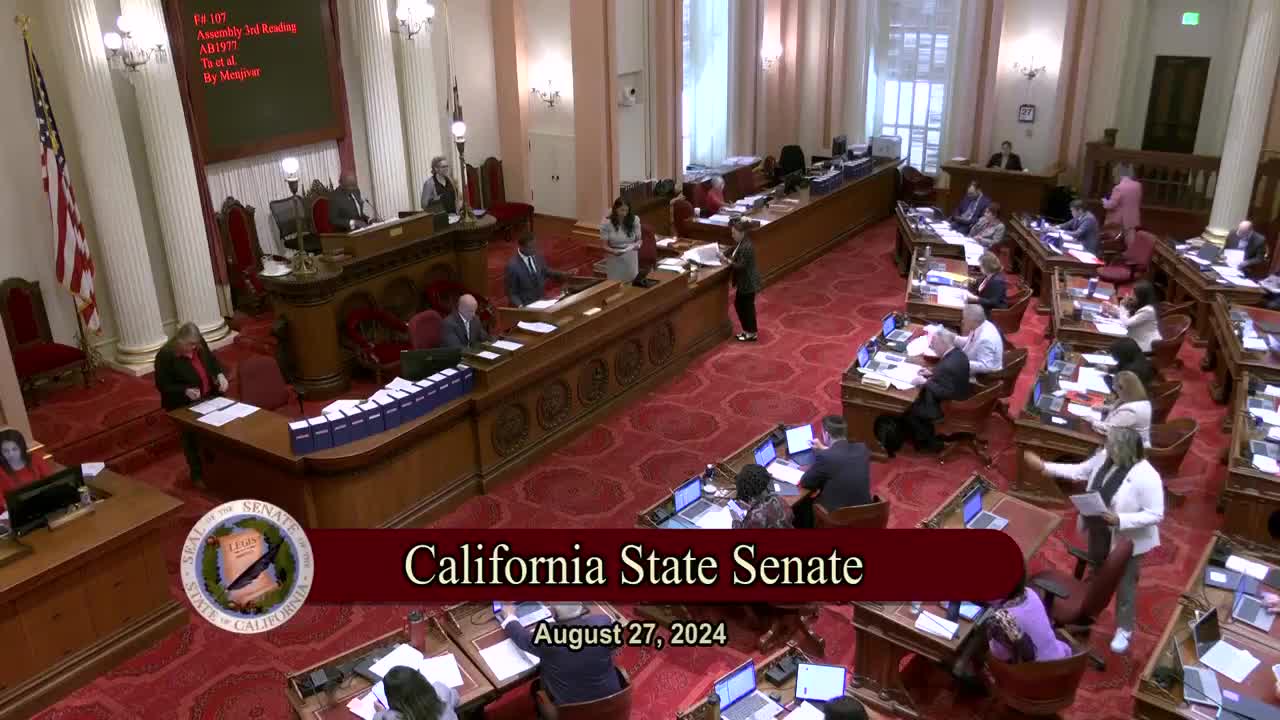 2MIN
Senate Floor
 29MIN
Senate Standing Committee on Housing
 10MIN
Senate Standing Committee on Local Government
 1MIN
Assembly Floor
 2MIN
Assembly Standing Committee on Appropriations
 9MIN
Assembly Standing Committee on Local Government
 15MIN
Assembly Standing Committee on Housing and Community Development
Bill Author

Bill Co-Author(s):