AB 3243: Vehicle registration fees: penalties.
- Session Year: 2023-2024
- House: Assembly
- Latest Version Date: 2024-04-03
Current Status:
Failed
(2024-05-16: In committee: Held under submission.)
Introduced
In Committee
First Chamber
In Committee
Second Chamber
Enacted
Existing law authorizes the Department of Motor Vehicles to impose a registration fee for vehicles registered for use in California. Existing law imposes penalties for the failure of a person to pay the registration fee. Existing law permits the department to suspend, cancel, or revoke the registration of a vehicle when the department determines that the required fee has not been paid.
Existing law requires, prior to the expiration of the registration of a vehicle, if that registration is not to be renewed prior to its expiration, the owner of the vehicle to file a specified certification that the vehicle will not be operated, moved, or left standing upon a highway without first making an application for registration of the vehicle, including full payment of all fees, except as specified. Existing law authorizes certifications to be filed after the expiration of the registration, but not later than 90 days after the expiration date, subject to the payment of specified filing fees and delinquency penalties.
This bill would, notwithstanding any law, prohibit a person who is subject to these delinquency penalties and has been determined to have a current income level that meets the eligibility requirements for specified public social services programs, including, among others, the California Work Opportunity and Responsibility to Kids (CalWORKs) program, from being required to pay the delinquency penalty in order to renew the registration of their vehicle. The bill would instead authorize the person to delay payment of their penalty until after the vehicle is registered, but by no later than the expiration date of the vehicles registration. If the delayed penalty payment is not received by the expiration date of the vehicles registration, the bill would prohibit the person from renewing their registration the following year until the penalty is paid.
This bill would, until January 1, 2026, require the department to accept, in full satisfaction of all delinquent vehicle registration fees, 20% of the total outstanding registration amount for any applicant if specified criteria are met. The bill would, for eligible participants, waive all applicable late fees and penalties, among other things, associated with delinquent vehicle registration and planned nonoperation of vehicles, as specified.Existing law authorizes the Department of Motor Vehicles to impose a registration fee for vehicles registered for use in California. Existing law imposes penalties for the failure of a person to pay the registration fee. Existing law permits the department to suspend, cancel, or revoke the registration of a vehicle when the department determines that the required fee has not been paid.
This bill would, until January 1, 2026, require the department to accept, in full satisfaction of all delinquent vehicle registration fees, 20% of the total outstanding registration amount for any applicant if specified criteria are met. The bill would, for eligible participants, waive all applicable late fees and penalties, among other things, associated with delinquent vehicle registration and planned nonoperation of vehicles, as specified.
(a)(1)If the vehicle has not been operated, moved, or left standing upon any highway subsequent to the expiration of the vehicles registration, the certification specified in Section 4604 or 4604.2 may be filed after the expiration of the registration of a vehicle, but not later than 90 days after the expiration date, subject to the payment of the filing fee specified in Section 4604 and the penalty specified in paragraph (2).
(2)A penalty shall be collected on any certification specified in Section 4604 or 4604.2 filed later than midnight of the date of expiration of registration. The penalty shall be computed as provided in Sections 9406 and 9559 and after the registration and weight fees have been combined with the license fee specified in Section 10751 of the Revenue and Taxation Code, as follows:
(A)For a delinquency period of 10 days or less, the penalty is 10 percent of the fee.
(B)For a delinquency period of more than 10 days, to and including 30 days, the penalty is 20 percent of the fee.
(C)For a delinquency period of more than 30 days, to and including 90 days, the penalty is 60 percent of the fee.
(3)This subdivision applies to the renewal of registration for vehicles with expiration dates on or before December 31, 2002.
(b)The certification specified in Sections 4604 and 4604.2 may be filed no more than 90 days after the expiration of the registration of a vehicle if the vehicle has not been operated, moved, or left standing upon any highway subsequent to the expiration of the vehicles registration. A penalty shall be collected on any certification specified in Section 4604 or 4604.2 filed later than midnight of the date of expiration of registration. After 90 days, the vehicle must be registered pursuant to Section 4601. A certification filed pursuant to this subdivision is subject to the payment of the filing fee specified in Section 4604 and the payment of the penalties specified in paragraphs (1), (2), and (3) of this subdivision.
(1)The penalty for late payment of the registration fee provided in Section 9250 is as follows:
(A)For a delinquency period of 10 days or less, the penalty is ten dollars ($10).
(B)For a delinquency period of more than 10 days, to and including 30 days, the penalty is fifteen dollars ($15).
(C)For a delinquency period of more than 30 days, to and including 90 days, the penalty is thirty dollars ($30).
(2)The penalty on the weight fee and the vehicle license fee shall be computed after the weight fee as provided in Section 9400 or 9400.1 plus the vehicle license fee specified in Section 10751 of the Revenue and Taxation Code have been added together as follows:
(A)For a delinquency period of 10 days or less, the penalty is 10 percent of the fee.
(B)For a delinquency period exceeding 10 days, to and including 30 days, the penalty is 20 percent of the fee.
(C)For a delinquency period of more than 30 days, to and including 90 days, the penalty is 60 percent of the fee.
(3)Weight fees not reported and not paid within 20 days, as required by Section 9406, shall be assessed a penalty on the difference in the weight fee, as follows:
(A)For a delinquency period of 10 days or less, the penalty is 10 percent of the fee.
(B)For a delinquency period exceeding 10 days, to and including 30 days, the penalty is 20 percent of the fee.
(C)For a delinquency period of more than 30 days, to and including 90 days, the penalty is 60 percent of the fee.
(c)Notwithstanding any other law, a person who is subject to any penalty described in this section and has been determined to have a current income level that meets the eligibility requirements for assistance programs under Chapter 2 (commencing with Section 11200) or Chapter 3 (commencing with Section 12000) of Part 3 of, or Part 5 (commencing with Section 17000) of, or Chapter 10 (commencing with Section 18900), Chapter 10.1 (commencing with Section 18930), or Chapter 10.3 (commencing with Section 18937) of Part 6 of Division 9 of the Welfare and Institutions Code, shall not be required to pay the penalty in order to renew the registration of their vehicle and shall instead be authorized to delay payment of the penalty until after the vehicle is registered, but by no later than the expiration date of the vehicles registration. If the delayed penalty payment is not received by the expiration date of the vehicles registration, the person shall not be permitted to renew their registration for the following year until the penalty is paid.
(c)(d)This section shall apply to registration renewals that expire on or after January 1, 2003.
SECTION 1.This act shall be known, and may be cited, as the DMV AFFORD Act.SEC. 2.The Legislature finds and declares the following:(a)The average cost of registering a vehicle in California has increased 66 percent over the past six years and is currently $289.(b)Failure to register by the due date results in immediate late fees and penalties that increase over time. Once payment is delinquent for two years, the average registration of $289 more than doubles to over $600.(c)According to the Franchise Tax Board, approximately 4,000,000 vehicle registration accounts become delinquent every year, and nearly 1,400,000 Californians annually face wage garnishment or the involuntary withdrawal of funds from their bank accounts to collect debt on behalf of the Department of Motor Vehicles.(d)Vehicles with delinquent registrations may also be impounded and sold to collect the debt.(e)Californians with delinquent registration fees remain liable for the debt through civil action even if they sell or transfer the vehicle.(f)Evidence demonstrates that providing low-income Californians with a reduced debt payment option can actually increase the amount of revenue collected. An analysis of data from a recent amnesty program for traffic ticket debt by the Lawyers Committee for Civil Rights of the San Francisco Bay Area showed that the amnesty program collected over three times more delinquent debt per case than other criminal court-ordered delinquent debt collections.(g)A one-time registration debt forgiveness program for low-income Californians would achieve all of the following:(1)Provide protection to low-income individuals from wage garnishment, bank levies, and vehicle impoundment due to delinquent vehicle registrations.(2)Provide increased revenue at a time when the Motor Vehicle Account is running an operating deficit by encouraging payment of old fees that have remained unpaid and are otherwise unlikely to be collected.(3)Improve air quality by bringing currently unregistered vehicles back into compliance with the motor vehicle inspection and maintenance program, commonly known as the smog check program.SEC. 3.Section 4611 is added to the Vehicle Code, to read:4611.(a)The Amnesty for Forgiveness of Registration Debt (AFFORD) program is hereby established as a one-time debt forgiveness initiative administered by the department for low-income individuals.(b)The department shall accept, in full satisfaction of all delinquent registration fees, 20 percent of the total outstanding registration amount for any applicant if the following criteria are met:(1)The applicant has been determined to have an eligible income level as described in subdivision (c) of Section 14902.(2)The initial due date for payment of vehicle registration was on or before January 1, 2022.(c)For eligible participants in the program, the department shall:(1)Waive all applicable late fees and penalties imposed pursuant to Section 9554.(2)Allow participants to file the certification described in subdivision (a) of Section 4604 later than 90 days after the registration expiration date and waive all applicable late fees and penalties imposed pursuant to Section 4604.5.(3)Lift any registration holds imposed pursuant to Sections 4760 and 4770. The lifting of a registration hold imposed pursuant to Sections 4760 and 4770 does not waive any delinquent parking penalties, administration fees, or toll evasion penalties but the department shall not require payment of the penalties and fees as a condition of registration.(4)Suspend any wage garnishments, bank levies, or offsets for the collection of delinquent registration fees and late penalties imposed pursuant to Section 10878 of the Revenue and Taxation Code or Section 12419.5 of the Government Code.(d)Funds collected pursuant to this section shall be distributed in the same manner as a registration paid in full, with each individual charge reduced by an equivalent percentage.(e)This section shall remain in effect only until January 1, 2026, and as of that date is repealed.This act shall be known, and may be cited, as the DMV AFFORD Act.
SEC. 2.The Legislature finds and declares the following:
(a)The average cost of registering a vehicle in California has increased 66 percent over the past six years and is currently $289.
(b)Failure to register by the due date results in immediate late fees and penalties that increase over time. Once payment is delinquent for two years, the average registration of $289 more than doubles to over $600.
(c)According to the Franchise Tax Board, approximately 4,000,000 vehicle registration accounts become delinquent every year, and nearly 1,400,000 Californians annually face wage garnishment or the involuntary withdrawal of funds from their bank accounts to collect debt on behalf of the Department of Motor Vehicles.
(d)Vehicles with delinquent registrations may also be impounded and sold to collect the debt.
(e)Californians with delinquent registration fees remain liable for the debt through civil action even if they sell or transfer the vehicle.
(f)Evidence demonstrates that providing low-income Californians with a reduced debt payment option can actually increase the amount of revenue collected. An analysis of data from a recent amnesty program for traffic ticket debt by the Lawyers Committee for Civil Rights of the San Francisco Bay Area showed that the amnesty program collected over three times more delinquent debt per case than other criminal court-ordered delinquent debt collections.
(g)A one-time registration debt forgiveness program for low-income Californians would achieve all of the following:
(1)Provide protection to low-income individuals from wage garnishment, bank levies, and vehicle impoundment due to delinquent vehicle registrations.
(2)Provide increased revenue at a time when the Motor Vehicle Account is running an operating deficit by encouraging payment of old fees that have remained unpaid and are otherwise unlikely to be collected.
(3)Improve air quality by bringing currently unregistered vehicles back into compliance with the motor vehicle inspection and maintenance program, commonly known as the smog check program.
SEC. 3.Section 4611 is added to the Vehicle Code, to read:4611.(a)The Amnesty for Forgiveness of Registration Debt (AFFORD) program is hereby established as a one-time debt forgiveness initiative administered by the department for low-income individuals.
(b)The department shall accept, in full satisfaction of all delinquent registration fees, 20 percent of the total outstanding registration amount for any applicant if the following criteria are met:
(1)The applicant has been determined to have an eligible income level as described in subdivision (c) of Section 14902.
(2)The initial due date for payment of vehicle registration was on or before January 1, 2022.
(c)For eligible participants in the program, the department shall:
(1)Waive all applicable late fees and penalties imposed pursuant to Section 9554.
(2)Allow participants to file the certification described in subdivision (a) of Section 4604 later than 90 days after the registration expiration date and waive all applicable late fees and penalties imposed pursuant to Section 4604.5.
(3)Lift any registration holds imposed pursuant to Sections 4760 and 4770. The lifting of a registration hold imposed pursuant to Sections 4760 and 4770 does not waive any delinquent parking penalties, administration fees, or toll evasion penalties but the department shall not require payment of the penalties and fees as a condition of registration.
(4)Suspend any wage garnishments, bank levies, or offsets for the collection of delinquent registration fees and late penalties imposed pursuant to Section 10878 of the Revenue and Taxation Code or Section 12419.5 of the Government Code.
(d)Funds collected pursuant to this section shall be distributed in the same manner as a registration paid in full, with each individual charge reduced by an equivalent percentage.
(e)This section shall remain in effect only until January 1, 2026, and as of that date is repealed.
|
Date
|
Status
|
|---|---|
| May 16, 2024 | In committee: Held under submission. |
| May 8, 2024 | In committee: Set, first hearing. Referred to APPR. suspense file. |
| Apr 23, 2024 | From committee: Do pass and re-refer to Com. on APPR. with recommendation: To Consent Calendar. (Ayes 15. Noes 0.) (April 22). Re-referred to Com. on APPR. |
| Apr 4, 2024 | Re-referred to Com. on TRANS. |
| Apr 3, 2024 | From committee chair, with author's amendments: Amend, and re-refer to Com. on TRANS. Read second time and amended. |
| Mar 11, 2024 | Referred to Com. on TRANS. |
| Feb 17, 2024 | From printer. May be heard in committee March 18. |
| Feb 16, 2024 | Read first time. To print. |
|
Date
|
Description
|
Location
|
Votes
|
|
|---|---|---|---|---|
| Apr 22, 2024 | Do pass and be re-referred to the Committee on [Appropriations] with recommendation: To Consent Calendar | Assembly Standing Committee on Transportation |
Passed |
This list shows positions taken on this bill by organizations on the date displayed, which is linked to the original source.
Positions by individuals are not included.
Date of Hearing: May 8, 2024
ASSEMBLY COMMITTEE ON APPROPRIATIONS
Buffy Wicks, Chair
ABPCA Bill Id:AB 3243
Author:(Ta) – As Amended Ver:April 3, 2024
Policy Committee: | Transportation | Vote: | 15 - 0 |
|
| ||
|
|
Urgency: No State Mandated Local Program: No Reimbursable: No
SUMMARY:
This bill allows a person with low income to delay payment of a penalty for late vehicle registration.
More specifically, this bill allows a person whose income qualifies them for certain public assistance programs to delay payment of any penalty owed for late annual registration of a motor vehicle. If the person does not pay the penalty by the time the vehicle registration is again due the following year, then the person may not register their vehicle until they pay the outstanding penalty.
FISCAL EFFECT:
DMV did not provide a cost estimate for this bill. Rather, DMV noted it is undertaking a comprehensive overhaul of its information technology (IT) systems, an effort DMV refers to as Enterprise Modernization Project – the Digital eXperience Project (DXP), which DMV expects to last through fiscal year 2025-26. As should be familiar to this committee, DMV warns that, should it be required to implement this bill outside of the DXP, DMV may need to build a temporary solution outside of its core legacy IT systems, and doing so will be “costly” and may obligate the department to acquire new technology and services “at significantly high costs.”
In addition, DMV contends this bill will require it to promulgate regulations to establish a process to validate an applicant’s qualification for the specified assistance program, as required by the bill. Other costs cited by DMV include development and issuance of additional forms and publications, increased “talk time” in field offices and a loss in fee revenue. However, DMV did not put a dollar value on these costs, stating that the department does not know the number of vehicle owners that meet the bill’s criteria and, therefore, cannot predict additional workload or costs.
All that being said, it is safe to assume that DMV’s costs to implement the bill—IT costs, regulations, loss of revenue and other costs—are likely to exceed the committee’s threshold for referral to the suspense file, that is, $150,000 in a given year.
In addition, this bill will delay receipt of penalty monies—of some unknown amount—by up to one year, without accounting for the cost to the state of foregoing the revenue during that period.
All costs would come from the Motor Vehicle Account (MVA), the DMV’s main funding source. According to the Legislative Analyst’s Office (LAO), the MVA is expected to fully exhaust its reserves and become insolvent in fiscal year 2025‑26. The LAO further warns that the MVA, absent corrective action, such as revenue increases or spending reductions, will experience a negative fund balance of $1.4 billion in fiscal year 2028‑29.
COMMENTS:
- Purpose. The author intends this bill to provide relief to low-income Californians by allowing them to maintain access to their personal transportation, which the author describes as essential, while ensuring the state still receives the money it is owed.
- Background. Consistent with California law, the DMV levies a variety of fees on the original registration of a vehicle and on the mandatory annual renewal of that registration. Those fees include a flat registration fee, a weight fee (applicable to only some vehicle types) and a vehicle license fee—which is based on the value of the vehicle—among others. Statute calls for the collection of penalties for any vehicle registration filed later than midnight of the date of expiration of the registration, and species the penalty is to be computed as provided by law and after the registration and weight fees have been combined with the vehicle license fee. The DMV describes such a penalty as “determined by adding a percentage of the vehicle license fee, plus a registration late fee, plus a California Highway Patrol (CHP) late fee,” and provides the following table to illustrate potential penalty amounts:
If payment is late: | Percentage of vehicle license fee and weight fee | Registration late fee | CHP late fee |
to 10 days | 10% of the vehicle license fee due for that year 10% of the weight fee due for that year (if any) | $10.00 | $10.00 |
11 – 30 days | 20% of the vehicle license fee due for that year
| $15.00 | $15.00 |
31 days – one year | 60% of the vehicle license fee due for that year
| $30.00 | $30.00 |
More than one year to two years | 80% of the vehicle license fee due for that year 80% of the weight fee due for that year (if any). | $50.00 | $50.00 |
More than two years | 160% of the vehicle license fee due for that year 160% of the weight fee due for that year (if any) | $100.00 | $100.00 |
For illustration purposes, imagine a light-duty passenger vehicle with a registration fee of $200. Should the owner fail to pay the registration fee 31 days after it is due, the penalty amount would be $180 (($200 x 60%) + $30 +$30). Understandably, this penalty may be substantial, especially for a low-income Californian who struggled to pay the original $300 registration fee.
It is unclear how many low-income Californians pay penalties for late vehicle registration. However, as reported in the Assembly Transportation Committee analysis of this bill, of the nearly 33 million vehicle registration renewal notices DMV mailed in 2019, approximately 3.7 million became delinquent. The collective value of those 3.7 million vehicle registration fees was $425 million.
Analysis Prepared by: Jay Dickenson / APPR. / (916) 319-2081
Date of Hearing: 04/22/2024
ASSEMBLY COMMITTEE ON TRANSPORTATION
Lori D. Wilson, Chair
ABPCA Bill Id:AB 3243 (
Author:Ta) – As Amended Ver:April 3, 2024
SUBJECT: Vehicle registration fees: penalties
SUMMARY: Authorizes a person whose income level qualifies them for public benefits to have a year to pay for their late fees for vehicle registration and requires the previous year’s late fees to be paid in order to renew the vehicle registration the following year.
EXISTING LAW:
- Provides that a person shall not drive, move, or leave standing upon a highway, or in an off-street public parking facility, any motor vehicle unless it is registered with the California Department of Motor Vehicles (DMV) and the appropriate fees have been paid, with exceptions. (Vehicle Code section (VEH) 4000)
- Establishes various requirements regarding the display of license plates and registration tabs and stickers. (VEH 5200-5206)
- Authorizes DMV to charge late fees for vehicle registration of 10%, 20%, 60% or more if registration is late. (VEH 4604.5)
FISCAL EFFECT: Unknown
COMMENTS: DMV late fees for not paying ones vehicle registration on time increase quickly. After day one of late registration, fees go up 10%. After 10 days, fees go up 20%, and after a month fees go up 60%. DMV collects $500 million in late fees for vehicle registrations each year, and registration fees go up by 60% if the fee is late by more than a month.
According to the author, AB 3243 would provide relief for low-income Californians who have struggled to pay their vehicle registration on time. This measure will allow them to register their vehicle while deferring the deadline for paying the delinquency penalty until the expiration date of the vehicle’s registration. Transportation is essential, and vehicle impoundment can lead to catastrophic outcomes for low-income families struggling to survive. By allowing breathing room for paying penalties, people will be able to register their cars, and the state will still be paid what is owed.
The consequences of failing to pay your vehicle registration accumulate quickly. It is a violation to drive on a public road with expired registration, even by a day. AB 256 (Dixon) Chapter 297, Statutes of 2023 only permits law enforcement to issue a ticket for expired registration after one month unless someone is pulled over for another reason. If registration is not paid after 6 months, a vehicle may be towed for having invalid registration. Many Home Owner Associations require registration to be paid in order to park on their facilities, and Safe Parking Programs for individuals that are unhoused to park their vehicles often require valid registration in order for them to take advantage of the services Safe Parking programs provide.
According to the Franchise Tax Board (FTB), in 2019 of the nearly 33 million vehicle registration renewal notices mailed, approximately 3.73 million worth an estimated $425 million become delinquent. DMV lacks the authority to use bank or wage levies, however DMV can transfer the delinquent debt to FTB. FTB handled approximately 1.35 million accounts for DMV and collected nearly $187.8 million for fiscal year 2016-2017.
Committee Concerns: This bill does not reduce the amount of revenue that the DMV collects from late registration payments, but it will impact the timing of when those payments are received. Receiving payments later than anticipated may impact the funding levels the Motor Vehicle Account which is where these payments are deposited.
According to the Legislative Analyst Office (LAO), The Motor Vehicle Account (MVA), the primary funding source for DMV, is expected to fully exhaust its reserves and become insolvent in 2025-26. The LAO recommends the Legislature should consider MVA cost pressures when evaluating new proposals. LAO argues that “Until a plan is put in place to address MVA’s structural deficit, we recommend the Legislature set a high bar for considering approval of any proposals that create additional MVA cost pressures and accelerate the risk of insolvency.”
REGISTERED SUPPORT / OPPOSITION:
Support
None on file
Opposition
None on file
Analysis Prepared by: David Sforza / TRANS. / (916) 319-2093
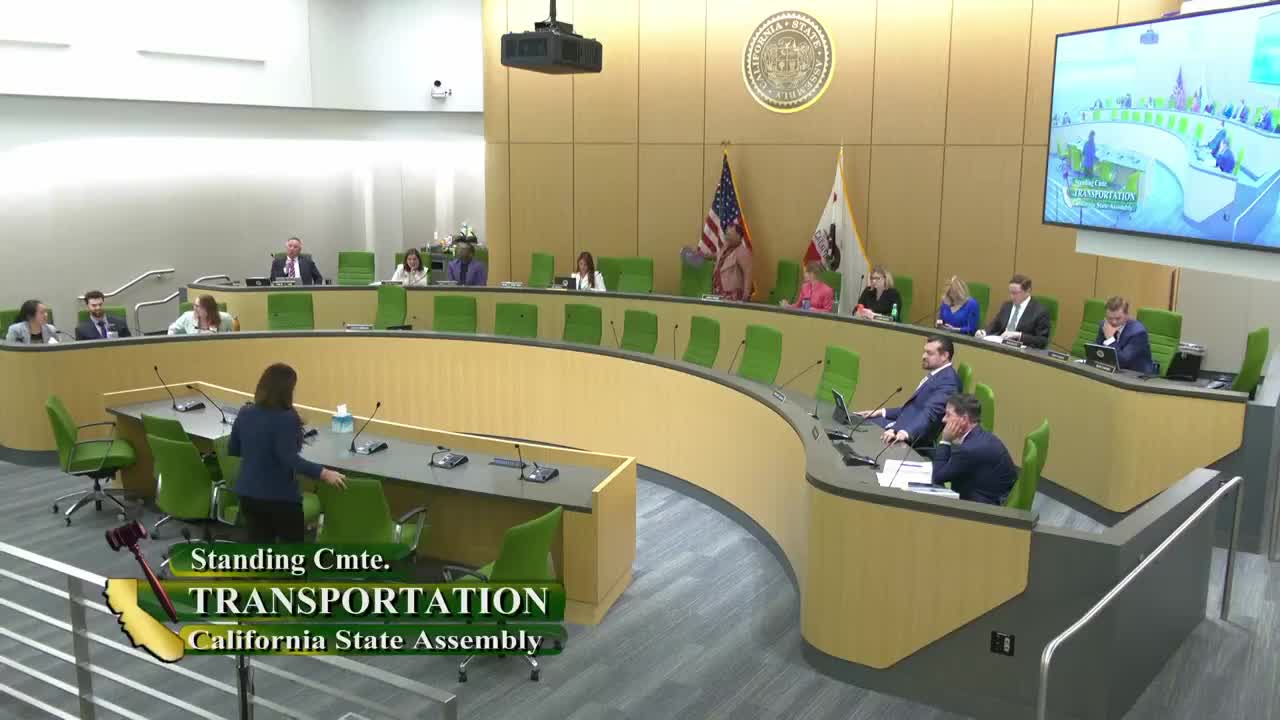
Discussed in Hearing
 53SEC
Assembly Standing Committee on Transportation
Bill Author

Bill Co-Author(s):