AB 3280: Superior court: lactation rooms: Judicial Council report.
- Session Year: 2023-2024
- House: Assembly
- Latest Version Date: 2024-09-12
Current Status:
Passed
(2024-09-12: Chaptered by Secretary of State - Chapter 228, Statutes of 2024.)
Introduced
In Committee
First Chamber
In Committee
Second Chamber
Enacted
Existing law generally requires employers, including the superior court, to provide employees with the use of a lactation room or other location for employees to express milk in private, including, among other things, a clean and safe place to sit. Existing law requires the superior court, commencing July 1, 2026, to provide any court user access to a lactation room in any courthouse in which a lactation room is also provided to court employees, as specified.
This bill would authorize a court to designate a lactation room for court users that does not meet all of the requirements imposed upon an employer with respect to providing a lactation room for employees in order to provide the greatest number of court users with access to lactation rooms in as many courthouses as possible. The bill would require the Judicial Council to submit a report to the Legislature, beginning March 1, 2025, and annually thereafter, with information about the construction, installation, and renovation of lactation rooms in superior courts to comply with the above-described provisions, as specified. The bill would require the Judicial Council to submit the report until courts either fully comply with the above-described provisions requiring courts to provide access to lactation rooms for any court user, or until all funds previously appropriated by the Legislature for the purpose of compliance with those provisions are expended.
Existing law generally requires employers, including the superior court, to provide employees with the use of a lactation room or other location for employees to express milk in private, including, among other things, a clean and safe place to sit. Existing law requires the superior court, commencing July 1, 2026, to provide any court user access to a lactation room in any courthouse in which a lactation room is also provided to court employees, as specified.
This bill would require the Judicial Council to submit a report to the Legislature, beginning March 1, 2025, and annually thereafter, with information about the construction, installation, and renovation of lactation rooms in superior courts to comply with the above-described provisions, as specified.
(a)The superior court shall provide any court user access to a lactation room in any courthouse in which a lactation room is also provided to court employees in compliance with Section 1031 of the Labor Code. The lactation room for court users shall be located within the court facility in an area that is accessible to the public or in any location that is reasonably accessible to the public using the court facility.
(b)A superior court may comply with this section by designating a lactation room for court users that does not meet all of the requirements of subdivision (d) of Section 1031 of the Labor Code in order to provide the greatest number of court users with access to lactation rooms in as many courthouses as possible. The superior court shall use the most cost effective means possible to construct or renovate lactation rooms in courthouses, including by installing portable lactation rooms where appropriate, due to operational, financial, or space limitations. The lactation room shall not be a bathroom, shall be shielded from view and free from intrusion while it is being used by a court user to express milk, and shall otherwise comply with the requirements of subdivision (c) of Section 1031 of the Labor Code.
(c)This section shall become operative on July 1, 2026.
SEC. 2.Section 69894.2 is added to the Government Code, to read:69894.2.(a)On or before March 1, 2025, and by March 1 of each year thereafter, consistent with subdivision (d), the Judicial Council shall submit a report to the Legislature regarding how all funds previously appropriated by the Legislature for the purpose of compliance with Section 69894, including, but not limited to, the funds appropriated pursuant to Item 020-001-0001 of Section 2.00 of the Budget Act of 2022, have been expended by the superior courts. The report shall include at least all of the following information:
(1)The number of lactation rooms that have been constructed, installed, or renovated to comply with the requirements of Section 69894, including the cost per lactation room.
(2)The plan for future construction, installation, or renovation of lactation rooms to comply with the requirements of Section 69894, including the average cost per lactation room, detailing the average cost for new construction, renovation of an existing court facility, and installation of portable lactation rooms that comply with subdivision (b) of Section 69894.
(3)How many lactation rooms are estimated to be constructed, installed, or renovated upon expenditure of all funds previously appropriated by the Legislature.
(4)The funds necessary for courts to fully comply with Section 69894 and provide to any court user access to a lactation room in any courthouse in which a lactation room is also provided to court employees in compliance with Section 1031 of the Labor Code.
(5)The estimated dates, according to the Judicial Council, when the following will occur:
(A)Courts will fully comply with Section 69894.
(B)All funds previously appropriated by the Legislature for the purpose of compliance with Section 69894 will be expended.
(b)In order to provide the greatest number of court users with access to the greatest number of lactation rooms in as many courthouses as possible, the superior court shall use the most cost-effective means possible to construct or renovate lactation rooms in courthouses, including by installing portable lactation rooms that comply with subdivision (b) of Section 69894.
(c)A report to be submitted pursuant to subdivision (a) shall be submitted in compliance with Section 9795 of the Government Code.
(d)The report required pursuant to subdivision (a) of this section shall be required only until courts either fully comply with Section 69894, or until all funds previously appropriated by the Legislature for the purpose of compliance with Section 69894 are expended.
(a)The superior court shall provide any court user access to a lactation room in any courthouse in which a lactation room is also provided to court employees in compliance with Section 1031 of the Labor Code. The lactation room for court users shall be located within the court facility in an area that is accessible to the public or in any location that is reasonably accessible to the public using the court facility. The lactation room for court users shall meet all of the requirements of Section 1031 of the Labor Code.
(b)Notwithstanding subdivision (a), a A superior court may comply with this section by designating a lactation room for court users without complying with that does not meet all of the requirements of subdivision (d) of Section 1031 of the Labor Code, if Code in order to provide the greatest number of court users with access to lactation rooms in as many courthouses as possible. The superior court shall use the most cost effective means possible to construct or renovate lactation rooms in courthouses, including by installing portable lactation rooms where appropriate, due to operational, financial, or space limitations. The lactation room shall not be a bathroom, shall be shielded from view and free from intrusion while it is being used by a court user to express milk, and shall otherwise be compliant with this section. comply with the requirements of subdivision (c) of Section 1031 of the Labor Code.
(c)This section shall become operative on July 1, 2026.
SECTION 1.SEC. 2.Section 69894.2 is added to the Government Code, to read:69894.2.(a)On or before March 1, 2025, and by March 1 of each year thereafter, consistent with subdivision (d), the Judicial Council shall submit a report to the Legislature regarding how all funds previously appropriated by the Legislature for the purpose of compliance with Section 69894, including, but not limited to, the funds appropriated pursuant to Item 020-001-0001 of Section 2.00 of the Budget Act of 2022, have been expended by the superior courts. The report shall include at least all of the following information:
(1)The number of lactation rooms that have been constructed, installed, or renovated to comply with the requirements of Section 69894, including the cost per lactation room.
(2)The plan for future construction, installation, or renovation of lactation rooms to comply with the requirements of Section 69894, including the average cost per lactation room, detailing the average cost for new construction, renovation of an existing court facility, and installation of portable lactation rooms that comply with subdivision (b) of Section 69894.
(3)How many lactation rooms are estimated to be constructed, installed, or renovated upon expenditure of all funds previously appropriated by the Legislature.
(4)The funds necessary for courts to fully comply with Section 69894 and provide to any court user access to a lactation room in any courthouse in which a lactation room is also provided to court employees in compliance with Section 1031 of the Labor Code.
(5)The estimated dates, according to the Judicial Council, when the following will occur:
(A)Courts will fully comply with Section 69894.
(B)All funds previously appropriated by the Legislature for the purpose of compliance with Section 69894 will be expended.
(b)In order to provide the greatest number of court users with access to the greatest number of lactation rooms in the greatest number of courthouses, as many courthouses as possible, the superior court shall use the most cost effective cost-effective means possible to construct or renovate lactation rooms in courthouses, including by installing portable lactation rooms that comply with subdivision (b) of Section 69894.
(c)A report to be submitted pursuant to subdivision (a) shall be submitted in compliance with Section 9795 of the Government Code.
(d)The report required pursuant to subdivision (a) of this section shall be required only until courts either fully comply with Section 69894, or until all funds previously appropriated by the Legislature for the purpose of compliance with Section 69894 are expended.
(a)On or before March 1, 2025, and by March 1 of each year thereafter, the Judicial Council shall submit a report to the Legislature regarding how all funds previously appropriated by the Legislature for the purpose of compliance with Section 69894, including, but not limited to, the funds appropriated pursuant to Item 020-001-0001 of Section 2.00 of the Budget Act of 2022, have been expended by the superior courts. The report shall include at least all of the following information:
(1)The number of lactation rooms that have been constructed, installed, or renovated to comply with the requirements of Section 69894, including the cost per lactation room.
(2)The plan for future construction, installation, or renovation of lactation rooms to comply with the requirements of Section 69894, including the average cost per lactation room, detailing the average cost for new construction, renovation of an existing court facility, and installation of portable lactation rooms that comply with subdivision (b) of Section 69894.
(3)How many lactation rooms are estimated to be constructed, installed, or renovated upon expenditure of all funds previously appropriated by the Legislature.
(4)The funds necessary for courts to fully comply with Section 69894 and provide to any court user access to a lactation room in any courthouse in which a lactation room is also provided to court employees in compliance with Section 1031 of the Labor Code.
(b)In order to provide the greatest number of court users with access to the greatest number of lactation rooms in the greatest number of courthouses, the superior court shall use the most cost effective means possible to construct or renovate lactation rooms in courthouses, including by installing portable lactation rooms that comply with subdivision (b) of Section 69894.
(c)A report to be submitted pursuant to subdivision (a) shall be submitted in compliance with Section 9795 of the Government Code.
|
Date
|
Status
|
|---|---|
| Sep 12, 2024 | Chaptered by Secretary of State - Chapter 228, Statutes of 2024. |
| Sep 12, 2024 | Approved by the Governor. |
| Sep 6, 2024 | Enrolled and presented to the Governor at 4 p.m. |
| Aug 28, 2024 | In Assembly. Ordered to Engrossing and Enrolling. |
| Aug 28, 2024 | Read third time. Passed. Ordered to the Assembly. (Ayes 39. Noes 0.). |
| Aug 23, 2024 | Ordered to special consent calendar. |
| Aug 19, 2024 | Read second time. Ordered to third reading. |
| Aug 15, 2024 | From committee: Do pass. (Ayes 7. Noes 0.) (August 15). |
| Aug 5, 2024 | In committee: Referred to suspense file. |
| Jul 3, 2024 | From committee: Do pass and re-refer to Com. on APPR with recommendation: To Consent Calendar. (Ayes 11. Noes 0.) (July 2). Re-referred to Com. on APPR. |
| Jun 5, 2024 | Referred to Com. on JUD. |
| May 24, 2024 | In Senate. Read first time. To Com. on RLS. for assignment. |
| May 23, 2024 | Read third time. Passed. Ordered to the Senate. (Ayes 72. Noes 0. Page 5643.) |
| May 20, 2024 | Read second time. Ordered to third reading. |
| May 16, 2024 | Read second time and amended. Ordered returned to second reading. |
| May 16, 2024 | From committee: Amend, and do pass as amended. (Ayes 11. Noes 0.) (May 16). |
| May 16, 2024 | Assembly Rule 63 suspended. |
| Apr 24, 2024 | In committee: Set, first hearing. Referred to APPR. suspense file. |
| Apr 2, 2024 | From committee: Do pass and re-refer to Com. on APPR. with recommendation: To Consent Calendar. (Ayes 12. Noes 0.) (April 2). Re-referred to Com. on APPR. |
| Mar 18, 2024 | Referred to Com. on JUD. |
| Mar 1, 2024 | From printer. May be heard in committee March 31. |
| Feb 29, 2024 | Read first time. To print. |
|
Date
|
Description
|
Location
|
Votes
|
|
|---|---|---|---|---|
| Aug 28, 2024 | Special Consent AB3280 JUD. (Kalra) | Senate Floor |
Passed |
|
| Aug 15, 2024 | Do pass | Senate Standing Committee on Appropriations |
Passed |
|
| Aug 5, 2024 | Placed on suspense file | Senate Standing Committee on Appropriations |
Passed |
|
| Jul 2, 2024 | Do pass, but first be re-referred to the Committee on [Appropriations] with the recommendation: To Consent Calendar | Senate Standing Committee on Judiciary |
Passed |
|
| May 23, 2024 | AB 3280 Judiciary Assembly Third Reading By KALRA | Assembly Floor |
Passed |
|
| May 16, 2024 | Do pass as amended. | Assembly Standing Committee on Appropriations |
Passed |
|
| Apr 2, 2024 | Do pass and be re-referred to the Committee on [Appropriations] with recommendation: To Consent Calendar | Assembly Standing Committee on Judiciary |
Passed |
This list shows positions taken on this bill by organizations on the date displayed, which is linked to the original source.
Positions by individuals are not included.
|
Organization
|
Position
|
Date
|
|---|---|---|
| California Employment Lawyers Association | ** Support | |
| California Work and Family Coalition | ** Support | |
| Equal Rights Advocates | ** Support | |
| Legal Aid At Work | ** Support |
SENATE RULES COMMITTEE Office of Senate Floor Analyses (916) 651-1520 Fax: (916) 327-4478 | AB 3280 |
THIRD READING
Bill No: AB 3280
Author: Committee on Judiciary
Amended: 5/16/24 in Assembly
Vote: 21
SENATE JUDICIARY COMMITTEE: 11-0, 7/2/24
AYES: Umberg, Wilk, Allen, Ashby, Caballero, Durazo, Laird, Niello, Roth, Stern, Wahab
ASSEMBLY FLOOR: 72-0, 5/23/24 - See last page for vote
SUBJECT: Superior court: lactation rooms: Judicial Council report
SOURCE: Author
DIGEST:
This bill (1) requires Judicial Council to report annually on the status of its efforts to provide court users with lactation room access, and on its expenditure of funds appropriated for the purpose of meeting its obligation to provide lactation room access to court users by January 1, 2026; and (2) clarifies that a court may, where appropriate, install a portable lactation room to provide lactation room access to court users.
ANALYSIS:
Existing law:
- Requires every employer to provide a reasonable amount of break time to accommodate an employee desiring to express breast milk for the employee’s infant child each time the employee has need to express milk. The break time shall, if possible, run concurrently with any break time already provided to the employee; if it does not run concurrently as specified, the break time may be unpaid. (Lab. Code, § 1030.)
- Requires an employer to provide an employee with the use of a room or other location (room) for the employee to express milk in private, which must satisfy the following conditions:
- The room may include the place where the employee normally works, provided that it meets the requirements of b)-j).
- The room may not be a bathroom.
- The room must be in close proximity to the employee’s work area, shielded from view, and free from intrusion while the employee is expressing milk.
- The room must be safe, clean, and free of hazardous materials, as defined.
- The room must contain a surface to place a breast pump and personal items.
- The room must contain a place to sit.
- The room must have access to electricity or alternative devices, including, but not limited to, extension cords or charging stations, needed to operate an electric or battery-powered breast pump.
- There must be access to a sink with running water and a refrigerator or other equipment suitable for storing milk in close proximity to the employee’s workspace.
- When a multispace room is used for lactation, the use of the room for lactation must take precedence over the other uses, but only for the time it is in use for lactation purposes.
- An employer that employs fewer than 50 employees may be exempt from the requirement if it can demonstrate that the requirement would impose an undue hardship, as specified. (Lab. Code, § 1031.)
- Requires, beginning July 1, 2026, a superior court to provide any court user access to a lactation room in any courthouse in which a lactation room is also provided to court employees in compliance with 2).
- The lactation room for court users shall be located within the court facility in an area that is accessible to the public or reasonably accessible to the public using the court facility.
- The lactation room shall meet all of the requirements of 2). (Gov. Code, § 69894 (operative July 1, 2026).)
- Permits a superior court to comply with 3) without providing access to a sink with running water and a refrigerator or other cooling device suitable for storing milk if it is unable to provide such access due to operational, financial, or space limitations. In such a case, the lactation room shall not be a bathroom, shall be shielded from view and free from intrusion while it is being used by a court user to express milk, and shall otherwise be compliant with 2). (Gov. Code, § 69894(b).)
This bill:
- Modifies the courts’ obligation to provide lactation room access to court users as of July 1, 2026, to require, in order to provide the greatest number of court users with access to the greatest number of lactation rooms in the greatest number of courthouses, a superior court to use the most cost-effective means possible to construct or renovate lactation rooms in courthouses, including by installing portable lactation rooms, provided that the portable lactation rooms comply with the requirements of Labor Code section 1031(c).
- Requires the Judicial Council, on or before March 1, 2025, and by March 1 of each year thereafter, to submit a report to the Legislature regarding how all funds previously appropriated by the Legislature for the purpose of complying with its obligation to provide lactation rooms to court users, including, but not limited to, the funds appropriated pursuant to Item 020-001-0001 of Section 2.00 of the Budget Act of 2022, have been expended by the superior courts.
- Requires the report in 2) to include at least all of the following information:
- The number of lactation rooms that have been constructed, installed, or renovated to comply with their obligation to provide lactation rooms to court users.
- The plan for future construction, installation, or renovation of lactation rooms to comply with the obligation to provide lactation rooms, including the average cost per lactation room, detailing the average cost for new construction, renovation of an existing court facility, and installation of portable lactation rooms as permitted under this bill.
- How many lactation rooms are estimated to be constructed, installed, or renovated upon expenditure of all funds previously appropriated by the Legislature.
- The funds necessary for courts to fully comply with their obligation to provide lactation rooms by July 1, 2026, and provide to any court user access to a lactation room in any courthouse in which a lactation room is also provided to court employees.
- The estimated dates, according to the Judicial Council, by which (1) courts will fully comply with the lactation room obligation, and (2) all funds previously appropriated by the Legislature for that purpose will be expended.
- Provides that the report in 2) shall:
- Comply with Government Code section 9795, which provides for the submission and publication of government reports.
- Be required only until courts either fully comply with their lactation room obligation or until all funds previously appropriated by the Legislature for the purpose of compliance with that obligation are expended.
- Provides that, in order to provide the greatest number of court users with access to the greatest number of lactation rooms in as many courthouses as possible, the superior court shall use the most cost-effective means possible to construct or renovate lactation rooms in courthouses, including by installing portable lactation rooms that comply with 1).
Comments
Current law requires employers to provide to their breastfeeding employees (1) reasonable break time in which to express breast milk; and (2) a lactation room or other space in which to do so. Current law also requires courts, beginning July 1, 2026, to give breastfeeding court users access to lactation spaces provided to court employees or to designate some other space for court users to express breast milk. The Legislature also appropriated $15 million to the Judicial Council for the purpose of providing lactation room access to court users. The deadline to provide court users with access to lactation rooms was originally July 1, 2024, but it was extended by two years in 2023.
This bill is intended to give the Legislature additional information about the courts’ progress on meeting its impending obligation to provide lactation room access to court users and the Judicial Council’s use of the funds appropriated for that purpose. The bill requires the Judicial Council to submit an annual report, beginning March 1, 2025, setting forth information about the number of lactation rooms that have already been constructed, installed, or provided; the plan for future lactation rooms; the estimated date by which all courts will be in compliance with the lactation room requirement; and specified information relating to the use of the appropriated funds. The bill also clarifies that a court may install a portable lactation room, where appropriate, due to the operational, financial, or space limitations of the court.
FISCAL EFFECT: Appropriation: No Fiscal Com.: Yes Local: No
According to the Senate Appropriations Committee, the fiscal impact is as follows:
Workload cost pressures to the state funded trial court system (Trial Court Trust Fund, General Fund). The Judicial Council anticipates a potentially moderate impact on workload costs associated with gathering accurate survey and cost estimates in order to fully comply with the requirements of the report. While the courts are not funded on a workload basis, an increase in workload could result in delayed court services and would put pressure on the General Fund to fund additional staff and resources and to increase the amount appropriated to backfill for trial court operations. The Budget Act of 2024, for the fiscal year beginning Jul 1, 2024, includes a $97 million reduction to the trial courts, a commensurate reduction of up to 7.95 percent to the budget for the state-level judiciary, and a reduction of the trial court state-level emergency reserve in the Trial Court Trust Fund from $10 million to $5 million. The Budget Act also includes a $37.3 million General Fund backfill for the Trial Court Trust Fund to address the continued decline in civil fee and criminal fine and penalty revenues expected in fiscal year 2024‒25.
SUPPORT: (Verified 8/15/24)
California Employment Lawyers Association
California Work and Family Coalition
Equal Rights Advocates
Legal Aid at Work
OPPOSITION: (Verified 8/15/24)
None received
ARGUMENTS IN SUPPORT: According to Equal Rights Advocates:
[I]n 2021, AB 1576 was signed into law, requiring that the superior court provide any court user access to a lactation room in any courthouse in which a lactation room is also provided to court employees in compliance with Section 1031 of the Labor Code. Lactation rooms, when required, must accessible be to all court users, not just attorneys and officers of the court. Courts have flexibility in meeting the lactation room requirement because AB 1576 provided that lactation rooms in courthouses are not required to meet all of the legal requirements set forth in the Labor Code if the court cannot meet those requirements due to operational, financial, or space limitations, provided that the alternative lactation accommodations are not a bathroom, are shielded from view, free from intrusion while it is being used to express milk, and reasonably accessible to the public using the court facility. This would allow a court to install the same relatively inexpensive lactation “pods” that are now widely used in public buildings such as airports. Finally, AB 1576 delayed the implementation date of the lactation room requirement until July 1, 2024.
In order to provide funding for the AB 1576 requirement, the Legislature appropriated $15 million to the Judicial Council “for the purpose of providing court users access to a lactation room in any courthouse in which a lactation room is also provided to court employees.” (See Item 0250-001-0001 of Section 2.00 of the Budget Act of 2022 (AB 178 (Committee on Budget), Chap. 178, Stats. 2022).) (See also Item 0250-001-0001 of Section 2.00 of the Budget act of 2022 (SB 154 (Committee on Budget) Chap. 43, Stats. 2022).)
The Judicial Council secured a further delay in the implementation date of the lactation room requirement just one year later in a Budget Trailer bill. Pursuant to SB 133 (Committee on Budget) Chap. 133, Stats. 2023, the lactation room requirement will not take effect until July 1, 2026. Although the courts have already received $15 million dollars towards its compliance with the lactation room requirement, it is unclear what progress, if any, the courts have made towards meeting the upcoming implementation date.
AB 3280 therefore will require the Judicial Council to submit an annual report to the Legislature, detailing how the funds previously allocated in the state budget for building lactation facilities have been used. The bill also requires the Judicial Council to detail plans for future construction of these facilities and directs the Judicial Council to utilize the most cost effective means to implement AB 1576 so that as many lactation rooms as possible are made available to court users.
ASSEMBLY FLOOR: 72-0, 5/23/24
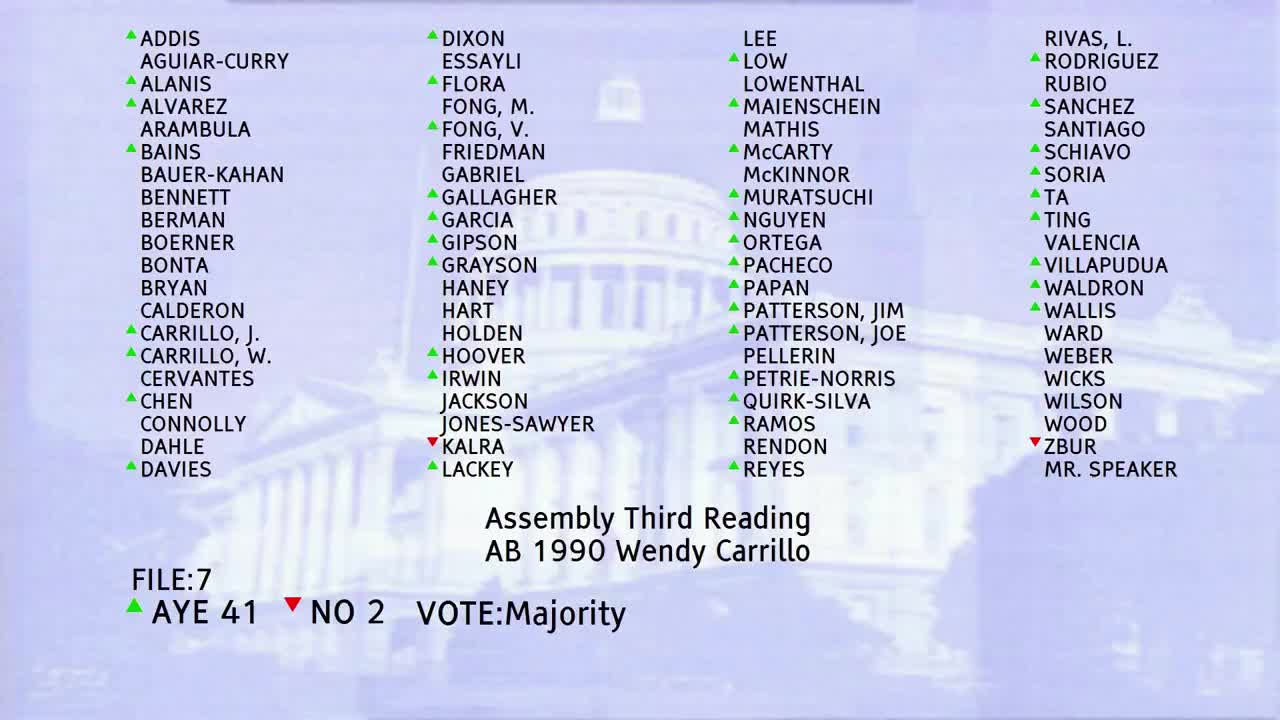
AYES: Addis, Aguiar-Curry, Alanis, Alvarez, Arambula, Bains, Bauer-Kahan, Bennett, Berman, Boerner, Bonta, Bryan, Calderon, Juan Carrillo, Wendy Carrillo, Chen, Connolly, Davies, Dixon, Flora, Mike Fong, Vince Fong, Friedman, Gabriel, Gallagher, Garcia, Gipson, Grayson, Haney, Hart, Hoover, Irwin, Jackson, Jones-Sawyer, Kalra, Lackey, Lee, Low, Lowenthal, Maienschein, McCarty, McKinnor, Muratsuchi, Stephanie Nguyen, Ortega, Pacheco, Papan, Jim Patterson, Joe Patterson, Pellerin, Petrie-Norris, Quirk-Silva, Ramos, Rendon, Reyes, Rodriguez, Sanchez, Santiago, Schiavo, Soria, Ta, Ting, Valencia, Villapudua, Waldron, Wallis, Ward, Weber, Wilson, Wood, Zbur, Robert Rivas
NO VOTE RECORDED: Cervantes, Megan Dahle, Essayli, Holden, Mathis, Luz Rivas, Blanca Rubio, Wicks
Prepared by: Allison Whitt Meredith / JUD. / (916) 651-4113
8/18/24 17:50:35
**** END ****
SENATE COMMITTEE ON APPROPRIATIONS
Senator Anna Caballero, Chair
2023 - 2024 Regular Session
AB 3280 (Committee on Judiciary) - Superior court: lactation rooms: Judicial Council report
Version: May 16, 2024 | Policy Vote: JUD. 11 - 0 |
Urgency: No | Mandate: No |
Hearing Date: August 5, 2024 | Consultant: Liah Burnley |
Bill Summary:
AB 3280 modifies the courts’ obligation to provide lactation rooms to court users, as specified.
Fiscal Impact:
Workload cost pressures to the state funded trial court system (Trial Court Trust Fund, General Fund). The Judicial Council anticipates a potentially moderate impact on workload costs associated with gathering accurate survey and cost estimates in order to fully comply with the requirements of the report. While the courts are not funded on a workload basis, an increase in workload could result in delayed court services and would put pressure on the General Fund to fund additional staff and resources and to increase the amount appropriated to backfill for trial court operations. The Budget Act of 2024, for the fiscal year beginning Jul 1, 2024, includes a $97 million reduction to the trial courts, a commensurate reduction of up to 7.95 percent to the budget for the state-level judiciary, and a reduction of the trial court state-level emergency reserve in the Trial Court Trust Fund from $10 million to $5 million. The Budget Act also includes a $37.3 million General Fund backfill for the Trial Court Trust Fund to address the continued decline in civil fee and criminal fine and penalty revenues expected in fiscal year 2024‒25.
Background:
In 2021, the Governor signed legislation requiring each court that provides a lactation room to court employees to also provide access to a lactation room for any member of the public using the courts. The bill granted courts some flexibility in complying with this public access requirement by exempting the courts from certain Labor Code requirements where operational, financial, or space limitations exist.
The Budget Act of 2022 appropriated $15 million to the courts to fulfill this requirement and construct, install, or renovate spaces to provide court users with access to lactation rooms. Subsequent legislation pushed back the implementation date of this requirement until July 1, 2026.
Proposed Law:
This bill amends the provision of existing law that allows courts to provide access to lactation rooms that do not meet all of the requirements of the Labor Code due to operational, financial, or space limitations, and instead specifies that this exception only applies if necessary “to provide the greatest number of court users with access to lactation rooms in as many courthouses as possible.”
This bill also requires courts to use the most cost effective means possible to construct or renovate lactation rooms in courthouses, including by installing portable lactation rooms where appropriate, due to operational, financial, or space limitations. The lactation room shall otherwise comply with the labor code.
This bill further requires the Judicial Council to submit an annual report to the Legislature about the courts’ progress on providing lactation rooms to court users. The report must include information about how the previously appropriated funds have been expended, the number of compliant lactation rooms provided and their cost, how many total lactations rooms are expected to be provided, and the funds needed for the courts to fully comply with the court user lactation room requirement. The first report is due to the Legislature on or before March 1, 2025. This bill requires Judicial Council to submit the report until courts either fully comply with the above-described provisions requiring courts to provide access to lactation rooms for any court user, or until all funds previously appropriated by the Legislature for the purpose of compliance with those provisions are expended.
-- END --
Senator Thomas Umberg, Chair
2023-2024 Regular Session
Bill No: AB 3280 (Author:Committee on Judiciary)
Version: May 16, 2024
Hearing Date: July 2, 2024
Fiscal: Yes
Urgency: No
Consultant: AWM
SUBJECT
Superior court: lactation rooms: Judicial Council report
DIGEST
This bill requires Judicial Council to report annually on the status of its efforts to provide court users with lactation room access, and on its expenditure of funds appropriated for the purpose of meeting its obligation to provide lactation room access to court users by January 1, 2026; and clarifies that a court may, where appropriate, install a portable lactation room to provide lactation room access to court users.
EXECUTIVE SUMMARY
Current law requires employers to provide to their breastfeeding employees (1) reasonable break time in which to express breast milk, and (2) a lactation room or other space in which to do so. Current law also requires courts, beginning July 1, 2026, to give breastfeeding court users access to lactation spaces provided to court employees or to designate some other space for court users to express breast milk. The Legislature also appropriated $15 million to the Judicial Council for the purpose of providing lactation room access to court users. The deadline to provide court users with access to lactation rooms was originally July 1, 2024, but it was extended by two years in 2023.
This bill is intended to give the Legislature additional information about the courts’ progress on meeting its impending obligation to provide lactation room access to court users and the Judicial Council’s use of the funds appropriated for that purpose. The bill requires the Judicial Council to submit an annual report, beginning March 1, 2025, setting forth information about the number of lactation rooms that have already been constructed, installed, or provided; the plan for future lactation rooms; the estimated date by which all courts will be in compliance with the lactation room requirement; and specified information relating to the use of the appropriated funds. The bill also clarifies that a court may install a portable lactation room, where appropriate, due to the operational, financial, or space limitations of the court.
This bill is supported by the California Employment Lawyers Association, the California Work and Family Coalition, Equal Rights Advocates, and Legal Aid at Work. This Committee has not received timely opposition to this bill.
PROPOSED CHANGES TO THE LAW
Existing law:
- Requires every employer to provide a reasonable amount of break time to accommodate an employee desiring to express breast milk for the employee’s infant child each time the employee has need to express milk. The break time shall, if possible, run concurrently with any break time already provided to the employee; if it does not run concurrently as specified, the break time may be unpaid. (Lab. Code, § 1030.)
- Requires an employer to provide an employee with the use of a room or other location (room) for the employee to express milk in private, which must satisfy the following conditions:
- The room may include the place where the employee normally works, provided that it meets the requirements of b)-j).
- The room may not be a bathroom.
- The room must be in close proximity to the employee’s work area, shielded from view, and free from intrusion while the employee is expressing milk.
- The room must be safe, clean, and free of hazardous materials, as defined.
- The room must contain a surface to place a breast pump and personal items.
- The room must contain a place to sit.
- The room must have access to electricity or alternative devices, including, but not limited to, extension cords or charging stations, needed to operate an electric or battery-powered breast pump.
- There must be access to a sink with running water and a refrigerator or other equipment suitable for storing milk in close proximity to the employee’s workspace.
- When a multispace room is used for lactation, the use of the room for lactation must take precedence over the other uses, but only for the time it is in use for lactation purposes.
- An employer that employs fewer than 50 employees may be exempt from the requirement if it can demonstrate that the requirement would impose an undue hardship, as specified. (Lab. Code, § 1031.)
- Requires, beginning July 1, 2026, a superior court to provide any court user access to a lactation room in any courthouse in which a lactation room is also provided to court employees in compliance with 2).
- The lactation room for court users shall be located within the court facility in an area that is accessible to the public or reasonably accessible to the public using the court facility.
- The lactation room shall meet all of the requirements of 2). (Gov. Code, § 69894 (operative July 1, 2026).)
- Permits a superior court to comply with 3) without providing access to a sink with running water and a refrigerator or other cooling device suitable for storing milk if it is unable to provide such access due to operational, financial, or space limitations. In such a case, the lactation room shall not be a bathroom, shall be shielded from view and free from intrusion while it is being used by a court user to express milk, and shall otherwise be compliant with 2). (Gov. Code, § 69894(b).)
This bill:
- Modifies the courts’ obligation to provide lactation room access to court users as of July 1, 2026, to require, in order to provide the greatest number of court users with access to the greatest number of lactation rooms in the greatest number of courthouses, a superior court to use the most cost-effective means possible to construct or renovate lactation rooms in courthouses, including by installing portable lactation rooms, provided that the portable lactation rooms comply with the requirements of Labor Code section 1031(c).
- Requires the Judicial Council, on or before March 1, 2025, and by March 1 of each year thereafter, to submit a report to the Legislature regarding how all funds previously appropriated by the Legislature for the purpose of complying with its obligation to provide lactation rooms to court users, including, but not limited to, the funds appropriated pursuant to Item 020-001-0001 of Section 2.00 of the Budget Act of 2022, have been expended by the superior courts.
- Requires the report in 2) to include at least all of the following information:
- The number of lactation rooms that have been constructed, installed, or renovated to comply with their obligation to provide lactation rooms to court users.
- The plan for future construction, installation, or renovation of lactation rooms to comply with the obligation to provide lactation rooms, including the average cost per lactation room, detailing the average cost for new construction, renovation of an existing court facility, and installation of portable lactation rooms as permitted under this bill.
- How many lactation rooms are estimated to be constructed, installed, or renovated upon expenditure of all funds previously appropriated by the Legislature.
- The funds necessary for courts to fully comply with their obligation to provide lactation rooms by July 1, 2026, and provide to any court user access to a lactation room in any courthouse in which a lactation room is also provided to court employees.
- The estimated dates, according to the Judicial Council, by which (1) courts will fully comply with the lactation room obligation, and (2) all funds previously appropriated by the Legislature for that purpose will be expended.
- Provides that the report in 2) shall:
- Comply with Government Code section 9795, which provides for the submission and publication of government reports.
- Be required only until courts either fully comply with their lactation room obligation or until all funds previously appropriated by the Legislature for the purpose of compliance with that obligation are expended.
- Provides that, in order to provide the greatest number of court users with access to the greatest number of lactation rooms in as many courthouses as possible, the superior court shall use the most cost-effective means possible to construct or renovate lactation rooms in courthouses, including by installing portable lactation rooms that comply with 1).
COMMENTS
- Author’s comment
According to the author:
It is critically important that court users have access to lactation rooms in courthouses. Courthouses are different than other types of public buildings because of how much time the public spends there. Witnesses, crime victims, jurors, and family members of litigants spend many hours, days, or even weeks in court. Attorneys, interpreters, and court reporters spend a considerable part of the day at the courthouse. For court users who need to express milk, most do not have a right to use lactation rooms that courts make available to court employees. Therefore, many lactating court users end up having to use unsanitary bathrooms that lack privacy, hallways, closets, or even their vehicles in public parking lots, in order to express breast milk.
AB 3280 would provide additional accountability for funds provided by the Legislature to the courts for construction, installation, and renovation of lactation rooms in courthouses to ensure that as many courts as possible provide court users with these vitally important accommodations.
2. This bill requires Judicial Council to report annually on its efforts to comply with its obligation, beginning July 1, 2024, to provide court users with lactation room access, and on its expenditure of funds appropriated for that purpose
Current law requires employers to provide to their breastfeeding employees (1) reasonable break time in which to express breast milk, and (2) a lactation room or other space in which to do so.[1] These provisions protect parents who choose—or have no choice but—to go back to work while breastfeeding.
Current law also requires courts, beginning July 1, 2026, to give breastfeeding court users access to lactation spaces provided to court employees or to designate some other space for court users to express breast milk.[2] The Legislature also appropriated $15 million to the Judicial Council for the purpose of providing lactation room access to court users.[3] The original deadline for the courts to provide court users with access to lactation rooms was July 1, 2024, but it was extended by two years in 2023.[4]
This bill is intended to give the Legislature additional information about the courts’ progress on meeting its impending obligation to provide lactation room access to court users and the Judicial Council’s use of the funds appropriated for that purpose. The bill requires the Judicial Council to submit an annual report, beginning March 1, 2025, setting forth information about the number of lactation rooms that have already been constructed, installed, or provided; the plan for future lactation rooms; the estimated date by which all courts will be in compliance with the lactation room requirement; and specified information relating to the use of the appropriated funds. The bill also clarifies that a court may install a portable lactation room, where appropriate, due to the operational, financial, or space limitations of the court.
3. Arguments in support
According to Equal Rights Advocates:
[I]n 2021, AB 1576 was signed into law, requiring that the superior court provide any court user access to a lactation room in any courthouse in which a lactation room is also provided to court employees in compliance with Section 1031 of the Labor Code. Lactation rooms, when required, must accessible be to all court users, not just attorneys and officers of the court. Courts have flexibility in meeting the lactation room requirement because AB 1576 provided that lactation rooms in courthouses are not required to meet all of the legal requirements set forth in the Labor Code if the court cannot meet those requirements due to operational, financial, or space limitations, provided that the alternative lactation accommodations are not a bathroom, are shielded from view, free from intrusion while it is being used to express milk, and reasonably accessible to the public using the court facility. This would allow a court to install the same relatively inexpensive lactation “pods” that are now widely used in public buildings such as airports. Finally, AB 1576 delayed the implementation date of the lactation room requirement until July 1, 2024.
In order to provide funding for the AB 1576 requirement, the Legislature appropriated $15 million to the Judicial Council “for the purpose of providing court users access to a lactation room in any courthouse in which a lactation room is also provided to court employees.” (See Item 0250-001-0001 of Section 2.00 of the Budget Act of 2022 (AB 178 (Committee on Budget), Chap. 178, Stats. 2022).) (See also Item 0250-001-0001 of Section 2.00 of the Budget act of 2022 (SB 154 (Committee on Budget) Chap. 43, Stats. 2022).)
The Judicial Council secured a further delay in the implementation date of the lactation room requirement just one year later in a Budget Trailer bill. Pursuant to SB 133 (Committee on Budget) Chap. 133, Stats. 2023, the lactation room requirement will not take effect until July 1, 2026. Although the courts have already received $15 million dollars towards its compliance with the lactation room requirement, it is unclear what progress, if any, the courts have made towards meeting the upcoming implementation date.
AB 3280 therefore will require the Judicial Council to submit an annual report to the Legislature, detailing how the funds previously allocated in the state budget for building lactation facilities have been used. The bill also requires the Judicial Council to detail plans for future construction of these facilities and directs the Judicial Council to utilize the most cost effective means to implement AB 1576 so that as many lactation rooms as possible are made available to court users.
SUPPORT
California Employment Lawyers Association
California Work and Family Coalition
Equal Rights Advocates
Legal Aid at Work
OPPOSITION
None received
RELATED LEGISLATION
Pending Legislation: SB 949 (Blakespear, 2024) requires a superior court, beginning July 1, 2026, to provide a court user with a reasonable amount of break time during a court proceeding to express breast milk, as specified; requires the Judicial Council to create rules or forms necessary to implement this requirement; and clarifies the statute allowing the superior court to designate a lactation room without certain features, as specified. SB 949 is pending before the Assembly Appropriations Committee.
Prior Legislation:
SB 133 (Committee on Budget, Ch. 34, Stats. 2023) among other things, extended the deadline for courts to provide lactation rooms for court employees until July 1, 2026.
AB 1756 (Committee on Judiciary, Ch. 200, Stats. 2022) among other things, added the requirement that superior courts, beginning July 1, 2024, provide lactation rooms for employees, as specified.
AB 178 (Committee on Budget, Ch. 178, Stats. 2022) appropriated $15 million to the Judicial Council for the purpose of providing court users access to a lactation room in any courthouse in which a lactation room is provided to court employees.
SB 142 (Wiener, Ch. 720, Stats. 2019) expanded the requirements for an employee-provided lactation room and added exemptions for certain employers.
AB 1976 (Limón, Ch. 940, Stats. 2018) required that employers accommodate employees who wish to express milk by providing a space that is not a bathroom, and allowed employers to utilize temporary lactation spaces, with certain specifications.
PRIOR VOTES:
Assembly Floor (Ayes 72, Noes 0)
Assembly Appropriations Committee (Ayes 11, Noes 0)
Assembly Judiciary Committee (Ayes 12, Noes 0)
**************
ASSEMBLY THIRD READING
ATR Bill Id:AB 3280
Author:(Committee on Judiciary)
As Amended Ver:May 16, 2024
Majority vote
SUMMARY
Provides additional accountability for funds provided by the Legislature to the courts for construction, installation, and renovation of lactation rooms in courthouses.
Major Provisions
- Provides that lactation rooms installed in court facilities are not required to comply with all of the requirements that apply to lactation rooms in workplaces in order to provide as many lactation rooms as possible to court users.
- Requires courts to use the most cost-effective means possible to construct and renovate lactation rooms, including by installing portable lactation rooms where appropriate, due to operational, or space limitations.
- Requires, on or before March 1, 2025, and by March 1 of each year thereafter, that the Judicial Council must submit a report to the Legislature regarding how all funds previously appropriated by the Legislature for the purpose of compliance with Government Code Section 69894, including, but not limited to, the funds appropriated pursuant to Item 020-001-0001 of Section 2.00 of the Budget Act of 2022, have been expended by the superior courts.
- Requires the report described in 3), above, to include at least all of the following information:
- The number of lactation rooms that have been constructed, installed, or renovated to comply with the requirements of Government Code Section 69894, including the cost per lactation room.
- The plan for future construction, installation, or renovation of lactation rooms to comply with the requirements of Government Code Section (GOV) 69894, including the average cost per lactation room, detailing the average cost for new construction, renovation of an existing court facility, and installation of portable lactation rooms that comply with subdivision (b) of GOV 69894.
- How many lactation rooms are estimated to be constructed, installed, or renovated upon expenditure of all funds previously appropriated by the Legislature.
- The funds necessary for courts to fully comply with GOV 69894 and provide to any court user access to a lactation room in any courthouse in which a lactation room is also provided to court employees in compliance with Section 1031 of the Labor Code.
- Requires, in order to provide the greatest number of court users with access to the greatest number of lactation rooms in the greatest number of courthouses, that the superior court shall use the most cost effective means possible to construct or renovate lactation rooms in courthouses, including by installing portable lactation rooms that comply with subdivision (b) of GOV 69894.
- Provides that the report to be submitted pursuant to 3), above, shall be submitted in compliance with Section 9795 of the Government Code.
COMMENTS
This bill provides additional flexibility to the courts in order to comply with a requirement in existing law to provide lactation rooms to court users. It also provides accountability for funds provided by the Legislature to the courts for construction, installation, and renovation of lactation rooms in courthouses.
The critical importance of lactation facilities in courthouses. Attorneys, interpreters, and court reporters, who spend a considerable part of the day at the courthouse, do not have a right to use these facilities because they are not employees of the court, but are rather officers of the court. Members of the public, including witnesses, crime victims, jurors, and family members of litigants may spend many hours, days, or even weeks in court without access to a lactation facility. Many of these court users end up having to use public bathrooms or their vehicles in order to express breast milk. Although some courts already allow attorneys to use these already existing facilities, others do not and few, if any, courts allow public access to their employee lactation rooms.
History of Advocacy for Lactation Rooms in Courts. In 2021, the Judiciary Committee's bill, AB 1576 was signed into law (Chapter 200, Statutes of 2021). It required that the superior court provide any court user with access to a lactation room in any courthouse in which a lactation room is also provided to court employees in compliance with existing law (Section 1031 of the Labor Code) that requires employers to provide lactation rooms to employees. Lactation rooms, when required, must be to all court users, not just attorneys and officers of the court. Courts have flexibility in meeting the lactation room requirement because AB 1576 provided that lactation rooms in courthouses are not required to meet all of the legal requirements set forth in the Labor Code if the court cannot meet those requirements due to operational, financial, or space limitations, provided that the alternative lactation accommodations are not a bathroom, are shielded from view, free from intrusion while it is being used to express milk, and reasonably accessible to the public using the court facility. This language, for example, allows courts to install the same relatively inexpensive lactation "pods" that are now widely used in public buildings such as airports. Finally, AB 1576 delayed the implementation date of the lactation room requirement until July 1, 2024.
In order to provide funding for the AB 1576 requirement, the Legislature appropriated $15 million to the Judicial Council "for the purpose of providing court users access to a lactation room in any courthouse in which a lactation room is also provided to court employees." (See Item 0250-001-0001 of Section 2.00 of the Budget Act of 2022 (AB 178 (Committee on Budget), Chapter 178, Statutes of 2022.) (See also Item 0250-001-0001 of Section 2.00 of the Budget act of 2022 (SB 154 (Committee on Budget), Chapter 43, Statutes of 2022.) Pursuant to SB 133 (Committee on Budget), Chapter 133, Statutes of 2023, the lactation room requirement will not take effect until July 1, 2026. Although the courts have already received $15 million dollars towards its compliance with the lactation room requirement, it is unknown and unclear what progress, if any, the courts have made towards meeting the upcoming implementation date. Furthermore, it is unknown and unclear whether the courts have used the appropriated funds in a prudent manner (i.e. acquiring and using inexpensive lactation pods or retrofitting unused rooms that have locking doors and electrical outlets for use as lactation rooms) or embarked on lavish construction projects that will result in very few rooms being made available to the public.
Following up on AB 1576, this bill provides additional flexibility to the courts in order to comply with the requirement in existing law for them to provide lactation rooms to court users. The bill also requires the Judicial Council to submit an annual report to the Legislature, detailing how the funds previously allocated in the state budget for building lactation facilities have been used, requiring the Judicial Council to detail plans for future construction of these facilities, and directs the Judicial Council to utilize the most cost effective means to implement AB 1576 so that as many lactation rooms as possible are made available to court users.
According to the Author
It is critically important that court users have access to lactation rooms in courthouses. Courthouses are different than other types of public buildings because of how much time the public spends there. Witnesses, crime victims, jurors, and family members of litigants spend many hours, days, or even weeks in court. Attorneys, interpreters, and court reporters spend a considerable part of the day at the courthouse. For court users who need to express milk, most do not have a right to use lactation rooms that courts make available to court employees. Therefore, many lactating court users end up having to use unsanitary bathrooms that lack privacy, hallways, closets, or even their vehicles in public parking lots, in order to express breast milk.
AB 3280 would provide flexibility to courts to comply with the requirements of existing law and additional accountability for funds provided by the Legislature to the courts for construction, installation, and renovation of lactation rooms in courthouses to ensure that as many courts as possible provide court users with these vitally important accommodations.
Arguments in Support
This measure is supported by a coalition of employment rights advocacy organizations. Representative of the coalition, the California Employment Lawyers Association writes:
In 2019, the Legislature passed SB 142 (Wiener), significantly expanding lactation accommodation protections for nursing mothers. The bill recognized the importance of workplaces that facilitate lactation for mothers returning to work. The importance of breastfeeding is well-documented . For example, parents who breastfeed have a lower risk of getting breast and ovarian cancers, type 2 diabetes, postpartum depression and cardiovascular disease and breastfed babies are less likely to develop asthma, ear infections, diarrhea, pneumonia, and obesity. However, many women are often forced to wean early because of unsupportive work environments.
Two years later, in 2021, AB 1576 was signed into law, requiring that the superior court provide any court user access to a lactation room in any courthouse in which a lactation room is also provided to court employees in compliance with Section 1031 of the Labor Code. Lactation rooms, when required, must be to all court users, not just attorneys and officers of the court. Courts have flexibility in meeting the lactation room requirement because AB 1576 provided that lactation rooms in courthouses are not required to meet all of the legal requirements set forth in the Labor Code if the court cannot meet those requirements due to operational, financial, or space limitations, provided that the alternative lactation accommodations are not a bathroom, are shielded from view, free from intrusion while it is being used to express milk, and reasonably accessible to the public using the court facility. This would allow court to install the same relatively inexpensive lactation "pods" that are now widely used in public buildings such as airports. Finally, AB 1576 delayed the implementation date of the lactation room requirement until July 1, 2024.
In order to provide funding for the AB 1576 requirement, the Legislature appropriated $15 million to the Judicial Council "for the purpose of providing court users access to a lactation room in any courthouse in which a lactation room is also provided to court employees." (See Item 0250-001-0001 of Section 2.00 of the Budget Act of 2022 (AB 178 (Committee on Budget), Chapter 178, Statutes of 2022).) (See also Item 0250-001-0001 of Section 2.00 of the Budget act of 2022 (SB 154 (Committee on Budget), Chapter 43, Statutes of 2022).)
The Judicial Council secured a further delay in the implementation date of lactation room requirement just one year later in a Budget Trailer bill. Pursuant to SB 133 (Committee on Budget) Chapter 133, Statutes of 2023, the lactation room requirement will not take effect until July 1, 2026. Although the courts have already received $15 million dollars towards its compliance with the lactation room requirement, it is unclear what progress, if any, the courts have made towards meeting the upcoming implementation date.
AB 3280 therefore will require the Judicial Council to submit an annual report to the Legislature, detailing how the funds previously allocated in the state budget for building lactation facilities have been used. The bill also requires the Judicial Council to detail plans for future construction of these facilities and directs the Judicial Council to utilize the most cost effective means to implement AB 1576 so that as many lactation rooms as possible are made available to court users.
Arguments in Opposition
No opposition on file.
FISCAL COMMENTS
According to the Assembly Appropriations analysis, minor workload costs (Trial Court Trust Fund) to Judicial Council and the courts to complete the report, likely below $150,000 annually. Regardless, consistent with Appropriations Committee rules and practice, this bill is eligible for placement on the suspense file because it has the primary purpose of requiring a study.
VOTES
ASM JUDICIARY: 12-0-0
YES: Kalra, Dixon, Bauer-Kahan, Bryan, Connolly, Haney, Maienschein, McKinnor, Pacheco, Reyes, Sanchez, Waldron
ASM APPROPRIATIONS: 11-0-4
YES: Wicks, Arambula, Bryan, Calderon, Wendy Carrillo, Mike Fong, Grayson, Haney, Hart, Pellerin, Villapudua
ABS, ABST OR NV: Sanchez, Dixon, Jim Patterson, Ta
UPDATED
VERSION: May 16, 2024
CONSULTANT: Tom Clark / JUD. / (916) 319-2334, Alison Merrilees / JUD. / (916) 319-2334 FN: 0003301
Date of Hearing: April 24, 2024
ASSEMBLY COMMITTEE ON APPROPRIATIONS
Buffy Wicks, Chair
ABPCA Bill Id:AB 3280
Author:(Committee on Judiciary) – As Introduced Ver:February 29, 2024
Policy Committee: | Judiciary | Vote: | 12 - 0 |
|
| ||
|
|
Urgency: No State Mandated Local Program: No Reimbursable: No
SUMMARY:
This bill requires the Judicial Council to report to the Legislature on the courts’ progress in constructing, installing, and renovating court user lactation rooms in courthouses.
FISCAL EFFECT:
Minor workload costs (Trial Court Trust Fund) to Judicial Council and the courts to complete the report, likely below $150,000 annually. Regardless, consistent with Appropriations Committee rules and practice, this bill is eligible for placement on the suspense file because it has the primary purpose of requiring a study.
COMMENTS:
- Purpose. This bill was authored by the Assembly Committee on Judiciary. According to the committee’s chair:
AB 3280 would provide additional accountability for funds provided by the Legislature to the courts for construction, installation, and renovation of lactation rooms in courthouses to ensure that as many courts as possible provide court users with these vitally important accommodations.
- Background. In 2021, the Governor signed legislation requiring each court that provides a lactation room to court employees to also provide access to a lactation room for any member of the public using the courts. (AB 1576 (Committee on Judiciary), Chapter 200, Statutes of 2021.) The bill granted courts some flexibility in complying with this public access requirement by exempting the courts from certain Labor Code requirements where operational, financial, or space limitations exist. The Budget Act of 2022 appropriated $15 million to the courts to fulfill this requirement and construct, install, or renovate spaces to provide court users with access to lactation rooms. Subsequent legislation pushed back the implementation date of this requirement until July 1, 2026.
This bill requires the Judicial Council to submit an annual report to the Legislature about the courts’ progress on providing lactation rooms to court users. The report must include information about how the previously appropriated funds have been expended, the number of compliant lactation rooms provided and their cost, how many total lactations rooms are expected to be provided, and the funds needed for the courts to fully comply with the court user lactation room requirement. The first report is due to the Legislature on or before March 1, 2025.
Analysis Prepared by: Annika Carlson / APPR. / (916) 319-2081
Date of Hearing: April 2, 2024
ASSEMBLY COMMITTEE ON JUDICIARY
Ash Kalra, Chair
ABPCA Bill Id:AB 3280
Author:(Committee on Judiciary) – As Introduced Ver:February 29, 2024
PROPOSED CONSENT
SUBJECT: Superior court: lactation rooms: Judicial Council report
KEY ISSUE: should the courts be required to report to the legislature on their progress in using previously appropriated funds to construct, install, and renovate lactation rooms in courthouses to ensure that lactation rooms are, in fact, available in courthouses for court users who need to use them, as required by existing law?
SYNOPSIS
Attorneys, interpreters, and court reporters, spend a considerable part of the day at the courthouse, but may not have access to a room where they can express breast milk if they need to. Likewise, members of the public, including witnesses, crime victims, jurors, and family members of litigants, may spend many hours, days, or even weeks in court without access to a lactation facility.
In 2021, the Committee’s bill, AB 1576 required courts to provide court users with access to a lactation room in any courthouse in which a lactation room is provided to court employees. AB 1576 gave courts flexibility in meeting the lactation room requirement, providing that lactation rooms in courthouses do not have to meet all of the legal requirements set forth in the Labor Code as long as courthouse lactation rooms are not located in a bathroom and are shielded from view, free from intrusion while it is being used to express milk, and reasonably accessible to the public using the court facility. Finally, AB 1576 delayed the implementation date of the lactation room requirement until July 1, 2024. The Legislature appropriated $15 million to the Judicial Council “for the purpose of providing court users access to a lactation room in any courthouse in which a lactation room is also provided to court employees.” The Judicial Council secured a further delay in the implementation date of the lactation room requirement just one year later, without input from the Committee, in a Budget Trailer bill.
It is unknown and unclear what progress, if any, the courts have made towards meeting the 2026 implementation date and whether the courts have used the appropriated funds in a prudent manner. Following up on the Committee’s AB 1576, this bill requires the Judicial Council to submit an annual report to the Legislature, detailing how funds previously allocated in the state budget for building lactation facilities have been used. The bill also requires the Judicial Council to detail plans for future construction of these facilities and directs the Judicial Council to utilize the most cost effective means to implement AB 1576 so that as many lactation rooms as possible are made available to court users. The bill has no support or opposition on file.
SUMMARY: Provides additional accountability for funds provided by the Legislature to the courts for construction, installation, and renovation of lactation rooms in courthouses. Specifically, this bill:
- Requires, on or before March 1, 2025, and by March 1 of each year thereafter, that the Judicial Council must submit a report to the Legislature regarding how all funds previously appropriated by the Legislature for the purpose of compliance with Section 69894, including, but not limited to, the funds appropriated pursuant to Item 020-001-0001 of Section 2.00 of the Budget Act of 2022, have been expended by the superior courts.
- Requires the report to include at least all of the following information:
- The number of lactation rooms that have been constructed, installed, or renovated to comply with the requirements of Section 69894, including the cost per lactation room.
- The plan for future construction, installation, or renovation of lactation rooms to comply with the requirements of Section 69894, including the average cost per lactation room, detailing the average cost for new construction, renovation of an existing court facility, and installation of portable lactation rooms that comply with subdivision (b) of Section 69894.
- How many lactation rooms are estimated to be constructed, installed, or renovated upon expenditure of all funds previously appropriated by the Legislature.
- The funds necessary for courts to fully comply with Section 69894 and provide to any court user access to a lactation room in any courthouse in which a lactation room is also provided to court employees in compliance with Section 1031 of the Labor Code.
- Requires, in order to provide the greatest number of court users with access to the greatest number of lactation rooms in the greatest number of courthouses, that the superior court shall use the most cost effective means possible to construct or renovate lactation rooms in courthouses, including by installing portable lactation rooms that comply with subdivision (b) of Section 69894.
- Provides that the report to be submitted pursuant to 1) shall be submitted in compliance with Section 9795 of the Government Code.
EXISTING LAW:
- Requires the superior court to provide any court user access to a lactation room in any courthouse in which a lactation room is also provided to court employees in compliance with Section 1031 of the Labor Code. The lactation room for court users shall be located within the court facility in an area that is accessible to the public or in any location that is reasonably accessible to the public using the court facility. The lactation room for court users shall meet all of the requirements of Section 1031 of the Labor Code. (Government Code Section 69894 (a). All further statutory references are to this code, unless otherwise indicated.)
- Provides that notwithstanding 1), a superior court may comply with the requirement to provide court users with access to a lactation room by designating for their use a room for expressing milk that does not comply with the requirements of subdivision (d) of Section 1031 of the Labor Code, if due to operational, financial, or space limitations; however, the lactation room shall not be a bathroom, shall be shielded from view and free from intrusion while it is being used by a court user to express milk, and shall otherwise be compliant with this section. (Id., at (b).)
- Provides that the above requirements shall become operative on July 1, 2026. (Id. at (c).)
- Requires an employer to provide employees with the use of a lactation room or other location for employees to express milk in private. (Labor Code Section 1031 (a).)
- Specifies that a lactation room or location is required to comply with all of the following requirements:
- Be safe, clean, and free of hazardous materials.
- Contain a surface to place a breast pump and personal items.
- Contain a place to sit.
- Have access to electricity or alternative devices, including, but not limited to, extension cords or charging stations, needed to operate an electric or battery-powered breast pump. (Labor Code Section 1031 (c).)
- Specifies the requirements for submission of reports required or requested by law to the Legislature. (Section 9795.)
FISCAL EFFECT: As currently in print this bill is keyed fiscal.
COMMENTS: This bill provides additional accountability for funds provided by the Legislature to the courts for construction, installation, and renovation of lactation rooms in courthouses. According to the Chair of the Committee, author of the bill:
It is critically important that court users have access to lactation rooms in courthouses. Courthouses are different than other types of public buildings because of how much time the public spends there. Witnesses, crime victims, jurors, and family members of litigants spend many hours, days, or even weeks in court. Attorneys, interpreters, and court reporters spend a considerable part of the day at the courthouse. For court users who need to express milk, most do not have a right to use lactation rooms that courts make available to court employees. Therefore, many lactating court users end up having to use unsanitary bathrooms that lack privacy, hallways, closets, or even their vehicles in public parking lots, in order to express breast milk.
AB 3280 would provide additional accountability for funds provided by the Legislature to the courts for construction, installation, and renovation of lactation rooms in courthouses to ensure that as many courts as possible provide court users with these vitally important accommodations.
The critical importance of lactation facilities in courthouses. Attorneys, interpreters, and court reporters, who spend a considerable part of the day at the courthouse, do not have a right to use these facilities because they are not employees of the court, but are rather officers of the court. Members of the public, including witnesses, crime victims, jurors, and family members of litigants may spend many hours, days, or even weeks in court without access to a lactation facility. Many of these court users end up having to use public bathrooms or their vehicles in order to express breast milk. Although some courts already allow attorneys to use these already existing facilities, others do not and few, if any, courts allow public access to their employee lactation rooms.
History of the Committee’s Advocacy for Lactation Rooms in Courts. In 2021, the Committee’s bill, AB 1576 was signed into law (Chap. 200, Stats. 2021). It requires that the superior court provide any court user with access to a lactation room in any courthouse in which a lactation room is also provided to court employees in compliance with existing law (Section 1031 of the Labor Code) that requires employers to provide lactation rooms to employees. Lactation rooms, when required, must be to all court users, not just attorneys and officers of the court. Courts have flexibility in meeting the lactation room requirement because AB 1576 provided that lactation rooms in courthouses are not required to meet all of the legal requirements set forth in the Labor Code if the court cannot meet those requirements due to operational, financial, or space limitations, provided that the alternative lactation accommodations are not a bathroom, are shielded from view, free from intrusion while it is being used to express milk, and reasonably accessible to the public using the court facility. This language, for example, allows courts to install the same relatively inexpensive lactation “pods” that are now widely used in public buildings such as airports. Finally, AB 1576 delayed the implementation date of the lactation room requirement until July 1, 2024.
In order to provide funding for the AB 1576 requirement, the Legislature appropriated $15 million to the Judicial Council “for the purpose of providing court users access to a lactation room in any courthouse in which a lactation room is also provided to court employees.” (See Item 0250-001-0001 of Section 2.00 of the Budget Act of 2022 (AB 178 (Committee on Budget), Chap. 178, Stats. 2022).) (See also Item 0250-001-0001 of Section 2.00 of the Budget act of 2022 (SB 154 (Committee on Budget) Chap. 43, Stats. 2022).)
Despite the negotiated agreement between the Committee and the Judicial Council regarding the implementation date of AB 1576, the Judicial Council secured a further delay in the implementation date of the lactation room requirement just one year later, without input from the Committee, in a Budget Trailer bill. Pursuant to SB 133 (Committee on Budget) Chap. 133, Stats. 2023, the lactation room requirement will not take effect until July 1, 2026. Although the courts have already received $15 million dollars towards its compliance with the lactation room requirement, it is unknown and unclear what progress, if any, the courts have made towards meeting the upcoming implementation date. Furthermore, it is unknown and unclear whether the courts have used the appropriated funds in a prudent manner (i.e. acquiring and using inexpensive lactation pods or retrofitting unused rooms that have locking doors and electrical outlets for use as lactation rooms) or embarked on lavish construction projects that will result in very few rooms being made available to the public.
This bill. Following up on the Committee’s AB 1576, this bill requires the Judicial Council to submit an annual report to the Legislature, detailing how the funds previously allocated in the state budget for building lactation facilities have been used. The details of the report are explained in the SUMMARY of the bill, above. The bill also requires the Judicial Council to detail plans for future construction of these facilities and directs the Judicial Council to utilize the most cost effective means to implement AB 1576 so that as many lactation rooms as possible are made available to court users.
Related Pending Legislation: SB 949 (Blakespear) requires state superior courts to create a confidential process for allowing breaks in a court proceeding for a person to use a lactation room, starting July 1, 2026. SB 949 is pending a hearing in the Senate Judiciary Committee.
REGISTERED SUPPORT / OPPOSITION:
Support
None on file
Opposition
None on file
Analysis Prepared by: Alison Merrilees / JUD. / (916) 319-2334
Discussed in Hearing
View Older Hearings
Bill Author
Bill Co-Author(s):