AB 3282: Courts.
- Session Year: 2023-2024
- House: Assembly
- Latest Version Date: 2024-08-29
Current Status:
Failed
(2024-09-29: Vetoed by Governor.)
Introduced
In Committee
First Chamber
In Committee
Second Chamber
Enacted
(1)Existing law establishes the Golden State Financial Marketplace Program or GS $Mart Program (program). Existing law authorizes the Department of General Services to structure, administer, and maintain the program, the states centralized financing program available for state agencies to finance certain goods and services, as described. Existing law makes state agencies, defined to include every state office, officer, department, division, bureau, board, and commission and the California State University and the Regents of the University of California, eligible to apply to the program in order to enter into agreements for financing those specified assets, including, but not limited to, energy efficiency measures, energy savings contracts, or technology goods or services, without further competitive bidding. Existing law also authorizes state agencies to refinance any eligible asset through the program for various purposes.
This bill would extend these provisions to also include a superior court, court of appeal, the Supreme Court, the Judicial Council of California, and the State Bar of California within the definition of state agency.
(2)Existing law requires the Judicial Council to adopt rules to establish standards and guidelines for the creation, maintenance, reproduction, and preservation of court records, to ensure the accuracy and preserve the integrity of the records, and ensure that the public can access and reproduce the records. Existing law requires standards and guidelines for the electronic creation, maintenance, and preservation of court records to ensure that the public can access and reproduce records with at least the same amount of convenience as paper records previously provided.
This bill would require, commencing October 1, 2026, and annually thereafter, the Judicial Council to update the Assembly and Senate Judiciary Committees regarding remote accessibility of electronic court records by the public. The bill would repeal this requirement on January 1, 2029.
(3)Existing law authorizes the Judicial Council to sell specific courthouses at fair market value and upon the terms and conditions the Judicial Council deems in the best interests of the state.
This bill would authorize the Judicial Council to sell additional specified courthouses. The bill would require the net proceeds from the sale to be deposited into the State Court Facilities Construction Fund.
This bill would declare that it is to take effect immediately as an urgency statute.
(1)Existing law establishes the Golden State Financial Marketplace Program or GS $Mart Program (program). Existing law authorizes the Department of General Services to structure, administer, and maintain the program, the states centralized financing program available for state agencies to finance certain goods and services, as described. Existing law makes state agencies, defined to include every state office, officer, department, division, bureau, board, and commission and the California State University and the Regents of the University of California, eligible to apply to the program in order to enter into agreements for financing those specified assets, including, but not limited to, energy efficiency measures, energy savings contracts, or technology goods or services, without further competitive bidding. Existing law also authorizes state agencies to refinance any eligible asset through the program for various purposes.
This bill would extend these provisions to also include a superior court, court of appeal, the Supreme Court, and the Judicial Council of California California, and the State Bar of California within the definition of state agency.
(2)Existing law requires the Judicial Council to adopt rules to establish standards and guidelines for the creation, maintenance, reproduction, and preservation of court records, to ensure the accuracy and preserve the integrity of the records, and ensure that the public can access and reproduce the records. Existing law requires standards and guidelines for the electronic creation, maintenance, and preservation of court records to ensure that the public can access and reproduce records with at least the same amount of convenience as paper records previously provided.
This bill would require, commencing October 1, 2026, and annually thereafter, the Judicial Council to update the Assembly and Senate Judiciary Committees regarding remote accessibility of electronic court records by the public. The bill would repeal this requirement on January 1, 2029.
(2)(3)Existing law authorizes the Judicial Council to sell specific courthouses at fair market value and upon the terms and conditions the Judicial Council deems in the best interests of the state.
This bill would authorize the Judicial Council to sell additional specified courthouses.
The bill would require, on or before April 1, 2027, the Judicial Council to identify and report to the Legislature and relevant policy committees any fees related to civil matters, including, but not limited to, fees to access trial court filings and records, authorized by the Judicial Council or a superior court but not specifically enumerated or authorized by statute. The bill would require the report to identify justification for all fees identified and justification for the fees being set at a specific amount. The bill would prohibit, commencing January 1, 2030, a superior court from charging a civil fee, regardless of whether the fee is identified in the report, that is not authorized by statute.The bill would authorize the net proceeds from the sale of the specified courthouses to be utilized by the Judicial Council to offset any costs associated with the report described above.This bill would declare that it is to take effect immediately as an urgency statute.
(1)Existing law establishes the Golden State Financial Marketplace Program or GS $Mart Program (program). Existing law authorizes the Department of General Services to structure, administer, and maintain the program, the states centralized financing program available for state agencies to finance certain goods and services, as described. Existing law makes state agencies, defined to include every state office, officer, department, division, bureau, board, and commission and the California State University and the Regents of the University of California, eligible to apply to the program in order to enter into agreements for financing those specified assets, including, but not limited to, energy efficiency measures, energy savings contracts, or technology goods or services, without further competitive bidding. Existing law also authorizes state agencies to refinance any eligible asset through the program for various purposes.
This bill would extend these provisions to also include a superior court, court of appeal, the Supreme Court, and the Judicial Council of California within the definition of state agency.
Existing
(2)Existing law authorizes the Judicial Council to sell specific courthouses at fair market value and upon the terms and conditions the Judicial Council deems in the best interests of the state.
This bill would authorize the Judicial Council to sell additional specified courthouses.
The bill would require, on or before April 1, 2027, the Judicial Council to identify and report to the Legislature and relevant policy committees any fees related to civil matters, including, but not limited to, fees to access trial court filings and records, authorized by the Judicial Council or a superior court but not specifically enumerated or authorized by statute. The bill would require the report to identify justification for all fees identified and justification for the fees being set at a specific amount. The bill would prohibit, commencing January 1, 2030, a superior court from charging a civil fee, regardless of whether the fee is identified in the report, that is not authorized by statute.
The bill would authorize the net proceeds from the sale of the specified courthouses to be utilized by the Judicial Council to offset any costs associated with the report described above.
This bill would declare that it is to take effect immediately as an urgency statute.
Existing law authorizes the Judicial Council to sell specific courthouses at fair market value and upon the terms and conditions the Judicial Council deems in the best interests of the state.
This bill would authorize the Judicial Council to sell additional specified courthouses.
The bill would require, on or before April 1, 2027, the Judicial Council to identify and report to the Legislature and relevant policy committees any fees related to civil matters, including, but not limited to, fees to access trial court filings and records, authorized by the Judicial Council or a superior court but not authorized by statute. The bill would require the report to identify justification for all fees identified and justification for the fees being set at a specific amount. The bill would prohibit, commencing January 1, 2030, a superior court from charging a civil fee, regardless of whether the fee is identified in the report, that is not authorized by statute.
The bill would authorize the net proceeds from the sale of the specified courthouses to be utilized by the Judicial Council to offset any costs associated with the report described above.
This bill would declare that it is to take effect immediately as an urgency statute.
Existing law authorizes the Judicial Council to sell specific courthouses at fair market value and upon the terms and conditions the Judicial Council deems in the best interests of the state.
This bill would authorize the Judicial Council to sell additional specified courthouses.
This bill would declare that it is to take effect immediately as an urgency statute.
As used in this chapter, state agency or state agencies means every state office, officer, department, division, bureau, board, commission, superior court, court of appeal, the Supreme Court, the Judicial Council of California, the State Bar of California, and the California State University and the Regents of the University of California.
SEC. 2.Section 68150.1 is added to the Government Code, to read:68150.1.(a)Commencing October 1, 2026, and annually thereafter, the Judicial Council shall update the Assembly and Senate Judiciary Committees regarding remote accessibility of electronic court records by the public.
(b)This section shall remain in effect only until January 1, 2029, and as of that date is repealed.
SEC. 3.Section 70397.1 is added to the Government Code, to read:70397.1.(a)Notwithstanding any other law, the Judicial Council may sell the property, in a fair market value transaction and upon the terms and conditions and subject to the reservations the Judicial Council deems in the best interests of the state, if all of the following requirements are satisfied:
(1)The sale complies with Section 70391, as applicable.
(2)The Judicial Council consults with the county in which the property is located concerning the sale of the property.
(3)The Judicial Council offers the county in which the property is located the right to purchase the property in a fair market value transaction before otherwise offering the property for sale.
(b)For purposes of this section, property means each of the following:
(1)The Plumas/Sierra Regional Courthouse located at 600 South Gulling Street, City of Portola, County of Plumas, Assessor Parcel Number 126-050-046.
(2)The Modesto Main Courthouse located at 800 11th Street, and the Hall of Records, located at 1100 I Street, City of Modesto, County of Stanislaus, collectively a portion of Assessor Parcel Number 105-025-001.
(3)The Ceres Superior Court located at 2744 Second Street, City of Ceres, County of Stanislaus, Assessor Parcel Number 127-016-014.
(c)Notwithstanding any other law, the net proceeds from the sale of the property shall be deposited into the State Court Facilities Construction Fund, established by Section 70371.
(d)The disposition of the property authorized in this section does not constitute a sale or other disposition of surplus state property within the meaning of Section 9 of Article III of the California Constitution and is not subject to subdivision (g) of Section 11011.
SEC. 4.This act is an urgency statute necessary for the immediate preservation of the public peace, health, or safety within the meaning of Article IV of the California Constitution and shall go into immediate effect. The facts constituting the necessity are:
To enable the Judicial Council to upgrade the energy efficiency of existing court property and to enable the sale of the property to occur as soon as possible, it is necessary that this act take effect immediately.
As used in this chapter, state agency or state agencies means every state office, officer, department, division, bureau, board, commission, superior court, court of appeal, the Supreme Court, the Judicial Council of California, the State Bar of California, and the California State University and the Regents of the University of California.
SEC. 2.Section 68150.1 is added to the Government Code, to read:68150.1.(a)Commencing October 1, 2026, and annually thereafter, the Judicial Council shall update the Assembly and Senate Judiciary Committees regarding remote accessibility of electronic court records by the public.
(b)This section shall remain in effect only until January 1, 2029, and as of that date is repealed.
SEC. 3.Section 70397.1 is added to the Government Code, to read:70397.1.(a)Notwithstanding any other law, the Judicial Council may sell the property, in a fair market value transaction and upon the terms and conditions and subject to the reservations the Judicial Council deems in the best interests of the state, if all of the following requirements are satisfied:
(1)The sale complies with Section 70391, as applicable.
(2)The Judicial Council consults with the county in which the property is located concerning the sale of the property.
(3)The Judicial Council offers the county in which the property is located the right to purchase the property in a fair market value transaction before otherwise offering the property for sale.
(b)For purposes of this section, property means each of the following:
(1)The Plumas/Sierra Regional Courthouse located at 600 South Gulling Street, City of Portola, County of Plumas, Assessor Parcel Number 126-050-046.
(2)The Modesto Main Courthouse located at 800 11th Street, and the Hall of Records, located at 1100 I Street, City of Modesto, County of Stanislaus, collectively a portion of Assessor Parcel Number 105-025-001.
(3)The Ceres Superior Court located at 2744 Second Street, City of Ceres, County of Stanislaus, Assessor Parcel Number 127-016-014.
(c)Notwithstanding any other law, the net proceeds from the sale of the property shall be deposited into the State Court Facilities Construction Fund, established by Section 70371.
(c)(d)The disposition of the property authorized in this section does not constitute a sale or other disposition of surplus state property within the meaning of Section 9 of Article III of the California Constitution and is not subject to subdivision (g) of Section 11011.
SEC. 4.This act is an urgency statute necessary for the immediate preservation of the public peace, health, or safety within the meaning of Article IV of the California Constitution and shall go into immediate effect. The facts constituting the necessity are:
To enable the Judicial Council to upgrade the energy efficiency of existing court property and to enable the sale of the property to occur as soon as possible, it is necessary that this act take effect immediately.
As used in this chapter, state agency or state agencies means every state office, officer, department, division, bureau, board, commission, superior court, court of appeal, the Supreme Court, the Judicial Council of California, the State Bar of California, and the California State University and the Regents of the University of California.
SEC. 2.Section 68150.1 is added to the Government Code, to read:68150.1.(a)Commencing October 1, 2026, and annually thereafter, the Judicial Council shall update the Assembly and Senate Judiciary Committees regarding remote accessibility of electronic court records by the public.
(b)This section shall remain in effect only until January 1, 2029, and as of that date is repealed.
SEC. 2.Section 70397.5 is added to the Government Code, to read:SEC. 3.Section 70397.1 is added to the Government Code, to read:70397.5.70397.1.(a)Notwithstanding any other law, the Judicial Council may sell the property, in a fair market value transaction and upon the terms and conditions and subject to the reservations the Judicial Council deems in the best interests of the state, if all of the following requirements are satisfied:
(1)The sale complies with Section 70391, as applicable.
(2)The Judicial Council consults with the county in which the property is located concerning the sale of the property.
(3)The Judicial Council offers the county in which the property is located the right to purchase the property in a fair market value transaction before otherwise offering the property for sale.
(b)Notwithstanding any other law, the net proceeds from the sale of the property may be utilized by the Judicial Council to offset any costs associated with the report required by Section 70641, and all remaining proceeds shall be deposited into the State Court Facilities Construction Fund, established by Section 70371. (c)(b)For purposes of this section, property means each of the following:
(1)The Plumas/Sierra Regional Courthouse located at 600 South Gulling Street, City of Portola, County of Plumas, Assessor Parcel Number 126-050-046.
(2)The Modesto Main Courthouse located at 800 11th Street, and the Hall of Records, located at 1100 I Street, City of Modesto, County of Stanislaus, collectively a portion of Assessor Parcel Number 105-025-001.
(3)The Ceres Superior Court located at 2744 Second Street, City of Ceres, County of Stanislaus, Assessor Parcel Number 127-016-014.
(d)(c)The disposition of the property authorized in this section does not constitute a sale or other disposition of surplus state property within the meaning of Section 9 of Article III of the California Constitution and is not subject to subdivision (g) of Section 11011.
SEC. 3.Section 70641 is added to the Government Code, to read:70641.(a)(1)On or before April 1, 2027, the Judicial Council shall identify and report to the Legislature and relevant policy committees any fees related to civil matters, including, but not limited to, fees to access trial court filings and records, authorized by the Judicial Council or an individual superior court but not specifically enumerated in statute or otherwise authorized by this chapter or any other statute. The report shall include the justification for all fees identified and the justification for the fees being set at a specific amount.(2)The report submitted pursuant to this subdivision shall be submitted in compliance with Section 9795 of the Government Code.(b)Commencing January 1, 2030, a superior court shall not charge a civil fee, regardless of whether the fee is identified in the report submitted pursuant to subdivision (a), that is not authorized by this chapter or by any other statute.(c)Notwithstanding any other law, the Judicial Council may use proceeds from the sale of property authorized by Section 70397.5 to offset any costs associated with the report required by subdivision (a).SEC. 4.This act is an urgency statute necessary for the immediate preservation of the public peace, health, or safety within the meaning of Article IV of the California Constitution and shall go into immediate effect. The facts constituting the necessity are:
To enable the Judicial Council to upgrade the energy efficiency of existing court property and to enable the sale of the property to occur as soon as possible, it is necessary that this act take effect immediately.
As used in this chapter, state agency or state agencies means every state office, officer, department, division, bureau, board, and commission commission, superior court, court of appeal, the Supreme Court, the Judicial Council of California, and the California State University and the Regents of the University of California.
SECTION 1.SEC. 2.Section 70397.5 is added to the Government Code, to read:70397.5.(a)Notwithstanding any other law, the Judicial Council may sell the property, in a fair market value transaction and upon the terms and conditions and subject to the reservations the Judicial Council deems in the best interests of the state, if all of the following requirements are satisfied:
(1)The sale complies with Section 70391, as applicable.
(2)The Judicial Council consults with the county in which the property is located concerning the sale of the property.
(3)The Judicial Council offers the county in which the property is located the right to purchase the property in a fair market value transaction before otherwise offering the property for sale.
(b)Notwithstanding any other law, the net proceeds from the sale of the property may be utilized by the Judicial Council to offset any costs associated with the report required by Section 70641, and all remaining proceeds shall be deposited into the State Court Facilities Construction Fund, established by Section 70371.
(c)For purposes of this section, property means each of the following:
(1)The Plumas/Sierra Regional Courthouse located at 600 South Gulling Street, City of Portola, County of Plumas, Assessor Parcel Number 126-050-046.
(2)The Modesto Main Courthouse located at 800 11th Street, and the Hall of Records, located at 1100 I Street, City of Modesto, County of Stanislaus, collectively a portion of Assessor Parcel Number 105-025-001.
(3)The Ceres Superior Court located at 2744 Second Street, City of Ceres, County of Stanislaus, Assessor Parcel Number 127-016-014.
(d)The disposition of the property authorized in this section does not constitute a sale or other disposition of surplus state property within the meaning of Section 9 of Article III of the California Constitution and is not subject to subdivision (g) of Section 11011.
SEC. 2.SEC. 3.Section 70641 is added to the Government Code, to read:70641.(a)(1)On or before April 1, 2027, the Judicial Council shall identify and report to the Legislature and relevant policy committees any fees related to civil matters, including, but not limited to, fees to access trial court filings and records, authorized by the Judicial Council or an individual superior court but not specifically enumerated in statute or otherwise authorized by this chapter or any other statute. The report shall include the justification for all fees identified and the justification for the fees being set at a specific amount.
(2)The report submitted pursuant to this subdivision shall be submitted in compliance with Section 9795 of the Government Code.
(b)Commencing January 1, 2030, a superior court shall not charge a civil fee, regardless of whether the fee is identified in the report submitted pursuant to subdivision (a), that is not authorized by this chapter or by any other statute.
(c)Notwithstanding any other law, the Judicial Council may use proceeds from the sale of property authorized by Section 70397.5 to offset any costs associated with the report required by subdivision (a).
SEC. 3.SEC. 4.This act is an urgency statute necessary for the immediate preservation of the public peace, health, or safety within the meaning of Article IV of the California Constitution and shall go into immediate effect. The facts constituting the necessity are:
To enable the Judicial Council to upgrade the energy efficiency of existing court property and to enable the sale of the property to occur as soon as possible, it is necessary that this act take effect immediately.
(a)Notwithstanding any other law, the Judicial Council may sell the property, in a fair market value transaction and upon the terms and conditions and subject to the reservations the Judicial Council deems in the best interests of the state, if all of the following requirements are satisfied:
(1)The sale complies with Section 70391, as applicable.
(2)The Judicial Council consults with the county in which the property is located concerning the sale of the property.
(3)The Judicial Council offers the county in which the property is located the right to purchase the property in a fair market value transaction before otherwise offering the property for sale.
(b)Notwithstanding any other law, the net proceeds from the sale of the property may be utilized by the Judicial Council to offset any costs associated with the report required by Section 70641, and all remaining proceeds shall be deposited into the State Court Facilities Construction Fund, established by Section 70371.
(c)For purposes of this section, property means each of the following:
(1)The Plumas/Sierra Regional Courthouse located at 600 South Gulling Street, City of Portola, County of Plumas, Assessor Parcel Number 126-050-046.
(2)The Modesto Main Courthouse located at 800 11th Street, and the Hall of Records, located at 1100 I Street, City of Modesto, County of Stanislaus, collectively a portion of Assessor Parcel Number 105-025-001.
(3)The Ceres Superior Court located at 2744 Second Street, City of Ceres, County of Stanislaus, Assessor Parcel Number 127-016-014.
(d)The disposition of the property authorized in this section does not constitute a sale or other disposition of surplus state property within the meaning of Section 9 of Article III of the California Constitution and is not subject to subdivision (g) of Section 11011.
SEC. 2.Section 70641 is added to the Government Code, to read:70641.(a)(1)On or before April 1, 2027, the Judicial Council shall identify and report to the Legislature and relevant policy committees any fees related to civil matters, including, but not limited to, fees to access trial court filings and records, authorized by the Judicial Council or an individual superior court but not specifically enumerated in statute or otherwise authorized by this chapter or any other statute. The report shall include the justification for all fees identified and the justification for the fees being set at a specific amount.
(2)The report submitted pursuant to this subdivision shall be submitted in compliance with Section 9795 of the Government Code.
(b)Commencing January 1, 2030, a superior court shall not charge a civil fee, regardless of whether the fee is identified in the report submitted pursuant to subdivision (a), that is not authorized by this chapter or by any other statute.
(c)Notwithstanding any other law, the Judicial Council may use proceeds from the sale of property authorized by Section 70397.5 to offset any costs associated with the report required by subdivision (a).
SEC. 3.This act is an urgency statute necessary for the immediate preservation of the public peace, health, or safety within the meaning of Article IV of the California Constitution and shall go into immediate effect. The facts constituting the necessity are:
To enable the sale of the property to occur as soon as possible, it is necessary that this act take effect immediately.
(a)Notwithstanding any other law, the Judicial Council may sell the property, in a fair market value transaction and upon the terms and conditions and subject to the reservations the Judicial Council deems in the best interests of the state, if all of the following requirements are satisfied:
(1)The sale complies with Section 70391, as applicable.
(2)The Judicial Council consults with the county in which the property is located concerning the sale of the property.
(3)The Judicial Council offers the county in which the property is located the right to purchase the property in a fair market value transaction before otherwise offering the property for sale.
(b)Notwithstanding any other law, the net proceeds from the sale of the property may be utilized by the Judicial Council to offset any costs associated with the report required by Section 70641, and all remaining proceeds shall be deposited into the State Court Facilities Construction Fund, established by Section 70371.
(c)For purposes of this section, property means each of the following:
(1)The Plumas/Sierra Regional Courthouse located at 600 South Gulling Street, City of Portola, County of Plumas, Assessor Parcel Number 126-050-046.
(2)The Modesto Main Courthouse located at 800 11th Street, and the Hall of Records, located at 1100 I Street, City of Modesto, County of Stanislaus, collectively a portion of Assessor Parcel Number 105-025-001.
(3)The Ceres Superior Court located at 2744 Second Street, City of Ceres, County of Stanislaus, Assessor Parcel Number 127-016-014.
(d)The disposition of the property authorized in this section does not constitute a sale or other disposition of surplus state property within the meaning of Section 9 of Article III of the California Constitution and is not subject to subdivision (g) of Section 11011.
SEC. 2.Section 70641 is added to the Government Code, to read:70641.(a)(1)On or before April 1, 2027, the Judicial Council shall identify and report to the Legislature and relevant policy committees any fees related to civil matters, including, but not limited to, fees to access trial court filings and records, authorized by the Judicial Council or an individual superior court but not authorized by this chapter or any other statute. The report shall include the justification for all fees identified and the justification for the fees being set at a specific amount.
(2)The report submitted pursuant to this subdivision shall be submitted in compliance with Section 9795 of the Government Code.
(b)Commencing January 1, 2030, a superior court shall not charge a civil fee, regardless of whether the fee is identified in the report submitted pursuant to subdivision (a), that is not authorized by this chapter or by any other statute.
(c)Notwithstanding any other law, the Judicial Council may use proceeds from the sale of property authorized by Section 70397.5 to offset any costs associated with the report required by subdivision (a).
SEC. 2.SEC. 3.This act is an urgency statute necessary for the immediate preservation of the public peace, health, or safety within the meaning of Article IV of the California Constitution and shall go into immediate effect. The facts constituting the necessity are:
To enable the sale of the property to occur as soon as possible, it is necessary that this act take effect immediately.
(a)Notwithstanding any other law, the Judicial Council may sell the property, in a fair market value transaction and upon the terms and conditions and subject to the reservations the Judicial Council deems in the best interests of the state, if all of the following requirements are satisfied:
(1)The sale complies with Section 70391, as applicable.
(2)The Judicial Council consults with the county in which the property is located concerning the sale of the property.
(3)The Judicial Council offers the county in which the property is located the right to purchase the property in a fair market value transaction before otherwise offering the property for sale.
(b)Notwithstanding any other law, the net proceeds from the sale of the property shall be deposited into the State Court Facilities Construction Fund, established by Section 70371.
(c)For purposes of this section, property means each of the following:
(1)The Plumas/Sierra Regional Courthouse located at 600 South Gulling Street, City of Portola, County of Plumas, Assessor Parcel Number 126-050-046.
(2)The Modesto Main Courthouse located at 800 11th Street, and the Hall of Records, located at 1100 I Street, City of Modesto, County of Stanislaus, collectively a portion of Assessor Parcel Number 105-025-001.
(3)The Ceres Superior Court located at 2744 Second Street, City of Ceres, County of Stanislaus, Assessor Parcel Number 127-016-014.
(d)The disposition of the property authorized in this section does not constitute a sale or other disposition of surplus state property within the meaning of Section 9 of Article III of the California Constitution and is not subject to subdivision (g) of Section 11011.
SEC. 2.This act is an urgency statute necessary for the immediate preservation of the public peace, health, or safety within the meaning of Article IV of the California Constitution and shall go into immediate effect. The facts constituting the necessity are:
To enable the sale of the property to occur as soon as possible, it is necessary that this act take effect immediately.
|
Date
|
Status
|
|---|---|
| Sep 29, 2024 | Vetoed by Governor. |
| Sep 5, 2024 | Enrolled and presented to the Governor at 4 p.m. |
| Aug 27, 2024 | Urgency clause adopted. Senate amendments concurred in. To Engrossing and Enrolling. (Ayes 77. Noes 0.). |
| Aug 27, 2024 | Assembly Rule 77 suspended. |
| Aug 26, 2024 | In Assembly. Concurrence in Senate amendments pending. May be considered on or after August 28 pursuant to Assembly Rule 77. |
| Aug 26, 2024 | Read third time. Passed. Ordered to the Assembly. (Ayes 40. Noes 0.). |
| Aug 22, 2024 | Read second time. Ordered to third reading. |
| Aug 21, 2024 | Read third time and amended. Ordered to second reading. |
| Aug 19, 2024 | Read second time. Ordered to third reading. |
| Aug 15, 2024 | Read second time and amended. Ordered returned to second reading. |
| Aug 15, 2024 | From committee: Amend, and do pass as amended. (Ayes 7. Noes 0.) (August 15). |
| Jul 1, 2024 | In committee: Referred to suspense file. |
| Jun 19, 2024 | From committee: Do pass and re-refer to Com. on APPR with recommendation: To Consent Calendar. (Ayes 10. Noes 0.) (June 18). Re-referred to Com. on APPR. |
| Jun 11, 2024 | In committee: Hearing postponed by committee. |
| Jun 10, 2024 | From committee chair, with author's amendments: Amend, and re-refer to committee. Read second time, amended, and re-referred to Com. on JUD. |
| Jun 5, 2024 | Referred to Com. on JUD. |
| May 24, 2024 | In Senate. Read first time. To Com. on RLS. for assignment. |
| May 23, 2024 | Read third time. Urgency clause adopted. Passed. Ordered to the Senate. (Ayes 72. Noes 0. Page 5644.). |
| May 20, 2024 | Read second time. Ordered to third reading. |
| May 16, 2024 | Read second time and amended. Ordered returned to second reading. |
| May 16, 2024 | From committee: Amend, and do pass as amended. (Ayes 11. Noes 0.) (May 16). |
| May 16, 2024 | Assembly Rule 63 suspended. |
| May 1, 2024 | In committee: Set, first hearing. Referred to APPR. suspense file. |
| Apr 16, 2024 | From committee: Do pass and re-refer to Com. on APPR. with recommendation: To Consent Calendar. (Ayes 12. Noes 0.) (April 16). Re-referred to Com. on APPR. |
| Apr 9, 2024 | Re-referred to Com. on JUD. |
| Apr 8, 2024 | From committee chair, with author's amendments: Amend, and re-refer to Com. on JUD. Read second time and amended. |
| Mar 18, 2024 | Referred to Com. on JUD. |
| Mar 1, 2024 | From printer. May be heard in committee March 31. |
| Feb 29, 2024 | Read first time. To print. |
|
Date
|
Description
|
Location
|
Votes
|
|
|---|---|---|---|---|
| Aug 27, 2024 | AB 3282 Judiciary Concurrence in Senate Amendments By KALRA | Assembly Floor |
Passed |
|
| Aug 26, 2024 | Assembly 3rd Reading AB3282 JUD. (Kalra) By Umberg Urgency Clause | Senate Floor |
Passed |
|
| Aug 15, 2024 | Do pass as amended | Senate Standing Committee on Appropriations |
Passed |
|
| Jul 1, 2024 | Placed on suspense file | Senate Standing Committee on Appropriations |
Passed |
|
| Jun 18, 2024 | Do pass, but first be re-referred to the Committee on [Appropriations] with the recommendation: To Consent Calendar | Senate Standing Committee on Judiciary |
Passed |
|
| May 23, 2024 | AB 3282 Judiciary Third Reading Urgency By KALRA | Assembly Floor |
Passed |
|
| May 16, 2024 | Do pass as amended. | Assembly Standing Committee on Appropriations |
Passed |
|
| Apr 16, 2024 | Do pass and be re-referred to the Committee on [Appropriations] with recommendation: To Consent Calendar | Assembly Standing Committee on Judiciary |
Passed |
This list shows positions taken on this bill by organizations on the date displayed, which is linked to the original source.
Positions by individuals are not included.
|
Organization
|
Position
|
Date
|
|---|---|---|
| Consumer Attorneys Of California | ** Support | |
| Institute for Justice | ** Support | |
| Judicial Council of California | ** Support |
GOVERNOR'S VETO
GV Bill Id:AB 3282
Author:(Committee on Judiciary)
As Enrolled Ver:August 29, 2024
2/3 vote
SUMMARY
Makes several changes to the governance of the courts including authorizing the Judicial Council to sell specific surplus property, and, requiring the courts to update the Legislature regarding public accessibility of electronic court records.
Major Provisions
Makes several changes to the governance of the courts including authorizing the Judicial Council to sell specific surplus property, and, requiring the courts to update the Legislature regarding public accessibility of electronic court records.
- Defines "property" for the purpose of this bill to mean:
- The Plumas/Sierra Regional Courthouse located at 600 South Gulling Street, City of Portola, County of Plumas, Assessor Parcel Number 126-050-046;
- The Modesto Main Courthouse located at 800 11th Street, and the Hall of Records, located at 1100 I Street, City of Modesto, County of Stanislaus, collectively a portion of Assessor Parcel Number 105-025-001; and
- The Ceres Superior Court located at 2744 Second Street, City of Ceres, County of Stanislaus, Assessor Parcel Number 127-016-014.
- Authorizes, notwithstanding any other law, the Judicial Council to sell the property, in a fair market value transaction and upon the terms and conditions and subject to the reservations the Judicial Council deems in the best interests of the state, if all of the following requirements are satisfied:
- The Judicial Council complies with the existing law regarding the considerations and actions that must be taken prior to the sale of surplus court property;
- The Judicial Council consults with the county in which the property is located concerning the sale of the property; and
- The Judicial Council offers the county in which the property is located the right to purchase the property in a fair market value transaction before otherwise offering the property for sale.
- Clarifies that the sale of court properties in accordance with this bill does not constitute a sale or other disposition of surplus state property within the meaning of the California Constitution.
- Directs the net proceeds from the sale of the property to be utilized by the Judicial Council to be deposited into the State Court Facilities Construction Fund.
- Authorizes the Judicial Council, superior courts, courts of appeal, California Supreme Court and State Bar of California to access the Golden State Financial Marketplace Program, or GS $Mart Program, administered by the Department of General Services.
- Requires the Judicial Council to update the Legislature every October 1, commencing in 2026, regarding the court's efforts to make electronic records available to the public.
- Adopts an urgency clause.
Senate Amendments
- Narrow the reporting requirement regarding court fees to focus on the availability of electronic records to the public.
- Authorize the Judicial Council, superior courts, courts of appeal, California Supreme Court and State Bar of California to access the Golden State Financial Marketplace Program, or GS $Mart Program, administered by the Department of General Services.
Governor’s Veto Message
This bill would authorize individual courts, the Judicial Council of California, and the State Bar of California to participate in the Golden State Financial Marketplace Program, also known as GS $MART.
The 2019 Budget Act authorized school districts and local governments to utilize GS $MART, while making clear that any loan must rest on the creditworthiness of the borrowing entity. A failure by these entities to repay a loan arranged through GS $MART could negatively affect the state’s credit rating. Unfortunately, this bill lacks those critical guardrails, thus exposing the state to potential credit risk.
For this reason, I cannot sign this bill.
This bill would also authorize the Judicial Council to sell three properties located in two counties. The sale of these properties is important to the solvency of the Judicial Council’s State Court Facilities Construction Fund. Accordingly, I encourage the Legislature to take early action in the 2025-2026 legislative session and send me a bill authorizing the sale of these properties.
COMMENTS
As a part of the consolidation of California's courts in 2002, recognizing that county governments previously owned many of California's courthouses, the Judicial Council was required to offer the county in which the property is located a chance to repurchase the surplus court facility at the fair market value. However, in 2004, Proposition 60A enacted Section 9 of Article III of the California Constitution and required that all surplus property be disposed of by the Department of General Services and that all sale proceeds be provided to the State's the Special Fund of Economic Uncertainties, or any successor fund.
Existing law generally requires state agencies to report to the Department of General Services all property that can be deemed surplus. The Department then submits a list of properties to the Legislature to be officially declared surplus by legislation. Upon approval by the Legislature, the Department must determine whether the land could first be used by any other state agency, local agency, or nonprofit affordable housing organization. The property can only be sold to the public once the Department determines that the property cannot be utilized by one of the aforementioned entities. Given the numerous steps required in order for the Department of General Services to sell surplus property, not only can compliance with the existing law be time consuming but the law does not generate revenue for the individually impacted state agency.
Recognizing the special needs of the courts, in prior years the Legislature has enacted specialized bills providing for the sale of surplus courthouse property. This bill would do the same for three court facilities in Plumas and Stanislaus Counties. Like its predecessors, this measure requires the Judicial Council to consider the impact of courthouse sales to the surrounding communities, consult with the local governments impacted by the sale, and offer the property to the county government before placing it on the open market. This measure also directs the proceeds of the property sales to the judicial branch to fund new court construction.
Some courts in the state charge the public to access public court records that are posted online in an electronic format. According to the Judicial Council of California, in 2021, 16 counties in the state provided online access to electronic civil case records. Ten of those 16 courts received $22.7 million in fees from individuals who accessed court records during that two-year period. The Judicial Council noted that the reason why courts charge fees is to "cover costs associated with the creation, maintenance, and management of their electronic systems that allow for public access to those electronic records." If all 58 trial courts were able to "recover costs" at this rate, the estimated statewide total would be approximately $32 million per year.
While these fees do offset some of the technology costs associated with online record retention, the fees to access digital court records do serve to deter public access to government records. Recognizing the need to make records available to the public, the Judicial Council now indicates that many courts are moving away from charging for these records. Additionally, the Judicial Council indicates it is currently examining how digital records are managed across the judicial branch. This bill requires the Judicial Council to annually update the Legislature about record digitization on October 1.
According to the Author
The courts omnibus measure makes several changes to the laws governing California courts. First, this bill authorizes the sale of three obsolete court facilities. Secondly, this bill requires the courts to update the Legislature regarding the remote access of electronic court records by the public.
Arguments in Support
The provisions of this measure authorizing the sale of surplus court facilities is supported by the Judicial Council of California. They write:
The Judicial Council is committed to access to justice and serving all Californians in an efficient and effective manner. This bill meets that mandate by ensuring the council does not need to expend unnecessary funding, staff time, and mitigation measures for potential safety issues that are commonly associated with vacant buildings. By allowing the council to sell these buildings at fair market value and in alignment with existing law, state funding is appropriately expended where it is needed most—supporting court facilities that are actively in use to improve the court experience for the millions of Californians who access the courts each year.
Arguments in Opposition
No opposition on file.
FISCAL COMMENTS
According to the Senate Appropriations analysis:
- Revenue (State Court Facilities Construction Fund) of an unknown amount, potentially in the millions to tens of millions of dollars, less any costs for Judicial Council to manage the sale of the specified properties. Judicial Council reports that transaction costs are expected to be limited to property appraisals, title, and escrow fees, and estimates the fair market value of the properties is at least $13.5 million.
- Minor and absorbable costs to Judicial Council to report annually to the Legislature on remote accessibility for electronic court records.
VOTES
ASM JUDICIARY: 12-0-0
YES: Kalra, Dixon, Bauer-Kahan, Bryan, Connolly, Haney, Maienschein, McKinnor, Pacheco, Reyes, Sanchez, Waldron
ASM APPROPRIATIONS: 11-0-4
YES: Wicks, Arambula, Bryan, Calderon, Wendy Carrillo, Mike Fong, Grayson, Haney, Hart, Pellerin, Villapudua
ABS, ABST OR NV: Sanchez, Dixon, Jim Patterson, Ta
ASSEMBLY FLOOR: 72-0-8
YES: Addis, Aguiar-Curry, Alanis, Alvarez, Arambula, Bains, Bauer-Kahan, Bennett, Berman, Boerner, Bonta, Bryan, Calderon, Juan Carrillo, Wendy Carrillo, Chen, Connolly, Davies, Dixon, Flora, Mike Fong, Vince Fong, Friedman, Gabriel, Gallagher, Garcia, Gipson, Grayson, Haney, Hart, Hoover, Irwin, Jackson, Jones-Sawyer, Kalra, Lackey, Lee, Low, Lowenthal, Maienschein, McCarty, McKinnor, Muratsuchi, Stephanie Nguyen, Ortega, Pacheco, Papan, Jim Patterson, Joe Patterson, Pellerin, Petrie-Norris, Quirk-Silva, Ramos, Rendon, Reyes, Rodriguez, Sanchez, Santiago, Schiavo, Soria, Ta, Ting, Valencia, Villapudua, Waldron, Wallis, Ward, Weber, Wilson, Wood, Zbur, Robert Rivas
ABS, ABST OR NV: Cervantes, Megan Dahle, Essayli, Holden, Mathis, Luz Rivas, Blanca Rubio, Wicks
SENATE FLOOR: 40-0-0
YES: Allen, Alvarado-Gil, Archuleta, Ashby, Atkins, Becker, Blakespear, Bradford, Caballero, Cortese, Dahle, Dodd, Durazo, Eggman, Glazer, Gonzalez, Grove, Hurtado, Jones, Laird, Limón, McGuire, Menjivar, Min, Newman, Nguyen, Niello, Ochoa Bogh, Padilla, Portantino, Roth, Rubio, Seyarto, Skinner, Smallwood-Cuevas, Stern, Umberg, Wahab, Wiener, Wilk
ASSEMBLY FLOOR: 77-0-2
YES: Addis, Aguiar-Curry, Alanis, Alvarez, Arambula, Bains, Bauer-Kahan, Bennett, Berman, Boerner, Bonta, Bryan, Calderon, Juan Carrillo, Wendy Carrillo, Chen, Connolly, Megan Dahle, Davies, Dixon, Essayli, Flora, Mike Fong, Friedman, Gabriel, Gallagher, Garcia, Gipson, Grayson, Haney, Hart, Holden, Hoover, Irwin, Jackson, Jones-Sawyer, Kalra, Lackey, Lee, Low, Lowenthal, Maienschein, Mathis, McCarty, McKinnor, Muratsuchi, Stephanie Nguyen, Pacheco, Papan, Jim Patterson, Joe Patterson, Pellerin, Petrie-Norris, Quirk-Silva, Ramos, Rendon, Reyes, Luz Rivas, Rodriguez, Blanca Rubio, Sanchez, Santiago, Schiavo, Soria, Ta, Ting, Valencia, Villapudua, Waldron, Wallis, Ward, Weber, Wicks, Wilson, Wood, Zbur, Robert Rivas
ABS, ABST OR NV: Cervantes, Ortega
UPDATED
VERSION: August 29, 2024
CONSULTANT: Nicholas Liedtke / JUD. / (916) 319-2334 FN: 0005148
CONCURRENCE IN SENATE AMENDMENTS
CSA1 Bill Id:AB 3282
Author:(Committee on Judiciary)
As Amended Ver:August 21, 2024
2/3 vote. Urgency
SUMMARY
Makes several changes to the governance of the courts including authorizing the Judicial Council to sell specific surplus property, and, requiring the courts to update the Legislature regarding public accessibility of electronic court records.
Major Provisions
- Defines "property" for the purpose of this bill to mean:
- The Plumas/Sierra Regional Courthouse located at 600 South Gulling Street, City of Portola, County of Plumas, Assessor Parcel Number 126-050-046;
- The Modesto Main Courthouse located at 800 11th Street, and the Hall of Records, located at 1100 I Street, City of Modesto, County of Stanislaus, collectively a portion of Assessor Parcel Number 105-025-001; and
- The Ceres Superior Court located at 2744 Second Street, City of Ceres, County of Stanislaus, Assessor Parcel Number 127-016-014.
- Authorizes, notwithstanding any other law, the Judicial Council to sell the property, in a fair market value transaction and upon the terms and conditions and subject to the reservations the Judicial Council deems in the best interests of the state, if all of the following requirements are satisfied:
- The Judicial Council complies with the existing law regarding the considerations and actions that must be taken prior to the sale of surplus court property;
- The Judicial Council consults with the county in which the property is located concerning the sale of the property; and
- The Judicial Council offers the county in which the property is located the right to purchase the property in a fair market value transaction before otherwise offering the property for sale.
- Clarifies that the sale of court properties in accordance with this bill does not constitute a sale or other disposition of surplus state property within the meaning of the California Constitution.
- Directs the net proceeds from the sale of the property to be utilized by the Judicial Council to be deposited into the State Court Facilities Construction Fund.
- Authorizes the Judicial Council, superior courts, courts of appeal, California Supreme Court and State Bar of California to access the Golden State Financial Marketplace Program, or GS $Mart Program, administered by the Department of General Services.
- Requires the Judicial Council to update the Legislature every October 1, commencing in 2026, regarding the court’s efforts to make electronic records available to the public.
- Adopts an urgency clause.
Senate Amendments
- Narrow the reporting requirement regarding court fees to focus on the availability of electronic records to the public.
- Authorize the Judicial Council, superior courts, courts of appeal, California Supreme Court and State Bar of California to access the Golden State Financial Marketplace Program, or GS $Mart Program, administered by the Department of General Services.
COMMENTS
As a part of the consolidation of California's courts in 2002, recognizing that county governments previously owned many of California’s courthouses, the Judicial Council was required to offer the county in which the property is located a chance to repurchase the surplus court facility at the fair market value. However, in 2004, Proposition 60A enacted Section 9 of Article III of the California Constitution and required that all surplus property be disposed of by the Department of General Services and that all sale proceeds be provided to the State’s the Special Fund of Economic Uncertainties, or any successor fund.
Existing law generally requires state agencies to report to the Department of General Services all property that can be deemed surplus. The Department then submits a list of properties to the Legislature to be officially declared surplus by legislation. Upon approval by the Legislature, the Department must determine whether the land could first be used by any other state agency, local agency, or nonprofit affordable housing organization. The property can only be sold to the public once the Department determines that the property cannot be utilized by one of the aforementioned entities. Given the numerous steps required in order for the Department of General Services to sell surplus property, not only can compliance with the existing law be time consuming but the law does not generate revenue for the individually impacted state agency.
Recognizing the special needs of the courts, in prior years the Legislature has enacted specialized bills providing for the sale of surplus courthouse property. This bill would do the same for three court facilities in Plumas and Stanislaus Counties. Like its predecessors, this measure requires the Judicial Council to consider the impact of courthouse sales to the surrounding communities, consult with the local governments impacted by the sale, and offer the property to the county government before placing it on the open market. This measure also directs the proceeds of the property sales to the judicial branch to fund new court construction.
Some courts in the state charge the public to access public court records that are posted online in an electronic format. According to the Judicial Council of California, in 2021, 16 counties in the state provided online access to electronic civil case records. Ten of those 16 courts received $22.7 million in fees from individuals who accessed court records during that two-year period. The Judicial Council noted that the reason why courts charge fees is to "cover costs associated with the creation, maintenance, and management of their electronic systems that allow for public access to those electronic records." If all 58 trial courts were able to "recover costs" at this rate, the estimated statewide total would be approximately $32 million per year.
While these fees do offset some of the technology costs associated with online record retention, the fees to access digital court records do serve to deter public access to government records. Recognizing the need to make records available to the public, the Judicial Council now indicates that many courts are moving away from charging for these records. Additionally, the Judicial Council indicates it is currently examining how digital records are managed across the judicial branch. This bill requires the Judicial Council to annually update the Legislature about record digitization on October 1.
According to the Author
The courts omnibus measure makes several changes to the laws governing California courts. First, this bill authorizes the sale of three obsolete court facilities. Secondly, this bill requires the courts to update the Legislature regarding the remote access of electronic court records by the public.
Arguments in Support
The provisions of this measure authorizing the sale of surplus court facilities is supported by the Judicial Council of California. They write:
The Judicial Council is committed to access to justice and serving all Californians in an efficient and effective manner. This bill meets that mandate by ensuring the council does not need to expend unnecessary funding, staff time, and mitigation measures for potential safety issues that are commonly associated with vacant buildings. By allowing the council to sell these buildings at fair market value and in alignment with existing law, state funding is appropriately expended where it is needed most—supporting court facilities that are actively in use to improve the court experience for the millions of Californians who access the courts each year.
Arguments in Opposition
No opposition on file.
FISCAL COMMENTS
According to the Senate Appropriations analysis:
- Revenue (State Court Facilities Construction Fund) of an unknown amount, potentially in the millions to tens of millions of dollars, less any costs for Judicial Council to manage the sale of the specified properties. Judicial Council reports that transaction costs are expected to be limited to property appraisals, title, and escrow fees, and estimates the fair market value of the properties is at least $13.5 million.
- Minor and absorbable costs to Judicial Council to report annually to the Legislature on remote accessibility for electronic court records.
VOTES:
ASM JUDICIARY: 12-0-0
YES: Kalra, Dixon, Bauer-Kahan, Bryan, Connolly, Haney, Maienschein, McKinnor, Pacheco, Reyes, Sanchez, Waldron
ASM APPROPRIATIONS: 11-0-4
YES: Wicks, Arambula, Bryan, Calderon, Wendy Carrillo, Mike Fong, Grayson, Haney, Hart, Pellerin, Villapudua
ABS, ABST OR NV: Sanchez, Dixon, Jim Patterson, Ta
ASSEMBLY FLOOR: 72-0-8
YES: Addis, Aguiar-Curry, Alanis, Alvarez, Arambula, Bains, Bauer-Kahan, Bennett, Berman, Boerner, Bonta, Bryan, Calderon, Juan Carrillo, Wendy Carrillo, Chen, Connolly, Davies, Dixon, Flora, Mike Fong, Vince Fong, Friedman, Gabriel, Gallagher, Garcia, Gipson, Grayson, Haney, Hart, Hoover, Irwin, Jackson, Jones-Sawyer, Kalra, Lackey, Lee, Low, Lowenthal, Maienschein, McCarty, McKinnor, Muratsuchi, Stephanie Nguyen, Ortega, Pacheco, Papan, Jim Patterson, Joe Patterson, Pellerin, Petrie-Norris, Quirk-Silva, Ramos, Rendon, Reyes, Rodriguez, Sanchez, Santiago, Schiavo, Soria, Ta, Ting, Valencia, Villapudua, Waldron, Wallis, Ward, Weber, Wilson, Wood, Zbur, Robert Rivas
ABS, ABST OR NV: Cervantes, Megan Dahle, Essayli, Holden, Mathis, Luz Rivas, Blanca Rubio, Wicks
SENATE FLOOR: 40-0-0
YES: Allen, Alvarado-Gil, Archuleta, Ashby, Atkins, Becker, Blakespear, Bradford, Caballero, Cortese, Dahle, Dodd, Durazo, Eggman, Glazer, Gonzalez, Grove, Hurtado, Jones, Laird, Limón, McGuire, Menjivar, Min, Newman, Nguyen, Niello, Ochoa Bogh, Padilla, Portantino, Roth, Rubio, Seyarto, Skinner, Smallwood-Cuevas, Stern, Umberg, Wahab, Wiener, Wilk
UPDATED
VERSION: August 21, 2024
CONSULTANT: Nicholas Liedtke / JUD. / (916) 319-2334 FN: 0004501
SENATE RULES COMMITTEE Office of Senate Floor Analyses (916) 651-1520 Fax: (916) 327-4478 | AB 3282 |
THIRD READING
Bill No: AB 3282
Author: Committee on Judiciary
Amended: 8/21/24 in Senate
Vote: 27 - Urgency
SENATE JUDICIARY COMMITTEE: 10-0, 6/18/24
AYES: Umberg, Wilk, Allen, Ashby, Caballero, Durazo, Niello, Roth, Stern, Wahab
NO VOTE RECORDED: Laird
SENATE APPROPRIATIONS COMMITTEE: 7-0, 8/15/24
AYES: Caballero, Jones, Ashby, Becker, Bradford, Seyarto, Wahab
ASSEMBLY FLOOR: 72-0, 5/23/24 - See last page for vote
SUBJECT: Courts
SOURCE: Author
DIGEST:
This bill authorizes the Judicial Council of California (Judicial Council) to sell certain court facilities. The bill requires the Judicial Council to update the Assembly and Senate Judiciary Committees regarding remote accessibility of electronic court records by the public, as provided. The bill authorizes a superior court, court of appeal, the Supreme Court, and the Judicial Council to participate in the Golden State Financial Marketplace Program.
The Senate Amendments of 8/21/24, require the net proceeds from the sale of the court properties are to be deposited into the State Court Facilities Construction Fund, as specified.
ANALYSIS:
Existing law:
- Provides that the Judicial Council, as the policymaking body for the judicial branch, has the following responsibilities and authorities with regard to court facilities:
- Full responsibility, jurisdiction, control, and authority as an owner would have over trial court facilities, the title of which is held by the state, including, but not limited to, the acquisition and development of facilities;
- The full range of policymaking authority over trial court facilities, including, but not limited to, planning, construction, acquisition, and operation, to the extent not expressly otherwise limited by law; and
- Dispose of surplus court facilities, as specified. (§ 70391.) [1]
- Requires the Judicial Council to consider specified factors regarding the potential new or planned use of a court facility prior to selling or transferring the facility. (§ 70391(c)(3).)
- Permits the Judicial Council to sell specified court properties in Los Angeles, Fresno, and Kings Counties at fair market value and upon the terms and conditions and subject to the reservations the Judicial Council deems in the best interests of the state, if certain requirements are satisfied. (§ 70395 – 70397.)
- Requires that proceeds from the sale of surplus state property are to be used to pay the principal and interest on bonds issued pursuant to the Economic Recovery Bond Act, and upon the payment of those bonds to be deposited into the Special Fund for Economic Uncertainties, as specified. (Cal. Const. art. III, sec. 9.)
- Provides, pursuant to the California Constitution, that the people have the right of access to information concerning the conduct of the people’s business, and, therefore, the meetings of public bodies and the writings of public officials and agencies are required to be open to public scrutiny.
- Requires a statute that limits the public’s right of access to be adopted with findings demonstrating the interest protected by the limitation and the need for protecting that interest.
- Requires a statute to be broadly construed if it furthers the people’s right of access, and narrowly construed if it limits the right of access. (Cal. Const. art. I, Section 3(b)(1).)
- Authorizes trial court records to be created, maintained, and preserved in any form or forms of communication or representation, including paper, optical, electronic, magnetic, micrographic, or photographic media or other technology pursuant to the rules adopted by the Judicial Council. (Gov. Code § 68150(a).)
- Provides for courts to charge certain fees related to court records. (§ 70627.)
- Authorizes the Department of General Services to structure, administer, and maintain the Golden State Financial Marketplace Program, which is a financing program that is available for use by state agencies, the definition of which does not include judicial branch entities, to finance certain goods and services, as provided. (§ 14930 et. seq.)
This bill:
- Authorizes the Judicial Council to sell specified property in a fair market value transaction and upon the terms and conditions and subject to the reservations the Judicial Council deems in the best interests of the state, if all of the following requirements are satisfied:
- the Judicial Council complies with the existing law regarding the considerations and actions that must be taken prior to the sale of surplus court property;
- the Judicial Council consults with the county in which the property is located concerning the sale of the property; and
- the Judicial Council offers the county in which the property is located the right to purchase the property in a fair market value transaction before otherwise offering the property for sale.
- Provides the specified property in 1), above, is all of the following:
- the Plumas/Sierra Regional Courthouse located at 600 South Gulling Street, City of Portola, County of Plumas, Assessor Parcel Number 126-050-046;
- the Modesto Main Courthouse located at 800 11th Street, and the Hall of Records, located at 1100 I Street, City of Modesto, County of Stanislaus, collectively a portion of Assessor Parcel Number 105-025-001; and
- the Ceres Superior Court located at 2744 Second Street, City of Ceres, County of Stanislaus, Assessor Parcel Number 127-016-014.
- Provides that the sale of court properties in accordance with this bill does not constitute a sale or other disposition of surplus state property within the meaning of the California Constitution, and requires the net proceeds from the sale of the court properties are to be deposited into the State Court Facilities Construction Fund, as specified.
- Requires the Judicial Council, commencing October 1, 2026, and annually thereafter, to update the Assembly and Senate Judiciary Committees regarding remote accessibility of electronic court records by the public, as provided.
- Includes superior court, court of appeal, the California Supreme Court, and the Judicial Council of California in the definition of state agencies under the Program.
- States that this statute is an urgency statute
Comments
This bill is the Assembly Judiciary Committee’s court omnibus bill, which makes several changes to the statutes governing California’s judicial branch. In 2021, the Legislature authorized the Judicial Council to sell specified court properties at fair market value and upon the terms and conditions and subject to the reservations the Judicial Council deems in the best interests of the state, specified that the net proceeds from the sale of the property are to be deposited into the State Court Facilities Construction Fund, and exempted the sale of these properties from the statues governing surplus lands.[2] This bill seeks to do the same thing for certain specified properties in Plumas and Stanislaus Counties.
Access to information concerning the conduct of the people’s business is a fundamental and necessary right of every person in this state. (Gov. Code § 7921.000.) In 2004, the right of public access was enshrined in the California Constitution (hereafter Constitution) with the passage of Proposition 59 (Nov. 3, 2004, statewide gen. elec.),[3] which amended the Constitution to specifically protect the right of the public to access and obtain government records: “The people have the right of access to information concerning the conduct of the people’s business, and therefore the meetings of public bodies and the writings of public officials and agencies shall be open to public scrutiny.” (Cal. Const., art. I, sec. 3 (b)(1).) Even though the CPRA does not specifically apply to court records, the California Supreme Court has held that there is a common law right of access to court records in which there is a legitimate public interest, if not outweighed by strong countervailing reasons, and further noted that “the general principles regarding public access to the records of public entities established in the statutes and [applicable] case law […] continue to apply in the context of court records.[4]” (Sander v. State Bar of California, (2013) 58 Cal.4th 300, 318-323.) The court has found that the Constitutional provisions related to the people having the right of access to information regarding the people’s business and the mandate that limitation on access be narrowly construed also applies to court records. In Savaglio v. Wal-Mart Stores, Inc., the court stated: “With the passage of Proposition 59 effective November 3, 2004, the people's right of access to information in public settings now has state constitutional stature, grounding the presumption of openness in civil court proceedings with state constitutional roots.” ((2007) 149 Cal. App. 4th 588, 597.) In Sander v. State Bar of California, the California Supreme Court recognized that Article I, § 3 of the California Constitution applies to records of the judicial branch and applied the narrow construction rule to certain State Bar records at issue in that case. (Sander v. State Bar of California, supra at 312-313.)
Some courts in the state charge the public to access to their public court records which are posted online in an electronic format. The Judicial Council states the reason is to cover costs associated with the creation, maintenance, and management of their electronic systems that allow for public access to those electronic records. According to the Judicial Council, in 2021 almost $30 million dollars was collected by various courts in fees for providing access to electronic records online. The exact number of courts that do this is unclear, as the Judicial Council is unable to provide details about how common the practice is. This issue was encountered first hand by staff of the Assembly Judiciary Committee, author of the bill, when they were searching for Sacramento County court records related to that Committee’s work. Staff were unable to even search for the records they were trying to obtain without paying an initial fee. Under the CPRA, public agencies are prohibited from charging the public more than the “direct cost of producing a copy of a record in an electronic format,” and generally cannot charge for the staff costs of searching for records, redacting nonpublic information, or monitoring the public viewing of records, even though such costs can be substantial. (Gov. Code 7922.575.) The bill requires the Judicial Council to update the Assembly and Senate Judiciary Committees regarding remote accessibility of electronic court records by the public, as provided.
The Marketplace Program is an “innovative acquisition finance program designed to facilitate State of California agencies and local governments with installment or lease purchases, while meeting all requirements of a competitively bid process.”[5] The statues governing the Marketplace Program defines state agencies, which is defined as every state office, officer, department, division, bureau, board, and commission and the California State University and the Regents of the University of California. This bill would expand the definition of state agencies to include a superior court, court of appeal, the California Supreme Court, and the Judicial Council of California.
FISCAL EFFECT: Appropriation: No Fiscal Com.: Yes Local: No
The Senate Appropriations Committee writes, the fiscal impact is revenue (State Court Facilities Construction Fund) of an unknown amount, potentially in the millions to tens of millions of dollars, less any costs for Judicial Council to manage the sale of the specified properties. Judicial Council reports that transaction costs are expected to be limited to property appraisals, title, and escrow fees, and estimates the fair market value of the properties is at least $13.5 million. They also report minor and absorbable costs to Judicial Council to report annually to the Legislature on remote accessibility for electronic court records.
SUPPORT: (Verified 8/15/24)
Consumer Attorneys of California
Institute for Justice
OPPOSITION: (Verified 8/15/24)
None received
ARGUMENTS IN SUPPORT: The author writes:
The courts omnibus measure makes several changes to the laws governing California courts. First, this bill authorizes the sale of three obsolete court facilities. Secondly, this bill seeks to crack down on the questionable imposition of fees by California courts that have not been authorized or specifically enumerated by the Legislature.
ASSEMBLY FLOOR: 72-0, 5/23/24
AYES: Addis, Aguiar-Curry, Alanis, Alvarez, Arambula, Bains, Bauer-Kahan, Bennett, Berman, Boerner, Bonta, Bryan, Calderon, Juan Carrillo, Wendy Carrillo, Chen, Connolly, Davies, Dixon, Flora, Mike Fong, Vince Fong, Friedman, Gabriel, Gallagher, Garcia, Gipson, Grayson, Haney, Hart, Hoover, Irwin, Jackson, Jones-Sawyer, Kalra, Lackey, Lee, Low, Lowenthal, Maienschein, McCarty, McKinnor, Muratsuchi, Stephanie Nguyen, Ortega, Pacheco, Papan, Jim Patterson, Joe Patterson, Pellerin, Petrie-Norris, Quirk-Silva, Ramos, Rendon, Reyes, Rodriguez, Sanchez, Santiago, Schiavo, Soria, Ta, Ting, Valencia, Villapudua, Waldron, Wallis, Ward, Weber, Wilson, Wood, Zbur, Robert Rivas
NO VOTE RECORDED: Cervantes, Megan Dahle, Essayli, Holden, Mathis, Luz Rivas, Blanca Rubio, Wicks
Prepared by: Amanda Mattson / JUD. / (916) 651-4113
8/22/24 16:10:48
**** END ****
All further references are to the Government Code unless stated otherwise. ↑
(AB 143 (Committee on Budget, Ch. 79, Stats. 2021.)) ↑
Prop. 59 was placed on the ballot by a unanimous vote of both houses of the Legislature. (SCA 1 (Burton, Ch. 1, Stats. 2004). ↑
See also City of San Jose v. Superior Court, (2017) 2 Cal.5th 608, 617; American Civil Liberties Union Foundation of Southern California v. Superior Court, (2017) 3 Cal.5th 1032, 1036-37. ↑
Dept. of Gen. Serv., Golden State Financial Marketplace (GS $Mart) Guide (2018), available at https://www.dgs.ca.gov/PD/Resources/Page-Content/Procurement-Division-Resources-List-Folder/GS-$Mart-Frequently-Asked-Questions. ↑
SENATE RULES COMMITTEE Office of Senate Floor Analyses (916) 651-1520 Fax: (916) 327-4478 | AB 3282 |
THIRD READING
Bill No: AB 3282
Author: Committee on Judiciary
Amended: 8/15/24 in Senate
Vote: 27 - Urgency
SENATE JUDICIARY COMMITTEE: 10-0, 6/18/24
AYES: Umberg, Wilk, Allen, Ashby, Caballero, Durazo, Niello, Roth, Stern, Wahab
NO VOTE RECORDED: Laird
ASSEMBLY FLOOR: 72-0, 5/23/24 - See last page for vote
SUBJECT: Courts
SOURCE: Author
DIGEST:
This bill authorizes the Judicial Council of California (Judicial Council) to sell certain court facilities. This bill requires the Judicial Council to update the Assembly and Senate Judiciary Committees regarding remote accessibility of electronic court records by the public, as provided. This bill authorizes a superior court, court of appeal, the Supreme Court, and the Judicial Council to participate in the Golden State Financial Marketplace Program.
ANALYSIS:
Existing law:
- Provides that the Judicial Council, as the policymaking body for the judicial branch, has the following responsibilities and authorities with regard to court facilities:
- Full responsibility, jurisdiction, control, and authority as an owner would have over trial court facilities, the title of which is held by the state, including, but not limited to, the acquisition and development of facilities;
- The full range of policymaking authority over trial court facilities, including, but not limited to, planning, construction, acquisition, and operation, to the extent not expressly otherwise limited by law; and
- Dispose of surplus court facilities, as specified. (§ 70391.) [1]
- Requires the Judicial Council to consider specified factors regarding the potential new or planned use of a court facility prior to selling or transferring the facility. (§ 70391(c)(3).)
- Permits the Judicial Council to sell specified court properties in Los Angeles, Fresno, and Kings Counties at fair market value and upon the terms and conditions and subject to the reservations the Judicial Council deems in the best interests of the state, if certain requirements are satisfied. (§ 70395 – 70397.)
- Requires that proceeds from the sale of surplus state property are to be used to pay the principal and interest on bonds issued pursuant to the Economic Recovery Bond Act, and upon the payment of those bonds to be deposited into the Special Fund for Economic Uncertainties, as specified. (Cal. Const. art. III, sec. 9.)
- Provides, pursuant to the California Constitution, that the people have the right of access to information concerning the conduct of the people’s business, and, therefore, the meetings of public bodies and the writings of public officials and agencies are required to be open to public scrutiny.
- Requires a statute that limits the public’s right of access to be adopted with findings demonstrating the interest protected by the limitation and the need for protecting that interest.
- Requires a statute to be broadly construed if it furthers the people’s right of access, and narrowly construed if it limits the right of access. (Cal. Const. art. I, Section 3(b)(1).)
- Authorizes trial court records to be created, maintained, and preserved in any form or forms of communication or representation, including paper, optical, electronic, magnetic, micrographic, or photographic media or other technology pursuant to the rules adopted by the Judicial Council. (Gov. Code § 68150(a).)
- Provides for courts to charge certain fees related to court records. (§ 70627.)
- Authorizes the Department of General Services to structure, administer, and maintain the Golden State Financial Marketplace Program, which is a financing program that is available for use by state agencies, the definition of which does not include judicial branch entities, to finance certain goods and services, as provided. (§ 14930 et. seq.)
This bill:
- Authorizes the Judicial Council to sell specified property in a fair market value transaction and upon the terms and conditions and subject to the reservations the Judicial Council deems in the best interests of the state, if all of the following requirements are satisfied:
- the Judicial Council complies with the existing law regarding the considerations and actions that must be taken prior to the sale of surplus court property;
- the Judicial Council consults with the county in which the property is located concerning the sale of the property; and
- the Judicial Council offers the county in which the property is located the right to purchase the property in a fair market value transaction before otherwise offering the property for sale.
- Provides the specified property in 1), above, is all of the following:
- the Plumas/Sierra Regional Courthouse located at 600 South Gulling Street, City of Portola, County of Plumas, Assessor Parcel Number 126-050-046;
- the Modesto Main Courthouse located at 800 11th Street, and the Hall of Records, located at 1100 I Street, City of Modesto, County of Stanislaus, collectively a portion of Assessor Parcel Number 105-025-001; and
- the Ceres Superior Court located at 2744 Second Street, City of Ceres, County of Stanislaus, Assessor Parcel Number 127-016-014.
- Provides that the sale of court properties in accordance with this bill does not constitute a sale or other disposition of surplus state property within the meaning of the California Constitution.
- Requires the Judicial Council, commencing October 1, 2026, and annually thereafter, to update the Assembly and Senate Judiciary Committees regarding remote accessibility of electronic court records by the public, as provided.
- Includes superior court, court of appeal, the California Supreme Court, and the Judicial Council of California in the definition of state agencies under the Program.
- States that this statute is an urgency statute
Comment
This bill is the Assembly Judiciary Committee’s court omnibus bill, which makes several changes to the statutes governing California’s judicial branch. In 2021, the Legislature authorized the Judicial Council to sell specified court properties at fair market value and upon the terms and conditions and subject to the reservations the Judicial Council deems in the best interests of the state, specified that the net proceeds from the sale of the property are to be deposited into the State Court Facilities Construction Fund, and exempted the sale of these properties from the statues governing surplus lands.[2] This bill seeks to do the same thing for certain specified properties in Plumas and Stanislaus Counties.
Access to information concerning the conduct of the people’s business is a fundamental and necessary right of every person in this state. (Gov. Code § 7921.000.) In 2004, the right of public access was enshrined in the California Constitution (hereafter Constitution) with the passage of Proposition 59 (Nov. 3, 2004, statewide gen. elec.),[3] which amended the Constitution to specifically protect the right of the public to access and obtain government records: “The people have the right of access to information concerning the conduct of the people’s business, and therefore the meetings of public bodies and the writings of public officials and agencies shall be open to public scrutiny.” (Cal. Const., art. I, sec. 3 (b)(1).) Even though the CPRA does not specifically apply to court records, the California Supreme Court has held that there is a common law right of access to court records in which there is a legitimate public interest, if not outweighed by strong countervailing reasons, and further noted that “the general principles regarding public access to the records of public entities established in the statutes and [applicable] case law […] continue to apply in the context of court records.[4]” (Sander v. State Bar of California, (2013) 58 Cal.4th 300, 318-323.) The court has found that the Constitutional provisions related to the people having the right of access to information regarding the people’s business and the mandate that limitation on access be narrowly construed also applies to court records. In Savaglio v. Wal-Mart Stores, Inc., the court stated: “With the passage of Proposition 59 effective November 3, 2004, the people's right of access to information in public settings now has state constitutional stature, grounding the presumption of openness in civil court proceedings with state constitutional roots.” ((2007) 149 Cal. App. 4th 588, 597.) In Sander v. State Bar of California, the California Supreme Court recognized that Article I, § 3 of the California Constitution applies to records of the judicial branch and applied the narrow construction rule to certain State Bar records at issue in that case. (Sander v. State Bar of California, supra at 312-313.)
Some courts in the state charge the public to access to their public court records which are posted online in an electronic format. The Judicial Council states the reason is to cover costs associated with the creation, maintenance, and management of their electronic systems that allow for public access to those electronic records. According to the Judicial Council, in 2021 almost $30 million dollars was collected by various courts in fees for providing access to electronic records online. The exact number of courts that do this is unclear, as the Judicial Council is unable to provide details about how common the practice is. This issue was encountered first hand by staff of the Assembly Judiciary Committee, author of the bill, when they were searching for Sacramento County court records related to that Committee’s work. Staff were unable to even search for the records they were trying to obtain without paying an initial fee. Under the CPRA, public agencies are prohibited from charging the public more than the “direct cost of producing a copy of a record in an electronic format,” and generally cannot charge for the staff costs of searching for records, redacting nonpublic information, or monitoring the public viewing of records, even though such costs can be substantial. (Gov. Code 7922.575.) The bill requires the Judicial Council to update the Assembly and Senate Judiciary Committees regarding remote accessibility of electronic court records by the public, as provided.
The Marketplace Program is an “innovative acquisition finance program designed to facilitate State of California agencies and local governments with installment or lease purchases, while meeting all requirements of a competitively bid process.”[5] The statues governing the Marketplace Program defines state agencies, which is defined as every state office, officer, department, division, bureau, board, and commission and the California State University and the Regents of the University of California. This bill would expand the definition of state agencies to include a superior court, court of appeal, the California Supreme Court, and the Judicial Council of California.
FISCAL EFFECT: Appropriation: No Fiscal Com.: Yes Local: No
The Senate Appropriations Committee writes, the fiscal impact is revenue (State Court Facilities Construction Fund) of an unknown amount, potentially in the millions to tens of millions of dollars, less any costs for Judicial Council to manage the sale of the specified properties. Judicial Council reports that transaction costs are expected to be limited to property appraisals, title, and escrow fees, and estimates the fair market value of the properties is at least $13.5 million. They also report minor and absorbable costs to Judicial Council to report annually to the Legislature on remote accessibility for electronic court records.
SUPPORT: (Verified 8/15/24)
Consumer Attorneys of California
Institute for Justice
OPPOSITION: (Verified 8/15/24)
None received
ARGUMENTS IN SUPPORT: The author writes:
The courts omnibus measure makes several changes to the laws governing California courts. First, this bill authorizes the sale of three obsolete court facilities. Secondly, this bill seeks to crack down on the questionable imposition of fees by California courts that have not been authorized or specifically enumerated by the Legislature.
ASSEMBLY FLOOR: 72-0, 5/23/24
AYES: Addis, Aguiar-Curry, Alanis, Alvarez, Arambula, Bains, Bauer-Kahan, Bennett, Berman, Boerner, Bonta, Bryan, Calderon, Juan Carrillo, Wendy Carrillo, Chen, Connolly, Davies, Dixon, Flora, Mike Fong, Vince Fong, Friedman, Gabriel, Gallagher, Garcia, Gipson, Grayson, Haney, Hart, Hoover, Irwin, Jackson, Jones-Sawyer, Kalra, Lackey, Lee, Low, Lowenthal, Maienschein, McCarty, McKinnor, Muratsuchi, Stephanie Nguyen, Ortega, Pacheco, Papan, Jim Patterson, Joe Patterson, Pellerin, Petrie-Norris, Quirk-Silva, Ramos, Rendon, Reyes, Rodriguez, Sanchez, Santiago, Schiavo, Soria, Ta, Ting, Valencia, Villapudua, Waldron, Wallis, Ward, Weber, Wilson, Wood, Zbur, Robert Rivas
NO VOTE RECORDED: Cervantes, Megan Dahle, Essayli, Holden, Mathis, Luz Rivas, Blanca Rubio, Wicks
Prepared by: Amanda Mattson / JUD. / (916) 651-4113
8/19/24 17:46:37
**** END ****
All further references are to the Government Code unless stated otherwise. ↑
(AB 143 (Committee on Budget, Ch. 79, Stats. 2021.)) ↑
Prop. 59 was placed on the ballot by a unanimous vote of both houses of the Legislature. (SCA 1 (Burton, Ch. 1, Stats. 2004). ↑
See also City of San Jose v. Superior Court, (2017) 2 Cal.5th 608, 617; American Civil Liberties Union Foundation of Southern California v. Superior Court, (2017) 3 Cal.5th 1032, 1036-37. ↑
Dept. of Gen. Serv., Golden State Financial Marketplace (GS $Mart) Guide (2018), available at https://www.dgs.ca.gov/PD/Resources/Page-Content/Procurement-Division-Resources-List-Folder/GS-$Mart-Frequently-Asked-Questions. ↑
SENATE COMMITTEE ON
Senator Anna Caballero, Chair
2023 - 2024 Regular Session
AB 3282 (Committee on Judiciary) - Courts
Version: | Policy Vote: |
Urgency: | Mandate: |
Hearing Date: | Consultant: |
Bill Summary:
AB 3282 is the Assembly Judiciary Committee’s “court omnibus” bill, which makes several changes to the statutes governing California’s judicial branch.
*********** ANALYSIS ADDENDUM – SUSPENSE FILE ***********
The following information is revised to reflect amendments
adopted by the committee on August 15, 2024
Fiscal Impact:
- Revenue (State Court Facilities Construction Fund) of an unknown amount, potentially in the millions to tens of millions of dollars, less any costs for Judicial Council to manage the sale of the specified properties. Judicial Council reports that transaction costs are expected to be limited to property appraisals, title, and escrow fees, and estimates the fair market value of the properties is at least $13.5 million.
- Minor and absorbable costs to Judicial Council to report annually to the Legislature on remote accessibility for electronic court records.
Author Amendments:
- Delete provisions requiring Judicial Council to report and justify fees to the legislature.
- Require judicial council to update the Assembly and Senate Judiciary Committees regarding remote accessibility of electronic court records by the public, as specified.
- Specify that the State Board of California is eligible to apply to the Golden State Financial Marketplace Program.
-- END --
SENATE COMMITTEE ON
Senator Anna Caballero, Chair
2023 - 2024 Regular Session
AB 3282 (Committee on Judiciary) - Courts
Version: | Policy Vote: |
Urgency: | Mandate: |
Hearing Date: | Consultant: |
Bill Summary:
AB 3282 is the Assembly Judiciary Committee’s “court omnibus” bill, which makes several changes to the statutes governing California’s judicial branch.
Fiscal Impact:
- Significant cost pressures (Trial Court Trust Fund, General Fund), possibly in the tens of millions of dollars, to backfill lost revenue to the superior courts if it is determined that the courts must stop collecting specified fees. Increased pressure on the Trial Court Trust Fund may create a need for increased funding for courts from the General Fund. The Governor’s 2024-25 budget proposes $83.1 million ongoing from the General Fund to backfill declining revenue to the Trial Court Trust Fund. (See staff comments.)
- Revenue (State Court Facilities Construction Fund) of an unknown amount, potentially in the millions to tens of millions of dollars, less any costs for Judicial Council to manage the sale of the specified properties. Judicial Council reports that transaction costs are expected to be limited to property appraisals, title, and escrow fees, and estimates the fair market value of the properties is at least $13.5 million.
- Minor and absorbable costs to Judicial Council to complete the required study.
Background:
Generally, state entities must complete a very specific process for selling surplus property unless the Legislature provides specific authority allowing a sale to bypass the standard process. In 2021, the Legislature authorized the Judicial Council to sell specified court properties at fair market value and upon the terms and conditions and subject to the reservations the Judicial Council deems in the best interests of the state, specified that the net proceeds from the sale of the property are to be deposited into the State Court Facilities Construction Fund, and exempted the sale of these properties from the statues governing surplus lands. This bill seeks to do the same thing for certain specified properties in Plumas and Stanislaus Counties.
As detailed in the analysis of this bill by the Assembly Committee on Judiciary, the committee believes the courts are not authorized by statute to charge some of the fees currently charged by various courts, and argues that some fees currently collected by the courts are “technically authorized by statute but are being collected in a manner inconsistent with the intent of the Legislature.”
Proposed Law:
- Authorizes the Judicial Council to sell specified property in a fair market value transaction and upon the terms and conditions and subject to the reservations the Judicial Council deems in the best interests of the state, if all of the following requirements are satisfied:
- Judicial Council complies with the existing law regarding the considerations and actions that must be taken prior to the sale of surplus court property;
- Judicial Council consults with the county in which the property is located concerning the sale of the property; and,
- Judicial Council offers the county in which the property is located the right to purchase the property in a fair market value transaction before otherwise offering the property for sale.
- Authorizes Judicial Council to sell the following properties, as specified above:
- Plumas/Sierra Regional Courthouse located at 600 South Gulling Street, City of Portola, County of Plumas, Assessor Parcel Number 126-050-046;
- Modesto Main Courthouse located at 800 11th Street, and the Hall of Records, located at 1100 I Street, City of Modesto, County of Stanislaus, collectively a portion of Assessor Parcel Number 105-025-001; and,
- Ceres Superior Court located at 2744 Second Street, City of Ceres, County of Stanislaus, Assessor Parcel Number 127-016-014.
- Provides that the sale of court properties in accordance with this bill does not constitute a sale or other disposition of surplus state property within the meaning of the California Constitution.
- Requires the Judicial Council, on or before April 1, 2027, to identify and report to the Legislature and any relevant policy committees all fees related to civil matters, including, but not limited to, fees to access trial court filings and records, authorized by the Judicial Council or an individual superior court but not authorized by statute or otherwise authorized.
- Requires the report to include the justification for all fees identified and the justification for the fees being set at a specific amount.
- Prohibits, commencing January 1, 2030, a superior court from charging a civil fee, regardless of whether the fee is identified in the report that is not authorized by statute.
- Authorizes the net proceeds from the sale of the properties in this bill to be used by the Judicial Council to offset any costs associated with the report, with all remaining proceeds required to be deposited into the State Court Facilities Construction Fund.
Staff Comments: The Judicial Council indicates that it is not aware of any unauthorized civil fees being charged to court users, so it expects the report [required by this bill] to be very brief. The council notes it would be an inappropriate use of funding to offset any cost for preparing a report from a fund for facility construction costs and indicates that, if the Legislature were to remove the authority to collect these fees it would result in a significant revenue loss to the Trial Court Trust Fund which would need to be backfilled with funding from the state’s General Fund.
-- END --
Senator Thomas Umberg, Chair
2023-2024 Regular Session
Bill No: AB 3282 (Author:Committee on Judiciary)
Version: June 10, 2024
Hearing Date: June 18, 2024
Fiscal: Yes
Urgency: Yes
Consultant: AM
SUBJECT
Courts: sale of property
DIGEST
This bill authorizes the Judicial Council of California (Judicial Council) to sell certain court facilities. The bill requires the Judicial Council to identify and report any fees related to civil matters authorized by the Judicial Council or an individual superior court, but not specifically enumerated in statute or otherwise authorized by statute to the Legislature and relevant policy committees, as specified. Prohibits a court from charging a fee identified in the report on and after January 1, 2030. The bill authorizes a superior court, court of appeal, the Supreme Court, and the Judicial Council to participate in the Golden State Financial Marketplace Program.
EXECUTIVE SUMMARY
This bill is the Assembly Judiciary Committee’s court omnibus bill, which makes several changes to the statutes governing California’s judicial branch. In 2021, the Legislature authorized the Judicial Council to sell specified court properties at fair market value and upon the terms and conditions and subject to the reservations the Judicial Council deems in the best interests of the state, specified that the net proceeds from the sale of the property are to be deposited into the State Court Facilities Construction Fund, and exempted the sale of these properties from the statues governing surplus lands.[1] This bill seeks to do the same thing for certain specified properties in Plumas and Stanislaus Counties. The bill also requires Judicial Council to identify and report on all fees charged by the judiciary related to civil matters that are not authorized by statute. Lastly, the bill allows a superior court, court of appeal, the Supreme Court, and the Judicial Council to participate in the Golden State Financial Marketplace Program. The bill also contains an urgency statute. No timely support or opposition was received by the Committee.
PROPOSED CHANGES TO THE LAW
Existing law:
- Provides that the Judicial Council, as the policymaking body for the judicial branch, has the following responsibilities and authorities with regard to court facilities:
- Full responsibility, jurisdiction, control, and authority as an owner would have over trial court facilities, the title of which is held by the state, including, but not limited to, the acquisition and development of facilities;
- The full range of policymaking authority over trial court facilities, including, but not limited to, planning, construction, acquisition, and operation, to the extent not expressly otherwise limited by law; and
- Dispose of surplus court facilities, as specified. (§ 70391.) [2]
- Requires the Judicial Council to consider the following factors regarding the potential new or planned use of a court facility prior to selling or transferring the facility:
- if the use is compatible with the use of other adjacent public buildings;
- if the use unreasonably departs from the historic or local character of the surrounding property or local community;
- if the use has a negative impact on the local community;
- if the use interferes with other governmental agencies that use or are located in or adjacent to the building containing the court facility; and
- if the use is of sufficient benefit to outweigh the public good in maintaining it as a court facility or building. (§ 70391(c)(3).)
- Permits the Judicial Council to sell specified court properties in Los Angeles, Fresno, and Kings Counties at fair market value and upon the terms and conditions and subject to the reservations the Judicial Council deems in the best interests of the state, if all of the following requirements are satisfied:
- the sales comply with the provisions of 2), above;
- the Judicial Council consults with the county where the property is located concerning the sale of the property; and
- the Judicial Council offers the county in which the property is located the right to purchase the property at fair market value before otherwise offering the property for sale. (§ 70395 – 70397.)
- Requires the Judicial Council, in consultation with the superior court of each county and the county government, to enter into agreements regarding the transfer of responsibility for court facilities from that county to the Judicial Council. (§ 70321.)
- Requires that proceeds from the sale of surplus state property are to be used to pay the principal and interest on bonds issued pursuant to the Economic Recovery Bond Act, and upon the payment of those bonds to be deposited into the Special Fund for Economic Uncertainties, as specified. (Cal. Const. art. III, sec. 9.)
- Provides, pursuant to the California Constitution, that the people have the right of access to information concerning the conduct of the people’s business, and, therefore, the meetings of public bodies and the writings of public officials and agencies are required to be open to public scrutiny.
- Requires a statute that limits the public’s right of access to be adopted with findings demonstrating the interest protected by the limitation and the need for protecting that interest.
- Requires a statute to be broadly construed if it furthers the people’s right of access, and narrowly construed if it limits the right of access. (Cal. Const. art. I, Section 3(b)(1).)
- Governs the disclosure of information collected and maintained by public agencies pursuant to the California Public Records Act (CPRA). (§ 7920.00 et seq.)
- Provides that all public records are accessible to the public upon request, unless the record requested is exempt from public disclosure. (§7922.525.)
- Defines “public records” as any writing containing information relating to the conduct of the public’s business prepared, owned, used, or retained by any state or local agency regardless of physical form or characteristics. (§ 7920.530.)
- Defines “public agency” as any state or local agency. (§ 7920.525.)
- Defines “state agency” as every state office, officer, department, division, bureau, board, and commission or other state body or agency, except those agencies provided for in Article IV (legislative branch, except as provided in § 20) or Article VI (judicial branch) of the California Constitution). (§ 7920.540.)
- Requires that the cost of duplication of an electronic record to be limited to the direct cost of producing a copy of a record in an electronic format. (§ 7922.575.)
- Requires that, unless otherwise prohibited by law, any agency that has information that constitutes an identifiable public record not exempt from disclosure pursuant to this division that is in an electronic format shall make that information available in an electronic format when requested by any person. (Gov. Code § 7922.570.)
- Authorizes trial court records to be created, maintained, and preserved in any form or forms of communication or representation, including paper, optical, electronic, magnetic, micrographic, or photographic media or other technology pursuant to the rules adopted by the Judicial Council. (Gov. Code § 68150(a).)
- Requires the Judicial Council to adopt rules to establish the standards or guidelines for the creation, maintenance, reproduction, or preservation of court records, including records that must be preserved permanently. The standards or guidelines shall reflect industry standards for each medium used, if those standards exist. The standards or guidelines shall ensure that court records are created and maintained in a manner that ensures accuracy and preserves the integrity of the records throughout their maintenance. (Id. at (c).)
- Requires these court records to be made reasonably accessible to all members of the public for viewing and duplication as the paper records would have been accessible, unless access is otherwise restricted by law. (Id. at (l).)
- Requires reasonable provisions to be made for duplicating the records at cost. (Ibid.)
- Cost shall consist of all costs associated with duplicating the records as determined by the court. (Ibid.)
- Provides for courts to charge the following fees related to court records;
- fifty cents per page to cover the cost of preparing copies of any record, proceeding, or paper on file in the clerk’s office;
- one dollar per page, in addition to the fee for the certificate, for comparing with the original on file in the office of the clerk of any court, the copy of any paper, record, or proceeding prepared by another and presented for the clerk’s certificate; and
- fifteen dollars for each search of records or files conducted by a court employee that requires more than 10 minutes. (§ 70627.)
- Defines “court record” as consisting of the following:
- All filed papers and documents in the case folder, but if no case folder is created by the court, all filed papers and documents that would have been in the case folder if one had been created;
- Administrative records filed in an action or proceeding, depositions, transcripts, including preliminary hearing transcripts, and recordings of electronically recorded proceedings filed, lodged, or maintained in connection with the case, unless disposed of earlier in the case pursuant to law; or
- Other records, as specified. (§ 68151(a).)
- Provides that a judicial branch entity may impose on all requests a fee reasonably calculated to cover the judicial branch entity's direct costs of duplication of a record or of production of a record in an electronic format. The fee includes:
- a charge per page, per copy, or otherwise, as established and published by the Judicial Council, or as established by the judicial branch entity following a notice and comment procedure specified by the Judicial Council, representing the direct costs of equipment, supplies, and staff time required to duplicate or produce the requested record; and
- any other direct costs of duplication or production, including, but not limited to, the costs incurred by a judicial branch entity in retrieving the record from a remote storage facility or archive and the costs of mailing responsive records. (Cal. Rules of Court, rule 10.500(e)(4)(B).)
- Provides that in the case of requests for records for commercial use, a judicial branch entity may impose, in addition to the fee in 15), above, a fee reasonably calculated to cover the actual costs of staff search and review time, based on an hourly rate for salary and benefits of each employee involved. (Id. at (e)(4)(C).)
- Defines for purposes of 11), above:
- "Commercial use" means a request for a use or purpose that furthers the commercial, trade, or profit interests of the requester or the person on whose behalf the request is being made. A request from a representative of the news media that supports its news-dissemination function is not a request for a commercial use. (Id. at (e)(4)(D)(i).)
- "Representative of the news media" means a person who regularly gathers, prepares, collects, photographs, records, writes, edits, reports, or publishes news or information that concerns local, national, or international events or other matters of public interest for dissemination to the public for a substantial portion of the person's livelihood or for substantial financial gain. (Id. at (e)(4)(D)(ii).)
- Authorizes the Department of General Services to structure, administer, and maintain the Golden State Financial Marketplace Program, which is a financing program that is available for use by state agencies, the definition of which does not include judicial branch entities, to finance certain goods and services, as provided. (§ 14930 et. seq.)
This bill:
- Authorizes the Judicial Council to sell specified property in a fair market value transaction and upon the terms and conditions and subject to the reservations the Judicial Council deems in the best interests of the state, if all of the following requirements are satisfied:
- the Judicial Council complies with the existing law regarding the considerations and actions that must be taken prior to the sale of surplus court property;
- the Judicial Council consults with the county in which the property is located concerning the sale of the property; and
- the Judicial Council offers the county in which the property is located the right to purchase the property in a fair market value transaction before otherwise offering the property for sale.
- Provides the specified property in 1), above, is all of the following:
- the Plumas/Sierra Regional Courthouse located at 600 South Gulling Street, City of Portola, County of Plumas, Assessor Parcel Number 126-050-046;
- the Modesto Main Courthouse located at 800 11th Street, and the Hall of Records, located at 1100 I Street, City of Modesto, County of Stanislaus, collectively a portion of Assessor Parcel Number 105-025-001; and
- the Ceres Superior Court located at 2744 Second Street, City of Ceres, County of Stanislaus, Assessor Parcel Number 127-016-014.
- Provides that the sale of court properties in accordance with this bill does not constitute a sale or other disposition of surplus state property within the meaning of the California Constitution.
- Requires the Judicial Council, on or before April 1, 2027, to identify and report to the Legislature and any relevant policy committees all fees related to civil matters, including, but not limited to, fees to access trial court filings and records, authorized by the Judicial Council or an individual superior court but not authorized by statute or otherwise authorized.
- Requires the report to include the justification for all fees identified and the justification for the fees being set at a specific amount.
- Prohibits, commencing January 1, 2030, a superior court from charging a civil fee, regardless of whether the fee is identified in the report that is not authorized by statute.
- Authorizes the net proceeds from the sale of the properties in 2), above, to be used by the Judicial Council to offset any costs associated with the report, with all remaining proceeds required to be deposited into the State Court Facilities Construction Fund.
- Includes superior court, court of appeal, the California Supreme Court, and the Judicial Council of California in the definition of state agencies under the Program.
- States that this statute is an urgency statute.
COMMENTS
- Stated need for the bill
The author writes:
The courts omnibus measure makes several changes to the laws governing California courts. First, this bill authorizes the sale of three obsolete court facilities. Secondly, this bill seeks to crack down on the questionable imposition of fees by California courts that have not been authorized or specifically enumerated by the Legislature. Recognizing the ongoing budget difficulties, this bill would require the Judicial Council to identify and justify the need for these fees and enable the Legislature to codify them. Any fees the Legislature deems inappropriate would be eliminated in 2030.
- The sale of state court facilities
Existing law generally requires state agencies to report to Department of General Services all property that can be deemed surplus. (Gov. Code § 11011.) The Department then submits a list of properties to the Legislature to be officially declared surplus by legislation and requests authorization to dispose of the land. Upon approval by the Legislature, the Department must determine whether the land could first be used by any other state agency, local agency, or nonprofit affordable housing organization. The property can only be sold to the public once the Department determines that the property cannot be utilized by one of the aforementioned entities. Proposition 60A enacted Section 9 of Article III of the California Constitution in 2004, and required that all surplus property be disposed of by the Department of General Services and that all sale proceeds be used to pay the principal and interest on bonds issued pursuant to the Economic Recovery Bond Act.
California overhauled its court system through a series of reforms over 20 years ago resulting in the existing superior court system where the Judicial Council has the responsibility, authority, and control over trial court facilities as an owner. Prior to the overhaul of the trial court system, individual counties managed California’s trial courts and owned many of the trial court facilities. As a result of SB 1732 (Escutia, Ch. 1082, Stats. 2002), the Judicial Council took ownership of county court facilities. In 2021, the Legislature authorized the Judicial Council to sell specified court properties in Los Angeles, Fresno, and Kings Counties at fair market value and upon the terms and conditions and subject to the reservations the Judicial Council deems in the best interests of the state. (AB 143 (Committee on Budget, Ch. 79, Stats. 2021.)) AB 143 also specified that the net proceeds from the sale of the property are to be deposited into the State Court Facilities Construction Fund. The Legislature specifically exempted the sale of these properties from the statutes governing surplus lands.
This bill seeks to enact similar provisions for certain outdated or closed court facilities in Plumas and Stanislaus Counties. According to the Judicial Council:
The Ceres Superior Court was permanently closed in March 2009 and all former operations will be moving to the new courthouse in Modesto and the Modesto Main Courthouse/Hall of Records property will permanently close upon commencing occupancy in the new courthouse in December 2024. The Plumas/Sierra Regional Courthouse closed permanently in November 2014. In accordance with existing law and at the request of the affected courts, the council has determined the need to sell the identified properties.
The Judicial Council is committed to access to justice and serving all Californians in an efficient and effective manner. This bill meets that mandate by ensuring the council does not need to expend unnecessary funding, staff time, and mitigation measures for potential safety issues that are commonly associated with vacant buildings. By allowing the council to sell these buildings at fair market value and in alignment with existing law, state funding is appropriately expended where it is needed most—supporting court facilities that are actively in use to improve the court experience for the millions of Californians who access the courts each year.
These provisions are substantially similar to AB 959 (McCarty, 2023), which passed this Committee last year on a vote of 11 to 0, but was held in the Senate Appropriations Committee.
- Fees charged by the courts
- Access to information concerning the conduct of the people’s business is a fundamental and necessary right of every person in this state
Access to information concerning the conduct of the people’s business is a fundamental and necessary right of every person in this state. (Gov. Code § 7921.000.) In 2004, the right of public access was enshrined in the California Constitution (hereafter Constitution) with the passage of Proposition 59 (Nov. 3, 2004, statewide gen. elec.),[3] which amended the Constitution to specifically protect the right of the public to access and obtain government records: “The people have the right of access to information concerning the conduct of the people’s business, and therefore the meetings of public bodies and the writings of public officials and agencies shall be open to public scrutiny.” (Cal. Const., art. I, sec. 3 (b)(1).) The Constitution mandates that a statute, court rule, or other authority is to be broadly construed if it furthers the people’s right of access, and narrowly construed if it limits the right of access. (Ibid.) Additionally, it requires a statute that limits the public’s right of access to be adopted with findings demonstrating the interest protected by the limitation and the need for protecting that interest. (Ibid.) Under the CPRA, a public record is defined as any writing containing information relating to the conduct of the public’s business that is prepared, owned, used, or retained by any public agency regardless of its physical form or characteristics. (Gov. Code § 7920.530.) A “state agency” is defined as every state office, officer, department, division, bureau, board, and commission or other state body or agency, except those agencies provided for in Article IV (except Section 20 thereof) or Article VI of the California Constitution.[4] (Gov. Code § 7920.540.) The CPRA therefore specifically exempts its provisions from applying to the courts.
Even though the CPRA does not specifically apply to court records, the California Supreme Court has held that there is a common law right of access to court records in which there is a legitimate public interest, if not outweighed by strong countervailing reasons, and further noted that “the general principles regarding public access to the records of public entities established in the statutes and [applicable] case law […] continue to apply in the context of court records.[5]” (Sander v. State Bar of California, (2013) 58 Cal.4th 300, 318-323.) The court has found that the Constitutional provisions related to the people having the right of access to information regarding the people’s business and the mandate that limitation on access be narrowly construed also applies to court records. In Savaglio v. Wal-Mart Stores, Inc., the court stated: “With the passage of Proposition 59 effective November 3, 2004, the people's right of access to information in public settings now has state constitutional stature, grounding the presumption of openness in civil court proceedings with state constitutional roots.” ((2007) 149 Cal. App. 4th 588, 597.) In Sander v. State Bar of California, the California Supreme Court recognized that Article I, § 3 of the California Constitution applies to records of the judicial branch and applied the narrow construction rule to certain State Bar records at issue in that case. (Sander v. State Bar of California, supra at 312-313.)
- Some courts charge the public to access public court records posted online in an electronic format
Some courts in the state charge the public to access to their public court records which are posted online in an electronic format. The Judicial Council states the reason is to cover costs associated with the creation, maintenance, and management of their electronic systems that allow for public access to those electronic records. According to the Judicial Council, in 2021 almost $30 million dollars was collected by various courts in fees for providing access to electronic records online. The exact number of courts that do this is unclear, as the Judicial Council is unable to provide details about how common the practice is. This issue was encountered first hand by staff of the Assembly Judiciary Committee, author of the bill, when they were searching for Sacramento County court records related to that Committee’s work. Staff were unable to even search for the records they were trying to obtain without paying an initial fee. Under the CPRA, public agencies are prohibited from charging the public more than the “direct cost of producing a copy of a record in an electronic format,” and generally cannot charge for the staff costs of searching for records, redacting nonpublic information, or monitoring the public viewing of records, even though such costs can be substantial. (Gov. Code 7922.575.)
- This bill will provide the Legislature with information to assess the nonstatutory fees charged by the judicial branch
The Assembly Judiciary Committee analysis of this bill provides a decent overview of the concerns this bill is seeking to address.[6] Specifically, the Assembly Judiciary Committee notes that the Judicial Council could lose as much as $20 million if its current collection fee practices are changed, noting:
According to the Judicial Council of California, in 2021, 16 counties in the state provided online access to electronic civil case records. Ten of those 16 courts received $22.7 million in fees from individuals who accessed court records during that two-year period. The Judicial Council further informed this Committee that the reason why courts charge fees is to “cover costs associated with the creation, maintenance, and management of their electronic systems that allow for public access to those electronic records.” If all 58 trial courts were able to “recover costs” at this rate, the estimated statewide total would be approximately $32 million per year. (Id. at 8.)
California overhauled its court system through a series of reforms (referred to as realignment) over 20 years ago resulting in the existing superior court system, which resulted in the Legislature having the authority to appropriate all trial court funding through the annual budget process. The Assembly Judiciary Committee notes that the fee money described above is outside of the state budget process and; therefore, there is little to no oversight on how this fee money is authorized or spent. This bill will give the Legislature a better understanding of what courts are charging these fees and in what amounts, in order to better inform its budgetary practices for the judicial branch and evaluate the merits of the reasons for charging the fees. Specifically, the bill requires the Judicial Council to identify and report all civil fees that are not authorized by statute by April of 2027, and the justification of the need for the fees. The bill would also prohibit any fees identified in the report that are not authorized in statute from continuing to be charged beginning on January 1, 2030.
- This bill would allow superior courts, courts of appeal, the California Supreme Court, and the Judicial Council to participate in the Marketplace Program
The Marketplace Program is an “innovative acquisition finance program designed to facilitate State of California agencies and local governments with installment or lease purchases, while meeting all requirements of a competitively bid process.”[7] The statues governing the Marketplace Program defines state agencies, which is defined as every state office, officer, department, division, bureau, board, and commission and the California State University and the Regents of the University of California. This bill would expand the definition of state agencies to include a superior court, court of appeal, the California Supreme Court, and the Judicial Council of California.
- Statements in support
The Consumer Attorneys of California write in support, stating:
Under the California Public Records Act (CPRA), public agencies are prohibited from charging the public a fee to copy a public record in an electronic format that is more than the “direct cost [to the agency] of producing a copy of a record in an electronic format.” (Gov. Code Sec. 7922.570.) Public agencies cannot charge for their costs of staff searching for records, redacting nonpublic information from records, or monitoring the public viewing of records, even though such costs may be substantial. (North County Parents Organization v. Department of Education (1994) 23 Cal. App. 4th 144, 146.) Although the CPRA does not explicitly apply to the judicial branch of state government (See Gov. Code Sec. 7920.540 (a)), courts must comply with the spirit of the CPRA by not creating obstacles for the public to access court records. (See Sierra Club v. Superior Court (2013) 57 Cal.4th 157, 175; Sander v. State Bar of California (2013) 58 Cal.4th 300, 309-310; City of San Jose v. Superior Court (2017) 2 Cal.5th 608, 617; American Civil Liberties Union Foundation of Southern California v. Superior Court (2017) 3 Cal.5th 1032, 1036-37.) Furthermore, the California Constitution affirms, “The people have the right of access to information concerning the conduct of the people’s business and, therefore, the meetings of public bodies and the writings of public officials and agencies shall be open to public scrutiny.” (Cal. Const., Art. I, § 3(b)(1).) Court proceedings are “the people’s business.”
Unfortunately, a number of courts in the state charge the public and attorneys representing their clients to access public court records that are posted online in an electronic format, charging fees to search for, download and copy records. They do so, according to the JCC, in order to cover their costs associated with the creation, maintenance, and management of their electronic systems that allow for public access to those electronic records. This seems to directly conflict with the CPRA, under which public agencies are prohibited from charging such fees and from passing on their administrative costs to the public.
SUPPORT
None received
OPPOSITION
None received
RELATED LEGISLATION
Pending Legislation: AB 2988 (McCarty, 2024) authorizes the Judicial Council to sell the Gordon D. Schaber Sacramento County Courthouse if the sale complies with certain requirements, and requires the Judicial Council or the county to put the property out to competitive bid, as specified, and requires the bid process to favor an applicant that proposes a residential development with the greatest number of affordable housing units. AB 2988 is currently pending in this Committee.
Prior Legislation:
AB 959 (McCarty, 2023) was substantially similar to the provisions of this bill that authorize the sale of specified court properties in Plumas and Stanislaus Counties. AB 959 was held in the Senate Appropriations Committee.
AB 1785 (Committee on Judiciary) would have required a court to provide remote access to all public court records about civil cases that are maintained by the court in an electronic format, as specified, and would have prohibited a court that provides the public with remote access to these records from charging a fee to access them. The bill would have authorized a court to charge a fee to a commercial user for viewing, searching, duplicating, downloading, or printing public court records in an electronic format. AB 1785 was held in the Senate Appropriations Committee.
AB 2962 (Committee on Judiciary, 2022), was substantially similar to AB 1785. AB 2962 was held in the Senate Appropriations Committee.
AB 143 (Committee on Budget, Ch. 79, Stats. 2021), among other things, authorized the Judicial Council to sell specified court properties in Los Angeles, Fresno, and Kings Counties at fair market value and upon the terms and conditions and subject to the reservations the Judicial Council deems in the best interests of the state, specified that the net proceeds from the sale of the property are to be deposited into the State Court Facilities Construction Fund, and exempted the sale of these properties from the statues governing surplus lands.
PRIOR VOTES
Assembly Floor (Ayes 72, Noes 0)
Assembly Appropriations Committee (Ayes 11, Noes 0)
Assembly Judiciary Committee (Ayes 12, Noes 0)
**************
(AB 143 (Committee on Budget, Ch. 79, Stats. 2021.)) ↑
All further references are to the Government Code unless stated otherwise. ↑
Prop. 59 was placed on the ballot by a unanimous vote of both houses of the Legislature. (SCA 1 (Burton, Ch. 1, Stats. 2004). ↑
The CPRA does specifically provide that an itemized statement of the total expenditures and disbursement of any agency provided for in Article VI of the California Constitution shall be open for inspection. (Gov. Code § 7928.720.) ↑
See also City of San Jose v. Superior Court, (2017) 2 Cal.5th 608, 617; American Civil Liberties Union Foundation of Southern California v. Superior Court, (2017) 3 Cal.5th 1032, 1036-37. ↑
Asm. Judiciary Comm. analysis of AB 3282 (2023-24 reg. sess.) as amended Apr. 8, 2024 at p. 8. ↑
Dept. of Gen. Serv., Golden State Financial Marketplace (GS $Mart) Guide (2018), available at https://www.dgs.ca.gov/PD/Resources/Page-Content/Procurement-Division-Resources-List-Folder/GS-$Mart-Frequently-Asked-Questions. ↑
ASSEMBLY THIRD READING
ATR Bill Id:AB 3282
Author:(Committee on Judiciary)
As Amended Ver:May 16, 2024
2/3 vote. Urgency
SUMMARY
Makes several changes to the governance of the courts including authorizing the Judicial Council to sell specific surplus property, and, commencing in 2030, prohibits the courts from charging specified civil fees.
Major Provisions
- Defines "property" for the purpose of this bill to mean:
- The Plumas/Sierra Regional Courthouse located at 600 South Gulling Street, City of Portola, County of Plumas, Assessor Parcel Number 126-050-046;
- The Modesto Main Courthouse located at 800 11th Street, and the Hall of Records, located at 1100 I Street, City of Modesto, County of Stanislaus, collectively a portion of Assessor Parcel Number 105-025-001; and
- The Ceres Superior Court located at 2744 Second Street, City of Ceres, County of Stanislaus, Assessor Parcel Number 127-016-014.
- Authorizes, notwithstanding any other law, the Judicial Council to sell the property, in a fair market value transaction and upon the terms and conditions and subject to the reservations the Judicial Council deems in the best interests of the state, if all of the following requirements are satisfied:
- The Judicial Council complies with the existing law regarding the considerations and actions that must be taken prior to the sale of surplus court property;
- The Judicial Council consults with the county in which the property is located concerning the sale of the property; and
- The Judicial Council offers the county in which the property is located the right to purchase the property in a fair market value transaction before otherwise offering the property for sale.
- Clarifies that the sale of court properties in accordance with this bill does not constitute a sale or other disposition of surplus state property within the meaning of the California Constitution.
- Directs the net proceeds from the sale of the property to be utilized by the Judicial Council to offset any costs associated with the report required by 5), below, with all remaining proceeds to be deposited into the State Court Facilities Construction Fund.
- Requires, on or before April 1, 2027, the Judicial Council to identify and report to the Legislature and relevant policy committees any fees related to civil matters, including, but not limited to, fees to access trial court filings and records, authorized by the Judicial Council or an individual superior court but not enumerated in statute or authorized by statute.
- Requires the report issued pursuant to 5), above, to include the justification for all fees identified and the justification for the fees being set at a specific amount.
- Prohibits, commencing January 1, 2030, a superior court from charging a civil fee, regardless of whether the fee is identified in the report submitted pursuant to 5), above, that is not authorized by statute.
- Adopts an urgency clause.
COMMENTS
For years California's court system has been charging the public fees not authorized in statute to search and access court records. This bill seeks to facilitate greater public access to court records by requiring the Judicial Council to identify all fees that are not statutorily authorized and would prohibit the imposition of these fees starting in 2030, unless the Legislature acts to adopt the fee in statute. The bill would further authorize the sale of three outdated court facilities and permit the Judicial Council to utilize the proceeds from those sales to offset the cost of the report identifying the unauthorized fees required by the bill.
As a part of the consolidation of California's courts in 2002, recognizing that county governments previously owned many of California’s courthouses, the Judicial Council was required to offer the county in which the property is located a chance to repurchase the surplus court facility at the fair market value. However, in 2004, Proposition 60A enacted Section 9 of Article III of the California Constitution and required that all surplus property be disposed of by the Department of General Services and that all sale proceeds be provided to the State’s the Special Fund of Economic Uncertainties, or any successor fund.
Existing law generally requires state agencies to report to the Department of General Services all property that can be deemed surplus. The Department then submits a list of properties to the Legislature to be officially declared surplus by legislation. Upon approval by the Legislature, the Department must determine whether the land could first be used by any other state agency, local agency, or nonprofit affordable housing organization. The property can only be sold to the public once the Department determines that the property cannot be utilized by one of the aforementioned entities. Given the numerous steps required in order for the Department of General Services to sell surplus property, not only can compliance with the existing law be time consuming but the law does not generate revenue for the individually impacted state agency.
Recognizing the special needs of the courts, in prior years the Legislature has enacted specialized bills providing for the sale of surplus courthouse property. This bill would do the same for three court facilities in Plumas and Stanislaus Counties. Like its predecessors, this measure requires the Judicial Council to consider the impact of courthouse sales to the surrounding communities, consult with the local governments impacted by the sale, and offer the property to the county government before placing it on the open market. This measure also directs the proceeds of the property sales to the judicial branch to fund new court construction, while authorizing some of the proceeds to be utilized to offset the cost of the court fee report described below.
Some courts in the state charge the public to access public court records that are posted online in an electronic format. According to the Judicial Council of California, in 2021, 16 counties in the state provided online access to electronic civil case records. Ten of those 16 courts received $22.7 million in fees from individuals who accessed court records during that two-year period. The Judicial Council noted that the reason why courts charge fees is to "cover costs associated with the creation, maintenance, and management of their electronic systems that allow for public access to those electronic records." If all 58 trial courts were able to "recover costs" at this rate, the estimated statewide total would be approximately $32 million per year.
To the extent that some courts in California are "recovering" tens of millions of dollars each year for access to their online records, these tens of millions of dollars appear to be completely outside of the state budget process. Neither the collection of fees, nor court projects or operations they are spent on, is authorized by, monitored, or approved by the state. The state does not know which courts charge these fees and which do not. Depending on the size of the individual court's "recovery" and other cost pressures affecting its budget (and the budgets of other courts that do not charge such fees), the state may wish to consider in the budget process the fact that some courts are recovering significant funds by charging the public for access to their public records and therefore the state’s budget allocations to those courts should be adjusted accordingly.
In the event that the Judicial Council's fee collection practices are challenged, the judicial branch may lose over $20 million without any back-up plans in place. Recognizing this risk, this bill tasks the Judicial Council with identifying all civil fees that are not authorized by statute or explicitly enumerated in statute by April of 2027. The bill directs the Judicial Council to justify the need for the fees to enable the Legislature to evaluate their merits. Recognizing the existing budget issues facing the state, this bill would not suspend the collection of any fee until 2030 at the earliest. This bill provides the Legislature, utilizing the fee justifications provided in the Judicial Council’s report, nearly two and a half years to evaluate these fees and potentially codify their collection in statute thus eliminate any immediate revenue losses for the courts while moving to remedy Proposition 26 issues.
Furthermore, recognizing the cost pressures associated with any state agency developing a report to the Legislature, this bill authorizes, but in no way requires, the Judicial Council to cover the cost of developing the fee report with the proceeds from the court facility sales authorized by this bill. Should the courts believe they can absorb the cost of the study within the confines of existing resources, then all proceeds from the court sales can be deposited in the State Court Facilities Construction Fund. The revenue allocation provisions simply recognize the state's current budget issues and seeks to ensure this bill is cost neutral in the short term.
According to the Author
The courts omnibus measure makes several changes to the laws governing California courts. First, this bill authorizes the sale of three obsolete court facilities. Secondly, this bill seeks to crack down on the questionable imposition of fees by California courts that have not been authorized by the Legislature. Recognizing the ongoing budget difficulties, this bill would require the Judicial Council to justify the need for these fees and enable the Legislature to codify them. Any fees the Legislature deems inappropriate would be eliminated in 2030.
Arguments in Support
The provisions of this measure authorizing the sale of surplus court facilities is supported by the Judicial Council of California. They write:
The Judicial Council is committed to access to justice and serving all Californians in an efficient and effective manner. This bill meets that mandate by ensuring the council does not need to expend unnecessary funding, staff time, and mitigation measures for potential safety issues that are commonly associated with vacant buildings. By allowing the council to sell these buildings at fair market value and in alignment with existing law, state funding is appropriately expended where it is needed most—supporting court facilities that are actively in use to improve the court experience for the millions of Californians who access the courts each year.
Additionally, the Consumer Attorneys of California write in support of the civil fee study and potential elimination of uncodified fees noting:
Under the California Public Records Act (CPRA), public agencies are prohibited from charging the public a fee to copy a public record in an electronic format that is more than the "direct cost [to the agency] of producing a copy of a record in an electronic format." (Government Code Section (GOV) 7922.570.) Public agencies cannot charge for their costs of staff searching for records, redacting nonpublic information from records, or monitoring the public viewing of records, even though such costs may be substantial. (North County Parents Organization v. Department of Education (1994) 23 Cal. App. 4th 144, 146.) Although the CPRA does not explicitly apply to the judicial branch of state government (See GOV 7920.540 (a)), courts must comply with the spirit of the CPRA by not creating obstacles for the public to access court records. (See Sierra Club v. Superior Court (2013) 57 Cal.4th 157, 175; Sander v. State Bar of California (2013) 58 Cal.4th 300, 309-310; City of San Jose v. Superior Court (2017) 2 Cal.5th 608, 617; American Civil Liberties Union Foundation of Southern California v. Superior Court (2017) 3 Cal.5th 1032, 1036-37.) Furthermore, the California Constitution affirms, "The people have the right of access to information concerning the conduct of the people's business and, therefore, the meetings of public bodies and the writings of public officials and agencies shall be open to public scrutiny." (California Constitution Article I, Section 3(b)(1).) Court proceedings are "the people's business."
Unfortunately, a number of courts in the state charge the public and attorneys representing their clients to access public court records that are posted online in an electronic format, charging fees to search for, download and copy records. They do so, according to the JCC, in order to cover their costs associated with the creation, maintenance, and management of their electronic systems that allow for public access to those electronic records. This seems to directly conflict with the CPRA, under which public agencies are prohibited from charging such fees and from passing on their administrative costs to the public.
AB 3282 requires the Judicial Council to identify and report to the Legislature by April 1, 2027 any fees related to civil matters including fees to access trial court filings and records authorized by the Judicial Council or an individual court but not authorized by a California statute. The report requires a justification for all fees identified. On January 1, 2030, no superior court may charge a civil fee that is not authorized by a California statute.
Arguments in Opposition
No opposition on file.
FISCAL COMMENTS
According to the Assembly Appropriations Committee:
- Revenue (State Court Facilities Construction Fund) of an unknown amount, potentially in the millions to tens of millions of dollars, less any costs for Judicial Council to manage the sale of the specified properties. Judicial Council reports that transaction costs are expected to be limited to property appraisals, title, and escrow fees, and estimates the fair market value of the properties is at least $13.5 million.
- Unknown costs to Judicial Council to complete the required study.
- Possible cost pressures (General Fund) in the low tens of millions of dollars to backfill lost revenue to the superior courts if it is determined that the courts must stop collecting specified fees.
VOTES
ASM JUDICIARY: 12-0-0
YES: Kalra, Dixon, Bauer-Kahan, Bryan, Connolly, Haney, Maienschein, McKinnor, Pacheco, Reyes, Sanchez, Waldron
ASM APPROPRIATIONS: 11-0-4
YES: Wicks, Arambula, Bryan, Calderon, Wendy Carrillo, Mike Fong, Grayson, Haney, Hart, Pellerin, Villapudua
ABS, ABST OR NV: Sanchez, Dixon, Jim Patterson, Ta
UPDATED
VERSION: May 16, 2024
CONSULTANT: Nicholas Liedtke / JUD. / (916) 319-2334 FN: 0003206
Date of Hearing: May 1, 2024
ASSEMBLY COMMITTEE ON APPROPRIATIONS
Buffy Wicks, Chair
ABPCA Bill Id:AB 3282
Author:(Committee on Judiciary) – As Amended Ver:April 8, 2024
Policy Committee: | Judiciary | Vote: | 12 - 0 |
|
| ||
|
|
Urgency: Yes State Mandated Local Program: No Reimbursable: No
SUMMARY:
This bill authorizes Judicial Council to sell three courthouse facilities, requires Judicial Council to complete an unrelated report about specified civil fees charged by the courts, and prohibits, beginning in 2023, a superior court from charging a civil fee that is not authorized by statute.
FISCAL EFFECT:
- Revenue (State Court Facilities Construction Fund) of an unknown amount, potentially in the millions to tens of millions of dollars, less any costs for Judicial Council to manage the sale of the specified properties. Judicial Council reports that transaction costs are expected to be limited to property appraisals, title, and escrow fees, and estimates the fair market value of the properties is at least $13.5 million.
- Minor and absorbable costs to Judicial Council to complete the required study.
- Possible cost pressures (General Fund) in the low tens of millions of dollars to backfill lost revenue to the superior courts if it is determined that the courts must stop collecting specified fees.
COMMENTS:
- Purpose. According to the Assembly Committee on Judiciary:
First, this bill authorizes the sale of three obsolete court facilities. Secondly, this bill seeks to crack down on the questionable imposition of fees by California courts that have not been authorized by the Legislature. Recognizing the ongoing budget difficulties, this bill would require the Judicial Council to justify the need for these fees and enable the Legislature to codify them. Any fees the Legislature deems inappropriate would be eliminated in 2030.
- Background. Sale of Court Facilities. Generally, state entities must complete a very specific process for selling surplus property unless the Legislature provides specific authority allowing a sale to bypass the standard process. This bill provides that authority for three courthouse properties located in Plumas County and Stanislaus County, allowing the Judicial Council to sell the property if certain conditions are met, and directing the proceeds from the sale back into the judicial branch.
Fees for Court Records. This bill also contains provisions pertaining to fees charged by the courts for electronic access to certain civil case records. As detailed in the analysis of this bill by the Assembly Committee on Judiciary, the committee believes the courts are not authorized by statute to charge some of these fees, and argues that some fees currently collected by the courts are “technically authorized by statute but are being collected in a manner inconsistent with the intent of the Legislature.”
The bill requires Judicial Council to report to the Legislature by April 1, 2027 about “any fees related to civil matters, including, but not limited to, fees to access trial court filings and records, authorized by the Judicial Council or an individual superior court but not authorized by this chapter or any other statute.” The report must include Judicial Council’s justification for each fee included in the report and the justification for the fees being set at specific amounts. The bill also, beginning in 2030, prohibits a superior court from charging a civil fee not authorized in statute.
For its part, Judicial Council reports:
The Judicial Council is not aware of any unauthorized civil fees being charged to court users, so it expects the report [required by this bill] to be very brief. The council notes it would be an inappropriate use of funding to offset any cost for preparing a report from a fund for facility construction costs. The Assembly Judiciary Committee analysis suggests fees charged by courts for remote access to electronic records may be unauthorized, but the council notes that these fees are authorized under Government Code section 68150(l) and California rule of court, rule 2.506. If the Legislature were to remove the authority to collect these fees it would result in a significant revenue loss to the Trial Court Trust Fund which would need to be backfilled with funding from the state’s General Fund.
- Related Legislation. AB 1758 (Committee on Judiciary), of this legislative session, prohibits the courts from collecting the fees at issue in AB 3282. AB 1758 was held on the Senate Appropriations Committee’s suspense file.
Analysis Prepared by: Annika Carlson / APPR. / (916) 319-2081
Date of Hearing: April 16, 2024
ASSEMBLY COMMITTEE ON JUDICIARY
Ash Kalra, Chair
ABPCA Bill Id:AB 3282
Author:(Committee on Judiciary) – As Amended Ver:April 8, 2024
PROPOSED CONSENT
SUBJECT: Courts: sale of property
KEY ISSUES:
- Should the judicial council be required to report to the legislature about all unauthorized fees collected by the courts so the legislature can determine which of these fees, if any, the legislature wishes to authorize in statute before otherwise eliminating the court’s authority to collect these fees in 2030?
- Should the judicial council be authorized to sell three obsolete court facilities?
SYNOPSIS
This measure represents the Judiciary Committee’s “courts omnibus” bill and makes several changes to the statutes governing California’s judicial branch. First, similar to several measures passed by this Committee in recent years, this bill authorizes the Judicial Council to sell three obsolete court facilities without having to utilize the Department of General Service’s surplus state property process. Secondly, building upon several measures authored by this Committee in recent years, this measure seeks to address the judicial branch’s ongoing imposition of fees on Californians that are not specifically authorized by statute, or may unreasonably exceed the authority granted in statute. These fees are imposed on a range of court services from copying records to searching digital case files. Unlike the California Public Records Act, which imposes strict limits on the amount of money a state agency is authorized to collect, these fees appear to be well in excess of the court’s cost of providing and copying records. Unlike prior efforts, which sought to immediately prohibit the collection of these fees, this bill would require the Judicial Council to identify and justify all fees that are not specifically authorized in statute by 2027. The Legislature would then be afforded two years to evaluate and authorize any fees it believes are justified. Recognizing the state’s present budget difficulties, this bill would not prohibit the collection of uncodified fees until 2030, providing the Judicial Council ample time to justify the fees it charges, or determine how to offset the loss of this unauthorized source of revenue. Finally, to ensure this measure remains revenue neutral, the bill authorizes the Judicial Council to utilize a portion of the proceeds from the sale of the court facilities to offset the cost of the report.
The provisions of this bill authorizing the sale of the three court facilities are supported by the Judicial Council of California. The Judicial Council notes that authorizing the court sales allows the Council to bypass the cumbersome state surplus property sales process and utilize the sales proceeds to help build new court facilities. The provisions of this bill related to the evaluation and potential elimination of unauthorized court fees is supported by the Consumer Attorneys of California who contend that these fees harm litigants and violate the spirit of the California Public Records Act. This measure has no known opposition.
SUMMARY: Makes several changes to the governance of the courts including authorizing the Judicial Council to sell specific surplus property, and, commencing in 2030, prohibits the courts from charging specified civil fees. Specifically, this bill:
- Defines “property” for the purpose of this bill to mean:
- The Plumas/Sierra Regional Courthouse located at 600 South Gulling Street, City of Portola, County of Plumas, Assessor Parcel Number 126-050-046;
- The Modesto Main Courthouse located at 800 11th Street, and the Hall of Records, located at 1100 I Street, City of Modesto, County of Stanislaus, collectively a portion of Assessor Parcel Number 105-025-001; and
- The Ceres Superior Court located at 2744 Second Street, City of Ceres, County of Stanislaus, Assessor Parcel Number 127-016-014.
- Authorizes, notwithstanding any other law, the Judicial Council to sell the property, in a fair market value transaction and upon the terms and conditions and subject to the reservations the Judicial Council deems in the best interests of the state, if all of the following requirements are satisfied:
- The Judicial Council complies with the existing law regarding the considerations and actions that must be taken prior to the sale of surplus court property;
- The Judicial Council consults with the county in which the property is located concerning the sale of the property; and
- The Judicial Council offers the county in which the property is located the right to purchase the property in a fair market value transaction before otherwise offering the property for sale.
- Clarifies that the sale of court properties in accordance with this bill does not constitute a sale or other disposition of surplus state property within the meaning of the California Constitution.
- Directs the net proceeds from the sale of the property to be utilized by the Judicial Council to offset any costs associated with the report required by 5), with all remaining proceeds to be deposited into the State Court Facilities Construction Fund.
- Requires, on or before April 1, 2027, the Judicial Council to identify and report to the Legislature and relevant policy committees any fees related to civil matters, including, but not limited to, fees to access trial court filings and records, authorized by the Judicial Council or an individual superior court but not authorized by this chapter or any other statute.
- Requires the report issued pursuant to 5) to include the justification for all fees identified and the justification for the fees being set at a specific amount.
- Prohibits, commencing January 1, 2030, a superior court from charging a civil fee, regardless of whether the fee is identified in the report submitted pursuant to 5), that is not authorized by statute.
- Adopts an urgency clause.
EXISTING LAW:
- Tasks the Judicial Council, as the policymaking body for the judicial branch, with the following responsibilities and authorities with regard to court facilities:
- Exercise full responsibility, jurisdiction, control, and authority as an owner would have over trial court facilities the title of which is held by the state, including, but not limited to, the acquisition and development of facilities;
- Exercise the full range of policymaking authority over trial court facilities, including, but not limited to, planning, construction, acquisition, and operation, as specified; and
- Dispose of surplus court facilities, as specified. (Government Code Section 70391. All further references are to this code.)
- Requires, prior to selling or transferring a court facility, the Judicial Council to consider, regarding the potential new or planned use of the facility, the following factors:
- If the use is compatible with the use of other adjacent public buildings;
- If the use unreasonably departs from the historic or local character of the surrounding property or local community;
- If the use has a negative impact on the local community;
- If the use interferes with other governmental agencies that use or are located in or adjacent to the building containing the court facility; and
- If the use is of sufficient benefit to outweigh the public good in maintaining it as a court facility or building. (Section 70391 (c)(3).)
- Permits the Judicial Council to sell specified court properties in Los Angeles, Fresno, and Kings Counties at fair market value and upon the terms and conditions and subject to the reservations the Judicial Council deems in the best interests of the state, if all of the following requirements are satisfied:
- The sales comply with the provisions of 2), above;
- The Judicial Council consults with the county where the property is located concerning the sale of the property; and
- The Judicial Council offers the county in which the property is located the right to purchase the property at fair market value before otherwise offering the property for sale. (Sections 70395 – 70397.)
- Requires the Judicial Council, in consultation with the superior court of each county and the county government, to enter into agreements regarding the transfer of responsibility for court facilities from that county to the Judicial Council. (Section 70321.)
- Requires that proceeds from the sale of surplus state property are to be used to pay the principal and interest on bonds issued pursuant to the Economic Recovery Bond Act and upon the payment of those bonds to be deposited into the Special Fund for Economic Uncertainties, as specified. (Cal. Const. art. III, sec. 9.)
- Provides, pursuant to the California Constitution, that the people have the right of access to information concerning the conduct of the people’s business, and, therefore, the meetings of public bodies and the writings of public officials and agencies are required to be open to public scrutiny.
- Requires a statute that limits the public’s right of access to be adopted with findings demonstrating the interest protected by the limitation and the need for protecting that interest.
- Requires a statute to be broadly construed if it furthers the people’s right of access, and narrowly construed if it limits the right of access. (Cal. Const. art. I, Section 3(b)(1).)
- Governs the disclosure of information collected and maintained by public agencies pursuant to the California Public Records Act (CPRA). (Sections 7920.00 et seq.)
- Provides that all public records are accessible to the public upon request, unless the record requested is exempt from public disclosure. (Section 7922.525.)
- Defines “public records” as any writing containing information relating to the conduct of the public’s business prepared, owned, used, or retained by any state or local agency regardless of physical form or characteristics. (Section 7920.530.)
- Defines “public agency” as any state or local agency. (Section 7920.525.)
- Defines “state agency” as every state office, officer, department, division, bureau, board, and commission or other state body or agency, except those agencies provided for in Article IV (except Section 20 thereof) or Article VI of the California Constitution. (Section 7920.540.)
- Requires that the cost of duplication of an electronic record to be limited to the direct cost of producing a copy of a record in an electronic format. (Section 7922.575.)
- Authorizes trial court records to be created, maintained, and preserved in any form or forms of communication or representation, including paper, optical, electronic, magnetic, micrographic, or photographic media or other technology pursuant to the rules adopted by the Judicial Council. (Section 68150 (a).)
- Requires the Judicial Council to adopt rules to establish the standards or guidelines for the creation, maintenance, reproduction, or preservation of court records, including records that must be preserved permanently. The standards or guidelines are to reflect industry standards for each medium used, if those standards exist. The standards or guidelines shall ensure that court records are created and maintained in a manner that ensures accuracy and preserves the integrity of the records throughout their maintenance. (Section 68150 (c).)
- Requires these court records to be made reasonably accessible to all members of the public for viewing and duplication as the paper records would have been accessible, unless access is otherwise restricted by law. (Section 68150 (l).)
- Requires reasonable provision to be made for duplicating the records at cost. Cost consist of all costs associated with duplicating the records as determined by the court. (Section 68150 (l).)
- Provides for courts to charge the following fees related to court records;
- Fifty cents per page to cover the cost of preparing copies of any record, proceeding, or paper on file in the clerk’s office;
- One dollar per page, in addition to the fee for the certificate, for comparing with the original on file in the office of the clerk of any court, the copy of any paper, record, or proceeding prepared by another and presented for the clerk’s certificate;
- Fifteen dollars for each search of records or files conducted by a court employee that requires more than 10 minutes. (Section 70627.)
- Defines “court record” as consisting of the following:
- All filed papers and documents in the case folder, but if no case folder is created by the court, all filed papers and documents that would have been in the case folder if one had been created;
- Administrative records filed in an action or proceeding, depositions, transcripts, including preliminary hearing transcripts, and recordings of electronically recorded proceedings filed, lodged, or maintained in connection with the case, unless disposed of earlier in the case pursuant to law; or
- Other records, as specified. (Section 68151 (a).)
- Provides that a judicial branch entity may impose on all requests a fee reasonably calculated to cover the judicial branch entity's direct costs of duplication of a record or of production of a record in an electronic format under subdivision (i). The fee includes:
- A charge per page, per copy, or otherwise, as established and published by the Judicial Council, or as established by the judicial branch entity following a notice and comment procedure specified by the Judicial Council, representing the direct costs of equipment, supplies, and staff time required to duplicate or produce the requested record; and
- Any other direct costs of duplication or production, including, but not limited to, the costs incurred by a judicial branch entity in retrieving the record from a remote storage facility or archive and the costs of mailing responsive records. (Cal. Rules of Court, rule 10.500(e)(4)(B).)
- Provides that in the case of requests for records for commercial use, a judicial branch entity may impose, in addition to the fee in 15), above, a fee reasonably calculated to cover the actual costs of staff search and review time, based on an hourly rate for salary and benefits of each employee involved. (Id. at (e)(4)(C).)
- Defines for purposes of 15), above:
- "Commercial use" means a request for a use or purpose that furthers the commercial, trade, or profit interests of the requester or the person on whose behalf the request is being made. A request from a representative of the news media that supports its news-dissemination function is not a request for a commercial use. (Id. at (e)(4)(D)(i).)
- "Representative of the news media" means a person who regularly gathers, prepares, collects, photographs, records, writes, edits, reports, or publishes news or information that concerns local, national, or international events or other matters of public interest for dissemination to the public for a substantial portion of the person's livelihood or for substantial financial gain. (Id. at (e)(4)(D)(ii).)
FISCAL EFFECT: As currently in print this bill is keyed fiscal.
COMMENTS: For years California’s court system has been charging the public fees not authorized in statute to search and access court records. This bill seeks to facilitate greater public access to court records by requiring the Judicial Council to identify all fees that are not statutorily authorized and would prohibit the imposition of these fees starting in 2030, unless the Legislature acts to adopt the fee in statute. The bill would further authorize the sale of three outdated court facilities and permit the Judicial Council to utilize the proceeds from those sales to offset the cost of the report identifying the unauthorized fees required by the bill. In support of this bill the Committee states:
The courts omnibus measure makes several changes to the laws governing California courts. First, this bill authorizes the sale of three obsolete court facilities. Secondly, this bill seeks to crack down on the questionable imposition of fees by California courts that have not been authorized by the Legislature. Recognizing the ongoing budget difficulties, this bill would require the Judicial Council to justify the need for these fees and enable the Legislature to codify them. Any fees the Legislature deems inappropriate would be eliminated in 2030.
Existing law requires the state to adhere to a very specific process for selling surplus property unless the Legislature provides specific-authority for the sale of government property. As a part of the consolidation of California’s courts in 2002, recognizing that county governments previously owned many of California’s courthouses, the Judicial Council was required to offer the county in which the property is located a chance to repurchase the surplus court facility at the fair market value. However, in 2004, Proposition 60A enacted Section 9 of Article III of the California Constitution and required that all surplus property be disposed of by the Department of General Services and that all sale proceeds be provided to the State’s the Special Fund of Economic Uncertainties, or any successor fund.
Existing law generally requires state agencies to report to the Department of General Services all property that can be deemed surplus. The Department then submits a list of properties to the Legislature to be officially declared surplus by legislation. Upon approval by the Legislature, the Department must determine whether the land could first be used by any other state agency, local agency, or nonprofit affordable housing organization. The property can only be sold to the public once the Department determines that the property cannot be utilized by one of the aforementioned entities. Given the numerous steps required in order for the Department of General Services to sell surplus property, not only can compliance with the existing law be time consuming but the law does not generate revenue for the individually impacted state agency.
This bill would authorize the sale of three obsolete court facilities. Recognizing the special needs of the courts, in prior years the Legislature has enacted specialized bills providing for the sale of surplus courthouse property. This bill would do the same for three court facilities in Plumas and Stanislaus Counties. Like its predecessors, this measure requires the Judicial Council to consider the impact of courthouse sales to the surrounding communities, consult with the local governments impacted by the sale, and offer the property to the county government before placing it on the open market. This measure also directs the proceeds of the property sales to the judicial branch to fund new court construction, while authorizing some of the proceeds to be utilized to offset the cost of the court fee report described below.
Government documents and the California Public Records Act. In 2004, the right of the people to have access to information regarding the conduct of state business, including meetings of public bodies and communications of public officials was enshrined in the California Constitution with the passage of Proposition 59: “The people have the right of access to information concerning the conduct of the people’s business, and therefore the meetings of public bodies and the writings of public officials and agencies shall be open to public scrutiny.” (California Constitution, Art. I, Sec. 3 (b)(1).) The Constitution also mandates that statutes, court rule, or other authority are to be broadly construed if it furthers the people’s right of access, and narrowly construed if it limits the right of access. (Ibid.) Additionally, a statute that limits the public’s right of access must be adopted with findings demonstrating the interest protected by the limitation and the need for protecting that interest. (Ibid.) Under the California Public Records Act (CPRA), a public record is defined as any writing containing information relating to the conduct of the public’s business prepared, owned, used, or retained by any public agency regardless of physical form or characteristics. (Section 7920.530.) A “state agency” is defined as every state office, officer, department, division, bureau, board, and commission or other state body or agency, except those agencies provided for in Article IV (except Section 20 thereof) or Article VI of the California Constitution. (Section 7920.540.) As Article VI of the Constitution addresses the Judicial Branch, the CPRA therefore specifically exempts its provisions from applying to the courts.
Under the CPRA, public agencies are prohibited from charging the public to “cover costs associated with the creation, maintenance, and management of their electronic systems that allow for public access to those electronic records;” and they cannot charge more than the “direct cost of producing a copy of a record in an electronic format.” (See Section 7922.575.) Public agencies also—according to case law-- cannot charge the public for the cost to search for records, redact nonpublic information, or monitor the public viewing of records, even though such costs can be substantial. (North County Parents Organization v. Department of Education (1994) 23 Cal. App. 4th 144, 146.) These are the costs of operating public agencies for the core functions they provide to the public in exchange for being funded by the public and recovery is not authorized by the CPRA. (Id. at p. 148.)
Even though the CPRA does not specifically apply to the courts or their records, the California Supreme Court has held that there is a common law right of access to court records in which there is a legitimate public interest, if not outweighed by strong countervailing reasons, and further noted that “the general principles regarding public access to the records of public entities established in the statutes and [applicable] case law […] continue to apply in the context of court records.” (Sander v. State Bar of California, (2013) 58 Cal.4th 300, 318-323.) The court has found that the Constitutional provisions related to the people’s right of access to information regarding the people’s business applies to the judicial branch and that any limitation on access to judicial branch records must be narrowly construed. In Savaglio v. Wal-Mart Stores, Inc., the court stated: “With the passage of Proposition 59 effective November 3, 2004, the people's right of access to information in public settings now has state constitutional stature, grounding the presumption of openness in civil court proceedings with state constitutional roots.” (Savaglio v. Wal-Mart Stores, Inc. (2007) 149 Cal. App. 4th 588, 597.) In Sander v. State Bar of California, the California Supreme Court recognized that Article I, Section 3 of the California Constitution applies to records of the judicial branch and applied the narrow construction rule to certain State Bar records at issue in that case. (Sander v. State Bar of California, supra at pp. 312-313.)
Fees charged to the public for searching and downloading online records has become a source of revenue for the courts. Some courts in the state charge the public to access public court records that are posted online in an electronic format. According to the Judicial Council of California, in 2021, 16 counties in the state provided online access to electronic civil case records. Ten of those 16 courts received $22.7 million in fees from individuals who accessed court records during that two-year period. The Judicial Council further informed this Committee that the reason why courts charge fees is to “cover costs associated with the creation, maintenance, and management of their electronic systems that allow for public access to those electronic records.” If all 58 trial courts were able to “recover costs” at this rate, the estimated statewide total would be approximately $32 million per year.
This issue was encountered first hand by staff of this Committee, when searching for Sacramento County court records related to the Committee’s work. Staff was unable to even search for the records they were seeking without paying an initial fee.
As mentioned above, public agencies are prohibited by the CPRA from charging the public more than the “direct cost of producing a copy of a record in an electronic format.” (See Section 7922.575.) The CPRA “necessarily contemplates that staff time will be used to process record requests.” (State Bd. of Equalization v. Superior Court (1992) 10 Cal.App.4th 1177, 1183.) If and when public agencies need additional funds to, for example, “cover costs associated with the creation, maintenance, and management of their electronic systems that allow for public access to those electronic records,” they must request funds from the state via the state budget process.
Since realignment of the courts in 1997, many court responsibilities, including funding of most court operations, have been shifted (or realigned) from the counties to the state. AB 233 (Escutia and Pringle), Chap. 850, Stats. 1997, commonly referred to as the Lockyer–Isenberg Trial Court Funding Act of 1997, gave the Legislature the authority to appropriate all of the funding for trial courts in the annual state budget. Previously, the Legislature only appropriated state General Fund support and fine and penalty revenue, but not funds provided by counties. In addition, the Judicial Council was given the authority to allocate appropriated funds to individual trial courts. The expectation was that the state would support any future increases in the costs to operate trial courts. (See Legislative Analyst’s Office, “Completing the Goals of Trial Court Realignment,” (Sept. 28, 2011), available at https://lao.ca.gov/reports/2011/crim/trial-court-realignment/Trial_Court_Realignment_092811.aspx.)
To the extent that some courts in California are “recovering” tens of millions of dollars each year for access to their online records, these tens of millions of dollars appear to be completely outside of the state budget process. Neither the collection of fees, nor court projects or operations they are spent on, is authorized by, monitored, or approved by the state. The state does not know which courts charge these fees and which do not. Depending on the size of the individual court’s “recovery” and other cost pressures affecting its budget (and the budgets of other courts that do not charge such fees), the state may wish to consider in the budget process the fact that some courts are recovering significant funds by charging the public for access to their public records and therefore the state’s budget allocations to those courts should be adjusted accordingly.
Proposition 26 and the limit on the imposition of fees. In 2010, California voters enacted Proposition 26 to clarify the difference between taxes and fees and establish varying vote thresholds for the enactment of taxes and fees. Fees are generally broken down into three categories: user fee (those where the user pays for the cost of a specific service or program); regulatory fees (pay for programs that place requirements on the activities of businesses or people to achieve particular public goals or help offset the public or environmental impact of certain activities); and property-based fees (charges imposed on property developers to improve roads leading to new subdivisions and assessments that pay for improvements and services that benefit the property owner). (Legislative Analysts Office, Proposition 26 Increases Legislative Vote Requirement to Two-Thirds for State Levies and Charges. Imposes Additional Requirement for Voters to Approve Local Levies and Charges With Limited Exceptions. Initiative Constitutional Amendment (2010) available at: https://www.lao.ca.gov/ballot/2010/26_11_2010.aspx.) All three fee types are permitted to be passed by a majority vote of a state or local governing body. The fees the Committee has discovered the courts are charging without, or in excess of, legislative approval appear to be large user fees, as they typically relate to searching or obtaining court documents.
Regardless of the type of fee being imposed, the courts, as the judicial branch of government, are not per se a governing body. Much as regulatory agencies cannot assess fees without some degree of legislative approval the same should hold true for the courts. Thus it appears that court-imposed fees that are not authorized by the Legislature, or unreasonably exceed the authority granted by the Legislature, may violate Proposition 26.
This bill will direct the Judicial Council to identify unauthorized fees and provide the Legislature time to properly enact necessary court fees. In the event that the Judicial Council’s fee collection practices are challenged, the judicial branch may lose over $20 million without any back-up plans in place. Recognizing this risk, this bill tasks the Judicial Council with identifying all civil fees that are not authorized by statute by April of 2027. The bill directs the Judicial Council to justify the need for the fees to enable the Legislature to evaluate their merits. Recognizing the existing budget issues facing the state, unlike this Committee’s prior efforts to address these fees, this bill would not suspend the collection of any fee until 2030 at the earliest. This bill provides the Legislature, utilizing the fee justifications provided in the Judicial Council’s report, nearly two and a half years to evaluate these fees and potentially codify their collection in statute thus eliminate any immediate revenue losses for the courts while moving to remedy Proposition 26 issues. In response to questions raised by the Judicial Council, as this bill advances, the Committee may need to expand the scope of the study to include fees technically authorized by statute but are being collected in a manner inconsistent with the intent of the Legislature.
Furthermore, recognizing the cost pressures associated with any state agency developing a report to the Legislature, this bill authorizes, but in no way requires, the Judicial Council to cover the cost of developing the fee report with the proceeds from the court facility sales authorized by this bill. Should the courts believe they can absorb the cost of the study within the confines of existing resources, then all proceeds from the court sales can be deposited in the State Court Facilities Construction Fund. The revenue allocation provisions simply recognize the state’s current budget issues and seeks to ensure this bill is cost neutral in the short term.
ARGUMENTS IN SUPPORT: The provisions of this measure authorizing the sale of surplus court facilities is supported by the Judicial Council of California. They write:
The Judicial Council is committed to access to justice and serving all Californians in an efficient and effective manner. This bill meets that mandate by ensuring the council does not need to expend unnecessary funding, staff time, and mitigation measures for potential safety issues that are commonly associated with vacant buildings. By allowing the council to sell these buildings at fair market value and in alignment with existing law, state funding is appropriately expended where it is needed most—supporting court facilities that are actively in use to improve the court experience for the millions of Californians who access the courts each year.
Additionally, the Consumer Attorneys of California write in support of the civil fee study and potential elimination of uncodified fees noting:
Under the California Public Records Act (CPRA), public agencies are prohibited from charging the public a fee to copy a public record in an electronic format that is more than the “direct cost [to the agency] of producing a copy of a record in an electronic format.” (Gov. Code Sec. 7922.570.) Public agencies cannot charge for their costs of staff searching for records, redacting nonpublic information from records, or monitoring the public viewing of records, even though such costs may be substantial. (North County Parents Organization v. Department of Education (1994) 23 Cal. App. 4th 144, 146.) Although the CPRA does not explicitly apply to the judicial branch of state government (See Gov. Code Sec. 7920.540 (a)), courts must comply with the spirit of the CPRA by not creating obstacles for the public to access court records. (See Sierra Club v. Superior Court (2013) 57 Cal.4th 157, 175; Sander v. State Bar of California (2013) 58 Cal.4th 300, 309-310; City of San Jose v. Superior Court (2017) 2 Cal.5th 608, 617; American Civil Liberties Union Foundation of Southern California v. Superior Court (2017) 3 Cal.5th 1032, 1036-37.) Furthermore, the California Constitution affirms, “The people have the right of access to information concerning the conduct of the people’s business and, therefore, the meetings of public bodies and the writings of public officials and agencies shall be open to public scrutiny.” (Cal. Const., Art. I, § 3(b)(1).) Court proceedings are “the people’s business.”
Unfortunately, a number of courts in the state charge the public and attorneys representing their clients to access public court records that are posted online in an electronic format, charging fees to search for, download and copy records. They do so, according to the JCC, in order to cover their costs associated with the creation, maintenance, and management of their electronic systems that allow for public access to those electronic records. This seems to directly conflict with the CPRA, under which public agencies are prohibited from charging such fees and from passing on their administrative costs to the public.
AB 3282 requires the Judicial Council to identify and report to the Legislature by April 1, 2027 any fees related to civil matters including fees to access trial court filings and records authorized by the Judicial Council or an individual court but not authorized by a California statute. The report requires a justification for all fees identified. On January 1, 2030, no superior court may charge a civil fee that is not authorized by a California statute.
REGISTERED SUPPORT / OPPOSITION:
Support
Consumer Attorneys of California
Judicial Council of California
Opposition
None on file
Analysis Prepared by: Nicholas Liedtke / JUD. / (916) 319-2334
Discussed in Hearing
View Older Hearings
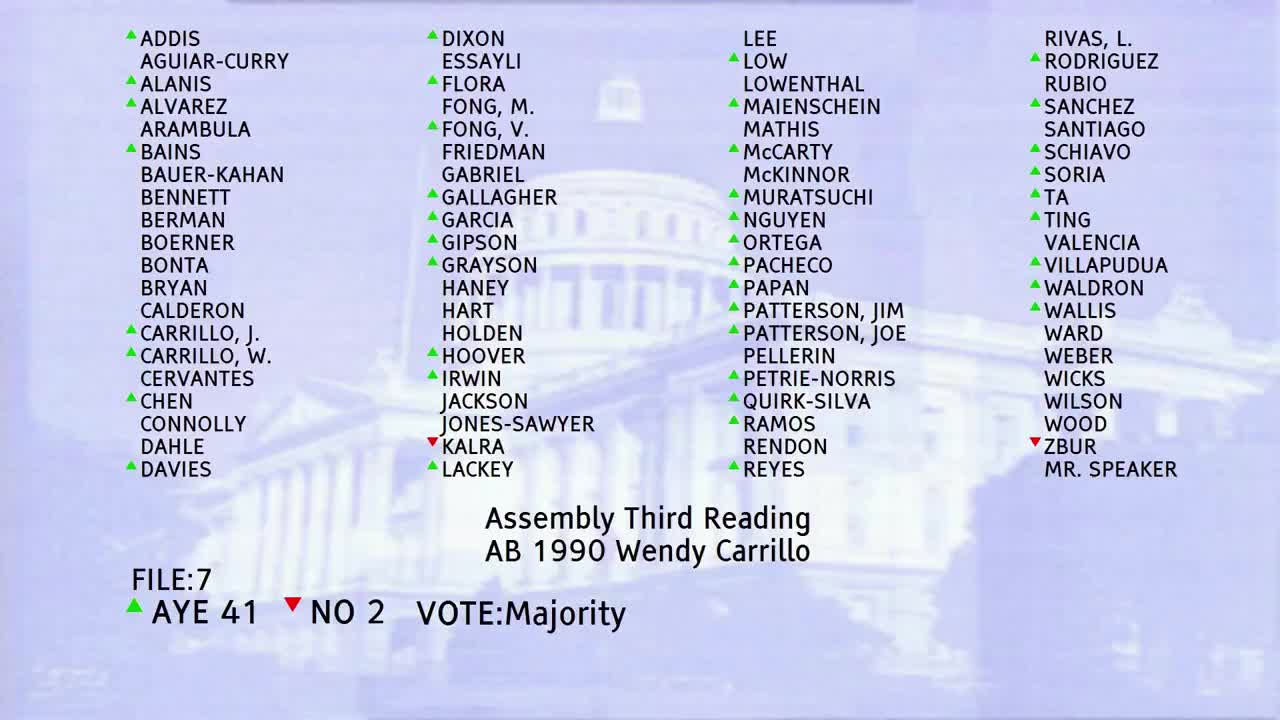
Bill Author
Bill Co-Author(s):