AB 329: Theft: jurisdiction.
- Session Year: 2023-2024
- House: Assembly
- Latest Version Date: 2023-03-13
Current Status:
Failed
(2024-01-10: From committee: Without further action pursuant to Joint Rule 62(a).)
Introduced
In Committee
First Chamber
In Committee
Second Chamber
Enacted
What does this bill do?
The bill makes people who are not California residents, who did not live in California in the six months before arriving, and who entered the state within 30 days before committing petty theft or shoplifting subject to county jail time (up to one year or longer under existing sentencing rules). It also adds cargo theft to the list of theft offenses the Attorney General can prosecute in any county where the theft, the recovery of the goods, or related acts occurred.
The summary is provided by generative AI which can make mistakes. For original language, please view the details in the table below.
Existing law establishes the jurisdiction of a criminal action brought by the Attorney General for theft, organized retail theft, or receipt of stolen property as including the county where an offense involving the theft or receipt of the stolen merchandise occurred, the county in which the merchandise was recovered, or the county where any act was done by the defendant in instigating, procuring, promoting, or aiding in the commission of the offense.
Existing law defines the crime of grand theft to include stealing, taking, or carrying away the cargo of another with a value of over $950.
This bill would include the crime of cargo theft in the above-mentioned jurisdictional provisions.
Existing law, the Safe Neighborhoods and Schools Act, enacted as an initiative statute by Proposition 47, as approved by the electors in the November 4, 2014, statewide general election, makes the theft of property that does not exceed $950 in value petty theft and makes that crime punishable as a misdemeanor, with certain exceptions. The initiative statute defines shoplifting as entering a commercial establishment with the intent to commit larceny while that establishment is open during regular hours, where the value of the property that is taken or intended to be taken does not exceed $950. The initiative statute requires that shoplifting be punished as a misdemeanor.This bill would amend the initiative to make petty theft or shoplifting by a person who is not a resident of this state, did not reside in this state in the six months prior to entering this state, and entered this state within 30 days prior to committing the offense, an offense punishable by imprisonment in a county jail not exceeding one year or imprisonment in a county jail for 16 months or 2 or 3 years. The bill would define resident as a person that has occupied a dwelling in this state, or has been domiciled in this state, for at least 6 months.This bill would require the Secretary of State to place the provisions of the bill that amend the initiative statute on the ballot for the November 5, 2024, statewide general election.Existing law, the Safe Neighborhoods and Schools Act, enacted as an initiative statute by Proposition 47, as approved by the electors in the November 4, 2014, statewide general election, makes the theft of property that does not exceed $950 in value petty theft and makes that crime punishable as a misdemeanor, with certain exceptions. The initiative statute defines shoplifting as entering a commercial establishment with the intent to commit larceny while that establishment is open during regular hours, where the value of the property that is taken or intended to be taken does not exceed $950. The initiative statute requires that shoplifting be punished as a misdemeanor.
This bill would amend the initiative to make petty theft or shoplifting by a person who is not a resident of this state, did not reside in this state in the six months prior to entering this state, and entered this state within 30 days prior to committing the offense, an offense punishable by imprisonment in a county jail not exceeding one year or imprisonment in a county jail for 16 months or 2 or 3 years. The bill would define resident as a person that has occupied a dwelling in this state, or has been domiciled in this state, for at least 6 months.
This bill would require the Secretary of State to place the provisions of the bill that amend the initiative statute on the ballot for the November 5, 2024, statewide general election.
The jurisdiction of a criminal action brought by the Attorney General for theft, as defined in subdivision (a) of Section 484, or a violation of Section 490.4 or 496, 487h, 490.4, or 496, shall also include the county where an offense involving the theft or receipt of the stolen merchandise occurred, the county in which the merchandise was recovered, or the county where any act was done by the defendant in instigating, procuring, promoting, or aiding in the commission of a theft offense or a violation of Section 490.4 or 496 487h, 490.4, or 496, or in abetting the parties concerned therein. If multiple offenses of theft or violations of Section 490.4 or 496, 487h, 490.4, or 496, either all involving the same defendant or defendants and the same merchandise, or all involving the same defendant or defendants and the same scheme or substantially similar activity, occur in multiple jurisdictions, then any of those jurisdictions are a proper jurisdiction for all of the offenses. Jurisdiction also extends to all associated offenses connected together in their commission to the underlying theft offenses or violations of Section 490.4 or 496. 487h, 490.4, or 496.
SECTION 1.Section 459.5 of the Penal Code is amended to read:459.5.(a)Notwithstanding Section 459, shoplifting is defined as entering a commercial establishment with intent to commit larceny while that establishment is open during regular business hours, where the value of the property that is taken or intended to be taken does not exceed nine hundred fifty dollars ($950). Any other entry into a commercial establishment with intent to commit larceny is burglary. Shoplifting shall be punished as a misdemeanor, except as follows:(1)A person with one or more prior convictions for an offense specified in clause (iv) of subparagraph (C) of paragraph (2) of subdivision (e) of Section 667 or for an offense requiring registration pursuant to subdivision (c) of Section 290 may be punished pursuant to subdivision (h) of Section 1170.(2)A person who meets the requirements of Section 490.3 may be punished pursuant to that section.(b)Any act of shoplifting as defined in subdivision (a) shall be charged as shoplifting. A person who is charged with shoplifting may not also be charged with burglary or theft of the same property.SEC. 2.Section 490.2 of the Penal Code is amended to read:490.2.(a)Notwithstanding Section 487 or any other provision of law defining grand theft, obtaining any property by theft where the value of the money, labor, real or personal property taken does not exceed nine hundred fifty dollars ($950) shall be considered petty theft and shall be punished as a misdemeanor, except as follows:(1)A person may instead be punished pursuant to subdivision (h) of Section 1170 if that person has one or more prior convictions for an offense specified in clause (iv) of subparagraph (C) of paragraph (2) of subdivision (e) of Section 667 or for an offense requiring registration pursuant to subdivision (c) of Section 290.(2)A person who meets the requirements of Section 490.3 may be punished pursuant to that section.(b)This section does not apply to any theft that may be charged as an infraction pursuant to any other law.(c)This section does not apply to theft of a firearm.SEC. 3.Section 490.3 is added to the Penal Code, to read:490.3.(a)Notwithstanding Section 459.5 and Section 490.2, a person who commits petty theft or shoplifting and who is not a resident of this state, did not reside in this state in the six months prior to entering this state, and entered this state within 30 days prior to committing the offense, is guilty of an offense punishable by imprisonment in a county jail not exceeding one year, or imprisonment pursuant to subdivision (h) of Section 1170.(b)As used in this section, resident means a person that has occupied a dwelling in this state, or has been domiciled in this state, for at least six months.(c)This section does not preclude punishment under any other law.SEC. 4.(a)Sections 1, 2, and 3 of this act amend the Safe Neighborhoods and Schools Act, Proposition 47 at the November 4, 2014 statewide general election, an initiative statute, and shall become effective only when submitted to and approved by the voters at a statewide election.(b)Notwithstanding the requirements of Sections 9040, 9043, 9044, 9061, 9082, and 9094 of the Elections Code, or any other law, the Secretary of State shall submit Sections 1, 2, and 3 of this act to the voters for their approval at the November 5, 2024, statewide general election.(a)Notwithstanding Section 459, shoplifting is defined as entering a commercial establishment with intent to commit larceny while that establishment is open during regular business hours, where the value of the property that is taken or intended to be taken does not exceed nine hundred fifty dollars ($950). Any other entry into a commercial establishment with intent to commit larceny is burglary. Shoplifting shall be punished as a misdemeanor, except that a as follows:
(1)A person with one or more prior convictions for an offense specified in clause (iv) of subparagraph (C) of paragraph (2) of subdivision (e) of Section 667 or for an offense requiring registration pursuant to subdivision (c) of Section 290 may be punished pursuant to subdivision (h) of Section 1170.
(2)A person who meets the requirements of Section 490.3 may be punished pursuant to that section.
(b)Any act of shoplifting as defined in subdivision (a) shall be charged as shoplifting. No A person who is charged with shoplifting may not also be charged with burglary or theft of the same property.
SEC. 2.Section 490.2 of the Penal Code is amended to read:490.2.(a)Notwithstanding Section 487 or any other provision of law defining grand theft, obtaining any property by theft where the value of the money, labor, real or personal property taken does not exceed nine hundred fifty dollars ($950) shall be considered petty theft and shall be punished as a misdemeanor, except that such as follows:
(1)A person may instead be punished pursuant to subdivision (h) of Section 1170 if that person has one or more prior convictions for an offense specified in clause (iv) of subparagraph (C) of paragraph (2) of subdivision (e) of Section 667 or for an offense requiring registration pursuant to subdivision (c) of Section 290.
(2)A person who meets the requirements of Section 490.3 may be punished pursuant to that section.
(b)This section shall not be applicable does not apply to any theft that may be charged as an infraction pursuant to any other provision of law.
(c)This section shall does not apply to theft of a firearm.
SEC. 3.Section 490.3 is added to the Penal Code, to read:490.3.(a)Notwithstanding Section 459.5 and Section 490.2, a person who commits petty theft or shoplifting and who is not a resident of this state, did not reside in this state in the six months prior to entering this state, and entered this state within 30 days prior to committing the offense, is guilty of an offense punishable by imprisonment in a county jail not exceeding one year, or imprisonment pursuant to subdivision (h) of Section 1170.
(b)As used in this section, resident means a person that has occupied a dwelling in this state, or has been domiciled in this state, for at least six months.
(c)This section does not preclude punishment under any other law.
SEC. 4.(a)Sections 1, 2, and 3 of this act amend the Safe Neighborhoods and Schools Act, Proposition 47 at the November 4, 2014 statewide general election, an initiative statute, and shall become effective only when submitted to and approved by the voters at a statewide election.
(b)Notwithstanding the requirements of Sections 9040, 9043, 9044, 9061, 9082, and 9094 of the Elections Code, or any other law, the Secretary of State shall submit Sections 1, 2, and 3 of this act to the voters for their approval at the November 5, 2024, statewide general election.
|
Date
|
Status
|
|---|---|
| Jan 10, 2024 | From committee: Without further action pursuant to Joint Rule 62(a). |
| Jan 9, 2024 | In committee: Set, final hearing. Failed passage. |
| Mar 21, 2023 | In committee: Set, final hearing. Failed passage. Reconsideration granted. |
| Mar 14, 2023 | Re-referred to Com. on PUB. S. |
| Mar 13, 2023 | From committee chair, with author's amendments: Amend, and re-refer to Com. on PUB. S. Read second time and amended. |
| Mar 8, 2023 | In committee: Set, second hearing. Hearing canceled at the request of author. |
| Feb 23, 2023 | In committee: Set, first hearing. Hearing canceled at the request of author. |
| Feb 9, 2023 | Referred to Com. on PUB. S. |
| Jan 31, 2023 | From printer. May be heard in committee March 2. |
| Jan 30, 2023 | Read first time. To print. |
|
Date
|
Description
|
Location
|
Votes
|
|
|---|---|---|---|---|
| Jan 9, 2024 | Do pass. | Assembly Standing Committee on Public Safety |
Failed |
|
| Mar 21, 2023 | Do pass. | Assembly Standing Committee on Public Safety |
Failed |
This list shows positions taken on this bill by organizations on the date displayed, which is linked to the original source.
Positions by individuals are not included.
|
Organization
|
Position
|
Date
|
|---|---|---|
| Aclu California Action | ** Against | |
| California Association Of Highway Patrolmen | ** Support | |
| California Public Defenders Association | * Neutral | Mar 21, 2023 |
| California Truckers Association | * Support | Mar 21, 2023 |
| California Trucking Association | ** Support | |
| Californians for Safety and Justice | ** Against | |
| Communities United for Restorative Youth Justice | ** Against | |
| Defy Ventures | ** Against | |
| Drug Policy Alliance | ** Against | |
| Ella Baker Center For Human Rights | * Against | Mar 21, 2023 |
| Initiate Justice | ** Against | |
| Initiate Justice Action | ** Against | |
| Last Prisoner Project | ** Against | |
| Miracles Counseling Center | ** Against | |
| National Insurance Crime Bureau | ** Support | |
| Rubicon Programs | ** Against | |
| San Francisco Public Defender | ** Against | |
| Santa Cruz Barrios Unidos INC. | ** Against | |
| Seeds for Youth Development | ** Against | |
| Starting Over, Inc. | ** Against | |
| Universidad Popular | ** Against |
Date of Hearing:
Counsel: Cheryl Anderson
ASSEMBLY COMMITTEE ON PUBLIC SAFETY
Kevin McCarty, Chair
ABPCA Bill Id:AB 329
Author:(Ta) – As Amended Ver:March 13, 2023
Vote Only
SUMMARY:
Adds cargo theft to the expanded territorial jurisdiction under which the Attorney General can prosecute specified theft offenses related to retail theft and associated offenses connected together in their commission. Specifically, this bill:
- Adds cargo theft to the expanded territorial jurisdiction which authorizes the Attorney General to prosecute theft, organized retail theft, and receiving stolen property offenses to include the county where the theft or receipt of the stolen merchandise occurred, the county in which the merchandise was recovered, or the county where any act was done by the defendant in instigating, procuring, promoting, or aiding in the commission of the offense.
- Adds cargo theft to the expanded territorial jurisdiction that authorizes the Attorney General to prosecute multiple offenses of theft, organized retail theft, or receipt of stolen property, that all involve the same defendant or defendants and the same merchandise or the same scheme or substantially similar activity, and occur in multiple jurisdictions, in any of those jurisdictions.
- Adds cargo theft to the extended territorial jurisdiction that authorizes the Attorney General to prosecute all associated offenses connected together in their commission to the underlying theft offenses.
EXISTING LAW:
- Provides that generally the territorial jurisdiction (or venue) of a criminal offense is in any competent court in the county where the offense was committed. (Pen. Code, § 777.)
- Provides that when a criminal offense is committed partially in one county and partially in another, then jurisdiction is proper in either county. (Pen. Code, § 781.)
- Provides that when a criminal offense is committed on the boundary of two or more counties, or within 500 yards thereof, territorial jurisdiction is proper within either county. (Pen. Code, § 782.)
- Expands the territorial jurisdiction for a criminal action brought by the Attorney General for theft, organized retail theft, receipt of stolen property to include the county where the theft or receipt of the stolen merchandise occurred, the county in which the merchandise was recovered, or the county where any act was done by the defendant in instigating, procuring, promoting, or aiding in the commission of the offense. (Pen. Code, § 786.5.)
- Provides that when multiple offenses of theft, organized retail theft, or receipt of stolen property that all involve the same defendant or defendants and the same merchandise, or all involving the same defendant or defendants and the same scheme or substantially similar activity, occur in multiple jurisdictions, then any of those jurisdictions are a proper venue for all of the offenses. (Pen. Code, § 786.5.)
- Extends jurisdiction to all associated offenses connected together in their commission to the underlying theft offenses. (Pen. Code, § 786.5.)
- Establishes a number of special territorial jurisdictional rules for specified criminal offenses. (Pen. Code, § 783 et. seq.)
- States that every person who steals, takes, carries, leads, or drives away the personal property of another, or who fraudulently appropriates property which has been entrusted to them, or who knowingly and designedly, by any false or fraudulent representation or pretense, defrauds any other person of money, labor or real or personal property, is guilty of theft. (Pen. Code, § 484, subd. (a).)
- Creates the crime of organized retail theft which is defined as:
- Acting in concert with one or more persons to steal merchandise from one or more merchant’s premises or online marketplace with the intent to sell, exchange, or return the merchandise for value;
- Acting in concert with two or more persons to receive, purchase, or possess merchandise knowing or believing it to have been stolen;
- Acting as the agent of another individual or group of individuals to steal merchandise from one or more merchant’s premises or online marketplaces as part of a plan to commit theft; or,
- Recruiting, coordinating, organizing, supervising, directing, managing, or financing another to undertake these acts of theft. (Pen. Code, § 490.4, subd. (a).)
- Recruiting, coordinating, organizing, supervising, directing, managing, or financing another to undertake these acts of theft. (Pen. Code, § 490.4, subd. (a).)
- States that any person who buys or receives any property that has been stolen or that has been obtained in any manner constituting theft or extortion, knowing the property to be so stolen or obtained, or who conceals, sells, withholds, or aids in concealing, selling, or withholding any property from the owner, knowing the property to be so stolen or obtained is guilty of receiving or concealing stolen property. (Pen. Code, § 496, subd. (a).)
- Provides that every person who steal, takes, or carries away cargo of another, if the value of the cargo taken exceeds $950, is guilty of grand theft. (Pen. Code, § 487h, subd. (a).)
- Defines “cargo” as any goods, wares, products or manufactured merchandise that has been loaded into a trailer, railcar, or cargo container, awaiting or in transit. (Pen. Code § 487h, subd. (b).)
- Defines “cargo container” as a receptacle with strong enough for repeated use, designed to facilitate the carriage of goods, fitted for handling from one mode of transport to another, designed to be easy to fill and empty, and having a cubic displacement of 1,000 cubic feet or more. (Pen. Code, § 458.)
- Provides that every person who enters any house, room, apartment, tenement, shop, warehouse, store, mill, barn, stable, outhouse or other building, tent, vessel, floating home, railroad car, locked or sealed cargo container, house car, inhabited camper, locked vehicle, aircraft, or mine with attempt to commit theft or any felony is guilty of burglary. (Pen. Code, § 459.)
- Establishes a procedure for charging more than one count or offense in a single accusatory pleading. (Pen. Code, § 954.)
FISCAL EFFECT:
Unknown
COMMENTS:
- Author's Statement: According to the author, “AB 329 would assist California businesses frustrated with organized cargo theft's impacts. Whether burglaries happen at transportation truck yards or driver giveaways, where a driver participates in the conspiracy to steal a loaded rig, grab and run, often used by theft groups targeting trucks loaded with high-tech equipment or warehouse stolen cargo.
“AB 329 gives the tools to the Attorney General to stop this sophisticated cargo theft that is destroying our California businesses which are hurting the most from the global pandemic that we're all trying to recover from. This bill also reduces the need for multiple trials by allowing the Attorney General the ability to consolidate cases involving conduct in multiple counties.” - Cargo Theft: During the Covid-19 pandemic, cargo thefts from railyards made headlines.[1] Cargo theft can also apply to theft from cargo trucks.
In January of 2023, a representative from CargoNet stated that cargo theft numbers were starting to return to pre-Covid levels but had seen a recent uptick. The representative noted, however, there had been a shift in focus from rail-car theft which targeted consumer electronic products to thefts of food and beverages. (https://www.claimsjournal.com/news/national/2023/01/30/315034.htm.)
- Territorial Jurisdiction and Vicinage: Territorial jurisdiction is the location in which a case may be brought to trial. Ordinarily, the territorial jurisdiction of a superior court is the county in which it sits. (Pen. Code, § 691, subd. (b).) The general rule of territorial jurisdiction is stated in section 777: “except as otherwise provided by law the jurisdiction of every public offense is in any competent court within the jurisdictional territory of which it is committed.” When the Legislature creates an exception to the rule of section 777, the statute is remedial and is construed liberally to achieve the legislative purpose of expanding criminal jurisdiction. (Price v. Superior Court (2001) 25 Cal.4th 1046, 1055.)
Vicinage is the right to trial by a jury drawn from residents of the area where the offense was committed. Venue and vicinage are closely related, as a jury pool is selected from the area in which the trial is to be held. Vicinage is not a necessary feature to the right of a jury trial as guaranteed by the Sixth Amendment to the United States Constitution because it “does not serve the purpose of protecting a criminal defendant from government oppression and is not necessary to ensure a fair trial.” (Price, supra, 25 Cal. 4th 1046, 1065-1069.) This does not mean that a state has the right to try a defendant anywhere it chooses. Rather, the right of vicinage in California is derived from the right to jury trial as guaranteed in the California Constitution. (Id. at p. 1071.) As the Supreme Court explained, the right to a trial by a jury of the vicinage, as guaranteed by the California Constitution, requires trial in a county that has a reasonable relationship to the offense or to other crimes committed by the defendant against the same victim. Thus, the Legislature’s power to designate the place for trial of a criminal offense is limited by the requirement that there be a reasonable relationship or nexus between the place designated for trial and the commission of the offense. (Id.at p. 1075.)
This bill would expand jurisdiction to prosecute cargo theft offenses for criminal actions brought by the Attorney General, extending a jurisdictional provision in current law that is directed at organized and repeated retail theft.
- Previous Expansion of Jurisdiction for Organized Retail Theft: AB 1065 (Jones-Sawyer), Chapter 803, Statutes of 2018, among other things, created the crime of organized retail theft and expanded jurisdictional rules for theft offenses. AB 1065 had a sunset date of January 1, 2021. AB 331 (Jones-Sawyer), Chapter 113, Statutes of 2021, re-established the crime of organized retail theft through 2025, but the jurisdictional provisions of AB 1065 were specifically not included.
Last year, AB 1613 (Irwin), Chapter 949, Statutes of 2022, once again expanded jurisdiction to prosecute theft offenses, but only for criminal actions brought by the Attorney General. In particular, AB 1613 expanded the territorial jurisdiction for a criminal action brought by the Attorney General for the crimes of theft, organized retail theft, or receipt of stolen property. It allowed for trial in any county where the theft or receipt of the stolen merchandise occurred, the county in which the merchandise was recovered, or the county where any act was done by the defendant in instigating, procuring, promoting, or aiding in the commission of the offense. It also expanded jurisdiction to any one of the counties in which multiple theft offenses occurred involving the same defendant(s) and same merchandise, or the same defendant(s) and the same scheme or substantially similar activity. And it applied the expanded jurisdiction to any associated offenses connected together in their commission to the underlying theft offenses. (Pen. Code, § 786.5.)
The extended jurisdiction in AB 1613 was intended to cover the limited circumstances of organized and repeated thefts from retailers. This bill would further expand the jurisdiction in which the Attorney General can prosecute theft cases, by amending Penal Code section 786.5 to include cargo theft offenses. The supply chain is not a retailer.
Further, under this jurisdictional provision, the court is not required to consider the location and complexity of the evidence, the rights of the defendant, the convenience of, or hardship to, the victim(s) and witnesses, or the racial composition of the county in which the cases will be consolidated (the jury pool). (See United States v. Salinas (2004) 373 F.3d 161, 163 [resultant safety net from proper venue and vicinage ensures that a criminal defendant cannot be tried in an “unfriendly forum solely at the prosecutor’s whim.”]; see also Lisa E. Alexander, Vicinage, Venue, and Community Cross-Section: Obstacles to a State Defendant's Right to a Trial by a Representative Jury, 19 Hastings Const. L.Q. 261, 290 (1991) [“Venue and vicinage define the community against which courts will assess the minority representation in the jury pool for constitutional purposes.”].) - Attorney General’s Expanded Role in Combatting Organized Retail Theft: In December 2021, Governor Newsom announced a proposal to combat organized retail theft. Part of the plan included $18 million to support the creation of a dedicated investigative team within the state Attorney General's office focusing on retail theft that crosses jurisdictional lines. (https://www.gov.ca.gov/2021/12/17/governor-newsom-unveils-public-safety-plan-to-aggressively-fight-and-prevent-crime-in-california/)
The Governor’s 2022-2023 budget allocated $11 million annually for three years and $5.5 million ongoing for the Department of Justice to continue leading anti-crime task forces around the state. This funding also support regional task forces combatting organized retail theft and prosecution of retail theft cases that span multiple jurisdictions. (https://ebudget.ca.gov/budget/publication/#/e/2022-23/BudgetSummary.)
AB 1613 was consistent with these efforts, as it specifically authorized the Attorney General’s office to prosecute theft and retail theft crimes that span multiple jurisdictions in any one of those counties. - The California Constitution Authorizes the Attorney General to Prosecute Criminal Actions: The Attorney General is the state’s top prosecutor and is authorized to initiate prosecutions at his discretion. “Whenever in the opinion of the Attorney General any law of the State is not being adequately enforced in any county, it shall be the duty of the Attorney General to prosecute any violations of law of which the superior court shall have jurisdiction, and in such cases the Attorney General shall have all the powers of a district attorney. When required by the public interest or directed by the Governor, the Attorney General shall assist any district attorney in the discharge of the duties of that office.” (Cal. Const., Art. V, Sec. 13.)
The Attorney General currently has the authority to prosecute cargo theft. - Rail Theft Enforcement and Prosecution: In December 20, 2021, UP sent a letter to Los Angeles County District Attorney George Gascón, regarding train thefts and security concerns and urging more aggressive prosecution. (https://www.up.com/cs/groups/public/@uprr/@newsinfo/documents/up_pdf_nativedocs/pdf_up_la_district_atty_211221.pdf.) Los Angeles District Attorney George Gascón responded, as follows:
“In response to your letter, we conducted a thorough review of cases submitted for filing consideration over the last three years in which UP is listed as a victim. In order to appropriately respond to your concerns, we wanted to know the actual data behind your claims, so we can address the issues. Here are the numbers: In 2019, 78 cases were presented for filing. In 2020, 56 cases were presented for filing. And in a sharp decline, in 2021, 47 such cases were presented for filing consideration, and over 55% were filed by my Office. The charges filed included both felony and misdemeanor offenses alleging burglary, theft, and receiving stolen property. Of the 20 cases that were declined for filing, 10 were not filed due to the insufficiency of the evidence presented to prove the case beyond a reasonable doubt, which is our ethical standard to file a criminal case. The other 10 declined matters involved offenses such as allegations of unhoused individuals within 20 feet of the railroad tracks and simple possession of drugs for personal use—not allegations of burglary, theft, or tampering. Although homelessness is a serious issue, it is not one that we can fix through expending resources of the criminal legal system.
“To be clear, felony and misdemeanor cases are filed where our Office is presented with enough evidence to prove that a crime was committed. We understand how vital the rail system is to Los Angeles County and the entire nation and want to work with you in a productive manner to ensure that those who tamper with or steal from UP are held accountable. As more Americans engage in e-commerce and rely on our transportation infrastructure to receive goods, it is important that our work to ensure the safety of this system is collaborative. Part of this collaboration involves taking preventative steps to ensure that cargo containers are secure or locked. Furthermore, UP has its own law enforcement officers who are responsible for patrolling and keeping areas safe. However, according to LAPD Deputy Chief Al Labrada, UP does little to secure or lock trains and has significantly decreased law enforcement staffing. It is very telling that other major railroad operations in the area are not facing the same level of theft at their facilities as UP. We can ensure that appropriate cases are filed and prosecuted; however, my Office is not tasked with keeping your sites secure and the District Attorney alone cannot solve the major issues facing your organization.”
(https://da.lacounty.gov/sites/default/files/pdf/Letter-to-Union-Pacific-012122.pdf.) As discussed above, if the Attorney General disagrees with District Attorney Gascon’s assessment of these cases, he is authorized to have his office prosecute them.
- Argument in Support: According to the California Trucking Association, “California consumers, truck drivers, and businesses will benefit from extended protections under the Attorney General. This bill expands the Attorney General's jurisdiction to bring criminal action against anyone who steals cargo over $950 from a trailer, railcar, or cargo container. Safe and secure cargo transportation is important to our economy, and this bill will play a crucial role in protecting the rights and interests of truckers and shipping companies.
“Cargo theft is a serious problem that has been on the rise in recent years. According to the National Insurance Crime Bureau, cargo theft costs the United States economy billions of dollars every year and California has the highest amount of reported cargo theft. Cargo theft not only harms businesses financially, but it also endangers the safety of truck drivers who are often the victims of these crimes.” (citations omitted) - Argument in Opposition: According to the American Civil Liberties Union California Action, “[W]e must respectfully oppose your AB 329, which would include the crime of cargo theft into the jurisdiction of a criminal action brought by the Attorney General for theft, organized retail theft, or receipt of stolen property.”
- Prior Legislation:
- AB 523 (Fong), would have expanded the crime of organized retail theft to include merchandise stolen from a merchant’s cargo. AB 523 was not heard in this committee at the author’s request.
- AB 806 (Maienschein), Chapter 666, Statutes of 2023, expanded the scope of domestic violence offenses occurring in multiple jurisdictions that are subject to joinder.
- AB 1613 (Irwin), Chapter 949, Statutes of 2022, expanded the territorial jurisdiction in which the Attorney General can prosecute specified theft offenses and associated offenses connected together in their commission to those theft offenses.
- AB 331 (Jones-Sawyer), Chapter 113, Statutes of 2021, re-established the crime of organized retail theft until to January 1, 2026, but did not include the expanded jurisdictional provisions.
- SB 304 (Hill), Chapter 206, Statutes of 2019, allowed specified elder and dependent adult abuse offenses that occur in different jurisdictions to be consolidated in a single trial if all district attorneys in the counties with jurisdiction agree.
- AB 1065 (Jones-Sawyer), Chapter 803, Statutes of 2018, created the crime of organized retail theft, established a property crimes task force, and expanded jurisdictional provisions for theft offenses.
- AB 1746 (Cervantes), Chapter 962, Statutes of 2018, added sexual battery and unlawful sexual intercourse to the list of offenses that may be consolidated in a single trial in any county where at least one of the offenses occurred, if the defendant and the victim are the same for all of the offenses.
- AB 368 (Muratsuchi), Chapter 379, Statutes of 2017, added felony sexual intercourse, sodomy, oral copulation or sexual penetration with a child 10 years of age or younger occurring in two or more jurisdictions to the list of applicable offenses that may be consolidated in a single trial.
- SB 939 (Block), Chapter 246, Statutes of 2014, permitted the consolidation of human-trafficking-related charges occurring in different counties to be joined in a single trial if all the district attorneys agree.
- AB 2252 (Cohn), Chapter 194, Statutes of 2002, amended territorial jurisdiction of sex crimes to remove the requirement that consolidated offenses involve a single victim, and added specified crimes to the list of applicable charges.
- AB 2734 (Pacheco), Chapter 302, Statutes of 1998, permitted jurisdiction for specified offenses, such as spousal abuse and stalking, occurring in two or more jurisdictions in any jurisdiction where at least one offense occurred, if the defendant and the victim were the same for all the offenses.
- AB 523 (Fong), would have expanded the crime of organized retail theft to include merchandise stolen from a merchant’s cargo. AB 523 was not heard in this committee at the author’s request.
REGISTERED SUPPORT / OPPOSITION:
Support
California Association of Highway Patrolmen
California Trucking Association
National Insurance Crime Bureau
Opposition
ACLU California Action
Californians for Safety and Justice
Communities United for Restorative Youth Justice (CURYJ)
Defy Ventures
Drug Policy Alliance
Initiate Justice
Initiate Justice Action
Last Prisoner Project
Miracles Counseling Center
Rubicon Programs
San Francisco Public Defender
Santa Cruz Barrios Unidos INC.
Seeds for Youth Development
Starting Over, INC.
Universidad Popular
2 Private Individuals
Analysis Prepared by:
Cheryl Anderson / PUB. S. / (916) 319-3744
Notably, Union Pacific’s (UP) train thefts started right around the time it laid off thousands of workers. According to UP’s annual reports to the federal Surface Transportation Board, the company ended 2019 with 23,096 employees. In 2020, that number fell to 20,334. And that number fell again to 18,408 in the third quarter of 2021. (Quarterly Wage A&B Data, Surface Transportation Board. <https://www.stb.gov/reports-data/economic-data/quarterly-wage-ab-data/>.) According to the Los Angeles Times, former UP employees and police say budgetary issues have slashed the ranks of the company’s force, leaving as few as half a dozen in the region. (‘Like A Third World Country’: Gov. Newsom Decries Rail Thefts amid Push to Beef up Enforcement, Los Angeles Times (Jan. 20, 2022) <https://www.latimes.com/california/story/2022-01-20/los-angeles-rail-theft-supply-chain-crunch-limited-security>.) “Union Pacific from Yuma, Ariz., to L.A. has six people patrolling…” and “thefts started about seven months ago as the police presence ebbed.” (Ibid.) UP’s employment numbers remain low, despite record profits for the rail operator. UP reported a net income of $6.5 billion for 2021. (Union Pacific Reports Fourth Quarter and Full Year 2021 Results, UP (Jan. 2022) <https://www.up.com/media/releases/4q21-earnings-nr210120.htm>.) ↑
Date of Hearing:
Counsel: Cheryl Anderson
ASSEMBLY COMMITTEE ON PUBLIC SAFETY
Reginald Byron Jones-Sawyer, Sr., Chair
ABPCA Bill Id:AB 329
Author:(Ta) – As Amended Ver:March 13, 2023
SUMMARY:
Adds cargo theft to the expanded territorial jurisdiction under which the Attorney General can prosecute specified theft offenses related to retail theft and associated offenses connected together in their commission. Specifically, this bill:
- Adds cargo theft to the expanded territorial jurisdiction which authorizes the Attorney General to prosecute theft, organized retail theft, and receiving stolen property offenses to include the county where the theft or receipt of the stolen merchandise occurred, the county in which the merchandise was recovered, or the county where any act was done by the defendant in instigating, procuring, promoting, or aiding in the commission of the offense.
- Adds cargo theft to the expanded territorial jurisdiction that authorizes the Attorney General to prosecute multiple offenses of theft, organized retail theft, or receipt of stolen property, that all involve the same defendant or defendants and the same merchandise or the same scheme or substantially similar activity, and occur in multiple jurisdictions, in any of those jurisdictions.
- Adds cargo theft to the extended territorial jurisdiction that authorizes the Attorney General to prosecute all associated offenses connected together in their commission to the underlying theft offenses.
EXISTING LAW:
- Provides that generally the territorial jurisdiction (or venue) of a criminal offense is in any competent court in the county where the offense was committed. (Pen. Code, § 777.)
- Provides that when a criminal offense is committed partially in one county and partially in another, then jurisdiction is proper in either county. (Pen. Code, § 781.)
- Provides that when a criminal offense is committed on the boundary of two or more counties, or within 500 yards thereof, territorial jurisdiction is proper within either county. (Pen. Code, § 782.)
- Expands the territorial jurisdiction for a criminal action brought by the Attorney General for theft, organized retail theft, receipt of stolen property to include the county where the theft or receipt of the stolen merchandise occurred, the county in which the merchandise was recovered, or the county where any act was done by the defendant in instigating, procuring, promoting, or aiding in the commission of the offense. (Pen. Code, § 786.5.)
- Provides that when multiple offenses of theft, organized retail theft, or receipt of stolen property that all involve the same defendant or defendants and the same merchandise, or all involving the same defendant or defendants and the same scheme or substantially similar activity, occur in multiple jurisdictions, then any of those jurisdictions are a proper venue for all of the offenses. (Pen. Code, § 786.5.)
- Extends jurisdiction to all associated offenses connected together in their commission to the underlying theft offenses. (Pen. Code, § 786.5.)
- Establishes a number of special territorial jurisdictional rules for specified criminal offenses. (Pen. Code, § 783 et. seq.)
- States that every person who steals, takes, carries, leads, or drives away the personal property of another, or who fraudulently appropriates property which has been entrusted to them, or who knowingly and designedly, by any false or fraudulent representation or pretense, defrauds any other person of money, labor or real or personal property, is guilty of theft. (Pen. Code, § 484, subd. (a).)
- Creates the crime of organized retail theft which is defined as:
- Acting in concert with one or more persons to steal merchandise from one or more merchant’s premises or online marketplace with the intent to sell, exchange, or return the merchandise for value;
- Acting in concert with two or more persons to receive, purchase, or possess merchandise knowing or believing it to have been stolen;
- Acting as the agent of another individual or group of individuals to steal merchandise from one or more merchant’s premises or online marketplaces as part of a plan to commit theft; or,
- Recruiting, coordinating, organizing, supervising, directing, managing, or financing another to undertake these acts of theft. (Pen. Code, § 490.4, subd. (a).)
- Recruiting, coordinating, organizing, supervising, directing, managing, or financing another to undertake these acts of theft. (Pen. Code, § 490.4, subd. (a).)
- States that any person who buys or receives any property that has been stolen or that has been obtained in any manner constituting theft or extortion, knowing the property to be so stolen or obtained, or who conceals, sells, withholds, or aids in concealing, selling, or withholding any property from the owner, knowing the property to be so stolen or obtained is guilty of receiving or concealing stolen property. (Pen. Code, § 496, subd. (a).)
- Provides that every person who steal, takes, or carries away cargo of another, if the value of the cargo taken exceeds $950, is guilty of grand theft. (Pen. Code, § 487h, subd. (a).)
- Defines “cargo” as any goods, wares, products or manufactured merchandise that has been loaded into a trailer, railcar, or cargo container, awaiting or in transit. (Pen. Code § 487h, subd. (b).)
- Defines “cargo container” as a receptacle with strong enough for repeated use, designed to facilitate the carriage of goods, fitted for handling from one mode of transport to another, designed to be easy to fill and empty, and having a cubic displacement of 1,000 cubic feet or more. (Pen. Code, § 458.)
- Provides that every person who enters any house, room, apartment, tenement, shop, warehouse, store, mill, barn, stable, outhouse or other building, tent, vessel, floating home, railroad car, locked or sealed cargo container, house car, inhabited camper, locked vehicle, aircraft, or mine with attempt to commit theft or any felony is guilty of burglary. (Pen. Code, § 459.)
- Establishes a procedure for charging more than one count or offense in a single accusatory pleading. (Pen. Code, § 954.)
FISCAL EFFECT:
Unknown
COMMENTS:
- Author's Statement: According to the author, “AB 329 would assist California businesses frustrated with organized cargo theft's impacts. Whether burglaries happen at transportation truck yards or driver giveaways, where a driver participates in the conspiracy to steal a loaded rig, grab and run, often used by theft groups targeting trucks loaded with high-tech equipment or warehouse stolen cargo.
“AB 329 gives the tools to the Attorney General to stop this sophisticated cargo theft that is destroying our California businesses which are hurting the most from the global pandemic that we're all trying to recover from. This bill also reduces the need for multiple trials by allowing the Attorney General the ability to consolidate cases involving conduct in multiple counties.” - Cargo Theft: During the Covid-19 pandemic, cargo thefts from railyards made headlines.[1] Cargo theft can also apply to theft from cargo trucks.
Over the summer, a two-year investigation resulted in the arrest of 5 persons in Los Angeles County who reportedly stole $9 million in cargo from shipments of electronics in an operation that spanned the state. Electronics and electronic components were recovered, including products from Google, Hewlett Packard, Samsung, Dell, Microsoft, Apple, and various other companies. (https://www.cbsnews.com/sanfrancisco/news/chp-cargo-theft-arrests-electronics/; https://abc7.com/cargo-theft-operation-california-electronic-shipments-stolen-chp-arrests-google/12169291/.)
Earlier this year, a representative from CargoNet stated that cargo theft numbers were starting to return to pre-Covid levels but had seen a recent uptick. The representative noted, however, there had been a shift in focus from rail-car theft which targeted consumer electronic products to thefts of food and beverages. (https://www.claimsjournal.com/news/national/2023/01/30/315034.htm.)
- Territorial Jurisdiction and Vicinage: Territorial jurisdiction is the location in which a case may be brought to trial. Ordinarily, the territorial jurisdiction of a superior court is the county in which it sits. (Pen. Code, § 691, subd. (b).) The general rule of territorial jurisdiction is stated in section 777: “except as otherwise provided by law the jurisdiction of every public offense is in any competent court within the jurisdictional territory of which it is committed.” When the Legislature creates an exception to the rule of section 777, the statute is remedial and is construed liberally to achieve the legislative purpose of expanding criminal jurisdiction. (Price v. Superior Court (2001) 25 Cal.4th 1046, 1055.)
Vicinage is the right to trial by a jury drawn from residents of the area where the offense was committed. Venue and vicinage are closely related, as a jury pool is selected from the area in which the trial is to be held. Vicinage is not a necessary feature to the right of a jury trial as guaranteed by the Sixth Amendment to the United States Constitution because it “does not serve the purpose of protecting a criminal defendant from government oppression and is not necessary to ensure a fair trial.” (Price, supra, 25 Cal. 4th 1046, 1065-1069.) This does not mean that a state has the right to try a defendant anywhere it chooses. Rather, the right of vicinage in California is derived from the right to jury trial as guaranteed in the California Constitution. (Id. at p. 1071.) As the Supreme Court explained, the right to a trial by a jury of the vicinage, as guaranteed by the California Constitution, requires trial in a county that has a reasonable relationship to the offense or to other crimes committed by the defendant against the same victim. Thus, the Legislature’s power to designate the place for trial of a criminal offense is limited by the requirement that there be a reasonable relationship or nexus between the place designated for trial and the commission of the offense. (Id.at p. 1075.)
This bill would expand jurisdiction to prosecute cargo theft offenses for criminal actions brought by the Attorney General, extending a jurisdictional provision in current law that is directed at organized and repeated retail theft.
- Previous Expansion of Jurisdiction for Organized Retail Theft: AB 1065 (Jones-Sawyer), Chapter 803, Statutes of 2018, among other things, created the crime of organized retail theft and expanded jurisdictional rules for theft offenses. AB 1065 had a sunset date of January 1, 2021. AB 331 (Jones-Sawyer), Chapter 113, Statutes of 2021, re-established the crime of organized retail theft through 2025, but the jurisdictional provisions of AB 1065 were specifically not included.
Last year, AB 1613 (Irwin), Chapter 949, Statutes of 2022, once again expanded jurisdiction to prosecute theft offenses, but only for criminal actions brought by the Attorney General. In particular, AB 1613 expanded the territorial jurisdiction for a criminal action brought by the Attorney General for the crimes of theft, organized retail theft, or receipt of stolen property. It allowed for trial in any county where the theft or receipt of the stolen merchandise occurred, the county in which the merchandise was recovered, or the county where any act was done by the defendant in instigating, procuring, promoting, or aiding in the commission of the offense. It also expanded jurisdiction to any one of the counties in which multiple theft offenses occurred involving the same defendant(s) and same merchandise, or the same defendant(s) and the same scheme or substantially similar activity. And it applied the expanded jurisdiction to any associated offenses connected together in their commission to the underlying theft offenses. (Pen. Code, § 786.5.)
The extended jurisdiction in AB 1613 was intended to cover the limited circumstances of organized and repeated thefts from retailers. This bill would further expand the jurisdiction in which the Attorney General can prosecute theft cases, by amending Penal Code section 786.5 to include cargo theft offenses. The supply chain is not a retailer.
Further, under this jurisdictional provision, the court is not required to consider the location and complexity of the evidence, the rights of the defendant, the convenience of, or hardship to, the victim(s) and witnesses, or the racial composition of the county in which the cases will be consolidated (the jury pool). (See United States v. Salinas (2004) 373 F.3d 161, 163 [resultant safety net from proper venue and vicinage ensures that a criminal defendant cannot be tried in an “unfriendly forum solely at the prosecutor’s whim.”]; see also Lisa E. Alexander, Vicinage, Venue, and Community Cross-Section: Obstacles to a State Defendant's Right to a Trial by a Representative Jury, 19 Hastings Const. L.Q. 261, 290 (1991) [“Venue and vicinage define the community against which courts will assess the minority representation in the jury pool for constitutional purposes.”].) - Attorney General’s Expanded Role in Combatting Organized Retail Theft: In December 2021, Governor Newsom announced a proposal to combat organized retail theft. Part of the plan included $18 million to support the creation of a dedicated investigative team within the state Attorney General's office focusing on retail theft that crosses jurisdictional lines. (https://www.gov.ca.gov/2021/12/17/governor-newsom-unveils-public-safety-plan-to-aggressively-fight-and-prevent-crime-in-california/)
The Governor’s 2022-2023 budget allocated $11 million annually for three years and $5.5 million ongoing for the Department of Justice to continue leading anti-crime task forces around the state. This funding also support regional task forces combatting organized retail theft and prosecution of retail theft cases that span multiple jurisdictions. (https://ebudget.ca.gov/budget/publication/#/e/2022-23/BudgetSummary.)
AB 1613 was consistent with these efforts, as it specifically authorized the Attorney General’s office to prosecute theft and retail theft crimes that span multiple jurisdictions in any one of those counties. - The California Constitution Authorizes the Attorney General to Prosecute Criminal Actions: The Attorney General is the state’s top prosecutor and is authorized to initiate prosecutions at his discretion. “Whenever in the opinion of the Attorney General any law of the State is not being adequately enforced in any county, it shall be the duty of the Attorney General to prosecute any violations of law of which the superior court shall have jurisdiction, and in such cases the Attorney General shall have all the powers of a district attorney. When required by the public interest or directed by the Governor, the Attorney General shall assist any district attorney in the discharge of the duties of that office.” (Cal. Const., Art. V, Sec. 13.)
The Attorney General currently has the authority to prosecute cargo theft. - Rail Theft Enforcement and Prosecution: In December 20, 2021, UP sent a letter to Los Angeles County District Attorney George Gascón, regarding train thefts and security concerns and urging more aggressive prosecution. (https://www.up.com/cs/groups/public/@uprr/@newsinfo/documents/up_pdf_nativedocs/pdf_up_la_district_atty_211221.pdf.) Los Angeles District Attorney George Gascón responded, as follows:
“In response to your letter, we conducted a thorough review of cases submitted for filing consideration over the last three years in which UP is listed as a victim. In order to appropriately respond to your concerns, we wanted to know the actual data behind your claims, so we can address the issues. Here are the numbers: In 2019, 78 cases were presented for filing. In 2020, 56 cases were presented for filing. And in a sharp decline, in 2021, 47 such cases were presented for filing consideration, and over 55% were filed by my Office. The charges filed included both felony and misdemeanor offenses alleging burglary, theft, and receiving stolen property. Of the 20 cases that were declined for filing, 10 were not filed due to the insufficiency of the evidence presented to prove the case beyond a reasonable doubt, which is our ethical standard to file a criminal case. The other 10 declined matters involved offenses such as allegations of unhoused individuals within 20 feet of the railroad tracks and simple possession of drugs for personal use—not allegations of burglary, theft, or tampering. Although homelessness is a serious issue, it is not one that we can fix through expending resources of the criminal legal system.
“To be clear, felony and misdemeanor cases are filed where our Office is presented with enough evidence to prove that a crime was committed. We understand how vital the rail system is to Los Angeles County and the entire nation and want to work with you in a productive manner to ensure that those who tamper with or steal from UP are held accountable. As more Americans engage in e-commerce and rely on our transportation infrastructure to receive goods, it is important that our work to ensure the safety of this system is collaborative. Part of this collaboration involves taking preventative steps to ensure that cargo containers are secure or locked. Furthermore, UP has its own law enforcement officers who are responsible for patrolling and keeping areas safe. However, according to LAPD Deputy Chief Al Labrada, UP does little to secure or lock trains and has significantly decreased law enforcement staffing. It is very telling that other major railroad operations in the area are not facing the same level of theft at their facilities as UP. We can ensure that appropriate cases are filed and prosecuted; however, my Office is not tasked with keeping your sites secure and the District Attorney alone cannot solve the major issues facing your organization.”
(https://da.lacounty.gov/sites/default/files/pdf/Letter-to-Union-Pacific-012122.pdf.) As discussed above, if the Attorney General disagrees with District Attorney Gascon’s assessment of these cases, he is authorized to have his office prosecute them.
- Argument in Support: According to the California Trucking Association, “California consumers, truck drivers, and businesses will benefit from extended protections under the Attorney General. This bill expands the Attorney General's jurisdiction to bring criminal action against anyone who steals cargo over $950 from a trailer, railcar, or cargo container. Safe and secure cargo transportation is important to our economy, and this bill will play a crucial role in protecting the rights and interests of truckers and shipping companies.
“Cargo theft is a serious problem that has been on the rise in recent years. According to the National Insurance Crime Bureau, cargo theft costs the United States economy billions of dollars every year and California has the highest amount of reported cargo theft1. Cargo theft not only harms businesses financially, but it also endangers the safety of truck drivers who are often the victims of these crimes.” - Argument in Opposition: None applicable.
- Related Legislation:
- AB 523 (Fong), would expand the crime of organized retail theft to include merchandise stolen from a merchant’s cargo. AB 523 is pending hearing in this committee today.
- AB 806 (Maienschein), would expand the scope of domestic violence offenses occurring in multiple jurisdictions that are subject to joinder. AB 806 is pending hearing in this committee today.
- AB 523 (Fong), would expand the crime of organized retail theft to include merchandise stolen from a merchant’s cargo. AB 523 is pending hearing in this committee today.
- Prior Legislation:
- AB 1613 (Irwin), Chapter 949, Statutes of 2022, expanded the territorial jurisdiction in which the Attorney General can prosecute specified theft offenses and associated offenses connected together in their commission to those theft offenses.
- AB 331 (Jones-Sawyer), Chapter 113, Statutes of 2021, re-established the crime of organized retail theft until to January 1, 2026, but did not include the expanded jurisdictional provisions.
- SB 304 (Hill), Chapter 206, Statutes of 2019, allowed specified elder and dependent adult abuse offenses that occur in different jurisdictions to be consolidated in a single trial if all district attorneys in the counties with jurisdiction agree.
- AB 1065 (Jones-Sawyer), Chapter 803, Statutes of 2018, created the crime of organized retail theft, established a property crimes task force, and expanded jurisdictional provisions for theft offenses.
- AB 1746 (Cervantes), Chapter 962, Statutes of 2018, added sexual battery and unlawful sexual intercourse to the list of offenses that may be consolidated in a single trial in any county where at least one of the offenses occurred, if the defendant and the victim are the same for all of the offenses.
- AB 368 (Muratsuchi), Chapter 379, Statutes of 2017, added felony sexual intercourse, sodomy, oral copulation or sexual penetration with a child 10 years of age or younger occurring in two or more jurisdictions to the list of applicable offenses that may be consolidated in a single trial.
- SB 939 (Block), Chapter 246, Statutes of 2014, permitted the consolidation of human-trafficking-related charges occurring in different counties to be joined in a single trial if all the district attorneys agree.
- AB 2252 (Cohn), Chapter 194, Statutes of 2002, amended territorial jurisdiction of sex crimes to remove the requirement that consolidated offenses involve a single victim, and added specified crimes to the list of applicable charges.
- AB 2734 (Pacheco), Chapter 302, Statutes of 1998, permitted jurisdiction for specified offenses, such as spousal abuse and stalking, occurring in two or more jurisdictions in any jurisdiction where at least one offense occurred, if the defendant and the victim were the same for all the offenses.
REGISTERED SUPPORT / OPPOSITION:
Support
California Association of Highway Patrolmen
California Trucking Association
Opposition
Californians for Safety and Justice
Communities United for Restorative Youth Justice (CURYJ)
Defy Ventures
Drug Policy Alliance
Initiate Justice
Initiate Justice Action
Last Prisoner Project
Miracles Counseling Center
Rubicon Programs
San Francisco Public Defender
Santa Cruz Barrios Unidos INC.
Seeds for Youth Development
Universidad Popular
2 Private Individuals
Analysis Prepared by:
Cheryl Anderson / PUB. S. / (916) 319-3744
Notably, Union Pacific’s (UP) train thefts started right around the time it laid off thousands of workers. According to UP’s annual reports to the federal Surface Transportation Board, the company ended 2019 with 23,096 employees. In 2020, that number fell to 20,334. And that number fell again to 18,408 in the third quarter of 2021. (Quarterly Wage A&B Data, Surface Transportation Board. <https://www.stb.gov/reports-data/economic-data/quarterly-wage-ab-data/>.) According to the Los Angeles Times, former UP employees and police say budgetary issues have slashed the ranks of the company’s force, leaving as few as half a dozen in the region. (‘Like A Third World Country’: Gov. Newsom Decries Rail Thefts amid Push to Beef up Enforcement, Los Angeles Times (Jan. 20, 2022) <https://www.latimes.com/california/story/2022-01-20/los-angeles-rail-theft-supply-chain-crunch-limited-security>.) “Union Pacific from Yuma, Ariz., to L.A. has six people patrolling…” and “thefts started about seven months ago as the police presence ebbed.” (Ibid.) UP’s employment numbers remain low, despite record profits for the rail operator. UP reported a net income of $6.5 billion for 2021. (Union Pacific Reports Fourth Quarter and Full Year 2021 Results, UP (Jan. 2022) <https://www.up.com/media/releases/4q21-earnings-nr210120.htm>.) ↑
Discussed in Hearing
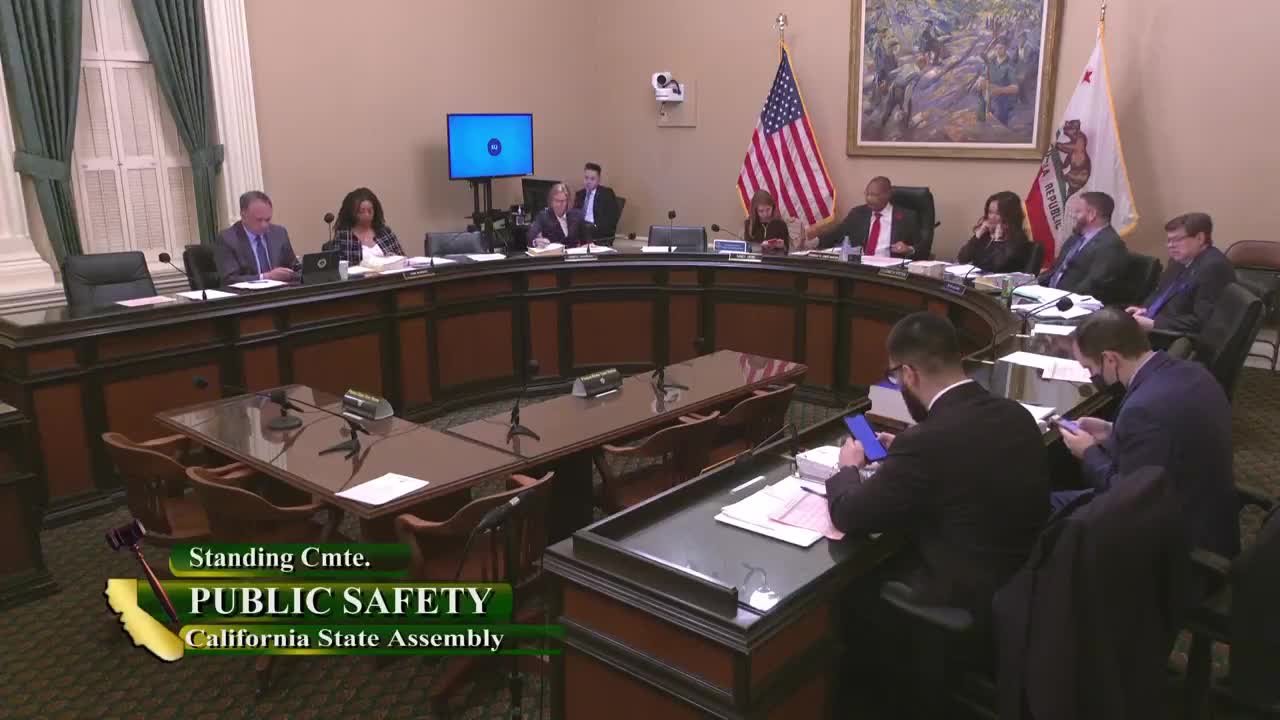 8MIN
Assembly Standing Committee on Public Safety
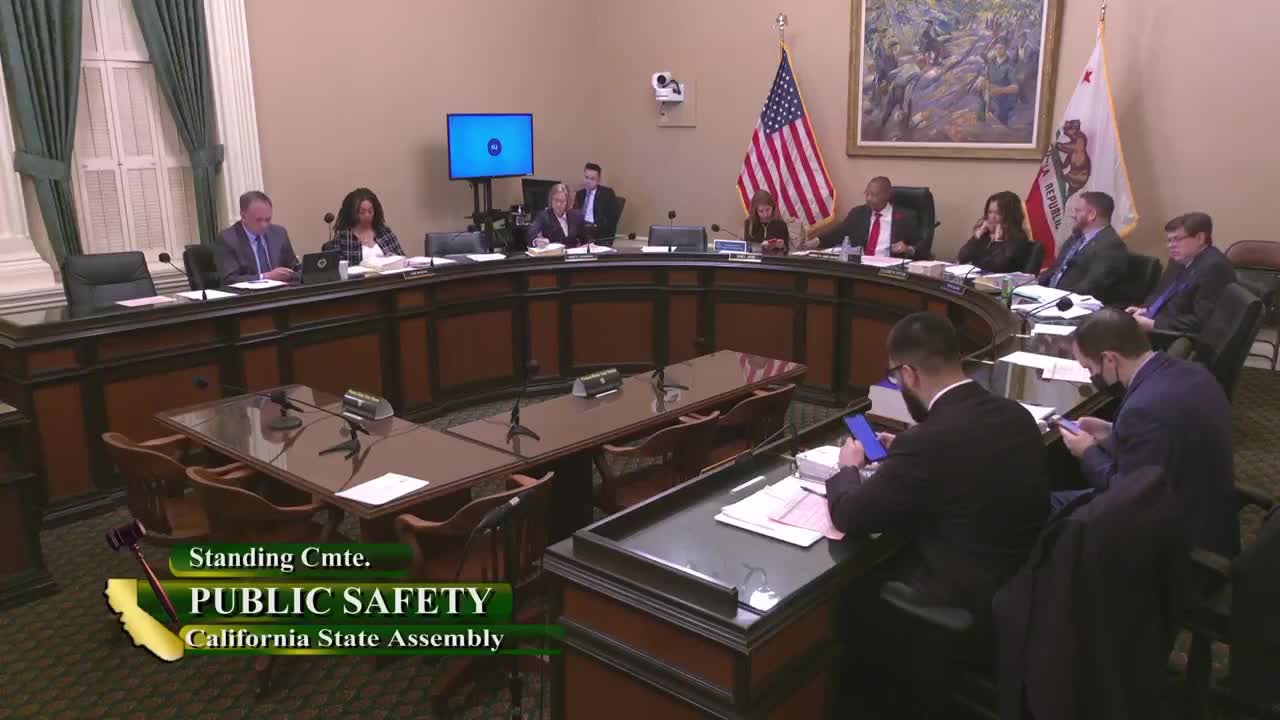 8MIN
Assembly Standing Committee on Public Safety
Bill Author
Bill Co-Author(s):