AB 353: Incarcerated persons: access to showers.
- Session Year: 2023-2024
- House: Assembly
- Latest Version Date: 2023-10-08
Current Status:
Passed
(2023-10-08: Chaptered by Secretary of State - Chapter 429, Statutes of 2023.)
Introduced
In Committee
First Chamber
In Committee
Second Chamber
Enacted
What does this bill do?
The bill would require people in California prisons and jails to be allowed to shower at least every other day. If a shower request is denied, the facility manager or their designee must approve and document the reason, and staff must post written or electronic notice in the housing unit when showers are temporarily unavailable or limited.
The summary is provided by generative AI which can make mistakes. For original language, please view the details in the table below.
Existing law authorizes the Secretary of the Department of Corrections and Rehabilitation to prescribe and amend rules and regulations for the administration of prisons. Existing law requires each incarcerated person to be provided with a bed, garments, and sufficient plain and wholesome food, as specified.
This bill would require incarcerated persons to be permitted to shower at least every other day. The bill would require, whenever a request for a shower is denied, the facility manager, or their designee, to approve the decision to prohibit an incarcerated person from showering, and would require the reasons for prohibiting the incarcerated person to shower to be documented. The bill would require staff to provide written or electronic notice to incarcerated persons in the affected housing unit if the showers are temporarily unavailable or limited in frequency. The notice shall include the reason the showers are unavailable or limited and shall be conspicuously posted in the affected housing unit.
Existing law authorizes the Secretary of the Department of Corrections and Rehabilitation to prescribe and amend rules and regulations for the administration of prisons. Existing law requires each incarcerated person to be provided with a bed, garments, and sufficient plain and wholesome food, as specified.
This bill would require incarcerated persons to be permitted to shower at least every other day. The bill would require, whenever a request for a shower is denied, the facility manager, or their designee, to approve the decision to prohibit an incarcerated person from showering, and would require the reasons for prohibiting the incarcerated person to shower to be documented.
(a)Incarcerated persons shall be permitted to shower at least every other day, unless access to a shower is prohibited as provided in subdivision (b).
(b)(1)Whenever a request for a shower pursuant to subdivision (a), or a request for a shower at any other time, is denied, the decision to prohibit showering shall be approved by the facility manager or their designee, and the reason or reasons for prohibiting an incarcerated person to shower shall be documented.
(2)Notwithstanding paragraph (1), if showers are temporarily unavailable or otherwise limited in frequency, staff shall provide written or electronic notification that includes the reason showers are unavailable or limited. The notice shall be made available to any incarcerated person in the affected housing unit and shall be conspicuously posted in the affected housing unit.
(a)Incarcerated persons shall be permitted to shower at least every other day, unless access to a shower is prohibited as provided in subdivision (b).
(b)Whenever a request for a shower pursuant to subdivision (a), or a request for a shower at any other time, is denied, the decision to prohibit showering shall be approved by the facility manager or their designee, and the reason or reasons for prohibiting an incarcerated person to shower shall be documented.
|
Date
|
Status
|
|---|---|
| Oct 8, 2023 | Chaptered by Secretary of State - Chapter 429, Statutes of 2023. |
| Oct 8, 2023 | Approved by the Governor. |
| Sep 20, 2023 | Enrolled and presented to the Governor at 4 p.m. |
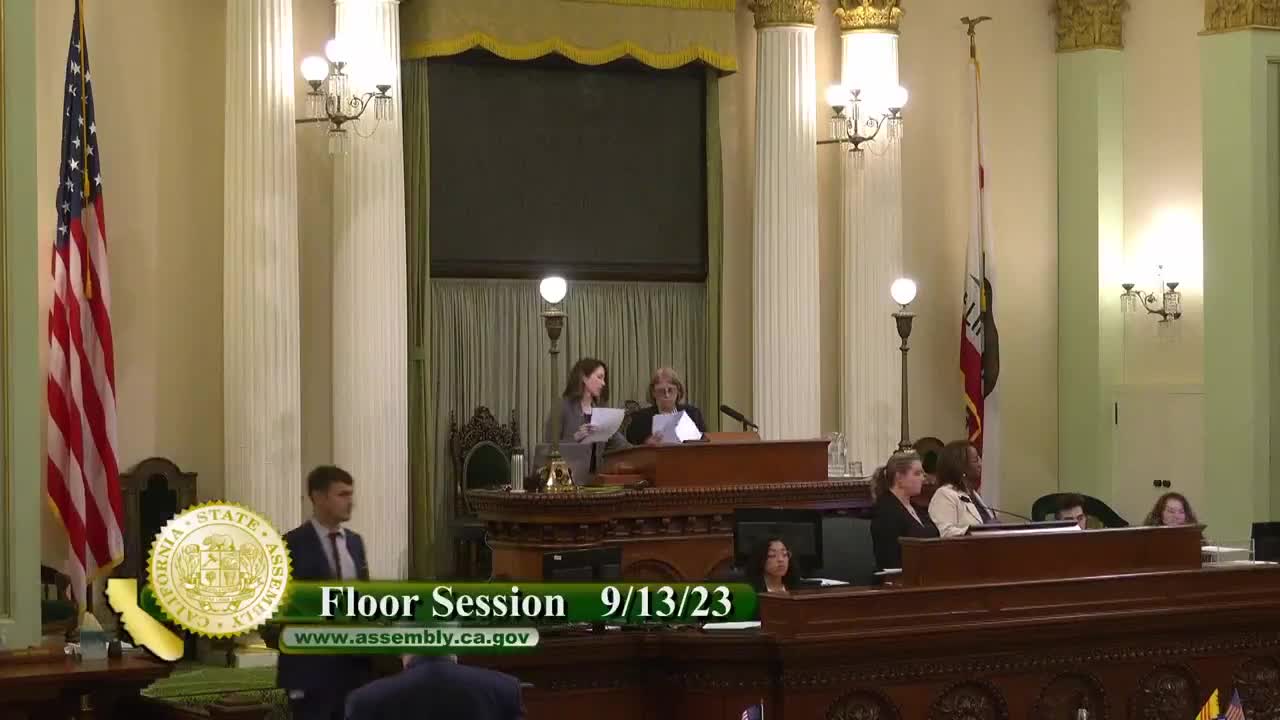
| Sep 13, 2023 | Senate amendments concurred in. To Engrossing and Enrolling. (Ayes 79. Noes 0. Page 3473.). |
| Sep 13, 2023 | In Assembly. Concurrence in Senate amendments pending. |
| Sep 13, 2023 | Read third time. Passed. Ordered to the Assembly. (Ayes 39. Noes 0. Page 2707.). |
| Sep 11, 2023 | Read second time. Ordered to third reading. |
| Sep 8, 2023 | Read third time and amended. Ordered to second reading. |
| Aug 17, 2023 | Ordered to third reading. |
| Aug 17, 2023 | From Consent Calendar. |
| Aug 15, 2023 | Read second time. Ordered to Consent Calendar. |
| Aug 14, 2023 | From committee: Be ordered to second reading file pursuant to Senate Rule 28.8 and ordered to Consent Calendar. |
| Jul 12, 2023 | From committee: Do pass and re-refer to Com. on APPR with recommendation: To Consent Calendar. (Ayes 4. Noes 0.) (July 11). Re-referred to Com. on APPR. |
| Jun 14, 2023 | Referred to Com. on PUB S. |
| Jun 1, 2023 | In Senate. Read first time. To Com. on RLS. for assignment. |
| May 31, 2023 | Read third time. Passed. Ordered to the Senate. (Ayes 80. Noes 0. Page 1970.) |
| May 18, 2023 | Read second time. Ordered to third reading. |
| May 18, 2023 | From committee: Do pass. (Ayes 15. Noes 0.) (May 18). |
| Apr 19, 2023 | In committee: Set, first hearing. Referred to APPR. suspense file. |
| Mar 7, 2023 | From committee: Do pass and re-refer to Com. on APPR. with recommendation: To Consent Calendar. (Ayes 8. Noes 0.) (March 7). Re-referred to Com. on APPR. |
| Feb 9, 2023 | Referred to Com. on PUB. S. |
| Feb 1, 2023 | From printer. May be heard in committee March 3. |
| Jan 31, 2023 | Read first time. To print. |
|
Date
|
Description
|
Location
|
Votes
|
|
|---|---|---|---|---|
| Sep 13, 2023 | AB 353 Jones-Sawyer Concurrence in Senate Amendments | Assembly Floor |
Passed |
|
| Sep 13, 2023 | Assembly 3rd Reading AB353 Jones-Sawyer By Ochoa Bogh | Senate Floor |
Passed |
|
| Jul 11, 2023 | Do pass, but first be re-referred to the Committee on [Appropriations] with the recommendation: To Consent Calendar | Senate Standing Committee on Public Safety |
Passed |
|
| May 31, 2023 | AB 353 Jones-Sawyer Assembly Third Reading | Assembly Floor |
Passed |
|
| May 18, 2023 | Do pass. | Assembly Standing Committee on Appropriations |
Passed |
|
| Mar 7, 2023 | Do pass and be re-referred to the Committee on [Appropriations] with recommendation: To Consent Calendar | Assembly Standing Committee on Public Safety |
Passed |
This list shows positions taken on this bill by organizations on the date displayed, which is linked to the original source.
Positions by individuals are not included.
|
Organization
|
Position
|
Date
|
|---|---|---|
| Aclu California Action | ** Support | |
| California Public Defenders Association | ** Support | |
| Ella Baker Center For Human Rights | ** Support | |
| Initiate Justice | ** Support | |
| Los Angeles County District AttorneyS Office | ** Support | |
| National Association Of Social Workers, California Chapter | ** Support |
CONCURRENCE IN SENATE AMENDMENTS
CSA1 Bill Id:AB 353
Author:(Jones-Sawyer)
As Amended Ver:September 8, 2023
Majority vote
SUMMARY
Requires persons incarcerated at the California Department of Corrections and Rehabilitation (CDCR) to be permitted to shower at least every other day.
Senate Amendments
- Require, if showers are temporarily unavailable or otherwise limited in frequency, CDCR staff to provide written or electronic notification that includes the reason showers are unavailable or limited.
- Provide that the notice shall be made available to any incarcerated person in the affected housing unit and shall be conspicuously posted in the affected housing unit.
COMMENTS
As Passed by The Assembly: This bill required incarcerated persons to be permitted to shower at least every other day.
Major Provisions
- Required CDCR to permit incarcerated persons to shower at least every other day, unless access to a shower is prohibited.
- Provided that whenever a request for a shower is prohibited or denied, the facility manager or their designee shall approve the decision, and the reasons shall be documented.
According to the Author
"All human beings have a right to ensure good hygiene, regardless of their status in society. It is immoral, inhumane, and cruel to deprive someone of their right to shower. In spite of this, reports from persons housed at CDCR prisons shine a light on the abuses that are being committed against them. AB 353 seeks to rectify one of those by spelling out in law an incarcerated person's right to shower and uphold proper hygiene. Specifically, this bill guarantees that persons incarcerated at CDCR have access to showers, at least every other day, regardless of whether or not they have an employment position while incarcerated."
Arguments in Support
According to Initiate Justice, "Although regulations ensure the hygiene practices of incarcerated persons, those detained at the California Department of Corrections and Rehabilitation (CDCR) facilities have reported limited access to showers, a basic human right. If a person misses a shower for any reason, they are not allowed another opportunity to clean themselves. Incarcerated people have reportedly missed their chance to shower due to participation in other programming, medical appointments, or even "recreation" time. As a result, incarcerated individuals can go up to a week without taking a shower, essentially forced to sit in the stench of their body odor and musty clothes. This is not only inhumane but also very unsanitary and detrimental to each individual's physical and mental health. Regardless of where individuals find themselves in life, human beings should not be denied the opportunity to shower.
"AB 353 (Jones-Sawyer) would improve these inhumane practices by ensuring that those incarcerated in CDCR facilities have access to a shower, no less than every other day, regardless of job placement, education or other assignments that would cause an individual to miss their shower time as governed by the correctional officers."
Arguments in Opposition
None submitted
FISCAL COMMENTS
According to the Senate Appropriations Committee:
- The California Department of Corrections and Rehabilitation (CDCR) anticipates minimal costs to provide showers to the entire incarcerated population, as required under this bill.
- The Department of Justice (DOJ) estimates cost of an unknown, but potentially significant amount (Legal Services Revolving Fund). Should this bill pass, DOJ anticipates legal challenges to the extent inmates file lawsuits against CDCR over not being permitted adequate shower time. DOJ indicates these lawsuits would require an increase in attorney hours, but the additional number of Deputy Attorneys General needed, along with their legal complement, is unknown. Although these costs will impact the Legal Services Revolving Fund, they are reimbursable through direct billings to CDCR, a client agency.
- Potential costs of an unknown amount to the Department of State Hospitals to the extent its facilities are impacted by this bill.
VOTES:
ASM PUBLIC SAFETY: 8-0-0
YES: Jones-Sawyer, Alanis, Bonta, Bryan, Lackey, Ortega, Santiago, Zbur
ASM APPROPRIATIONS: 15-0-1
YES: Holden, Megan Dahle, Bryan, Calderon, Wendy Carrillo, Dixon, Mike Fong, Hart, Lowenthal, Mathis, Papan, Pellerin, Sanchez, Weber, Ortega
ABS, ABST OR NV: Robert Rivas
ASSEMBLY FLOOR: 80-0-0
YES: Addis, Aguiar-Curry, Alanis, Alvarez, Arambula, Bains, Bauer-Kahan, Bennett, Berman, Boerner, Bonta, Bryan, Calderon, Juan Carrillo, Wendy Carrillo, Cervantes, Chen, Connolly, Megan Dahle, Davies, Dixon, Essayli, Flora, Mike Fong, Vince Fong, Friedman, Gabriel, Gallagher, Garcia, Gipson, Grayson, Haney, Hart, Holden, Hoover, Irwin, Jackson, Jones‑Sawyer, Kalra, Lackey, Lee, Low, Lowenthal, Maienschein, Mathis, McCarty, McKinnor, Muratsuchi, Stephanie Nguyen, Ortega, Pacheco, Papan, Jim Patterson, Joe Patterson, Pellerin, Petrie-Norris, Quirk-Silva, Ramos, Reyes, Luz Rivas, Robert Rivas, Rodriguez, Blanca Rubio, Sanchez, Santiago, Schiavo, Soria, Ta, Ting, Valencia, Villapudua, Waldron, Wallis, Ward, Weber, Wicks, Wilson, Wood, Zbur, Rendon
UPDATED
VERSION: September 8, 2023
CONSULTANT: Liah Burnley / PUB. S. / (916) 319-3744 FN: 0002295
SENATE RULES COMMITTEE Office of Senate Floor Analyses (916) 651-1520 Fax: (916) 327-4478 | AB 353 |
THIRD READING
Bill No: AB 353
Author: Jones-Sawyer (D)
Amended: 9/8/23 in Senate
Vote: 21
SENATE PUBLIC SAFETY COMMITTEE: 4-0, 7/11/23
AYES: Bradford, Ochoa Bogh, Skinner, Wiener
NO VOTE RECORDED: Wahab
SENATE APPROPRIATIONS COMMITTEE: Senate Rule 28.8
ASSEMBLY FLOOR: 80-0, 5/31/23 - See last page for vote
SUBJECT: Incarcerated persons: access to showers
SOURCE: Author
DIGEST:
This bill requires that each individual incarcerated in a state prison be permitted to shower at least every other day, and requires that denials for shower requests be approved by the facility manager as well as documented with the reason the request was denied.
Senate Floor Amendments of 9/8/23 require written or electronic notification if the showers are temporarily unavailable or limited including the reason the showers are unavailable or limited, and specify that the notice must be made available to any incarcerated person in the affected housing unit and visibly posted in the housing unit.
ANALYSIS:
Existing law:
- Prohibits cruel and unusual punishment. (U.S. Const., 8th Amend.)
- Prohibits cruel and unusual punishment. (Cal. Const., art. I, § 17.)
- Provides that a person sentenced to imprisonment in a state prison may be deprived of such rights, and only such rights, as is reasonably related to legitimate penological interests. (Pen. Code, § 2600, subd. (a).)
- Makes it unlawful to use any cruel, corporal or unusual punishment, or to inflict any treatment or allow any lack of care which would injure or impair the health of the incarcerated individual. (Pen. Code, § 2652.)
- Requires the California Department of Corrections and Rehabilitation (CDCR) to provide each incarcerated individual with a bed, sufficient covering of blankets, and with garments of substantial material and of distinctive manufacture, and with sufficient plain and wholesome food of such variety as may be most conducive to good health. (Pen. Code, § 2084, subd. (a).)
- Authorizes CDCR wardens to make temporary rules and regulations, in case of emergency, to remain in force until CDCR otherwise provides. (Pen. Code, § 2086.)
This bill:
- Requires that incarcerated individuals be permitted to shower at least every other day.
- Requires, whenever a request for a shower is denied, that the decision be approved by the facility manager, and the reason or reasons for prohibiting an incarcerated person to shower be documented.
Background
- Constitutional Prohibition Against Cruel and Unusual Punishment. The Eighth Amendment’s prohibition against cruel and unusual punishment protects incarcerated individuals from inhumane conditions of confinement. (Farmer v. Brennan (1994) 511 U.S. 825, 832.) Prison officials therefore have a “duty to ensure that prisoners are provided with adequate shelter, food, clothing, sanitation, medical care, and personal safety.” (Johnson v. Lewis (9th Cir. 2000) 217 F.3d 726, 731.)
Although routine discomforts in prison are inadequate to show a violation of the Eighth Amendment, “those deprivations denying the minimal civilized measure of life’s necessities are sufficiently grave to form the basis of an Eighth Amendment violation.” (Hudson v. McMillian (1992) 503 U.S. 1, 9.) “The circumstances, nature, and duration of a deprivation of these necessities must be considered in determining whether a constitutional violation has occurred.” (Johnson v. Lewis, supra, 217 F.3d at p. 731.)
Accordingly, “there is no constitutional right to a certain number of showers per week and an occasional or temporary deprivation of a shower does not rise to the level of a constitutional violation.” (Ontiveros v. Eldridge (E.D. Cal. Apr. 13, 2020) U.S.Dist.LEXIS 64538, at *5.) But, “the denial of a shower on a continuous basis at some point will rise to the level of violating the Eighth Amendment.” (Pamer v. Schwarzenegger (E.D.Cal. Dec. 22, 2010) U.S.Dist.LEXIS 135824, at *14.) “A prison official’s failure to provide a prisoner with a shower or out-of-cell exercise for this extended period of time is sufficiently serious” to satisfy an Eighth Amendment claim. (Ekene v. Cash (C.D.Cal. Jan. 8, 2013) U.S.Dist.LEXIS 81952, at *20); see also Keenan v. Hall (9th Cir. 1996) 83 F.3d 1083, 10910 [Eighth Amendment guarantees sanitation and personal hygiene supplies].
- CDCR Regulations on Personal Hygiene. Regulations require CDCR institutions to “provide the means for all inmates to keep themselves and their living quarters clean and to practice good health habits.” (Cal. Code Regs., tit. 15, § 3060.) The regulations further provide that incarcerated individuals “must keep themselves clean, and practice those health habits essential to the maintenance of physical and mental well-being.” (Cal. Code Regs., tit. 15, § 3061.) Further, CDCR is required to provide all incarcerated individuals with “basic supplies necessary for maintaining personal hygiene,” including soap, toothpaste, toothbrush, and toilet paper. (Ibid.)
CDCR’s Department Operational Manual (DOM) requires incarcerated individuals in segregated confinement to be permitted to shower at least three times a week. (DOM §§ 52080.21.6 & 52080.33.6.) However, there are no other rules regarding access to showers.
In comparison, local correctional facilities are required to permit incarcerated individuals to “shower/bathe upon assignment to a housing unit and at least every other day or more often if possible. Absent exigent circumstances, no person shall be prohibited from showering at least every other day following assignment to a housing unit. If showering is prohibited, it must be approved by the facility manager or designee, and the reason(s) for prohibition shall be documented.” (Cal. Code. Regs., tit. 15, § 1266.)
This bill requires that individuals incarcerated at CDCR institutions are allowed to shower at least every other day. CDCR would retain discretion to set the length and shower schedule. In addition, showers could still be denied or prohibited if the reasons are documented and the denial is approved by the facility manager.
- Impact of Shower Restrictions. Individuals incarcerated in the state’s prisons have reported that they are unable to shower daily. One individual housed at San Quentin laid out the issue in a guest piece to Cal Matters:
For five years, I got up at 2 every morning and labored in the San Quentin State Prison kitchen, stirring kettles, scraping grills and scrubbing countertops and floors — covering myself in kitchen slime — just to get a five-minute shower.
I learned to keep a job if I wanted a daily shower. But hundreds of prisoners who live near me are unable to shower daily, despite the fact that outbreaks of diseases such as COVID-19 and norovirus and infestations of bedbugs and scabies are common.
The use of water as a weapon over prisoners by the California Department of Corrections and Rehabilitation violates basic human decency and endangers health — especially during a deadly pandemic.
…
Prisoners who don’t have jobs — including those pursuing GEDs or college degrees — are allowed a five-minute shower on Tuesdays, Thursdays and Saturdays. To shower every day, you have to work to help maintain the prison or its industries.
Yet every day, most prisoners run up and down basketball courts, jog around the track, slide into home plate, or participate in other activities in the prison yard. Hundreds of men, soaked in sweat, return to their cramped cells and cannot shower.
(Steve Brooks, Tying Water Access to Labor in Overcrowded Prisons is Wrong (Jun. 28, 2022) available at <https://calmatters.org/commentary/2022/06/tying-water-access-to-labor-in-overcrowded-prisons-is-wrong/ .)
Many incarcerated people spend most of their time in “double occupancy—11-foot-by-four-foot cells that leave only three feet between each incarcerated person’s two-and-a-half-foot-wide bunk bed and shared sink and toilet, with limitations on flushing.” (Olivia Heffernan and Steven Brooks, Prisoners Forced to Work for Showers Are Now Being Punished for Taking Them (Sept. 27, 2022) available at <https://www.thenation.com/article/society/water-restrictions-drought-california-prisons/ .) Amid a pandemic, heat, and limited access to showers, some incarcerated individuals have received rule violations for taking showers outside of allotted days and times. (Ibid.)
Ensuring incarcerated individuals have regular access to shower plays a significant role in public health, infection control, and preventing the spread of communicable disease. For example, scabies and lice are common problems in correctional facilities, and appropriate management of suspected cases includes shower access. MRSA is hyperendemic in most correctional facilities, and risk factors include prolonged incarceration. Liberalizing access to soap, showers, and clean clothing may lead to less opportunity for secondary transmission. (Joseph Bick, Infection Control in Jails and Prisons (2007) 45 Clinical Infectious Diseases 8, 1047-55.)
FISCAL EFFECT: Appropriation: No Fiscal Com.: Yes Local: No
SUPPORT: (Verified 9/8/23)
ACLU California Action
California Public Defenders Association
Ella Baker Center for Human Rights
Initiate Justice
Los Angeles County District Attorney’s Office
National Association of Social Workers, California Chapter
OPPOSITION: (Verified 9/8/23)
None received
ASSEMBLY FLOOR: 80-0, 5/31/23
AYES: Addis, Aguiar-Curry, Alanis, Alvarez, Arambula, Bains, Bauer-Kahan, Bennett, Berman, Boerner, Bonta, Bryan, Calderon, Juan Carrillo, Wendy Carrillo, Cervantes, Chen, Connolly, Megan Dahle, Davies, Dixon, Essayli, Flora, Mike Fong, Vince Fong, Friedman, Gabriel, Gallagher, Garcia, Gipson, Grayson, Haney, Hart, Holden, Hoover, Irwin, Jackson, Jones-Sawyer, Kalra, Lackey, Lee, Low, Lowenthal, Maienschein, Mathis, McCarty, McKinnor, Muratsuchi, Stephanie Nguyen, Ortega, Pacheco, Papan, Jim Patterson, Joe Patterson, Pellerin, Petrie-Norris, Quirk-Silva, Ramos, Reyes, Luz Rivas, Robert Rivas, Rodriguez, Blanca Rubio, Sanchez, Santiago, Schiavo, Soria, Ta, Ting, Valencia, Villapudua, Waldron, Wallis, Ward, Weber, Wicks, Wilson, Wood, Zbur, Rendon
Prepared by: Stephanie Jordan / PUB. S. /
9/11/23 13:43:25
**** END ****
SENATE COMMITTEE ON PUBLIC SAFETY
Senator Aisha Wahab, Chair
2023 - 2024 Regular
Bill No: AB 353 Hearing Date: July 11, 2023
Author: | Jones-Sawyer | ||
Version: | January 31, 2023 | ||
Urgency: | No | Fiscal: | Yes |
Consultant: | SJ | ||
Subject: Incarcerated persons: access to showers
HISTORY
Source: Author
Support: Anti-Recidivism Coalition; California Public Defenders Association; Ella Baker Center for Human Rights; Initiate Justice; Los Angeles County District Attorney’s Office; National Association of Social Workers, California Chapter; Social Change
Opposition: None known
Assembly Floor Vote: 80 - 0
PURPOSE
The purpose of this bill is to require that each individual incarcerated in a state prison be permitted to shower at least every other day, and requires that denials for shower requests be approved by the facility manager as well as documented with the reason the request was denied.
Existing federal law prohibits cruel and unusual punishment. (U.S. Const., 8th Amend.)
Existing law prohibits cruel and unusual punishment. (Cal. Const., art. I, § 17.)
Existing law provides that a person sentenced to imprisonment in a state prison may be deprived of such rights, and only such rights, as is reasonably related to legitimate penological interests. (Pen. Code, § 2600, subd. (a).)
Existing law makes it unlawful to use any cruel, corporal or unusual punishment, or to inflict any treatment or allow any lack of care which would injure or impair the health of the incarcerated individual. (Pen. Code, § 2652.)
Existing law requires CDCR to provide each incarcerated individual with a bed, sufficient covering of blankets, and with garments of substantial material and of distinctive manufacture, and with sufficient plain and wholesome food of such variety as may be most conducive to good health. (Pen. Code, § 2084, subd. (a).)
Existing law authorizes CDCR wardens to make temporary rules and regulations, in case of emergency, to remain in force until CDCR otherwise provides. (Pen. Code, § 2086.)
This bill requires that incarcerated individuals be permitted to shower at least every other day.
This bill requires, whenever a request for a shower is denied, that the decision be approved by the facility manager, and the reason or reasons for prohibiting an incarcerated person to shower be documented.
COMMENTS
- Need For This Bill
According to the author:
Every person has the right to maintain good hygiene, regardless of their position in society. It is unjust, inhumane, and cruel to deny someone the opportunity to take a shower. Unfortunately, reports from individuals housed in CDCR prisons have shed light on the mistreatment they are facing. AB 353 aims to address one of these issues by legally stipulating the right of incarcerated individuals to shower and maintain proper hygiene. This bill specifically ensures that people in CDCR custody have access to showers at least every other day, irrespective of their employment status while incarcerated.
- Constitutional Prohibition Against Cruel and Unusual Punishment
The Eighth Amendment’s prohibition against cruel and unusual punishment protects incarcerated individuals from inhumane conditions of confinement. (Farmer v. Brennan (1994) 511 U.S. 825, 832.) Prison officials therefore have a “duty to ensure that prisoners are provided with adequate shelter, food, clothing, sanitation, medical care, and personal safety.” (Johnson v. Lewis (9th Cir. 2000) 217 F.3d 726, 731.)
Although routine discomforts in prison are inadequate to show a violation of the Eighth Amendment, “those deprivations denying the minimal civilized measure of life’s necessities are sufficiently grave to form the basis of an Eighth Amendment violation.” (Hudson v. McMillian (1992) 503 U.S. 1, 9.) “The circumstances, nature, and duration of a deprivation of these necessities must be considered in determining whether a constitutional violation has occurred.” (Johnson v. Lewis, supra, 217 F.3d at p. 731.)
Accordingly, “there is no constitutional right to a certain number of showers per week and an occasional or temporary deprivation of a shower does not rise to the level of a constitutional violation.” (Ontiveros v. Eldridge (E.D. Cal. Apr. 13, 2020) U.S.Dist.LEXIS 64538, at *5.) But, “the denial of a shower on a continuous basis at some point will rise to the level of violating the Eighth Amendment.” (Pamer v. Schwarzenegger (E.D.Cal. Dec. 22, 2010) U.S.Dist.LEXIS 135824, at *14.) “A prison official’s failure to provide a prisoner with a shower or out-of-cell exercise for this extended period of time is sufficiently serious” to satisfy an Eighth Amendment claim. (Ekene v. Cash (C.D.Cal. Jan. 8, 2013) U.S.Dist.LEXIS 81952, at *20); see also Keenan v. Hall (9th Cir. 1996) 83 F.3d 1083, 1091 [Eighth Amendment guarantees sanitation and personal hygiene supplies].)
- CDCR Regulations on Personal Hygiene
Regulations require CDCR institutions to “provide the means for all inmates to keep themselves and their living quarters clean and to practice good health habits.” (Cal. Code Regs., tit. 15, § 3060.) The regulations further provide that incarcerated individuals “must keep themselves clean, and practice those health habits essential to the maintenance of physical and mental well-being.” (Cal. Code Regs., tit. 15, § 3061.) Further, CDCR is required to provide all incarcerated individuals with “basic supplies necessary for maintaining personal hygiene,” including soap, toothpaste, toothbrush, and toilet paper. (Ibid.)
CDCR’s Department Operational Manual (DOM) requires incarcerated individuals in segregated confinement to be permitted to shower at least three times a week. (DOM §§ 52080.21.6 & 52080.33.6.) However, there are no other rules regarding access to showers.
In comparison, local correctional facilities are required to permit incarcerated individuals to “shower/bathe upon assignment to a housing unit and at least every other day or more often if possible. Absent exigent circumstances, no person shall be prohibited from showering at least every other day following assignment to a housing unit. If showering is prohibited, it must be approved by the facility manager or designee, and the reason(s) for prohibition shall be documented.” (Cal. Code. Regs., tit. 15, § 1266.)
This bill requires that individuals incarcerated at CDCR institutions are allowed to shower at least every other day. CDCR would retain discretion to set the length and shower schedule. In addition, showers could still be denied or prohibited if the reasons are documented and the denial is approved by the facility manager.
- Impact of Shower Restrictions
Individuals incarcerated in the state’s prisons have reported that they are unable to shower daily. One individual housed at San Quentin laid out the issue in a guest piece to Cal Matters:
For five years, I got up at 2 every morning and labored in the San Quentin State Prison kitchen, stirring kettles, scraping grills and scrubbing countertops and floors — covering myself in kitchen slime — just to get a five-minute shower.
I learned to keep a job if I wanted a daily shower. But hundreds of prisoners who live near me are unable to shower daily, despite the fact that outbreaks of diseases such as COVID-19 and norovirus and infestations of bedbugs and scabies are common.
The use of water as a weapon over prisoners by the California Department of Corrections and Rehabilitation violates basic human decency and endangers health — especially during a deadly pandemic.
…
Prisoners who don’t have jobs — including those pursuing GEDs or college degrees — are allowed a five-minute shower on Tuesdays, Thursdays and Saturdays. To shower every day, you have to work to help maintain the prison or its industries.
Yet every day, most prisoners run up and down basketball courts, jog around the track, slide into home plate, or participate in other activities in the prison yard. Hundreds of men, soaked in sweat, return to their cramped cells and cannot shower.
(Steve Brooks, Tying Water Access to Labor in Overcrowded Prisons is Wrong (Jun. 28, 2022) available at <https://calmatters.org/commentary/2022/06/tying-water-access-to-labor-in-overcrowded-prisons-is-wrong/>.)
Many incarcerated people spend most of their time in “double occupancy—11-foot-by-four-foot cells that leave only three feet between each incarcerated person’s two-and-a-half-foot-wide bunk bed and shared sink and toilet, with limitations on flushing.” (Olivia Heffernan and Steven Brooks, Prisoners Forced to Work for Showers Are Now Being Punished for Taking Them (Sept. 27, 2022) available at <https://www.thenation.com/article/society/water-restrictions-drought-california-prisons/>.) Amid a pandemic, heat, and limited access to showers, some incarcerated individuals have received rule violations for taking showers outside of allotted days and times. (Ibid.)
Ensuring incarcerated individuals have regular access to shower plays a significant role in public health, infection control, and preventing the spread of communicable disease. For example, scabies and lice are common problems in correctional facilities, and appropriate management of suspected cases includes shower access. MRSA is hyperendemic in most correctional facilities, and risk factors include prolonged incarceration. Liberalizing access to soap, showers, and clean clothing may lead to less opportunity for secondary transmission. (Joseph Bick, Infection Control in Jails and Prisons (2007) 45 Clinical Infectious Diseases 8, 1047-55.)
- Argument in Support
The Los Angeles District Attorney’s Office writes:
AB 353 requires the California Department of Corrections and Rehabilitation (CDCR) to permit inmates to shower at least every other day, unless access to a shower is prohibited. Whenever a request for a shower is prohibited or denied, the facility manager or their designee shall approve the decision and document the reasons for the denial.
CDCR’s Department of Operational Manual (DOM) requires inmates in segregated confinement to be permitted to shower at least times a week. There are no other regulations regarding access to showers… In comparison, local correctional facilities are required to permit inmates to
“shower/bathe upon assignment to a housing unit and at least every other day or more often if possible. Absent exigent circumstances, no person shall be prohibited from showering at least every other day following assignment to a housing unit. If showering is prohibited, it must be approved by the facility manager or designee, and the reason(s) for prohibition shall be documented.”
…AB 353 ensures that California honors a basic human right and human dignity even for individuals who have committed serious offenses.
AB 353 will help improve the mental health or our inmate population and reduce health issues/problems that are common in correctional facilities.
-- END --
ASSEMBLY THIRD READING
ATR Bill Id:AB 353
Author:(Jones-Sawyer)
As Introduced Ver:January 31, 2023
Majority vote
SUMMARY
Requires incarcerated persons to be permitted to shower at least every other day.
Major Provisions
- Requires the California Department of Corrections and Rehabilitation (CDCR) to permit incarcerated persons to shower at least every other day, unless access to a shower is prohibited.
- Provides that whenever a request for a shower is prohibited or denied, the facility manager or their designee shall approve the decision, and the reasons shall be documented.
COMMENTS
According to the Author
"All human beings have a right to ensure good hygiene, regardless of their status in society. It is immoral, inhumane, and cruel to deprive someone of their right to shower. In spite of this, reports from persons housed at CDCR prisons shine a light on the abuses that are being committed against them. AB 353 seeks to rectify one of those by spelling out in law an incarcerated person's right to shower and uphold proper hygiene. Specifically, this bill guarantees that persons incarcerated at CDCR have access to showers, at least every other day, regardless of whether or not they have an employment position while incarcerated."
Arguments in Support
According to Initiate Justice, "Although regulations ensure the hygiene practices of incarcerated persons, those detained at the California Department of Corrections and Rehabilitation (CDCR) facilities have reported limited access to showers, a basic human right. If a person misses a shower for any reason, they are not allowed another opportunity to clean themselves. Incarcerated people have reportedly missed their chance to shower due to participation in other programming, medical appointments, or even "recreation" time. As a result, incarcerated individuals can go up to a week without taking a shower, essentially forced to sit in the stench of their body odor and musty clothes. This is not only inhumane but also very unsanitary and detrimental to each individual's physical and mental health. Regardless of where individuals find themselves in life, human beings should not be denied the opportunity to shower.
"AB 353 (Jones-Sawyer) would improve these inhumane practices by ensuring that those incarcerated in CDCR facilities have access to a shower, no less than every other day, regardless of job placement, education or other assignments that would cause an individual to miss their shower time as governed by the correctional officers."
Arguments in Opposition
None submitted
FISCAL COMMENTS
According to the Assembly Appropriations Committee:
- The California Department of Corrections and Rehabilitation (CDCR) anticipates minimal costs to provide showers to the entire incarcerated population, as required under this bill.
- The Department of Justice (DOJ) estimates cost of an unknown, but potentially significant amount (Legal Services Revolving Fund). Should this bill pass, DOJ anticipates legal challenges to the extent inmates file lawsuits against CDCR over not being permitted adequate shower time. DOJ indicates these lawsuits would require an increase in attorney hours, but the additional number of Deputy Attorneys General needed, along with their legal complement, is unknown. Although these costs will impact the Legal Services Revolving Fund, they are reimbursable through direct billings to CDCR, a client agency.
- Potential costs of an unknown amount to the Department of State Hospitals to the extent its facilities are impacted by this bill.
VOTES
ASM PUBLIC SAFETY: 8-0-0
YES: Jones-Sawyer, Alanis, Bonta, Bryan, Lackey, Ortega, Santiago, Zbur
ASM APPROPRIATIONS: 15-0-1
YES: Holden, Megan Dahle, Bryan, Calderon, Wendy Carrillo, Dixon, Mike Fong, Hart, Lowenthal, Mathis, Papan, Pellerin, Sanchez, Weber, Ortega
ABS, ABST OR NV: Robert Rivas
UPDATED
VERSION: January 31, 2023
CONSULTANT: Liah Burnley / PUB. S. / (916) 319-3744 FN: 0000693
Date of Hearing: April 19, 2023
ASSEMBLY COMMITTEE ON APPROPRIATIONS
Chris Holden, Chair
ABPCA Bill Id:AB 353
Author:(Jones-Sawyer) – As Introduced Ver:January 31, 2023
Policy Committee: | Public Safety | Vote: | 8 - 0 |
|
| ||
|
|
Urgency: No State Mandated Local Program: No Reimbursable: No
SUMMARY:
This bill requires an incarcerated person be permitted to shower at least every other day. This bill also requires when a request for a shower is denied, the facility manager, or their designee, approve the decision to prohibit an incarcerated person from showering, and requires the reason for the denial be documented.
FISCAL EFFECT:
- The California Department of Corrections and Rehabilitation (CDCR) anticipates minimal costs to provide showers to the entire incarcerated population, as required under this bill.
- The Department of Justice (DOJ) estimates cost of an unknown, but potentially significant amount (Legal Services Revolving Fund). Should this bill pass, DOJ anticipates legal challenges to the extent inmates file lawsuits against CDCR over not being permitted adequate shower time. DOJ indicates these lawsuits would require an increase in attorney hours, but the additional number of Deputy Attorneys General needed, along with their legal complement, is unknown. Although these costs will impact the Legal Services Revolving Fund, they are reimbursable through direct billings to CDCR, a client agency.
- Potential costs of an unknown amount to the Department of State Hospitals to the extent its facilities are impacted by this bill.
COMMENTS:
- Purpose. According to the author:
This bill spells out in law an incarcerated person’s right to shower and uphold proper hygiene. Specifically, this bill guarantees that persons incarcerated at CDCR have access to showers, at least every other day, regardless of whether or not they have an employment position while incarcerated.
- Existing Regulations. Existing regulations require CDCR institutions to “provide the means for all inmates to keep themselves and their living quarters clean and to practice good health habits.” The regulations further provide that incarcerated persons:
Must keep themselves clean, and practice those health habits essential to the maintenance of physical and mental well-being. All inmates shall receive basic supplies necessary for maintaining personal hygiene. Inmates shall be provided products for washing hands, bathing, oral hygiene, and other personal hygiene, including but not limited to: soap, toothpaste or toothpowder, toothbrush, toilet paper.
CDCR’s Department Operational Manual (DOM) requires incarcerated persons in segregated confinement be permitted to shower at least three times a week. There are no further rules regarding access to showers. However, the DOM allows staff to report on an incarcerated person’s personal cleanliness. CDCR also instituted a number of water conservation measures during the drought that may have reduced the number of inmate showers.
- Related Legislation. AB 280 (Holden) requires, among other provisions, all detention facilities impose no limitation on services, treatment, or basic needs such as bedding, clothing, and food for individuals in segregated confinement. AB 280 is pending in this committee.
Analysis Prepared by: Jennifer Swenson / APPR. / (916) 319-2081
Date of Hearing: March 7, 2023
Counsel: Liah Burnley
ASSEMBLY COMMITTEE ON
Reginald Byron Jones-Sawyer, Sr., Chair
ABPCA Bill Id:
Author:() – As Ver:
SUMMARY:
Requires incarcerated persons to be permitted to shower at least every other day. Specifically, this bill:
- Requires the California Department of Corrections and Rehabilitation (CDCR) to permit incarcerated persons to shower at least every other day, unless access to a shower is prohibited.
- Provides that whenever a request for a shower is prohibited or denied, the facility manager or their designee shall approve the decision, and the reasons shall be documented.
EXISTING STATE LAW:
- Prohibits cruel and unusual punishment. (Cal. Const., art. I, § 17.)
- States that a person sentenced to imprisonment in a state prison may be deprived of such rights, and only such rights, as is reasonably related to legitimate penological interests. (Pen. Code, § 2600, subd. (a).)
- Provides that it shall be unlawful to use in the prisons, any cruel, corporal or unusual punishment or to inflict any treatment or allow any lack of care whatever which would injure or impair the health of the prisoner, inmate or person confined. (Pen. Code, § 2652.)
- Requires CDCR to provide each prisoner with a bed, sufficient covering of blankets, and with garments of substantial material and of distinctive manufacture, and with sufficient plain and wholesome food of such variety as may be most conducive to good health and that shall include the availability of plant-based meals. (Pen. Code, § 2084, subd. (a).)
- Allows CDCR wardens to make temporary rules and regulations, in case of emergency, to remain in force until CDCR otherwise provides. (Pen. Code, § 2086.)
EXISTING FEDERAL LAW: Prohibits cruel and unusual punishment. (U.S. Const., 8th Amend.)
FISCAL EFFECT:
Unknown
COMMENTS:
- Author’s Statement: According to the author, “All human beings have a right to ensure good hygiene, regardless of their status in society. It is immoral, inhumane, and cruel to deprive someone of their right to shower. In spite of this, reports from persons housed at CDCR prisons shine a light on the abuses that are being committed against them. AB 353 seeks to rectify one of those by spelling out in law an incarcerated person’s right to shower and uphold proper hygiene. Specifically, this bill guarantees that persons incarcerated at CDCR have access to showers, at least every other day, regardless of whether or not they have an employment position while incarcerated.”
- Constitutional Prohibition against Cruel and Unusual Punishment: The Eighth Amendment’s prohibition against cruel and unusual punishment protects prisoners from inhumane conditions of confinement. (Farmer v. Brennan (1994) 511 U.S. 825, 832.) Prison officials therefore have a “duty to ensure that prisoners are provided with adequate shelter, food, clothing, sanitation, medical care, and personal safety.” (Johnson v. Lewis (9th Cir. 2000) 217 F.3d 726, 731.)
Although routine discomforts in prison are inadequate to show a violation of the Eighth Amendment, “those deprivations denying the minimal civilized measure of life’s necessities are sufficiently grave to form the basis of an Eighth Amendment violation.” (Hudson v. McMillian (1992) 503 U.S. 1, 9.) “The circumstances, nature, and duration of a deprivation of these necessities must be considered in determining whether a constitutional violation has occurred.” (Johnson v. Lewis, supra, 217 F.3d at p. 731.)
Accordingly, “there is no constitutional right to a certain number of showers per week and an occasional or temporary deprivation of a shower does not rise to the level of a constitutional violation.” (Ontiveros v. Eldridge (E.D. Cal. Apr. 13, 2020) WL 1853003, at *2.) But, “the denial of a shower on a continuous basis at some point will rise to the level of violating the Eighth Amendment.” (Pamer v. Schwarzenegger (E.D.Cal. Dec. 22, 2010) U.S.Dist.LEXIS 135824, at *14.) “A prison official’s failure to provide a prisoner with a shower or out-of-cell exercise for this extended period of time is sufficiently serious” to satisfy an Eighth Amendment claim. (Ekene v. Cash (C.D.Cal. Jan. 8, 2013) U.S.Dist.LEXIS 81952, at *20); see also Keenan v. Hall (9th Cir. 1996) 83 F.3d 1083, 1091 [Eighth Amendment guarantees sanitation and personal hygiene].)
- CDCR Regulations on Personal Hygiene: Title 15 regulations require CDCR institutions to “provide the means for all inmates to keep themselves and their living quarters clean and to practice good health habits.” (Cal. Code Regs., tit. 15, § 3060.) The regulations further provide that incarcerated persons “must keep themselves clean, and practice those health habits essential to the maintenance of physical and mental well-being.” (Cal. Code Regs., tit. 15, § 3061.) “All inmates shall receive basic supplies necessary for maintaining personal hygiene. Inmates shall be provided products for washing hands, bathing, oral hygiene, and other personal hygiene, including but not limited to: soap, toothpaste or toothpowder, toothbrush, and toilet paper.” (Ibid.)
CDCR’s Department Operational Manual (DOM) requires incarcerated persons in segregated confinement to be permitted to shower at least three times a week. (DOM §§ 52080.21.6 & 52080.33.6.) There are no further rules regarding access to showers. However, the DOM allows staff to report on an incarcerated person’s personal cleanliness. (DOM § 72010.7.1.)
In comparison, the regulations require local correctional facilities to permit incarcerated persons to “shower/bathe upon assignment to a housing unit and at least every other day or more often if possible. Absent exigent circumstances, no person shall be prohibited from showering at least every other day following assignment to a housing unit. If showering is prohibited, it must be approved by the facility manager or designee, and the reason(s) for prohibition shall be documented.” (Cal. Code. Regs., tit. 15, § 1266.)
As is required of local correctional facilities, this bill would ensure that persons incarcerated at CDCR institutions are allowed to shower at least every other day. CDCR would retain discretion to set the length and shower schedule and can deny or prohibit showers, if the reasons are documented and the denial is approved by the facility manager. - Shower Restrictions for Water Efficiency and Conservation: To combat California’s severe drought, CDCR “implemented a combination of water conservation and water efficiency projects.” Water conservation efforts have included changes to operational procedures to reduce water consumption as required through CDCR’s implementation of Drought Action Plans. (CDCR, Water Efficiency & Conservation <https://www.cdcr.ca.gov/green/cdcr-green/water-efficiency-and-conservation/> [as of Feb. 22, 2023].)
“CDCR developed a statewide Drought Action Plan and required each institution to develop a site specific plan.” (CDCR, Sustainability Roadmap 2020-2021 California Department of Corrections and Rehabilitation at p. 82 <https://www.cdcr.ca.gov/green/wp-content/uploads/sites/176/2020/04/R_2020-21-CDCR-Sustainability-Roadmap-FINAL-Electronic-Signature.pdf> [as of Feb. 22, 2023].) Concerning showers, the Drought Action Plan mandates statewide that “inmate/ward shower duration shall not exceed 5 minutes,” requires institutions to “update and enforce existing shower schedules,” and to “shutdown and cease all inmate/ward showers that are not conducted inside each housing unit (i.e. yard showers, etc.)” (Id. at p. 83.) Other site-based measures include “inmate/ward workers assigned to culinary, construction/maintenance duties, and/or programs requiring showering shall be allowed to shower once daily not to exceed 5 minutes. All other inmates/wards will be permitted showers three times a week not to exceed 5 minutes.” (Ibid.) - Impact of Shower Restrictions on Incarcerated Persons: Incarcerated persons have reported that they are “unable to shower daily, despite the fact that outbreaks of diseases such as COVID-19 and norovirus and infestations of bedbugs and scabies are common.” (Cal Matters, Tying Water Access to Labor in Overcrowded Prisons is Wrong (June 2022) <https://calmatters.org/commentary/2022/06/tying-water-access-to-labor-in-overcrowded-prisons-is-wrong/> [as of Feb. 22, 2023].) “Prisoners who don’t have jobs — including those pursuing GEDs or college degrees — are allowed a five-minute shower on Tuesdays, Thursdays and Saturdays. To shower every day, you have to work to help maintain the prison or its industries. Yet every day, most prisoners run up and down basketball courts, jog around the track, slide into home plate, or participate in other activities in the prison yard.” (Ibid.) “Hundreds of men, soaked in sweat, return to their cramped cells and cannot shower. If we shower or even “bird bath” without permission, we can lose privileges, see our prison stay extended or have parole denied.” (Ibid.)
Many incarcerated people spend most of their time in “double occupancy—11-foot-by-four-foot cells that leave only three feet between each incarcerated person’s two-and-a-half-foot-wide bunk bed and shared sink and toilet, with limitations on flushing.” (The Nation, Prisoners Forced to Work for Showers Are Now Being Punished for Taking Them (2022) <https://www.thenation.com/article/society/water-restrictions-drought-california-prisons/> [as of Feb. 22, 2023].) Amid a pandemic, heat, and limited access to showers, some incarcerated individuals have received rule violations for taking showers outside of allotted days and times. (Ibid.) The lack of an opportunity to have a regular shower or otherwise maintain personal hygiene may be psychologically and physically degrading and humiliating.
Not only does providing regular showers ensure the hygiene and dignity of people in detention, but it also helps avoid the transmission of certain infectious diseases. Among other things, the probability of transmission of potentially pathogenic organisms is increased by prison crowding and rationed access to soap, water, and clean laundry. For example, ectoparasites, such as scabies and lice, are common problems in correctional facilities. Appropriate management of suspected cases includes shower access. MRSA is hyperendemic in most correctional facilities, and risk factors include prolonged incarceration. Liberalizing access to soap, showers, and clean clothing may lead to less opportunity for secondary transmission. (Bick, Joseph, Infection Control in Jails and Prisons (2007) 45 Clinical Infectious Diseases 8, 1047-55.) Ensuring incarcerated persons have access to shower regularly plays a significant role in public health, infection control and preventing the spread of communicable disease.
- Argument in Support: According to Initiate Justice, “Although regulations ensure the hygiene practices of incarcerated persons, those detained at the California Department of Corrections and Rehabilitation (CDCR) facilities have reported limited access to showers, a basic human right. If a person misses a shower for any reason, they are not allowed another opportunity to clean themselves. Incarcerated people have reportedly missed their chance to shower due to participation in other programming, medical appointments, or even “recreation” time. As a result, incarcerated individuals can go up to a week without taking a shower, essentially forced to sit in the stench of their body odor and musty clothes. This is not only inhumane but also very unsanitary and detrimental to each individual’s physical and mental health. Regardless of where individuals find themselves in life, human beings should not be denied the opportunity to shower.
“AB 353 (Jones-Sawyer) would improve these inhumane practices by ensuring that those incarcerated in CDCR facilities have access to a shower, no less than every other day, regardless of job placement, education or other assignments that would cause an individual to miss their shower time as governed by the correctional officers.” - Related Legislation: AB 280 (Holden) would require all detention facilities to impose no limitation on services, treatment, or basic needs such as bedding, clothing and food for individuals in segregated confinement. AB 280 is pending hearing in this Committee.
- Prior Legislation:
- AB 2321 (Jones-Sawyer), Chapter 781, Statutes of 2022, limits the use of juvenile room confinement and ensures that minors and wards confined at juvenile facilities are provided reasonable access to toilets at all hours.
- AB 2632 (Holden), of the 2021-2022 Legislative Session, would have required all detention facilities to impose no limitation on services, treatment, or basic needs such as bedding, clothing and food for individuals in segregated confinement. AB 2632 was vetoed.
- AB 2321 (Jones-Sawyer), Chapter 781, Statutes of 2022, limits the use of juvenile room confinement and ensures that minors and wards confined at juvenile facilities are provided reasonable access to toilets at all hours.
REGISTERED SUPPORT / OPPOSITION:
Support
California Public Defenders Association (CPDA)
Ella Baker Center for Human Rights
Initiate Justice
Opposition
None submitted
Analysis Prepared by:
Discussed in Hearing
View Older Hearings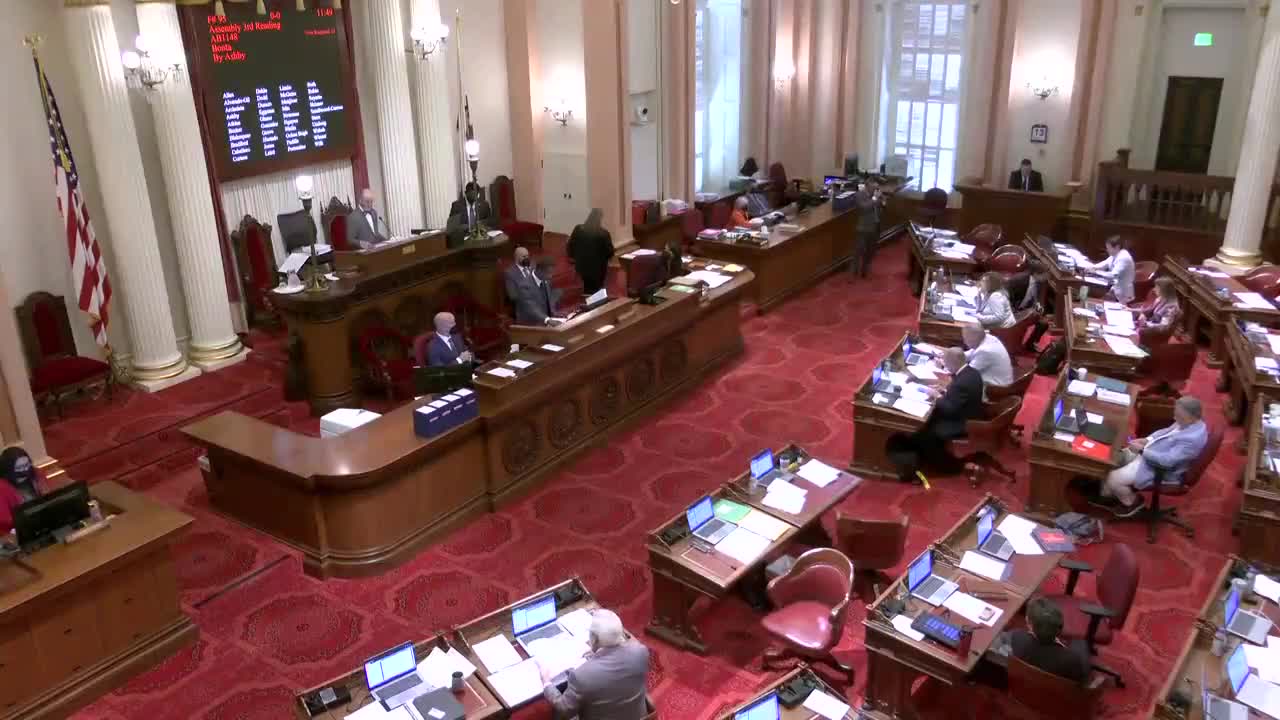

Bill Author

Bill Co-Author(s):