AB 402: Weeds: Broomrape Program.
- Session Year: 2023-2024
- House: Assembly
- Latest Version Date: 2023-10-10
Current Status:
Passed
(2023-10-10: Chaptered by Secretary of State - Chapter 651, Statutes of 2023.)
Introduced
In Committee
First Chamber
In Committee
Second Chamber
Enacted
Existing law establishes within state government the Department of Food and Agriculture in order to promote and protect the agricultural industry of the state. Existing law provides for the regulation of weeds and pest seeds generally. Existing law provides that a violation of the Food and Agricultural Code is a misdemeanor, unless a different penalty is expressly provided.
This bill would establish the Broomrape Board within the Department of Food and Agriculture to advise the Secretary of Food and Agriculture and make recommendations on all matters relating to broomrape, as specified. The bill would require the secretary to appoint at least 12 members to the board, consisting of at least 3 representatives from each specified geographical district and that are persons recommended by the tomato industry and approved by the secretary. The bill would authorize the secretary to appoint a public member and ex officio nonvoting members to the board, as specified.
The bill would require the board to recommend specified actions to the secretary, including, among other things, conducting research related to broomrape, surveying, detecting, analyzing, and treating causes of broomrape, and establishing an annual assessment rate or schedule of rates to be paid equally by producers and handlers of tomatoes. The bill would require the secretary, upon receipt of a recommendation from the board for the adoption of regulations, to accept or reject the recommendation or request that the board provide additional information. By authorizing new regulations, the bill would expand the scope of a crime and create a state-mandated local program. The bill would authorize the secretary to appoint a statewide coordinator to establish the board and enact any activities authorized by these provisions. The bill would create the Broomrape Management Account, a continuously appropriated account, in the Department of Food and Agriculture Fund and would specify the funds to be deposited into the account, thereby making an appropriation. The bill would require any funds within the account to be used to reimburse the secretary for the costs of carrying out recommendations of the board. The bill would exempt the account from specified budget reporting requirements. The bill would require any costs incurred by the department in establishing, administering, and enforcing the provisions of this bill to be reimbursed solely by the assessment.
The bill would authorize the secretary to adjust the assessment rate or schedule of rates from time to time when recommended by the board and would require the assessments collected from producers to be paid by handlers to the secretary. The bill would provide that any assessment that is imposed on the producer or handler is a personal debt of the person assessed and would require the payment of a specified penalty if the assessment is not paid. The bill would require any funds received pursuant to the above provisions to be deposited and handled in a manner determined by the board and to be expended for the purposes, administration, and enforcement of the broomrape program.
The bill would make the above provisions inoperative on July 1, 2028, and would require any funds received pursuant to the above provisions that remain on that date to be refunded on a pro rata basis to all persons from whom assessments were collected during the 12-month period before that date, unless the secretary finds the amounts returnable are minimal and therefore impractical to refund, or the person who paid the assessment cannot be located, in which case the bill would authorize the use of the funds for broomrape control or related research activities. The bill would repeal the broomrape program on January 1, 2029.
The California Constitution requires the state to reimburse local agencies and school districts for certain costs mandated by the state. Statutory provisions establish procedures for making that reimbursement.
This bill would provide that no reimbursement is required by this act for a specified reason.
Existing law establishes within state government the Department of Food and Agriculture in order to promote and protect the agricultural industry of the state. Existing law provides for the regulation of weeds and pest seeds generally. Existing law provides that a violation of the Food and Agricultural Code is a misdemeanor, unless a different penalty is expressly provided.
This bill would establish the Broomrape Board within the Department of Food and Agriculture to advise the Secretary of Food and Agriculture and make recommendations on all matters relating to broomrape, as specified. The bill would require the secretary to appoint at least 12 members to the board, consisting of at least 3 representatives from each specified geographical district and that are persons recommended by the tomato industry and approved by the secretary. The bill would authorize the secretary to appoint a public member and ex officio nonvoting members to the board, as specified.
The bill would require the board to recommend specified actions to the secretary, including, among other things, conducting research related to broomrape, surveying, detecting, analyzing, and treating causes of broomrape, and establishing an annual assessment rate or schedule of rates to be paid equally by producers and handlers. The bill would require the secretary, upon receipt of a recommendation from the board for the adoption of regulations, to accept, reject, or request that the board provide additional information. By authorizing new regulations, the bill would expand the scope of a crime and create a state-mandated local program. The bill would authorize the secretary to appoint a statewide coordinator to establish the board and enact any activities authorized by these provisions. The bill would create the Broomrape Management Account, a continuously appropriated account, in the Department of Food and Agriculture Fund and would specify the funds to be deposited into the account, thereby making an appropriation. The bill would require any funds within the account to be used to reimburse the secretary for the costs of carrying out recommendations of the board. The bill would exempt the account from specified budget reporting requirements. The bill would require any costs incurred by the department in establishing, administering, and enforcing the provisions of this bill to be covered solely by the assessment and nonstate funds. reimbursed solely by the assessment.
The bill would authorize the secretary to adjust the assessment rate or schedule of rates from time to time when recommended by the board and would require the assessments collected from producers to be paid by handlers to the secretary. The bill would provide that any assessment that is imposed on the producer or handler is a personal debt of the person assessed and would require the payment of a specified penalty if the assessment is not paid. The bill would require any funds received pursuant to the above provisions to be deposited and handled in a manner determined by the board and to be expended for the purposes, administration, and enforcement of the broomrape program.
The bill would make the above provisions inoperative on July 1, 2028, and would require any funds received pursuant to the above provisions that remain on that date to be refunded on a pro rata basis to all persons from whom assessments were collected during the 12-month period before that date, unless the secretary finds the amounts returnable are minimal and therefore impractical to refund, or the person who paid the assessment cannot be located, in which case the bill would authorize the use of the funds for broomrape control or related research activities.
The California Constitution requires the state to reimburse local agencies and school districts for certain costs mandated by the state. Statutory provisions establish procedures for making that reimbursement.
This bill would provide that no reimbursement is required by this act for a specified reason.
Existing law establishes within state government the Department of Food and Agriculture in order to promote and protect the agricultural industry of the state. Existing law provides for the regulation of weeds and pest seeds generally. Existing law provides that a violation of the Food and Agricultural Code is a misdemeanor, unless a different penalty is expressly provided.
This bill would establish the Broomrape Control Board within the Department of Food and Agriculture to advise the Secretary of Food and Agriculture and make recommendations on all matters relating to Broomrape, broomrape, as specified. The bill would require the secretary to appoint at least 12 members to the board, consisting of at least 3 representatives from each specified geographical district and that are persons recommended by the tomato industry and approved by the secretary. The bill would authorize the secretary to appoint a public member and ex officio nonvoting members to the board, as specified.
The bill would require the board to recommend specified actions to the secretary, including, among other things, conducting research related to Broomrape, broomrape, surveying, detecting, analyzing, and treating causes of Broomrape, broomrape, and establishing an annual assessment rate or schedule of rates to be paid equally by producers and handlers. The bill would require the secretary, upon receipt of a recommendation from the board for the adoption of regulations, to accept, reject, or request that the board provide additional information within 30 working days. information. By authorizing new regulations, the bill would expand the scope of a crime and create a state-mandated local program. The bill would authorize the secretary to appoint a statewide coordinator to establish the board and enact any activities authorized by these provisions. The bill would create the Broomrape Management Account, a continuously appropriated account, in the Department of Food and Agriculture Fund and would specify the funds to be deposited into the account, thereby making an appropriation. The bill would require any funds within the account to be used to reimburse the secretary for the costs of carrying out recommendations of the board. The bill would exempt the account from specified budget reporting requirements. The bill would require any costs incurred by the department in establishing, administering, and enforcing the provisions of this bill to be covered solely by the assessment and nonstate funds. The
The bill would authorize the secretary to adjust the assessment rate or schedule of rates from time to time when recommended by the board and would require the assessments collected from producers to be paid by handlers to the secretary. The bill would provide that any assessment that is imposed on the producer or handler is a personal debt of the person assessed and would require the payment of a specified penalty if the assessment is not paid. The bill would require any funds received by the secretary pursuant to the above provision and from other sources to benefit the Broomrape Control Program provisions to be deposited and handled in an account specified a manner determined by the board and to be expended for the purposes, administration, and enforcement of the broomrape program.
The bill would require make the above provisions to become inoperative on July 1, 2028, and would repeal these provisions on January 1, 2029. Upon the inoperative date, the bill 2028, and would require any remaining funds received pursuant to the above provisions that remain on that date to be refunded on a pro rata basis to all persons from whom assessments were collected during the 12-month period before the inoperative that date, unless the secretary finds the amounts returnable are minimal and therefore impractical to refund, or the person who paid the assessment cannot be located, in which case the bill would authorize the use of the funds may be used for Broomrape for broomrape control or related research activities.
The California Constitution requires the state to reimburse local agencies and school districts for certain costs mandated by the state. Statutory provisions establish procedures for making that reimbursement.
This bill would provide that no reimbursement is required by this act for a specified reason.
Existing law establishes within state government the Department of Food and Agriculture in order to promote and protect the agricultural industry of the state. Existing law provides for the regulation of weeds and pest seeds generally. Existing law provides that a violation of the Food and Agricultural Code is a misdemeanor, unless a different penalty is expressly provided.
This bill would establish the Broomrape Control Board within the Department of Food and Agriculture to advise the Secretary of Food and Agriculture and make recommendations on all matters relating to Broomrape, as specified. The bill would require the secretary to appoint at least 12 members to the board, consisting of at least 3 representatives from each specified geographical district and that are persons recommended by the tomato industry and approved by the secretary. The bill would authorize the secretary to appoint a public member and ex officio nonvoting members to the board, as specified.
The bill would require the board to recommend specified actions to the secretary, including, among other things, conducting research related to Broomrape, surveying, detecting, analyzing, and treating causes of Broomrape, and establishing an annual assessment rate or schedule of rates to be paid equally by producers and handlers. The bill would require the secretary, upon receipt of a recommendation from the board for the adoption of regulations, to accept, reject, or request that the board provide additional information within 30 working days. By authorizing new regulations, the bill would expand the scope of a crime and create a state-mandated local program. The bill would authorize the secretary to adjust the assessment rate or schedule of rates from time to time when recommended by the board and would require the assessments collected from producers to be paid by handlers to the secretary. The bill would provide that any assessment that is imposed on the producer or handler is a personal debt of the person assessed and would require the payment of a specified penalty if the assessment is not paid. The bill would require any funds received by the secretary pursuant to the above provision and from other sources to benefit the Broomrape Control Program to be deposited in an account specified by the board to be expended for the purposes, administration, and enforcement of the program.
The bill would require the above provisions to become inoperative on July 1, 2028, and would repeal these provisions on January 1, 2029. Upon the inoperative date, the bill would require any remaining funds received pursuant to the above provisions to be refunded on a pro rata basis to all persons from whom assessments were collected during the 12-month period before the inoperative date, unless the secretary finds the amounts returnable are minimal and therefore impractical to refund, or the person who paid the assessment cannot be located, in which case the funds may be used for Broomrape control or related research activities.
The California Constitution requires the state to reimburse local agencies and school districts for certain costs mandated by the state. Statutory provisions establish procedures for making that reimbursement.
This bill would provide that no reimbursement is required by this act for a specified reason.
(a)The Department of Food and Agriculture Fund, which is a special fund, is continued in existence. Any moneys that are directed by law to be paid into the fund shall be paid into it and, unless otherwise specifically provided, shall be expended solely for the enforcement of the law under which the moneys were derived. The expenditure from the fund for the enforcement of any law shall not, unless otherwise specifically provided, exceed the amount of moneys that is credited to the fund pursuant to the law.
(b)Notwithstanding Section 13340 of the Government Code, all moneys deposited in the fund under the provisions enumerated in subdivision (c) are hereby continuously appropriated to the department without regard to fiscal years for expenditure in carrying out the purposes for which the moneys were deposited and for making the refunds authorized by Section 302.
(c)All moneys deposited in the fund under the provisions enumerated below are hereby exempted from Sections 13320 to 13324, inclusive, of the Government Code:
(1)Article 7 (commencing with Section 5821) and Article 7.5 (commencing with Section 5850) of Chapter 8 of Part 1 of Division 4, Chapter 1 (commencing with Section 6701) of Part 3 of Division 4, and Chapter 5 (commencing with Section 53301) of Division 18.
(2)Article 5 (commencing with Section 6001) of Chapter 9 of Part 1 of Division 4.
(3)Article 8.5 (commencing with Section 6047.1) of Chapter 9 of Part 1 of Division 4.
(4)Article 5 (commencing with Section 6981) of Chapter 2 of Part 3 of Division 4.
(5)Chapter 1.5 (commencing with Section 7401) of Part 4 of Division 4.
(6)Chapter 4 (commencing with Section 14200), Chapter 5 (commencing with Section 14501), and Chapter 6 (commencing with Section 14901) of Division 7.
(7)Part 1 (commencing with Section 16301) and Part 2 (commencing with Section 17401) of Division 9.
(8)Sections 19225, 19227, 19312, and 19315.
(9)Division 10 (commencing with Section 20001).
(10)Division 11 (commencing with Section 23001).
(11)Part 4 (commencing with Section 27501) of Division 12.
(12)Division 16 (commencing with Section 40501).
(13)Chapter 9 (commencing with Section 44971) of Division 17.
(14)Chapter 1 (commencing with Section 52001) of Division 18.
(15)Chapter 2 (commencing with Section 52251) of Division 18.
(16)Chapter 3 (commencing with Section 52651) of Division 18.
(17)Chapter 4 (commencing with Section 52851) of Division 18.
(18)Chapter 6 (commencing with Section 55401), Chapter 7 (commencing with Section 56101), and Chapter 7.5 (commencing with Section 56701) of Division 20.
(19)Section 58582.
(20)Chapter 1 (commencing with Section 61301), Chapter 2 (commencing with Section 61801), and Chapter 3 (commencing with Section 62700) of Part 3 of Division 21.
(21)Division 24 (commencing with Section 81000).
(22)Chapter 5.5 (commencing with Section 12531) of Division 5 of the Business and Professions Code.
(23)Chapter 7 (commencing with Section 12700) of Division 5 of the Business and Professions Code.
(24)Chapter 14 (commencing with Section 13400) and Chapter 15 (commencing with Section 13700) of Division 5 of the Business and Professions Code.
SEC. 2.Chapter 1.5 (commencing with Section 7401) is added to Part 4 of Division 4 of the Food and Agricultural Code, to read:1.5.Broomrape Program1.General Provisions7401.The Legislature hereby finds and declares all of the following:
(a)Broomrape is an invasive weed that presents a clear and present danger to Californias agricultural industry due to its harmful impact on crop yields and land values of commercial food crops including, but not limited to, lettuce, tomato, cauliflower, potato, hemp, eggplant, pomegranate, peppers, beans, peas, carrot, celery, mustard, spinach, sunflower, safflower, and fennel. Susceptible food crops, with an economic value at nearly six billion dollars ($6,000,000,000), may experience up to 70 percent annual crop losses in areas infested with broomrape. Broomrape also impacts commercial seed production and can make agricultural land unusable for planting susceptible crops for decades.
(b)Broomrape represents a clear and present danger to Californias natural environment, with susceptible hosts comprising native California flora, including rare or endangered species, such as showy Indian clover (T. amoenum), Bucks clover (T. buckwestiorum), and Monterey clover (Trifolium trichocalyx). The potential long-term damage to Californias native biodiversity and environment from this pest may be irreparable and action must be taken to ensure the maintenance, restoration, enhancement, or protection of the environment by developing and involving regulatory procedures for protection of the environment.
(c)The states agricultural economy and environment could be rapidly and seriously damaged if measures are not expanded to prevent the spread of broomrape, which can produce an estimated 10,000 to 100,000 seeds per infectious plant.
(d)Financial support for the purposes of this chapter shall be provided by commodities designated in this chapter or included by the board and concurred in by the secretary in accordance with procedures specified in this chapter, and by public funds when available.
(e)The necessity of controlling broomrape is recognized as being in the public interest.
(f)This chapter is enacted in the exercise of the police power of the state for the purpose of protecting the health, peace, safety, and general welfare of the people of this state.
7402.There is hereby established in the department a Broomrape Program.
2.Definitions7405.Unless the context requires otherwise, the following definitions govern the construction of this chapter:
(a)Board means the Broomrape Board.
(b)Broomrape or Orobanche means a small parasitic herbaceous plant.
(c)(1)Districts consists of the following geographical areas:
(A)District 1: The Counties of Butte, Colusa, Glenn, Placer, Solano, Sutter, Yolo, and Yuba.
(B)District 2: The Counties of Alameda, Contra Costa, Sacramento, San Benito, San Joaquin, Santa Clara, and Stanislaus.
(C)District 3: The Counties of Fresno, Madera, Merced, Monterey, San Luis Obispo, Santa Barbara, and Santa Cruz.
(D)District 4: The Counties of Imperial, Kern, Kings, Riverside and Tulare, and that portion of the County of Los Angeles lying north of the San Gabriel Mountains.
(2)When necessary to accomplish the purposes of this chapter, additional areas of the state may be added to these districts or additional districts may be established through regulation when recommended by the board and approved by the secretary.
(d)Handler means a person or entity who receives tomatoes from a producer and who prepares the tomatoes for processing.
(e)Person means a producer, handler, or any other entity that holds title to tomatoes subject to assessment pursuant to this chapter.
(f)Producer means a person engaged in the commercial production of processing tomatoes in California.
3.Broomrape Board7410.There is hereby established in the department a Broomrape Board.
7411.(a)The secretary shall appoint at least 12 members to the board. The board shall consist of at least three representatives from each district and shall be comprised of persons recommended by the tomato industry and approved by the secretary.
(b)The term of service and other board related operational issues shall be established by the board and approved by the secretary.
(c)The secretary may appoint a public member to the board from a list of persons provided by the board who do not have a financial interest in any commodities subject to this chapter but may have general knowledge of commercial agricultural practices. The public member shall have the same voting and other rights and immunities as other members of the board.
(d)The secretary, in consultation with the board, may appoint nonvoting ex officio members to the board, including, but not limited to, county agricultural commissioners, pest control advisors, and representatives of the University of California and California State University system.
7412.Persons appointed to the board are intended to represent and further the interest of the particular agricultural commodities concerned, and that the representation and furtherance is intended to serve the public interest and accordingly is tantamount to, and constitutes, the public generally within the meaning of Section 87103 of the Government Code.
7413.A member or agent of the board shall not be personally liable for the actions of the board or the department. A member or agent of the board shall not be responsible individually in any way to any other person for errors in judgment, mistakes, or other acts, by either commission or omission, as a principal, agent, or employee except for their own individual acts of dishonesty or crime. A member or agent of the board is not responsible individually for an act or omission of any other member or agent of the board or the department. Liability is several and not joint, and a member or agent of the board is not liable for the default of any other member or agent of the board or the department.
4.Powers and Duties7420.The board shall recommend specific actions to the secretary, including, but not limited to, all of the following:
(a)Conducting research related to broomrape.
(b)Disseminating technical information and progress reports to stakeholders.
(c)Surveying, detecting, analyzing, and treating causes of broomrape.
(d)Funding activities, including, but not limited to, grants that may be required to accomplish the purposes of this chapter.
(e)Establishing an annual assessment rate or schedule of rates that shall be paid equally by producers and handlers.
(f)Establishing an annual budget.
(g)Specifying other commodities produced in California that shall be subject to this chapter, increasing membership on the board to include producers and handlers of those commodities, and establishing an assessment rate consistent with expenditures needed to accomplish the purposes of this chapter.
(h)Adoption of regulations recommended by the board relating to broomrape.
7421.Upon receipt of a recommendation from the board for the adoption of regulations, the secretary shall do one of the following:
(a)Initiate appropriate action to implement the recommendation of the board.
(b)Decline to initiate action on the recommendation of the board and provide the board with a written statement of reasons for the decision.
(c)Request that the board provide additional information regarding the recommendation.
7422.The secretary may appoint a statewide coordinator to establish the board and enact any activities specified in this chapter.
7423.The board shall authorize reimbursement of the secretary for all expenditures incurred by the secretary in carrying out the duties and responsibilities specified in this chapter.
7424.The secretary shall not receive reimbursement for costs that exceed expenditures authorized in the annual budget without first receiving authorization from the board.
5.Fund and Assessments7430.(a)There is hereby created the Broomrape Management Account in the Department of Food and Agriculture Fund.
(b)The Broomrape Management Account may consist of funds made available from federal, industry, and other nonpublic fund sources. Money made available from federal, industry, and other nonpublic sources shall be continuously appropriated and made available for expenditure without regard to fiscal year for the purposes of this chapter.
(c)Any funds within the Broomrape Management Account shall be used to reimburse the secretary for the costs of carrying out recommendations of the board.
7431.(a)The board shall recommend an assessment rate or schedule of rates for approval by the secretary.
(b)The secretary may adjust the assessment rate or schedule of rates from time to time when recommended by the board.
(c)The assessment rate or schedule of rates may vary from district to district and from commodity to commodity based on multiple factors, including the degree of vulnerability to damage from broomrape experienced by producers.
7432.The assessments collected from producers shall be paid by handlers to the secretary as provided by the secretary.
7433.(a)Any assessment that is imposed on the producer or handler pursuant to this article is a personal debt of the person assessed.
(b)Failure to collect the assessment does not exempt the person assessed from liability and does not relieve a person from the obligation to pay the assessment.
(c)Any person who fails to file a report or pay the assessment or otherwise comply with this chapter shall pay a penalty of 10 percent of the amount of the assessment determined to be due, and, in addition, shall pay 1.5 percent interest per month on the unpaid balance of the assessment and the penalty.
7434.(a)Any funds received pursuant to this article shall be deposited and handled in a manner determined by the board and shall be expended for the purposes, administration, and enforcement of this chapter.
(b)To the extent that revenue generated from Section 7430 is insufficient to repay the expenditures associated with this program, the Department of Food and Agriculture Fund shall be held harmless, and the secretary shall not be required to administer the provisions of this chapter.
7434.5.Any costs incurred by the department in establishing, administering, and enforcing the provisions of this chapter shall be solely reimbursed by the assessment. These costs include, but are not limited to, startup costs incurred by the department before collecting the assessment, the costs of developing any regulations pursuant to this chapter, and the ongoing costs associated with the statewide coordinator.
6.Enforcement7435.The secretary may establish regulations and enforcement provisions for purposes of this chapter consistent with the intent expressed in this division and any action shall be liberally construed to effectuate the intent of this chapter.
7.Operation7440.This chapter shall become inoperative on July 1, 2028, and, as of January 1, 2029, is repealed.
7441.Upon the inoperative date of this chapter, any remaining funds received pursuant to this chapter shall be refunded on a pro rata basis to all persons from whom assessments were collected during the 12-month period before the inoperative date, unless the secretary finds the amounts returnable are minimal and therefore impractical to refund, or the person who paid the assessment cannot be located, in which case the funds may be used for broomrape control or related research activities.
SEC. 3.No reimbursement is required by this act pursuant to Section 6 of Article XIIIB of the California Constitution because the only costs that may be incurred by a local agency or school district will be incurred because this act creates a new crime or infraction, eliminates a crime or infraction, or changes the penalty for a crime or infraction, within the meaning of Section 17556 of the Government Code, or changes the definition of a crime within the meaning of Section 6 of Article XIIIB of the California Constitution.
(a)The Department of Food and Agriculture Fund, which is a special fund, is continued in existence. Any moneys that are directed by law to be paid into the fund shall be paid into it and, unless otherwise specifically provided, shall be expended solely for the enforcement of the law under which the moneys were derived. The expenditure from the fund for the enforcement of any law shall not, unless otherwise specifically provided, exceed the amount of moneys that is credited to the fund pursuant to the law.
(b)Notwithstanding Section 13340 of the Government Code, all moneys deposited in the fund under the provisions enumerated in subdivision (c) are hereby continuously appropriated to the department without regard to fiscal years for expenditure in carrying out the purposes for which the moneys were deposited and for making the refunds authorized by Section 302.
(c)All moneys deposited in the fund under the provisions enumerated below are hereby exempted from Sections 13320 to 13324, inclusive, of the Government Code:
(1)Article 7 (commencing with Section 5821) and Article 7.5 (commencing with Section 5850) of Chapter 8 of Part 1 of Division 4, Chapter 1 (commencing with Section 6701) of Part 3 of Division 4, and Chapter 5 (commencing with Section 53301) of Division 18.
(2)Article 5 (commencing with Section 6001) of Chapter 9 of Part 1 of Division 4.
(3)Article 8.5 (commencing with Section 6047.1) of Chapter 9 of Part 1 of Division 4.
(4)Article 5 (commencing with Section 6981) of Chapter 2 of Part 3 of Division 4.
(5)Chapter 1.5 (commencing with Section 7401) of Part 4 of Division 4.
(6)Chapter 4 (commencing with Section 14200), Chapter 5 (commencing with Section 14501), and Chapter 6 (commencing with Section 14901) of Division 7.
(7)Part 1 (commencing with Section 16301) and Part 2 (commencing with Section 17401) of Division 9.
(8)Sections 19225, 19227, 19312, and 19315.
(9)Division 10 (commencing with Section 20001).
(10)Division 11 (commencing with Section 23001).
(11)Part 4 (commencing with Section 27501) of Division 12.
(12)Division 16 (commencing with Section 40501).
(13)Chapter 9 (commencing with Section 44971) of Division 17.
(14)Chapter 1 (commencing with Section 52001) of Division 18.
(15)Chapter 2 (commencing with Section 52251) of Division 18.
(16)Chapter 3 (commencing with Section 52651) of Division 18.
(17)Chapter 4 (commencing with Section 52851) of Division 18.
(18)Chapter 6 (commencing with Section 55401), Chapter 7 (commencing with Section 56101), and Chapter 7.5 (commencing with Section 56701) of Division 20.
(19)Section 58582.
(20)Chapter 1 (commencing with Section 61301), Chapter 2 (commencing with Section 61801), and Chapter 3 (commencing with Section 62700) of Part 3 of Division 21.
(21)Division 24 (commencing with Section 81000).
(22)Chapter 5.5 (commencing with Section 12531) of Division 5 of the Business and Professions Code.
(23)Chapter 7 (commencing with Section 12700) of Division 5 of the Business and Professions Code.
(24)Chapter 14 (commencing with Section 13400) and Chapter 15 (commencing with Section 13700) of Division 5 of the Business and Professions Code.
SEC. 2.Chapter 1.5 (commencing with Section 7401) is added to Part 4 of Division 4 of the Food and Agricultural Code, to read:1.5.Broomrape Program1.General Provisions7401.The Legislature hereby finds and declares all of the following:
(a)Broomrape is an invasive weed that presents a clear and present danger to Californias agricultural industry due to its harmful impact on crop yields and land values of commercial food crops including, but not limited to, lettuce, tomato, cauliflower, potato, hemp, eggplant, pomegranate, peppers, beans, peas, carrot, celery, mustard, spinach, sunflower, safflower, and fennel. Susceptible food crops, with an economic value at nearly six billion dollars ($6,000,000,000), may experience up to 70 percent annual crop losses in areas infested with broomrape. Broomrape also impacts commercial seed production and can make agricultural land unusable for planting susceptible crops for decades.
(b)Broomrape represents a clear and present danger to Californias natural environment, with susceptible hosts comprising native California flora, including rare or endangered species, such as showy Indian clover (T. amoenum), Bucks clover (T. buckwestiorum), and Monterey clover (Trifolium trichocalyx). The potential long-term damage to Californias native biodiversity and environment from this pest may be irreparable and action must be taken to ensure the maintenance, restoration, enhancement, or protection of the environment by developing and involving regulatory procedures for protection of the environment.
(c)The states agricultural economy and environment could be rapidly and seriously damaged if measures are not expanded to prevent the spread of broomrape, which can produce an estimated 10,000 to 100,000 seeds per infectious plant.
(d)Financial support for the purposes of this chapter shall be provided by commodities designated in this chapter or included by the board and concurred in by the secretary in accordance with procedures specified in this chapter, and by public funds when available.
(e)The necessity of controlling broomrape is recognized as being in the public interest.
(f)This chapter is enacted in the exercise of the police power of the state for the purpose of protecting the health, peace, safety, and general welfare of the people of this state.
7402.There is hereby established in the department a Broomrape Program.
2.Definitions7405.Unless the context requires otherwise, the following definitions govern the construction of this chapter:
(a)Board means the Broomrape Board.
(b)Broomrape or Orobanche means a small parasitic herbaceous plant.
(c)(1)Districts consists of the following geographical areas:
(A)District 1: The Counties of Butte, Colusa, Glenn, Placer, Solano, Sutter, Yolo, and Yuba.
(B)District 2: The Counties of Alameda, Contra Costa, Sacramento, San Benito, San Joaquin, Santa Clara, and Stanislaus.
(C)District 3: The Counties of Fresno, Madera, Merced, Monterey, San Luis Obispo, Santa Barbara, and Santa Cruz.
(D)District 4: The Counties of Imperial, Kern, Kings, Riverside and Tulare, and that portion of the County of Los Angeles lying north of the San Gabriel Mountains.
(2)When necessary to accomplish the purposes of this chapter, additional areas of the state may be added to these districts or additional districts may be established through regulation when recommended by the board and approved by the secretary.
(d)Handler means a person or entity who receives tomatoes from a producer and who prepares the tomatoes for processing.
(e)Person means a producer, handler, or any other entity that holds title to tomatoes subject to assessment pursuant to this chapter.
(f)Producer means a person engaged in the commercial production of processing tomatoes in California.
3.Broomrape Board7410.There is hereby established in the department a Broomrape Board.
7411.(a)The secretary shall appoint at least 12 members to the board. The board shall consist of at least three representatives from each district and shall be comprised of persons recommended by the tomato industry and approved by the secretary.
(b)The term of service and other board related operational issues shall be established by the board and approved by the secretary.
(c)The secretary may appoint a public member to the board from a list of persons provided by the board who do not have a financial interest in any commodities subject to this chapter but may have general knowledge of commercial agricultural practices. The public member shall have the same voting and other rights and immunities as other members of the board.
(d)The secretary, in consultation with the board, may appoint nonvoting ex officio members to the board, including, but not limited to, county agricultural commissioners, pest control advisors, and representatives of the University of California and California State University system.
7412.Persons appointed to the board are intended to represent and further the interest of the particular agricultural commodities concerned, and that the representation and furtherance is intended to serve the public interest and accordingly is tantamount to, and constitutes, the public generally within the meaning of Section 87103 of the Government Code.
7413.A member or agent of the board shall not be personally liable for the actions of the board or the department. A member or agent of the board shall not be responsible individually in any way to any other person for errors in judgment, mistakes, or other acts, by either commission or omission, as a principal, agent, or employee except for their own individual acts of dishonesty or crime. A member or agent of the board is not responsible individually for an act or omission of any other member or agent of the board or the department. Liability is several and not joint, and a member or agent of the board is not liable for the default of any other member or agent of the board or the department.
4.Powers and Duties7420.The board shall recommend specific actions to the secretary, including, but not limited to, all of the following:
(a)Conducting research related to broomrape.
(b)Disseminating technical information and progress reports to stakeholders.
(c)Surveying, detecting, analyzing, and treating causes of broomrape.
(d)Funding activities, including, but not limited to, grants that may be required to accomplish the purposes of this chapter.
(e)Establishing an annual assessment rate or schedule of rates that shall be paid equally by producers and handlers.
(f)Establishing an annual budget.
(g)Specifying other commodities produced in California that shall be subject to this chapter, increasing membership on the board to include producers and handlers of those commodities, and establishing an assessment rate consistent with expenditures needed to accomplish the purposes of this chapter.
(h)Adoption of regulations recommended by the board relating to broomrape.
7421.Upon receipt of a recommendation from the board for the adoption of regulations, the secretary shall do one of the following:
(a)Initiate appropriate action to implement the recommendation of the board.
(b)Decline to initiate action on the recommendation of the board and provide the board with a written statement of reasons for the decision.
(c)Request that the board provide additional information regarding the recommendation.
7422.The secretary may appoint a statewide coordinator to establish the board and enact any activities specified in this chapter.
7423.The board shall authorize reimbursement of the secretary for all expenditures incurred by the secretary in carrying out the duties and responsibilities specified in this chapter.
7424.The secretary shall not receive reimbursement for costs that exceed expenditures authorized in the annual budget without first receiving authorization from the board.
5.Fund and Assessments7430.(a)There is hereby created the Broomrape Management Account in the Department of Food and Agriculture Fund.
(b)The Broomrape Management Account may consist of funds made available from federal, industry, and other nonpublic fund sources. Money made available from federal, industry, and other nonpublic sources shall be continuously appropriated and made available for expenditure without regard to fiscal year for the purposes of this chapter.
(c)Any funds within the Broomrape Management Account shall be used to reimburse the secretary for the costs of carrying out recommendations of the board.
7431.(a)The board shall recommend an assessment rate or schedule of rates for approval by the secretary.
(b)The secretary may adjust the assessment rate or schedule of rates from time to time when recommended by the board.
(c)The assessment rate or schedule of rates may vary from district to district and from commodity to commodity based on multiple factors, including the degree of vulnerability to damage from broomrape experienced by producers.
7432.The assessments collected from producers shall be paid by handlers to the secretary as provided by the secretary.
7433.(a)Any assessment that is imposed on the producer or handler pursuant to this article is a personal debt of the person assessed.
(b)Failure to collect the assessment does not exempt the person assessed from liability and does not relieve a person from the obligation to pay the assessment.
(c)Any person who fails to file a report or pay the assessment or otherwise comply with this chapter shall pay a penalty of 10 percent of the amount of the assessment determined to be due, and, in addition, shall pay 1.5 percent interest per month on the unpaid balance of the assessment and the penalty.
7434.(a)Any funds received pursuant to this article shall be deposited and handled in a manner determined by the board and shall be expended for the purposes, administration, and enforcement of this chapter.
(b)To the extent that revenue generated from Section 7430 is insufficient to repay the expenditures associated with this program, the Department of Food and Agriculture Fund shall be held harmless, and the secretary shall not be required to administer the provisions of this chapter.
7434.5.Any costs incurred by the department in establishing, administering, and enforcing the provisions of this chapter shall be covered solely by the assessment and nonstate funds. solely reimbursed by the assessment. These costs include, but are not limited to, startup costs incurred by the department before collecting the assessment, the costs of developing any regulations pursuant to this chapter, and the ongoing costs associated with the statewide coordinator.
6.Enforcement7435.The secretary may establish regulations and enforcement provisions for purposes of this chapter consistent with the intent expressed in this division and any action shall be liberally construed to effectuate the intent of this chapter.
7.Operation7440.This chapter shall become inoperative on July 1, 2028, and, as of January 1, 2029, is repealed.
7441.Upon the inoperative date of this chapter, any remaining funds received pursuant to this chapter shall be refunded on a pro rata basis to all persons from whom assessments were collected during the 12-month period before the inoperative date, unless the secretary finds the amounts returnable are minimal and therefore impractical to refund, or the person who paid the assessment cannot be located, in which case the funds may be used for broomrape control or related research activities.
SEC. 3.No reimbursement is required by this act pursuant to Section 6 of Article XIIIB of the California Constitution because the only costs that may be incurred by a local agency or school district will be incurred because this act creates a new crime or infraction, eliminates a crime or infraction, or changes the penalty for a crime or infraction, within the meaning of Section 17556 of the Government Code, or changes the definition of a crime within the meaning of Section 6 of Article XIIIB of the California Constitution.
(a)The Department of Food and Agriculture Fund, which is a special fund, is continued in existence. Any moneys that are directed by law to be paid into the fund shall be paid into it and, unless otherwise specifically provided, shall be expended solely for the enforcement of the law under which the moneys were derived. The expenditure from the fund for the enforcement of any law shall not, unless otherwise specifically provided, exceed the amount of moneys that is credited to the fund pursuant to the law.
(b)Notwithstanding Section 13340 of the Government Code, all moneys deposited in the fund under the provisions enumerated in subdivision (c) are hereby continuously appropriated to the department without regard to fiscal years for expenditure in carrying out the purposes for which the moneys were deposited and for making the refunds authorized by Section 302.
(c)All moneys deposited in the fund under the provisions enumerated below are hereby exempted from Sections 13320 to 13324, inclusive, of the Government Code:
(1)Article 7 (commencing with Section 5821) and Article 7.5 (commencing with Section 5850) of Chapter 8 of Part 1 of Division 4, Chapter 1 (commencing with Section 6701) of Part 3 of Division 4, and Chapter 5 (commencing with Section 53301) of Division 18.
(2)Article 5 (commencing with Section 6001) of Chapter 9 of Part 1 of Division 4.
(3)Article 8.5 (commencing with Section 6047.1) of Chapter 9 of Part 1 of Division 4.
(4)Article 5 (commencing with Section 6981) of Chapter 2 of Part 3 of Division 4.
(5)Chapter 1.5 (commencing with Section 7401) of Part 4 of Division 4.
(5)(6)Chapter 4 (commencing with Section 14200), Chapter 5 (commencing with Section 14501), and Chapter 6 (commencing with Section 14901) of Division 7.
(6)(7)Part 1 (commencing with Section 16301) and Part 2 (commencing with Section 17401) of Division 9.
(7)(8)Sections 19225, 19227, 19312, and 19315.
(8)(9)Division 10 (commencing with Section 20001).
(9)(10)Division 11 (commencing with Section 23001).
(10)(11)Part 4 (commencing with Section 27501) of Division 12.
(11)(12)Division 16 (commencing with Section 40501).
(12)(13)Chapter 9 (commencing with Section 44971) of Division 17.
(13)(14)Chapter 1 (commencing with Section 52001) of Division 18.
(14)(15)Chapter 2 (commencing with Section 52251) of Division 18.
(15)(16)Chapter 3 (commencing with Section 52651) of Division 18.
(16)(17)Chapter 4 (commencing with Section 52851) of Division 18.
(17)(18)Chapter 6 (commencing with Section 55401), Chapter 7 (commencing with Section 56101), and Chapter 7.5 (commencing with Section 56701) of Division 20.
(18)(19)Section 58582.
(19)(20)Chapter 1 (commencing with Section 61301), Chapter 2 (commencing with Section 61801), and Chapter 3 (commencing with Section 62700) of Part 3 of Division 21.
(20)(21)Division 24 (commencing with Section 81000).
(21)(22)Chapter 5.5 (commencing with Section 12531) of Division 5 of the Business and Professions Code.
(22)(23)Chapter 7 (commencing with Section 12700) of Division 5 of the Business and Professions Code.
(23)(24)Chapter 14 (commencing with Section 13400) and Chapter 15 (commencing with Section 13700) of Division 5 of the Business and Professions Code.
SECTION 1.SEC. 2.Chapter 1.5 (commencing with Section 7401) is added to Part 4 of Division 4 of the Food and Agricultural Code, to read:1.5.Broomrape Control Program1.General Provisions7401.The Legislature hereby finds and declares all of the following:
(a)Broomrape is an invasive weed that presents a clear and present danger to Californias tomato agricultural industry and several other commodities grown in California due to its harmful impact on crop yields. yields and land values of commercial food crops including, but not limited to, lettuce, tomato, cauliflower, potato, hemp, eggplant, pomegranate, peppers, beans, peas, carrot, celery, mustard, spinach, sunflower, safflower, and fennel. Susceptible food crops, with an economic value at nearly six billion dollars ($6,000,000,000), may experience up to 70 percent annual crop losses in areas infested with broomrape. Broomrape also impacts commercial seed production and can make agricultural land unusable for planting susceptible crops for decades.
(b)Broomrape represents a clear and present danger to Californias natural environment, with susceptible hosts comprising native California flora, including rare or endangered species, such as showy Indian clover (T. amoenum), Bucks clover (T. buckwestiorum), and Monterey clover (Trifolium trichocalyx). The potential long-term damage to Californias native biodiversity and environment from this pest may be irreparable and action must be taken to ensure the maintenance, restoration, enhancement, or protection of the environment by developing and involving regulatory procedures for protection of the environment.
(b)(c)The states agricultural economy and environment could be rapidly and seriously damaged if measures are not expanded to prevent the spread of Broomrape, broomrape, which can produce an estimated 10,000 to 100,000 seeds per infectious plant.
(c)(d)Financial support for the purposes of this chapter shall be provided by commodities designated in this chapter or included by the board and concurred in by the secretary in accordance with procedures specified in this chapter, and by public funds when available.
(d)(e)The necessity of controlling Broomrape broomrape is recognized as being in the public interest.
(e)(f)This chapter is enacted in the exercise of the police power of the state for the purpose of protecting the health, peace, safety, and general welfare of the people of this state.
7402.There is hereby established in the department a Broomrape Control Program.
2.Definitions7405.Unless the context requires otherwise, the following definitions govern the construction of this chapter:
(a)Board means the Broomrape Control Board.
(b)Broomrape or Orobanche means a small parasitic herbaceous plant.
(c)(1)Districts consists of the following geographical areas:
(A)District 1: The Counties of Butte, Colusa, Glenn, Placer, Solano, Sutter, Yolo, and Yuba.
(B)District 2: The Counties of Alameda, Contra Costa, Sacramento, San Benito, San Joaquin, Santa Clara, and Stanislaus.
(C)District 3: The Counties of Fresno, Madera, Merced, Monterey, San Luis Obispo, Santa Barbara, and Santa Cruz.
(D)District 4: The Counties of Imperial, Kern, Kings, Riverside and Tulare, and that portion of the County of Los Angeles lying north of the San Gabriel Mountains.
(2)When necessary to accomplish the purposes of this chapter, additional areas of the state may be added to these districts or additional districts may be established through regulation when recommended by the board and approved by the secretary.
(d)Handler means a person or entity who receives tomatoes from a producer and who prepares the tomatoes for processing.
(e)Person means a producer, handler, or any other entity that holds title to tomatoes subject to assessment pursuant to this chapter.
(f)Producer means a person engaged in the commercial production of processing tomatoes in California.
3.Broomrape Control Board7410.There is hereby established in the department a Broomrape Control Board.
7411.(a)The secretary shall appoint at least 12 members to the board. The board shall consist of at least three representatives from each district and shall be comprised of persons recommended by the tomato industry and approved by the secretary.
(b)The term of service and other board related operational issues shall be established by the board and approved by the secretary.
(c)The secretary may appoint a public member to the board from a list of persons provided by the board who do not have a financial interest in any commodities subject to this chapter but may have general knowledge of commercial agricultural practices. The public member shall have the same voting and other rights and immunities as other members of the board.
(d)The secretary, in consultation with the board, may appoint nonvoting ex officio members to the board, including, but not limited to, county agricultural commissioners, pest control advisors, and representatives of the University of California and California State University system.
7412.Persons appointed to the board are intended to represent and further the interest of the particular agricultural commodities concerned, and that the representation and furtherance is intended to serve the public interest and accordingly is tantamount to, and constitutes, the public generally within the meaning of Section 87103 of the Government Code.
7413.A member or agent of the board shall not be personally liable for the actions of the board or the department. A member or agent of the board shall not be responsible individually in any way to any other person for errors in judgment, mistakes, or other acts, by either commission or omission, as a principal, agent, or employee except for their own individual acts of dishonesty or crime. A member or agent of the board is not responsible individually for an act or omission of any other member or agent of the board or the department. Liability is several and not joint, and a member or agent of the board is not liable for the default of any other member or agent of the board or the department.
4.Powers and Duties7420.The board shall recommend specific actions to the secretary, including, but not limited to, all of the following:
(a)Conducting research related to Broomrape. broomrape.
(b)Disseminating technical information and progress reports to stakeholders.
(c)Surveying, detecting, analyzing, and treating causes of Broomrape. broomrape.
(d)Funding activities activities, including, but not limited to, grants that may be required to accomplish the purposes of this chapter.
(e)Establishing an annual assessment rate or schedule of rates that shall be paid equally by producers and handlers.
(f)Establishing an annual budget.
(g)Specifying other commodities produced in California that shall be subject to this chapter, increasing membership on the board to include producers and handlers of those commodities, and establishing an assessment rate consistent with expenditures needed to accomplish the purposes of this chapter.
(h)Adoption of regulations recommended by the board relating to Broomrape. broomrape.
7421.Upon receipt of a recommendation from the board for the adoption of regulations, the secretary shall do one of the following within 30 working days: following:
(a)Initiate appropriate action to implement the recommendation of the board.
(b)Decline to initiate action on the recommendation of the board and provide the board with a written statement of reasons for the decision.
(c)Request that the board provide additional information regarding the recommendation.
7422.The secretary may appoint a statewide coordinator to establish the board and enact any activities specified in this chapter.
7422.7423.The board shall authorize reimbursement of the secretary for all expenditures incurred by the secretary in carrying out the duties and responsibilities specified in this chapter.
7423.7424.The secretary shall not receive reimbursement for costs that exceed expenditures authorized in the annual budget without first receiving authorization from the board.
5.Fund and Assessments7430.(a)There is hereby created the Broomrape Management Account in the Department of Food and Agriculture Fund.
(b)The Broomrape Management Account may consist of funds made available from federal, industry, and other nonpublic fund sources. Money made available from federal, industry, and other nonpublic sources shall be continuously appropriated and made available for expenditure without regard to fiscal year for the purposes of this chapter.
(c)Any funds within the Broomrape Management Account shall be used to reimburse the secretary for the costs of carrying out recommendations of the board.
7430.7431.(a)The board shall recommend an assessment rate or schedule of rates for approval by the secretary.
(b)The secretary may adjust the assessment rate or schedule of rates from time to time when recommended by the board.
(c)The assessment rate or schedule of rates may vary from district to district and from commodity to commodity based on multiple factors, including the degree of vulnerability to damage from Broomrape broomrape experienced by producers.
7431.7432.The assessments collected from producers shall be paid by handlers to the secretary as provided by the secretary.
7432.7433.(a)Any assessment that is imposed on the producer or handler pursuant to this article is a personal debt of the person assessed.
(b)Failure to collect the assessment does not exempt the person assessed from liability and does not relieve a person from the obligation to pay the assessment.
(c)Any person who fails to file a report or pay the assessment or otherwise comply with this chapter shall pay a penalty of 10 percent of the amount of the assessment determined to be due, and, in addition, shall pay 1.5 percent interest per month on the unpaid balance of the assessment and the penalty.
7433.Any7434.(a)Any funds received by the secretary pursuant to this article and from other sources to benefit the Broomrape Control Program shall be deposited and handled in an account specified a manner determined by the board and shall be expended for the purposes, administration, and enforcement of this chapter.
(b)To the extent that revenue generated from Section 7430 is insufficient to repay the expenditures associated with this program, the Department of Food and Agriculture Fund shall be held harmless, and the secretary shall not be required to administer the provisions of this chapter.
7434.5.Any costs incurred by the department in establishing, administering, and enforcing the provisions of this chapter shall be covered solely by the assessment and nonstate funds. These costs include, but are not limited to, startup costs incurred by the department before collecting the assessment, the costs of developing any regulations pursuant to this chapter, and the ongoing costs associated with the statewide coordinator.
6.Enforcement7435.The secretary may establish and enforce regulations and enforcement provisions for purposes of this chapter consistent with the intent expressed in this chapter division and any action shall be liberally construed to effectuate the intent of this chapter.
7.Operation7440.This chapter shall become inoperative on July 1, 2028, and, as of January 1, 2029, is repealed.
7441.Upon the inoperative date of this chapter, any remaining funds received pursuant to this chapter shall be refunded on a pro rata basis to all persons from whom assessments were collected during the 12-month period before the inoperative date, unless the secretary finds the amounts returnable are minimal and therefore impractical to refund, or the person who paid the assessment cannot be located, in which case the funds may be used for Broomrape broomrape control or related research activities.
SEC. 2.SEC. 3.No reimbursement is required by this act pursuant to Section 6 of Article XIIIB of the California Constitution because the only costs that may be incurred by a local agency or school district will be incurred because this act creates a new crime or infraction, eliminates a crime or infraction, or changes the penalty for a crime or infraction, within the meaning of Section 17556 of the Government Code, or changes the definition of a crime within the meaning of Section 6 of Article XIIIB of the California Constitution.
The Legislature hereby finds and declares all of the following:
(a)Broomrape is an invasive weed that presents a clear and present danger to Californias tomato industry and several other commodities grown in California due to its harmful impact on crop yields.
(b)The states agricultural economy could be rapidly and seriously damaged if measures are not expanded to prevent the spread of Broomrape, which can produce an estimated 10,000 to 100,000 seeds per infectious plant.
(c)Financial support for the purposes of this chapter shall be provided by commodities designated in this chapter or included by the board and concurred in by the secretary in accordance with procedures specified in this chapter, and by public funds when available.
(d)The necessity of controlling Broomrape is recognized as being in the public interest.
(e)This chapter is enacted in the exercise of the police power of the state for the purpose of protecting the health, peace, safety, and general welfare of the people of this state.
7402.There is hereby established in the department a Broomrape Control Program.
2.Definitions7405.Unless the context requires otherwise, the following definitions govern the construction of this chapter:
(a)Board means the Broomrape Control Board.
(b)Broomrape or Orobanche means a small parasitic herbaceous plant.
(c)(1)Districts consists of the following geographical areas:
(A)District 1: The Counties of Butte, Colusa, Glenn, Placer, Solano, Sutter, Yolo, and Yuba.
(B)District 2: The Counties of Alameda, Contra Costa, Sacramento, San Benito, San Joaquin, Santa Clara, and Stanislaus.
(C)District 3: The Counties of Fresno, Madera, Merced, Monterey, San Luis Obispo, Santa Barbara, and Santa Cruz.
(D)District 4: The Counties of Imperial, Kern, Kings, Riverside and Tulare, and that portion of the County of Los Angeles lying north of the San Gabriel Mountains.
(2)When necessary to accomplish the purposes of this chapter, additional areas of the state may be added to these districts or additional districts may be established when recommended by the board and approved by the secretary.
(d)Handler means a person or entity who receives tomatoes from a producer and who prepares the tomatoes for processing.
(e)Person means a producer, handler, or any other entity that holds title to tomatoes subject to assessment pursuant to this chapter.
(f)Producer means a person engaged in the commercial production of processing tomatoes in California.
3.Broomrape Control Board7410.There is hereby established in the department a Broomrape Control Board.
7411.(a)The secretary shall appoint at least 12 members to the board. The board shall consist of at least three representatives from each district and shall be comprised of persons recommended by the tomato industry and approved by the secretary.
(b)The term of service and other board related operational issues shall be established by the board and approved by the secretary.
(c)The secretary may appoint a public member to the board from a list of persons provided by the board who do not have a financial interest in any commodities subject to this chapter but may have general knowledge of commercial agricultural practices. The public member shall have the same voting and other rights and immunities as other members of the board.
(d)The secretary, in consultation with the board, may appoint nonvoting ex officio members to the board, including, but not limited to, county agricultural commissioners, pest control advisors, and representatives of the University of California and California State University system.
7412.Persons appointed to the board are intended to represent and further the interest of the particular agricultural commodities concerned, and that the representation and furtherance is intended to serve the public interest and accordingly is tantamount to, and constitutes, the public generally within the meaning of Section 87103 of the Government Code.
7413.A member or agent of the board shall not be personally liable for the actions of the board or the department. A member or agent of the board shall not be responsible individually in any way to any other person for errors in judgment, mistakes, or other acts, by either commission or omission, as a principal, agent, or employee except for their own individual acts of dishonesty or crime. A member or agent of the board is not responsible individually for an act or omission of any other member or agent of the board or the department. Liability is several and not joint, and a member or agent of the board is not liable for the default of any other member or agent of the board or the department.
4.Powers and Duties7420.The board shall recommend specific actions to the secretary, including, but not limited to, all of the following:
(a)Conducting research related to Broomrape.
(b)Disseminating technical information and progress reports to stakeholders.
(c)Surveying, detecting, analyzing, and treating causes of Broomrape.
(d)Funding activities required to accomplish the purposes of this chapter.
(e)Establishing an annual assessment rate or schedule of rates that shall be paid equally by producers and handlers.
(f)Establishing an annual budget.
(g)Specifying other commodities produced in California that shall be subject to this chapter, increasing membership on the board to include producers and handlers of those commodities, and establishing an assessment rate consistent with expenditures needed to accomplish the purposes of this chapter.
(h)Adoption of regulations recommended by the board relating to Broomrape.
7421.Upon receipt of a recommendation from the board for the adoption of regulations, the secretary shall do one of the following within 30 working days:
(a)Initiate appropriate action to implement the recommendation of the board.
(b)Decline to initiate action on the recommendation of the board and provide the board with a written statement of reasons for the decision.
(c)Request that the board provide additional information regarding the recommendation.
7422.The board shall authorize reimbursement of the secretary for all expenditures incurred by the secretary in carrying out the duties and responsibilities specified in this chapter.
7423.The secretary shall not receive reimbursement for costs that exceed expenditures authorized in the annual budget without first receiving authorization from the board.
5.Assessments7430.(a)The board shall recommend an assessment rate or schedule of rates for approval by the secretary.
(b)The secretary may adjust the assessment rate or schedule of rates from time to time when recommended by the board.
(c)The assessment rate or schedule of rates may vary from district to district and from commodity to commodity based on the degree of vulnerability to damage from Broomrape experienced by producers.
7431.The assessments collected from producers shall be paid by handlers to the secretary as provided by the secretary.
7432.(a)Any assessment that is imposed on the producer or handler pursuant to this article is a personal debt of the person assessed.
(b)Failure to collect the assessment does not exempt the person assessed from liability and does not relieve a person from the obligation to pay the assessment.
(c)Any person who fails to file a report or pay the assessment or otherwise comply with this chapter shall pay a penalty of 10 percent of the amount of the assessment determined to be due, and, in addition, shall pay 1.5 percent interest per month on the unpaid balance of the assessment and the penalty.
7433.Any funds received by the secretary pursuant to this article and from other sources to benefit the Broomrape Control Program shall be deposited in an account specified by the board and shall be expended for the purposes, administration, and enforcement of this chapter.
6.Enforcement7435.The secretary may establish and enforce provisions consistent with the intent expressed in this chapter and any action shall be liberally construed to effectuate the intent of this chapter.
7.Operation7440.This chapter shall become inoperative on July 1, 2028, and, as of January 1, 2029, is repealed.
7441.Upon the inoperative date of this chapter, any remaining funds received pursuant to this chapter shall be refunded on a pro rata basis to all persons from whom assessments were collected during the 12-month period before the inoperative date, unless the secretary finds the amounts returnable are minimal and therefore impractical to refund, or the person who paid the assessment cannot be located, in which case the funds may be used for Broomrape control or related research activities.
SEC. 2.No reimbursement is required by this act pursuant to Section 6 of Article XIIIB of the California Constitution because the only costs that may be incurred by a local agency or school district will be incurred because this act creates a new crime or infraction, eliminates a crime or infraction, or changes the penalty for a crime or infraction, within the meaning of Section 17556 of the Government Code, or changes the definition of a crime within the meaning of Section 6 of Article XIIIB of the California Constitution.
|
Date
|
Status
|
|---|---|
| Oct 10, 2023 | Chaptered by Secretary of State - Chapter 651, Statutes of 2023. |
| Oct 10, 2023 | Approved by the Governor. |
| Sep 20, 2023 | Enrolled and presented to the Governor at 4 p.m. |
| Sep 13, 2023 | Senate amendments concurred in. To Engrossing and Enrolling. (Ayes 78. Noes 0. Page 3389.). |
| Sep 12, 2023 | In Assembly. Concurrence in Senate amendments pending. |
| Sep 12, 2023 | Read third time. Passed. Ordered to the Assembly. (Ayes 39. Noes 0. Page 2685.). |
| Sep 8, 2023 | Ordered to special consent calendar. |
| Sep 5, 2023 | Read second time. Ordered to third reading. |
| Sep 1, 2023 | From committee: Do pass. (Ayes 7. Noes 0.) (September 1). |
| Aug 21, 2023 | In committee: Referred to APPR suspense file. |
| Aug 14, 2023 | From committee chair, with author's amendments: Amend, and re-refer to committee. Read second time, amended, and re-referred to Com. on APPR. |
| Aug 2, 2023 | In committee: Set, first hearing. Hearing canceled at the request of author. |
| Jul 5, 2023 | From committee: Do pass and re-refer to Com. on APPR with recommendation: To Consent Calendar. (Ayes 3. Noes 0.) (July 3). Re-referred to Com. on APPR. |
| Jun 14, 2023 | Referred to Com. on AGRI. |
| Jun 1, 2023 | In Senate. Read first time. To Com. on RLS. for assignment. |
| May 31, 2023 | Read third time. Passed. Ordered to the Senate. (Ayes 78. Noes 0. Page 2001.) |
| May 22, 2023 | Read second time. Ordered to third reading. |
| May 18, 2023 | Read second time and amended. Ordered returned to second reading. |
| May 18, 2023 | From committee: Amend, and do pass as amended. (Ayes 11. Noes 0.) (May 18). |
| Apr 19, 2023 | In committee: Set, first hearing. Referred to APPR. suspense file. |
| Mar 16, 2023 | From committee: Do pass and re-refer to Com. on APPR. (Ayes 8. Noes 0.) (March 15). Re-referred to Com. on APPR. |
| Feb 9, 2023 | Referred to Com. on AGRI. |
| Feb 3, 2023 | From printer. May be heard in committee March 5. |
| Feb 2, 2023 | Read first time. To print. |
|
Date
|
Description
|
Location
|
Votes
|
|
|---|---|---|---|---|
| Sep 13, 2023 | AB 402 Aguiar-Curry Concurrence in Senate Amendments | Assembly Floor |
Passed |
|
| Sep 12, 2023 | Special Consent AB402 Aguiar-Curry By Dodd | Senate Floor |
Passed |
|
| Sep 1, 2023 | Do pass | Senate Standing Committee on Appropriations |
Passed |
|
| Aug 21, 2023 | Placed on suspense file | Senate Standing Committee on Appropriations |
Passed |
|
| Jul 3, 2023 | Do pass, but first be re-referred to the Committee on [Appropriations] with the recommendation: To Consent Calendar | Senate Standing Committee on Agriculture |
Passed |
|
| May 31, 2023 | AB 402 Aguiar-Curry Assembly Third Reading | Assembly Floor |
Passed |
|
| May 18, 2023 | Do pass as amended. | Assembly Standing Committee on Appropriations |
Passed |
|
| Mar 15, 2023 | Do pass and be re-referred to the Committee on [Appropriations] | Assembly Standing Committee on Agriculture |
Passed |
This list shows positions taken on this bill by organizations on the date displayed, which is linked to the original source.
Positions by individuals are not included.
|
Organization
|
Position
|
Date
|
|---|---|---|
| California Agricultural Commissioners And Sealers Association | ** Support | |
| California Tomato Growers Association | ** Support | |
| Solano County Board of Supervisors | ** Support |
CONCURRENCE IN SENATE AMENDMENTS
CSA1 Bill Id:AB 402
Author:(Aguiar-Curry)
As Amended Ver:August 14, 2023
Majority vote
SUMMARY
This bill would establish the Broomrape Program (Program) within the California Department of Food and Agriculture (CDFA) for the purpose of funding research and control methods for the noxious weed Broomrape, as specified.
Senate Amendments
Clarify that cost of the Program shall be covered by an assessment.
COMMENTS
Broomrapes are root parasitic plants that can cause devastating damage to tomatoes and many other economically important broadleaf crops. Broomrapes can cause significant yield losses. For example, tomatoes can lose up to 40% yield. Some crops, such as cabbages and celery, may yield the same amount, but the plants will be yellow and unappealing to consumers. The weed's presence could result in partial or total crop losses and the possible loss of potential to produce some crops in heavily affected areas. Broomrape can also cause loss of export markets interstate and overseas; and, increases in management and control costs.
According to the Author
Broomrape is a noxious weed new to California, recently found in tomato fields in Yolo County. It is important for California's agricultural industry to conduct research and find control methods for this weed before it is established. The Program will be an industry-funded program at CDFA. This industry-led effort will provide recommendations and guidance to CDFA.
Arguments in Support
This bill includes provisions customary of other similar pest control boards under CDFA, such as not holding board members personally liable for actions of the Board or CDFA and using assessment revenue to reimburse CDFA for the state costs of any work undertaken by the secretary or staff for the industry-funded Board. Agricultural commissioners immediately recognize the critical need to quickly and effectively address this invasive, harmful weed and protect our invaluable commodities.
Arguments in Opposition
None on file.
FISCAL COMMENTS
According to the Assembly Committee Appropriations, this bill could have cost of an unknown, but potentially significant amount, possibly in the hundreds of thousands of dollars, for CDFA to establish and administer the program. Historically, similar programs at CDFA that structure representation based on districts have had an environmental scientist assigned to each district to perform surveys, outreach, and any recommended mitigation, as well as to provide consistency statewide for any actions recommended by the program. This bill as amended, however, authorizes the secretary of CDFA to appoint a statewide coordinator to establish the board and enact any activities specified in the bill, which could reduce the department's costs. In the first year of implementation, costs could be covered by a loan from the General Fund. Once the program is established and the fee rate schedule is adopted, all ongoing CDFA costs associated with the program will be reimbursed by the annual assessment paid by producers and handlers. In addition to these staff costs, CDFA may also need resources to conduct a California Environmental Quality Act (CEQA) analysis for any environmental compliance associated with treatment or mitigation measures recommended by the Board. Typical costs for this type of analysis range from $1 million to $2 million, particularly in the case of a statewide program as envisioned in this bill. If this analysis is requested prior to the collection of sufficient assessment revenues, CDFA will need to cover the cost of this work through a loan from the General Fund. These costs would subsequently be reimbursed by the industry assessment.
VOTES:
ASM AGRICULTURE: 8-0-3
YES: Mathis, Aguiar-Curry, Alanis, Connolly, Irwin, Soria, Villapudua, Wood
ABS, ABST OR NV: Flora, Jones-Sawyer, Robert Rivas
ASM APPROPRIATIONS: 11-0-5
YES: Holden, Bryan, Calderon, Wendy Carrillo, Mike Fong, Hart, Lowenthal, Papan, Pellerin, Weber, Ortega
ABS, ABST OR NV: Megan Dahle, Dixon, Mathis, Robert Rivas, Sanchez
ASSEMBLY FLOOR: 78-0-2
YES: Addis, Aguiar-Curry, Alanis, Alvarez, Arambula, Bains, Bauer-Kahan, Bennett, Berman, Boerner, Bonta, Bryan, Calderon, Juan Carrillo, Wendy Carrillo, Cervantes, Chen, Connolly, Megan Dahle, Davies, Dixon, Essayli, Flora, Mike Fong, Vince Fong, Friedman, Gabriel, Gallagher, Garcia, Gipson, Grayson, Haney, Hart, Holden, Hoover, Irwin, Jackson, Jones‑Sawyer, Kalra, Lee, Low, Lowenthal, Maienschein, Mathis, McCarty, McKinnor, Muratsuchi, Stephanie Nguyen, Ortega, Pacheco, Papan, Jim Patterson, Joe Patterson, Pellerin, Petrie-Norris, Quirk-Silva, Ramos, Reyes, Luz Rivas, Robert Rivas, Rodriguez, Blanca Rubio, Santiago, Schiavo, Soria, Ta, Ting, Valencia, Villapudua, Waldron, Wallis, Ward, Weber, Wicks, Wilson, Wood, Zbur, Rendon
ABS, ABST OR NV: Lackey, Sanchez
UPDATED
VERSION: August 14, 2023
CONSULTANT: Victor Francovich / AGRI. / (916) 319-2084 FN: 0002257
SENATE RULES COMMITTEE Office of Senate Floor Analyses (916) 651-1520 Fax: (916) 327-4478 | AB 402 |
THIRD READING
Bill No: AB 402
Author: Aguiar-Curry (D)
Amended: 8/14/23 in Senate
Vote: 21
SENATE AGRICULTURE COMMITTEE: 3-0, 7/3/23
AYES: Hurtado, Alvarado-Gil, Padilla
NO VOTE RECORDED: Grove
SENATE APPROPRIATIONS COMMITTEE: 7-0, 9/1/23
AYES: Portantino, Jones, Ashby, Bradford, Seyarto, Wahab, Wiener
ASSEMBLY FLOOR: 78-0, 5/31/23 - See last page for vote
SUBJECT: Weeds: Broomrape Program
SOURCE: Author
DIGEST:
This bill establishes the Broomrape Board within the California Department of Food and Agriculture (CDFA) to conduct research and provide recommendations related to broomrape, surveying, detecting, analyzing, and treating causes of broomrape. This bill establishes the Broomrape Management Account within CDFA and allows the Board to recommend to the Secretary of CDFA an annual assessment rate or schedule of rates to be paid equally by producers and handlers. This bill sunsets the Board by July 1, 2028.
ANALYSIS:
Existing law:
- Establishes the CDFA (Food and Agricultural Code Section 101).
- States the mission of CDFA is to promote and protect a safe, healthy food supply, and enhance local and global agricultural trade, through efficient management, innovation and sound science, with a commitment to environmental Stewardship (cdfa.ca.gov/CDFA-Mission.html).
- States, part of the CDFA’s mission, is to “Protect against invasion of exotic pests and diseases.”
This bill:
- Defines the following:
- “Board” to mean the Broomrape Board.
- “Broomrape” or “Orobanche” to mean a small parasitic herbaceous plant.
- “Districts” to mean:
- District 1: The Counties of Butte, Colusa, Glenn, Placer, Solano, Sutter, Yolo, and Yuba.
- District 2: The Counties of Alameda, Contra Costa, Sacramento, San Benito, San Joaquin, Santa Clara, and Stanislaus.
- District 3: The Counties of Fresno, Madera, Merced, Monterey, San Luis Obispo, Santa Barbara, and Santa Cruz.
- District 4: The Counties of Imperial, Kern, Kings, Riverside and Tulare, and that portion of the County of Los Angeles lying north of the San Gabriel Mountains.
- “Handler” to mean a person or entity who receives tomatoes from a producer and who prepares the tomatoes for processing.
- “Person” to mean a producer, handler, or any other entity that holds title to tomatoes subject to assessment pursuant to this chapter.
- “Producer” to mean a person engaged in the commercial production of processing tomatoes in California.
- Establishes the Board within CDFA to make recommendations on all matters relating to broomrape, as specified.
- Requires the Secretary of CDFA to appoint at least 12 members to the Board, comprised of persons recommended by the tomato industry and approved by the Secretary:
- At least three representatives shall be from each of the geographical areas.
- Authorizes the Secretary to appoint a public member from a list of persons provided by the Board who do not have a financial interest in any commodities subject to this bill, but may have general knowledge of commercial agricultural practices.
- Authorizes the Secretary to appoint ex officio non-voting members, including, but not limited to, county agricultural commissioners, pest control advisers, and representatives of the University of California and the California State University system.
- Establishes the Broomrape Management Account, which may consist of funds made available from federal, industry, and other nonpublic fund sources.
- Allows the Board to recommend an assessment rate or schedule of rates for approval by the Secretary of the CDFA.
- Sunsets the provisions of this bill on July 1, 2028, and requires any funds received pursuant to the above provisions to be refunded on a pro rata basis, unless the secretary determines the amounts returnable are minimal and impractical to refund. Those remaining funds will be used for broomrape control or related research activities.
FISCAL EFFECT: Appropriation: Yes Fiscal Com.: Yes Local: Yes
According to the Senate Appropriations Committee:
- This bill would authorize CDFA to appoint a statewide coordinator to get initial program activities started; the department estimates the annual cost would be $190,000. CDFA is already working to establish an ad-hoc advisory group; consequently, much of this bill’s initial required work would have minor costs. Historically, like other programs at CDFA that divide a statewide program into districts, this bill could result in an environmental scientist being assigned to each district to perform survey, outreach, and any recommended mitigation. Depending on what activities are ultimately requested by the Board, CDFA may need to hire staff for each district reflected in the bill. Therefore, CDFA anticipates requiring authority for five positions.
- CDFA notes that, in the first year of implementation, its costs would be covered by a loan from either the Agriculture Fund or the General Fund. Once the Board is established and the fee rate schedule is adopted, the loan would be repaid, and all ongoing CDFA costs would be reimbursed by the annual assessment paid by the industry.
- In addition to staff costs, CDFA notes that it may also need resources to conduct a California Environmental Quality Act (CEQA) analysis for any environmental compliance associated with treatment or mitigation measures recommended by the Board. Costs for such workload typically range from $1 million to $2 million, particularly in the case of a statewide program as envisioned in this bill. If this analysis is requested prior to the collection of sufficient assessment revenues, CDFA would need to cover its cost through a loan, which also would subsequently be reimbursed by the industry assessment.
SUPPORT: (Verified 9/1/23)
California Agricultural Commissioners and Sealers Association
California Tomato Growers Association
Solano County Board of Supervisors
OPPOSITION: (Verified 9/1/23)
None received
ARGUMENTS IN SUPPORT: According to the author, “Broomrape is a noxious weed new to California, which was recently found in tomato fields in Yolo County. Many crops can be negatively impacted by broomrape, but tomatoes are highly susceptible to broomrape contamination. The California Department of Food and Agriculture (CDFA) has classified branched broomrape with the highest ‘A’ rating, meaning that it is absolutely detrimental to agriculture. California’s farmers urgently need help to control and mitigate this invasive species before it gets established. AB 402 will establish an industry-funded, expert Broomrape Board at the CDFA to provide recommendations and guidance on how to mitigate this weed and save future crops.”
The Solano County Board of Supervisors writes in support of this bill stating “Broomrape species are some of the worst agricultural weeds in the world causing crop production losses of 20-80 percent in infested fields.” The letter goes on to state “Solano County growers produce nearly 500,000 tons of processing tomatoes annually at a gross value of $44 million. This robust harvest supports the Campbell Soup Company’s processing facility in Dixon and other regional processors.” Solano County has been the only county in the country with confirmed cases of Egyptian broomrape found in its tomato fields, therefore having a great interest in broomrape research and regulatory restrictions in California.
ASSEMBLY FLOOR: 78-0, 5/31/23
AYES: Addis, Aguiar-Curry, Alanis, Alvarez, Arambula, Bains, Bauer-Kahan, Bennett, Berman, Boerner, Bonta, Bryan, Calderon, Juan Carrillo, Wendy Carrillo, Cervantes, Chen, Connolly, Megan Dahle, Davies, Dixon, Essayli, Flora, Mike Fong, Vince Fong, Friedman, Gabriel, Gallagher, Garcia, Gipson, Grayson, Haney, Hart, Holden, Hoover, Irwin, Jackson, Jones-Sawyer, Kalra, Lee, Low, Lowenthal, Maienschein, Mathis, McCarty, McKinnor, Muratsuchi, Stephanie Nguyen, Ortega, Pacheco, Papan, Jim Patterson, Joe Patterson, Pellerin, Petrie-Norris, Quirk-Silva, Ramos, Reyes, Luz Rivas, Robert Rivas, Rodriguez, Blanca Rubio, Santiago, Schiavo, Soria, Ta, Ting, Valencia, Villapudua, Waldron, Wallis, Ward, Weber, Wicks, Wilson, Wood, Zbur, Rendon
NO VOTE RECORDED: Lackey, Sanchez
Prepared by: Reichel Everhart / AGRI. / (916) 651-1508
9/2/23 14:58:38
**** END ****
SENATE COMMITTEE ON
Senator Anthony Portantino, Chair
2023 - 2024 Regular Session
AB 402 (Aguiar-Curry) - Weeds: Broomrape Program
Version: | Policy Vote: |
Urgency: | Mandate: |
Hearing Date: | Consultant: |
Bill Summary:
AB 402 would establish the Broomrape Board within the California Department of Food and Agriculture (CDFA), as specified.
Fiscal Impact:
- This bill would authorize CDFA to appoint a statewide coordinator to get initial program activities started; the department estimates the annual cost would be $190,000. CDFA is already working to establish an ad-hoc advisory group; consequently, much of the bill’s initial required work would have minor costs. Historically, like other programs at CDFA that divide a statewide program into districts, this bill could result in an environmental scientist being assigned to each district to perform survey, outreach, and any recommended mitigation. Depending on what activities are ultimately requested by the Board, CDFA may need to hire staff for each district reflected in the bill. Therefore, CDFA anticipates requiring authority for five positions.
- CDFA notes that, in the first year of implementation, its costs would be covered by a loan from either the Agriculture Fund or the General Fund. Once the Board is established and the fee rate schedule is adopted, the loan would be repaid, and all ongoing CDFA costs would be reimbursed by the annual assessment paid by the industry.
- In addition to staff costs, CDFA notes that it may also need resources to conduct a California Environmental Quality Act (CEQA) analysis for any environmental compliance associated with treatment or mitigation measures recommended by the Board. Costs for such workload typically range from $1 million to $2 million, particularly in the case of a statewide program as envisioned in this bill. If this analysis is requested prior to the collection of sufficient assessment revenues, CDFA would need to cover its cost through a loan, which also would subsequently be reimbursed by the industry assessment.
Background:
Broomrape is a root parasitic plant that can cause devastating damage to tomatoes and other broadleaf crops by fusing into a host plant root and extracting nutrients and water. Broomrape was the focus of an eradication effort in California four decades ago, In July 2014, Egyptian broomrape was first detected in California in a field for processing tomatoes. One month later, Branched broomrape was detected in four processing tomato fields in San Joaquin County. Those fields were placed on hold and safeguard measures were taken, but the fields were ultimately destroyed, as processors will not accept tomatoes from an infested field.
Branched broomrape is currently classified in California as an “A” pest, which means “an organism of known economic importance subject to California state-enforced action involving: eradication, quarantine regulation, containment, rejection, or other holding action.”
Proposed Law:
This bill would, among other things, (1) establish the Broomrape Board within CDFA to conduct research and provide recommendations related to broomrape, surveying, detecting, analyzing, and treating causes of broomrape, (2) establish the Broomrape Management Account within the Department of Food and Agriculture Fund and allow the Board to recommend to the secretary of CDFA an annual assessment rate or schedule of rates to be paid equally by producers and handlers, (3) require any funds within the Account to be used to reimburse CDFA for the costs of carrying out recommendations of the Board, (4) require any costs incurred by CDFA in establishing, administering, and enforcing its provisions to be covered solely by the assessment, and (5) sunset the Board by July 1, 2028.
Related Legislation:
AB 1620 (Aguiar-Curry, 2022) would have established the Broomrape Control Program and the Broomrape Control Board within CDFA. The bill was held under submission on the Suspense File of the Assembly Appropriations Committee.
Staff Comments:
Any local government costs resulting from the mandate in this measure are not state-reimbursable because the mandate only involves the definition of a crime or the penalty for conviction of a crime.
-- END --
SENATE COMMITTEE ON AGRICULTURE
Senator Melissa Hurtado, Chair
2023 - 2024 Regular
Bill No: AB 402 Hearing Date: 7/3/23
Author: | Aguiar-Curry | ||
Version: | 5/18/23 | ||
Urgency: | No | Fiscal: | Yes |
Consultant: | Reichel Everhart | ||
Subject: Weeds: Broomrape Program
SUMMARY
:
This bill would establish the Broomrape Board within the California Department of Food and Agriculture (CDFA) to conduct research and provide recommendations related to broomrape, surveying, detecting, analyzing, and treating causes of broomrape. The bill would also establish the Broomrape Management Account within the CDFA and allow the board to recommend to the secretary of CDFA an annual assessment rate or schedule of rates to be paid equally by producers and handlers. The bill would sunset the Board by July 1, 2028.
BACKGROUND AND EXISTING LAW
:
- Establishes the California Department of Food and Agriculture (the Department) (Food and Agricultural Code Section 101).
- States the mission of the Department is to promote and protect a safe, healthy food supply, and enhance local and global agricultural trade, through efficient management, innovation and sound science, with a commitment to environmental Stewardship (cdfa.ca.gov/CDFA-Mission.html).
- States, part of the Department’s mission, is to “Protect against invasion of exotic pests and diseases.”
PROPOSED LAW
:
This bill:
- Defines the following:
- “Board” to mean the Broomrape Board.
- “Broomrape” or “Orobanche” to mean a small parasitic herbaceous plant.
- “Districts” to mean:
- District 1: The Counties of Butte, Colusa, Glenn, Placer, Solano, Sutter, Yolo, and Yuba.
- District 2: The Counties of Alameda, Contra Costa, Sacramento, San Benito, San Joaquin, Santa Clara, and Stanislaus.
- District 3: The Counties of Fresno, Madera, Merced, Monterey, San Luis Obispo, Santa Barbara, and Santa Cruz.
- District 4: The Counties of Imperial, Kern, Kings, Riverside and Tulare, and that portion of the County of Los Angeles lying north of the San Gabriel Mountains.
- “Handler” to mean a person or entity who receives tomatoes from a producer and who prepares the tomatoes for processing.
- “Person” to mean a producer, handler, or any other entity that holds title to tomatoes subject to assessment pursuant to this chapter.
- “Producer” to mean a person engaged in the commercial production of processing tomatoes in California.
- Would establish the Broomrape Board within the CDFA to make recommendations on all matters relating to broomrape, as specified.
- Would require the secretary of the CDFA to appoint at least 12 members to the board, comprised of persons recommended by the tomato industry and approved by the secretary:
- At least 3 representatives shall be from each of the geographical areas.
- Would authorize the secretary to appoint a public member from a list of persons provided by the board who do not have a financial interest in any commodities subject to this chapter, but may have general knowledge of commercial agricultural practices.
- Would authorize the secretary to appoint ex officio non-voting members, including, but not limited to, county agricultural commissioners, pest control advisers, and representatives of the University of California and the California State University system.
- Would establish the Broomrape Management Account, which may consist of funds made available from federal, industry, and other nonpublic fund sources.
- Would allow the board to recommend an assessment rate or schedule of rates for approval by the secretary of the CDFA.
- Would sunset the provisions of the bill on July 1, 2028 and require any funds received pursuant to the above provisions to be refunded on a pro rata basis, unless the secretary determines the amounts returnable are minimal and impractical to refund. Those remaining funds will be used for broomrape control or related research activities.
ARGUMENTS IN SUPPORT:
According to the author:
“Broomrape is a noxious weed new to California, which was recently found in tomato fields in Yolo County. Many crops can be negatively impacted by broomrape, but tomatoes are highly susceptible to broomrape contamination. The California Department of Food and Agriculture (CDFA) has classified branched broomrape with the highest ‘A’ rating, meaning that it is absolutely detrimental to agriculture. California’s farmers urgently need help to control and mitigate this invasive species before it gets established. AB 402 will establish an industry-funded, expert Broomrape Board at the CDFA to provide recommendations and guidance on how to mitigate this weed and save future crops.”
The Solano County Board of Supervisors write in support of the bill stating “Broomrape species are some of the worst agricultural weeds in the world causing crop production losses of 20-80 percent in infested fields.” The letter goes on to state “Solano County growers produce nearly 500,000 tons of processing tomatoes annually at a gross value of $44 million. This robust harvest supports the Campbell Soup Company’s processing facility in Dixon and other regional processors.” Solano County has been the only county in the country with confirmed cases of Egyptian broomrape found in its tomato fields, therefore having a great interest in broomrape research and regulatory restrictions in California.
ARGUMENTS IN OPPOSITION:
None received.
COMMENTS:
Broomrape (genus Orobanche) consists of approximately 150 species of parasitic annual or perennial herbs and are considered to be a serious agricultural threat.
On July 14, 2014 Egyptian broomrape was first detected in California in a field for processing tomatoes. Then, in August, 2014, Branched broomrape was detected in four processing tomato fields in San Joaquin County. Those fields were placed on hold and safeguard measures were taken, but the fields were ultimately destroyed. Branched broomrape is currently classified in California as an “A” pest, which means “an organism of known economic importance subject to California state-enforced action involving: eradication, quarantine regulation, containment, rejection, or other holding action.”
According to the University of California Agriculture and Natural Resources (UC ANR), Branched broomrape severely infested the Sacramento region in 1959. It was eradicated completely in 1982 at a cost of over $1.5 million. Although broomrape affects other agricultural products, the recent re-emergence of the Branched broomrape is “concerning to the processing tomato industry as:
- The experience in other regions of the world has demonstrated the extreme vulnerability of tomato to branched broomrape parasitism
- Broomrapes seem likely to rapidly establish and spread in California because of the similarity to the species' native climate
- Repeated cultivation of processing tomato in the same fields
- The cultivation of a wide range of hosts (e.g. carrot, sunflower, safflower) in California
- Intensive agricultural practices that could rapidly spread broomrape seeds to uninfested fields
- The production of copious number of minute seeds could easily disperse via machinery and irrigation water in the highly mechanized and irrigated cropping systems of California,
- Seed longevity (> 20 years) allows the parasite to persist even in the absence of any hosts; and
- The major part of the parasite's lifespan occur underground, making it inaccessible to conventional means of weed control such as cultivation and contact herbicides
- Some of the important management tools (e.g. herbicides known to be effective in controlling broomrapes) are not yet registered or tested in California,
- Regulatory and environmental challenges with soil fumigation practices.”
RELATED LEGISLATION
:
- AB 1620 (2021-2022 Legislative Session): Would have established the Broomrape Control Program and the Broomrape Control Board within the California Department of Food and Agriculture. The bill was held in Assembly Appropriations Committee.
PRIOR ACTIONS
:
Assembly Floor: | 78 - 0 |
Assembly Appropriations Committee: | 11 - 0 |
Assembly Agriculture Committee: | 8 - 0 |
SUPPORT
:
California Agricultural Commissioners & Sealers Association
California Tomato Growers Association
Solano County Board of Supervisors
OPPOSITION
:
None received
-- END --
ASSEMBLY THIRD READING
ATR Bill Id:AB 402
Author:(Aguiar-Curry)
As Amended Ver:May 18, 2023
Majority vote
SUMMARY
This bill would establish the Broomrape Program (Program) within the California Department of Food and Agriculture (CDFA) for the purpose of funding research and control methods for the noxious weed Broomrape.
Major Provisions
- Creates the program within CDFA.
- Defines four districts for the program.
- Provides makeup of the programs board and duties of the board.
- Creates the Broomrape Management Account (BMC), with funds that can be from federal, industry and other non-public sources, to cover the administrative cost of the program.
COMMENTS
Broomrapes are root parasitic plants that can cause devastating damage to tomatoes and many other economically important broadleaf crops. Broomrapes can cause significant yield losses. For example, tomatoes can lose up to 40% yield. Some crops, such as cabbages and celery, may yield the same amount, but the plants will be yellow and unappealing to consumers. The weed's presence could result in partial or total crop losses and the possible loss of potential to produce some crops in heavily affected areas. Broomrape can also cause loss of export markets interstate and overseas; and, increases in management and control costs.
According to the Author
Broomrape is a noxious weed new to California, recently found in tomato fields in Yolo County. It is important for California's agricultural industry to conduct research and find control methods for this weed before it is established. The Program will be an industry-funded program at CDFA. This industry-led effort will provide recommendations and guidance to CDFA.
Arguments in Support
This bill includes provisions customary of other similar pest control boards under CDFA, such as not holding board members personally liable for actions of the Board or CDFA and using assessment revenue to reimburse CDFA for the state costs of any work undertaken by the secretary or staff for the industry-funded Board. Agricultural commissioners immediately recognize the critical need to quickly and effectively address this invasive, harmful weed and protect our invaluable commodities.
Arguments in Opposition
None on file.
FISCAL COMMENTS
According to the Assembly Committee on Appropriations, this bill could have cost of an unknown, but potentially significant amount, possibly in the hundreds of thousands of dollars, for CDFA to establish and administer the program. Historically, similar programs at CDFA that structure representation based on districts have had an environmental scientist assigned to each district to perform surveys, outreach, and any recommended mitigation, as well as to provide consistency statewide for any actions recommended by the program. The bill as amended, however, authorizes the secretary of CDFA to appoint a statewide coordinator to establish the board and enact any activities specified in the bill, which could reduce the department's costs. In the first year of implementation, costs could be covered by a loan from the General Fund. Once the program is established and the fee rate schedule is adopted, all ongoing CDFA costs associated with the program will be reimbursed by the annual assessment paid by producers and handlers. In addition to these staff costs, CDFA may also need resources to conduct a California Environmental Quality Act (CEQA) analysis for any environmental compliance associated with treatment or mitigation measures recommended by the Board. Typical costs for this type of analysis range from $1 million to $2 million, particularly in the case of a statewide program as envisioned in this bill. If this analysis is requested prior to the collection of sufficient assessment revenues, CDFA will need to cover the cost of this work through a loan from the General Fund. These costs would subsequently be reimbursed by the industry assessment.
VOTES
ASM AGRICULTURE: 8-0-3
YES: Mathis, Aguiar-Curry, Alanis, Connolly, Irwin, Soria, Villapudua, Wood
ABS, ABST OR NV: Flora, Jones-Sawyer, Robert Rivas
ASM APPROPRIATIONS: 11-0-5
YES: Holden, Bryan, Calderon, Wendy Carrillo, Mike Fong, Hart, Lowenthal, Papan, Pellerin, Weber, Ortega
ABS, ABST OR NV: Megan Dahle, Dixon, Mathis, Robert Rivas, Sanchez
UPDATED
VERSION: May 18, 2023
CONSULTANT: Victor Francovich / AGRI. / (916) 319-2084 FN: 0000529
Date of Hearing: April 19, 2023
ASSEMBLY COMMITTEE ON APPROPRIATIONS
Chris Holden, Chair
ABPCA Bill Id:AB 402
Author:(Aguiar-Curry) – As Introduced Ver:February 2, 2023
Policy Committee: | Agriculture | Vote: | 8 - 0 |
|
| ||
|
|
Urgency: No State Mandated Local Program: Yes Reimbursable: No
SUMMARY:
This bill establishes the Broomrape Control Program (Program) and Broomrape Control Board (Board) within the California Department of Food and Agriculture (CDFA) to advise the CDFA secretary and make recommendations regarding Broomrape.
Specifically, this bill, among other things:
- Requires the CDFA secretary to appoint at least 12 members to the Board, as defined, and provides that a member or agent of the Board is not personally liable for the actions of the Board or CDFA.
- Requires the Board’s recommendations to the CDFA secretary include (a) conducting research related to Broomrape; (b) disseminating technical information and progress reports to stakeholders; (c) surveying, detecting, analyzing, and treating causes of Broomrape; (d) funding activities required to accomplish the purposes of this bill; (e) establishing an annual assessment rate or schedule of rates, as defined, to be paid equally by producers and handlers, with penalties for non-payment; (f) establishing an annual budget; (g) specifying other commodities produced in California that will be subject to this bill, increasing membership on the Board to include producers and handlers of those commodities, and establishing an assessment rate consistent with expenditures needed to accomplish the purposes of this bill; and (h) adoption of regulations recommended by the Board relating to Broomrape.
- Requires the CDFA secretary, upon receipt of a recommendation by the Board, to accept or reject the recommendation or request the Board provide additional information within 30 working days.
- Requires the Board to authorize reimbursement of the CDFA secretary for all expenditures incurred by the secretary in carrying out Board-related duties and responsibilities.
- Authorizes the secretary of CDFA to establish and enforce provisions consistent with the intent expressed in this bill.
- Requires any assessment funds or funds from other sources to benefit the Program to be deposited in a specified account for the purposes, administration, and enforcement of the Program. Upon the Program’s inoperative date on July 1, 2028, any remaining funds must be refunded on a pro rata basis to all persons who paid an assessment during the 12 months prior to the inoperative date, unless impractical to refund or as otherwise specified.
FISCAL EFFECT:
Depending on what activities are ultimately requested by the Board, CDFA estimates costs ranging from $750,000 to $1 million (special fund) for new environmental scientist staff positions. Historically, similar programs at CDFA that structure representation based on districts have had an environmental scientist assigned to each district to perform surveys, outreach, and any recommended mitigation, as well as to provide consistency statewide for any actions recommended by the program.
CDFA notes that, in the first year of implementation, these costs could be covered by a loan from the General Fund. Once the Program is established and the fee rate schedule is adopted, all ongoing CDFA costs associated with the Program will be reimbursed by the annual assessment paid by producers and handlers.
In addition to these staff costs, CDFA may also need resources to conduct a California Environmental Quality Act (CEQA) analysis for any environmental compliance associated with treatment or mitigation measures recommended by the Board. Typical costs for this type of analysis range from $1 million to $2 million, particularly in the case of a statewide program as envisioned in this bill. If this analysis is requested prior to the collection of sufficient assessment revenues, CDFA will need to cover the cost of this work through a loan from the General Fund. These costs would subsequently be reimbursed by the industry assessment.
COMMENTS:
1) Purpose. According to the author:
Broomrape is a noxious weed new to California, which was recently found in tomato fields in Yolo County. Many crops can be negatively impacted by broomrape, but tomatoes are highly susceptible to broomrape contamination. The California Department of Food and Agriculture (CDFA) has classified branched broomrape with the highest “A” rating, meaning that it is absolutely detrimental to agriculture. California’s farmers urgently need help to control and mitigate this invasive species before it gets established. AB 402 will establish an industry-funded, expert Broomrape Control Board at CDFA to provide recommendations and guidance on how to mitigate this weed and save future crops.
2) Background. Broomrape is a root parasitic plant that can cause devastating damage to tomatoes and other broadleaf crops by fusing into a host plant root and extracting nutrients and water. Broomrape was the focus of an eradication effort in California four decades ago, but has recently re-emerged in tomato fields across several Central Valley counties. The discovery of broomrape in commercial tomato field leads to quarantine and crop destruction without harvest, as processors will not accept tomatoes from an infested field. This bill establishes the industry-funded Program and Board within CDFA to lead Broomrape control efforts; impose an assessment, paid equally by producers and handlers, to research and find control methods for Broomrape; and provide recommendations and guidance to CDFA.
Examples of other disease, pest, and invasive species control boards and commissions at CDFA include: the Pierce’s Disease/Glassy-winged Sharpshooter Board, which focuses on finding solutions to Pierce’s disease and other pests and diseases of winegrapes; the Cotton Pest Control Board, which focuses on pests that cause damage to cotton crops; and the Beet Curly Top Virus Control Board, which focuses on monitoring and controlling the spread of Beet Curly Top Virus that infects several ground crops like tomatoes, peppers, and melons. Similar to the board created by this bill, these boards provide recommendations to the CDFA secretary on the use of funds collected under specified pest assessments. According to the Agricultural Commissioners and Sealers Association, which is in support of this bill, this bill includes provisions relative to the board customary of rules governing similar pest control boards under CDFA, such as not holding board members personally liable for actions of the Board or CDFA and using assessment revenue to reimburse CDFA for the state costs of any work undertaken by the secretary or department staff.
3) Prior Legislation. AB 1620 (Aguiar-Curry), of the 2021-2022 Legislative Session, was substantially similar to this bill. AB 1620 was held on this committee’s suspense file.
Analysis Prepared by: Nikita Koraddi / APPR. / (916) 319-2081
Date of Hearing: March 15, 2023
ASSEMBLY COMMITTEE ON AGRICULTURE
Robert Rivas, Chair
ABPCA Bill Id:AB 402 (
Author:Aguiar-Curry) – As Introduced Ver:February 2, 2023
SUBJECT: Weeds: Broomrape Control Program
SUMMARY: This bill would establish the Broomrape Control Program (BCP) within the California Department of Food and Agriculture (CDFA) for the purpose of funding research and control methods for the noxious weed Broomrape. Specifically, this bill:
- Makes legislative findings and declarations related to the invasive and noxious weed Orobanche, known commonly as Broomrape, as follows:
- Broomrape is an invasive weed that is a threat to California’s tomato industry as well as other commodities.
- Financial support for a Broomrape Control Program (BCP) shall be provided by commodities listed in this law, and,
- BCP is in the public interest, as specified.
- Defines the following:
- Board means the Broomrape Control Board (BCB).
- Broomrape or Orobanche means a small parasitic herbaceous plant.
- Department means the Department of Food and Agriculture (CDFA).
- “Districts” consists of the following geographical areas:
- District 1: The Counties of Butte, Colusa, Glenn, Placer, Solano, Sutter, Yolo, and Yuba.
- District 2: The Counties of Alameda, Contra Costa, Sacramento, San Benito, San Joaquin, Santa Clara, and Stanislaus.
- District 3: The Counties of Fresno, Madera, Merced, Monterey, San Luis Obispo, Santa Barbara, and Santa Cruz.
- District 4: The Counties of Imperial, Kern, Kings, Riverside and Tulare, and that portion of the County of Los Angeles lying north of the San Gabriel Mountains.
- When necessary to accomplish the purposes of this chapter, additional areas of the state may be added to these districts or additional districts may be established when recommended by the board and approved by the secretary.
- “Handler” means a person or entity who receives tomatoes from a producer and who prepares the tomatoes for processing.
- “Person” means a producer, handler, or any other entity that holds title to tomatoes subject to assessment pursuant to this chapter.
- “Producer” means a person engaged in the commercial production of processing tomatoes in California.
- “Secretary” means the Secretary of CDFA.
- Establishes within CDFA the BCB.
- Requires the secretary to appoint at least 12 members to the BCB.
- Requires BCB consist of at least three representatives from each district and be comprised of persons recommended by the tomato industry and approved by the secretary.
- Requires the term of service and other BCB related operational issues to be established by the BCB and approved by the secretary.
- Allows the secretary to appoint a public member to the BCB from a list of persons provided by the BCB who do not have a financial interest in any commodities subject to this chapter but may have general knowledge of commercial agricultural practices.
- Requires the public member to have the same voting and other rights and immunities as other members of the BCB.
- Allows the secretary, in consultation with the BCB, to appoint nonvoting ex officio members to the BCB, including, but not limited to, county agricultural commissioners, pest control advisors, and representatives of the University of California and California State University system.
- Provides that persons appointed to the board are intended to represent and further the interest of the particular agricultural commodities concerned, and that the representation and furtherance is intended to serve the public interest and accordingly is tantamount to, and constitutes, the public generally within the meaning of Section 87103 of the Government Code.
- Provides that a member or agent of the board shall not be personally liable for the actions of the board or the department, as specified.
- Requires the BCB to recommend specific actions to the secretary, including, but not limited to, all of the following:
- Conducting research related to Broomrape.
- Disseminating technical information and progress reports to stakeholders.
- Surveying, detecting, analyzing, and treating causes of Broomrape.
- Funding activities required to accomplish the purposes of this chapter.
- Establishing an annual assessment rate or schedule of rates that shall be paid equally by producers and handlers.
- Establishing an annual budget.
- Specifying other commodities produced in California that shall be subject to this chapter, increasing membership on the board to include producers and handlers of those commodities, and establishing an assessment rate consistent with expenditures needed to accomplish the purposes of this chapter.
- Adoption of regulations recommended by the board relating to Broomrape.
- Requires the secretary, upon receipt of a recommendation from the BCB for the adoption of regulations, to do one of the following within 30 working days:
- Initiate appropriate action to implement the recommendation of the board.
- Decline to initiate action on the recommendation of the board and provide the board with a written statement of reasons for the decision.
- Request that the board provide additional information regarding the recommendation.
- Requires the BCB to authorize reimbursement of the secretary for all expenditures incurred by the secretary in carrying out the duties and responsibilities specified in this chapter.
- Requires that the secretary not receive reimbursement for costs that exceed expenditures authorized in the annual budget without first receiving authorization from the BCB.
- Requires the BCB to recommend an assessment rate or schedule of rates for approval by the secretary.
- Allows the secretary to adjust the assessment rate or schedule of rates from time to time when recommended by the BCB.
- Allows the assessment rate or schedule of rates to vary from district to district and from commodity to commodity based on the degree of vulnerability to damage from Broomrape experienced by producers.
- Requires the assessments collected from producers to be paid by handlers to the secretary as provided by the secretary.
- Any assessment that is imposed on the producer or handler pursuant to this article is a personal debt of the person assessed.
- Failure to collect the assessment does not exempt the person assessed from liability and does not relieve a person from the obligation to pay the assessment.
- Any person who fails to file a report or pay the assessment or otherwise comply with this chapter shall pay a penalty, as specified.
- Requires any funds received by the secretary pursuant to this article and from other sources to benefit BCP to be deposited in an account specified by the board and shall be expended for the purposes, administration, and enforcement of this chapter.
- Allows the secretary to establish and enforce provisions consistent with the intent expressed in this chapter and any action shall be liberally construed to effect the intent of this chapter.
- Requires the BCP to become inoperative on December 31, 2027, unless a later enacted statute extends the date on which it becomes inoperative.
- Requires upon termination of the BCP, any remaining funds received pursuant to this chapter shall be refunded on a pro rata basis to all persons from whom assessments were collected during the 12-month period before the inoperative date, as specified.
EXISTING LAW:
- Establishes within state government, CDFA, in order to promote and protect the agricultural industry of the state. (Food and Agriculture Code (FAC) 101-105)
- Provides for the regulation of weeds and pest seeds generally. (FAC 7270 – 7276)
FISCAL EFFECT: Unknown
COMMENTS: Broomrapes are root parasitic plants that can cause devastating damage to tomatoes and many other economically important broadleaf crops. These weeds use a modified root, called a haustorium, to fuse into a host plant root and extract nutrients and water. This greatly reduces productivity and sometimes kills the host. Broomrape was the focus of an eradication effort four decades ago in California, has recently re-emerged in tomato fields in several Central Valley counties.
Tomatoes are highly susceptible to both branched broomrape and Egyptian broomrape. CDFA has classified broomrape as an “A” pest. An “A” pest is an organism of known economic importance subject to state-enforced action involving eradication, quarantine regulation, containment, rejection, or other holding action. The discovery of broomrape in a commercial tomato field leads to quarantine and crop destruction without harvest; processers will not accept a load of tomatoes from an infested field.
Broomrapes can cause significant yield losses. For example, tomatoes can lose up to 40% yield. Some crops, such as cabbages and celery, may yield the same amount, but the plants will be yellow and unappealing to consumers. The weed's presence could result in partial or total crop losses and the possible loss of potential to produce some crops in heavily affected areas. Broomrape can also cause loss of export markets interstate and overseas; and, increases in management and control costs.
According to the author, Broomrape is a noxious weed new to California, recently found in tomato fields in Yolo County. It is important for California’s agricultural industry to conduct research and find control methods for this weed before it is established. The BCP will be an industry-funded program at CDFA. This industry-led effort will provide recommendations and guidance to CDFA.
Beet Leafhopper Control (FAC 6031-6043), Cotton Pest Control [FAC 6001 - 6006.6] and The Pierce’s Disease/Glassy-winged Sharpshooter Board (FAC6045 – 6047) are example of pest control boards with in FAC that tackle specific pest and vectors. The Boards provide recommendations to the secretary on the use of funds collected under specified pest assessment. The focus of Board funds is on research to find solutions to pest issues.
PREVIOUS LEGISLATION: AB 1620 (Aguiar-Curry, 2022) would have establish the Broomrape Control Program (BCP) within CDFA for the purpose of funding research and control methods for the noxious weed Broomrape. Held in Assembly Appropriations.
REGISTERED SUPPORT / OPPOSITION:
Support
California Agricultural Commissioners & Sealers Association
Solano County Board of Supervisors
Opposition
None on file
Analysis Prepared by: Victor Francovich / AGRI. / (916) 319-2084
Discussed in Hearing
 1MIN
Assembly Floor
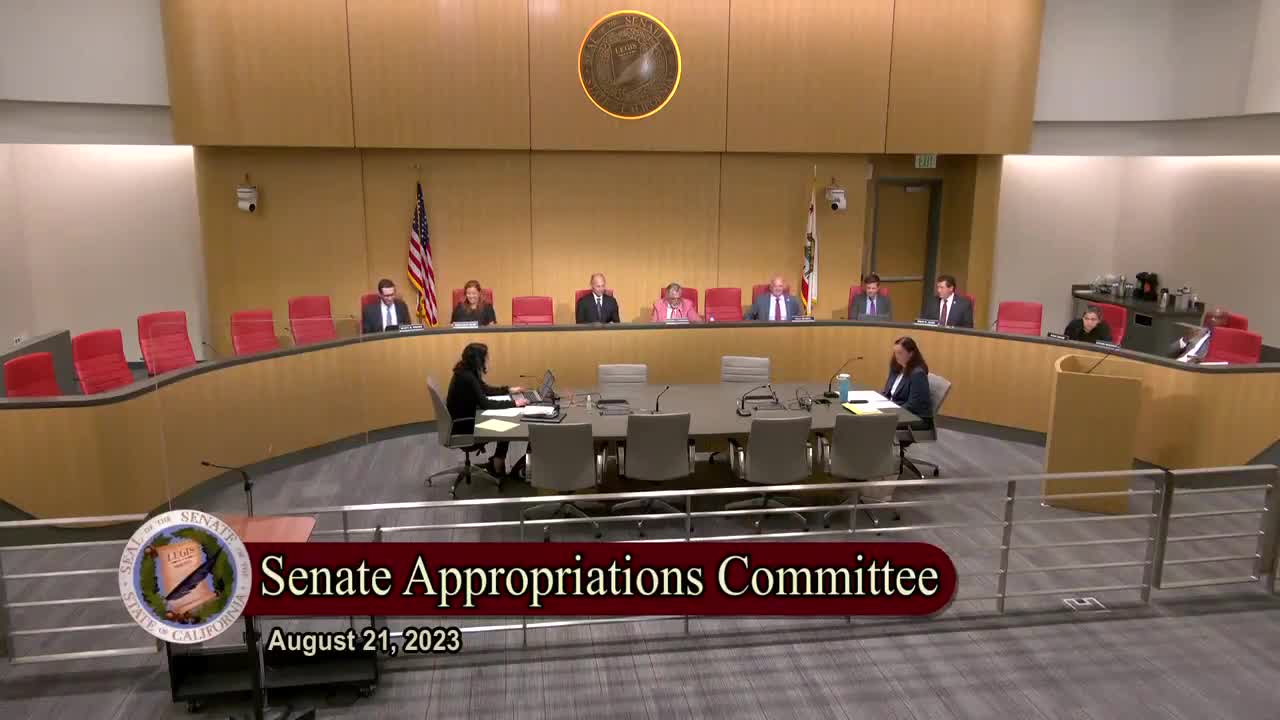 1MIN
Senate Standing Committee on Appropriations
 42SEC
Assembly Floor
 4MIN
Assembly Standing Committee on Agriculture
Bill Author

Bill Co-Author(s):