AB 416: Sale of shochu.
- Session Year: 2023-2024
- House: Assembly
- Latest Version Date: 2023-10-10
Current Status:
Passed
(2023-10-10: Chaptered by Secretary of State - Chapter 653, Statutes of 2023.)
Introduced
In Committee
First Chamber
In Committee
Second Chamber
Enacted
The Alcoholic Beverage Control Act provides for the issuance of various categories of alcoholic beverage licenses, including the imposition of fees, conditions, and restrictions in connection with the issuance of those licenses. The act provides that any on-sale licensee authorized to sell wine may also sell soju, an imported Korean alcoholic beverage that contains not more than 24% of alcohol by volume and is derived from agricultural products.
This bill would provide that any on-sale licensee authorized to sell wine may also sell shochu, an imported Japanese alcoholic beverage that contains not more than 24% of alcohol by volume and is derived from agricultural products.
Any on-sale license, issued pursuant to this division that authorizes the sale of wine, also authorizes the sale of both of the following:
(a)Soju, an imported Korean alcoholic beverage that contains not more than 24 percent of alcohol by volume and is derived from agricultural products.
(b)Shochu, an imported Japanese alcoholic beverage that contains not more than 24 percent of alcohol by volume and is derived from agricultural products.
Any on-sale license, issued pursuant to this division that authorizes the sale of wine, also authorizes the sale of soju, both of the following:
(a)Soju, an imported Korean alcoholic beverage that contains not more than 24 percent of alcohol by volume and is derived from agricultural products.
(b)Shochu, an imported Japanese alcoholic beverage that contains not more than 24 percent of alcohol by volume and is derived from agricultural products.
REVISIONS: HeadingLine 1.|
Date
|
Status
|
|---|---|
| Oct 10, 2023 | Chaptered by Secretary of State - Chapter 653, Statutes of 2023. |
| Oct 10, 2023 | Approved by the Governor. |
| Sep 13, 2023 | Enrolled and presented to the Governor at 3 p.m. |
| Sep 7, 2023 | In Assembly. Ordered to Engrossing and Enrolling. |
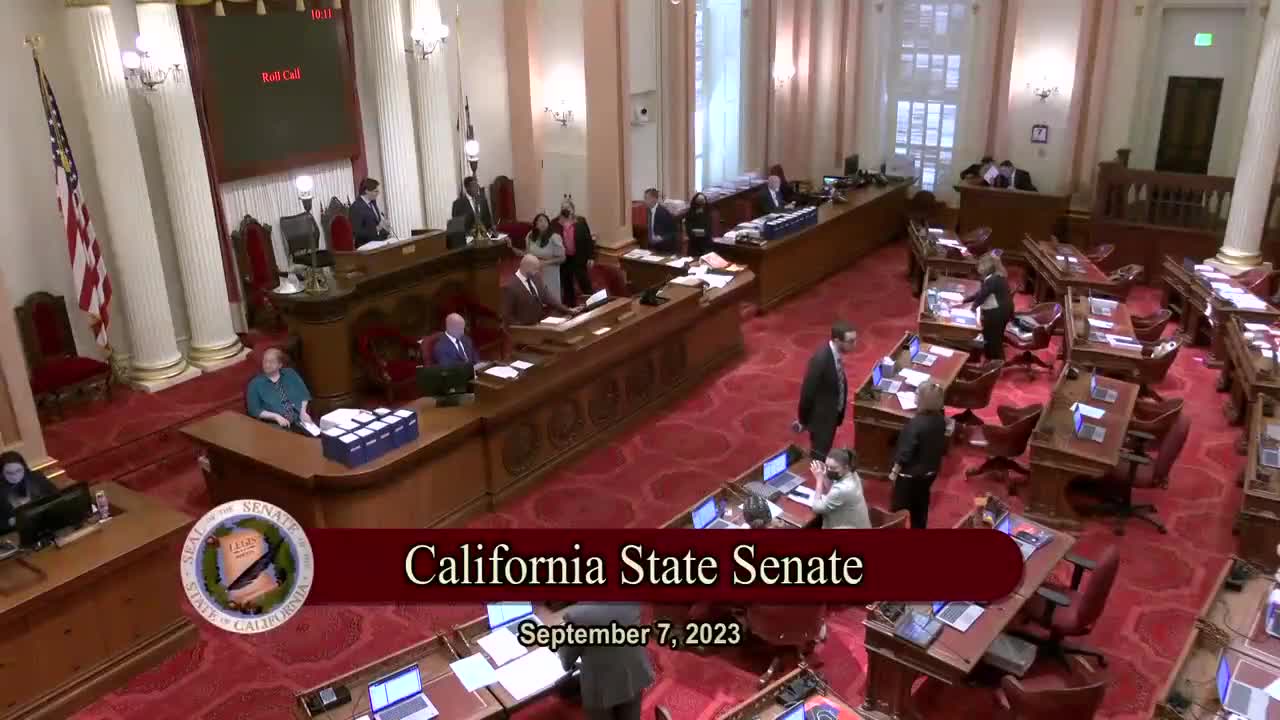
| Sep 7, 2023 | Read third time. Passed. Ordered to the Assembly. (Ayes 39. Noes 0. Page 2482.). |
| Jun 27, 2023 | Read second time. Ordered to third reading. |
| Jun 26, 2023 | From committee: Be ordered to second reading pursuant to Senate Rule 28.8. |
| Jun 13, 2023 | From committee: Do pass and re-refer to Com. on APPR. (Ayes 14. Noes 0.) (June 13). Re-referred to Com. on APPR. |
| May 3, 2023 | Referred to Com. on G.O. |
| Mar 30, 2023 | In Senate. Read first time. To Com. on RLS. for assignment. |
| Mar 30, 2023 | Read third time. Passed. Ordered to the Senate. (Ayes 65. Noes 0. Page 1008.) |
| Mar 23, 2023 | Read second time. Ordered to Consent Calendar. |
| Mar 22, 2023 | From committee: Do pass. To Consent Calendar. (Ayes 15. Noes 0.) (March 22). |
| Mar 9, 2023 | From committee: Do pass and re-refer to Com. on APPR. (Ayes 21. Noes 0.) (March 8). Re-referred to Com. on APPR. |
| Mar 9, 2023 | Coauthors revised. |
| Feb 9, 2023 | Referred to Com. on G.O. |
| Feb 3, 2023 | From printer. May be heard in committee March 5. |
| Feb 2, 2023 | Read first time. To print. |
|
Date
|
Description
|
Location
|
Votes
|
|
|---|---|---|---|---|
| Sep 7, 2023 | Assembly 3rd Reading AB416 Muratsuchi et al. By Durazo | Senate Floor |
Passed |
|
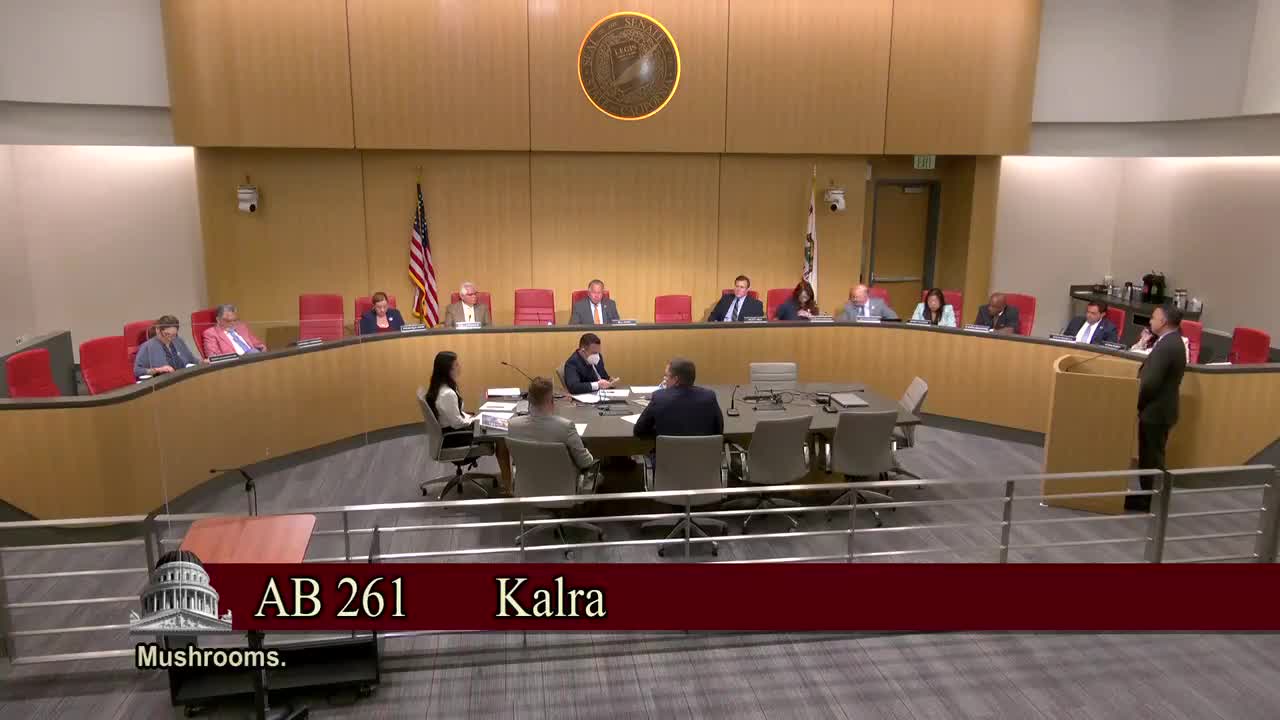
| Jun 13, 2023 | Do pass, but first be re-referred to the Committee on [Appropriations] | Senate Standing Committee on Governmental Organization |
Passed |
|
| Mar 30, 2023 | AB 416 Muratsuchi Consent Calendar Second Day Regular Session | Assembly Floor |
Passed |
|
| Mar 22, 2023 | Do pass. To Consent Calendar. | Assembly Standing Committee on Appropriations |
Passed |
|
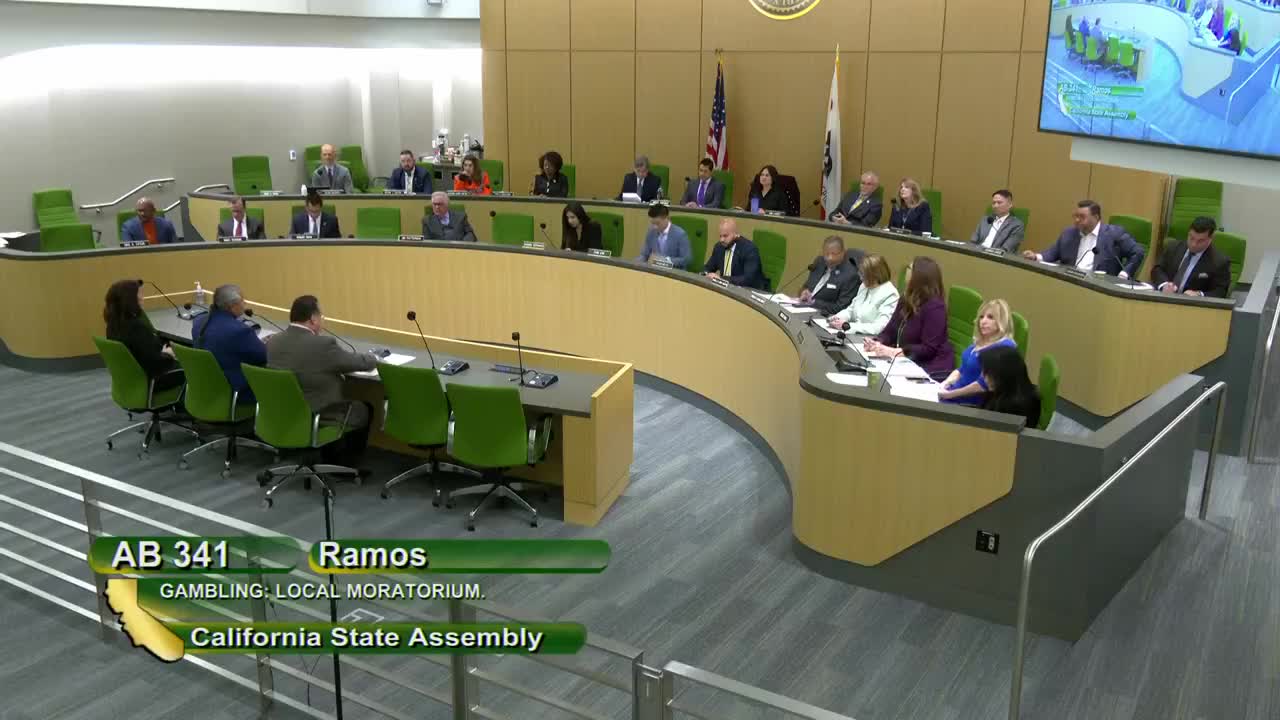
| Mar 8, 2023 | Do pass and be re-referred to the Committee on [Appropriations] | Assembly Standing Committee on Governmental Organization |
Passed |
This list shows positions taken on this bill by organizations on the date displayed, which is linked to the original source.
Positions by individuals are not included.
|
Organization
|
Position
|
Date
|
|---|---|---|
| Aizen | ** Support | |
| Aizen Udon Restaurant | ** Support | |
| Alcohol Justice | ** Against | |
| Amami Branch Kagoshima Shochu Makers Assocation | ** Support | |
| Amami Oshima Kaiun Shuzo Co., Ltd. | ** Support | |
| Azay Restaurant | ** Support | |
| Beniotome Shuzo Co., LTD | ** Support | |
| Bistro Beaux Japanese Restaurant | ** Support | |
| Chinchikuri | ** Support | |
| Chiyomusubi Sake Brewery Co., Ltd. | ** Support | |
| Fukuoka Sake and Shochu Makers Association | ** Support | |
| Gazen Izakaya | ** Support | |
| Hama Sushi | ** Support | |
| Hamada Syuzou Co., Ltd. | ** Support | |
| Honkaku Imports, LLC | ** Support | |
| Iichiko USA Inc. | ** Support | |
| Inoue Shuzo Co., Ltd. | ** Support | |
| Ise-Shima at the Miyako | ** Support | |
| Ise-shima Restaurant | ** Support | |
| Izakaya Hachi Restaurant | ** Support | |
| Japanese Restaurant Association of America | ** Support | |
| Japanese Sake and Shochu Manufacturers Association | ** Support | |
| JFC International Inc. | ** Support | |
| Kagoshima Shochu Makers Association | ** Support | |
| Kagura Restaurant | ** Support | |
| Katsu-ya Group, INC. | ** Support | |
| Komasa Jyoso Co., LTD. | ** Support | |
| Komasa Jyozo Co., Ltd. | ** Support | |
| Komé Collective | ** Support | |
| Koraku Restaurant | ** Support | |
| Kumamoto Sake and Shochu Maker Association | ** Support | |
| Kuramoto Sake INC. | ** Support | |
| Kuramuto US, Inc. | ** Support | |
| Kushi Shabu Restaurant | ** Support | |
| Kyoya Distiller & Brewer | ** Support | |
| Kyoya Distiller and Brewer | ** Support | |
| Kyushu Honkaku Council | ** Support | |
| Manpuku Restaurant | ** Support | |
| McCarthy Hospitality LLC | * Support | Jun 13, 2023 |
| Miyazaki Honten Co., Ltd. | ** Support | |
| Miyazaki Prefecture Sake and Shochu Maker Association | ** Support | |
| Mutual Trading Co., Inc | ** Support | |
| Nankai Group LLC | ** Support | |
| Nehan Spirits | ** Support | |
| Ninja Restaurant | ** Support | |
| Oita Prefecture Sake and Shochu Maker Association | ** Support | |
| Oomasa | ** Support | |
| Ozeki Sake INC. | ** Support | |
| Sanwa Shurui Co., LTD | ** Support | |
| Satsuma Shuzo Co., Ltd. | ** Support | |
| Senfuku Japanese Restaurant | ** Support | |
| Shin-sen Gumi | ** Support | |
| Sho Chiku Bai Sake | ** Support | |
| Skurnik Wines & Spirits | ** Support | |
| Sushi Enya | ** Support | |
| Sushi Enya Little Tokyo | ** Support | |
| Sushi Gen | ** Support | |
| Takara Sake USA Inc. | ** Support | |
| Tamon | ** Support | |
| Tamon Restaurant | ** Support | |
| Tensho Restaurant | ** Support | |
| Tot Restaurant | ** Support | |
| Wadatsumi Restaurant | ** Support | |
| Wismettac Asian Foods INC. | ** Support | |
| World Sake Imports | ** Support | |
| Yatsushika Brewery Co., Ltd. | ** Support | |
| Yayoi Shochu Brewery Lpc | ** Support |
SENATE RULES COMMITTEE Office of Senate Floor Analyses (916) 651-1520 Fax: (916) 327-4478 | AB 416 |
THIRD READING
Bill No: AB 416
Author: Muratsuchi (D) and Santiago (D)
Introduced: 2/2/23
Vote: 21
SENATE GOVERNMENTAL ORG. COMMITTEE: 14-0, 6/13/23
AYES: Dodd, Wilk, Alvarado-Gil, Archuleta, Ashby, Bradford, Glazer, Nguyen, Ochoa Bogh, Padilla, Portantino, Roth, Rubio, Seyarto
NO VOTE RECORDED: Jones
SENATE APPROPRIATIONS COMMITTEE: Senate Rule 28.8
ASSEMBLY FLOOR: 60-0, 3/30/23 (Consent) - See last page for vote
SUBJECT: Sale of shochu
SOURCE: Author
DIGEST: This bill allows any on-sale licensee that is currently authorized to sell wine, to also sell shochu, an imported Japanese alcoholic beverage that contains no more than 24% of alcohol by volume (ABV) and is derived from agricultural products.
ANALYSIS:
Existing law:
- Establishes the Department of Alcoholic Beverage Control (ABC) and grants it exclusive authority to administer the provisions of the ABC Act in accordance with laws enacted by the Legislature. This involves licensing individuals and businesses associated with the manufacture, importation, and sale of alcoholic beverages in this state and the collection of license fees for this purpose.
- Defines an “on-sale” license as authorizing the sale of all types of alcoholic beverages: namely, beer, wine and distilled spirits, for consumption on the premises (such as at a restaurant or bar) and an “off-sale” license as authorizing the sale of all types of alcoholic beverages for consumption off the premises in original, sealed containers.
- Authorizes any on-sale licensee authorized to sell wine to also sell soju, an imported Korean alcoholic beverage that contains not more than 24% ABV and is derived from agricultural products.
- Defines “wine” to mean the product obtained from normal fermentation of the juice of sound ripe grapes or other agricultural products containing natural or added sugar or any such alcoholic beverage to which is added grape brandy, fruit brandy, or spirits of wine, which is distilled from the particular agricultural product or products of which the wine is made and other rectified wine products and by whatever name and which does not contain more than 15 percent added flavoring, coloring, and blending material and which contains not more than 24 percent of ABV, and includes vermouth and sake, known as Japanese rice wine.
- Defines “bona fide public eating place” to mean a place which is regularly and in a bona fide manner used and kept open for the serving of meals to guests for compensation and which has suitable kitchen facilities connected therewith, containing conveniences for cooking an assortment of foods which may be required for ordinary meals, the kitchen of which must be kept in a sanitary condition with the proper amount of refrigeration for keeping of food on said premises and must comply with all the regulations of the local Department of Health.
This bill allows any on-sale licensee that is currently authorized to sell wine, to also sell shochu, an imported Japanese alcoholic beverage that contains no more than 24% of ABV and is derived from agricultural products.
Background
Author Statement. According to the author’s office, “Japanese shochu has been around for over 500 years. At this time, shochu is the most consumed alcoholic beverage in Japan, surpassing even sake. It has a long and storied history and is highly regarded by the Japanese people as an important cultural product. Even though Korean soju and imported Japanese shochu both meet the same requirements for legal sale in California under a Type 41 license, Japanese shochu can only be sold if it is mislabeled as Korean soju. This is not only culturally disagreeable to Japanese distillers and the Japanese community, but also does a disservice to the Korean soju distillers and customers as shochu is a culturally distinct product that should not be mislabeled soju. AB 416 fixes this legal inconsistency by allowing restaurants with a Type 41 License to sell properly labeled imported shochu alongside imported soju.”
History of Shochu. Shochu is a Japanese traditional hard liquor that has been around for approximately 500 years. It is predominantly manufactured in Japan’s southern regions of Okinawa and Kyushu, where it was first developed. It is generally a clear white spirit that’s distilled from rice, barley, sweet potatoes, buckwheat, or brown sugar, though it is sometimes produced from other ingredients such as chestnut, meaning “burned liquor,” which refers to the heating process during distillation. Shochu is a lower-proof spirit, typically 24% ABV or less, but can contain higher ABV in certain cases. According to the Alcohol and Tobacco Tax and Trade Bureau, shochu is not considered wine.
In 1998, Governor Wilson signed SB 1710 (Polanco, Chapter 204, Statutes of 1998) which authorized any on-sale licensee authorized to sell wine to also sell soju, but not shochu, provided that Soju is labeled as Soju; does not contain more than 24%; and is manufactured from agricultural products. The bill also described Soju as “an imported Korean alcoholic beverage.”
Since the definition includes the word “imported” this has been interpreted to mean that Soju must be manufactured in a foreign country, though not necessarily Korea, since the description does not strictly require that Soju be made in Korea. Because current law does not specifically mention “shochu,” a produce labeled only as “shochu” cannot be sold by an on-sale beer and wine licensee even if the product meets the other requirements under SB 1710.
Under current law, restaurants interested in selling shochu would be required to obtain or possess the more expensive on-sale general license type which allows the sale of distilled spirits. A general license costs $17,335 if obtained from the state, and usually more if purchased through the secondary market. Certain types of alcohol licenses are more difficult to obtain in certain cities in California, which means a new owner might have to purchase a license from an existing business wishing to sell. For example, to secure an on-sale general full liquor license in the County of Napa, an individual might have to buy the license on the open market which can cost up to $400,000. An on-sale beer and wine license purchased through ABC costs considerably less, approximately $990.
On-sale Alcohol License Types. There are generally two main types of alcohol licenses for the on-sale of beer, wine and distilled spirits; general licenses and non-general licenses. General licenses generally allow for the sale of beer, wine, and distilled spirits while non-general licenses only allow the sale of beer and wine, but not distilled spirits. The term “on-sale” refers to the ability of the licensee to allow consumers to consume alcoholic beverages on the license premises.
There are four main types of on-sale license types. Two of these, Type 47 and Type 48 licenses, are on-sale general licenses and therefore already allow for the consumption of distilled spirits and thus shochu. The other two, Type 41 and Type 42 licenses, are non-general and only allow for the consumption of beer and wine. A Type 41 licensee is required to maintain a bona-fide public eating-place and thus generally operate as a restaurant. A Type 42 licensee is not required to maintain a bona-fide public eating-place and thus generally operate as a bar. Under current law, both Type 41 and Type 42 are allowed to serve soju but not shochu.
This bill allows any on-sale license that is currently allowed to sell wine to also sell shochu. This means that both a Type 41 and a Type 42 Licensee will be authorized to sell shochu, similar to how they are currently allowed to sell soju. There are approximately 24,852 Type 41 licenses and 1,310 Type 42 licenses in California.
Related/Prior Legislation
SB 247 (Wilk, 2023) clarifies that an alcohol license or permit is not required for the serving of wine and beer as part of any service provided by an establishment that is subject to regulation by the State Board of Barbering and Cosmetology under the Barbering and Cosmetology Act. (Pending in the Assembly Governmental Organization Committee)
SB 277 (Dodd, 2023) authorizes a retail package off-sale beer and wine license, also known as a Type 20 License, to sell low ABV spirits beverages, as defined, in containers no larger than 16 ounces. (Pending in the Assembly Governmental Organization Committee)
SB 788 (Ashby, 2023) authorizes beer manufacturers that produce 60,000 or less barrels of beer per year to manufacture cider or perry at the licensed premises and to sell cider or perry to any licensee authorized to sell wine without the need to obtain a winegrowers license. (Pending in the Assembly Appropriations Committee)
AB 495 (Bigelow, 2022) would have allowed any person that manufacturers or produces distilled spirits within or without this state to hold a distilled spirits importer or wholesaler’s license if the person meets specified criteria. (Held on the Senate Floor Inactive File)
AB 1046 (Choi, 2017) would have authorized any on-sale licensee authorized to sell wine to also sell shochu that contains not more than 24 percent ABV, as defined. (Never Heard in the Assembly Governmental Organization Committee)
AB 1322 (Daly and Wilk, Chapter 741, Statutes of 2016) allowed beauty salons and barber shops to serve their limited quantities of beer and wine at no extra charge and without obtaining a license or permit from the Department of ABC, as specified.
AB 779 (Bocanegra, Chapter 379, Statutes of 2013) authorized beer manufacturers producing more than 60,000 barrels of beer per year the privilege of also manufacturing cider or perry at their licensed premises and to sell the product to any licensee authorized to sell wine without the need to obtain a winegrowers license.
AB 1649 (Chesbro, Chapter 129, Statutes of 2010) allowed licensed winegrowers to produce spirts of wine, a byproduct of wine fermentation, without having to additionally obtain a distilled spirits manufacturer’s licenses.
SB 1710 (Polanco, Chapter 204, Statutes of 1998) authorized any on-sale licensee authorized to sell wine to also sell soju, an imported Korean alcoholic beverage that contains not more than 24 percent ABV and is derived from agricultural products.
FISCAL EFFECT: Appropriation: No Fiscal Com.: Yes Local: No
SUPPORT: (Verified 6/26/23)
Aizen Udon Restaurant
Amami Branch Kagoshima Shochu Makers Association
Amami Oshima Kaiun Shuzo Co., LTD.
Azay Restaurant
Beniotome Shuzo Co., LTD
Bistro Beaux Japanese Restaurant
Chiyomusubi Sake Brewery Co., LTD.
Fukuoka Sake and Sochu Maker’s Association
Gazen Izakaya
Hama Sushi
Hamada Syuzou Co., LTD
Honkaku Imports, LLC
Inoue Shuzo Co., LTD.
Ise-Shima at the Miyako
Izakaya Hachi Restaurant
Japanese Sake and Sochu Manufacturers Association
JFC International Inc.
Kagoshima Shochu Makers Association
Kagura Restaurant
Katsu-Ya Group, Inc.
Komasa Jyoso Co., LTD.
Kumamoto Sake and Sochu Maker Association
Kuramuto US, Inc.
Kyoya Distiller & Brewer
Kyushu Honkaku Council
Manpuku Restaurant
Miyazaki Honten Co., LTD
Miyazaki Prefecture Sake and Sochu Makers Association
Mutual Trading Co., Inc.
Nehan Spirits
Ninja Restaurant
Oita Prefecture Sake and Sochu Makers Association
Sanwa Shurui Co., LTD
Satsuma Shuzo Co., LTD
Senfuku Japanese Restaurant
Skurnik Wine & Spirits
Sushi Enya Little Tokyo
Sushi Gen
Takara Sake USA Inc.
Tamon Restaurant
Tensho Restaurant
Tot Restaurant
Wadatsumi Restaurant
Wismettac Asian Foods Inc.
World Sake Imports
Yatsushika Brewery Co., LTD.
Yayoi Shochu Brewery LPC
OPPOSITION: (Verified 6/26/23)
Alcohol Justice
ARGUMENTS IN SUPPORT: Supporters of this bill argue that, “AB 416 seeks to amend current California law that allows Korean Soju with an ABV of 24% and lower to be sold to Type 41 liquor licenses holders. Specifically, AB 416 will provide an identical exception for the sale of Japanese Shochu with an ABV of 24% or lower. Japanese Shochu meets the same requirements that are in place for the Korean Soju exception and thus, the same exception should be extended to Japanese Shochu.”
ARGUMENTS IN OPPOSITION: According to Alcohol Justice, “we recognize that the current law, as constructed, arbitrarily grants on-sale beer and wine licensees the privileges of selling the Korean liquor soju but Shochu, a liquor that is equivalent in all but provenance. This bill seeks to rectify that. What this bill ignores, however, is the arbitrary process though which soju is considered a wine-and-beer surrogate. As specified in the bill, it can be sold at up to 24% ABV, which is 50% stronger than what would be considered a strong, 16% ABV wine. The criteria for which products are allowed under beer-and-win vs. full-bar license should be based on more than just vibes.”
ASSEMBLY FLOOR: 60-0, 3/30/23
AYES: Addis, Aguiar-Curry, Alanis, Arambula, Bains, Bennett, Berman, Boerner Horvath, Juan Carrillo, Wendy Carrillo, Cervantes, Connolly, Megan Dahle, Davies, Essayli, Flora, Mike Fong, Vince Fong, Friedman, Gallagher, Gipson, Haney, Hart, Holden, Hoover, Jackson, Jones-Sawyer, Lackey, Lee, Low, Lowenthal, Maienschein, McKinnor, Muratsuchi, Stephanie Nguyen, Pacheco, Jim Patterson, Joe Patterson, Petrie-Norris, Ramos, Reyes, Luz Rivas, Robert Rivas, Rodriguez, Blanca Rubio, Sanchez, Santiago, Schiavo, Ta, Ting, Valencia, Villapudua, Waldron, Wallis, Weber, Wicks, Wilson, Wood, Zbur, Rendon
NO VOTE RECORDED: Alvarez, Bauer-Kahan, Bonta, Bryan, Calderon, Chen, Dixon, Gabriel, Garcia, Grayson, Irwin, Kalra, Mathis, McCarty, Ortega, Papan, Pellerin, Quirk-Silva, Soria, Ward
Prepared by: Felipe Lopez / G.O. / (916) 651-1530
6/28/23 11:06:29
**** END ****
SENATE COMMITTEE ON GOVERNMENTAL ORGANIZATION
Senator Bill Dodd
Chair
2023 - 2024 Regular
Bill No: 416 Hearing Date: 6/13/2023
Author: | , et, al. | ||
Version: | 2/2/2023 Introduced | ||
Urgency: | No | Fiscal: | Yes |
Consultant: | Felipe Lopez | ||
SUBJECT: Sale of shochu
DIGEST: This bill allows any on-sale licensee that is currently authorized to sell wine, to also sell shochu, an imported Japanese alcoholic beverage that contains no more than 24% of alcohol by volume (ABV) and is derived from agricultural products.
ANALYSIS:
Existing law:
- Establishes the Department of Alcoholic Beverage Control (ABC) and grants it exclusive authority to administer the provisions of the ABC Act in accordance with laws enacted by the Legislature. This involves licensing individuals and businesses associated with the manufacture, importation, and sale of alcoholic beverages in this state and the collection of license fees for this purpose.
- Defines an “on-sale” license as authorizing the sale of all types of alcoholic beverages: namely, beer, wine and distilled spirits, for consumption on the premises (such as at a restaurant or bar) and an “off-sale” license as authorizing the sale of all types of alcoholic beverages for consumption off the premises in original, sealed containers.
- Authorizes any on-sale licensee authorized to sell wine to also sell soju, an imported Korean alcoholic beverage that contains not more than 24% ABV and is derived from agricultural products.
- Defines “wine” to mean the product obtained from normal fermentation of the juice of sound ripe grapes or other agricultural products containing natural or added sugar or any such alcoholic beverage to which is added grape brandy, fruit brandy, or spirits of wine, which is distilled from the particular agricultural product or products of which the wine is made and other rectified wine products and by whatever name and which does not contain more than 15 percent added flavoring, coloring, and blending material and which contains not more than 24 percent of ABV, and includes vermouth and sake, known as Japanese rice wine.
- Defines “bona fide public eating place” to mean a place which is regularly and in a bona fide manner used and kept open for the serving of meals to guests for compensation and which has suitable kitchen facilities connected therewith, containing conveniences for cooking an assortment of foods which may be required for ordinary meals, the kitchen of which must be kept in a sanitary condition with the proper amount of refrigeration for keeping of food on said premises and must comply with all the regulations of the local Department of Health.
This bill allows any on-sale licensee that is currently authorized to sell wine, to also sell shochu, an imported Japanese alcoholic beverage that contains no more than 24% of ABV and is derived from agricultural products.
Background
Author Statement. According to the author’s office, “Japanese shochu has been around for over 500 years. At this time, shochu is the most consumed alcoholic beverage in Japan, surpassing even sake. It has a long and storied history and is highly regarded by the Japanese people as an important cultural product. Even though Korean soju and imported Japanese shochu both meet the same requirements for legal sale in California under a Type 41 license, Japanese shochu can only be sold if it is mislabeled as Korean soju. This is not only culturally disagreeable to Japanese distillers and the Japanese community, but also does a disservice to the Korean soju distillers and customers as shochu is a culturally distinct product that should not be mislabeled soju. AB 416 fixes this legal inconsistency by allowing restaurants with a Type 41 License to sell properly labeled imported shochu alongside imported soju.”
History of Shochu. Shochu is a Japanese traditional hard liquor that has been around for approximately 500 years. It is predominantly manufactured in Japan’s southern regions of Okinawa and Kyushu, where it was first developed. It is generally a clear white spirit that’s distilled from rice, barley, sweet potatoes, buckwheat, or brown sugar, though it is sometimes produced from other ingredients such as chestnut, meaning “burned liquor,” which refers to the heating process during distillation. Shochu is a lower-proof spirit, typically 24% ABV or less, but can contain higher ABV in certain cases. According to the Alcohol and Tobacco Tax and Trade Bureau, shochu is not considered wine.
In 1998, Governor Wilson signed SB 1710 (Polanco, Chapter 204, Statutes of 1998) which authorized any on-sale licensee authorized to sell wine to also sell soju, but not shochu, provided that Soju is labeled as Soju; does not contain more than 24%; and is manufactured from agricultural products. The bill also describes Soju as “an imported Korean alcoholic beverage.”
Since the definition includes the word “imported” this has been interpreted to mean that Soju must be manufactured in a foreign country, though not necessarily Korea, since the description does not strictly require that Soju be made in Korea. Because current law does not specifically mention “shochu,” a produce labeled only as “shochu” cannot be sold by an on-sale beer and wine licensee even if the product meets the other requires under SB 1710.
Under current law, restaurants interested in selling shochu would be required to obtain or possess the more expensive on-sale general license type which allows the sale of distilled spirits. A general license costs $17,335 if obtained from the state, and usually more if purchased through the secondary market. Certain types of alcohol licenses are more difficult to obtain in certain cities in California, which means a new owner might have to purchase a license from an existing business wishing to sell. For example, to secure an on-sale general full liquor license in the County of Napa, an individual might have to buy the license on the open market which can cost up to $400,000. An on-sale beer and wine license purchased through ABC costs considerably less, approximately $990.
On-sale Alcohol License Types. There are generally two main types of alcohol licenses for the on-sale of beer, wine and distilled spirits; general licenses and non-general licenses. General licenses generally allow for the sale of beer, wine, and distilled spirits while non-general licenses only allow the sale of beer and wine, but not distilled spirits. The term “on-sale” refers to the ability of the licensee to allow consumers to consume alcoholic beverages on the license premises.
There are four main types of on-sale license types. Two of these, Type 47 and Type 48 licenses, are on-sale general licenses and therefore already allow for the consumption of distilled spirits and thus shochu. The other two, Type 41 and Type 42 licenses, are non-general and only allow for the consumption of beer and wine. A Type 41 licensee is required to maintain a bona-fide public eating-place and thus generally operate as a restaurant. A Type 42 licensee is not required to maintain a bona-fide public eating-place and thus generally operate as a bar. Under current law, both Type 41 and Type 42 are allowed to serve soju but not shochu.
This bill would allow any on-sale license that is currently allowed to sell wine to also sell shochu. This would mean that both a Type 41 and a Type 42 Licensee would be authorized to sell shochu, similar to how they are currently allowed to sell soju. There are approximately 24,852 Type 41 licenses and 1,310 Type 42 licenses in California.
Prior/Related Legislation
SB 247 (Wilk, 2023) clarifies that an alcohol license or permit is not required for the serving of wine and beer as part of any service provided by an establishment that is subject to regulation by the State Board of Barbering and Cosmetology under the Barbering and Cosmetology Act. (Pending in the Assembly Governmental Organization Committee)
SB 277 (Dodd, 2023) authorizes a retail package off-sale beer and wine license, also known as a Type 20 License, to sell low ABV spirits beverages, as defined, in containers no larger than 16 ounces. (Pending in the Assembly Governmental Organization Committee)
SB 788 (Ashby, 2023) authorizes beer manufacturers that produce 60,000 or less barrels of beer per year to manufacture cider or perry at the licensed premises and to sell cider or perry to any licensee authorized to sell wine without the need to obtain a winegrowers license. (Pending in the Assembly Governmental Organization Committee)
AB 495 (Bigelow, 2022) would have allowed any person that manufacturers or produces distilled spirits within or without this state to hold a distilled spirits importer or wholesaler’s license if the person meets specified criteria. (Held on the Senate Floor Inactive File)
AB 1046 (Choi, 2017) would have authorized any on-sale licensee authorized to sell wine to also sell shochu that contains not more than 24 percent ABV, as defined. (Never Heard in the Assembly Governmental Organization Committee)
AB 1322 (Daly and Wilk, Chapter 741, Statutes of 2016) allows beauty salons and barber shops to serve their limited quantities of beer and wine at no extra charge and without obtaining a license or permit from the Department of ABC, as specified.
AB 779 (Bocanegra, Chapter 379, Statutes of 2013) authorizes beer manufacturers producing more than 60,000 barrels of beer per year the privilege of also manufacturing cider or perry at their licensed premises and to sell the product to any licensee authorized to sell wine without the need to obtain a winegrowers license.
AB 1649 (Chesbro, Chapter 129, Statutes of 2010) allow licensed winegrowers to produce spirts of wine, a byproduct of wine fermentation, without having to additionally obtain a distilled spirits manufacturer’s licenses.
SB 1710 (Polanco, Chapter 204, Statutes of 1998) authorized any on-sale licensee authorized to sell wine to also sell soju, an imported Korean alcoholic beverage that contains not more than 24 percent ABV and is derived from agricultural products.
FISCAL EFFECT: Appropriation: Fiscal Com.: Local:
SUPPORT:
Aizen Udon Restaurant
Amami Branch Kagoshima Shochu Makers Association
Amami Oshima Kaiun Shuzo Co., LTD.
Azay Restaurant
Beniotome Shuzo Co., LTD
Bistro Beaux Japanese Restaurant
Chiyomusubi Sake Brewery Co., LTD.
Fukuoka Sake and Sochu Maker’s Association
Gazen Izakaya
Hamada Syuzou Co., LTD
Hama Sushi
Honkaku Imports, LLC
Inoue Shuzo Co., LTD.
Ise-Shima at the Miyako
Izakaya Hachi Restaurant
Japanese Sake and Sochu Manufacturers Association
JFC International Inc.
Kagoshima Shochu Makers Association
Kagura Restaurant
Katsu-Ya Group, Inc.
Komasa Jyoso Co., LTD.
Kumamoto Sake and Sochu Maker Association
Kuramuto US, Inc.
Kyoya Distiller & Brewer
Kyushu Honkaku Council
Manpuku Restaurant
Miyazaki Honten Co., LTD
Miyazaki Prefecture Sake and Sochu Makers Association
Mutual Trading Co., Inc.
Nehan Spirits
Ninja Restaurant
Oita Prefecture Sake and Sochu Makers Association
Sanwa Shurui Co., LTD
Satsuma Shuzo Co., LTD
Senfuku Japanese Restaurant
Skurnik Wine & Spirits
Sushi Enya Little Tokyo
Sushi Gen
Tamon Restaurant
Takara Sake USA Inc.
Tensho Restaurant
Tot Restaurant
Wadatsumi Restaurant
Wismettac Asian Foods Inc.
World Sake Imports
Yatsushika Brewery Co., LTD.
Yayoi Shochu Brewery LPC
OPPOSITION:
Alcohol Justice
ARGUMENTS IN SUPPORT: Supporters of the bill argue that, “AB 416 seeks to amend current California law that allows Korean Soju with an ABV of 24% and lower to be sold to Type 41 liquor licenses holders. Specifically, AB 416 will provide an identical exception for the sale of Japanese Shochu with an ABV of 24% or lower. Japanese Shochu meets the same requirements that are in place for the Korean Soju exception and thus, the same exception should be extended to Japanese Shochu.”
ARGUMENTS IN OPPOSITION: According to Alcohol Justice, “we recognize that the current law, as constructed, arbitrarily grants on-sale beer and wine licensees the privileges of selling the Korean liquor soju but Shochu, a liquor that is equivalent in all but provenance. This bill seeks to rectify that. What this bill ignores, however, is the arbitrary process though which soju is considered a wine-and-beer surrogate. As specified in the bill, it can be sold at up to 24% ABV, which is 50% stronger than what would be considered a strong, 16% ABV wine. The criteria for which products are allowed under beer-and-win vs. full-bar license should be based on more than just vibes.”
Date of Hearing: March 22, 2023
ASSEMBLY COMMITTEE ON APPROPRIATIONS
Chris Holden, Chair
ABPCA Bill Id:AB 416
Author:(Muratsuchi) – As Introduced Ver:February 2, 2023
Policy Committee: | Governmental Organization | Vote: | 21 - 0 |
|
| ||
|
|
Urgency: No State Mandated Local Program: No Reimbursable: No
SUMMARY:
This bill allows an on-sale licensee authorized to sell wine to also sell shochu, defined as an imported Japanese alcoholic beverage containing no more than 24% of alcohol by volume (ABV) and derived from agricultural products.
FISCAL EFFECT:
Minor and absorbable costs to the Department of Alcoholic Beverage Control (ABC).
This committee sees a wide array of bills that propose to modify the scope of alcohol laws. Generally, modest requirements such as those proposed by this bill do not generate significant new enforcement workload for ABC, but taken together, these proposals could lead to significant new costs and future budget requests. In this case, however, existing law already allows specified licensees to sell a similar alcoholic beverage and ABC does not anticipate significant related enforcement efforts.
COMMENTS:
- Purpose. According to the author:
Even though imported Korean soju and imported Japanese shochu both meet the same requirements for legal sale in California under a Type 41 License, Japanese shochu can only be sold if it is mislabeled as Korean soju. This is not only culturally disagreeable to Japanese distillers and the Japanese community, but also does a disservice to the Korean soju distillers and customers as shochu is a culturally distinct product that should not be mislabeled as soju.
- Support and Opposition. This bill is supported by many shochu manufacturers, Japanese restaurants, and related industry groups, which argue granting shochu the same exception as soju allows for proper labelling of shochu, thus eliminating a difficult cultural quandary and any market confusion.
This bill is opposed by Alcohol Justice, which argues against “the arbitrary process through which soju is considered a wine-and-beer surrogate” and thus the same treatment of shochu.
- Shochu. Shochu is a Japanese spirit usually distilled from rice, barley, sweet potatoes, buckwheat, or brown sugar. Shochu is a lower-proof spirit (typically 24% ABV or less, but can contain higher alcohol percentages) and is not considered “wine” by the Alcohol and Tobacco Tax and Trade Bureau.
Existing law allows the sale of soju, defined as an imported Korean alcoholic beverage containing no more than 24% ABV and derived from agricultural products, by on-sale licensees authorized to sell wine. This exception allows restaurants to sell soju without acquiring a more expensive and scarce on-sale license authorizing the sale of distilled spirits. This bill grants shochu the same exception as soju.
- Prior Legislation. AB 1046 (Choi), of the 2017-2018 Legislative Session, would have authorized the sale of shochu similar to soju, but would have specified that such soju or shochu is not required to be produced in Korea or Japan. AB 1046 was not heard in the Committee on Governmental Organization at the request of the author.
Analysis Prepared by: Irene Ho / APPR. / (916) 319-2081
Date of Hearing: March 8, 2023
ASSEMBLY COMMITTEE ON GOVERNMENTAL ORGANIZATION
Miguel Santiago, Chair
ABPCA Bill Id:AB 416 (
Author:Muratsuchi) – As Introduced Ver:February 2, 2023
SUBJECT: Sale of shochu
SUMMARY: This bill would provide that any on-sale licensee authorized to sell wine may also sell shochu, an imported Japanese alcoholic beverage that contains not more than 24% of alcohol by volume and is derived from agricultural products. Specifically, this bill:
1) Allows an on-sale licensee authorized to sell wine may also sell shochu, an imported Japanese alcoholic beverage that contains not more than 24% of alcohol by volume and is derived from agricultural products.
2) Makes technical and clarifying changes.
EXISTING LAW:
1) Establishes the Department of Alcoholic Beverage Control (ABC) and grants it exclusive authority to administer the provisions of the Alcoholic Beverage Control Act (Act) in accordance with laws enacted by the Legislature. This involves licensing individuals and businesses associated with the manufacture, importation, and sale of alcoholic beverages and the collection of license fees for this purpose.
2) Provides, under the Act, for the issuance of various categories of alcoholic beverage licenses, including the imposition of fees, conditions, and restrictions in connection with the issuance of those licenses.
3) States “Wine” means the product obtained from normal alcoholic fermentation of the juice of sound ripe grapes or other agricultural products containing natural or added sugar or any such alcoholic beverage to which is added grape brandy, fruit brandy, or spirits of wine, which is distilled from the particular agricultural product or products of which the wine is made and other rectified wine products and by whatever name and which does not contain more than 15 percent added flavoring, coloring, and blending material and which contains not more than 24 percent of alcohol by volume, and includes vermouth and sake, known as Japanese rice wine. (CA Bus & Prof Code § 23007)
4) Provides any on-sale license, issued pursuant to this division that authorizes the sale of wine, also authorizes the sale of soju, an imported Korean alcoholic beverage that contains not more than 24 percent of alcohol by volume and is derived from agricultural products. (CA Bus & Prof Code § 23398.5)
5) Provides that anyone who imports and re-sells shochu and/or soju to retailers must hold a Distilled Spirits Importer (Type 12) license and a Distilled Spirits Wholesaler (Type 18) license because these products are defined as distilled spirits.
6) Defines an “on-sale” license as authorizing the sale of all types of alcoholic beverages: namely, beer, wine, and distilled spirits, for consumption on the premises (such as restaurant or bar). An “off-sale” license authorizes the sale of all types of alcoholic beverages for consumption
off the premises in original sealed containers.
7) Defines “bona fide public eating place” as a licensed premises that are maintained in good faith and used for the regular service of meals to patrons. The premises must have suitable kitchen facilities and supply an assortment of foods commonly ordered at various hours of the day. (CA Bus & Prof Code §§ 23038 and 23787)
FISCAL EFFECT: This bill is keyed fiscal by Legislative Counsel.
COMMENTS:
Purpose of the bill. According to the author’s office, “Japanese shochu has been around for over 500 years. At this time, shochu is the most consumed alcoholic beverage in Japan, surpassing even sake. It has a long and storied history and is highly regarded by the Japanese people as an important cultural product. Even though imported Korean soju and imported Japanese shochu both meet the same requirements for legal sale in California under a Type 41 License, Japanese shochu can only be sold if it is mislabeled as Korean soju. This is not only culturally disagreeable to Japanese distillers and the Japanese community, but also does a disservice to the Korean soju distillers and customers as shochu is a culturally distinct product that should not be mislabeled as soju.”
Background.
Shochu (pronounced SHOW-chew) is Japan’s indigenous distilled spirit and has been around for approximately 500 years. It is most predominately made in Japan’s southern regions of Okinawa and Kyushu, where it was first developed. It is a clear white spirit that's distilled from rice, barley, sweet potatoes, buckwheat, or brown sugar, though it is sometimes produced from other ingredients such as chestnut, sesame seeds, potatoes, or even carrots. The word shochu is the Japanese rendition of the Chinese, meaning “burned liquor,” which refers to the heating process during distillation. Shochu is a lower-proof spirit, typically 24% ABV or less---but can contain higher alcohol percentages. It is not considered to be “wine” by the Alcohol and Tobacco Tax and Trade Bureau. Traditional pouring styles range from being served straight, on the rocks, or long with tonic or soda.
Since 1998, CA Bus & Prof Code § 23398.5 has allowed on-sale beer and wine licensees (holders of Types 41 and 42 licenses) to purchase and sell a distilled spirit; namely, Soju (but not “Shochu”) to their patrons, provided the Soju is labeled as “Soju”; does not contain more than 24% alcohol by volume; is manufactured from agricultural products; and is made in a foreign country (not necessarily Korea). Current law does not specifically mention “Shochu.” Hence, a product labeled only “Shochu” cannot be sold at on-sale beer and wine licensees even if the product is 24% ABV or less. A product label that carries both designations (“Soju” and “Shochu”), and otherwise meets the statutory requirements in § 23398.5, may be sold at ABC Types 41 and 42 licensees.
Under current law, restaurateurs interested in selling shochu would be required to obtain or possess the more expensive on-sale general license type. A general license costs $17,335 if obtained from the state, and usually more if purchased through the secondary market. Certain types of ABC licenses are more difficult to obtain in certain cities in California, which means a new owner might have to purchase a license from an existing business wishing to sell. For example, to secure an on-sale general full liquor license in the County of Napa, an individual might have to buy from a private party (between $300,000 to $350,000), as the ABC may have run out of the quota of permits in that area. An on-sale beer and wine license purchased through ABC costs considerably less ($990).
ABC on-sale license types. There are two main types of ABC licenses for on-sale beer, wine and distilled spirts sales:
General License: These licenses often include distilled spirts. For instance, license Types 47 and 48.
Non-General License: Mainly reserved for beer and wine sales. For instance, license Types 40, 41, and 42.
Type 41 (On-sale Beer & Wine – Eating Place (Restaurant). Authorizes the sale of beer and wine for consumption on or off the premises where sold. Distilled spirits may not be sold. Must operate and maintain the licensed premises as a bona fide eating place. Must maintain suitable kitchen facilities, and must make actual and substantial sales of meals for consumption on the premises. Minors are allowed on the premises.
Type 42 (On-sale Beer & Wine – Public Premises (Bar, Tavern). Authorizes the sale of beer and wine for consumption on or off the premises where sold. No distilled spirits may be on the premises. Minors are not allowed to enter and remain. Food service is not required.
Type 47 (On-sale General – Eating Place (Restaurant). Authorizes the sale of beer, wine and distilled spirits for consumption on the licenses premises. Authorizes the sale of beer and wine for consumption off the licenses premises. Must operate and maintain the licensed premises as a bona fide eating place. Must maintain suitable kitchen facilities, and must make actual and substantial sales of meals for consumption on the premises. Minors are allowed on the premises.
Type 48 (On-sale General – Public Premises (Bar, Night Club). Authorizes the sale of beer, wine and distilled spirits for consumption on the premises where sold. Authorizes the sale of beer and wine for consumption off the premises where sold. Minors are not allowed to enter and remain. Food service is not required.
2022 legislation in New York. New York Assembly Bill A8620/7913 of 2022, allows Japanese Shochu (24% ABV or under) to be sold under a beer and wine license. With this change, the shochu category can be recognized on its own and be labeled and sold for the first time in New York as "shochu’. Before the legislation, authentic Japanese Shochu could only be sold under the label of “soju,” which instead is a Korean spirit.
In support. Supporters of this bill indicate that many Japanese restaurateurs would like to offer shochu for sale to their patrons but are prohibited from doing so unless they have an on-sale general license. Because shochu is produced through distillation, rather than fermentation (i.e., as is the process by which wine is produced), shochu is technically a distilled spirit and businesses licensed to sell only beer and wine are generally prohibited from selling this product. AB 416 does not seek to change existing law for Korean Soju. Instead, it will provide the same exception for Japanese shochu and will also allow for the proper product labeling. Additionally, the bill will remove any market confusion that currently exists due to existing law and retail practices.
Prior legislation. AB 1046 (Choi) of 2017. This bill would have provided that any on-sale licensee authorized to sell wine may also sell shochu that contains not more than 24% alcohol by volume. The bill would define soju and shochu as distilled spirits produced from agricultural products that are traditionally associated with Korea and Japan, respectively, but would not require that soju or shochu be produced in Korea, Japan, or any other specified location. (Hearing canceled at the request of the author in Assembly Committee on Governmental Organization)
SB 1710 (Polanco), Chapter 204, Statutes of 1998. This bill provides that any on-sale licensee authorized to sell wine may also sell soju, an imported Korean alcoholic beverage that contains not more than 24% of alcohol by volume and is derived from agricultural products.
REGISTERED SUPPORT / OPPOSITION:
Support
Aizen
Amami Branch Kagoshima Shochu Makers Assocation
Amami Oshima Kaiun Shuzo Co., Ltd.
Azay Restaurant
Beniotome Shuzo Co., LTD
Bistro Beaux Japanese Restaurant
Chinchikuri
Chiyomusubi Sake Brewery Co., Ltd.
Fukuoka Sake and Shochu Makers Association
Gazen Izakaya
Hama Sushi
Hamada Syuzou Co., Ltd.
Honkaku Imports, LLC
Iichiko USA Inc.
Inoue Shuzo Co., Ltd.
Ise-shima Restaurant
Izakaya Hachi Restaurant
Japanese Restaurant Association of America
Japanese Sake and Shochu Manufacturers Association
JFC International INC.
Kagoshima Shochu Makers Association
Kagura Restaurant
Katsu-ya Group, INC.
Komasa Jyozo Co., Ltd.
Komé Collective
Koraku Restaurant
Kumamoto Sake and Shochu Maker Association
Kuramoto Sake INC.
Kushi Shabu Restaurant
Kyoya Distiller and Brewer
Kyushu Honkaku Council
Manpuku Restaurant
Miyazaki Honten Co., Ltd.
Miyazaki Prefecture Sake and Shochu Maker Association
Mutual Trading Co., INC.
Nankai Group LLC
Nehan Spirits
Ninja Restaurant (shingaki Corporation)
Oita Prefecture Sake and Shochu Maker Association
Oomasa
Ozeki Sake INC.
Sanwa Shurui Co., LTD
Satsuma Shuzo Co., Ltd.
Senfuku Japanese Restaurant
Shin-sen Gumi
Sho Chiku Bai Sake
Skurnik Wines & Spirits
Sushi Enya
Sushi Gen
Takara Sake USA
Tamon
Tensho Restaurant
Tot Restaurant
Wadatsumi Restaurant
Wismettac Asian Foods INC.
World Sake Imports
Yatsushika Brewery Co., Ltd.
Yayoi Shochu Brewery Lpc
Oppose
Alcohol Justice
Analysis Prepared by: Eric Johnson / G.O. / (916) 319-2531
Discussed in Hearing
 3MIN
Senate Floor
 8MIN
Senate Standing Committee on Governmental Organization
 12MIN
Assembly Standing Committee on Governmental Organization


Bill Co-Author(s):