AB 42: Tiny homes: temporary sleeping cabins: fire sprinkler requirements.
- Session Year: 2023-2024
- House: Assembly
- Latest Version Date: 2023-10-10
Current Status:
Passed
(2023-10-10: Chaptered by Secretary of State - Chapter 725, Statutes of 2023.)
Introduced
In Committee
First Chamber
In Committee
Second Chamber
Enacted
The Planning and Zoning Law, among other things, provides for the creation of accessory dwelling units by local ordinance, or, if a local agency has not adopted an ordinance, by ministerial approval, in accordance with specified standards and conditions. Existing law prohibits a local agency from requiring an accessory dwelling unit to provide fire sprinklers, if they are not required for the primary residence.
The State Housing Law, among other things, requires the Department of Housing and Community Development to adopt, amend, or repeal rules and regulations for the protection of the health, safety, and general welfare of the occupant and the public relating to specified residential structures, as provided, which apply throughout the state. A violation of the State Housing Law, or of the building standards or rules and regulations adopted pursuant to that law, is a misdemeanor.
This bill, until January 1, 2027, would prohibit a local agency from imposing or enforcing any requirement to provide fire sprinklers for a temporary sleeping cabin that is on a site with 50 or fewer temporary sleeping cabins. The bill would define temporary sleeping cabin to mean a nonpermanent structure that is intended to provide temporary housing to people experiencing homelessness or at risk of homelessness, has a total floor area of less than 250 feet, and does not include plumbing. The bill would require a temporary sleeping cabin that does not include fire sprinklers to comply with alternative fire life and safety standards that include providing, among other things, a smoke alarm and carbon monoxide alarm in the unit, a fire extinguisher in the unit, and ingress and egress that facilitates rapid exit of the temporary sleeping cabin. By requiring local agencies to impose alternative fire life and safety standards for these units, the bill would impose a state-mandated local program.
This bill would require violations of those alternative fire and life safety standards to be handled pursuant to specified provisions of the State Housing Law. By adding to the duties of local officials with respect to enforcement of the State Housing Law, the violation of which is a crime, this bill would impose a state-mandated local program.
This bill would include findings that changes proposed by this bill address a matter of statewide concern rather than a municipal affair and, therefore, apply to all cities, including charter cities.
The California Constitution requires the state to reimburse local agencies and school districts for certain costs mandated by the state. Statutory provisions establish procedures for making that reimbursement.
This bill would provide that no reimbursement is required by this act for specified reasons.
The Planning and Zoning Law, among other things, provides for the creation of accessory dwelling units by local ordinance, or, if a local agency has not adopted an ordinance, by ministerial approval, in accordance with specified standards and conditions. Existing law prohibits a local agency from requiring an accessory dwelling unit to provide fire sprinklers, if they are not required for the primary residence.
The State Housing Law, among other things, requires the Department of Housing and Community Development to adopt, amend, or repeal rules and regulations for the protection of the health, safety, and general welfare of the occupant and the public relating to specified residential structures, as provided, which apply throughout the state. A violation of the State Housing Law, or of the building standards or rules and regulations adopted pursuant to that law, is a misdemeanor.
This bill, until January 1, 2027, would prohibit a local agency from imposing or enforcing any requirement to provide fire sprinklers for a temporary sleeping cabin with a total floor area of less than 250 square feet that is on a site with 50 or fewer temporary sleeping cabins. The bill would define temporary sleeping cabin to mean a nonpermanent fixture structure that is intended to provide temporary housing to people experiencing homelessness or at risk of homelessness, has a total floor area of less than 250 feet, and does not include plumbing. The bill would require a temporary sleeping cabin with a total floor area of less than 250 square feet that does not include fire sprinklers to comply with alternative fire life and safety standards that include providing, among other things, a smoke alarm and carbon monoxide alarm in the unit, a fire extinguisher in the unit, and ingress and egress that facilitates rapid exit of the temporary sleeping cabin. By requiring local agencies to impose alternative fire life and safety standards for these units, the bill would impose a state-mandated local program.
The bill would require violations of the those alternative fire and life safety standards at sites with temporary sleeping cabins to be handled pursuant to specified provisions of the State Housing Law. By adding to the duties of local officials with respect to enforcement of the State Housing Law, the violation of which is a crime, this bill would impose a state-mandated local program.
The bill would include findings that changes proposed by this bill address a matter of statewide concern rather than a municipal affair and, therefore, apply to all cities, including charter cities.
The California Constitution requires the state to reimburse local agencies and school districts for certain costs mandated by the state. Statutory provisions establish procedures for making that reimbursement.
This bill would provide that no reimbursement is required by this act for specified reasons.
The Planning and Zoning Law, among other things, provides for the creation of accessory dwelling units by local ordinance, or, if a local agency has not adopted an ordinance, by ministerial approval, in accordance with specified standards and conditions. Existing law prohibits a local agency from requiring an accessory dwelling unit to provide fire sprinklers, if they are not required for the primary residence.
The State Housing Law, among other things, requires the Department of Housing and Community Development to adopt, amend, or repeal rules and regulations for the protection of the health, safety, and general welfare of the occupant and the public relating to specified residential structures, as provided, which apply throughout the state. A violation of the State Housing Law, or of the building standards or rules and regulations adopted pursuant to that law, is a misdemeanor.
This bill, until January 1, 2027, would prohibit a local agency from imposing or enforcing any requirement to provide fire sprinklers for a temporary sleeping cabin with a total floor area of less than 250 square feet that is on a site with 50 or fewer temporary sleeping cabins. The bill would define temporary sleeping cabin to mean a nonpermanent fixture that is intended to provide temporary housing to people experiencing homelessness or at risk of homelessness, has a total floor area of less than 250 feet, and does not include plumbing. The bill would require a temporary sleeping cabin with a total floor area of less than 250 square feet that does not include fire sprinklers to comply with alternative fire life and safety standards that include providing, among other things, a smoke alarm and carbon monoxide alarm in the unit, a fire extinguisher in the unit, and ingress and egress that facilitates rapid exit of the temporary sleeping cabin. By requiring local agencies to impose alternative fire life and safety standards for these units, the bill would impose a state-mandated local program.
The bill would require violations of the alternative fire and life safety standards at sites with temporary sleeping cabins to be handled pursuant to specified provisions of the State Housing Law. By adding to the duties of local officials with respect to enforcement of the State Housing Law, the violation of which is a crime, this bill would impose a state-mandated local program.
The bill would include findings that changes proposed by this bill address a matter of statewide concern rather than a municipal affair and, therefore, apply to all cities, including charter cities.
The California Constitution requires the state to reimburse local agencies and school districts for certain costs mandated by the state. Statutory provisions establish procedures for making that reimbursement.
This bill would provide that no reimbursement is required by this act for specified reasons.
The Planning and Zoning Law, among other things, provides for the creation of accessory dwelling units by local ordinance, or, if a local agency has not adopted an ordinance, by ministerial approval, in accordance with specified standards and conditions. Existing law prohibits a local agency from requiring an accessory dwelling unit to provide fire sprinklers, if they are not required for the primary residence.
The State Housing Law, among other things, requires the Department of Housing and Community Development to adopt, amend, or repeal rules and regulations for the protection of the health, safety, and general welfare of the occupant and the public relating to specified residential structures, as provided, which apply throughout the state. A violation of the State Housing Law, or of the building standards or rules and regulations adopted pursuant to that law, is a misdemeanor.
This bill, until January 1, 2027, would prohibit a local agency from imposing or enforcing any requirement to provide fire sprinklers for a temporary sleeping cabin with a total floor area of less than 250 square feet that is on a site with 50 or fewer units. temporary sleeping cabins. The bill would define temporary sleeping cabin to mean a nonpermanent fixture that is intended to provide temporary housing to people experiencing homelessness or at risk of homelessness, has a total floor area of less than 250 feet, and does not include plumbing. The bill would require a temporary sleeping cabin with a total floor area of less than 250 square feet that does not include fire sprinklers to comply with alternative fire life and safety standards that include providing, among other things, a smoke alarm and carbon monoxide alarm in the unit, a fire extinguisher in the unit, and ingress and egress that facilitates rapid exit of the temporary sleeping cabin. By requiring local agencies to impose alternative fire life and safety standards for these units, the bill would impose a state-mandated local program.
The bill would require violations of the alternative fire and life safety standards at sites with temporary sleeping cabins to be handled pursuant to specified provisions of the State Housing Law. By adding to the duties of local officials with respect to enforcement of the State Housing Law, the violation of which is a crime, this bill would impose a state-mandated local program.
The bill would include findings that changes proposed by this bill address a matter of statewide concern rather than a municipal affair and, therefore, apply to all cities, including charter cities.
The California Constitution requires the state to reimburse local agencies and school districts for certain costs mandated by the state. Statutory provisions establish procedures for making that reimbursement.
This bill would provide that no reimbursement is required by this act for specified reasons.
The Planning and Zoning Law, among other things, provides for the creation of accessory dwelling units by local ordinance, or, if a local agency has not adopted an ordinance, by ministerial approval, in accordance with specified standards and conditions. Existing law prohibits a local agency from requiring an accessory dwelling unit to provide fire sprinklers, if they are not required for the primary residence.
The State Housing Law, among other things, requires the Department of Housing and Community Development to adopt, amend, or repeal rules and regulations for the protection of the health, safety, and general welfare of the occupant and the public relating to specified residential structures, as provided, which apply throughout the state. A violation of the State Housing Law, or of the building standards or rules and regulations adopted pursuant to that law, is a misdemeanor.
This bill bill, until January 1, 2027, would prohibit a local agency from imposing or enforcing any requirement to provide fire sprinklers for a temporary sleeping cabin with a total floor area of less than 250 square feet. feet that is on a site with 50 or fewer units. The bill would define temporary sleeping cabin to mean a nonpermanent fixture that is intended to provide temporary housing to people experiencing homelessness or at risk of homelessness, has a total floor area of less than 250 feet, and does not include plumbing. The bill would require a temporary sleeping cabin with a total floor area of less than 250 square feet that does not include fire sprinklers to comply with alternative fire life and safety standards that include providing, among other things, a smoke alarm and carbon monoxide alarm in the unit, a fire extinguisher in the unit, and ingress and egress that facilitates rapid exit of the temporary sleeping cabin. By requiring local agencies to impose alternative fire life and safety standards for these units, the bill would impose a state-mandated local program.
The bill would require violations of the alternative fire and life safety standards at sites with temporary sleeping cabins to be handled pursuant to specified provisions of the State Housing Law. By adding to the duties of local officials with respect to enforcement of the State Housing Law, the violation of which is a crime, this bill would impose a state-mandated local program.
The bill would include findings that changes proposed by this bill address a matter of statewide concern rather than a municipal affair and, therefore, apply to all cities, including charter cities.
The California Constitution requires the state to reimburse local agencies and school districts for certain costs mandated by the state. Statutory provisions establish procedures for making that reimbursement.
This bill would provide that no reimbursement is required by this act for specified reasons.
The Planning and Zoning Law, among other things, provides for the creation of accessory dwelling units by local ordinance, or, if a local agency has not adopted an ordinance, by ministerial approval, in accordance with specified standards and conditions. Existing law prohibits a local agency from requiring an accessory dwelling unit to provide fire sprinklers, if they are not required for the primary residence.
The State Housing Law, among other things, requires the Department of Housing and Community Development to adopt, amend, or repeal rules and regulations for the protection of the health, safety, and general welfare of the occupant and the public relating to specified residential structures, as provided, which apply throughout the state. A violation of the State Housing Law, or of the building standards or rules and regulations adopted pursuant to that law, is a misdemeanor.
This bill would prohibit a local agency from imposing or enforcing any requirement to provide fire sprinklers for a temporary dwelling unit sleeping cabin with a total floor area of less than 250 square feet. The bill would define temporary dwelling unit sleeping cabin to mean any nonpermanent fixture intended for human habitation that does not include plumbing. a nonpermanent fixture that is intended to provide temporary housing to people experiencing homelessness or at risk of homelessness, has a total floor area of less than 250 feet, and does not include plumbing. The bill would require a temporary dwelling unit sleeping cabin with a total floor area of less than 250 square feet that does not include fire sprinklers to comply with alternative fire life and safety standards that include providing, among other things, a smoke alarm and carbon monoxide alarm in the unit, a fire extinguisher in the unit, and ingress and egress that facilitates rapid exit of the temporary dwelling unit. sleeping cabin. By requiring local agencies to impose alternative fire life and safety standards for these units, the bill would impose a state-mandated local program.
The bill would require violations of the alternative fire and life safety standards at sites with temporary dwelling units sleeping cabins to be handled pursuant to specified provisions of the State Housing Law. By adding to the duties of local officials with respect to enforcement of the State Housing Law, the violation of which is a crime, this bill would impose a state-mandated local program.
The bill would include findings that changes proposed by this bill address a matter of statewide concern rather than a municipal affair and, therefore, apply to all cities, including charter cities.
The California Constitution requires the state to reimburse local agencies and school districts for certain costs mandated by the state. Statutory provisions establish procedures for making that reimbursement.
This bill would provide that no reimbursement is required by this act for specified reasons.
The Planning and Zoning Law, among other things, provides for the creation of accessory dwelling units by local ordinance, or, if a local agency has not adopted an ordinance, by ministerial approval, in accordance with specified standards and conditions. Existing law prohibits a local agency from requiring an accessory dwelling unit to provide fire sprinklers, if they are not required for the primary residence.
The State Housing Law, among other things, requires the Department of Housing and Community Development to adopt, amend, or repeal rules and regulations for the protection of the health, safety, and general welfare of the occupant and the public relating to specified residential structures, as provided, which apply throughout the state. A violation of the State Housing Law, or of the building standards or rules and regulations adopted pursuant to that law, is a misdemeanor.
This bill would prohibit a local agency from imposing or enforcing any requirement to provide fire sprinklers for any a temporary dwelling unit with a total floor area of less than 500 250 square feet. The bill would define temporary dwelling unit to mean any nonpermanent fixture intended for human habitation that does not include plumbing. The bill would require a temporary dwelling unit with a total floor area of less than 250 square feet that does not include fire sprinklers to comply with alternative fire life and safety standards that include providing, among other things, a smoke alarm and carbon monoxide alarm in the unit, a fire extinguisher in the unit, and ingress and egress that facilitates rapid exit of the temporary dwelling unit. By requiring local agencies to impose alternative fire life and safety standards for these units, the bill would impose a state-mandated local program.
The bill would require violations of the alternative fire and life safety standards at sites with temporary dwelling units to be handled pursuant to specified provisions of the State Housing Law. By adding to the duties of local officials with respect to enforcement of the State Housing Law, the violation of which is a crime, this bill would impose a state-mandated local program.
The bill would include findings that changes proposed by this bill address a matter of statewide concern rather than a municipal affair and, therefore, apply to all cities, including charter cities.
The California Constitution requires the state to reimburse local agencies and school districts for certain costs mandated by the state. Statutory provisions establish procedures for making that reimbursement.
This bill would provide that no reimbursement is required by this act for specified reasons.
The Planning and Zoning Law, among other things, provides for the creation of accessory dwelling units by local ordinance, or, if a local agency has not adopted an ordinance, by ministerial approval, in accordance with specified standards and conditions. Existing law prohibits a local agency from requiring an accessory dwelling unit to provide fire sprinklers, if they are not required for the primary residence.
This bill would prohibit a local agency from imposing or enforcing any requirement to provide fire sprinklers for any dwelling with a total floor area of less than 500 square feet.
(a)For purposes of this section, temporary sleeping cabin means a nonpermanent structure that is intended to provide temporary housing to people experiencing homelessness or at risk of homelessness, has a total floor area of less than 250 square feet, and does not include plumbing.
(b)Notwithstanding any law, a local agency shall not impose or enforce any requirement to provide fire sprinklers for a temporary sleeping cabin that is on a site with 50 or fewer temporary sleeping cabins.
(c)A temporary sleeping cabin that does not provide fire sprinklers shall comply with alternative fire and life safety standards that include, at a minimum, all of the following requirements:
(1)One smoke alarm and carbon monoxide alarm shall be provided in each unit, which shall be installed in accordance with the California Residential Code (Part 2.5 of Title 24 of the California Code of Regulations).
(2)One fire extinguisher shall be provided in each unit.
(3)Ingress and egress shall facilitate rapid exit of the temporary sleeping cabin.
(4)Emergency evacuation signage and emergency egress lighting shall be provided.
(5)Every egress shall be free from storage and other obstructions.
(6)A prohibition on the use of open flames and combustibles.
(7)A prohibition on smoking at the site.
(8)Twenty-four-hour active fire watch shall be provided at the site.
(9)Temporary sleeping cabins shall be separated to the side and rear by at least six feet, and be made of noncombustible material.
(10)A temporary sleeping cabin shall meet the design and construction requirements for emergency sleeping cabins prescribed in California Building Code Appendix P or California Residential Code Appendix AZ or their successors, except a requirement to be equipped with fire sprinklers.
(11)Fire code inspections shall occur in regular intervals, as determined by the local agency.
(d)Violations of the alternative fire and life safety standards described in subdivision (c) shall be handled in accordance with Article 2.3 (commencing with Section 17974) of Chapter 5.
(e)This section pertains only to alternative fire and life safety standards for temporary sleeping cabins and does not supersede any other applicable local or state approval process or health and safety standards pertaining to the use of or siting of temporary sleeping cabins.
(f)The Legislature finds and declares that this section addresses a matter of statewide concern rather than a municipal affair as that term is used in Section 5 of Article XI of the California Constitution. Therefore, this section applies to all cities, including charter cities.
(g)This section shall remain in effect only until January 1, 2027, and as of that date is repealed.
SEC. 2.No reimbursement is required by this act pursuant to Section 6 of Article XIIIB of the California Constitution because a local agency or school district has the authority to levy service charges, fees, or assessments sufficient to pay for the program or level of service mandated by this act or because costs that may be incurred by a local agency or school district will be incurred because this act creates a new crime or infraction, eliminates a crime or infraction, or changes the penalty for a crime or infraction, within the meaning of Section 17556 of the Government Code, or changes the definition of a crime within the meaning of Section 6 of Article XIIIB of the California Constitution.
(a)Notwithstanding For purposes of this section, temporary sleeping cabin means a nonpermanent structure that is intended to provide temporary housing to people experiencing homelessness or at risk of homelessness, has a total floor area of less than 250 square feet, and does not include plumbing.
(b)Notwithstanding any law, a local agency shall not impose or enforce any requirement to provide fire sprinklers for a temporary sleeping cabin with a total floor area of less than 250 square feet that is on a site with 50 or fewer temporary sleeping cabins.
(b)(c)A temporary sleeping cabin with a total floor area of less than 250 square feet that does not provide fire sprinklers shall comply with alternative fire and life safety standards that include, at a minimum, all of the following requirements:
(1)One smoke alarm and carbon monoxide alarm shall be provided in each unit, which shall be installed in accordance with the California Residential Code (Part 2.5 of Title 24 of the California Code of Regulations).
(2)One fire extinguisher shall be provided in each unit.
(3)Ingress and egress shall facilitate rapid exit of the temporary sleeping cabin.
(4)Emergency evacuation signage and emergency egress lighting shall be provided.
(5)Every egress shall be free from storage and other obstructions.
(6)A prohibition on the use of open flames and combustibles.
(7)A prohibition on smoking at the site.
(8)Twenty-four-hour active fire watch shall be provided at the site.
(9)Temporary sleeping cabins shall be separated to the side and rear by at least six feet, and be made of noncombustible material.
(10)A temporary sleeping cabin shall meet the design and construction requirements for emergency sleeping cabins prescribed in California Building Code Appendix P or California Residential Code Appendix AZ or their successors, except a requirement to be equipped with fire sprinklers.
(10)(11)Fire code inspection plans inspections shall occur in regular intervals, as determined by the local agency.
(11)(d)Violations of the alternative fire and life safety standards at sites with temporary sleeping cabins described in subdivision (c) shall be handled in accordance with Article 2.3 (commencing with Section 17974) of Chapter 5.
(c)For purposes of this section, temporary sleeping cabin means a nonpermanent fixture that is intended to provide temporary housing to people experiencing homelessness or at risk of homelessness, has a total floor area of less than 250 feet, and does not include plumbing.(e)This section pertains only to alternative fire and life safety standards for temporary sleeping cabins and does not supersede any other applicable local or state approval process or health and safety standards pertaining to the use of or siting of temporary sleeping cabins.
(d)(f)The Legislature finds and declares that this section addresses a matter of statewide concern rather than a municipal affair as that term is used in Section 5 of Article XI of the California Constitution. Therefore, this section applies to all cities, including charter cities.
(e)(g)This section shall remain in effect only until January 1, 2027, and as of that date is repealed.
SEC. 2.No reimbursement is required by this act pursuant to Section 6 of Article XIIIB of the California Constitution because a local agency or school district has the authority to levy service charges, fees, or assessments sufficient to pay for the program or level of service mandated by this act or because costs that may be incurred by a local agency or school district will be incurred because this act creates a new crime or infraction, eliminates a crime or infraction, or changes the penalty for a crime or infraction, within the meaning of Section 17556 of the Government Code, or changes the definition of a crime within the meaning of Section 6 of Article XIIIB of the California Constitution.
(a)Notwithstanding any law, a local agency shall not impose or enforce any requirement to provide fire sprinklers for a temporary sleeping cabin with a total floor area of less than 250 square feet that is on a site with 50 or fewer temporary sleeping cabins.
(b)A temporary sleeping cabin with a total floor area of less than 250 square feet that does not provide fire sprinklers shall comply with alternative fire and life safety standards that include, at a minimum, all of the following requirements:
(1)One smoke alarm and carbon monoxide alarm shall be provided in each unit, and which shall be installed in accordance with the California Residential Code (Part 2.5 of Title 24 of the California Code of Regulations).
(2)One fire extinguisher shall be provided in each unit.
(3)Ingress and egress shall facilitate rapid exit of the temporary sleeping cabin.
(4)Emergency evacuation signage and emergency egress lighting shall be provided.
(5)Every egress shall be free from storage and other obstructions.
(6)A prohibition on the use of open flames and combustibles.
(7)A prohibition on smoking at the site.
(8)Twenty-four-hour active fire watch shall be provided at the site.
(9)Temporary sleeping cabins shall be separated to the side and rear by at least six feet, and be made of noncombustible material.
(10)Fire code inspection plans shall occur in regular intervals, as determined by the local agency.
(11)Violations of the alternative fire and life safety standards at sites with temporary sleeping cabins shall be handled in accordance with Article 2.3 (commencing with Section 17974) of Chapter 5.
(c)For purposes of this section, temporary sleeping cabin means a nonpermanent fixture that is intended to provide temporary housing to people experiencing homelessness or at risk of homelessness, has a total floor area of less than 250 feet, and does not include plumbing.
(d)The Legislature finds and declares that this section addresses a matter of statewide concern rather than a municipal affair as that term is used in Section 5 of Article XI of the California Constitution. Therefore, this section applies to all cities, including charter cities.
(e)This section shall remain in effect only until January 1, 2027, and as of that date is repealed.
SEC. 2.No reimbursement is required by this act pursuant to Section 6 of Article XIIIB of the California Constitution because a local agency or school district has the authority to levy service charges, fees, or assessments sufficient to pay for the program or level of service mandated by this act or because costs that may be incurred by a local agency or school district will be incurred because this act creates a new crime or infraction, eliminates a crime or infraction, or changes the penalty for a crime or infraction, within the meaning of Section 17556 of the Government Code, or changes the definition of a crime within the meaning of Section 6 of Article XIIIB of the California Constitution.
(a)Notwithstanding any law, a local agency shall not impose or enforce any requirement to provide fire sprinklers for a temporary sleeping cabin with a total floor area of less than 250 square feet that is on a site with 50 or fewer temporary sleeping cabins.
(b)A temporary sleeping cabin with a total floor area of less than 250 square feet that does not provide fire sprinklers shall comply with alternative fire and life safety standards that include, at a minimum, all of the following requirements:
(1)One smoke alarm and carbon monoxide alarm shall be provided in each unit, and shall be installed in accordance with the California Residential Code (Part 2.5 of Title 24 of the California Code of Regulations).
(2)One fire extinguisher shall be provided in each unit.
(3)Ingress and egress shall facilitate rapid exit of the temporary sleeping cabin.
(4)Emergency evacuation signage and emergency egress lighting shall be provided.
(5)Every egress shall be free from storage and other obstructions.
(6)A prohibition on the use of open flames and combustibles.
(7)A prohibition on smoking at the site.
(8)Twenty-four-hour active fire watch shall be provided at the site.
(9)Temporary sleeping cabins shall be separated to the side and rear by at least 6 six feet, and be made of noncombustible material.
(10)Fire code inspection plans shall occur in regular intervals, as determined by the local agency.
(11)Violations of the alternative fire and life safety standards at sites with temporary sleeping cabins shall be handled in accordance with Article 2.3 (commencing with Section 17974) of Chapter 5.
(c)For purposes of this section, temporary sleeping cabin means a nonpermanent fixture that is intended to provide temporary housing to people experiencing homelessness or at risk of homelessness, has a total floor area of less than 250 feet, and does not include plumbing.
(d)The Legislature finds and declares that this section addresses a matter of statewide concern rather than a municipal affair as that term is used in Section 5 of Article XI of the California Constitution. Therefore, this section applies to all cities, including charter cities.
(e)This section shall remain in effect only until January 1, 2027, and as of that date is repealed.
SEC. 2.No reimbursement is required by this act pursuant to Section 6 of Article XIIIB of the California Constitution because a local agency or school district has the authority to levy service charges, fees, or assessments sufficient to pay for the program or level of service mandated by this act or because costs that may be incurred by a local agency or school district will be incurred because this act creates a new crime or infraction, eliminates a crime or infraction, or changes the penalty for a crime or infraction, within the meaning of Section 17556 of the Government Code, or changes the definition of a crime within the meaning of Section 6 of Article XIIIB of the California Constitution.
(a)Notwithstanding any law, a local agency shall not impose or enforce any requirement to provide fire sprinklers for a temporary sleeping cabin with a total floor area of less than 250 square feet that is on a site with 50 or fewer units. temporary sleeping cabins.
(b)A temporary sleeping cabin with a total floor area of less than 250 square feet that does not provide fire sprinklers shall comply with alternative fire and life safety standards that include, at a minimum, all of the following requirements:
(1)One smoke alarm and carbon monoxide alarm shall be provided in each unit, and shall be installed in accordance with the California Residential Code (Part 2.5 of Title 24 of the California Code of Regulations).
(2)One fire extinguisher shall be provided in each unit.
(3)Ingress and egress shall facilitate rapid exit of the temporary dwelling unit. sleeping cabin.
(4)Emergency evacuation signage and emergency egress lighting shall be provided.
(5)Every egress shall be free from storage and other obstructions.
(6)A prohibition on the use of open flames and combustibles.
(7)A prohibition on smoking at the site.
(8)Twenty-four-hour active fire watch shall be provided at the site, unless the temporary sleeping site.
(9)Temporary sleeping cabins are shall be separated to the side and rear by at least 10 feet, or the temporary sleeping cabins are separated to the side and rear by at least 6 feet and have an exterior one-hour fire resistance rated wall between the units that is at least the height of the units. This paragraph shall not apply if the temporary sleeping cabins are noncombustible. 6 feet, and be made of noncombustible material.
(9)(10)Fire code inspection plans shall occur in regular intervals, as determined by the local agency.
(10)(11)Violations of the alternative fire and life safety standards at sites with temporary sleeping cabins shall be handled in accordance with Article 2.3 (commencing with Section 17974) of Chapter 5.
(c)For purposes of this section, temporary sleeping cabin means a nonpermanent fixture that is intended to provide temporary housing to people experiencing homelessness or at risk of homelessness, has a total floor area of less than 250 feet, and does not include plumbing.
(d)The Legislature finds and declares that this section addresses a matter of statewide concern rather than a municipal affair as that term is used in Section 5 of Article XI of the California Constitution. Therefore, this section applies to all cities, including charter cities.
(e)This section shall remain in effect only until January 1, 2027, and as of that date is repealed.
SEC. 2.No reimbursement is required by this act pursuant to Section 6 of Article XIIIB of the California Constitution because a local agency or school district has the authority to levy service charges, fees, or assessments sufficient to pay for the program or level of service mandated by this act or because costs that may be incurred by a local agency or school district will be incurred because this act creates a new crime or infraction, eliminates a crime or infraction, or changes the penalty for a crime or infraction, within the meaning of Section 17556 of the Government Code, or changes the definition of a crime within the meaning of Section 6 of Article XIIIB of the California Constitution.
(a)Notwithstanding any law, a local agency shall not impose or enforce any requirement to provide fire sprinklers for a temporary sleeping cabin with a total floor area of less than 250 square feet. feet that is on a site with 50 or fewer units.
(b)A temporary sleeping cabin with a total floor area of less than 250 square feet that does not provide fire sprinklers shall comply with alternative fire and life safety standards that include, at a minimum, all of the following requirements:
(1)One smoke alarm and carbon monoxide alarm shall be provided in each unit, and shall be installed in accordance with the California Residential Code (Part 2.5 of Title 24 of the California Code of Regulations).
(2)One fire extinguisher shall be provided in each unit.
(3)Ingress and egress shall facilitate rapid exit of the temporary dwelling unit.
(4)Emergency evacuation signage and emergency egress lighting shall be provided.
(5)Every egress shall be free from storage and other obstructions.
(6)A prohibition on the use of open flames and combustibles.
(7)A prohibition on smoking at the site.
(6)(8)Twenty-four-hour active fire watch shall be provided at the site, unless the temporary sleeping cabins are separated to the side and rear by at least 10 feet, or the temporary sleeping cabins are separated to the side and rear by at least 6 feet and have an exterior one-hour fire resistance rated wall between the units that is at least the height of the units. This paragraph shall not apply if the temporary sleeping cabins are noncombustible.
(7)(9)Fire code inspection plans shall occur in regular intervals, as determined by the local agency.
(8)(10)Violations of the alternative fire and life safety standards at sites with temporary sleeping cabins shall be handled in accordance with Article 2.3 (commencing with Section 17974) of Chapter 5.
(c)For purposes of this section, temporary sleeping cabin means a nonpermanent fixture that is intended to provide temporary housing to people experiencing homelessness or at risk of homelessness, has a total floor area of less than 250 feet, and does not include plumbing.
(d)The Legislature finds and declares that this section addresses a matter of statewide concern rather than a municipal affair as that term is used in Section 5 of Article XI of the California Constitution. Therefore, this section applies to all cities, including charter cities.
(e)This section shall remain in effect only until January 1, 2027, and as of that date is repealed.
SEC. 2.No reimbursement is required by this act pursuant to Section 6 of Article XIIIB of the California Constitution because a local agency or school district has the authority to levy service charges, fees, or assessments sufficient to pay for the program or level of service mandated by this act or because costs that may be incurred by a local agency or school district will be incurred because this act creates a new crime or infraction, eliminates a crime or infraction, or changes the penalty for a crime or infraction, within the meaning of Section 17556 of the Government Code, or changes the definition of a crime within the meaning of Section 6 of Article XIIIB of the California Constitution.
(a)Notwithstanding any law, a local agency shall not impose or enforce any requirement to provide fire sprinklers for a temporary dwelling unit sleeping cabin with a total floor area of less than 250 square feet.
(b)A temporary dwelling unit sleeping cabin with a total floor area of less than 250 square feet that does not provide fire sprinklers shall comply with alternative fire and life safety standards that include, at a minimum, all of the following requirements:
(1)One smoke alarm and carbon monoxide alarm shall be provided in each unit, and shall be installed in accordance with the California Residential Code (Part 2.5 of Title 24 of the California Code of Regulations).
(2)One fire extinguisher shall be provided in each unit.
(3)Ingress and egress shall facilitate rapid exit of the temporary dwelling unit.
(4)Emergency evacuation signage and emergency egress lighting shall be provided.
(5)Every egress shall be free from storage and other obstructions.
(6)Twenty-four-hour active fire watch shall be provided at the site, unless the temporary dwelling units sleeping cabins are separated to the side and rear by at least 10 feet, or the temporary dwelling units sleeping cabins are separated to the side and rear by at least 6 feet and have an exterior one-hour fire resistance rated wall between the units that is at least the height of the units. This paragraph shall not apply if the temporary dwelling units sleeping cabins are noncombustible.
(7)Fire code inspection plans shall occur in regular intervals, as determined by the local agency.
(8)Violations of the alternative fire and life safety standards at sites with temporary dwelling units sleeping cabins shall be handled in accordance with Article 2.3 (commencing with Section 17974) of Chapter 5.
(c)For purposes of this section, temporary dwelling unit means any nonpermanent fixture intended for human habitation that does not include plumbing. sleeping cabin means a nonpermanent fixture that is intended to provide temporary housing to people experiencing homelessness or at risk of homelessness, has a total floor area of less than 250 feet, and does not include plumbing.
(d)The Legislature finds and declares that this section addresses a matter of statewide concern rather than a municipal affair as that term is used in Section 5 of Article XI of the California Constitution. Therefore, this section applies to all cities, including charter cities.
SEC. 2.No reimbursement is required by this act pursuant to Section 6 of Article XIIIB of the California Constitution because a local agency or school district has the authority to levy service charges, fees, or assessments sufficient to pay for the program or level of service mandated by this act or because costs that may be incurred by a local agency or school district will be incurred because this act creates a new crime or infraction, eliminates a crime or infraction, or changes the penalty for a crime or infraction, within the meaning of Section 17556 of the Government Code, or changes the definition of a crime within the meaning of Section 6 of Article XIIIB of the California Constitution.
(a)Notwithstanding any law, a local agency shall not impose or enforce any requirement to provide fire sprinklers for a temporary dwelling unit with a total floor area of less than 250 square feet.
(b)A temporary dwelling unit with a total floor area of less than 250 square feet that does not provide fire sprinklers shall comply with alternative fire and life safety standards that include, at a minimum, all of the following requirements:
(1)One smoke alarm and carbon monoxide alarm shall be provided in each unit, and shall be installed in accordance with the California Residential Code (Part 2.5 of Title 24 of the California Code of Regulations).
(2)One fire extinguisher shall be provided in each unit.
(3)Ingress and egress shall facilitate rapid exit of the temporary dwelling unit.
(4)Emergency evacuation signage and emergency egress lighting shall be provided.
(5)Every egress shall be free from storage and other obstructions.
(6)Twenty-four-hour active fire watch shall be provided at the site, unless the temporary dwelling units are separated to the side and rear by at least 10 feet, or the temporary dwelling units are separated to the side and rear by at least 6 feet and have an exterior one-hour fire resistance rated wall between the units that is at least the height of the units. This paragraph shall not apply if the temporary dwelling units are noncombustible.
(7)Fire code inspection plans shall occur in regular intervals, as determined by the local agency.
(8)Violations of the alternative fire and life safety standards at sites with temporary dwelling units shall be handled in accordance with Article 2.3 (commencing with Section 17974) of Chapter 5.
(c)For purposes of this section, temporary dwelling unit means any nonpermanent fixture intended for human habitation that does not include plumbing.
(d)The Legislature finds and declares that this section addresses a matter of statewide concern rather than a municipal affair as that term is used in Section 5 of Article XI of the California Constitution. Therefore, this section applies to all cities, including charter cities.
SEC. 2.No reimbursement is required by this act pursuant to Section 6 of Article XIIIB of the California Constitution because a local agency or school district has the authority to levy service charges, fees, or assessments sufficient to pay for the program or level of service mandated by this act or because costs that may be incurred by a local agency or school district will be incurred because this act creates a new crime or infraction, eliminates a crime or infraction, or changes the penalty for a crime or infraction, within the meaning of Section 17556 of the Government Code, or changes the definition of a crime within the meaning of Section 6 of Article XIIIB of the California Constitution.
SECTION 1.Section 65852.29 is added to the Government Code, to read:65852.29.A local agency shall not impose or enforce any requirement to provide fire sprinklers for any dwelling with a total floor area of less than 500 square feet.A local agency shall not impose or enforce any requirement to provide fire sprinklers for any dwelling with a total floor area of less than 500 square feet.
|
Date
|
Status
|
|---|---|
| Oct 10, 2023 | Chaptered by Secretary of State - Chapter 725, Statutes of 2023. |
| Oct 10, 2023 | Approved by the Governor. |
| Sep 13, 2023 | Enrolled and presented to the Governor at 3 p.m. |
| Sep 7, 2023 | Senate amendments concurred in. To Engrossing and Enrolling. (Ayes 79. Noes 0. Page 3036.). |
| Sep 7, 2023 | Assembly Rule 77 suspended. (Page 3011.) |
| Sep 6, 2023 | In Assembly. Concurrence in Senate amendments pending. May be considered on or after September 8 pursuant to Assembly Rule 77. |
| Sep 6, 2023 | Read third time. Passed. Ordered to the Assembly. (Ayes 40. Noes 0. Page 2397.). |
| Aug 29, 2023 | Read second time. Ordered to third reading. |
| Aug 28, 2023 | From committee: Be ordered to second reading pursuant to Senate Rule 28.8. |
| Aug 21, 2023 | From committee chair, with author's amendments: Amend, and re-refer to committee. Read second time, amended, and re-referred to Com. on APPR. |
| Aug 14, 2023 | From committee chair, with author's amendments: Amend, and re-refer to committee. Read second time, amended, and re-referred to Com. on APPR. |
| Jul 13, 2023 | From committee: Do pass and re-refer to Com. on APPR. (Ayes 8. Noes 0.) (July 12). Re-referred to Com. on APPR. |
| Jun 27, 2023 | In committee: Set, first hearing. Hearing canceled at the request of author. |
| Jun 21, 2023 | From committee: Do pass and re-refer to Com. on GOV. & F. (Ayes 11. Noes 0.) (June 20). Re-referred to Com. on GOV. & F. |
| Jun 21, 2023 | From committee chair, with author's amendments: Amend, and re-refer to committee. Read second time, amended, and re-referred to Com. on GOV. & F. |
| Jun 8, 2023 | From committee chair, with author's amendments: Amend, and re-refer to committee. Read second time, amended, and re-referred to Com. on HOUSING. |
| Jun 7, 2023 | Referred to Coms. on HOUSING and GOV. & F. |
| May 26, 2023 | In Senate. Read first time. To Com. on RLS. for assignment. |
| May 25, 2023 | Read third time. Passed. Ordered to the Senate. (Ayes 78. Noes 0. Page 1737.) |
| May 11, 2023 | Read second time. Ordered to third reading. |
| May 10, 2023 | From committee: Do pass. (Ayes 15. Noes 0.) (May 10). |
| Apr 27, 2023 | From committee: Do pass and re-refer to Com. on APPR. (Ayes 8. Noes 0.) (April 26). Re-referred to Com. on APPR. |
| Apr 19, 2023 | Re-referred to Com. on L. GOV. |
| Apr 18, 2023 | From committee chair, with author's amendments: Amend, and re-refer to Com. on L. GOV. Read second time and amended. |
| Apr 17, 2023 | Re-referred to Com. on L. GOV. |
| Apr 13, 2023 | Read second time and amended. |
| Apr 12, 2023 | From committee: Amend, and do pass as amended and re-refer to Com. on L. GOV. (Ayes 8. Noes 0.) (April 12). |
| Apr 3, 2023 | Re-referred to Com. on H. & C.D. |
| Mar 30, 2023 | From committee chair, with author's amendments: Amend, and re-refer to Com. on H. & C.D. Read second time and amended. |
| Jan 26, 2023 | Referred to Coms. on H. & C.D. and L. GOV. |
| Dec 6, 2022 | From printer. May be heard in committee January 5. |
| Dec 5, 2022 | Read first time. To print. |
|
Date
|
Description
|
Location
|
Votes
|
|
|---|---|---|---|---|
| Sep 7, 2023 | AB 42 Ramos Concurrence in Senate Amendments | Assembly Floor |
Passed |
|
| Sep 6, 2023 | Assembly 3rd Reading AB42 Ramos et al. By Blakespear | Senate Floor |
Passed |
|
| Jul 12, 2023 | Do pass, but first be re-referred to the Committee on [Appropriations] | Senate Standing Committee on Governance and Finance |
Passed |
|
| Jun 20, 2023 | Do pass, but first be re-referred to the Committee on [Governance and Finance] | Senate Standing Committee on Housing |
Passed |
|
| May 25, 2023 | AB 42 Ramos Assembly Third Reading | Assembly Floor |
Passed |
|
| May 10, 2023 | Do pass. | Assembly Standing Committee on Appropriations |
Passed |
|
| Apr 26, 2023 | Do pass and be re-referred to the Committee on [Appropriations] | Assembly Standing Committee on Local Government |
Passed |
|
| Apr 12, 2023 | Do pass as amended and be re-referred to the Committee on [Local Government] | Assembly Standing Committee on Housing and Community Development |
Passed |
This list shows positions taken on this bill by organizations on the date displayed, which is linked to the original source.
Positions by individuals are not included.
|
Organization
|
Position
|
Date
|
|---|---|---|
| American Institute Of Architects California | ** Against | |
| California Apartment Association | ** Support | |
| California Association Of Code Enforcement Officers | ** Against | |
| California Building Officials | ** Against | |
| California Coalition For Youth | ** Support | |
| California Fire Chiefs Association | ** Against | |
| City of Thousand Oaks | ** Against | |
| Family Assistance Program | ** Support | |
| Fire Districts Association Of California | ** Against | |
| Greater Bay Chapter American Fire Sprinkler Association | ** Against | |
| Individuals | ** Against | |
| Sacramento Valley Chapter American Fire Sprinkler Association | ** Against | |
| State Building And Construction Trades Council Of Ca | ** Against |
CONCURRENCE IN SENATE AMENDMENTS
CSA1 Bill Id:AB 42
Author:(Ramos)
As Amended Ver:August 21, 2023
Majority vote
SUMMARY
Prohibits, until January 1, 2027, a local agency from imposing or enforcing a requirement to provide fire sprinklers in temporary sleeping cabins, as defined, for people experiencing or at risk of homelessness if certain conditions are met.
Senate Amendments:
- Require 24-hour active fire watch to be provided at the site, regardless of spacing between cabins.
- Require cabins to be made of noncombustible material.
- Require cabins to meet the design and construction requirements for emergency sleeping cabins prescribed in California Building Code Appendix P or California Residential Code Appendix AZ or their successors, except for the requirement to be equipped with fire sprinklers.
- Provide that this bill does not supersede any other local or state approval process or health and safety standard pertaining to the use of or siting of temporary sleeping cabins.
- Make technical changes.
COMMENTS
Homelessness in California: Over 173,000 individuals in California experience homelessness on any given night, based on the most recent annual Point in Time (PIT) Count conducted in January 2022. Of those individuals, over 115,000 are unsheltered, meaning they live on the streets, sleep in cars, camp in parks, or are otherwise staying in places not meant for human habitation. California accounted for 30% of the country's homeless population in 2022, despite our state making up less than 12% of the nation's total population. In addition, California is home to half of the country's unsheltered people, and significant racial disproportionality exists among those experiencing homelessness, as 30% of people experiencing homelessness identify as Black/African American, while only comprising 6% of the state's overall population.
"Tiny Homes" in the Homelessness Context: Tiny homes are not formally defined in statute or regulations in California, but the phrase generally refers to a detached unit that is smaller than a traditional dwelling unit – most range in size from roughly 50-400 square feet. While a tiny home can be a permanent dwelling affixed to a piece of real property and treated like a normal residence or accessory dwelling unit (ADU), or have wheels and be treated like a mobilehome or recreational vehicle, in the homelessness context these are most often cabins or sheds that are intended to provide temporary shelter for people experiencing homelessness. They have gained in popularity in recent years due to their ability to be installed quickly on a site, relative cost-effectiveness compared to some other shelter types, ability to be relocated as needed, and the preference of many people experiencing homelessness for non-congregate shelter options where they have more privacy and autonomy. The cabins are generally provided on a site leased or owned by a public entity as part of a jurisdiction's shelter strategy, though some have been developed privately. Cabins have electricity and may or may not have sinks and other plumbing fixtures installed – if not, there must be a shared bathroom facility. In jurisdictions subject to the Shelter Crisis Act, these emergency cabins have to comply with specific emergency housing building standards, which are spelled out in the California Building Code, Appendix P.
In March 2023, Governor Newsom announced a new effort wherein the state will purchase and deliver 1,200 of these emergency shelter cabins to four communities – San Jose, Sacramento, Los Angeles, and San Diego County. The California National Guard will be mobilized to assist in the preparation and delivery of these tiny home units. The state may also leverage state surplus land to provide siting options for the cabins, though local governments will be responsible for placement, identification of residents, services, and staffing.
Building Standards and Fire Sprinklers: All newly constructed permanent housing in California is required to be built to the health and safety specifications laid out in the California Building Standards Code, and more specifically the California Residential Code for one- and two-unit dwellings. Local agencies may enact standards that go beyond the statewide codes, but may not approve rules that are less stringent. In 2011, the code was updated to require all newly constructed one- and two-unit dwellings to have fire sprinklers installed, in order to reduce the number of injuries and deaths caused by fires breaking out in these housing types each year. The requirement came out of a stakeholder process led by the State Fire Marshal (SFM). While the standards require sprinklers in newly constructed residential buildings, they do not require sprinkler installation in existing residential buildings. The sprinkler mandate did not include a square footage threshold or contemplate situations where dwellings are not permanent or are only intended for temporary habitation, as in the case of emergency tiny home cabins.
Initially, this sprinkler requirement also applied to newly constructed ADUs, but in 2016, SB 1069 (Wieckowski), Chapter 720, modified this requirement. The law was changed so that ADUs attached to primary dwellings that are not subject to fire sprinkler requirements (effectively any houses built before 2011) do not have to install fire sprinklers, while any ADUs attached to housing built after 2011 must include sprinklers. In addition, the Legislature has reduced or eliminated fire sprinkler requirements in certain emergency shelters in jurisdictions subject to the Shelter Crisis Act.
Shelter Crisis Act and California Building Code Appendix P: As the state's homelessness crisis has worsened, more people are dying from the health impacts of living outside for a sustained period. The Shelter Crisis Act helps cities and counties respond to the immediate and harmful effects of homelessness. The Act lays out certain benefits and requirements to a city or county that adopts a shelter crisis, including waived or lessened building standards for emergency housing, including homeless shelters. Those standards must be adopted in a local ordinance which must meet certain minimum standards provided in California Building Code Appendix P – Emergency Housing.
The Appendix P – Emergency Housing regulations specifically devolve fire sprinkler and other fire requirements to the local enforcing agency, so an emergency sleeping cabin may still be required to install fire sprinklers by a local building official or fire marshal.
However in 2020, the Legislature passed AB 2960 (Gipson), Chapter 148, which provided a time-limited allowance for certain shelters within existing buildings to be constructed under the Shelter Crisis Act that did not comply with fire sprinkler mandates, provided a city had adopted standards approved by the SFM. This exemption was very limited and only applied to shelters operated by a city and not to private shelters. No new permits could be issued for these shelters after January 1, 2023.
Key Provisions of This Bill: This bill prohibits a local government from requiring fire sprinklers in certain temporary emergency cabins where there is no plumbing. The author and sponsors contend that a local government's ability to impose a requirement for fire sprinklers in these projects can have the effect of deterring the construction of the project or reducing the number of units that may be feasible to construct. Installing fire sprinklers in a unit that does not have plumbing or any water run to it can add significant cost, potentially up to several thousand dollars per unit.
To address fire safety concerns, this bill requires a temporary sleeping cabin to meet a variety of other criteria in order to be exempt from the fire sprinkler requirement, including:
- Must be less than 250 square feet and must be located on a site with 50 or fewer units;
- Must have a smoke alarm, carbon monoxide alarm, and fire extinguisher in each unit;
- Ingress and egress must facilitate the rapid exit of the unit;
- Emergency evacuation signage and emergency egress lighting must be provided;
- Egress must be free from obstructions;
- The site must prohibit the use of open flames and combustibles as well as smoking;
- The site must provide 24-hour active fire watch;
- Cabins must be noncombustible and separated to the side and rear by at least six feet;
- Cabins must otherwise meet the design and construction requirements of Appendix P or California Residential Code Appendix AZ;
- Fire code inspections must occur in regular intervals, as determined by the local agency; and
- Violations of these standards must be handled in conformance with existing law regarding violations of habitability standards for homeless shelters.
This exemption only applies until January 1, 2027.
According to the Author
"Homelessness in California is an issue that requires unique solutions to combat it and in this case, my bill aims to provide one. Our overall goal is to help service providers on the ground who build these tiny homes for those who are at-risk or currently experiencing homelessness. By amending state law to exempt dwellings 250 square feet or less from the requirements of fire sprinklers, we save these organizations funds that can be put back into more homes or services. This bill also adds alternative fire and safety requirements to ensure we keep the residents safe. I firmly believe that helping our service providers build tiny homes by exempting them from fire sprinkler requirements is one of the many steps we can take as a state to combat this issue."
Arguments in Support
According to the Family Assistance Program, this bill's sponsor, "Tiny homes can be an affordable solution to the housing crisis. In many cases, they can be built for less than $20,000. These structures are meant to be temporary. They are small, frequently smaller than a typical garage. In most cases, they are like a studio apartment, but without as many amenities. They can be built when needed and moved to another location when the need is greater in another area. A fire suppression system can double the cost of a tiny home…Assembly Bill 42 will allow community groups to build tiny homes in an affordable manner to help people get off the streets."
Arguments in Opposition
According to the California Building Officials, California Fire Chiefs Association, California Association of Code Enforcement Officers, and American Institute of Architecs-California, "From a safety perspective, we are concerned that reducing requirements for fire sprinklers could put public safety at risk as fire sprinklers have been shown to reduce the rates of fire death and injury rates in sprinklered homes. The National Fire Protection Association showed in their October 2021 Research Report that dwelling units where fire sprinklers were present, reduced civilian fire death and injury rates by 89% and 27% respectively compared to a home without fire sprinklers. Fire sprinklers have shown time and time again that injury or death from fires in structures can be significantly reduced when fire sprinklers are present in a residential dwelling unit. Our organizations recognize that the alternative fire and life safety standards in the bill may provide an alternative approach to fire safety, but foundationally our members support using the safest precautions in residential development."
FISCAL COMMENTS
According to the Assembly Appropriations Committee:
- Minor and absorbable costs to the Department of Housing and Community Development.
- Costs to local agencies of an unknown amount to impose alternative fire and life safety standards for temporary dwelling units of less than 250 square feet. These costs are not reimbursable by the state because local agencies have general authority to charge fees to cover costs associated with new planning mandates.
VOTES:
ASM HOUSING AND COMMUNITY DEVELOPMENT: 8-0-0
YES: Wicks, Joe Patterson, Wendy Carrillo, Gabriel, Kalra, Quirk-Silva, Sanchez, Ward
ASM LOCAL GOVERNMENT: 8-0-0
YES: Aguiar-Curry, Dixon, Boerner, Pacheco, Ramos, Robert Rivas, Waldron, Wilson
ASM APPROPRIATIONS: 15-0-1
YES: Holden, Megan Dahle, Bryan, Calderon, Wendy Carrillo, Dixon, Mike Fong, Addis, Lowenthal, Papan, Pellerin, Robert Rivas, Sanchez, Weber, Wilson
ABS, ABST OR NV: Mathis
ASSEMBLY FLOOR: 78-0-2
YES: Addis, Alanis, Alvarez, Arambula, Bains, Bauer-Kahan, Bennett, Berman, Boerner, Bonta, Bryan, Calderon, Juan Carrillo, Wendy Carrillo, Cervantes, Chen, Connolly, Megan Dahle, Davies, Dixon, Essayli, Flora, Mike Fong, Vince Fong, Friedman, Gabriel, Gallagher, Garcia, Gipson, Grayson, Haney, Hart, Holden, Hoover, Irwin, Jackson, Jones-Sawyer, Kalra, Lackey, Lee, Low, Lowenthal, Maienschein, McCarty, McKinnor, Muratsuchi, Stephanie Nguyen, Ortega, Pacheco, Papan, Jim Patterson, Joe Patterson, Pellerin, Petrie-Norris, Quirk-Silva, Ramos, Reyes, Luz Rivas, Robert Rivas, Rodriguez, Blanca Rubio, Sanchez, Santiago, Schiavo, Soria, Ta, Ting, Valencia, Villapudua, Waldron, Wallis, Ward, Weber, Wicks, Wilson, Wood, Zbur, Rendon
ABS, ABST OR NV: Aguiar-Curry, Mathis
SENATE FLOOR: 40-0-0
YES: Allen, Alvarado-Gil, Archuleta, Ashby, Atkins, Becker, Blakespear, Bradford, Caballero, Cortese, Dahle, Dodd, Durazo, Eggman, Glazer, Gonzalez, Grove, Hurtado, Jones, Laird, Limón, McGuire, Menjivar, Min, Newman, Nguyen, Niello, Ochoa Bogh, Padilla, Portantino, Roth, Rubio, Seyarto, Skinner, Smallwood-Cuevas, Stern, Umberg, Wahab, Wiener, Wilk
UPDATED
VERSION: August 21, 2023
CONSULTANT: Nicole Restmeyer / H. & C.D. / (916) 319-2085 FN: 0001870
SENATE RULES COMMITTEE Office of Senate Floor Analyses (916) 651-1520 Fax: (916) 327-4478 | AB 42 |
THIRD READING
Bill No: AB 42
Author: Ramos (D), et al.
Amended: 8/21/23 in Senate
Vote: 21
SENATE HOUSING COMMITTEE: 11-0, 6/20/23
AYES: Wiener, Ochoa Bogh, Blakespear, Caballero, Cortese, McGuire, Padilla, Seyarto, Skinner, Umberg, Wahab
SENATE GOVERNANCE & FIN. COMMITTEE: 8-0, 7/12/23
AYES: Caballero, Seyarto, Blakespear, Dahle, Durazo, Glazer, Skinner, Wiener
SENATE APPROPRIATIONS COMMITTEE: Senate Rule 28.8
ASSEMBLY FLOOR: 78-0, 5/25/23 - See last page for vote
SUBJECT: Tiny homes: temporary sleeping cabins: fire sprinkler requirements
SOURCE: Author
DIGEST:
This bill prohibits, until January 1, 2027, a local agency from imposing or enforcing a requirement to provide fire sprinklers in temporary sleeping cabins for people experiencing or at risk of homelessness, if certain conditions are met.
ANALYSIS:
Existing law:
- Establishes the California Building Standards Commission (CBSC) within the Department of General Services (DGS), and requires CBSC to approve and adopt building standards and to codify those standards in the California Building Standards Code.
- Requires the Department of Housing and Community Development (HCD) to propose the adoption, amendment, or repeal of building standards to CBSC for residential buildings, including hotels, motels, lodging houses, apartment houses, dwellings, buildings, and structures.
- Requires the State Fire Marshal (SFM) to adopt, amend, and repeal other rules and regulations for fire and panic safety in all hotels, motels, lodging houses, apartment houses and dwellings, buildings, and accessory structures.
- Authorizes a jurisdiction to declare a shelter crisis. “Declaration of a shelter crisis” is defined as the duly proclaimed existence of a situation in which a significant number of persons are without the ability to obtain shelter, resulting in a threat to their health and safety.
- Suspends, during the period of emergency, the provisions of any state or local statute, regulation, or ordinance prescribing standards of housing, health, or safety to the extent that strict compliance would in any way prevent, hinder, or delay the mitigation of the effects of the shelter crisis. Political subdivisions may, in place of such standards, enact municipal health and safety standards to be operative during the housing emergency, consistent with ensuring minimal public health and safety.
- Provides that, until January 1, 2026, upon a declaration of a shelter crisis by a city, county, or city and county, the following shall apply, among other requirements:
- Defines a “homeless shelter” to mean a facility with overnight sleeping accommodations, the primary purpose of which is to provide temporary shelter for the homeless that is not in existence after the declared shelter crisis, including a parking lot owned or leased by a city, county, or city and county specifically identified as one allowed for safe parking by homeless and unstably housed individuals;
- Allows emergency housing to include homeless shelters located or constructed on any land owned or leased by a city, county, or city and county, including land acquired with low- and moderate-income housing funds, and provides that this section only applies to a public facility or homeless shelters reserved entirely for the homeless;
- Authorizes a city, county, or city and county, in lieu of compliance with local building approval procedures or state housing, health, habitability, planning and zoning, or safety standards, procedures, and laws, to adopt by ordinance reasonable local standards and procedures for the design, site development, and operation of homeless shelters, to the extent that strict compliance with state and local standards and laws in existence at the time of ordinance adoption would in any way prevent, hinder, or delay the mitigation of the effects of the shelter crisis; and
- Requires standards, for a jurisdiction that adopts an ordinance establishing reasonable local standards, to, at a minimum, meet certain standards provided in the California Residential Code and California Building Code, and any future standards adopted by HCD related to emergency housing or emergency housing facilities, unless the jurisdiction adopts finding stating why the standards cannot be met and how the standards in the ordinance protect health and safety.
- Specifies the following, in the 2022 California Building Code, Appendix P:
- Requires emergency sleeping cabins, emergency transportable housing units, membrane structures, and tents constructed or assembled in accordance with the appendix to be occupied only during declarations of state of emergency, local emergency, or shelter crisis;
- If not otherwise addressed in the appendix, requires the enforcing agency to determine and enforce fire and life safety measures, including, but not limited to, means of egress, fire separation, fire sprinklers, smoke alarms, and carbon monoxide alarms; and
- For emergency sleeping cabins, as defined, requires the following:
- The minimum interior floor area must be not less than 70 square feet for one occupant;
- At least two forms of egress must be provided and placed remotely from each other, one of which may be an egress window that meets specified requirements;
- Must be provided with at least one smoke alarm installed in accordance with the California Residential Code; and
- If the cabin contains a fuel-burning appliance or a fireplace, a carbon monoxide alarm must be installed in accordance with the California Residential Code.
- Requires a city or county that receives a complaint from an occupant of a homeless shelter, as defined, that alleges a homeless shelter is substandard pursuant to statewide habitability law, to inspect the shelter and identify whether the shelter is substandard, and as applicable, advise the owner or operator of the shelter of each violation and of each action that is required to be taken to remedy the violation.
- Requires the jurisdiction to issue and serve the notice of violation immediately, if the city or county determines that a violation under 8) constitutes an imminent threat to the health and safety of the occupants of the shelter. In the event the jurisdiction determines that deficiencies, violations, or conditions exist at a shelter that are dangerous, hazardous, imminently detrimental to life or health, or otherwise render the shelter unfit for human habitation, the jurisdiction is authorized to issue an emergency order directing the owner or operator to take immediate measures to rectify those deficiencies, violations, or conditions.
- Authorizes civil penalties against an owner or operator of a shelter in an amount subject to determination by the jurisdiction if the owner or operator fails to meet certain timelines to correct a violation.
This bill:
- Defines “temporary sleeping cabin” as a nonpermanent structure that is intended to provide temporary housing to people experiencing homelessness or at risk of homelessness, has a total floor area of less than 250 square feet, and does not include plumbing.
- Prohibits, notwithstanding any law, a local agency from imposing or enforcing any requirement to provide fire sprinklers for a temporary sleeping that is on a site with 50 or fewer temporary sleeping cabins.
- Requires a temporary sleeping cabin that does not provide fire sprinklers to comply with alternative fire and life safety standards that include, at a minimum, all of the following requirements:
- Provide one smoke alarm and one carbon monoxide alarm in each unit, installed in accordance with the California Residential Code (Part 2.5 of Title 24 of the California Code of Regulations);
- Provide one fire extinguisher in each unit;
- Ingress and egress must facilitate rapid exit of the temporary sleeping cabin;
- Provide emergency evacuation signage and emergency egress lighting;
- Every egress must be free from storage and other obstructions;
- Prohibitions on the use of open flames and combustibles as well as smoking at the site;
- Twenty-four-hour active fire watch must be provided at the site;
- Temporary sleeping cabins shall be separated to the side and rear by at least 6 feet, and be made of noncombustible material;
- Fire code inspection plans must occur in regular intervals, as determined by the local agency;
- Violations of the alternative fire and life safety standards at sites with temporary dwelling units must be handled in accordance with existing law related to code inspections and code violations in homeless shelters; and
- A temporary sleeping cabin shall meet the design and construction requirements for emergency sleeping cabins prescribed in the California Building Code Appendix P or California Residential Code Appendix AZ or their successors, except a requirement to be equipped with fire sprinklers.
- States that this bill addresses a matter of statewide concern rather than a municipal affair as that term is used in Section 5 of Article XI of the California Constitution, therefore, this bill applies to all cities, including charter cities.
- Sunsets this prohibition on January 1, 2027.
Comments
- "Tiny Homes" in the Homelessness Context. Tiny homes are not formally defined in statute or regulations in California, but the phrase generally refers to a detached unit that is smaller than a traditional dwelling unit – most range in size from roughly 50-400 square feet. While a tiny home can be a permanent dwelling affixed to a piece of real property and treated like a normal residence or accessory dwelling unit (ADU), or have wheels and be treated like a mobilehome or recreational vehicle, in the homelessness context these are most often cabins or sheds that are intended to provide temporary shelter for people experiencing homelessness. They have gained in popularity in recent years due to their ability to be installed quickly on a site, ability to be relocated as needed, and the preference of many people experiencing homelessness for non-congregate shelter options where they have more privacy and autonomy. The cabins are generally provided on a site leased or owned by a public entity as part of a jurisdiction's shelter strategy, though some have been developed privately. Cabins have electricity and may or may not have sinks and other plumbing fixtures installed – if not, there must be a shared bathroom facility. In jurisdictions subject to the Shelter Crisis Act, these emergency cabins have to comply with specific emergency housing building standards, which are spelled out in the California Building Code, Appendix P.
- Building Standards and Fire Sprinklers. All newly constructed permanent housing in California is required to be built to the health and safety specifications laid out in the California Building Standards Code, and more specifically the California Residential Code for one- and two-unit dwellings. Local agencies may enact standards that go beyond the statewide codes, but may not approve rules that are less stringent. In 2011, the code was updated to require all newly constructed one- and two-unit dwellings to have fire sprinklers installed, in order to reduce the number of injuries and deaths caused by fires breaking out in these housing types each year. The requirement came out of a stakeholder process led by the SFM. While the standards require sprinklers in newly constructed residential buildings, they do not require sprinkler installation in existing residential buildings. The sprinkler mandate did not include a square footage threshold or contemplate situations where dwellings are not permanent or are only intended for temporary habitation, as in the case of emergency tiny home cabins.
Initially, this sprinkler requirement also applied to newly constructed ADUs, but in 2016, SB 1069 (Wieckowski, Chapter 720) modified this requirement. The law was changed so that ADUs attached to primary dwellings that are not subject to fire sprinkler requirements (effectively any houses built before 2011) do not have to install fire sprinklers, while any ADUs attached to housing built after 2011 must include sprinklers. In addition, the Legislature has reduced or eliminated fire sprinkler requirements in certain emergency shelters in jurisdictions subject to the Shelter Crisis Act.
- Shelter Crisis Act and California Building Code Appendix P. As the state's homelessness crisis has worsened, more people are dying from the health impacts of living outside for a sustained period. The Shelter Crisis Act helps cities and counties respond to the immediate and harmful effects of homelessness. The Act lays out certain benefits and requirements to a city or county that adopts a shelter crisis, including waived or lessened building standards for emergency housing, including homeless shelters, so long as those alternative standards still meet minimum health and safety standards. Those standards must be adopted in a local ordinance.
Following this flexibility, HCD proposed and the California Building Standards Commission adopted Appendix P – Emergency Housing regulations, which offer minimum health and safety standards that may serve as a template for local governments. Appendix P specifically devolve fire sprinkler and other fire requirements to the local enforcing agency, so an emergency sleeping cabin may still be required to install fire sprinklers by a local building official or fire marshal.
However in 2020, the Legislature passed AB 2960 (Gipson, Chapter 148), which provided a time-limited allowance for certain shelters within existing buildings to be constructed under the Shelter Crisis Act that did not comply with fire sprinkler mandates, provided a city had adopted standards approved by the SFM. This exemption was very limited and only applied to shelters operated by a city and not to private shelters. No new permits could be issued for these shelters after January 1, 2023.
- Reduced sprinkler requirements until 2027. This bill prohibits a local government from requiring fire sprinklers in certain temporary tiny home/emergency cabin shelters where there is no plumbing. The author and sponsors contend that a local government's ability to impose a requirement for fire sprinklers in these projects can have the effect of deterring the construction of the project or reducing the number of units that may be feasible to construct. Installing fire sprinklers in a unit that does not have plumbing or any water run to it can add significant cost, potentially up to several thousand dollars per unit.
FISCAL EFFECT: Appropriation: No Fiscal Com.: Yes Local: Yes
SUPPORT: (Verified 8/28/23)
California Apartment Association
California Coalition for Youth
Family Assistance Program
OPPOSITION: (Verified 8/28/23)
American Institute of Architects California
California Association of Code Enforcement Officers
California Building Officials
California Fire Chiefs Association
City of Thousand Oaks
Fire Districts Association of California
ARGUMENTS IN SUPPORT: According to the author, “Homelessness in California is an issue that requires unique solutions to combat it and in this case, my bill aims to provide one. Our overall goal is to help service providers on the ground who build these tiny homes for those who are at-risk or currently experiencing homelessness. By amending state law to exempt dwellings 250 square feet or less from the requirements of fire sprinklers, we save these organizations funds that can be put back into more homes or services. This bill also adds alternative fire and safety requirements to ensure we keep the residents safe. I firmly believe that helping our service providers build tiny homes by exempting them from fire sprinkler requirements is one of the many steps we can take as a state to combat this issue.”
ARGUMENTS IN OPPOSITION: The coalition opposed to this bill, writing to the June 8th version of the bill, are concerned by the reduction in fire safety standards. They note that sprinklers have been shown to reduce the rates of fire death and injury rates in “sprinklered” homes. Second, they note that the definition of “temporary sleeping cabin” is a term that creates confusion around how long these units can be used for temporary housing and lack clarity around which building codes apply. They suggest using “emergency housing,” which is covered by Appendix P.
ASSEMBLY FLOOR: 78-0, 5/25/23
AYES: Addis, Alanis, Alvarez, Arambula, Bains, Bauer-Kahan, Bennett, Berman, Boerner, Bonta, Bryan, Calderon, Juan Carrillo, Wendy Carrillo, Cervantes, Chen, Connolly, Megan Dahle, Davies, Dixon, Essayli, Flora, Mike Fong, Vince Fong, Friedman, Gabriel, Gallagher, Garcia, Gipson, Grayson, Haney, Hart, Holden, Hoover, Irwin, Jackson, Jones-Sawyer, Kalra, Lackey, Lee, Low, Lowenthal, Maienschein, McCarty, McKinnor, Muratsuchi, Stephanie Nguyen, Ortega, Pacheco, Papan, Jim Patterson, Joe Patterson, Pellerin, Petrie-Norris, Quirk-Silva, Ramos, Reyes, Luz Rivas, Robert Rivas, Rodriguez, Blanca Rubio, Sanchez, Santiago, Schiavo, Soria, Ta, Ting, Valencia, Villapudua, Waldron, Wallis, Ward, Weber, Wicks, Wilson, Wood, Zbur, Rendon
NO VOTE RECORDED: Aguiar-Curry, Mathis
Prepared by: Alison Hughes / HOUSING / (916) 651-4124
8/31/23 11:06:36
**** END ****
SENATE COMMITTEE ON GOVERNANCE AND FINANCE
Senator Anna M. Caballero, Chair
2023 - 2024 Regular
Bill No: | AB 42 | Hearing Date: | 7/12/23 |
Author: | Ramos | Tax Levy: | No |
Version: | 6/21/23 | Fiscal: | Yes |
Consultant: | Rounds | ||
Tiny homes: fire sprinkler requirements
Prohibits, under specified conditions, a local agency from requiring fire sprinklers in temporary sleeping cabins (tiny homes) of less than 250 square feet.
Background
California’s homelessness crisis. According to the most recent point in time (PIT) count, 171,521 people were experiencing homelessness in California—representing 30% of the nation’s homeless population. Two-thirds of the homeless population in California is unsheltered. Over half (51%) of all unsheltered people in the U.S. were in California.
Local Government, Planning, and Housing. Planning and approving new housing is mainly a local responsibility. The California Constitution allows cities and counties to “make and enforce within its limits, all local, police, sanitary and other ordinances and regulations not in conflict with general laws.” It is from this fundamental power (commonly called the police power) that cities and counties derive their authority to regulate behavior to preserve the health, safety, and welfare of the public.
Building Standards. State law establishes the California Building Standards Commission (CBSC) within the Department of General Services and requires CBSC to approve and adopt building standards and to codify those standards in the California Building Standards Code. The Department of Housing and Community Development (HCD) proposes the adoption, amendment, or repeal of building standards to CBSC for residential buildings, including hotels, motels, lodging houses, apartment houses, dwellings, buildings, and structures. State law requires the State Fire Marshal (SFM) to adopt, amend, and repeal other rules and regulations for fire and panic safety in all hotels, motels, lodging houses, apartment houses and dwellings, buildings, and accessory structures.
Building Standards and Fire Sprinklers. All newly constructed permanent housing in California is required to be built to the health and safety specifications laid out in the California Building Standards Code, and more specifically the California Residential Code. Local agencies may enact standards that go beyond the statewide codes, but may not approve rules that are less stringent. In 2011, CBSC updated the Building Standards Code to require newly constructed dwellings to have fire sprinklers installed to reduce the number of injuries and deaths caused by fires. While the standards require sprinklers in newly constructed residential buildings, they do not require sprinkler installation in existing residential buildings. The sprinkler mandate did not include a square footage threshold or contemplate situations where dwellings are not permanent or are only intended for temporary habitation, as in the case of emergency “tiny home” temporary sleeping cabins.
Shelter Crisis and Housing Standards. State law authorizes local governments to declare a “shelter crisis” when a significant number of persons are without the ability to obtain shelter, resulting in a threat to their health and safety. Under these circumstances, local governments may suspend the provisions of state or local statutes, regulations, or ordinances prescribing standards of housing, health, or safety when strict compliance would prevent, hinder, or delay the mitigation of the effects of the crisis. Local governments can enact alternative municipal health and safety standards that ensure minimal public health and safety. When a jurisdiction adopts these standards, it must nevertheless comply with certain standards provided for in the California Residential Code and California Building Code, as well as any future standards adopted by HCD related to emergency housing or emergency housing facilities, unless the jurisdiction adopts findings stating why the standards cannot be met and how the standards in the ordinance protect health and safety.
Shelter Crisis and Appendix P. Following the passage of state laws to provide local governments with flexibility to adopt alternate standards for shelters, HCD proposed and CBSC adopted Appendix P – Emergency Housing regulations. These regulations offer minimum health and safety standards that may serve as a template for local governments. Appendix P specifically devolves fire sprinkler and other fire requirements to the local enforcing agency. As such, a local building official or fire marshal can require the installation of fire sprinklers in emergency sleeping cabins.
Family Assistance Program, the sponsors of the bill, seeks to preclude local building officials and fire marshals from requiring that fire sprinklers be installed in temporary sleeping cabins (“tiny homes”).
Proposed Law
Assembly Bill 42 prohibits local agencies from requiring the installation of fire sprinklers in a temporary sleeping cabin with a total floor area of less than 250 square feet that is on a site with 50 or fewer temporary sleeping cabins if all the following alternative fire and life safety standards are met:
- One smoke alarm and carbon monoxide alarm are in each unit and are installed in accordance with the California Residential Code
- One fire extinguisher must be in each unit.
- Ingress and egress must facilitate rapid exit.
- Emergency evacuation signage and emergency egress lighting must be provided.
- Every egress must be free from storage and other obstructions.
- Smoking and the use of open flames and combustibles are prohibited.
- Twenty-four-hour active fire watch shall be provided at the site.
- Temporary sleeping cabins must be separated to the side and rear by at least six feet, and be made of noncombustible material.
- Fire code inspection plans must occur in regular intervals, as determined by the local agency
- Violations of the alternative fire and life safety standards at sites with temporary sleeping cabins must be handled in accordance with the law
The bill defines a “temporary sleeping cabin” as a nonpermanent fixture that does not have plumbing and is intended to provide temporary housing to people experiencing homelessness or at risk of homelessness with a total floor area of less than 250 feet.
The bill contains a sunset provision for January 1, 2027.
State Revenue Impact
No estimate.
Comments
1. Purpose of the bill. According to the author, “Tiny Homes are a unique solution to tackle the housing crisis. In this case, my bill aims to help service providers on the ground who set out to build these tiny homes for those who are at-risk or currently experiencing homelessness. By amending state law, we allow various organizations to save cost on the tiny homes which in turn benefits the organizations as the cost in savings can go towards more homes or back into services. Homelessness in California is an issue that requires unique solutions to combat it and this bill is one unique step to combat this issue by helping our service providers.”
2. Home rule. Local elected officials rightfully guard their ability to decide when and whether to impose higher health and safety standards than what is minimally required by the state: they are often in a better position to determine what standards are needed to protect the residents in their jurisdictions and to also know the concerns from citizens about the safety of their community. For these reasons, local elected officials are often well positioned to make decisions about the building health and safety standards that are most appropriate for their communities.
3. Costs and Benefits. According to Family Assistance Program, the sponsors of AB 42, many “tiny homes” do not have plumbing and requiring the installation of fire sprinklers in these sleeping cabins would more than triple per-unit costs, thereby reducing the number of cabins that can be built and the amount of funds available for other homeless services. For example, a project to build 20 units on a church parking lot would typically cost approximately $155,000. With a fire sprinkler requirement, the same project would cost approximately $550,000. Opponents counter that fire sprinklers are more effective at preventing death and injury than are smoke alarms and fire extinguishers. Opponents further contend that tiny home villages have a history of structural fires, and when tiny homes have had fires, those villages with sprinklers proved safer than those without. Opponents also have voiced concerns about the lack of language in the bill specifying how long they can be occupied and still be considered “temporary” dwelling units. Does AB 42 adequately balance costs of building tiny homes with public safety concerns?
4. Double referral. The Senate Rules Committee has ordered a double-referral of AB 42 – first to the Senate Housing Committee where it passed 11-0 and second to the Governance & Finance Committee.
5. Charter cities. The California Constitution allows cities that adopt charters to control their own “municipal affairs.” In all other matters, charter cities must follow the general, statewide laws. Because the Constitution doesn't define “municipal affairs,” the courts determine whether a topic is a municipal affair or an issue of statewide concern. AB 42 says that its statutory provisions apply to charter cities.
6. Mandate. The California Constitution requires the state to reimburse local governments for the costs of new or expanded state mandated local programs. Because the bill requires local agencies to impose alternative fire, life, and safety standards, and because the violation of such standards would constitute a crime under the State Housing Law, Legislative Counsel says that the bill imposes a new state mandate. AB 42 declaims the state’s responsibility for providing reimbursement for this mandate because a local agency or school district has the authority to levy service charges, fees, or assessments sufficient to pay for the program or level of service mandated by the bill.
Assembly Actions
Assembly Housing and Community Development Committee: 8-0
Assembly Local Government Committee: 8-0
Assembly Appropriations Committee: 15-0
Assembly Floor: 78-0
Support and Opposition
(7/7/23)
Support: California Apartment Association
California Coalition for Youth
Opposition: American Institute of Architects California
California Association of Code Enforcement Officers
California Building Officials
California Fire Chiefs Association
City of Thousand Oaks
Fire Districts Association of California
-- END --
SENATE COMMITTEE ON HOUSING
Senator Scott Wiener, Chair
2023 - 2024 Regular
Bill No: AB 42 Hearing Date: 6/20/2023
Author: | Ramos | ||
Version: | 6/8/2023 | ||
Urgency: | No | Fiscal: | Yes |
Consultant: | Alison Hughes | ||
SUBJECT: Tiny homes: fire sprinkler requirements
DIGEST: This bill prohibits, until January 1, 2027, a local agency from imposing or enforcing a requirement to provide fire sprinklers in temporary sleeping cabins of less than 250 square feet for people experiencing or at risk of homelessness, if certain conditions are met.
ANALYSIS:
Existing law:
- Establishes the California Building Standards Commission (CBSC) within the Department of General Services (DGS), and requires CBSC to approve and adopt building standards and to codify those standards in the California Building Standards Code.
- Requires the Department of Housing and Community Development (HCD) to propose the adoption, amendment, or repeal of building standards to CBSC for residential buildings, including hotels, motels, lodging houses, apartment houses, dwellings, buildings, and structures.
- Requires the State Fire Marshal (SFM) to adopt, amend, and repeal other rules and regulations for fire and panic safety in all hotels, motels, lodging houses, apartment houses and dwellings, buildings, and accessory structures.
- Authorizes a jurisdiction to declare a shelter crisis. “Declaration of a shelter crisis” is defined as the duly proclaimed existence of a situation in which a significant number of persons are without the ability to obtain shelter, resulting in a threat to their health and safety.
- During the period of emergency, suspends the provisions of any state or local statute, regulation, or ordinance prescribing standards of housing, health, or safety to the extent that strict compliance would in any way prevent, hinder, or delay the mitigation of the effects of the shelter crisis. Political subdivisions may, in place of such standards, enact municipal health and safety standards to be operative during the housing emergency, consistent with ensuring minimal public health and safety.
- Provides that, until January 1, 2026, upon a declaration of a shelter crisis by a city, county, or city and county, the following shall apply, among other requirements:
- Defines a “homeless shelter” to mean a facility with overnight sleeping accommodations, the primary purpose of which is to provide temporary shelter for the homeless that is not in existence after the declared shelter crisis, including a parking lot owned or leased by a city, county, or city and county specifically identified as one allowed for safe parking by homeless and unstably housed individuals;
- Allows emergency housing to include homeless shelters located or constructed on any land owned or leased by a city, county, or city and county, including land acquired with low- and moderate-income housing funds, and provides that this section only applies to a public facility or homeless shelters reserved entirely for the homeless;
- Authorizes a city, county, or city and county, in lieu of compliance with local building approval procedures or state housing, health, habitability, planning and zoning, or safety standards, procedures, and laws, to adopt by ordinance reasonable local standards and procedures for the design, site development, and operation of homeless shelters, to the extent that strict compliance with state and local standards and laws in existence at the time of ordinance adoption would in any way prevent, hinder, or delay the mitigation of the effects of the shelter crisis;
- Requires standards, for a jurisdiction that adopts an ordinance establishing reasonable local standards, to, at a minimum, meet certain standards provided in the California Residential Code and California Building Code, and any future standards adopted by HCD related to emergency housing or emergency housing facilities, unless the jurisdiction adopts finding stating why the standards cannot be met and how the standards in the ordinance protect health and safety.
- Specifies the following, in the 2022 California Building Code, Appendix P:
- Requires emergency sleeping cabins, emergency transportable housing units, membrane structures, and tents constructed or assembled in accordance with the appendix to be occupied only during declarations of state of emergency, local emergency, or shelter crisis;
- If not otherwise addressed in the appendix, requires the enforcing agency to determine and enforce fire and life safety measures, including, but not limited to, means of egress, fire separation, fire sprinklers, smoke alarms, and carbon monoxide alarms;
- For emergency sleeping cabins, as defined, requires the following:
- The minimum interior floor area must be not less than 70 square feet for one occupant;
- At least two forms of egress must be provided and placed remotely from each other, one of which may be an egress window that meets specified requirements;
- Must be provided with at least one smoke alarm installed in accordance with the California Residential Code; and
- If the cabin contains a fuel-burning appliance or a fireplace, a carbon monoxide alarm must be installed in accordance with the California Residential Code.
- Requires a city or county that receives a complaint from an occupant of a homeless shelter, as defined, that alleges a homeless shelter is substandard pursuant to statewide habitability law, to inspect the shelter and identify whether the shelter is substandard, and as applicable, advise the owner or operator of the shelter of each violation and of each action that is required to be taken to remedy the violation.
- Requires the jurisdiction to issue and serve the notice of violation immediately, if the city or county determines that a violation under (8) constitutes an imminent threat to the health and safety of the occupants of the shelter. In the event the jurisdiction determines that deficiencies, violations, or conditions exist at a shelter that are dangerous, hazardous, imminently detrimental to life or health, or otherwise render the shelter unfit for human habitation, the jurisdiction is authorized to issue an emergency order directing the owner or operator to take immediate measures to rectify those deficiencies, violations, or conditions.
- Authorizes civil penalties against an owner or operator of a shelter in an amount subject to determination by the jurisdiction if the owner or operator fails to meet certain timelines to correct a violation.
This bill:
- Prohibits, notwithstanding any law, a local agency from imposing or enforcing any requirement to provide fire sprinklers for a temporary sleeping cabin with a total floor area of less than 250 square feet that is on a site with 50 or fewer temporary sleeping cabins.
- Requires a temporary sleeping cabin with a total floor area of less than 250 square feet that does not provide fire sprinklers to comply with alternative fire and life safety standards that include, at a minimum, all of the following requirements:
- Provide one smoke alarm and one carbon monoxide alarm in each unit, installed in accordance with the California Residential Code (Part 2.5 of Title 24 of the California Code of Regulations);
- Provide one fire extinguisher in each unit;
- Ingress and egress must facilitate rapid exit of the temporary sleeping cabin;
- Provide emergency evacuation signage and emergency egress lighting;
- Every egress must be free from storage and other obstructions;
- Prohibitions on the use of open flames and combustibles as well as smoking at the site;
- Twenty-four-hour active fire watch must be provided at the site;
- Temporary sleeping cabins shall be separated to the side and rear by at least 6 feet, and be made of noncombustible material;
- Fire code inspection plans must occur in regular intervals, as determined by the local agency; and
- Violations of the alternative fire and life safety standards at sites with temporary dwelling units must be handled in accordance with existing law related to code inspections and code violations in homeless shelters.
- Defines "temporary sleeping cabin" to mean a nonpermanent fixture intended to provide temporary housing to people experiencing homelessness or at risk of homelessness, has a total floor area of less than 250 feet, and does not include plumbing.
- States that this bill addresses a matter of statewide concern rather than a municipal affair as that term is used in Section 5 of Article XI of the California Constitution, therefore, this bill applies to all cities, including charter cities.
- Sunsets this prohibition on January 1, 2027.
COMMENTS:
- Author’s statement. “Homelessness in California is an issue that requires unique solutions to combat it and in this case, my bill aims to provide one. Our overall goal is to help service providers on the ground who build these tiny homes for those who are atrisk or currently experiencing homelessness. By amending state law to exempt dwellings 250 square feet or less from the requirements of fire sprinklers, we save these organizations funds that can be put back into more homes or services. This bill also adds alternative fire and safety requirements to ensure we keep the residents safe. I firmly believe that helping our service providers build tiny homes by exempting them from fire sprinkler requirements is one of the many steps we can take as a state to combat this issue.”
- "Tiny Homes" in the Homelessness Context. Tiny homes are not formally defined in statute or regulations in California, but the phrase generally refers to a detached unit that is smaller than a traditional dwelling unit – most range in size from roughly 50-400 square feet. While a tiny home can be a permanent dwelling affixed to a piece of real property and treated like a normal residence or accessory dwelling unit (ADU), or have wheels and be treated like a mobilehome or recreational vehicle, in the homelessness context these are most often cabins or sheds that are intended to provide temporary shelter for people experiencing homelessness. They have gained in popularity in recent years due to their ability to be installed quickly on a site, ability to be relocated as needed, and the preference of many people experiencing homelessness for non-congregate shelter options where they have more privacy and autonomy. The cabins are generally provided on a site leased or owned by a public entity as part of a jurisdiction's shelter strategy, though some have been developed privately. Cabins have electricity and may or may not have sinks and other plumbing fixtures installed – if not, there must be a shared bathroom facility. In jurisdictions subject to the Shelter Crisis Act, these emergency cabins have to comply with specific emergency housing building standards, which are spelled out in the California Building Code, Appendix P.
- Building Standards and Fire Sprinklers. All newly constructed permanent housing in California is required to be built to the health and safety specifications laid out in the California Building Standards Code, and more specifically the California Residential Code for one- and two-unit dwellings. Local agencies may enact standards that go beyond the statewide codes, but may not approve rules that are less stringent. In 2011, the code was updated to require all newly constructed one- and two-unit dwellings to have fire sprinklers installed, in order to reduce the number of injuries and deaths caused by fires breaking out in these housing types each year. The requirement came out of a stakeholder process led by the State Fire Marshal (SFM). While the standards require sprinklers in newly constructed residential buildings, they do not require sprinkler installation in existing residential buildings. The sprinkler mandate did not include a square footage threshold or contemplate situations where dwellings are not permanent or are only intended for temporary habitation, as in the case of emergency tiny home cabins.
Initially, this sprinkler requirement also applied to newly constructed ADUs, but in 2016, SB 1069 (Wieckowski), Chapter 720, modified this requirement. The law was changed so that ADUs attached to primary dwellings that are not subject to fire sprinkler requirements (effectively any houses built before 2011) do not have to install fire sprinklers, while any ADUs attached to housing built after 2011 must include sprinklers. In addition, the Legislature has reduced or eliminated fire sprinkler requirements in certain emergency shelters in jurisdictions subject to the Shelter Crisis Act.
- Shelter Crisis Act and California Building Code Appendix P. As the state's homelessness crisis has worsened, more people are dying from the health impacts of living outside for a sustained period. The Shelter Crisis Act helps cities and counties respond to the immediate and harmful effects of homelessness. The Act lays out certain benefits and requirements to a city or county that adopts a shelter crisis, including waived or lessened building standards for emergency housing, including homeless shelters, so long as those alternative standards still meet minimum health and safety standards. Those standards must be adopted in a local ordinance.
Following this flexibility, HCD proposed and the California Building Standards Commission adopted Appendix P – Emergency Housing regulations, which offer minimum health and safety standards that may serve as a template for local governments. Appendix P specifically devolve fire sprinkler and other fire requirements to the local enforcing agency, so an emergency sleeping cabin may still be required to install fire sprinklers by a local building official or fire marshal.
However in 2020, the Legislature passed AB 2960 (Gipson, Chapter 148), which provided a time-limited allowance for certain shelters within existing buildings to be constructed under the Shelter Crisis Act that did not comply with fire sprinkler mandates, provided a city had adopted standards approved by the SFM. This exemption was very limited and only applied to shelters operated by a city and not to private shelters. No new permits could be issued for these shelters after January 1, 2023.
- Reduced sprinkler requirements until 2027. This bill prohibits a local government from requiring fire sprinklers in certain temporary tiny home/emergency cabin shelters where there is no plumbing. The author and sponsors contend that a local government's ability to impose a requirement for fire sprinklers in these projects can have the effect of deterring the construction of the project or reducing the number of units that may be feasible to construct. Installing fire sprinklers in a unit that does not have plumbing or any water run to it can add significant cost, potentially up to several thousand dollars per unit.
- Opposition. Those in opposition, writing as a coalition, are concerned by the reduction in fire safety standards. They note that sprinklers have been shown to reduce the rates of fire death and injury rates in “sprinklered” homes. Second, they note that the definition of “temporary sleeping cabin” is a term that creates confusion around how long these units can be used for temporary housing and lack clarity around which building codes apply. They suggest using “emergency housing,” which is covered by Appendix P.
- Double referral. This bill as also referred to the Senate Governance and Finance Committee.
Related Legislation:
AB 2553 (Ting, Chapter 147, Statutes of 2020) — expanded the Shelter Crisis Act to all cities and counties that adopt an ordinance declaring a shelter crisis, added safe parking sites to the definition of “homeless shelter” under the Act, and extended the Act’s sunset date until 2026.
AB 2960 (Gipson, Chapter 148, Statutes of 2020) — allowed the City of Los Angeles and other cities over 3.5 million people who have declared a shelter crisis to open a year-round shelter in an existing building without installing a sprinkler system, provided the State Fire Marshal approved the city’s fire and life safety standards.
AB 932 (Ting, Chapter 786, Statutes of 2017) — expanded the Shelter Crisis Act to authorize emergency housing in certain specified cities and counties to include homeless shelters until January 1, 2021.
SB 1069 (Wieckowski, Chapter 720, Statutes of 2016) — exempted certain ADUs and JADUs from the requirement for all newly constructed dwellings to have fire sprinklers installed.
FISCAL EFFECT: Appropriation: Fiscal Com.: Local:
POSITIONS: (Communicated to the committee before noon on Wednesday,
June 14, 2023.)
SUPPORT:
California Apartment Association
California Coalition for Youth
OPPOSITION:
American Institute of Architects California
California Association of Code Enforcement Officers
California Building Officials
California Fire Chiefs Association
City of Thousand Oaks
Fire Districts Association of California
-- END --
ASSEMBLY THIRD READING
ATR Bill Id:AB 42
Author:(Ramos)
As Amended Ver:April 18, 2023
Majority vote
SUMMARY
Prohibits, until January 1, 2027, a local agency from imposing or enforcing a requirement to provide fire sprinklers in temporary sleeping cabins of less than 250 square feet for people experiencing or at risk of homelessness if certain conditions are met.
Major Provisions
- Prohibits, notwithstanding any law, a local agency from imposing or enforcing any requirement to provide fire sprinklers for a temporary sleeping cabin with a total floor area of less than 250 square feet that is on a site with 50 or fewer units.
- Requires a temporary sleeping cabin with a total floor area of less than 250 square feet that does not provide fire sprinklers to comply with alternative fire and life safety standards that include, at a minimum, all of the following requirements:
- Provide one smoke alarm and one carbon monoxide alarm in each unit, installed in accordance with the California Residential Code (Part 2.5 of Title 24 of the California Code of Regulations);
- Provide one fire extinguisher in each unit;
- Ingress and egress must facilitate rapid exit of the temporary dwelling unit;
- Provide emergency evacuation signage and emergency egress lighting;
- Every egress must be free from storage and other obstructions;
- Prohibitions on the use of open flames and combustibles as well as smoking at the site;
- Twenty-four-hour active fire watch must be provided at the site, unless the temporary dwelling units are noncombustible, are separated to the side and rear by at least 10 feet, or are separated to the side and rear by at least 6 feet and have an exterior one-hour fire resistance rated wall between the units;
- Fire code inspection plans must occur in regular intervals, as determined by the local agency; and
- Violations of the alternative fire and life safety standards at sites with temporary dwelling units must be handled in accordance with existing law related to code inspections and code violations in homeless shelters.
- Defines "temporary sleeping cabin" to mean a nonpermanent fixture intended to provide temporary housing to people experiencing homelessness or at risk of homelessness, has a total floor area of less than 250 feet, and does not include plumbing.
- States that this bill addresses a matter of statewide concern rather than a municipal affair as that term is used in Section 5 of Article XI of the California Constitution, therefore, this bill applies to all cities, including charter cities.
- Sunsets this prohibition on January 1, 2027.
- States that no reimbursement is required by this act.
COMMENTS
Homelessness in California: Over 173,000 individuals in California experience homelessness on any given night, based on the most recent annual Point in Time (PIT) Count conducted in January 2022. Of those individuals, over 115,000 are unsheltered, meaning they live on the streets, sleep in cars, camp in parks, or are otherwise staying in places not meant for human habitation. California accounted for 30% of the country's homeless population in 2022, despite our state making up less than 12% of the nation's total population. In addition, California is home to half of the country's unsheltered people, and significant racial disproportionality exists among those experiencing homelessness, as 30% of people experiencing homelessness identify as Black/African American, while only comprising 6% of the state's overall population.
"Tiny Homes" in the Homelessness Context: Tiny homes are not formally defined in statute or regulations in California, but the phrase generally refers to a detached unit that is smaller than a traditional dwelling unit – most range in size from roughly 50-400 square feet. While a tiny home can be a permanent dwelling affixed to a piece of real property and treated like a normal residence or accessory dwelling unit (ADU), or have wheels and be treated like a mobilehome or recreational vehicle, in the homelessness context these are most often cabins or sheds that are intended to provide temporary shelter for people experiencing homelessness. They have gained in popularity in recent years due to their ability to be installed quickly on a site, relative cost-effectiveness compared to some other shelter types, ability to be relocated as needed, and the preference of many people experiencing homelessness for non-congregate shelter options where they have more privacy and autonomy. The cabins are generally provided on a site leased or owned by a public entity as part of a jurisdiction's shelter strategy, though some have been developed privately. Cabins have electricity and may or may not have sinks and other plumbing fixtures installed – if not, there must be a shared bathroom facility. In jurisdictions subject to the Shelter Crisis Act, these emergency cabins have to comply with specific emergency housing building standards, which are spelled out in the California Building Code, Appendix P.
In March 2023, Governor Newsom announced a new effort wherein the state will purchase and deliver 1,200 of these emergency shelter cabins to four communities – San Jose, Sacramento, Los Angeles, and San Diego County. The California National Guard will be mobilized to assist in the preparation and delivery of these tiny home units. The state may also leverage state surplus land to provide siting options for the cabins, though local governments will be responsible for placement, identification of residents, services, and staffing.
Building Standards and Fire Sprinklers: All newly constructed permanent housing in California is required to be built to the health and safety specifications laid out in the California Building Standards Code, and more specifically the California Residential Code for one- and two-unit dwellings. Local agencies may enact standards that go beyond the statewide codes, but may not approve rules that are less stringent. In 2011, the code was updated to require all newly constructed one- and two-unit dwellings to have fire sprinklers installed, in order to reduce the number of injuries and deaths caused by fires breaking out in these housing types each year. The requirement came out of a stakeholder process led by the State Fire Marshal (SFM). While the standards require sprinklers in newly constructed residential buildings, they do not require sprinkler installation in existing residential buildings. The sprinkler mandate did not include a square footage threshold or contemplate situations where dwellings are not permanent or are only intended for temporary habitation, as in the case of emergency tiny home cabins.
Initially, this sprinkler requirement also applied to newly constructed ADUs, but in 2016, SB 1069 (Wieckowski), Chapter 720, modified this requirement. The law was changed so that ADUs attached to primary dwellings that are not subject to fire sprinkler requirements (effectively any houses built before 2011) do not have to install fire sprinklers, while any ADUs attached to housing built after 2011 must include sprinklers. In addition, the Legislature has reduced or eliminated fire sprinkler requirements in certain emergency shelters in jurisdictions subject to the Shelter Crisis Act.
Shelter Crisis Act and California Building Code Appendix P: As the state's homelessness crisis has worsened, more people are dying from the health impacts of living outside for a sustained period. The Shelter Crisis Act helps cities and counties respond to the immediate and harmful effects of homelessness. The Act lays out certain benefits and requirements to a city or county that adopts a shelter crisis, including waived or lessened building standards for emergency housing, including homeless shelters. Those standards must be adopted in a local ordinance which must meet certain minimum standards provided in California Building Code Appendix P – Emergency Housing.
The Appendix P – Emergency Housing regulations specifically devolve fire sprinkler and other fire requirements to the local enforcing agency, so an emergency sleeping cabin may still be required to install fire sprinklers by a local building official or fire marshal.
However in 2020, the Legislature passed AB 2960 (Gipson), Chapter 148, which provided a time-limited allowance for certain shelters within existing buildings to be constructed under the Shelter Crisis Act that did not comply with fire sprinkler mandates, provided a city had adopted standards approved by the SFM. This exemption was very limited and only applied to shelters operated by a city and not to private shelters. No new permits could be issued for these shelters after January 1, 2023.
Key Provisions of This Bill: This bill prohibits a local government from requiring fire sprinklers in certain temporary tiny home/emergency cabin shelters where there is no plumbing. The author and sponsors contend that a local government's ability to impose a requirement for fire sprinklers in these projects can have the effect of deterring the construction of the project or reducing the number of units that may be feasible to construct. Installing fire sprinklers in a unit that does not have plumbing or any water run to it can add significant cost, potentially up to several thousand dollars per unit.
To address fire safety concerns, this bill requires a temporary dwelling unit to meet a variety of other criteria in order to be exempt from the fire sprinkler requirement, including:
- Must be less than 250 square feet and must be located on a site with 50 or fewer units;
- Must have a smoke alarm, carbon monoxide alarm, and fire extinguisher in each unit;
- Ingress and egress must facilitate the rapid exit of the unit;
- Emergency evacuation signage and emergency egress lighting must be provided;
- Egress must be free from obstructions;
- The site must prohibit the use of open flames and combustibles as well as smoking;
- In certain circumstances, the site must provide 24-hour active fire watch. This requirement does not apply if:
- The units are noncombustible;
- The units are separated to the side and rear by at least 10 feet; or
- The units are separated to the side and rear by at least six feet and have an exterior one-hour fire resistance rated wall between the units that is the same height as the units or higher;
- Fire code inspection plans must occur in regular intervals, as determined by the local agency; and
- Violations of these standards must be handled in conformance with existing law regarding violations of habitability standards for homeless shelters.
This exemption only applies until January 1, 2027.
According to the Author
"Homelessness in California is an issue that requires unique solutions to combat it and in this case, my bill aims to provide one. Our overall goal is to help service providers on the ground who build these tiny homes for those who are at-risk or currently experiencing homelessness. By amending state law to exempt dwellings 250 square feet or less from the requirements of fire sprinklers, we save these organizations funds that can be put back into more homes or services. This bill also adds alternative fire and safety requirements to ensure we keep the residents safe. I firmly believe that helping our service providers build tiny homes by exempting them from fire sprinkler requirements is one of the many steps we can take as a state to combat this issue."
Arguments in Support
According to the Family Assistance Program, the bill's sponsor, "Tiny homes can be an affordable solution to the housing crisis. In many cases, they can be built for less than $20,000. These structures are meant to be temporary. They are small, frequently smaller than a typical garage. In most cases, they are like a studio apartment, but without as many amenities. They can be built when needed and moved to another location when the need is greater in another area. A fire suppression system can double the cost of a tiny home…Assembly Bill 42 will allow community groups to build tiny homes in an affordable manner to help people get off the streets."
Arguments in Opposition
According to the California Building Officials (CALBO), "From a safety perspective, CALBO is concerned that reducing requirements for fire sprinklers could put public safety at risk as fire sprinklers have been shown to reduce the rates of fire death and injury rates in sprinklered homes. The National Fire Protection Association showed in their October 2021 Research Report that dwelling units where fire sprinklers were present, reduced civilian fire death and injury rates by 89% and 27% respectively compared to a home without fire sprinklers. Fire sprinklers have shown time and time again that injury or death from fires in structures can be significantly reduced when fire sprinklers are present in a residential dwelling unit. CALBO recognizes that the alternative fire and life safety standards in the bill may provide an alternative approach to fire safety, but foundationally CALBO members support using the safest precautions in residential development."
FISCAL COMMENTS
According to the Assembly Committee on Appropriations:
- Minor and absorbable costs the Department of Housing and Community Development.
- Costs to local agencies of an unknown amount to impose alternative fire and life safety standards for temporary dwelling units of less than 250 square feet. These costs are not reimbursable by the state because local agencies have general authority to charge fees to cover costs associated with new planning mandates.
VOTES
ASM HOUSING AND COMMUNITY DEVELOPMENT: 8-0-0
YES: Wicks, Joe Patterson, Wendy Carrillo, Gabriel, Kalra, Quirk-Silva, Sanchez, Ward
ASM LOCAL GOVERNMENT: 8-0-0
YES: Aguiar-Curry, Dixon, Boerner, Pacheco, Ramos, Robert Rivas, Waldron, Wilson
ASM APPROPRIATIONS: 15-0-1
YES: Holden, Megan Dahle, Bryan, Calderon, Wendy Carrillo, Dixon, Mike Fong, Addis, Lowenthal, Papan, Pellerin, Robert Rivas, Sanchez, Weber, Wilson
ABS, ABST OR NV: Mathis
UPDATED
VERSION: April 18, 2023
CONSULTANT: Nicole Restmeyer / H. & C.D. / (916) 319-2085 FN: 0000361
Date of Hearing: May 10, 2023
ASSEMBLY COMMITTEE ON APPROPRIATIONS
Chris Holden, Chair
ABPCA Bill Id:AB 42
Author:(Ramos) – As Amended Ver:April 18, 2023
Policy Committee: | Housing and Community Development | Vote: | 8 - 0 |
Local Government | 8 - 0 | ||
|
|
Urgency: No State Mandated Local Program: Yes Reimbursable: No
SUMMARY:
This bill prohibits a local agency from imposing or enforcing a requirement to provide fire sprinklers in temporary dwelling units of less than 250 square feet if certain conditions are met.
Specifically, this bill:
- Prohibits a local agency, including a charter city, until January 1, 2027, from imposing or enforcing any requirement to provide fire sprinklers for a temporary sleeping cabin with a total floor area of less than 250 square feet if it is on a site with 50 or fewer units.
- Requires a temporary sleeping cabin with a total floor area of less than 250 square feet that does not provide a fire sprinkler to comply with alternative fire and life safety standards that include, at a minimum, all of the following requirements:
- One smoke alarm and one carbon monoxide alarm must be provided in each unit, installed in accordance with the California Residential Code.
- One fire extinguisher must be provided in each unit.
- Ingress and egress must facilitate rapid exit of the temporary sleeping cabin.
- Emergency evacuation signage and emergency egress lighting must be provided.
- Every egress must be free from storage and other obstructions.
- The use of open flames and combustibles must be prohibited.
- Smoking at the site must be prohibited.
- Twenty-four-hour active fire watch must be provided at the site, unless the temporary sleeping cabins are noncombustible, or are separated to the side and rear by at least 10 feet, or are separated to the side and rear by at least six feet and have an exterior one-hour fire resistance rated wall between the units.
- Fire code inspection plans must occur in regular intervals, as determined by the local agency.
- Violations of the alternative fire and life safety standards at sites with temporary sleeping cabins must be handled in accordance with existing law related to code inspections and code violations in homeless shelters.
- Defines, for purposes of the bill, “temporary sleeping cabin” to mean a nonpermanent fixture intended to provide temporary housing to people experiencing homelessness or at risk of homelessness, has a total floor area of less than 250 feet, and does not include plumbing.
FISCAL EFFECT:
- Minor and absorbable costs the Department of Housing and Community Development.
- Costs to local agencies of an unknown amount to impose alternative fire and life safety standards for temporary dwelling units of less than 250 square feet. These costs are not reimbursable by the state because local agencies have general authority to charge fees to cover costs associated with new planning mandates.
COMMENTS:
- Purpose. According to the author:
Our overall goal is to help service providers on the ground who build these tiny homes for those who are at-risk or currently experiencing homelessness. By amending state law to exempt dwellings 250 square feet or less from the requirements of fire sprinklers, we save these organizations funds that can be put back into more homes or services. This bill also adds alternative fire and safety requirements to ensure we keep the residents safe. I firmly believe that helping our service providers build tiny homes by exempting them from fire sprinkler requirements is one of the many steps we can take as a state to combat this issue.
- Background. All newly constructed permanent housing in California must be built to the health and safety specifications laid out in the California Building Standards Code and, more specifically, the California Residential Code for one- and two-unit dwellings. Local agencies may enact standards that go beyond the statewide codes, but may not approve rules that are less stringent. In 2011, the code was updated to require all newly constructed one- and two-unit dwellings to have fire sprinklers installed, but did not require sprinkles to be installed in existing residential buildings. The sprinkler mandate did not include a square-footage threshold or contemplate situations where dwellings are not permanent or are only intended for temporary habitation, as in the case of emergency tiny home cabins.
Initially, the sprinkler requirement also applied to newly constructed accessory dwelling units (ADUs), but in 2016, SB 1069 (Wieckowski, Chapter 720) modified this requirement so ADUs attached to primary dwellings not subject to fire sprinkler requirements (effectively any houses built before 2011) do not have to install fire sprinklers. In addition AB 2960 (Gipson), Chapter 148, Statutes of 2020, provided a time-limited allowance for certain shelters to be constructed under the Shelter Crisis Act that did not comply with fire sprinkler mandates, provided a city had adopted standards approved by the State Fire Marshal (SFM).
This bill prohibits a local agency, for three years, from imposing or enforcing any requirement to provide fire sprinklers for a temporary sleeping cabin with a total floor area of less than 250 square feet if it is on a site with 50 or fewer units. This bill requires a temporary sleeping cabin with a total floor area of less than 250 square feet that does not provide fire sprinklers to comply with alternative fire and life safety standards.
- Arguments in Support. The California Apartment Association writes in support:
Tiny homes represent a unique way to address the state’s housing crisis because they are a low-cost solution to the housing problem. Unfortunately, the existing requirement to install fire sprinklers significantly increases the construction cost of these homes. [This bill] would ease this burden by removing this requirement while also making sure tiny homes comply with an alternative method of fire and safety standards.
- Arguments in Opposition. The California Building Officals (CALBO) writes in opposition:
Fire sprinklers have been shown to reduce the rates of fire death and injury rates in sprinklered homes. The National Fire Protection Association showed in their October 2021 Research Report that dwelling units where fire sprinklers were present reduced civilian fire death and injury rates by 89% and 27% respectively compared to a home without fire sprinklers. CALBO supports efforts to provide temporary, transitional housing for individuals, but the state must not overlook public safety to create further unsafe housing for California’s most at-risk population.
- Previous Legislation. AB 2553 (Ting), Chapter 147, Statutes of 2020, expanded the Shelter Crisis Act to any city or county that adopts an ordinance declaring a shelter crisis, added safe parking sites to the definition of “homeless shelter” under the Act, and extended the Act’s sunset date until 2026.
AB 2960 (Gipson), Chapter 148, Statutes of 2020, allowed the City of Los Angeles and other cities with a population over 3.5 million people who have declared a shelter crisis to open a year-round shelter in an existing building without installing a sprinkler system, provided the SFM approved the city’s fire and life safety standards.
Analysis Prepared by: Jennifer Swenson / APPR. / (916) 319-2081
Date of Hearing: April 26, 2023
ASSEMBLY COMMITTEE ON LOCAL GOVERNMENT
Cecilia Aguiar-Curry, Chair
ABPCA Bill Id:AB 42 (
Author:Ramos) – As Amended Ver:April 18, 2023
SUBJECT: Tiny homes: fire sprinkler requirements.
SUMMARY: Prohibits a local agency from imposing or enforcing a requirement to provide fire sprinklers in temporary dwelling units less than 250 square feet if certain conditions are met. Specifically, this bill:
- Prohibits, notwithstanding any law, a local agency from imposing or enforcing any requirement to provide fire sprinklers for a temporary sleeping cabin with a total floor area of less than 250 square feet if it is on a site with 50 or fewer units.
- Requires a temporary sleeping cabin with a total floor area of less than 250 square feet that does not provide fire sprinklers to comply with alternative fire and life safety standards that include, at a minimum, all of the following requirements:
- Provide one smoke alarm and one carbon monoxide alarm in each unit, installed in accordance with the California Residential Code (Part 2.5 of Title 24 of the California Code of Regulations).
- Provide one fire extinguisher in each unit.
- Ingress and egress must facilitate rapid exit of the temporary sleeping cabin.
- Provide emergency evacuation signage and emergency egress lighting.
- Every egress must be free from storage and other obstructions.
- Prohibit the use of open flames and combustibles.
- Prohibit smoking at the site.
- Twenty-four-hour active fire watch must be provided at the site, unless the temporary sleeping cabins are noncombustible, or are separated to the side and rear by at least 10 feet, or are separated to the side and rear by at least 6 feet and have an exterior one-hour fire resistance rated wall between the units.
- Fire code inspection plans must occur in regular intervals, as determined by the local agency.
- Violations of the alternative fire and life safety standards at sites with temporary sleeping cabins must be handled in accordance with existing law related to code inspections and code violations in homeless shelters (Article 2.3 (commencing with Section 17974) of Chapter 5 of the Health and Safety Code (HSC)).
- Defines, for purposes of the bill, “temporary sleeping cabin” to mean a nonpermanent fixture that is intended to provide temporary housing to people experiencing homelessness or at risk of homelessness, has a total floor area of less than 250 feet, and does not include plumbing.
- States that this bill addresses a matter of statewide concern rather than a municipal affair as that term is used in Section 5 of Article XI of the California Constitution, therefore, this bill applies to all cities, including charter cities.
- Provides that no reimbursement is required by this bill, pursuant to Section 6 of Article XIII B of the California Constitution, because a local agency or school district has the authority to levy service charges, fees, or assessments sufficient to pay for the program or level of service mandated by this bill.
- Sunsets the provisions of the bill January 1, 2027.
EXISTING LAW:
- Establishes the California Building Standards Commission (CBSC) within the Department of General Services and requires CBSC to approve and adopt building standards and to codify those standards in the California Building Standards Code (HSC § 18930).
- Requires the Department of Housing and Community Development (HCD) to propose the adoption, amendment, or repeal of building standards to CBSC for residential buildings, including hotels, motels, lodging houses, apartment houses, dwellings, buildings, and structures (HSC § 17921).
- Requires the State Fire Marshal (SFM) to adopt, amend, and repeal other rules and regulations for fire and panic safety in all hotels, motels, lodging houses, apartment houses and dwellings, buildings, and accessory structures (HSC § 17921).
- Authorizes a jurisdiction to declare a shelter crisis. “Declaration of a shelter crisis” is defined as the duly proclaimed existence of a situation in which a significant number of persons are without the ability to obtain shelter, resulting in a threat to their health and safety. (Government Code (GC) § 8698).
- During the period of emergency, suspends the provisions of any state or local statute, regulation, or ordinance prescribing standards of housing, health, or safety to the extent that strict compliance would in any way prevent, hinder, or delay the mitigation of the effects of the shelter crisis. Political subdivisions may, in place of such standards, enact municipal health and safety standards to be operative during the housing emergency, consistent with ensuring minimal public health and safety (GC § 8698.1).
- Until January 1, 2026, provides that, upon a declaration of a shelter crisis by a city, county, or city and county, the following shall apply, among other requirements:
- Defines a “homeless shelter” to mean a facility with overnight sleeping accommodations, the primary purpose of which is to provide temporary shelter for the homeless that is not in existence after the declared shelter crisis, including a parking lot owned or leased by a city, county, or city and county specifically identified as one allowed for safe parking by homeless and unstably housed individuals.
- Allows emergency housing to include homeless shelters located or constructed on any land owned or leased by a city, county, or city and county, including land acquired with low- and moderate-income housing funds, as specified.
- Authorizes a city, county, or city and county, in lieu of compliance with local building approval procedures or state housing, health, habitability, planning and zoning, or safety standards, procedures, and laws, to adopt by ordinance reasonable local standards and procedures for the design, site development, and operation of homeless shelters, to the extent that strict compliance with state and local standards and laws in existence at the time of ordinance adoption would in any way prevent, hinder, or delay the mitigation of the effects of the shelter crisis.
- For a jurisdiction that adopts an ordinance establishing reasonable local standards, requires those standards to, at a minimum, meet certain standards provided in the California Residential Code and California Building Code, and any future standards adopted by HCD related to emergency housing or emergency housing facilities, unless the jurisdiction adopts findings stating why the standards cannot be met and how the standards in the ordinance protect health and safety (GC § 8698.4).
- Requires a city or county that receives a complaint from an occupant of a homeless shelter, as defined, that alleges a homeless shelter is substandard pursuant to statewide habitability law, to inspect the shelter and identify whether the shelter is substandard, and as applicable, advise the owner or operator of the shelter of each violation and of each action that is required to be taken to remedy the violation (HSC § 17974.1).
- Requires the jurisdiction to issue and serve the notice of violation immediately, if the city or county determines that a violation under 7) constitutes an imminent threat to the health and safety of the occupants of the shelter. In the event the jurisdiction determines that deficiencies, violations, or conditions exist at a shelter that are dangerous, hazardous, imminently detrimental to life or health, or otherwise render the shelter unfit for human habitation, the jurisdiction is authorized to issue an emergency order directing the owner or operator to take immediate measures to rectify those deficiencies, violations, or conditions (HSC § 17974.1).
- Authorizes civil penalties against an owner or operator of a shelter in an amount subject to determination by the jurisdiction if the owner or operator fails to meet certain timelines to correct a violation (HSC § 17974.4).
FISCAL EFFECT: This bill is keyed fiscal and contains a state-mandated local program.
COMMENTS:
- Bill Summary and Author’s Statement. This bill prohibits a local agency from imposing or enforcing any requirement to provide fire sprinklers for a temporary sleeping cabin with a total floor area of less than 250 square feet if it is on a site with 50 or fewer units. This bill requires a temporary sleeping cabin with a total floor area of less than 250 square feet that does not provide fire sprinklers to comply with alternative fire and life safety standards. This bill sunsets January 1, 2027.
According to the author, “Homelessness in California is an issue that requires unique solutions to combat it and in this case, my bill aims to provide one. Our overall goal is to help service providers on the ground who build these tiny homes for those who are at-risk or currently experiencing homelessness. By amending state law to exempt dwellings 250 square feet or less from the requirements of fire sprinklers, we save these organizations funds that can be put back into more homes or services. This bill also adds alternative fire and safety requirements to ensure we keep the residents safe. I firmly believe that helping our service providers build tiny homes by exempting them from fire sprinkler requirements is one of the many steps we can take as a state to combat this issue.”
This bill is sponsored by the Family Assistance Program.
- “Tiny Homes” in the Homelessness Context. Tiny homes are not formally defined in statute or regulations in California, but the phrase generally refers to a detached unit that is smaller than a traditional dwelling unit – most range in size from roughly 50-400 square feet. While a tiny home can be a permanent dwelling affixed to a piece of real property and treated like a normal residence or accessory dwelling unit (ADU), or have wheels and be treated like a mobilehome or recreational vehicle, in the homelessness context these are most often cabins or sheds that are intended to provide temporary shelter for people experiencing homelessness. They have gained in popularity in recent years due to their ability to be installed quickly on a site, relative cost-effectiveness compared to some other shelter types, ability to be relocated as needed, and the preference of many people experiencing homelessness for non-congregate shelter options where they have more privacy and autonomy. The cabins are generally provided on a site leased or owned by a public entity as part of a jurisdiction’s shelter strategy, though some have been developed privately. The cabins have electricity and may or may not have sinks and other plumbing fixtures installed – if not, there must be a shared bathroom facility. In jurisdictions subject to the Shelter Crisis Act, these emergency cabins have to comply with specific emergency housing building standards, which are spelled out in the California Building Code, Appendix P.
In March 2023, Governor Newsom announced a new effort wherein the state will purchase and deliver 1,200 of these emergency shelter cabins to four communities – San Jose, Sacramento, Los Angeles, and San Diego County. The California National Guard will be mobilized to assist in the preparation and delivery of these tiny home units. The state may also leverage state surplus land to provide siting options for the cabins, though the local governments will be responsible for placement, identification of residents, services, and staffing.
- Building Standards and Fire Sprinklers. All newly constructed permanent housing in California is required to be built to the health and safety specifications laid out in the California Building Standards Code, and more specifically the California Residential Code for one- and two-unit dwellings. Local agencies may enact standards that go beyond the statewide codes, but may not approve rules that are less stringent. In 2011, the code was updated to require all newly constructed one- and two-unit dwellings to have fire sprinklers installed, in order to reduce the number of injuries and deaths caused by fires breaking out in these housing types each year. The requirement came out of a stakeholder process led by the SFM. While the standards require sprinklers in newly constructed residential buildings, they do not require sprinkler installation in existing residential buildings. The sprinkler mandate did not include a square footage threshold or contemplate situations where dwellings are not permanent or are only intended for temporary habitation, as in the case of emergency tiny home cabins.
Initially, this sprinkler requirement also applied to newly constructed ADUs, but in 2016, SB 1069 (Wieckowski, Chapter 720) modified this requirement. The law was changed so that ADUs attached to primary dwellings that are not subject to fire sprinkler requirements (effectively any houses built before 2011) do not have to install fire sprinklers, while any ADUs attached to housing built after 2011 must include sprinklers.
In addition, and discussed further below, the Legislature has reduced or eliminated fire sprinkler requirements in certain emergency shelters in jurisdictions subject to the Shelter Crisis Act.
- Shelter Crisis Act and California Building Code Appendix P. As the state’s homelessness crisis has worsened, more people are dying from the health impacts of living outside for a sustained period. The Shelter Crisis Act helps cities and counties respond to the immediate and harmful effects of homelessness. The Act lays out certain benefits and requirements to a city or county that adopts a shelter crisis, including waived or lessened building standards for emergency housing, including homeless shelters. As a result of the passage of AB 2253 (Ting, Chapter 147, Statutes of 2020), those standards must be adopted in a local ordinance which must meet certain minimum standards provided in California Building Code Appendix P – Emergency Housing.
The following 13 cities and counties have adopted a shelter crisis:
|
|
|
|
|
|
|
|
|
|
| 12)San Francisco County/City |
|
While the Shelter Crisis Act does provide for lessened building standards in certain circumstances, Appendix P – Emergency Housing regulations delegate fire sprinkler and other fire requirements to the local enforcing agency, so an emergency sleeping cabin may still be required to install fire sprinklers by a local building official or fire marshal.
However in 2020, the Legislature passed AB 2960 (Gipson, Chapter 148), which provided a time-limited allowance for certain shelters within existing buildings to be constructed under the Shelter Crisis Act that did not comply with fire sprinkler mandates, provided a city had adopted standards approved by the SFM. As background, the City of Los Angeles sought to convert some existing buildings into emergency shelters, but the Los Angeles Fire Department only approved the use of existing buildings for emergency shelters without fire sprinklers for 90 days. Sprinkler systems can be expensive and time consuming to install depending on where existing plumbing is located, adding to the difficulties of providing urgently needed shelter on a timely basis. AB 2960 enabled the City of Los Angeles to open a year-round shelter in an existing building without installing a sprinkler system, provided the SFM approved the city’s fire and life safety standards. This exemption was very limited and only applied to shelters operated by a city and not to private shelters. No new permits could be issued for these shelters after January 1, 2023.
- Previous Legislation. AB 2553 (Ting), Chapter 147, Statutes of 2020, expanded the Shelter Crisis Act to all cities and counties that adopt an ordinance declaring a shelter crisis, added safe parking sites to the definition of “homeless shelter” under the Act, and extended the Act’s sunset date until 2026.
AB 2960 (Gipson), Chapter 148, Statutes of 2020, allowed the City of Los Angeles and other cities over 3.5 million people who have declared a shelter crisis to open a year-round shelter in an existing building without installing a sprinkler system, provided the [SFM] approved the city’s fire and life safety standards.
AB 932 (Ting), Chapter 786, Statutes of 2017, expanded the Shelter Crisis Act to authorize emergency housing in certain specified cities and counties to include homeless shelters until January 1, 2021.
SB 1069 (Wieckowski), Chapter 720, Statutes of 2016, exempted certain ADUs and JADUs from the requirement for all newly constructed dwellings to have fire sprinklers installed.
- Double-Referral. This bill is double-referred to the Assembly Committee on Housing and Community Development, where it passed on a 8-0 vote on April 12, 2022.
- Arguments in Support. The California Apartment Association writes in support, “Tiny homes represent a unique way to address the state’s housing crisis because they are a low-cost solution to the housing problem. Unfortunately, the existing requirement to install fire sprinklers significantly increases the construction cost of these homes. AB 42 would ease this burden by removing this requirement while also making sure tiny homes comply with an alternative method of fire and safety standards.”
- Arguments in Opposition. The American Fire Sprinkler Association [AFSA] writes in opposition, “Due to its unprecedented housing crisis, California now leads the nation in constructing tiny homes and [ADUs].1 In fact, effective January 1, 2020, the California [HSC], Section 65583(c)(7) requires cities and counties to ‘develop a plan that incentivizes and promotes the creation of accessory dwelling units that can be offered at affordable rent’ to serve all low and moderate-income segments of the community.
“In sponsoring this bill, you are implying that the residents of the increasingly large number of tiny homes in California should not enjoy the same protection as wealthier people who live in larger residences. AFSA and its members strongly believe that any inhabited space should be protected with sprinklers, regardless of size.”
REGISTERED SUPPORT / OPPOSITION:
Support
Family Assistance Program [SPONSOR]
California Apartment Association
California Coalition for Youth
Opposition
California Building Officials
Greater Bay Chapter - American Fire Sprinkler Association
Sacramento Valley Chapter - American Fire Sprinkler Association
Analysis Prepared by: Hank Brady / L. GOV. / (916) 319-3958
Date of Hearing: April 12, 2023
ASSEMBLY COMMITTEE ON HOUSING AND COMMUNITY DEVELOPMENT
Buffy Wicks, Chair
ABPCA Bill Id:AB 42 (
Author:Ramos) – As Amended Ver:March 30, 2023
SUBJECT: Tiny homes: fire sprinkler requirements
SUMMARY: Prohibits a local agency from imposing or enforcing a requirement to provide fire sprinklers in temporary dwelling units less than 250 square feet if certain conditions are met. Specifically, this bill:
- Prohibits, notwithstanding any law, a local agency from imposing or enforcing any requirement to provide fire sprinklers for a temporary dwelling unit with a total floor area of less than 250 square feet.
- Requires a temporary dwelling unit with a total floor area of less than 250 square feet that does not provide fire sprinklers to comply with alternative fire and life safety standards that include, at a minimum, all of the following requirements:
- Provide one smoke alarm and one carbon monoxide alarm in each unit, installed in accordance with the California Residential Code (Part 2.5 of Title 24 of the California Code of Regulations);
- Provide one fire extinguisher in each unit;
- Ingress and egress must facilitate rapid exit of the temporary dwelling unit;
- Provide emergency evacuation signage and emergency egress lighting;
- Every egress must be free from storage and other obstructions;
- Twenty-four-hour active fire watch must be provided at the site, unless the temporary dwelling units are noncombustible, are separated to the side and rear by at least 10 feet, or are separated to the side and rear by at least 6 feet and have an exterior one-hour fire resistance rated wall between the units;
- Fire code inspection plans must occur in regular intervals, as determined by the local agency; and
- Violations of the alternative fire and life safety standards at sites with temporary dwelling units must be handled in accordance with existing law related to code inspections and code violations in homeless shelters (Article 2.3 (commencing with Section 17974) of Chapter 5 of the Health and Safety Code).
- Defines, for purposes of this section, “temporary dwelling unit” to mean any nonpermanent fixture intended for human habitation that does not include plumbing.
- States that this bill addresses a matter of statewide concern rather than a municipal affair as that term is used in Section 5 of Article XI of the California Constitution, therefore, this bill applies to all cities, including charter cities.
- States that no reimbursement is required by this act pursuant to Section 6 of Article XIII B of the California Constitution because a local agency or school district has the authority to levy service charges, fees, or assessments sufficient to pay for the program or level of service mandated by this act or because costs that may be incurred by a local agency or school district will be incurred because this act creates a new crime or infraction, eliminates a crime or infraction, or changes the penalty for a crime or infraction, or changes the definition of a crime within the meaning of existing law and Section 6 of Article XIII B of the California Constitution.
EXISTING LAW:
- Establishes the California Building Standards Commission (CBSC) within the Department of General Services (DGS), and requires CBSC to approve and adopt building standards and to codify those standards in the California Building Standards Code. (Health and Safety Code (HSC) Section 18930)
- Requires the Department of Housing and Community Development (HCD) to propose the adoption, amendment, or repeal of building standards to CBSC for residential buildings, including hotels, motels, lodging houses, apartment houses, dwellings, buildings, and structures. (HSC 17921)
- Requires the State Fire Marshal (SFM) to adopt, amend, and repeal other rules and regulations for fire and panic safety in all hotels, motels, lodging houses, apartment houses and dwellings, buildings, and accessory structures. (HSC 17921)
- Authorizes a jurisdiction to declare a shelter crisis. “Declaration of a shelter crisis” is defined as the duly proclaimed existence of a situation in which a significant number of persons are without the ability to obtain shelter, resulting in a threat to their health and safety. (Government Code (GC) Section 8698)
- During the period of emergency, suspends the provisions of any state or local statute, regulation, or ordinance prescribing standards of housing, health, or safety to the extent that strict compliance would in any way prevent, hinder, or delay the mitigation of the effects of the shelter crisis. Political subdivisions may, in place of such standards, enact municipal health and safety standards to be operative during the housing emergency, consistent with ensuring minimal public health and safety. (GC 8698.1(b))
- Until January 1, 2026, provides that, upon a declaration of a shelter crisis by a city, county, or city and county, the following shall apply, among other requirements:
- Defines a “homeless shelter” to mean a facility with overnight sleeping accommodations, the primary purpose of which is to provide temporary shelter for the homeless that is not in existence after the declared shelter crisis, including a parking lot owned or leased by a city, county, or city and county specifically identified as one allowed for safe parking by homeless and unstably housed individuals;
- Allows emergency housing to include homeless shelters located or constructed on any land owned or leased by a city, county, or city and county, including land acquired with low- and moderate-income housing funds, and provides that this section only applies to a public facility or homeless shelters reserved entirely for the homeless;
- Authorizes a city, county, or city and county, in lieu of compliance with local building approval procedures or state housing, health, habitability, planning and zoning, or safety standards, procedures, and laws, to adopt by ordinance reasonable local standards and procedures for the design, site development, and operation of homeless shelters, to the extent that strict compliance with state and local standards and laws in existence at the time of ordinance adoption would in any way prevent, hinder, or delay the mitigation of the effects of the shelter crisis;
- For a jurisdiction that adopts an ordinance establishing reasonable local standards, requires those standards to, at a minimum, meet certain standards provided in the California Residential Code and California Building Code, and any future standards adopted by HCD related to emergency housing or emergency housing facilities, unless the jurisdiction adopts finding stating why the standards cannot be met and how the standards in the ordinance protect health and safety. (GC 8698.4)
- The 2022 California Building Code, Appendix P – Emergency Housing specifies the following:
- Requires emergency sleeping cabins, emergency transportable housing units, membrane structures, and tents constructed or assembled in accordance with the appendix to be occupied only during declarations of state of emergency, local emergency, or shelter crisis;
- If not otherwise addressed in the appendix, requires the enforcing agency to determine and enforce fire and life safety measures, including, but not limited to, means of egress, fire separation, fire sprinklers, smoke alarms, and carbon monoxide alarms;
- For emergency sleeping cabins, as defined, requires the following:
- The minimum interior floor area must be not less than 70 square feet for one occupant;
- At least two forms of egress must be provided and placed remotely from each other, one of which may be an egress window that meets specified requirements;
- Must be provided with at least one smoke alarm installed in accordance with the California Residential Code; and
- If the cabin contains a fuel-burning appliance or a fireplace, a carbon monoxide alarm must be installed in accordance with the California Residential Code.
- Requires a city or county that receives a complaint from an occupant of a homeless shelter, as defined, that alleges a homeless shelter is substandard pursuant to statewide habitability law, to inspect the shelter and identify whether the shelter is substandard, and as applicable, advise the owner or operator of the shelter of each violation and of each action that is required to be taken to remedy the violation. (HSC 17974.1)
- Requires the jurisdiction to issue and serve the notice of violation immediately, if the city or county determines that a violation under 8) constitutes an imminent threat to the health and safety of the occupants of the shelter. In the event the jurisdiction determines that deficiencies, violations, or conditions exist at a shelter that are dangerous, hazardous, imminently detrimental to life or health, or otherwise render the shelter unfit for human habitation, the jurisdiction is authorized to issue an emergency order directing the owner or operator to take immediate measures to rectify those deficiencies, violations, or conditions. (HSC 17974.1)
- Authorizes civil penalties against an owner or operator of a shelter in an amount subject to determination by the jurisdiction if the owner or operator fails to meet certain timelines to correct a violation. (HSC 17974.4)
FISCAL EFFECT: Unknown.
COMMENTS:
Author’s Statement: According to the author, “Homelessness in California is an issue that requires unique solutions to combat it and in this case, my bill aims to provide one. Our overall goal is to help service providers on the ground who build these tiny homes for those who are at-risk or currently experiencing homelessness. By amending state law to exempt dwellings 250 square feet or less from the requirements of fire sprinklers, we save these organizations funds that can be put back into more homes or services. This bill also adds alternative fire and safety requirements to ensure we keep the residents safe. I firmly believe that helping our service providers build tiny homes by exempting them from fire sprinkler requirements is one of the many steps we can take as a state to combat this issue.”
Homelessness in California: Over 173,000 individuals in California experience homelessness on any given night, based on the most recent annual Point in Time (PIT) Count conducted in January 2022. Of those individuals, over 115,000 are unsheltered, meaning they live on the streets, sleep in cars, camp in parks, or are otherwise staying in places not meant for human habitation. California accounted for 30 percent of the country’s homeless population in 2022, despite our state making up less than 12 percent of the nation’s total population. In addition, California is home to half of the country’s unsheltered people, and significant racial disproportionality exists among those experiencing homelessness, as 30 percent of people experiencing homelessness identify as Black/African American, while only comprising 6 percent of the state’s overall population.
The crisis is driven in large part by the lack of affordable rental housing for lower income people. According to the California Housing Partnership Corporation’s (CHPC)’s Housing Need Dashboard, in the current market, nearly 2 million extremely low-income and very low-income renter households are competing for roughly 683,000 available and affordable rental units in the state. Over three-quarters of the state’s extremely low-income households and over half of the state’s very low-income households are severely rent burdened, paying more than 50 percent of their income toward rent each month. CHPC estimates that the state needs an additional 1.2 million housing units affordable to very low-income Californians to eliminate the shortfall.[1]
“Tiny Homes” in the Homelessness Context: Tiny homes are not formally defined in statute or regulations in California, but the phrase generally refers to a detached unit that is smaller than a traditional dwelling unit – most range in size from roughly 50-400 square feet. While a tiny home can be a permanent dwelling affixed to a piece of real property and treated like a normal residence or accessory dwelling unit (ADU), or have wheels and be treated like a mobilehome or recreational vehicle, in the homelessness context these are most often cabins or sheds that are intended to provide temporary shelter for people experiencing homelessness. They have gained in popularity in recent years due to their ability to be installed quickly on a site, relative cost-effectiveness compared to some other shelter types, ability to be relocated as needed, and the preference of many people experiencing homelessness for non-congregate shelter options where they have more privacy and autonomy. The cabins are generally provided on a site leased or owned by a public entity as part of a jurisdiction’s shelter strategy, though some have been developed privately. The cabins have electricity and may or may not have sinks and other plumbing fixtures installed – if not, there must be a shared bathroom facility. In jurisdictions subject to the Shelter Crisis Act, these emergency cabins have to comply with specific emergency housing building standards, which are spelled out in the California Building Code, Appendix P.
In March 2023, Governor Newsom announced a new effort wherein the state will purchase and deliver 1,200 of these emergency shelter cabins to four communities – San Jose, Sacramento, Los Angeles, and San Diego County. The California National Guard will be mobilized to assist in the preparation and delivery of these tiny home units. The state may also leverage state surplus land to provide siting options for the cabins, though the local governments will be responsible for placement, identification of residents, services, and staffing.
Building Standards and Fire Sprinklers: All newly constructed permanent housing in California is required to be built to the health and safety specifications laid out in the California Building Standards Code, and more specifically the California Residential Code for one- and two-unit dwellings. Local agencies may enact standards that go beyond the statewide codes, but may not approve rules that are less stringent. In 2011, the code was updated to require all newly constructed one- and two-unit dwellings to have fire sprinklers installed, in order to reduce the number of injuries and deaths caused by fires breaking out in these housing types each year. The requirement came out of a stakeholder process led by the State Fire Marshal (SFM). While the standards require sprinklers in newly constructed residential buildings, they do not require sprinkler installation in existing residential buildings. The sprinkler mandate did not include a square footage threshold or contemplate situations where dwellings are not permanent or are only intended for temporary habitation, as in the case of emergency tiny home cabins.
Initially, this sprinkler requirement also applied to newly constructed ADUs, but in 2016, SB 1069 (Wieckowski, Chapter 720) modified this requirement. The law was changed so that ADUs attached to primary dwellings that are not subject to fire sprinkler requirements (effectively any houses built before 2011) do not have to install fire sprinklers, while any ADUs attached to housing built after 2011 must include sprinklers.
In addition, and discussed further below, the Legislature has reduced or eliminated fire sprinkler requirements in certain emergency shelters in jurisdictions subject to the Shelter Crisis Act.
Shelter Crisis Act and California Building Code Appendix P: As the state’s homelessness crisis has worsened, more people are dying from the health impacts of living outside for a sustained period. The Shelter Crisis Act helps cities and counties respond to the immediate and harmful effects of homelessness. The Act lays out certain benefits and requirements to a city or county that adopts a shelter crisis, including waived or lessened building standards for emergency housing, including homeless shelters. As a result of the passage of AB 2253 (Ting, Chapter 147, Statutes of 2020), those standards must be adopted in a local ordinance which must meet certain minimum standards provided in California Building Code Appendix P – Emergency Housing.
The following 13 cities and counties have adopted a shelter crisis:
City of Los Angeles | City of Berkeley |
City of San Jose | City of San Diego |
City of Oakland | City of Sacramento |
City of Redding | City of Livermore |
City of Fairfield | Kern County |
Alameda County | San Francisco County/City |
Santa Clara County |
While the Shelter Crisis Act does provide for lessened building standards in certain circumstances, the Appendix P – Emergency Housing regulations specifically devolve fire sprinkler and other fire requirements to the local enforcing agency, so an emergency sleeping cabin may still be required to install fire sprinklers by a local building official or fire marshal.
However in 2020, the Legislature passed AB 2960 (Gipson, Chapter 148), which provided a time-limited allowance for certain shelters within existing buildings to be constructed under the Shelter Crisis Act that did not comply with fire sprinkler mandates, provided a city had adopted standards approved by the SFM. As background, the City of Los Angeles sought to convert some existing buildings into emergency shelters, but the Los Angeles Fire Department only approved the use of existing buildings for emergency shelters without fire sprinklers for 90 days. Sprinkler systems can be expensive and time consuming to install depending on where existing plumbing is located, adding to the difficulties of providing urgently needed shelter on a timely basis. AB 2960 enabled the City of Los Angeles to open a year-round shelter in an existing building without installing a sprinkler system, provided the SFM approved the city’s fire and life safety standards. This exemption was very limited and only applied to shelters operated by a city and not to private shelters. No new permits could be issued for these shelters after January 1, 2023.
Key Provisions of This Bill: This bill prohibits a local government from requiring fire sprinklers in certain temporary tiny home/emergency cabin shelters where there is no plumbing. The author and sponsors contend that a local government’s ability to impose a requirement for fire sprinklers in these projects can have the effect of deterring the construction of the project or reducing the number of units that may be feasible to construct. Installing fire sprinklers in a unit that does not have plumbing or any water run to it can add significant cost, potentially up to several thousand dollars per unit.
To address fire safety concerns, this bill requires a temporary dwelling unit to meet a variety of other criteria in order to be exempt from the fire sprinkler requirement, including:
- Must be less than 250 square feet;
- Must have a smoke alarm, carbon monoxide alarm, and fire extinguisher in each unit;
- Ingress and egress must facilitate the rapid exit of the unit;
- Emergency evacuation signage and emergency egress lighting must be provided;
- Egress must be free from obstructions;
- In certain circumstances, the site must provide 24-hour active fire watch. This requirement does not apply if:
- The units are noncombustible;
- The units are separated to the side and rear by at least 10 feet; or
- The units are separated to the side and rear by at least six feet and have an exterior one-hour fire resistance rated wall between the units that is the same height as the units or higher;
- Fire code inspection plans must occur in regular intervals, as determined by the local agency; and
- Violations of these standards must be handled in conformance with existing law regarding violations of habitability standards for homeless shelters.
Arguments in Support: According to the Family Assistance Program, the bill’s sponsor, “Tiny homes can be an affordable solution to the housing crisis. In many cases, they can be built for less than $20,000. These structures are meant to be temporary. They are small, frequently smaller than a typical garage. In most cases, they are like a studio apartment, but without as many amenities. They can be built when needed and moved to another location when the need is greater in another area. A fire suppression system can double the cost of a tiny home. … Assembly Bill 42 will allow community groups to build tiny homes in an affordable manner to help people get off the streets.”
Arguments in Opposition: According to the California Building Officials (CALBO), “From a safety perspective, CALBO is concerned that reducing requirements for fire sprinklers could put public safety at risk as fire sprinklers have been shown to reduce the rates of fire death and injury rates in sprinklered homes. The National Fire Protection Association showed in their October 2021 Research Report that dwelling units where fire sprinklers were present, reduced civilian fire death and injury rates by 89% and 27% respectively compared to a home without fire sprinklers. Fire sprinklers have shown time and time again that injury or death from fires in structures can be significantly reduced when fire sprinklers are present in a residential dwelling unit. CALBO recognizes that the alternative fire and life safety standards in the bill may provide an alternative approach to fire safety, but foundationally CALBO members support using the safest precautions in residential development.”
Committee Amendments:
- In order to better define the type of unit that this bill applies to, and reduce confusion for local officials in understanding when the prohibition would apply, amend Section 1 of the bill as follows:
17922.4. (a) Notwithstanding any law, a local agency shall not impose or enforce any requirement to provide fire sprinklers for a temporary dwelling unit a temporary sleeping cabin with a total floor area of less than 250 square feet.
(b) A temporary dwelling unit A temporary sleeping cabin with a total floor area of less than 250 square feet that does not provide fire sprinklers shall comply with alternative fire and life safety standards that include, at a minimum, all of the following requirements:
(1) One smoke alarm and carbon monoxide alarm shall be provided in each unit, and shall be installed in accordance with the California Residential Code (Part 2.5 of Title 24 of the California Code of Regulations).
(2) One fire extinguisher shall be provided in each unit.
(3) Ingress and egress shall facilitate rapid exit of the temporary dwelling unit temporary sleeping cabin.
(4) Emergency evacuation signage and emergency egress lighting shall be provided.
(5) Every egress shall be free from storage and other obstructions.
(6) Twenty-four-hour active fire watch shall be provided at the site, unless the temporary dwelling units temporary sleeping cabins are separated to the side and rear by at least 10 feet, or the temporary dwelling units temporary sleeping cabins are separated to the side and rear by at least 6 feet and have an exterior one-hour fire resistance rated wall between the units that is at least the height of the units. This paragraph shall not apply if the temporary dwelling units temporary sleeping cabins are noncombustible.
(7) Fire code inspection plans shall occur in regular intervals, as determined by the local agency.
(8) Violations of the alternative fire and life safety standards at sites with temporary dwelling units temporary sleeping cabins shall be handled in accordance with Article 2.3 (commencing with Section 17974) of Chapter 5.
(c) For purposes of this section, “temporary dwelling unit” means any nonpermanent fixture intended for human habitation that “temporary sleeping cabin” means a nonpermanent fixture that is intended to provide temporary housing to people experiencing homelessness or at risk of homelessness, has a total floor area of less than 250 feet, and does not include plumbing.
Related Legislation:
AB 2211 (Ting) of the 2021-2022 Session would have expanded the Shelter Crisis Act to jurisdictions that met a threshold of unsheltered homeless persons, even if a shelter crisis had not been declared locally, and applied all provisions of the Act to private emergency shelters, except that the requirement to comply with specified minimum building standards was not extended to private shelters. AB 2211 was held in the Assembly Appropriations Committee.
AB 2553 (Ting), Chapter 147, Statutes of 2020 expanded the Shelter Crisis Act to all cities and counties that adopt an ordinance declaring a shelter crisis, added safe parking sites to the definition of “homeless shelter” under the Act, and extended the Act’s sunset date until 2026.
AB 2960 (Gipson), Chapter 148, Statutes of 2020 allowed the City of Los Angeles and other cities over 3.5 million people who have declared a shelter crisis to open a year-round shelter in an existing building without installing a sprinkler system, provided the State Fire Marshal approved the city’s fire and life safety standards.
AB 932 (Ting), Chapter 786, Statutes of 2017 expanded the Shelter Crisis Act to authorize emergency housing in certain specified cities and counties to include homeless shelters until January 1, 2021.
SB 1069 (Wieckowski), Chapter 720, Statutes of 2016 exempted certain ADUs and JADUs from the requirement for all newly constructed dwellings to have fire sprinklers installed.
Double Referred: This bill was also referred to the Assembly Committee on Local Government, where it will be heard should it pass out of this committee.
REGISTERED SUPPORT / OPPOSITION:
Support
Family Assistance Program (Sponsor)
California Apartment Association
California Coalition for Youth
Opposition
California Building Officials
Greater Bay Chapter - American Fire Sprinkler Association
Sacramento Valley Chapter - American Fire Sprinkler Association
State Building and Construction Trades Council of CA
Individuals (1)
Analysis Prepared by: Nicole Restmeyer / H. & C.D. / (916) 319-2085
Discussed in Hearing
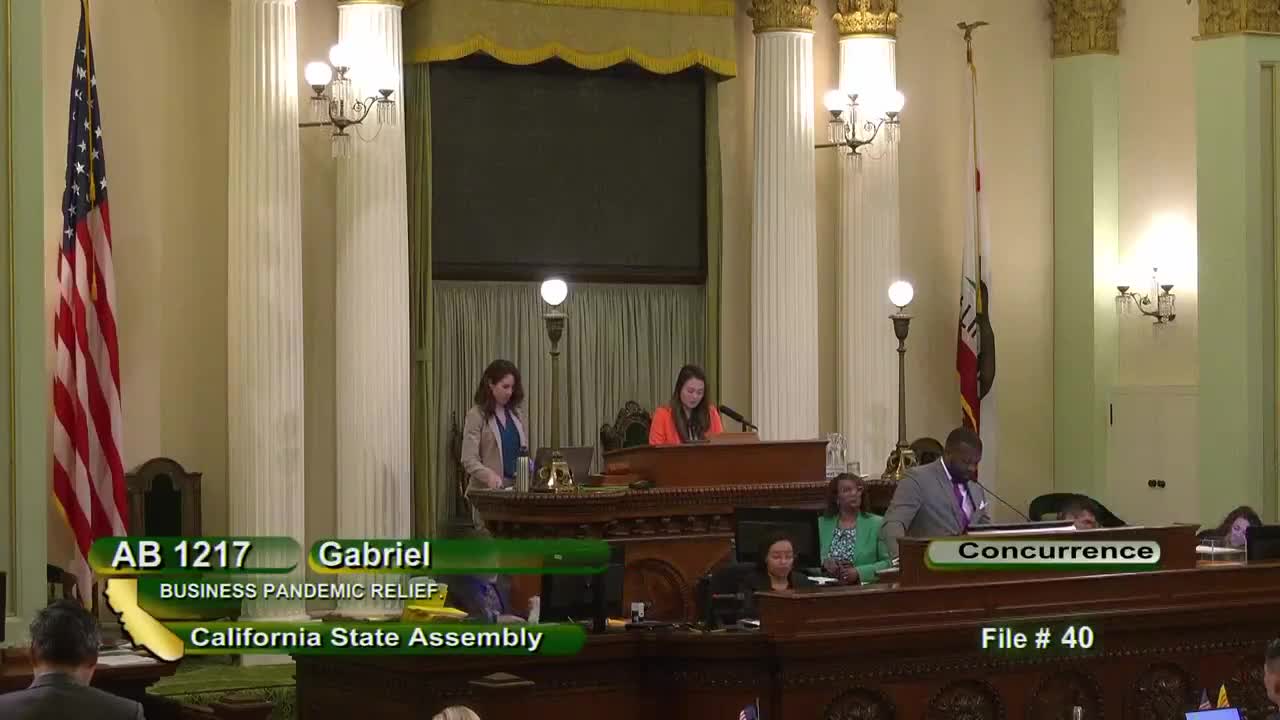 39SEC
Assembly Floor
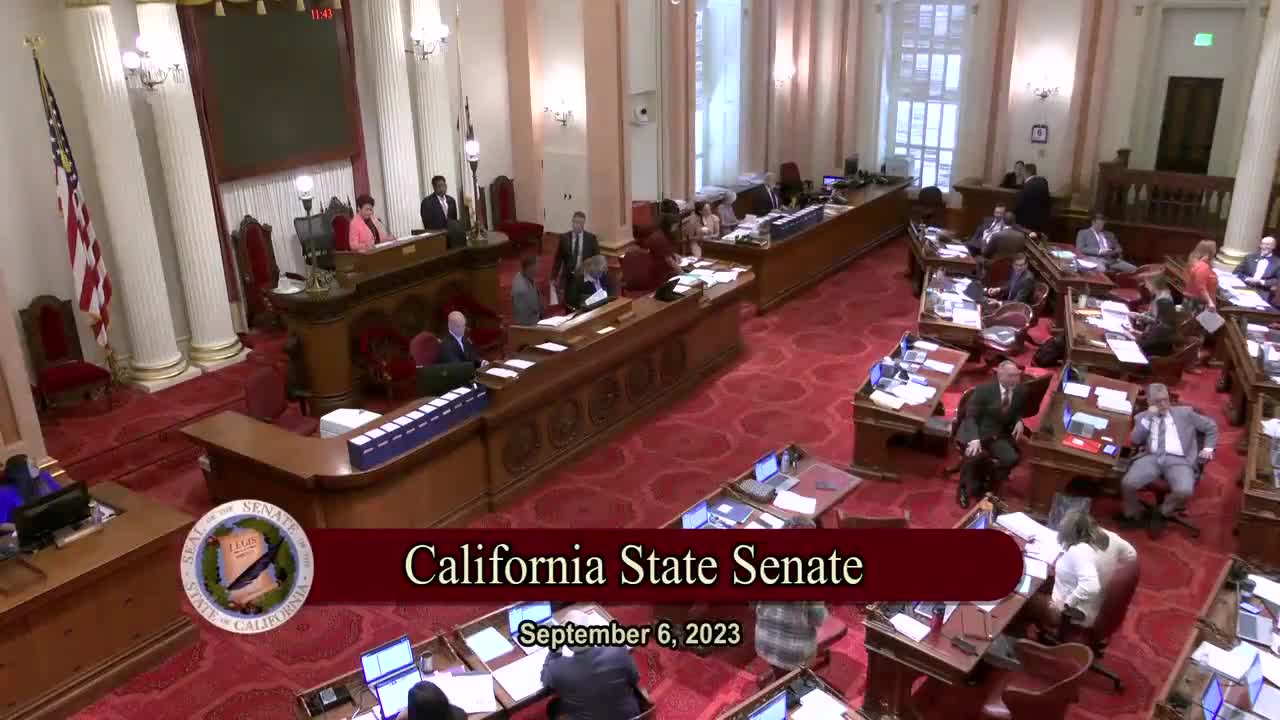 57SEC
Senate Floor
 14MIN
Senate Standing Committee on Governance and Finance
 12MIN
Senate Standing Committee on Housing
 43SEC
Assembly Floor
 4MIN
Assembly Standing Committee on Appropriations
 4MIN
Assembly Standing Committee on Local Government
 13MIN
Assembly Standing Committee on Housing and Community Development
Bill Author